Places to go and things to see by Gypsy Bev

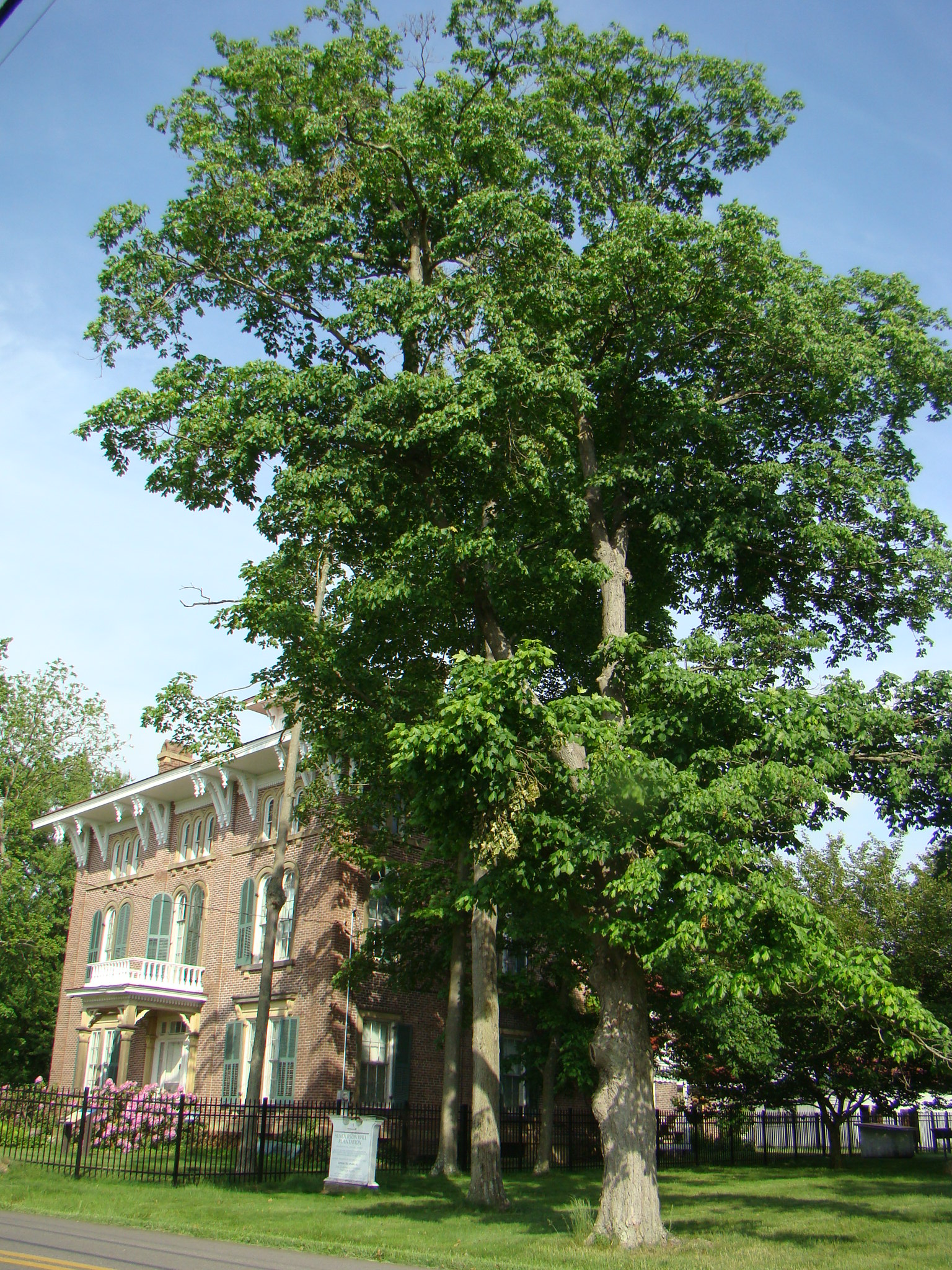
Henderson Hall

Henderson Hall

Look for a hidden treasure across the river from Marietta, Ohio along the banks of the Ohio River. Here a Victorian plantation mansion from nearly two hundred years ago seems to watch over the river between Williamstown and Parkersburg, WV.

Even before Henderson Hall came into being, the Henderson family played a vital role in the Ohio River Valley. Vice-President Aaron Burr and Harman Blennerhassett thought that perhaps the Henderson brothers would help in their attempt to set up a separate nation west of the Alleghenies. Hendersons would not be coerced, called their father’s friend President Thomas Jefferson, and testified in the Burr-Blennerhassett trail in 1807.

Henderson Hall was built shortly thereafter in 1835 by George Washington Henderson and Elizabeth Ann Tomlinson Henderson, grand-daughter of original claimant of Williamstown. This merger of estates encompassed 2600 acres on the eastern bank of the Ohio River. It seemed that everything they touched turned to gold, from the land they purchased, to breeding fine horses, to owners of an oil field boom.

Henderson Indian Mound

Adena Indian Mound

Walking to the house, one of the three Indian mounds on the property is clearly visible. Dating back 2,000 years, Adena mounds appear in several places in the Ohio Valley. Inside the mounds were found skeletal remains and artifacts.

Even though the Henderson family supported the efforts of the Union during the Civil War, they did themselves keep thirty slaves. Some of those slaves actually left through the Underground Railroad, which the Henderson family supported, in Marietta, Ohio.

This well preserved Victorian plantation propels visitors into the past with twenty-nine rooms to explore. All the rooms overflow with memorabilia from the 18th century to the present. It seems the Hendersons kept everything. 250 years of letters and diaries were found in the home – what treasures! Even more impressive is the trail of famous historic figures, who visited frequently.
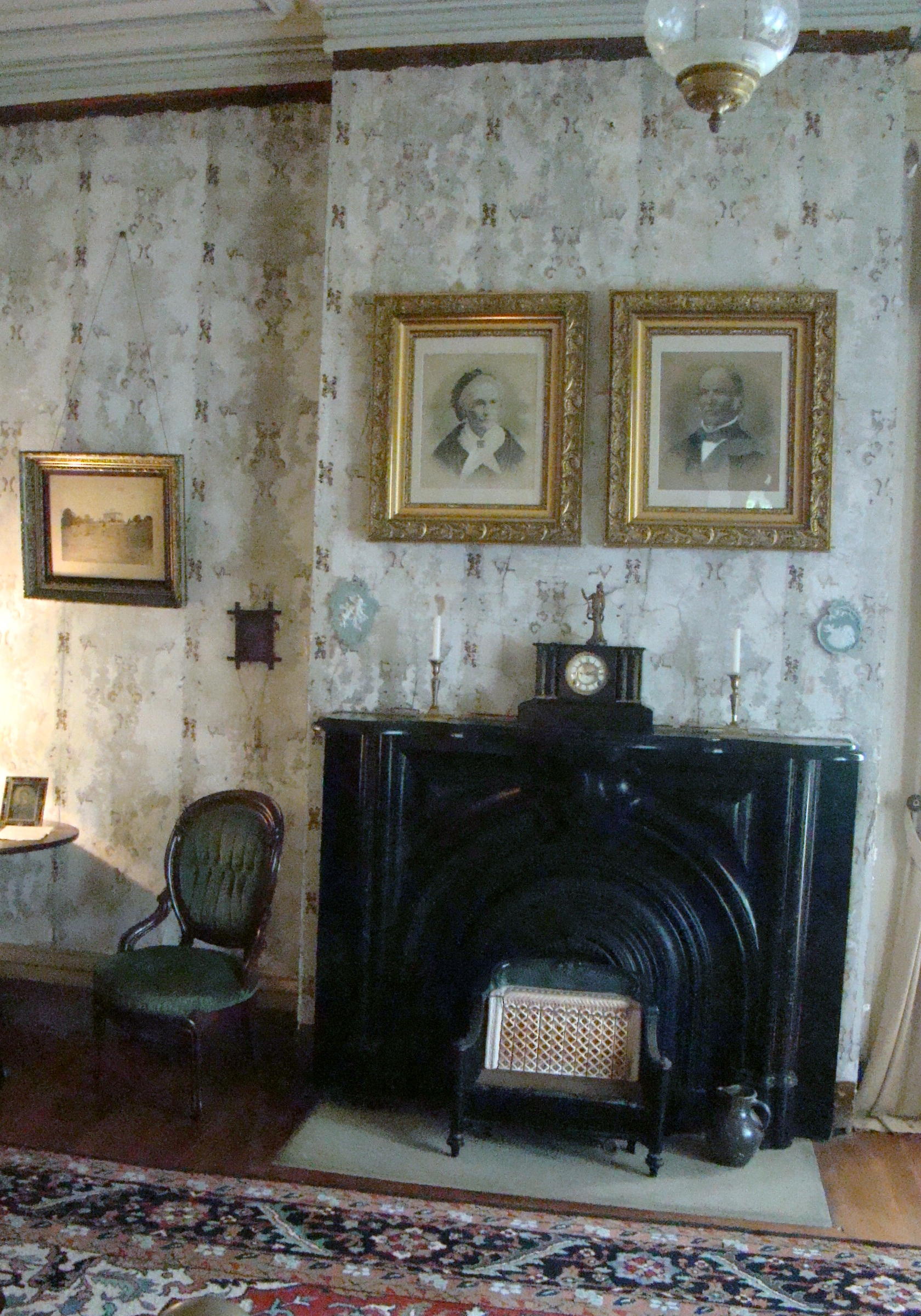
Front Parlor

Front Parlor

In the front parlor with its gold leaf wallpaper, pictures of Elizabeth and George hang over the mantle of the fireplace. In the picture she wore a hair broach, which was considered mourning jewelry. Having twelve children during their lifetime, six of them died before the age of ten. Elizabeth took a lock of hair from each of those six children to weave into an intricate pattern for her broach, which she always wore. The broach remains on display today in their small museum.

Collections from these 19th century hoarders give visitors a chance to see the changes made in many areas of life. The overwhelming amount of treasures saved, ranges from toys to wedding gowns to beautiful dining room settings. A winding staircase curves up to the third floor ballroom, making the mind wonder how those ladies managed these steep stairs in their flowing gowns.

The original kitchen

The original kitchen

The 1836 kitchen holds household cooking utensils and crockery dating back a couple centuries. This was part of the original smaller house before the 1859 impressive addition. Many of the rusted kitchen utensils can be found stored in the basement today.

When the last family member died in 2007, the historic house was deeded to the Board of West Virginia Oil & Gas Museum. Today they keep the place in repair and have great guides to share the Henderson story.
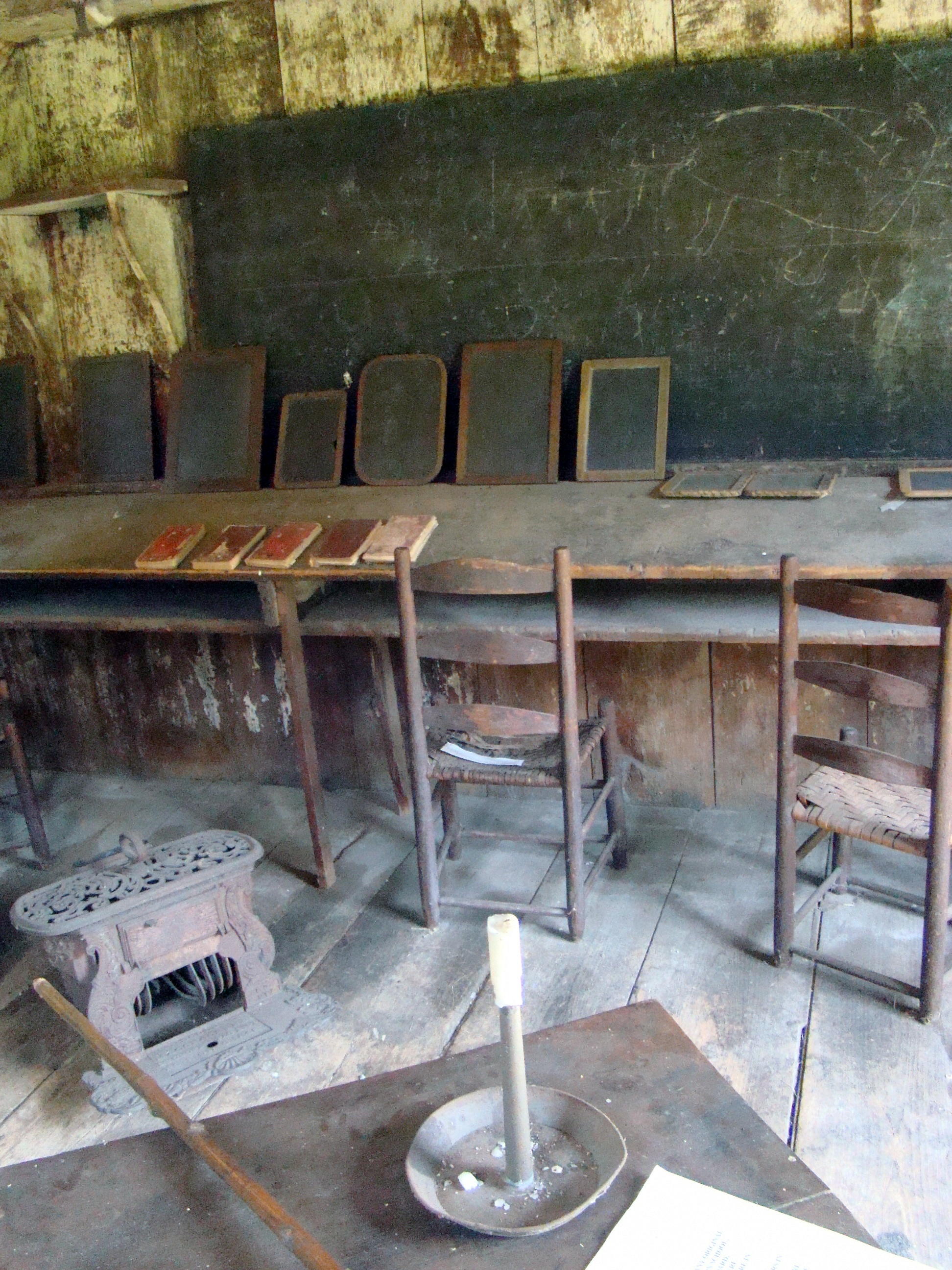
First school houe in West Virginia

First school houe in West Virginia

The earliest school in the area was here behind Henderson Hall in 1836. Note the teacher’s desk with candle and switch – for pointing and for correcting. Several old books from that time period have been placed on the students’ desk along with slates to practice writing and mathematics. Original equipment includes:  slates, blackboards, and seats. What a thrill to gently touch the slates, which were used by youngsters from the 1800’s.

The Carriage House contains different buggies. Among them is the actual buggy used by the original founders, George and Elizabeth, on their honeymoon to Niagara Falls.

Henderson Hall overflows with treasures too numerous to mention. Hopefully you have now received a taste of history that will whet your appetite for more. Johnny Chapman, John James Audubon, and Stephen Foster always enjoyed their visits here.  Shouldn’t you?

Henderson Hall Plantation is just a few miles off I-77 at the Williamstown, WV exit. Follow Route 14 South, then turn right on Old River Road. Summer hours are noon- 5 p.m. daily.
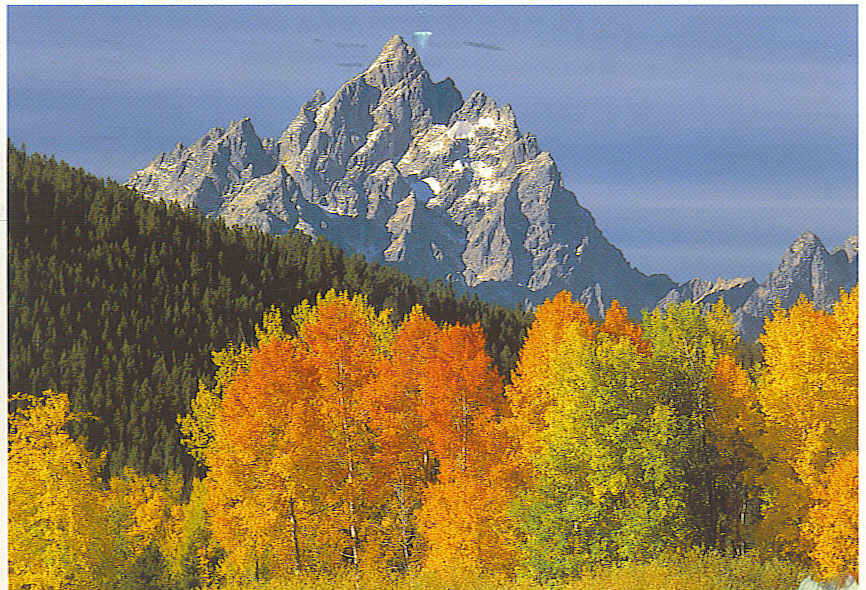


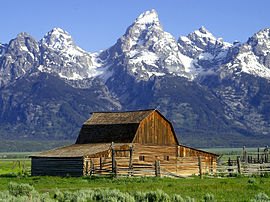
Welcome to the majestic Tetons.

Welcome to the majestic Tetons

The majestic, 7000-foot-high Teton Range signals arrival in scenic Jackson Hole, Wyoming, which is located on the floor of a valley surrounded by mountains. John Colter was the first white American to view the valley and his reports were viewed with skepticism as people doubted any place could be so beautiful.

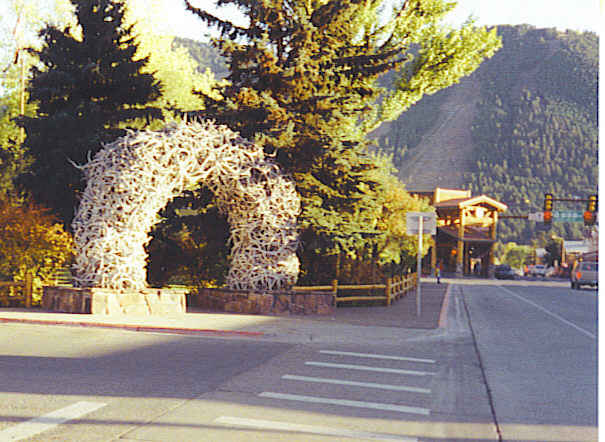
Elk Antler Arch

Elk Antler Arch

Town square serves as the main attraction of downtown Jackson Hole, as each corner has an arch composed of hundreds of elk antlers. Each winter, local Boy Scouts gather the antlers from the National Elk Reserve nearby. An auction is held to sell the antlers with proceeds going to the refuge. However, first of importance is maintaining repair work on the arches with any needed antlers.

Downtown hums with the sights and sounds of many gift shops and restaurants. Million Dollar Cowboy Bar featured in many Hollywood movies, Jackson Drug with its old time soda fountain, and the Victorian style Wort Hotel, home of the Silver Dollar Bar,  provided interesting stops during this visit. After an exhausting day, we devoured a delicious Mexican dinner at an old established restaurant, Merry Piglets.

This area abounds with treasures to behold and even a week’s stay would not give one a chance to enjoy them all thoroughly. While the town of Jackson Hole delights many visitors, camping in the foothills of the Tetons gives an entirely different perspective.

Rustic cabin below the Cathedral Group

Rustic cabin below the Cathedral Group

Snake River, which flows from its headwater at Yellowstone River, meanders along the base of the Tetons. The old Cunningham Cabin situated at the foothills of the Tetons seemed like a perfect place to live. Imagine sitting here with your morning cup of coffee or tea and watching the Snake River flow past the towering mountains.

Just outside of town can be found the largest elk preserve in North America – the National Elk Refuge. During the summer months the elk head higher in the mountains, but during the fall and winter, up to 7500 elk can be found here in the basin.

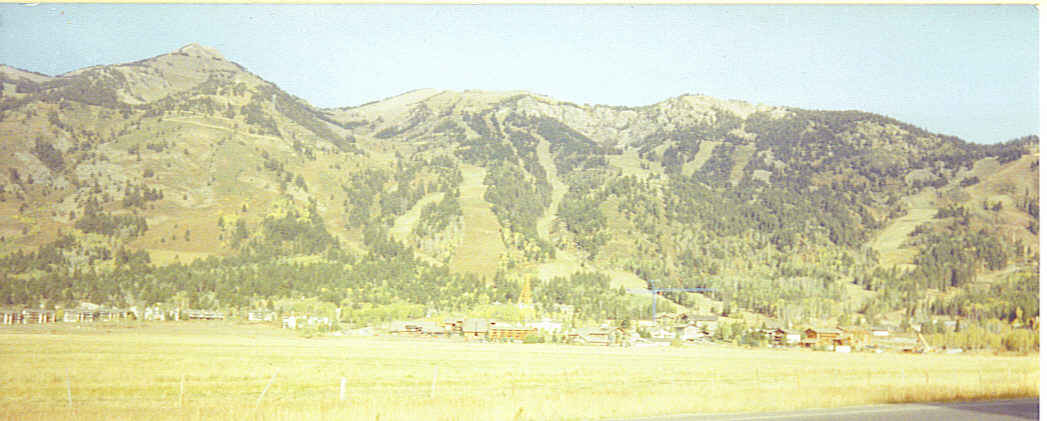
Jackson Hole Ski Resort

Jackson Hole Ski Resort during summer

Jackson Hole Ski Resort contains the longest ski slope in the area, although many slopes exist. The first ski slope, Snow King Ski Area, was developed way back in 1939. Makes you want to return for the winter snows.

At the Menor-Noble Historic District nearby, exploring Menor’s cabin provides a taste of life in the early 1900’s. His white washed cabin was used as a supply store while he ran a ferry across the Snake River. Cost was twenty-five cents for a horse and wagon to cross. In winter when the water was too rough, they crossed on a flat raft-like apparatus using a pulley system.

Museum of Natural History and Art

Museum of Natural History and Art

Tucked away in the foothills of the Tetons, National Museum of Wildlife Art displays spectacular paintings and statues that tell the story of Wyoming wildlife. Frequent spottings of buffalo along the road to the museum, add to the road trip’s delight. The museum also sponsors many musical and informative programs as well. On this particular day a piano duo playing jazz, Keith and Pam Phillips, entertained the crowd.

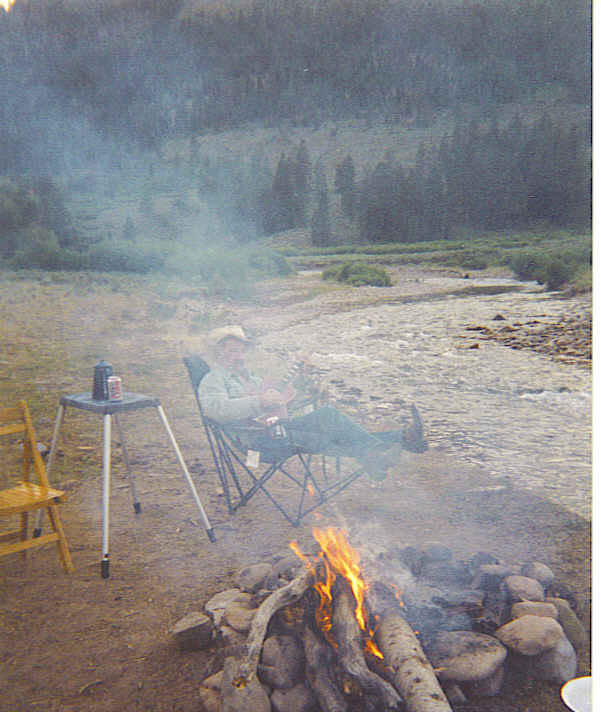
Camping along the Snake River

Camping along the Snake River

Leaving town, a stop at Jackson National Fish Hatchery provided viewing of trout from 2″ to 12″, ready to place in area lakes and rivers. All National Hatcheries were listed, and included was one from home – Senecaville Fish Hatchery.

Whether you stay in town at one of their many hotels, or camp in the shade of the Tetons, innumerable adventures await in the area of Jackson Hole, Wyoming. Just a short drive to the North is the bubbling Yellowstone National Park, which you won’t want to miss.

Jackson Hole, Wyoming can be found on the western border of Wyoming, very near Idaho. This is not a place of major interstate highways, but the drive is beautiful from any direction.

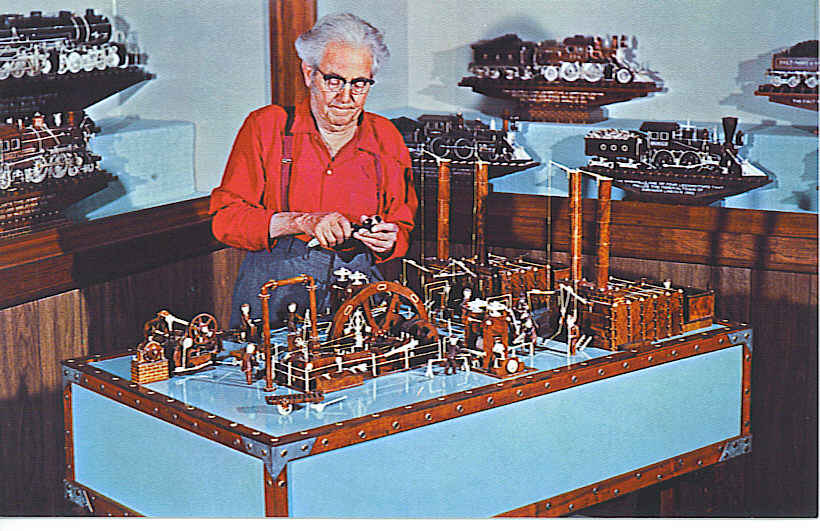
Ernest "Mooney" Warther

Ernest “Mooney” Warther working on one of many displays

“You have to have a vision.”  These words guided Master Carver Ernest Warther throughout his life. He instilled that concept in his family, who today can be found at Warthers in Dover, Ohio. The Smithsonian describes this museum’s displays as “Priceless works of art.”

Early in life, Ernest, called Mooney by most who knew him, worked for the railroad. When he began whittling, it seemed natural to use his passion to create the history of steam engines with moving parts.

During his early years when money was scarce, Mooney used chipped and cracked cue balls made of ivory for his trains. When he rode his bicycle around town, he would often stop at pool halls on his trips to a favorite spot, Woolworths. Cue balls, walnut, coal, mussel shells and beef bone formed his early locomotives because…they were free.

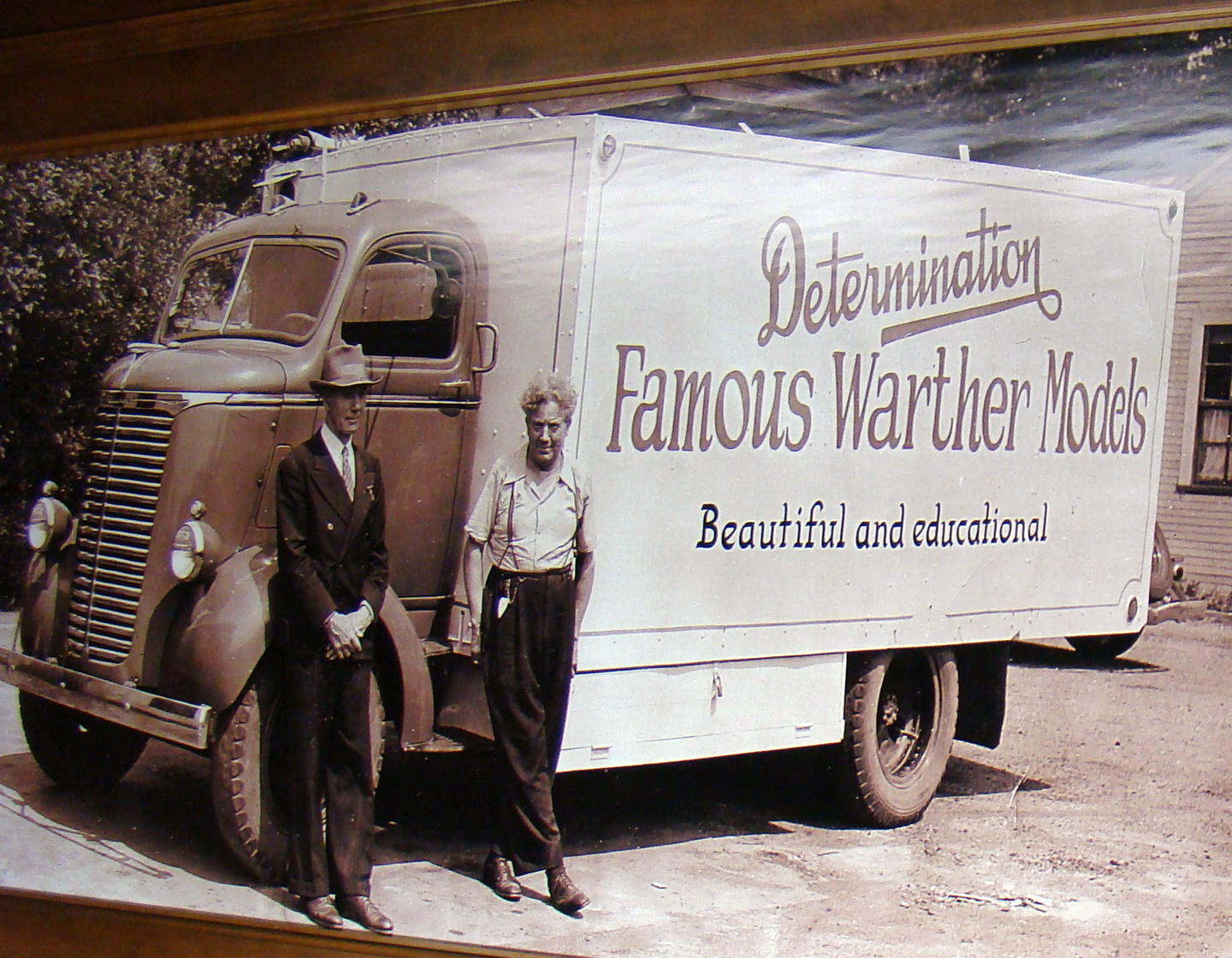
Brothers Fred and Ernest with their Famous Warther Models traveling show

Brothers Fred and Ernest with their Famous Warther Models traveling show

At this point, he no longer called it whittling, as now he carved trains to perfection. His intricate designs were displayed in New York Central Railroad and later in their traveling road show, Famous Warther Models, that carried his engines to the forty-eight continental states during its thirty year run.

Completion of one carving at a time was the order of business for this mathematical and mechanical genius. While Master Carver Mooney used walnut wood and soup bones for his early carvings, he later used ivory for the white parts of his trains and ebony for the black. None of his trains were glued, but parts were intricately pegged together.

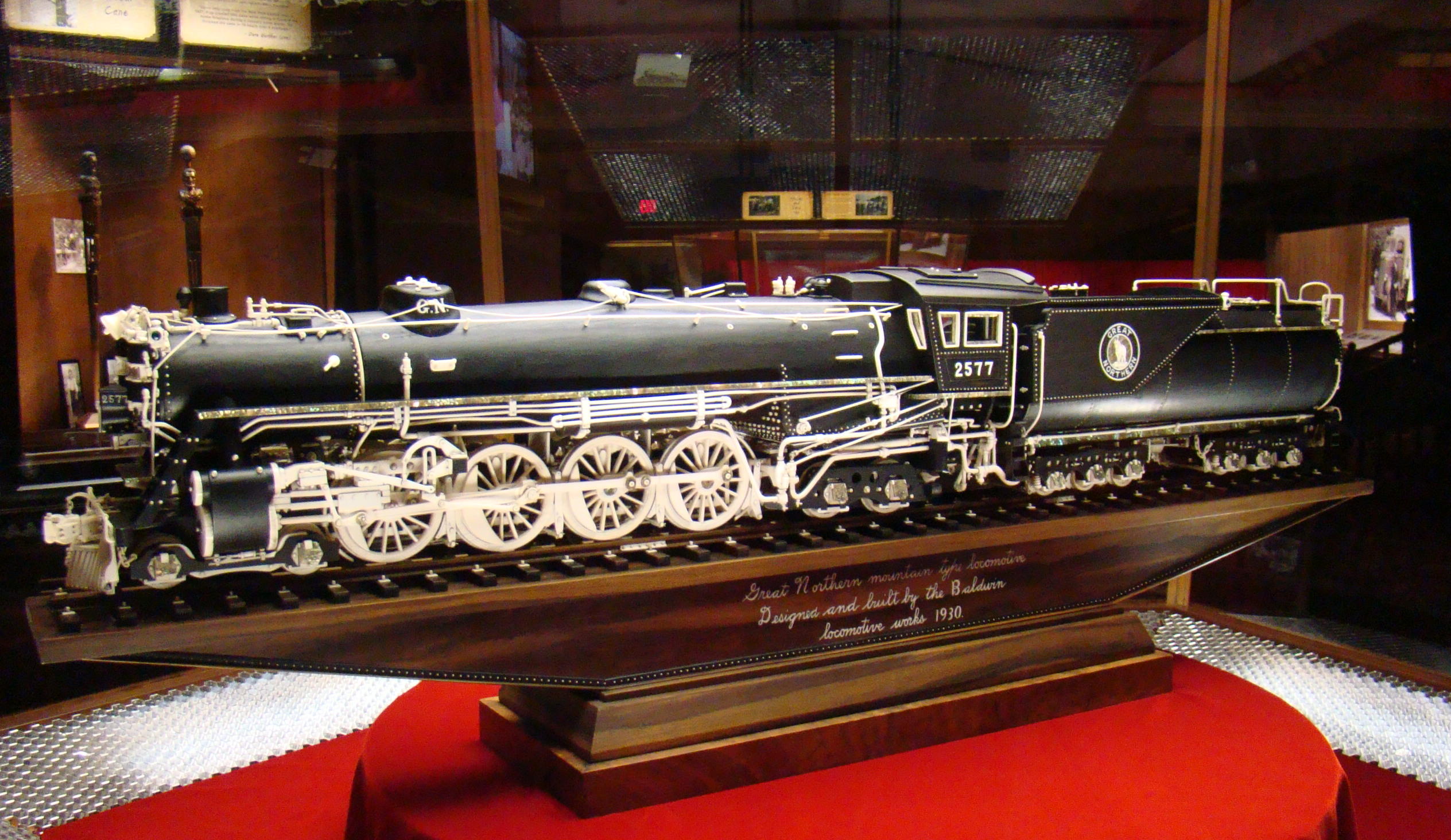
The Great Northern Locomotive

The Great Northern Locomotive

Mooney carved one of his best and favorite replicas, The Great Northern Locomotive, in 1932-33.  The cursive words on the side were all hand carved out of ivory – each word a solid piece. The number on the side of the locomotive represents the number of pieces used – backwards; therefore, this carving contained 7,752 pieces, many of them moving.

A hobo at the train station told him about a  self-lubricating wood, arguto. If Mooney used this hardwood on the bearing surface, the parts would  never need oiling. Those trains built with arguto still run smoothly today nearly 80 years later.

Mooney enjoyed the neighborhood children stopping by his workshop. He kept a brick outside his workshop door. When children would stop by and ask Mooney to play with them, he had a quick answer. “If I throw up this brick and it stays in the air, I have to work in my shop.” The children adored him.

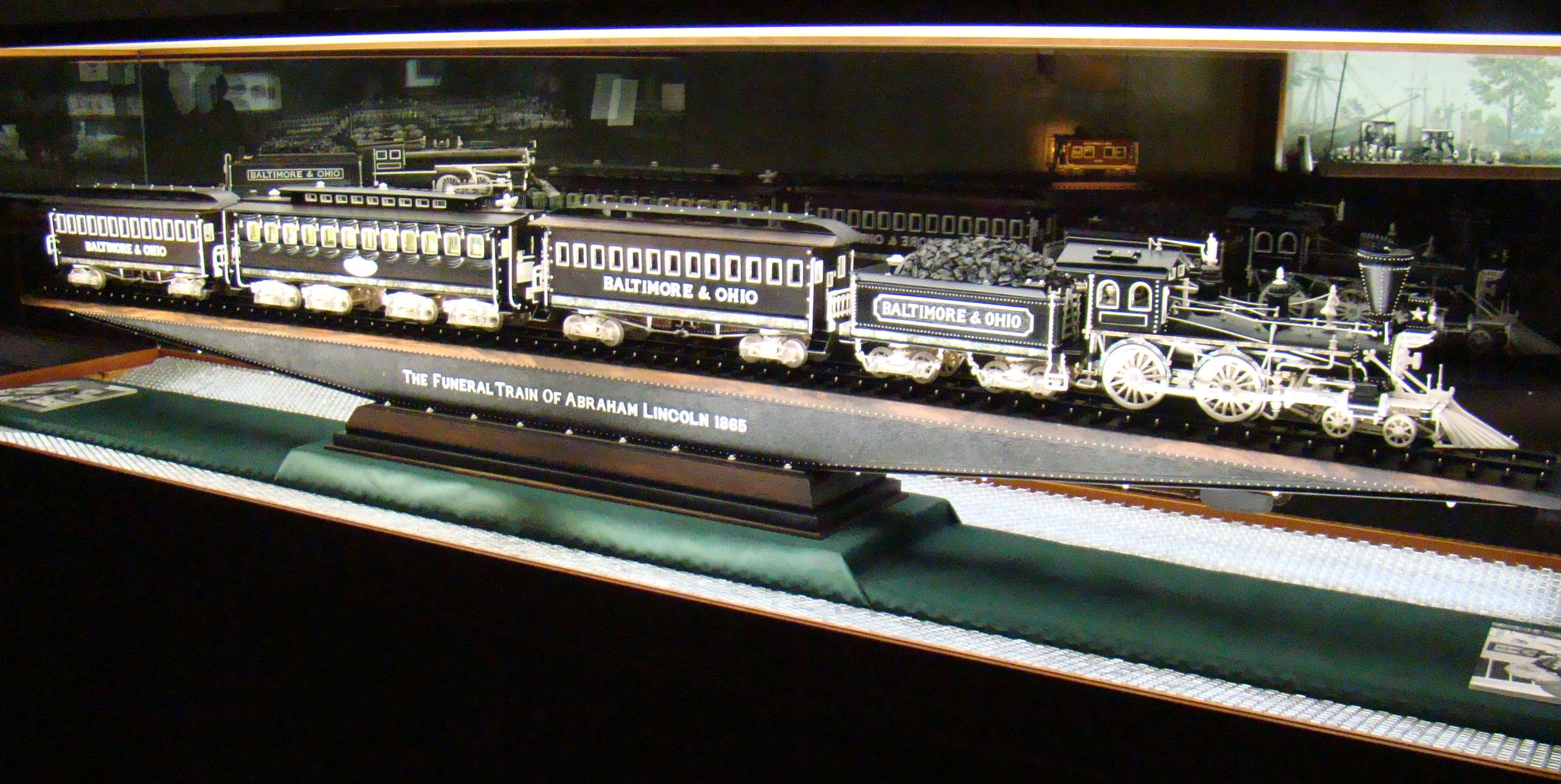
Abraham Lincoln Funeral Train

Abraham Lincoln Funeral Train

The eyetooth of the hippo, the finest grade of ivory, was used in the famous Lincoln Funeral Train, which Mooney carved at the age of eighty. Being a big fan of the history and philosophy of Lincoln, he paid tribute to him by carving his funeral train on the 100th anniversary of his assassination.

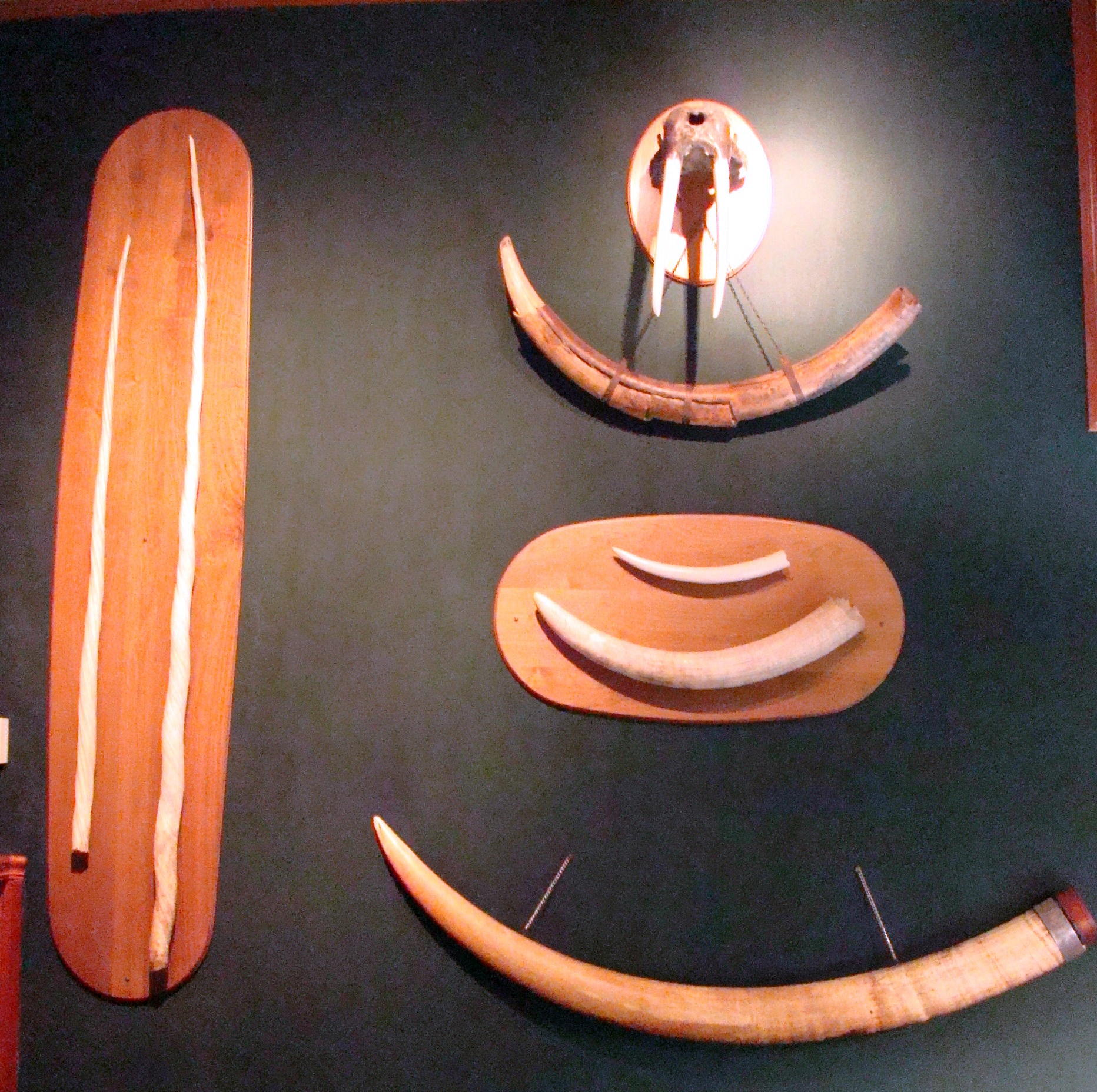
Types of ivory

Types of ivory

Since it was often difficult to find the treasured hippo ivory, he then settled for the second best – ivory of a walrus, and even third- that from an elephant. Much of the ivory came from baby elephants when they lost their baby tusks. You can imagine the excitement at the railroad yard as the ivory was always delivered by train.

The last carving completed was Old Ironsides in 1966. Mooney always tried to be accurate in his scale models and often used 1/2″ to a foot. Speed never figured into his carvings, as he might carve about 1,000 small pieces a month.

The Warther family story serves as an inspiration to organize your time so you can create something special, while leaving time for family first. In his eyes, everyone had a significant talent, the trick was in finding it. His exceptional natural talent for whittling and carving has filled the museum with amazing pieces. As Mooney remarked regarding his carvings, “Pretty good for a second grade education!”

Warthers can be found easily off I-77 in Dover, Ohio. Take Exit 83 to the east and follow the well placed signs to Warthers.

Making glass was “in his blood”. Those words described my dad, Rudy Wencek, as working with glass intrigued him. That passion is the basis for my Father’s Day tribute to Dad and Variety Glass in Cambridge, Ohio. Dreams do come true.

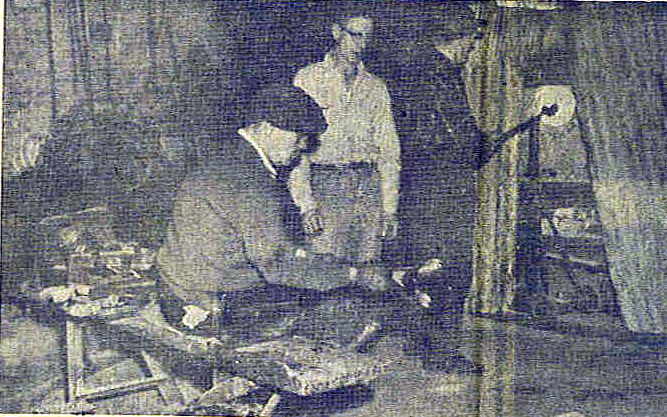
Dad working at Variety Glass

Dad working at Variety Glass

At the age of twelve, Rudy quit school and went to work as a “carrying-in boy” at Cambridge Glass Company. As the years passed, Rudy performed a variety of jobs there from pressing to the skilled art of blowing delicate pieces. The only thing he knew well centered around making glass, while his wife, Kate, raised chickens on the farm.

Rudy never even considered doing anything else until the day in 1959 when the Cambridge Glass plant closed – this time for good. What would he do now?

As luck would have it, Rudy was good friends with Tom Mosser, another glassmaker whose family had a hand in operating Cambridge Glass. Rudy and Tom purchased some of the original Cambridge Glass molds for use in producing laboratory and pharmaceutical glass for doctors and science labs, plus a variety of other items.

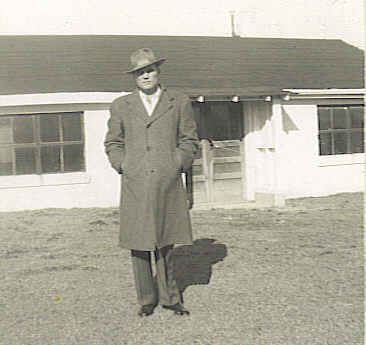
Where should they start the business? How about in Kate’s chicken house near Indian Camp. While Kate didn’t mind giving up her chicken house, two things worried her.

First, the large propane tank needed to fire the furnace could explode. Second, taking out a loan frightened her as she watched every penny. But Rudy told her, “It takes money to make money.” Therefore, late in 1959, Variety Glass got its start – in our former chicken house.

Dad in front of future Variety Glass

Dad in front of future Variety Glass

Rudy and Tom worked long hours on their new business. Tom enjoyed making business connections to purchase supplies and generate sales. Rudy got to follow his love of being in charge of making the glass products, always working closely with the other employees, nearly all being former Cambridge Glass craftsmen.

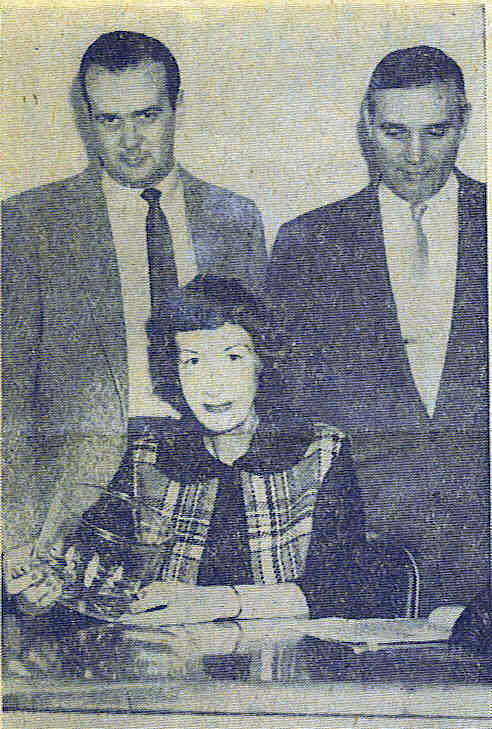
Officers of Variety Glass: Mary Martha Mitchell, president; Tom Mosser, vice-president, Rudy Wencek, treasurer

Officers of Variety Glass were: Mary Martha Mitchell, president; Tom Mosser, vice-president, and Rudy Wencek, treasurer

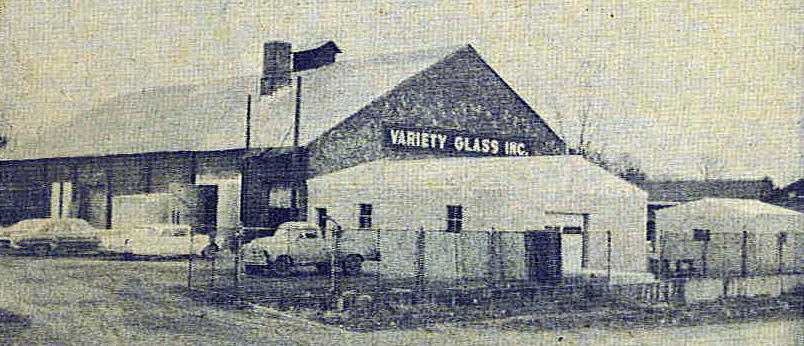
The following year, a late night explosion caused a fire that stopped their dream. But Rudy and Tom were not giving up. They contacted former Cambridge Glass president, Mary Martha Mitchell, asking for her leadership expertise. Between the three partners, they discovered the empty street car barn on Second Street and began refurbishing it to meet their needs.

With the added room for growth, items were added to their production list with glass products being sent worldwide. Surprising though it may seem, some of their laboratory glass was used by NASA and the Atomic Research Center in Los Alamos.

But fate seemed to delay the three of them again, as once more fire caused extensive damage to Variety Glass in 1966. Mary Martha Mitchell kept the company going from her kitchen table office by notifying customers of the circumstances and encouraging them to wait until production started once again.

Today Variety Glass is still in operation on Second Street although none of the three originators are around to oversee its production.

Variety Glass in old trolley barn

Variety Glass in old trolley barn

Due to health problems, Rudy found it necessary to retire from Variety Glass in 1966, but he never lost his passion for making glass. He told his grandsons how proud it made him feel to see sand and a few special ingredients turn into beautiful glass objects, thus Rudy’s long-ago CB handle of “Sandman”. The sparkle in his eyes when he talked about making glass reflected his passion.

Dad’s cheerful, caring attitude provided a life-long example to follow. He was the best dad imaginable!

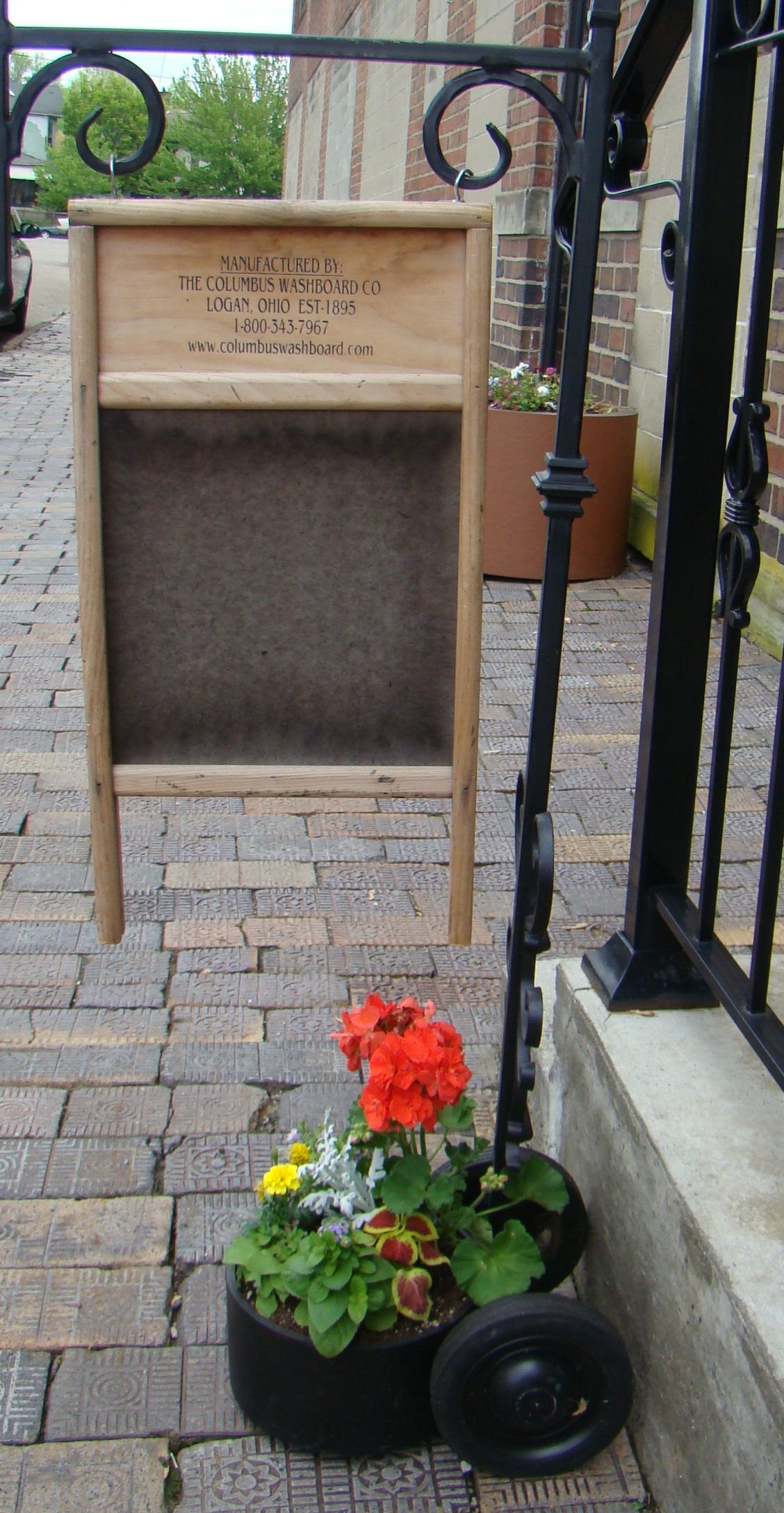
Columbus Washboard Company Welcome Sign

Columbus Washboard Company Welcome Sign

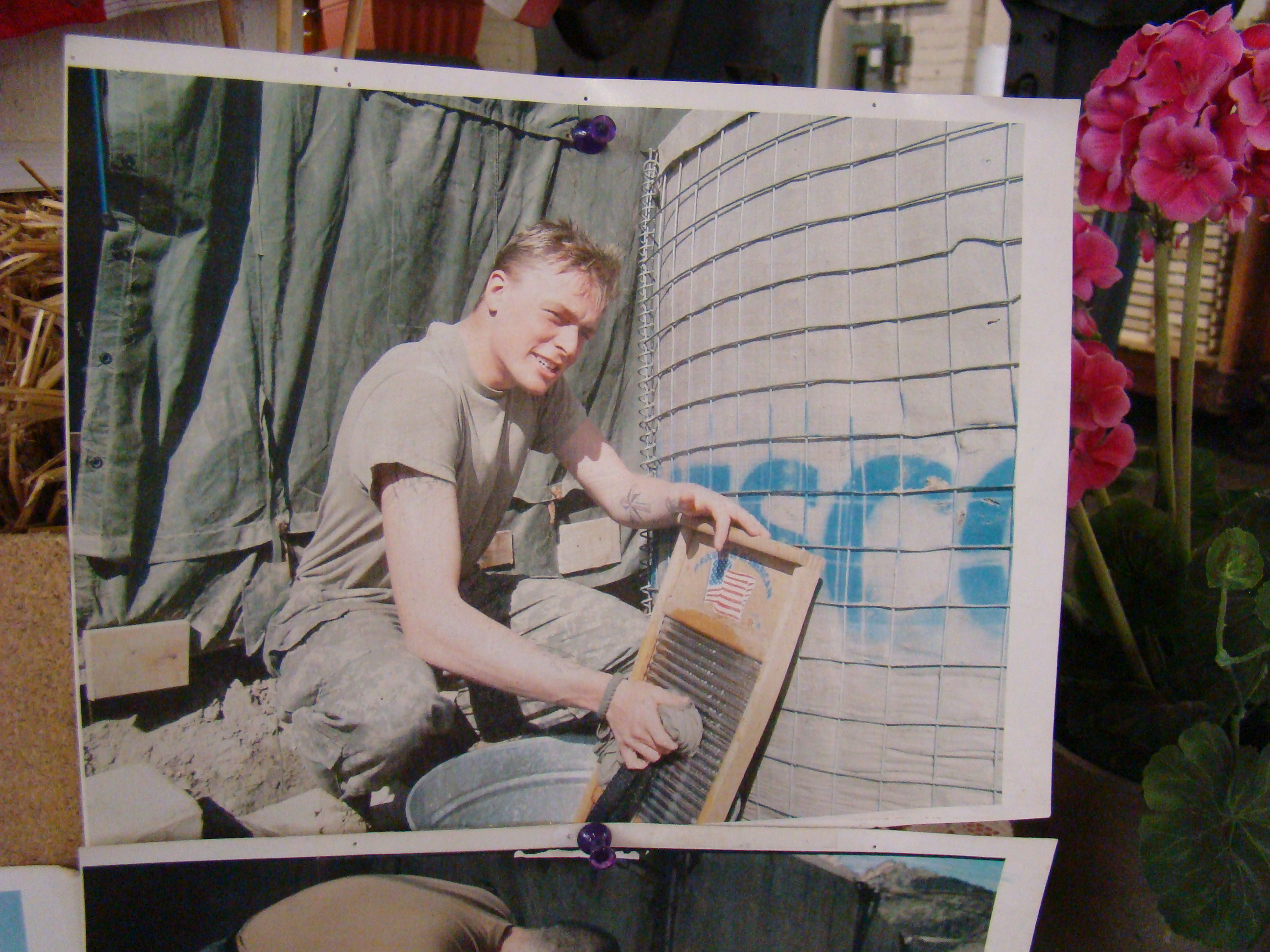
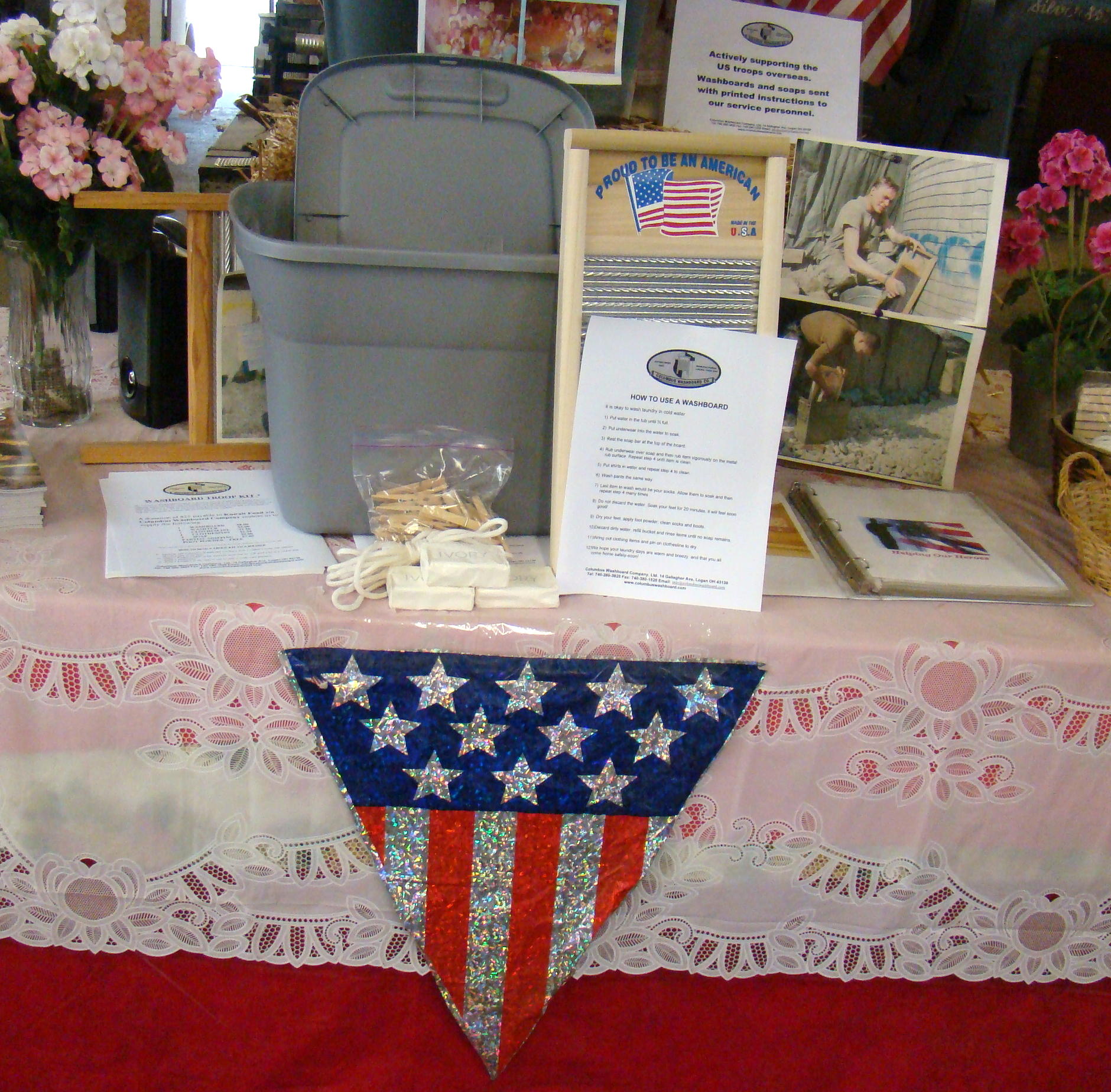
During my recent trip to Columbus Washboard Factory in Logan, Ohio, one of the highlights of the visit was discovering that part of their mission is to send free washboard kits to members of the armed services. This kit includes: a washtub, washboard, soap, clothesline, clothes pins, foot powder when available, and a set of instructions on “How to Use a Washboard”.

For some of you this instruction list will bring back memories of the past, while for others it may seem rather humorous compared to washing methods today. Notice the special suggested order for items to be washed. Not sure if I completely agree with this order, but it was the given instruction list. Maybe you will discover you have been washing things in the wrong order for years. Hope you enjoy the list!

Washboard kit being used by a member of the armed services.

Washboard kit being used by a member of the armed services.

Before you begin, there is a reminder that it is okay to wash laundry in cold water.

1) Put water in the tub until 3/4 full.

2) Put underwear into the water to soak.

3) Rest the soap bar at the top of the board.

4) Rub underwear over soap and then rub item vigorously on the metal rub surface. Repeat step 4 until item is clean.

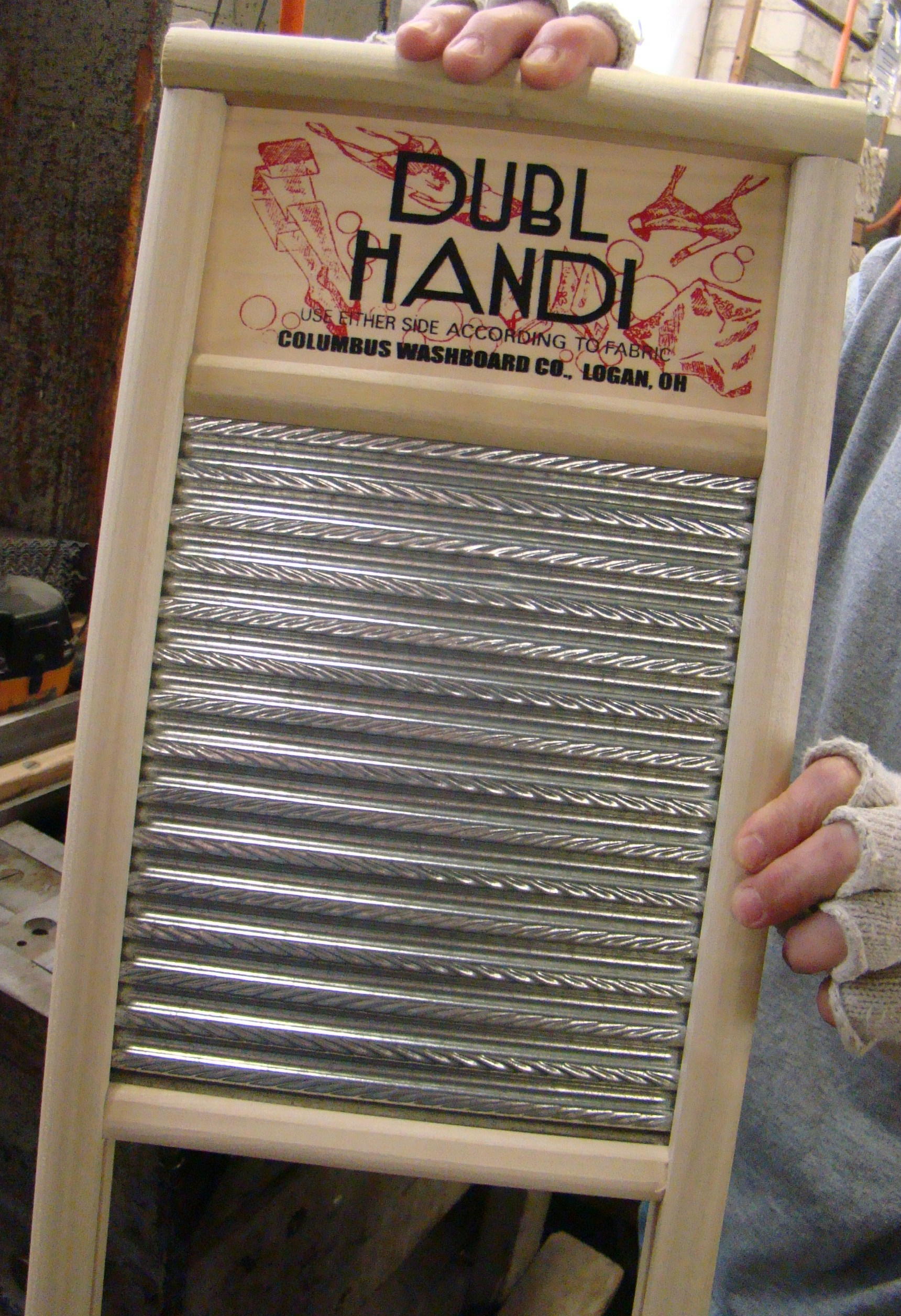
Dubl Handi Washboard with two different rubbing surfaces

Dubl Handi Washboard with two different rubbing surfaces

5) Put shirts in water and repeat step 4 to clean.

6) Wash pants the same way.

7) Last item to wash would be your socks. Allow them to soak and then repeat step 4 many times.

8) Do not discard the water. Soak your feet for 20 minutes, it will feel sooo good!

9) Dry your feet, apply foot powder if available, clean socks and boots.

10) Discard dirty water, refill bucket and rinse items until no soap remains.

11) Wring out clothing items and pin on clothesline to dry.

12) We hope your laundry days are warm and breezy, and that you all come home safely – soon!

This list was developed by Columbus Washboard Factory, 14 Gallagher Ave, Logan, OH 43138.


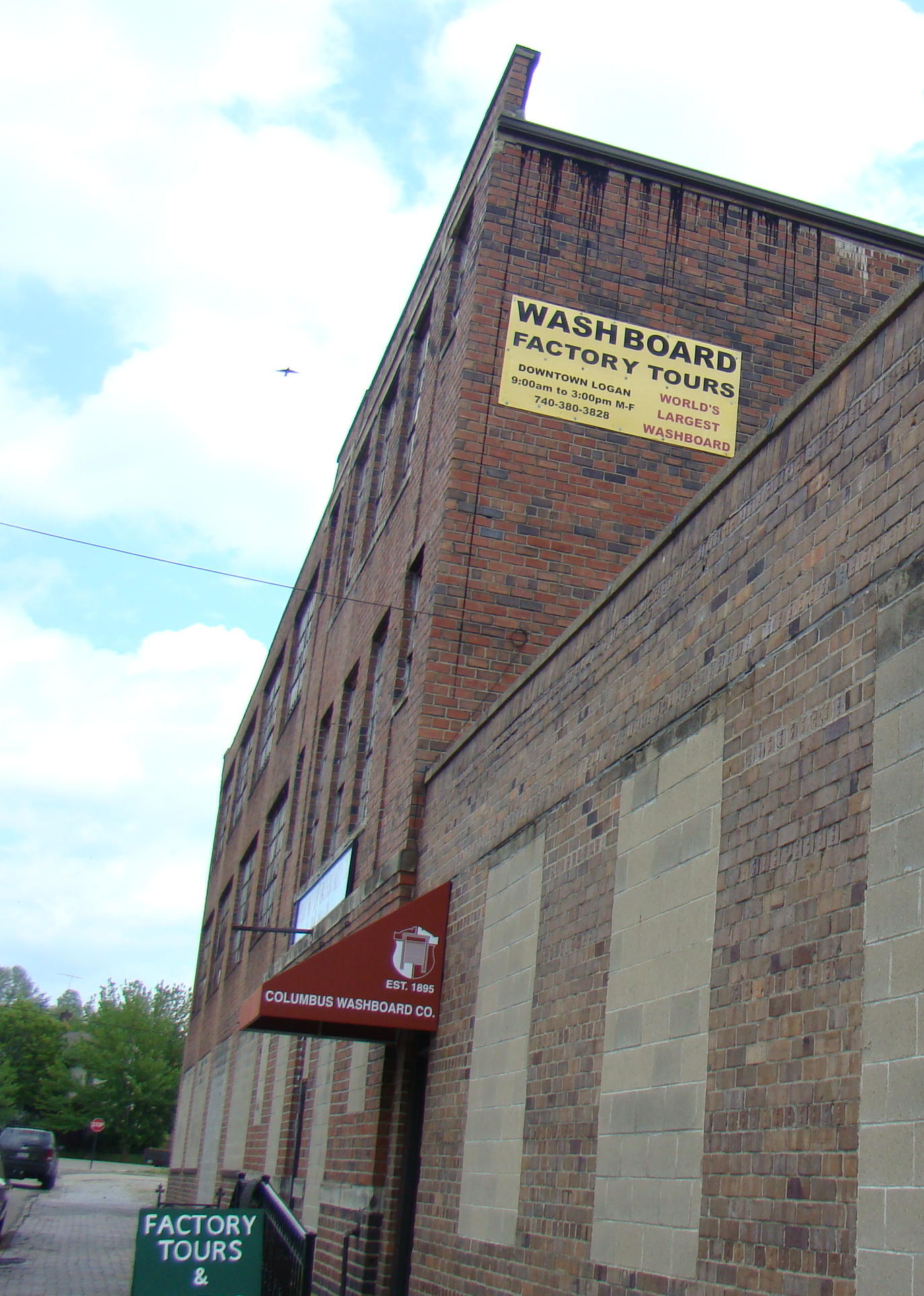
Columbus Washboard Factory

Columbus Washboard Factory in Logan, Ohio

Scrub a Dub Dub! That’s the sound of clothes being washed on what most consider an old-fashioned washboard. But that’s not the case at all! People around the world still use washboards and many of those are being made today by the Columbus Washboard Factory in Logan, Ohio.

In 1895, Frederic Martin, Sr. began building washboards called “Bear Easy” in his back yard near Columbus, Ohio on Oxley Avenue in Grandview. The business didn’t really take off until his son, Frederic, Jr. expanded the business in 1925. Their peak year was in 1941 when they sold 1,287,757 washboards. During their lifetime they sold over 23,000,000. But eventually the business was sold and in 1999 moved to Logan, Ohio where the new owners promoted some alternative uses for washboards.

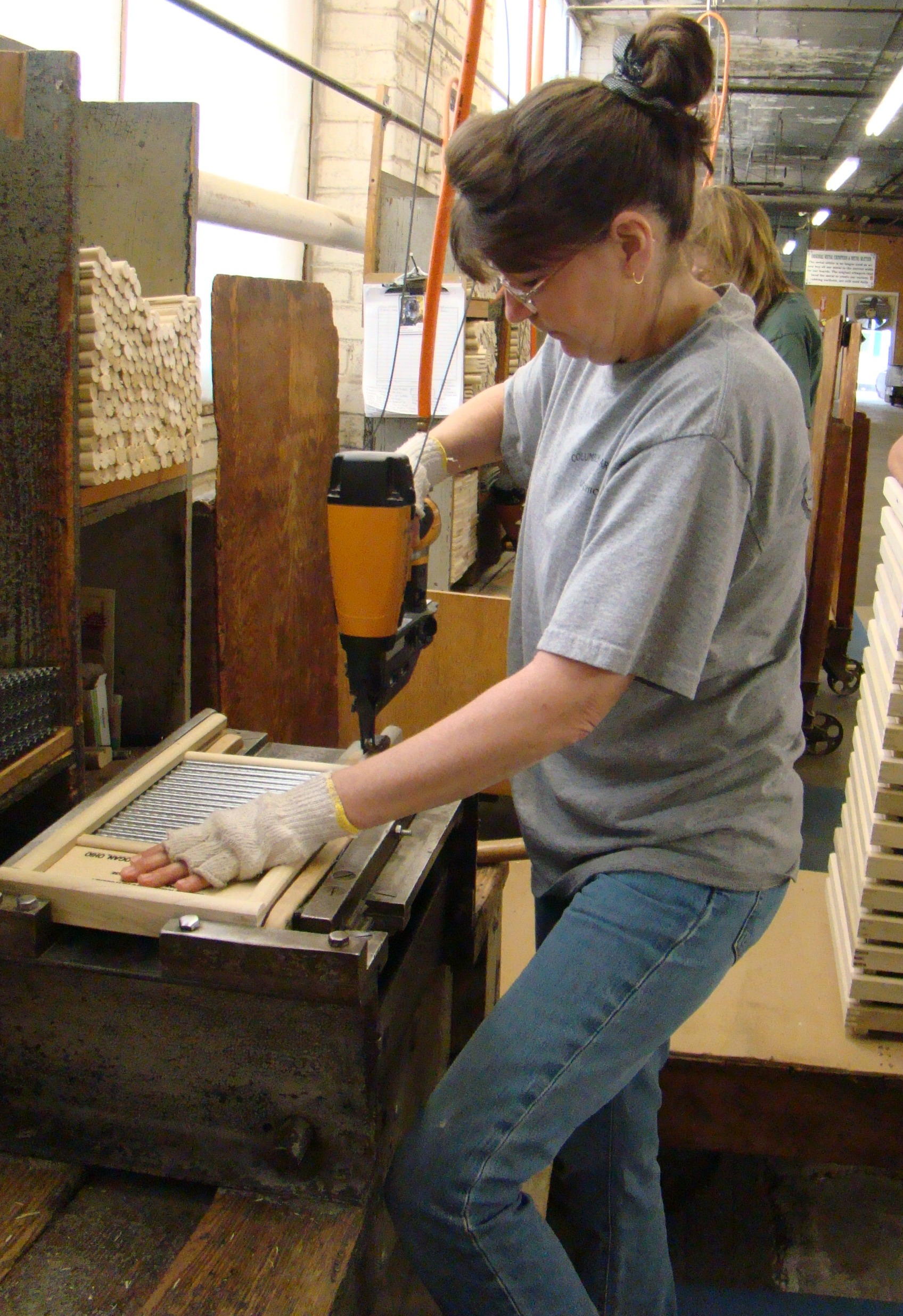
Washboard being made

Washboard being made

Today Columbus Washboard Company is the only company in the United States that makes washboards. They emphasize originality and high quality in over 80 different boards they manufacture.  Signs posted throughout the small factory make it quite easy to do a self-guided tour. Workers eagerly answer any questions you might have. If you have a group of six or more,  a guided tour will be provided.

Production has slowed and there are usually about 200 washoards made per day now. Once the materials are assembled, it takes less than a minute to make a washboard. They have the one-at-a-time assembly down to a science.

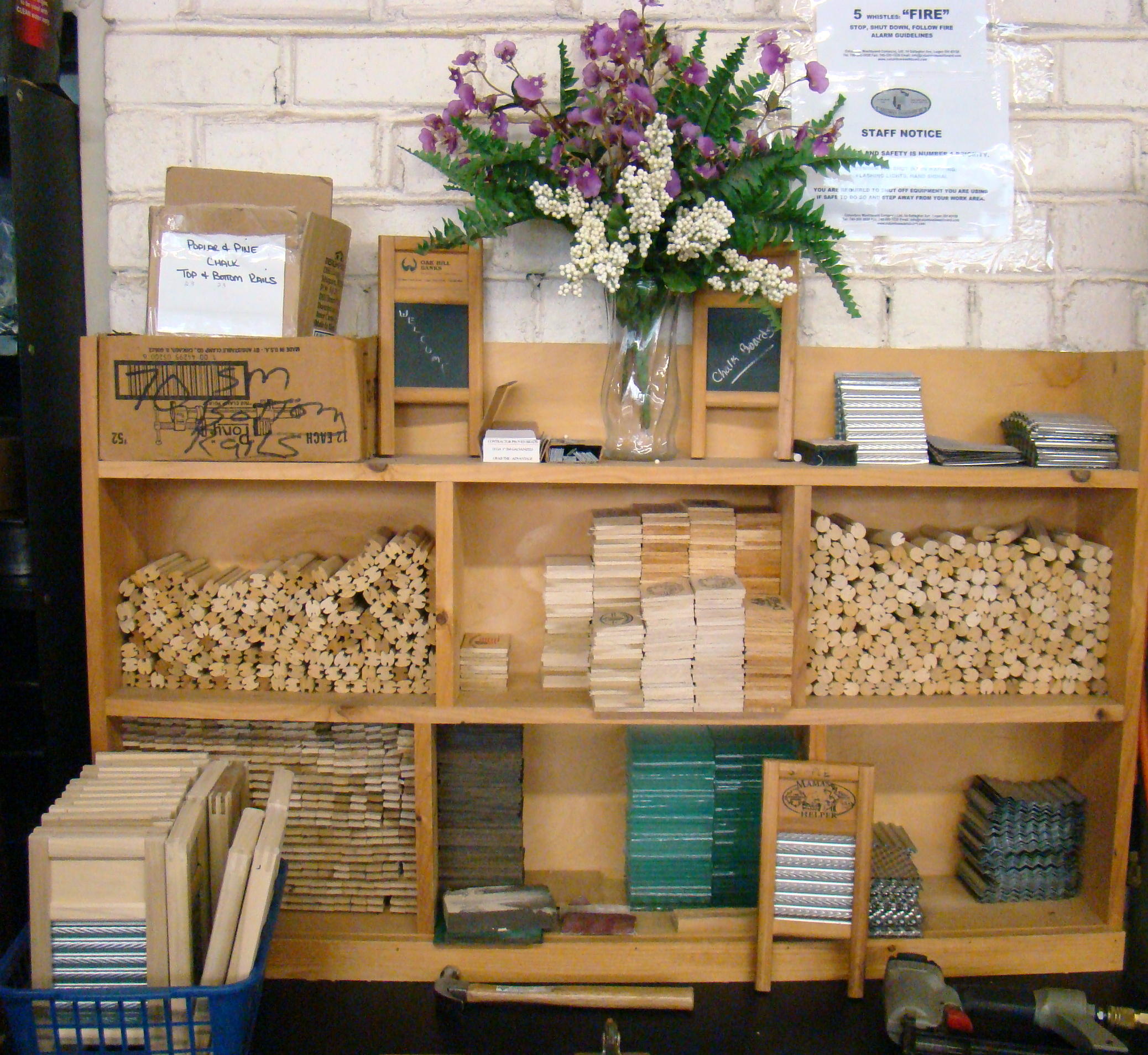
A crimper holds a roll of metal, which runs through a device that bends the metal to create various rubbing surfaces. The two most popular washboards are Maid Rite and Dubl Handi, which gets its name from double sides on the washboard. One side is rough for those tough spots, while the other side is fairly smooth for fine garments.

Washboard kit for Armed Service members

Washboard kit for Armed Service members

The fact that the washboards and all parts are Made in the USA creates a special added attraction. A Washboard Kit makes an excellent gift for members of the armed forces stationed away from civilization. Each kit includes a covered tub, washboard, bar of soap, clothesline, clothespins, and, of course, instructions.

Various Washboard sizes

Various Washboard sizes

If you have a member of the armed services who might have need of a washboard kit, Columbus Washboard Factory will send a kit free of charge. Send a name and address of someone in the armed services to Columbus Washboard Factory, 14 Gallagher Avenue, Logan, Ohio  43138. Donations are appreciated, but not required.

Once in a while the washboards get used in unique ways. One such time happened when a soldier received some steaks. How could they cook them? They used the wood on the washboard to start a fire and then used the rough metal surface for the grill. Those military guys think outside the box.

These boards get shipped around the world. Some of the frequent customers outside the United States live in England, France, Japan, Australia, and all of the tropical islands.

Columbus Washboard Factory has discovered other uses for the washboards besides laundry. At the Veterans hospital in Waco, Texas, they decided to cover the walls of the elevator and cafeteria with washboards. Guess they wanted a scrubbed clean look!  Many people today use them for decorative purposes and some have a blackboard in place of the metal so it can be used for a message board.

Their gift shop includes many unique items besides all the various washboards. You can find products that Grandma would have used such as Laundry Powder, Bluing, and Dolly Clothespins.

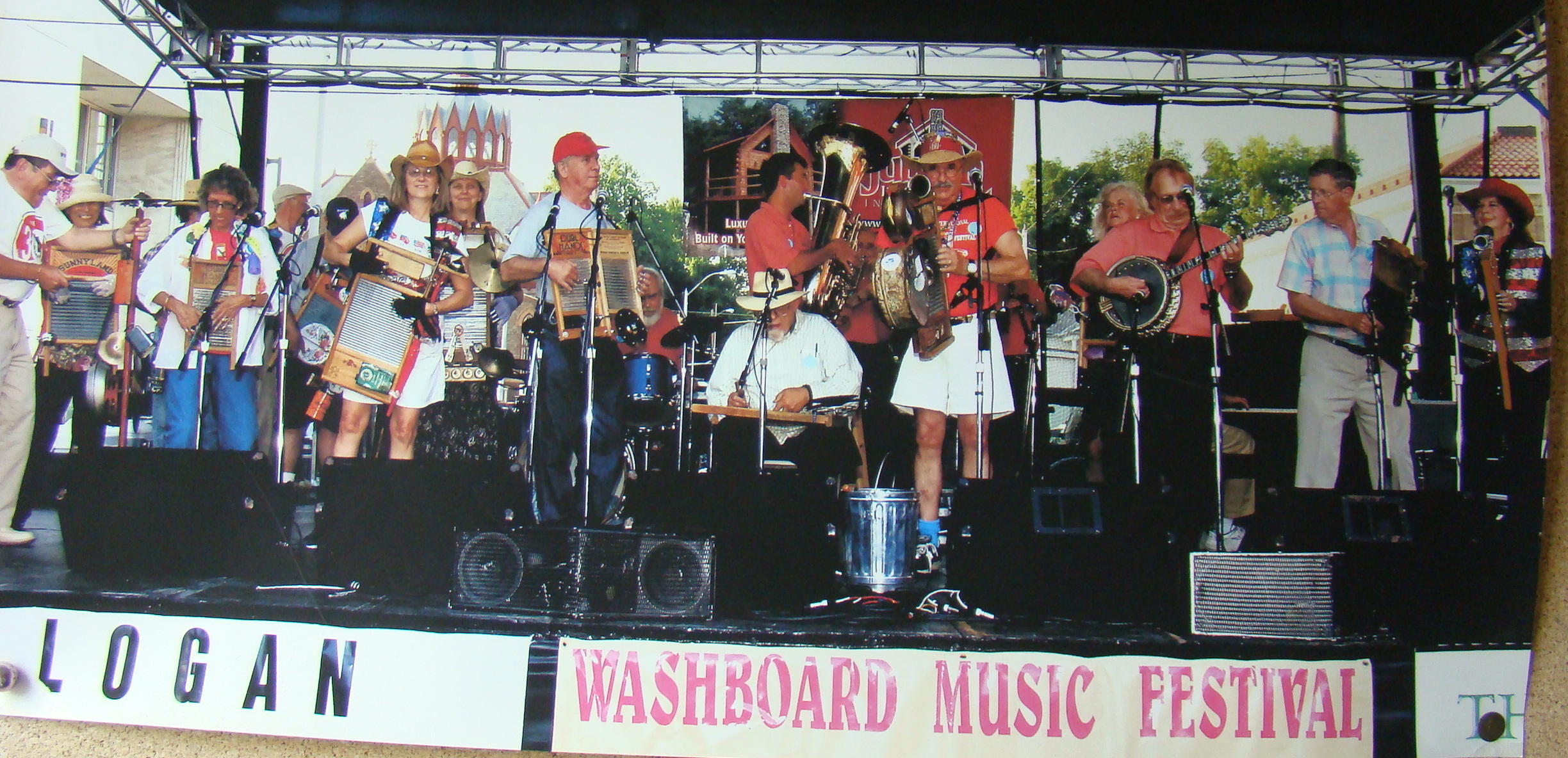
Washboard Music Festival in Logan, Ohio

Washboard Music Festival in Logan, Ohio

Today one of the most popular uses is as a musical instrument. Every year on Father’s Day weekend, three blocks of downtown Logan are closed off to host the Washboard Music Festival. It is listed as the Most Unique Music Festival in the area. The streets overflow with toe-tapping music, arts and crafts, a quilt show, antique tractors, and even washboard solos. Perhaps you would like to purchase a washboard and join in the fun this year.

There is no easy way to arrive at Logan, Ohio.  State Route 33 runs through the town in south central Ohio. The journey is not one for those who enjoy interstate travel, but perfect for a gypsy.

Quaker Meeting House

Quaker Meeting House in Mount Pleasant, Ohio

Once in a while, the roads you travel lead on an adventure not expected. Such was the case with a detour through the town of Mount Pleasant, Ohio. Meeting local people, while viewing their historic buildings, led to information unexpected but very exciting.

Back in 1803, Mount Pleasant in Eastern Ohio became home for a large group of Quakers, who were searching for a haven from slavery.  Before long, the Quaker Meeting House was constructed and became the first yearly meeting house for Quakers west of the Alleghenies. The basic design reflects the simplicity of Quaker life, while its two-foot-thick brick walls show their strength.

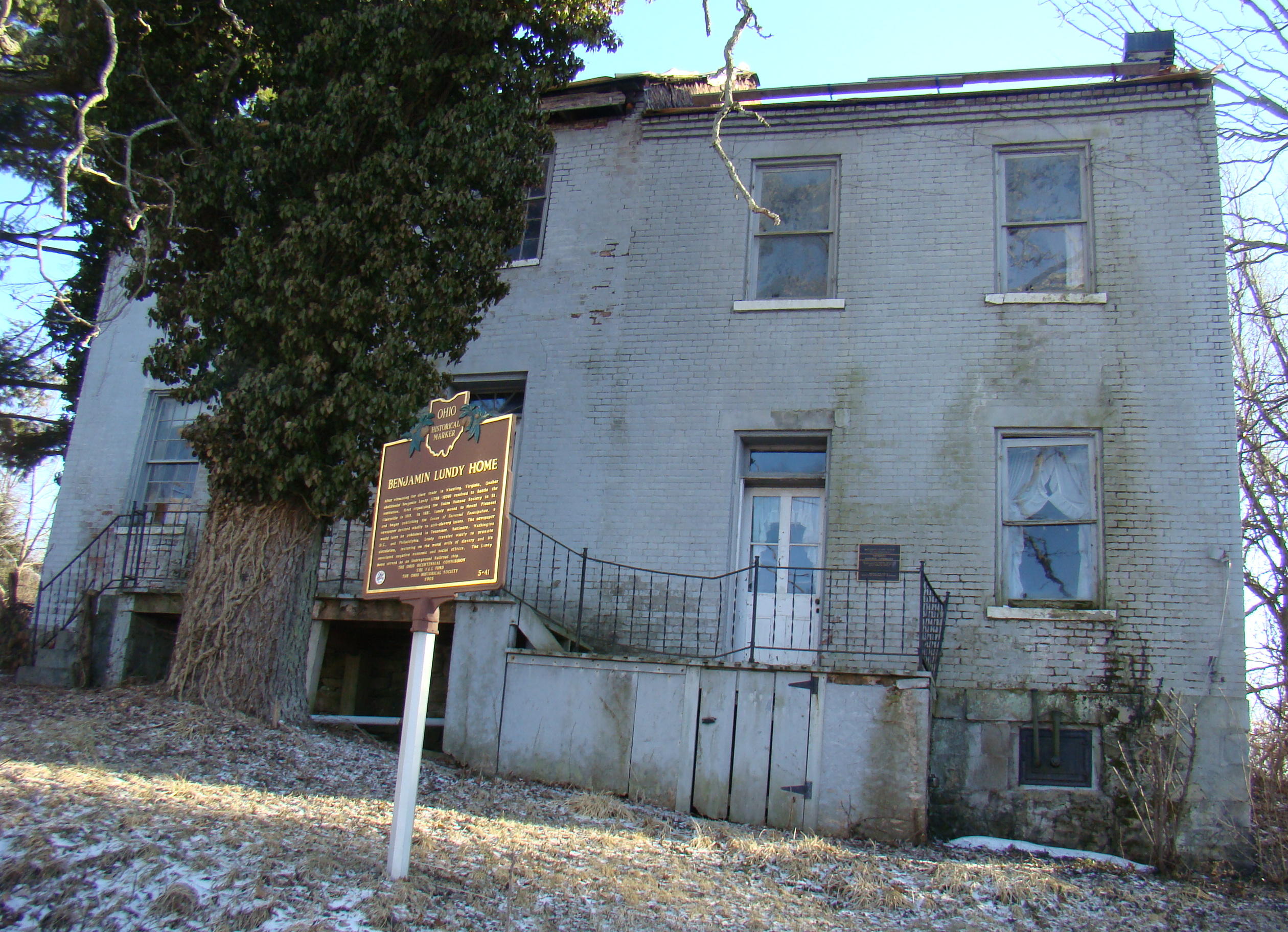
Benjamin Lundy Home

Benjamin Lundy Home

Much of the history of this small town relates to the settlement of abolitionists and their active anti-slavery movement. The entire community was an early safe haven for runaway slaves, even before the Civil War.

One of those Underground Railroad stops was the home of Benjamin Lundy, who desired to battle the institution of slavery in several ways. Moving to Mount Pleasant in 1821, he began publishing a paper called, Genius of Universal Emancipation, devoted entirely to anti-slavery issues. He traveled all over the country explaining the evils of slavery.

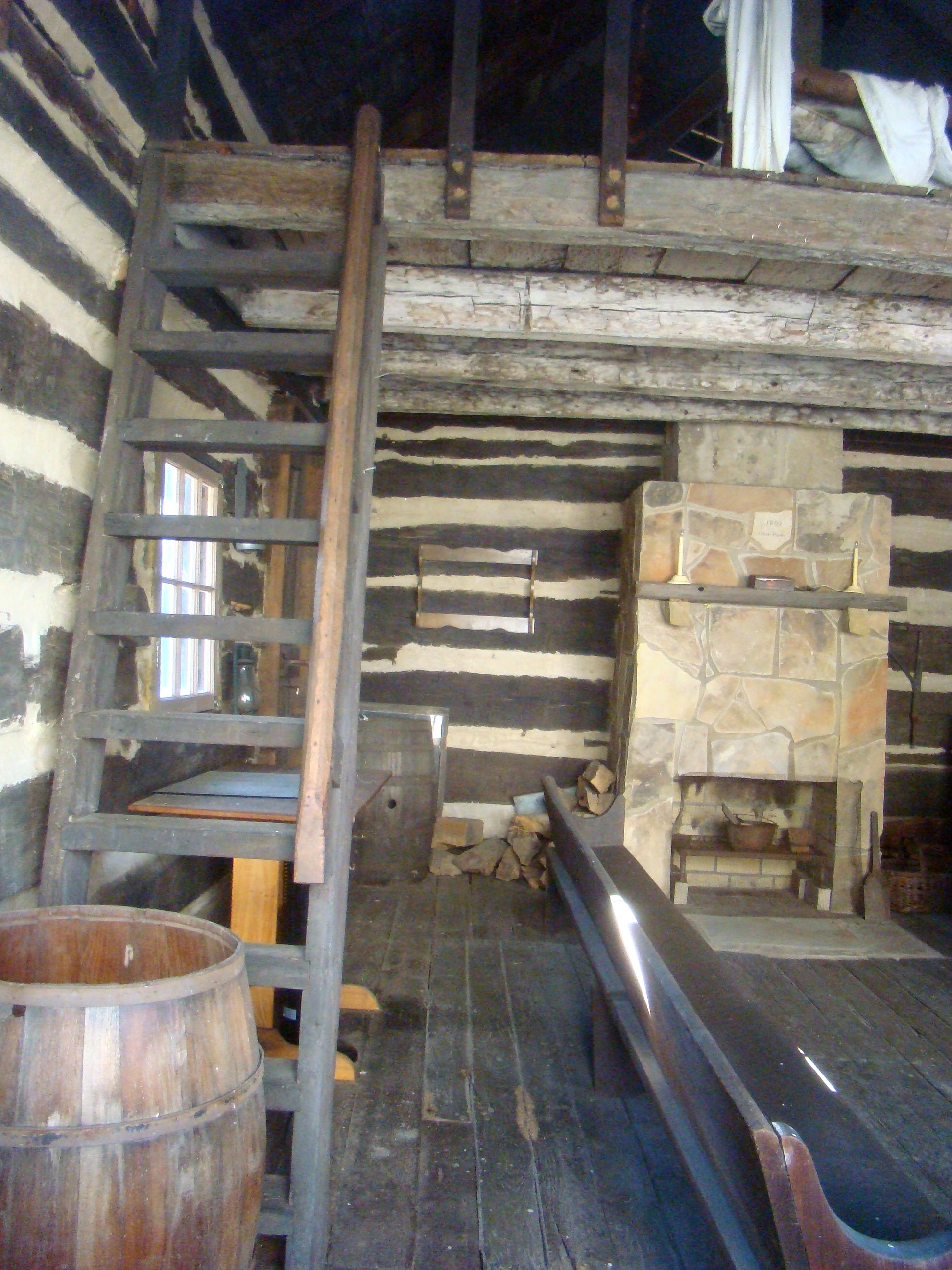
Harris-Bone Cabin through the front window

Harris-Bone Cabin through the front window

One of the early stores was the Harris-Bone Store built of logs in 1804. Today that store still stands on a prominent corner in Mount Pleasant attracting passers-by to stop and take a peek inside. During the summer months, tours are held, but otherwise you can still get a great look through the front windows.

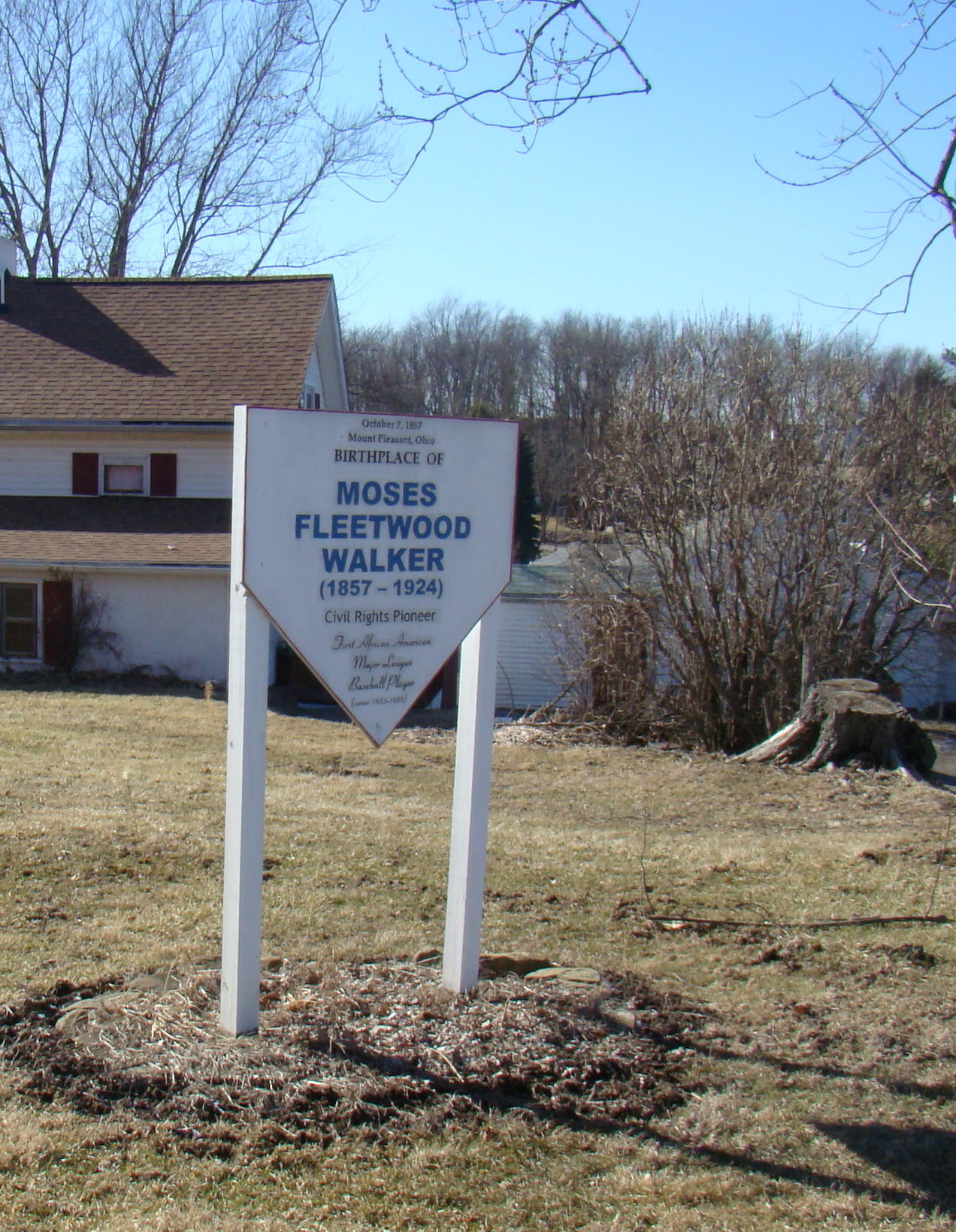
You wouldn’t really think about a small town like this having a famous personality, but it definitely did. Listen up baseball fans! Who was the first African-American Major League baseball player? Jackie Robinson? Not so! At the side of the log cabin store, a sign displays in large letters that this is the birthplace of Moses Fleetwood Walker, the first African-American to play in the American Association back in 1883.

Sign marking birthplace of Moses Fleetwood Walker

Sign marking birthplace of Moses Fleetwood Walker

Moses’ father, Dr. Moses W. Walker,  served as a medical doctor in western Pennsylvania prior to the Civil War. Upon moving to Mount Pleasant, Dr. Walker served as a minister at the Baptist Church and became instrumental in helping many slaves through the Underground Railroad. While the slaves were staying with him, they helped build the Walker family home.

“Fleet” possessed a rock arm in his position of catcher for Oberlin College, University of Michigan Law School and then the professional Toledo Blue Stockings. After a season of being scorned and jeered by opposing teams as well as his own teammates, Fleet returned to the minors after an injury. Following his baseball career, Walker attempted several business ventures: owning a hotel, movie theater and even an opera house in Cadiz, Ohio.

Just a short walk from the Harris-Bone Store can be found the “Hidden Gardens” of Pete and Jean Petra. Pete has a greenhouse in a section of his house and raises most of his plants. Every year he tries to have something new and interesting in his Garden, which basically surrounds his house and extends to an open lot nearby. Prepare to be surprised!

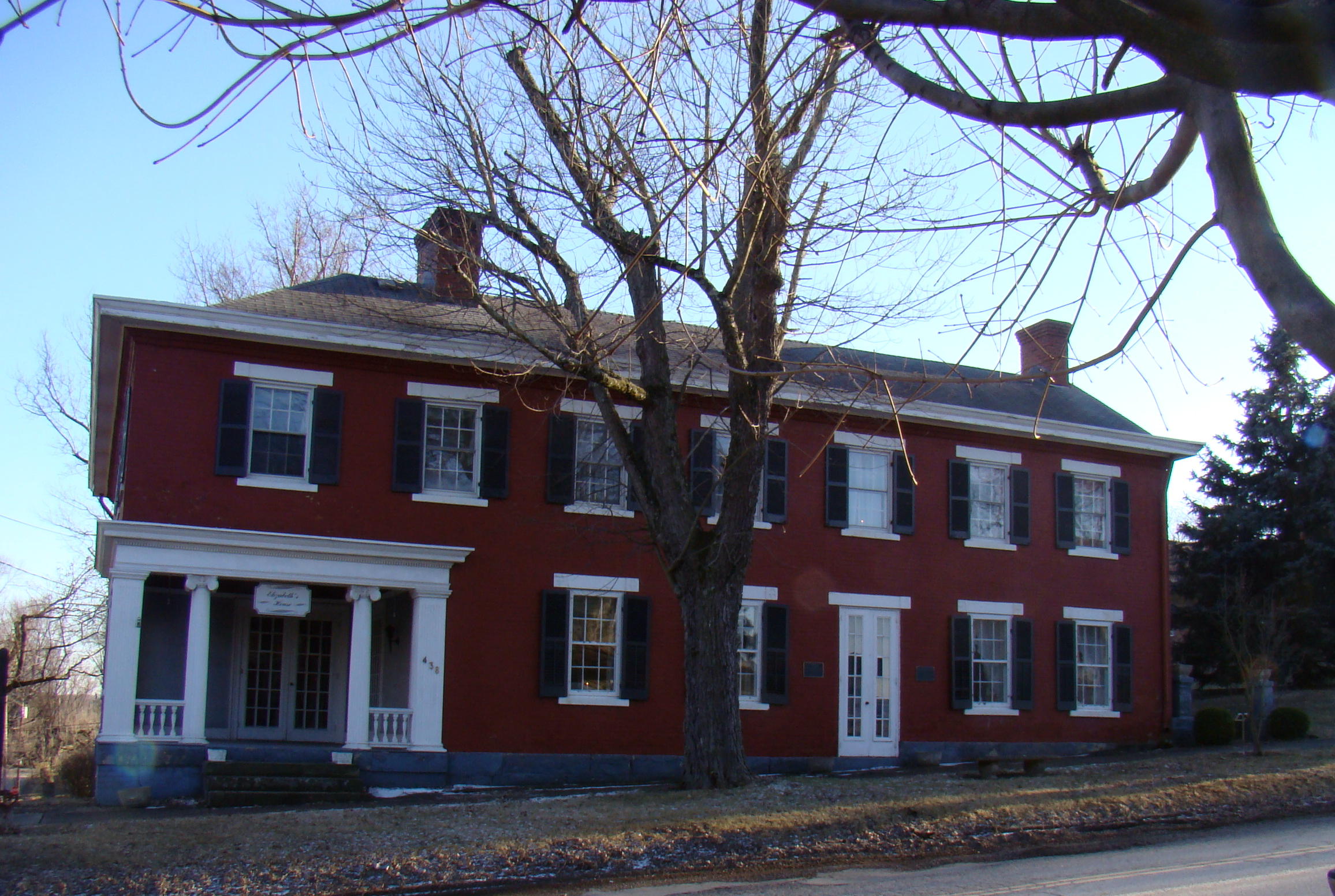
Elizabeth House

Elizabeth House Mansion

Another spot filled with memories of the past is the Elizabeth House Mansion, formerly the John Gill home built in 1835. Gill actually planted a mulberry tree here, then imported silkworms from China to perform their magic. In the 1800’s, this tree produced the silk for the first American flag ever made out of silk.

The first weekend in August is a perfect time to visit Mount Pleasant as at that time they give tours of the town and Pete and Jean’s  “Hidden Gardens” are at their peak. Climb aboard the Underground Railroad as you walk the streets of this friendly old town where the anti-salvery movement got an early start.

Mount Pleasant, Ohio is located on Scenic Byway State Route 150 in Southern Jefferson County. It can be reached most easily from I-70 by taking Exit 215 and following the curving, scenic route to the town.


Blowin’ in the Wind

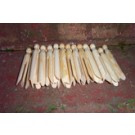
"Stick dolls" - aka clothespins

“Stick dolls” – aka clothespins

“Gran, I found some real, stick dolls.” Jenny ran into the room proudly carrying a flowered bag. “Can I play with them?” Five-year-old Jenny was spending the weekend with Gran for the first time ever, so she anxiously explored every nook and cranny of Gran’s house.

“Play with them for a while, but later you can help me use those stick dolls. Actually those are clothespins that I need when I wash clothes. Not many people use them anymore, but I still enjoy hanging my clothes outside to dry. Bring that bag with you and we can hang the clothes I just washed on the line outside.”

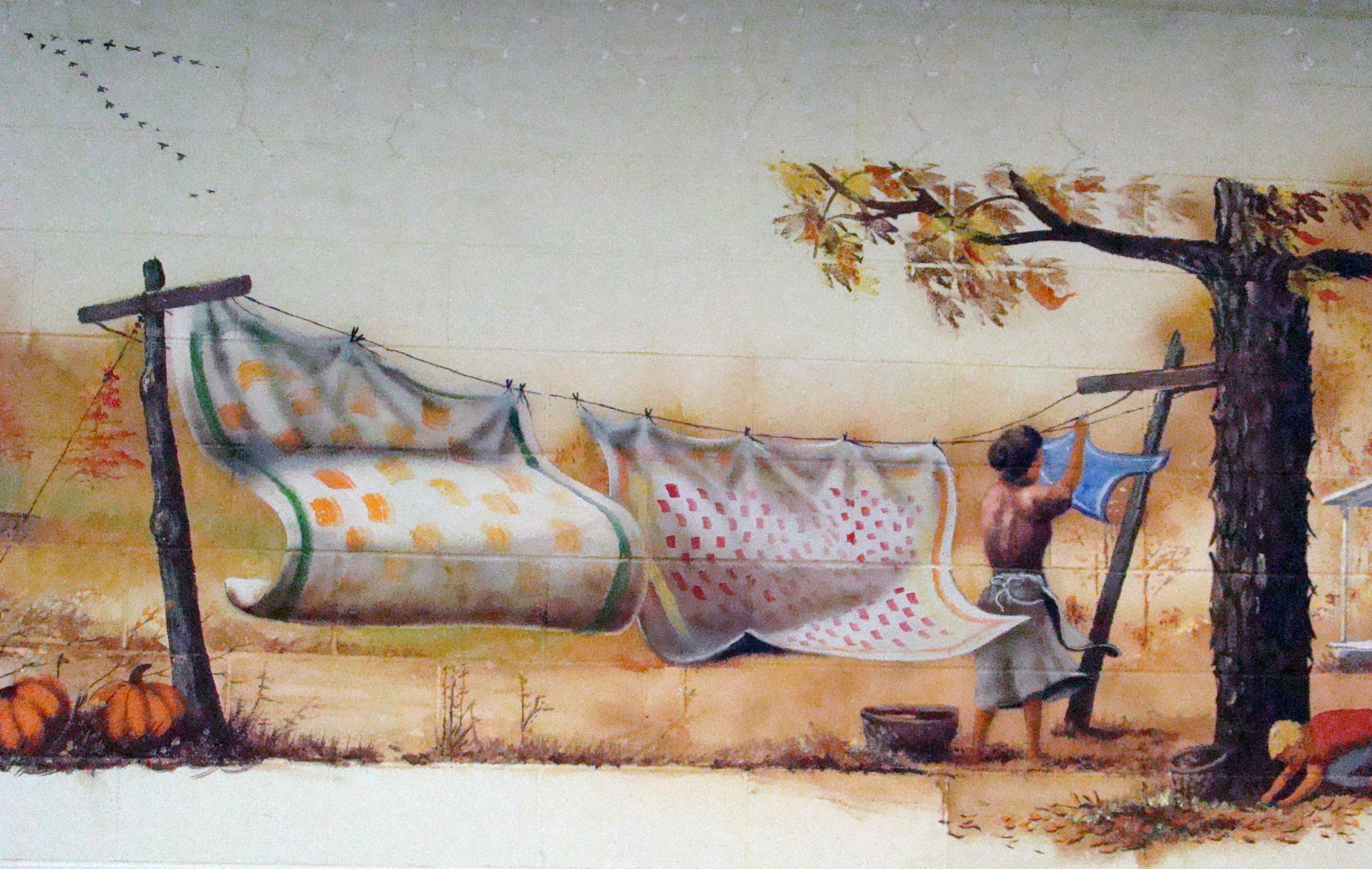
When they went outside, Gran first washed off the clothesline with a damp cloth. No sense in putting clean clothes on a dirty line. Then Gran showed Jenny how to put the clothes on the clothesline using the “stick dolls”. Jenny watched with fascination as she handed Gran clothespin after clothespin.

The clothes on the line told the neighbors a lot about the family. You could easily tell when a baby was born, how much the children were growing, and even if someone was sick.
Gran explained how she liked to hang the washing on the clothesline in order : whites, shirts, pants, and towels. Shirts needed to be hung by the bottoms and not the shoulders so they were easier to iron. If you had two lines, you always hung the quilts, sheets and towels on the outside line so the neighbors couldn’t see the underclothes blowing in the wind.

Mom hangs up clothes to dry. (Mural by C.M. Scott)

Mom hangs up clothes to dry. (Mural by C.M. Scott)

Once they pinned all the clothes on the line, Jenny’s questioning eyes looked at Gran,” Now, how do they get dry?”

“Well, Jenny, when we put a pole under the line to push it up higher, the wind will blow on them and make them dry. If we leave them out here for a little while, most of them should dry quickly.”

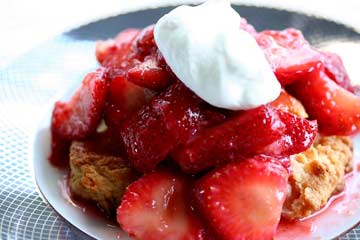
Strawberry Shortcake

Strawberry Shortcake

With that Jenny and Gran went back in the house and sat down at the kitchen table. There they enjoyed fresh strawberry shortcake with whipped topping. While they ate, they decorated a recipe holder for Jenny’s mom made with a plastic fork and spoon in a small flower pot filled with sand. It would soon be Mother’s Day, so Jenny felt proud to have something special for her mom.

After a while, Jenny said, “Do you think those clothes are dry yet?”

Since a gentle breeze had blown the clothes dry, Gran took the clothespins off and handed a couple shirts to Jenny so she could see how they dried. Jenny held them close and took a deep breath. “The wind must smell good because these shirts smell better than Snuggle. Drying clothes like this is hard work, Gran. Someone should give you a clothes dryer for Mother’s Day.”

Gran smiled and rolled her eyes, “Next time you’re over, I’ll show you how to use the washboard.”

Coming soon” A story about the history of the washboard and its many uses.


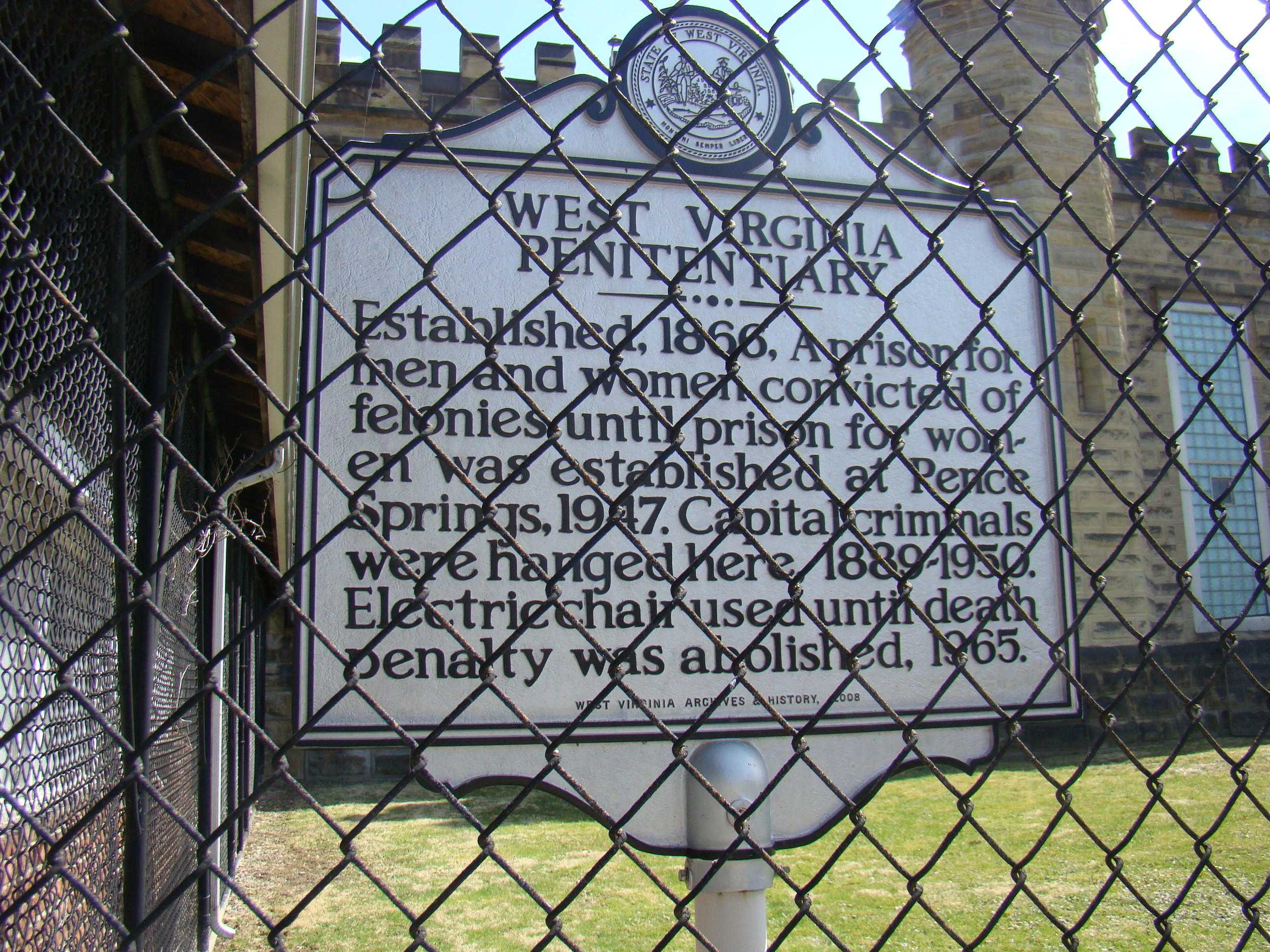
WV Penitentiary Welcome Sign

West Virginia Penitentiary Welcome Sign

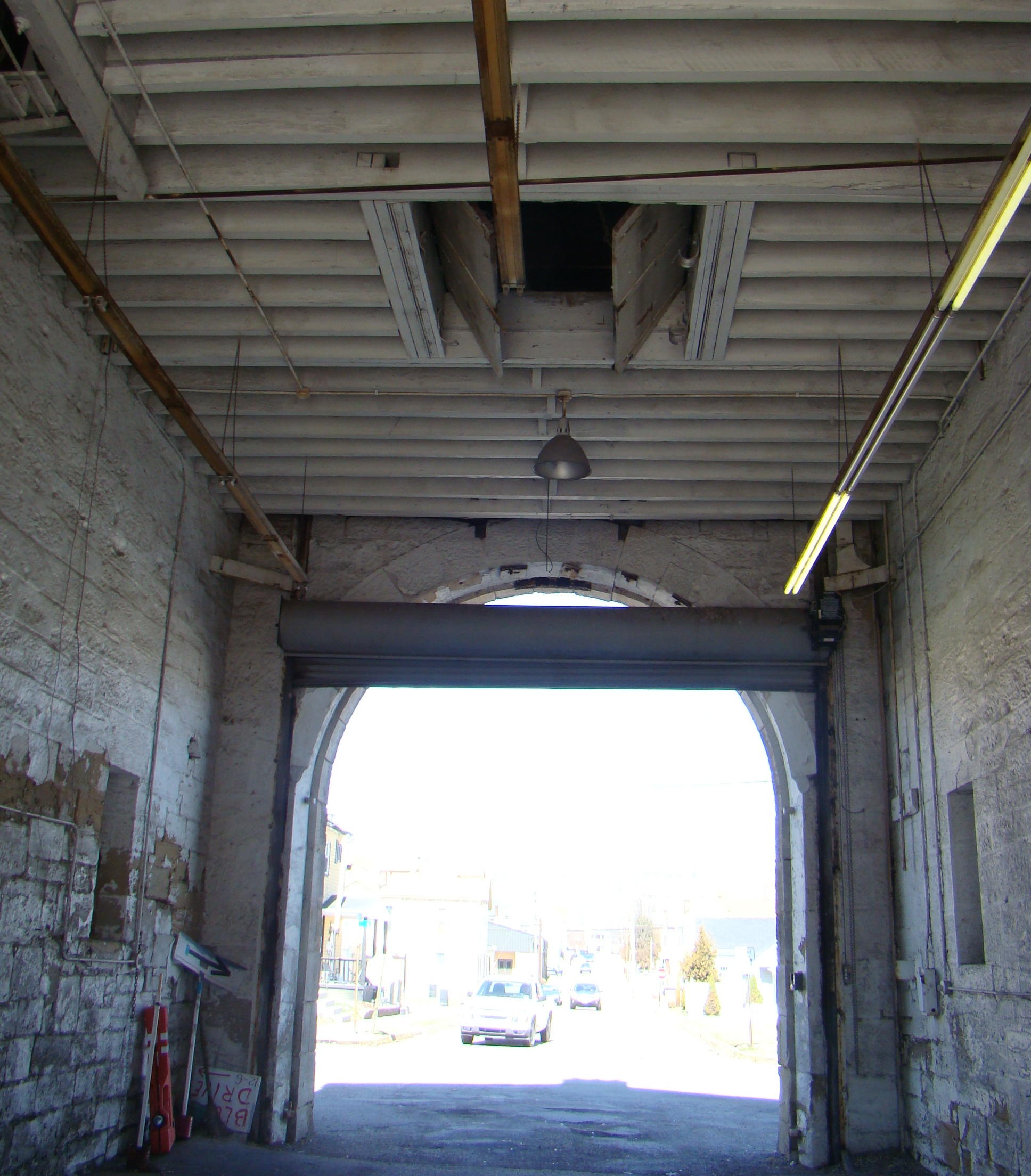
Welcome to a living hell! The most violent and vicious prison in the United States describes conditions at the original West Virginia Penitentiary in Moundsville, West Virginia. Maximum Security became home for the worst of those prisoners.

Hanging Gate where hangings occurred from the ceiling

Hanging Gate where hangings occurred from the ceiling

From 1866-1995, many deaths occurred within those prison walls. 9 prisoners died in the electric chair, 85 hung with a noose around their neck, and 998 documented murders occurred – two guards and the rest prisoners. Now you get a taste of their violence.

The most dangerous criminals were placed in The North Hall, called the Alamo.  The worst prisoners lived here twenty-two hours a day, because of their unpredictable behavior. On a daily basis, they were given one hour in the Bull Pen, where they could exercise in an area enclosed with stainless steel razor wire. They showered with lye soap and often cold water – once a week under supervision.

Being in their cells most of the day gave them time to plan. One Maximum Security prisoner actually used dental floss and toothpaste to cut through the bars on his cell door. Another seemed to have a longing to become a writer, as he wrote stories on the walls of his cell. His being in prison resulted from his murdering his girlfriend.

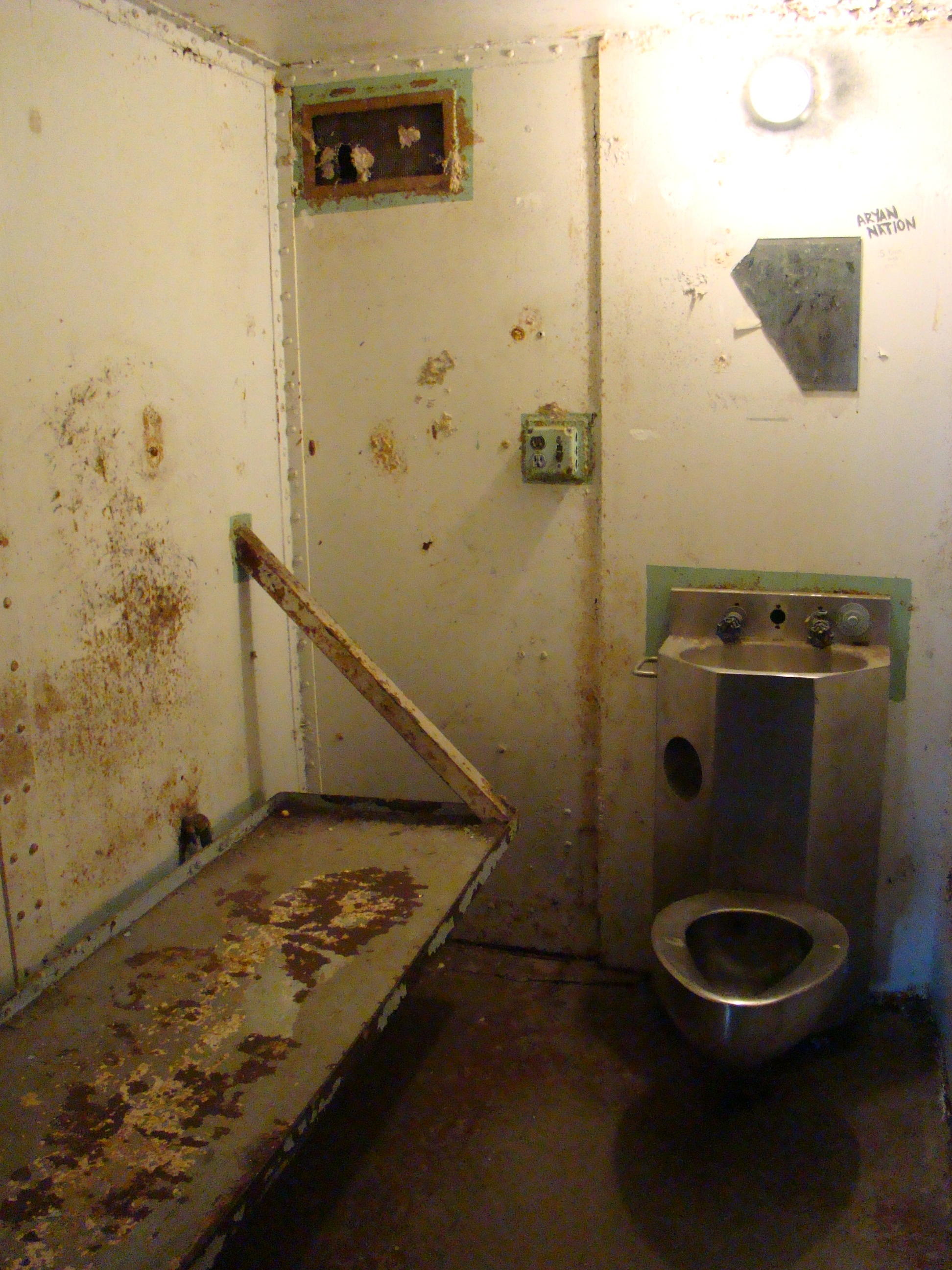
Comfort was not known in Maximum Security cells, but prisoners wouldn’t have been there if their crimes had not been vicious. These cells were not pleasant temperature-wise either, as the furnace couldn’t possibly heat the prison adequately, and air conditioning didn’t exist. That meant that in the winter, cells were often around forty degrees, while in the summer they could be a hundred and twenty. Walking through the halls today you get a chilling feeling of the cold, hostile people who resided there years ago.

Red Snyder's cell

Red Snyder’s cell

All the prisoners in Maximum Security always ate in their small cells, which measured 5’X7′. There was a small place through which the guard could place their meals on a  paper plate with plastic knife and spoon. Inside the cell was a bed hanging from the wall, a sink, and a toilet. The bed had a thin mattress and a small pillow.

Once in a while, a prisoner would get special privileges for good behavior. Such was the case with a couple Maximum Security trustees, who were allowed to work in the greenhouse. These model prisoners planned their escape carefully.
As they worked in the greenhouse, they dug a four foot high tunnel from the greenhouse under the prison wall, which was six feet at its base. They lined the walls of the tunnel with plywood used in the greenhouse. What did they do with the dirt? They put the dirt in bags marked PEAT MOSS. This was the last escape ever attempted from the orginal West Virginia Penitentiary and the culprits were eventually caught.

If all of this wasn’t bad enough, when a prisoner became uncontrollable, he was placed for thirty days in what they called The Hole.  The only thing in that hole was a bucket for bathroom purposes. These prisoners stayed there twenty-four hours a day on a dirt floor, with bread and water being sent down to them once a day. They obviously didn’t want to even be threatened with The Hole, a personal living hell.
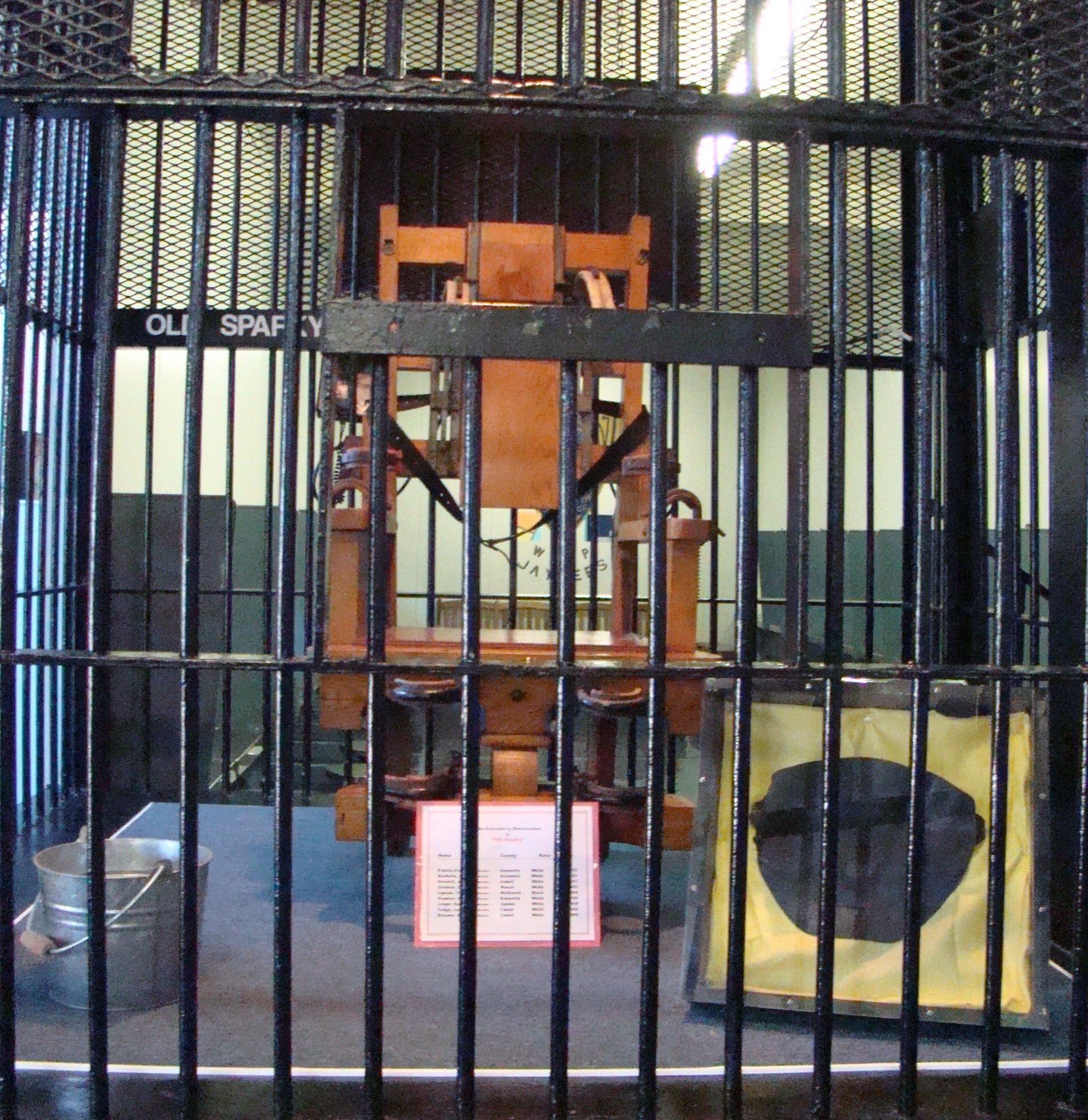
Old Sparky, the electric chair

Old Sparky, the electric chair made by a prisoner.

Of course, the worst punishment was Old Sparky, the electric chair built by a prisoner in 1950. No surprise, that prisoner had to be placed in protective custody. A leather bag dropped over the condemned person’s head as electricity in this chair went through the head first.

As you have read the conditions under which these prisoners lived, is it any wonder that the State of West Virginia decided to close this penitentiary due to abusive treatment of the prisoners? Could you have survived the imprisonment? Maybe you would like to take a tour and experience the tortured souls that remain inside.

West Virginia Penitentiary is located in Moundsville, West Virginia just ten miles south of Wheeling along the east bank of the beautiful Ohio River. From Wheeling, follow Route 2 into Moundsville. Turn left on 8th Street and after two blocks turn right onto Jefferson Ave. The penitentiary is on the left side of the street. You can’t miss it!


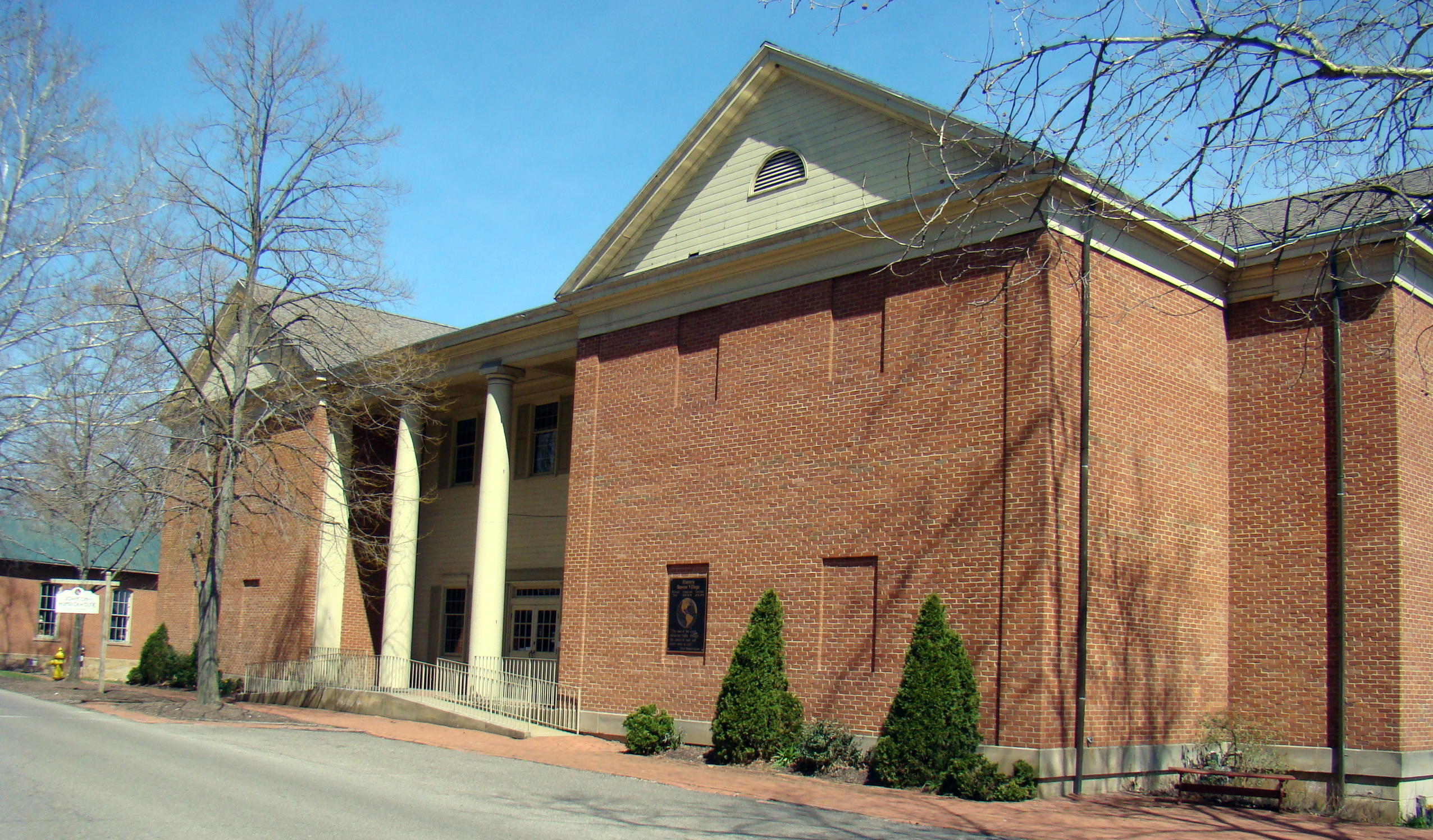
Johnson-Humerickhouse Museum

Johnson-Humrickhouse Museum in Roscoe Village, Coshocton, Ohio

Sometimes when visiting a place time after time, you miss a treasure right in its midst. Such was the case with Coshocton’s Roscoe Village, a favorite spot for festivals over the years. However, there at its edge, a beautiful brick structure, The Johnson-Humrickhouse Museum, overflows with unusual historic exhibits.

This actually had its start back in the mid-1800’s when two brothers, John and David Johnson, spent their childhood in Coshocton. In later years, these brothers traveled the world collecting artifacts from all the places they visited.

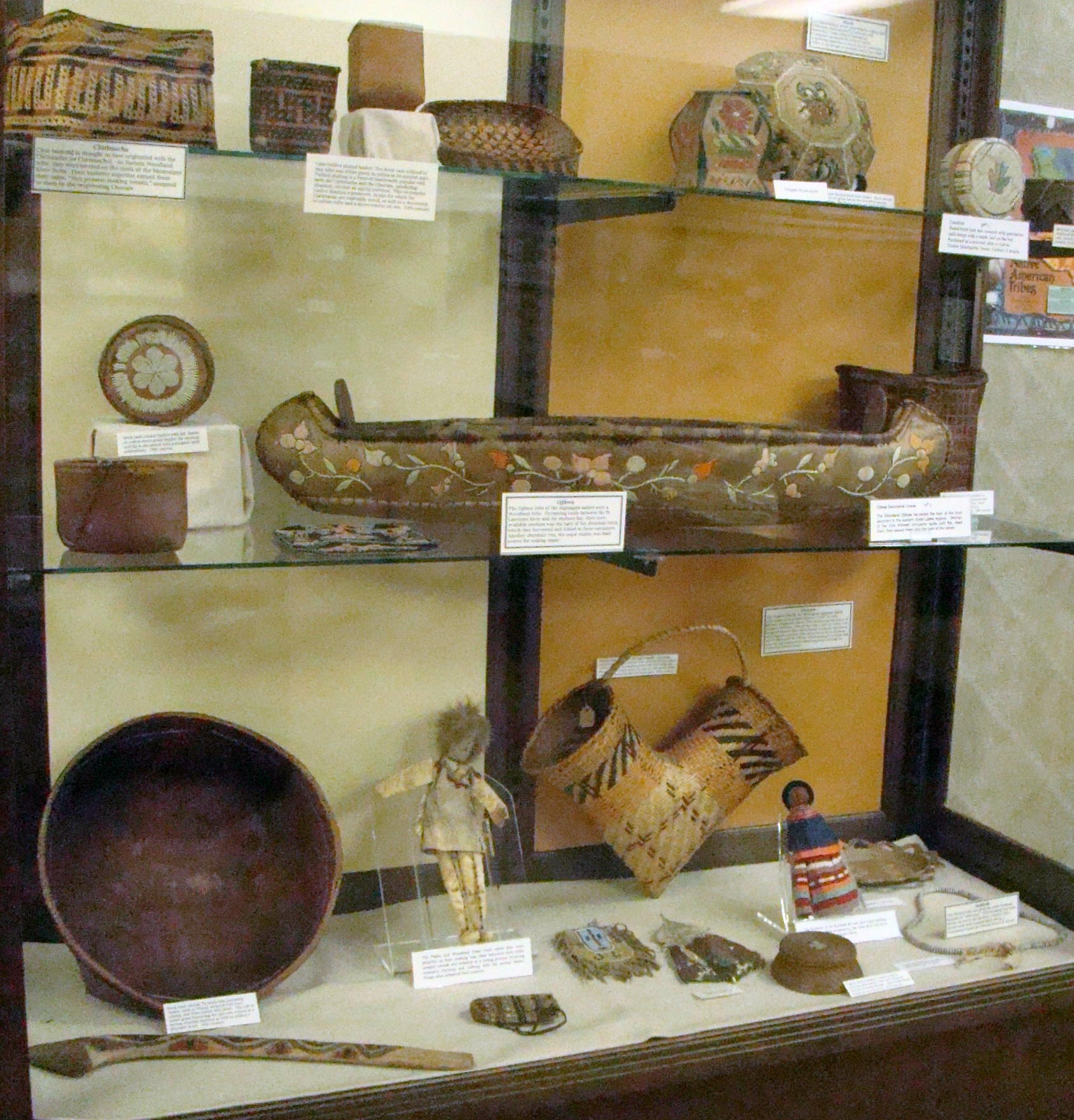
Indian woven artifacts and Kachina dolls

Indian woven artifacts and Kachina dolls

In 1931, the Johnson brothers gave 15,000 collected objects to their hometown with the stipulation that a museum would be established to honor their parents, Joseph Johnson and Mary Susan Humrickhouse. Thus, the Johnson-Humrickhouse Museum became a reality and has since added collections of other local residents. Displays frequently change because the museum has more artifacts than can be displayed at one time.

Two floors contain four main areas to explore: Native American, Ohio History, Coshocton Area Memorabilia, and The Asian Room. Each holds objects that are certain to lead you to recall memories of the past and even create a puzzle or two in your mind.

American Indian artifacts display natives’ skills at pottery, beadwork and basket weaving. These outstanding collections show not only local Native American handiwork but that of Indians throughout the United States. A large collection of kachina dolls, who hold a spiritual essence to the Indian tribes, and items used by the medicine men are a couple of the noteworthy displays.

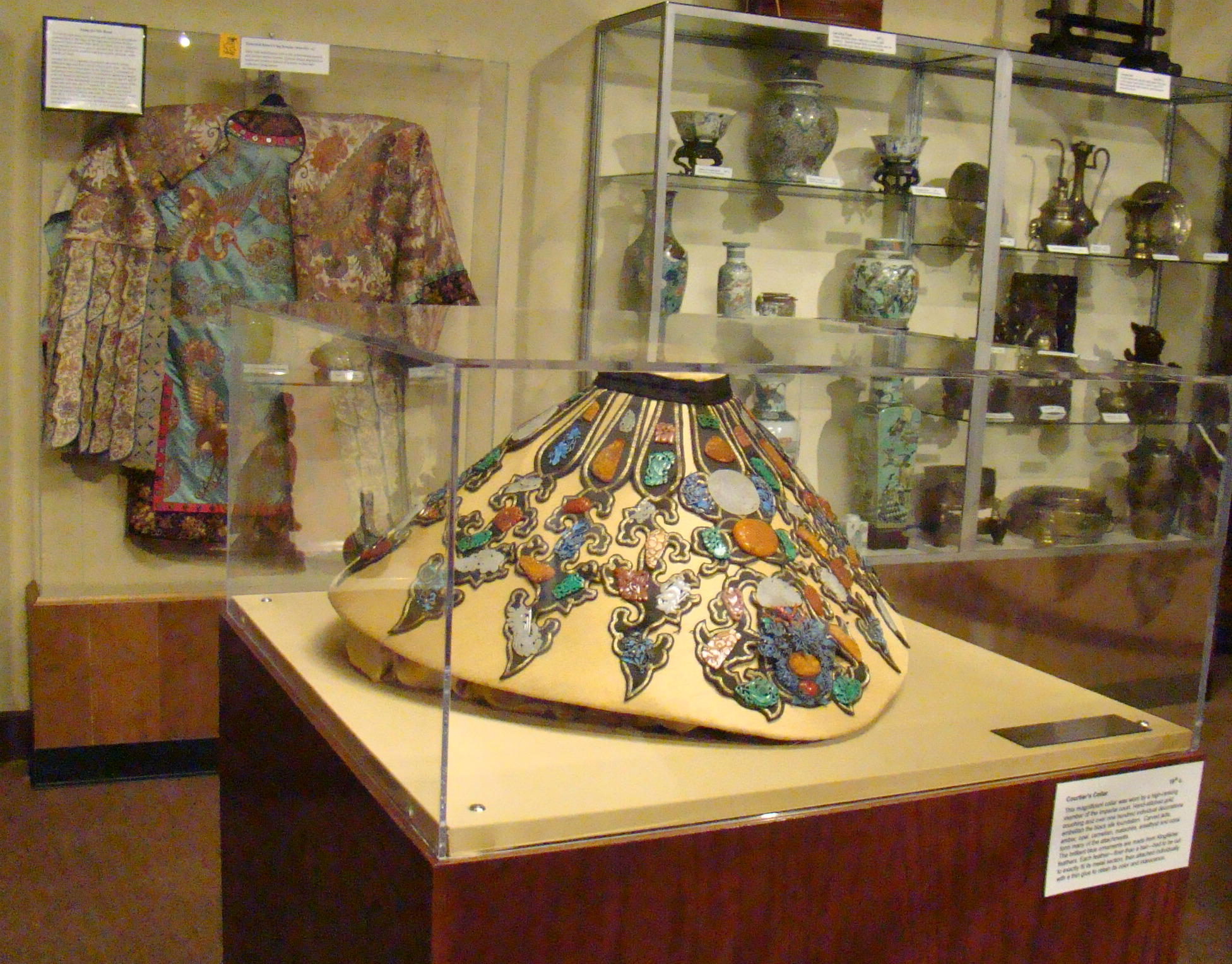
Chinese royalty collar with silk kimona and pottery in the background

Chinese royalty collar with Ch’ing silk theatrical robe and pottery in the background

An Asian Room contains both Japanese and Chinese treasures. A Japanese warrior in full dress protects that section of the room, while Buddha statues and kimonas express the Chinese traditions. A beautiful jeweled collar worn by a member of the Imperial Court contains over a hundred embellishments.

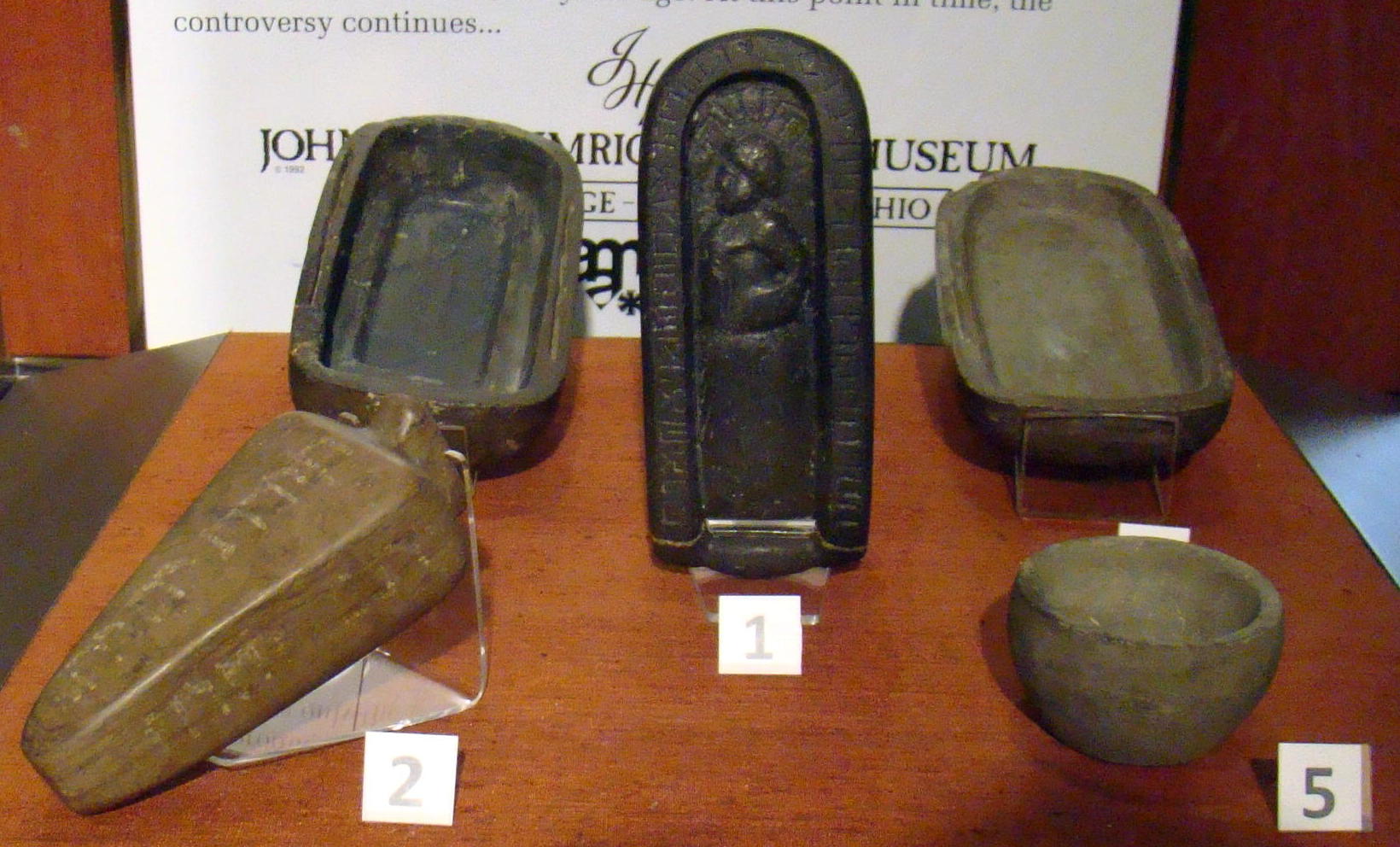
Controversial Newark Holy Stones

Controversial Newark Holy Stones

The Newark Holy Stones present a controversial subject as these objects were found in 1860 while excavating a mound in Newark, Ohio. The largest stone, the Decalogue Stone, appears to have Hebrew writing around its edges. Many link it to the Hopewell Indian culture, which existed there between 100 BC and 500 AD, while others are skeptical as to its origin.

Early pioneer cabin in Coshocton area

Early pioneer cabin in Coshocton area

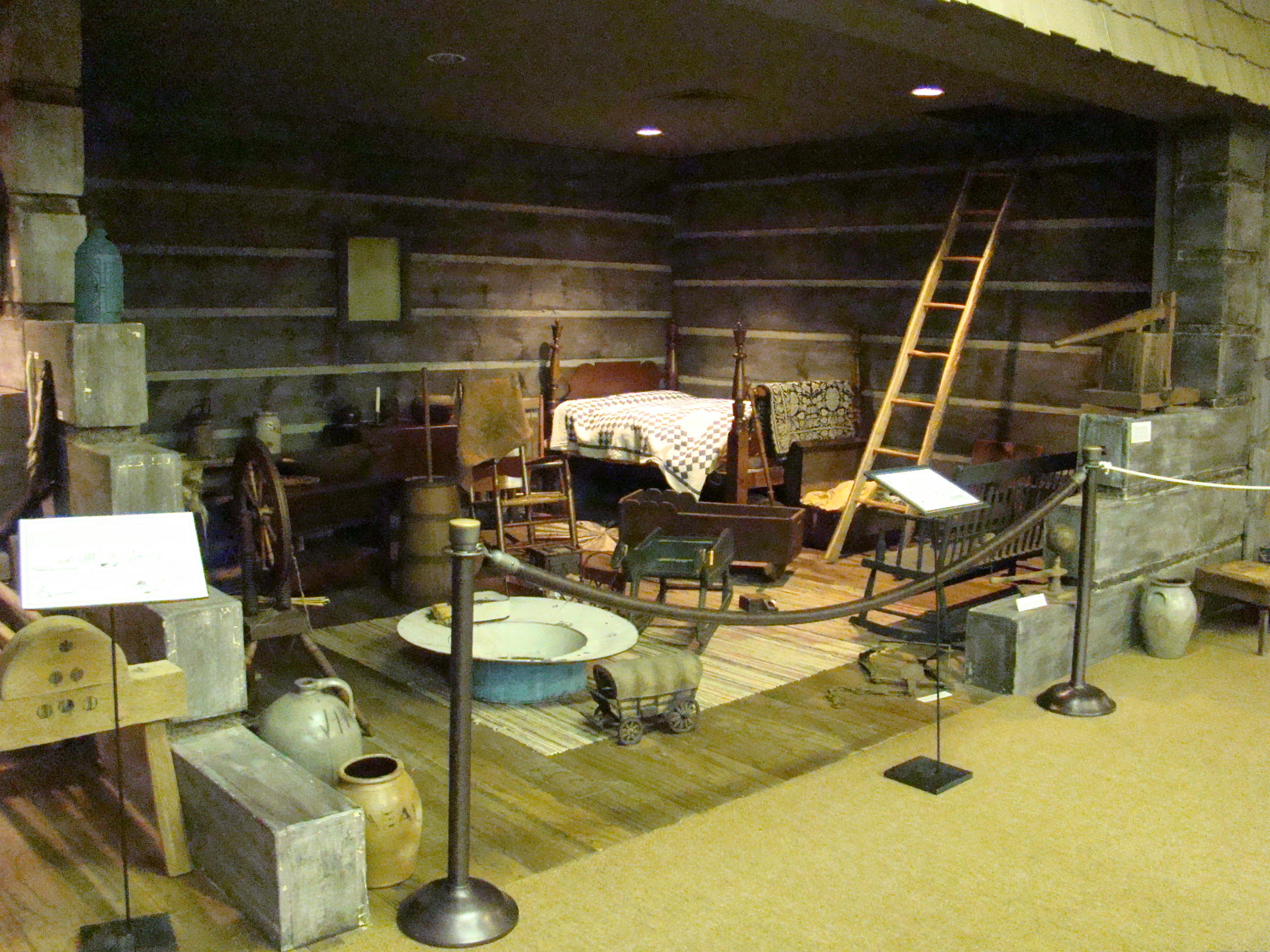
Much of the Historic Ohio Display has been donated by great-grandchildren of Nicholas Miller and Mary Darling, early Ohio pioneers. Nicholas came to the Coshocton area in 1802 with $36 and two axes. That first winter, Nicholas made his home in a cave with his dog. Then in 1806, the Darling family migrated to Ohio from Viriginia. 18 year-old Mary drove her family’s four-horse team pulling a covered wagon containing eleven brothers and sisters to settle in the Coshocton area.

Nicolas’ trade as surveyor provided him opportunity to purchase prime land with money that he earned. Therefore, when he married Mary Darling, they settled in the Coshocton area. Today a replica of the cave he slept in provides children a place to hide and pretend. Beside it, a cabin has been reconstructed similar to the one where Nicholas and Mary lived to raise their family.

As you can tell, there are displays here for various interests, and at a low admission price. Throughout the year, various speakers and workshops provide a variety of subjects for area residents. Visit this treasure filled museum that isn’t far from home. While you are there, step back in time and stroll the brick streets of historic Roscoe Village.

Johnson-Humrickhouse Museum is located in  Roscoe Village near the south end at 300 N Whitewoman Street, Coshocton, Ohio.  From Ohio 83, exit onto North Whitewoman Street and follow it through Roscoe Village. The museum will be at the south end on the left hand side.