Places to go and things to see by Gypsy Bev

Posts tagged ‘Civil War’

Civil War Encampment Days Beyond the Skirmish

Will the Yanks run the Rebels out of town? Reenactors lined the streets of McConnelsville, Ohio for their 25th Annual Civil War Encampment Days, Ohio’s longest consecutive running reenactment.  What a great place to observe the living history of the Civil War.

Everyone dressed in period costume in the soldier camps seemed eager to discuss their life style, and patiently answered all questions.  Their canvas tents provided great cover from rain storms.  However, they reminded those in attendance that it was important not to touch the canvas with your fingers during a rain.  Seems the oil on your fingers would make the canvas leak. Rains were important for their War Gardens, which provided food for the army as well as land owners.

Since death was frequently a visitor during this time, ladies told about the cemeteries where they often held picnics. Union stones were flat so you might sit on them, but the Confederate stones had a pointed top so “Yankees” couldn’t sit on their tombstones. The ladies also mentioned that black wreaths were hung on doors when someone died as a notice of death, since it was the only method of letting the neighbors know.
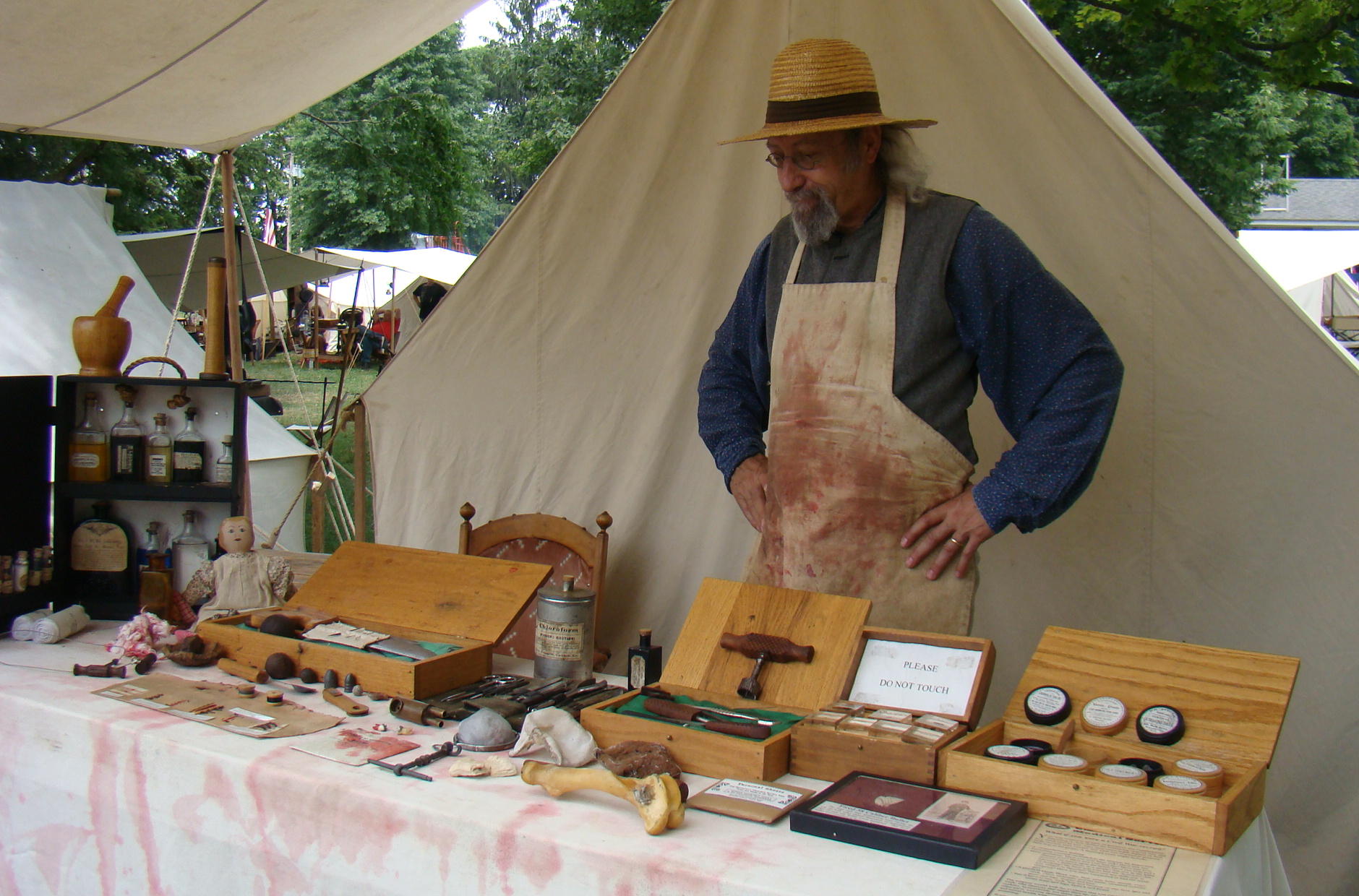
Many medical treatments were explained by the blood stained Head Surgeon of the Confederate regiment. When asked what might be used to help a headache, the major informed visitors that opium would be used if it was severe, while a relaxing morphine or sassafras would be used  for minor headaches. If the headache was too bad, they would just bore a hole in the head to release the evil spirits. Upset stomachs were treated with licorice or ketchup, and beef extract provided a soothing soup for many ailments. They even had a hollow doll that was used to smuggle medicine through the opposing lines.  Later in the afternoon at the field hospital, the surgeon cured a case of gangrene and subsequent blood poisoning by sawing off the leg of the victim.

Walked down to the Courthouse for “Squirmish on the Square”, where a staged battle occurred between soldiers from the North and South. Much ceremony was involved in the presentation of the battle both before and afterwards. There was even a bit of humor thrown in as they robbed a Wells Fargo box and then blew it up. The closing ceremony showed soldiers from both sides presenting arms, taps were played and a wreath was placed on the Civil War Private monument standing in the center of Main Street.  The base of this monument is made of stone from Gettysburg and the Gettysburg Address is engraved on one side of the monument.

After a hot afternoon on the square, it was time for a drink. As Yosemite Sam would have said, “Sasparilly, and make it snappy!” Sarsaparillo was a popular drink of the Civil War era and a cold bottle hit the spot.  Made from sarsaparilla roots, this drink is  called “The Granddaddy of All Root Beers”.  Originally the bitter root brew was used for medicinal purposes treating digestive problems, but later sugar water was added to make it more palatable. ..and a soft drink was born.
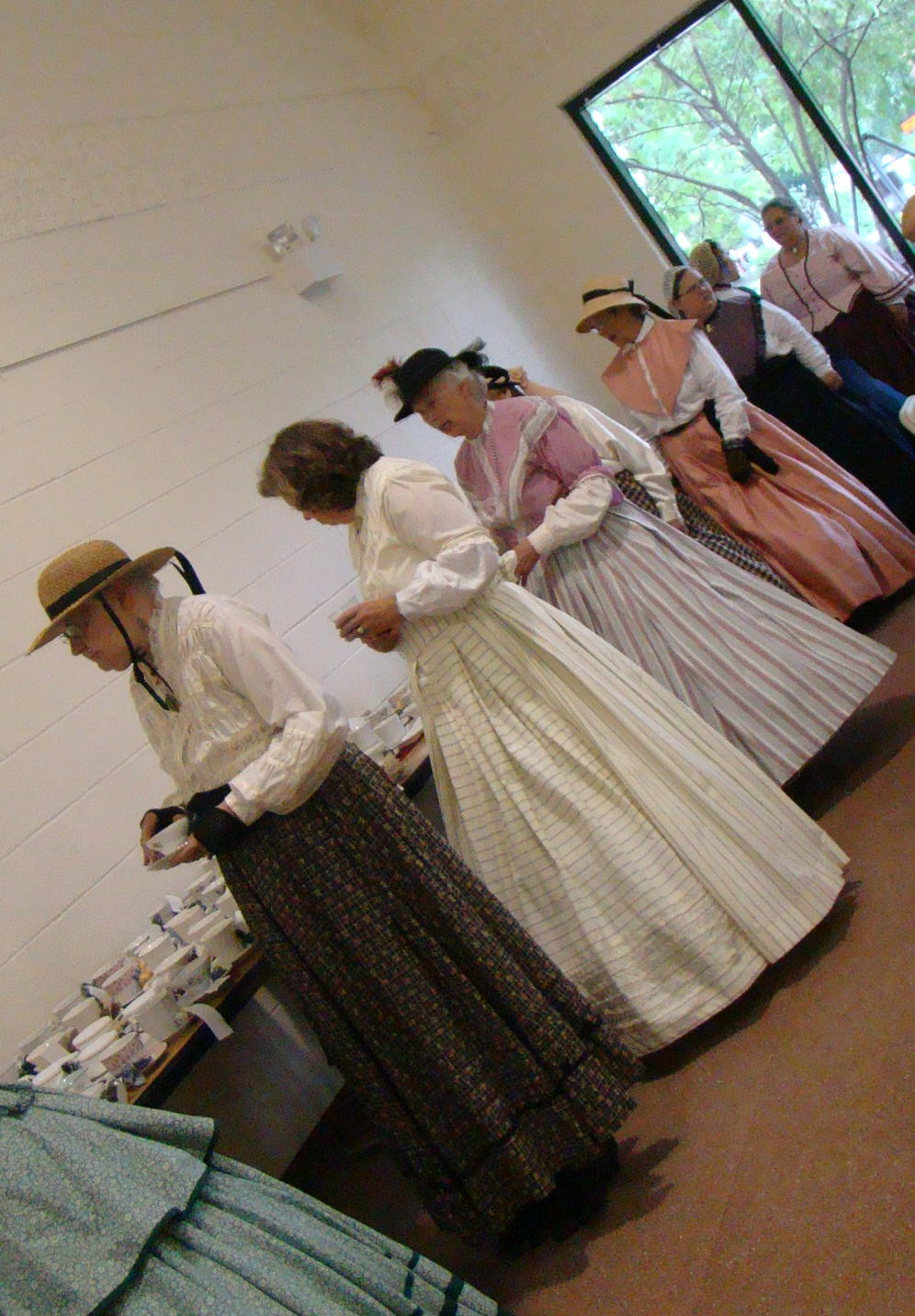
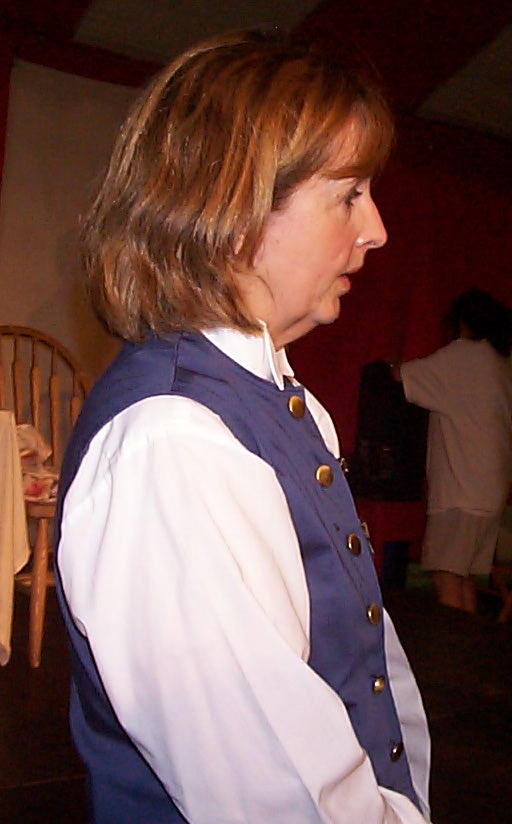
Ladies’ Tea was served amid beautiful hooped gowns and lovely flowered hats. Cucumber sandwiches, fresh fruit, and small cakes were part of the traditional menu. After tea, Verna Owens of St Mary’s, West Virginia told tea drinkers about Women During the War…from the Confederate viewpoint. Her leader was President Jefferson Davis, who had his Confederate White House at Richmond.

She described the proper dress and manners for a Southern lady, who always carried a parasol and wore a hat.  Her cooling fan accomplished an additional task as a means of expressing her thoughts without saying a word.  For example a fan closed in a snap meant she was angry with what was being said, while fanning quickly might mean she couldn’t believe what was happening, or as we might say, “Oh, my!” Many toys of the time were explained and on display. Quiet dolls for church were made out of handkerchiefs, and there was a cow’s jaw for musical entertainment. When soldiers were leaving for battle they gave their sweethearts a tear bottle to collect their tears while they were gone.  Upon their return, they hoped to find it at least half full. Verna closed by saying one truth learned from the war was that we definitely should learn to get along.

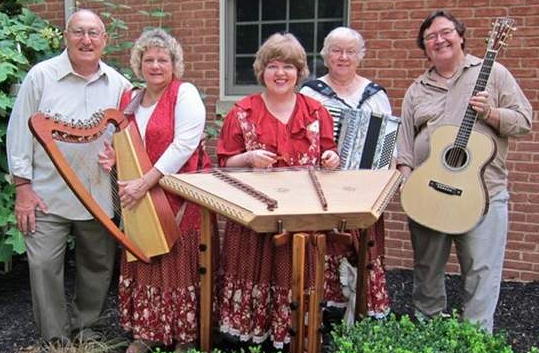
In the evening, a Civil War Ball captured the beauty that sometimes appears in the midst of turmoil. Ladies were dressed in their finest, but few hats were worn to the ball…just ribbons or flowers in their hair. Some men wore their uniforms while others were dressed in their best tailcoat. Dancers swirled around the floor doing The Promenade, Waltz, Virginia Reel, and Patty Cake Polka with music provided by Back Porch Swing Band.  What a great ending to a Civil War Day.

This particular Civil War Encampment occurred in McConnelsville, Ohio which is just South of Zanesville, Ohio on Route 669 following the beautiful Muskingum River.  Located riverside just north of town is The Boondocks, one of Ohio’s best small-town eateries being featured in many magazines across the state. Their specialties are their award winning BBQ as well as their great and friendly service.  Could be worth a Sunday drive for a nice meal even if there isn’t an encampment happening!
Abraham Lincoln

“Lincoln and Liberty,” the song Abraham Lincoln used in his campaign for presidency, opened a fun filled evening on the final night of Coshocton’s Bi-Centennial Chautauqua celebration.  Wildwood & Friends got the crowd in the mood with several Civil War era songs, including what they said was Abraham Lincoln’s favorite song, “Old Hundredth,” although some say it was “Dixie.”

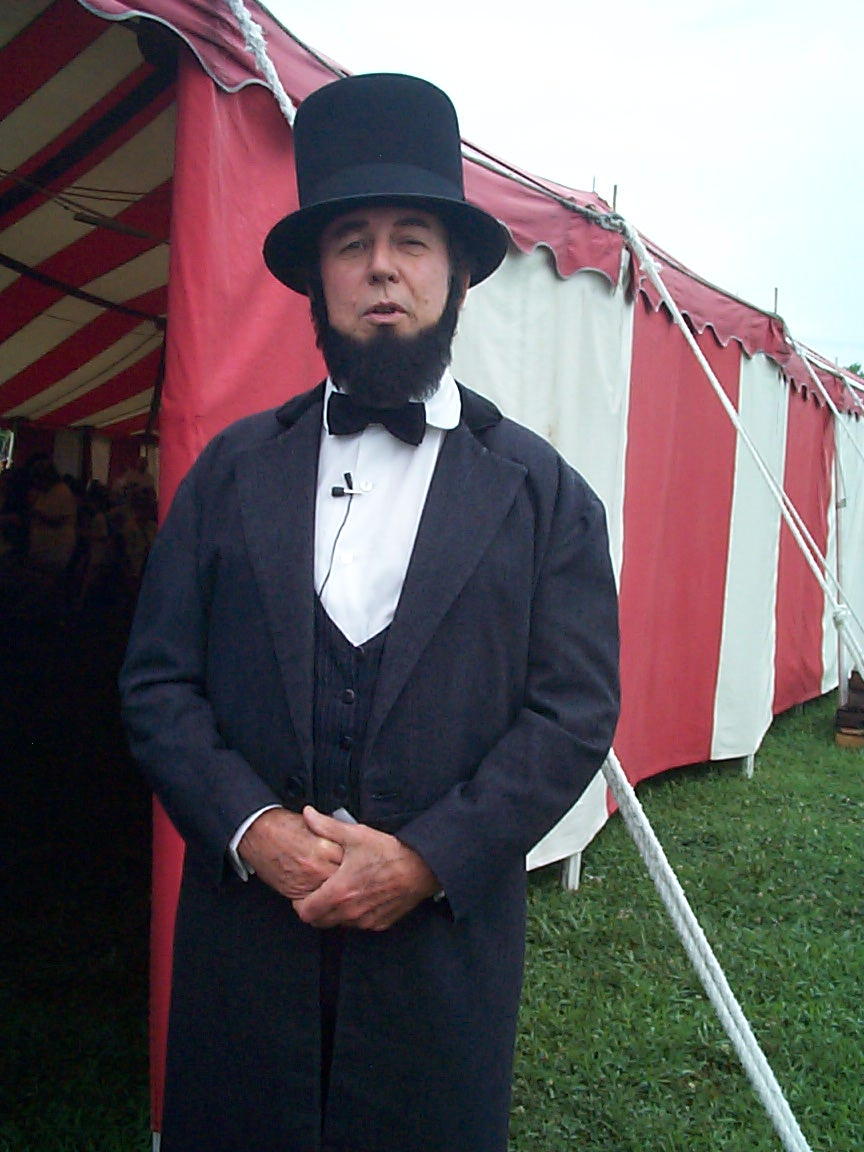
When the easily recognized figure of Abraham Lincoln appeared, complete with top hat, he was greeted with a standing ovation. Dr. Richard Johnson, Professor Emeritus at California State Polytechnic University, became for the evening a very believable Abraham Lincoln.

“That reminds me of a story..” was an oft repeated phrase throughout his presentation as he fulfilled his reputation for humorous tales.  His first joke was told similar to this, although the exact words were not recorded:

In Washington D.C., they say that I am the homeliest person they have ever seen. This reminds me of a story…a woman I met once told me, “You are the ugliest man I have ever seen.”  To which I replied, “I can’t help it.” The woman then said, “You could stay home.”

The Republican party chose Abraham Lincoln as their candidate for president because he was a great spokesman and a moderate candidate, who they felt could get a lot of votes.

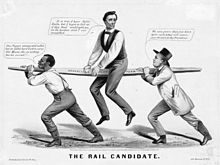
As the Rail Candidate, Abraham Lincoln’s candidacy was depicted as being held up by the slavery issue. In this cartoon characterization, Lincoln says, “It is true I have split Rails, but I begin to feel as if  this rail would split me.  It’s the hardest stick I ever straddled.”  The black man complains, “Dis Nigger strong and willin’ but its awful hard work to carry Old Massa Abe on nothing but dis ere rail!”  One of Lincoln’s foremost supporters in the Northeast, Greeley here assures him, “We can prove that you have split rails and that will ensure your election to the Presidency.”

During his election campaign, an eleven year old girl wrote to Mr Lincoln stating that she felt he would look much better with whiskers.  Lincoln answered her letter but made no promises; however, shortly thereafter began growing his beard, which is a familiar part of his image everyone recognizes today.

His wife and sons played important roles in Lincoln’s life.  Mary, his wife, was an ally in Springfield, but in D.C. was not a good advisor.  This perhaps due to the death of their son, Willie, which devastated Mary.  At this point she attempted to gain comfort from spiritualists and even conducted seances in the White House.

Lincoln felt the Civil War was worth fighting to protect future children and give them a chance to make something of themselves.  The government at that time and their sacrifices made this possible.  He called out for freedom in the land, and proclaimed that “We must come back together.”

The evening under the Chautauqua banner would not have been complete without the now famous Gettysburg Address, which received another standing ovation.  Later Lincoln said that he composed it in no more than seventeen days, and was actually still working on it when it was delivered.

His career advice to those entering the legal profession seemed very practical:    Try to be an honest lawyer.                                                                                                            Be honest in what you do.                                                                                                              Be respectful of others.                                                                                                                     Help them when you can.

Very simple advice, but still a wise lesson for us to follow today… as it was for Honest Abe.

Every summer the Ohio Humanities Council in conjunction with Ohio State University’s Humanities Institute provides compelling first person historical portrayals around the state of Ohio.  Tune in again next summer for another exciting line-up of influential figures in our country’s history.

Original New Woman of the Civil War Era at Coshocton Chautauqua

Sitting by the roadside on a summer’s day                                                                   Chatting with my mess-mates, passing time away                                                           Lying in the shadows underneath the trees                                                                        Goodness, how delicious, eating goober peas.

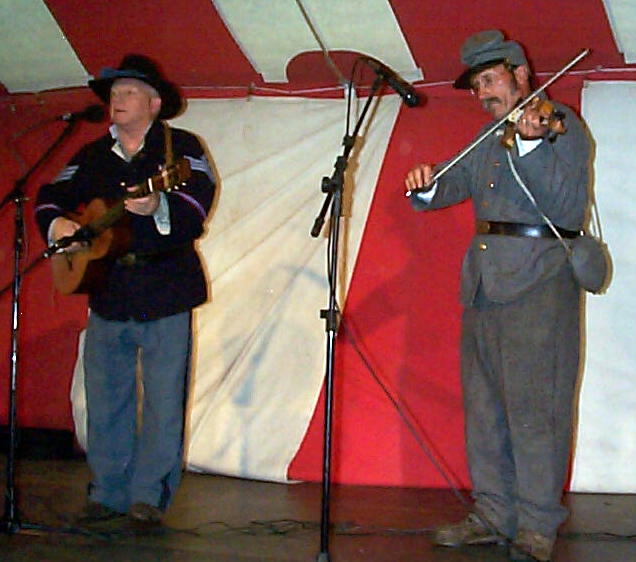
Under the Chautauqua tent in Coshocton, Ohio, music of the Civil War entertained the crowd. Performed by Steve Ball and Larry Stahl, “Goober Peas” was one of the most popular and silliest songs of that era.  Not only did they sing such old popular songs as “Rally Round the Flag,” and the most popular love song of the day, “Lorena,” but they gave a short history of each song. This  made for an interesting introduction to the 2011 Chautauqua Civil War evening.

Guts, determination, and lots of humor described Dr Mary Edwards Walker as she was indeed a Civil War female activist. Debra Edwards Conner, a native of nearby Cambridge, gave an outstanding performance in the role of Dr Walker. The crowd under the tent, gave her their undivided attention at the Coshocton Bi-Centennial celebration.

As a graduate of Syracuse Medical College in 1853, Mary headed to Washington to assist with the wounded of the Civil War.  Cots were set up in the halls of the US Capitol and even amid the exhibits of the US Patent Office, where Mary eventually worked as an unpaid volunteer.  Her request for a commission was denied as they felt a woman’s brain was too small to remember medical knowledge.

Medical care was not high on the list of priorities for the military at that time as noted when one general said, “If all doctors sank in the ocean, it would be better for mankind and worse for the fish.” Death surrounded her as filth accumulated everywhere from improper disposal of waste. Two thirds of the deaths were from Tennessee Quick Step…dysentery. While little equipment was provided, there was a blade for amputations. During the course of the war, Dr Walker said three fourths of nearly 39,000 amputees survived. Using a chloroform soaked rag for anesthetic, it took three minutes to amputate, stitch the wound closed with cotton thread, and then wait for infection.

Mary persisted in her quest for a commission with the Army even after the medical board said she did not have adequate knowledge or training. Finally, General George Thomas, commander of the Army of the Cumberland, made a landmark decision and hired Mary Walker as the first woman doctor in the US Army.  General Thomas said, “It would be easier to take the capitol at Richmond, than to argue with Dr Mary Walker.”

Accused of spying by the Confederates while on a medical mission, Mary spent four months in Castle Thunder Prison. There she slept on the floor on a bed of straw in a room overrun with rats. Maggots usually crawled in their infested food supply. They were served” Lincoln coffee,” wood splinters boiled in water. When released from prison in exchange for a Confederate surgeon, she weighed 69 pounds.  Her health and eyesight deteriorated greatly during this prison time.

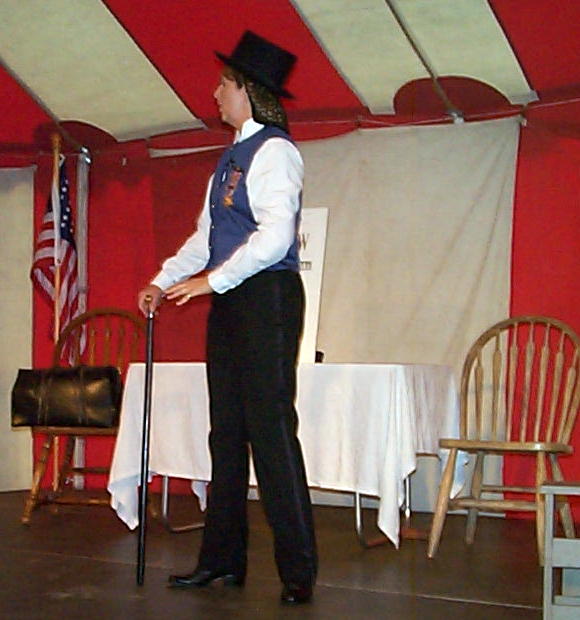
After the war, Mary always needed money desperately with only $8.50 a month in pension. So she donned a top hat and trousers and lectured regarding women’s rights. A lifelong advocate of freedom for women, when she married right out of college, Mary refused to use the word”‘obey” in the ceremony. She would not take her husband’s name, and even wore trousers to the wedding. Needless to say, this marriage did not last long, and afterwards Mary always referred to him as “that vile man.” When lecture opportunities disappeared, she was reduced to giving lectures at carnivals and dime museums. This was in her words, “A show for the poor where I could speak to keen minds with empty pockets.”

After the war, she was honored as the first and only woman to have ever received the Congressional Medal of Honor…and that honor stands to this day. At one point in 1917, the medal was rescinded by the government saying that it should only be given to those engaged in actual combat. The determined Dr Walker refused to give them back the medal.  Instead she made herself a uniform, promoted herself to major, and wore the medal proudly wherever she went. However, Jimmy Carter in 1977 restored Walker’s Medal of Honor.

Dr Mary Walker was indeed a trailblazer for women’s rights and certainly deserved the title of “Original New Woman” for her profession and dedication during the time of the Civil War.  The word “obey”  never appeared  in her vocabulary.


Harriet Tubman Delights Audience at Coshocton Chautauqua

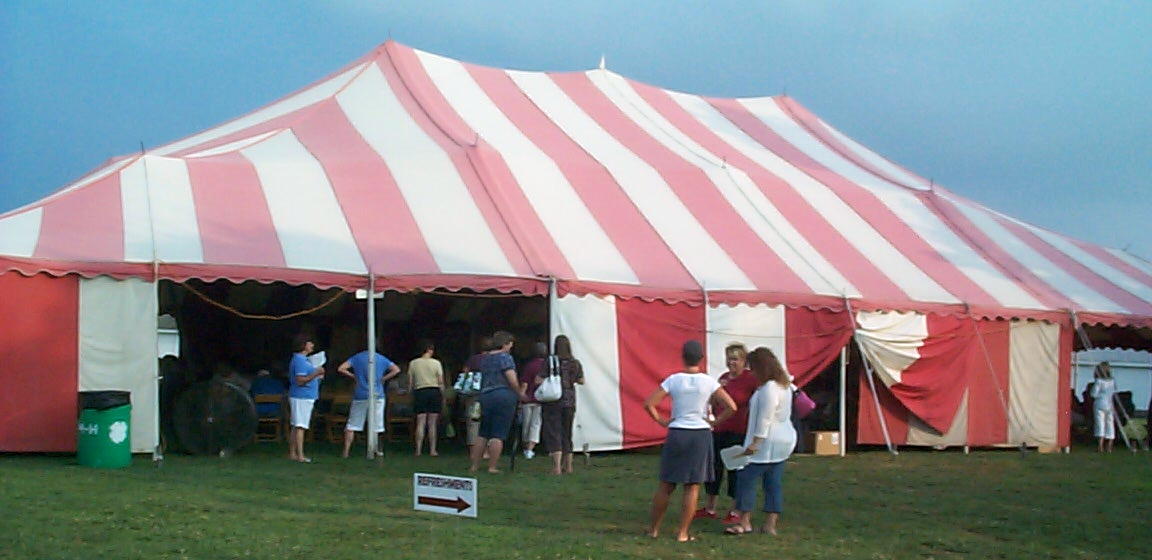
“I didn’t think all you Yankees would show up,” quipped Harriet Tubman as she entered from the rear of the easily recognizable red and white striped Chautauqua tent.  Her sense of humor sparkled all night long as Harriet delighted the audience with stories of her leading slaves to freedom on the Underground Railroad.

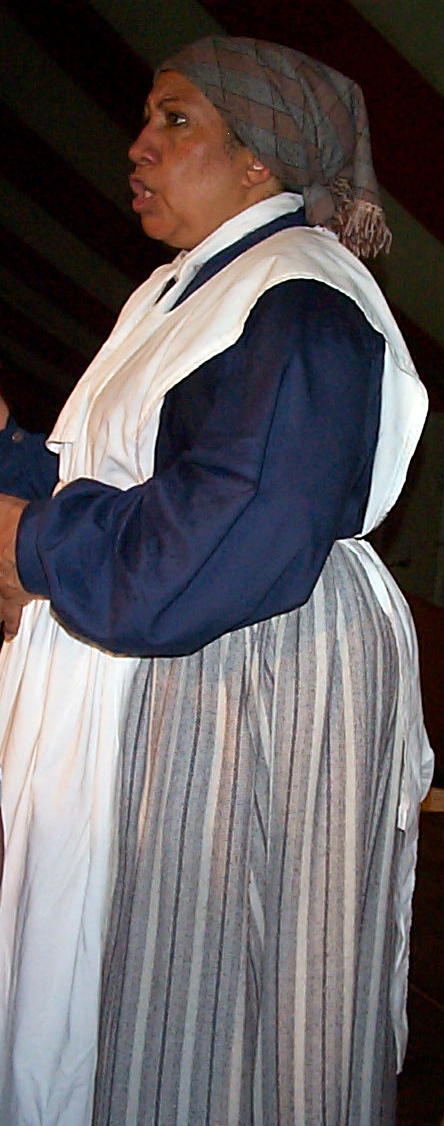
Ilene Evans portrayed Harriet Tubman for this year’s Ohio Chautauqua presentation at Coshocton’s Bi-Centennial. She was a master storyteller and inspired young and old alike as she wove her story keeping the audience involved with rolling bandages and singing songs.

On the plantation where she was born in Maryland, birth records were not kept. Harriet was never certain about her birthdate. When she was about twelve,  an overseer struck her in the head with a two pound weight when she attempted to defend a run away slave.  This resulted in sleeping spells for the rest of her life where she drifted away for so long that she missed happenings in her surroundings. In her twenties, her escape from the plantation to the North began her lifelong quest for freedom of blacks from slavery.

Called “Moses” because she, too, led her people out of captivity, Harriet frequently burst into song.  After singing “Battle Cry of Freedom” she explained that when fighting for freedom, “a song in your heart is the best weapon.”

During her time of freeing the slaves, Harriet  served with the Union Army. There she took care of the injured soldiers, made and distributed bandages, and learned where the supplies were kept and where bridges were being mined. Often she said the injured men were covered with flies, so healing was a difficult proposition. The first United States Colored Troops during the Civil War did not receive any pay for eighteen months.  So their wives had to support themselves and their children by doing laundry for the officers, making pies and cakes to be sold to the boys in camp, and brewing ginger beer.

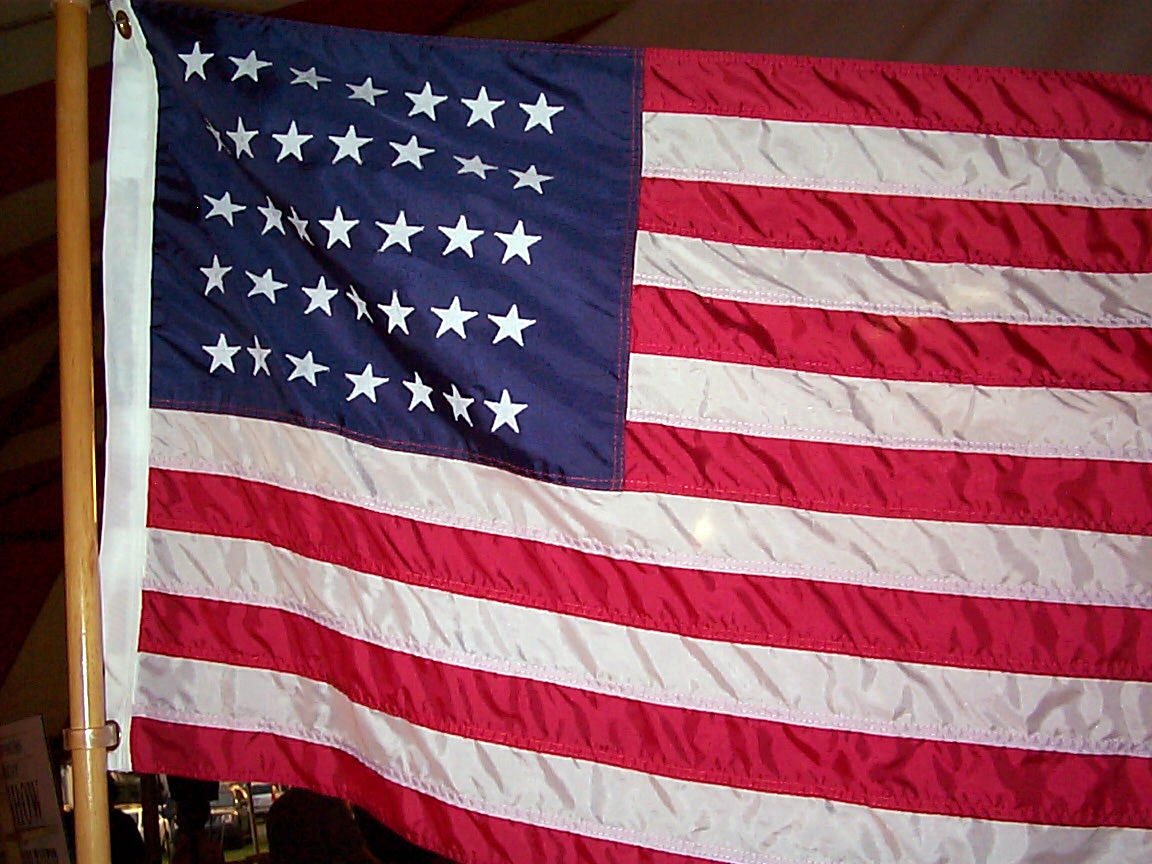
Harriet had nine scouts and a riverboat captain in her command. But this bold, young lady in her twenties said, “She felt no fear as long as she was doing what God wanted.”  She did however believe in a faith that required action and good deeds. She waved the 35 star flag proudly as she talked about her role in this fight for freedom.

After her performance, the tent was opened for questions from the audience to which she gave candid answers. Harriet felt that after the Civil War even though the Emancipation freed the slaves, they still had no rights.  She had hoped that the war would not be just a vehicle of freedom, but a way to real equality.

She thought that President Lincoln moved way too slowly during the war years both in abolishing slavery and allowing blacks to fight as soldiers. Later wished she could have thanked him, at least for the end result.

The biggest disappointment in her life was an issue she didn’t really like to talk about because it hurt her so much. After the war was over,  she returned to her husband, who was still living in the South in their family home, hoping he would go North with her. When he met her at the door, he had his new wife there with him in the cabin Harriet considered home.

One of the happy moments for Harriet that evening in Coshocton occurred when a third grader in the audience stood to ask her his second question of the evening:  “Could I give you a hug?”  He rushed down the aisle between the folded chairs and they hugged on stage while Harriet remarked, “This is the best present I could have.” The young boy’s mother later stated that the young man had been reading all day about Harriet Tubman  before coming to the evening presentation.

Freedom is what this country, the United States of America, is all about. It was begun with freedom at its core, and the hopes and dreams of men and women still struggle to maintain that freedom today.  God bless the USA!