Places to go and things to see by Gypsy Bev

Posts tagged ‘Coal Miners Memorial’

Village of Byesville Museum
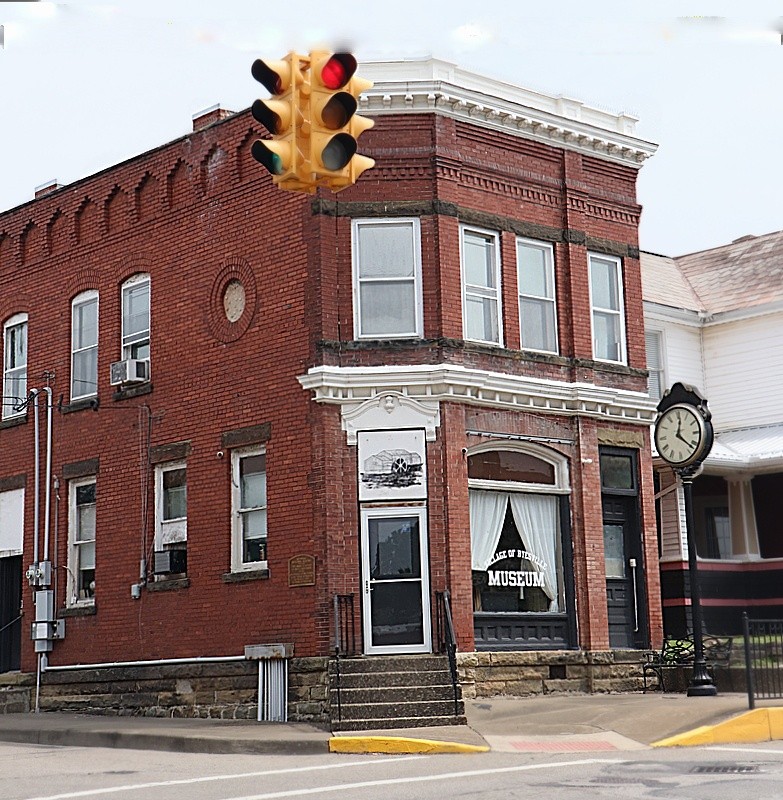
Byesville Museum was originally First National Bank back in 1901. (All photos by Calvin Chester)

Visit the newly renovated Byesville Museum & Welcome Center at 236 Main Street. This facility is located on the corner in the historical First National Bank, which has existed in Byesville since 1901.

Byesville was platted in 1856 and named for Jonathan Bye, who had a mill there. It’s nickname at that time was Bye’s Mill. It became incorporated in 1881. A great deal of history has been accumulated over the years and some of that can be found in the Byesville Museum.
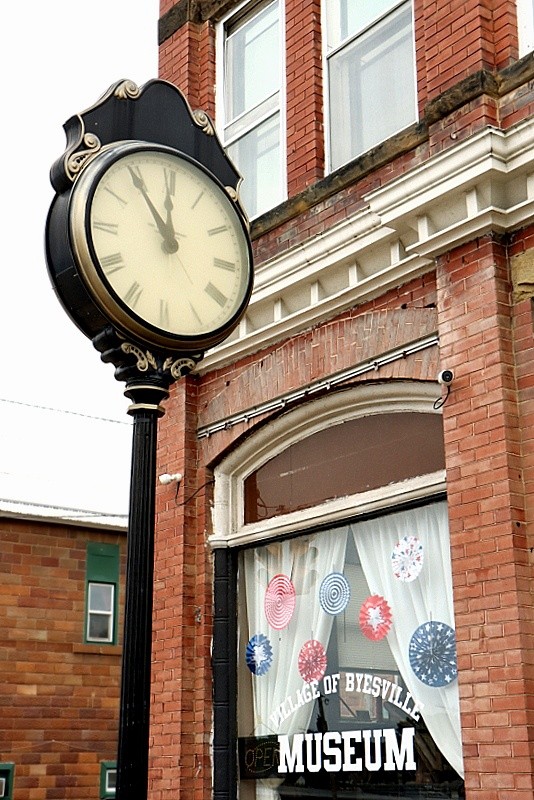
The clock was given by L.D.M. Technologies in 1998.

The museum contains a collection of antique items, photographs, and documents which chronicle the history of the area from the mid 1800s to the present. Learn more about the history of the bank and the surrounding area. You’ll find some surprises.
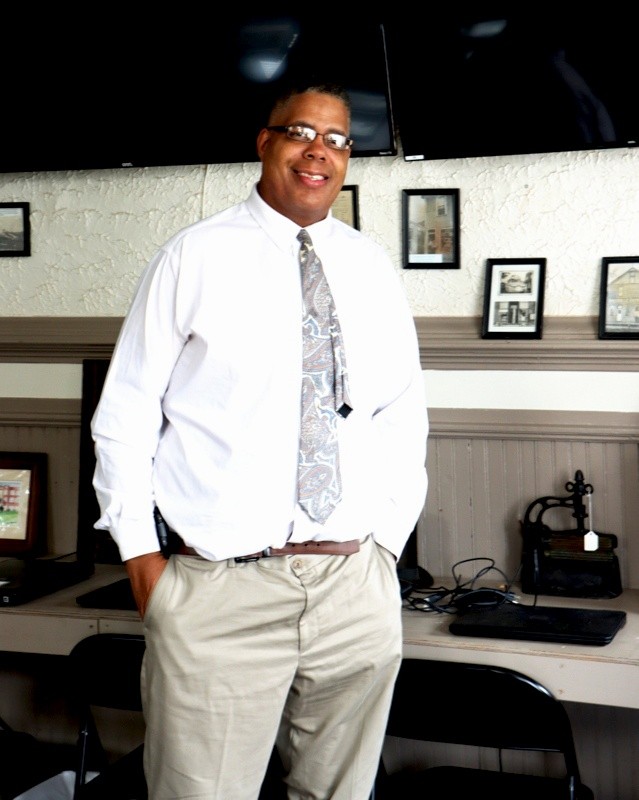
Mayor Jay Jackson gave us a tour of the museum.

Byesville Mayor Jay Jackson talked about the Byesville Museum and gave a tour of the facility explaining how the museum had been revitalized in the last few years after some extensive water damage. Many items were lost because of the water and they are trying to make sure that doesn’t happen again.

Mayor Jackson stated, “I have a strong belief in history as stories of the past help us understand our heritage. The items contained here are a hidden treasure.” It takes a village to make these things work and the museum has become a place where you can find the history of Byesville and the surrounding area because of everyone working together.
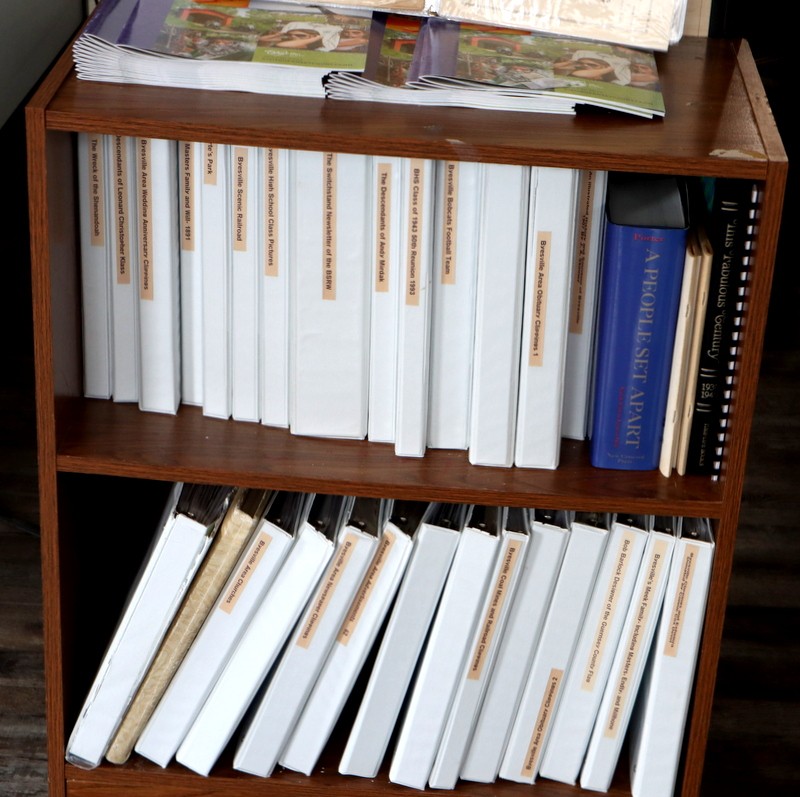
Many volumes of old photos and newspaper items are available.

Learning stories of the region’s past can change the way you think about the present. There is an extensive collection of notebooks filled with old photos and newspaper items that could give hours of enjoyment.
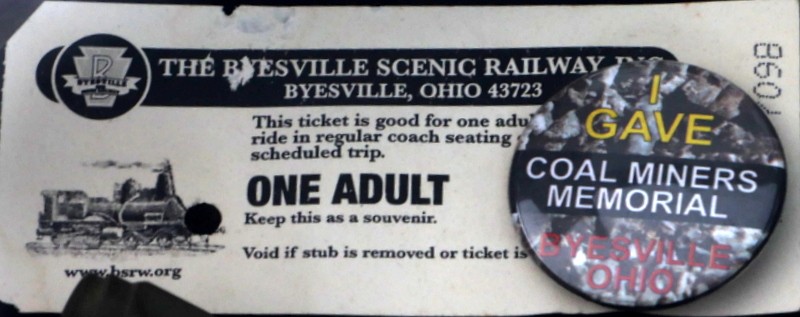
A ticket from the Byesville Scenic Railway reminds people of the local coal heritage.

The museum includes a Resource Center with computers available where you can look for a job, work on a school project, take a class, or learn how to use the computer. Here pictures can be shared about the history of Byesville. They also developed a special slideshow of local veterans.
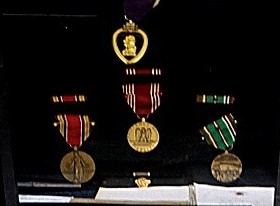
Veterans are honored with a display as well as medals won.

The back room is now open for displays. A special display there honors the veterans from WWII. A case contains medals that were received as well as a purple heart.
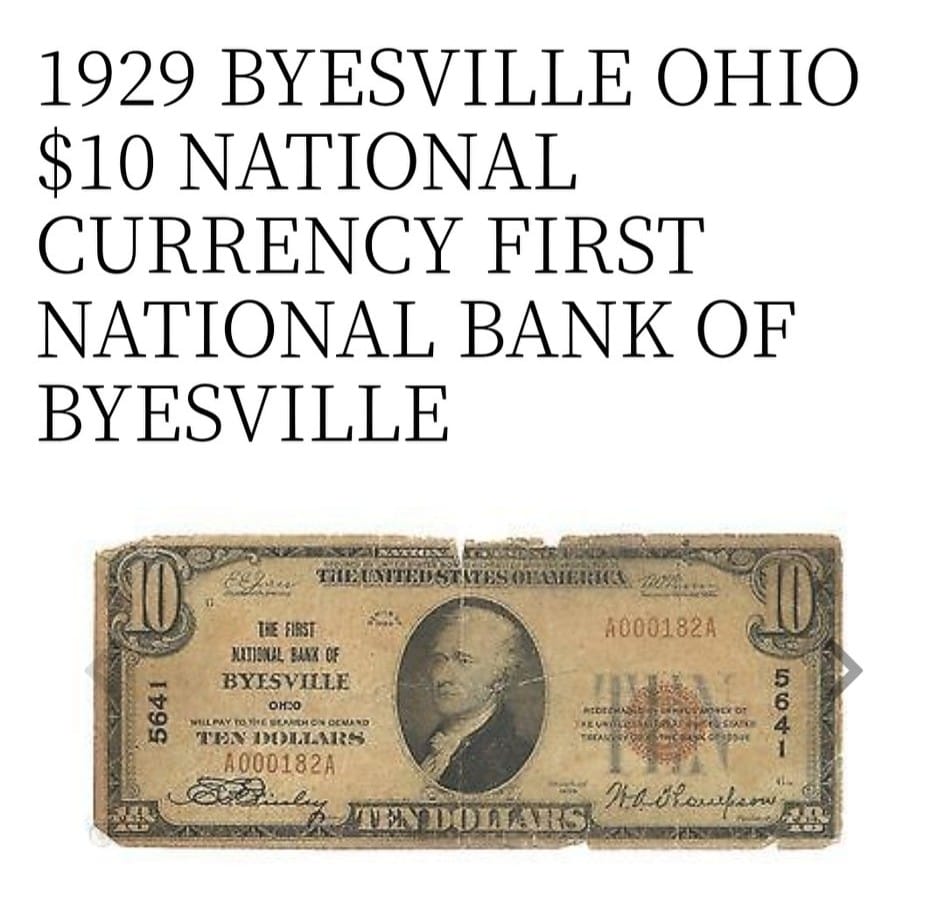
This $10 bill, national currency, has The First National Bank of Byesville printed on it.

The second floor of the museum contains boxes of treasures but there is only so much room for display. If you would like to help with this project or perhaps have something that should be added, become a volunteer so it can be opened on a full-time basis. New ideas are always welcome. If you’re interested in helping out a few hours a week, let Jay Jackson, Village of Byesville Mayor or Michael Port, Byesville Councilman, know by sending them a Facebook message.
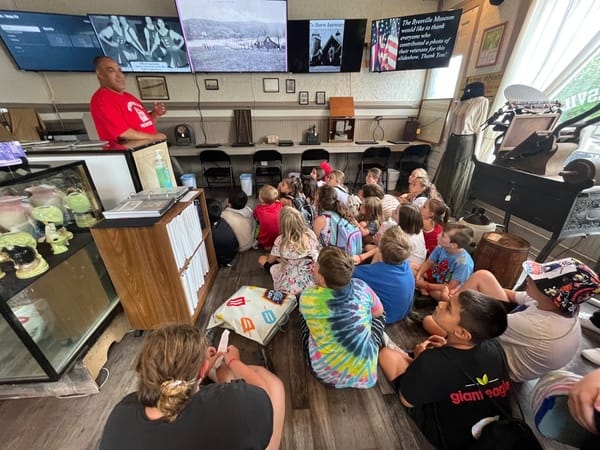
Michael Port talks to a group of children from Nurture Daycare, who visited the museum.

Recently, a group of children from Nurture Daycare visited the museum with their teachers to learn more about how Byesville began and how it is growing today. They shared photos of Byesville’s past with them on the large computer screens, handed out two coloring pages for them to do, and showed them around the museum. These children are the future volunteers who will keep Byesville a place sharing its history. If you would like to bring a group for a visit/tour, let Mayor Jackson know so they can get you scheduled.
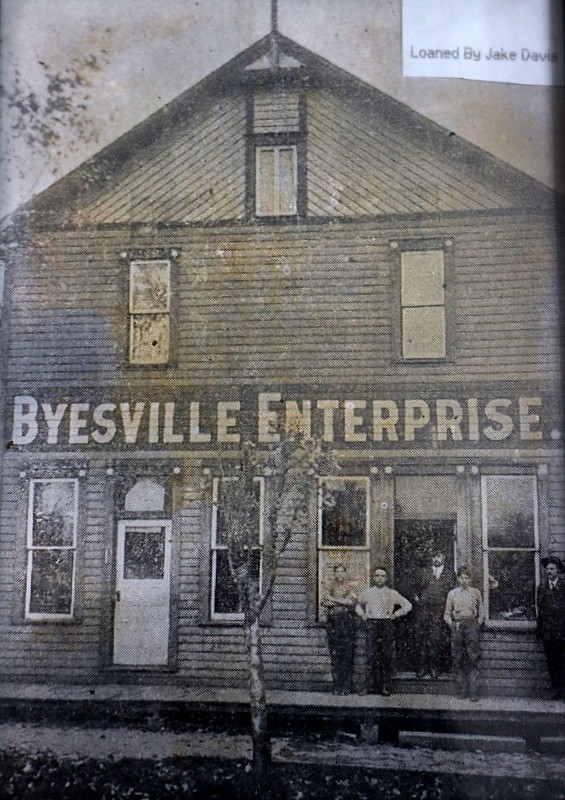
This old picture shows Byesville Enterprise, the local newspaper office.

The museum, operated by Byesville Historical Society, is open May through September on Monday, Tuesday, and Thursday from 11-2. It’s best to call ahead at 740-260-3088 to confirm they are open as hours of operation vary based upon volunteer availability. Check out their Facebook page listed under Byesville Museum.
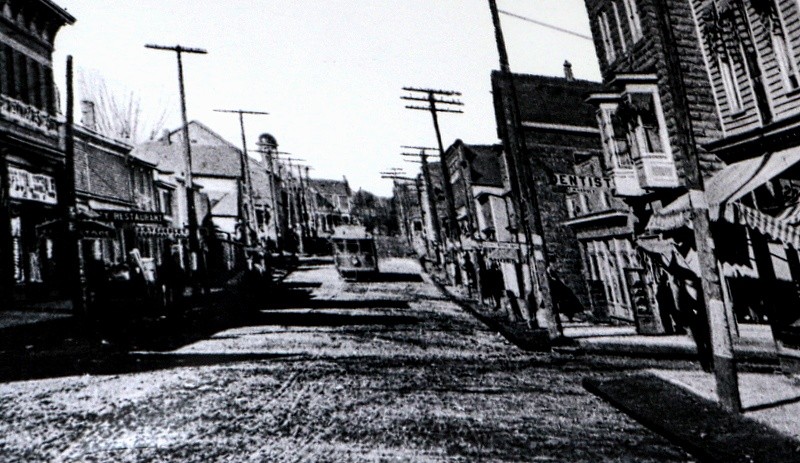
Interurban tracks ran down Depot St. (now 2nd Street) in downtown Byesville.

If you are from the area, the museum is certain to bring back many memories. Having spent much of my childhood in Byesville, there are many great memories from times when we walked from The Bottom, where my grandpa had Veselenak’s Grocery. We headed downtown to Luna Theater to watch a movie, got a snack at City Restaurant, and picked up a coloring book at Jack’s Five and Dime. Perhaps you have some favorite memories of Byesville, too.
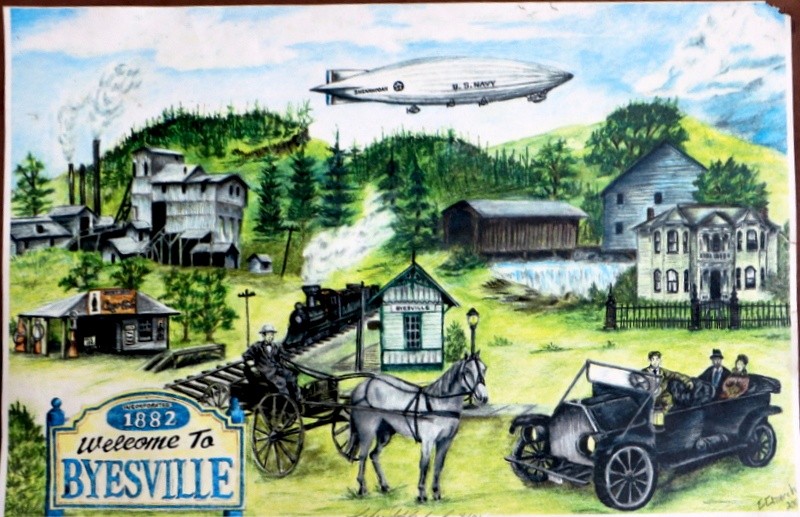
A painting of life in Byesville in 1882 hangs in the museum.

Today, Byesville is growing with many new businesses opening there. A new Patriot Park will highlight the corner of Main and 2nd Street. It will feature picnic tables, benches, new sidewalks, a gazebo, mural, a fountain, and a stage. Ideas are being discussed for possibilities to use the old Main Street School for new purposes. History continues to be made as each year passes.
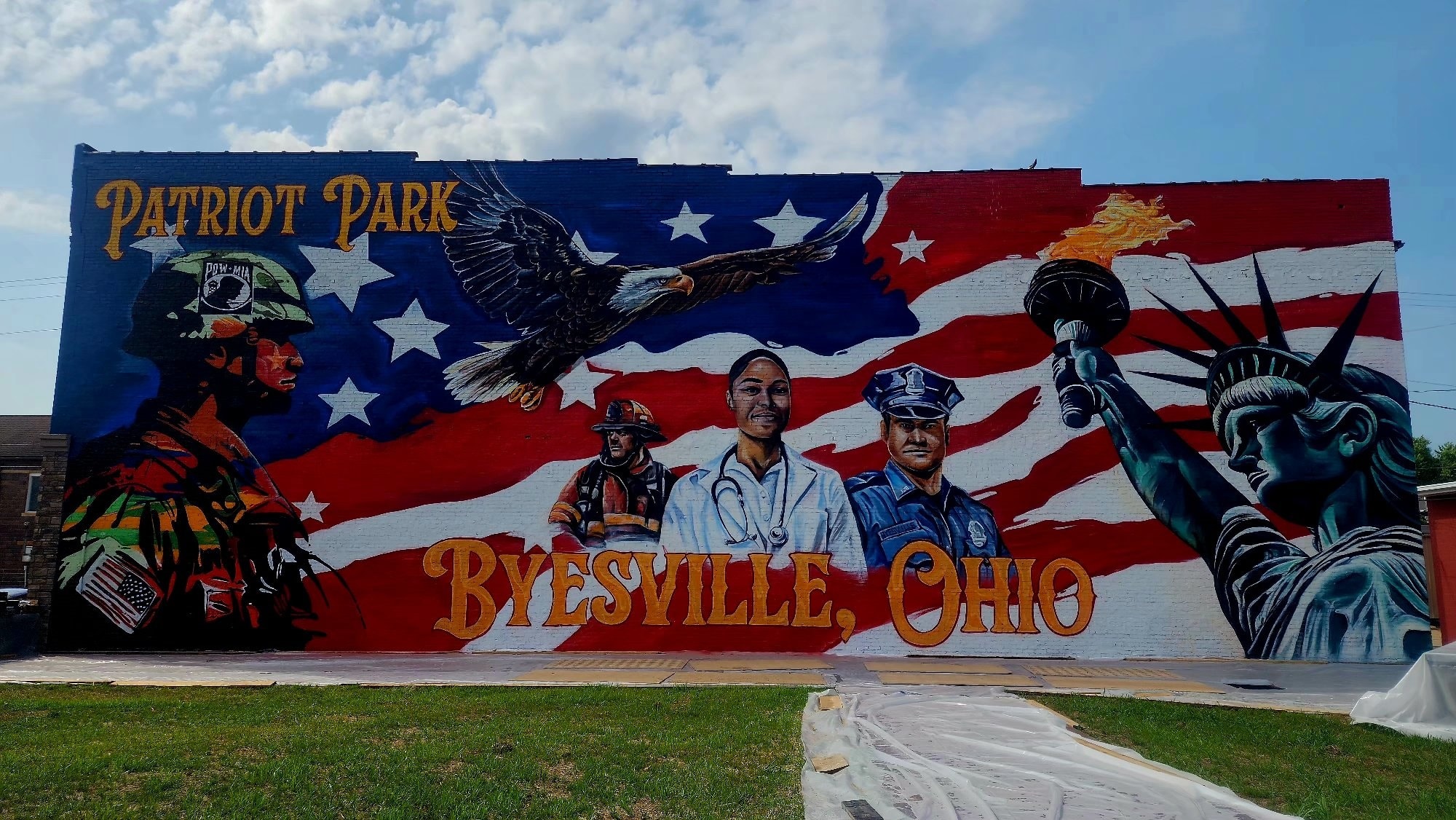
The history of a town teaches lessons that need to be learned as our roots never change. Explore Byesville Museum when you get a chance and perhaps find a connection to your roots.

Coal Miner’s Statue -Unsung Heroes Remembered

You load sixteen tons, what do you get?

Another day older and deeper in debt

Those words rang true for the thousands of coal miners that lived in the vicinity of Guernsey County, Ohio during the early 1900s.

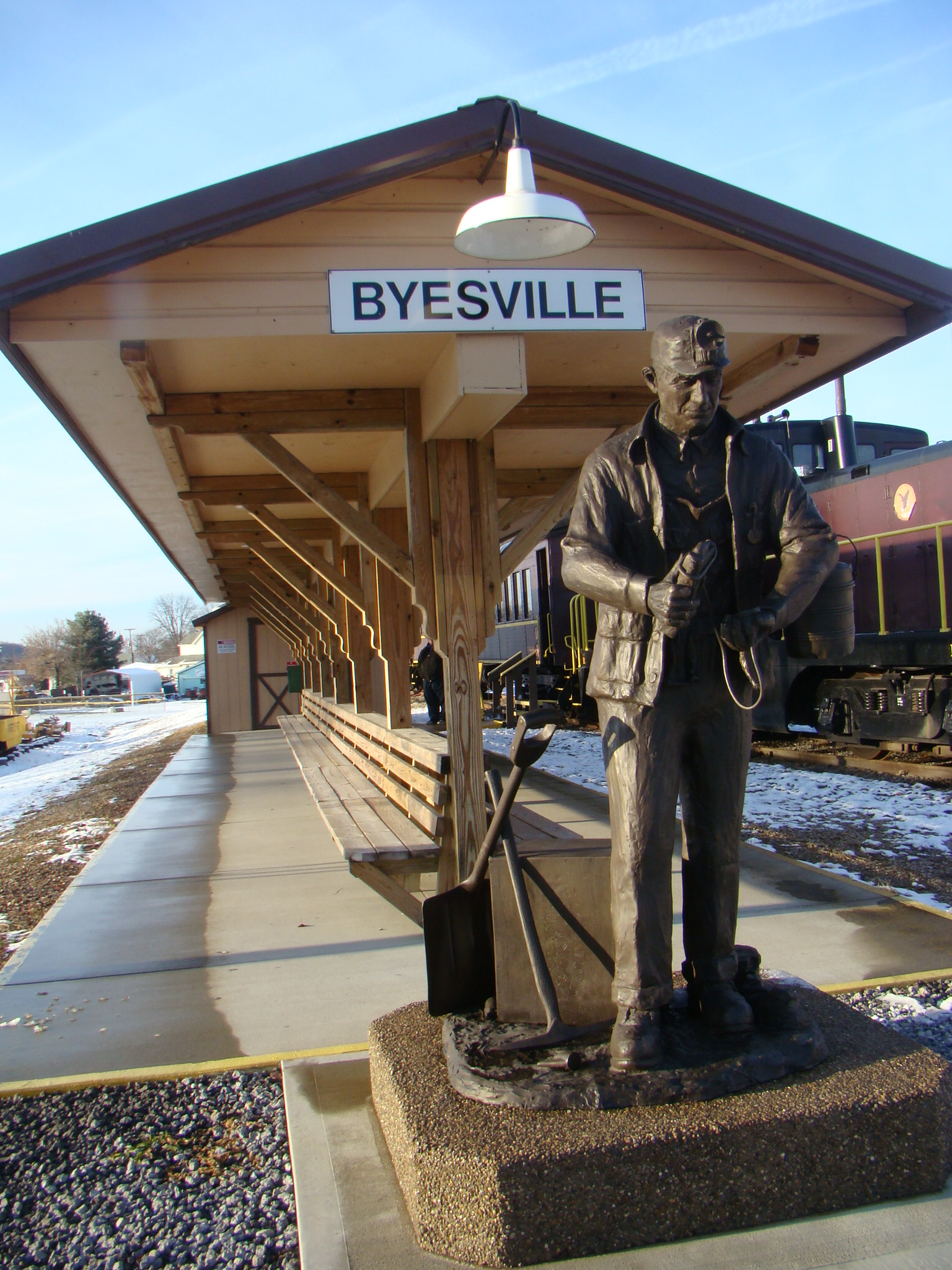
In order to honor these men and coal miners across the nation, a statue in their honor has been placed at the old train depot in Byesville, Ohio. This is no ordinary statue as it was commissioned by Alan Cottrill, internationally renowned sculptor, who has his studio in Zanesville.

The Train to Nowhere

These were busy tracks in their day, but today they have no traffic.

Why, you might ask, is this statue in Byesville? Why not place it in some larger city? Byesville was the coal capital of Ohio back in the early 1900s. Perhaps a hundred and fifty trains would roar down their tracks each day. Cars carried coal from Marietta to Cleveland and often into Canada.

coal_miners_memorial_09-08-2012_1

These volunteers were present for the dedication ceremonies.

Raising money for the statue was itself a challenge. Contributions came from local residents as well as all those who rode the now silent Byesville Scenic Railway. Total cost of this memorial was $40,000. So if you rode the train or visited their museum, perhaps you had a hand in making that statue become reality.

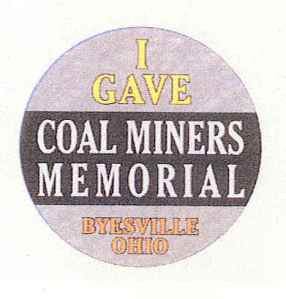
When you made a donation in any amount, you were given a badge saying:

I GAVE    COAL MINERS MEMORIAL    BYESVILLE OHIO

coal-mineres-memorial-badge

This was no ordinary badge as it was designed very carefully. Each color on the badge had great significance.

Yellow stands for a beam of sunshine that sheds light on the darkness of the dungeon of a dark and gray mine.

Gray is for the rock/slate layers that are found above and below the seams of coal.

Black needs little explanation as it is the color of coal, also known as black diamonds, buried sunshine, or rocks that burn.

Red is for the color of blood that was spilled onto the ground from those who either lost their lives or were injured while working about the mine.

Bronze Coal Miner Statue

Bronze Coal Miner Statue

Everything on this bronze statue has meaning.

His hat gave him a place to hang his carbide light. This was the only light down in those coal black mines. The miner had to purchase the pellets to fill his carbide light…at the company store, of course.The coal mines gave them nothing. Why, they had to buy their own picks and dynamite! 

If you look closely at the statue, the miner’s brass tag reads 382, the number of coal miners who lost their lives in the deep mines of Guernsey County over the mines’ sixty active years.

pieces-for-memorial

The sculpture pieces in Cottrill’s studio wait to be assembled.

The miner statue is missing his right index finger in honor of all the men injured in the mines. The dinner pail he carries was made by the Buckeye Aluminum Co. and was an important part of the miners day.

Many of those miners were immigrants, often called dumb hunkies  Everyone headed out to work swinging their dinner pail. The pails could not be set down on the mine floor or the rats, the miners’ mascot, would open them and eat their lunch. So miners always hung their dinner pails high on the mine wall.

A West Virginia ham sandwich was quite the treat. That ham by the way was what we call bologna.They always left a little something in their pail, just in case a cave in occurred and they might be below ground all night. If they made it safely through the day, the miners would let the children have their pails on the way home for a little snack.

From top to bottom each item has special significance from his hat to the dynamite at his feet.

coal-miner-plaque

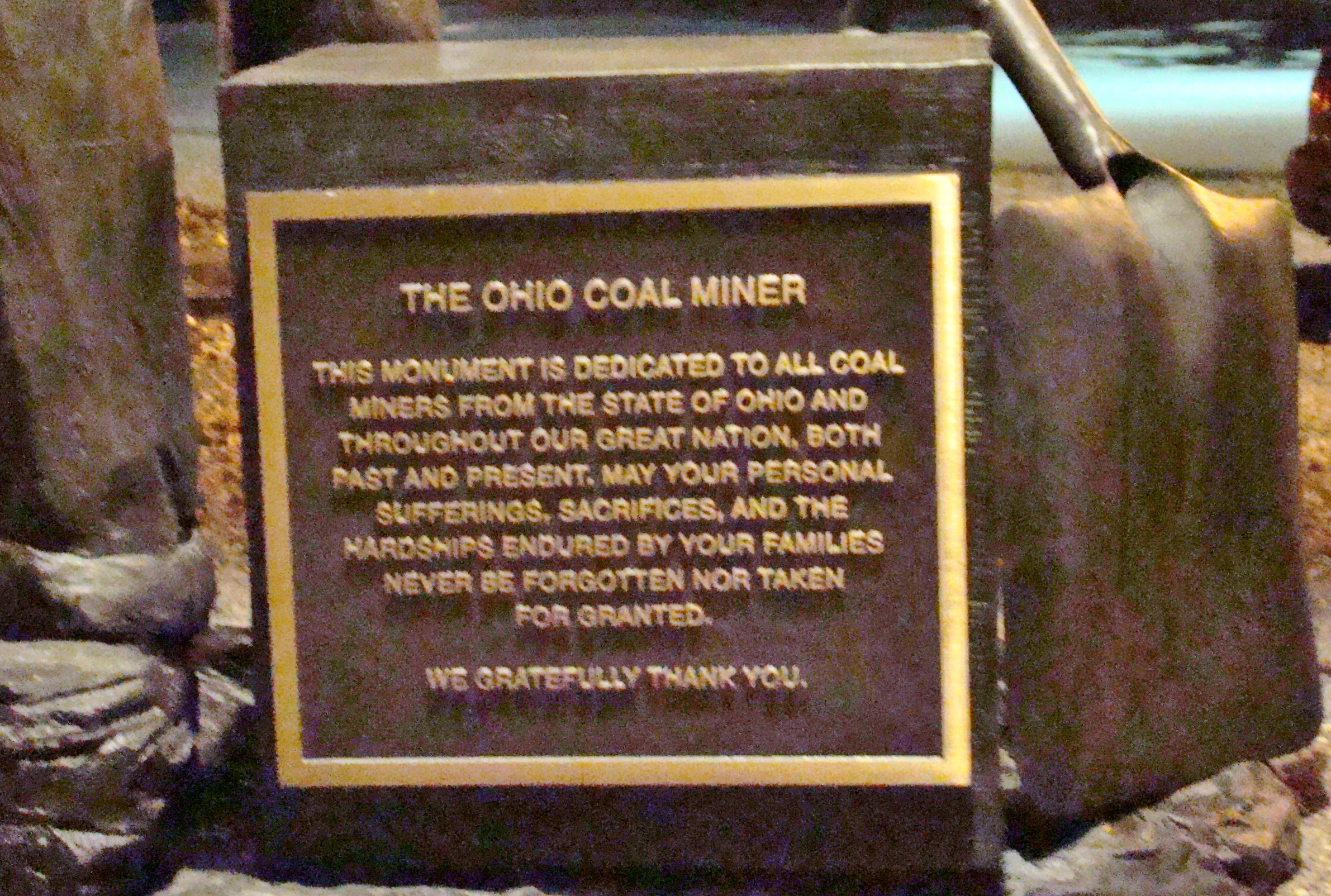
The dedication plaque at the statue

A portion of the plaque behind the statue states:

May the personal sufferings, sacrifices and the hardships endured by your families, never be forgotten nor taken for granted.

May the memory of these unsung heroes live on for generations.

The Coal Miner Memorial Statue can be found in Byesville, Ohio off I-77. Take Exit 41 and head into the small town of Byesville. Turn left on Second Street and two blocks down on the right hand side you will see the old train depot. The statue stands in front of the depot.