Places to go and things to see by Gypsy Bev

Posts tagged ‘Harrison County’

Quilt Barn Tour in Harrison County

Quilts are a patchwork of memories!

Quilt Barns have become a popular feature in several Appalachian areas. They not only preserve those old, precious quilt patterns but also tell the story of a family that used that barn.
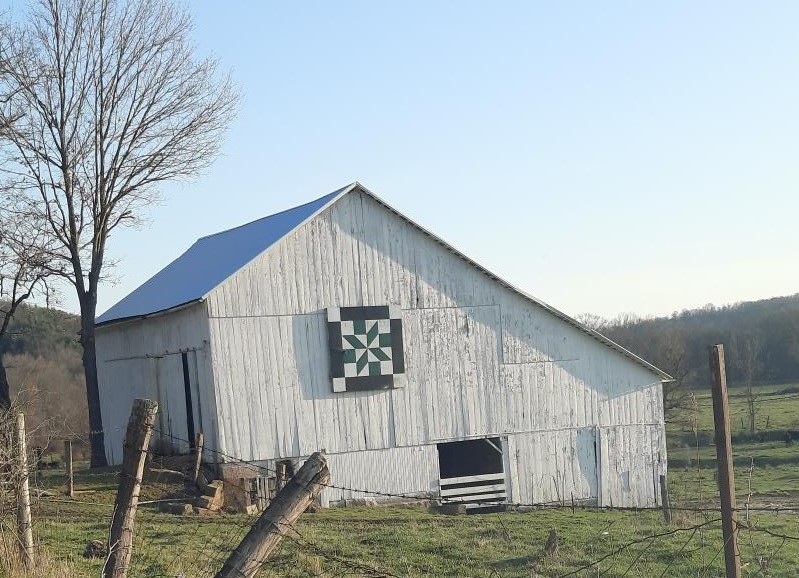
Henry Law Farm – Windmill Quilt Pattern

Quilts bring back special memories of our forefathers to help us realize the dedication and hardships they faced. Every quilt has a special story that needs to be kept for future generations to understand.
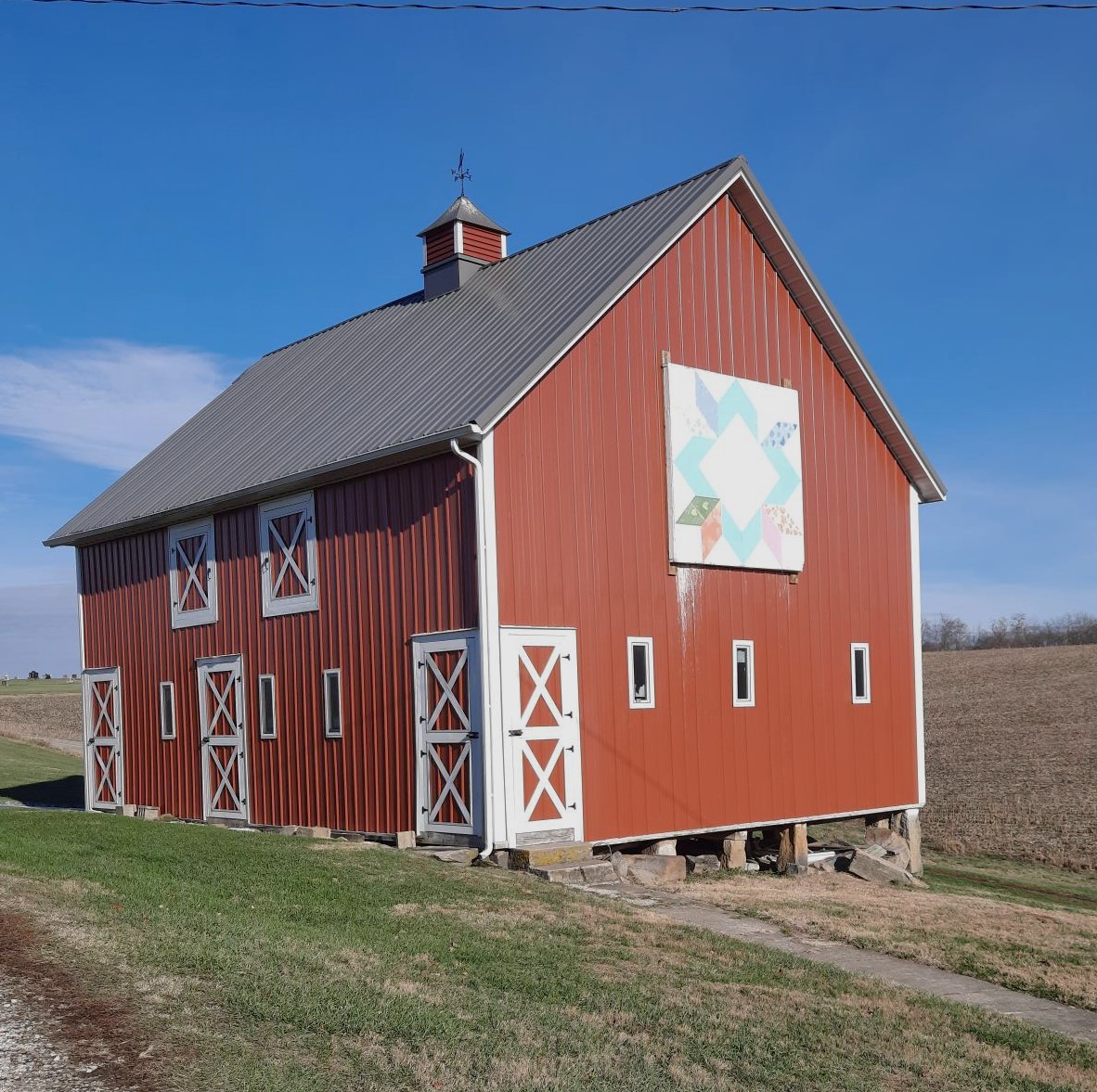
Gwen and Bob Stewart Barn – Goose Tracks Quilt Pattern

The idea was born when Donna Groves, a field representative of the Ohio Arts Council put a quilt on her barn in Adams County, Ohio. The idea quickly caught on with similar Quilt Barn Tours being developed in many Ohio counties and even in surrounding states.
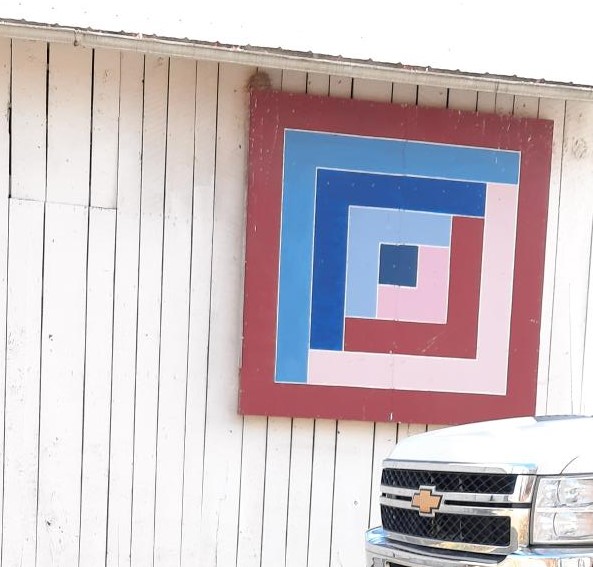
Dawson Farm – Log Cabin Quilt Pattern

While the idea began in 2001, a few years later in 2005 Harrison County became involved. Their plan was to paint 15 quilts on area barns, one in each township. All quilts that were considered were owned by residents of Harrison County. Twenty-eight quilts were submitted for consideration. The effort was coordinated by the Puskarich Public Library, the OSU Extension Office, and the Harrison County Community Improvement Corporation.
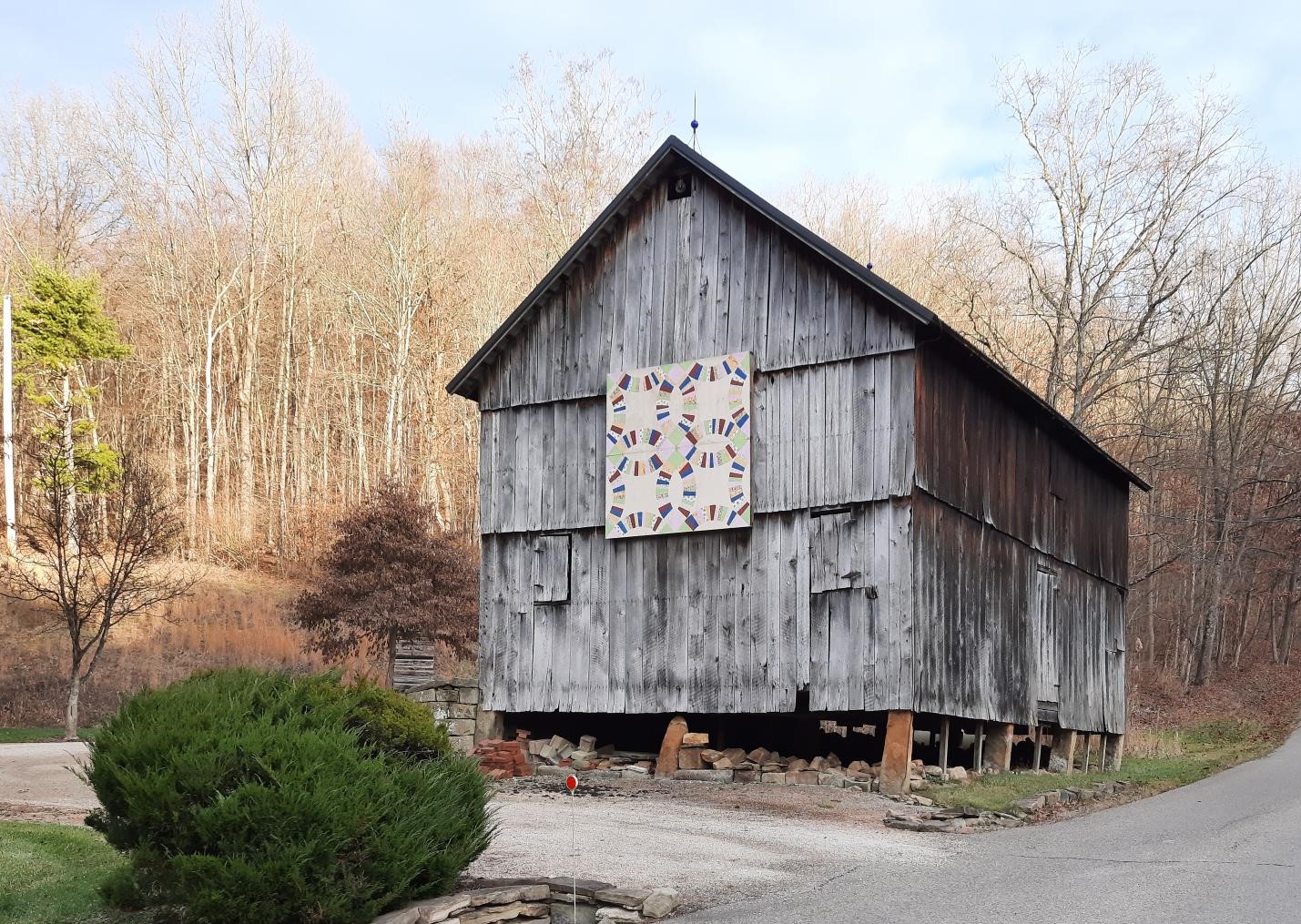
Paolano Farm – Double Wedding Ring Quilt Pattern

Decision was reached on the fifteen quilts that would be displayed in a very unique way. Harrison County Election Board was demonstrating a new electronic voting machine at the Harrison County Fair in 2005. Pictures of the quilts were downloaded on the election machine and fairgoers had a chance to vote on their favorite. The winner was a quilt in a dahlia pattern submitted by county resident Barbara Besozzi. The quilt was sewn by her grandmother, Mary Henderson and is now on a barn on the homestead where it was sewn.
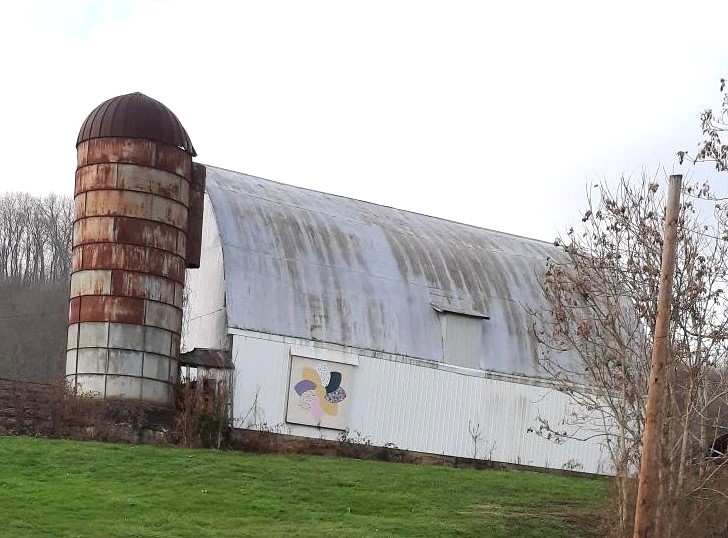
Henderson Farm – Dahlia Quilt Pattern

They proceeded with a Make a Difference Day project which consisted of making eight-foot square painted replicas of the quilts that were chosen. Then they were installed on barns throughout the area – one is each township. A “Drive It Yourself” tour was established.
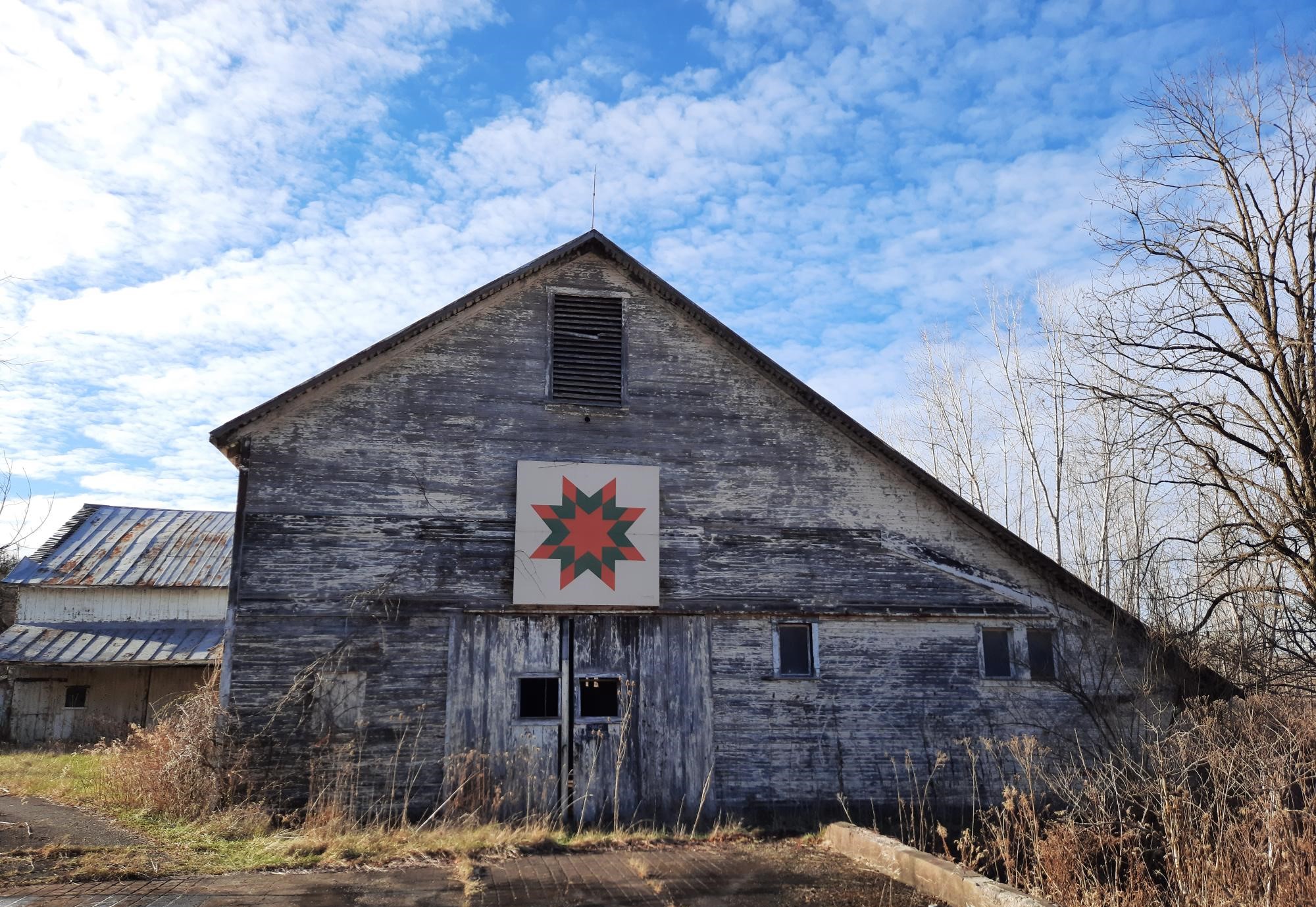
Joseph Barn – LeMoyne Star Quilt Pattern

This was a real community project. The Harrison County Commissioners applied for a grant to support the project. Harrison Central High School industrial arts students made the frames, which held the paintings of the chosen quilts. Two of the paintings were done by students in the Arts department at Harrison Central High School and smaller squares were done by 4-H clubs in the county. The rest were painted by volunteers from Harrison County.
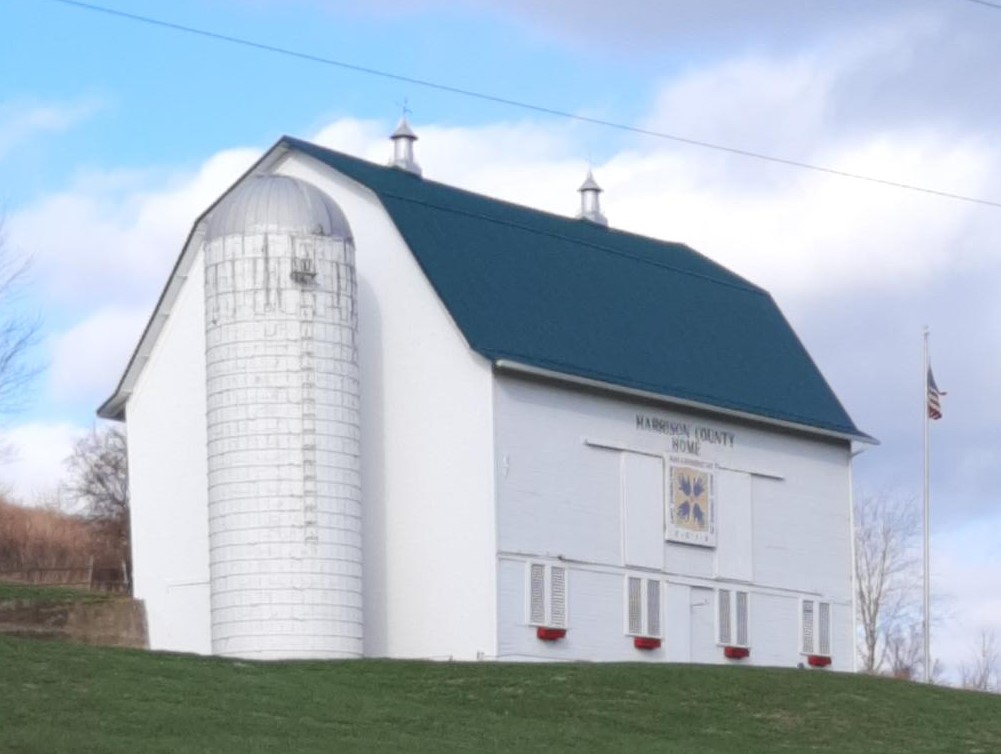
Harrison County Home – Make a Difference Day Quilt

The first barn quilt was installed at the Harrison County Home in August, 2005 while the rest were installed in October, 2005 on Make a Difference Day Ohio. Funds for this project were raised through contributions from individuals, businesses, civic groups, and grants.
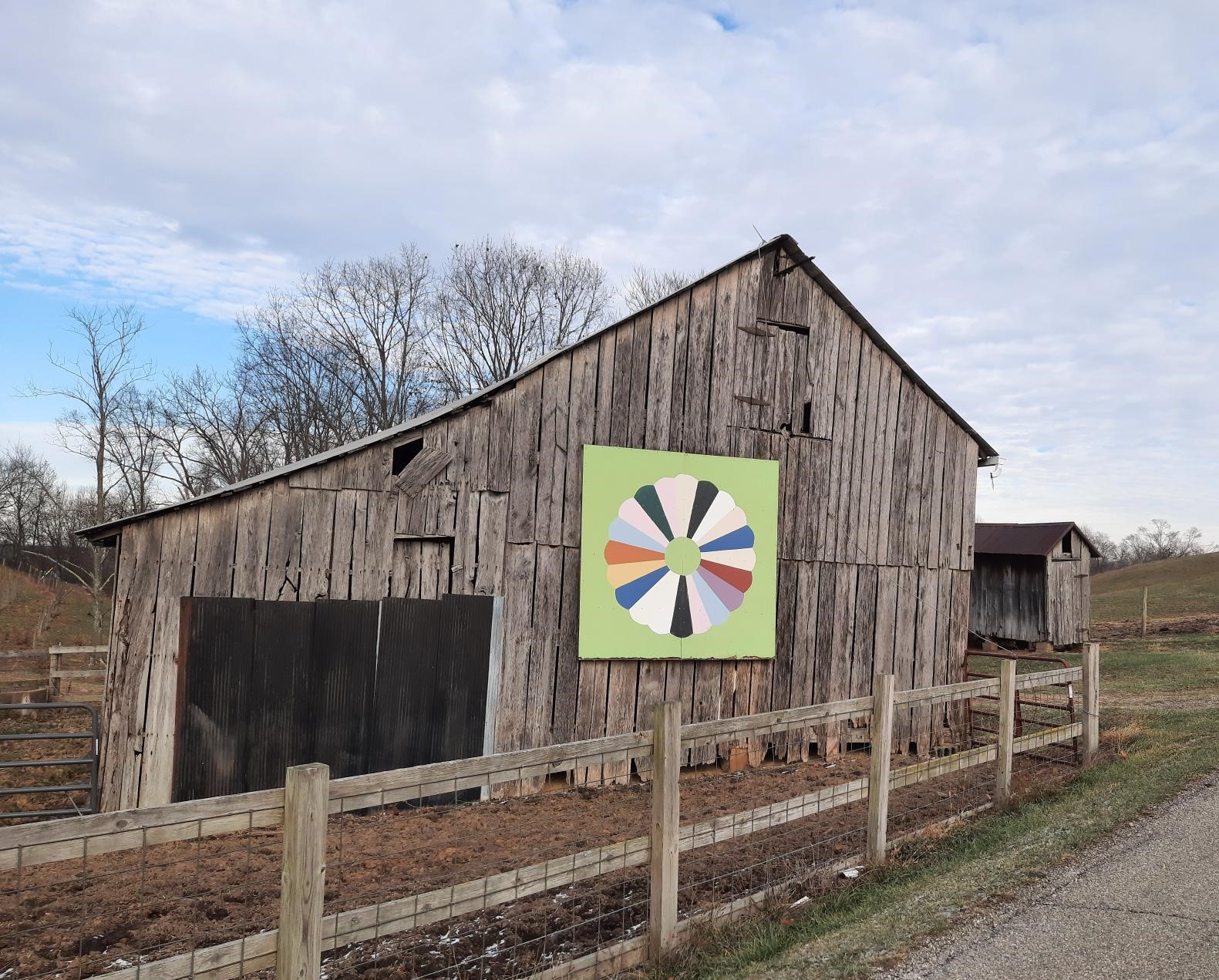
Rocking M Farm – Dresden Plate Green Quilt Pattern

The goal of the organizers was to have the quilts and barns tell the story of the residents of Harrison County. In this way, people would know the background of the people who created the quilts and lived on the farms where the barns are located.
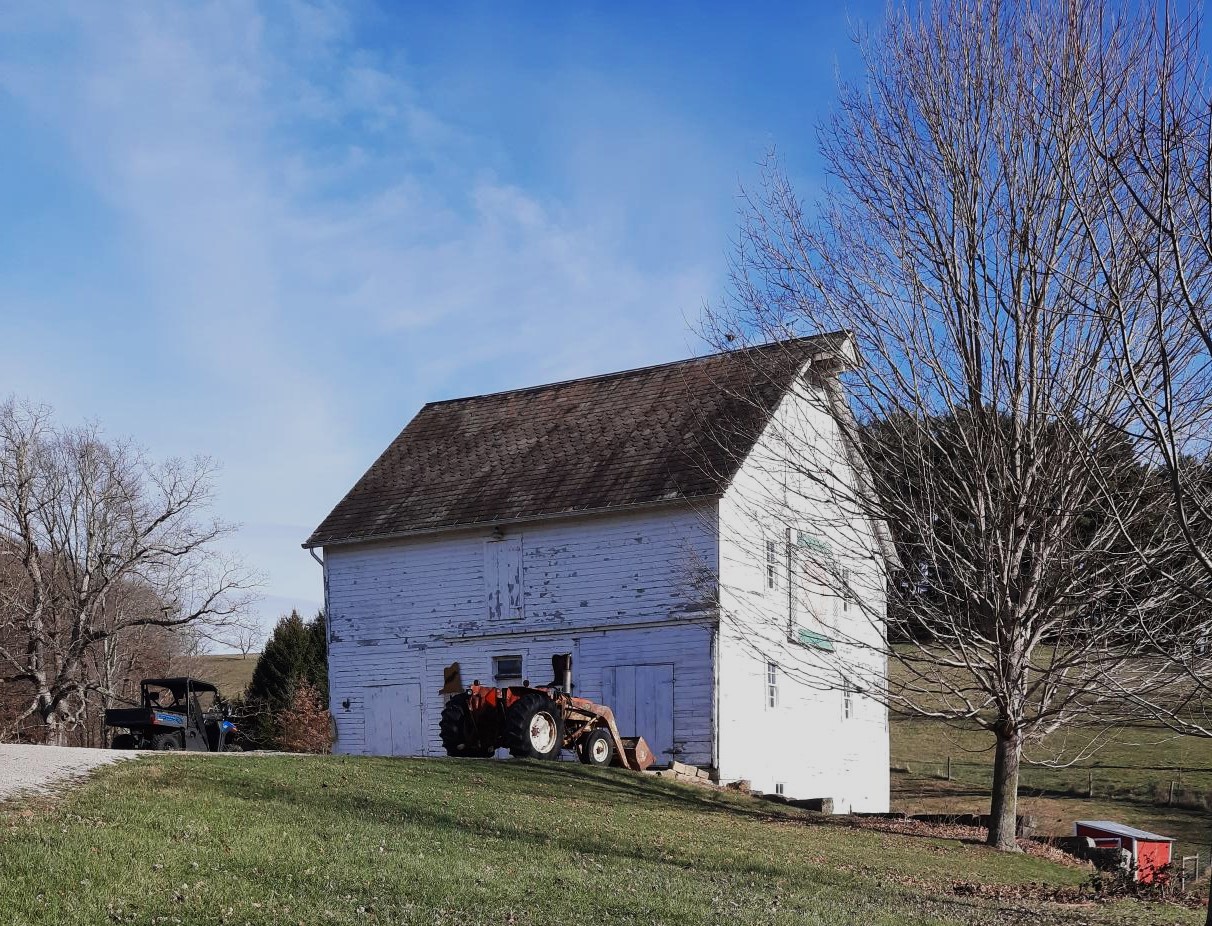
Center Farm – Dresden Plate Red Quilt Pattern

A lady, who now lives at the Harrison County Home, quilted the Dresden Plate that is now on Dr. John Center’s Barn outside of Scio. Mary Henderson’s dahlia patterned quilt is on the barn at her old homestead. Stories like this need to be preserved.
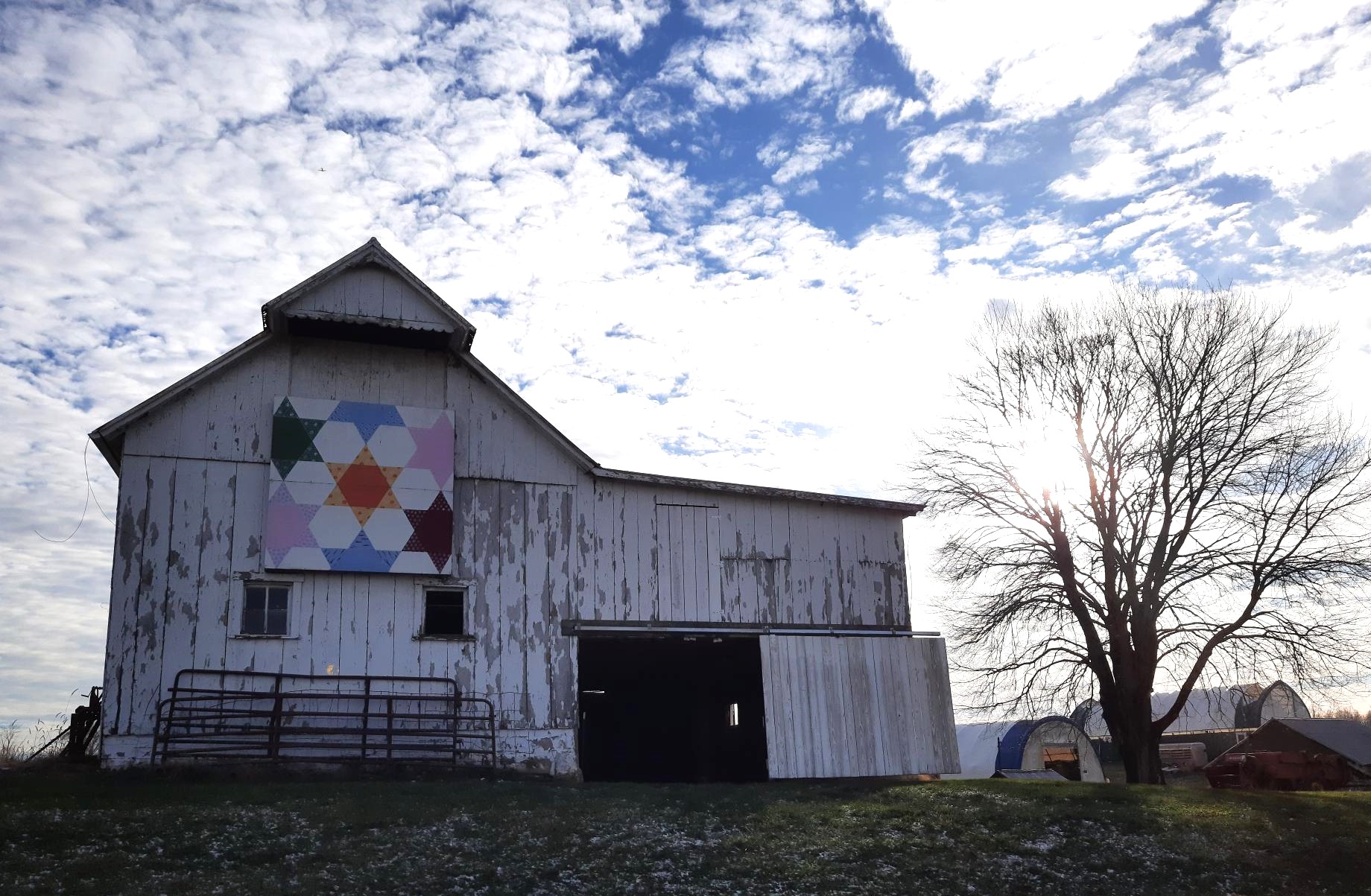
McMillen Farm – Multiple Stars Quilt Pattern

The Harrison County Quilt Barn Tour gives you views throughout the county. If you are not familiar with the area, you should get a list of the Quilt Barns either online at www.harrisoncounty.gov.quilt-barrn-project or stop by Harrison County Tourism and pick up a brochure.
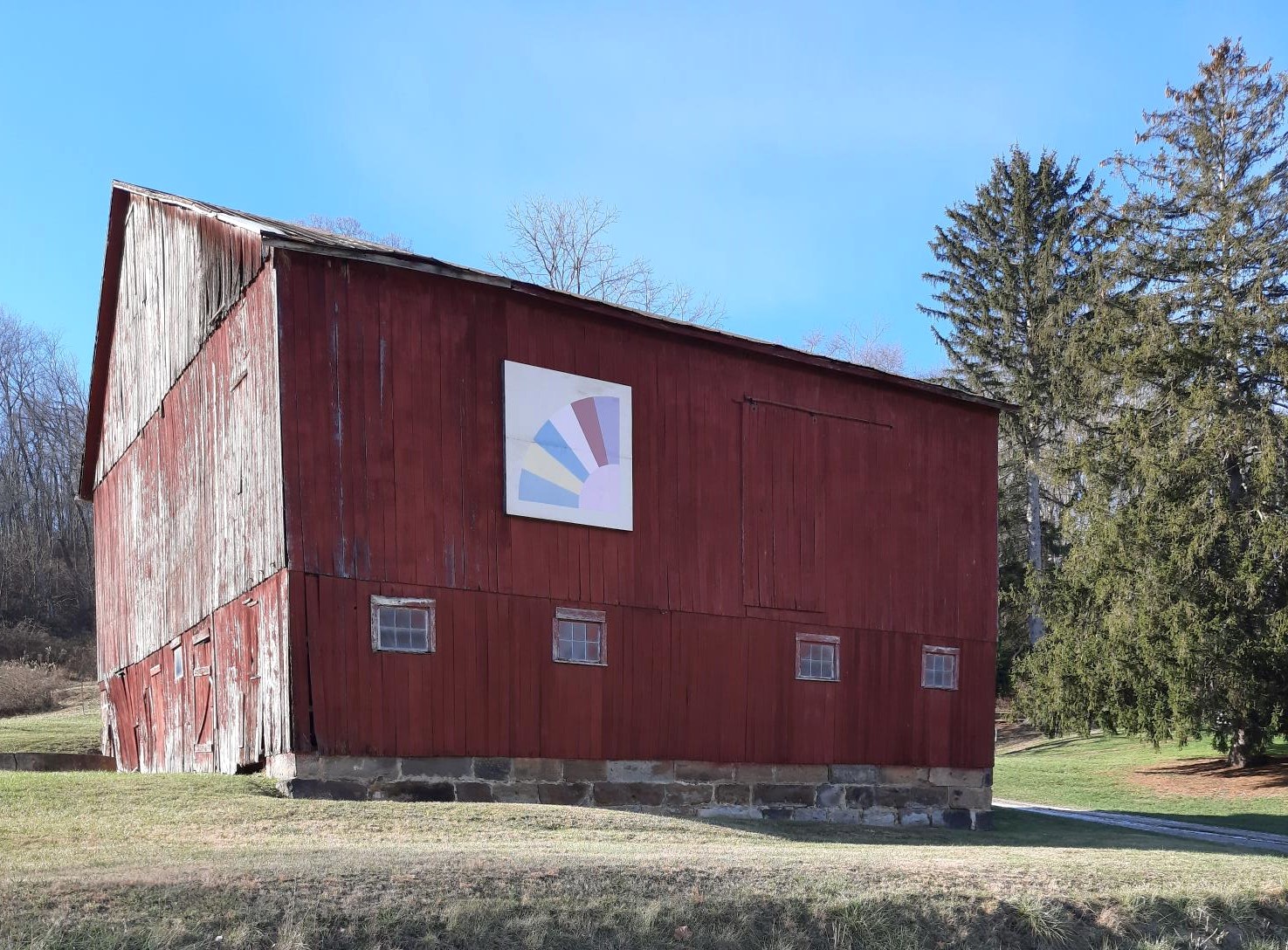
Lawther Farm – Fan Quilt Pattern

Today there are 20 barns on the Harrison County Quilt Barn Tour. Some of those original 15 are no longer present. This self-guided tour reminds us of our pioneer and agricultural heritage.
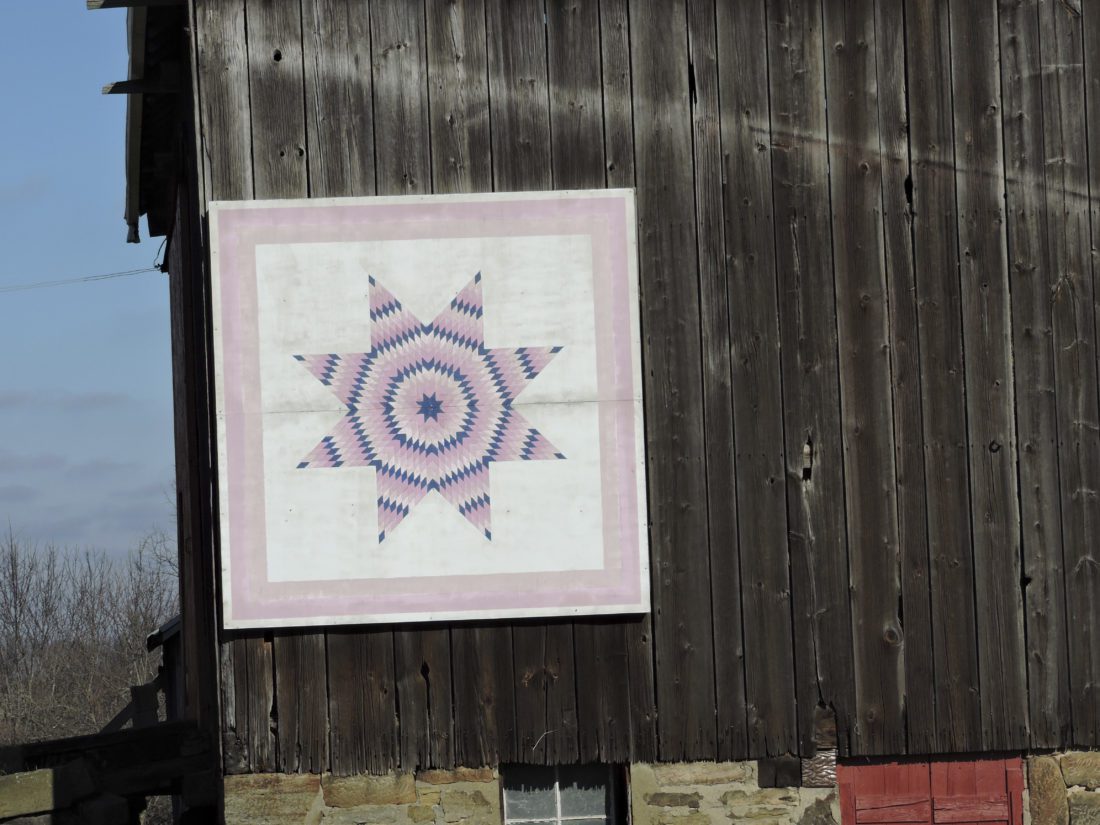
Rinks Farm – Lone Star Quilt Pattern

Take a drive through the hills of Harrison County and watch for the barns that have quilts painted on their side. You might pass some every day. Once you have read about them and taken a Quilt Barn Tour, it’s amazing how often they appear when you are traveling throughout Ohio and neighboring states.

Every quilt tells a story. Watch and listen!
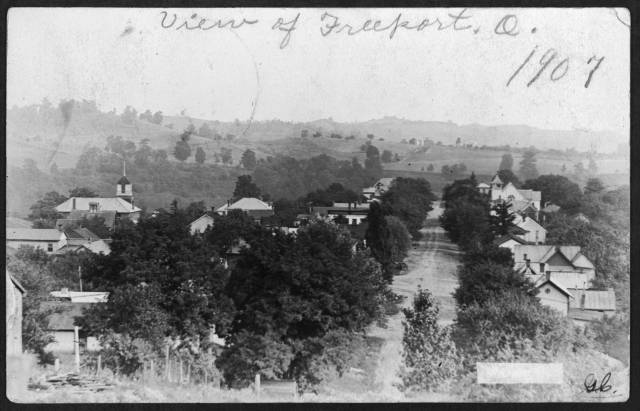
Historic Structures Remain in Freeport

Older pictures are from the files of the Puskarich Public Library and newer ones were taken by the author.

Freeport was off to a great start as the population increased and homes were built in 1907.

Small towns almost always have an interesting background and a few historical spots. Freeport might surprise you with its history that still lives on today.

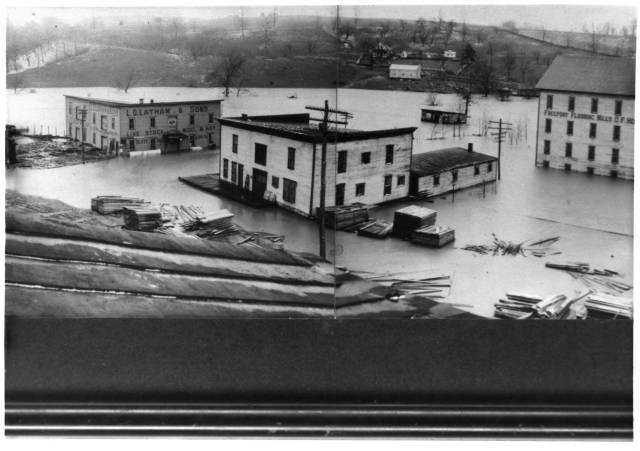
In 1913, those rivers caused a major flood in Freeport and in the surrounding areas.

The name Freeport began when the town served as a free port on Stillwater Creek to ship produce toward settlements along the Tuscarawas River, which joined the Muskingum and Ohio Rivers. The swift currents on these small rivers were easy for the Native Americans to use in their canoes but became more difficult for carrying produce. Today Little Stillwater Creek makes up part of the Tappan Lake Watershed.

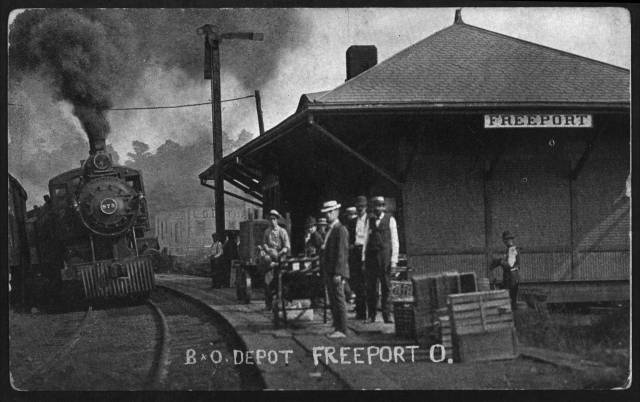
Gentlemen were well dressed as they waited for the train at the B&O Depot in 1900.

Before long, the Ohio-Erie Canal solved some of those shipping problems, but it came to an end when the railroads came to town. The B&O had a depot in Freeport and it was one of the two last standing stations in Harrison County along with the one at Scio.

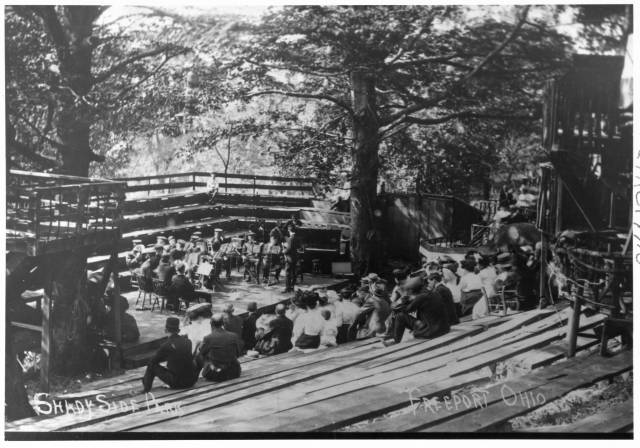
Freeport Band Concerts were popular in Shady Side Park in 1910.

The plat for Freeport Ohio was laid out in 1810 in Tuscarawas County but brought into Harrison County in 1819 due to a county boundary change. It’s also on the edge of Guernsey County. A post office has been in operation in Freeport since 1814.

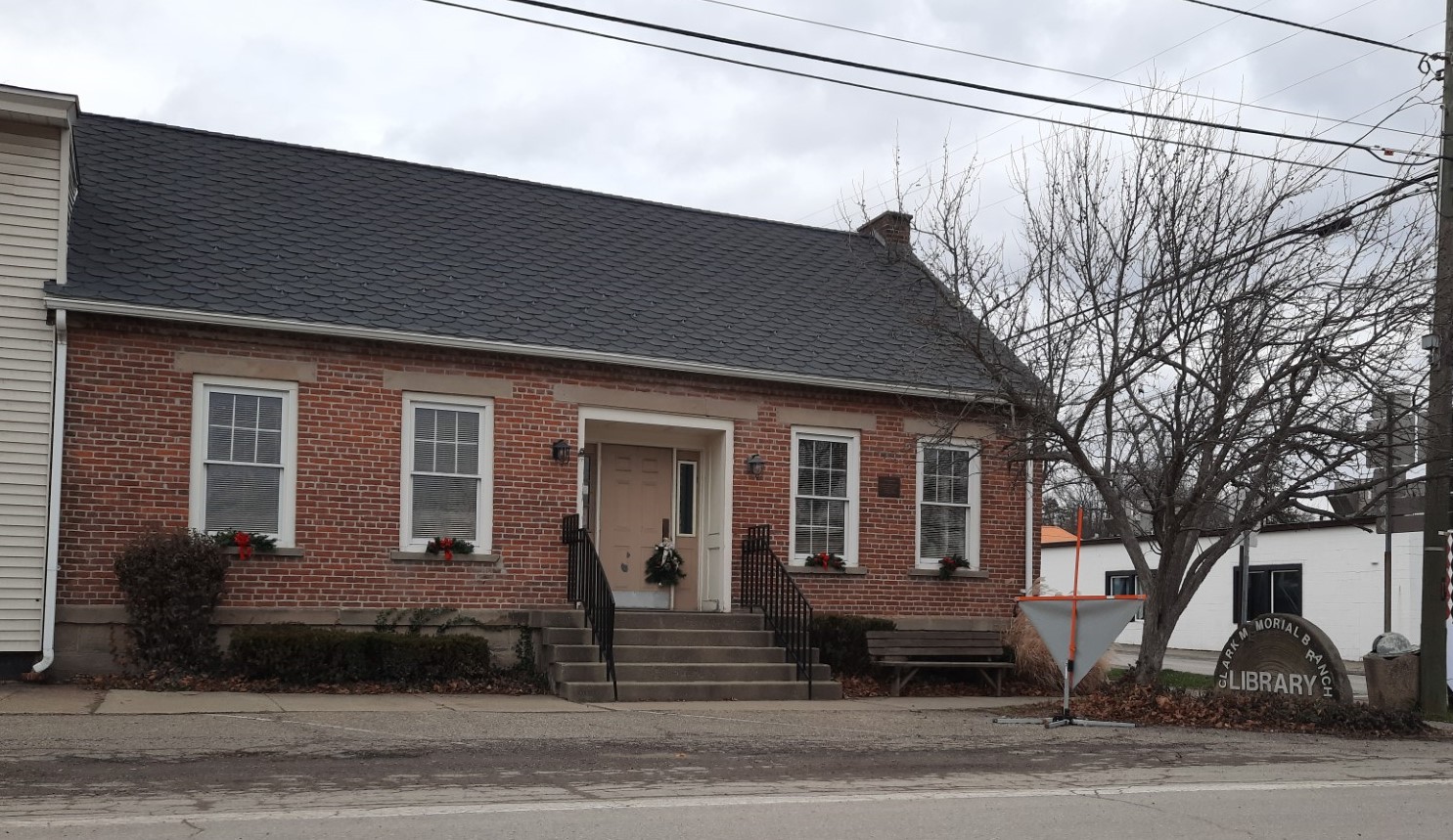
The historical Reaves Home is now the Clark Memorial Branch of Puskarich Library.

One of the founders of the town was Daniel Easley, who built a brick house in the late 1800s. He later sold to John Reaves, who was a teacher and the first Harrison County resident to die in the Civil War. His home, still known as the John Reaves House, is on the National Register of Historic Places, is the oldest structure in Freeport, and considered an architectural wonder. In 1888, it was home to the first bank in Freeport. Since 1991, it has housed the Clark Memorial Branch of the Puskarich Public Library. In 1998, a Children’s Wing was added to the original building.

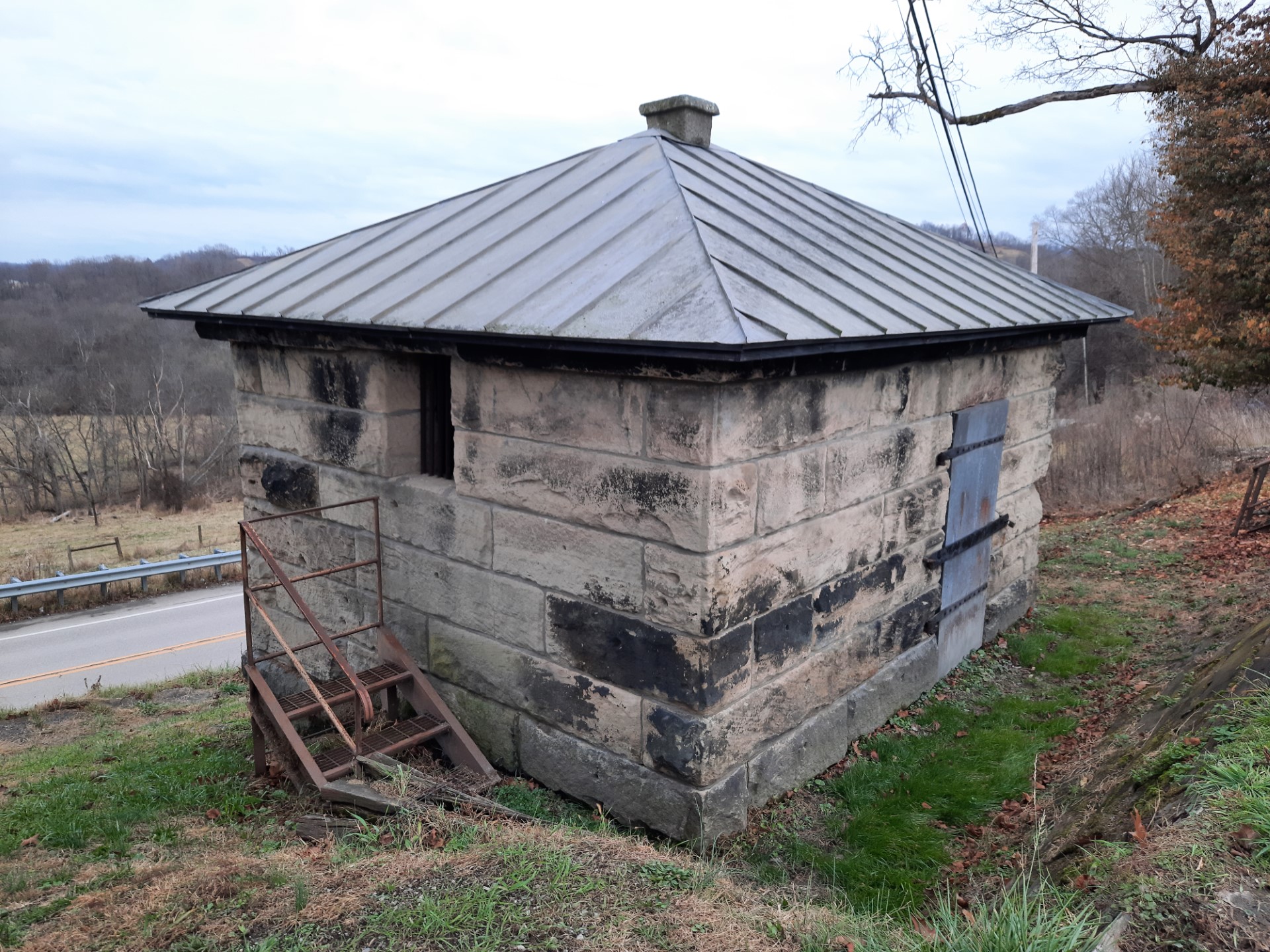
Freeport Lockup served as a jail from 1895-1937.

Freeport Lockup is a stone jail built in 1895 by the Starkey family. The stones were hauled by wagon from the Bill Rowland Stone Quarry. This jail was actually used until 1937 and still can be seen along the road leading into town.

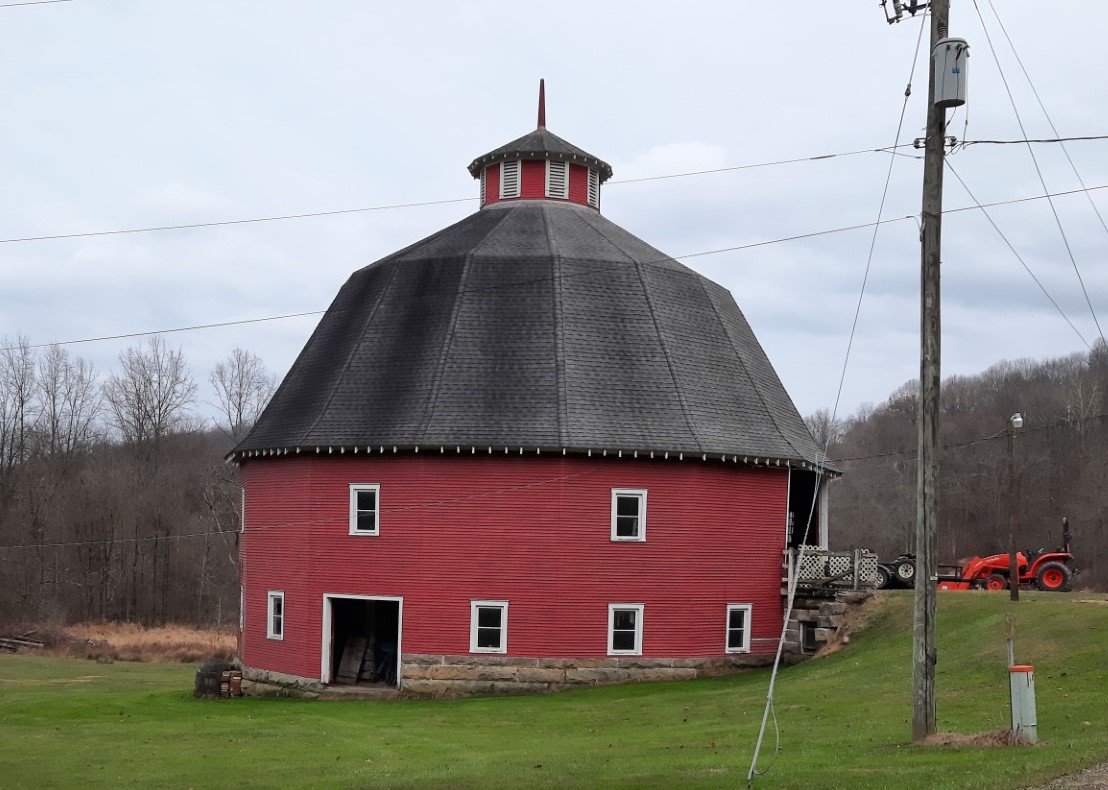
This sixteen-sided barn is one of only three left in the US today.

Here you will find the only sixteen-sided barn in Ohio just one mile south of town. Built between 1916 and 1921 by John Stewart & Sons, it is one of only three sixteen-sided barns left in the United States. This rare type of barn originated from the design of George Washington, our first president. The Freeport barn is 60 ft. high and 60 ft. across with a 12 ft. silo in the center. Visitors are welcome anytime of the year by the owners, who have lovingly restored this historic barn. Nice to see that it is still in good use today.

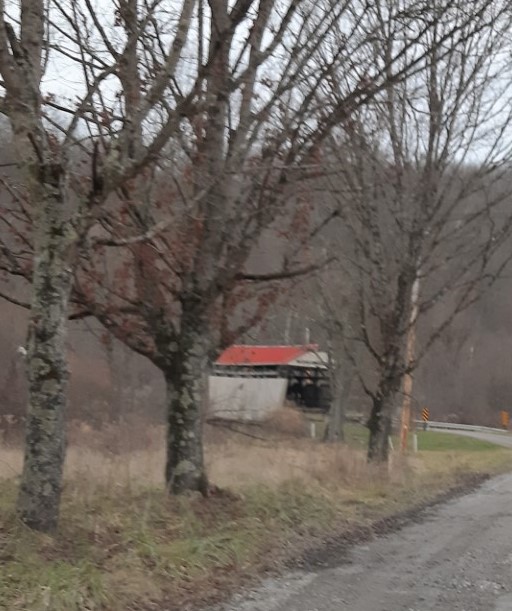
This old Skull Fork Covered Bridge still stands today after nearly 145 years.

Skull Fork Covered Bridge built in 1876 is located near the barn on Covered Bridge Road. Legend has it that local Indians had kidnapped and murdered individuals whose skulls were found near the creek.] The scenic Buckeye Trail passes through this covered bridge and along the shore of Piedmont Lake. This trail goes through 44 of Ohio’s counties and covers over 1444 miles of a continuous loop encircling the state.

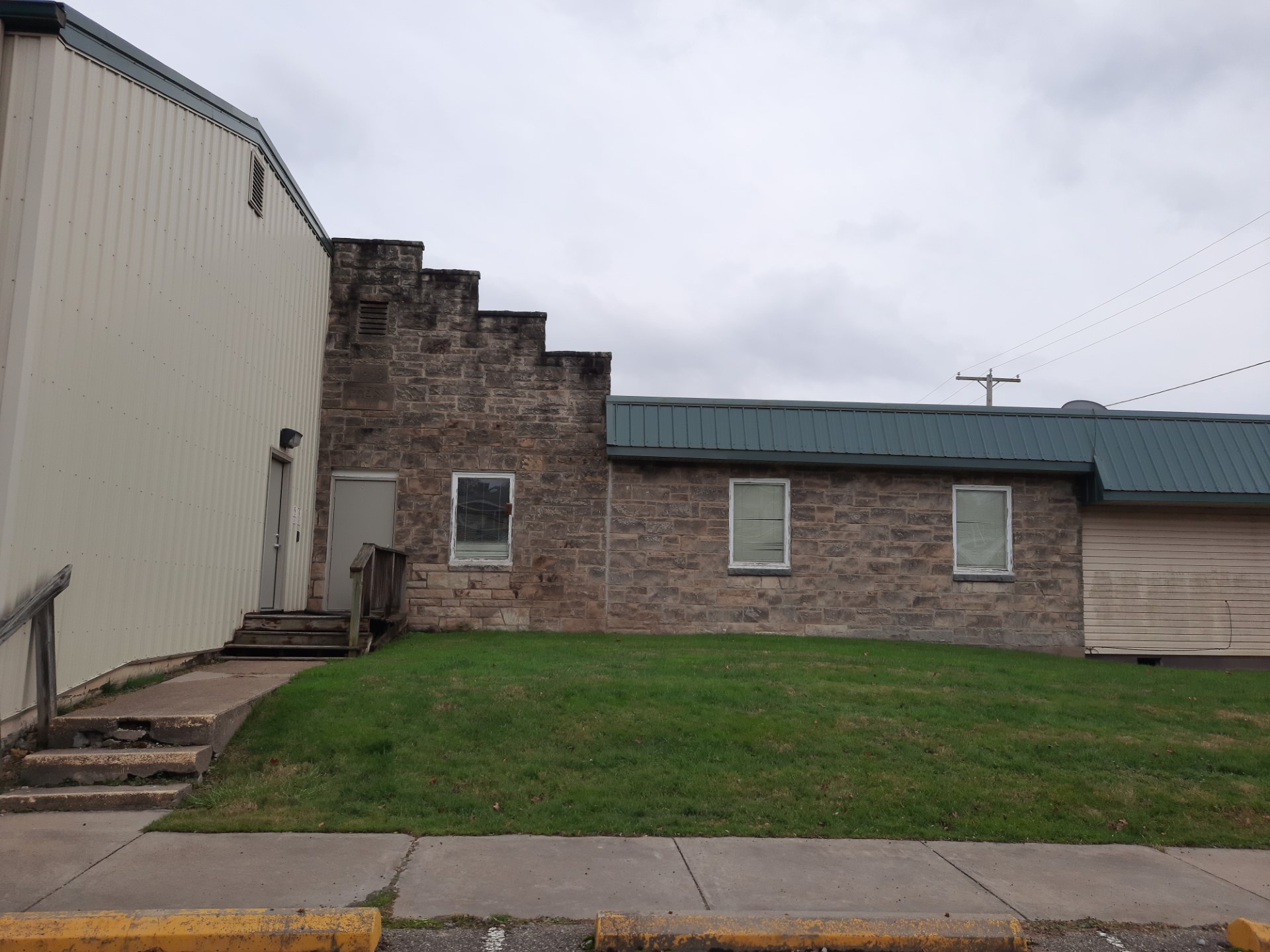
An expanded Freeport Press maintains its early front using local stone.

Freeport Press is family-owned and has served customers with quality print solutions since 1880 when it was established as a weekly newspaper by J.J. Ashenhurst. They are a major business today printing many high-end magazines, catalogs, and commercial print. In 1949, a new building was constructed using stone from the Freeport Stone Quarry on the front. Today there have been additions on both sides but that stone front remains the same. In January 2005, Mr. David G. Pilcher became the sole owner of Freeport Press, which employs over 200 people.

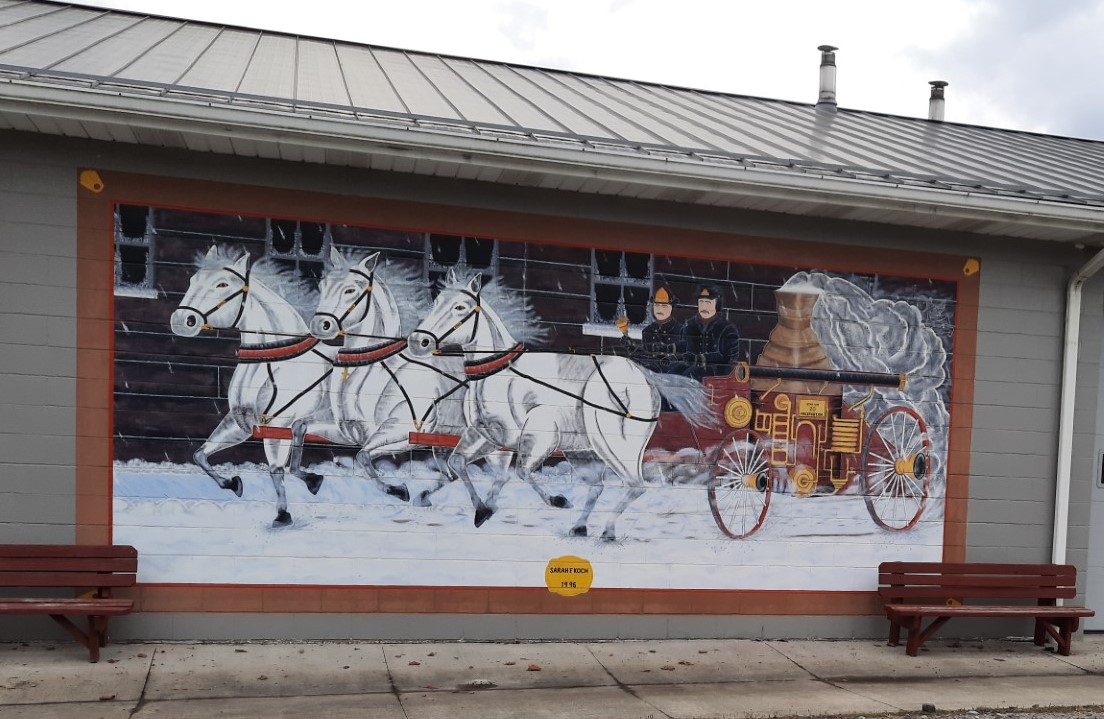
A mural on the side of the Freeport Fire Department shows an early horse-drawn fire engine.

Freeport Fire Department has a beautiful mural by Sarah Koch on the side of their building showing an early fire engine being pulled by horses. They have an annual festival that involves the entire community. It is held the last weekend in July and includes a parade, craft and vendors show, display of fire equipment, and of course delicious food in the form of a chicken barbecue and fish fry.

Piedmont Marina provides a handy spot to pick up fuel, boating and fishing supplies.

Drive to Piedmont Lake just a few miles southeast. The lake was created in 1933 to provide flood reduction as well as for conservation and recreation. It’s a great place for fishing and boating with Piedmont Marina providing boat rental, docking fuel, boating and fishing supplies as well as a lunch counter. There is also a nice renovated campground with electric hookups or you might prefer to stay in one of their vacation cabins. 4-H Camp there many years ago provided summer entertainment during my youth.

Today, Freeport has about 400 residents and many interesting spots to visit. Spend a few hours there and stop to eat at a local restaurant or spend a weekend at one of the local inns or Piedmont Lake. There’s nothing like the hospitality of a small town.

Hopedale – Yesterday and Today

Small towns often have an interesting history that helps us understand those early days in the settlement of Ohio. Hopedale in Harrison County is no exception.

The first settler there in 1800 was Phillip Delany, a hunter. He swam the Ohio River with his clothes tied on his head so he could buy a section from the Northwest Territory Land Office in Steubenville. He called his settlement Green.

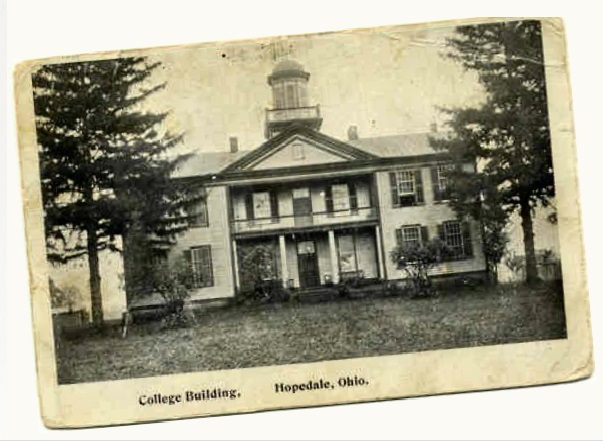
This postcard shows a picture of Hopedale Normal College, the first co-ed college in eastern Ohio.

Later Delany sold the land to a resident of Beech Spring, Rev. Cyrus McNeely, who platted the town. His son, also Cyrus McNeely, changed the name of the town to Hopedale because of his high hopes for the schools there. He donated land in 1849 to begin Hopedale Normal College, the first co-ed college in eastern Ohio with tuition of $5 a month.

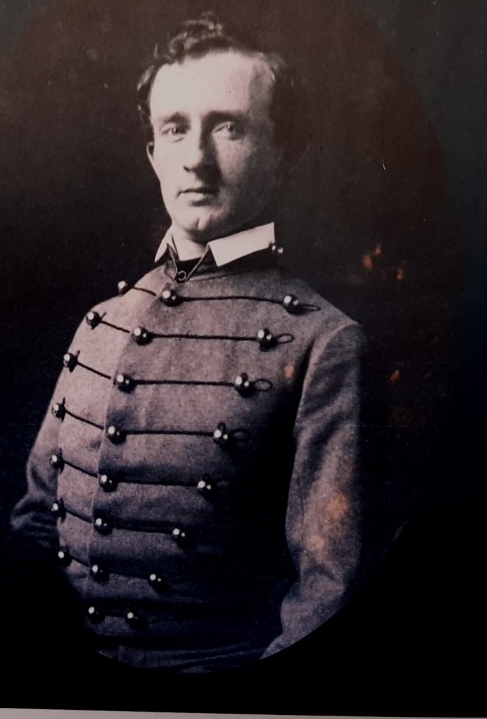
General George Armstrong Custer in his West Point uniform.

Horace Mann once taught there and General George Armstrong Custer was one of 10,000 who graduated from the college. Custer received a teaching certificate and taught in Cadiz. A year later, he entered West Point where he graduated in 1862.

That school grew and eventually included an elementary and high school. They had a six man football team called the Comets. Clark Gable went to school there, rode his sleigh down snowy fields, played in the band, and acted in plays.

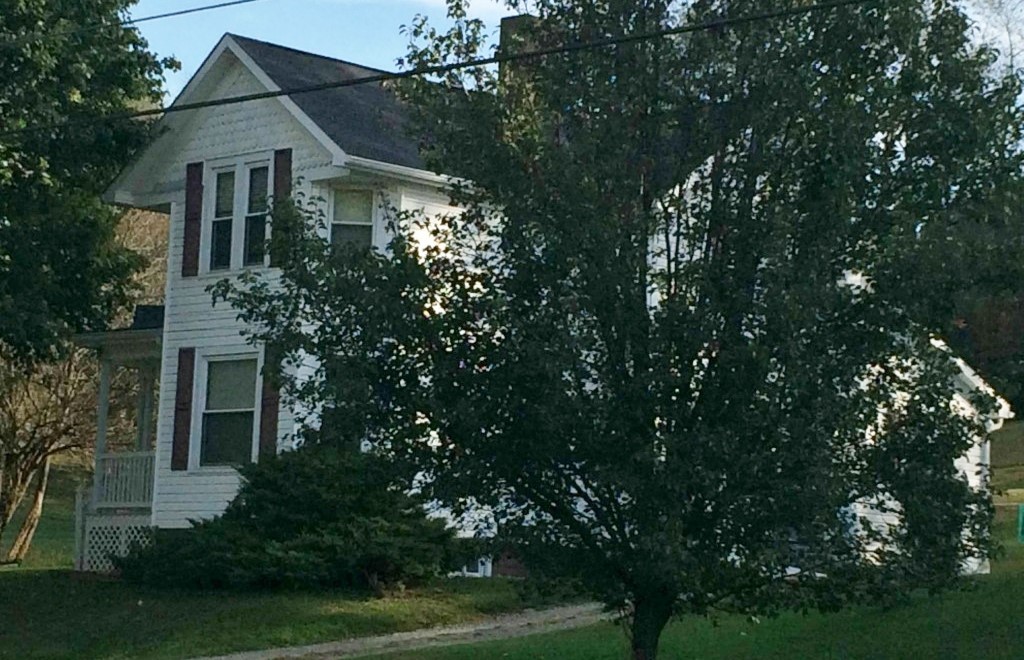
Clark Gable’s home in Hopedale today from the Clark Gable files.

While Clark Gable was born in Cadiz, his family lived in Hopedale during his youth (1903-1917) at 197 Mill Street. Today that house still stands but is a private residence with no public access. His father came to Hopedale because of an oil strike in 1902.

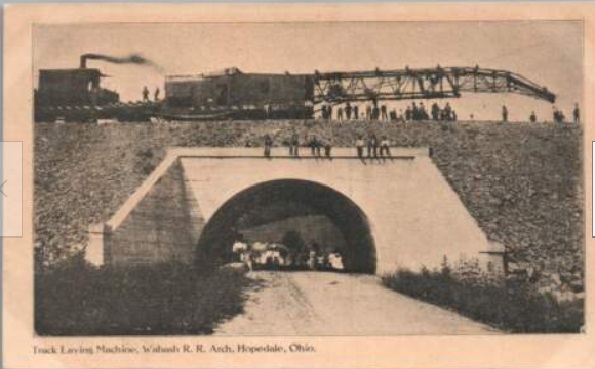
Post card picture of Hopedale’s track laying machine at the Wabash Arch.

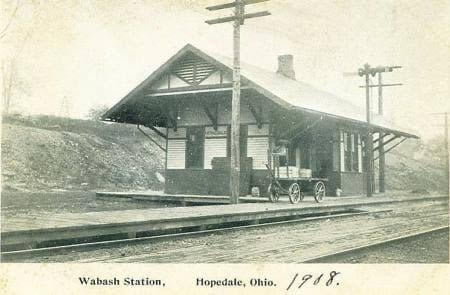
While the oil field brought some financial gain to the area, it was the coal located just under the surface where strip mining began that proved the real boon. But first they needed a railroad to haul the coal. The Wheeling and Lake Erie Railroad was born with the Wabash Station being located in Hopedale as well as the Wabash Arch.

While the college is gone and even the high school that followed it, there is a house across the street from the city building that housed students at the Hopedale Normal College. The city building is actually located on the former grounds of the college and the brick building beside it is now being turned into a museum. A flagpole marks the spot where the college stood years ago.

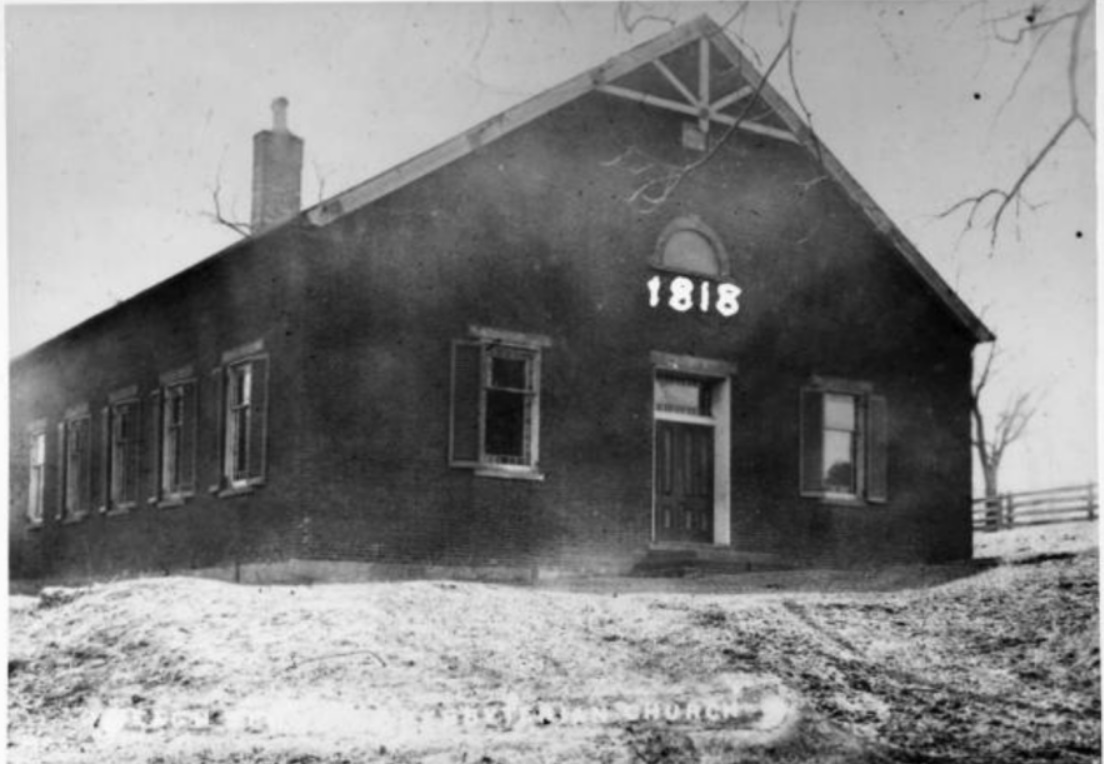
Beech Spring Presbyterian Church near Hopedale was called “The Mother Church of Ohio.”

Another famous historical site was the Beech Spring Presbyterian Church near Hopedale. It was known as the “Mother Church of Ohio” because it supported the founding of many churches in Harrison and Jefferson counties during the 1800s. The church was torn down in the early 1960s but the cemetery remains. Phillip Delaney was buried there.

The Underground Railroad was very active in Harrison County. Hopedale played an active role in this, and many anti-slavery meetings were held there. The Columbus Dispatch reported that slaves were kept in the Kyle home, which was built by Cyrus McNeely. Delaney House is a farm homestead documented to have served as a stop on the Underground Railroad. The building has a dry cistern connected to the main house by a tunnel. This was a great hiding place for runaway slaves and an important stop on the route to freedom.

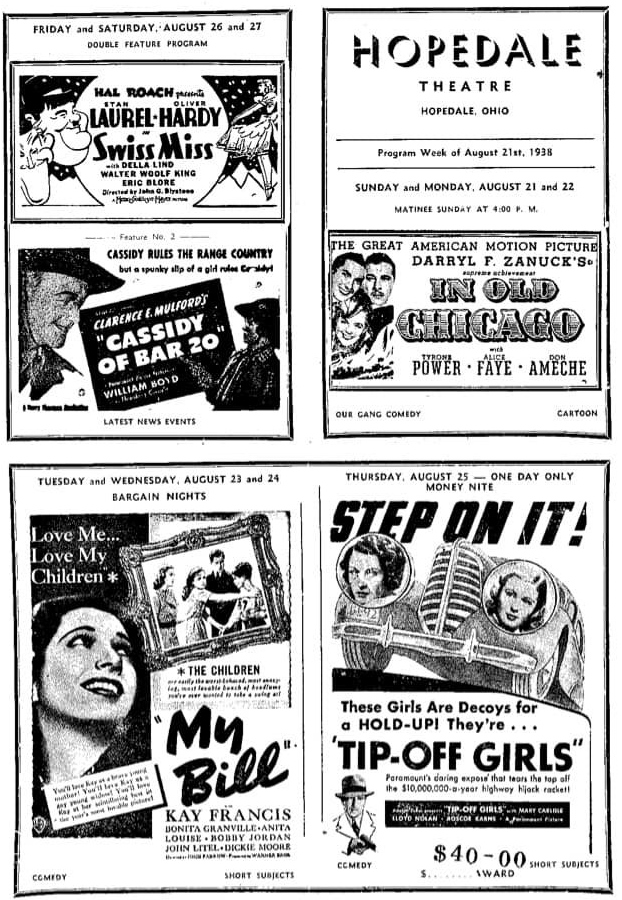
This theater bill shared movies being shown in Hopedale Theater in 1938.

Hopedale Theater was built in 1925 by the Stringer Brothers. They showed the latest in moving pictures and continued in operation until the mid 1950s. Some of those early movies were Laurel and Hardy in Swiss Miss, Cassidy of Bar 20, and In Old Chicago. Today that theater has been turned into an Italian restaurant, Capraro’s.

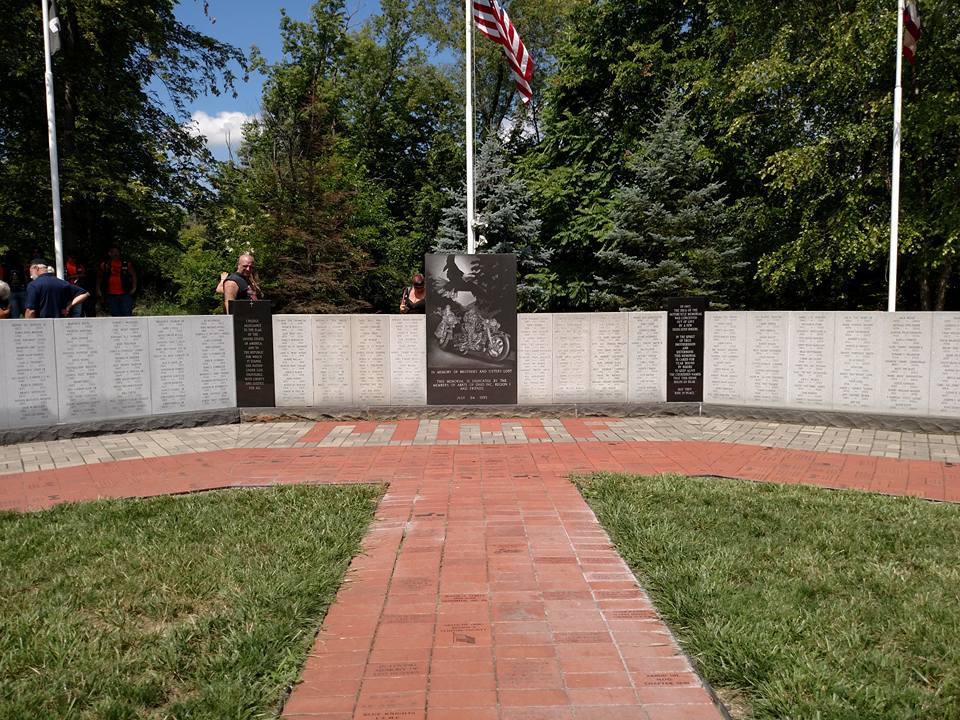
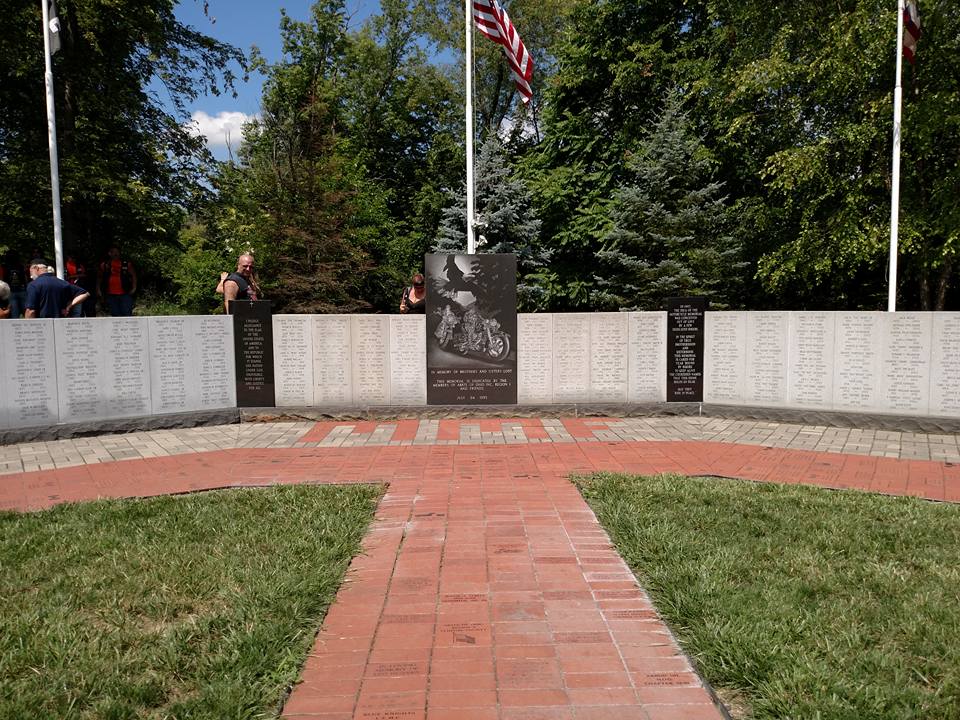
The Motorcycle Memorial has stones engraved with names of fallen riders and a brick pathway giving recognition to donors.

A recent addition to Hopedale has been the Fallen Motorcycle Memorial, a monument to riders gone too soon. A Motorcycle Memorial Wall, similar to the Vietnam Memorial in Washington, DC, contains names of brothers and sisters from all 50 states and other countries. The memorial is funded by the Motorcyclist Memorial Foundation, which cares for the memorial which is located behind the American Legion Post 682.

Milligan Memorials of Coshocton etched the Indian Black Stone, the darkest of all marbles, which stands atop a grassy knoll. The words written on the stone were written by Dan Waterfield of Oregon, Ohio. Anne Milligan etched the image of the man and woman riding their motorcycles on the winding road while Tim Milligan installed and etched the names of the loved ones lost on the gray pillars.

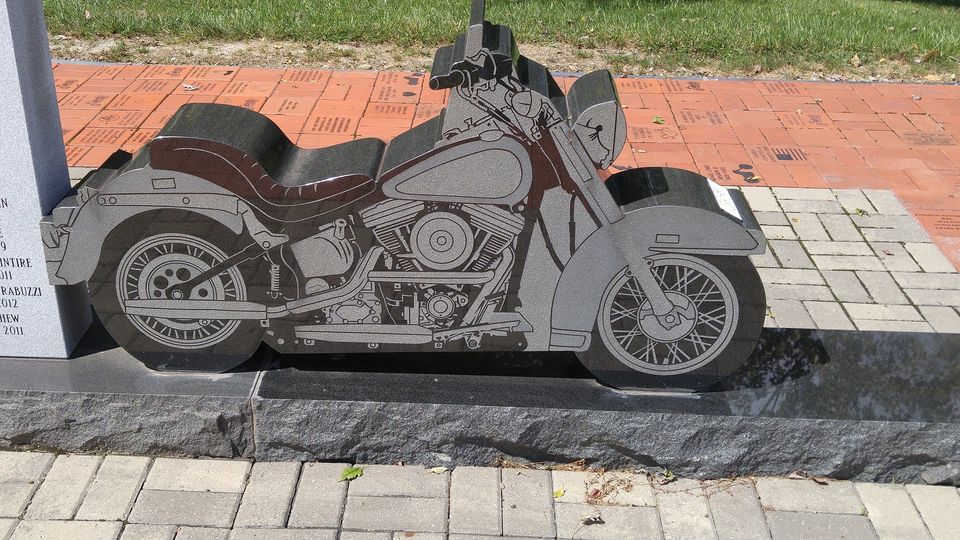
A granite full-size motorcycle sets at each end of the Memorial Wall.

Each end of the wall is bookended by a full-size 2-D motorcycle carved from that same black granite. The bikes can slide outward as new sections are added for fallen bike riders. In 1993, there were only two slabs with names. Today there are dozens of slabs listing names of bikers who have gone on.

The Motorcyclist Memorial was unveiled to the public in 1993. Now every year during Memorial Day weekend, they re-dedicate the wall and add more names to the granite pillars on each side of the monument. Nearly 1200 show up annually for this event. Be sure to stop by and visit the Wall if you find yourself in the Hopedale area.

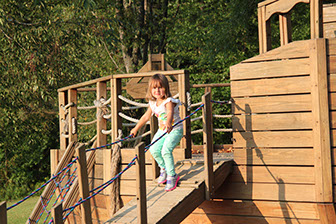
Hopedale has a large ten-acre park with a playground and much more.

Hopedale today contains many family-friendly activities that make it a great place to call home. They have a beautiful ten-acre park that contains several picnic shelters, a basketball court, a tennis court, and a baseball field for the youth. Take an evening stroll on their walking/biking trail. Soon they will have a museum where you can learn more about their history. Plan a visit to this historic town sometime soon.

Motorcycle Memorial 30th Anniversary

If “lick, gap, hollow, or creek” are in the name of the road, take it!

~Motorcycle wisdom

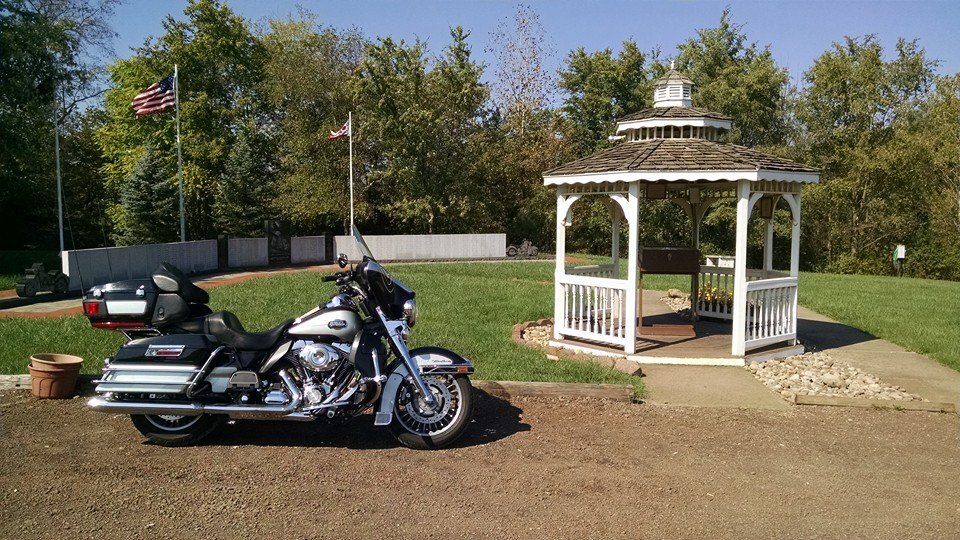
This overview of the wall shows the dedicated brick sidewalk by friends of the Memorial.

Hopedale is home to the Fallen Motorcycle Memorial, a monument to riders gone too soon. A Motorcycle Memorial Wall, similar to the Vietnam Memorial in Washington, DC, contains names of fallen brothers and sisters from all 50 states and other countries. The memorial, established in 1993, is funded by the Motorcyclist Memorial Foundation, which cares for the memorial which is located behind the American Legion Post 682.

Motorcyclists will be attending by the hundreds for the rededication.

Gas-powered motorcycles began back in 1885 in Germany. This early motorcycle was a wooden frame with a gas engine attached. Things have certainly progressed from that early time and today there is a wide assortment of motorcycles from which to choose.

Riding a motorcycle is fun and exciting with the freedom to enjoy the open road with a sense of adventure. Some like it for speed, while others find it a relaxing way to spend a day as they ride the back roads and enjoy the scenery. Many like the camaraderie of riding in groups where they often help with community projects such as collecting toys for Christmas giving.

Of course, riding a motorcycle is an easy way to commute to work and saves on the gasoline bill. Their gas mileage rivals the most economical small cars. Caution must be taken to stay out of a car’s blind spot and motorists need to be aware of watching for motorcycles on the highway.

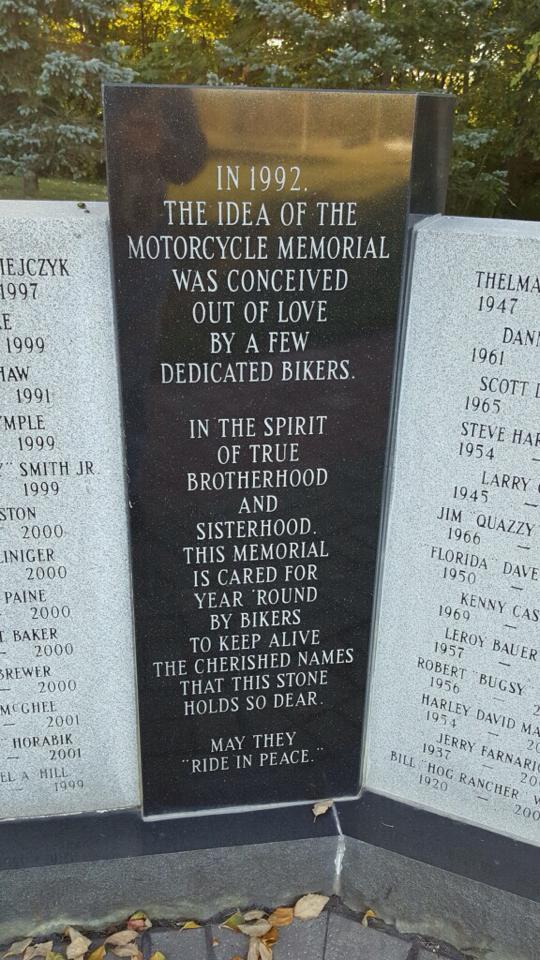
Words on this Indian Black Marble were written by Dan Waterfield.

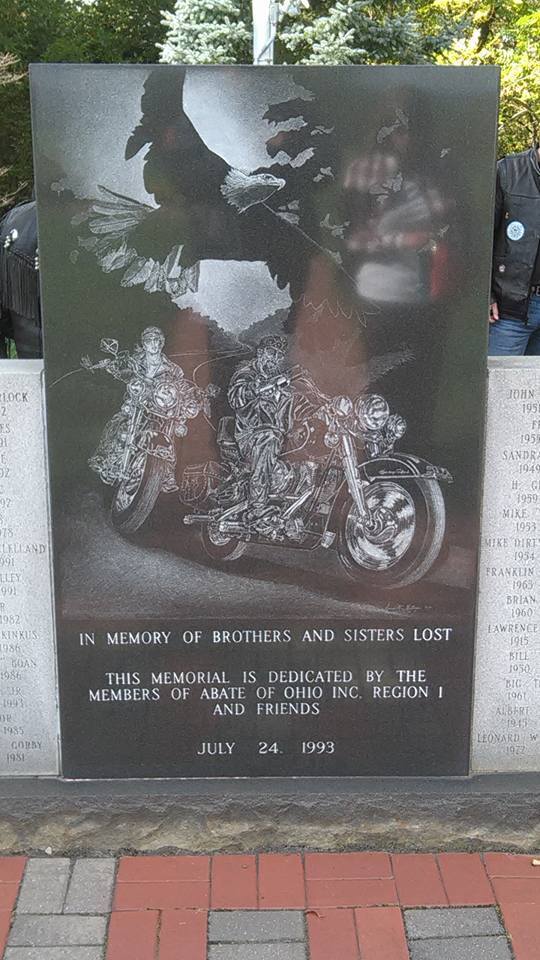
Those who enjoy the thrill of riding motorcycles directed the building of the Motorcycle Memorial Wall with incredible detail. Milligan Memorials of Coshocton etched the Indian Black Stone, the darkest of all marbles, which stands atop a grassy knoll. The words written on the stone were written by Dan Waterfield of Oregon, Ohio. Anne Milligan etched the image of the man and woman riding their motorcycles on the winding road while Tim Milligan installed and etched the names of the loved ones lost on the gray pillars.

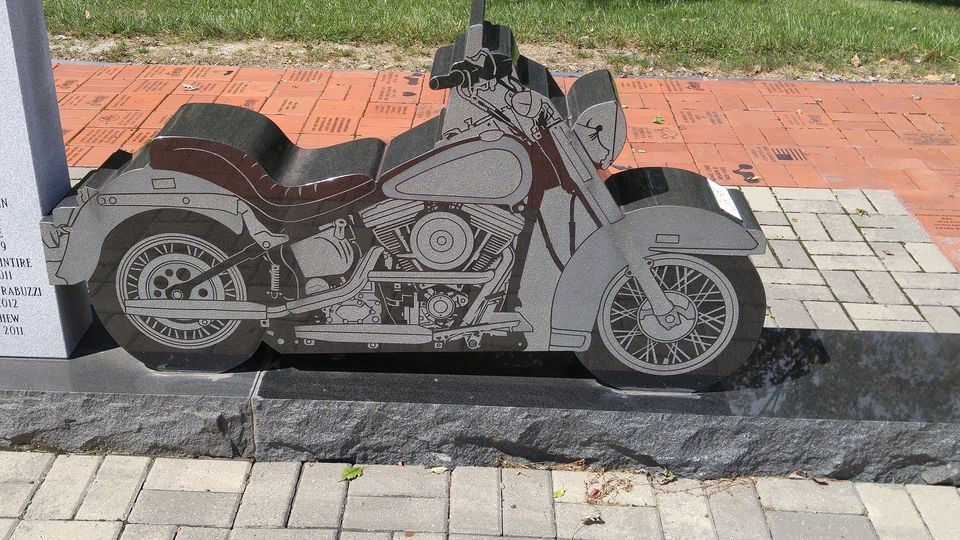
At each end of the wall is a moveable marble full-size motorcycle.

Each end of the wall is bookended by a full-size 2-D motorcycle carved from that same black granite. The bikes can slide outward as new sections are added for fallen bike riders. In 1993, there were only two slabs with names. Today there are dozens of slabs listing names of bikers who have gone on so there will be a permanent memory of fallen brothers and sisters of the open road.

Anne Milligan etched this picture on the black marble of cyclists going down a winding road.

Hundreds of motorcyclists, their friends and family members are expected to converge on this Harrison County community on this Memorial Day weekend, May 26-27, for the 30th annual rededication of the Motorcyclist Memorial. Every year during Memorial Day weekend, they rededicate the wall and add more names to the granite pillars on each side of the monument. Nearly 1200 show up annually for this event.

Motorcycle enthusiasts will enjoy a trip to Hopedale just east of Cadiz to see the wall for themselves. Visit during their Rededication Ceremony on May 26-27. Activities include a ceremony at 11:30 when the names of newly fallen riders will be put on the black marble monument, plus live bands, vendors, and a bike rodeo. Charge for admission is $15 per person for the weekend with funds used to care for and update the wall.

The Memorial Wall is located at 48225 Rabbit Road in Hopedale. If you have any questions, call (740) 317-3433. Come join in the celebration on May 26-27.