Places to go and things to see by Gypsy Bev

Posts tagged ‘History’

Village of Byesville Museum

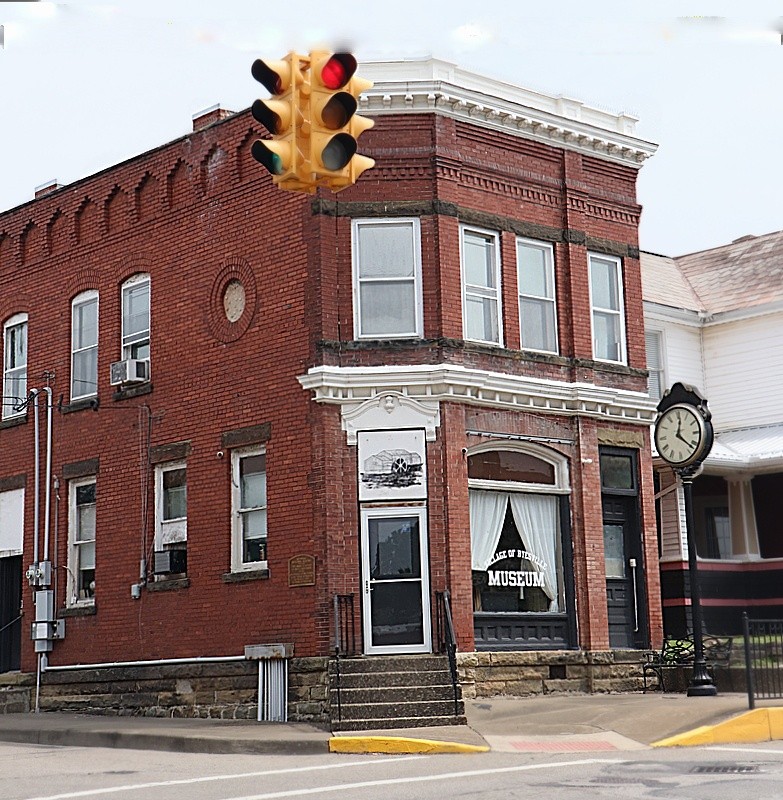
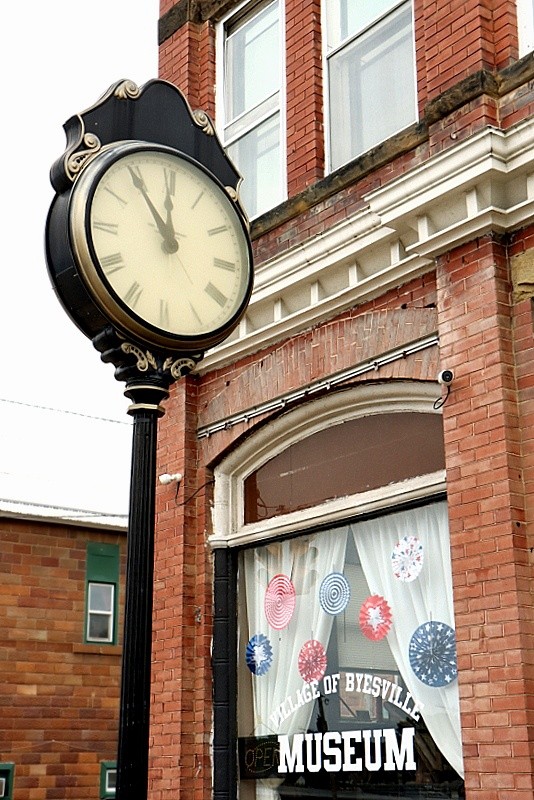
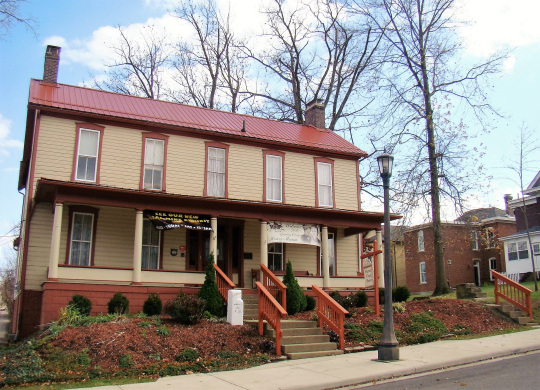
Byesville Museum was originally First National Bank back in 1901. (All photos by Calvin Chester)

Visit the newly renovated Byesville Museum & Welcome Center at 236 Main Street. This facility is located on the corner in the historical First National Bank, which has existed in Byesville since 1901.

Byesville was platted in 1856 and named for Jonathan Bye, who had a mill there. It’s nickname at that time was Bye’s Mill. It became incorporated in 1881. A great deal of history has been accumulated over the years and some of that can be found in the Byesville Museum.

The clock was given by L.D.M. Technologies in 1998.

The museum contains a collection of antique items, photographs, and documents which chronicle the history of the area from the mid 1800s to the present. Learn more about the history of the bank and the surrounding area. You’ll find some surprises.

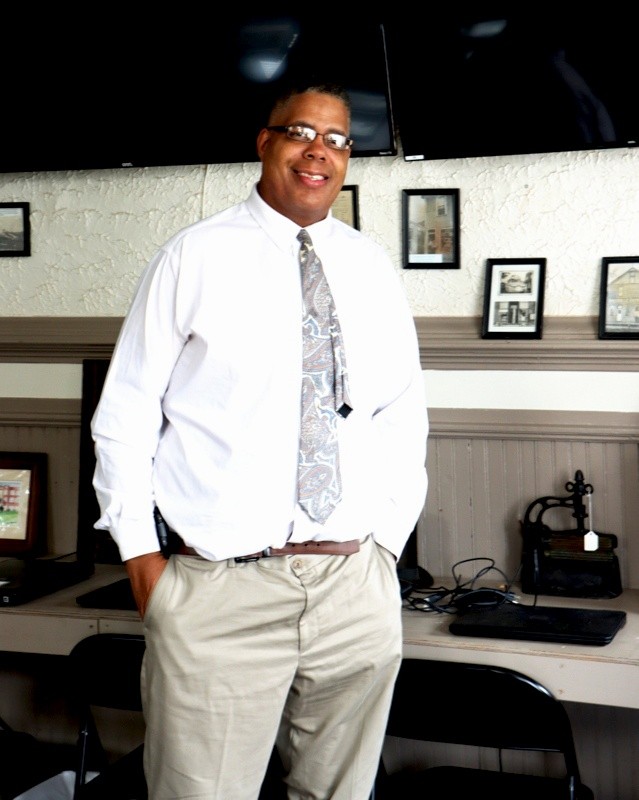
Mayor Jay Jackson gave us a tour of the museum.

Byesville Mayor Jay Jackson talked about the Byesville Museum and gave a tour of the facility explaining how the museum had been revitalized in the last few years after some extensive water damage. Many items were lost because of the water and they are trying to make sure that doesn’t happen again.

Mayor Jackson stated, “I have a strong belief in history as stories of the past help us understand our heritage. The items contained here are a hidden treasure.” It takes a village to make these things work and the museum has become a place where you can find the history of Byesville and the surrounding area because of everyone working together.

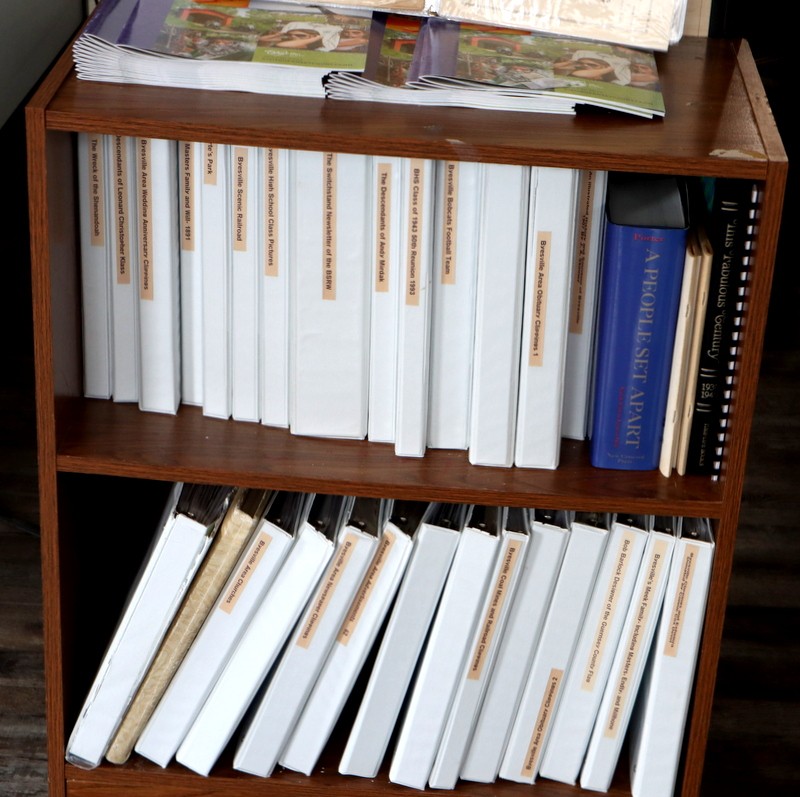
Many volumes of old photos and newspaper items are available.

Learning stories of the region’s past can change the way you think about the present. There is an extensive collection of notebooks filled with old photos and newspaper items that could give hours of enjoyment.

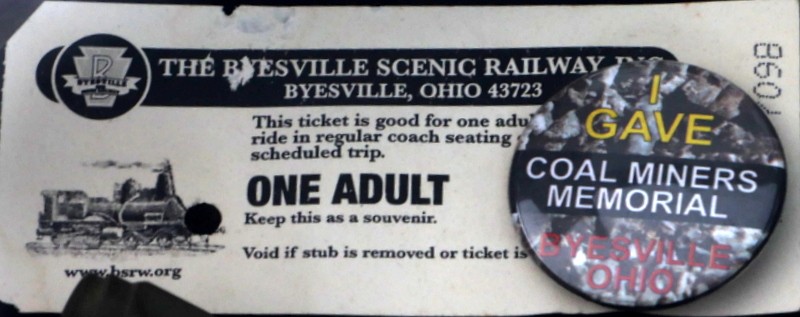
A ticket from the Byesville Scenic Railway reminds people of the local coal heritage.

The museum includes a Resource Center with computers available where you can look for a job, work on a school project, take a class, or learn how to use the computer. Here pictures can be shared about the history of Byesville. They also developed a special slideshow of local veterans.

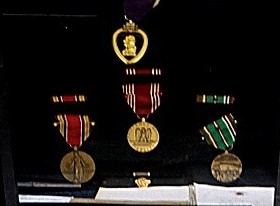
Veterans are honored with a display as well as medals won.

The back room is now open for displays. A special display there honors the veterans from WWII. A case contains medals that were received as well as a purple heart.

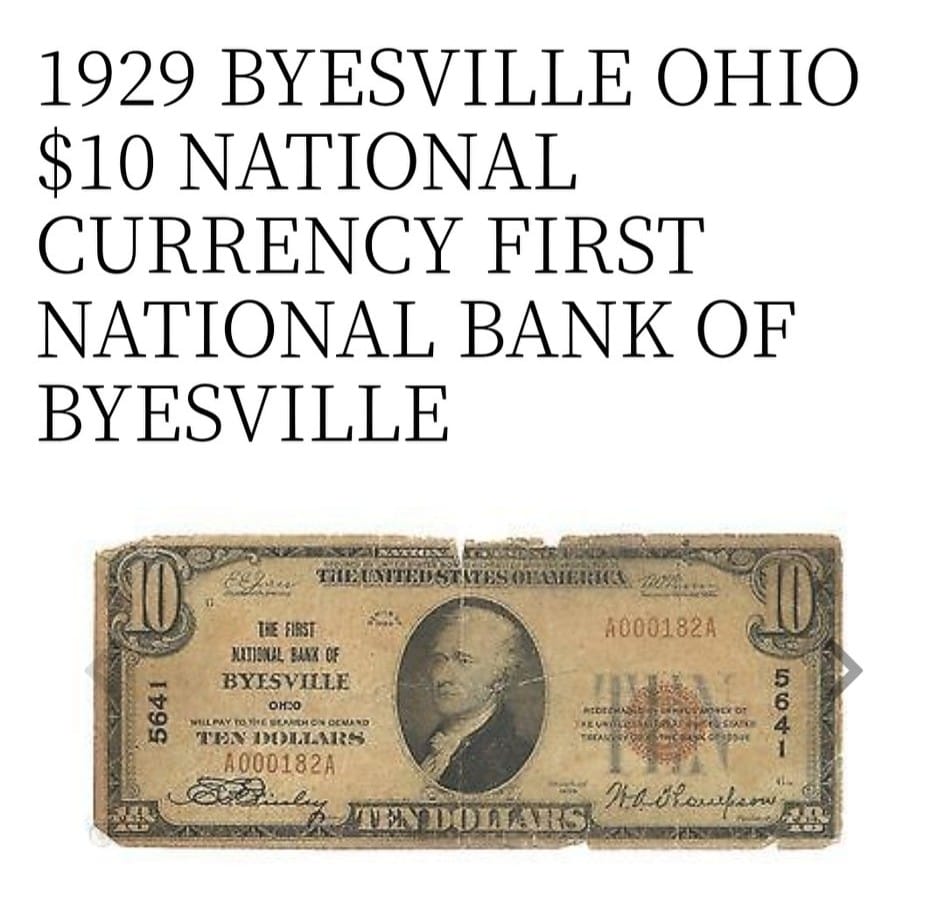
This $10 bill, national currency, has The First National Bank of Byesville printed on it.

The second floor of the museum contains boxes of treasures but there is only so much room for display. If you would like to help with this project or perhaps have something that should be added, become a volunteer so it can be opened on a full-time basis. New ideas are always welcome. If you’re interested in helping out a few hours a week, let Jay Jackson, Village of Byesville Mayor or Michael Port, Byesville Councilman, know by sending them a Facebook message.

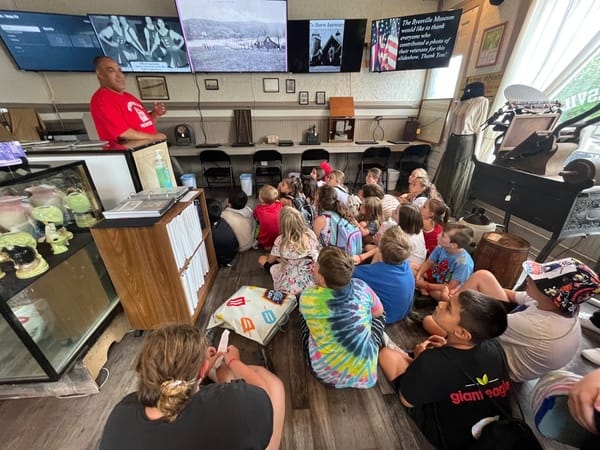
Michael Port talks to a group of children from Nurture Daycare, who visited the museum.

Recently, a group of children from Nurture Daycare visited the museum with their teachers to learn more about how Byesville began and how it is growing today. They shared photos of Byesville’s past with them on the large computer screens, handed out two coloring pages for them to do, and showed them around the museum. These children are the future volunteers who will keep Byesville a place sharing its history. If you would like to bring a group for a visit/tour, let Mayor Jackson know so they can get you scheduled.

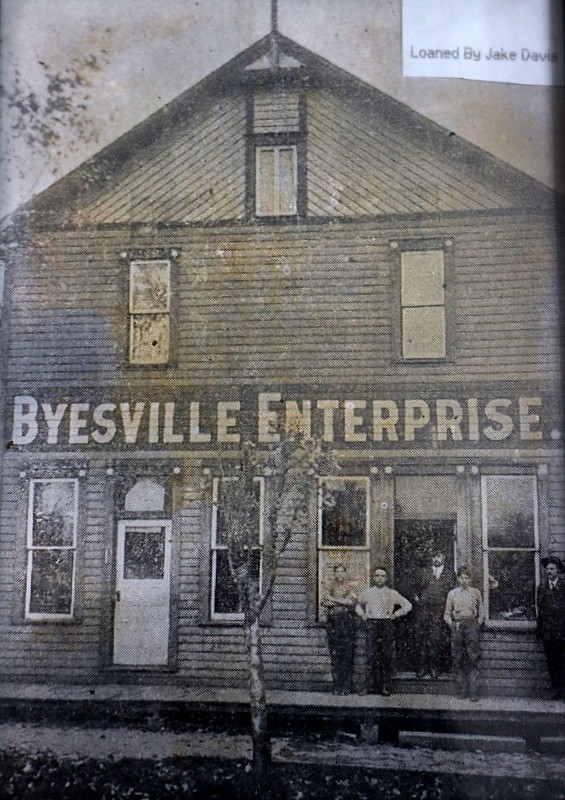
This old picture shows Byesville Enterprise, the local newspaper office.

The museum, operated by Byesville Historical Society, is open May through September on Monday, Tuesday, and Thursday from 11-2. It’s best to call ahead at 740-260-3088 to confirm they are open as hours of operation vary based upon volunteer availability. Check out their Facebook page listed under Byesville Museum.

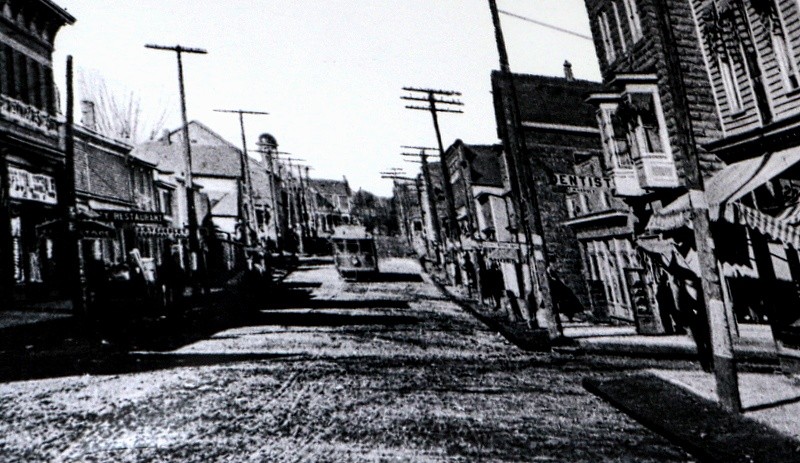
Interurban tracks ran down Depot St. (now 2nd Street) in downtown Byesville.

If you are from the area, the museum is certain to bring back many memories. Having spent much of my childhood in Byesville, there are many great memories from times when we walked from The Bottom, where my grandpa had Veselenak’s Grocery. We headed downtown to Luna Theater to watch a movie, got a snack at City Restaurant, and picked up a coloring book at Jack’s Five and Dime. Perhaps you have some favorite memories of Byesville, too.

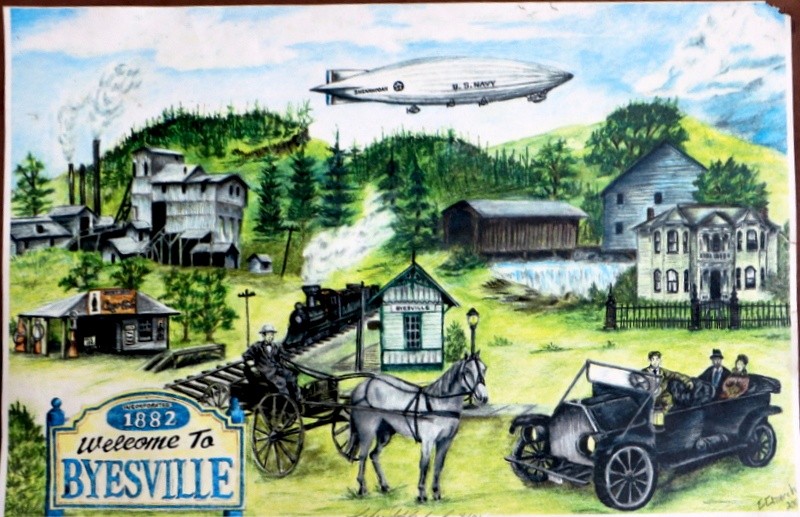
A painting of life in Byesville in 1882 hangs in the museum.

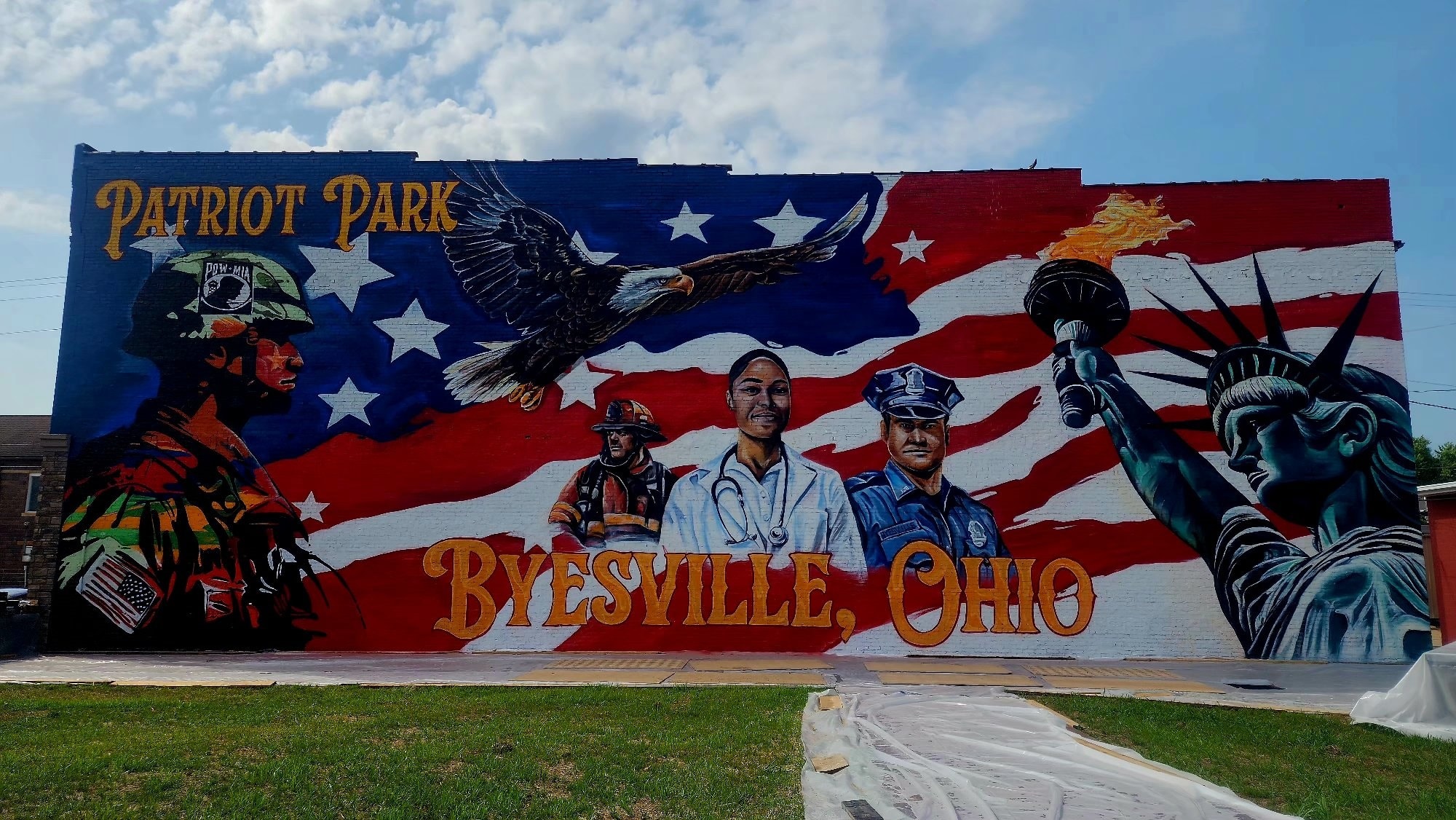
Today, Byesville is growing with many new businesses opening there. A new Patriot Park will highlight the corner of Main and 2nd Street. It will feature picnic tables, benches, new sidewalks, a gazebo, mural, a fountain, and a stage. Ideas are being discussed for possibilities to use the old Main Street School for new purposes. History continues to be made as each year passes.

The history of a town teaches lessons that need to be learned as our roots never change. Explore Byesville Museum when you get a chance and perhaps find a connection to your roots.

Nurses Supporting Our Troops

Thank you to all who have served!

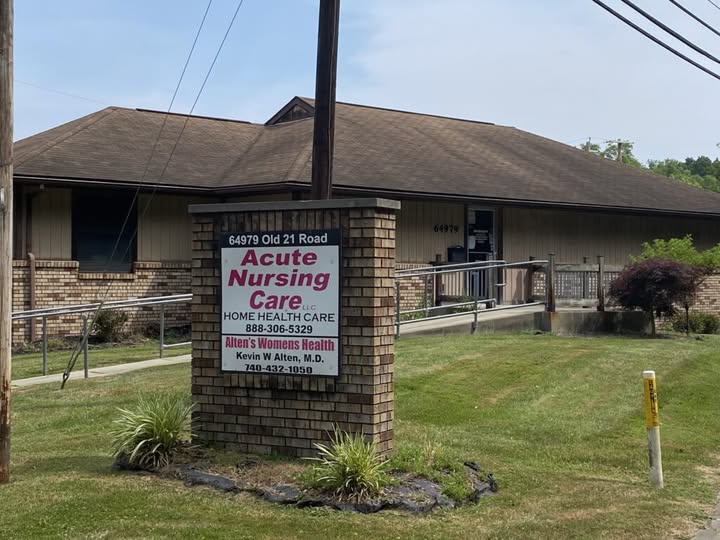
Acute Nursing Care in Cambridge has started a program on the local level to send Care Packages to people who are in the military and have families in the thirteen counties they serve.

Nurses at Acute Nursing Care have organized “Nurses Supporting Our Troops.”

This health care center provides professional services to clients in their homes to assist in day-to-day self-care activities. This surrounds them with family, friends, and the things that are important for that at home feeling. Nurses Supporting Our Troops give that same kind of home feeling to those who are away from home in the service by providing them with a touch of home.

Those in the military have always enjoyed letters from home to keep that connection with family and friends. So, a package from home has a special meaning as it shows the recipient that they are remembered. Care packages and letters are always a comfort to those away from home. Be sure to include a thank you so they realize their service is appreciated.

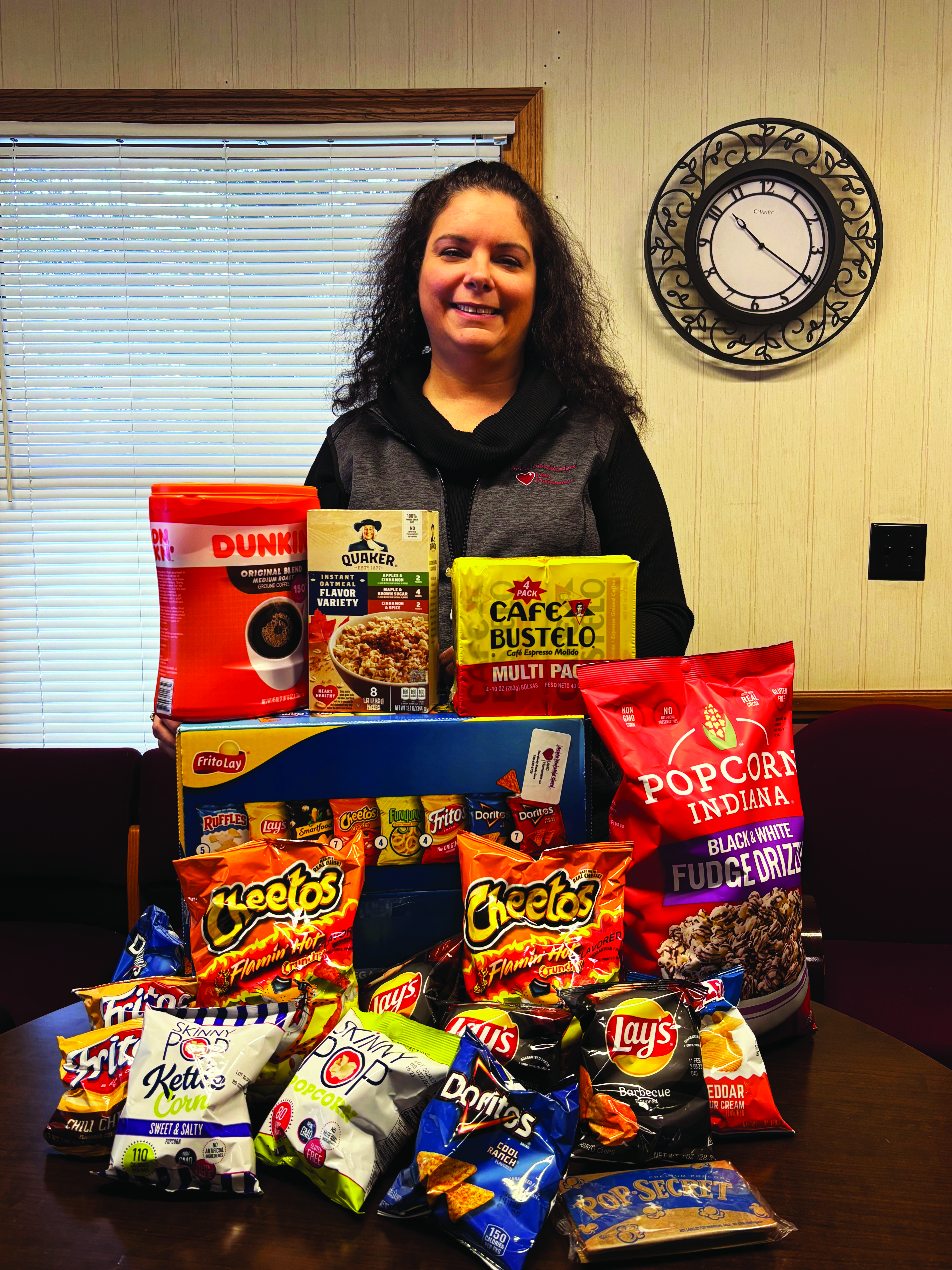
Shelly Long displays some of the things that go in the Care Packages.

Shelly Long, Acute Nursing Care owner/manager, got the idea early in 2023 when her nephew was being moved from Wright Patterson Air Force Base to serve in Kuwait. She knew life there was very hard for him and he was missing home so thought a care package from people he loved would lift his spirits. Their first care package was received in Kuwait in May and very much appreciated.

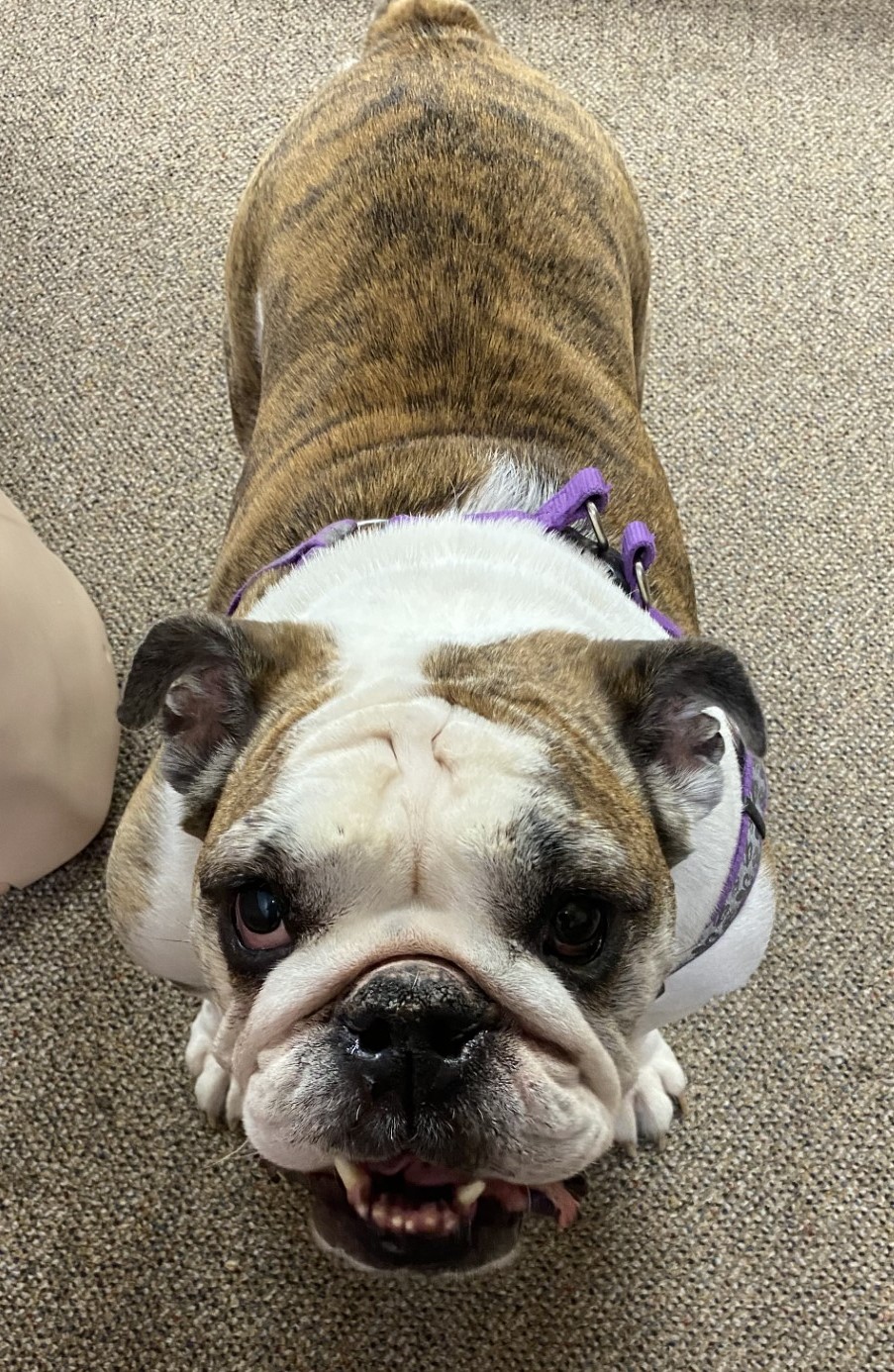
Matilda serves as the mascot for ANC.

After that, the staff at Acute Nursing Care thought this would be a great idea for more than just her nephew as many young people in the military experience a great change in their lives. Nurses Supporting Our Troops was organized locally to create Care Packages. Shipments are being made through international mailings along with Domestic Mail to active military bases. Nurses Supporting Our Troops has sent out care packages around the world.

Another recent recipient was an active duty Army Sargent of the Airborne Division, who was stationed in Poland. He received some flaming hot Cheetos in his care package.

To Celebrate D-Day on June 5, a care package was sent to an active soldier in the UK. Imagine the smile on the faces of those receiving a care package from home.

If you know of any active area person serving in the military that you would like to nominate for a care package, please email their full name, rank, and military base app address to York@acutenc.com.

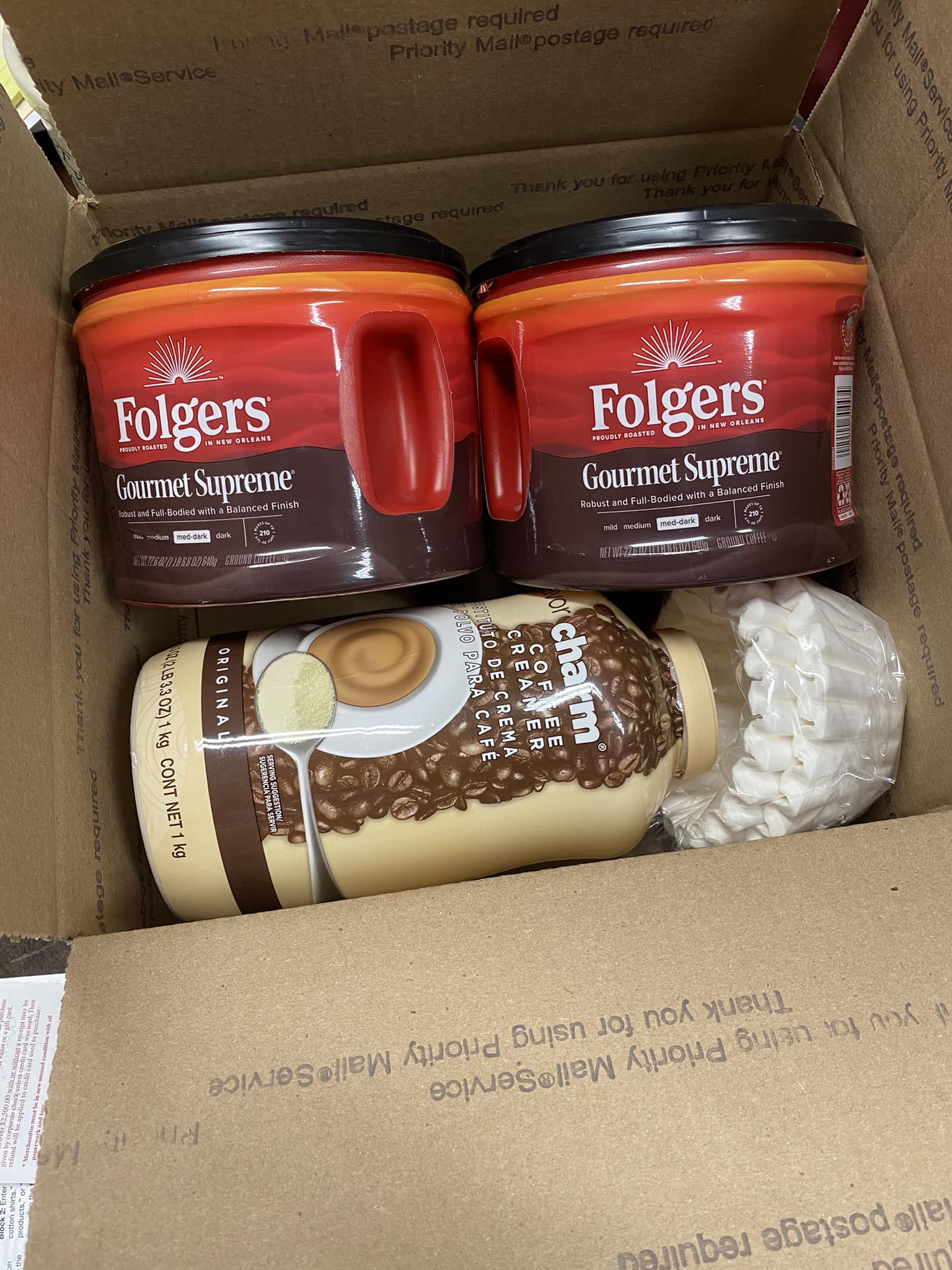
If you would like to participate in helping with this program, some of the items that are easily shipped include: bags of chips, hygiene products (travel size preferred), individually packaged snack foods, lip balm, cooling towels, beef jerky (no pork products), and paper back books.

The only requirement they need for donations is the retail price of each item for customs and the exact number of items. Please do not send any items containing batteries or liquid as well as nothing that would melt in hot conditions.

York Hiestand, Human Resources, will answer all your questions.

Donations are being accepted at the next Senior Coalition meeting or at the office of Acute Nursing Care at 64979 Old Twenty One Road, Cambridge. You can drop things off Monday thru Friday 9-4 or call 740-439-5720 and they will pick them up at your convenience. Drop an email to York Hiestand, Human Resources, at york@acutenc.com for additional information.

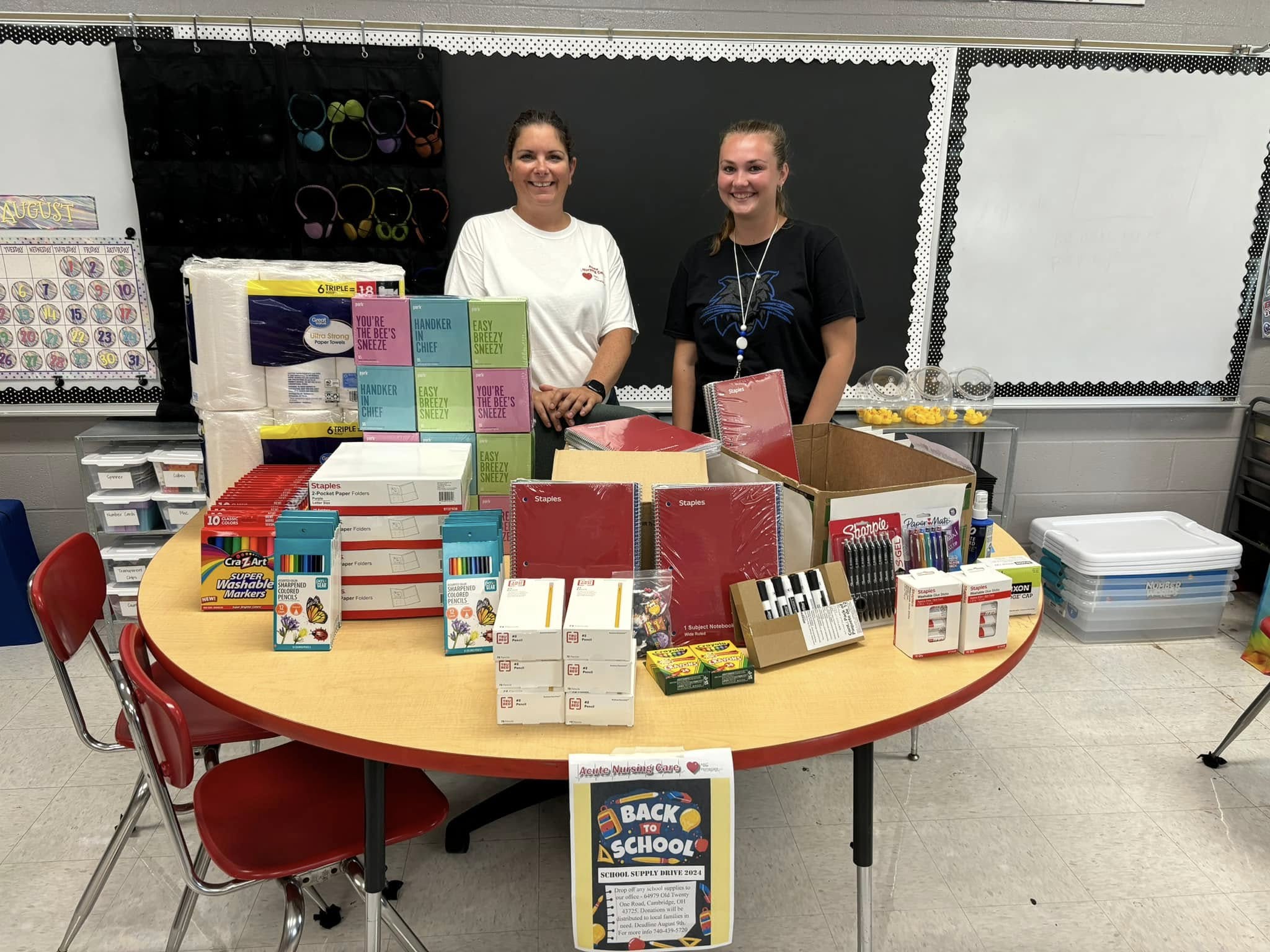
Over 1,000 back-to-school items were donated to Cambridge Elementary.

Acute Nursing Care is active in the community and supports many local drives. Their participation in back-to-school drives for needed supplies was a huge success and donated over 1000 items at Cambridge Elementary. They have also helped organize baskets for seniors at home and in the nursing centers. Their caring goes beyond that done at Acute Nursing Care.

Nurses Supporting Our Troops realize that every day, service members put their lives on the line to keep us safe and free. Take a moment to let our troops know how much we appreciate their service and sacrif

Remember to send a letter with photos or a care package to friends or family that are serving our country in the military. If you can’t organize that, let Nurses Supporting Our Troops assist you. That little piece of home could be the highlight of their day.

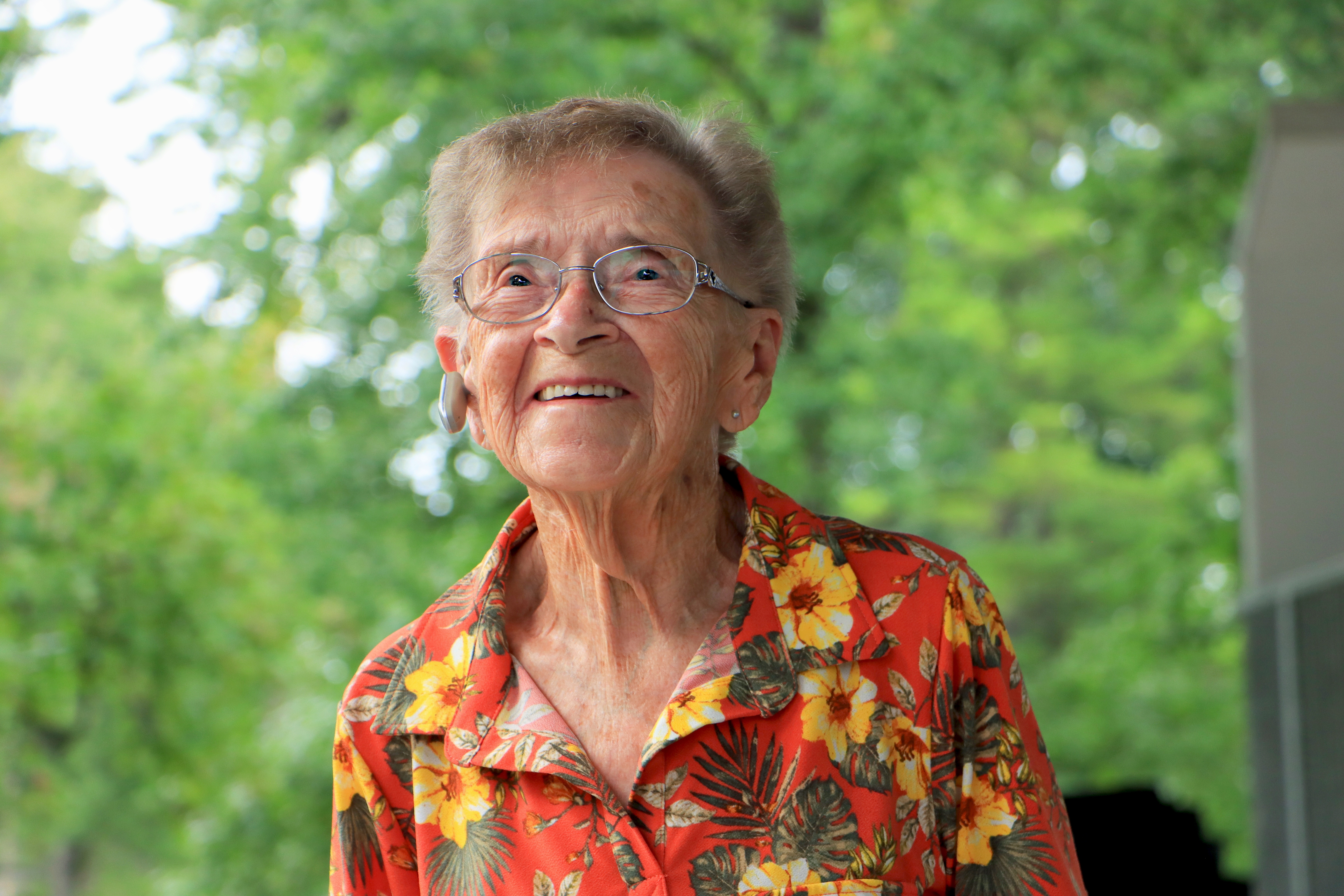
Intriguing Jackie Beardmore at 90

Jackie enjoys listening to the Cambridge City Band Concert in the park.

At the age of 90, Jackie Beardmore has experienced many special things during her lifetime and brought to life many memories of Guernsey County. Her life began in Swan Hospital, where the total bill for her birth in 1934 was $12.

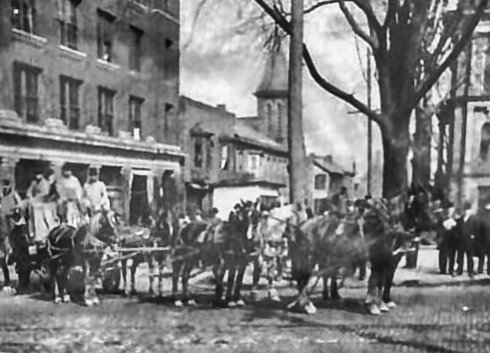
Her family was involved in moving a safe to Central Bank by Express Wagon..

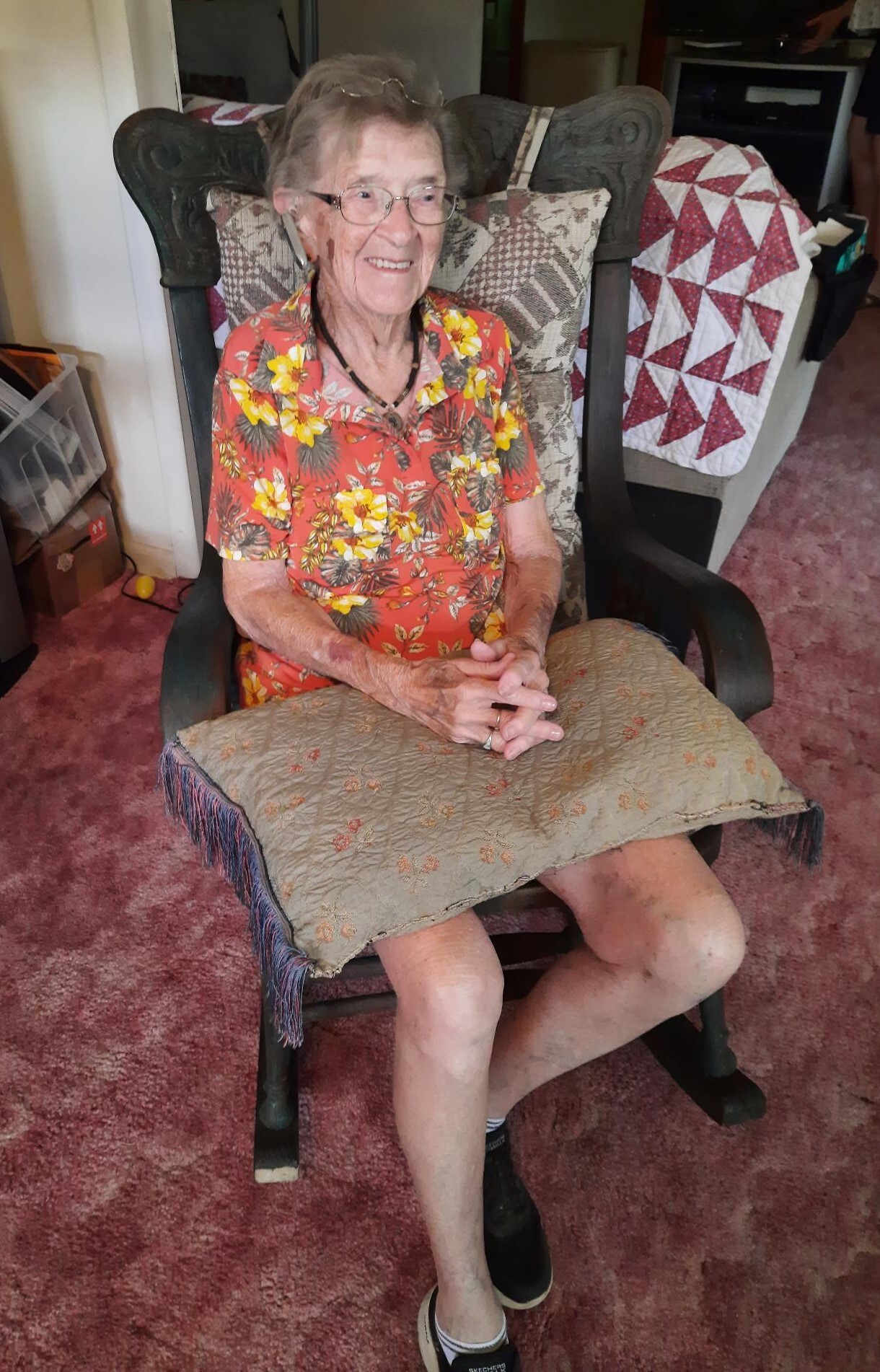
Jackie still has the rocking chair that her grandmother sat in on the front porch. Jackie remembers sitting on the porch beside her. Her ancestors owned Nicholson Mines and 400 acres including where Southgate Parkway businesses are today.

Her grandmother’s rocking chair and pillow are precious memories for Jackie.

As a youngster, Jackie’s family vacationed in Canada near North Bay every summer starting when she was four, as her dad wanted to fish for walleye. While there, for several years they would visit Quintland, which was home to the Dionne quintuplets.

When the Dionne quintuplets were born, their parents already had several children so were taken under the care of the Red Cross, Dr. Defoe had a nursery built across from their home. It was shaped like an octagon with windows on every side. In the center was a place for the children to play. For a small fee, Jackie’s family was able to walk around the outside of the house and see the changes in the girls year after year.

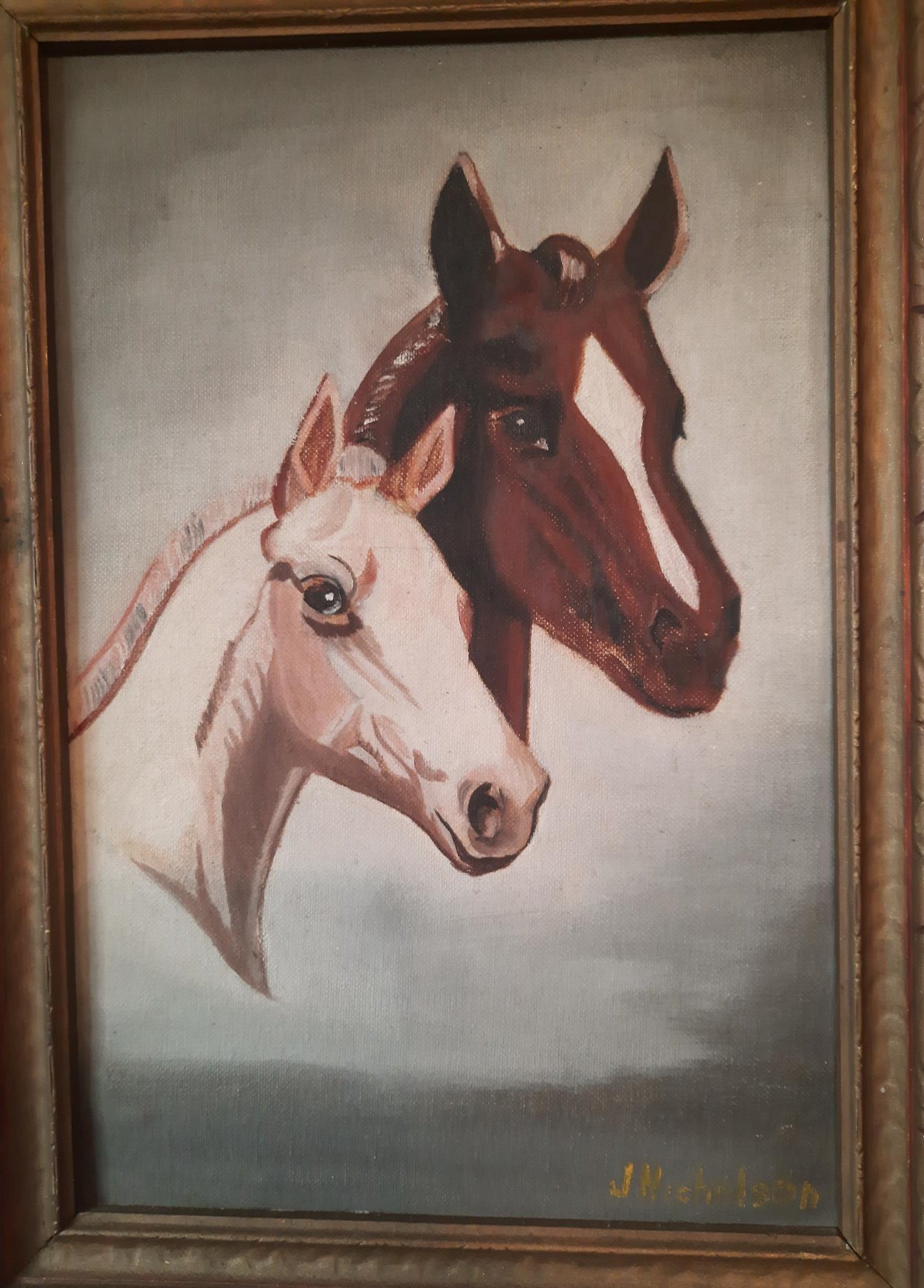
Her first painting of horses hangs in her house.

She attended Garfield School when Harry Pine was the principal. Then it was on to freshman year at Brown Junior High and the remaining three years until graduation at Cambridge High School on Steubenville Avenue. One thing she always remembered her dad telling her was, “Don’t tell it ’til you know it’s right.”

For Jackie’s 16th birthday, she wanted to vacation someplace different. Her request was to go to Wyoming and spend time at Jackson Hole. From there, they went backpacking with other families, including the daughters of Richard Nixon, who was then a senator from California.

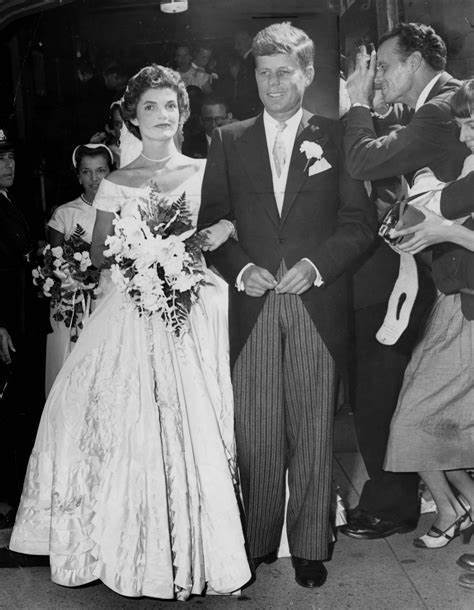
After graduation, Jackie was married and her husband joined the U.S. Navy. In 1953, he happened to be stationed on Aquidneck Island at Naval Station Newport. On Sept. 12, their commander told the sailors they were to have the day off. It could be spent relaxing on the island or perhaps they might like to attend the wedding of Jackie Bouvier and John Kennedy that was taking place that day.

Jackie and her husband attended the Kennedy wedding.

Jackie and her husband decided to attend the wedding at St. Mary’s Catholic Church. They watched and listened making happy memories as John and Jackie Kennedy were wed, and then got in their car to head to the reception.

The Bouviers at that time lived on a large horse farm in a beautiful mansion. All the windows were covered in dark blinds due to the Russian submarines not far offshore. The Beardmores toured the island that day to see all the beautiful homes there.

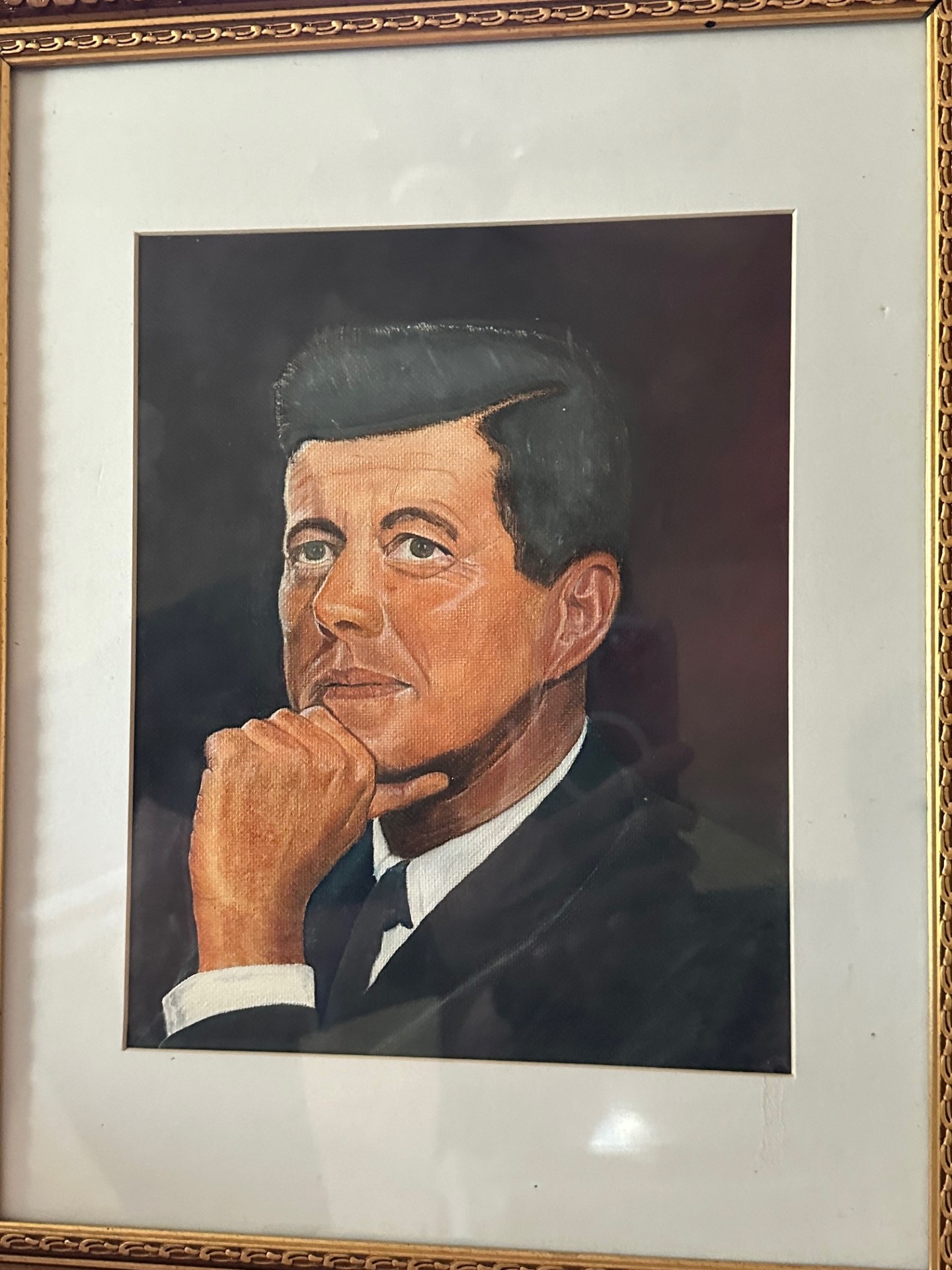
Using a Time magazine cover, Jackie drew this portrait of JFK.

A special talent of Jackie’s is painting beautiful pictures, especially portraits. She started sketching when she was nine years old and when she was 12 took a series of art lessons. Years later, the cover of Life Magazine carried John Kennedy’s picture. From that picture, Jackie drew a portrait of Kennedy, which took her 40 hours.

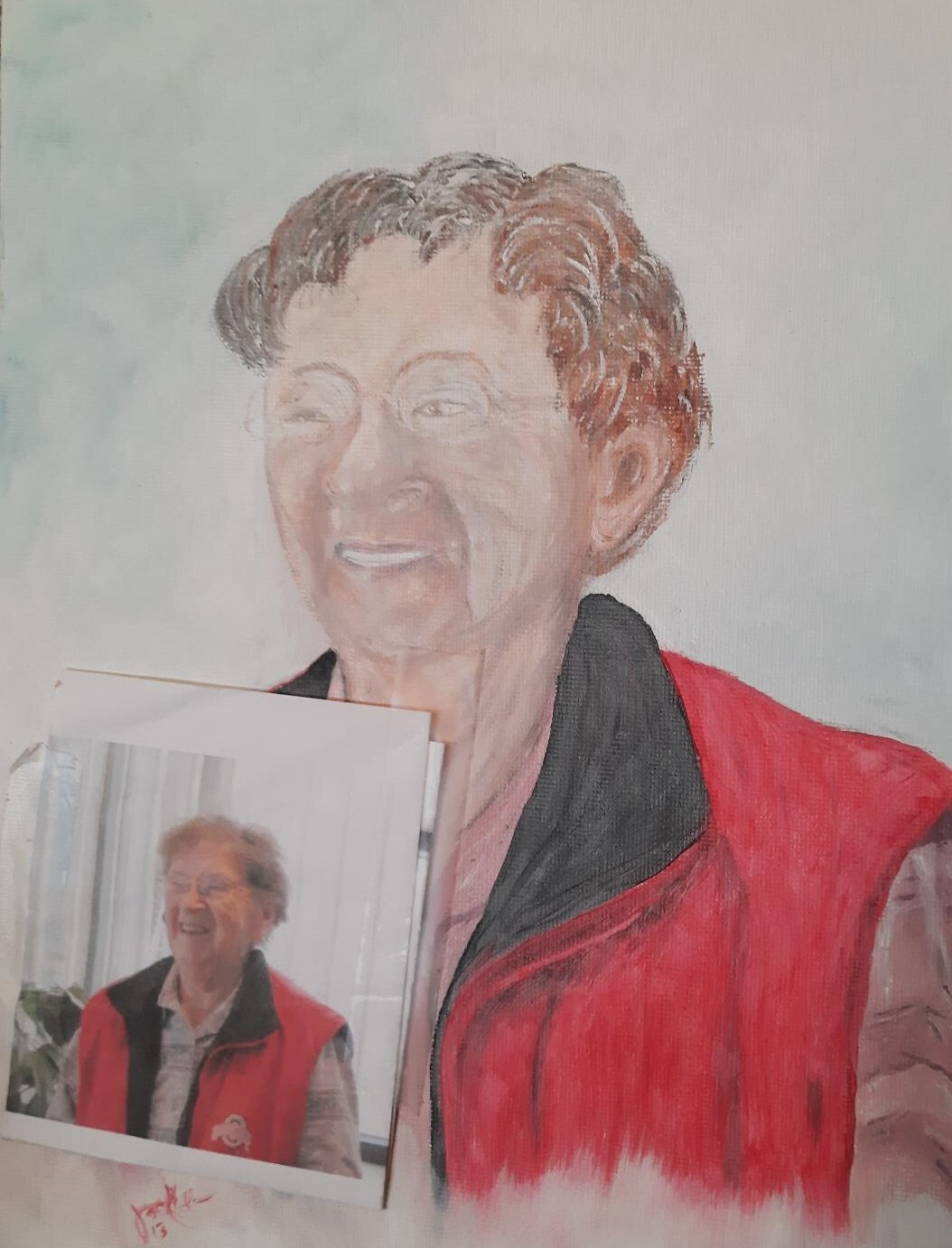
She enjoys drawing portraits – this one of herself.

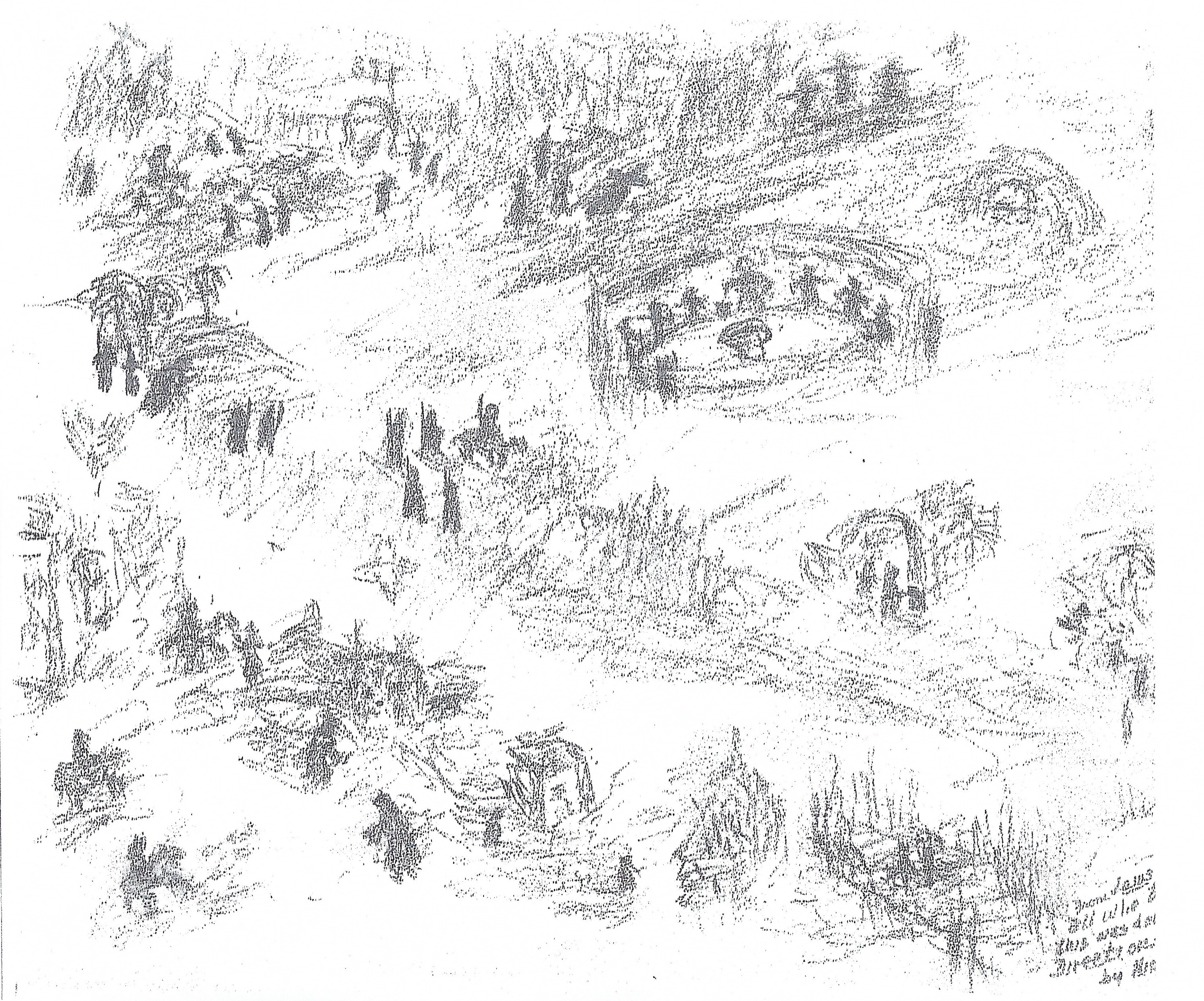
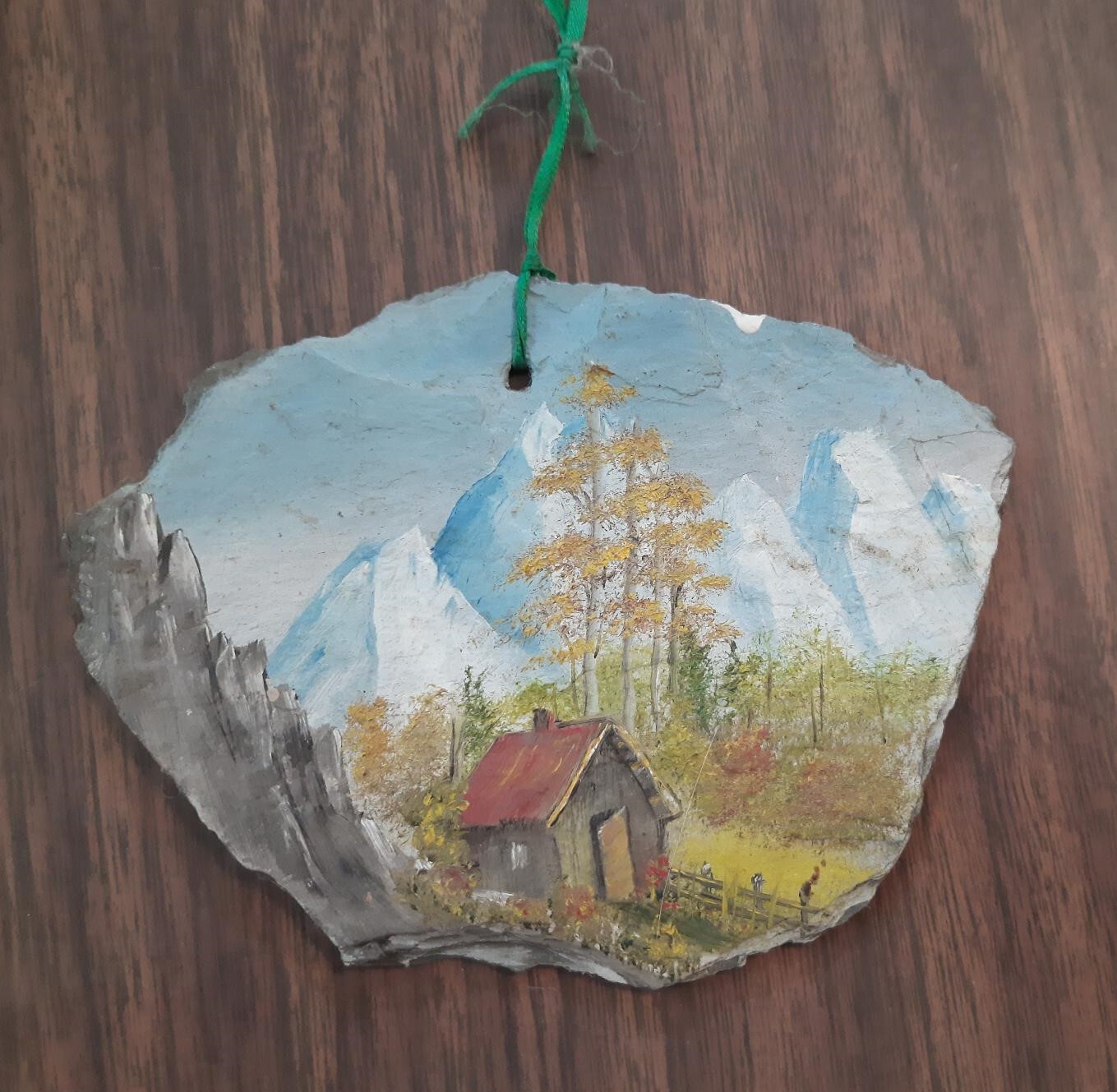
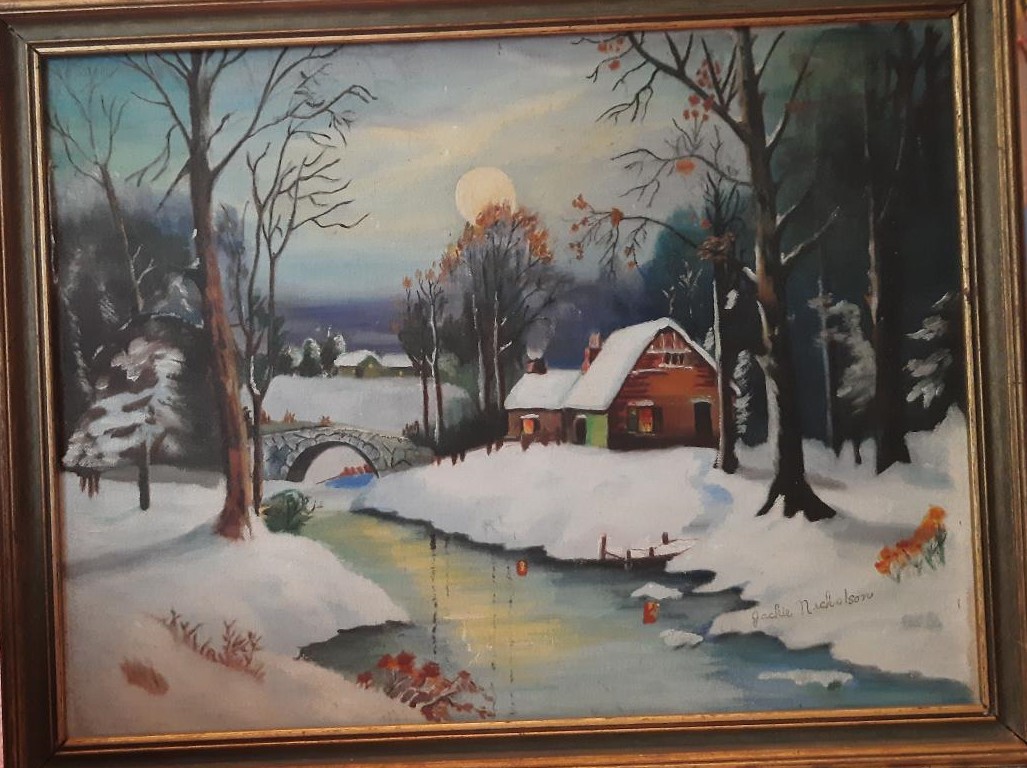
She still enjoys doing portraits and has even done a self—portrait. Pictures of Wills Creek, Jesus, and her first picture drawn of horses at the age of ten hang in her room. She also enjoys painting on slates.

These sketches portray the life of Jesus.
Even today, Jackie still carries a sketch book with her wherever she goes. You never know when you’re going to meet an interesting character or special scene. She also enjoys photography and writes down information that might someday be in her memoirs.
In the early days of Salt Fork Arts & Crafts Festival, Jackie drew people’s hands. She feels that a person’s hand tells a story as there are no two exactly alike and they are all interesting.

Slate painting is something else she enjoys.

Singing was another thing she enjoyed. She recalled growing up with Marty Jones, who was her lifetime friend. Along with Blanche Arnold and Shirley Knight, they enjoyed singing at schools and various places around the area. They were part of Mother Singers, a group that evolved into the Land O’Lakes Chorus singing barbershop style.

Today she still maintains a connection with the Jones family as enjoys going to the Cambridge City Band Concerts and watching Berk Jones conduct. Her son, Brent, records the concerts and they are now making some CDs for everyone to enjoy.

One of her first jobs was assistant registrar and later registrar. She remembered the day that John Glenn came in and got his driver’s license from her.

When she was manager of Dutch Pantry, Peter Falk who played Columbo, stopped there every weekend and was usually accompanied by an employee of Disney’s, who drew cartoons for everyone at the restaurant.

Around 1980, Jackie opened up a commercial cleaning business. Cambridge Commercial Cleaning worked around the clock at Colgate for 25 years She said they probably had cleaned every building downtown at one time or another.

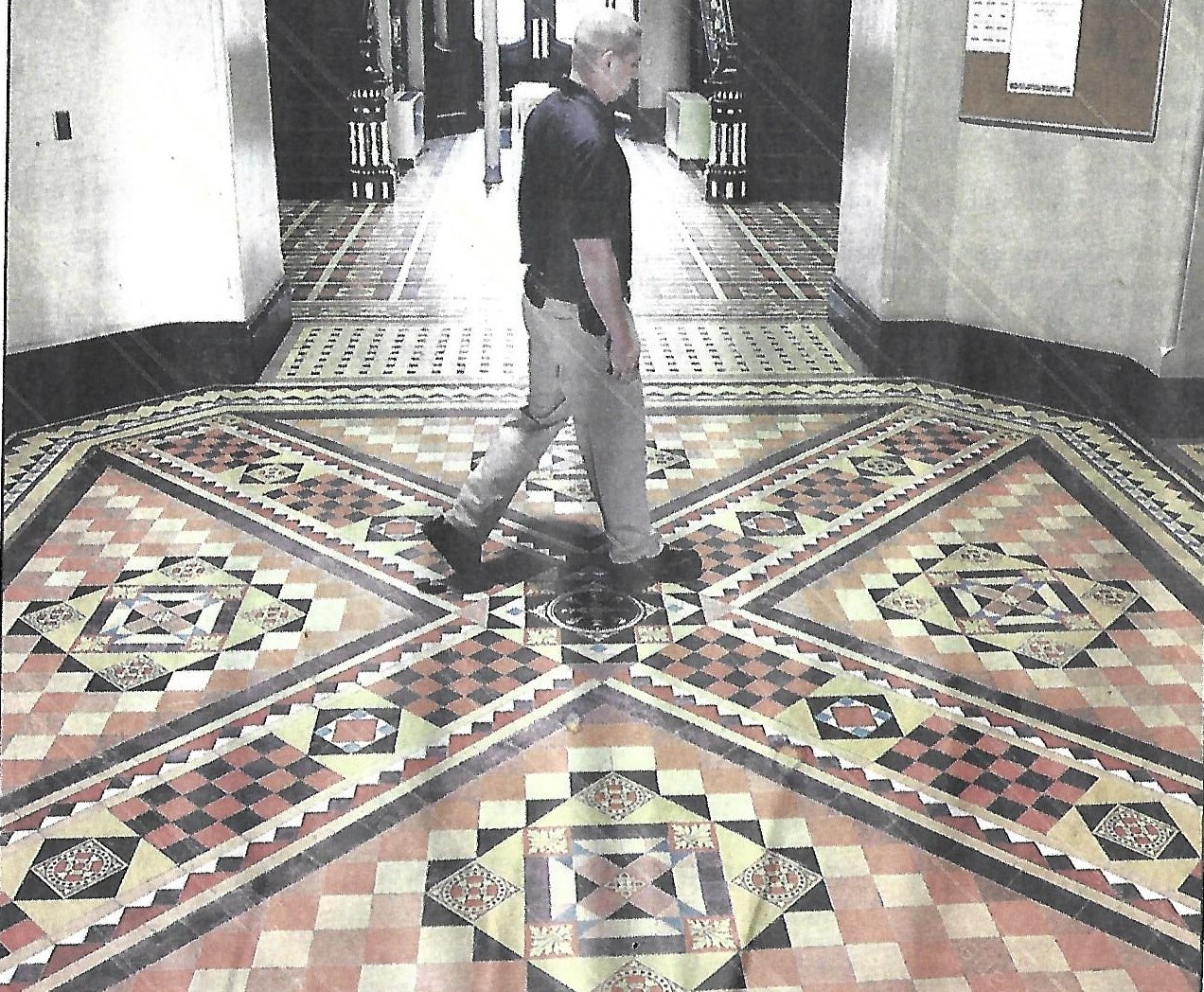
Refurbishing the floors of the courthouse was a special project she managed.

One of their well-remembered projects was restoring the tile on every floor of the Guernsey County Courthouse about five years ago. The floors were stripped of layer after layer of old wax to reveal brightly colored tile in a variety of shapes. The project took time and patience to complete but seeing the beautiful floor was their reward.

When Jackie was a youngster, her goal was to be a psychiatrist, but girls weren’t supposed to do that. Now when her friends have a problem, Jackie is the one they call or visit to talk over the issue. Perhaps her wish came true after all.

Carnegie Library Celebrates 120 years

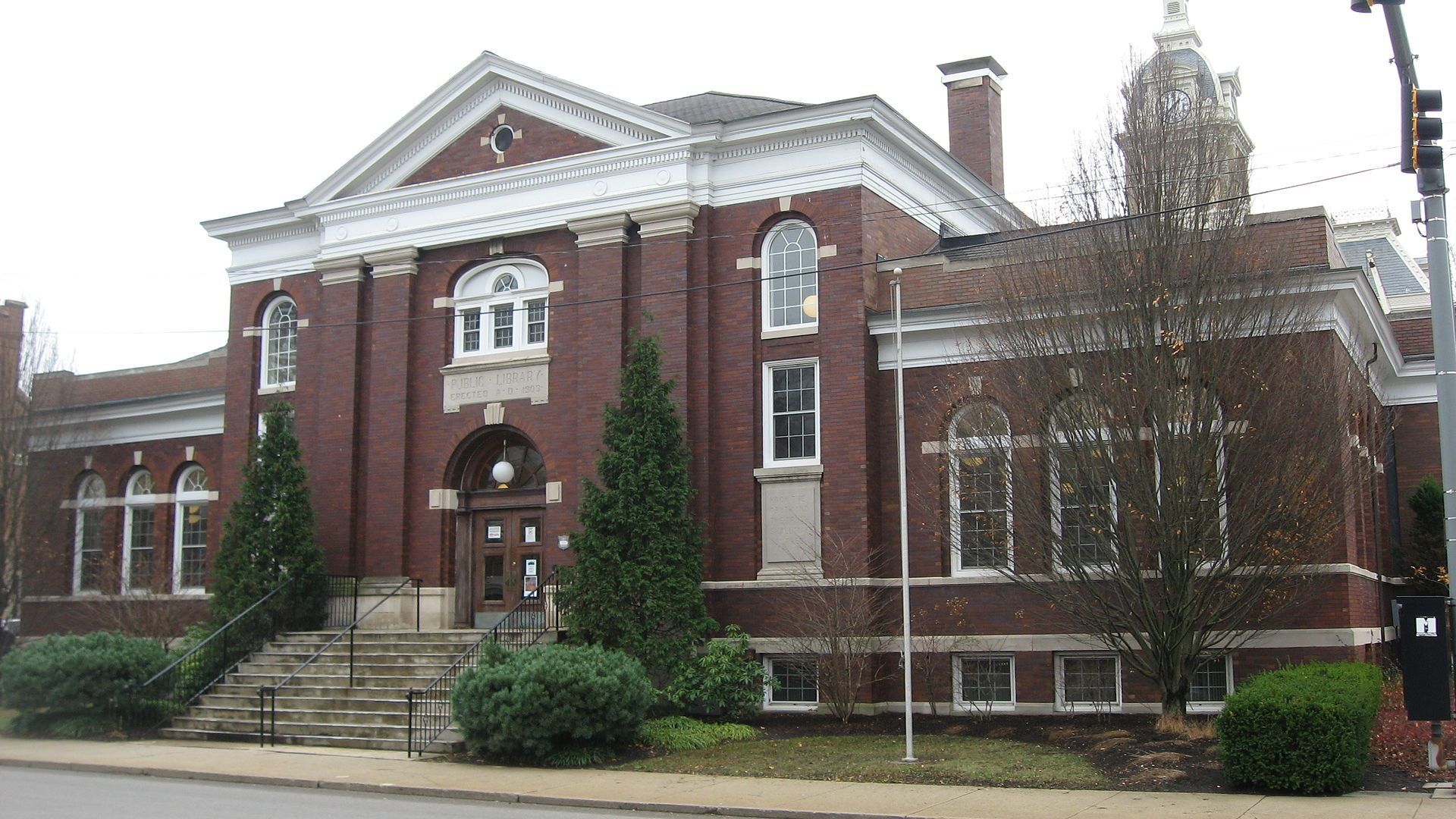
The Andrew Carnegie Library on Steubenville Avenue holds many great memories since it has been around for 120 years. But did you know that Cambridge had previous libraries?

Today’s Downtown Branch of the Guernsey County District Public Library

Today’s library was preceded in 1832 by the Guernsey County Library and Reading Room. There were fifty charter members, all men, who felt a library gave evidence that the residents were people of intelligence.

In 1899, Cambridge Library Association held their first meeting. Col. Joseph Taylor, a prominent citizen, gave the upstairs of one of his buildings on Wheeling Avenue as space for the library. His wife organized the library effort.

Library cards cost $5 annually but only one book could be borrowed at a time for a period of two weeks. Overdue books were charged three cents a day. By 1901, all interested residents were given a free card to the library.

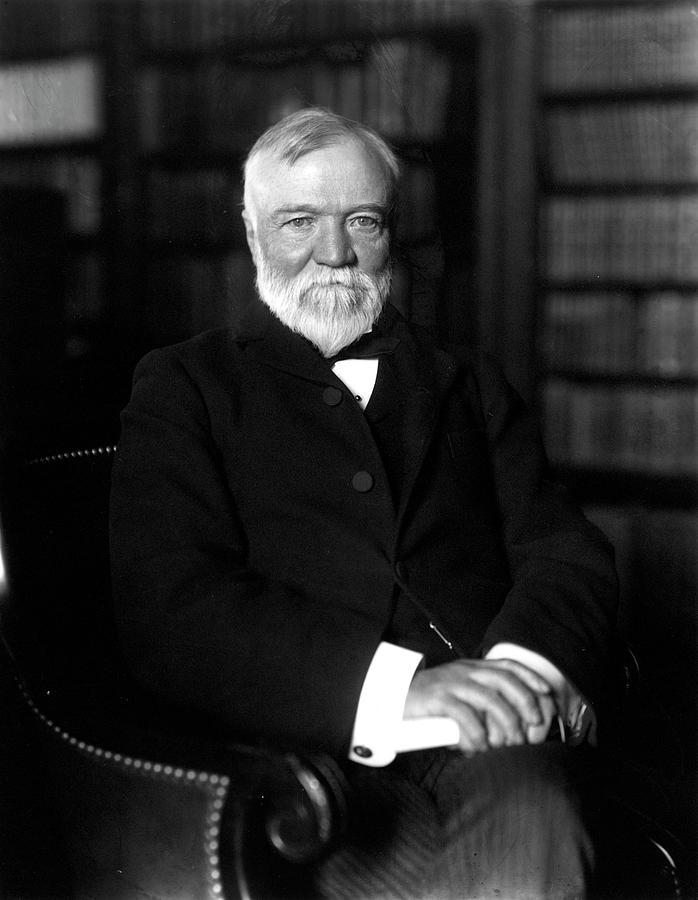
Andrew Carnegie

That same year, a committee from Guernsey County met with Andrew Carnegie in New York City. This was unusual as business with Carnegie was normally conducted by mail. Carnegie felt a library was the most important thing a community could have to benefit its people.

He remarked, “It was from my own early experience that I decided there was no use to which money could be applied so productive of good to girls and boys, who have good within them and ability and ambition to develop it, as the founding of a public library.”

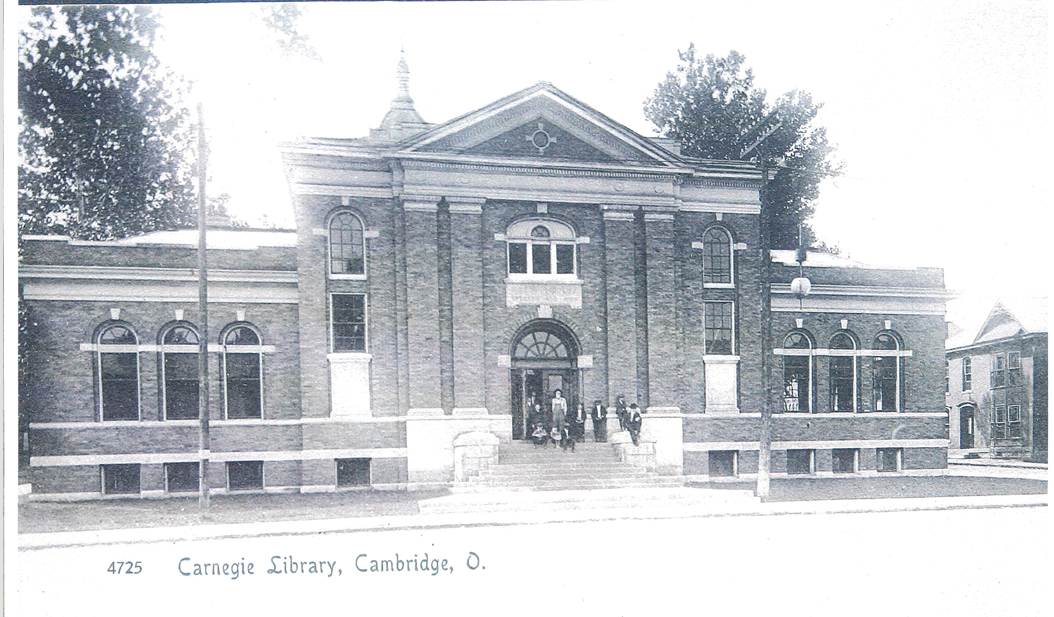
This was an early picture of the Carnegie Library shortly after it was built.

On Jan. 22, 1902, the Carnegie Corporation sent a letter saying they would furnish $18,000 to erect a free library building at 800 Steubenville Ave since all the requirements had been met. Frank Packard became the architect with C.W. Dowling being the builder.

Once it was finished, the committee needed more funds to finish the interior and landscape the outside. Mr. Carnegie again provided those funds.

Books were very important to Carnegie from his childhood in Scotland and his teen years in Pennsylvania. Andrew Carnegie built 1,689 libraries throughout the United States and a total of more than 2,500 throughout the world.

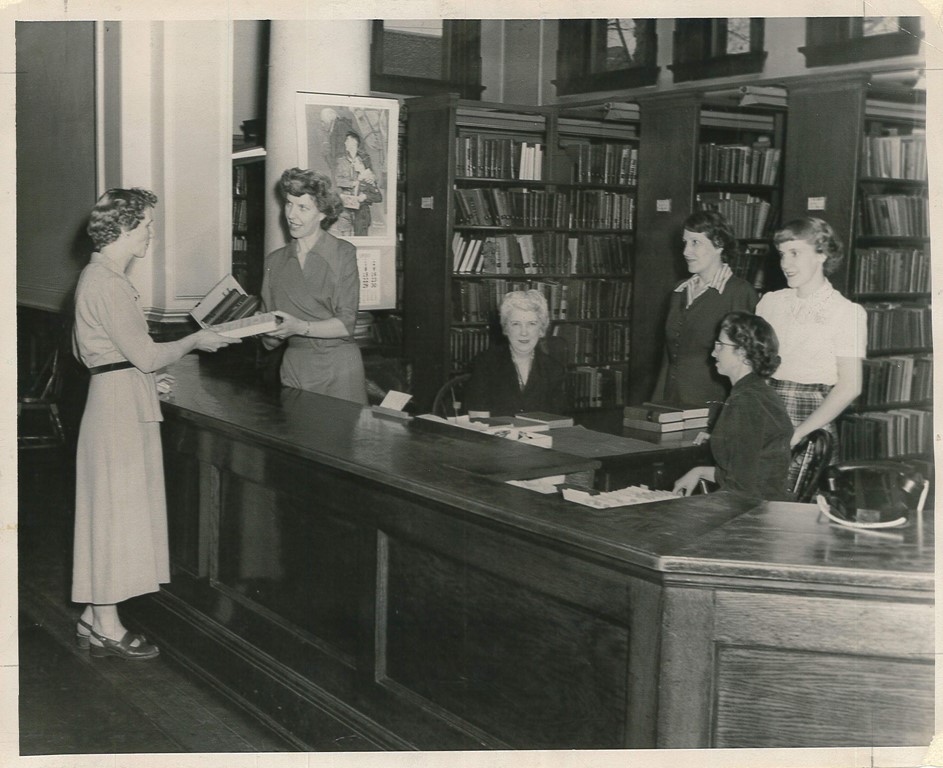
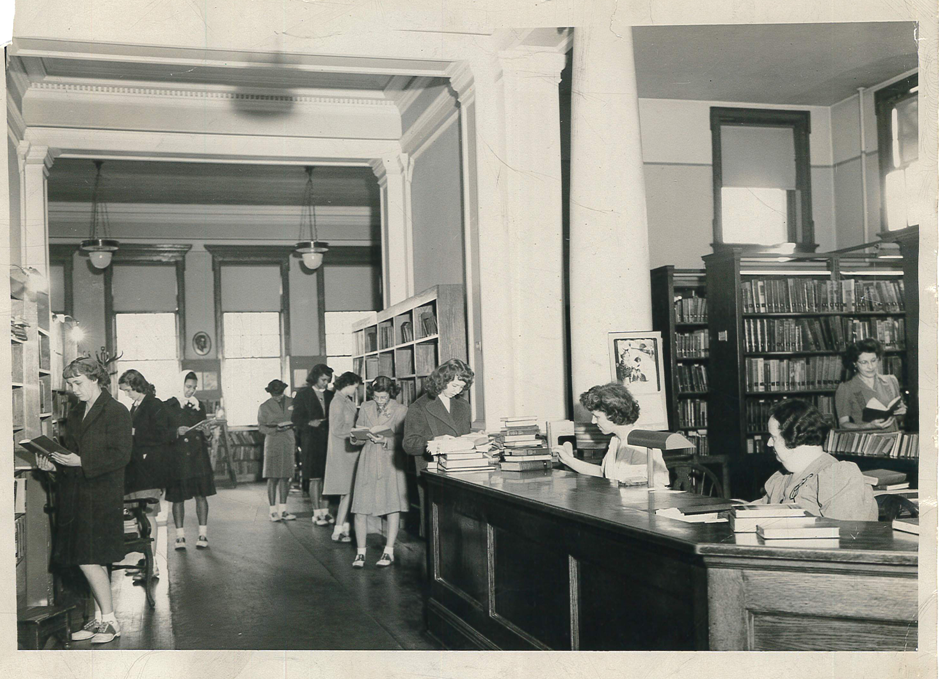
The staff was presenting a book to a patron in 1950.

When the Carnegie Library opened in Cambridge emphasis was placed on religious and moral content. They initially purchased 1,334 volumes at $1300 with more books being donated by local families. The Women’s Book Club donated 208 books.

The second floor was to be used for community activities. Probably the first events held there were lectures. One series contained seven lectures about birds, while another was on boys’ temptations. During WWI, the Red Cross made bandages there. For about thirty years, the Cambridge City Band used it for their practice room.

Students were frequent visitors to the library in 1945.

In 1907, the first children’s furniture was purchased for the library since over half of the new borrowers were children. Story hours were developed for the children and Christmas parties with Santa were established.

Howard Finley donated his collection of historic books to the library with the stipulation that the collection bear his name. He also donated $6,227 for the library to use. The genealogy room is named in his honor today.

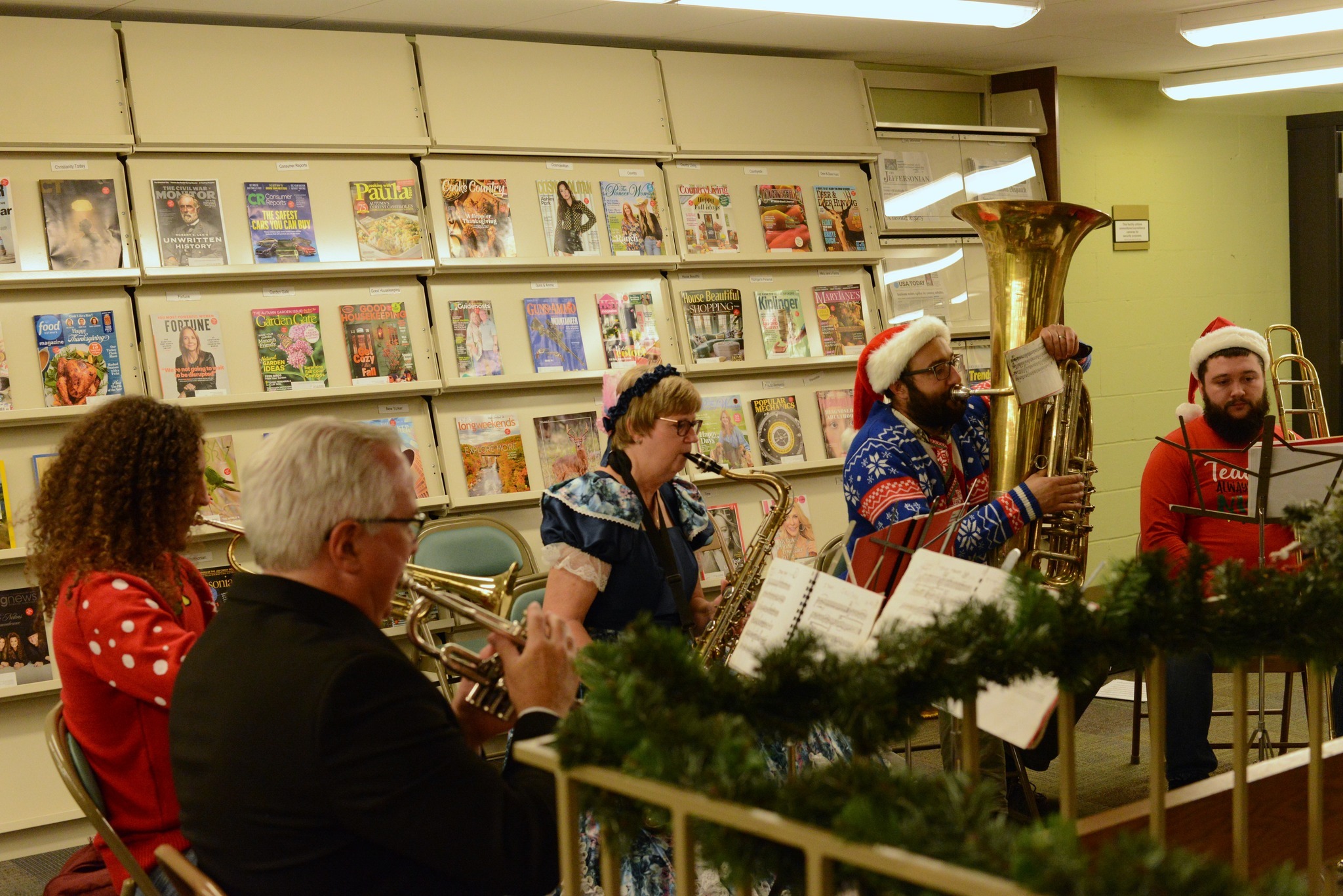
Cambridge City Band, who practiced here years ago, performed for a special library event.

By 1947, the library had expanded to serve the surrounding community. There were several branches and 49 deposit stations, most of them being at schools. Every six weeks, the library would take a box of 50 books to the area schools for students to read.

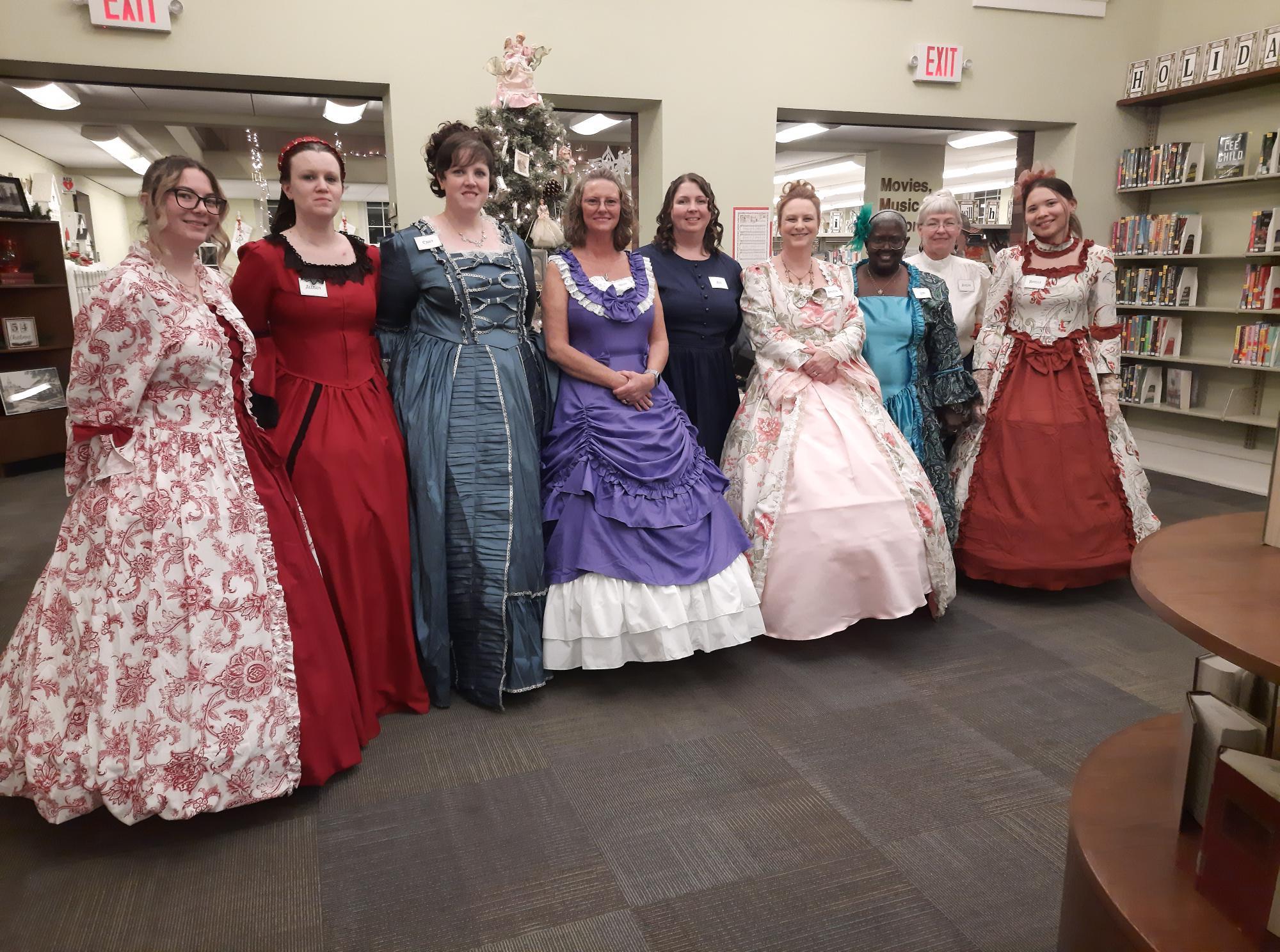
Today’s library staff helps with many special events in our community. Here they are dressed Victorian.

There were branches at Byesville, Cumberland, East Cambridge, Southside, Quaker City, Madison, and Senecaville . They existed until the library purchased their first bookmobile in 1956.

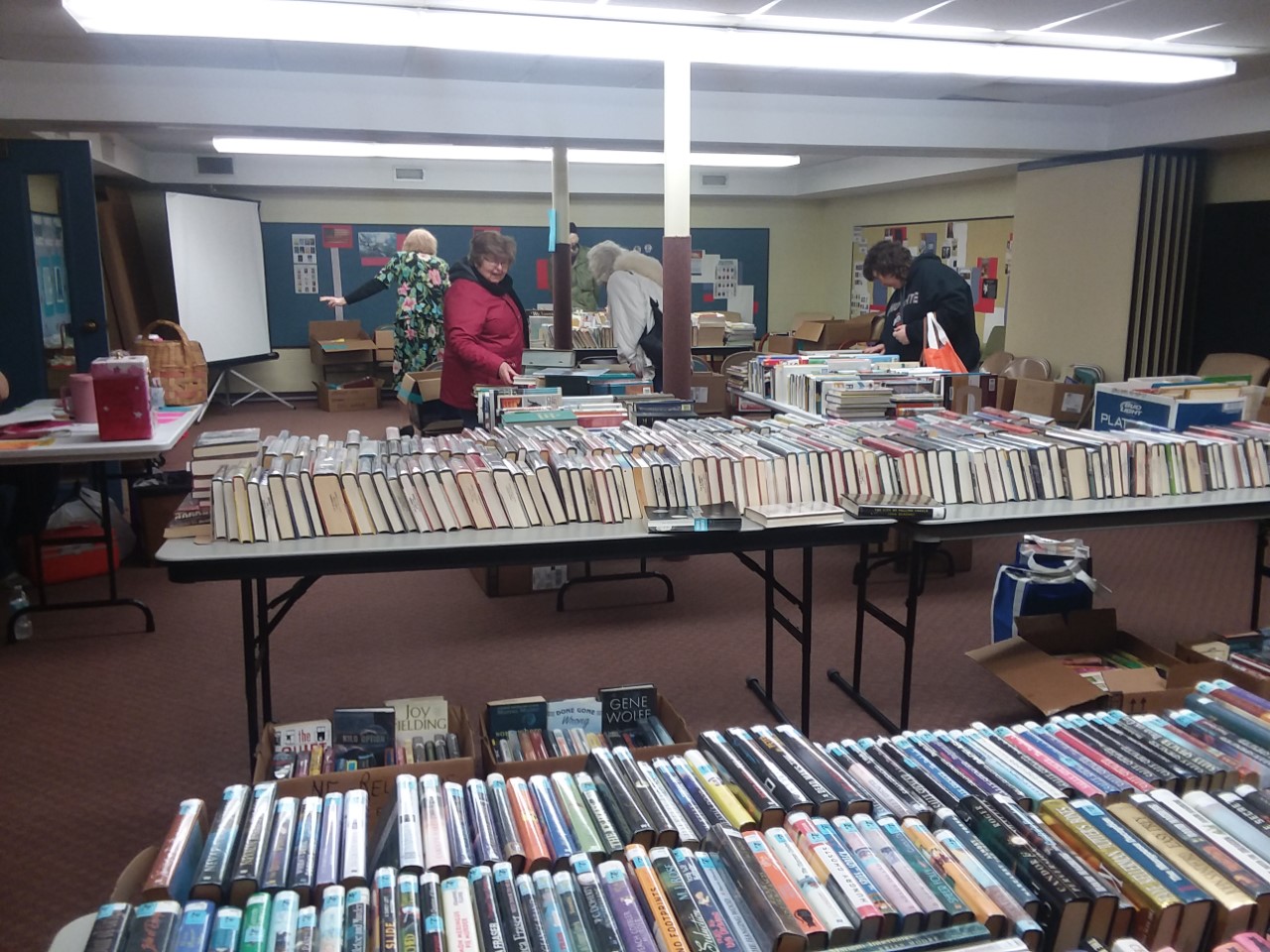
Today, Friends of the Library hold book sales in the basement of the Carnegie Library.

Friends of the Library was formed at a time when there was a need for more room at the library. Over the next thirty years, the Carnegie Library added a large addition, a new library was built in Byesville,and Crossroads Library became the relocation for administrative offices and technical services.

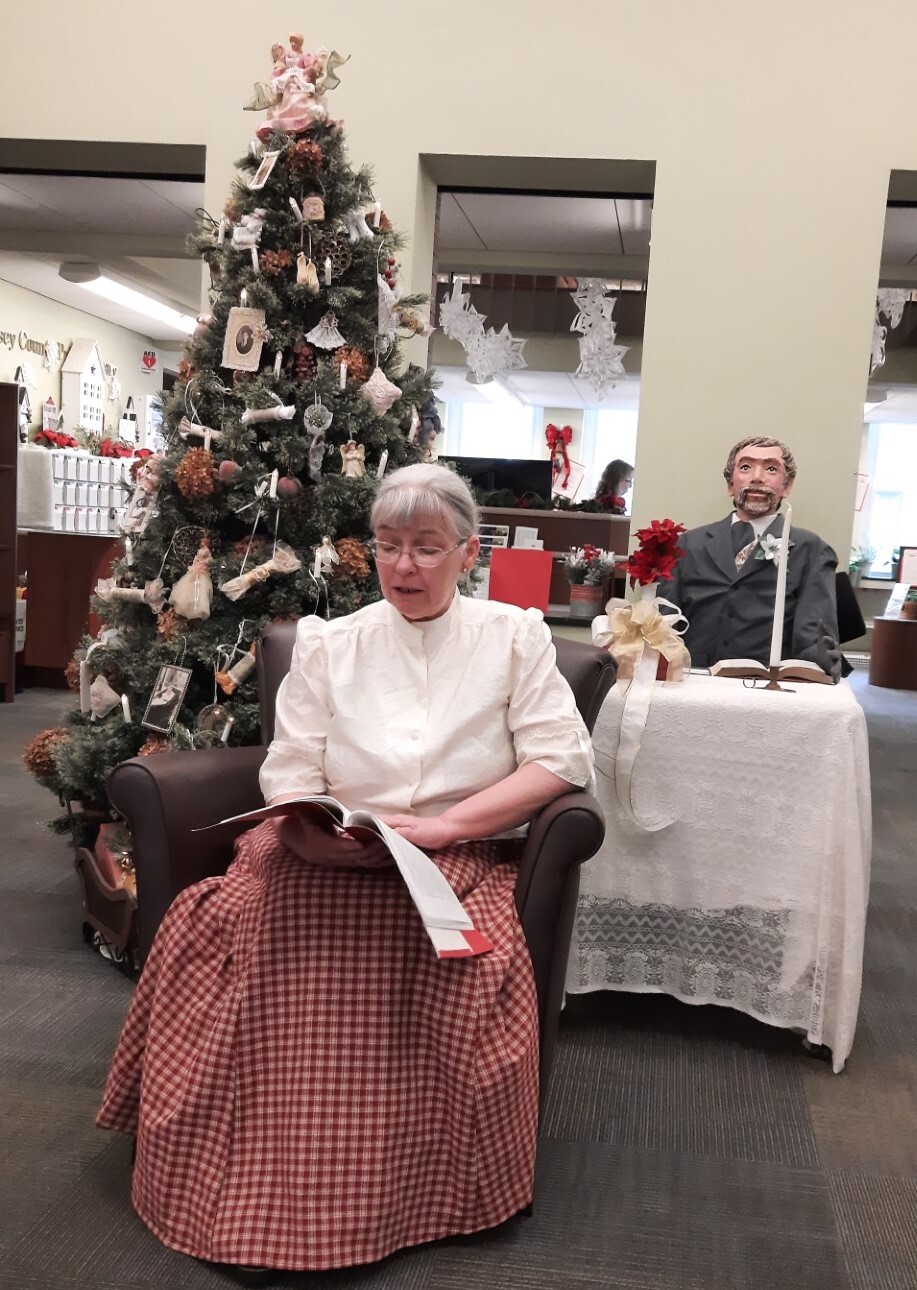
The annual Dickens Marathon Reading takes place in the main lobby.

By 1910, there were 2,200 people using the library of 6,332 books. By 1922, there were 2,745 using 9,123 books. In 2024, the Guernsey County Library has over 70,000 books plus many other resources.

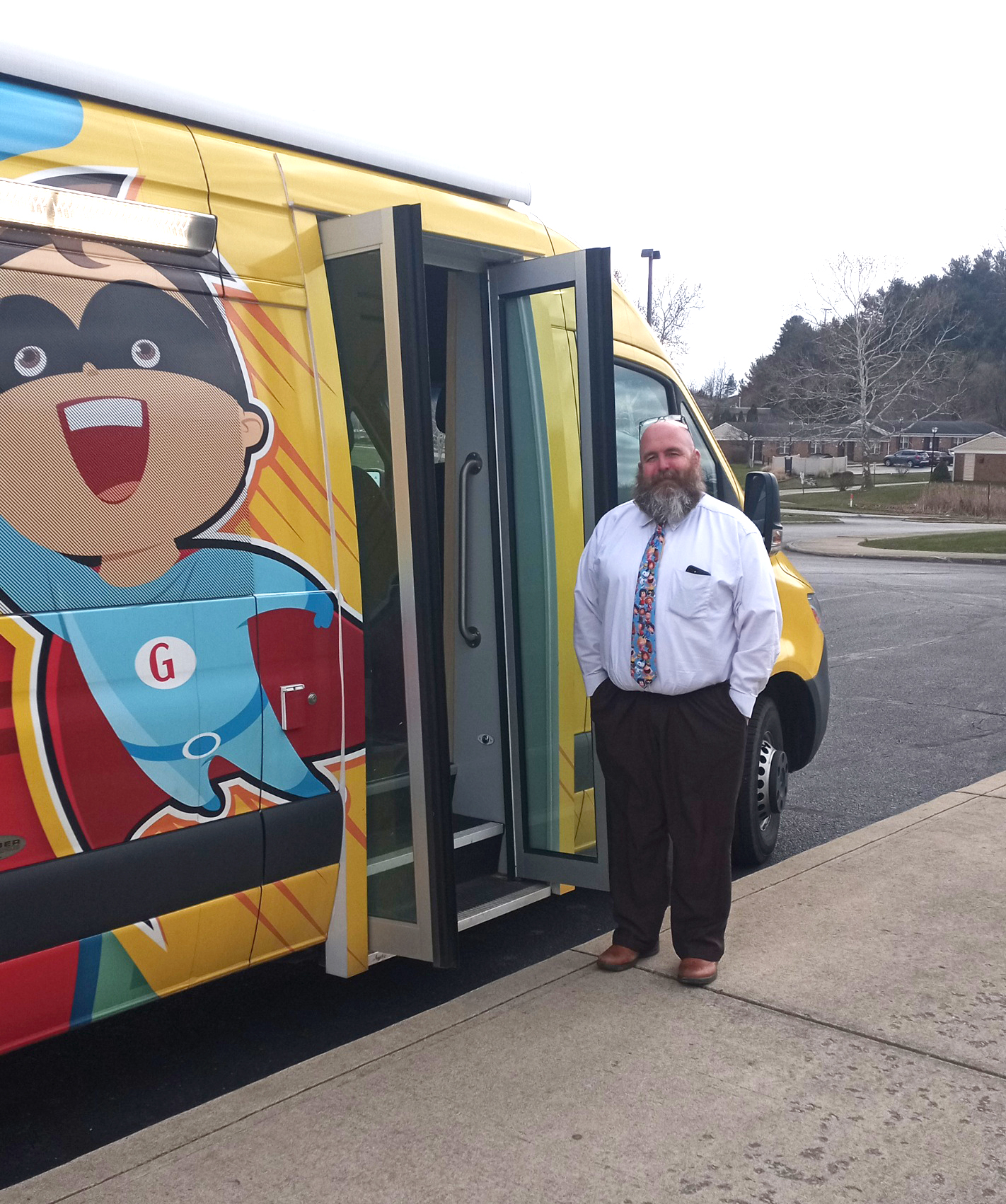
Director Michael Limer is proud of their new Bookmobile which serves places around the county.

Michael Limer, present director, expresses well the connection with today’s library and the community. “I am really proud of all work the staff has done to help the library become an integral part of the community. Besides all the great things you would expect at a public library, I feel the staff has strived to excel in engaging with the public. From great programs and new services to our work with our many community partners, I am thrilled with how we reach out to serve the public, both within our walls and throughout the county. “

Libraries have been an important part of our community for many years and continue to be a place to find free reading materials, movies, and more.

Knowledge is free at the library, just bring your own container. Visit your library sometime soon!

Rick Booth Remasters Guernsey County History

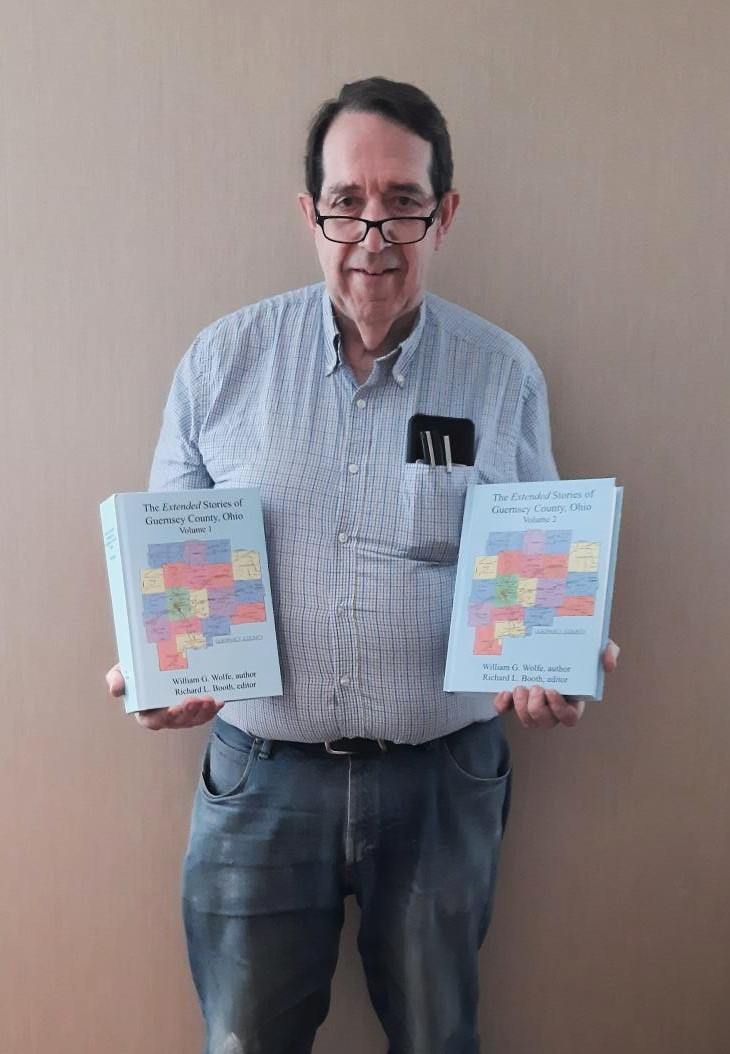
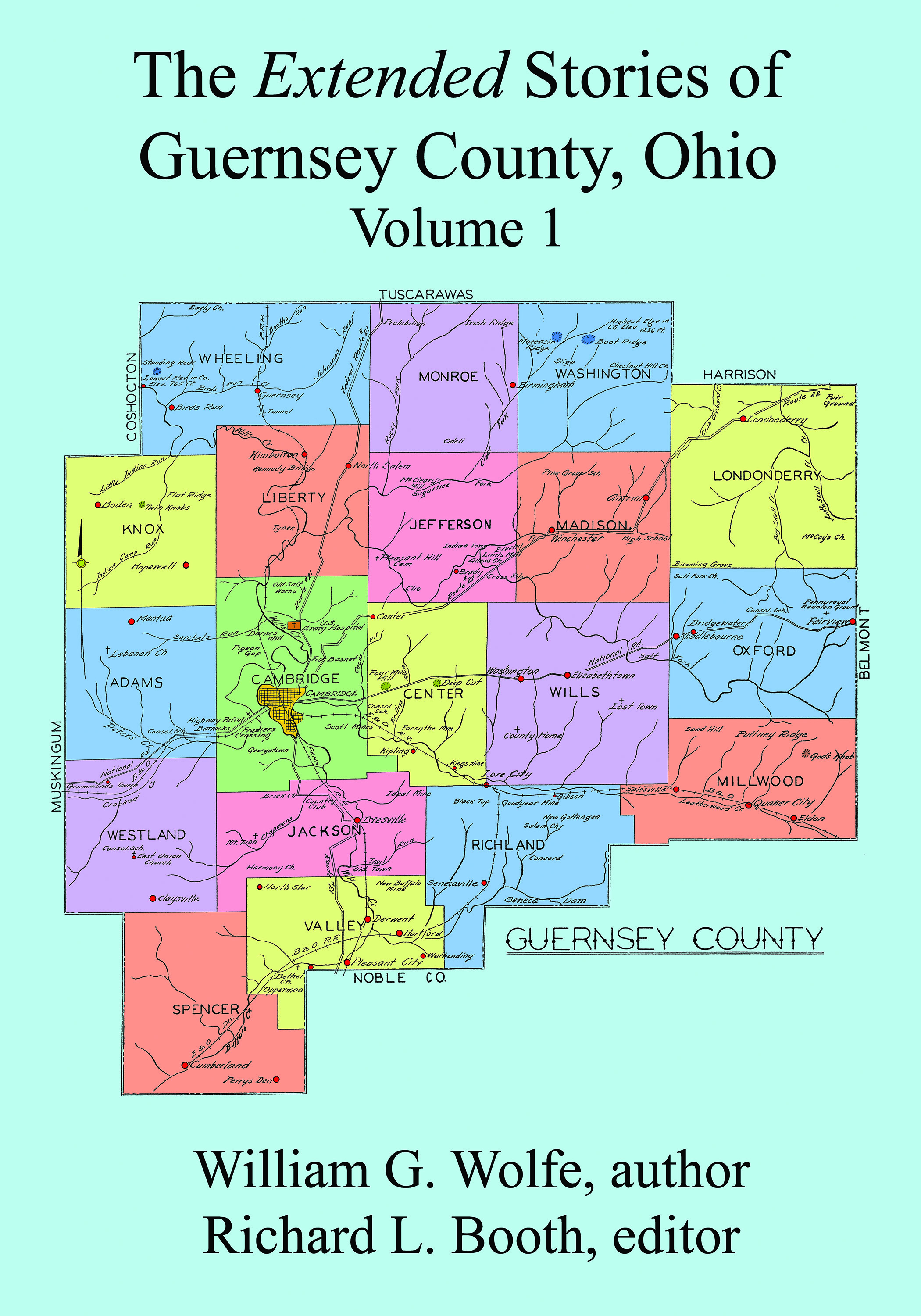
Rick Booth holds both volumes of his newly published book set, The Extended Stories of Guernsey County, Ohio.

The Extended Stories of Guernsey County, Ohio, Volumes 1 and 2, has recently been released after seven months of detailed work by Rick Booth, who spent 20 to 30 hours per week republishing the writings of William G. Wolfe, an early historian from Guernsey County. This new 1,640-page book set contains all the historical writings of Wolfe that Rick could find.

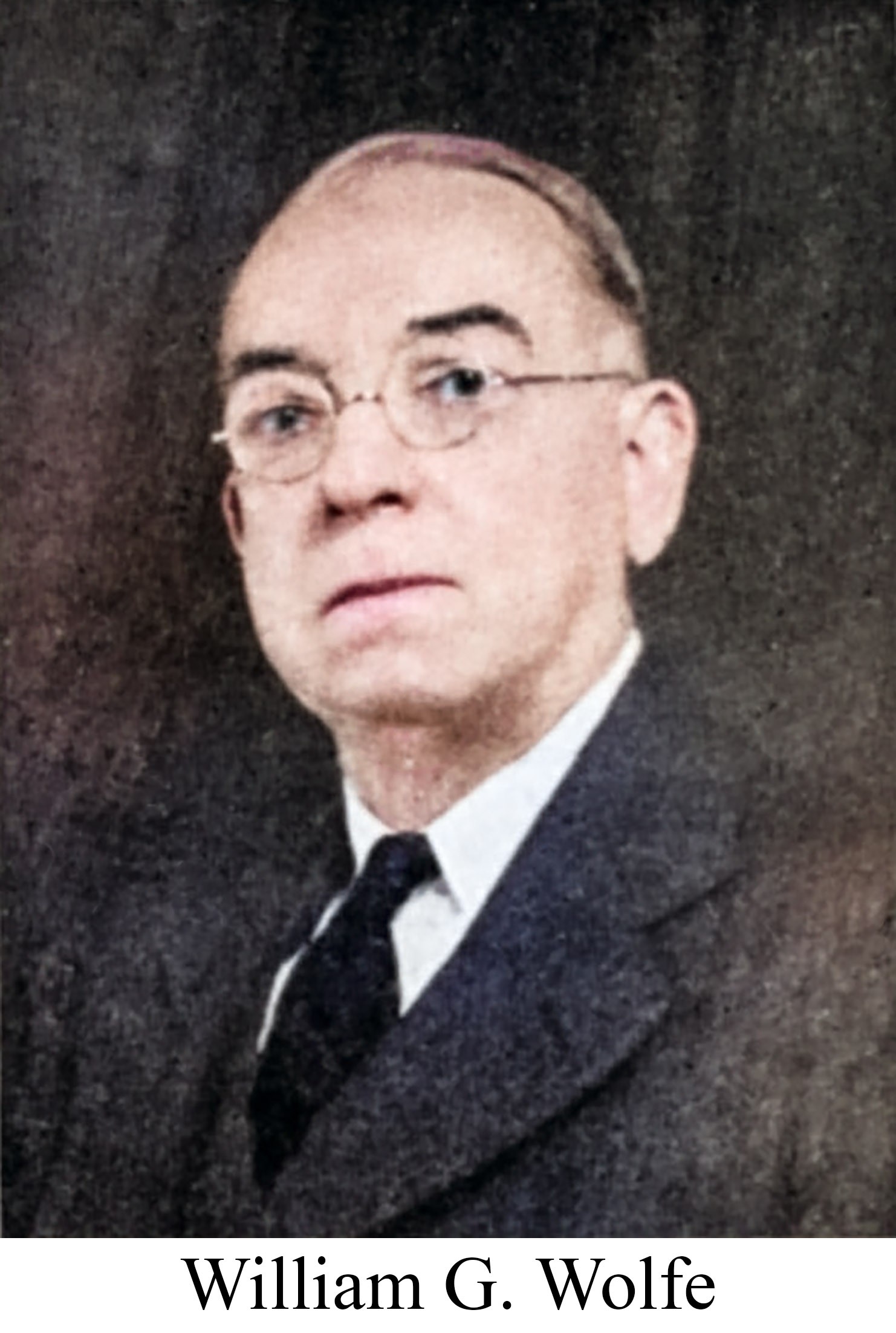
William G. Wolfe was born in Quaker City in 1874, attended Ohio Northern University, and received his teaching certificate at the age of 23. He then spent 47 years in the Guernsey County School system as a teacher, Superintendent of Quaker City Schools, and then Superintendent of Guernsey County Schools.

Rick’s desire to make Wolfe’s out-of-print stories available forever began when Rick found forgotten Wolfe articles in online newspaper archives, and he thought they should be added to the original Wolfe’s history. Rick decided then to remaster Wolfe’s original 1943 history book, Stories of Guernsey County, Ohio, the most comprehensive Guernsey County history book ever written. This book, reproduced as Volume 1, was based on 313 historical articles that Wolfe had written for Cambridge’s Daily Jeffersonian newspaper in the 1930s. Rick placed it in a modern format and added a second volume of the additional 171 “forgotten” stories he discovered in Daily Jeffersonian archives.

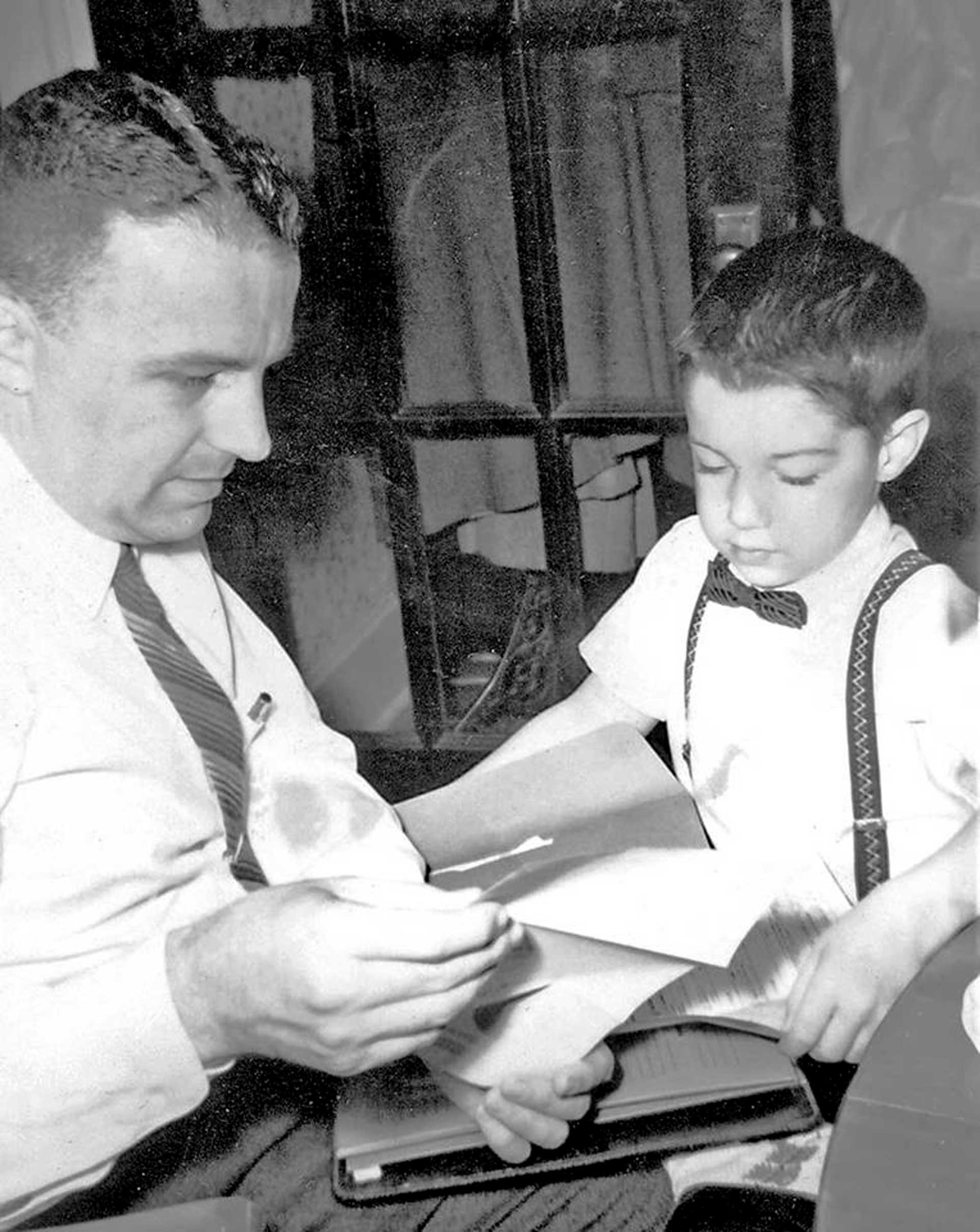
Rick studied history with his dad, Atty. Russell Booth, at any early age.

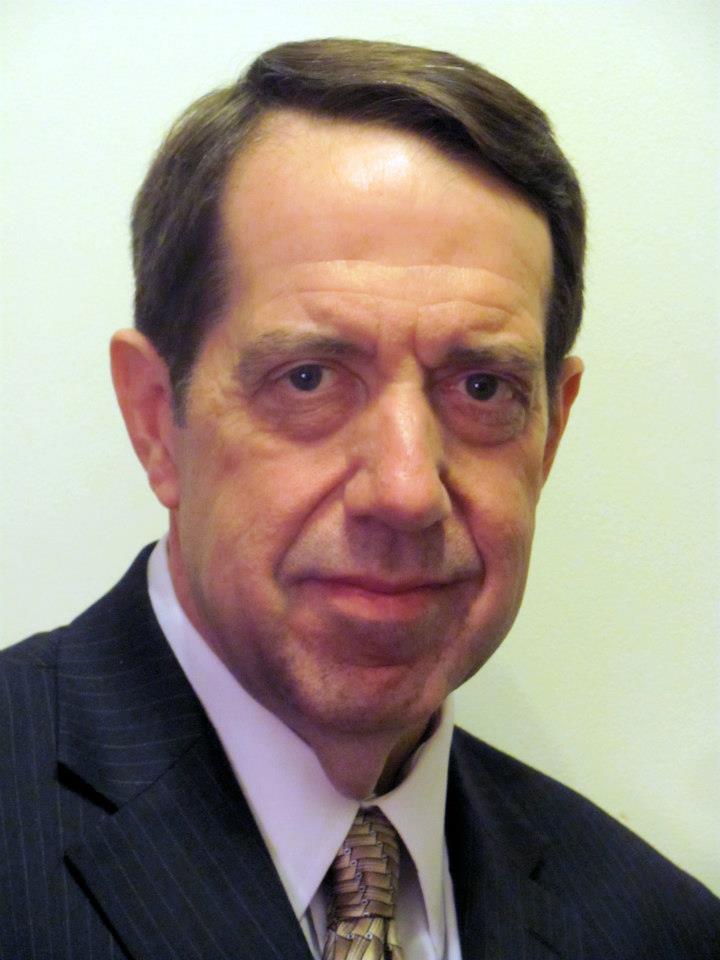
Most know Rick Booth as our local historian, but all may not be familiar with his background. Rick grew up in Guernsey County, the son of another historian, Atty. Russell Booth. History was an important part of their lives, and from his earliest memories, Rick recalls his dad telling him bedtime stories based on tales from history and many from Wolfe’s book. Atty. Booth treasured the copy of Wolfe’s Stories of Guernsey County which Wolfe personally signed for him in 1943 when a high school freshman. Rick was immersed in history from a very early age.

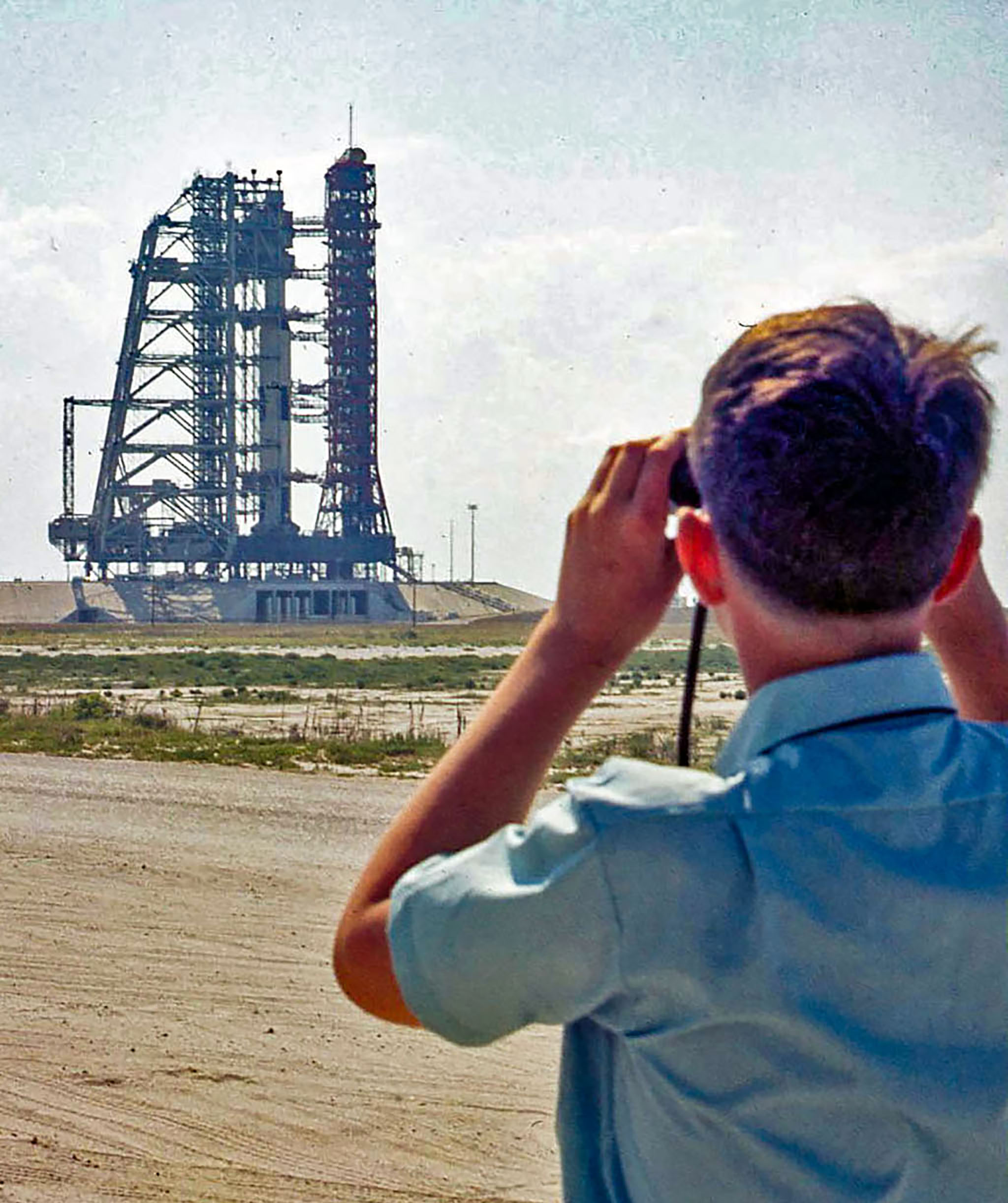
Rick studies the Apollo 11 Saturn V rocket just days before it took men to the moon.

After Rick graduated from Cambridge High School, there were many years when Guernsey County history was not of chief importance. After graduating from Princeton University, Rick spent two years in medical school at Columbia University in New York City before deciding to instead join the exciting new personal computer revolution just then emerging.

“A Boy and His Blob” is Rick’s best known gaming credit and still followed today.

For most of the 1980s, he worked for Sesame Street’s computer division, creating and designing software tools for their early educational computer game products. Later, he also designed core sound and animation systems for Nintendo cartridge and Sega CD-ROM games for video game companies. His best-known gaming credit is for the 1989 NES cartridge game “A Boy and His Blob,” which retains a niche following to this day.

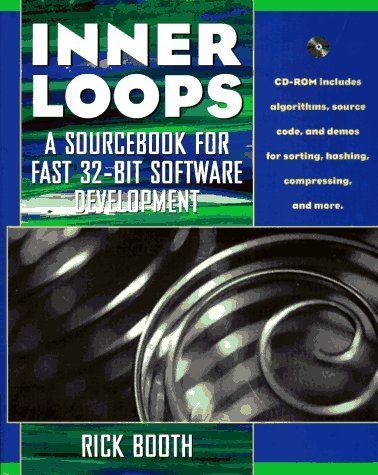
In 1997, he wrote a computer book, “Inner Loops.” This book was designed for computer professionals and hobbyists to get high performance out of their computers. He also co-authored another computer book at Intel’s request, “Programming Itanium-based Systems: Developing High Performance Applications for Intel’s New Architecture.” Much of his later career involved digital video engineering and Internet-over-cable systems.

While living in the Philadelphia area, Rick was instrumental in saving the Cornwells Heights Amtrak Station in Bensalem, PA, which was needed for easy access to his work in New York City. (There’s a remarkable story attached for perhaps another article by Rick.) He witnessed history, too, having been on perhaps the last train to enter NYC before the Hudson River railroad tunnels were shut down in the chaos of 9/11.

He returned to Guernsey County in 2007. Then his efforts to keep Guernsey County alive began as he watched his father, Atty. Russell Booth writing about and researching local history.

At that time, his dad was writing monthly articles for Now & Then magazine. When his dad was no longer able to do that, Rick stepped in and continued those historical articles, completing the transition in 2012.

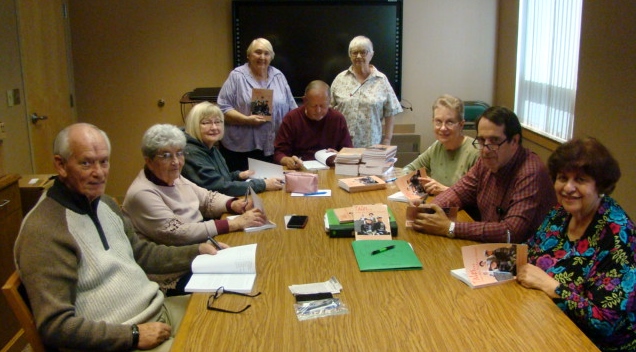
Rick with a group of Rainy Day Writers at a book signing get together.

Rick has been an important part of Rainy Day Writers since its beginning. Here he not only contributes interesting stories to their annual books but also helps with the publication process and serves as treasurer.

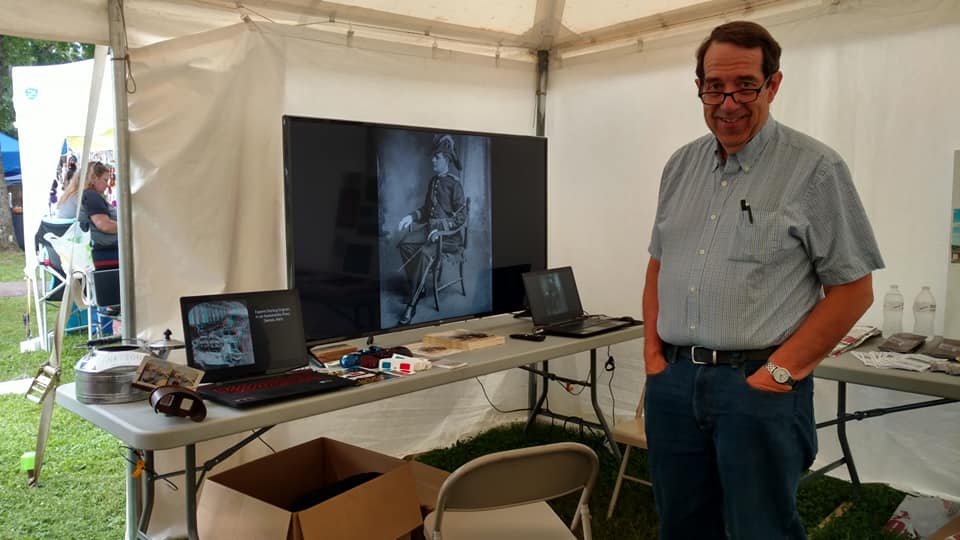
Spreading local history at the Heritage Arts Tent during the Salt Fork Festival is another of Rick’s contributions.

When Now & Then ceased publication in 2019, Rick seamlessly kept the stream of monthly history articles going in Crossroads magazine. Rick also keeps others informed about our history through his leadership at the Guernsey County History Museum where he is Treasurer and Director of Digitization.

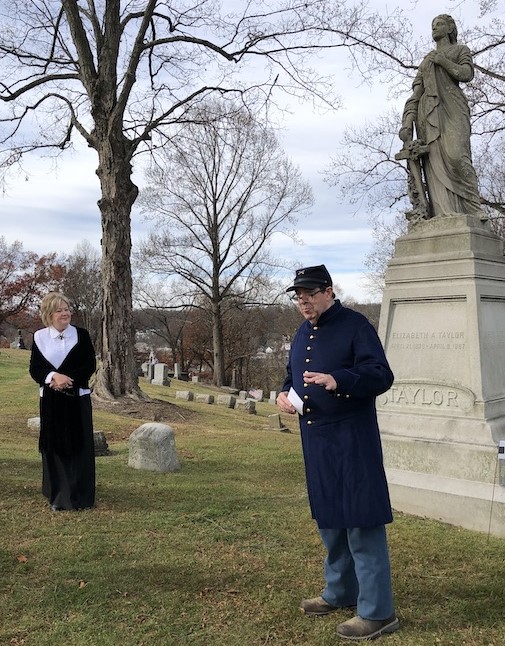
He writes the script for the Cemetery Tours and then portrays one of the “Coming Alive” characters.

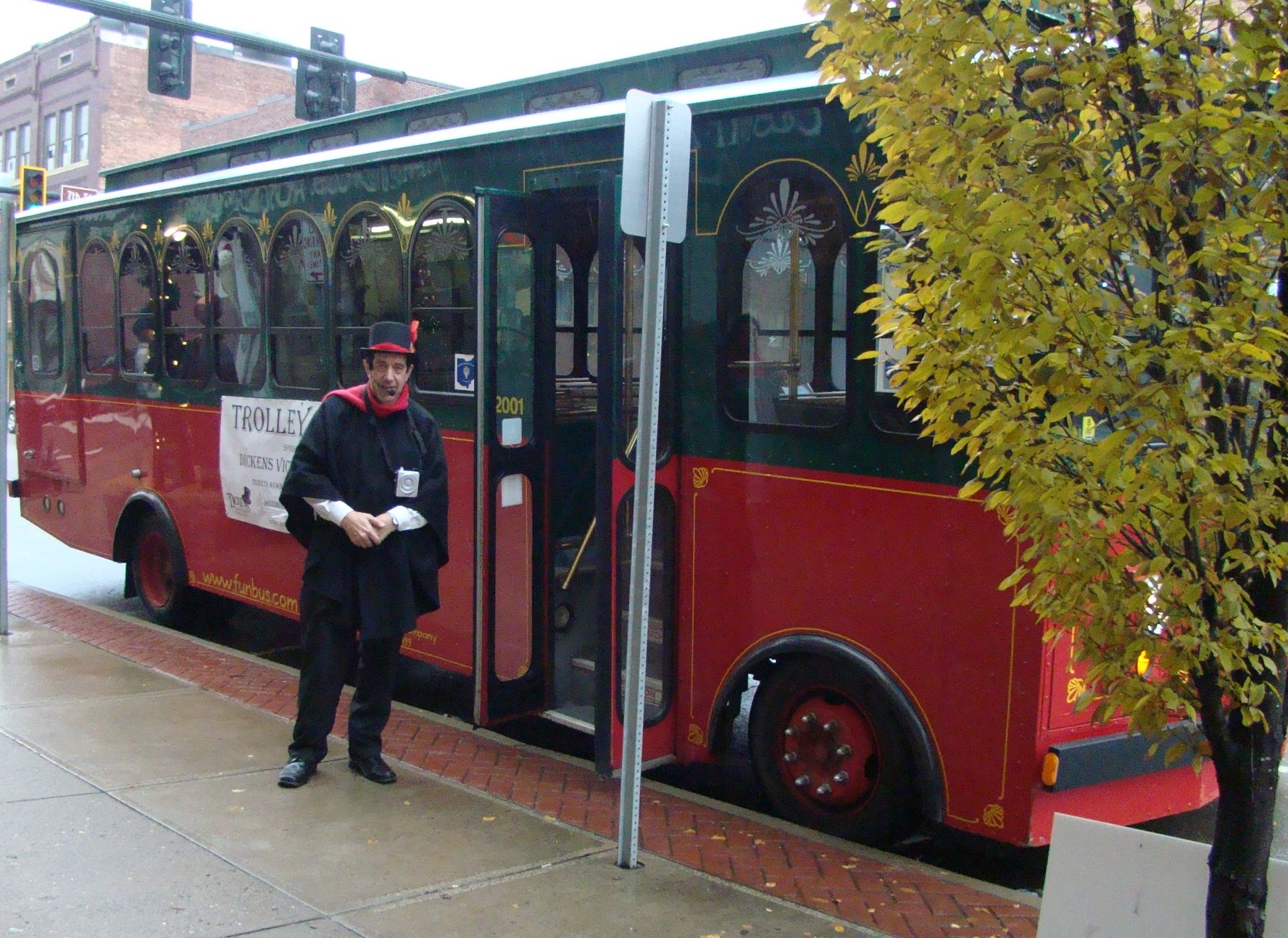
He also does many downtown tours in Cambridge, developing and participating in Cemetery Tours, and being the guide for Trolley Tours during Dickens season.

Dressed at John Herschel Glenn, Sr., Rick gives tours of the John & Annie Glenn Museum.

In New Concord, Rick portrays the role of John Herschel Glenn, Sr. to keep the history of John & Annie Glenn alive at the museum there. He also led the effort to get the official Ohio Historical Marker for Fletcher General Hospital and WWII POW Camp, which most locals later knew as the Cambridge State Hospital. Everyone wonders when this man sleeps.

During the Dickens Victorian Village season, Rick narrates historic Trolley Tours on special Saturdays.

For all his hard work in the community, in 2023 he received the Chamber of Commerce Distinguished Public Service Award.

In 2024, Rick digitized, proofread, and republished the writings of William G. Wolfe, the author of Guernsey County’s most extensive history book, Stories of Guernsey County, Ohio. His new collection is called The Extended Stories of Guernsey County, Ohio. He has used digital image manipulation to enhance the photos in some of the articles and add new ones to others, making them even more interesting. There are also 76 pages of newly-added historical township landowner maps, each with a QR code for easy cell phone viewing of every township in Guernsey County in the last few chapters of Volume 1 for those who enjoy comparing maps from 1855, 1870, 1902, and today.

An amazing thing about these volumes is the indexing. In the second volume, Rick has listed every name that is in both volumes and the pages where they appear. Over 23,000 name references were compiled into the new 131-page “all names” index! This provides an easy way to find family connections.

In proofreading Wolfe’s materials, Rick was surprised that he credited Cambridge Iron and Steel Company as the reason for Cambridge’s turn-of-the century (1900) sudden growth. Most recall the glass and pottery industry being a big boost to the local economy.

Pick up his new book set at the Guernsey County Museum.

Both volumes of The Extended Stories of Guernsey County, Ohio are available on Amazon, or you can pick them up at the Guernsey County Museum, 218 North Eighth Street, at a total cost of $80 for the two-volume set. Rick is giving a percentage of the profits to the museum. These volumes are printed in a perpetual hardcover print-on-demand book form so the work won’t go out of print again and the history of Guernsey County will live on, especially in historical and genealogical societies.

If you enjoy history of the Guernsey County area, you are certain to find this book set a treasure filled with memorable events that have shaped our lives.

Roger Pickenpaugh…Research is Key

Local educator and author, Roger Pickenpaugh of Caldwell, enjoys the challenge of discovering information about topics of interest so he can organize them into a book filled with accurate historical facts.

Roger graduated from Ohio State University and earned his Master’s Degree there as well. He retired from Shenandoah Middle School after teaching thirty years. Over the years, he has written 20 books filled with local and national history. Five of his books focus on the Civil War.

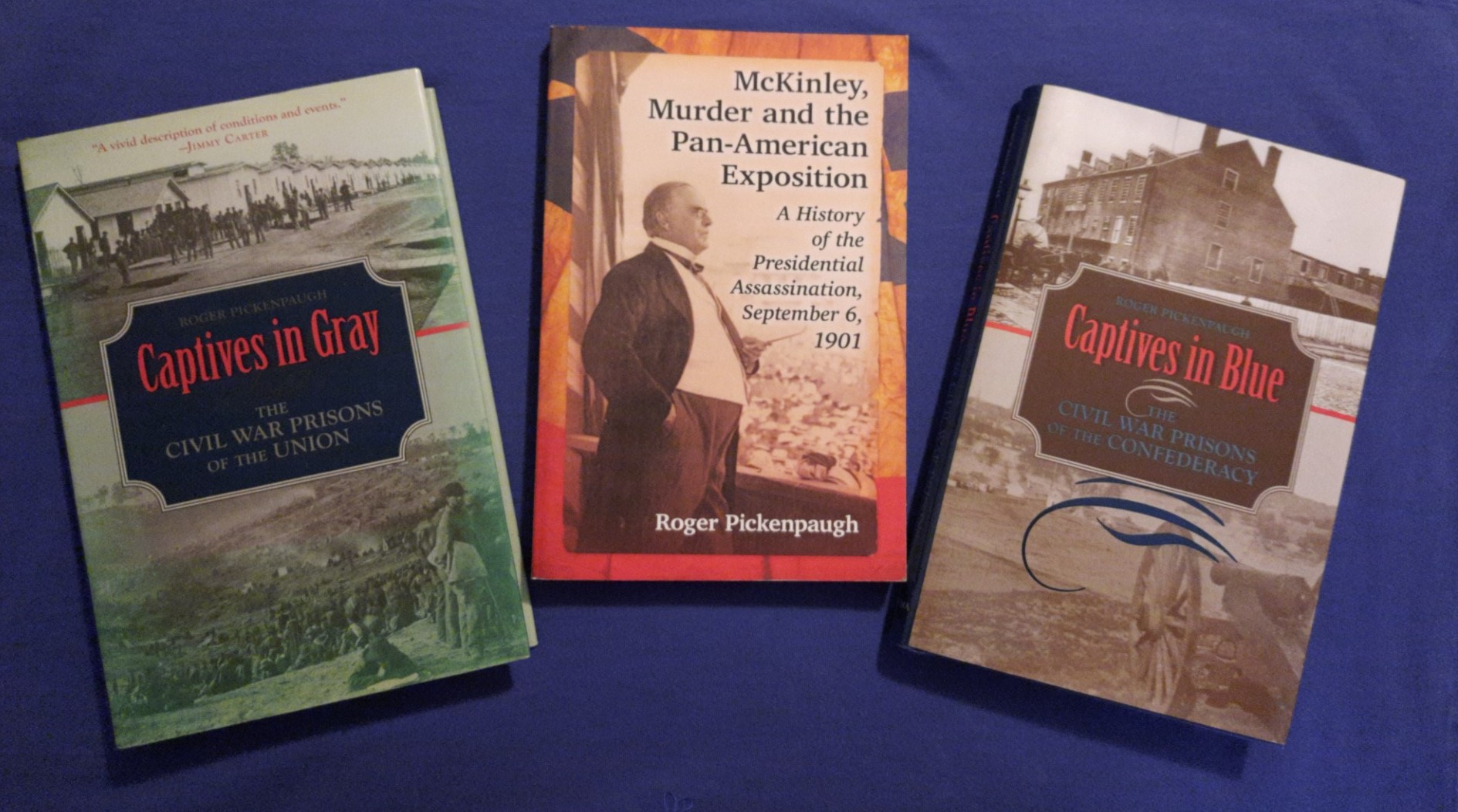
These three books are samples of those where he used traditional publishing.

Roger has always been interested in history. Even as a child, he liked to read books with a historical touch. Although he does admit to also reading some comic books.

His interest in the Civil War stems back to the fact that his grandfather and uncle were both very interested in Civil War events so he became interested just by listening. He also had a relative who took part in the Vicksburg campaign.

His interest in writing began when a student at OSU where he did writing and research on term papers for college and found he enjoyed the exploration.

His late wife Marion felt research was much like a Treasure Hunt.

Since most of his books require accurate historical information, research has always been an important part of his life. He credits his late wife, Marion, for being the research organizer and the reason for his success in writing historical books.

Some of those early books required research before the advent of computers. Roger remember Marion’s patience and tenacity as she searched through books on the library shelf looking for that piece of missing information. Note cards were made with information gathered and then placed in order. Indexes in his books are an important part so he feels accuracy is extremely necessary.

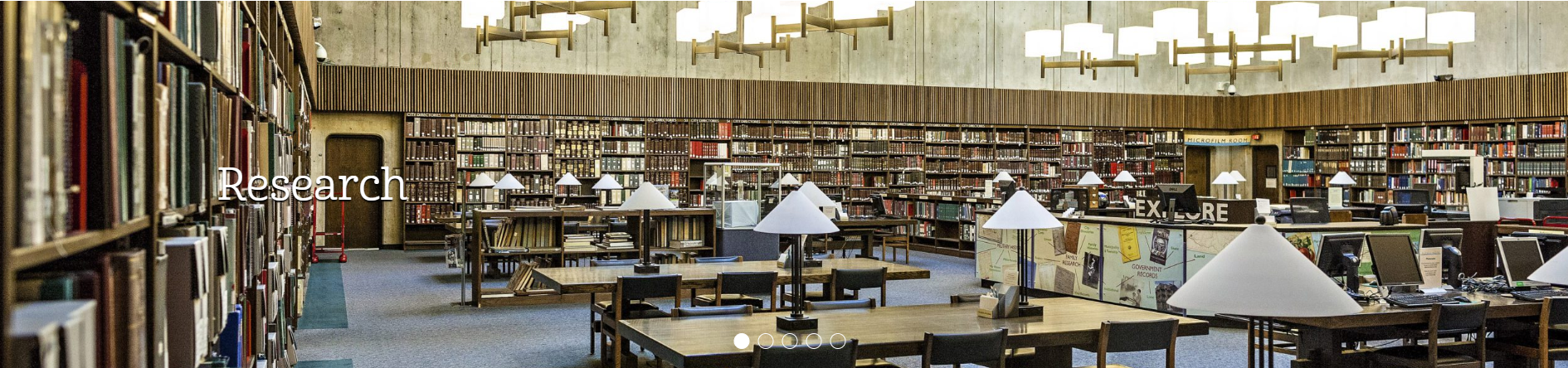
Roger frequently uses resources at the Ohio Historical Society for his research.

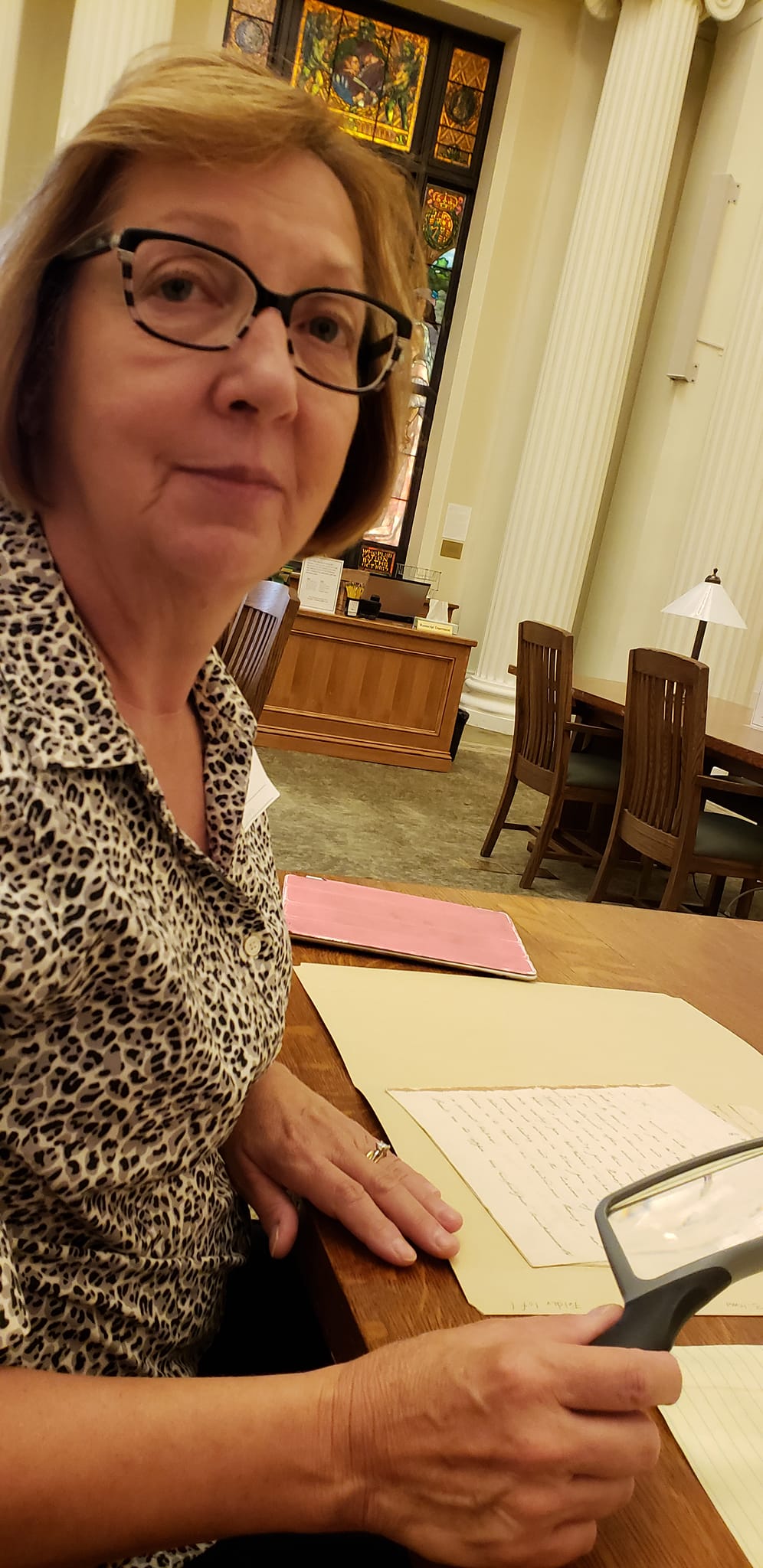
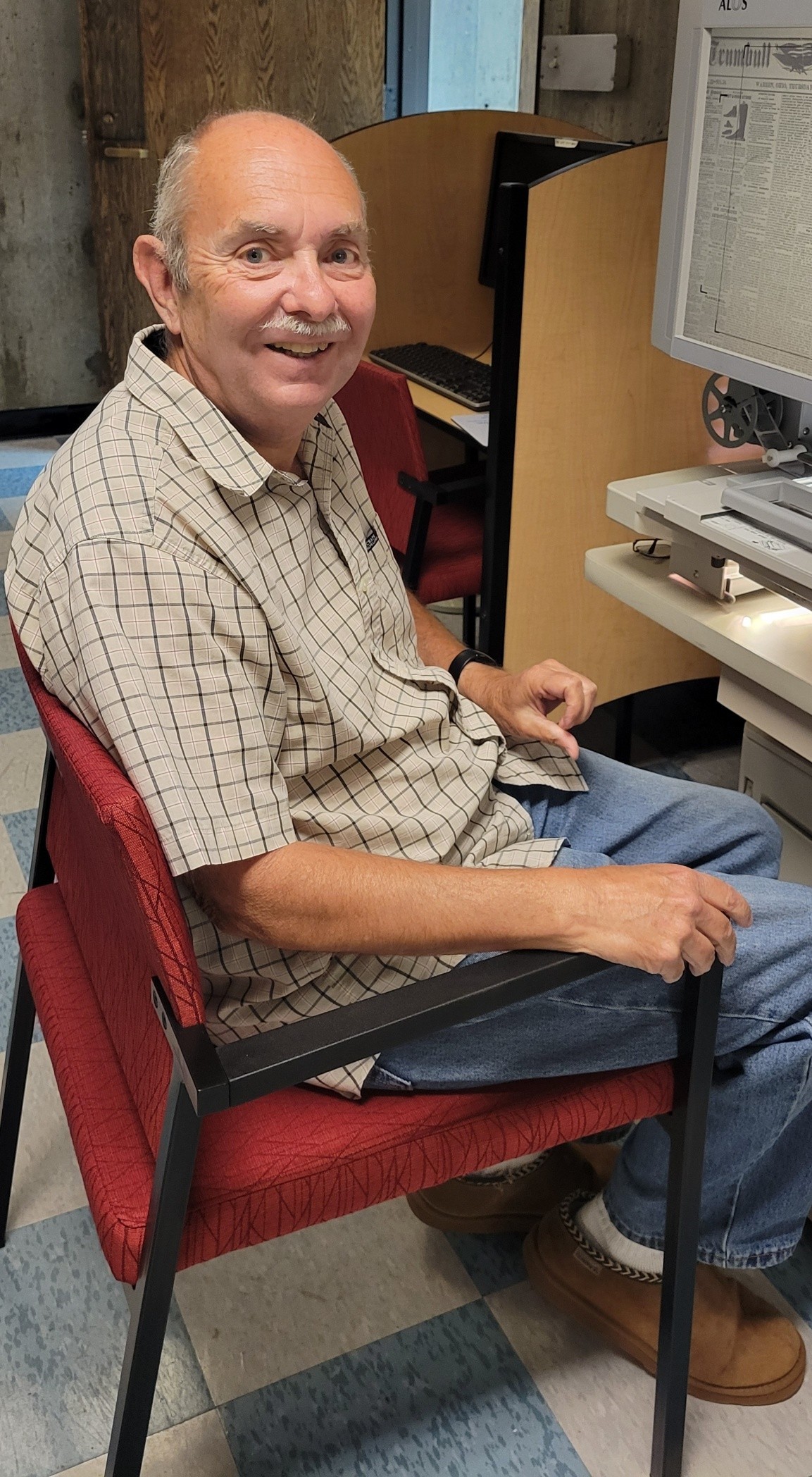
Research over the years has been from interviews over the phone to personal visits at places he is researching. There he makes good use of their local libraries for old newspaper records. National Archives, State Historical Societies, and many universities or colleges have provided needed information through books or diaries. When you read his books, you clearly see how important this research was.

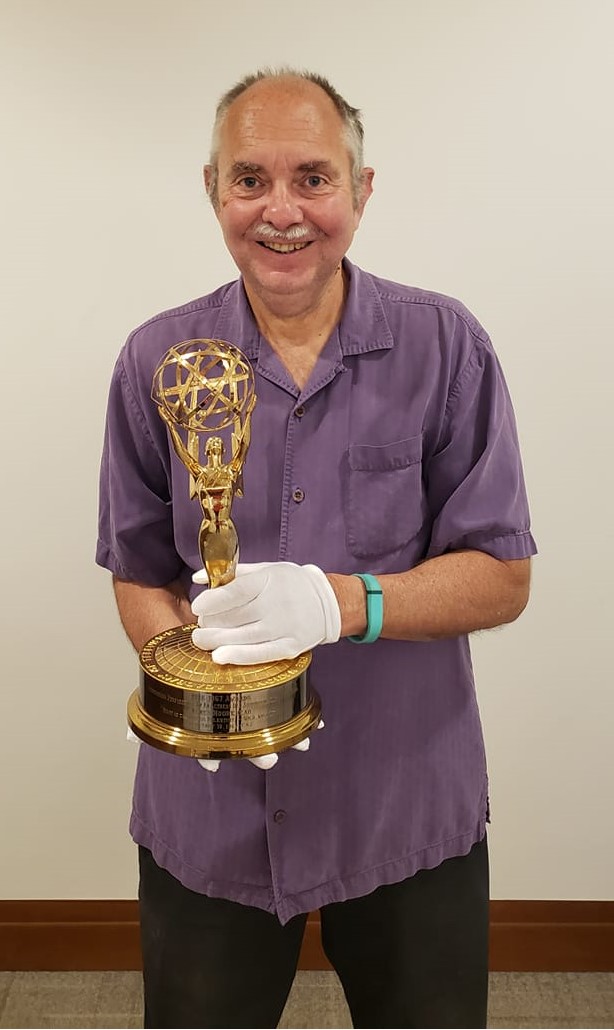
Roger enjoyed a close look at Agnes Moorehead’s Emmy while doing research at Muskingum University Library.

One of his favorite local places for research is the Muskingum University Library. They have been so helpful to him with use of equipment and finding the resources he needs. Roger said, “I never could do this writing without them.”

Friendships with members of the Noble County Writers Group have proved valuable over the years. Writers need to have other writers to talk with and share ideas. Other members of the group also are great at proofreading and giving ideas for improvement. They have even written some books together.

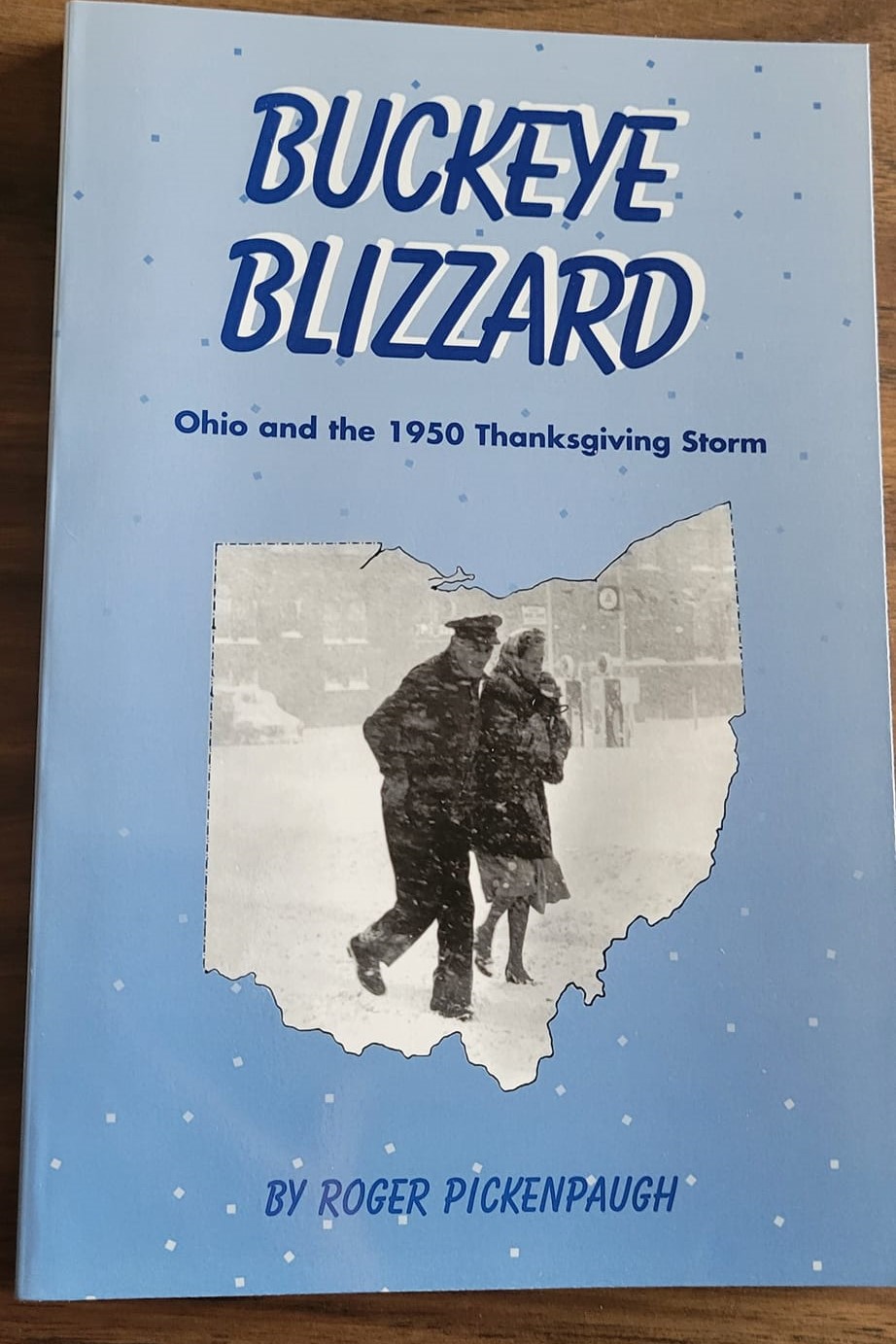
This early book of Roger’s tells personal tales of that terrible blizzard. True and often humorous!

At this point in time, Roger has published 20 books. Eight of them were with traditional publishers, the first being Rescue by Rail: Troop Transfer and Civil War in the West, 1863, which was published in 1998 and took about three years to write. That book had a local touch as some of the trains ran through Guernsey County on the B&O.

Johnson’s Island: A Prison for Confederate Officers (Civil War in the North) was published in 2016 and won the Bowling Green Center for Archival Collections Local History Publication Award.

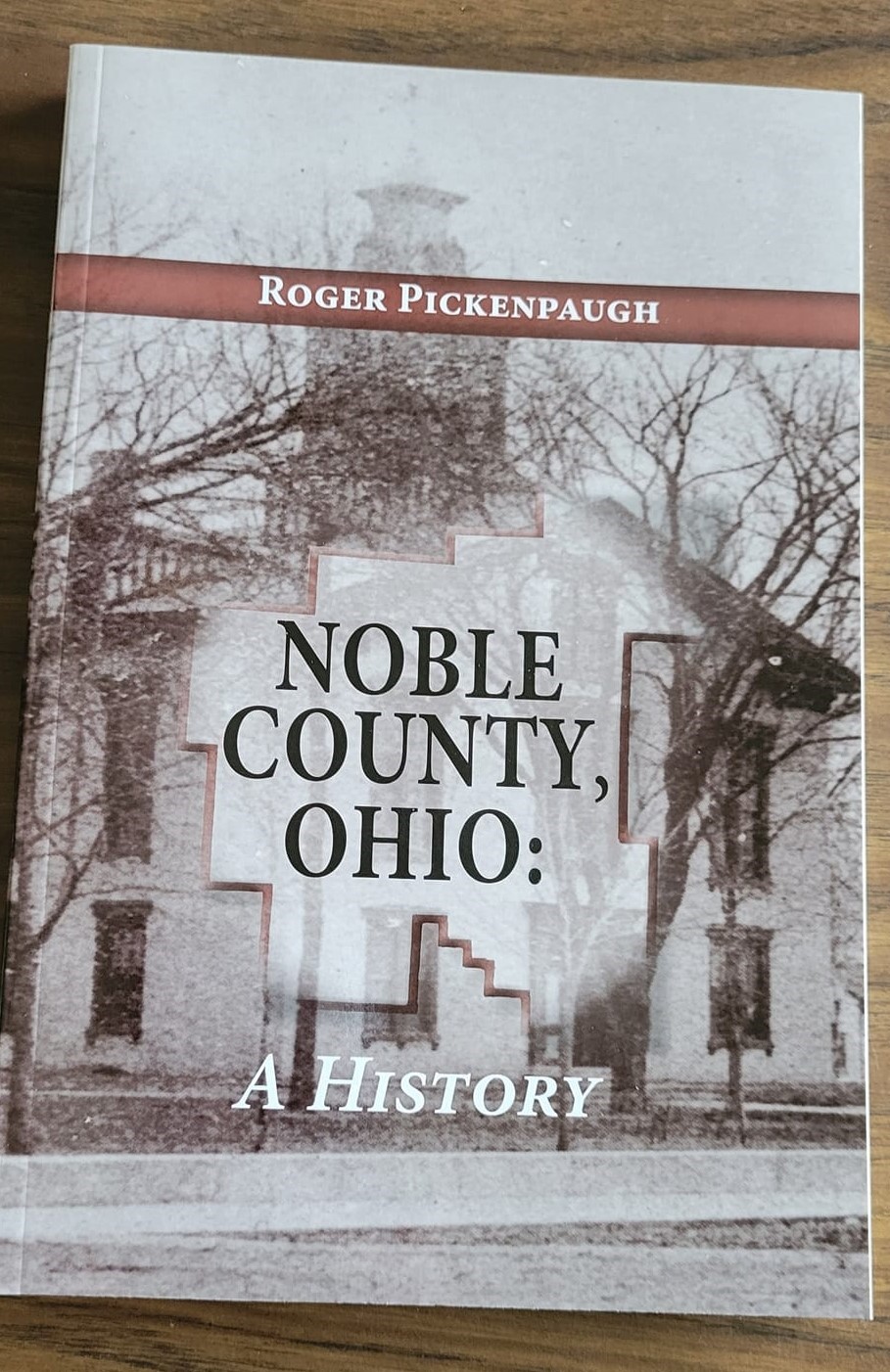
Noble County, Ohio was Roger’s first book, which he self-published.

He also has twelve books of local nature that are self-published. A History of Noble County, Ohio 1887-1987 was his first self-published book back in 1988. He spent nearly eight years researching over 100 newspapers to get the accurate information he needed.

Roger feels local books can be self-published but if you are writing about a national event, it will best be received if going through a traditional publisher.

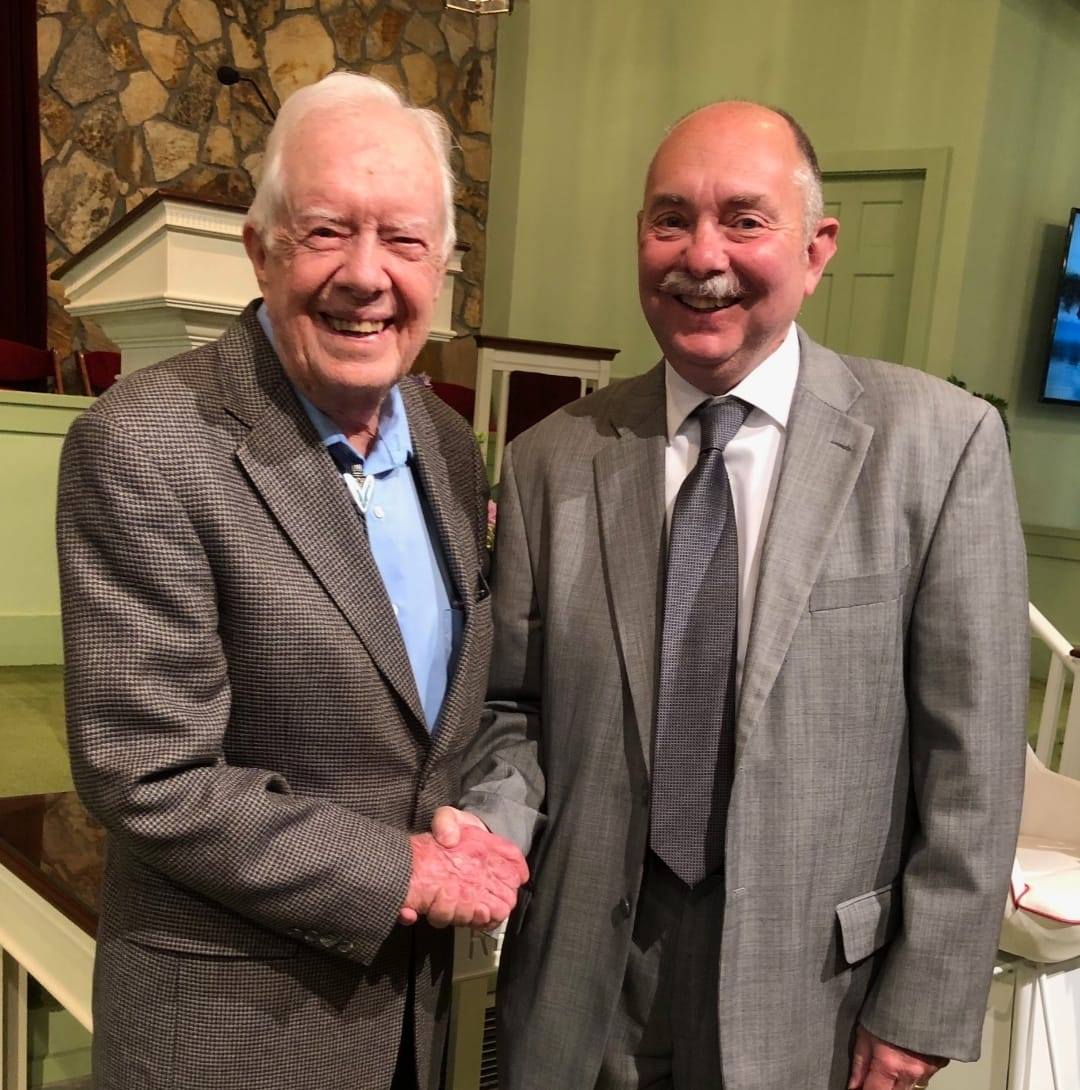
In their travels, Roger visited his sister Jill and her husband in Georgia, where they worked with President Jimmy Carter. They attended services at the Baptist Church where President Carter taught Sunday School. Today his sister is Superintendent of Jimmy Carter National Historic Site in Plains, Georgia. Roger was pleased to have his picture taken with the president and President Carter left a review on Amazon for one of Roger’s books.

Meeting President Jimmy Carter was a special moment for Roger.

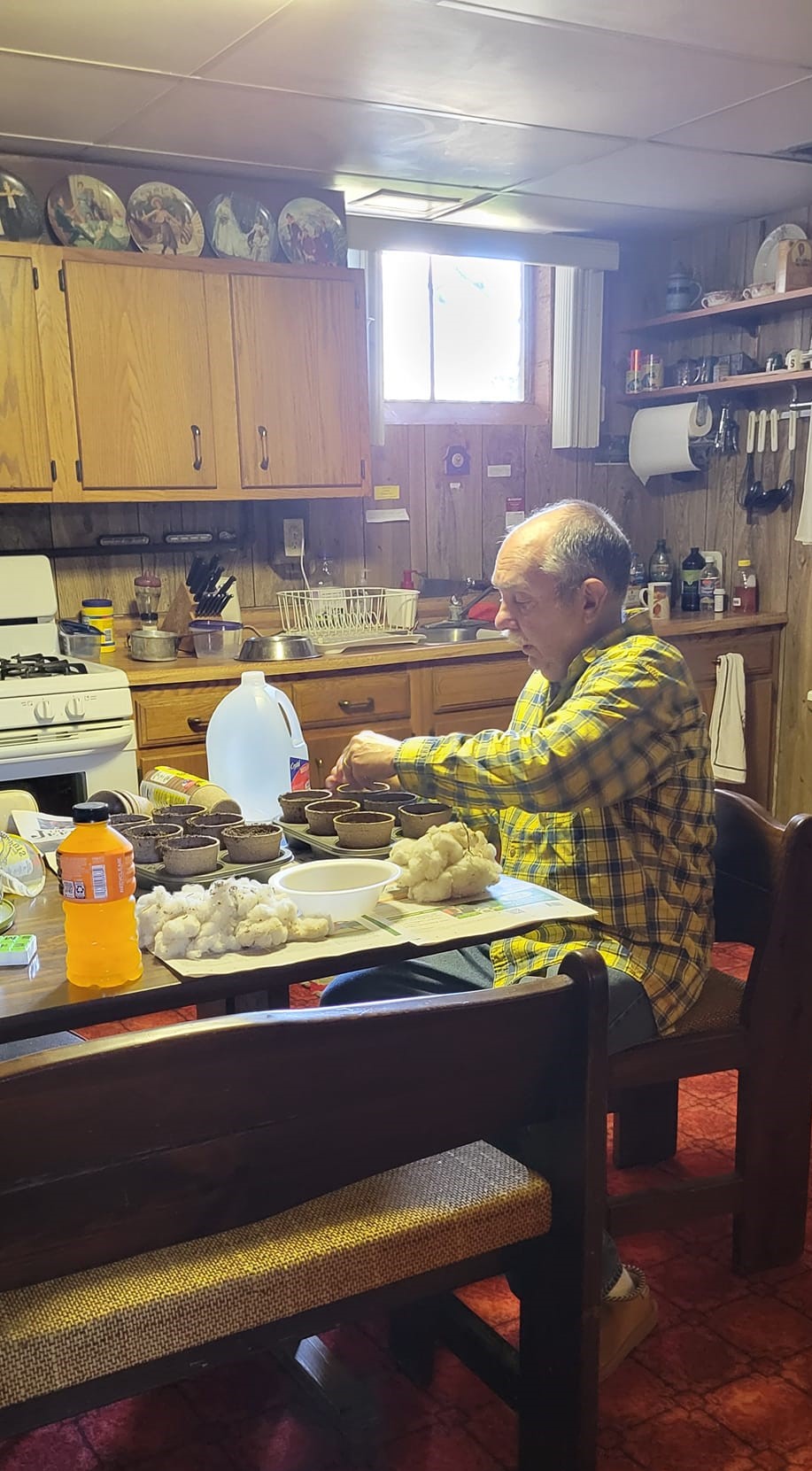
When Roger is not researching, he enjoys being active with daily walks and work in his garden. His walking goal was to have a thousand consecutive days with over 10,000 steps and he has probably reached it by now as had 900 consecutive days in mid-May.

Roger starts his garden early inside. During the summer, he enjoys working in his garden.

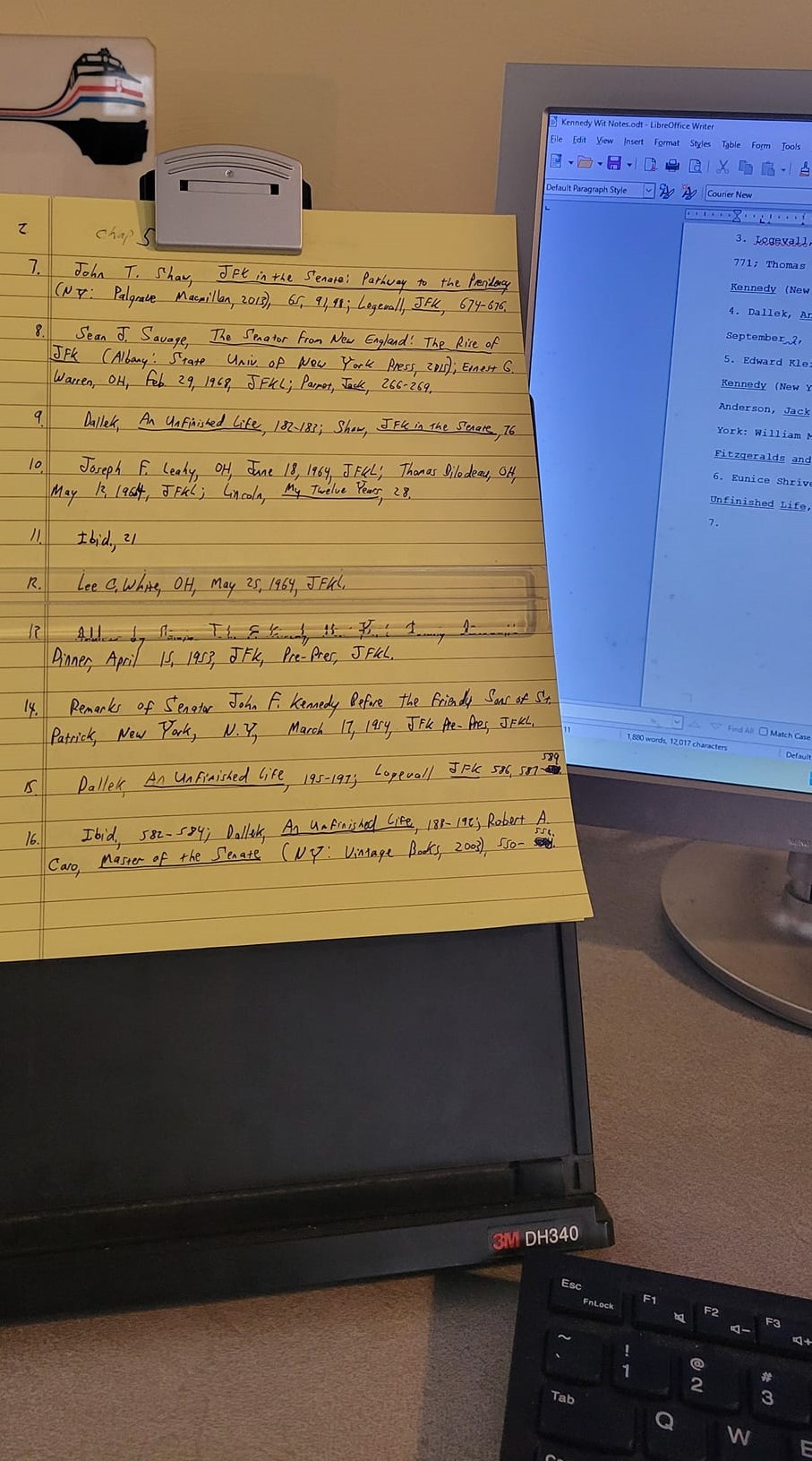
He is putting the finishing touches on a book about John F. Kennedy’s sense of humor. The working title right now is John F. Kennedy: The Kennedy Wit.

Transferring handwritten notes to the computer is time consuming.

Currently, Roger is also researching information about Ohio in the early days of the Civil War. This is being done in various newspaper archives and finds the ones at Ohio Historical Society very helpful.

His list of books is extensive but most can be found on Amazon or if you happen to see Roger at a book fair or local promotion. He often promotes his books at places like Art on the Square in Caldwell, Bookology in Cambridge, and Buckeye Book Fair.

If you enjoy history, you are certain to appreciate the research Roger Pickenpaugh has done to make his books accurate. His style of writing makes history interesting.

Majestic McKinley Monument Honors 25th President

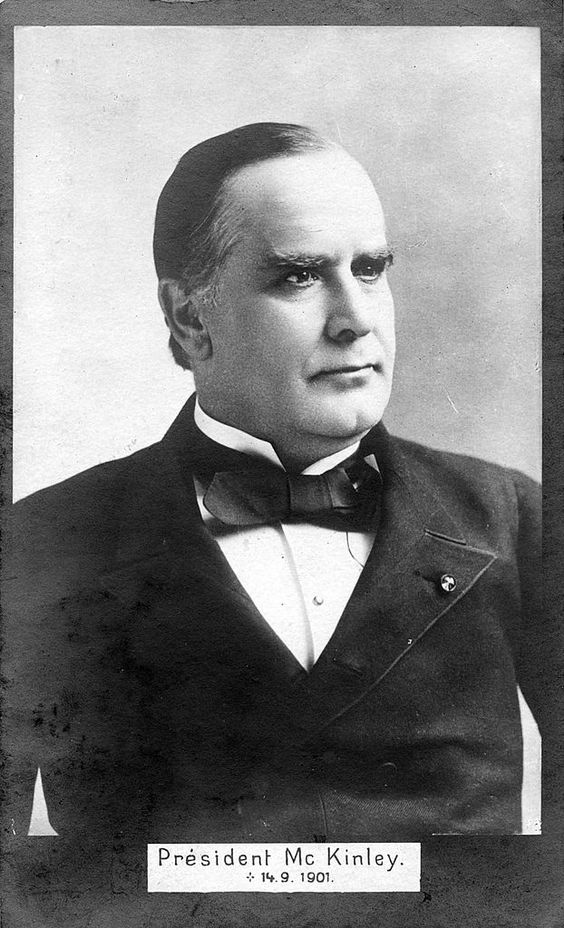
“I have never been in doubt since I was old enough to think intelligently, that I would someday be made president.”  These words were  spoken during his youth by William McKinley, the first president to ride in an automobile while in office as well as the first to use a telephone as part of his campaign.

McKinley Monument can be seen on the east side of I-70 in Canton, Ohio.

The resting place of William McKinley, 25th president of the United States, catches your eye over the tree tops while driving down I-77 through Canton, Ohio.  The domed mausoleum is more than a mere resting place but serves as a monument to Canton’s favorite son and former governor of Ohio. 

William and Ida McKinley made a campaign visit to Canton.

There are several reasons that McKinley is a favorite in this area even though he was born in Niles, Ohio. Canton is where he started his law career, found his true love, and ran for the highest office in the land. While attending the 1901 Pan-American Exposition in Buffalo, New York, President McKinley was assassinated just seconds after giving the good luck red carnation from his label to a little girl waiting in line.

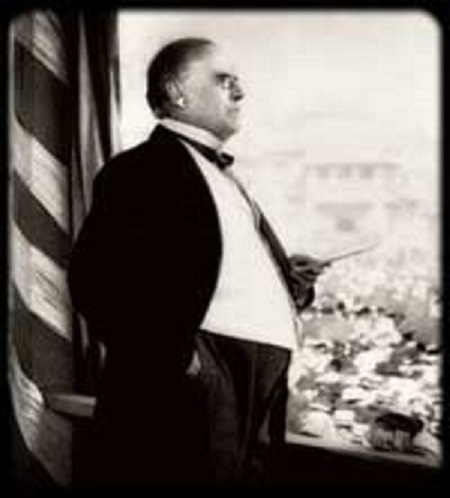
This photo of President McKinley making his first public address was used as the basis for his statue at the monument.

In 1905 construction began after selecting a memorial design drafted by Harold Van Buren Magonigle. This architect began his career at the age of thirteen when he worked as a draftsman for the firm that designed Central Park in New York City.

The amount being raised for the purchase of land and the mausoleum was $600,000. Local businesses and friends were large contributors. However, many school children contributed their pennies toward the building of this mausoleum, which was completed in 1907.

This view from the top of the steps shows people exercising there.

The front steps seem to be a real attraction for area residents as a wonderful place for exercise, either walking or running.  Since there are 108 steps up to the McKinley Monument, it is a challenge to young and old alike. The front steps are fifty feet wide and are broken into four flights of twenty-four steps with the final flight having only twelve. 

The plaque on this bronze statue of McKinley lists his many qualities.

Nearing the top of the stairs, visitors are greeted by a 9 1/2′ bronze statue of William McKinley created by Charles Henry Nishaus. It depicts President McKinley delivering his final public address at Buffalo, NY in 1901.

The circular, domed mausoleum recaptured the spirit of ancient cultures and formed the center of the cross design Magonigle intended to create. The longer arm of the cross was formed by front steps and what was called Long Water.

This beautiful cascading waterfall was part of the original monument area.

Originally Long Water was a spectacular part of the monument with a 575-foot lagoon, consisting of five different water levels cascading downward into a reflecting pool.  Unfortunately, due to stagnant water caused by poor circulation, this lagoon was filled back in the 1950’s. Both side arms of the cross were formed by shorter entry steps, and the top portion was a driveway behind the monument.

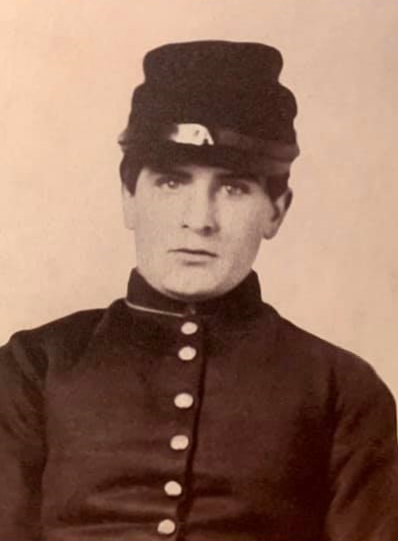
McKinley’s love of country was shown at the early age of 18 when he joined the OVI during the Civil War.

Magonigle considered this shape to have a double meaning. The upper part of the cross resembled the handle of a sword, while the Long Water symbolized the blade.  This seemed appropriate due to McKinley’s military career during the Civil War as well as his being commander-in-chief during the Spanish-American War.

Wreaths are often placed on the granite marble burial marker inside.

Above ground in the pink marble memorial, President McKinley and his First Lady are entombed in two side-by-side sarcophagi of elegant green granite on a dark maroon granite base.  Their two daughters have found their final resting place here also, entombed in the back wall of the memorial. Katherine died at the age of four from typhoid fever while Ida died during her first year.

Wreaths are constantly being placed by individuals and organizations at the foot of the granite-clad coffins. Most of the wreaths are in traditional red, white and blue.

This skylight contains 45 stars, the number of states at the time of McKinley’s death.

Seventy-five feet overhead is a beautiful red, white and blue skylight with a 45 star design, representing the number of states in the Union at the time of McKinley’s death. While it looks small from below, this beautiful window to the sky measures twelve feet in diameter.

If you wish to visit the memorial without climbing all those stairs, there are two possibilities. A steep road leads up the hill behind the Memorial or there is also an elevator, which operates only during museum business hours by use of a special code, which you must ask for at the museum’s admission office nearby. Admission to the McKinley Monument is free.

Hopefully, this monument and the life of William McKinley will be an inspiration to someone today.  President McKinley had hoped for this when he said, “That’s all a man can hope for during his lifetime, to set an example, and when he is dead, to be an inspiration to history.”

The McKinley Monument is located in downtown Canton, Ohio just off I-77. Take Exit 105 for OH 172, then turn right on 7th Street NW. Take the first left onto McKinley Monument Drive and enjoy a little piece of history.