Places to go and things to see by Gypsy Bev

Posts tagged ‘Hopedale Ohio’

Hopedale – Yesterday and Today

Small towns often have an interesting history that helps us understand those early days in the settlement of Ohio. Hopedale in Harrison County is no exception.

The first settler there in 1800 was Phillip Delany, a hunter. He swam the Ohio River with his clothes tied on his head so he could buy a section from the Northwest Territory Land Office in Steubenville. He called his settlement Green.
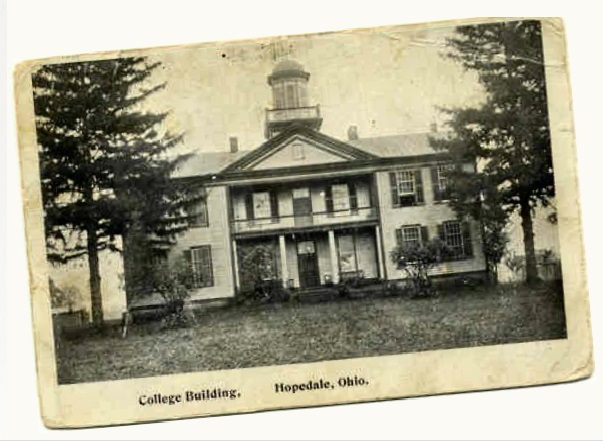
This postcard shows a picture of Hopedale Normal College, the first co-ed college in eastern Ohio.

Later Delany sold the land to a resident of Beech Spring, Rev. Cyrus McNeely, who platted the town. His son, also Cyrus McNeely, changed the name of the town to Hopedale because of his high hopes for the schools there. He donated land in 1849 to begin Hopedale Normal College, the first co-ed college in eastern Ohio with tuition of $5 a month.
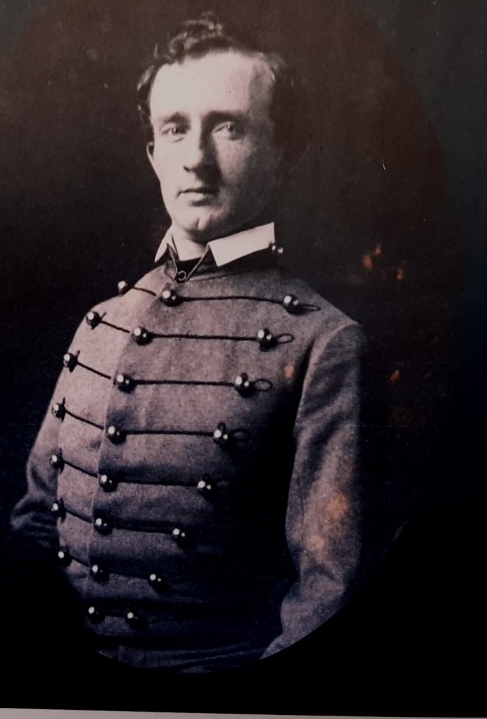
General George Armstrong Custer in his West Point uniform.

Horace Mann once taught there and General George Armstrong Custer was one of 10,000 who graduated from the college. Custer received a teaching certificate and taught in Cadiz. A year later, he entered West Point where he graduated in 1862.

That school grew and eventually included an elementary and high school. They had a six man football team called the Comets. Clark Gable went to school there, rode his sleigh down snowy fields, played in the band, and acted in plays.
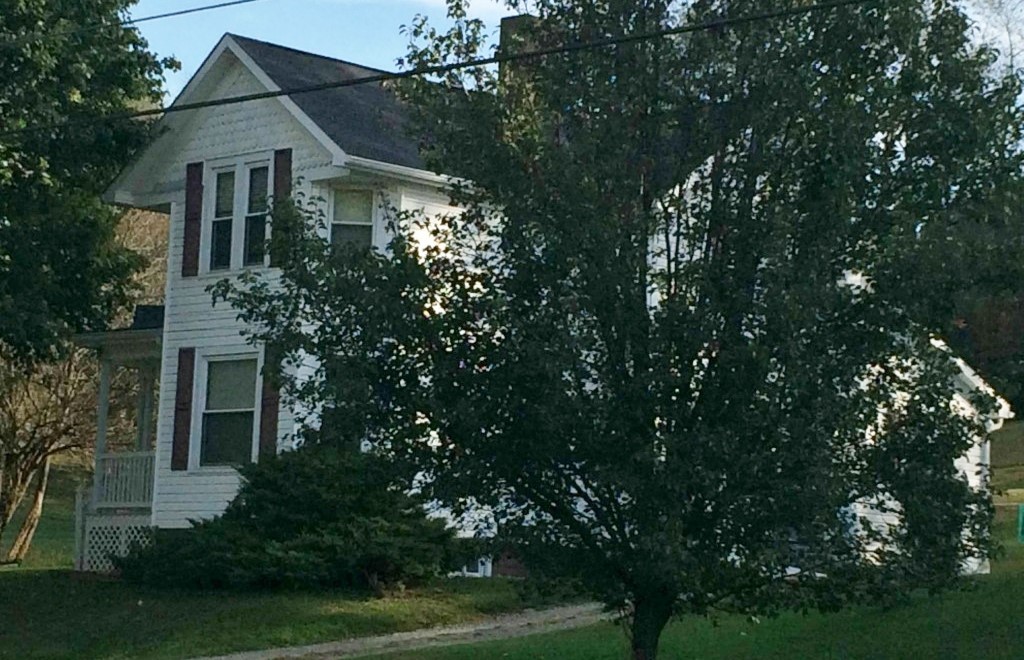
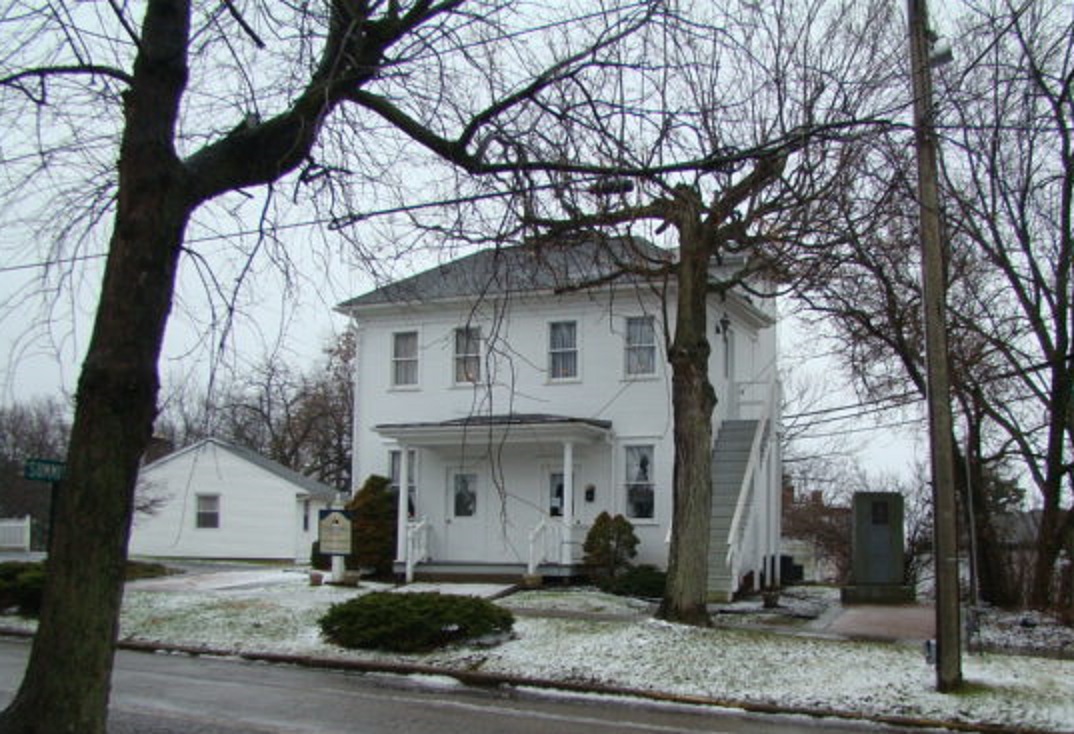
Clark Gable’s home in Hopedale today from the Clark Gable files.

While Clark Gable was born in Cadiz, his family lived in Hopedale during his youth (1903-1917) at 197 Mill Street. Today that house still stands but is a private residence with no public access. His father came to Hopedale because of an oil strike in 1902.
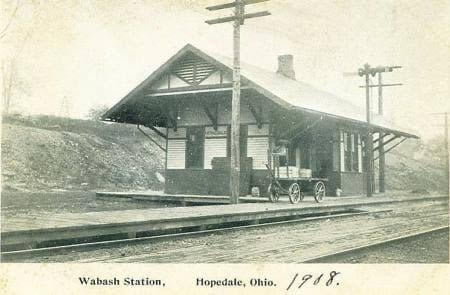
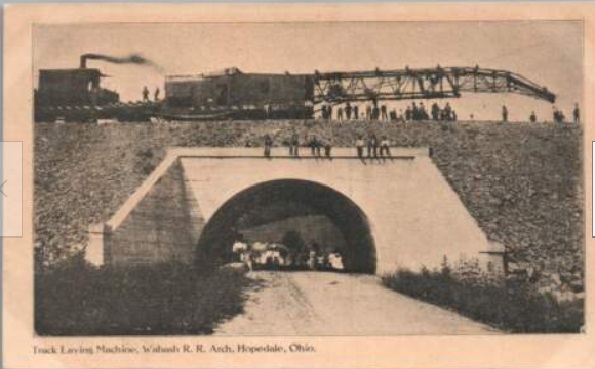
Post card picture of Hopedale’s track laying machine at the Wabash Arch.

While the oil field brought some financial gain to the area, it was the coal located just under the surface where strip mining began that proved the real boon. But first they needed a railroad to haul the coal. The Wheeling and Lake Erie Railroad was born with the Wabash Station being located in Hopedale as well as the Wabash Arch.

While the college is gone and even the high school that followed it, there is a house across the street from the city building that housed students at the Hopedale Normal College. The city building is actually located on the former grounds of the college and the brick building beside it is now being turned into a museum. A flagpole marks the spot where the college stood years ago.
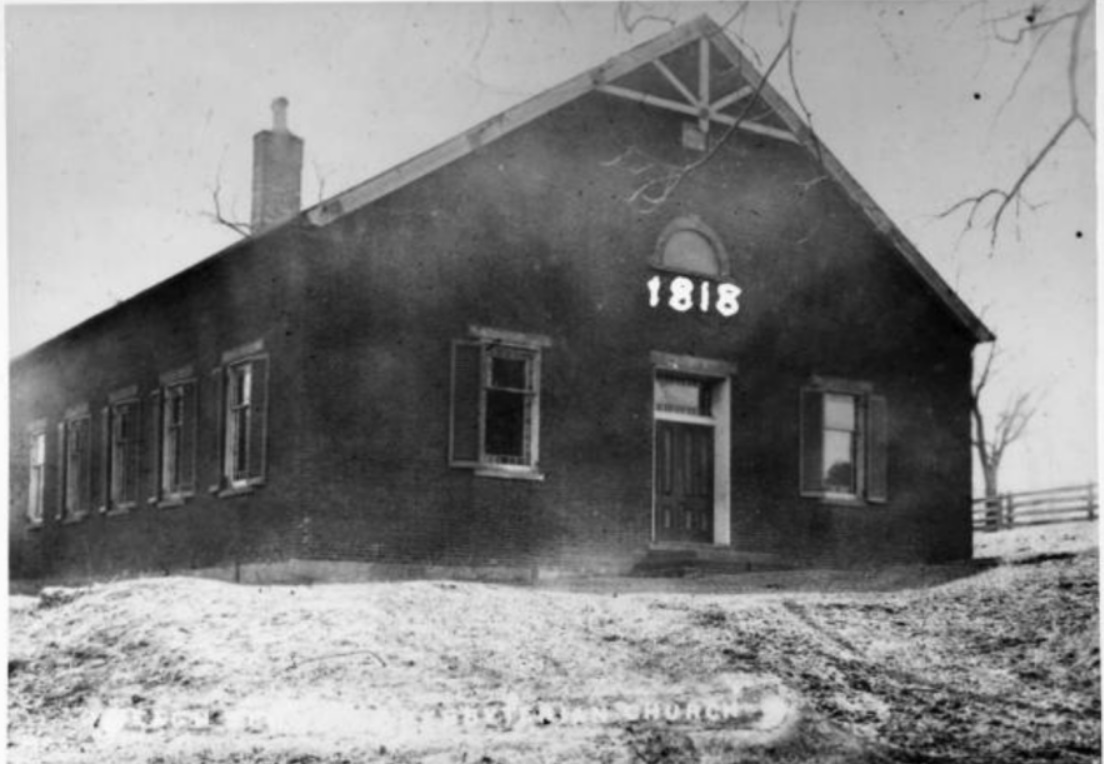
Beech Spring Presbyterian Church near Hopedale was called “The Mother Church of Ohio.”

Another famous historical site was the Beech Spring Presbyterian Church near Hopedale. It was known as the “Mother Church of Ohio” because it supported the founding of many churches in Harrison and Jefferson counties during the 1800s. The church was torn down in the early 1960s but the cemetery remains. Phillip Delaney was buried there.

The Underground Railroad was very active in Harrison County. Hopedale played an active role in this, and many anti-slavery meetings were held there. The Columbus Dispatch reported that slaves were kept in the Kyle home, which was built by Cyrus McNeely. Delaney House is a farm homestead documented to have served as a stop on the Underground Railroad. The building has a dry cistern connected to the main house by a tunnel. This was a great hiding place for runaway slaves and an important stop on the route to freedom.
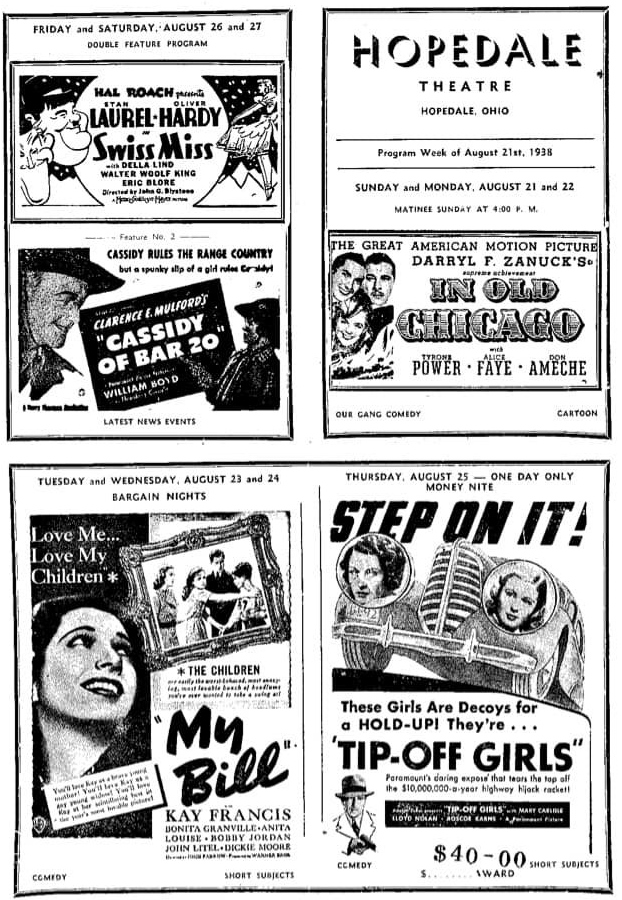
This theater bill shared movies being shown in Hopedale Theater in 1938.

Hopedale Theater was built in 1925 by the Stringer Brothers. They showed the latest in moving pictures and continued in operation until the mid 1950s. Some of those early movies were Laurel and Hardy in Swiss Miss, Cassidy of Bar 20, and In Old Chicago. Today that theater has been turned into an Italian restaurant, Capraro’s.
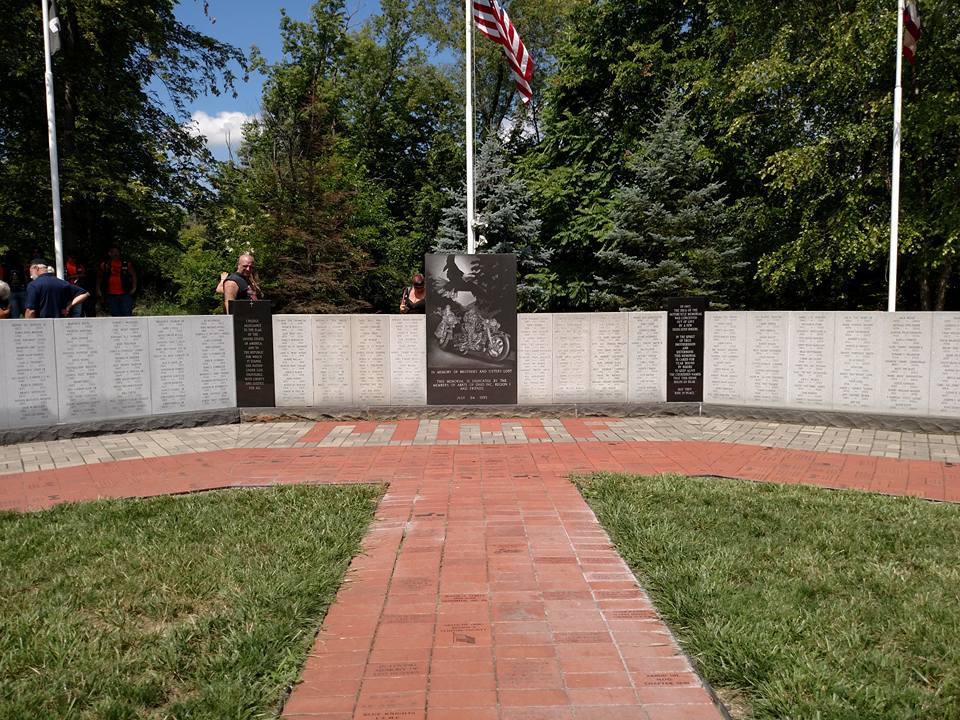
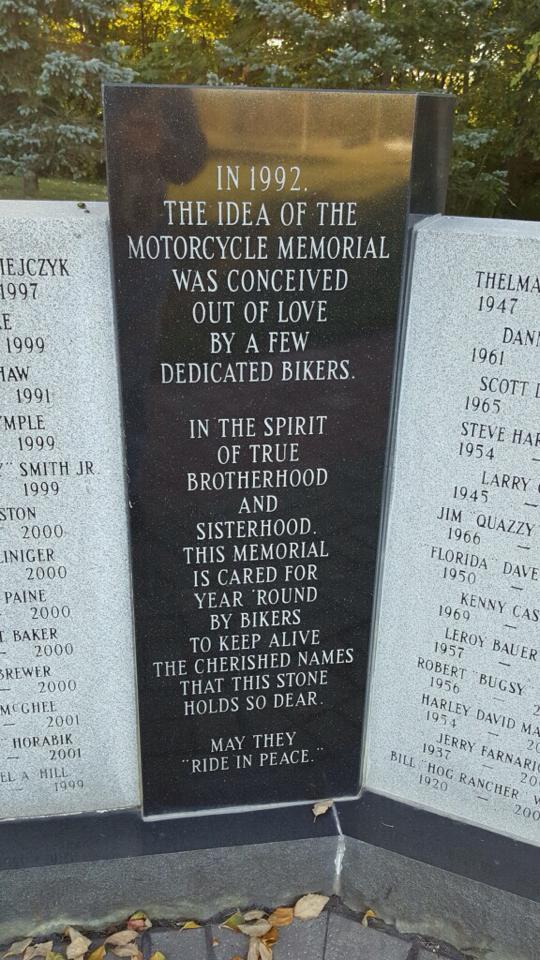
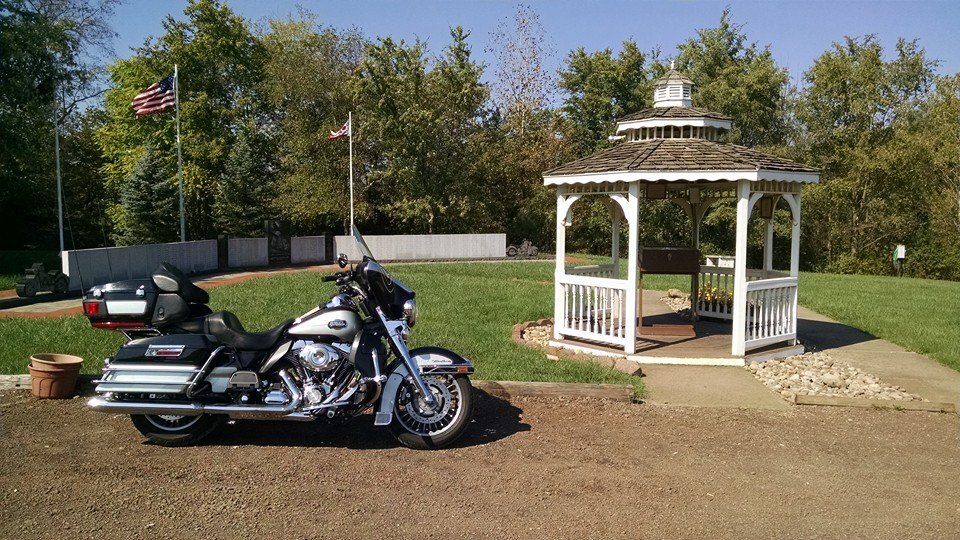
The Motorcycle Memorial has stones engraved with names of fallen riders and a brick pathway giving recognition to donors.

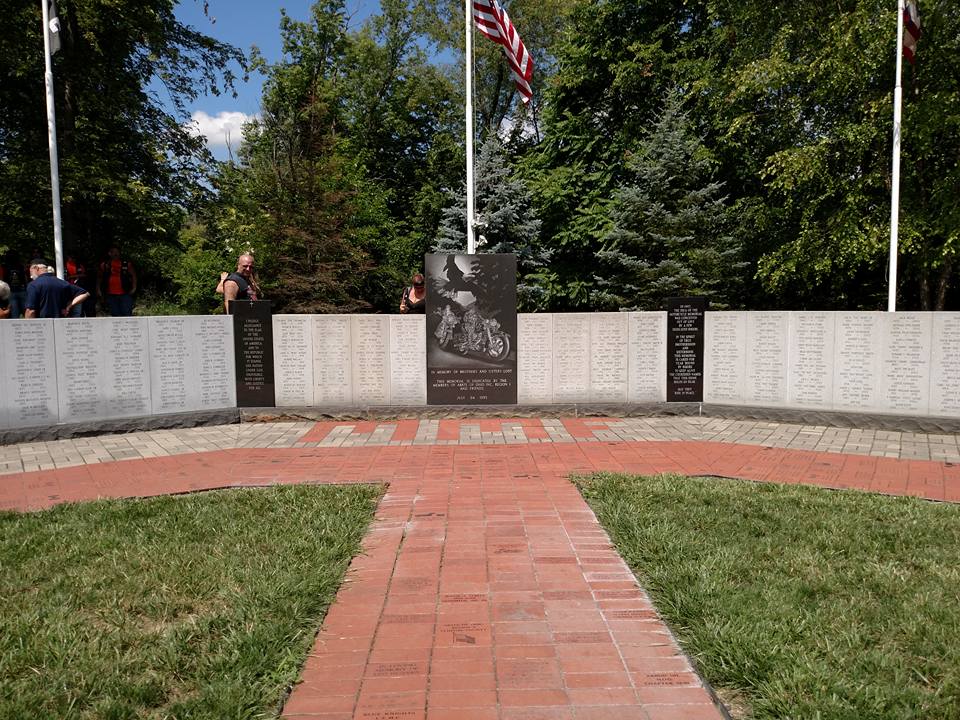
A recent addition to Hopedale has been the Fallen Motorcycle Memorial, a monument to riders gone too soon. A Motorcycle Memorial Wall, similar to the Vietnam Memorial in Washington, DC, contains names of brothers and sisters from all 50 states and other countries. The memorial is funded by the Motorcyclist Memorial Foundation, which cares for the memorial which is located behind the American Legion Post 682.

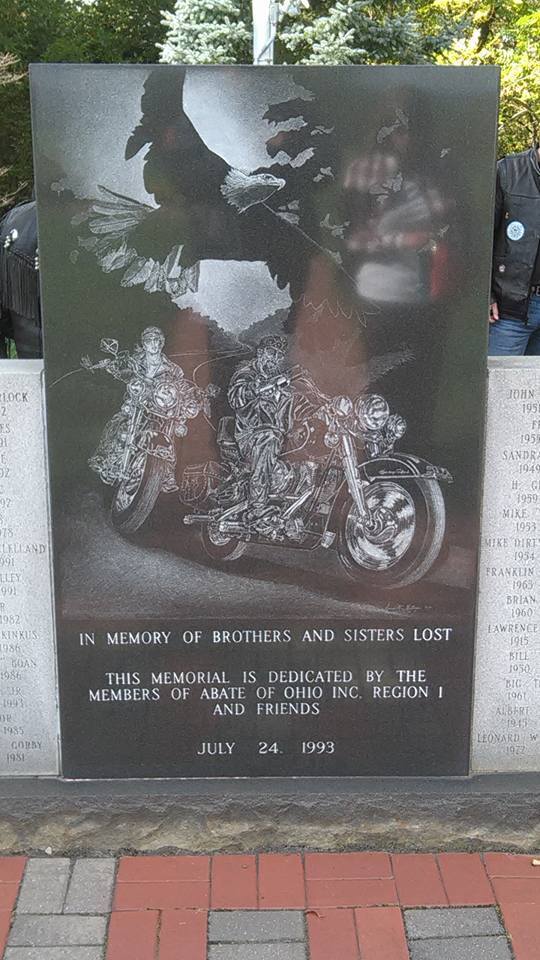
Milligan Memorials of Coshocton etched the Indian Black Stone, the darkest of all marbles, which stands atop a grassy knoll. The words written on the stone were written by Dan Waterfield of Oregon, Ohio. Anne Milligan etched the image of the man and woman riding their motorcycles on the winding road while Tim Milligan installed and etched the names of the loved ones lost on the gray pillars.
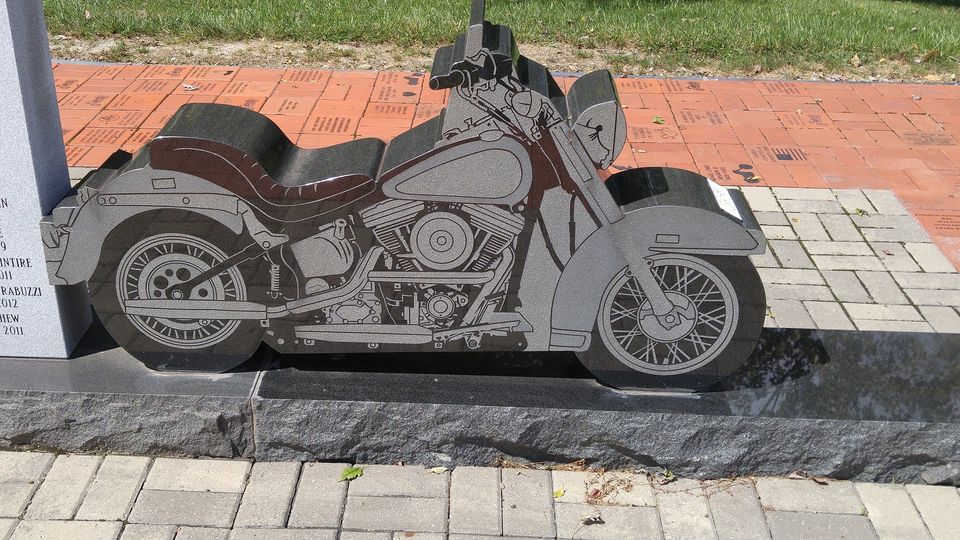
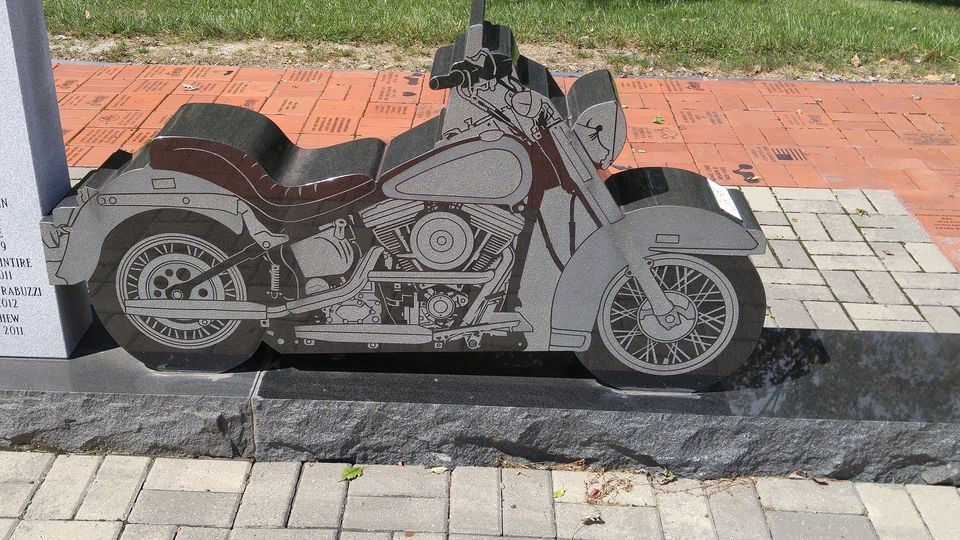
A granite full-size motorcycle sets at each end of the Memorial Wall.

Each end of the wall is bookended by a full-size 2-D motorcycle carved from that same black granite. The bikes can slide outward as new sections are added for fallen bike riders. In 1993, there were only two slabs with names. Today there are dozens of slabs listing names of bikers who have gone on.

The Motorcyclist Memorial was unveiled to the public in 1993. Now every year during Memorial Day weekend, they re-dedicate the wall and add more names to the granite pillars on each side of the monument. Nearly 1200 show up annually for this event. Be sure to stop by and visit the Wall if you find yourself in the Hopedale area.
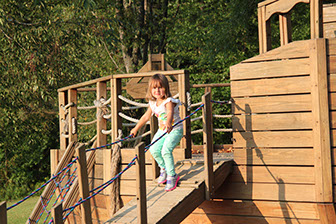
Hopedale has a large ten-acre park with a playground and much more.

Hopedale today contains many family-friendly activities that make it a great place to call home. They have a beautiful ten-acre park that contains several picnic shelters, a basketball court, a tennis court, and a baseball field for the youth. Take an evening stroll on their walking/biking trail. Soon they will have a museum where you can learn more about their history. Plan a visit to this historic town sometime soon.
Motorcycle Memorial 30th Anniversary

If “lick, gap, hollow, or creek” are in the name of the road, take it!

~Motorcycle wisdom

This overview of the wall shows the dedicated brick sidewalk by friends of the Memorial.

Hopedale is home to the Fallen Motorcycle Memorial, a monument to riders gone too soon. A Motorcycle Memorial Wall, similar to the Vietnam Memorial in Washington, DC, contains names of fallen brothers and sisters from all 50 states and other countries. The memorial, established in 1993, is funded by the Motorcyclist Memorial Foundation, which cares for the memorial which is located behind the American Legion Post 682.

Motorcyclists will be attending by the hundreds for the rededication.

Gas-powered motorcycles began back in 1885 in Germany. This early motorcycle was a wooden frame with a gas engine attached. Things have certainly progressed from that early time and today there is a wide assortment of motorcycles from which to choose.

Riding a motorcycle is fun and exciting with the freedom to enjoy the open road with a sense of adventure. Some like it for speed, while others find it a relaxing way to spend a day as they ride the back roads and enjoy the scenery. Many like the camaraderie of riding in groups where they often help with community projects such as collecting toys for Christmas giving.

Of course, riding a motorcycle is an easy way to commute to work and saves on the gasoline bill. Their gas mileage rivals the most economical small cars. Caution must be taken to stay out of a car’s blind spot and motorists need to be aware of watching for motorcycles on the highway.

Words on this Indian Black Marble were written by Dan Waterfield.

Those who enjoy the thrill of riding motorcycles directed the building of the Motorcycle Memorial Wall with incredible detail. Milligan Memorials of Coshocton etched the Indian Black Stone, the darkest of all marbles, which stands atop a grassy knoll. The words written on the stone were written by Dan Waterfield of Oregon, Ohio. Anne Milligan etched the image of the man and woman riding their motorcycles on the winding road while Tim Milligan installed and etched the names of the loved ones lost on the gray pillars.

At each end of the wall is a moveable marble full-size motorcycle.

Each end of the wall is bookended by a full-size 2-D motorcycle carved from that same black granite. The bikes can slide outward as new sections are added for fallen bike riders. In 1993, there were only two slabs with names. Today there are dozens of slabs listing names of bikers who have gone on so there will be a permanent memory of fallen brothers and sisters of the open road.

Anne Milligan etched this picture on the black marble of cyclists going down a winding road.

Hundreds of motorcyclists, their friends and family members are expected to converge on this Harrison County community on this Memorial Day weekend, May 26-27, for the 30th annual rededication of the Motorcyclist Memorial. Every year during Memorial Day weekend, they rededicate the wall and add more names to the granite pillars on each side of the monument. Nearly 1200 show up annually for this event.

Motorcycle enthusiasts will enjoy a trip to Hopedale just east of Cadiz to see the wall for themselves. Visit during their Rededication Ceremony on May 26-27. Activities include a ceremony at 11:30 when the names of newly fallen riders will be put on the black marble monument, plus live bands, vendors, and a bike rodeo. Charge for admission is $15 per person for the weekend with funds used to care for and update the wall.

The Memorial Wall is located at 48225 Rabbit Road in Hopedale. If you have any questions, call (740) 317-3433. Come join in the celebration on May 26-27.

Clark Gable Museum Celebrates Star’s Birthday

Clark PictureVisit the birthplace of the most popular figure on the Hollywood screen from 1936-1960. Clark Gable was born in Cadiz and grew up in Hopedale, Ohio. See his humble beginnings at the Clark Gable Museum in Cadiz…the only Clark Gable Museum in the world.
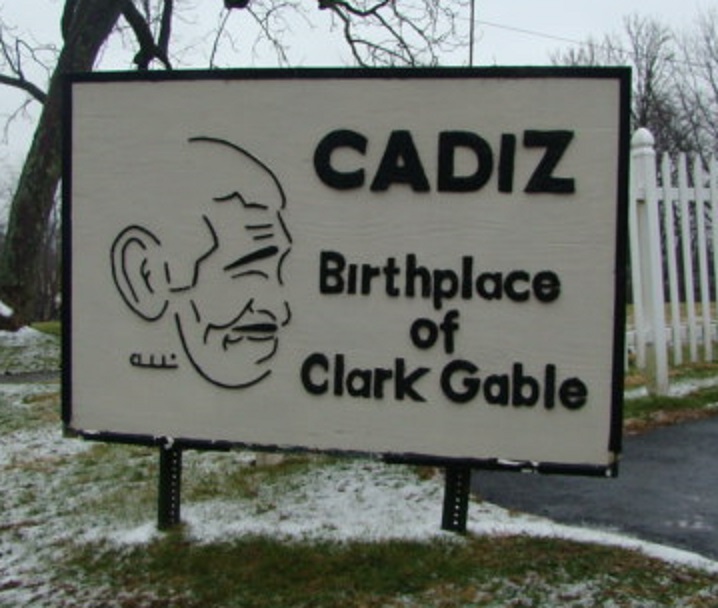
Clark Cadiz Sign   The museum came about after a deejay from Illinois called the Cadiz postoffice on February 1, 1983, and asked them if they knew whose birthday it was. The postman said he had no idea. The deejay told him Clark Gable and asked him what they were doing to celebrate his birthday. That was the last time “nothing” was the answer.
Clark childhood home

This postcard shows the house where Clark grew up in Hopedale.

   William Clark Gable was born on February 1, 1901, on 138 Charleston Street in Cadiz. His parents felt he was the apple of their eye. But unfortunately, his mother died when Clark was ten months old and his father then moved down the road to Hopedale, where their home is today a private residence.

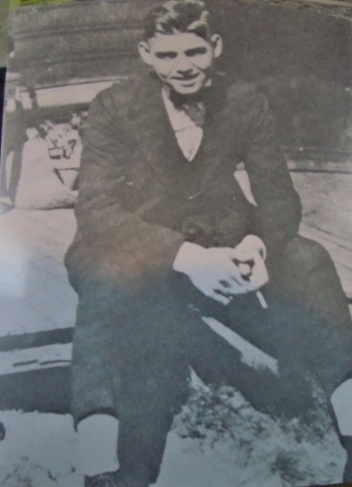
Clark teen

Clark Gable poses as a teenager.

   His stepmother played piano and gave Clark lessons at home. He picked up brass instruments as a result and was the only boy in the Hopedale Men’s Band at the age of 13. Also, at this time he had a deep interest in literature and enjoyed Shakespeare’s sonnets.

Clark Family Picture

This family portrait shows Clark in the front and his father to the far left.

   His father insisted he engage in some more masculine activities so Clark became very adept at fixing cars. When they moved to Ravenna a few years later, his father wanted him to help on the farm. Clark went to work at Akron Tire and Rubber Company instead. But he seldom worked a full day as he would leave to go to the theater. Even if he went as an usher, at least he was where he loved to be.

   Clark worked his way west from Ohio by riding in boxcars and worked in the oil fields in Tulsa, Oklahoma along the way. He ended up in Oregon working as a salesman of ties in a department store.

Clark Poster

A lifesize poster of Clark hangs in the gift shop.

   But that was a good stop for him as he met his first wife there. Josephine Dillon, his wife and coach, saw that beneath his uncultured look there was the potential for a strikingly handsome man. So she had his bad teeth fixed and strengthened his undernourished body. His voice was rather high-pitched and she coached him how to lower it to a deeper resonance.

Clark Gift Shop Walls

Walls at the museum are covered with pictures of his many movies.

   Clark went on to Hollywood to begin his career there as an extra in silent movies. He eventually appeared in 67 talking movies and was called The King of Hollywood. Some of his movies include “It Happened One Night,” “Call of the Wild,” “San Francisco,” and the immortal “Gone With the Wind,” which won the Academy Award for Best Picture in 1939. 

   So it seemed strange that his birthplace of Cadiz, Ohio would not have a display of some kind to acknowledge this famous celebrity. For years, the only things existing on the location where he was born in an upstairs apartment were a garage and flower garden. The house had been demolished years before.

Clark Monument

This monument to Clark was the first move to honor him in his hometown.

   Once the town decided to honor Clark, the first thing to be erected was a monument at the place of his birth. Then in 1998, the house was reconstructed. It has been furnished in the style of the day and has several of the King’s belongings on display.

Clark Home Upstairs

This is the reconstructed house on the spot Clark was born.

   Carole Lombard, Clark’s wife, is honored with a large display that was provided by a fan of hers, Norm Lambert. When Carole died in a plane crash while returning from entertaining the troops during WWII, Clark decided he would enlist in the Army Air Force as a tribute to her.

Clark Air Force

He served in WWII as a cameraman and gunner.

   During WWII, Clark Gable served as an aerial cameraman and bomber gunner in Europe with the Army Air Force. He enlisted as a private in August 1942 and was relieved from active duty in June 1944 at his request since he was over-age for combat.

Clark Cadillac

His ’54 Cadillac can still be seen as part of the tour.

   Inside you will find Clark Gable collectibles as well as “Gone With the Wind” displays. Books and pictures are on display from his childhood to stardom. In the garage, you will even find one of his cars, a classic 1954 Cadillac de Ville.

Clark Nan Mattern

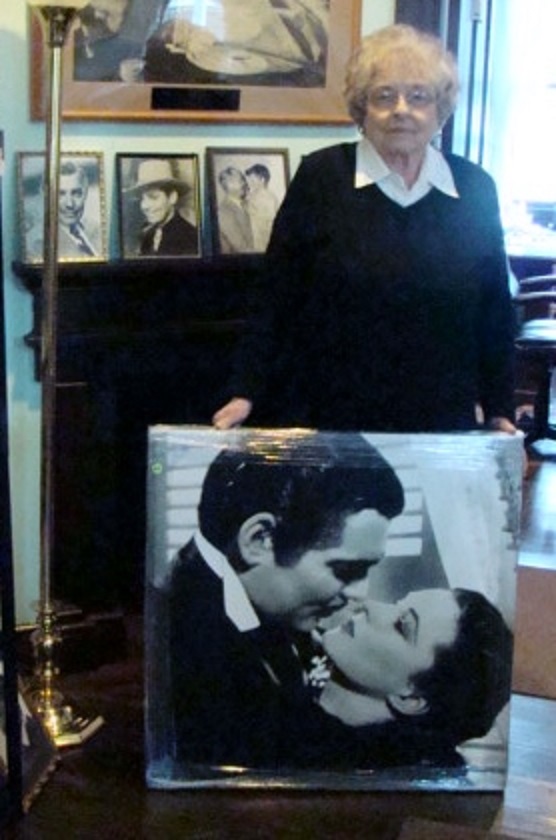
Nan Mattern, director of the museum, displays a picture from “Gone with the Wind.”

    Since it has been opened, over 150,000 people have stopped by to share their stories and see the treasures. They are made welcome by Nan Mattern, the director, and a dozen ambassadors who help with tours of the facility.

   A lady from Portland remembered seeing Clark in his first performance on stage in Oregon. A man recalled his dad telling him the story of riding in a boxcar with Clark Gable as he headed west. His dad had given Clark five dollars for food. Years later Clark came back to that town and wanted to repay him for what he had been given. Many heartwarming stories are shared.

   Clark Gable was always humble about his good fortune. He commented, “I’m just a lucky slob from Ohio who happened to be in the right place at the right time.”

Clark Back Entrance

This is the back entranceway to the upstairs apartment where he was born.

   Clark Gable Museum is located at 138 Charleston Street in Cadiz. It is closed December through February, except for Clark’s birthday. The remainder of the year it is open Wednesday through Friday 10 – 4. But if you wish to stop down at a different time or have a group that would like to visit, contact them for an appointment. Call the museum at 740-942-4989 or Nan at 740-942-2505.

Clark Downtown

This mural in uptown Cadiz shows he is remembered as a hometown boy.

   Join the Clark Gable birthday celebration on Saturday in February when the museum will be open from 10 -2 and serve light refreshments.  Clark Gable’s birthday will not be forgotten in Cadiz. 

   Clark Gable Museum is at 138 Charleston Street in Cadiz, Ohio. It is near the intersection of US 22 and US 250. Watch for signs directing you to the museum or follow your GPS. It’s not far from downtown Cadiz.