Places to go and things to see by Gypsy Bev

Posts tagged ‘Warthers’

History of the Steam Engine – Ernest Warther Carvings
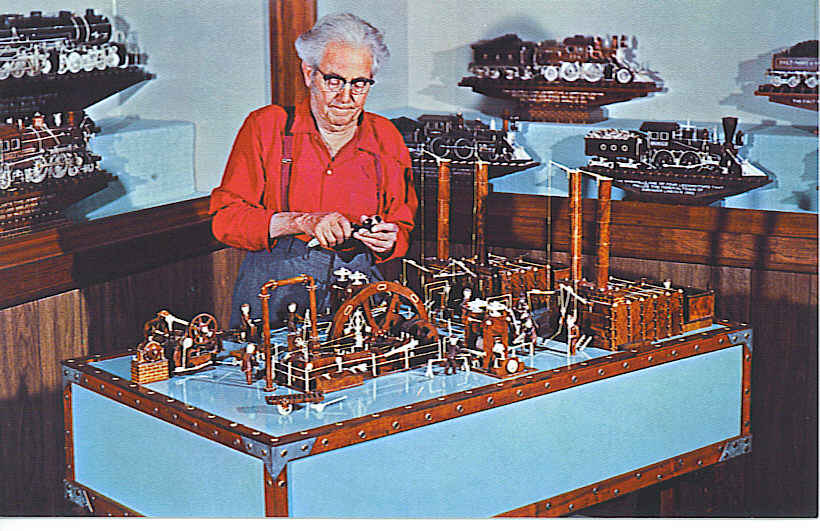
Ernest "Mooney" Warther

Ernest “Mooney” Warther working on one of many displays

“You have to have a vision.”  These words guided Master Carver Ernest Warther throughout his life. He instilled that concept in his family, who today can be found at Warthers in Dover, Ohio. The Smithsonian describes this museum’s displays as “Priceless works of art.”

Early in life, Ernest, called Mooney by most who knew him, worked for the railroad. When he began whittling, it seemed natural to use his passion to create the history of steam engines with moving parts.

During his early years when money was scarce, Mooney used chipped and cracked cue balls made of ivory for his trains. When he rode his bicycle around town, he would often stop at pool halls on his trips to a favorite spot, Woolworths. Cue balls, walnut, coal, mussel shells and beef bone formed his early locomotives because…they were free.
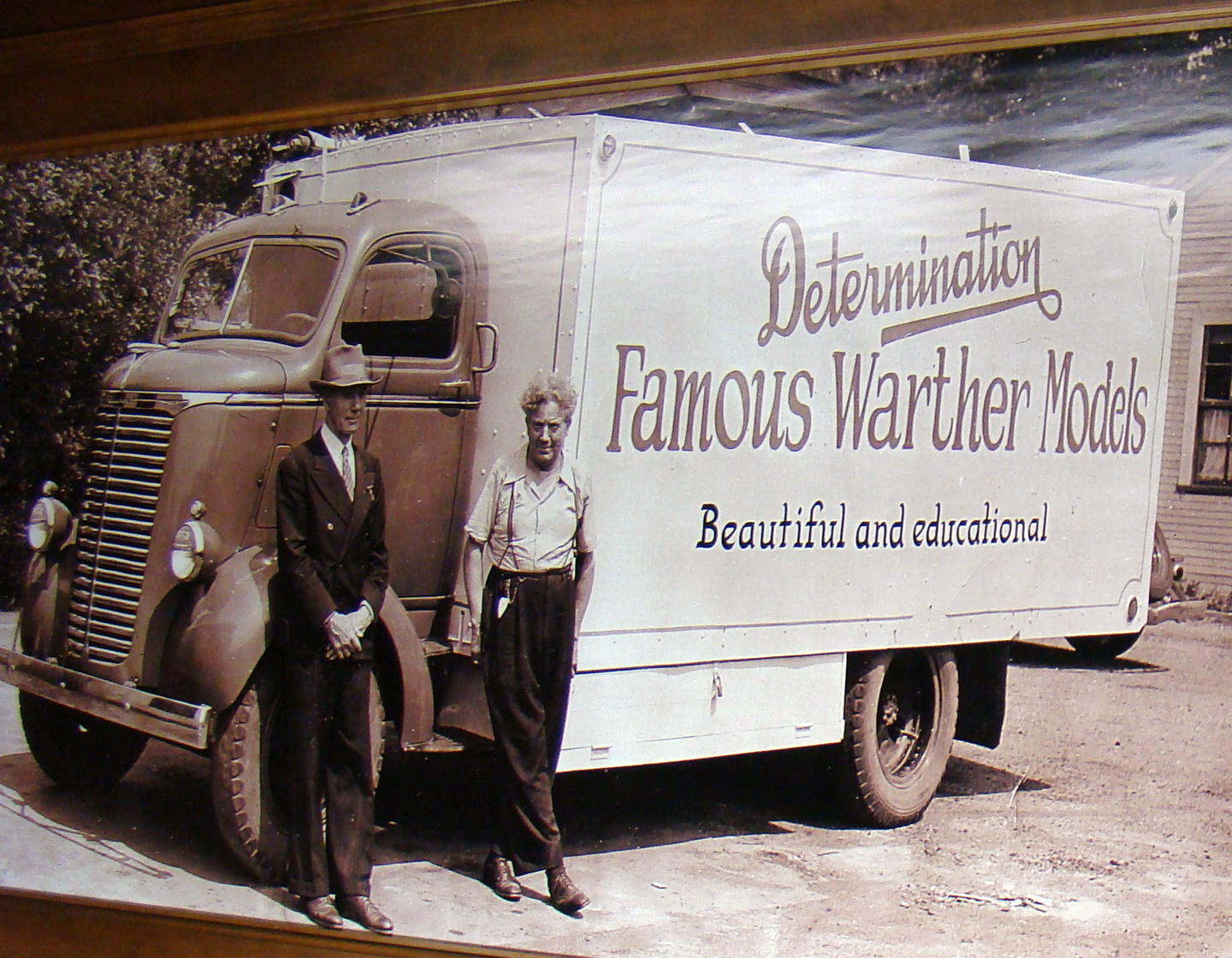
Brothers Fred and Ernest with their Famous Warther Models traveling show

Brothers Fred and Ernest with their Famous Warther Models traveling show

At this point, he no longer called it whittling, as now he carved trains to perfection. His intricate designs were displayed in New York Central Railroad and later in their traveling road show, Famous Warther Models, that carried his engines to the forty-eight continental states during its thirty year run.

Completion of one carving at a time was the order of business for this mathematical and mechanical genius. While Master Carver Mooney used walnut wood and soup bones for his early carvings, he later used ivory for the white parts of his trains and ebony for the black. None of his trains were glued, but parts were intricately pegged together.
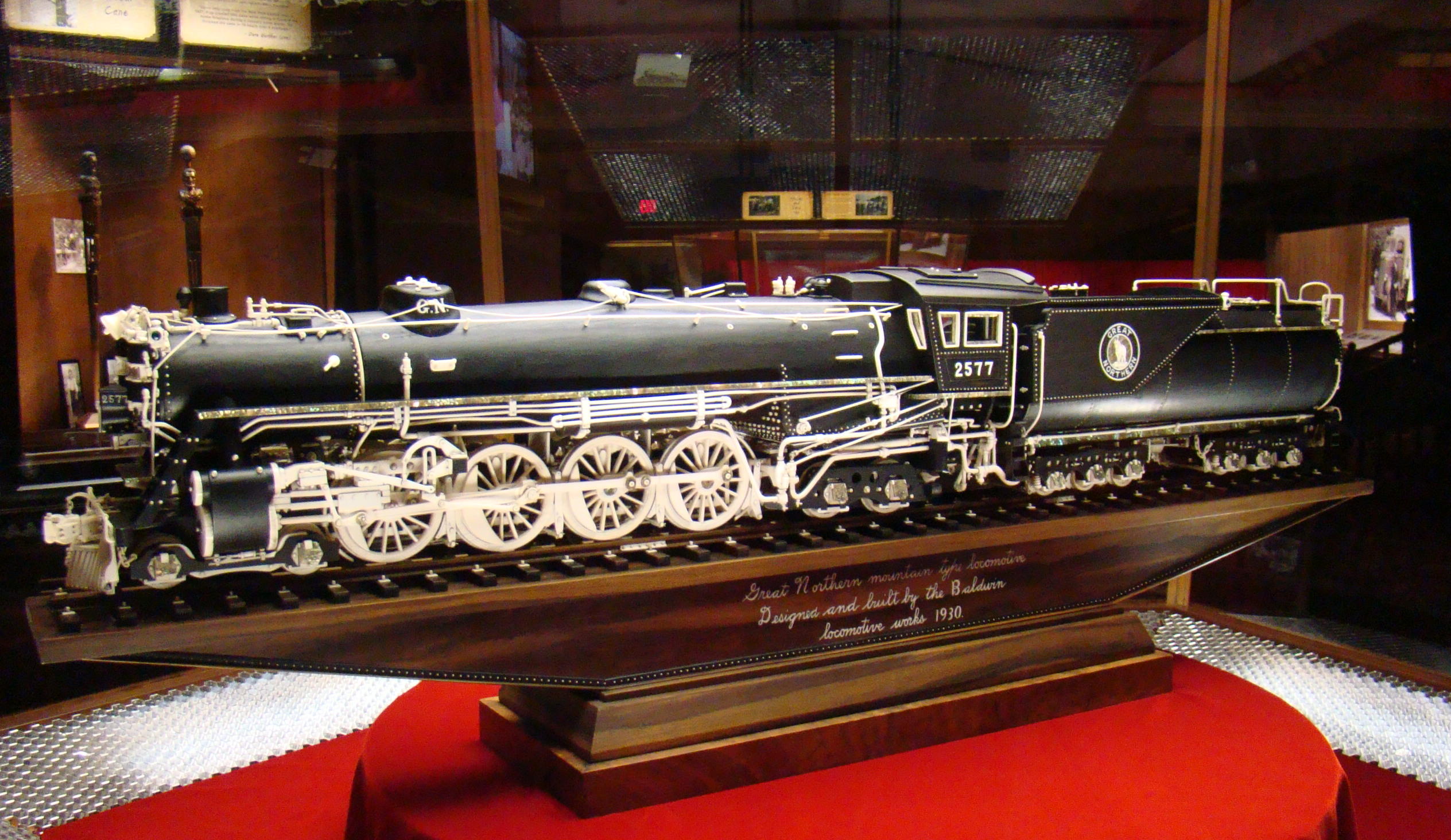
The Great Northern Locomotive

The Great Northern Locomotive

Mooney carved one of his best and favorite replicas, The Great Northern Locomotive, in 1932-33.  The cursive words on the side were all hand carved out of ivory – each word a solid piece. The number on the side of the locomotive represents the number of pieces used – backwards; therefore, this carving contained 7,752 pieces, many of them moving.

A hobo at the train station told him about a  self-lubricating wood, arguto. If Mooney used this hardwood on the bearing surface, the parts would  never need oiling. Those trains built with arguto still run smoothly today nearly 80 years later.

Mooney enjoyed the neighborhood children stopping by his workshop. He kept a brick outside his workshop door. When children would stop by and ask Mooney to play with them, he had a quick answer. “If I throw up this brick and it stays in the air, I have to work in my shop.” The children adored him.
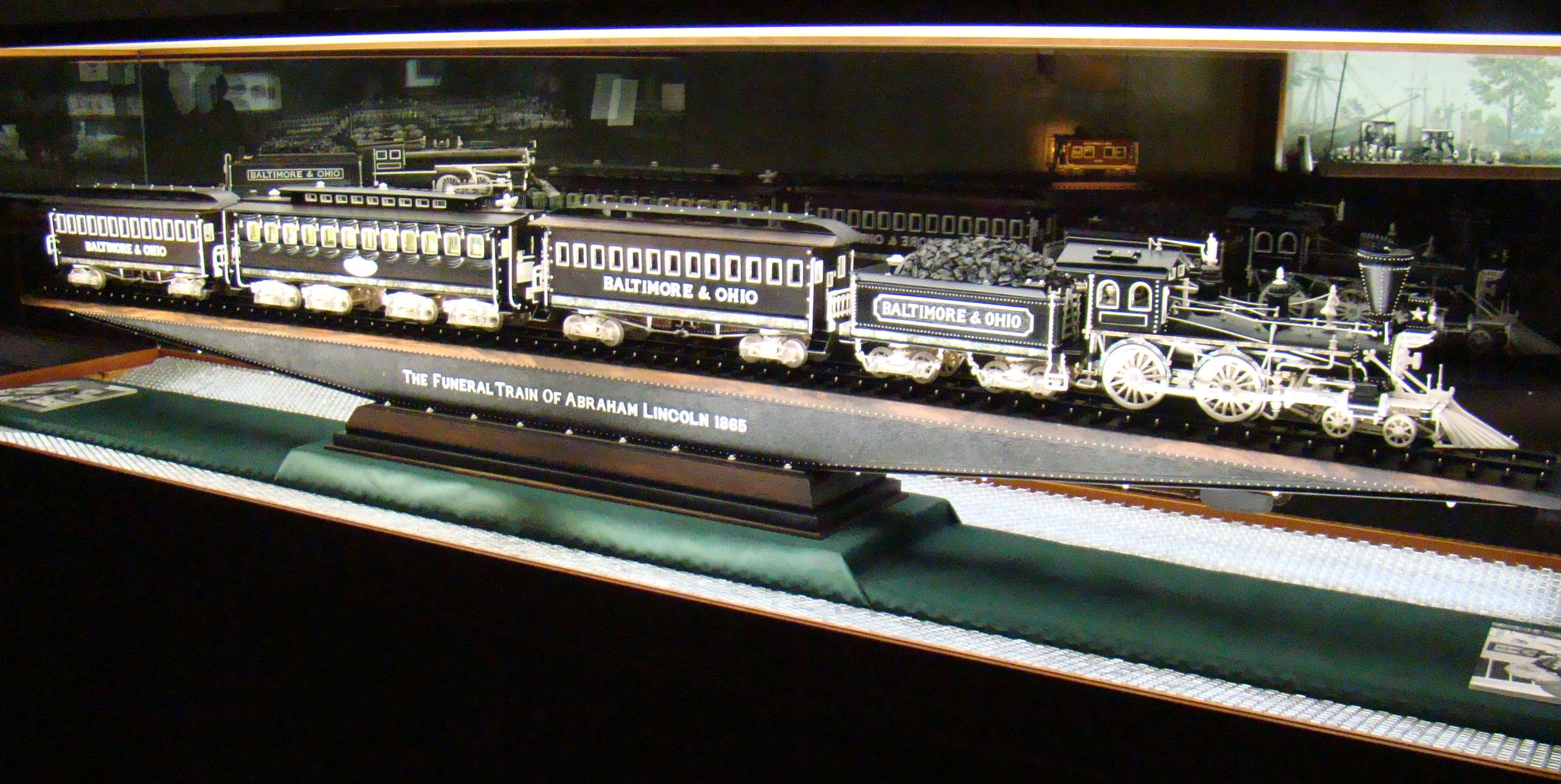
Abraham Lincoln Funeral Train

Abraham Lincoln Funeral Train

The eyetooth of the hippo, the finest grade of ivory, was used in the famous Lincoln Funeral Train, which Mooney carved at the age of eighty. Being a big fan of the history and philosophy of Lincoln, he paid tribute to him by carving his funeral train on the 100th anniversary of his assassination.
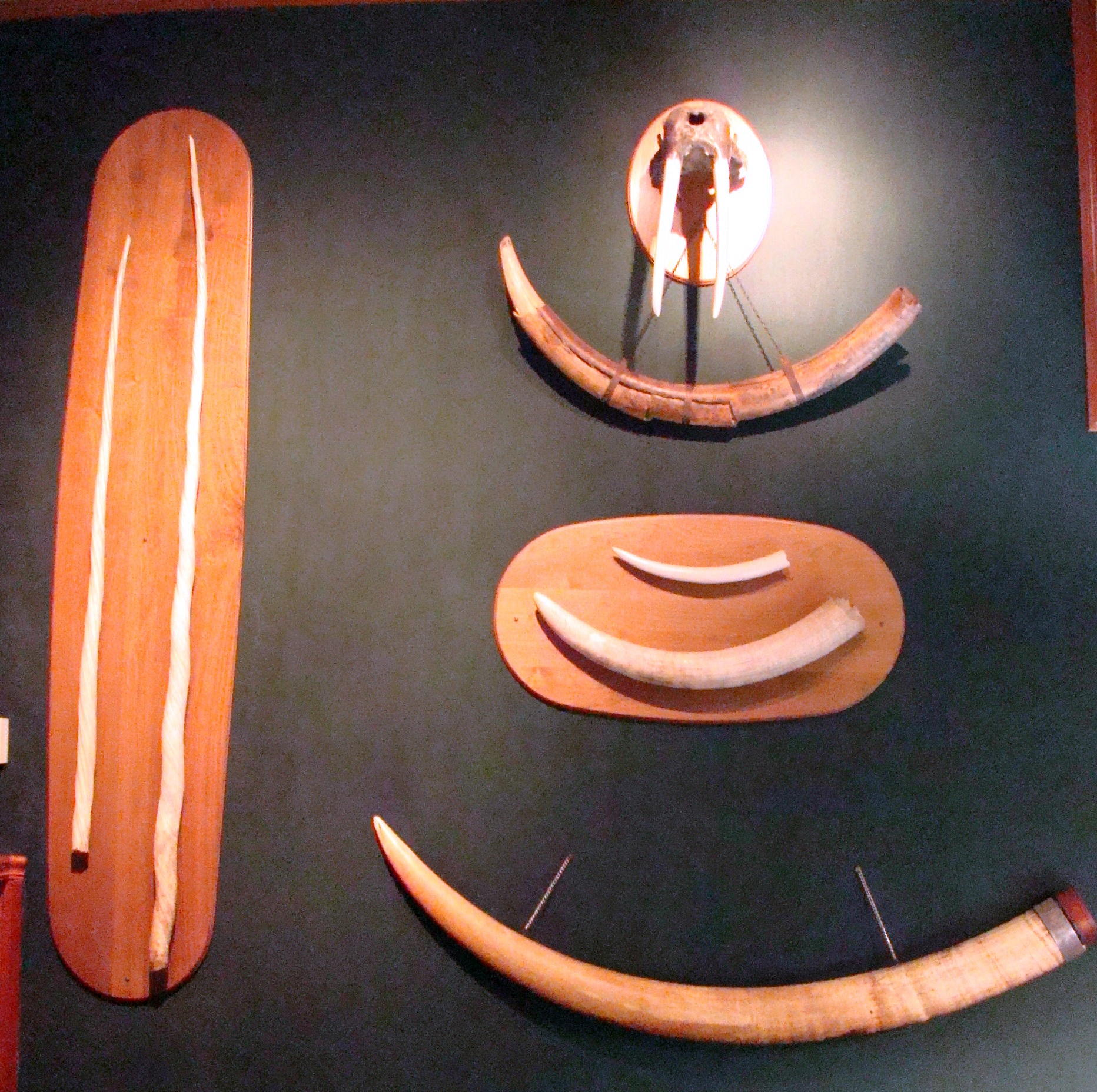
Types of ivory

Types of ivory

Since it was often difficult to find the treasured hippo ivory, he then settled for the second best – ivory of a walrus, and even third- that from an elephant. Much of the ivory came from baby elephants when they lost their baby tusks. You can imagine the excitement at the railroad yard as the ivory was always delivered by train.

The last carving completed was Old Ironsides in 1966. Mooney always tried to be accurate in his scale models and often used 1/2″ to a foot. Speed never figured into his carvings, as he might carve about 1,000 small pieces a month.

The Warther family story serves as an inspiration to organize your time so you can create something special, while leaving time for family first. In his eyes, everyone had a significant talent, the trick was in finding it. His exceptional natural talent for whittling and carving has filled the museum with amazing pieces. As Mooney remarked regarding his carvings, “Pretty good for a second grade education!”

Warthers can be found easily off I-77 in Dover, Ohio. Take Exit 83 to the east and follow the well placed signs to Warthers.
The Sharpest Edge Around – Warther Cutlery

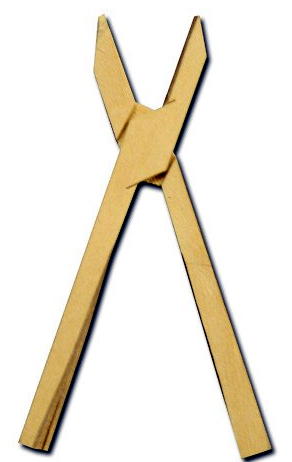
Warther's signature Single Pliers

Warther’s signature Single Pliers

World’s Master Carver Ernest Warther spent a life-time in Dover, Ohio. When Ernest was three years old, his father died leaving the children to help support the family. While the youngsters were unable to attend school regularly, Ernest’s inborn abilities surfaced by chance along life’s path.

For a penny a day, young Ernest did his part by driving neighborhood cows outside of town to pasture, then returning them home in the evening. When five-year-old Ernest was driving cattle, he spotted a treasure on the ground. A pen knife! His life’s adventure was about to begin.

A few years later Ernest met a whittling hobo at the local train station. This hobo could form a small piece of wood into a moving pair of pliers by making only ten strategically placed cuts in the small, rectangular, wooden block.

Ernest, called Mooney by his friends, watched the hobo carefully before he headed off to another town. Soon Mooney was making these magical pieces with ease. During his lifetime it is estimated he made nearly 750,000 pairs of pliers, most of which he gave to children. His fastest time for carving a pair of pliers occurred on the Johnny Carson “Tonight Show” when Mooney finished in 9.4 seconds.

Whittling became Mooney’s favorite pasttime, now making double pliers and more. But as is often the case, one thing leads to another. What do you need the most for whittling, especially ebony and ivory? A sharp knife! That was something Mooney could not find. Sometimes the best way to do something is to do it yourself, so Mooney developed a knife that would keep its sharp edge.

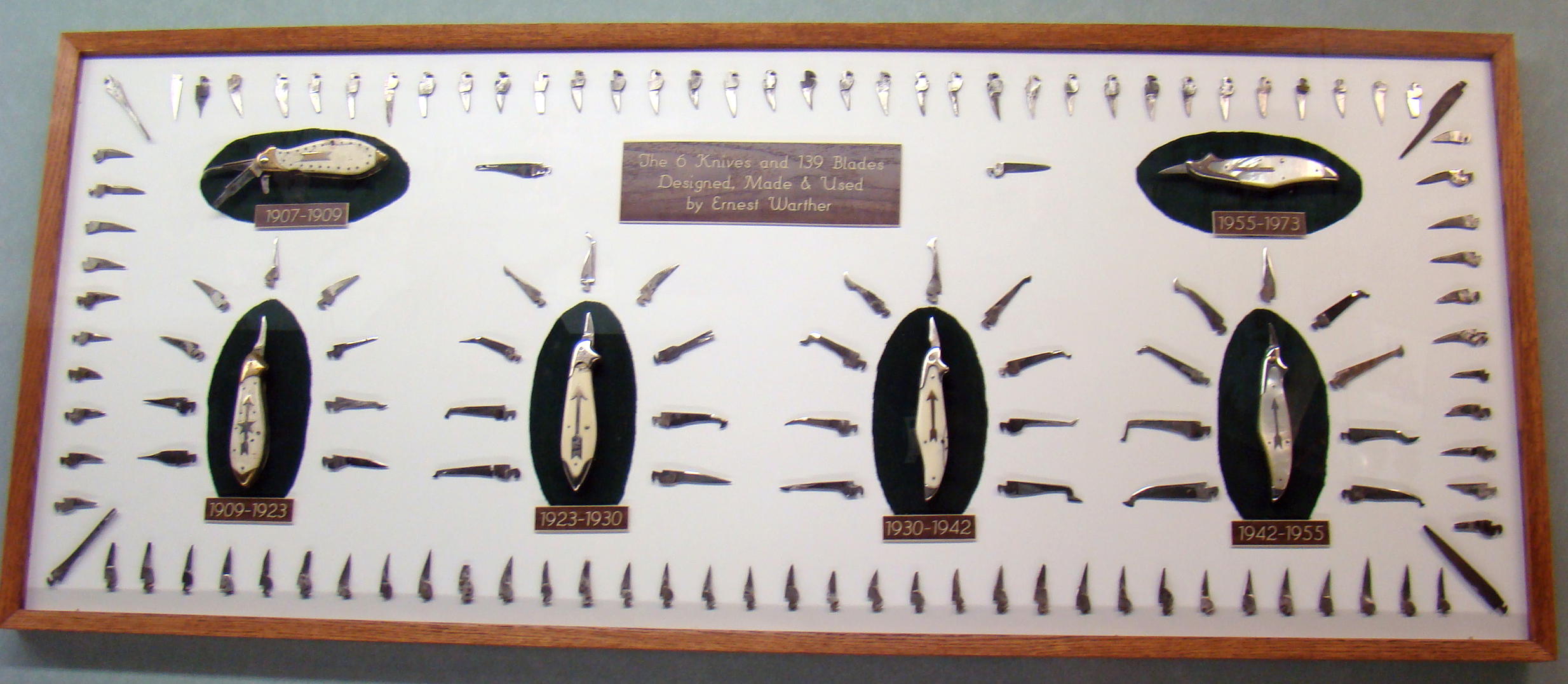
These are the knives Mooney used himself with  their accompanying 139 blades.

These are the knives Mooney used himself with their accompanying 139 blades.

In his workshop, Mooney developed techniques for tempering and sharpening steel blades so they would hold their sharpness. For whittling purposes, the knife had to have a big handle with small blades – shorter than his thumb. His knife had 139 interchangeable blades so he could work easily with any material of any size.

Warther Cutlery knife shop

Warther Cutlery knife shop

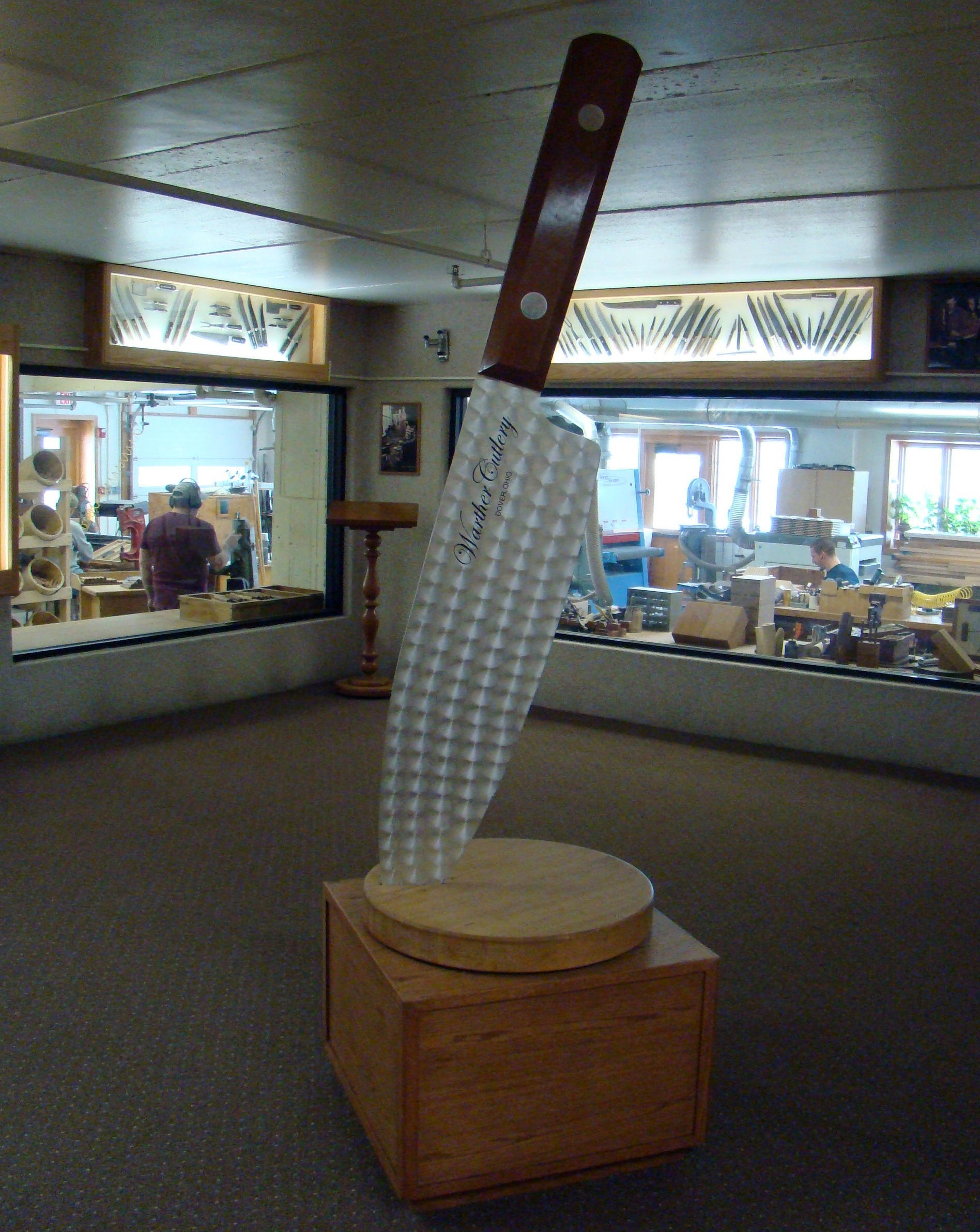
When his mother needed a sharper paring knife in the kitchen, seventeen-year-old Mooney created a small kitchen knife for her. Soon the neighbors were all wanting a knife just like Mooney’s mother used.He added a distinguishing trademark swirl on the blade so his knives were easily recognized. Thus began the business of Warthers Cutlery, handcrafted in the USA since 1902.

Realizing his real riches laid at home, his five daily hours of carving were scheduled for early in the morning before the family awoke. After breakfast, Mooney would ride his bicycle to work at the steel mill, then spend time in the afternoon playing with the children he adored. He didn’t really care much for money; however, when the family needed something, Mooney would make knives. He never sold his carvings.

In 1912, Mooney ended his whittling with a plier tree that can be seen in a glass case today.The tree was made with 511 cuts and was featured at Ripley’s Believe It or Not. This is the point where his whittling turned to carving as he began his history of the steam engine in walnut, ebony, and ivory.

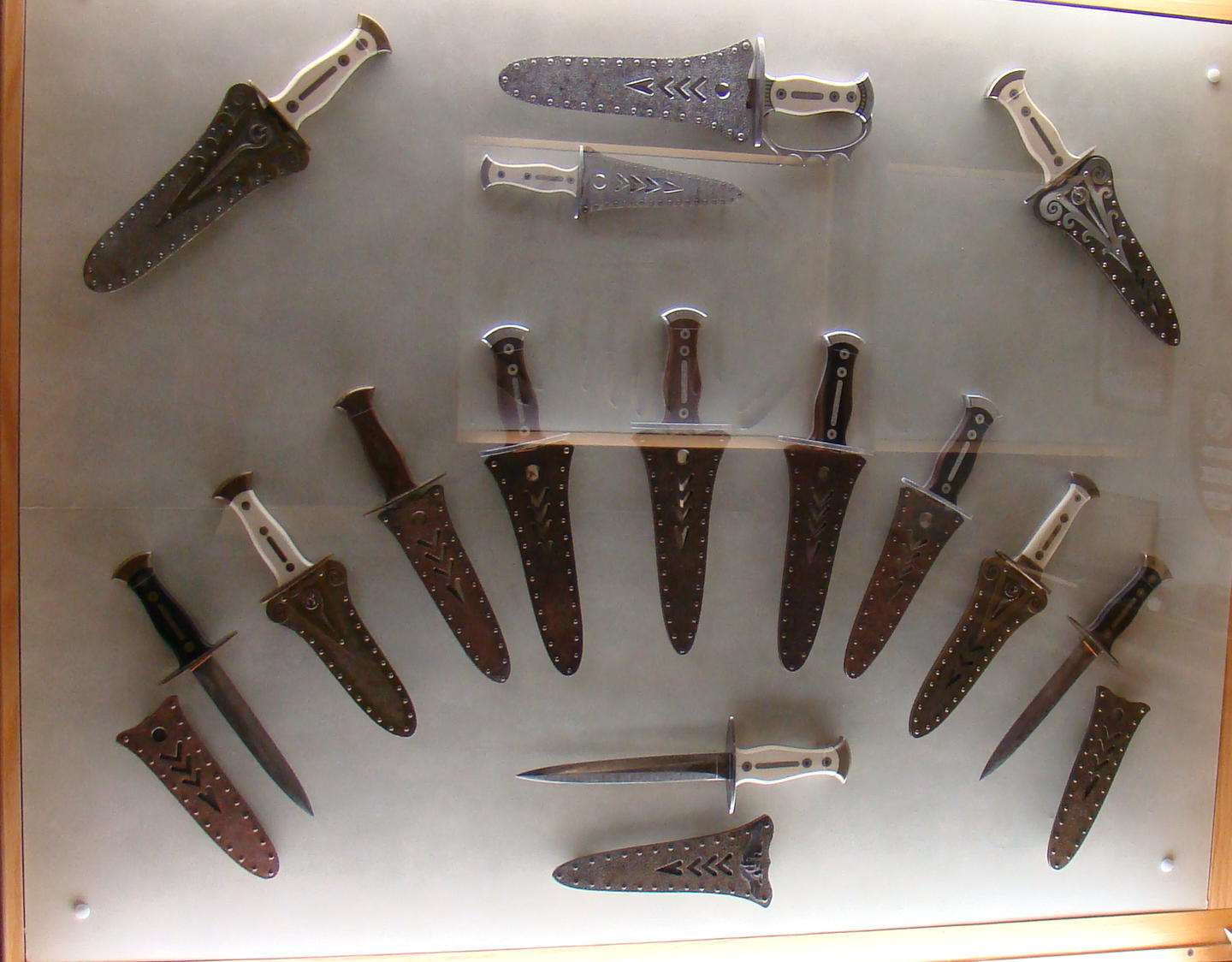
Commando Knives made during WWII.

Commando Knives made during WWII.

During WWII, a lady asked Mooney to make a knife for her son to carry with him during conflict. Mooney made 1100 Commando Knives during this time and carved the names of the military men into the handles.

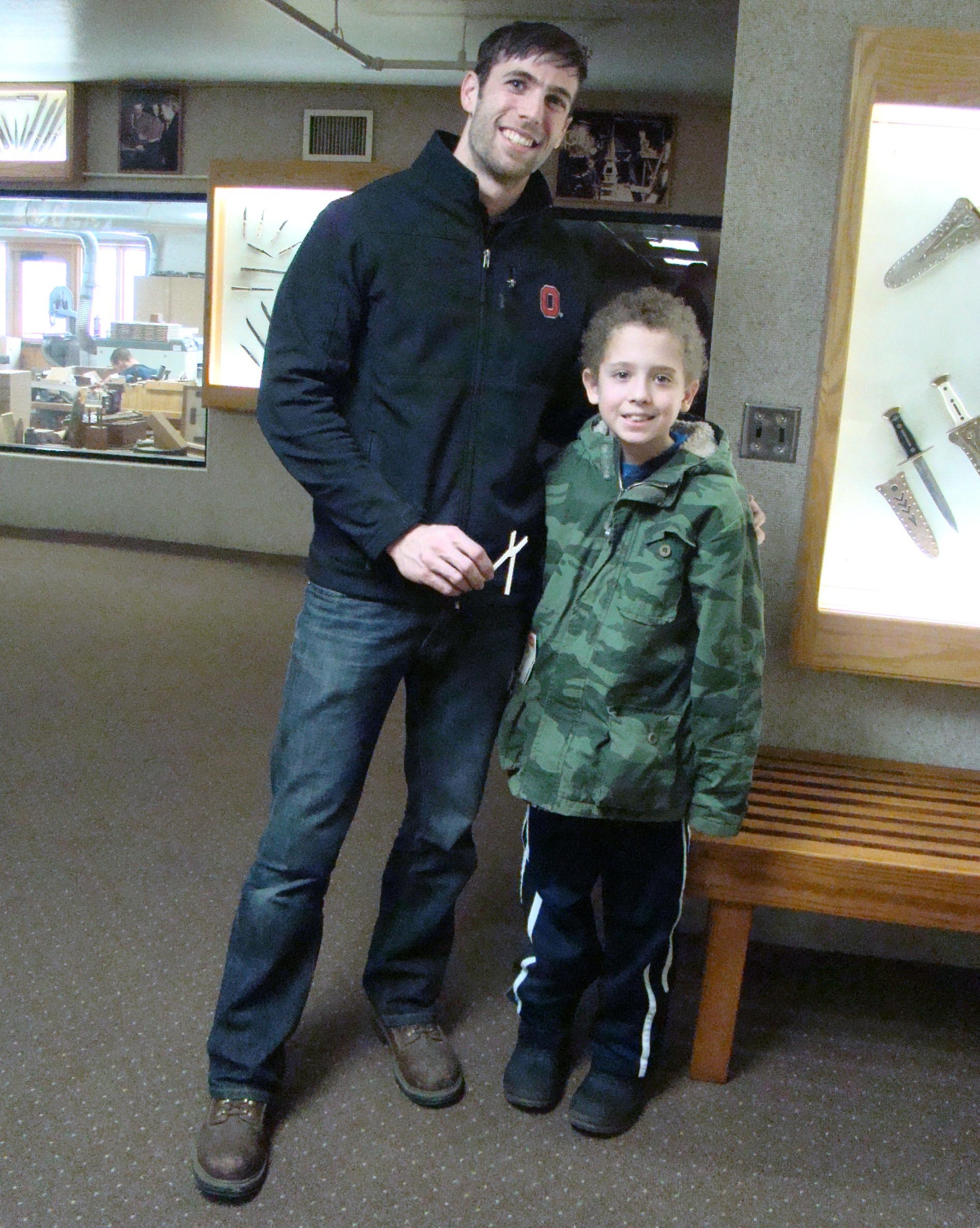
Family member, Steven Cunningham, makes pliers for children today.

Family member, Steven Cunningham, makes pliers for children today.

Today the knives of Warther Cutlery are still made in Dover, Ohio with all USA products by third and fourth generation family members. They continue demonstrating Mooney’s signature pair of pliers for visitors, with children usually receiving the newly carved pair.

Before you leave, stop by the gift shop and purchase one of the Warther Cutlery knives with swirl trademark. My little paring knife, “Old Faithful”, was purchased there over twenty-five years ago and is still like new. Whenever you happen to be in the area, visit their knife shop where they will sharpen your Warther knife for life at no cost. When you stop by, they will ask you which hand you use to cut with, so they can sharpen the blade accordingly. They strive for perfection!

Older residents still remember Mooney riding his bicycle down the middle of the road with his white hair flying. The basket on his bicycle was always handy for items he found or was given along the way that eventually might become part of his carvings, either mechanically or in their design. While Ernest Warther worked at his passion nearly every day for 83 years, he died almost penniless, but happy beyond imagination.

Warthers can be found easily off I-77 in Dover, Ohio. Take Exit 83 to the east and follow the well placed signs to Warthers.