Places to go and things to see by Gypsy Bev

Posts tagged ‘American Notes’

Life on a Riverboat

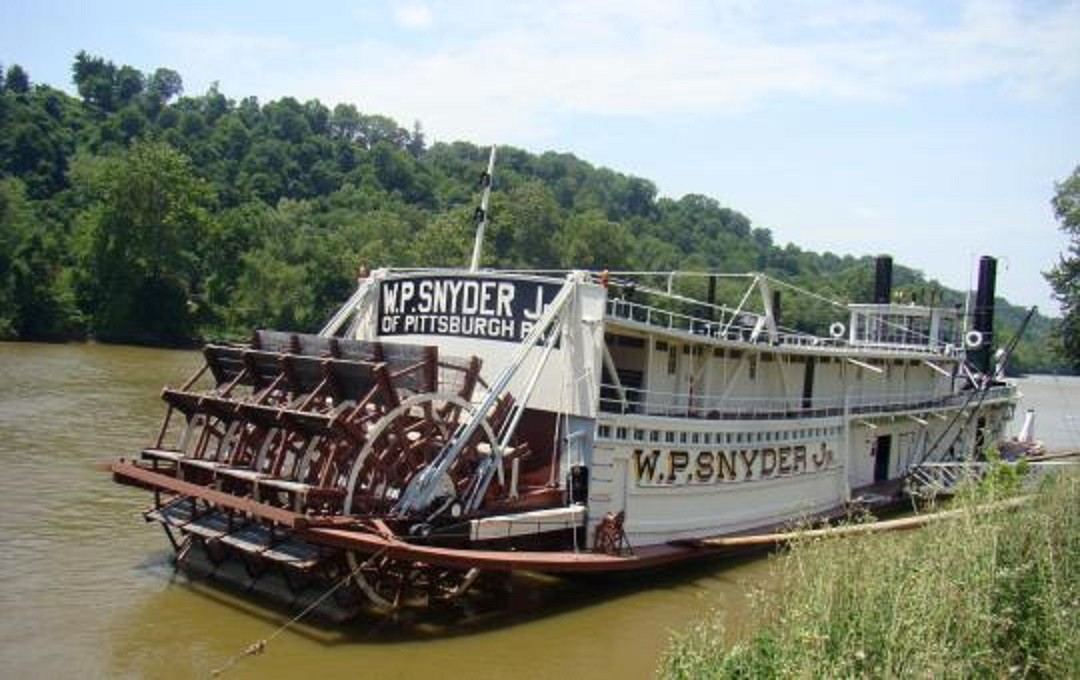
W. P. Snyder, Jr. is an historic towboat moored in Marietta on the Muskingum River.

Drifting with the current down the Ohio River has been experienced by many for centuries. While those early days provided an easy way to move products and people, today there have been many changes on the river, especially with the riverboats driven by steam.

During those early days before the railroad or paved roads, towboats were frequent on the river hauling coal, food, and steel. This was a quick and easy way to move things. Men in good physical condition worked on these boats around the clock surrounded by hazardous conditions and constant noise.
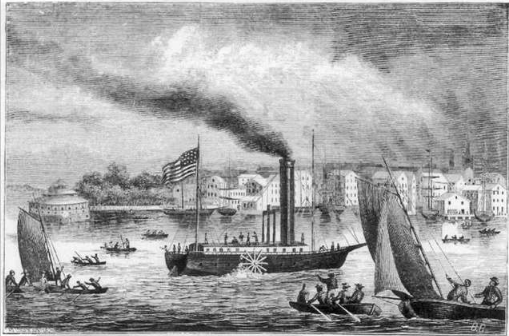
New Orleans was the first steamboat on the Ohio and Mississippi Rivers.

In 1811, the New Orleans made the first steamboat trip down the Ohio River and Mississippi River from Pittsburgh to New Orleans. The success of this adventure opened the door for more trading to the cities along the rivers. Passengers began using it as a faster method of getting from place to place.
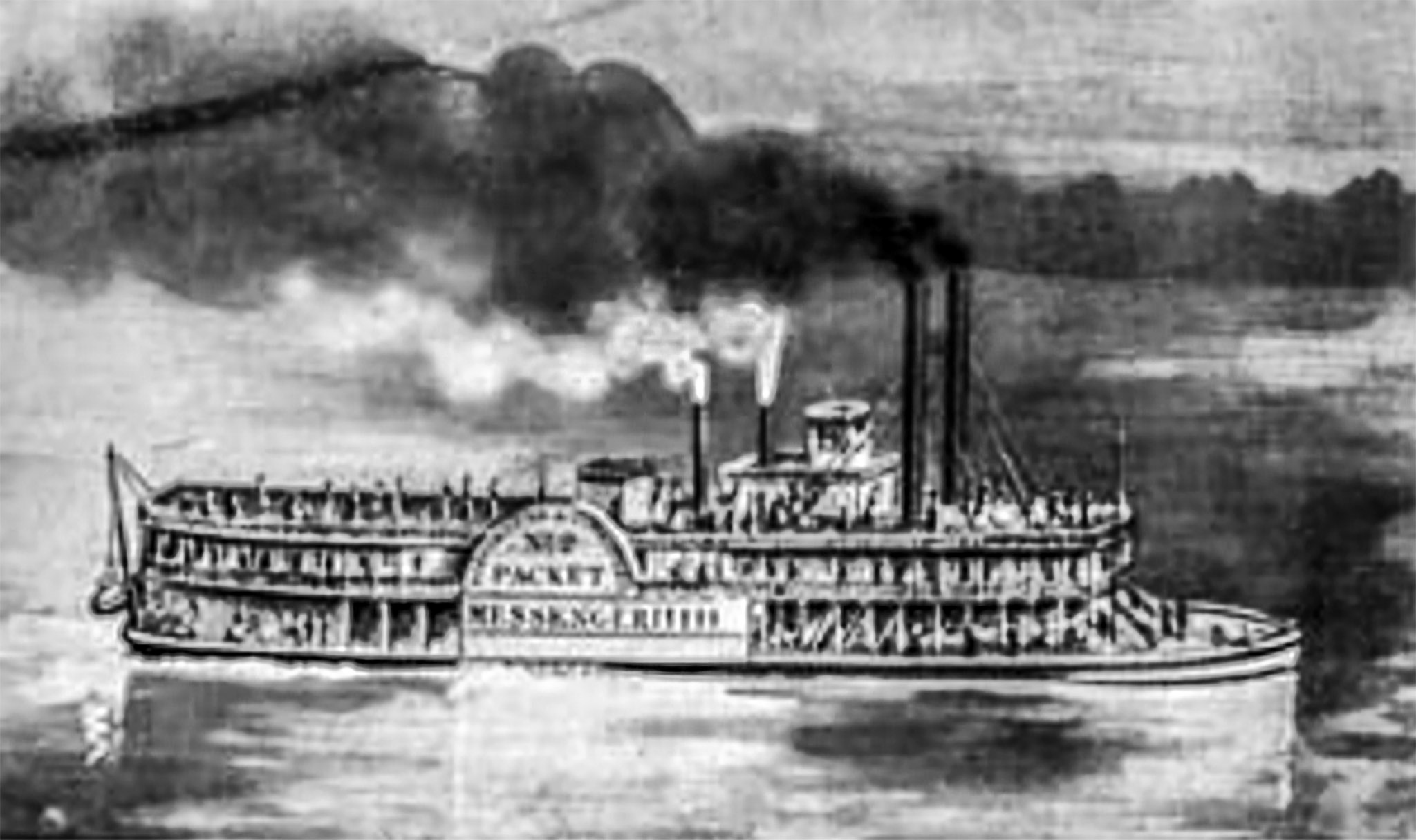
The Messenger carried Charles Dickens down the Ohio River.

For five months in 1842, Charles Dickens visited America with his wife, Kate, her maid, Anne Brown, and his secretary, George Putnam. They traveled to Pittsburgh by canal, stagecoach, and train before climbing aboard the riverboat, Messenger, for a trip down the Ohio River.

The Messenger held about 40 people on deck with the lower level being filled with the poor, emigrants, and children. Dickens felt lucky that they had a cabin in the stern as he worried about the fierce fire that raged in the body at the forward end of this boat built of what he called “a frail pile of painted wood

Meal time was not pleasant for him as there was no lively conversation. He said the creatures would empty their trough then head to stand around the fire and spit, a habit which he deplored.
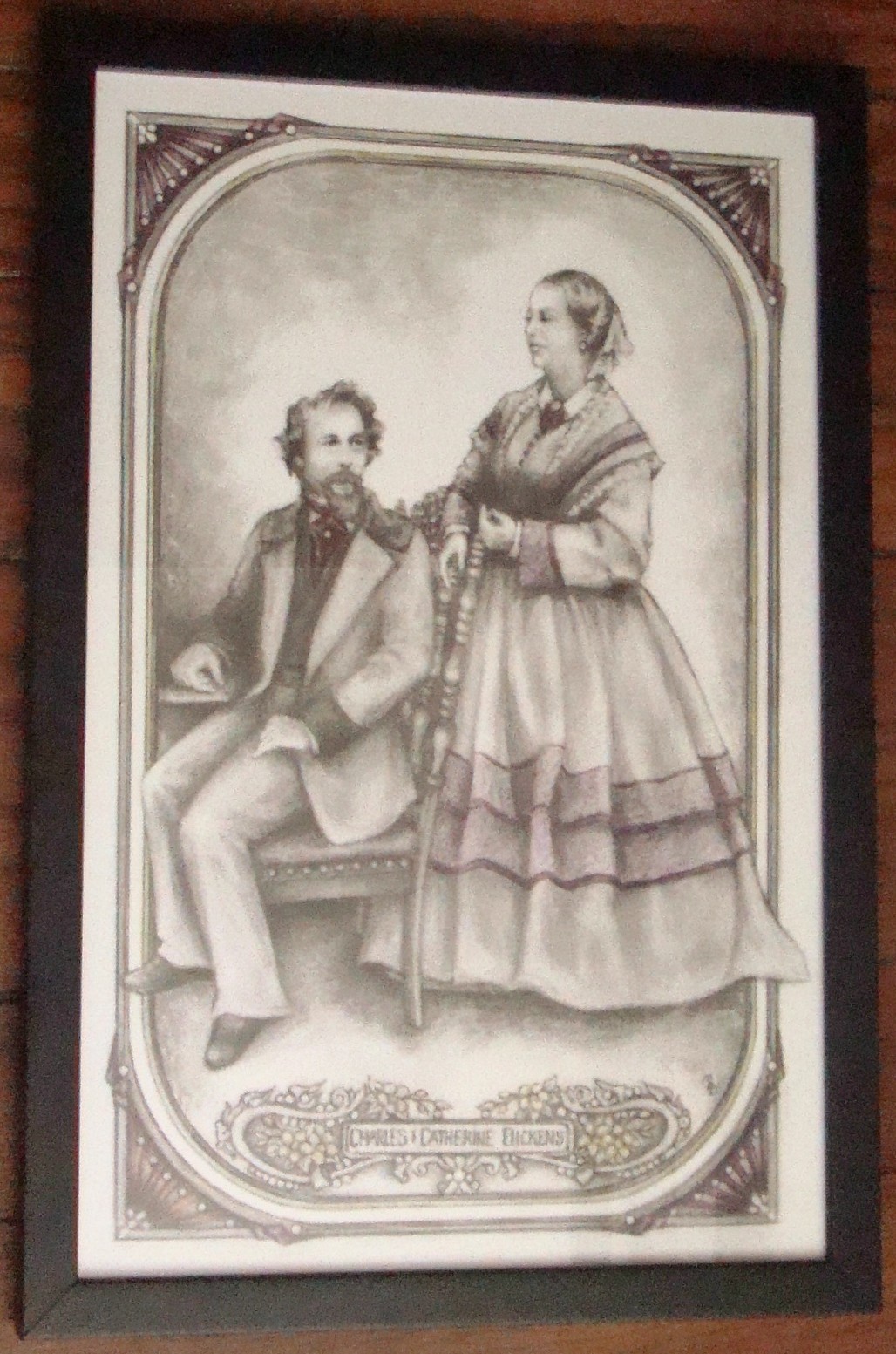
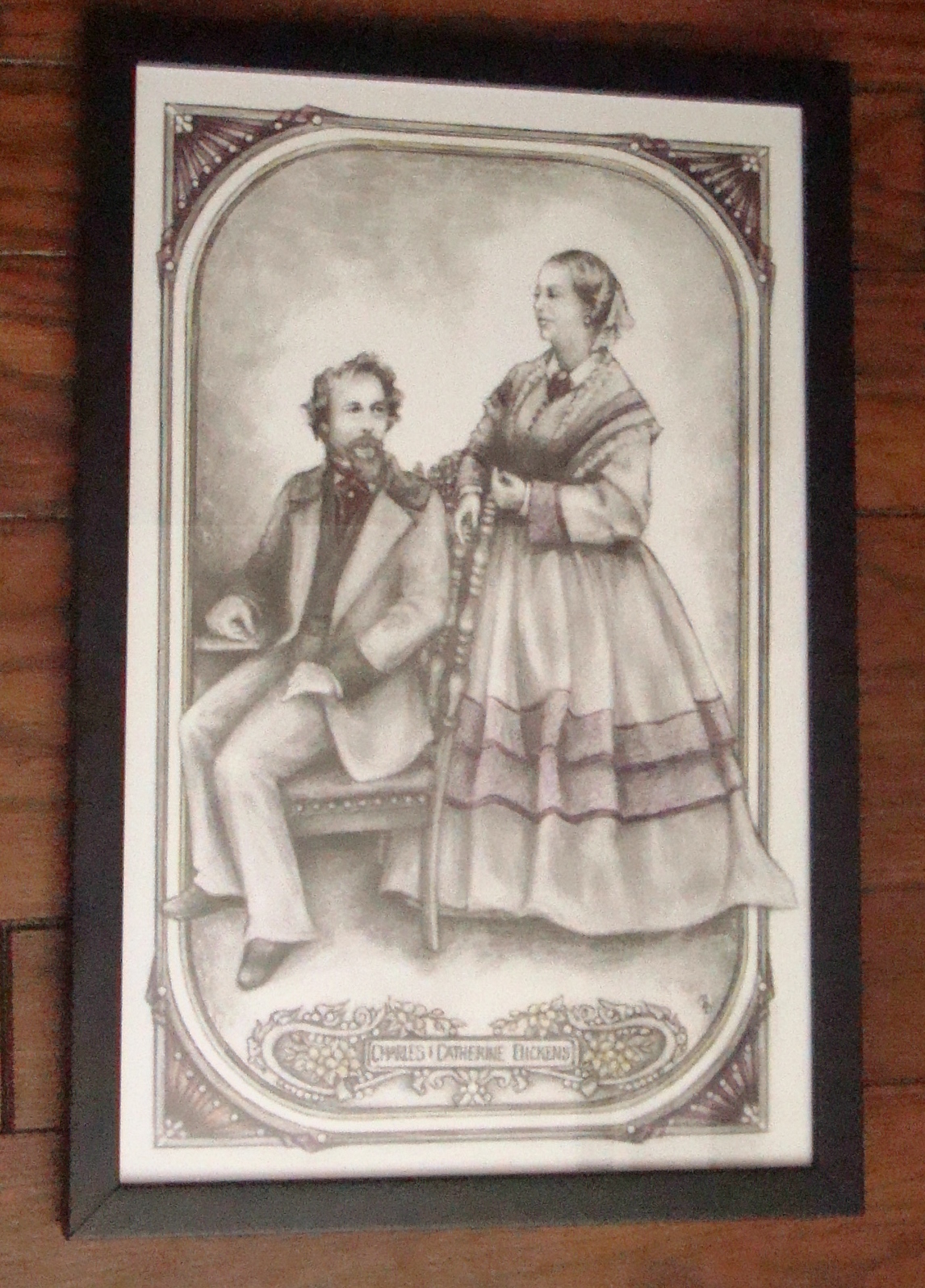
This sketch of Charles and Kate Dickens was by the late Mary Ruth Duff.

Charles and Kate would sit outside their small room on the gallery where they could watch the scenery as they drifted down the river. Charles explained the scenery in this colorful way:

For miles and miles the banks were unbroken by any sign of human life or trace of human footsteps. Nor is anything seen to move about them but the blue jay, whose colour is so bright, and yet so delicate, that it looks like a flying flower.

After three days, they reached Cincinnati where Dickens finally found some intelligent conversation. He loved the town and the free schools, as education was something very important to Charles Dickens.
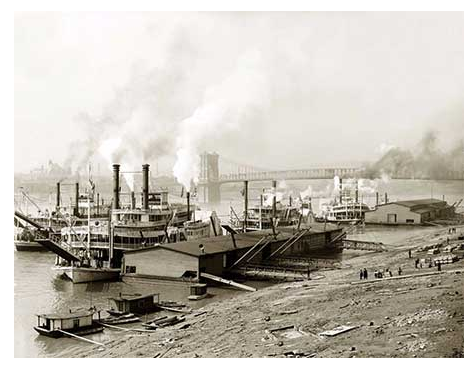
When Dickens arrived in Cincinnati, shantyboats could be seen along the riverbanks.

As they pulled into Cincinnati, they could see shantyboats along the shore. These rough built homes were used by those who wanted to move from place to place along the river with their families. Often, they were homes for people looking for work but also for thieves and law breakers. They always served as a great place to escape paying taxes.
Charles Dickens wrote of his journey in American Notes.

Throughout his journey, it’s no surprise that Dickens wrote in his journal daily about what he saw and felt about America. Perhaps you would like to read his entire story in his American Notes.
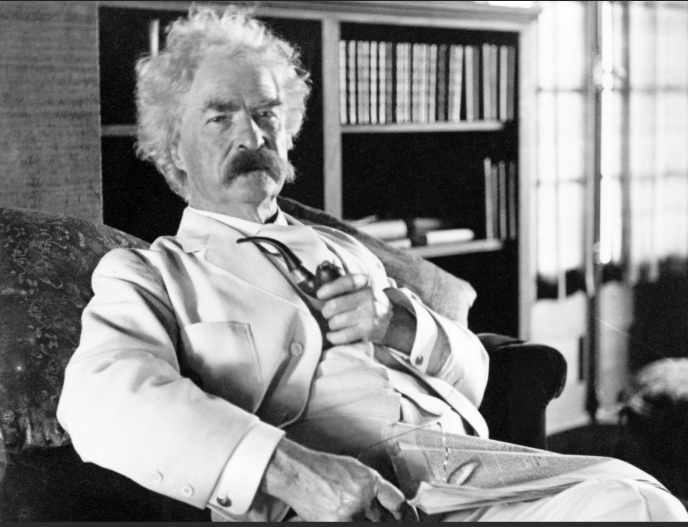
Mark Twain’s stories of his travels on the Mississippi boosted the number of riverboat passengers.

A few years later, Mark Twain published a book about his travels on the Mississippi River. When Twain wanted to get his riverboat pilot’s license, he was told he had to memorize the 1,200-mile Mississippi River in detail. The story of his adventures as a pilot and later as a passenger became a boon to the riverboat industry as more and more people wanted to experience the tales told by Mark Twain in his book , Life on the Mississippi
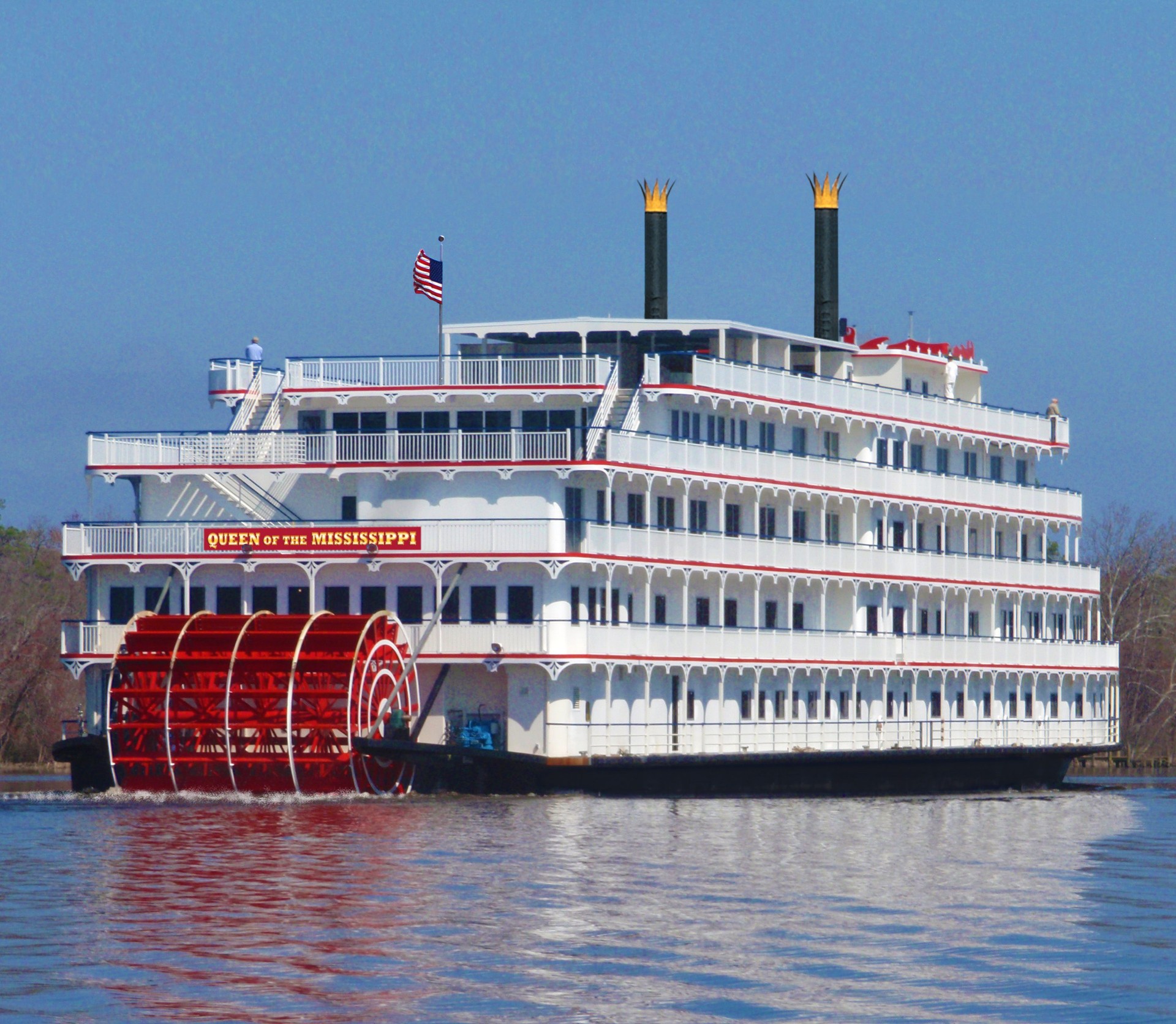
Today’s Queen of the Mississippi is a luxurious riverboat.

Today, riverboat travel on the Ohio and Mississippi has changed with the boats being more luxurious. Many people enjoy taking a short vacation on the river while being served gourmet meals, visiting historical spots along the way, and having evening entertainment.

When a boat pulls into dock at one of the towns along the way, as soon as people hear the sound of the calliope, they head to the shore to watch the paddlewheels and listen to the music.
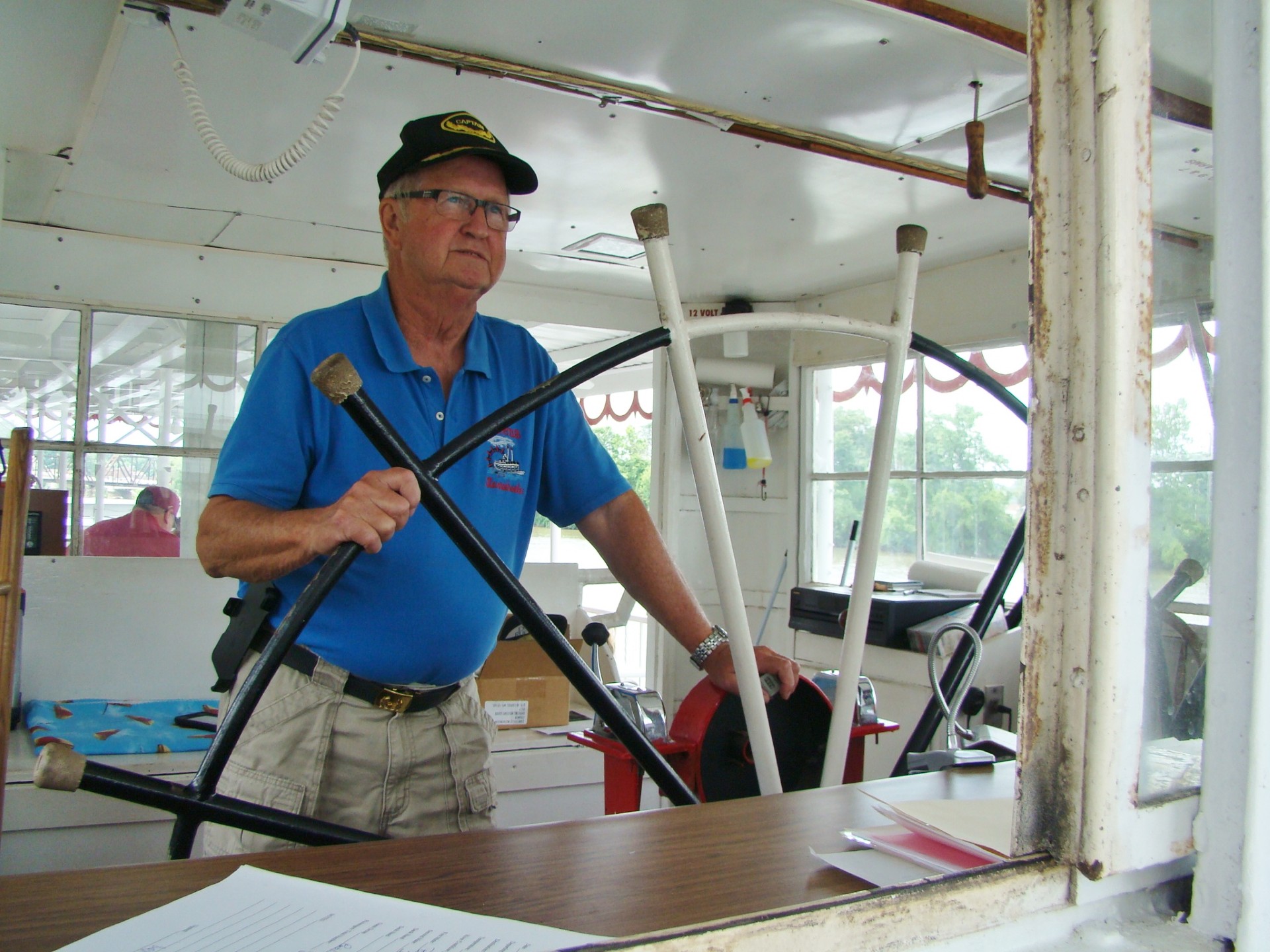
Captain Bill enjoys taking the wheel of the Lorena on the Muskingum River.

Our area is fortunate to have two small riverboats, Valley Gem and Lorena, operating for day trips in Marietta and Zanesville. These rides are always a pleasure as you catch a slight breeze as you feel the boat moving through the water and catch a little spray from the paddlewheel. It’s a cool way to spend a hot summer day.
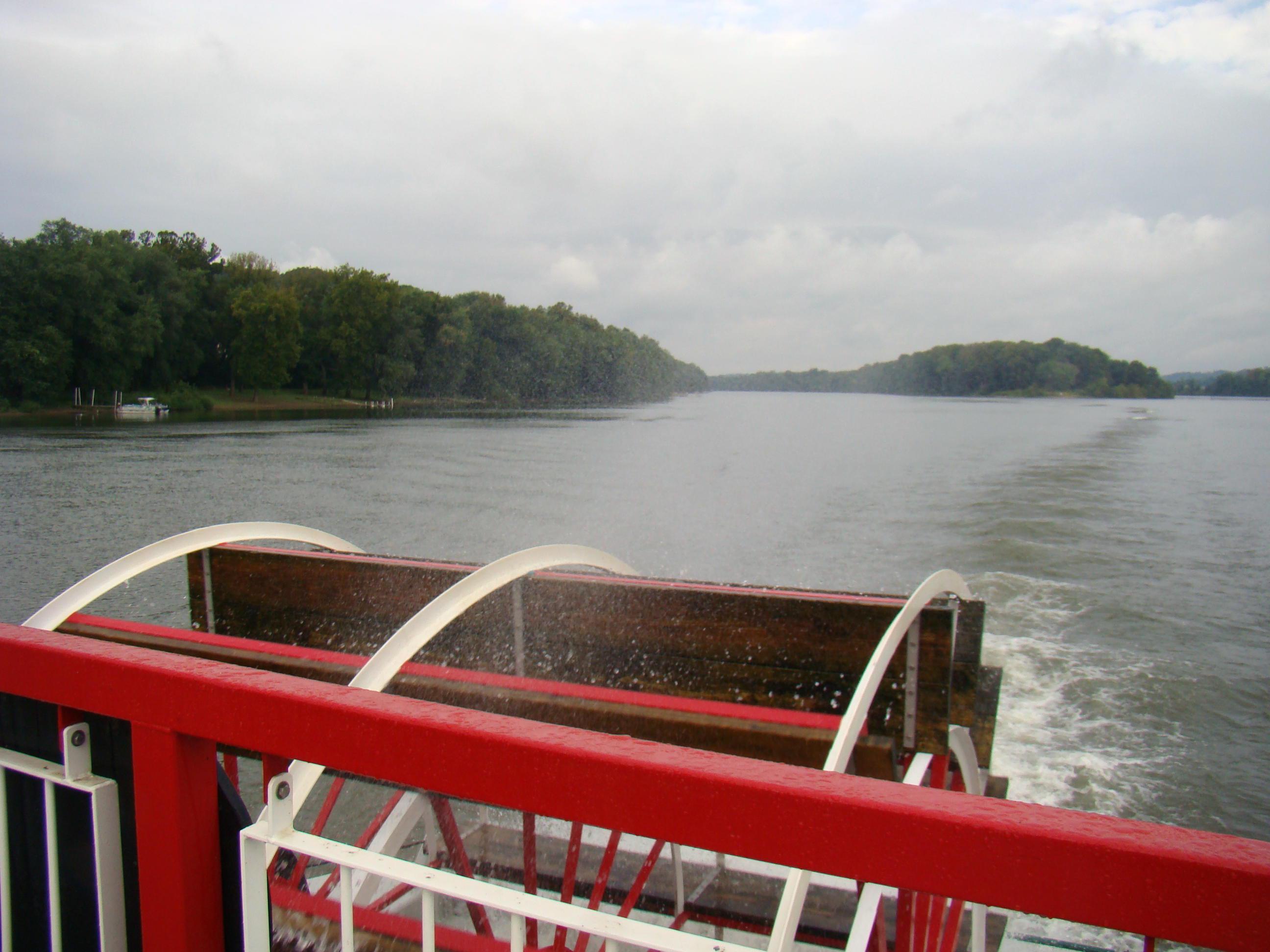
The paddlewheels of the Valley Gem move us on the Ohio River.

Perhaps you would enjoy a riverboat ride down the Ohio River. It’s on my bucket list!
Down the Ohio River with Charles Dickens

messenger

The steamboat Messenger carried the Dickens party down the Ohio River from Pittsburgh to Cincinnati.

A fine broad river always, but in some parts much wider than in others, and then there is usually a green island, covered with trees, dividing it into two streams.”

In 1842 at the age of 30, Charles Dickens made his first visit to America with his wife Kate, her maid Anne Brown, and Charles’ traveling secretary George Putnam. As part of their tour, the group boarded the steamboat Messenger in Pittsburgh to flow down the Ohio River to Cincinnati – a three day tour.

The Messenger held some forty passengers on board, exclusive of the poorer persons on the lower deck. Dickens wondered that its construction would make any journey safe with the great body of fire that rages and roars beneath the frail pile of painted wood.

As expected, he wrote in his journal daily while traveling, giving us a picture now, of what he saw on that trip long ago. Most of the time he wrote on his knee in their small cabin at the back of the boat. He felt lucky to have a cabin in the stern, because it was known that ‘steamboats generally blew up forward’.

ohio-river-diorama

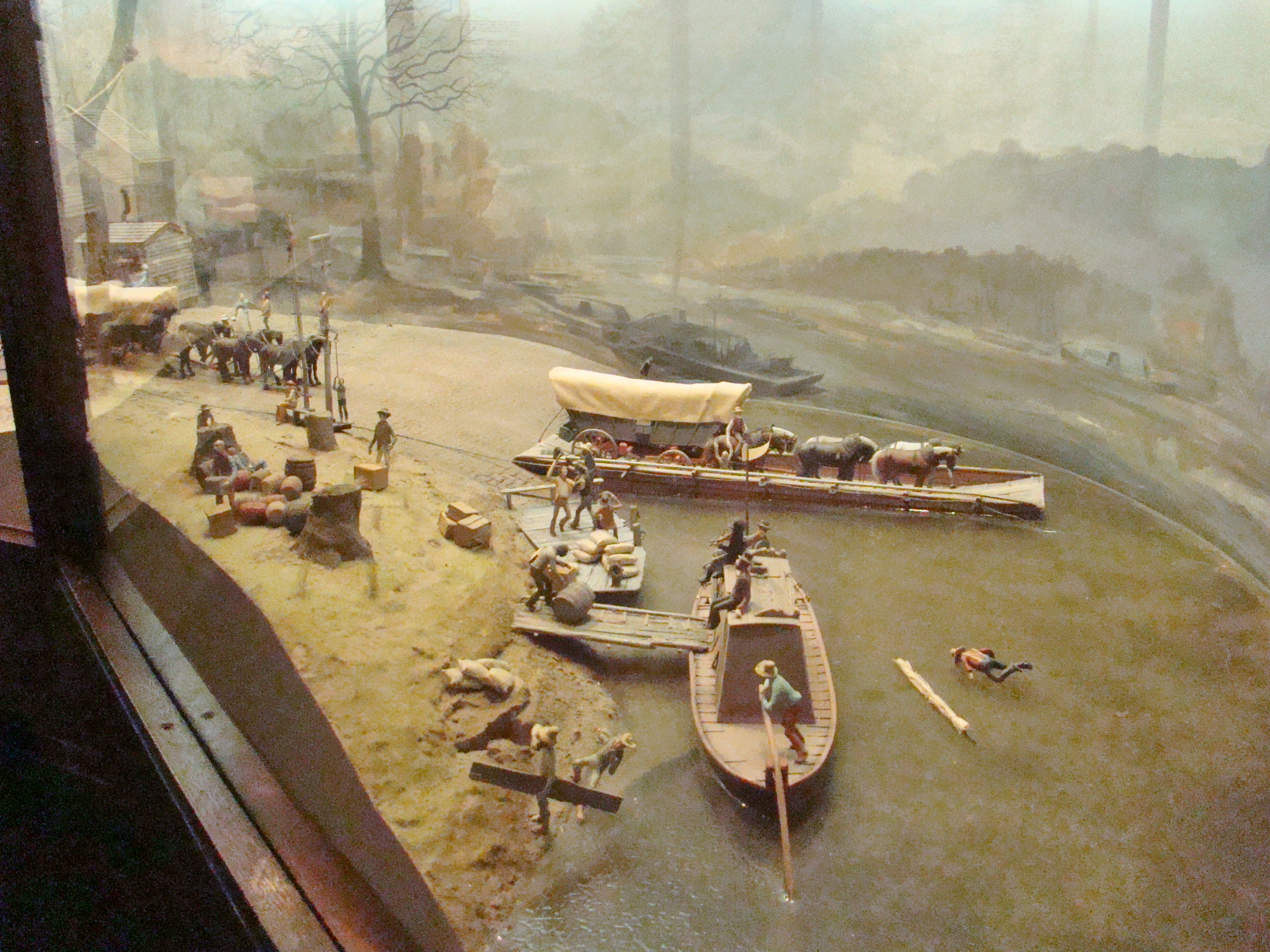
This diorama from the National Road/Zane Grey Museum shows a scene at Wheeling that DIckens described of goods being loaded and unloaded.

Coming from the crowded city of London, this wilderness must have appeared strange with trees everywhere and cabins sparsely populating the banks along the river. For miles and miles the banks were unbroken by any sign of human life or trace of human footsteps.

Meal time was not pleasing for him as lively conversation was lacking. Each ‘creature’ would empty his trough as quickly as possible, then slink away. A jest would have been a crime and a smile would have faded into a grinning horror.

I never in my life did see such listless, heavy dullness as brooded over these meals. And was as glad to escape again as if it had been a penance or a punishment.

charles-and-kate

Charles and Kate Dickens came to America in 1842. This is a pencil sketch by a very dear friend, the late Mary Ruth Duff.

After the meals, men would stand around the stove without saying a word, but spitting, which was a bad manner Dickens deplored. Therefore, Charles and Kate spent much of the time sitting on the gallery outside their cabin. His description of the only disturbance outside was in true Dickens style:

Nor is anything seen to move about them but the blue jay, whose colour is so bright, and yet so delicate, that it looks like a flying flower.

mound-by-henry-howe-001

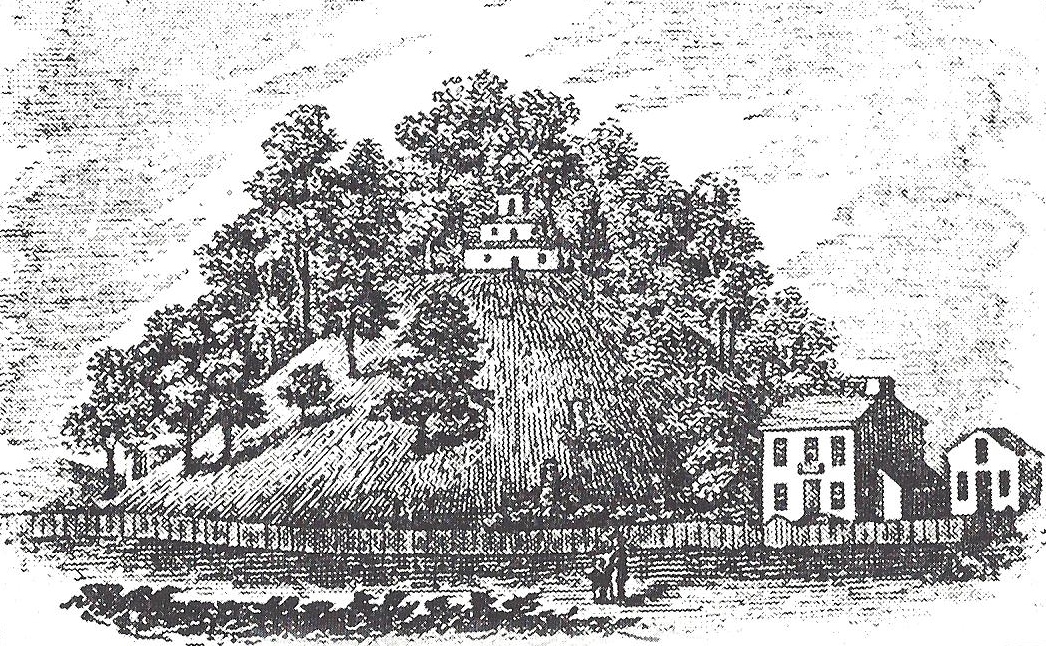
This sketch by Henry Howe in 1843 shows the mound Dickens described in his journal.

He noted that the steamboat whistle was loud enough to awaken the Indians, who lie buried in a great mound, so old that oaks and other forest trees had stuck their roots into its earth. The Ohio River sparkled as it passed the place these extinct tribes lived hundreds of years ago.

Evening steals slowly upon the landscape, when we stop to set some emigrants ashore, five men, as many women, and a little girl. All their worldly goods are a bag, a large chest and an old chair.

Those emigrants were landed at the foot of a large bank, where several log cabins could be seen on the summit, which could be reached by a long winding path. Charles Dickens watched them until they became specks, lingering on the bank with the old woman sitting in the chair and all the rest about her.

dickens-children

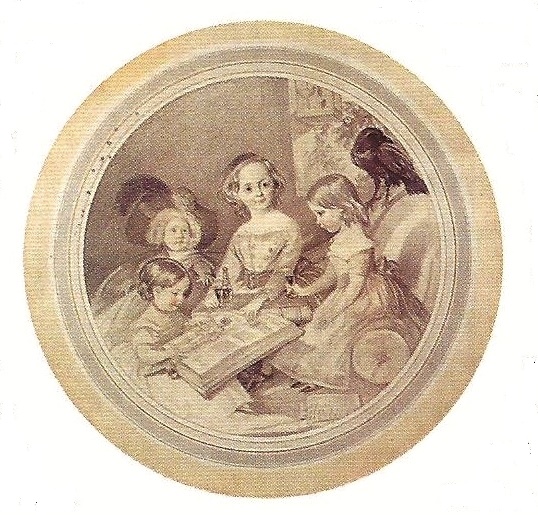
They carried this picture of their children – Katey, Walter, Charlie, and Mamie – when they came to America in 1842. As time passed, they had ten children.

When he reached Cincinnati, a booming frontier river town, Dickens viewed it as a beautiful city: cheerful, thriving and animated. He was quite charmed with the appearance of the town and its free schools, as education of children was always a priority for Charles Dickens. Here he could actually find people to engage in conversation.

While his first trip was a disappointment in many ways,in the 1850s, he was encouraged to make another trip to America to extend his popular England reading tour to audiences there. He was told  would be lots of money to be made in the United States.

But the outbreak of the Civil War, caused him to put those plans on hold. When the war was over, he again received encouragement to visit this New World. Despite his ill health and caution from his closest friends, Charles Dickens wrote a seven point “Case in a Nutshell” describing why he should visit America.

Once decided, he arrived in Boston on November 19, 1867. Even though his health was failing, Dickens never canceled a performance.

No man has a right to break an engagement with the public if he were able to be out of bed.

He stayed for five months and gave 76 performances for which he earned an incredible $228,000, helping to give him a much better view of the United States on his second trip. The country had much improved during those twenty-five years in his estimation.

How astounded I have been by the amazing changes I have seen all around me on every side – changes moral, changes physical, changes in the amount of land subdued and peopled.

fly-ferry

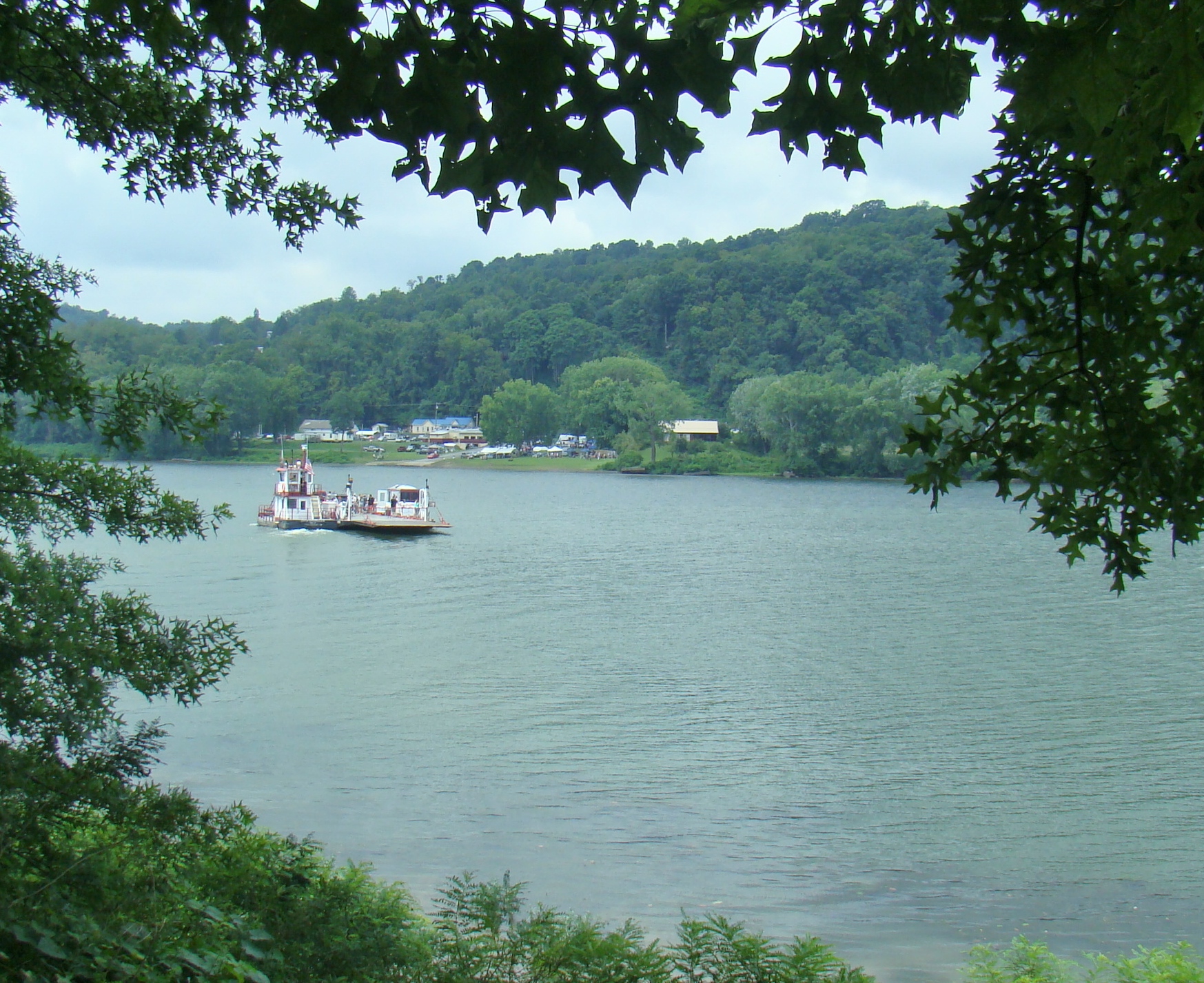
The Ohio River is a peaceful place to let your imagination flow.

The next time you visit the banks of the Ohio River, find a secluded spot and imagine what it must have been like when Charles Dickens viewed it in 1842.

Words in italics are Charles Dickens words from his journal “American Notes”, 1842 with the exception of the last one, which was of course written after his second trip.