Places to go and things to see by Gypsy Bev

Posts tagged ‘Ohio’

Big Muskie Bucket Exhibited at Miners Memorial Park
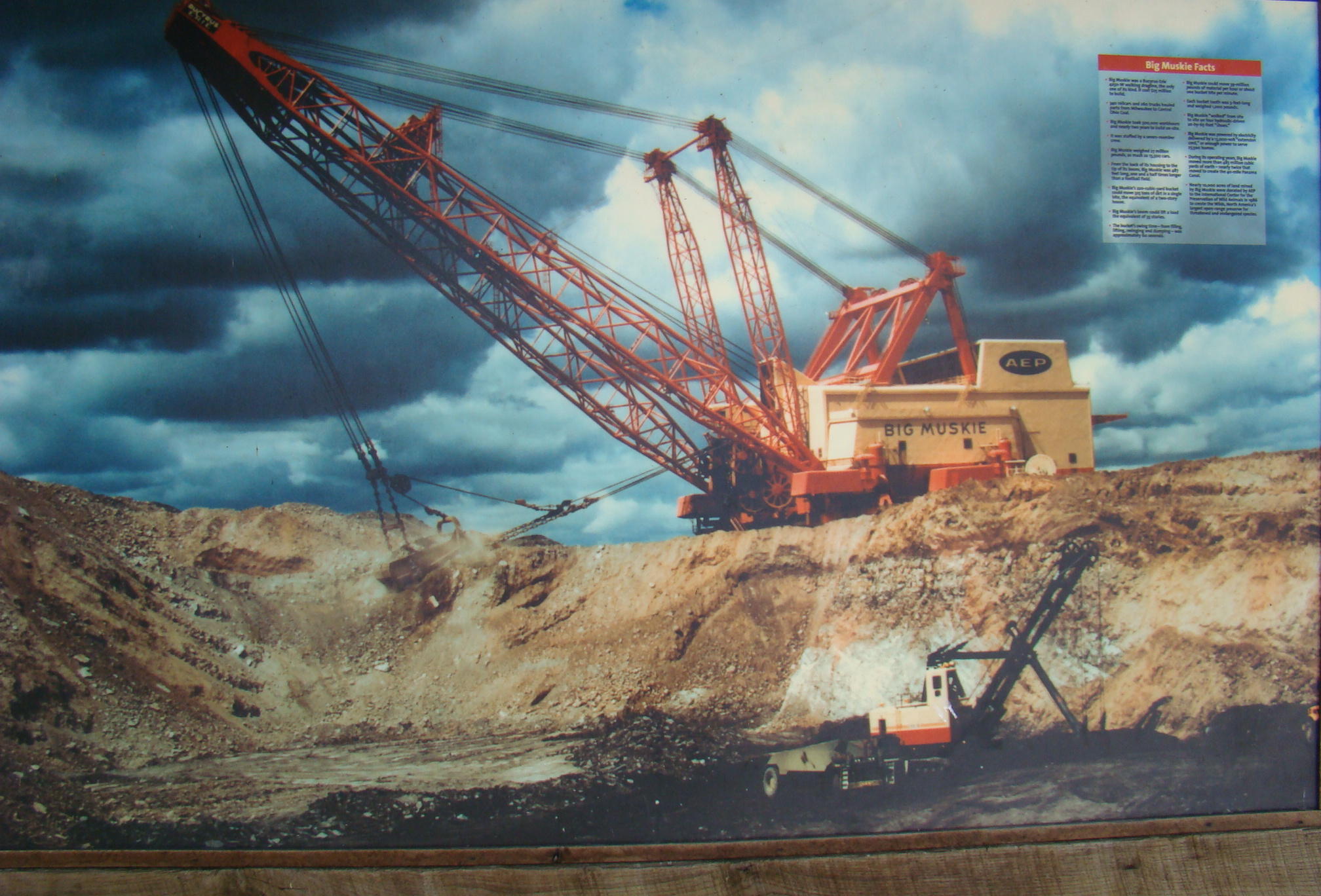
Big Muskie 325 tons of earth in a single bite!  The Big Muskie took that bite quite easily while mining over twenty million tons of coal in  Muskingum County of Southeastern Ohio from 1969-1991. Today all that is left of the Big Muskie, one of the world’s largest draglines, is this bucket capable of holding many tons of earth.

Miners Memorial ParkOn a crisp winter afternoon, the curvy, scenic road happened to meander past the site of the Miners’ Memorial Park in Morgan County, Ohio where the Big Muskie Bucket is the centerpiece of the park. While the ground was covered in a light snow and the gates were closed, the sign said : Walk-Ins Welcome. That was invitation enough to explore a little closer. My footsteps were the first to leave imprints in the snow this January afternoon.
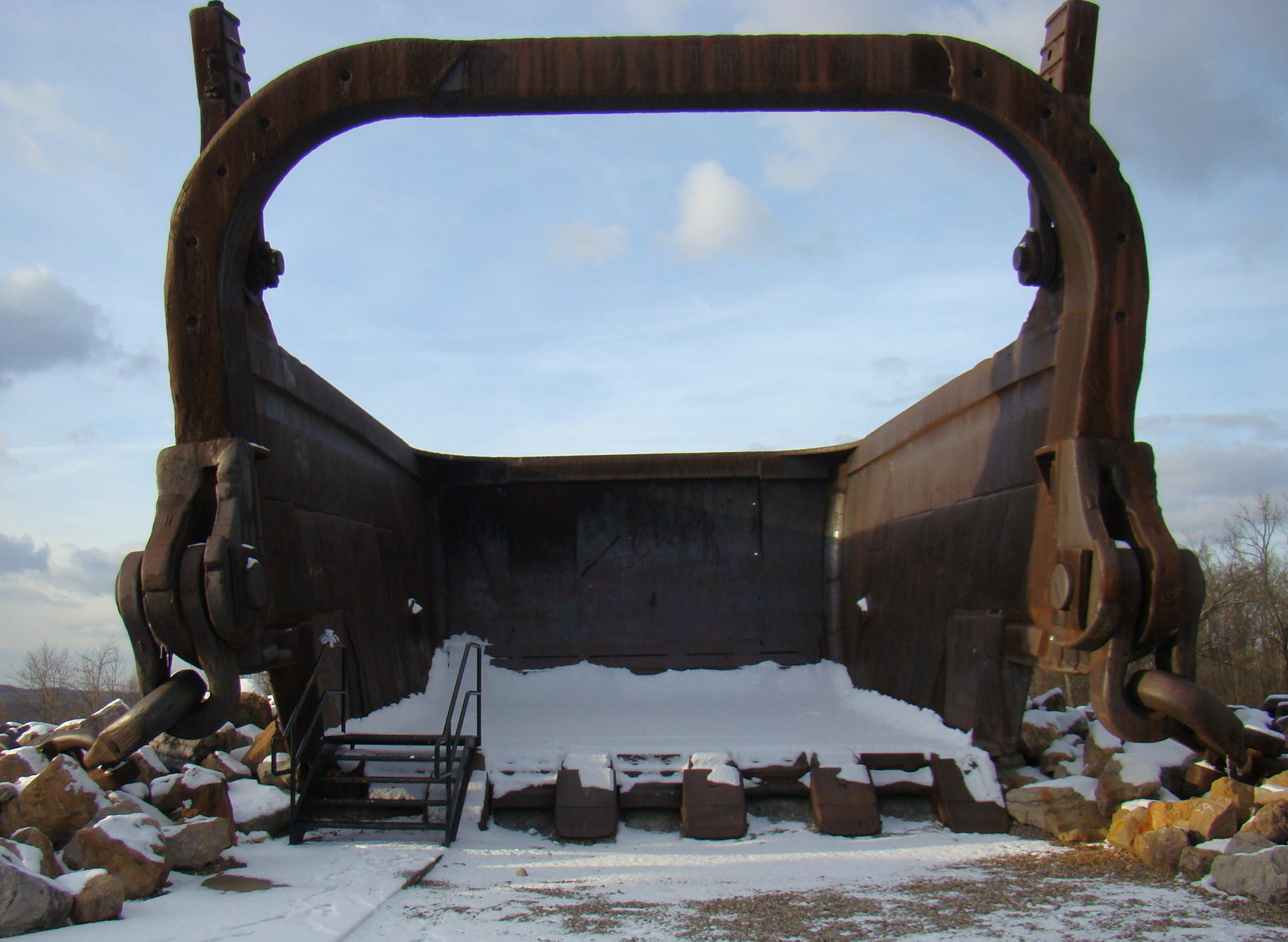
Big Muskie BucketConsidered one of the seven engineering wonders of the world, this bucket weighs 460,000 pounds empty. If you look closely in the bottom left of the picture, a teddy bear can be spotted on the left hand side of the bucket…and it truly looks like “just a drop in the bucket”! When you consider this is only the bucket of the dragline…well, the magnitude overwhelms you.  It has been estimated that twelve car garages could fit inside.

This massive mechanical wonder was last used by the Central Ohio Coal of American Electric Power, or AEP, in the rolling hills near Cumberland, Ohio. Lucky it was being used by AEP as this huge machine was run basically by electricity, using enough electricity daily to power over 27,000 homes.  Big Muskie had a crew of five and worked around the clock to take advantage of the lower nighttime per kilowatt-hour rate. When you check out the first picture, knowing the size of the bucket, you then realize how gigantic the entire Big Muskie really was, actually twenty-two stories tall!
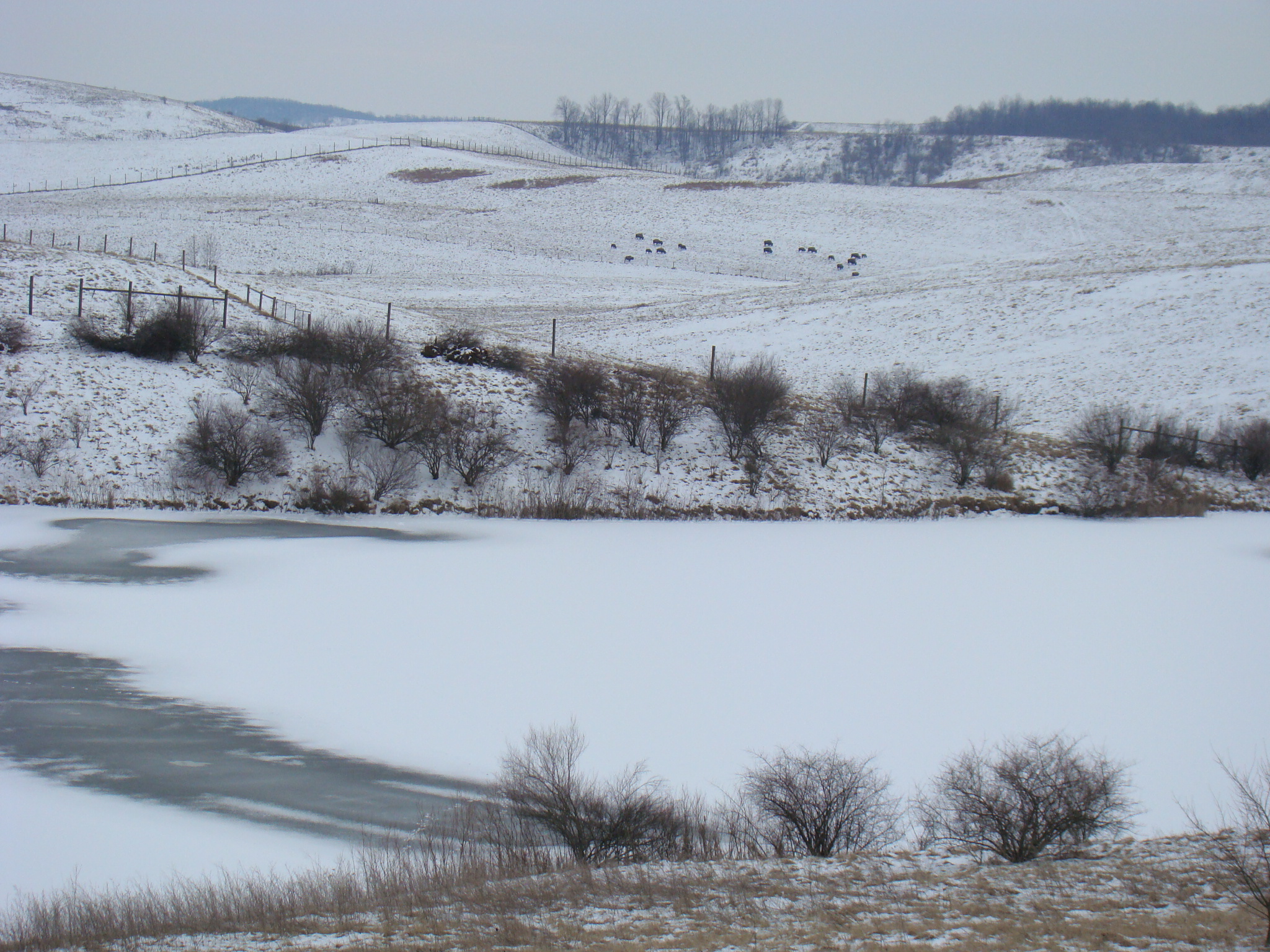
The WildsAfter the land was mined, it was beautifully reclaimed as can be seen in this picture. The ground was smoothed, trees were planted, and it was again an inhabitable place for animals.  In fact, The Wilds, a haven for wild animals from all over the world, is located within a short drive and is where this picture was taken. If you look closely in the open range, you can spot a herd of buffalo grazing in the snow with a beautiful lake in the foreground. The Wilds is one of the largest wildlife conservation centers in the world with some type of safari available most of the year to explore nearly 10,000 acres of that reclaimed land.

Today, AEP maintains this Miners’ Memorial Park. It is a great place to relax, even on a quiet winter day, while strolling around the huge bucket. There are several areas available for picnics as well as a shelter, which houses displays on the Big Muskie when it was working as well as other information on the area. As land was reclaimed, many camping areas with lakes and fishing were included so it is a great place for family fun during the summer months.

Even though the Big Muskie is no longer in operation, coal mining is still an important occupation in these rolling hills. Warning: Watch out for fast moving coal trucks on every curve!

To visit the Big Muskie Bucket on your next visit to Ohio, travel I-77 and take Exit 25 in southeastern Ohio. Be certain you stay on Route 78 and after many bends and curves – a rollercoaster ride – of about 16 miles, you will arrive at the Miner’s Memorial Park. The area is open May – October, but you can walk in and explore at any time.  Be sure to stop and scan the hillsides.
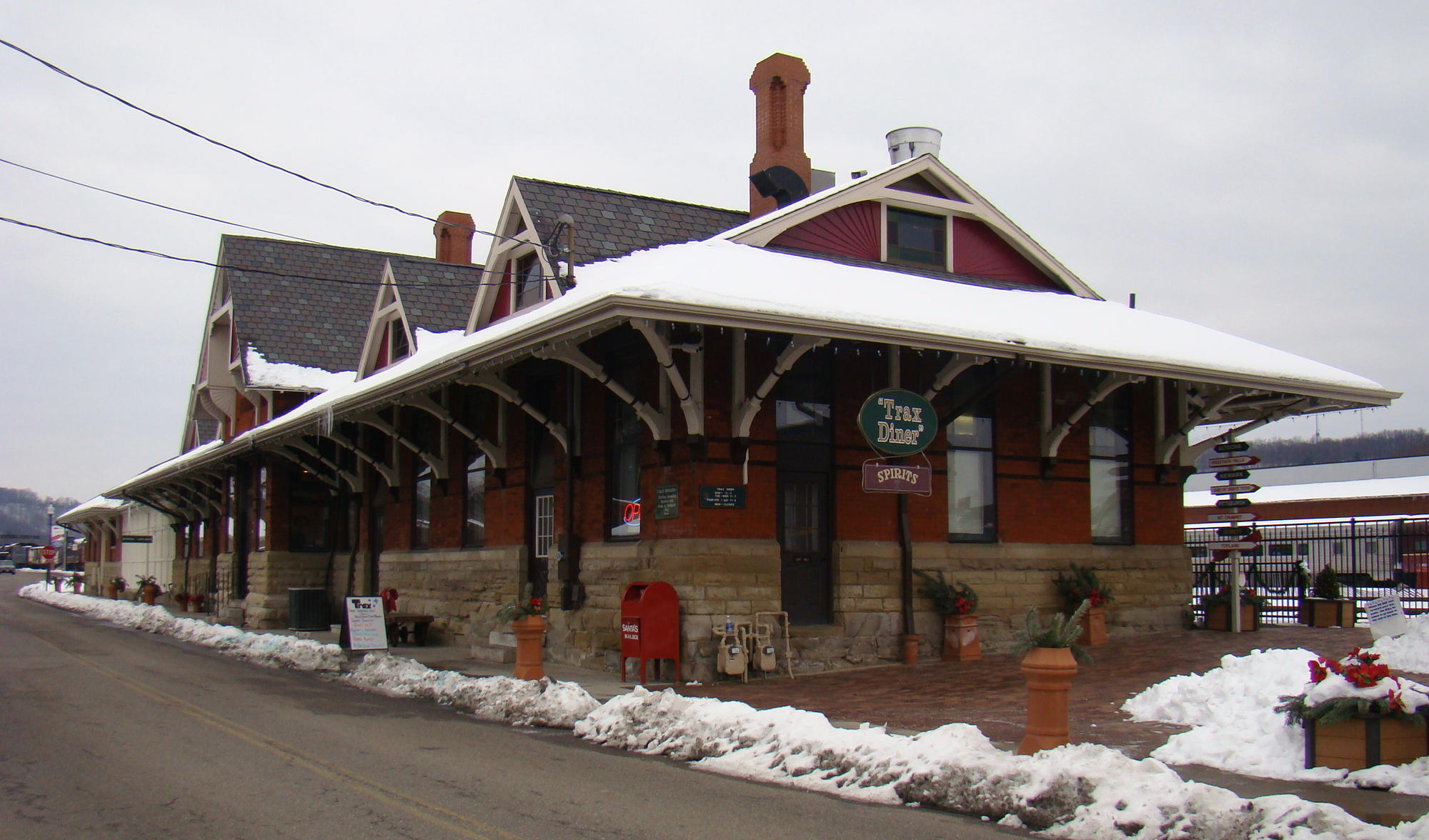
Explore Dennison Depot Museum WWII Dreamsville U.S.A.

Dennison Depot Museum“Grease the pig!  Tallowpot, grab that banjo and throw on some diamonds so we can bake a cake.” Commands similar to these could have been heard around the Pennsylvania Railroad in Dennison back in its prime. This railroad slang translated into our everyday English, would sound something like: “Oil the engine! Fireman, grab that shovel and throw on some coal so we can build up steam.”

Dennison Depot Museum in Dennison, Ohio displays the history of their depot in a rather unusual manner…in the cars of a train! Each car displays a particular section of interest varying from hospital car to telegraph office. There is much to explore and all is well marked with explanations.

Model RailwayWhy would they have decided to buy the land to establish a town, where none existed, in this particular place back in 1865? Well, it wasn’t by chance! The spot they later named Dennison was exactly 100 miles between Pittsburgh, PA and Columbus, OH. The steam engines of that time could only travel a hundred miles before needing water, so this became their mid-way stop. Approximately forty trains stopped here daily during its peak, when Dennison had the most complete and largest railway yard in the nation. This model train lay-out shows in great detail part of that yard, and is maintained by a group of local model train enthusiasts.

Salvation Army CanteenMost exciting of all seemed to be the story of how they became known as Dreamsville, U.S.A. During WWII, the Salvation Army Canteen ,with nearly 4,000 volunteers, provided free food to around 1.3 million servicemen.

Arriving Servicemen's Train Car The train stops were only five to seven minutes long, so the girls went out on the platform to meet the train. They could see the loneliness, hunger and despair on the soldiers’ faces, so those young girls tried to have a smile and a kind word for everyone.

The soldiers said it brought back fond memories  of their hometowns.  These friendly, smiling girls reminded them of their moms, sisters, or girlfriends…plus there was free food.  A dream come true!  Thus the name Dreamsville, USA.

Hobo Message StumpBecause of all the trains, Dennison was a hotbed of hobo activity.  Whenever a train would stop, many hobos would hop off looking for a place to get handouts. It was common practice for the hobos to make marks on a nearby tree or on the house itself, so other hobos would know if they would be well received. Marks of simple circles, arrows, or even animals signified: Good road to follow. Free telephone. House is well guarded. A kind old lady. They even had a camp along the Pennsylvania Railroad in the city dump, where they made makeshift shelter of tin wrapped around tree trunks.

Friendly volunteers patiently answered questions, making the day enjoyable as well as informative. Boarding takes place here for the Polar Express, which during the Christmas season takes children on a magical ride where they encounter Santa. Special events are scheduled throughout the year from Private Bulldog Bing’s Birthday Party to Ghost Tours in the fall.

After visiting the museum, the Trax Diner, located in the old depot, is a perfect place for a meal or a snack.  Children were full of “whoo-whoos” while they were enjoying the atmosphere. Although they have delicious full-course meals, I chose a “Hobo Basket” filled with British style beer battered fish and chips. Since an English lady operates the diner, this seemed like a logical and delicious choice.

“Coal Cars”, stuffed potato skins, also chugged across the menu.  Might have to return for “The Caboose”, a sugar and cinnamon shell filled with ice cream and toppings. Think a Caboose would be a perfect ending for a meal, a train… or a blog post!

Dennison Depot Museum is located in Dennison, Ohio  not far from I-77.  Take exit 81, 36 East, to the Dennison exit. Turn right on Second Street and continue on Second Street until you reach the tracks. Turn left on Center Street and after two blocks you will see the museum. Parking is on the left side of the street.

Autumn Sunday Drive in Beautiful Ohio

“Want to take a ride?” Those were familiar words growing up, as my father always enjoyed a drive through the country, at any season of the year. While mom always went along, she never enjoyed them as much as father and daughter. Since we liked to explore all the back roads, mom came to calling us “gypsies”. The passion for exploring has never left, so now you know a little background for my blog, Gypsy Road Trip.

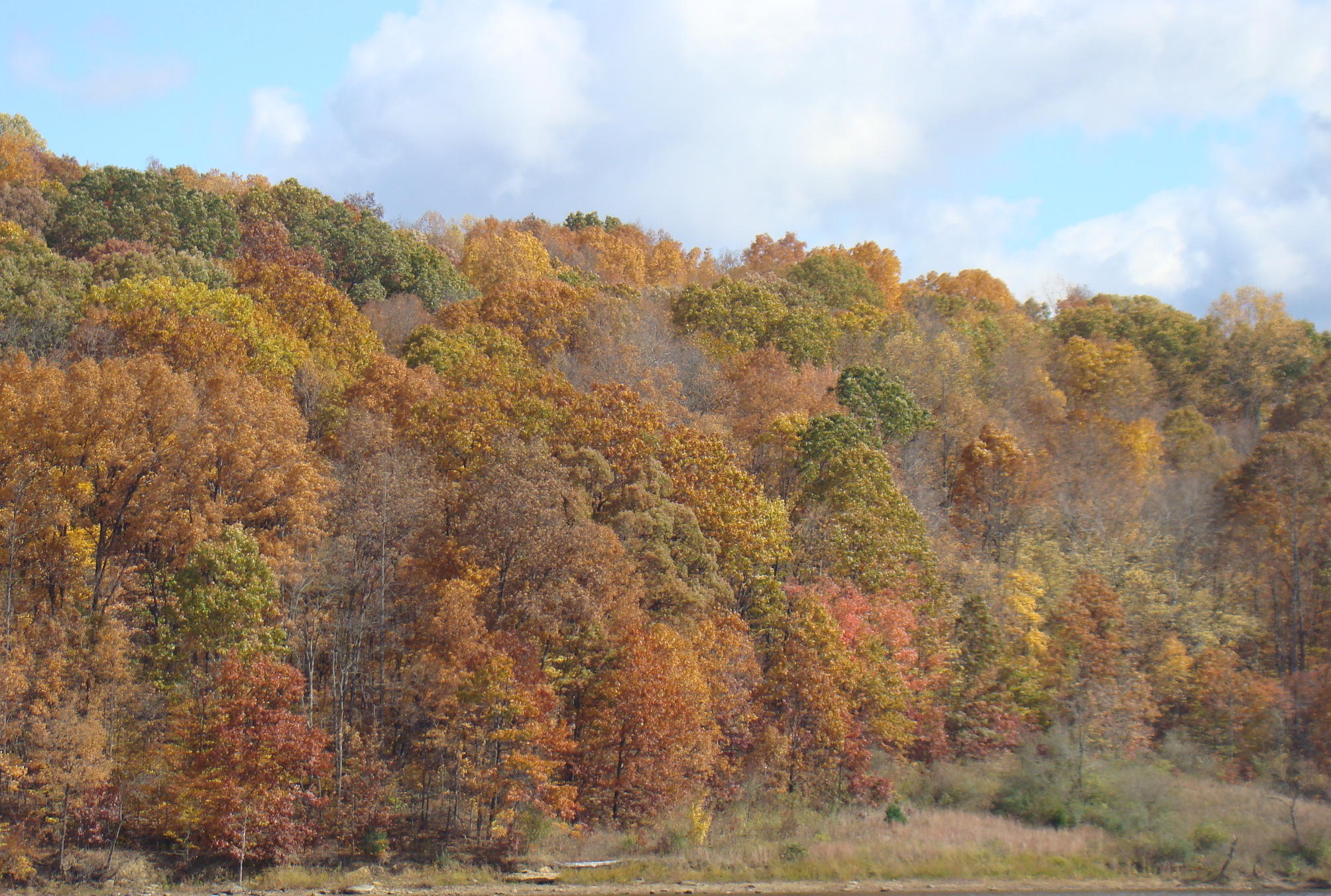
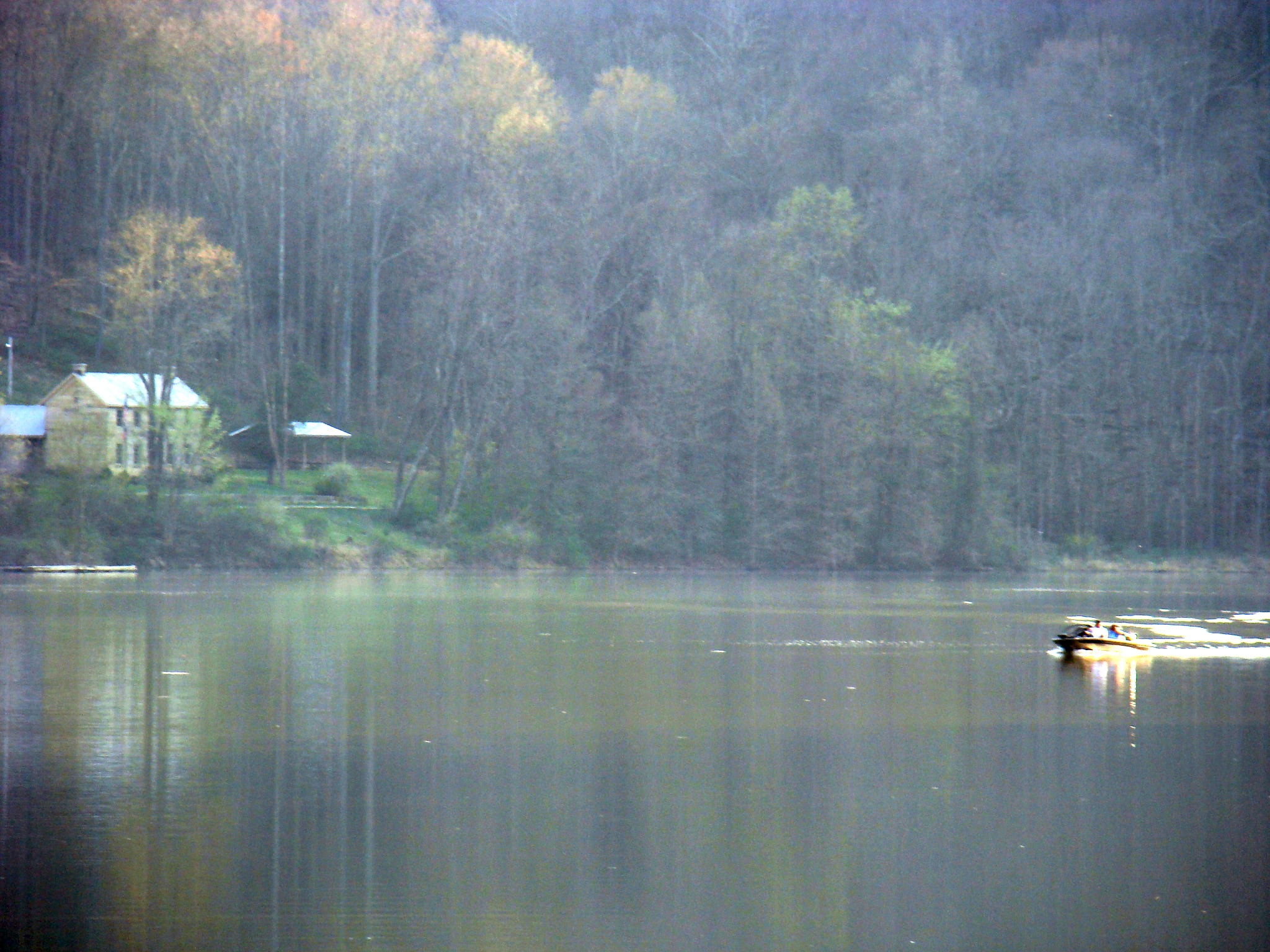
This beautiful autumn Sunday Drive in the hills of  Southeastern Ohio began at the dam of nearby Salt Fork Lake.  With fluffy clouds in a bright blue sky, the shades of autumn leaves were reflected off the calm lake. Tranquility surrounds you here interrupted only by the distant sound of a speedboat sliding through the waters. Sit and soak in the sun and grab some fresh ideas floating through the air.

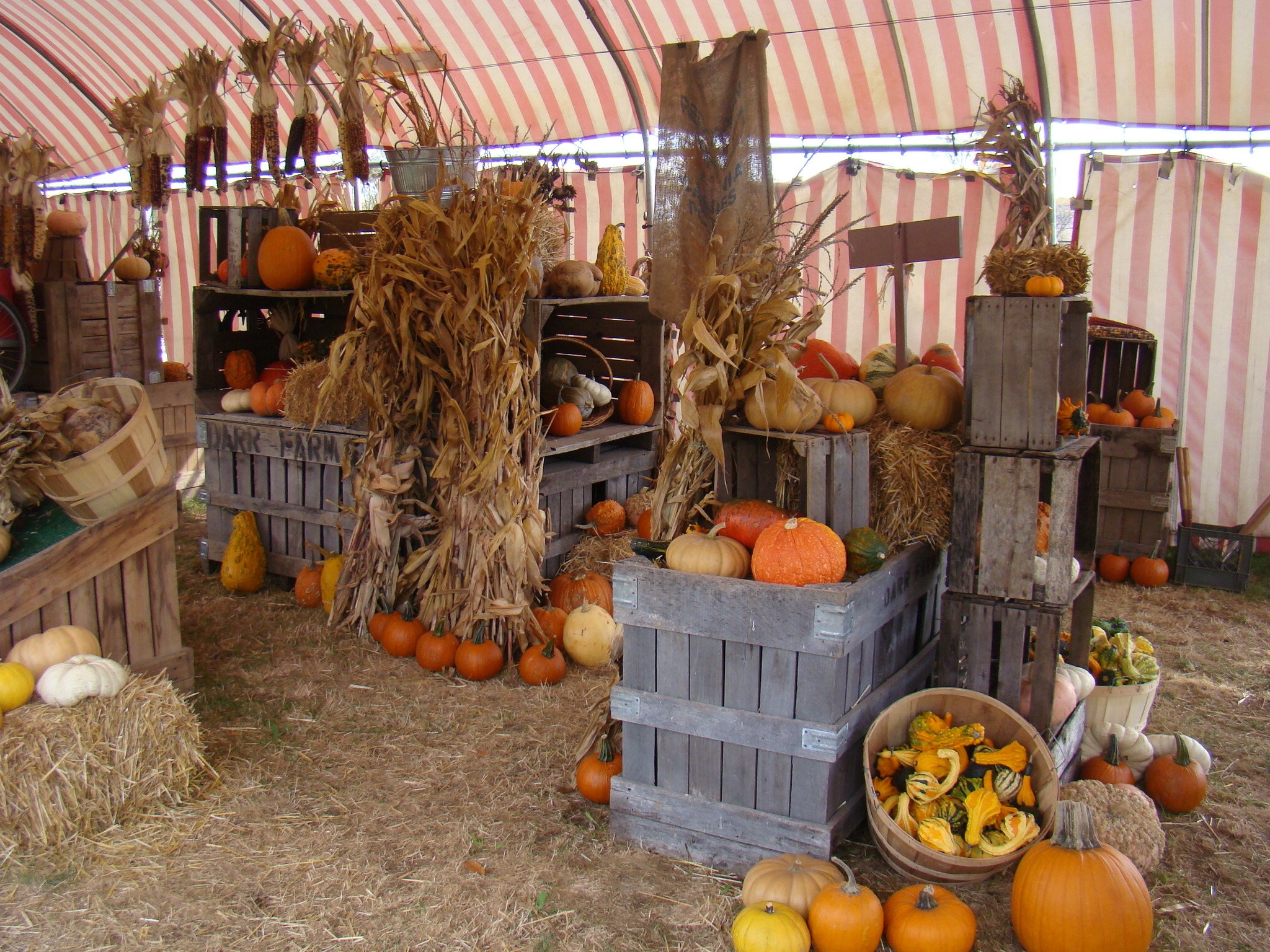
Sunday Drives are aimless ventures and who knows where the next random turn will lead. Along the side of the road the autumn colors catch your eye where a large red and white striped tent is fall home to Center Creek Farms. Here families  stop to let their children explore the scarecrows, pumpkins, and wagons that are all part of the fall scene. There is even a pick-your-own pumpkin patch so everyone can see pumpkins at their various stages from green to orange. No roadside stand at this time of year would be complete with out apple cider, preserves and honey. Bought a jar of local raw honey as it’s always good to ward off a cold when a sore throat first starts to develop.

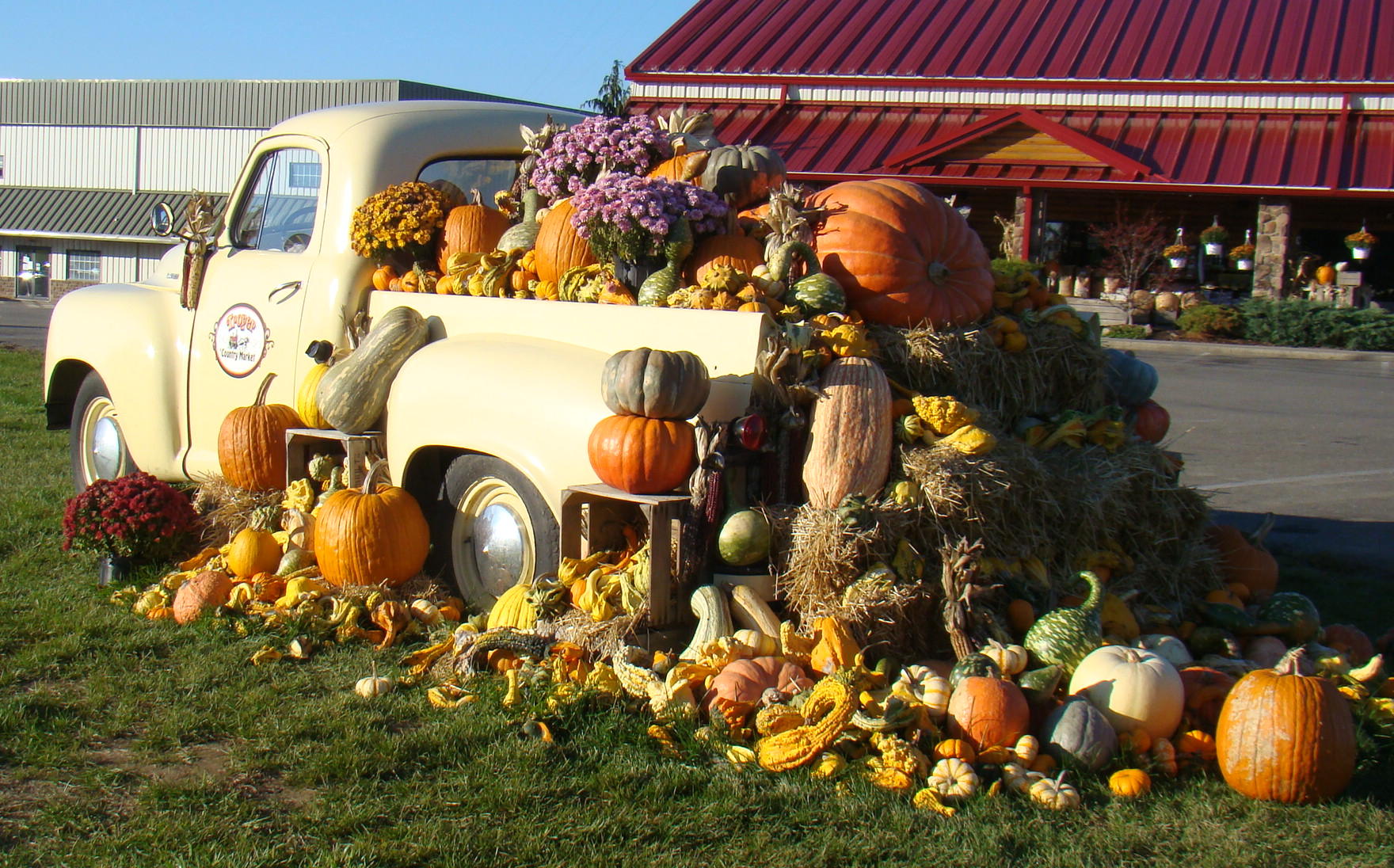
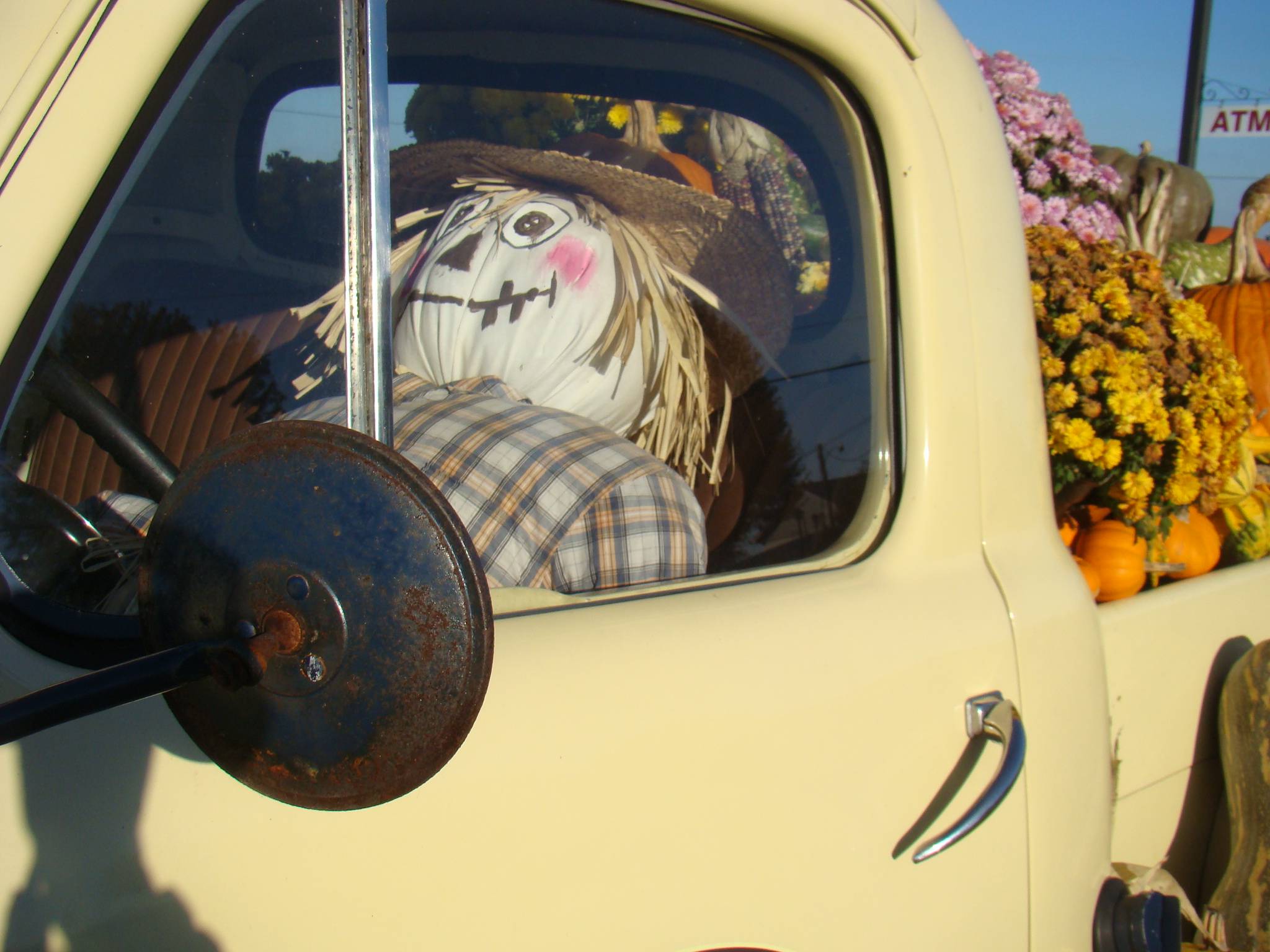
Farther down the road, an old Studebaker pickup is loaded down with autumn treasures at the Troyer’s Country Market. There’s a cute scarecrow driving this load of beautiful mums, pumpkins and other autumn decorations. Mums were brought to the United States back in colonial times and colors range from the traditional yellow shades to oranges, purples, and pinks.  Since they are  ‘short day plants’,  chrysanthemums bloom in the autumn when the nights are longer.  A pot of beautiful mums will brighten your life, or the life of a friend, for perhaps several months.

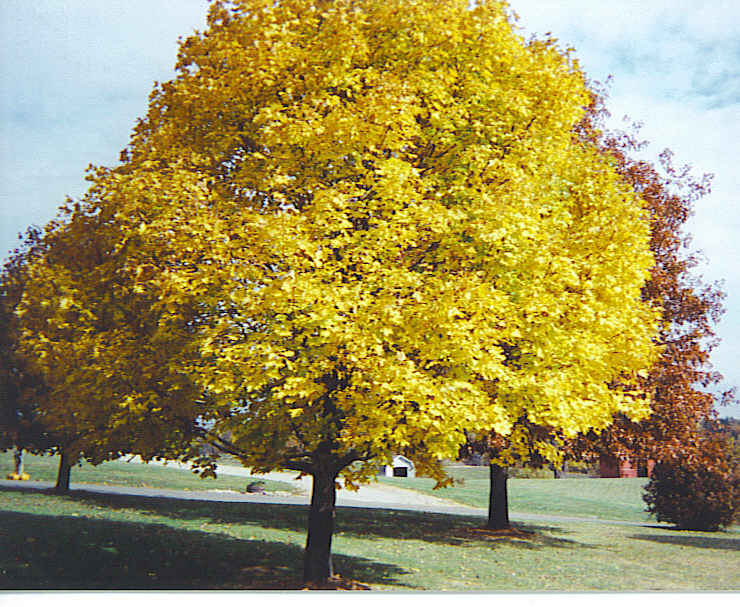
Sometimes a single tree can catch your eye as it glows like a ray of sunshine.  Here a golden maple tree is the center of attraction in someone’s beautiful yard. Temperature and moisture are the two elements that determine the amount and intensity of autumn colors. The most beautiful colors occur when there is a series of warm autumn days with cool, but not freezing nights…following a year of a warm, wet spring with normal summer rainfall. With those determining factors, every autumn brings about a new spectacular display.

Had to top off the day with a stop in West Lafayette at a favorite ice cream stand. Noticed that keeping with the season they had pumpkin ice cream, so had to give it a lick. Wasn’t sure if the pumpkin would be something to my taste, so had them put a scoop of raspberry on the bottom so there would definitely be something deliciously satisfying. Both flavors hit the spot!

Any season of the year is a great time for a drive through the countryside wherever you happen to live.  If  for some reason you can’t take a drive, stop back and read another gypsy jaunt here on Gypsy Road Trip. Enjoy the adventure!

McKinley Museum Spotlights Stark County

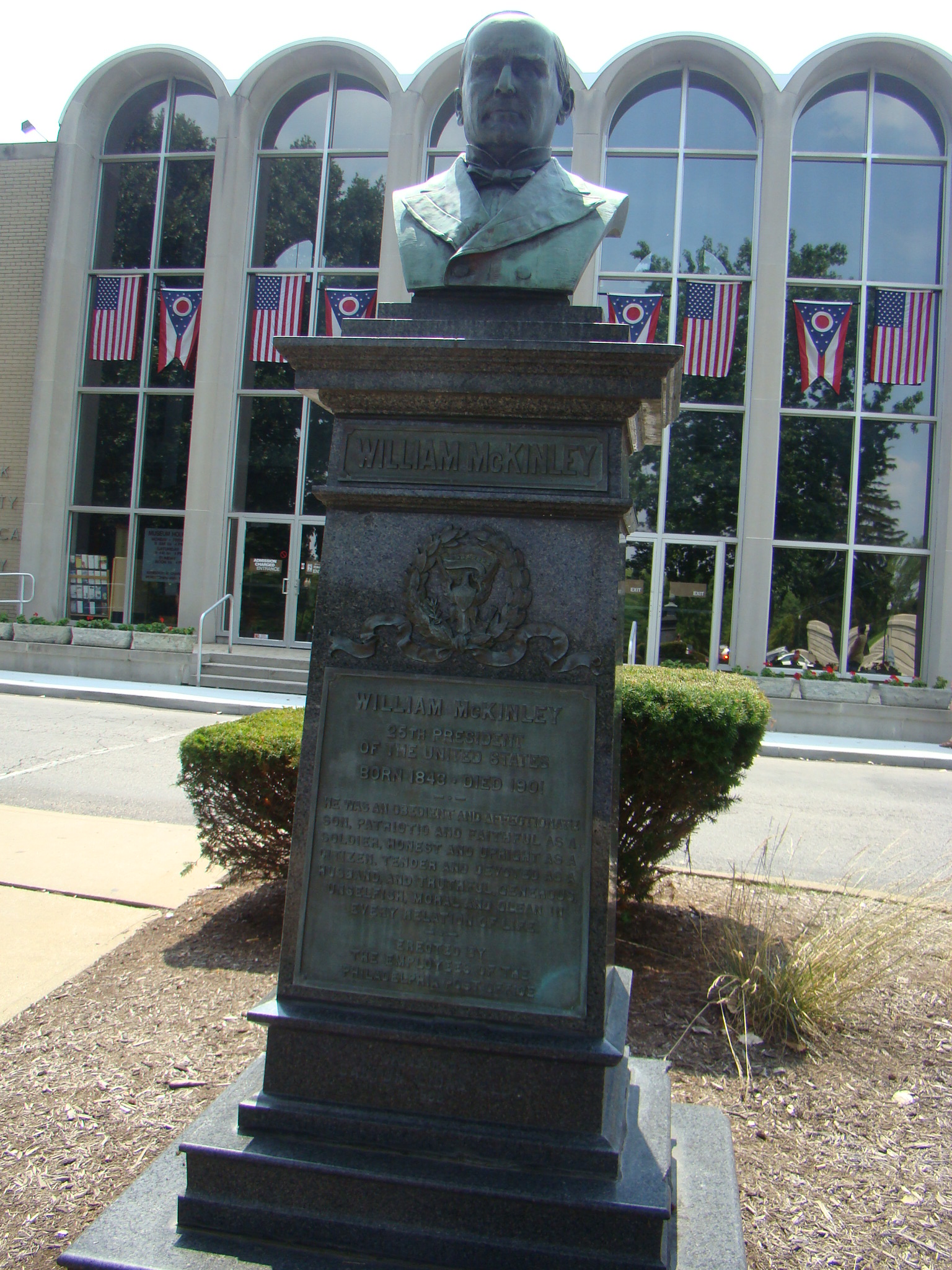
Near the foot of the McKinley Monument, Stark County Historical Society has gathered interesting information and memorabilia regarding the surrounding area. as well as the life of William McKinley.  The bust of McKinley greets visitors outside the building.

As you enter the lobby of the McKinley Museum in Canton, Ohio, a sign with a quote caught my eye. It was a word of advice to young people from President William McKinley:

“Young men and women, what your education will be and do for you depends upon yourselves.”                                                            

Within these walls is quite an extensive history of the Stark County area including leading enterprises, such as Belden Brick, Dueber-Hampden Watch Company, Erie Canal, Hoover Vacuum, Pennsylvania Railroad,  and Timken Company just to name a few. Henry Timken founded Timken Roller Bearing Company in 1902 and his entrepeneur vision was grounded in this type of thinking:

“If you have an idea which you think is right, push it to a finish. But above all, don’t set your name to anything you will ever have cause to be ashamed of.”

McKinley Museum had many interesting exhibits throughout, too numerable to mention. Here are a few things that caught my eye on a recent visit.

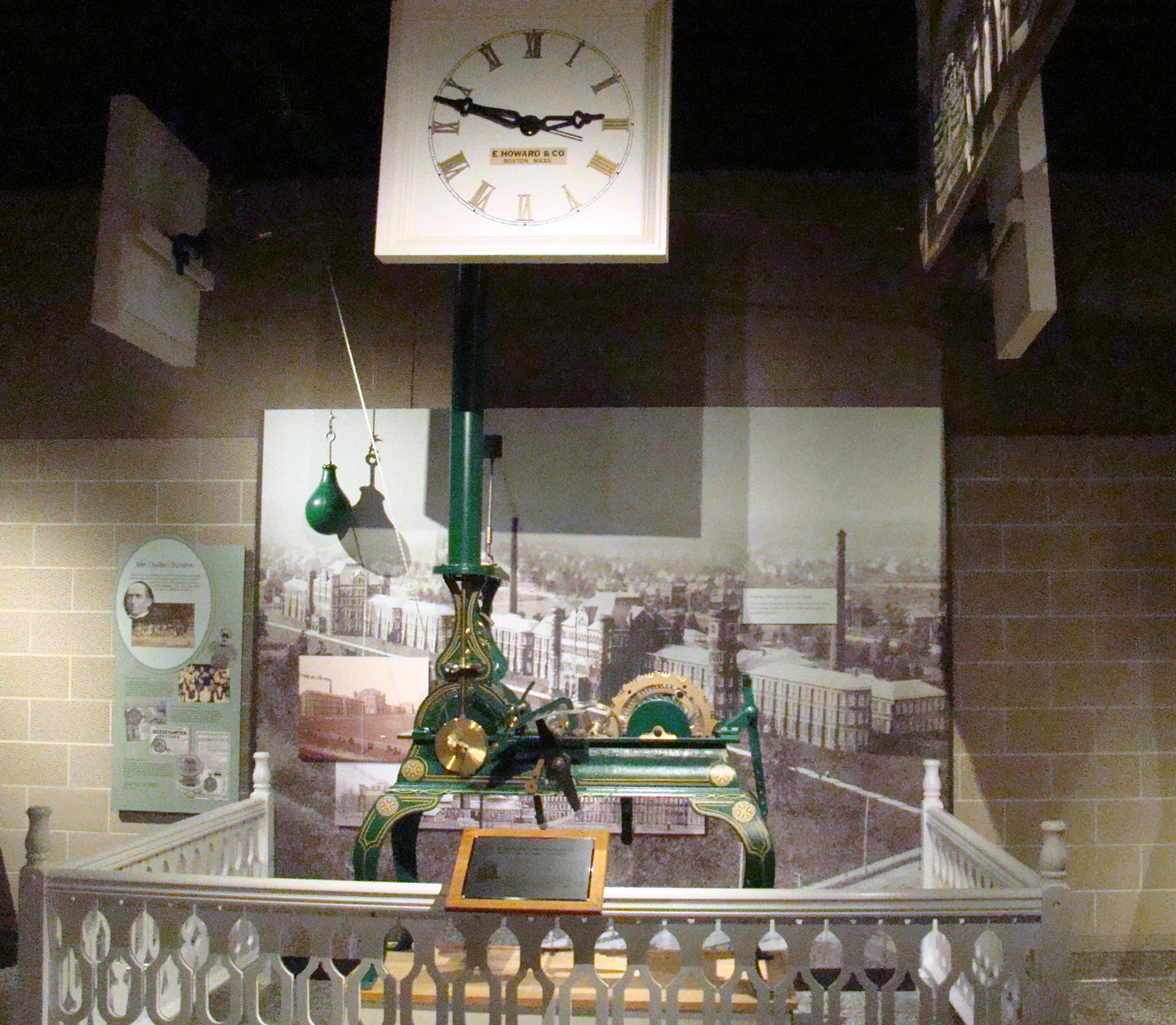
One fascinating display showed a clock tower made by Dueber-Hampden Watch Co with a sign “Accurate to the Second.”  That was way back in 1889! By 1890 the company was producing 600 watches a day in Canton, Ohio and had over a thousand employees. They used 14 karat gold  in their watch cases and had 17 jewel movement, quite advanced for their time. This company was sold to a Russian company in 1927 and twenty-one former employees went to Russia to teach them their craft.  One report is that their machinery is still being used in China today.
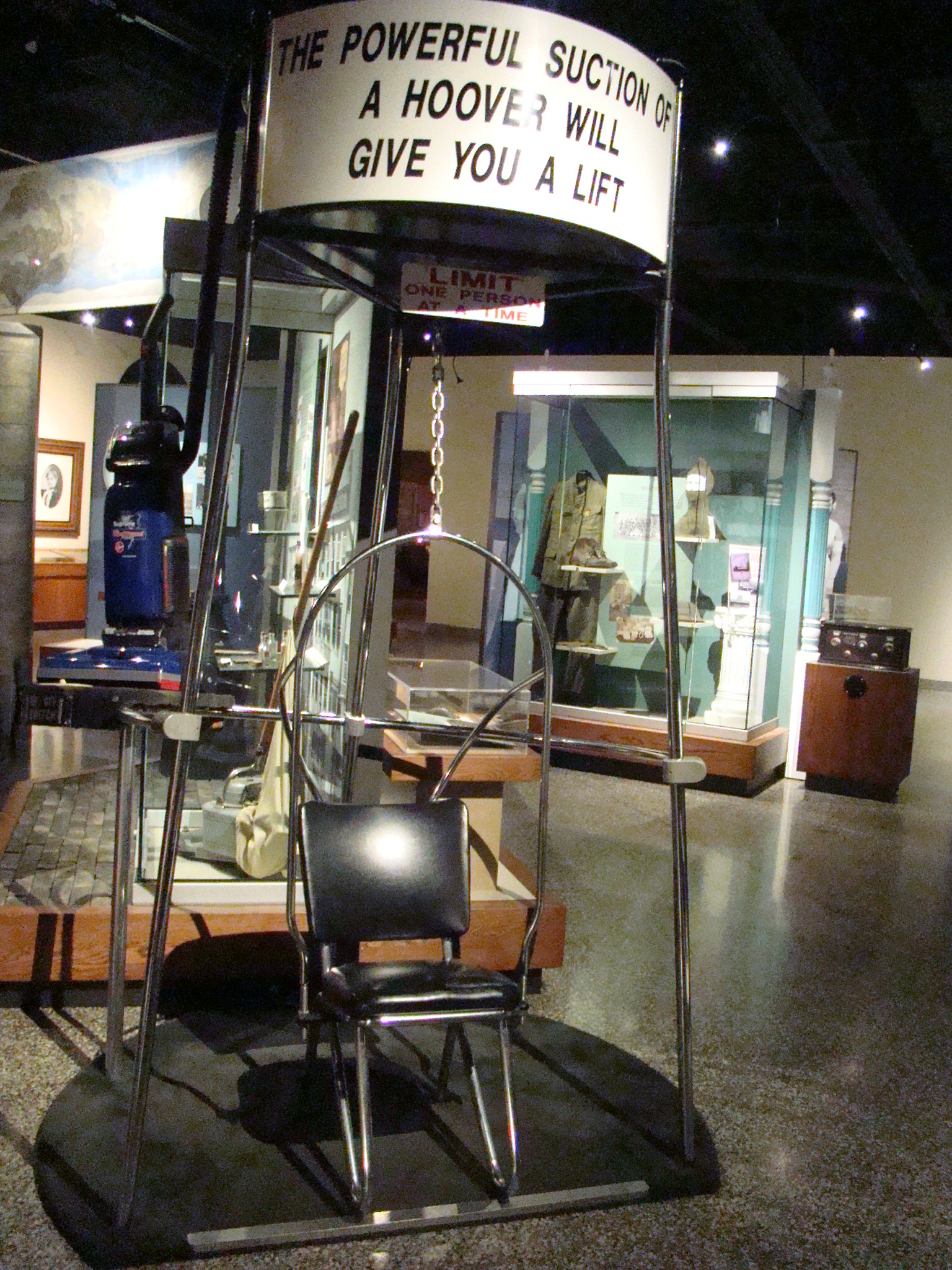
The Hoover Vacuum provided a display that attracted lines of children. While seated in a chair, they pressed a button which created enough suction to lift them well off the floor. The Power of the Hoover! It is very fitting to be highlighted here as the first upright vacuum was invented by a department store janitor, James Spangler, in Canton back in 1906. He just happened to show it to his cousin, Susan Hoover, who in turn shared it with her husband.  “Boss” Hoover bought the patent from Spangler, hired him as Superintendent, and slowly began the switch from maker of leather-goods to vacuum manufacturer.  The slogan: “It beats..as it Sweeps…as it Cleans” brought the Hoover Vacuum to the forefront.

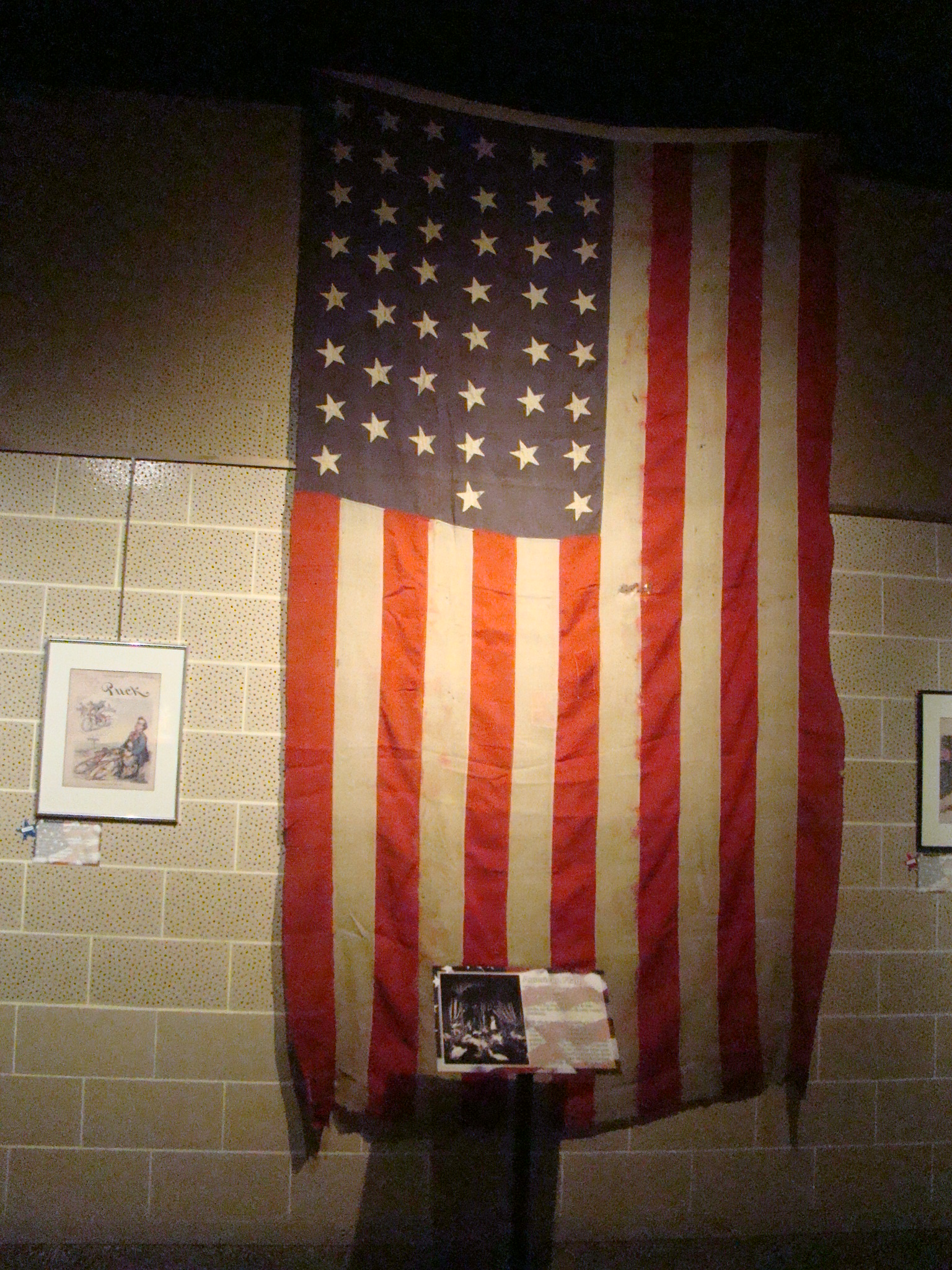
This was the original hand-sewn 45 star American flag that hung on the front porch of McKinley’s home during the 1896 presidential campaign.  During his famous “Front Porch Campaign”, McKinley made himself available to the public every Sunday afternoon on the front porch of his home. Usually he was seated in his rocking chair from which he talked to 750,000 people who stopped by. Some say he shook hands with up to a million men from that front porch scene. This campaign appealed to the average voter, who found themselves drawn to a candidate that stayed true to his roots.
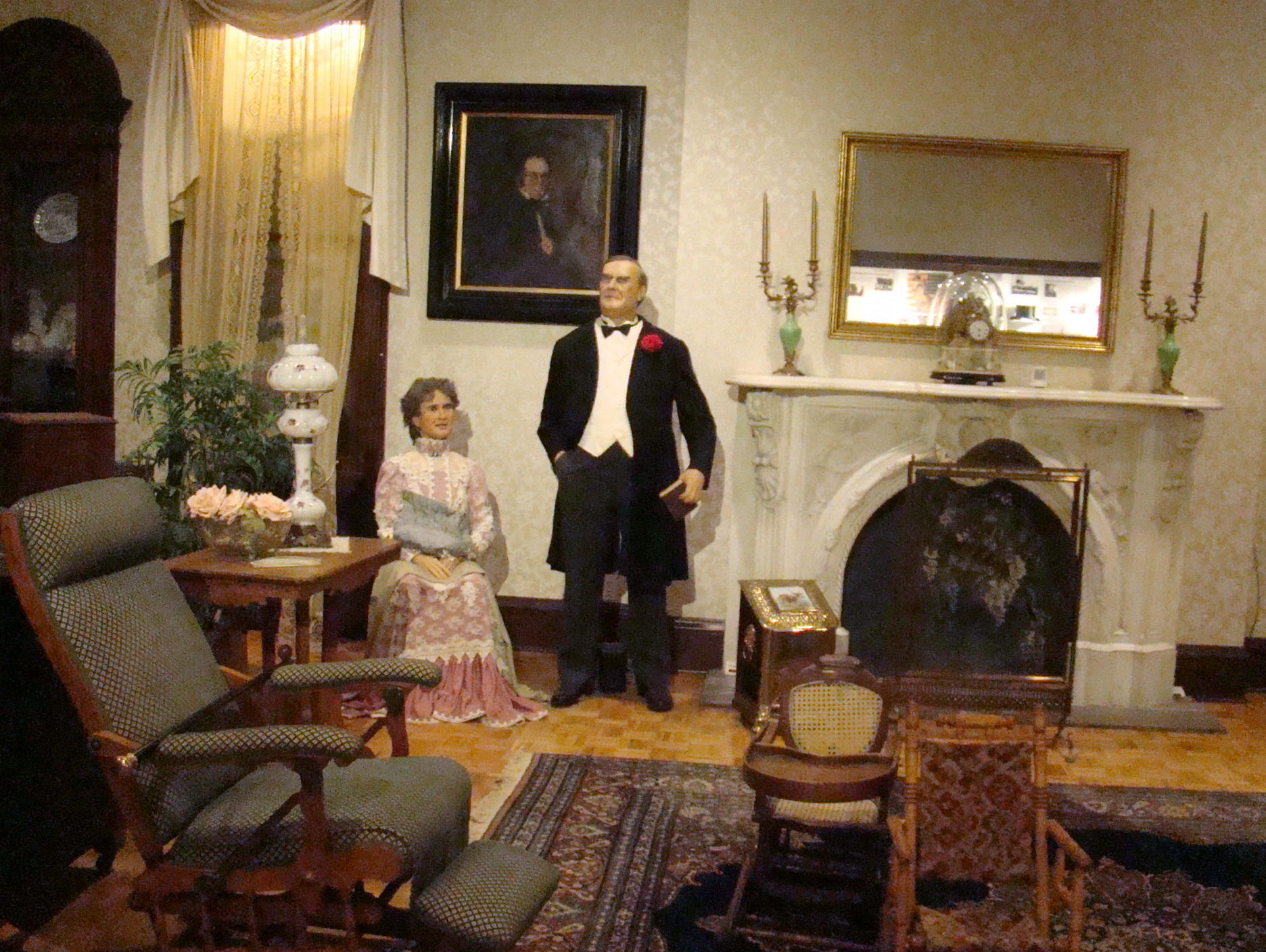
Rooms were redesigned to look very much like the ones of long ago with their Victorian furnishings. A touch of some form of music was often in evidence as that would have been one of their main means of entertainment. In the parlor, you had an opportunity to listen to talking figures of William and Ida McKinley. Notice that he does have on his symbol, the red carnation.These plastic figures are activated by sensors when you enter the room.

The Hazlett Theater is a fine spot to give your feet a rest and watch some old films from days gone by. Here you hear about the campaigns of William McKinley and get to have an inside video tour of the Memorial.

There weren’t enough hours in the day, so sadly missed the show at the Hoover Price Planetarium where visitors view the solar system and beyond. They say it is like traveling to space without leaving the ground.  Unfortunately, didn’t make it to Discover World either where dinosaurs and early American Indians welcome visitors to Natural History Island, Ecology Island and the new spot, Fascination Station.  Looks like a return visit is in order.

The McKinley Museum  is located in downtown Canton, Ohio just off I-77. Take Exit 105 for OH 172, then turn right on 7th Street NW. Take the first left onto McKinley Monument Drive where the Museum is located to the left when facing the memorial. Enjoy a little piece of Ohio history.

Relax at Salt Fork State Park

Warm weather in Ohio sends people outdoors, even on an overcast day.  One of their favorite spots near Cambridge in southeastern Ohio is Salt Fork State Park, Ohio’s largest state park. This lake is a rather recent creation and those past fifty can still remember when farm land covered this area with  Salt Fork Creek running through it. Back in 1967, the earthen dam was completed here and the filling of the lake began.

Vacationing at the lake has many possible accommodations: camping, renting a cottage or staying at the lodge. The campground sites all supply electrical hook-ups and nearby is a heated shower house.  Only a few sites provide sewer and water hook-ups as well. If you prefer a cottage, several are available with hillside and lakeside locations.  All of the cottages are completely furnished with a screened-in porch, and even include kitchen utensils.

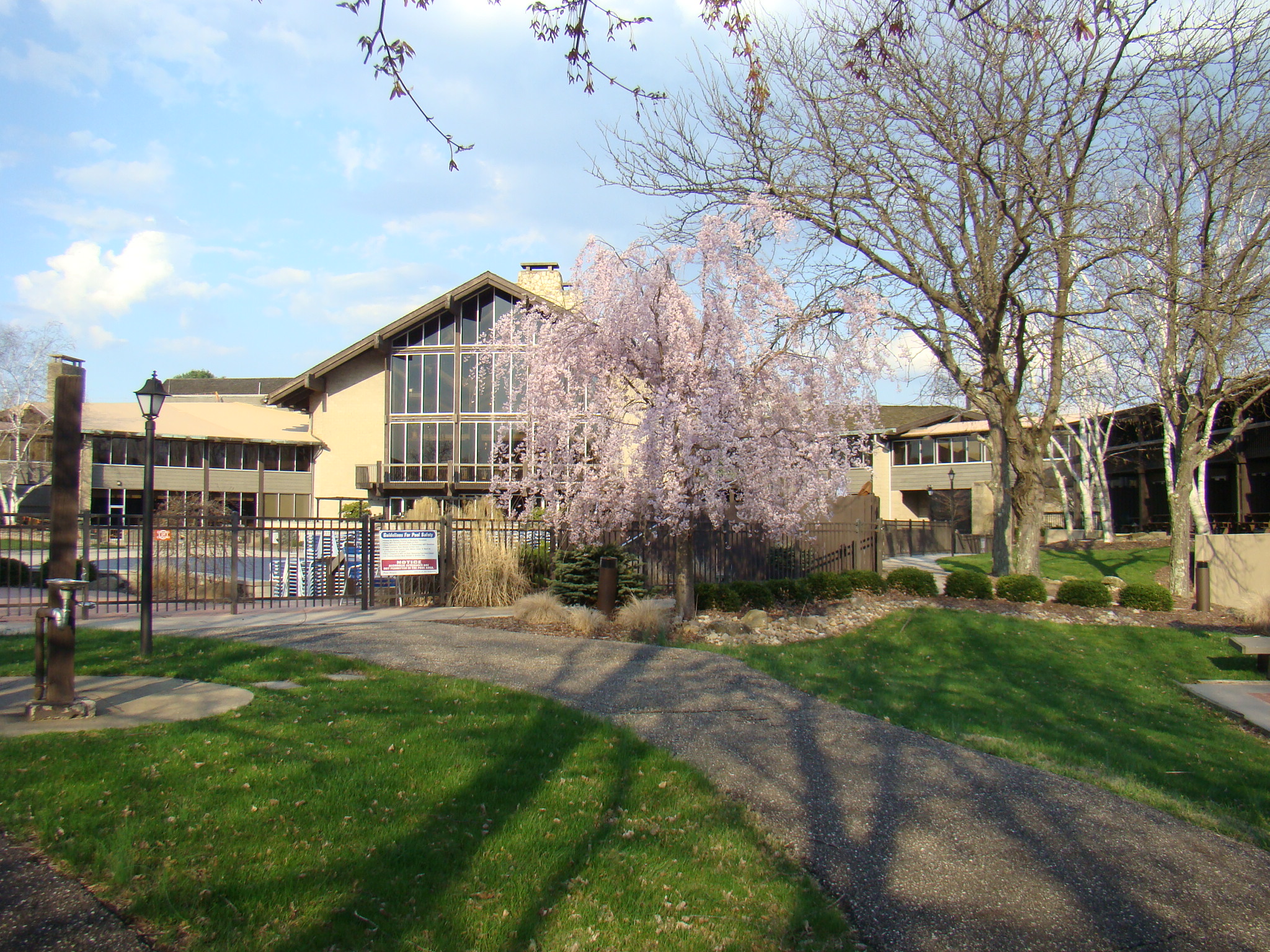
Others prefer the comfort and convenience of Salt Fork Lodge. This beautiful stone lodge with its pine beams sets high above the lake in the rolling hills of Southeastern Ohio. Frequently used for meetings as well as vacations, the lodge contains a wonderful dining area as well as beautiful stone fireplaces that give you a warm feeling no matter what the season. Indoor and outdoor swimming pools provide entertainment all year long. Outside you will find a fantastic playground for the youngsters as well as tennis, volleyball, basketball and shuffleboard courts, so there is little excuse for anyone to be bored.

Just a half mile down the road is the entrance to the 18-hole championship golf course, which is a challenge in these rolling hills so a golf cart is highly recommended.  Deer are frequent visitors on the golf course and don’t seem the least bit afraid of golfers. Here you will also find a pro shop, putting green, and driving range.

Of course, no lake would be complete without a beach and Salt Fork’s 2500 foot beach is one of the longest inland beaches in Ohio.  Everyone has plenty of room to enjoy swimming or building castles in the sand. When you want a break from the beach, stop by the concession stand, grab some clubs to play miniature golf, or tour the nice Nature Center in the main bathhouse building.

Two marinas provide storage for boats year round and some years you must get your reservations in early to claim a spot. Otherwise, ten easy access ramps   accommodate boat trailers.  No boat of your own? Be assured a variety of rental boats are available. There is even a pontoon tour boat to take you and your guests around the lake for an enjoyable time on the water.

Fourteen hiking trails range from easy to moderate in difficulty, so just about everyone can enjoy the hike. One popular trail leads to Hosak’s Cave formed by interesting rock layer erosion, which has also created small waterfalls. Along the path you will find beautiful wildflowers, hear the songs of many birds and relax to the calming sound of the bubbling brook. If you are lucky, a wild turkey might cross your path or even a deer.

A longer trail leads to Kennedy Stone House where they have restored the only house left standing when Salt Fork Park was created.  This historic stone structure was built in 1837 through the plans of Benjamin Kennedy of Ireland. Stones used were quarried from the hills nearby and shaped with detail so they fit tightly together to make a sturdy structure that still stands after 175 years. Original cost was only $600, which was quite a bargain even long ago. Recently a road has been cut down to the house so you can now drive there also, but most find it more exciting to approach from the trail or even from a boat.  Call ahead and see if you can schedule a tour.

Sunsets are always beautiful over the water and Salt Fork Lake is no exception. What a great way to end the day or begin the evening.  Salt Fork State Park is a fun filled place for a family vacation as it has varied activities for all age groups. If you are lucky enough to live in the area, enjoy a day at the beach or a ride on the lake anytime. The lake is also a great place to do nothing – just sit by the water and watch the waves from the boats passing by, or the motion of tree branches blowing in the wind.  Relax and enjoy!

Salt Fork State Park is located just six miles north of Cambridge, Ohio on Route 22. Once you turn left into the main entrance of the park, watch for wooden signs along the way that lead you to the various places of interest.

Dickens Universal Begins Refurbishing

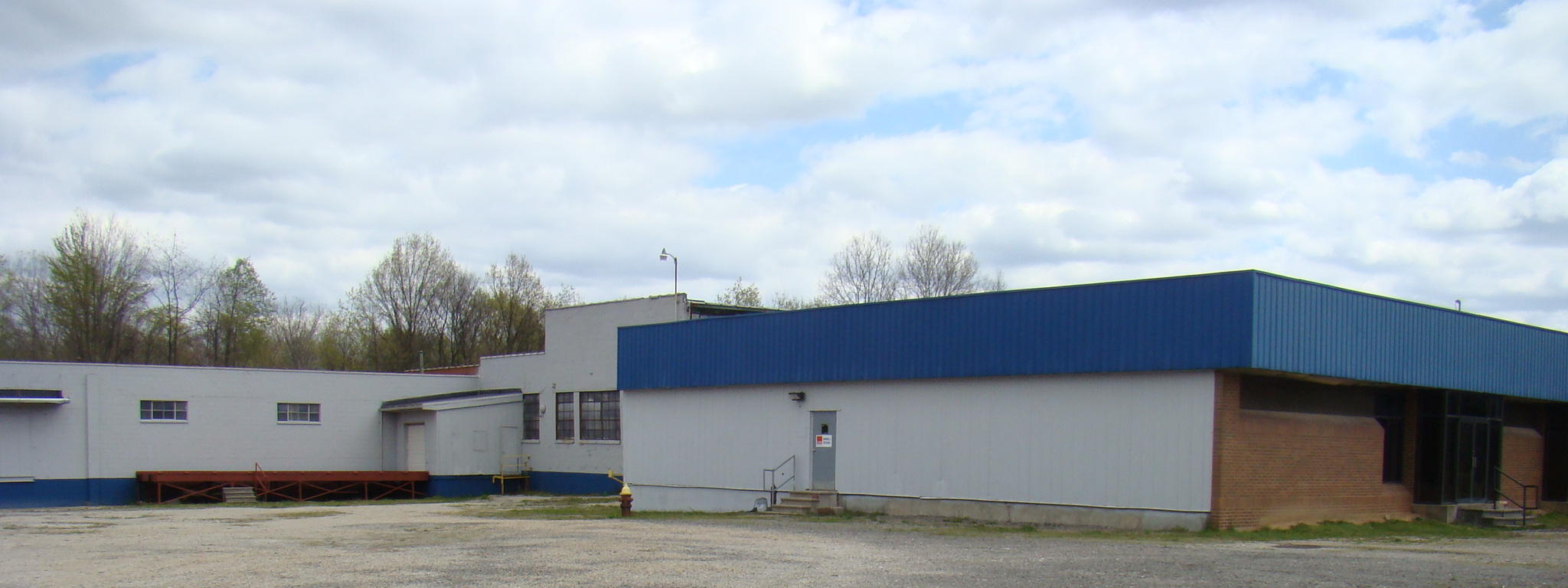
The sounds of power tools, sewing machines and vacuums fill the air as volunteers have their first work session at Dickens Universal, the new storage home for Dickens Victorian Village  in Cambridge, Ohio. This was former home to Universal Potteries founded in 1934 where beautiful pieces of dinnerware, tiles and even bricks were created and are collectors items today.  Plans for tours of the facility are underway for both bus groups and area residents. Even a trolley tour is planned for the next Dickens season.

Quite often the question is asked: How do you create this amazing display? No doubt it all begins with the amazing volunteers who help all year long. Many of the mannequins need restored so damage can be repaired from the winds and precipitation of winter months on the street. The figures are torn apart, repaired and reassembled anytime problems are noted. One may have a broken leg needing repaired, while another needs new buttons on their coat. All of this takes time and patience from many volunteers, who take pride in the finished products and the enjoyment it brings many visitors.

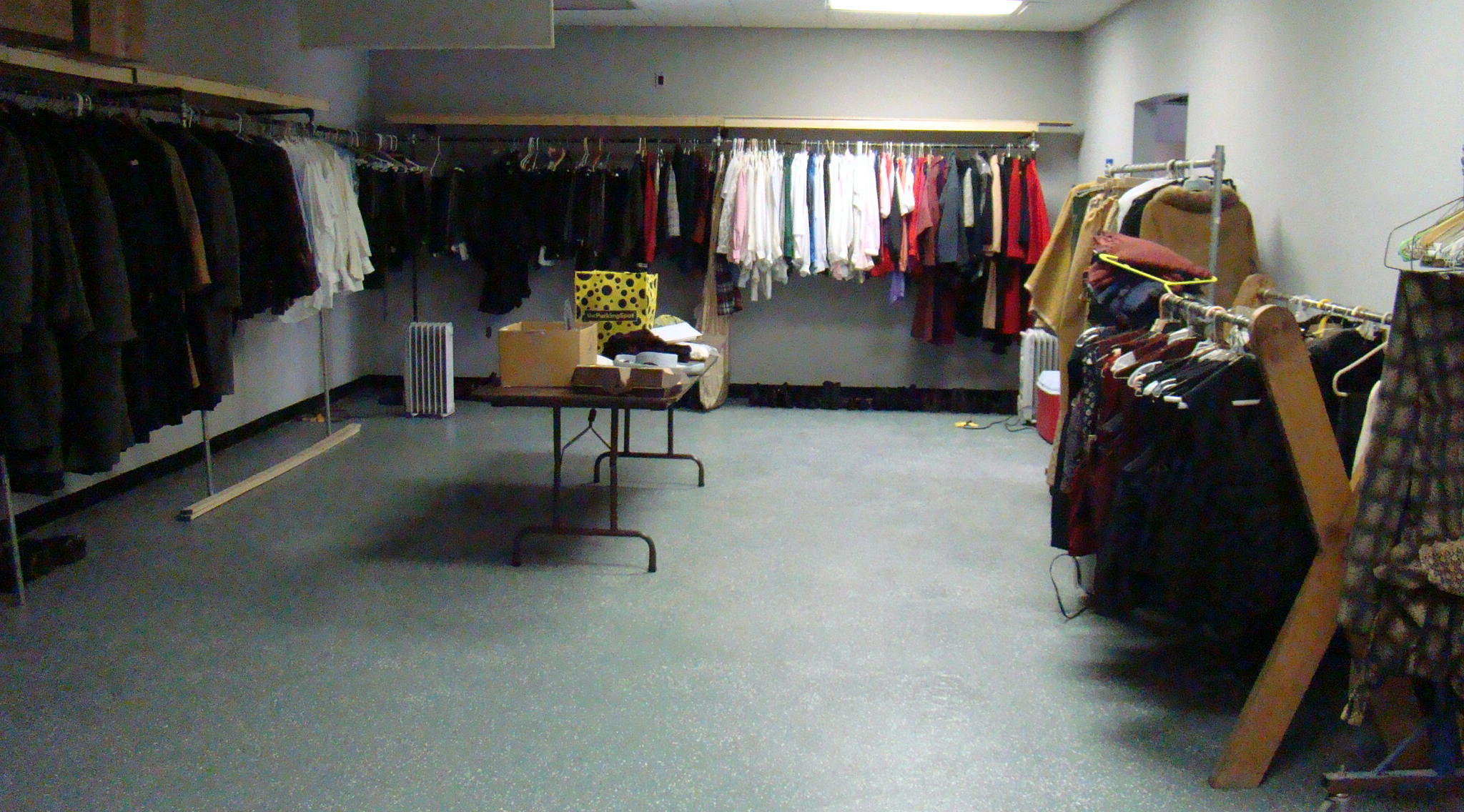
Quite an accumulation of clothing is available for use on the mannequins through kind donations from area residents and even from those who have visited during the Dickens season. Thrift shops are frequently visited by the volunteer crew to seek treasures that might be used on the figure displays.  This first night someone brought in a great pair of work boots, which may be used in a blacksmith scene. Another item was a beautiful shawl to wrap around one of the ladies,  plus a blanket, which will be cut into several pieces and hemmed, for use as a throw where the figures are sitting.

 Another area is filled with Dickens figures sitting on table tops awaiting repair to faces that had too much winter weather. This particular face has cracks caused by the wind, rain and snow of last winter and will be repaired and repainted by local artists before the new season begins.

One group removed platform attachments for dresses and  the snow-like covers,  so platforms could be repaired and perhaps mannequins moved from setting to setting.  Some volunteers were vacuuming figures and settings so that people could work on them more easily while another group of ladies were busy cutting and sewing dresses, blankets, and coats. Dickens Universal is without question a busy place!

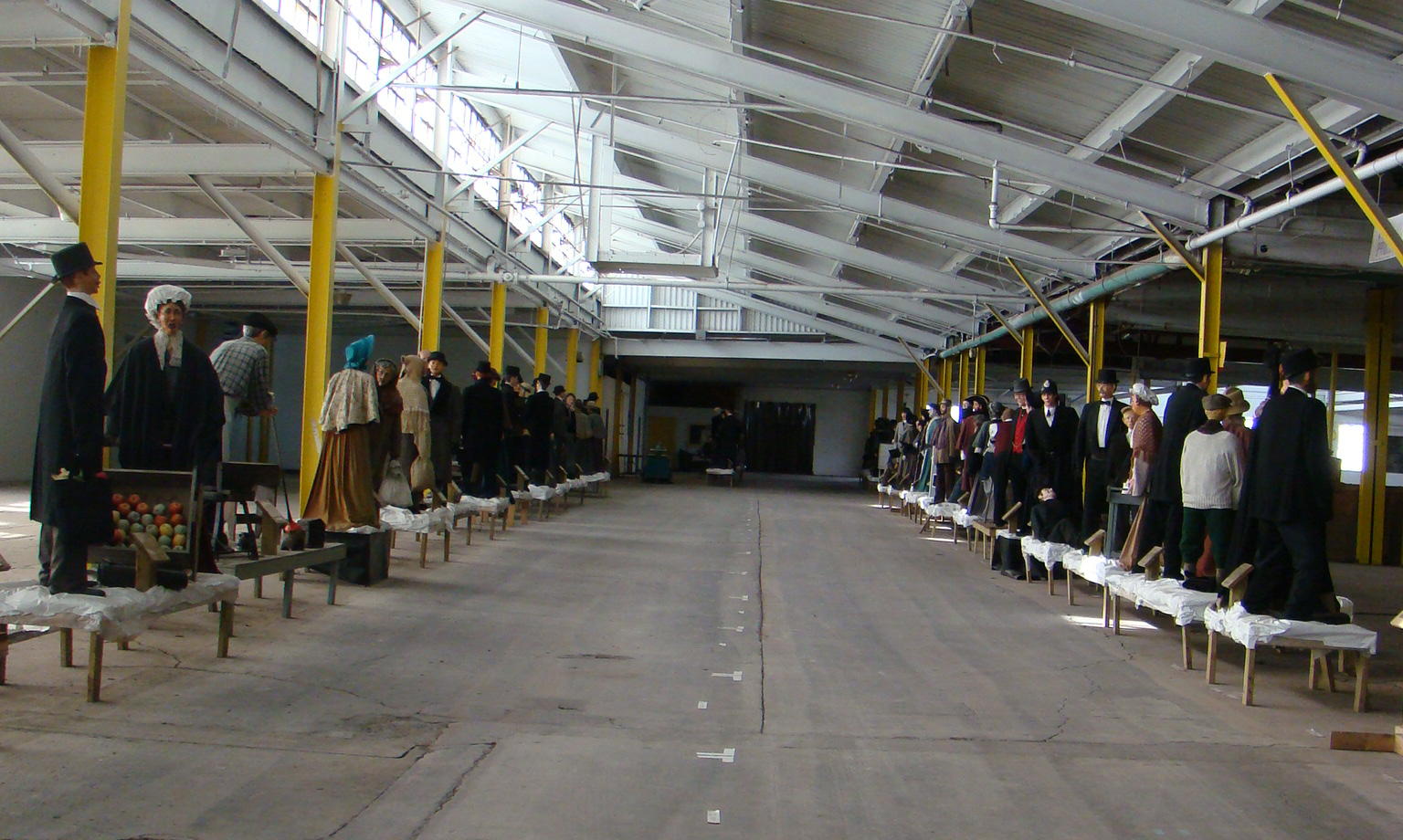
In the center of Dickens Universal is a long, long room which they call Main Street. Here you see the figures as they will appear on Wheeling Avenue in downtown Cambridge next Dickens season, and in their proper order. This makes it easy when scenes are being switched around so they can see exactly how they are going to appear in the actual downtown setting. With nearly 200 mannequins, this is no easy task.

The Spirit of Cambridge rivals the Spirit of Christmas as many volunteers prepare for another Dickens season.  One lady remarked, “The average person has no idea how much work goes on behind the scenes to make this come to life during the winter months.”

Maybe someday soon you will get a chance to take a peek inside Dickens Universal as they create Christmas from long ago.  Once you see the friendly atmosphere and experience the wonder of the project, maybe you too will want to help make this another successful year for Dickens Victorian Village.  See you soon?

Open by appointment only.  If you have any questions or suggestions please email: info@dickensvictorianvillage.com

The Magic World of Orchids

Step back into the Victorian era when orchids were a symbol of luxury, and walk leisurely through the Orchid Forest at the Franklin County Conservatory and Botanical Gardens in Columbus, Ohio.  These beautiful orchids, entitled Orchids! Vibrant Victoriana, are displayed in the Dorothy M Davis  Show House, which was built in 1895.  The exotic orchid speaks of refinement and innocence and the elegant Victorian garden is filled with hundreds of incredible orchids in all sizes, shapes and scents.

Paul Busse’s Garden Railroad featuring children’s fairy tales is a popular place to stop and take a break.  In this magical world amongst the foliage in the Himalayan Mountain Biome, three dimensional structures are all made from natural materials.  You might see roof shingles made from fungus, a chimney cap from an acorn, or a door hinge from a tiny leaf.  Moss, twigs, leaves and seeds combine to form houses, bridges, and castles. Children will definitely enjoy the fairy tale settings, while adults will marvel at the construction of the scenery.

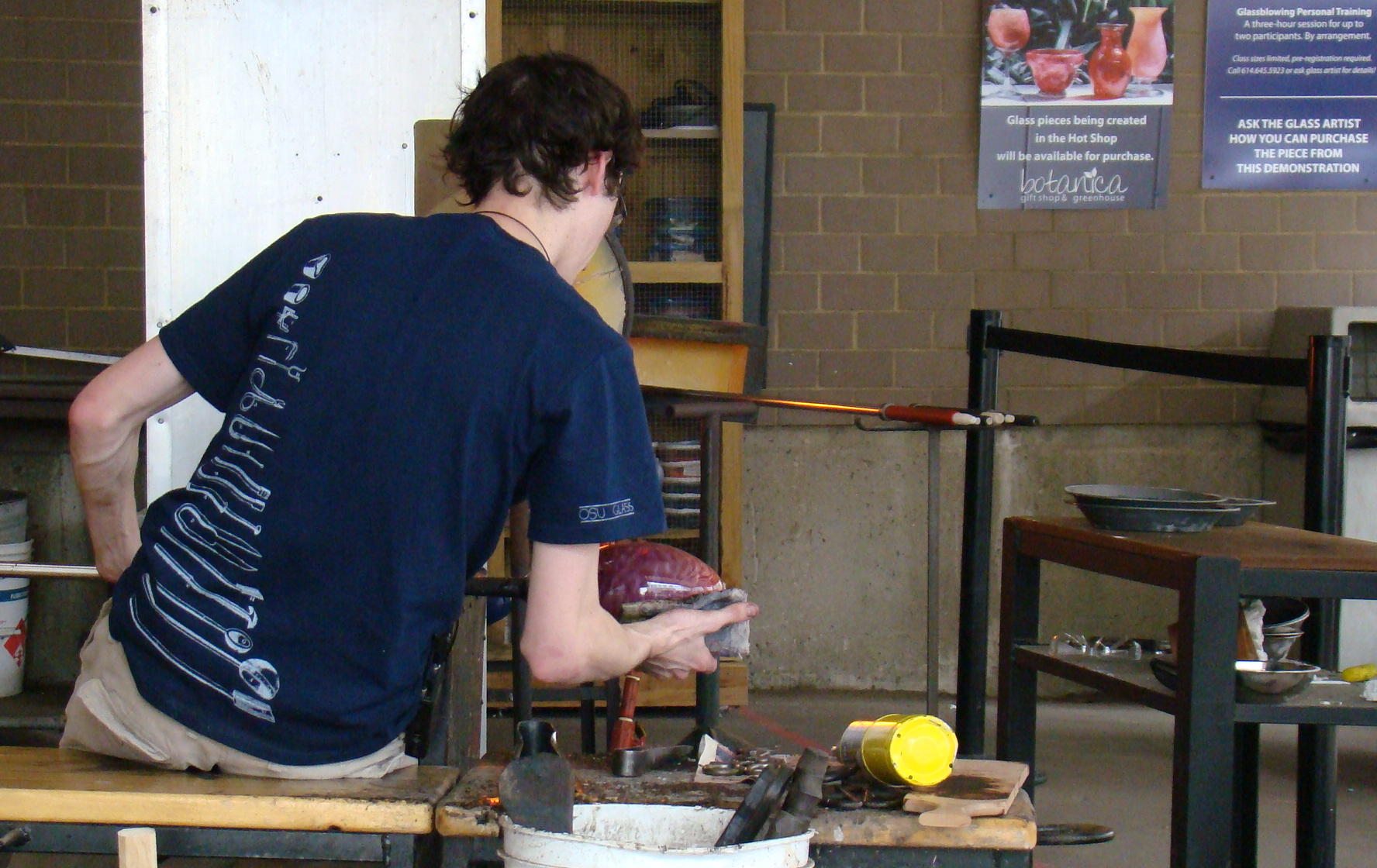
In an outdoor garden area, discovered the Hot Shop where a young man, who had been blowing glass for two and a half years, showed the curious visitors how to create a vase. From gathering the hot, hot glass to dipping it in either powdered colored glass or pellets, the glassmaking process produced many questions from those watching. Especially found fascinating the use of thick layers of wet newspaper being used to shape the glass, as seen in the picture above. The young man told the attentive audience, “We are still finding out new things about glass every day.  It is an ongoing learning experience.” His finished vase, which started out with a red glow, turned out to be a beautiful violet shade.

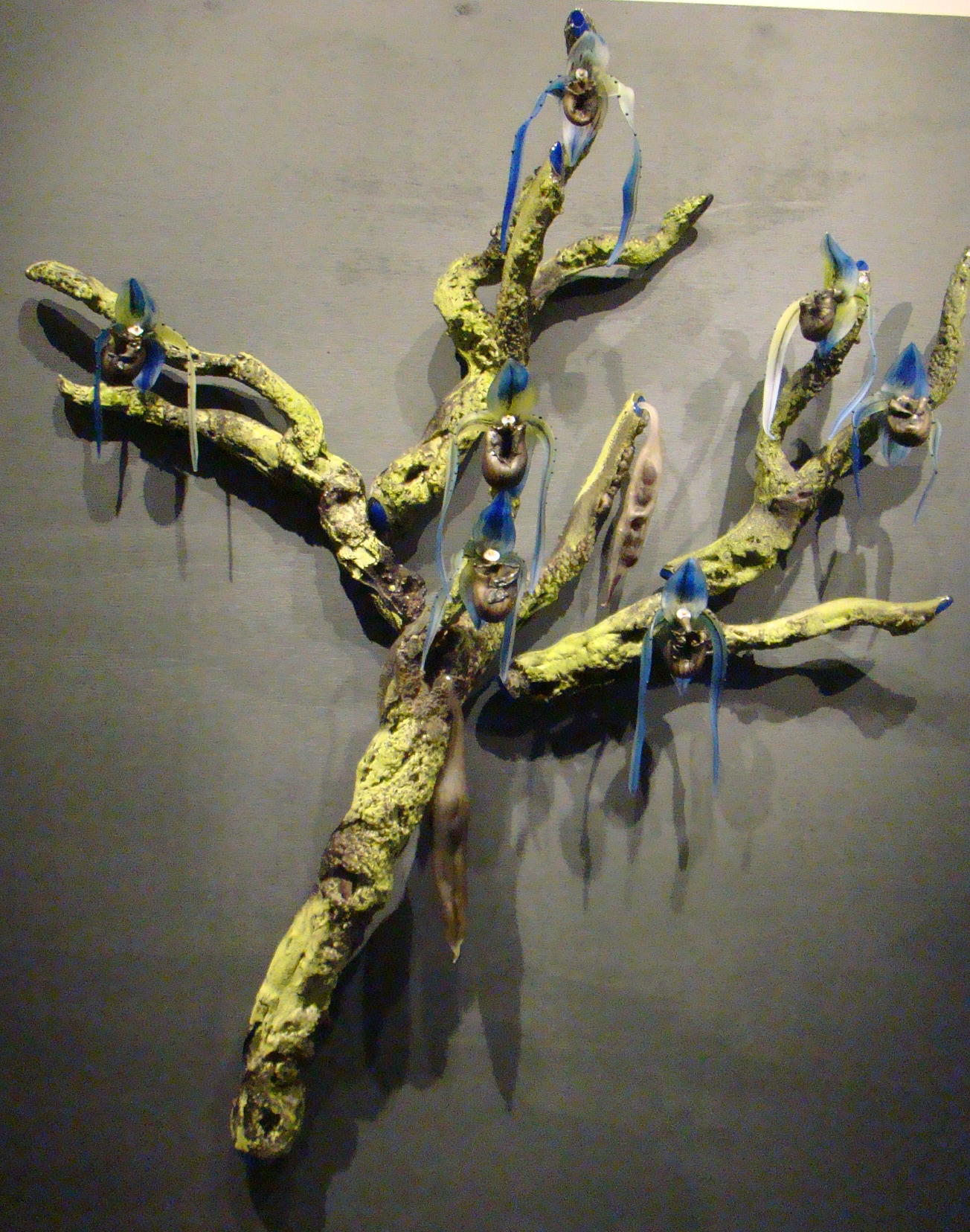
An added attraction was the beautiful blown glass art work by Debora Moore, Collectanea Botanica – Orchidaceae, showing her interpretations of orchids in blown glass sculptures. The Blue Orchid Tree, a beautiful Moore creation, is featured just inside the Cardinal Health Gallery. Debora feels that her work is a figment of her imagination combining the real qualities of the orchid with what she sees in her mind. This glass artist was a student and later an instructor at the Pitchuck Glass School, which was founded by Dale Chihuly whose work is also featured throughout the conservatory on a permanent basis.

My favorite artistic display was the large Pink Glass Orchid. Nature has always been Debora’s inspiration as she uses the medium of glass to express the grandeur and fragility of the natural world. She constantly learns and combines new methods with traditional glassblowing techniques to create her masterpieces.

Today, orchids are the top house plant with 25,000 varieties available. Symbolizing rare and delicate beauty, the orchid is an alluring and captivating plant to enjoy in your home. Franklin Conservatory is one of those places you can visit again and again, as they have featured shows throughout the year as well as an outdoor garden that blooms seasonally.

Walt Whitman wrote,”Give me a garden of flowers where I can walk undisturbed.” This is one of those special places that answers that request.

Franklin Park Conservatory can easily be reached off I-70 as it passes through Columbus, Ohio. Exit on 315 North and quickly you will make another exit onto Route 40 where you will turn right.  You are almost there as just a few blocks through the city, you will find Franklin Park on the right hand side.

Spirit of Christmas on Byesville Scenic Railway

Spirit of Christmas seems to be a fitting name for a ride on the Byesville Scenic Railway, because after you hear the stories of the miners from long ago, you will definitely appreciate the Christmas of today.

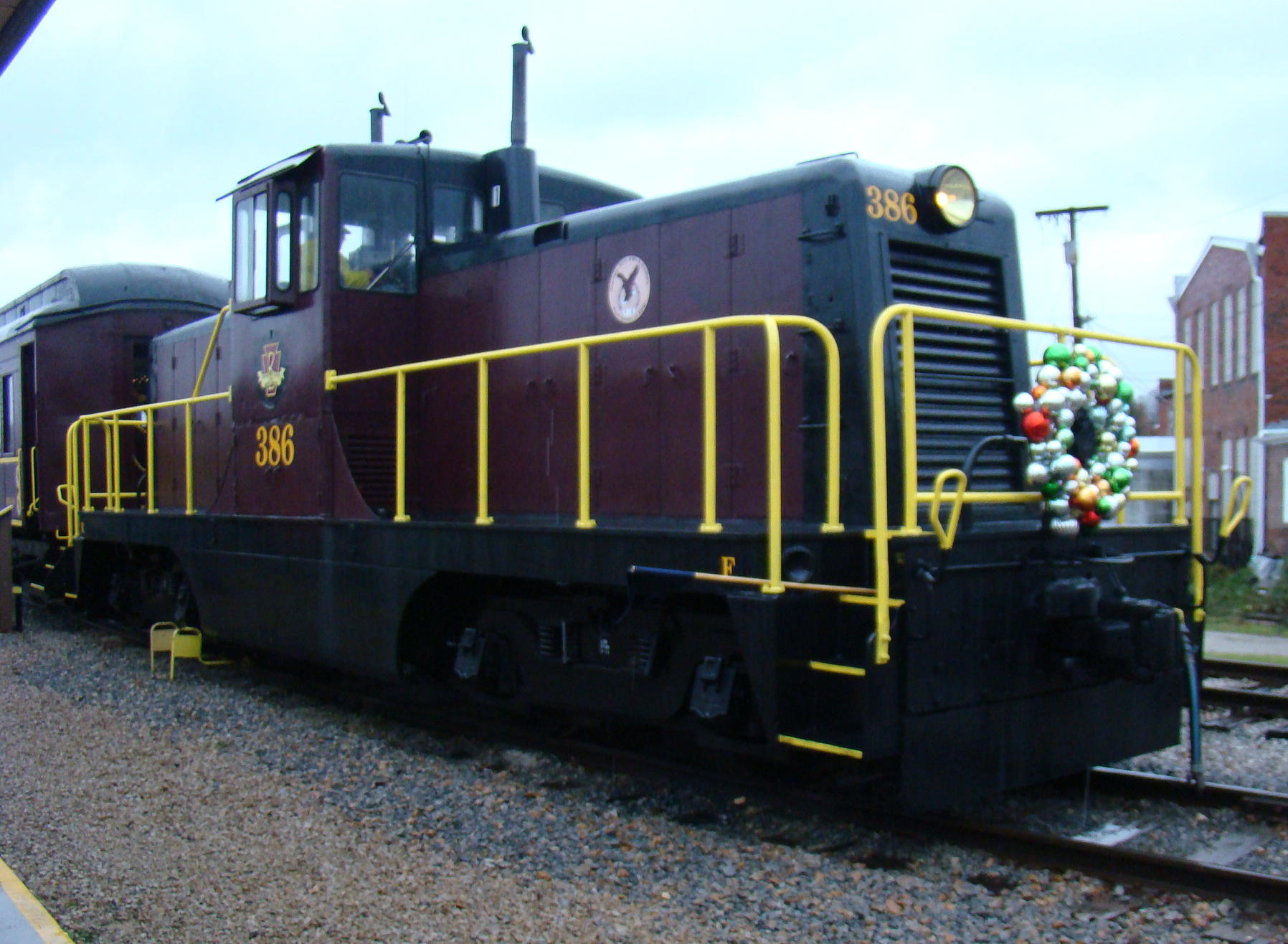
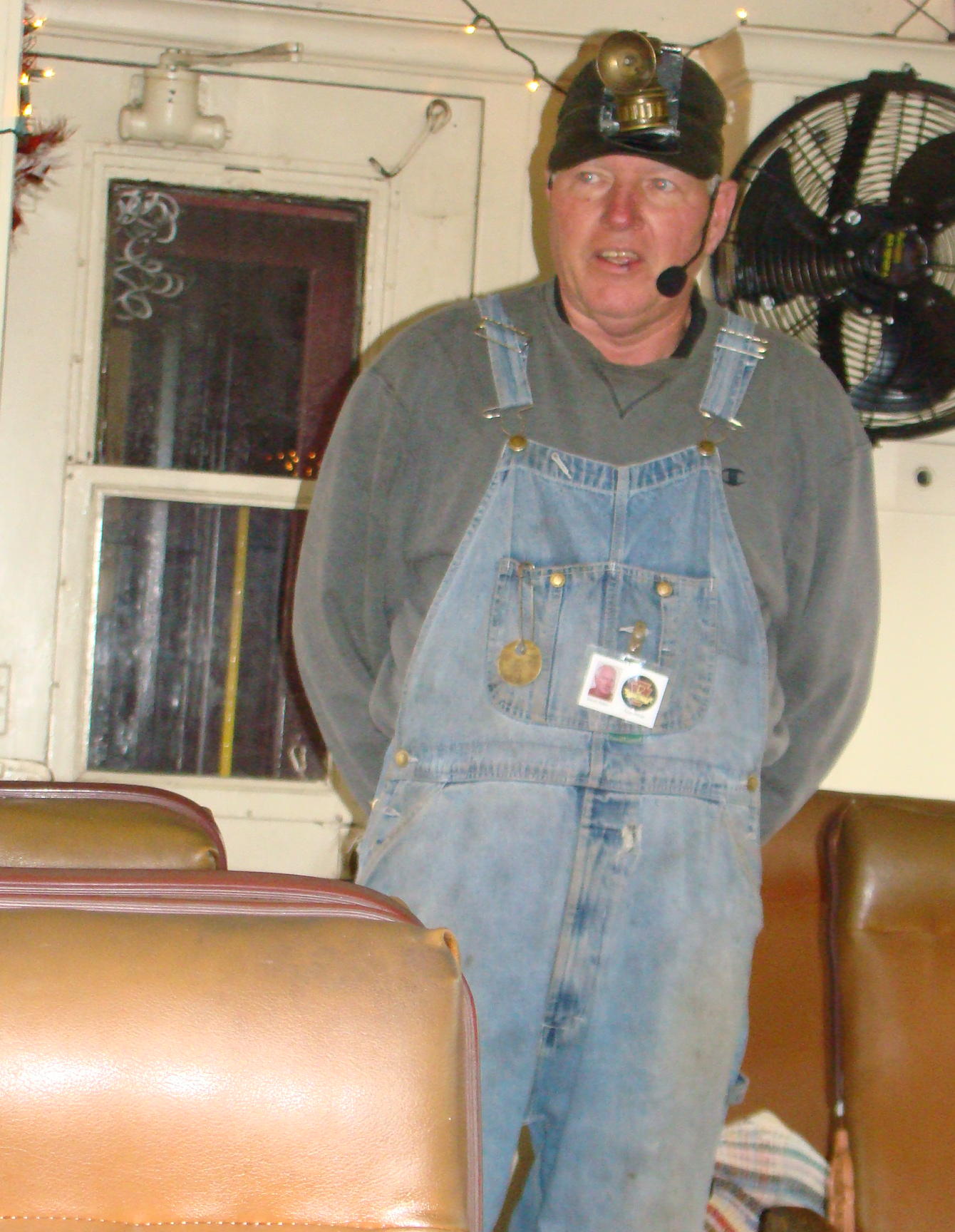
Accompanied on this trip by Miner Dave and Miner Steve, the hour train ride passed by twelve abandoned mines where about five hundred men worked underground.  However, in the area there were seventy seven deep coal mines with approximately five thousand men working.

The train track here was busy back in the early 1900’s with perhaps one hundred fifty trains going down the tracks on a busy day.  Their regular routes went from Marietta to Cleveland, but they went North as far as Canada.

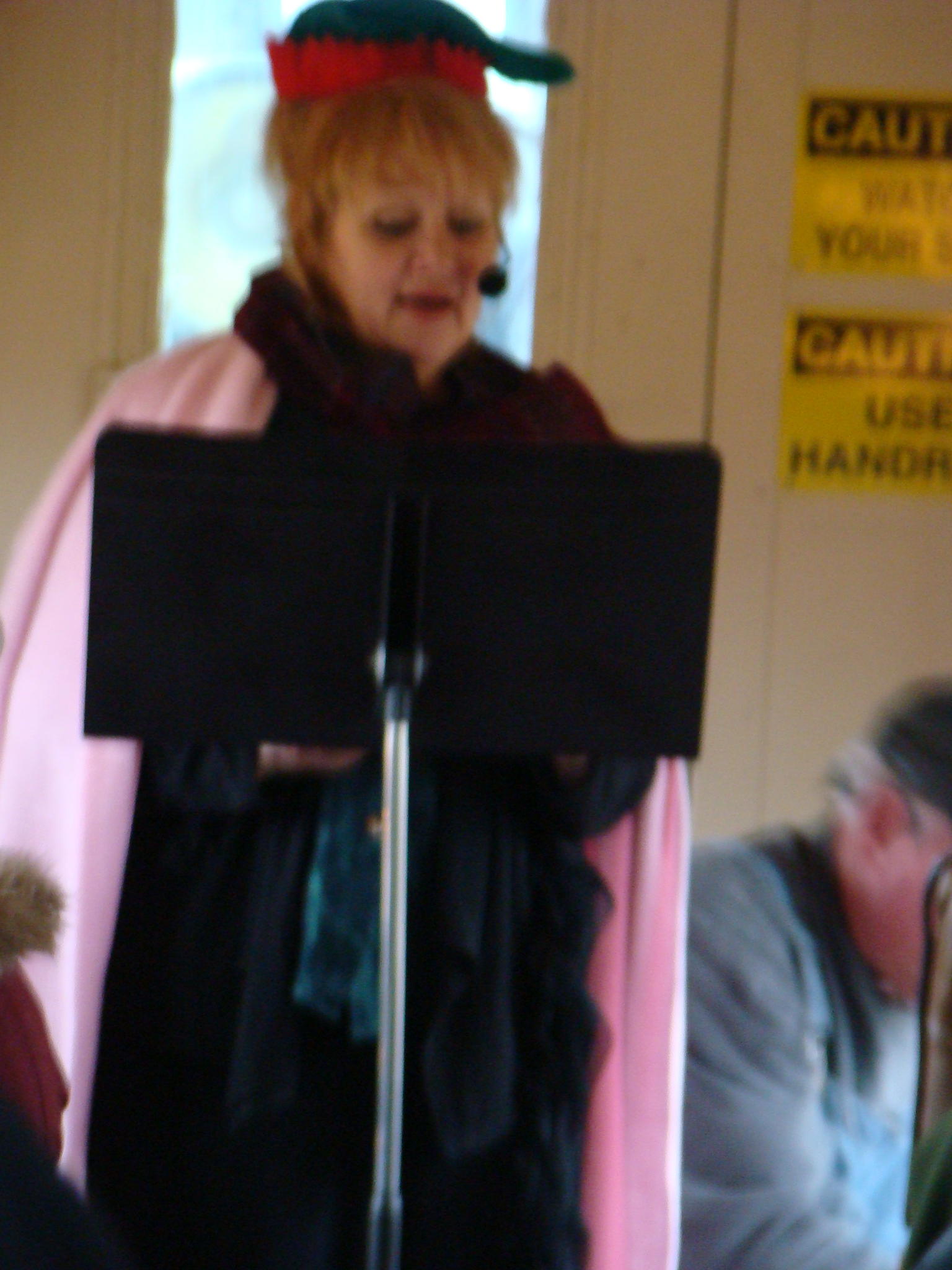
Since it was the Christmas season, Miner Dave asked if there were any teachers on board. Then he selected a lady to read “The Night Before Christmas” as the train went down the track.  Miner Dave did appropriate sound effects as well as scene effects behind her back, which made for an amusing reading.

Young people are remembered in the mines as children often started working at the age of eight, with their parents’ consent, especially if the father had been injured. Someone had to work to pay their $12 a month rent as otherwise their family would have no place to live.

They did indeed, as Tennessee Ernie sang, “Owe my soul to the company’s store.”   They were paid in tokens that could only be spent at the company store.  So if the family needed an item, they would charge it there, then the man of the family would pay for it on payday.

Miner Dave explained that only men worked in the mines as it was thought that women would bring bad luck. They worked about 175 days out of the year. There was no welfare in those days, so they had to use credit…at the company store. For this most dangerous job in the world, there was no insurance and no vacation. There were definitely no atheists working in the mines.  They all believed that someone was watching over them.

How did you know if you were to work each day? At 7:15 each evening, everyone would listen for the whistle at the mine. If it blew once, there would be work tomorrow; twice, maybe and listen again at 4:15 in the morning; three times, no work the next day.

All nationalities headed out to work swinging their dinner pail. The pails could not be set down on the mine floor or the rats would open them and eat their dinner.  So miners always hung their dinner pails high on the mine wall. A sandwich made of West Virginia Ham was quite a treat – that ham, by the way,  was bologna. They always left a little something in their pail, just in case there was a cave in and they might be below ground all night. If they made if safely through the day, the miners would let the children have their pails on the way home and enjoy a little snack.

On Christmas Eve a hundred years ago, the mines would close early for the day at 4:30. Since there was no money for gifts, a stop at the company store might allow them to get an orange or some walnuts for the children. Often they would break a limb off a tree and either stick it in a can or in holes in the handle of a broom. This they would decorate with rags, bittersweet, popcorn, ribbon or berries.

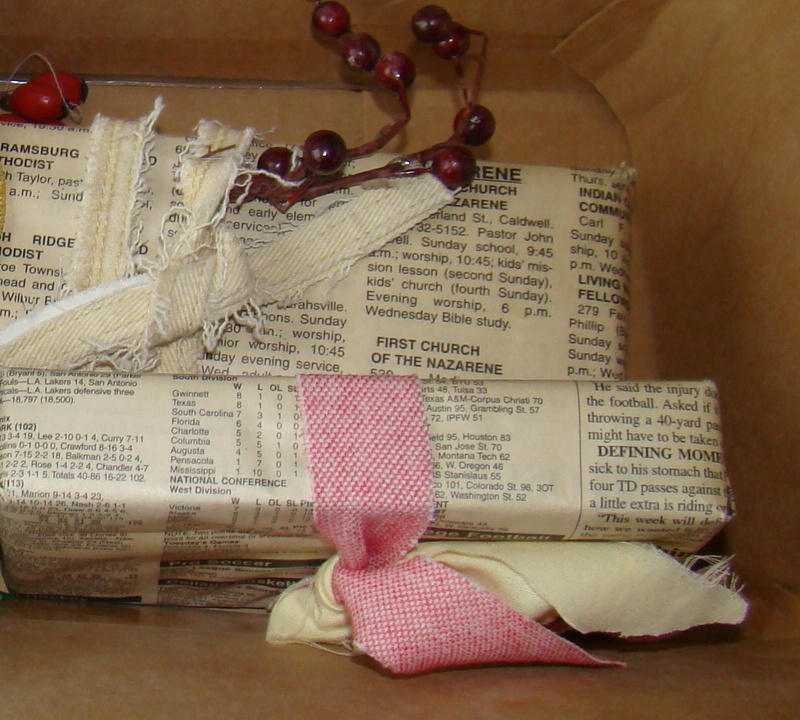
Everyone would go to sleep early that night and be up to go to church on Christmas Day in their cleanest bib overalls. When they arrived back home, there would be one or two gifts under the tree. Gifts were often wrapped in newspaper, and then tied with rags and decorated with sprigs of berries.  Most were gifts made with love, and all Made in America.

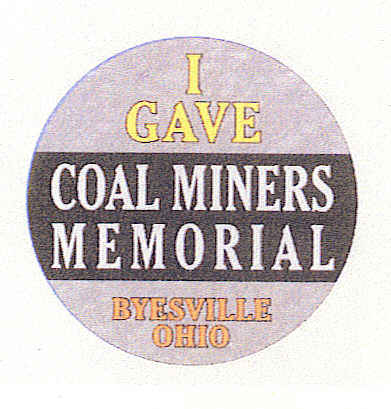
Byesville is the coal mining capital of Ohio and their plans are to erect a monument to the coal miner at their station in downtown Byesville. When you give a donation, you are given a badge that explains the mining story.

The colors on the badge are symbolic of life down in the coal mines.

Yellow stands for a beam of sunshine that sheds light on the darkness of the dungeon of a  dark and gray mine.

Gray is for the rock/slate layers that are found above and below the seams of coal.

Black needs little explanation as it is the color of coal, also know as black diamonds, buried sunshine, or rocks that burn.

Red is for the color of blood that was spilled onto the ground from those who either lost their lives or were injured while working about the mines.

Someday soon the Coal Miners’ Memorial Statue Fund will reach its goal and the efforts of all the workers and their families will be recognized.  Coal miners helped make our country what it is today and will never be forgotten.

Now you better understand why the Spirit of Christmas should be alive in your heart today and all through the year. Charles Dickens expressed this in A Christmas Carol when  Scrooge said:

I will honor Christmas in my heart

and try to keep it all the year

May the Spirit of Christmas roll on!

Byesville Scenic Railway is located in Byesville, Ohio just off I-77 (Exit 41) South of Cambridge. Turn toward Main Street of Byesville, then left at the traffic light.  The train depot is one block on the right. Free parking is available along Second Street and Seneca Avenue. The train operates most weekends during the summer months as well as for special holidays throughout the year.

Ghost Trek Stories in Hidden Marietta, Ohio

0oOOOoo! ooOOOoo! As the Ghost Lady leads a large group through downtown Marietta, Ohio, stories of ghosts are told on nearly every street. This is an old town with many restless spirits left over from the past.

Ghost Trek is a two hour walking tour of historic and haunted Marietta and begins along the Ohio River on aptly named Ohio Street.  Back in the early 1800s, this was the stopping off point for many riverboats.  So naturally a bar was one of the first establishments to serve the travelers.  The first bar to open ran out of whiskey in two hours and needless to say there were inebriated men walking the street 24/7, along with pick pockets and yes, ladies of the night.

The LaBelle Hotel was a popular House of Prostitution and the building is still in existence today, called the Levee House Cafe.  A story was told of a prominent businessman, who visited one of the young ladies frequently on the second floor. He attempted to keep this  a secret, but one evening his son followed him to the hotel with an axe.

The son watched as his father ascended the steps to the second floor and then waited until the light went out in one of the rooms.  Hastily, the son walked up to the second floor, opened the door, cut off his father’s head with the axe, and ran back down the steps to the street.  Guilty?  Not by the standards of those days! He was arrested but acquitted on the basis that he was defending his family honor.

Today the people who live in this building still hear the sounds of footsteps climbing up the stairs, a time of quiet, then footsteps running down the stairs again.  This is called residual haunting as the energy released in the environment during a traumatic event may  reappear as an echo of its original form.

On to the Lafayette Hotel where the third floor seems to have lots of unsettling paranormal activity. Built in 1918, every death that has occurred in this hotel has happened on the third floor.  Guests frequently complain of personal belongings being moved around.  One man commented, ” I am a science teacher. I don’t believe in any of this stuff”… until his belongings in his room got rearranged and some came up missing.

Fifty paintings of  artist James Weber (1888-1958) were brought to Sugden Book Store for an art show on the second floor. Melancholy Weber loved his art work, but was forced to run the family grocery store.  So he said that when he died he wanted all of his paintings burned.  But someone found fifty that were left behind!

After careful setup for the art show, the owners were very pleased with their findings. Next morning when they arrived to open the show, they found the table had been knocked over as well as the pictures.  On the desk was a real estate report – a deed from 1932 for James Weber’s art studio, right there on the second floor!

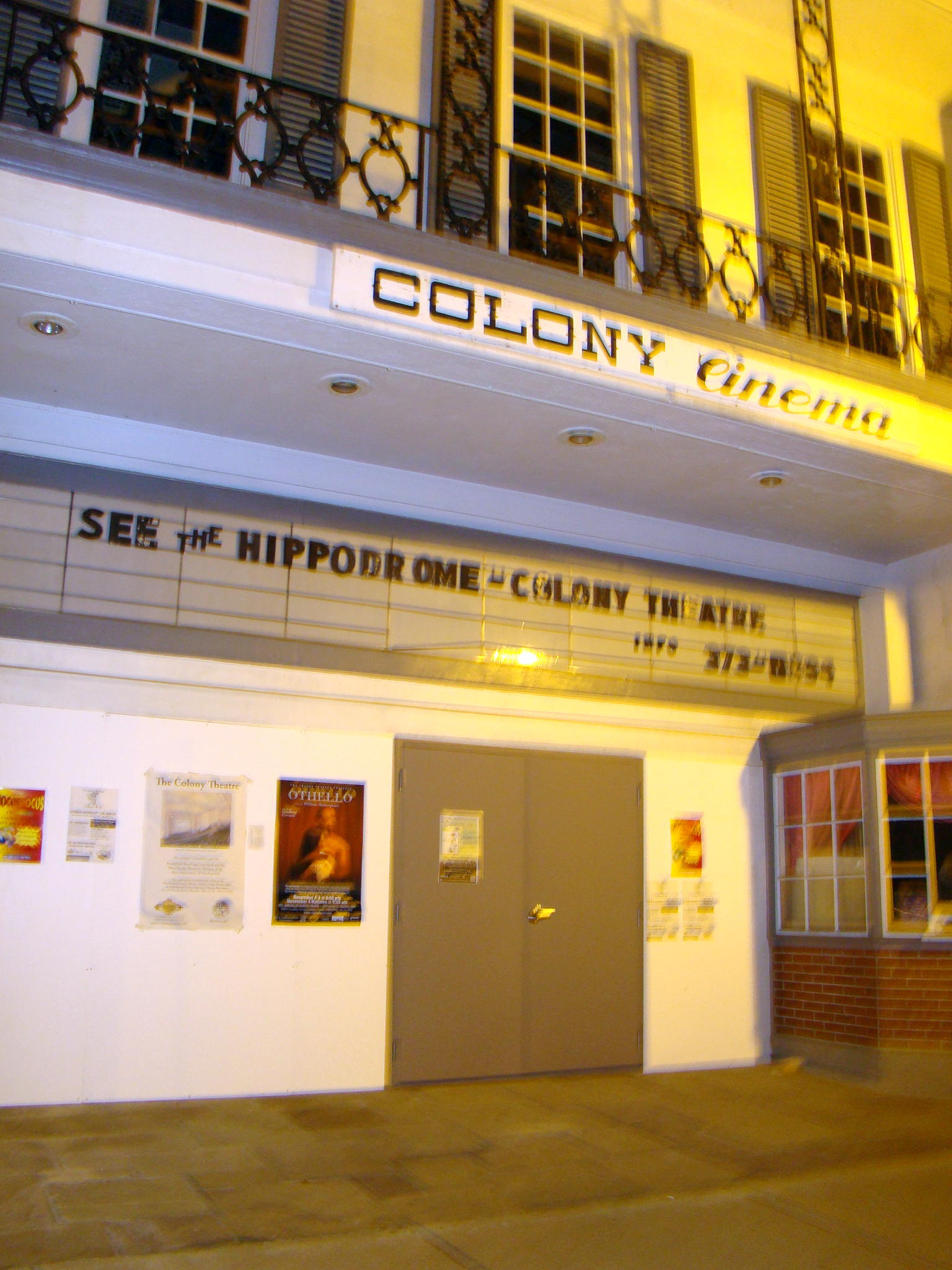
Restoration of the old Colony Cinema was seen firsthand as the group had special permission to enter the theater. Here, it is said, the ghost of the former owner, Mr. Shay,  travels via an underground passageway between the Colony Cinema and Mid Ohio Valley Players Theater across the street. Colony Cinema has been an important part of the Marietta community since 1919 when it was The Hippodrome Theater, the premiere showcase of Marietta and the surrounding area. Some of Hollywood’s biggest names, including Frank Sinatra, Judy Garland, and Boris Karloff, appeared on its stage.  Its gorgeous original asbestos fire curtain has been rediscovered and is being restored to be featured predominately in the restored Colony Cinema.

The last stop on the tour was at Tiber Way Grille, where people hear sobbing, crying, and have an edgy feeling.  They definitely feel it is haunted. Closer look at old lettering on the building perhaps gives a reason for this feeling.  It says: Chronic Diseases The Sanitorium. This twenty six room hospital was used for tuberculosis patients in the early 1900s as well as for those with extreme mental problems. Fittingly, next door was Doudna’s Funeral Services!

Nothing beats a haunted, moonlit night with ghosts of the past.

To arrive in Marietta, Ohio take Exit 1 off I 77 and head west on Route 7, Greene Street. Where the Muskingum River meets the Ohio River, you will find the old Lafayette Hotel, the starting point for the Ghost Trek. This walking tour is under the expert guidance of Lynne Sturtevant, founder of Hidden Marietta and author of several books of Marietta history.

Adena Mansion Pictures Life in Early Ohio

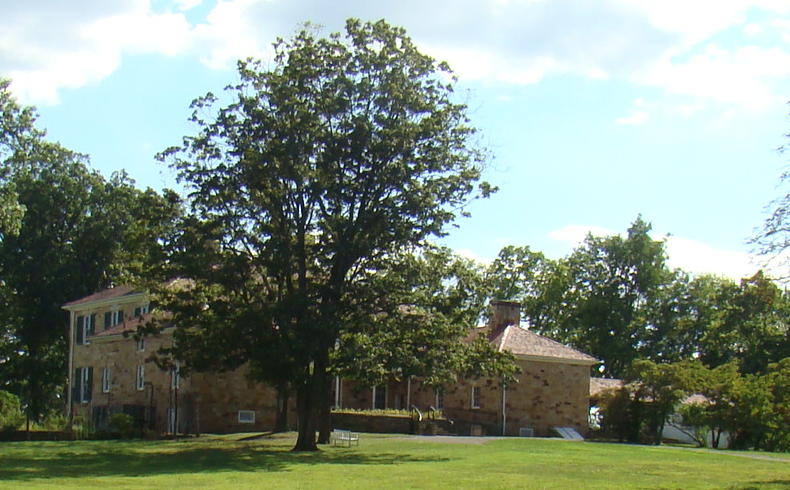
“No ghosts – not even rumors of ghosts here,” explained the guide as she began an interesting tour of the Worthington Mansion at Adena State Memorial near Chillicothe, Ohio.  Built in 1806-07, this beautiful mansion home was designed by what many consider the first American architect, Benjamin Henry Latrobe. Usually Latrobe was busy with larger projects, such as designing the United States Capitol, but as a friend of Thomas Worthington he agreed to design a beautiful home on the 2000 acre estate.

The Worthington home, Adena, was the most magnificent mansion in the area at that time, and fascinated crowds of visitors. Large panes of window glass and papered walls were novelties which especially attracted attention. The sandstone blocks for the house were all dug from a quarry on the property.

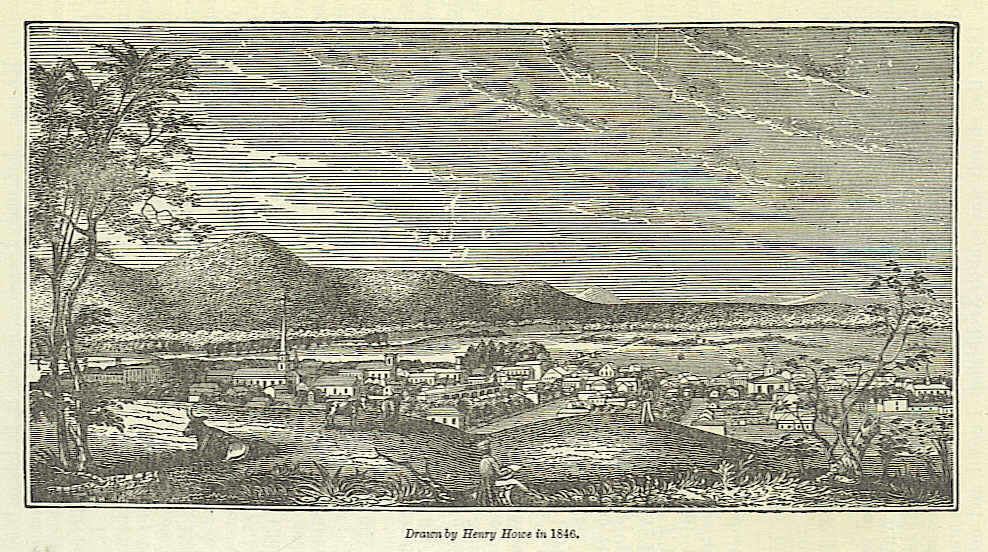
This drawing by Henry Howe in 1846 shows the beautiful garden vista at Adena that inspired the Great Seal of Ohio. Looking across the front lawn, the Scioto River flowed between the cultivated fields and Mount Logan.  On the Great Seal of Ohio, the sun displays thirteen rays of light symbolizing the thirteen colonies. In the field is a shock of wheat representing the prominent field of agriculture in the state. Nearby, resembling a shock of wheat but showing Ohio’s Indian heritage, is a sheaf of seventeen arrows proclaiming Ohio as the seventeenth state.

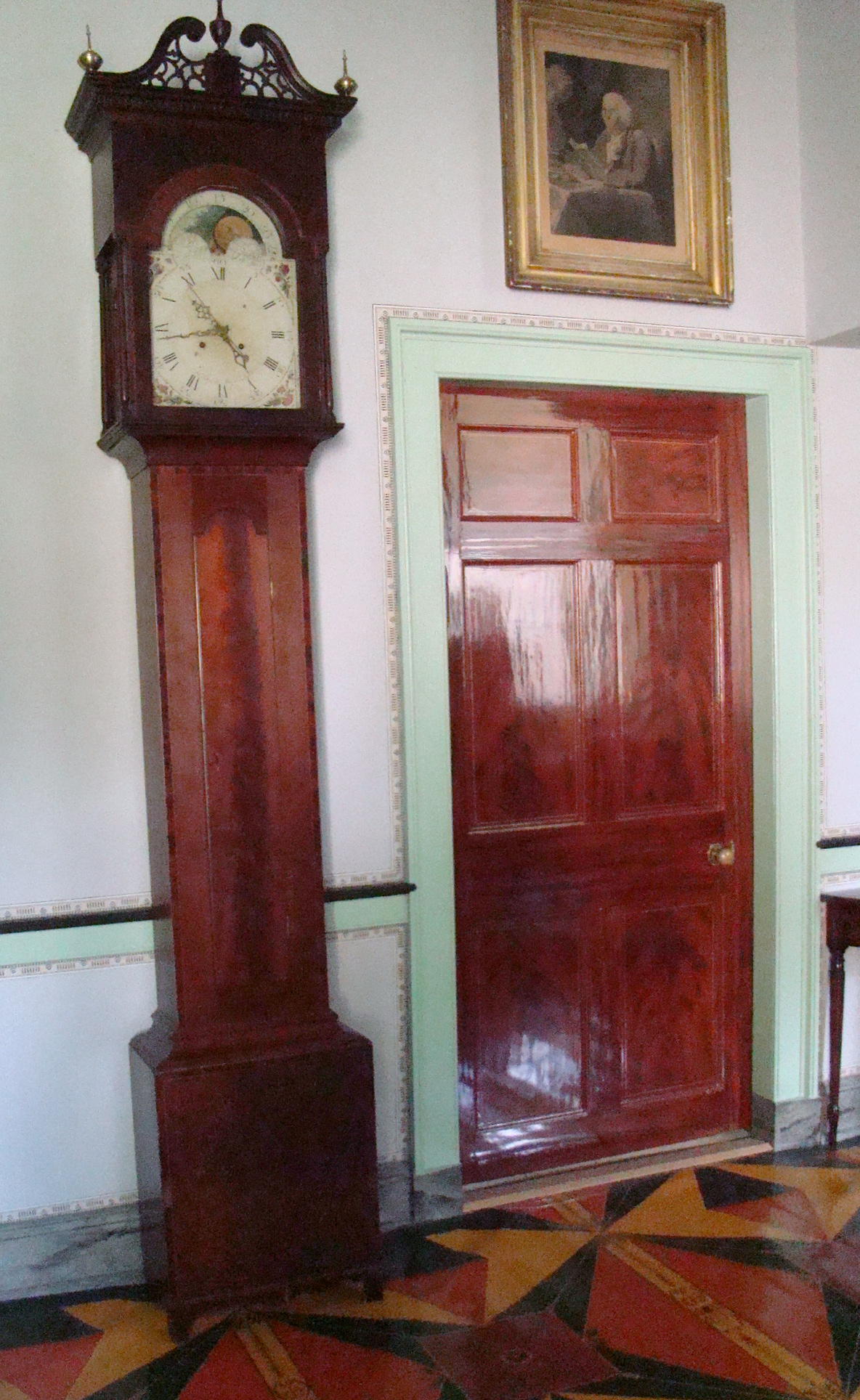
Today the house has been restored to appear much like it did during the time the Worthingtons lived there.  Much of their original furniture can still be seen. Worthingtons’ actual skeleton key was used to unlock the door to begin the tour, and felt lucky to have it in my possession for a short while. Upon entering the mansion, a beautiful large clock made by George McCormick and costing $35 at that time stands beside a beautiful staircase, which appears to be marble but was actually painted with a feather to achieve that effect. Throughout the house a shade of pink paint was used. Paint was very expensive at that time and the pink tint was achieved by crushing a special insect into the paint.

Ten children were raised in the nursery, which strangely enough had no heat. Guess they had to be strong to survive, but none of those children died.  The parents’ room was next to them and had a nice fireplace so hopefully they kept the door open. Worthington’s wife, Eleanor, taught the children in the parlor while running the household from there at the same time. On the wall was a list of Family Maxims to live by, for example: “Keep everything in its proper place, do everything in its proper time, and delay not till tomorrow what should be done today.”

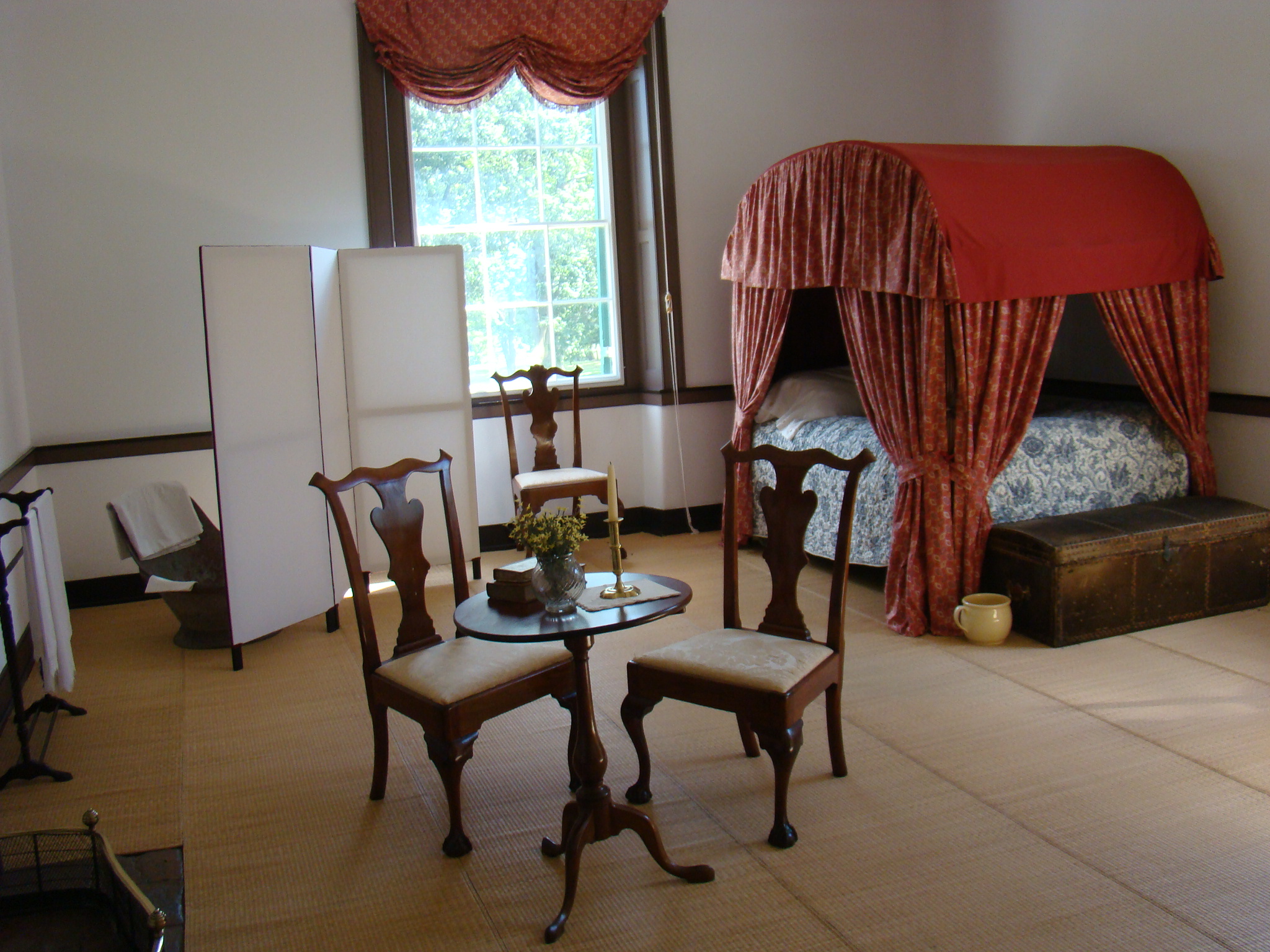
The rooms on the second floor were all bedrooms, except one which was perhaps a servant’s room, and a large dark closet where, it was told, they placed children when they misbehaved. Many famous guests stayed here including Henry Clay, General William Henry Harrison, and President James Monroe.  Of special interest was the screen on the left side, which hid from view their bathing area.

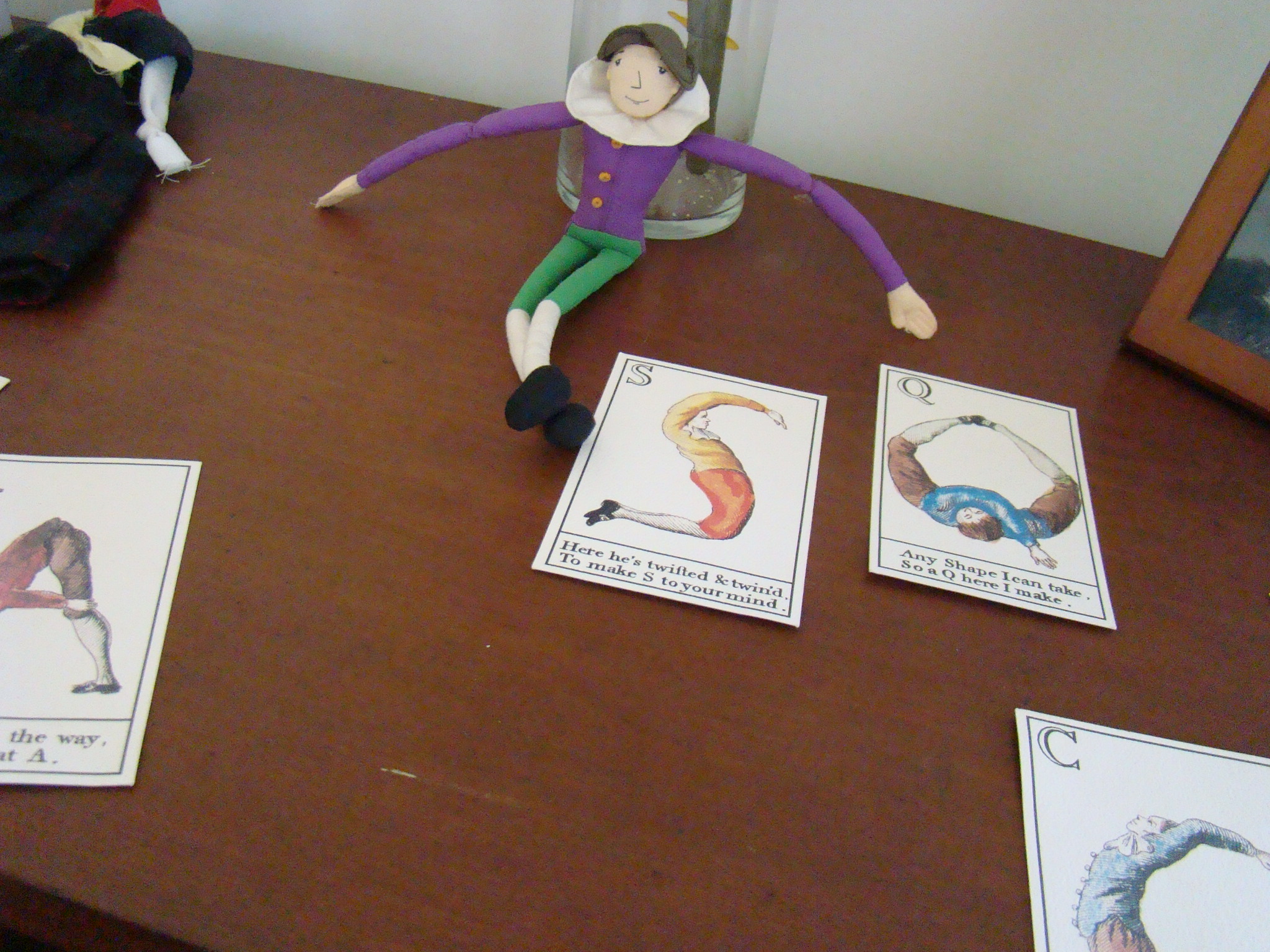
Among the  four bedrooms upstairs, there was one for the boys and another for the girls. Although there were ten children, there were seldom more than three in a room at one time. On the dresser in the girls’ room was a set of cards for learning the alphabet with a flexible Mr Hodge Podge to bend to the shape of the letters.  Guess the girls had homework even way back then. Education was very important to the Worthington family and they even thought it important to educate the girls, which was not a common occurrence in the 1800s. Imagine they took a break now and then and looked out the window at the beautiful gardens surrounding their home.

After reading a book on ancient history, on Sept. 18, 1811, Thomas Worthington wrote in his diary: “Adena” a name given to  “places remarkable for the delightfulness of their situations.”  It becomes apparent that visitors experience this same type of feeling by the smiles on their faces as they explore this beautiful mansion from years gone by.

The Adena Mansion is located Northwest of Chillicothe, Ohio just off State Route 35. Directions are well posted to the Adena State Memorial, which includes the Mansion and Gardens.  It is a short walk through the Gardens to arrive at the Mansion. Admission is reasonable but you need to check their schedule for hours opened.