Places to go and things to see by Gypsy Bev

Archive for the ‘Gardens’ Category

A Delightful Touch of Spring : Blooms and Butterflies
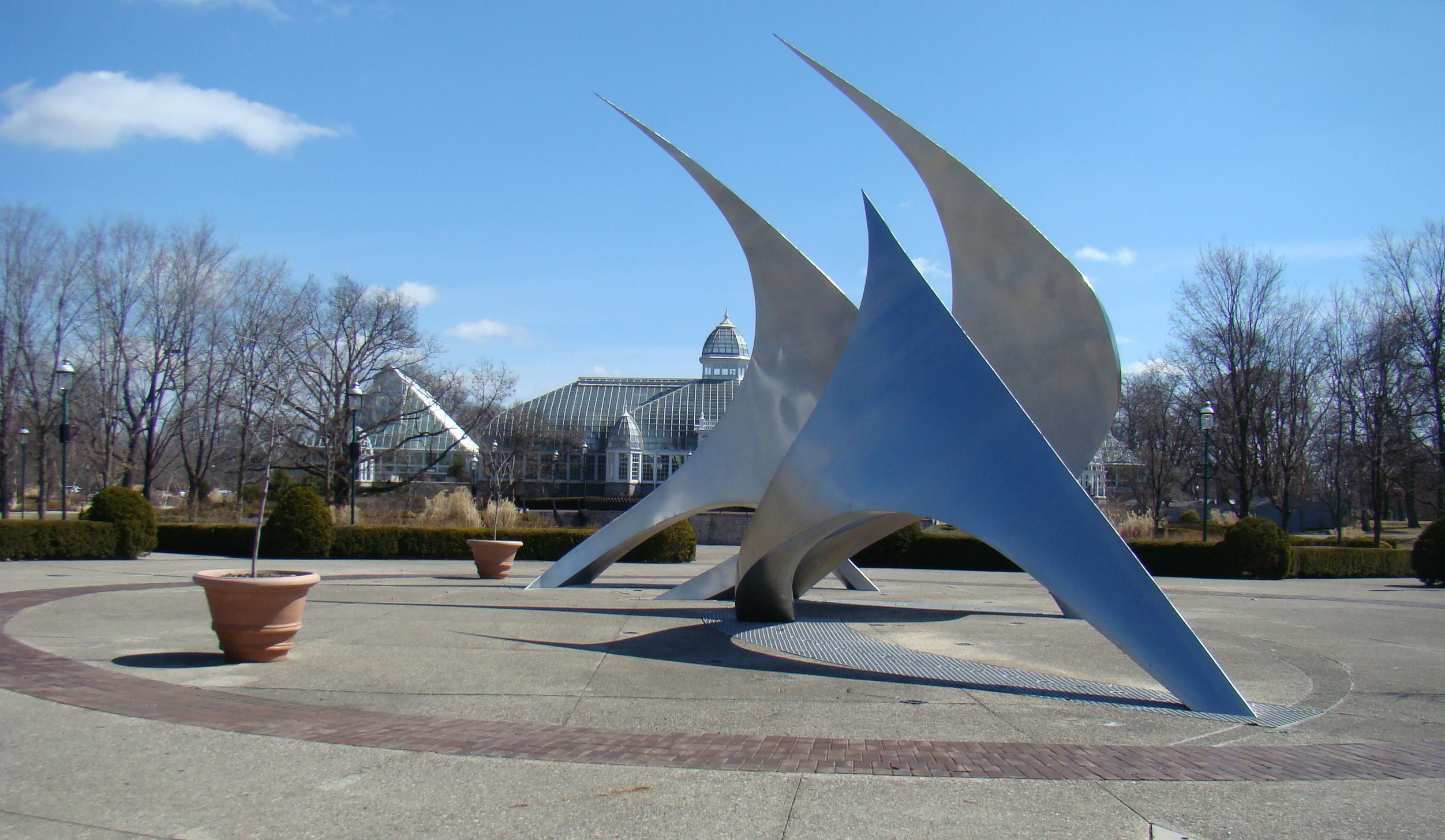
Franklin Park Conservatory
Franklin Park Conservatory

Ready for Spring? After a long, frigid winter, most of us are ready to watch the earth come back to life again with green plants and flowers. If you happen to crave the taste of spring, a trip to Franklin Park Conservatory in Columbus, Ohio will temporarily satisfy your longing for beautiful blossoms and greenery.

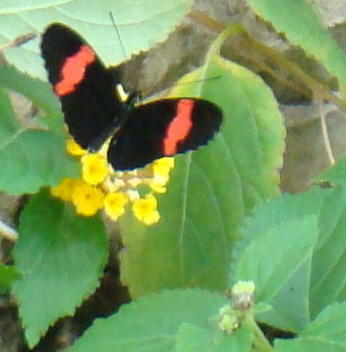
Butterfly on Bloom

Butterfly on Bloom

Right now, their theme of “Blooms and Butterflies” seems the perfect way to put a touch of spring in the air. Franklin Park Conservatory provides a wide variety of experiences from botanical gardens and greenhouses to art sculptures and glass exhibits. Those who enjoy flower gardening soak up the scents and admire the picture perfect displays. Visitors enjoy blooms at the conservatory all year long, but the butterflies are a special added attraction.

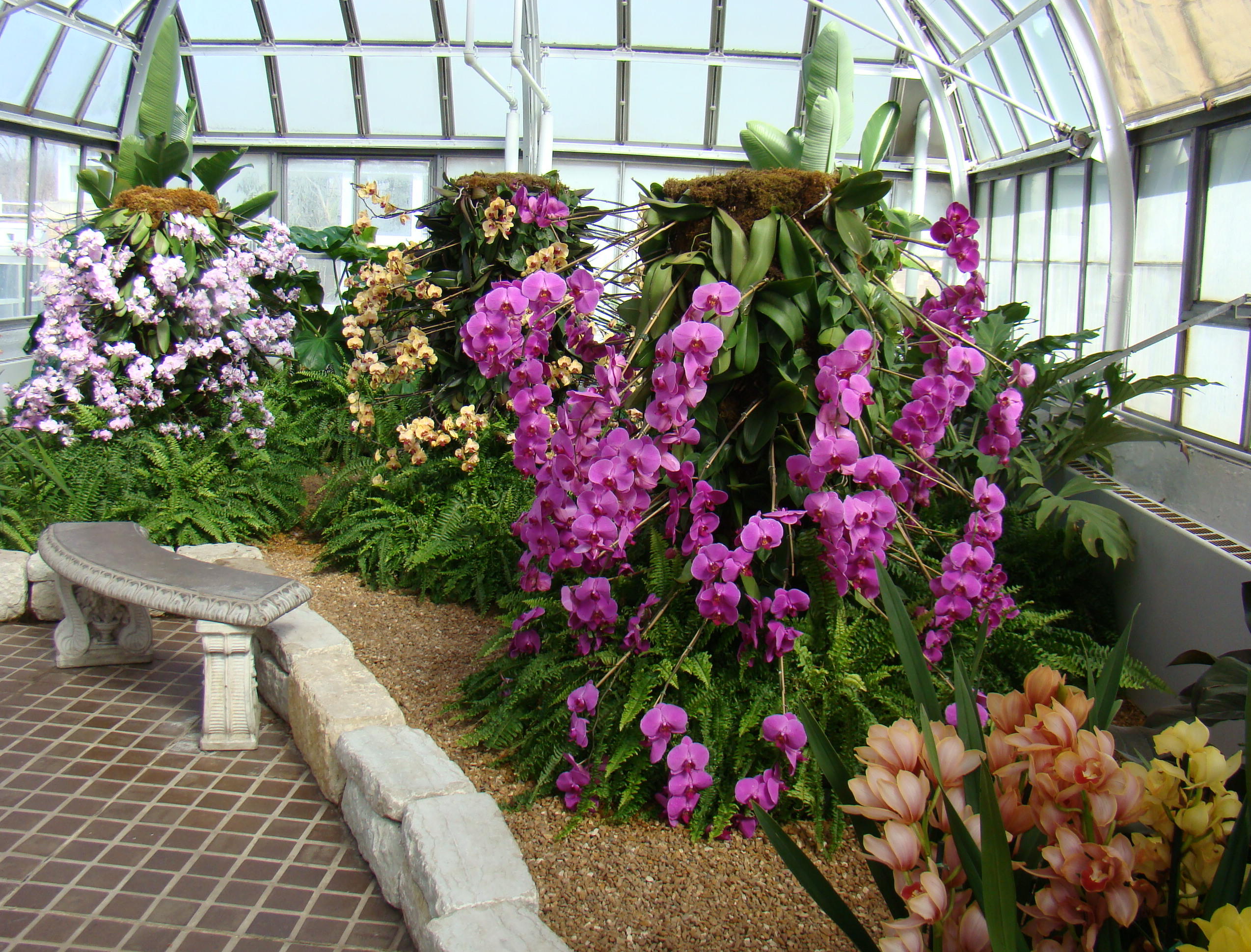
Beautiful orchids in various hues and scents

Beautiful orchids in various hues and scents

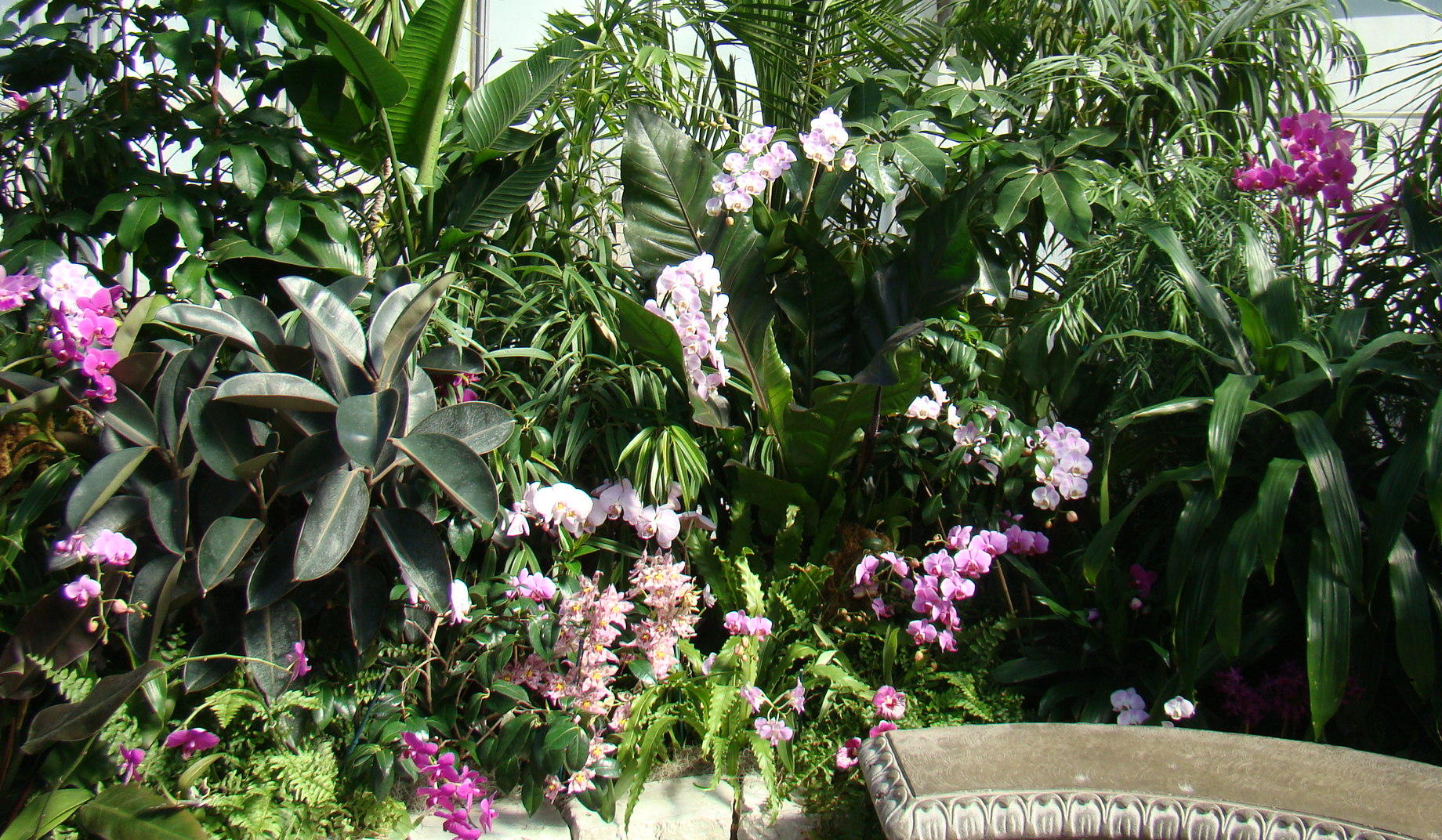
In the Dorothy M. Davis Showhouse, the featured blooms are “Orchids!”. Their varied orchids are much larger than most of us could hope to grow, but provide a peaceful place to relax and dream. Over 1000 orchids of all sizes and hues create a beautiful scene and scent. Soon spring blossoms outside will appear, including tulips, azaleas, lilies, and rhododendrons. Every season has its floral beauty at Franklin Park Conservatory.

Children are fascinated as they watch the butterflies emerge from their chrysalises. Parents have the chance to educate their youngsters on the life of the butterfly from the eggs they lay to the spinning of their protective covering before the appearance of a beautiful butterfly.
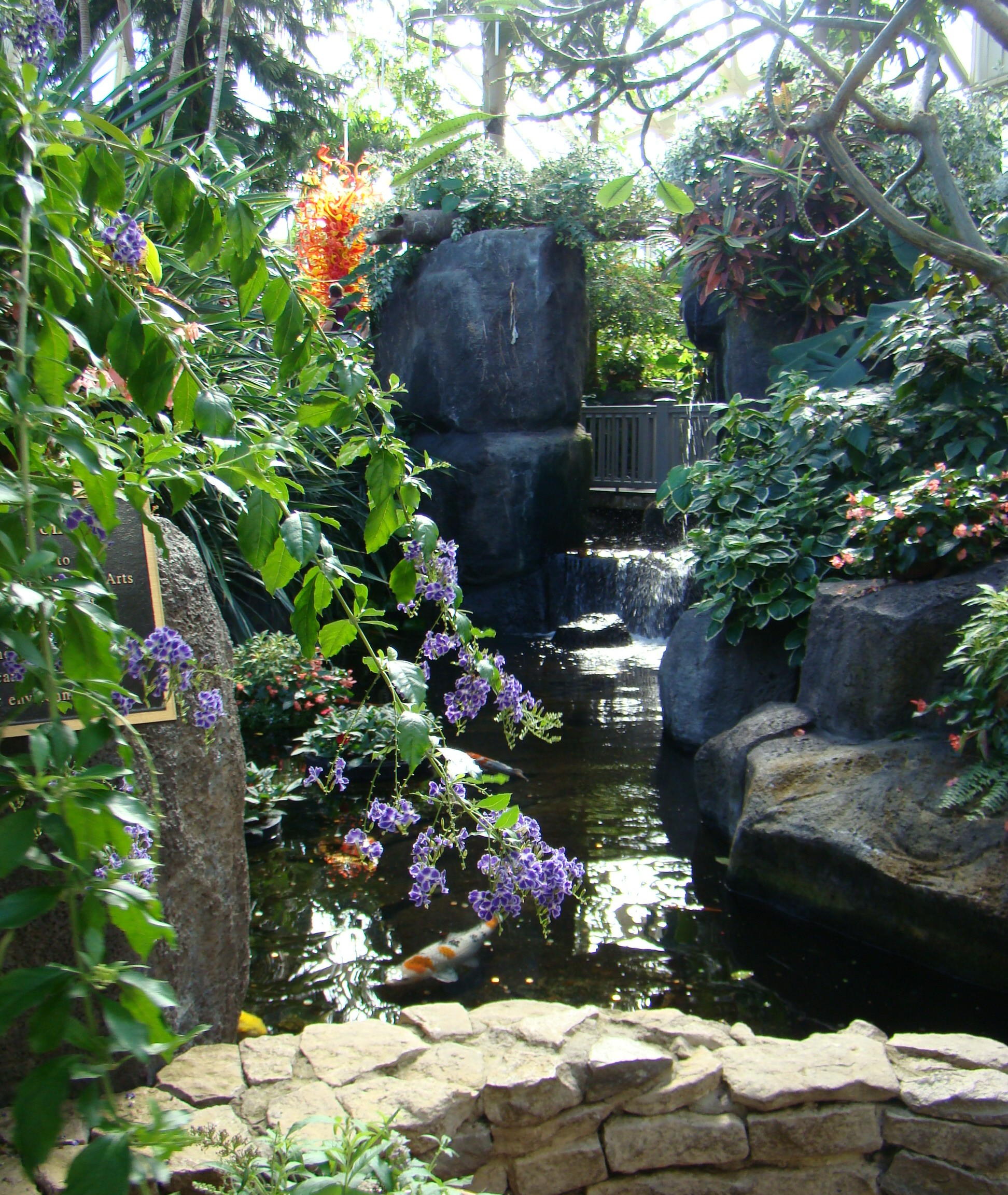
Peaceful Annie's Pond

Peaceful Annie’s Pond

Large displays of chrysalises at the Emergence Center give ample opportunity to watch the butterflies come to life. Everything from a small 1 ½” butterfly to a 12″ Attacus Atlas Moth might be making their premiere appearance as you watch.

When the butterflies first emerge, they may hang upside down for several minutes while their wings dry so they can fly away and explore some nearby blossoms. They must enjoy themselves quickly as their average life span is only about two weeks.

Inside the Pacific Island Water Gardens’ section of the conservatory, butterflies fill the air. At least 2000 butterflies are in this warm tropical paradise each day. A Butterfly Release occurs twice a day so the newly free can test their wings as they taste nectar from bright tropical blooms.
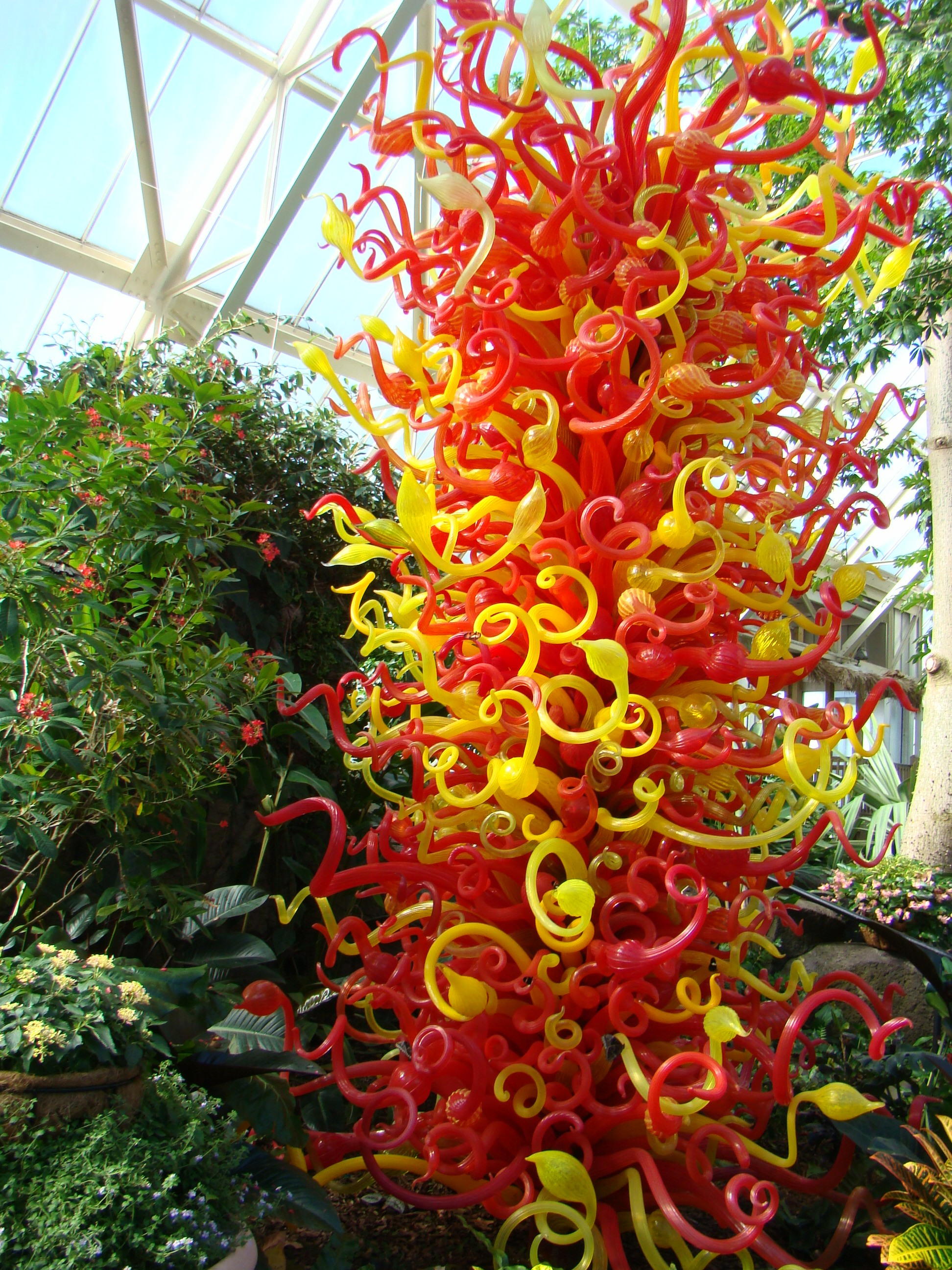
"The Sunset Tower" provides a gathering place for many butterflies.

“The Sunset Tower” provides a gathering place for many butterflies.

A favorite resting place for the butterflies was a beautiful piece of art by Chihuly, whose glass designs can be viewed throughout the conservatory. “The Sunset Tower”, in golden sunset tones, gave the butterflies a place to congregate peacefully.

Since most children desperately want an exotic butterfly to land on them for good luck, the naturalist often places the newly released butterfly on a child’s shoulder. Those who could sit still long enough were actually butterfly magnets, and might have three or four butterflies on their shirt. Watching the children brought to mind a piece of advice from Nathaniel Hawthorne:

“Happiness is a butterfly, which when pursued, is always just beyond your grasp, but which if you sit down quietly, may alight upon you.”

The next time you aren’t pleased with the weather and want to be surrounded by the beauties of nature, take a trip to Columbus and visit the Franklin Park Conservatory. As summer approaches, there is an outdoor butterfly garden to attract Native Ohio Butterflies. Celebrate the 20th Anniversary of “Blooms and Butterflies” this year with your family or friends. You won’t even think about the snow that fell during the winter!

Franklin Park Conservatory can be easily reached off I-70 in Columbus, Ohio using the Broad Street Exit. Turn right onto Broad Street and the conservatory is about one mile down Broad on the left hand side. Watch for entrance signs.

Dr Balthasar – Medicine Man Miracle Medicine for Man or Beast

Dr. Balthasar, Medicine Man

Dr. Balthasar, Medicine Man

“Try a bottle of Elexir!”

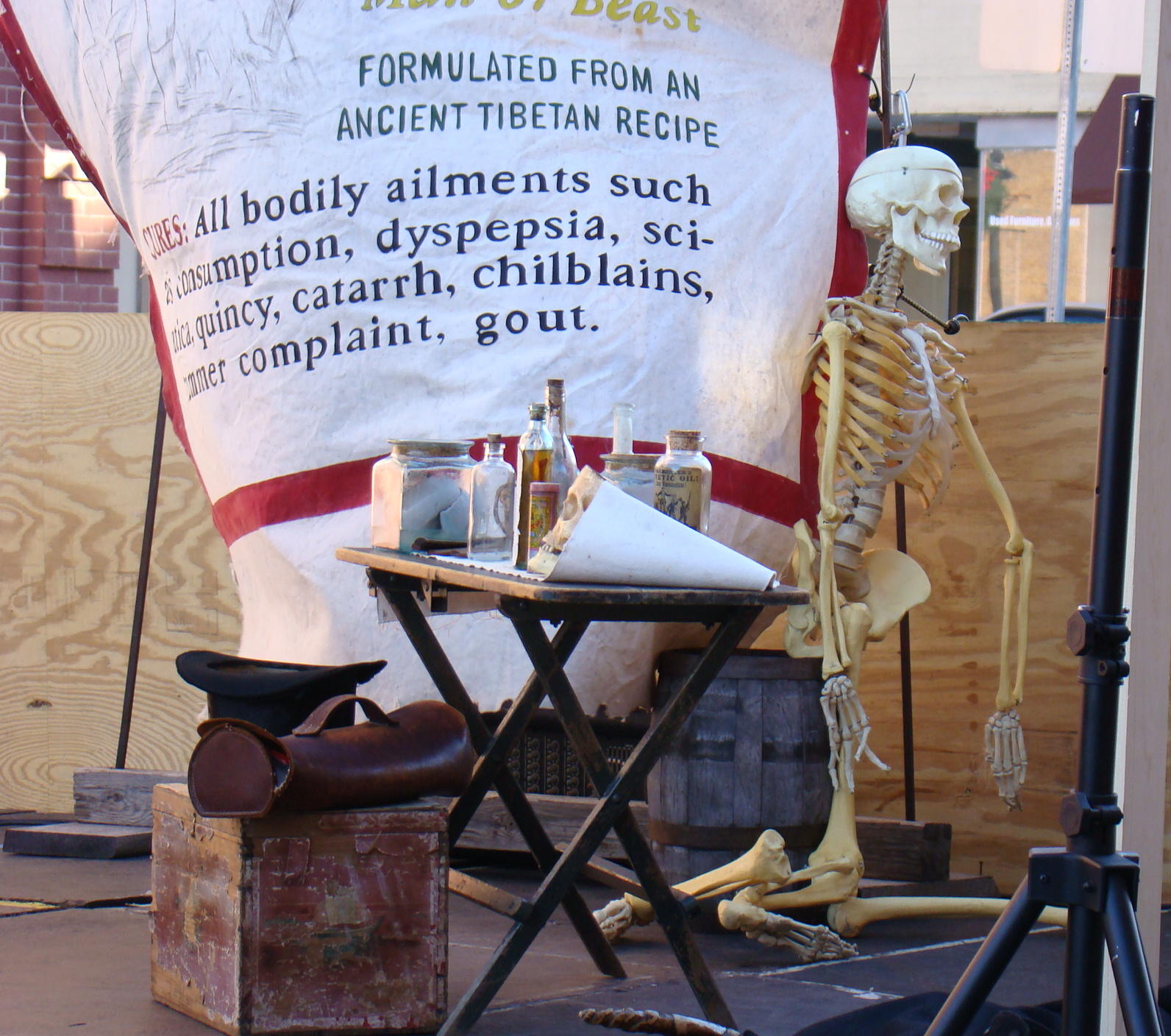
Dr. Balthasar, Medicine Man, campaigned for everyone’s good health as he presented his wares from town to town. The sign he displayed proclaimed: Miracle Medicine for Man or Beast formulated from an ancient Tibetan recipe. Quite frequently he was referred to as  “a snake-oil salesman”, proclaiming this miracle tonic would cure a great variety of ailments.

The character of Dr. Thelonious Balthasar was created by Mike Follin, an education interpreter with the Ohio Historical Society. He thought this would be a good way to educate folks about life and medical treatment during the 19th century. Before each performance, Mike tells the audience a little about life on the frontier, where the visit of a traveling salesman was great entertainment. Then he transforms into frontier Dr. Balthasar, Medicine Man.

Most people appeared at his shows for two reasons: medication and entertainment. Word would spread from house to house when the doctor’s wagon was seen.This slippery snake oil salesman provided gossip and national news, as well as entertainment that cheered the crowd. As he traveled the countryside selling his famous Elexir, one of Dr. Balthasar’s favorite places to stop and tell his tales was in Michigan. There he said the folks were the most gullible and sales were high.

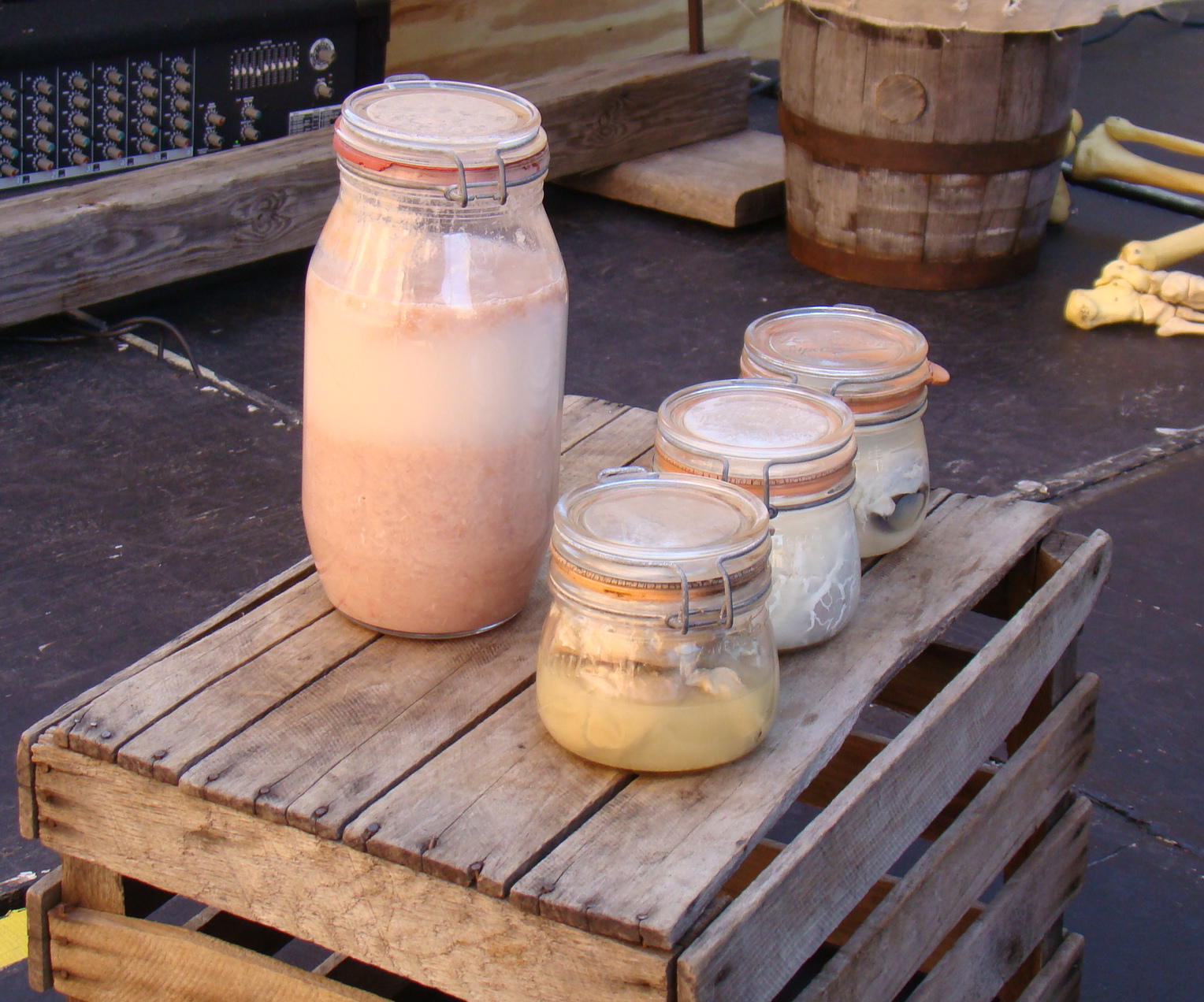
Remains of victim who exploded after refusing treatment

Remains of victim who exploded after refusing treatment

The good doctor, in his rapid fire patter, demonstrated what happened to those who refused his services. A young man who was very ill  boldly told the doctor, “I don’t need your medicine.”  Six months later that same man came back to another Medicine Show and said that perhaps he should have taken the tonic as the pain became worse and worse. Before the doctor could give him the Elexir, the man exploded. Parts of his body went everywhere and had to be scraped up so the Medicine Man could save them in jars, thus demonstrating the importance of taking his tonic. Perhaps it would keep someone else from having the same fate. You can even see an eyeball peeking through one of the jars.

Skeleton, who did not heed the doctor's warning

Skeleton, who did not heed the doctor’s warning

This skeleton was all that was left of another of his patients who had faded away to nothing because they refused to take his medical advice. “If he had purchased this Elixir for only $2, that man might have been cured of his consumption and still be here today.”

” Some of you see men who have had their hair fall out, just like the stars fall from the sky. Why does a man’s hair on the top of his head fall out? Why doesn’t he lose his whiskers? I tell you, he outgrows his hair because he has too much knowledge.”

Dr. Balthasar’s Miracle Medicine was the answer to all health problems.  A free gift was usually promised – free advice. “I stand behind every bottle that I sell of this latest in medical potions,”  were his words of assurance. However, the Medicine Man would usually leave town before customers had a chance to demand a refund. His treatment was very effective, unlike the practicing physician, who told patients to come back in two weeks.  “When you buy my medicine,” explained Dr. Balthasar, “you will never see me again.”

When the government decided they needed to regulate the sale of medications, the Medicine Man was basically put out of business. Patenting medicine made it necessary to list all the ingredients on the bottle. Thus began the time of medicine sales to further pharmaceutical agencies; unfortunately, home remedies were no longer acceptable.

What were the contents of Dr. Balthasar’s famous Elixir? 150-200 proof alcohol, otherwise known as “white lightning”. It certainly made people feel better for a while and forget their problems.

As he closed the show, Dr. Balthasar held up a bottle of his Miracle Medicine proclaiming, “This is the answer to a long and healthy life. I’ll also give you a bit of free advice. Stay away from two types of people: politicians and traveling medicine men.”

Dr. Balthasar, Medicine Man, recently appeared in Cambridge, Ohio as part of their Dickens Victorian Village presentation. Where will he stop next?

The Awesome Japanese Garden at Dawes Arboretum

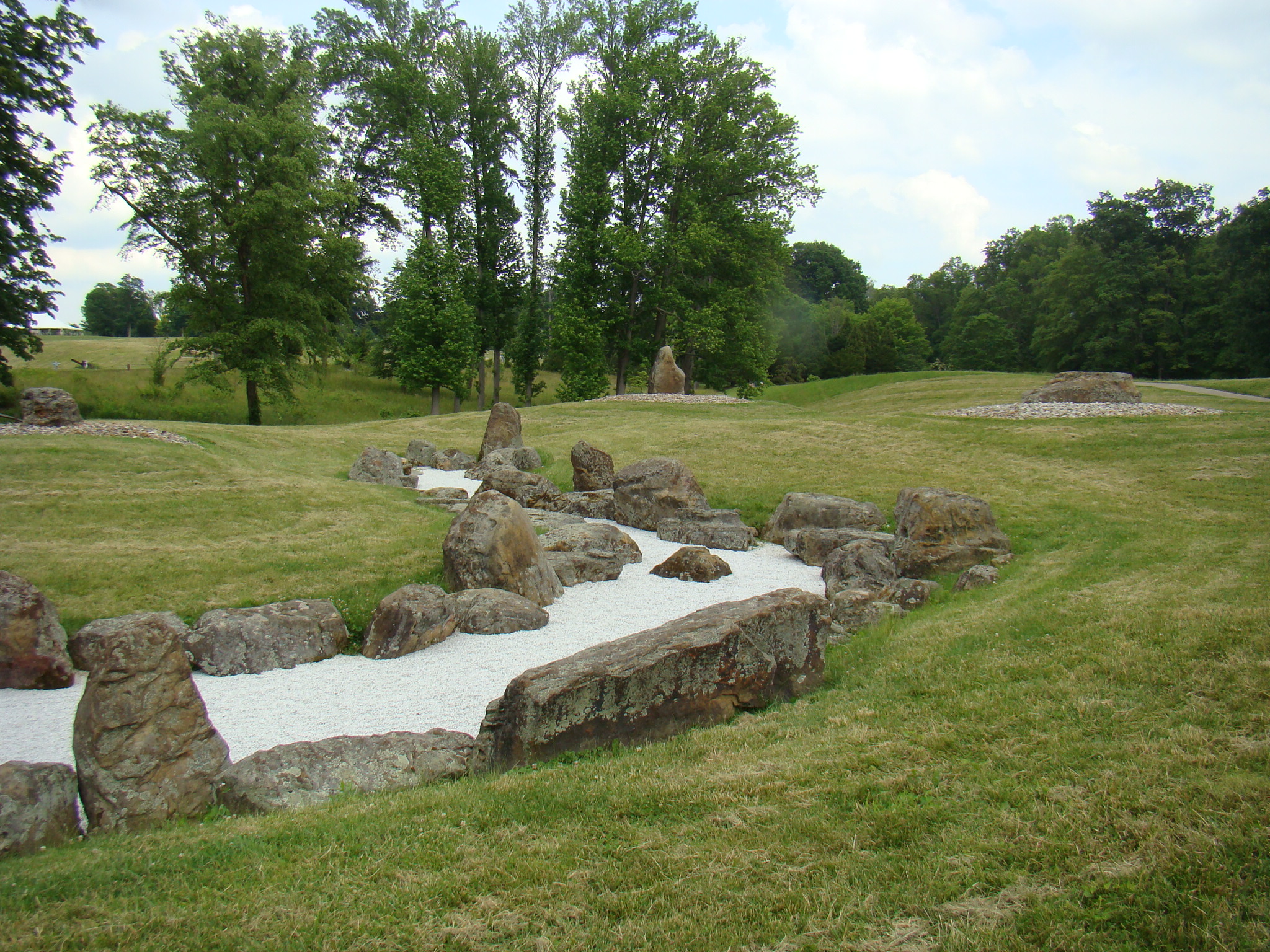
Dry Lake in Japanese Garden

Stone River in Japanese Garden at Dawes Arboretum

Peace! Sweet Peace! As soon as the climb to the Japanese Gardens at Dawes Arboretum began, a feeling a serenity surrounded. Back in 1963, Dr. Makoto Nakamura from the University of Kyoto, Japan designed this beautiful setting near Newark, Ohio.

Upon entering the gardens, you first approached a large area of white sand with boulders around its side. It appeared very similar to a sandtrap on a golf course.   Upon closer observation, it was a mixture of sand and small white stones, which filled the area. This is called a stone river, Karesansui, “dry landscape”, or more frequently known as a zen garden. White stone and sand in the zen garden represent water and purity.

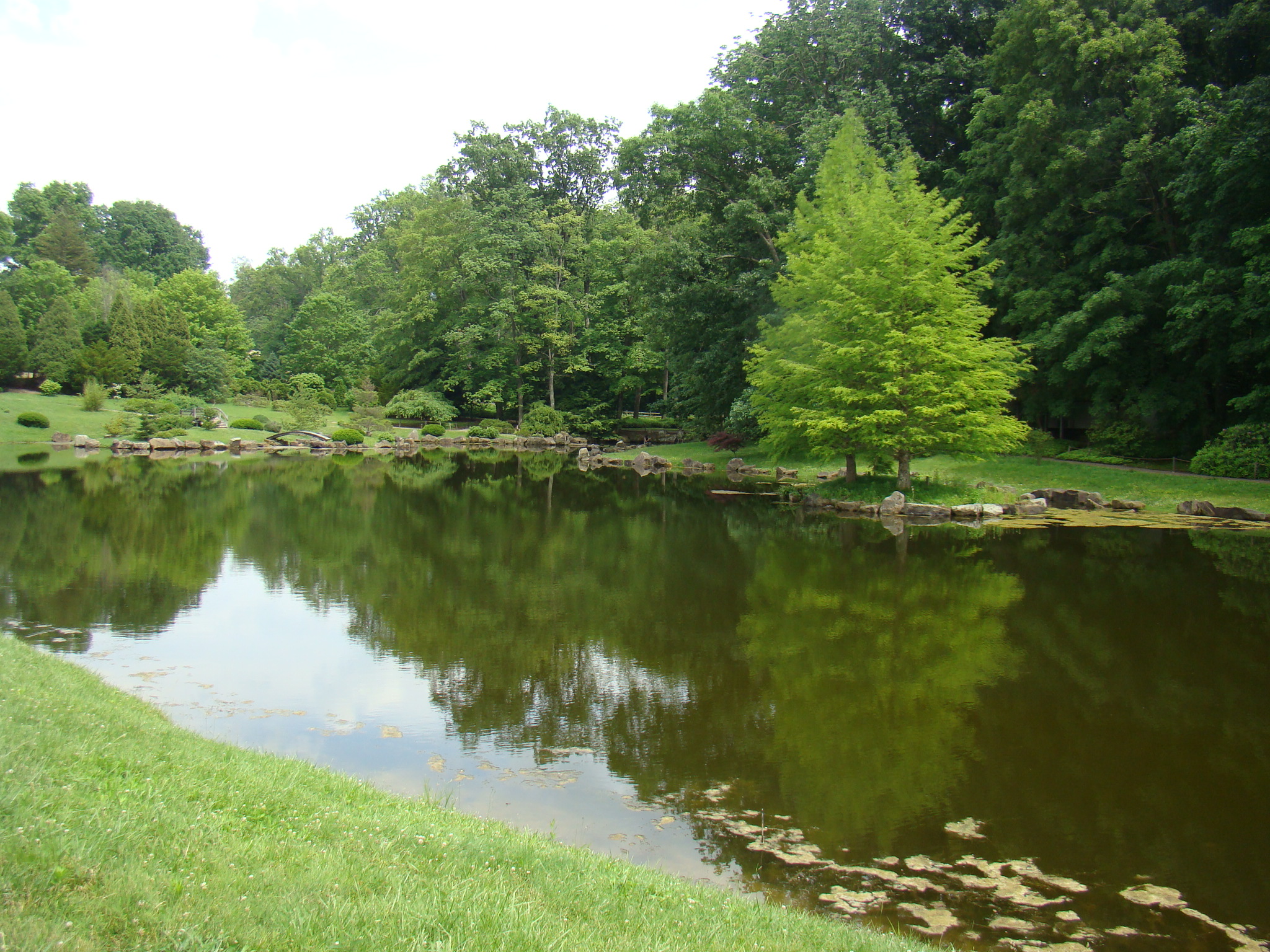
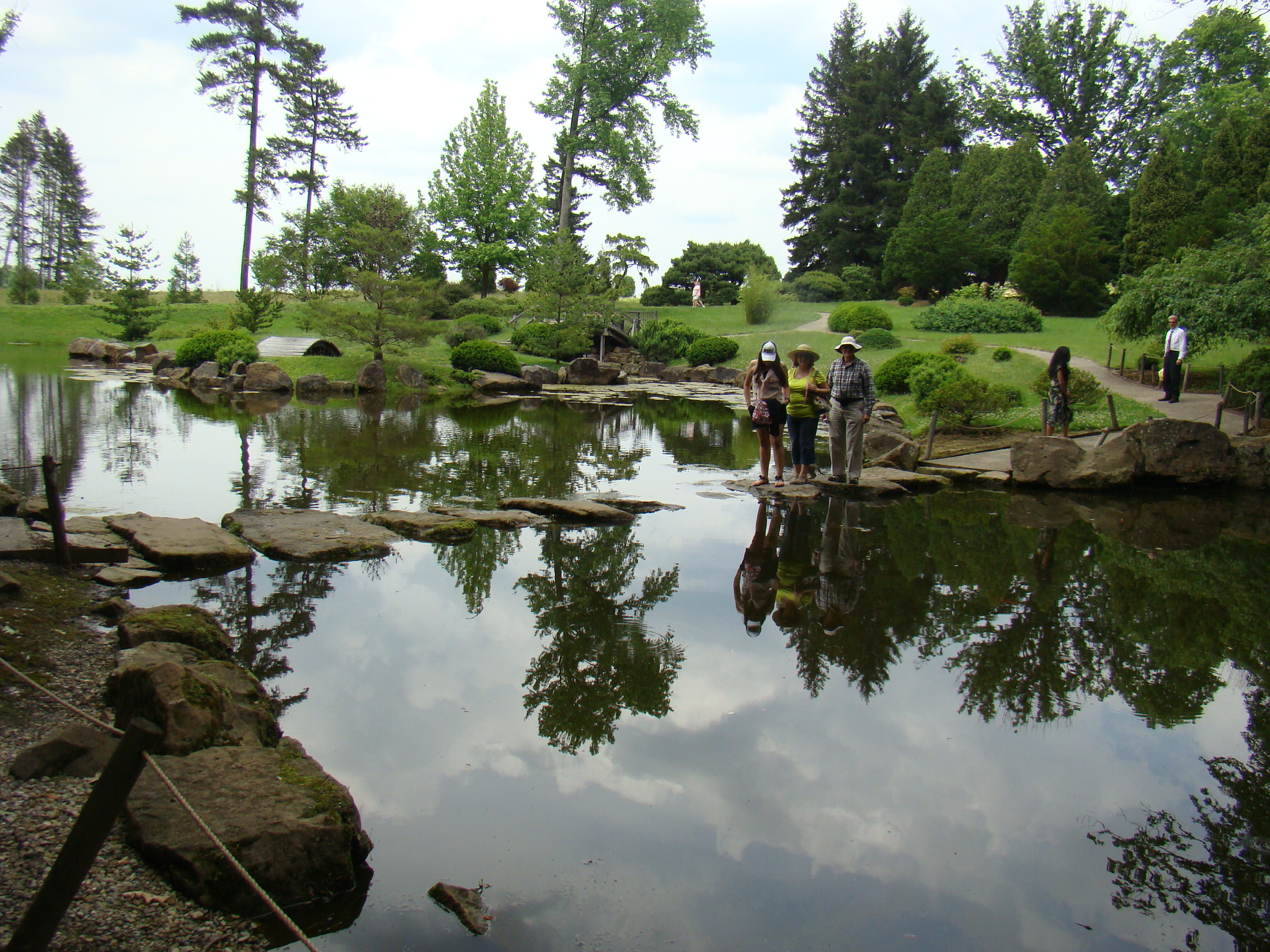
Tranquil Lake

Tranquil Lake

A tranquil pond  was the centerpiece for this magnificent garden, which has many large rocks. Gumdrop and cherry trees added to the landscape. This peaceful path lead up the hill to a reflecting pool surrounded by plants from across the ocean. There truly is peace in beauty.

To step or not to step, that is the question.

To step or not to step, that is the question.

The bridge lead to a path of stepping stones crossing the remainder of the pond. Guests that day seemed to be testing the water just a bit before taking a frightening step for some. All around the stepping stones and under the bridge, bright colored koi put on a show for visitors.

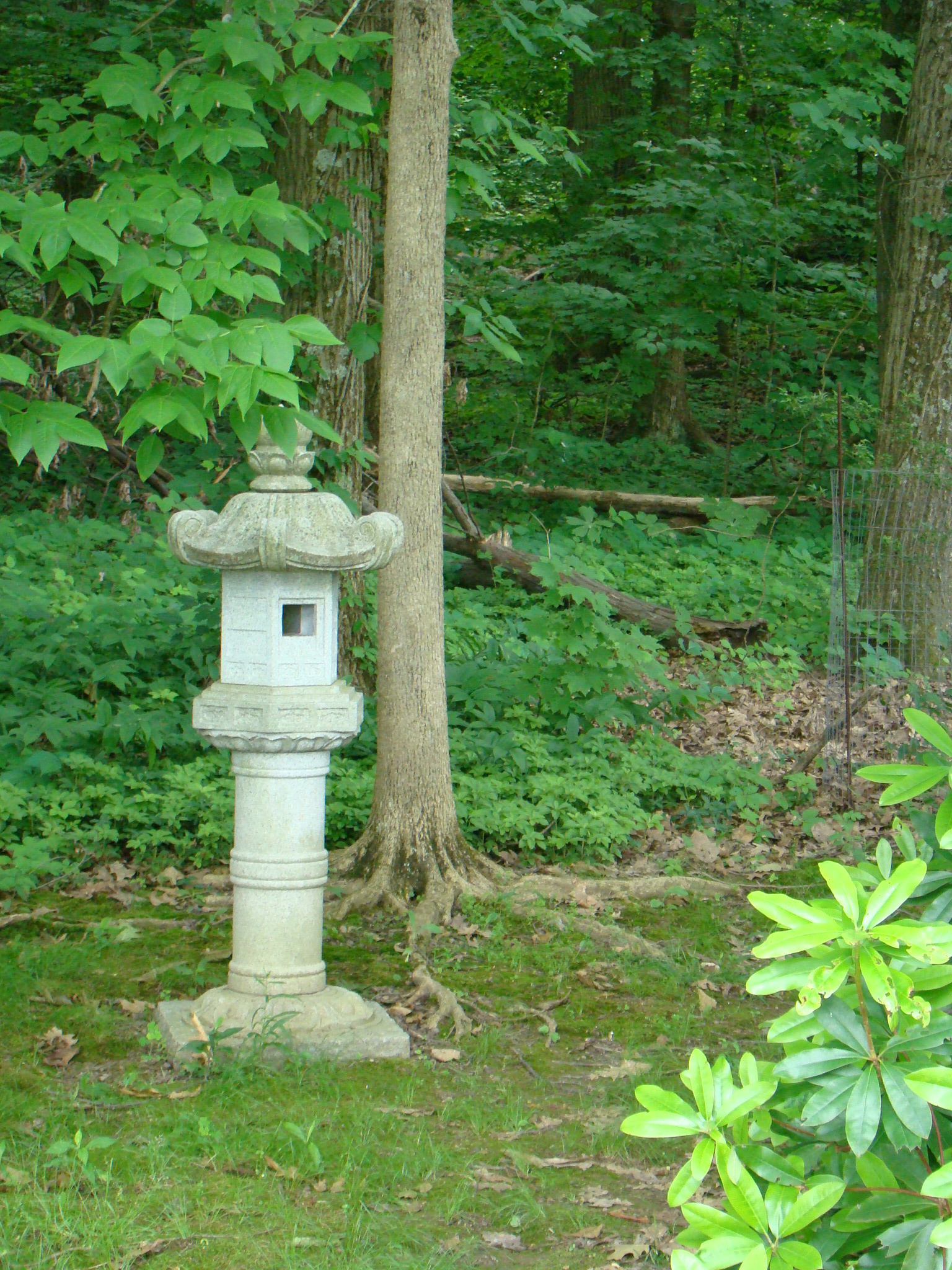
Japanese Pagoda

Japanese Pagoda

Along the paved pathway, there were various statues and pieces of artwork. A small pagoda appeared at the edge of the woods – a place to stop and worship in the Buddhist tradition. This tall pagoda lantern added a touch of tranquility along the walk.

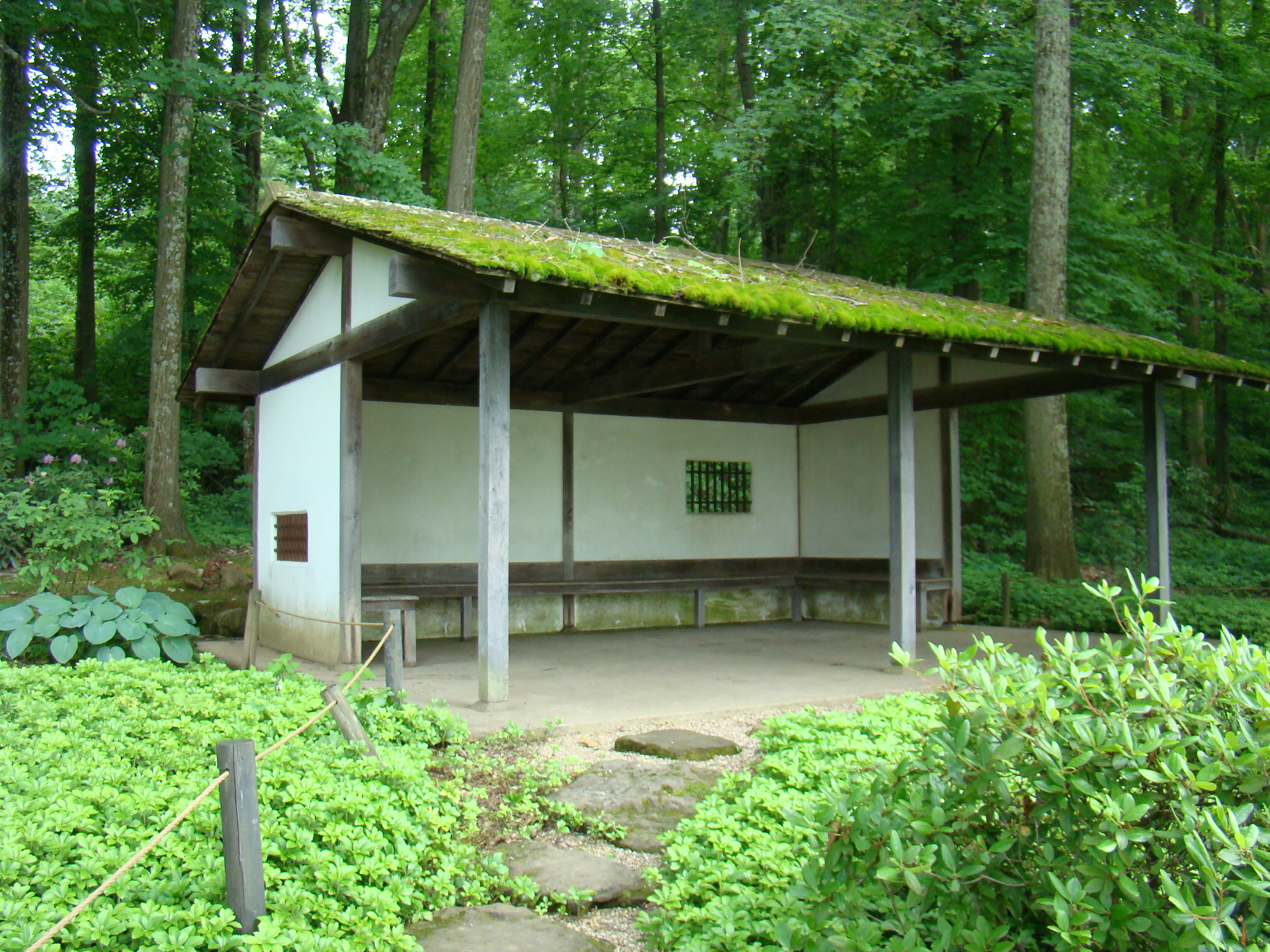
Tea house or meditation house

Tea house or meditation house

The meditation room made a relaxing place to sit and enjoy the silence, especially in the early morning or bundled up on a cold winter day. This rustic, roofed shelter protects from the elements and provides a place to sit and reflect.  This serene corner of the garden casts its spell as you drift off to dreams and peaceful thoughts.

Stops at this soothing and peaceful place are pleasant anytime of the year. The next time you pass the sign that says Dawes Arboretum, consider stopping by for a spell.

Dawes Arboretum is located near Newark, Ohio just off I-70.  Take Exit 132 , Route 13 , and proceed North on Route 13 for about three miles.  The entrance is located on the left hand side of the road at 7770 Jacksontown Road. Follow the signs inside to the Japanese Garden. It’s a relaxing experience.

Willcox, Arizona “Where the Spirit of the West Begins”

Dragoon Mountain Valley

Dragoon Mountain Valley

After a long, slow trip through the mountains, the town of Willcox, Arizona seemed like an oasis in the desert. Situated in a valley surrounded by the Dragoon Mountains, Willcox is the perfect place to stretch your legs on a walk through their beautiful town and even give yourself a tasty treat.

The town has been around since 1880, but at that time it was known as Maley, a whistlestop for the Southern Pacific Railroad. It was named Willcox years later after General Orlando Willcox, who arrived on the first train to stop there. Today that railroad heritage plays a big role in the town’s celebrations.
Rex Allen Museum

Rex Allen Museum on Railroad Street

The town is especially famous for country western signer, Rex Allen, whose statue and museum are highlights there. Rex Allen really was a cowboy, and became the last of the singing cowboys of movie fame. The Rex Allen “Arizona Cowboy” Museum holds memorabilia of  his rodeo, record, movie and television activities. This hero of the wildwest always wore a white Stetson hat while joking around with his sidekick played by Buddy Ebsen and later Slim Pickens. The Willcox Cowboy Hall of Fame is also located inside the museum.
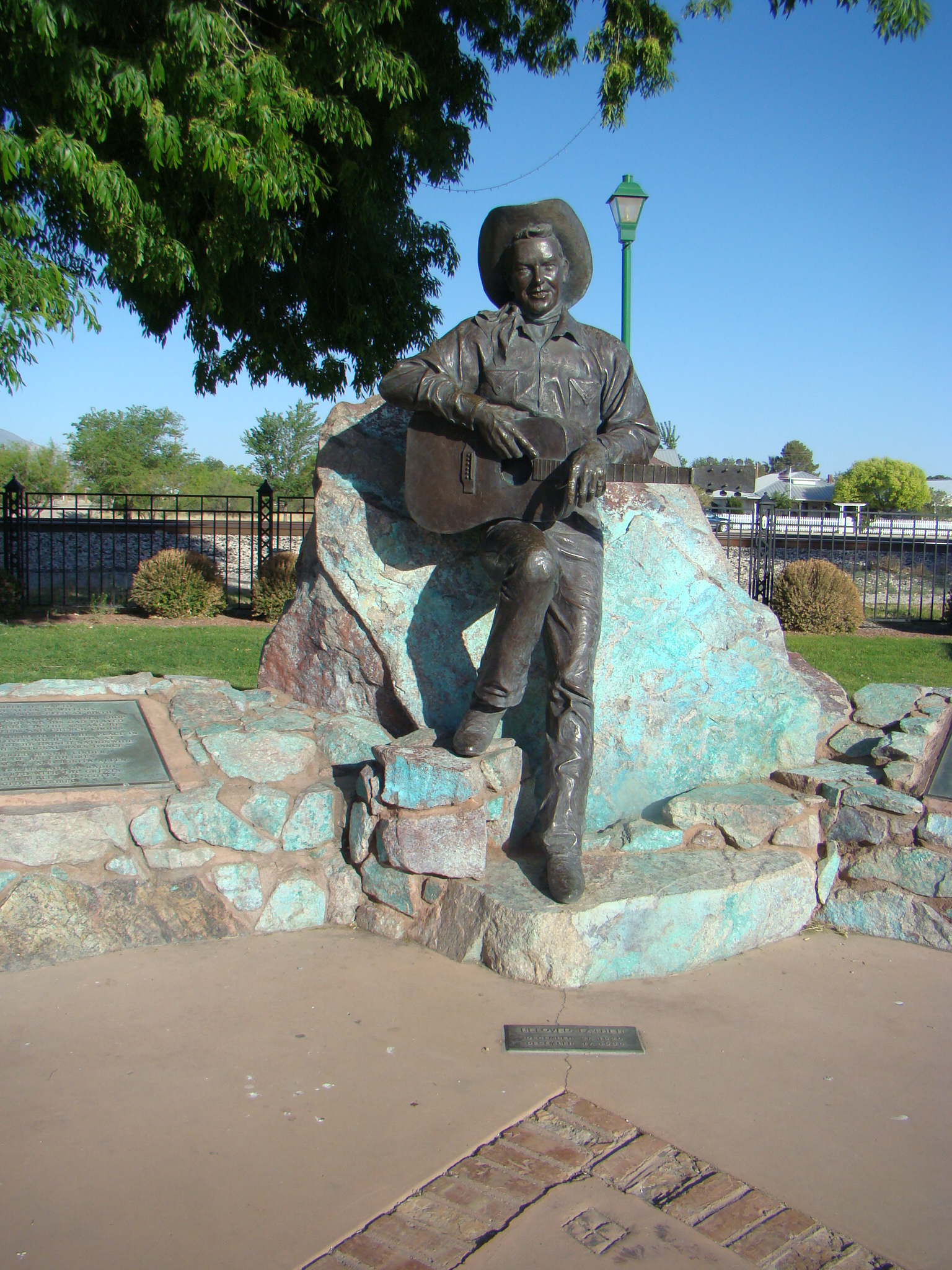
Rex Allen Statue

Rex Allen Statue

Rex Allen’s statue across the road has hidden meaning. Inside that statue is a bronze heart complete with arteries symbolizing that Rex Allen’s heart will always remain in the Willcox area. At the foot of his statue, the ashes of Rex’s horse, Koko, are buried, while Rex’s ashes were scattered around the base of the statue. Koko was billed as “the most beautiful horse in the world” after appearing in 30 movies with Rex Allen. They traveled together over a half million miles in the US and Canada. So it is fitting that Koko rest nearby in the green grass of Horse Heaven.

Stop by Willcox Commercial, the oldest continually operating store in Arizona. Having been in operation since 1880, one of its earlier customers was Geronima, who had a sweet tooth and often stopped by for a pound of sugar. Rex Allen and Tanya Tucker, who also grew up in Willcox, shopped here as well.

Old Chestnut Tree in Park

Old Chinese Elm Tree in Railroad Park

Two giant Chinese Elm trees stand in the vicinity of Rex Allen’s statue. These trees were planted back in 1928 when dirt was brought in to fill in a spot where water gathered every time it rained. They became the center piece of Willcox’s first city park – now called Railroad Park. A friend in New Mexico uses this small park area as a relaxation stop in their travels. Sitting under one of these giant trees while peering up through their branches at the great open sky, gives one a peaceful feeling.

Motherload Antiques and Espresso

Motherlode Antiques and Espresso

Down the street is an interesting Motherlode Antique Shop with Espresso and many fine treats. This was the perfect place to sit out on the porch and visit with the locals while enjoying ice cream and cookies.  Right next door is The Dining Car where you can get some delicious Big Tex BBQ. Everyone was very friendly and offered suggestions of places to visit in the area…and no one seemed in a hurry.

Roses line City Hall on Railroad Street

Roses line City Hall on Railroad Street

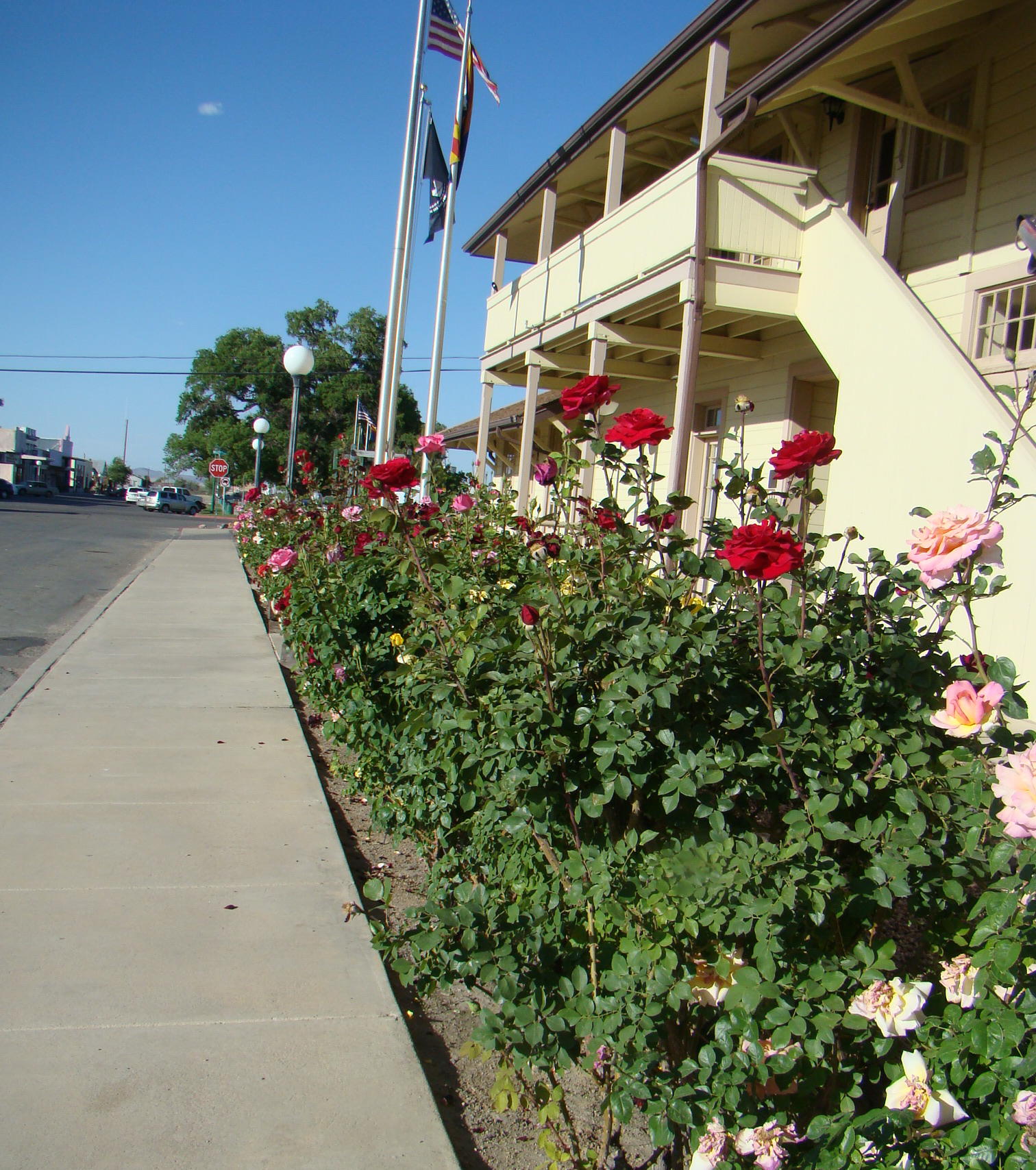
The Willcox Town Hall, a former Southern Pacific Railroad Station, features a block long row of beautiful rosebushes that make a stroll along Railroad Avenue a scenic, scented adventure. This is a great place to take a walk after that delicious ice cream cone.  In Willcox, you definitely want to take time to smell the roses.

Willcox is located in southeastern Arizona just off I-10 between Bowie and Benson. Take the West Airport Exit and enjoy the spirit of the west that still exists there today.

Tour Daweswood House Museum “Let the Flowers Grow Where They May”

Daweswood House Museum

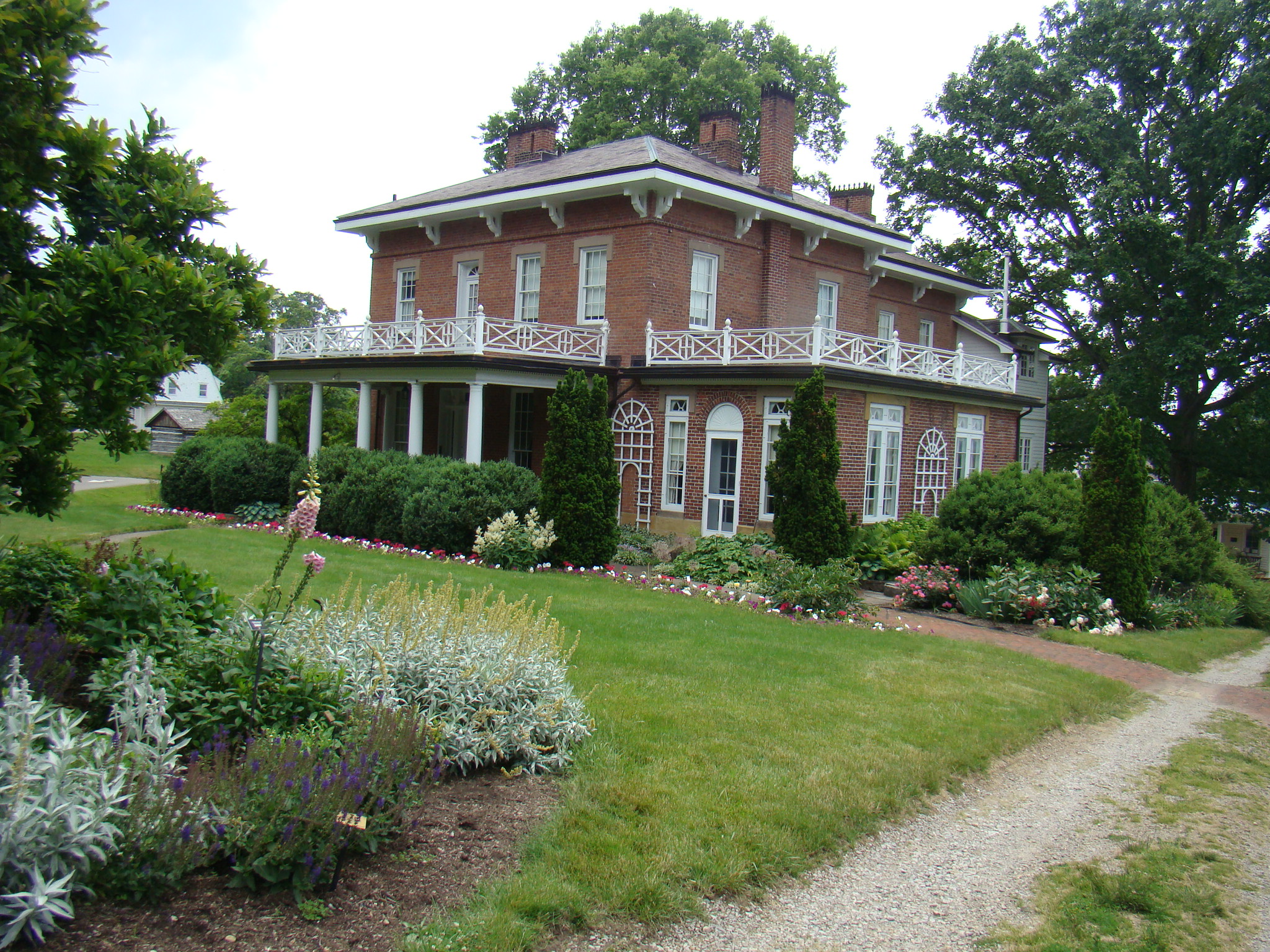
Daweswood House Museum

Exploring Daweswood takes visitors back in time to absorb the lifestyle of the Dawes family in the early 1900’s near Newark, Ohio. Being greeted by Debby, the youngest granddaughter of Beman and Bertie Dawes, made the tour doubly enjoyable. Her added stories of childhood visits added life to the beautiful old home.

Outside, the playful, lighthearted garden design reflects Bertie’s favorite saying, “Let the flowers grow where they may”. Beautiful flower beds surround the home turned museum, and help visitors realize the importance of plants and flowers to the Dawes family.

Inside, Daweswood House Museum, actually built in 1867,  is filled with antiques, unique collections of natural history, and stories which seem to pour from the walls. The flooring and spiral walnut staircase in the entryway are original and from lumber cut on the farm back in the late 1800’s. Everything was built with loving care in the best tradition of the times.

Office of Beman Dawes

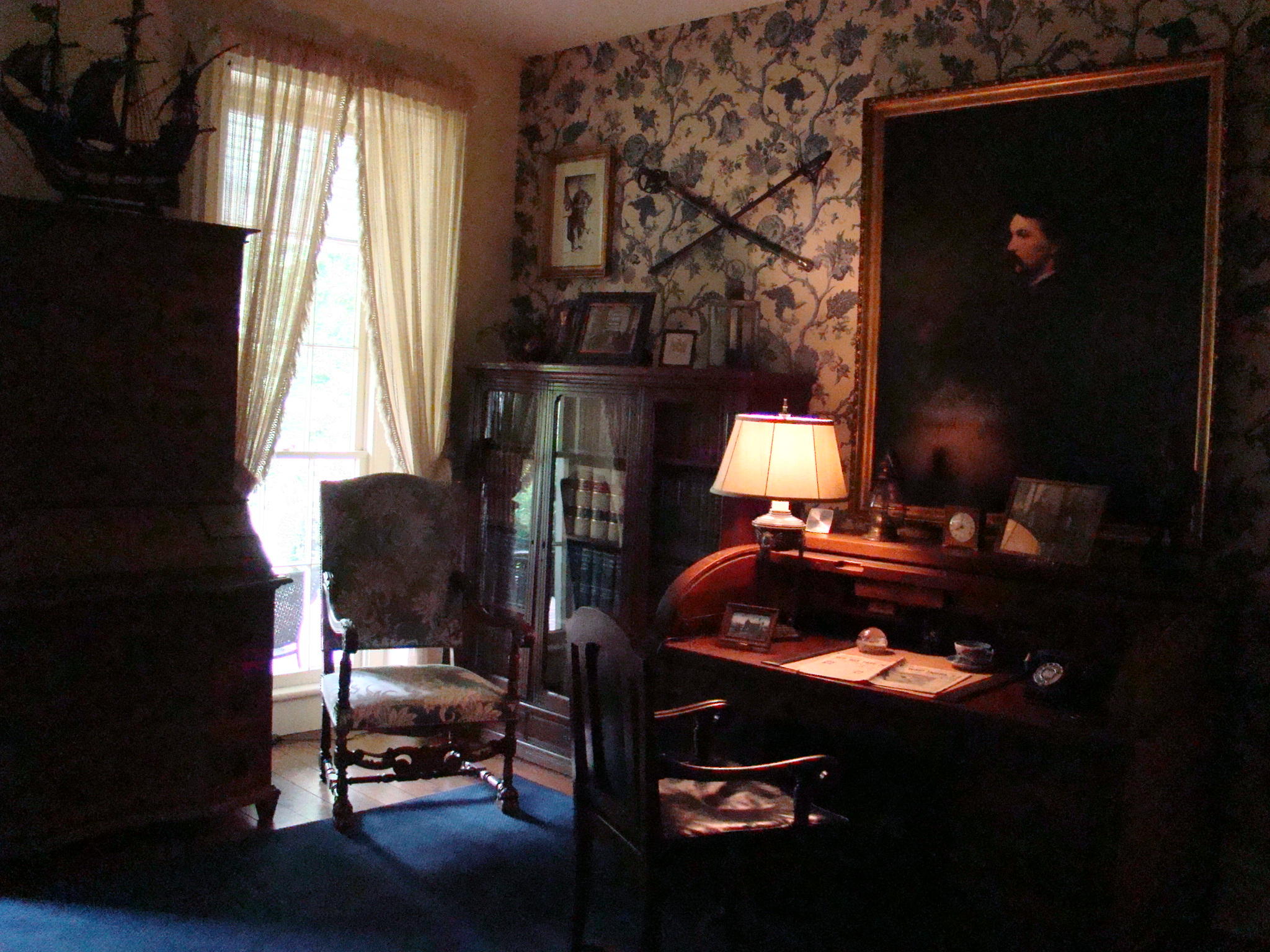
Office of Beman Dawes

Born in Marietta, Ohio, Beman Dawes graduated from Marietta College. After serving two terms as US Representative, he founded Pure Oil Co with headquarters in nearby Columbus, Ohio. The profits from that endeavor became the source of funds to develop Dawes Arboretum for the enjoyment of  people from all over the world, as well as the Dawes family. Debby mentioned that some of her fondest memories of childhood were the family picnics in the pines at Dawes. It seemed the children enjoyed the out-of-doors, just like their grandparents. Today the family still gathers at Dawes Arboretum every summer for an old-fashioned picnic.

Bertie Dawes' studio

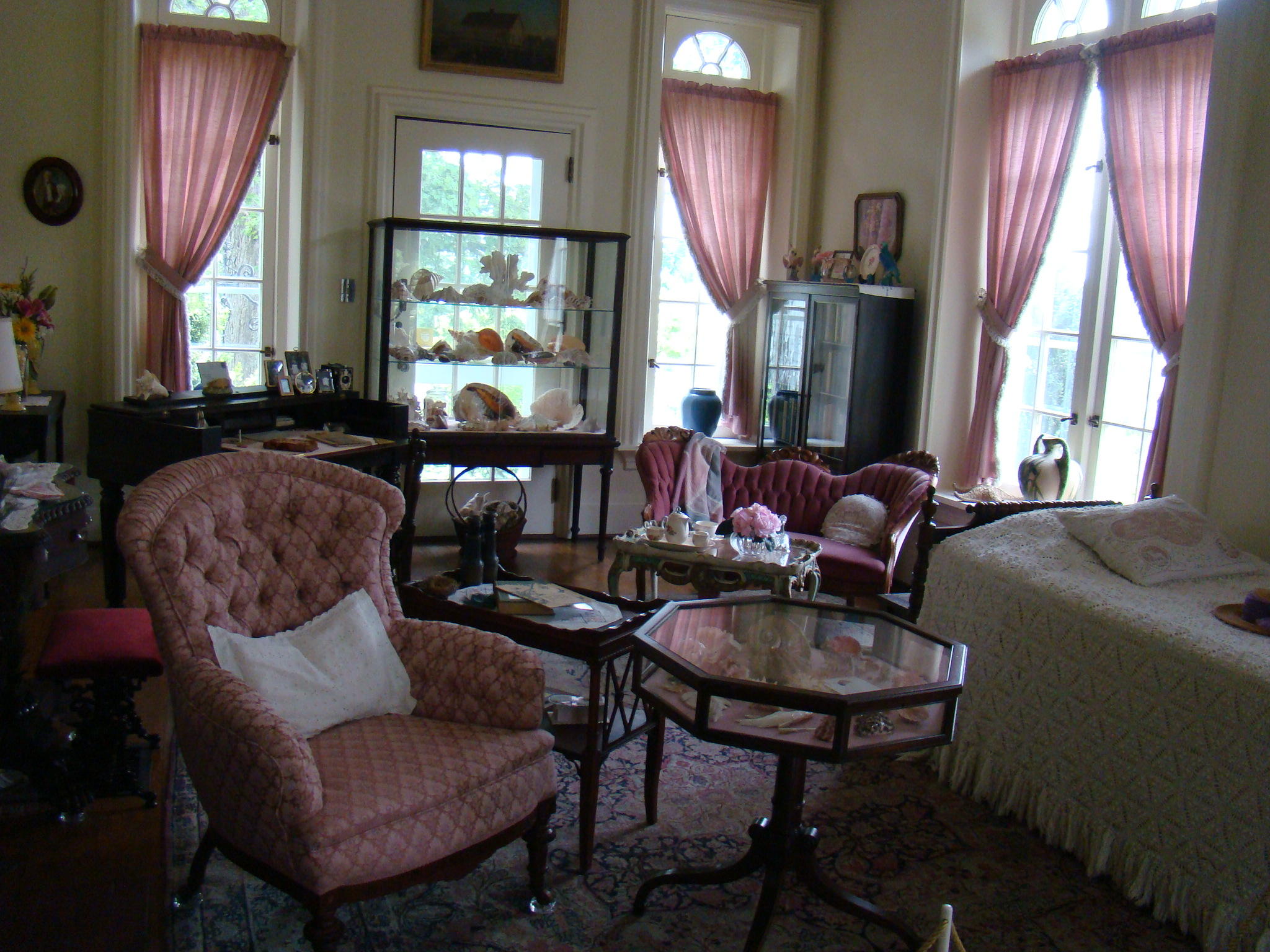
Bertie Dawes’ studio

His wife, Bertie, displayed her collections in her special studio, which overlooked the garden. Shells, butterflies, and humming birds all held special places in her heart. The beautiful bedspread in the room had been handmade by Bertie as well. This elegant lady was definitely a woman of many talents and interests… including raising peacocks. Perhaps she had time to do these things since there were housekeepers that tended to the daily chores of the family. Since there were five children, this would have been a busy household.

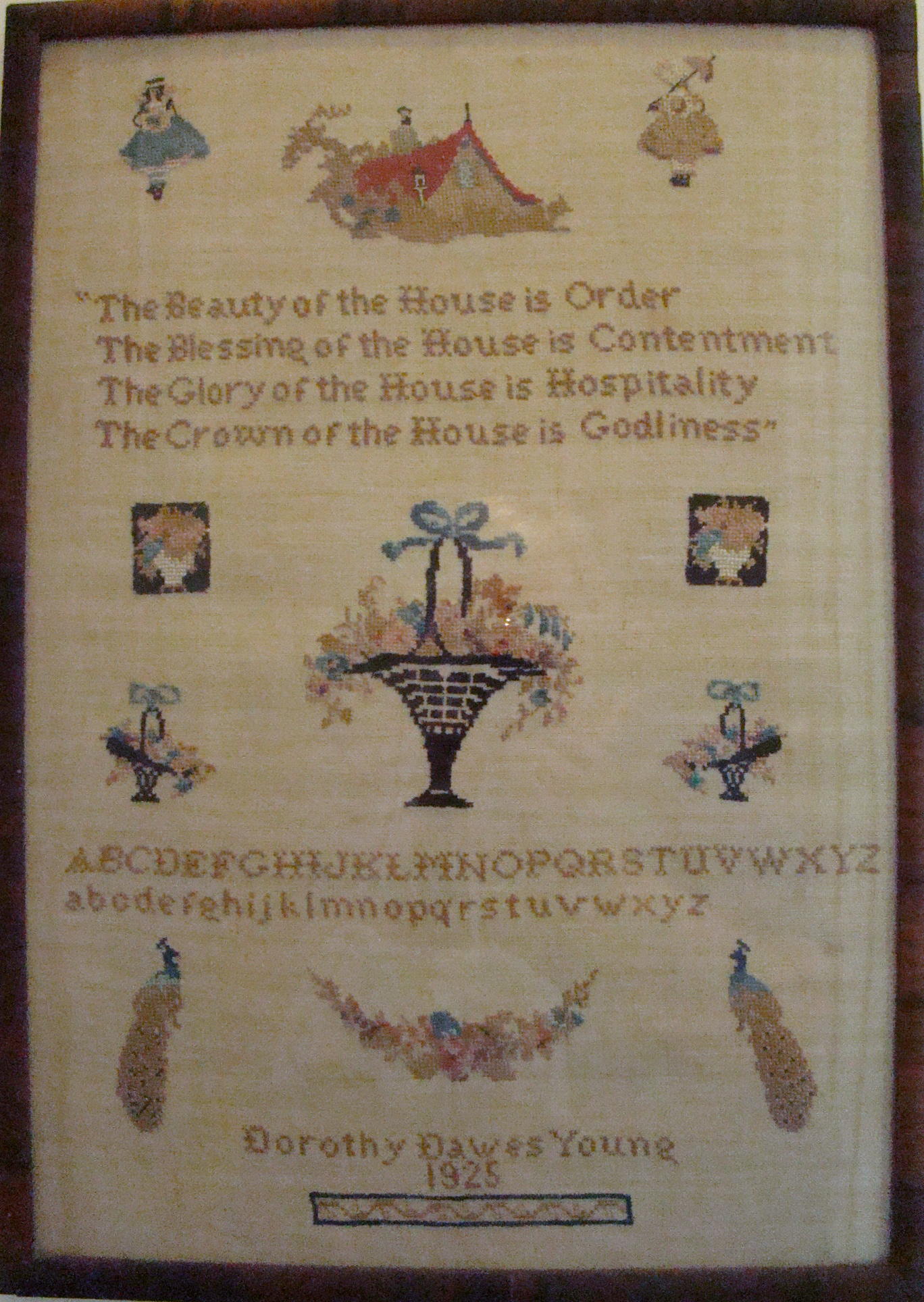
"Our House" embroidered by daughter, Dorothy Dawes Young in 1925.

“Our House” embroidered by daughter, Dorothy Dawes Young in 1925.

One beautiful family tradition occurred in the formal dining room where the family met each Sunday for dinner. The grandchildren still recall those formal dinners with Grandfather and Granny as being a highlight of their visit.  This family had early access to some of the little luxuries, with electricity in Daweswood as early as 1929. Five stone fireplaces throughout the house provided a warm atmosphere. The warmth of family could be seen in the beautiful embroidered picture hanging in the kitchen to remind everyone of the importance of their Daweswood home.

A basement constructed of handhewn stone, where the children used to play, is now home to the Rathskeller. The walls are now filled with shovels and plaques of those invited for tree dedication ceremonies. Initials of the dedicators were placed on the ceiling with soot from a burning candle in the beginning, but today they are usually written with a marking pen…to save space.  Back in 1927, Ohio Governor James Cox was the first to dedicate a tree.  Over 100 people have been invited by the family to dedicate trees and some of those names are quite familiar: John Glenn, Jack Hanna, Richard Byrd, Red Grange, and Orville Wright to mention a few.

Smokehouse and Gardens

Smokehouse and Gardens

Behind the house is an old log smokehouse surrounded by Bertie’s garden. Nearby, on the right side of the picture, you can see the corner of the roof of the History Archives Building, which is being constructed to hold photographs, family journals, and Arboretum records.

Plan your visit to Daweswood on the weekend as hours are limited. Tours are given every Saturday and Sunday at 12:00 and 2:00.  Admission is $2 for adults and $1 for students, and tickets must be purchased at theVisitors Center. If you like beautiful old homes and the beauties of nature, you will definitely enjoy a visit at Daweswood.

Dawes Arboretum is located near Newark, Ohio just off I-70.  Take Exit 132 , Route 13 , and proceed North on Route 13 for about three miles.  The entrance is located on the left hand side of the road at 7770 Jacksontown Road. Daweswood House Museum is down the first road to the right just inside the gate, but first you must go to the Visitors Center to purchase your ticket.

Relax with Nature at Dawes Arboretum

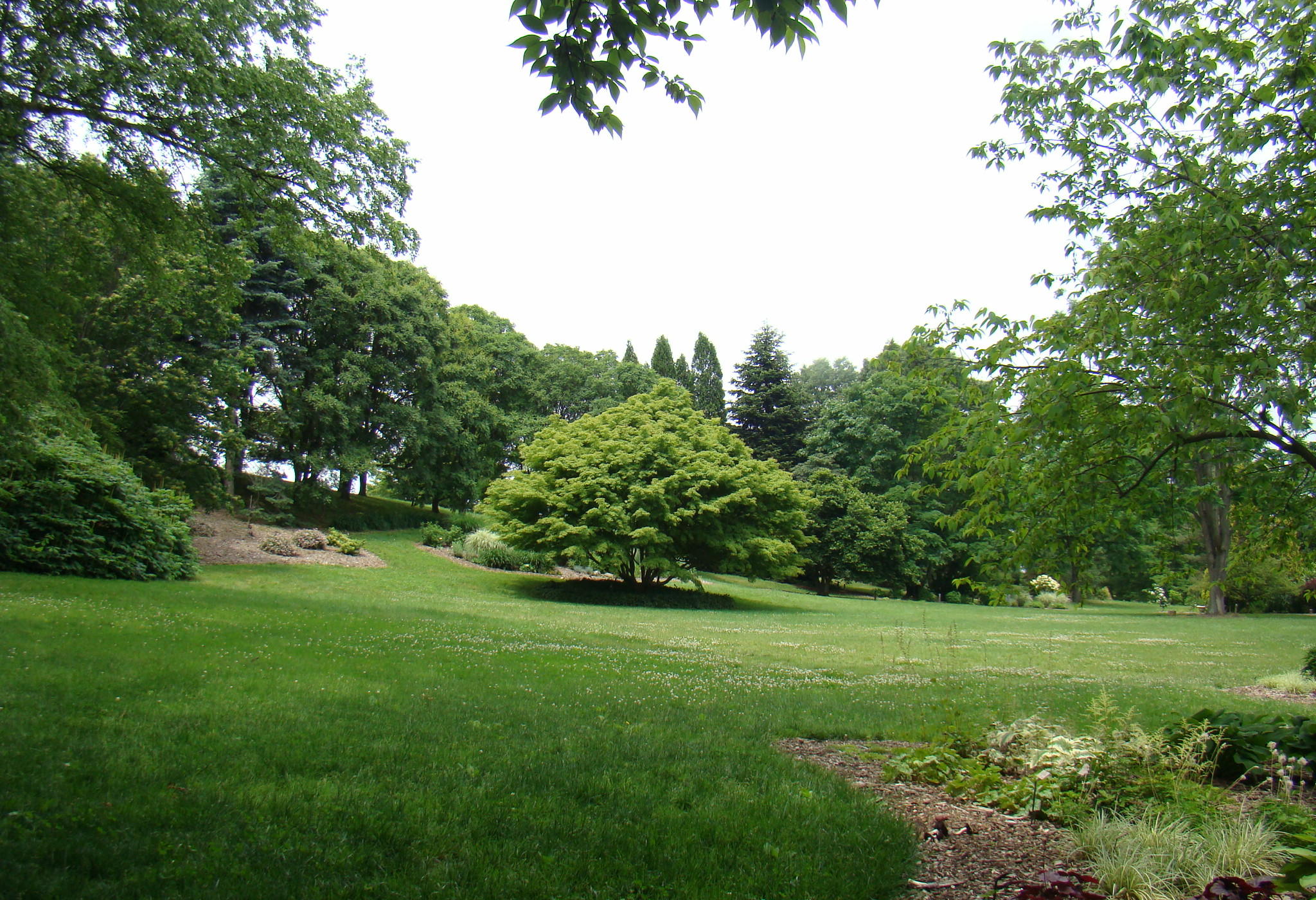
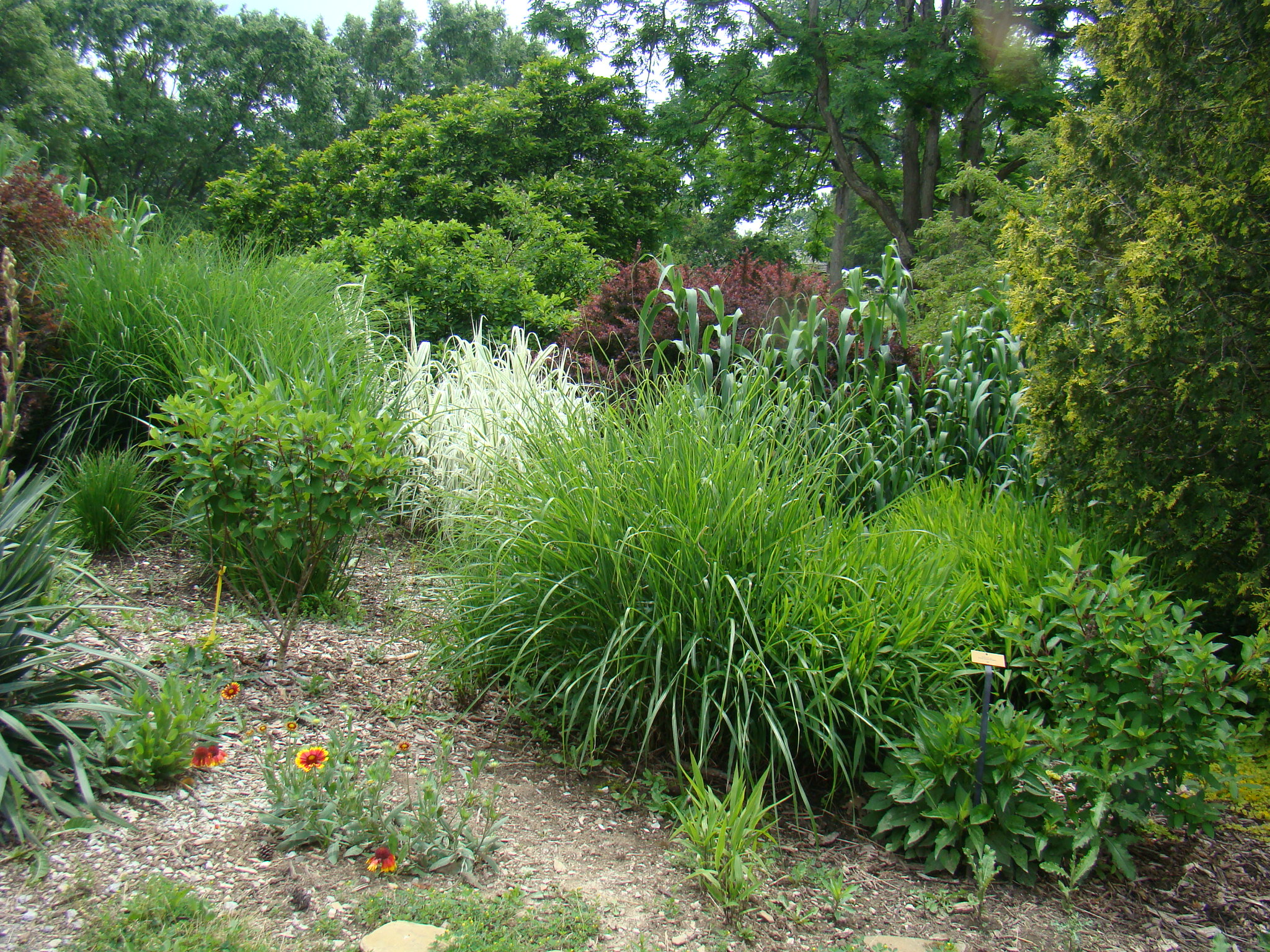
Dawes All Season Garden

Dawes Arboretum

Imagine being where no one is in a hurry. Dawes Arboretum could be the perfect place for you! This nature haven is dedicated to increasing the love and knowledge of trees, history, and the natural world. Young and old walk around the grounds at a leisurely stroll and traffic has a speed limit of 15 mph. Ah!  This is a spot to relax!

Way back in 1917, Beman and Bertie Dawes purchased a farm known as Woodland in Licking County. The family renamed it Daweswood and began planting trees, from all over the world, that would grow in Ohio. He hoped to encourage others to plant trees at their farms also. In 1929, Dawes Arboretum was formed and by then, Beman had planted over 50,000 trees and purchased more land.

The Visitors Center is a great place to begin your visit. Here you can pick up a map to guide you throughout the 1800 acres, and discover a little history of Dawes Arboretum as well as their family.  Beman Dawes’ father was a Civil War veteran, who served in The Iron Brigade. His brother, Charles, served as Vice-President of the United States under Calvin Coolidge.

Dawes All Season Garden

Dawes All Season Garden

One of my favorite spots is walking leisurely through All-Seasons Garden behind the Visitors Center. Here you are greeted with the flowers of each season from Spring through Fall – tulips to mums. There is a wide variety of plants here, some perennials and some annuals, but all striking in their setting. Name plates are frequently found near trees and plants with both their scientific and common names for easy identification.  Benches provide a spot to relax and to take time to smell the roses. A charming gazebo offers a touch of shelter on a rainy or sunny day, and provides another spot for viewing the garden.

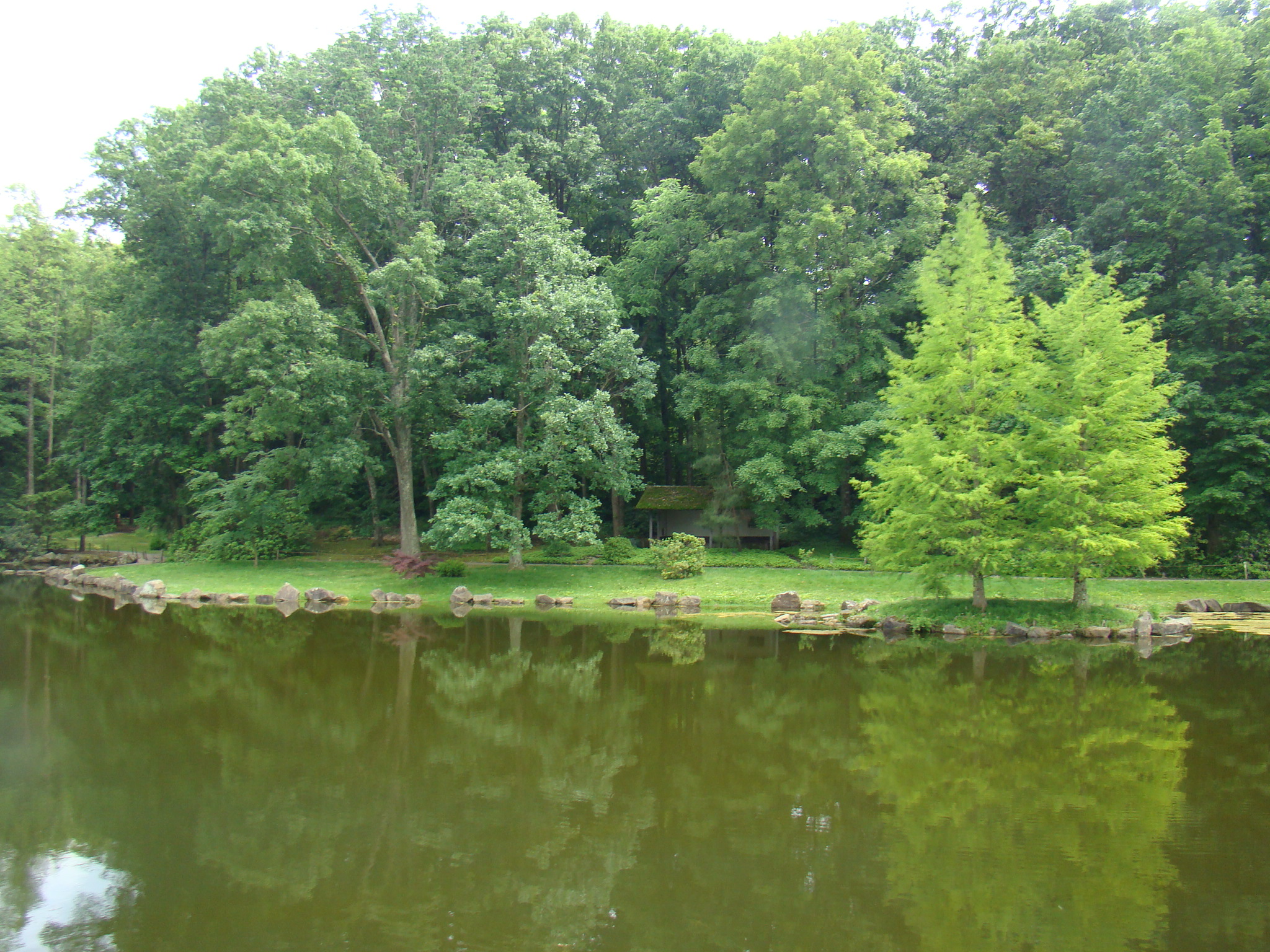
Lake at Japanese Gardens

Lake at Japanese Gardens

The Japanese Garden creates one of the most tranquil spots at Dawes. With a beautiful small lake at its center, the plants of Japan weave their way around the pond and into your being. Give your feet a rest in the small meditation house at the edge of the reflecting pool to let the tranquility soak in.  A stone path crosses the pool filled with colorful koi, making it a favorite of young and old alike.

Since Dawes is located in Ohio, the Buckeye state, it seemed only fitting that buckeye trees would be included in the landscape. The Dawes family decided to plant 17 trees in the shape of the number seventeen honoring Ohio’s admission to the Union as the 17th state.

Large Hedge spells our Dawes Arboretum.

Large Hedge spells our Dawes Arboretum.

Dawes Observation Tower

Dawes Observation Tower

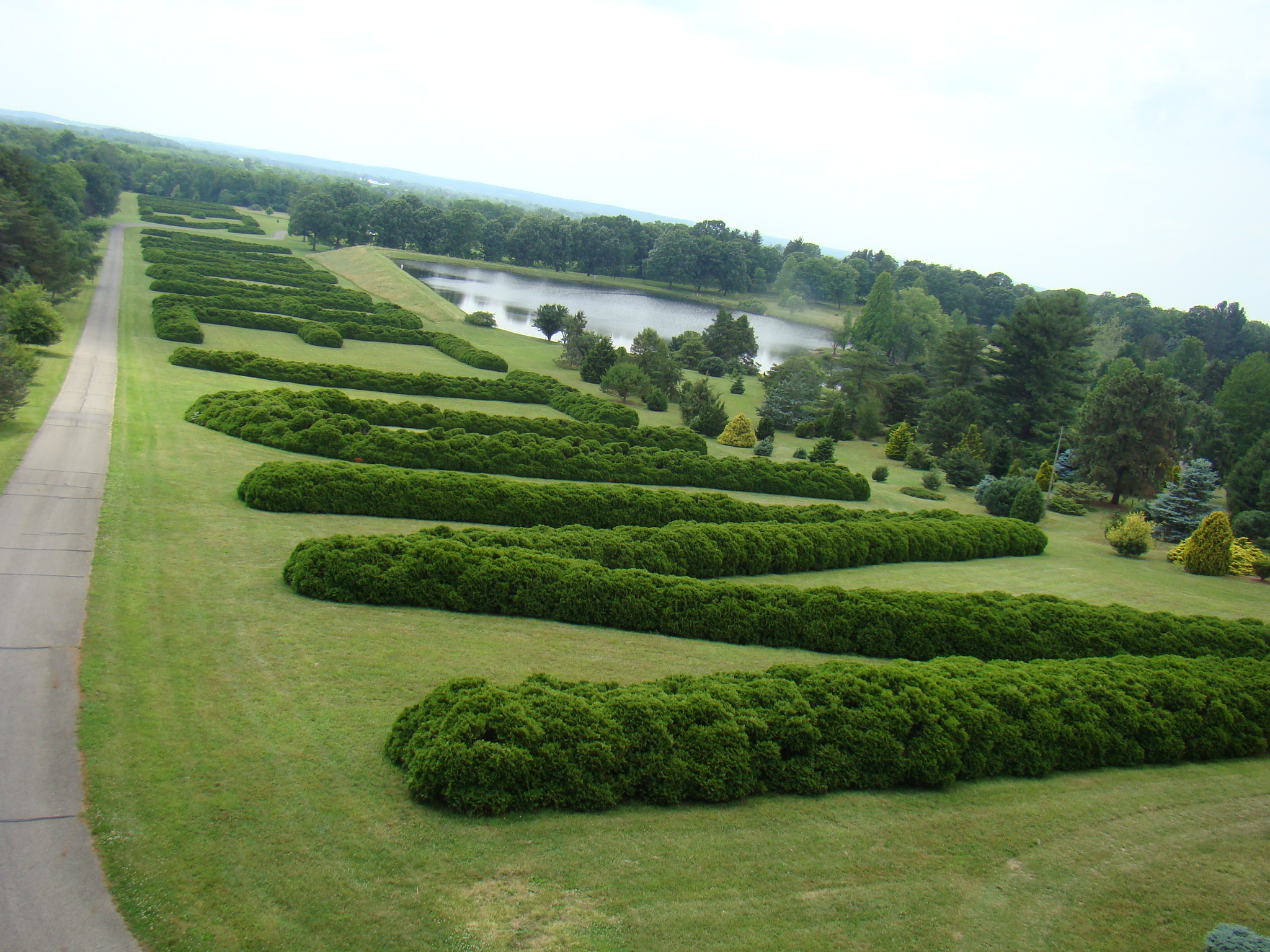
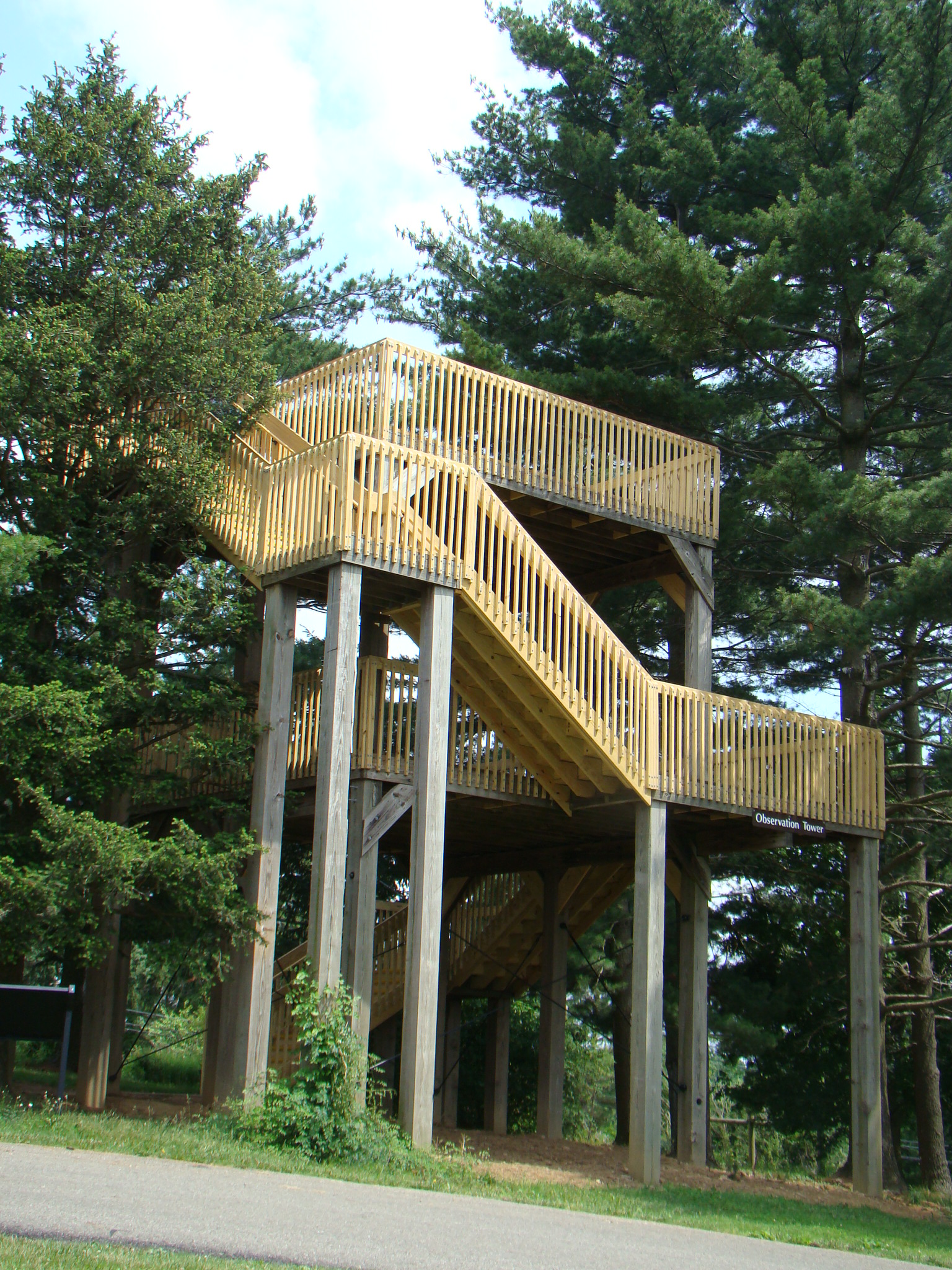
Perhaps you will notice as you approach the arboretum that there is a large hedge, which spells out DAWES ARBORETUM quite clearly. As you slowly drive through the wooded areas, toward the end of your tour, you will arive at The Observation Tower at the southeastern end of the arboretum. Climbing the tower gives a great view of the surroundings including the hedge. This hedge is thought to be the longest hedge in the world at  2,040 feet long and approximatley six feet high. Bernie Dawes decided to build the hedge for the enjoyment of planes flying into the Columbus Airport.

Bald Cypress Swamp Trees with Knees

Trees with Knees

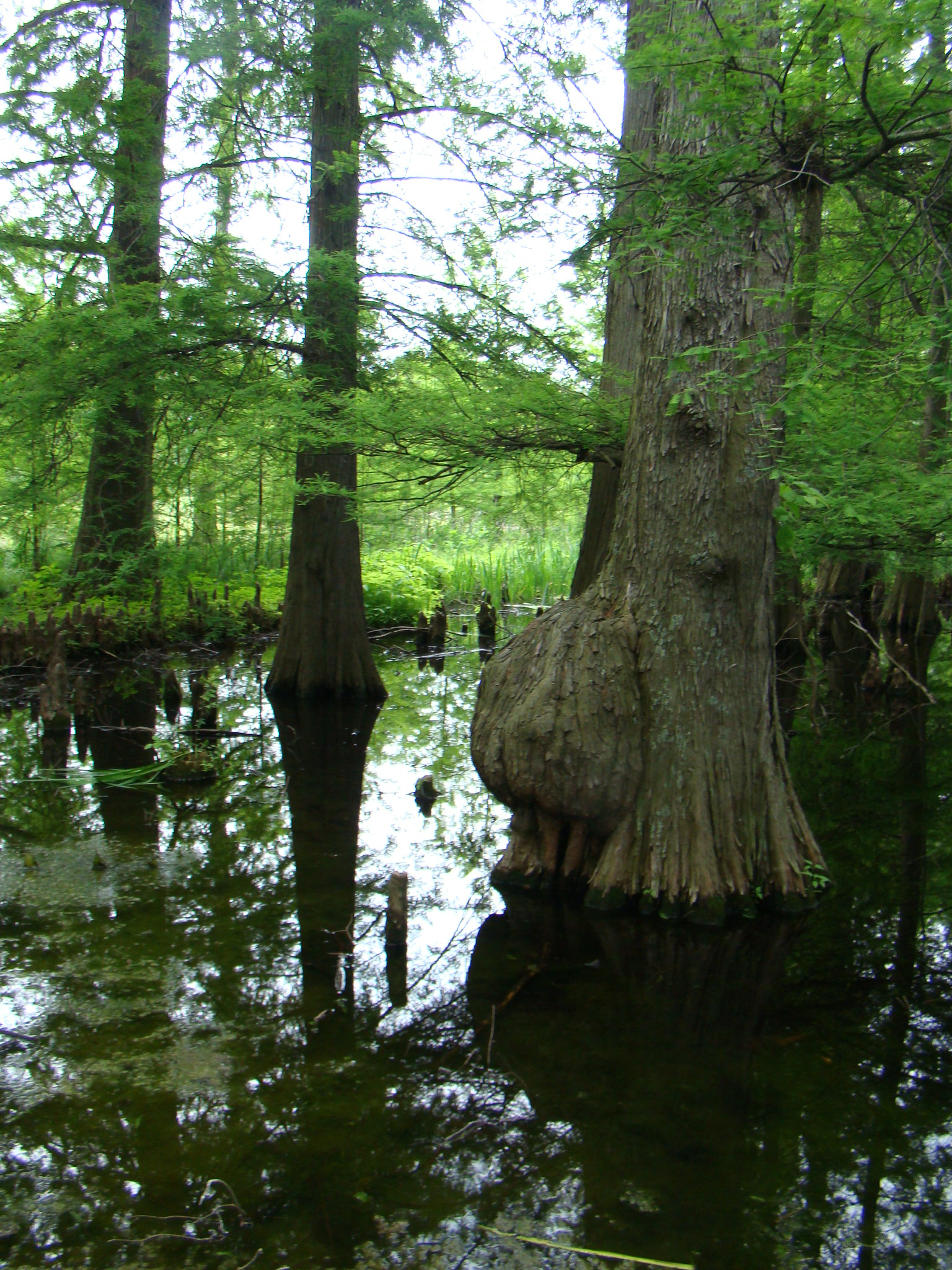
One last treat before you leave is the Cyprus Swamp. This Bald-Cypress Swamp is one of the most northern swamps in North America.  A delightful boardwalk gives guests an up-close and personal view of the trees and their root system, as well as the creatures in the water.  The bumps you see coming out of the water have given these trees a nickname: Trees with Knees. Botanists aren’t really sure what their purpose is but some think it might help them breathe, while others think it is perhaps to help brace them from the wind.

Every season of the year brings a variety of trees, plants, and blossoms to center stage. This is definitely one of those spots where you can enjoy a walk through the trails, or a drive down the roadway, at any time of the year.  Beautiful scenes appear around every bend.

Meander through the grounds anytime of the year surrounded by the beauties of nature at Dawes Arboretum with over 16,000 living plants. It’s opened 362 days a year and admission is free.  You’ll want to come back each season!

Dawes Arboretum is located near Newark, Ohio just off I-70.  Take Exit 132 , Route 13 , and proceed North on Route 13 for about three miles.  The entrance is located on the left hand side of the road at 7770 Jacksontown Road.

The International Peace Garden May Peace Prevail on Earth

Opened on July 14, 1932 the International Peace Garden on the border of Canada and the USA near Dunseith, North Dakota is the world’s largest unfortified border, “Like No Other Place On Earth”. It encompasses 2,300 acres of botanical gardens and on a stone caim on the border are inscribed these words:

TO GOD IN HIS GLORY,
we two nations
dedicate this garden
and pledge ourselves
that as long as men
shall live, we will
not take up arms
against one another.

What a great thought all those years ago as a symbol of friendship between the two nations.

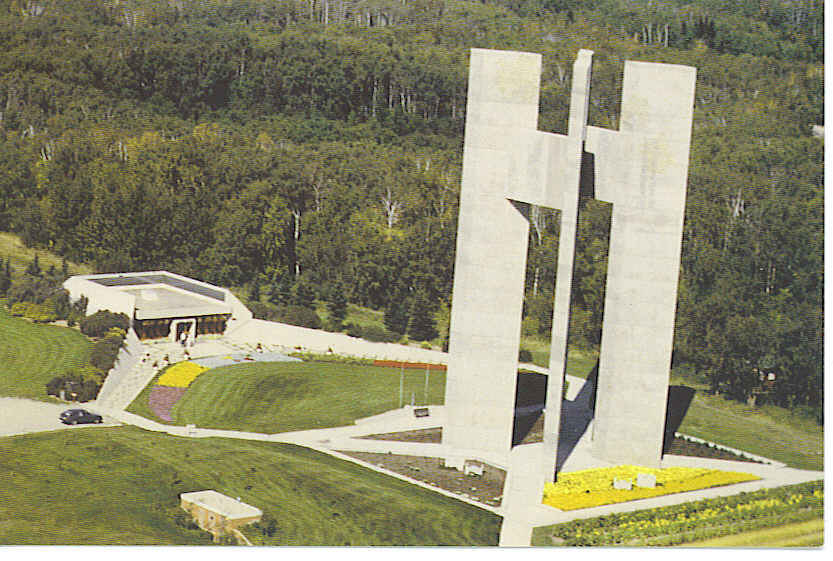
The sounds of bell chimes faintly echo every fifteen minutes from the Veterans Memorial Bell Tower.  The nearby 120′ concrete Peace Tower has four columns symbolizing the four corners of the world from which thousands of immigrants arrived in Canada and the United States to make better lives for themselves. Two of the columns are in Manitoba, Canada while the other two columns are in North Dakota.  The foundation symbolizes one solid base of democratic beliefs between the two countries.

The Peace Chapel provides the perfect place to sit down and relax, meditate, or read the positive thoughts written on the walls. The Peace Chapel has been a long time project of area members of the Order of the Eastern Star and is the only building which straddles the United States and Canadian border. While the chapel is a simple building, the addition of amber glass windows from France gives it a soft, golden, peaceful glow.

The three encircling walls into which quotations have been engraved were one of the special features that grabbed my attention. All quotations were either spoken or written by great men of peace throughout history. Some of the limestone walls still have embedded fossils of strange marine life, which had been molded into the bed of a tropical sea in the Manitoba region millions of years ago.

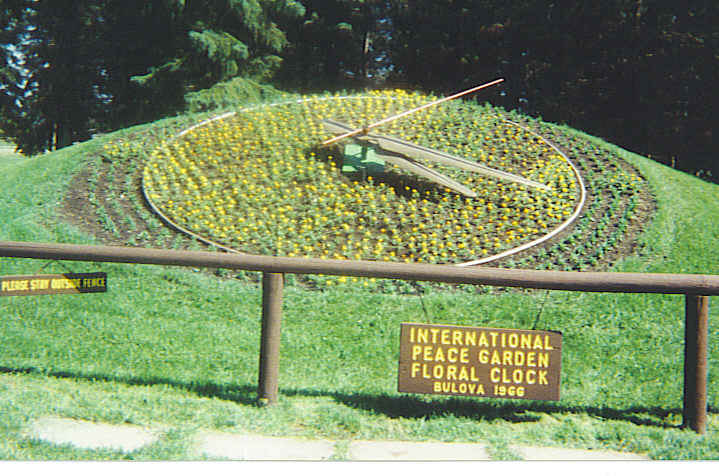
Flower beds are around every corner here, but two displays that have been constant from the beginning are beds forming the United States and Canadian flags.  A beautiful International Peace Garden Floral Clock actually works and was originally donated by Bulova in 1966. This original was designed as a replica of the famous Bulova Floral Clock in Berne, Switzerland, but inner workings were replaced in recent years by a clock from St Louis, Missouri.  The clock contains over 2,000 flowers with the design changing yearly, and reminds visitors to take time for the peaceful feeling surrounding the gardens.

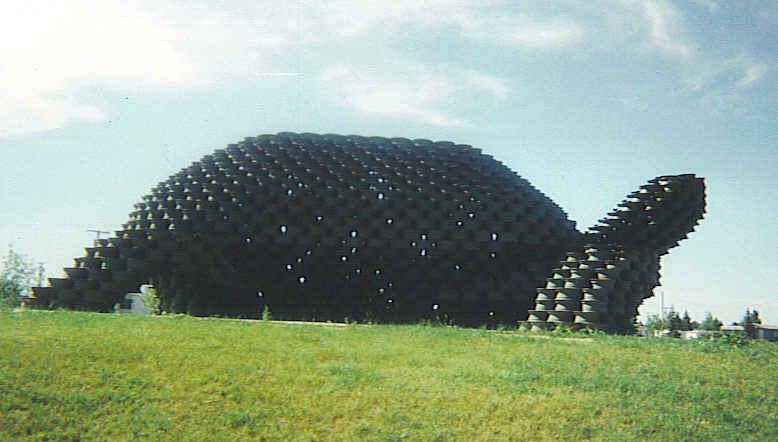
Just down the road in the Turtle Mountains near Dunseith, North Dakota is the largest man-made turtle in the world. Constructed of nearly 2,000 wheel rims, this “W’eel Turtle made from Wheels” has a head that actually bobs up and down. While the turtle is nearly forty feet long, its head alone weighs almost a ton! Stop and visit this tire rim sculpture at Dale’s Thrifty Barn – a gas-station, cafe, and motel in Dunseith, North Dakota. Little extras like this always bring a smile.

Turtle Mountains seem to be a perfect location for the International Garden of Peace as the slow movement of the turtle gives a relaxed and peaceful feeling just like the gardens. May peace prevail in your world as well. We should all attempt to be more like the turtle… at ease in our own shell.

The International Peace Garden in North Dakota can be reached by taking I-29 North in North Dakota to Exit 203.  Take Route 81/281 West to Dunseith where 281 bends North to the Canadian border.  This is a beautiful back-road drive away from the crowds.

Butchart Gardens on Vancouver Island

Nearly 100 years in bloom ! Fifty acres of beautifully landscaped floral beds capture your attention as you wander along the meandering paths through Butchart Gardens near Victoria, British Columbia.  The Canadians certainly created a masterpiece here on Vancouver Island.

Robert and Jennie Butchart, pioneers in the manufacture of Portland Cement, came to Vancouver Island in 1904 because of rich limestone deposits needed for cement production. A few years later, the limestone quarry was exhausted so Mrs. Butchart pictured it replaced with a beautiful garden.  Being transported by horse and cart, tons of top soil were placed on the floor of the quarry.  Little by little the floor blossomed into the spectacular Sunken Garden, which is one of the exquisite spots at Butchart Gardens.

While Mrs. Butchard enjoyed planning her garden, Mr. Butchard collected ornamental birds from all over the world. A parrot lived in their house, peacocks strutted across the front lawn, and birdhouses were placed strategically throughout the garden.

Totem poles carved by artists of the Tsartlip and Tsawout First Nations are a recent addition to the gardens. Totems are very symbolic and designed to tell a story, quite often starting at the bottom. This particular totem tells a story about Butchart Gardens. The bottom figure represents all the people who come to the gardens. In the center is carved a whale, symbolizing the fact that people traveled from afar to arrive here. On top is the mystical, yet powerful, thunderbird, which watches over the gardens and protects it with his outstretched wings.

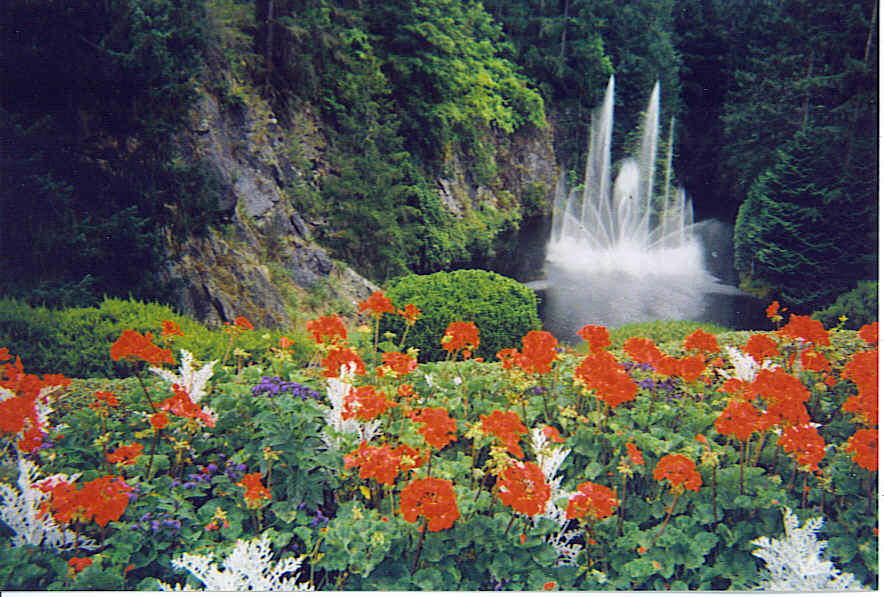
In 1939, the Butcharts gave the gardens to their grandson, Ian Ross  for quite the spectacular 21st birthday present. Ross Fountain was installed on the 60th Anniversary of the gardens. The Ross Pond with fountain looks great at any season, or any time of the day or night. Today the gardens are still family owned with great-granddaughter, Robin-Lee Clarke, being the present owner/manager.

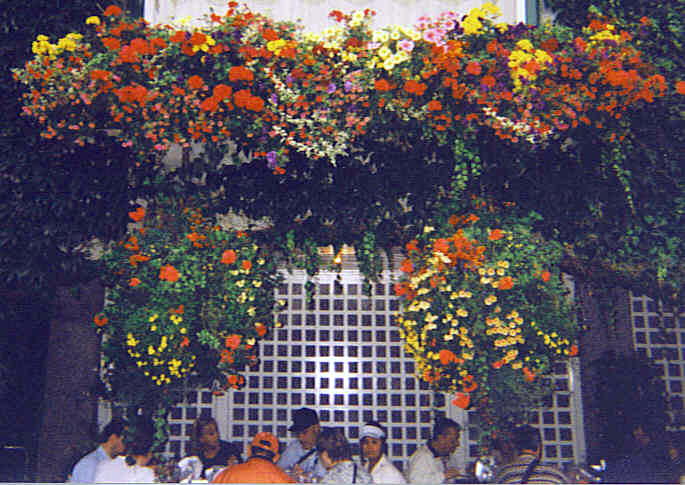
Through a floral covered archway, visitors find themselves in the relaxing Italian Garden, which includes a dining area where you can sit outside or enjoy the view of the beautifully landscaped pond from inside. Afternoon tea outside under the beautiful hanging baskets, and plants cascading from window boxes, is a scrumptious experience.

Butchart Gardens is delightful every season of the year, which seems quite surprising for Canada. But the gardens are located on the coast so their weather is a little milder than what we might imagine Canada to experience. Beautiful Night Illumination occurs each evening, when the garden looks magical with the flickering lights. Saturday Fireworks draws such large crowds, people sometimes wait in line for hours to get inside the gates.

Every year millions visit these gardens at all seasons of the year in one of the loveliest corners of the world.  Maybe you will get a chance sometime soon to visit there too. During my last visit in the summer when glorious blossoms were at their peak, they even offered me a job in their greenhouse or gift shop.  See you there?

Butchart Gardens can easily be reached from every direction on Vancouver Island. Start out on Route 17, then turn west on Keating X Road, which becomes Benvenuto Avenue and leads directly to the gardens. Cruise ships frequently stop at Vancouver Island and offer transportation to the gardens as well.

The Magic World of Orchids

Step back into the Victorian era when orchids were a symbol of luxury, and walk leisurely through the Orchid Forest at the Franklin County Conservatory and Botanical Gardens in Columbus, Ohio.  These beautiful orchids, entitled Orchids! Vibrant Victoriana, are displayed in the Dorothy M Davis  Show House, which was built in 1895.  The exotic orchid speaks of refinement and innocence and the elegant Victorian garden is filled with hundreds of incredible orchids in all sizes, shapes and scents.

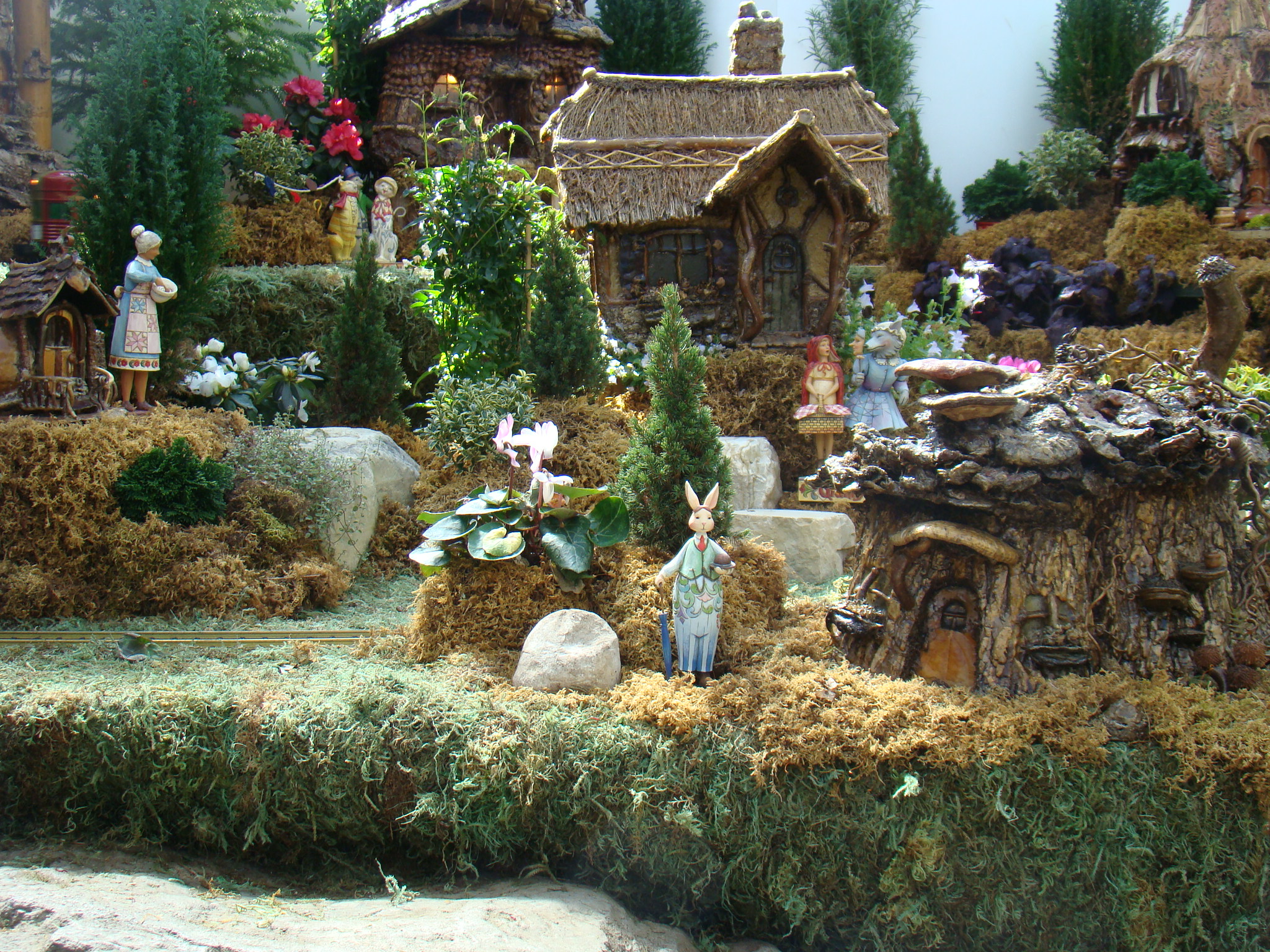
Paul Busse’s Garden Railroad featuring children’s fairy tales is a popular place to stop and take a break.  In this magical world amongst the foliage in the Himalayan Mountain Biome, three dimensional structures are all made from natural materials.  You might see roof shingles made from fungus, a chimney cap from an acorn, or a door hinge from a tiny leaf.  Moss, twigs, leaves and seeds combine to form houses, bridges, and castles. Children will definitely enjoy the fairy tale settings, while adults will marvel at the construction of the scenery.

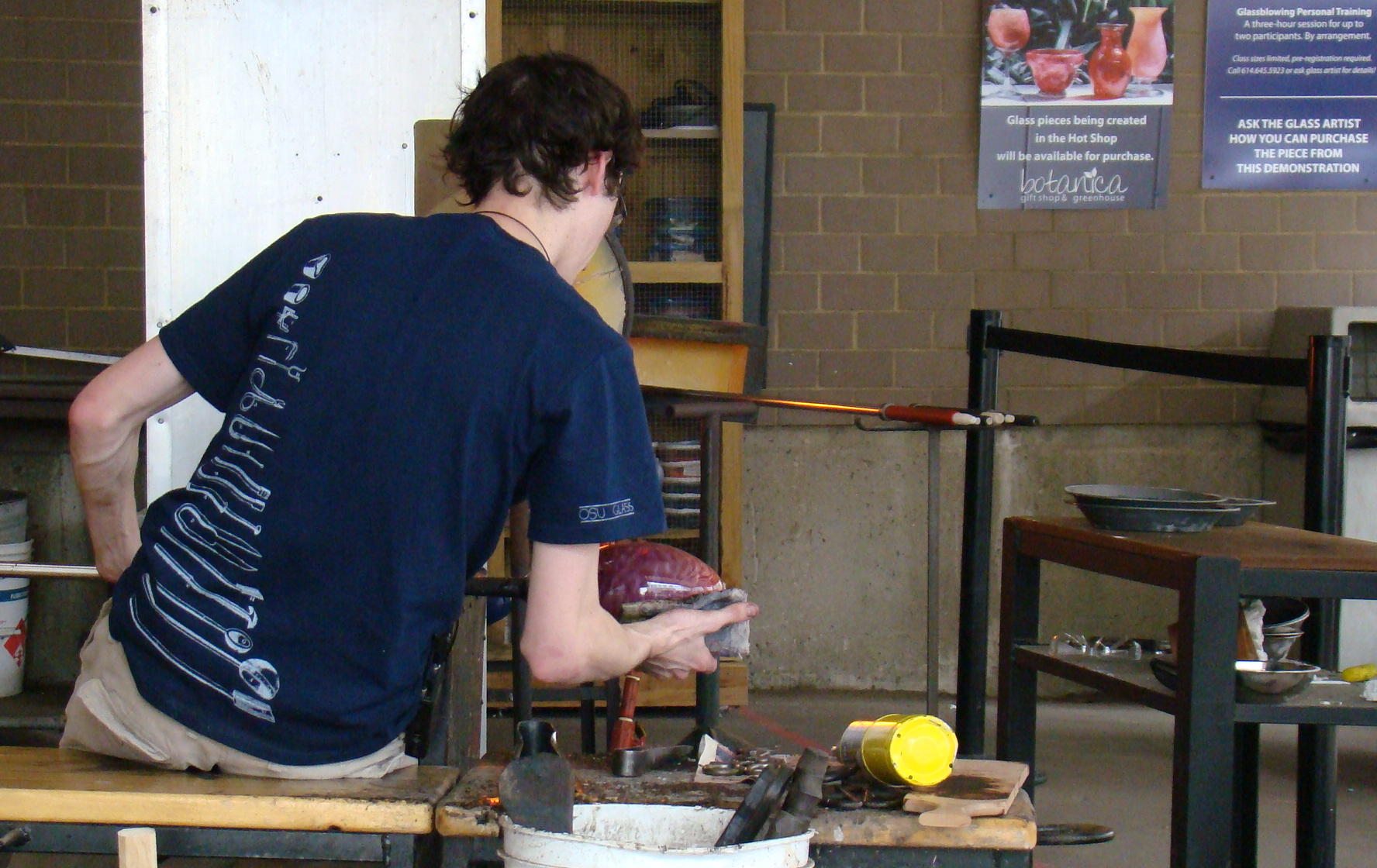
In an outdoor garden area, discovered the Hot Shop where a young man, who had been blowing glass for two and a half years, showed the curious visitors how to create a vase. From gathering the hot, hot glass to dipping it in either powdered colored glass or pellets, the glassmaking process produced many questions from those watching. Especially found fascinating the use of thick layers of wet newspaper being used to shape the glass, as seen in the picture above. The young man told the attentive audience, “We are still finding out new things about glass every day.  It is an ongoing learning experience.” His finished vase, which started out with a red glow, turned out to be a beautiful violet shade.

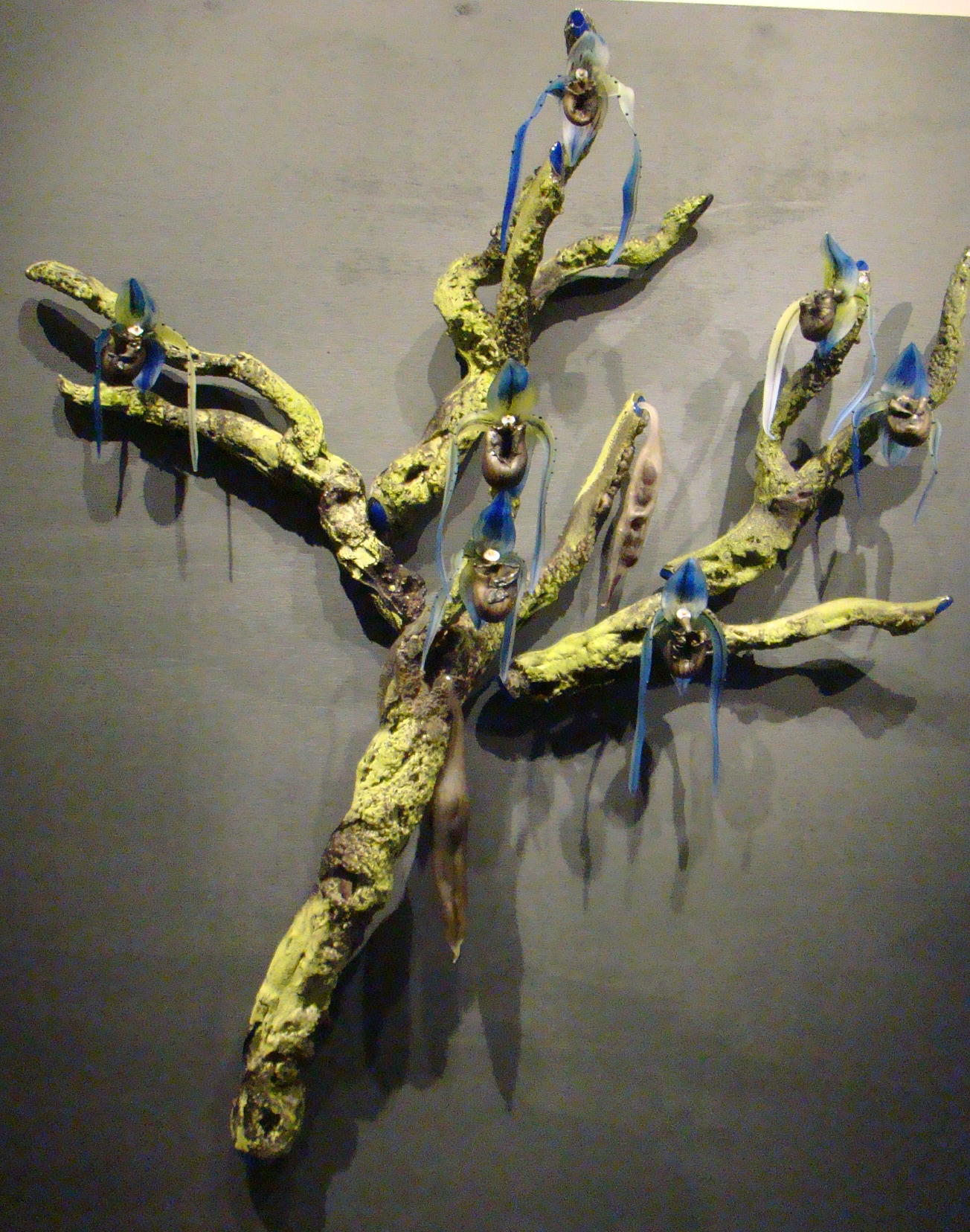
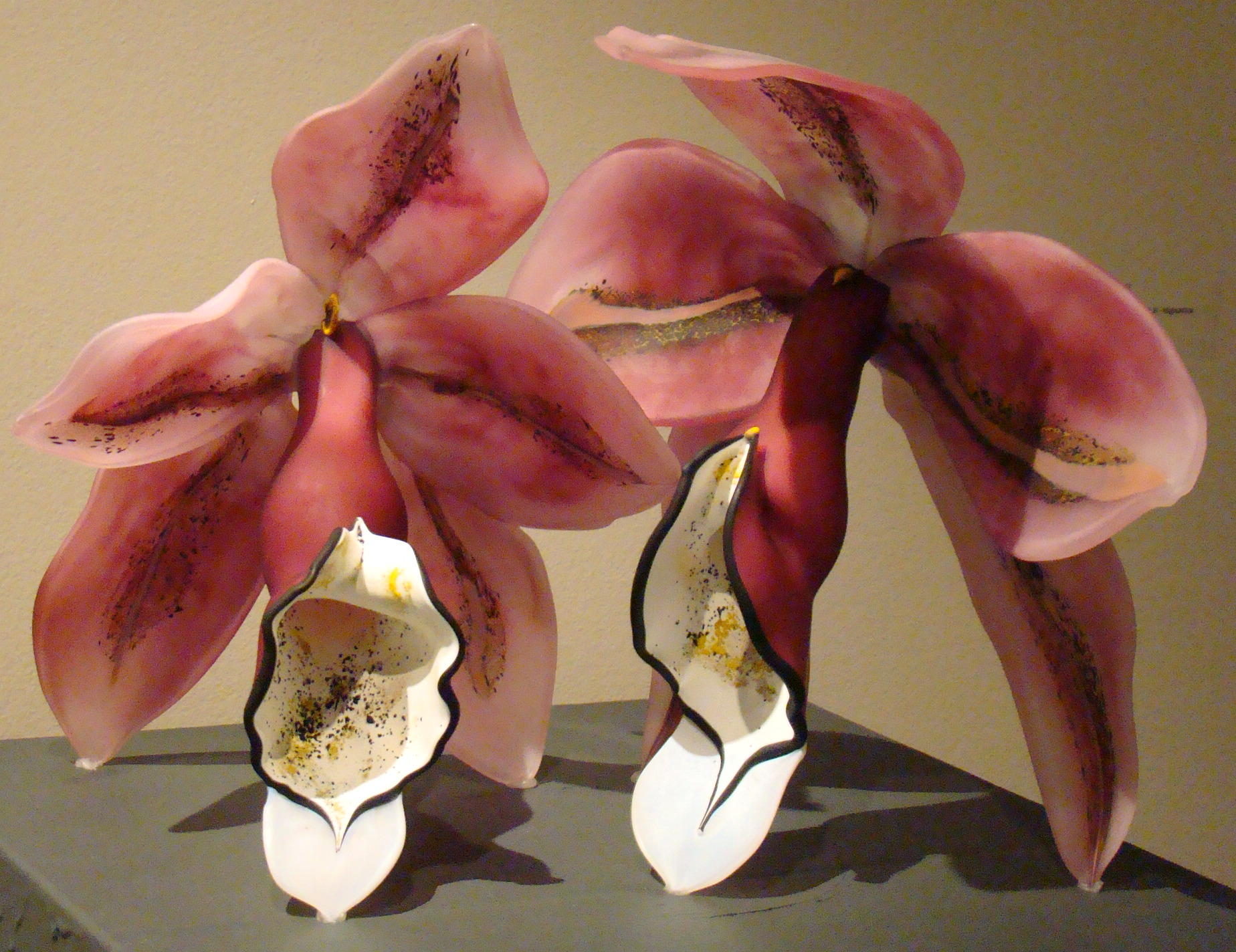
An added attraction was the beautiful blown glass art work by Debora Moore, Collectanea Botanica – Orchidaceae, showing her interpretations of orchids in blown glass sculptures. The Blue Orchid Tree, a beautiful Moore creation, is featured just inside the Cardinal Health Gallery. Debora feels that her work is a figment of her imagination combining the real qualities of the orchid with what she sees in her mind. This glass artist was a student and later an instructor at the Pitchuck Glass School, which was founded by Dale Chihuly whose work is also featured throughout the conservatory on a permanent basis.

My favorite artistic display was the large Pink Glass Orchid. Nature has always been Debora’s inspiration as she uses the medium of glass to express the grandeur and fragility of the natural world. She constantly learns and combines new methods with traditional glassblowing techniques to create her masterpieces.

Today, orchids are the top house plant with 25,000 varieties available. Symbolizing rare and delicate beauty, the orchid is an alluring and captivating plant to enjoy in your home. Franklin Conservatory is one of those places you can visit again and again, as they have featured shows throughout the year as well as an outdoor garden that blooms seasonally.

Walt Whitman wrote,”Give me a garden of flowers where I can walk undisturbed.” This is one of those special places that answers that request.

Franklin Park Conservatory can easily be reached off I-70 as it passes through Columbus, Ohio. Exit on 315 North and quickly you will make another exit onto Route 40 where you will turn right.  You are almost there as just a few blocks through the city, you will find Franklin Park on the right hand side.

Way Down South – Key West

“Cayo Hueso” – Spanish for “Bone Island” – was the original name for Key West because of all the skeletons found on the beaches during the days of pirates and sunken treasures. This is the southernmost city in the continental United States with Cuba just 90 miles away! With the Atlantic Ocean connecting with the Gulf of Mexico on its shores, the sunsets here are spectacular and always accompanied by a gentle breeze.

Just getting here is an adventure as you travel across forty two bridges through the Keys on US Highway 1, the Overseas Highway. The route is only 113 miles from the southern mainland of Florida to Key West with the longest bridge being seven miles long.  All the way you are surrounded by tropical beauty and aquamarine waters. You see the coves where pirates landed long ago, and where drug smugglers currently hide their stash.

The highway here is actually built on the original route of the Overseas Railroad, which was constructed by Henry Flagler back in 1912. When the railroad and its bridges were destroyed in a hurricane in 1935, it was rebuilt and reopened as a highway in 1940.

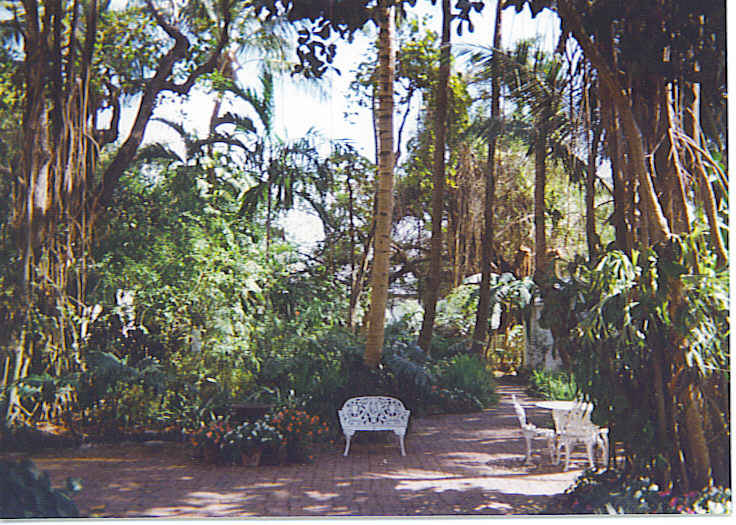
Ernest Hemingway, John James Audubon and Harry S Truman all were frequent visitors here. The Hemingway house is one of the favorite stops and has a relaxing garden, which is a photographer’s dream. Nobel Prize Winner  Ernest Hemingway called the island home for ten years and found solace here along the turquoise waters. Be sure to look for the 40-50 six-toed cats that are descendants of Hemingway’s favorite tomcat, Snowball. Did seem fitting to take home one of his books, so selected his final work published during his lifetime, which not surprisingly had an ocean theme, Old Man and the Sea.

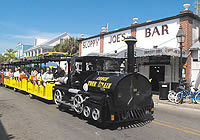
Conch Tour Train gives a guided tour of the island and even makes a stop at Sloppy Joe’s, the most famous bar in Key West. Opened in 1933, the day after Prohibition was repealed, owner Joe Russell had previously operated an illegal speakeasy. Hemingway and his “Mob” of literary cohorts were regular customers, who philosophized and drank the days away.  Today the bar is filled with historic memorabilia dating back to the days when Hemingway – known as Papa – stopped in for a drink with one of his best friends, Joe Russell – known as Sloppy Joe.

Heritage House Museum, the historic Porter family home, gives visitors a taste of the pirate folklore and island life. Built in 1834, this is one of the oldest houses on the island where Jessie Porter established a creativity haven for many famous artists and writers.  The Robert Frost winter cottage in the garden has a beautiful orchid collection. Each year the Robert Frost Poetry Festival is held at this site to promote Key West as a literary destination.

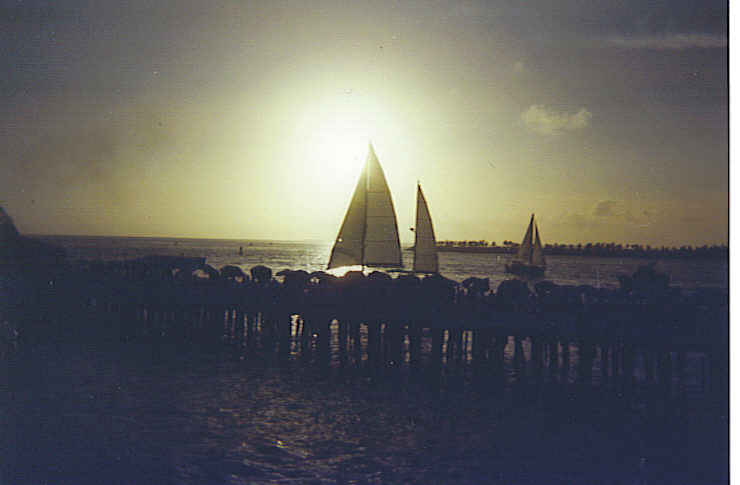
Sunset Pier on the Gulf Coast of Florida is the best seat in the house for the fantastic sunsets of Key West. Here at the Sunset Celebration you watch the sun sink into the Gulf of Mexico while the streets are filled with arts and crafts exhibits, entertainers, psychics, and of course, food!

As poet Wallace Stevens once wrote: Key West is the real thing – the sweetest doing nothing contrived.

Key West, Florida can be reached by crossing all the bridges through The Keys down US Highway 1 to its very end. It is the only highway going that direction so there is no possibility of getting lost.  Enjoy the journey!