Places to go and things to see by Gypsy Bev

Archive for the ‘History’ Category

Dogwood Pass – The Old West Still Lives on in Ohio

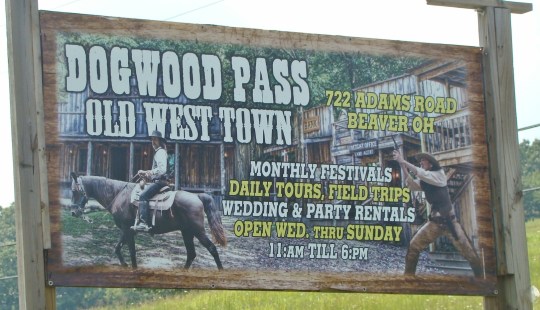
Dogwood Pass SignHowdy, partner!
If you want the feeling of the Old West right close to home, head on down to Dogwood Pass in the hills of Southern Ohio. Many roads head that direction. All are scenic.

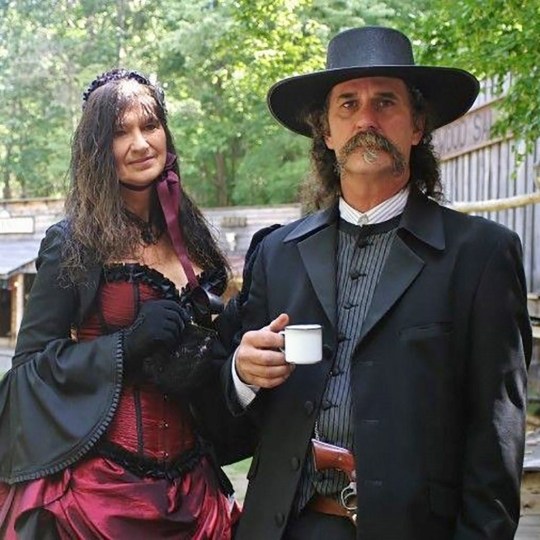
Dogwood Pass Frog and Sharlene 2 (2)

Twenty-five years ago, Sharlene and Frog were married under a tree on the land that is today Dogwood Pass.

This Western town developed rather recently in Beaver, Ohio as an idea of Mike “Frog” Montgomery. Now, Frog has always had a passion for the history and life of a cowboy. He grew up on the farm that today holds Dogwood Pass. Why, he and Sharlene even got married on this spot twenty-five years ago.

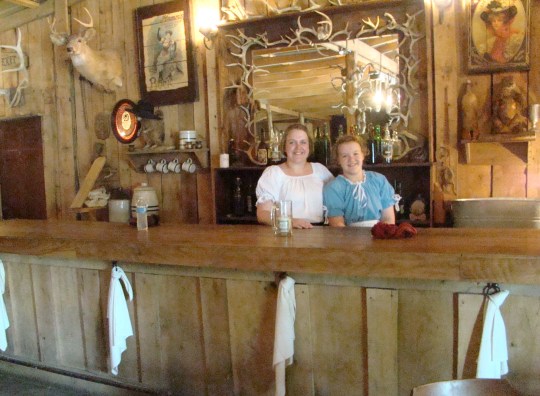
Dogwood Pass Barmaids Nikki and Zoe

Nikki and Zoe served as barmaids in Dogwood Saloon, where the strongest drink was ‘root beer’.

One thing Frog always wanted was his own saloon to hang out in after horseback riding or hunting. In 2009, he decided to build a saloon in his back yard. Just for a hobby! Even Mike admits that his hobby went wild…Wild, Wild West, that is.

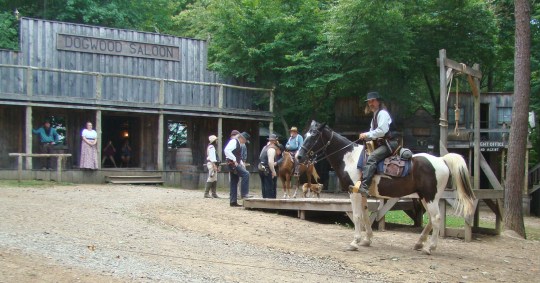
Dogwood Pass Bank Robbery

Sit back on wooden benches to watch “The Bank Robbery at Dogwood Pass”.

Not only is there a growing village, but a couple times a day you can see a live Wild West Show, “Bank Robbery at Dogwood Pass”. There’s a whole lotta shootin’ and chasin’ goin’ on, including a jail escape.

Dogwood Pass Chldren

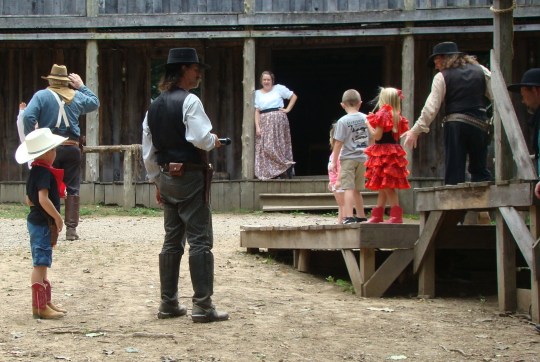
Children took part in a special show at Dogwood Pass.

A special children’s show lets children decide if they’d rather be an outlaw or a deputy. Most want to be outlaws! Everyone takes an active part in the show.

Every year the Montgomerys hold a cystic fibrosis event in honor of a dear friend who suffered with that illness. The Brad Schneider Memorial, very important to the Montgomerys, is a day when all proceeds go to someone currently fighting Cystic Fibrosis.

Dogwood Pass Roy Rogers

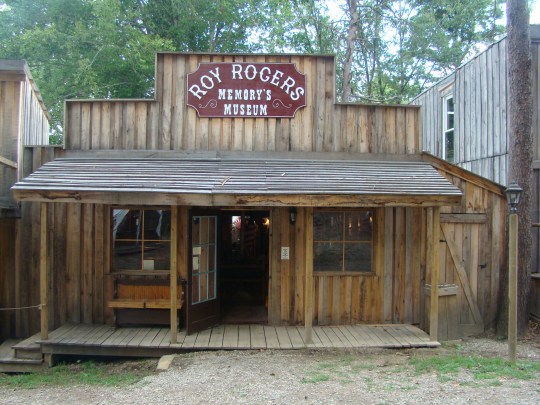
Frog is pleased to have a growing Roy Rogers Memory Museum.

Roy Rogers Memory Museum displays photos and movie posters along with some of Roy and Dale’s clothes and guns. Frog continues to search for Roy Rogers’ memorabilia to showcase at this western museum.

Dogwood Pass Owner Frog

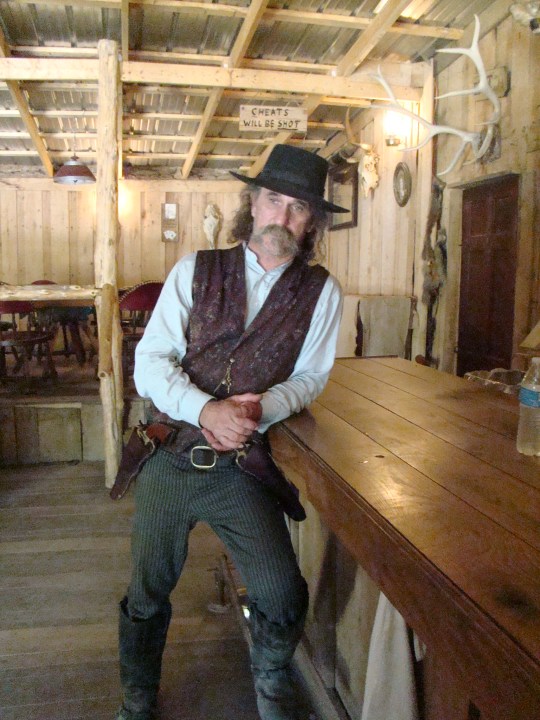
“Frog” Montgomery leans on the saloon bar as he describes his dream.

That first building, the saloon, holds a nice gaming parlor and a beautiful bar.Their stage can accommodate bands or Djs. The strongest drink you can purchase there is “root beer”.

Dogwood Pass Sheriff

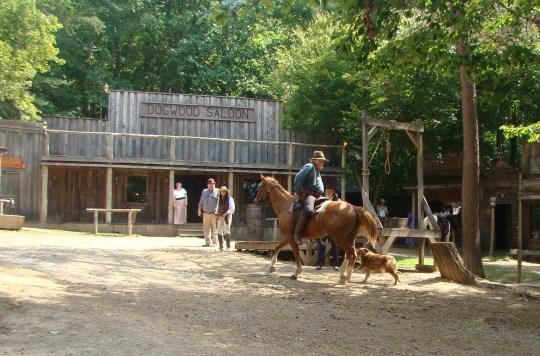
That bank robbery had the sheriff so confused he rode his horse backwards.

You’ll find Dr. Cochran’s office ready to help the injured right next door to the offices of Sheriff John Dillon. This sheriff can even ride his horse while sitting backwards in the saddle.

Dogwood Pass Entrance

Costumed volunteers greet visitors as they enter the gate.

This is a family venture, now aided by about 75 volunteers that help run Dogwood Pass. One thing Frog is adamant about – all voluteers must dress in authentic western costumes. Actually, Frog dresses that way all the time, so people are quite used to seeing him in town with guns in his holsters.

Volunteers find it so much fun they travel miles to get there on the weekends. They drive from Cincinnati, Columbus, Springfield, and even indiana.

Dogwood Pass Horseback Ride

Horseback rides are available for children throughout the day.

Two movies have been filmed here. “Western World” tells the story of a sherrif faced with more corruption and deceit than he thought possible. A second movie still in the process of being finished, “Brimstone Saint”, involves a preacher who became a gunslinger to stop witchcraft in his small town.

Every weekend they are open on Friday and Saturday, usually from 11 -6. Check out their special events on their Facebook page or on their webpage at www.dogwoodpass.com .

Dogwood Bathhouse

A cowboy would visit the bathhouse for a shave, haircut, and bath.

In October, they have a Haunted Trail, then in December, a Christmas tour. Since Mike and his wife live right outside the fence, he never turns anyone away that wants to visit his town.

Weekend visitors range from 300 – 1000, and tour buses frequently make stops there. That’s why Mike is planning to build an amphitheater to have even more extensive Wild West Shows.

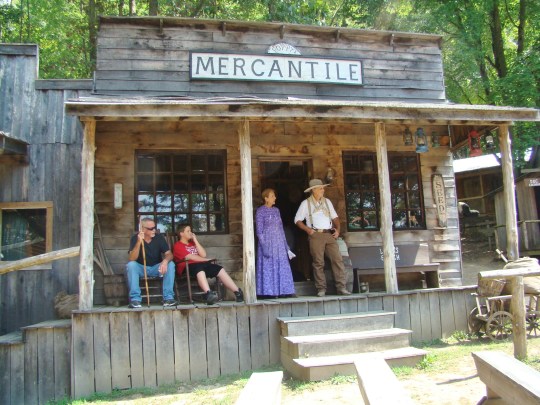
Dogwood Mercantile

The mercantile held all the necessities for a cowboy. It was the perfect place to sit and watch a bank robbery.

If you don’t have the time to head out west, take a drive some weekend soon and visit the biggest Old West town west of the Mississippi. Mike’s a great country boy at heart and adds a personal touch by talking with everyone. You’ll feel welcome at Dogwood Pass.

Dogwood Pass is located in southern Ohio south of Chillicothe. The actual address for your GPS would be 722 Adams Road, Beaver, OH. It’s a back road trip anyway you look at it, but what would you expect going to the Old West.

Velvet Ice Cream – A True Original Since 1914

All Ice Cream is Good…

Some is Just Better Than Others.

~Joe and Mike Dager

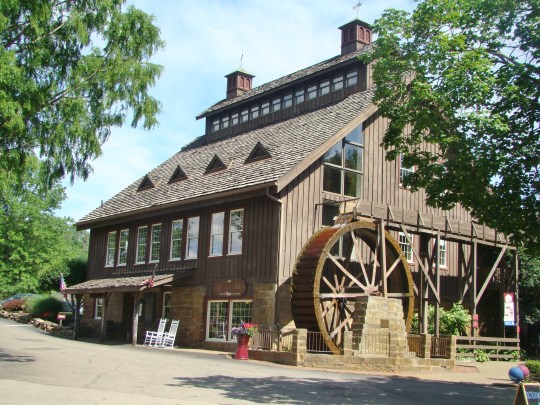
Velvet Mill

This old mill is now home to Velvet Ice Cream Shoppe where you can find the history of ice cream as well as a restaurant and gift shop.

Velvety smooth ice cream has been produced in Utica for over a hundred years. That’s why more than 150,000 people visit Velvet Ice Cream each year and July is a special month with free samples.

In 1984, President Ronald Reagan recognized ice cream as a delicious treat enjoyed by almost everyone and nutritious besides. So he declared July to be National Ice Cream Month.

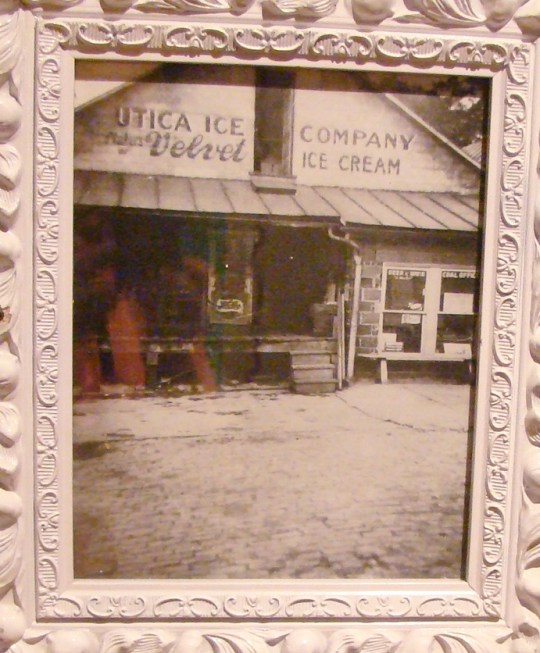
Velvet First Home

This was the original home of Velvet Ice Cream in the basement of the Utica Ice Company.

Joseph Dager came to the United States in 1903 unable to speak any English. That didn’t stop him from following the American dream of having his own business. His dream became a reality in the basement of a confectionery in Utica in 1914.  That first ice cream was made the old-fashioned way by hand cranking. At that time, there were only three flavors: vanilla, chocolate and strawberry.

They outgrew their basement  home quickly and built a factory behind the confectionery. Then in 1960 they discovered an old gristmill, built in 1817, at the edge of town and thought it the perfect place to build a new factory. The mill was powered by an overshot water wheel, which is 18 feet in diameter and weighs 2000 pounds.

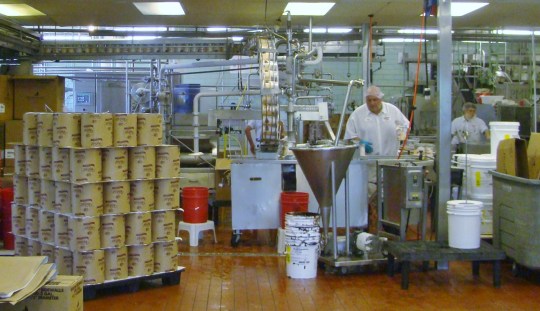
Velvet Operation

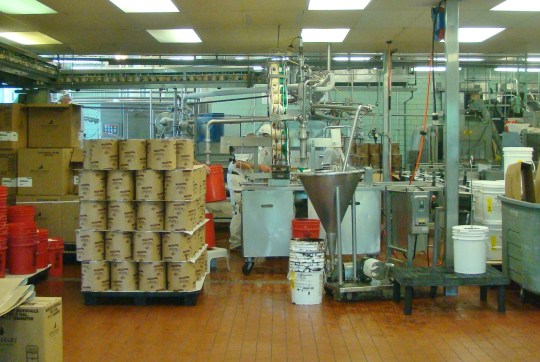
Watching Velvet Ice Cream being made shows their high standards of cleanliness.

Since 1914 the same family has been making ice cream for four generations in Utica, Ohio. They make the world a happier place one small batch at a time. Even today they make their ice cream in small batches using local cream and the finest ingredients.

Velvet Favorite Flavor

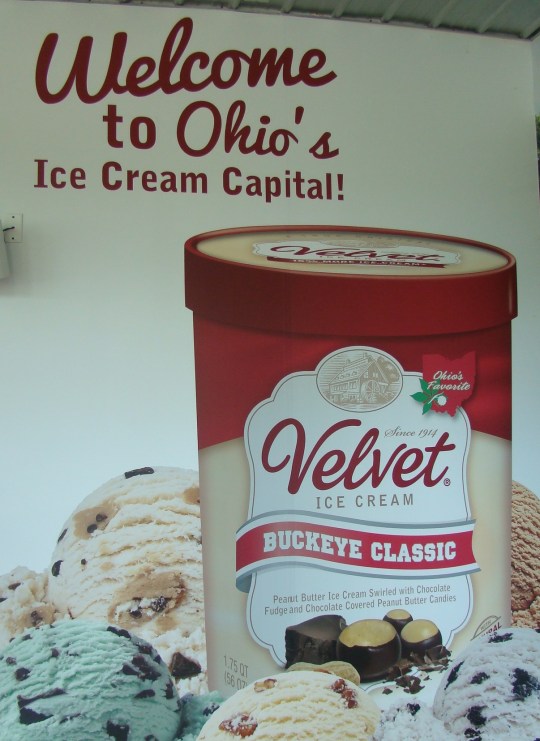
Their number one selling ice cream is Buckeye Classic, with Southern Butter Pecan running a close second.

Watching the seven steps of ice cream being made on their Factory Tour is not only free, but during July, Monday thru Friday you’ll get a free sample of ice cream as part of that tour. Only natural ingredients are used to make this smooth and creamy ice cream. It immediately goes to a freezer where the temperature is 108-110 degrees to lock in freshness.

Velvet Cow

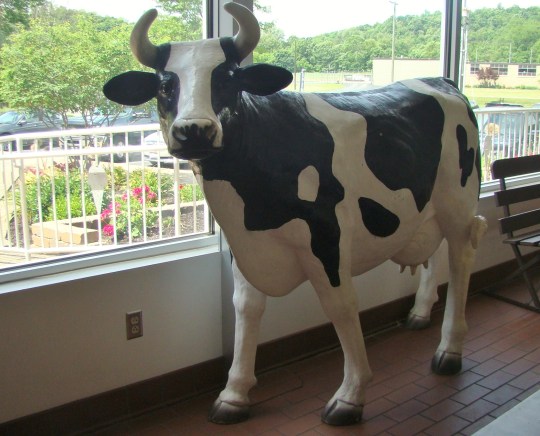
This Jersey cow, named Velvet of course, signifies their ice cream is all made from local Jersey milk.

Here they produce over five million gallons of ice cream each year. They are the largest producer of ice cream in Ohio. It all begins with milk, cream, sugar and water in just the right proportions. Mixing in air as it freezes is essential as nearly half of the volume of ice cream is air. That’s why you have to crank homemade ice cream so long.

On this visiting day they were making Raspberry Fudge Cordial, Summertime Peach, and Moose Tracks. All delicious!

Velvet Cleaning

After each flavor is finished, the bins must be thoroughly cleaned.

Keeping everything perfectly clean is a top priority. Their employees all change to white uniforms when they enter the factory area. Employees throughout the grounds seemed perfectly happy to be working at Velvet.

After each flavor is finished, the machines must be cleaned. What remains in the machines is placed in red buckets to be picked up later by local hog farmers. Pigs like everything except the mints in mint chocolate chip. They leave those in the bottom of the trough.

Velvet Mill Museum

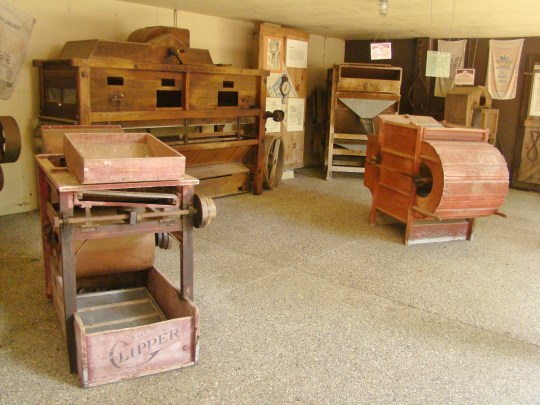
To honor the old mill, there is a Mill Museum, which displays tools used there years ago.

Visit the Milling Museum to view the reconstructed Ye Old Mill, which began running in 1817. When fire destroyed the old mill in 1986, the family rebuilt it. However, the actual mill wheel is still the original.

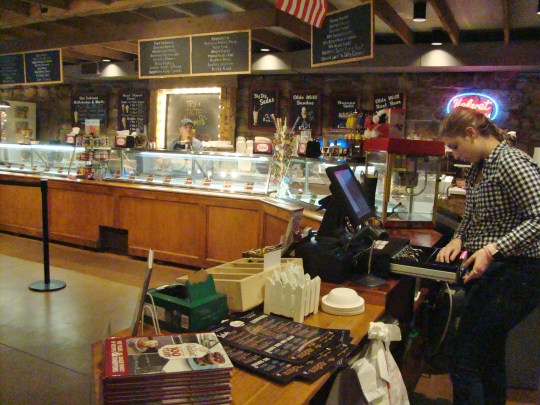
Velvet Ice Cream Shoppe

Happy employees patiently give out samples of ice cream until you find your favorite.

Before you leave, you’ll want to stop at Ye Old Mill, where you’ll find their ice cream parlor. Perhaps you’ll want to have a sandwich followed by the freshest ice cream you’ve ever tasted. No matter what their age, everyone enjoys ice cream.

Their largest sundae carries the name “The Feed Bin” and should serve 4-6 hungry people. It contains 14 scoops of ice cream covered with four sauces, bananas, crushed nuts and cherries. Come hungry for that one.

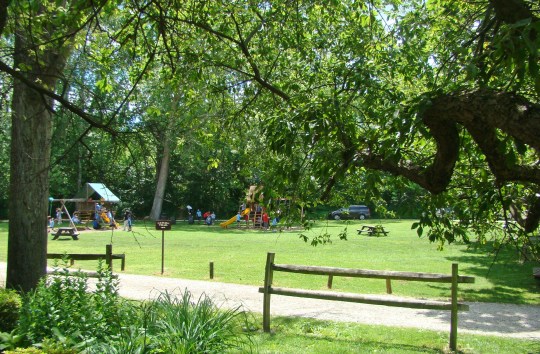
Velvet Trail and Playground

Children enjoy the playground, while nearby walking trails give you a chance to walk off some of that delicious ice cream.

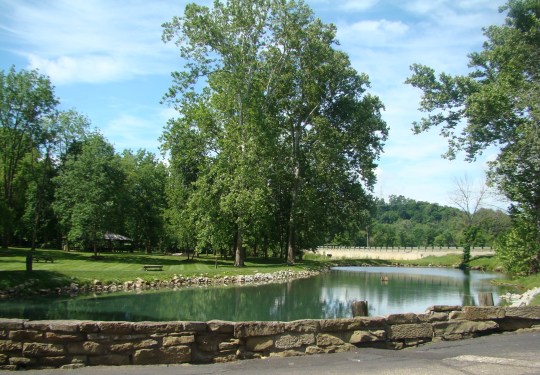
Velvet Pond

The pond offers fishing with their Buckeye Tree Grove on the left side.

Afterwards, perhaps you might want to take a short walk on their Nature Trail that follows an old canal. It’s a chance to walk off some of that delicious ice cream. Or relax by the side of the catch-and-release fishing pond, where you’ll find ducks to feed. There’s enough activity here for an afternoon of fun for kids of any age..

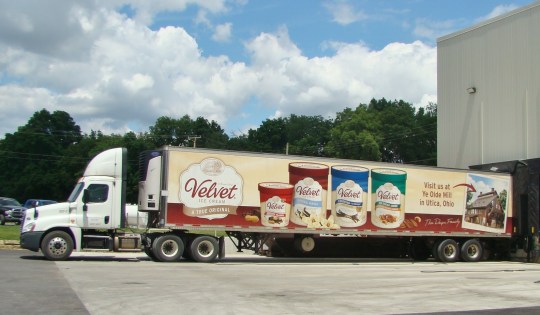
Velvet truck

Eye catching semis deliver gallons of ice cream to Ohio and surrounding states.

Visit Velvet Ice Cream during July to get a free sample right off the line Monday – Friday, 11 – 3.  Spend a yummy day discovering your favorite Velvet Ice Cream flavor.

Velvet Ice Cream is located off I-70 at Exit 132. Take Ohio 13 through Newark to Utica. Their address is 11324 Mt. Vernon Road, Utica, Ohio. It is right along Route 13 so quite easy to find. 


World’s Largest Cuckoo Clock in “Little Switzerland of Ohio”

Cuckoo Welcome

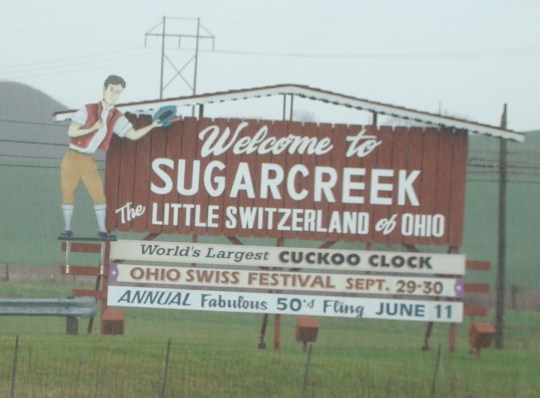
This large billboard at the edge of town announces Sugarcreek attractions.

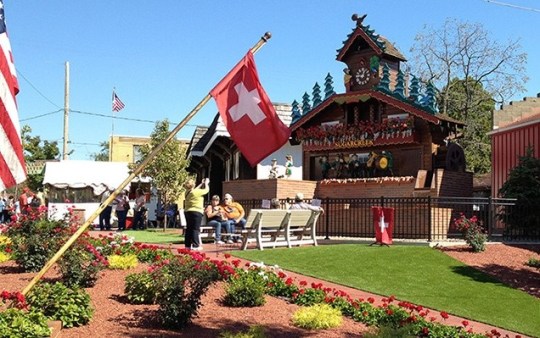
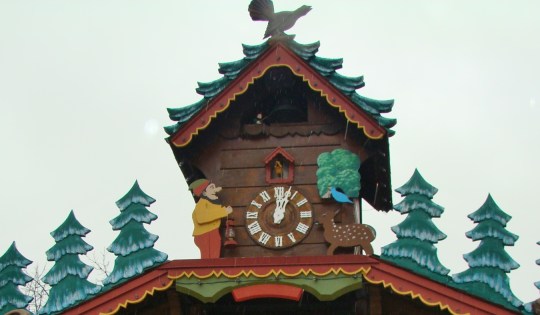
Visit “Little Switzerland of Ohio” to see the “World’s Largest Cuckoo Clock”. Sugarcreek is now home to that famous clock, which was purchased by Walnut Creek Cheese and donated to the tourist town.

But the clock had its beginnings back in 1963 as an idea of Alice Grossniklaus, owner of Alpine Alpa, a restaurant and cheese house. She thought a large cuckoo clock would help bring trade to her restaurant. Designed and built by Karl Schleutermann, twelve years and $50,000 later, the clock was up and running.

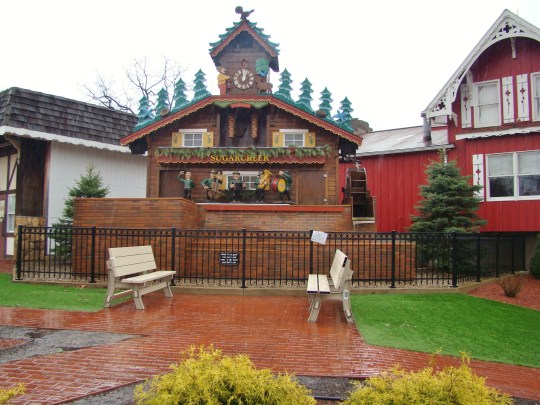
This 23-foot- 6 inch tall timepiece originally stood in Wilmot on a hill in back of the Alpine Alpa restaurant. Alice and her husband, Hans, made it the #1 Swiss cheese shop in the country. But things changed over the years and all the restaurant fixings were auctioned off, including the clock.

Cuckoo Clock

The World’s Largest Cuckoo Clock waits for all to enjoy.

Mark Coblentz of Walnut Creek Cheese purchased the clock at auction. It sat in a parking lot for two years while they looked for the perfect place to set it.

When the residents of Sugarcreek were trying to decide where to put the clock, many wanted it placed inside a building with an admission charge of about five dollars per visit. But Mayor Clayton Weller didn’t have the same vision. He wanted the clock to be free for all to enjoy, as often as they wanted.

When Mayor Weller sets his heart on something, he gets it accomplished. Land was purchased, the foundation set and a crane moved that clock between two crabapple trees without touching a limb. Clayton likes challenges, perhaps that’s why in his spare time he drag races.

Today the clock is on Sugarcreek’s Broadway Street. In 2012, the clock resumed its cuckooing duties after volunteers worked diligently to restore the electrical mechanisms. Those little Bavarian figures still do the polka.

Cuckoo Cuckoo Clock

The cuckoo is the first thing you see and hear each half hour.

Visitors are thrilled every thirty minutes when a bell rings, and out pops a cuckoo bird. Next a three-foot-tall couple on tracks dance the polka to Bavarian music played by a five-piece oompa band.

Cuckoo Swiss Hilltoppers

The oompa band, The Hilltoppers, entertains as the couple dances.

The dancers and band are made out of wood from the Black Forest in Germany. Currently, the dancers take a break as the wood started splitting on the lady’s dress. That would have destroyed her, if not fixed quickly.

The mechanical part of this clock is a marvel with many intricate pieces. When viewed through the back door, the system is even more amazing. Most incredible is the fact that this clock is forty-five years old. They even have the original eight-track tapes that played that first music.

Cuckoo Waterwheel

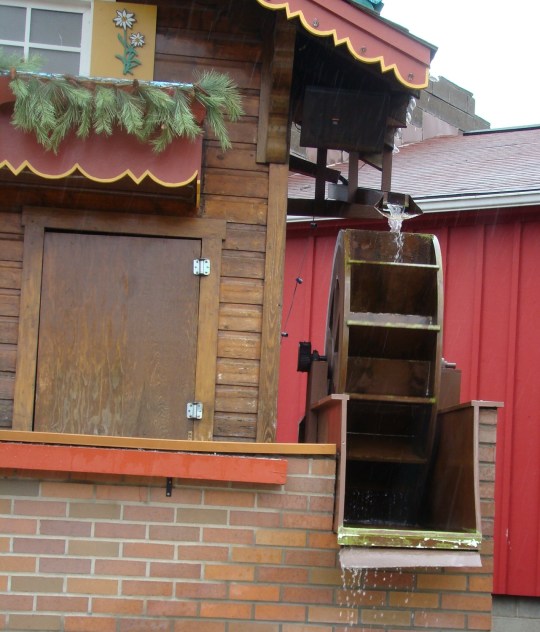
A waterwheel on the side of the building adds a little extra splash.

A satellite on the clock monitors the sound system so it can easily be checked from home anytime. The people of this town really care about the clock. A group of men Clayton called the Cuckoo Brothers spend endless hours working on and checking the clock. Another special group, the Four Amigos, plant and care for 165 geraniums that surround the clock in the summer time. That shows real dedication to their community!

Guinness World Records was contacted regarding the clock’s official unveiling to verify that it is indeed the world’s largest. “It has to work as a real cuckoo clock, like you’d buy at a store,” said Mayor Weller, confident that his clock would be crowned the largest in the world. “A lot of work went into it,” he said. “Everybody says it’s never looked as good as it does now.”

A friend, Big Mike, secretly made all the arrangements with Guiness World Records, and one day Clayton was called asking why the street was blocked off and a crowd of people were at the clock. He knew nothing about these plans, so headed that way. What he saw surprised him completely.

Cuckoo Mayor Clayton

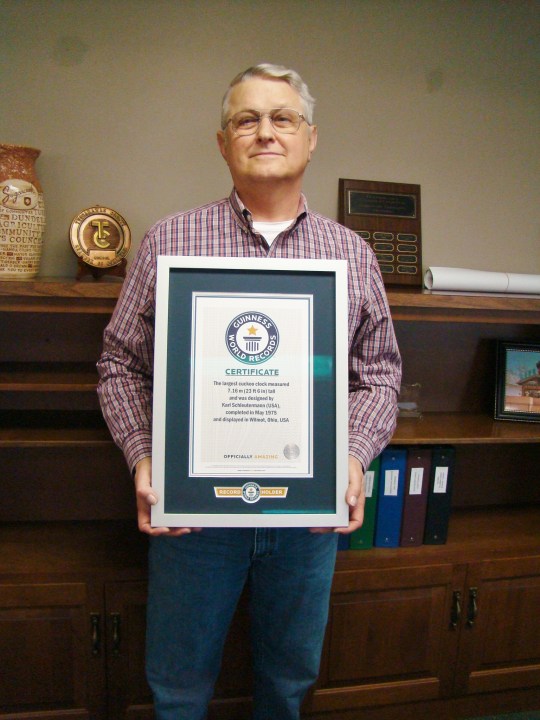
May Clayton Welller has been instrumental in getting the World’s Largest Cuckoo Clock up and running.

Under a blanket on an easel was that coveted Guiness Book of World Records certificate. It verified that the clock in Sugarcreek definitely took the honors of the Largest Cuckoo Clock in the World. Today the office of Mayor Weller proudly displays that certificate.

In order to pay for this project without burdening the local residents, a bedtax plan has been used. Next year the land and moving expenses will be paid in full. Then the money will be used for repairs and maintenance on this local treasure.

Cuckoo 1

This picture was taken on a summer day with all the beautiful geraniums in bloom.

People come from all over the world to visit the World’s Largest Cuckoo Clock. Many remember coming years ago with their families, but most are making new memories as they watch the mechanical marvel play its song every thirty minutes.

Visit Sugarcreek, Little Switzerland of Ohio, to visit their delightful small town and unique chalet-styled cuckoo clock. Cuckoo! Cuckoo!

The World’s Largest Cuckoo Clock is located at 100 N Broadway Street, Sugarcreek, Ohio. Take I-77 to Exit 83, which will be Ohio 39. Go west about 8 miles and turn left on Broadway Street. You can’t miss the Cuckoo Clock on the corner of Broadway and Main.

Delaware Indians Settle Schoenbrunn Village

Schoenbrunn signStep back in time nearly two hundred and fifty years to see the location of the first church and school west of the Allegheny Mountains. Along the banks of the Tuscarawas River in New Philadelphia experience historic Schoenbrunn Village.

Schoenbrunn Scouts

Scouts from Pennsylvania came to see if this would be a great place to settle.

A group of Christian Delaware Indians arrived from Pennsylvania with Moravian missionary, David Zeisberger, in 1772. They came by invitation of Chief Netawatwes, head of the Turtle Tribe in the Tuscarawas Valley of Ohio.

Schoenbrunn David Zeisberger

This portrait of David Zeisberger hangs in their museum.

David was born in Moravia, which is now part of the Czech Republic. His parents immigrated to Georgia to become missionaries. They sent David to school in Holland, but harsh conditions there caused him to flee to the United States to join his parents.

The family moved to Pennsylvania, where David began preparing for his calling as a missionary to the Indians. He studied their language and learned the traditions of the tribe. Often considered a genius, many called Zeisberger the Apostle of the Indians.

Schoenbrunn Guide

A guide welcomed visitors as he strolled through the reconstructed village.

Near a big spring, deep in the woods, a settlement was established called ‘Beautiful Spring’ by the  Delaware Indians, but translated into ‘Schoenbrunn’ by the Germans. This provided a safe place for the Delaware Indians who had converted to the Moravian faith. Religious services were an important part of each day.

Schoenbrunn Indians

These young men both had Indian blood – one Iroquois and the other Delaware. The glass beads they wore served as early travelers’ checks.

From 1772-1777, this village housed approximately 300 people. The only white people there were Zeisberger, his assistant missionary and the missionary’s wife. The remainder of the village consisted of Christian Delaware Indians.

The village had a short five-year existence due to pressure from both Delaware Indians, and frontiersmen wanting to settle in Ohio. Originally the village contained about forty buildings, but over time these buildings were destroyed, the land was farmed, and all traces removed of the settlement.

The people of Tuscarawas County wished to commemorate this development. Maps, letters and the original diaries of Zeisberger led them to the general area where the town existed.  After extensive research and archaeological excavations, the sites of the school and church were discovered and rebuilding of Schoenbrunn began in 1927.

Schoenbrunn Museum Tools

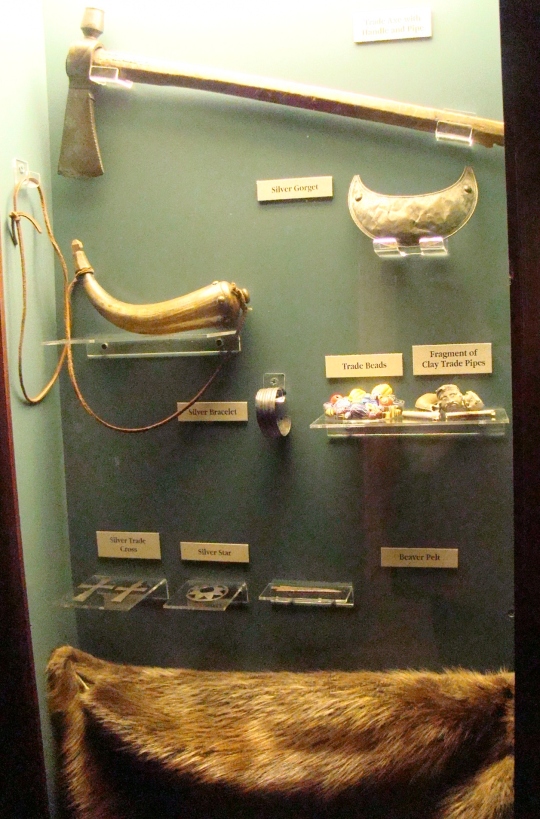
Museum exhibits display tools used during the early days of Schoenbrunn.

At the entrance stands a museum filled with historic exhibits and an excellent video explaining the history of Zeisberger and the founding of Schoenbrunn Village. Here you will find tools the Delaware Indians used, the original school bell, and books written by Zeisberger. These included a translation of the Four Gospels into Delaware Indian language.
Schoenbrunn Herb Garden

An herb garden provided their medicine. Most had confidence in the medicine man’s healing.

Today, Schoenbrunn contains seventeen reconstructed buildings, including the church and the school on their original sites. The location of the cemetery has also been discovered, while  the stones were created in the 1920s. The Moravians had used identical wooden crosses on all graves because they felt all were equal in death.

Schoenbrunn Candle Makers

Two Moravian women had the heavy task of making candles by dipping them fifty or sixty times.

The candlemakers in the Davis cabin actually still make all the candles used throughout the village. They were made of pure beeswax in those early days, to signify the purity of Christ. The Davis cabin served as home to a Native American, his wife and four children. The walls in many of the cabins were whitewashed in order to reflect the candle light.

Schoenbrunn School with volunteers

Costumed volunteers meandered in front of the school where both boys and girls were educated.

Their schoolhouse sat in the center of the village where both boys and girls received instruction in their native Delaware language. Two doors entered the building – one for the girls to use, and one for the boys. In 1775, there were approximately one hundred children being educated.

Schoenbrunn Wordworking

Children enjoyed watching a wood-maker finish a leg for a bench. He also served as the interpreter for the village.

Anton cabin served as home to the village interpreter, making it easier for the whites and various Indian tribes to communicate with each other. This Delaware Indian also was talented in woodworking, making benches and repairing spinning wheels and wooden door hinges. Building a cabin took twenty-three days.

Everything in their community from school and church to their burial in God’s Acre was divided into what they called “choirs”. The young men and boys were placed together, the young women and girls, and then older men and older women. They did not congregate as families or get buried as such.

Schoenbrunn cooking fire

The missionary’s wife cooked meals here for her husband and David Zeisberger, a bachelor.

Authentically dressed volunteers, who all have a passion for history, help you understand what life was like in the 18th century. They serve as storytellers to explain the daily life of the early residents as well as the importance of missions in American history.

Schoenbrunn Butter Churn

Churning butter took much time and patience.

Visit this historic Schoenbrunn Village Monday through Sunday from Memorial Day to the end of August. During September and October, they are only open on Saturday and Sunday. It’s a great place for a family excursion, where you can have an enjoyable outdoor adventure while learning about the history of early America.
Schoenbrunn Village is located in Tuscarawas County at 1984 E. High Street, New Philadelphia, Ohio.  From I-77, take Exit 81 East on US 250.  Next take Ohio Exit 259 to E High Street. The village will be on the left.

National Road – Zane Grey Museum

Zane Grey Museum

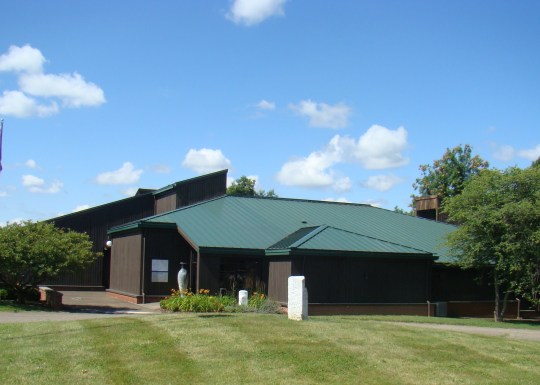
The Zane Grey Museum was originally constructed to resemble a frontier fort.

Three pieces of history are superbly woven together at the National Road – Zane Grey Museum between New Concord and Zanesville, Ohio along old Route 40. Learn about the road to the West, famous author Zane Grey, and Zanesville potteries.

Way back in 1811, Ebenezer Zane discussed with George Washington the need for a road across the newly settled country. Washington agreed it was vital to the future of the country so proclaimed, “Open a wide door, and make a smooth Way.” That began Zane’s Trace, which became part of the National Road.

Zane Grey Crossing

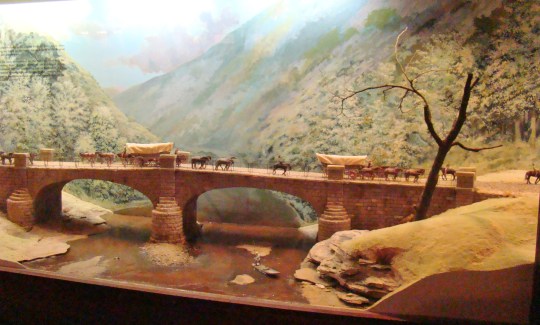
Diorama sections show their difficult work in constructing The National Road over streams.

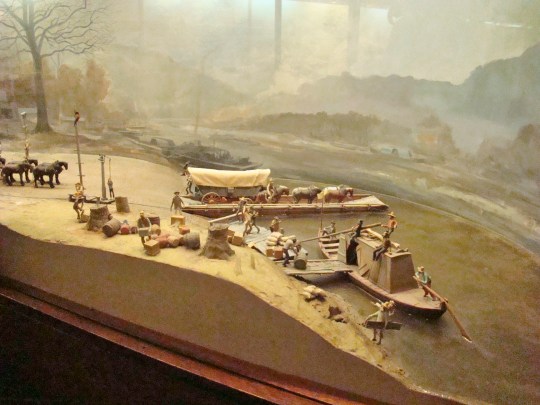
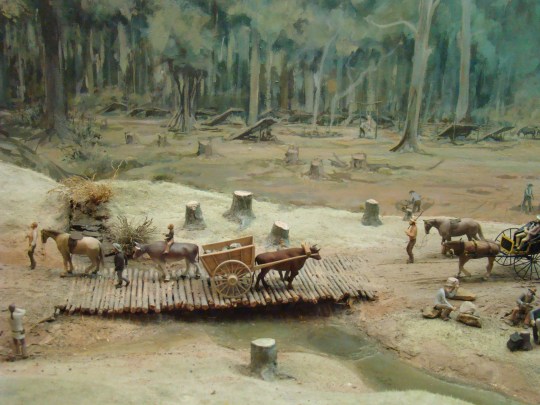
The museum presents a detailed 136′ diorama depicting life on the original National Road, often called “The Main Street of America”. All the figures are hand made from clay and accurate down to the tiniest detail.  The first road was dirt, followed by the Corduroy Road made of logs, making it very rough. Eventually a stone foundation was in place with crushed stone on the top, and finally bricks

Zane Grey Ferries

Ferries took wagons and supplies across the Ohio River.

Every mile a stone mile marker gave travelers information on mileage to various towns along the way. A Gunter Chain, 66′ long, was used to measure the distance of one mile time and time again. If you moved the 66′ chain X 80 times = 5,280 ‘, the distance of one mile. The Gunter Chain also measured the distance across the road – 66’.

Zane Grey Diorama

Logs formed the Corduroy Road, a rough stretch to travel.

After WWI, Dwight Eisenhower led a convoy of trucks across the National Road, and during WWII, General Eisenhower discovered the Autobahn in Germany. When he became president he felt it of high importance to develop better highways in America. Thus began our interstate highway system.

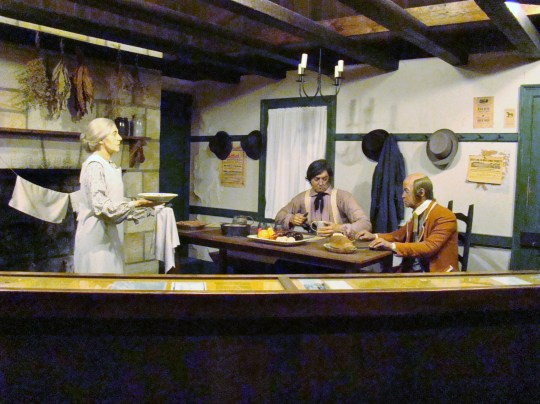
Zane Grey Stop

The 10 Mile House provided refreshments along the highway. Baker’s Motel is located on that spot today.

Pearl Zane Grey, being born in Zanesville, traveled this road frequently. His early writing attempts were squelched by his father, who insisted that Zane attend the University of Pittsburgh so he could be a dentist and follow in his father’s footsteps. Zane did graduate with a degree in dentistry after enjoying a time of pitching his great curve ball on the college baseball team, where he enjoyed a full baseball scholarship.

When he married Dolly, her encouragement and editing abilities, along with a nice inheritance, made it possible for Zane to abandon his dental practice and begin following his passions…writing and fishing.

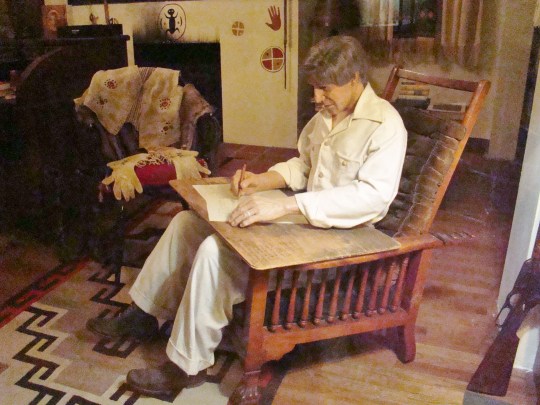
Zane Grey Study

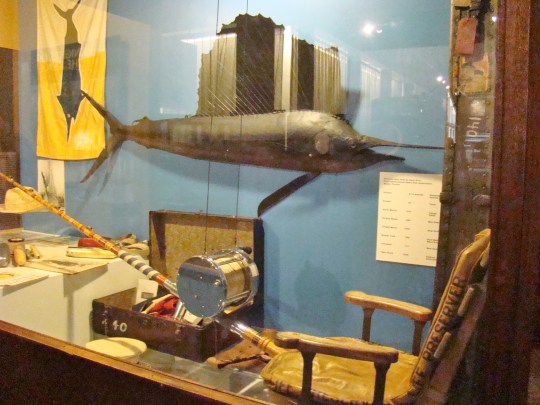
Zane Grey wrote his books by hand in his study, surrounded by native American items he had collected in his travels.

His first book was Betty Zane, the story of a young girl who helped save Fort Henry. But it was Riders of the Purple Sage that put popularity into Grey’s writings. His books sold like hot cakes. Zane wrote all his stories in long hand, then his wife, Dolly, typed them and had them published. Many were turned into movies.

Zane enjoyed fishing more than anything else and spent over 300 days a year at that sport. He split the money from the books with Dolly, and he spent his half on fishing, boats, and travel. When he traveled out West, he filled his tablets with descriptions of the scenes he saw, for use in his stories.

Zane Grey fishing

Big-game fishing was the real passion in his life.

The only books that sold more copies than Grey’s at that time were the Bible and school primers. Hemingway was quite jealous of Grey, not because of his successful writing career, but because of his great fishing ability. Zane’s love of the great out-of-doors can be seen in all of his books through his detailed descriptions. 

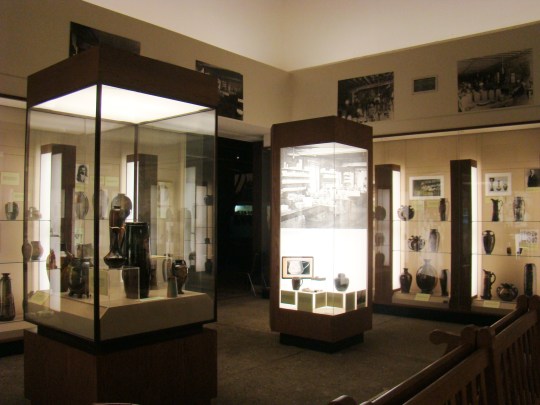
Now how does the fantastic collection of pottery fit in? The perfect clay for making pottery could be found in this area quite easily – in dirt roads, such as the National Road, which had clay as their base. Potters would go out to the road and dig up a small portion of clay to make a vase or bowl. This became known as a “potters’ hole”. Thus the term we use today for a hole in the road – “pot hole”.

Zane Grey Pottery

This is a small section of the Zanesville Pottery collection on display.

But the collection goes beyond those humble beginnings and includes the work of over 132 potteries in the Zanesville area. Thousands of workers contributed to this large display, which was originally the collection of Mr. Downey, the owner of Conn’s Potato Chips. Upon his death, half of his pottery was given to the Zane Grey Museum for display, while the other half is in the Zanesville Museum of Art.

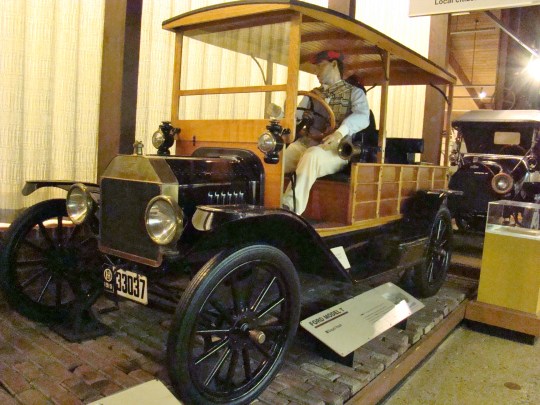
Zane Grey Model T

Find surprises along the way like this Model T Ford.

Next time you travel along the Old National Road, today’s Route 40, stop at the National Road – Zane Grey Museum and watch a film about the life of Zane Grey. The knowledgeable guides will lead you down the road to books, movies, pottery…and some surprises along the way.

National Road – Zane Grey Museum is located on old Route 40 about a half mile from I-70, Exit 164, Norwich Exit. The museum is located between New Concord and Zanesville, Ohio.


Take a Country Drive to Explore Coshocton Quilt Barn Trails


Garden of Eden

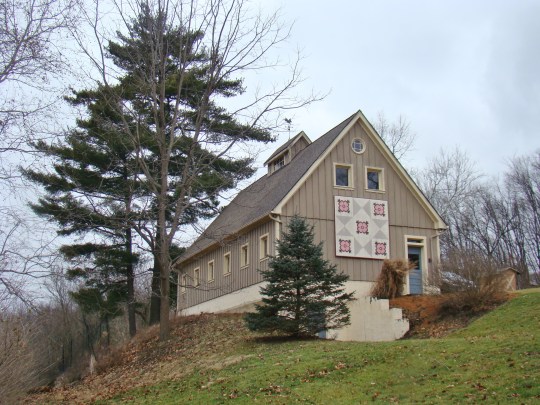
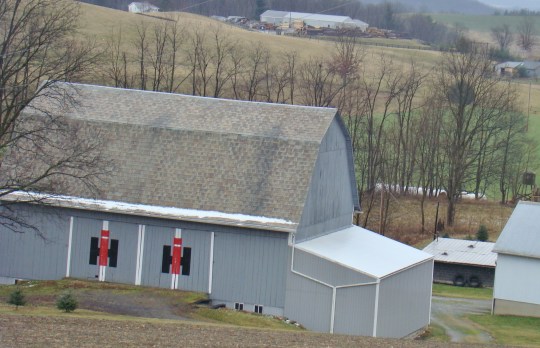
Quilt patterns on the sides of barns gave a purpose for a country drive.

A Sunday drive has always been one of my favorite things. Dad would travel the back roads exploring places we’d never been. That same feeling occurred while wandering along the Coshocton Quilt Barn Trails. It was a peaceful, old-fashioned road trip on those narrow, two-lane country roads, where you could actually take time to look at the scenery.

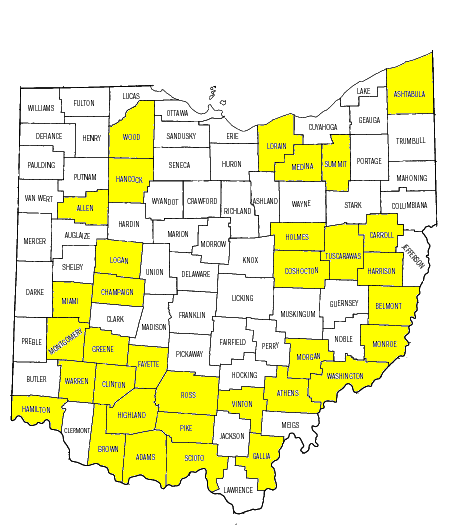
While Quilt Barns have become a nationwide movement, they got their beginning fairly recently. In 2001, Donna Sue Groves wanted to honor her mother’s passion for quilting, so painted her mother’s favorite quilt square on their old tobacco barn in Adams County.

Ohio Quilt Barns

These counties in Ohio have Quilt Barn Trails.

From there, the Quilt Barns arose to reflect the spirit of the community. In Miami County, quilts were hand-painted on the barn’s surface replicating the look of fabric, while in Harrison County emphasis was on the Underground Railroad.

Coshocton County Heritage Quilt Barns feature family quilt patterns. Each quilt has a story to tell. The Pomerene Center for the Arts is responsible for creating this historic drive to view our nation’s agricultural landscape. They have three possible routes: Tiverton Trail, SR 643 Trail and Progressive Valley Trail.
It is important to either print off a map from the computer, open one on your phone or tablet, or pick one up at Coshocton Visitors’ Bureau in Roscoe Village. Directions are essential.

Mother Setzer's Quilt

Mother Setzer Quilt Barn appeared in a natural rock setting.

Several of the Quilt Barns have online connections to stories about the colorful quilts and who originally designed the quilt squares. Mother Setzer Quilt Barn appeared first on our adventure, and had a lovely setting with a firm foundation of large rocks around the barn. Their grandmother made this quilt pattern from scraps of her clothing and black silk dresses.

While SR 643 became the trail of choice, meandering from that path became frequent. The desire to see more Quilt Barns eventually included parts of all three Coshocton trails.

Sweet Pea

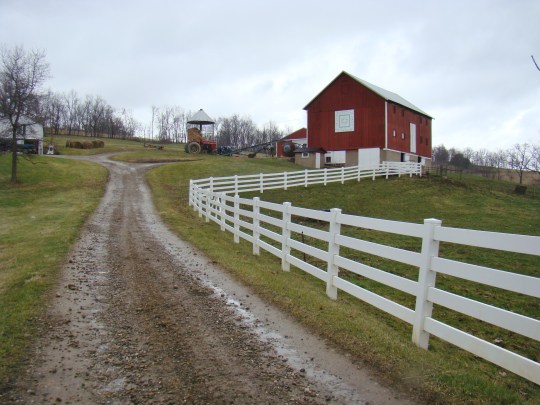
The lane back to Sweet Pea Quilt Barn featured a picturesque white fence.

Many of the Quilt Barns sat on back roads. Some became a challenge, and a four wheel drive vehicle would have been helpful on this rainy day as roads were steep and muddy. But beautiful, scenic farms throughout this Amish countryside made the day enjoyable. Corn shocks were a sight not seen since childhood.

Chalice

A barn near a lovely stone home featured Chalice pattern.

Chalice was the name given to the quilt pattern made by Catherine Stubbs on a barn near a lovely stone house. It appears that Catherine stayed very busy with quilting and life in general. One day when her husband was at work in the coal mines, she moved them to another house closer to his work. It’s said when she cooked Sunday chicken dinner, she could stretch one chicken to feed twelve people.

Butterfly with Raindrops

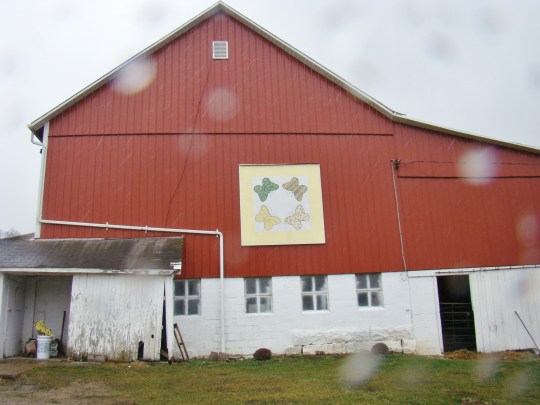
Butterfly Quilt Barn received raindrops during this trip.

The Butterfly Quilt Barn near Fresno showcases a quilt made and designed by Oneita Hahn. Family members remember her quilting frame being up in the dining room quite often. Quilt patterns frequently were created by the quilters themselves and then drawn on newspaper.

Snowball

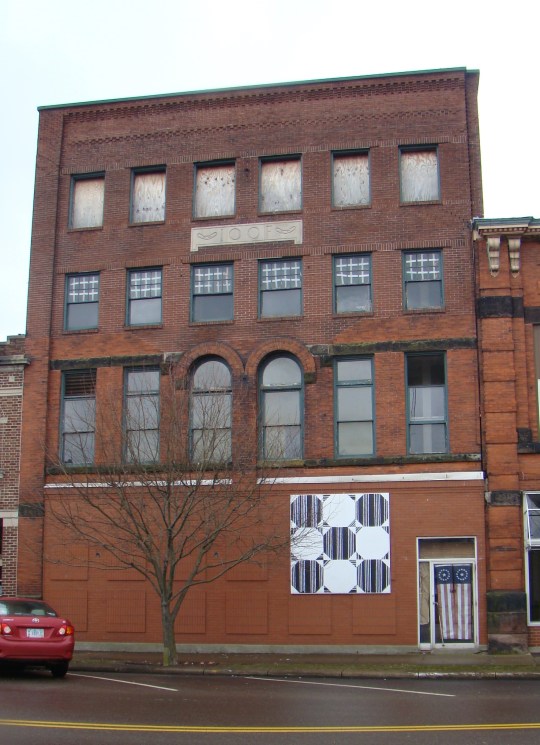
In downtown Coshocton, you’ll find Snowball pattern on the side of a former quilt shop.

Not all barns were in the country. One actually was found in downtown Coshocton on the side of an old IOOF building, which formerly housed Mercantile on Main. Snowball, a black and white quilt, decorated the front of this one-time quilt supply shop.

Canal Era Applique

Blacksmith shop in Roscoe Village displays an attractive quilt pattern.

In Roscoe Village on the side of the Blacksmith Shop, Canal Era Applique could be seen upon entering the village on North Whitewoman Street. The quilt square on display appeared on a quilt made by Hannah Hays, whose family arrived in the area by canal boat.

Ohio Rose & Star

Ohio Rose & Star can be found in Clary Garden in Coshocton.

The end of SR 643 Trail came in classy Clary Garden. Ohio Rose & Star has graced the side of their barn since 2003. Made by Coshocton Canal Quilter Helen Moody, this pattern was chosen to hang at the gardens in honor of the family’s rose business.

But this artistic project doesn’t stop here. All over the United States, Quilt Barn Trails have been created. Presently, over 6000 quilt patterns have been placed on barns in 33 Ohio counties, 45 states, and even some in Canada. It’s a wonderful excuse to get in the car and take a road trip.
Tractor Quilt

A clever tractor pattern on one barn added variety to the day.

This country adventure through scenic back roads will take you back to a less stressful time. The Quilt Barns provide a variety of attractive patterns in excellent condition. You can take this drive any time of the year and enjoy this grassroots art movement. Watch for Quilt Barns wherever you travel.

While on the Coshocton Quilt Barn Trails, you’ll find not only creative quilt patterns but Amish farms, meandering streams, beautiful stone houses, and unique shops along the way. Don’t forget your camera!

AMA – Motorcycle Hall of Fame Springtime is the Perfect Time to Get Out and Ride

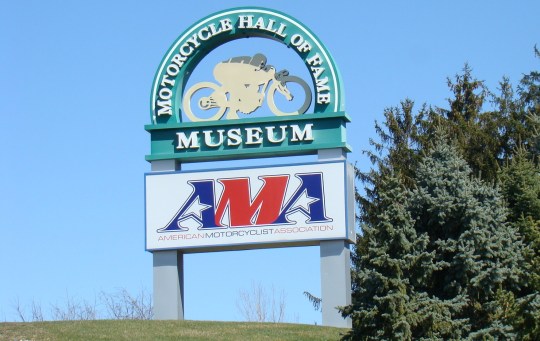
AMA Museum Sign

This sign along I-70 directs motorcycle enthusiasts to the AMA Hall of Fame.

April’s “ AMA Get Out and Ride! Month” seems the perfect time to visit the AMA Motorcycle Hall of Fame. What stories the bikes tell and history they hold.

AMA, American Motorcycle Association, serves a membership of over 200,000 with an average experience of 28 years. They own 615,000 motorcycles, which are ridden over a billion miles each year.

In 1990, AMA Hall of Fame first opened in Westerville, then moved to its present Pickerington location in 1999. Here it can easily be seen from I-70.

AMA Hall of Fame

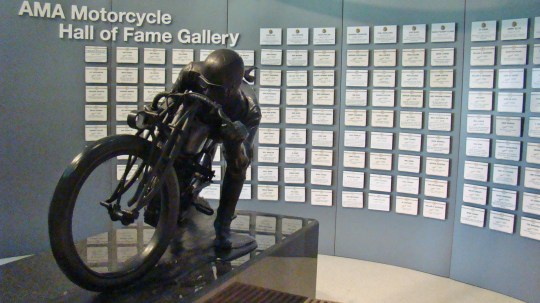
The Hall of Fame plaques surround a circular room. You’ll find familiar names there even if you’re not a motorcycle fan.

A special round room holds a plaque for each member inducted into the AMA Motorcycle Hall of Fame. They recognize individuals who have contributed to the motorcycle sport over the years. At the entrance is a Glory Days Statue.

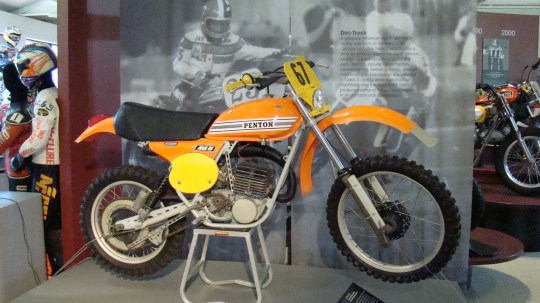
AMA Dirt Bikes

Dirt bikes are especially popular with the younger generation.

The displays at AMA Hall of Fame are arranged in sections according to motorcycle type: Dirt Bike, Road Racing, Motocross, Specialty and Off Road. Each one holds memorabilia from many familiar names, who are fearless, imaginative and awe-inspiring.

AMA Ashley

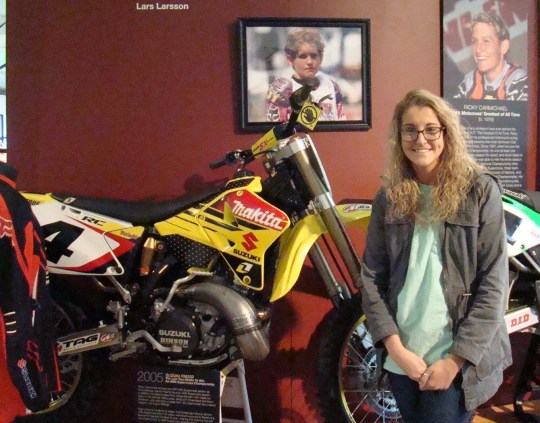
Ashley, AMA Associate Editor, enjoys motocross. Her favorite motocross racer is Ricky Carmichael, the winningest motocross racer of all times.

Ashley Price, Associate Editorial Director at AMA, gave an excellent overview. She had a passion for motorcycles, having gone to Motocross training daily at the age of 14 while being home schooled.

Her days were carefully monitored regarding food, gym and riding time. She only slipped up once on her food. At Walmart, she purchased a box of Wheat Things. Punishment – another six or seven miles of bike drills.

Those years of competition have given Ashley determination in life situations. “The camaraderie of family and friends has given many memories. I’ve learned life lessons in working hard to accomplish goals.”

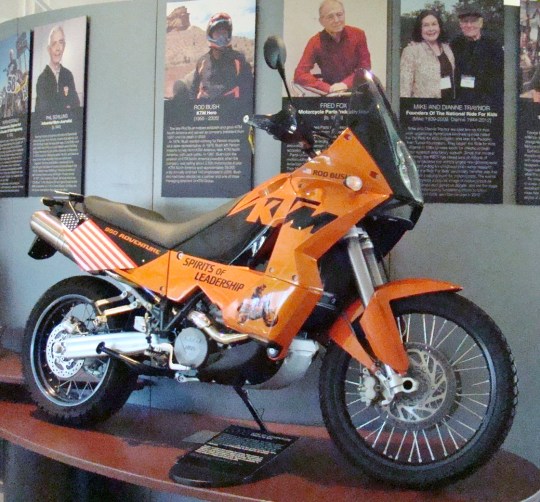
AMA Adventure bike 2

Adventure bikes are the most popular today as they can ride in the street and off road.

Riding a bike in racing takes more strength and determination than it appears. It is one of the most difficult sports in the world. At the end of a race, riders are exhausted. It takes a great combination of man and bike to win consistently.

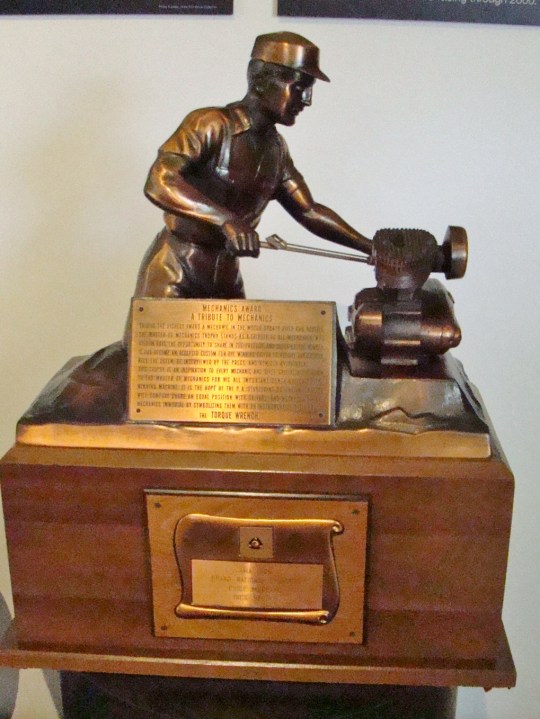
AMA Mechanics

Let’s not forget the mechanics, as their role in a race is crucial.

If you like motorcycles, you’re sure to find something of interest at AMA Hall of Fame, which is packed with motorcycle history. With 117 bikes, there’s a great variety. It’s not possible to describe all of them here, so you’ll have to visit yourself. Most were donated by names familiar in the biking world.

AMA Oldest Bike

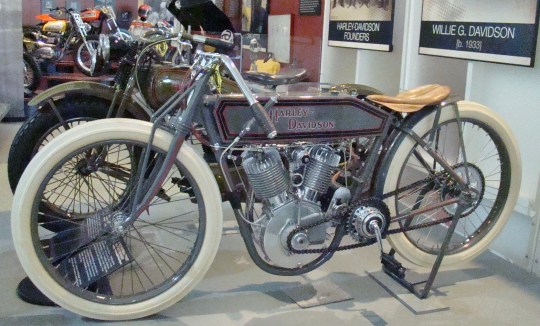
Currently, the oldest bike at the museum is this 1914 Harley-Davidson, one of the earliest dirt bike racers.

A 1914 Harley claimed the honor for the oldest bike at the museum. Most popular now are adventure bikes. They can go on the street or easily off road due to their special tires. They’re not for competition, just enjoyment.

AMA Toy Bikes 2

Downstairs at the AMA Hall of Fame, there is a nice selection of motorcycle toys.

Downstairs, Motorcycle Toys and Collections stir up some memories, or watch a biking video. “Why We Ride” played during a recent visit and centered around family fun involved with making great memories. “It’s a most interesting, amazing adventure,” quipped one lady aged 78, heading for 100.

AMA Wooden toy bike

This wooden motorcycle overlooking the patio, gives children a chance to sit on the seat or in the side carrier.

Riders feel this is a great way to make friends. Children join in at an early age on their dirt bikes. Charity work frequently happens with motorcycle groups. Everything from Cancer Runs to Christmas Toy Drives occur around the world.

The AMA sets up a Gypsy Tour series for their members. Its purpose is to have a rally and provide a memorable experience for everyone involved. Motorcycle friends are a close knit family, where men, women and children enjoy the thrill of riding and racing together.

If you are passionate about motorcycles, AMA Motorcycle Hall of Fame would be a great family outing. Then, Get Out and Ride!

The AMA Motorcycle Hall of Fame can be found just off I -70 at Exit 112, Route 256. Take a left of Blacklick Eastern Road and another left on Yarmouth. Watch for their posted signs to 13515 Yarmouth Drive. Enjoy the ride!

Famous Endings Museum – Largest Funeral Memorabilia Collection in the World

famous-endings

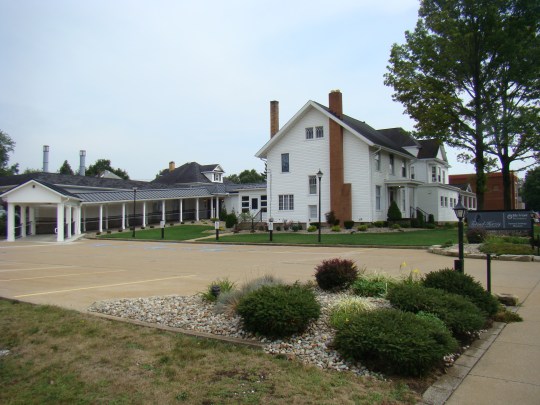
Toland-Herzig Funeral Home in Dover features Famous Endings Museum.

What better place to have a Famous Endings Museum than a funeral home. In Dover at 803 N. Wooster Avenue, the Toland-Herzig Funeral Home has an outstanding display of funeral memorabilia from people who have made a difference in the world.

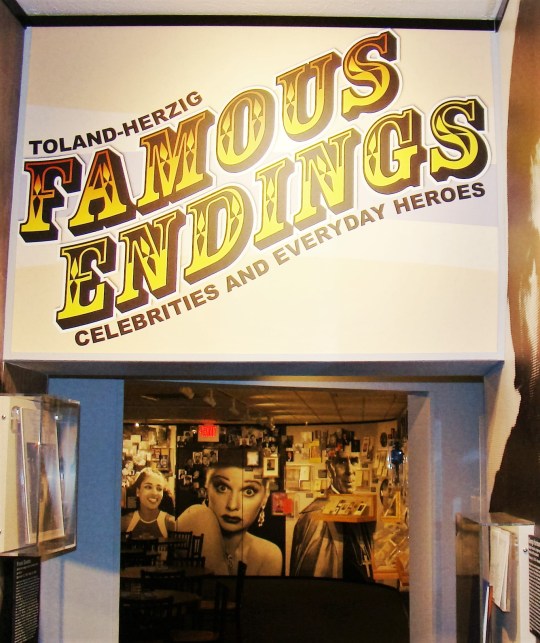
endings-entrance

The entrance to Famous Endings gives a glimpse of celebrities.

The staff hopes that their presentation will perhaps bring back memories, or even a smile to your face, as you see some of those people who had a great influence on our lives.

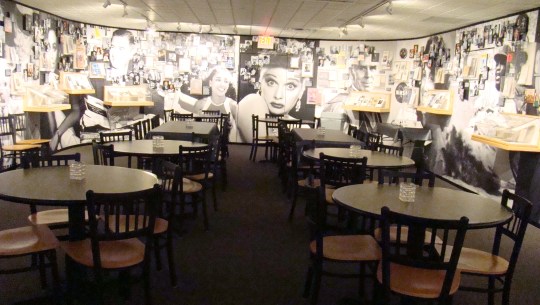
famous-endings-cafe-setting

This cafe setting provides a place for visitors to sit and listen to John’s stories.

Here you will find the largest privately owned collection of funeral memorabilia in the world. Everything from funeral programs, photos, newspaper clippings, and prayer cards can be viewed. Most of the memorabilia is displayed in one large room, but it has spread out to the hallways and other small rooms throughout the funeral home.

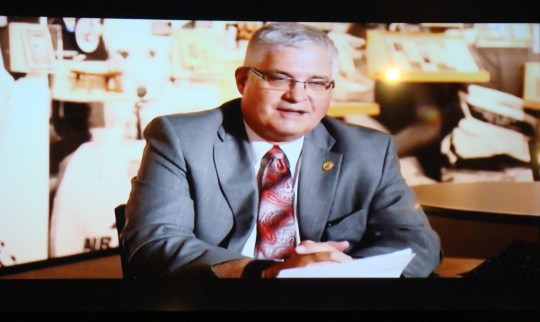
john-herzig

An excellent video by John Herzig helps explain his collection.

This is a rather recent collection started by John Herzig back in 1996. Up to that time, he had an autograph collection, but that was soon to change when he sent a request for the autographed picture of the late Joe Lewis, the boxer.

When he received the package in the mail, there was more than what he asked for. It included not only a picture, but also the program of the funeral ceremony. That was the beginning of his new hobby, which has evolved to over  2,000 pieces of funeral memorabilia on display today.

famous-nasa

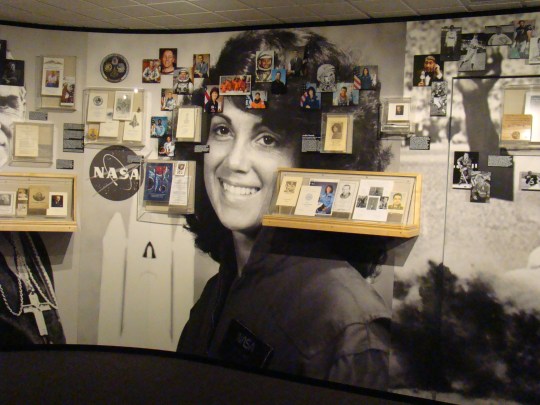
NASA exhibit features Ohio astronauts with Judith Resnik highlighted.

Many funerals they actually attended under special circumstances. When John heard of the public funeral of Jack Kevorkian in Michigan, he suggested to his wife, Joyce, that perhaps it would be a nice weekend for a trip to Michigan. The next day after arrival, he told her they were going to the White Chapel Mausoleum for funeral services at 9:30. Her response was, “Have you lost your mind?”

His wife has patiently endured his many attempts to find funeral programs and memorabilia. Learn more about her tolerance as you hear about the 50th birthday trip to New York City that he promised her, or their stop at a celebrity filled cemetery in L.A. on the way back from a cruise. Joyce won’t soon forget these special trips.

john-glenn

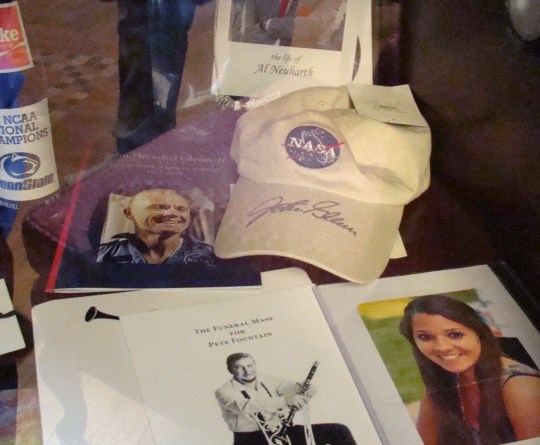
The family attended the funeral of John Glenn and display memorabilia.

The trips to funerals are usually family affairs. Often Joyce accompanies him but recently his son, Troy, went with his dad to a couple memorable memorial services for John Glenn and Muhammad Ali. Their programs are already in place at the museum.

troy-and-jackie-robinson-1

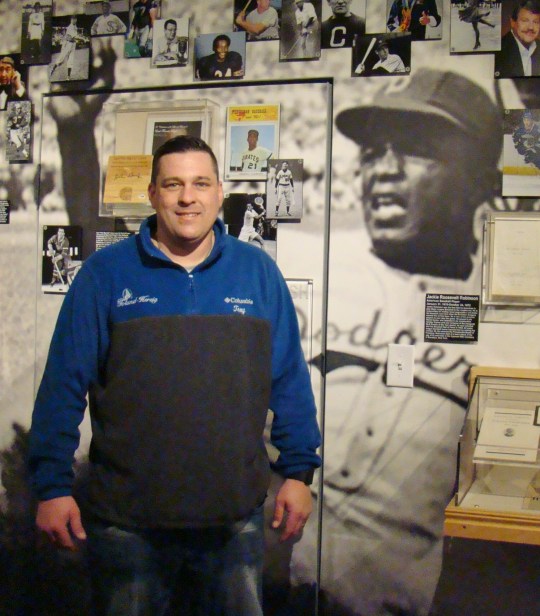
John and Joyce’s son, Troy, especially enjoys the sports heroes.

John Herzig enjoys hearing stories about people who have changed the world in some way. Those are the kind of people he has honored in his Famous Endings Museum. “Each person has a story to share.”

Among his favorites are people who helped others. They weren’t big Hollywood or TV stars, but people who made a difference… and he has their funeral programs! Millard Fuller,  a self-made millionaire at the age of twenty-nine, is a prime example. Fuller gave all his money away to start Habitat for Humanity.

william-greatbatch

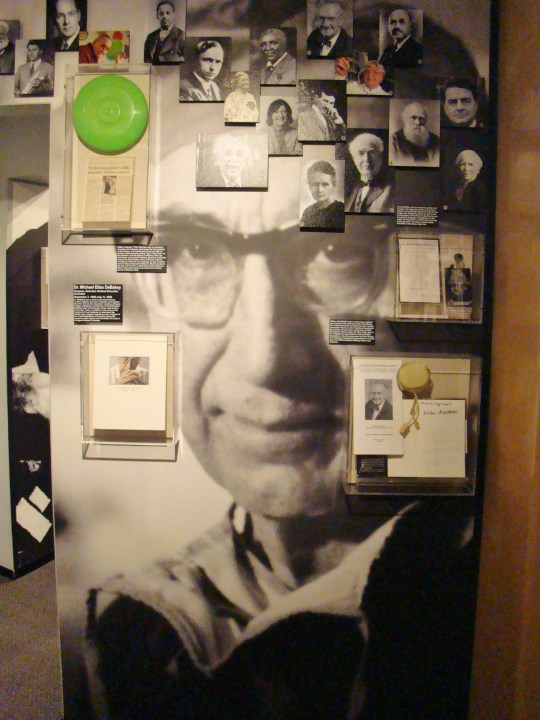
This large photo of William Greatbatch, inventor of the pacemaker, is surrounded by memorabilia of other inventors.

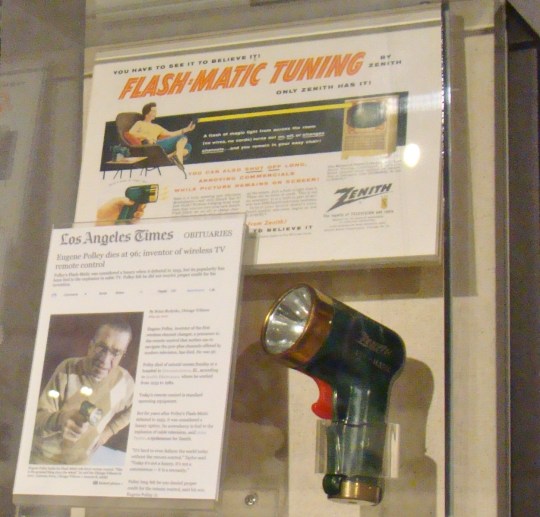
The collector placed high importance on William Greatbatch, who made the cardiac pacemaker, and Eugene Polley, inventor of the TV remote control and often labeled “Father of the Couch Potato”. This museum perhaps could be called the Influential Hall of Fame.

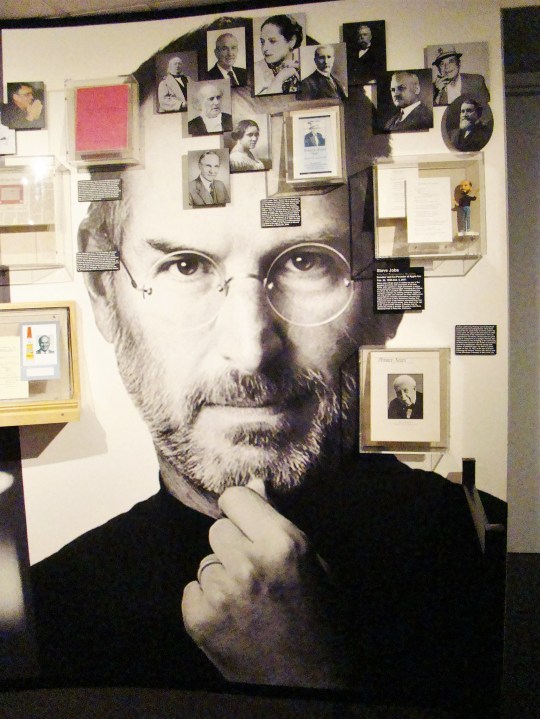
famouc-endings-steve-jobs

Steve Jobs is showcased in their entrepreneur display.

Famous Endings Museum has special admiration for Frank Inn and his love of animals. He trained popular animals such as Arnold the pig, Lassie and Benji, who he saved from a shelter. Frank’s daughter recalls, “He could train animals to do things that most people didn’t believe.” Some of those favorite animals were cremated and buried with Inn.

remote-control

Invented by Eugene Polley, the first remote, Flash-matic Tuning, definitely changed our lives.

Some of visitors’ favorite exhibits are memorabilia from people who made us smile in the past, such as Captain Kangaroo and Mister Rogers. Comedian Leslie Neilson carried his sense of humor to his funeral. The packages of Kleenex he prepared for his funeral are on display there. They carried the inscription: “Stop crying. This is supposed to be a fun night. Love and laughs, Leslie.”


lincoln-lantern

This lantern from Lincoln’s funeral carriage has become one of John’s favorite treasures.

Several times a year, John schedules a “Night at the Museum” where he features a special person or group of people. Visit their Facebook page or website for details. The museum is free and open for visitation Monday – Friday from 9:00 am – 5:00 pm. It’s one of those places you have to see to believe and appreciate.

famous-endings-ripleys

Ripley’s Believe It or Not featured Herzig’s Famous Endings Museum.

Famous Endings Museum has been featured on Ripley’s Believe It or Not, and is a frequent stop for tour coaches…especially Mystery Tours! This museum makes us look at death differently. As Randy Pausch wrote about funerals, “You can either be an Eeyore or a Tigger.” At Famous Endings Museum, they honor the contributions and memories,  as they celebrate the lives of famous people.

Visit Famous Endings Museum in Dover just off I-77 at Exit 83. Take Ohio 211 east/ Tuscarawas Avenue. Turn left on Slingluff Avenue and then right on Wooster Ave. The museum is on the left side of the street.

Coal Miner’s Statue -Unsung Heroes Remembered

You load sixteen tons, what do you get?

Another day older and deeper in debt

Those words rang true for the thousands of coal miners that lived in the vicinity of Guernsey County, Ohio during the early 1900s.

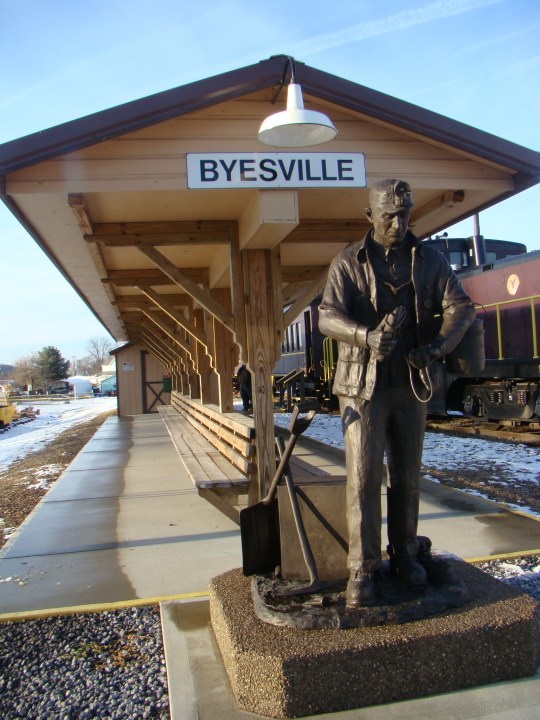
In order to honor these men and coal miners across the nation, a statue in their honor has been placed at the old train depot in Byesville, Ohio. This is no ordinary statue as it was commissioned by Alan Cottrill, internationally renowned sculptor, who has his studio in Zanesville.

The Train to Nowhere

These were busy tracks in their day, but today they have no traffic.

Why, you might ask, is this statue in Byesville? Why not place it in some larger city? Byesville was the coal capital of Ohio back in the early 1900s. Perhaps a hundred and fifty trains would roar down their tracks each day. Cars carried coal from Marietta to Cleveland and often into Canada.

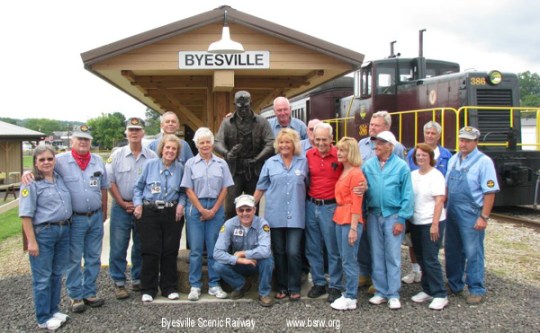
coal_miners_memorial_09-08-2012_1

These volunteers were present for the dedication ceremonies.

Raising money for the statue was itself a challenge. Contributions came from local residents as well as all those who rode the now silent Byesville Scenic Railway. Total cost of this memorial was $40,000. So if you rode the train or visited their museum, perhaps you had a hand in making that statue become reality.

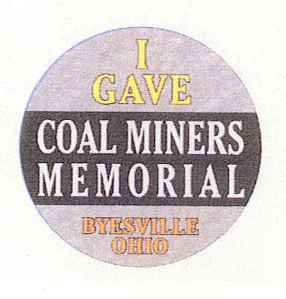
When you made a donation in any amount, you were given a badge saying:

I GAVE    COAL MINERS MEMORIAL    BYESVILLE OHIO

coal-mineres-memorial-badge

This was no ordinary badge as it was designed very carefully. Each color on the badge had great significance.

Yellow stands for a beam of sunshine that sheds light on the darkness of the dungeon of a dark and gray mine.

Gray is for the rock/slate layers that are found above and below the seams of coal.

Black needs little explanation as it is the color of coal, also known as black diamonds, buried sunshine, or rocks that burn.

Red is for the color of blood that was spilled onto the ground from those who either lost their lives or were injured while working about the mine.

Bronze Coal Miner Statue

Bronze Coal Miner Statue

Everything on this bronze statue has meaning.

His hat gave him a place to hang his carbide light. This was the only light down in those coal black mines. The miner had to purchase the pellets to fill his carbide light…at the company store, of course.The coal mines gave them nothing. Why, they had to buy their own picks and dynamite! 

If you look closely at the statue, the miner’s brass tag reads 382, the number of coal miners who lost their lives in the deep mines of Guernsey County over the mines’ sixty active years.

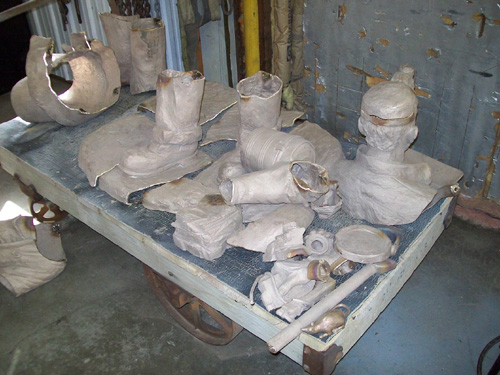
pieces-for-memorial

The sculpture pieces in Cottrill’s studio wait to be assembled.

The miner statue is missing his right index finger in honor of all the men injured in the mines. The dinner pail he carries was made by the Buckeye Aluminum Co. and was an important part of the miners day.

Many of those miners were immigrants, often called dumb hunkies  Everyone headed out to work swinging their dinner pail. The pails could not be set down on the mine floor or the rats, the miners’ mascot, would open them and eat their lunch. So miners always hung their dinner pails high on the mine wall.

A West Virginia ham sandwich was quite the treat. That ham by the way was what we call bologna.They always left a little something in their pail, just in case a cave in occurred and they might be below ground all night. If they made it safely through the day, the miners would let the children have their pails on the way home for a little snack.

From top to bottom each item has special significance from his hat to the dynamite at his feet.

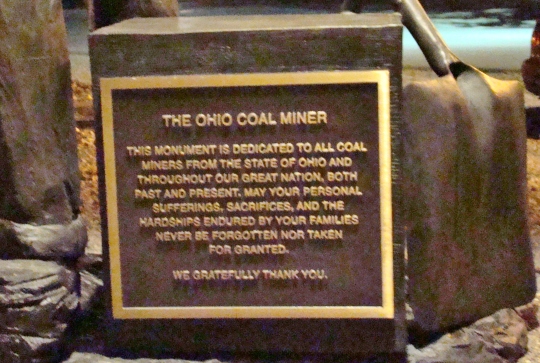
coal-miner-plaque

The dedication plaque at the statue

A portion of the plaque behind the statue states:

May the personal sufferings, sacrifices and the hardships endured by your families, never be forgotten nor taken for granted.

May the memory of these unsung heroes live on for generations.

The Coal Miner Memorial Statue can be found in Byesville, Ohio off I-77. Take Exit 41 and head into the small town of Byesville. Turn left on Second Street and two blocks down on the right hand side you will see the old train depot. The statue stands in front of the depot.

Trail Run- A Coal Mining Town

trail-run-view-with-church-by-tracks

This overview of Trail Run shows many of the homes, the church and the mines.

In the valley between Byesville and Buffalo, the small town of Trail Run can still be found. Years ago this town was a booming coal mining area with 2000 residents. Let’s take a trip back in time to see what this town was like in the early 1900s.

Originally, this area served as home to the Delaware Indians, who lived along Rocky Bottom until the early 1800s. They traded lead for whiskey along their trail beside the run.

trail-run-1

Men worked in the mines to provide for their families.

After the Indians were chased westward, this area had only a few scattered homes. But when coal was discovered in 1888, the town of Trail Run, officially called Robins, began. This town had two strong coal mines. The coal vein was best at No. 1 mine, where it was 6′ thick.

Many working these mines were Slovaks, Russians and Hungarians – about 1000 of them. When they arrived at Ellis Island, immigrants were greeted with signs written in their native language telling them where jobs were available. Most of the coal miners could not speak English so perhaps a sign in Slovak held up near the dock would have told them that jobs were open in the coal mines in Trail Run.

trail-run-2-mine-1928-closing

Trail Run Mine No. 2 is shown just before closing in 1928.

Life in the coal mines was difficult but better than being hungry. Cambridge Collieries built about fifty houses in Trail Run so the coal miners would have a place to live. Rent was $12 a month for a small house on a dirt street, which had no name.

Church attendance, baseball and beer were three of their main forms of recreation in the early 1900s. Since the mines were closed on Sunday, that was their day for a little entertainment. Later, a pool hall, dance hall and bowling alley were added.

st-michaels-orthodox-church

St. Michael’s Russian Orthodox Church served as home church for many of the Slavs, who worked in the mines.

Miners attended one of two churches in Trail Run. St. Michael’s Russian Orthodox Church welcomed the Slovaks, which made up a large percentage of the miners. Others attended Bethlehem Methodist, which still exists today.

1914-first-childrens-class-at-st-michaels

St. Michael’s Russian Orthodox Church had a large children’s class in  1914.

Five baseball diamonds could be found there. The coal mining towns all played each other, but there was a special rivalry between Upper Trail Run and Lower Trail Run. Baseball provided a great form of relaxation, which the families could watch and enjoy.

sikoras-grocery-001-2

Sikora’s Grocery on the corner of Trail Run Road and Robins Road was a popular place for supplies.

Often after the games, players would gather somewhere to drink a couple beers. There were two saloons in town. One of those bars, The Cave, was under Sikora’s Grocery. Or families might go to Williams or Checks stores for ice cream or candy.

williams-restaurant-1923-001-2

Men enjoyed visiting after church at Williams’ store.

Another way they might get something to drink happened in connection with the railroad. Cambridge Brewery would ship box car loads of beer barrels. If one just happened to fall from the train, a big party would ensue.

coal-cars-in-trail-run

Every day at least a hundred cars loaded with coal left Trail Run mines

Miners usually obtained free coal for their homes in much the same way. Since a hundred cars of coal left Trail Run daily, there was a good chance that coal might fall (or be accidentally pushed) from the train cars filled with coal. The children of the family would walk along the tracks picking up coal in a burlap sack, so their mother could cook and heat the house.

trail-run-first-school-1900

Railroad track ran close to the first school at Trail Run in 1900.

The first school built in 1895 had a train track running beside it. When a train came by it was necessary to shut the windows to keep out the noise and the smoke.

community-high-school-1923

In 1923, this three-story, brick Community School provided education to grades 1-12.

However, in the 1930s, the mines shut down because people could get coal cheaper in West Virginia, Kentucky or Tennessee. Miners had to look elsewhere for employment. Some walked to work at nearby Senecaville, while others headed to Akron and Cleveland to work in the rubber and steel factories there. Population in Trail Run dwindled quickly.

Drive slowly through Trail Run some day while remembering those brave men and women who worked so hard to support their families in the only way they knew. Miners learned the value of hard work by working hard.

Trail Run is located in Ohio in Guernsey County south of Cambridge. Easiest route would be to take I-77, Exit 41 and head south on Vocational Road. Just past Bethlehem Methodist church, turn left on Robins Road. You will now head straight into Trail Run. Enjoy the adventure.