Ohio River Ferryboat Festival – 200th Anniversary Fly-Sistersville Ferry
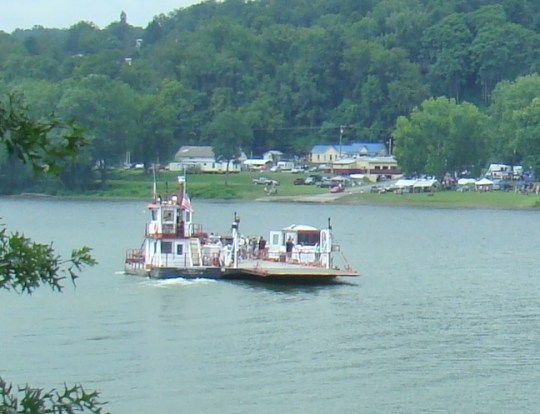
The Fly-Sistersville Ferry provides a relaxing way to cross the Ohio River.
Floating by ferry on the Ohio River brings pictures to mind of days gone by. Drive your car onto the ferry, or walk on – either way you’re sure to enjoy a ride to the other side. No bridges exist close by.

Vendors line the streets on the Sisterville side of the river.
During the Ohio River Ferryboat Festival on July 28-30, crowds fill both sides of the Ohio River at Fly, Ohio and Sistersville, West Virginia. For only a dollar, you can walk on the boat, float across and check out the activities on the other side. Or you can drive on board for five dollars. The ride across takes about eight minutes.
This ferry began many years ago in 1817 so this happens to be the 200th Anniversary of a ferryboat crossing at what everyone calls the “Long Reach”. This is one of those rare places on the Ohio River where there’s a twenty mile stretch of river without any bends.
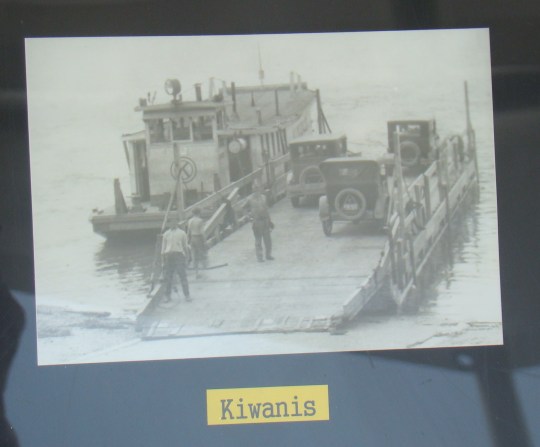
The Kiwanis was one of many ferries used on the Ohio River.
In those early days the Ohio River wasn’t nearly as deep as it is today. At that time horses pulled the ferry, which was basically a wooden platform, across the Ohio while guided by a rope. If it was an easy load, only one horse was needed, but larger loads of stagecoaches and animals might require two horses. Thus our present term of one, two, or four horsepower.
Today the Sisterville-Fly Ferry is the only ferry still operating on the Ohio-West Virginia border. Now it’s only open from the first of May until the end of September from Thursday thru Sunday. Bo is the only operator but he enjoys his retirement years as captain of the ferry.
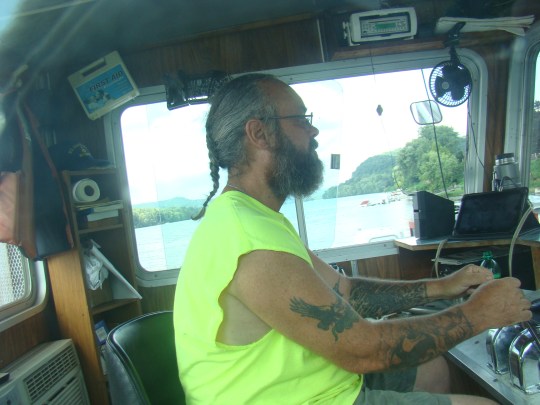
Bo always serves as pilot on the only ferry on the Ohio-WV border.
They got lucky at finding their latest captain, as Bo is a former member of the United States Coast Guard. After the waters of the Atlantic Ocean, the Ohio River must seem fairly calm. He especially enjoys letting children come up in his cabin and let’s them “drive” the ferry for a little while.
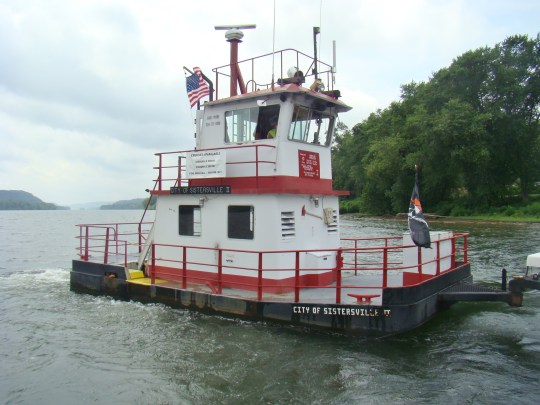
Take a peaceful ride on the Ohio River during the Ohio Ferryboat Festival.
During last year’s festival over a thousand people walked onto the ferry for crossing and nearly seventy-five cars. The ferry can hold eight cars or trucks at a time if they’re parked bumper to bumper. Motorcycles find it a great shortcut and once in a while even a tractor trailer gets on board.

Wrestling provides entertainment on the Sisterville side.
While the ferryboat is the main reason for the festival, there are many other activities on both sides of the river. Each town does their own promotions and plans their own entertainment. But they visit back and forth. The mayor of Sistersville often rides across on the ferry to Fly.
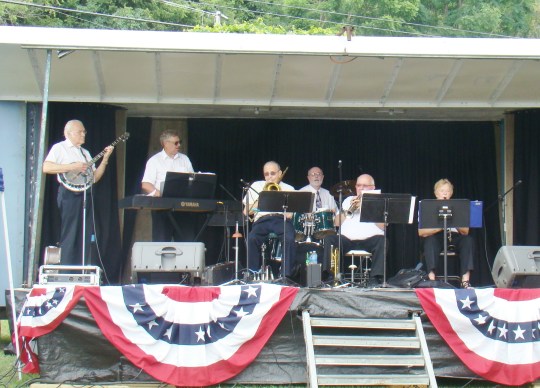
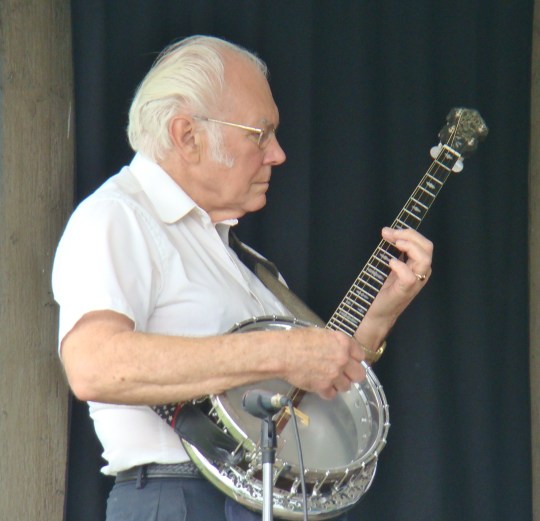
Dick Pavlov with his banjo traveled to Fly last year to join in the entertainment.
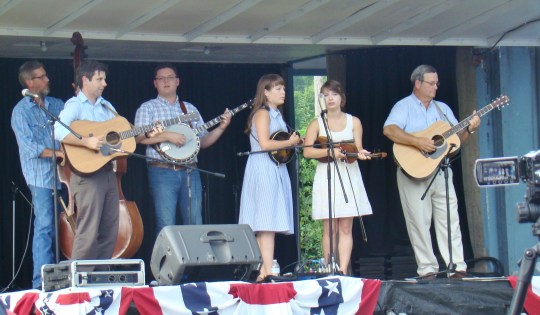
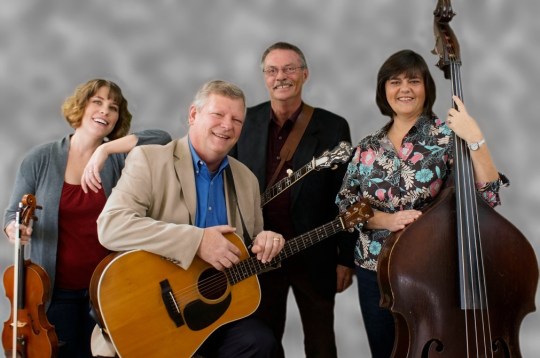
The Price Sisters, Leanna and Lauren, of Bluegrass fame from nearby Sardis draw large crowds of friends and fans.
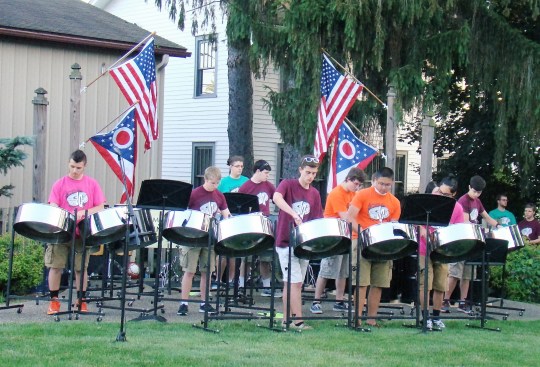
On the Fly side, many groups perform throughout the day with everything from Bluegrass music to Steel Drums and accordion. A couple special highlights are the Clark Family of Ohio Opry and local girls, the Price Sisters, who are Bluegrass stars.
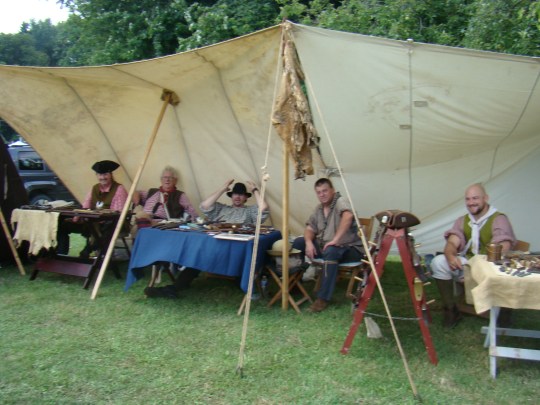
George Washington & Co. describes life during Washington’s trip on the Ohio River.
George Washington & Co explain the story of George Washington’s camp at the edge of what is today Fly, Ohio. He camped there during a survey trip back in 1770. They dress in costumes of the 1770s and tell of riding down the Ohio River in two canoes with two Indian guides. It took a couple weeks to paddle from Fort Pitt to Mount Pleasant.
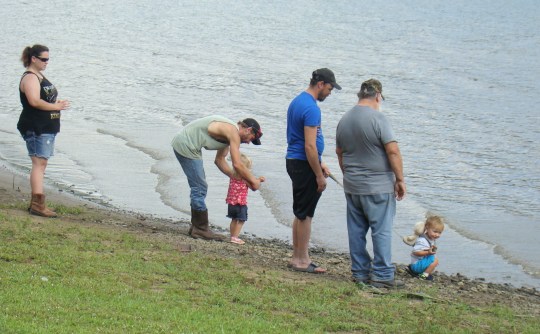
It’s a great day for families to acquaint their children with the Ohio River stories.
Join Fly and Sistersville for the 200th Anniversary of the ferry this July. Not only will you enjoy a ride on the ferry, but you’ll find delightful vendors and entertainment on both sides of the Ohio River
It’s definitely the only Ferry to Fly.
Fly, Ohio is located in southern Ohio along Route 7. From Wheeling, it’s about 47 miles south on Route 7. The fastest route would be off I-77 and take Route 7 North at Exit 1. It’s a scenic route anyway you travel!



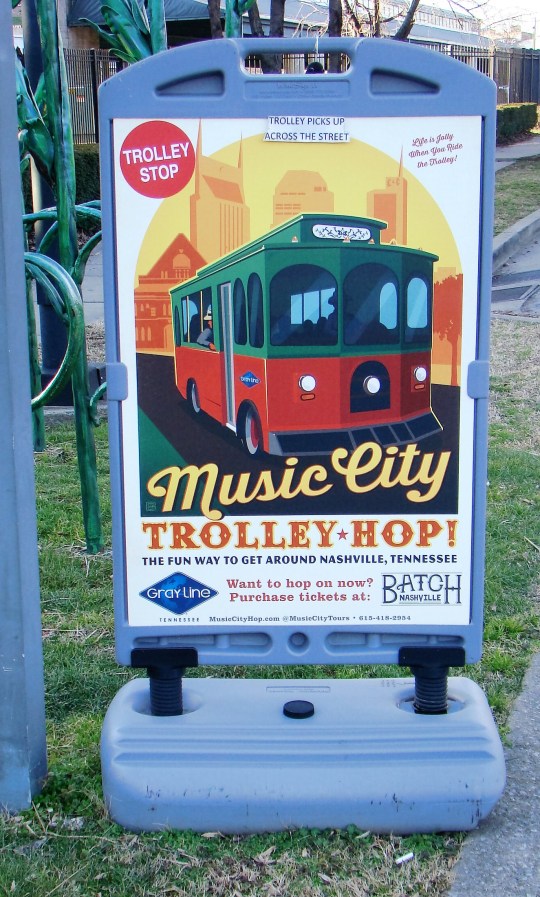 Waiting for the red trolley car to arrive, there was time to visit the Farmer’s Market in Nashville, Tennessee. Downtown parking seemed rather expensive at $20 for the afternoon but it was free to park at the Farmer’s Market and hop on the trolley at that point.
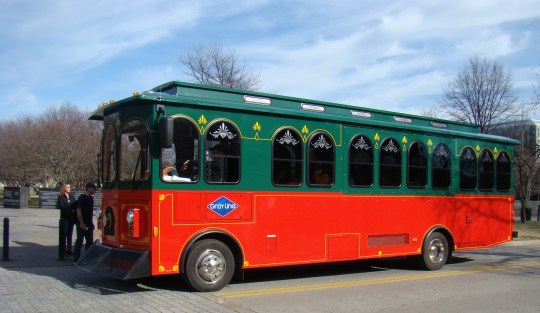 The driver and guide made the trip fun with a great assortment of historical facts, stories of businesses and some downright corny jokes. The Trolley Tour is a hop-on tour so you can get off at seventeen various stops and hop right back on later in the day. Sure saves fighting downtown traffic.
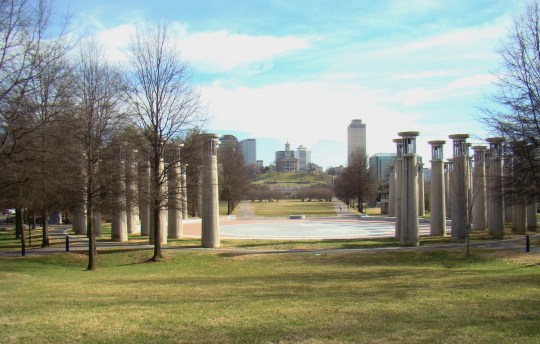 Getting on at this point, the first stop is the Bicentennial Capitol Mall State Park. Not sure if the guide was stretching the truth or not, but he said the fountain of water supported a large granite ball weighing 18,000 pounds!
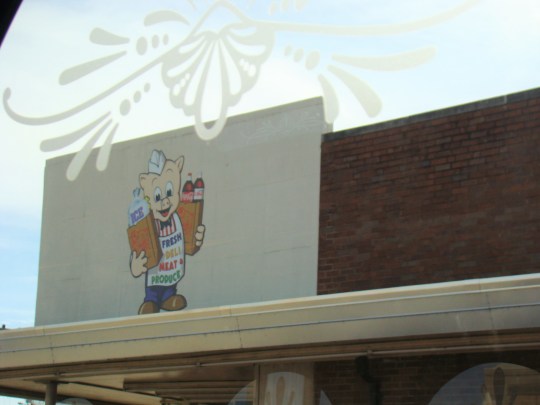 Attention was given to the local Piggly Wiggly as this chain began in Memphis, Tennessee as the first self-service grocery store back in 1916 by Clarence Saunders. Previous to this time, shoppers gave their orders to the clerk and the clerk then gathered everything from the shelves. Saunders rearranged the stores to make shopping much faster for the customer and the clerk. Today there are 600 Piggly Wigglys in 17 states.
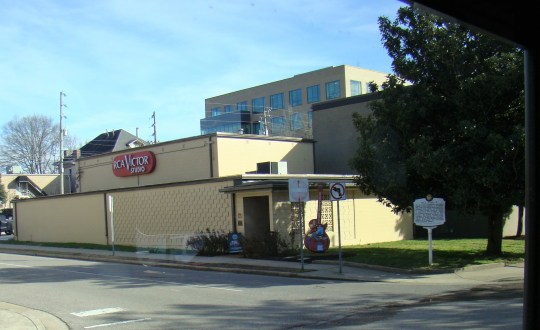 RCA Studio B created Nashville magic for over 35,ooo songs, making it an international recording center known as one of the cradles of the “Nashville Sound”. Popular artists, such as Elvis Presley, Chet Atkins, Dolly Parton, Willie Nelson, and Eddy Arnold recorded their songs here.
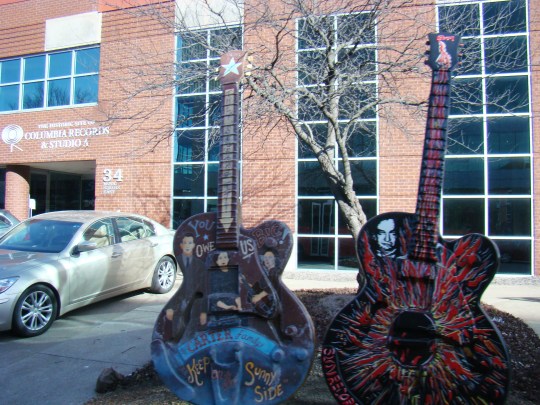 Nearby, the historic site of Columbia Records Studio A displays large guitars indicating the Carter Family and Johnny Cash recorded many of their songs here. Today both of these formerly popular studios are learning centers for Belmont University.
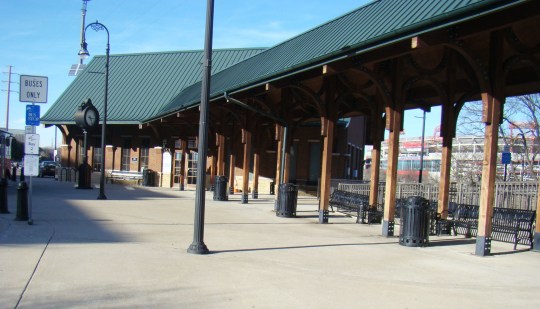 At Riverfront Train Station, the trolley takes a short break before continuing on the rest of the route. This site was previously the home of another train depot which was build in 1902. The present station was built in 2005 and they have attempted to capture the Old World flavor.
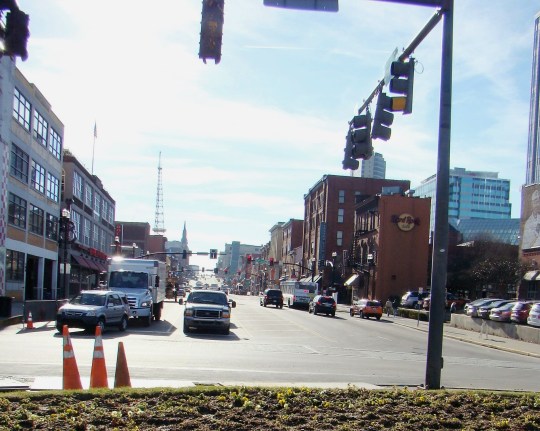 Straight across the street from the station is Honky Tonk Row. This is where many stars and hopefuls play during the evening hours as entertainment in many local clubs. They provide encouragement, a stage, and a tip jar for musicians.
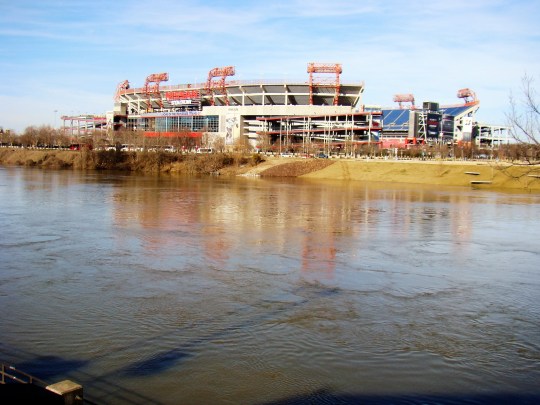 The beautiful Cumberland River flows behind the station and gives a grand view of the Nissan Stadium, home of the Tennessee Titans football team, on the other side. You can actually walk across the river to the stadium on the Shelby Street Pedestrian Bridge. The Cumberland River is 688 miles long and eventually joins the Ohio River in Kentucky.
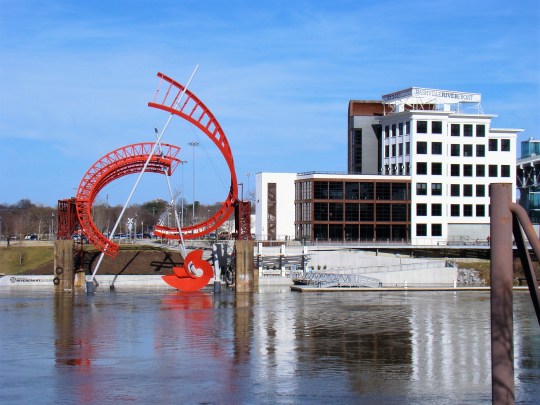 A beautiful sculpture brightens the waters also. Ghost Ballet East Bank Machineworks received its name because as you look at the sculpture from different angels, it suggests movement, similar to that of a dancer. This gives a little time to watch the river flow by and gain a little peace from the busy day.
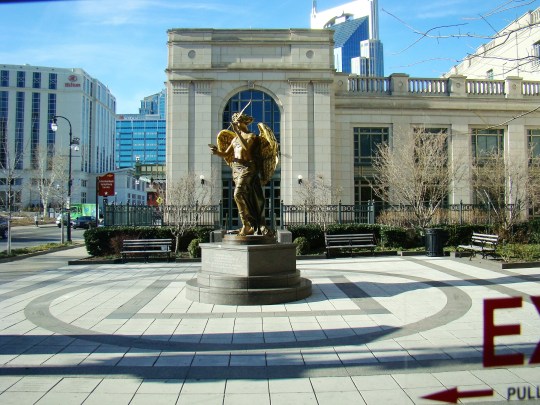 On our way back to Farmers Market, evidence appears that Nashville hosts more than country music. A glimmering bronze statue, The Recording Angel, stands at the corner of the Schermerhorn Symphony Center, home of the Nashville Symphony, which provides classical music entertainment. But they are no snobs, as often country music favorites appear accompanied by the orchestra.




 Gypsy Road Trip