Places to go and things to see by Gypsy Bev

Archive for the ‘Uncategorized’ Category

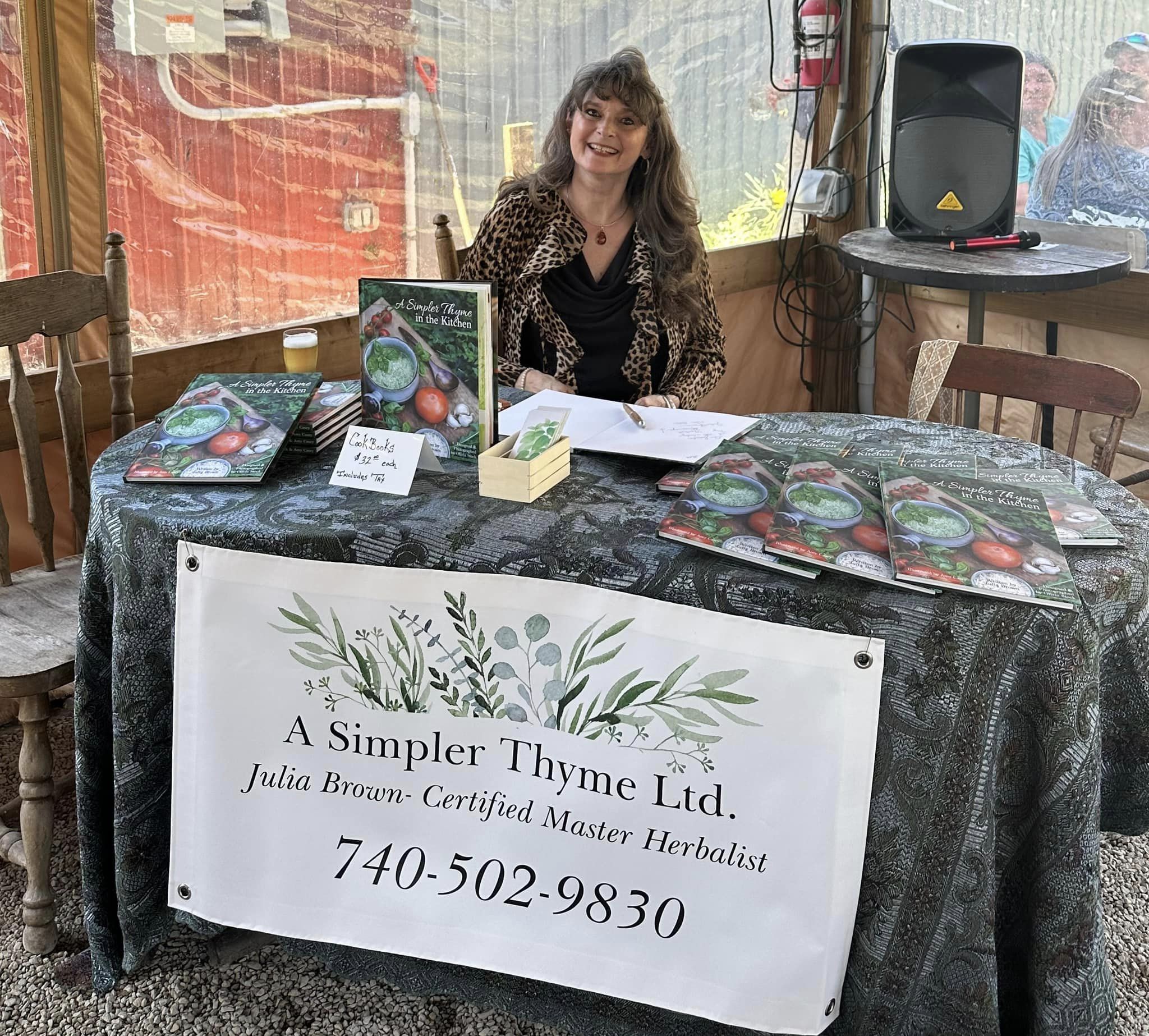
A Simpler Thyme in the Kitchen

Let food be thy medicine and medicine be thy food.” ~Hippocrates

Kitchens are where families spend quality time, share stories, and enjoy each other’s company. This is the place where memories of favorite foods transport us back to a simpler day.

Julia Brown’s idea for an herbal cookbook has been brewing for several years. Often at her workshops, she would serve a special herbal snack and people would say, “We need the recipe for that.” Many recipes were not even written down as grandmothers especially just put things together.

Another workshop talked about herbs from the Bible and their use then and now.

She recalls many recipes that her family used over the years to bring joy to their kitchen table. She did find a binder of her mother’s recipes a few years ago so that was a starting point. However, even following the recipe, the food didn’t taste exactly like mom’s. This required some experimenting, tasting, and revising to get things at their best and most of all adding that secret ingredient – love.

That was the beginning of collecting recipes from her mother, grandmothers, and other family members to use in a special cookbook – some she has spiced up just a little. This year she published her first cookbook, “A Simpler Thyme in the Kitchen.”

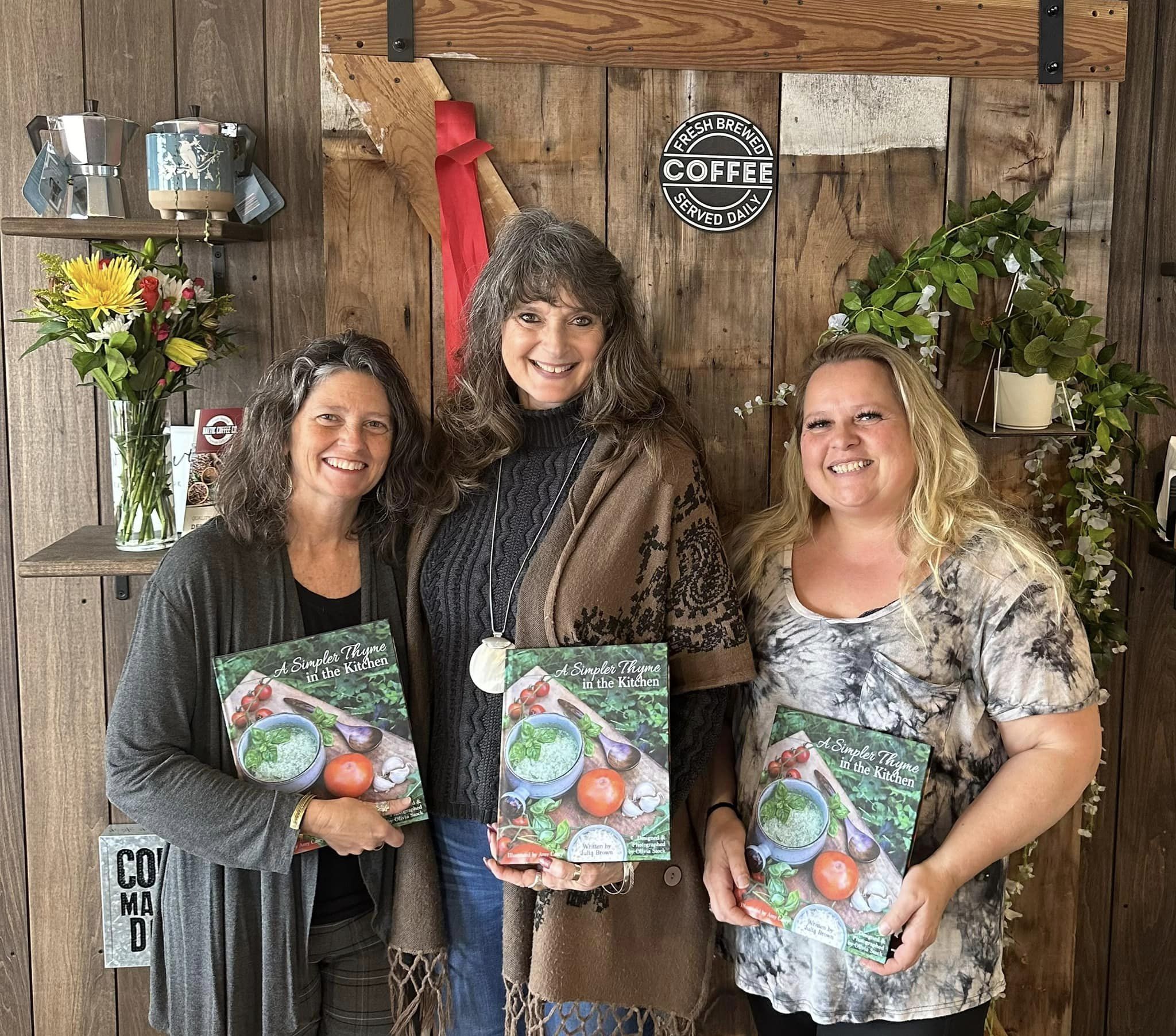
Amy Casey, Julia Brown, and Olivia Stock combined their talents for the book and have had several book signings.

Julia, the author, had a couple of friends help her with the setup of this book so it is not only filled with wonderful recipes but also has great photographs and illustrations. Olivia Stock, designer and photographer, took pictures of many of the recipes while Amy Casey, watercolor artist, drew illustrations throughout the book. When you combine the talents of these three ladies, you have a delightful book that is a showpiece.

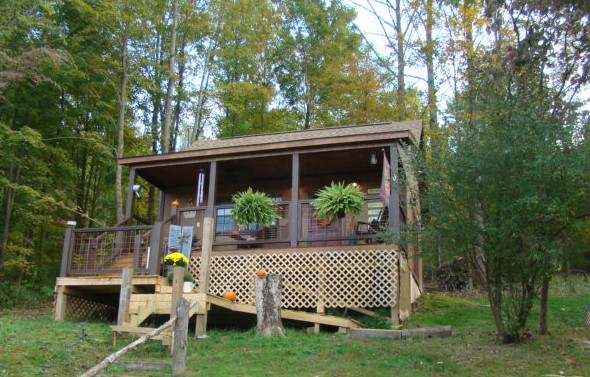
The herb education cabin is a great place for workshops or for an overnight stay.

Julia has been interested in herbs for many years and has become a Certified Master Herbalist. Her family supports her love of herbs and their use on the table as well as for medicinal purposes. She has a small herbal education cabin, which you can also rent for an overnight stay. It’s located at 51953 County Rd. 186, Fresno.

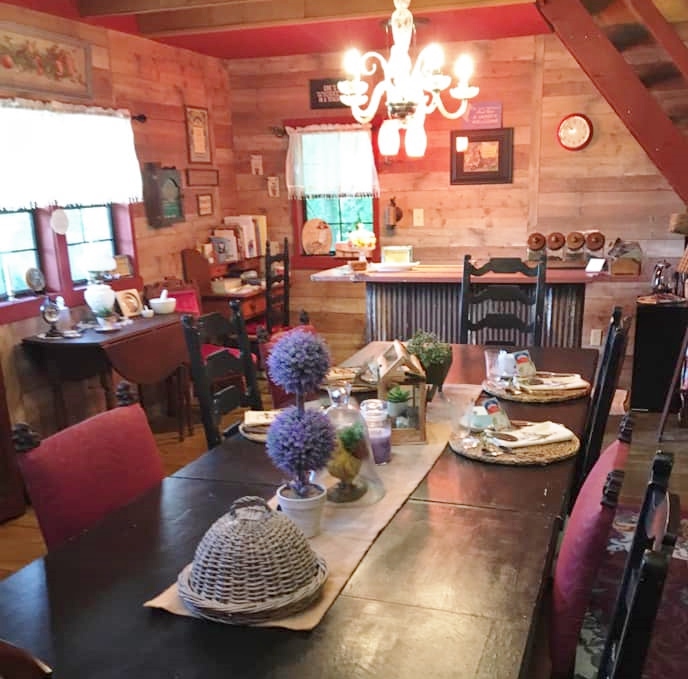
The atmosphere inside the cabin is a great place for learning or relaxation.

In the cabin or in her garden, she shows the connection of farm-to-table and table-to-soul lifestyle during her workshops, which she holds a couple of times each month. Some workshops are make ‘n take, where participants might make a room spray, herbal essence, or her special Fire Cider. Other times she might focus on a particular herb and tell its medicinal and culinary uses. Visit her on Facebook under “A Simpler Thyme” for dates and more information on her programs.

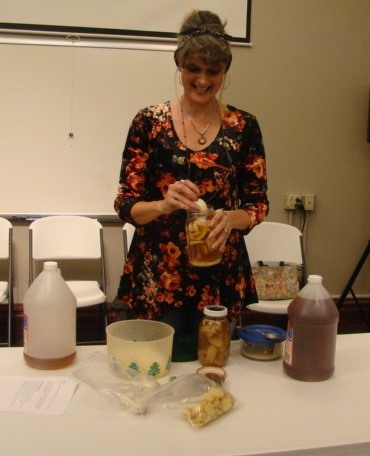
Julia guides participants in the steps to make Fire Cider, a great remedy for a sore throat.

In today’s world, Julia said, “We have a society of convenience. People want things that are easy to heat. However, there is satisfaction from something homemade as it comes from the heart.”

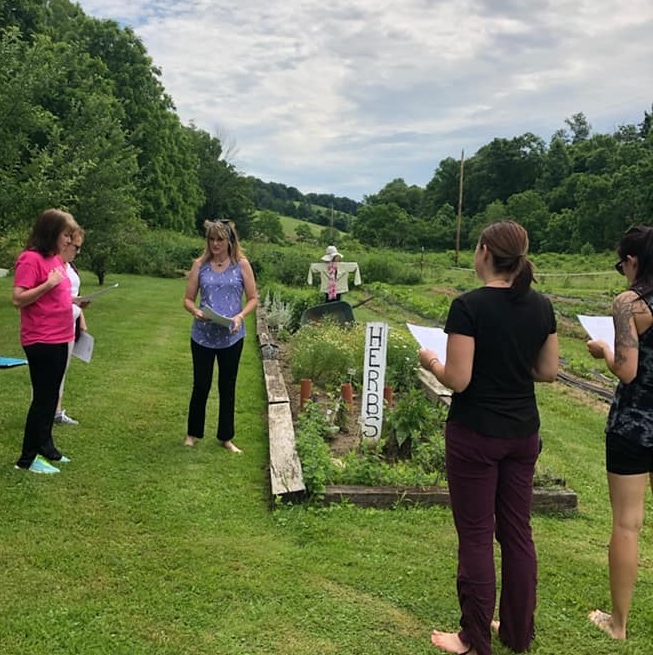
After yoga class, the group enjoyed visiting one of her many herb gardens.

She also feels, “More people are planting little gardens now or even planting tomatoes in pots with the cost of food rising,” It seems we are going back to a time when growing our own food is becoming more popular. Many are even planting fruit trees and berries as an added source of good nutrition.

Talking to her, you can tell how excited she is about growing and preparing food that is nutritious and delicious. Her fervor for the use of herbs for culinary and medicinal uses has led her to write her first book.

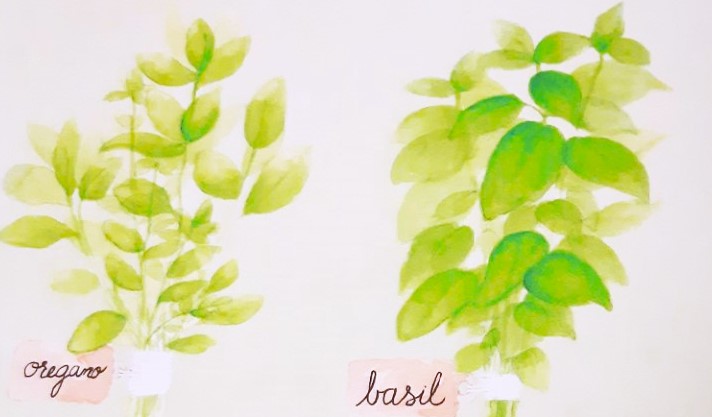
Some of Amy’s illustrations can be found in almost every section of the book.

The first section of “A Simpler Thyme in the Kitchen” describes the beneficial properties of some popular herbs such as thyme of course, basil, garlic, and rosemary. Thyme is a herb that helps support the immune system and also has an anti-fungal and disinfectant property. During WWI and WWII, ladies would embroider thyme and its flowers on handkerchiefs to give to their beloved soldiers as a reminder of their courage and bravery.

The book is divided into sections for each season of the year. Spring Thyme, Summer Thyme…you get the idea. All of the recipes include some of those favorite herbs.

For example, Spring Thyme’s recipes for Zucchini Frittata with Mint & Basil or Marinated “Dandy” Greens are sure to please your family. Her edible salad bowl will certainly surprise your guests!

Summer Thyme includes a Shepherds Pie with an Herbal Flare and a Stuffed Pepper Soup. Between the recipes, you will find many interesting facts about Garden Folk Lore and Food for Thought.

Olivia’s photographs bring color and appeal throughout the herbal recipe book.

Autumn recipes include Pumpkin Soup, Jalapeno Cornbread, and Dinner in a Pumpkin. Find out interesting facts about those carved pumpkins at Halloween. Do you know why they call it a “Jack”-o-lantern?

Winter Thyme lists recipes for Hot Muller Wassail, Christmas Honey & Thyme Cookies, or Grandma Edna’s Spiced Christmas Beets. Learn more about Christmas legends regarding hanging Christmas stockings, putting a wreath on your front door, and why we kiss under the mistletoe.

If you would like to purchase a book, contact Julia Brown by messaging her on their Facebook page, or you can email her at brownjulia00@yahoo.com. She is also having several book signings, which are unique as they include speaking, signing, and sharing herbal snacks.

As you can tell, this book is more than a recipe book with beautiful photographs and illustrations. It is filled with delightful ancestral knowledge, wisdom, and recipes thanks to three ladies who used their God-given skills, talents, and strengths to make this cookbook a reality.

It’s thyme to make some memories in the kitchen!

Yan Sun Art Museum & Gallery Features Ohio

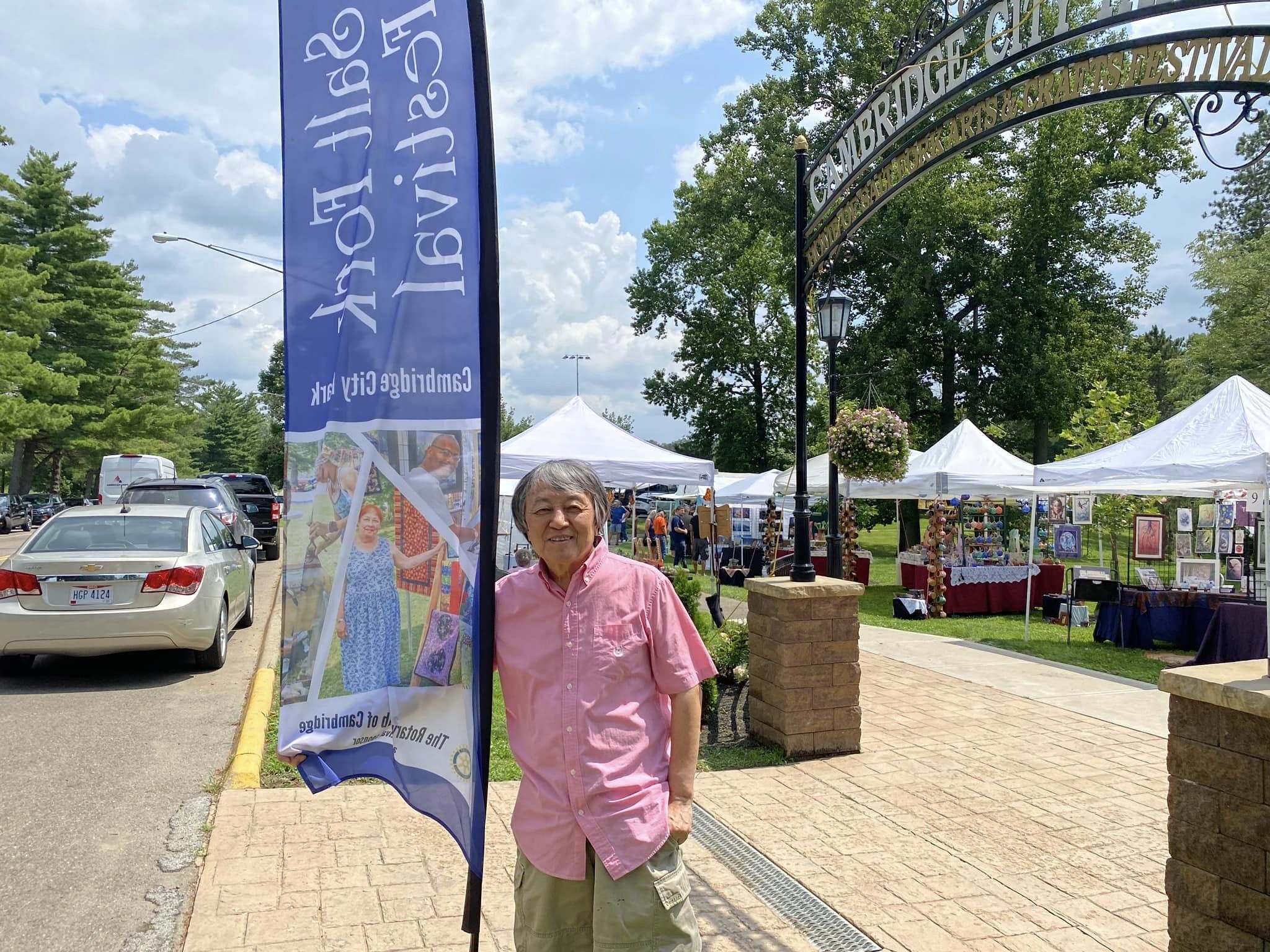
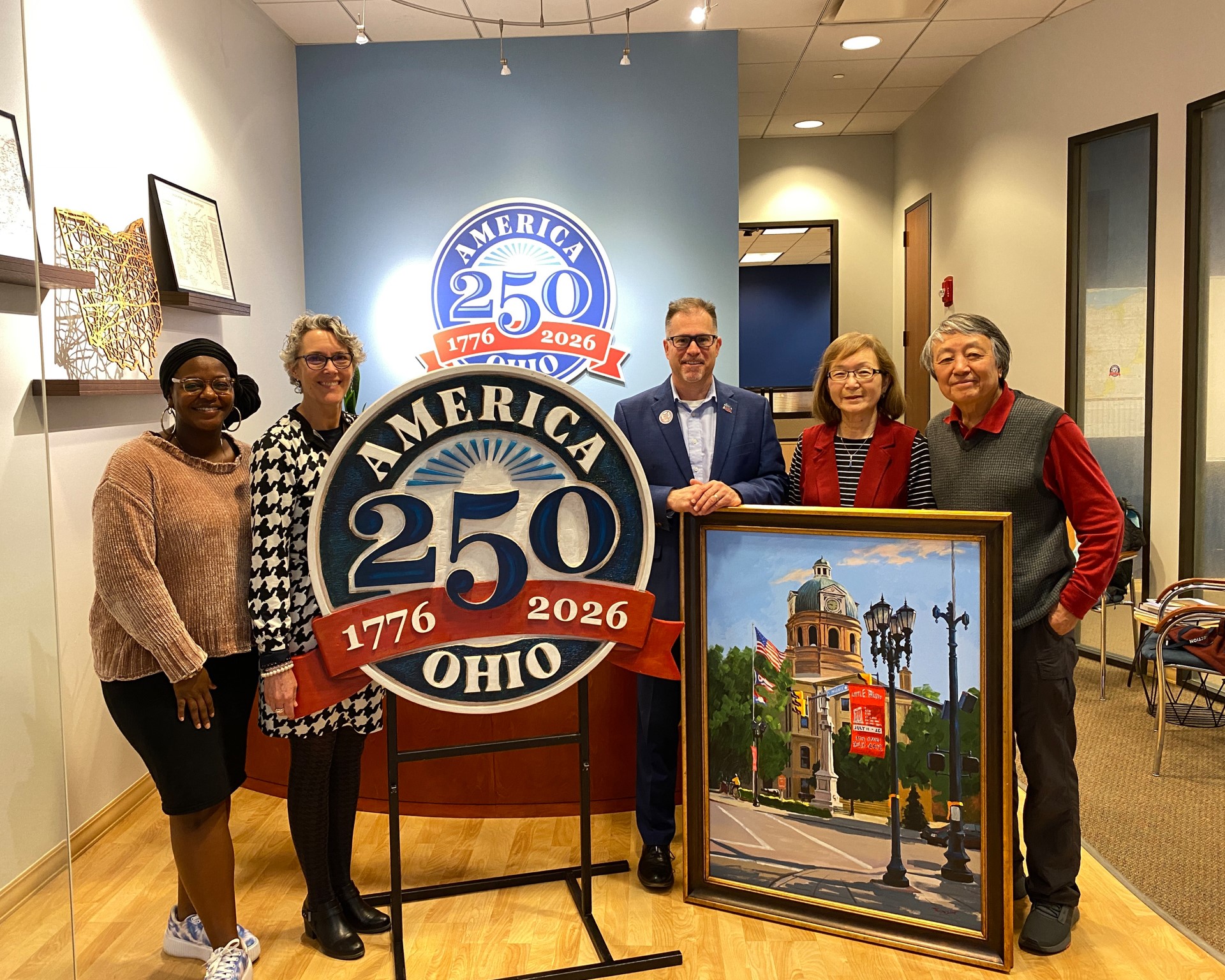
Yan Sun and Hong Yin at Ohio’s recognition of the 250th Anniversary of the United States.

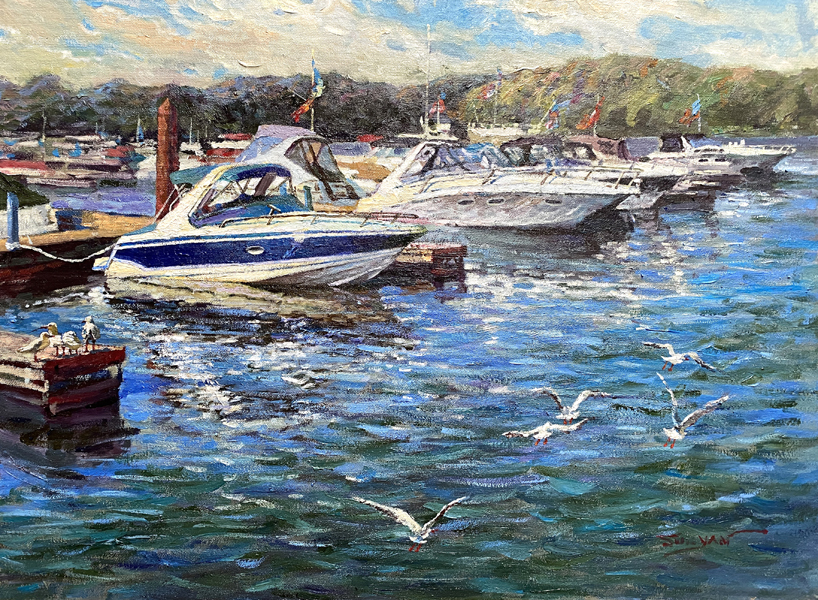
Yan Sun’s paintings come from inspirations he receives from nature, people, and historic sites. He captures nature in a beautiful symphony of colors whether he is painting the harbor, a horse, or a landscape. Visit Yan Sun Art Museum & Gallery in Zanesville to learn more about his work.
Serving the community has become foremost in his plans. He feels there are many excellent artists with a wide variety of styles and talents here in Ohio. Many of his paintings show Ohio people, places, and events.

Hong Yin’s “Lakeside Glory” reflects her joy in painting landscapes.

Over the years, his artwork has received many awards in national and international juried exhibitions too numerous to list. Recently, Yan Sun and his wife, Hong Yin – a talented artist in her own right – were selected by the America 250-Ohio Commission to have five of their paintings on display in Columbus as part of the 250th Anniversary of the United States of America. These artworks showcase the wonders of Ohio and include:

New Philadelphia

Yan Sun and Hong Yin with “Courthouse of Guernsey County”

Courthouse of Guernsey County

The Wonder of Longaberger

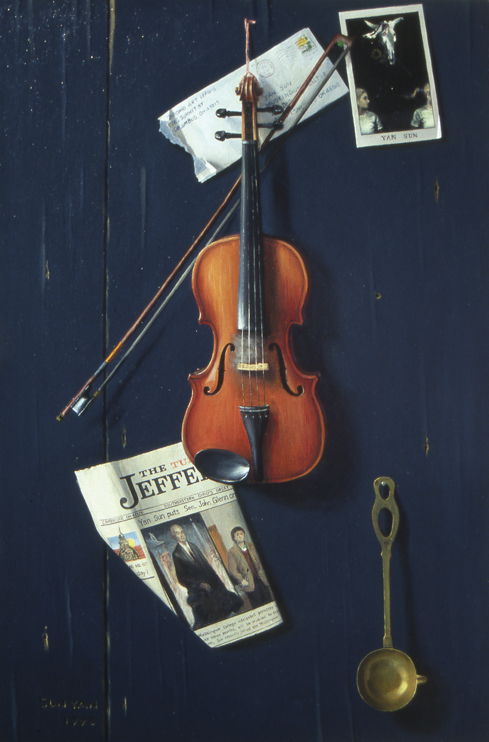
John Glenn American Hero

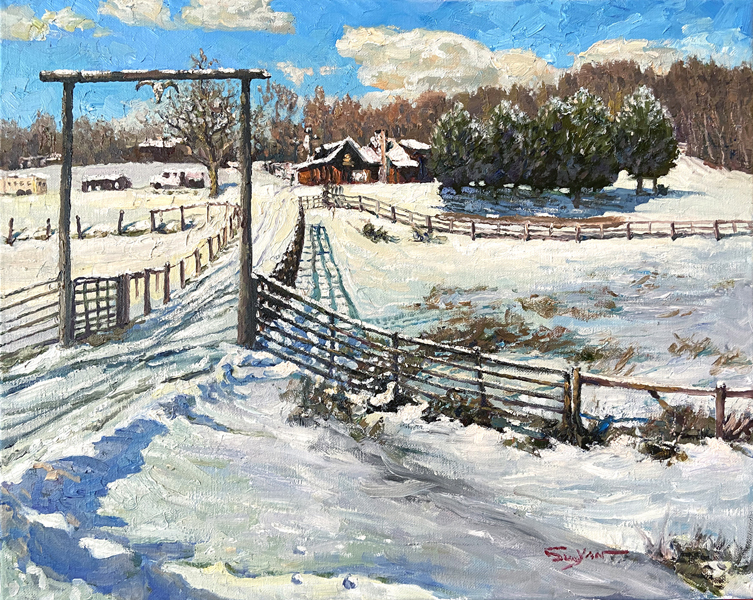
This Ohio landscape “Winter Farm” won the Governor’s Award for an Ohio landscape. The farm can be seen along Route 40 west of Cambridge.

Hometown Ohio Landscape

Art provides him opportunity to share his inner vision. “My artworks are composed of three main issues: Life, Time, and Space. Life means being alive, the life of the artist, and the life of all humans. Time means moments in real time, as well as psychic time to bridge past and present. Space is not only real space, but psychic, illusionary, and unlimited space.”


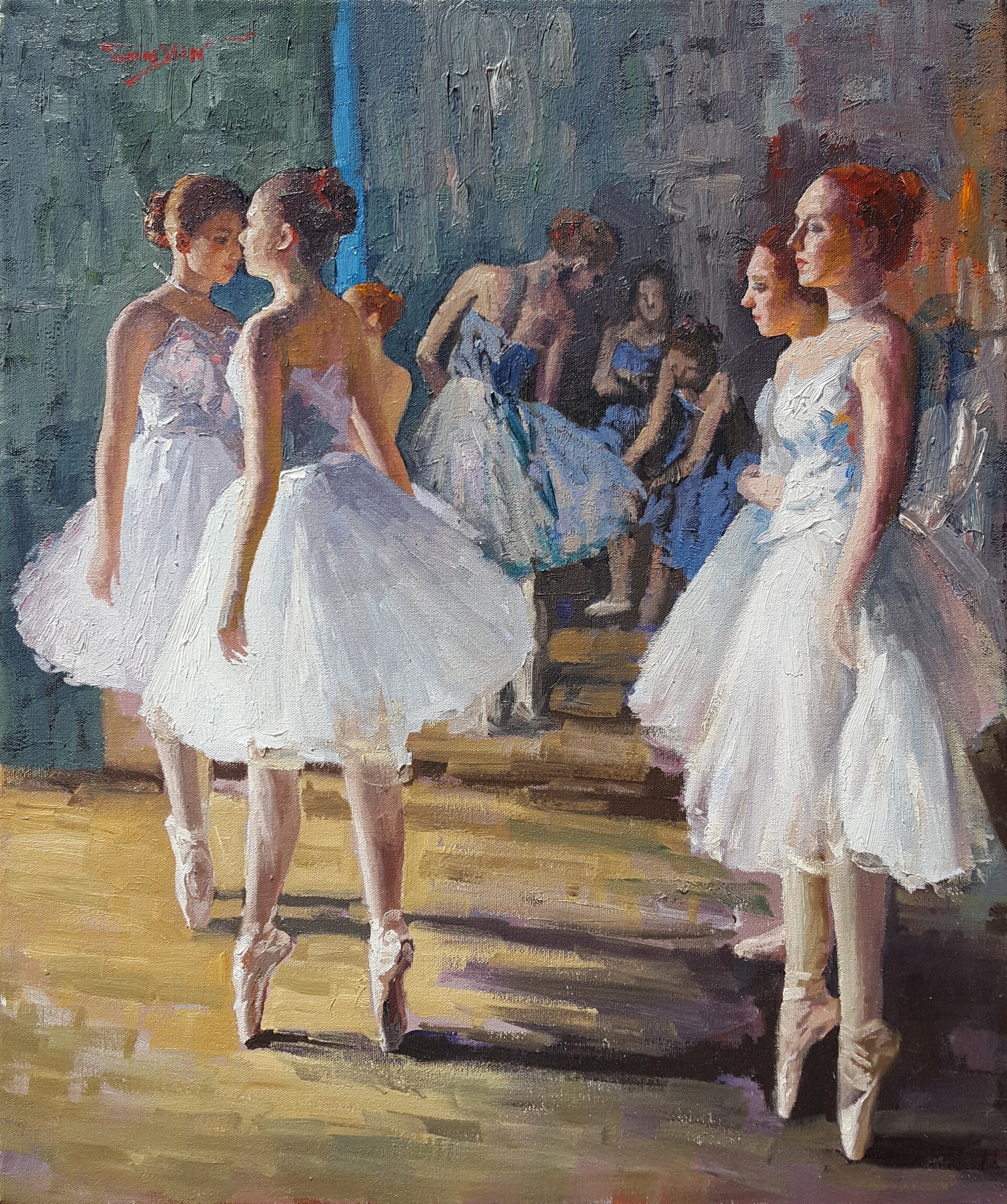
“Ballerina at the Back Stage” was inspired from a performance at Pritchard Laughlin Civic Center.

His best paintings are visualizations of his true feelings. They are made up of “Reality, dreams, transients, and eternity.” He likes to examine and visualize his dreams, thoughts, and emotions. His special love for music and dancing appears in many of his paintings as he remembers those wonderful days when he was 14-24 years old dancing in the ballet.

This self-portrait is called “Past and Present.”

Yan Sun was a professor in China in those early days. After he wrote several papers on the History of Art, his work became known internationally. That brought him in 1989 to the United States, where he received his Master of Fine Arts degree at Texas A&M University Commerce in Dallas.

After graduation in 1997, Yan Sun applied to several colleges for a teaching position. When he arrived at Muskingum University, he found the people were so warm and friendly that he felt welcomed. So he agreed to stay for one year. His love for the area has continued and he now is in his 28th year there as Professor of Art and Director of the Louis Palmer Art Gallery.

Visit Yan Sun Art Museum & Gallery in downtown Zanesville.

In 2014, one of his most rewarding ventures began when he co-founded Yan Sun Art Museum & Gallery at 604 Main Street in downtown Zanesville. They have breathed new life into the 1929 Art Deco building by displaying a great collection of artworks created by talented artists. “We want to create a place for our community to enjoy artworks by talents near and far,” said Yan Sun.

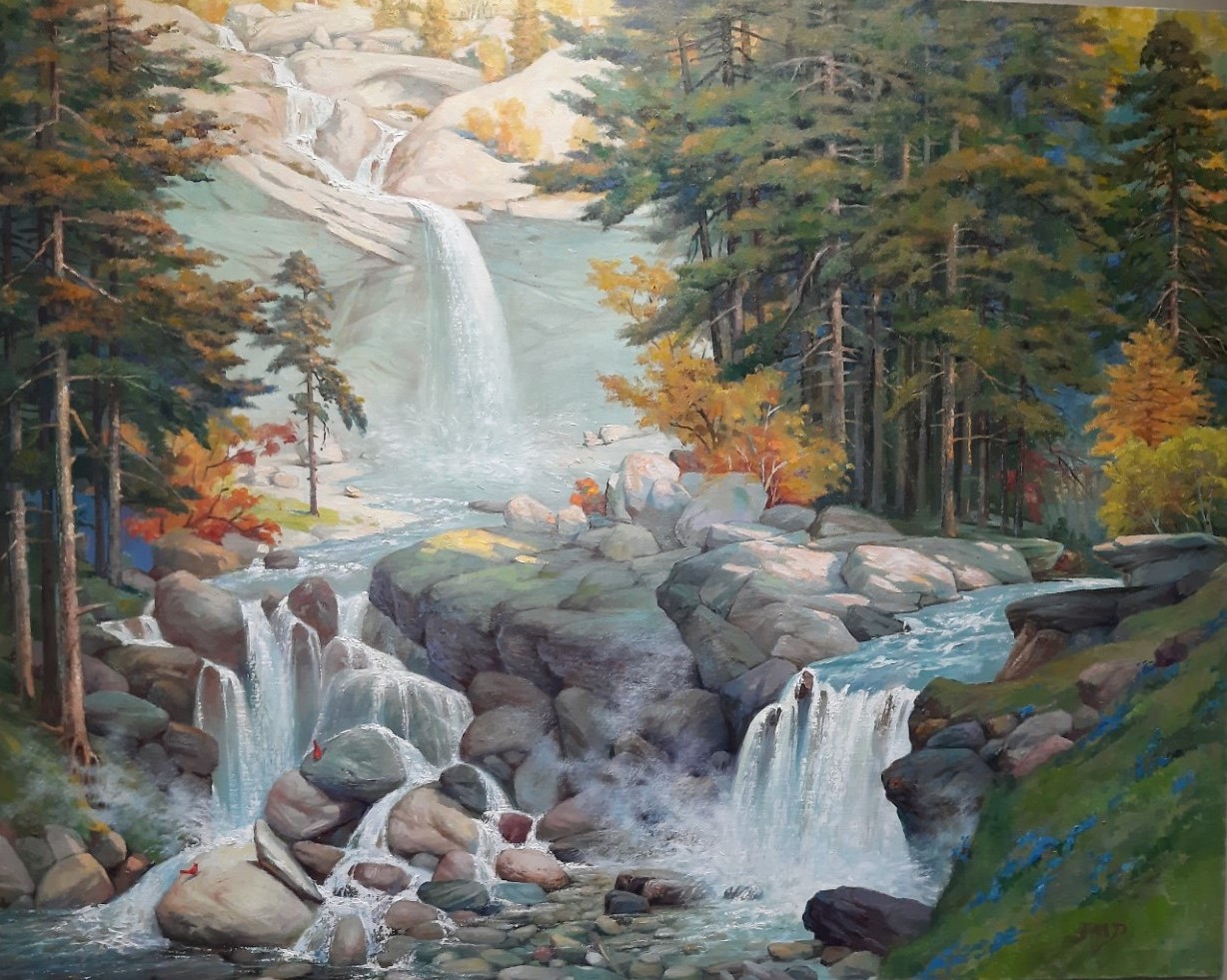
Jianmin Dou, Hong Yin’s father, painted this peaceful scene.

This beautiful building has several floors that are well used. One floor displays the art of Yan Sun, Hong Yin, and her father, Jianmin Dou, who was a renowned Chinese professor and artist. This is where displays for First Friday can be found. A large conference room can be found on the second level while the third floor contains a special permanent collection of paintings by various artists.

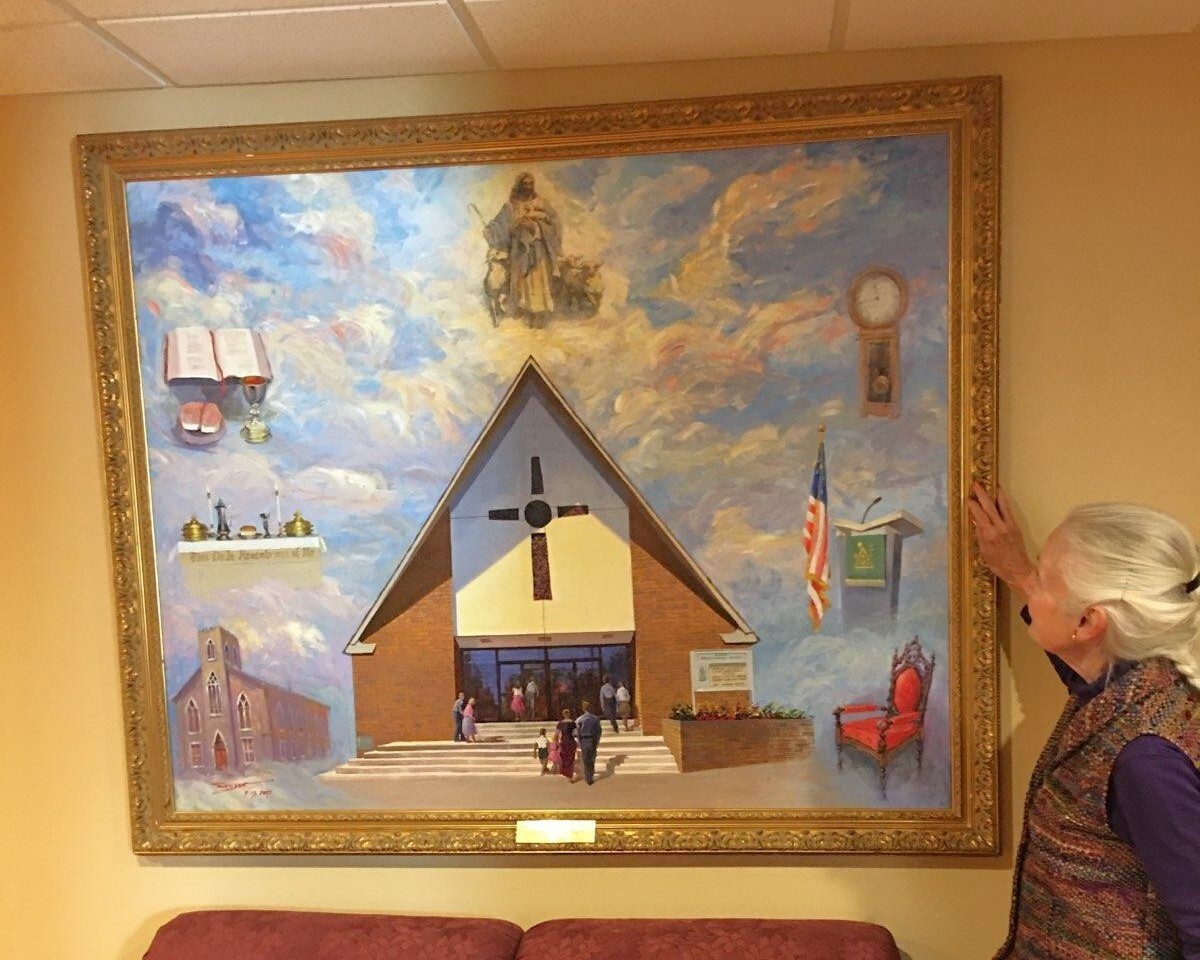
His painting of First Presbyterian Church withstood the derecho in 2012.

Each month, a different themed art exhibit always provides something new for you to see. On the First Friday of every month the gallery is open to the public from 5 pm – 8 pm. There is no charge for admission. Otherwise, they are open by appointment and can be contacted at yan.sun.art.gallery@gmail.com.

Some of those interesting themes this past year included:

October – An Artistic Tribute to Autumn

November – Let Art Spark Joy This Season

December – Local Holiday Gathering

January – Local Charms Unveiled in Art

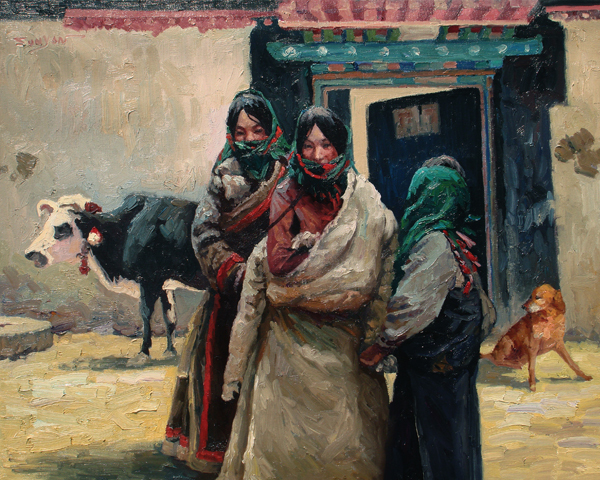
One First Friday theme featured “A Day in Tibet.”

A First Friday exhibit one February featured a Journey to Tibet, which was near the region where they grew up. It included paintings that showed the rich culture and spirituality of the Tibetan people.

Salt Fork Arts & Crafts Festival is pleased to have Yan Sun as one of their judges.

Also available are private lessons, and painting workshops with Yan Sun as the instructor. Here’s a great opportunity to bring alive the artistic abilities hiding inside you! The Salt Fork Arts & Crafts Festival is also pleased to have Yan Sun as one of their judges.

“The Splendor of Y-Bridge” captures the spirit of this historical structure.

In recognition of the contributions of Yan Sun to their museum and its community, Zanesville Museum of Art named a special gallery the “Yan Sun Diverse Cultures Gallery.” His paintings are collected by many museums and organizations throughout the United States.

The spirit of this young girl is featured in “Childhood, Girl and Her Dog.”

In the future, Yan Sun would like to focus on the lives of residents in the area to capture their feelings and spirits in his paintings. He enjoys hearing the stories behind the emotions that make them the person they are at this time of their life.

“Summer at the Lake” was inspired by a visit to Salt Fork Lake.

When Yan Sun is not teaching or painting, he enjoys fishing for relaxation, and travel to learn more about the beautiful world that God has created.

“The Splendor of Mendenhall Glacier” was captured after a visit to Alaska.

For more information about the Yan Sun Art Museum & Gallery visit their website www.yansun.us or visit their Facebook page for updates. Plan a visit soon to see the fantastic art works presented. First Friday of each month is the perfect time to step inside and enjoy the beautiful building as well as the creative paintings.

Volunteer Month Highlights John Harmon

April was Volunteer Month and a chance to give recognition to those who help in our communities. Without their help, many organizations would not survive. This year, we give special recognition to John Harmon, who has served the community in many different capacities during his years in the Cambridge area.

John Harmon remembers that volunteering has always been a family tradition since he was a child. They were always the last family to leave their Lutheran Church in Upper Sandusky after making certain that the dishes were washed, chairs were put away and the floors swept. Here John sang in the church choirs, while his mother played piano and organ.

By the time John was in Boy Scouts, they were always volunteering for community projects and the older scouts would be teaching the younger ones. The Harmon family reunion was often spent cleaning up and making repairs at the Girl Scout Camp where his sisters attended.

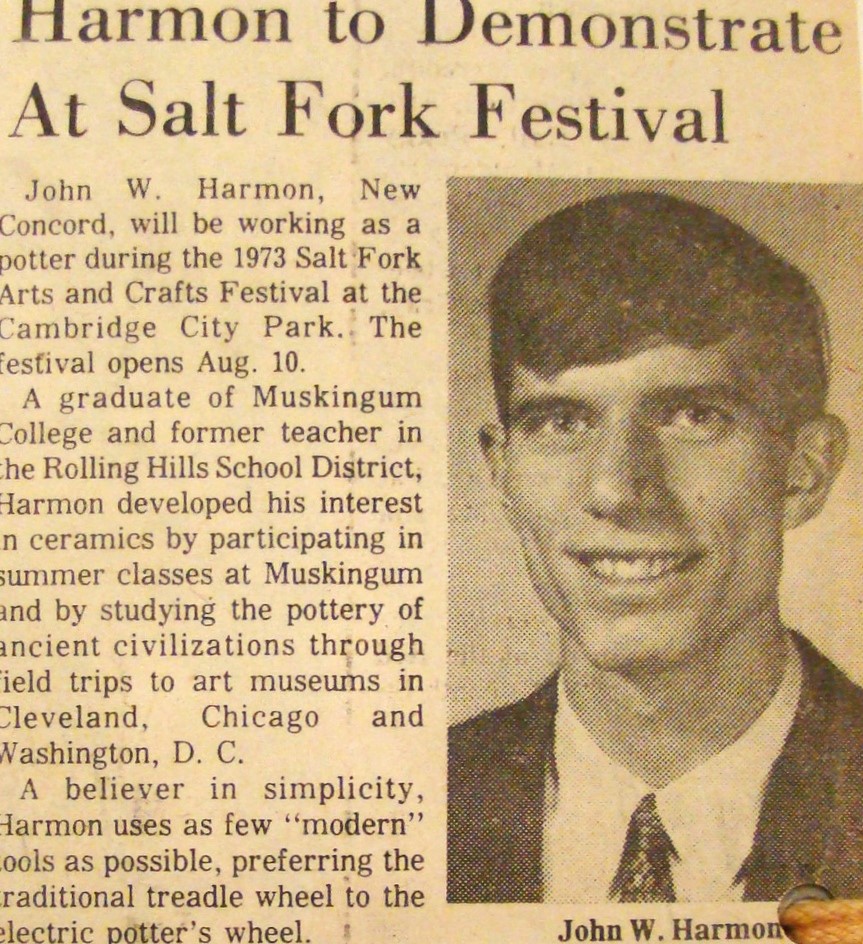
This old newspaper clipping tells about John participation at the Salt Fork Festival.

After graduating from Muskingum College, John taught social studies and English in Rolling Hills. A few years later, he decided to move to Cambridge Junior High to teach math and English. He enjoyed the junior high students and introduced them to the use of the computer in the classroom. He especially enjoyed finding out why some students were struggling and finding ways that he could help them. He retired after 35 years of teaching.

John spends most of his time volunteering these days. When asked what his favorite project or organization was, he answered diplomatically, “The one I’m working on now.”

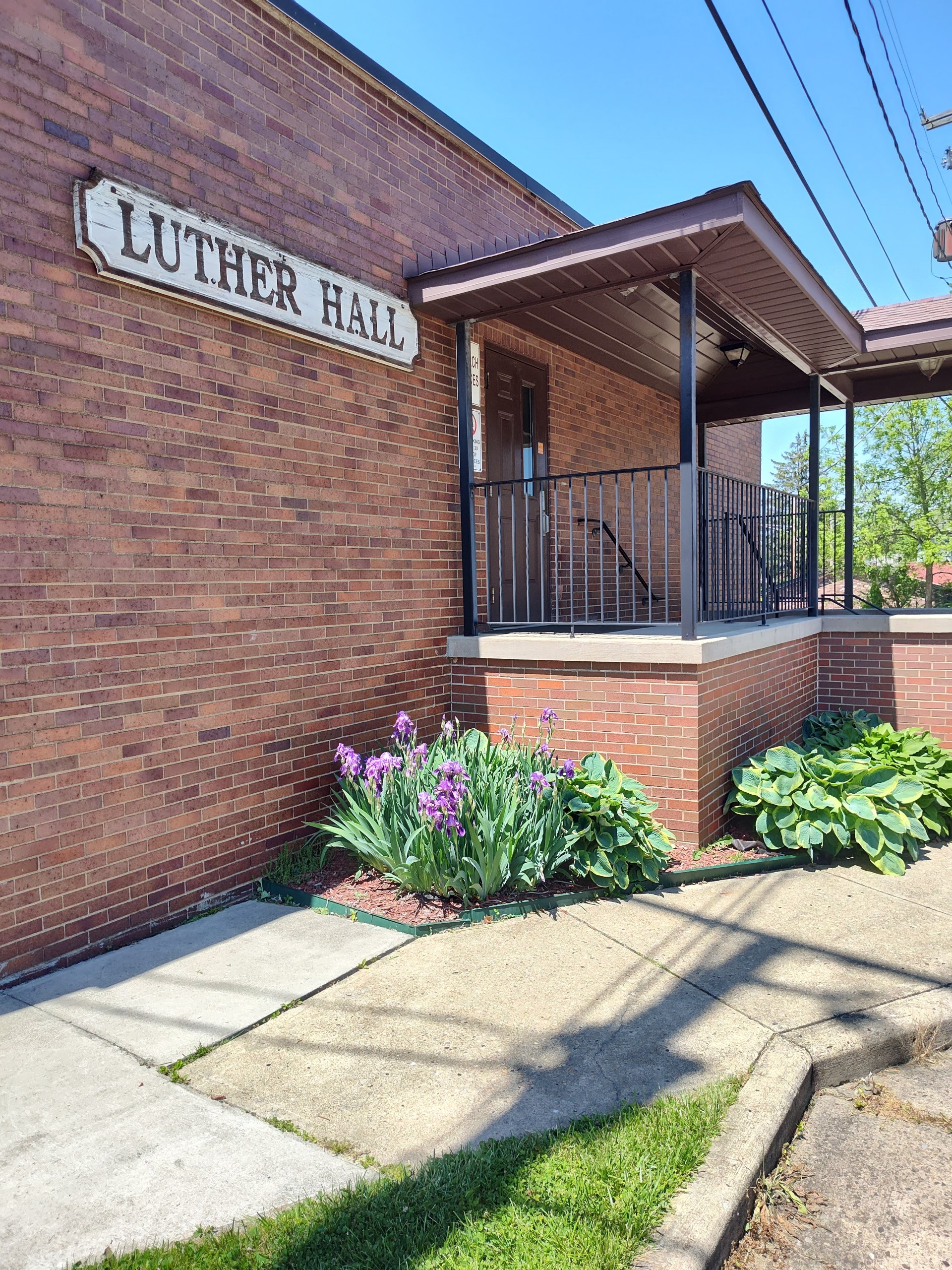
John designed and helped build this back porch for Luther Hall for his ch

He joined Christ Lutheran Church in Cambridge and began singing in their church choir. Today, John is still very active at that church where he designed the new porch for Luther Hall, and enjoys doing repair work there. Many members are thankful for the ramps he has built for their homes making their mobility easier. He also serves as their treasurer and member of their board.

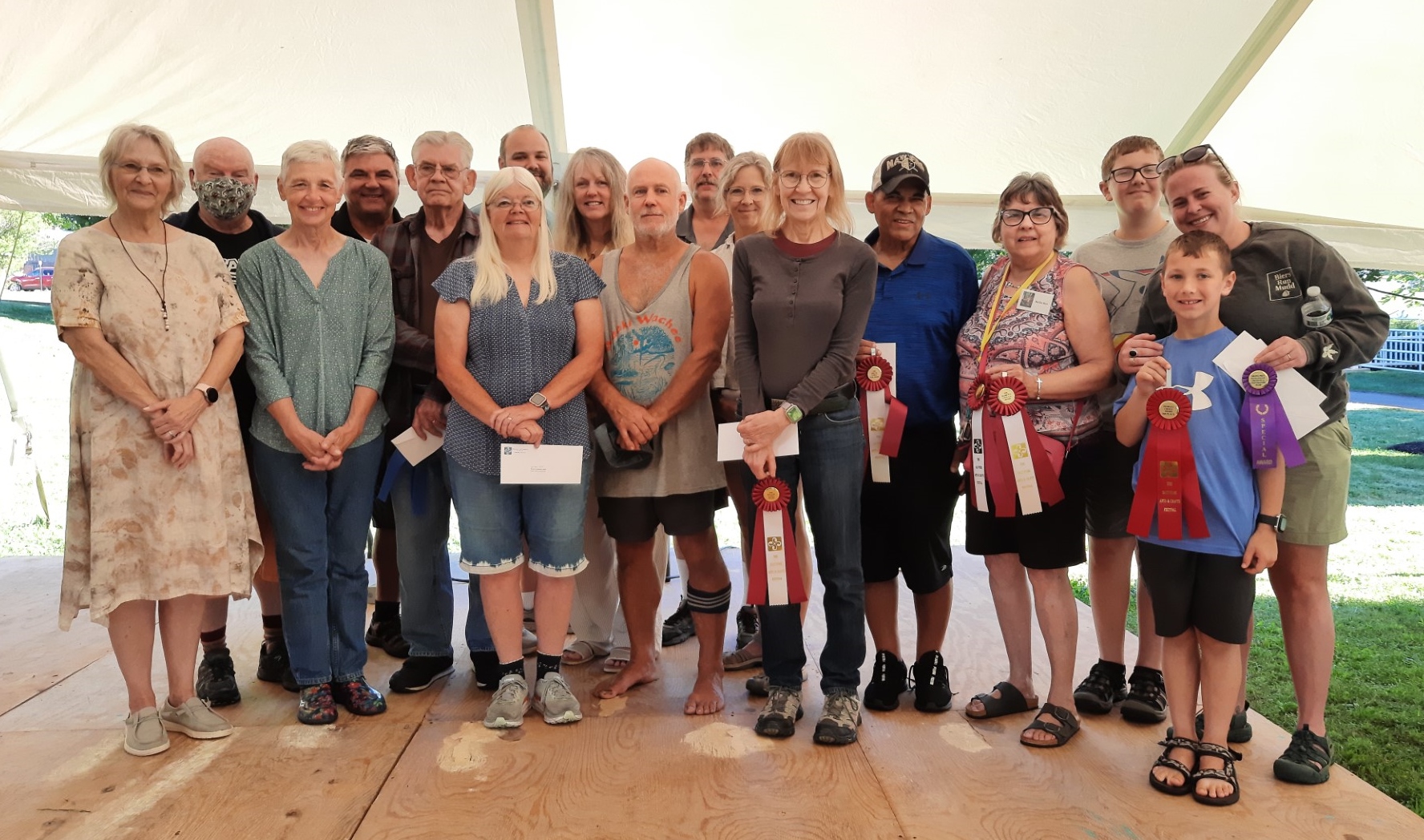
The stage for the Performing Arts Tent, where awards are also given, was also built by John.

At the Salt Fork Festival, John helps in several capacities. He places direction signs around town so vendors and visitors can more easily find Cambridge City Park, where the festival is held. He is also responsible for building and tearing down the stage year after year in the Performing Arts Tent.

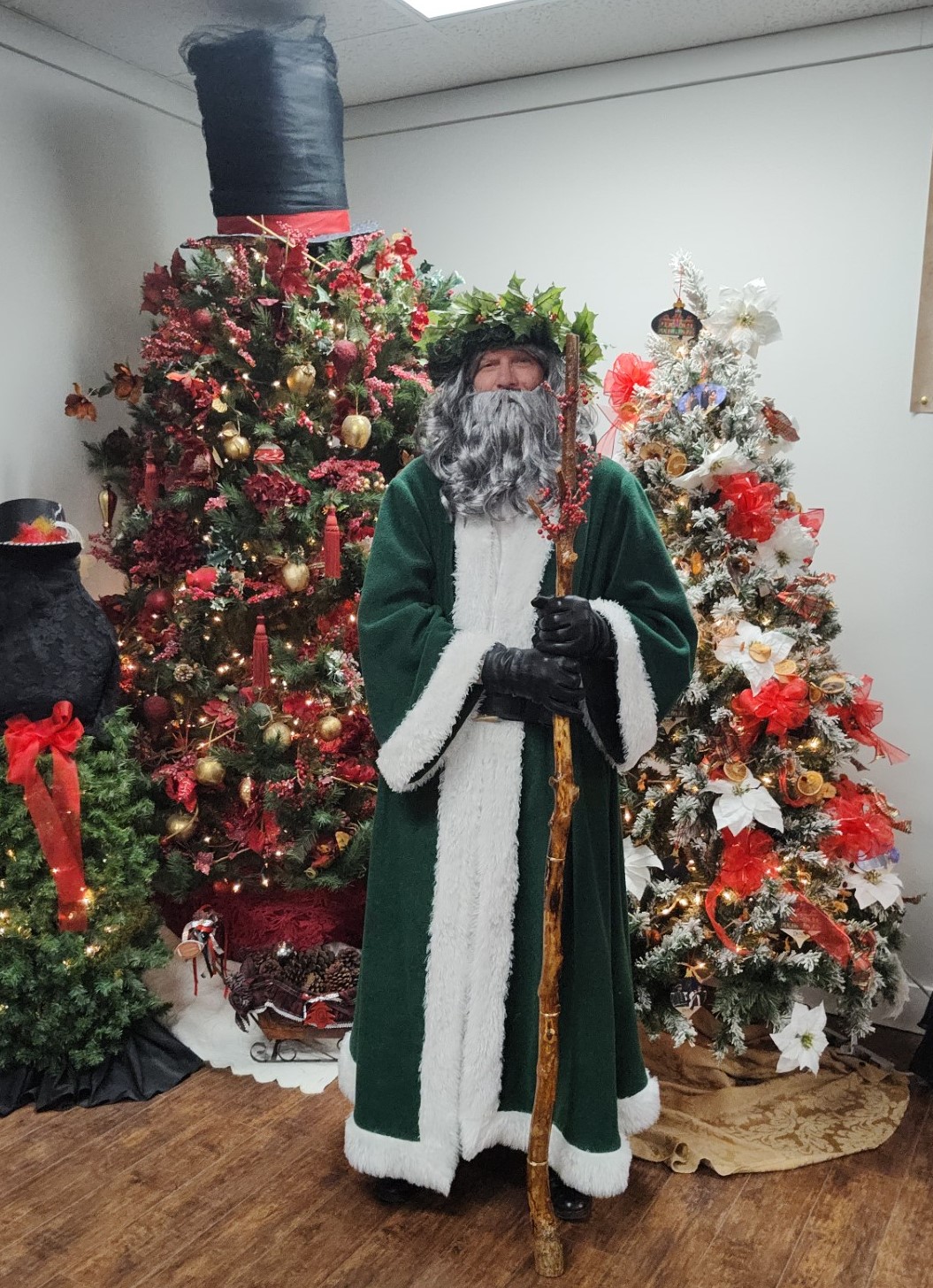
Father Christmas, portrayed by John, greets tour buses at the Dickens Welcome Center.

During the Dickens Victorian Village season, John volunteers as Father Christmas at the Welcome Center and greets tour buses. He coordinates times with Jim Thomas, who also portrays Father Christmas so there is always someone there. They often have their picture taken with visitors.

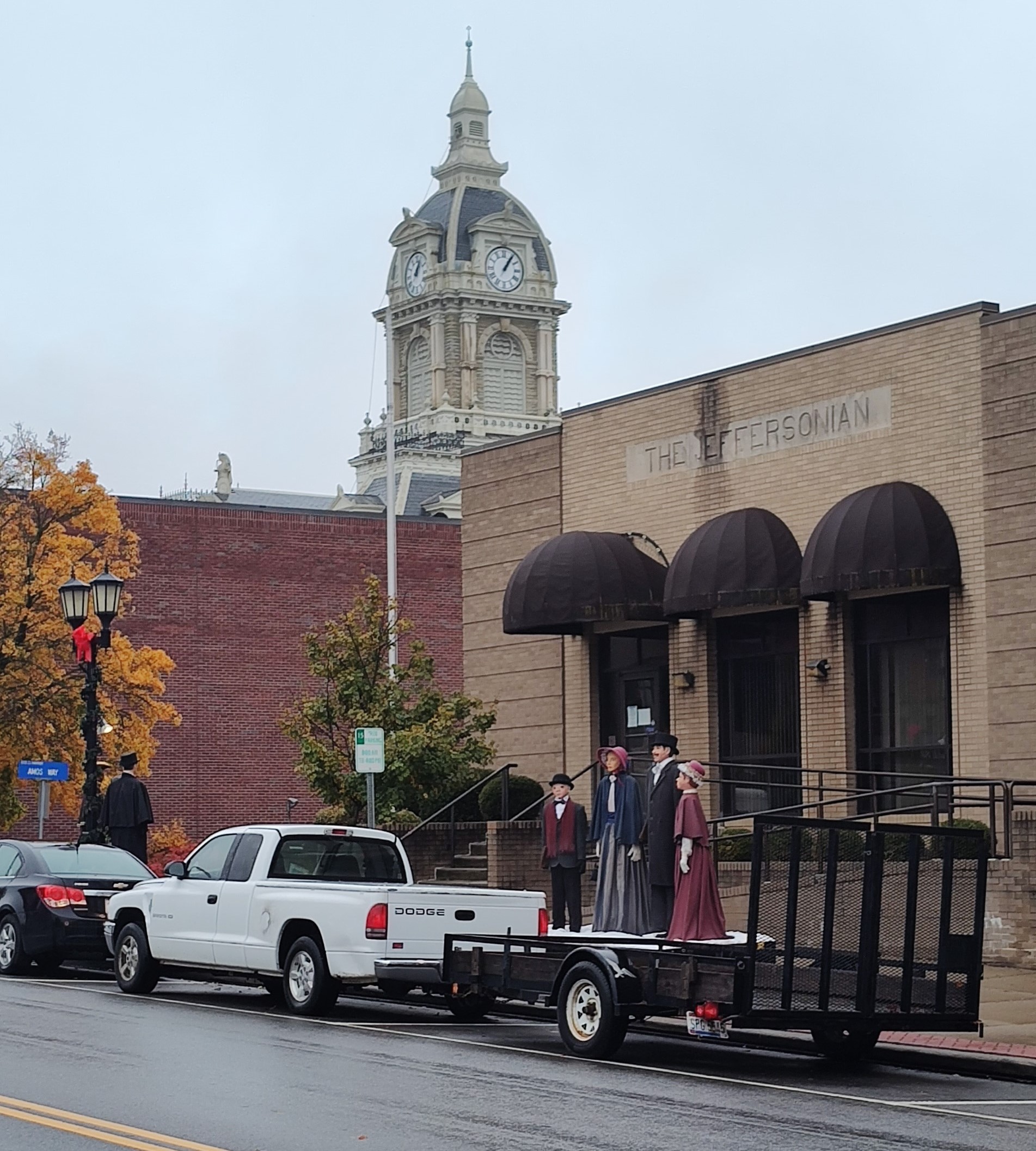
His truck and trailer are used to move the Dickens Victorian scenes from the warehouse and back.

He also volunteers his time, truck, and trailer to help move the Victorian scenes downtown in October and back to the warehouse in January.

His bass voice is a welcome addition to Cambridge Singers.

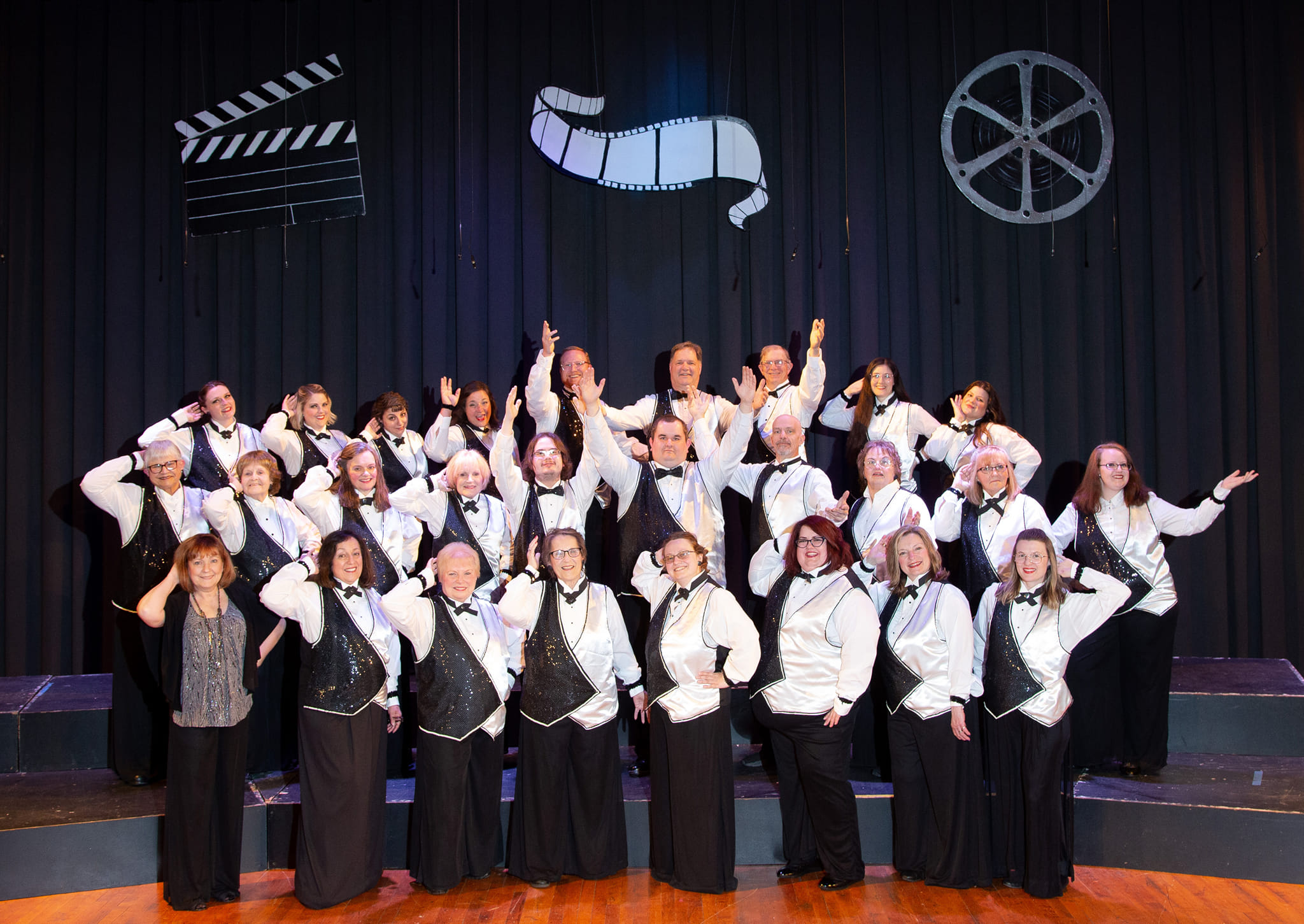
It wasn’t until 1990 that John began singing in groups locally. It all began with a Men’s Chorus organized by Andy Call, Bob Marks, and Berk Jones. That was just the beginning as today John sings in the Cambridge Singers, which has two major shows each year.

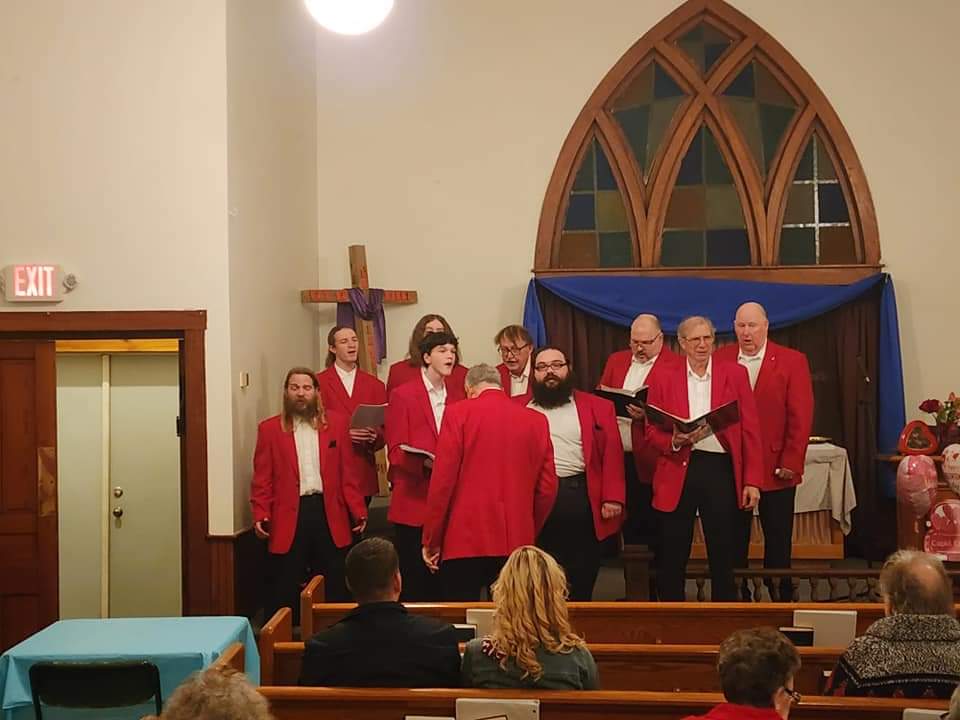
Chordial Chorus performed in barbershop style at Birds Run Church.

Chordial Chorus is a group of barbershop voices that perform throughout the year at various functions. He also participates in the Lions Club Chorus at their annual shows and is one of the Lions Club members. A friend convinced him to join the Coshocton Community Choir, which sings basically religious music.

John learned many building skills from his dad. When John was about eight years old, his dad was building a pole barn on their farm. John was on the roof driving in nails at that early age.

While attending Muskingum College, he became interested in a course taught by Louis Palmer regarding architecture. He later took a course in drafting at Muskingum Tech but soon discovered that he preferred home construction over commercial development,

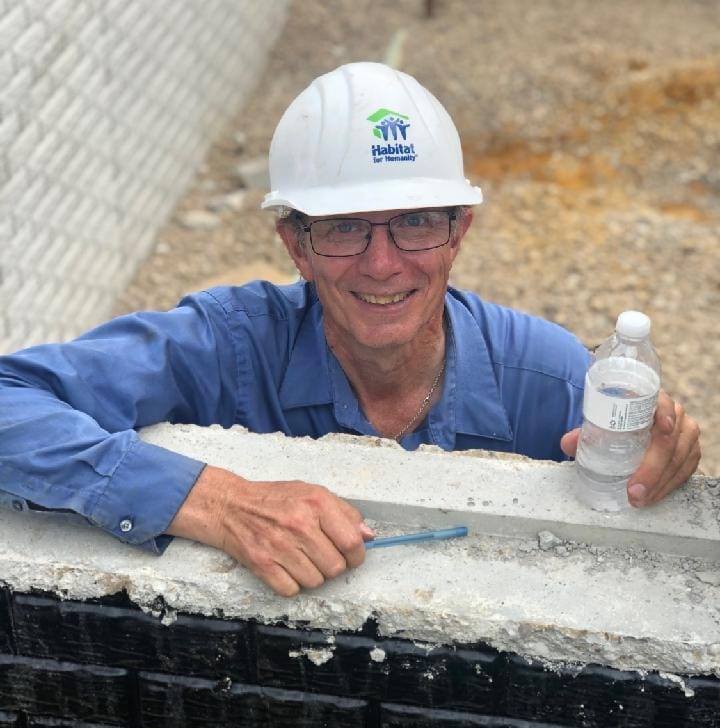
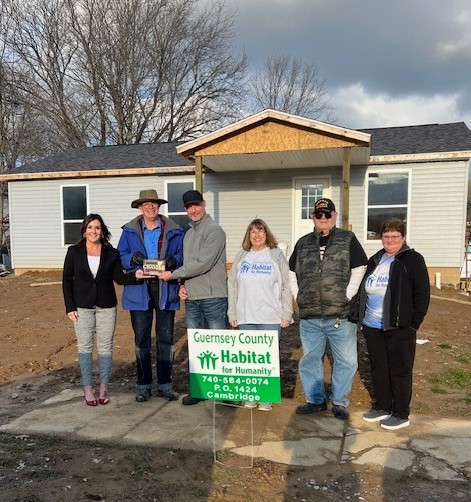
He worked on this house on Deerpath Drive for Habitat for Humanity.

His work at Habitat for Humanity is one of his special projects. Volunteers help people with lower incomes build their own house and become homeowners. Currently, they are building a home on Deerpath Drive in Cambridge. Flipping for Habitat will be a project to raise money to flip a house for some area family. Like most organizations, they need more young people to help with this construction work.
To assist him in his many building projects, John saves every piece of wood or any construction supplies that he can. “I might use it someday or be able to give it to someone who can use it.” These supplies come in handy quite often.

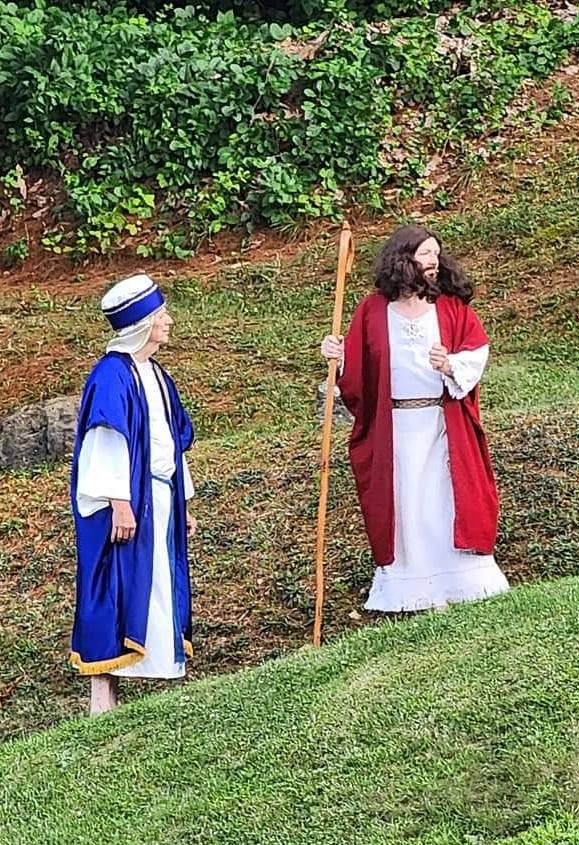
At the Living Word, John portrays Nicodemus listening to Jesus.

The Living Word Outdoor Drama features many local people who all volunteer their time to produce amazing weekend performances. John serves on the board of trustees there and is chairman of the building and grounds committee. He also participates in the performances in many roles such as King Herod, Judas, Joseph, and Nicodemus. His first speaking part came unexpectedly when a thief on the cross was not able to make it to the performance.

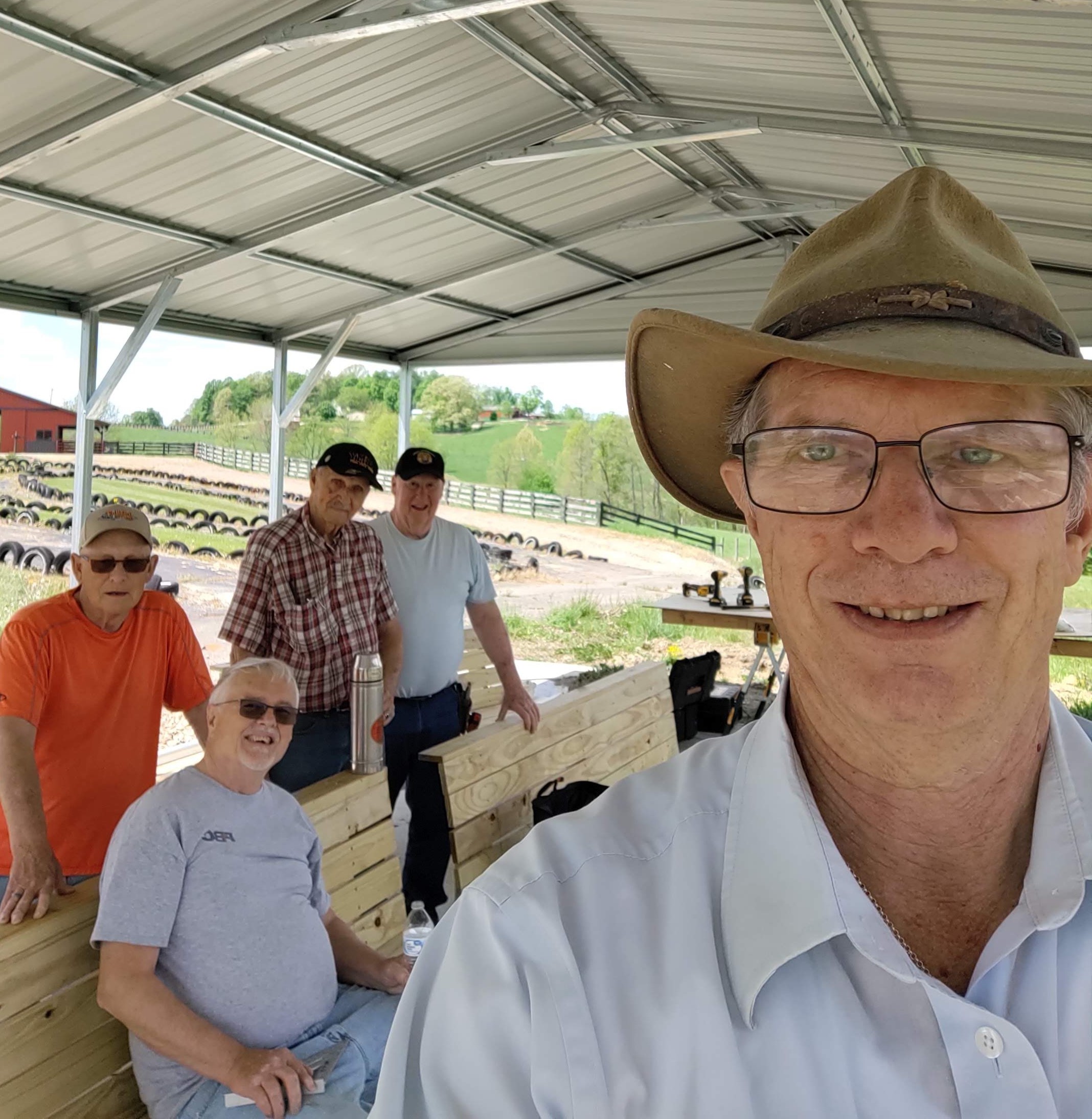
John helped the Lions Club when they made benches for Echoing Hills.

So much more could be added. Photography is another hobby that he enjoys, and he takes many pictures everywhere he goes. For a while, he enjoyed demonstrating the potter’s wheel at the Salt Fork Festival. And as John remarked, “We’ve just scratched the surface.”

John is impressed with the many great volunteers who make the Cambridge area a great place to live. “You are helping someone and they might pass it on. When you see someone who appreciates your volunteer work, it helps them and it helps you.” Many local organizations operate basically on a volunteer basis. Perhaps you would like to help out on a project of your choice sometime soon. You’re sure to be appreciated.

The Station on Twenty- Two for Delicious Ice Cream

The Station on Twenty-Two often holds events that the entire community enjoys.

Ice cream is a highlight at The Station on Twenty-Two in Antrim but The Station has so much more to offer. Stop by for a light lunch, find a favorite book to read, and shop in their small boutique.

This family-owned business is located in a renovated gas station along Route 22 in Antrim. The station, known as Glenn’s Service, was previously owned by Glenn and Martha Cole. Glenn ran the gas station and garage while Martha ran the Convenience Store. In those early days, Martha sold Damsel’s ice cream for a nickel a dip and even served as a notary. Glenn serviced Madison school buses.

This early picture shows The Station when it was a garage and general store.

When the station became available for purchase, Ron Miller thought it would be a great place for an ice cream shop. While he purchased it in 2013, it was 2021 before they were open for business. They did a lot of remodeling while attempting to keep the appearance of the old station.

Ron mentioned his reason for opening the business. “I want this to be a place where the community can hang out and get to know each other.”

Ron Miller, owner, is shown with his three daughters, Karin, Robyn, and Tricia, who help run The Station.

Ron Miller, three of his daughters and a son provide hand-dipped Yoder’s ice cream, milkshakes, and sundaes. A cousin Jenna Weaver is in charge of making and designing the sandwiches. This is their third year at The Station and they continue to add new and exciting things all the time.

Their Cousin, Jenna Weaver, creates and prepares delicious sandwiches.
Their Apple Orchard Sandwich is a customer favorite.

The daughters, Robyn and Karin, were kept busy dipping ice cream, making milkshakes, serving sandwiches, and answering the phone on the day of my visit. However, they always took time to talk to the customers, greet them by name, and even get some hugs exchanged. It’s a friendly and happy atmosphere with everything neat and clean.

When asked why she liked working at The Station, Robyn, the manager, said, “We see all our neighbors and make new friends.” Her sister, Karin, added, “Every day we see all the good people we live around.”

Karin and Robyn check over the display of flavors currently available.

You might wonder why they chose Yoder’s Old Fashioned Premium Ice Cream for their specialty. Yoder’s is a Mennonite/Amish Company based in Sarasota, Florida. Bill Yoder remembered his dad cranking homemade ice cream by hand every Saturday. Since that time, he always dreamed of having his own old-fashioned ice cream company for families to enjoy. Today he tells everyone, “I truly hope you love our ice cream as you enjoy it with friends and family.”

The Millers’ uncle delivered for Yoder’s to Ohio and an aunt said they made the best ice cream she had ever tasted. So without ever tasting it themselves, The Millers went on the word of family and made the choice. By the way, it is delicious!

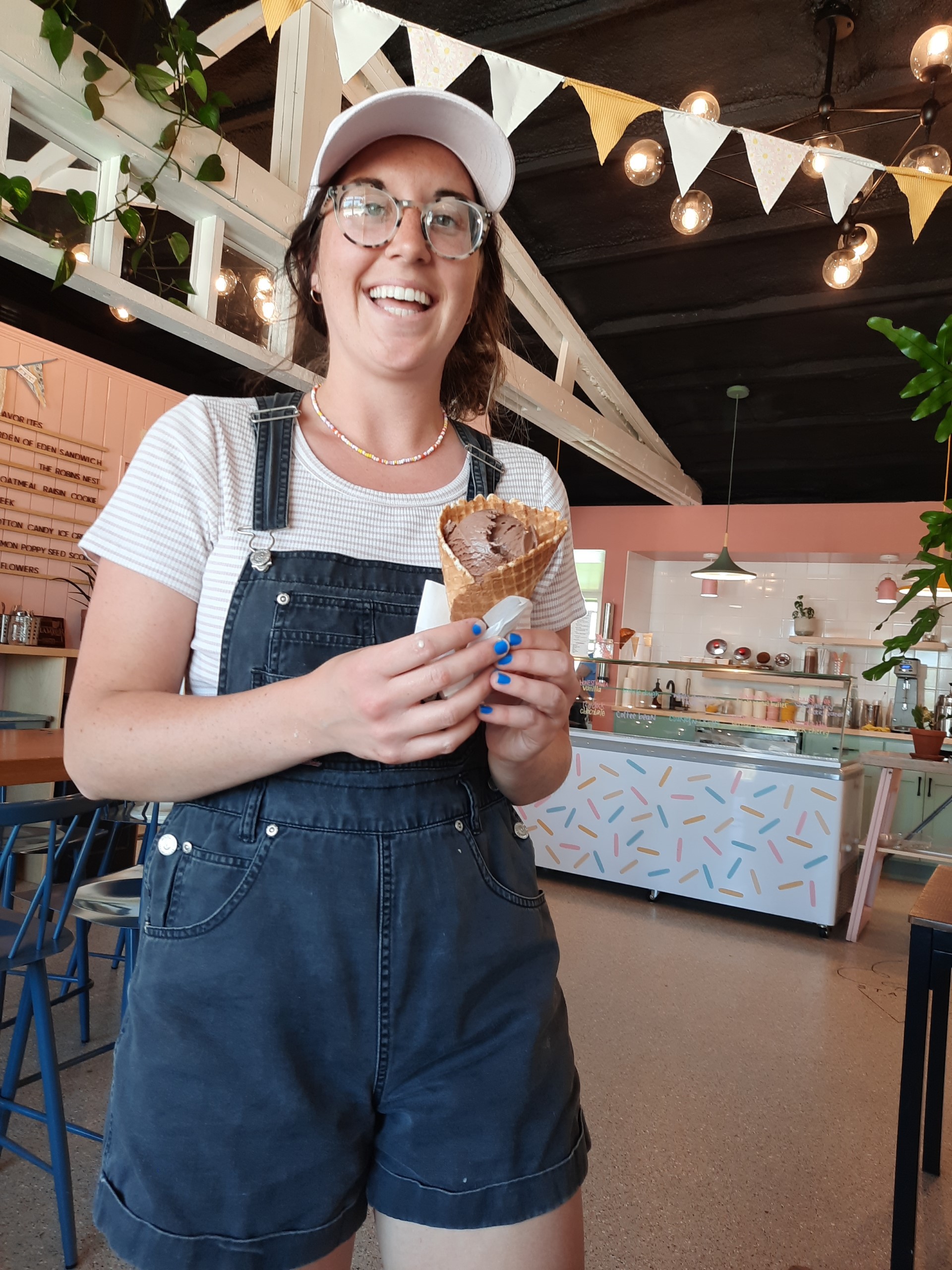
Robyn, the manager, brought me their special waffle cone with a dip of my favorite chocolate ice cream.

Popular ice cream flavors are triple peanut butter and butter pecan served in your choice of a cup, regular cone, or waffle cone, which is freshly made by the family. Their flavors change frequently and there is always a weekly special.

Relax at their shuffleboard court just behind The Station.

Outside, you will even find a shuffleboard court. There’s no cost to play! Plans for the future include a playground and pickleball court. This family likes to have fun whether inside or out.

There are plenty of places to enjoy your ice cream inside and visit with friends.

They have special events for the community as well. Some evenings they have special live music. A Hunter’s Storytelling Night featured hunting stories and hunting tips. A Thanksgiving Pie Contest was a tasty event. Their Christmas at The Station featured Arts & Crafts as well as holiday music performances. Of course, there was always ice cream available to make the evening more delicious.

Young Annie Miller proves that “Kids need ice cream like gardens need water.”

Stop by and get a special treat during summer hours at The Station on Twenty-Two on Tuesday through Saturday 11 – 8. Sandwich service stops at 6. They are closed on Sunday and Monday. Visit The Station on Twenty-Two on Facebook for up-to-date information, dates, and hours.

The Station on Twenty-Two is located in Antrim about 15 minutes north of the main entrance of Salt Fork Park so a nice final touch to a day at the lake. An ice cream cone, sundae, or milkshake is the perfect break on a hot summer day.

Salt Fork State Park Bigfoot Capital of Ohio

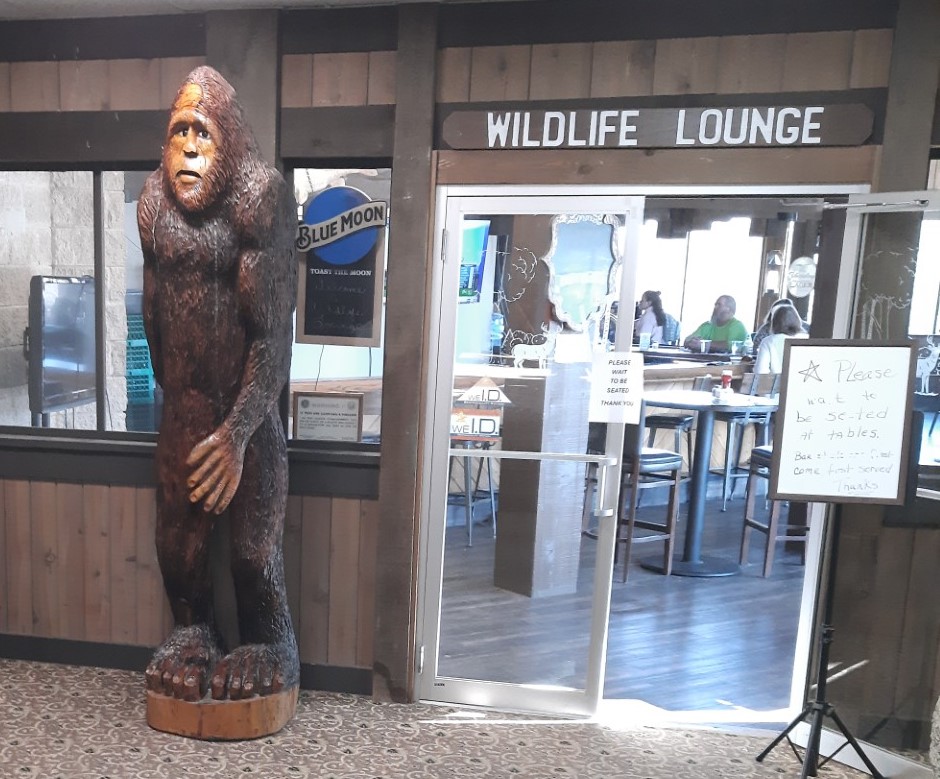
Bigfoot greets visitors at the entrance to the Wildlife Lounge in the Lodge.

Bigfoot, often called Sasquatch, is described as a very large, hairy creature from 7-15 feet tall with feet up to twenty-four inches long. His stories have been told since early days of life in North America and still live on in Ohio today.

Naturalist John Hickenbottom explains Sasquatchology at the Salt Fork Lodge.

John Hickenbottom, Salt Fork’s naturalist, presents Sasquatchology each month in the lodge at Salt Fork State Park, Bigfoot Capital of Ohio. Here you will hear tales of local Bigfoot lore. John’s recounting of personal experiences and eyewitness accounts adds to the excitement of Bigfoot.

Salt Fork Lodge is home to the annual Ohio Bigfoot Conference which draws large crowds.

Every year since 2012, the Ohio Bigfoot Conference is held there in the spring. This event attracts over 3,000 participants from as far away as Australia. Bigfoot enthusiasts and researchers share stories, compare scientific discoveries, and search for the hairy creature.

However, Salt Fork State Park is a source for exploration anytime of the year. It is the largest state park in Ohio with nearly 20,000 acres and most of that is covered in trees so Bigfoot has great places to dwell.

Many have heard knocks and howls along Bigfoot Ridge.

Everyone loves Bigfoot because it is a mystery that attracts people who like to search the woods and do research. John feels that exploring the legend of Bigfoot develops curiosity, scientific inquiry, and a deeper connection to nature. Many, like John, develop a personal interest in the subject. He takes a logical and scientific approach to all the stories he hears.

Every culture has Bigfoot stories to tell so John delves into historical encounters that contribute to Ohio’s rich Bigfoot lore. The 1869 wild man attack in Gallipolis, significant enough to incite a sheriff-led search, and Daniel Boone’s alleged encounter near Mount Sterling, Kentucky, are notable examples. John remarks, “These historical accounts… remind us of a time when the unknown created legends.”

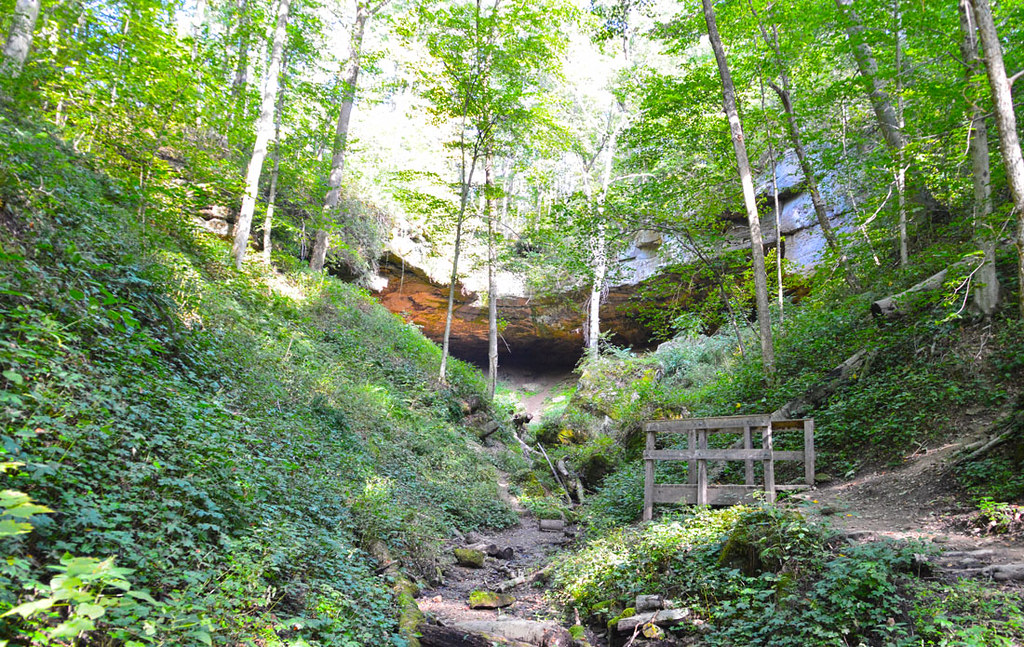
Hosak’s Cave is one of the many hot spots for Bigfoot encounters.

As an expert in Ohio’s wildlife, John explores the specific areas within Salt Fork State Park associated with Bigfoot sightings. Some of the ‘hot spots’ for Bigfoot exploration at Salt Fork include Hosak’s Cave, which was inhabited 2500-4000 years ago by native people, and is known for both hoaxes and genuine footprint discoveries. In warmer months, John leads groups on Bigfoot Walks to the cave.

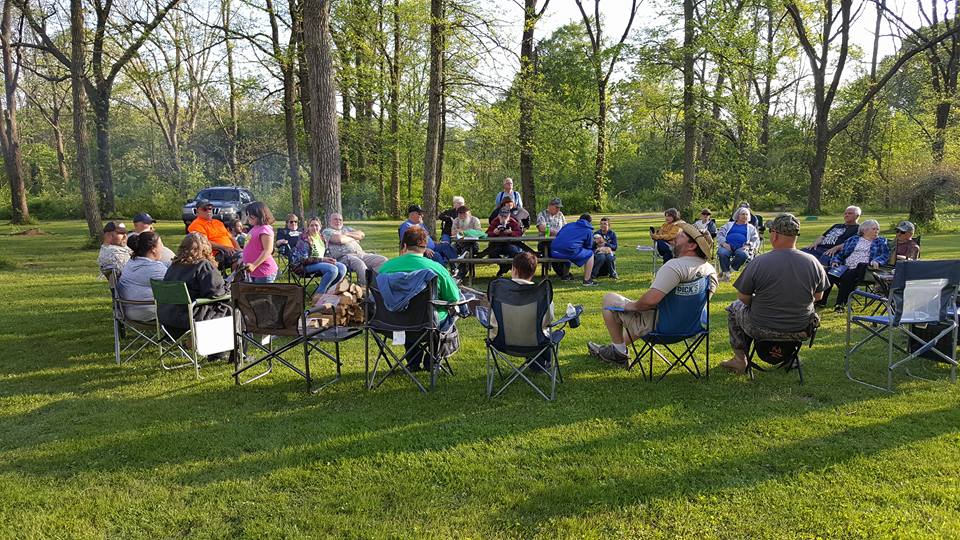
Group Camp at Salt Fork is a great place to exchange Bigfoot tales.

The Group Camp area is where families gather and stories are shared – tree knocks have been experienced here as well as a feeling of being watched. Bigfoot Ridge, named after an encounter with two Sasquatches, provides another place to explore as well as Morgan’s Knob where Bigfoot episodes have been taped. Pick up a map at the lodge’s front desk to guide you to these hot spots.

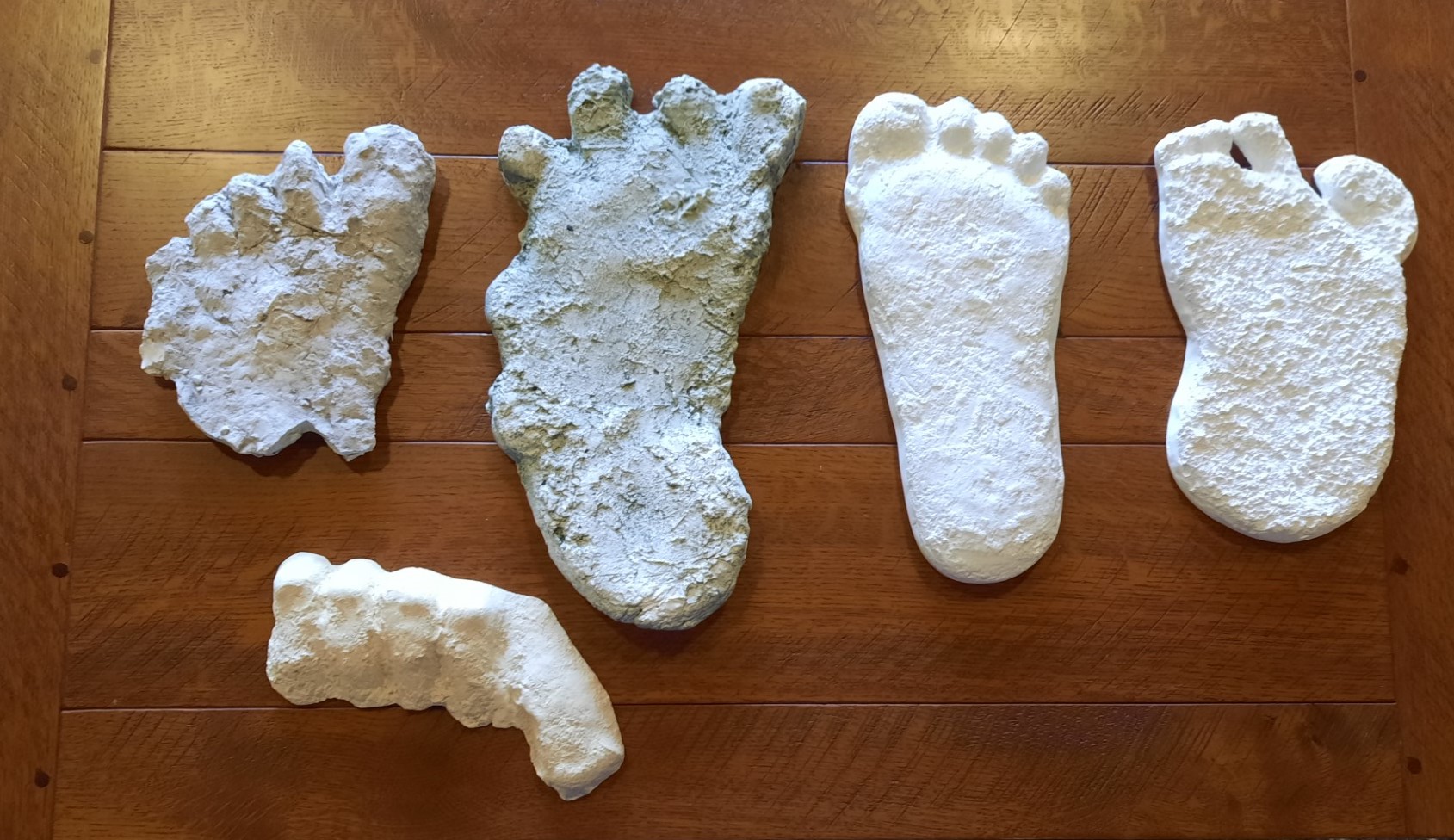
Bigfoot footprint casts were on display from several different sources.

Footprints are the evidence found the most that indicate Bigfoot was in the area. John was taken to Parker Road to see some footprints that appeared to be made by Bigfoot. These prints are large from 13 to 17 inches long. Several casts of the footprints from various places were on display during the talk. Many have also heard howls and knocks on the trees not only at Salt Fork State Park but all over the country.

Salt Fork State Park is however one of the squatchiest places in the US. John told the group, “All bets are off as to who might be interested.” These vary from an elderly woman who had attended a one-room school and saw a large creature outside the school window to the fisherman who saw large rocks being hurled into the water by an unseen source.

This area is called The Bleachers where Bigfoot watches the campers.

Bigfoot is a huge Touchstone for the conservation world. “We haven’t discovered everything yet.” While John enjoys exploring Bigfoot research, he has loved nature all his life and began volunteering with the naturalist at Salt Fork when he was 13 years old. He always knew he wanted to work at the park in the future.

After working at Hocking Hills, it was 2012 before he began working as a seasonal naturalist at Salt Fork Park, and in 2016 became full-time. His job is to educate the public about the joys of nature while they are on vacation. He enjoys taking youngsters out on nature walks where they discover the habitat of salamanders and snakes. There is a beautiful wildflower walk in the spring that goes to the Stone House.

John explains Bigfoot legends to visitors at the Home Show.

As you might expect, John and his family enjoy backpacking through the woods. He has a large collection of animal skulls which he shares during his botony presentations. John also teaches Botony in the fall where he is a member of the Zane State faculty.

Bigfoot has impacted the hearts, minds, and souls of people all across the planet. Sasquatch is out there capturing our imaginations. That is why John gives frequent Sasquatchology talks as well as walks through the park.

Their gift shop contains many memories of Bigfoot for you to take home with you.

Having public land available for enjoyment and research is a privilege. We want Salt Fork State Park to be known as the Bigfoot Capital of Ohio.” For more information on dates and times for activities in nature at Salt Fork State Park, visit their website at www.saltforkparklodge.com or Facebook.
Bigfoot is not just a subject of folklore but a symbol of unspoiled wilderness area. Visit Salt Fork State Park sometime soon and perhaps you will get a glimpse of the mysterious Bigfoot.
Majestic McKinley Monument Honors 25th President

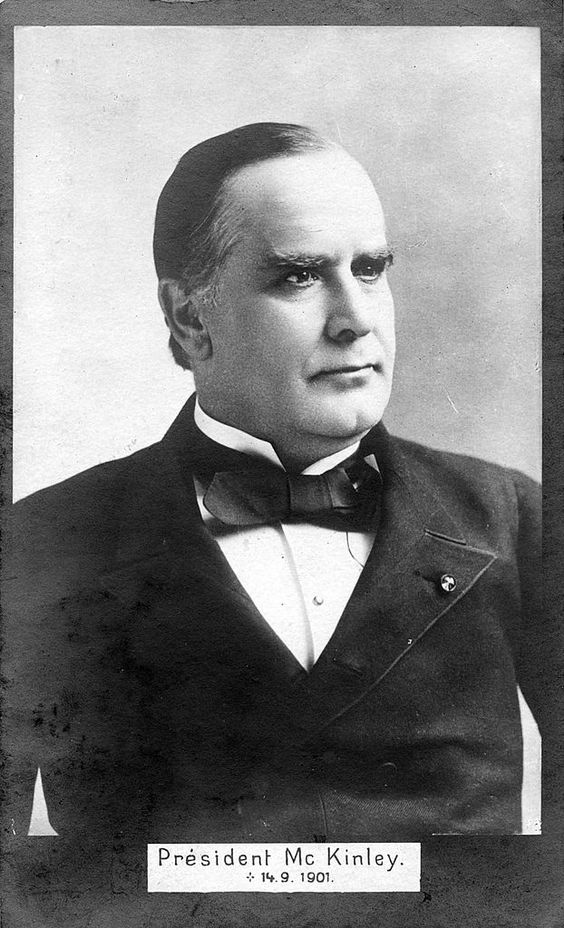
“I have never been in doubt since I was old enough to think intelligently, that I would someday be made president.”  These words were  spoken during his youth by William McKinley, the first president to ride in an automobile while in office as well as the first to use a telephone as part of his campaign.

McKinley Monument can be seen on the east side of I-70 in Canton, Ohio.

The resting place of William McKinley, 25th president of the United States, catches your eye over the tree tops while driving down I-77 through Canton, Ohio.  The domed mausoleum is more than a mere resting place but serves as a monument to Canton’s favorite son and former governor of Ohio. 

William and Ida McKinley made a campaign visit to Canton.

There are several reasons that McKinley is a favorite in this area even though he was born in Niles, Ohio. Canton is where he started his law career, found his true love, and ran for the highest office in the land. While attending the 1901 Pan-American Exposition in Buffalo, New York, President McKinley was assassinated just seconds after giving the good luck red carnation from his label to a little girl waiting in line.

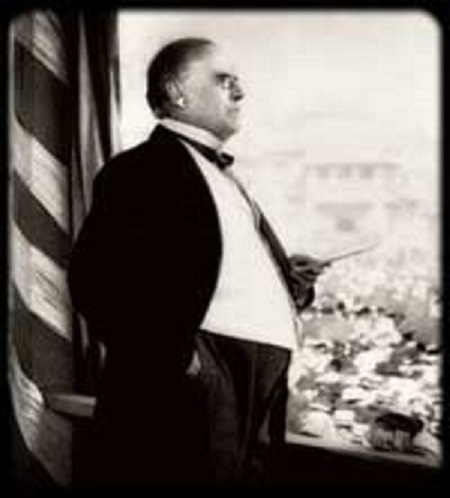
This photo of President McKinley making his first public address was used as the basis for his statue at the monument.

In 1905 construction began after selecting a memorial design drafted by Harold Van Buren Magonigle. This architect began his career at the age of thirteen when he worked as a draftsman for the firm that designed Central Park in New York City.

The amount being raised for the purchase of land and the mausoleum was $600,000. Local businesses and friends were large contributors. However, many school children contributed their pennies toward the building of this mausoleum, which was completed in 1907.

This view from the top of the steps shows people exercising there.

The front steps seem to be a real attraction for area residents as a wonderful place for exercise, either walking or running.  Since there are 108 steps up to the McKinley Monument, it is a challenge to young and old alike. The front steps are fifty feet wide and are broken into four flights of twenty-four steps with the final flight having only twelve. 

The plaque on this bronze statue of McKinley lists his many qualities.

Nearing the top of the stairs, visitors are greeted by a 9 1/2′ bronze statue of William McKinley created by Charles Henry Nishaus. It depicts President McKinley delivering his final public address at Buffalo, NY in 1901.

The circular, domed mausoleum recaptured the spirit of ancient cultures and formed the center of the cross design Magonigle intended to create. The longer arm of the cross was formed by front steps and what was called Long Water.

This beautiful cascading waterfall was part of the original monument area.

Originally Long Water was a spectacular part of the monument with a 575-foot lagoon, consisting of five different water levels cascading downward into a reflecting pool.  Unfortunately, due to stagnant water caused by poor circulation, this lagoon was filled back in the 1950’s. Both side arms of the cross were formed by shorter entry steps, and the top portion was a driveway behind the monument.

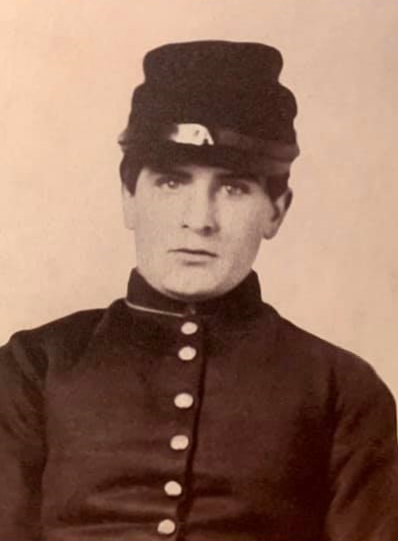
McKinley’s love of country was shown at the early age of 18 when he joined the OVI during the Civil War.

Magonigle considered this shape to have a double meaning. The upper part of the cross resembled the handle of a sword, while the Long Water symbolized the blade.  This seemed appropriate due to McKinley’s military career during the Civil War as well as his being commander-in-chief during the Spanish-American War.

Wreaths are often placed on the granite marble burial marker inside.

Above ground in the pink marble memorial, President McKinley and his First Lady are entombed in two side-by-side sarcophagi of elegant green granite on a dark maroon granite base.  Their two daughters have found their final resting place here also, entombed in the back wall of the memorial. Katherine died at the age of four from typhoid fever while Ida died during her first year.

Wreaths are constantly being placed by individuals and organizations at the foot of the granite-clad coffins. Most of the wreaths are in traditional red, white and blue.

This skylight contains 45 stars, the number of states at the time of McKinley’s death.

Seventy-five feet overhead is a beautiful red, white and blue skylight with a 45 star design, representing the number of states in the Union at the time of McKinley’s death. While it looks small from below, this beautiful window to the sky measures twelve feet in diameter.

If you wish to visit the memorial without climbing all those stairs, there are two possibilities. A steep road leads up the hill behind the Memorial or there is also an elevator, which operates only during museum business hours by use of a special code, which you must ask for at the museum’s admission office nearby. Admission to the McKinley Monument is free.

Hopefully, this monument and the life of William McKinley will be an inspiration to someone today.  President McKinley had hoped for this when he said, “That’s all a man can hope for during his lifetime, to set an example, and when he is dead, to be an inspiration to history.”

The McKinley Monument is located in downtown Canton, Ohio just off I-77. Take Exit 105 for OH 172, then turn right on 7th Street NW. Take the first left onto McKinley Monument Drive and enjoy a little piece of history.

Spring Creek Psalteries Creates Beautiful Sound

Sharon and Terry have hours of enjoyment playing their psalteries.

Inspiration often appears when least expected. That was the case for Terry and Sharon Kirby when they attended Dulcimer Days in Roscoe Village. As they walked several times by a booth from Beckley, WV, they heard an amazing sound that they loved, bought a CD, and Terry was on his way to a new career.

After being a contractor for thirty years, Terry was ready for a change but he didn’t know anything about music. When they heard the sound of the Bowed Psaltery Symphony on that CD, they wanted to purchase a psaltery for themselves. Since they had no idea how to play one or even hold one, they drove to Beckley, WV to get some instructions and a new instrument. Sharon played it all the way home. By the time they got home, a call was made to Beckley for another psaltery.

After they became familiar with the psalteries, two or three nights a week they would play at nursing homes. They added some sticks and shakers to get the residents to participate along with them. In those early days, “The Parting Glass,” a traditional Scottish song, became one of his favorites on the psaltery…and still is.

Terry and Sharon were part of the Bowed Psaltery Symphony for many years.

For many years, they both played in the Bowed Psaltery Symphony at Cedar Lakes in Ripley, West Virginia where they were first chair in their sections. This group consisted of 30-60 players of all levels and many often brought additional instruments to enhance the performance.

Locally, they formed the Spring Creek Band, which consisted of a variety of instruments including the psaltery, flute, guitar, ukulele, dulcimer, and drums with vocal music included. They played at many church events as well as Dulcimer Days. They were learning more about music each step of the way.

After many performances and much research, Terry decided to build a psaltery with better sound. When Terry makes a decision, you can be sure it is going to happen to perfection.

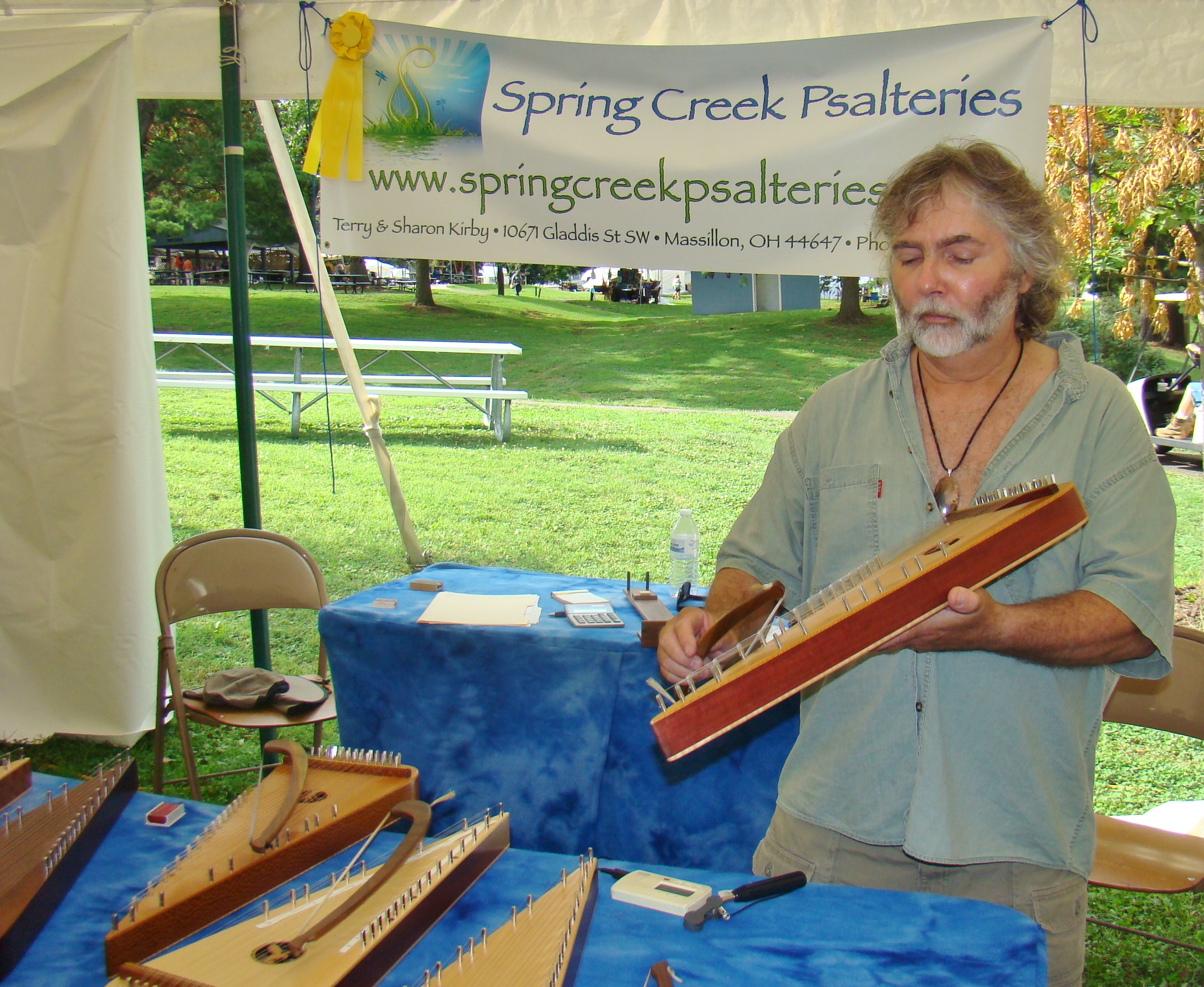
Terry constructs the psalteries in his workshop.

So, about twelve years ago, he created Spring Creek Psalteries at his shop in Massillon. There he began building the psalteries himself. Terry and Sharon then began attending festivals all over the area where they played and sold their psalteries from May through December. Often they would sell out of the ones they had made and either had to leave a festival early or cancel. They wanted to bring the joy of playing the psaltery to everyone who loves music.

Terry always attracted attention at the festivals by playing familiar songs.

The great thing about the psaltery is it can be played by young and old alike. Terry says it is one of the easiest instruments to learn. You don’t need to read music and you can only play one string at a time with a soft stroke of the bow.

These handcrafted psalteries bring Terry a lot of joy. His favorite pastime is making psalteries in his workshop. He has constantly strived to improve the quality of the sound. Sometimes he works on them from 7 in the morning until 10:30 at night. That’s much more enjoyable to him than watching television.

There are records of a psaltery in Psalms but that one was a trapezoid shape so the strings could be plucked. In 1948, a German violinist brought a psaltery to the United States for the first time. He had changed it to a triangular shape so the strings could be bowed.

That later shape was the one Terry developed into his own special instrument, which has great sound. He credits that sound to three special things.

  1. The top of the psaltery is called the soundboard. Terry makes it from a soft Sitka spruce, which he gets shipped directly from Alaska. He feels spruce gives a nice, mellow sound that is richer and brighter.
  2. Three different string gauges give a more even sound vibration.
  3. Pegs get wider as the string gets longer so you get the correct vibration sound.
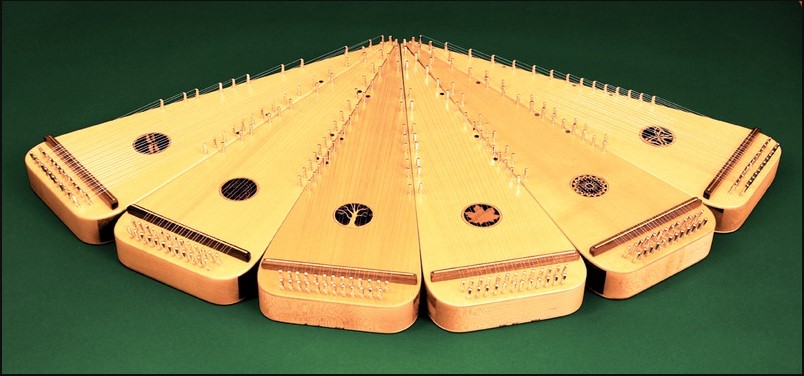
A variety of rosettes make an attractive addition to the psalteries.

Sound holes use different rosettes, which Terry creates in his shop. They might look like an owl, hummingbird, musical notes, or the favorite – a tree of life.

While the tops of soundboards are made of Alaskan Sitka Spruce, the backboards are primarily Curly Maple, and the sideboards of Sapele. Then six or eight coats of lacquer are used on each psaltery to create a beautiful finish.

Terry was working on this cello, which will be sent to Montana.

Before selling or ordering a psaltery, Terry asks the customer if they are right or left handed as the strings must be arranged in a different manner. He also needs to know if they want a violin or cello sound.

The Serenity Harp produces a relaxing sound.

Their newest Cello Psaltery sustains the sound. Whole notes are on one side while sharps and flats are on the other. A Serenity Harp produces a peaceful sound that is often used for meditation and therapy.

These accessories are useful to new psaltery players.

Each bowed psaltery comes with a tuning wrench, rosin, horse hair bow, removable note markings, and booklet. Special noted songbooks make it easy for everyone to play without having to read music. They also have soft-sided, padded cases available for an extra charge. If you mount the psaltery on a stand, you can double bow and create your own harmony.

Sharon and Terry attended the Salt Fork Arts & Crafts Festival for many years.

Spring Creek Psalteries has displayed their instruments at festivals all over the area from Salt Fork Arts & Crafts Festival and Y-Bridge Festival to Roscoe Village and Shaker Woods. They always had a variety of psalteries on display and gave you a chance to play one of them. That way you could see how easy it is to learn.

Yankee Peddler Festival was another place they displayed and sold their psalteries.

Their 25-note, handmade psalteries are available at affordable prices. They also have a wound string psaltery that has more the sound of a cello and is tuned an octave lower. Their 9-note psaltery is excellent for beginners and is small enough for children to hold. Grandparents often purchase this one for their grandchildren.

You can double bow a psaltery by the use of a tripod and stand.

Now, Terry and Sharon have both retired and are enjoying a little free time to perhaps have time to play music with friends. Terry is also coaching his grandson’s Little League team. An idea occurred to him that a country cabin would be nice where he could use his telescopes to view the stars more clearly. Yes, Terry builds his own telescopes, also.

The cabin developed into a bigger project because Terry likes to have everything cut and trimmed as well as a garden. A special project involves his hummingbird feeders, which he cares for himself, and even boils the hummingbird syrup.

Sharon and Terry were winners of the Canoe Race at Canal Fulton in their early years.

An interesting pastime, that they are hoping to revive, began in the ’70s and ’80s when they competed in Championship Canoe Races. At that time they were the Ohio State Champion mixed team and broke all kinds of records. Races were held at places like Canal Fulton, Bob Evans Farm, and Marietta. Terry also participated in a Triathlon, which consisted of biking, running, and canoeing. He always strives to be the best he can be.

A psaltery door chime is a welcome addition to any home.

They will not be participating in the festivals for now but are still making and selling things from the many calls they receive. Spring Creek Psalteries are shipped all over the United States. If you would like more information, call them at 330-323-0618 or email them at tsakirby@sssnet.com.

Terry followed this bit of advice throughout life. “Do well at whatever you do.” That has certainly worked well for him and is a goal we should all attempt to reach.

Historic Structures Remain in Freeport

Older pictures are from the files of the Puskarich Public Library and newer ones were taken by the author.

Freeport was off to a great start as the population increased and homes were built in 1907.

Small towns almost always have an interesting background and a few historical spots. Freeport might surprise you with its history that still lives on today.

In 1913, those rivers caused a major flood in Freeport and in the surrounding areas.

The name Freeport began when the town served as a free port on Stillwater Creek to ship produce toward settlements along the Tuscarawas River, which joined the Muskingum and Ohio Rivers. The swift currents on these small rivers were easy for the Native Americans to use in their canoes but became more difficult for carrying produce. Today Little Stillwater Creek makes up part of the Tappan Lake Watershed.

Gentlemen were well dressed as they waited for the train at the B&O Depot in 1900.

Before long, the Ohio-Erie Canal solved some of those shipping problems, but it came to an end when the railroads came to town. The B&O had a depot in Freeport and it was one of the two last standing stations in Harrison County along with the one at Scio.

Freeport Band Concerts were popular in Shady Side Park in 1910.

The plat for Freeport Ohio was laid out in 1810 in Tuscarawas County but brought into Harrison County in 1819 due to a county boundary change. It’s also on the edge of Guernsey County. A post office has been in operation in Freeport since 1814.

The historical Reaves Home is now the Clark Memorial Branch of Puskarich Library.

One of the founders of the town was Daniel Easley, who built a brick house in the late 1800s. He later sold to John Reaves, who was a teacher and the first Harrison County resident to die in the Civil War. His home, still known as the John Reaves House, is on the National Register of Historic Places, is the oldest structure in Freeport, and considered an architectural wonder. In 1888, it was home to the first bank in Freeport. Since 1991, it has housed the Clark Memorial Branch of the Puskarich Public Library. In 1998, a Children’s Wing was added to the original building.

Freeport Lockup served as a jail from 1895-1937.

Freeport Lockup is a stone jail built in 1895 by the Starkey family. The stones were hauled by wagon from the Bill Rowland Stone Quarry. This jail was actually used until 1937 and still can be seen along the road leading into town.

This sixteen-sided barn is one of only three left in the US today.

Here you will find the only sixteen-sided barn in Ohio just one mile south of town. Built between 1916 and 1921 by John Stewart & Sons, it is one of only three sixteen-sided barns left in the United States. This rare type of barn originated from the design of George Washington, our first president. The Freeport barn is 60 ft. high and 60 ft. across with a 12 ft. silo in the center. Visitors are welcome anytime of the year by the owners, who have lovingly restored this historic barn. Nice to see that it is still in good use today.

This old Skull Fork Covered Bridge still stands today after nearly 145 years.

Skull Fork Covered Bridge built in 1876 is located near the barn on Covered Bridge Road. Legend has it that local Indians had kidnapped and murdered individuals whose skulls were found near the creek.] The scenic Buckeye Trail passes through this covered bridge and along the shore of Piedmont Lake. This trail goes through 44 of Ohio’s counties and covers over 1444 miles of a continuous loop encircling the state.

An expanded Freeport Press maintains its early front using local stone.

Freeport Press is family-owned and has served customers with quality print solutions since 1880 when it was established as a weekly newspaper by J.J. Ashenhurst. They are a major business today printing many high-end magazines, catalogs, and commercial print. In 1949, a new building was constructed using stone from the Freeport Stone Quarry on the front. Today there have been additions on both sides but that stone front remains the same. In January 2005, Mr. David G. Pilcher became the sole owner of Freeport Press, which employs over 200 people.

A mural on the side of the Freeport Fire Department shows an early horse-drawn fire engine.

Freeport Fire Department has a beautiful mural by Sarah Koch on the side of their building showing an early fire engine being pulled by horses. They have an annual festival that involves the entire community. It is held the last weekend in July and includes a parade, craft and vendors show, display of fire equipment, and of course delicious food in the form of a chicken barbecue and fish fry.

Piedmont Marina provides a handy spot to pick up fuel, boating and fishing supplies.

Drive to Piedmont Lake just a few miles southeast. The lake was created in 1933 to provide flood reduction as well as for conservation and recreation. It’s a great place for fishing and boating with Piedmont Marina providing boat rental, docking fuel, boating and fishing supplies as well as a lunch counter. There is also a nice renovated campground with electric hookups or you might prefer to stay in one of their vacation cabins. 4-H Camp there many years ago provided summer entertainment during my youth.

Today, Freeport has about 400 residents and many interesting spots to visit. Spend a few hours there and stop to eat at a local restaurant or spend a weekend at one of the local inns or Piedmont Lake. There’s nothing like the hospitality of a small town.

Colt Keith, Former Rolling Hills Schools’ Student, Signs 6-year Contract with Detroit Tigers

Colt Keith at Comerica Park in Detroit, Michigan received his Tigers’ jersey after signing the contract.

(Update! The article below appeared in Crossroads magazine last month. Since it was written, Colt Keith has signed a $26.8 million six-year contract with the Detroit Tigers, who said, “We are looking for people who care about winning and who are competing as hard in the gym and on the dirt in early work as they are in the batter’s box. That’s what we saw in Colt.” At this time he is enjoying Spring Training with the Tigers in Florida.)

Colt Keith was named Detroit Tigers Minor League Player of the Year in 2023.

Take me out to the ballgame” is a call that Colt Keith has made throughout his life and it has led him to being named the Detroit Tigers Minor League Player of the Year for ’23 as reported by Baseball America magazine.

While visiting family over Thanksgiving, Colt talked to athletes at Buckeye Trail and gave them suggestions on how to become good at whatever field they chose. He encouraged them to follow their dreams while living a wholesome life without alcohol, drugs, or smoking involved. His advice was, “Stay away from that stuff.”

Buckeye Trail athletes and coaches heard pointers from Colt Keith at a recent meeting.

He explained the routine schedule that he keeps to stay in good physical condition and gave websites for workouts that would be helpful. Since Colt works out six days a week for at least two and a half hours, he feels exercise is very important for fitness and power. He told the athletes, “I love to work out.” The importance of eating nutritional meals and drinking lots of water was also pointed out. “You have to help yourself get better.”

Mindset is so important no matter what path you want to take. Colt told students, “Do what you want to do and do it better than other people. Have a positive, pleasant attitude. Work hard and love Jesus.”

Those in attendance had many questions to ask Colt after his presentation. He always gave honest personal answers and great encouragement. Everyone received his autographed baseball card.

Colt enjoyed baseball from a young age. Here he participates in ‘coach pitch’ baseball.

His passion for baseball began playing t-ball in Lore City. His elementary school years were spent in Rolling Hills School District where he also wrestled. However, once his parents noticed his great love for baseball, they moved to a spot where baseball could be played year-round.

Colt’s dad, Troy, Colt, Kait, and his mom, Mary all attended the signing in Detroit. His parents have been a constant source of encouragement throughout his baseball career.

Colt expressed great appreciation to his parents and coaches for being so supportive along the way. His dad, Troy, was a wrestler and became a teacher and wrestling coach at Meadowbrook while his mom, Mary, played college basketball and then became an attorney. Sports were always a big part of their family.

This Southern Utah team was yet another place where Colt experienced baseball.

First, they went to Utah and then to Arizona where Colt played baseball at the positions of shortstop or catcher with Verredo High School, which was not far from Goodyear – Spring Training grounds for several major league baseball teams. It was then he first had the idea that he would like to be drafted. “You have to have a goal.” While in Arizona, he was named High School Player of the Year.

While in Biloxi, Colt met his fiance, Kait.

Later they moved to Biloxi, Mississippi where he finished his high school years and met his fiance, Kait. While he was offered a scholarship to the University of Arizona, once he was drafted by the Detroit Tigers in 2020, he decided to try that opportunity first.

A Guernsey County All-Star game was one of his early all-star connections.
The Guernsey County Miners were a championship team back in 2016.

Even though they moved, Colt always came back in the summer to play ball with his grade school friends. He remarked, “The Guernsey County Miners were the best team around back then.”

Toledo Mud Hens Player of the Week was one of his frequent awards.

While working his way up through the minor leagues, Colt played second and third base. Frequent awards came his way in the form of Player of the Week, Player of the Month, Best Single-game Performance, and a place on several All-Star teams.

This left-handed slugger has a fantastic career batting average of .303 and a .976 fielding percentage. In July, he moved up to the Toledo Mud Hens, a triple-A team. He remarked, “I batted and played my way up. I’m always anxious for the game to start.”

A typical ML Tigers announcer on July 23 said:

Colt Keith with a beautiful piece of hitting to find the hole and drive in the go-ahead run with 2 outs in the 8th. He’s 3-for-4 with a double, a sac fly, and 2 RBIs tonight. And he just stole a base.

At his first bat in triple-A against the Columbus Clippers, Colt hit a homerun.

A couple of his memorable moments were in ’22 when he hit a walk-off home run in Michigan, and then in ’23, he hit another walk-off home run in Erie. At his first bat in triple-A against the Columbus Clippers, he hit a home run.

Colt was selected from the Detroit leagues to participate in the Minor League All-Star game in Seattle.

Colt has played on two All-Star Teams recently. In ’19, he was chosen for the Future All-Stars where the top 30 high school baseball players from all over the United States played a game before the regular All-Star game in Cleveland. In ’23, Colt played in the Minor League All-Star game in Seattle. There were only two chosen from the Detroit leagues.

Now Colt’s looking forward to the future with the Detroit Tigers. After signing he told the press, “My mission is to be the best player possible and help win a World Series Championship for Tiger fans everywhere.”

Hopedale – Yesterday and Today

Small towns often have an interesting history that helps us understand those early days in the settlement of Ohio. Hopedale in Harrison County is no exception.

The first settler there in 1800 was Phillip Delany, a hunter. He swam the Ohio River with his clothes tied on his head so he could buy a section from the Northwest Territory Land Office in Steubenville. He called his settlement Green.

This postcard shows a picture of Hopedale Normal College, the first co-ed college in eastern Ohio.

Later Delany sold the land to a resident of Beech Spring, Rev. Cyrus McNeely, who platted the town. His son, also Cyrus McNeely, changed the name of the town to Hopedale because of his high hopes for the schools there. He donated land in 1849 to begin Hopedale Normal College, the first co-ed college in eastern Ohio with tuition of $5 a month.

General George Armstrong Custer in his West Point uniform.

Horace Mann once taught there and General George Armstrong Custer was one of 10,000 who graduated from the college. Custer received a teaching certificate and taught in Cadiz. A year later, he entered West Point where he graduated in 1862.

That school grew and eventually included an elementary and high school. They had a six man football team called the Comets. Clark Gable went to school there, rode his sleigh down snowy fields, played in the band, and acted in plays.

Clark Gable’s home in Hopedale today from the Clark Gable files.

While Clark Gable was born in Cadiz, his family lived in Hopedale during his youth (1903-1917) at 197 Mill Street. Today that house still stands but is a private residence with no public access. His father came to Hopedale because of an oil strike in 1902.

Post card picture of Hopedale’s track laying machine at the Wabash Arch.

While the oil field brought some financial gain to the area, it was the coal located just under the surface where strip mining began that proved the real boon. But first they needed a railroad to haul the coal. The Wheeling and Lake Erie Railroad was born with the Wabash Station being located in Hopedale as well as the Wabash Arch.

While the college is gone and even the high school that followed it, there is a house across the street from the city building that housed students at the Hopedale Normal College. The city building is actually located on the former grounds of the college and the brick building beside it is now being turned into a museum. A flagpole marks the spot where the college stood years ago.

Beech Spring Presbyterian Church near Hopedale was called “The Mother Church of Ohio.”

Another famous historical site was the Beech Spring Presbyterian Church near Hopedale. It was known as the “Mother Church of Ohio” because it supported the founding of many churches in Harrison and Jefferson counties during the 1800s. The church was torn down in the early 1960s but the cemetery remains. Phillip Delaney was buried there.

The Underground Railroad was very active in Harrison County. Hopedale played an active role in this, and many anti-slavery meetings were held there. The Columbus Dispatch reported that slaves were kept in the Kyle home, which was built by Cyrus McNeely. Delaney House is a farm homestead documented to have served as a stop on the Underground Railroad. The building has a dry cistern connected to the main house by a tunnel. This was a great hiding place for runaway slaves and an important stop on the route to freedom.

This theater bill shared movies being shown in Hopedale Theater in 1938.

Hopedale Theater was built in 1925 by the Stringer Brothers. They showed the latest in moving pictures and continued in operation until the mid 1950s. Some of those early movies were Laurel and Hardy in Swiss Miss, Cassidy of Bar 20, and In Old Chicago. Today that theater has been turned into an Italian restaurant, Capraro’s.

The Motorcycle Memorial has stones engraved with names of fallen riders and a brick pathway giving recognition to donors.

A recent addition to Hopedale has been the Fallen Motorcycle Memorial, a monument to riders gone too soon. A Motorcycle Memorial Wall, similar to the Vietnam Memorial in Washington, DC, contains names of brothers and sisters from all 50 states and other countries. The memorial is funded by the Motorcyclist Memorial Foundation, which cares for the memorial which is located behind the American Legion Post 682.

Milligan Memorials of Coshocton etched the Indian Black Stone, the darkest of all marbles, which stands atop a grassy knoll. The words written on the stone were written by Dan Waterfield of Oregon, Ohio. Anne Milligan etched the image of the man and woman riding their motorcycles on the winding road while Tim Milligan installed and etched the names of the loved ones lost on the gray pillars.

A granite full-size motorcycle sets at each end of the Memorial Wall.

Each end of the wall is bookended by a full-size 2-D motorcycle carved from that same black granite. The bikes can slide outward as new sections are added for fallen bike riders. In 1993, there were only two slabs with names. Today there are dozens of slabs listing names of bikers who have gone on.

The Motorcyclist Memorial was unveiled to the public in 1993. Now every year during Memorial Day weekend, they re-dedicate the wall and add more names to the granite pillars on each side of the monument. Nearly 1200 show up annually for this event. Be sure to stop by and visit the Wall if you find yourself in the Hopedale area.

Hopedale has a large ten-acre park with a playground and much more.

Hopedale today contains many family-friendly activities that make it a great place to call home. They have a beautiful ten-acre park that contains several picnic shelters, a basketball court, a tennis court, and a baseball field for the youth. Take an evening stroll on their walking/biking trail. Soon they will have a museum where you can learn more about their history. Plan a visit to this historic town sometime soon.