Places to go and things to see by Gypsy Bev

Posts tagged ‘W.P. Snyder Jr’

Life on a Riverboat

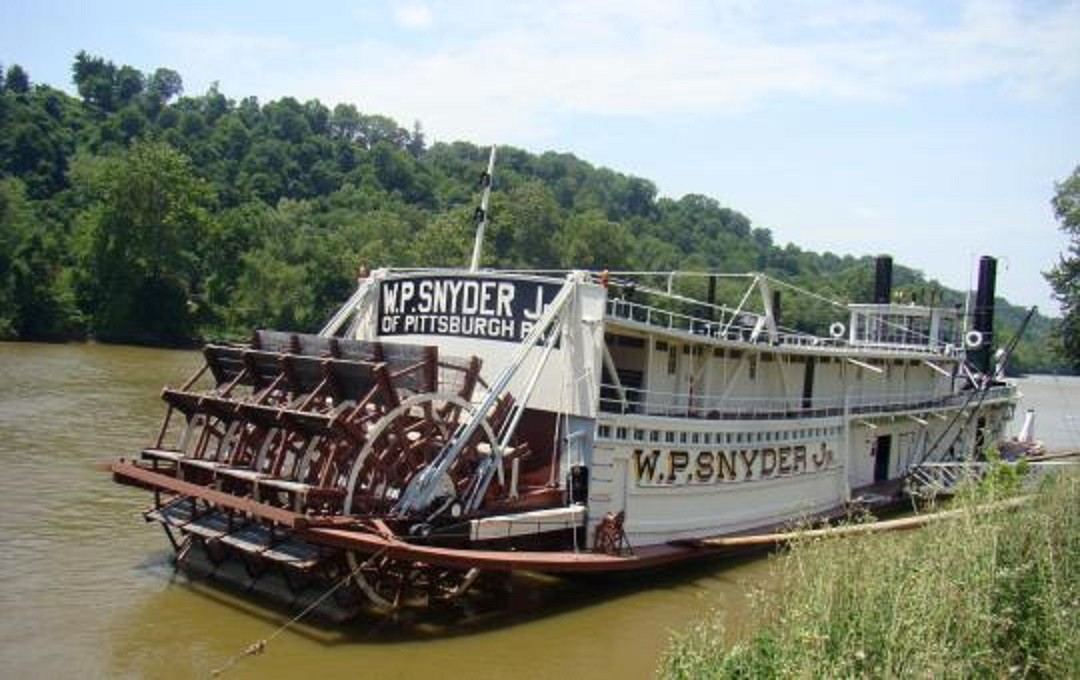
W. P. Snyder, Jr. is an historic towboat moored in Marietta on the Muskingum River.

Drifting with the current down the Ohio River has been experienced by many for centuries. While those early days provided an easy way to move products and people, today there have been many changes on the river, especially with the riverboats driven by steam.

During those early days before the railroad or paved roads, towboats were frequent on the river hauling coal, food, and steel. This was a quick and easy way to move things. Men in good physical condition worked on these boats around the clock surrounded by hazardous conditions and constant noise.
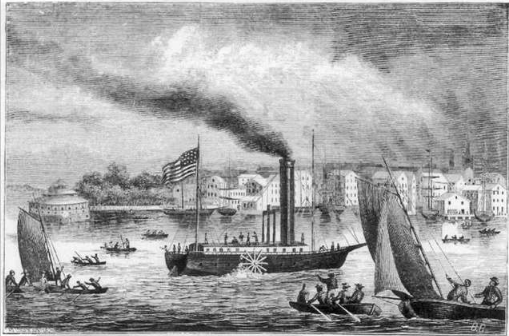
New Orleans was the first steamboat on the Ohio and Mississippi Rivers.

In 1811, the New Orleans made the first steamboat trip down the Ohio River and Mississippi River from Pittsburgh to New Orleans. The success of this adventure opened the door for more trading to the cities along the rivers. Passengers began using it as a faster method of getting from place to place.
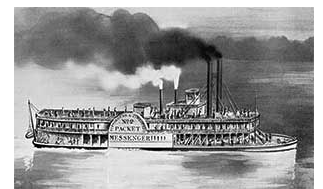
The Messenger carried Charles Dickens down the Ohio River.

For five months in 1842, Charles Dickens visited America with his wife, Kate, her maid, Anne Brown, and his secretary, George Putnam. They traveled to Pittsburgh by canal, stagecoach, and train before climbing aboard the riverboat, Messenger, for a trip down the Ohio River.

The Messenger held about 40 people on deck with the lower level being filled with the poor, emigrants, and children. Dickens felt lucky that they had a cabin in the stern as he worried about the fierce fire that raged in the body at the forward end of this boat built of what he called “a frail pile of painted wood

Meal time was not pleasant for him as there was no lively conversation. He said the creatures would empty their trough then head to stand around the fire and spit, a habit which he deplored.
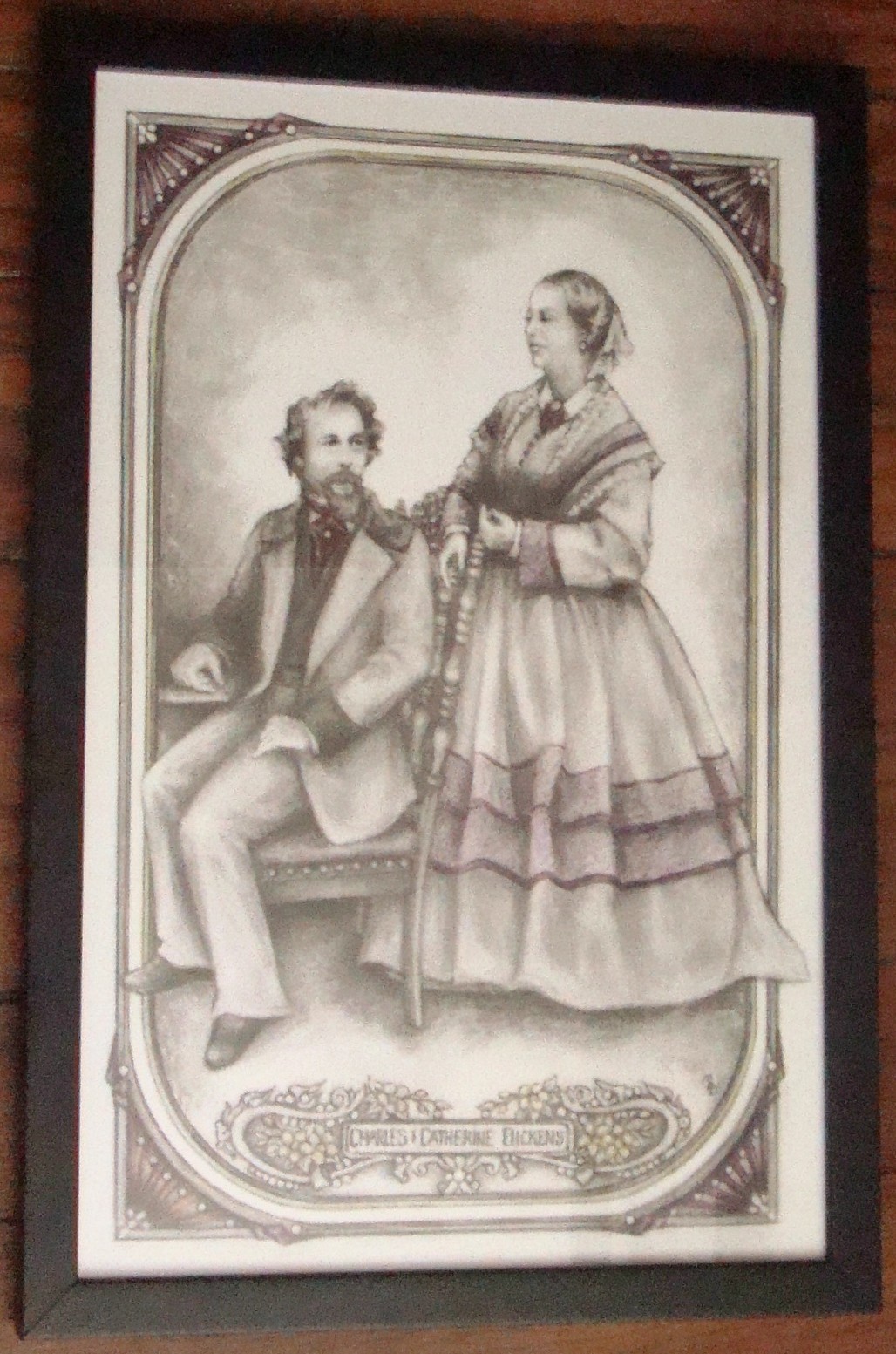
This sketch of Charles and Kate Dickens was by the late Mary Ruth Duff.

Charles and Kate would sit outside their small room on the gallery where they could watch the scenery as they drifted down the river. Charles explained the scenery in this colorful way:

For miles and miles the banks were unbroken by any sign of human life or trace of human footsteps. Nor is anything seen to move about them but the blue jay, whose colour is so bright, and yet so delicate, that it looks like a flying flower.

After three days, they reached Cincinnati where Dickens finally found some intelligent conversation. He loved the town and the free schools, as education was something very important to Charles Dickens.
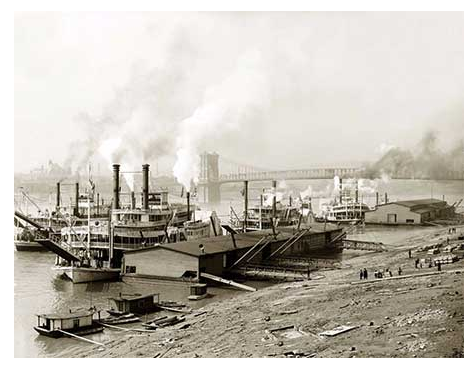
When Dickens arrived in Cincinnati, shantyboats could be seen along the riverbanks.

As they pulled into Cincinnati, they could see shantyboats along the shore. These rough built homes were used by those who wanted to move from place to place along the river with their families. Often, they were homes for people looking for work but also for thieves and law breakers. They always served as a great place to escape paying taxes.
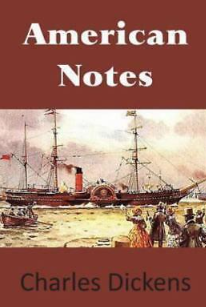
Charles Dickens wrote of his journey in American Notes.

Throughout his journey, it’s no surprise that Dickens wrote in his journal daily about what he saw and felt about America. Perhaps you would like to read his entire story in his American Notes.
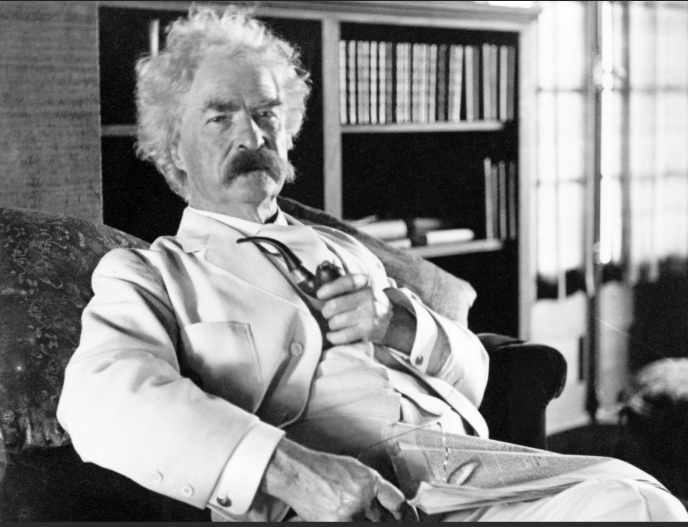
Mark Twain’s stories of his travels on the Mississippi boosted the number of riverboat passengers.

A few years later, Mark Twain published a book about his travels on the Mississippi River. When Twain wanted to get his riverboat pilot’s license, he was told he had to memorize the 1,200-mile Mississippi River in detail. The story of his adventures as a pilot and later as a passenger became a boon to the riverboat industry as more and more people wanted to experience the tales told by Mark Twain in his book , Life on the Mississippi
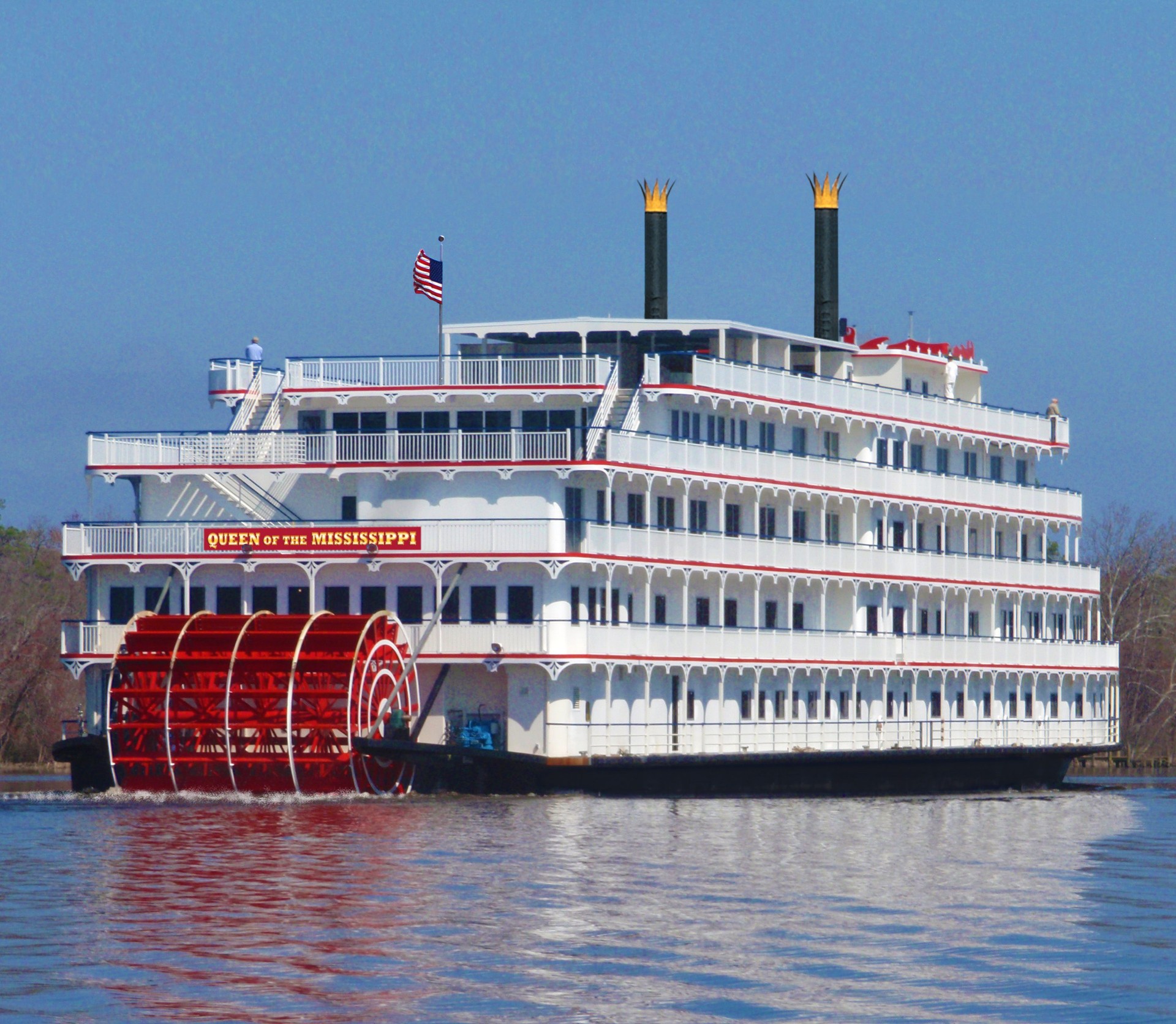
Today’s Queen of the Mississippi is a luxurious riverboat.

Today, riverboat travel on the Ohio and Mississippi has changed with the boats being more luxurious. Many people enjoy taking a short vacation on the river while being served gourmet meals, visiting historical spots along the way, and having evening entertainment.

When a boat pulls into dock at one of the towns along the way, as soon as people hear the sound of the calliope, they head to the shore to watch the paddlewheels and listen to the music.
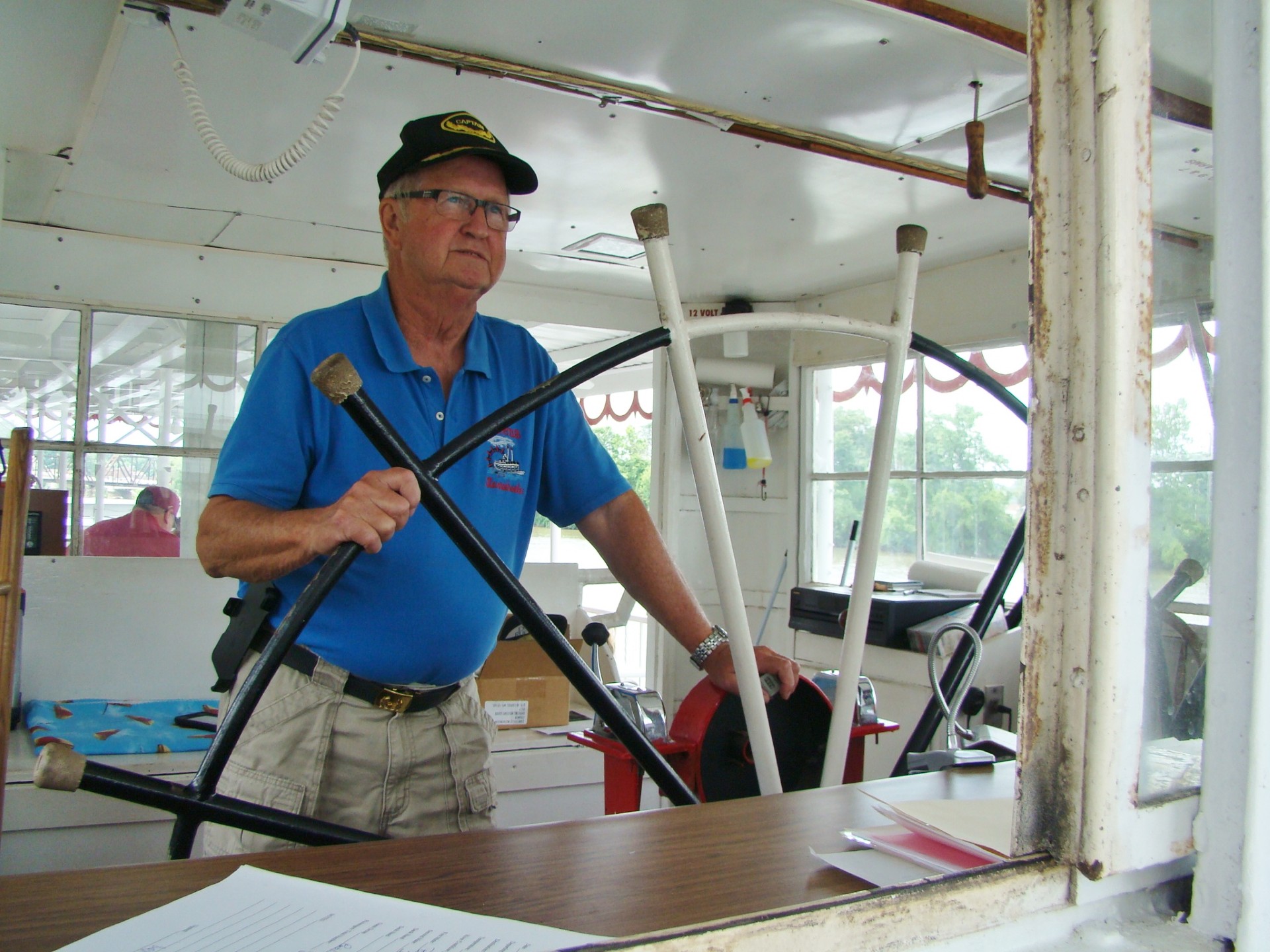
Captain Bill enjoys taking the wheel of the Lorena on the Muskingum River.

Our area is fortunate to have two small riverboats, Valley Gem and Lorena, operating for day trips in Marietta and Zanesville. These rides are always a pleasure as you catch a slight breeze as you feel the boat moving through the water and catch a little spray from the paddlewheel. It’s a cool way to spend a hot summer day.
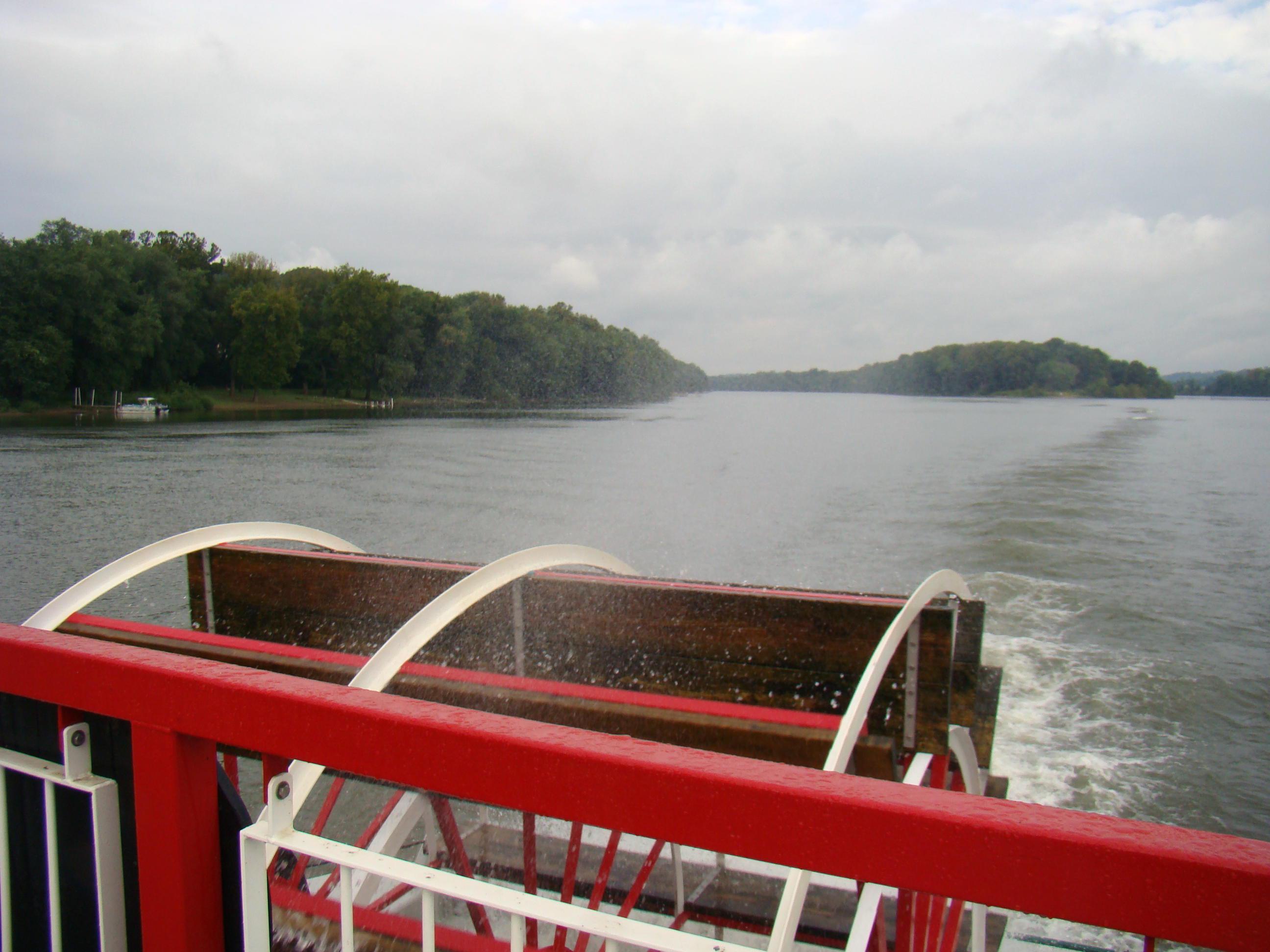
The paddlewheels of the Valley Gem move us on the Ohio River.

Perhaps you would enjoy a riverboat ride down the Ohio River. It’s on my bucket list!
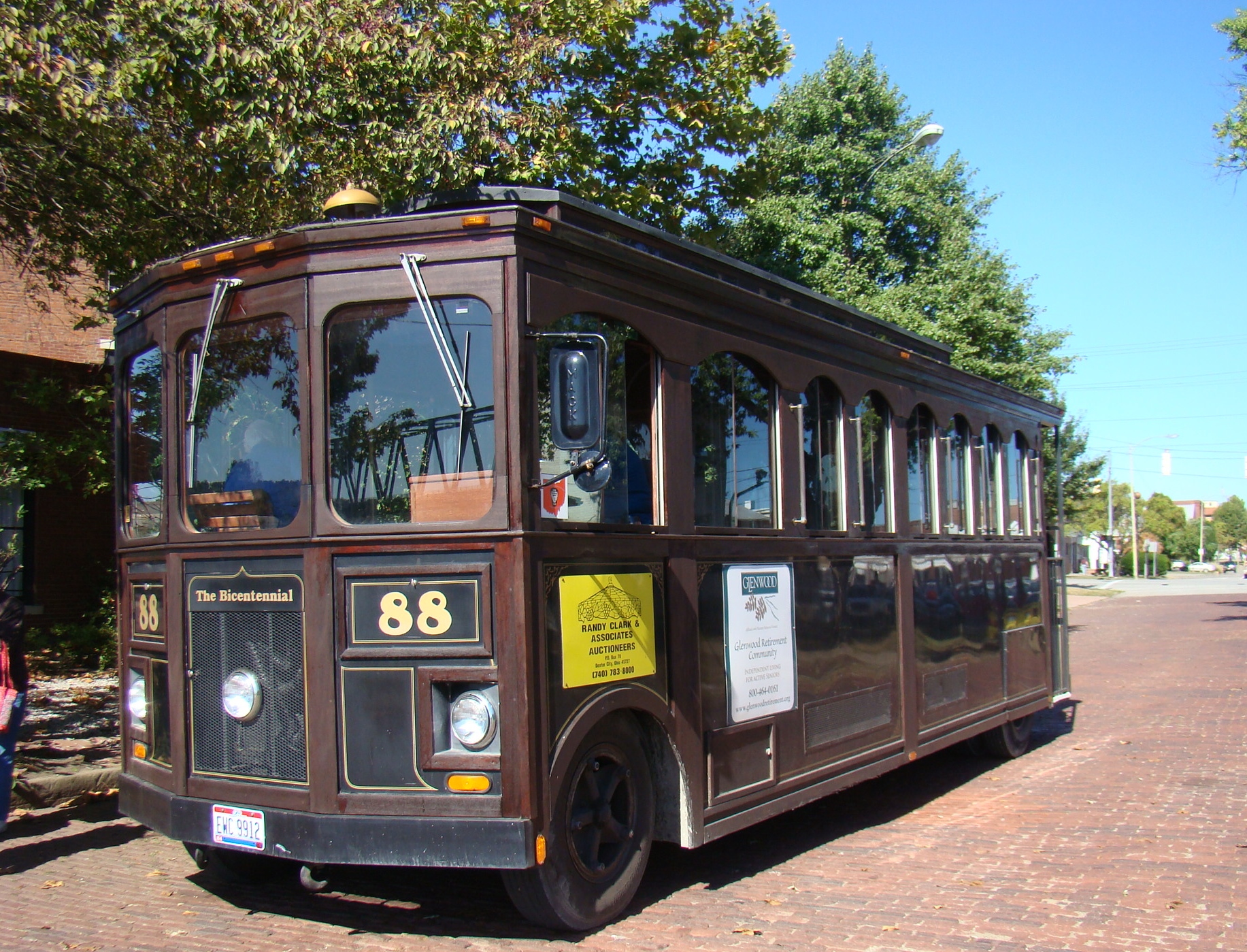
Discover Marietta with Historic Trolley Tour


Trolley on Brick Street

The Marietta Trolley explores the city on those old brick streets.

   When Harley Noland opened his restaurant in Marietta, he began thinking of ways that could bring more tourists into the area. That was when the idea of a trolley struck him. This was twenty-five years ago, and the Marietta Trolley has been making tours ever since.

Levee House

The Levee House was a popular place to dine along the river.

   His restaurant, The Levee House, was located on the Ohio River making it convenient to have a Bed & Breakfast nearby on a historic riverboat, CLAIRE E. Both of those businesses are no longer in operation but the trolley lives on.

Harley

Guide Harley Noland brought the trolley to life again about 25 years ago.

   Sometimes Harley still gives the trolley’s guided tour, but there are also several local historians that help with that side of the project now. Each of them has wonderful factual knowledge of the area and tells accurate stories of those early pioneers who settled at the confluence of the Muskingum and Ohio Rivers.

   This is the perfect way to see the highlights of the city while traveling their old brick streets and learn about its history. The city has an abundance of beautiful Victorian homes, churches, earthworks and historic spots that will have you going back for a second look. There’s history on every corner!

   This year the trolley ride begins on Front Street at the Armory, which is the new home of the Marietta/Washington County Visitors Bureau. Then begins the ninety minute narrated tour of Marietta on the trolley made of mahogany with a great speaker system for easy listening.

Westward Monument

The Start Westward monument marks the 150th anniversary in 1938 of the signing of the Northwest Treaty Ordinance.

   Coming from the East Coast, the settlers designated the area along the Muskingum River as “The Commons”. Today there stands a monument to the 150th anniversary of the signing of the Northwest Territory Ordinance. This Memorial to the Start Westward of the United States was carved in 1938 by Gutzon Borglum, the same man who carved Mount Rushmore and dedicated by President Franklin D. Roosevelt.

shanty-boat

Ohio River Museum displays a shanty boat, which floated a family from job to job.

   A stop at the Ohio River Museum focuses on the role of the rivers in the expansion of our country. It gives a chance to view the last shanty boat, which is a complete house that people lived on. There is also the oldest pilot house in the United States close by.

w-p-snyder-jr

Stop back and take a tour of the W.P. Snyder, Jr to learn more about early riverboats.

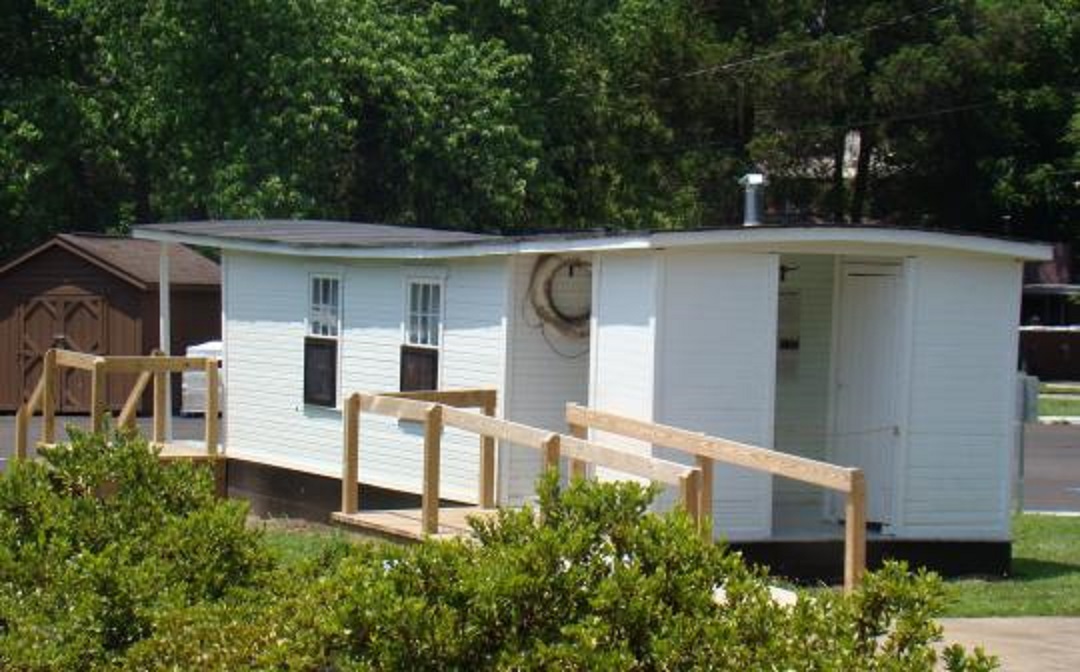
   The Adventure Galley was the first flatboat to arrive in Ohio from Pittsburgh. The W.P. Snyder, Jr.. is now docked nearby and the last coal-fired, steam-powered sternwheel towboat to have operated on the Ohio River.

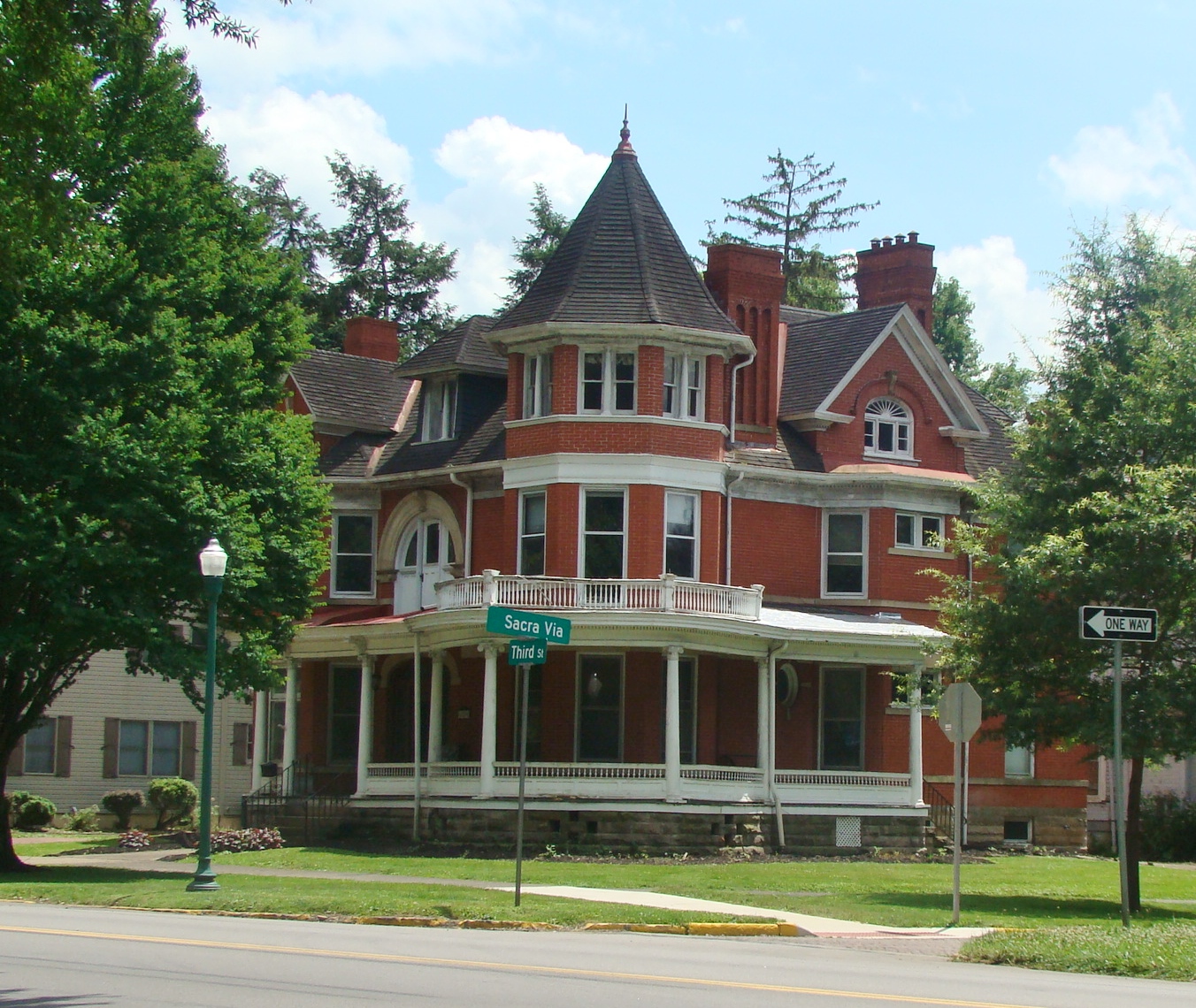
   Sacra Via, “Sacred Way”, is an ancient path from the Muskingum River to the earthworks in Marietta. The pathway was surrounded by earthen embankments about twenty-six feet high and was covered with mollusk shells from the river so that it sparkled in the moonlight.

   The mounds are the site of a Winter Solstice Sunset Watch and it is strongly believed these mounds were placed here for an astrological alignment. This site has not eroded in 2000 years due to the heavy clay used to build it up.

Conus Mound

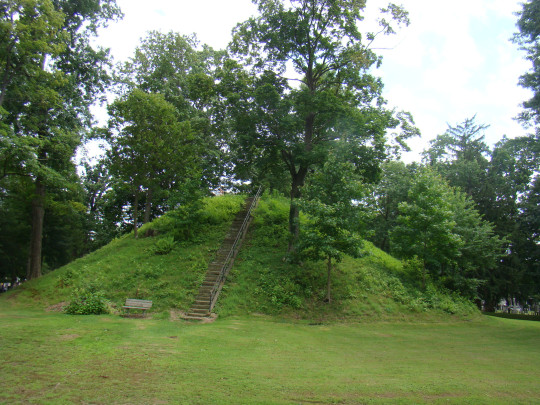
Conus in Mound Cemetery was an ancient burial ground.

   Mound Cemetery contains Conus Mound, a burial mound surrounded by an earthen wall and a dry moat. This was used for burial and ceremonial purposes. The cemetery surrounding it has more Revolutionary war officers than any other cemetery in the United States.

Oil House

This was home to an early family who made their living from the oil fields.

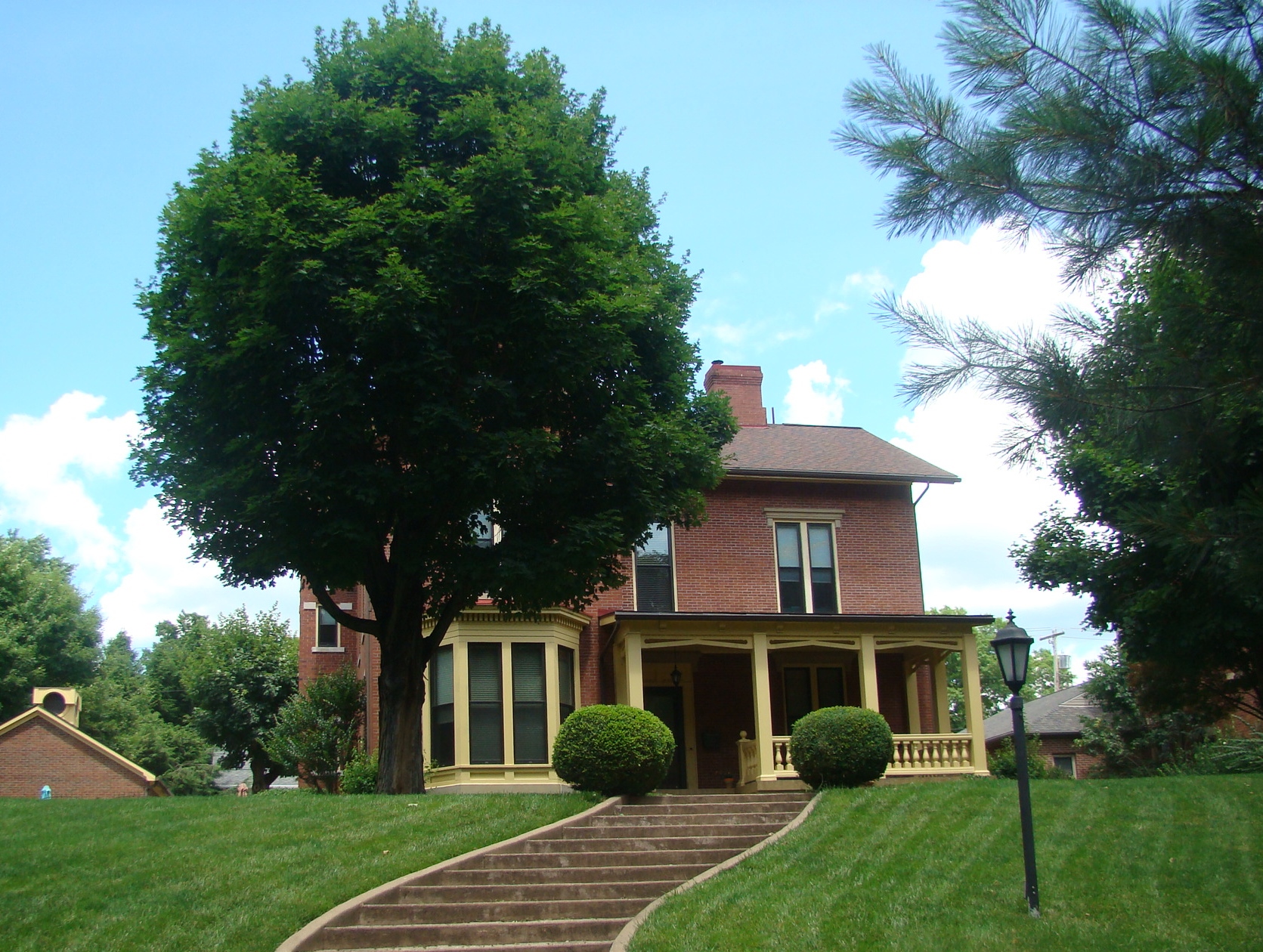
   A bubbling black substance coming out of the ground was put on joints and felt to be a healing compound. It was called Panther Water and used as medicine. When its true purpose was discovered, the crude oil in this town made many men rich. That gives a reason for many of the lovely homes in the area.

Rufus Dawes House

Rufus Dawes house was the boyhood home of U.S. V.P. Charles Dawes, who was also a Nobel Peace Prize recipient.

   An interesting sidelight of the tour are the flood markings on many of the downtown buildings showing how high the flood waters came.  1913 looked like the year of a very high flood.  Many times the flood marks were up to the second story of the old brick buildings. Many of the rich built their homes on terraces to avoid the flood waters.

Newest Mansion

The newest mansion was built by a present-day entrepreneur who makes refrigerator magnets.

   But not all of Marietta’s lovely homes are old. One pillared house was built in the last 17 years by a man who manufactures something you wouldn’t think would be a million dollar business – refrigerator magnets.

The Castle

The historic Castle was built in 1855 at a cost of $10,000.

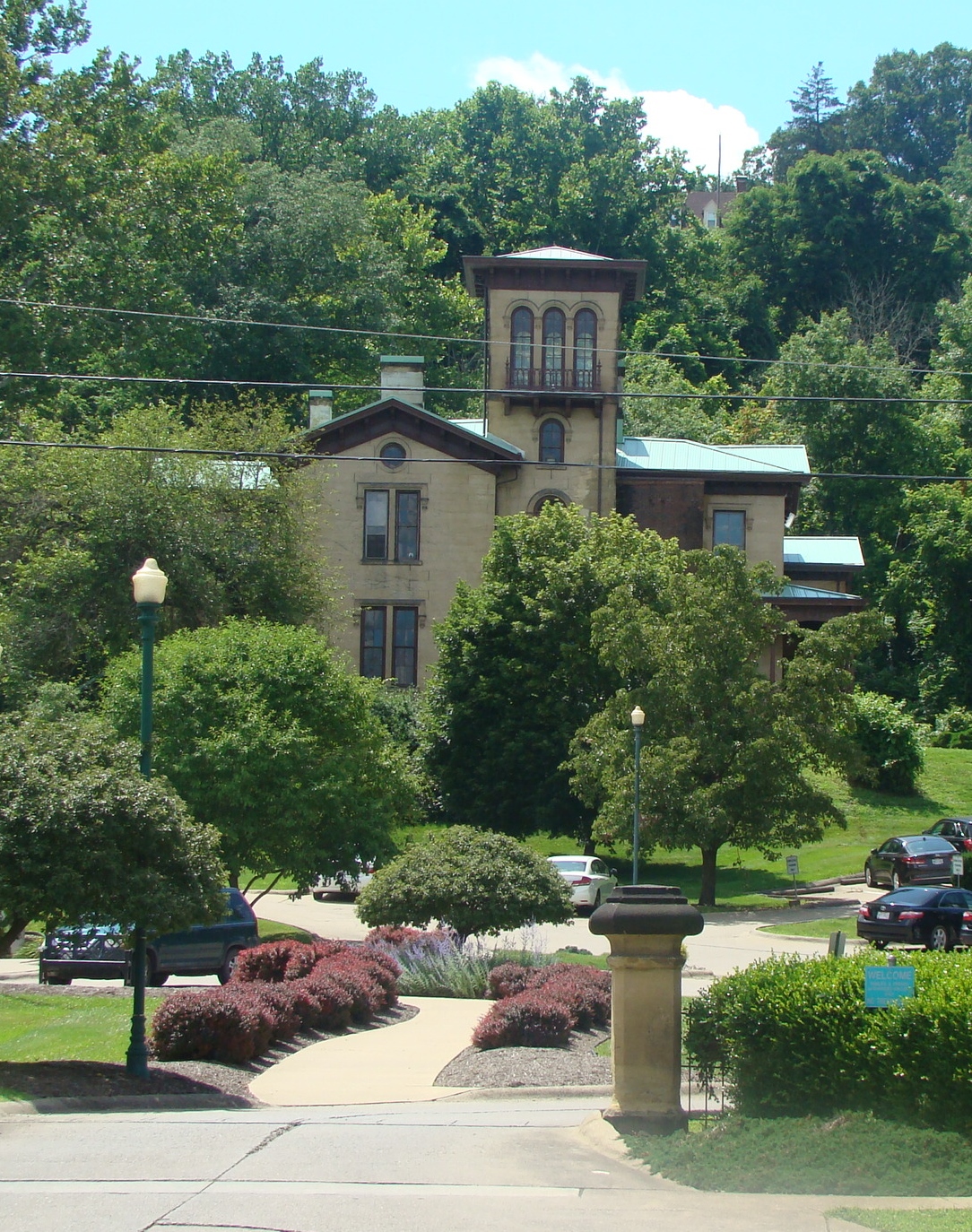
   The location of The Castle today sets on grounds that were originally used by a potter and his wife. It would have been one of the earliest pottery manufacturing locations in the Northwest Territory. Many prominent Marietta residents lived here including Ohio Senator Theodore Davis. Today it is open as a historical museum to honor the legacy of The Castle families as well as provides educational and cultural activities to learn more about its connection to Ohio history.

St Mary's

The Basilica of St. Mary of the Assumption is only one of the many historic churches on the tour.

   The Basilica of St. Mary of the Assumption was a stop off the trolley to view the spectacular interior, which takes one back to its European roots. The church was consecrated in 1909. The beautiful stained glass windows were created in Munich, Germany. There are nearly 140 images of angels throughout the church. Large angels bearing palm branches and torches can be found surrounding the sanctuary while cherubs adorn each column.

   Beauty like this would not have been normally seen at this time in history or even today for that matter. Many say it compares favorably with Basilicas in Europe.

harmar-historic-bridge

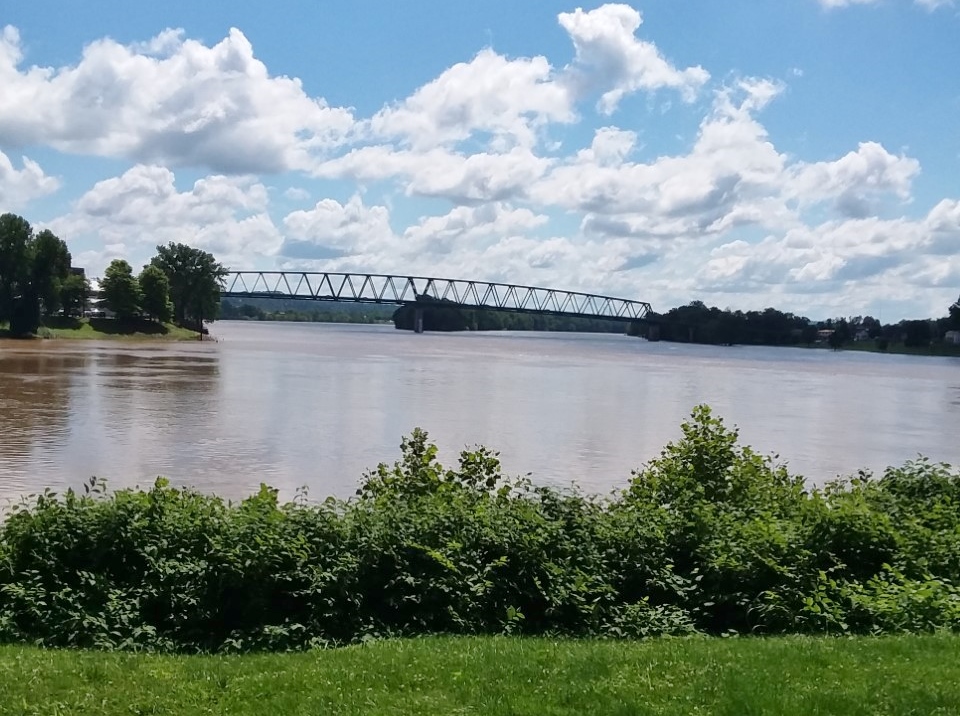
This Pedestrian bridge over the Muskingum River is a pleasant stroll from downtown Marietta.

   Fort Harmar, the first frontier fort in Ohio Country, was situated on the Muskingum River, called the easy way west. Built in 1785, it was named for General Josiah Harmar. He had been ordered by the United States Army to build a fort here to discourage illegal settlers from squatting there. It did just the opposite as made them feel protected by the fort nearby. Tall masted sailing ships were later built here.

Douglas Putnam Place

Anchorage was built on the hill in Harmar by abolitionist Douglas Putnam in 1859.

   The Douglas Putnam House sits high on the hill overlooking the river in the Harmar district. He was the leader of the abolitionist society in Marietta. As one of the wealthiest members, his support of the UGRR was not surpassed. From his house, you could see Virginia on the other side of the river, which at that time was not a real barrier as it was shallow enough to be crossed on horseback.

River Lafayette

The Lafayette is the oldest hotel in Marietta…and haunted.

   The trolley tour is one of the most popular tours in the Marietta area. Parking is free at the Marietta – Washington County CVB at 241 Front Street. Hop on the trolley Tuesday through Saturday during July and August at 10:00 to experience a glimpse of history.

   It’s a great way to discover Marietta!

Confluence Most Beautiful

Putnam said that where the Muskingum meets the Ohio River was the prettiest sight he had ever seen.

Take Exit 1 in Ohio off I-77 to Pike Street. Continue west on Pike Street until it ends at the Lafayette Hotel. Take a right and the Visitors Bureau will be at 241 Front Street. Buy your trolley ticket when you get on the trolley.