Places to go and things to see by Gypsy Bev

Archive for the ‘Festivals’ Category

Dr Balthasar – Medicine Man Miracle Medicine for Man or Beast

Dr. Balthasar, Medicine Man

Dr. Balthasar, Medicine Man

“Try a bottle of Elexir!”

Dr. Balthasar, Medicine Man, campaigned for everyone’s good health as he presented his wares from town to town. The sign he displayed proclaimed: Miracle Medicine for Man or Beast formulated from an ancient Tibetan recipe. Quite frequently he was referred to as  “a snake-oil salesman”, proclaiming this miracle tonic would cure a great variety of ailments.

The character of Dr. Thelonious Balthasar was created by Mike Follin, an education interpreter with the Ohio Historical Society. He thought this would be a good way to educate folks about life and medical treatment during the 19th century. Before each performance, Mike tells the audience a little about life on the frontier, where the visit of a traveling salesman was great entertainment. Then he transforms into frontier Dr. Balthasar, Medicine Man.

Most people appeared at his shows for two reasons: medication and entertainment. Word would spread from house to house when the doctor’s wagon was seen.This slippery snake oil salesman provided gossip and national news, as well as entertainment that cheered the crowd. As he traveled the countryside selling his famous Elexir, one of Dr. Balthasar’s favorite places to stop and tell his tales was in Michigan. There he said the folks were the most gullible and sales were high.
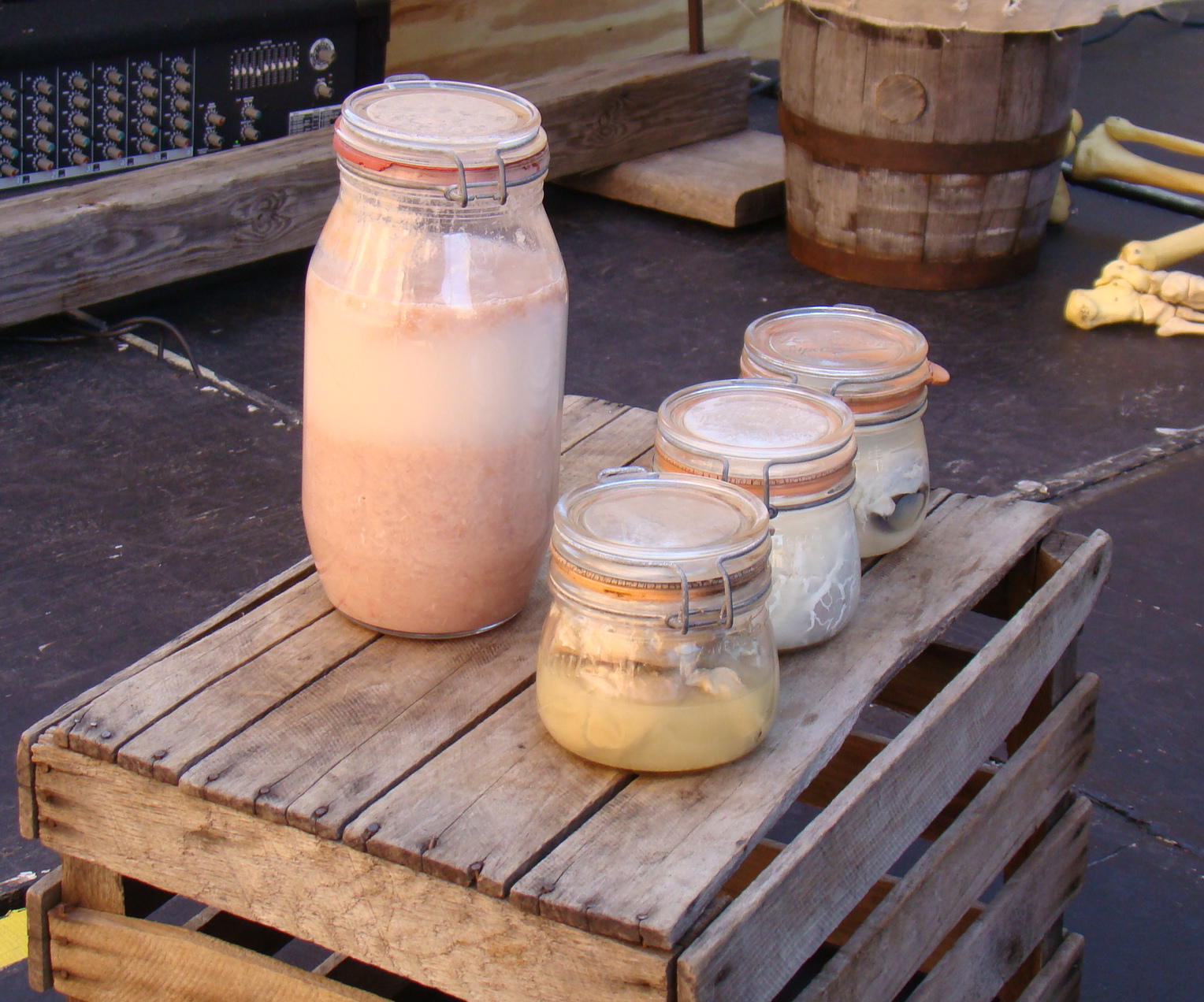
Remains of victim who exploded after refusing treatment

Remains of victim who exploded after refusing treatment

The good doctor, in his rapid fire patter, demonstrated what happened to those who refused his services. A young man who was very ill  boldly told the doctor, “I don’t need your medicine.”  Six months later that same man came back to another Medicine Show and said that perhaps he should have taken the tonic as the pain became worse and worse. Before the doctor could give him the Elexir, the man exploded. Parts of his body went everywhere and had to be scraped up so the Medicine Man could save them in jars, thus demonstrating the importance of taking his tonic. Perhaps it would keep someone else from having the same fate. You can even see an eyeball peeking through one of the jars.
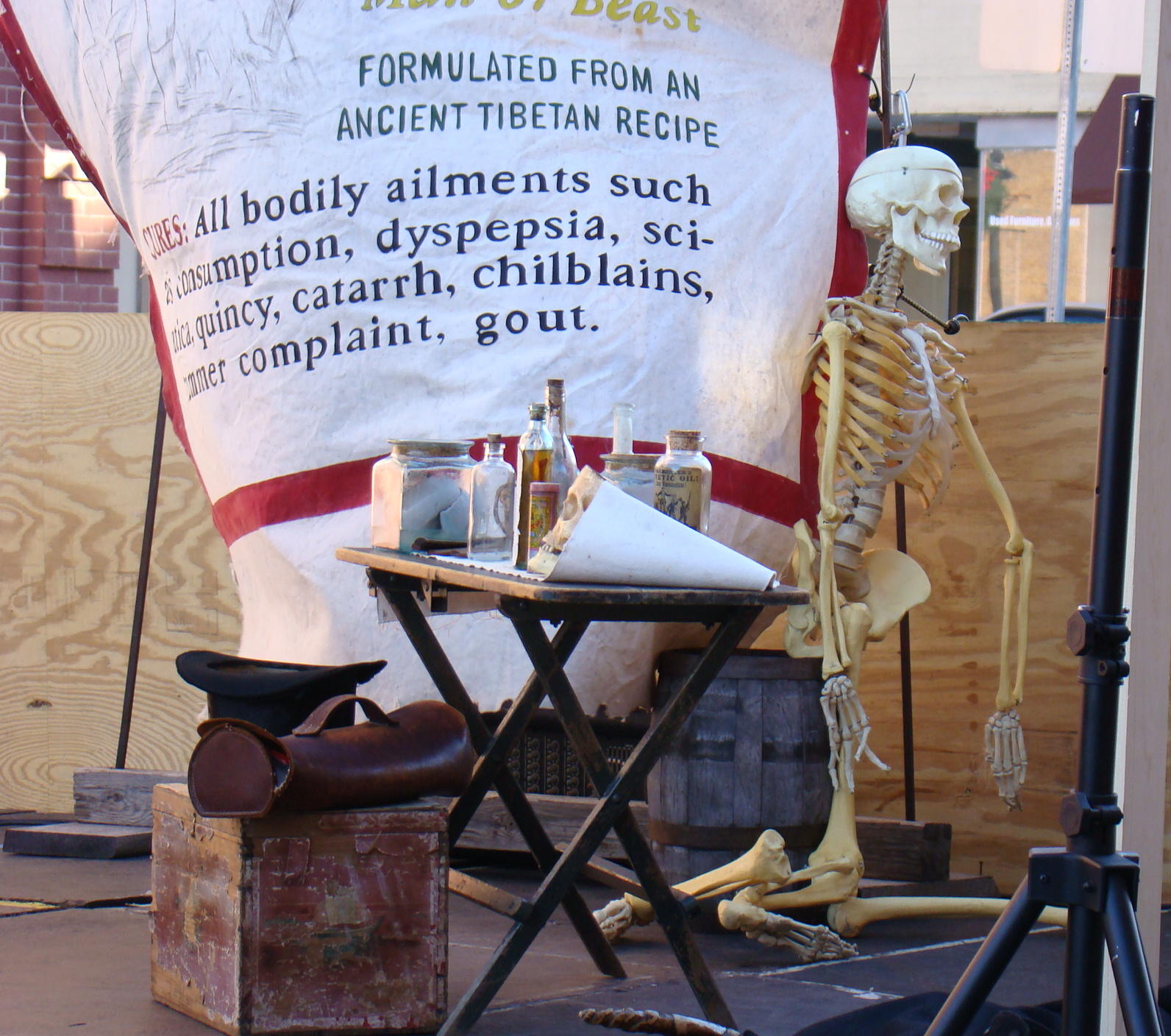
Skeleton, who did not heed the doctor's warning

Skeleton, who did not heed the doctor’s warning

This skeleton was all that was left of another of his patients who had faded away to nothing because they refused to take his medical advice. “If he had purchased this Elixir for only $2, that man might have been cured of his consumption and still be here today.”

” Some of you see men who have had their hair fall out, just like the stars fall from the sky. Why does a man’s hair on the top of his head fall out? Why doesn’t he lose his whiskers? I tell you, he outgrows his hair because he has too much knowledge.”

Dr. Balthasar’s Miracle Medicine was the answer to all health problems.  A free gift was usually promised – free advice. “I stand behind every bottle that I sell of this latest in medical potions,”  were his words of assurance. However, the Medicine Man would usually leave town before customers had a chance to demand a refund. His treatment was very effective, unlike the practicing physician, who told patients to come back in two weeks.  “When you buy my medicine,” explained Dr. Balthasar, “you will never see me again.”

When the government decided they needed to regulate the sale of medications, the Medicine Man was basically put out of business. Patenting medicine made it necessary to list all the ingredients on the bottle. Thus began the time of medicine sales to further pharmaceutical agencies; unfortunately, home remedies were no longer acceptable.

What were the contents of Dr. Balthasar’s famous Elixir? 150-200 proof alcohol, otherwise known as “white lightning”. It certainly made people feel better for a while and forget their problems.

As he closed the show, Dr. Balthasar held up a bottle of his Miracle Medicine proclaiming, “This is the answer to a long and healthy life. I’ll also give you a bit of free advice. Stay away from two types of people: politicians and traveling medicine men.”

Dr. Balthasar, Medicine Man, recently appeared in Cambridge, Ohio as part of their Dickens Victorian Village presentation. Where will he stop next?
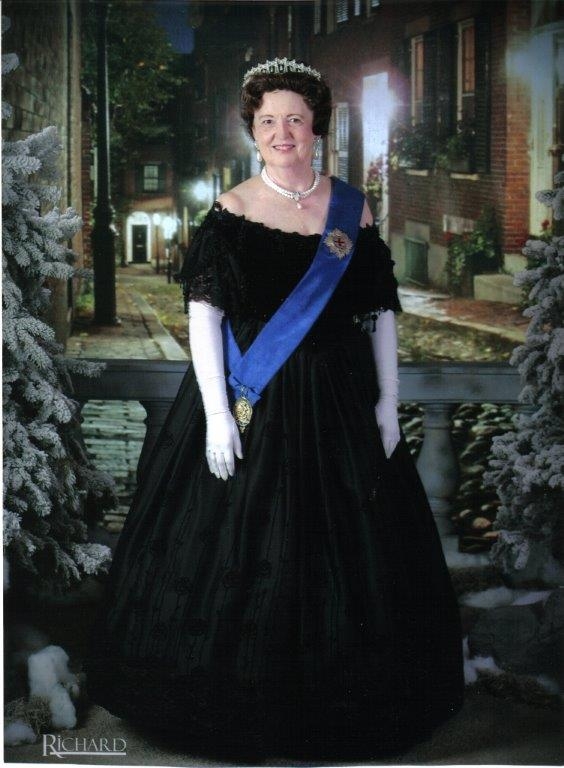
Excitement Reigned During Queen Victoria’s Recent Visit to Dickens Victorian Village

Queen Victoria visits Cambridge, Ohio.

Queen Victoria, portrayed by Anne Boyd, visits Cambridge, Ohio.

Imagine, if you will, stepping back to the time when Queen Victoria ruled Great Britain from 1837-1901. She had the longest reign of any British monarch in history – 64 years! During that time author, Charles Dickens, wrote his famous “A Christmas Carol”. Thus, Cambridge, Ohio, the home of Dickens Victorian Village, was the perfect place for their paths to cross again in modern times.

Queen Victoria, portrayed by Anne Boyd, visited Dickens Victorian Village in Cambridge for a weekend of fun. Anne Boyd enjoys playing the role of Queen in various places – from Victoria, British Columbia to Dickens on the Strand in Galveston, Texas. Her visit in Cambridge began on Friday morning when the Queen, riding in a horse-drawn carriage, visited the local schools. Children gathered along the walks, bowing and curtsying to Her Majesty.

Queen presents students dressed as her five daughters.

At Central School, Queen Victoria presents students dressed as her five daughters.

Since the royal couple had nine children – five girls and four boys – five young ladies were chosen to portray her daughters. Each of the girls looked lovely in the cape and tiara she was given to wear. They all seemed quite pleased to be part of the festivities.

Queen Victoria told the students how she and her husband, Albert, started the Christmas tree tradition throughout Great Britain. The Queen’s Christmas tree in Windsor Palace was featured in The Illustrated London News in 1848. Candles lit the tree while a bucket of sand and another of water were always placed close by…just in case of fire. They hand-made all of the ornaments: cornucopias filled with candy or nuts, and beautiful glass balls studded with jewels.

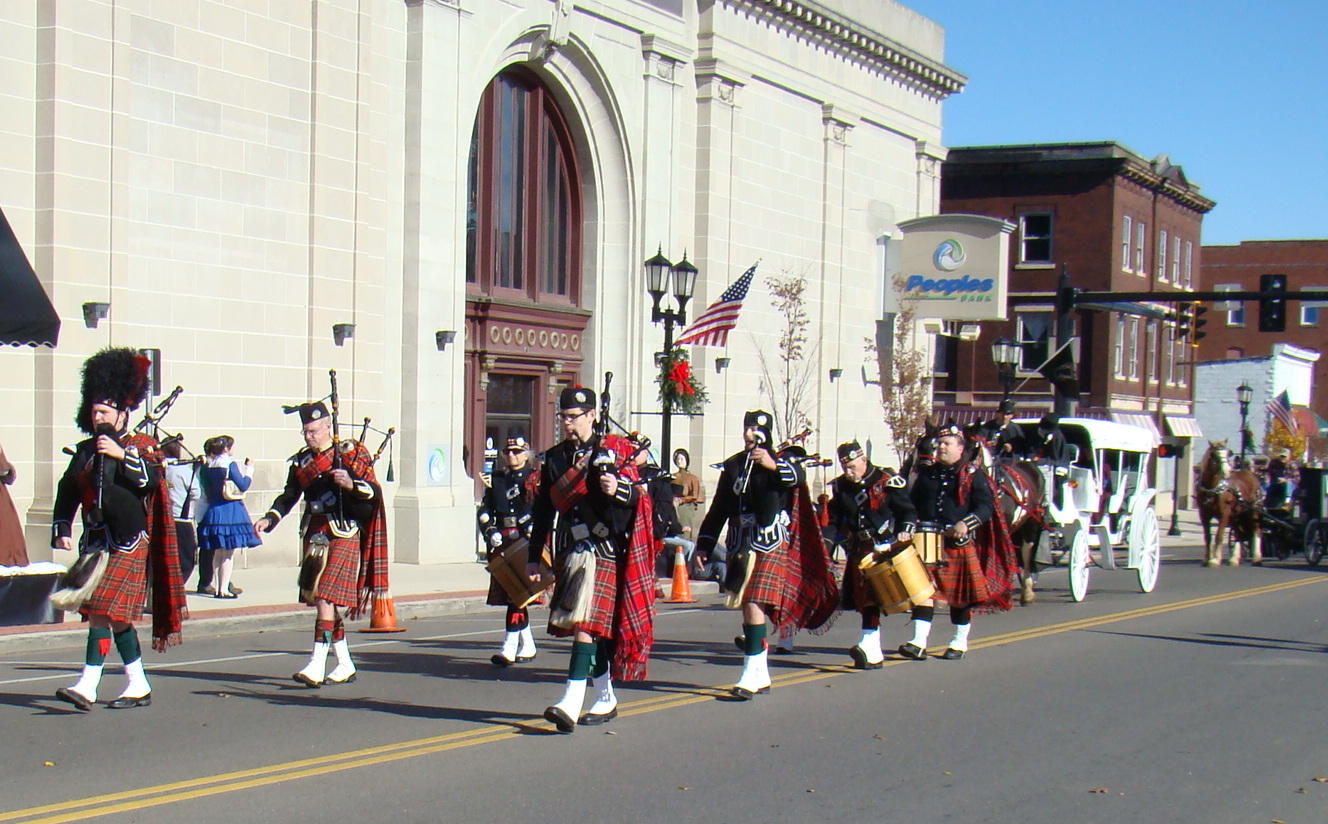
A Bagpipe Band announces the Queen.

A Bagpipe Band announces the Queen.

Cambridge Social Dance Club

Cambridge Social Dance Club presented Victorian dances in beautiful Victorian dress.

One of the highlights of the weekend was the Queen’s Parade. There were no motorized vehicles permitted so it was a quiet time, except for the wonderful bagpippers. Men on stilts and large wheeled bicycles added to the fun of the day. The Cambridge Social Dance Club performed traditional Victorian dances.

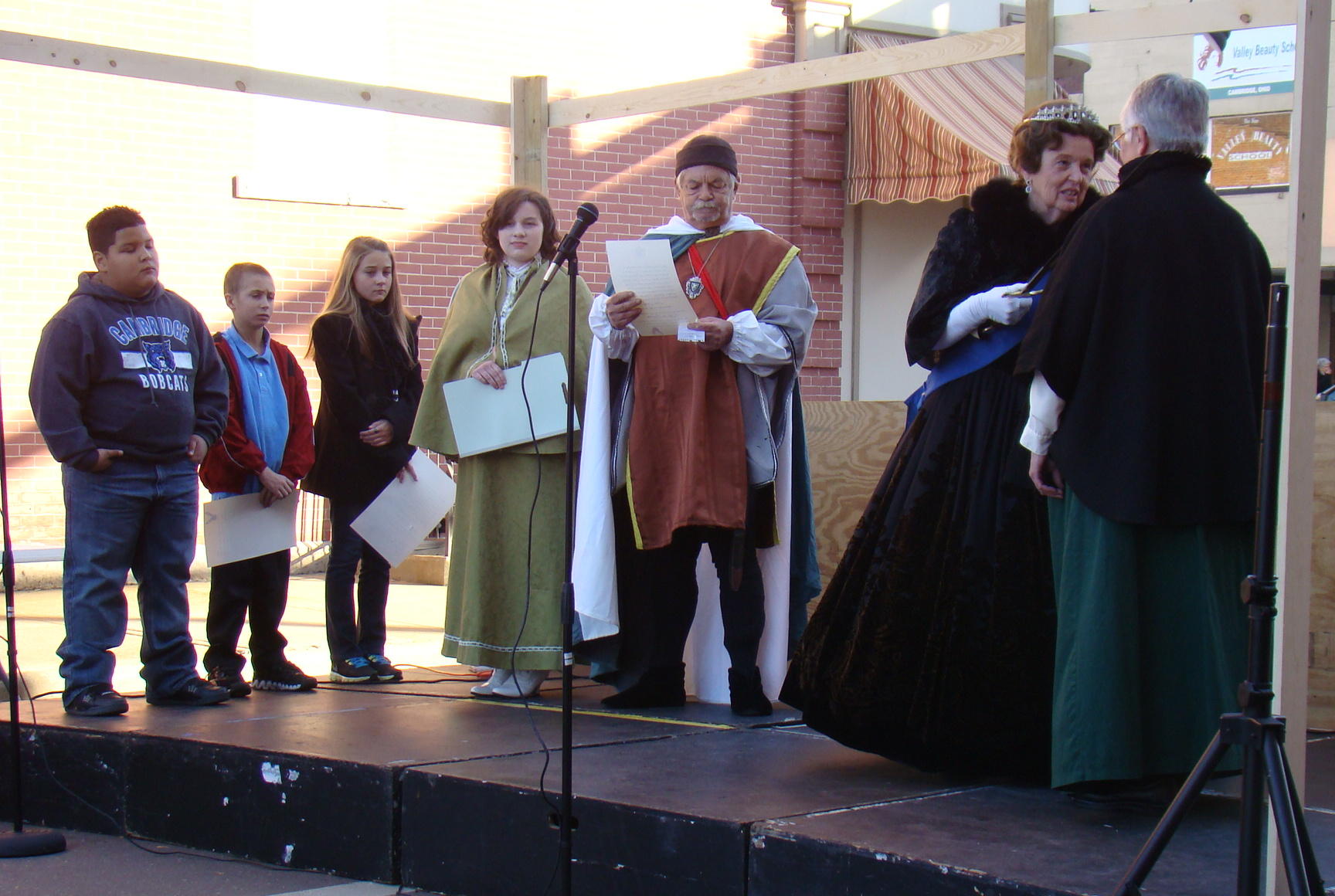
Knighting Ceremony

Knighting Ceremony with Katy Billings, lady-in-waiting; Eugene Kyle, town crier; Queen Victoria; and volunteer of the year, Lindy Thaxton, who was knighted.

A knighting ceremony by the Queen involved several local students as well as Lindy Thaxton, the Dickens volunteer-of-the-year. Eugene Kyle, dressed in the proper flowing robe of the town crier, read the proclamations with flourish. When the Queen was handed the sword for knighting, she also whispered some words of encouragement to the individual.

Her lady-in-waiting portrayed by Katy Billings was always at her side tending to her every wish. She helped the Queen by handing her capes, tiaras and swords, attended every event with the Queen, and learned patience while having lots of fun.

The Queen enjoyed the many activities of the weekend, which included: a High Tea with the Queen, GeoCaching with Dickens, Tavern Tasting, Mingle with the Monarch at the Cambridge Glass Museum, and a “Gone But Not Forgotten” Victorian Funeral Program.

Queen Victoria enjoyed the small town atmosphere and hopes to return another year. She was a very pleasant lady, who accepted every person as if they were an important part of her kingdom. When at home with her family, Anne has a reputation for making the world’s best chocolate chip cookies. Anyway you look at it, she was a very sweet lady.

The Queen’s Weekend was one of several special weekends at Dickens Victorian Village in 2013. The Village is open through out November and December in downtown Cambridge, Ohio with many activities for the entire family. Cambridge, Ohio is at the crossroads of I-70 and I-77 so can easily be located.

Fort Henry Days Celebrated Oglebay Park, West Virginia

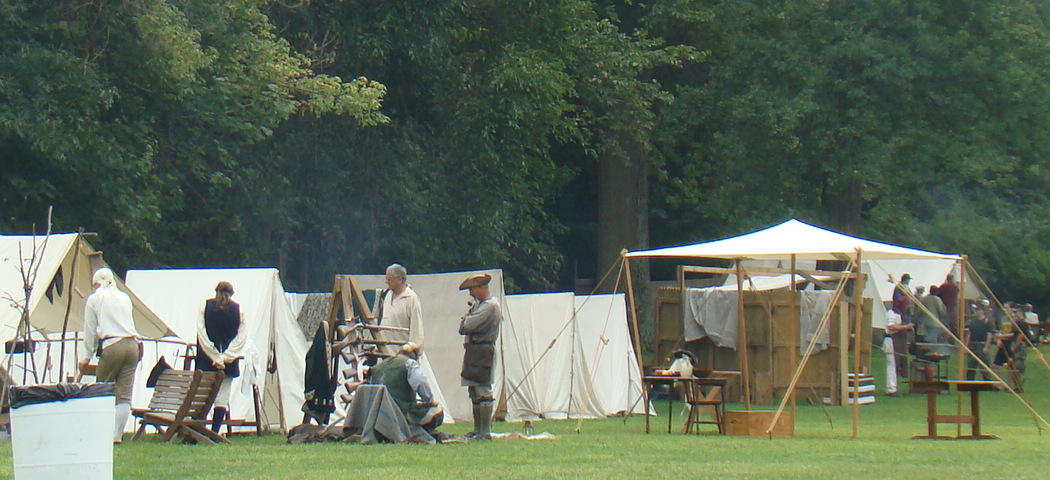
For Henry Days Encampment at Oglebay Park

Fort Henry Days Encampment at Oglebay Park

After driving the scenic, winding, mountain roads of Oglebay Park, the scene changed to one resembling a Revolutionary War Camp. We had arrived at Fort Henry Days celebrating life as it was on the frontier in the late 1700’s. Fort Henry was built as protection from the Indians during Dunmore’s War and also used during the Revolutionary War. Originally it was called Fort Fincastle in honor of Viscount Fincastle, Lord Dunmore, Royal Governor of Virginia. Later the name was changed to Fort Henry, to honor Patrick Henry, the Revolutionary Governor of Virginia.

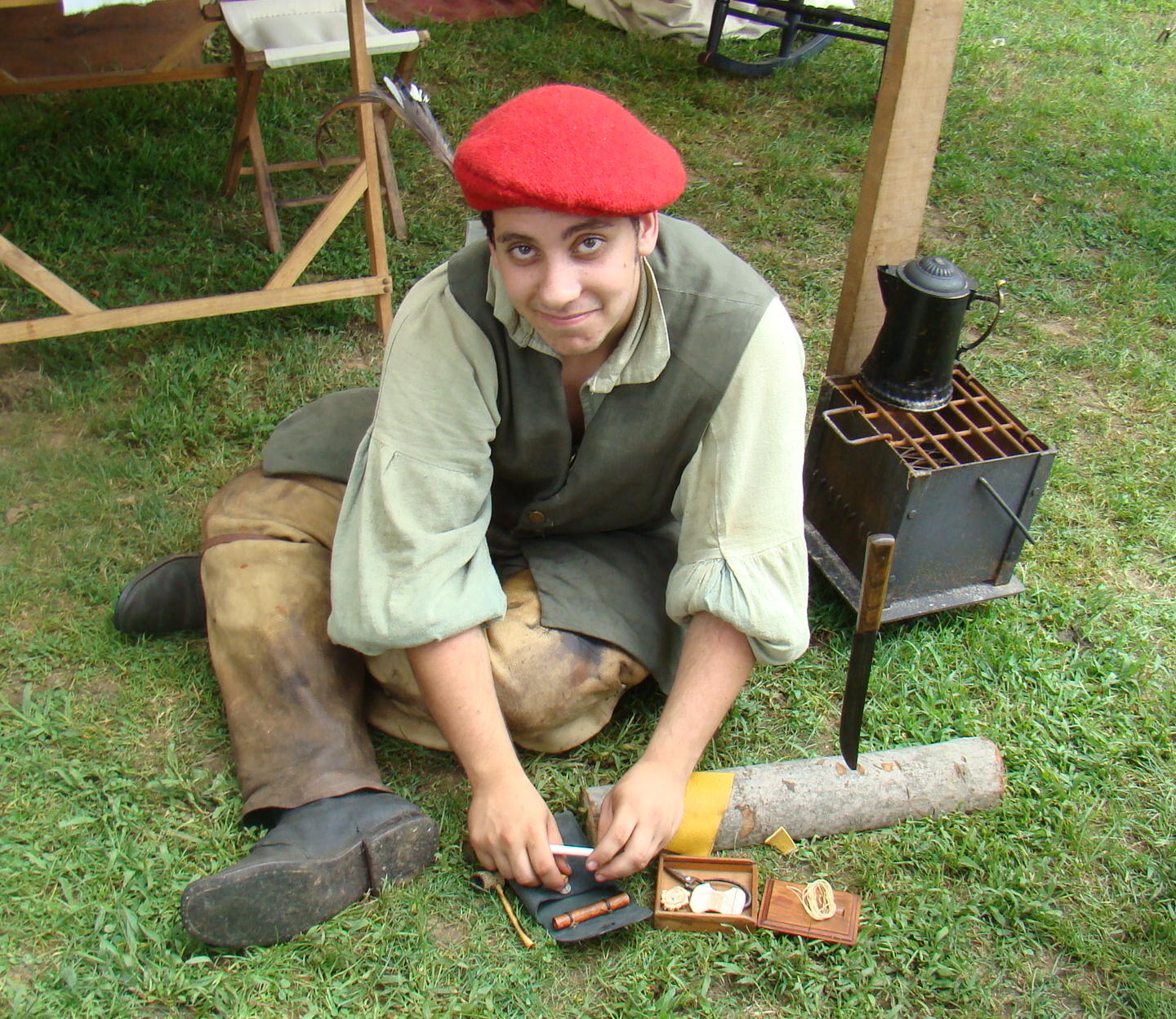
Young settler makes a stem for his pipe.

Young settler makes a stem for his pipe.

A stroll through the grounds indicated there would be a variety of ideas to explore with people who were very knowledgeable regarding the war as well as life during that time. Everyone was camped in tents using only supplies and equpment that would have been available during the late 1700’s.  One family told of seeing deer grazing nearby and even having a red fox and her cub come into their tent.

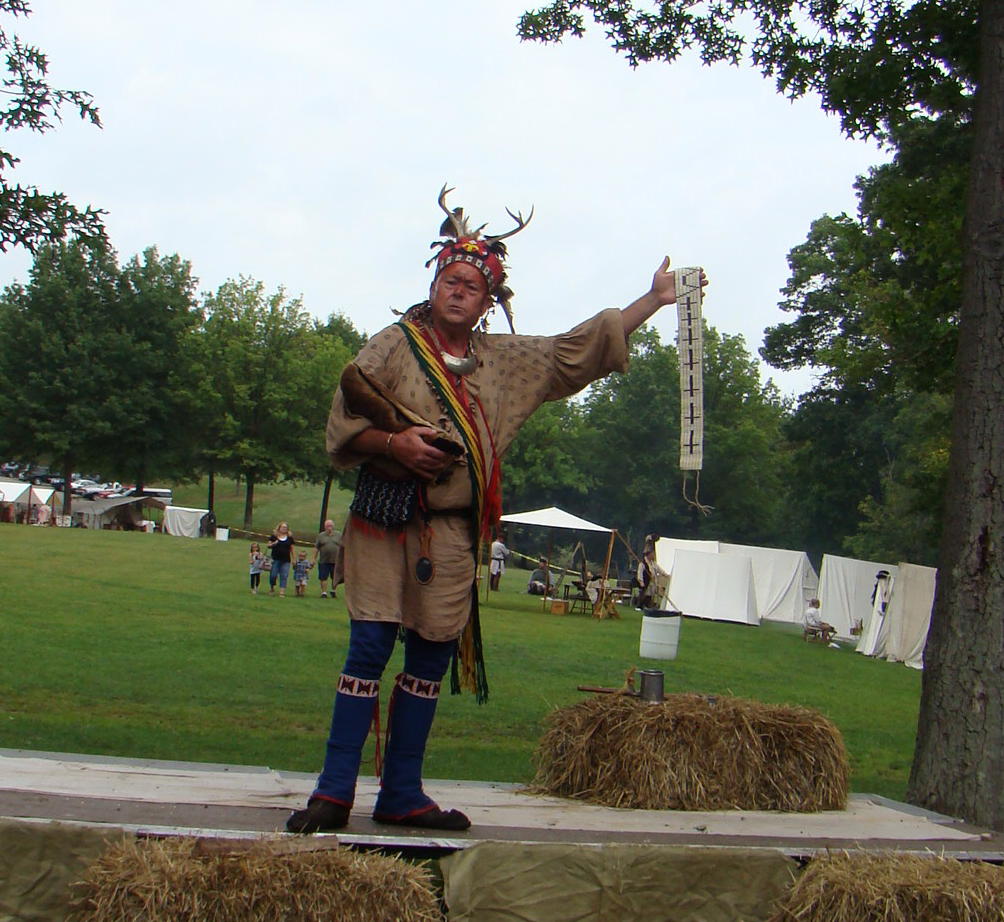
Near the center of the encampment, benches had been placed to face a platform made of bales of straw covered with sheets of plywood. This was the spot for today’s presentations. Dan Cutler, dressed in Indian garb with a headdress made of antlers, portrayed Chief John Logan. This mild-mannered chief extended a wampum belt of friendship to the white man. His kindness shone through when he made a pair of beaded deerskin moccasins for a barefoot, little girl of the settlers.

Chief Logan displays a Christian peace offering.

Chief Logan displays a Christian peace offering.

Chief Logan told of the Indians’ struggles with the settlers at Yellow Creek after they had killed his brother and other female relatives.  Chief Logan, who by Indian custom had the right to retaliate for their murders, then raised a hatchet that had long been buried. His hatchet handle contained fourscore notches – one for each scalp taken in their subsequent attacks on settlers.

Later in the afternoon, Dan Cutler also portrayed Chief Cornstalk and told tales of the chief’s adventures at Fort Randolph on the Scioto River, where they floated quietly on rafts of driftwood to surprise the settlers. Having the standing of warrior was very important, but some felt it important for the young men to get an education. When the educated returned to their tribe, they were considered “good for nothing” …no longer warriors.

Chief Cornstalk told of the Ohio Company promising the land to the Indians, but then supporting the British and pushing the Indians off their promised land. He vividly remembered the first surveyor of the Ohio Company, George Washington, who didn’t even know how to read and write…according to Chief Cornstalk..

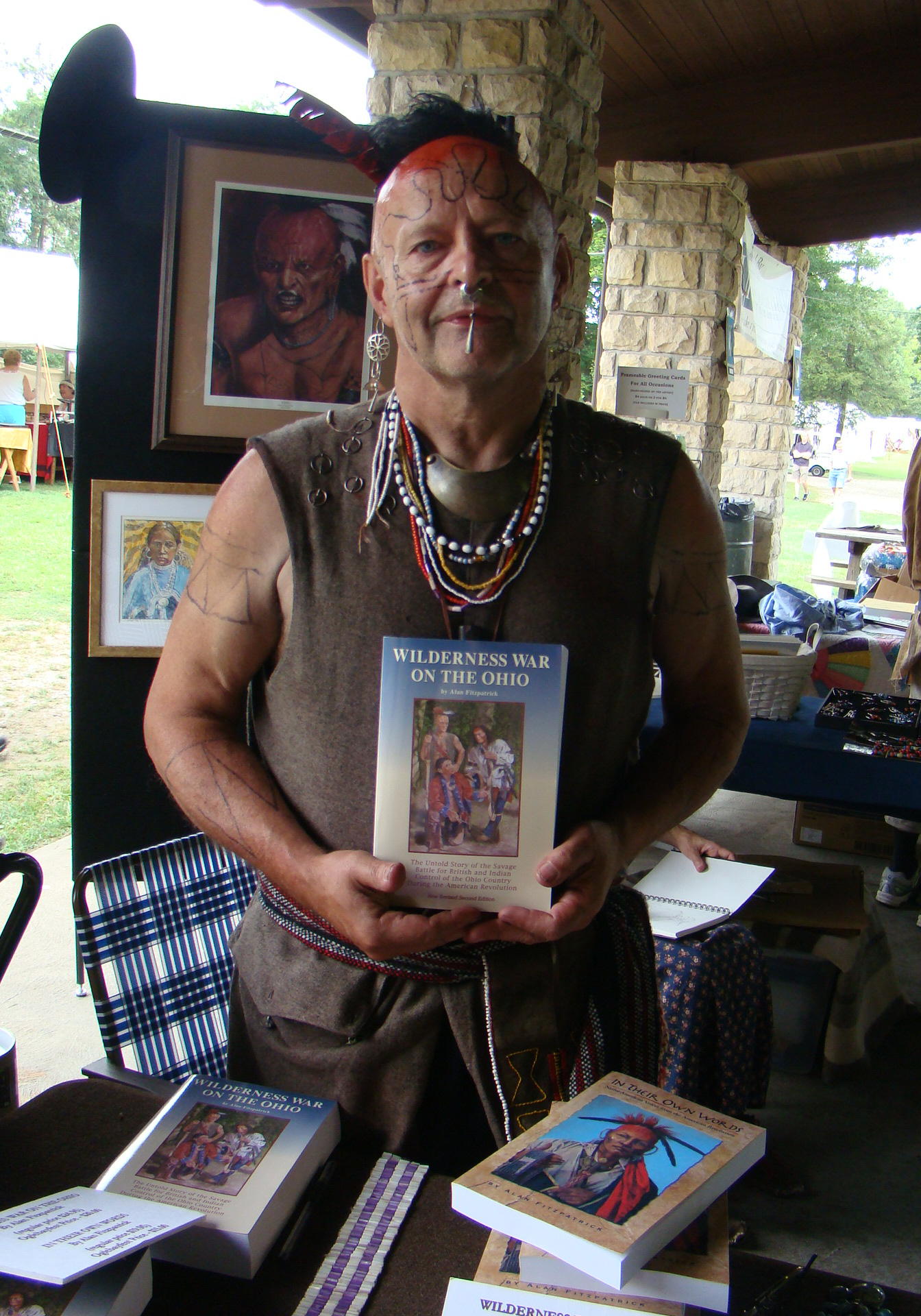
Alan Fitzpatrick, author of Indian legends

Alan Fitzpatrick, author of Indian legends

The grounds at Oglebay Park were filled with battle re-enactors, people depicting life of the times, and vendors selling wares. Under the pavilion were located Sons of the American Revolution, Daughters of the American Revolution, Wheeling Area Historical Society, and authors selling their books. One of these authors was Alan Fitzpatrick, author of Wilderness War on the Ohio and In Their Own Words. His tales of life at that time are based on written records he has found. Anyone in that era who could read and write was very highly sought after with quill, ink, and tablet. There was also beautiful handmade Native American jewelry for sale…my Fort Henry Days’ remembrance – a thunderbird necklace!

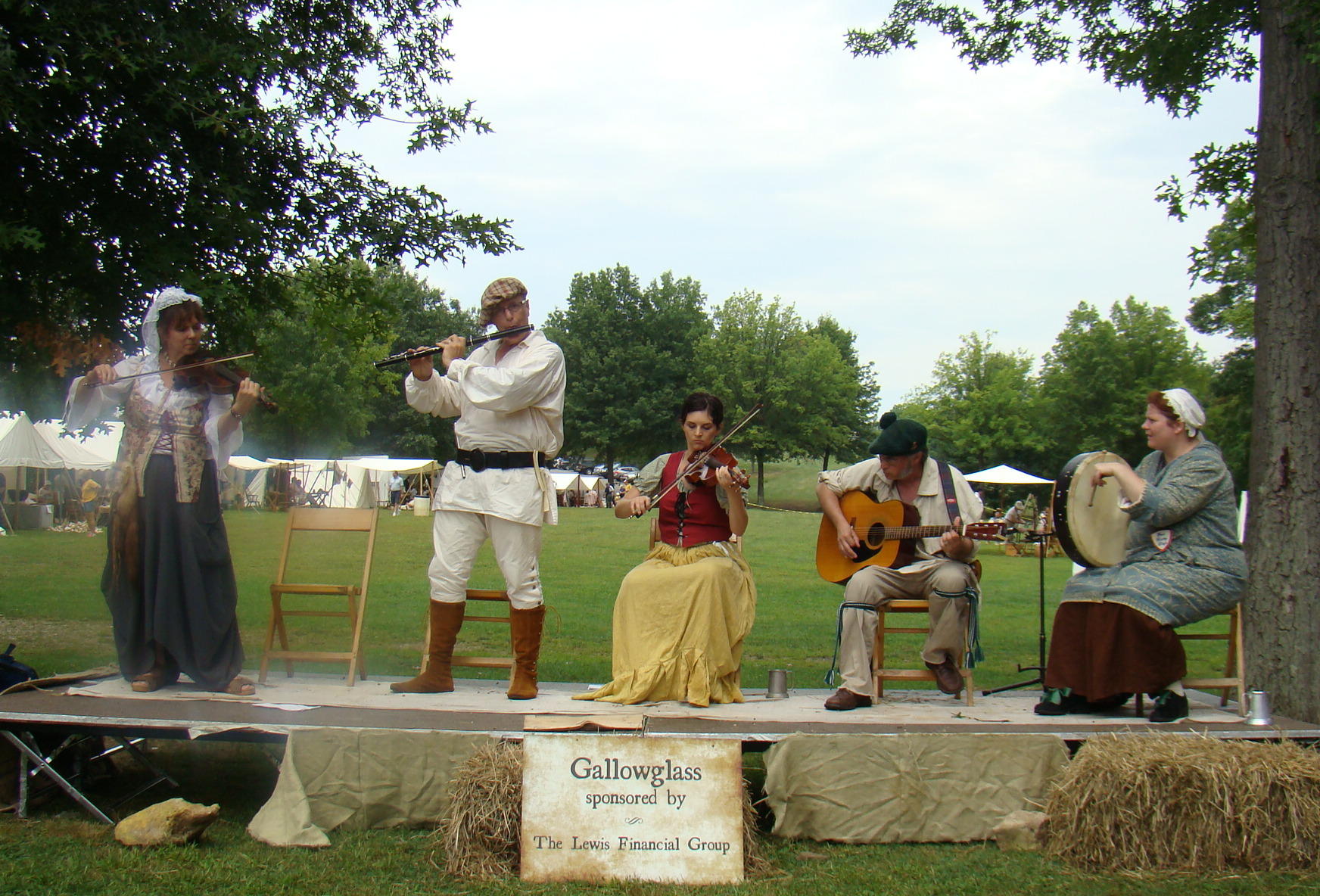
Gallowglass musical entertainment

Gallowglass provides musical entertainment.

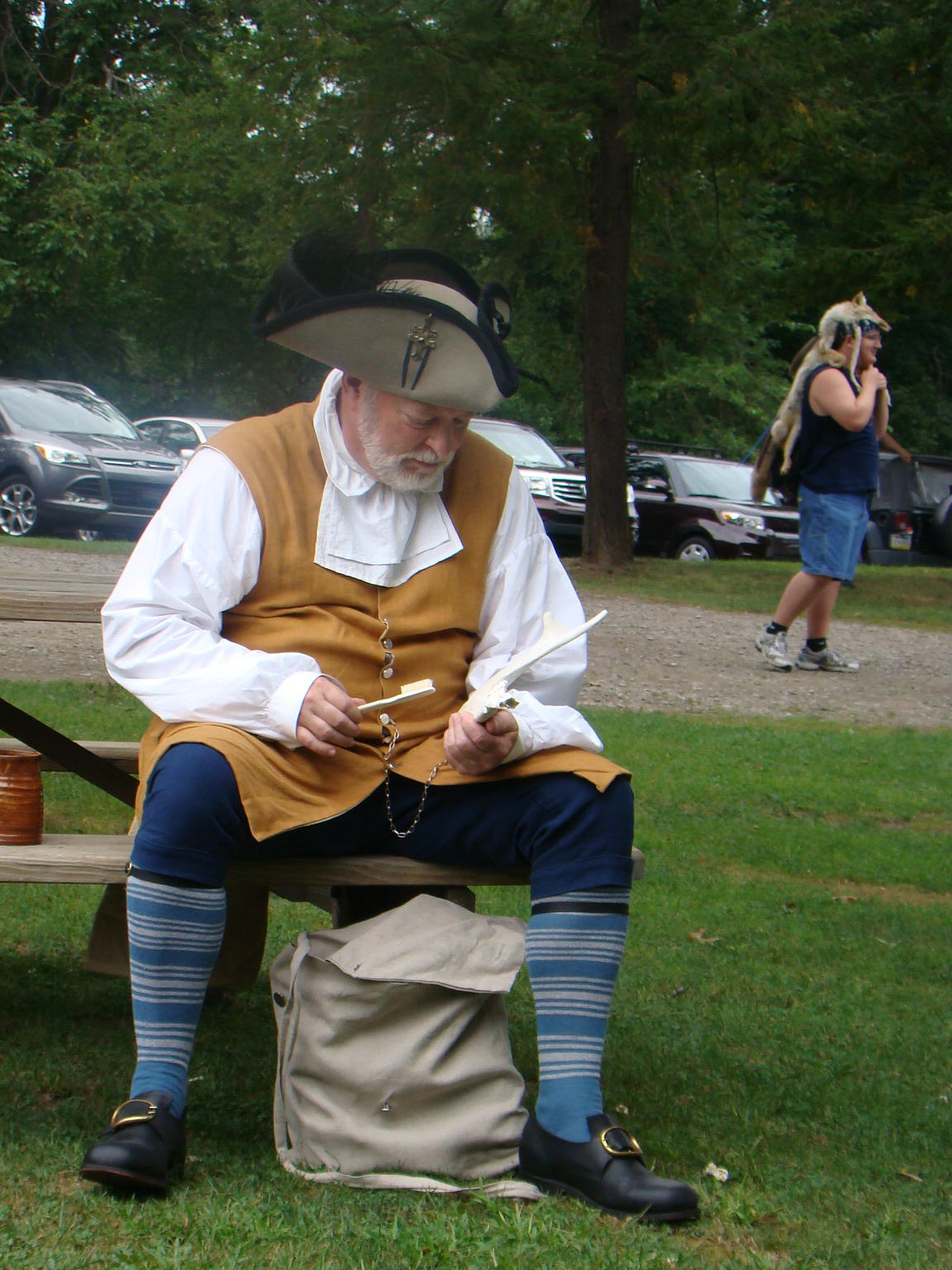
Member of the Wayward Companions plays a jawbone.

Member of the Wayward Companions plays a jawbon

Musical entertainment was provided by Gallowglass, a lively group playing and singing period music as well as old Irish tunes. There seemed to be a lot of drinking ballads in the mix.This group has been performing at Fort Henry Days for several years and their performance contained not only songs but humorous stories as well. Included in their performance were: Welcome Home, Nancy Whiskey, and several reels. A member of the Wayward Companions joined in on many of their songs by playing a bovine jawbone with a period bone toothbrush that he had brought from Gettysburg.

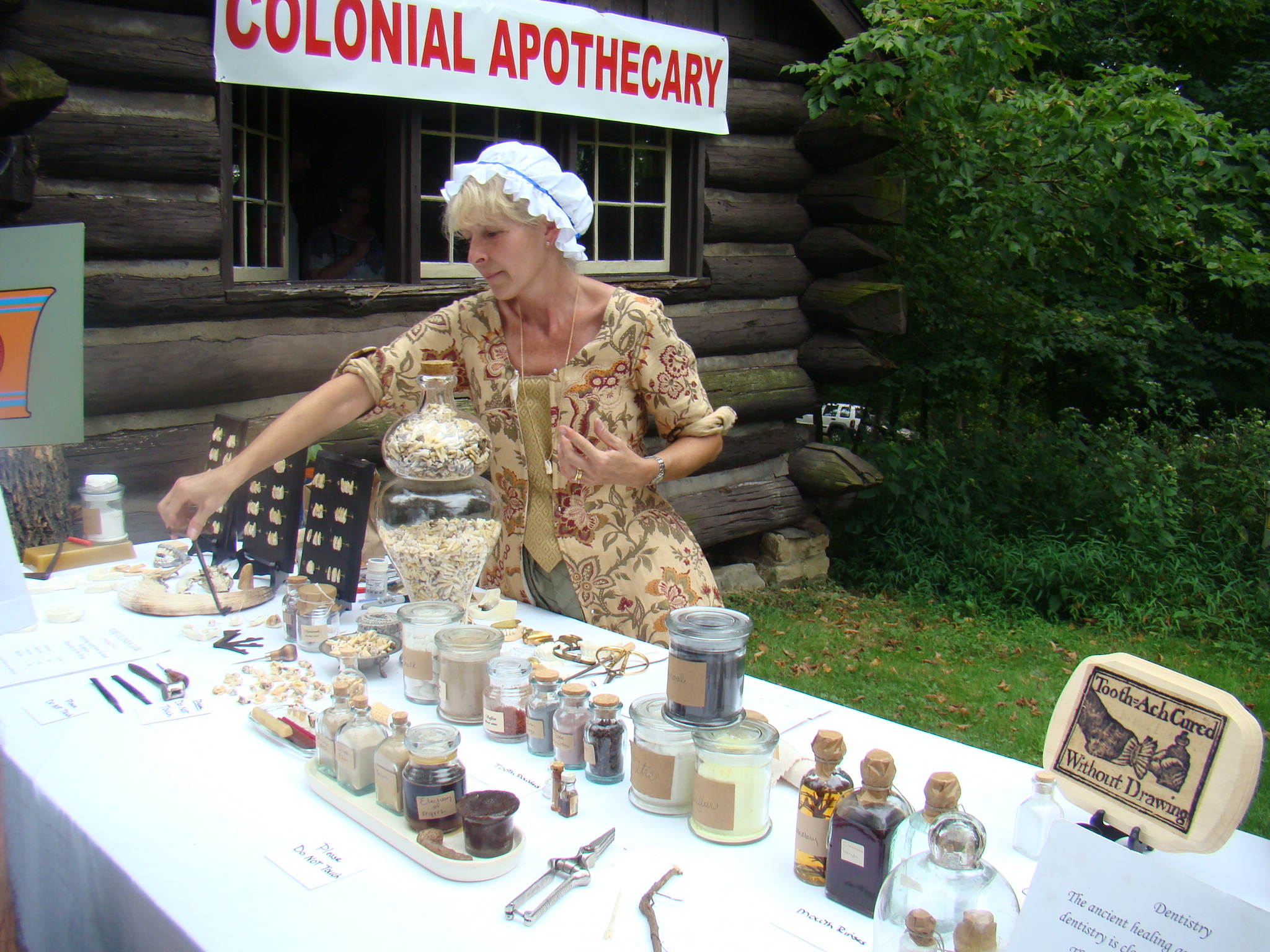
Dr. Jessica Fisher, dentist

Dr. Jessica Fisher, dentist

An interesting frontier dentist informed those gathered at her office about dental practices of that time.  Arsenic was one favorite remedy for a toothache. Their favorite mouthwash was a combination of mint or rosemary in orange water or rose water mixed with alcohol, of course. When someone died or was killed, their teeth were removed to replace those lost by the living. ..an early concept of “tooth implants”?

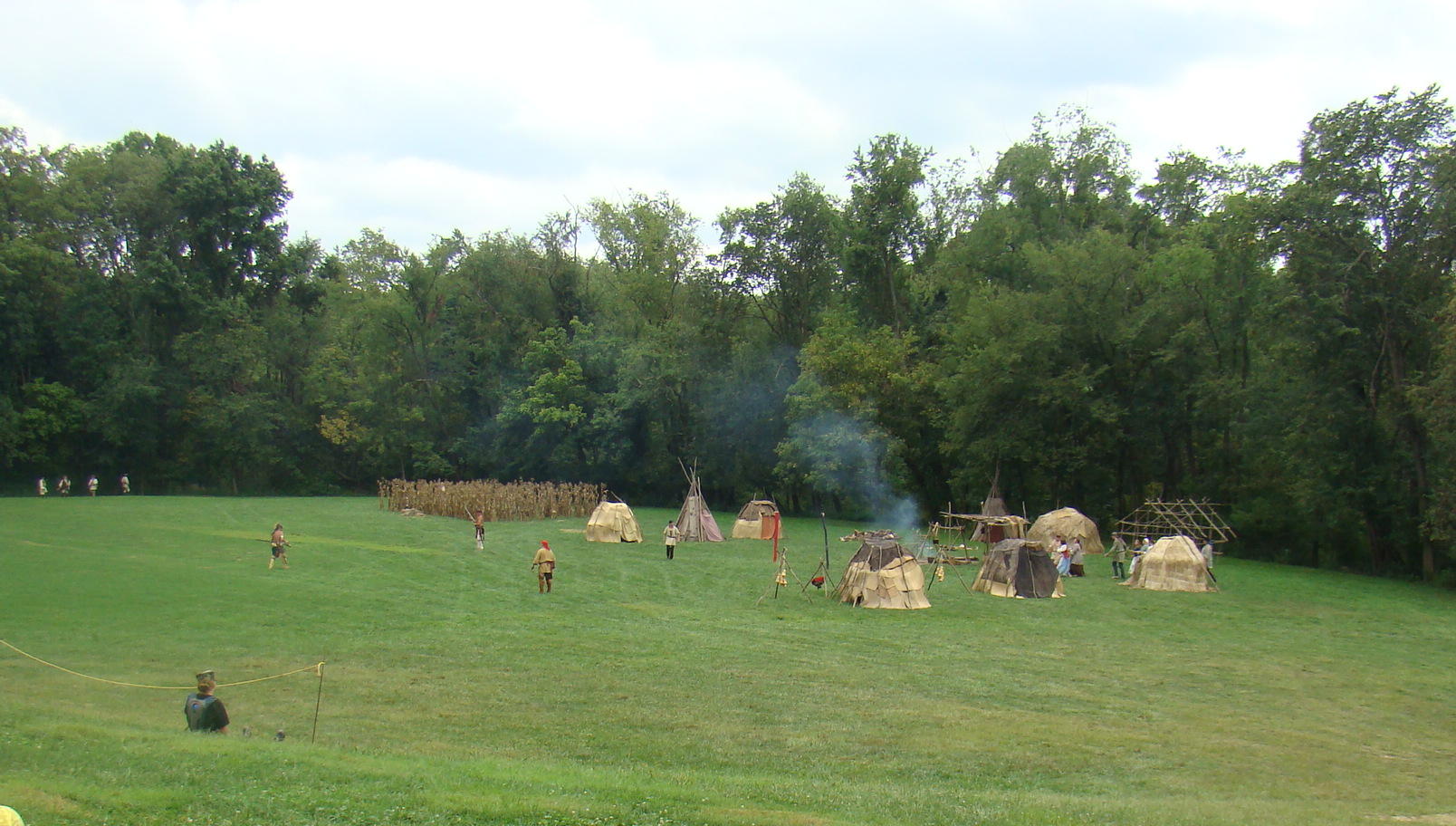
Indian Village for Reenactment

Indian Village for Reenactment

The culmination of the day was a Battle Re-enactment, unlike any I had ever seen before. This recreation told a true story, which was narrated over a loudspeaker. This event occurred back in 1782 at Sandusky, Ohio where the frontiersmen were attacking an Indian village. The natives were doing their normal chores with children playing in the cornfields. An Indian warning call was the sign for everyone to run for cover. They even set the cornfield on fire! Many were captured but some fled to freedom.

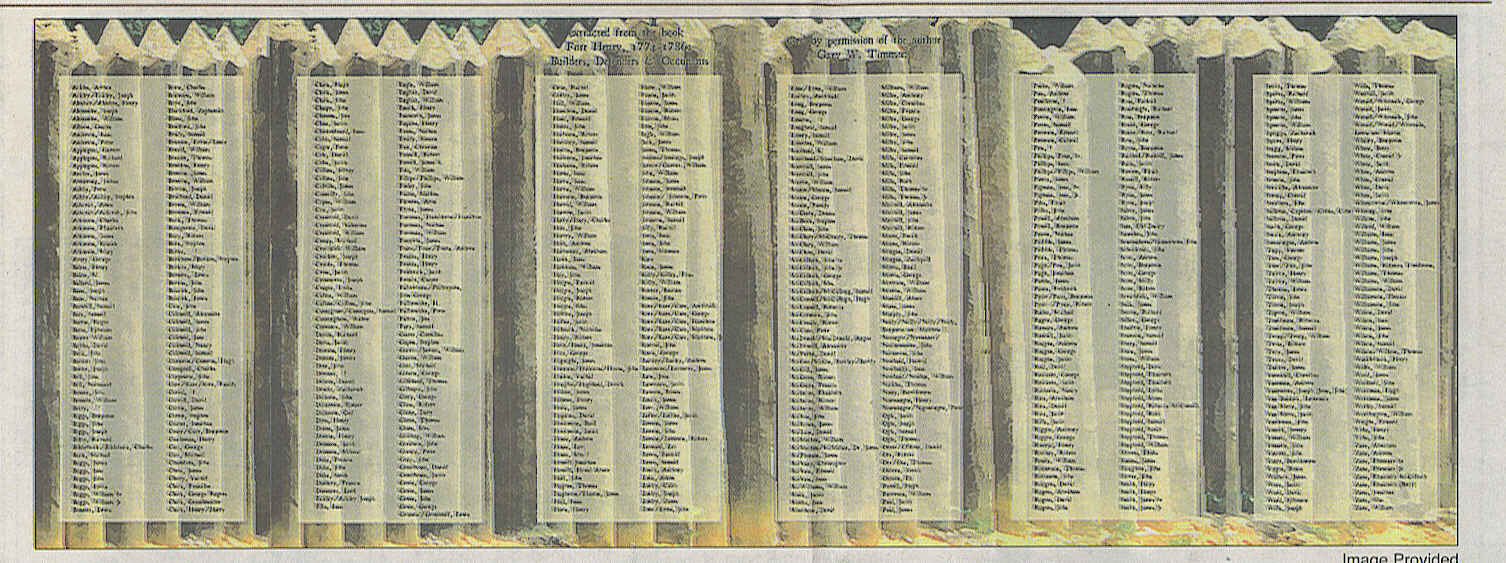
Fort Henry Memorial Wall

Fort Henry Memorial Wall

Not much is left of the old Fort Henry, but locals are trying to keep alive the memories. There is a granite Fort Henry marker in the parking lot on the right hand side just past Capitol Theater. A list has been started, but not complete by any means, of those who were in Wheeling at the time of the American Revolution. All these names have been placed on a wall, which is being displayed throughout the Ohio Valley. Should your family name be there?

Fort Henry Days are held the first weekend of September annually. Celebration is held in Oglebay Park at Wheeling, WV. Once you get to the park, signs will direct you to the activities. If you know of any names that need to be added to the wall or wish to display the Fort Henry Wall, contact the Fort Henry Living History board by email at don@feenerty.com.

John Morgan’s Raid in Ohio 150th Anniversary Celebration

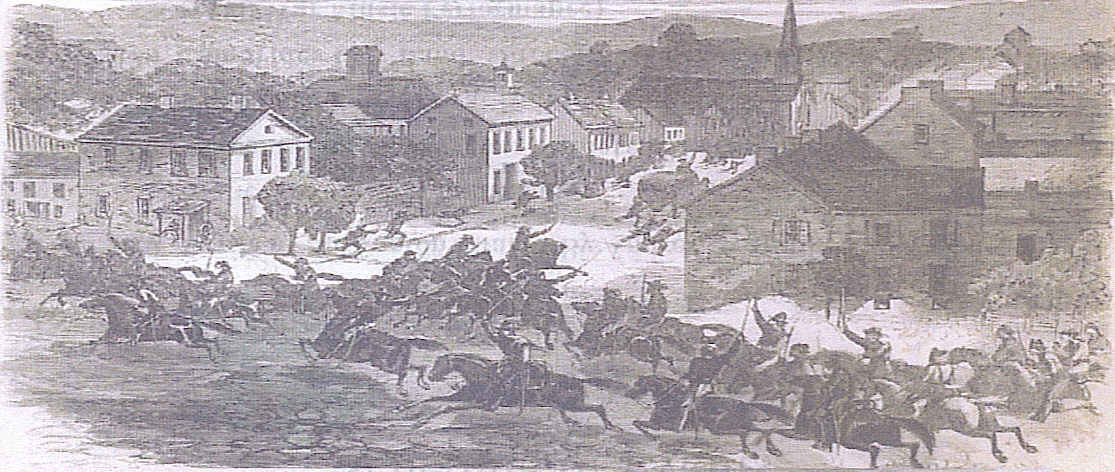
Morgan's Freebooters enter Washington, Ohio ~Harper's Weekly, Aug, 1863

Morgan’s Freebooters enter Washington, Ohio
~Harper’s Weekly, Aug, 1863

John Morgan with the remnant of a band composed of the most villanous cut-throats and scoundrels….made his way into this county on Thursday, the 22nd. (Guernsey Times Extra Addition Cambridge, Ohio July 28, 1863)

This statement by the local newspaper back in 1863  sums up the feeling of Northern residents regarding the antics of Brig. Gen. John Hunt Morgan, who led his raiders on a chase through Ohio during the Civil War.  His main goals were to destroy supply lines while creating chaos and fear.

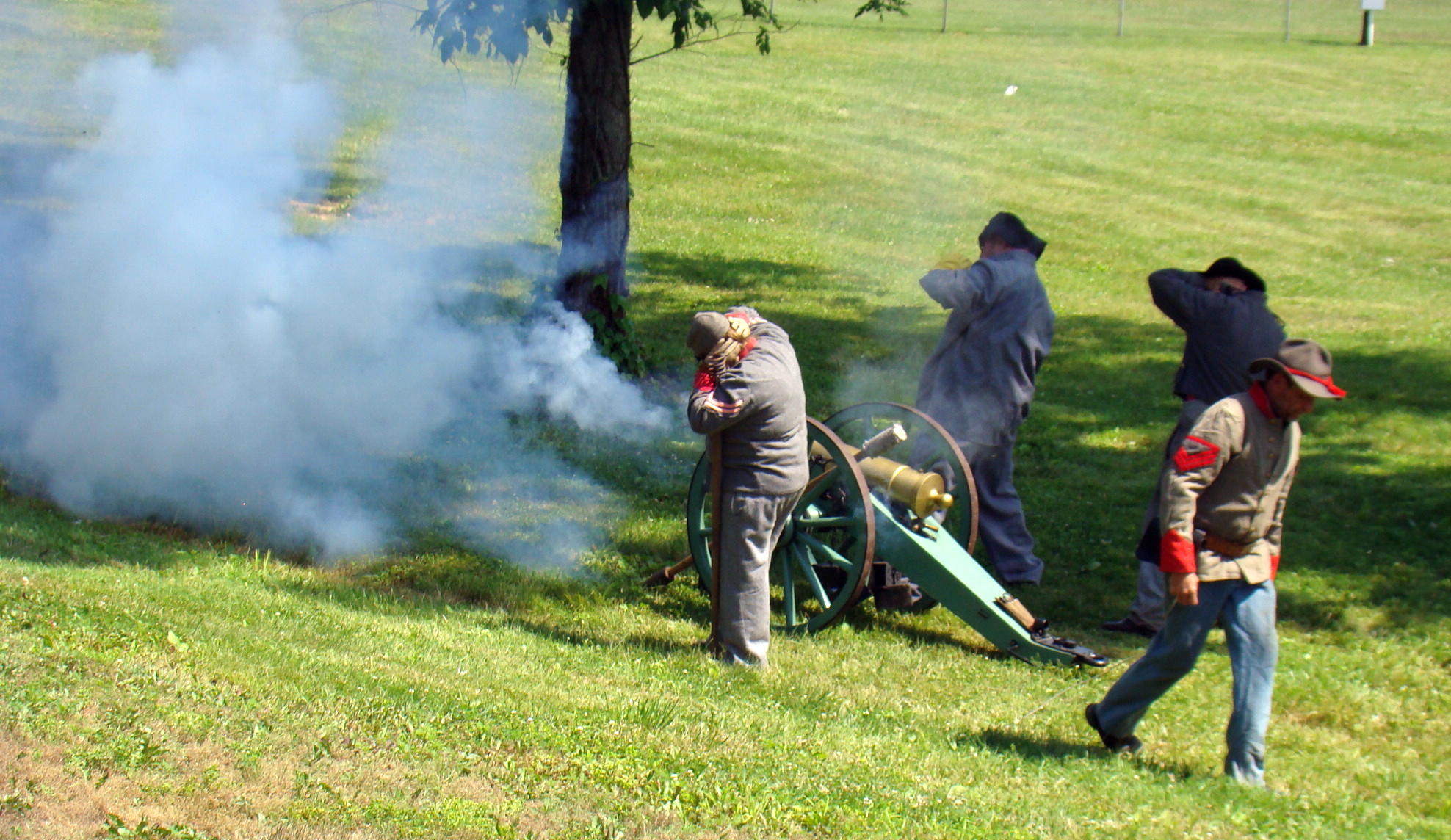
Cannon fire ignites celebration.

Cannon fire ignites celebration.

This special celebration took place in Lore City, Ohio at the Leatherwood Park trailhead of The Great Guernsey Trail, which is a paved pathway from Lore City to Cambridge used for walking and biking.  Often you see parents pushing their children in strollers, or children pushing their parents in wheelchairs. This six mile trail has become a favorite spot to exercise and get some fresh air in the Guernsey County area.

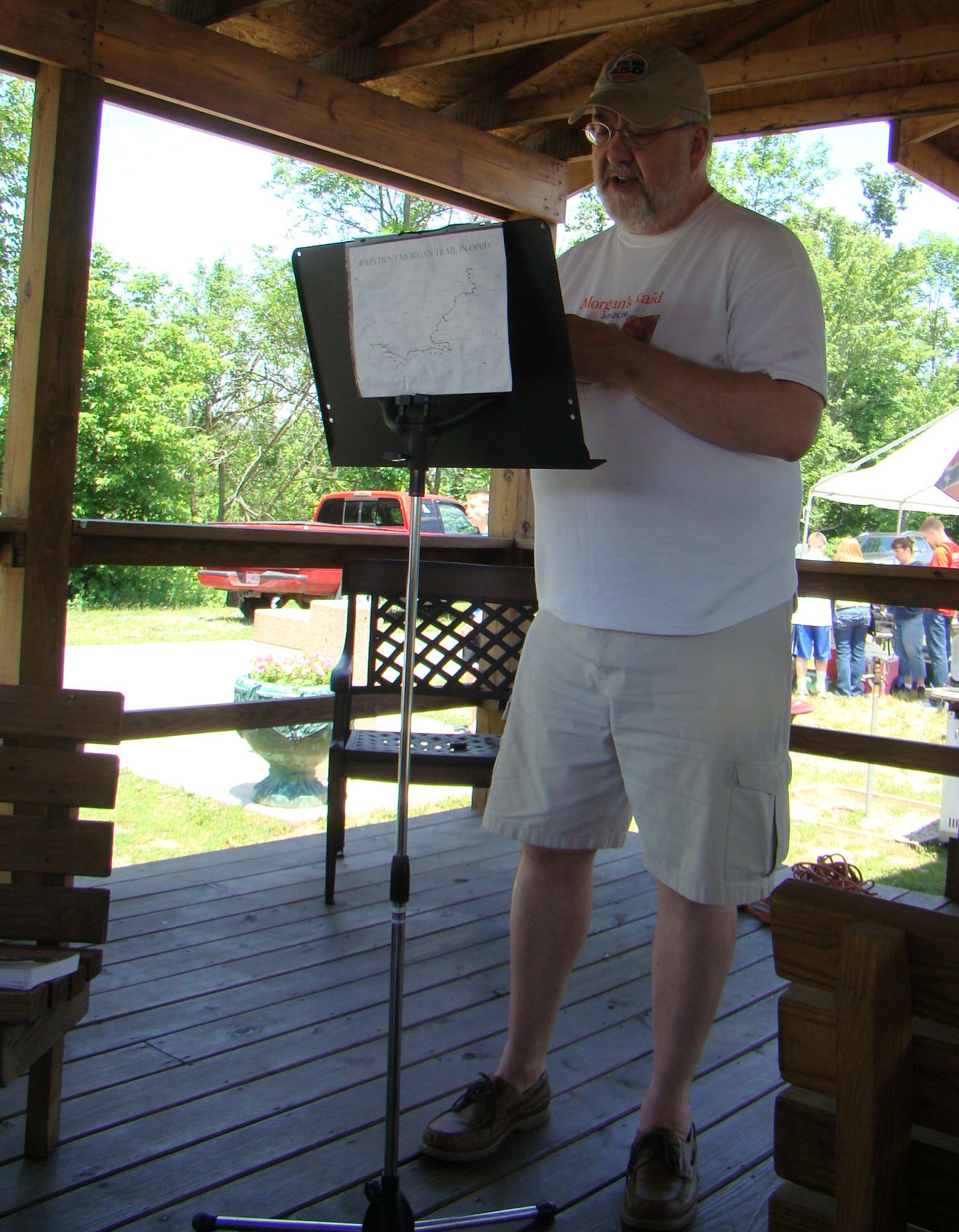
Andy Warhola, Civil War speaker

Andy Warhola, Civil War speaker

Local Civil War Roundtable members, Andy Warhola and Tom Snyder, explained Morgan’s ravaging two week raid through Ohio with slides, maps and pictures. They told of Morgan’s stealing two steamboats in order to cross the Ohio River into Indiana. Proceeding into Ohio above Cincinnati, they headed across the state with Union forces in pursuit.

Thinking the best way to escape was to again cross the Ohio River, Morgan led his men to a ford, which would let them have easy access to Buffington Island, a stepping stone across the Ohio. But his plan went amiss when Morgan decided to wait until morning for the crossing instead of attempting to move in the pitch darkness of night. The next morning however produced heavy fog, so again he was delayed, thus giving the USS Moose time to reach their crossing point. This is said to be the only Civil War battle in Ohio. Here the Union turned Morgan and his Confederates away with heavy losses.  What had started out as 2500 men, was down to approximatley 1100 after the battle at Buffington Island.

After this they headed towards Guernsey County entering at Cumberland and continuing to Londonderry. Finally they were captured in Salineville, heading to the Ohio River again. Along the way they were hungry and needed horses so there was plenty of thievery and destruction.

In the town of Campbell’s Station, which is today Lore City, there was more financial damage than anywhere else in the county.  They robbed the safe in the warehouse of $4,000, then burned the warehouse, train station and bridge as well as three railroad cars filled with tobacco…all this before the Union forces arrived.

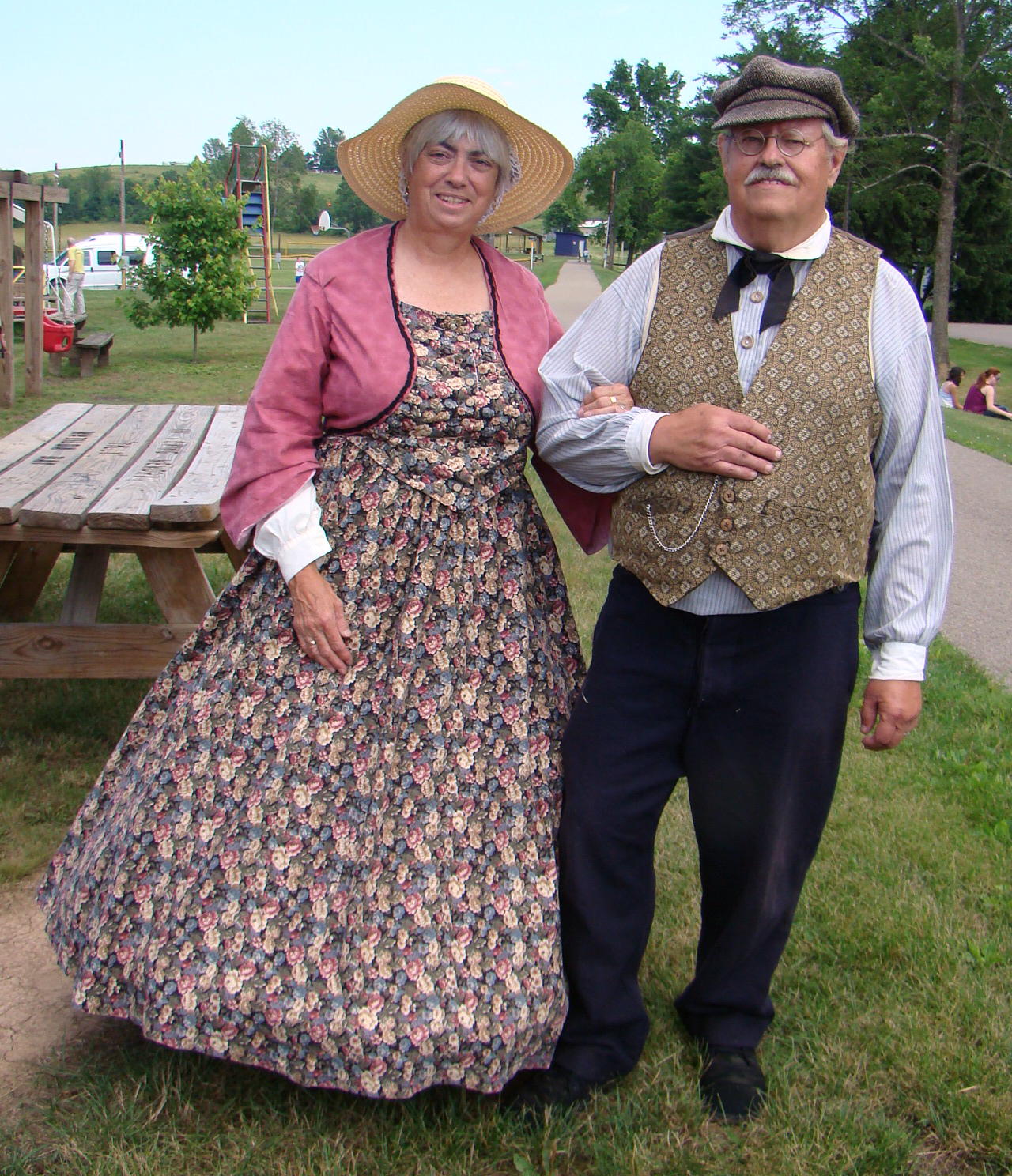
Couple in Civil War dress

Couple in Civil War dress

Nearly 150 years later, Lore City was filled with a Civil War feeling as many dressed in clothing of the time. A cannon was fired several times after careful loading by a group of Morgan County Re-enactors dressed as Confederate soldiers.

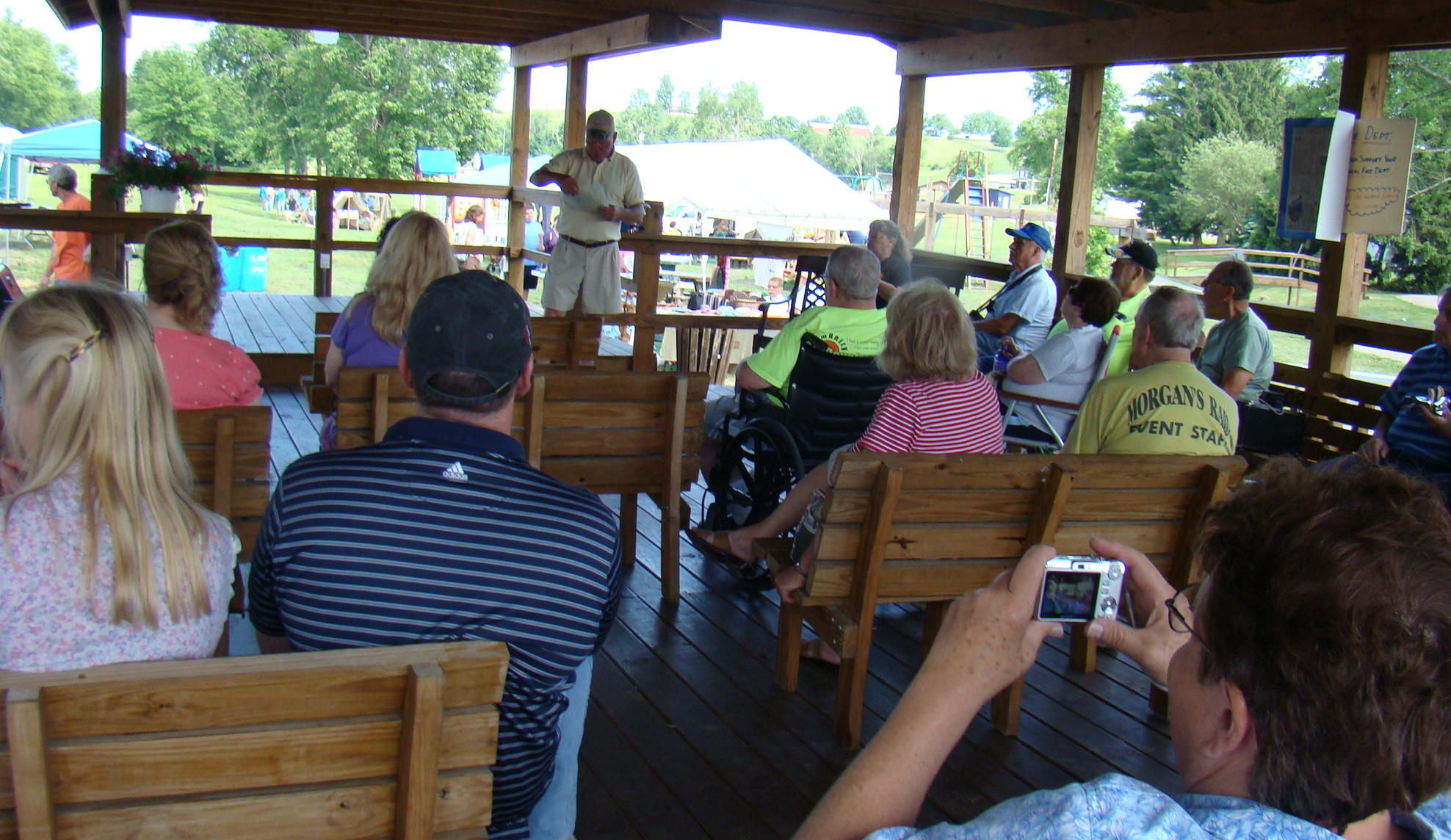
Local historian, Dave Adair, described the town of Campbell’s Station, which at the time of attack had only about sixty people. Their telegraph office was kept busy sending messages and receiving replies regarding Morgan’s Raiders. Due to the messages, Morgan and his Rebel scoundrels changed their route to avoid a railroad trestle, where a hundred men were waiting to ambush them.

Dave Adair speaks in the pavilion, which was the site of the original train station in Campbell's Station.

Dave Adair speaks in the pavilion, which was the site of the original train station in Campbell’s Station.

Dave also explained why Campbell’s Station changed its name to Lore City.  There happened to be two Campbell’s Stations at that time and the larger one kept the name. When deciding what to rename the smaller town, the Irish Catholics had a big hand in it. Their church were attempting to educate the people in this small community; therefore devised the new name as The City of Learning or Lore City… lore meaning knowledge or learning.

Ohio Hills Spinners and Weavers

Ohio Hills Spinners and Weavers

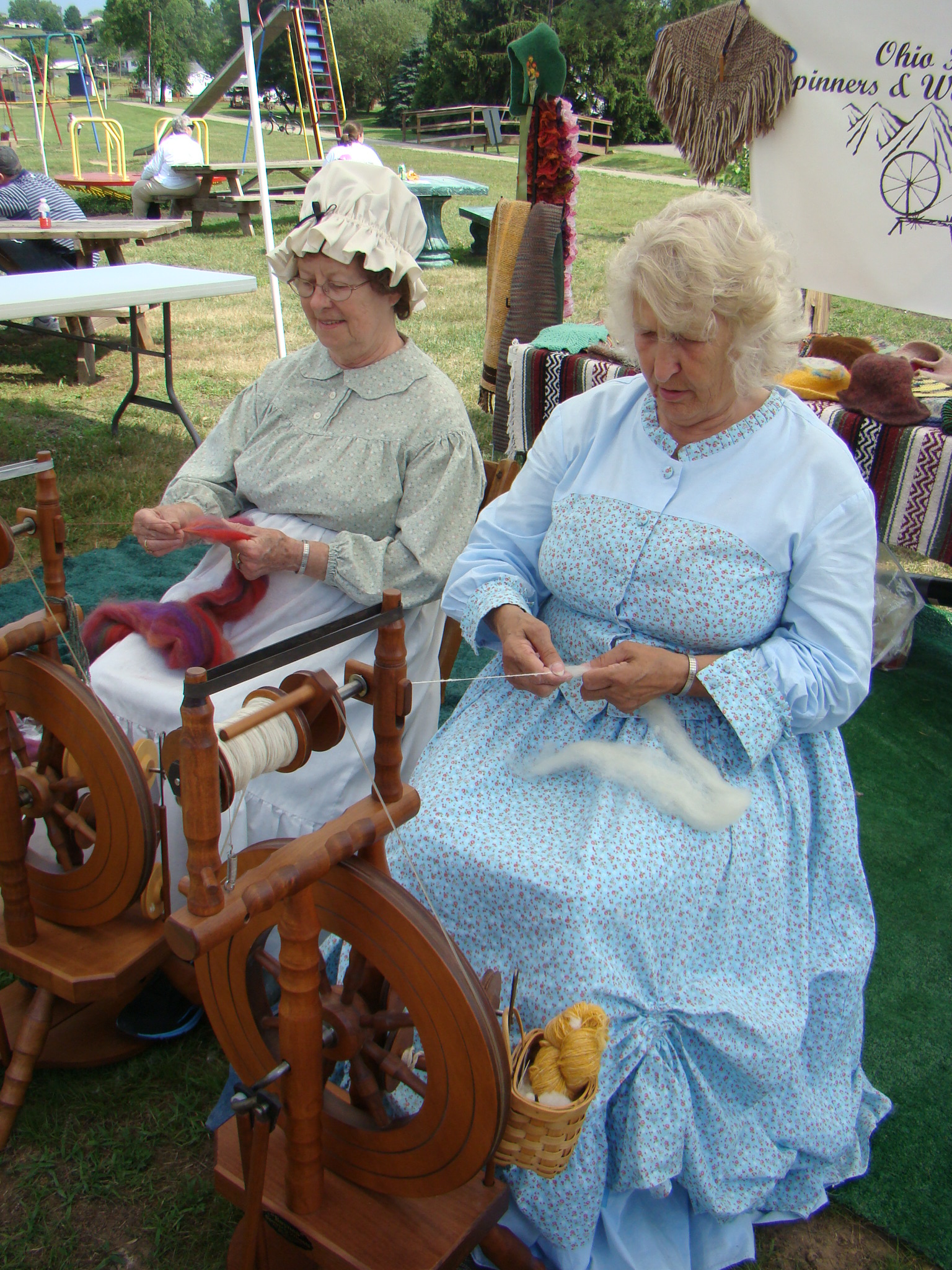
Spinning and weaving demonstrations were given by members of The Ohio Hills Spinners and Weavers, who also added stories of working conditions during the Civil War. Music was plentiful from start to finish. Bluegrass music, which included many Civil War songs, was provided by Mr and Mrs Small. While many of the Civil War songs were of a sad nature, Mrs. Small had written a happy song, Black Berries, to which everyone sang along. Cambridge City Band swung into action with their rendition of Civil War hits such as: Listen to the Mockingbird, Swanee River and many more. This was followed later by Dynamic Trio, who played 50’s and 60’s rock and roll.

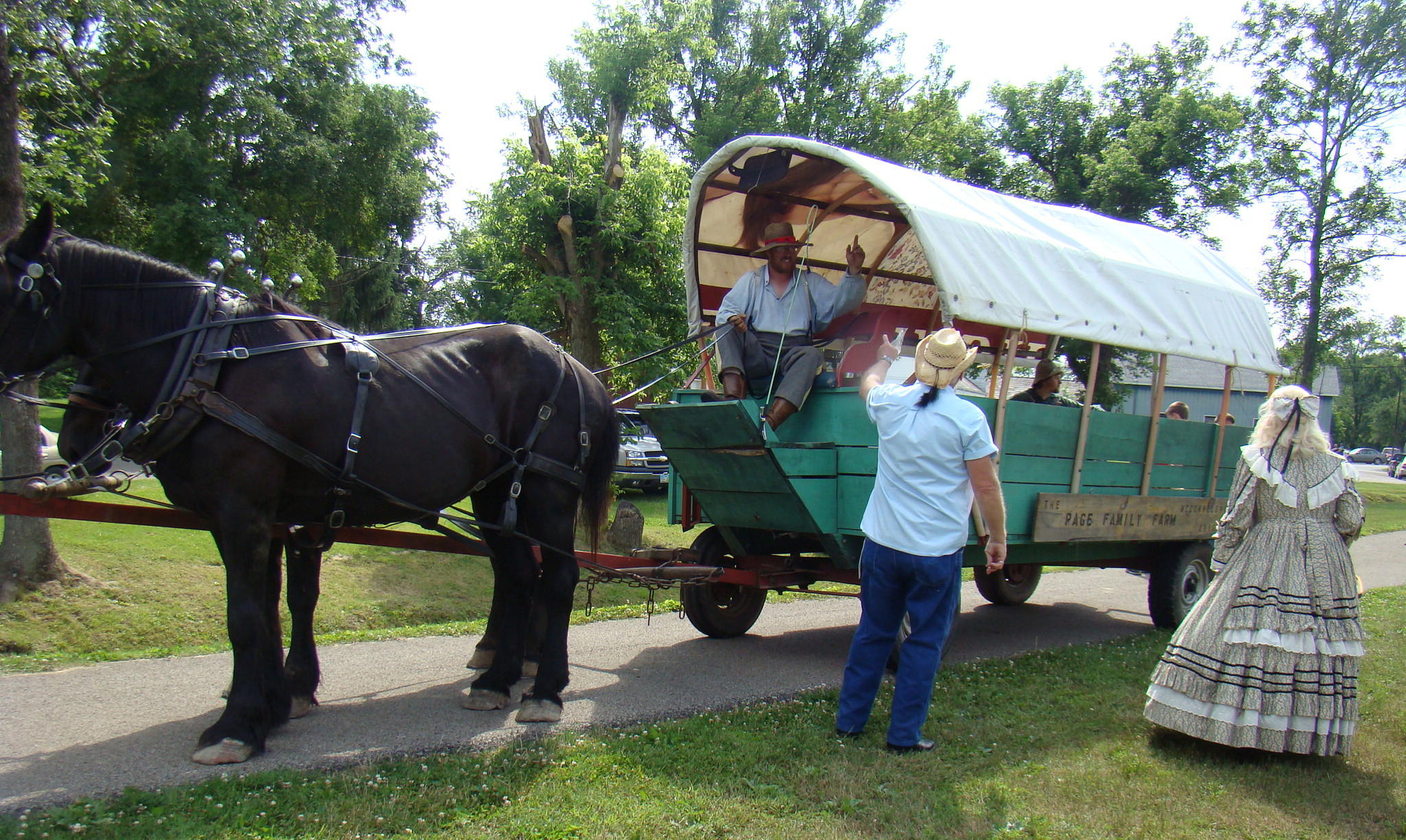
Riders enjoying the horse and wagon ride were greeted by Mayor Carpenter and wife, Sharon.

Horse and wagon riders were greeted by Mayor Carpenter and wife, Sharon.

Horses were an important part of the Civil War and it is estimated that over a million horses and mules were lost during the battles. General Morgan was indeed known as “The King of Horse Thieves”.  Wagon rides, which seemed fitting for the anniversary celebration, were provided along a segment of the Lore City trailhead in a wagon resembling the wagons used during the war to carry generals, the wounded and supplies.

If you want to get a little more adventuresome, today you can follow the trail that Morgan made during his raid. Signs have been posted from Cumberland to Londonderry with information regarding the events that took place in that particular area. Would make an interesting Sunday drive!

Lore City, Ohio is located in Guernsey County just east of I-77. Take exit 46, US Route 40 east, then follow Route 40 for four miles and turn right on State Route 265.  Continue on 265 until a four way stop, where a right hand turn leads you over the bridge to Lore City.  Leatherwood Park is to the left after you cross the bridge.

Rootin’ Tootin’ Western Fun Hopalong Cassidy Festival

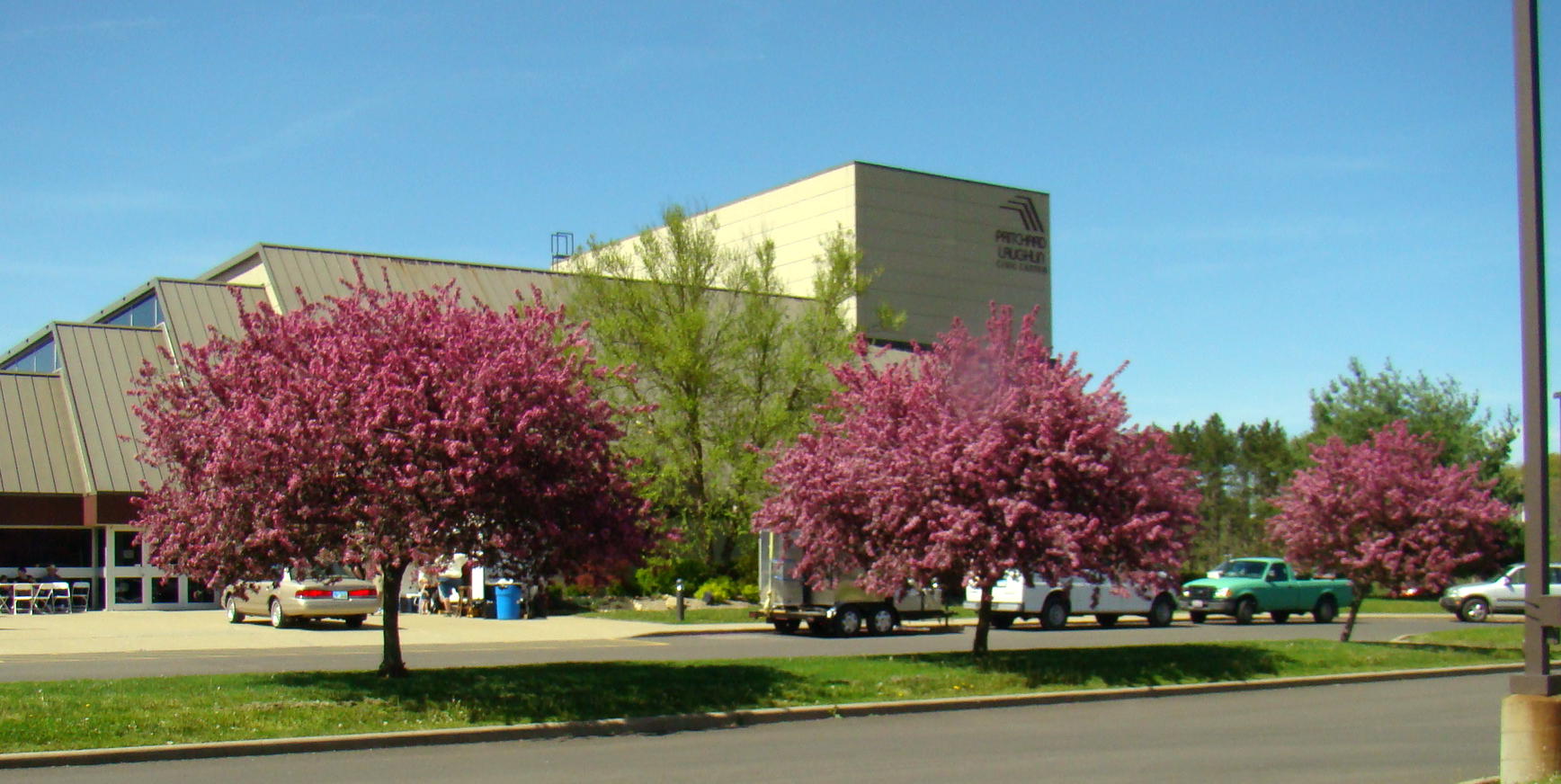
Pritchard Laughlin Civic CenterMore fun than a pig in mud !  That description summed up the feeling of those participating in the 23rd Annual Hopalong Cassidy Festival held at Pritchard-Laughlin Civic Center during the first weekend of May near Cambridge, Ohio. Everyone there seemed to be having fun in this beautiful springtime setting!

From the moment of arrival, you were greeted outside the center with some good old-fashioned BBQ by Smokin’ C BBQ from nearby Old Washington. This provided a break from the action anytime hunger appeared during the day. Their pulled pork sandwiches and BBQ baked potatoes are always favorites.

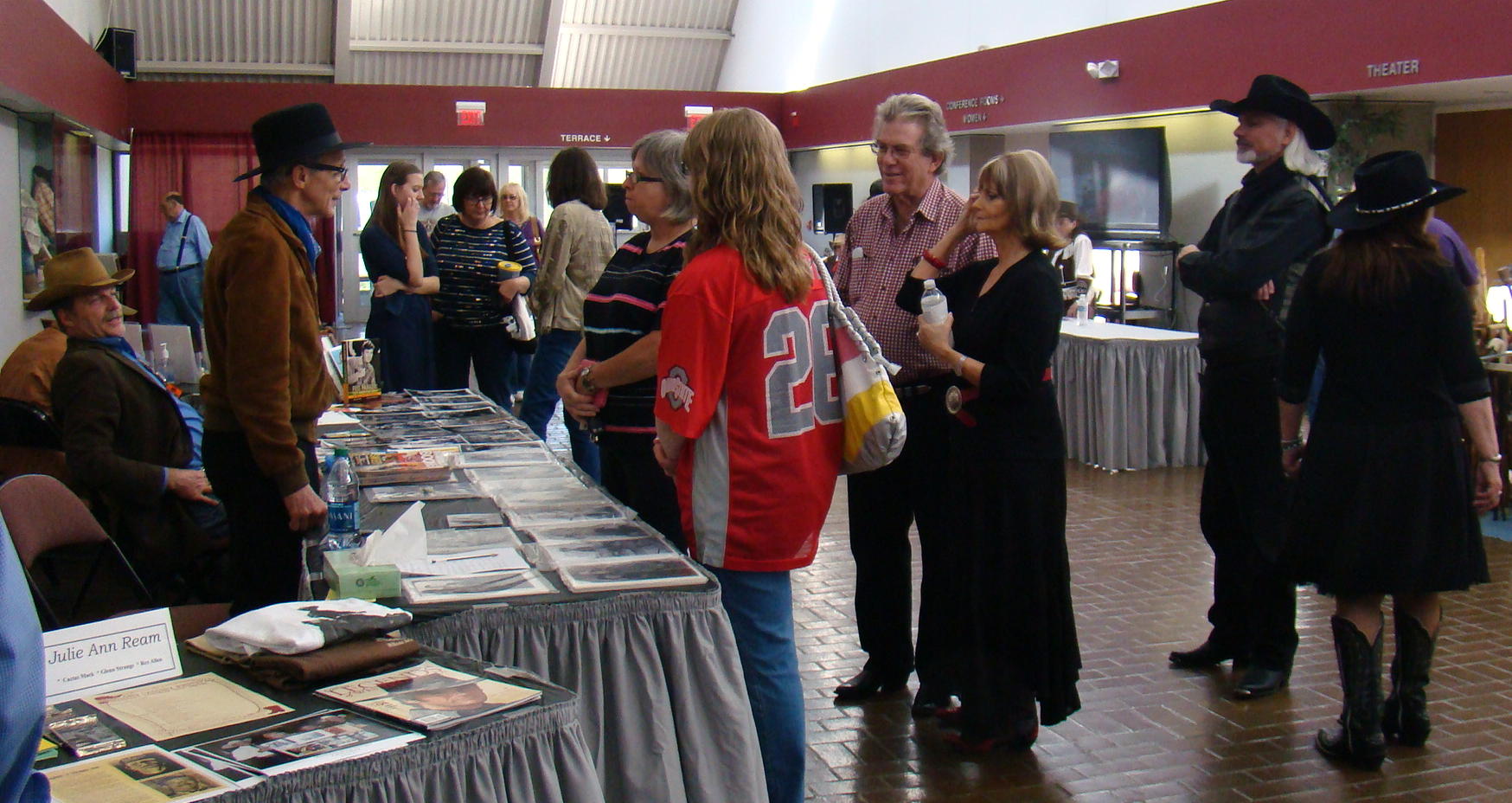
Festival LobbyInside was where the legend of Hopalong Cassidy was being kept alive. The lobby contained Western actors from days gone by. They autographed pictures, posed with fans, and answered questions in a friendly manner.

The large banquet room had hundreds of items for sale from days of Hopalong Cassidy, Roy Rogers, Daniel Boone and other favorite Western stars. Fans and dealers from all over the nation come to explore over one hundred tables of collectibles to see if they can find a treasure.

Panel of Stars

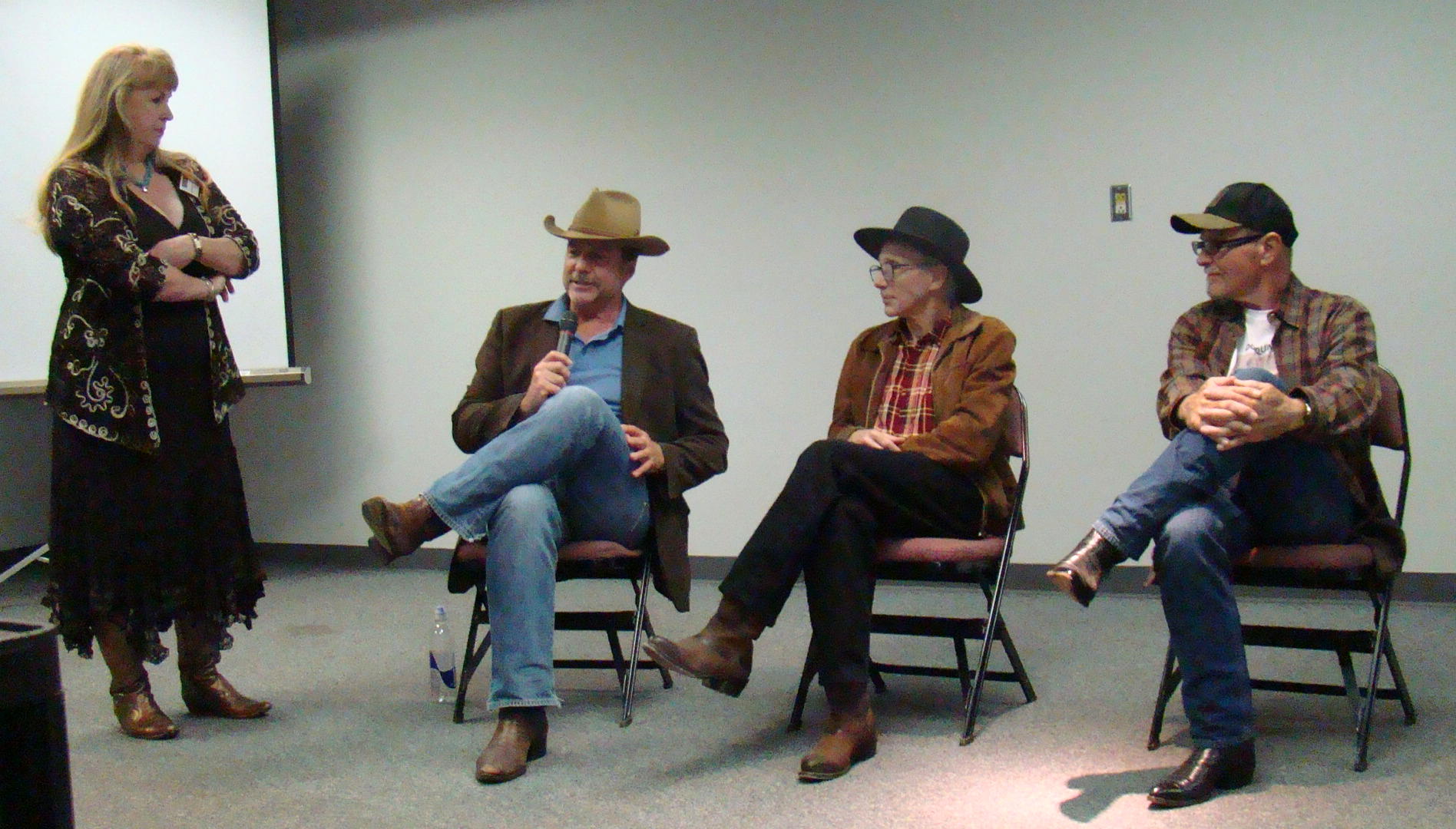
Julie Ream narrated a Panel of Stars including: Darby Hinton, Johnny Crawford, and Don Quine.

Cowboys from the past seemed to be one of the main drawing cards.  Meet the Stars drew a large crowd in the Bar 20 Annex.  These stars were all from California, but enjoying the small town greeting. Western history expert Julie Ream, who remembered the days of attending Charm School, informed the audience that her cousin, Cactus Mack McPeters was the first to make a Western with Republic Pictures, while her Uncle Rex Allen, The Arizona Cowboy, made the last Western for them.

Representing The Virginia was Don Quine, who played the role of the grandson, Stacey. Today he spends his free time writing a book, but he would not give any inside information as to what that book was about. Perhaps it is his memoirs.

An actual descendant of Daniel Boone, Darby Hinton accidentally fell into a role in the Daniel Boone TV series when his mother, running late as usual, dropped him off in front of the studio while she went to park the car. Here he was to try out for the part of a von Trapp lad in Sound of Music. So when Darby went inside, he fell right in line with the rest of the youngsters. He charmed those interviewing and got the part easily. However, when his mother arrived, she discovered he had gone to the wrong floor and instead of interviewing for Sound of Music, had accepted a role in Daniel Boone as his son. Today he is working on a PBS documentary of the life and times of the real Daniel Boone.

A sense of humor seemed to be the strong point for Johnny Crawford, who appeared on Rifleman for five years in the role of a son. When asked what he did when he became an adult, Johnny said, “I never grew up.” Music seemed to be his avocation these days and he sang Sweet Sue to the group…well, as much of it as remembered. Johnny said he could do the beginning of most songs.

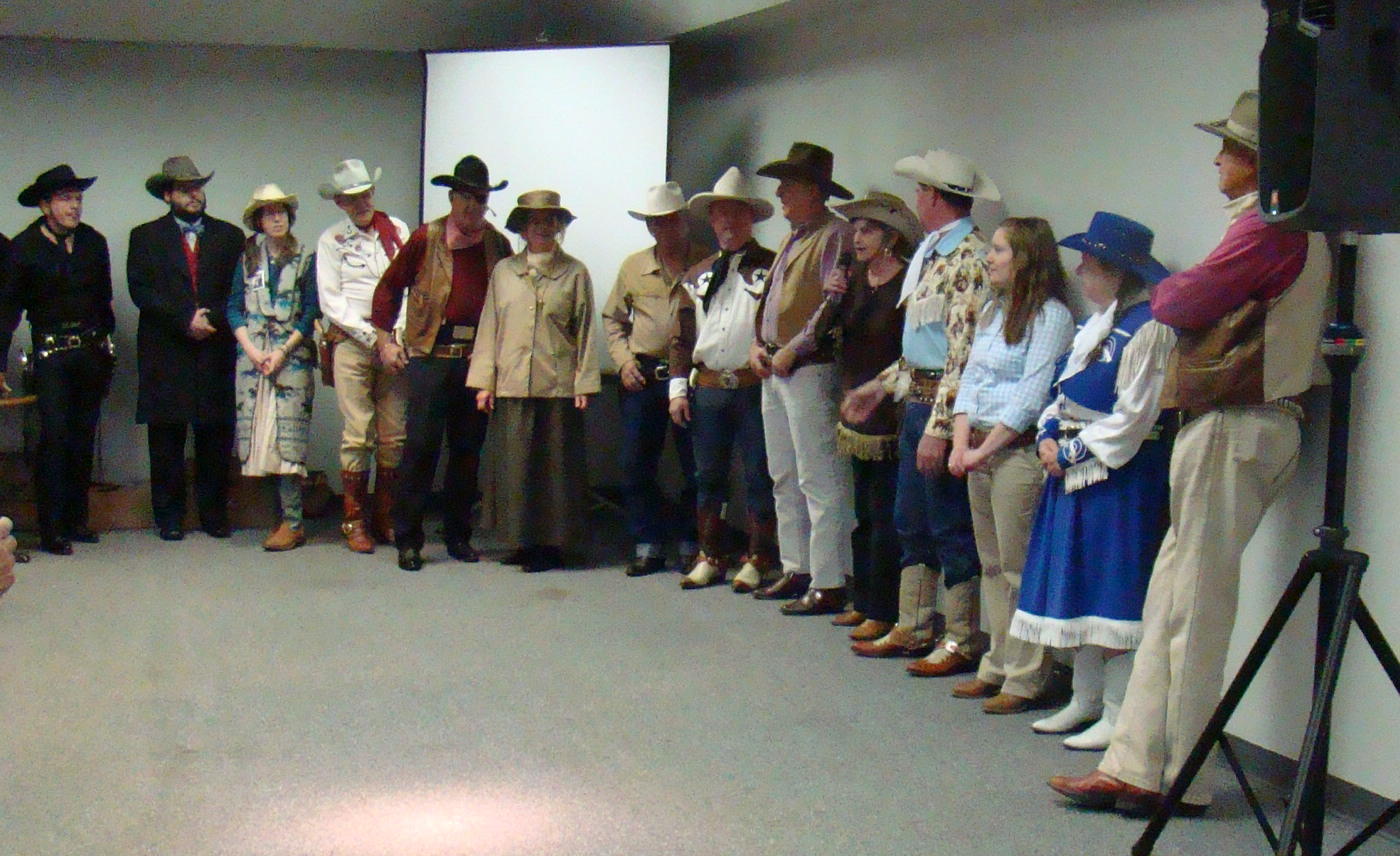
Look Alike ContestAnother highlight was the Look-Alike Contests for young and old alike, which was judged by audience clapping. Youngsters dressed in Western gear competed for trophies, but just being there was the most fun for all of them.

In the adult division, Johnny Crawford served as moderator and put the competitors through their paces. While he sang, he had them perform in various ways such as dancing, cracking the whip, doing tricks with their guns, and testing their beards to see if they were real.  Gabby Hayes quipped, “My teeth aren’t real, but my beard is.”

Johnny noted, “Being a cowboy is a hard life.”

To which Gabby responded, “Durn tootin’.”

The Roy Rogers Look-Alike was a real estate broker, who wore his Roy Rogers hat to work every day. His rendition of Happy Trails to You brought a round of applause.

However, John Wayne’s Look-Alike was the overall winner of the contest. This big, strong fellow looked and sounded like The Duke. His dance steps were even quite smooth for a cowboy of his size.

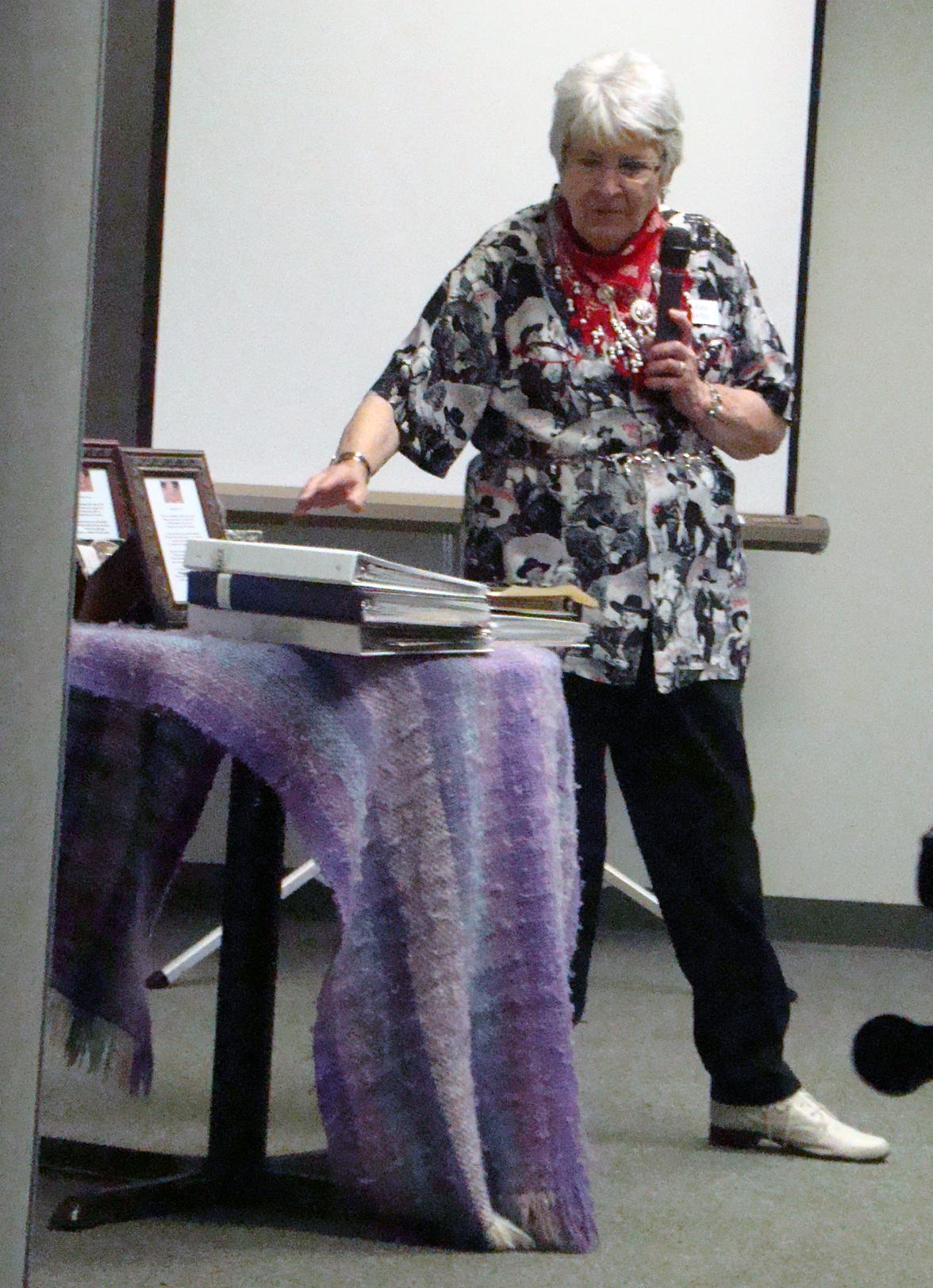
Laura Bates, founder and chairmanLaura Bates, the founder of the Hopalong Cassidy Festival, paid tribute to Grace Boyd, Hopalong’s wife. Laura and Grace had become good friends over the years with Laura visiting their California home on the Pacific Ocean frequently. Laura dressed in a shirt of Hoppy’s that Grace had given her, and had the table covered in a scarf from their home. While the festival was to honor hometown cowboy hero, Hopalong Cassidy, his wife actually was a guest there for several years and became a real favorite of those attending. Grace went to the corral where cowboys and their families go after they leave this old world at the age of 97.

Many of the attendees come year after year to the Festival. One couple from Jacksonville FL said they had been there for 17 years. Seeing old friends, who are fans of Hoppy, is one of the best reasons for coming back year after year. See y’all next year!

The Hopalong Cassidy Festival is held annually at Pritchard Laughlin Civic Center near Cambridge Ohio.  It is easily reached from I-70 at Exit  176. Turn right coming off the exit onto Glenn Highway Road, and in about half a mile the civic center is on the left side of the road.

Dickens Mannequins on the Move Volunteers Make It Possible

What is a volunteer? Although this isn’t a Webster’s Dictionary definition, Margaret Mead seemed to understand the role of volunteers when she said:

Never doubt that a small group of thankful, committed citizens can change the world; indeed, it’s the only thing that ever has.

In the small town of Cambridge, Ohio, a group of volunteers may not have changed the world, but definitely have changed the face of Cambridge during the months of November and December. Over 200 volunteers work almost year round to make Dickens Victorian Village a big success.  As the director would say, “It takes a village to run things.”

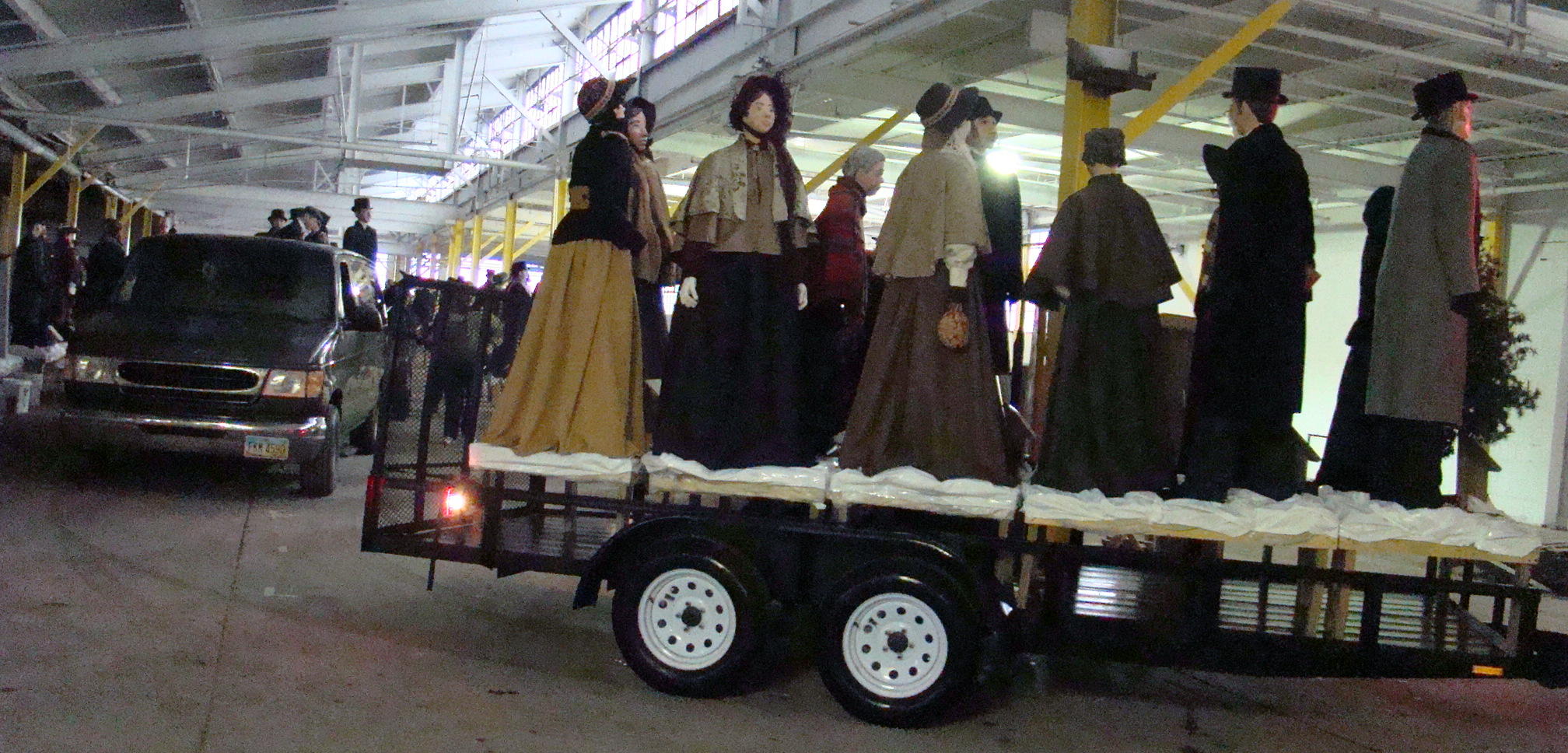
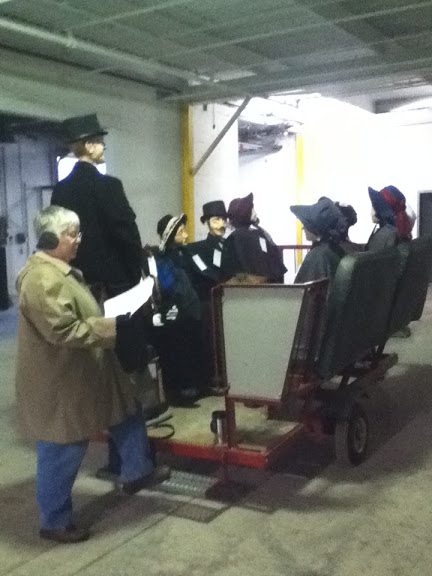
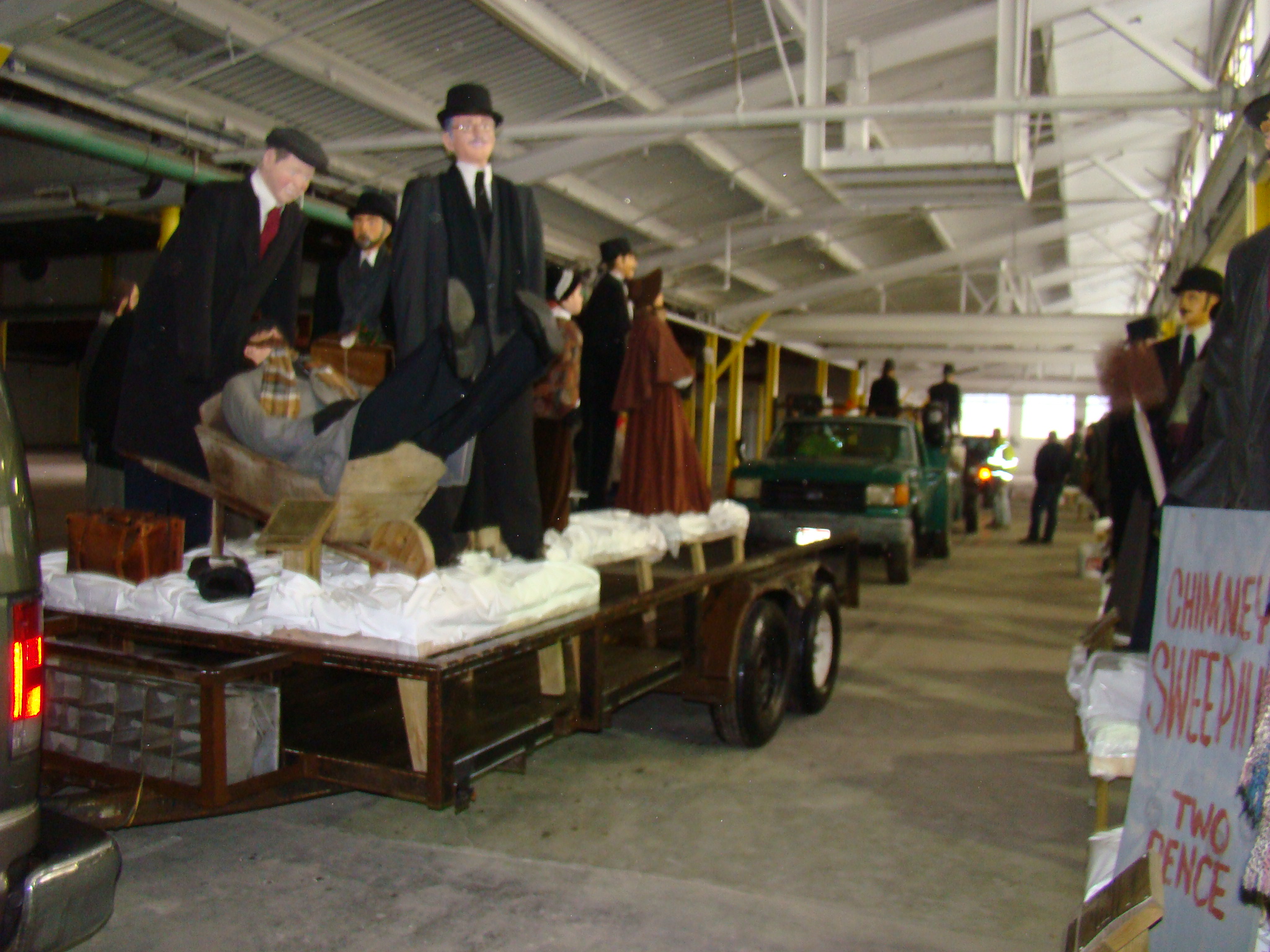
After the Restoration Team worked at Dickens Universal all summer long to make and repair heads and bodies, fix or replace clothing, and even build whole new scenes, finally the day arrived to move them to Wheeling Avenue for Dickens Victorian Village.  This is no easy task to move 186 mannequins. Some of them were moved on an old trolley that was given to the village, while others were hauled on trailers.

Wonderful volunteers lined up inside Dickens Universal while mannequins were loaded onto the trailers behind their trucks and vans.  Usually this is done on the weekend, but due to Hurricane Sandy this year, it was delayed. So men appeared after work to load their trailers and take them to the appropriate spots in downtown Cambridge. Keeping them in order wasn’t a big problem as they are stored in order at Dickens Universal.  It’s a long warehouse and there’s enough room to make it appear like a walk down Wheeling Avenue – just not as much sidewalk in between!

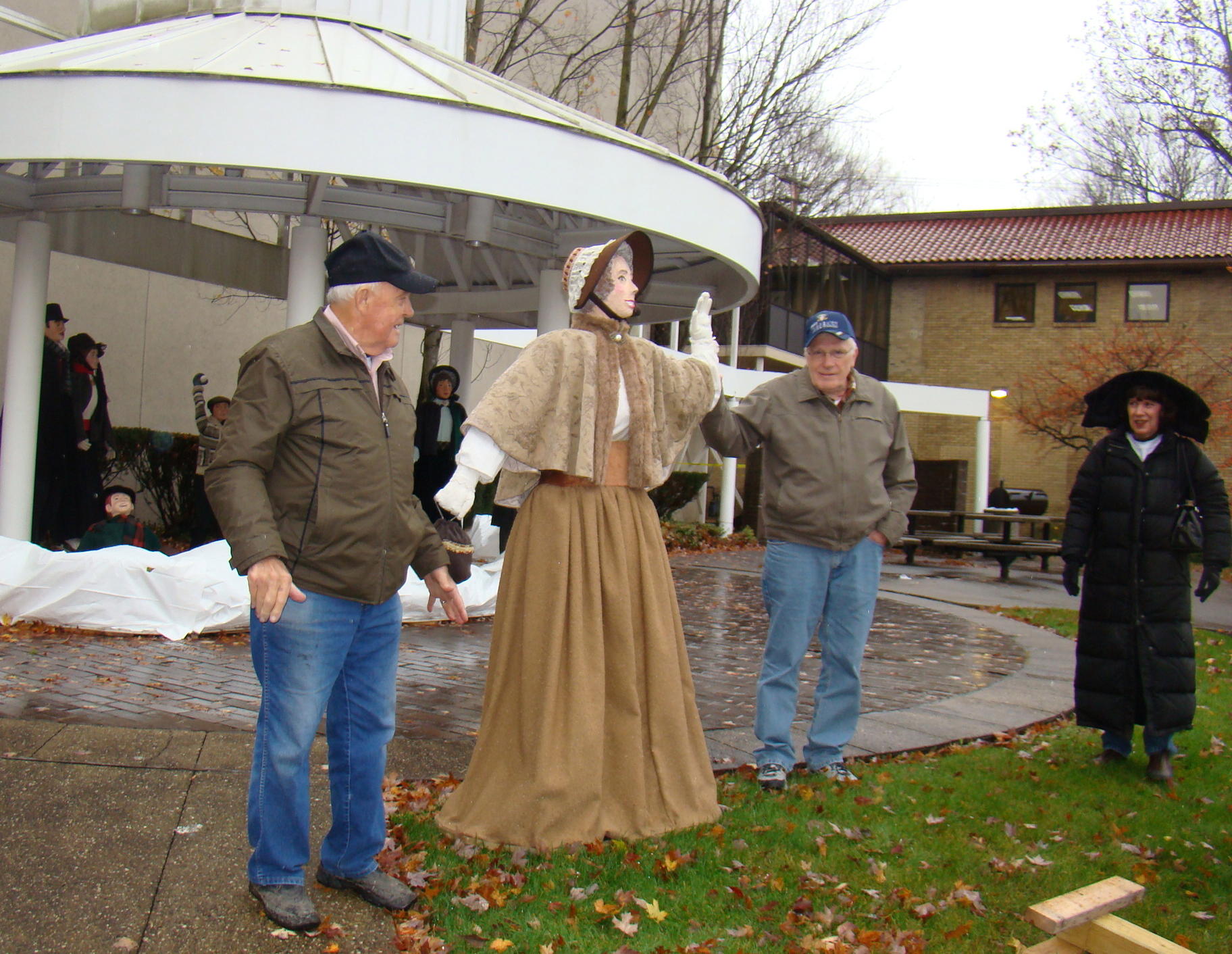
Once downtown, finishing touches had to be made. Skirts were attached around all the scenes, most containing more than one mannequin. Then everything needed to be securely attached as a caution from further wind storms. Long metal rods were placed beside some mannequins to hold them in place.

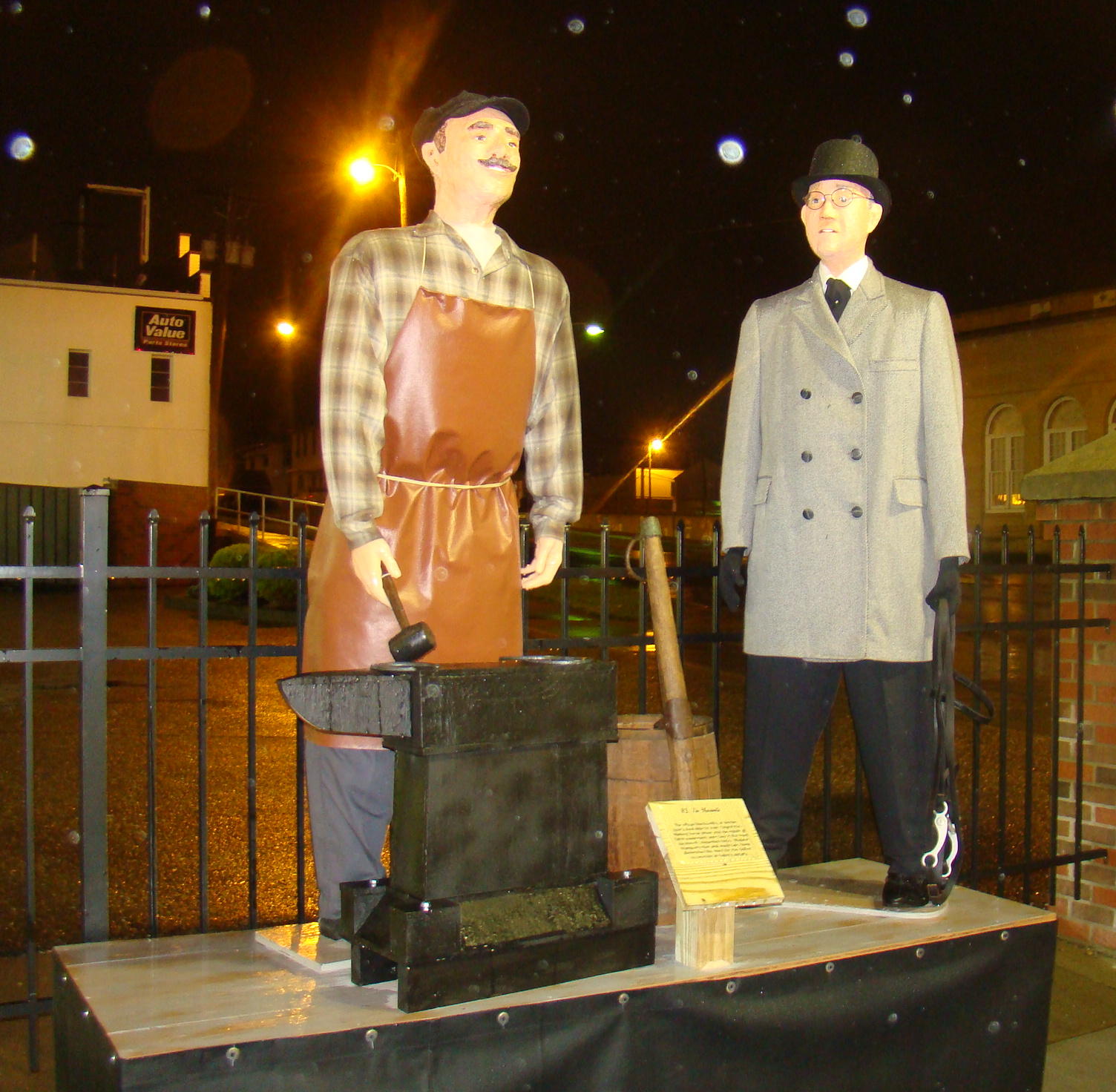
But when it is all finished, the volunteers have a sense of pride in their long year of hard work to make downtown Cambridge have a festive air.  Even though the hurricane had made its way north, rain still fell for the entire time of mannequin invasion.  One of the new scenes, The Blacksmith, was getting its first taste of being out in the weather.

Take a walk downtown to enjoy a look at days of old. Each scene has a descriptive plaque telling a little history of that particular scene. For the volunteers, work doesn’t stop here.  During the Dickens Victorian Village season from Nov. 2 – Jan. 5, the restoration team checks on mannequins daily repairing costumes, reattaching loose items, or sometimes even changing costumes completely.  These people really care about appearances and are very particular about each scene. Yet they have lots of fun working together! As Tiny Tim might say: “God bless them every one.”

Dickens Victorian Village is open in downtown Cambridge, Ohio from Nov. 2 to Jan. 5. Cambridge is easily located as it is at the crossroads of I-70 and I-77 in beautiful Southeastern Ohio.  Perhaps you will get a chance to visit this holiday season and feel the Magic of Dickens in the air.

Watch Broomstick Jousting at Cambridge Medieval Faire

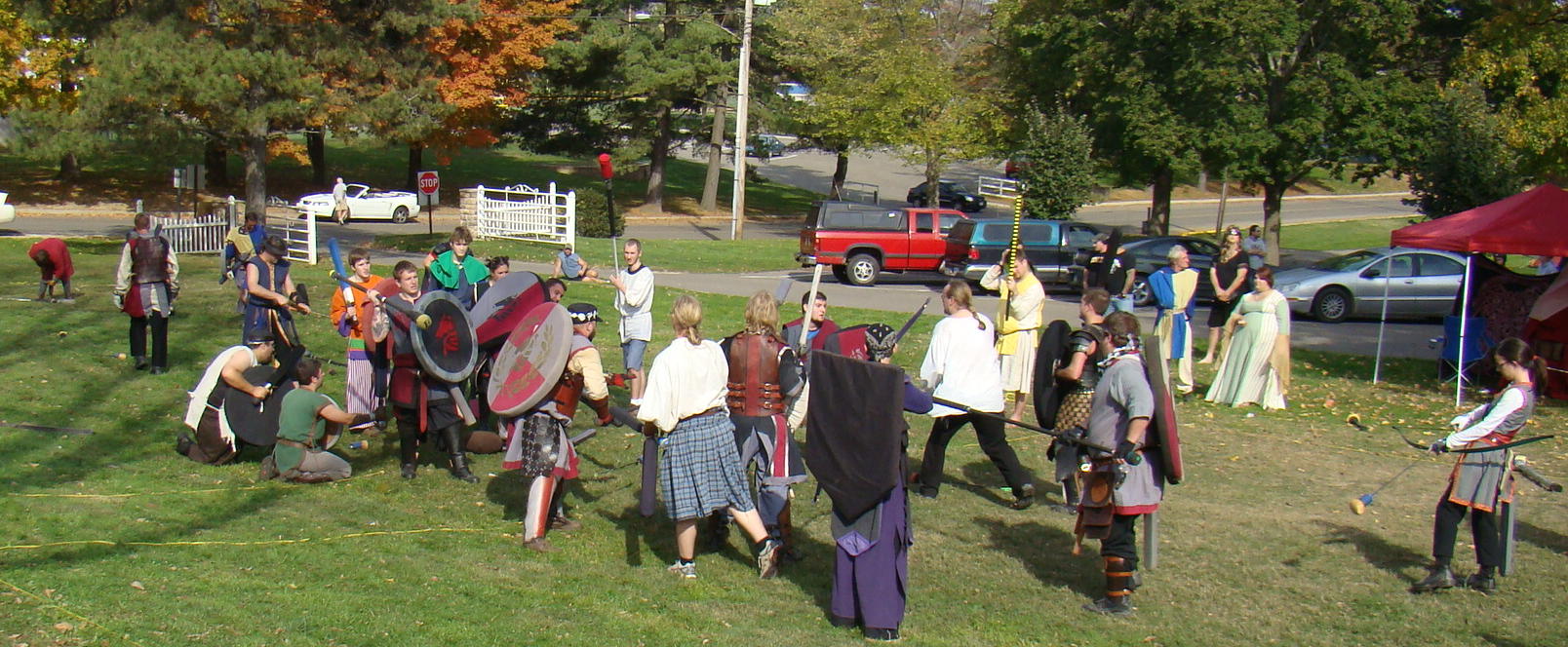
Driving past the Cambridge City Park, there appeared an unusual sight – what looked like a jousting match.  Upon closer investigation this was a fighting contest called Dagohir, which was part of the 3rd Annual Cambridge Medieval Market Faire. The young fellows said, “We are gentleman off the field, but fighters on the field.” But their battle weapons were rather unconventional as this was “full combat foam fighting” where sticks and balls are all composed of foam.

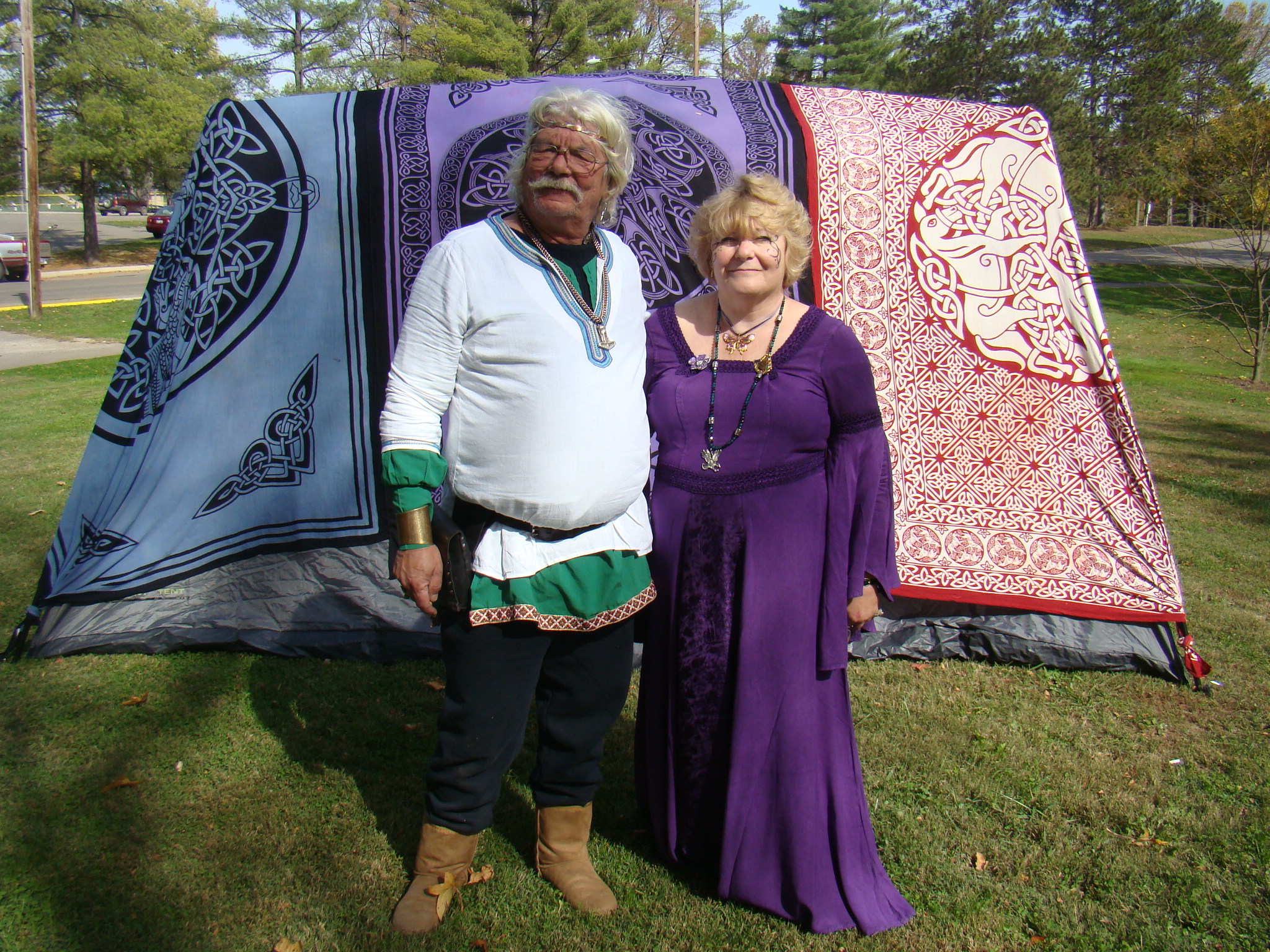
Organizers explained that the Medieval Faires were organized to keep alive the legendary stories of old, such as King Arthur and the Round Table. Sir Eugene the Rogue and Lady Lavender are leaders in organizing the local festival, and hope through their games and stories to instill in young men a deeper respect for women.

Eight years ago, these two met at the Southeastern Ohio Renaissance Festival right here in Cambridge during a “Wooing Contest.” Here the single men line up on one side and the single women on the other.  They then proceed to say clever things to each other that might attract the partner of their choice.  Lavender Lady confessed that The Rogue charmed her with his poetry. Their prize, besides the lady or man of their choice,  was a statue of two piglets.  Why, you ask, would they give out pigs for a prize? The answer given:  “No matter how well a man speaketh, in the end we know they are all pigs.”

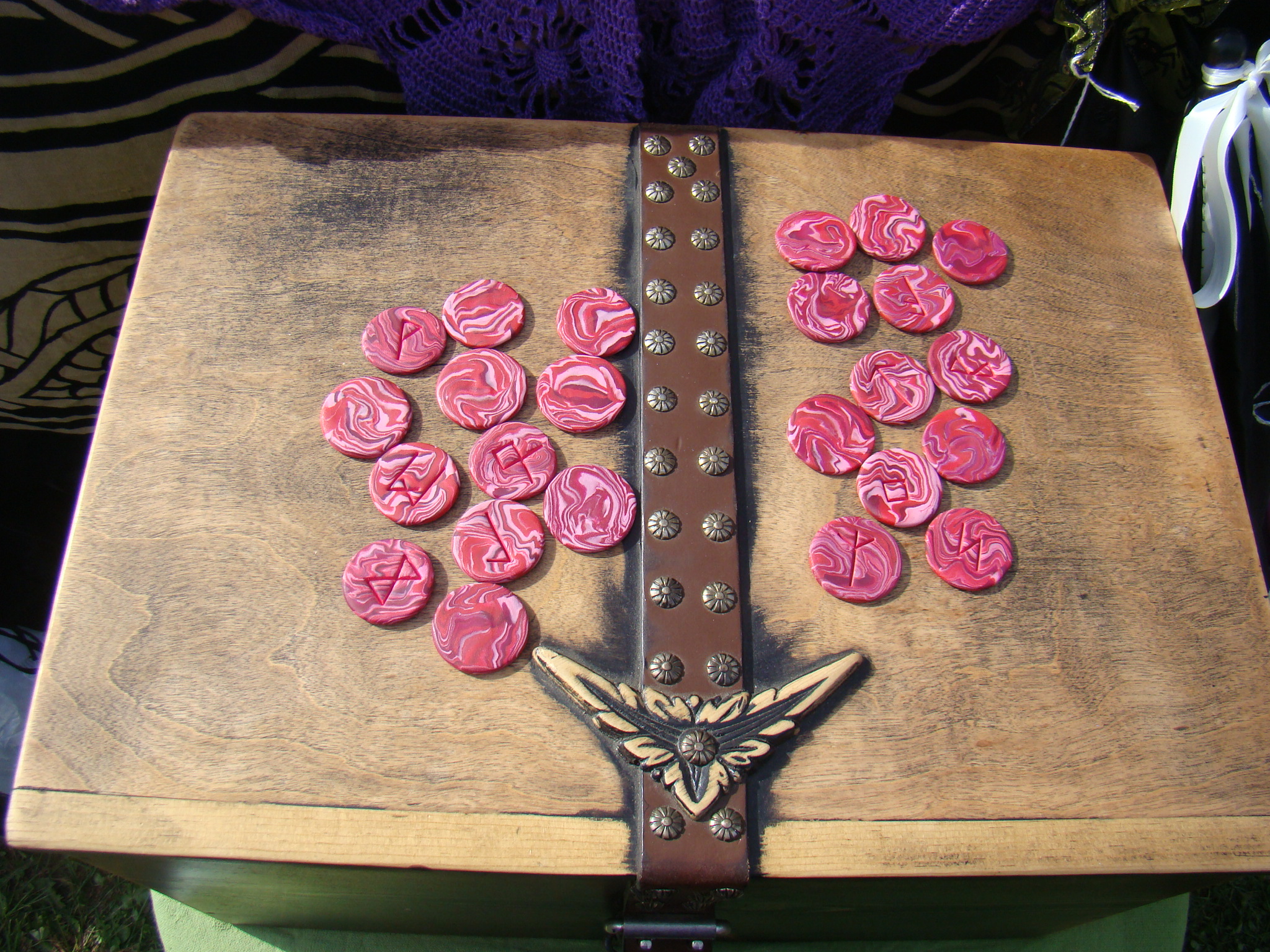
Tents were scattered throughout the park displaying wares of various merchants…all with items from the Renaissance period. Ladies of the Lace displayed beautiful handmade clothing from days of old. In another tent, wooden book covers and small chests were finely made, so decided to spill a bag of runes atop a chest to get a better look. These rose runes were made of baked clay, stamped with the runic alphabet, and then hand painted by the young man in the tent. Runecasting works with the subconscious so when posed with a deep question, one reaches into the bag of runes for a possible answer.

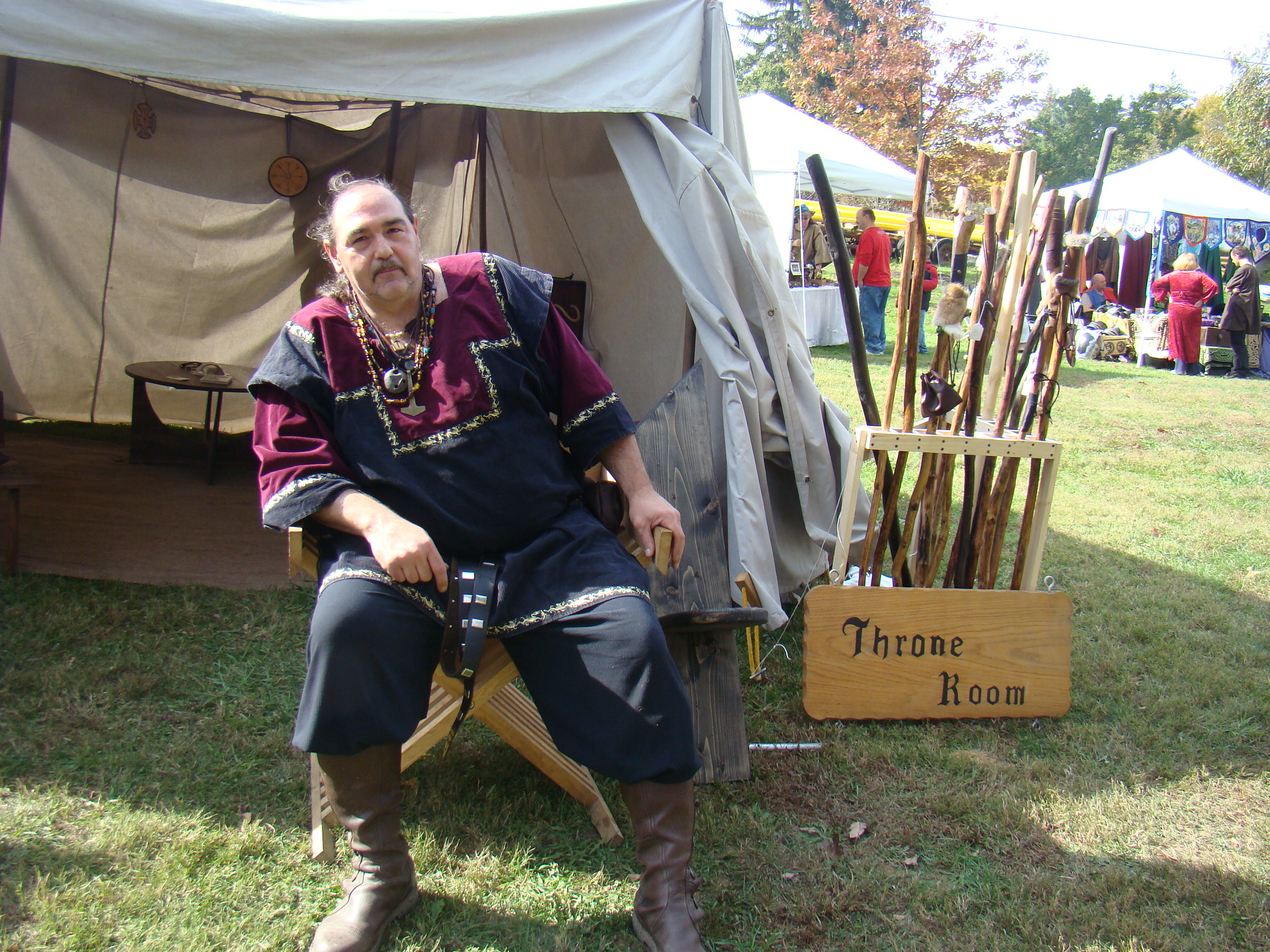
Sitting in a 10th Century German Chair was Uthr in a spot called The Throne Room. Uthr told an interesting story of his life beginning with his membership in the Society for Creative Anachronism, an international group exploring and recreating the arts and skills of  pre-17th century Europe.  Today he makes beautiful walking sticks and travels around the country sharing his stories with anyone who will listen.

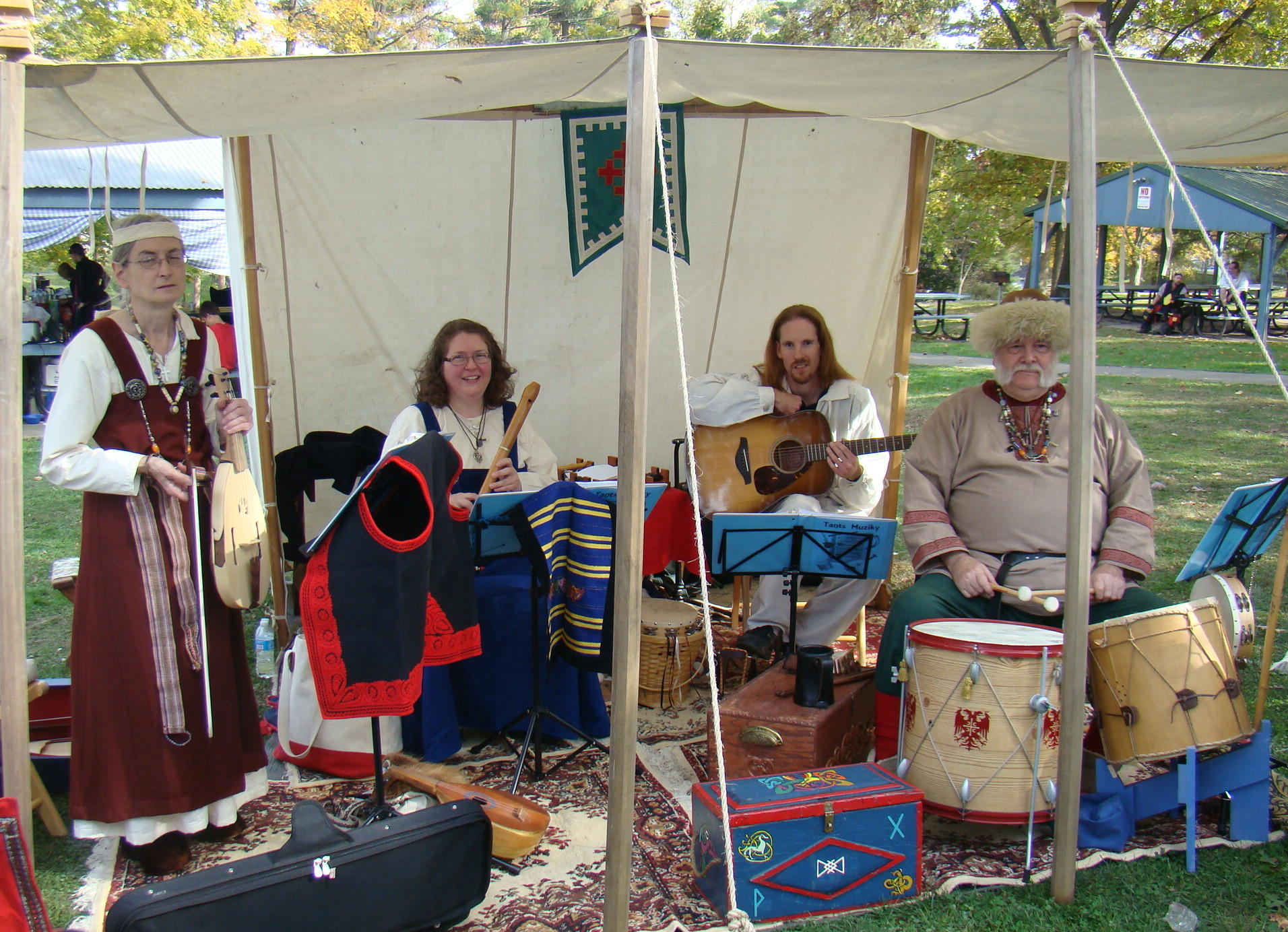
Tants Muziky, which means Dance Music in Ukranian, presented Renaissance and Medieval music on a variety of ethnic instruments throughout the day. This musical family, although not related, also plays a wide variety of music from the European nations: Slovak, Celtic and Scandanavian were a few that they mentioned. Dancers were also present in beautiful costume to add a little flair to the performance.

What an interesting and fun-filled afternoon! Later they were having Broomstick Jousting, also called Full Feather Jousting, where you try to knock someone off their broomstick.  The last one left is the champion…no prize, just the honor until next year.   Need another Renaissance game? Kickin’ the Chicken might be more your style.  Could Harry Potter be around here somewhere?

The Cambridge Medieval Festival is held at the  City Park in Cambridge, Ohio  the second weekend of October annually. Cambridge is at the crossroads of I-70 and I-77 so it’s quite easy to access. When downtown, directly behind the courthouse is 8th Street, which will lead you straight to the park. 

Buffalo Hills Resort Welcomes Native American Pow Wow

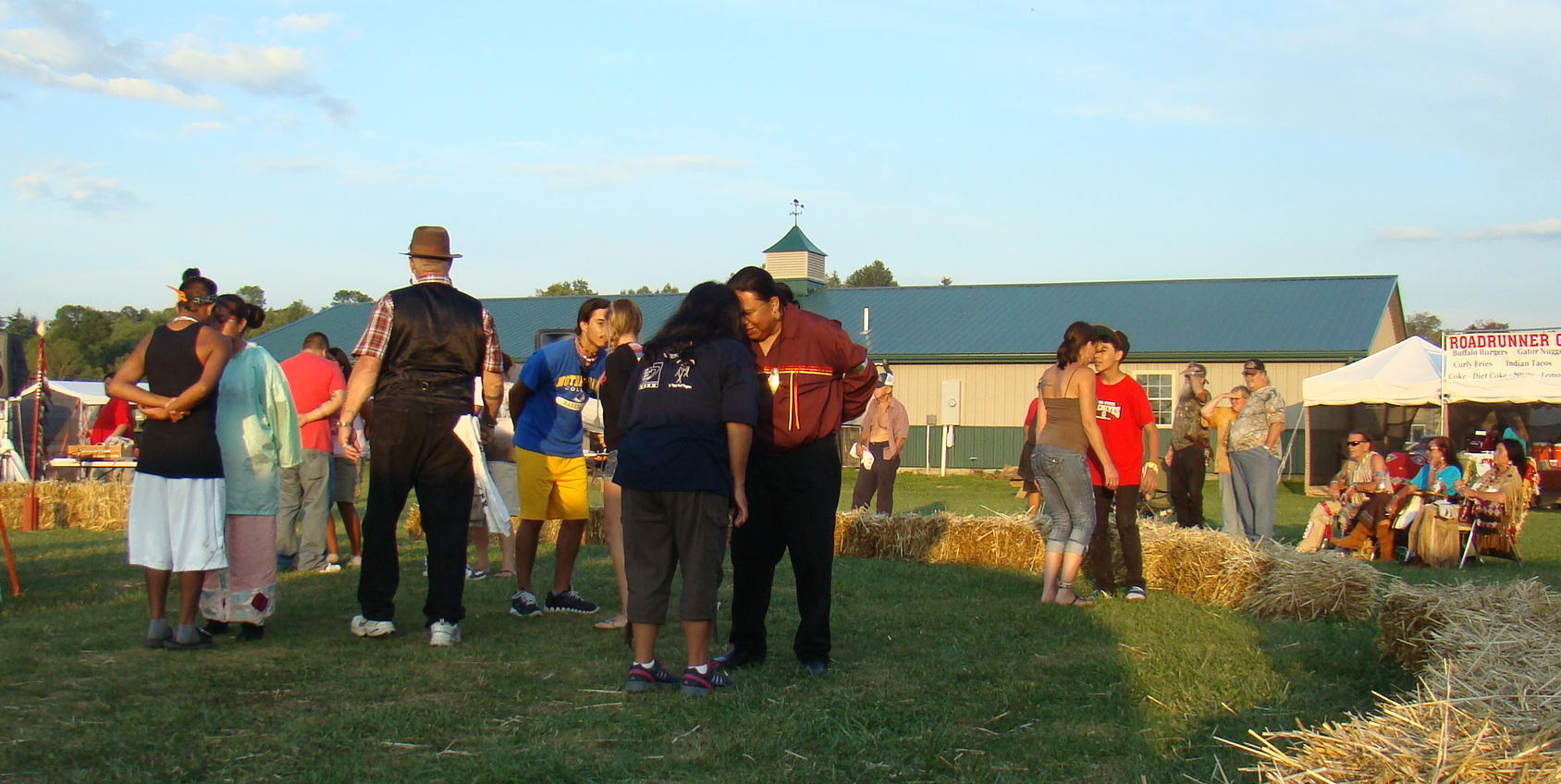
Native Americans are proud of their heritage as was witnessed at the gathering of tribes near Senecaville, Ohio at Buffalo Hills Resort.  Indian Pow Wows join together tribe members  for dancing, singing, socializing, and most of all, honoring their Indian culture. This seemed like the “real thing” as Native Americans congregated for their own enjoyment, not just entertainment. Any lessons learned by White Man were considered a bonus.

Did you ever taste Frybread? Native Americans will often remark, “Frybread is the story of our survival.”  Over a hundred years ago when the US forced Indians to take “The Long Walk” from Arizona to New Mexico, they nearly starved in their new landscape. To keep them from starving, the US government gave them flour, sugar, and lard – the makings of frybread, which later led to various health problems. At the Pow Wow, authentic Indian food was served by concessions and Frybread was delicious either served as the base for an Indian Taco, or covered with sugar and cinnamon. Also on the menu were Buffalo Burgers and Gator Nuggets on a Stick, with Snowballs for dessert.

Native costumes caught the eye of visitors as Indian maidens seemed to float over the ground with their smooth movements.  Delicate woodland flowers and vines added beauty to the deerskin dresses, as did the unusual jewelry made with the help of Mother Nature. Necklaces and bracelets were designed from acorns, spices, dried corn and seeds. This beautiful maiden was called Gentle Dove and said to be a Messenger for Love and Peace.

A circle of baled hay made a comfortable place to observe the Indians’ presentations. In the afternoon an entertaining storyteller told traditional Indian legends, most of which centered around animals.  All their stories have special meaning, and hopefully an effect on the listeners. The story of a Snake taught children to beware of wild animals, while the adventures of Bear and Rabbit with Buzzard described why Buzzard has a deep mark on his face to this day.

John Red Deer filled the spot of medicine man for the day with his extensive knowledge of herbs for healing. While there were many interesting items in his display, the popular 7 Grandfathers All Purpose Salve topped the list. As you can see from the sign, it can be used for many different ailments as well as a detox. John Red Deer feels inspired to make this in cream, liquid for detox, and even in stick form to carry with you for cuts and bites.

Peppermint and Spearmint form the base of this magical salve plus seven other herbs, which he feels he will reveal soon so others can carry on his work. Plants are harvested as he is guided by the voice of Spirit, and later the herb combination is brewed during the Summer Solstice.  This time of solar and lunar infusion gives the perfect blending of the herbs. A severe storm this year, while he was making the salve, produced two hours of intense energy, which John Red Deer felt increased the strength and effectiveness of that salve. His plans are to make a medicinal soap in the near future.

With the drums and flutes of Southern Pine in the center of the circle, the evening dance was a pleasure to watch.  Leading the procession of dancers were Native Americans carrying the USA flag, an MIA flag, as well as their traditional eagle staff with an eagle head on the top. The opening prayer was given first in Choctaw language, followed by English.

Songs were sung to relatives who had passed on to another world and veterans were honored with the blowing of the eagle whistle. Beautiful dresses filled the center and individual dances were performed.  The Jingle Dress glistened in the sunlight and jingled to the beat of the drums.

To close the evening, couples did a Potato Dance with a potato held between their foreheads as they constantly moved to the music. The last couple to keep the potato from dropping to the ground was the winner of a small monetary prize.

Find an Indian Pow Wow in your area to attend so you, too, can learn of the American Indian traditions. While sometimes stories are heard about the Indian attacks long ago, they basically wanted to be peaceful people and enjoy their style of life in the quiet of their homes.  Imagine sitting in the woods with the drums beating, chants filling the air, and the Spirit surrounding you. That’s the way life is meant to be!

Buffalo Hills Resort encompasses over 300 acres in southeastern Ohio making it one of Ohio’s largest campgrounds. Campers have their choice of primitive camping, parking for their RV, as well as cabin or perhaps teepee rental.  While it isn’t far from the interstate, it is definitely peaceful country and near Seneca Lake. Leaving I-77, take exit 37 to the East  (State Route 313) until you come to the four-way stop at Senecaville.  Make a right hand turn on State Route 285  then shortly a left at the fork on State Route 566, also called Opossum Run Road. After a couple miles, campers will find Buffalo Hills Resort on the left hand side.  

Civil War Encampment Days Beyond the Skirmish

Will the Yanks run the Rebels out of town? Reenactors lined the streets of McConnelsville, Ohio for their 25th Annual Civil War Encampment Days, Ohio’s longest consecutive running reenactment.  What a great place to observe the living history of the Civil War.

Everyone dressed in period costume in the soldier camps seemed eager to discuss their life style, and patiently answered all questions.  Their canvas tents provided great cover from rain storms.  However, they reminded those in attendance that it was important not to touch the canvas with your fingers during a rain.  Seems the oil on your fingers would make the canvas leak. Rains were important for their War Gardens, which provided food for the army as well as land owners.

Since death was frequently a visitor during this time, ladies told about the cemeteries where they often held picnics. Union stones were flat so you might sit on them, but the Confederate stones had a pointed top so “Yankees” couldn’t sit on their tombstones. The ladies also mentioned that black wreaths were hung on doors when someone died as a notice of death, since it was the only method of letting the neighbors know.

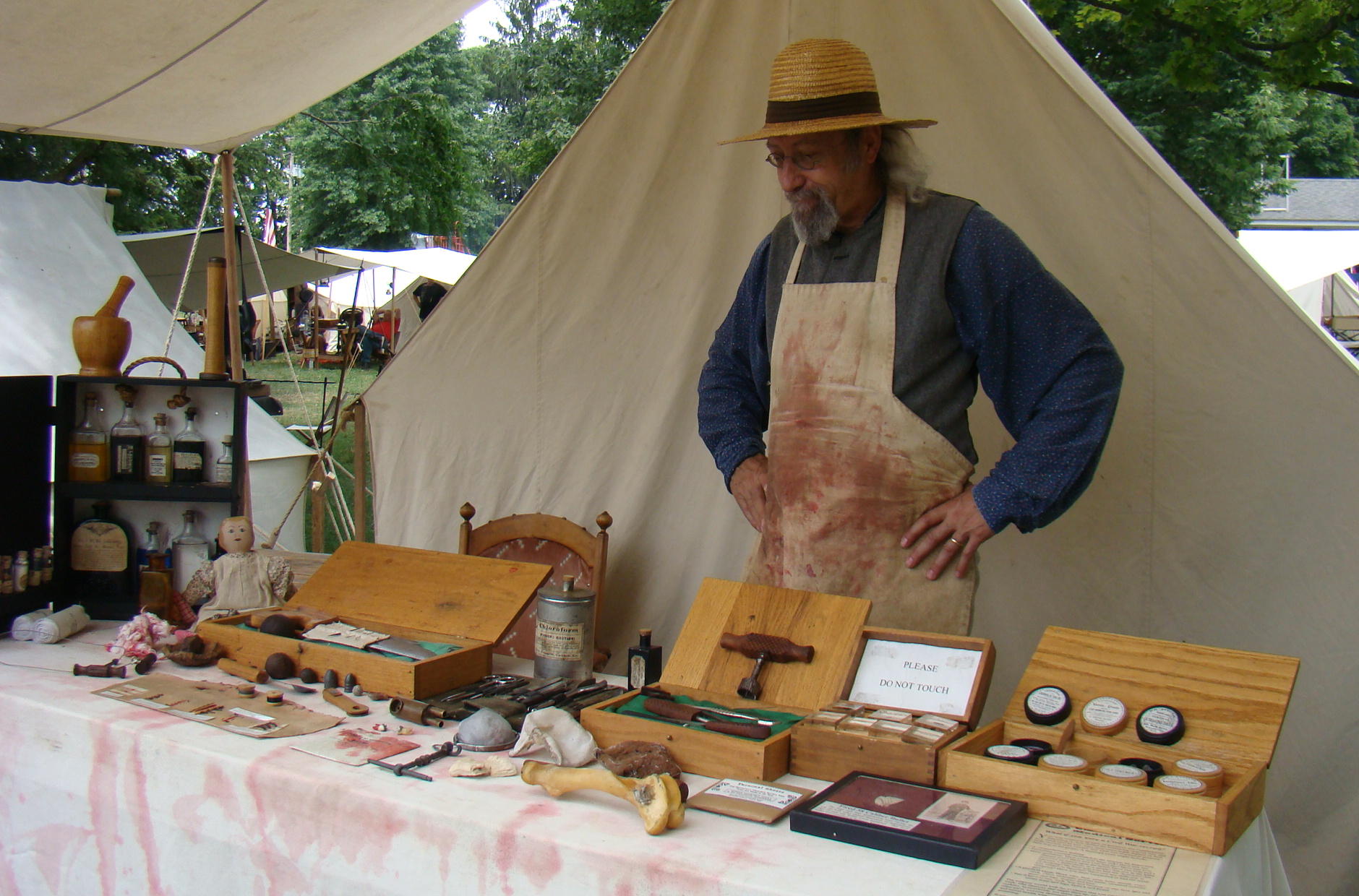
Many medical treatments were explained by the blood stained Head Surgeon of the Confederate regiment. When asked what might be used to help a headache, the major informed visitors that opium would be used if it was severe, while a relaxing morphine or sassafras would be used  for minor headaches. If the headache was too bad, they would just bore a hole in the head to release the evil spirits. Upset stomachs were treated with licorice or ketchup, and beef extract provided a soothing soup for many ailments. They even had a hollow doll that was used to smuggle medicine through the opposing lines.  Later in the afternoon at the field hospital, the surgeon cured a case of gangrene and subsequent blood poisoning by sawing off the leg of the victim.

Walked down to the Courthouse for “Squirmish on the Square”, where a staged battle occurred between soldiers from the North and South. Much ceremony was involved in the presentation of the battle both before and afterwards. There was even a bit of humor thrown in as they robbed a Wells Fargo box and then blew it up. The closing ceremony showed soldiers from both sides presenting arms, taps were played and a wreath was placed on the Civil War Private monument standing in the center of Main Street.  The base of this monument is made of stone from Gettysburg and the Gettysburg Address is engraved on one side of the monument.

After a hot afternoon on the square, it was time for a drink. As Yosemite Sam would have said, “Sasparilly, and make it snappy!” Sarsaparillo was a popular drink of the Civil War era and a cold bottle hit the spot.  Made from sarsaparilla roots, this drink is  called “The Granddaddy of All Root Beers”.  Originally the bitter root brew was used for medicinal purposes treating digestive problems, but later sugar water was added to make it more palatable. ..and a soft drink was born.

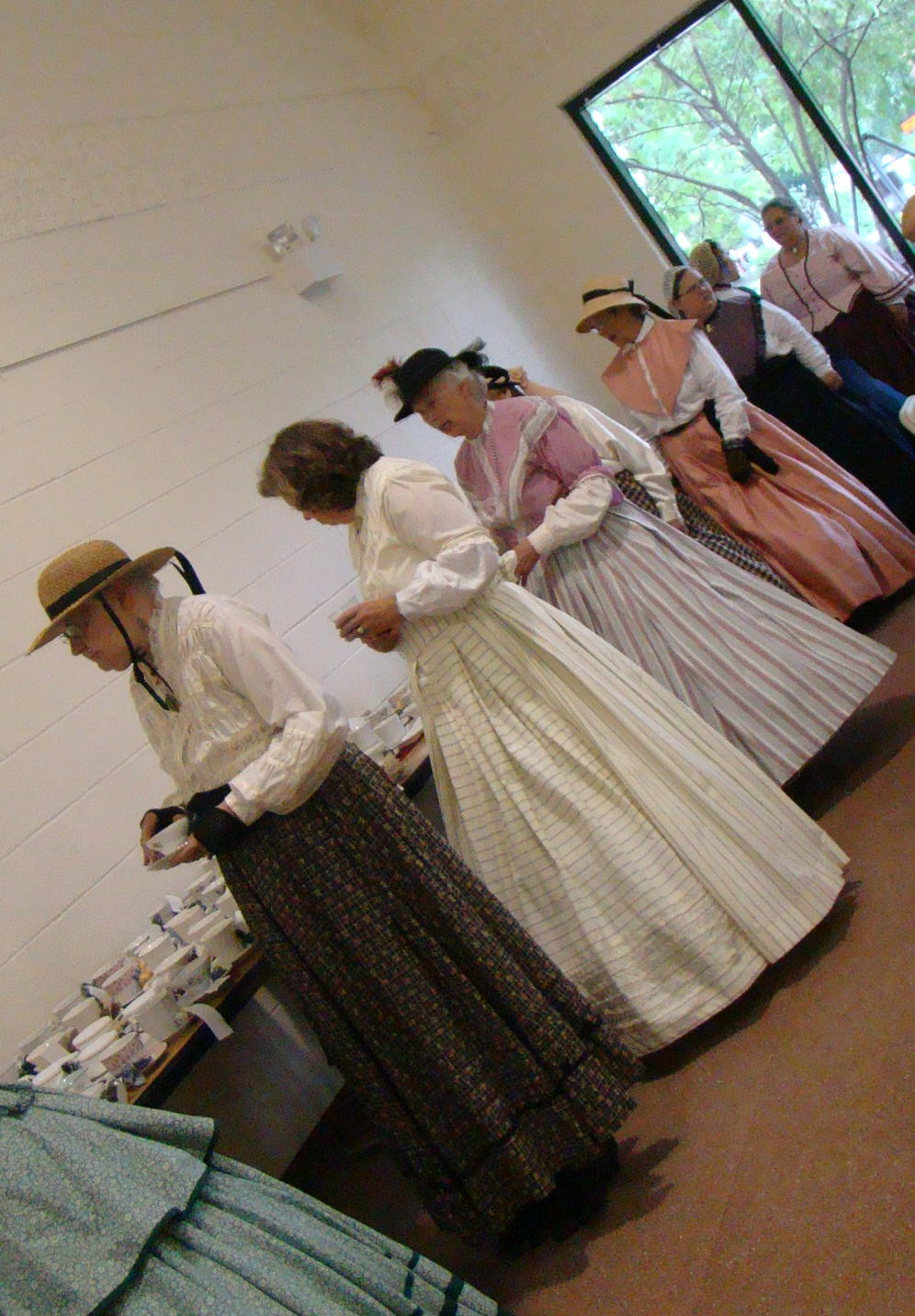
Ladies’ Tea was served amid beautiful hooped gowns and lovely flowered hats. Cucumber sandwiches, fresh fruit, and small cakes were part of the traditional menu. After tea, Verna Owens of St Mary’s, West Virginia told tea drinkers about Women During the War…from the Confederate viewpoint. Her leader was President Jefferson Davis, who had his Confederate White House at Richmond.

She described the proper dress and manners for a Southern lady, who always carried a parasol and wore a hat.  Her cooling fan accomplished an additional task as a means of expressing her thoughts without saying a word.  For example a fan closed in a snap meant she was angry with what was being said, while fanning quickly might mean she couldn’t believe what was happening, or as we might say, “Oh, my!” Many toys of the time were explained and on display. Quiet dolls for church were made out of handkerchiefs, and there was a cow’s jaw for musical entertainment. When soldiers were leaving for battle they gave their sweethearts a tear bottle to collect their tears while they were gone.  Upon their return, they hoped to find it at least half full. Verna closed by saying one truth learned from the war was that we definitely should learn to get along.

In the evening, a Civil War Ball captured the beauty that sometimes appears in the midst of turmoil. Ladies were dressed in their finest, but few hats were worn to the ball…just ribbons or flowers in their hair. Some men wore their uniforms while others were dressed in their best tailcoat. Dancers swirled around the floor doing The Promenade, Waltz, Virginia Reel, and Patty Cake Polka with music provided by Back Porch Swing Band.  What a great ending to a Civil War Day.

This particular Civil War Encampment occurred in McConnelsville, Ohio which is just South of Zanesville, Ohio on Route 669 following the beautiful Muskingum River.  Located riverside just north of town is The Boondocks, one of Ohio’s best small-town eateries being featured in many magazines across the state. Their specialties are their award winning BBQ as well as their great and friendly service.  Could be worth a Sunday drive for a nice meal even if there isn’t an encampment happening!

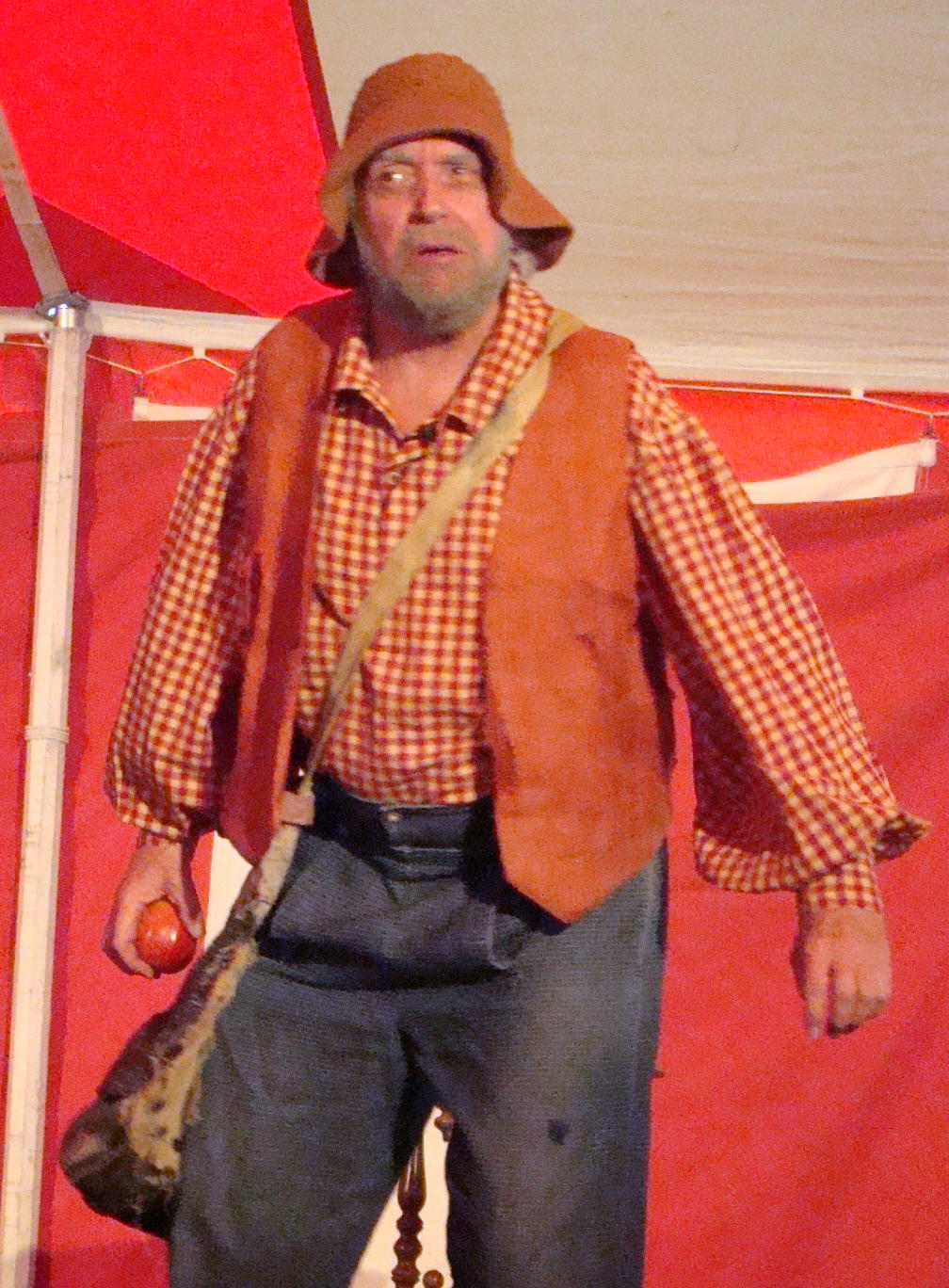
Ohio’s Johnny Appleseed Ap*peel*ing to the Core

An apple a day keeps the doctor away is a saying we have heard most of our lives. But John Chapman, better known as Johnny Appleseed, has a slightly different version:  Eat an apple before you go to bed, and make the doctor beg his bread.

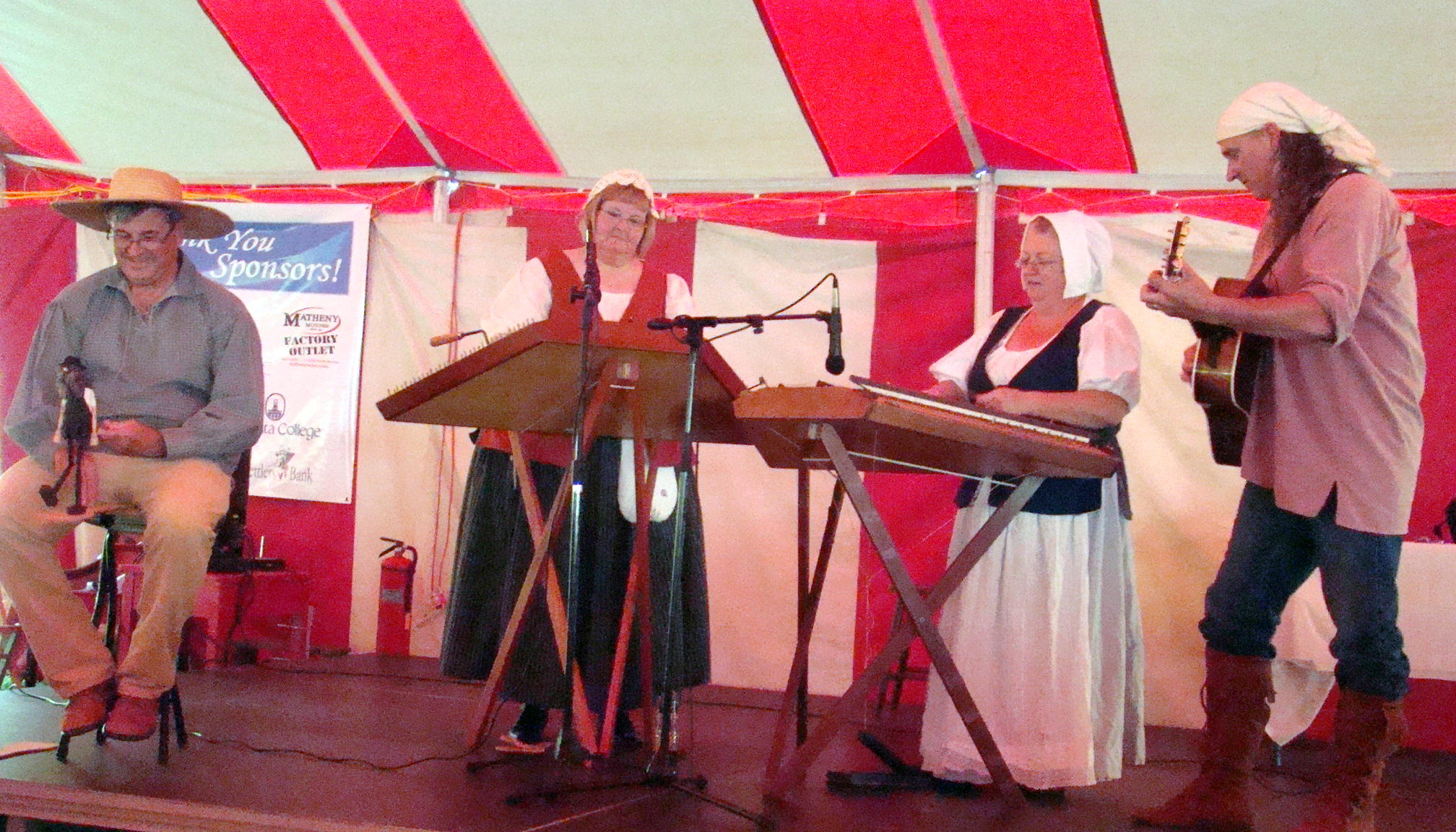
Each evening before the appearance of historical scholars, local musical groups entertained with songs from frontier times.  This particular evening a group called Unwound presented lively music on two hammer dulcimers accompanied by guitar and tapping Limberjacks.  They got the crowd in the Chautauqua tent at Marietta Ohio ready for the appearance of Johnny Appleseed, an excellent yarn spinner.

John Chapman wanted to do something useful with his life that would also support his ministry. Apples seemed to be the perfect tool as they were the only fruit that could stay fresh for an extended time. There was a litany of uses given by John regarding his favorite fruit: apple chips, apple butter, apple brandy, and even payment for taxes…to name a few. Would you believe his favorite color is apple red?

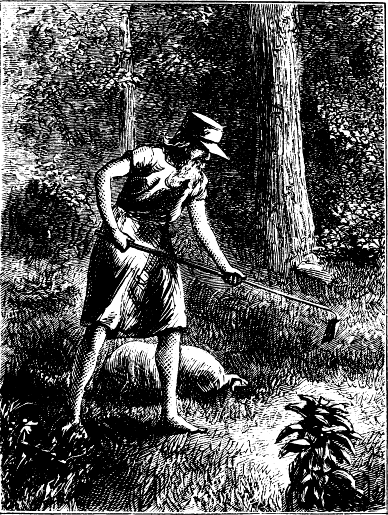
Starting a nursery for Johnny was a simple affair: poke a hole, plant a seed, cover it up. He tried to anticipate where people would be settling in two or three years and would start a nursery in that vicinity. Johnny said that in order to claim the land, the homestead law required settlers to plant fifty apple trees during the first year. Sometimes you might see him going down the Ohio River with two canoes:  Johnny in the first one, 50 apple seedlings or apple seeds in the second.

In 1812 when troubles in America erupted with the British and the Indians, Johnny said the fear grew deeper than the snow. These war years were painful for Johnny, as he had always been friends with both Indians and whites.  Trying to make peace was like trying to put out a fire – while you were stomping on one, you were fanning the rest. At this time, he felt the Indians were like a tornado – you never knew where they were going to strike.  But you couldn’t always trust the British either as they burned whole villages – another white man’s promise up in smoke!

With his constant good humor, he admonished listeners not to believe everything they heard about him, “Gossip is like the measles, sooner or later it will turn your face red.”  For example, barefoot Johnny Appleseed did not walk over the entire country.  His travels and consequent apple tree plantings only occurred in New York, Pennsylvania, Virginia, Ohio, Michigan, Indiana, Illinois and often in a State of Confusion.

Johnny was deeply religious and felt his religion gave him a peaceful path to tread. His was the perfect life in his eyes because sometimes he was with people… but sometimes by himself.  He often enjoyed being alone and said he was not “the marrying kind”.

He spent his life doing good deeds for others and planted more than just apple trees. He also planted spiritual seeds that nourished the soul.

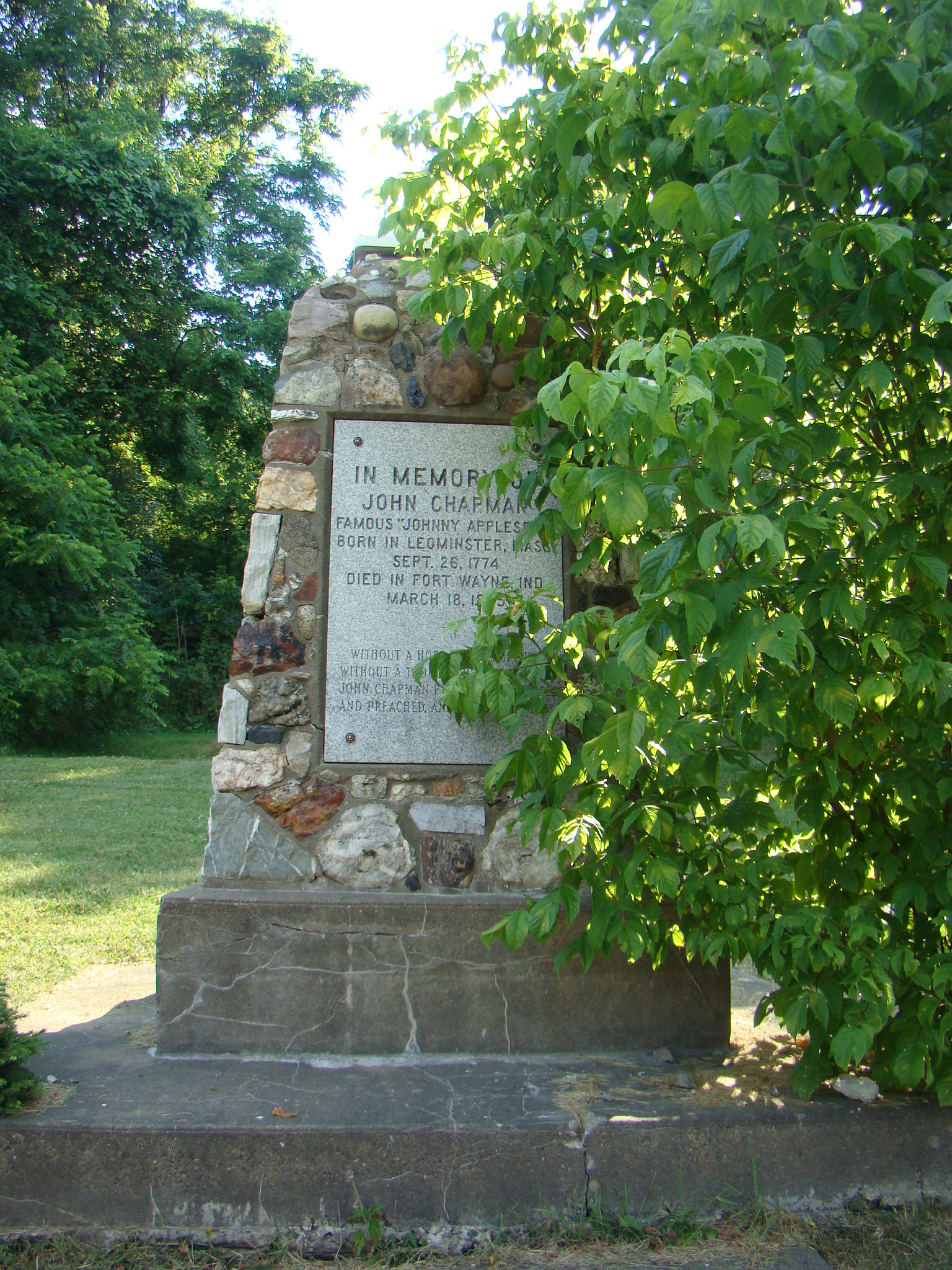
Along the way to Marietta, stopped just south of Dexter City on SR 821 to see a monument dedicated to Johnny Appleseed.  It is made of small rocks contributed by people in areas where Johnny planted apple tree.  The grave sites of his family are located nearby.  The tree to the right behind it is, of course, an apple tree.

Hank Fincken displayed a great sense of humor in his portrayal of Johnny Appleseed /John Chapman.  Johnny was the first historic figure that Hank ever developed. He feels it opened doors for him much the way Johnny’s seedlings opened doors for early settlers.

2012 Ohio Chautauqua continues throughout the summer with week long performances and workshops in Gallipolis (July 17-21) and Warren (July 24-28). Hope you find time to join them and learn a little more about “When Ohio Was the Western Frontier”.