Places to go and things to see by Gypsy Bev

Archive for the ‘History’ Category

National Road – Zane Grey Museum
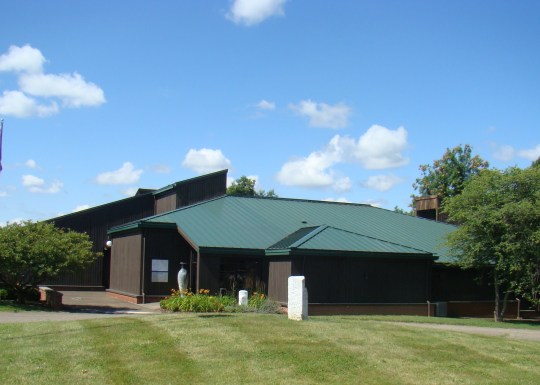
Zane Grey Museum

The Zane Grey Museum was originally constructed to resemble a frontier fort.

Three pieces of history are superbly woven together at the National Road – Zane Grey Museum between New Concord and Zanesville, Ohio along old Route 40. Learn about the road to the West, famous author Zane Grey, and Zanesville potteries.

Way back in 1811, Ebenezer Zane discussed with George Washington the need for a road across the newly settled country. Washington agreed it was vital to the future of the country so proclaimed, “Open a wide door, and make a smooth Way.” That began Zane’s Trace, which became part of the National Road.
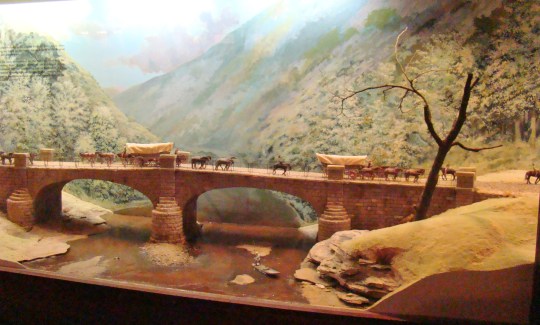
Zane Grey Crossing

Diorama sections show their difficult work in constructing The National Road over streams.

The museum presents a detailed 136′ diorama depicting life on the original National Road, often called “The Main Street of America”. All the figures are hand made from clay and accurate down to the tiniest detail.  The first road was dirt, followed by the Corduroy Road made of logs, making it very rough. Eventually a stone foundation was in place with crushed stone on the top, and finally bricks
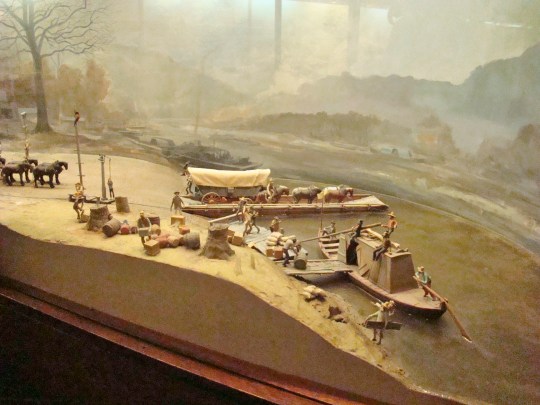
Zane Grey Ferries

Ferries took wagons and supplies across the Ohio River.

Every mile a stone mile marker gave travelers information on mileage to various towns along the way. A Gunter Chain, 66′ long, was used to measure the distance of one mile time and time again. If you moved the 66′ chain X 80 times = 5,280 ‘, the distance of one mile. The Gunter Chain also measured the distance across the road – 66’.
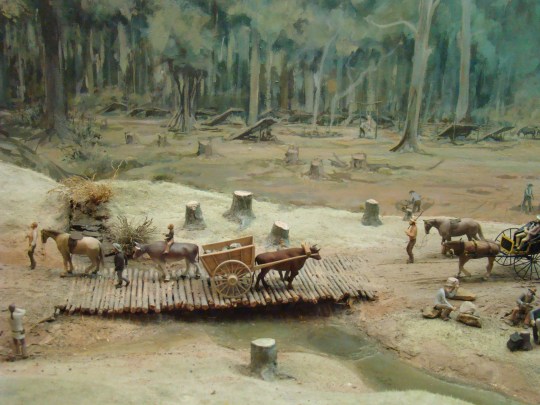
Zane Grey Diorama

Logs formed the Corduroy Road, a rough stretch to travel.

After WWI, Dwight Eisenhower led a convoy of trucks across the National Road, and during WWII, General Eisenhower discovered the Autobahn in Germany. When he became president he felt it of high importance to develop better highways in America. Thus began our interstate highway system.
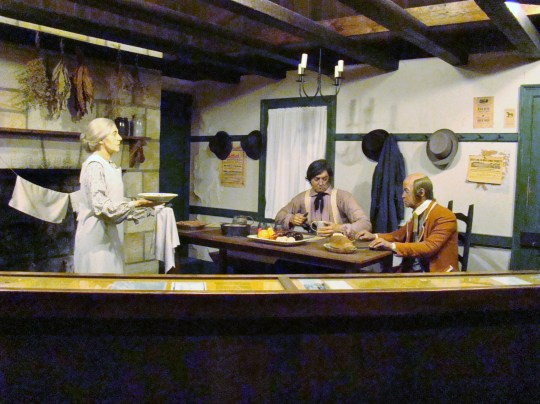
Zane Grey Stop

The 10 Mile House provided refreshments along the highway. Baker’s Motel is located on that spot today.

Pearl Zane Grey, being born in Zanesville, traveled this road frequently. His early writing attempts were squelched by his father, who insisted that Zane attend the University of Pittsburgh so he could be a dentist and follow in his father’s footsteps. Zane did graduate with a degree in dentistry after enjoying a time of pitching his great curve ball on the college baseball team, where he enjoyed a full baseball scholarship.

When he married Dolly, her encouragement and editing abilities, along with a nice inheritance, made it possible for Zane to abandon his dental practice and begin following his passions…writing and fishing.
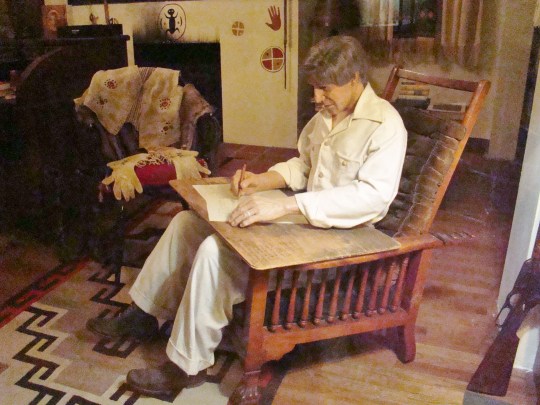
Zane Grey Study

Zane Grey wrote his books by hand in his study, surrounded by native American items he had collected in his travels.

His first book was Betty Zane, the story of a young girl who helped save Fort Henry. But it was Riders of the Purple Sage that put popularity into Grey’s writings. His books sold like hot cakes. Zane wrote all his stories in long hand, then his wife, Dolly, typed them and had them published. Many were turned into movies.

Zane enjoyed fishing more than anything else and spent over 300 days a year at that sport. He split the money from the books with Dolly, and he spent his half on fishing, boats, and travel. When he traveled out West, he filled his tablets with descriptions of the scenes he saw, for use in his stories.
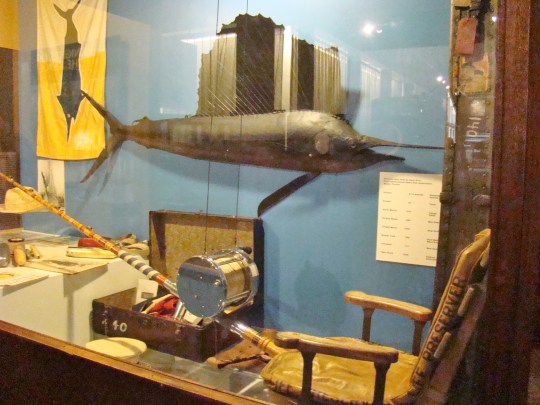
Zane Grey fishing

Big-game fishing was the real passion in his life.

The only books that sold more copies than Grey’s at that time were the Bible and school primers. Hemingway was quite jealous of Grey, not because of his successful writing career, but because of his great fishing ability. Zane’s love of the great out-of-doors can be seen in all of his books through his detailed descriptions. 

Now how does the fantastic collection of pottery fit in? The perfect clay for making pottery could be found in this area quite easily – in dirt roads, such as the National Road, which had clay as their base. Potters would go out to the road and dig up a small portion of clay to make a vase or bowl. This became known as a “potters’ hole”. Thus the term we use today for a hole in the road – “pot hole”.
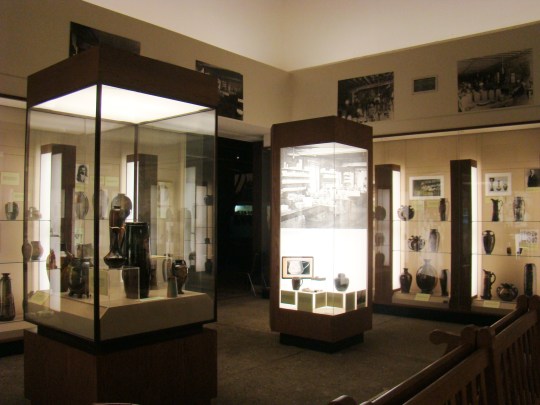
Zane Grey Pottery

This is a small section of the Zanesville Pottery collection on display.

But the collection goes beyond those humble beginnings and includes the work of over 132 potteries in the Zanesville area. Thousands of workers contributed to this large display, which was originally the collection of Mr. Downey, the owner of Conn’s Potato Chips. Upon his death, half of his pottery was given to the Zane Grey Museum for display, while the other half is in the Zanesville Museum of Art.
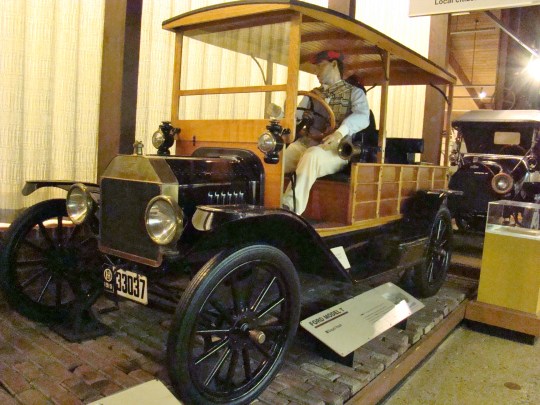
Zane Grey Model T

Find surprises along the way like this Model T Ford.

Next time you travel along the Old National Road, today’s Route 40, stop at the National Road – Zane Grey Museum and watch a film about the life of Zane Grey. The knowledgeable guides will lead you down the road to books, movies, pottery…and some surprises along the way.

National Road – Zane Grey Museum is located on old Route 40 about a half mile from I-70, Exit 164, Norwich Exit. The museum is located between New Concord and Zanesville, Ohio.


Take a Country Drive to Explore Coshocton Quilt Barn Trails


Garden of Eden

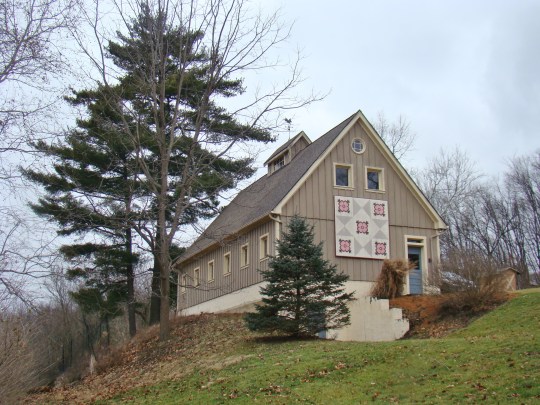
Quilt patterns on the sides of barns gave a purpose for a country drive.

A Sunday drive has always been one of my favorite things. Dad would travel the back roads exploring places we’d never been. That same feeling occurred while wandering along the Coshocton Quilt Barn Trails. It was a peaceful, old-fashioned road trip on those narrow, two-lane country roads, where you could actually take time to look at the scenery.

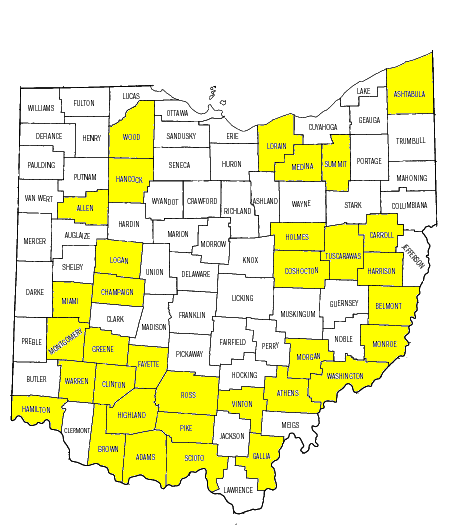
While Quilt Barns have become a nationwide movement, they got their beginning fairly recently. In 2001, Donna Sue Groves wanted to honor her mother’s passion for quilting, so painted her mother’s favorite quilt square on their old tobacco barn in Adams County.

Ohio Quilt Barns

These counties in Ohio have Quilt Barn Trails.

From there, the Quilt Barns arose to reflect the spirit of the community. In Miami County, quilts were hand-painted on the barn’s surface replicating the look of fabric, while in Harrison County emphasis was on the Underground Railroad.

Coshocton County Heritage Quilt Barns feature family quilt patterns. Each quilt has a story to tell. The Pomerene Center for the Arts is responsible for creating this historic drive to view our nation’s agricultural landscape. They have three possible routes: Tiverton Trail, SR 643 Trail and Progressive Valley Trail.

It is important to either print off a map from the computer, open one on your phone or tablet, or pick one up at Coshocton Visitors’ Bureau in Roscoe Village. Directions are essential.

Mother Setzer's Quilt

Mother Setzer Quilt Barn appeared in a natural rock setting.

Several of the Quilt Barns have online connections to stories about the colorful quilts and who originally designed the quilt squares. Mother Setzer Quilt Barn appeared first on our adventure, and had a lovely setting with a firm foundation of large rocks around the barn. Their grandmother made this quilt pattern from scraps of her clothing and black silk dresses.

While SR 643 became the trail of choice, meandering from that path became frequent. The desire to see more Quilt Barns eventually included parts of all three Coshocton trails.

Sweet Pea

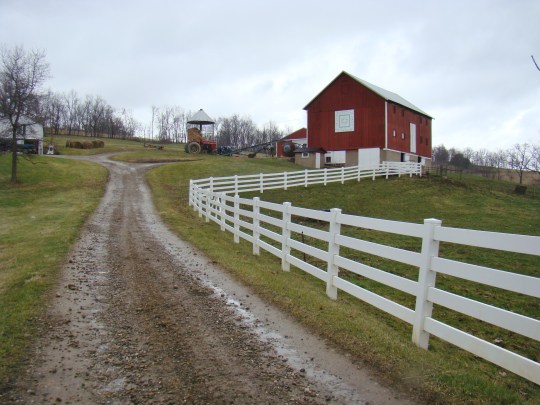
The lane back to Sweet Pea Quilt Barn featured a picturesque white fence.

Many of the Quilt Barns sat on back roads. Some became a challenge, and a four wheel drive vehicle would have been helpful on this rainy day as roads were steep and muddy. But beautiful, scenic farms throughout this Amish countryside made the day enjoyable. Corn shocks were a sight not seen since childhood.

Chalice

A barn near a lovely stone home featured Chalice pattern.

Chalice was the name given to the quilt pattern made by Catherine Stubbs on a barn near a lovely stone house. It appears that Catherine stayed very busy with quilting and life in general. One day when her husband was at work in the coal mines, she moved them to another house closer to his work. It’s said when she cooked Sunday chicken dinner, she could stretch one chicken to feed twelve people.

Butterfly with Raindrops

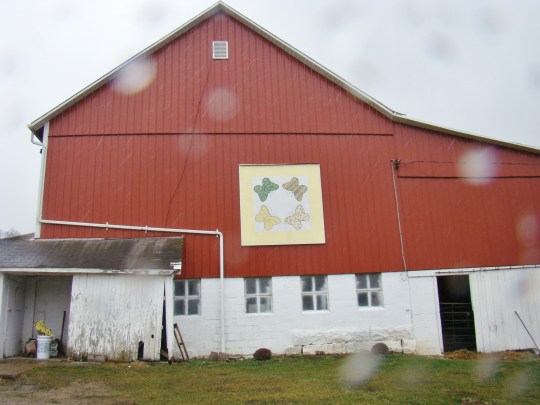
Butterfly Quilt Barn received raindrops during this trip.

The Butterfly Quilt Barn near Fresno showcases a quilt made and designed by Oneita Hahn. Family members remember her quilting frame being up in the dining room quite often. Quilt patterns frequently were created by the quilters themselves and then drawn on newspaper.

Snowball

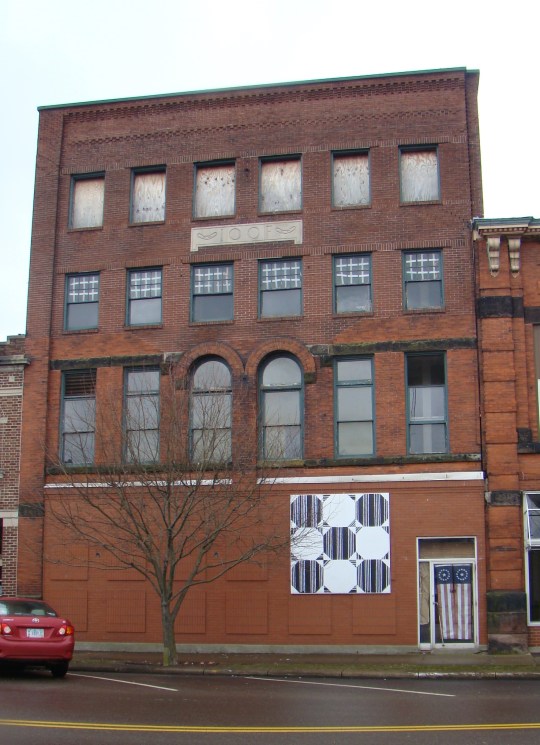
In downtown Coshocton, you’ll find Snowball pattern on the side of a former quilt shop.

Not all barns were in the country. One actually was found in downtown Coshocton on the side of an old IOOF building, which formerly housed Mercantile on Main. Snowball, a black and white quilt, decorated the front of this one-time quilt supply shop.

Canal Era Applique

Blacksmith shop in Roscoe Village displays an attractive quilt pattern.

In Roscoe Village on the side of the Blacksmith Shop, Canal Era Applique could be seen upon entering the village on North Whitewoman Street. The quilt square on display appeared on a quilt made by Hannah Hays, whose family arrived in the area by canal boat.

Ohio Rose & Star

Ohio Rose & Star can be found in Clary Garden in Coshocton.

The end of SR 643 Trail came in classy Clary Garden. Ohio Rose & Star has graced the side of their barn since 2003. Made by Coshocton Canal Quilter Helen Moody, this pattern was chosen to hang at the gardens in honor of the family’s rose business.

But this artistic project doesn’t stop here. All over the United States, Quilt Barn Trails have been created. Presently, over 6000 quilt patterns have been placed on barns in 33 Ohio counties, 45 states, and even some in Canada. It’s a wonderful excuse to get in the car and take a road trip.

Tractor Quilt

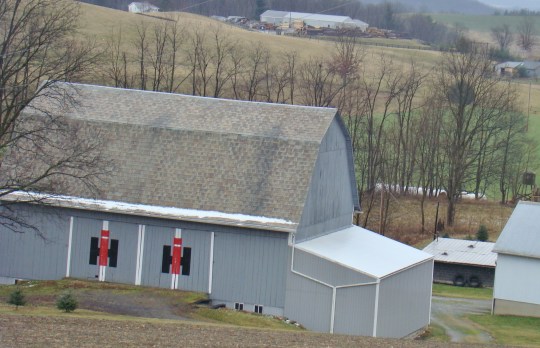
A clever tractor pattern on one barn added variety to the day.

This country adventure through scenic back roads will take you back to a less stressful time. The Quilt Barns provide a variety of attractive patterns in excellent condition. You can take this drive any time of the year and enjoy this grassroots art movement. Watch for Quilt Barns wherever you travel.

While on the Coshocton Quilt Barn Trails, you’ll find not only creative quilt patterns but Amish farms, meandering streams, beautiful stone houses, and unique shops along the way. Don’t forget your camera!

AMA – Motorcycle Hall of Fame Springtime is the Perfect Time to Get Out and Ride

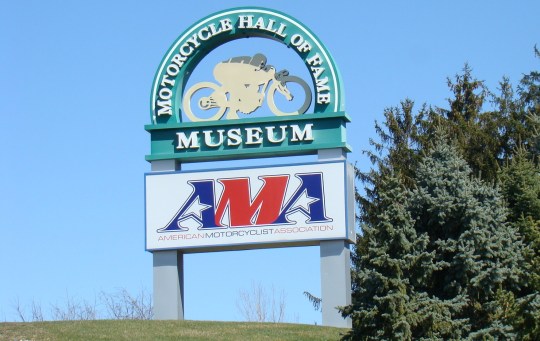
AMA Museum Sign

This sign along I-70 directs motorcycle enthusiasts to the AMA Hall of Fame.

April’s “ AMA Get Out and Ride! Month” seems the perfect time to visit the AMA Motorcycle Hall of Fame. What stories the bikes tell and history they hold.

AMA, American Motorcycle Association, serves a membership of over 200,000 with an average experience of 28 years. They own 615,000 motorcycles, which are ridden over a billion miles each year.

In 1990, AMA Hall of Fame first opened in Westerville, then moved to its present Pickerington location in 1999. Here it can easily be seen from I-70.

AMA Hall of Fame

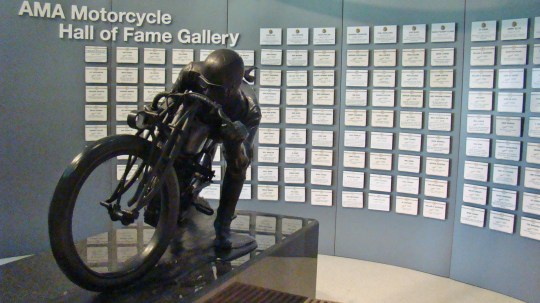
The Hall of Fame plaques surround a circular room. You’ll find familiar names there even if you’re not a motorcycle fan.

A special round room holds a plaque for each member inducted into the AMA Motorcycle Hall of Fame. They recognize individuals who have contributed to the motorcycle sport over the years. At the entrance is a Glory Days Statue.

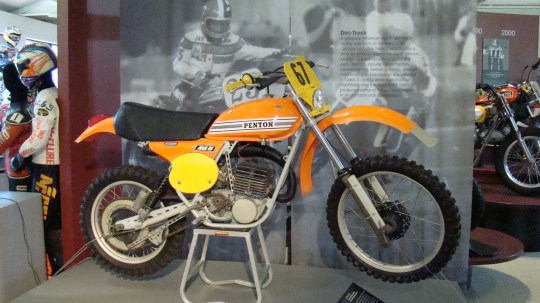
AMA Dirt Bikes

Dirt bikes are especially popular with the younger generation.

The displays at AMA Hall of Fame are arranged in sections according to motorcycle type: Dirt Bike, Road Racing, Motocross, Specialty and Off Road. Each one holds memorabilia from many familiar names, who are fearless, imaginative and awe-inspiring.

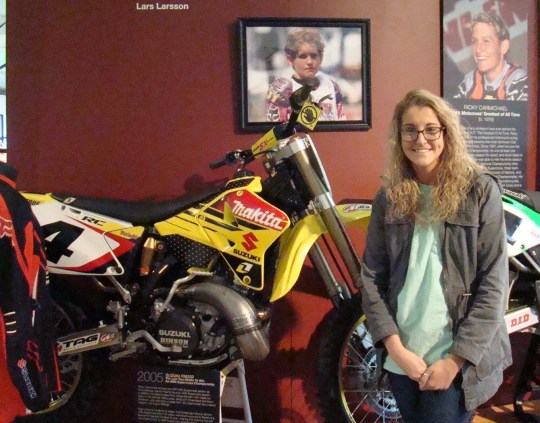
AMA Ashley

Ashley, AMA Associate Editor, enjoys motocross. Her favorite motocross racer is Ricky Carmichael, the winningest motocross racer of all times.

Ashley Price, Associate Editorial Director at AMA, gave an excellent overview. She had a passion for motorcycles, having gone to Motocross training daily at the age of 14 while being home schooled.

Her days were carefully monitored regarding food, gym and riding time. She only slipped up once on her food. At Walmart, she purchased a box of Wheat Things. Punishment – another six or seven miles of bike drills.

Those years of competition have given Ashley determination in life situations. “The camaraderie of family and friends has given many memories. I’ve learned life lessons in working hard to accomplish goals.”

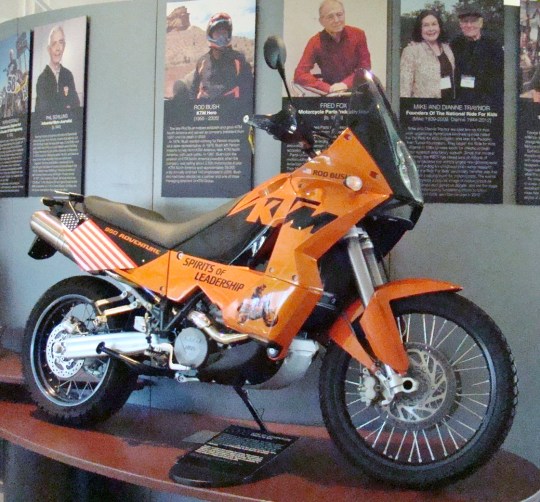
AMA Adventure bike 2

Adventure bikes are the most popular today as they can ride in the street and off road.

Riding a bike in racing takes more strength and determination than it appears. It is one of the most difficult sports in the world. At the end of a race, riders are exhausted. It takes a great combination of man and bike to win consistently.

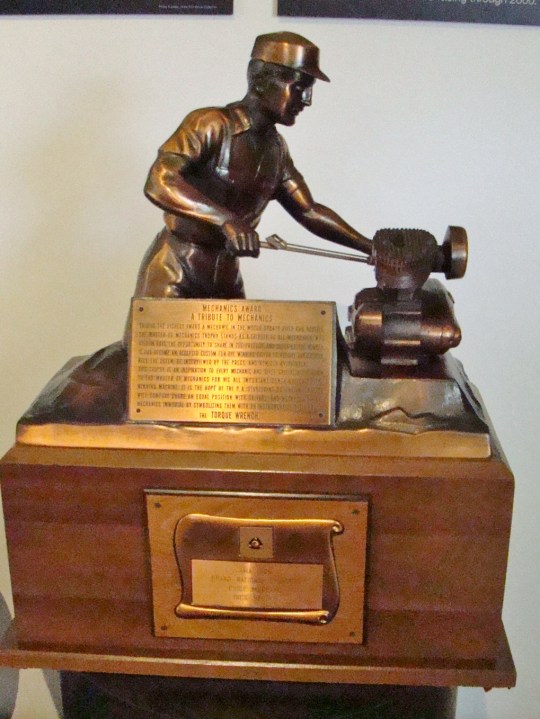
AMA Mechanics

Let’s not forget the mechanics, as their role in a race is crucial.

If you like motorcycles, you’re sure to find something of interest at AMA Hall of Fame, which is packed with motorcycle history. With 117 bikes, there’s a great variety. It’s not possible to describe all of them here, so you’ll have to visit yourself. Most were donated by names familiar in the biking world.

AMA Oldest Bike

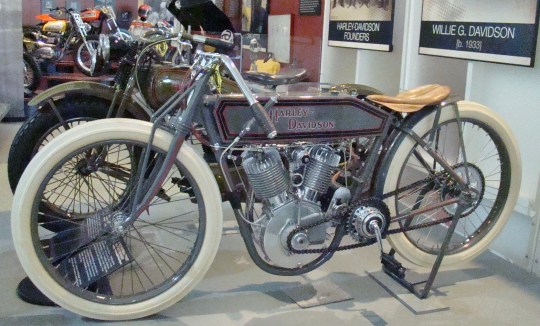
Currently, the oldest bike at the museum is this 1914 Harley-Davidson, one of the earliest dirt bike racers.

A 1914 Harley claimed the honor for the oldest bike at the museum. Most popular now are adventure bikes. They can go on the street or easily off road due to their special tires. They’re not for competition, just enjoyment.

AMA Toy Bikes 2

Downstairs at the AMA Hall of Fame, there is a nice selection of motorcycle toys.

Downstairs, Motorcycle Toys and Collections stir up some memories, or watch a biking video. “Why We Ride” played during a recent visit and centered around family fun involved with making great memories. “It’s a most interesting, amazing adventure,” quipped one lady aged 78, heading for 100.

AMA Wooden toy bike

This wooden motorcycle overlooking the patio, gives children a chance to sit on the seat or in the side carrier.

Riders feel this is a great way to make friends. Children join in at an early age on their dirt bikes. Charity work frequently happens with motorcycle groups. Everything from Cancer Runs to Christmas Toy Drives occur around the world.

The AMA sets up a Gypsy Tour series for their members. Its purpose is to have a rally and provide a memorable experience for everyone involved. Motorcycle friends are a close knit family, where men, women and children enjoy the thrill of riding and racing together.

If you are passionate about motorcycles, AMA Motorcycle Hall of Fame would be a great family outing. Then, Get Out and Ride!

The AMA Motorcycle Hall of Fame can be found just off I -70 at Exit 112, Route 256. Take a left of Blacklick Eastern Road and another left on Yarmouth. Watch for their posted signs to 13515 Yarmouth Drive. Enjoy the ride!

Famous Endings Museum – Largest Funeral Memorabilia Collection in the World

famous-endings

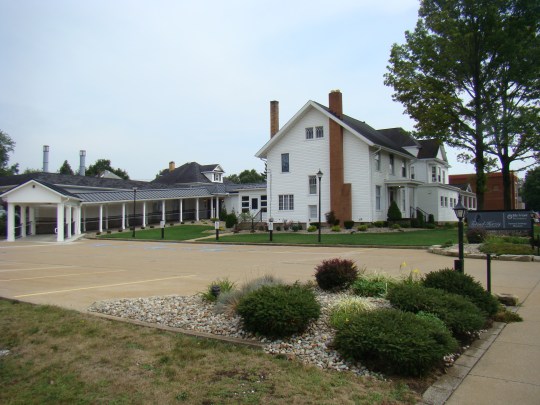
Toland-Herzig Funeral Home in Dover features Famous Endings Museum.

What better place to have a Famous Endings Museum than a funeral home. In Dover at 803 N. Wooster Avenue, the Toland-Herzig Funeral Home has an outstanding display of funeral memorabilia from people who have made a difference in the world.

endings-entrance

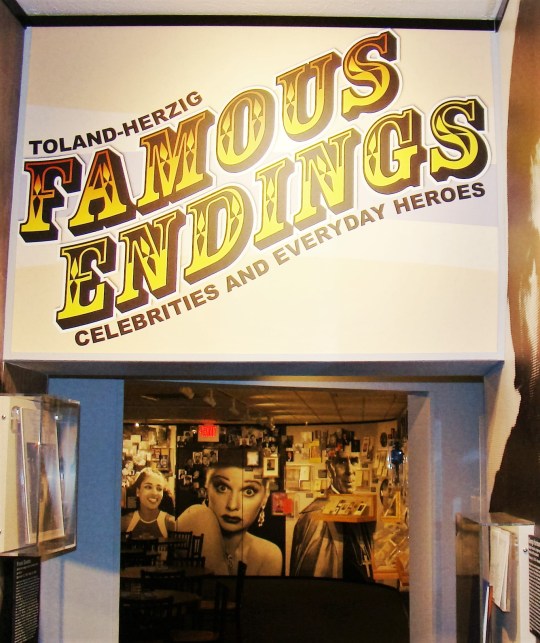
The entrance to Famous Endings gives a glimpse of celebrities.

The staff hopes that their presentation will perhaps bring back memories, or even a smile to your face, as you see some of those people who had a great influence on our lives.

famous-endings-cafe-setting

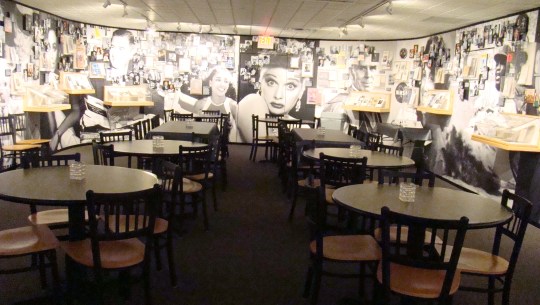
This cafe setting provides a place for visitors to sit and listen to John’s stories.

Here you will find the largest privately owned collection of funeral memorabilia in the world. Everything from funeral programs, photos, newspaper clippings, and prayer cards can be viewed. Most of the memorabilia is displayed in one large room, but it has spread out to the hallways and other small rooms throughout the funeral home.

john-herzig

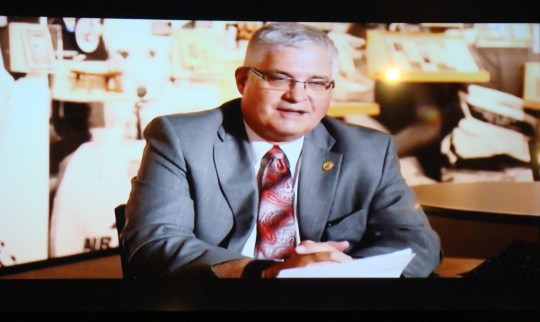
An excellent video by John Herzig helps explain his collection.

This is a rather recent collection started by John Herzig back in 1996. Up to that time, he had an autograph collection, but that was soon to change when he sent a request for the autographed picture of the late Joe Lewis, the boxer.

When he received the package in the mail, there was more than what he asked for. It included not only a picture, but also the program of the funeral ceremony. That was the beginning of his new hobby, which has evolved to over  2,000 pieces of funeral memorabilia on display today.

famous-nasa

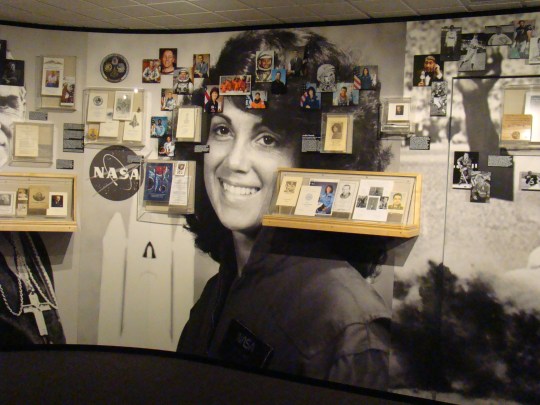
NASA exhibit features Ohio astronauts with Judith Resnik highlighted.

Many funerals they actually attended under special circumstances. When John heard of the public funeral of Jack Kevorkian in Michigan, he suggested to his wife, Joyce, that perhaps it would be a nice weekend for a trip to Michigan. The next day after arrival, he told her they were going to the White Chapel Mausoleum for funeral services at 9:30. Her response was, “Have you lost your mind?”

His wife has patiently endured his many attempts to find funeral programs and memorabilia. Learn more about her tolerance as you hear about the 50th birthday trip to New York City that he promised her, or their stop at a celebrity filled cemetery in L.A. on the way back from a cruise. Joyce won’t soon forget these special trips.

john-glenn

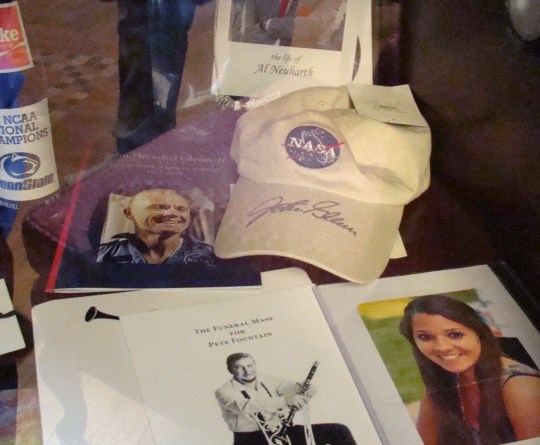
The family attended the funeral of John Glenn and display memorabilia.

The trips to funerals are usually family affairs. Often Joyce accompanies him but recently his son, Troy, went with his dad to a couple memorable memorial services for John Glenn and Muhammad Ali. Their programs are already in place at the museum.

troy-and-jackie-robinson-1

John and Joyce’s son, Troy, especially enjoys the sports heroes.

John Herzig enjoys hearing stories about people who have changed the world in some way. Those are the kind of people he has honored in his Famous Endings Museum. “Each person has a story to share.”

Among his favorites are people who helped others. They weren’t big Hollywood or TV stars, but people who made a difference… and he has their funeral programs! Millard Fuller,  a self-made millionaire at the age of twenty-nine, is a prime example. Fuller gave all his money away to start Habitat for Humanity.

william-greatbatch

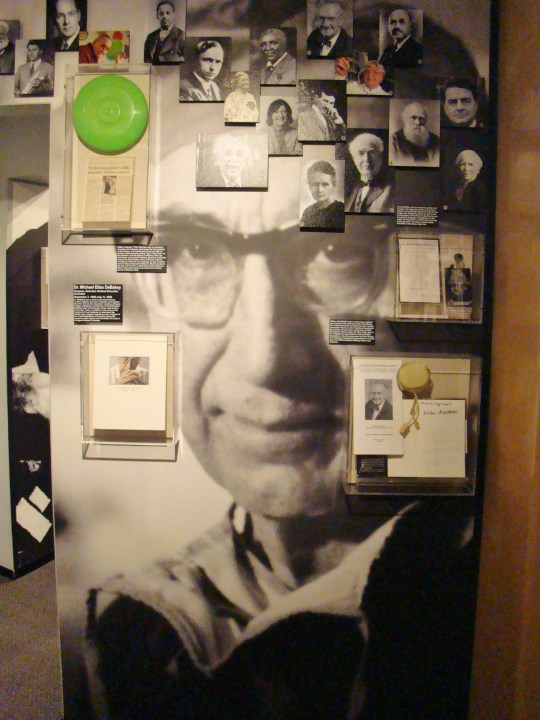
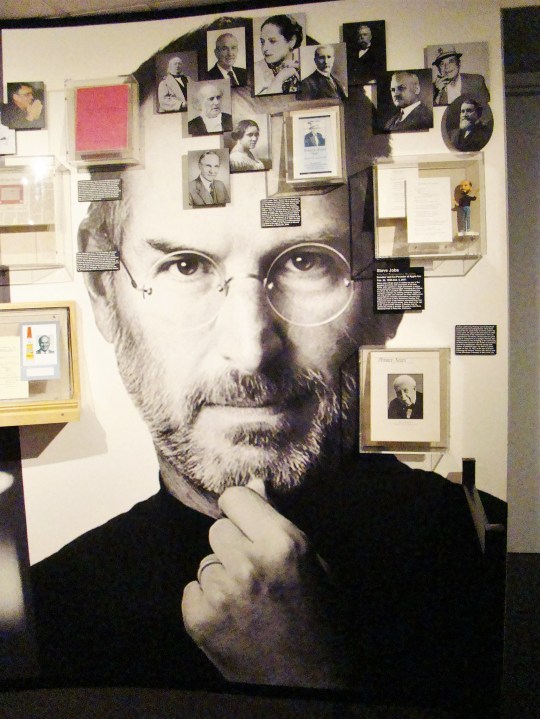
This large photo of William Greatbatch, inventor of the pacemaker, is surrounded by memorabilia of other inventors.

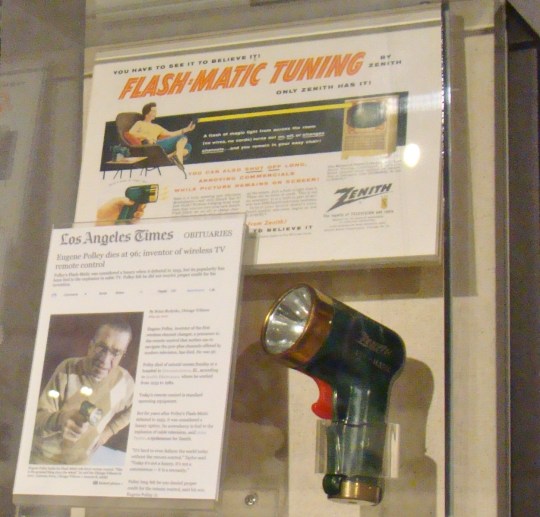
The collector placed high importance on William Greatbatch, who made the cardiac pacemaker, and Eugene Polley, inventor of the TV remote control and often labeled “Father of the Couch Potato”. This museum perhaps could be called the Influential Hall of Fame.

famouc-endings-steve-jobs

Steve Jobs is showcased in their entrepreneur display.

Famous Endings Museum has special admiration for Frank Inn and his love of animals. He trained popular animals such as Arnold the pig, Lassie and Benji, who he saved from a shelter. Frank’s daughter recalls, “He could train animals to do things that most people didn’t believe.” Some of those favorite animals were cremated and buried with Inn.

remote-control

Invented by Eugene Polley, the first remote, Flash-matic Tuning, definitely changed our lives.

Some of visitors’ favorite exhibits are memorabilia from people who made us smile in the past, such as Captain Kangaroo and Mister Rogers. Comedian Leslie Neilson carried his sense of humor to his funeral. The packages of Kleenex he prepared for his funeral are on display there. They carried the inscription: “Stop crying. This is supposed to be a fun night. Love and laughs, Leslie.”


lincoln-lantern

This lantern from Lincoln’s funeral carriage has become one of John’s favorite treasures.

Several times a year, John schedules a “Night at the Museum” where he features a special person or group of people. Visit their Facebook page or website for details. The museum is free and open for visitation Monday – Friday from 9:00 am – 5:00 pm. It’s one of those places you have to see to believe and appreciate.

famous-endings-ripleys

Ripley’s Believe It or Not featured Herzig’s Famous Endings Museum.

Famous Endings Museum has been featured on Ripley’s Believe It or Not, and is a frequent stop for tour coaches…especially Mystery Tours! This museum makes us look at death differently. As Randy Pausch wrote about funerals, “You can either be an Eeyore or a Tigger.” At Famous Endings Museum, they honor the contributions and memories,  as they celebrate the lives of famous people.

Visit Famous Endings Museum in Dover just off I-77 at Exit 83. Take Ohio 211 east/ Tuscarawas Avenue. Turn left on Slingluff Avenue and then right on Wooster Ave. The museum is on the left side of the street.

Coal Miner’s Statue -Unsung Heroes Remembered

You load sixteen tons, what do you get?

Another day older and deeper in debt

Those words rang true for the thousands of coal miners that lived in the vicinity of Guernsey County, Ohio during the early 1900s.

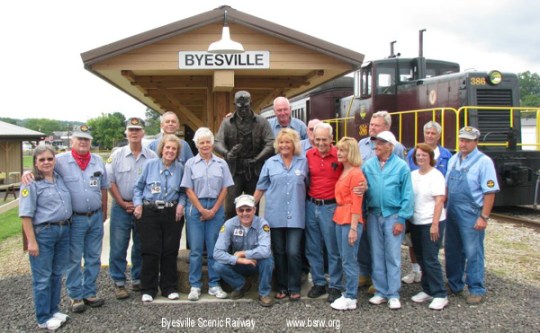
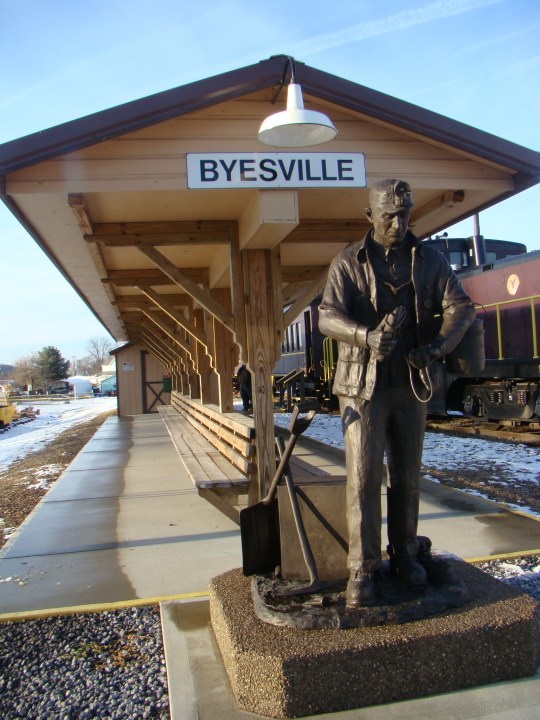
In order to honor these men and coal miners across the nation, a statue in their honor has been placed at the old train depot in Byesville, Ohio. This is no ordinary statue as it was commissioned by Alan Cottrill, internationally renowned sculptor, who has his studio in Zanesville.
The Train to Nowhere

These were busy tracks in their day, but today they have no traffic.

Why, you might ask, is this statue in Byesville? Why not place it in some larger city? Byesville was the coal capital of Ohio back in the early 1900s. Perhaps a hundred and fifty trains would roar down their tracks each day. Cars carried coal from Marietta to Cleveland and often into Canada.

coal_miners_memorial_09-08-2012_1

These volunteers were present for the dedication ceremonies.

Raising money for the statue was itself a challenge. Contributions came from local residents as well as all those who rode the now silent Byesville Scenic Railway. Total cost of this memorial was $40,000. So if you rode the train or visited their museum, perhaps you had a hand in making that statue become reality.

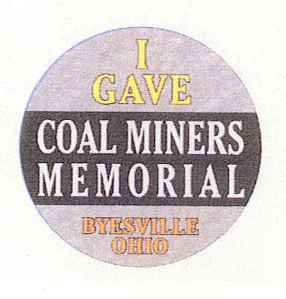
When you made a donation in any amount, you were given a badge saying:

I GAVE    COAL MINERS MEMORIAL    BYESVILLE OHIO

coal-mineres-memorial-badge

This was no ordinary badge as it was designed very carefully. Each color on the badge had great significance.

Yellow stands for a beam of sunshine that sheds light on the darkness of the dungeon of a dark and gray mine.

Gray is for the rock/slate layers that are found above and below the seams of coal.

Black needs little explanation as it is the color of coal, also known as black diamonds, buried sunshine, or rocks that burn.

Red is for the color of blood that was spilled onto the ground from those who either lost their lives or were injured while working about the mine.

Bronze Coal Miner Statue

Bronze Coal Miner Statue

Everything on this bronze statue has meaning.

His hat gave him a place to hang his carbide light. This was the only light down in those coal black mines. The miner had to purchase the pellets to fill his carbide light…at the company store, of course.The coal mines gave them nothing. Why, they had to buy their own picks and dynamite! 

If you look closely at the statue, the miner’s brass tag reads 382, the number of coal miners who lost their lives in the deep mines of Guernsey County over the mines’ sixty active years.

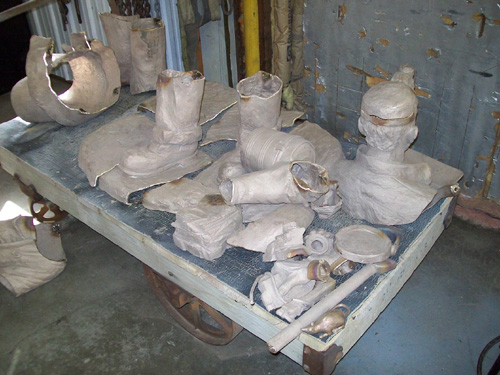
pieces-for-memorial

The sculpture pieces in Cottrill’s studio wait to be assembled.

The miner statue is missing his right index finger in honor of all the men injured in the mines. The dinner pail he carries was made by the Buckeye Aluminum Co. and was an important part of the miners day.

Many of those miners were immigrants, often called dumb hunkies  Everyone headed out to work swinging their dinner pail. The pails could not be set down on the mine floor or the rats, the miners’ mascot, would open them and eat their lunch. So miners always hung their dinner pails high on the mine wall.

A West Virginia ham sandwich was quite the treat. That ham by the way was what we call bologna.They always left a little something in their pail, just in case a cave in occurred and they might be below ground all night. If they made it safely through the day, the miners would let the children have their pails on the way home for a little snack.

From top to bottom each item has special significance from his hat to the dynamite at his feet.

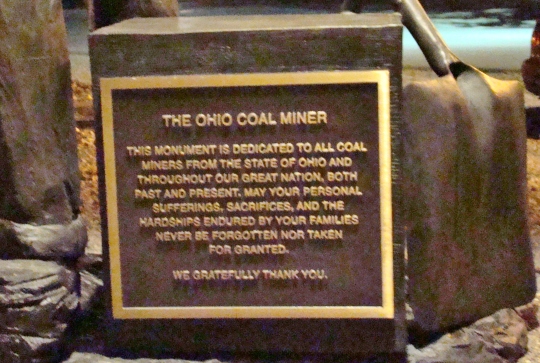
coal-miner-plaque

The dedication plaque at the statue

A portion of the plaque behind the statue states:

May the personal sufferings, sacrifices and the hardships endured by your families, never be forgotten nor taken for granted.

May the memory of these unsung heroes live on for generations.

The Coal Miner Memorial Statue can be found in Byesville, Ohio off I-77. Take Exit 41 and head into the small town of Byesville. Turn left on Second Street and two blocks down on the right hand side you will see the old train depot. The statue stands in front of the depot.

Trail Run- A Coal Mining Town

trail-run-view-with-church-by-tracks

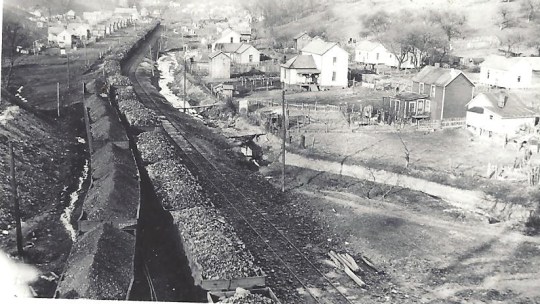
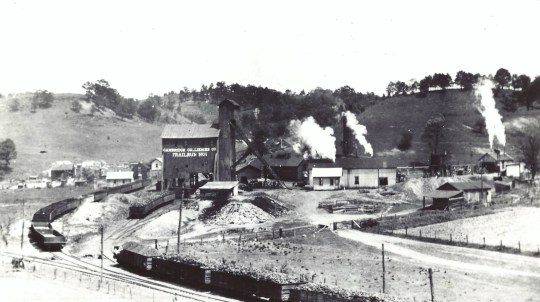
This overview of Trail Run shows many of the homes, the church and the mines.

In the valley between Byesville and Buffalo, the small town of Trail Run can still be found. Years ago this town was a booming coal mining area with 2000 residents. Let’s take a trip back in time to see what this town was like in the early 1900s.

Originally, this area served as home to the Delaware Indians, who lived along Rocky Bottom until the early 1800s. They traded lead for whiskey along their trail beside the run.

trail-run-1

Men worked in the mines to provide for their families.

After the Indians were chased westward, this area had only a few scattered homes. But when coal was discovered in 1888, the town of Trail Run, officially called Robins, began. This town had two strong coal mines. The coal vein was best at No. 1 mine, where it was 6′ thick.

Many working these mines were Slovaks, Russians and Hungarians – about 1000 of them. When they arrived at Ellis Island, immigrants were greeted with signs written in their native language telling them where jobs were available. Most of the coal miners could not speak English so perhaps a sign in Slovak held up near the dock would have told them that jobs were open in the coal mines in Trail Run.

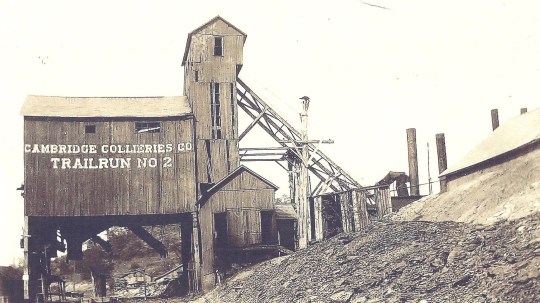
trail-run-2-mine-1928-closing

Trail Run Mine No. 2 is shown just before closing in 1928.

Life in the coal mines was difficult but better than being hungry. Cambridge Collieries built about fifty houses in Trail Run so the coal miners would have a place to live. Rent was $12 a month for a small house on a dirt street, which had no name.

Church attendance, baseball and beer were three of their main forms of recreation in the early 1900s. Since the mines were closed on Sunday, that was their day for a little entertainment. Later, a pool hall, dance hall and bowling alley were added.

st-michaels-orthodox-church

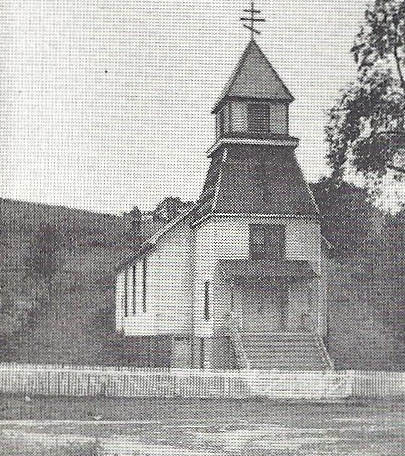
St. Michael’s Russian Orthodox Church served as home church for many of the Slavs, who worked in the mines.

Miners attended one of two churches in Trail Run. St. Michael’s Russian Orthodox Church welcomed the Slovaks, which made up a large percentage of the miners. Others attended Bethlehem Methodist, which still exists today.

1914-first-childrens-class-at-st-michaels

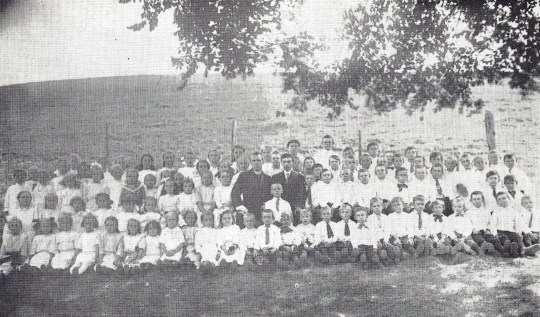
St. Michael’s Russian Orthodox Church had a large children’s class in  1914.

Five baseball diamonds could be found there. The coal mining towns all played each other, but there was a special rivalry between Upper Trail Run and Lower Trail Run. Baseball provided a great form of relaxation, which the families could watch and enjoy.

sikoras-grocery-001-2

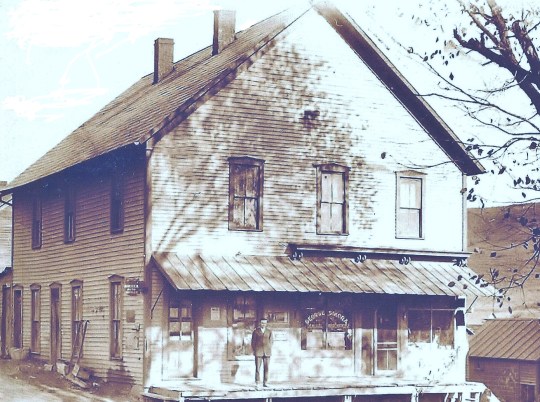
Sikora’s Grocery on the corner of Trail Run Road and Robins Road was a popular place for supplies.

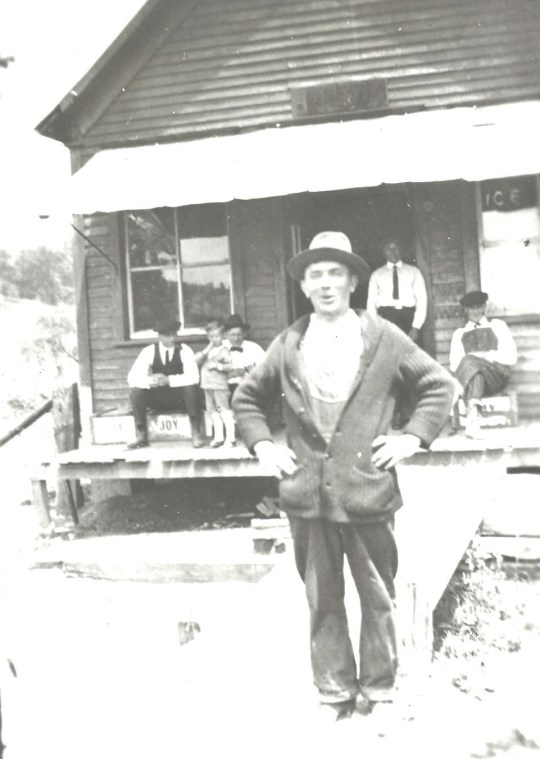
Often after the games, players would gather somewhere to drink a couple beers. There were two saloons in town. One of those bars, The Cave, was under Sikora’s Grocery. Or families might go to Williams or Checks stores for ice cream or candy.

williams-restaurant-1923-001-2

Men enjoyed visiting after church at Williams’ store.

Another way they might get something to drink happened in connection with the railroad. Cambridge Brewery would ship box car loads of beer barrels. If one just happened to fall from the train, a big party would ensue.

coal-cars-in-trail-run

Every day at least a hundred cars loaded with coal left Trail Run mines

Miners usually obtained free coal for their homes in much the same way. Since a hundred cars of coal left Trail Run daily, there was a good chance that coal might fall (or be accidentally pushed) from the train cars filled with coal. The children of the family would walk along the tracks picking up coal in a burlap sack, so their mother could cook and heat the house.

trail-run-first-school-1900

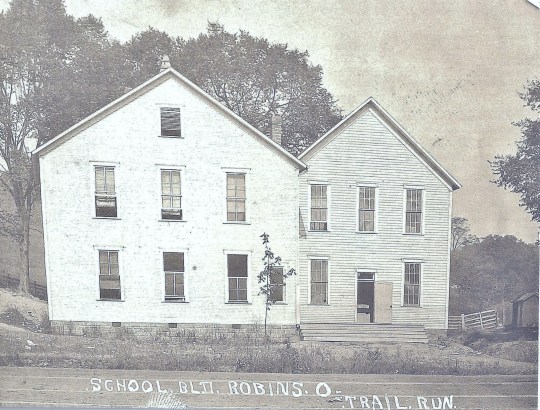
Railroad track ran close to the first school at Trail Run in 1900.

The first school built in 1895 had a train track running beside it. When a train came by it was necessary to shut the windows to keep out the noise and the smoke.

community-high-school-1923

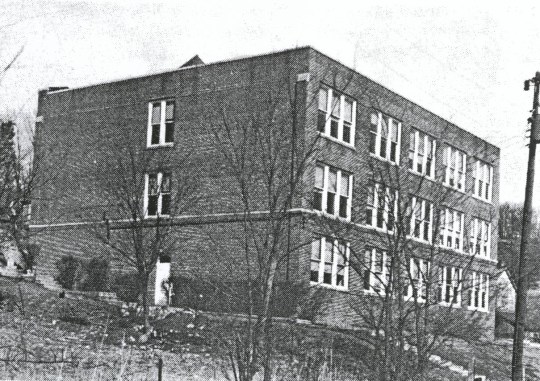
In 1923, this three-story, brick Community School provided education to grades 1-12.

However, in the 1930s, the mines shut down because people could get coal cheaper in West Virginia, Kentucky or Tennessee. Miners had to look elsewhere for employment. Some walked to work at nearby Senecaville, while others headed to Akron and Cleveland to work in the rubber and steel factories there. Population in Trail Run dwindled quickly.

Drive slowly through Trail Run some day while remembering those brave men and women who worked so hard to support their families in the only way they knew. Miners learned the value of hard work by working hard.

Trail Run is located in Ohio in Guernsey County south of Cambridge. Easiest route would be to take I-77, Exit 41 and head south on Vocational Road. Just past Bethlehem Methodist church, turn left on Robins Road. You will now head straight into Trail Run. Enjoy the adventure.

David Warther Preserves History of Ships in Ivory

david-warther-sign

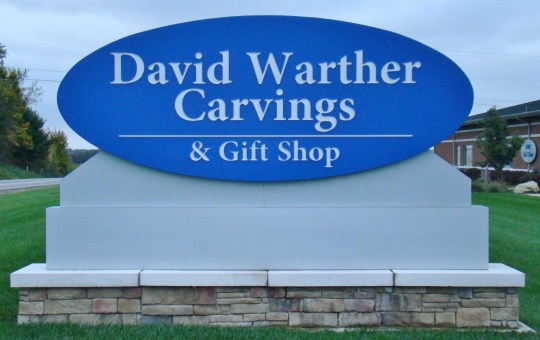
This sign on Route 39 signals that you have arrived at David Warther Carvings.

Following in his family’s footsteps, David Warther excels as a maritime artist. The detailed work takes time and patience to create the beautifully finished ships that can be found at this exhibit. Three years ago, David decided to open a museum to display room after room of his carved masterpieces. David Warther Carvings is located on Route 39 between Sugarcreek and Walnut Creek.

david-warther-early-ships

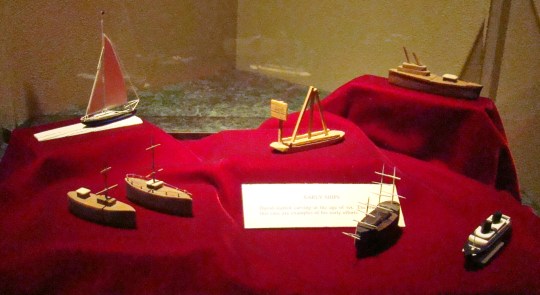
David began making ships from scraps of wood when he was six years old.

His passion for carving began as a child. He wanted to do what his grandfather, Ernest Warther, did – make carvings. But his object wasn’t trains, like his grandfather, but ships instead.At the age of six, he took scraps of wood to make his first ship. His mother kept that ship all these years and it is on display in the museum today.

david-warther-high-school

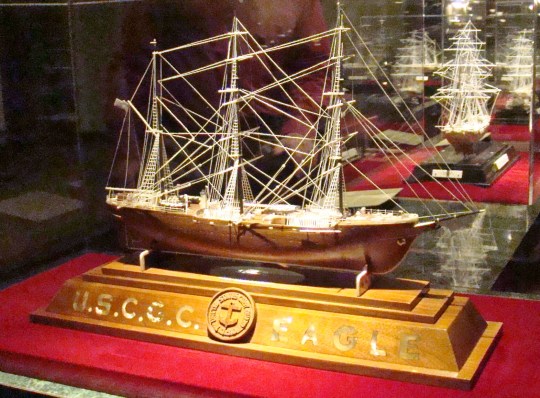
At the age of 17, he carved from ivory his first ship, a coast guard cutter.

As a junior in high school he finished his first carving the USCGC Eagle, using ivory, ebony, abalone pearl and walnut. The Eagle was used as a training cutter for officers in the United States Coast Guard. David’s love of ships continued to grow.

david-warther-stallion-of-rouen

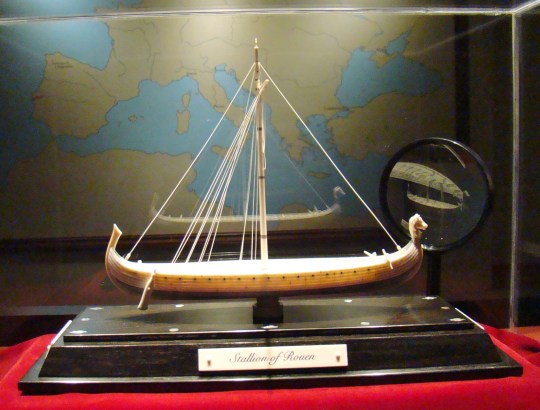
The Vikings used the Stallion of Rouen as a trading ship between France and the waters of the Mediterranean. David uses the world map to point out locations for his maritime stories.

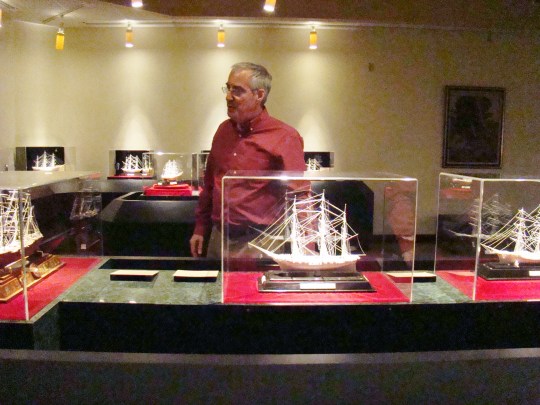
Not only can you see impressive ships with scrimshaw engraving at this exhibit, but David tells the history of the times and points out special features on different carvings. The displays are grouped according to a time-line for the ships, from ancient history of Egypt in 3000 B.C. to modern times.

david-warther-pharoahs-ship

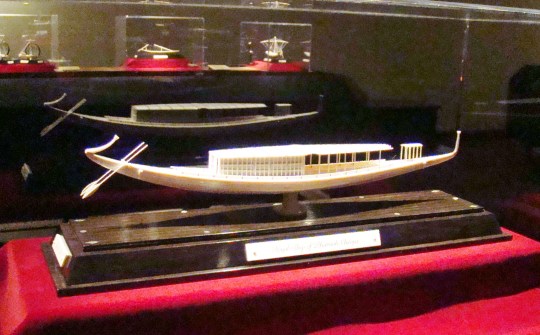
This carving depicts an early royal ship for an Egyptian Pharaoh.

A carving of the royal ship of an Egyptian Pharaoh recalls the story of its discovery in 1952 packed away in a box in the Great Pyramid of Egypt. It took twenty years to put it back together and it’s now displayed in a museum at the Great Pyramid. They buried the ship with the King as they believed it was needed to take him to the next world.

david-warther-tool

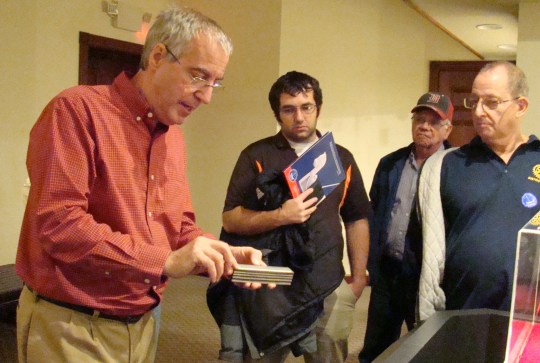
Visitors were shown this special hand-made tool, which is used for making strands of ivory.

When assembling the ships, the parts are held together with tiny ivory pegs. First David must make strands of ivory so he has ample pegs to hold the pieces together. This is a time consuming task as it takes over an hour to make a ten inch strand of ivory, which is about twice the thickness of a human hair.

The strand is filed in a handmade, wooden groove until it is just the right thickness. This is a tedious task as the strands are so thin that breakage often occurs. Once two pieces are fastened together, the end is sanded so smooth that you have to look closely to see the peg. His grandfather, a quiet and soft spoken character, used this same method for the ivory pegs in his steam engines.

It takes about six months to complete each ship and David tries to do two each year. Right now he is working on #85. Each ship is made of ivory with ebony highlights and abalone pearl in the base.

david-warther-guided-tour

David is surrounded by his ships as he gives a guided tour.

The Warther family now has four generations of carvers: great-grandfather, grandfather, David and his son. David’s another Warther who does not sell his ivory carvings. They are for viewing only.

david-warther-tusks

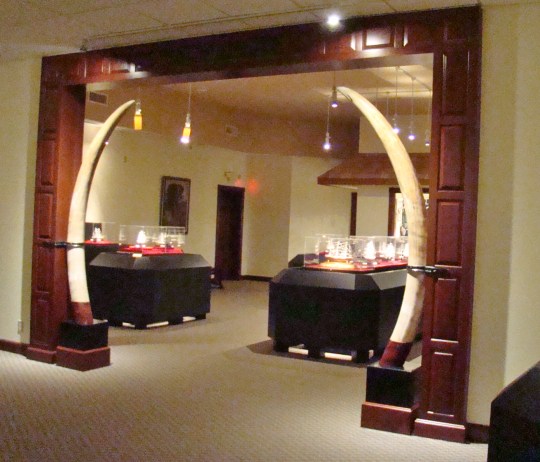
The third largest set of elephant tusks in the United States frames a doorway between timeline rooms.

But these ships are just a hobby for David. He earns a living by making parts for musical instruments from ivory of the wooly mammoth. Parts for violins and guitars are quite popular and are shipped around the world.

david-warther-clock-tower

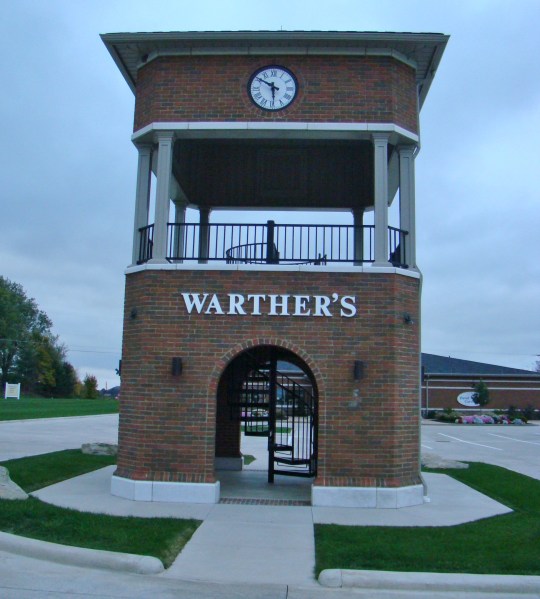
An attractive thirty foot high clock tower pavilion has an observation deck to view surrounding Walnut Valley.

The museum is located on Ohio 39 between Sugarcreek and Walnut Creek. Their winter hours are 10:00 – 4:00 Wednesday through Saturday. Ivory and ebony live together in perfect harmony at David Warther Carvings.


Guernsey County History Museum Dressed for Christmas

guernsey-county-museum

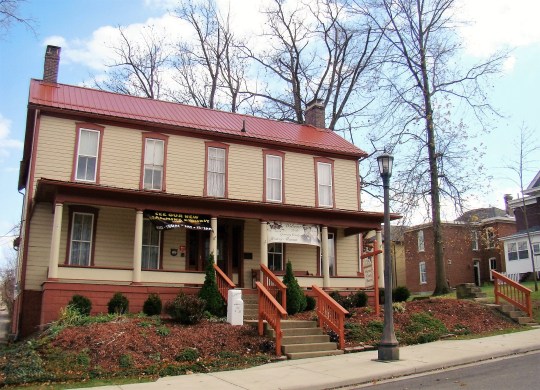
Explore the history of the area by visiting Guernsey County Museum.

All 17 rooms at the oldest frame home in Cambridge have been tastefully decorated with a touch of the Christmas season. The Guernsey County Museum enjoys having people stop by to wander through its vast collection. Curator Judy Clay will escort visitors through each decorated room and explain the history of many of the artifacts that are left on display for the holidays.

The museum, the former McCracken-McFarland home, was moved down North Eighth Street, a half block from the corner, to its current location in 1915. Outside the house, the yard has some interesting features. There is a 4′ tall National Trail mileage marker, and the original steps from the 1823 house.

Many of the older generation from the area will remember Mrs. McFarland, a Brown High School English teacher, and Mr. McFarland, the banker who always wore a carnation in his buttonhole.

guernsey-county-one-room-school

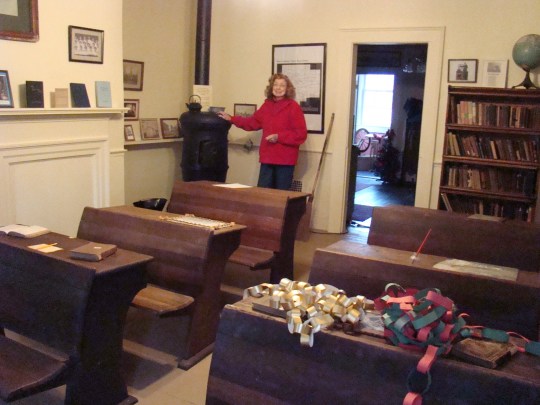
Volunteer Madelyn Joseph stands by the pot-bellied stove in the one-room school room.

Recent additions to the museum include a room from a one-room schoolhouse showing desks and books used at that time. At the back of the room stands the pot-bellied stove, which appeared in some form in every one-room school to keep the room somewhat warm on cold winter days. On special occasions, retired teachers will describe the lessons and activities that happened in a classroom where one teacher taught all eight grades.

open-house-guernsey-county-museum

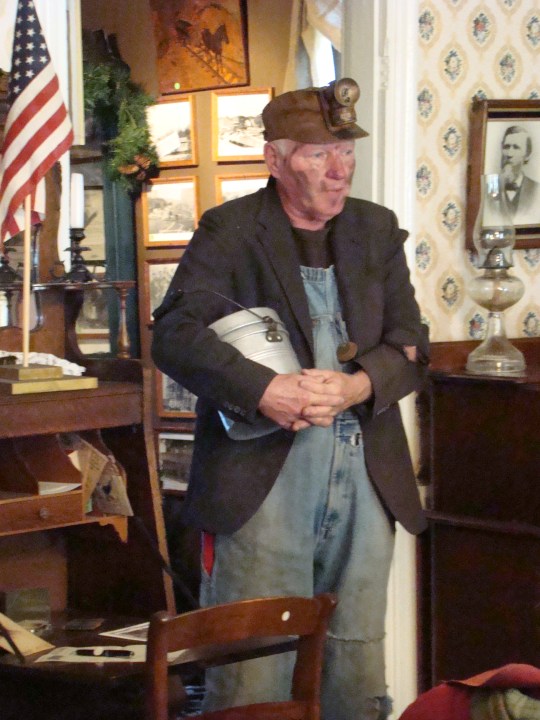
Dave Adair tells the story of the difficult life of a coal miner.

Another added attraction is an entrance way to a coal mine. In the early 1900s throughout Guernsey County, over 5,000 people were employed in the mines. Here, Dave Adair, local historian, explains to groups the life of a coal miner and at this time of year presents “A Coal Miner’s Christmas”, telling how they celebrated Christmas with very little money. Most gifts were handmade or perhaps purchased at the company store – an orange or walnuts were special treats.

guernsey-county-curator

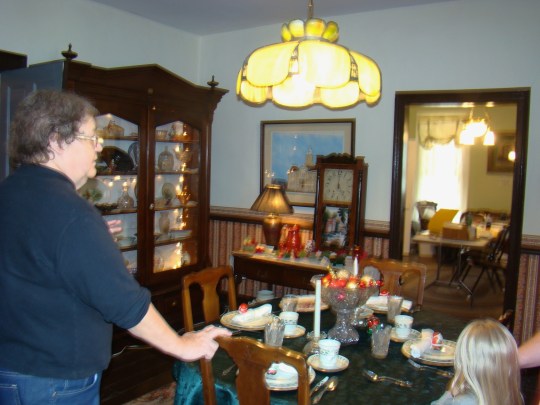
Museum Curator Judy Clay explains the beautiful table setting, which includes Cambridge Glass and a Tiffany lamp overhead.

The home has been expanded and updated through the years without destroying its 19th Century charm. Many remember the time when homes had two sitting rooms – one for the family and the other to use only for special guests. While this was the first house in the area to have gas heat, they still read by candle light. Throughout the museum, you will see beautiful pieces of Cambridge Glass and Universal Pottery, as these two companies provided an important means of earning a living during the early years of Guernsey County.

guernsey-co-museum-volunteers

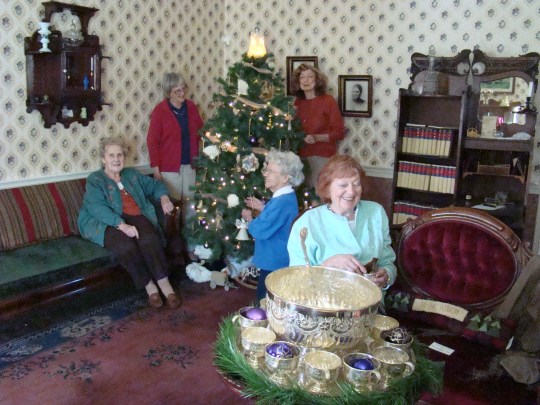
Friendly volunteers at the museum prepare for visitors by decorating the tree and preparing to serve refreshments. 

The walls in the hallway are covered with pictures of people who have made a difference in the area…the Guernsey County Hall of Fame. These community leaders have all contributed something special to make this world a better place.

guernsey-county-ice-bike

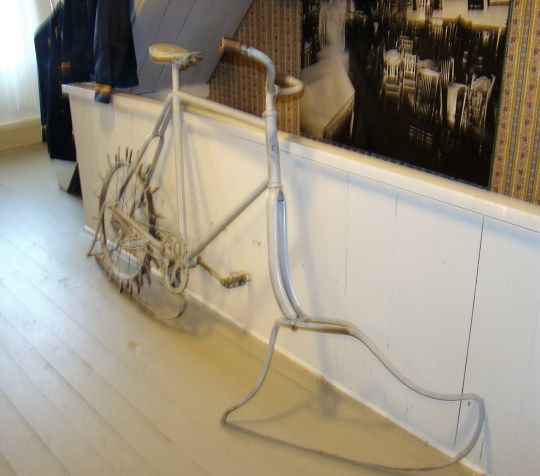
The ice bike made travel possible in the winter with its sharp prongs in the back and sled-like runner in the front.

Every room upstairs had a special theme. The Military Room contained items from Civil War days to WWII. A small sewing room held a spinning wheel and a weasel, which when it got filled with thread – went pop! That was the basis of the song, “Pop Goes the Weasel”. A dentist’s office, Dickens’ room, and rooms packed with antique ladies’ clothing finished off the top floor. The waistline on some of those dresses seems unbelievably small.

guernsey-county-mail-cart

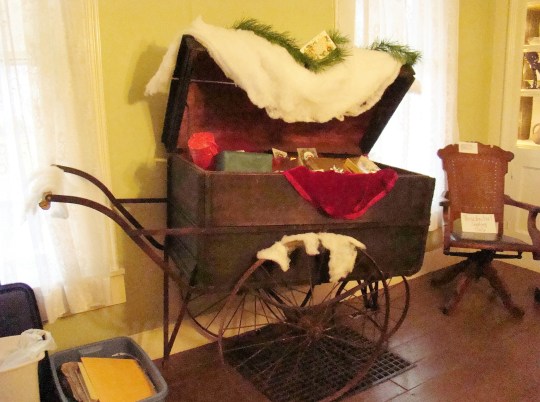
This old mail cart actually carried mail from Cambridge’s Union Depot to the post office.

Bountiful treasures reside inside this old frame house. Perhaps you would like to roam the halls and revive some old memories. If you have any pieces of history you would care to share, please contact the museum. Every small town should take pride in having a special place to keep the history of their area alive for future generations.

guernsey-county-christmas-tree

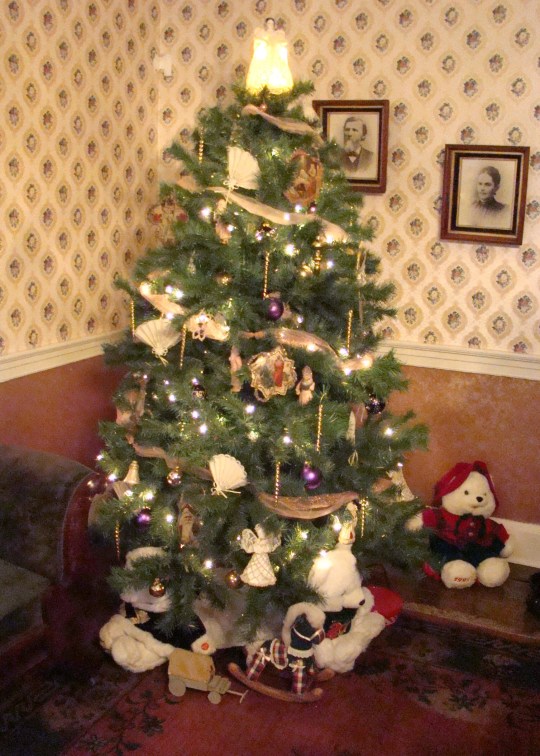
The angel topped Christmas tree is decorated with old ornaments trimmed with lace.

Holiday hours for the Guernsey County Museum are Tuesday and Thursday 4:00 – 8:00, and Saturday from 10:00 -8:00.  Admission is $5 per person. Come explore some old memories of days gone by.

The Guernsey County Museum is located at 218 N Eighth Street off Steubenville Avenue in Cambridge, Ohio. It’s on the street directly behind the courthouse.


The Holiday Elegance of Oglebay Mansion Museum

oglebay-ice-sculpture-2

An ice sculpture of two reindeer pulling a sleigh grace the lawn of historic Oglebay Mansion Museum.

A yuletide dream best describes the Mansion Museum at Oglebay Park in Wheeling, West Virginia during the holiday season. The mansion is dressed luxuriously for the holidays. Its elegant decorations serve as inspiration for ideas to embellish your home.

When arriving at the Mansion Museum on a late November day, the first thing to greet visitors was an ice sculpture of a sleigh pulled by two reindeer. Each year an ice sculpture is placed at the museum and will last as long as the weather stays cool. You can even have your picture taken in the sleigh.

oglebay-oval-parlor

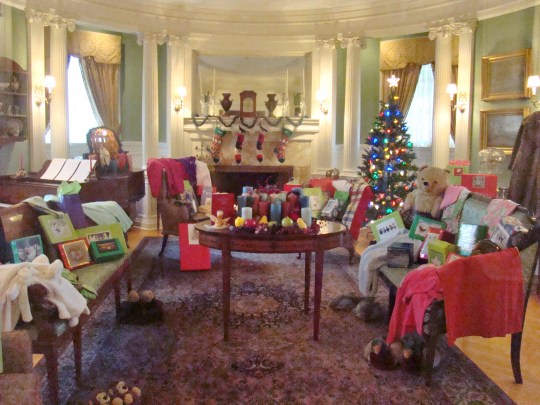
The Oglebay family used this Oval Parlor as their private retreat.

Near the mansion you’ll find the magical Christmas Tree Garden, which contains 30 live trees covered with colored lights. In the center of the garden stands a beautiful gazebo with a life size manger display created by a local artist in 1985. Nearly everyone who passes by, pauses to view the real meaning of the season.

oglebay-dining-room

The Dining Room is beautifully decorated for Christmas dinner.

The Mansion Museum, which was the summer home of wealthy industrialist Earl Oglebay, began this holiday tradition in 1973. Both professional decorators and amateurs help trim the mansion in period decorations as it would have appeared when it was built by Hanson Chapline back in 1846. Special care is taken not to damage the antiques on display.

oglebay-library

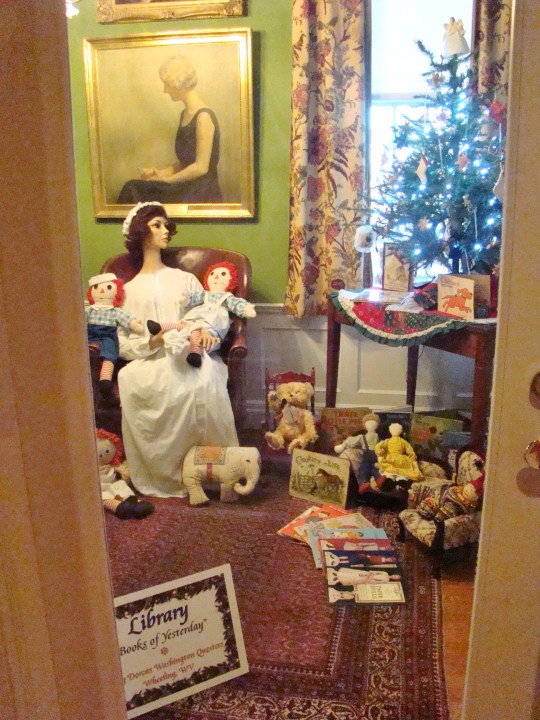
“Books of Yesterday” became the theme for the Library where Raggedy Ann and Andy dolls are being held by a young lady.

In 1900 Earl W. Oglebay purchased the estate and farm, which he called Waddington Farm. It became the most progressive model farm in the world. When Mr. Oglebay died in 1926, he left his estate to the people of Wheeling to be used as a park and an educational tool. They then turned it into what we know today as Oglebay Park.

oglebay-federal-bedroom-cinderella

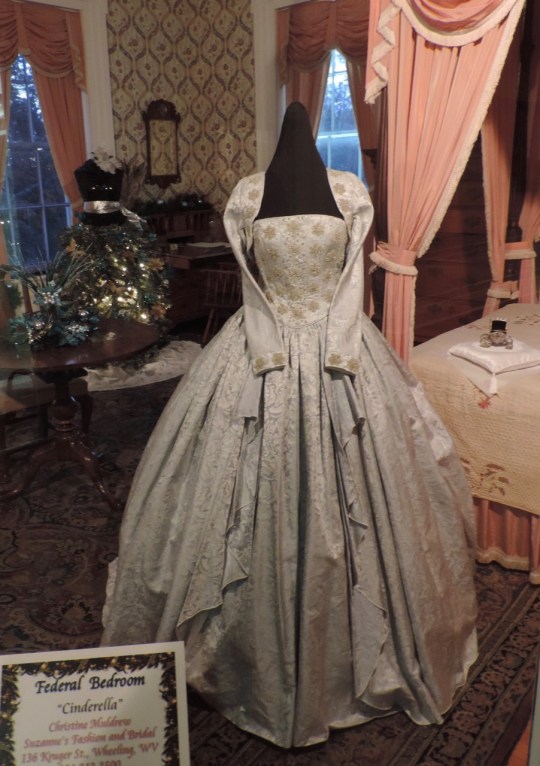
The Federal Bedroom features Cinderella’s ball gown.

Thirteen Victorian period rooms overflow with Christmas décor to put you in the holiday spirit. “A Storybook Celebration” serves as this year’s holiday theme. Each room has been transformed with a touch of magic to fit a particular storybook idea.

oglebay-empire-sitting-room

Company would be entertained in the Empire Sitting Room decorated as “Deck the Halls” for this holiday season.

From “The Nutcracker” in the Child’s Bedroom to “Deck the Halls” in the Empire Sitting Room, you’ll find tasteful decorations to make you smile. “Not a Creature Was Stirring” in the Pioneer Kitchen, while they were “Stitching Family Tales” in the Sewing Room.

oglebay-bedroom

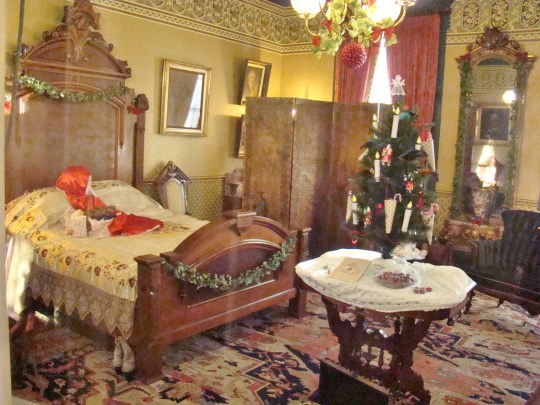
The Victorian Bedroom would be the perfect place for a bedtime story. “Nana, tell me a story!”

Throughout, there are recordings to tell you about the furnishings, paintings, and life of the family. But the mansion holds the history of the area as well.

oglebay-general-store

Wymer’s General Store is part of the Wheeling History Exhibition, which can be seen year round at Oglebay Mansion Museum.

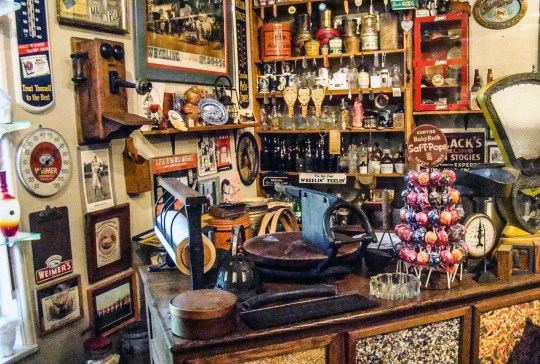
A Pioneering Spirit Exhibit features the history of Wheeling. Included is Sinclair Pharmacy and Wymer General Store with candy case, meat wrapping paper and large thermometer. The store was especially enjoyed since it reminded me of my grandfather’s store in Byesville sixty years ago.
oglebay-mr-oglebays-office

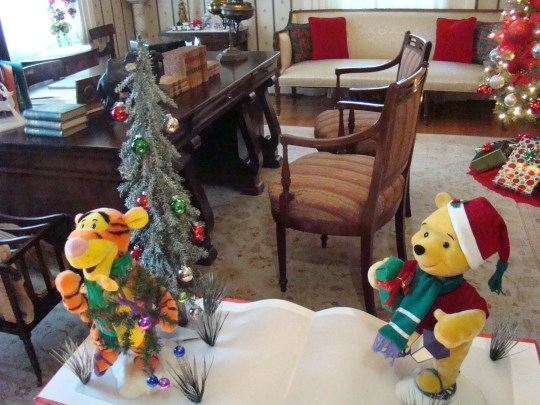
Tigger and Winnie the Pooh visit Mr. Oglebay’s office for “A Pop Up Christmas”.
While you can visit Oglebay Mansion Museum throughout the year, Holidays at the Mansion create memories of days gone by. The Christmas decorations continue until January 8, 2017 so there’s still plenty of time to make a trip to Oglebay. While there you will want to stay until dark to view the delightful Winter Festival of Lights at Oglebay Park, where 80 displays line a six mile drive, which covers over 300 acres!

Visit Oglebay Mansion Museum and the Festival of Lights, which inspired Bob and Sue Ley to create Dickens Victorian Village. Maybe you, too, will find inspiration there.

Oglebay Mansion Museum at 1330 Oglebay Drive can be found by following signs to Oglebay Park about four miles off Exit 2A of I-70 on Route 88 North in Wheeling, West Virginia. 


Down the Ohio River with Charles Dickens

messenger

The steamboat Messenger carried the Dickens party down the Ohio River from Pittsburgh to Cincinnati.

A fine broad river always, but in some parts much wider than in others, and then there is usually a green island, covered with trees, dividing it into two streams.”

In 1842 at the age of 30, Charles Dickens made his first visit to America with his wife Kate, her maid Anne Brown, and Charles’ traveling secretary George Putnam. As part of their tour, the group boarded the steamboat Messenger in Pittsburgh to flow down the Ohio River to Cincinnati – a three day tour.

The Messenger held some forty passengers on board, exclusive of the poorer persons on the lower deck. Dickens wondered that its construction would make any journey safe with the great body of fire that rages and roars beneath the frail pile of painted wood.

As expected, he wrote in his journal daily while traveling, giving us a picture now, of what he saw on that trip long ago. Most of the time he wrote on his knee in their small cabin at the back of the boat. He felt lucky to have a cabin in the stern, because it was known that ‘steamboats generally blew up forward’.

ohio-river-diorama

This diorama from the National Road/Zane Grey Museum shows a scene at Wheeling that DIckens described of goods being loaded and unloaded.

Coming from the crowded city of London, this wilderness must have appeared strange with trees everywhere and cabins sparsely populating the banks along the river. For miles and miles the banks were unbroken by any sign of human life or trace of human footsteps.

Meal time was not pleasing for him as lively conversation was lacking. Each ‘creature’ would empty his trough as quickly as possible, then slink away. A jest would have been a crime and a smile would have faded into a grinning horror.

I never in my life did see such listless, heavy dullness as brooded over these meals. And was as glad to escape again as if it had been a penance or a punishment.

charles-and-kate

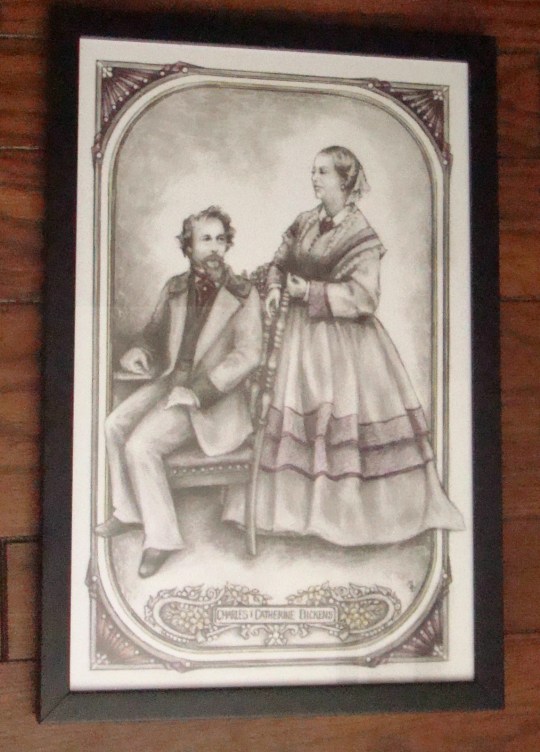
Charles and Kate Dickens came to America in 1842. This is a pencil sketch by a very dear friend, the late Mary Ruth Duff.

After the meals, men would stand around the stove without saying a word, but spitting, which was a bad manner Dickens deplored. Therefore, Charles and Kate spent much of the time sitting on the gallery outside their cabin. His description of the only disturbance outside was in true Dickens style:

Nor is anything seen to move about them but the blue jay, whose colour is so bright, and yet so delicate, that it looks like a flying flower.

mound-by-henry-howe-001

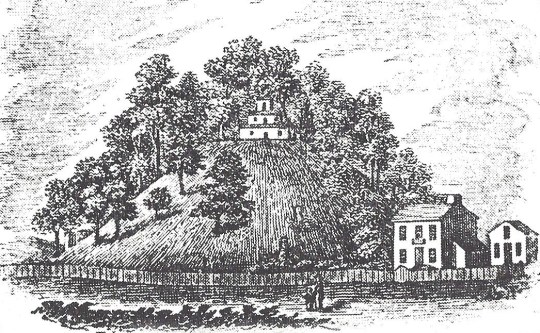
This sketch by Henry Howe in 1843 shows the mound Dickens described in his journal.

He noted that the steamboat whistle was loud enough to awaken the Indians, who lie buried in a great mound, so old that oaks and other forest trees had stuck their roots into its earth. The Ohio River sparkled as it passed the place these extinct tribes lived hundreds of years ago.

Evening steals slowly upon the landscape, when we stop to set some emigrants ashore, five men, as many women, and a little girl. All their worldly goods are a bag, a large chest and an old chair.

Those emigrants were landed at the foot of a large bank, where several log cabins could be seen on the summit, which could be reached by a long winding path. Charles Dickens watched them until they became specks, lingering on the bank with the old woman sitting in the chair and all the rest about her.

dickens-children

They carried this picture of their children – Katey, Walter, Charlie, and Mamie – when they came to America in 1842. As time passed, they had ten children.

When he reached Cincinnati, a booming frontier river town, Dickens viewed it as a beautiful city: cheerful, thriving and animated. He was quite charmed with the appearance of the town and its free schools, as education of children was always a priority for Charles Dickens. Here he could actually find people to engage in conversation.

While his first trip was a disappointment in many ways,in the 1850s, he was encouraged to make another trip to America to extend his popular England reading tour to audiences there. He was told  would be lots of money to be made in the United States.

But the outbreak of the Civil War, caused him to put those plans on hold. When the war was over, he again received encouragement to visit this New World. Despite his ill health and caution from his closest friends, Charles Dickens wrote a seven point “Case in a Nutshell” describing why he should visit America.

Once decided, he arrived in Boston on November 19, 1867. Even though his health was failing, Dickens never canceled a performance.

No man has a right to break an engagement with the public if he were able to be out of bed.

He stayed for five months and gave 76 performances for which he earned an incredible $228,000, helping to give him a much better view of the United States on his second trip. The country had much improved during those twenty-five years in his estimation.

How astounded I have been by the amazing changes I have seen all around me on every side – changes moral, changes physical, changes in the amount of land subdued and peopled.

fly-ferry

The Ohio River is a peaceful place to let your imagination flow.

The next time you visit the banks of the Ohio River, find a secluded spot and imagine what it must have been like when Charles Dickens viewed it in 1842.

Words in italics are Charles Dickens words from his journal “American Notes”, 1842 with the exception of the last one, which was of course written after his second trip.