Places to go and things to see by Gypsy Bev

Archive for the ‘History’ Category

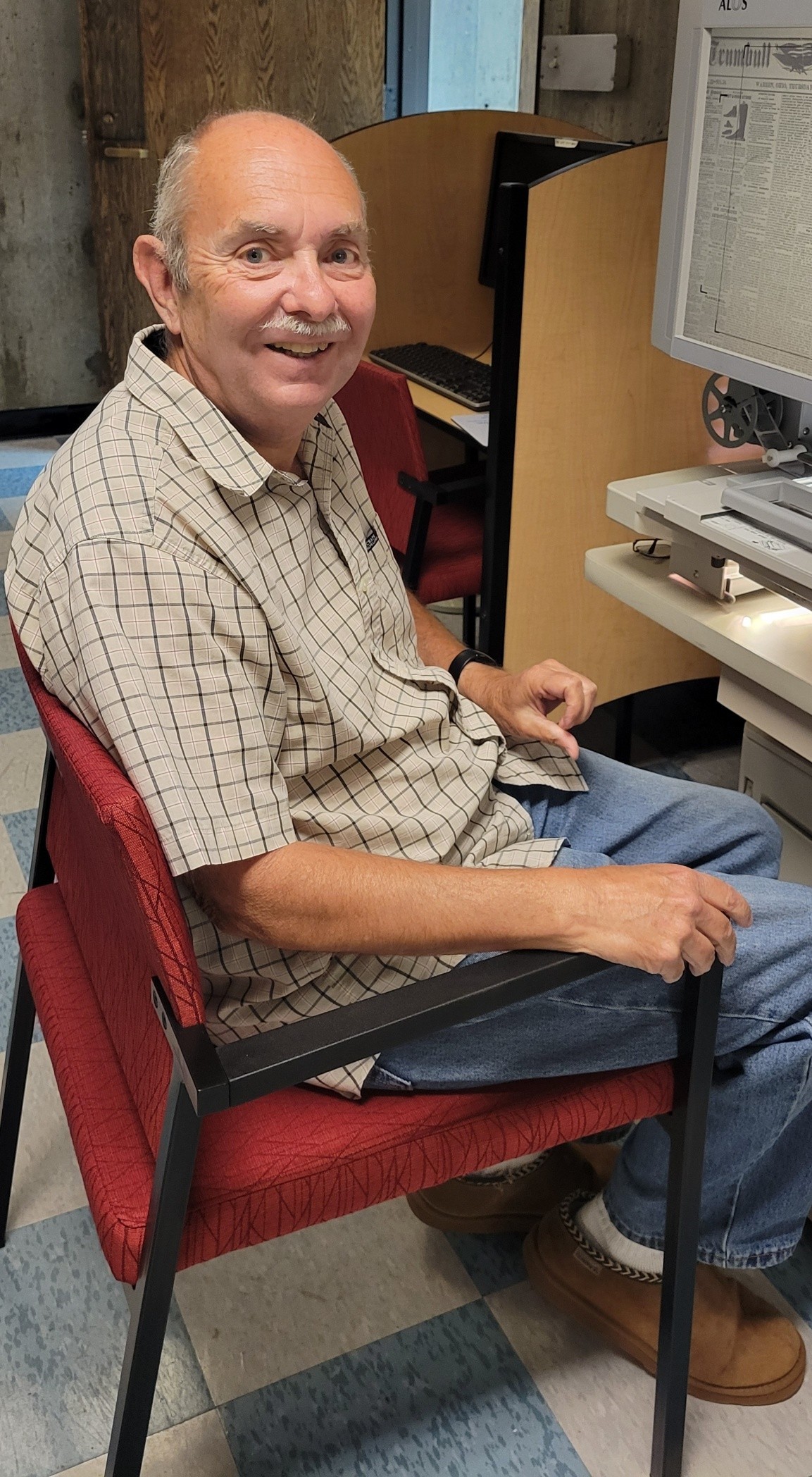
Roger Pickenpaugh…Research is Key

Local educator and author, Roger Pickenpaugh of Caldwell, enjoys the challenge of discovering information about topics of interest so he can organize them into a book filled with accurate historical facts.

Roger graduated from Ohio State University and earned his Master’s Degree there as well. He retired from Shenandoah Middle School after teaching thirty years. Over the years, he has written 20 books filled with local and national history. Five of his books focus on the Civil War.

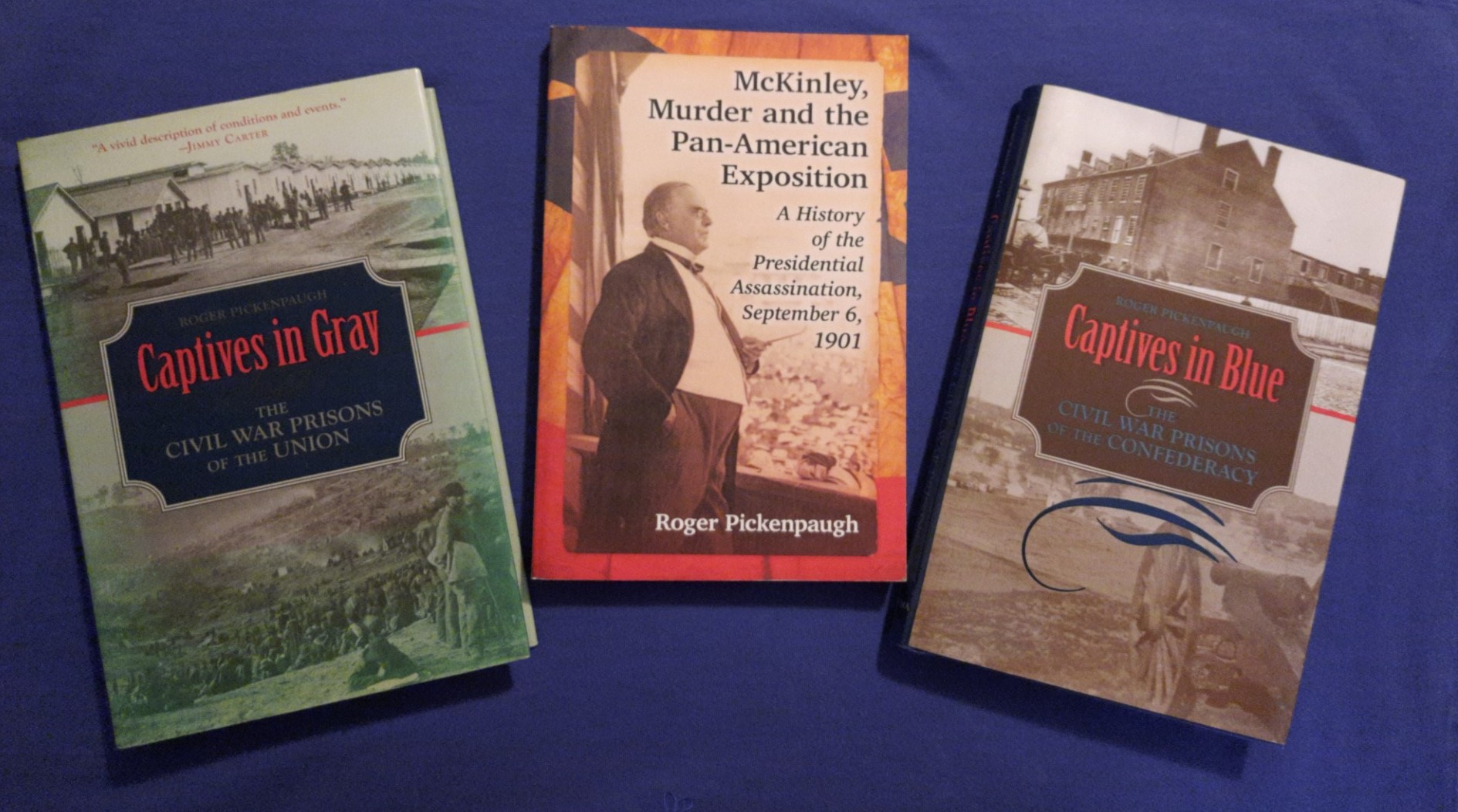
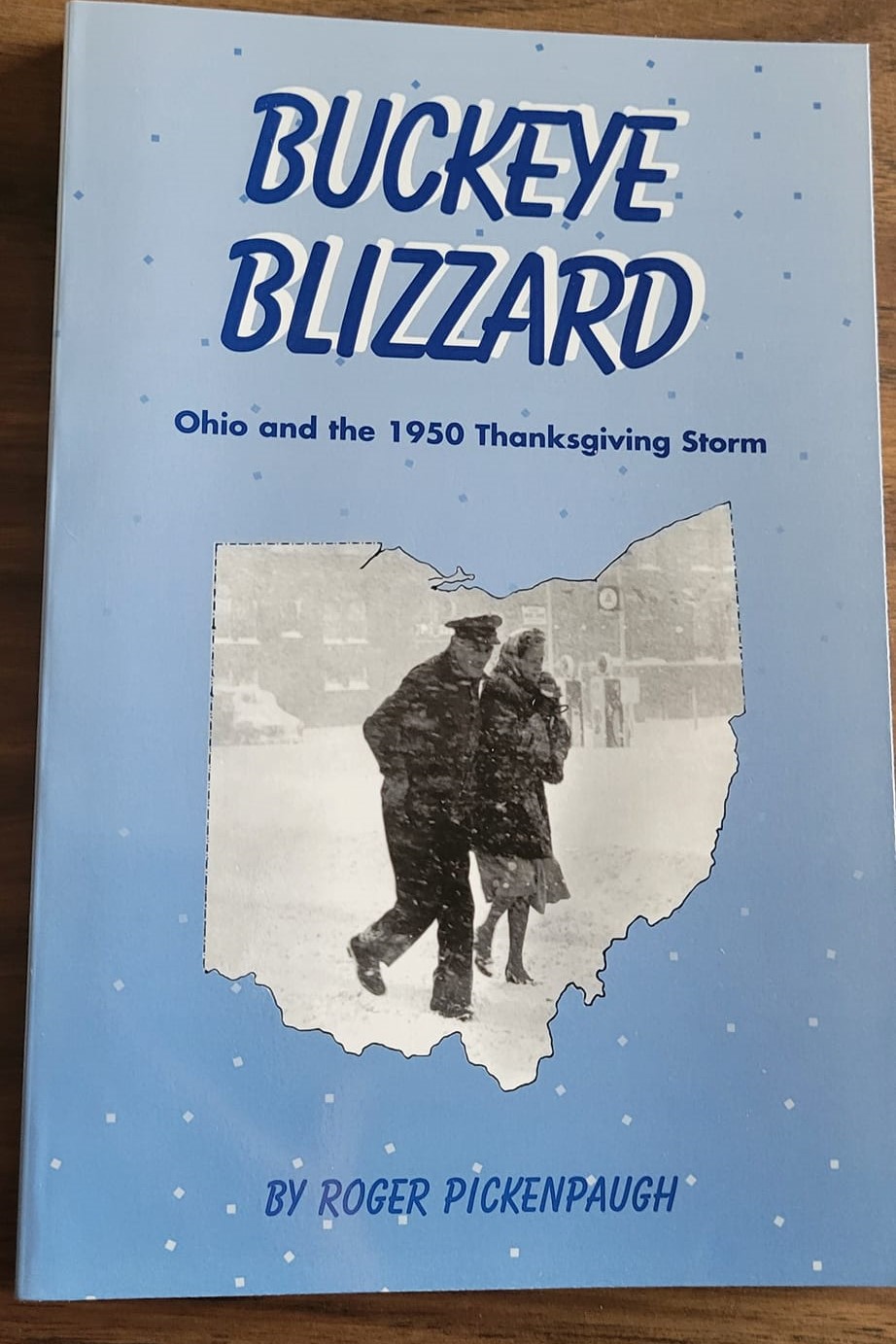
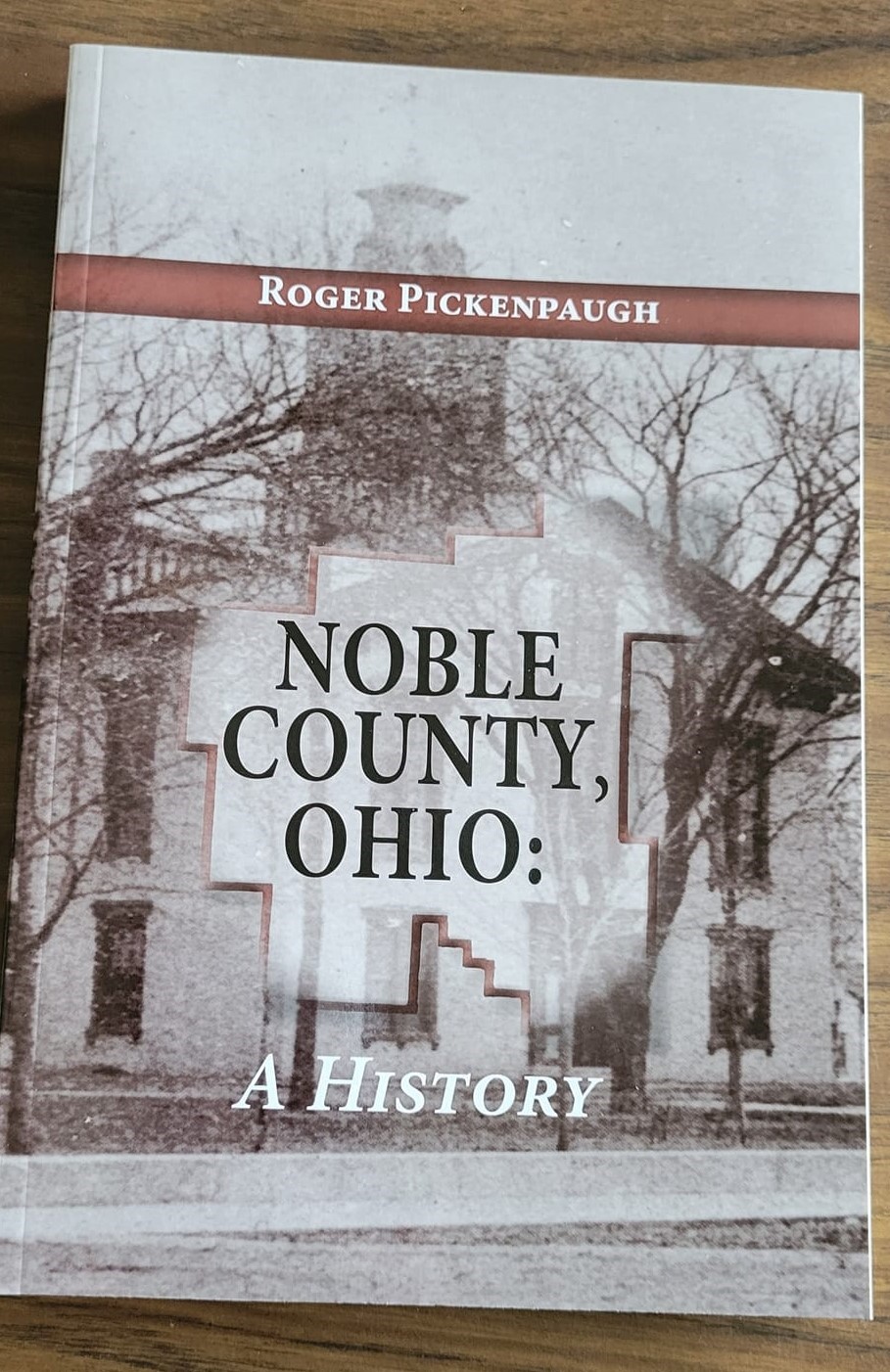
These three books are samples of those where he used traditional publishing.

Roger has always been interested in history. Even as a child, he liked to read books with a historical touch. Although he does admit to also reading some comic books.

His interest in the Civil War stems back to the fact that his grandfather and uncle were both very interested in Civil War events so he became interested just by listening. He also had a relative who took part in the Vicksburg campaign.

His interest in writing began when a student at OSU where he did writing and research on term papers for college and found he enjoyed the exploration.

His late wife Marion felt research was much like a Treasure Hunt.

Since most of his books require accurate historical information, research has always been an important part of his life. He credits his late wife, Marion, for being the research organizer and the reason for his success in writing historical books.

Some of those early books required research before the advent of computers. Roger remember Marion’s patience and tenacity as she searched through books on the library shelf looking for that piece of missing information. Note cards were made with information gathered and then placed in order. Indexes in his books are an important part so he feels accuracy is extremely necessary.

Roger frequently uses resources at the Ohio Historical Society for his research.

Research over the years has been from interviews over the phone to personal visits at places he is researching. There he makes good use of their local libraries for old newspaper records. National Archives, State Historical Societies, and many universities or colleges have provided needed information through books or diaries. When you read his books, you clearly see how important this research was.

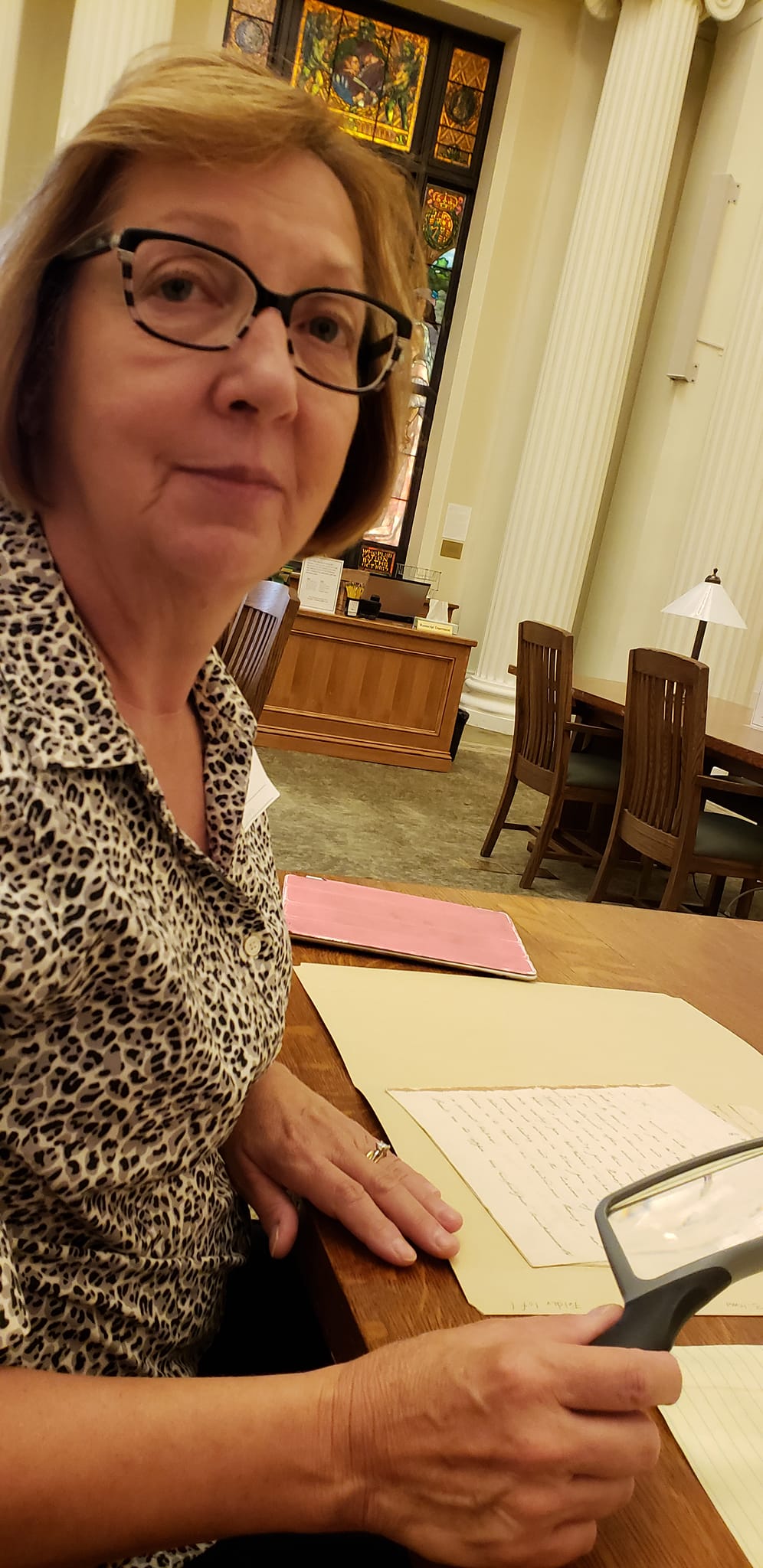
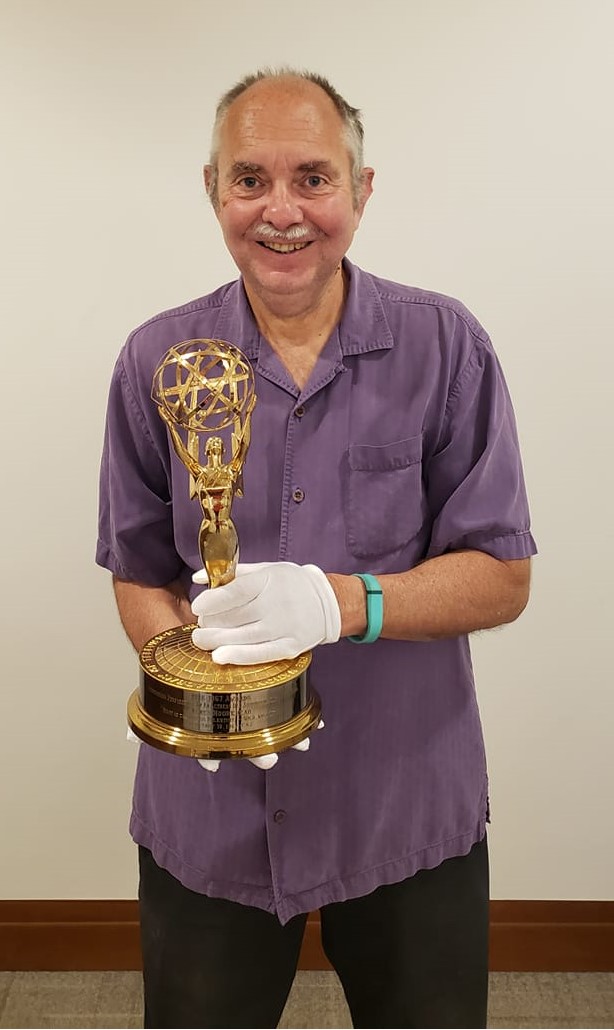
Roger enjoyed a close look at Agnes Moorehead’s Emmy while doing research at Muskingum University Library.

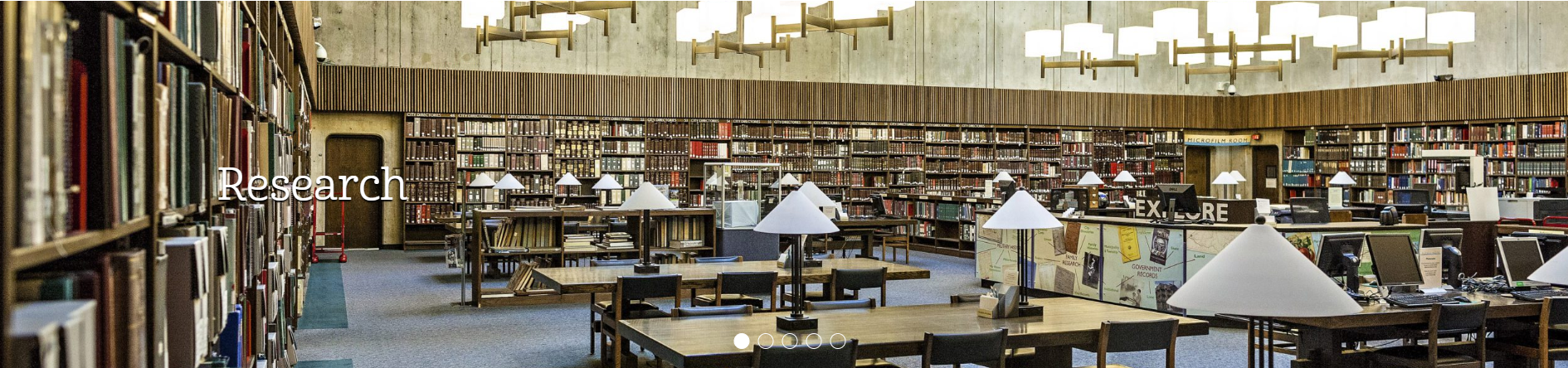
One of his favorite local places for research is the Muskingum University Library. They have been so helpful to him with use of equipment and finding the resources he needs. Roger said, “I never could do this writing without them.”

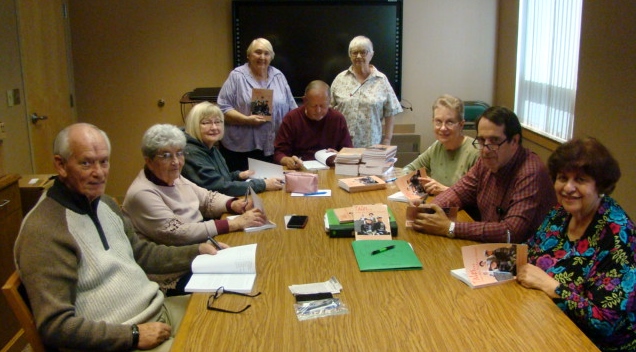
Friendships with members of the Noble County Writers Group have proved valuable over the years. Writers need to have other writers to talk with and share ideas. Other members of the group also are great at proofreading and giving ideas for improvement. They have even written some books together.

This early book of Roger’s tells personal tales of that terrible blizzard. True and often humorous!
At this point in time, Roger has published 20 books. Eight of them were with traditional publishers, the first being Rescue by Rail: Troop Transfer and Civil War in the West, 1863, which was published in 1998 and took about three years to write. That book had a local touch as some of the trains ran through Guernsey County on the B&O.

Johnson’s Island: A Prison for Confederate Officers (Civil War in the North) was published in 2016 and won the Bowling Green Center for Archival Collections Local History Publication Award.

Noble County, Ohio was Roger’s first book, which he self-published.

He also has twelve books of local nature that are self-published. A History of Noble County, Ohio 1887-1987 was his first self-published book back in 1988. He spent nearly eight years researching over 100 newspapers to get the accurate information he needed.

Roger feels local books can be self-published but if you are writing about a national event, it will best be received if going through a traditional publisher.

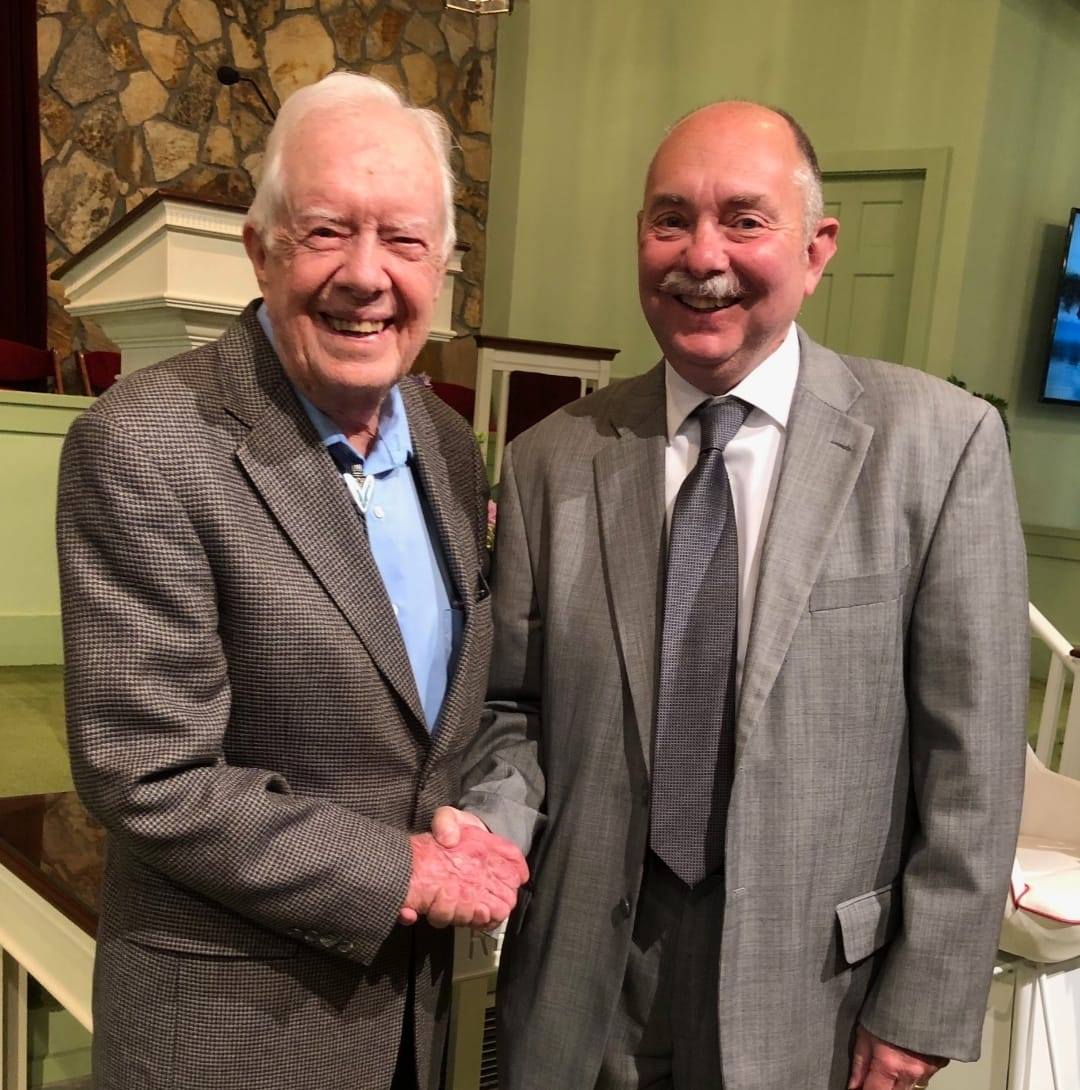
In their travels, Roger visited his sister Jill and her husband in Georgia, where they worked with President Jimmy Carter. They attended services at the Baptist Church where President Carter taught Sunday School. Today his sister is Superintendent of Jimmy Carter National Historic Site in Plains, Georgia. Roger was pleased to have his picture taken with the president and President Carter left a review on Amazon for one of Roger’s books.

Meeting President Jimmy Carter was a special moment for Roger.

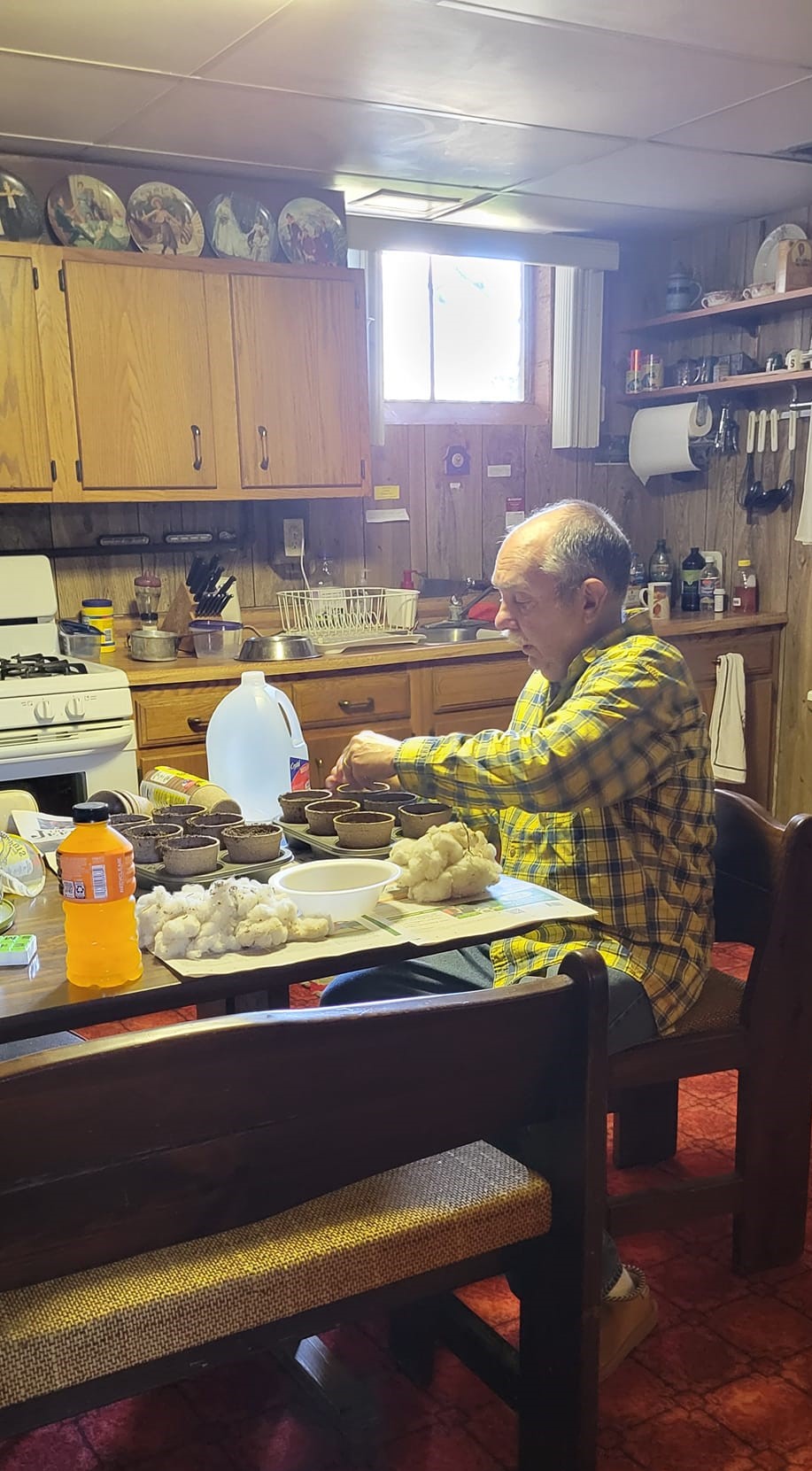
When Roger is not researching, he enjoys being active with daily walks and work in his garden. His walking goal was to have a thousand consecutive days with over 10,000 steps and he has probably reached it by now as had 900 consecutive days in mid-May.

Roger starts his garden early inside. During the summer, he enjoys working in his garden.

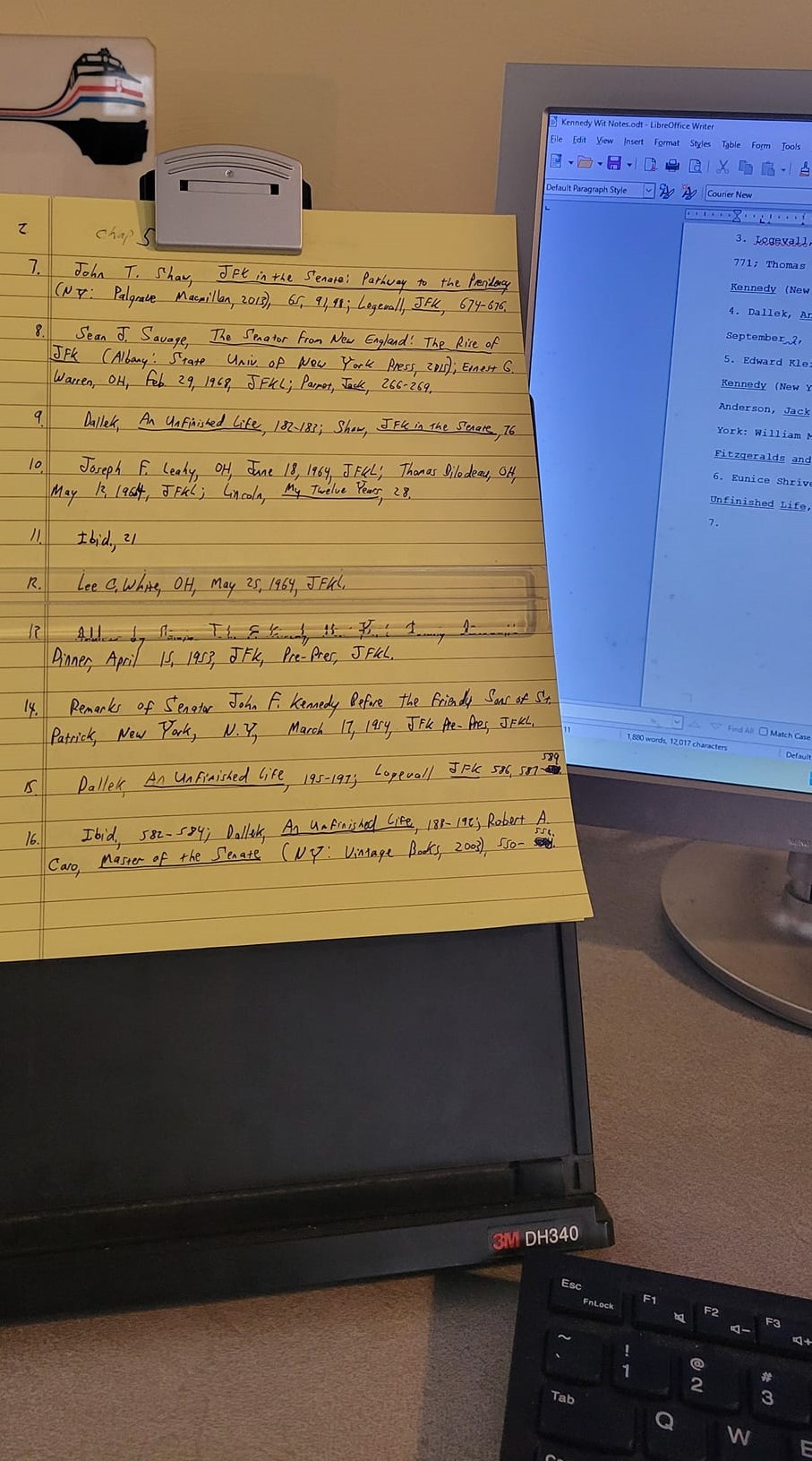
He is putting the finishing touches on a book about John F. Kennedy’s sense of humor. The working title right now is John F. Kennedy: The Kennedy Wit.

Transferring handwritten notes to the computer is time consuming.

Currently, Roger is also researching information about Ohio in the early days of the Civil War. This is being done in various newspaper archives and finds the ones at Ohio Historical Society very helpful.

His list of books is extensive but most can be found on Amazon or if you happen to see Roger at a book fair or local promotion. He often promotes his books at places like Art on the Square in Caldwell, Bookology in Cambridge, and Buckeye Book Fair.

If you enjoy history, you are certain to appreciate the research Roger Pickenpaugh has done to make his books accurate. His style of writing makes history interesting.

Jason Hammond Demonstrates Traditional Woodworking

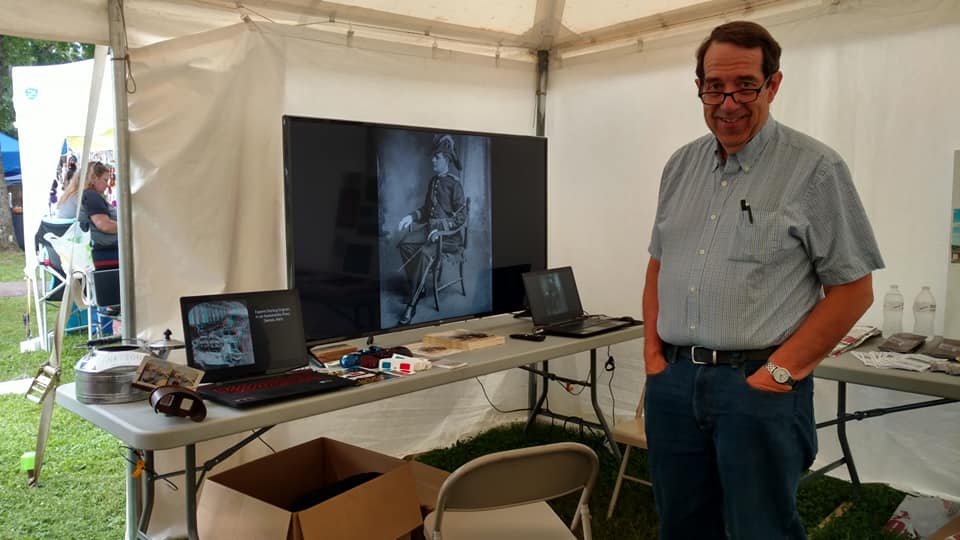
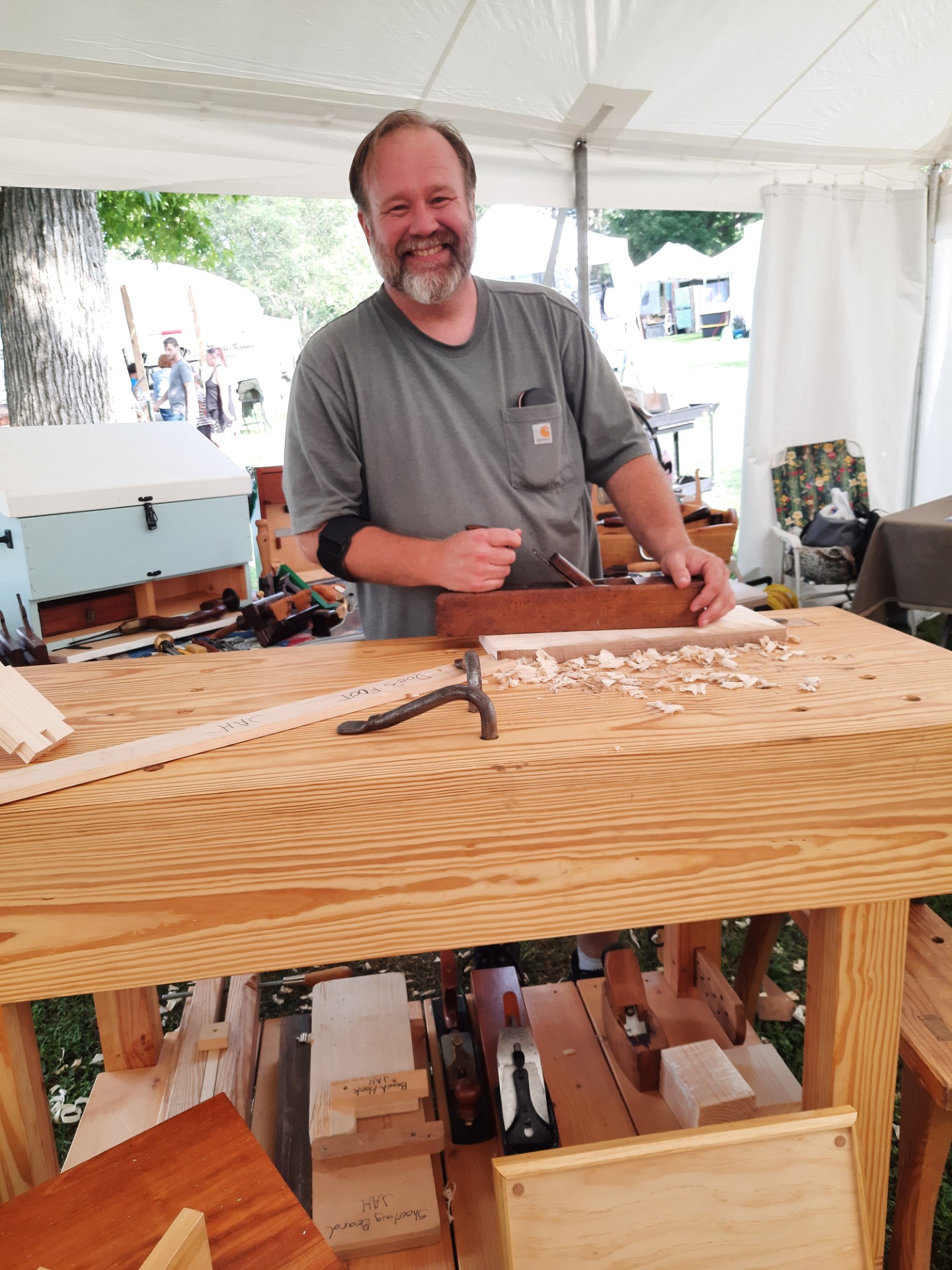
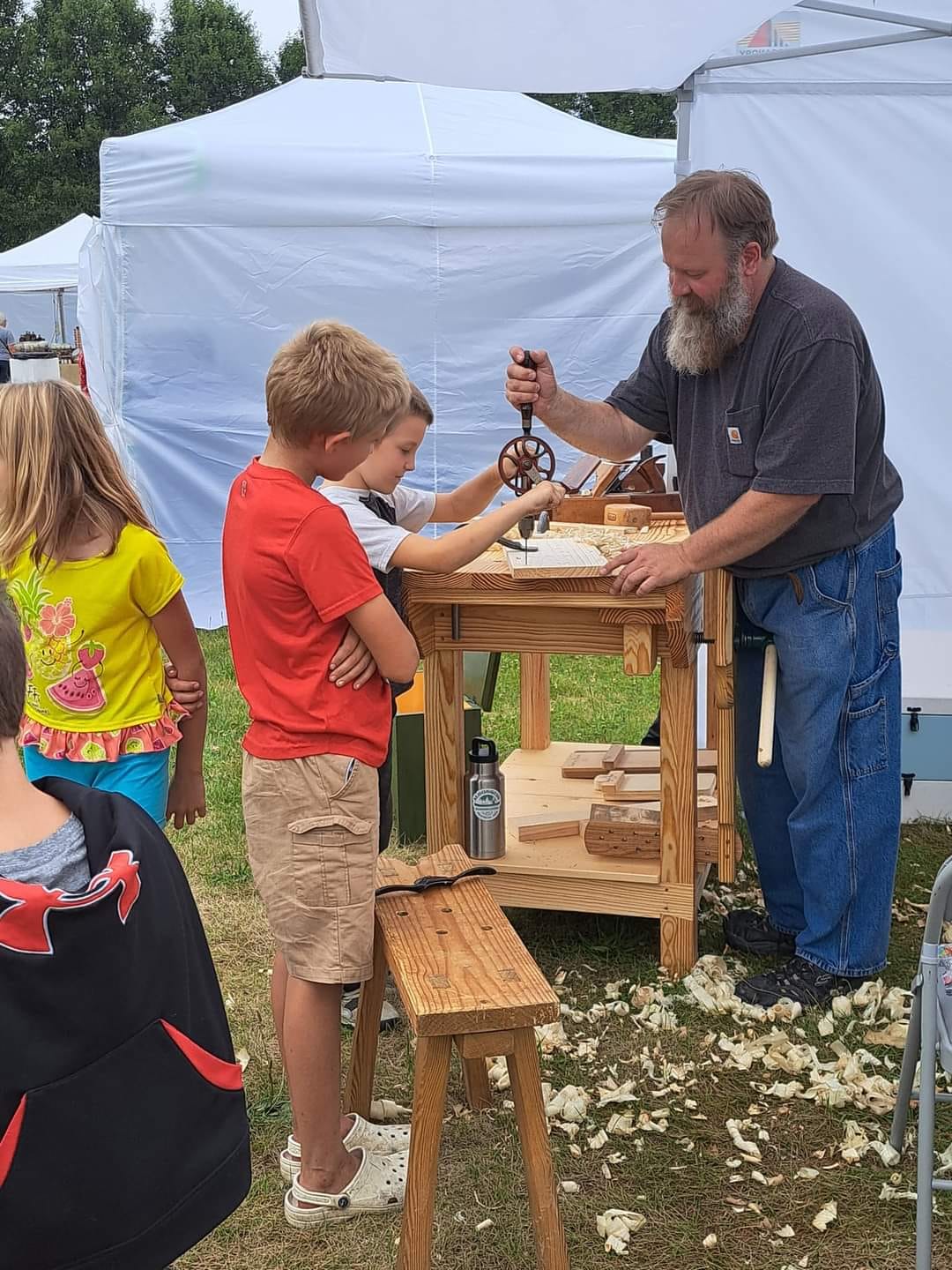
Jason Hammond demonstrates old tools in the Heritage Tent at the Salt Fork Festival.

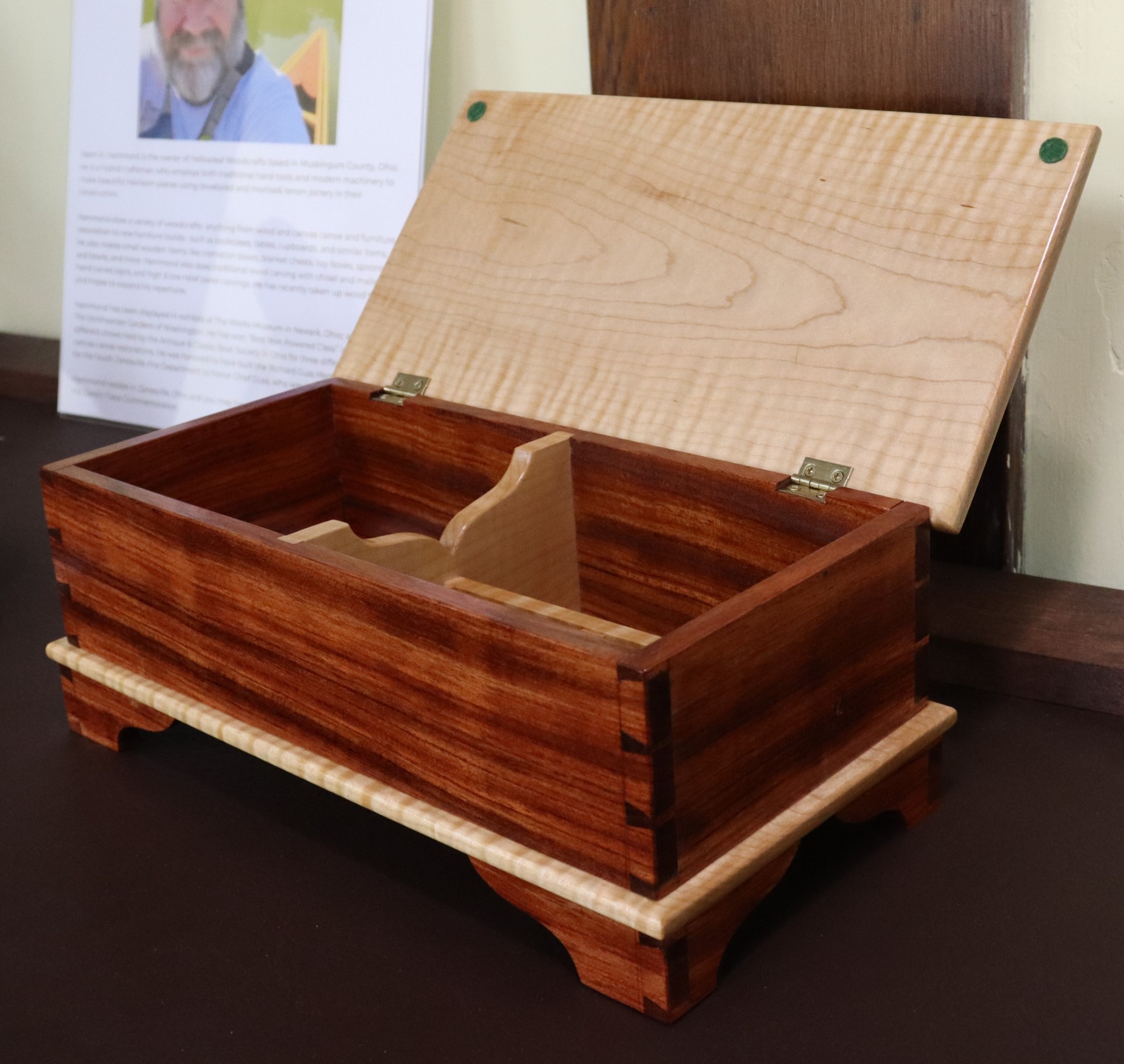
Heritage furniture has become a passion for Jason Hammond of Yellowleaf Wood Crafts in Zanesville. He loves history, restoring old tools, and paddling old canoes.

Demonstrating his use of traditional hand tools attracts visitors at the Salt Fork Festival where Jason will again be in the Heritage Arts Tent August 9-11 this year.

He has collected and refurbished old tools for many years.

Here he explains to visitors what woodworkers went through 150 years ago. Manpower, sweat, and tears were necessary for even a simple piece of furniture. Each step of the process took hours compared to minutes today.

During 1800-1850, there were eight small shops in Guernsey County where furniture was made by one to five men, often in someone’s home. It was difficult and expensive for those early settlers to move furniture with them. Builders used the wood available to create needed furniture. so cherry, maple, and walnut replaced the mahogany used for heirloom furniture in the east.

Jason’s interest in woodworking began when he was a child while watching “The Woodwright’s Shop” on PBS with his dad, who was interested in the historical aspect of various things. That show explained how to use tools from the past.

High School shop was his first experience at woodworking. There he made simple things like a bookshelf and a pen holder for his mom. At home, he experimented with walking sticks and arrows for his bow.

Blanket chests and toy boxes are popular items.

Gradually, he began collecting hand tools, that were broken and needed to be fixed, at flea markets or tool dealers online. Today he uses both traditional hand tools and modern machinery to create his heirloom pieces, which include bookcases, tables, blanket chests, toy boxes, and wood carvings.

However, you can tell what he enjoys the most when he commented, “I do think that learning and developing hand tool skills in woodworking and the decorative arts is essential in doing quality work. There are times when machines can only take you so far. It’s the skill and confidence in handwork that can take you the rest of the way.”

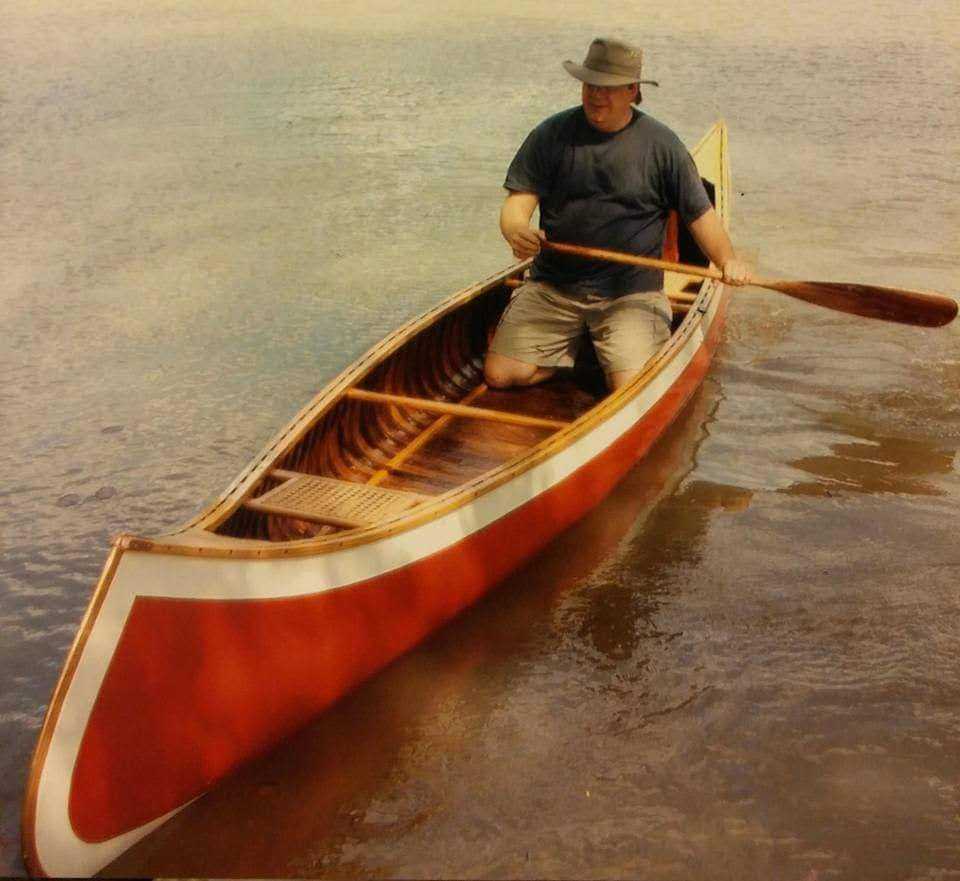
Jason takes Hiawatha, his restored Indian canoe, on the lake for a test drive.

Always being interested in history, when Jason was thinking of a name for his business, he received an idea from a line in a Longfellow poem, “The Song of Hiawatha.” When Hiawatha described the canoe he built, the last line reads, “and it shall float upon the river like a yellow leaf in autumn, like a yellow waterlily.” Yellowleaf Wood Crafts seemed a logical choice.

At the present time, he also works at the Zanesville Art Gallery where he helps with setting up exhibits and repairing or building things. Some of his smaller pieces are also available in their Gift Shop.

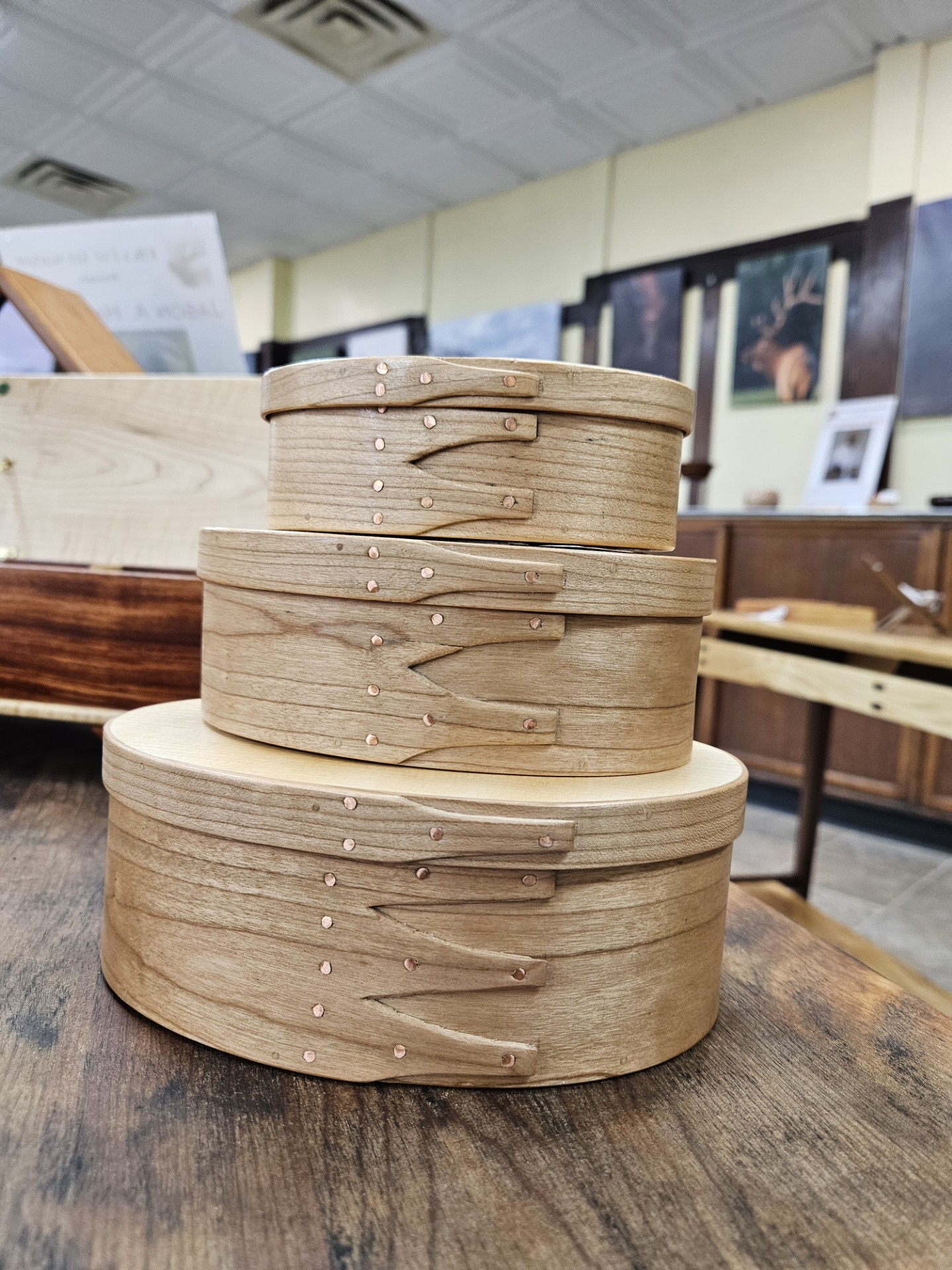
Oval wooden boxes like these were used by the Shaker religious group for various purposes.

His work can also be seen today at Elk’s Eye Endeavors in downtown Zanesville. There he displays smaller items such as accent tables, chests, and Shaker oval boxes. The Shakers religious group used those boxes to ship their seeds, as a sewing box, or even a spittoon. Jason remarked, “It was the cardboard box of its time.”

Bending the wood for these boxes required them to use steam heat and boiling water. Then the wood is bent around a form. This process was also used by the American Indians to form their canoes and snowshoes.

Speaking of canoes, Jason has won several awards for his restoration of old canoes. At the Antique Boat & Canoe Classic Show, he has won the Best Nonpowered Class in three shows for cedar and canvas canoe restoration. When he has extra time, relaxing on the water in his canoe or taking a hike in nature are his favorite activities.

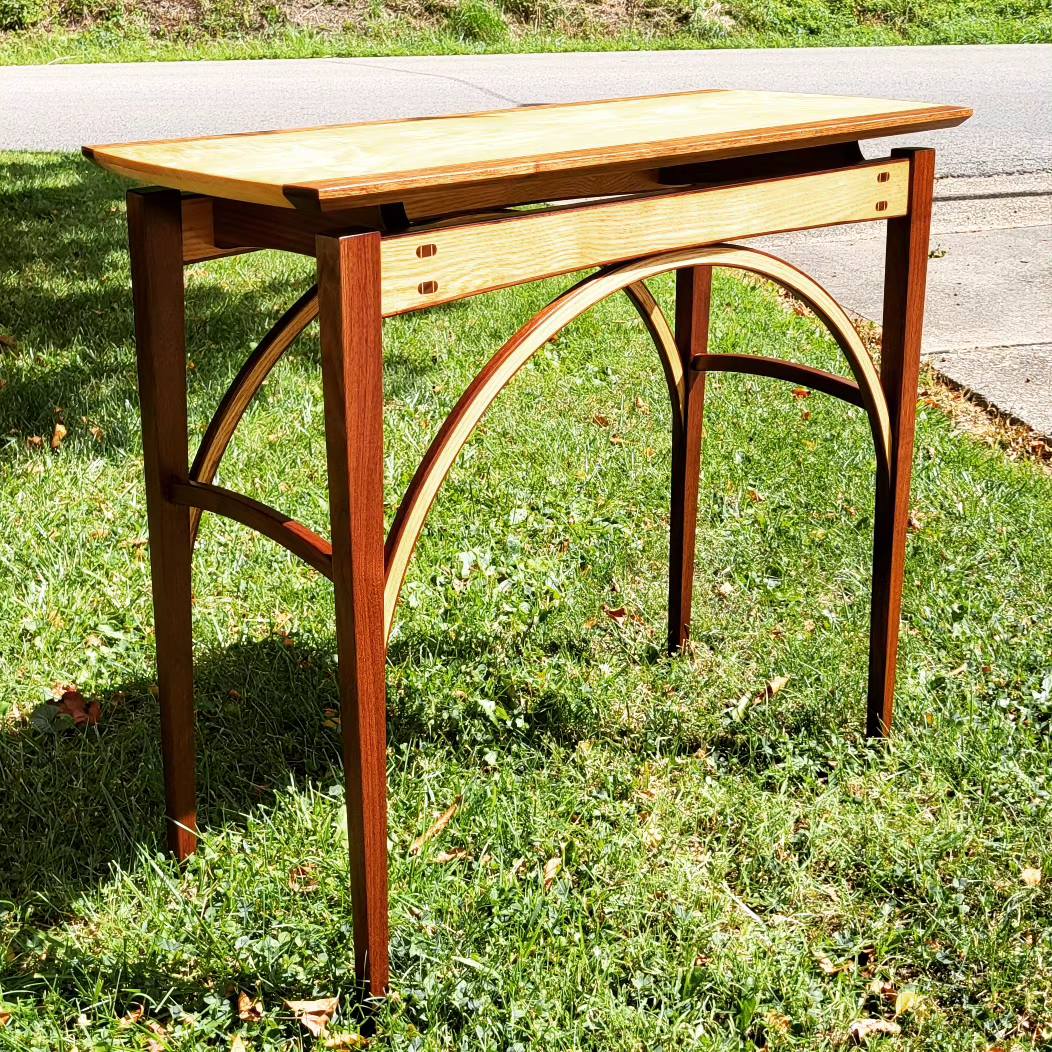
His most recent table creation sold quickly at Elk’s Eye Endeavors.

He takes great pleasure in reaching the finishing line on a project. After he has researched the history, drawn the plan, and selected the wood, putting on the finish and seeing the texture of the wood come to life is his vision coming to fruition.

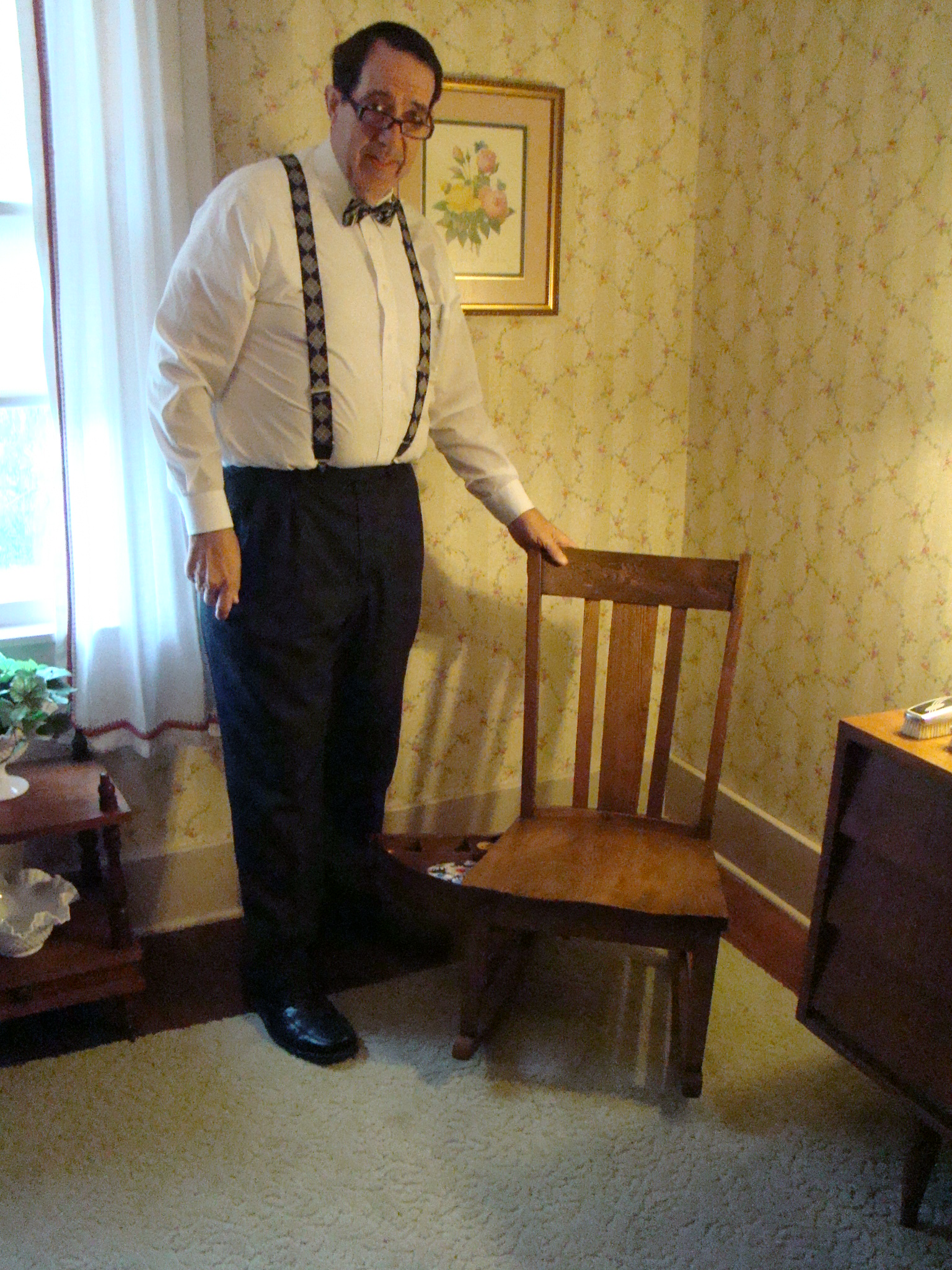
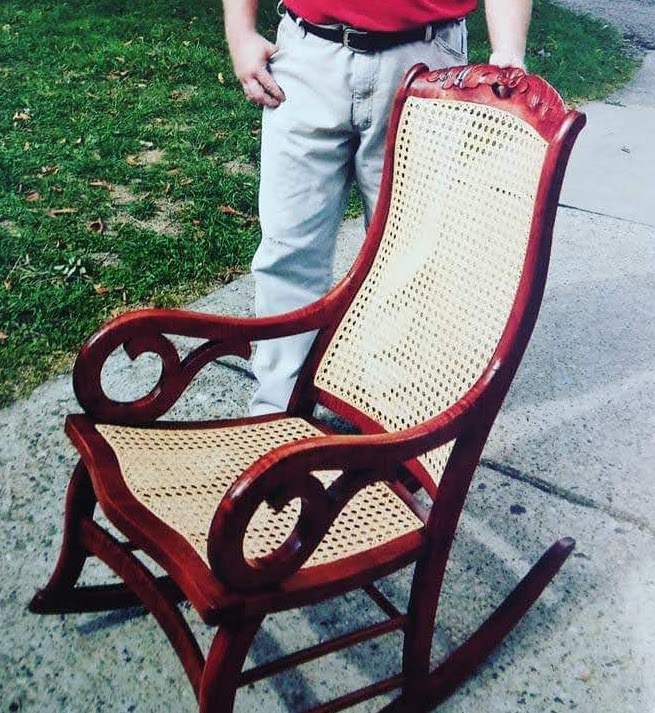
Refurbishing this heirloom rocking chair took hours of work.

Restoring furniture to its heirloom state gives him pleasure as well. Often he has to re-engineer a piece to make it more functional. For example, a rocking chair might need its rockers adjusted to keep it from tipping

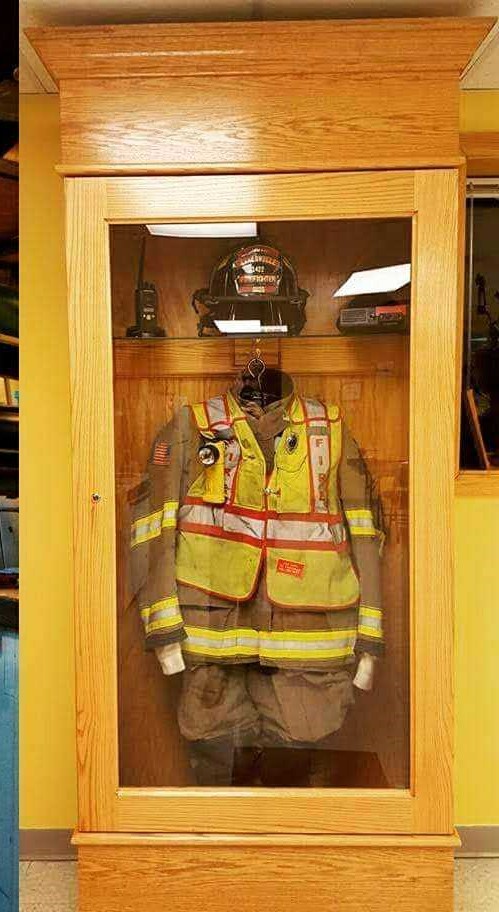
Jason is proud of a cabinet he built to honor a former fire chief in South Zanesville.

He is very proud of a large display case he constructed for the South Zanesville Volunteer Fire Department to honor a fire chief who passed suddenly. The cabinet is tall enough to hold the entire turnout gear of the chief from boots to helmet.

Contact Jason at Yellowleaf Wood Crafts on Facebook or Instagram at yellowleafwoodcrafts. If you are interested in a commissioned piece, email him at jasonhammond1416@gmail.com. He has special pieces for sale at Elk’s Eye Endeavors in Zanesville as well as in the gift shop at the Zanesville Art Museum.

When talking about the craftsmen at the festivals, Jason feels, “There is a resurgence of handwork in this country. There are people who are taking up weaving, pottery, basket making, carving, etc. again. They want to produce something that has the slight imperfections that only the human touch can make. The creativity of doing such work gives satisfaction and a sense of accomplishing something that is lacking in this day and age.”

Jason enjoys participating in the Zane Trace Commemoration.

Visit Jason at the Heritage Arts Tent at the Salt Fork Festival in Cambridge on August 9-11 or at Zane Trace Commemoration in Zanesville where he demonstrates his use of traditional tools for woodworking. You are sure to enjoy listening to his stories as you watch him work.

Epworth Park for Peacefulness of Days Gone By

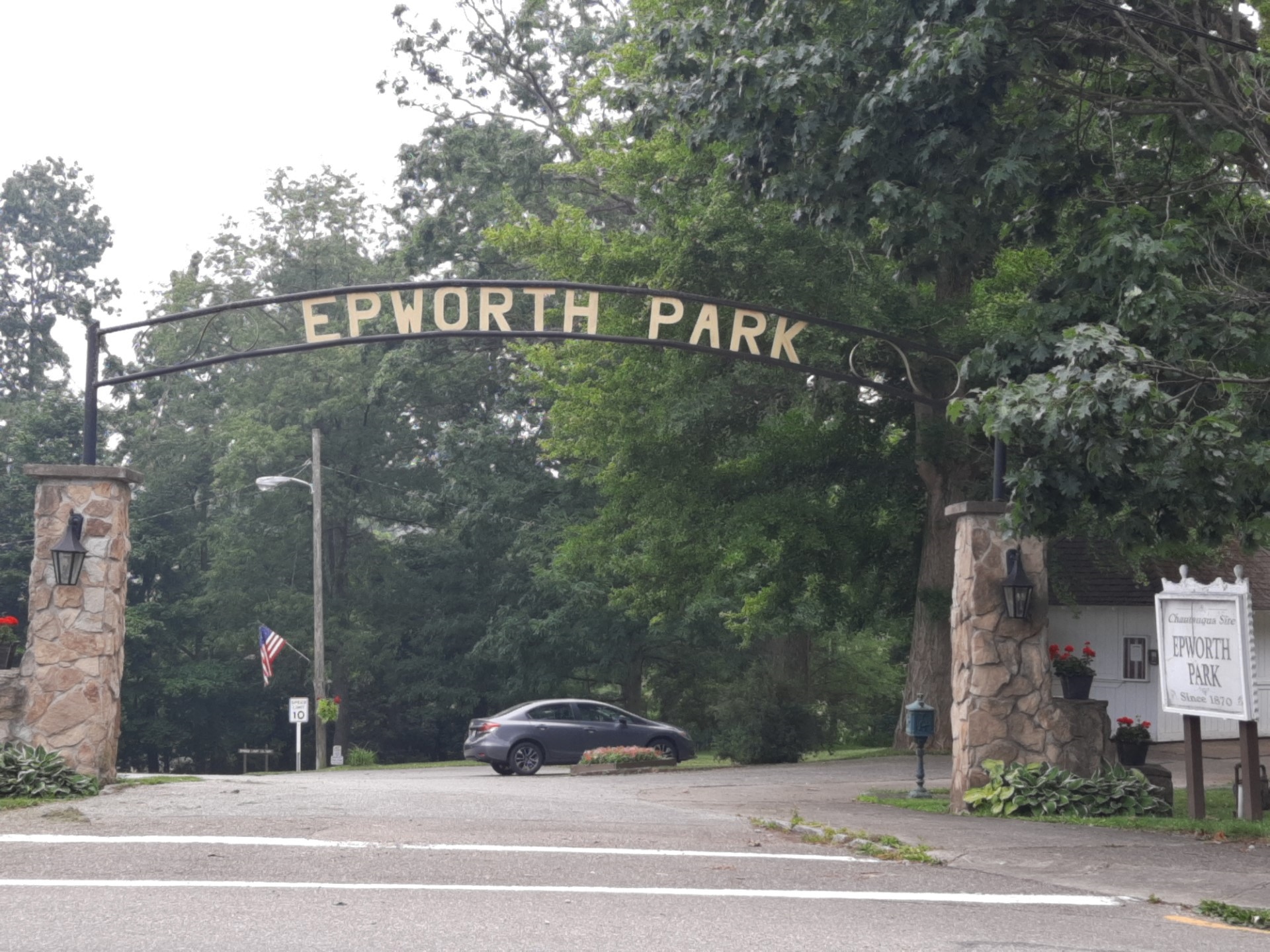
Epworth Park is located in the center of Bethesda, Ohio.

Escape from the fast pace of life at Epworth Park in Bethesda. Experience the peacefulness of days gone by as you stroll along the lake, enjoy the beautiful fountain, and reminisce under the majestic oaks. It all began in 1870 as the “Garden of Oaks” for use as a Methodist Camp Ground – a place for spiritual fellowship, instruction, and renewal.

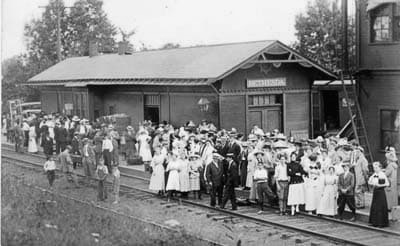
Many came by train to those early camp meetings at Epworth Park.

Horse-drawn wagons and trains carried as many as 10,000-15,000 people to camp meetings in the late 19th and early 20th centuries. With the park’s rising popularity, cottages were built in the late 1800s to serve as a retreat for people who wanted to escape city life. Epworth Park was “the place to be.”

In the early 1900s, the camp meetings were replaced by the National Chautauqua movement, which focused on education, culture, and entertainment for those living in small towns. It began at the Methodist retreat on Chautauqua Lake, New York. The Chautauqua assemblies attracted the most famous actors, musicians, and lecturers of the time including William Jennings Bryan and William McKinley.

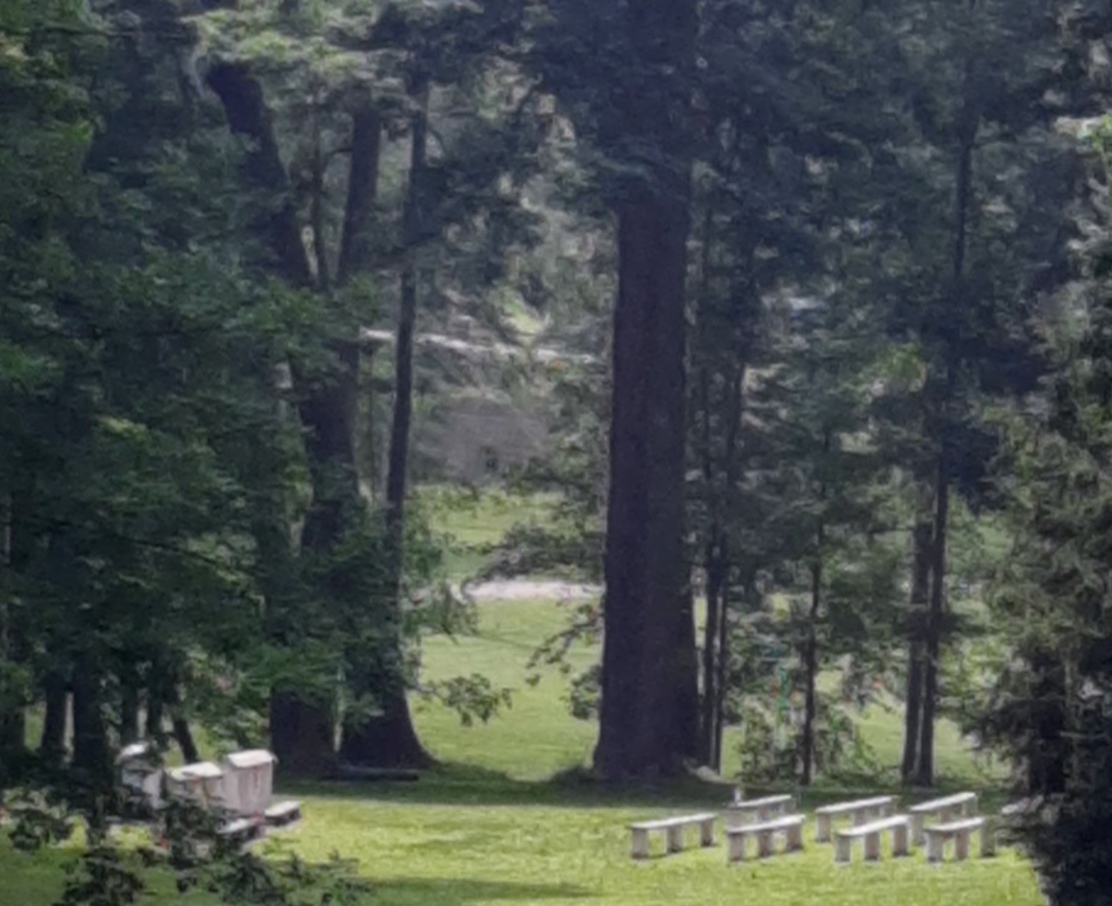
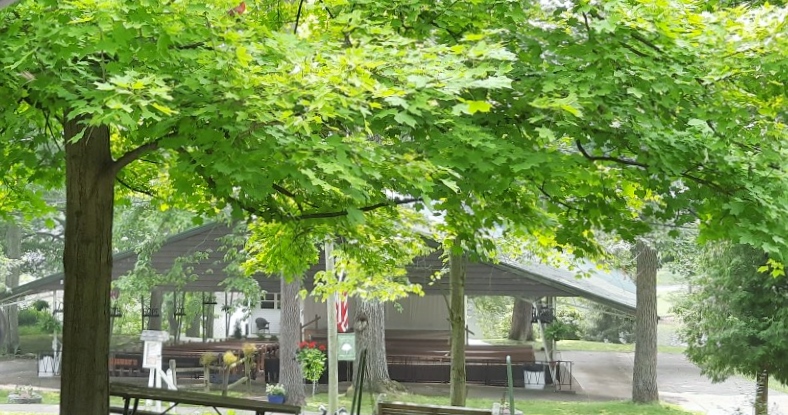
These beautiful old oaks make the perfect place for an outdoor chapel meeting.

Today that heritage continues with an annual Chautauqua Homecoming Days and the Bethesda Festival during the second weekend in July with a new, more modern form of entertainment. This is a community event where everyone comes to celebrate the history of Epworth Park through a variety of activities including entertainment, a car show, fishing tournament, and vendors.

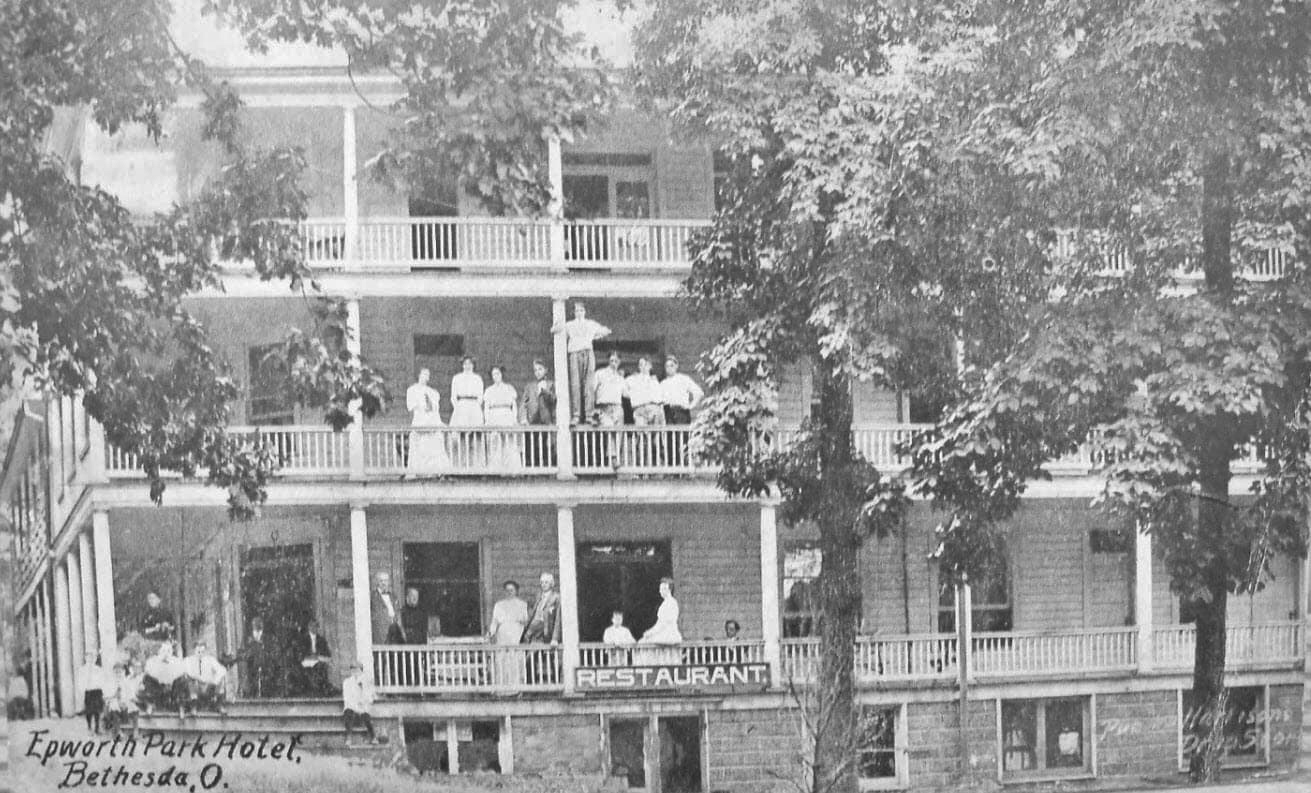
In its day, Epworth Hotel was ‘the place to stay’ at Epworth Park.

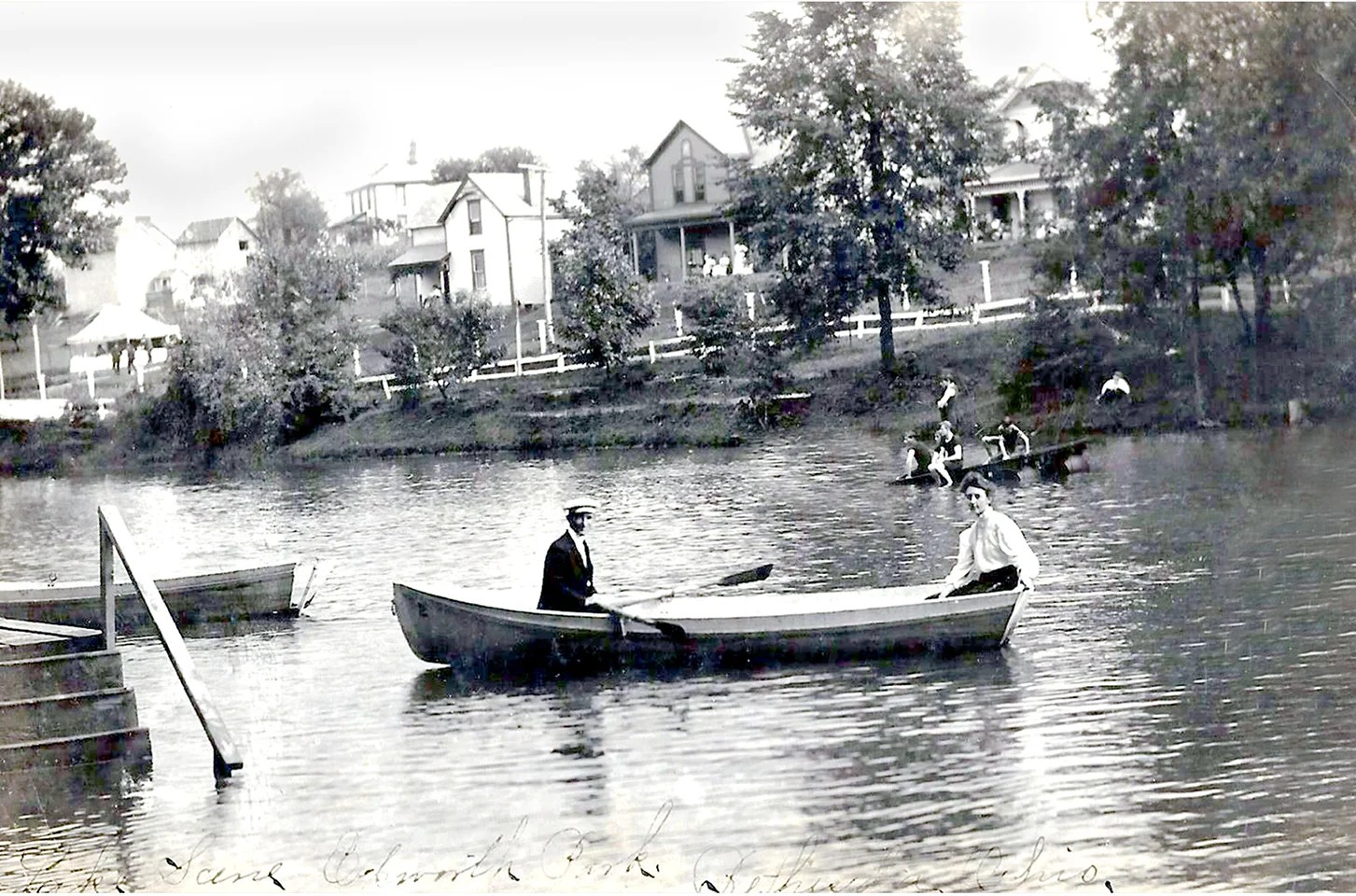
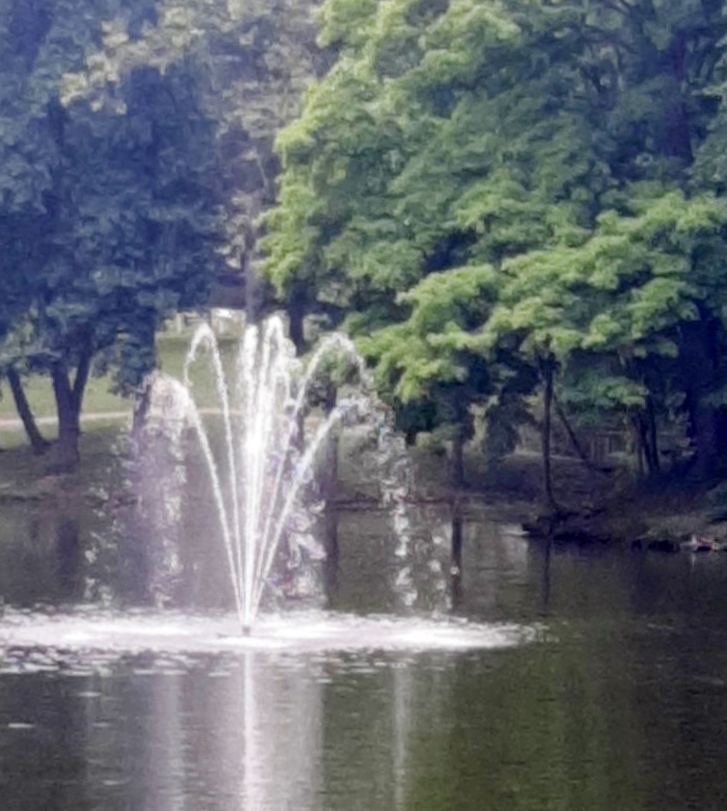
A beautiful, three-story hotel was added in those early days as well as a lake and auditorium. Unfortunately, the hotel no longer exists but in those early days was near the site of today’s concession stand. The lake not only added to the beauty of the park but provided a place for swimming and boating. Today a fountain adds beauty along with two bridges over the lake.

Boating on the lake was a popular way to spend the day.

This seven-acre park is surrounded by a grove of oak trees and consists of sixty privately-owned Victorian cottages, a common house for meetings, and the original outdoor chapel/amphitheater for services, weddings, and concerts with room for up to 250 guests.

Concerts, meetings, and weddings are held in their large outdoor amphitheater.

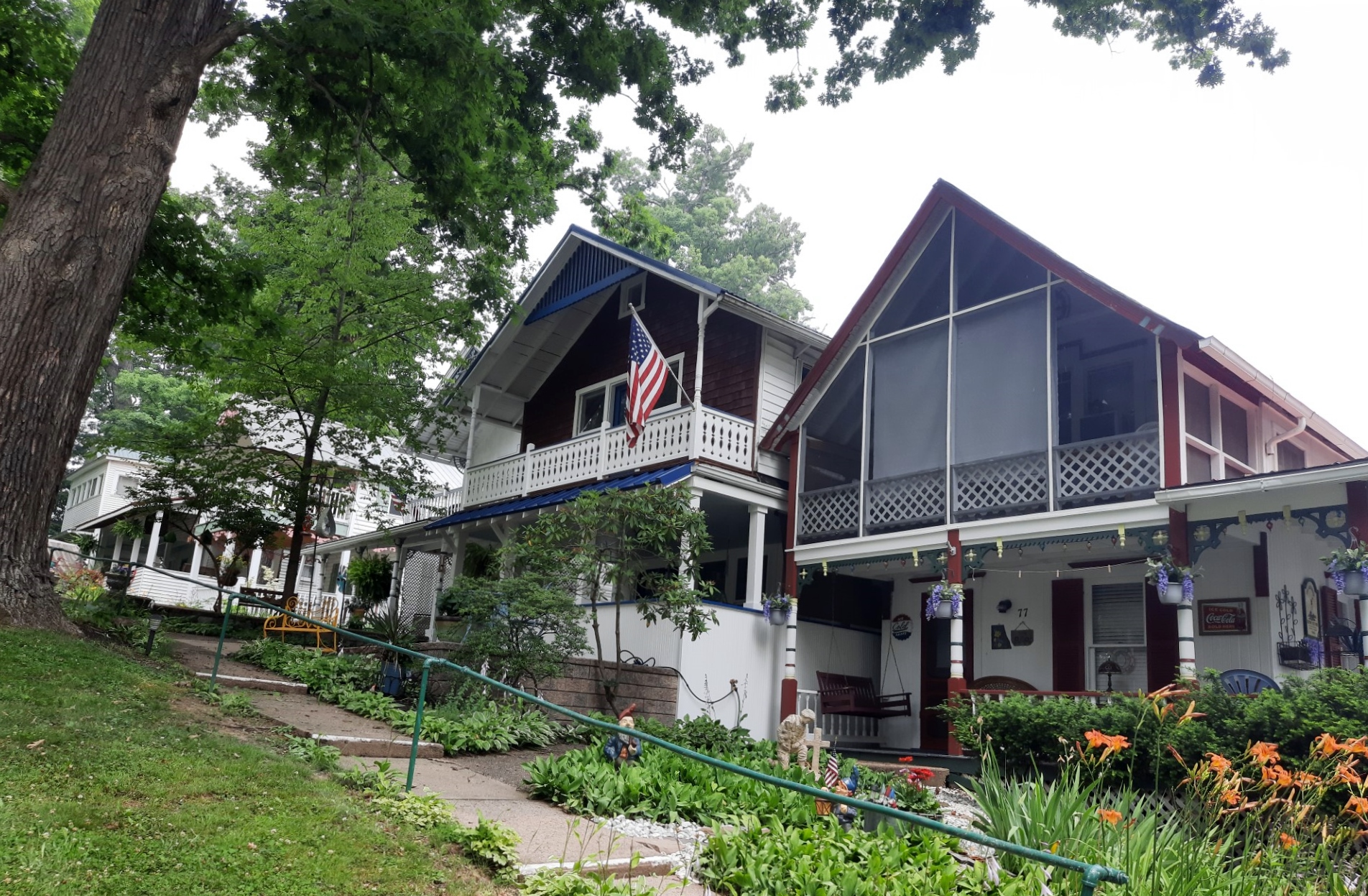
May through October is the perfect time for a wedding in the “Garden of Oaks” in their open-air, covered auditorium. Take time to stroll down the sidewalks and enjoy the old Victorian cottages that have been around for quite some time. Notice all the beautiful flowers, gardens, and American flags on your walk.

The water fountain adds a peaceful touch.

Until 2018, the Methodist Church East Ohio Conference owned the entire park. Today they have maintained ownership of Epworth Center but the remaining land has been sold to cottage owners and the Village of Bethesda.

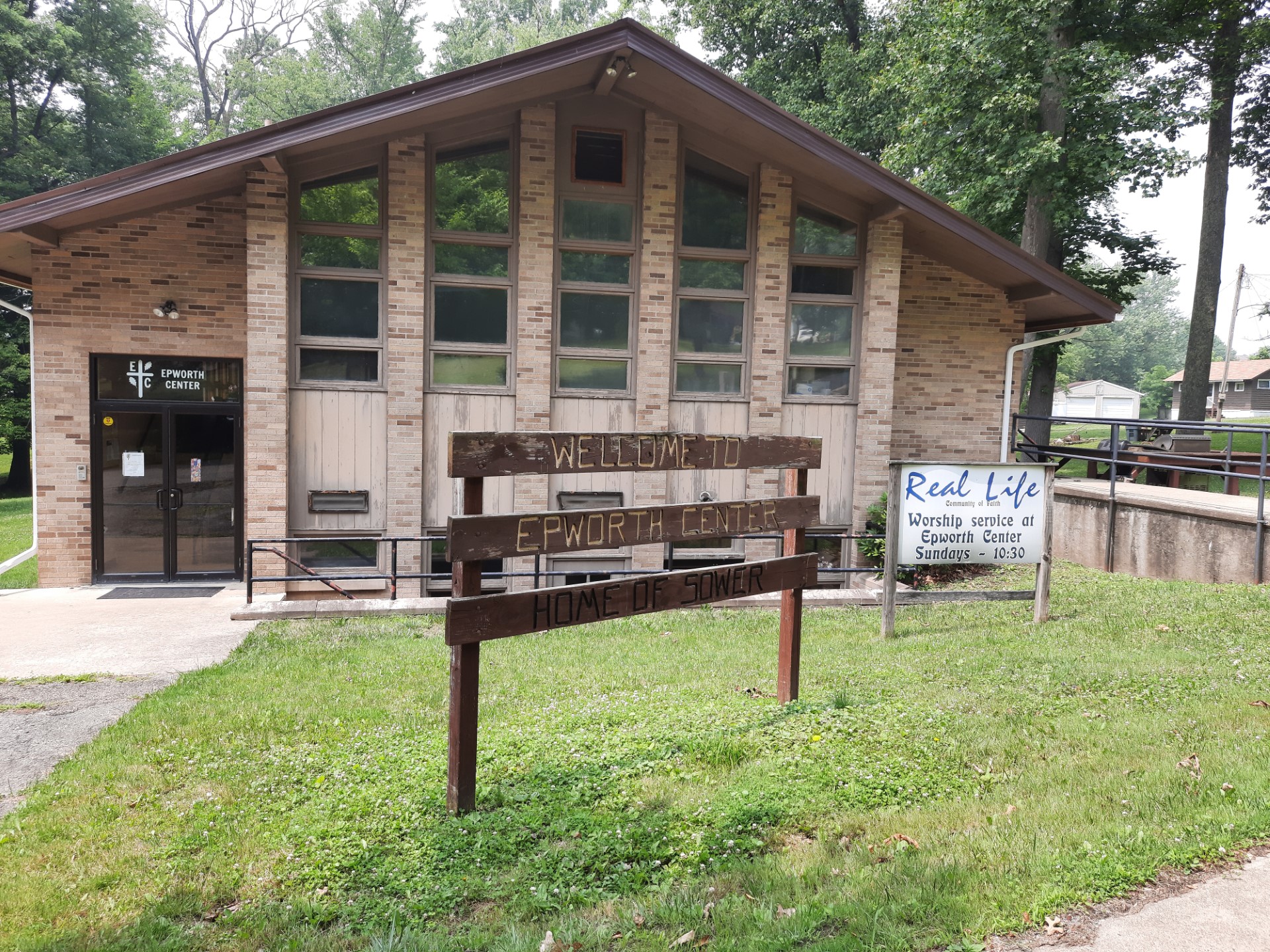
Epworth Center was originally part of the Methodist campground.

Epworth Lodge, the present home of Epworth Center, was built in 1967 as a learning center. Their outreach missions include home repairs, food pantry distribution, and community support. Today, it is a wonderful place for seminars, retreats, meetings, and weddings. Four cabins house 44 people and there are extra rooms at the lower level of the lodge.

Take a walk along these early Victorian-style cottages.

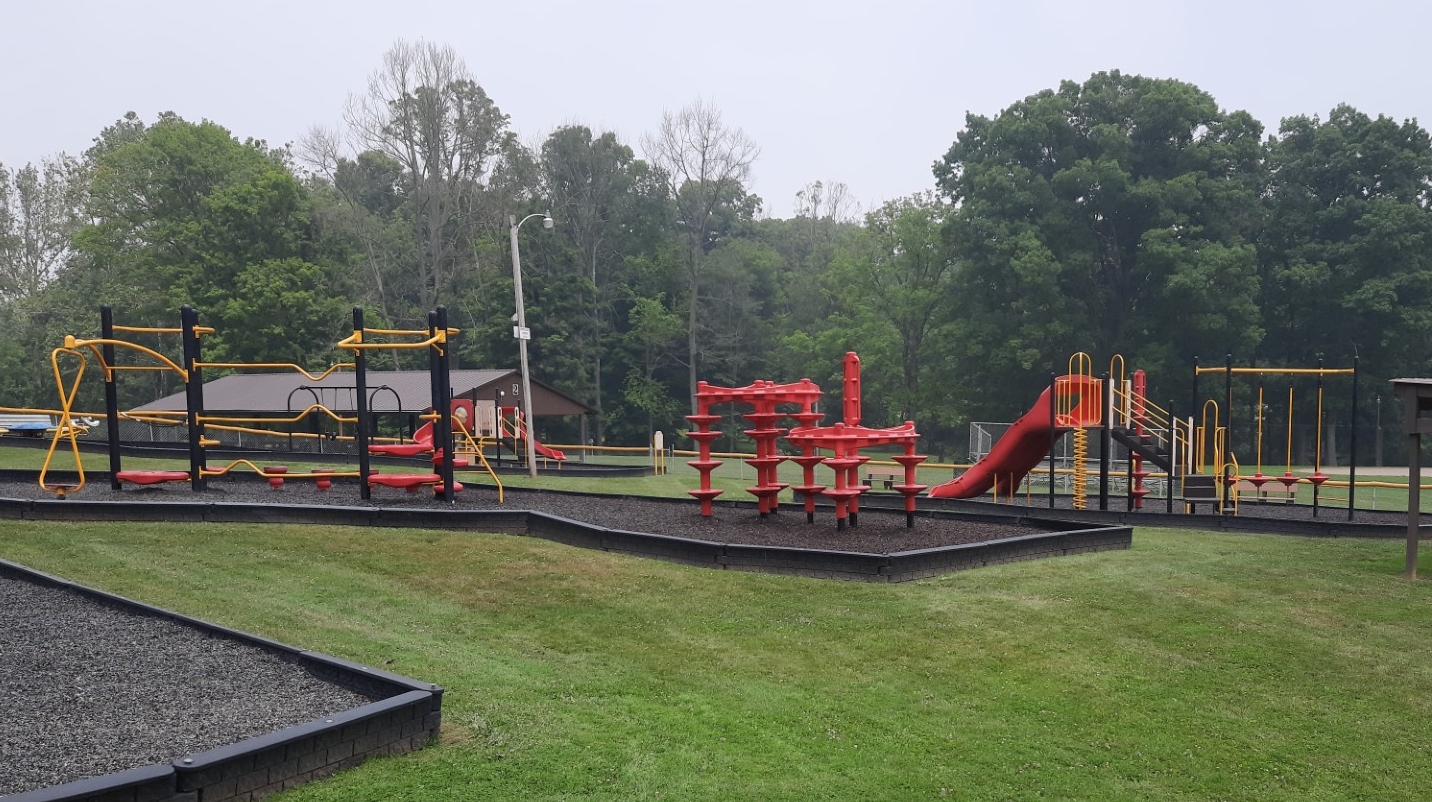
Cottages are owned primarily by folks from the Upper Ohio Valley and have been passed down from generation to generation. Most are used as summer homes. The village purchased the south side of the property where the lake is located and has a wonderful recreational area there now with playground equipment, ball fields, and basketball court. It’s a great place for a picnic or family reunion as there are several shelters.

A playground close to the lake is provided by the town of Bethesda.

Many from Bethesda and nearby towns come to enjoy the fun of fishing with their children in the nearby Epworth Lake even if it is catch and release. It’s a great place to teach children the joys of fishing. While at the lake, take time to walk on a bridge across the edge of the lake so you can watch the fish below. It’s the perfect place to watch or feed the ducks and geese that live there.

For over 150 years, the people of Bethesda and surrounding area have enjoyed visits to Epworth Park. There are activities all year long from Easter Egg Hunts to concerts in the park – quite often on Saturdays. There are many locations perfect for photo opportunities.

Lakeside seems the perfect place to take a photo…or your fishing pole!

Perhaps you will want to visit Epworth Park and see its charm. Check their schedule at www.epworthpark.org for upcoming events such as concerts and movies in the amphitheater. While it may not have the glamour of those early days, it’s still a great place for relaxation and family togetherness. Experience the tranquility of days long ago any time of the year at Epworth Park.

Epworth Park is located off I-70 Exit 208. Go south about two miles to the town of Bethesda. The park is located off Route 147. You can’t miss the entrance way!

Giants of Seville, Ohio

While many giant skeletons have been found in mounds across the country, there is an accurate record of two giants, who resided in Ohio in the late 1800s.

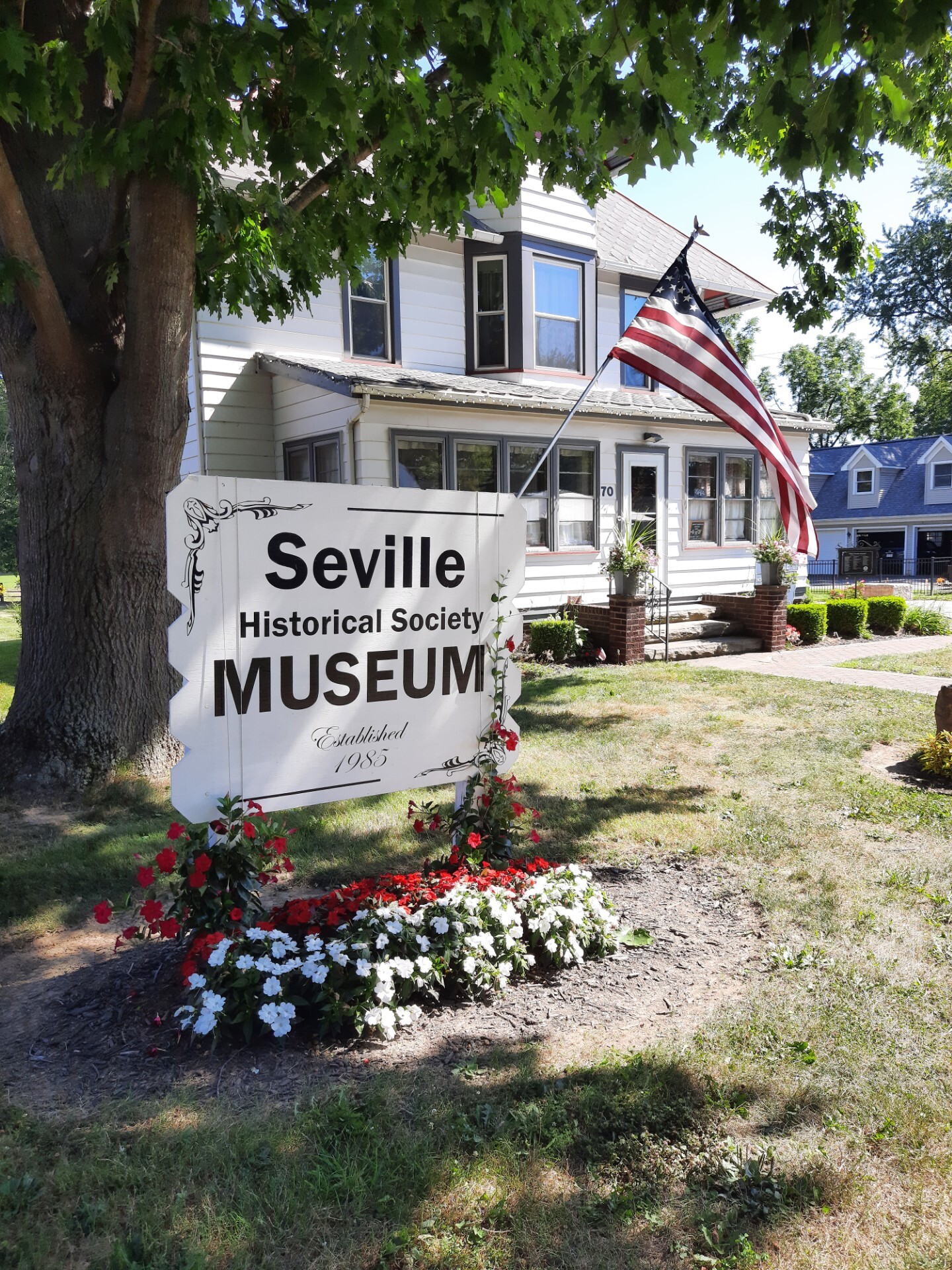
The Seville Historical Society Museum is interested in preserving the history of their area.

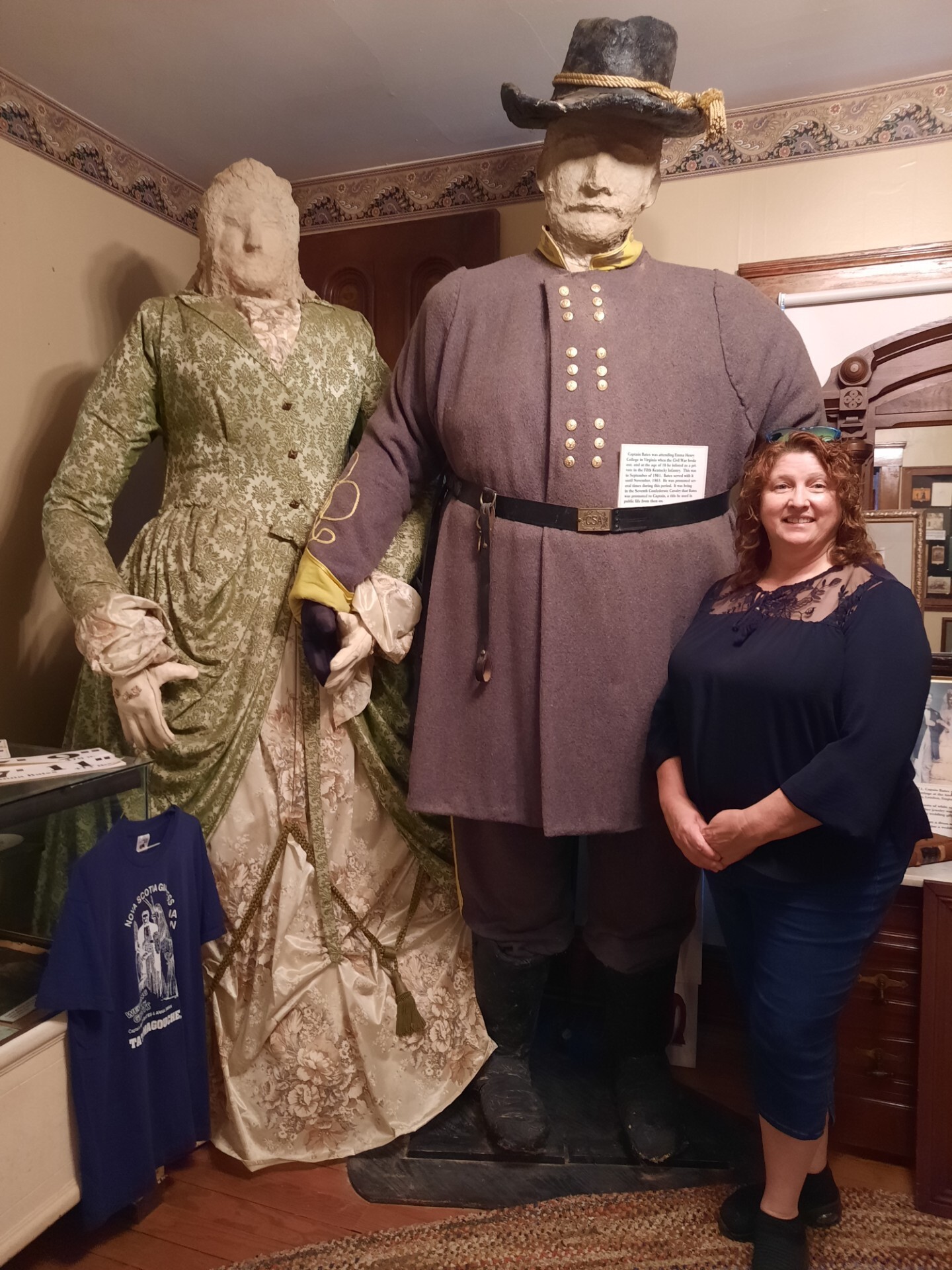
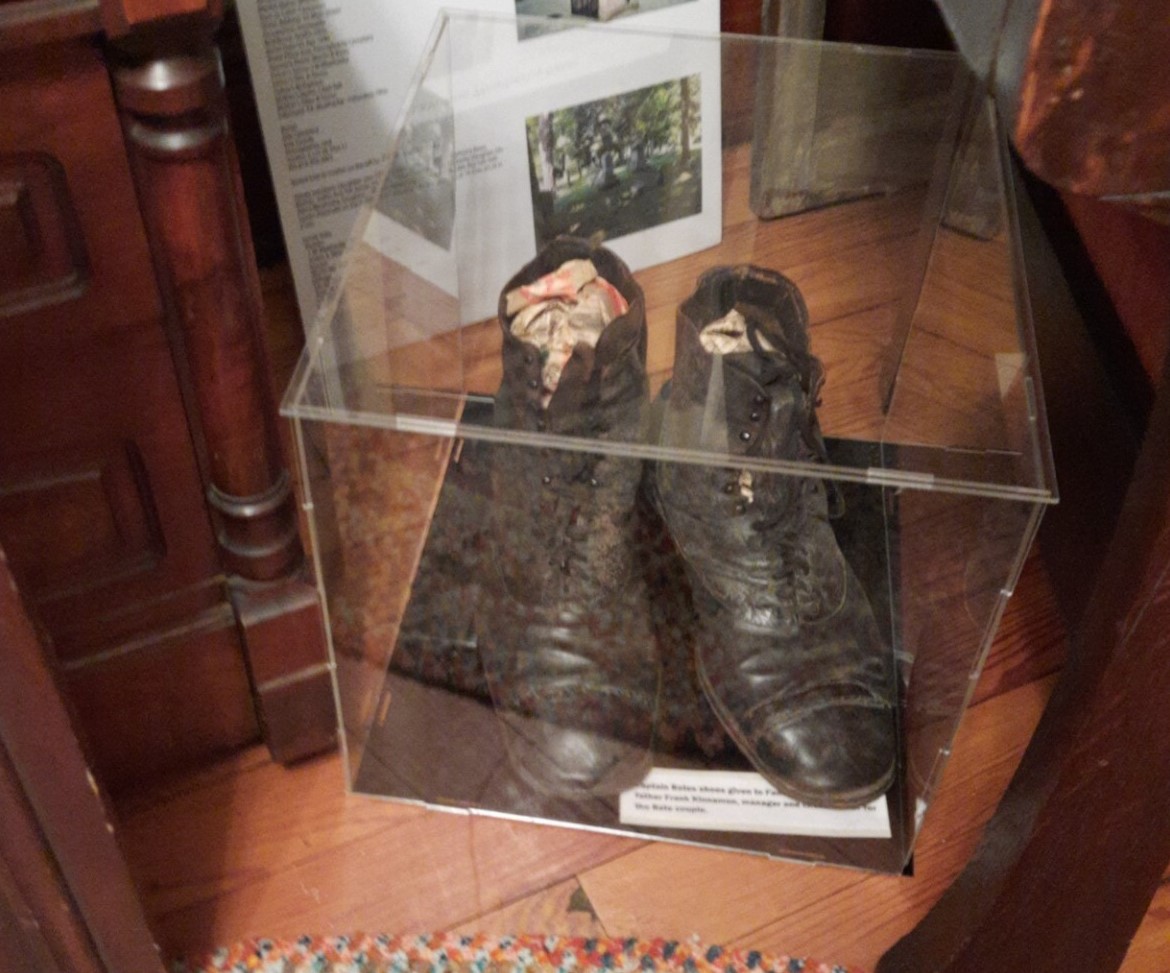
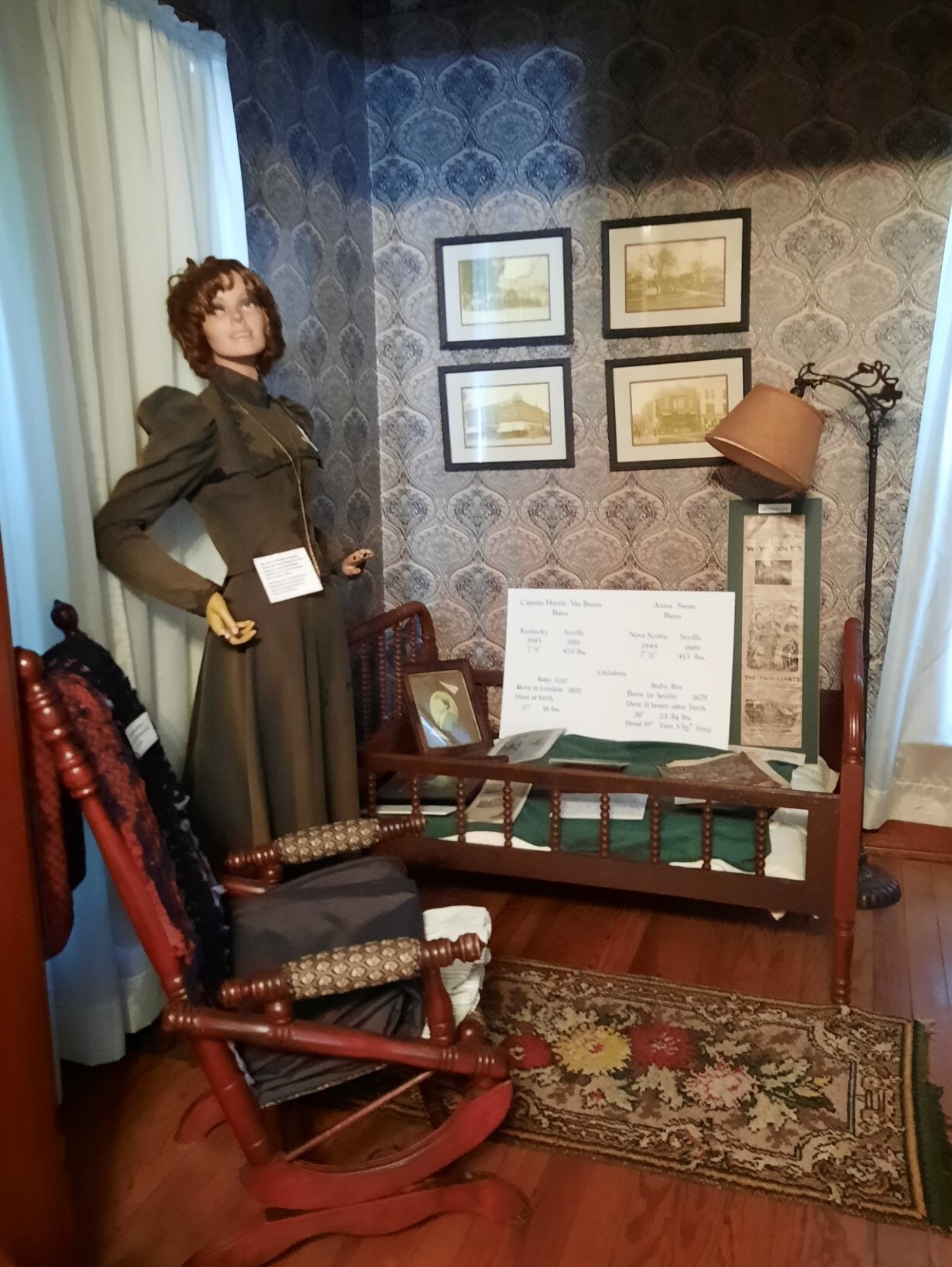
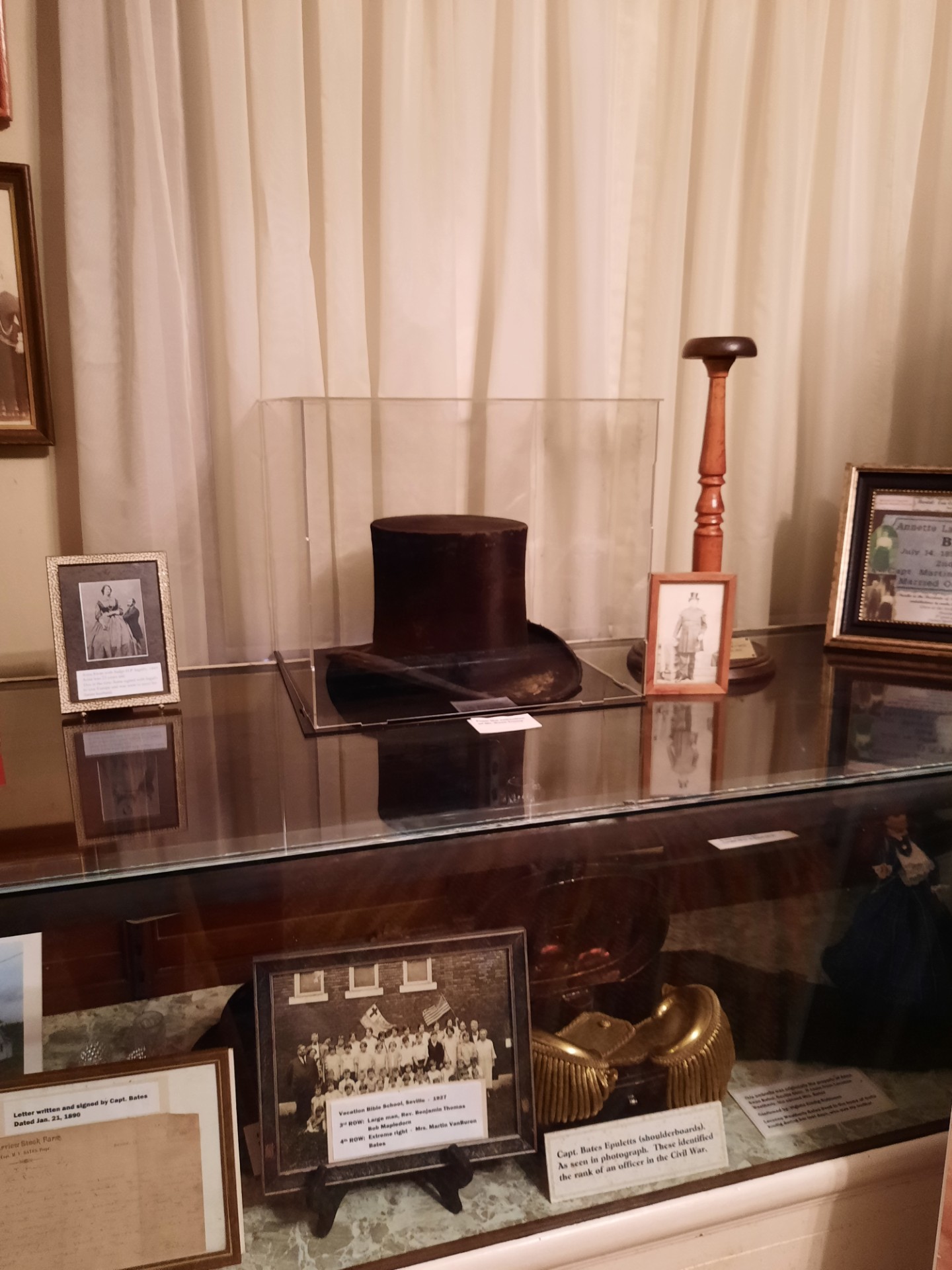
The Seville Historical Society Museum, located just a few miles west of Akron, contains the history of these two giants. Their display includes life-sized statues of Martin and Anna Bates as well as a pair of Captain Bates’ shoes and his hat.

 Life size statues of Martin and Anna Bates are shown with museum volunteer, Sheila Reidel.

Martin Van Buren Bates began a tremendous growth spurt about the age of six or seven. By the time he was twelve years old, he was over 6 ft. tall and weighed over 200 pounds.

Captain Martin Bates’ boots are on display.

During the Civil War in 1861, Bates joined the 5th Kentucky Infantry at the age of 16 as a private in the Confederate Cavalry. His large figure and ferocious manner quickly earned him the rank of captain and the title “Kentucky Giant.” However, he was wounded in battle around the Cumberland Gap area and captured. He was imprisoned for a time at Camp Chase in Columbus, but later discharged due to his size. He was still often called Captain Bates for the rest of his life.

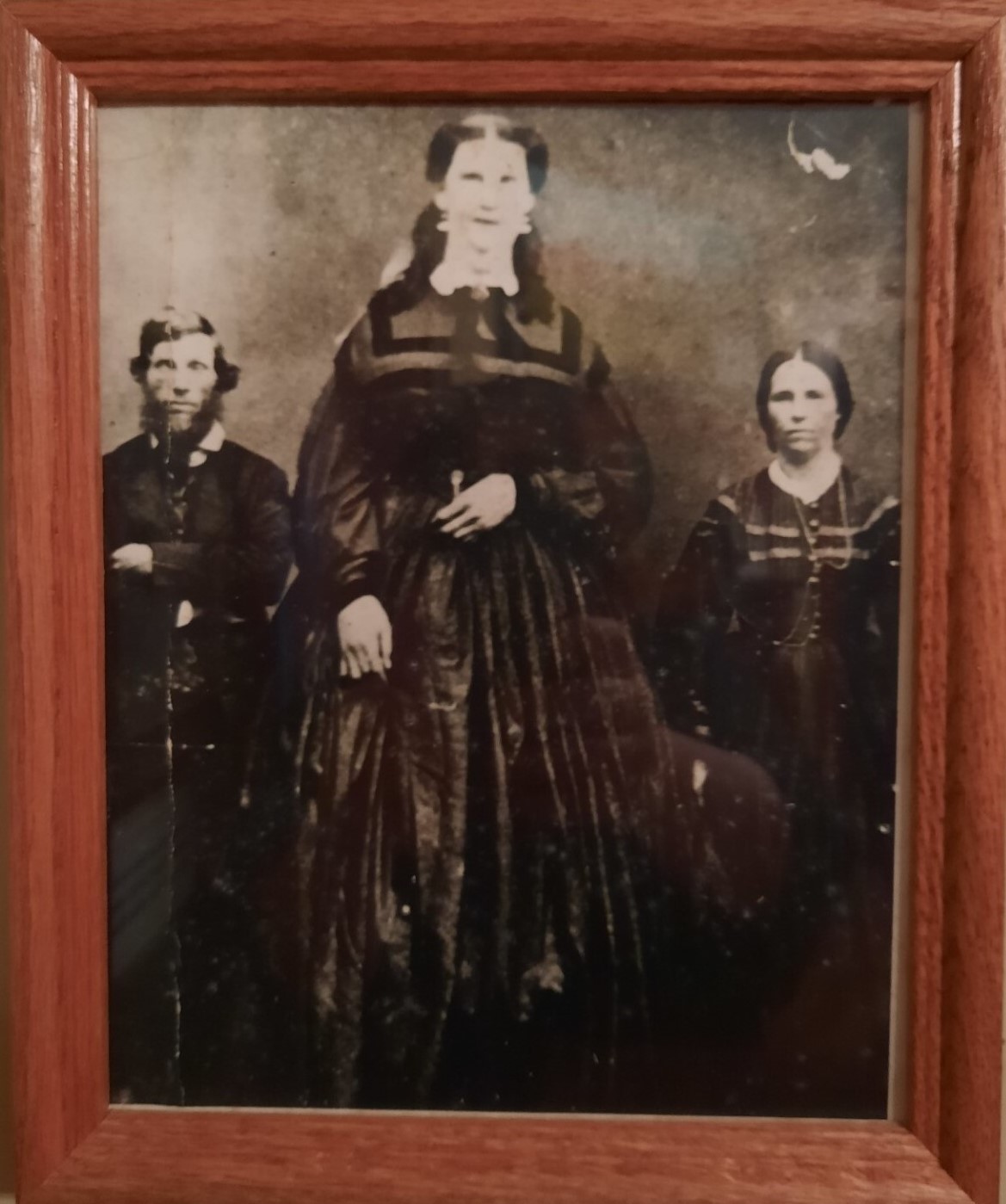
This picture shows Anna with her parents.

Anna Haining Swan was born in Nova Scotia in 1848 where she was known as the Nova Scotia Giantess. Because of her size at 7’11” tall and weighing 413 pounds, she began working for P.T. Barnum at the age of 16. She had no interest in his traveling shows, but held receptions and teas at the P.T. Barnum’s American Museum in New York City.

After the war, Martin toured with a small circus. While the circus was on tour in Halifax, Canada, the 7’11” tall Anna Haining Swan appeared as part of the P.T. Barnum show, being billed as “The Tallest Woman on Earth.” She and Martin, who was now 7’8” tall and weighed 470 pounds, soon got to know each other, being the tallest people around, as they toured extensively.

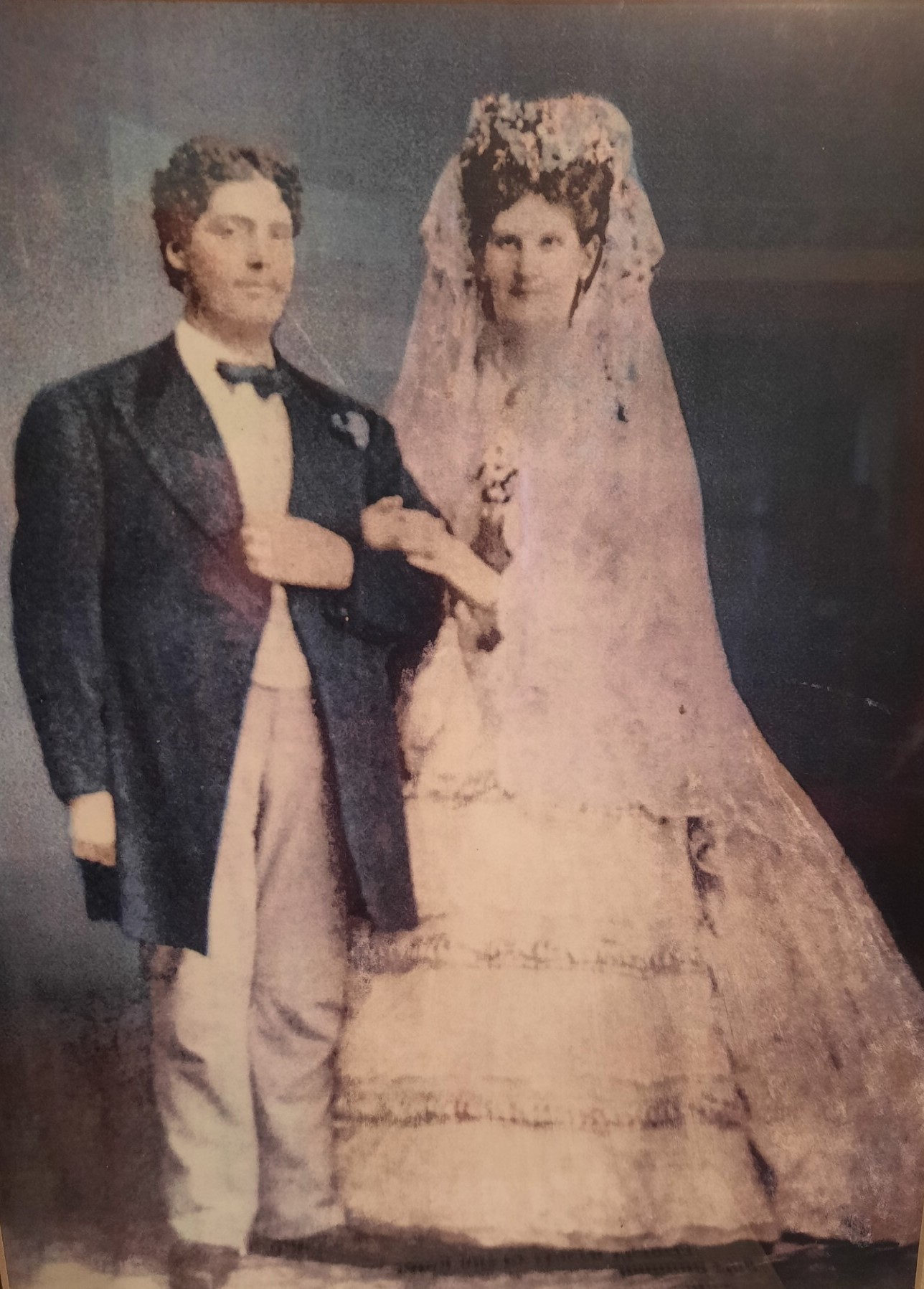
Martin and Anna were married in England with a dress made by Queen Victoria’s seamstresses.

Martin and Anna were frequent guests at Buckingham Palace often performing skits together or giving readings. Anna even played the piano. When Queen Victoria heard they were getting married, she had her seamstresses make a beautiful wedding dress for Anna using 60 yards of lace and 50 yards of material.

This wedding on June 17, 1871 at St. Martin-in-the-Fields in London, England drew thousands of people due to the unusual pair getting married. Queen Victoria herself attended the wedding and gave them two extra-large watches as wedding presents. Martin’s watch was as big as a saucer.

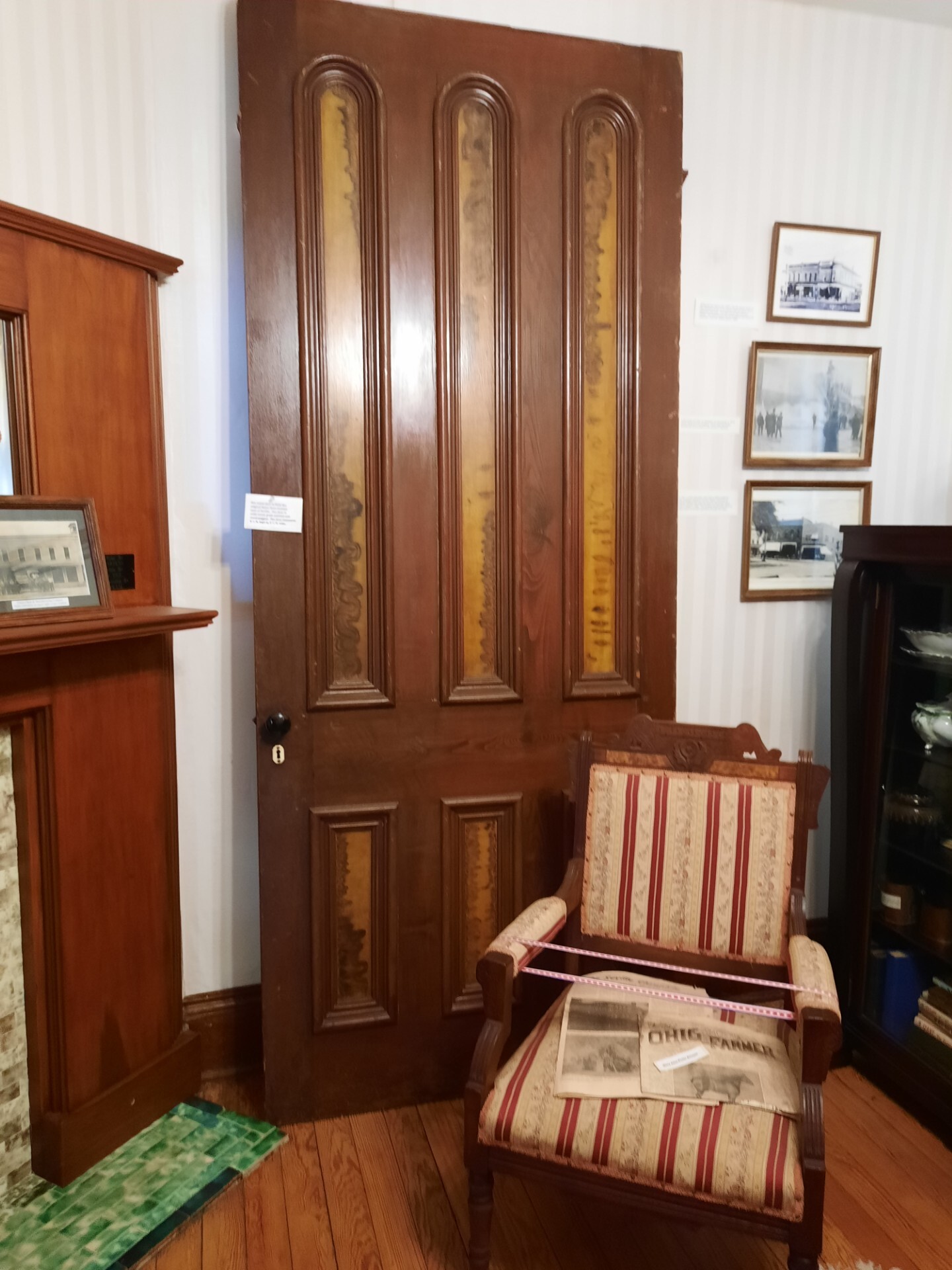
This is an original tall door from the home of the giants.

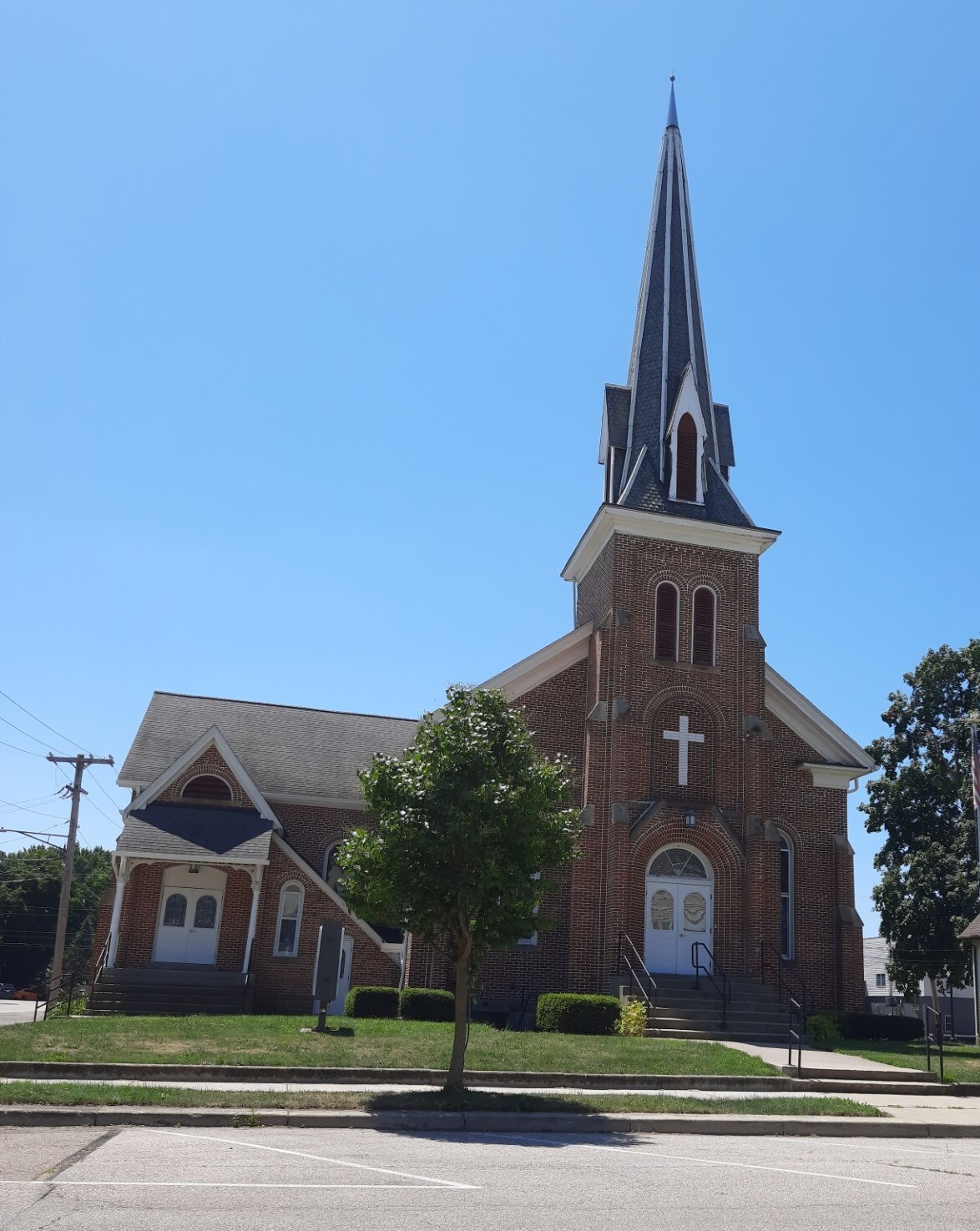
On a visit to the United States, the barker from Barnum brought them to the area of Seville where he lived. They both found it a pleasant place to live and soon acquired a 130 acre farm there in 1871. Martin built a massive house with 14′ high ceilings to accommodate their larger size with all furniture built to order. At the Seville Baptist Church, a special extra wide pew had to be built to accommodate their size.

The giant couple attended this First Baptist Church in Seville

Anna taught Sunday School at the First Baptist Church and had a carpenter build a large shoe which she filled with presents for the children. Then they were treated to lunch at Anna’s home, a place the children loved to visit as they liked climbing on the extra large elevated furniture where they could sit in the giants’ laps and have stories read or told to them. They also loved riding in their giant sized carriage or sleigh.

Babe’s original extra-large baby bed.

While Martin wanted to be a farmer and had the best breeds of cattle and Norman draught horses, their size made them an unusual attraction. In 1878-1880, Martin and Anna were leading attractions of the W.W. Cole circus as a break from country living. P.T. Barnum remained a personal friend throughout their lives. They often entertained friends from the circus at special Christmas parties in their home.

Martin’s dress hat is also an original.

A favorite story tells how the men of the town were arguing in the dry goods store about how strong the retired Captain Bates really was. Usually people could hear Bates as he approached town because of the hoofbeats of his large horse. However, this time he was not heard. He came into the store just as the owner was saying, “If Bates can pick up this barrel of sugar (possible weight varied from 350 to 500 pounds), I will give it to him.”


Bates easily picked up the barrel and carried it to his wagon. When he returned to the store, he asked, “Do you have any other heavy barrels you want to give away?”

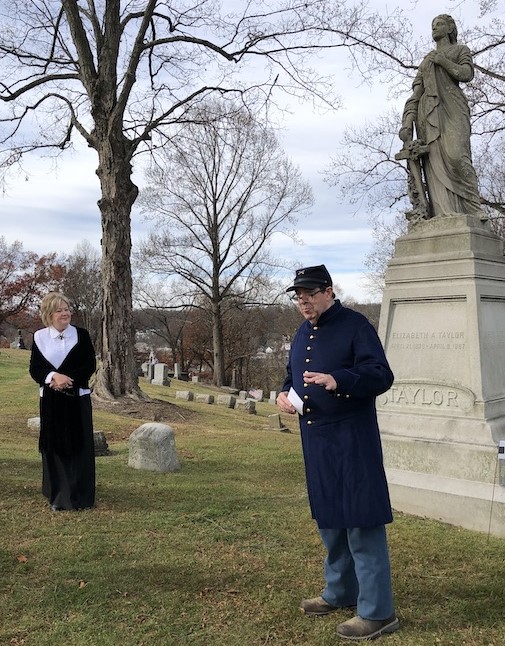
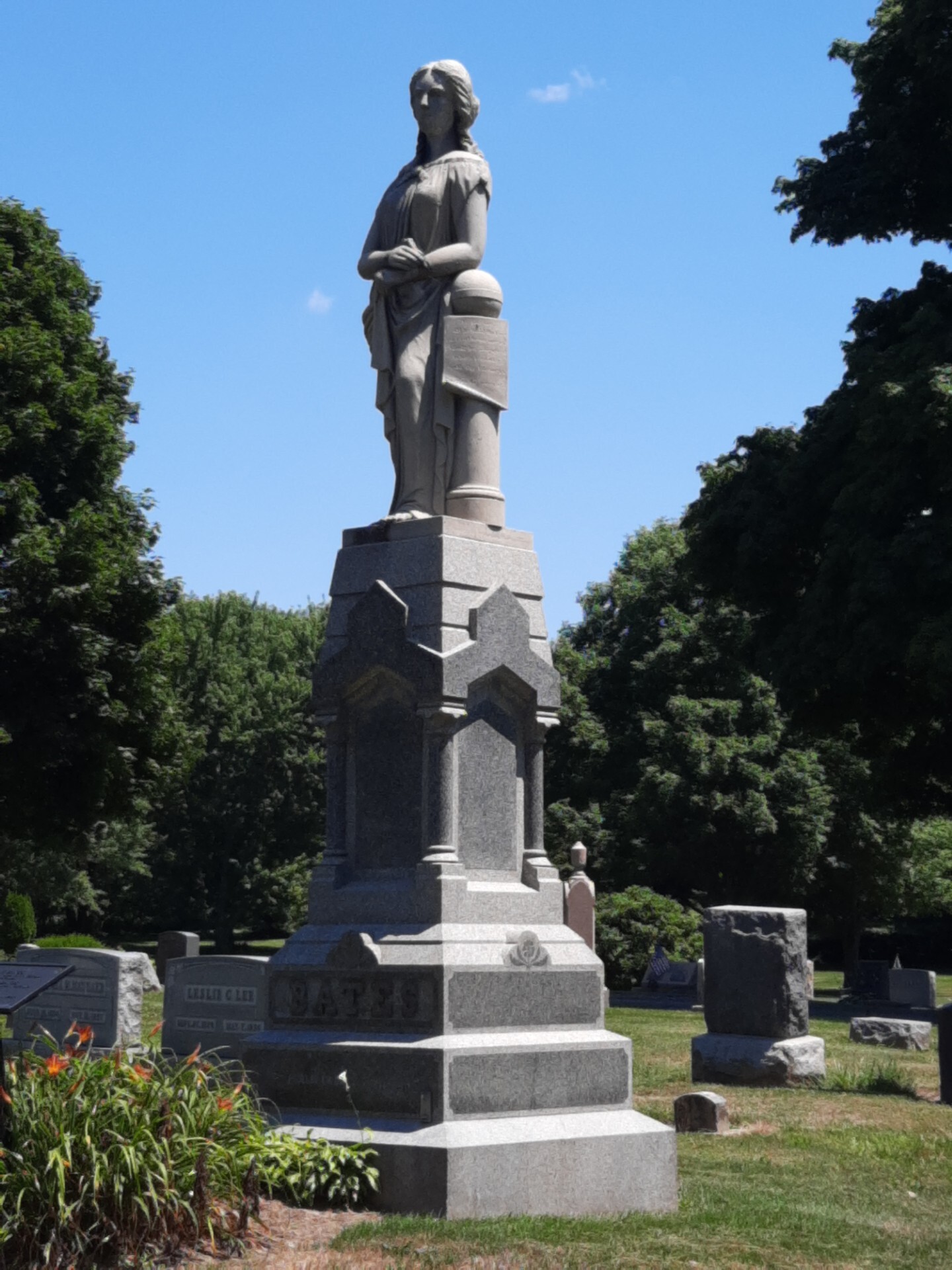
Martin had this statue made in France for the grave of his wife, Anna.

Anna died in 1888 and Martin ordered a statue from France of a beautiful woman for her grave in Mound Hill Cemetery. One son is buried there also, while their first son was buried in London, where he died just hours after his birth.

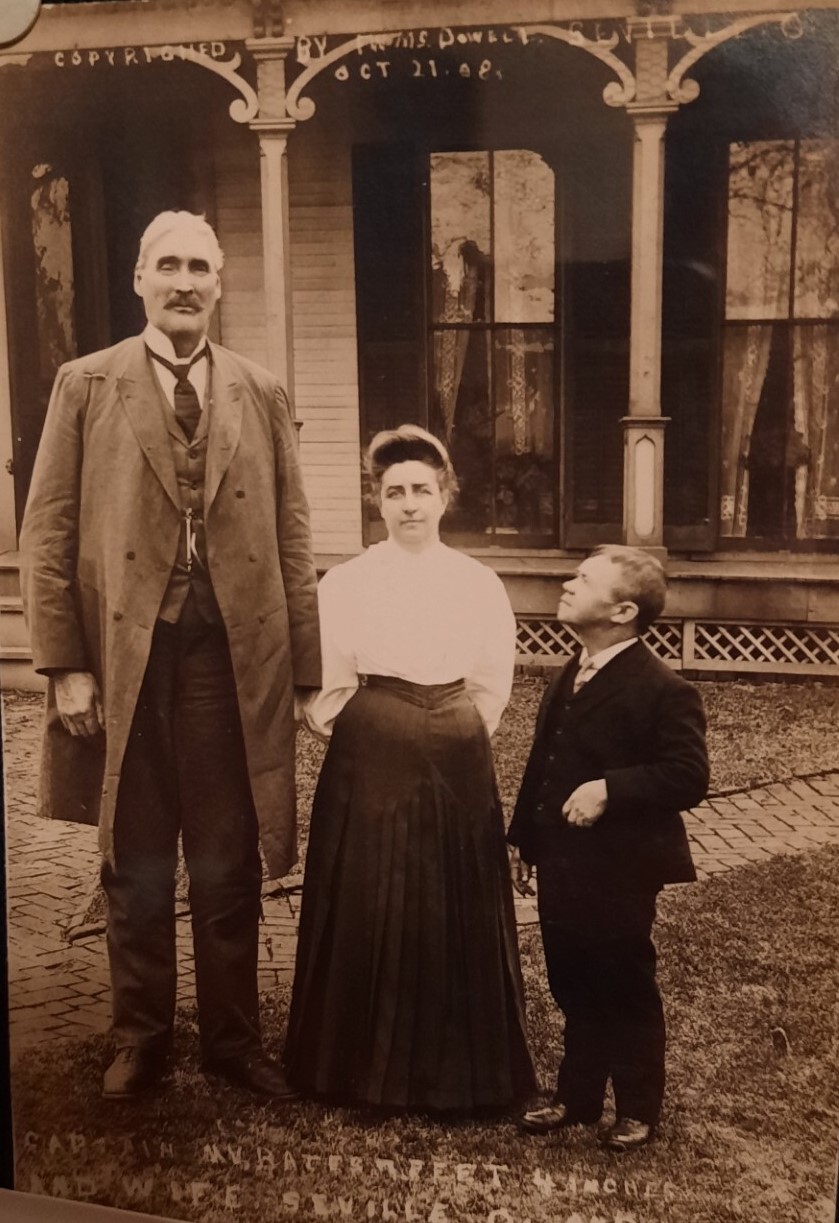
Martin sold their oversized house, and moved to town. He did remarry in 1897 but this time it was to a woman of 5’4”, Annette LaVonne Weatherby, and lived a peaceful life until his death at the age of 74 in 1919 of nephritis, an inflammation of the kidneys.

Martin is pictured with his second wife, Annette, and Frank Bowman, the shortest man in the world

The farm house burned down years ago, but the barn is still standing that Martin Bates built. You can still faintly see “M V Bates 1883” on the roof in giant letters of course. The doors are also giant size so he could enter easily. There is a nearby pen used to hold wild animals he owned, as well as animals from the circus when it passed through.

The museum is open on Saturday mornings from 9-12 during the months of May – September where you will also find a Farmers’ Market. In March, April, October, November, and December they are open the first Sunday of each month from 9-12. The museum is closed in January and February.

Martin and Anna Bates left a large footprint on the village. A piece of history for all to still enjoy today. Be sure to visit the Seville Historical Society Museum, Mound Hill Cemetery, and First Baptist Church while in town and perhaps drive just outside of town to see the old barn. This was an unusual couple of giants. It’s worth the trip!

Majestic McKinley Monument Honors 25th President

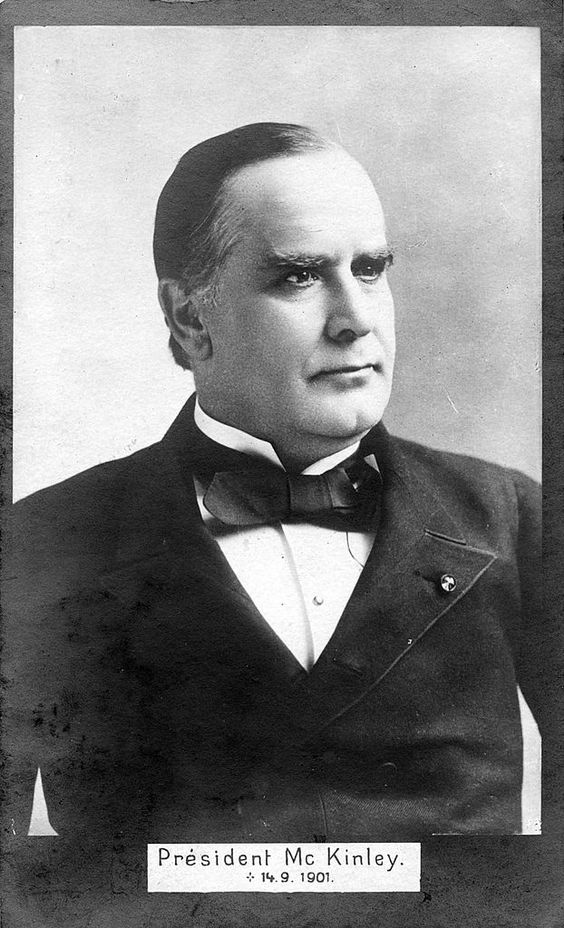
“I have never been in doubt since I was old enough to think intelligently, that I would someday be made president.”  These words were  spoken during his youth by William McKinley, the first president to ride in an automobile while in office as well as the first to use a telephone as part of his campaign.

McKinley Monument can be seen on the east side of I-70 in Canton, Ohio.

The resting place of William McKinley, 25th president of the United States, catches your eye over the tree tops while driving down I-77 through Canton, Ohio.  The domed mausoleum is more than a mere resting place but serves as a monument to Canton’s favorite son and former governor of Ohio. 

William and Ida McKinley made a campaign visit to Canton.

There are several reasons that McKinley is a favorite in this area even though he was born in Niles, Ohio. Canton is where he started his law career, found his true love, and ran for the highest office in the land. While attending the 1901 Pan-American Exposition in Buffalo, New York, President McKinley was assassinated just seconds after giving the good luck red carnation from his label to a little girl waiting in line.

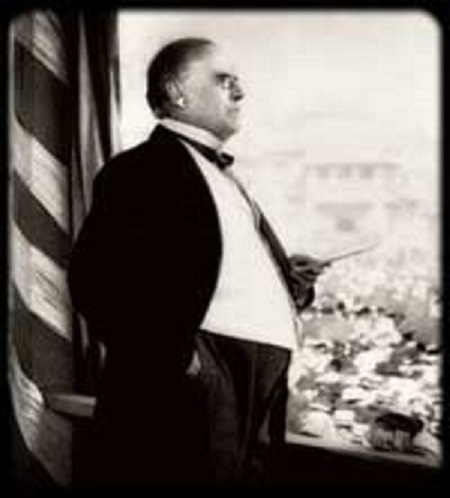
This photo of President McKinley making his first public address was used as the basis for his statue at the monument.

In 1905 construction began after selecting a memorial design drafted by Harold Van Buren Magonigle. This architect began his career at the age of thirteen when he worked as a draftsman for the firm that designed Central Park in New York City.

The amount being raised for the purchase of land and the mausoleum was $600,000. Local businesses and friends were large contributors. However, many school children contributed their pennies toward the building of this mausoleum, which was completed in 1907.

This view from the top of the steps shows people exercising there.

The front steps seem to be a real attraction for area residents as a wonderful place for exercise, either walking or running.  Since there are 108 steps up to the McKinley Monument, it is a challenge to young and old alike. The front steps are fifty feet wide and are broken into four flights of twenty-four steps with the final flight having only twelve. 

The plaque on this bronze statue of McKinley lists his many qualities.

Nearing the top of the stairs, visitors are greeted by a 9 1/2′ bronze statue of William McKinley created by Charles Henry Nishaus. It depicts President McKinley delivering his final public address at Buffalo, NY in 1901.

The circular, domed mausoleum recaptured the spirit of ancient cultures and formed the center of the cross design Magonigle intended to create. The longer arm of the cross was formed by front steps and what was called Long Water.

This beautiful cascading waterfall was part of the original monument area.

Originally Long Water was a spectacular part of the monument with a 575-foot lagoon, consisting of five different water levels cascading downward into a reflecting pool.  Unfortunately, due to stagnant water caused by poor circulation, this lagoon was filled back in the 1950’s. Both side arms of the cross were formed by shorter entry steps, and the top portion was a driveway behind the monument.

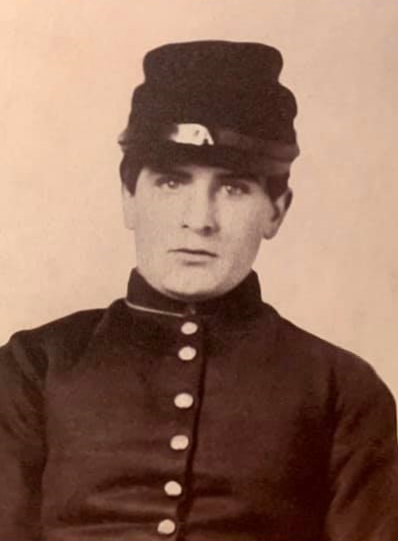
McKinley’s love of country was shown at the early age of 18 when he joined the OVI during the Civil War.

Magonigle considered this shape to have a double meaning. The upper part of the cross resembled the handle of a sword, while the Long Water symbolized the blade.  This seemed appropriate due to McKinley’s military career during the Civil War as well as his being commander-in-chief during the Spanish-American War.

Wreaths are often placed on the granite marble burial marker inside.

Above ground in the pink marble memorial, President McKinley and his First Lady are entombed in two side-by-side sarcophagi of elegant green granite on a dark maroon granite base.  Their two daughters have found their final resting place here also, entombed in the back wall of the memorial. Katherine died at the age of four from typhoid fever while Ida died during her first year.

Wreaths are constantly being placed by individuals and organizations at the foot of the granite-clad coffins. Most of the wreaths are in traditional red, white and blue.

This skylight contains 45 stars, the number of states at the time of McKinley’s death.

Seventy-five feet overhead is a beautiful red, white and blue skylight with a 45 star design, representing the number of states in the Union at the time of McKinley’s death. While it looks small from below, this beautiful window to the sky measures twelve feet in diameter.

If you wish to visit the memorial without climbing all those stairs, there are two possibilities. A steep road leads up the hill behind the Memorial or there is also an elevator, which operates only during museum business hours by use of a special code, which you must ask for at the museum’s admission office nearby. Admission to the McKinley Monument is free.

Hopefully, this monument and the life of William McKinley will be an inspiration to someone today.  President McKinley had hoped for this when he said, “That’s all a man can hope for during his lifetime, to set an example, and when he is dead, to be an inspiration to history.”

The McKinley Monument is located in downtown Canton, Ohio just off I-77. Take Exit 105 for OH 172, then turn right on 7th Street NW. Take the first left onto McKinley Monument Drive and enjoy a little piece of history.

Historic Structures Remain in Freeport

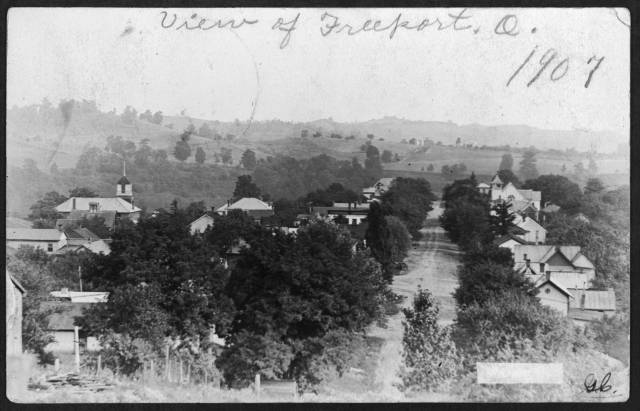
Older pictures are from the files of the Puskarich Public Library and newer ones were taken by the author.

Freeport was off to a great start as the population increased and homes were built in 1907.

Small towns almost always have an interesting background and a few historical spots. Freeport might surprise you with its history that still lives on today.

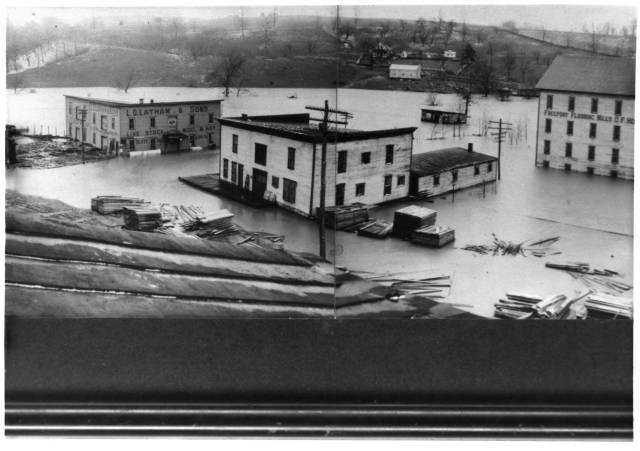
In 1913, those rivers caused a major flood in Freeport and in the surrounding areas.

The name Freeport began when the town served as a free port on Stillwater Creek to ship produce toward settlements along the Tuscarawas River, which joined the Muskingum and Ohio Rivers. The swift currents on these small rivers were easy for the Native Americans to use in their canoes but became more difficult for carrying produce. Today Little Stillwater Creek makes up part of the Tappan Lake Watershed.

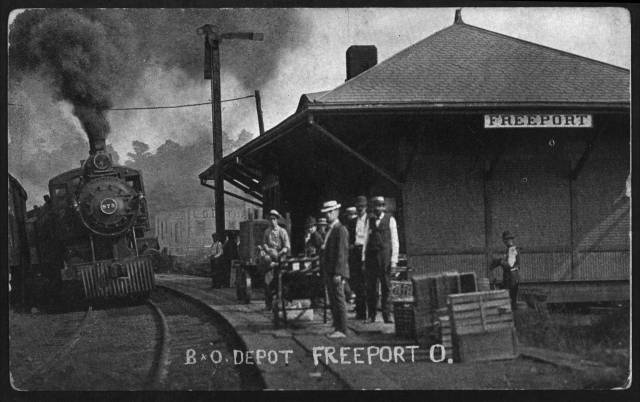
Gentlemen were well dressed as they waited for the train at the B&O Depot in 1900.

Before long, the Ohio-Erie Canal solved some of those shipping problems, but it came to an end when the railroads came to town. The B&O had a depot in Freeport and it was one of the two last standing stations in Harrison County along with the one at Scio.

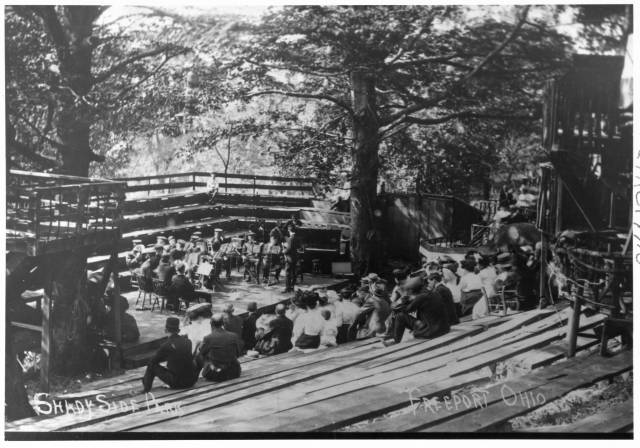
Freeport Band Concerts were popular in Shady Side Park in 1910.

The plat for Freeport Ohio was laid out in 1810 in Tuscarawas County but brought into Harrison County in 1819 due to a county boundary change. It’s also on the edge of Guernsey County. A post office has been in operation in Freeport since 1814.

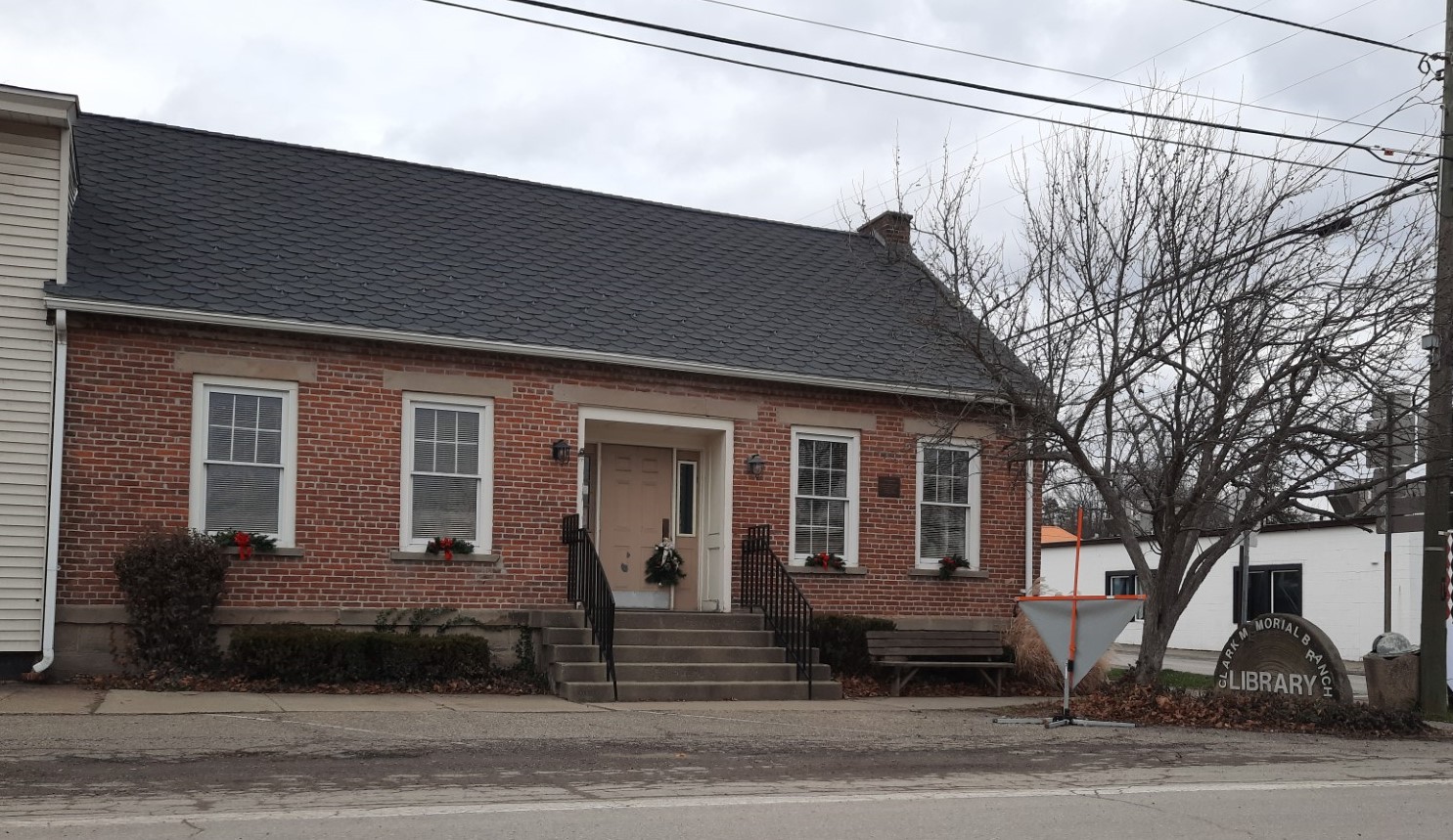
The historical Reaves Home is now the Clark Memorial Branch of Puskarich Library.

One of the founders of the town was Daniel Easley, who built a brick house in the late 1800s. He later sold to John Reaves, who was a teacher and the first Harrison County resident to die in the Civil War. His home, still known as the John Reaves House, is on the National Register of Historic Places, is the oldest structure in Freeport, and considered an architectural wonder. In 1888, it was home to the first bank in Freeport. Since 1991, it has housed the Clark Memorial Branch of the Puskarich Public Library. In 1998, a Children’s Wing was added to the original building.

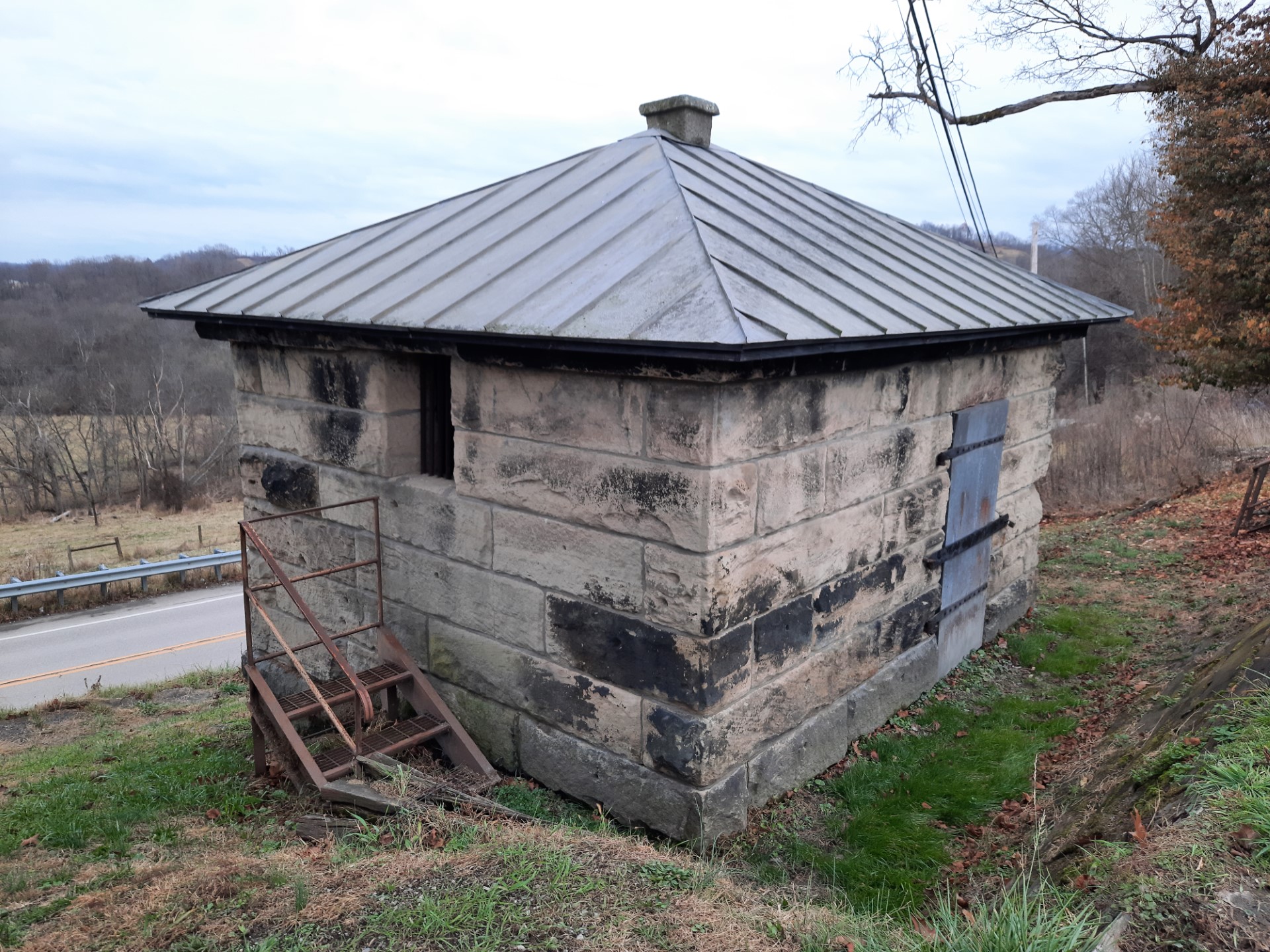
Freeport Lockup served as a jail from 1895-1937.

Freeport Lockup is a stone jail built in 1895 by the Starkey family. The stones were hauled by wagon from the Bill Rowland Stone Quarry. This jail was actually used until 1937 and still can be seen along the road leading into town.

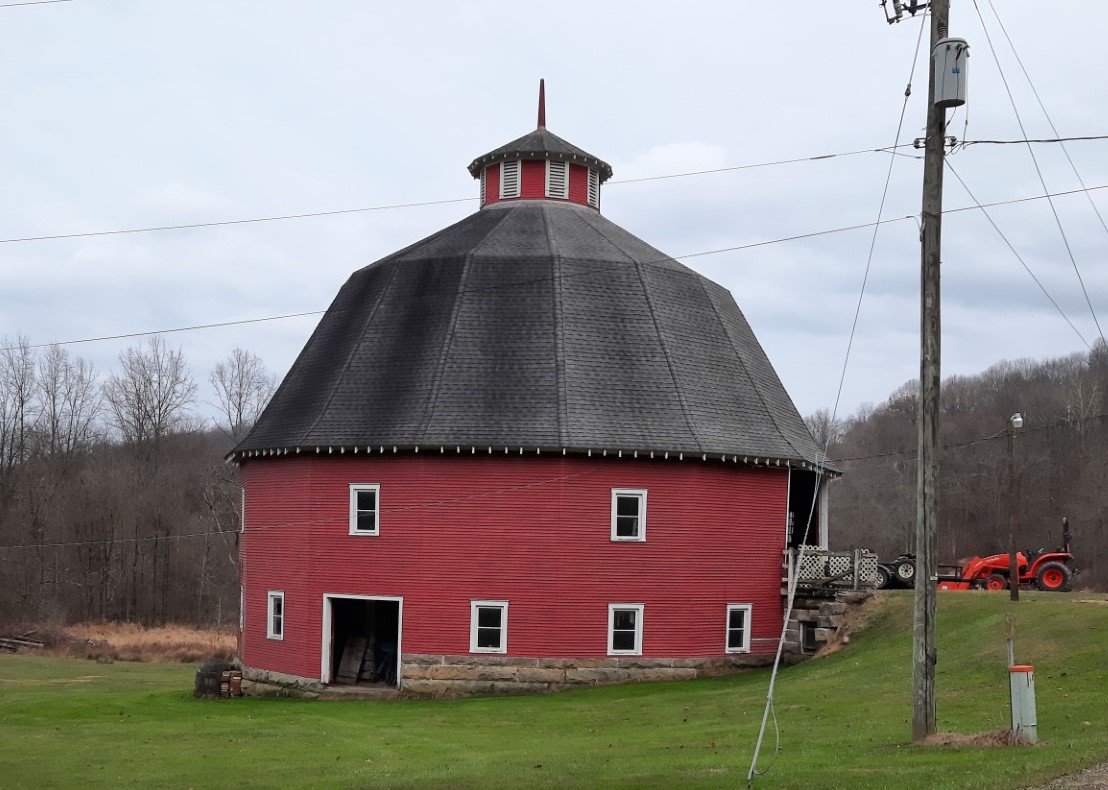
This sixteen-sided barn is one of only three left in the US today.

Here you will find the only sixteen-sided barn in Ohio just one mile south of town. Built between 1916 and 1921 by John Stewart & Sons, it is one of only three sixteen-sided barns left in the United States. This rare type of barn originated from the design of George Washington, our first president. The Freeport barn is 60 ft. high and 60 ft. across with a 12 ft. silo in the center. Visitors are welcome anytime of the year by the owners, who have lovingly restored this historic barn. Nice to see that it is still in good use today.

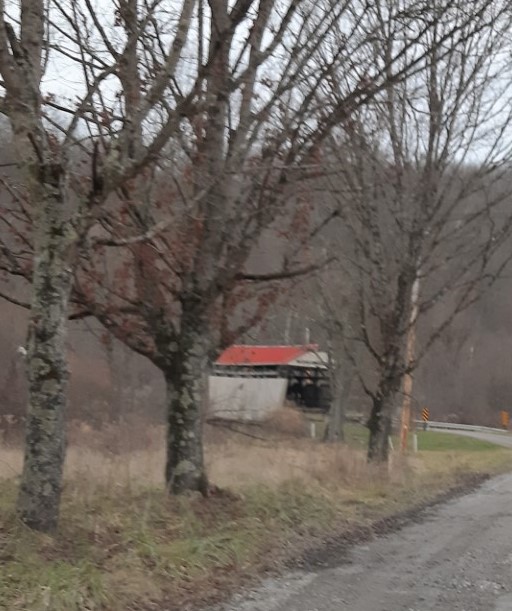
This old Skull Fork Covered Bridge still stands today after nearly 145 years.

Skull Fork Covered Bridge built in 1876 is located near the barn on Covered Bridge Road. Legend has it that local Indians had kidnapped and murdered individuals whose skulls were found near the creek.] The scenic Buckeye Trail passes through this covered bridge and along the shore of Piedmont Lake. This trail goes through 44 of Ohio’s counties and covers over 1444 miles of a continuous loop encircling the state.

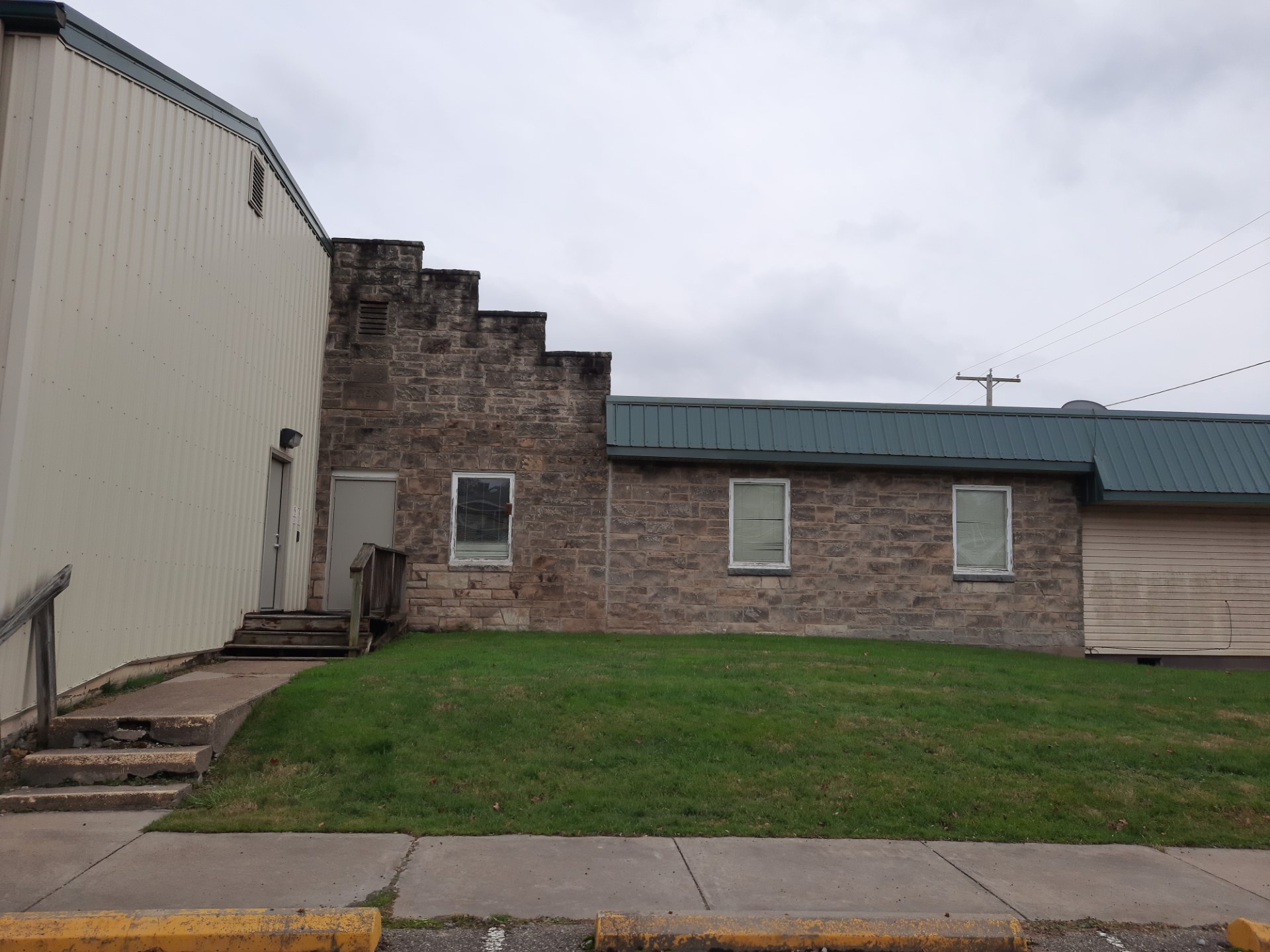
An expanded Freeport Press maintains its early front using local stone.

Freeport Press is family-owned and has served customers with quality print solutions since 1880 when it was established as a weekly newspaper by J.J. Ashenhurst. They are a major business today printing many high-end magazines, catalogs, and commercial print. In 1949, a new building was constructed using stone from the Freeport Stone Quarry on the front. Today there have been additions on both sides but that stone front remains the same. In January 2005, Mr. David G. Pilcher became the sole owner of Freeport Press, which employs over 200 people.

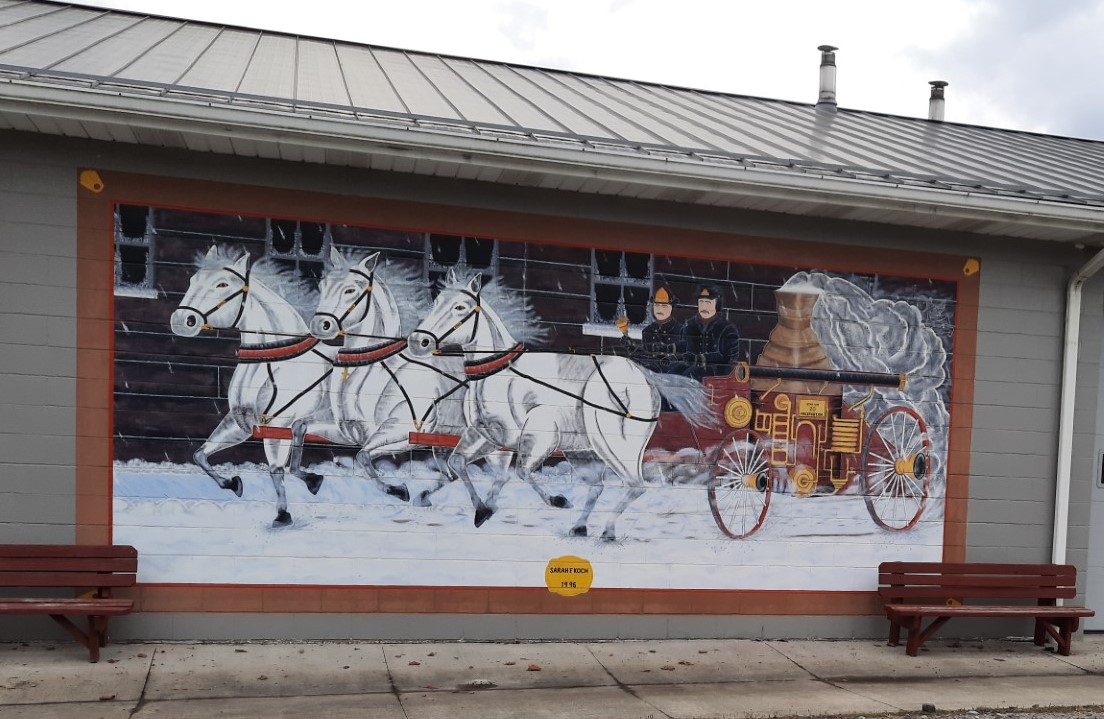
A mural on the side of the Freeport Fire Department shows an early horse-drawn fire engine.

Freeport Fire Department has a beautiful mural by Sarah Koch on the side of their building showing an early fire engine being pulled by horses. They have an annual festival that involves the entire community. It is held the last weekend in July and includes a parade, craft and vendors show, display of fire equipment, and of course delicious food in the form of a chicken barbecue and fish fry.

Piedmont Marina provides a handy spot to pick up fuel, boating and fishing supplies.

Drive to Piedmont Lake just a few miles southeast. The lake was created in 1933 to provide flood reduction as well as for conservation and recreation. It’s a great place for fishing and boating with Piedmont Marina providing boat rental, docking fuel, boating and fishing supplies as well as a lunch counter. There is also a nice renovated campground with electric hookups or you might prefer to stay in one of their vacation cabins. 4-H Camp there many years ago provided summer entertainment during my youth.

Today, Freeport has about 400 residents and many interesting spots to visit. Spend a few hours there and stop to eat at a local restaurant or spend a weekend at one of the local inns or Piedmont Lake. There’s nothing like the hospitality of a small town.

Hopedale – Yesterday and Today

Small towns often have an interesting history that helps us understand those early days in the settlement of Ohio. Hopedale in Harrison County is no exception.

The first settler there in 1800 was Phillip Delany, a hunter. He swam the Ohio River with his clothes tied on his head so he could buy a section from the Northwest Territory Land Office in Steubenville. He called his settlement Green.

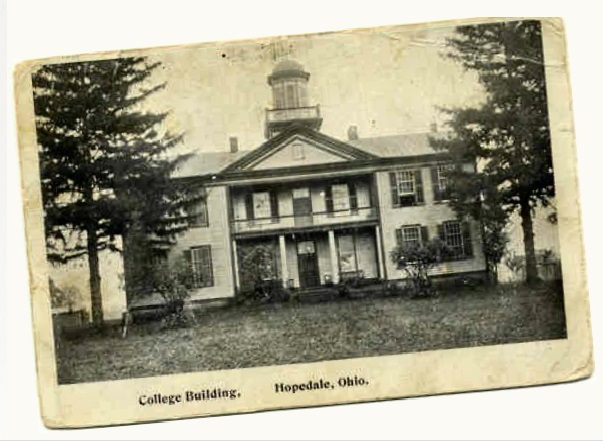
This postcard shows a picture of Hopedale Normal College, the first co-ed college in eastern Ohio.

Later Delany sold the land to a resident of Beech Spring, Rev. Cyrus McNeely, who platted the town. His son, also Cyrus McNeely, changed the name of the town to Hopedale because of his high hopes for the schools there. He donated land in 1849 to begin Hopedale Normal College, the first co-ed college in eastern Ohio with tuition of $5 a month.

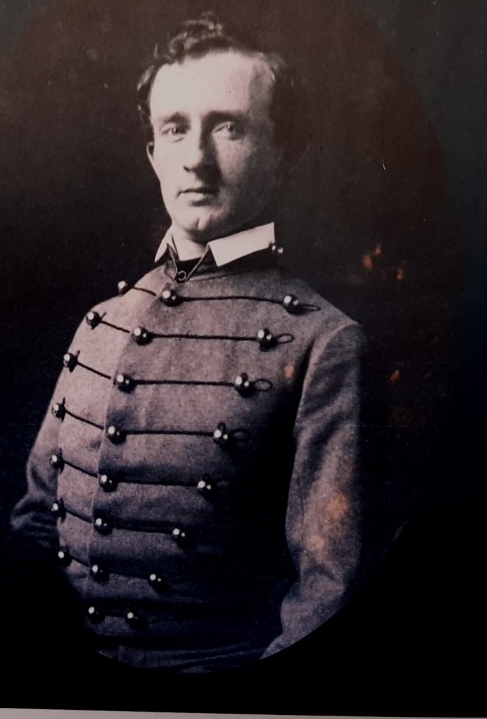
General George Armstrong Custer in his West Point uniform.

Horace Mann once taught there and General George Armstrong Custer was one of 10,000 who graduated from the college. Custer received a teaching certificate and taught in Cadiz. A year later, he entered West Point where he graduated in 1862.

That school grew and eventually included an elementary and high school. They had a six man football team called the Comets. Clark Gable went to school there, rode his sleigh down snowy fields, played in the band, and acted in plays.

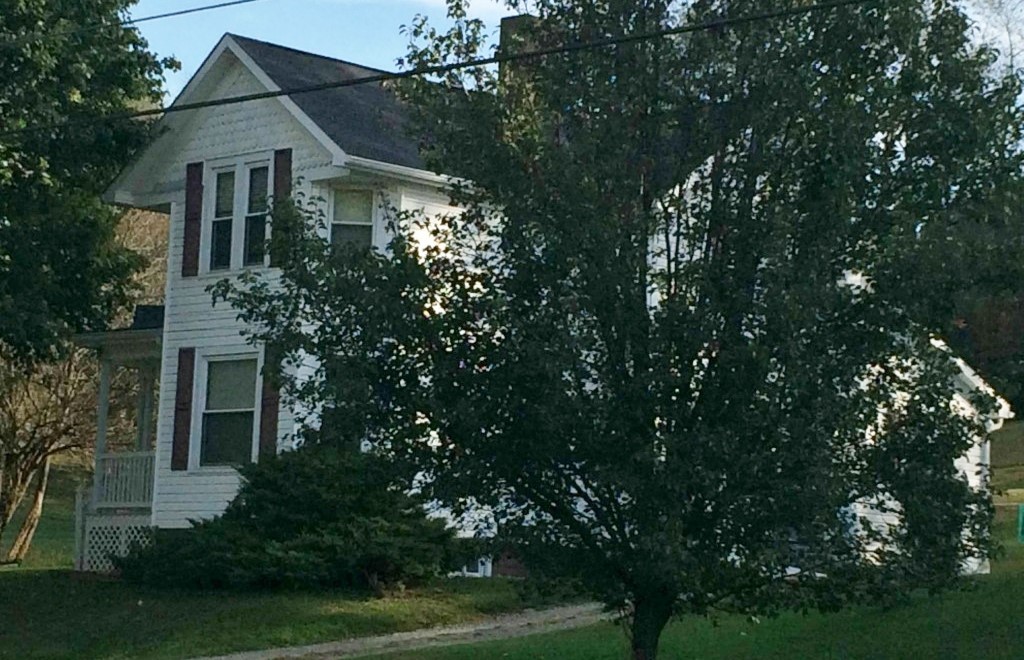
Clark Gable’s home in Hopedale today from the Clark Gable files.

While Clark Gable was born in Cadiz, his family lived in Hopedale during his youth (1903-1917) at 197 Mill Street. Today that house still stands but is a private residence with no public access. His father came to Hopedale because of an oil strike in 1902.

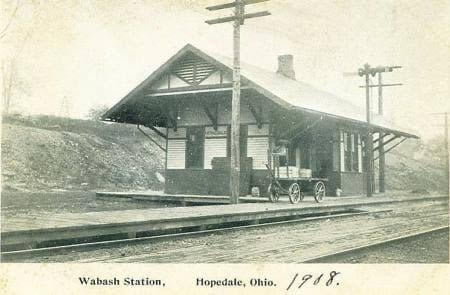
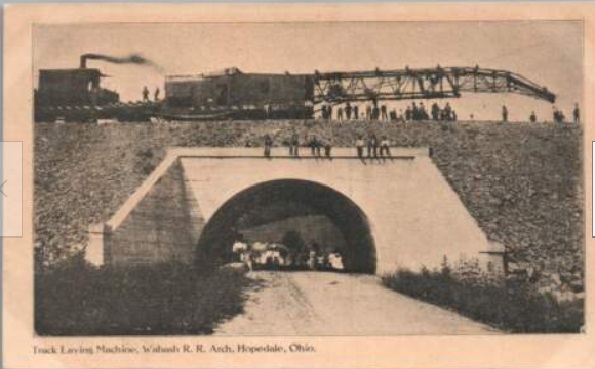
Post card picture of Hopedale’s track laying machine at the Wabash Arch.

While the oil field brought some financial gain to the area, it was the coal located just under the surface where strip mining began that proved the real boon. But first they needed a railroad to haul the coal. The Wheeling and Lake Erie Railroad was born with the Wabash Station being located in Hopedale as well as the Wabash Arch.

While the college is gone and even the high school that followed it, there is a house across the street from the city building that housed students at the Hopedale Normal College. The city building is actually located on the former grounds of the college and the brick building beside it is now being turned into a museum. A flagpole marks the spot where the college stood years ago.

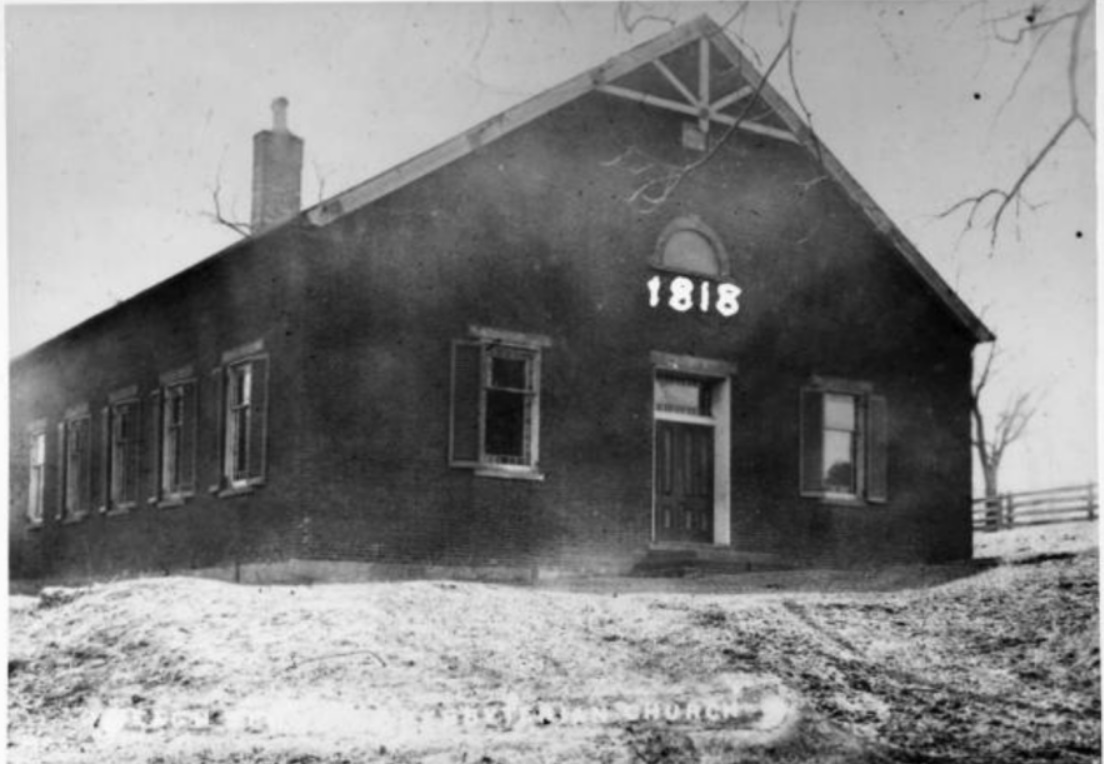
Beech Spring Presbyterian Church near Hopedale was called “The Mother Church of Ohio.”

Another famous historical site was the Beech Spring Presbyterian Church near Hopedale. It was known as the “Mother Church of Ohio” because it supported the founding of many churches in Harrison and Jefferson counties during the 1800s. The church was torn down in the early 1960s but the cemetery remains. Phillip Delaney was buried there.

The Underground Railroad was very active in Harrison County. Hopedale played an active role in this, and many anti-slavery meetings were held there. The Columbus Dispatch reported that slaves were kept in the Kyle home, which was built by Cyrus McNeely. Delaney House is a farm homestead documented to have served as a stop on the Underground Railroad. The building has a dry cistern connected to the main house by a tunnel. This was a great hiding place for runaway slaves and an important stop on the route to freedom.

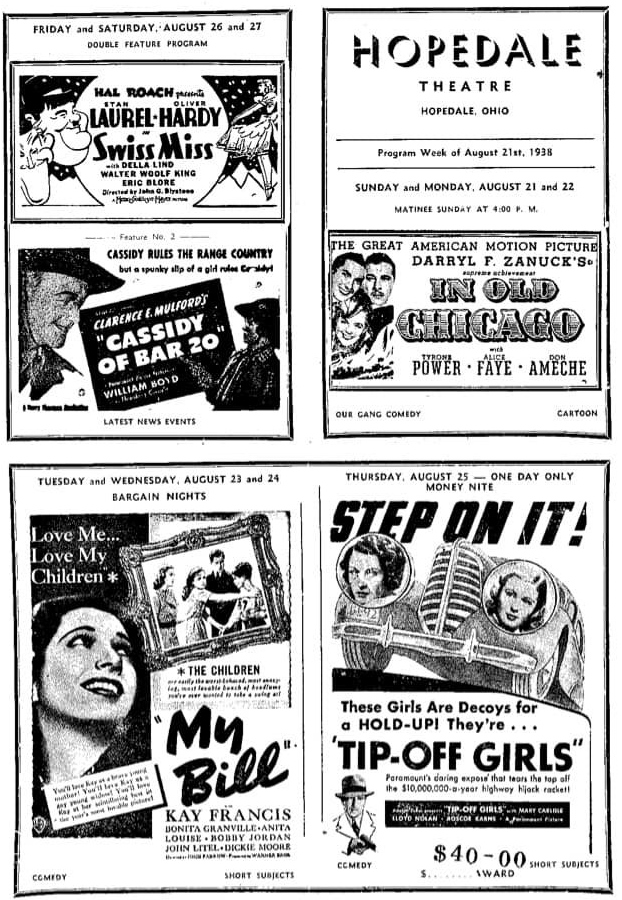
This theater bill shared movies being shown in Hopedale Theater in 1938.

Hopedale Theater was built in 1925 by the Stringer Brothers. They showed the latest in moving pictures and continued in operation until the mid 1950s. Some of those early movies were Laurel and Hardy in Swiss Miss, Cassidy of Bar 20, and In Old Chicago. Today that theater has been turned into an Italian restaurant, Capraro’s.

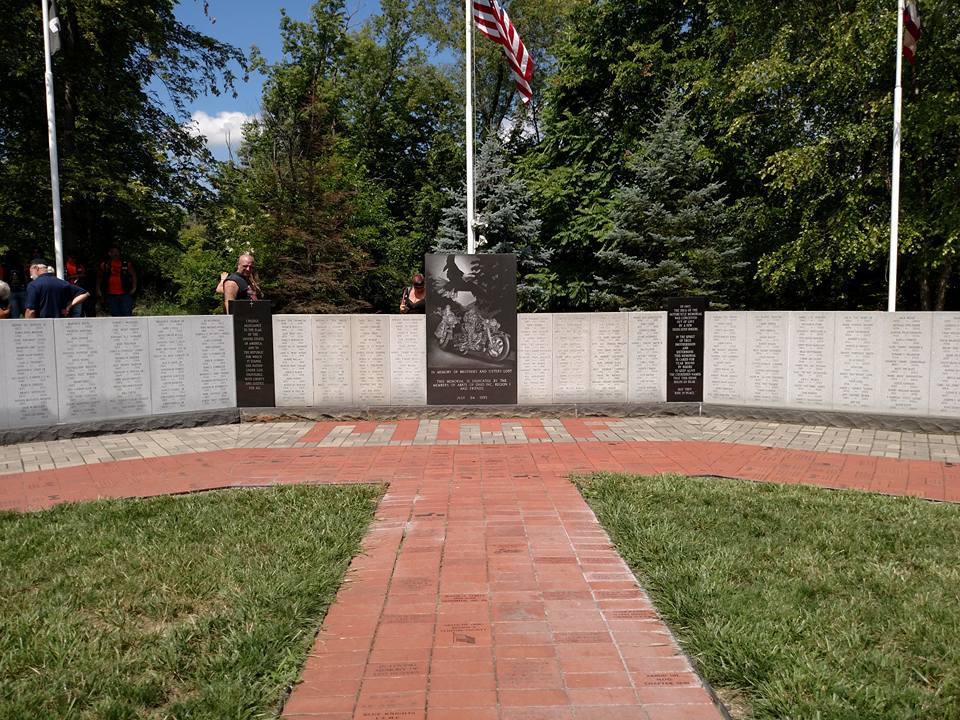
The Motorcycle Memorial has stones engraved with names of fallen riders and a brick pathway giving recognition to donors.

A recent addition to Hopedale has been the Fallen Motorcycle Memorial, a monument to riders gone too soon. A Motorcycle Memorial Wall, similar to the Vietnam Memorial in Washington, DC, contains names of brothers and sisters from all 50 states and other countries. The memorial is funded by the Motorcyclist Memorial Foundation, which cares for the memorial which is located behind the American Legion Post 682.

Milligan Memorials of Coshocton etched the Indian Black Stone, the darkest of all marbles, which stands atop a grassy knoll. The words written on the stone were written by Dan Waterfield of Oregon, Ohio. Anne Milligan etched the image of the man and woman riding their motorcycles on the winding road while Tim Milligan installed and etched the names of the loved ones lost on the gray pillars.

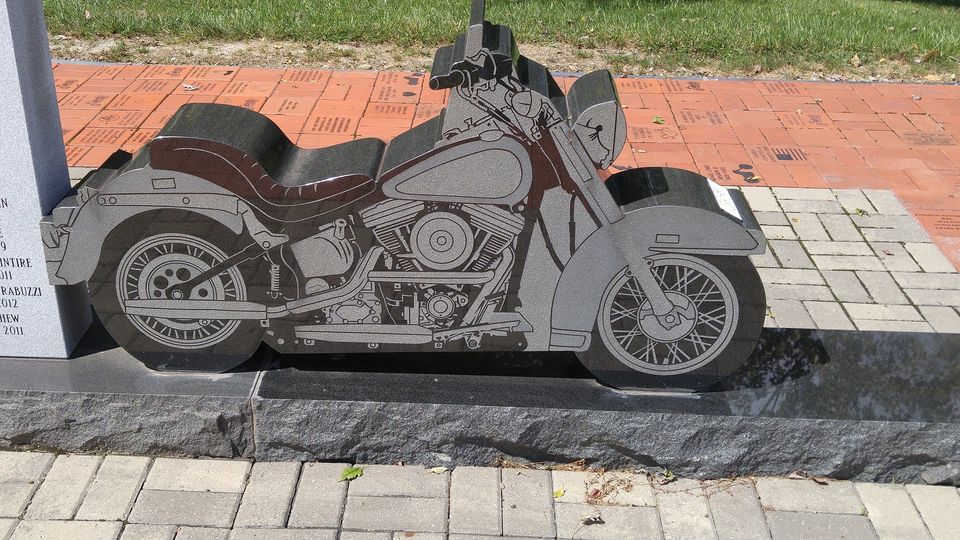
A granite full-size motorcycle sets at each end of the Memorial Wall.

Each end of the wall is bookended by a full-size 2-D motorcycle carved from that same black granite. The bikes can slide outward as new sections are added for fallen bike riders. In 1993, there were only two slabs with names. Today there are dozens of slabs listing names of bikers who have gone on.

The Motorcyclist Memorial was unveiled to the public in 1993. Now every year during Memorial Day weekend, they re-dedicate the wall and add more names to the granite pillars on each side of the monument. Nearly 1200 show up annually for this event. Be sure to stop by and visit the Wall if you find yourself in the Hopedale area.

Hopedale has a large ten-acre park with a playground and much more.

Hopedale today contains many family-friendly activities that make it a great place to call home. They have a beautiful ten-acre park that contains several picnic shelters, a basketball court, a tennis court, and a baseball field for the youth. Take an evening stroll on their walking/biking trail. Soon they will have a museum where you can learn more about their history. Plan a visit to this historic town sometime soon.

Gross Mansion Through the Years

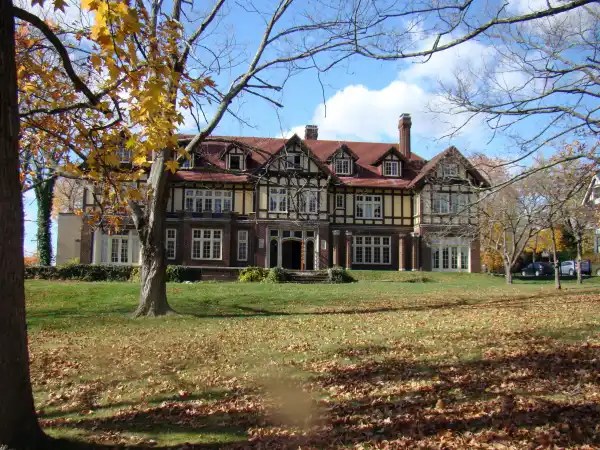
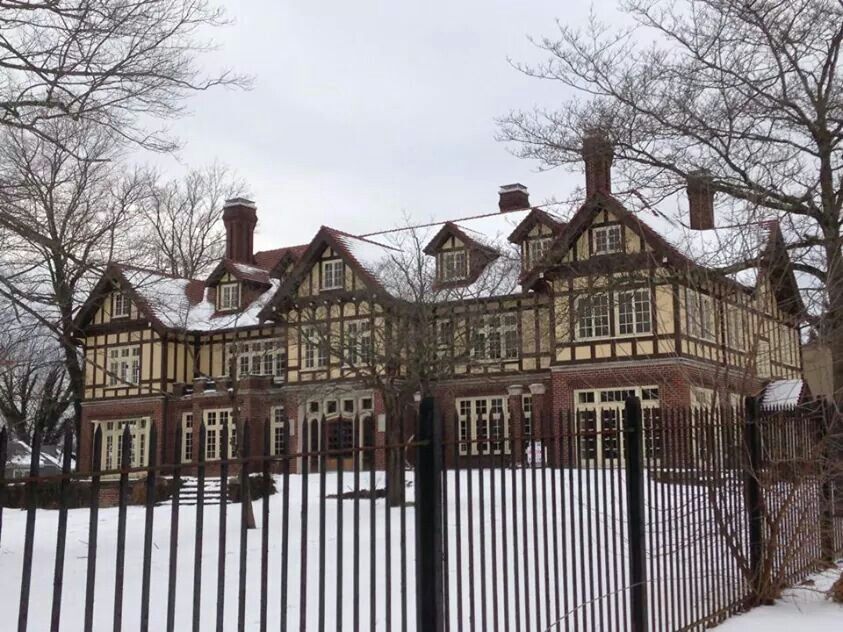
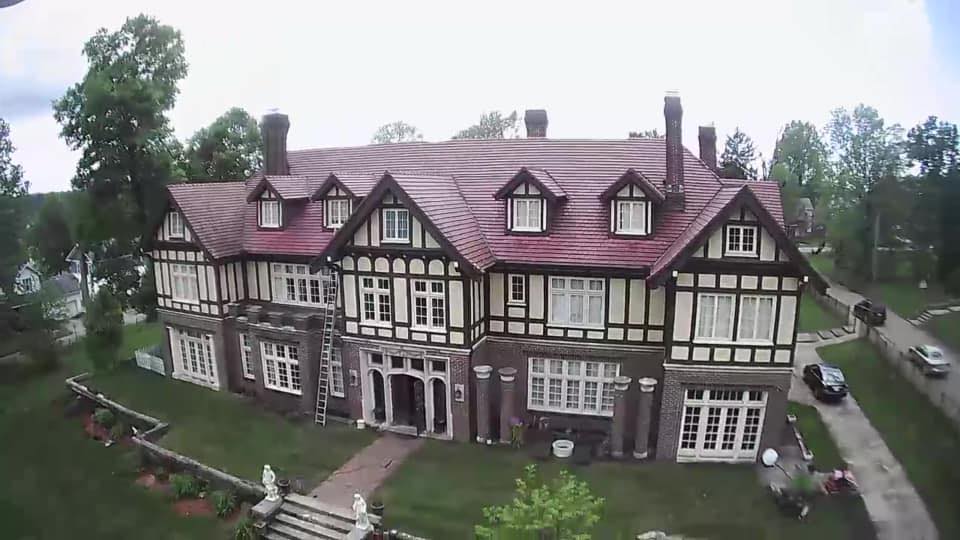
The Gross Mansion is still beautiful after over 100 years.

When driving down 7th Street in Cambridge, a mansion on the hilltop catches the eye of locals and the breath of visitors. Gross Mansion has been a place of beauty for over 100 years. While most know where it is, few know the history of the first family to call it home.

When Charles F. Gross from Washington County was twenty-one back in 1868, he worked in the oil fields of Ohio, West Virginia, and Oklahoma. He saved his wages and began buying shares of The Hill Oil and Gas Company, which was based in Columbus, Ohio.

During this time, he met the love of his life, Harriett Allender from Clio, a town now underwater at Salt Fork Lake. They married and lived on Clark Street in Cambridge.

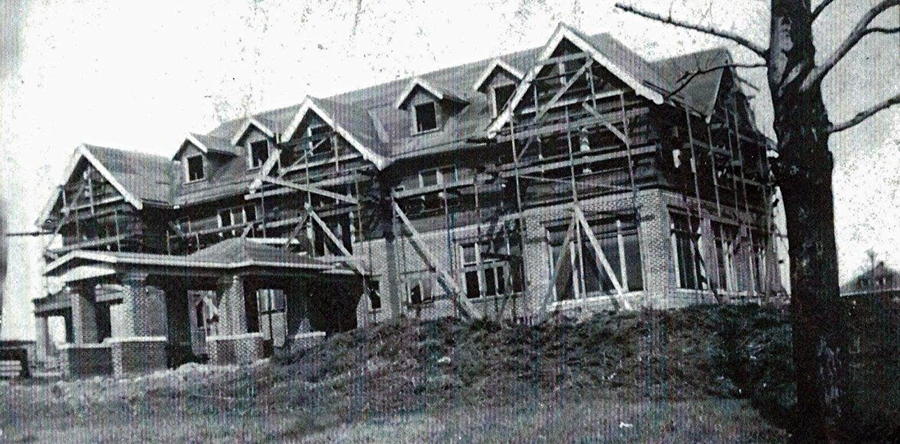
The Gross Mansion was under construction in 1915.

Hill Oil and Gas Co. had extensive holdings in Oklahoma and Texas. Charles increased his shares steadily until he had one-fifth interest. The Cushing Field in Oklahoma consisted of 6,000 acres and produced 20,000 barrels of oil a day. When Charles sold his interest for $12 million, he had enough money to purchase some land in 1916 and begin building a house. Charles was the only millionaire in town at that time.

Charles became an active member of the community. He served on the board of directors of The National Bank of Cambridge until his death in 1942. His funeral was held at the Gross Mansion.

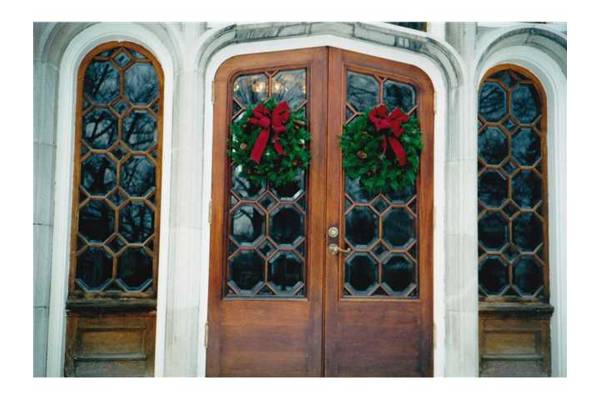
The front doors are beautiful anytime of the year.

Charles adored his wife, Harriett, and always tried to please her. Since Harriett had her heart set on having the nicest house in Cambridge, that was what Charles set out to accomplish. He purchased nearly a city block between Sixth and Seventh Streets in a residential area.

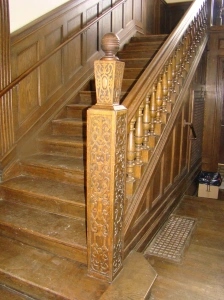
Notice the carved newel posts as you climb the stairway.

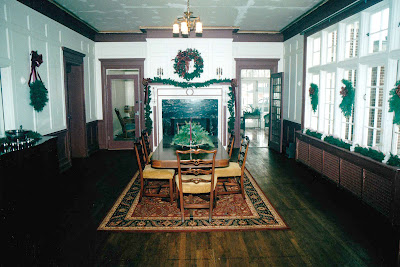
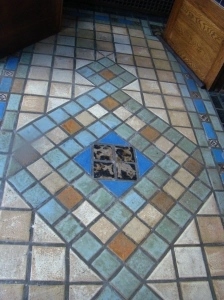
No cost was spared for this 12,000-square-foot home with 24 rooms. That was a mansion back in 1916. Even today it still shows qualities of richness with beautiful tile floors, walnut paneling, carved stone fireplaces, and a beautiful stairway with carved newel posts.

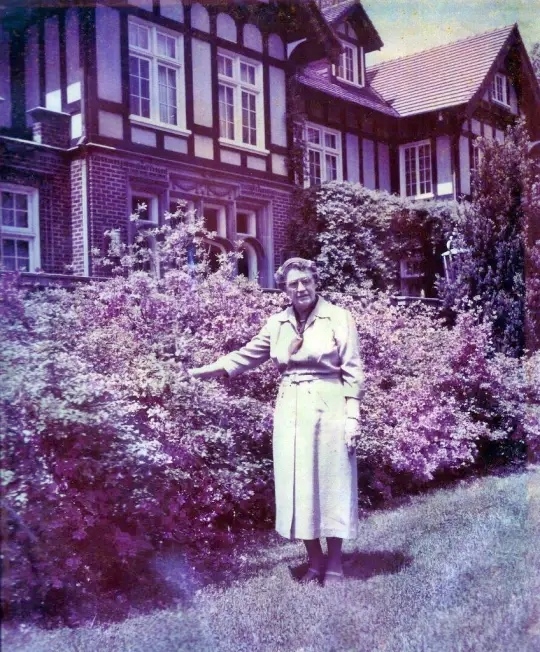
Harriette enjoyed her flowers, especially the azaleas.

Situated in a park-like setting, a winding carriage lane wove through a beautiful landscape of flowers and trees. Harriett loved her flowers, especially her azalea bushes, and Charles relaxed by working in the garden, a special time for him. He also enjoyed hunting and had several prize hunting dogs.

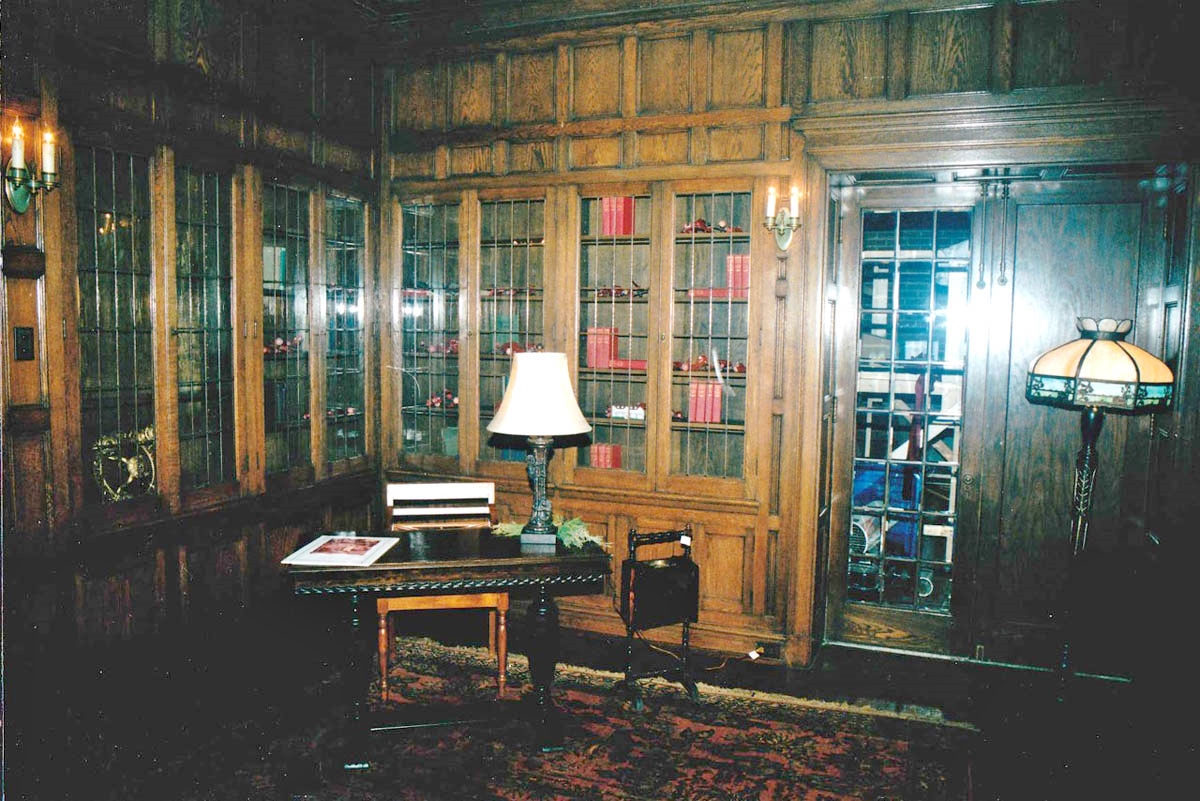
Charles built this library to please Harriette.

During the years the Gross family lived at the mansion, many recall the elaborate parties and weddings that took place there. Harriett enjoyed entertaining and having teas with friends as she was so proud of her home. She must have enjoyed reading also as Charles had a beautiful library built just for her. He wanted to make her happy.

Young Harriette spent time in the safe confines of the sunroom.

They had a daughter, also named Harriett, who attended 9th Street School. Teachers were served an annual dinner by the Gross Family. The children all remembered that day well since when the teachers went for their special lunch, school was dismissed for the rest of the day.

At Halloween, a friend who lived nearby remembered that trick-or-treaters, who were brave enough to approach the big house, were rewarded with a fifty-cent piece. She always planned a stop there!

A spiked fence was built for the safety of young Harriette.

Neighborhood children recalled seeing young Harriett riding her brown and white pony inside that tall fence around the mansion. That high fence had spikes all along the top of it to protect their only child. This happened shortly after the kidnapping of the Lindbergh baby. The Gross family feared that with their known oil well money, Harriet might be a target. They even had a hidden staircase built inside the house for easy escape and were most likely the first in town to have fire sprinklers in their home.

A personal memory as a young girl recalls my mother delivering fresh eggs and chickens, that she dressed that morning, to the back door of the mansion. Mom let me carry a couple dozen eggs while she took the chickens. Dad waited patiently in the car.

Step onto the original tile in the entryway.

Their daughter Harriett had her wedding at Gross Mansion when she wed Howell Bates, an ensign in the Navy. Later Harriett and Howell, who then lived in New York, would be the ones to sell the mansion in 1958, after her mother died in an automobile accident, at a very low price to the Cambridge YMCA.

When the YMCA moved to new quarters at the old Cambridge High School, the building sat empty for a while. Some wanted to tear it down, but locals who knew the history worked hard to keep that from happening.

Today the Gross Mansion is being restored to its original beauty.

The house was purchased in recent years by Lynn Bernard, a lady from Florida who fell in love with Gross Mansion and has made many improvements to restore it to its original beauty with the help of her friend, Jeremiah Miller. They are active in the community where Jeremiah is the manager of CORT – Cambridge Ohio Relief for Tragedies – and often goes to assist areas in the country where they are having tragedies such as floods and hurricanes. He’s always an advocate for those in need.

They have an annual Easter Egg Hunt and Rosie’s Girls have a Prom Dress Giveaway at the mansion. Decorating for Easter, Halloween, and Christmas brightens up the area. Drive by the Gross Mansion at 703 N. 7th Street to enjoy all the improvements being made. Perhaps you’ll be fortunate enough to attend a party, tea, or reunion there and see its beauty.

How nice to see life at the Gross Mansion once again.

Cambridge Fire Department Celebrate 150 Years

Today the fire station is located at 902 Gaston Avenue.

Fighting fires back in the early 1800s in Cambridge was very different than today. The most common method was the bucket brigade where leather buckets were passed by hand from a well or stream to the fire and back again. Those methods did not prove adequate before long.

The 150th Anniversary Commemorative Coin pictures that original pumper.

A fire on Water Street in June of 1873 was the catalyst for organizing a volunteer fire department in Cambridge. At that time on what is now Turner Avenue, workers at Simmons Brothers foundry were coating castings when hot pitch tar overflowed from a kettle onto the fire below. Soon the entire building was on fire and a wind spread the fire throughout the area burning twenty-two buildings before it was extinguished.

Local citizens banded together to fight the inferno but were ill equipped to fight such a fire. Barnesville and Zanesville sent hand pumpers, a steam engine pumper, hose carts, ladder wagons, and over 150 men via train to assist in putting out the fire, which took three days. As a result of this, buildings were better constructed in the future and Cambridge Fire Department was organized as a volunteer department.

The original Relief pumper from 1873 has recently come back home to Cambridge.

Cisterns were built around town so an ample water supply would be available for their new Relief Steam-engine Pumper that cost $6500 and had to be pulled by hand. Four and a half minutes after water from the cistern was in the boiler, water would be pulsed from the hose. That was much better than the bucket brigade!

The original hose cart from 1873 can now be seen at the Cambridge Fire Department.

In 1873, the fire engine was housed at the Old Town Hall on Steubenville Avenue. Community men served as volunteers for over 60 years. T.W. Scott and S.M. Burgess were some of those fire department founders. In 1874, the city gave the fire department $500 for uniforms, which consisted of a cap and a badge.

Fourth Street School Fire happened in February 1898 with temperatures of 32 below zero.

In 1898, the fire department moved to the old Simmons Brothers Factory on Turner Avenue. When you imagine how tiring it would have been to pull the engine by hand to a fire, it was important that early automobiles and the streetcar were used to haul volunteers and equipment back to the station.

Since the men all had full-time jobs, they often had to go to work covered with smoke and dirt from the fires. In 1902, Branthoover & Johnson installed plumbing at the firehouse as well as a bathtub,

In 1910, the city decided that these men should get a little pay but only when they were fighting a fire. Rates at that time gave the Chief $3 a fire, and the volunteers received $2 a fire if water was needed or $1 a fire if no water was needed.

Progress was being made as in 1915, fire hydrants were installed around the city. A new motorized, chain driven fire truck was then purchased. That original Relief Steam-engine Pumper and Hose Cart have now been returned from a Cleveland Museum and are kept at the Cambridge Fire Department.

In 1932, they moved into the Municipal Building where they stayed for over 40 years. By this time they had a new Seagrave pumper that could spray 600 gallons a minute.

Harry Siegfried is pictured on a 1928 Seagrave fire engine just outside the firehouse.

Harry Siegfried, a nozzleman, was one of those long-time volunteers along with several family members. Harry’s daughter, Bess, remembers going with her dad to the station when she was a child. “I polished those nozzles until you could see your face in them.”

Pictured are Chief Callihan and driver Walter Stage with a 1928 ladder truck.

Cambridge First Department became a fully paid fire department in 1946. Now someone was at the station 24 hours a day for a quicker response time. The first Fire Chief was H.C. Callihan, who served as a volunteer and chief for 62 ½ years.

Engines were parked in front of the Municipal Building in 1938.

Early in 1959, many will recall the disastrous fire at McMahon Gymnasium that destroyed the gym, industrial arts room, and band room at an estimated loss of $250,000. The cause was blamed on an overheated furnace. Nearby Central High School and St. Benedict Parochial School were saved due to the Cambridge Fire Department with assistance of fire departments from Byesville, New Concord, State Hospital, and Old Washington.

All available firemen were summoned in 1968 to a major fire at Variety Glass Company on the corner of Foster Avenue and North 2nd Street. Of high concern was the possible damage of glass molds – some from the Cambridge Glass Company. An estimated $300,000 in damage was partially covered by insurance, which was used to rebuild the facility.

Cambridge Scottish Rite Auditorium in flames in 1968.

Later in 1968, firemen were called to the Scottish Rite Auditorium where another disastrous fire was discovered on the third floor. Over a hundred firemen from seven area fire companies and many local citizens helped fight the blaze which caused destruction or damage to Scottish Rite Auditorium, Suitt Furniture Company, and the theater workshop.

In 1975, Cambridge Fire Department moved to its present home at 902 Gaston Avenue. Shortly after that move in July 1979 one of the most tragic area fires in recent times happened at Holiday Inn on Southgate Parkway where several died of smoke inhalation.

Members of the Cambridge Fire Department are pictured in this recent photo.

In more recent years, there have been several downtown fires where buildings have been destroyed. The Cambridge Fire Department always arrives quickly and keeps the fires from spreading to nearby buildings.

Chief Deeks heads the Cambridge Fire Department today.

Today the Cambridge First Department consists of 25 full-time personnel operating from one central station with Jeff Deeks serving as Chief. These dedicated men train continuously. They have two fire engines, a ladder truck, heavy rescue vehicle, water rescue, and two utility vehicles.

This fire engine is the latest at the Cambridge Fire Department. What a change 150 years has made!

They protect the citizens and property of the City of Cambridge and Cambridge Township. These firemen risk their lives for not only family and friends but complete strangers as well. Thanks for 150 years of service to our community!

Ohio State School for the Blind

Ohio State School for the Blind was established in 1937.

The Ohio State School for the Blind is the first public school for the education of blind and visually impaired students in the United States. Many parents of blind children move to Columbus so they can be close to the school’s activities. One parent I met recently said, “We moved to Columbus for the academic excellence of OSSB and the marching band program. We were looking for a school that would incorporate music daily while focusing on academics.”

The staff at OSSB sets the bar high for all students matching the student’s level of ability to ensure that there is a focus on braille instruction, with an emphasis on life skills, all while holding the students to a high academic and personal responsibility level. “So far, OSSB has met and exceeded our expectations.”

Their daughter, Nadiya, is 14 years old, fully blind, and in the eighth grade. She is an accomplished musician and plays several musical instruments. Participating in the school’s Marching Band is something she enjoys.

Nadiya’s family gives her many new experiences where she learns by using her sense of touch and hearing.

The family also enjoys exploring the area and have been to Dickens Victorian Village, where Nadiya touched and learned about each display. That trip took about three hours. They also have enjoyed the Nutcrackers in Steubenville and displays at Gettysburg. Nadiya loves to learn and does so by touching and listening.

In 1837, the Ohio government established the Ohio Institution for the Education of the Blind. This institution was the predecessor of the Ohio State School for the Blind. Today more than 120 Ohio blind and visually impaired students receive their education each year at OSSB. 49% are female while 51% are male and are of many races and ethnicities.

On her 13th birthday, she was given a special bass guitar. She is surrounded by the other instruments she plays.

Education happens both inside and outside the classroom. Students have a full day of learning during daily classes, which use the Expanded Core Curriculum for a whole student approach. After school, there are many extra-curricular activities. For those who live on campus, a residential program provides enrichment opportunities. All this helps students grow socially and emotionally.

Participation in athletics plays an important role in the development of the students. They compete against other schools with visually impaired students in a sixteen-state conference. They compete in basketball, cheerleading, forensics, goalball, swimming, wrestling, and track.

Recently, Nadyia decided to play goal ball where the team tries to throw a ball with bells embedded inside into the opponent’s goal using ear-hand coordination. She is excited to go to St. Louis to a goal ball tournament with the school’s team. Another great learning experience.

Music is an important part of the education at OSSB. All students K-8 take music classes. They offer many performing groups, including Junior High Band and Choir, High School Choir, Strings, and their famous Blind Marching Band. Students learn to read music through Braille as well as learn to play by ear.

Nadiya is proud to be part of the Best Blind Band in the Land at Ohio School for the Blind.

Nadiya plays clarinet in the Marching Band but also plays piano, bass, and drums. Her parents said, “When Nadiya is playing her instruments – there is no disability. She is just a musician playing like everyone else.”

In 2005, the Ohio State School for the Blind marching band was formed to provide music and halftime shows for the Ohio School for the Deaf football program. They are the only blind marching band in the country! It is often called The Best Blind Band in the Land. Currently, it is directed by Yolanda Johnson.

This Marching Panthers Blind Band performs throughout the area for many festivals and parades.

This past fall, the Marching Band, consisting of students from grades 7-12, marched in the Sweet Corn Festival in Millersport, Circleville Pumpkin Show, Barnesville Fall Festival, and the Marion Popcorn Festival. Last summer, the Marching Band performed at Fenway Park in Boston and marched in the International Parade of Nations.

OSSB has multiple summer camp opportunities for blind or visually impaired students K -12 who live in Ohio. All camps are residential camps with campers arriving the Sunday before camp. A couple of camps available in June include Superhero Camp (Grades 1-3) and Advanced Cooking Camp (Grades 11-12).

If you would like more information on Ohio School for the Blind at 5220 North High Street, Columbus, visit their website at www.ossb.gov.oh.

Blindness is a physical disparity, but it is not an obstacle in the way of fulfilling dreams.

~Helen Keller