Places to go and things to see by Gypsy Bev

Archive for the ‘Museums’ Category

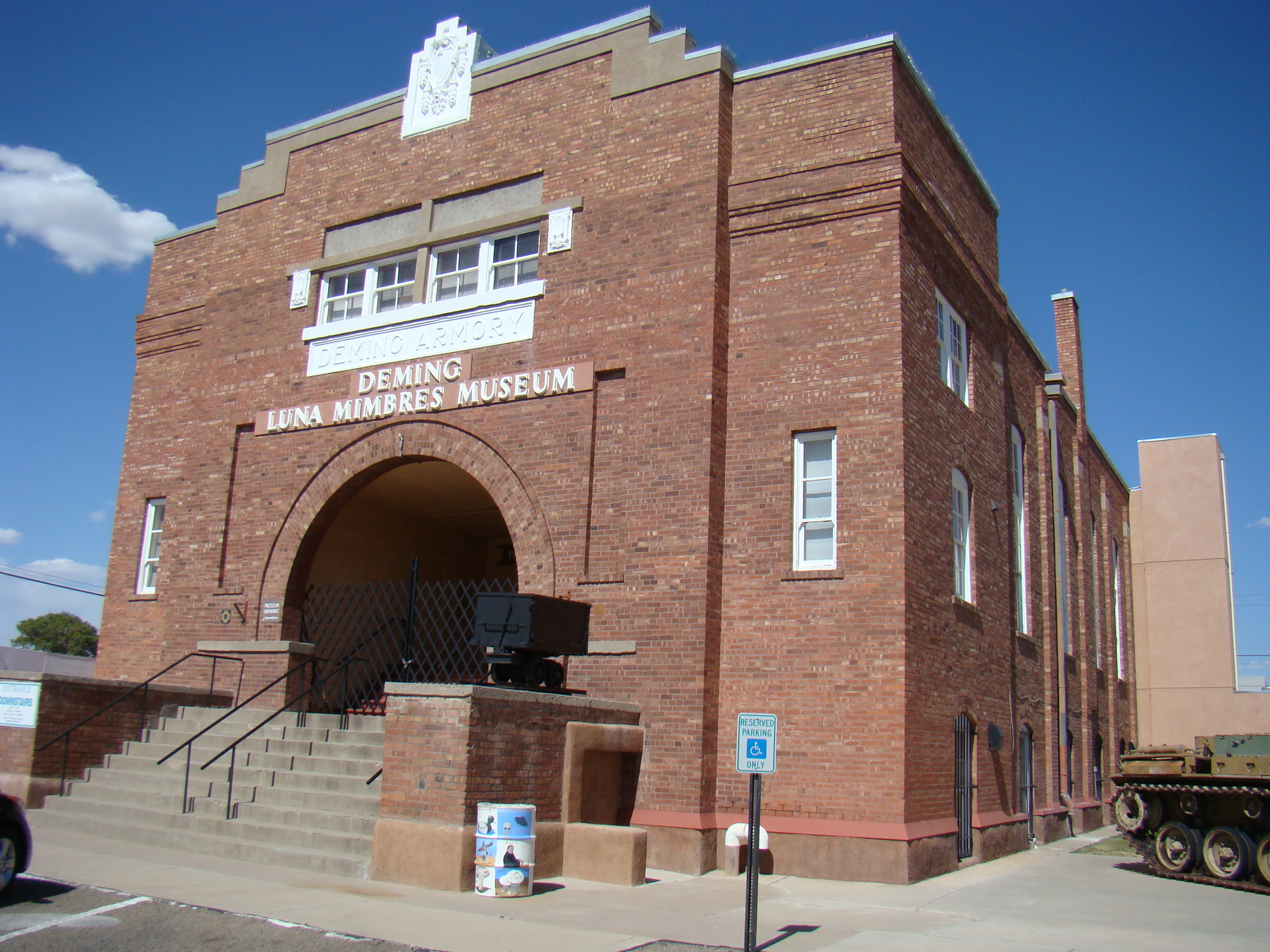
Deming Luna Mimbres Museum Sundry Southwest Collections

Deming Luna Mimbres Museum

Deming Luna Mimbres Museum

Variety is the spice of life…and of museums. No matter what your interests, chances are you can find something to arouse your curiosity at the Deming Luna Mimbres Museum in Deming, New Mexico. Everything there is from the private collection of local residents, or former locals.

Housed in an old National Guard Armory, their unusual exhibits range from Mimbres pottery to Geodes and Gems to a Military Room. There is something that everyone can enjoy. Visiting the Deming Luna Mimbres Museum is a great chance to explore the history of Deming as well as the Mimbres heritage.

Since there is such a large variety of rooms to explore, only a few favorites will be visited here. This is one of those places where you could go back again and again to absorb the history that pours from its treasures.

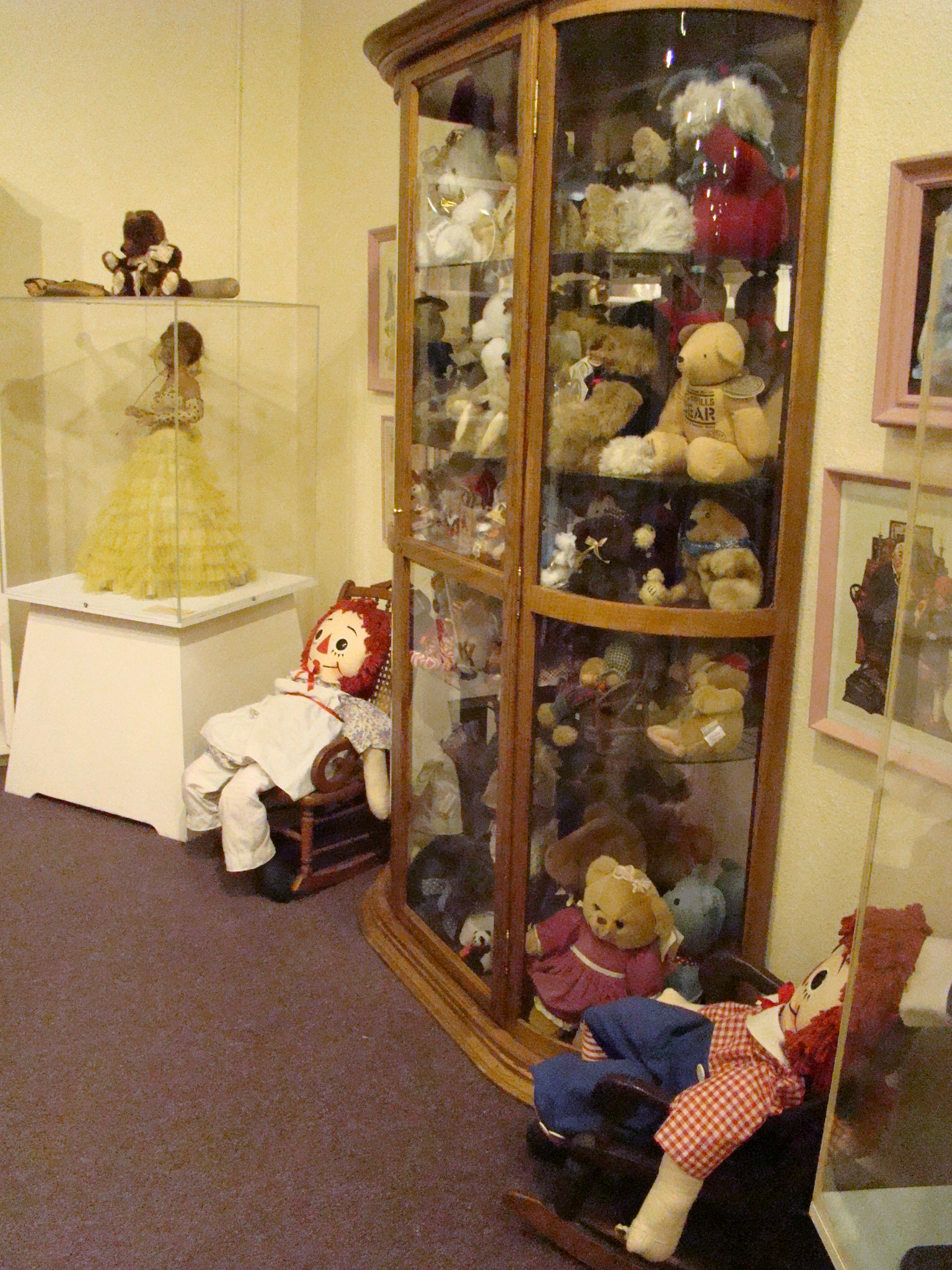
Doll Room Teddy Bear Collection

Doll Room Teddy Bear Collection

The Doll Room happens to be just inside the front door so is a natural place to begin your visit.  This impressive collection contains about 1000 dolls, the oldest of which are those with China heads. Being a bear enthusiast, the teddy bear exhibit caught my eye. There is even a doll brought back by a sailor from  the rubble at Hiroshima after the Atom Bomb exploded. But there is much more in this room than just dolls.  Here you will find wonderful old books – the oldest I spotted was one by Louisa Mae Alcott, Jo’s Boys, dated 1866. Beautiful doll houses, antique toys and bears are scattered throughout the room.

Mimbres Pottery

Mimbres Pottery

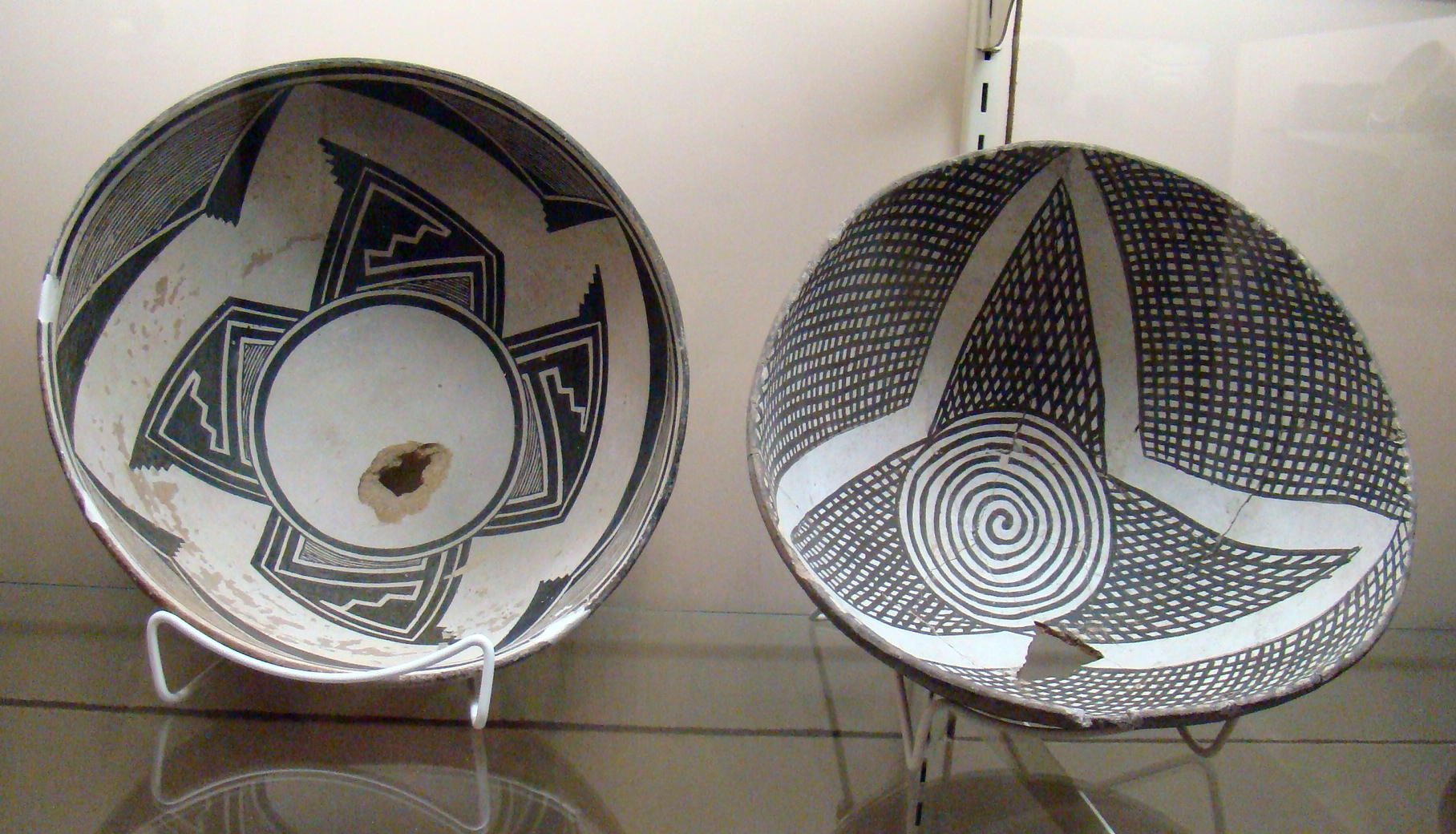
Another spot of high interest is one of the best collections of Mimbres Pottery in existence. The Mimbres Indians lived in this area in approximately 1000 A.D. Bits and pieces of pottery found in the area are displayed here with the black and white pieces being a favorite of Mimbres followers. Pictures of their burial method proved interesting as the deceased were placed in the ground, usually under their houses, in an upright sitting position. Then one of their beautiful bowls was placed on their head with a hole in the top so their spirit could go to another world.

Square Grand Piano

Square Grand Piano

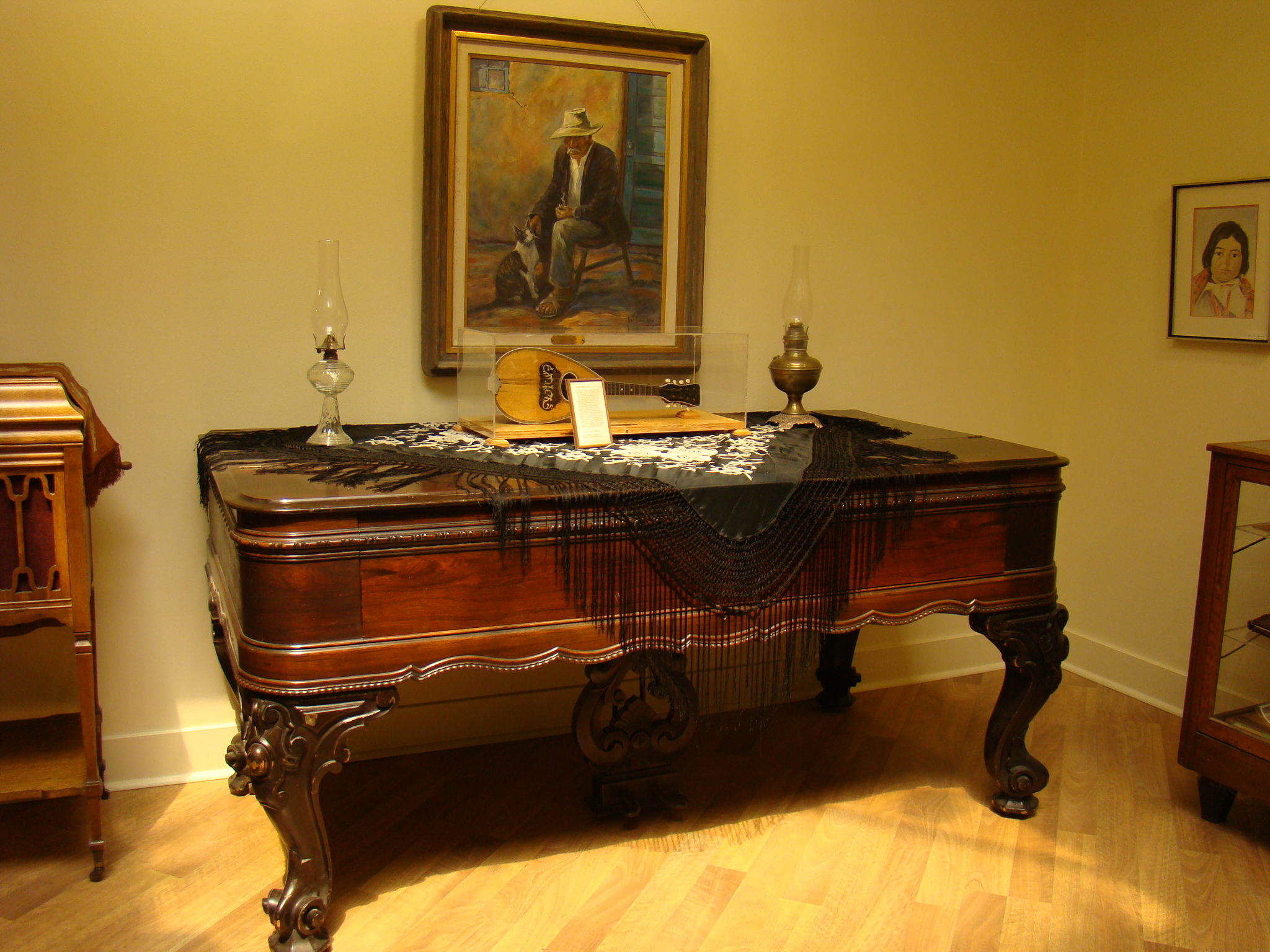
A square grand piano caught my eye in the solarium of the Art Gallery. Made of Brazilian rosewood with two strings per key, this 1867 treasure was created by Hallet, David & Co in Boston. Grand pianos were often the centerpiece in Victorian parlors.  Perhaps you might enjoy listening to a Brahms Waltz played on a Square Baby Grand.

An historic replica of the famous Silver Stake was on display in the Transportation Room. Back in 1881, Deming was the meeting place of the second transcontinental railroad in the United States where Southern Pacific and Atchison, Topeka & Santa Fe railroads joined together with the Silver Stake ceremony. Situated ten miles east of its present location, Deming at that time was a town of tents and shacks. Author James McKenna stated, “The great event in town was either the arrival of the stagecoach or the train.”

Admission to the museum is free but donations are accepted…after you have seen the exhibits. You can’t get much friendlier than that!

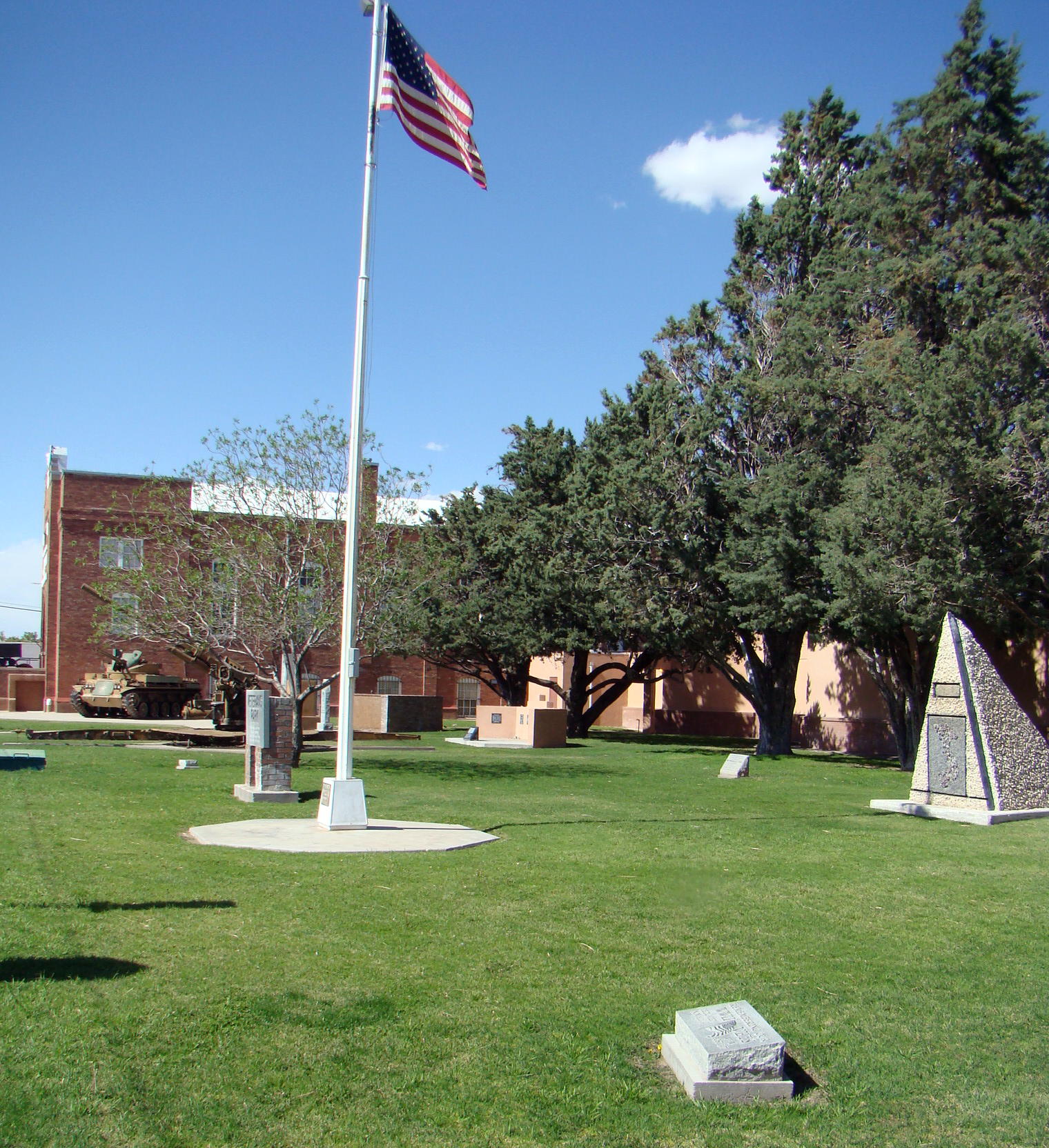
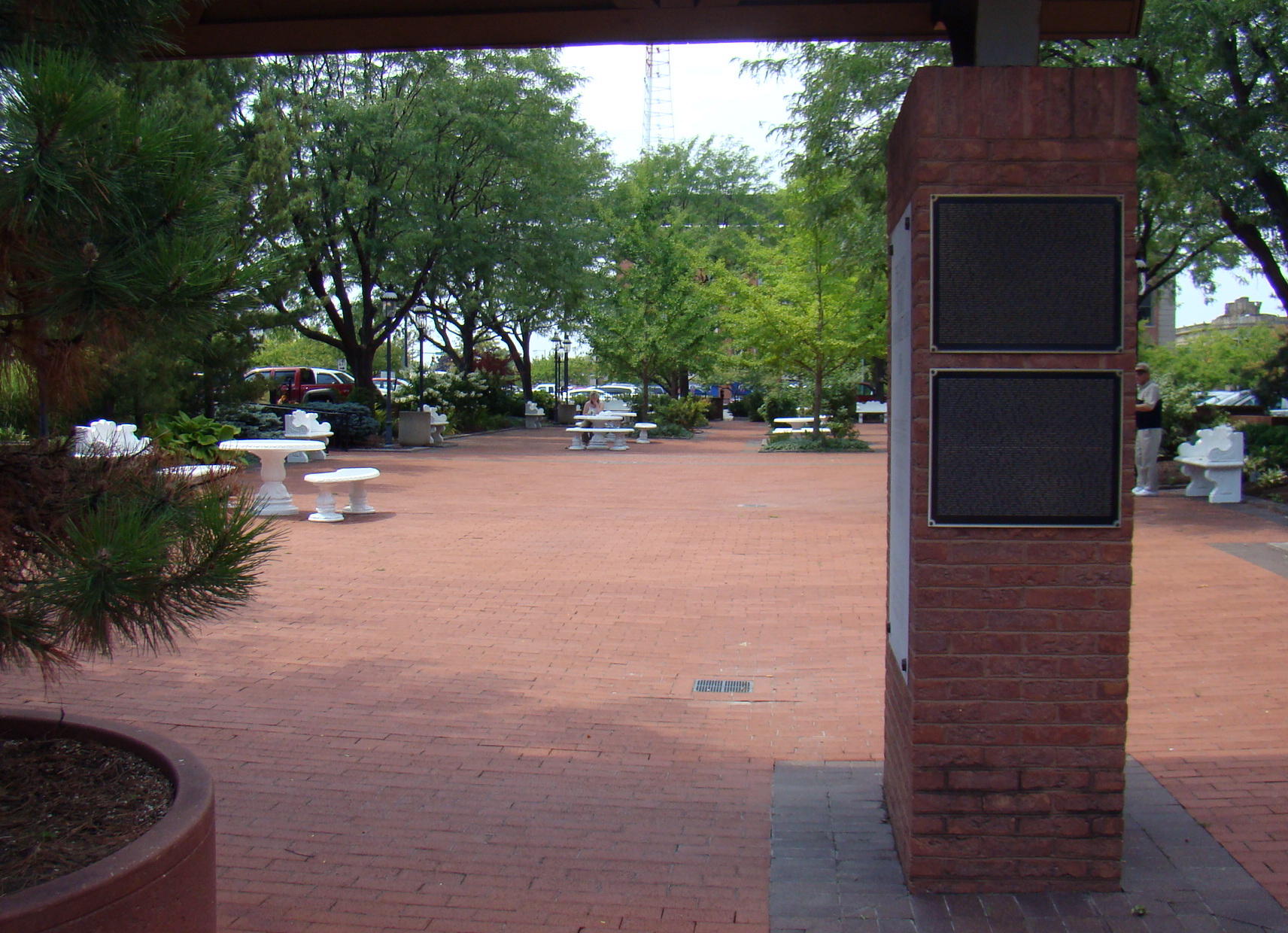
Veterans ParkOutside a well-tended Veterans’ Park remembers wars, conflicts and attacks all around the world. The sign reads:

Do spread the word

Tell the passerby

That in this little world

Men knew how to die.

Deming Luna Mimbres Museum and Veterans Park can be found near downtown Deming, New Mexico just off I-10.  From the east take Exit 82B and from the west take Exit 82A. This should exit left on Pine Street, which leads right downtown. Turn left again on South Silver Street, which leads to the courthouse. The museum and park are on the left side after two blocks.

Sault Sainte Marie, Michigan “The Rapids of St. Mary”

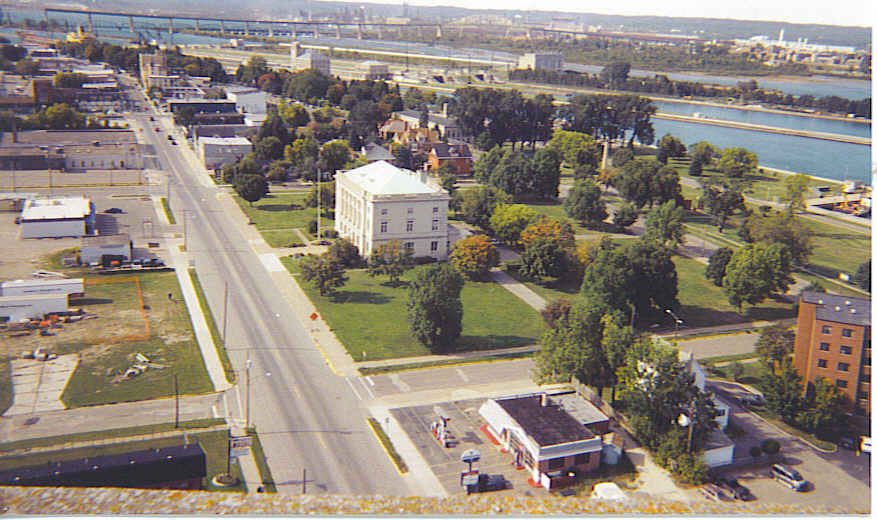
The roaring river of St Mary’s separates the twin cities,  Sault Ste Marie, Ontario and Sault Ste Marie, Michigan on the northwestern tip of the UP of Michigan.  The International Bridge takes road traffic over the St Mary’s River, which is the connecting river between two of the Great Lakes:  Lake Superior to Lake Huron.

Soo LocksThis is home to The Soo Canal, the longest locking system in the world, commonly called “The Soo” by locals. A stop at the Information Center gives you additional information regarding the magnitude of the locks and their importance to shipping in the Great Lakes Region.  Through The Soo, it is possible to watch very large ships being lifted or dropped 21′ as they go through the rapids from lake to lake. Two of the ships being moved this particular day were the S S Atlanta Huron, a bulk Canadian freighter measuring 736′ X 76′, and Lee A Tregurtha, an original WWII tanker now sailing for over sixty years,measuring even larger at 826′ X 75′.

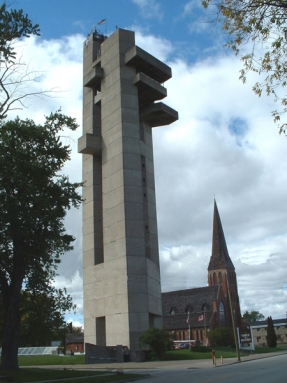
Tower of HistoryIt was fascinating to watch the ships being moved and there were several vantage points.  A nearby tower provided an overview of the area, while it was also possible to watch the ships from the dock area – nearly close enough to touch them.

The Tower of History also gave great overviews of the city as well as the locks. Built in 1969 by the Catholic Church, its purpose was to tell the history of the early missionaries. Today the story of Native Americans as well as the early missionaries is told with pictures, films and displays. 2000 years ago the Native American Indians gathered near the waters here due to the abundant supply of fish and furs. The Tower of History is 210′ high with outside balconies to make viewing a pleasure.  Since it was a very windy day, it was advised that visitors not go to the top. But that was just a challenge and proved quite scenic.

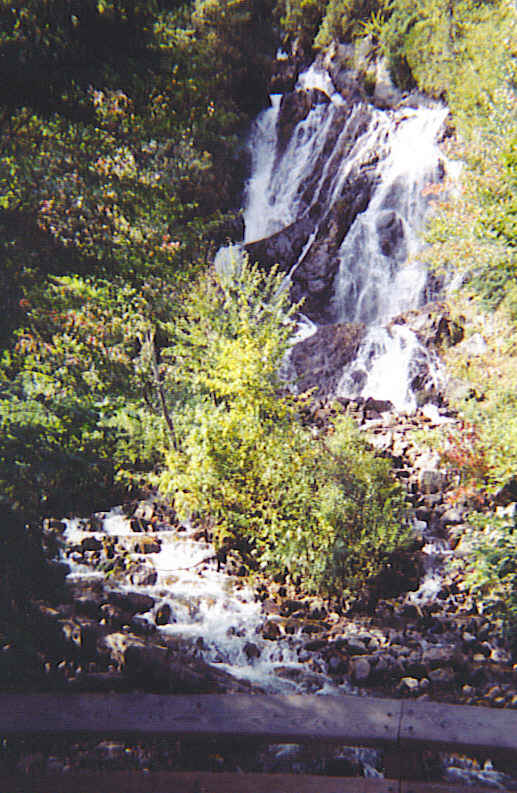
Agawa Canyon FallsThe following day, an early morning train, Agawa Canyon Tour Train, left Sault Ste Marie on the Canadian side. The round trip of 228 miles over towering trestles into the Canadian wilderness provided a scenic view including many lakes, waterfalls and pines.  At the farthest end of the tour, the train sweeps down into Agawa Canyon with a stop at Canyon Park, home to many beautiful waterfalls.

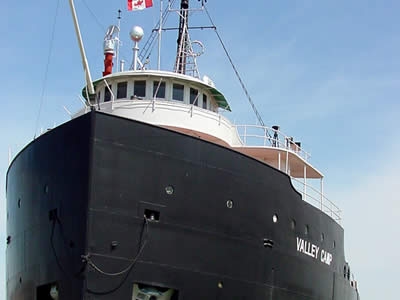
Before leaving Sault Ste Marie the next day, visited the Museum Ship Valley Camp, an actual retired ship. The S.S. Valley Camp was built in 1917 by a shipbuilding company in Lorain, Ohio. It is possible to walk not only the decks, but also visit the living quarters and explore inside from top to bottom. Valley Camp once had a crew of 29 men, so is the perfect place to display lifestyle of the Great Lakes’ sailors. From the more luxurious Captain’s Quarters to the rather plain cabins of the Oilers and Coal Passers, visitors receive a true glimpse into how they lived and worked onboard.

Museum Ship Valley CampA museum with over a hundred exhibits exists inside Valley Camp. Many items are displayed that have been recovered from sunken ships in the Great Lakes. An attractive aquarium features many of the fish who swim in the St Mary’s waters.

Sault Ste Marie does not claim to be tourist country, but it certainly holds many interesting pieces of the past for the curious to explore.

To reach Sault Ste Marie on the US side, take I-75 North to its end. 

Hopalong Cassidy Museum Where the Wild West Lives Again

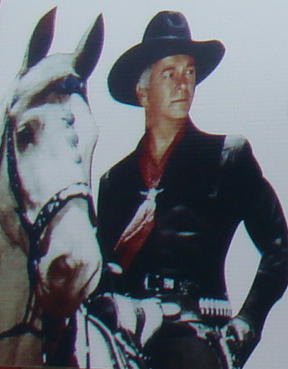
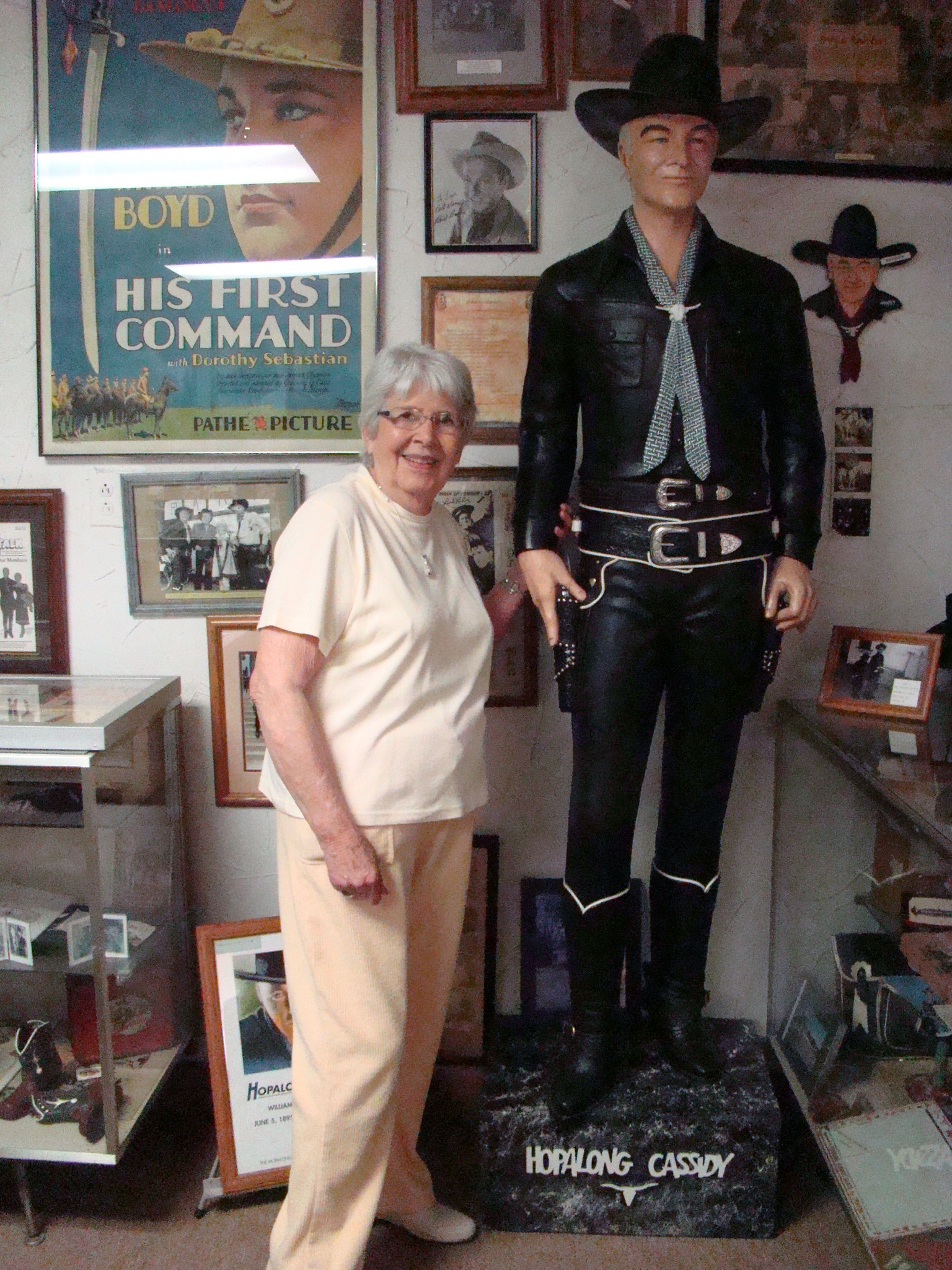
Hopalong Cassidy Hopalong Cassidy, “Pride of the West”, is also “Pride of Cambridge, Ohio”,  the boyhood home to Hopalong Cassidy and the Hopalong Cassidy Museum. William Boyd, aka Hopalong Cassidy, was born close by in Hendrysburg, Ohio in Belmont County back in 1895. While he only resided in Cambridge twelve years, they are still proud to call him a home-town boy. The family moved West at that time to Tulsa, Oklahoma, and at about the age of 20, William ended up in California where his good looks and winning manner were noticed by the film industry.

None other than Cecil B DeMille, who became a long time friend, took William Boyd under his wing, and got him his first acting contract at $25 a week back in 1918 as leading man in the silent film industry. When the role of fictional cowboy, Hopalong Cassidy, came up, director Harry Sherman felt William Boyd was a natural. In his black cowboy hat riding Topper, his white horse, Boyd soon became a national hero known for his gallantry and fair play. After 66 movies portraying Hopalong Cassidy, William Boyd became better known as Hoppy to his friends.

The story of his nickname began with Cassidy getting shot in the leg during a gun fight. When recovering from his gun wound, someone asked how he was feeling, to which he replied, “I’ll manage to hop along.”  Thus the name Hop-along Cassidy. After its success at the movie theaters, it was decided to have a Hopalong Cassidy TV series…also a big success. In 1950, Hopalong Cassidy became the first network Western television series.

Laura Bates and Hopalong CassidyForty years later, in the town of Cambridge, Ohio, Laura Bates was host of a show called “Talk of the Town” on their local television station. One particular day she was interviewing someone from New York doing research at the local library regarding Hopalong Cassidy. They commented, “It’s a shame no one in Cambridge ever did anything about Hopalong Cassidy, since he grew up here.”

Laura said, “That was like a slap in the face from the Big Apple.” After that, she began pursuing the idea and in 1990 it was decided to use Hopalong Cassidy for the theme of their Spring Festival.  Today, that Hopalong Cassidy Festival still is enjoyed by people from all over the world and is now held annually in May at the Pritchard-Laughlin Civic Center just outside the city.

Many movie stars attend the Festival to pay homage to Hoppy, one of those great cowboy legends. Hugh O’Brien from Wyatt Earp has attended as well as several stars of Gunsmoke: Bo Hopkins, Ben Costello, and Becky Burgoyne. Even William Boyd’s wife, Grace, has been in attendance.  Fans are still eager to catch a glimpse of these celebrities and perhaps obtain their autographs.

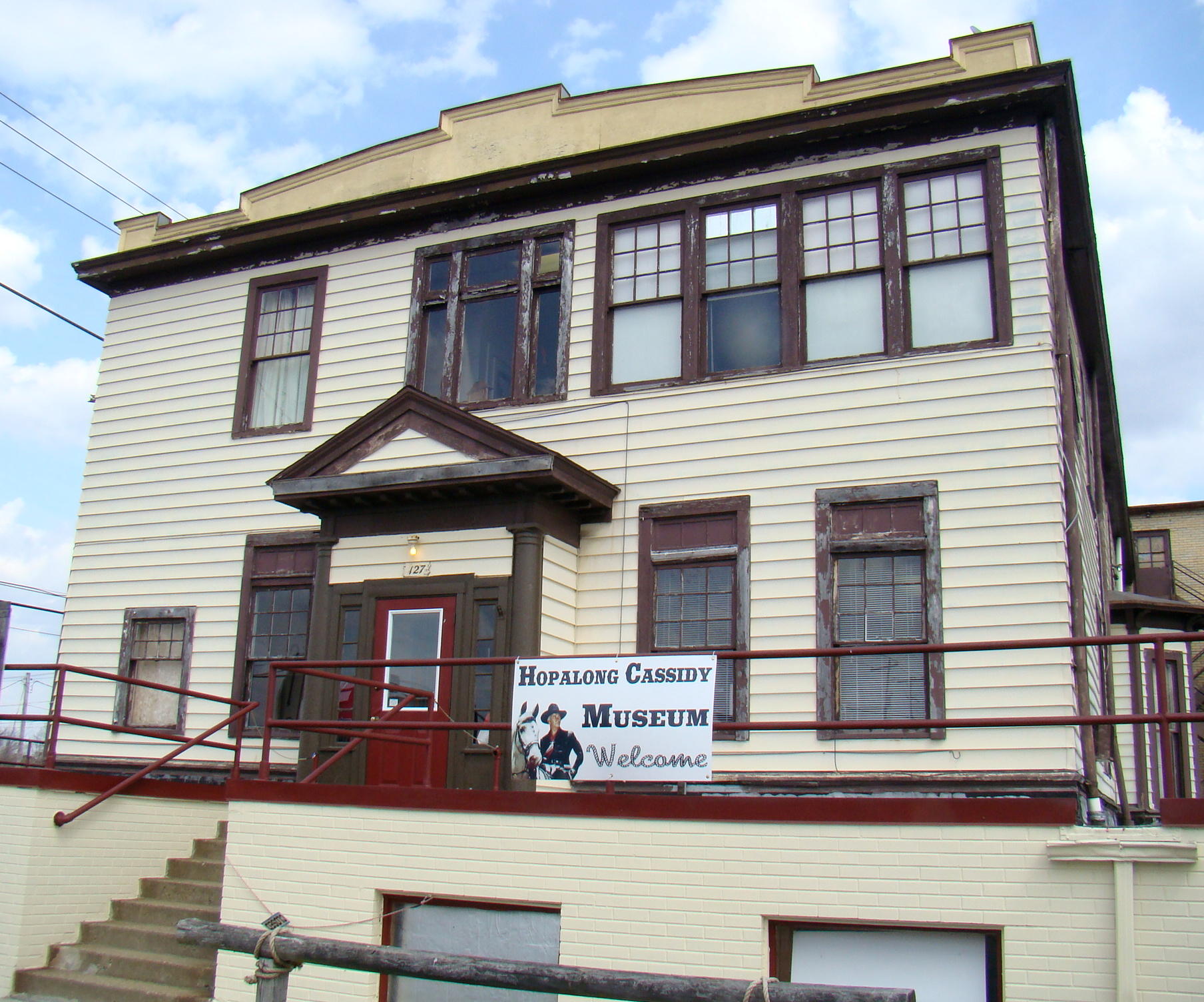
Hopalong Cassidy MuseumToday there is a museum in Cambridge, Ohio which houses a giant assortment of cowboy collectibles. Located at Scott’s 10th St. Antique Mall, this is a hot spot during the annual Hopalong Cassidy Festival. Three rooms are packed with Hoppy memorabilia, all part of a personal collection owned by Laura Bates, local Hoppy organizer and enthusiast. Here fans have purchased an old tin lunch bucket and thermos for the price of $395.00 or an Easter card signed by Hoppy for $195.00. There are many memorabilia available…for the right price.

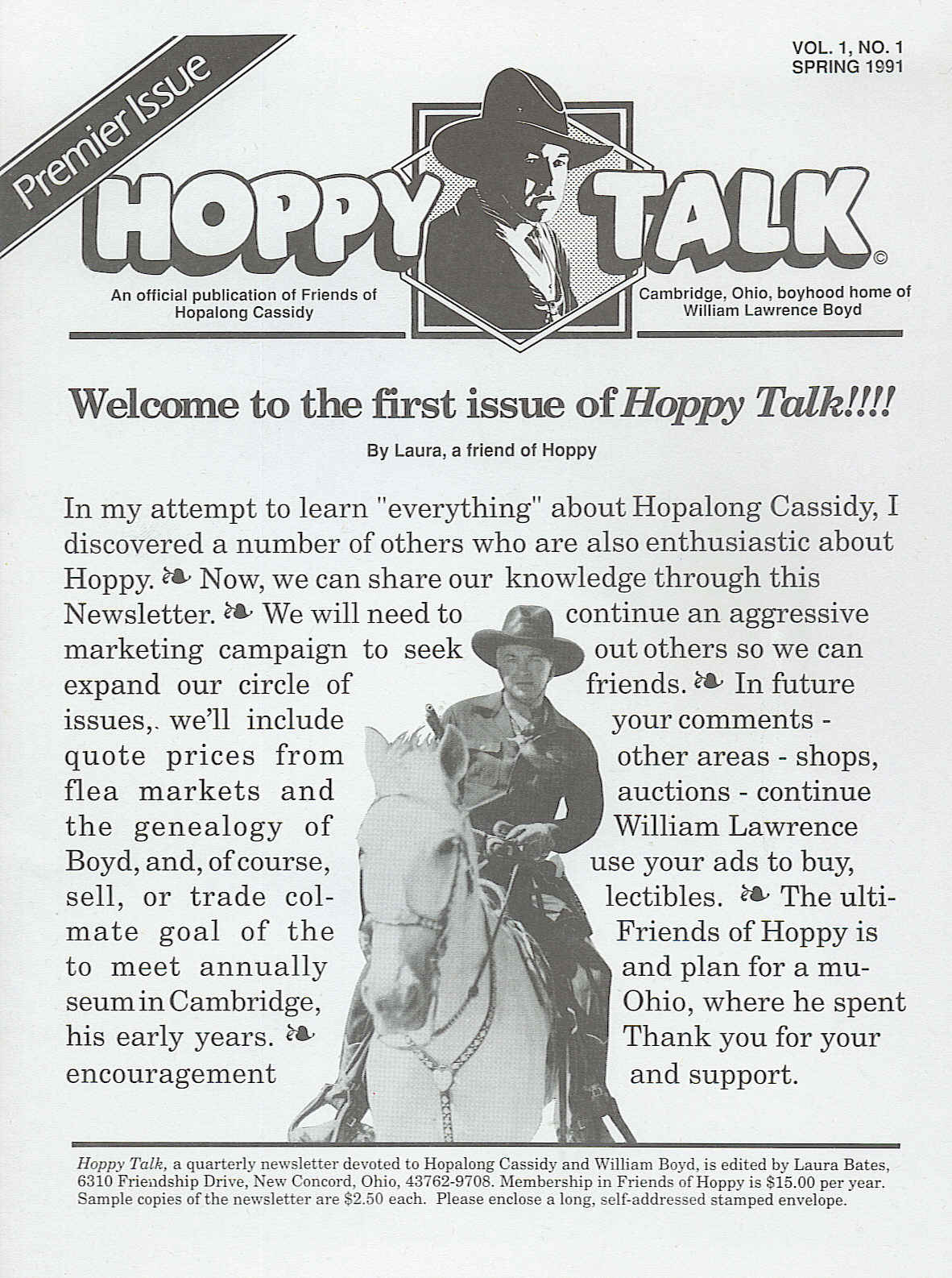
Hoppy TalkIn his hey-day, Hoppy received around 15,000 fan mail letters a week. Today there is still a meeting of the Hoppy  Fan Club during the annual Hopalong Cassidy Festival in Cambridge, Ohio.  Laura Bates is president of the fan club, which was formed back in 1991 and publishes quarterly a newsletter, “Hoppy Talk”, which is distributed to members of Friends of Hoppy. Membership was around 500 in the beginning, but has dropped to about 300 members today as younger adults have little memory of those great cowboy heroes. “Hoppy Talk” is celebrating its 24th year of publication in 2013.

William Boyd and Hopalong Cassidy are synonymous…Hopalong Cassidy, his alter ego. When he finally retired, he turned over his entire crew and cast to a new Western just coming on the scene…Gunsmoke. Boyd didn’t sing, dance, play sports, or race cars, he was simply Hopalong Cassidy.  He smiled, waved and shook hands.  He was everybody’s Mr. Good Guy and his favorite drink was a nonalcoholic sarsaparilla!

The Hopalong Cassidy Museum is located in the South Tenth Street Antique Mall in downtown Cambridge. There is easy access as Cambridge is at the intersection of I-70 and I-77. Wheeling Avenue is their main street and the museum is just a half block south of Wheeling Avenue on 10th Street.
Explore Dennison Depot Museum WWII Dreamsville U.S.A.

Dennison Depot Museum“Grease the pig!  Tallowpot, grab that banjo and throw on some diamonds so we can bake a cake.” Commands similar to these could have been heard around the Pennsylvania Railroad in Dennison back in its prime. This railroad slang translated into our everyday English, would sound something like: “Oil the engine! Fireman, grab that shovel and throw on some coal so we can build up steam.”

Dennison Depot Museum in Dennison, Ohio displays the history of their depot in a rather unusual manner…in the cars of a train! Each car displays a particular section of interest varying from hospital car to telegraph office. There is much to explore and all is well marked with explanations.

Model RailwayWhy would they have decided to buy the land to establish a town, where none existed, in this particular place back in 1865? Well, it wasn’t by chance! The spot they later named Dennison was exactly 100 miles between Pittsburgh, PA and Columbus, OH. The steam engines of that time could only travel a hundred miles before needing water, so this became their mid-way stop. Approximately forty trains stopped here daily during its peak, when Dennison had the most complete and largest railway yard in the nation. This model train lay-out shows in great detail part of that yard, and is maintained by a group of local model train enthusiasts.

Salvation Army CanteenMost exciting of all seemed to be the story of how they became known as Dreamsville, U.S.A. During WWII, the Salvation Army Canteen ,with nearly 4,000 volunteers, provided free food to around 1.3 million servicemen.

Arriving Servicemen's Train Car The train stops were only five to seven minutes long, so the girls went out on the platform to meet the train. They could see the loneliness, hunger and despair on the soldiers’ faces, so those young girls tried to have a smile and a kind word for everyone.

The soldiers said it brought back fond memories  of their hometowns.  These friendly, smiling girls reminded them of their moms, sisters, or girlfriends…plus there was free food.  A dream come true!  Thus the name Dreamsville, USA.

Hobo Message StumpBecause of all the trains, Dennison was a hotbed of hobo activity.  Whenever a train would stop, many hobos would hop off looking for a place to get handouts. It was common practice for the hobos to make marks on a nearby tree or on the house itself, so other hobos would know if they would be well received. Marks of simple circles, arrows, or even animals signified: Good road to follow. Free telephone. House is well guarded. A kind old lady. They even had a camp along the Pennsylvania Railroad in the city dump, where they made makeshift shelter of tin wrapped around tree trunks.

Friendly volunteers patiently answered questions, making the day enjoyable as well as informative. Boarding takes place here for the Polar Express, which during the Christmas season takes children on a magical ride where they encounter Santa. Special events are scheduled throughout the year from Private Bulldog Bing’s Birthday Party to Ghost Tours in the fall.

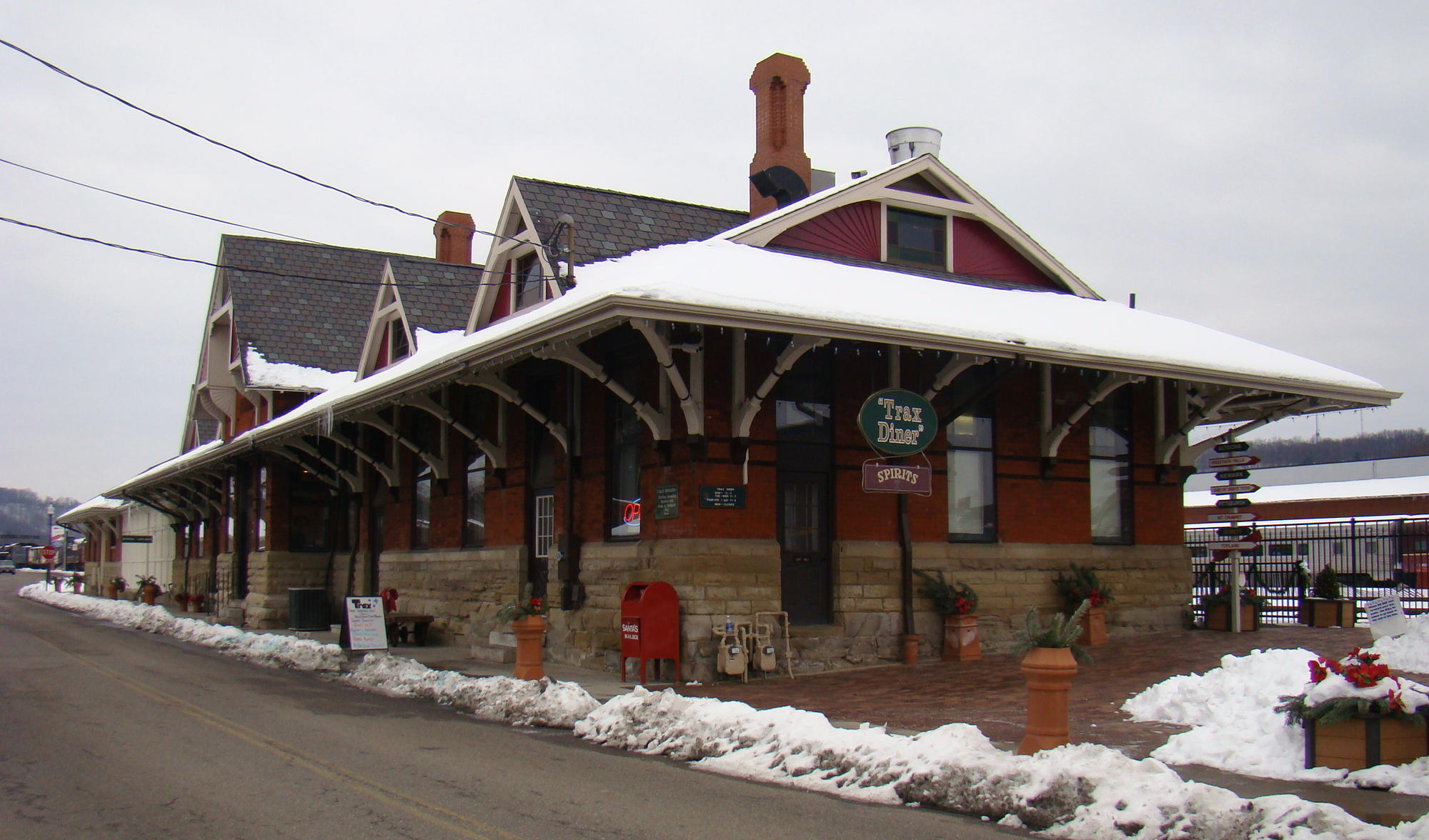
After visiting the museum, the Trax Diner, located in the old depot, is a perfect place for a meal or a snack.  Children were full of “whoo-whoos” while they were enjoying the atmosphere. Although they have delicious full-course meals, I chose a “Hobo Basket” filled with British style beer battered fish and chips. Since an English lady operates the diner, this seemed like a logical and delicious choice.

“Coal Cars”, stuffed potato skins, also chugged across the menu.  Might have to return for “The Caboose”, a sugar and cinnamon shell filled with ice cream and toppings. Think a Caboose would be a perfect ending for a meal, a train… or a blog post!

Dennison Depot Museum is located in Dennison, Ohio  not far from I-77.  Take exit 81, 36 East, to the Dennison exit. Turn right on Second Street and continue on Second Street until you reach the tracks. Turn left on Center Street and after two blocks you will see the museum. Parking is on the left side of the street.
Southfork Ranch in Parker,Texas Home of “Dallas”

Shortly before publication, received word of the death of J.R. Ewing after a long battle with cancer. He was the villain that TV viewers loved to hate and will deeply be missed by many.

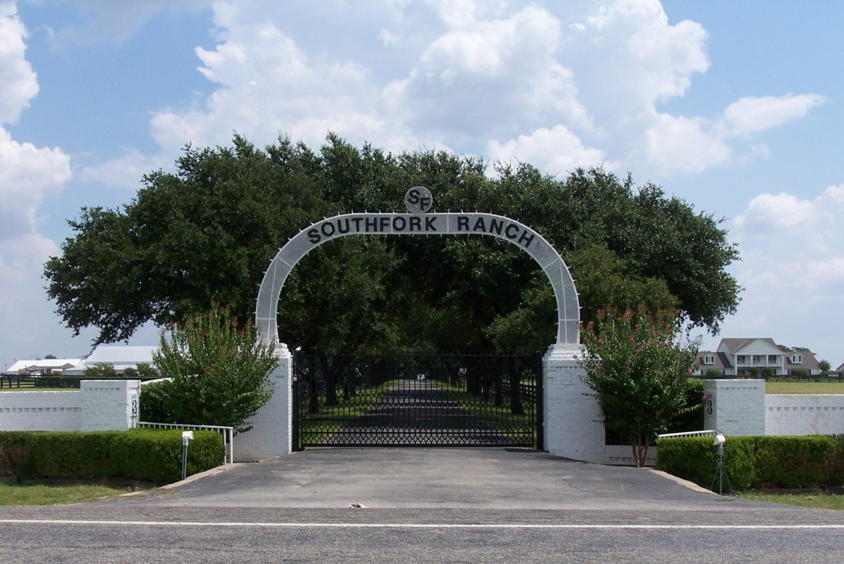
Things are always bigger in Texas, and Southfork Ranch has always been portrayed as one of them. Starting in 1978, this was home to the Ewings and the rest of the world arrived as weekly guests on Dallas. Here guests could dream of life as an oil millionaire, including shady dealings and dysfunctional family dynamics.

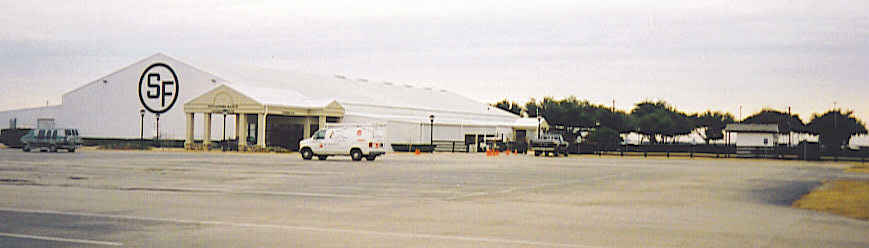
Today a tour of the set for the TV show is destination for many fans of Dallas, both the old show and the recent revival.  In Parker, Texas, guests can tour the Visitors Center and the pillared Ewing Mansion to hear stories and see memorabilia of the extravagant 340-acre Southfork Ranch.

Re-live some of the memorable moments from  Dallas, at one time the world’s most popular TV show, in the “Dallas Legends” Exhibit. See the gun that shot J.R., Lucy’s wedding dress, video clips from the series, interviews with the stars, and other memorabilia that will make you feel right at home with the most infamous Texans of them all, the Ewings.

Take a tram from the Visitors Center en route to the Ewing Mansion. You’ll hear a history of the ranch, and see Texas longhorns and American quarter horses. As you approach the Ewing Mansion, the driveway seems much shorter than it did on the TV show. A special filming technique, or perhaps camera magic, was used to make it appear much longer, thus more elegant. Actually the entire ranch was much smaller than the show portrayed.

At the famed Ewing Mansion, a tour guide will give interesting tidbits about the years of filming, and insight into the character of the Ewings. J.R. seems to be the name that first comes to mind when Dallas is mentioned.  His ethic for the business world was one word – win, but he had an equal passion for women. Guests are given a full guided tour of the “most famous White House west of D.C.” where they even get a glimpse of J.R.’s bedroom !

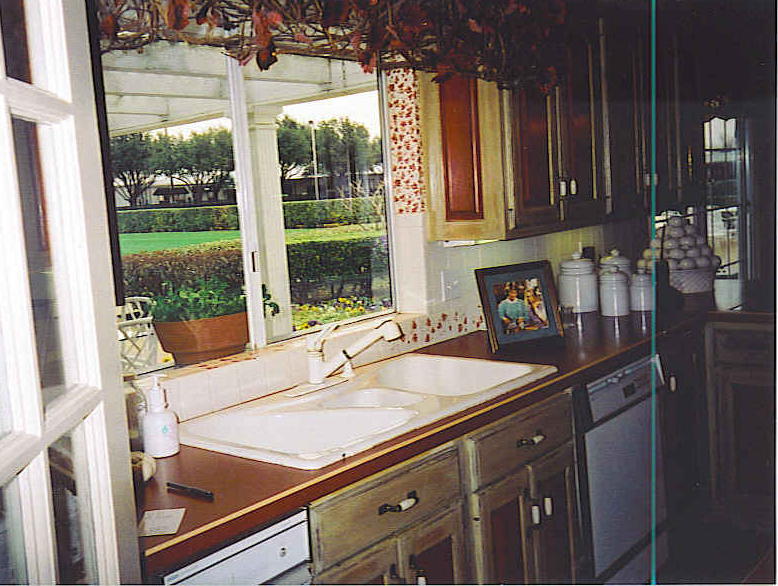
Found it interesting that Miss Ellie’s kitchen had a window to the entire ranch. Southfork Ranch originally belonged to the family of Miss Ellie. When they were about to lose it, she wisely married Jock Ewing to save the ranch, but came to care about him deeply as the years progressed. Here the mother of the Ewing family could keep an eye on what was happening. Many interesting conversations regarding business and family took place with Miss Ellie in this kitchen.

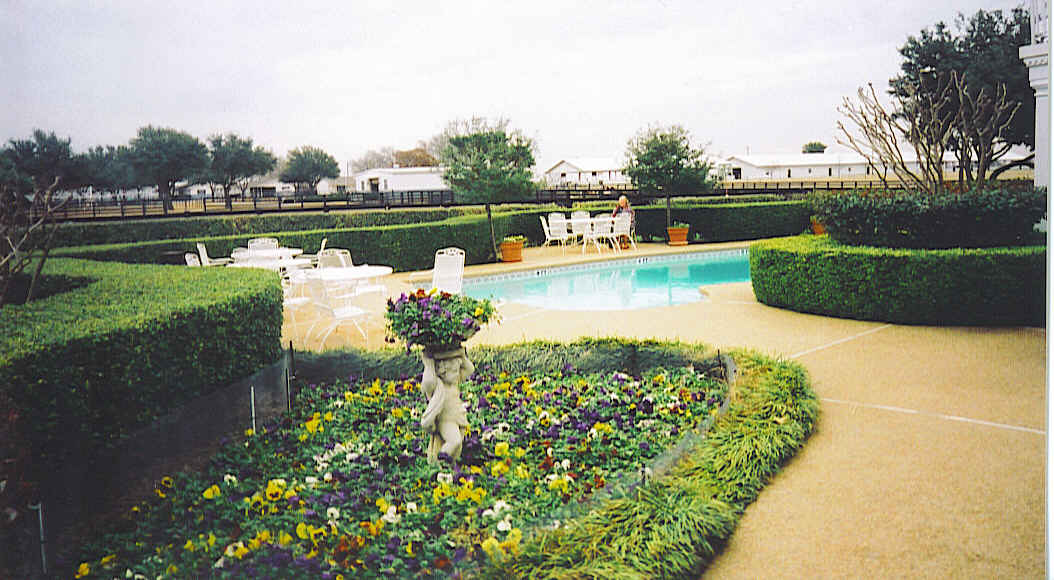
Rest at the pool in the beautiful Southfork gardens where Dallas was filmed. On the right side of the picture you can see the edge of the balcony where J.R. was shot…the end of a season that made viewers eager for the fall season to return.

As you depart the Mansion, feel free to stroll through the ranch grounds, and stop and visit “Lincolns and Longhorns,” displaying Jock Ewing’s original 1978 Lincoln Continental. Guests can shop here for “Dallas-inspired” men’s and ladies’ apparel, decor, and accessories.

Return to Dallas today, the show and Southfork, as some original members of the cast are back to fight the next generation of Ewings for power. As John Ross said at the end of episode one for the new Dallas, “The fun is just beginning.” But now the question will be, can the show continue without the outrageous and compelling J.R.?

Southfork Ranch is located in Parker, Texas just north of Dallas. Take US 75 north to exit #30, Parker Road. Travel east on Parker Road for five and a half miles, then take a right on FM 2551, also known as Hogge Road. The entrance to Southfork is immediately on your left. 

McKinley Museum Spotlights Stark County

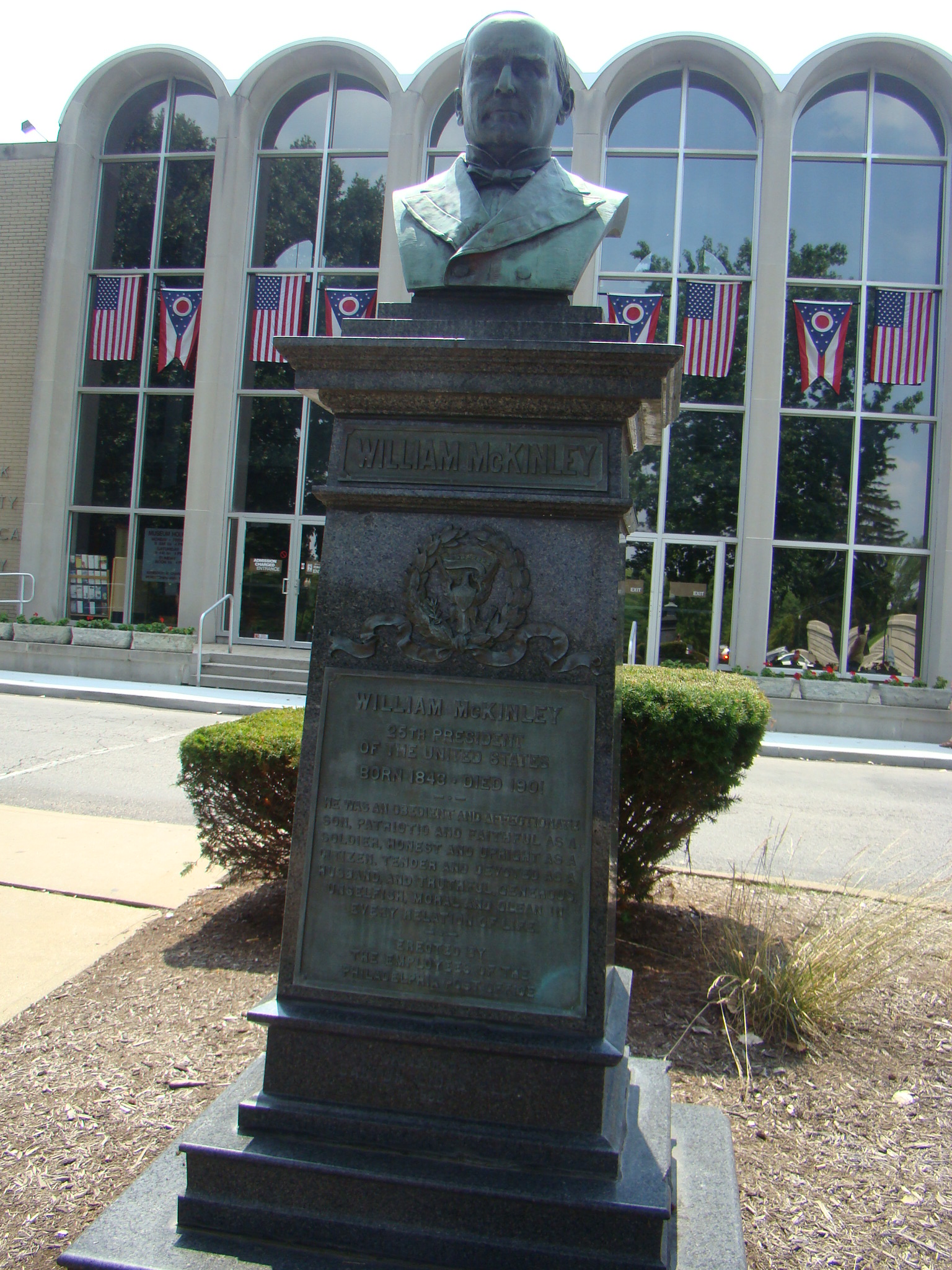
Near the foot of the McKinley Monument, Stark County Historical Society has gathered interesting information and memorabilia regarding the surrounding area. as well as the life of William McKinley.  The bust of McKinley greets visitors outside the building.

As you enter the lobby of the McKinley Museum in Canton, Ohio, a sign with a quote caught my eye. It was a word of advice to young people from President William McKinley:

“Young men and women, what your education will be and do for you depends upon yourselves.”                                                            

Within these walls is quite an extensive history of the Stark County area including leading enterprises, such as Belden Brick, Dueber-Hampden Watch Company, Erie Canal, Hoover Vacuum, Pennsylvania Railroad,  and Timken Company just to name a few. Henry Timken founded Timken Roller Bearing Company in 1902 and his entrepeneur vision was grounded in this type of thinking:

“If you have an idea which you think is right, push it to a finish. But above all, don’t set your name to anything you will ever have cause to be ashamed of.”

McKinley Museum had many interesting exhibits throughout, too numerable to mention. Here are a few things that caught my eye on a recent visit.

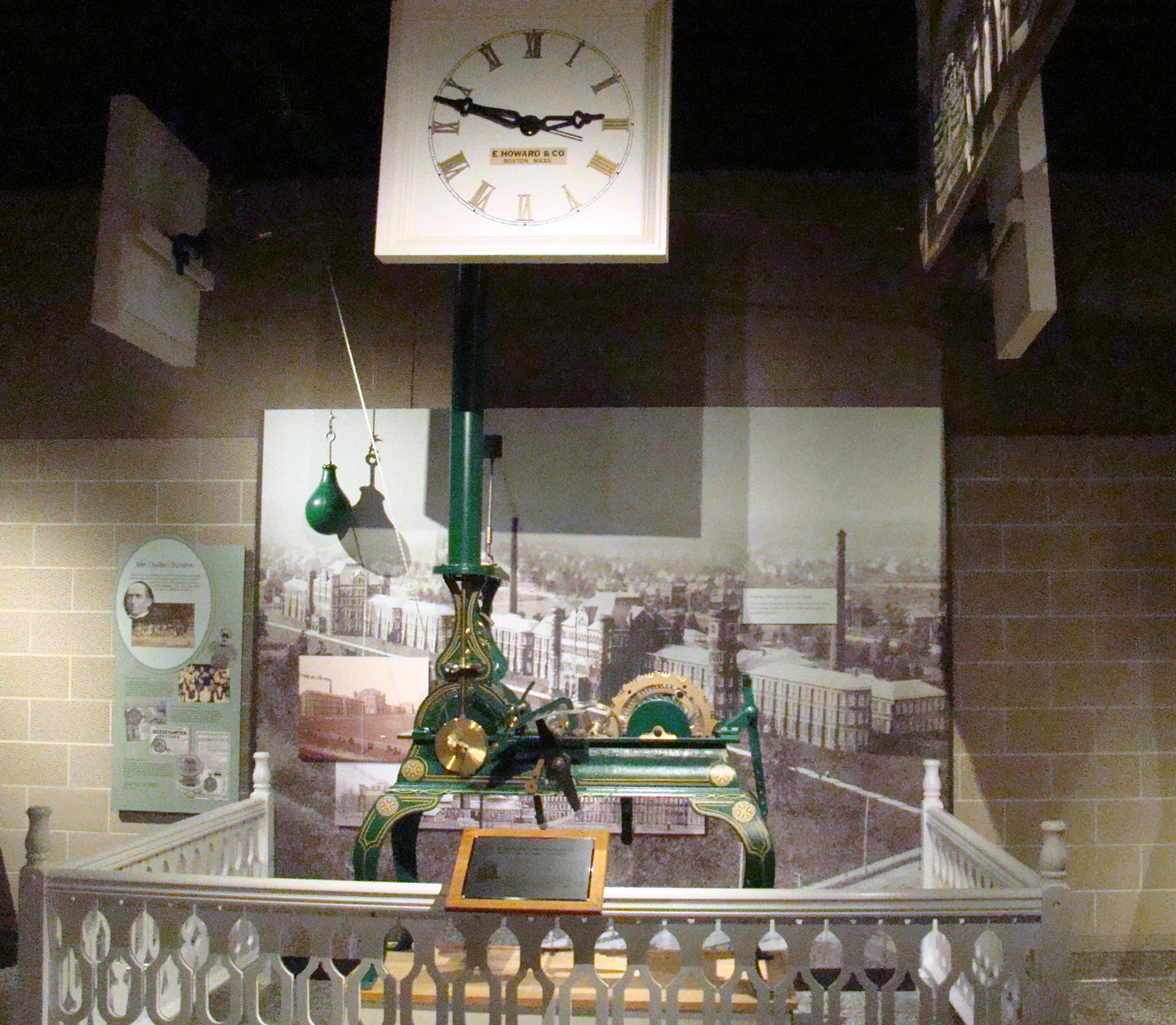
One fascinating display showed a clock tower made by Dueber-Hampden Watch Co with a sign “Accurate to the Second.”  That was way back in 1889! By 1890 the company was producing 600 watches a day in Canton, Ohio and had over a thousand employees. They used 14 karat gold  in their watch cases and had 17 jewel movement, quite advanced for their time. This company was sold to a Russian company in 1927 and twenty-one former employees went to Russia to teach them their craft.  One report is that their machinery is still being used in China today.

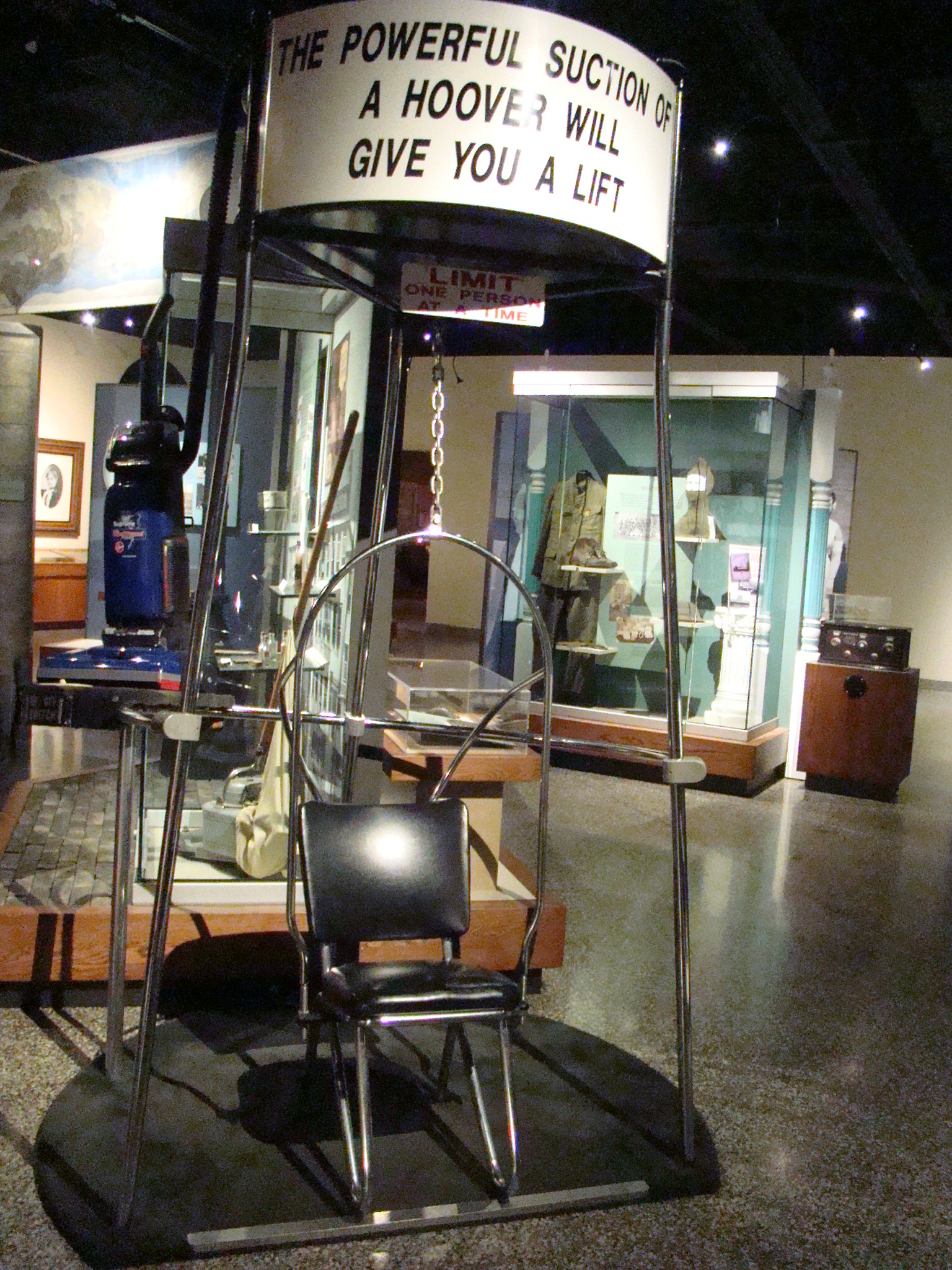
The Hoover Vacuum provided a display that attracted lines of children. While seated in a chair, they pressed a button which created enough suction to lift them well off the floor. The Power of the Hoover! It is very fitting to be highlighted here as the first upright vacuum was invented by a department store janitor, James Spangler, in Canton back in 1906. He just happened to show it to his cousin, Susan Hoover, who in turn shared it with her husband.  “Boss” Hoover bought the patent from Spangler, hired him as Superintendent, and slowly began the switch from maker of leather-goods to vacuum manufacturer.  The slogan: “It beats..as it Sweeps…as it Cleans” brought the Hoover Vacuum to the forefront.

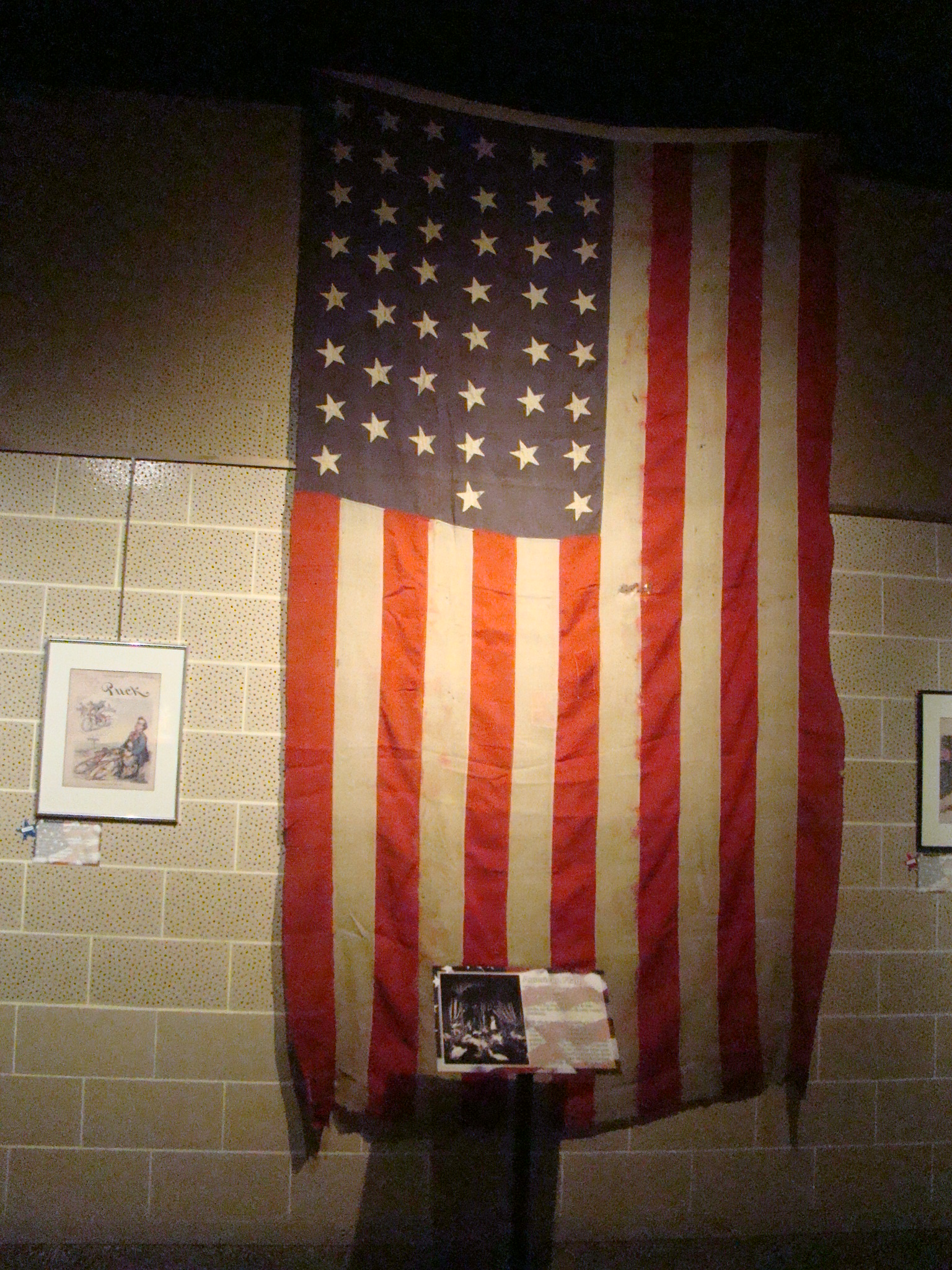
This was the original hand-sewn 45 star American flag that hung on the front porch of McKinley’s home during the 1896 presidential campaign.  During his famous “Front Porch Campaign”, McKinley made himself available to the public every Sunday afternoon on the front porch of his home. Usually he was seated in his rocking chair from which he talked to 750,000 people who stopped by. Some say he shook hands with up to a million men from that front porch scene. This campaign appealed to the average voter, who found themselves drawn to a candidate that stayed true to his roots.

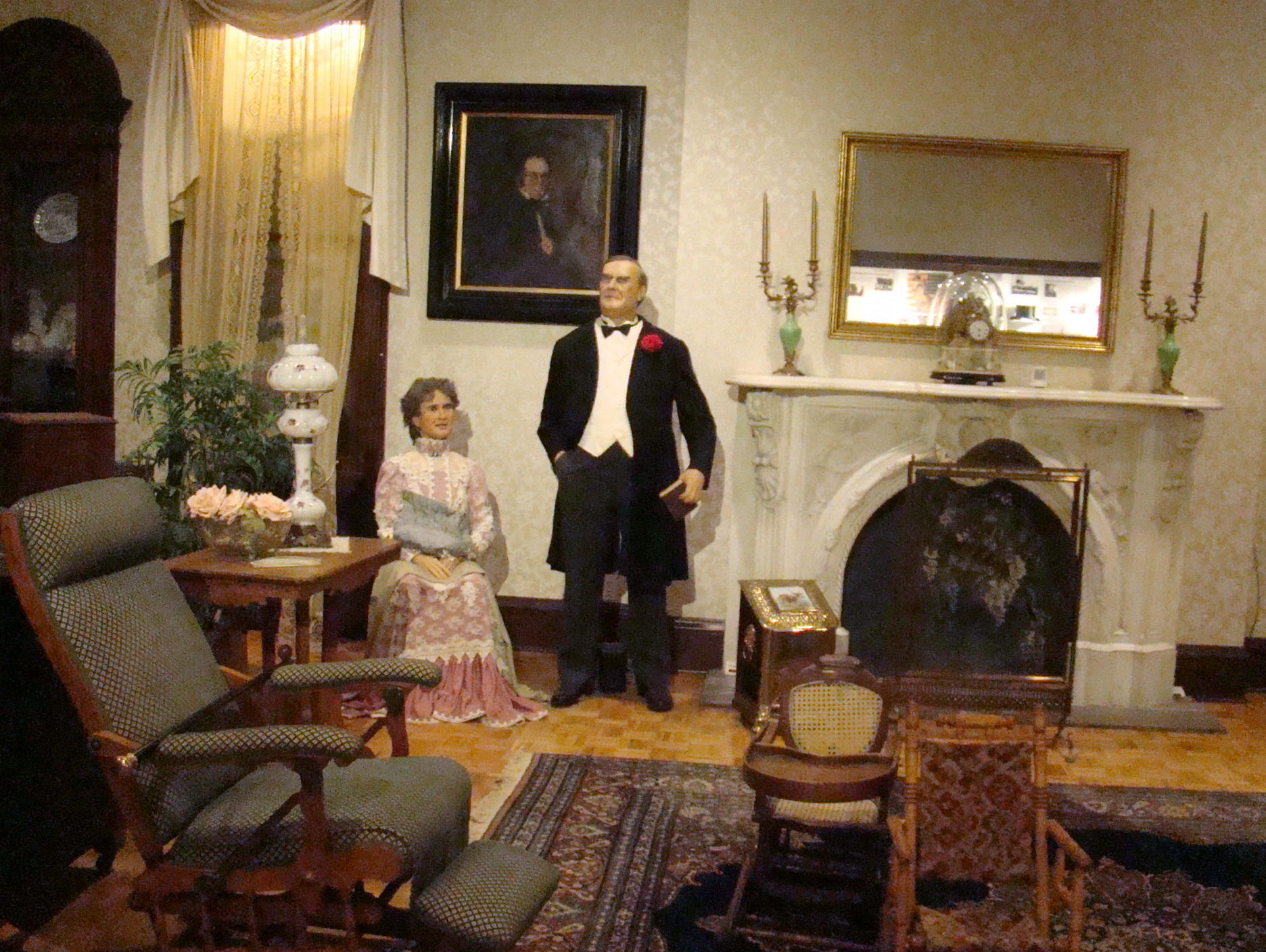
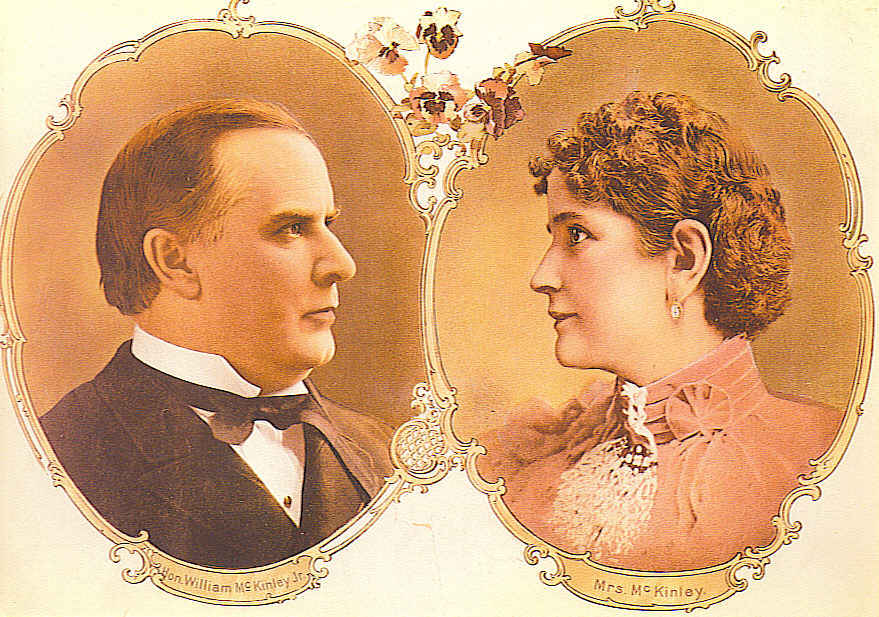
Rooms were redesigned to look very much like the ones of long ago with their Victorian furnishings. A touch of some form of music was often in evidence as that would have been one of their main means of entertainment. In the parlor, you had an opportunity to listen to talking figures of William and Ida McKinley. Notice that he does have on his symbol, the red carnation.These plastic figures are activated by sensors when you enter the room.

The Hazlett Theater is a fine spot to give your feet a rest and watch some old films from days gone by. Here you hear about the campaigns of William McKinley and get to have an inside video tour of the Memorial.

There weren’t enough hours in the day, so sadly missed the show at the Hoover Price Planetarium where visitors view the solar system and beyond. They say it is like traveling to space without leaving the ground.  Unfortunately, didn’t make it to Discover World either where dinosaurs and early American Indians welcome visitors to Natural History Island, Ecology Island and the new spot, Fascination Station.  Looks like a return visit is in order.

The McKinley Museum  is located in downtown Canton, Ohio just off I-77. Take Exit 105 for OH 172, then turn right on 7th Street NW. Take the first left onto McKinley Monument Drive where the Museum is located to the left when facing the memorial. Enjoy a little piece of Ohio history.

McKinley’s Victorian Style Home First Ladies Historic Site

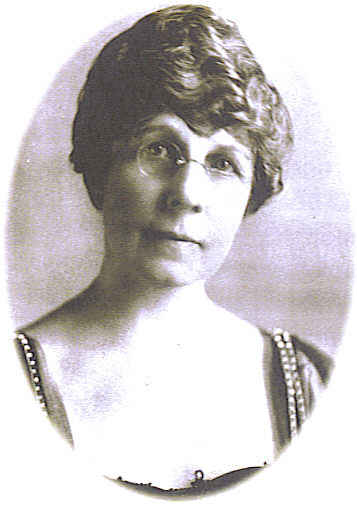
Could the sound of footsteps on the spiral staircase at the Saxton McKinley House be those of Ida McKinley? Once in a while the footsteps echo late at night, and the light step is attributed to Ida. That seems quite possible as this was her family home where she lived for twenty-eight years.

Beautiful gardens connect the Education and Research Center to the Ida Saxton McKinley House, both part of the First Ladies National Historic Site in Canton, Ohio. Visitors were greeted by a  young lady dressed in a replica of Julia Tyler’s gown. She was very knowledgeable regarding the history of the house and the family.

To add a little mystery, there are conflicting stories as to how Ida and William McKinley met each other.  Some said Ida was a cashier in the bank where William transacted business for the law firm he joined when moving to Canton. Another story said that both Ida and William were Sunday School teachers at different churches, and passed each other on the way to church.  Or perhaps they met during a picnic at Myers Lake Park. However they met, William indulged her every whim and was seldom far from her side, which turned out to be a major political asset.
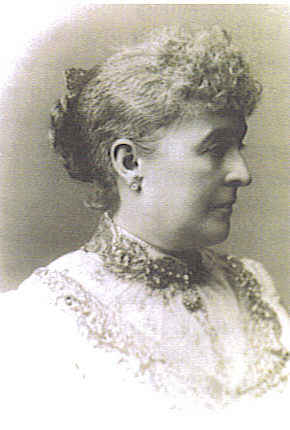
The Saxton McKinley House was originally built in 1840 by Ida’s maternal grandfather, George DeWalt. Her other grandfather, John Saxton, was founder of the Canton Repository newspaper. Her affluent background made it possible to lead an extravagant lifestyle. Almost everything inside the house today is a reproduction, but based very carefully on the Victorian style used in the original 1800’s house – after extensive research at the Smithsonian. Fortunately, there are still original walls and woodwork throughout much of the home.
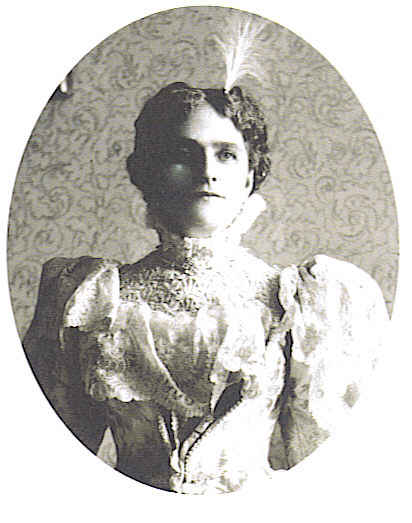
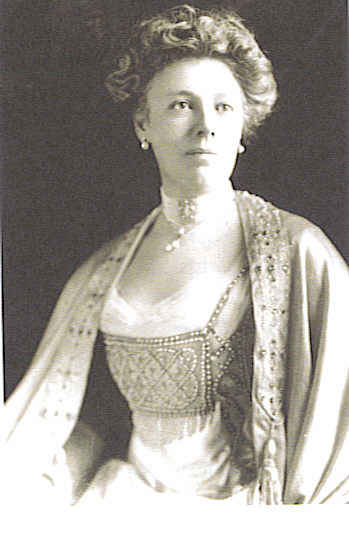
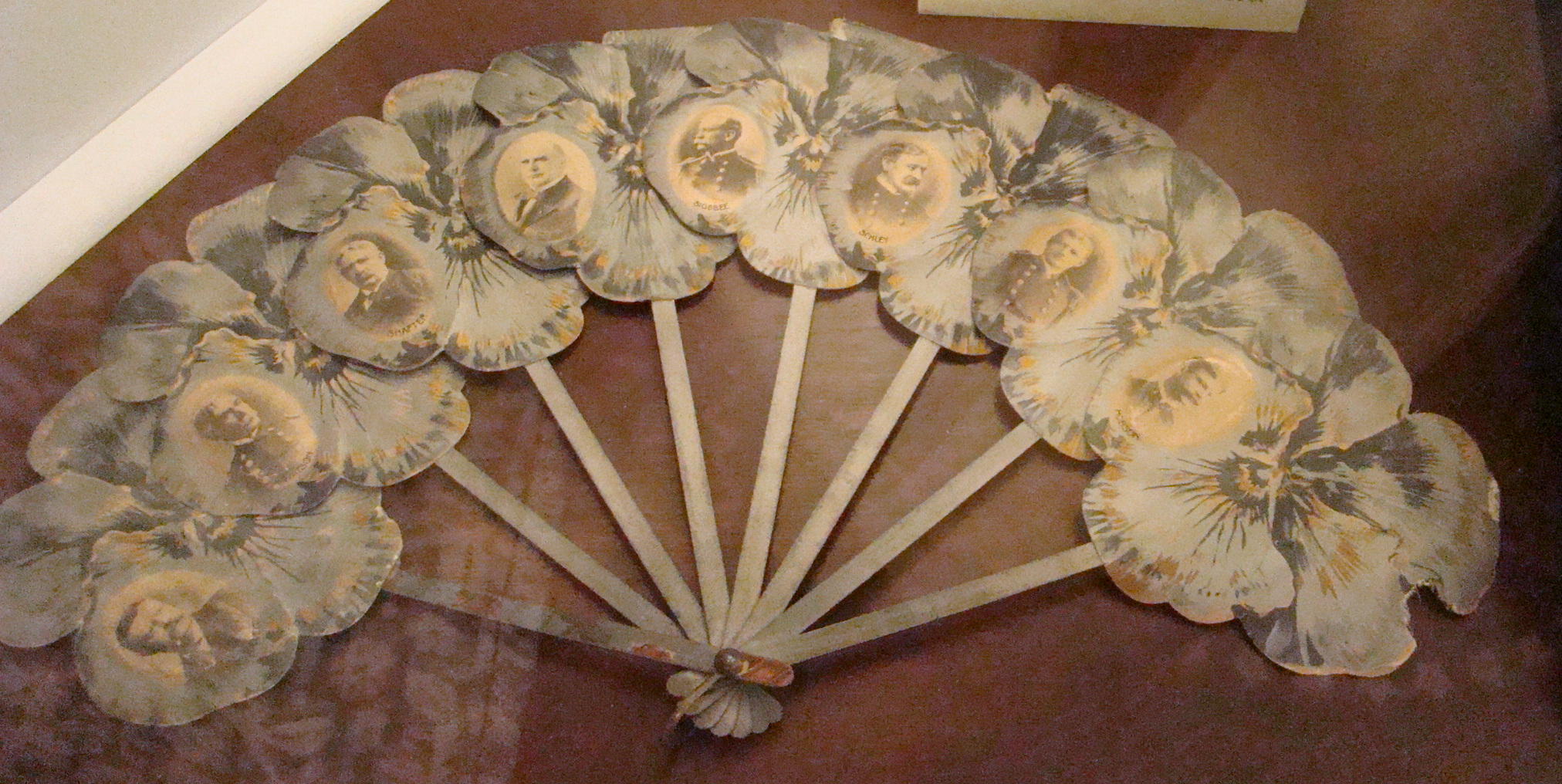
In the Formal Parlor you get a glimpse of a music box purchased on Ida’s trip to Switzerland as well as the piano topped with Victorian sheet music, which she enjoyed playing. The Library held William McKinley’s chair and a large collection of Ida’s fans, which numbered over 250. On the third floor, William had his office across the hall from Ida’s room so he could be close to her.  Their second child, Ida, died at six months of age and two years later Katie, their three year old, contracted typhoid fever and passed away. Consumed by her grief, Ida’s headaches became more severe, accompanied by seizures and tremors.

To ease her migraine headaches, her hair was cut because the weight of the braids was considered a possible cause. Medication for her seizures often made her listless. These two problems made it necessary for Ida to sit as much as possible and this petite lady with a 20″ waist, 18″ when corseted, attempted to hide her afflictions as much as possible.  If she had an attack out in public, William would put a handkerchief over her face so people would not glimpse her facial contortions during seizures.

Also on the third floor was the beautiful ballroom for entertaining. Today the walls of that ballroom display short stories and pictures regarding the life of each First Lady. Many interesting facts were given about various First Ladies, for example,  Francis Cleveland happened to be America’s youngest First Lady. Grover Cleveland was a friend of the family’s and actually bought Francis her baby carriage.

The McKinleys only lived at the Saxton McKinley House for a short time  between 1878-1895, while William was serving in the US House of Representatives and then as Governor of Ohio. During his presidential campaign, they moved to a more modest home, which more closely matched William’s background.

Often we hear stories about our presidents, so it was refreshing to hear stories about their First Ladies and catch a glimpse at their lifestyle.  A friend wrote about Ida Saxton McKinley, “Her greatest charm was her perfect sincerity and thoughtfulness for others.  No day passed over her head without her doing something for someone.”  What a great tribute to this special First Lady!

The Saxton McKinley House is located  off I-77 in Canton, Ohio right next door to the First Ladies Library at 205 Market Street South. All tours of the facility are guided and admission, which includes  both the Library and the House, is $7 for adults, $6 for seniors and $5 for children. 

National First Ladies’ Library Chronicles Hostesses at the White House

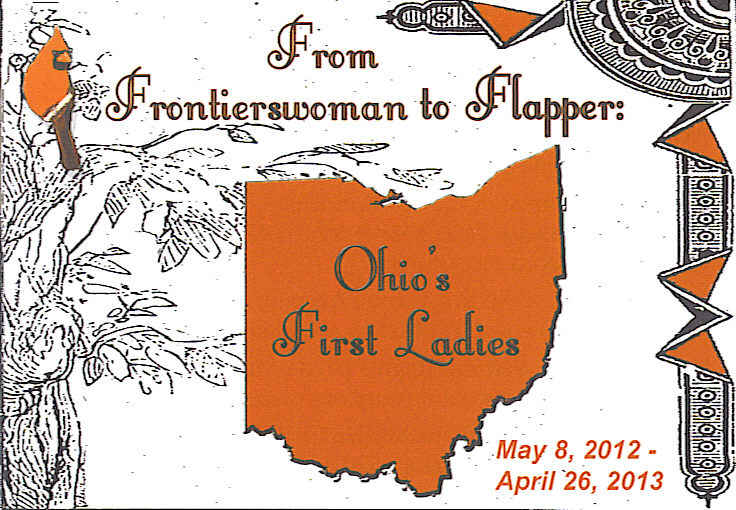
First Ladies have always played important roles during their husband’s presidency from hostess at the White House to diplomat.  At this time Ohio’s First Ladies are the featured presentation at the National First Ladies’ Library Education and Research Center in downtown Canton, Ohio. The title, From Frontierswoman to Flapper, describes the transition during their life times from colonial living to the beginning of the Jazz Age.  The present day home of the library, an 1895 City National Bank Building, has beautiful original marble floors and walls , thus giving an elegant feeling to the library.

The visit began with a video introducing the First Ladies of Ohio.  While Ohio lays claim to eight presidents, only seven first ladies called the state home.  That still puts Ohio at the top of the list for First Ladies from any one state. Following the video, an excellent tour guide explained the numerous items on display, which led to many interesting stories about the First Ladies and their husbands. Each first lady had her own special interests and talents, making her a unique individual. These are a few interesting stories about the Ohio First Ladies that caught my attention during a recent visit.

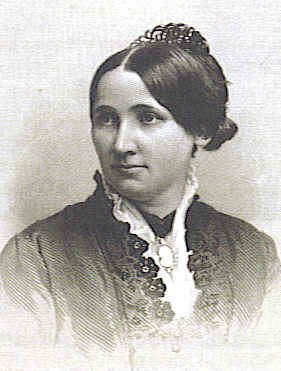
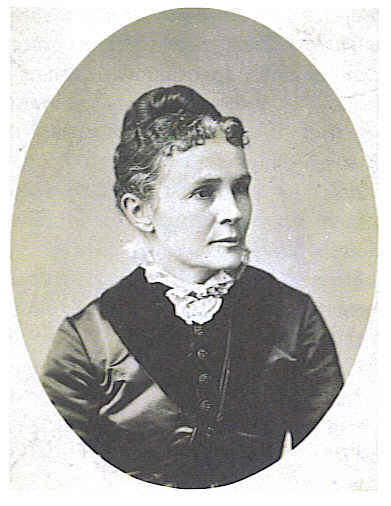
Anna Harrison (1775-1864) first enjoyed being hostess at the Governor’s Mansion where she entertained  prominent figures such as Vice President Aaron Burr and Tecumseh.  Anna was too ill to travel when her husband went for his presidential inauguration. However, one month later, William Henry Harrison died at the White House so Anna never made the journey to Washington D.C.

Lucy Hayes (1831-1889) enjoyed entertaining as she liked being surrounded by people.  Her receptions and dinners were always admired, and her china dinner plates each contained a different scene. Lucy was actually the first First Lady with a college diploma.  After she spent time with her husband when he was wounded in the Civil War, she traveled to various camps where she visited, and attended to, wounded soldiers.

Lucretia Garfield (1832-1918)  stayed by her husband after he was shot by an assassin through the eighty days that he wasted away.  Perhaps she was one of those early promoters of women’s rights as Garfield needed constant attention from his doctors during this time. The male doctors were paid $10,000 while the female doctor was only paid $5,000. Lucretia was adamant about having that changed so the female doctor also received $10,000.

Caroline Harrison (1832-1892) was a star pupil of the German artist, Paul Putzki, and her designs painted on china were on display at the library. Although she was not very well, she enjoyed growing exotic plants and flowers. Her husband never left her side during her bout with tuberculosis and she died in the White House.

Ida McKinley (1847-1907) suffered from blinding headaches and epileptic seizures after the death of her daughter. Therefore, the only way she could fulfill her role as First Lady was often seated in a chair holding a bouquet of flowers to hide her trembling hands.  One of her beautiful garnet gowns with black lace and beading on the collar was featured at the library. When she was able, crocheting was one of her forms of relaxation and many crocheted slippers were given as gifts.

Helen Taft (1861-1943) was the first First Lady to donate her gown to the Smithsonian Institute. One of the most beautiful gowns at the library was Helen’s soft pink dress trimmed with lace and a velvet bow.  A beautiful embroidered fan featuring a cherry blossom tree was only one of her collection of fans, but a definite favorite. Because of Helen’s admiration for the Japanese cherry trees, three thousand trees were donated to the United States by the mayor of Tokyo.

Florence Harding (1861-1924) did not have many positive experiences in her life and had a very unhappy marriage suffering the many affairs of a wayward husband – some even claim she poisoned him. The piano was her source of comfort as she had studied piano at the Cincinnati Conservatory of Music. She wrote many notes about her unhappy life and this one had a definite piece of advice to married women:

The Happy Wife is not the woman who marries the best man on earth,                     But one who is philosophical enough to make the best of what she has got.

National First Ladies’ Library has many events for the community and the surrounding area all year long.  During the summer they sponsored a Summer Reading Program for K-5 discussing these books this year:  First Garden, Miss Lady Bird’s Wildflowers, and Through Georgia’s Eyes. Their Victorian theater shows documentaries on the First Ladies,  presents author talks and shares many interesting movies and performances.

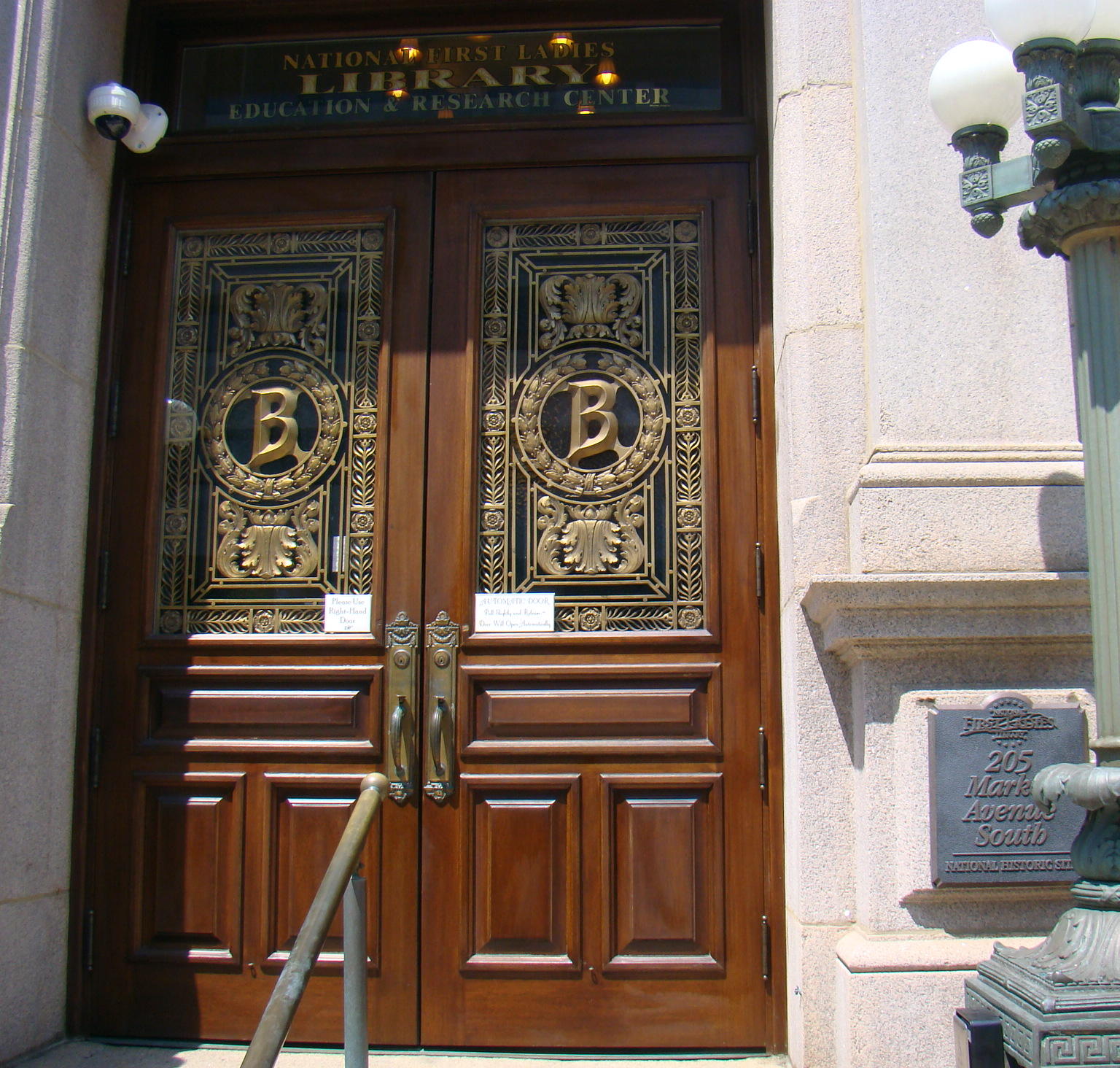
The First Lady in her Hostess role helps determine how successful her husband’s presidency is going to be. If you would like to learn more about the First Ladies, visit them downtown Canton Ohio. These beautiful doors will open to welcome you!

National First Ladies’ Library Education and Research Center is located in downtown Canton, Ohio just off I-77 at 205 Market Street South.  All tours of the facility are guided, and price is reasonable at $7 for adults, $6 for seniors, and $5 for children under 18. This admission price also includes entrance into the Ida Saxton McKinley House next door, which we will visit at another time.

Try Hershey’s Chocolate World The Sweetest Place on Earth

“Give them quality. That’s the best kind of advertising in the world.”                             ~Milton Hershey

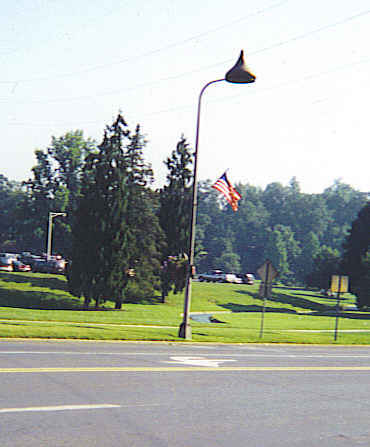
The smell of chocolate drifting through the breeze is one of the fond memories of Hershey, Pennsylvania. There’s no doubt about being in the popular chocolate town, because the shapes of Hershey kisses serve as street lights down Chocolate Avenue. Naming the town Hershey was one of the best advertising schemes a candy company could devise.

Upon arrival at Hershey Chocolate World, take the Great American Chocolate Tour Ride.  Seated in moving cars, the tour follows the trail of the cocoa beans from their original home in the tropical rain forest. Then upon their arrival at Hershey, they are transformed into that delectable chocolate that we have enjoyed throughout our lives. All five senses are treated as visitors see the displays, hear the stories, and smell the chocolate as they travel to the Sweetest Place on Earth. Finally tourists get a taste of Hershey’s, as they give everyone a free piece of candy at the end of the tour. Of course, chocolate always makes you feel good.

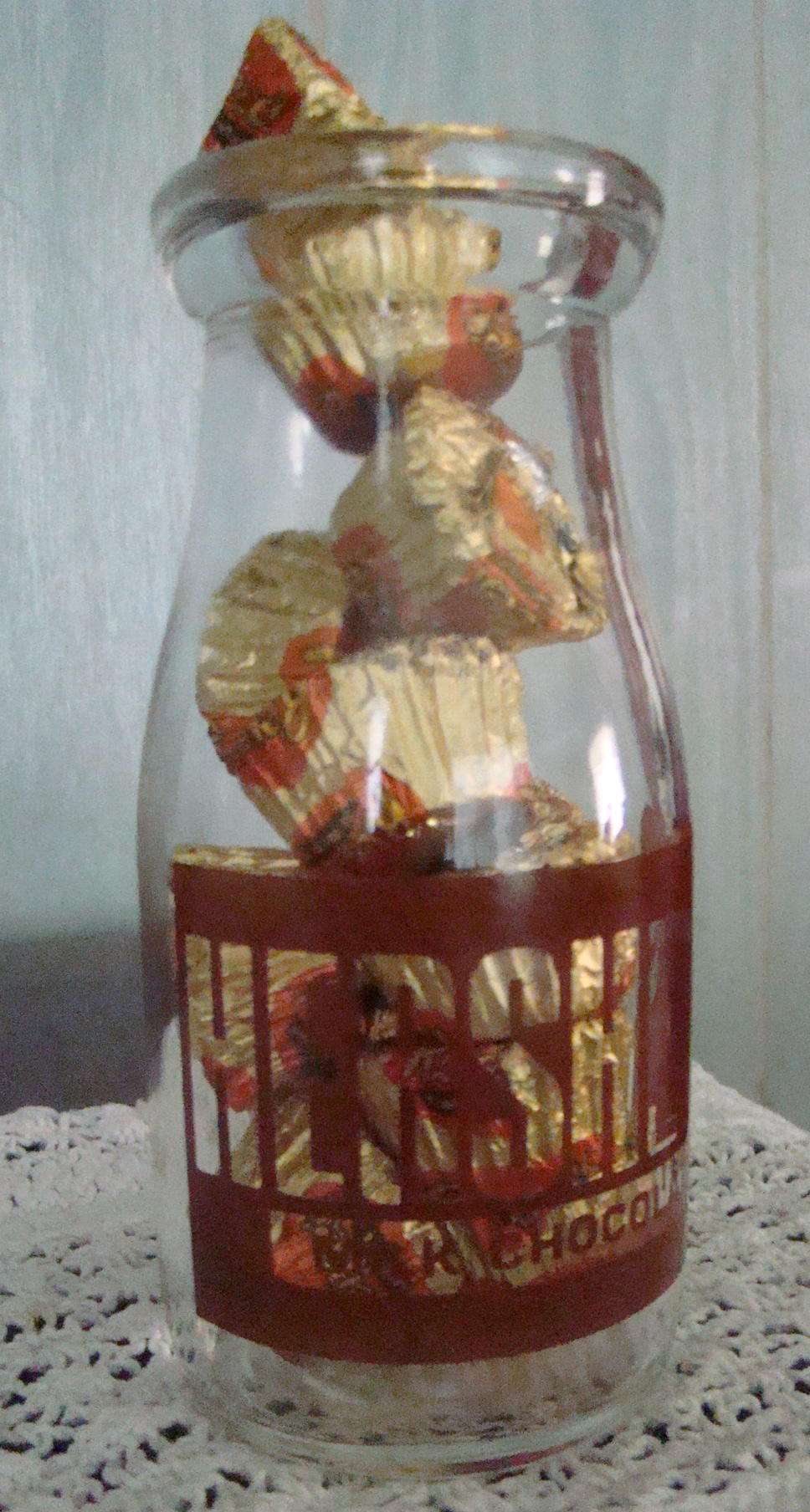
Their gift shop is filled with chocolate in every form and combination. The walls are covered with everything from apparel to household items with popular candy bar logos. Nearby shelves hold all the chocolate products including the Hershey Kisses and Hershey Bars, which have been around for over a hundred years.  My Christmas tree now has a Hershey Kiss ornament, while a Hershey milk bottle holds candy treats on my coffee table.  Sweet memories!

It’s just a short walk to the Hershey Story, a museum telling the history of the Hershey family.  Milton S Hershey, the man who revolutionized the way to make milk chocolate back in 1894, left his fortune to the Milton Hershey School’s orphan boys. Since Milton and his wife had no children of their own, they developed a real concern for less fortunate children and founded the school in 1909.  His legacy is an inspiration to many, as his life was a rags to riches story.

Here visitors also learn of Hershey’s inspiration for creating the town of Hershey. Seems it was patterned after another chocolate maker, Cadbury in England, who also built their factory in what was considered a workers’ paradise. Wanting his employees to be as content as the cows who gave the milk for the chocolate, Milton included an amusement park, community center for family activities, and low cost housing for his employees.  Today some of these same items are enjoyed by tourists.

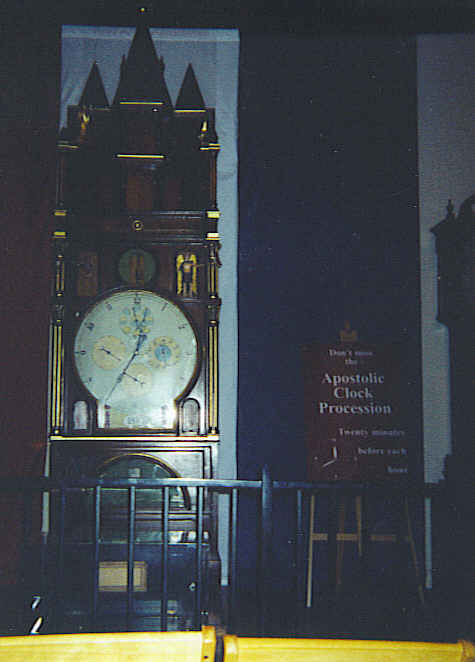
A popular spot in the museum was the Apostolic Clock, which tells more than the time, as it tells phases of the moon, zodiac signs, months, dates and days of the week. Its main attraction, however, is telling the story of the betrayal of Christ.  The Twelve Apostles and Christ appear at a quarter to each hour and begin telling the story of the betrayal. Every fifteen minutes Father Time strikes a bell and the center figure changes.  It is quite an amazing performance to watch.

Built by John Fenner in 1878, the clock was taken on a tour of Pennsylvania where ten cents was charged to view its story. This  clock was purchased by Milton Hershey back in 1936 when he placed it in the museum for the enjoyment of the local community. During past visits, the clock performed on an hourly basis, but today it is limited to a special calendar, so you need to check ahead to see when performances are scheduled. Having been built in the 1880’s, it is understandable that the clock would now be in delicate condition.

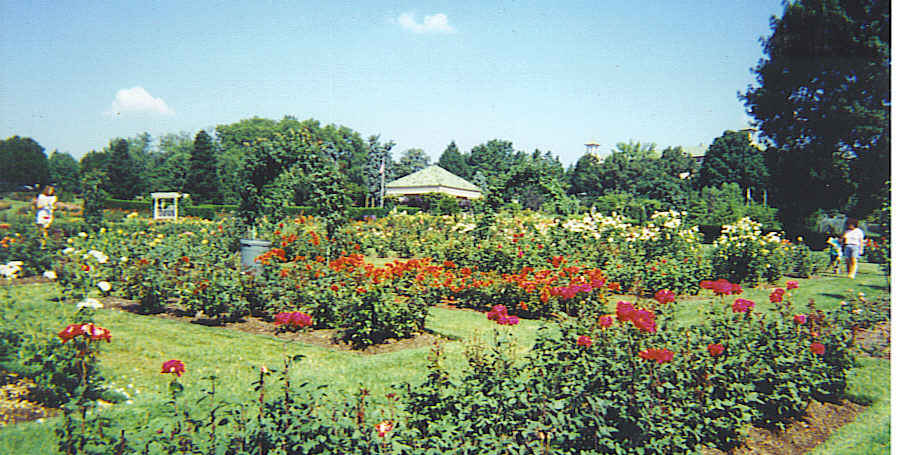
What started out as a Rose Garden has expanded over the years to a twenty-three acre botanical bonanza. Every day is a beautiful day for a walk in the gardens and their Butterfly House is a favorite of youngsters especially. Lucky there are benches along the way, as most people want to sit for a while and take in the quiet and majesty that surrounds the gardens.

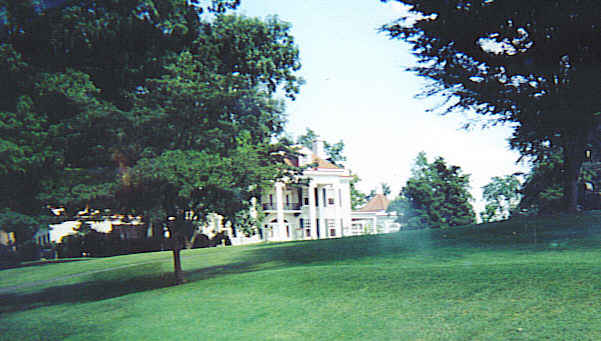
High Point, Hershey family’s home, was given in 1930 to Hershey Country Club as their clubhouse, with Milton retaining room for his private office. In 1977 it was renovated again to be used as Hershey Company headquarters through the efforts of WIlliam Dearden.  Being a student of the Milton Hershey School, William became CEO of Hershey Foods and had a passion for the beautiful old home, and wanted to save it from destruction.

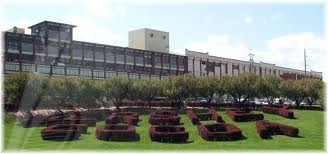
No visit would be complete without checking out the source of the tantalizing chocolate smell that permeates this town. The smokestacks of the old Hershey Chocolate Company, a chocolate brown brick building, can be easily spotted as its lawn has hedges cut into the words HERSHEY COCOA. There’s no doubt that you’re in the right place!

But times change and the Hershey Company has moved its plant this last year to the outskirts of town.  Haven’t been back to see the new plant, but the modern equipment couldn’t be accommodated into the old plant with its low ceiling and columns throughout.  Some say Milton would be upset with the changes, while others feel he was a businessman who understood that things must change.

Even though times change, chocolate bars are still a favorite for many. Imagine reading this Hershey Chocolate quote the next time you bite into your favorite bar:

Put a smile on your face, make the world a better place

Leaving town down Chocolate Avenue with its Hershey kisses, memories of this chocolate world will hang around for years to come, much like the cocoa goodness has covered Hershey, Pennsylvania for over a hundred years.

Hershey, Pennsylvania is just off I-70 / I-76, part of which is a toll road. Take exit 247 to PA 283 at Elizabethtown.  Hershey is directly North of Elizabethtown as you follow Hershey Road.  The town is well marked for signs to the various attractions. Enjoy a chocolate experience!

Mysterious Mothman Museum Keep Your Eyes on the Sky

“Something bad is going to happen. Don’t go back.” “Be careful girl, I’ll get you.” These were just a couple of the messages received by residents of Point Pleasant, West Virginia after the appearance of what locals call “The Mothman”.

First stop on your Mothman adventure in downtown Point Pleasant will probably be the statue of Mothman at the corner of Main and Fourth Streets. This stainless steel sculpture by artist Robert Roach was unveiled in 2003 in what is now called Mothman Park. Red eyes are one of the outstanding features of this life size creature and are set to glow at night.

Today a visit to Mothman Museum will review the story of this unexplained mystery through videos, recordings, newspaper clippings of Mothman sitings, photos of the Silver Bridge collapse, and props from the Mothman Prophecies movie.

In 1966-67, over a hundred appearances by Mothman in the surrounding area frightened residents to the point that they were afraid to go out at night.  A seven foot tall figure would first be seen appearing to have wings with feathers, which had a ten foot wingspan. As it got closer the glow of its fiery red eyes seemed to be one of its most frightening features. Those who saw it would have terrible headaches, dreams, and visions.

At nearly the same time, UFO’s were also seen in town. Law enforcement as well as local residents were searching for Mothman and the UFO’s at night with search lights, as though they were searching for Frankenstein. The UFO’s were said to be disc shaped objects in the night sky with red lights encircling them.

Another mystery was the arrival in town of Men in Black. Really!  These men dressed in black suits would threaten those who had seen Mothman to silence…or else.  One newspaper reporter said the Men in Black visited her or phoned her and told her not to publish any more stories about the Mothman or UFO’s. One curious thing about them was that they never blinked their eyes. The government denied any involvement. These same Men in Black were seen crawling around the bridge before its collapse. This same reporter had visions of many Christmas packages floating in the Ohio River, which actually happened at the time of the collapse of the Silver Bridge on December 15, 1967.

When the Silver Bridge collapsed, witnesses reported it came down like dominoes. A loud cracking sound was heard and in less than a minute, the entire bridge collapsed into the icy waters of the Ohio River. Forty-six people died when the bridge completely disappeared under the water.  Mothman had appeared 13 months prior to the collapse, which occurred at Pier 13. Several possible reasons were given for the disastrous bridge collapse: 1) structural failure, 2) a sonic boom, or 3) the Curse of Chief Cornstalk.

While structural failure seems the most likely, could a sonic like boom have been caused by the sinister Men in Black crawling over the bridge shortly before it collapsed, or by Mothman’s wings?  Or was Chief Cornstalks’s curse responsible? Chief Cornstalk worked hard to keep his people neutral and was a member at treaty councils. When Chief Cornstalk surrendered in 1774 at the Battle of Point Pleasant, he signed a peace treaty with the Virginia militia, but a couple years later Cornstalk and his son were executed by the British. At this time, Cornstalk is said to have placed a curse of death and destruction on the town of Point Pleasant, as recorded in part here:

“I came to the fort as your friend and you murdered me. You have murdered by my side, my young son…. For this, may the curse of the Great Spirit rest upon this land. May it be blighted by nature. May it even be blighted in its hopes. May the strength of its peoples be paralyzed by the stain of our blood.”

However, after careful review, it was found that a weak eyebar was the most probable cause of the collapse, perhaps stressed by the additional weight of all the rush hour holiday traffic.

Many feel that the Mothman was a Prophet of Doom, warning the people that a tragedy was going to happen, as there are no stories of him attempting to harm anyone.  Fascinating Mothman appearances don’t seem to be limited to this one spot as there have been sightings around the world from Cincinnati to Afghanistan before major tragedies, for example: the earthquake in Mexico City, and the Chernobyl nuclear power plant in Ukraine.

Before leaving town  If you walk up the street a half block to the Ohio River you can also see along the Riverwalk a stone set at the place of the original Silver Bridge, which is just up the river from today’s bridge crossing the Ohio River to the Gallipolis area. During this visit, the American Queen can be seen docked between the two points.

After the Silver Bridge collapsed, there were no further sightings of Mothman, the UFO’s or the Men in Black.  Just mere chance? You decide. Best to keep an open mind as someday it could happen to you.  What will you do if YOU see Mothman?

Mothman Museum, one of the sidewalk shops of the famous Lowe Hotel, is along the Ohio River in Point Pleasant, West Virginia.  Across the street from the Mothman Statue on Main Street, the museum is open every afternoon.