Places to go and things to see by Gypsy Bev

Archive for the ‘Museums’ Category

The Sharpest Edge Around – Warther Cutlery

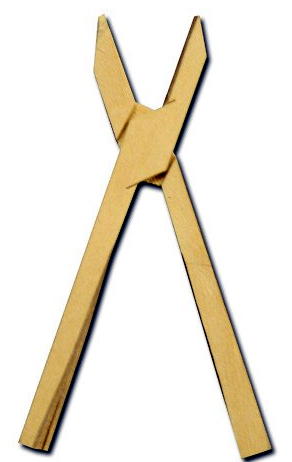
Warther's signature Single Pliers

Warther’s signature Single Pliers

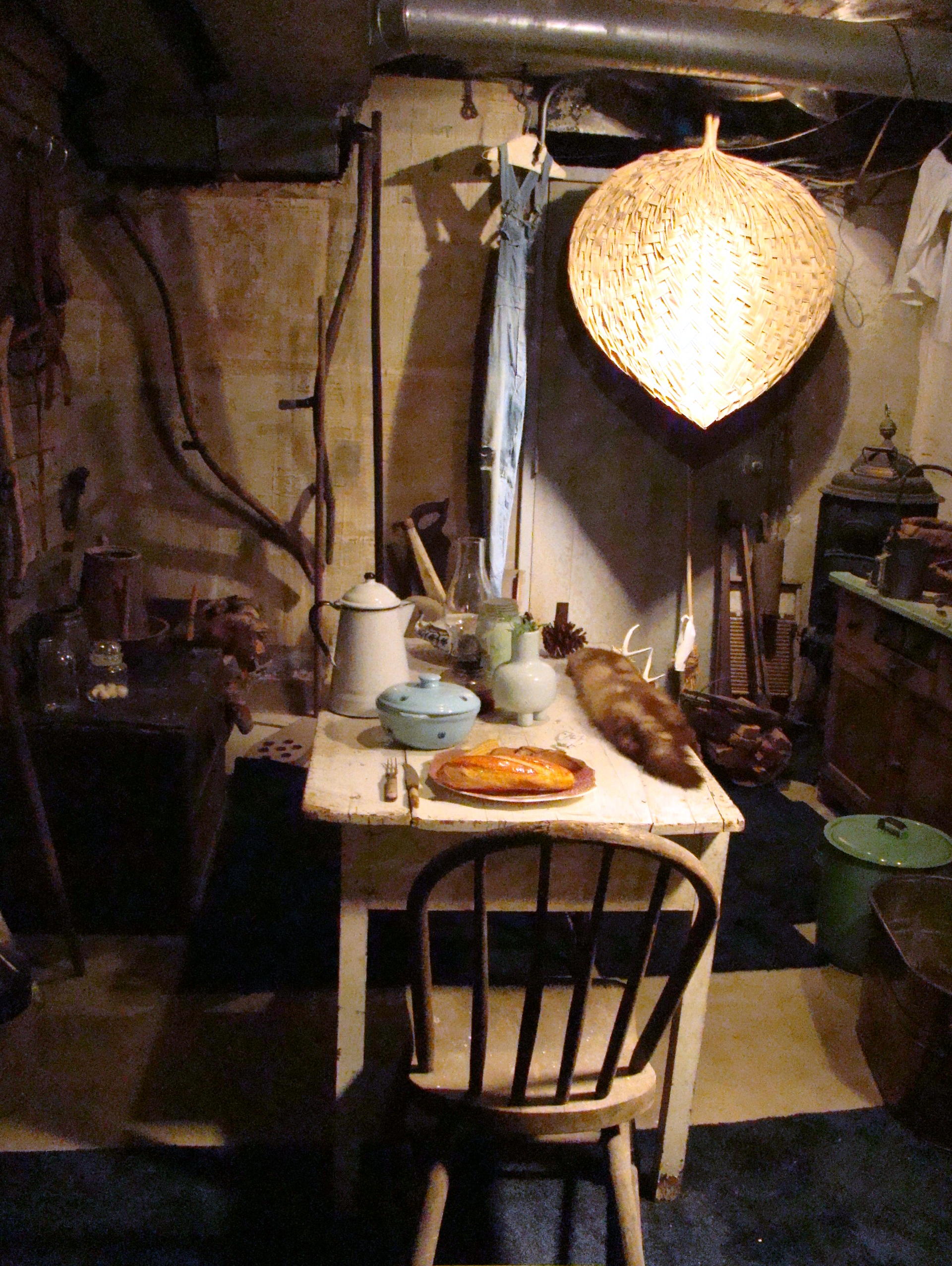
World’s Master Carver Ernest Warther spent a life-time in Dover, Ohio. When Ernest was three years old, his father died leaving the children to help support the family. While the youngsters were unable to attend school regularly, Ernest’s inborn abilities surfaced by chance along life’s path.
For a penny a day, young Ernest did his part by driving neighborhood cows outside of town to pasture, then returning them home in the evening. When five-year-old Ernest was driving cattle, he spotted a treasure on the ground. A pen knife! His life’s adventure was about to begin.
A few years later Ernest met a whittling hobo at the local train station. This hobo could form a small piece of wood into a moving pair of pliers by making only ten strategically placed cuts in the small, rectangular, wooden block.

Ernest, called Mooney by his friends, watched the hobo carefully before he headed off to another town. Soon Mooney was making these magical pieces with ease. During his lifetime it is estimated he made nearly 750,000 pairs of pliers, most of which he gave to children. His fastest time for carving a pair of pliers occurred on the Johnny Carson “Tonight Show” when Mooney finished in 9.4 seconds.

Whittling became Mooney’s favorite pasttime, now making double pliers and more. But as is often the case, one thing leads to another. What do you need the most for whittling, especially ebony and ivory? A sharp knife! That was something Mooney could not find. Sometimes the best way to do something is to do it yourself, so Mooney developed a knife that would keep its sharp edge.

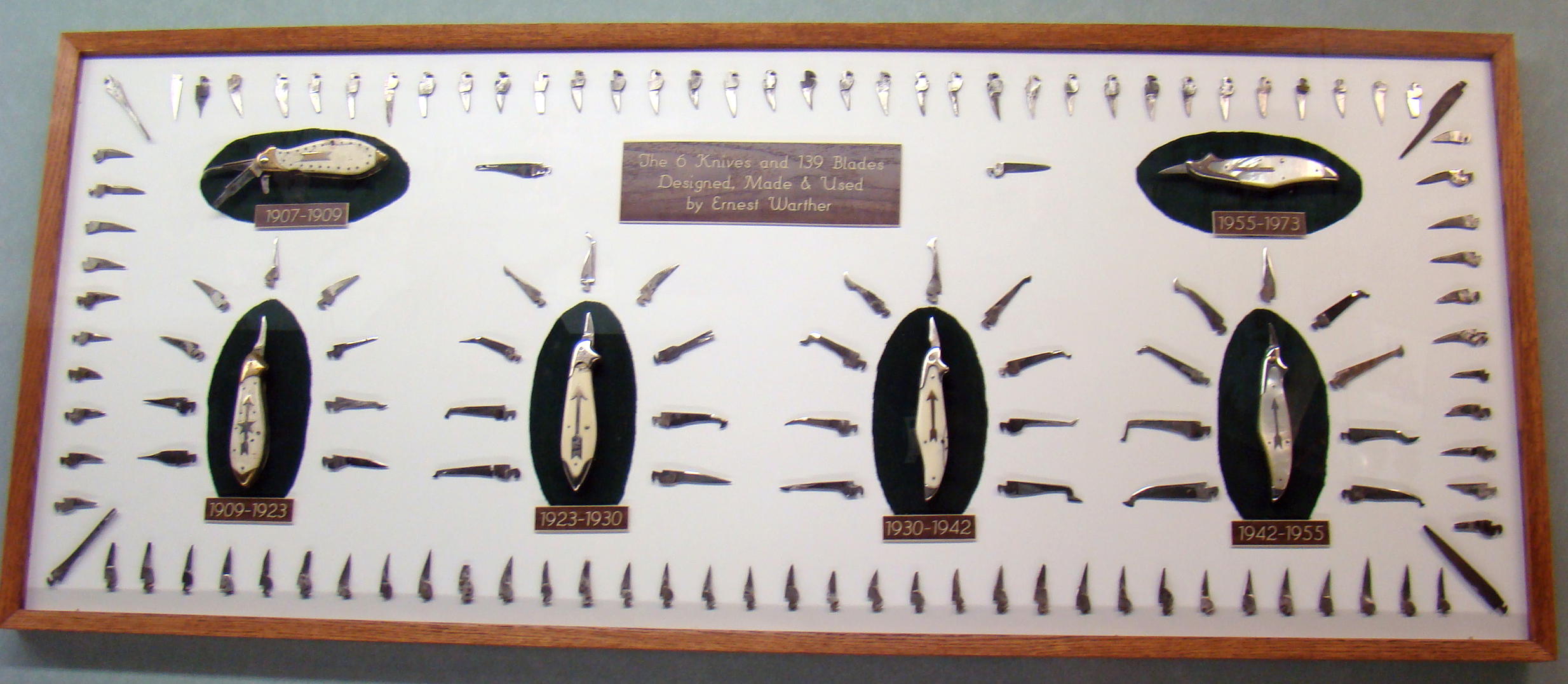
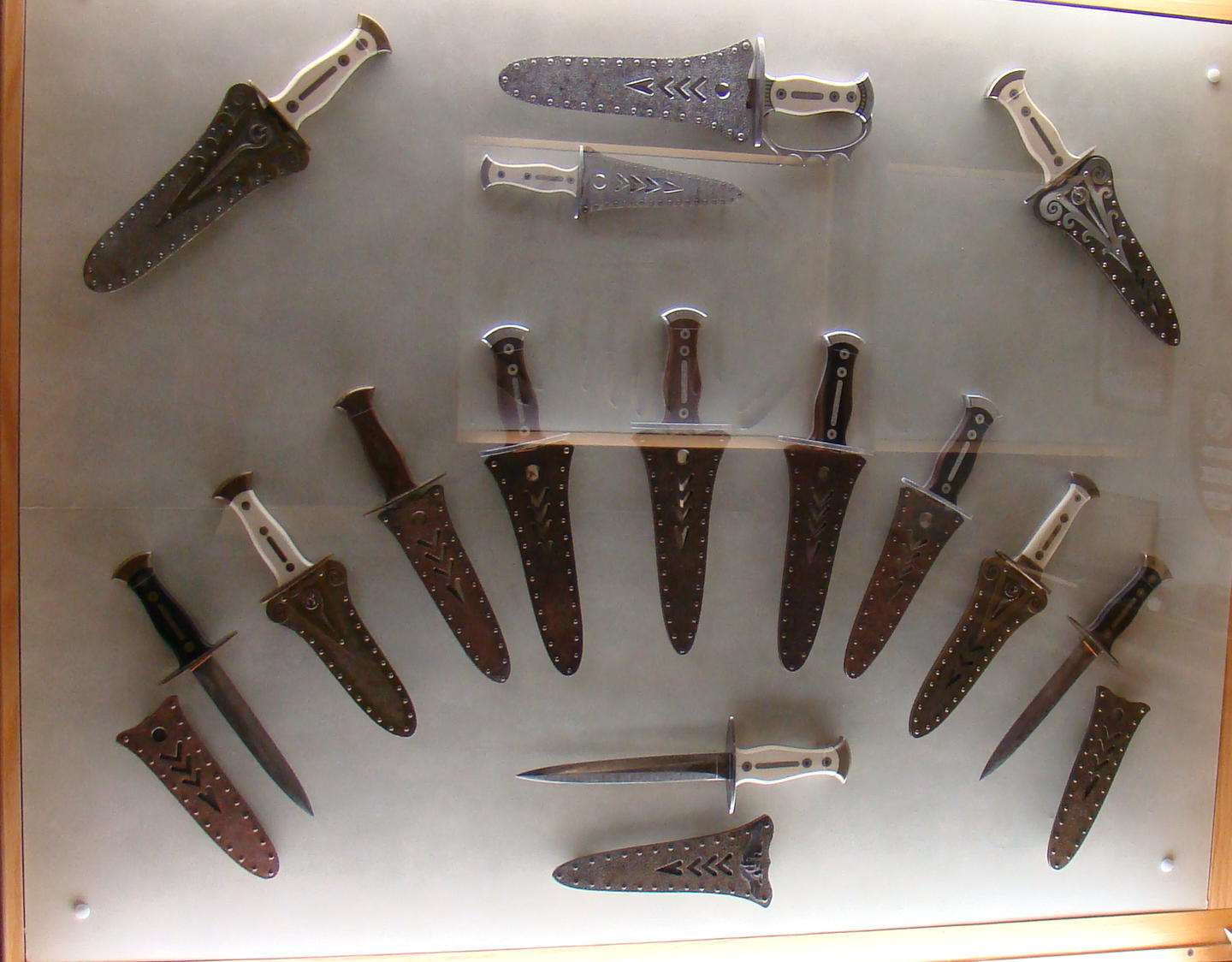
These are the knives Mooney used himself with  their accompanying 139 blades.

These are the knives Mooney used himself with their accompanying 139 blades.

In his workshop, Mooney developed techniques for tempering and sharpening steel blades so they would hold their sharpness. For whittling purposes, the knife had to have a big handle with small blades – shorter than his thumb. His knife had 139 interchangeable blades so he could work easily with any material of any size.

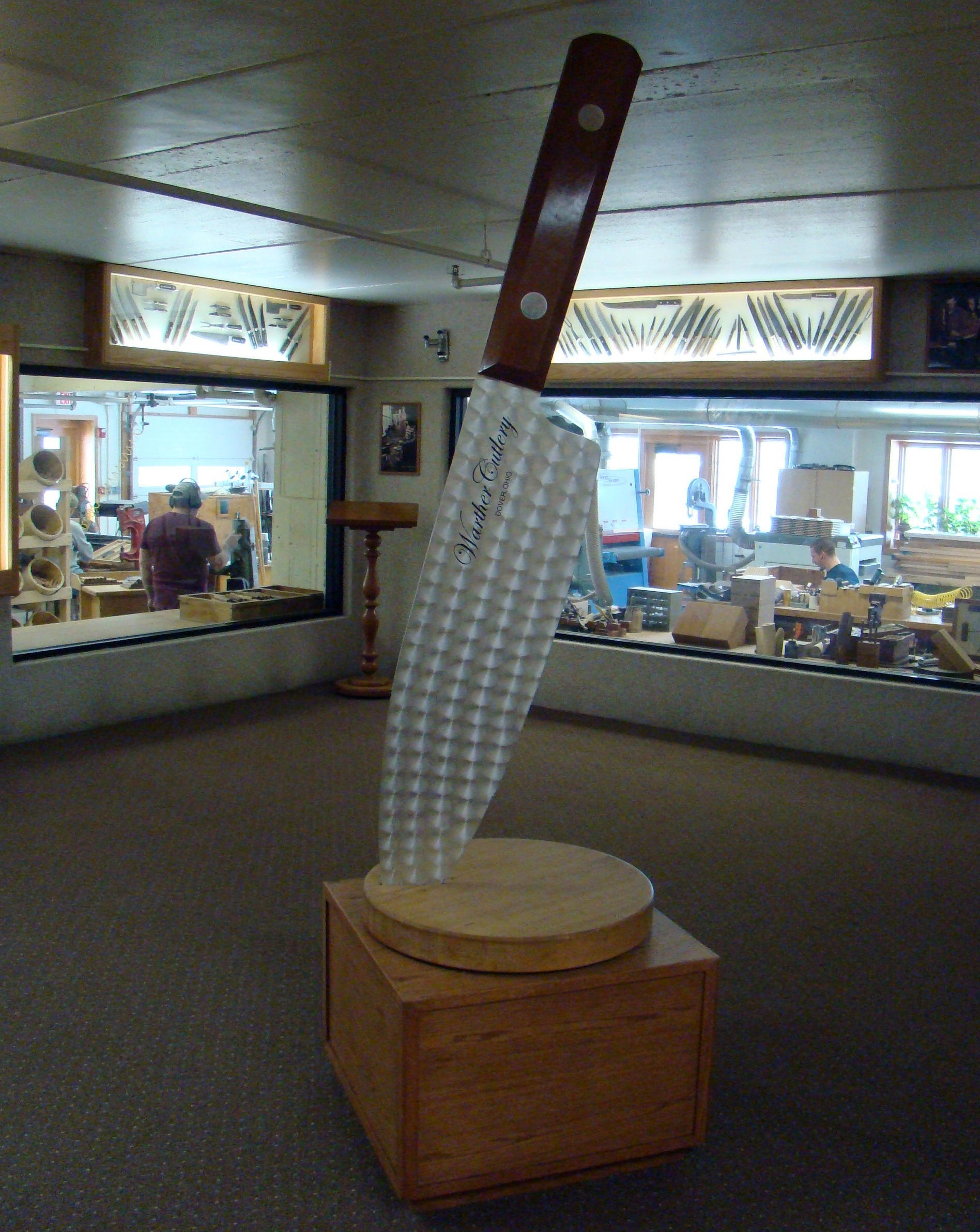
Warther Cutlery knife shop

Warther Cutlery knife shop

When his mother needed a sharper paring knife in the kitchen, seventeen-year-old Mooney created a small kitchen knife for her. Soon the neighbors were all wanting a knife just like Mooney’s mother used.He added a distinguishing trademark swirl on the blade so his knives were easily recognized. Thus began the business of Warthers Cutlery, handcrafted in the USA since 1902.

Realizing his real riches laid at home, his five daily hours of carving were scheduled for early in the morning before the family awoke. After breakfast, Mooney would ride his bicycle to work at the steel mill, then spend time in the afternoon playing with the children he adored. He didn’t really care much for money; however, when the family needed something, Mooney would make knives. He never sold his carvings.

In 1912, Mooney ended his whittling with a plier tree that can be seen in a glass case today.The tree was made with 511 cuts and was featured at Ripley’s Believe It or Not. This is the point where his whittling turned to carving as he began his history of the steam engine in walnut, ebony, and ivory.

Commando Knives made during WWII.

Commando Knives made during WWII.

During WWII, a lady asked Mooney to make a knife for her son to carry with him during conflict. Mooney made 1100 Commando Knives during this time and carved the names of the military men into the handles.

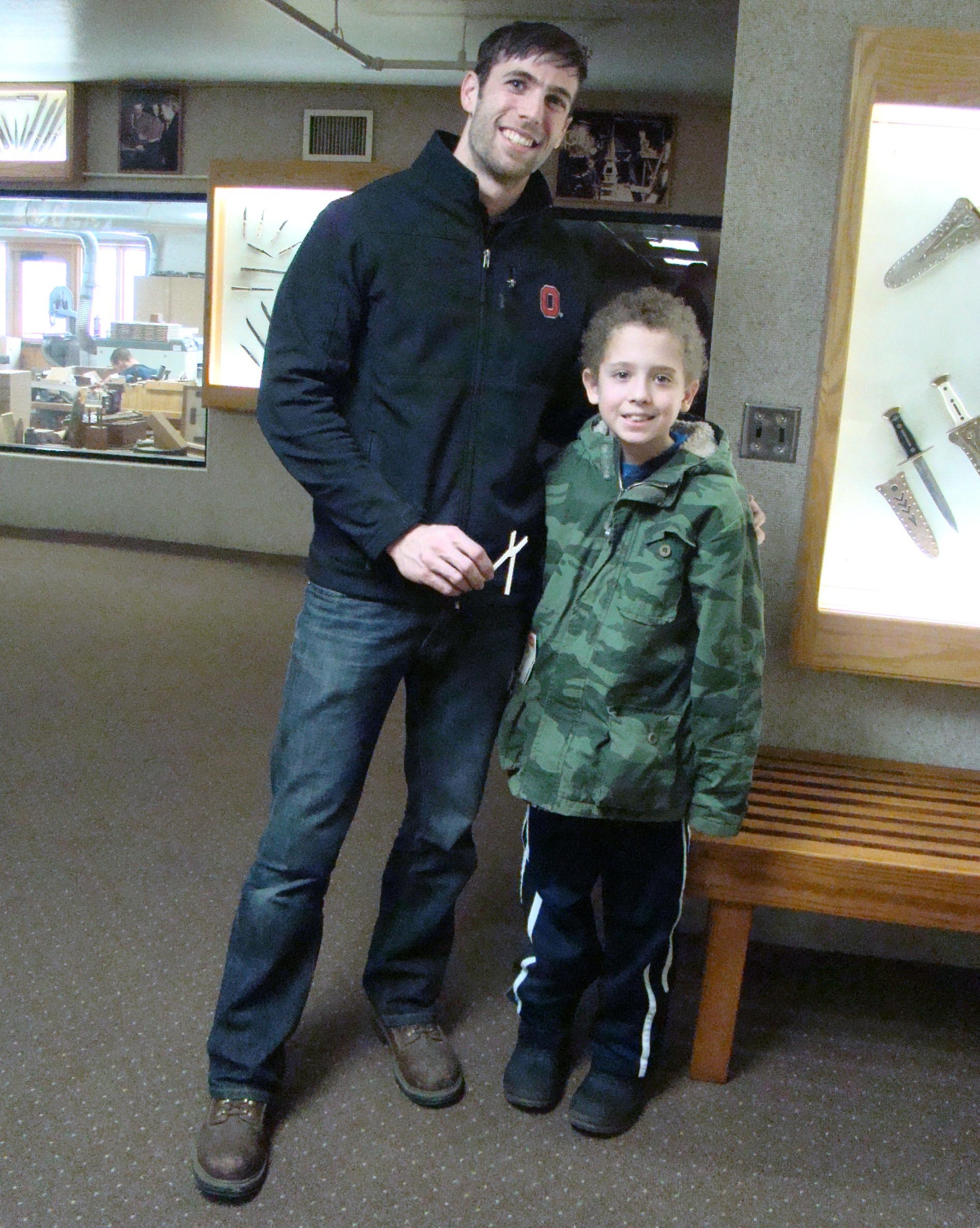
Family member, Steven Cunningham, makes pliers for children today.

Family member, Steven Cunningham, makes pliers for children today.

Today the knives of Warther Cutlery are still made in Dover, Ohio with all USA products by third and fourth generation family members. They continue demonstrating Mooney’s signature pair of pliers for visitors, with children usually receiving the newly carved pair.

Before you leave, stop by the gift shop and purchase one of the Warther Cutlery knives with swirl trademark. My little paring knife, “Old Faithful”, was purchased there over twenty-five years ago and is still like new. Whenever you happen to be in the area, visit their knife shop where they will sharpen your Warther knife for life at no cost. When you stop by, they will ask you which hand you use to cut with, so they can sharpen the blade accordingly. They strive for perfection!

Older residents still remember Mooney riding his bicycle down the middle of the road with his white hair flying. The basket on his bicycle was always handy for items he found or was given along the way that eventually might become part of his carvings, either mechanically or in their design. While Ernest Warther worked at his passion nearly every day for 83 years, he died almost penniless, but happy beyond imagination.

Warthers can be found easily off I-77 in Dover, Ohio. Take Exit 83 to the east and follow the well placed signs to Warthers.

The Train to Nowhere

The Train to Nowhere

The Train to Nowhere

A beautiful diesel-electric locomotive awaits on the tracks in the small town of Byesville, Ohio. At this point in time, it is called “The Train to Nowhere”, as it remains in place unable to move down the Byesville Scenic Railway due to circumstances beyond their control. But that doesn’t mean the spirit of the railroad isn’t alive here! It continues with a program called “The Coal Miners’ Story.”

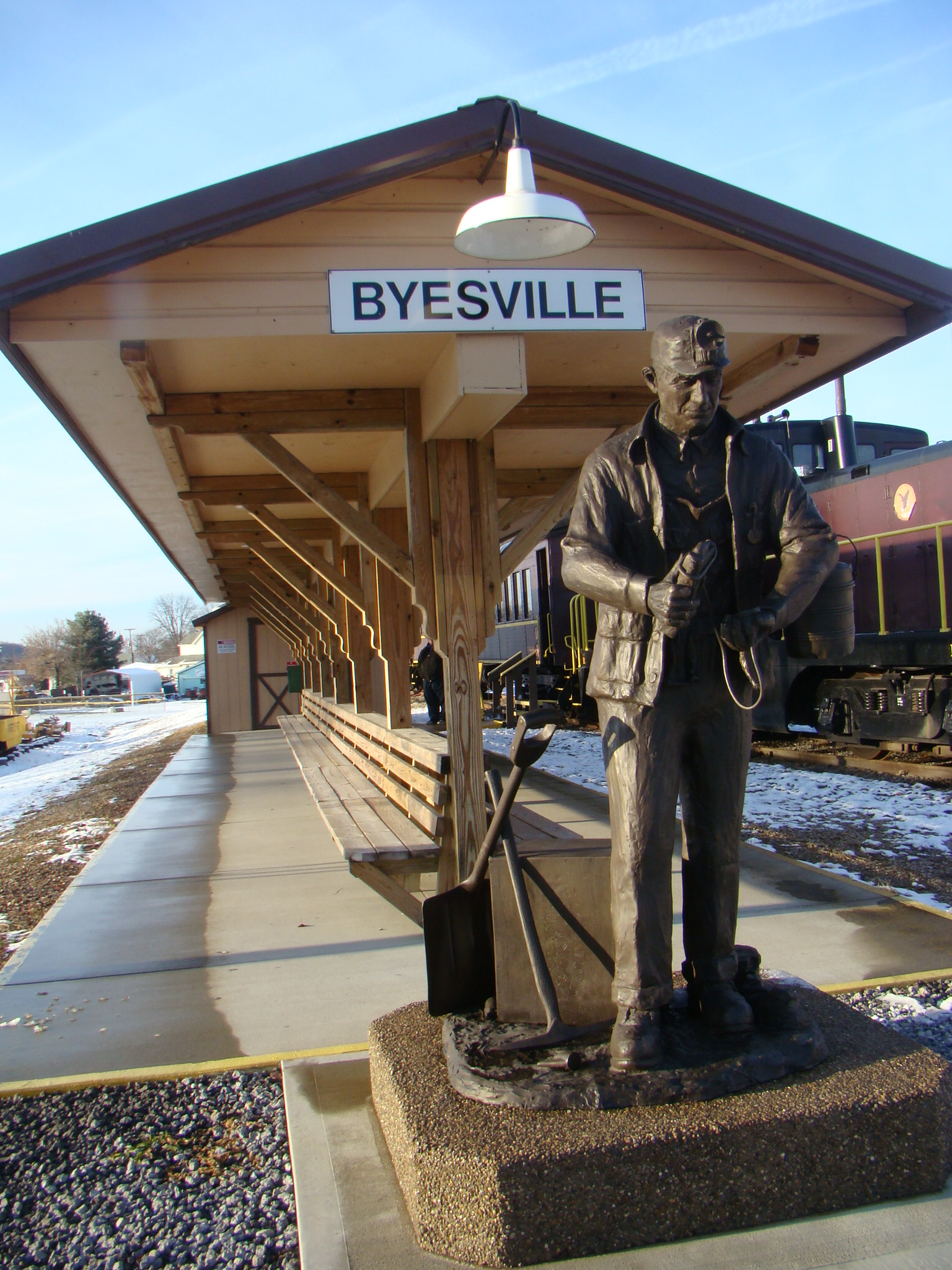
Bronze Coal Miner Statue

Bronze Ohio Coal Miner Statue

As soon as you pull into the parking lot, the bronze coal miner statue catches your eye. The Ohio Coal Miner was sculpted by Alan Cottrill at Cottrill Sculpture Studio and Gallery in Zanesville, Ohio, and dedicated in September of 2012. This statue is a tribute to miners and their families in Ohio, as well as across the entire nation. The miner’s brass tag reads 382, the number of coal miners who lost their lives in the deep mines of Guernsey County over the mines’ sixty active years. During the past few years, all contributions given to the Byesville Scenic Railway during their train rides were dedicated to building this memorial statue, which actually cost nearly $40,000 to reach completion.

A portion of the plaque in front of the statue states: May your personal sufferings, sacrifices and the hardships endured by your families, never be forgotten nor taken for granted.

Sadly, the train is not able to chug down the track these days due to some issues over insurance and track ownership, but the volunteers at Byesville Scenic Railway are still sharing a unique presentation of life during the days when coal mines were booming in the early 1900’s. At that time, Byesville had 77 mines, and was considered to be “The Coal Mining Capital of Southeastern Ohio”.

Visitors are invited to take a seat on “The Train to Nowhere”, where they are given information regarding the 1917 train cars and the diesel locomotive. Back in the coal mining heyday, the train ran from Cleveland to Marietta delivering coal from Guernsey County mines. The Byesville Scenic Railway volunteers are optomistic that the train will be running again a few years down the track.

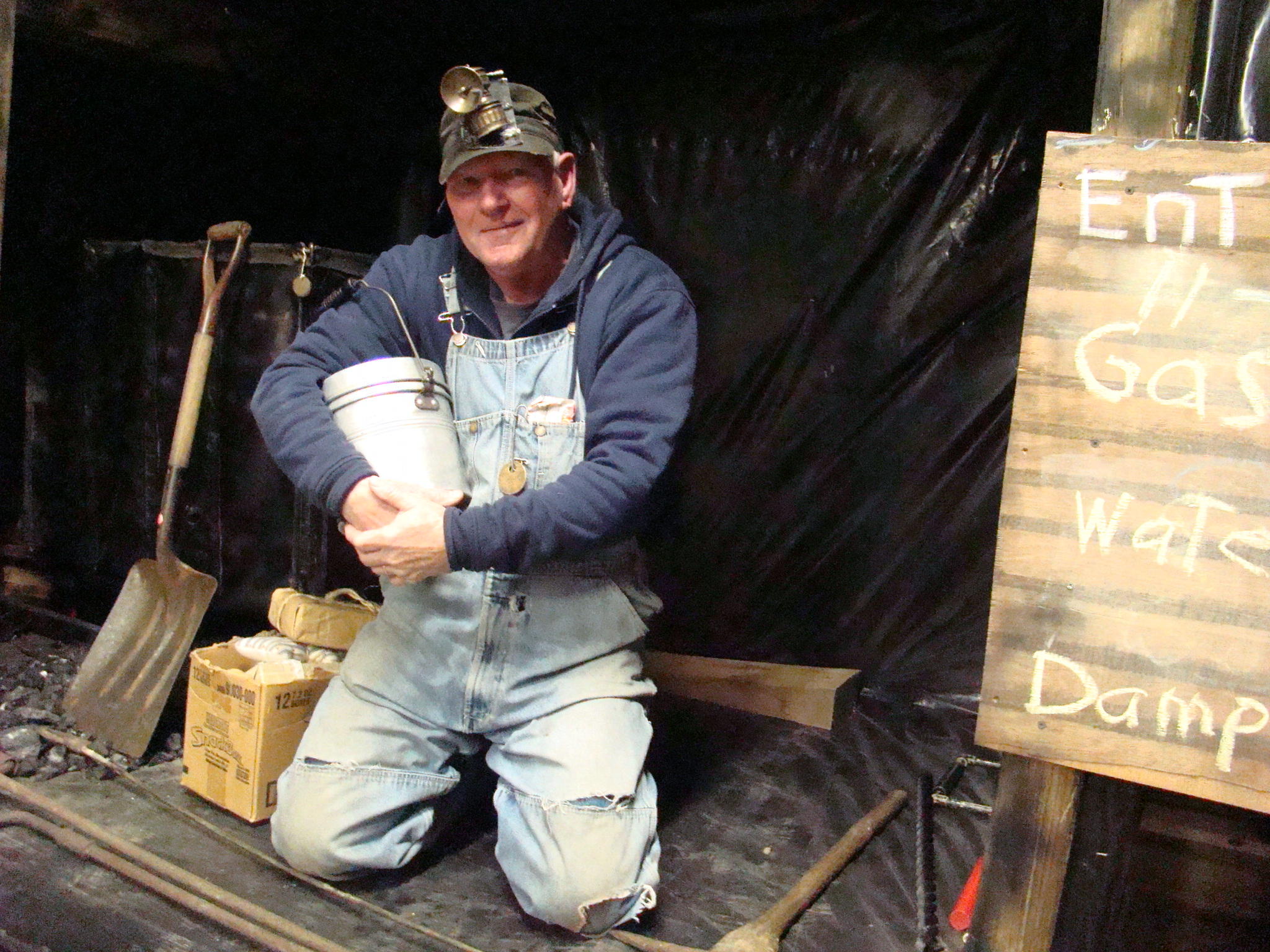
Dave Adair tells coal miners' stories.

Dave Adair tells coal miners’ stories.

In their “old greasy mechanic garage” – sometimes used as a movie theater room, the volunteers have constructed a makeshift mine of black plastic walls. It is here in Entry 7 South that a living history of a local coal miner is portrayed by volunteer, Dave Adair. He describes the harsh life of a miner as well as the poor home conditions. Beans and cabbage were two frequent items on their supper menu, with meat seldom being a part of their food supply. According to Miner Dave, “All were poor but no one realized it because all were the same.”

"I owe my soul to the Company Store."

“I owe my soul to the Company Store.”

Miners were very superstitious and often carried lucky pieces in their pockets. Over the entrance to the mine, a horseshoe was often placed. It had to be placed with the open side up so the luck wouldn’t run out with 100,000 ton of rock above their heads.

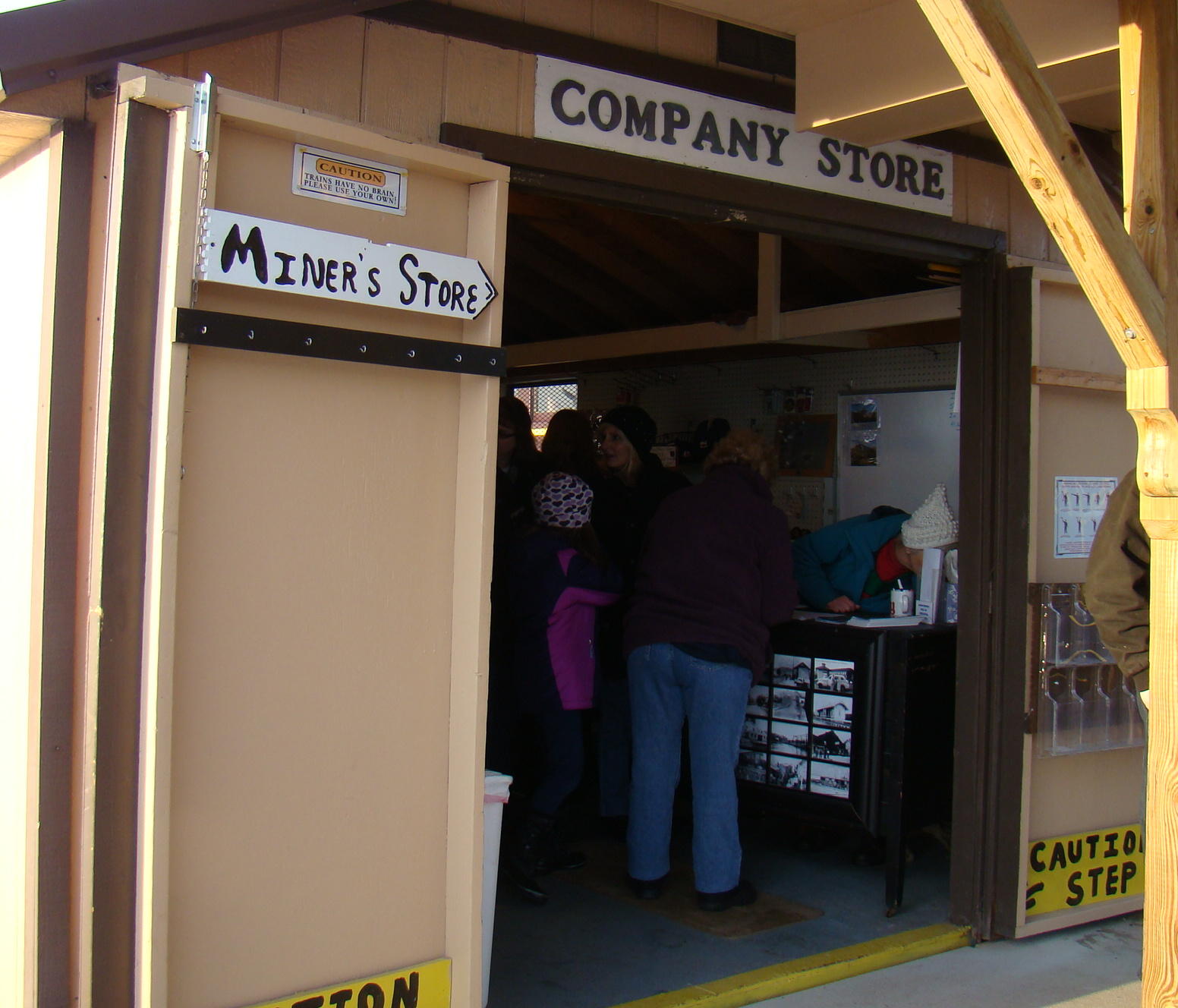
Treasures for families of coal miners and train enthusiasts can be found in the Company Store. A variety of gifts for young and old alike range from engineer hats and handkerchiefs to mugs and wine glasses. You won’t want to go home without a memory of those hard working miners.

Steve Stolarik explains Mineres Museum.

Steve Stolarik explains Miners’ Museum.

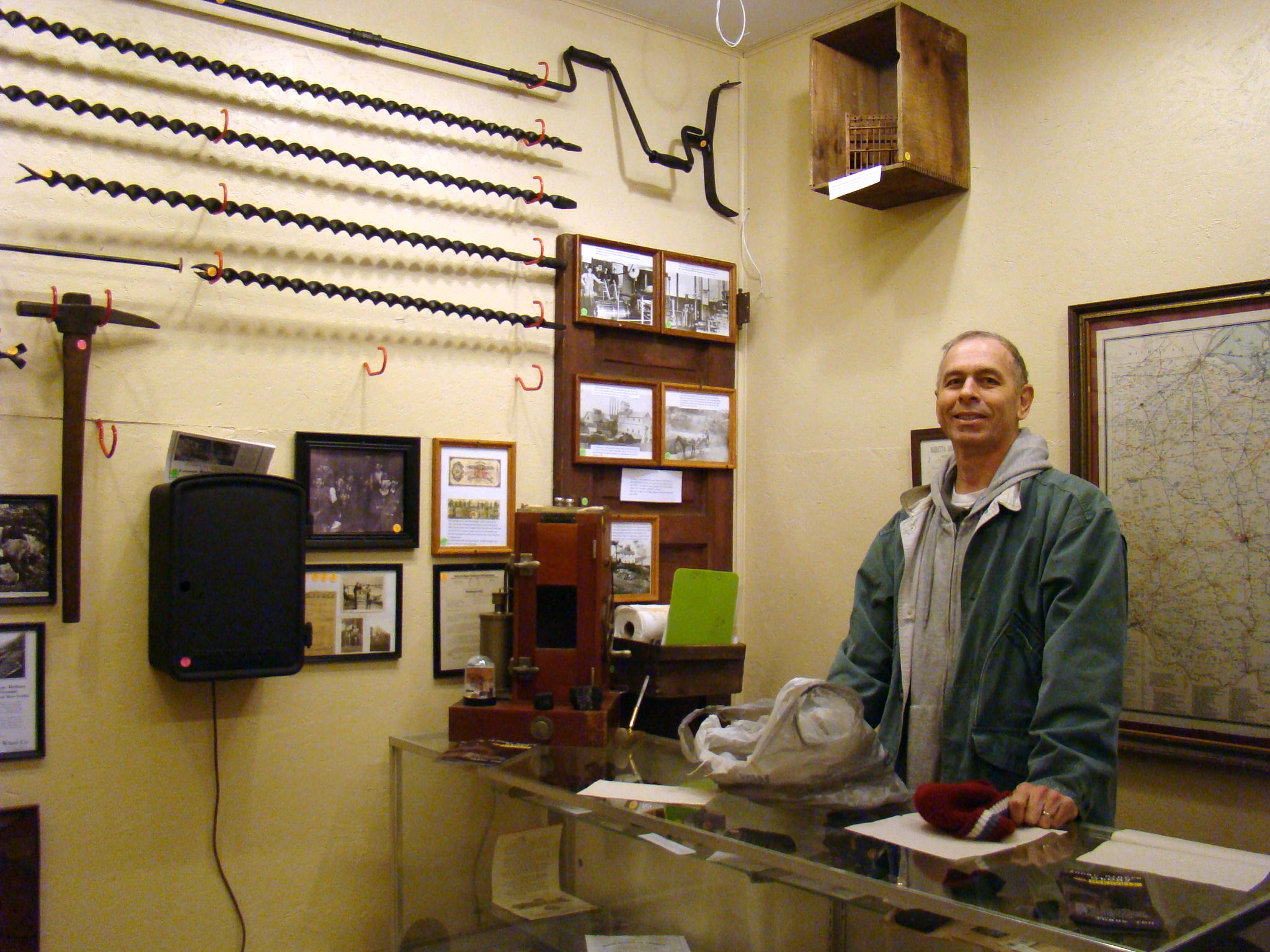
The Miners’ Museum has been developed in more recent years for the education of the general public. It contains a collection of original coal mining equipment used in the local mines. On the wall are displayed the various bits used to drill into the coal face to insert a stick of dynamite, which the miners had to buy themselves from the company store. Steve Stolarik was on hand to explain how the bits and lanterns functioned when the miners were deep in the mines. Included for display are numerous pictures of the old Guernsey County Coal Mines.

Keep your eye on the track to see when the “Train to Nowhere” will again be on the move. In the meantime, visit the website of Byesville Scenic Railway to see their scheduled events. Local train enthusiasts are singing hopefully, “I hear that train a comin’, it’s rollin’ round the bend.” 

Byesville Scenic Railway is located in Byesville, Ohio just off I-77 (Exit 41) south of Cambridge. Turn toward Main Street of Byesville, then left at the traffic light.  The train depot is one block on the right. Free parking is available along Second Street and Seneca Avenue. 

Toy and Plastic Brick Museum “Unofficial LEGO Museum”

The sign out front says "Unofficial Lego Museum".

The sign out front says “Unofficial Lego Museum”.

Building blocks have been a favorite gift for many years. That tradition continues today with evolvement of blocks from wooden to plastic, including animation possibilities.

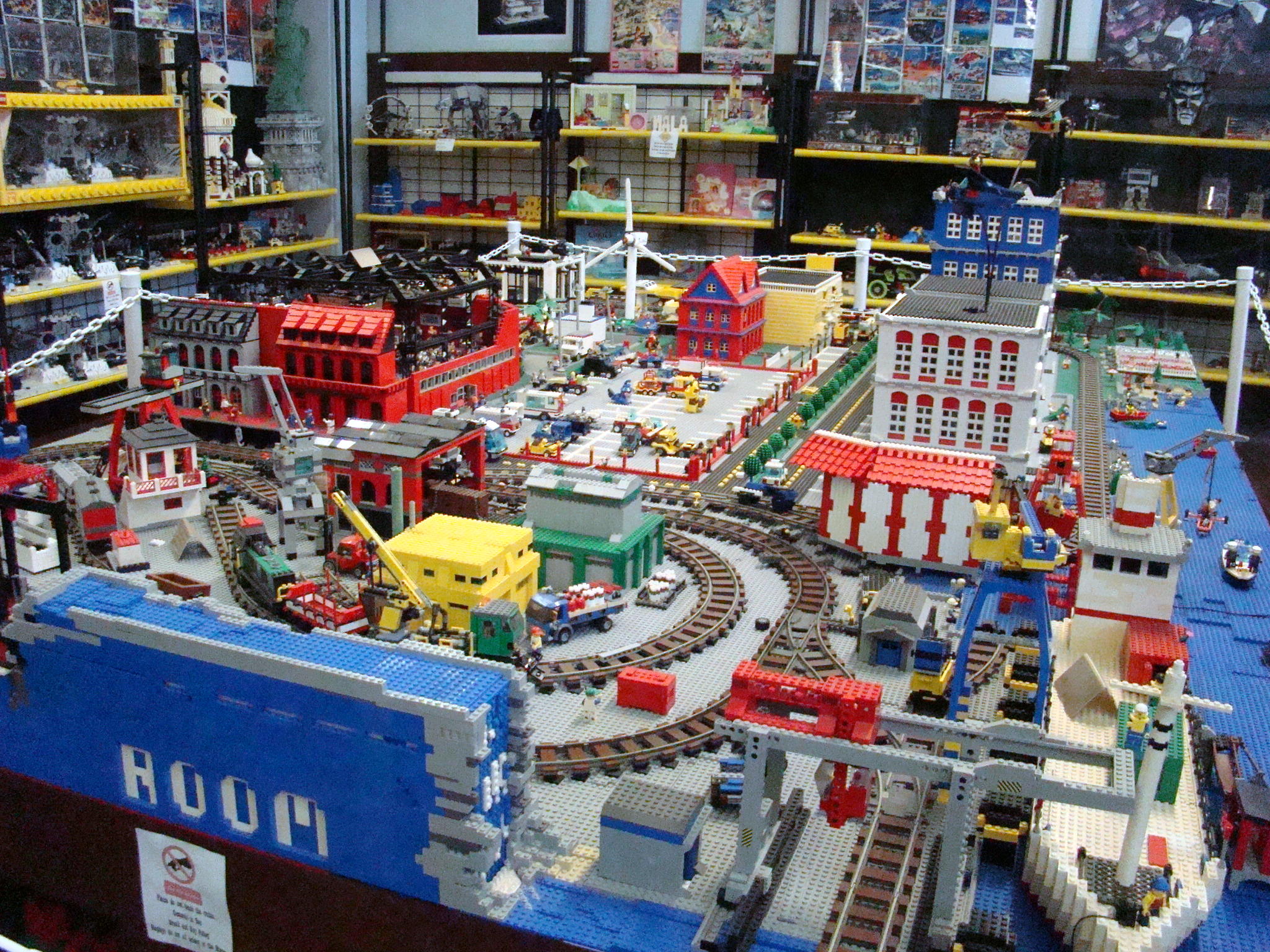
An active imagination can create almost anything from Lego plastic bricks. Dan Brown, museum curator at the Toy and Plastic Brick Museum, displays proof of that.  He has collected enough Lego blocks to earn the museum the title of “Largest Personal Collection of Lego Blocks in the World”. There’s no doubt about that fact as Dan has over four million Lego blocks…a number  that increases almost daily.

This Toy Museum is for all those who enjoy the world of Lego art- young and old alike. The name Lego actually comes from a contraction of two Danish words: leg godl, translated “play well.”  Lego began as a builder of wooden toys. Then in 1937 Ole Kirk Christiansen began making plastic blocks.

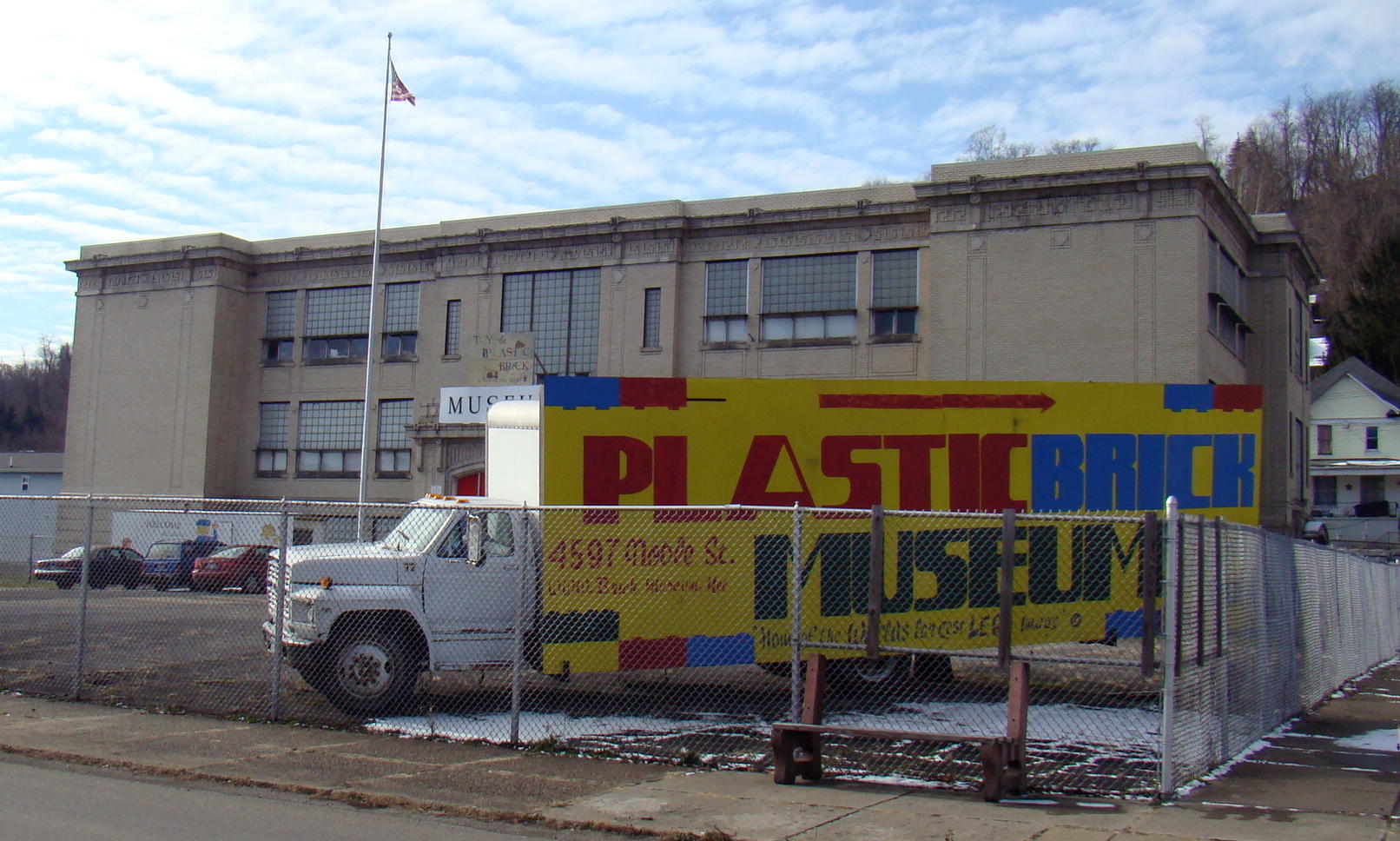
Plastic Brick Museum Sign in front of building.

Plastic Brick Museum Sign in front of old school building.

You can’t judge a book, or a building, by its cover, as surprise after surprise waits inside this old school. The former Gravel Hill Middle School in Bellaire, Ohio has three floors of amazing suprises, which all involve Lego blocks!  Since there wasn’t enough room here for Dan, he bought another local school to store his spare parts. Dan has a great sense of humor as he hoards Legos for future use. While shaking his head, Dan describes himself as “a crazy guy who wanted to retire and open a Lego Museum in Bellaire, Ohio!”

"The Vault" contains original Monopoly set in gold.

“The Vault” contains original Monopoly set in gold.

When entering the main lobby on the second floor, amid all the Lego creations, a large display case called “The Vault” catches the eye. This was purchased from Disneyland and features a real gold 2 x 4 brick and an original gold Monopoly set. Throughout the museum, items from all over the world appear…most of them being Legos!

Lego Mona Lisa with Lego artist giving a final touch.

Lego Mona Lisa with Lego artist giving a final touch.

Lego creations of Mt Rushmore and Mona Lisa also add interest. Mona Lisa has a small Lego figure painting the finishing touches on that portrait. Major creations, like these murals, have been glued together to save future repair work, while many of the Legos are assembled just as youngsters would at home. Another fun fact on the walls of the museum estimates there are 52 Lego blocks for every person on the planet.  Do you have your share?

World's Largest Lego Mural on gym floor.

World’s Largest Lego Mural on gym floor with animated band on stage.

After walking down a carpet made in the pattern of Lego blocks, you arrive in the old gymnasium. Before your eyes is the largest Lego image in the world – a mosaic of an 18-wheeler tractor trailer. Designed by Brian Korte, this giant image was created by over 250 local school children with the help of AFOLs (Adult Friends of Legos). It contains over 1.2 million Lego blocks and measures 44 feet by 21 feet.

Some of those same Lego enthusiasts, the builders of tomorrow, are now attempting to construct the tallest Lego tower in the world. It begins in the basement, going up through an air shaft. They have even cut a hole in the roof so it can reach the sky. Plans at this point are for the tower to reach forty feet above the building.

Lego Train Room is animated at the push of a button.

Lego Train Room is animated at the push of a button.

Each of the classrooms throughout the building overflows with themed room Lego designs from Knights Room to Mission to Mars.  The Toy Museum also has Guiness World Records for the largest Lego castle, and longest Lego castle wall. As you can imagine, the sign “Do Not Touch” appears frequently throughout the museum but some find it hard to resist. Therefore, they have a special area where you can sit and build your own creations.

Designs from this favorite plastic brick come to life with many examples of animation…a favorite being a lively band called Plastica, which appears on the stage in the old gymnasium. The musical figures were purchased from a department store in New York City, the place Dan called home for most of his life while he worked in the world of computers. The band is powered pneumatically, showing that the world of Legos is more complicated than just building with blocks. It’s a world of engineering as well.

Youngsters always have fun with Lego projects.

Youngsters always have fun with Lego projects.

If you or someone in your family enjoys creating with Lego blocks, this is the perfect place to explore.  Buiding with blocks is a real brain stimulator. Did you know that possible combinations of six Lego eight-plugged blocks can create 209,000,000 seemingly endless combinations? You might get some new ideas while you explore! What will you build next with your Legos?

Bellaire Toy and Plastic Block Museum can be reached off I-70 at the Bridgeport exit. Take Route 7 south to the 48th Street Drive. Turn west two blocks until you reach a dead end. Turn left and within two blocks you will be at the museum on the right hand side at 4597 Noble Street. Hours during the winter months are 12-5 on weekends, while during the summer season, the museum is open Wed. – Sun. 12-5. For more information, call 740-671-8890.

Discover Local History at Guernsey County Historical Museum

Guernsey County Historical Museum

Guernsey County Historical Museum

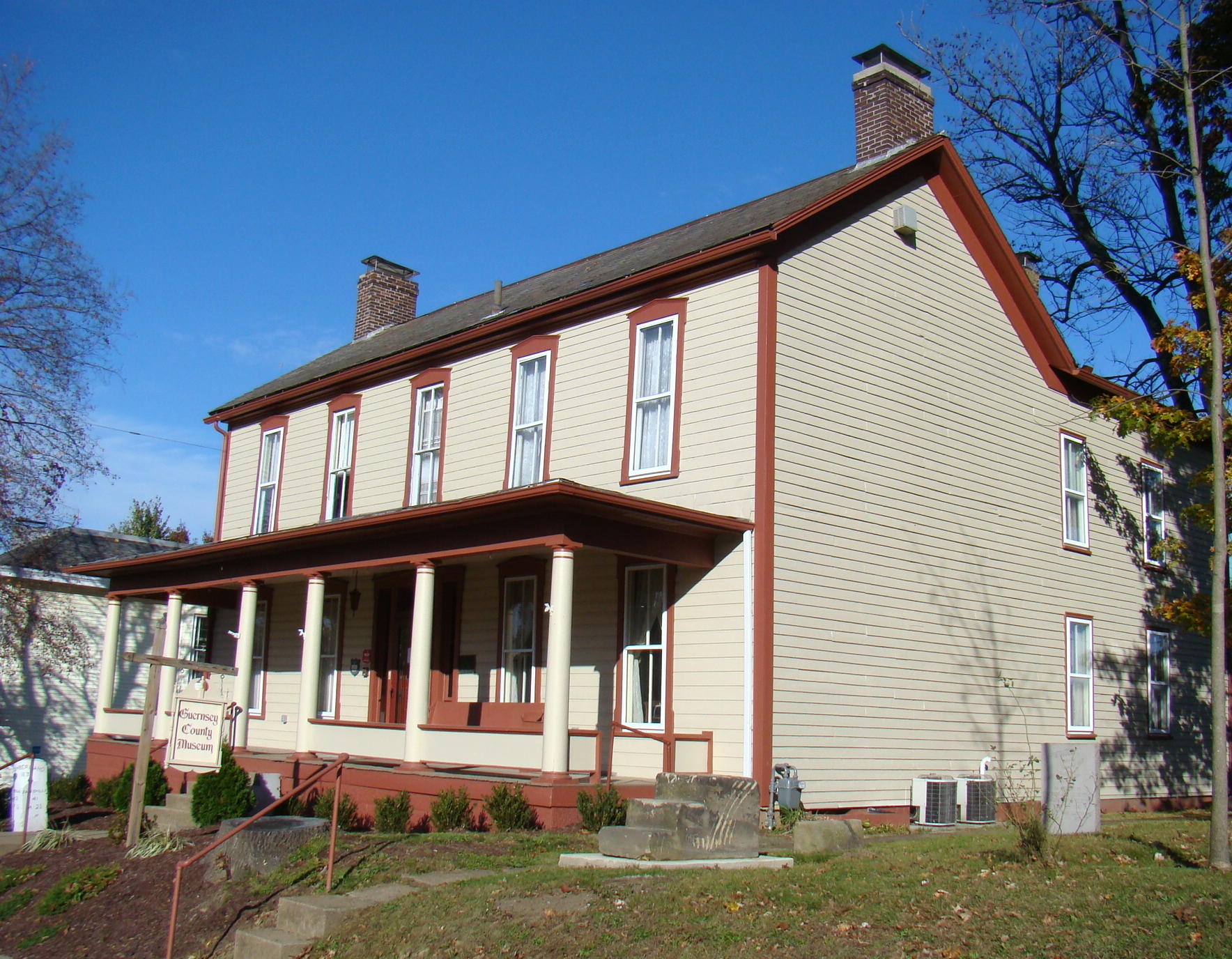
Located in the oldest frame house in Cambridge, the Guernsey County Historical Museum, expanding since 1963, presents a vast array of memorabilia from by-gone years. The new curator, Judy Clay, gave a very knowledgeable tour of the museum from top to bottom, and is constantly reorganizing displays.

Built in 1823, what is known as the McCracken – McFarland House sat on the corner of Steubenville Avenue and 8th Street.  Then in 1915, the house was moved down the block and turned on its foundation. The red stained glass in the front door is original, having been moved without damage.  Outside the house the yard has some interesting features. There is a 4′ tall National Trail mileage marker, and the original steps from the 1823 house. Since the house is so old, you might think there would be spirits wandering its halls, but not so say those who work there. It is the quietest old house imaginable and nothing unusual happens there…at least not yet!

Bridge crossing Wills Creek

Bridge crossing Wills Creek – today replaced by the viaduct.

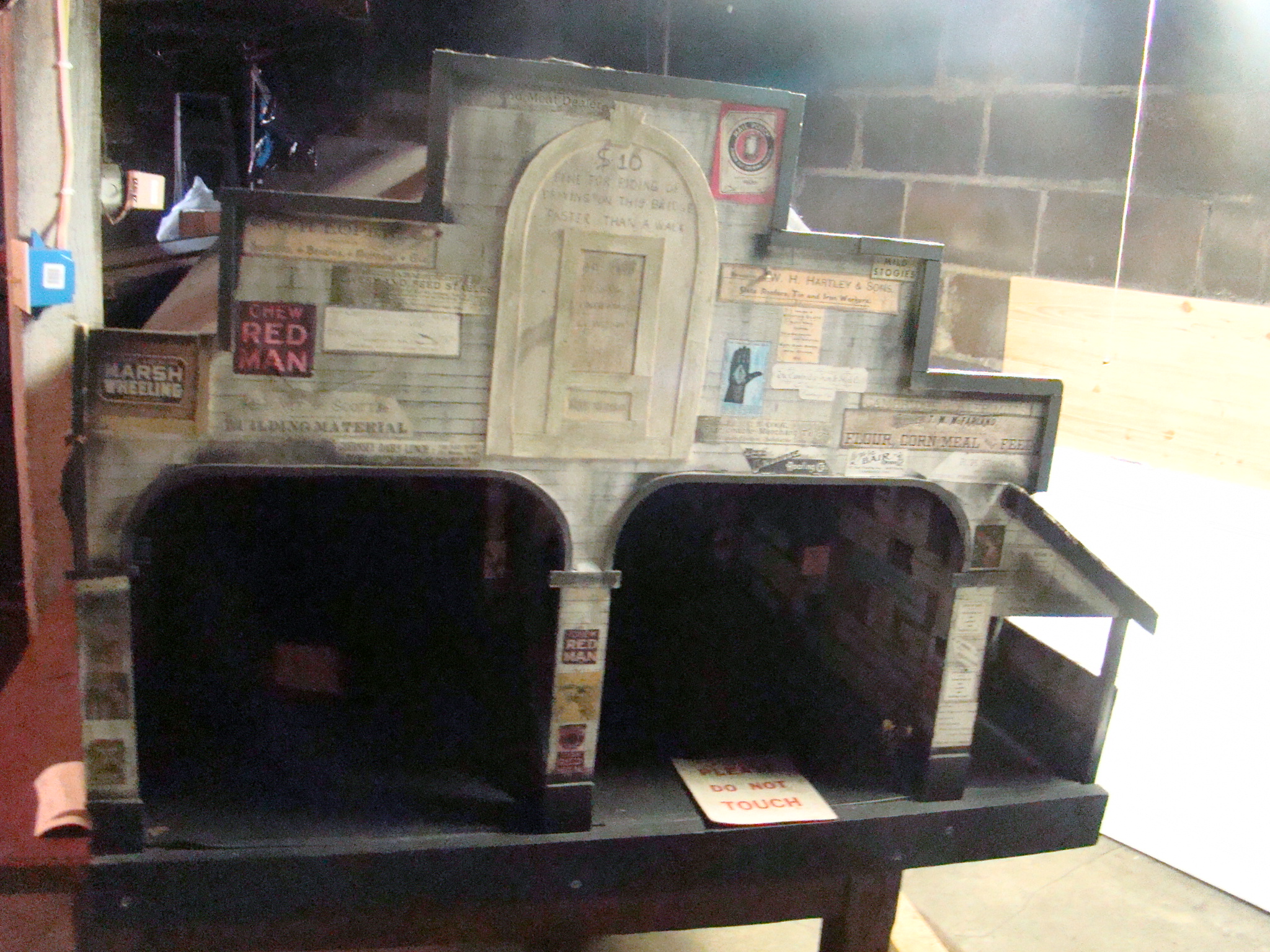
An interesting sidenote is that this house was actually part of the Underground Railroad and the McCracken family was active in helping the slaves move to safety. Today you will find a replica of the wooden, covered, two-lane bridge that crossed Wills Creek stored in the basement, where most likely slaves were hidden years ago.

At that time, homes had two sitting rooms.  One was for family use, while the other was a formal parlor used only when special guests arrived. A beautiful marbletop table that had belonged to the McFarland family has a place of honor in the formal parlor. Pieces of Cambridge Glass and Universal Pottery are scattered throughout the house, as these were two important means of earning a living during those early years in Guernsey County..

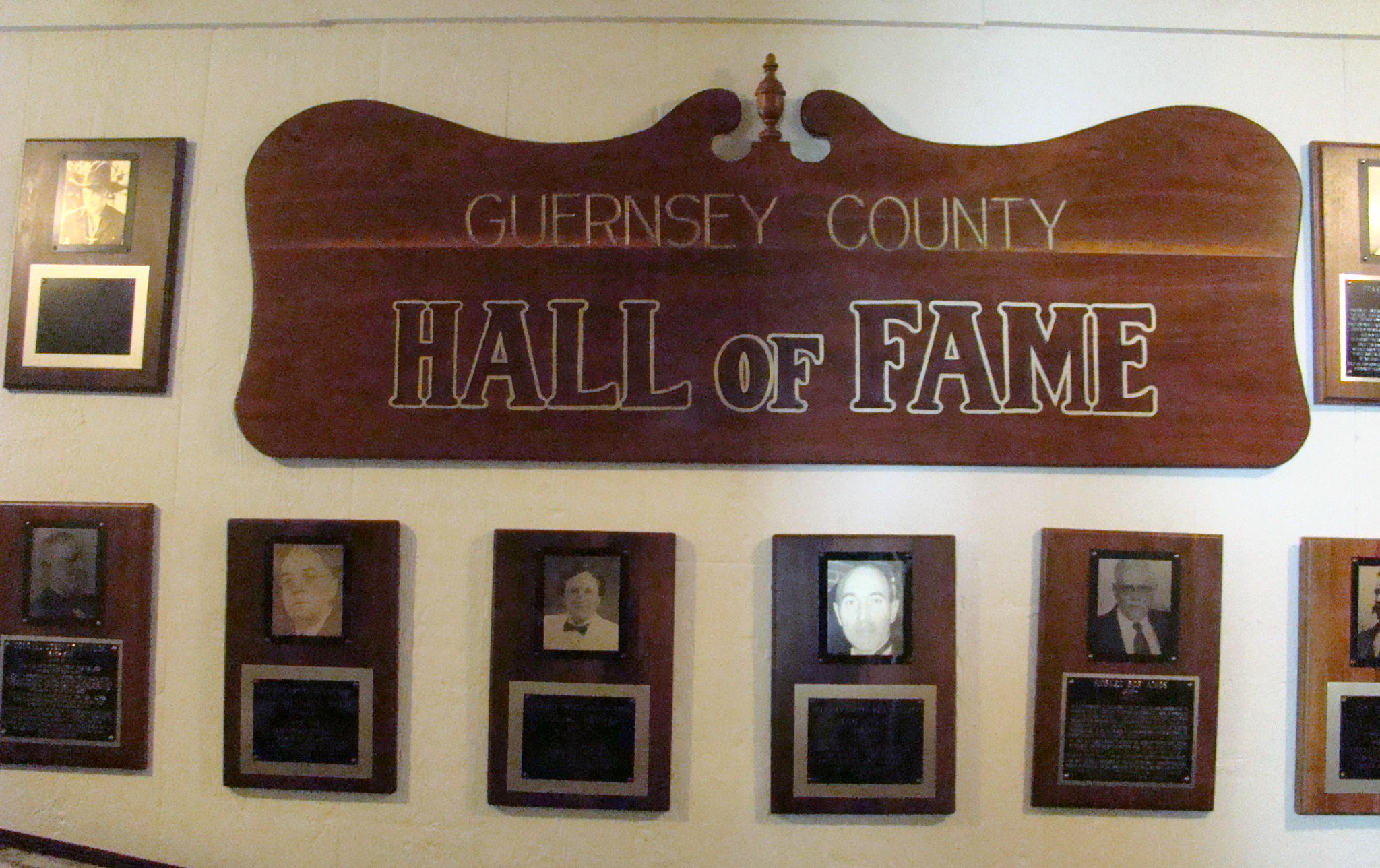
Guernsey County Hall of Fame Wall

Guernsey County Hall of Fame.

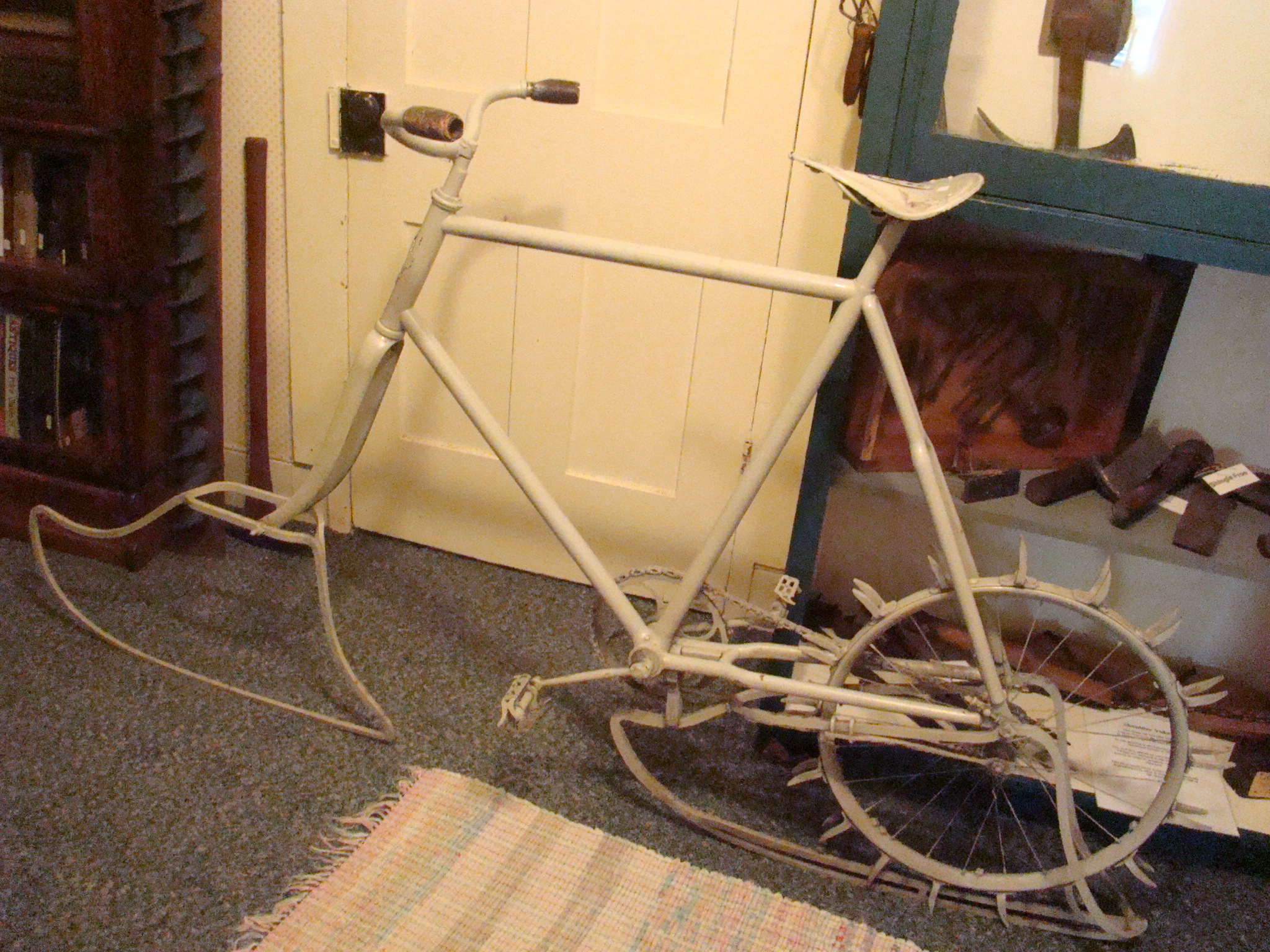
Ice Bicycle

Ice Bicycle

The beautiful family sitting room felt cozy in its time, as this was the first house in Cambridge to be heated with gas; however, candle light was still used for reading. The walls in the hallway are covered with pictures of people who have made a difference in the area…the Guernsey County Hall of Fame.

The Tool Room contained an old mail cart and an ice bike. The mail cart was actually used by the Cambridge Post Office to pick up mail from the Cambridge Train Station. Among other items was a cigar press from the Quaker City Company that made cigars.

Every room upstairs had a special theme. The Military Room contained items from Civil War days to WWII. A small sewing room held a spinning wheel and a weasel, which when it got filled with thread – went pop! That was the basis of the song, “Pop Goes the Weasel”. A dentist’s office, Dickens’ room, and rooms packed with antique ladies clothes finished off the top floor.

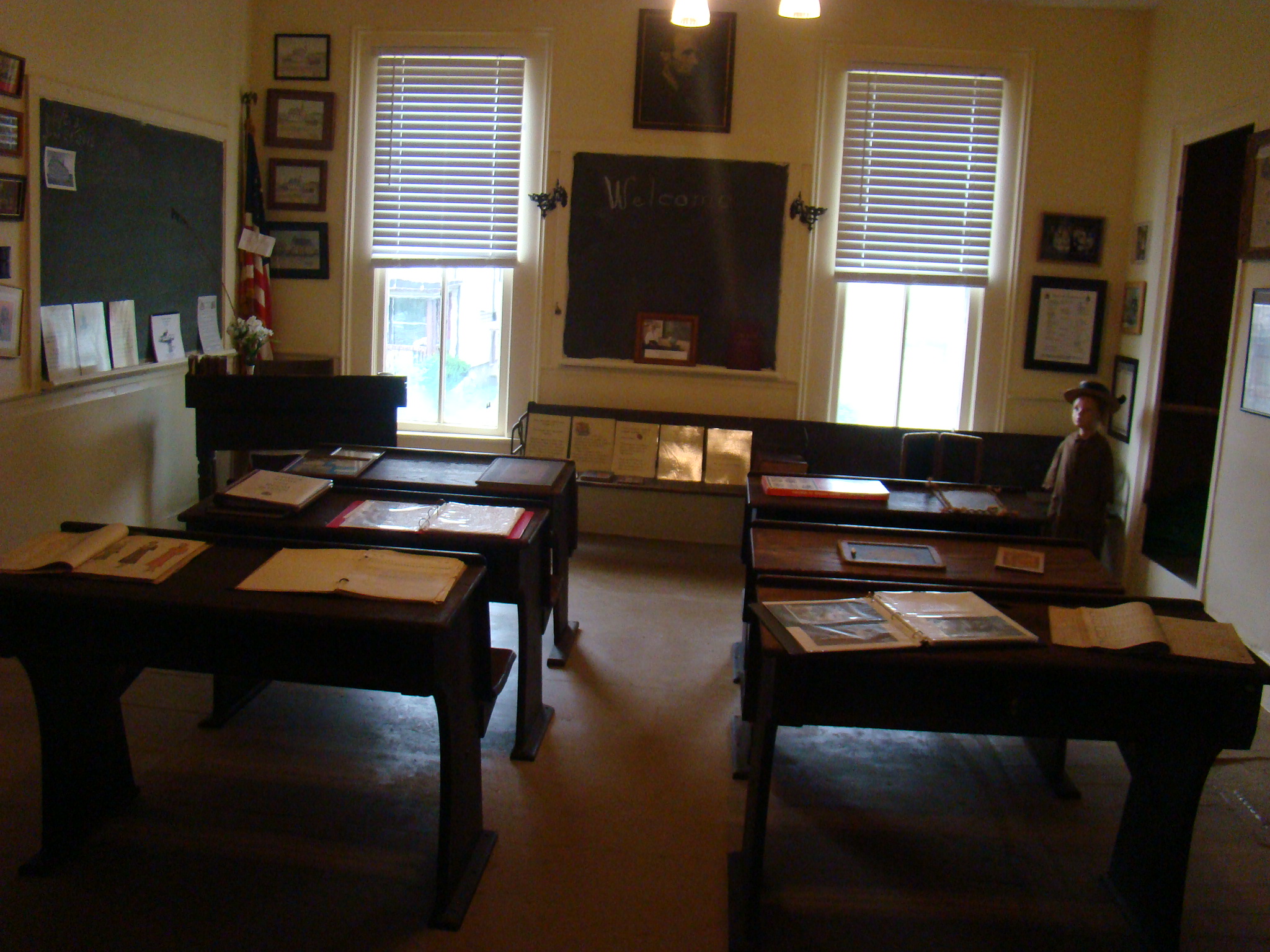
Old One-room school

Old One-room school

The One-Room School display contained traditional desks, teacher’s desk, blackboard, and some of those old books that were used long ago. On special occassions, retired teachers will describe basic lessons and activities in a one room school.

Bountiful treasures reside inside this old frame house. Perhaps you would like to roam the halls and revive some old memories. If you have any pieces of history you would care to share, please contact the museum. Every small town should take pride in having a special place to keep the history of their area alive for future generations.

Guernsey County Museum is located in Cambridge, Ohio near the crossroads of I-70 and I-77. The easiest route is from I-70, Exit 178, which is State Route 209 West. Follow 209 straight to the Court House. Make a left hand turn and a quick right turn on 8th Street right beside the Court House. After one block, make a right hand turn and a quick left turn on 8th Street again. The Museum is located just a few doors down on the right hand side at 218 N. 8th Street. 

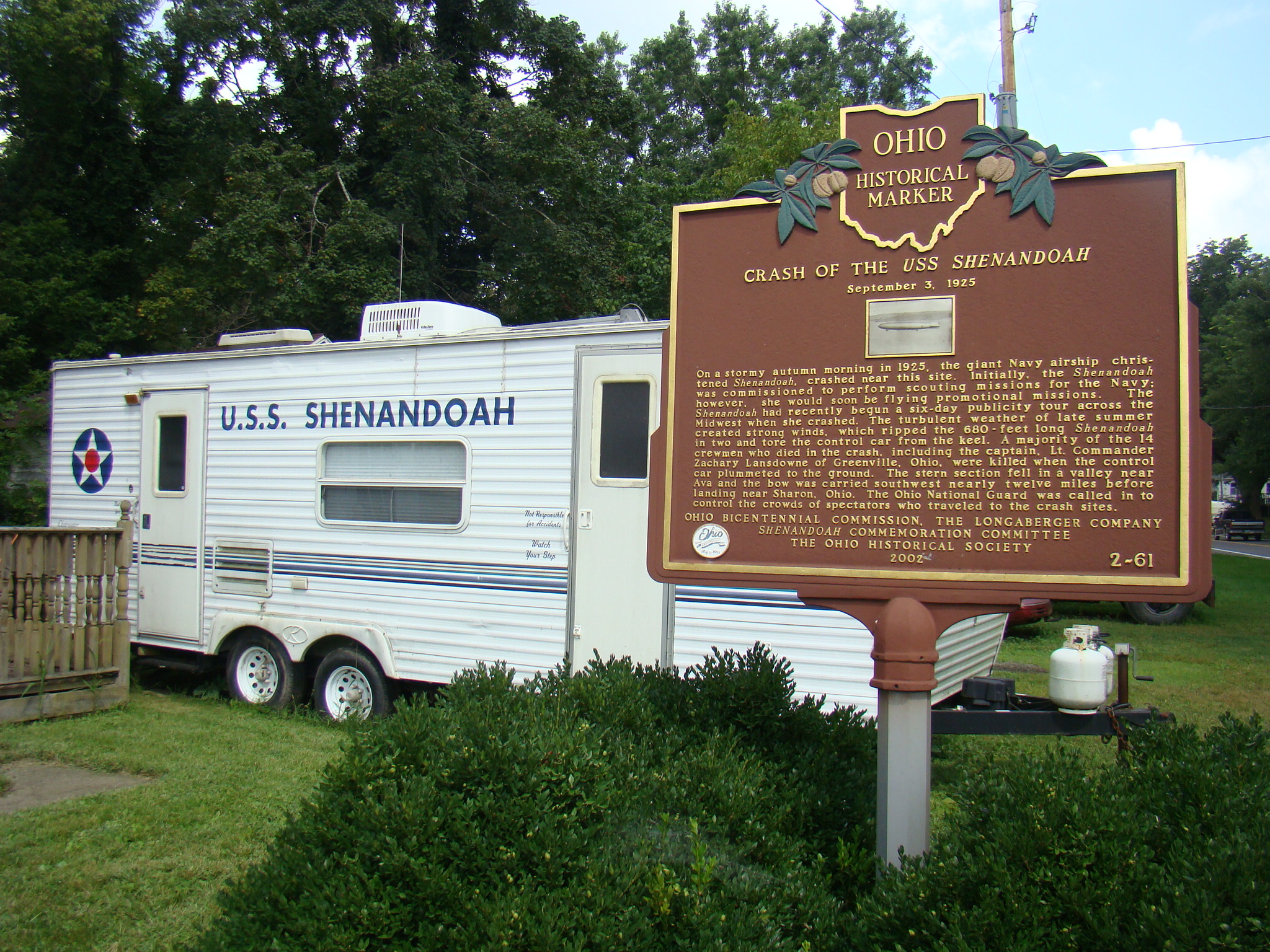
Shenandoah Airship Trailer Museum

Shenandoah Airship Trailer Museum in Ada, Ohio

U.S.S. Shenandoah Airship Trailer Museum in Ada, Ohio

In a remote corner of southeastern Ohio, those interested in history will feel fortunate to stumble upon U.S.S. Shenandoah Trailer Museum. This small, but very nice, camper trailer nearly overflows with historic memorabilia, which the Rayner family began organizing for display back in the 1980’s. Rayner’s Towing Garage in Ada, Ohio has a fantastic collection of items related to the Shenandoah Airship crash back in 1925, and the historical marker out front explains the story of the crash. Commander Zachary Lansdowne had been warned not to take this particular flight due to the rapid changes in Ohio weather during September. But on its tour of midwestern state fairs, he wanted to fly the immense 680′ zeppelin over his family home in Greeville, Ohio where his mother was living at that time.

USS Shenandoah Station Memorial Post Card

USS Shenandoah Station Memorial Post Card

Bryan and Theresa Rayner were eager to share their knowledge on a recent visit to their museum. Theresa, who works at the local post office, attempted to have a commemorative stamp made on the 80th anniversary, but that wasn’t possible due to government disaster regulations following 9/11. Therefore, for the 85th anniversary, the post office did have a commemorative post card developed. Part of the airship landed on the family farm of Bryan Rayner, who developed his interest way back at the age of three when he went with his grandfather to take people to the crash site at their farm.. Unfortunately, Bryan recently suffered a severe heart attack and now joins those who died in the Shenandoah crash.

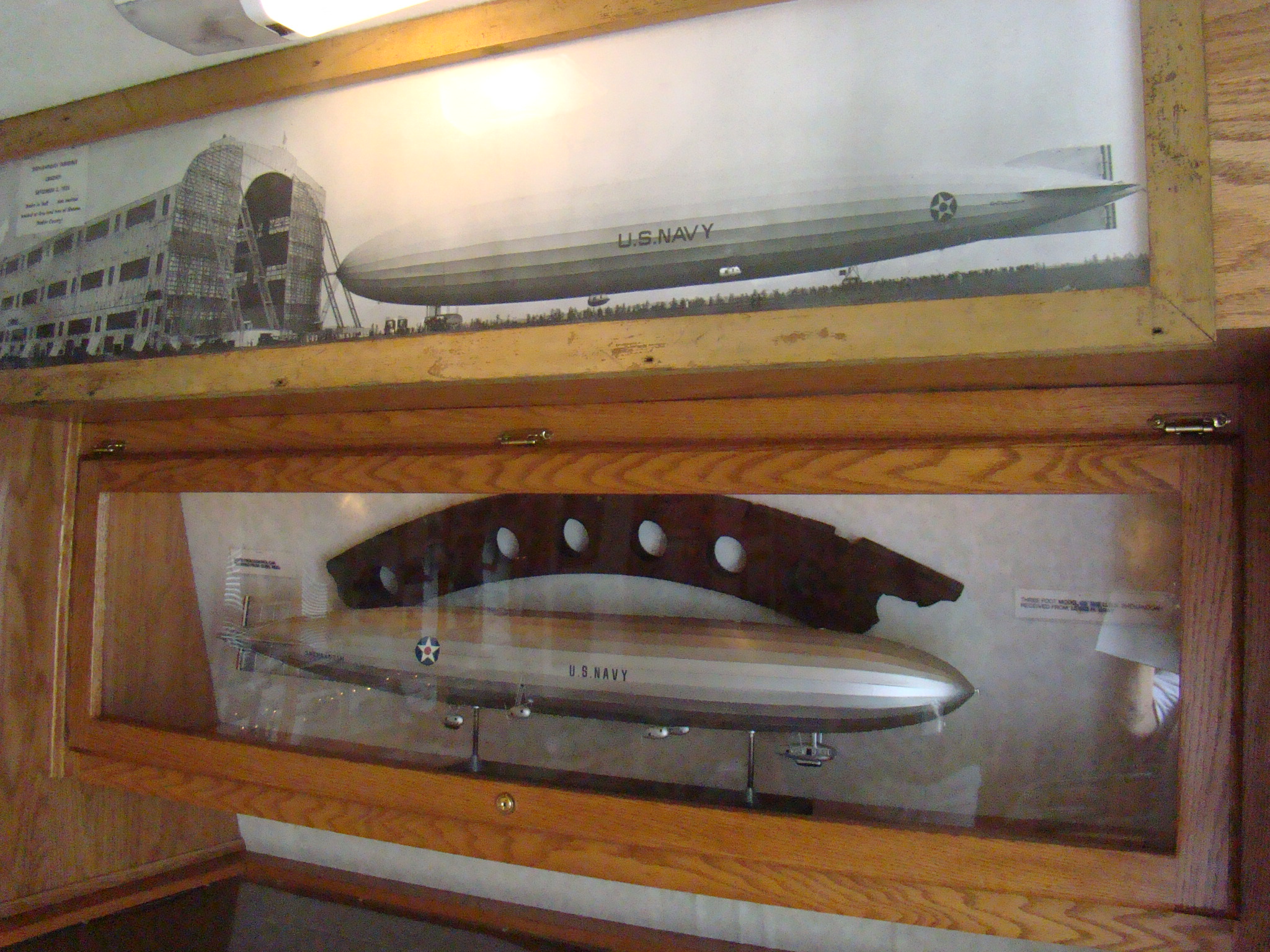
The walls are covered with pictures and stories of the 1925 crash of the famous airship, Shenandoah. There were actually three places where major sections of the airship fell to earth. The stern section of the ship crashed  near Ava and a memorial can be seen from I-77, heading south, between the Buffalo and Belle Valley exits. The control car crashed on nearby Andy Gamary Farm, while the bow section drifted a bit farther south to Sharon, Ohio along State Route 78.

The Shenandoah was built for naval purposes and not designed for luxury travel. Frequently while on its missions, it would be tied to a naval carrier in the ocean. When released it could float away above the clouds. By lowering a “spy car” just below the clouds, it accomplished its missions of reconnaissance on enemy ships and subs.

Display showing the skeleton of the famous Shenandoah airship

Display showing the skeleton of the famous Shenandoah

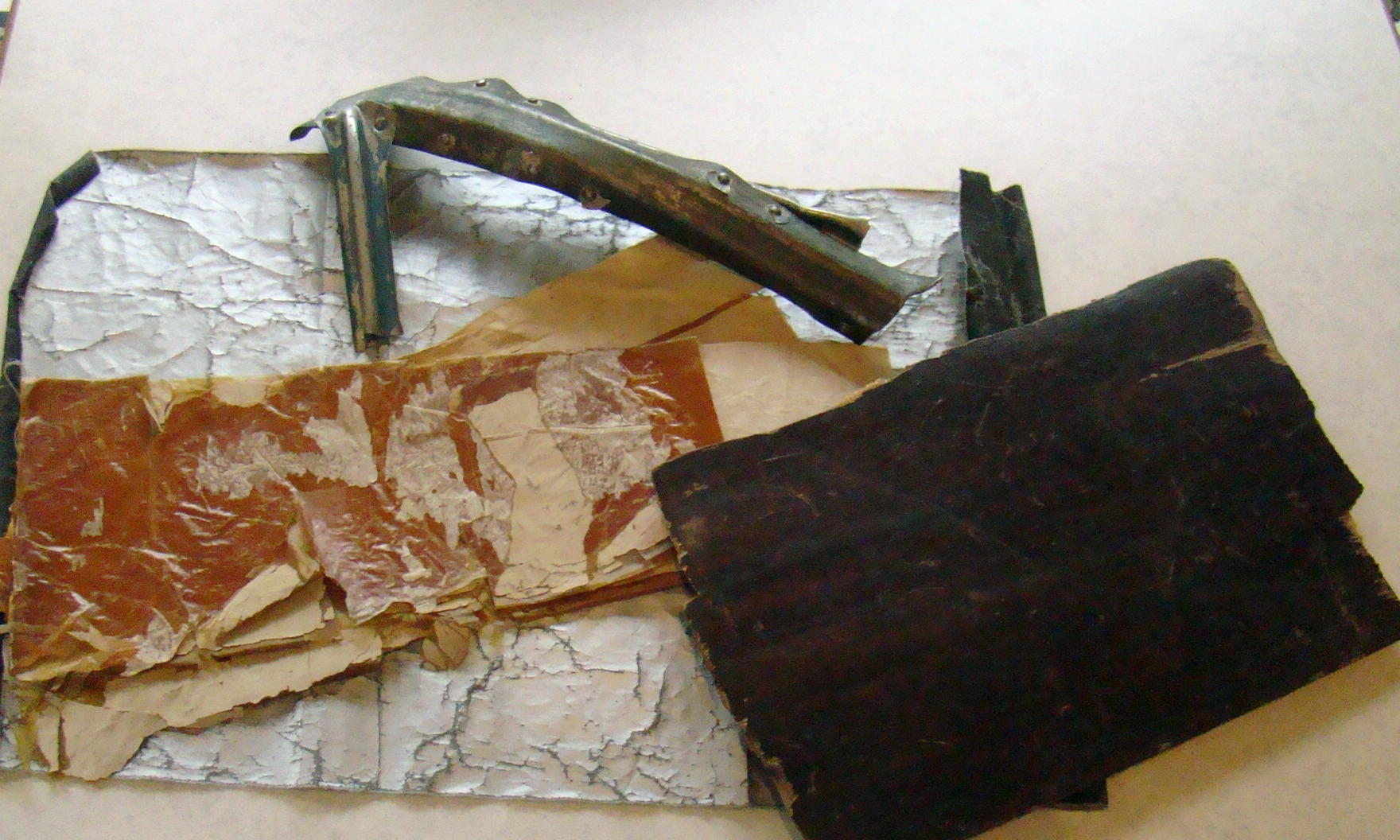
The skeleton of the ship was made of aluminum girders with the fabric covering coated with silvery aluminum paint. Inside the ship there was actually a long walkway, along which the crew could sleep and eat. There were twenty gas cells with their outside covering being made of cotton and the inside made of “goldbeaters skin”, the stomach lining of oxen.

Pieces of Shenandoah: oxen stomach lining, aluminum and wood frame

Pieces of Shenandoah outside fabric, oxen stomach lining, aluminum and wood frame

Pieces of all these parts are available to see and even touch inside the museum. Most are behind glass, but they feel it is important to have young people especially, be able to touch the original pieces to gain a better feel for their historic importance. The Rayners took items to local schools in Noble County to share the story with the children over the years. They even set up a 12″ walkway, which was the actual size of the walkway inside the airship, for children to duplicate the experience of the limited space inside.

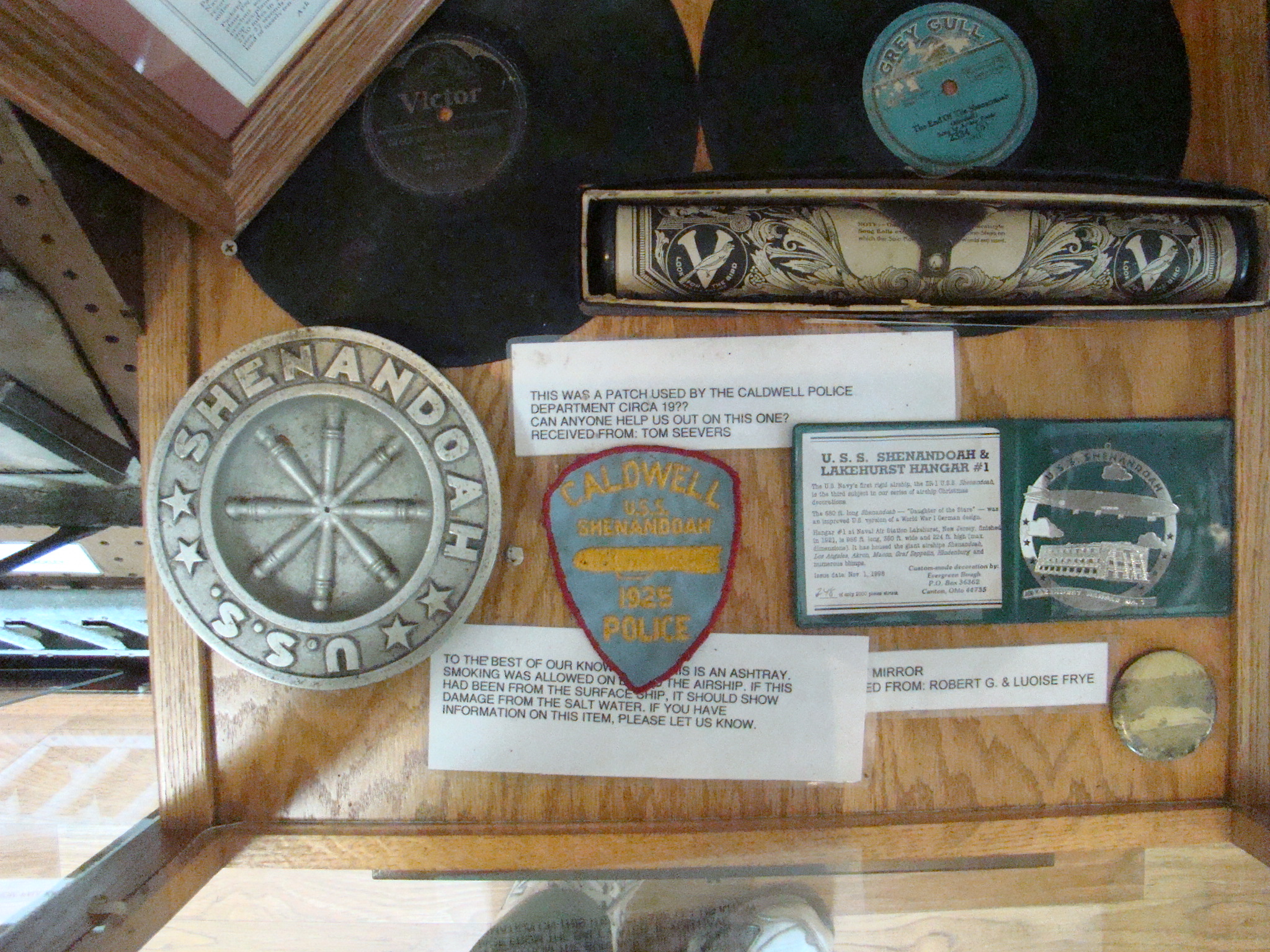
One of many glass cases filled with memorabilia

One of many glass cases filled with memorabilia

Glass cases are packed with memorabilia that has been gathered from many sources. Some items have been donated to the museum and others have been purchased. Old 78 records with songs about the Shenandoah, such as “The End of The Shenandoah”, have been collected. Sheet music of “The Wreck of Shenandoah” can also be viewed. A large collection of rings made from pieces of the airship fill a special exhibit case. Some were purchased as gifts for Bryan, who had a real passion for keeping the memory of the Shenandoah alive.

You might be surprised at the number of visitors who have toured the U.S.S. Shenandoah Trailer Museum from all over the United States, Canada, England, Australia, and New Zealand. Over the years many, who actually lost family members in that crash, stopped by to leave a piece of history and view the grand collection of memorabilia. On the 2013 anniversary of the crash, Commander Zachary Lansdowne’s granddaughter and family visited the museum.

This is one of those times when an individual or two have made a real difference in the world by keeping alive the stories and events of the airship Shenandoah.

The U.S.S. Shenandoah Trailer Museum can be found in Ada, Ohio just off I-77. To visit the Shenandoah crash site, take I-77 to Exit 28 , Belle Valley. From the west side of the interstate, take Hwy 821 North 5 miles to Ava. The monument is on the north side of town on the east side of the road and well marked. Rayner’s Garage and the Shenandoah Trailer Museum are on the south side of town. The museum has limited open hours.

The Old Mansion House Museum at Tu-Endie-Wei State Park

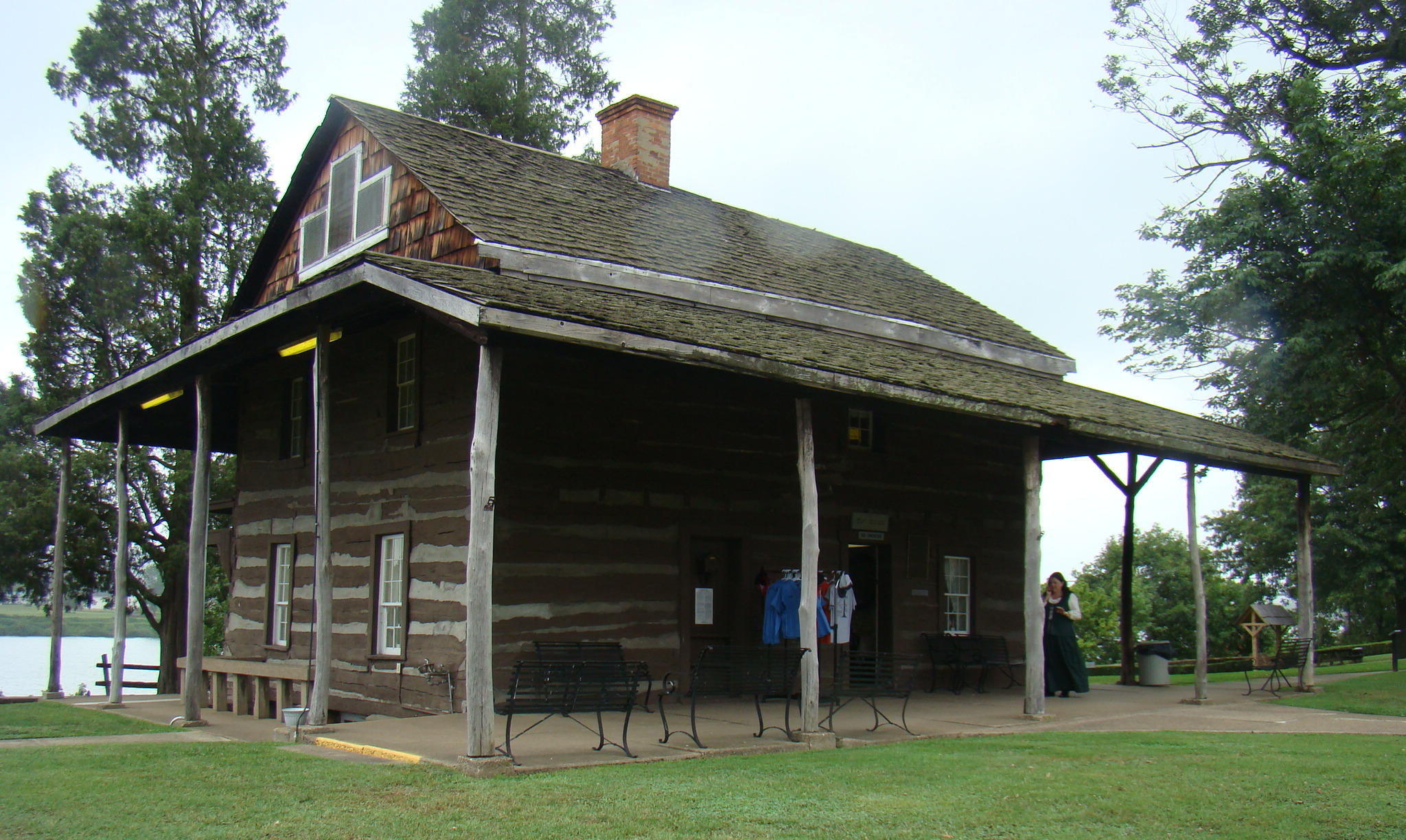
The Mansion House at Tu-Endie-Wei State Park in Point Pleasant, WV

The Mansion House at Tu-Endie-Wei State Park in Point Pleasant, WV

A promise of “I will build you a mansion” resulted in the construction of this Mansion House at Point Pleasant, WV at the site of the first battle of the Revolutionary War. Back in1796,  Walter Newman built this log-hewn house – the first in the Kanawha Valley – so his wife would have a beautiful Mansion House when she arrived in Virginia.

While he waited for the arrival of his wife, the house was used as a tavern and also had rooms for weary travelers.  The cost for a room per night was fifty cents, which most considered highway robbery.

As you enter through the back door of the house, the gift shop and information center are right inside the door. There are helpful people inside to tell you information regarding the house and the people who used to live there.

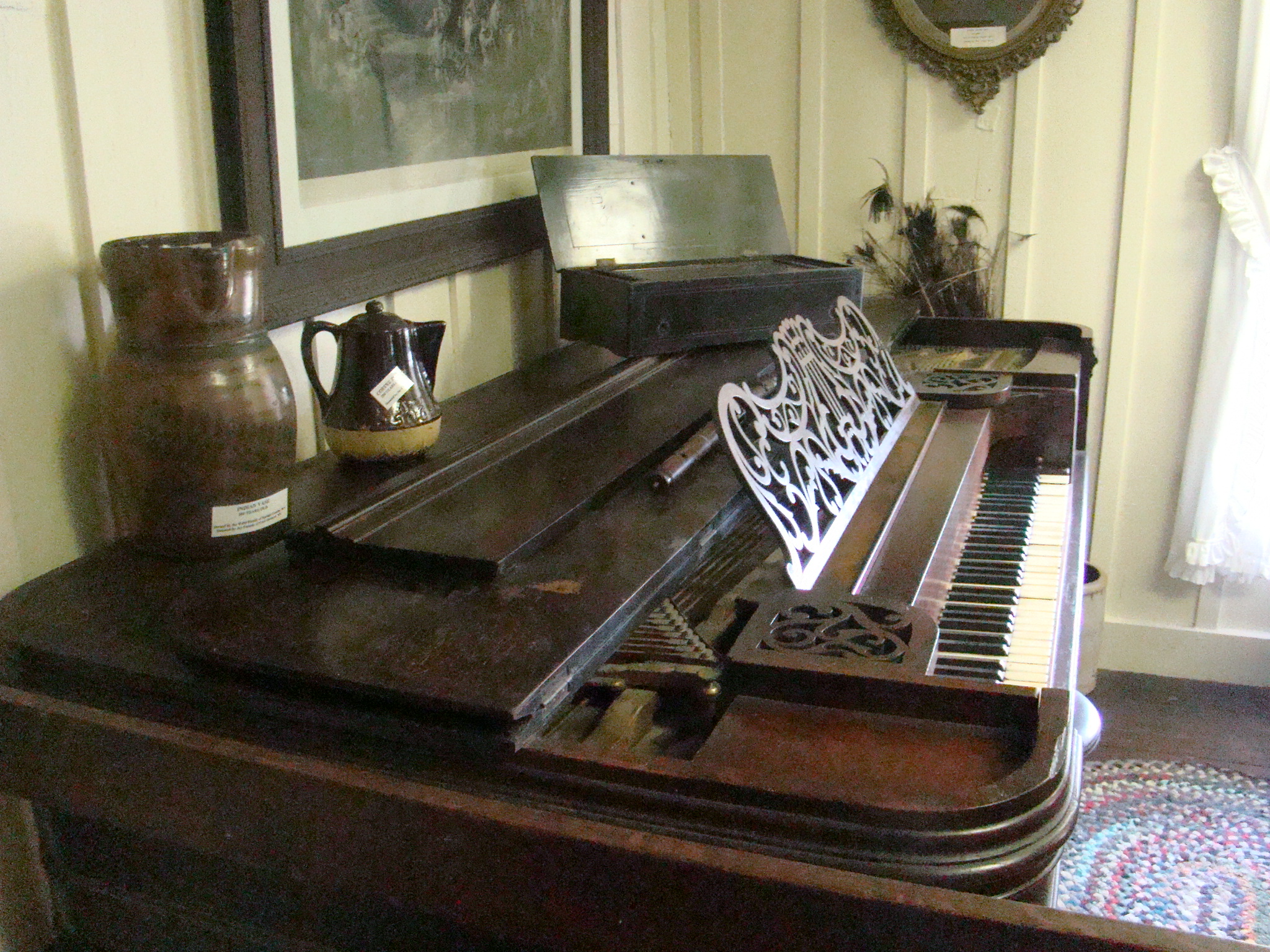
Square Grant Piano

Square Grant Piano

Don’t let the appearance of the house fool you. Inside there are more floors and rooms than you might imagine. Four levels in all are present in this old house: basement, first floor, second floor, and attic. The side of the house where the gift shop is located was the original tavern.   As you go up a few stairs and down a few more, you arrive at the side where the family lived. This has been restored to its original nature with colonial and early American furnishings. Included in the parlor is a square baby grand piano, which was one of the cherished treasures early Americans brought over the Alleghenies. It seems likely that Walter Newman thought this was a necessity for his wife’s mansion.

Parlor where Daughters of American Revolution meet today

Parlor where Daughters of American Revolution meet today

Their former sitting room is today the place where the regular meetings of the Colonel Charles Lewis Chapter of the Daughters of the American Revolution are held. Colonel Charles Lewis and his brother,General Andrew Lewis, were both heroes of that long ago battle of Point Pleasant. In 1901 a branch of the Daughters of the American Revolution restored the house to its original style with the assistance of the citizens of Point Pleasant. Their goal was to preserve the way of life that was prevalent in the 1790’s on the Ohio and Grand Kanawha Rivers.  Today this Old Mansion is listed in the National Register of Historic Places.

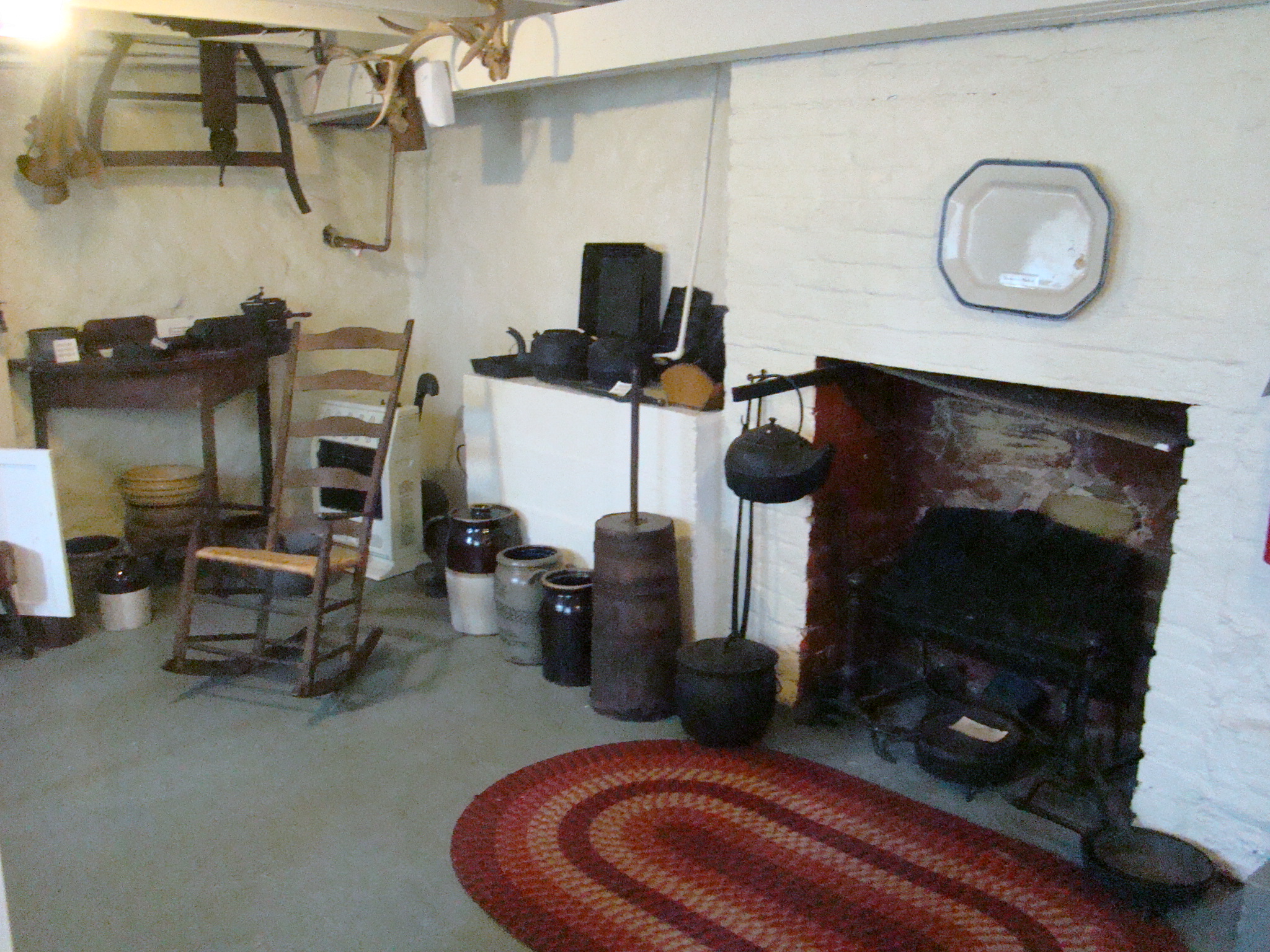
Basement kitchen at The Mansion House

Basement kitchen at The Mansion House

Heading to the basement, you discover the kitchen! In high-status families, food was often prepared in the lowly kitchen, often located in the basement of the house. The fireplace for the kitchen located at this low level, most likely kept the rest of the house warm during the winter. A handmade braided rug rests in front of the fireplace with kitchen pans and tools hung nearby. The wooden rocking chair was placed near enough to gather warmth from the fire, and would have been used by visitors or the man of the house, as the women didn’t have much time to sit and rock. Then the food would be carried up to the first floor to be served in a more dignified room.

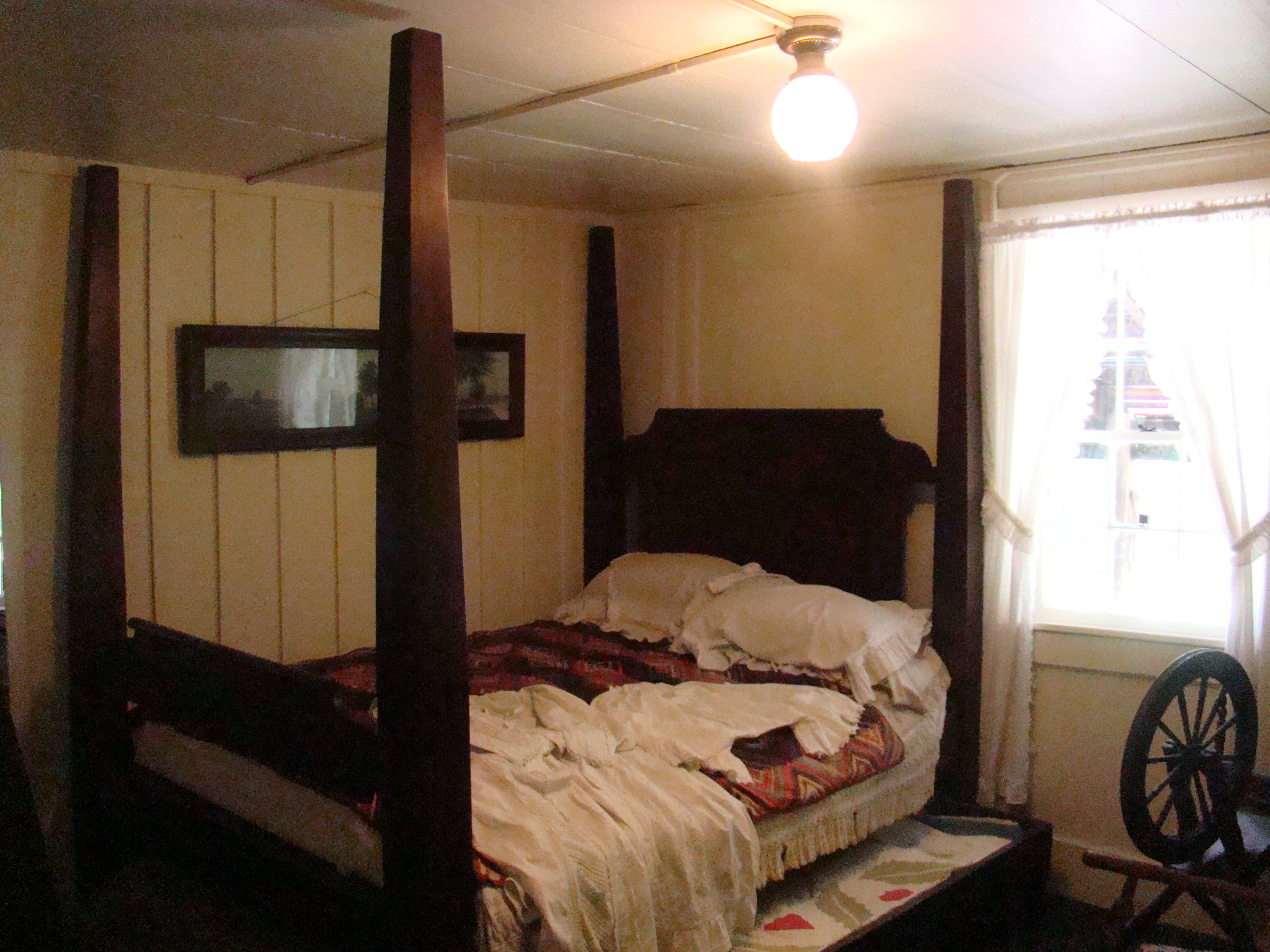
Four-poster bed over 150 years old

Four-poster bed over 150 years old

On the second floor were several bedrooms, probably those earlier used as the rooms rented to travelers, and later used by the family.  Here were small rooms for the children as well as a beautiful four poster bed, which is over 150 years old. An old-fashioned spinning wheel is displayed near the window.

Still going upward on even narrower steps now, you arrive at the attic where there is a large display of Indian artifacts, books and clothes from that era, plus other interesting objects. It is definitely worth the climb!

Today the Mansion House remains along the Ohio River as part of the Tu-Endie-Wei State Park. Daughters of the American Revolution are frequently on hand in colonial dress to give informative tours.

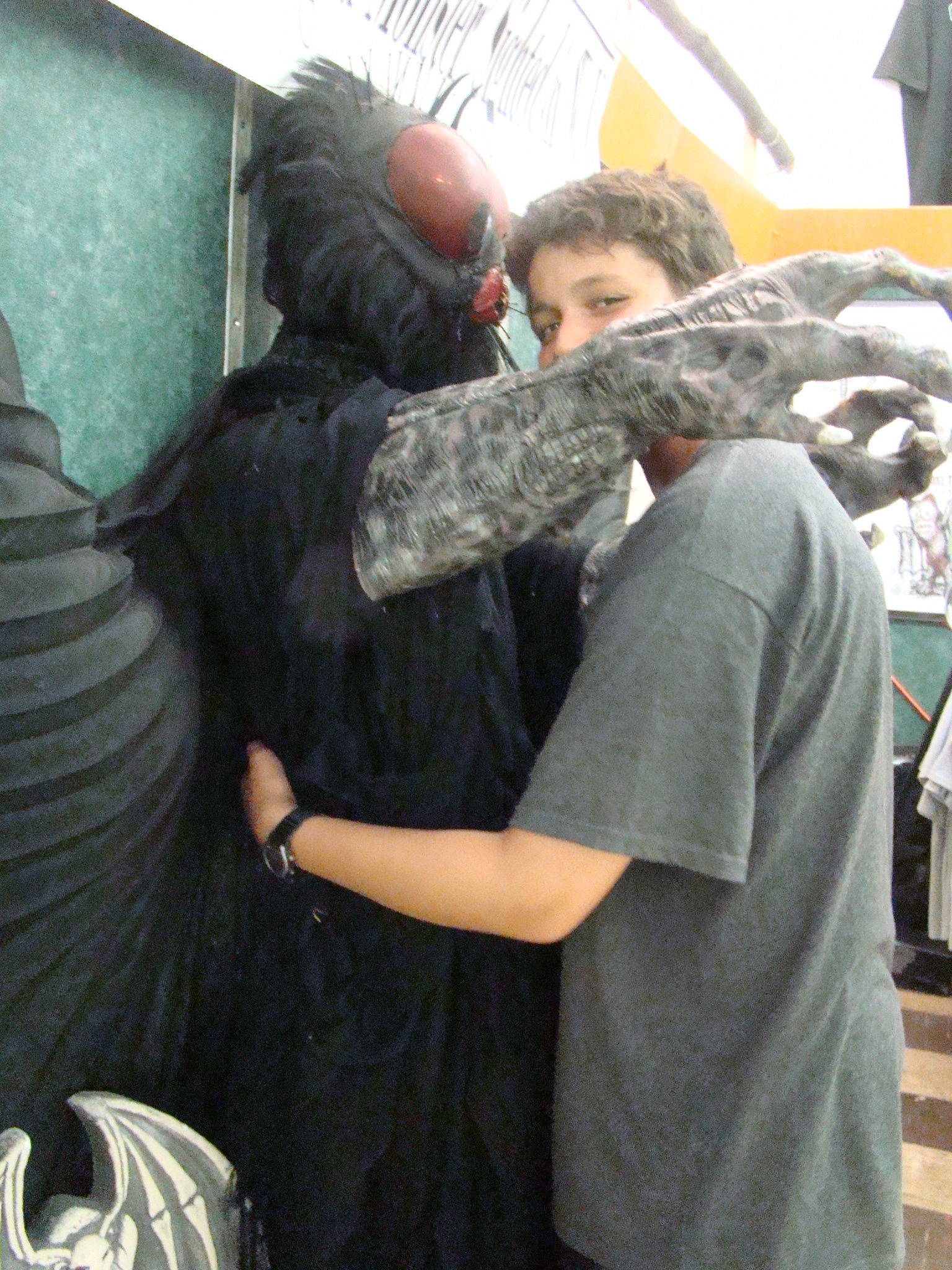
Mothman Hug

Mothman Hug

While in Point Pleasant, don’t forget to visit some of the area’s other interesting places. This is the place of the famous Silver Bridge Collapse in 1967. You will find a monument marking the spot of the original bridge as you walk the artistic Riverwalk with floodwalls painted with scenes of Point Pleasant history. Don’t forget to visit the Mothman statue and the Mothman Museum to learn more of the unusual and unexplained happenings in this town years ago.  You might even get a hug from the Mothman himself.

The Mansion House is located at Tu-Endie-Wie State Park in Point Pleasant, WV at the end of Main Street where the Ohio and Kanawha Rivers meet. The Mansion House Museum is opened May through October. Hours are Mon-Sat. 10:00-4:30, and Sun. 1:00-4:30. There is no cost, but donations are accepted.

Mammoth Mound Mysteries Grave Creek Mound Complex

Mammoth Grave Creek Mound in Moundsville, WV

Mammoth Grave Creek Mound in Moundsville, WV

Step back in time, way back in time, to 200 BC.  Buried beneath the surface of this gigantic mound in Moundsville, West Virginia are ancient treasures from two thousand years ago.

Driving past this 62′ high mound, many people possibly see it merely as a big pile of dirt. But when you explore inside the Grave Creek Mound Archeological Complex located beside it, you discover surprises regarding this unusual structure in Moundsville near the Ohio River. For many it will get their mental wheels turning as they want to search for more information.

To get a better picture of the area in your mind, Grave Creek Mound, the largest conical mound in the United States, is 62′ high with a base of 240′ and was surrounded with a moat, which has since been filled in. There was only one way across the moat – an earthen path. This was part of a much larger ceremonial area, which seemed to begin at the Ohio River.

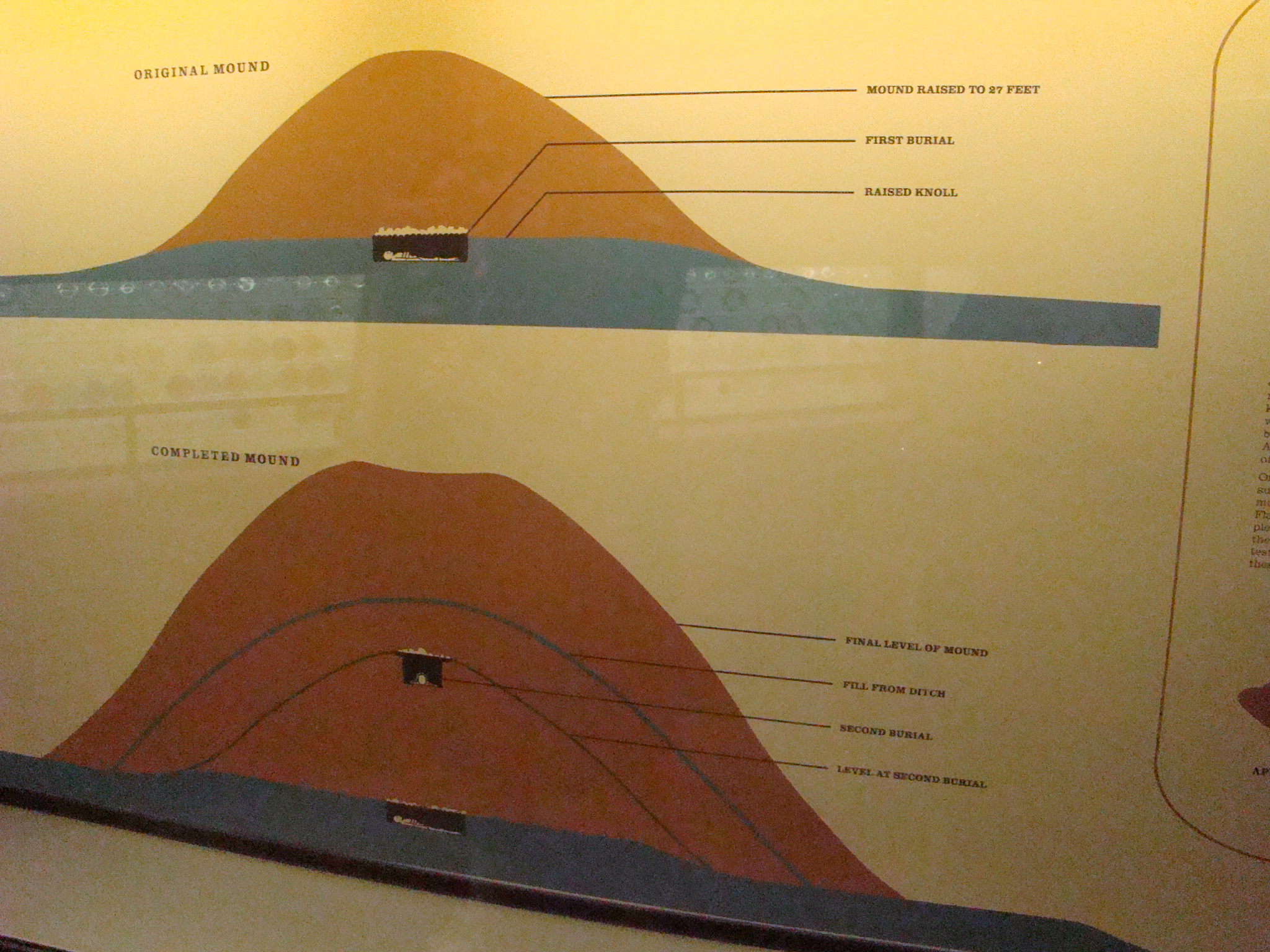
The mound was built over a period of 200 years with burial vaults at different layers.

The mound was built over a period of 200 years with burial vaults at different layers.

This Adena burial mound required a lot of work to move 60,000 Tons of earth to form this mound over a period of years.  Included are multiple burials at different levels from 250 – 150 BC. It appears to have been build in stages with most of the burials being by cremation.

Since it seems that people arrived on the Ohio River, there was what many called a Sacred Way leading from the river to The Mound. But the Way didn’t stop there, as it turned at right angles to an octagon shape, which is no longer in existence. This Sacred Way was actually paved back 2000 years ago…with mussel shells. How do we know this? When ground was moved for building the homes and stores in Moundsville, layers of mussel shells several inches thick were found along The Sacred Way. Hopefully, you are beginning to form a picture of what could have been.

Display at Grave Creek Mound of objects found during an early dig at the mound.

Display at Grave Creek Mound of objects found during an early dig at the mound.

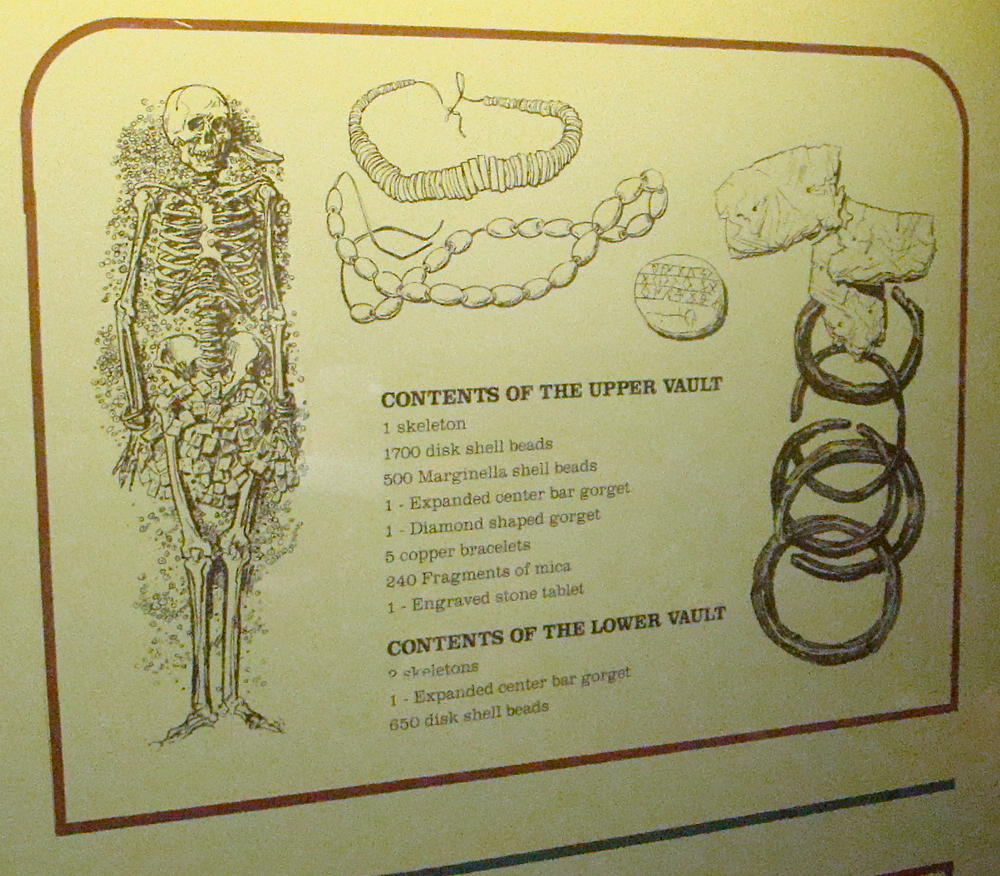
Back in 1838, some curious amateurs decided to do a little exploring of their own and began digging into The Mound with gusto through two shafts, one horizontal and one vertical. Their discoveries were surprising, but they had little idea of how much historic information they had really pulled from the ground. A burial vault made of logs and smooth stones from the river was found in the center near ground level. It contained two skeletons with tools, beads, pipes and ornaments indicating these were important people in their culture.

A most amazing skeleton, which they named Tasach for reasons to be given later, appeared at the bottom layer of the earthen mound.  The items found either on his body or with his body were quite astonishing. Around its 7’2″ frame were pieces of sea shells- some scattered and others formed into beads. On the wrist were seven copper bracelets and around the waist was a band of small mica squares. What do all of these pieces mean?

Replica of Grave Creek Tablet

Replica of Grave Creek Tablet

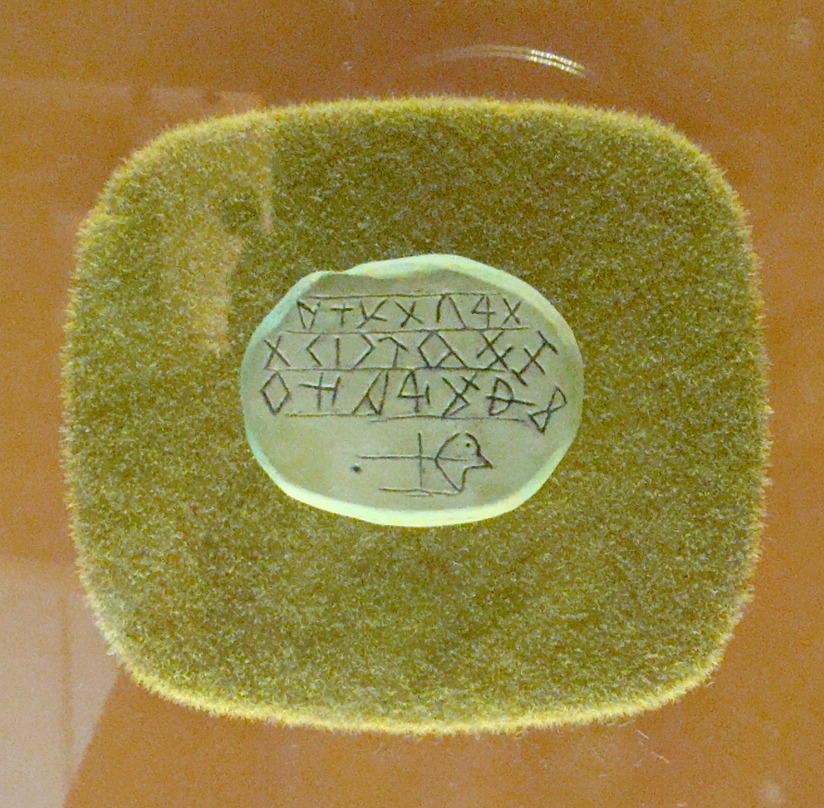
To add to the mystery, near the second, smaller skeleton was a small, flat sandstone tablet with three lines of symbols indicating a form of communication during that long ago time. This has become known as the Grave Creek Tablet and one of many interpretations, but the one that seems likely in my mind reads:

“The mound raised on high for Tasach. This tile his queen caused to be made.”

My first thought was that perhaps Tasach was a leader of an ancient tribe.  Since copper and mica both resonate with healing qualities, perhaps he was considered a shaman. He may have appeared at the octagon shaped structure and greeted visitors, who came by boat on the Ohio River then walked the Sacred Way through the Mound and to the octagon.  It would seem this was perhaps a spiritual ceremony of some nature by people over 2000 years ago.  Remarkable! But that was just my interpretation. Wonder what ideas you might have?

Shortly after that early  excavation, in 1843 local enthusiasts decided to use the two excavation shafts into The Mound as a museum. In the horizontal bricked shaft was an underground exhibit of the skeleton discovered with his buried treasures as well as an early gift shop. Inside the vertical shaft, a spiral staircase was built to allow visitors a way to the top of the mound where a three-story observatory was constructed. The museum was short-lived as the walls came tumbling inward, but a second stone museum was built on the south side of the mound in 1941 with many of the items available for sale having been made by the prisoners at the penitentiary across the street.

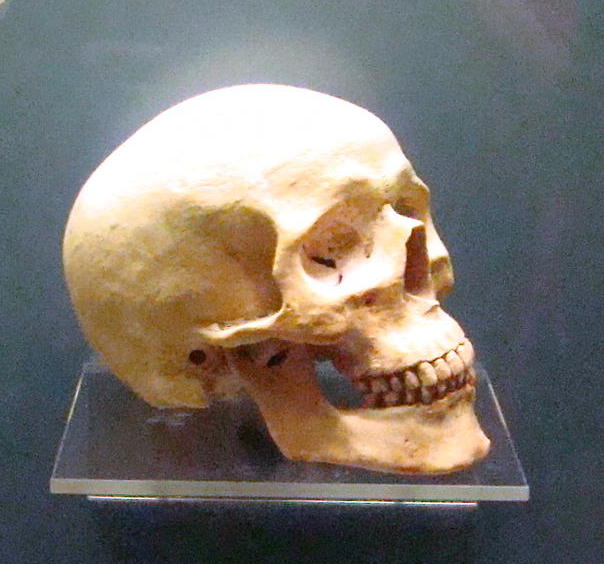
Replica of Pre-Indian skull found in 1838 excavation

Replica of Pre-Indian skull found in 1838 excavation

Today’s modern museum is housed in the Grave Creek Mound Archeological Complex, which shares many of the mysteries of The Mound with visitors through exhibits and video presentations. It opens the mind to exploring the wonders of time before the Native American Indians. These early visitors on our lands had far reaching commerce as items were from all over the country and the world. Their architectural skills were amazing and nearly all of their structures were perfectly aligned mathematically with the sun , the moon, and the stars.

Where did these people come from?  Where did they go? The mysteries continue.

The Mound is located in Moundsville, West Virginia. Just ten miles south of Wheeling along the east bank of the beautiful Ohio River. From Wheeling, follow Route 2 into Moundsville. Turn left on 8th Street and after two blocks turn right onto Jefferson Ave. The mound is too large to miss!

Tour Daweswood House Museum “Let the Flowers Grow Where They May”

Daweswood House Museum

Daweswood House Museum

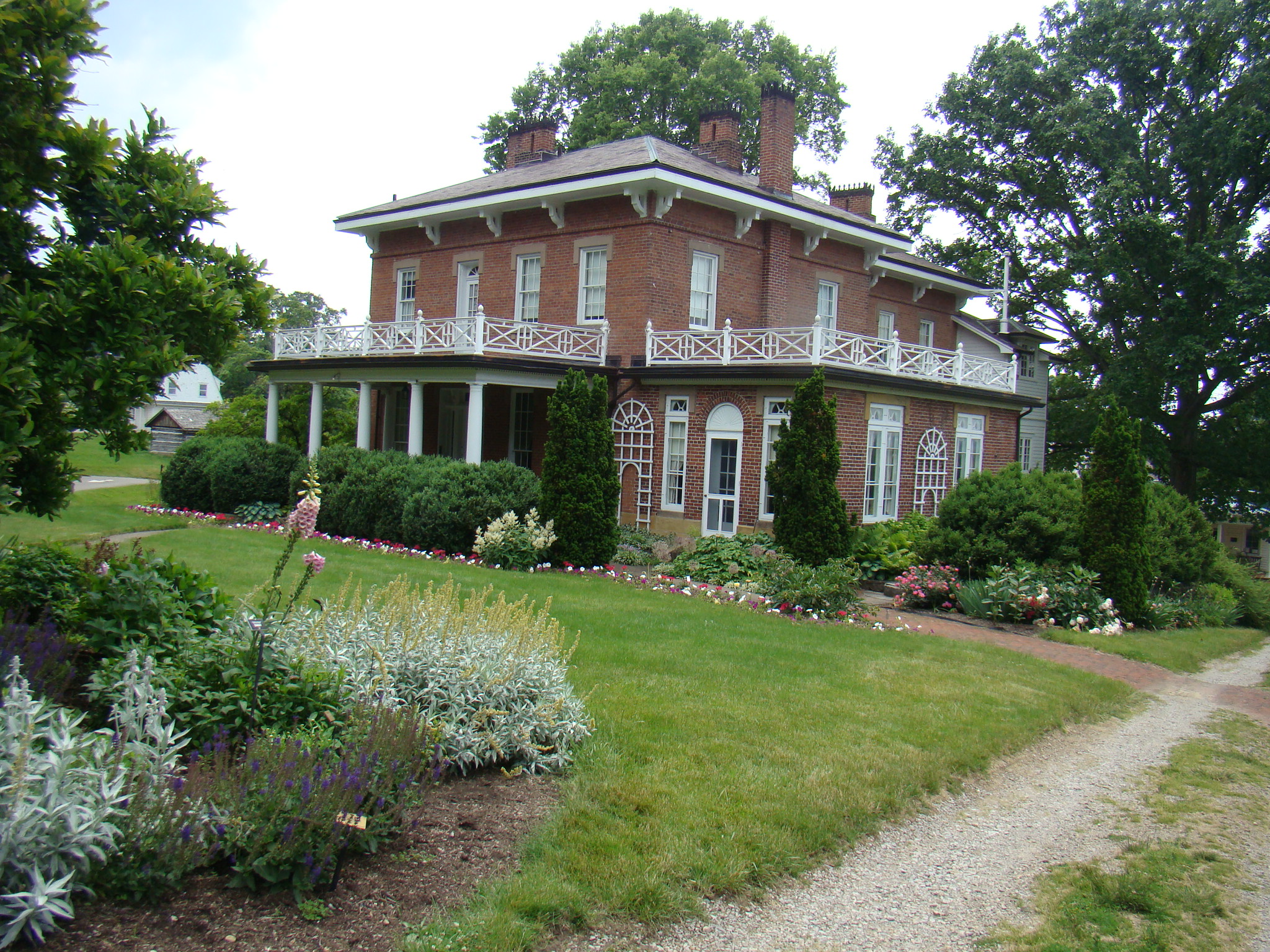
Exploring Daweswood takes visitors back in time to absorb the lifestyle of the Dawes family in the early 1900’s near Newark, Ohio. Being greeted by Debby, the youngest granddaughter of Beman and Bertie Dawes, made the tour doubly enjoyable. Her added stories of childhood visits added life to the beautiful old home.

Outside, the playful, lighthearted garden design reflects Bertie’s favorite saying, “Let the flowers grow where they may”. Beautiful flower beds surround the home turned museum, and help visitors realize the importance of plants and flowers to the Dawes family.

Inside, Daweswood House Museum, actually built in 1867,  is filled with antiques, unique collections of natural history, and stories which seem to pour from the walls. The flooring and spiral walnut staircase in the entryway are original and from lumber cut on the farm back in the late 1800’s. Everything was built with loving care in the best tradition of the times.

Office of Beman Dawes

Office of Beman Dawes

Born in Marietta, Ohio, Beman Dawes graduated from Marietta College. After serving two terms as US Representative, he founded Pure Oil Co with headquarters in nearby Columbus, Ohio. The profits from that endeavor became the source of funds to develop Dawes Arboretum for the enjoyment of  people from all over the world, as well as the Dawes family. Debby mentioned that some of her fondest memories of childhood were the family picnics in the pines at Dawes. It seemed the children enjoyed the out-of-doors, just like their grandparents. Today the family still gathers at Dawes Arboretum every summer for an old-fashioned picnic.

Bertie Dawes' studio

Bertie Dawes’ studio

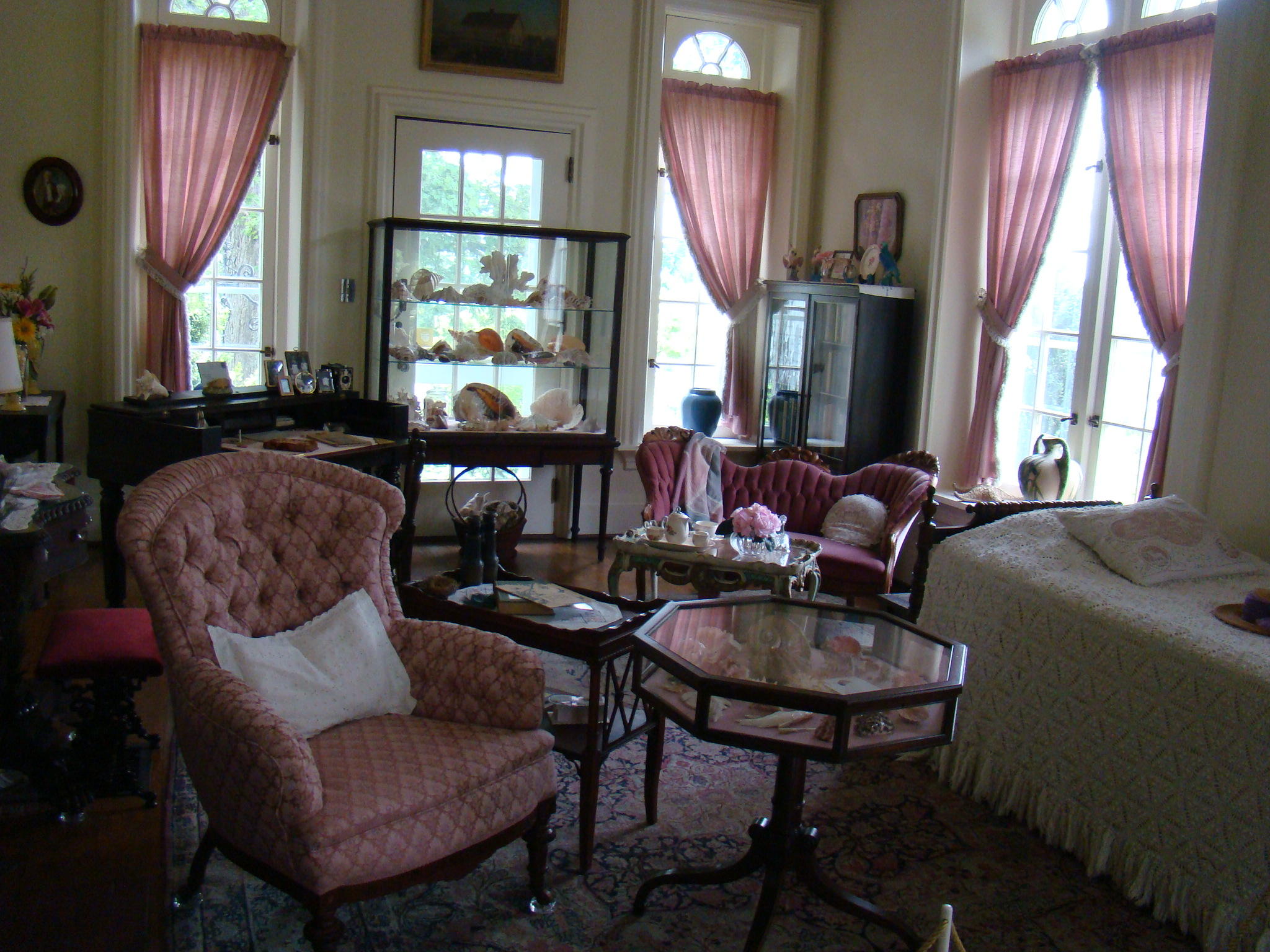
His wife, Bertie, displayed her collections in her special studio, which overlooked the garden. Shells, butterflies, and humming birds all held special places in her heart. The beautiful bedspread in the room had been handmade by Bertie as well. This elegant lady was definitely a woman of many talents and interests… including raising peacocks. Perhaps she had time to do these things since there were housekeepers that tended to the daily chores of the family. Since there were five children, this would have been a busy household.

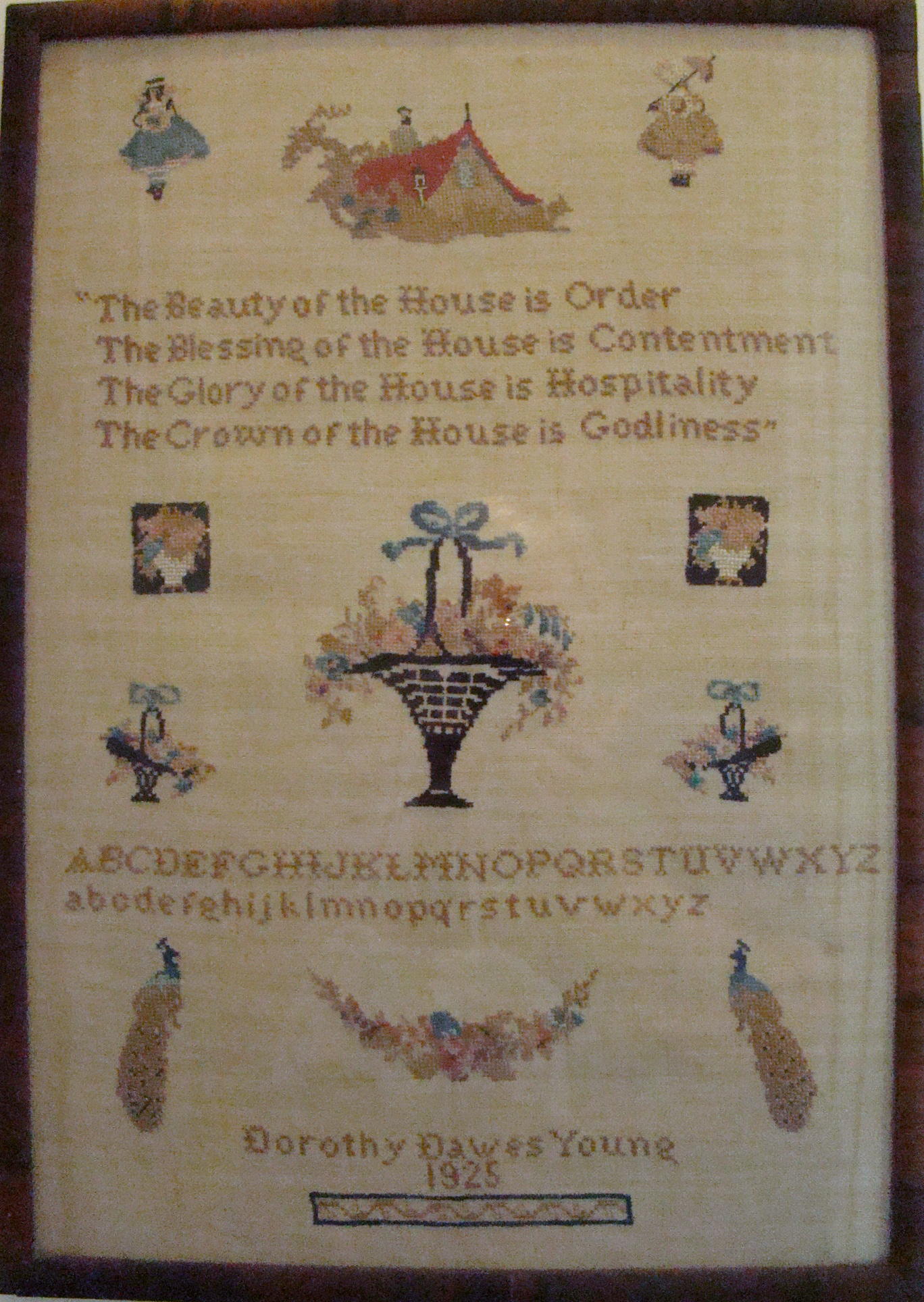
"Our House" embroidered by daughter, Dorothy Dawes Young in 1925.

“Our House” embroidered by daughter, Dorothy Dawes Young in 1925.

One beautiful family tradition occurred in the formal dining room where the family met each Sunday for dinner. The grandchildren still recall those formal dinners with Grandfather and Granny as being a highlight of their visit.  This family had early access to some of the little luxuries, with electricity in Daweswood as early as 1929. Five stone fireplaces throughout the house provided a warm atmosphere. The warmth of family could be seen in the beautiful embroidered picture hanging in the kitchen to remind everyone of the importance of their Daweswood home.

A basement constructed of handhewn stone, where the children used to play, is now home to the Rathskeller. The walls are now filled with shovels and plaques of those invited for tree dedication ceremonies. Initials of the dedicators were placed on the ceiling with soot from a burning candle in the beginning, but today they are usually written with a marking pen…to save space.  Back in 1927, Ohio Governor James Cox was the first to dedicate a tree.  Over 100 people have been invited by the family to dedicate trees and some of those names are quite familiar: John Glenn, Jack Hanna, Richard Byrd, Red Grange, and Orville Wright to mention a few.

Smokehouse and Gardens

Smokehouse and Gardens

Behind the house is an old log smokehouse surrounded by Bertie’s garden. Nearby, on the right side of the picture, you can see the corner of the roof of the History Archives Building, which is being constructed to hold photographs, family journals, and Arboretum records.

Plan your visit to Daweswood on the weekend as hours are limited. Tours are given every Saturday and Sunday at 12:00 and 2:00.  Admission is $2 for adults and $1 for students, and tickets must be purchased at theVisitors Center. If you like beautiful old homes and the beauties of nature, you will definitely enjoy a visit at Daweswood.

Dawes Arboretum is located near Newark, Ohio just off I-70.  Take Exit 132 , Route 13 , and proceed North on Route 13 for about three miles.  The entrance is located on the left hand side of the road at 7770 Jacksontown Road. Daweswood House Museum is down the first road to the right just inside the gate, but first you must go to the Visitors Center to purchase your ticket.

Chiricahua Desert Museum Educational Oasis in the Desert

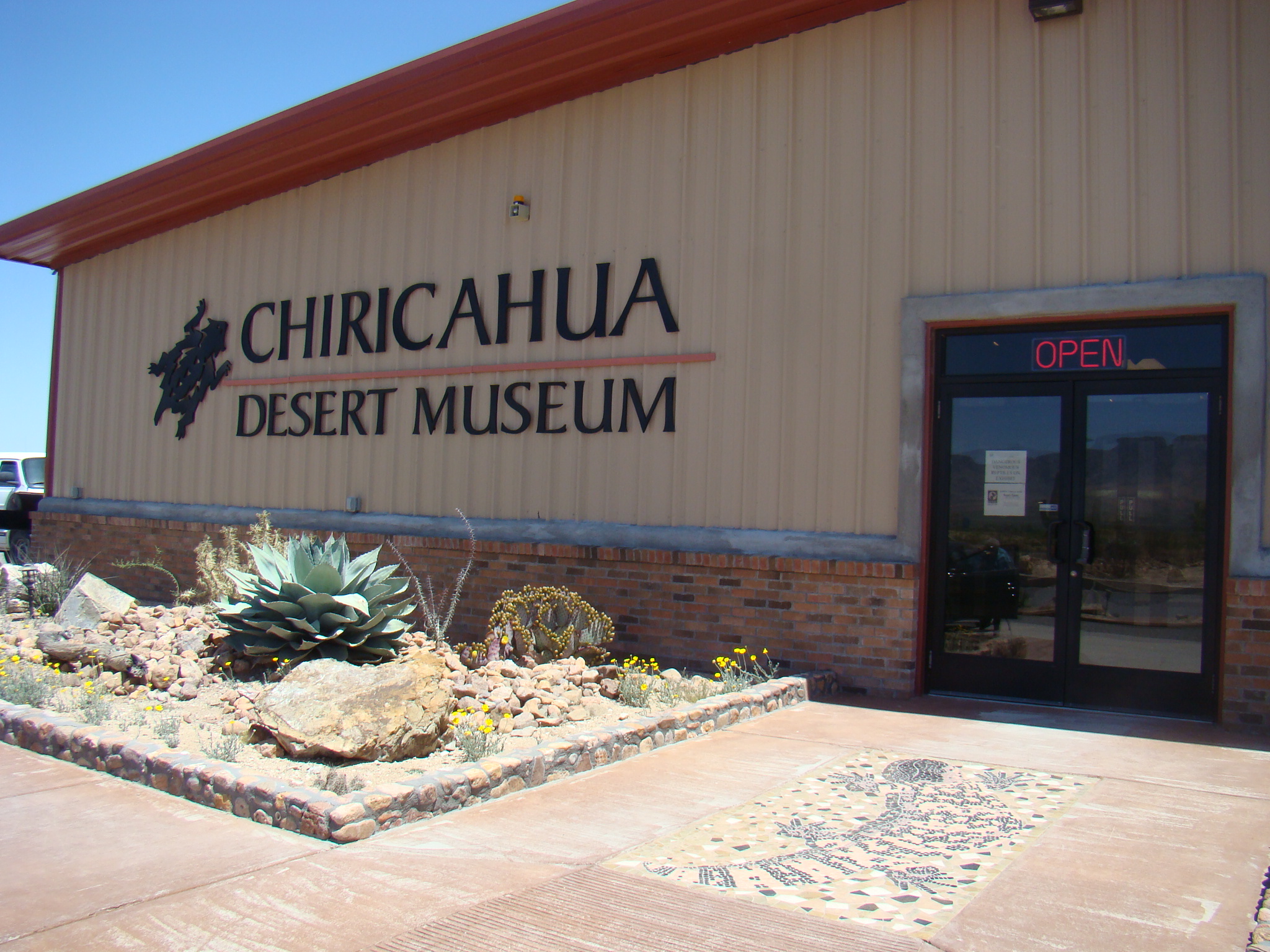
New Mexico Desert Museum

New Mexico Desert Museum

In the middle of nowhere, or at least it seems, you will find an unexpected gem – a desert museum operated by people who enjoy being away from the crowds.  Here in the small town of  Rodeo, New Mexico, The Chiricahua Desert Museum found a home. The idea began as recently as 2006 and opened for visitors in 2009 when my first visit occurred. The Chiricahua Desert Museum has made major improvements since that time and during this recent visit has added many educational programs as well.

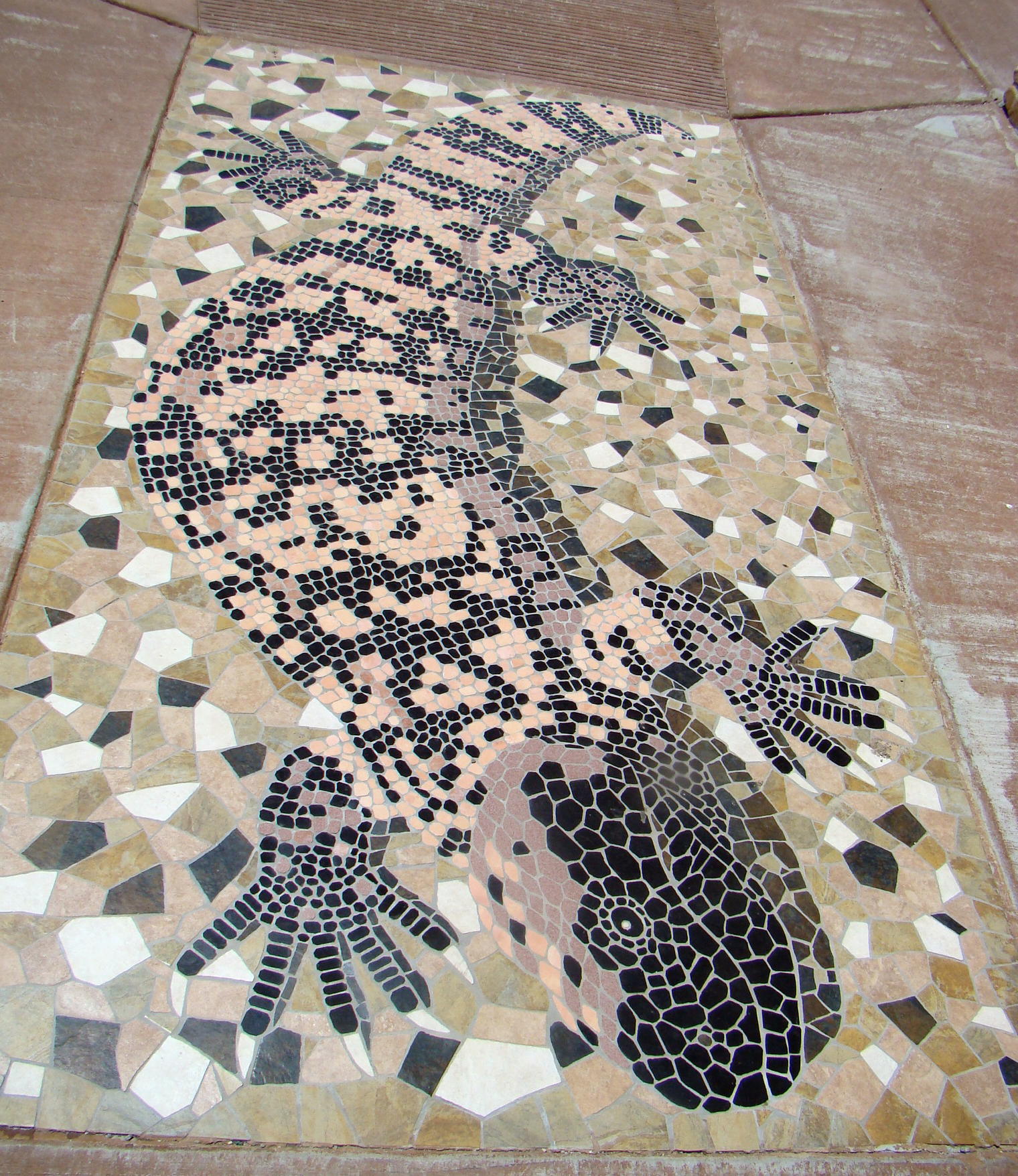
Tile Gila Monster at Museum Entrance

Tile Gila Monster at Museum Entrance

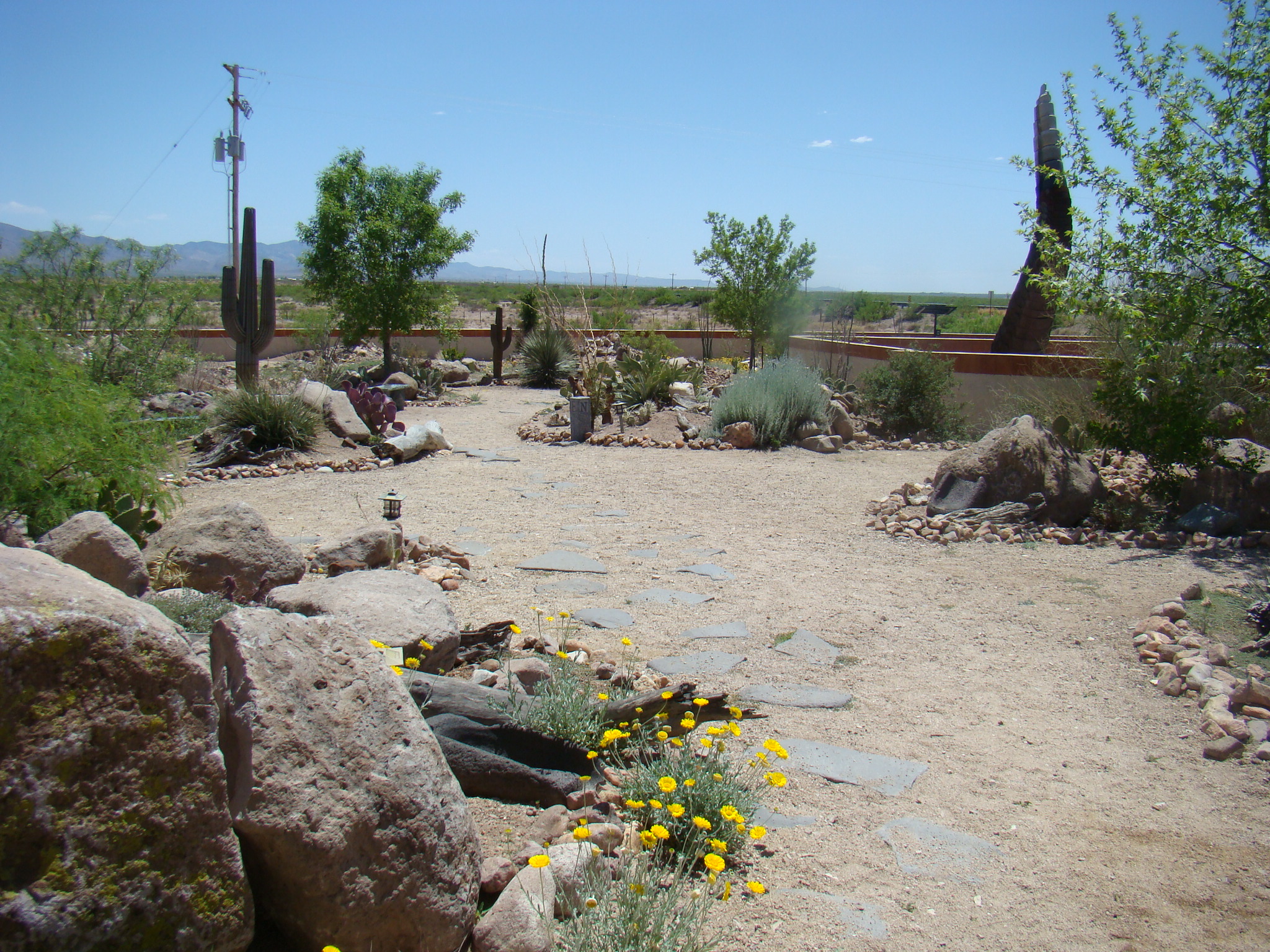
The museum sits in the middle of the desert between the Chiricahua Mountains and the Peloncilos. Here in the southwestern corner of New Mexico, the border of Arizona is only across the road. Desert plants, rocks and sand create a beautiful entrance way to the museum as you walk over a large tile design of a gila monster, a heavy, slow-moving, venomous lizard.  Mountains make a beautiful backdrop, especially as you enter the Botanical Garden.

Desert Botanical Garden

Desert Botanical Garden

This corner of their large Botanical Garden is a place to relax and learn about the plants of the desert. Besides the plants, there are beautiful statues as well as a small pond. Here you might see a box turtle or lizard… if it isn’t too hot.

Dancing on a Dwarf Statue

Dancing on a Dwarf Statue

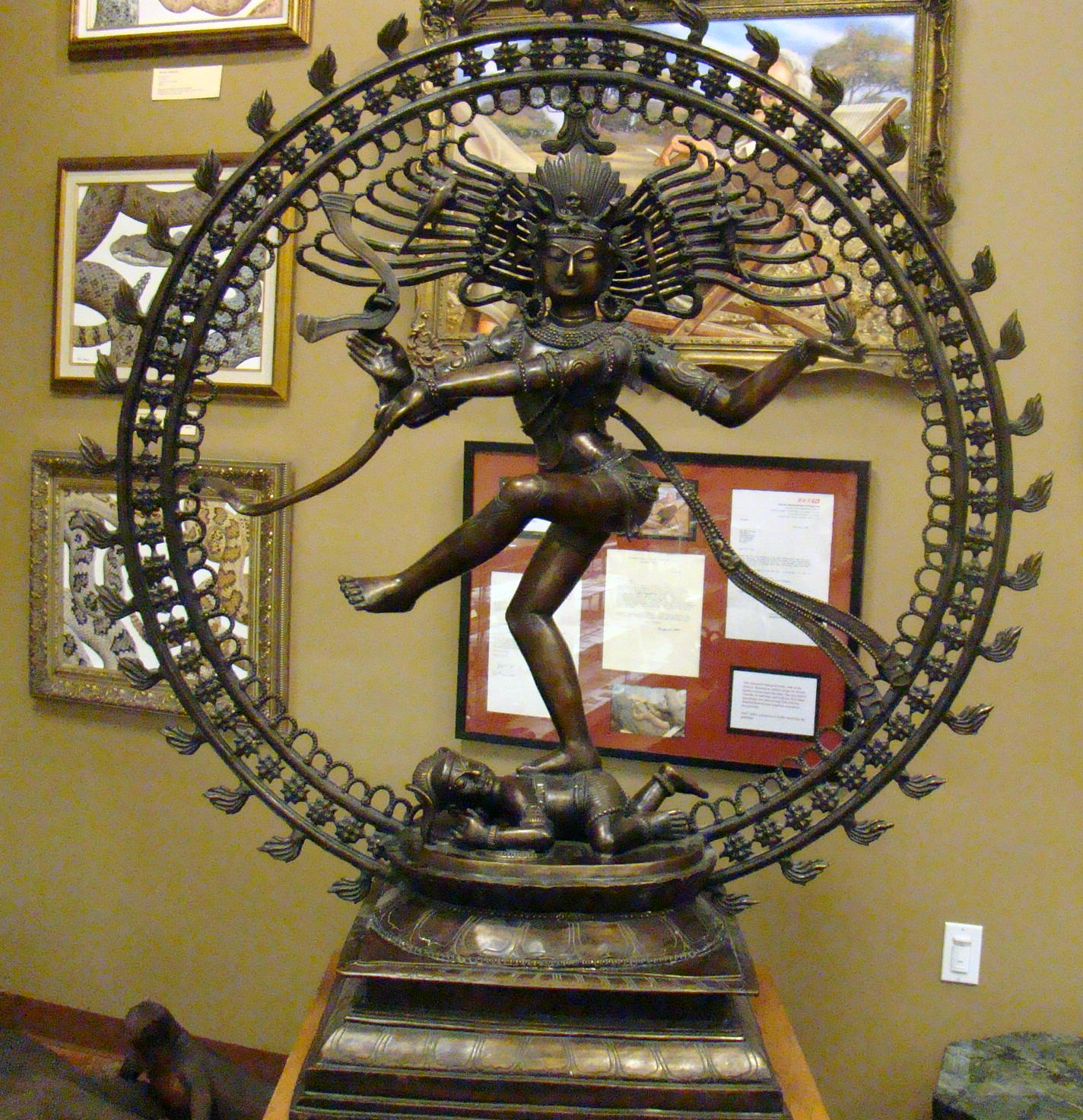
The museum itself contains many items found in the desert and beyond.  There is a large collection of arrowheads and pieces of pottery found in the area.  If enough pieces were found, they have been reassembled into beautiful vases and bowls. A collection of liquor bottles all contained the names of reptiles, such as: Blue Tongue Premium Lager, Granny’s Turtle Juice, Python Ale, or Mojave Red Premium Lager. A large bronze statue, Dancing on a Dwarf, was a centerpiece of the main museum. Wildlife artist, Tell Hicks, displays many of his paintings at the museum and his prints are favorites of those who visit. Often Tell sets up his easel at the museum so visitors can watch him create another amazing desert scene.

An interesting new addition is the state-of-the-art Reptile Exhibit.  Here you will find over 60 rare species enclosed in glass cases, but well and alive! Rattlesnakes and rock lizards are popular features as well as rat snakes and mud turtles. Personally, it was a relief that they were enclosed in glass!

Before leaving, check out the excellent gift shop with an outstanding selection of books and upscale souvenirs.  Beautiful turquoise and Indian style jewelry is on display and for sale at fairly reasonable prices. You can also find many good books and great artwork. This is not your ordinary gift shop, but quite superior with unusual treasures to view or purchase.

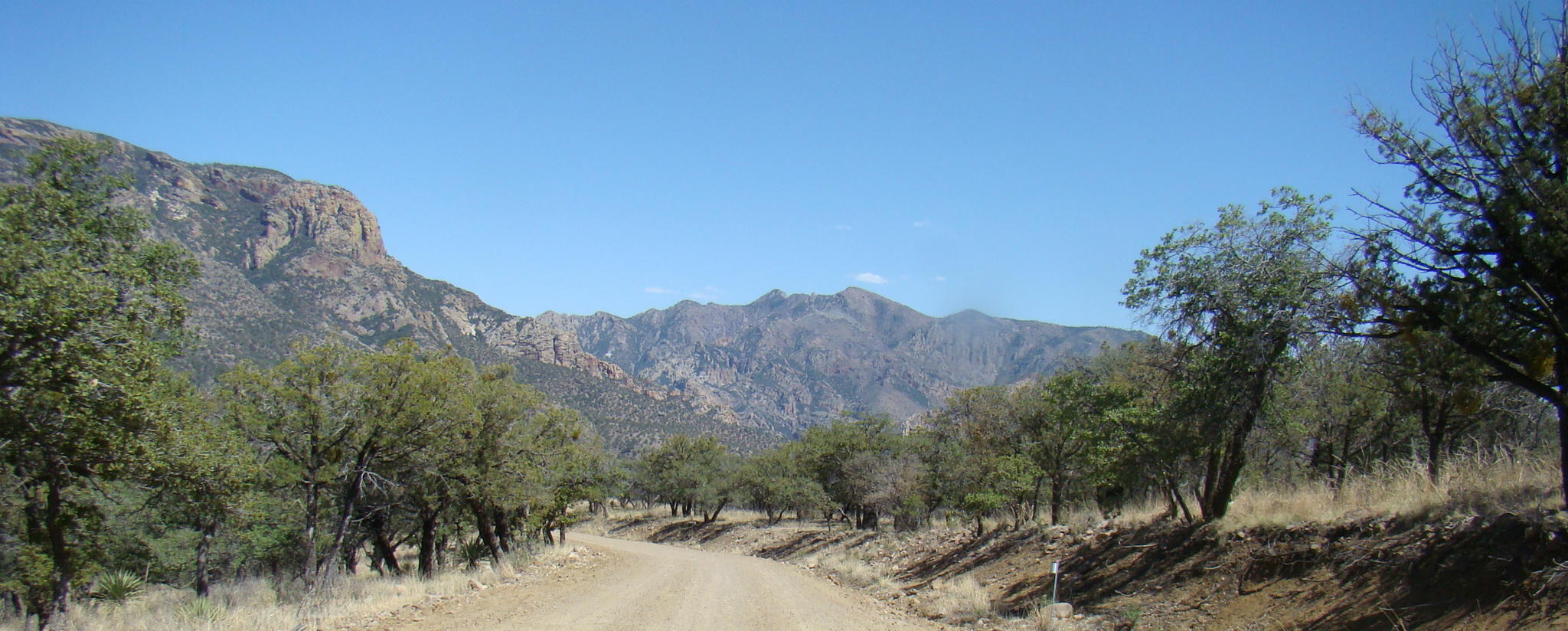
New Mexico 067Afterwards, lunch at the Rodeo Cafe was a real treat before heading to the Chiricahua Mountains through the small town of Portal, where neo-tropical birds hang out – a bird watcher’s paradise. The dirt road into the Chiricahuas and the Coronado National Monument was a spectacular, yet slow, two hour drive.  Billy the Kid was said to have a ranch here during his outlaw days.  What a great place to hide a herd of rustled cattle!

The Chiricahua Desert Museum is located in Rodeo, New Mexico in the Southwest corner of the state very near the border of Arizona.  From I-10, take Exit 5 South on NM 80. After about 30 miles of beautiful desert scenery, you will arrive in Rodeo. The Chiricahua Desert Museum sits on the left side of the road just a couple miles east of Portal, Arizona.

St Francis Hospital Museum Growing Piece By Piece

Items used at St Francis Hospital

Items used at St Francis Hospital

Many times unexpected treasures appear when exploring an old building. Such was the case in 2012 when Dave and Sarah Scott purchased an antique store housed in a former local hospital.  There in the corners and unexplored rooms, many items formerly used in the early hospital were discovered.

Dave Scott, owner, stands with medical supplies in their museum.

Dave Scott, owner, stands with medical supplies in their museum.

At the present time, Dave and Sarah have dedicated one room of their Scott’s 10th St. Antique Mall to a place called St. Francis Hospital Museum.  Nearly all of the items in the room are from the original hospital, having been found in the corners of the building.  Dave Scott, owner, stands beside some of the medical equipment used during the days of St Francis Hospital. The crutches in the background were found in a room in the basement while exploring the building.Only two items, a wheel chair and a bed, have been purchased and both were from the same time period as when St. Francis Hospital was in operation.

Back in 1922, this medical center began when the  Wells Hospital opened its doors on 10th Street in Cambridge, Ohio. This was a much needed addition to the city at that time and Dr. Henry L. Wells dedicated it to his parents. Dr. Wells was a tireless and modest physician whose feelings were summarized when he said, “I feel very highly rewarded with the respect and confidence that the community seems to have in me.”

The Order of St. Francis Nuns began operating that same facility in 1945 as St Francis Hospital. After WWII was over, Dr. Paul Huth arrived in the area and took over as head surgeon at the hospital. The hospital received a boost in 1957 when Cambridge Glass Company selected St. Francis Hospital for all hospitalization of workers needing medical attention. All emergency cases were to be sent to the hospital as well, with Dr. Paul Huth named as company physician.

The Walking Blood Bank poster

The Walking Blood Bank poster

An old poster features familiar faces in our local medical world encouraging people to give to the blood bank…at that time a Walking Blood Bank. Dr. Paul Huth, the hospital director is shown with Edith Spade while Dr. Joseph Utrata is being assisted by Twila Thacker.  Both Miss Spade and Miss Thacker served the community as nurses until recent years.

A visitor at the museum stated that he had been born in the hospital, and maybe even in the room where the museum stands. He remembered stories of the early hospital days as well as the doctors who cared for the patients.  Area residents remember that at that time appendectomies were as popular as knee replacements are today. So he smiled when remarking, “If you came in for an ingrown toenail, chances are you would not leave before having an appendectomy.”

1946 Hospital Bill

1946 Hospital Bill

An interesting hospital bill hangs on the wall.  It shows the costs for everything needed during the hospital stay. One surprising item was the cost of the room. The patient was there for seven days at $4 a day for a total room charge of $28. How times have changed!

St. Francis Hospital was finally closed in 1968 with the opening of a larger, more modern facility, Guernsey Memorial Hospital.  Today that hospital has been further improved and modernized and is now called Southeastern Medical Center of Ohio.

If perhaps, you have any knowledge of St. Francis Hospital or pieces of its history that you would care to share with future generations, please contact Dave or Sarah Scott at their 10th Street Antique Mall. Who knows what could develop here?

The St. Francis Hospital Museum is located in the Scott’s 10th St Antique Mall in downtown Cambridge. There is easy access as Cambridge is at the crossroads of I-70 and I-77. Wheeling Avenue is their main street and the museum is just a half block south of Wheeling Avenue on 10th Street.