Places to go and things to see by Gypsy Bev

Archive for the ‘Ohio’ Category

Ohio River Ferryboat Festival – 200th Anniversary Fly-Sistersville Ferry
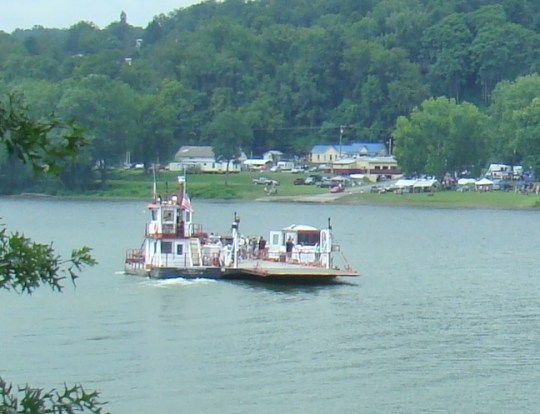
Fly Ferry

The Fly-Sistersville Ferry provides a relaxing way to cross the Ohio River.

Floating by ferry on the Ohio River brings pictures to mind of days gone by. Drive your car onto the ferry, or walk on – either way you’re sure to enjoy a ride to the other side. No bridges exist close by.

Fly Sistersville Vendors

Vendors line the streets on the Sisterville side of the river.

During the Ohio River Ferryboat Festival on July 28-30, crowds fill both sides of the Ohio River at Fly, Ohio and Sistersville, West Virginia. For only a dollar, you can walk on the boat, float across and check out the activities on the other side. Or you can drive on board for five dollars. The ride across takes about eight minutes.

This ferry began many years ago in 1817 so this happens to be the 200th Anniversary of a ferryboat crossing at what everyone calls the “Long Reach”. This is one of those rare places on the Ohio River where there’s a twenty mile stretch of river without any bends.
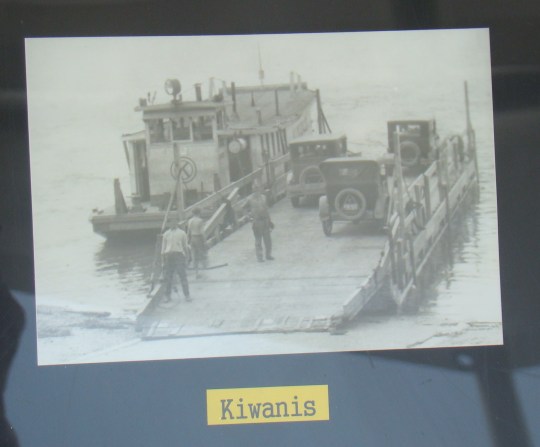
Fly Kiwanis

The Kiwanis was one of many ferries used on the Ohio River.

In those early days the Ohio River wasn’t nearly as deep as it is today. At that time horses pulled the ferry, which was basically a wooden platform, across the Ohio while guided by a rope. If it was an easy load, only one horse was needed, but larger loads of stagecoaches and animals might require two horses. Thus our present term of one, two, or four horsepower.

Today the Sisterville-Fly Ferry is the only ferry still operating on the Ohio-West Virginia border. Now it’s only open from the first of May until the end of September from Thursday thru Sunday. Bo is the only operator but he enjoys his retirement years as captain of the ferry.

Fly-Bo

Bo always serves as pilot on the only ferry on the Ohio-WV border.

They got lucky at finding their latest captain, as Bo is a former member of the United States Coast Guard. After the waters of the Atlantic Ocean, the Ohio River must seem fairly calm. He especially enjoys letting children come up in his cabin and let’s them “drive” the ferry for a little while.
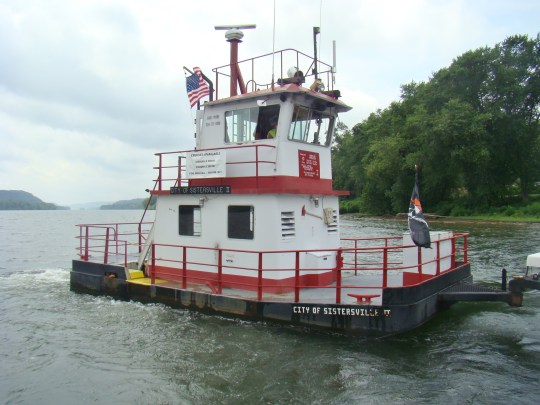
Fly Ferry close up

Take a peaceful ride on the Ohio River during the Ohio Ferryboat Festival.

During last year’s festival over a thousand people walked onto the ferry for crossing and nearly seventy-five cars. The ferry can hold eight cars or trucks at a time if they’re parked bumper to bumper. Motorcycles find it a great shortcut and once in a while even a tractor trailer gets on board.

Fly Sistersville Wrestling 2

Wrestling provides entertainment on the Sisterville side.

While the ferryboat is the main reason for the festival, there are many other activities on both sides of the river. Each town does their own promotions and plans their own entertainment. But they visit back and forth. The mayor of Sistersville often rides across on the ferry to Fly.
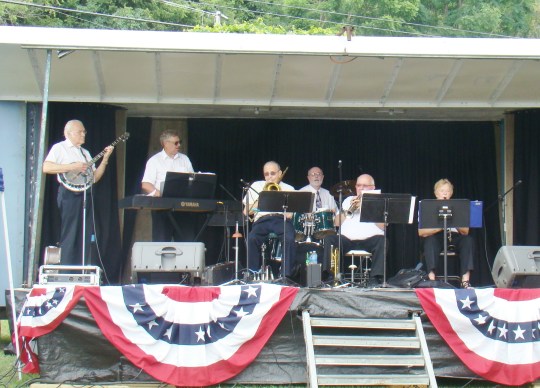
Fly Dick Pavlov

Dick Pavlov with his banjo traveled to Fly last year to join in the entertainment.
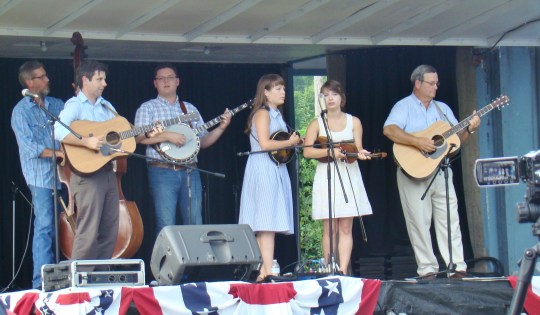
Fly Price Sisters

The Price Sisters, Leanna and Lauren, of Bluegrass fame from nearby Sardis draw large crowds of friends and fans.

On the Fly side, many groups perform throughout the day with everything from Bluegrass music to Steel Drums and accordion. A couple special highlights are the Clark Family of Ohio Opry and local girls, the Price Sisters, who are Bluegrass stars.
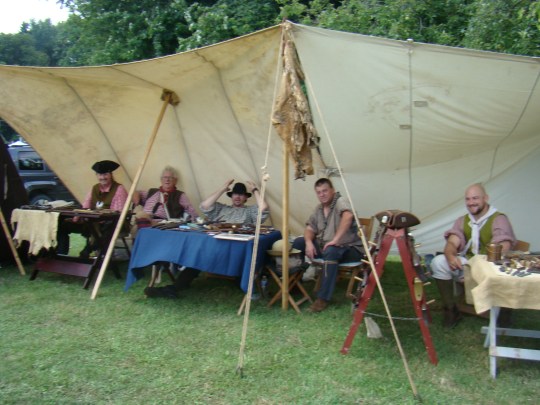
Fly George Washington

George Washington & Co. describes life during Washington’s trip on the Ohio River.

George Washington & Co explain the story of George Washington’s camp at the edge of what is today Fly, Ohio. He camped there during a survey trip back in 1770. They dress in costumes of the 1770s and tell of riding down the Ohio River in two canoes with two Indian guides. It took a couple weeks to paddle from Fort Pitt to Mount Pleasant.
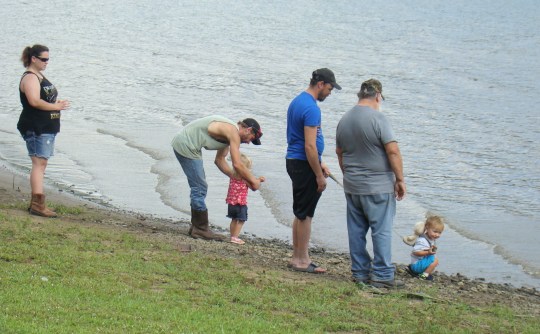
Fly children

It’s a great day for families to acquaint their children with the Ohio River stories.

Join Fly and Sistersville for the 200th Anniversary of the ferry this July. Not only will you enjoy a ride on the ferry, but you’ll find delightful vendors and entertainment on both sides of the Ohio River

It’s definitely the only Ferry to Fly.

Fly, Ohio is located in southern Ohio along Route 7. From Wheeling, it’s about 47 miles south on Route 7. The fastest route would be off I-77 and take Route 7 North at Exit 1. It’s a scenic route anyway you travel!
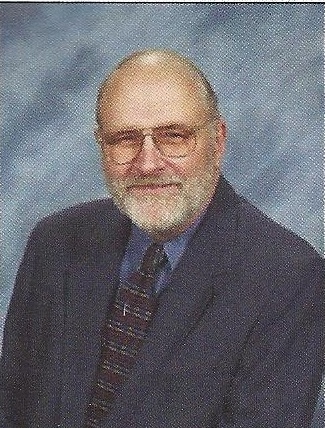
Rich Simcox: A Life of Musical Adventures

Rich Choir Director

Rich SImcox considers music his vocation and avocation.

I fell into a lot of lucky spots.” That’s how Rich Simcox describes his musical career. “ It’s not always what you know, but who you know that matters most.” But his great musical talent certainly enabled those connections.

Rich Pickin' 001 (2)

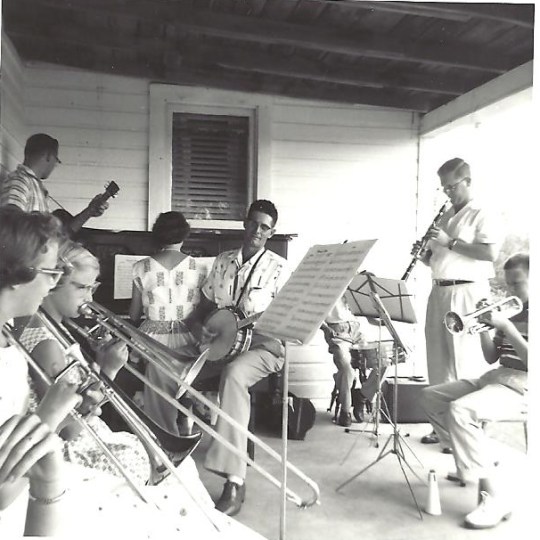
The “pickers and grinners” met  in the summer on Uncle Joe’s porch. They entertained the entire neighborhood.

Rich grew up surrounded by music. His mother’s family were “pickers and grinners”, while his father’s family reached out to classical and Dixieland. Rich wanted to emulate his dad.

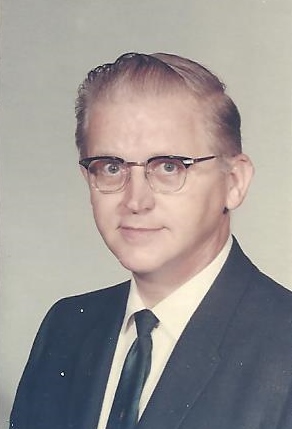
Dick Simcox, Rich’s dad, directed school music programs in Bucyrus during Rich’s youth. In fourth grade, Rich started playing the trumpet, which remains his favorite instrument.

His dad knew teaching music to be a vocation of long hours and short vacations. He told his two sons and daughter, “I don’t care what you do, as long as you don’t go into music.” They all chose music.

Dick Simcox 001 (2)

His dad, Dick Simcox, gave him musical inspiration.

The Simcox family history shows their deep Cambridge roots. Rich was born there, his dad grew up there. Grandpa Simcox performed vaudeville at the Strand and Liberty theaters. Great-grandpa Simcox had a harness shop by the courthouse. It seemed only natural for Rich to drift back this direction.

He admits to being a gypsy at heart so he has been on many musical adventures. That all started when he became a member of the Air Force Band, one of his favorite musical journeys. Most of the time they worked out of Scott Air Force Base in Missouri. The 45 piece band played for parades, school concerts, community events, and military funerals.

Muskingum College Jazz Group

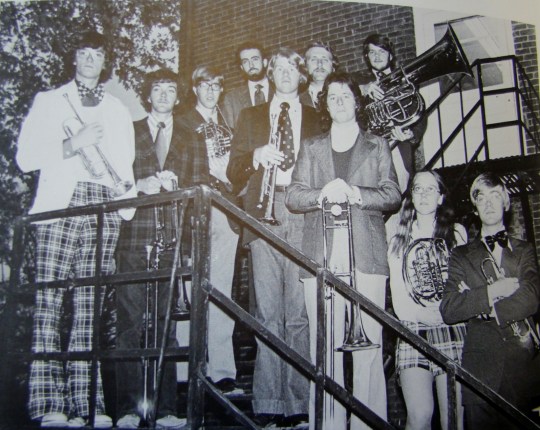
When attending Muskingum College, he played in many campus bands.

In the 70s, his dad moved to Tri-Valley High School and in his spare time formed “The Dick Simcox Big Band”. Rich at the time was attending Muskingum College so became part of his dad’s band. When his dad passed in 1979, Rich decided he would keep the band performing as long as possible. One thing he wanted to do was always keep his dad’s name as the name of the band.

While his biggest inspiration remained with his dad, he also listened carefully to Al Hirt and Doc Severinsen. Rich said he always hoped to emulate the tunefulness and tone quality of Bobby Hackett, coronet player.

Rich Simcox Jazz Band 001 (2)

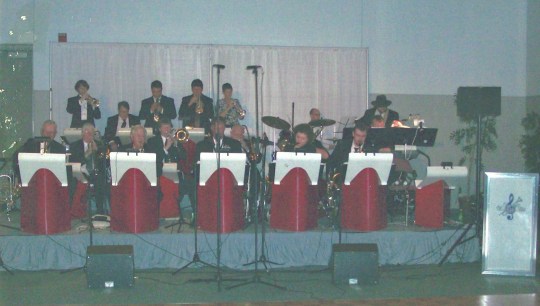
The Dick Simcox Big Band provided music around the Tri-State area.

Locally, Rich taught music at several high schools as well as Muskingum College. Many remember him coming to their homes for private lessons. He has led many musical groups in the area over the years, including: Barbershop Chorus, Sweet Adelines, and Land ‘O Lakes Chorus.

His involvement with music in the area extends to many organizations and listing them all would take an entire page. To name a few, he has played trumpet or french horn in Cambridge City Band, Coshocton Lake Park Band, Southeastern Ohio Symphony Orchestra and Zanesville City Band. He’s directed musicals at Living Word and Cambridge Performing Arts Center.

Rich Dick Simcox Band 001

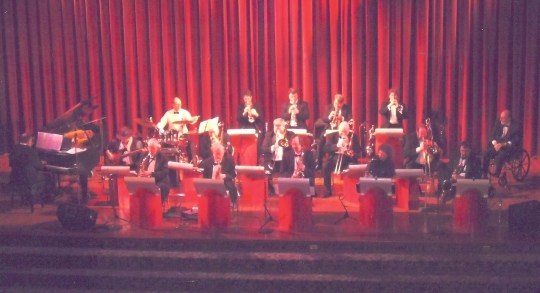
Here the band plays at the Cambridge Concert Association at the Scottish Rite Auditorium. That’s Rick sitting in the wheel chair.

While directing has been one of his strong points, participating as an actor gave him great pleasure at CPAC. He played lead roles in popular musicals such as “The Music Man”, “Carousel” and “The Flower Drum Song”. His talent in so many varied musical arenas led him to say, “Music is my vocation and avocation.”

This outstanding musician played trumpet on cruise ships and has kept the “Dick Simcox Big Band” alive with performances throughout the area. Rich reflects, “I’ve done more than I ever thought I would.”

Rich in Church Choir

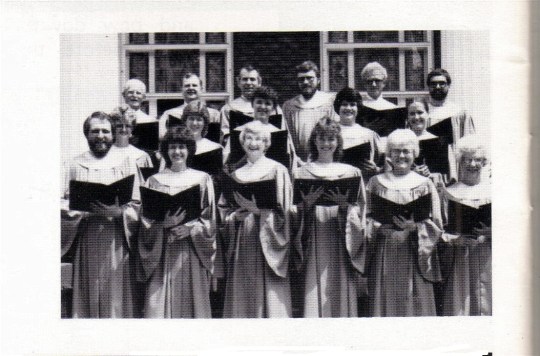
Singing in the church choir has given Rich pleasure for nearly forty years.

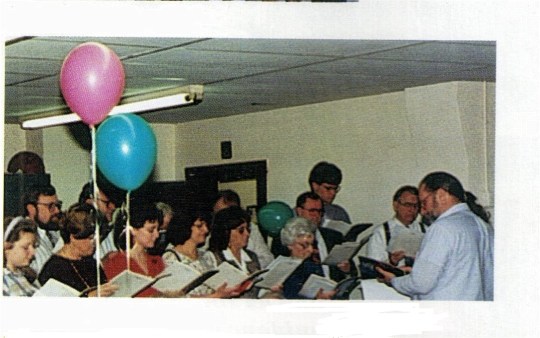
Directing the choir at First Christian Church in Cambridge since 1978 still gives him great pleasure. The church music lifts his soul as they make a joyful noise to the Lord. In his spare time, he also enjoys camping and fishing.

Rich Church Choir

He frequently directs the choir with some challenging music.

It’s a tragedy to Rich that schools are doing away with music programs. There’s a big correlation between participation in musical activities and excellence in other areas of study. He feels that the reason this area has so many talented musicians today comes from great music teachers, such as Howdy Max, John Matheny, Max Trier, Diane Box, and Todd Bates.

Rich perhaps gave the best description of his role in music. He’s a musical engineer, who organizes whatever needs done or put together. But admitted he couldn’t do it without networking with all his connections.

According to those who know him well, Rich’s specialty is motivation. “He can get more out of most people than they think they can produce.” Music has been a lifelong adventure for Rich.

Velvet Ice Cream – A True Original Since 1914

All Ice Cream is Good…

Some is Just Better Than Others.

~Joe and Mike Dager

Velvet Mill

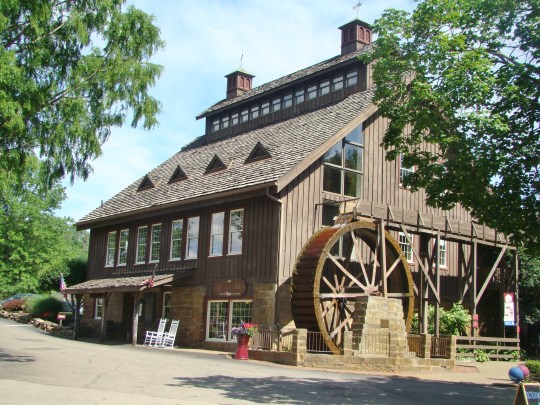
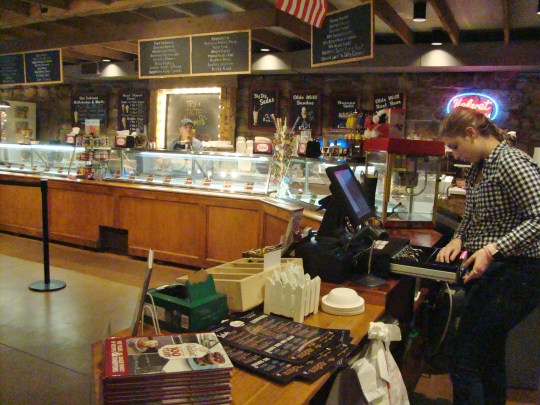
This old mill is now home to Velvet Ice Cream Shoppe where you can find the history of ice cream as well as a restaurant and gift shop.

Velvety smooth ice cream has been produced in Utica for over a hundred years. That’s why more than 150,000 people visit Velvet Ice Cream each year and July is a special month with free samples.

In 1984, President Ronald Reagan recognized ice cream as a delicious treat enjoyed by almost everyone and nutritious besides. So he declared July to be National Ice Cream Month.

Velvet First Home

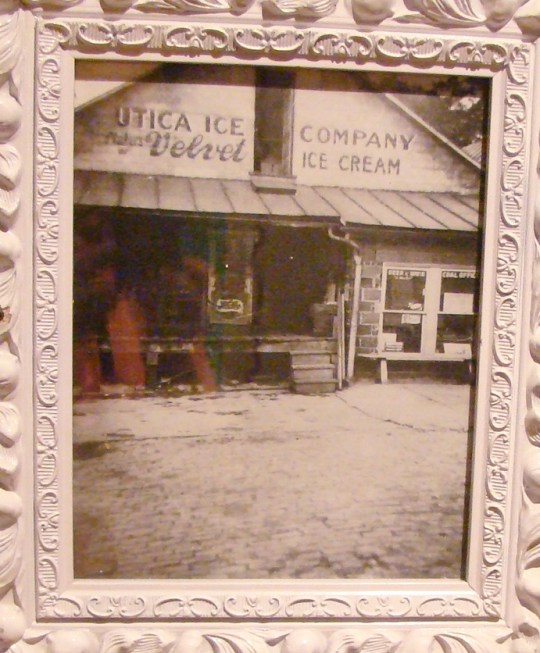
This was the original home of Velvet Ice Cream in the basement of the Utica Ice Company.

Joseph Dager came to the United States in 1903 unable to speak any English. That didn’t stop him from following the American dream of having his own business. His dream became a reality in the basement of a confectionery in Utica in 1914.  That first ice cream was made the old-fashioned way by hand cranking. At that time, there were only three flavors: vanilla, chocolate and strawberry.

They outgrew their basement  home quickly and built a factory behind the confectionery. Then in 1960 they discovered an old gristmill, built in 1817, at the edge of town and thought it the perfect place to build a new factory. The mill was powered by an overshot water wheel, which is 18 feet in diameter and weighs 2000 pounds.

Velvet Operation

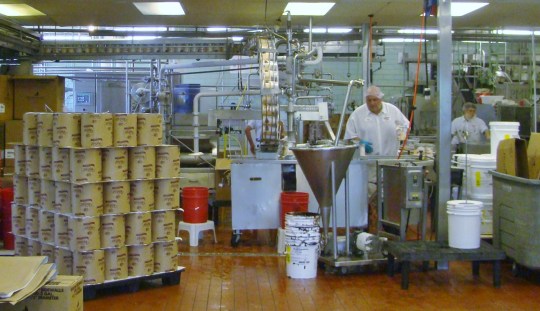
Watching Velvet Ice Cream being made shows their high standards of cleanliness.

Since 1914 the same family has been making ice cream for four generations in Utica, Ohio. They make the world a happier place one small batch at a time. Even today they make their ice cream in small batches using local cream and the finest ingredients.

Velvet Favorite Flavor

Their number one selling ice cream is Buckeye Classic, with Southern Butter Pecan running a close second.

Watching the seven steps of ice cream being made on their Factory Tour is not only free, but during July, Monday thru Friday you’ll get a free sample of ice cream as part of that tour. Only natural ingredients are used to make this smooth and creamy ice cream. It immediately goes to a freezer where the temperature is 108-110 degrees to lock in freshness.

Velvet Cow

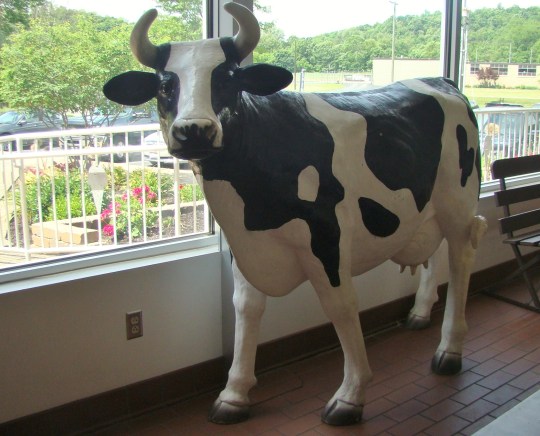
This Jersey cow, named Velvet of course, signifies their ice cream is all made from local Jersey milk.

Here they produce over five million gallons of ice cream each year. They are the largest producer of ice cream in Ohio. It all begins with milk, cream, sugar and water in just the right proportions. Mixing in air as it freezes is essential as nearly half of the volume of ice cream is air. That’s why you have to crank homemade ice cream so long.

On this visiting day they were making Raspberry Fudge Cordial, Summertime Peach, and Moose Tracks. All delicious!

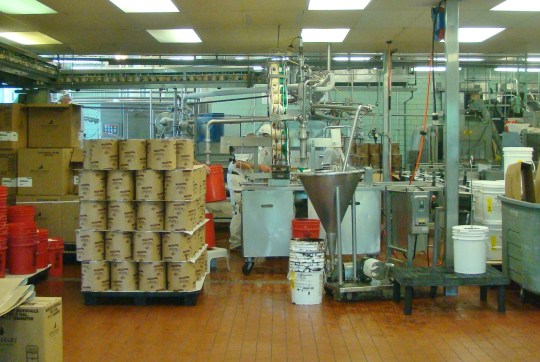
Velvet Cleaning

After each flavor is finished, the bins must be thoroughly cleaned.

Keeping everything perfectly clean is a top priority. Their employees all change to white uniforms when they enter the factory area. Employees throughout the grounds seemed perfectly happy to be working at Velvet.

After each flavor is finished, the machines must be cleaned. What remains in the machines is placed in red buckets to be picked up later by local hog farmers. Pigs like everything except the mints in mint chocolate chip. They leave those in the bottom of the trough.

Velvet Mill Museum

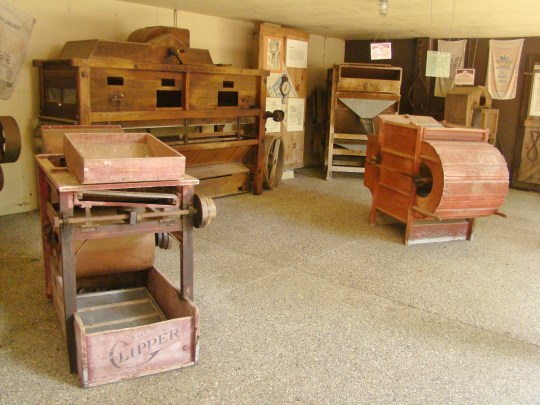
To honor the old mill, there is a Mill Museum, which displays tools used there years ago.

Visit the Milling Museum to view the reconstructed Ye Old Mill, which began running in 1817. When fire destroyed the old mill in 1986, the family rebuilt it. However, the actual mill wheel is still the original.

Velvet Ice Cream Shoppe

Happy employees patiently give out samples of ice cream until you find your favorite.

Before you leave, you’ll want to stop at Ye Old Mill, where you’ll find their ice cream parlor. Perhaps you’ll want to have a sandwich followed by the freshest ice cream you’ve ever tasted. No matter what their age, everyone enjoys ice cream.

Their largest sundae carries the name “The Feed Bin” and should serve 4-6 hungry people. It contains 14 scoops of ice cream covered with four sauces, bananas, crushed nuts and cherries. Come hungry for that one.

Velvet Trail and Playground

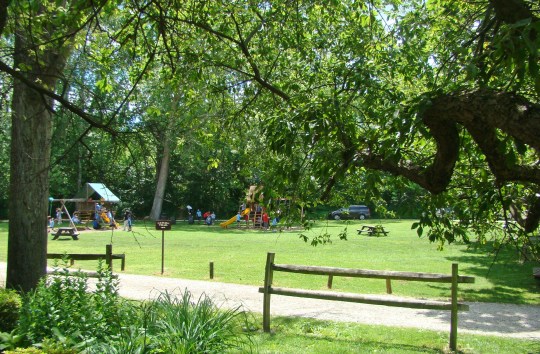
Children enjoy the playground, while nearby walking trails give you a chance to walk off some of that delicious ice cream.

Velvet Pond

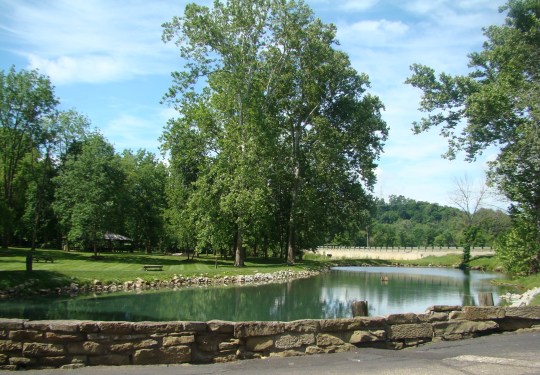
The pond offers fishing with their Buckeye Tree Grove on the left side.

Afterwards, perhaps you might want to take a short walk on their Nature Trail that follows an old canal. It’s a chance to walk off some of that delicious ice cream. Or relax by the side of the catch-and-release fishing pond, where you’ll find ducks to feed. There’s enough activity here for an afternoon of fun for kids of any age..

Velvet truck

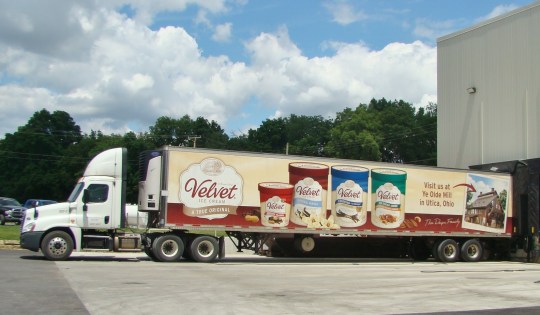
Eye catching semis deliver gallons of ice cream to Ohio and surrounding states.

Visit Velvet Ice Cream during July to get a free sample right off the line Monday – Friday, 11 – 3.  Spend a yummy day discovering your favorite Velvet Ice Cream flavor.

Velvet Ice Cream is located off I-70 at Exit 132. Take Ohio 13 through Newark to Utica. Their address is 11324 Mt. Vernon Road, Utica, Ohio. It is right along Route 13 so quite easy to find. 


World’s Largest Cuckoo Clock in “Little Switzerland of Ohio”

Cuckoo Welcome

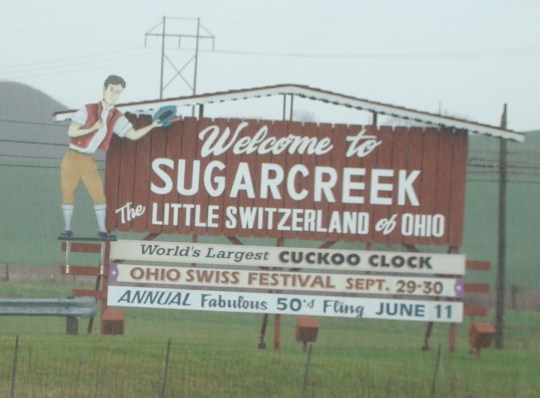
This large billboard at the edge of town announces Sugarcreek attractions.

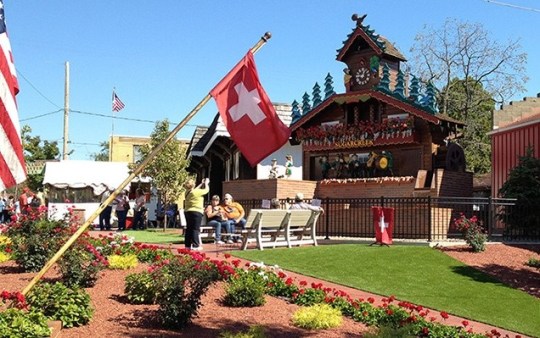
Visit “Little Switzerland of Ohio” to see the “World’s Largest Cuckoo Clock”. Sugarcreek is now home to that famous clock, which was purchased by Walnut Creek Cheese and donated to the tourist town.

But the clock had its beginnings back in 1963 as an idea of Alice Grossniklaus, owner of Alpine Alpa, a restaurant and cheese house. She thought a large cuckoo clock would help bring trade to her restaurant. Designed and built by Karl Schleutermann, twelve years and $50,000 later, the clock was up and running.

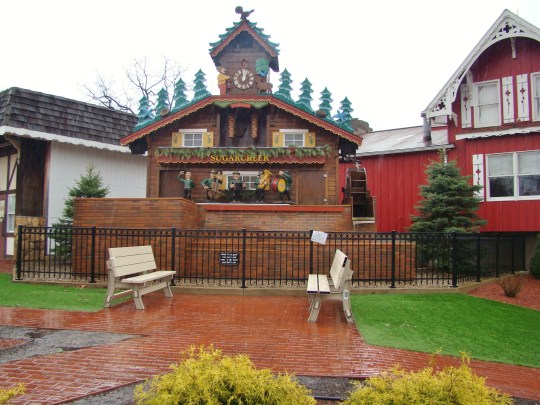
This 23-foot- 6 inch tall timepiece originally stood in Wilmot on a hill in back of the Alpine Alpa restaurant. Alice and her husband, Hans, made it the #1 Swiss cheese shop in the country. But things changed over the years and all the restaurant fixings were auctioned off, including the clock.

Cuckoo Clock

The World’s Largest Cuckoo Clock waits for all to enjoy.

Mark Coblentz of Walnut Creek Cheese purchased the clock at auction. It sat in a parking lot for two years while they looked for the perfect place to set it.

When the residents of Sugarcreek were trying to decide where to put the clock, many wanted it placed inside a building with an admission charge of about five dollars per visit. But Mayor Clayton Weller didn’t have the same vision. He wanted the clock to be free for all to enjoy, as often as they wanted.

When Mayor Weller sets his heart on something, he gets it accomplished. Land was purchased, the foundation set and a crane moved that clock between two crabapple trees without touching a limb. Clayton likes challenges, perhaps that’s why in his spare time he drag races.

Today the clock is on Sugarcreek’s Broadway Street. In 2012, the clock resumed its cuckooing duties after volunteers worked diligently to restore the electrical mechanisms. Those little Bavarian figures still do the polka.

Cuckoo Cuckoo Clock

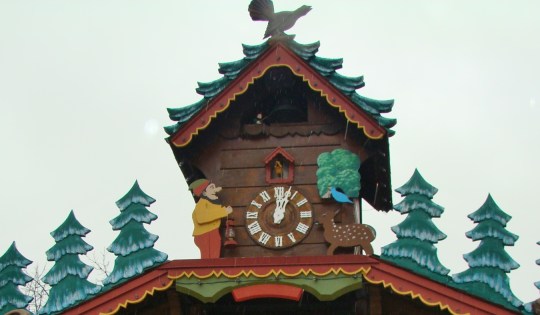
The cuckoo is the first thing you see and hear each half hour.

Visitors are thrilled every thirty minutes when a bell rings, and out pops a cuckoo bird. Next a three-foot-tall couple on tracks dance the polka to Bavarian music played by a five-piece oompa band.

Cuckoo Swiss Hilltoppers

The oompa band, The Hilltoppers, entertains as the couple dances.

The dancers and band are made out of wood from the Black Forest in Germany. Currently, the dancers take a break as the wood started splitting on the lady’s dress. That would have destroyed her, if not fixed quickly.

The mechanical part of this clock is a marvel with many intricate pieces. When viewed through the back door, the system is even more amazing. Most incredible is the fact that this clock is forty-five years old. They even have the original eight-track tapes that played that first music.

Cuckoo Waterwheel

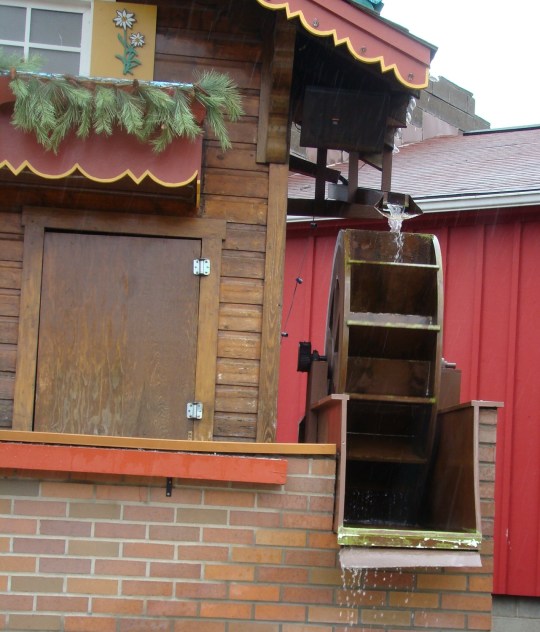
A waterwheel on the side of the building adds a little extra splash.

A satellite on the clock monitors the sound system so it can easily be checked from home anytime. The people of this town really care about the clock. A group of men Clayton called the Cuckoo Brothers spend endless hours working on and checking the clock. Another special group, the Four Amigos, plant and care for 165 geraniums that surround the clock in the summer time. That shows real dedication to their community!

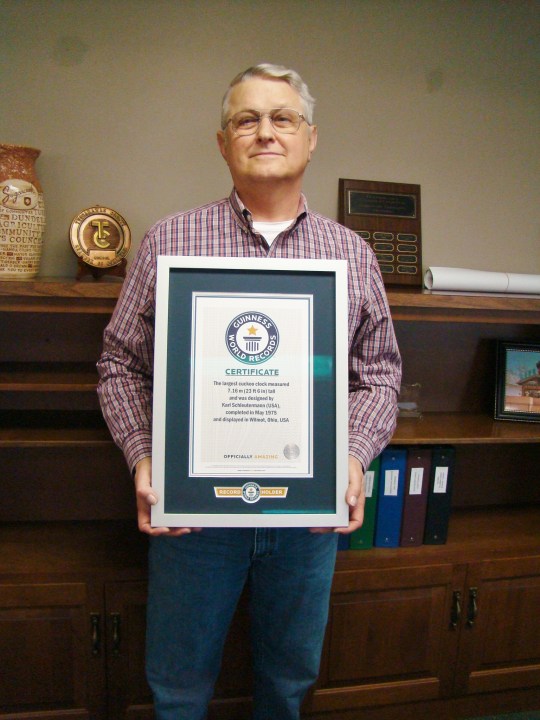
Guinness World Records was contacted regarding the clock’s official unveiling to verify that it is indeed the world’s largest. “It has to work as a real cuckoo clock, like you’d buy at a store,” said Mayor Weller, confident that his clock would be crowned the largest in the world. “A lot of work went into it,” he said. “Everybody says it’s never looked as good as it does now.”

A friend, Big Mike, secretly made all the arrangements with Guiness World Records, and one day Clayton was called asking why the street was blocked off and a crowd of people were at the clock. He knew nothing about these plans, so headed that way. What he saw surprised him completely.

Cuckoo Mayor Clayton

May Clayton Welller has been instrumental in getting the World’s Largest Cuckoo Clock up and running.

Under a blanket on an easel was that coveted Guiness Book of World Records certificate. It verified that the clock in Sugarcreek definitely took the honors of the Largest Cuckoo Clock in the World. Today the office of Mayor Weller proudly displays that certificate.

In order to pay for this project without burdening the local residents, a bedtax plan has been used. Next year the land and moving expenses will be paid in full. Then the money will be used for repairs and maintenance on this local treasure.

Cuckoo 1

This picture was taken on a summer day with all the beautiful geraniums in bloom.

People come from all over the world to visit the World’s Largest Cuckoo Clock. Many remember coming years ago with their families, but most are making new memories as they watch the mechanical marvel play its song every thirty minutes.

Visit Sugarcreek, Little Switzerland of Ohio, to visit their delightful small town and unique chalet-styled cuckoo clock. Cuckoo! Cuckoo!

The World’s Largest Cuckoo Clock is located at 100 N Broadway Street, Sugarcreek, Ohio. Take I-77 to Exit 83, which will be Ohio 39. Go west about 8 miles and turn left on Broadway Street. You can’t miss the Cuckoo Clock on the corner of Broadway and Main.

Secluded Mission Oaks Gardens

A garden must combine the poetic and the mysterious

with a feeling of serenity and joy.

~Luis Barragan

mission-oaks

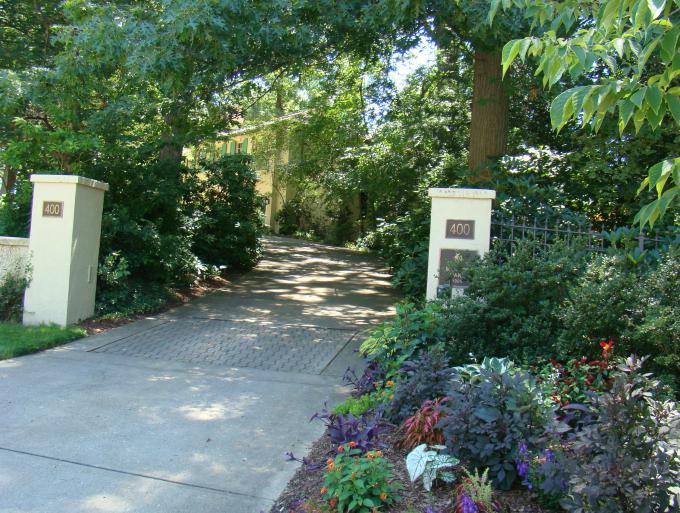
The entrance at Mission Oaks leads you down a path of tranquility surrounded by blossoms.

“The Secret Garden” describes this hidden-away place of relaxation in the midst of an older  residential area of Zanesville. Mission Oaks Gardens has over seven acres to keep you in the arms of Mother Nature.

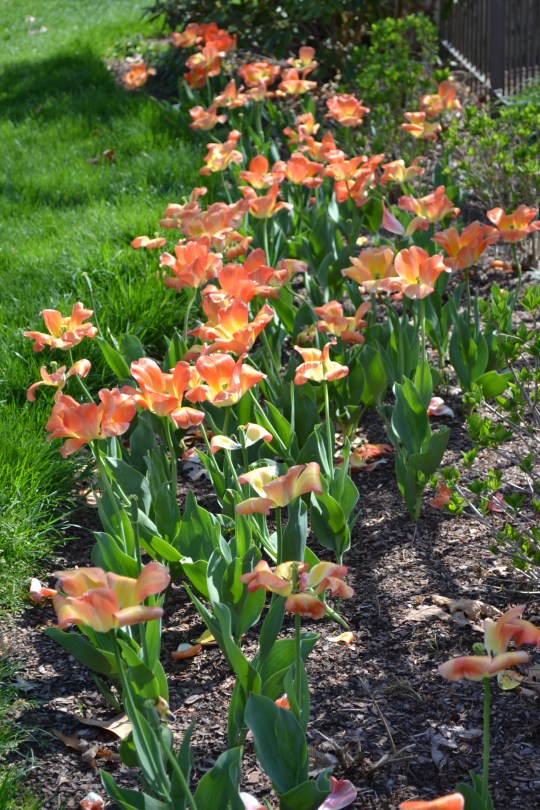
Pink Tulips

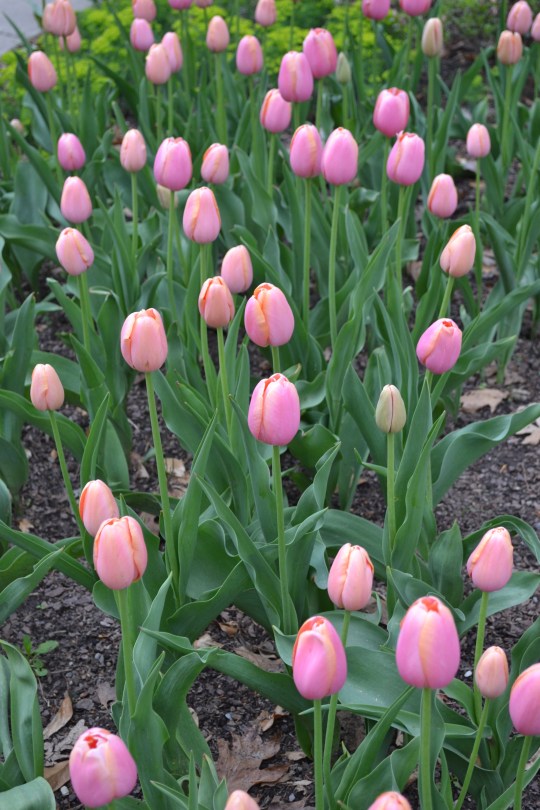
Beds of colorful pink tulips brighten the pathway in the spring.

The setting acquired its name because the home had the appearance of a mission-house surrounded by oaks. Today that name acquires a double meaning as they definitely have a mission: to provide and protect a little piece of nature for all to enjoy.

Tiger Lilies

Tiger Lilies brighten the pathway in this peaceful garden.

Here you will find everything from waterfalls to conifer forests at no cost to you or your friends. Seven days a week from dawn until dusk, you are invited to relax surrounded by flowers, or explore these seven peaceful acres for free.

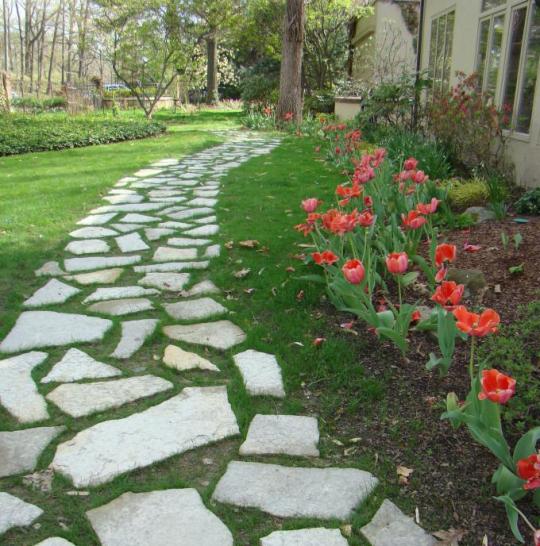
pathway-to-beauty

This beautiful stone pathway always has flowers along its edge.

From springtime until fall, flowers of the season flow along the stone path…from tulips to mums. The porch makes a pleasant place to sit and enjoy the aroma of the fragrant blossoms.

mission-oaks-home-surrounded-by-flowers

The Hendley’s home is surrounded by flowers from spring through fall.

Established in 1925, legend has it this charming mission style home was built by a local businessman for his mistress, a party dress designer during the roaring 20s. But for the last twenty-five years, the home has been owned by Albert “Bert” and Susan Hendley.

When Bert first saw the abandoned mansion in 1988, he told his wife, “You’ve got to be crazy. This place is a dump.” Now, Bert’s developed a masterpiece of beauty and he takes great pleasure in finding unique and rare plants for visitors to view.

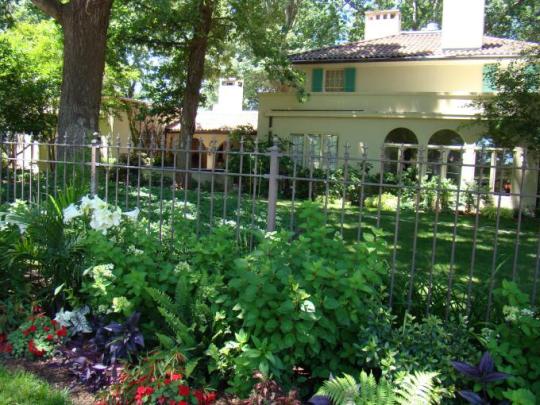
Flowers around every corner

Flowers appeared throughout the property.

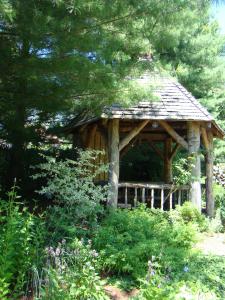
The Perennial Garden surrounds the charming home. From early spring until fall, you’ll find something blooming from hyacinths and peonies to chrysanthemums and sunflowers. Relax in the gazebo being surrounded by the sight and scent of nature. New blossoms open every week.

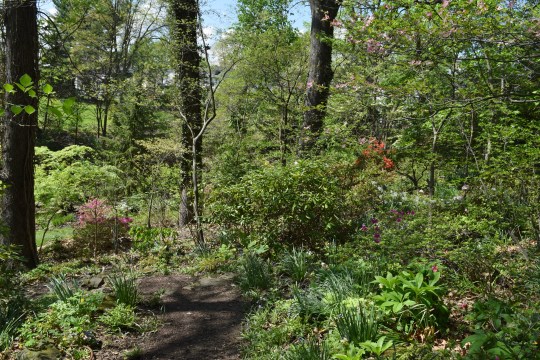
Woods

Flower strewn paths meander through the forest setting.

After you have had a leisurely walk through the upper gardens, then it’s time to explore the rest of the acreage. Head down a steep flight of stairs, or enter the garden from the rear entrance, which is marked with stone pillars.  The sight before you, right in the middle of Zanesville, will amaze you.

rustic-gazebo-in-the-middle-of-the-woods

This rustic gazebo in the middle of the woods provides a respite from the cares of the day.

Once into the forested section of the garden, the paths go two separate directions. One path leads to the Woodland Garden, while the other descends to the Conifer Garden.

Paths meander throughout the wooded areas with surprises around every bend. While no overall plan was ever made for the gardens, unusual rare trees and flowers greet you at surprising places along the pathways.

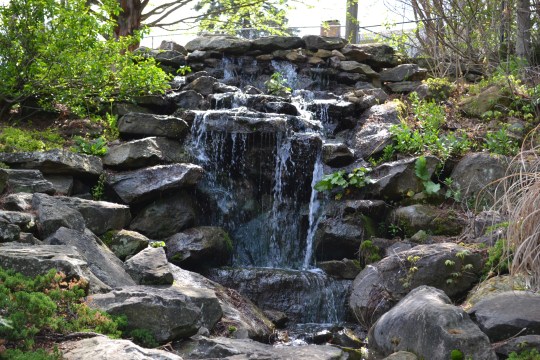
Waterfall

Relax while watching the smooth flow of the waterfall.

The wooded section includes two small waterfalls, which flow over rocky hillsides into a small pond at one end, and a small stream on the other. At the small pond, elegant water lilies and lotuses bloom along the water’s edge. Comfortable wooden benches provide a great spot to relax while soaking up the ambiance of the scenic view.

small-lake-in-conifer-forest

This small lake in Conifer Forest offers calm waters to soothe the soul.

Over 300 trees give plenty of shade to the home and wooded areas. This includes original white oaks as well as many unusual trees Bert has discovered in his travels. In addition there are nearly 200 conifers, making Mission Oaks acknowledged for having one of the most renowned conifer gardens in Ohio.

Spring in bloom

Azaleas burst into bloom to welcome springtime.

Mission Oaks provides the perfect place to avoid the maddening crowds, relax in meditation, take a walk with Mother Nature, or just run away from home for the day. Many find it the perfect place for wedding or prom pictures.

All this is kept beautiful by the Muskingum Valley Park Department with assistance of Mission Oaks Foundation staff and many volunteers. Be sure to stop in Zanesville at 1864 Euclid Avenue – not far from Maple Avenue – and visit this hidden gem…if you can find it!

Delaware Indians Settle Schoenbrunn Village

Schoenbrunn signStep back in time nearly two hundred and fifty years to see the location of the first church and school west of the Allegheny Mountains. Along the banks of the Tuscarawas River in New Philadelphia experience historic Schoenbrunn Village.

Schoenbrunn Scouts

Scouts from Pennsylvania came to see if this would be a great place to settle.

A group of Christian Delaware Indians arrived from Pennsylvania with Moravian missionary, David Zeisberger, in 1772. They came by invitation of Chief Netawatwes, head of the Turtle Tribe in the Tuscarawas Valley of Ohio.

Schoenbrunn David Zeisberger

This portrait of David Zeisberger hangs in their museum.

David was born in Moravia, which is now part of the Czech Republic. His parents immigrated to Georgia to become missionaries. They sent David to school in Holland, but harsh conditions there caused him to flee to the United States to join his parents.

The family moved to Pennsylvania, where David began preparing for his calling as a missionary to the Indians. He studied their language and learned the traditions of the tribe. Often considered a genius, many called Zeisberger the Apostle of the Indians.

Schoenbrunn Guide

A guide welcomed visitors as he strolled through the reconstructed village.

Near a big spring, deep in the woods, a settlement was established called ‘Beautiful Spring’ by the  Delaware Indians, but translated into ‘Schoenbrunn’ by the Germans. This provided a safe place for the Delaware Indians who had converted to the Moravian faith. Religious services were an important part of each day.

Schoenbrunn Indians

These young men both had Indian blood – one Iroquois and the other Delaware. The glass beads they wore served as early travelers’ checks.

From 1772-1777, this village housed approximately 300 people. The only white people there were Zeisberger, his assistant missionary and the missionary’s wife. The remainder of the village consisted of Christian Delaware Indians.

The village had a short five-year existence due to pressure from both Delaware Indians, and frontiersmen wanting to settle in Ohio. Originally the village contained about forty buildings, but over time these buildings were destroyed, the land was farmed, and all traces removed of the settlement.

The people of Tuscarawas County wished to commemorate this development. Maps, letters and the original diaries of Zeisberger led them to the general area where the town existed.  After extensive research and archaeological excavations, the sites of the school and church were discovered and rebuilding of Schoenbrunn began in 1927.

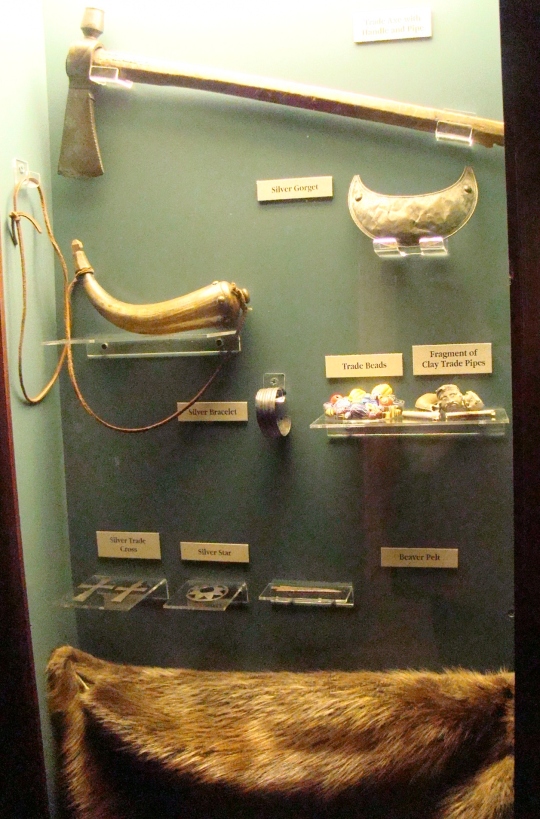
Schoenbrunn Museum Tools

Museum exhibits display tools used during the early days of Schoenbrunn.

At the entrance stands a museum filled with historic exhibits and an excellent video explaining the history of Zeisberger and the founding of Schoenbrunn Village. Here you will find tools the Delaware Indians used, the original school bell, and books written by Zeisberger. These included a translation of the Four Gospels into Delaware Indian language.
Schoenbrunn Herb Garden

An herb garden provided their medicine. Most had confidence in the medicine man’s healing.

Today, Schoenbrunn contains seventeen reconstructed buildings, including the church and the school on their original sites. The location of the cemetery has also been discovered, while  the stones were created in the 1920s. The Moravians had used identical wooden crosses on all graves because they felt all were equal in death.

Schoenbrunn Candle Makers

Two Moravian women had the heavy task of making candles by dipping them fifty or sixty times.

The candlemakers in the Davis cabin actually still make all the candles used throughout the village. They were made of pure beeswax in those early days, to signify the purity of Christ. The Davis cabin served as home to a Native American, his wife and four children. The walls in many of the cabins were whitewashed in order to reflect the candle light.

Schoenbrunn School with volunteers

Costumed volunteers meandered in front of the school where both boys and girls were educated.

Their schoolhouse sat in the center of the village where both boys and girls received instruction in their native Delaware language. Two doors entered the building – one for the girls to use, and one for the boys. In 1775, there were approximately one hundred children being educated.

Schoenbrunn Wordworking

Children enjoyed watching a wood-maker finish a leg for a bench. He also served as the interpreter for the village.

Anton cabin served as home to the village interpreter, making it easier for the whites and various Indian tribes to communicate with each other. This Delaware Indian also was talented in woodworking, making benches and repairing spinning wheels and wooden door hinges. Building a cabin took twenty-three days.

Everything in their community from school and church to their burial in God’s Acre was divided into what they called “choirs”. The young men and boys were placed together, the young women and girls, and then older men and older women. They did not congregate as families or get buried as such.

Schoenbrunn cooking fire

The missionary’s wife cooked meals here for her husband and David Zeisberger, a bachelor.

Authentically dressed volunteers, who all have a passion for history, help you understand what life was like in the 18th century. They serve as storytellers to explain the daily life of the early residents as well as the importance of missions in American history.

Schoenbrunn Butter Churn

Churning butter took much time and patience.

Visit this historic Schoenbrunn Village Monday through Sunday from Memorial Day to the end of August. During September and October, they are only open on Saturday and Sunday. It’s a great place for a family excursion, where you can have an enjoyable outdoor adventure while learning about the history of early America.
Schoenbrunn Village is located in Tuscarawas County at 1984 E. High Street, New Philadelphia, Ohio.  From I-77, take Exit 81 East on US 250.  Next take Ohio Exit 259 to E High Street. The village will be on the left.

St. Michael’s Greek Orthodox Church

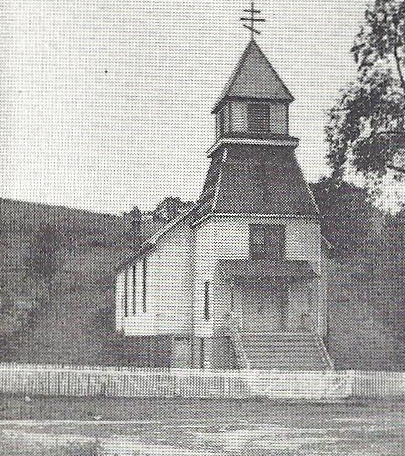
St Michaels Orthodox Church

St. Michael’s Orthodox Church served as worship center for many Slavic immigrants.

Orthodox Christians from central and eastern Europe petitioned Archbishop Platon for a priest in Robins back in 1912. In the beginning, worship services were held in the Lodge Hall, which was remodeled and converted into St. Michael’s Greek Orthodox Church.

Baba and Dede 001 (2)

My grandparents, George and Mary Veselenak – Dede and Baba to me, were active at St. Michael’s Orthodox Church. George Veselenak was president of the United Orthodox Brotherhood of America for over thirty years.

The church sat against a bank in Robins, which is today known as Trail Run. During an Easter service there at midnight on Sunday morning many years ago, the church fell into total darkness. Everyone left the church to follow the priest around the church three times to indicate the three days Jesus stayed in the tomb. Then everyone stepped back inside the church to find it brightly lighted with many white candles. The Resurrection had occurred.

St Michaels Parish

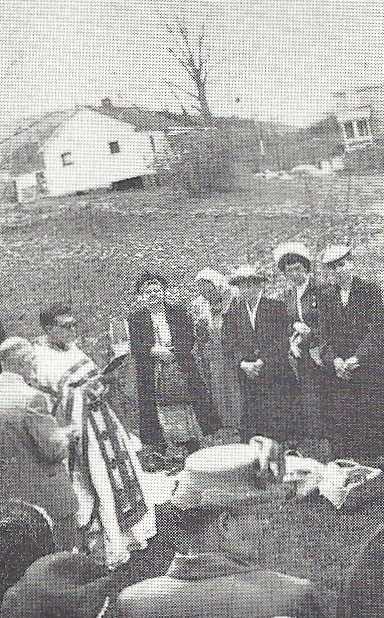
Families gathered to have Easter baskets blessed.

Easter baskets were blessed by the priest and a feast was held for those present to break their fast since Friday. Many had not eaten meat for the duration of Lent. It was a pleasant time as their soul had been filled with the Spirit and their bodies with the blessed food.

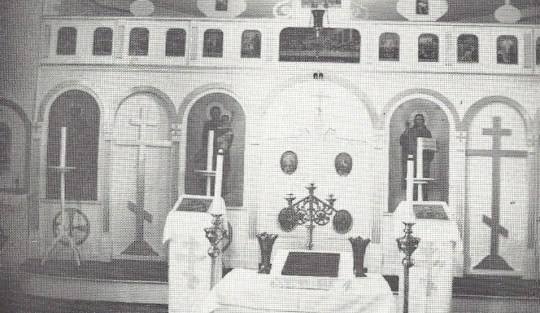
The interior of the Greek Orthodox Church, later called Russian Orthodox Church, holds many beautiful paintings, statues, and decorations.  The church building is centered around the altar table, The Banquet Table of God. The Book of the Gospels sets on this carved wooden table from which communion is served. Many candles can be found throughout the center of worship.

St Michael's Interior

The altar at St. Michael’s  shows the traditional Orthodox cross.

Icons of Christ and the saints play a large role in describing the reality of God’s presence with us. They can be found on the royal gate, over the doors, around the central gates, on walls and ceilings.

The cross is the central symbol for Christianity. The Orthodox make the Sign of the Cross by placing their first two fingers and thumb together to signify the Triune God. Then cross themselves from head to breast and from shoulder to shoulder. This is done several times during their services.

This ribbon badge has two sides. The red, gold and blue side was worn for all church services, while the black side was used for funerals. This badge belonged to Dede.

Incense is the symbol of the rising of prayers, of spiritual sacrifice and of the sweet-smelling fragrance of the Kingdom of God. The priest frequently swings his censor of incense over the altar area as well as the entire congregation as a blessing.

Robins Prayer cloth 001

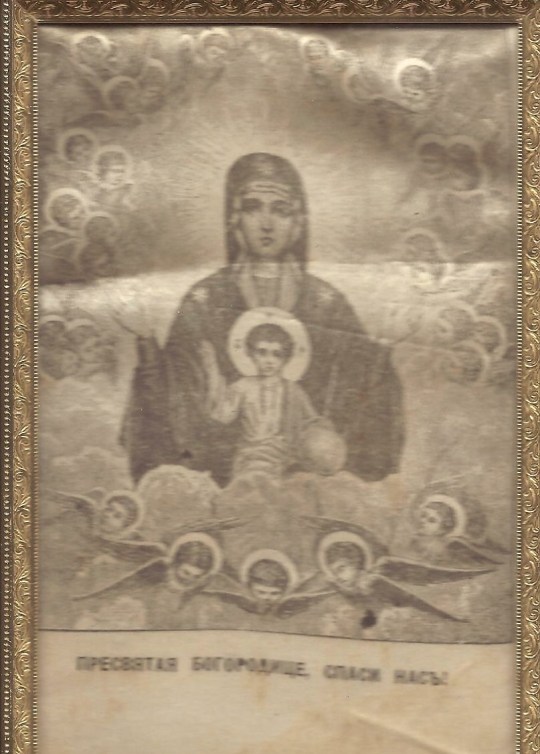
Mom framed this prayer cloth that belonged to Baba.

Since services remain much the same from week to week, parishioners know the hymns and prayers easily as their chant is very repetitious. No organ or instruments are used as all words are from scripture or ancient Christian texts. Orthodox people generally stand for the entire service.

1914 First Children's Class at St Michaels

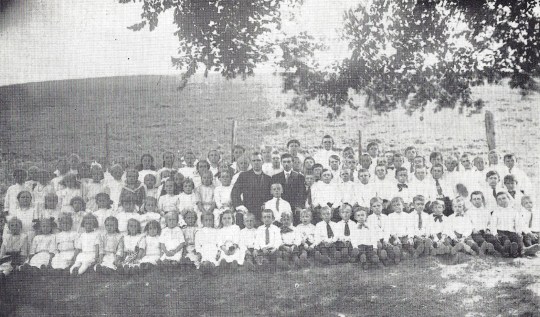
This picture taken in 1914 shows the size of the first children’s class at St. Michael’s.

St. Michael’s Orthodox Church in Robins had a large attendance, and children were well behaved. There was no nursery so children learned to stand quietly for the entire service. In its early years, services were conducted in Slovak, however, today English prevails.

Land for the church cemetery, now known as Robins Cemetery or Trail Run Cemetery, was purchased on the hill across the road from the church in 1918. The Bethlehem Cemetery is in Lower Trail Run. About twenty years later, the “R” Club (Fellowship of Orthodox Christians in America) was established.

Trail Run View with church by tracks

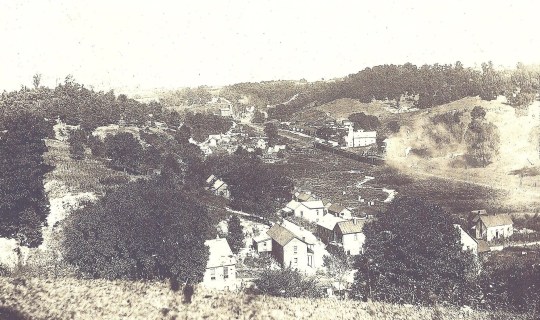
This is an overview of Robins with the Orthodox Church seen on the back right.

The parish home in Robins, burned down on two separate occasions. The first time in 1939 when it was rebuilt with lumber from vacated houses after the mines had closed. After the second fire in 1958, parishioners decided to rebuilt in Byesville, OH and purchased land for a future church building.

Christ the Savior Orthodox Church

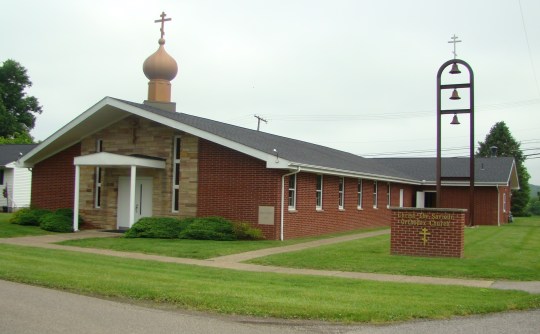
Christ the Savior Orthodox Church celebrated its 50th Anniversary in 2017.

In December of 1966, the first service was held in the new building in Byesville, where the church was called Christ the Savior Orthodox Church. Today this church is the only Orthodox Church in southeastern Ohio and covers an area from Columbus to the Ohio River and as far north as Canton. They celebrate their 50th anniversary this year.

Their church bulletin states: “May God reward your good deeds and preserve the spirit of devotion to Him every day of the year.”

Spinners & Weavers in the Ohio Hills

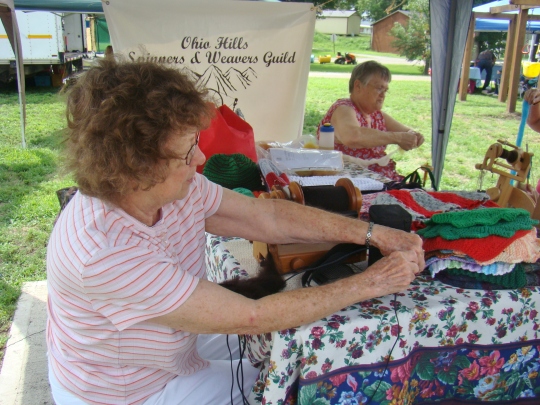
Spinners Logo

A banner with their logo appears at many festivals.

In the hills of southeastern Ohio near Senecaville and Lore City, a group of locals gather to spin their yarn and their tales. Quite often you’ll hear them telling stories of a particular time in history as they spin their yarn for weaving.

Spinners at work

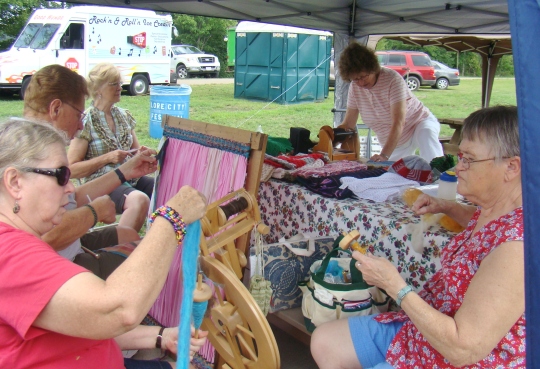
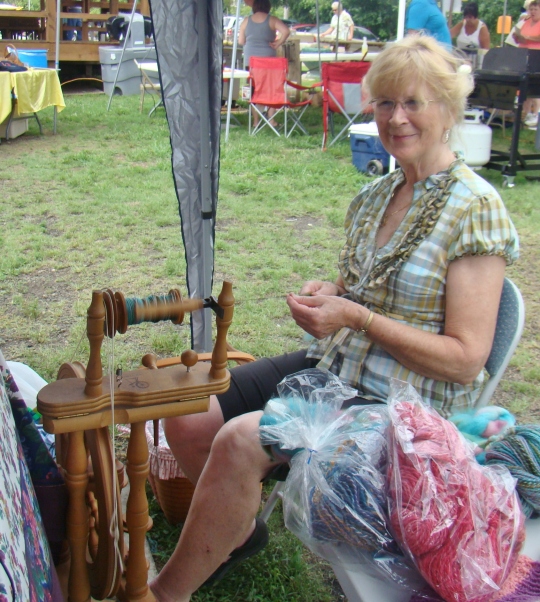
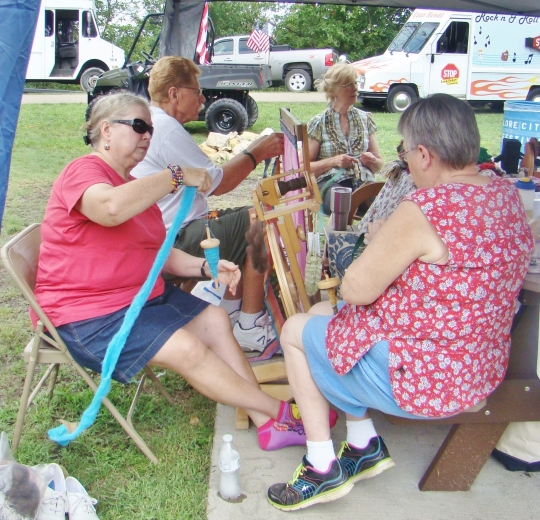
Spinners and weavers demonstrate under a tent at a local festival.

Members of Ohio Hills Spinners & Weavers Guild are a friendly and happy group, eager to share knowledge about their hobby, which many have pursued for over twenty years. The items they create are beautiful as a result of their artistic abilities.

For members, meetings bring total relaxation as it takes their mind off any troubles while they sit and spin or knit. They find it fascinating that they can “make something from nothing”. Imagine starting with a sheep in the field and ending up with a sweater.

Spinners yarn

Sally spins wool that she sheared from sheep at their farm.

Most of the wool comes from the sheep on the farm of Sally Mehler. Sometimes they use alpaca wool from a neighboring farm as well. This local wool then progresses through the steps of washing, picking, and carding, before it’s spun into yarn. Then often it’s dyed.

Spinners pot holders

Jo Ann finds it more relaxing for her hands to use an electric spinning machine.
Everyone has their own touch when it comes to spinning and weaving. Some prefer a traditional spinning wheel, while others try a more modern touch. A few of the members have an electronic spinner, Hansen miniSpinner, which eases the tension on their hands and most likely produces a more even yarn.
Spinners making cloth

Mary demonstrates how to use the drop spindle.

It’s a great feeling to take the wool and spin it into yarn so it can either be woven or knit into something special. It’s not difficult. Take a section of wool and start spinning from one end on a spinning wheel. Pull little snippets of the wool roving back as the twists of fiber start around the bobbin’s original yarn. The bobbin fills up with the newly formed yarn.

Members carefully choose the type of wool used especially in garments. Merino wool claims to be the softest wool in the world. The merino sheep raised in Australia and New Zealand give us most of the wool used in the United States. If wool makes you itch, you’ve got the wrong kind of wool. “That kind should have been a rug on the floor.”

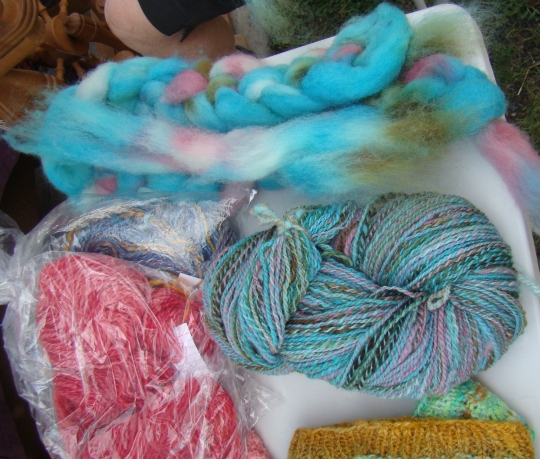
Spinners yarn samples

These are just a few of the beautiful balls of yarn created by the spinners.

These spinners insist that the more you do, the smoother the yarn. But it’s done from the heart, as one spinner commented, “You don’t get enough in sales to pay for the spinning.” That doesn’t count for all the time spent afterwards creating beautiful items. But it’s still worth-while as people enjoy what they make, while they’re relaxing.

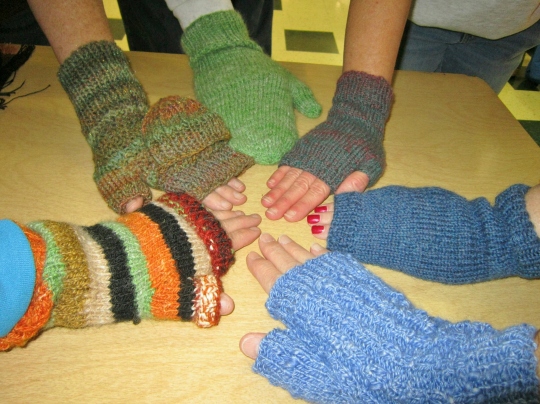
Spinning Mittens

One winter meeting, their project created some practical mittens.

Newcomers will be first taught to spin and then encouraged to move forward with using that yarn to create something they can use. The first thing they learn to knit is usually a basic dish cloth. As they progress, more difficult patterns are introduced.
Shortly, they’re spinning the yarn, then knitting gloves, hats, socks, sweaters and even rugs. This creative process makes people want to return again and again. The woolen items they make will keep a person warm even during wet weather.

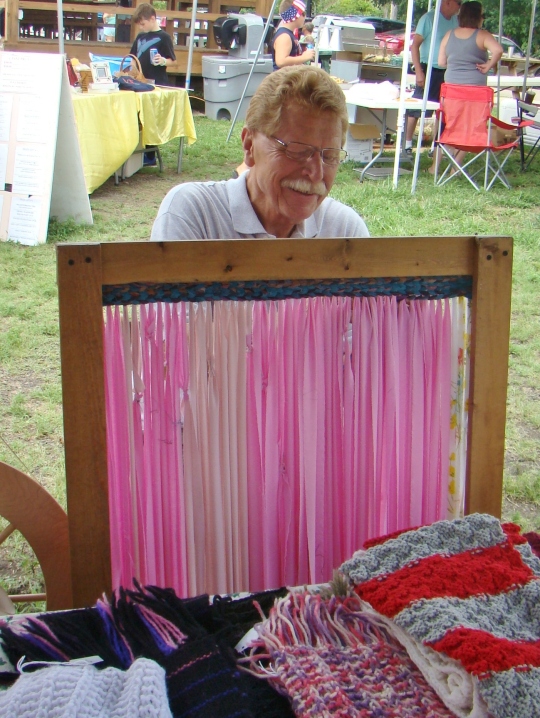
Spinners rug

Bill prepares the pieces for twined rug weaving.

Others enjoy rug twining. Three layers of fabric are braided together to form a sturdy rug for use inside or out. It takes a couple of weeks to complete a rug and then they’re usually given away. One rug maker doesn’t even have one of his own…and people are waiting for the next one to be finished.

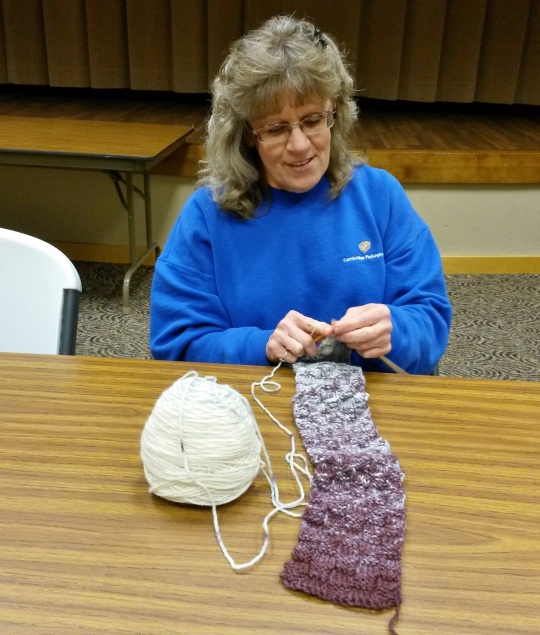
Spinning grape kool aid

This scarf, created by Sue Sherby, is being made by yarn dyed with grape Kool-Aid.

This group meets the second Thursday of every month at St. Peter and Paul Catholic Church in Lore City. They can also be found displaying their methods and products at many area events during the year. One week they might make mittens or perhaps use Kool-Aid for dying. There’s always an interesting project happening.

Homespun yarn won’t be perfect, but one of the spinners remarked with a smile, ” If you wanted perfect, you would go buy your yarn at the fabric shop!”

Radio Enthusiast Enjoys Broadcasting

Boyer Logo 001

This WBPS 101.9 FM logo provides easy public recognition of their station.

Turn the radio on  and listen to WBPS 101.9 FM, where you can hear Good Time Oldies and Great American Standards, all day and all night.

Many remember sitting on the floor by the radio listening to those old classics. However, “watching” the radio fascinated Boyer Simcox when he was a child. While listening he saw the shows in his mind, but when TV came around the shows didn’t match his imagination. Radio always remained his preference.

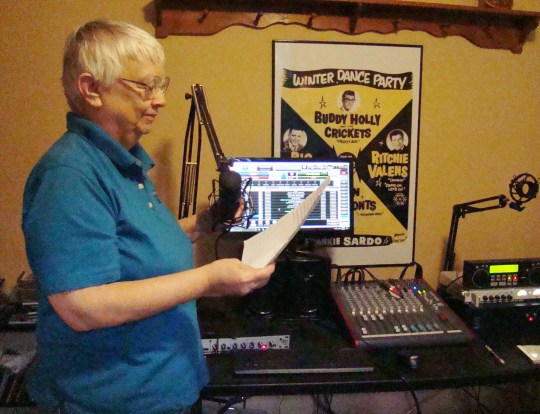
WBPS Studio

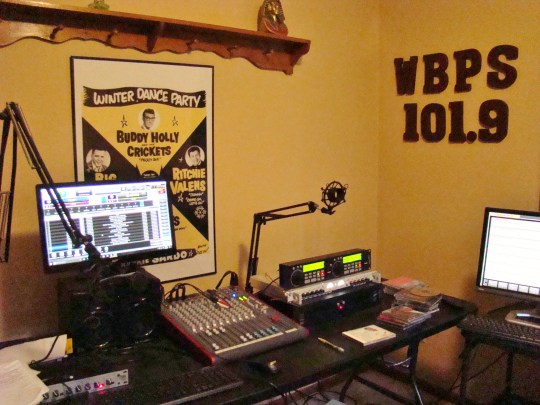
The radio equipment in this one room provides entertainment throughout the Cambridge area.

Just out of high school, Boyer volunteered at a radio station in Wheeling, where he did a half hour talk show called “Firing Line”. Here he interviewed many interesting guests including John Glenn and Howard Metzenbaum. One special show happened at the time of the Kent State shootings and so many questions came in that the producer told him to keep going as long as listeners were interested.

Over the years, Boyer has held many intriquing positions where he was helping someone. One thing can be certain, he has always done what he wanted to do. He’s worked as Director of Social Services, Director of Area Agency on Aging, and even owned a couple restaurants, but always wanted his own radio station.

WBPS Mixing Board

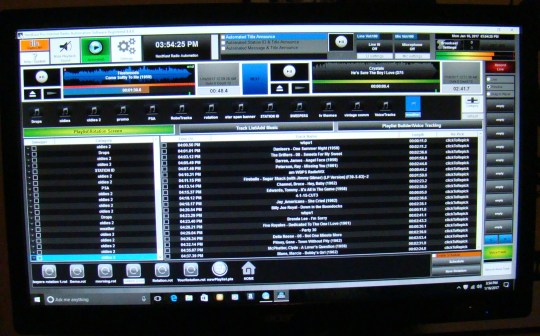
Their mixing board gives Boyer opportunity to make instant changes, or set up programming ahead of time.

Back in 1984, he called the FCC to see if a frequency was obtainable. None were available at that time, so he waited. Then in 2013, the FCC released several frequencies for non-profit or community stations. Boyer applied.

One morning in 2013, while watching the Today Show with his wife Judy, Boyer happened to check the FCC site on his tablet. He was listed on their approval list! Immediately, he handed the tablet to Judy to prove he wasn’t dreaming.

WBPS Judy

Judy frequently helps by giving public service announcements.

Paperwork began. Deadline for being on the air was 18 months. He decided to purchase a package with everything he needed except the antenna. When he received it, Boyer wondered, “What have I done?” There were many unanswered questions as the package had no instructions.  Boyer used the internet for information and several small radio stations formed a forum to answer questions and share information.

Work progressed slowly until he had everything assembled and all the wires connected. But when he turned it on, nothing happened. Time was getting short for his deadline, then one night at 3:00 in the morning in November, 2014, Boyer rested in bed thinking about those wires.

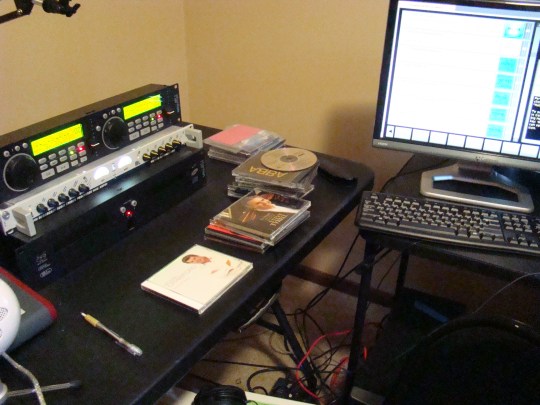
WBPS CDs

A handy supply of CDs provides variety to the programmed music.

It came across his mind that two wires needed to be switched. Changing those two little wires brought his station to life. Excitedly Boyer hopped in his car and drove all over town to see how far WBPS could be heard. When he stopped on Wheeling Avenue, he looked down and discovered that he still had on his robe and slippers. However, he discovered that the station could be heard all over Cambridge.

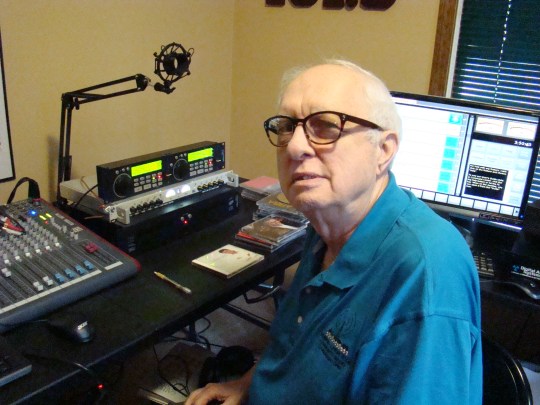
WBPS Boyer at controls

Boyer spends many hours at the controls of WBPS, and enjoys every minute.

Now into his third year of broadcasting, he has country-wide contacts, who share their shows with him. Bluegrass from West Virginia, polkas from Minnesota, and movie tunes from New Philadelphia are a few of those connections. The Mormon Tabernacle Choir has a featured show as well as Bill Gaither, who agreed to share his program after just one phone call.

WBPS airs around the clock these days. People listen to it all night long and also use it in the workplace because it’s happy, up-beat music.

There’s no need for local news or sports here as AVC radio stations do an excellent job of covering those items. However, Don Keating, local amateur meteorologist, does an outstanding job of broadcasting up-to-date local weather.

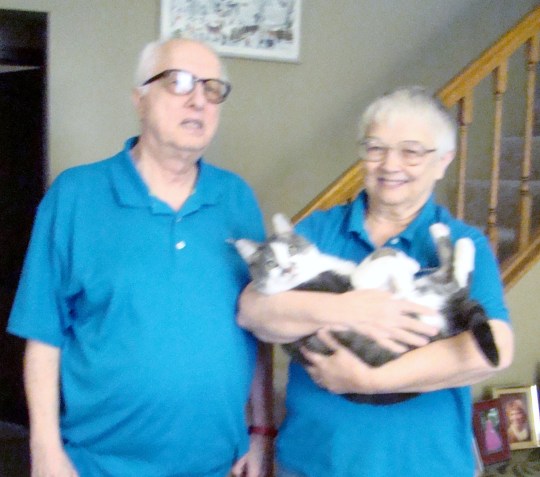
WBPS Boyer and Judy

Boyer and Judy feel this is a great hobby that adds enjoyment to the listening area. Their cat, Mr. Lucky, sometimes tries a little programming himself.

Boyer and Judy Simcox feel WBPS is their gift to the community. They both participate in radio operation on and off the air. Everyplace they go, people stop and thank them for the familiar music. It made Boyer smile when a listener told him he wouldn’t get out of the car until a song was finished. That makes it all worthwhile.

Listeners tune in for the Pennyroyal live on Friday, the Wheeling Jamboree on Saturday and  then a day of spiritual songs – Our Sunday Best.

In the future, Boyer would like to feature more local groups on the air. If groups have a CD they would like to share, contact him at wbpsradio@yahoo.com . If anyone has an interest in volunteering or has ideas for the station, Boyer’s always ready to listen and is eager for more local participation.

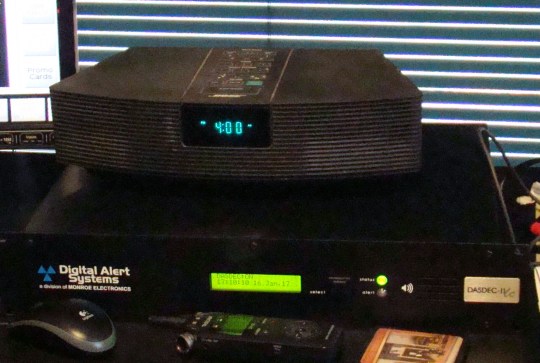
WBPS Digital Alert System

The Emergency Digital Alert System is handy for national emergencies.

If non-profit groups would like to have announcements made on WBPS, send him an email as there is no cost. He even shares them with his network of radio friends.That’s what Community Radio is all about.

When asked what he does for fun, Boyer answered quickly, “I’m having it.” His advice to everyone would be, “Don’t be afraid to try something new.” It never occurred to him that he couldn’t do it.

Music comforts the soul, especially those songs you have known most of your life. That’s why WBPS is becoming a favorite station for seniors in the area. Twenty-four hours a day,  it plays those songs that make you smile.

Listen to WBPS 101.9 FM and you’ll find yourself singing along with those old-time favorites. You just can’t help it.

Evidence of Bigfoot in Southeastern Ohio

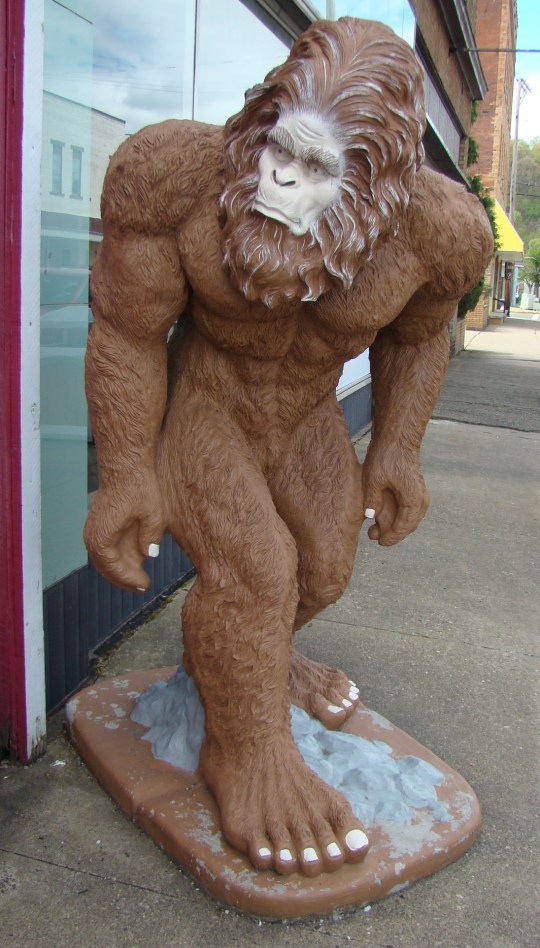
Bigfoot Newcomerstown

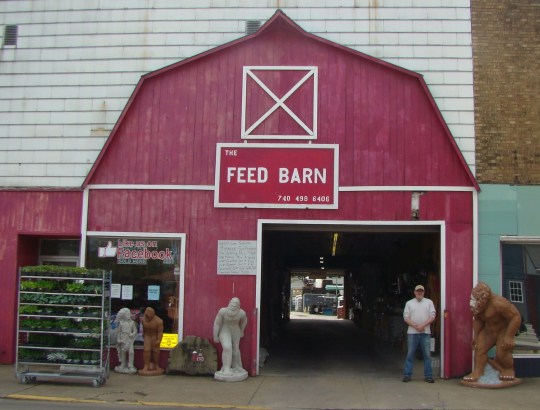
This large Bigfoot outside The Feed Barn keeps an eye on customers.

Bigfoot captures the attention and following of many residents of Southeastern Ohio. Frequent meetings are held all year with devotees telling of their latest sightings and experiences with the illusive Bigfoot.

Recently an employee of Salt Fork State Park saw something large stand up along the road as she was driving past Hosak’s Cave in the park. This Bigfoot ran into the woods, but left behind a large footprint, which the Bigfoot investigators made into a plaster cast.

Bigfoot Crossing

It’s no surprise that in the Salt Fork Lake area you might find a Bigfoot Crossing.

Each spring, Salt Fork State Park holds Ohio Bigfoot Conference, which draws hundreds to listen to the latest information about Sasquatch, another name for Bigfoot. This year those dates are May 19 and 20. Cliff Barackman from Animal Planet’s “Finding Bigfoot” will be the Master of Ceremonies.

Bigfoot Orrs

Vicky Veselenak shares a passion for Bigfoot with her dad, Marvin Orr.  You can have lunch with Bigfoot at Orr’s Drive-in.

Several area businesses use Bigfoot as a drawing card. In Byesville, Marvin Orr at Orr’s Drive-In placed a statue of Bigfoot beside their picnic tables. Marvin and his daughters frequently attend Bigfoot meetings and conferences. After hearing all the stories told by ordinary people, it makes them believe there’s ‘something’ out there.

Daughter Vicky used the Bigfoot theme in her classroom in Rolling Hills for years. Her bulletin boards were alive with his image, wooden Bigfoots made great hall passes and she designed her own six foot tall Bigfoot with a jigsaw. Stop by Orr’s and have lunch with Bigfoot.

BF The Feed Barn

Three Bigfoot statues draw attention to The Feed Barn in Newcomerstown. Doyle Donathan, manager, enjoys sharing stories about this mysterious creature.

The Feed Barn in Newcomerstown displays and sells Bigfoot statues and tee shirts because of all the sightings in the area. Recently, a young boy was crossing the railroad tracks down by the Tuscarawas River and checked both ways to make sure no train was coming. No train in sight, but he did see a Bigfoot step across the track easily with one long stride.

Bigfoot Caldwell

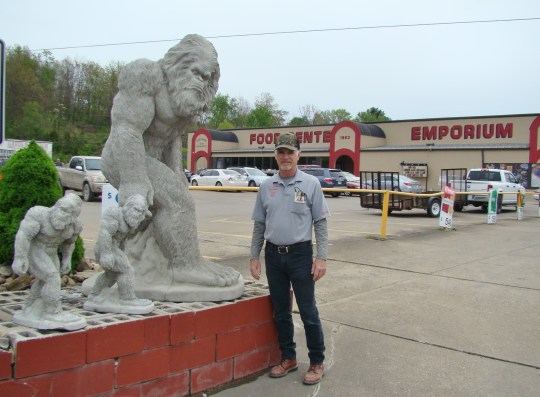
Denny Crock keeps customers watching as he frequently dresses Bigfoot as a snowboarder, fisherman, or even ready for Jamboree in the Hills. It’s difficult to find his shirt size – 7X.

In Noble County at the Caldwell Food Center Emporium, you will be greeted by Bigfoot at the entrance to the parking lot. Denny Crock, owner, knew people talked about Bigfoot frequently so wanted a concrete statue at his store. This 6’2”, 2400 pound creature attracts much attention.

Bigfoot Salt Fork

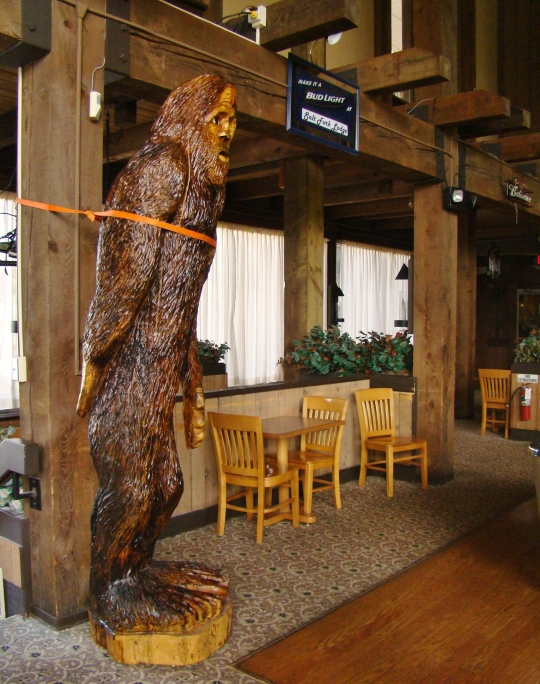
This carved, restrained, wooden statue hangs out in Wildlife Lounge at Salt Fork Lodge.

Out at Salt Fork Lodge, Ohio Bigfoot Conference donated a carved wooden statue since their meeting provides Salt Fork Lodge its largest conference of the year. Rooms and cabins are filled to capacity this weekend and the Lodge Gift Shop has record sales with their wide range of memorabilia.

Bigfoot Gift Shop

The hottest items at the Salt Fork Lodge Gift Shop are tee shirts. But they also have              “Bigfoot I Believe” wine,  action figures, games and much, much more.

Nothing But Chocolate will give you a sweet taste of Bigfoot as she has his footprints for sale – in chocolate of course. Amanda makes these delicious footprints for the Bigfoot Conference and for State Park Conventions held at Salt Fork.

Local investigations began with Don Keating in 1980. He wrote an article about a sighting in the Newcomerstown area. Since then Don had organized the Ohio Bigfoot Conferences at Salt Fork State Park until he recently stepped back to devote more time to another interest – meteorology.

Bigfoot Doug

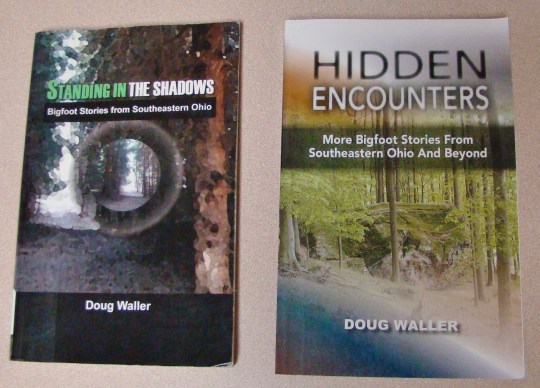
Doug Waller, local Bigfoot investigator and enthusiast, has written two books about the group’s experiences.

Doug Waller speaks frequently around the area about the legendary Bigfoot. The founder of Southeastern Ohio Society for Bigfoot Investigation, Doug and his team tell about the activities and sightings of this mysterious creature.

Ideas range from an ape-like animal to an extraterrestrial being. The Native Americans saw Bigfoot as a spiritual being, including it on their totem poles.  The Delaware Indians cautioned residents here long ago to put out food offerings for “the wild ones in the woods”.

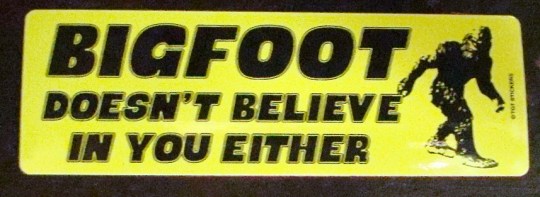
Bigfoot sign

This clever sign always brings a smile to the face of Bigfoot fans.

Each person is free to explore the ideas he finds probable. But when you hear a scratch on the wall, smell something terrible outside your door, or see an eight-foot tall creature lumber off into the woods, you just might become a believer.