Places to go and things to see by Gypsy Bev

bobbie-polar-bears

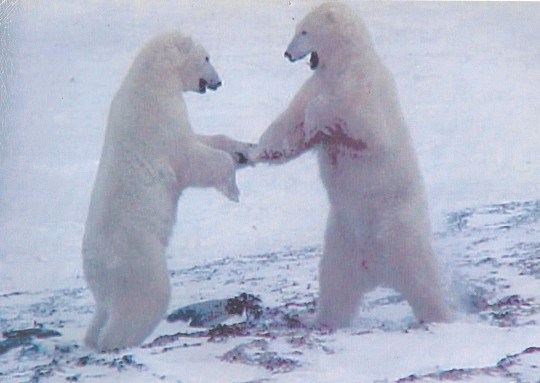
Sometimes even polar bears just want to have fun.

Not everyone would consider sleeping in a tent on the ice the perfect vacation, but Bobbie Henderson thought it a great adventure. Over the past few years, she has made not one, but two trips to the far, far north just to get up close and personal with polar bears.

While she’s had a long-time passion for animals, one day while teaching an eighth grade class, they watched a film about polar bears. At the end of the film, it told about possible tours on the tundra where you could see polar bears just outside your window. Bobbie was hooked.
bobbie-three-polar-bears-001-2

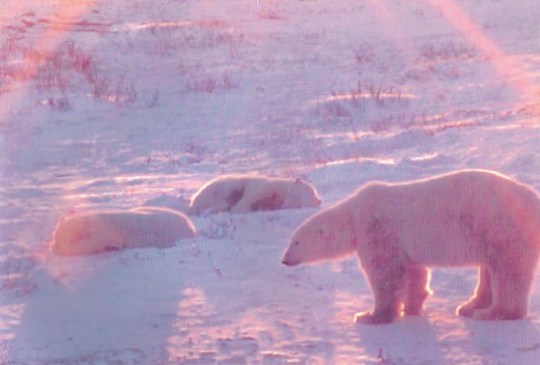
Three polar bears relax in the setting sun on Hudson Bay.

Her first polar bear expedition headed to Churchill on Hudson Bay in the far north of Manitoba, Canada. Northern style shops lined the streets of this small town. Sirens went off to alert people when a polar bear came to visit. They even had a polar bear jail, where they placed tranquilized bears until they could be taken back to the wilds by helicopter.

At Churchill, a group of 32 boarded Tundra Buggies set high off the ground to take them exploring. Once they reached camp, the group settled in for a week of visiting polar bears.

Headquarters consisted of a stationary area with seven modular sections. Camp here was spartan, but comfortable…with excellent food. Showers were limited to two and a half minutes as all water had to be heated, while outhouses stood on the edge of camp. Overall, a relaxed atmosphere.
bobbie-window-view

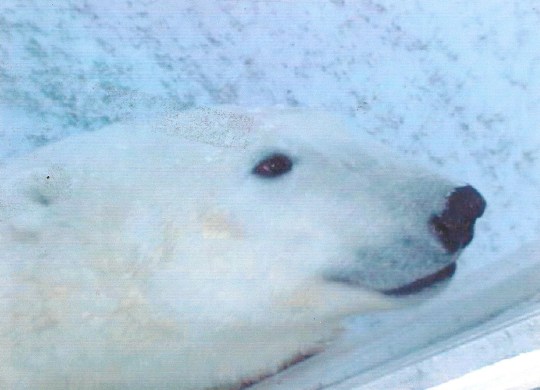
The highlight of the trip for Bobbie was when this polar bear stuck its nose in the tundra buggy window right beside her.

Half the group would go polar bear watching in the morning, while the other half went in the afternoon. On one of these trips, windows were left down to take better pictures. The thrill of the trip for Bobbie was when one polar bear, 10′ tall, actually stuck its nose in the window right where she sat. She could have reached out and touched him…but took a picture instead.
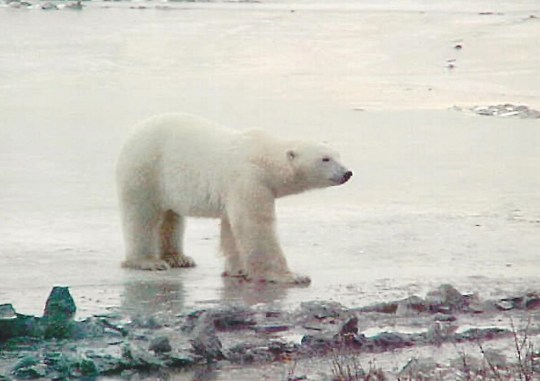
bobbie-polar-bear

Forty polar bears were sighted on her first expedition.

One strict rule here states: “Don’t even think about feeding the bears.” Feeding was discouraged as it would make the bears too familiar with humans, perhaps causing both of them problems. If anyone did feed a bear, they were taken from camp in a helicopter at their expense. Bears find their own food and enjoy a steady diet of seals. They can eat a hundred pounds of blubber in a single sitting.

On that first expedition, Bobbie saw 40 polar bears in their natural environment. There’s a reason that Manitoba is called “The Polar Bear Capital of the World”.
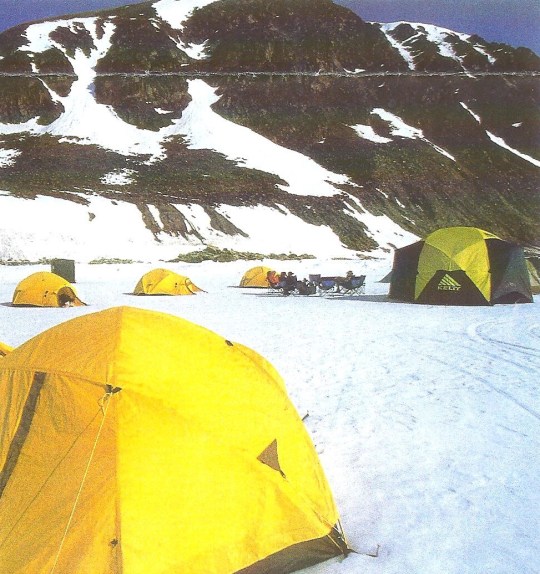
bobbie-tents

Their yellow tents were the only sign of civilization in this Arctic wilderness.

Her second polar bear adventure began in Nunavut near Pond Inlet on the northern tip of Baffin Island. Now she was 700 K north of the Arctic Circle! This small town said their biggest problems were drugs, family abuse, and alcohol. They did have a couple television sets and computers, which broadcast in their native Inuktitut language.

Snow machines pulled them to camp this time on 18′ komitak sleds…three people to a sled. The ride took eight bumpy hours. Camp consisted of bright yellow tents on the ice with an insulated pad underneath and a very warm sleeping bag. Native Eskimos served as guides and someone stood guard around the clock to make certain no bears invaded the camp.
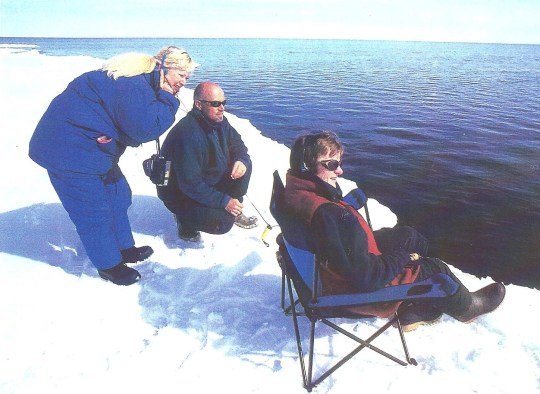
bobbie-tundra-001-2

Bobbie, their guide Dave and Jenny from Australia listen through hydrophones to the world beneath the ice.

The reflection of the midnight sun off the ice gave members the worst sunburns on their faces that they could imagine. They would reach outside their tents at night to get ice to cool off their burning face.

Perhaps it was due to the weather, but on this trip they only saw four polar bears. They first faced blizzard conditions but by the end of the week, it started to rain, so ice was melting in spots especially along the crevices. Now the komitak sleds had to jump the crevices making for a very rough and wet ride back to town.

Living on the frozen ocean, they explored ancient ruins of the Thule people, followed tracks of polar bears in the snow, built snowmen and created snow angels. Each day provided another unique adventure, which made this magical place a once in a lifetime experience.
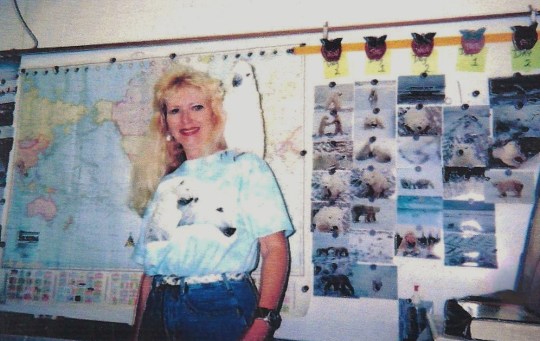
bobbie-classroom

Ms Henderson brought back her experiences and used them in the classroom.

Upon her return, Bobbie shared her Arctic adventures in her Florida classroom. She used the trip to teach spelling, vocabulary, map skills and wildlife conservation. Bringing personal experiences to the classroom always enhances learning. Now she enjoys sharing her experiences as a substitute teacher here in southeastern Ohio.
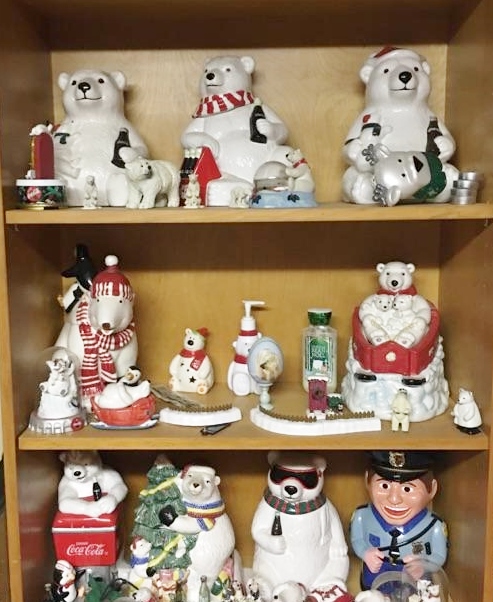
bobbie-collectibles

Her house is overflowing with polar bear memorabilia.

While Bobbie was glad she did both trips, she wants to return to Churchill again because she saw more bears there, and camping was a little more relaxing. Since she likes cold weather, Greenland, the North Pole, and Arctic regions are places she would enjoy visiting.
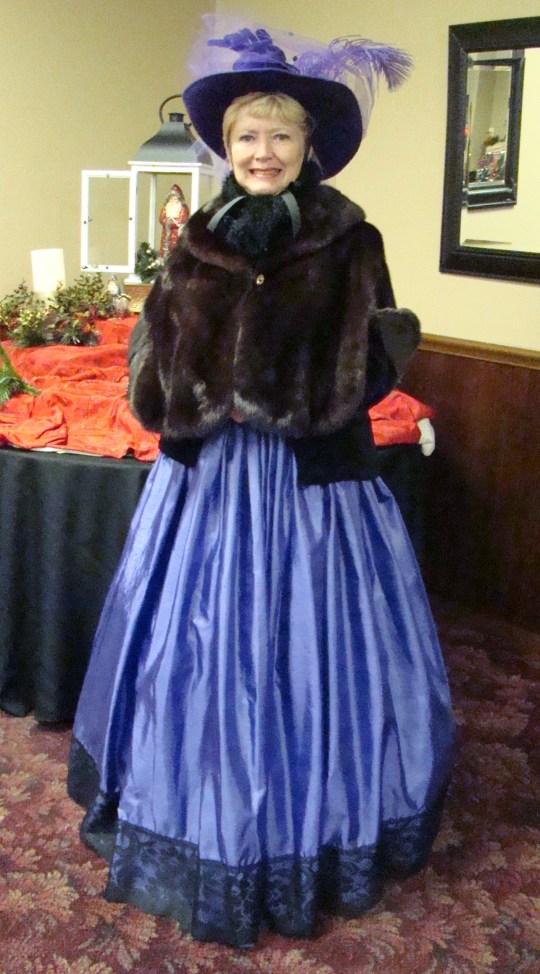
bobbie

Bobbie volunteers at Dickens Victorian Village, where she dresses as a lovely Victorian lady.

Animals like Bobbie. At her home near Cambridge, she keeps several dogs, cats, and rare macaws. Deer hang out at her back deck. But if you happen to see a polar bear there, it’s just Bobbie in her polar bear costume.
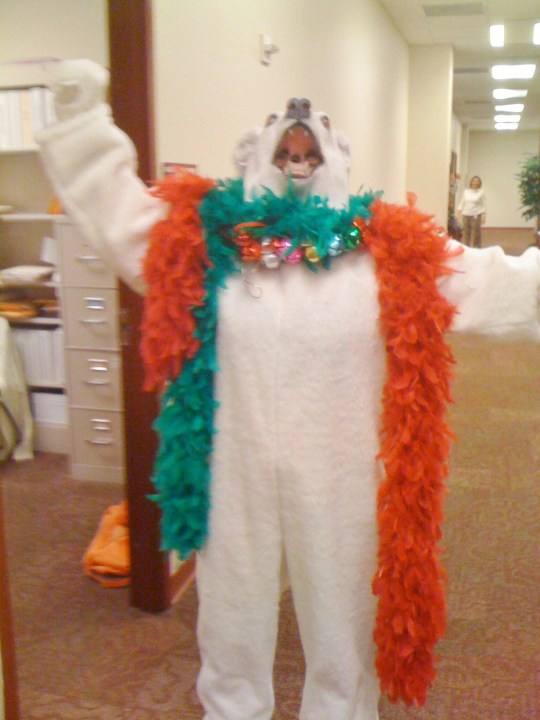
bobbie-polar-bear-costume

Sometimes she enjoys dressing as a polar bear.
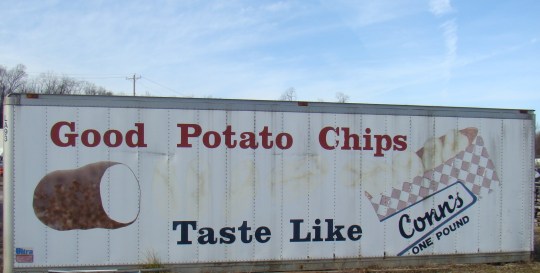
conns-trailer

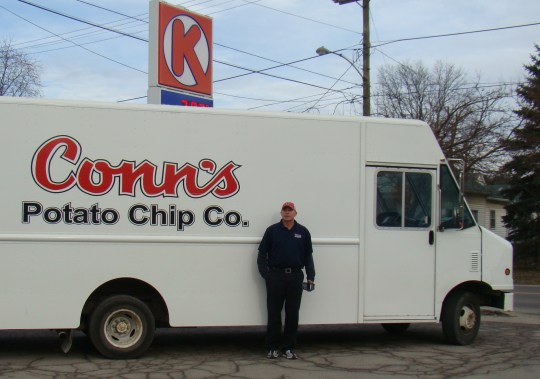
Conn’s transport their chips to warehouses in Newark and Columbus.

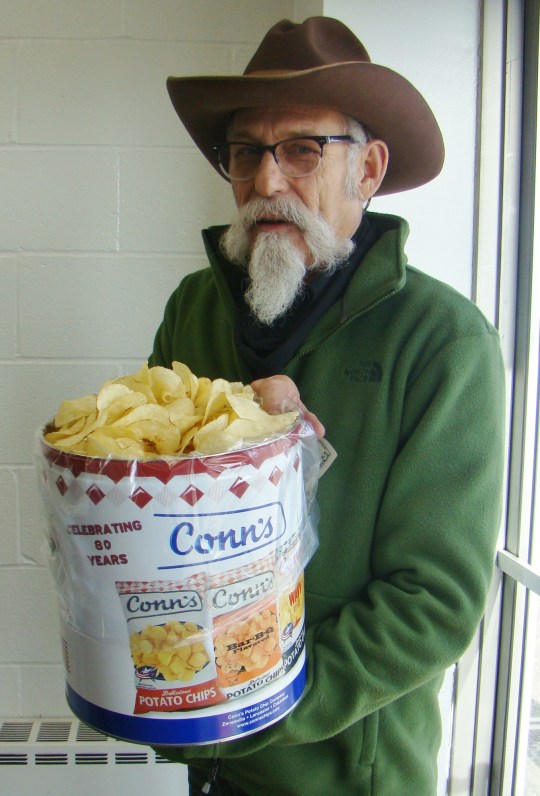
Everyone has a favorite food. Mine just happens to be potato chips. A road trip to Conn’s Potato Chip Company in Zanesville brightened my day since Conn’s has always been my favorite chip.

Back in 1935, Mrs. Ida Conn perfected the potato chip. She used the best potatoes, pure vegetable shortening and salt to create this taste treat which has delighted customers for over 80 years.

conns-flag-2

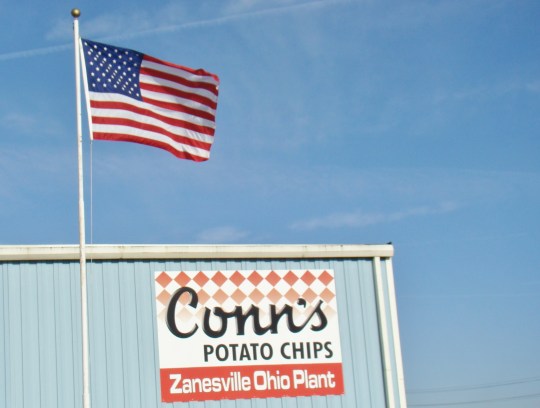
The U.S. flag proudly flies at the entrance of Conn’s Potato Chip Company.

Those first potato chips were made in her garage and delivered in a market basket to neighbors by Ida herself. While selling her chips on Putnam Avenue, Ida became acquainted with Dick Downey, who with Dave McGee, purchased the Conn Potato Chip Company from Ida in the 1940s.

Dick became a favorite customer of mine in a local downtown business about twenty years ago. Of course, he knew my love for potato chips and one day asked what my favorites might be.

Sometimes there are those special chips with a bubble in them. Those are my favorites.

A few days later, Dick brought an entire bag of potato chips with bubbles for my enjoyment. What a kind gentleman.

conns-mike

Mike has been delivering Conn’s locally for ten years.

But Dick was very strict about the way his employees handled bags of chips. He realized that few like crumbled potato chips so he told them to handle a bag of potato chips like you were holding a baby. After all, they were his babies.

conns-tammy

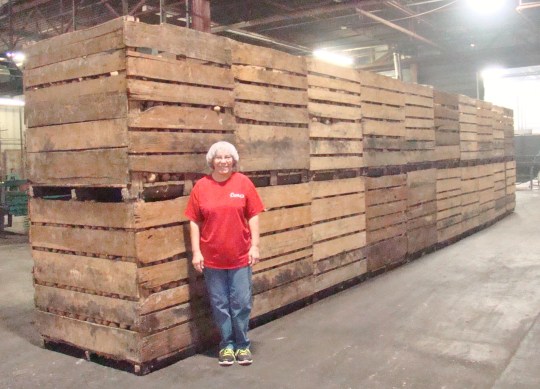
Tammy, our guide, stands before crates of potatoes that will all be used in one day.

When visiting the plant, the first thing you’ll notice is that gentle aroma of potato chips. Tammy, our guide, said her daughter told her, “Mom, you smell like a french fry.” The fragrance hangs in the air.

conns-shrinkwrap

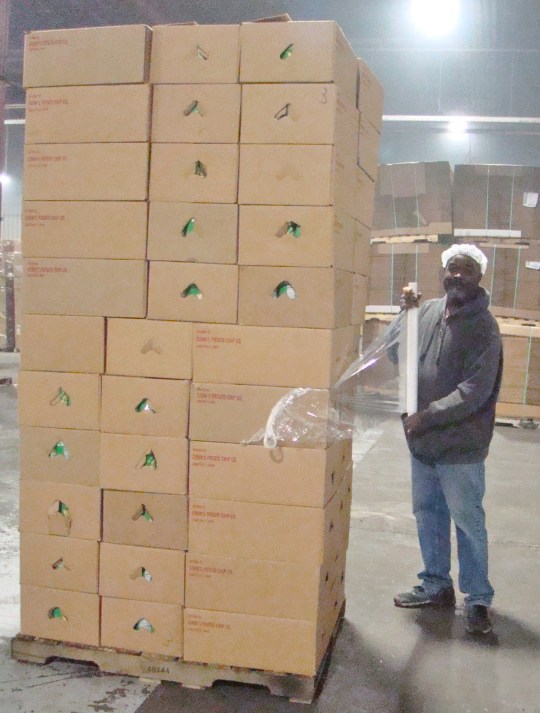
Employees enjoy their jobs as they box chips for shipment.

This was a happy workplace and everyone had smiles and waves as we visited the manufacturing facility where all they make is potato chips. It didn’t seem to matter what their job was, these pleasant employees enjoyed it from cutting, sorting, bagging to shrink-wrapping stacks of boxes. Or perhaps they were smiling because of the mandatory hairnets we were wearing.

Here in Zanesville is the only place that Conn’s potato chips are made. They do have warehouses in Newark and Columbus.

conns-potato-slicer

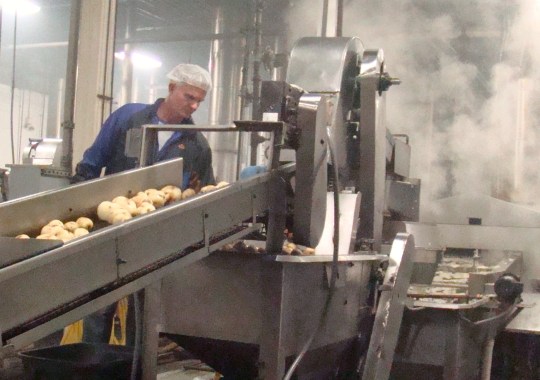
After potatoes are washed and skinned, they head through the potato slicer.

Every week approximately 100,000 pounds of potatoes are brought into the factory to be made into fresh chips. Now these aren’t ordinary potatoes you might buy in the store. They are ‘chipping’ potatoes, a special variety that has less starch and sugar.

First, they are washed with high pressure to remove all dirt. After that the skin is brushed off with many mechanical brushes. Everything is done by machine with employee supervision at each process.

conns-chips-to-fryer

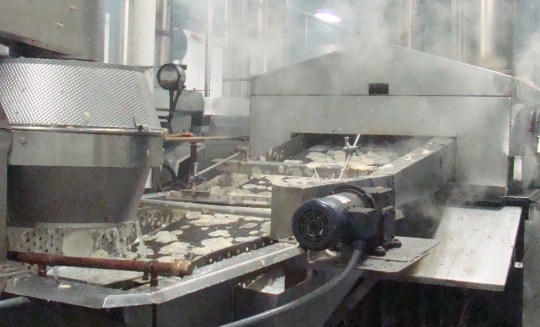
Layer of sliced potatoes heads to the fryer on a conveyor belt.

The potato cutter then slices the potatoes into potato chip size. Blades are changed once a week to make wavy potato chips, the most popular party chip for dips. Sometimes when the chips fly out of the cutter, it looks like it’s raining potato chips.

They are then sent through the deep fat fryer on a conveyor belt. Recently, some noticed a slight change in the taste, as Conn’s was forced to remove the hydrogenated fat from the soybean oil that is used. This change is due to a recent federal regulation to improve our health.

conns-fresh-chips

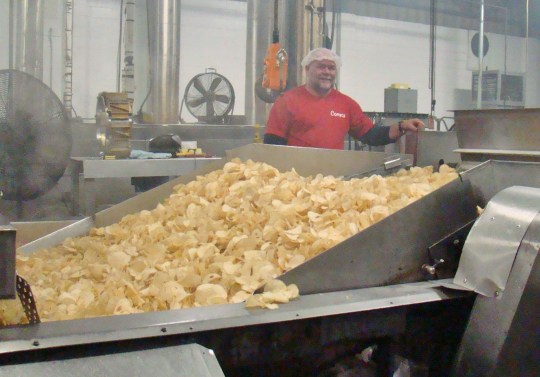
Fresh Conn’s Potato Chips leave the fryer to be sprayed with salt.

At the other end, a very find salt is sprayed on, so it’s easily absorbed by the warm chips. Now an inspector watches carefully for chips that are too well done or imperfect and removes them before they fall into buckets that look like seats on a ferris wheel to be sent to the bagging room.

conns-bagger

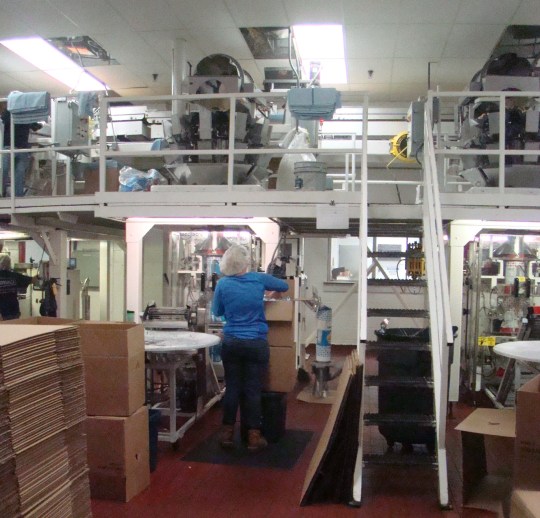
In the packing room, overhead tumblers mix the flavors before bags are filled below.

Here the chips are directed to various tumblers for packing. This is where the flavors are added. Green Onion, their most popular flavor, BBQ and Salt and Vinegar were being packed while watching. They bag in various sizes from 1 oz. to 1 pound.

conns-refill

This gentleman brought in his Conn’s Anniversary tin for an economical refill.

If you want an 80th Anniversary Tin filled, they will fill it right off the conveyor belt for $5. That’s quite a savings for two and a half pounds of potato chips. Refills are only $3. If you travel that direction, and you love potato chips, it would pay to buy a tin.

conns-montie-and-grandson

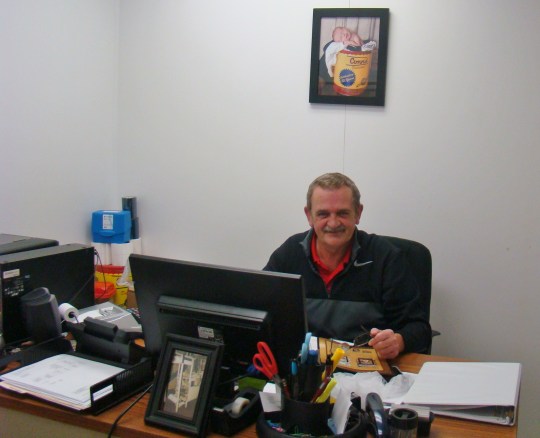
President Montie works at his desk with a picture above of his newborn grandson already pictured with a Conn’s tin.

Current owners, Montie Hunter and the George brothers – Tom and Jon, invested in Conn’s future by moving to a 100,000 square foot facility on Richards Road in Zanesville. Their new state of the art equipment still provides the same quality chips that have been favorites for generations.

conns-jon

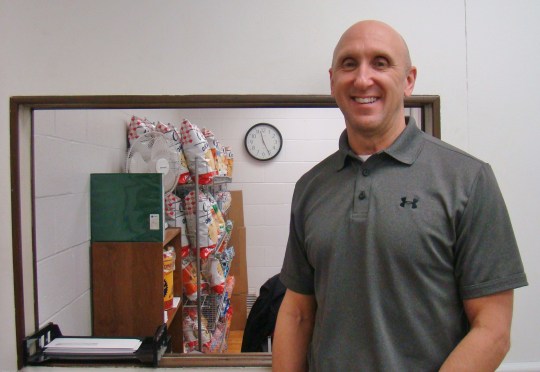
Co-owner, Jon, enjoyed sharing the Conn’s story, while his brother, Tom, was taste testing.

Montie worked as a route salesman for Dick so was very familiar with Conn’s. They had to make two promises when they purchased the company. 1) The name could not be changed. 2) Keep all the employees.

Tours of the factory are frequent for schools, seniors and even tour buses. Everyone comes away with the chance to have a few hot chips right off the conveyor belt. Good potato chips taste like Conn’s.

Conn’s Potato Chips is located in Kemper Court at the east side of Zanesville. Take Richard Road off Route 40 and about two miles back on the right hand side you will find Kemper Court and Conn’s Potato Chips. Take a tour sometime!

philip-owen

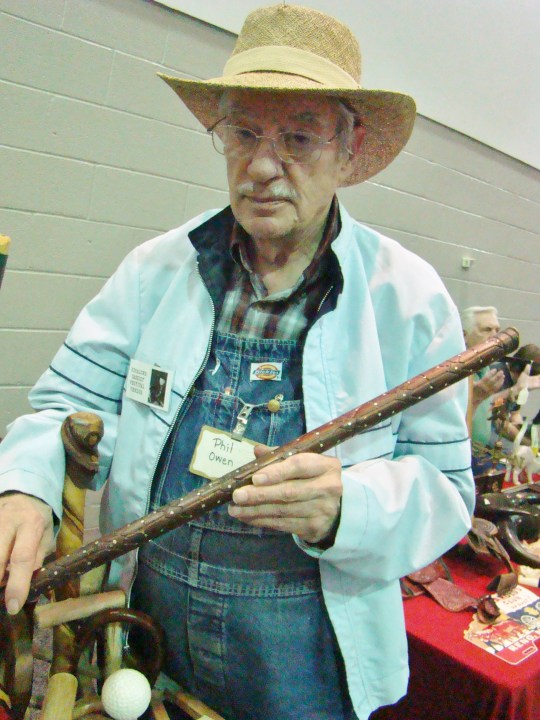
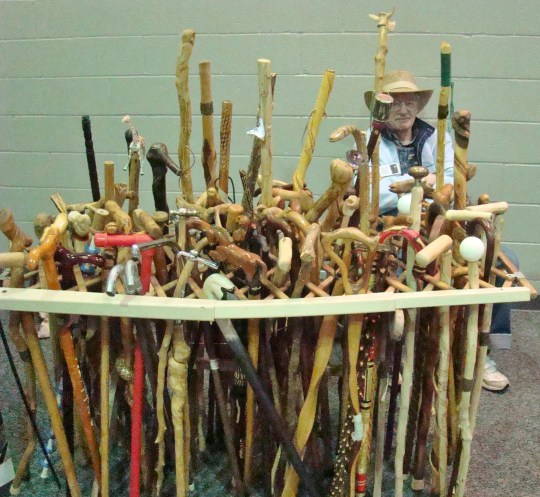
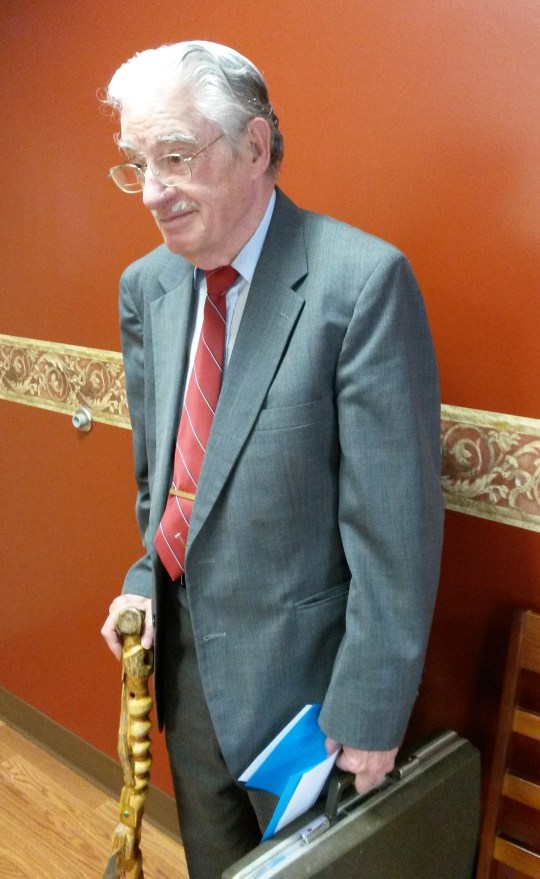
His walking sticks have been displayed at various festivals in our area. Here, Philip holds one of his favorites.

A soft-spoken gentleman exhibits a surprising hidden talent – taking pieces of wood, and turning them into beautiful canes and walking sticks with intricate designs.

Philip Owen made his first walking stick as a young boy of seven or eight years old in Rawlinsville, PA. Illness dominated his childhood, and Philip will admit, “I was spoiled rotten.” Often when walking to check on the cows, he would pick up a stick and begin carving it.

As a youngster, Philip had tuberculosis and was in a sanitarium for eleven months one time, and twenty-two months the next. During that last visit in 1946, Philip said he was “a streptomycin guinea pig”. They administered one hundred forty-four shots of streptomycin to Philip and one other young man. Both were cured. With this new discovery, it wasn’t long before the sanitarium was closed.

philip

His display of walking sticks and canes consists of some that he made and some he purchased from all over the world.

During his lifetime he has made, given away, traded or sold many walking sticks and canes. At this time, he is working on numbers 1105 and 1106 out of American chestnut, a rare wood with a beautiful grain. These creations have been shipped all over the world.

Many kinds of wood make up these walking sticks and canes. One of his favorite designs was free-lanced on PA rosebud. Since the canes and sticks must be strong as well as beautiful, he favors using maple, walnut and cherry wood. It might surprise you to learn that the structure of the sticks depends on whether an individual prefers using their right or left hand.

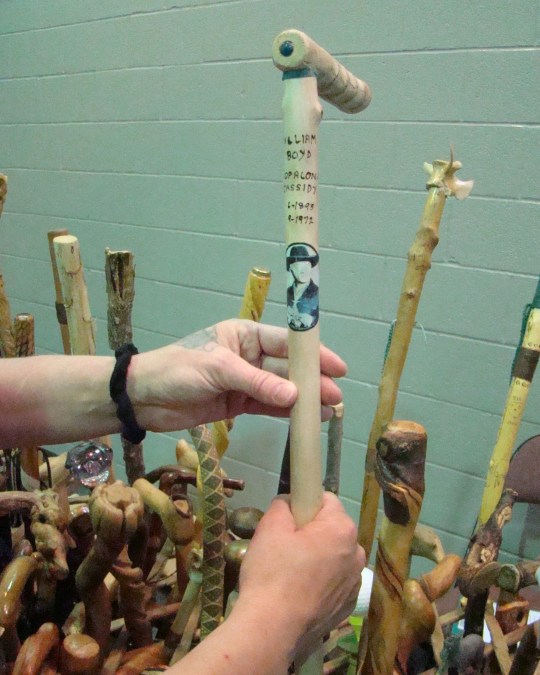
Hopalong Cassidy Cane

Festival attender checks out a Hopalong Cassidy Cane.

One thing of which he should be extremely proud is the fact that he has carved canes for five US Presidents – from Richard Nixon to George Bush. Even more interesting, he has received thank-you notes from all of them including their signatures. Philip hopes that his grandson will someday appreciate having those special treasures.

In 1988, Philip Owen’s nephew, Mike Huber, had a 40th birthday. Philip made a cane for him as a joke since Mike was now “going down hill”. Along with the birthday greetings, Philip said, “You are hereby appointed President of ANCC.” Those letters stood for American National Cane Collectors, which was later changed to the American National Cane Club to include makers, not just collectors. Philip volunteered to be the Secretary/Treasurer so they had two members. This organization’s newsletter became known as “The Twisted Stick.”

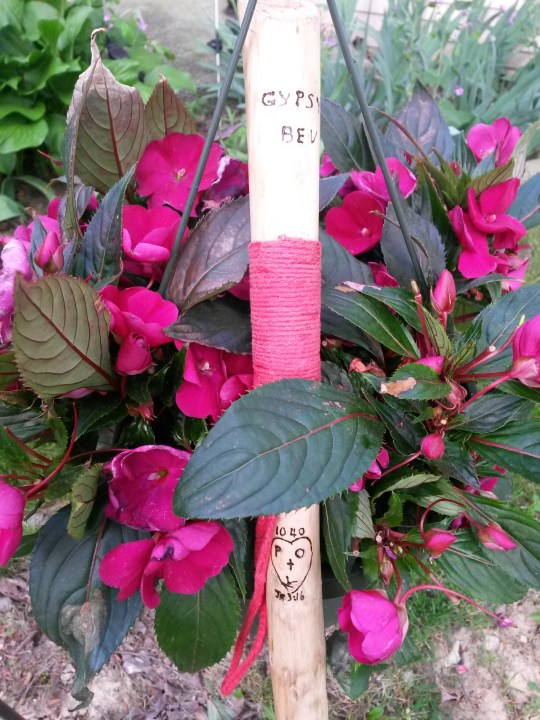
20150511_180311

My Gypsy Walking Stick leans against a special basket of flowers.

Two years ago, Philip carved a right-handed walking stick for this gypsy. He included some of my favorite things on the stick – bears. Many knots were cleverly turned into bear heads. On each stick, Philip puts his signature – a heart containing his initials and a cross in the center with John 3:16 under the heart. Above the heart is the number of the cane.

My walking stick almost always stays in the trunk of my car to be used when walking over rough territory, or even in the snow. Gypsy Bev is written around the top so it’s not bound to get mixed up with someone else’s.

bow-tie-quilt

This bow tie quilt consists of 169 bow ties. Philip seems to make use of whatever he receives.

Family is very important to Philip, as he grew up in a loving family of twelve children. He was number eleven, his twin brother number twelve. His love of another hobby, quilting, began with his parents. His father cut out the squares for each of the twelve children to have “Grandmother’s Flower Garden”, then his mother sewed them together. Families are like quilts – pieced together and stitched with love.

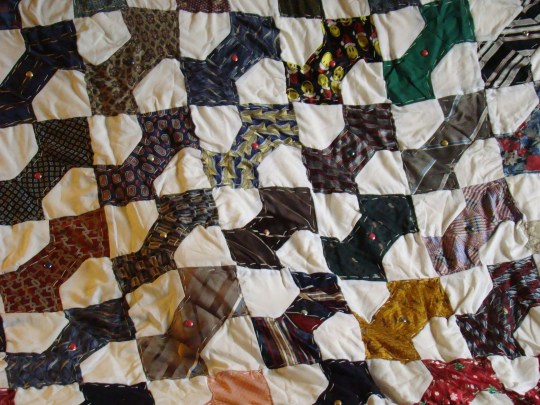
necktie-quilt

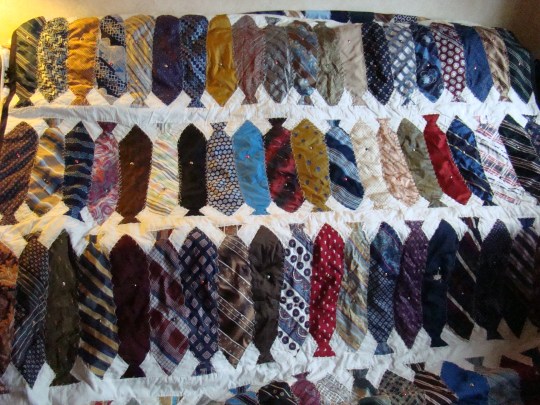
The necktie quilt is made of 145 neckties. No two are alike!

Quilts he has made include a novel “necktie quilt”. The idea came when a friend gave him a large pile of neckties. It seems Philip likes free things, in fact his wife often said, “Don’t offer Philip anything free, or he’ll take it.” And it appears he puts these things to creative use.

Right now he’s in the process of making a quilt called “Around the World” for a missionary in their church. He has 800 pieces laid out for the quilt. The center is red for the blood shed by Jesus, surrounded by white to signify salvation, and then a row of heavenly blue. The rest is alternate rows of print and solid colors. Even he admits, “I sometimes get carried away.”

piece-of-grandfathers-quilt

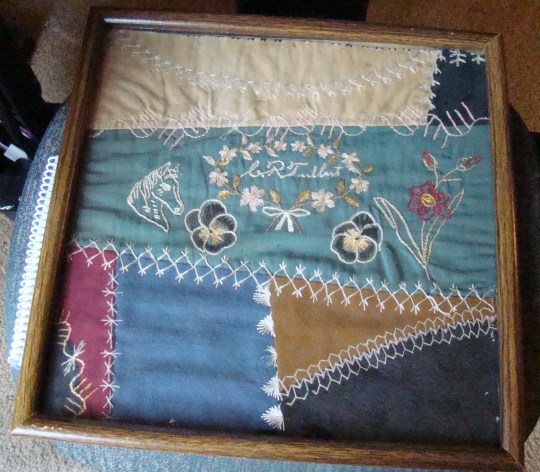
The framed piece of a quilt given to his grandfather is treasured by the family.

On the wall of his apartment, he proudly displays a picture of his grandfather. On each side are framed pieces of a quilt given to his grandfather by his church congregation. Philip’s sister took it apart as it was beginning to fray and framed a piece of it for each of the twelve children.

philip-owen

One of Philip’s missions in life is to teach others to study the Bible.

Today Philip lives in Cambridge, Ohio where he keeps busy giving free lessons to those interested in making canes, walking sticks, baskets or wall plaques. He also teaches a special class on how to write you Life Story. Since he is a retired minister, he enjoys conducting Bible study at the Senior Center. When you consider that Philip is 88 years old, you can see why he feels blessed and wants to share his knowledge with others.

philip-and-gene

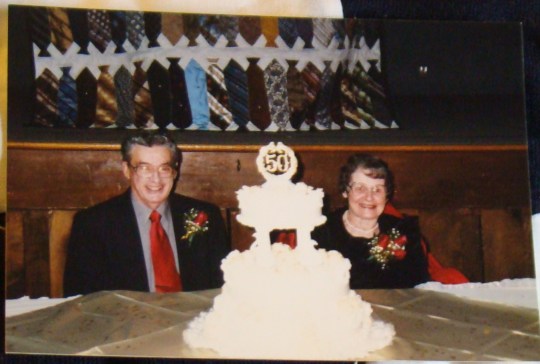
This picture of Philip and his wife, Gene, was taken on their 50th wedding anniversary. They were married for 56 years.

Philip and his wife, Gene, had three children, who have followed in his footsteps. Joel and Philip are pastors, while daughter Barbara has served several years as a missionary. A grandson is following that path also, making four generations of pastors in their family. In Philip’s words, “The most important thing in life is to know God’s will…and do it.”

When asked if he wished he could have done anything else in life, Philip responded, “If I were able, I’d have a garbage collection business.” He sees so many things thrown away that could possibly be recycled into something new. His creative mind never sleeps.


You load sixteen tons, what do you get?

Another day older and deeper in debt

Those words rang true for the thousands of coal miners that lived in the vicinity of Guernsey County, Ohio during the early 1900s.

In order to honor these men and coal miners across the nation, a statue in their honor has been placed at the old train depot in Byesville, Ohio. This is no ordinary statue as it was commissioned by Alan Cottrill, internationally renowned sculptor, who has his studio in Zanesville.

The Train to Nowhere

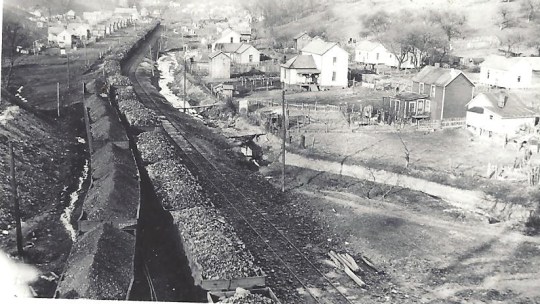
These were busy tracks in their day, but today they have no traffic.

Why, you might ask, is this statue in Byesville? Why not place it in some larger city? Byesville was the coal capital of Ohio back in the early 1900s. Perhaps a hundred and fifty trains would roar down their tracks each day. Cars carried coal from Marietta to Cleveland and often into Canada.

coal_miners_memorial_09-08-2012_1

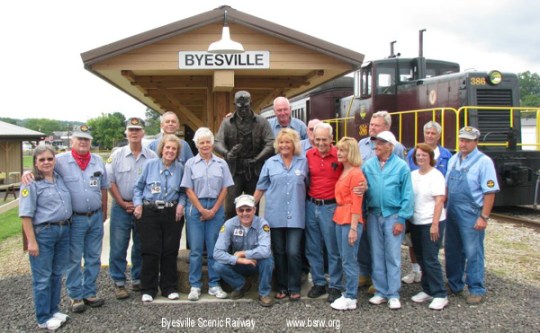
These volunteers were present for the dedication ceremonies.

Raising money for the statue was itself a challenge. Contributions came from local residents as well as all those who rode the now silent Byesville Scenic Railway. Total cost of this memorial was $40,000. So if you rode the train or visited their museum, perhaps you had a hand in making that statue become reality.

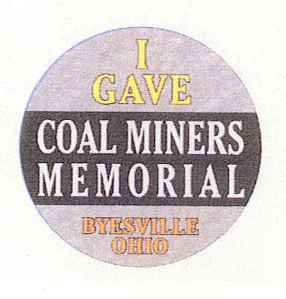
When you made a donation in any amount, you were given a badge saying:

I GAVE    COAL MINERS MEMORIAL    BYESVILLE OHIO

coal-mineres-memorial-badge

This was no ordinary badge as it was designed very carefully. Each color on the badge had great significance.

Yellow stands for a beam of sunshine that sheds light on the darkness of the dungeon of a dark and gray mine.

Gray is for the rock/slate layers that are found above and below the seams of coal.

Black needs little explanation as it is the color of coal, also known as black diamonds, buried sunshine, or rocks that burn.

Red is for the color of blood that was spilled onto the ground from those who either lost their lives or were injured while working about the mine.

Bronze Coal Miner Statue

Bronze Coal Miner Statue

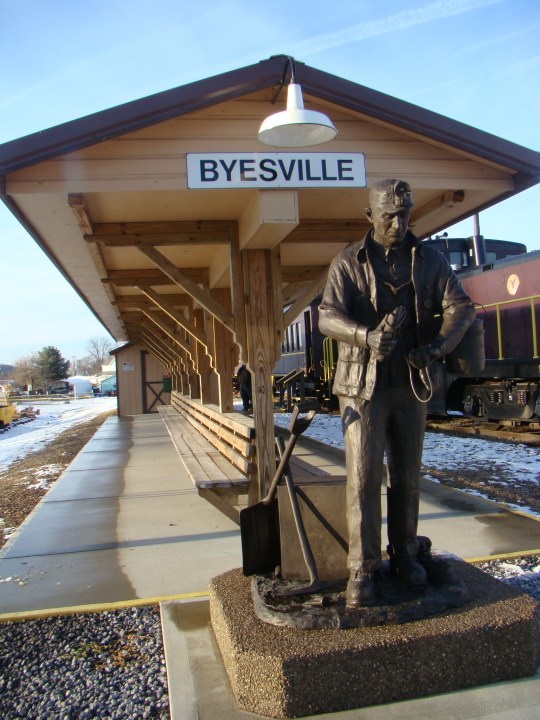
Everything on this bronze statue has meaning.

His hat gave him a place to hang his carbide light. This was the only light down in those coal black mines. The miner had to purchase the pellets to fill his carbide light…at the company store, of course.The coal mines gave them nothing. Why, they had to buy their own picks and dynamite! 

If you look closely at the statue, the miner’s brass tag reads 382, the number of coal miners who lost their lives in the deep mines of Guernsey County over the mines’ sixty active years.

pieces-for-memorial

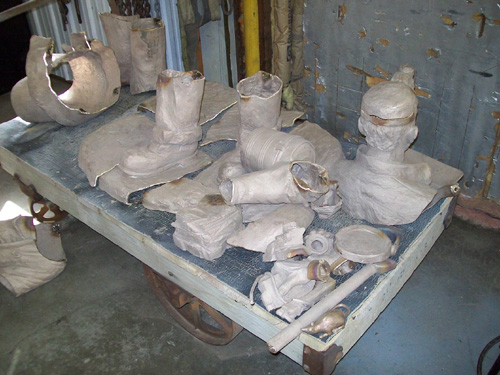
The sculpture pieces in Cottrill’s studio wait to be assembled.

The miner statue is missing his right index finger in honor of all the men injured in the mines. The dinner pail he carries was made by the Buckeye Aluminum Co. and was an important part of the miners day.

Many of those miners were immigrants, often called dumb hunkies  Everyone headed out to work swinging their dinner pail. The pails could not be set down on the mine floor or the rats, the miners’ mascot, would open them and eat their lunch. So miners always hung their dinner pails high on the mine wall.

A West Virginia ham sandwich was quite the treat. That ham by the way was what we call bologna.They always left a little something in their pail, just in case a cave in occurred and they might be below ground all night. If they made it safely through the day, the miners would let the children have their pails on the way home for a little snack.

From top to bottom each item has special significance from his hat to the dynamite at his feet.

coal-miner-plaque

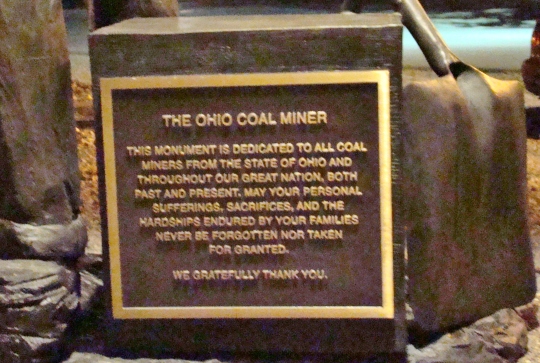
The dedication plaque at the statue

A portion of the plaque behind the statue states:

May the personal sufferings, sacrifices and the hardships endured by your families, never be forgotten nor taken for granted.

May the memory of these unsung heroes live on for generations.

The Coal Miner Memorial Statue can be found in Byesville, Ohio off I-77. Take Exit 41 and head into the small town of Byesville. Turn left on Second Street and two blocks down on the right hand side you will see the old train depot. The statue stands in front of the depot.

trail-run-view-with-church-by-tracks

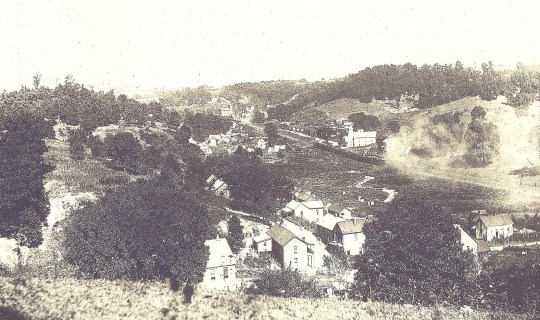
This overview of Trail Run shows many of the homes, the church and the mines.

In the valley between Byesville and Buffalo, the small town of Trail Run can still be found. Years ago this town was a booming coal mining area with 2000 residents. Let’s take a trip back in time to see what this town was like in the early 1900s.

Originally, this area served as home to the Delaware Indians, who lived along Rocky Bottom until the early 1800s. They traded lead for whiskey along their trail beside the run.

trail-run-1

Men worked in the mines to provide for their families.

After the Indians were chased westward, this area had only a few scattered homes. But when coal was discovered in 1888, the town of Trail Run, officially called Robins, began. This town had two strong coal mines. The coal vein was best at No. 1 mine, where it was 6′ thick.

Many working these mines were Slovaks, Russians and Hungarians – about 1000 of them. When they arrived at Ellis Island, immigrants were greeted with signs written in their native language telling them where jobs were available. Most of the coal miners could not speak English so perhaps a sign in Slovak held up near the dock would have told them that jobs were open in the coal mines in Trail Run.

trail-run-2-mine-1928-closing

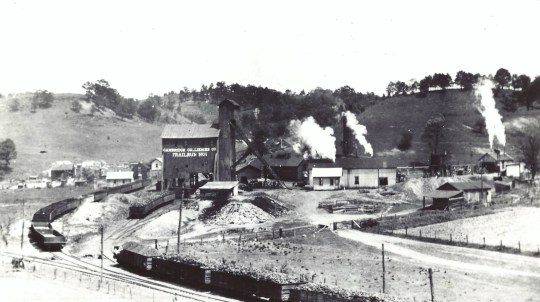
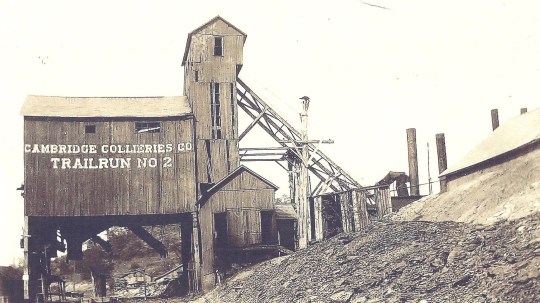
Trail Run Mine No. 2 is shown just before closing in 1928.

Life in the coal mines was difficult but better than being hungry. Cambridge Collieries built about fifty houses in Trail Run so the coal miners would have a place to live. Rent was $12 a month for a small house on a dirt street, which had no name.

Church attendance, baseball and beer were three of their main forms of recreation in the early 1900s. Since the mines were closed on Sunday, that was their day for a little entertainment. Later, a pool hall, dance hall and bowling alley were added.

st-michaels-orthodox-church

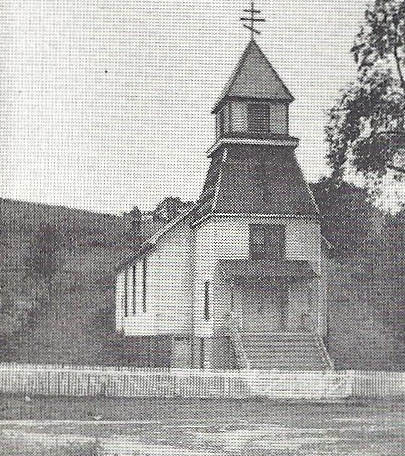
St. Michael’s Russian Orthodox Church served as home church for many of the Slavs, who worked in the mines.

Miners attended one of two churches in Trail Run. St. Michael’s Russian Orthodox Church welcomed the Slovaks, which made up a large percentage of the miners. Others attended Bethlehem Methodist, which still exists today.

1914-first-childrens-class-at-st-michaels

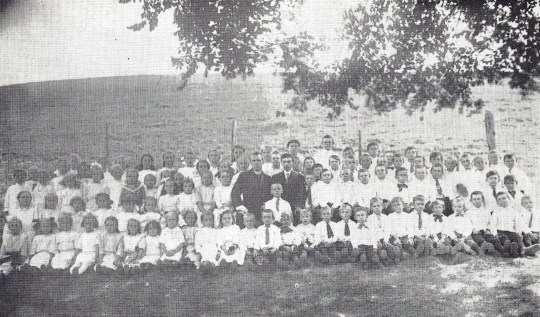
St. Michael’s Russian Orthodox Church had a large children’s class in  1914.

Five baseball diamonds could be found there. The coal mining towns all played each other, but there was a special rivalry between Upper Trail Run and Lower Trail Run. Baseball provided a great form of relaxation, which the families could watch and enjoy.

sikoras-grocery-001-2

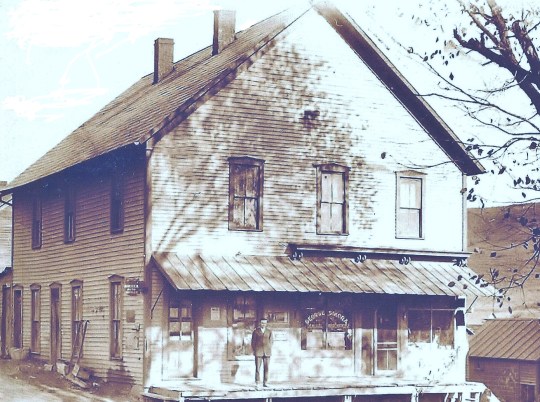
Sikora’s Grocery on the corner of Trail Run Road and Robins Road was a popular place for supplies.

Often after the games, players would gather somewhere to drink a couple beers. There were two saloons in town. One of those bars, The Cave, was under Sikora’s Grocery. Or families might go to Williams or Checks stores for ice cream or candy.

williams-restaurant-1923-001-2

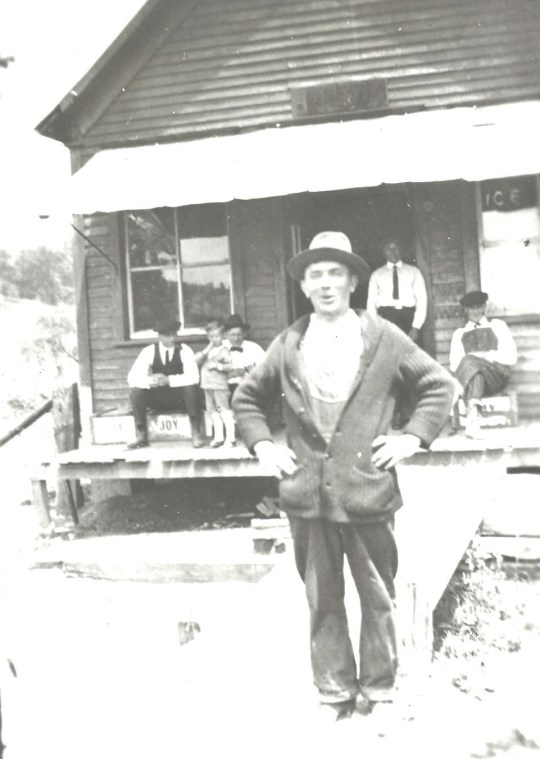
Men enjoyed visiting after church at Williams’ store.

Another way they might get something to drink happened in connection with the railroad. Cambridge Brewery would ship box car loads of beer barrels. If one just happened to fall from the train, a big party would ensue.

coal-cars-in-trail-run

Every day at least a hundred cars loaded with coal left Trail Run mines

Miners usually obtained free coal for their homes in much the same way. Since a hundred cars of coal left Trail Run daily, there was a good chance that coal might fall (or be accidentally pushed) from the train cars filled with coal. The children of the family would walk along the tracks picking up coal in a burlap sack, so their mother could cook and heat the house.

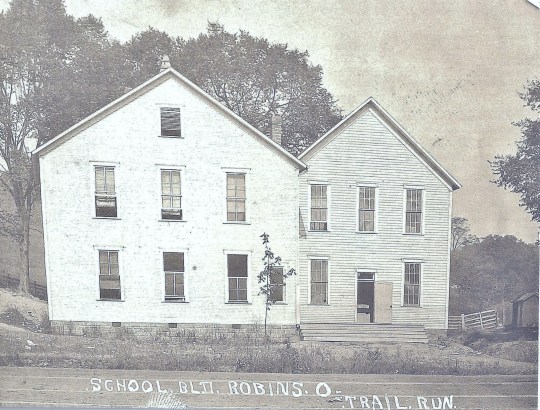
trail-run-first-school-1900

Railroad track ran close to the first school at Trail Run in 1900.

The first school built in 1895 had a train track running beside it. When a train came by it was necessary to shut the windows to keep out the noise and the smoke.

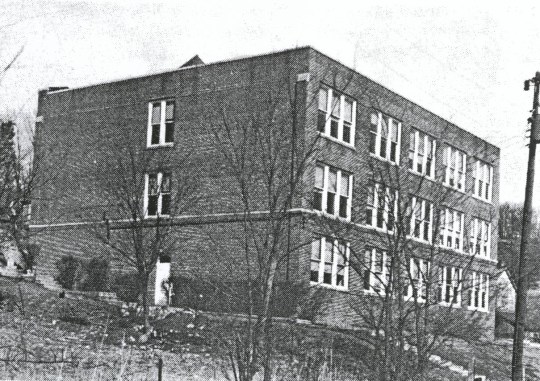
community-high-school-1923

In 1923, this three-story, brick Community School provided education to grades 1-12.

However, in the 1930s, the mines shut down because people could get coal cheaper in West Virginia, Kentucky or Tennessee. Miners had to look elsewhere for employment. Some walked to work at nearby Senecaville, while others headed to Akron and Cleveland to work in the rubber and steel factories there. Population in Trail Run dwindled quickly.

Drive slowly through Trail Run some day while remembering those brave men and women who worked so hard to support their families in the only way they knew. Miners learned the value of hard work by working hard.

Trail Run is located in Ohio in Guernsey County south of Cambridge. Easiest route would be to take I-77, Exit 41 and head south on Vocational Road. Just past Bethlehem Methodist church, turn left on Robins Road. You will now head straight into Trail Run. Enjoy the adventure.


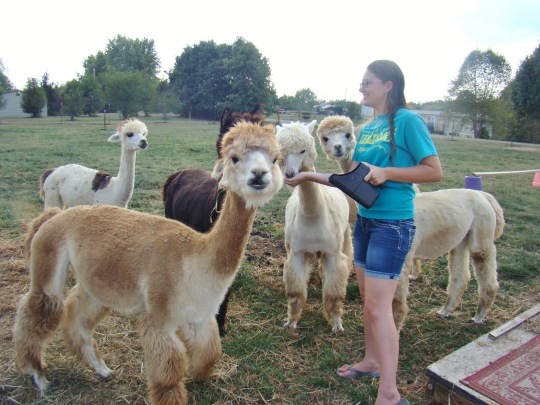
alpaca-melissa

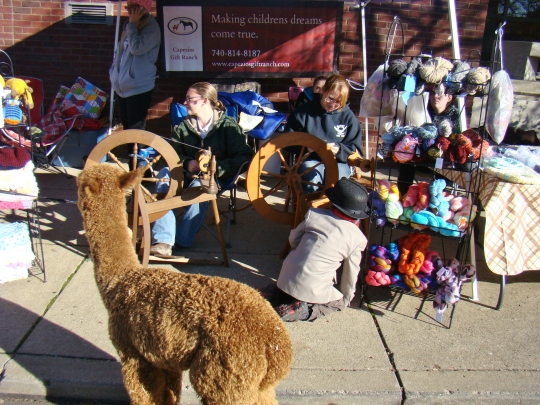
The alpacas gather around Melissa for a taste of some ground feed in August.

Improve the lives of children and adults through a connection with the amazing spirit of animals.

That’s the goal of Melissa Snyder in the rolling hills of southeastern Ohio near Norwich, where she has created a home for alpacas. However, her story begins with a horse.

As a child, Melissa had a special horse call Capezio. This horse had a club foot and walked slowly but he was her special horse for thirty-two years. Capezio’s gentleness had children waiting in line at the petting zoo or for a pony ride at the fair. Melissa remembered, “His gift was to help kids. He was here to make kids happy.”

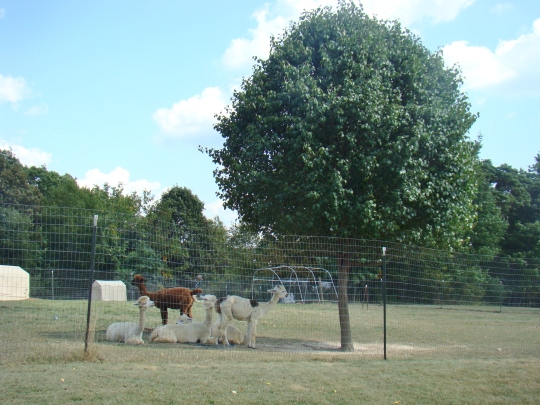
alpaca-herd-in-shade

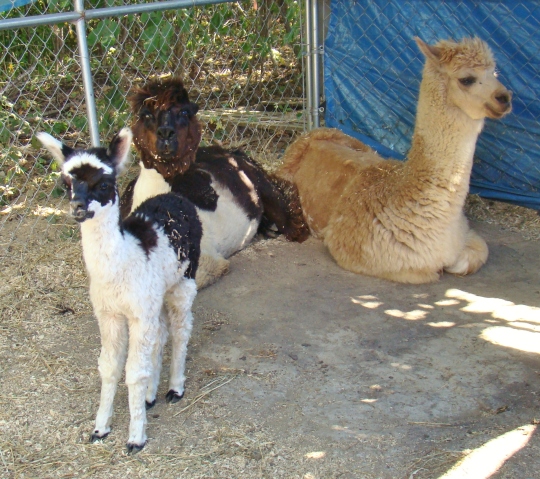
While alpacas can stand very cold weather, the heat is something they try to avoid.

Capezio taught Melissa many lessons in life and developed her zeal for animals that needed that extra touch of loving care. So when she decided to name her farm, she knew that her passion for animals was a gift from Capezio; therefore, she named it Capezio’s Gift Ranch.

After she graduated from Lake Erie College with a degree in Entrepreneurship, she only raised horses. Then one day she purchased a pony that had an alpaca friend, who came as part of the bargain. A local vet told her that the alpaca would be stressed without another alpaca for company. The herd began.

alpaca-baby-don-diego

Eight day old, Don Diego, stays close to the fan with his mother, Miss Ellie and their last import, Appy.

The rare and exotic alpaca has been a treasure of the Andes for over 6,000 years. While they closely resemble the llama, who is a working animal, the friendly, gentle alpaca lives a life of luxury with their task being to eat and make exquisite fiber.

Over a period of a few years, alpacas became the center of Melissa’s life. Soon people were calling her to see if the ranch had room for another alpaca. One evening when she came home, an alpaca was tied to a post by their driveway. It appears that Melissa has a soft spot in her heart for any animal that needs fed. At this point, an alpaca rescue was established.

alpaca-shade-hut

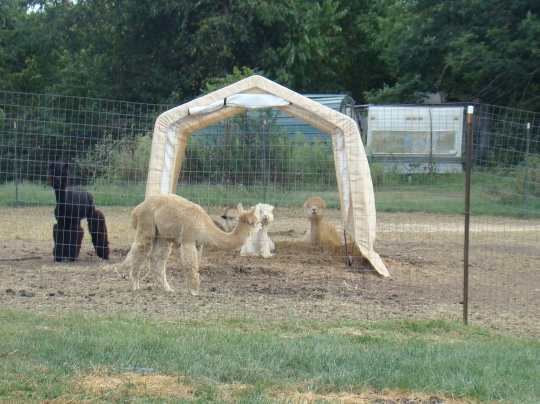
This shade hut provides an escape on a hot summer day.

Alpacas might be Suri or Huacaya breeds, with Huacaya being the one most often needing rescued. The Suri fleece is long, straight and softer and demands a higher market price. These are seldom in need of rescue. The Huacaya have a short, curly fleece, which is also soft and fine.

Vet bills add up, so the size of the herd stops at around twenty. But if they need vet care, Melissa won’t deny them treatment. She has eaten peanut butter sandwiches for a couple of weeks in order to pay the vet. Extraordinary dedication!

alpaca-melissa-at-work

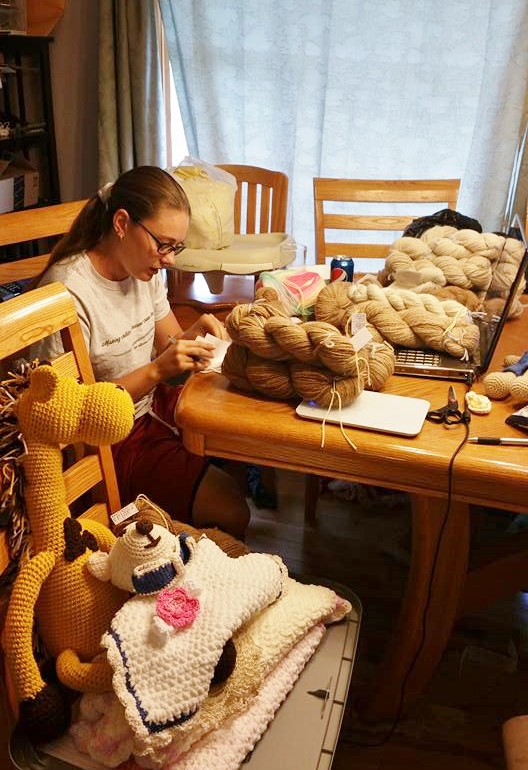
Work never stops as in the evenings, Melissa enjoys weaving and knitting with the soft fleece yarn.

Melissa and her partner, Nathan, do their own sheering when the temperature warms up in April and May. Then Melissa and a couple friends are responsible for cleaning, carding, spinning and weaving many items from the natural fiber that they receive.

Alpacas enjoy cold weather…even down to a -22 degrees doesn’t phase them. But heat is a different story so they have shade huts with fans to keep them cool on hot summer days.

Melissa works with the Living Waters Clover Crew 4-H Club, where she shares information on alpacas and has workshops on fiber use. Club members are encouraged to adopt an alpaca for their project so they can show them at the fair.

alpaca-cuteness

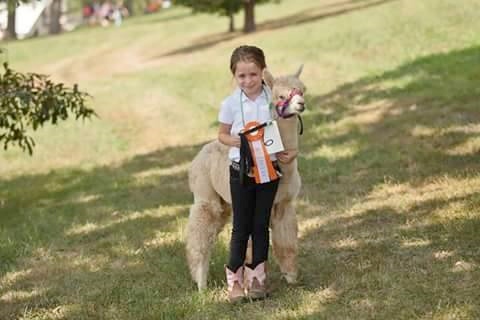
Addison feels a special connection to Delilah.

Capezio’s Gift Ranch covers all alpaca expenses for members of 4-H. This year some of the 4-H members showed them at the Muskingum County Fair and the Ohio State Fair.

alpaca-obstacle-course

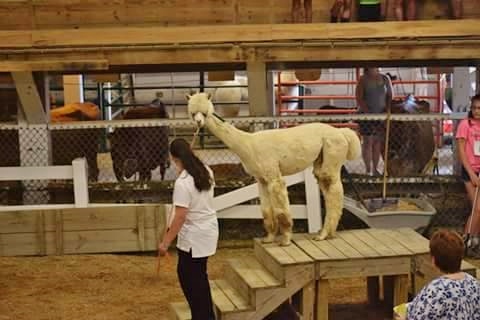
Avalanche, a deaf alpaca, participated in the Obstacle Course at the The Ohio State Fair.

While fair judging centers on fleece and conformation, games at the fair provide great fun. Musical Rug, Leaping Llama, and Obstacle Course are favorites. Musical Rug is similar to Musical Chairs with the alpacas having to stop on a rug when the music stops. This year at the State Fair, that contest was won by a Capazeo alpaca…who was blind. The fun never stops!

alpaca-animals

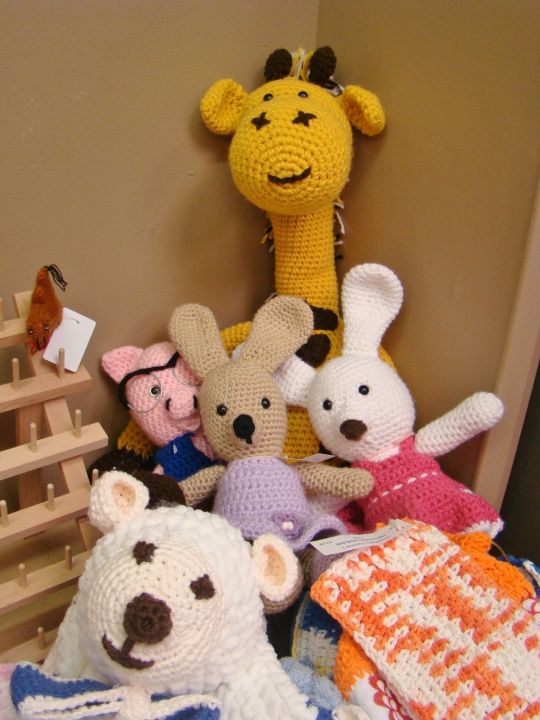
Animals knitted from alpaca fleece feel soft and cuddly.

Alpacas are often adopted by fiber farmers, who want their own soft fleece for weaving.. Good retirement homes are always needed. They can be adopted for a fee.

While they usually eat hay and grain, like us they also enjoy treats. Some of their favorites are fig newtons, bananas, and raisins. Since they have no upper teeth, these soft foods are easy for them to chew.

alpaca-products

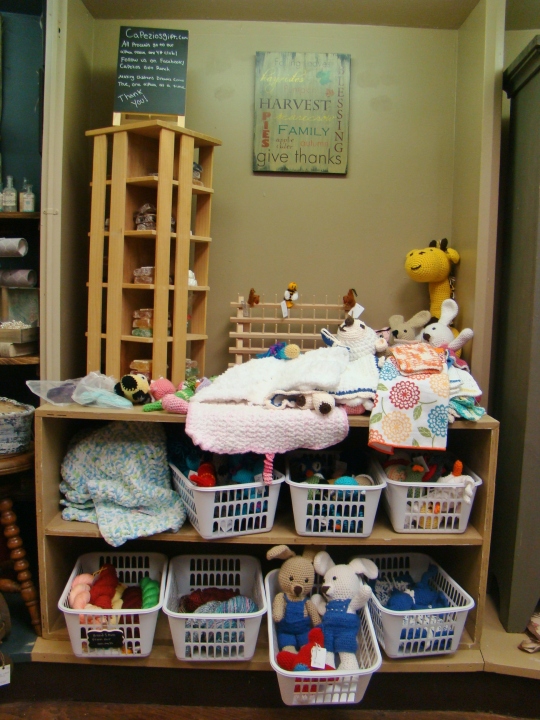
If you want to buy some of their products in Cambridge, Ohio, stop at their booth in County Bits on Wheeling Avenue..

Melissa dreams about someday having her own alpaca barn and showroom. The barn would provide an isolation spot for new alpacas and provide coolness on a hot summer day. In the showroom, visitors could experience making the yarn and see many beautiful finished products.

alpaca-booth

Last fall, Teddy came to the Cambridge Street Fair for the enjoyment of kids of all ages.

Melissa knows every alpaca in the field quite well. She knows their names and birthdates better than most people know this information about their families..Melissa takes great pleasure in talking about her friends, the alpacas.

Melissa Snyder can be reached  on Facebook at Capezio’s Gift Ranch, the easiest way to make a connection, or by phone at (740) 583-4030 .


walt-student

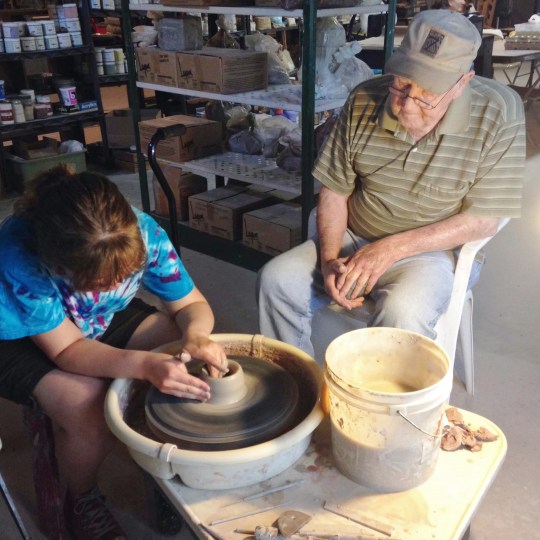
Walt instructs one of his students in the proper way to use a pottery wheel.

One of the areas where Walt Taylor excels is passing on his love for art. That’s why he enjoys sharing his knowledge with adults and especially young people, as they’re our future artists.

As a small child he lived on a farm in Lebanon, Ohio where  he attended a one-room school that was very typical of schools in those days: no running water, out door toilets, a pot bellied stove, and a paddle hanging on the wall behind the stove.

Walt had a story to tell about that paddle. A school bully pushed him around one day and Walt swung his lunch bucket, and hit the bully in the head knocking him to the ground. Both were taken inside and leaned over a desk for a paddling. First, the bully received a stern thrashing while Walt quaked. When it was Walt’s turn, the teacher swung the paddle one time so hard it hit the side of the desk and broke in two. No paddling for Walt that day. Doesn’t sound like an accident on the part of the teacher to me.

vases-with-applique

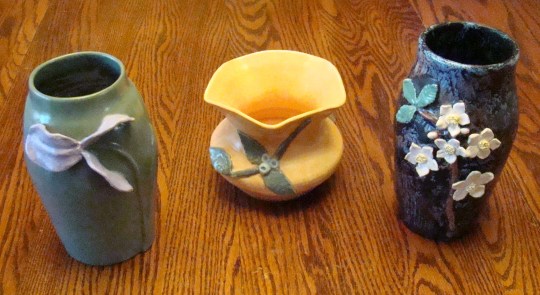
He enjoys creating one of a kind vases with floral applique.

The family moved often. His father said, “A rolling stone gathers no moss, but it gains a great polish.” At one time they lived near Fort Ancient and Walt followed his dad around the field when he was plowing, and found many arrowheads. 

Woodcrafting has been a hobby since he was a young man. His building skills still go on today as he makes cabinets, chairs, and recently a communion stand for a local church that had just rebuilt.

walt-cabinet

This talented man made these oak chairs and the cabinet behind them.

For the past few years, he has been making one new chair for their dining room each year. But he said he has been procrastinating about finishing the last two. He even joined the Procrastinators Anonymous, but they haven’t had a meeting yet.
He also enjoyed working on automobiles so developed mechanical skills as well.  That came in handy as he and his wife, Sheila, motorcycled all over the country. His favorite places to ride were in the mountains out west. It was in those mountains of Montana, where they saw the work of western potters, that an interest for making pottery began.

They also discovered many things on those back roads that you just can’t see from the interstate. He thought he noticed something that looked like Stonehenge on one such road, but it turned out to be Carhenge. Here cars were buried front first in the ground. Then there was the House on a Rock, a motel on an Indian reservation, and the list goes on.

walt-first-piece

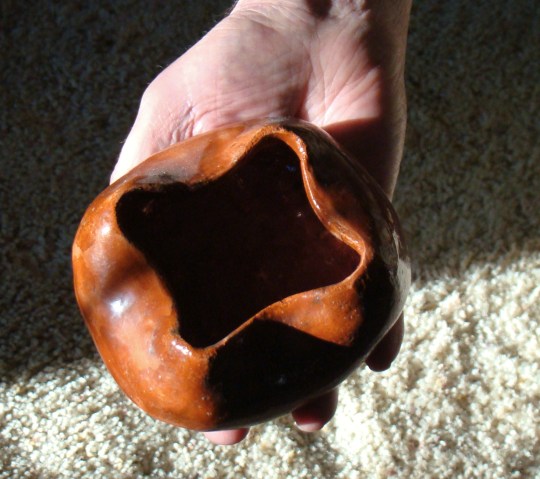
Walt holds the first piece of pottery he ever made…out of kitty litter.

It wasn’t until 1992 that Walt tried his hand at pottery. At Octoberfest, he purchased his first kiln and making pottery has become his passion ever since. The first bowl he made was out of ‘unused’ kitty litter! He learned that kitty litter had a clay base and when mixed with a little bit of water could be worked into shape. That bowl still sets on his bedroom stand today.

walt-sheila-001

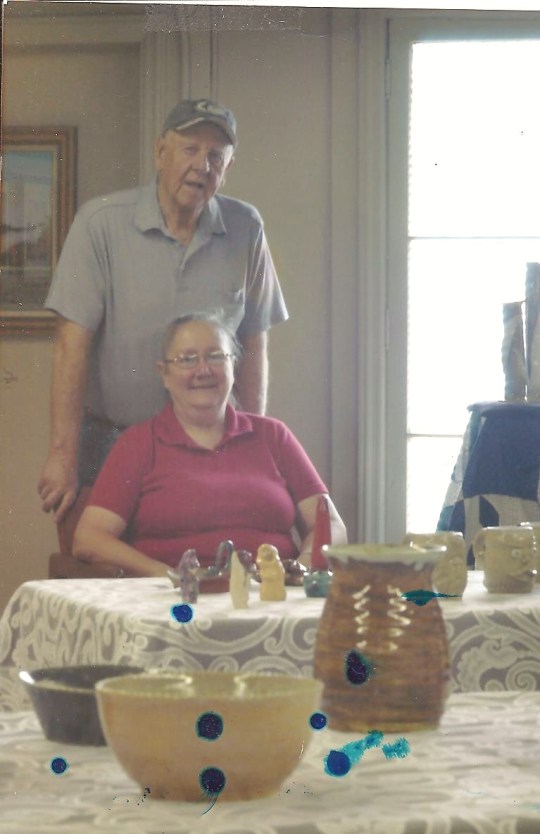
Walt and Sheila  have attended many festivals in the area to display and sell their creations.

To begin with, he made pottery items just because he enjoyed doing it. Then he began giving them to his friends, who told him that he should be selling them. That began a business they ran until last year, Taymoor Pottery…a combination of his last name and his wife, Sheila’s maiden name.

walt-at-salt-fork-festival

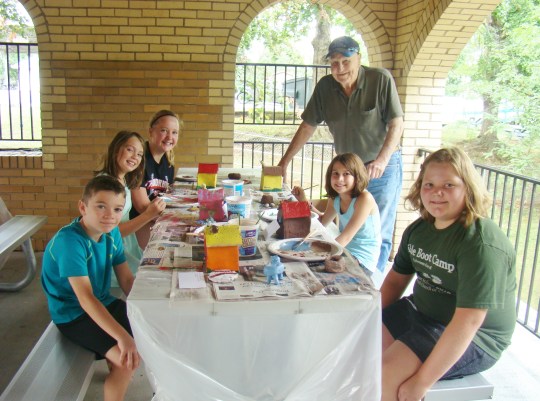
Walt has a smile on his face while working with youngsters at Art in the Park during the Salt Fork Festival.

Walt and Sheila, hope to teach youngsters to enjoy art as much as they do. They’ve helped teach children’s art classes at the Salt Fork Festival for several years. Wherever Walt is making pottery, children can usually be found watching. Talking about children always brings a smile to his face as ,“They are fun to work with. If you treat them as equals, they accept you as you are.”

father-christmas-and-wife-2

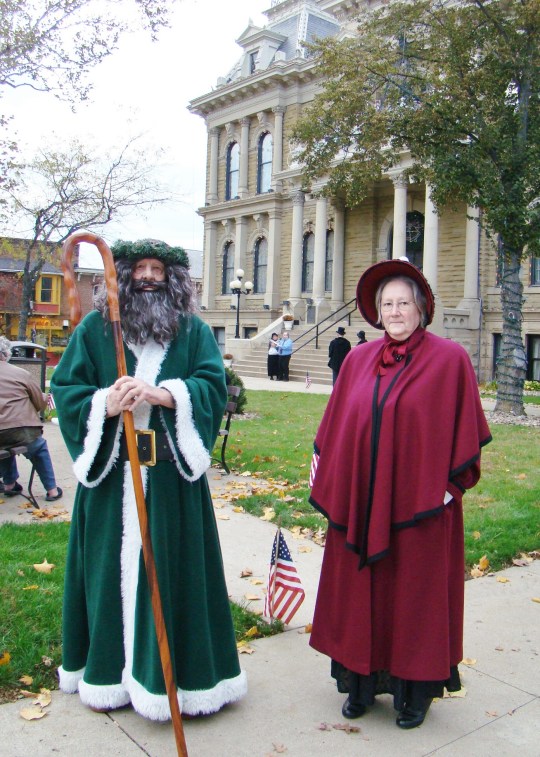
Walt greeted visitors as Father Christmas for ten years, with help from Sheila.

For the last ten years, Walt has portrayed Father Christmas for Dickens Victorian Village. He would meet buses on the street or in the Welcome Center and probably has his picture in many family albums as a result. He’s not sure if he’ll be able to do that this year at the age of 91.

Even though the business is closed, they still enjoy making pottery. Now they make just what they like. Right now Raku, a Japanese style is a favorite. It was first used by the Japanese Emperor and was known as a ‘throw away pottery’. The emperor would drink his tea, then throw the cup against the wall.

walt-raku

His current favorite project centers around Raku, a Japanese form of art.

Raku is a ‘quick fire, quick cool’ kind of pottery so it would be fired and ready for supper quickly. Today in the United States a glaze is added and it’s no long a throw away. Actually it’s so attractive you wouldn’t want to throw it away.

walt-fishing

Walt still enjoys a day on the lake with his fishing pole.

Walt is just ‘a good old boy’, who has taken an interest in the community in many different ways. Thoughts of travel still skip through his mind and he often dreams of living in Hawaii or Tahiti…or at least visiting. Our world could use more of those ‘good old boys’.

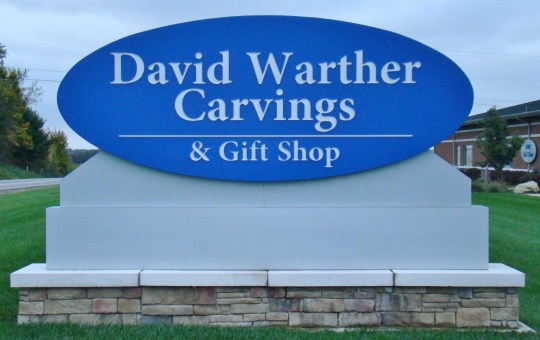
david-warther-sign

This sign on Route 39 signals that you have arrived at David Warther Carvings.

Following in his family’s footsteps, David Warther excels as a maritime artist. The detailed work takes time and patience to create the beautifully finished ships that can be found at this exhibit. Three years ago, David decided to open a museum to display room after room of his carved masterpieces. David Warther Carvings is located on Route 39 between Sugarcreek and Walnut Creek.

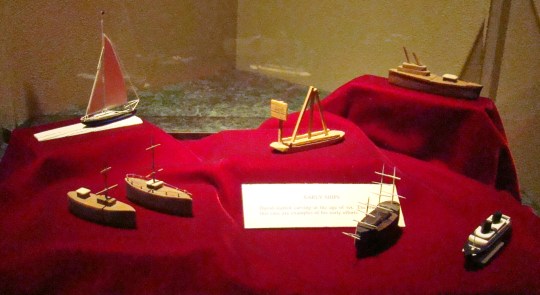
david-warther-early-ships

David began making ships from scraps of wood when he was six years old.

His passion for carving began as a child. He wanted to do what his grandfather, Ernest Warther, did – make carvings. But his object wasn’t trains, like his grandfather, but ships instead.At the age of six, he took scraps of wood to make his first ship. His mother kept that ship all these years and it is on display in the museum today.

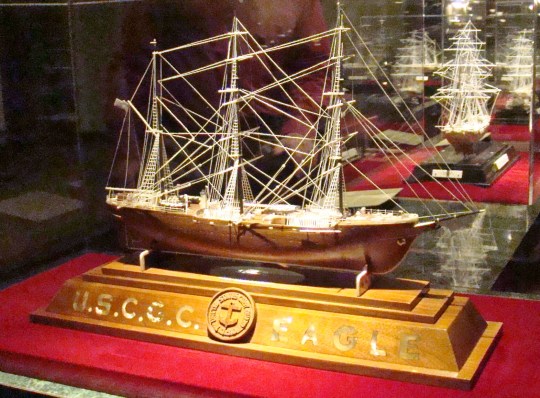
david-warther-high-school

At the age of 17, he carved from ivory his first ship, a coast guard cutter.

As a junior in high school he finished his first carving the USCGC Eagle, using ivory, ebony, abalone pearl and walnut. The Eagle was used as a training cutter for officers in the United States Coast Guard. David’s love of ships continued to grow.

david-warther-stallion-of-rouen

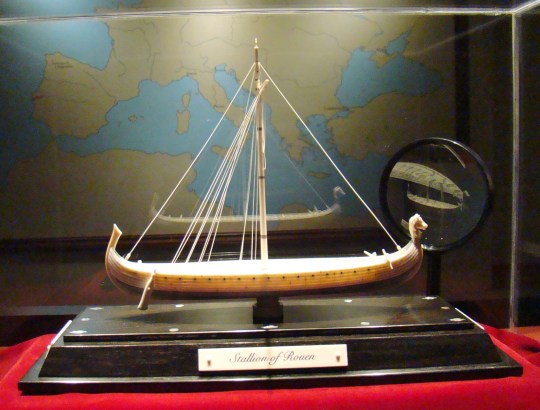
The Vikings used the Stallion of Rouen as a trading ship between France and the waters of the Mediterranean. David uses the world map to point out locations for his maritime stories.

Not only can you see impressive ships with scrimshaw engraving at this exhibit, but David tells the history of the times and points out special features on different carvings. The displays are grouped according to a time-line for the ships, from ancient history of Egypt in 3000 B.C. to modern times.

david-warther-pharoahs-ship

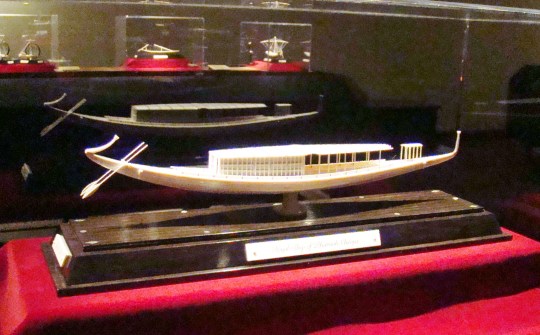
This carving depicts an early royal ship for an Egyptian Pharaoh.

A carving of the royal ship of an Egyptian Pharaoh recalls the story of its discovery in 1952 packed away in a box in the Great Pyramid of Egypt. It took twenty years to put it back together and it’s now displayed in a museum at the Great Pyramid. They buried the ship with the King as they believed it was needed to take him to the next world.

david-warther-tool

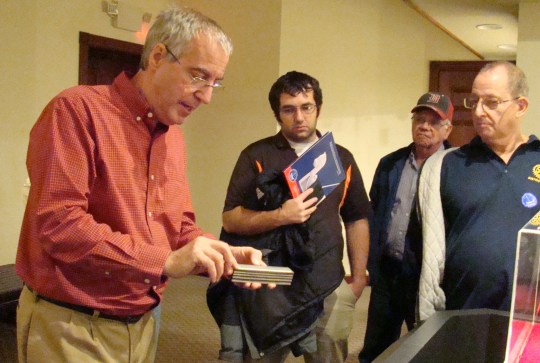
Visitors were shown this special hand-made tool, which is used for making strands of ivory.

When assembling the ships, the parts are held together with tiny ivory pegs. First David must make strands of ivory so he has ample pegs to hold the pieces together. This is a time consuming task as it takes over an hour to make a ten inch strand of ivory, which is about twice the thickness of a human hair.

The strand is filed in a handmade, wooden groove until it is just the right thickness. This is a tedious task as the strands are so thin that breakage often occurs. Once two pieces are fastened together, the end is sanded so smooth that you have to look closely to see the peg. His grandfather, a quiet and soft spoken character, used this same method for the ivory pegs in his steam engines.

It takes about six months to complete each ship and David tries to do two each year. Right now he is working on #85. Each ship is made of ivory with ebony highlights and abalone pearl in the base.
david-warther-guided-tour

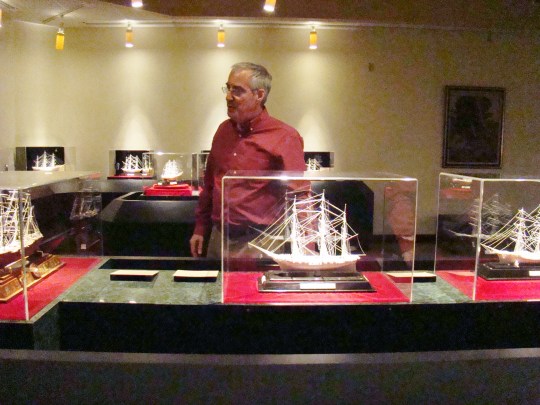
David is surrounded by his ships as he gives a guided tour.
The Warther family now has four generations of carvers: great-grandfather, grandfather, David and his son. David’s another Warther who does not sell his ivory carvings. They are for viewing only.
david-warther-tusks

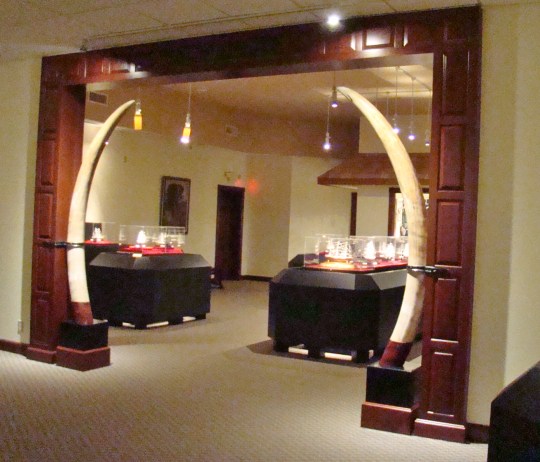
The third largest set of elephant tusks in the United States frames a doorway between timeline rooms.

But these ships are just a hobby for David. He earns a living by making parts for musical instruments from ivory of the wooly mammoth. Parts for violins and guitars are quite popular and are shipped around the world.

david-warther-clock-tower

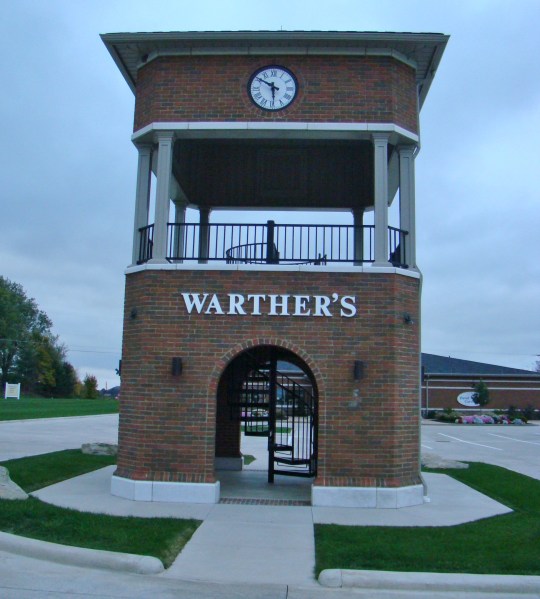
An attractive thirty foot high clock tower pavilion has an observation deck to view surrounding Walnut Valley.

The museum is located on Ohio 39 between Sugarcreek and Walnut Creek. Their winter hours are 10:00 – 4:00 Wednesday through Saturday. Ivory and ebony live together in perfect harmony at David Warther Carvings.


zma-outlook

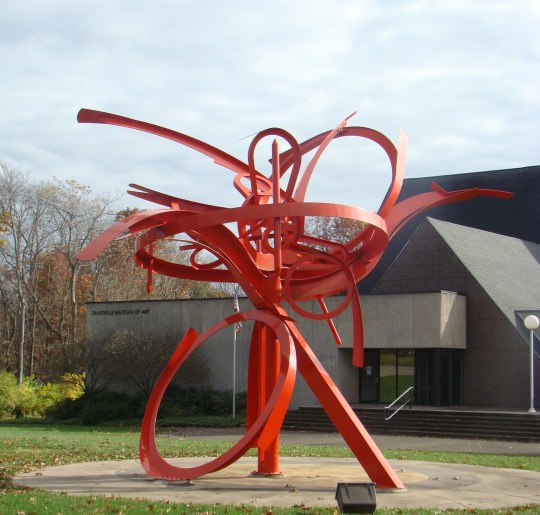
The sculpture, “Outlook”, attracts attention to the Zanesville Museum of Art

“Outlook”, a large scale sculpture, greets visitors on the front lawn of the Zanesville Museum of Art. This eye-catching, bright red metal sculpture was created by David Black, professor at Ohio State for 30 years.

His connection to Zanesville happened long ago when his creative side focused on ceramics. He’d drive from Columbus to Roseville for the perfect clay he needed. His awards for ceramics and sculptures create an extensive list.

zanesville-art-museum

Three floors containing over 7000 creative works of art can be found at the museum.

Inside the Zanesville Museum of Art, you’ll find a wide variety of treasures that span 5,000 years. Around every corner and in every room, different special displays pull you along. And they are changing constantly! Their mission is to ignite human imagination and understanding through the visual arts.

zma-bronze-bust

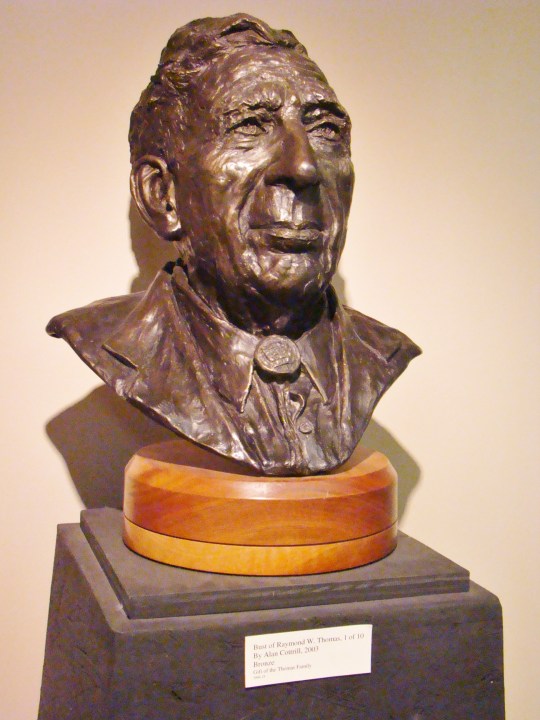
This bronze bust of Raymond Thomas, who contributed his pottery collection to the museum, was made by local sculptor, Alan Cottrill.

This project began back in 1936 when it was called Zanesville Art Institute being located in downtown Zanesville. Established by Mr. and Mrs. Edward Ayers, their personal collections of paintings, sculpture, glass and ceramics became the foundation for the museum.

In 1975, more room was needed and it moved to its present location on Military Road. There are over 7,000 objects in 18 varied galleries on three floors with items you would only expect to see in a much larger city. They are quite proud of their museum and rightfully so.

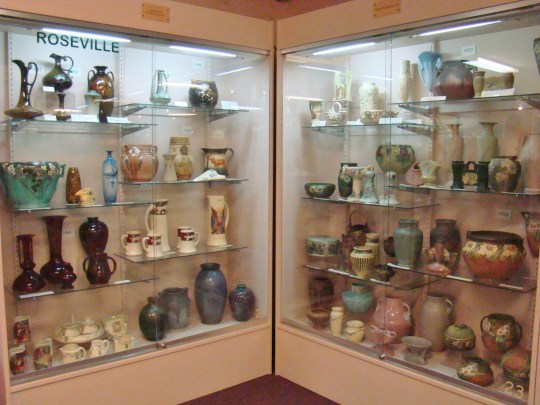
zma-roseville-pottery

This Roseville Pottery display is one of many pottery exhibits throughout the museum.

The museum is well-known for its pottery collections as Zanesville was once the pottery capital of the world. So it follows that this would be the perfect place for pottery display by local companies including: Owens, Roseville and Weller. Displays show the progression of their works in an excellent timeline. Many consider pottery to be the heart of the museum.

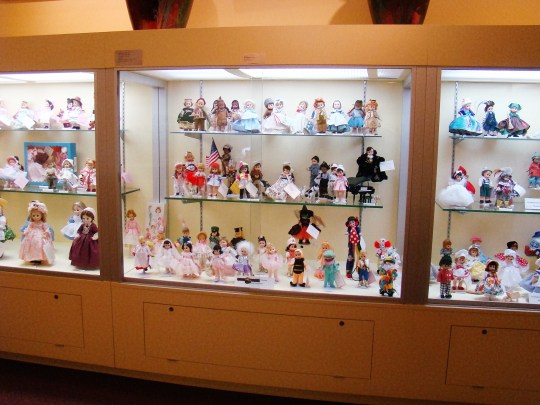
zma-dolls

The Madame Alexander Doll Collection contains over 600 dolls.

The Madame Alexander Doll Company has a magnificent Americana Collection of dolls being shown at the Zanesville Museum of Art. Here you’ll find everything from dolls depicting nursery rhymes to those wearing dresses of the first ladies. Over 600 dolls make it a spot young ladies like to spend time.

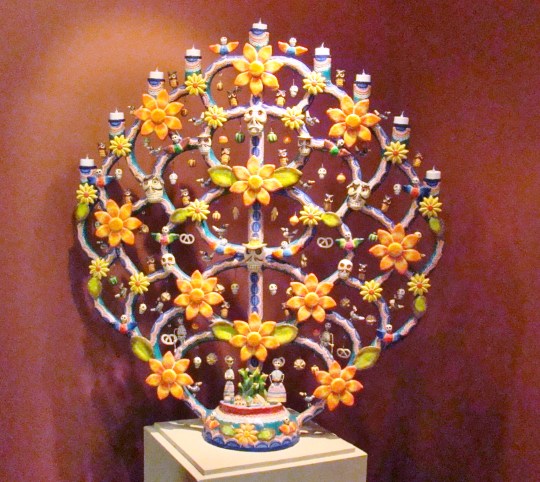
zma-tree-of-life

This colorful ceramic “Tree of Life” Candelabrum celebrates a Mexican religious holiday.

Two special art displays are being featured through January 7, 2017. The Carl E. Eriksson Collection features original paintings and sketches by The Eight. This group of eight artists drew people from all walks of life. They made a difference in the world of art by moving from traditional to realistic scenes featuring scenes of every day life.

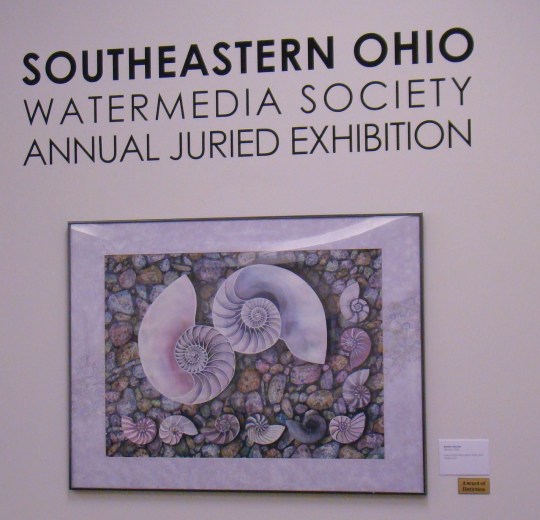
zma-watercolor

“Every Family Has a Black Shell” by Marilyn Stocker won the Award of Distinction.

The second is a juried exhibition by Southeastern Ohio Watermedia Society. The art work is outstanding here and many local artists are featured. There is also a section for displaying student art, featuring different schools each month.

zma-200-b-c

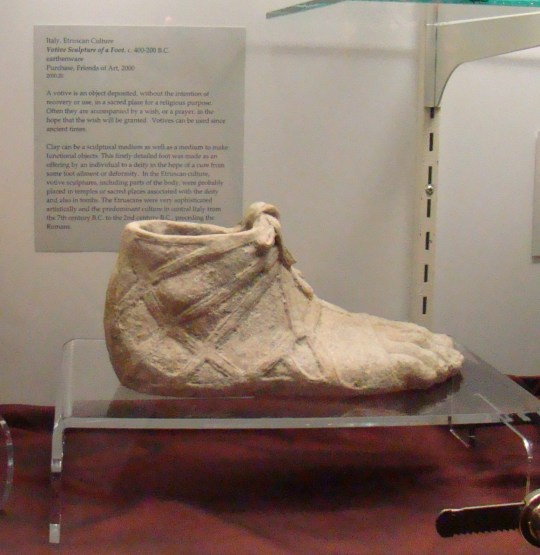
An Italian Votive “Sculpture of a Foot” dates back to 400 – 200 B.C.

The oldest items can be found in two places. In the Sculpture Gallery, two Roman sculptures date before 200 B.C. The Greek sculptures contain a votive, which looks like a foot, that also dates before 200 B.C.

zma-england-wood-panel

Original furnishings from a 1690s home in England are the setting for the Old Masters Gallery.

But the favorite spot is the Ayers Collection in the English Panel Room. You step back in time to a dining room from 1690 in Hatton Garden, the home of Sir Christopher Hatton, Chancellor under Queen Elizabeth I. Even the wood paneling is original. In this room, you’ll find displayed in the Old Masters Gallery their finest works of art  by Picasso, Renoir, Matisse and more. All this at the Zanesville Museum of Art!

zma-glass-and-pottery

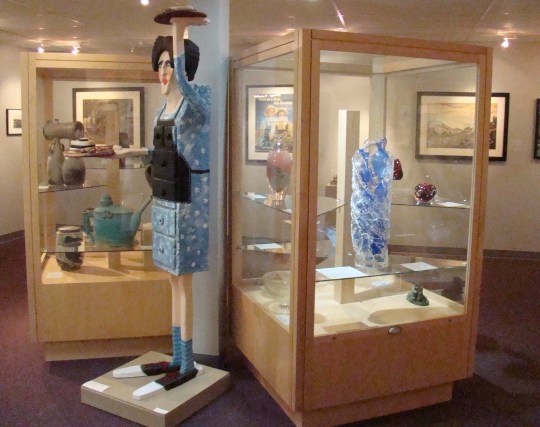
Pottery and glass are featured collections from many local companies in the past and present.

The art museum is a great place for all ages to explore. Art Classes are scheduled twice a month for adults and children. These change monthly for chances to use various mediums of art. Check their schedule for the latest information at Zanesville Museum of Art .

zanesville-vase

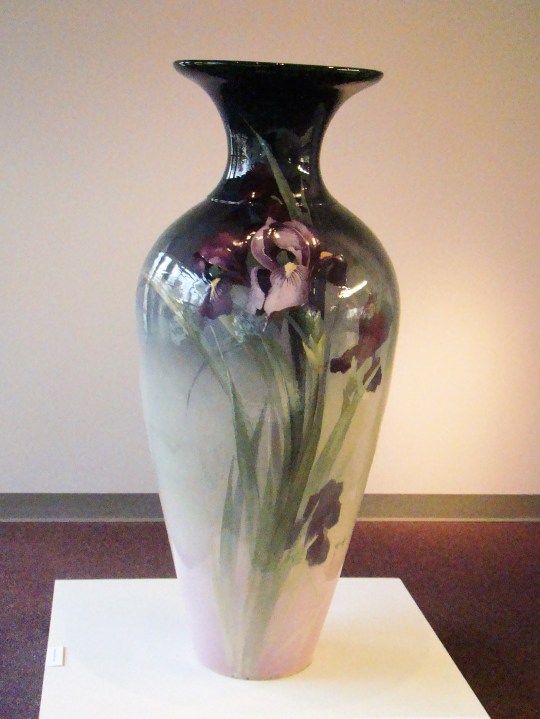
Zanesville displays beautifully decorated seven foot vases throughout the city.

ZMA Concert Series presents live entertainment in the museum galleries each month at no charge to the public. Sounds like the Zanesville Museum of Art has something for everyone that has an interest in the arts.

Every artist will be drawn to this impressive museum time after time as exhibits change six times each year. That makes it easier to have something everyone enjoys.

The world is but a canvas to our imagination. ~Henry David Thoreau

The Zanesville Museum of Art is located at 620 Military Road in Zanesville, Ohio. Take Exit 153 off I-70 north to Maple Avenue. In about two miles turn right on Military Road. The museum will be on the right hand side. Watch for the large red sculpture.


courthouse-light-show-2

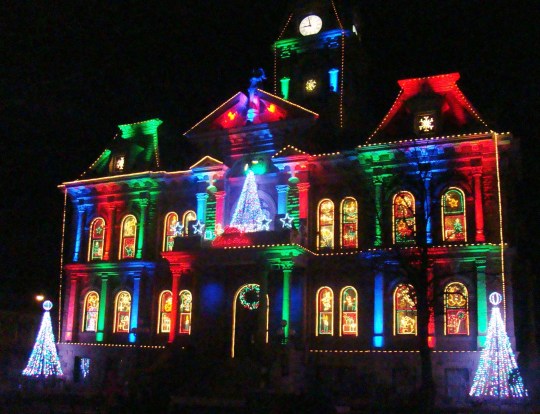
This spectacular Holiday Light Show brings visitors back again and again.

One of the main attractions during Dickens Victorian Village’s season is the spectacular Holiday Light Show at the Guernsey County Courthouse in downtown Cambridge. This did not happen overnight. It took over a year to design the first light show – a gift from Grant Hafley, with programming help from Joel Losego.

lite-brite

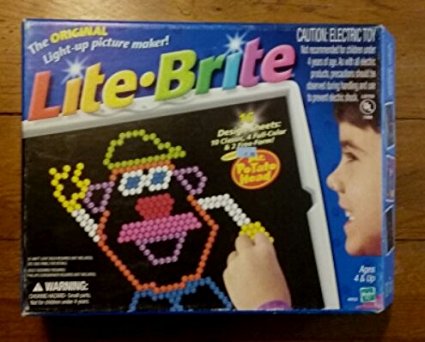
Joel’s favorite toy as a youngster was Lite-Brite.

According to his mother, Joel has always been interested in lights. In fact, as a child, his favorite toy was Lite-Brite. At a very young age, his parents said that he had the lights on their Christmas tree blinking in rhythm.

When he was six years old, his summers were spent helping his dad on construction. He saved the money his dad gave him that summer to buy a CB radio, which he still has.

avc

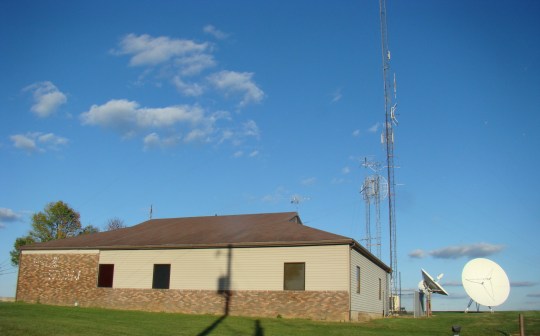
These are the AVC stations you enjoy.

As a middle school student at Buckeye Trail, he began working at AVC Communications in Cambridge. He continued working there until he graduated from Ohio University. Helping owner, Grant Hafley, an electrical engineer, Joel learned to design flashing lights with control boards for area dances.

He also volunteered doing sound at his church, the State Theater, and Living Word during that time. Sound intrigued him, Joel remarked, “I always knew what I wanted to do.”

radio-station

The radio station sets high on College Hill.

Then Joel headed off to work in various states on national television networks developing internet and website experience. Basically a home body, Joel served as a beta tester for new software in his spare time. While working for ESPN at special TV events, it became necessary for him to travel all over the country.

Joel missed his family during this time and knew he needed to make some changes. Who should call but his old friend, Grant Hafley. Grant said he was looking for someone to buy AVC Communications. But he wanted a person who would keep the community spirit alive.

joel-losego

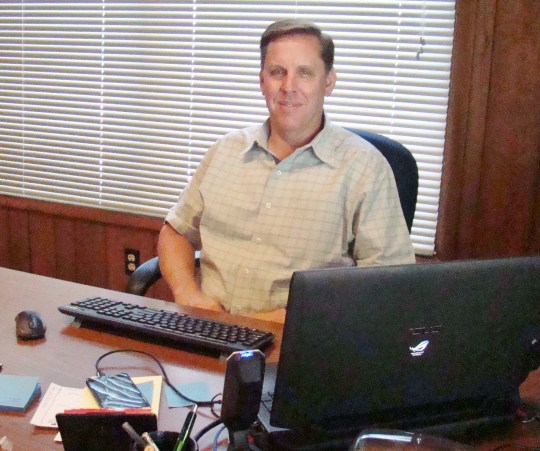
Joel conducts much of his business from the computer at his desk.

The moment his life changed was six months later in 2005 at Disney World, a magical place indeed. Joel talked to Grant Hafley during the Disney Parade, and finished the deal for the purchase of AVC. He was on his way back to Guernsey County, a place he never expected to return.

About this time Grant Hafley, who supported Dickens Victorian Village, wanted to do something special to draw more people to town. Lighting up the courthouse to make it a show seemed like a possibility.

Then a year of plans began with help from Grant and a programmer from Arizona. During the second year, the show became Joel’s ‘baby’ and he has been the only person programming it ever since. Right now he is teaching another young person how to continue the operation.

computer-screen

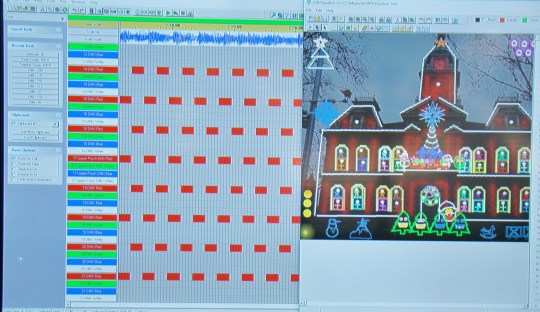
This picture of Joel’s computer screen shows a touch of his planning.

Programming is a tedious process. Every two minutes of light show for the courthouse takes over eighteen hours to complete. Needless to say, Joel spends a lot of time at the computer designing the program. It takes time and patience to synchronize 55,000 lights to over 150 Christmas songs.

courthouse-tree

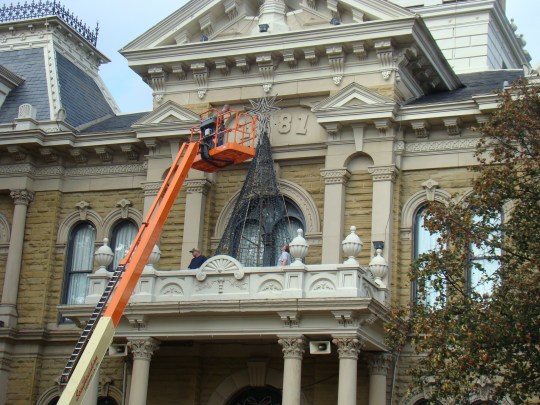
The Christmas tree was put in place at the courthouse near the end of October.

This year’s light show had a few major changes. For the first time all the lights were LED so the courthouse seems brighter than ever.What appears to be fireworks appears above the courthouse roof.

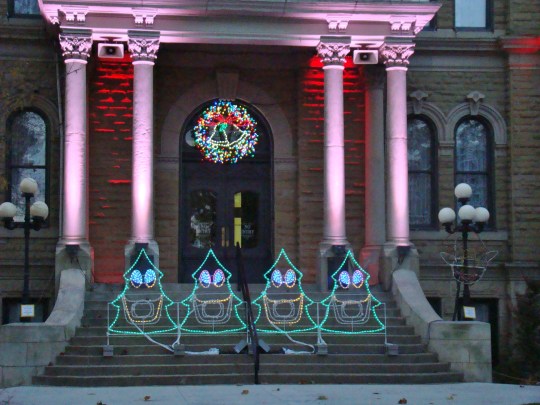
On the courthouse steps, four lighted trees form Craig’s Christmas Quartet. This is the first time an entire song has been sung and it’s acapella in four part harmony. This is a tribute to Craig, the caretaker at the courthouse, who has been so helpful to Joel and friends over the years.

open-house-quartet

Ctaig’s Christmas Quartet appeared for the first time in 2016.

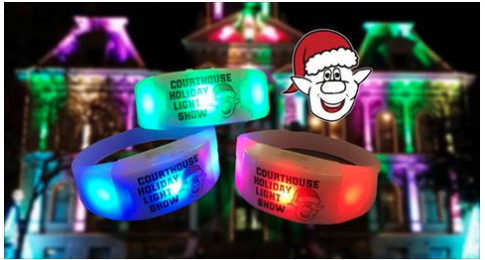
As a way to get people directly involved with the light show, Joel has used an idea from Disney. A Magical Lightshow Wristband has been designed with a computer chip. When this wristband is at the courthouse, it becomes controlled by the light show and flashes along with it.

This is the first time anything has been sold to raise money for the light show. The cost of the wristband is $20, but you must remember “It’s not a toy. It’s a computer.”

wristband

This Magical Lightshow Wristband flashed with the music.

When asked about his favorite Christmas music, Joel paused as he enjoys so many. Finally, he admitted that Trans-Siberian Orchestra’s Carol of the Bells, Gene Autry’s Rudolph, and Andy Williams’ White Christmas were among his favorites.

One of his favorite pastimes will surprise you. He enjoys going to the courthouse light show anonymously to listen to comments about the show. “It’s fun watching other people watch the show.” There he finds ideas for the future as well as improvements that can be made.

open-house-grant-and-joel

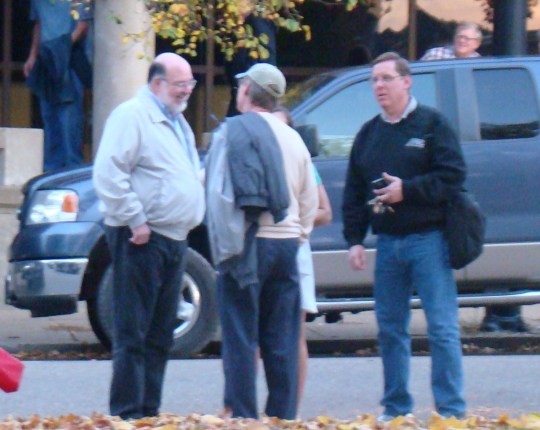
Grant Hafley and Joel Losego talk to visitors from the edge of the crowd.

Ten months out of the year, Joel works approximately thirty hours a week on the programming for the Guernsey County Courthouse Holiday Light Show. November and December, when it is running, are his months off from programming. But he’s always handy in case there’s a problem with the program. Most can be fixed from his computer, wherever he happens to be.

When Joel gets an idea, he usually jumps right in and makes it happen. One thing he has put on hold is a trip he wants to share with his wife to Maui. His dream places them at a resort, overlooking the ocean at sunset while having dinner. He even has a video of it on his phone. Someday you can be certain this too will happen. He makes his dreams reality.

light-cd

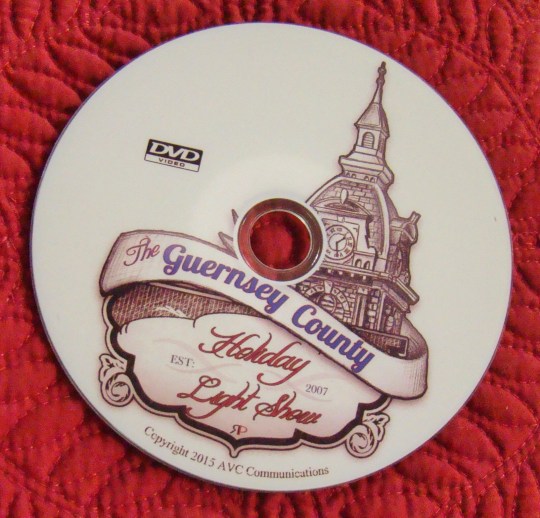
Remember the evening of the Holiday Light Show with this CD.

Come to Cambridge and watch the Guernsey County Courthouse Holiday Light Show any evening from November 1 to January 2, 2017 starting at 5:30 until 9:00. Maybe you’ll be lucky enough to spot Joel watching too.

The Guernsey County Holiday Light Show happens in Cambridge, Ohio at their courthouse square along old Route 40. You don’t want to miss it.