Places to go and things to see by Gypsy Bev

Posts tagged ‘Muskingum River’

Stockport Mill and Inn Gives Scenic View of Muskingum River

A retreat for all reasons – or no reason at all
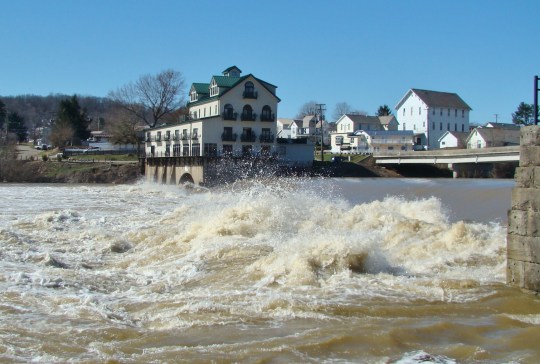
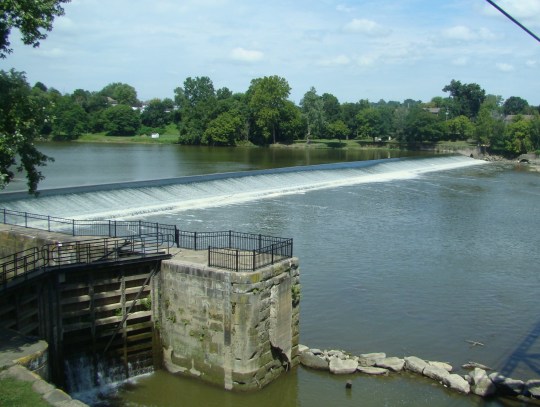
Stockport Dam

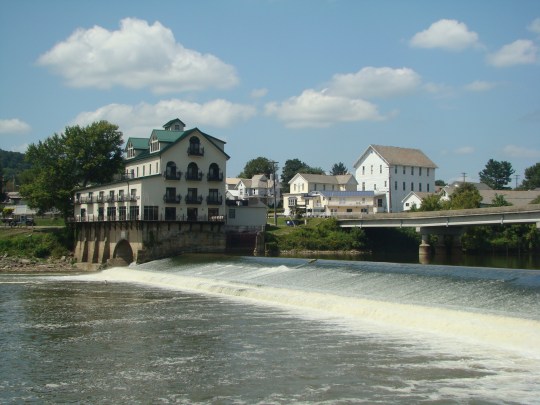
Turbulent waters recently flowed past the Stockport Mill and Inn along the Muskingum River.

Escape crowds and noise. Listen to the sounds of the flowing river. Enjoy a delicious meal. All of these become part of the experience when visiting Stockport Mill and Inn on the Dam at the edge of Stockport, Ohio. Explore the history of the area while you “mill around”.
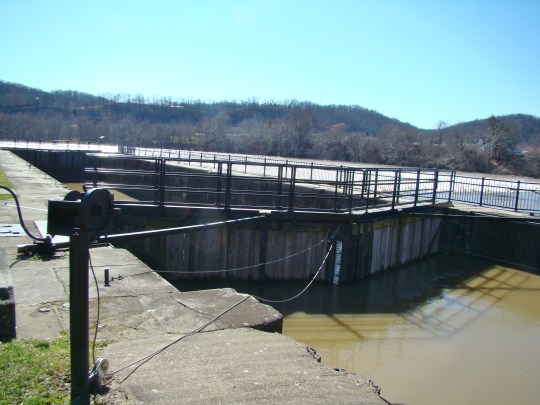
Stockport Locke

This hand-operated lock sets across the Muskingum River from the inn.

     Stockport Mill, located at the sixth in a series of locks and dams on the Muskingum River, had its beginning in 1842. The building today is the third mill on that site. It was built in 1906 by the Dover Brothers. By using a pair of 10-inch Leffel turbines, it not only provided power to run the mill but generated electricity for the town of  Stockport.
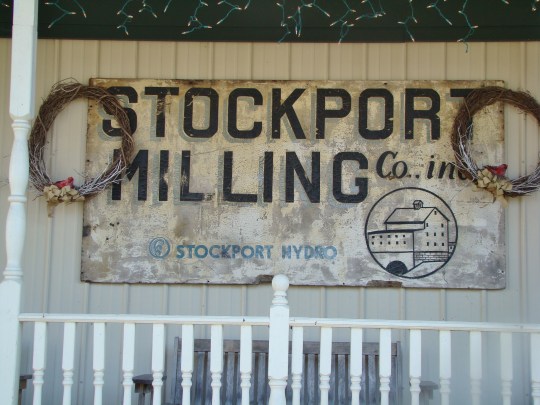
Stockport Mill Sign

This old mill sign hangs on the porch of the Stockport Inn on the Dam.

     Stockport Milling Company was known for making Gold Bond, Seal of Ohio and Pride of the Valley refined flours. Products were shipped on steam packet boats and on the Ohio & Little Kanawha Railroad, because good roads were not available at that time.
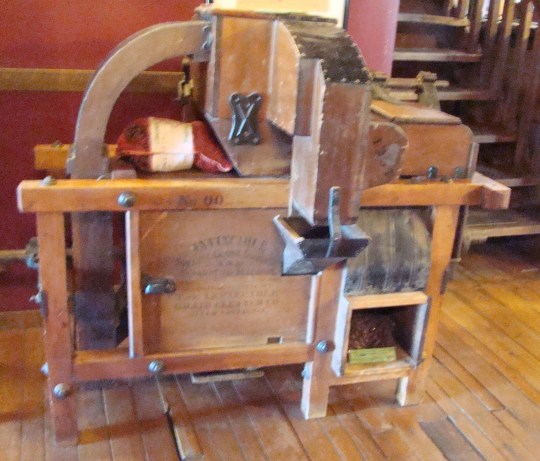
Stockport Corn Grinder

Some antique equipment, like the corn separator, can be found throughout the inn.

     That early mill supplied many different needs. Farmers could get feed and supplies for their animals, including halters and show supplies. Wives used the mill to purchase their garden seeds and plants. Even the children found a place to pick up a 4-H project in the form of baby chicks.
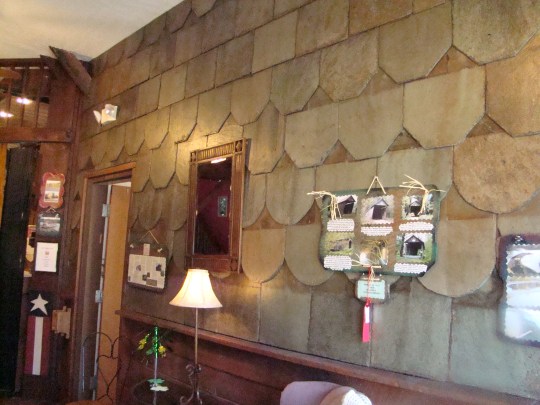
Stockport Slate in Entrance

Slate from the roof has been recycled into wall covering at the inn’s entrance.

     This was also the place where farmers met to share their news, until it ceased operation as a feed mill in 1997.  Three years later this beautiful old mill was restored and now functions as Stockport Mill Inn and Restaurant on the Dam. It is the only mill still remaining of many that dotted the busy river in the past.

     The owner, Dottie Singer, has attempted to preserve the original architecture and building materials. Inside you’ll find many unusual antiques, information about the history of the area, and great pictures and paintings throughout donated by local Morgan County residents.
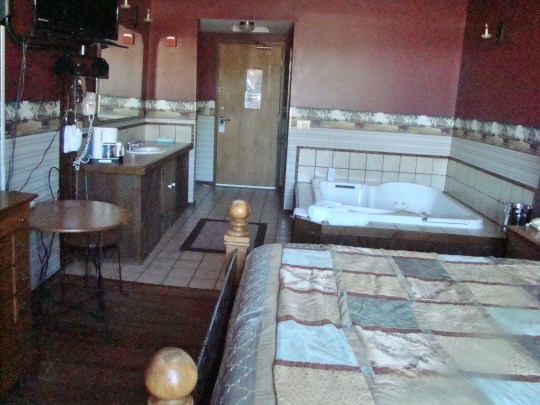
Stockport Suite

Hudson Suite offers a view of the river and a jacuzzi for relaxation.

     There are fourteen guest rooms with private balconies, which all have scenic views of the Muskingum River. You might choose to stay in the Morgan Raider Suite, Valley Gem River View, or Captain Hook Suite.
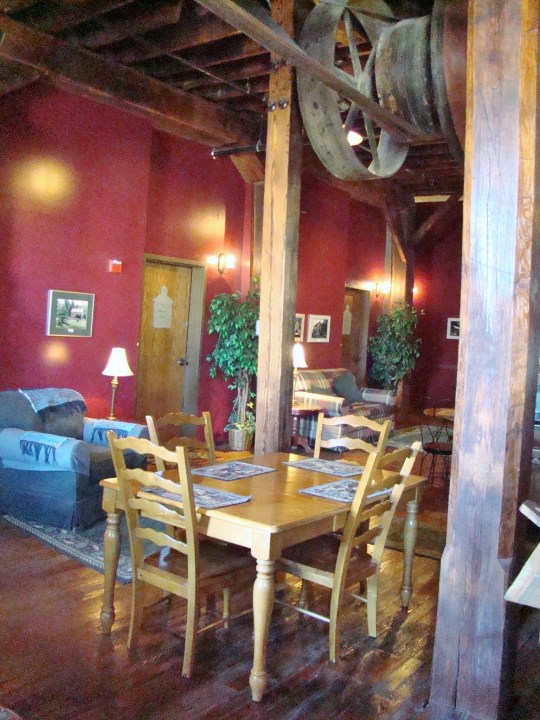
Stockport Lounge

This meeting room contained workings of the mill as well as a place to visit.

     Suites come with a jacuzzi, while other rooms still have that old fashioned claw bath tub. Each of the four floors has a meeting room for relaxation as well as early morning taste treats. This is a great place for a reunion, wedding, business meeting, or just to get away.
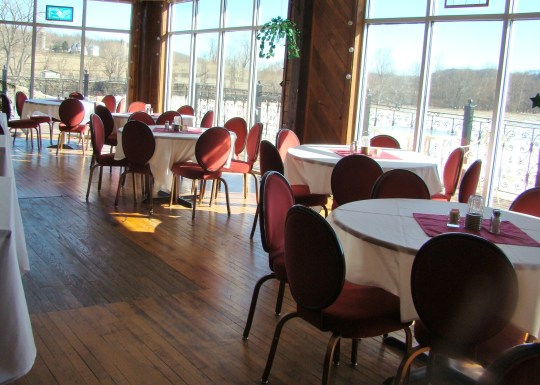
Stockport Dining Room

Enjoy weekend meals at Stockport Restaurant on the Dam.

     Their dining area has a wrap around terrace so you can have a delicious meal while watching the river drift by. The restaurant is open weekends throughout most of the year, but closed in January. Friday and Saturday, their hours are 5PM-9 PM, while on Sunday, their delicious buffet, which brings memories of Sunday dinners on the farm, runs from noon-4PM.  Reservations are recommended.
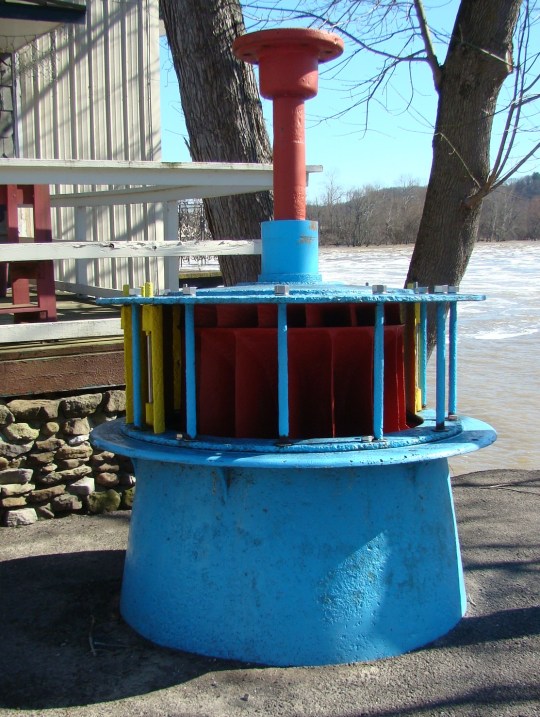
Stockport Turbine

This was one of the original turbines that provided electricity to the mill and town of Stockport.

     While those early turbines that produced electricity for the town became corroded, new turbines have been installed that are similar Samson Leffel turbines. The only difference is these new ones have stainless steel parts instead of the early carbon steel, which rusted.
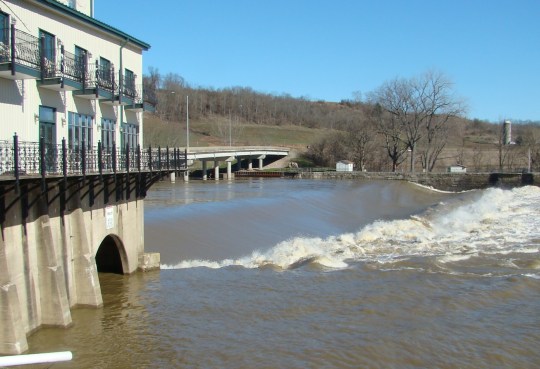
Stockport Tunnel

This is the exit tunnel for the water after it has run through the turbines.

     Water enters the turbines through a trash-rack, which keeps logs from interfering with turbine action. Then it goes in a tunnel under the mill, where it hits a runner, which turns and makes the power.
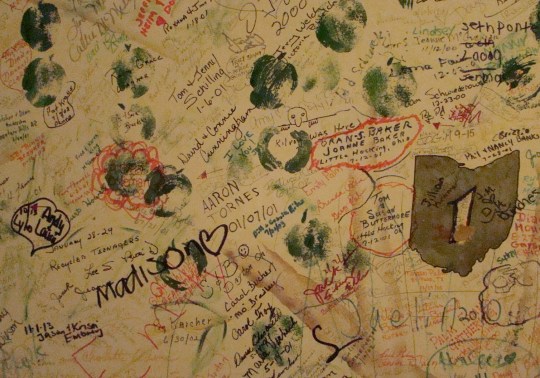
Stockport Wall 2

Guests are encouraged to visit the “Signing Wall” along the steps on their way to see the turbines in the basement area.

     The generator sets on top of the Speed Increaser at a level above the 100-year flood level. This Hydro Project produces around 800,000 kilowatt hours per year, using seventeen million gallons of water each day. After all their electric needs are met at the mill, any excess electricity is sold to the electric company. It’s no surprise that today this system is run by a computer!
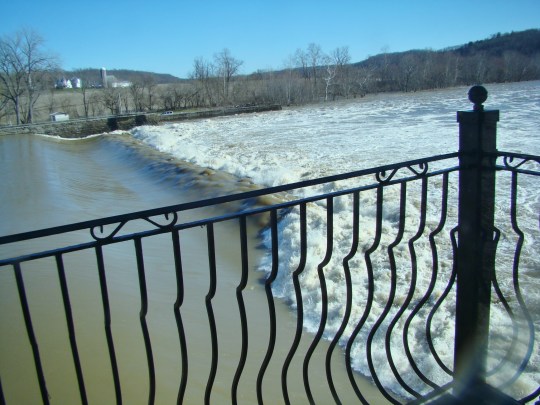
Stockport Balcony

There’s always an exciting view of the Muskingum River from the balconies.

     For those who like to stay away from it all, Stockport Inn and Mill Restaurant on the Dam would be the perfect place. Guests often come back for the river view from their balcony, great food, and the rustic décor. Many have a favorite suite they use time after time.

Stockport Summer

In the summer, the river here is peaceful near Stockport, Ohio.

     Relax as you hear the sound of the river bubbling right past your balcony at this historic structure. Look for it on your next trip down the Muskingum River.

Stockport Mill and Inn on the Dam is located just off Route 60 along the Muskingum River about halfway between Zanesville and Marietta. Cross over the river at Ohio 266 W and the mill will be on the left hand side. Their address is 1995 Broadway Avenue, Stockport, Ohio.
 

Cruisin’ Down the Muskingum River on a Sunny Afternoon

River boats

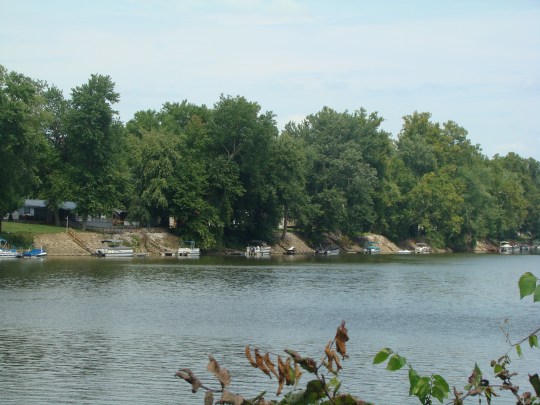
Camping, boating and fishing are popular along the beautiful Muskingum.

While the Muskingum River begins at Coshocton, between Zanesville and Marietta it holds many points of interest. This river is the only river navigable by larger boats within the state of Ohio. That’s all because of its system of eleven dams and locks, still in working order, that extends for 112 miles.

River Ferry 1900 001 (2)

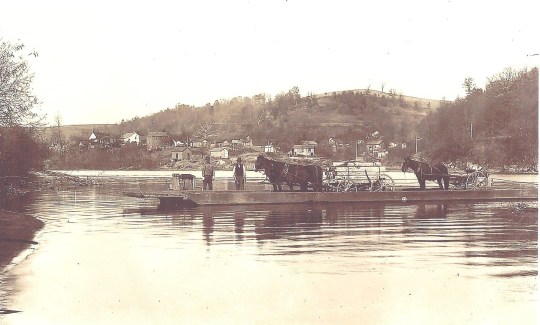
The Coal Run Ferry delivered a load of railroad crossties on horse-drawn wagons across the Muskingum before bridges were built.

The river received its name from the Native Americans, who called it Moos-kin-gung – meaning “Elk Eye River”. That name happened due to the large herds of elk that once roamed this valley. In those early days, the cargo on the river consisted of essentials such as salt, flour, pork and apples. A round trip took three to five weeks to go from Zanesville to Pittsburgh and back via the Muskingum and Ohio Rivers.

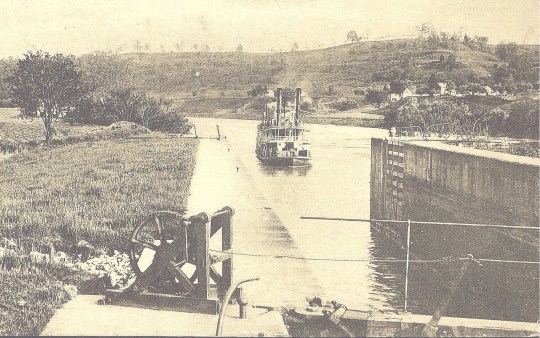
Steamer at Lock #3 001 (2)

The steamer approaches Lock #3 at Lowell in the early 1900s.

When steamboats became popular, navigation was rough on the rugged Muskingum River so they designed a system of dams and locks to lift the boats when the elevation changed abruptly. After a boat is secured within the lock, the lock tender closes the gate and opens the valves required to raise or lower the pool level. When the water in the lock chamber has reached the required level, the lock tender opens the through gate just like they did in 1841.

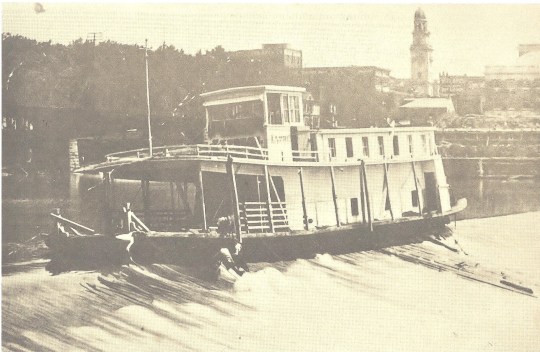
Steamer Marietta stuck on dam at Lock # 1 001 (2)

Steamer Marietta got stuck on the dam when not using the locks.

Sometimes the boats would attempt to go over those rugged spots without using the locks. Once in a while they succeeded, but often they ended up stuck in the river.

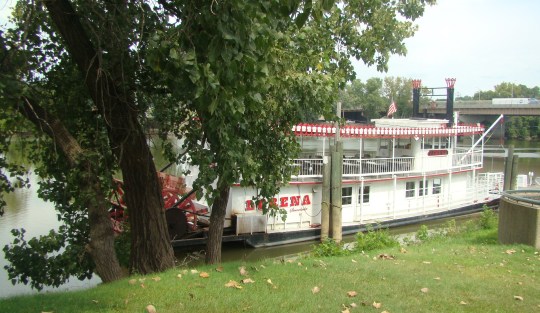
River Lorena

The Lorena takes passengers on a pleasure trip down the Muskingum River.

This trip began with a stop at the Lorena Sternwheeler at Zane’s Landing Park in the city of Zanesville. While the original Lorena visited Zanesville in the late 1800s, the present one arrived in 1976 for Zane’s Trace Commemoration. A ride on the sternwheeler gives you a chance to feel the river, as the paddles create a merry sound. Memories of the 1800s ride along with the Lorena.

River Lock 9

Lock #9 at Philo provides a great view of the dam and locks.

Soon Lock 9 at Philo appears with the original lock tender’s house.The falls at the lock sparkle in the sunshine as people stand in the shallow river to fish.

River Ohio Power Plant 1923 001 (2)

The Philo Ohio Power Plant was the first electric plant built along the Muskingum.

In 1923, Philo Ohio Power Company, one of the largest electric plants of that time, was located on an island in the river.

River Hand Powered Locks 001 (2)

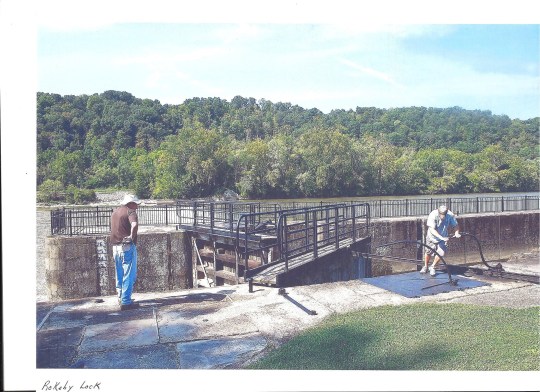
The lock tender hand operates the lock at Rokeby Lock #8.

Lock 8, Rokeby Lock at Eagleport, is a special stop along this system of locks, the only hand operated locks still being used in the United States today. In fact, it is believed there is only one other system like this in the world, and that is in China. It was near this lock that General John Hunt Morgan and several hundred cavalry forded the Muskingum River on his raid across Ohio.

River Stockport Inn

Stockport Mill Inn would be a pleasant place to spend an evening.

Beside Lock 6 stands the beautiful Stockport Inn. Today’s Inn was built in 1906 by the Dover brothers; however, there were two mills previously at this site dating back to 1842. This mill was known for its refined flours: Gold Bond, Seal of Ohio, and Pride of the Valley. It’s a perfect place to spend a night as each room has a balcony that overlooks the river. On the weekends, enjoy a tasty meal at Restaurant on the Dam.

River Fishing

Fishermen wade into the river in hopes of a great catch.

During the drive down the river, it is lined with cabins and campers for those that enjoy being near the water. Most have boats at their docks and many slides end in the river. Frequently fishermen are either on the shore or wading nearby waiting for a nibble on their line, and perhaps fish to cook over a campfire in the evening

River Ohio

Imagine early travelers’ surprise upon seeing that the Muskingum River empties into the wide Ohio River at Marietta.

The trip ends at the first permanent settlement in the Northwest Territory – Marietta. Here the Muskingum River joins the Ohio River to flow eventually to the Gulf of Mexico.

River Lafayette

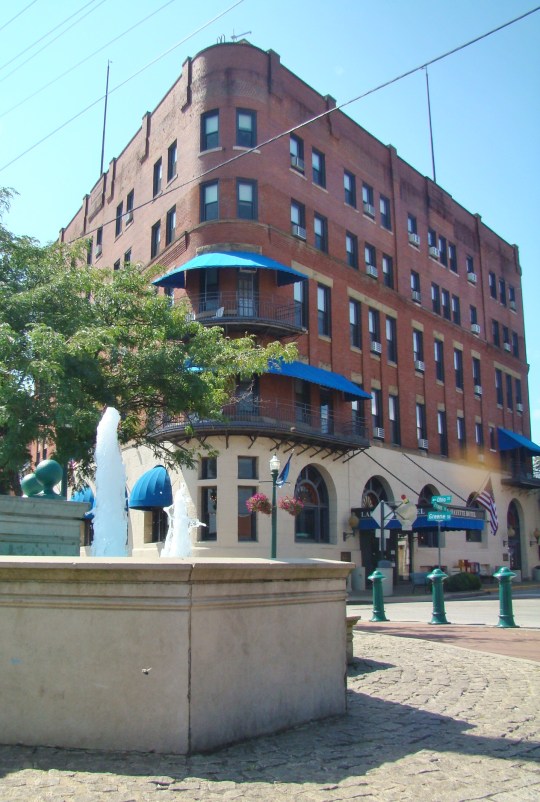
At the confluence of the Ohio and Muskingum Rivers stands the Lafayette Hotel.

Some say this beautiful old Lafayette Hotel still holds spirits of many travelers from the past. One nighttime visitor is Mr. Hoag, former owner of the hotel, who appears in his brown derby hat. That’s something not seen by my eyes, but a story heard by my ears.

The locks are open weekends 9:30 – 6:00 from mid May until mid October. Please check their schedule and call ahead if you need to use the locks at another time so a lock tender can be available.

valley-gem-heads-out

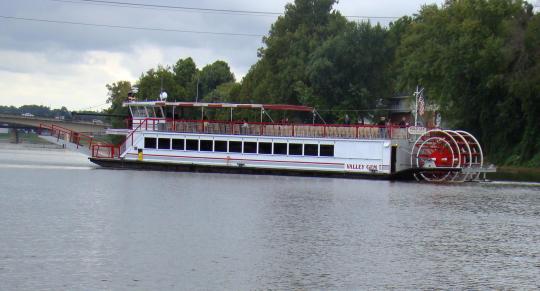
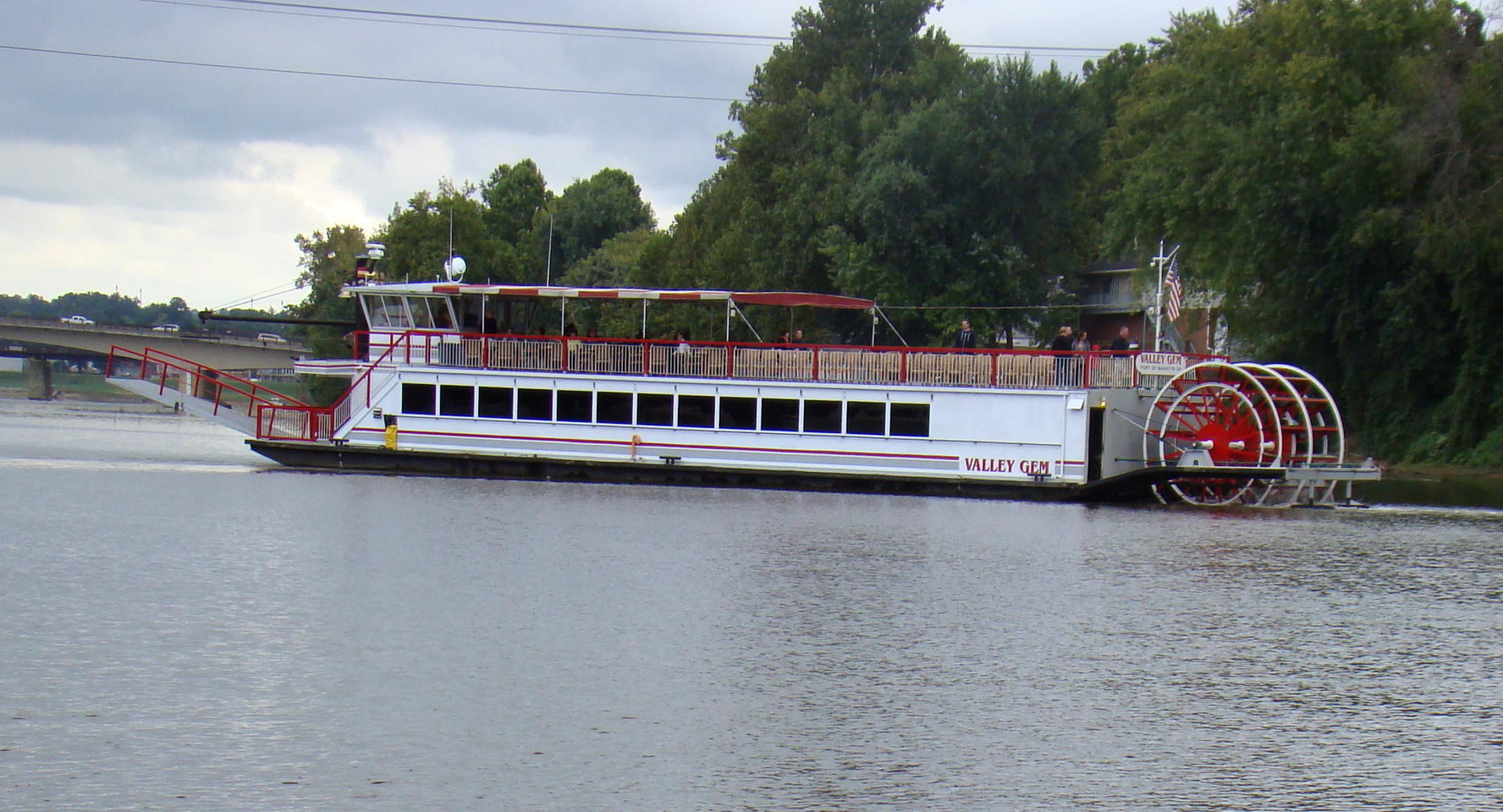
While in Marietta, you might want to cruise on the Valley Gem.

Be sure to take time to sit along the Ohio River and enjoy reminiscing about those long ago riverboats that went from Pittsburgh to Zanesville along this route. They carried both passengers and freight. Barges still carry their loads of coal and steel up and down the river, and people enjoy taking a ride in their pleasure boats as well.

Some things have changed, but the Muskingum River has remained the same since the days of ancient visitors. Hope you can enjoy a trip down the Muskingum River sometime soon.

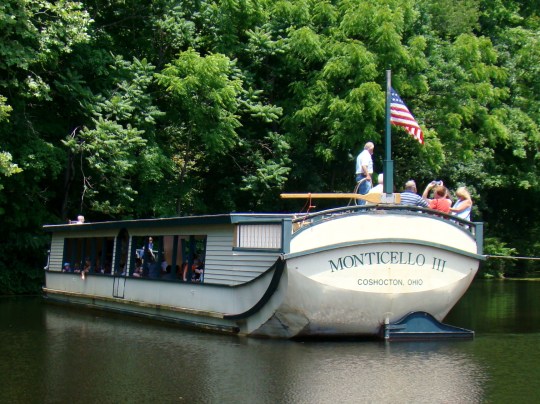
Drift Along on the Monticello III Canal Boat at Roscoe Village


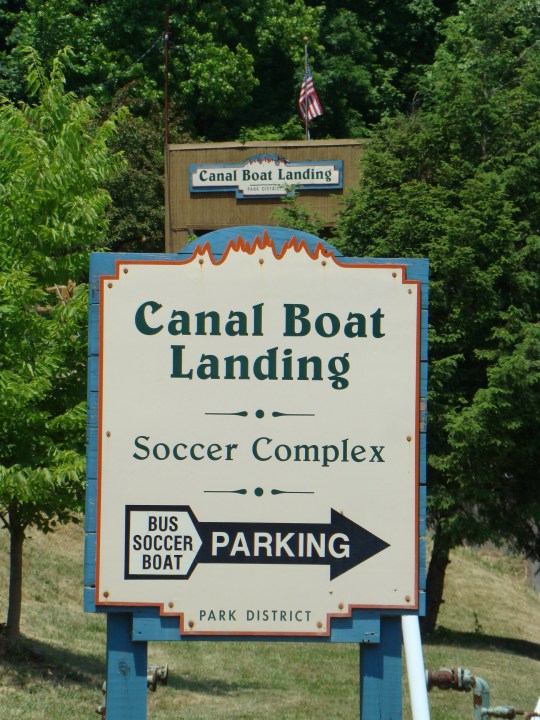
Monticello sign

Look for this sign off Route 83 near Coshocton to find the Canal Boat Landing.

The smoothest ride you’ve ever had!

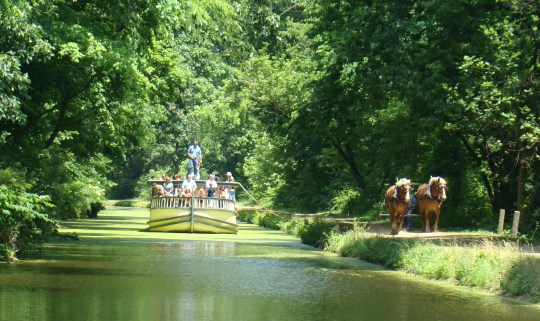
That describes the trip along the restored Ohio-Erie Canal near Roscoe Village. Two horses, Rock and Bill, slowly walk the original tow path as they gently pull a replica of the canal boats that traveled this same route in the early 1800s. Sit back and relax on this forty minute ride while you listen to the captain tell the story of life on the canal.

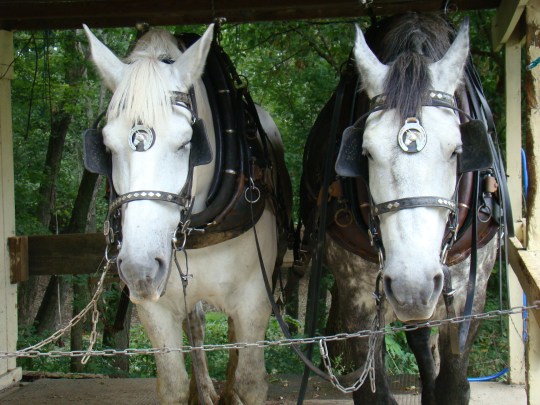
Monticello horses

Bill and Rock, two huge draft horses, wait patiently in their stable.

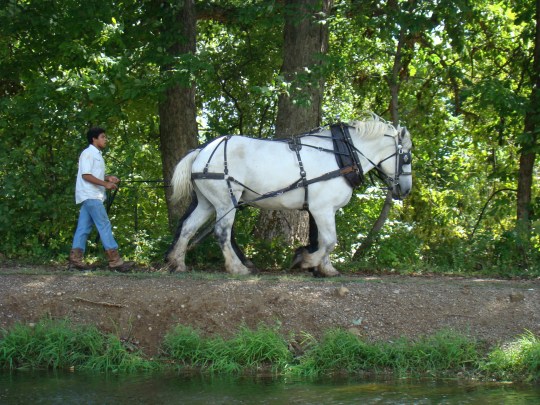
Two Percheron horses pull the Monticello III canal boat quite easily. The hoggee, or horseman, leads them along the tow path. He uses 150′ of rope to guide them as they pull with great ease this flat bottomed boat weighing twenty-five tons.

In 1803, the need for a canal was evident. They would place a boat carrying goods on the Muskingum River, and it would drift downstream to the spot in Marietta where it met the Ohio River. They had no way to get the boat back upstream, so they had to dismantle the boat and carry it piece by piece to be reassembled. The canal eliminated that problem.

Monticello hogie walks horses

The hoggee walks along the original canal towpath as he guides the horses.

Ground breaking for the canal began in 1825.The canal was built by Irish immigrants, who worked for 30 cents a day and four jiggers of whiskey. The need for whiskey came into play to avoid the condition known as canal fever.

First, the canal was dug by hand to a depth of four feet, then lined with clay to make a sturdy bottom. How did they pack the clay? With a sheep-foot roller – a herd of sheep ran over it to smooth it.

Completion occurred in 1832, seven years later. Transportation at that time gave few choices – either a stagecoach or a passenger boat. Rates for the boats were fifty cents a day, which included room and board, while stagecoach fares were typically five cents a mile.

Monticello turning

Monticello III gives a smooth ride that is certain to relax you.

Often three hundred boats traveled on the canal at one time. Passing became the real challenge as their tow ropes could easily get tangled. This intricate job fell to the hoggees, the boys who guided not only the horses, but also the tow ropes. Quite often they were teenage orphans with no other way to find food and shelter.

Former president, James Garfield, worked as a hoggee in 1847 when he was a teenager. The story was told that Garfield fell into the canal so often, he became ill. After that experience, that young man decided that college would be a better choice.

Monticello on the canal

Everyone enjoys their trip down the restored Ohio-Erie Canal.

Captains often lived in the cabin on the boats with their family. The females of the family would be the cooks and do household tasks as they traveled on the canal. All garbage and waste was thrown to the towpath side. So if the cooks needed extra water for cooking they would dip it from the side opposite the towpath.Turtle soup was a favorite treat.

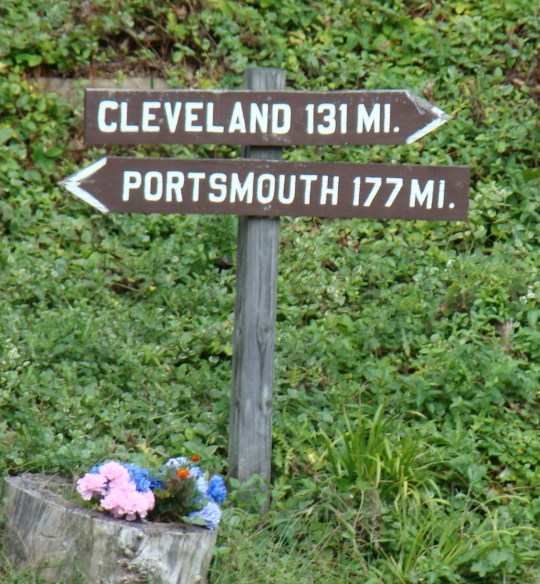
Monticello mileage sign

This sign at the edge of the landing tells distances from the Roscoe Port to Cleveland and Portsmouth.

As humorous as it may sound, there was a speed limit for boats on the canal to keep the banks from eroding. Four miles an hour was the limit and they were fined for speeding. Speed was determined by how long it took to get from one lock to the next.

Monticello map

This map of Ohio shows the route on the eastern side of the Ohio-Erie Canal from Cleveland to Marietta and Portsmouth.

In 1913, a major flood throughout Ohio wiped out the Erie Canal. Parts of it still exist today from Cleveland to Portsmouth. View a bit of history and take the smoothest ride imaginable at Roscoe Village sometime this summer. It’s relaxing!

The canal boat ride at Roscoe Village is seasonal from Memorial Day to Labor Day on Tuesday – Saturday at 1:00, 2:00, and 3:00 and Sunday at 1:00 and 2:00.

Ohio Beginnings with Rufus Putnam

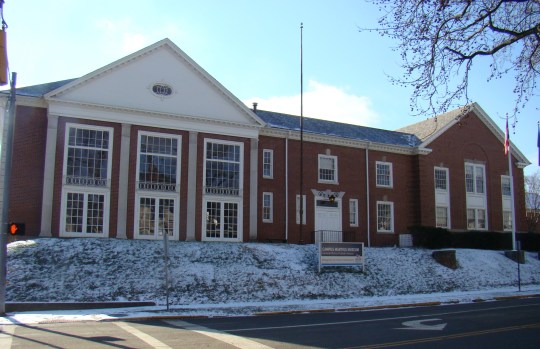
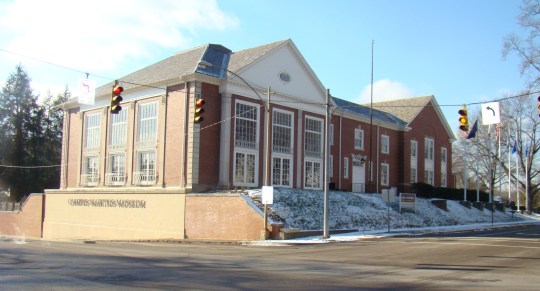
Putnam Museum Front

Campus Martius Museum in Marietta contains interesting early Ohio history.

How is The Bunch of Grapes Tavern in Boston, Massachusetts connected to Campus Martius Museum in Marietta, Ohio?

After the Revolutionary War, in March, 1786, a group of men met at The Bunch of Grapes Tavern in Boston to purchase land in the Northwest Territory.  Rufus Putnam, Benjamin Tupper, Samuel Parsons, and Rev. Manasseh Cutler formed the Ohio Company of Associates, also known as The Ohio Company, and purchased what was to become about one-fifth of the state of Ohio.

Putnam Land Office

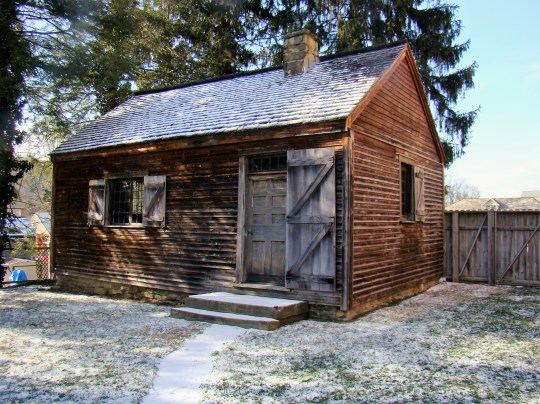
The Ohio Company Land Office, where Rufus Putnam and his partners worked, is the oldest known building in Ohio. Built in 1788, many hopeful land owners walked the path to its door.

These Revolutionary war soldiers were given land grants in lieu of payment for services rendered during the war. They purchased approximately 1,500,000 acres at roughly eight and a half cents per acre along the Ohio River in southeastern Ohio.

Provisions in this land grant were made for two sections in the center to be set aside for an educational institution. The first land grant college was to be called American Western University, but before opening changed its name to Ohio University.

Putnam Portrait

Rufus Putnam served as a member of the Ohio Company, which laid out the plans for Marietta.

Even though Rufus Putnam. the leader of the Ohio Company, was a self-educated man and did not have any formal schooling after the age of nine, he promoted higher education by serving as a trustee at Ohio University. He also claims a connection to West Point. where he built a fort during the Revolutionary War. Fort Putnam is today being preserved and operated by the United States Army Garrison, West Point.

In his memoirs, which are today at Marietta College, he shared his wish for a better education. One line said, “hence neglecting Spelling and gramer when young I have suffered much through life on that account.” But that didn’t keep him from recording records of all his correspondence, while he also kept a daily journal.

Putnam Sugar

An interesting item on the kitchen table was a cone of sugar wrapped in blue paper from the West Indies, with sugar nippers close by to get the perfect amount of sugar for a cup of coffee or tea. The blue paper had a second use as Persis could use it to dye her spun thread.

Rufus Putnam established the first Ohio Company settlement on the banks of the Ohio River in 1788. This became the first settlement in the Northwest Territory. Adelphia, meaning brotherhood, became its first name, but that was soon changed to Marietta in honor of Queen Marie Antoinette of France.

There the Ohio Company built a fortification to protect themselves from the Indians. They called their stockade, Campus Martius. Rufus Putman’s home was one of a row of plank houses inside this stockade.

A few years later, fortification was no longer needed, so the stockade was disassembled. However, the Putnam house remained at the original site, but with added rooms. He purchased the corner blockhouse for $70 and used its lumber for his house addition.

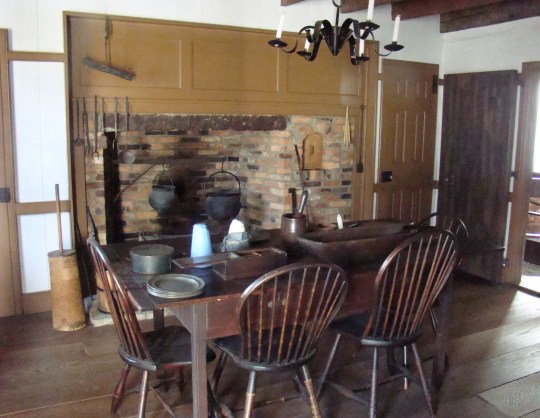
Putnam Kitchen

This is the original kitchen where the Putnam family prepared and ate their meals.

His wife, Persis and eight children, joined him in Ohio at their new home on the bluff of the Muskingum River. Their home here contained a kitchen, sewing/sitting room and two bedrooms upstairs. Now you can see the need for an addition.

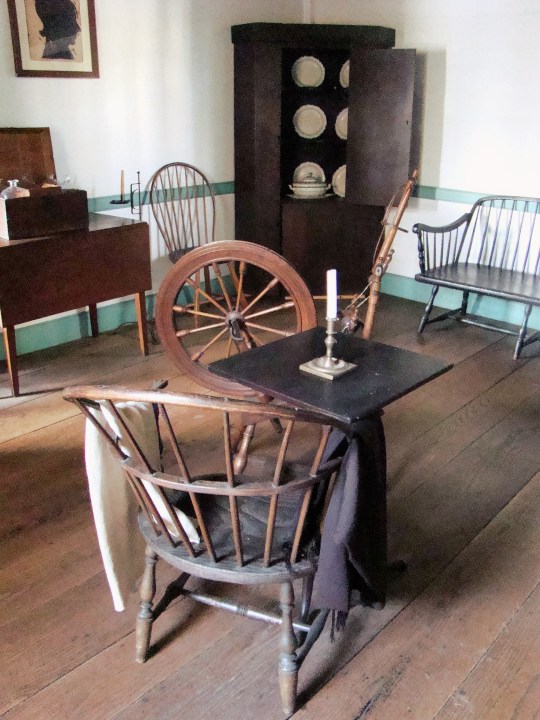
Putnam Spinning Wheel

Mrs. Putnam used the spinning wheel frequently as her seamstress abilities were well known. When Rufus was on his trips for the country, she often had to earn money for essentials by sewing.

Putnam Museum

Treasures of early Ohio can be found inside this building in Marietta.

What’s behind all those windows at Campus Martius Museum in Marietta, Ohio today? Inside is the full size house of Rufus Putnam and it still stands where it was built back in 1788. The museum was built around the house in 1931 after the Daughters of American Revolution with assistance from the state of Ohio saved it from destruction.

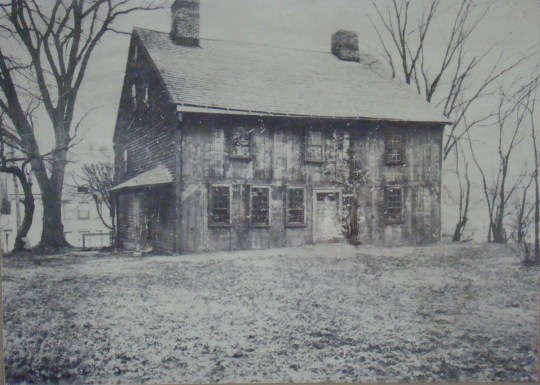
Putnam 1931

The house is pictured as it was in 1931 before preservation began.

Rufus Putnam served his country faithfully and was respected by his superiors, especially by his favorite leader, George Washington.  It has been said that so long as the history of his country shall be written and read, the part Rufus Putnam played in that history will be found occupying one of its broadest and brightest pages.

Visit Campus Martius Museum to see where the Putnam family lived and learn more about their new life in Ohio. The museum overflows with Ohio history.

Campus Martius Museum is located at 601 Second Street, Marietta, Ohio, on Ohio State Route 7, and minutes from I-77. Plenty of free parking is available and cost of admission is very reasonable.

Marietta Vice Walking Tour Filled with Thieves, Bars and Murders

This island contained an Amusement Park in 1900.

In 1900, Buckley Island contained an Amusement Park during the day, then became a Lawless Wonderland at night.

You had to be bold and brave if you dared walk on the seedy side of town in Marietta, Ohio back in the early 1900s. But Lynne Sturtevant recently led a crowd of fifty on an adventure back to early days as the old sections of Marietta were revisited. Along the way, characters in costume greeted the tour and told of dangerous adventures at that time.

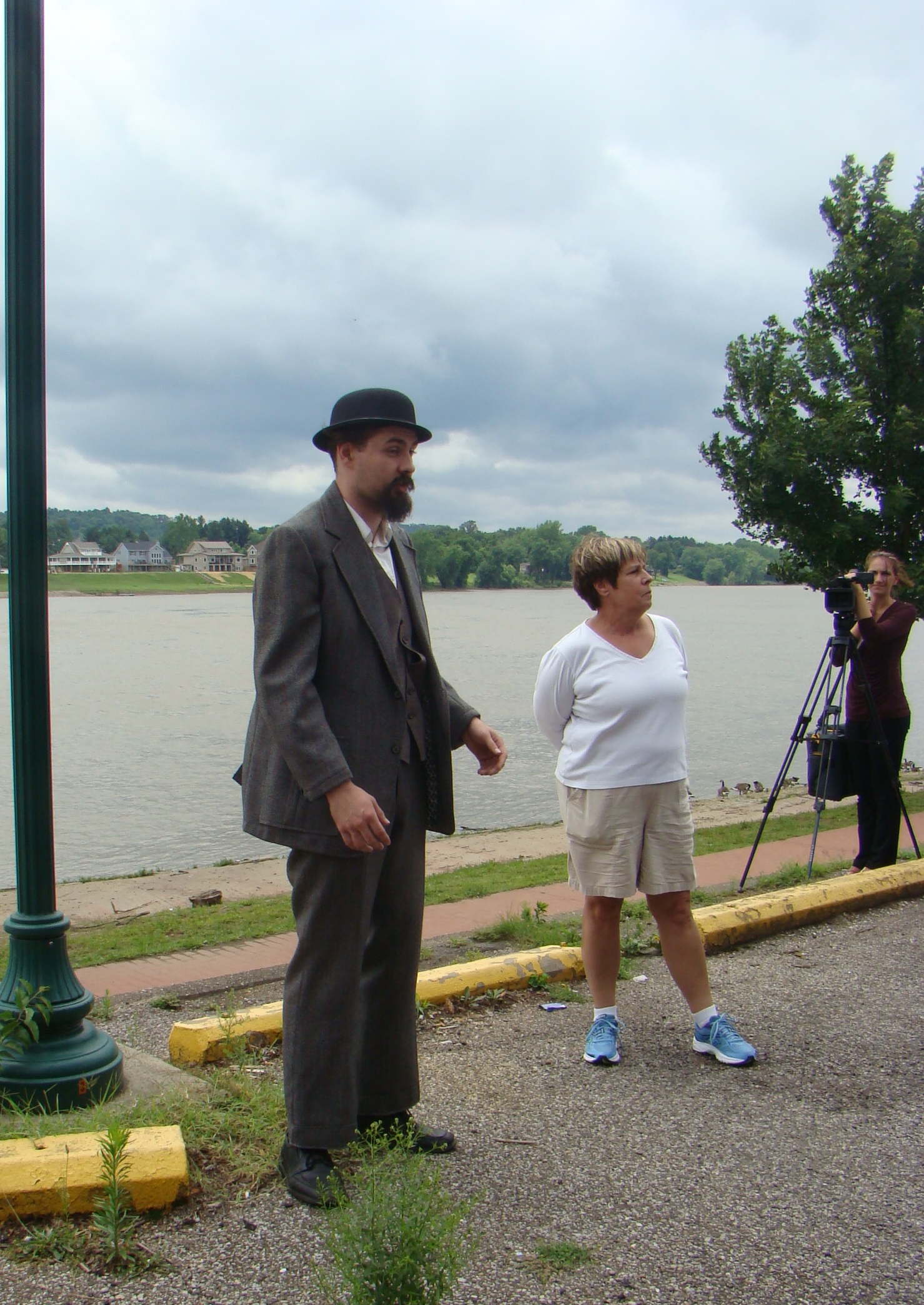
Riverfront man and Lynne, our guide

Riverfront man and Lynne, our guide

Crime was a severe problem all along the Ohio and Muskingum Rivers in Marietta, with bars, bars, and more bars. The Ohio River flowed around a small island, that served as an amusement park during the day, but a whole new crowd arrived in the evening. They enjoyed all the vices of the time – drinking, gambling, prostitution, and murder. Going to the island in the evening had an added enticement of cheap beer. Along the shore beer was twenty-five cents a glass, but on the island, only five cents. The Island, now known as Buckley Island, was a lawless wonderland. If you wanted to do anything illegal, the island was the place!

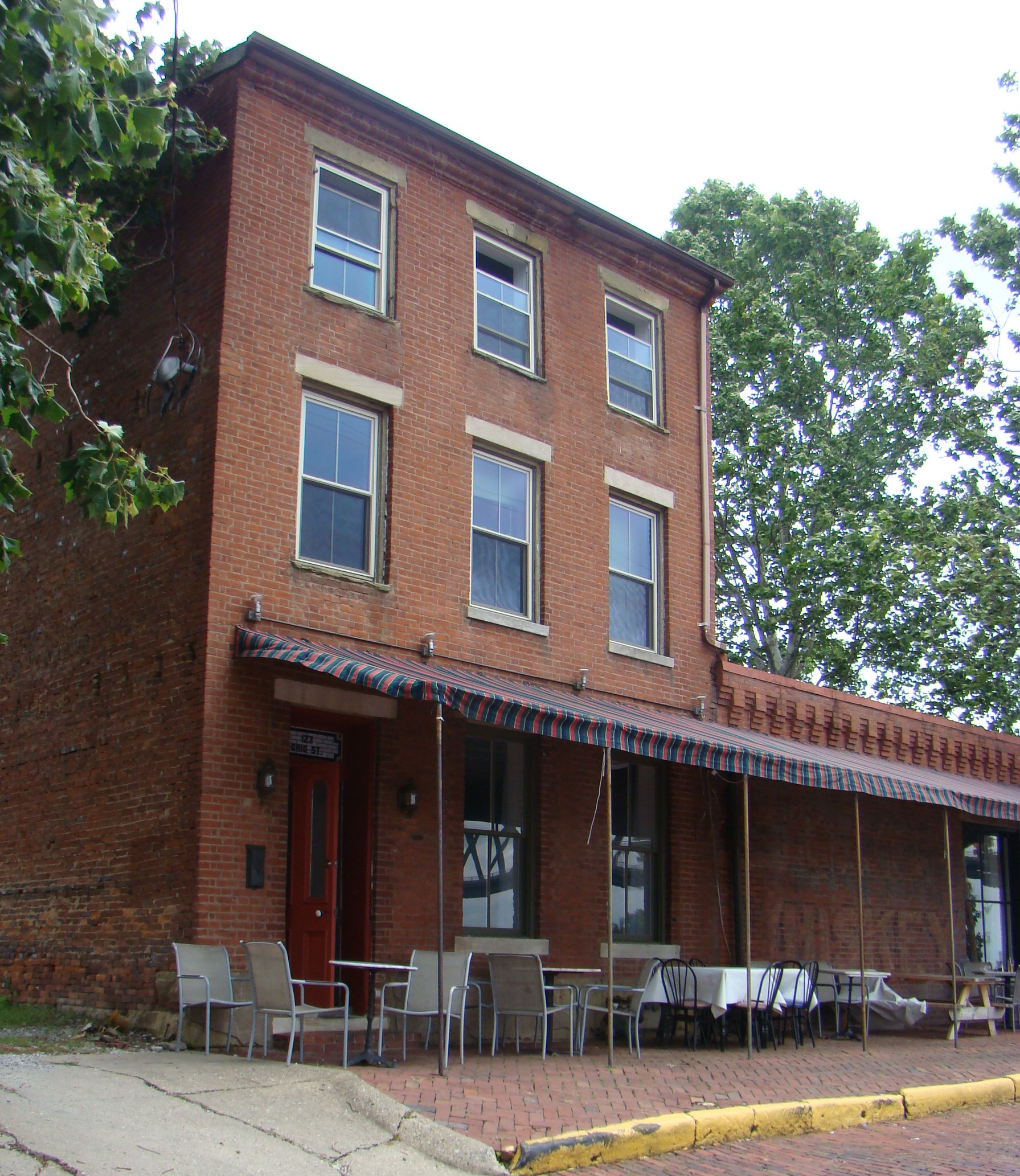
Old hotel and bar

Notice the popular shadow advertisement of WHISKEY at The Levee House – just above the table tops.

Despicable characters roamed the streets, drinking and arguing over everything imaginable. One man and his wife were each found with bullets in their head after an argument over a wristwatch. The stories told were all true reports of the Marietta newspaper from that time.

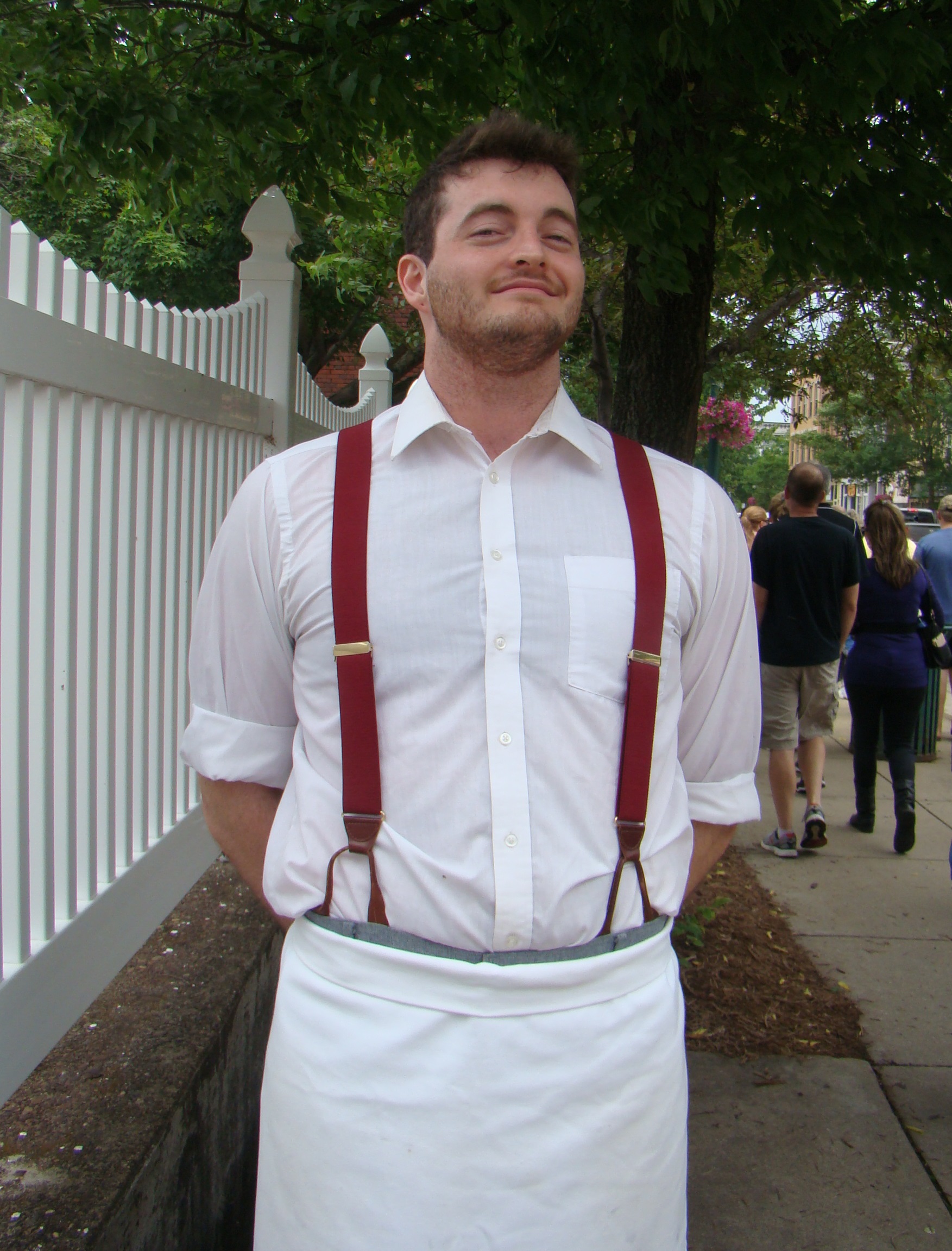
Proud bartender

Proud bartender

Dance halls and saloons were the main businesses in town. Shadow advertising can still be seen on many buildings with words like WHISKEY worked right into the brick works.

Along the way, the group met a delightful bartender who told of some of the fights he had witnessed at the bars. The job he hated the most was cleaning the spittoons.

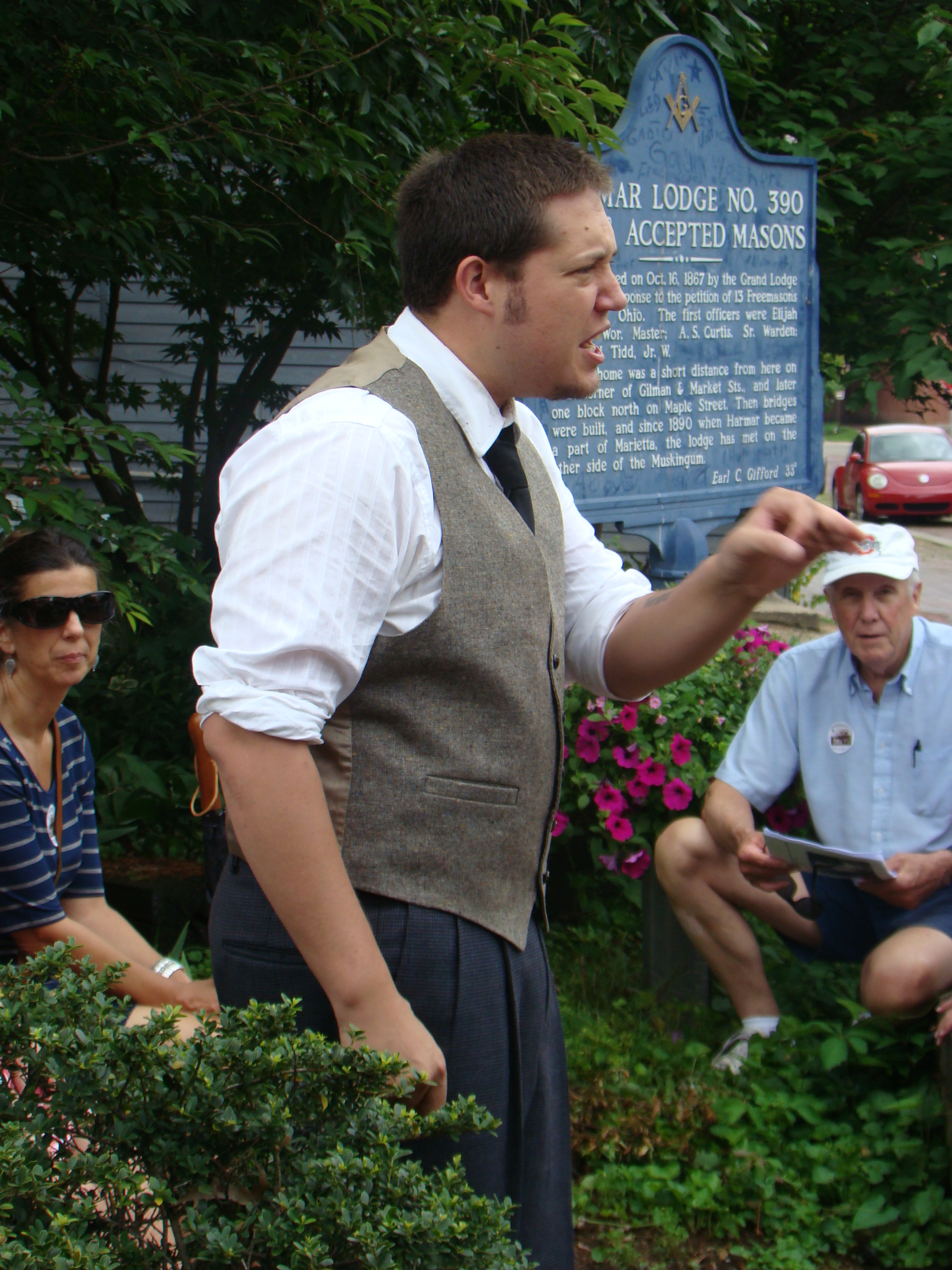
A character portraying Oliver Hyde, mayor of Marietta in 1904, spoke to the group in front of the police station. The building also served as the electric company and the mayor had his office on the top floor. He gave the latest police report describing real events in Marietta in 1904.

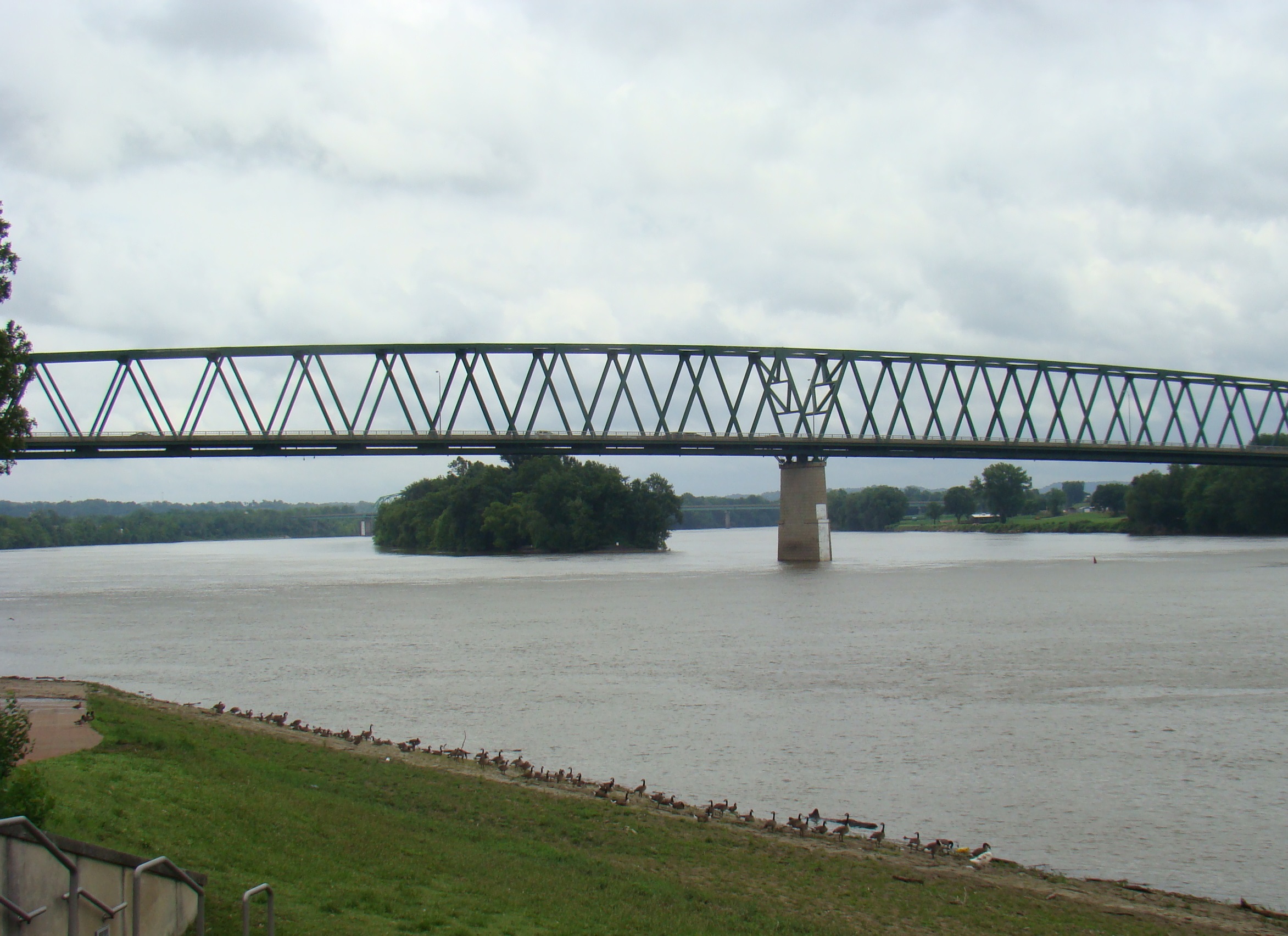
Historic Harmar Bridge

Historic Harmar Railroad Bridge

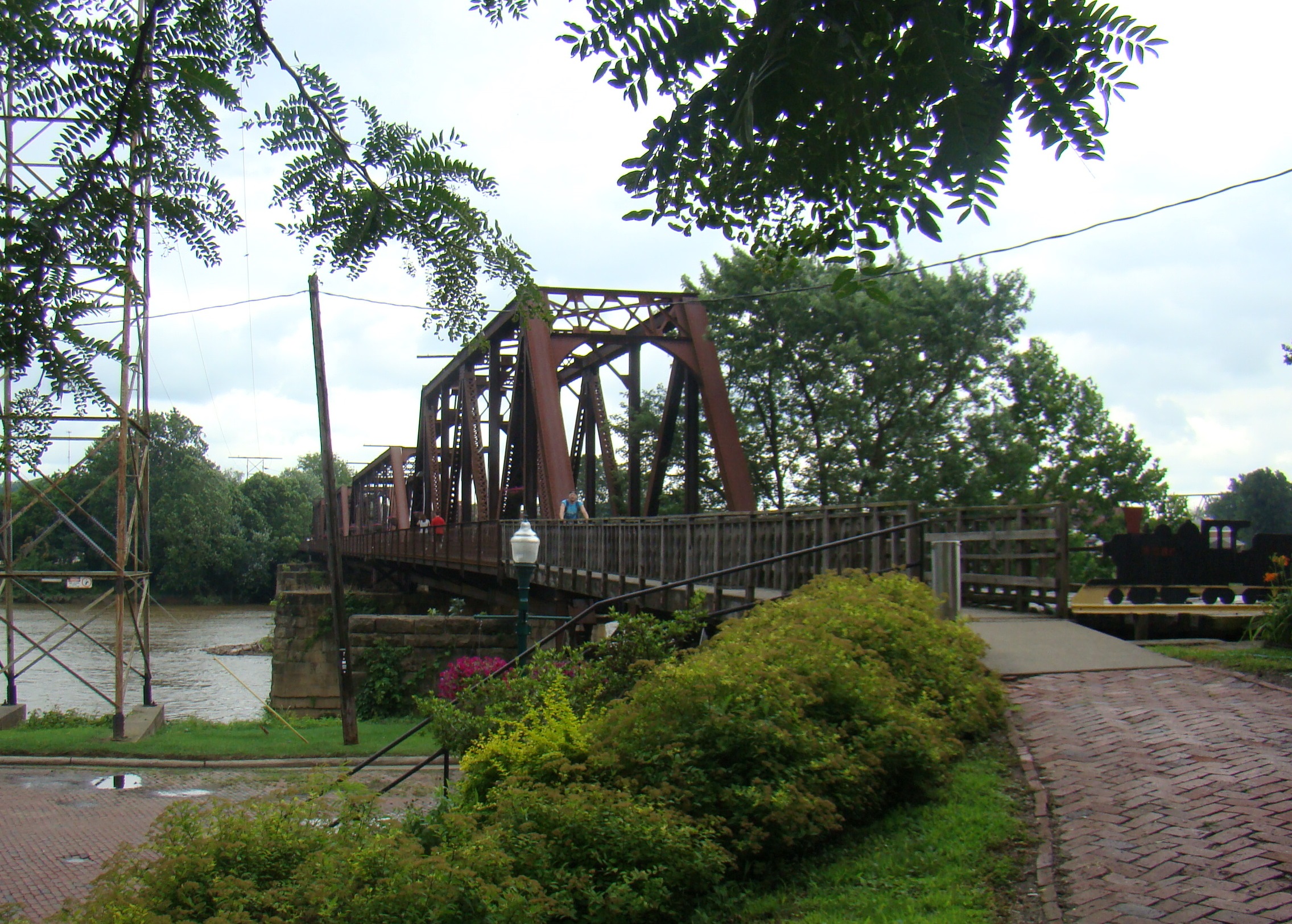
The historic Harmar Railroad Bridge provided a scenic walkway over the Muskingum River. This is the country’s oldest operating railroad swinging bridge, still using a hand crank to swing it open for passing boats. Where the Harmar Historical Village stands today, Fort Harmar existed in 1785 for the protection of the Indians.

Walking over the bridge, one of the roughest sections of town was on Maple Street. A young man, who lived there, told about his neighborhood. He spoke of Mr. and Mrs. Hayes, who were well known local folks. Mrs. Hayes served as a madam, while her husband usually caused problems. Mr. Hayes was very jealous of his wife and accused her of seeing the local bartender. She begged him, “Don’t kill me!”

He did.

Guy from the rough side of town

Guy from the rough side of town

The young man said the Marietta Police had never caught the husband and asked the mayor why he wasn’t working on it. The mayor, in typical mayor fashion said, “It’s under investigation.” The young man told the group to get back over the bridge as quickly as possible as the area was not a safe one.

While visiting a housewife in Sin City, she told of a murder that happened next door to her house. She was hanging out the laundry when she heard a husband and wife fighting next door. The husband yelled, “I’ll break your face right in if you do that again.”

Later she smelled a fire burning in their back yard and hurried to get her clothes off the line. About 5:00 the next morning, there was a knock at her door. At the door stood the next door neighbor. “Good morning, the missus has gotten drunk and fell into the fire and burned right up. She’s always getting drunk.”

When the police arrived at the scene, over half of the woman’s body was severely burned, but they could see severe bruises on her neck. Perhaps she didn’t just fall into the fire, but was pushed. You’ll have to visit to find out…the rest of the story.

A rainy ending to an educational and interesting day

A rainy ending to an educational and interesting day

Rain held off until the very end of the tour, when it came down from the sky in buckets. The wind, rain and lightning made it seem that this place was perhaps still dangerous.

Marietta, Ohio is located at the confluence of the Muskingum and Ohio Rivers in southern Ohio. Take Exit 1 off I -77 in Ohio to experience this delightful town. Characters along the way were provided by Paskawych Entertainment, LLC of Marietta.

Earthship at Blue Rock Station – “House of Trash”

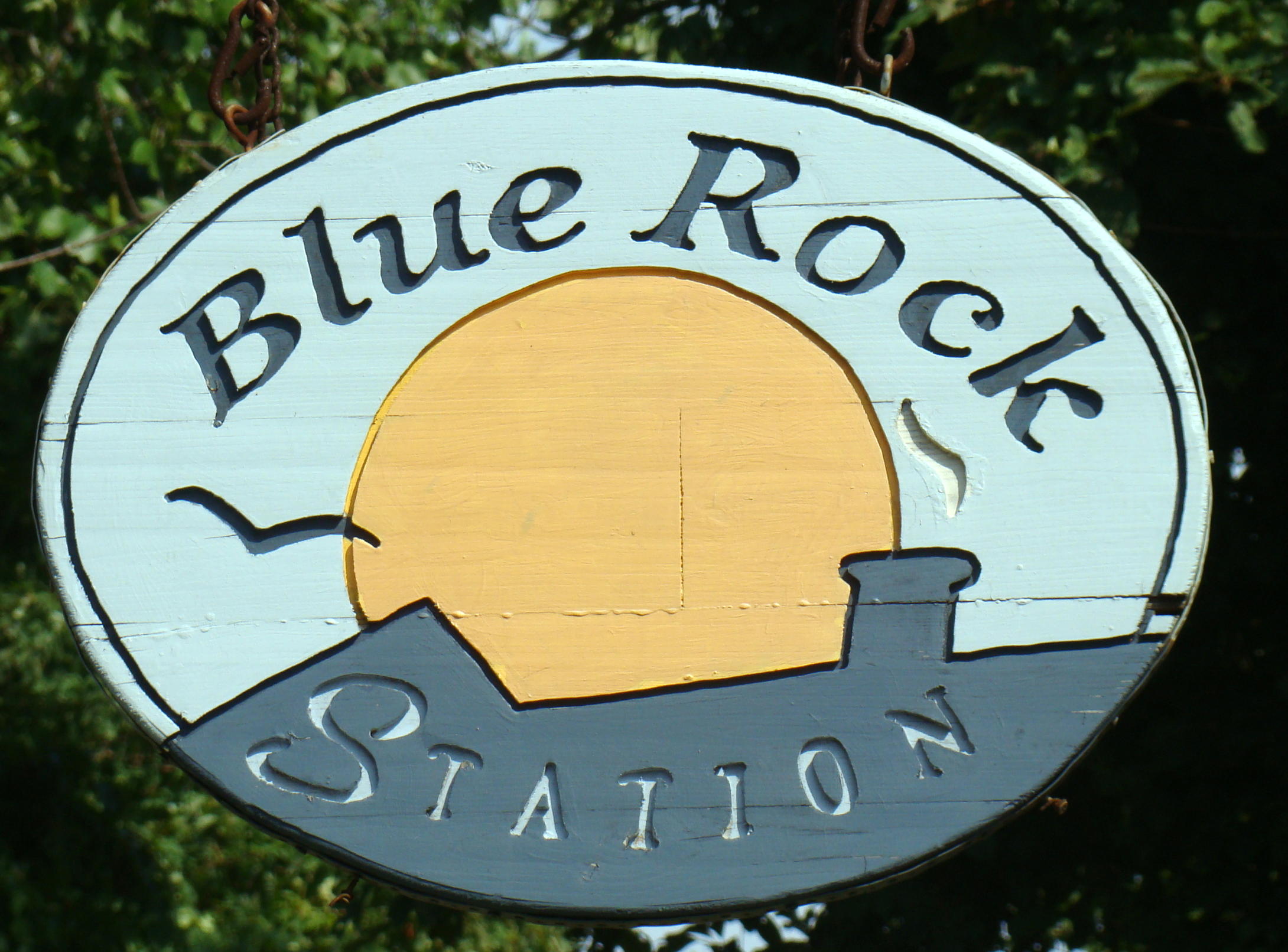
Blue Rock Station entrance sign

Blue Rock Station entrance sign

If you recycle bottles and tires, perhaps you should try to use them to build something. Some of the possibilities are quite surprising.

Just ask Jan and Annie Warmke at Blue Rock Station south of Philo, where you can find their Earthship or “House of Trash” as some call it. They had an intense passion to use whatever they could find to build their home in the country. All of their buildings are composed of recycled materials and pieces of nature.

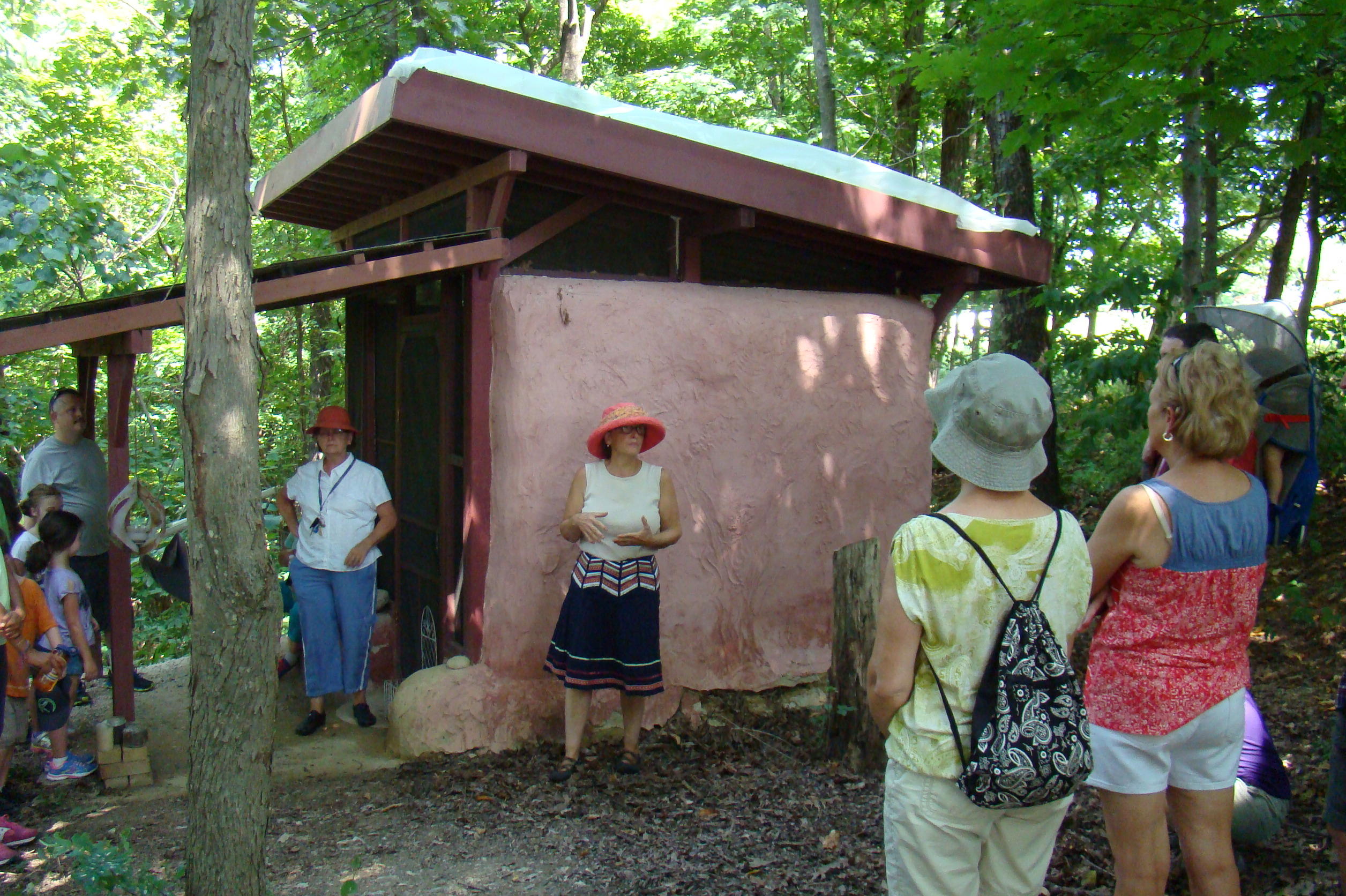
Annie, the Mother of Creativity, guides the tour of her dream come to fruition. She served as both creator and contractor of Blue Rock Station. With the help of a few interns, mostly college students, projects are designed and completed during the summer months.

Interns are encouraged by Annie to let their minds expand while they try new things, even if they fail. “If you haven’t screwed up at least once, you’re not thinking hard enough.”

Plastic two-liter bottle Greenhouse

Plastic two-liter bottle Greenhouse

A greenhouse built of plastic two liter bottles provides a place to start plants and grow food throughout the year. Over one thousand plastic bottles used to construct it will never need replaced since they don’t decompose.

Annie, the owner and guide, is easily spotted with her pink hat.

Annie, the owner and guide, is easily spotted wearing her pink hat.

Cottages provide housing for overnight guests and/or interns. Made of bales of straw, they’re covered with “earth plaster”. This adobe-like covering consists of mud, straw, milk, salt, flour and linseed oil – so it won’t crack. Pickle jars placed in the ceiling gather outdoor light. Bottle bottoms create beautiful window substitutes.

Outdoor Patio

Outdoor Patio

An outdoor patio makes the perfect place to relax under the shade of the trees. Nearby is one of two composting outdoor toilets, as well as the garden since both need to be in close proximity to the main house, Earthship. Needless to say, pesticides are not used.

Annie has tea prepared for the group inside Earthship. A few mint leaves dropped in the ice tea make it extra refreshing on a very hot day. In addition, salted cucumber slices, cherry tomatoes, sandwiches and cookies complete the back to nature table setting. There Annie sits in a comfortable swing, while answering questions from the group.

"House of Trash"

“House of Trash”

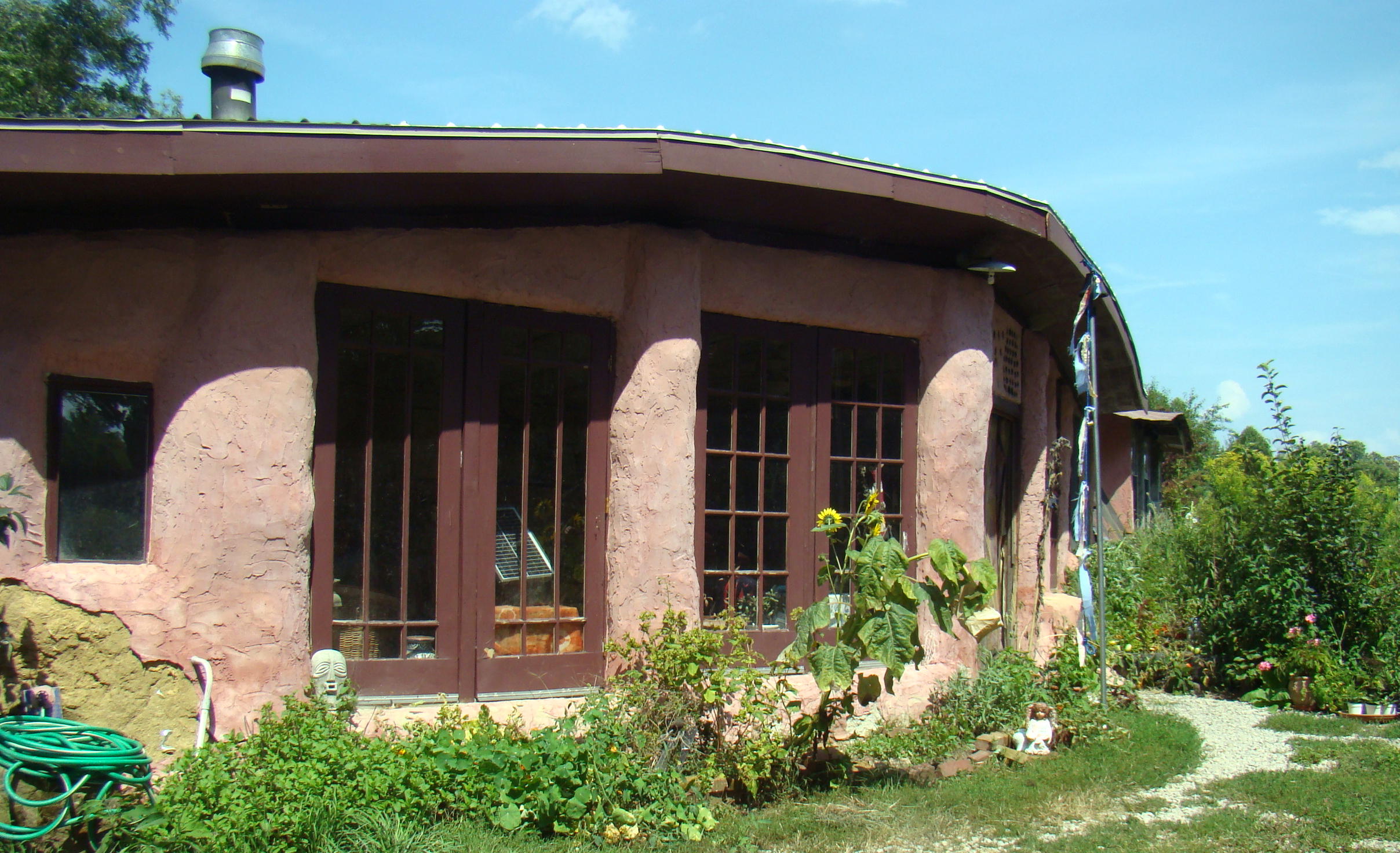
Tires, bottles, cans, plastic two liter bottles and milk jugs form the walls of the house. Then this core material is covered with earth plaster and a coat of lime paint to brighten it. With help from old barns being torn down and pressed tin for the ceiling, the house becomes a showplace.

Oven in Kitchen Area

Herbs drying near oven in kitchen area

A unique brick oven in one corner contained guard rails, pipe and even metal rods from old campaign signs for the grill of the oven. On a cold winter day, Annie sometimes wraps in a blanket and curls up on the brick wall to relax, read, or nap.

Due to window placement for maximum use of winter sun, and wall structure which absorbs and releases heat, temperature in the house never goes below 55 degres…with no stove needed, although sometimes used! Rooms are U-shaped, which holds heat extra well. It seems very similar to living in a cave

All roofs collect water into a cistern from which they get water for basic use, but not for drinking. Over the year they collect over 150,000 gallons of water from their rooftops.

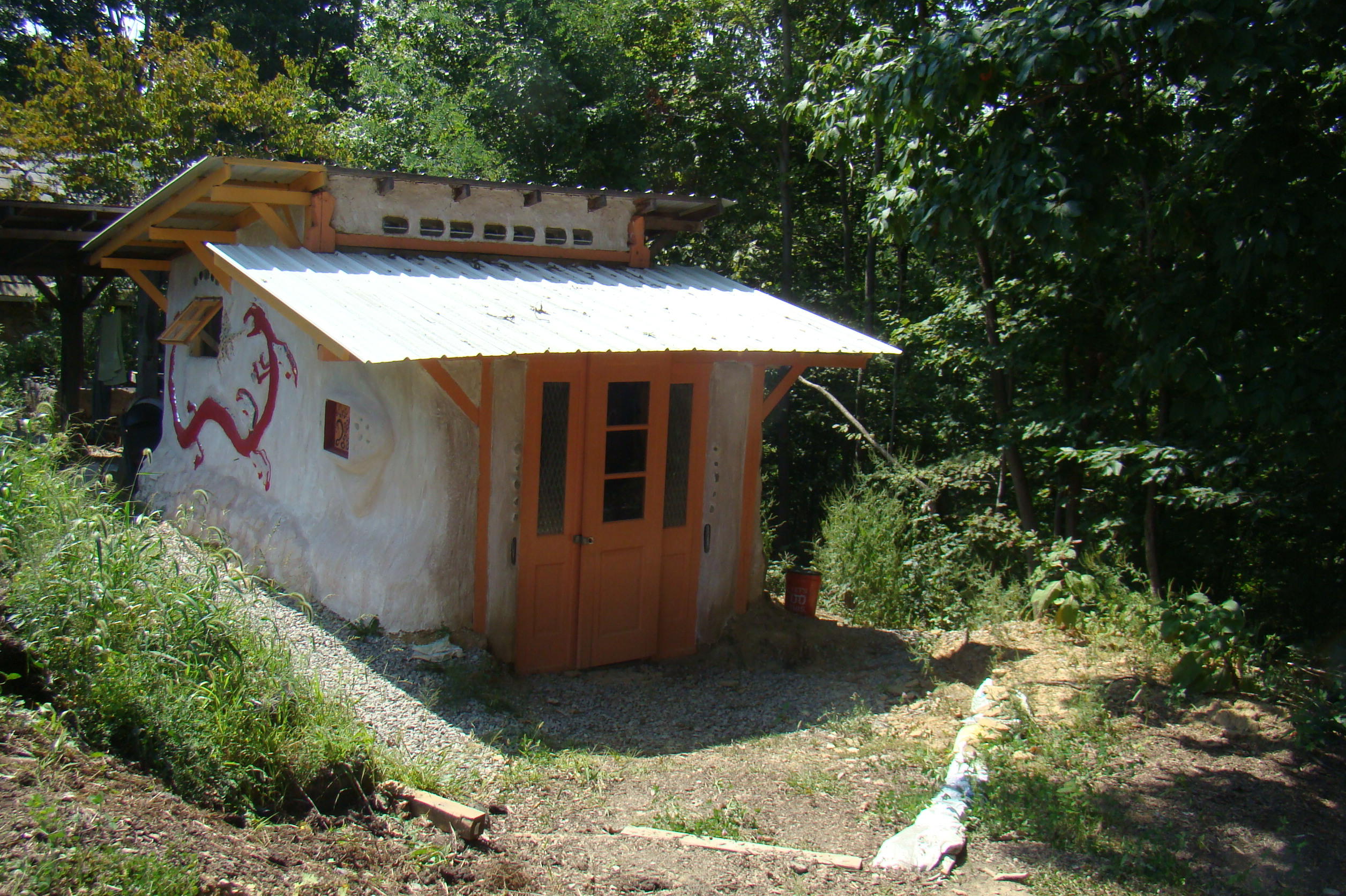
Dragon guest cottage

Dragon guest cottage

Something I know works from experience is a solar shower. Water, in a black plastic bag on the roof, gathers heat from the sun. A switch on the end of the bag opens the shower head and produces a nice warm, sometimes hot, shower. However, Annie wants to add a bathtub very soon.

As experiments continue, new ideas come to the forefront that they perhaps wish they would have known about a few years back. Their newest project is solar energy installation. A solar panel with a wind turbine gathers energy in one place, while the house has a small solar panel. More will be installed shortly.

Reservations must be made in advance so either call 740-674-4300 or visit their website at http://www.bluerockstation.com.

Take a drive along the Muskingum River and visit this unusual “House of Trash” or Earthship, as they feel more correctly describes it.  Peace abounds at Blue Rock Station with only nice voices, open hearts, and inquiring minds desired. Perhaps it will inspire you to be more creative with your natural resources…and your trash.

Earthship can easily be reached traveling along the Muskingum River on Route 60. Cross over the Muskingum River to the west on Route 66, North Street. At the stop sign turn left on Old River Road.  In less than a mile you will come to a hill with a fork in the road. There is a Blue Rock Station sign pointing toward the right on Virginia Ridge Road. From then on, follow the Blue Rock Station signs until you reach the gate of the property.


Cruisin’ down the Ohio River with Mark Twain on the Valley Gem

Valley Gem heads down the Muskingum River to its confluence the Ohio River.

Valley Gem heads down the Muskingum River to its confluence with the Ohio River.

Riverboat’s a comin’!

Nothing excited Samuel Clemens more than his time on the riverboats.  The sound of the paddlewheel hitting the water thrilled him, while the changing landscape gave him opportunity to see deer and even Injuns, while sitting in the pilot house.

Some say Clemens received his pen name, Mark Twain, from this passion for the river, since Mark Twain means “mark number two”. The second mark on the water measuring stick signified  twelve feet of water – a safe depth for boats to pass easily.

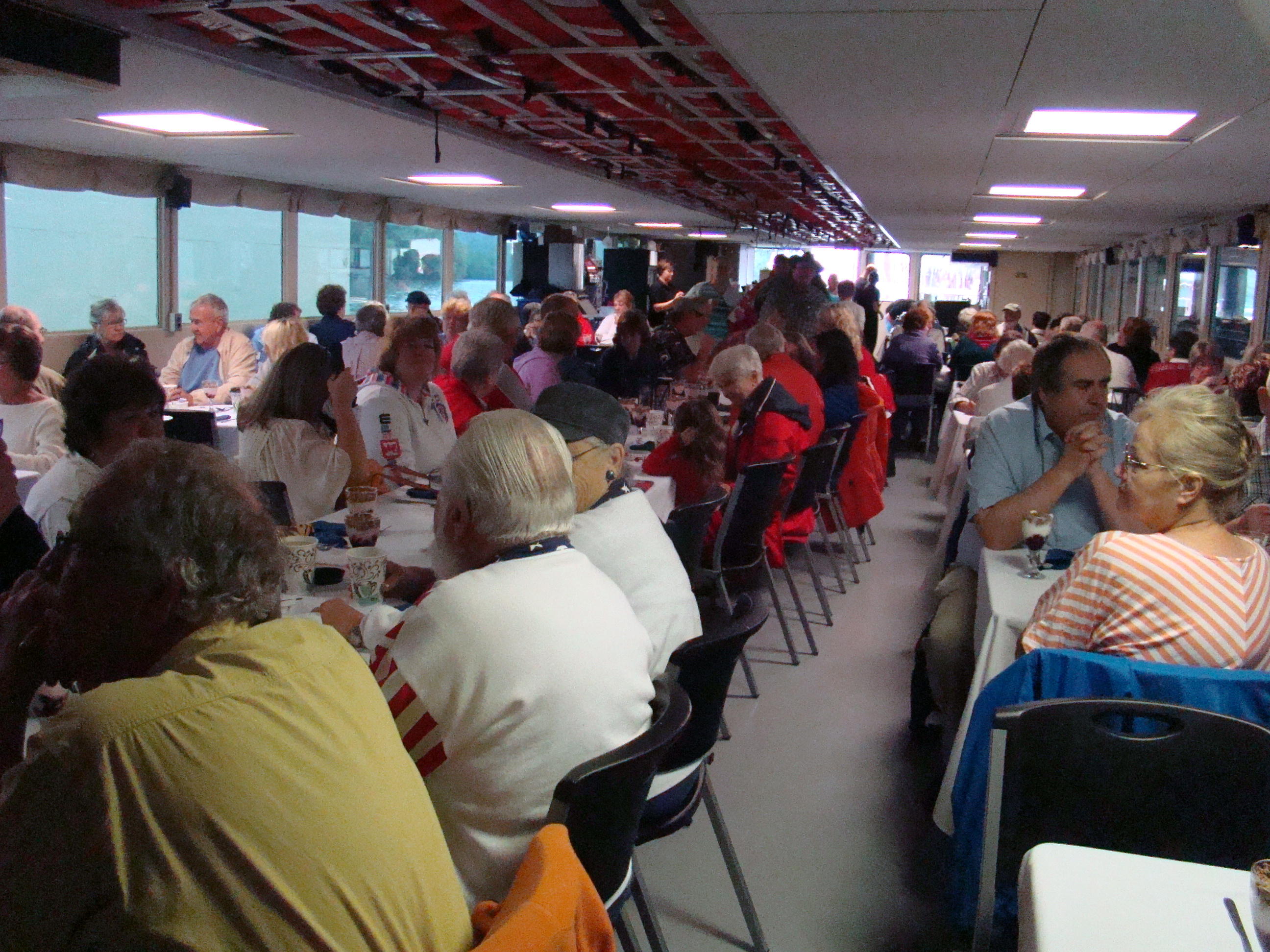
Breakfast Cruise on Valley Gem

Breakfast Cruise on Valley Gem

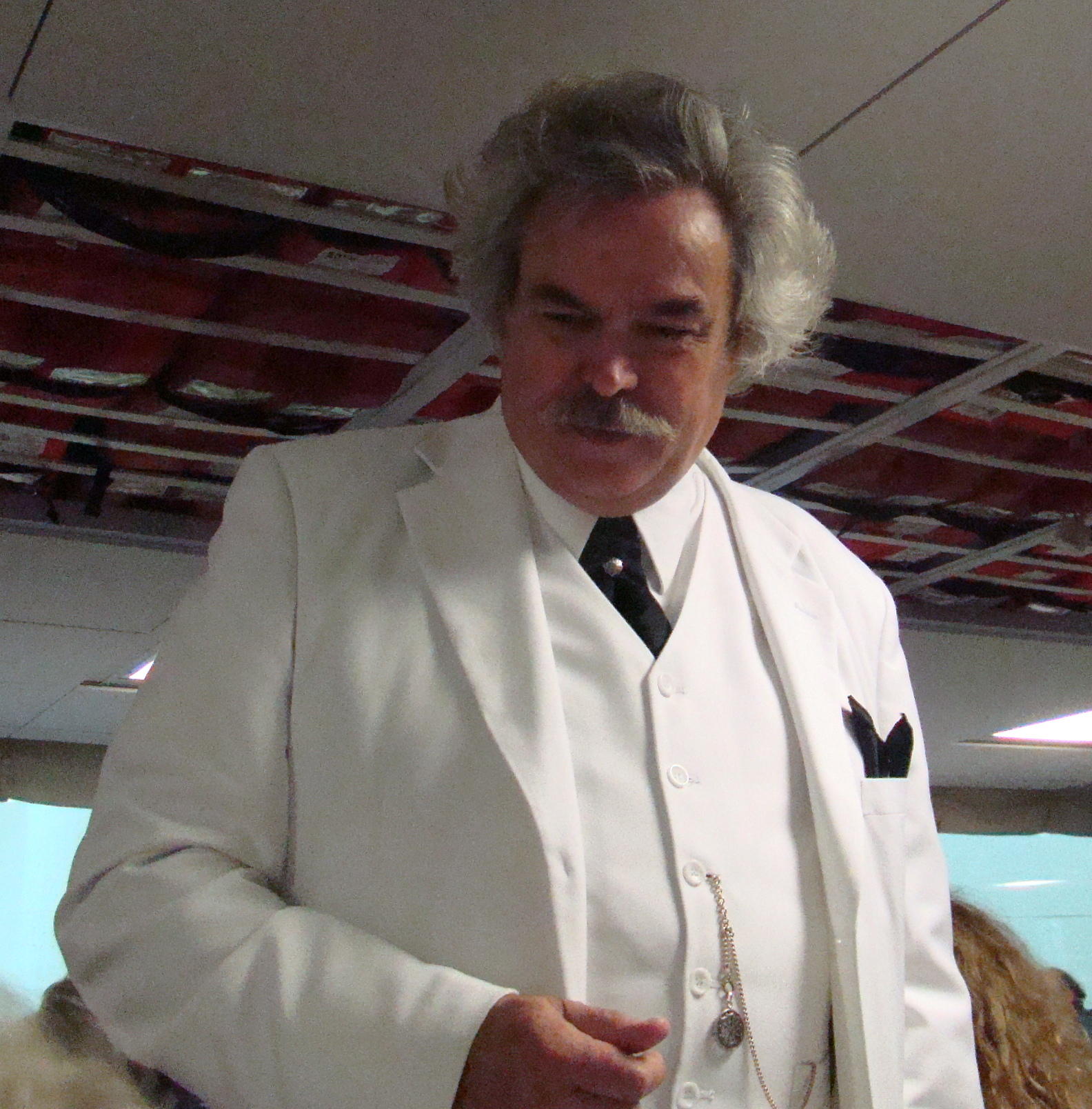
Spending time on the Valley Gem, with the charming impersonator of Mark Twain, delighted all passengers. They also enjoyed a tasty breakfast buffet as they cruised the Muskingum and Ohio Rivers. Mark Twain, portrayed by Stephen Hollen, greeted everyone with a hearty welcome as they stepped aboard the Valley Gem at Marietta, Ohio.
Immediately his sense of humor became apparent as he strolled from table to table encouaging everyone to try the marinated road possum and grits. His enjoyment in that role quickly ignited the crowd into a happy mood.

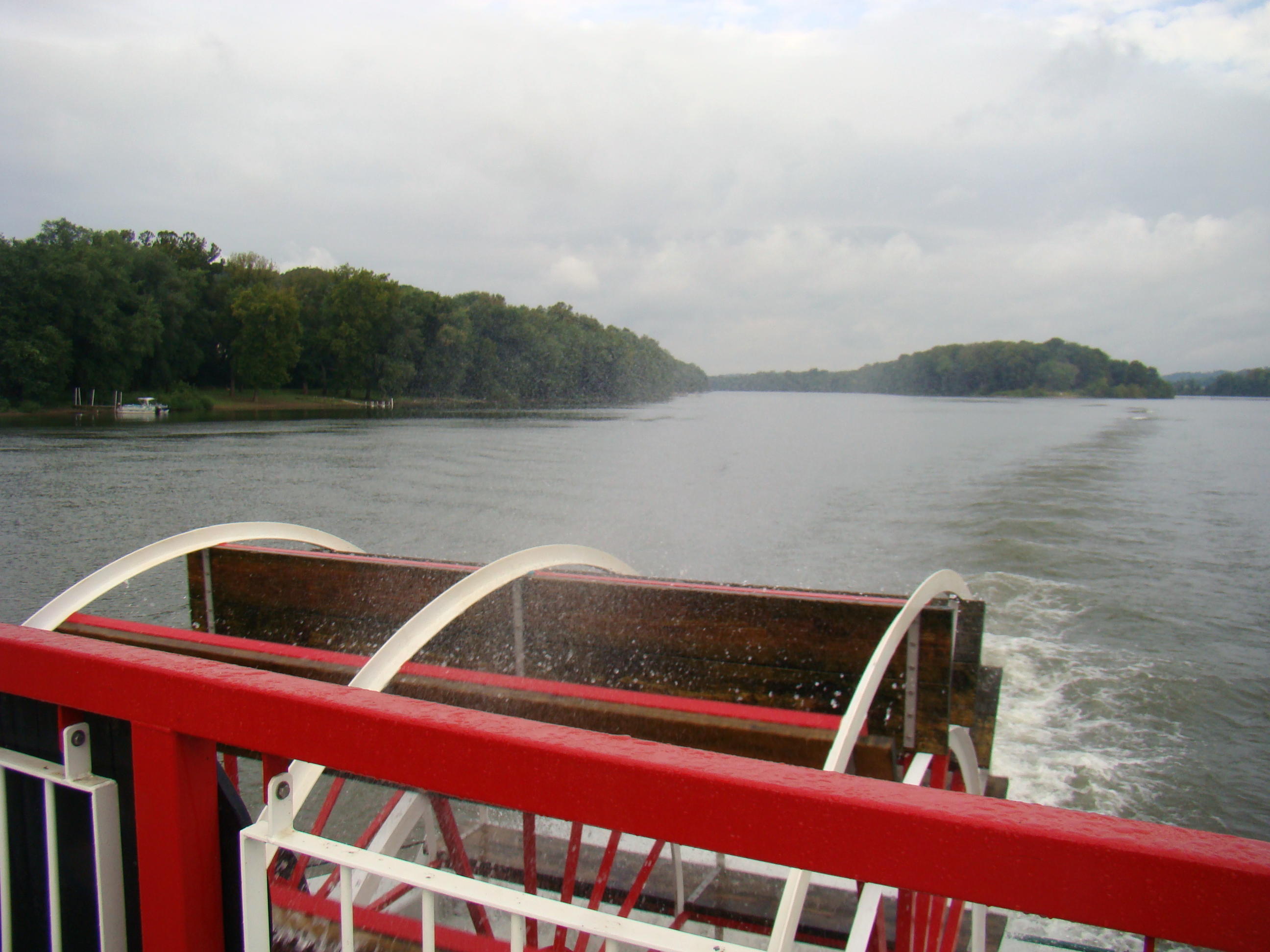
View behind the paddle wheel

View behind the paddle wheel

The cruise was a smooth two hour ride up and down the river. Many enjoyed going to the top deck to get a better view and feel the breeze. The paddle wheel created quite a spray so those standing near it received a generous sprinkling. After some fresh air, passengers returned to the main cabin to listen to Mark Twain spin his yarns.

Twain then told of his being born in 1835 at Florida, Missouri – population 99. Growing up,  he was given a big spoon of cod liver oil every day. He remarked that his tongue and body were so slippery, he could have eaten broken glass and it would have passed.

Twain visited everyone.

Twain visited everyone.

At 13, Samuel Clemens became a printer’s apprentice and soon joined his brother Orion’s newspaper, where he discovered he enjoyed writing stories.

A few years later he headed to St. Louis, Missouri for another newspaper job but got sidetracked by falling in love …with the river.

For two years he served as an apprentice receiving $500 at the end of that period. Training was not as easy as it might sound. In order to get a license, pilots had to know the 2,000 miles of the Mississippi like the back of their hand. Even at nighttime, pilots were required to remember the placement of every sandbar and the name of every twist and turn, like Eagles Fork or Johnsons Landing. But Mark Twain said during those years, “I had the time of my life.”

After becoming a full-fledged riverboat pilot, he was paid $250 a month. The only other people in the United States at that time that made $250 a month, besides river pilots, were the vice-president of the United States and Chief Justice of the Supreme Court. Riverboat pilot was much more profitable than writing fiction!

When riverboat travel became impossible in 1861 due to the Civil War, Mark Twain returned to the world of the newspaper. His adventures led him across the United States from coast to coast as well as to Europe and the Middle East.

After his travels, he settled in Hartford, Conneticut with his wife and family in 1873. That is where he wrote stories based on his memories of growing up in Hannibal, and enjoying the Mississippi River. Tom Sawyer and Huckleberry Finn came to life through his pen.

Mark Twain says thanks to each passenger as they leave.

Mark Twain says thanks to each passenger as they leave.

The journey was closed with Mark Twain telling his favorite story, “Golden Arm”. It was the story of a rich family from Hannibal, who always came to the landing to see the riverboats arrive and hear the calliope. Mark Twain even sang a Riverboat Song and had the audience join in on the chorus:

Down the river, Down the river, Oh down the O-hi-o.

I’ll not tell the story though, perhaps the next time he visits Marietta you will get a chance to hear more of his delightful tales.

Later in life Mark Twain uttered this comment: “I came in with Halley’s Comet in 1835. It is coming again next year, and I expect to go out with it. It will be the greatest disappointment of my life if I don’t go out with Halley’s Comet. The Almighty has said, no doubt: ‘Now here are these two unaccountable freaks; they came in together, they must go out together.’ ”  And Mark Twain was not disappointed.

The Valley Gem is located next door to the Ohio River Museum at 601 Front Street, Marietta, Ohio, one block from Ohio State Route 7, and minutes from I-77.

Steamboat History Flourishes at Ohio River Museum

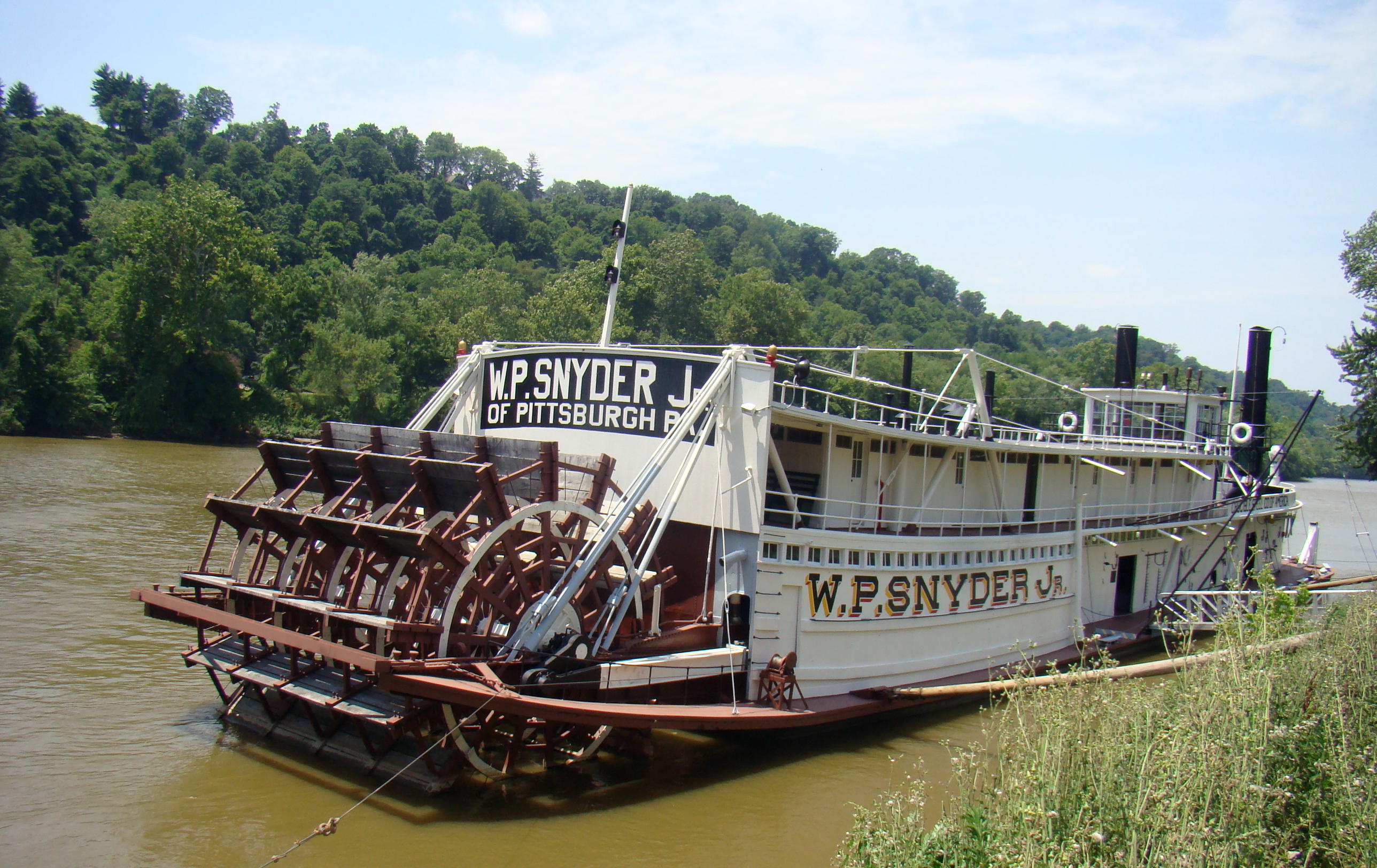
W.P. Snyder, Jr on the Muskingum River in Marietta, Ohio

W.P. Snyder, Jr on the Muskingum River in Marietta, Ohio

“Say Steam” Those are the special words the guide used when taking pictures of visitors on the steam-powered W.P. Snyder, Jr. at the Marietta River Museum in Marietta, Ohio. You can feel the river beneath your feet as you walk the deck, listening to the guide’s description of life on the river many years ago.
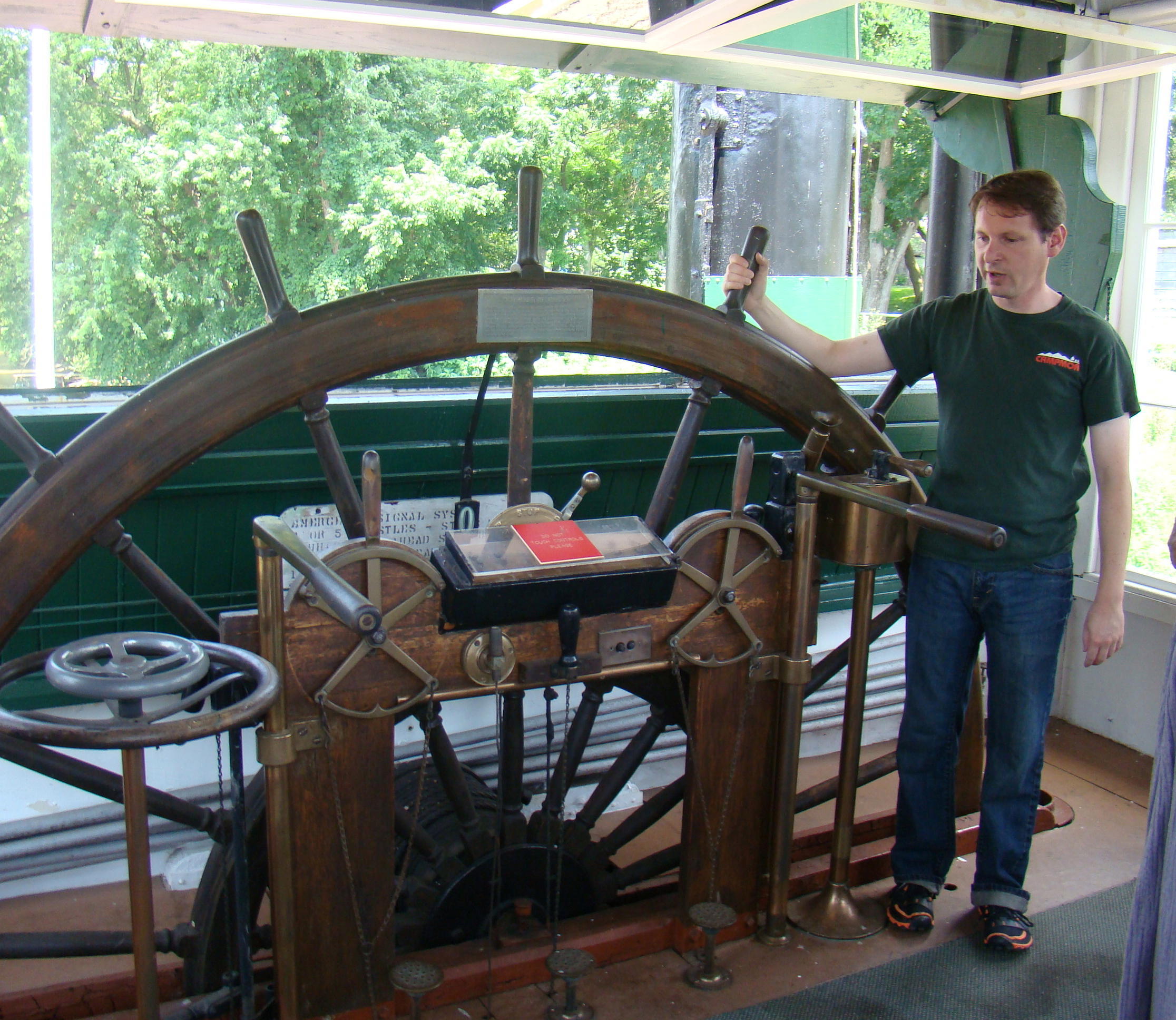
Pilot Wheel of W.P. Snyder, Jr.

Pilot Wheel of W.P. Snyder, Jr.

This early tugboat replaced the mules that walked along the banks of the river towing the barges. Tugboat probably wasn’t the best name for this type of boat, because they didn’t tug anything…they pushed it instead.

W.P. Snyder, Jr. was built in Pittsburgh in 1936 as the result of a terrible winter there. The wooden boats were brutally torn apart by the ice on the Monongahela River, so for the first time, a tugboat was constructed of steel by Carnegie Steel Co, and called W.H. Clingerman.

After years of service, it was retired due to its coal furnaces. In 1955, the Sons and Daughters of Pioneer Rivermen purchased the boat, now re-named the W.P. Snyder, Jr. for $1.00, and moved it to the banks of the Muskingum River in Marietta. This tugboat is the last intact steam-powered, stern-wheeled tugboat in the United States.

But the effects of weathering made it necessary, in October of 2013, for the W.P. Snyder to leave the dock at Marietta for refurbishing, mainly on the exterior. The trip back had a slight delay because the Ohio River was too high in late May, 2014 for the W.P. Snyder to get under the Putnam Avenue Bridge.

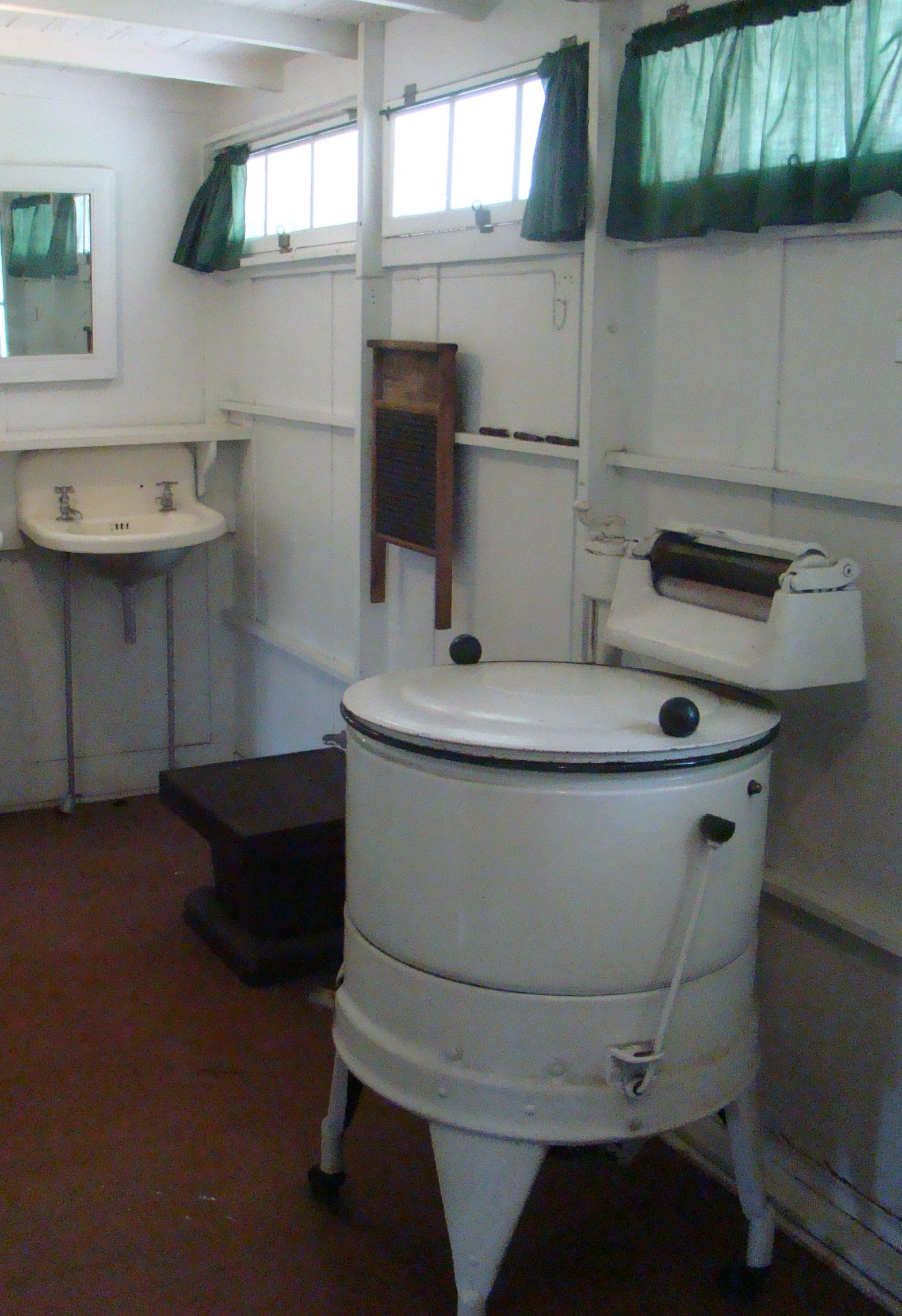
Laundry Room with wringer washer and washboard

Laundry Room with wringer washer and washboard

Pushed back by two antique tugboats, Lady Lois (‘28) and J.S. Lewis (‘31) the W.P. Snyder, Jr is now moored at the confluence of the Muskingum and Ohio Rivers, ready for tour.

On board, you will see the Engine Room, where the engineer controlled passage by using not only steam but also electricity. A system of bells could be pulled to signal conditions or problems. There was even a telegraph handy for outside communication.

Officers and crew were provided completely separate living quarters on the upper deck. If at all possible, officers and crew went out of their way to keep from crossing paths. Two separate bathrooms, a laundry room, and kitchen completed the facilities onboard.

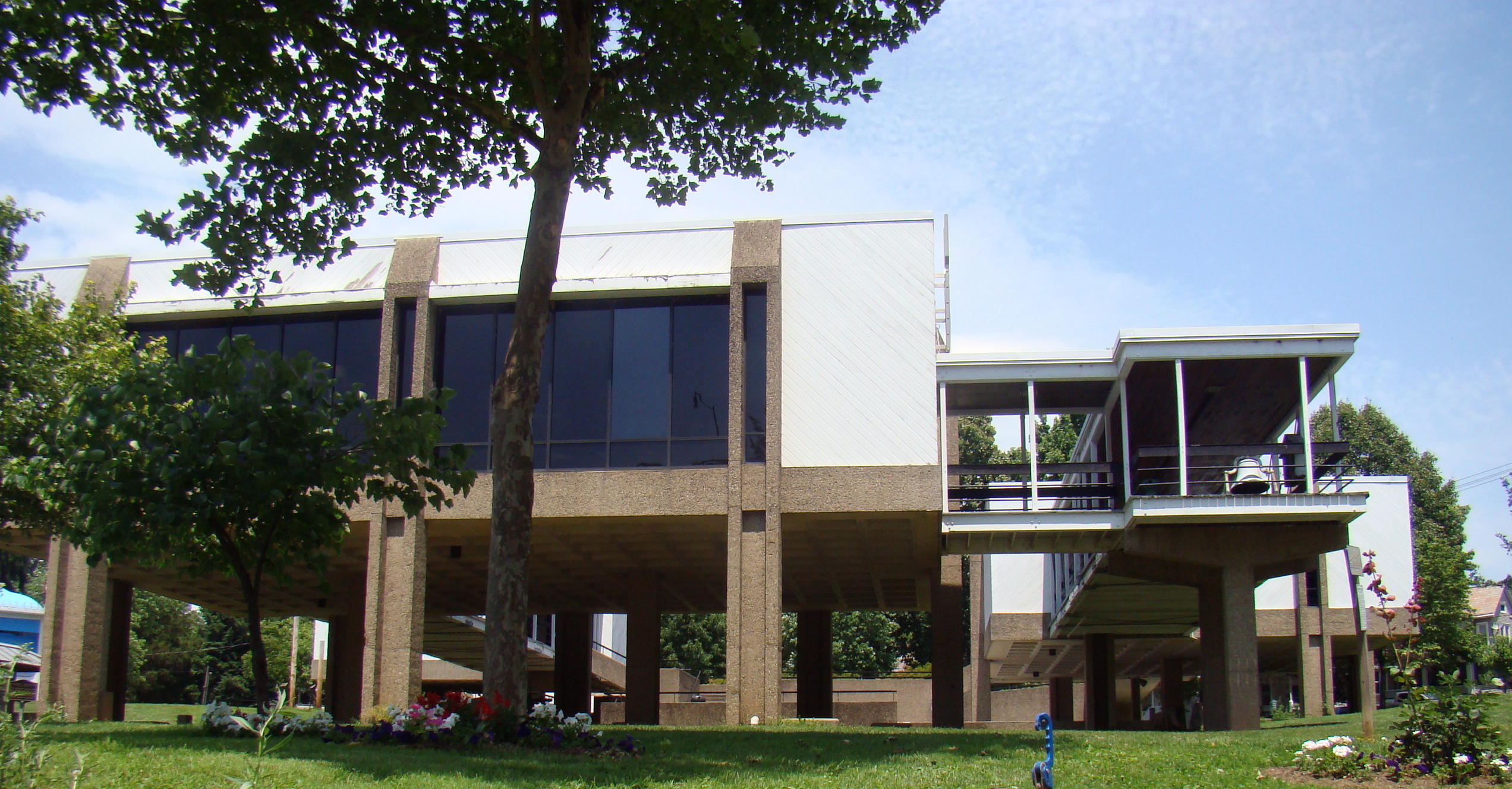
Ohio River Museum

Ohio River Museum

While the tugboat draws many visitors to the museum, there are three separate buildings nearby that contain a history of the Ohio and Muskingum Rivers, and the steamboats that frequented their waters.

An introductory film, History of Steamboats, opens the door to exploration inside the museum. The buildings are filled with models of steamboats, related artifacts, and stories of early life on the river…and much more!

Mirror from Mark Twain's Crystal Palace

Mirror from Mark Twain’s Crystal Palace

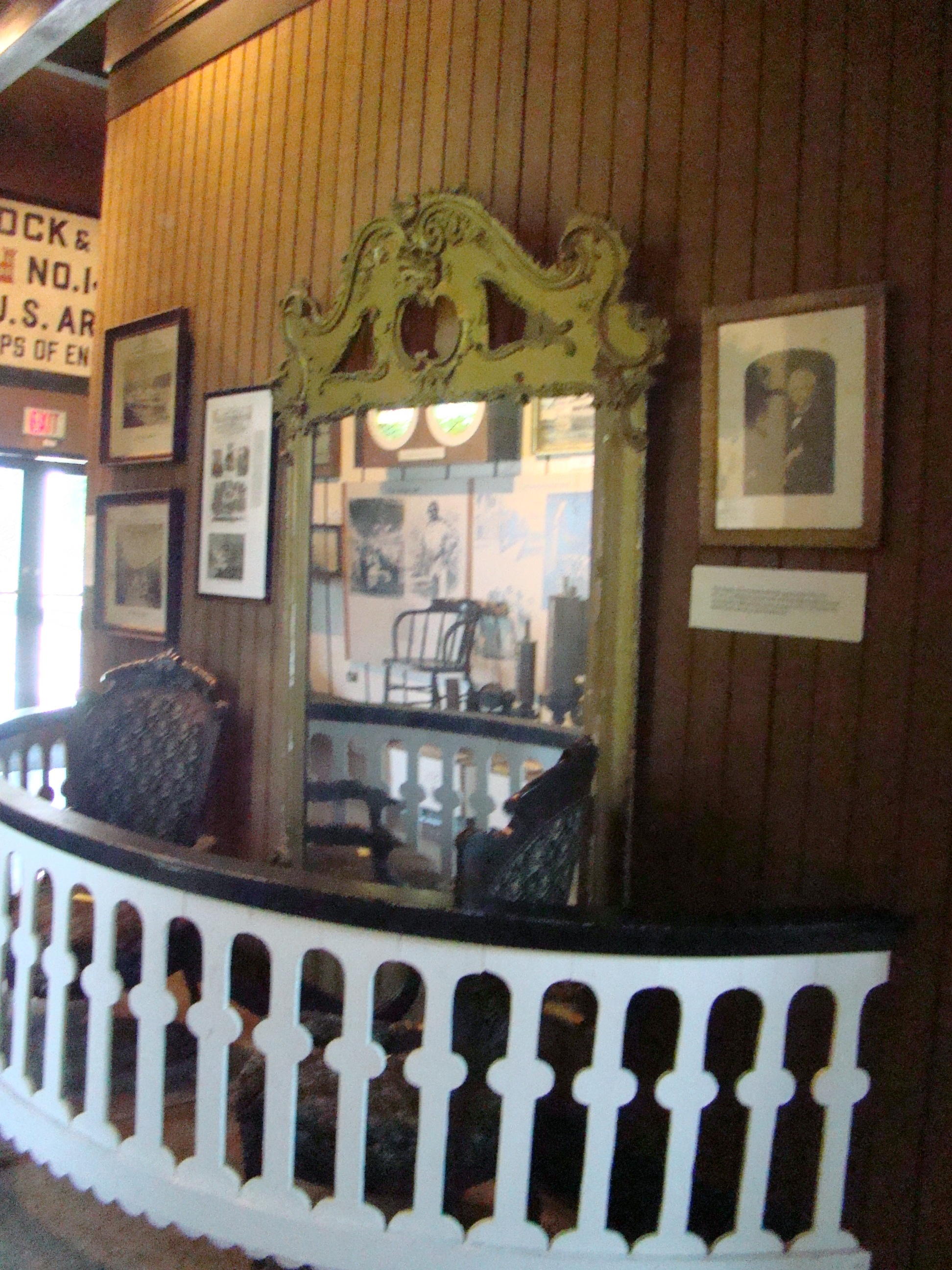
Among the historic pieces, the exhibit contains a dug-out canoe that was used as a ferry between Fort Harmer and Marietta. There is even a reminder of Mark Twain through a display of an ornate mirror that hung in the Crystal Palace steamboat, where Mark Twain served as pilot.

Near the river’s edge, a flatboat that was used during Ohio’s early settlement is on display. Close by stands the oldest existing Western Rivers’  steamboat pilothouse from the steamboat, Tell City, which sank in 1917. An interesting section of poles shows the heights of some of the worst floods in Marietta history, three of the worst being : 54.5′ in 1884, 55′ in 1937 and 60.3′ in 1913.

Shanty Boat where folks flew under the radar

Shanty Boat where folks flew under the radar

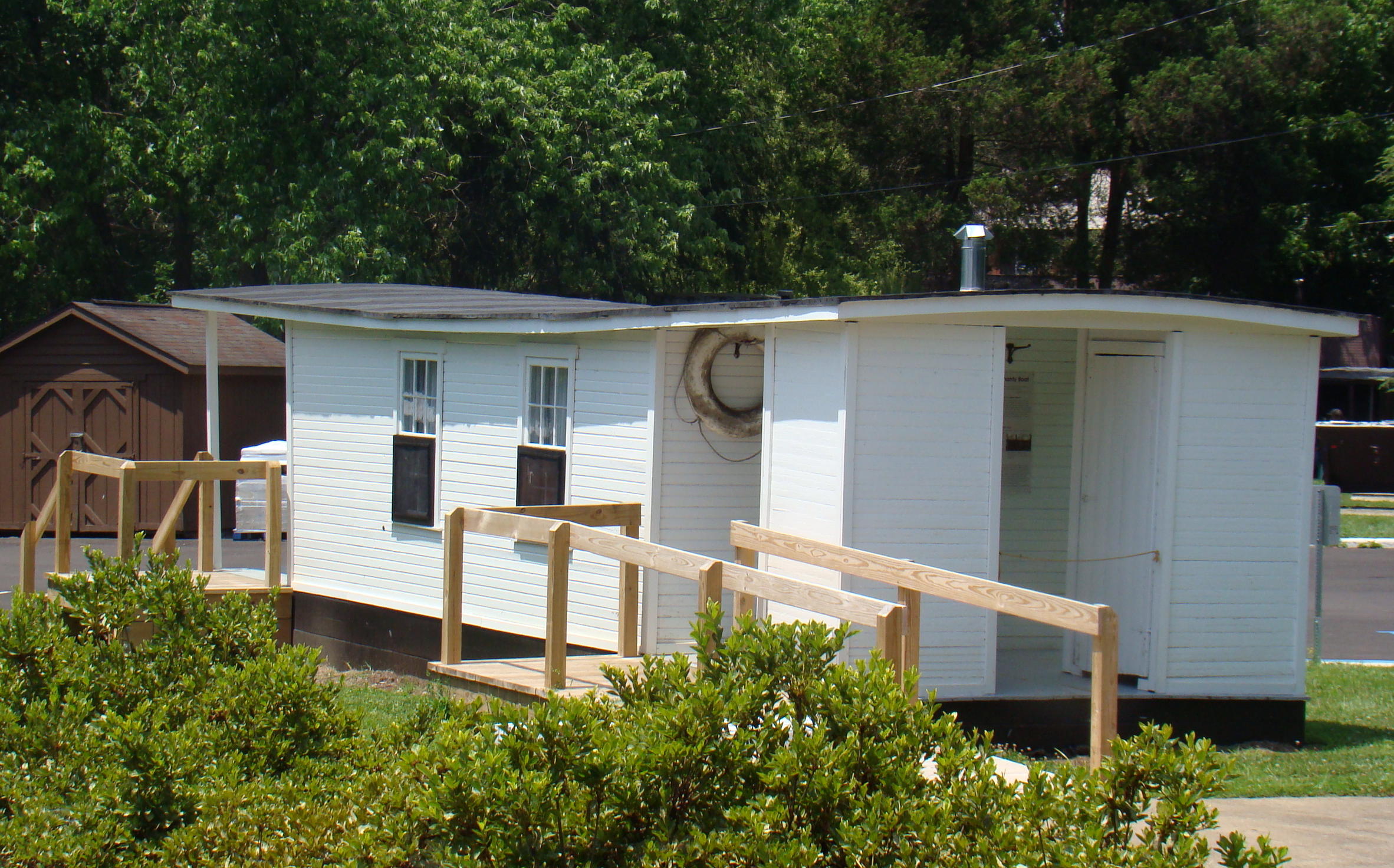
Don’t miss the old shanty boat, probably from the 1920’s to 1930’s. It possibly could be the oldest surviving shanty boat on the inland river system. People actually lived on these boats or had businesses there. Many of those who lived on the boats were trying to hide from something. Here they could avoid taxes as they were always on the move, and needless to say, the shanty boat provided the perfect place for thieves and lawbreakers, of many sorts, to hide from the law.

These floating shanty boats were banned in 1930 from the Ohio and Muskingum Rivers. However, a friend said when he was a kid in Parkersburg along the Ohio River, there were still shanty boats in the 50’s . Evidentally, more law breakers! The gypsy in me still likes the idea of being able to fly under the radar during those early years with no address, but much freedom.

End your day by cruisin’ down the river on the Valley Gem docked right next door to the Ohio River Museum.

The Ohio River Museum is located at 601 Front Street, Marietta, Ohio, one block from Ohio State Route 7, and minutes from I-77. Plenty of free parking is available and cost of admission is very reasonable.

Ohio’s Historic Lafayette Hotel – A Haunting Experience

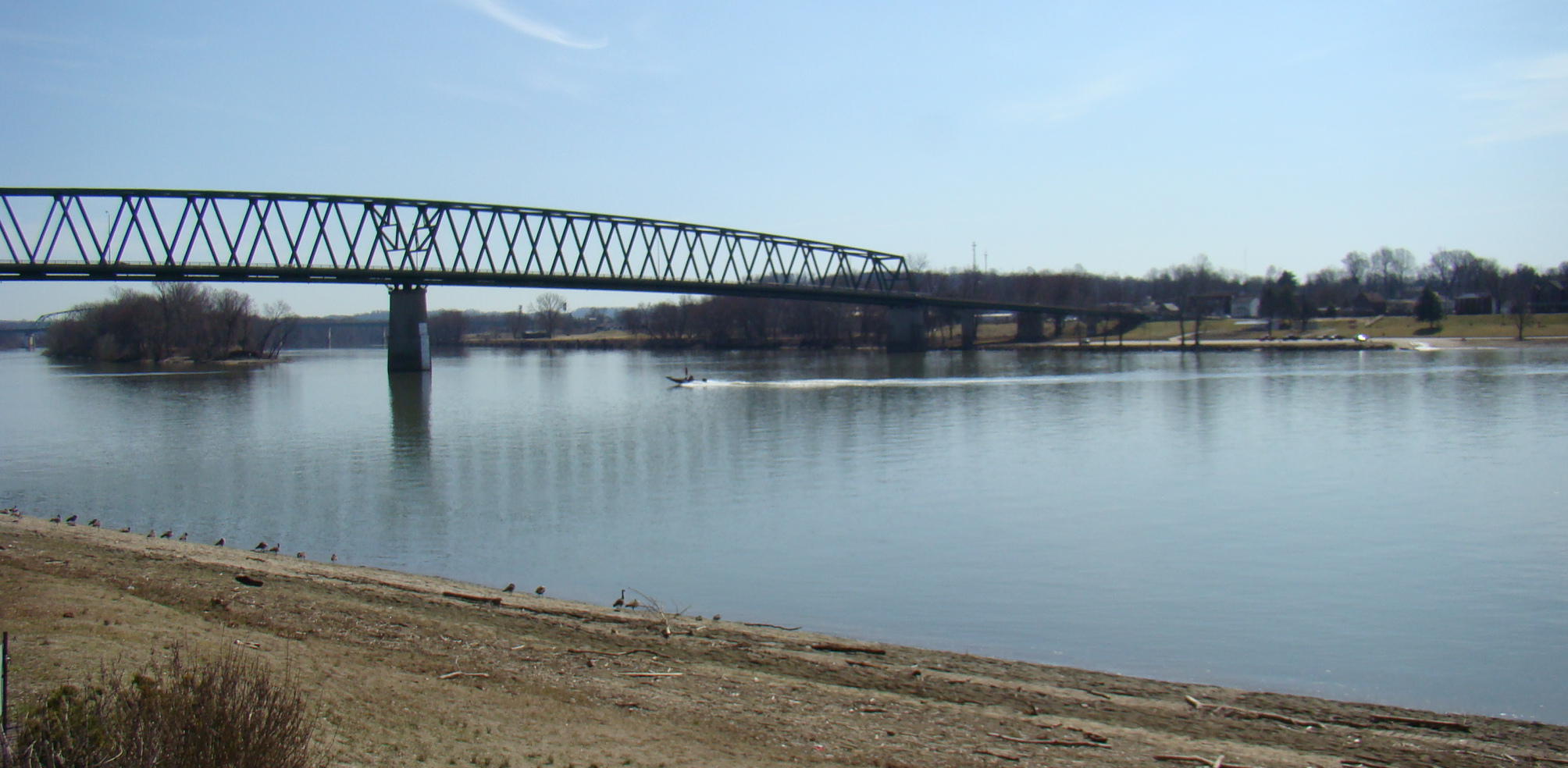
Ohio River at MariettaMay the ghosts be with you while you spend the day or night at the Lafayette Hotel in historic downtown Marietta, Ohio.  Visitors and employees anxiously report stories of paranormal activity in this grand hotel on the banks of the confluence of the Muskingum and Ohio Rivers.
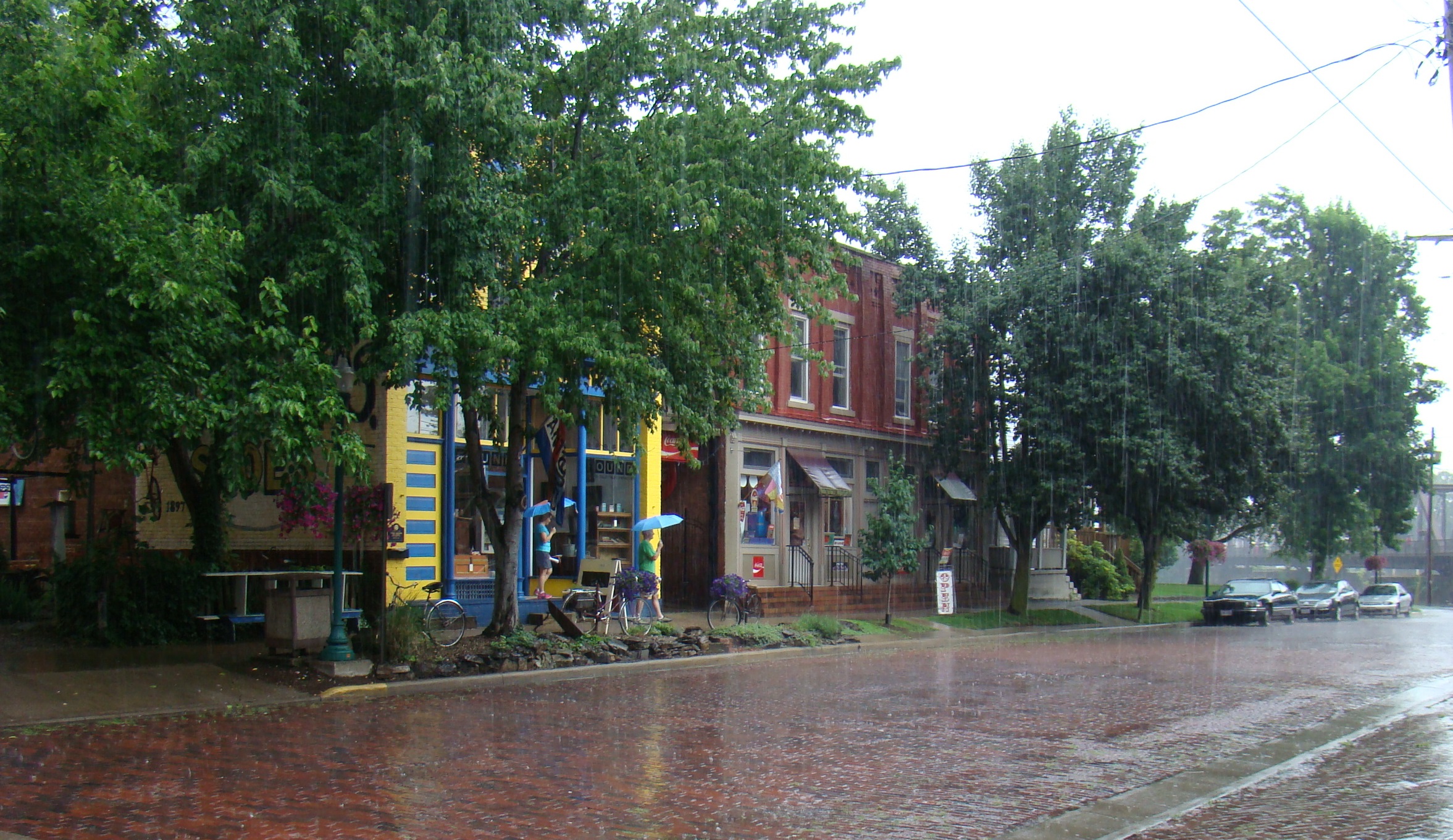
Back in 1882, river traffic was heavier than it is today. The Ohio River provided the freight and passenger routes for much of the eastern part of the United States. Of course, these riverboat travelers needed a place to get meals as well as a place to spend the night. Here at the meeting place of two major rivers, the Bellevue Hotel was built. This quite modern hotel, for the late 1800’s, had a fast running elevator taking guests to 55 rooms, five of which had baths. Rates at the Bellevue were $2.00 a night

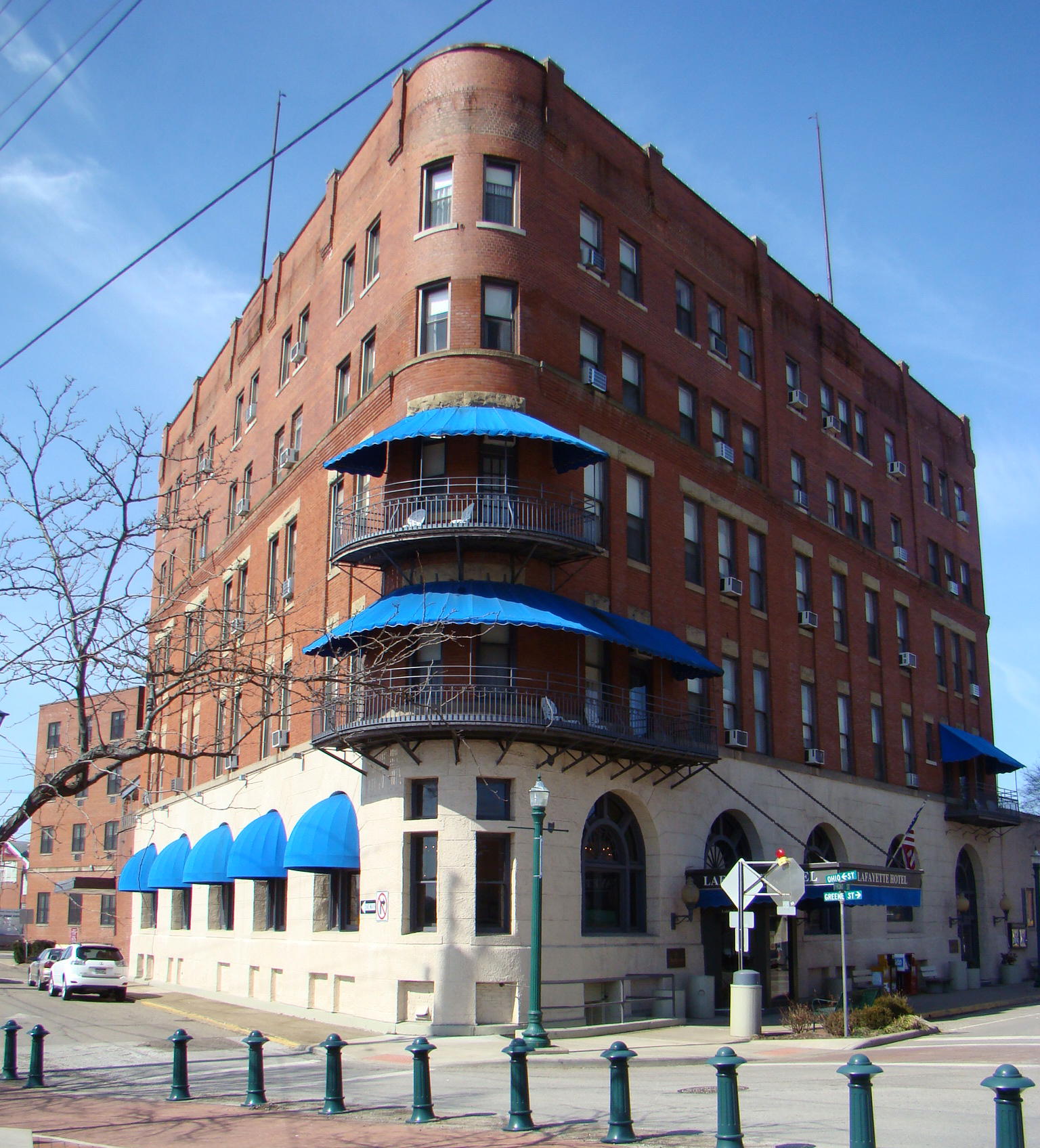
lafayette hotel 013After a fire destroyed the Bellevue Hotel, another hotel was constructed on the original foundation. In 1918 the present triangular shaped Lafayette Hotel opened for business. The name was chosen to honor Marquis de Lafayette, French hero of the American Revolution, who was believed to be the first tourist to visit Marietta in 1825. There is even a plaque, near the hotel at the edge of the Ohio River, marking the spot where he came ashore.

A popular meeting room bears the name of Rufus Putnam, who many list as the founder of Ohio.  His leadership established Marietta as the first permanent United States settlement in the Northwest Territory.   In a letter sent to his former home, Rufus Putnam described the land along the Ohio River to his friend as: “a country of most pleasant climate and of the rarest beauty and enduring charm”.
Riverview LoungeThe Riverview Lounge is where the “Lady in White”  often appears hovering over the carpet, while she smoothly moves through the room. The bar happens to occupy the same area where the ladies’ dressing room was located  in the original hotel.

When selecting a room in Marietta’s only downtown hotel, you will probably be given a choice of view – either the Muskingum River or the Ohio River. Here the ghost of Mr. Durward Hoag, former owner of the hotel, watches over guests and staff from both directions. Sometimes guests feel an icy cold draft pass through their well heated room. Evidence of his presence appears in flashing light bulbs, rearranged papers, hidden objects,  and often merely a wisp of light. Maybe Mr. Hoag’s spirit is bored!

When speaking with recent visitors, footsteps were reported outside their door, but no one was in evidence. The elevator, carrying no passengers, left the floor a couple times during the evening and headed to the rooftop. Later that night when they were in bed, another couple felt someone jump in the center of the bed where they were resting. All guaranteed they had not visited the Riverview Lounge.

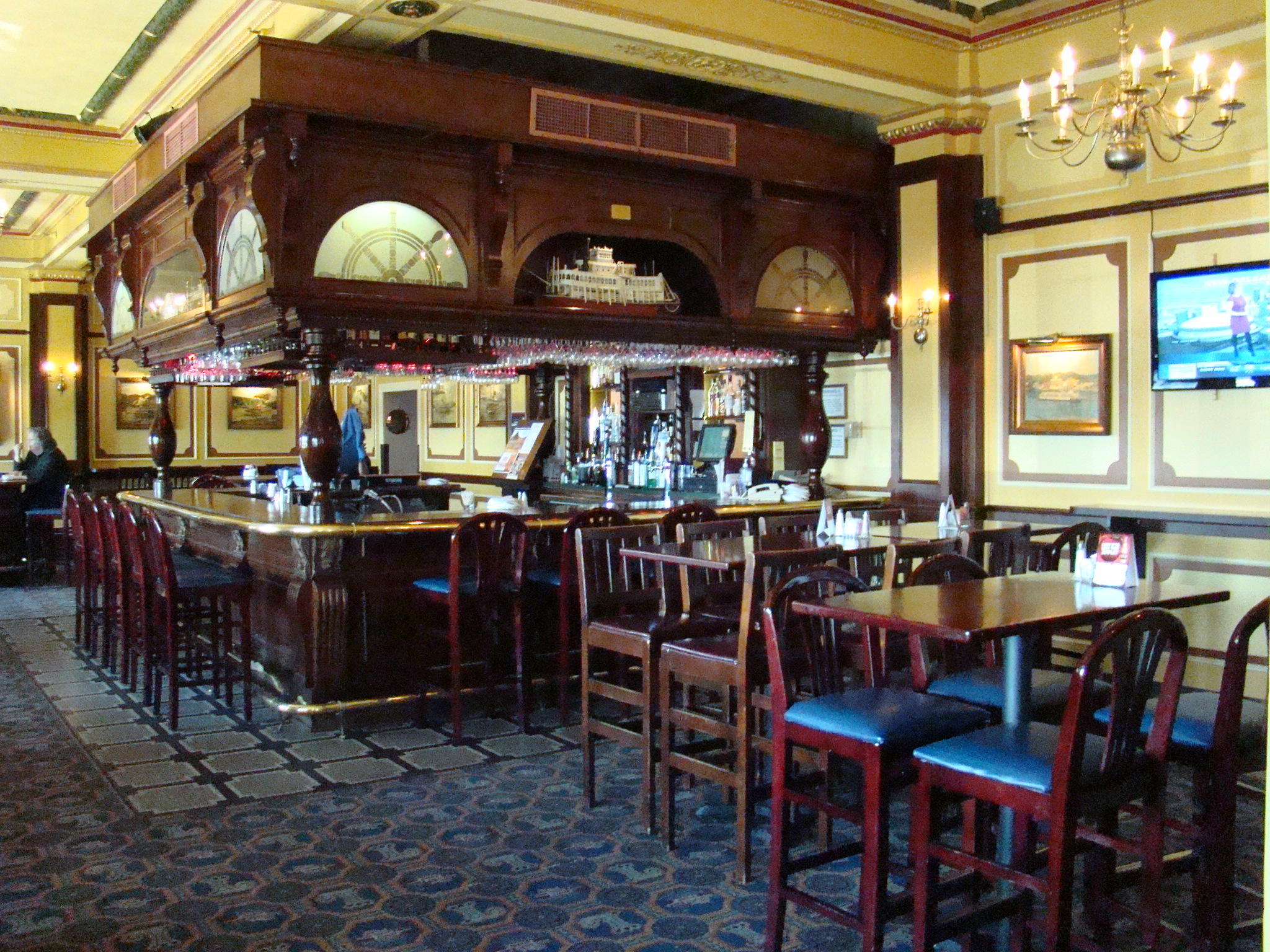
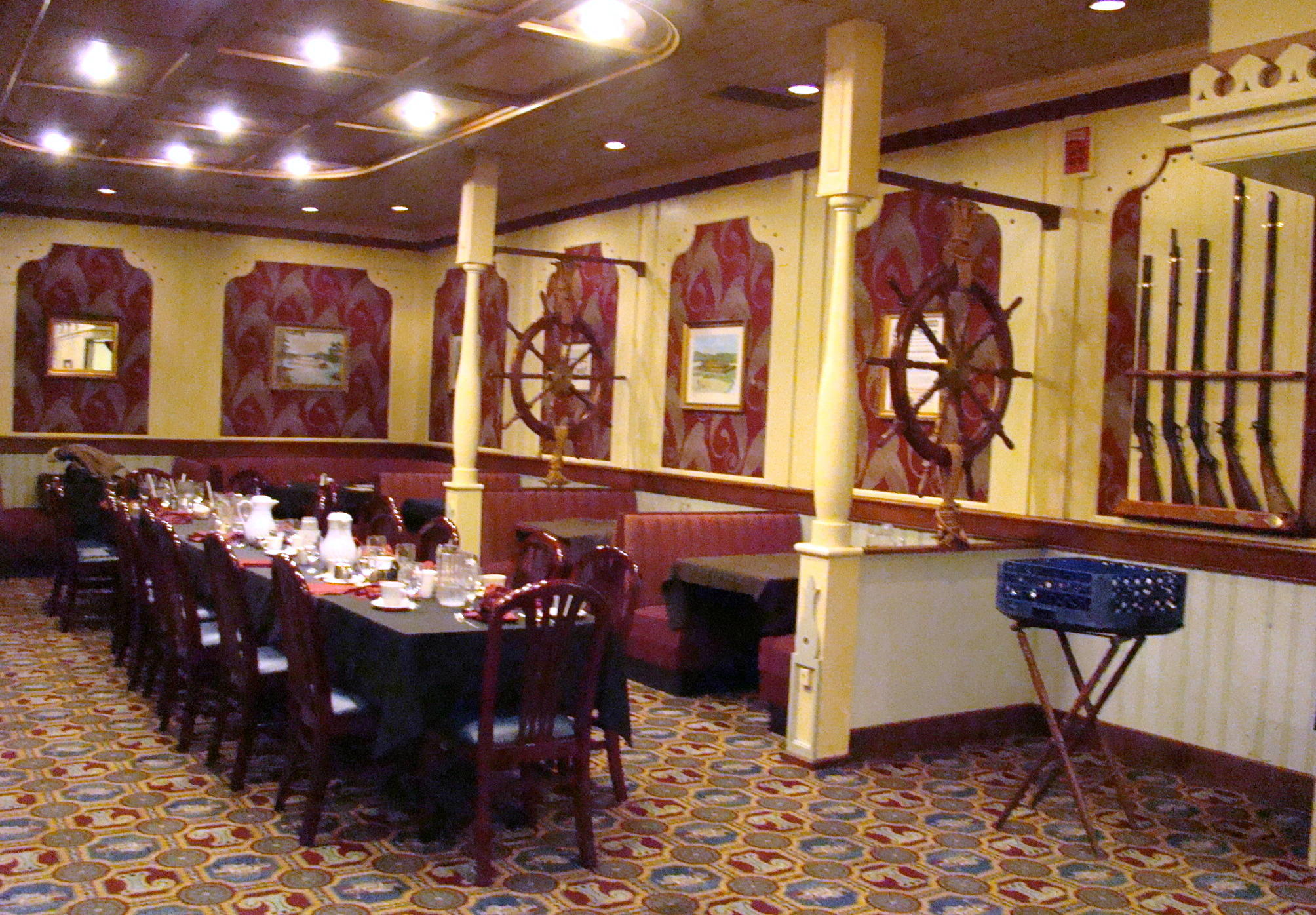
Gun RoomThe Gun Room is a popular place for lunch. The walls are adorned with photos of great majestic sternwheelers that traveled the Ohio River.  A display of antique long rifles contains one made by J.J. Henry that accompanied the Benedict Arnold expedition to Canada in 1775. Waitresses tell of coming in early to work and seeing a figure leaving the front section of the restaurant. Often the swinging doors to the kitchen open for no reason at all. Some feel that Mr. Hoag is checking on his staff.  On the plus side, these spirits are never harmful.

Enjoy the ambience of this richly historical Lafayette Hotel on the river sometime soon. They have been expecting you for nearly a hundred years!

The Lafayette Hotel is located  at 101 Front Street in Marietta, Ohio. Exit I-77 at Exit 1 and follow Route 7 South, which is also Pine Street.  At the third light, Pine Street continues straight and becomes Green Street. Continue on Green Street until you come to the hotel on the corner of Green Street and Front Street. Parking is available between the hotel and the Ohio River as well as on the other side of the hotel.

Civil War Encampment Days Beyond the Skirmish

Will the Yanks run the Rebels out of town? Reenactors lined the streets of McConnelsville, Ohio for their 25th Annual Civil War Encampment Days, Ohio’s longest consecutive running reenactment.  What a great place to observe the living history of the Civil War.

Everyone dressed in period costume in the soldier camps seemed eager to discuss their life style, and patiently answered all questions.  Their canvas tents provided great cover from rain storms.  However, they reminded those in attendance that it was important not to touch the canvas with your fingers during a rain.  Seems the oil on your fingers would make the canvas leak. Rains were important for their War Gardens, which provided food for the army as well as land owners.

Since death was frequently a visitor during this time, ladies told about the cemeteries where they often held picnics. Union stones were flat so you might sit on them, but the Confederate stones had a pointed top so “Yankees” couldn’t sit on their tombstones. The ladies also mentioned that black wreaths were hung on doors when someone died as a notice of death, since it was the only method of letting the neighbors know.

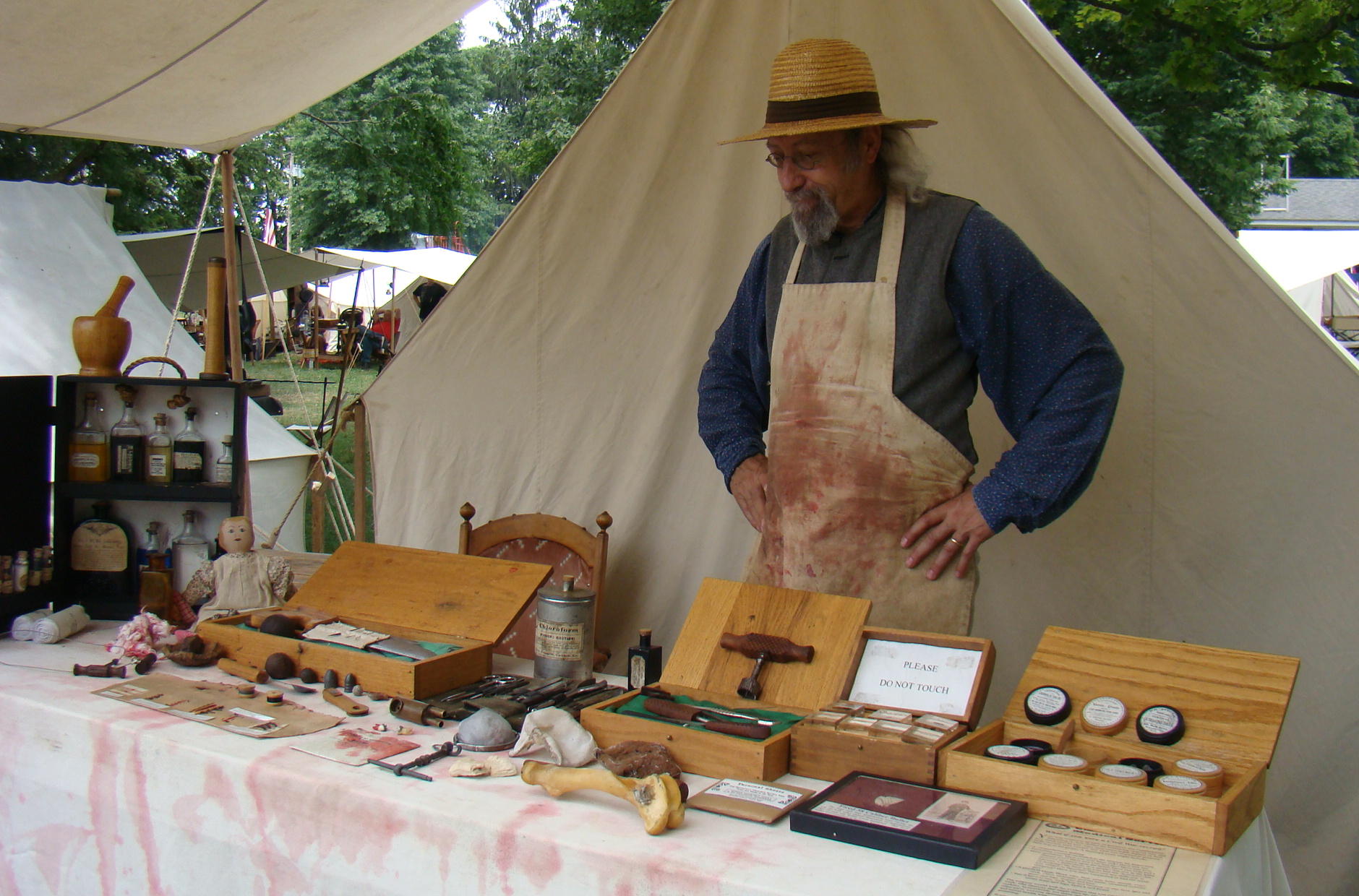
Many medical treatments were explained by the blood stained Head Surgeon of the Confederate regiment. When asked what might be used to help a headache, the major informed visitors that opium would be used if it was severe, while a relaxing morphine or sassafras would be used  for minor headaches. If the headache was too bad, they would just bore a hole in the head to release the evil spirits. Upset stomachs were treated with licorice or ketchup, and beef extract provided a soothing soup for many ailments. They even had a hollow doll that was used to smuggle medicine through the opposing lines.  Later in the afternoon at the field hospital, the surgeon cured a case of gangrene and subsequent blood poisoning by sawing off the leg of the victim.

Walked down to the Courthouse for “Squirmish on the Square”, where a staged battle occurred between soldiers from the North and South. Much ceremony was involved in the presentation of the battle both before and afterwards. There was even a bit of humor thrown in as they robbed a Wells Fargo box and then blew it up. The closing ceremony showed soldiers from both sides presenting arms, taps were played and a wreath was placed on the Civil War Private monument standing in the center of Main Street.  The base of this monument is made of stone from Gettysburg and the Gettysburg Address is engraved on one side of the monument.

After a hot afternoon on the square, it was time for a drink. As Yosemite Sam would have said, “Sasparilly, and make it snappy!” Sarsaparillo was a popular drink of the Civil War era and a cold bottle hit the spot.  Made from sarsaparilla roots, this drink is  called “The Granddaddy of All Root Beers”.  Originally the bitter root brew was used for medicinal purposes treating digestive problems, but later sugar water was added to make it more palatable. ..and a soft drink was born.

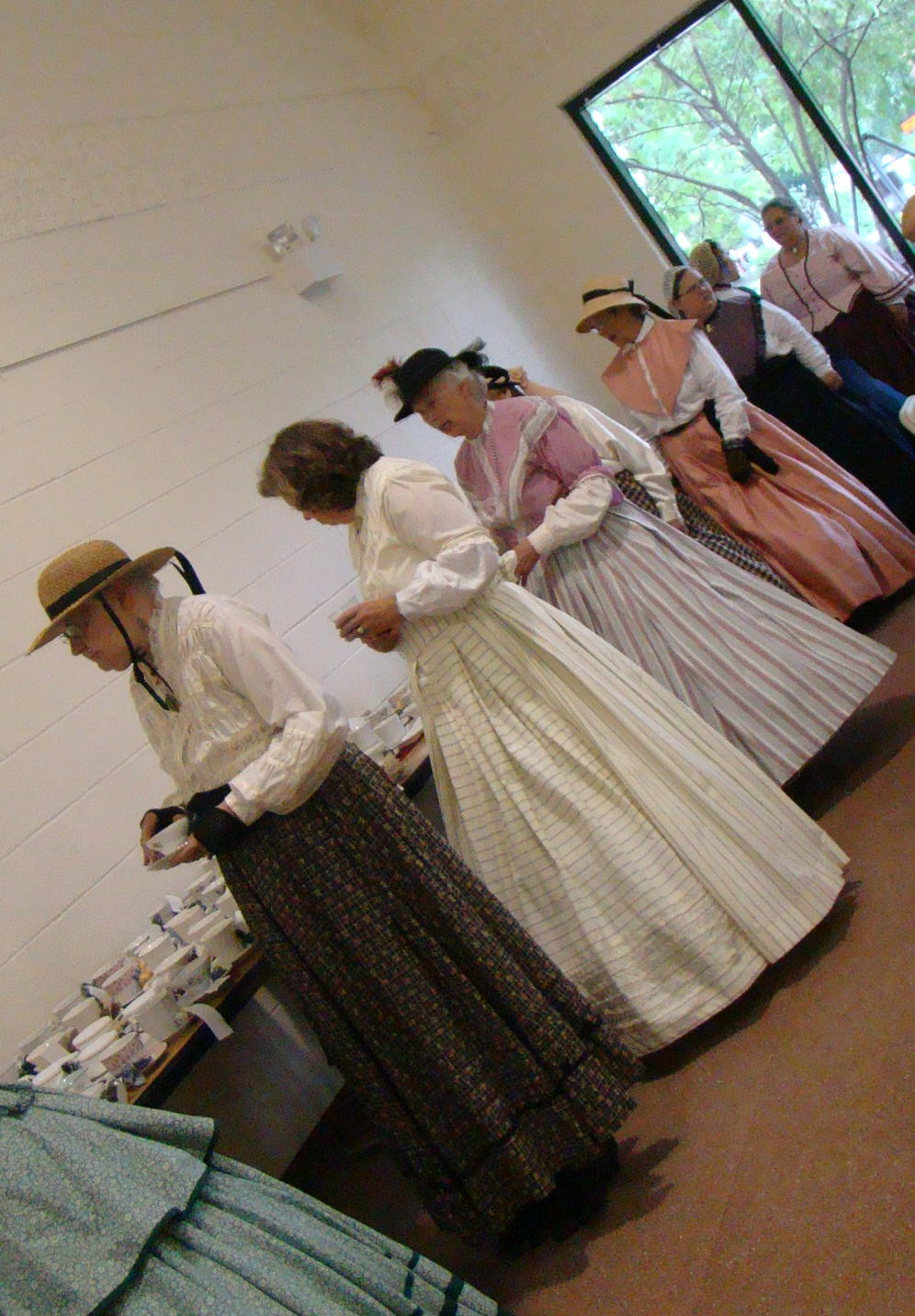
Ladies’ Tea was served amid beautiful hooped gowns and lovely flowered hats. Cucumber sandwiches, fresh fruit, and small cakes were part of the traditional menu. After tea, Verna Owens of St Mary’s, West Virginia told tea drinkers about Women During the War…from the Confederate viewpoint. Her leader was President Jefferson Davis, who had his Confederate White House at Richmond.

She described the proper dress and manners for a Southern lady, who always carried a parasol and wore a hat.  Her cooling fan accomplished an additional task as a means of expressing her thoughts without saying a word.  For example a fan closed in a snap meant she was angry with what was being said, while fanning quickly might mean she couldn’t believe what was happening, or as we might say, “Oh, my!” Many toys of the time were explained and on display. Quiet dolls for church were made out of handkerchiefs, and there was a cow’s jaw for musical entertainment. When soldiers were leaving for battle they gave their sweethearts a tear bottle to collect their tears while they were gone.  Upon their return, they hoped to find it at least half full. Verna closed by saying one truth learned from the war was that we definitely should learn to get along.

In the evening, a Civil War Ball captured the beauty that sometimes appears in the midst of turmoil. Ladies were dressed in their finest, but few hats were worn to the ball…just ribbons or flowers in their hair. Some men wore their uniforms while others were dressed in their best tailcoat. Dancers swirled around the floor doing The Promenade, Waltz, Virginia Reel, and Patty Cake Polka with music provided by Back Porch Swing Band.  What a great ending to a Civil War Day.

This particular Civil War Encampment occurred in McConnelsville, Ohio which is just South of Zanesville, Ohio on Route 669 following the beautiful Muskingum River.  Located riverside just north of town is The Boondocks, one of Ohio’s best small-town eateries being featured in many magazines across the state. Their specialties are their award winning BBQ as well as their great and friendly service.  Could be worth a Sunday drive for a nice meal even if there isn’t an encampment happening!