Places to go and things to see by Gypsy Bev

Archive for the ‘History’ Category

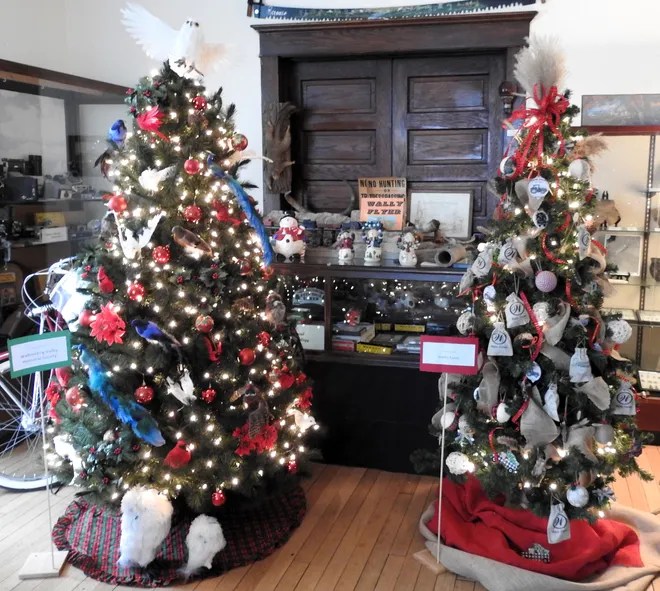
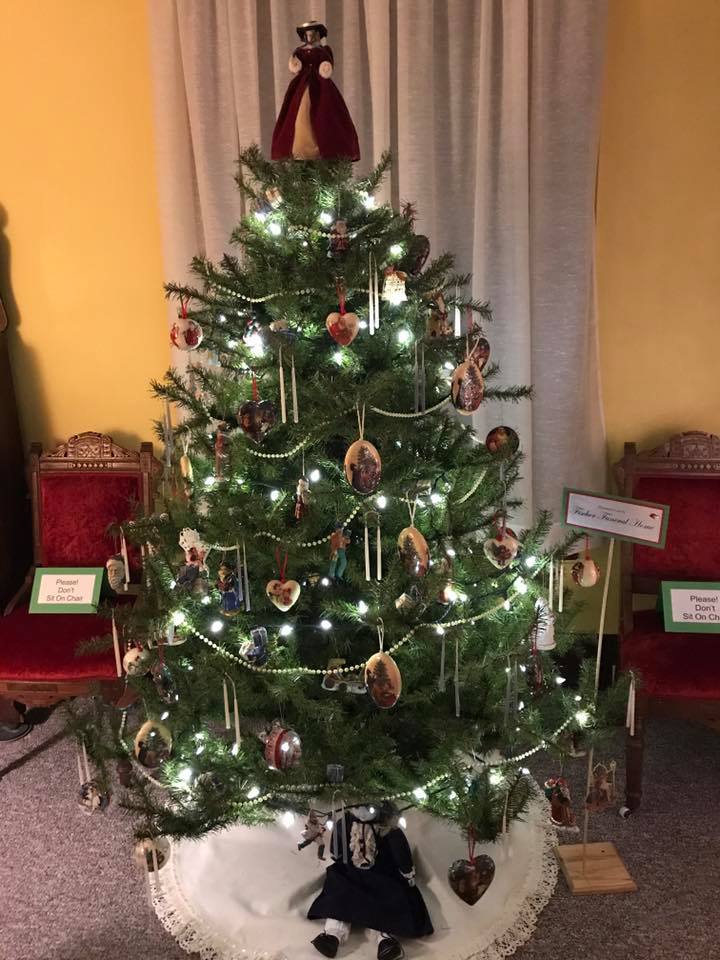
Walhonding Valley Historical Society Museum Presents Festival of Trees

Learn the history of the Walhonding Valley area while celebrating the spirit of Christmas during their holiday celebration. Beautiful Christmas trees are on display during their 9th annual Festival of Trees with entries from individuals, groups, and corporations.

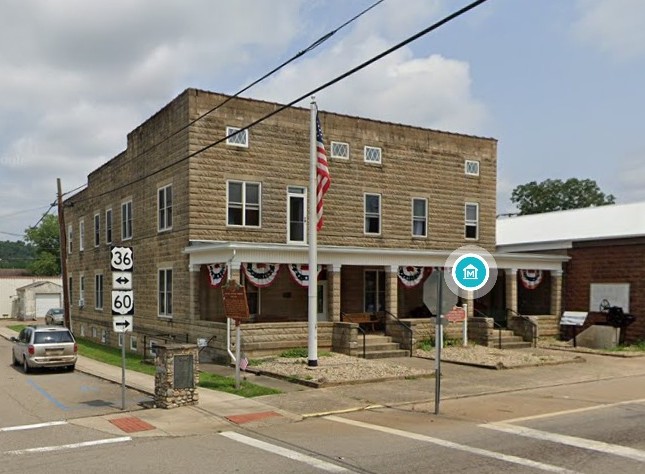
Walhonding Valley Museum can be found at the corner of Routes 36 and 60 in Warsaw.

The Walhonding Valley Historical Society Museum at 102 E. Main St. in Warsaw was formed in 2001 as a result of a vision by community leader Marvin Davis. Marvin wanted there to be a way to share stories of the past for future generations so they could cherish its traditions and learn from its lessons. Next year they will celebrate their 25th anniversary.

It began in a one-room building but soon needed more space. At that time, they purchased the present building, which is on the National Register of Historic Places. From 1906-1975, this building was a doctor’s office. The second floor had 13 rooms to rent or use for the patients. The first caesarean section in the county was performed in this building. Doctors came in by train as needed

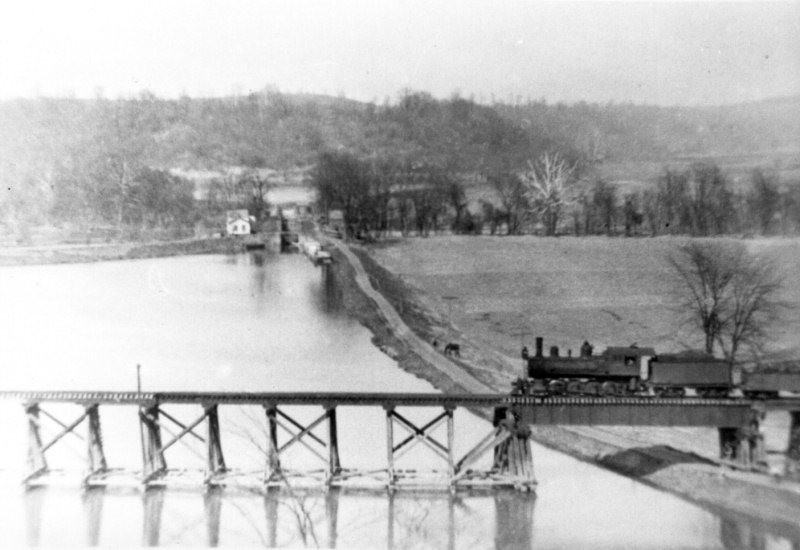
This trestle crossed the Walhonding River at Roscoe.

The Walhonding River plays a large part in their early history. It is said to have been an Indian name for a white woman. On early maps in 1752, the river was actually labeled “White Woman River.” The first white woman to live in the area was Mary Harris, who married Chief Eagle Feather of the Delaware tribe.
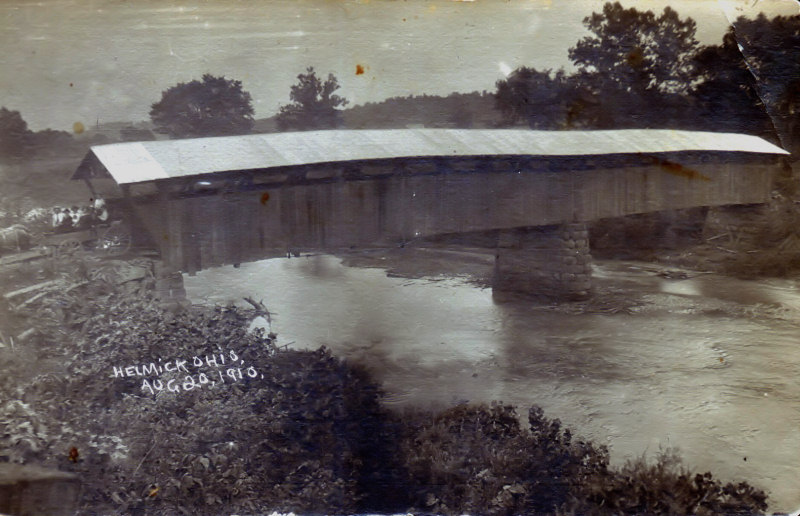
This covered bridge crossed the river at Helmick in 1910.

White Woman’s Rock can be found at Kilbuck Creek, a branch off the Walhonding River between Coshocton and Warsaw. Legend says that a white woman jumped from this rock with her baby to avoid having the Delaware Indians make them captives or worse.

Johnny Appleseed, also known as John Chapman, planted his first apple tree nursery in 1798 and planted many trees in the Walhonding Valley. He walked hundreds of miles and planted thousands of trees but also protected settlers from Indian attacks, helped them build cabins, and was a source of inspiration to everyone he met.

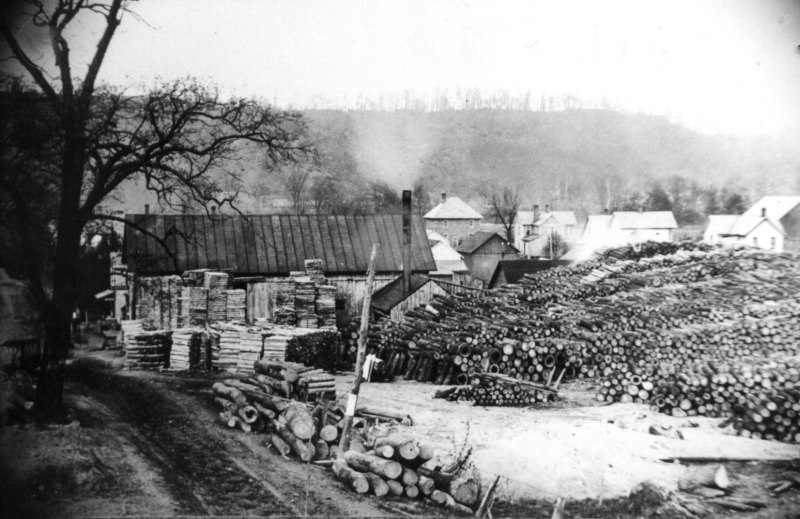
Nellie had a busy ax handle factory.

Many native artifacts of the area can be found in the museum. They show a glimpse of the area’s prehistoric past. The Delaware Indians lived in Jefferson Township where they mined flint. An impressive display of this early local flint is on display. The dates and place of the flint has been authorized by studies from Ashland University and the College of Wooster.

Traffic on the river was not always possible so a canal system was built in 1842 with a branch canal being the Walhonding Canal. By 1844, there were 100,714 bushels of wheat and flour being shipped on this canal.

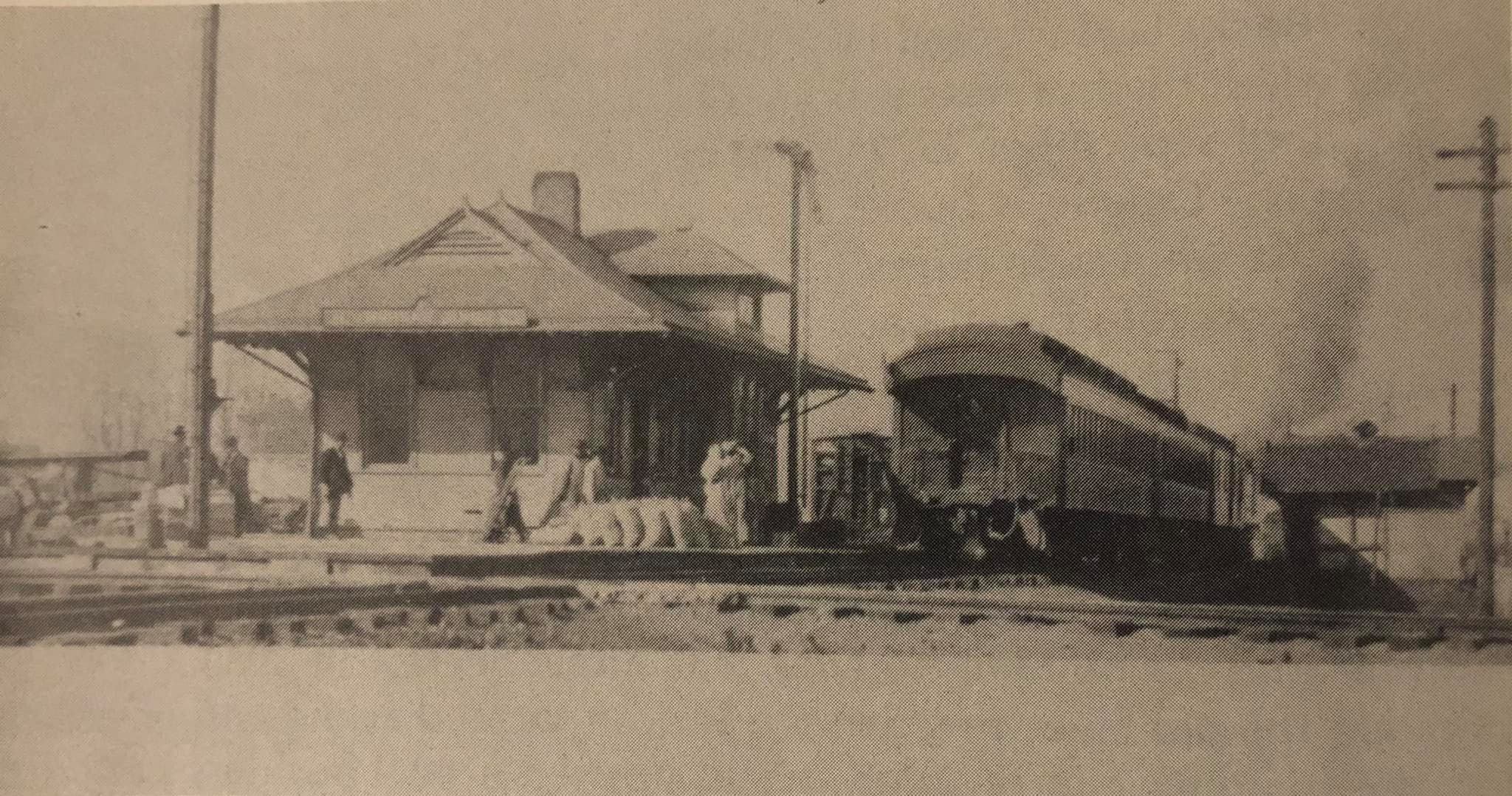
Wally Flyer, a passenger train, made stops at Warsaw Junction.

As costs of maintaining the canal exceeded the revenues, railroads began taking over the business. By 1893, the Wally Flyer railroad was completed in the valley. The Toledo, Walhonding Valley & Ohio line carried an immense traffic in coal from the Cambridge coalfields to Toledo and lake ports.

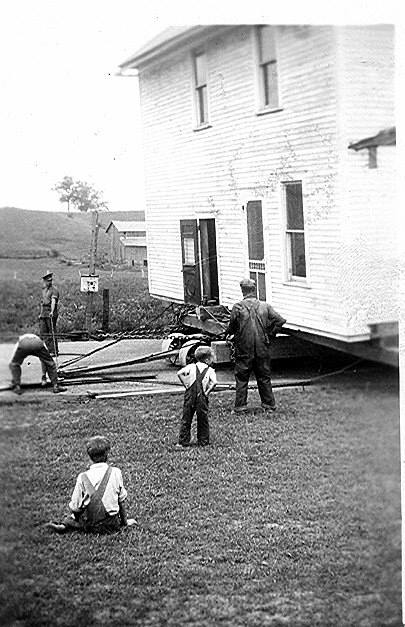
All Walhonding’s buildings were moved when the Mohawk Dam was constructed in the 1935.

There are three floors to the museum. The first floor contains an old-time doctor’s office, barbershop, and has a wonderful Military display, where you will find treasures from WWI, WWII, Vietnam, and Desert Storm. They even have a uniform, saddle, and cannonball from the Civil War. There is also a display of school memorabilia.

A beautiful tree of pearls appeared the first year in 2017.

On the second floor, nine of the rooms have been refurbished. The basement is being developed also and was the place of the first Boy Scout meeting in Warsaw.

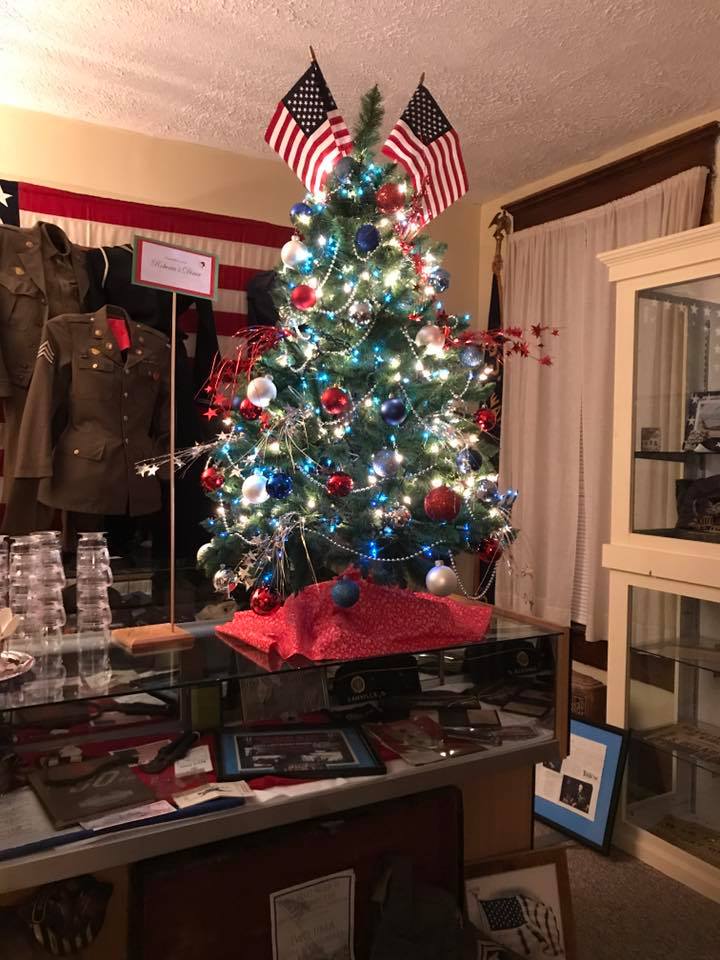
A red, white, and blue tree was in the Veterans section.

At the present time, the museum is open by appointment. However they are open for the Festival of Trees every weekend from Thanksgiving to Christmas on Saturday and Sunday. Call 740-824-4000 for information or an appointment time. Visit their website at http://www.wvhistoricalsociety.org.

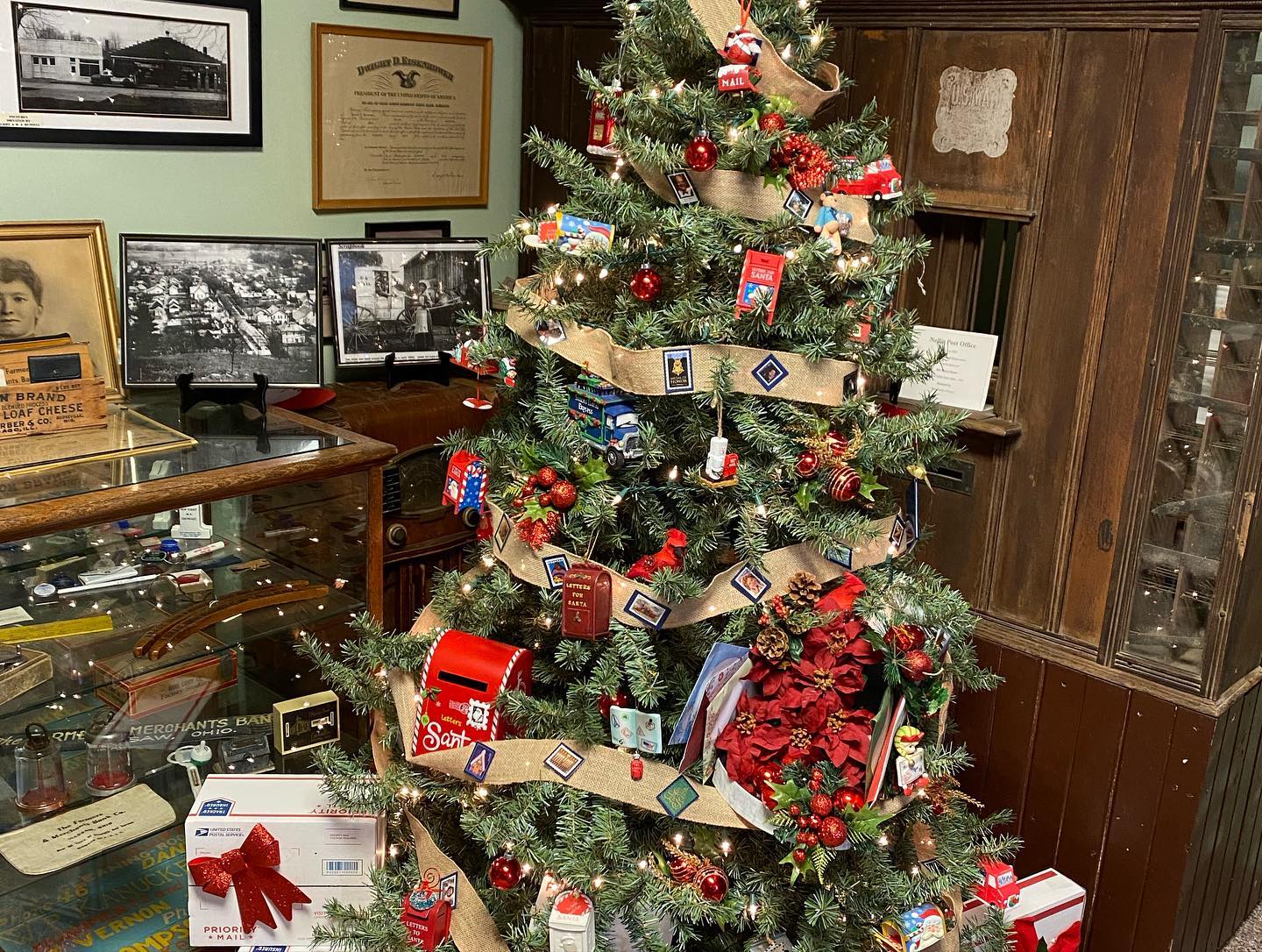
Letters to Santa tree even had a mailbox.

This is a perfect time to visit the museum as it is their 9th Festival of Trees. View the beautifully decorated Christmas trees throughout as well as learn more about the history of the area. Last year there were 28 trees decorated by local businesses, groups, and students. Seven of those trees were decorated by students from River View Local School District. The students always have a tour of the museum after they finish decorating the tree.

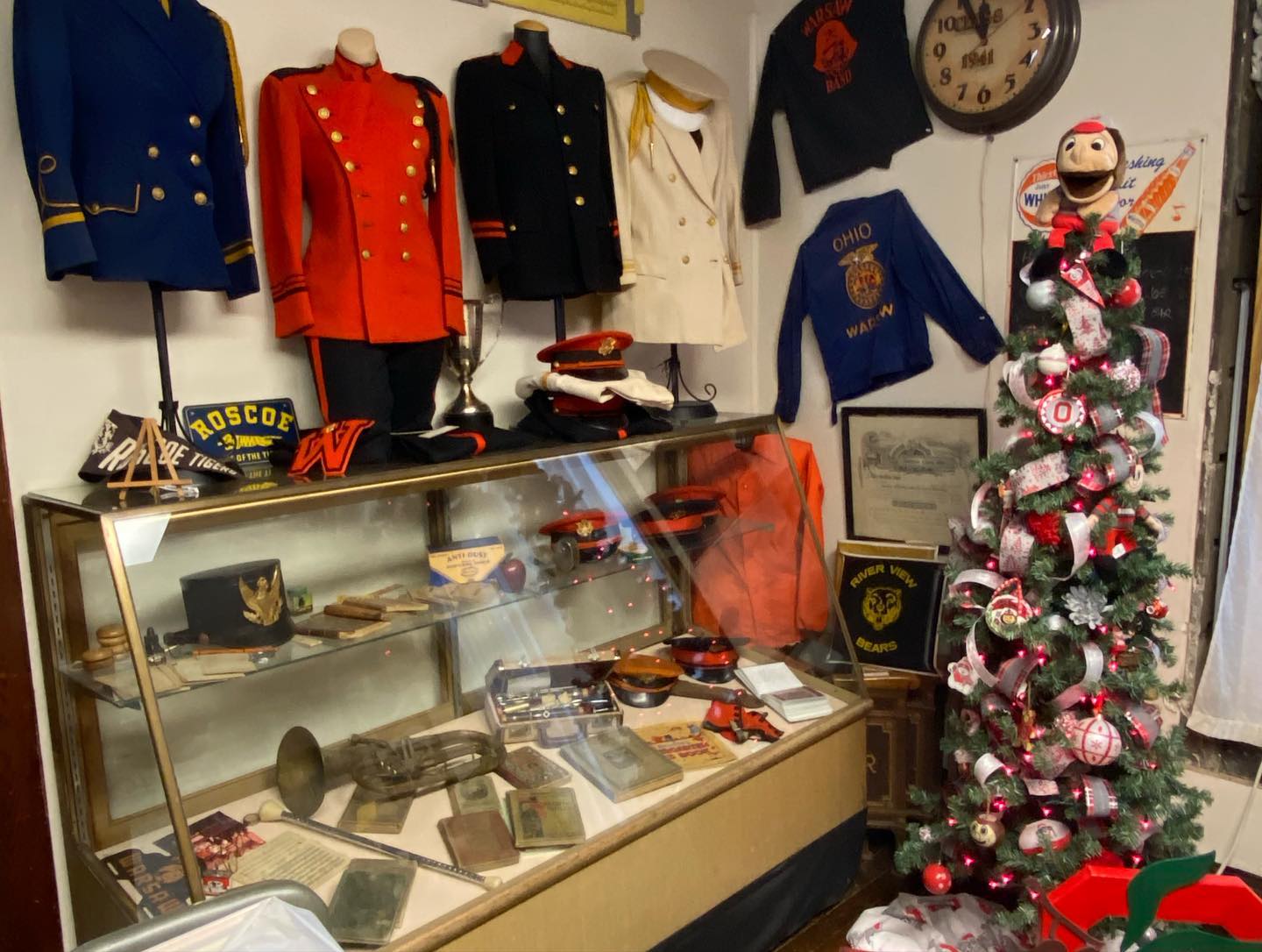
A Buckeye Tree was in the room that contains a band display.

Open House will be held on the Sunday after Thanksgiving, the same day that Santa comes to town. For the next three weekends, you are free to tour the Festival of Trees and the museum at no charge. It will be open on Saturday evenings and Sunday afternoons.

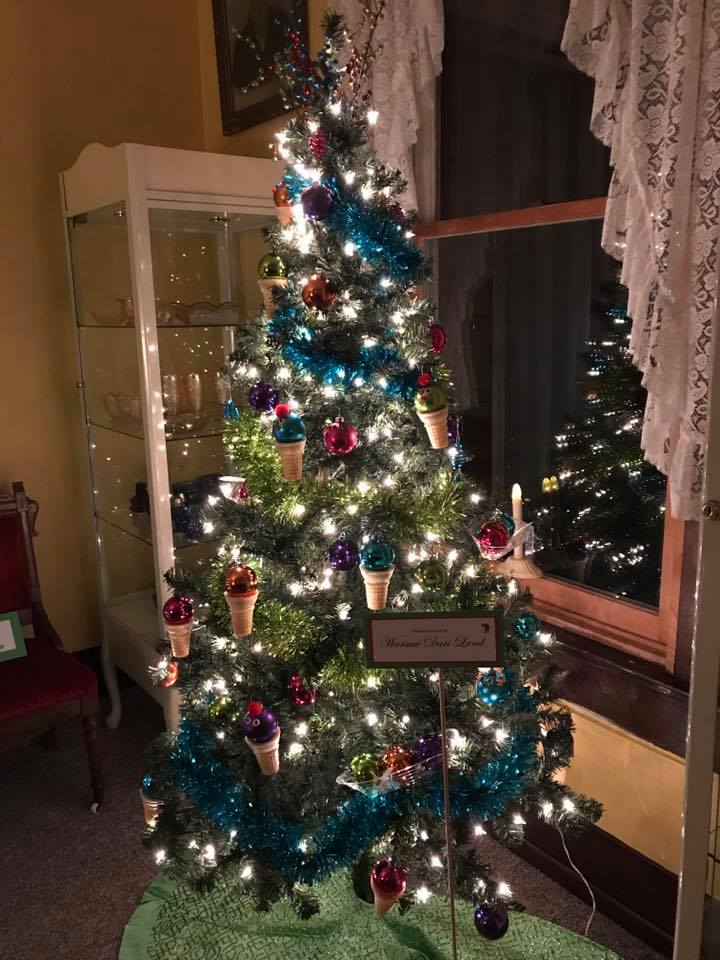
An Ice Cream Cone Tree from Dari Land appeared in their first year, 2017.

Enjoy learning some area history while enjoying the spirit of Christmas at the Festival of Trees at Walhonding Valley Historical Society Museum.

Village of Byesville Museum

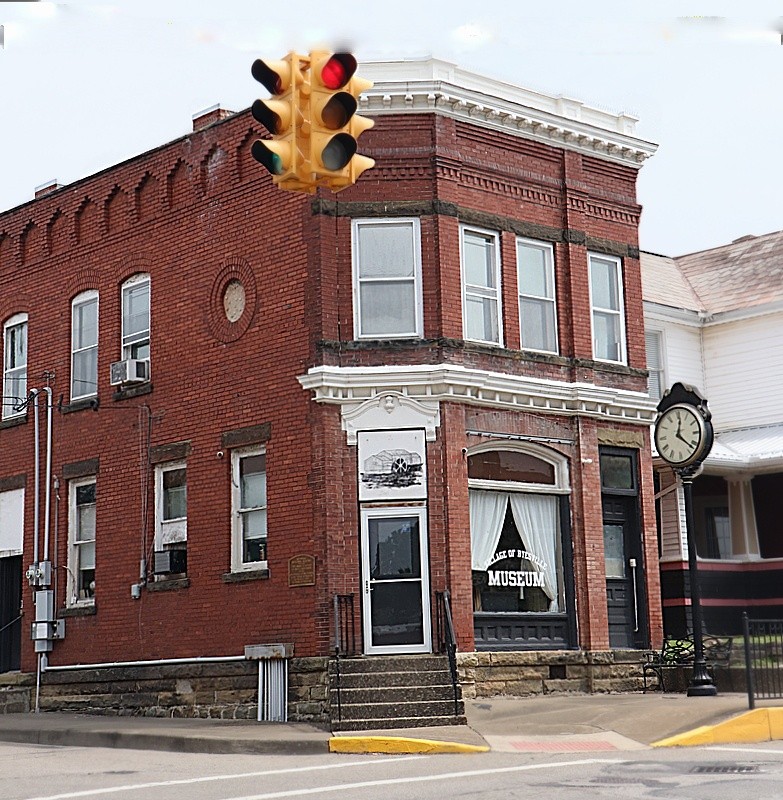
Byesville Museum was originally First National Bank back in 1901. (All photos by Calvin Chester)

Visit the newly renovated Byesville Museum & Welcome Center at 236 Main Street. This facility is located on the corner in the historical First National Bank, which has existed in Byesville since 1901.

Byesville was platted in 1856 and named for Jonathan Bye, who had a mill there. It’s nickname at that time was Bye’s Mill. It became incorporated in 1881. A great deal of history has been accumulated over the years and some of that can be found in the Byesville Museum.

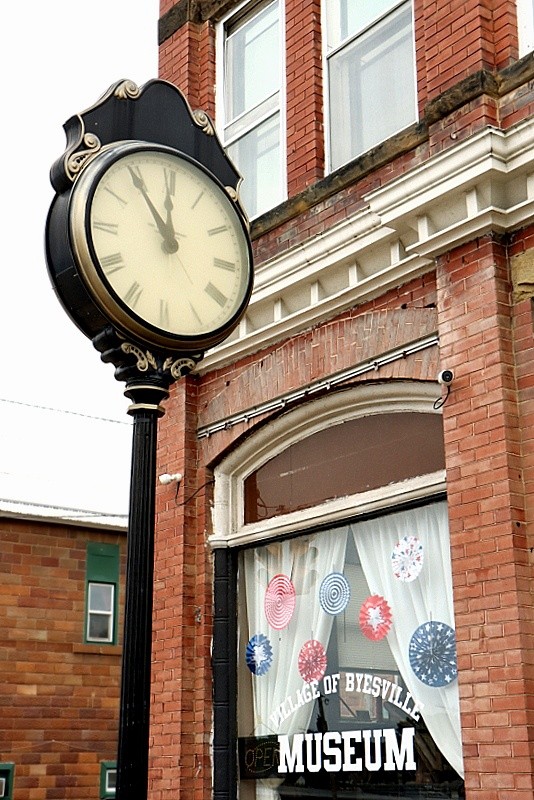
The clock was given by L.D.M. Technologies in 1998.

The museum contains a collection of antique items, photographs, and documents which chronicle the history of the area from the mid 1800s to the present. Learn more about the history of the bank and the surrounding area. You’ll find some surprises.

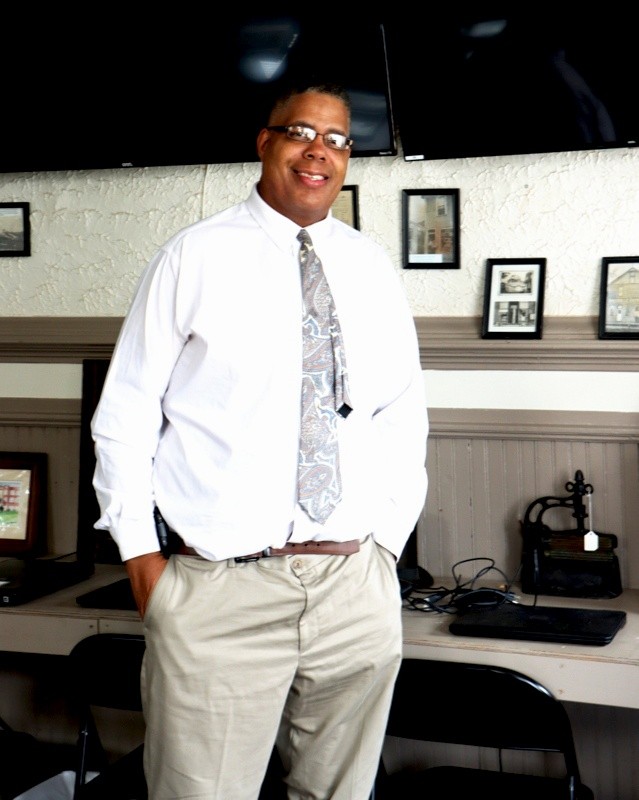
Mayor Jay Jackson gave us a tour of the museum.

Byesville Mayor Jay Jackson talked about the Byesville Museum and gave a tour of the facility explaining how the museum had been revitalized in the last few years after some extensive water damage. Many items were lost because of the water and they are trying to make sure that doesn’t happen again.

Mayor Jackson stated, “I have a strong belief in history as stories of the past help us understand our heritage. The items contained here are a hidden treasure.” It takes a village to make these things work and the museum has become a place where you can find the history of Byesville and the surrounding area because of everyone working together.
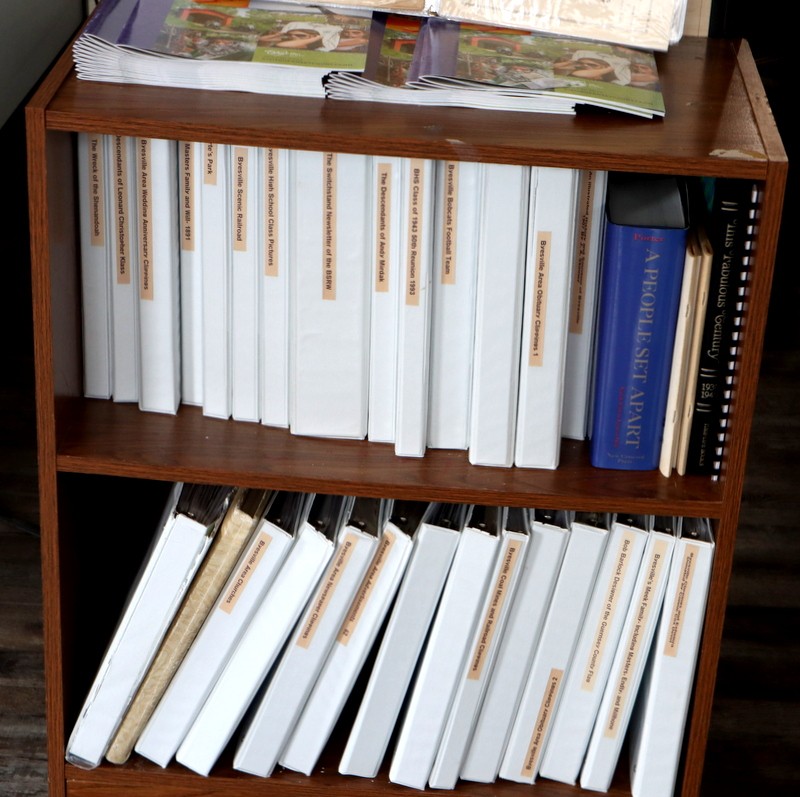
Many volumes of old photos and newspaper items are available.

Learning stories of the region’s past can change the way you think about the present. There is an extensive collection of notebooks filled with old photos and newspaper items that could give hours of enjoyment.

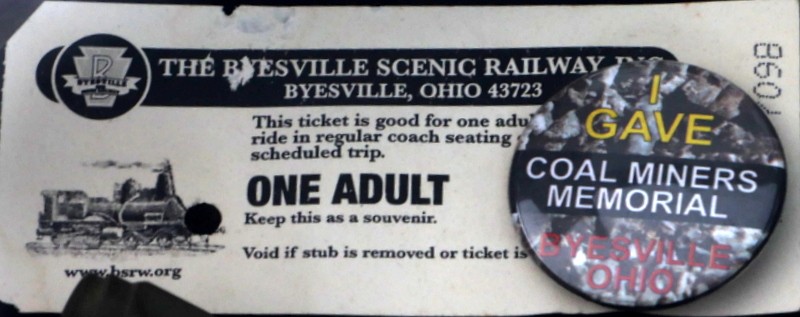
A ticket from the Byesville Scenic Railway reminds people of the local coal heritage.

The museum includes a Resource Center with computers available where you can look for a job, work on a school project, take a class, or learn how to use the computer. Here pictures can be shared about the history of Byesville. They also developed a special slideshow of local veterans.

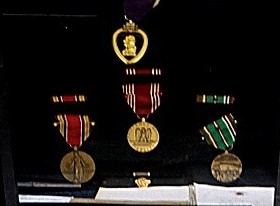
Veterans are honored with a display as well as medals won.

The back room is now open for displays. A special display there honors the veterans from WWII. A case contains medals that were received as well as a purple heart.

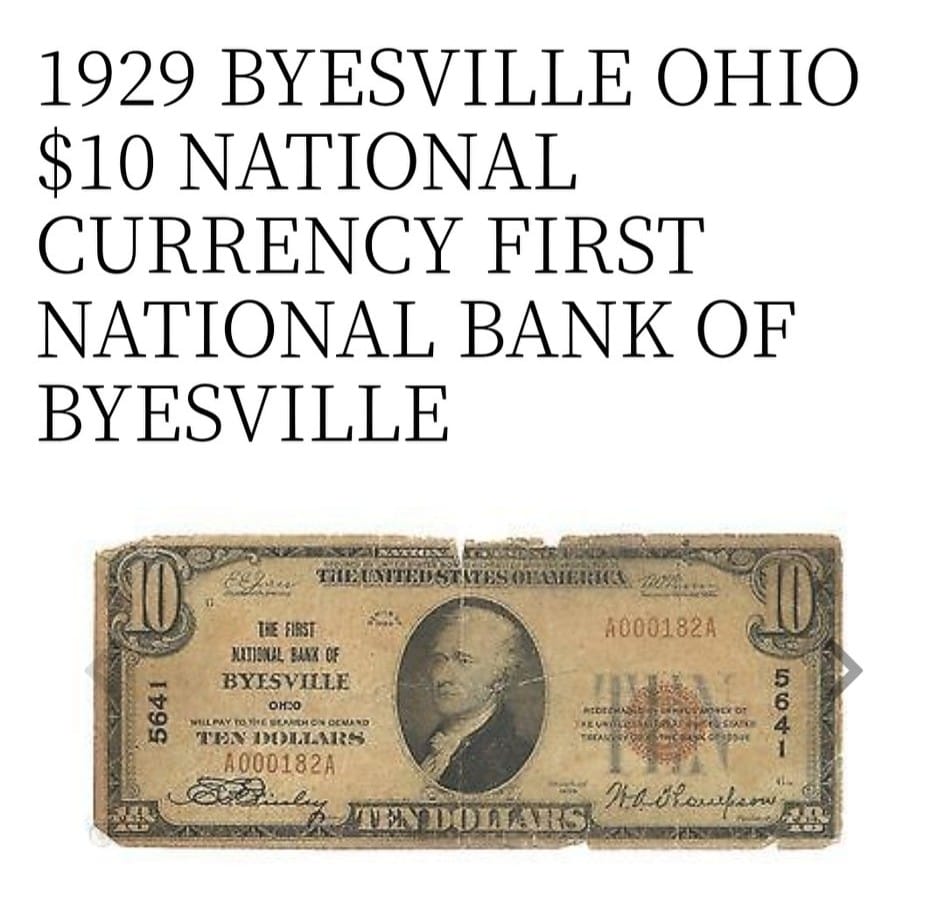
This $10 bill, national currency, has The First National Bank of Byesville printed on it.

The second floor of the museum contains boxes of treasures but there is only so much room for display. If you would like to help with this project or perhaps have something that should be added, become a volunteer so it can be opened on a full-time basis. New ideas are always welcome. If you’re interested in helping out a few hours a week, let Jay Jackson, Village of Byesville Mayor or Michael Port, Byesville Councilman, know by sending them a Facebook message.

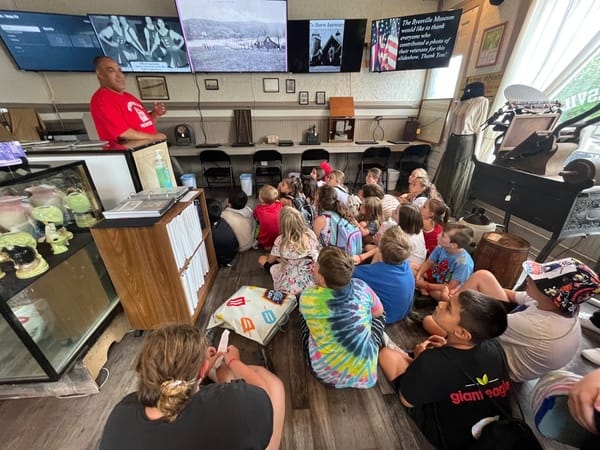
Michael Port talks to a group of children from Nurture Daycare, who visited the museum.

Recently, a group of children from Nurture Daycare visited the museum with their teachers to learn more about how Byesville began and how it is growing today. They shared photos of Byesville’s past with them on the large computer screens, handed out two coloring pages for them to do, and showed them around the museum. These children are the future volunteers who will keep Byesville a place sharing its history. If you would like to bring a group for a visit/tour, let Mayor Jackson know so they can get you scheduled.

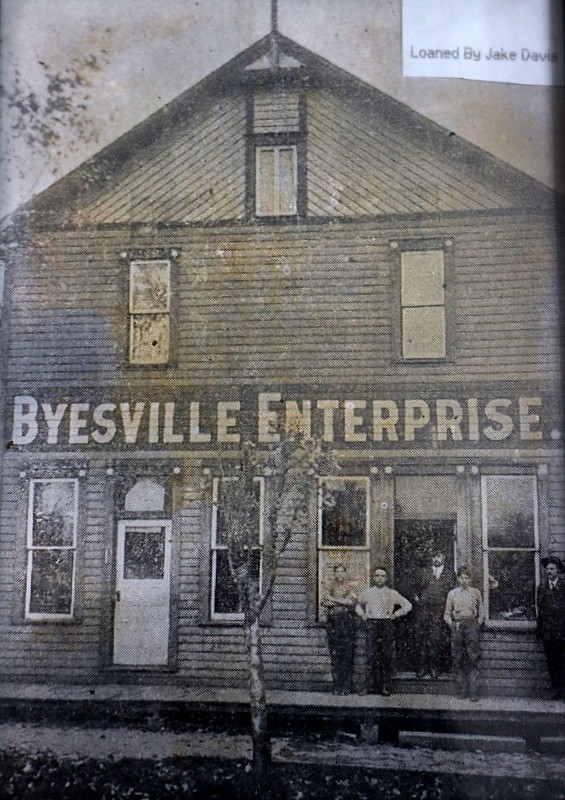
This old picture shows Byesville Enterprise, the local newspaper office.

The museum, operated by Byesville Historical Society, is open May through September on Monday, Tuesday, and Thursday from 11-2. It’s best to call ahead at 740-260-3088 to confirm they are open as hours of operation vary based upon volunteer availability. Check out their Facebook page listed under Byesville Museum.

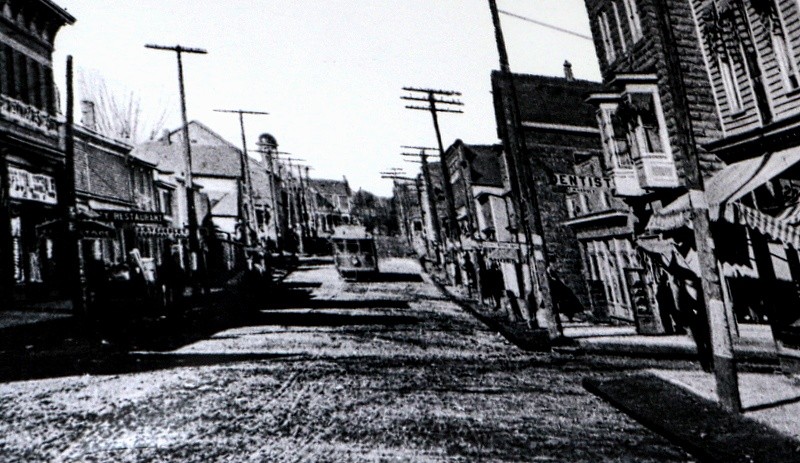
Interurban tracks ran down Depot St. (now 2nd Street) in downtown Byesville.

If you are from the area, the museum is certain to bring back many memories. Having spent much of my childhood in Byesville, there are many great memories from times when we walked from The Bottom, where my grandpa had Veselenak’s Grocery. We headed downtown to Luna Theater to watch a movie, got a snack at City Restaurant, and picked up a coloring book at Jack’s Five and Dime. Perhaps you have some favorite memories of Byesville, too.

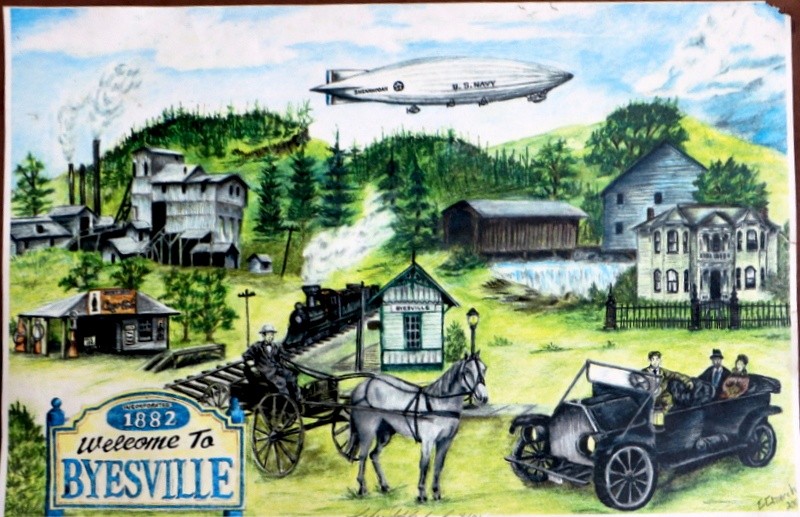
A painting of life in Byesville in 1882 hangs in the museum.

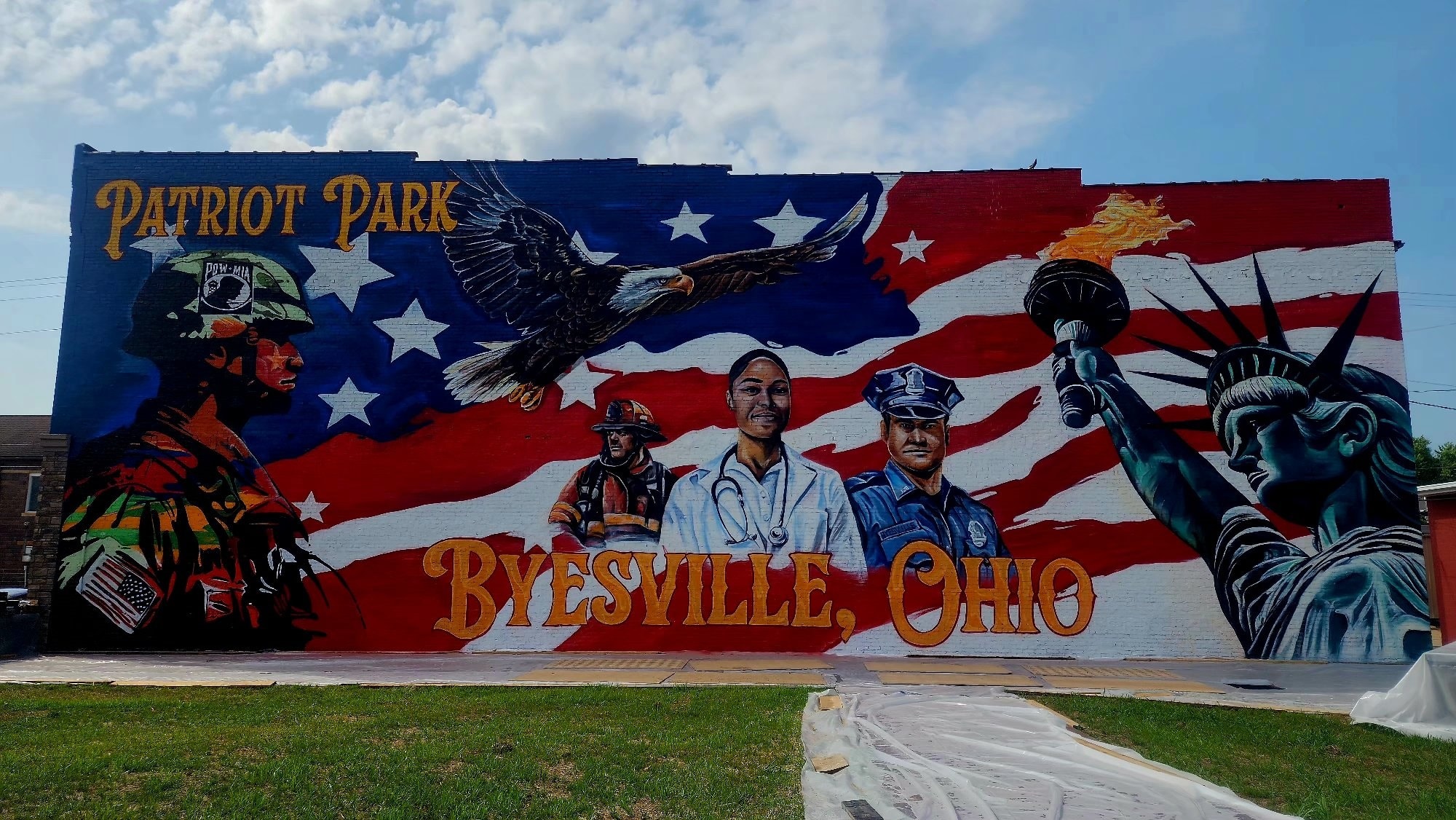
Today, Byesville is growing with many new businesses opening there. A new Patriot Park will highlight the corner of Main and 2nd Street. It will feature picnic tables, benches, new sidewalks, a gazebo, mural, a fountain, and a stage. Ideas are being discussed for possibilities to use the old Main Street School for new purposes. History continues to be made as each year passes.

The history of a town teaches lessons that need to be learned as our roots never change. Explore Byesville Museum when you get a chance and perhaps find a connection to your roots.

Life on a Riverboat

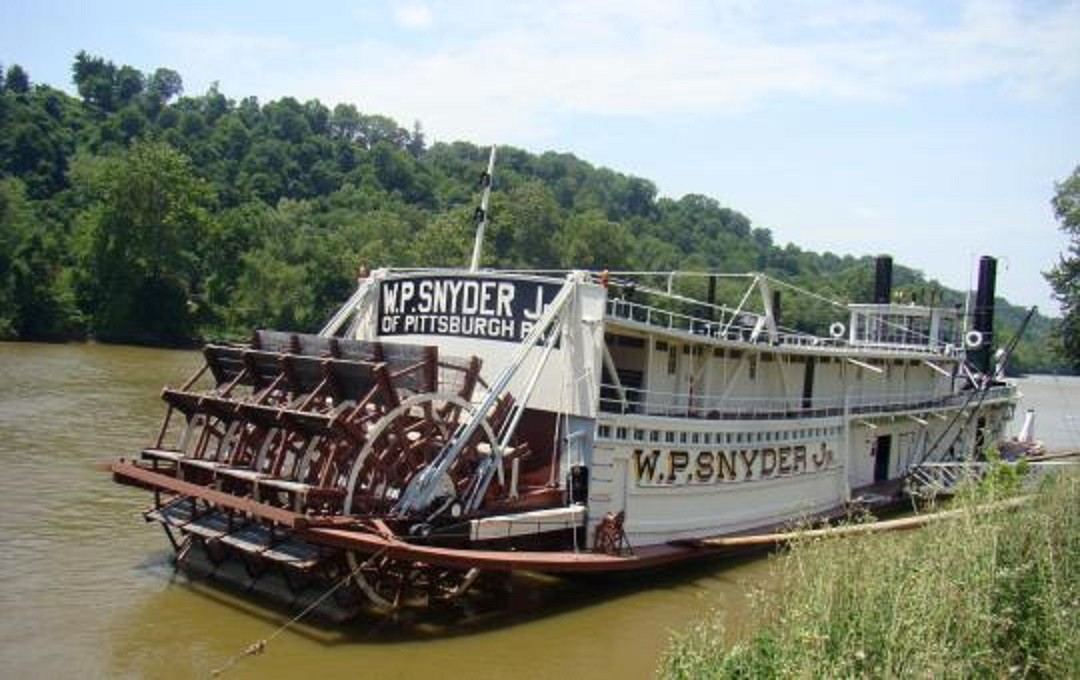
W. P. Snyder, Jr. is an historic towboat moored in Marietta on the Muskingum River.

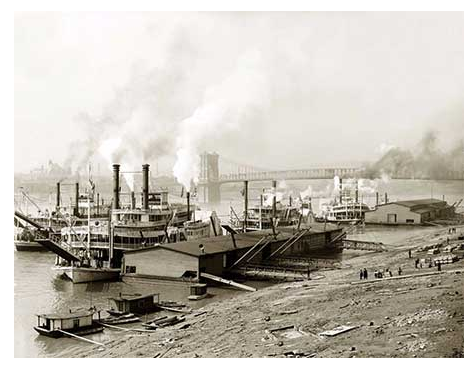
Drifting with the current down the Ohio River has been experienced by many for centuries. While those early days provided an easy way to move products and people, today there have been many changes on the river, especially with the riverboats driven by steam.

During those early days before the railroad or paved roads, towboats were frequent on the river hauling coal, food, and steel. This was a quick and easy way to move things. Men in good physical condition worked on these boats around the clock surrounded by hazardous conditions and constant noise.

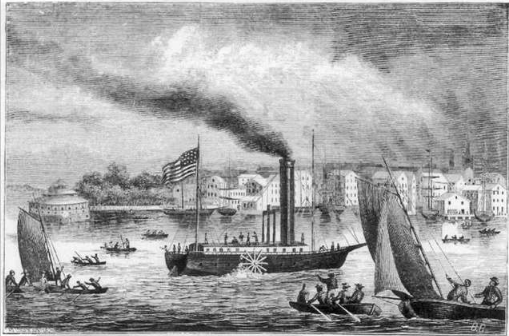
New Orleans was the first steamboat on the Ohio and Mississippi Rivers.

In 1811, the New Orleans made the first steamboat trip down the Ohio River and Mississippi River from Pittsburgh to New Orleans. The success of this adventure opened the door for more trading to the cities along the rivers. Passengers began using it as a faster method of getting from place to place.

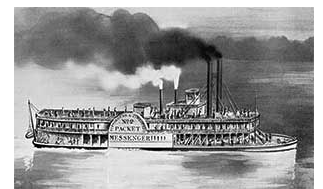
The Messenger carried Charles Dickens down the Ohio River.

For five months in 1842, Charles Dickens visited America with his wife, Kate, her maid, Anne Brown, and his secretary, George Putnam. They traveled to Pittsburgh by canal, stagecoach, and train before climbing aboard the riverboat, Messenger, for a trip down the Ohio River.

The Messenger held about 40 people on deck with the lower level being filled with the poor, emigrants, and children. Dickens felt lucky that they had a cabin in the stern as he worried about the fierce fire that raged in the body at the forward end of this boat built of what he called “a frail pile of painted wood

Meal time was not pleasant for him as there was no lively conversation. He said the creatures would empty their trough then head to stand around the fire and spit, a habit which he deplored.

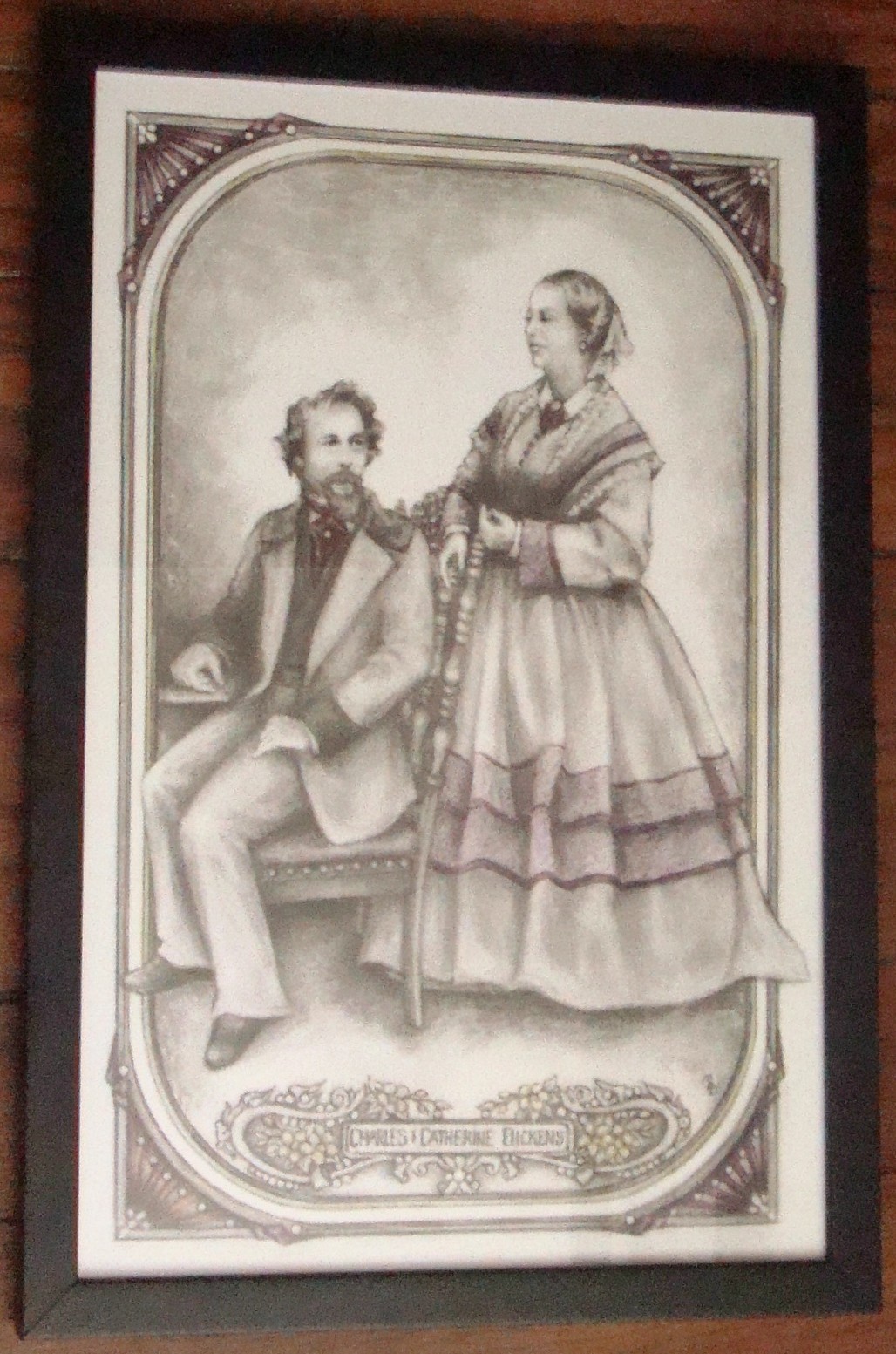
This sketch of Charles and Kate Dickens was by the late Mary Ruth Duff.

Charles and Kate would sit outside their small room on the gallery where they could watch the scenery as they drifted down the river. Charles explained the scenery in this colorful way:

For miles and miles the banks were unbroken by any sign of human life or trace of human footsteps. Nor is anything seen to move about them but the blue jay, whose colour is so bright, and yet so delicate, that it looks like a flying flower.

After three days, they reached Cincinnati where Dickens finally found some intelligent conversation. He loved the town and the free schools, as education was something very important to Charles Dickens.

When Dickens arrived in Cincinnati, shantyboats could be seen along the riverbanks.

As they pulled into Cincinnati, they could see shantyboats along the shore. These rough built homes were used by those who wanted to move from place to place along the river with their families. Often, they were homes for people looking for work but also for thieves and law breakers. They always served as a great place to escape paying taxes.

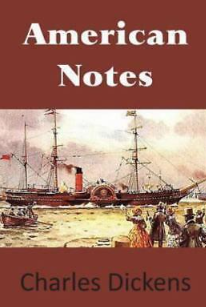
Charles Dickens wrote of his journey in American Notes.

Throughout his journey, it’s no surprise that Dickens wrote in his journal daily about what he saw and felt about America. Perhaps you would like to read his entire story in his American Notes.

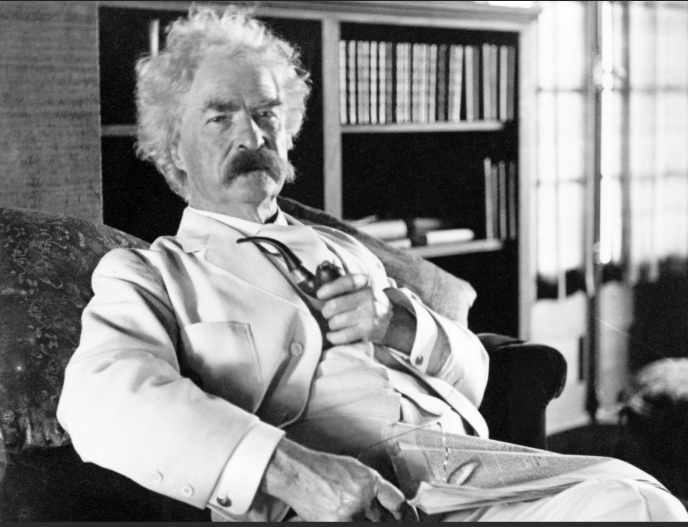
Mark Twain’s stories of his travels on the Mississippi boosted the number of riverboat passengers.

A few years later, Mark Twain published a book about his travels on the Mississippi River. When Twain wanted to get his riverboat pilot’s license, he was told he had to memorize the 1,200-mile Mississippi River in detail. The story of his adventures as a pilot and later as a passenger became a boon to the riverboat industry as more and more people wanted to experience the tales told by Mark Twain in his book , Life on the Mississippi

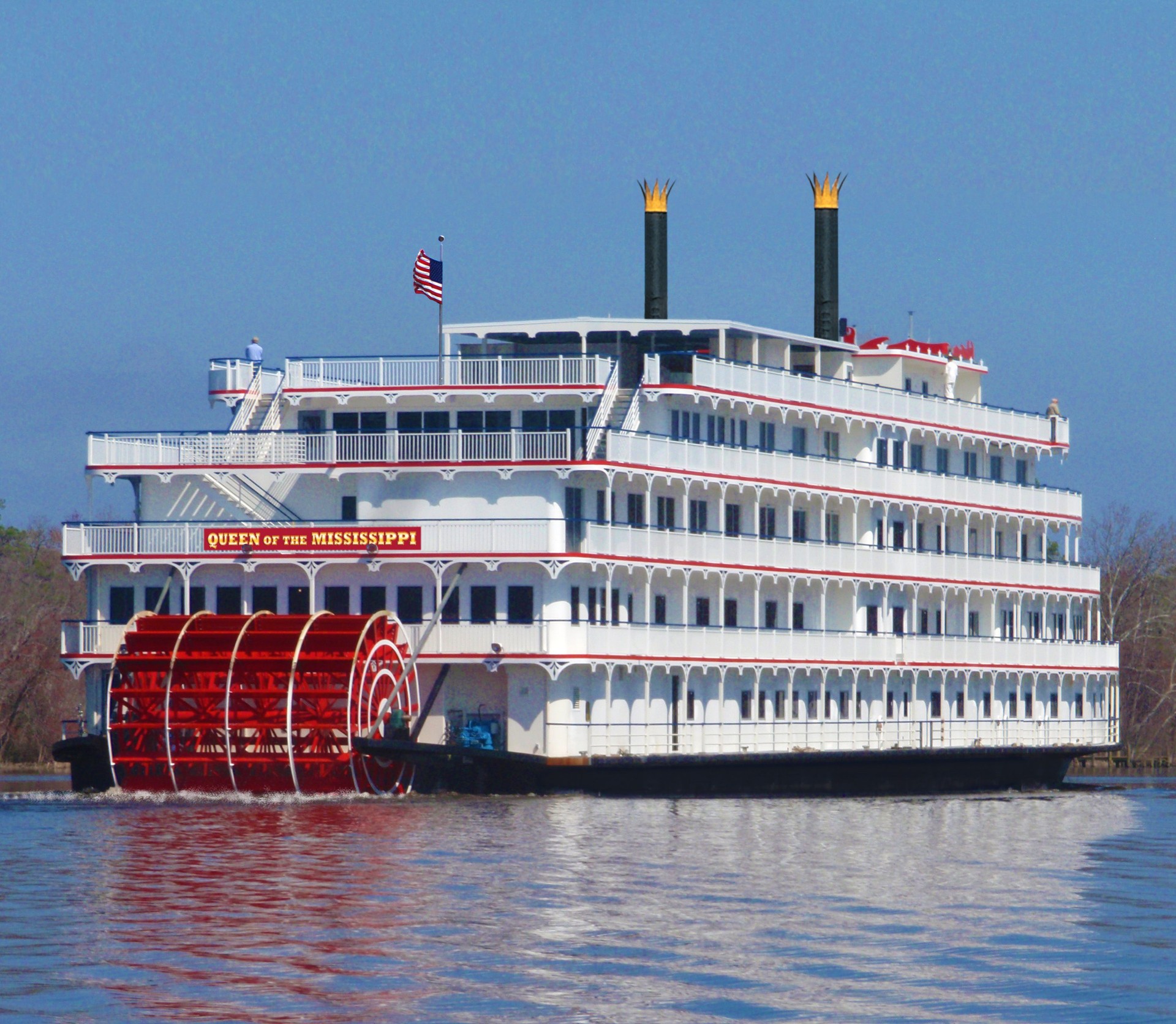
Today’s Queen of the Mississippi is a luxurious riverboat.

Today, riverboat travel on the Ohio and Mississippi has changed with the boats being more luxurious. Many people enjoy taking a short vacation on the river while being served gourmet meals, visiting historical spots along the way, and having evening entertainment.

When a boat pulls into dock at one of the towns along the way, as soon as people hear the sound of the calliope, they head to the shore to watch the paddlewheels and listen to the music.

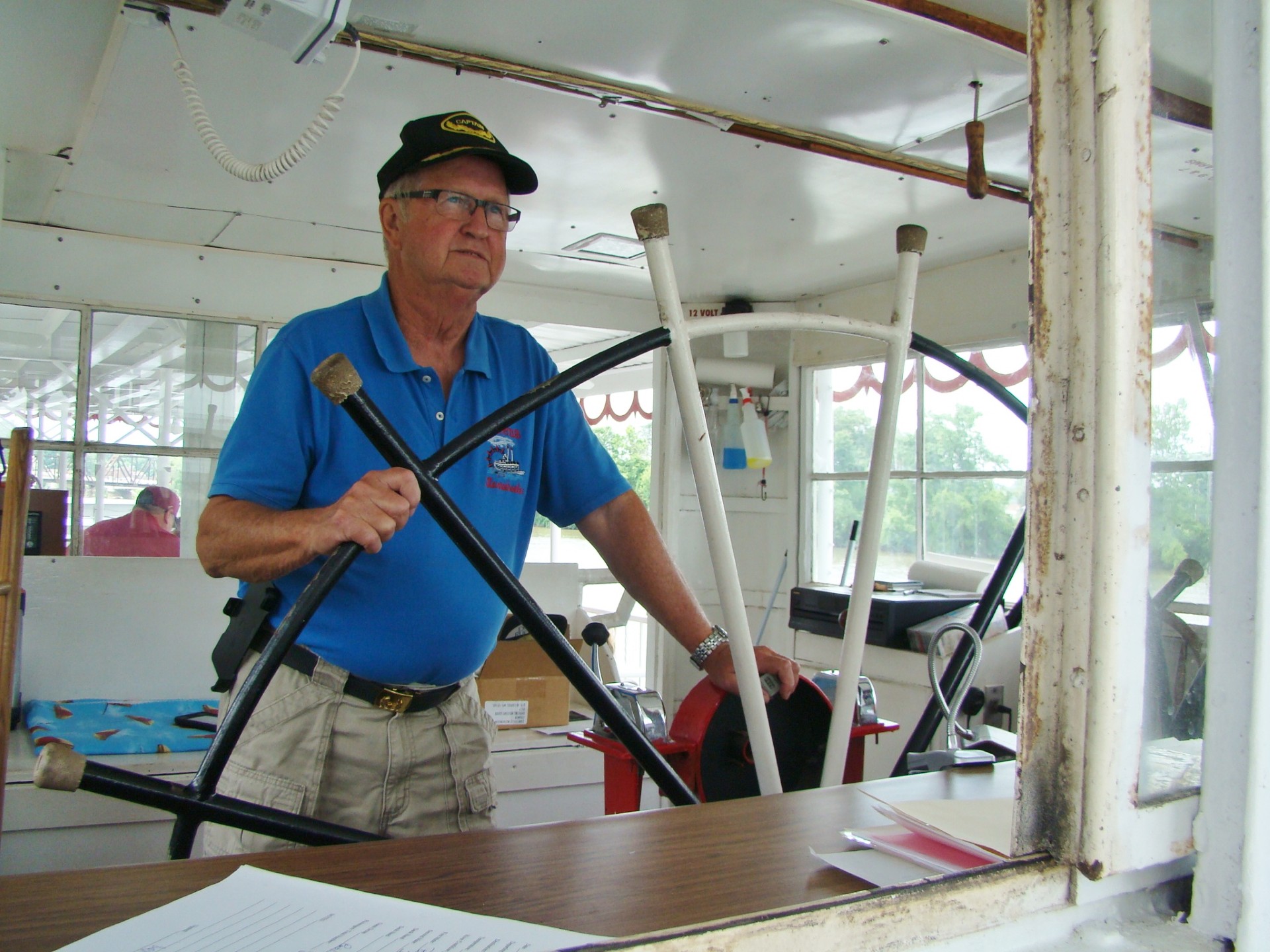
Captain Bill enjoys taking the wheel of the Lorena on the Muskingum River.

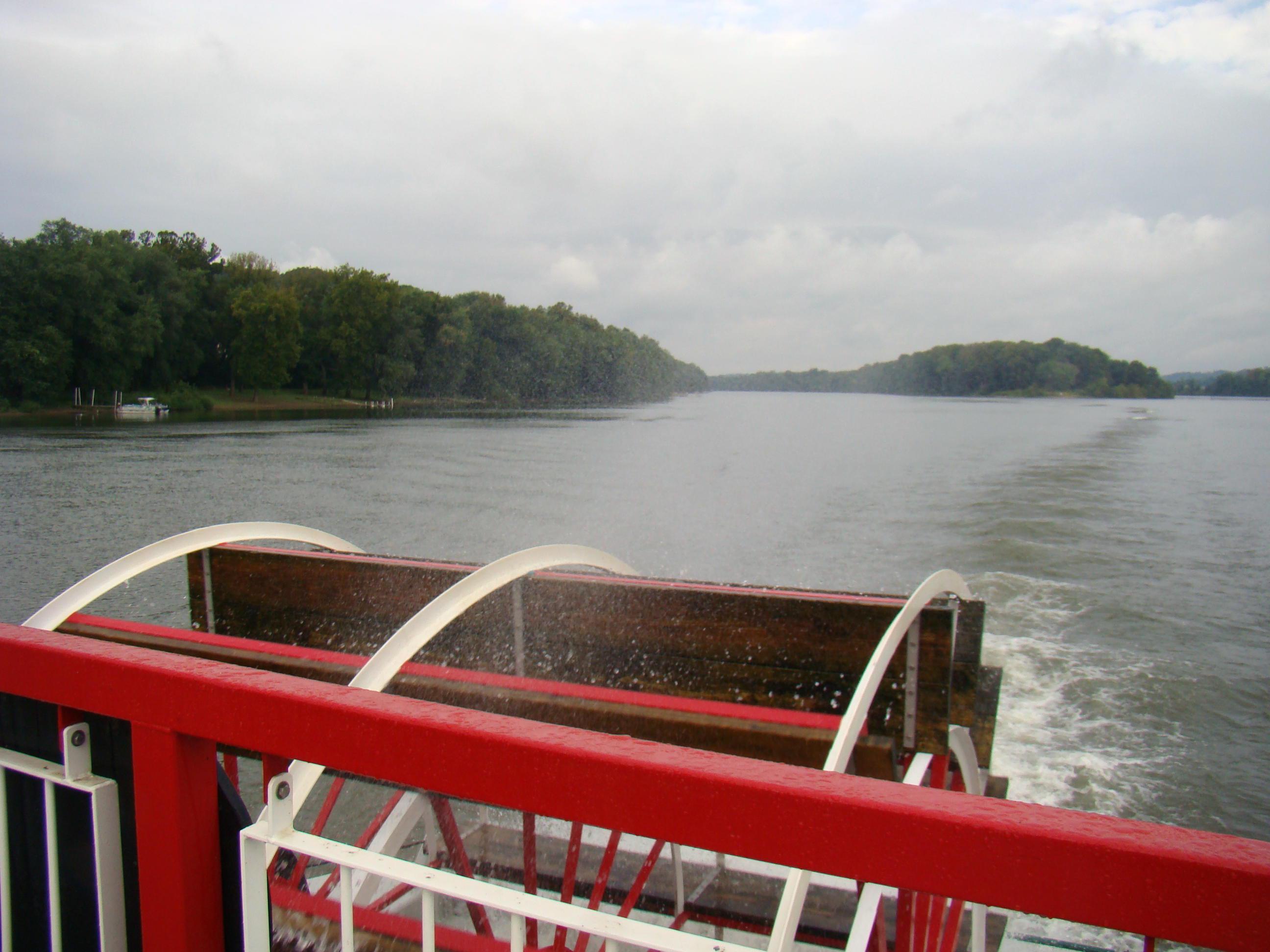
Our area is fortunate to have two small riverboats, Valley Gem and Lorena, operating for day trips in Marietta and Zanesville. These rides are always a pleasure as you catch a slight breeze as you feel the boat moving through the water and catch a little spray from the paddlewheel. It’s a cool way to spend a hot summer day.

The paddlewheels of the Valley Gem move us on the Ohio River.

Perhaps you would enjoy a riverboat ride down the Ohio River. It’s on my bucket list!

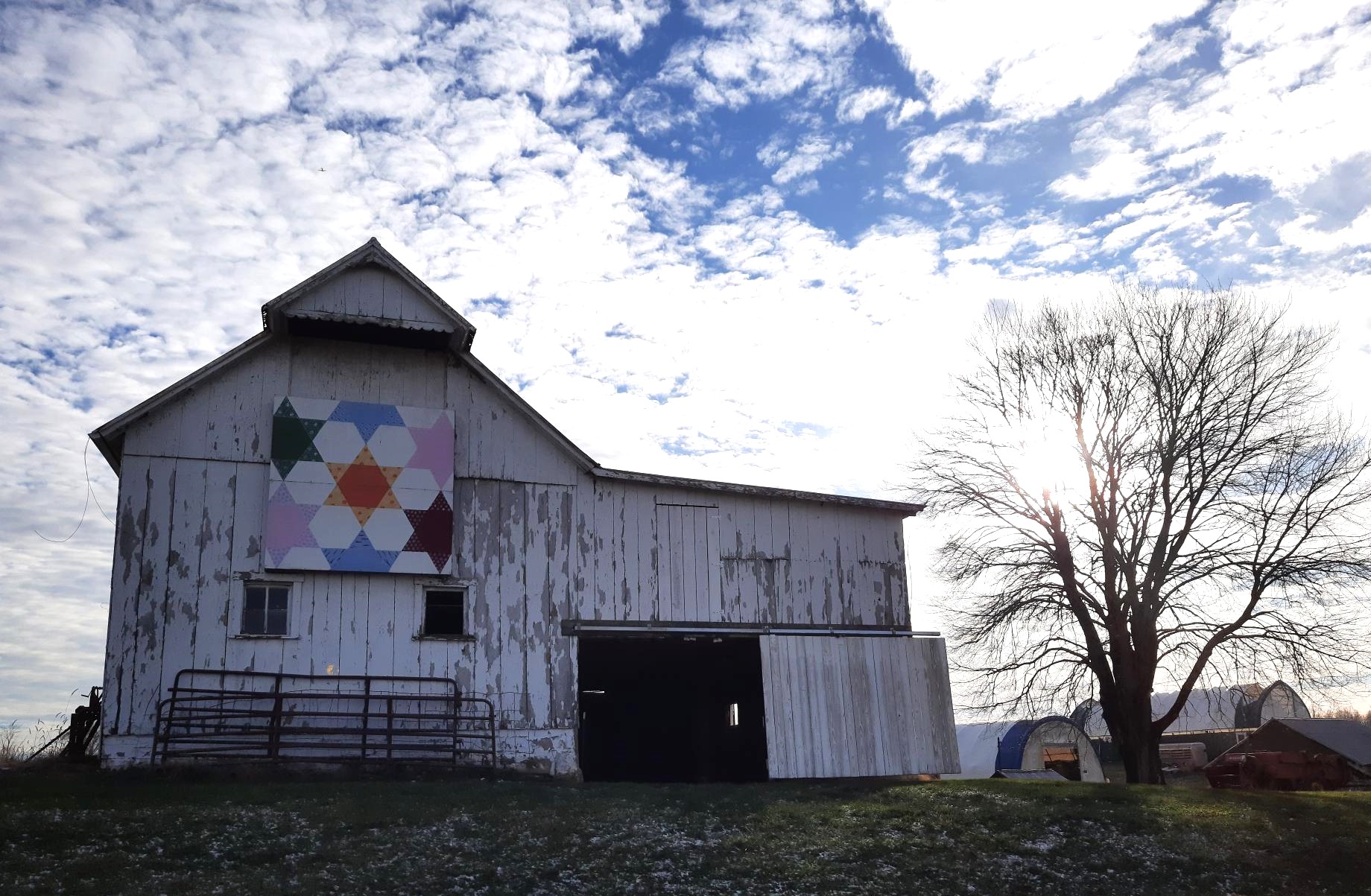
Quilt Barn Tour in Harrison County

Quilts are a patchwork of memories!

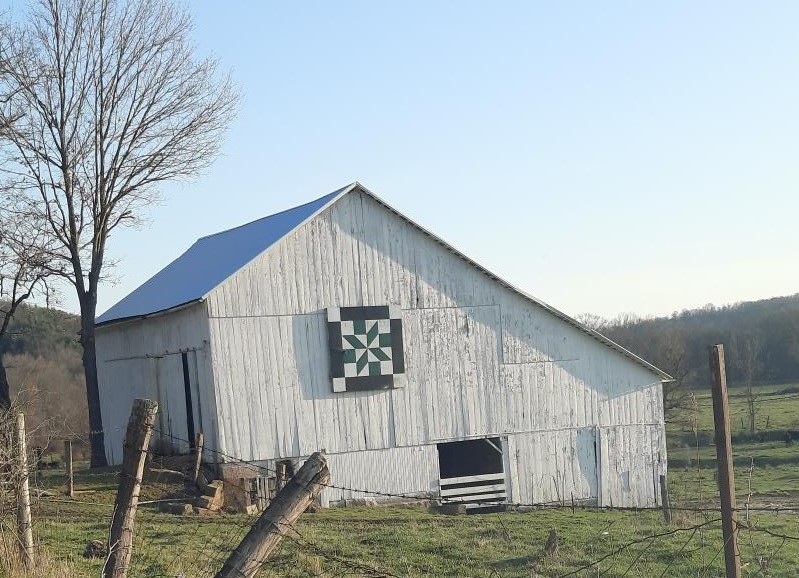
Quilt Barns have become a popular feature in several Appalachian areas. They not only preserve those old, precious quilt patterns but also tell the story of a family that used that barn.

Henry Law Farm – Windmill Quilt Pattern

Quilts bring back special memories of our forefathers to help us realize the dedication and hardships they faced. Every quilt has a special story that needs to be kept for future generations to understand.

Gwen and Bob Stewart Barn – Goose Tracks Quilt Pattern

The idea was born when Donna Groves, a field representative of the Ohio Arts Council put a quilt on her barn in Adams County, Ohio. The idea quickly caught on with similar Quilt Barn Tours being developed in many Ohio counties and even in surrounding states.

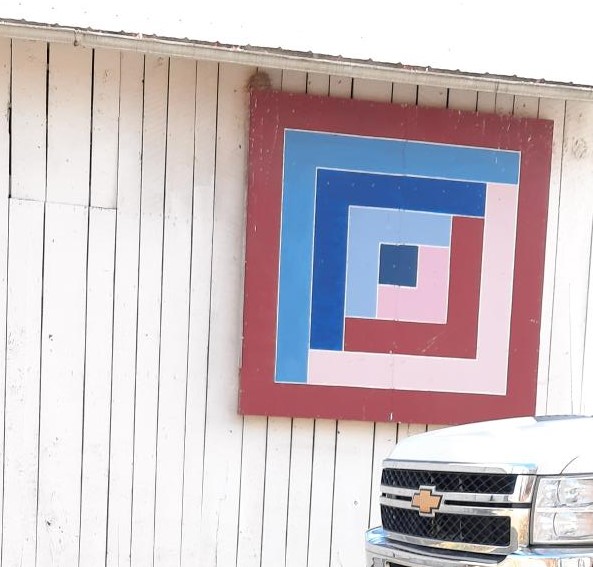
Dawson Farm – Log Cabin Quilt Pattern

While the idea began in 2001, a few years later in 2005 Harrison County became involved. Their plan was to paint 15 quilts on area barns, one in each township. All quilts that were considered were owned by residents of Harrison County. Twenty-eight quilts were submitted for consideration. The effort was coordinated by the Puskarich Public Library, the OSU Extension Office, and the Harrison County Community Improvement Corporation.

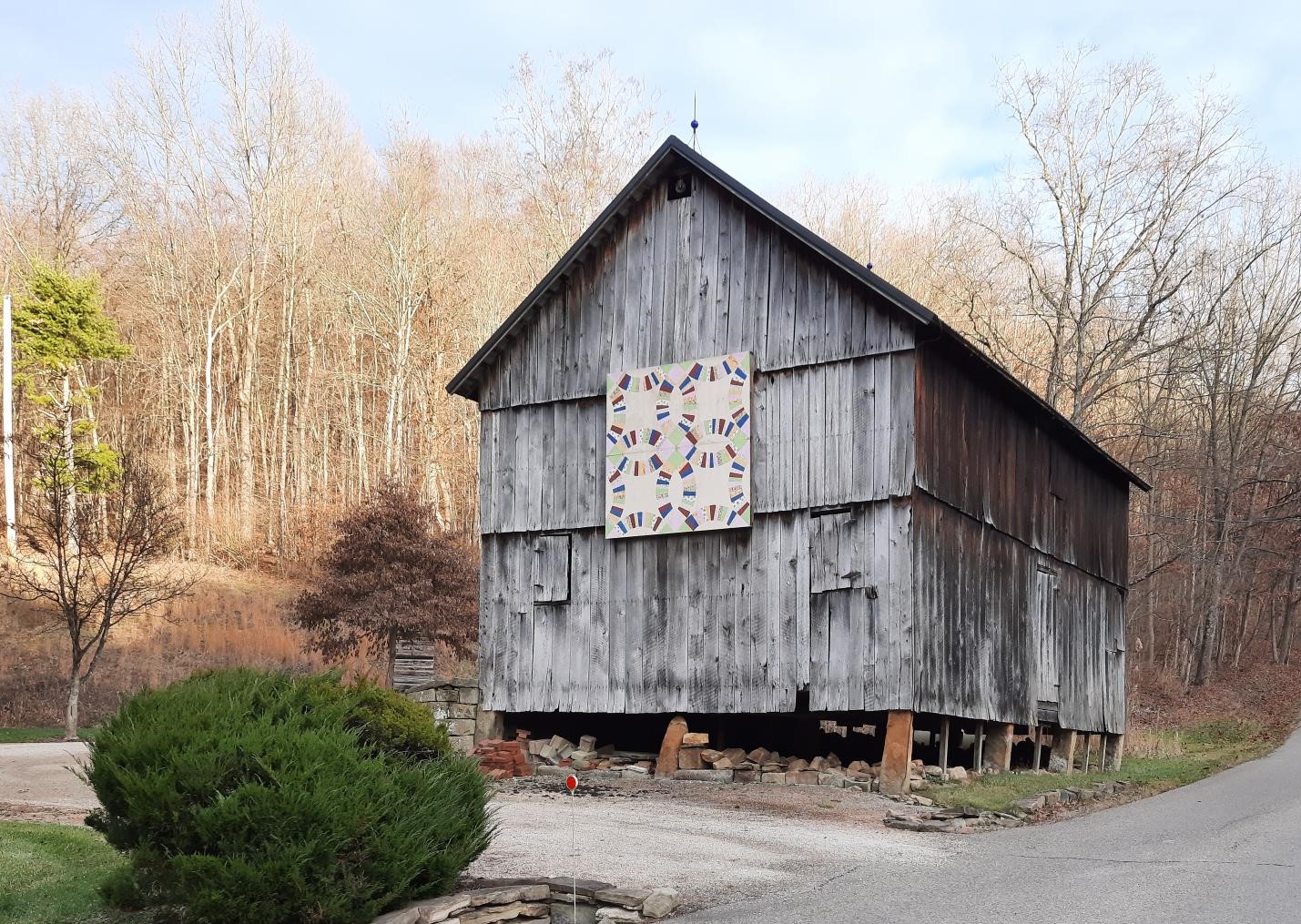
Paolano Farm – Double Wedding Ring Quilt Pattern

Decision was reached on the fifteen quilts that would be displayed in a very unique way. Harrison County Election Board was demonstrating a new electronic voting machine at the Harrison County Fair in 2005. Pictures of the quilts were downloaded on the election machine and fairgoers had a chance to vote on their favorite. The winner was a quilt in a dahlia pattern submitted by county resident Barbara Besozzi. The quilt was sewn by her grandmother, Mary Henderson and is now on a barn on the homestead where it was sewn.

Henderson Farm – Dahlia Quilt Pattern

They proceeded with a Make a Difference Day project which consisted of making eight-foot square painted replicas of the quilts that were chosen. Then they were installed on barns throughout the area – one is each township. A “Drive It Yourself” tour was established.
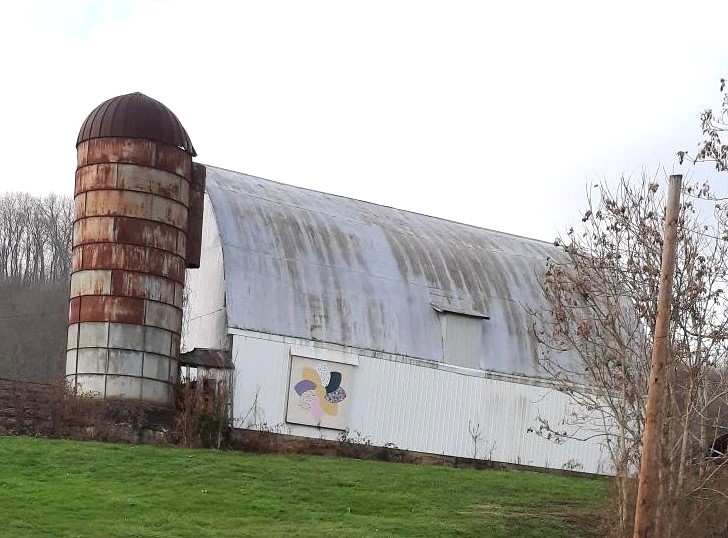
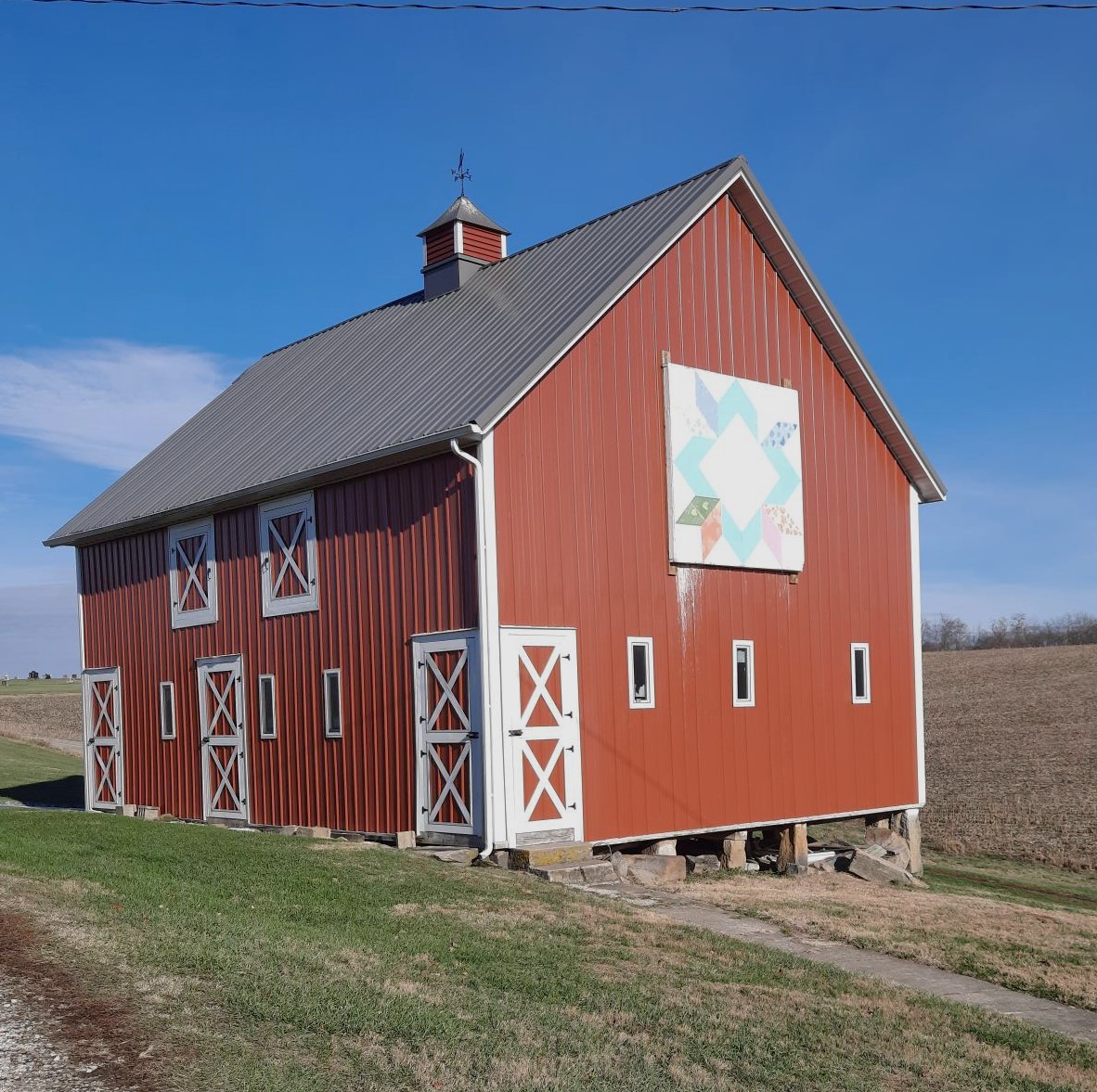
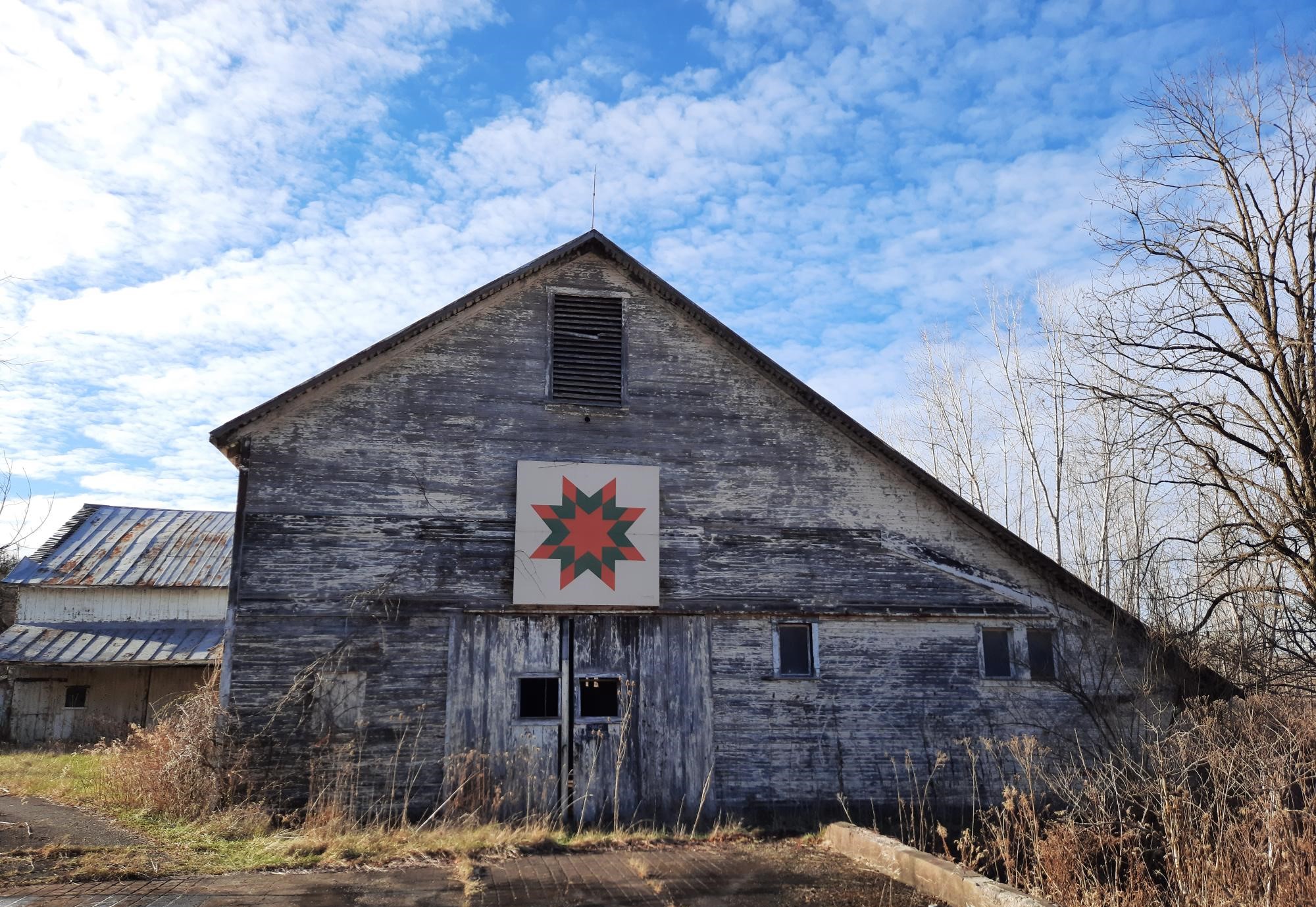
Joseph Barn – LeMoyne Star Quilt Pattern

This was a real community project. The Harrison County Commissioners applied for a grant to support the project. Harrison Central High School industrial arts students made the frames, which held the paintings of the chosen quilts. Two of the paintings were done by students in the Arts department at Harrison Central High School and smaller squares were done by 4-H clubs in the county. The rest were painted by volunteers from Harrison County.

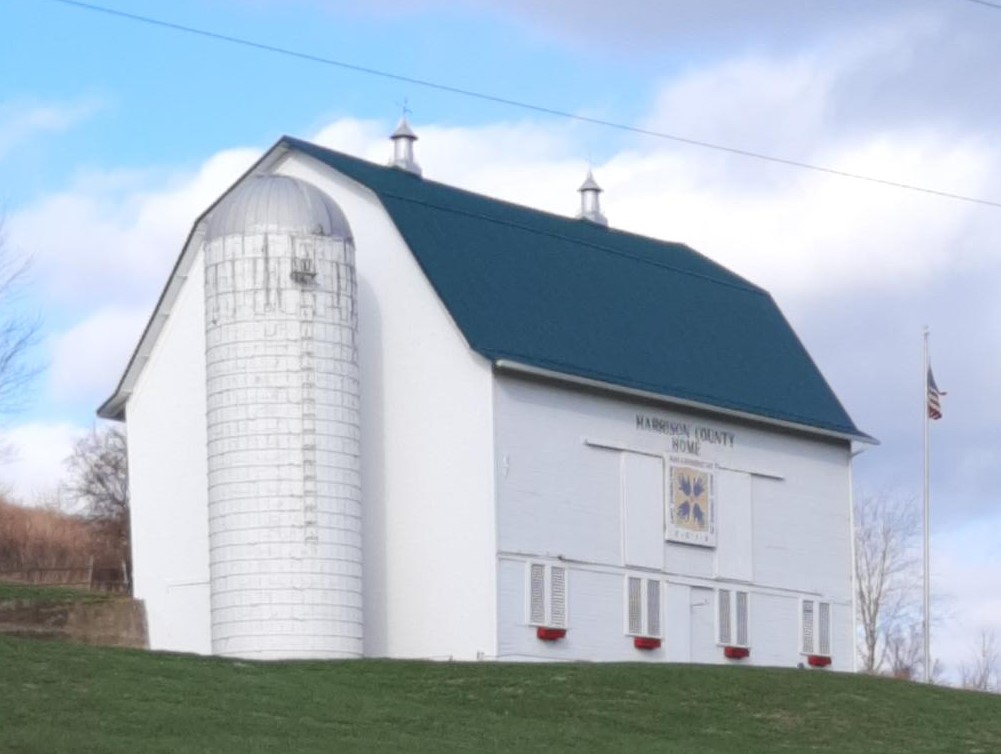
Harrison County Home – Make a Difference Day Quilt

The first barn quilt was installed at the Harrison County Home in August, 2005 while the rest were installed in October, 2005 on Make a Difference Day Ohio. Funds for this project were raised through contributions from individuals, businesses, civic groups, and grants.

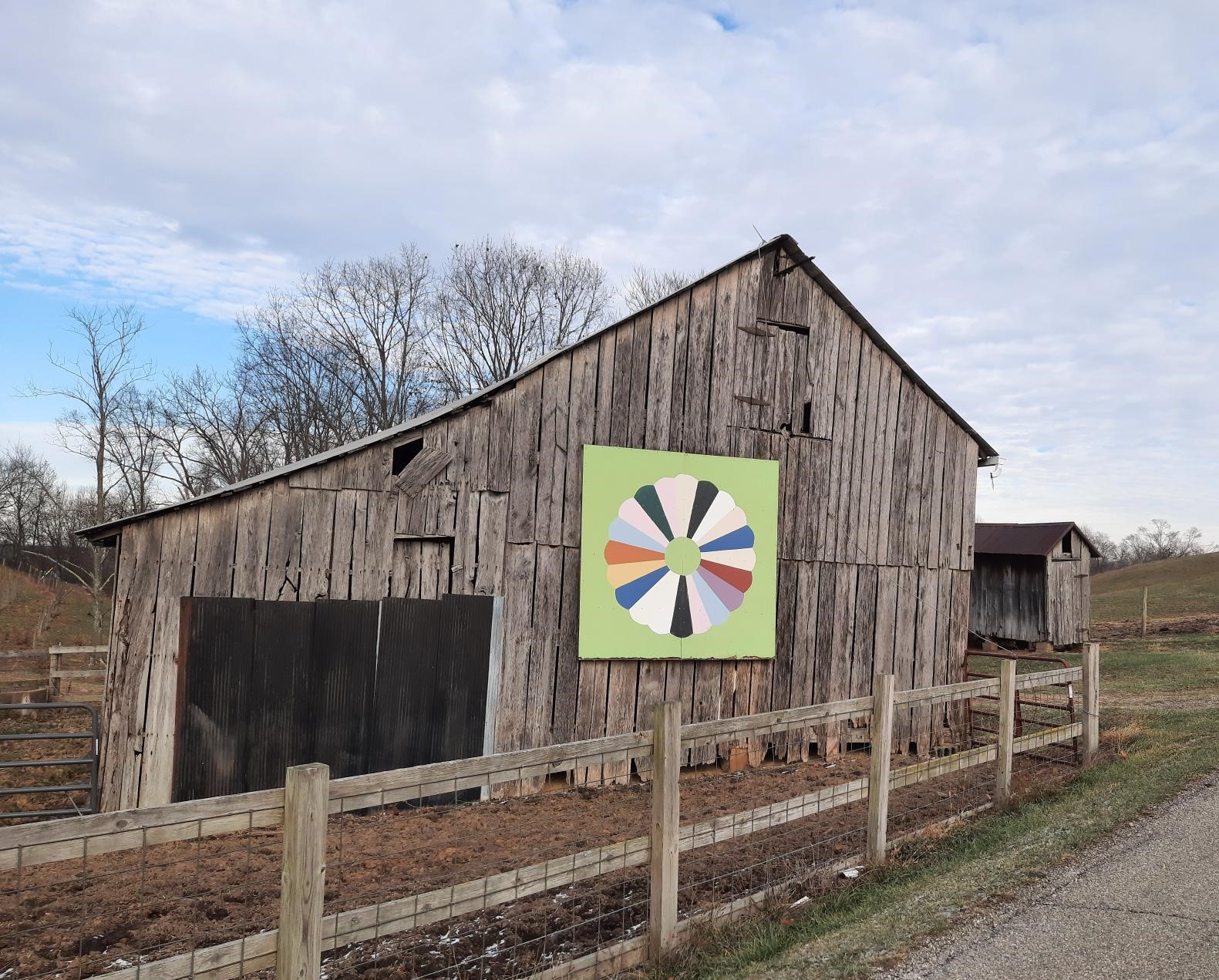
Rocking M Farm – Dresden Plate Green Quilt Pattern

The goal of the organizers was to have the quilts and barns tell the story of the residents of Harrison County. In this way, people would know the background of the people who created the quilts and lived on the farms where the barns are located.

Center Farm – Dresden Plate Red Quilt Pattern

A lady, who now lives at the Harrison County Home, quilted the Dresden Plate that is now on Dr. John Center’s Barn outside of Scio. Mary Henderson’s dahlia patterned quilt is on the barn at her old homestead. Stories like this need to be preserved.

McMillen Farm – Multiple Stars Quilt Pattern

The Harrison County Quilt Barn Tour gives you views throughout the county. If you are not familiar with the area, you should get a list of the Quilt Barns either online at www.harrisoncounty.gov.quilt-barrn-project or stop by Harrison County Tourism and pick up a brochure.

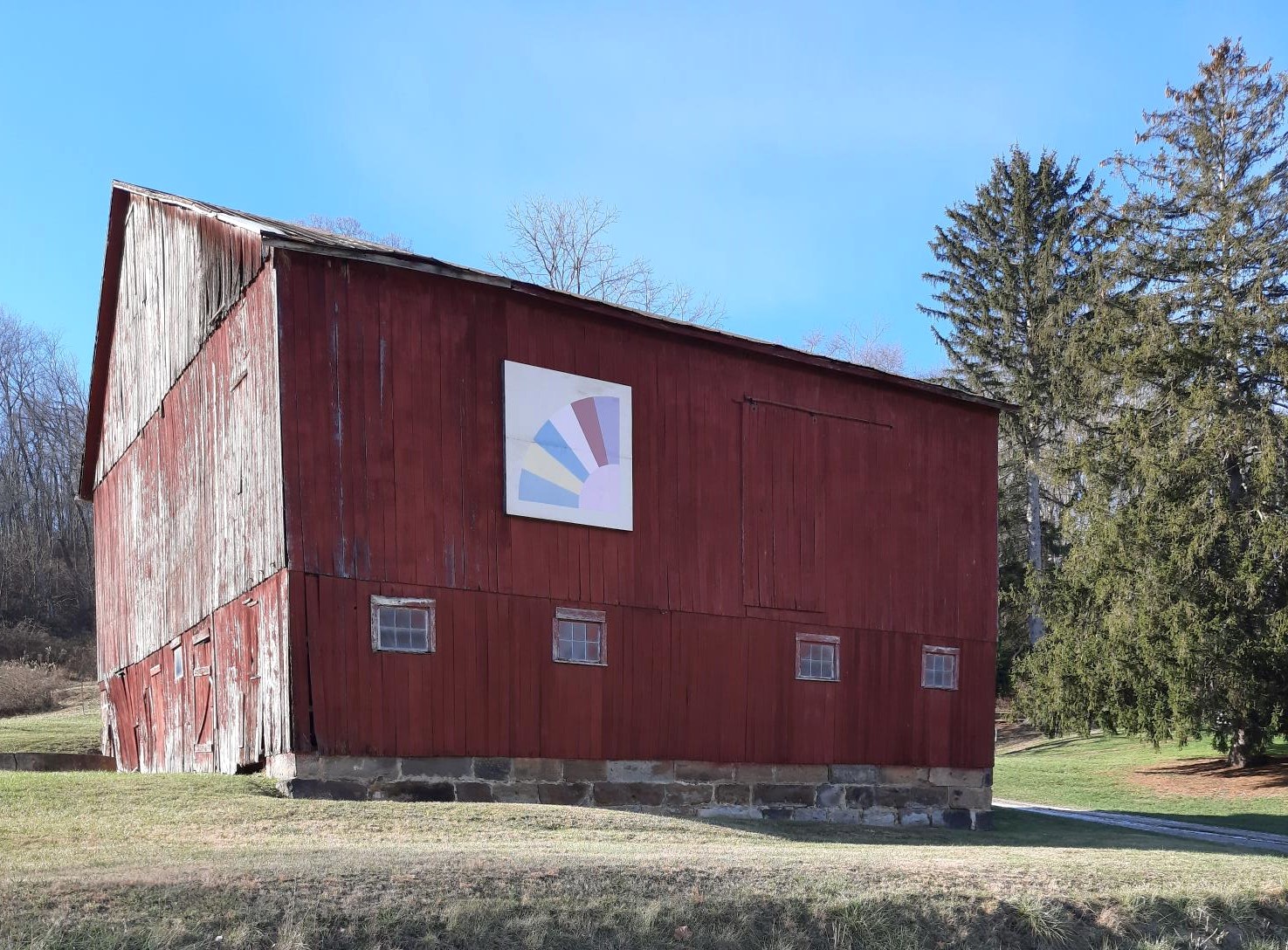
Lawther Farm – Fan Quilt Pattern

Today there are 20 barns on the Harrison County Quilt Barn Tour. Some of those original 15 are no longer present. This self-guided tour reminds us of our pioneer and agricultural heritage.

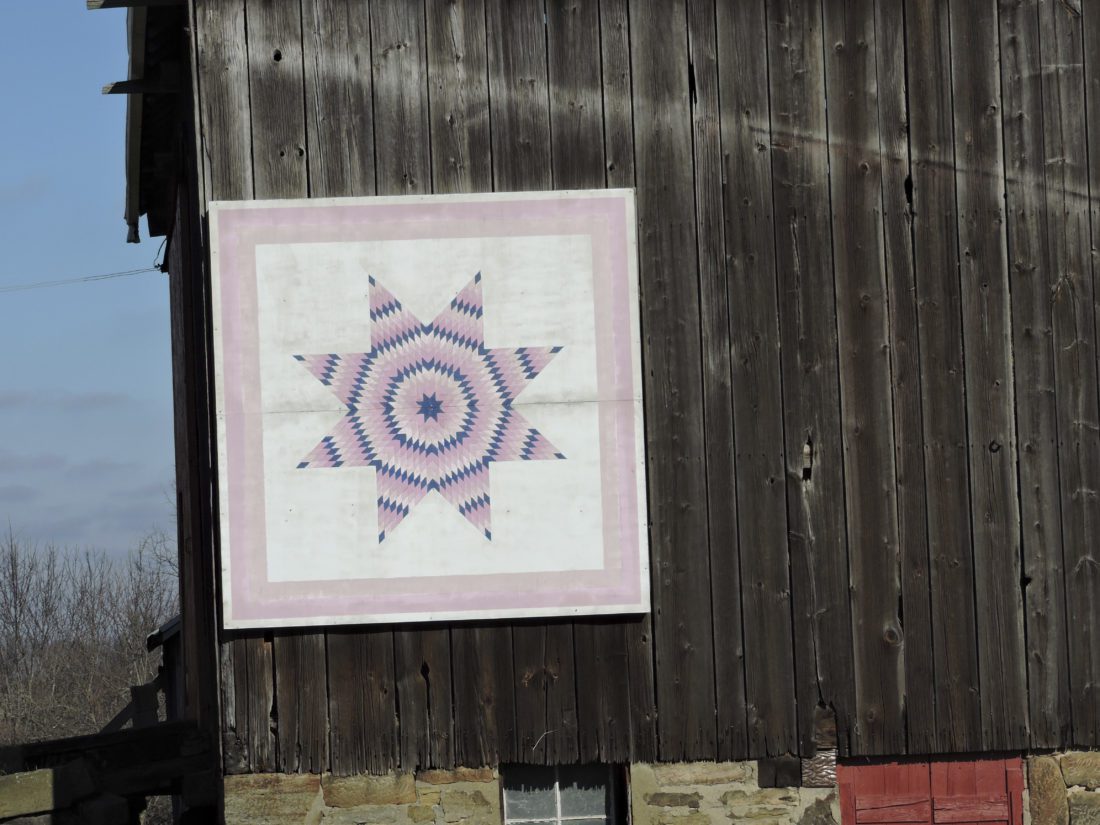
Rinks Farm – Lone Star Quilt Pattern

Take a drive through the hills of Harrison County and watch for the barns that have quilts painted on their side. You might pass some every day. Once you have read about them and taken a Quilt Barn Tour, it’s amazing how often they appear when you are traveling throughout Ohio and neighboring states.

Every quilt tells a story. Watch and listen!

Carnegie Library Celebrates 120 years

The Andrew Carnegie Library on Steubenville Avenue holds many great memories since it has been around for 120 years. But did you know that Cambridge had previous libraries?

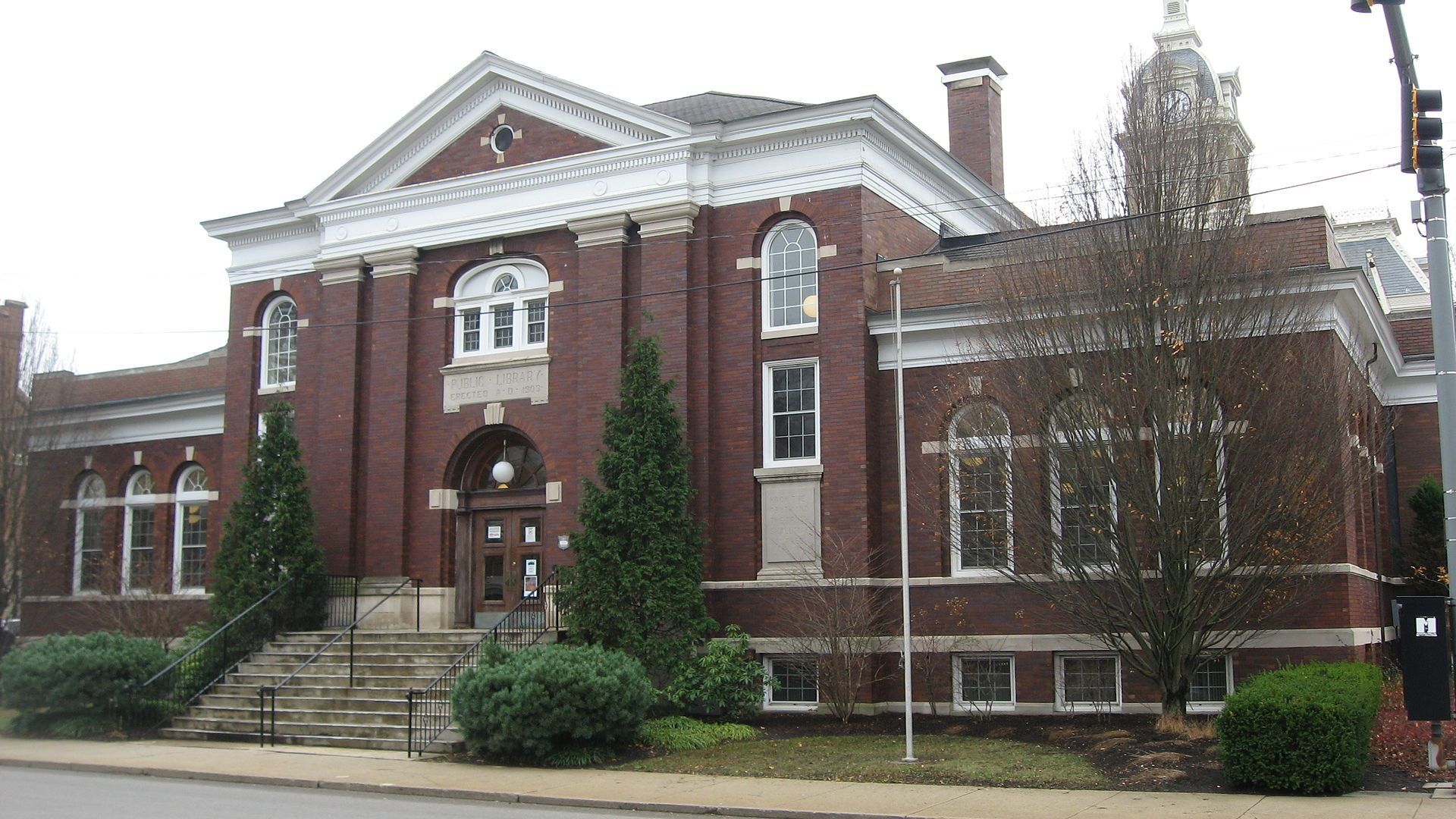
Today’s Downtown Branch of the Guernsey County District Public Library

Today’s library was preceded in 1832 by the Guernsey County Library and Reading Room. There were fifty charter members, all men, who felt a library gave evidence that the residents were people of intelligence.

In 1899, Cambridge Library Association held their first meeting. Col. Joseph Taylor, a prominent citizen, gave the upstairs of one of his buildings on Wheeling Avenue as space for the library. His wife organized the library effort.

Library cards cost $5 annually but only one book could be borrowed at a time for a period of two weeks. Overdue books were charged three cents a day. By 1901, all interested residents were given a free card to the library.

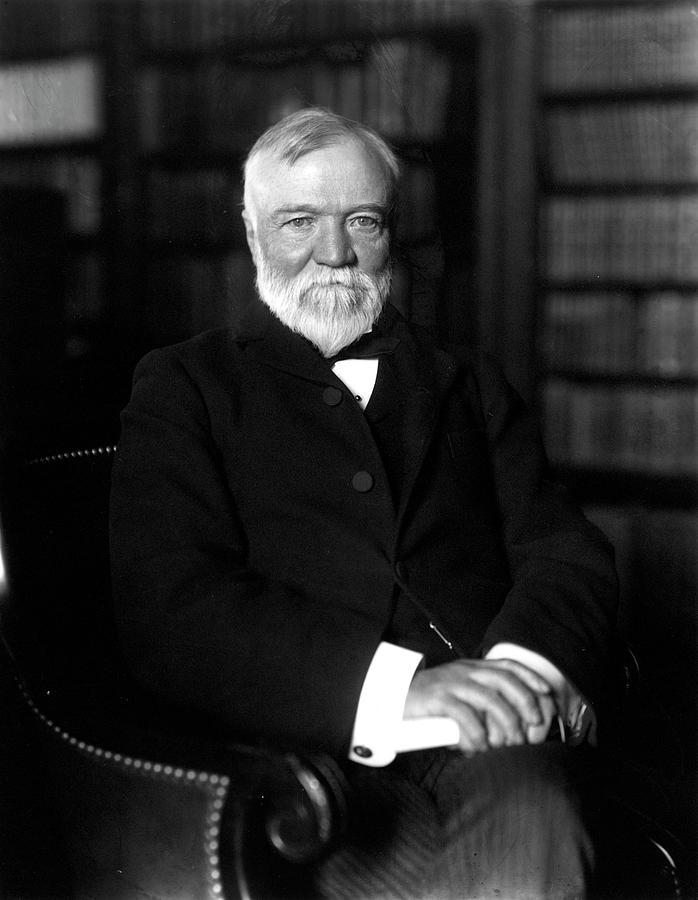
Andrew Carnegie

That same year, a committee from Guernsey County met with Andrew Carnegie in New York City. This was unusual as business with Carnegie was normally conducted by mail. Carnegie felt a library was the most important thing a community could have to benefit its people.

He remarked, “It was from my own early experience that I decided there was no use to which money could be applied so productive of good to girls and boys, who have good within them and ability and ambition to develop it, as the founding of a public library.”
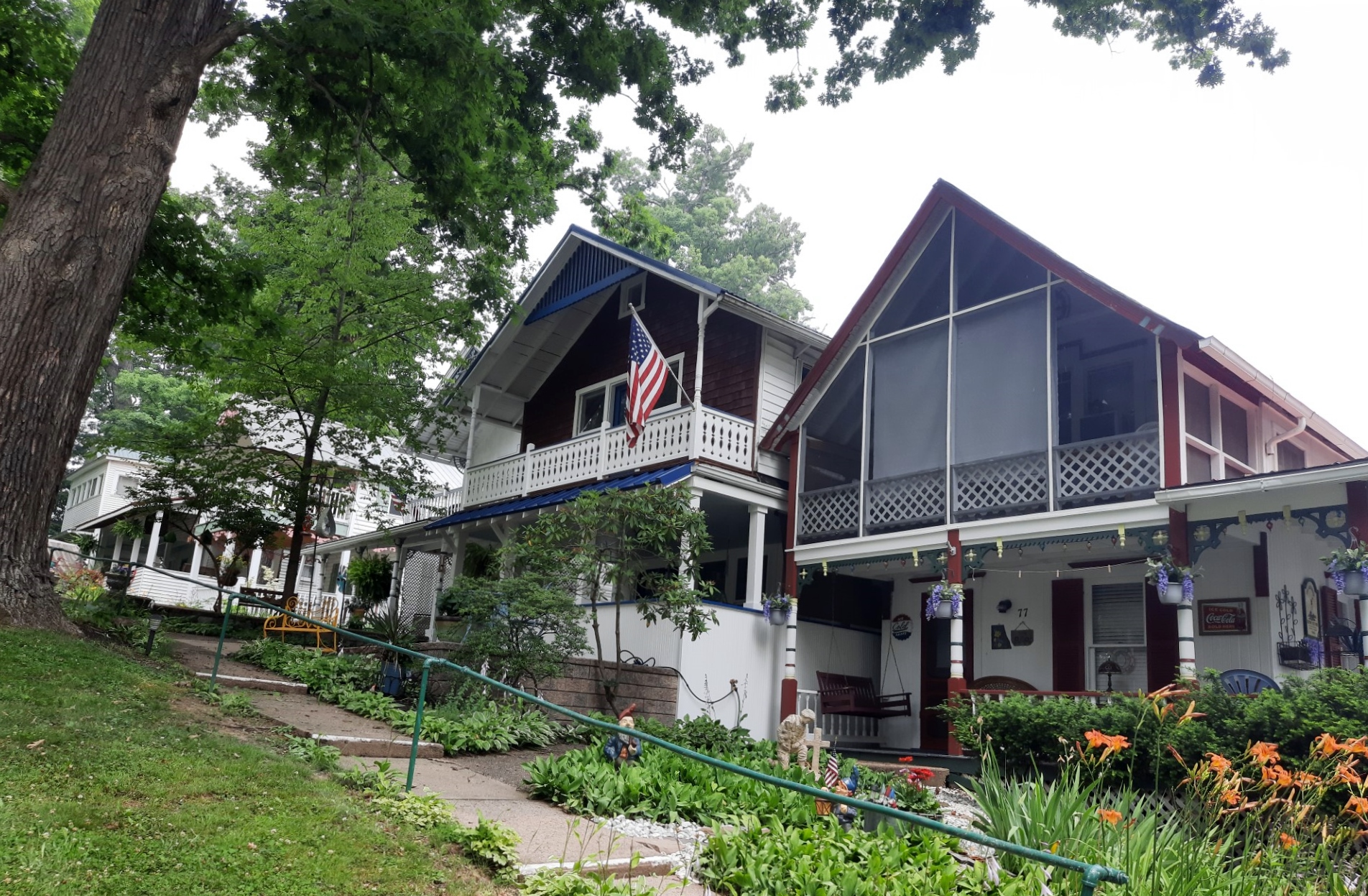
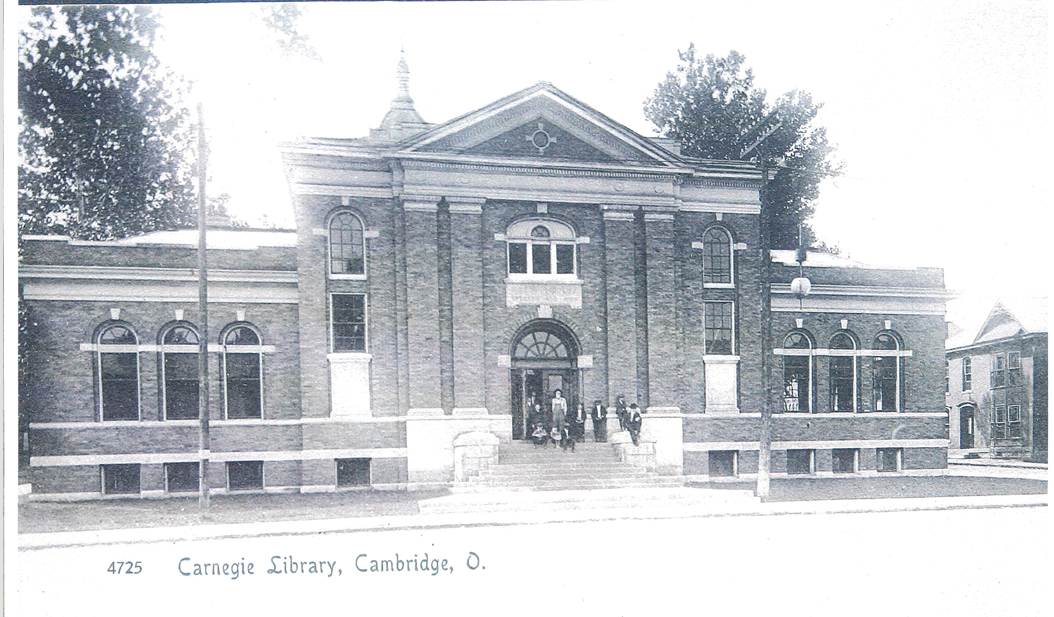
This was an early picture of the Carnegie Library shortly after it was built.

On Jan. 22, 1902, the Carnegie Corporation sent a letter saying they would furnish $18,000 to erect a free library building at 800 Steubenville Ave since all the requirements had been met. Frank Packard became the architect with C.W. Dowling being the builder.

Once it was finished, the committee needed more funds to finish the interior and landscape the outside. Mr. Carnegie again provided those funds.

Books were very important to Carnegie from his childhood in Scotland and his teen years in Pennsylvania. Andrew Carnegie built 1,689 libraries throughout the United States and a total of more than 2,500 throughout the world.

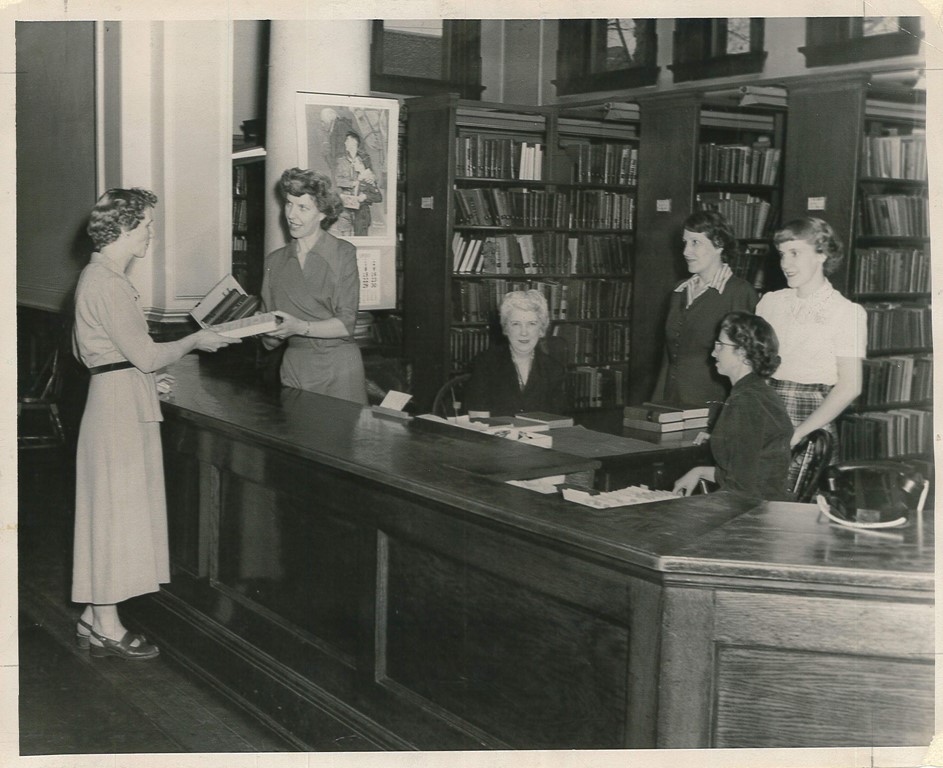
The staff was presenting a book to a patron in 1950.

When the Carnegie Library opened in Cambridge emphasis was placed on religious and moral content. They initially purchased 1,334 volumes at $1300 with more books being donated by local families. The Women’s Book Club donated 208 books.

The second floor was to be used for community activities. Probably the first events held there were lectures. One series contained seven lectures about birds, while another was on boys’ temptations. During WWI, the Red Cross made bandages there. For about thirty years, the Cambridge City Band used it for their practice room.

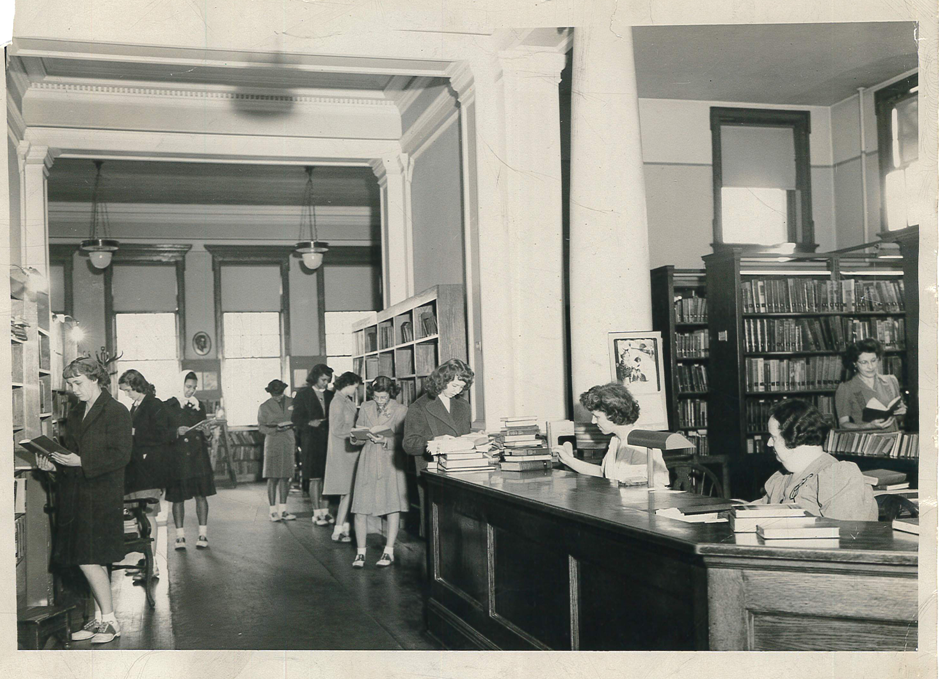
Students were frequent visitors to the library in 1945.

In 1907, the first children’s furniture was purchased for the library since over half of the new borrowers were children. Story hours were developed for the children and Christmas parties with Santa were established.

Howard Finley donated his collection of historic books to the library with the stipulation that the collection bear his name. He also donated $6,227 for the library to use. The genealogy room is named in his honor today.

Cambridge City Band, who practiced here years ago, performed for a special library event.

By 1947, the library had expanded to serve the surrounding community. There were several branches and 49 deposit stations, most of them being at schools. Every six weeks, the library would take a box of 50 books to the area schools for students to read.

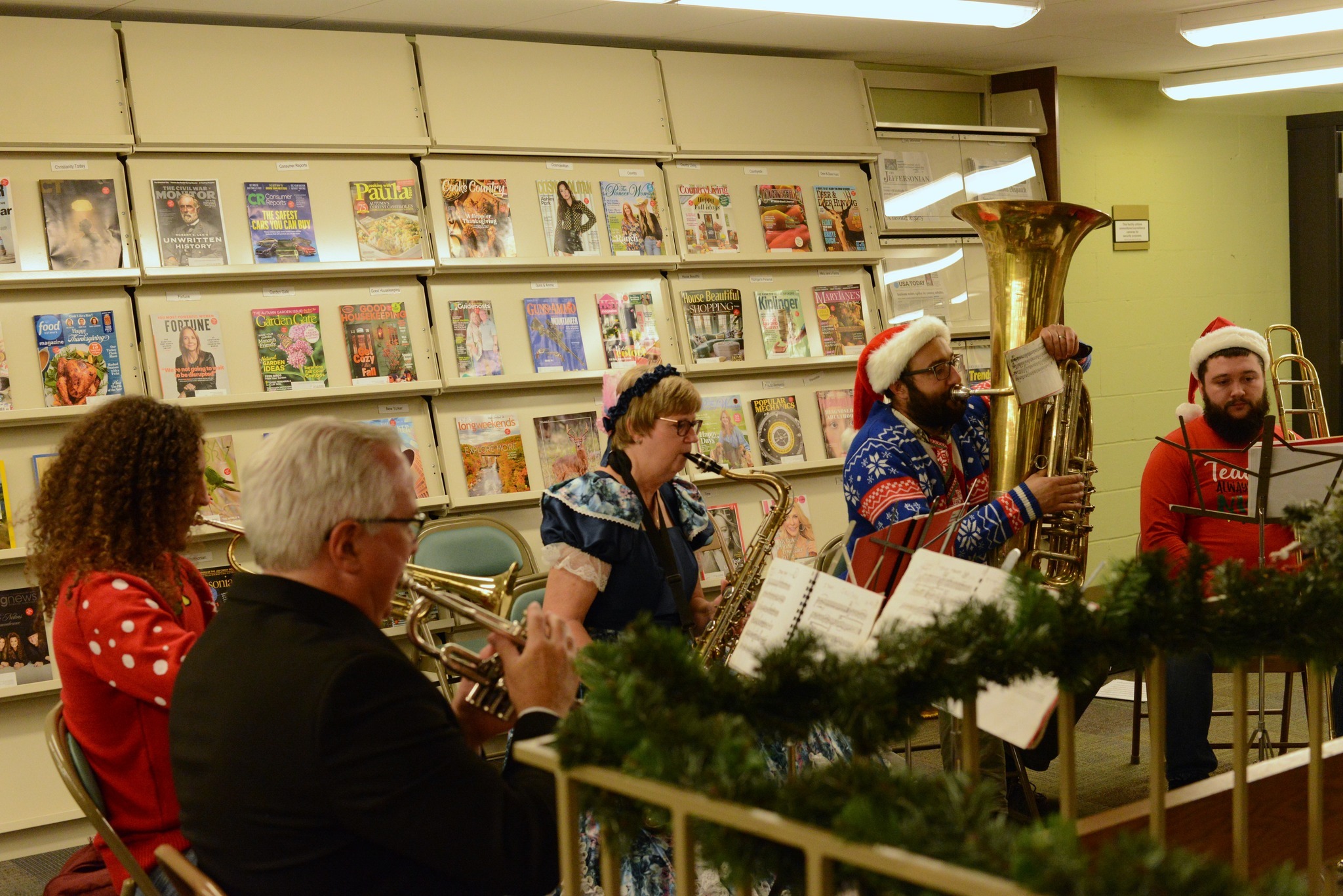
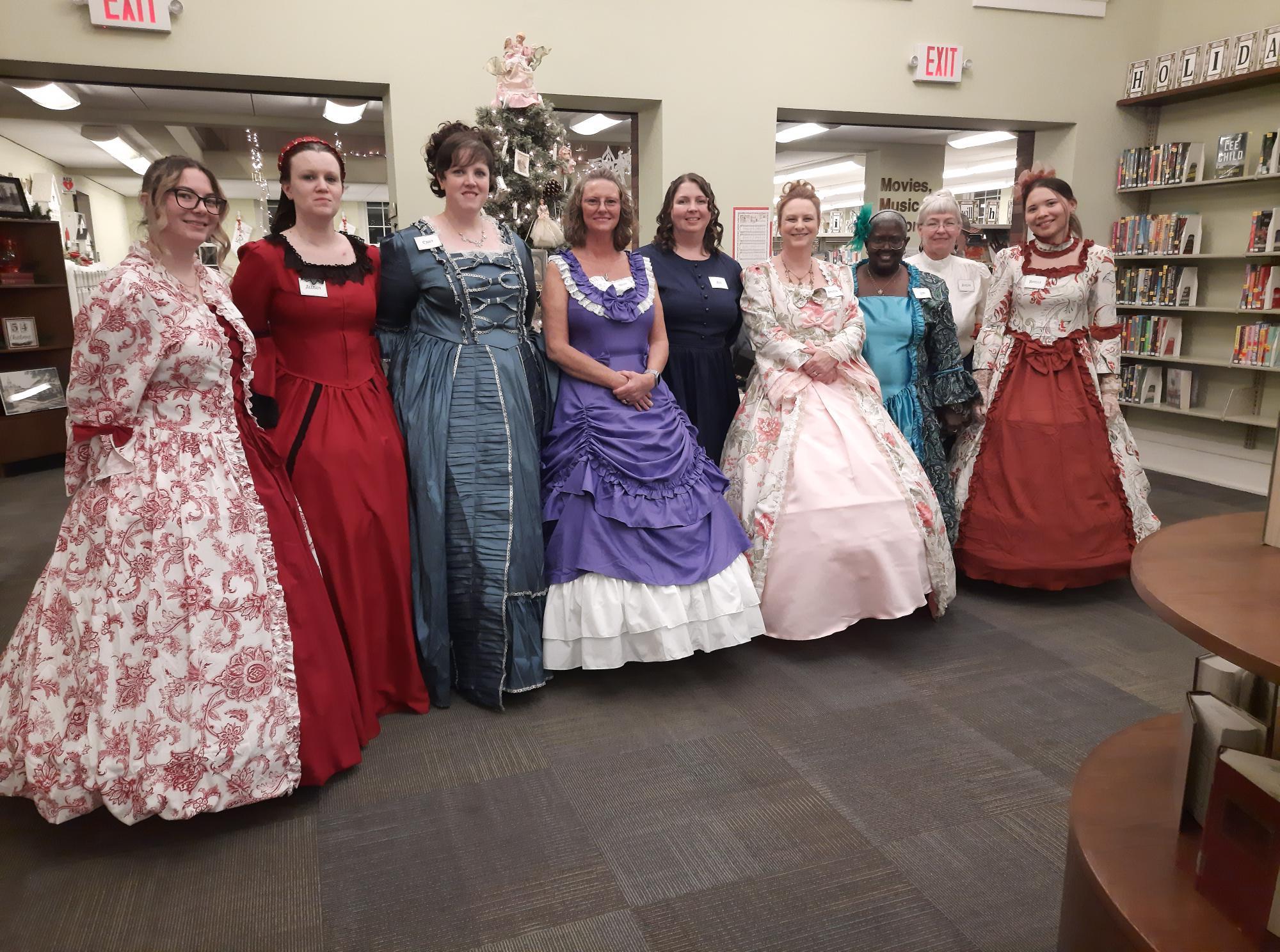
Today’s library staff helps with many special events in our community. Here they are dressed Victorian.

There were branches at Byesville, Cumberland, East Cambridge, Southside, Quaker City, Madison, and Senecaville . They existed until the library purchased their first bookmobile in 1956.

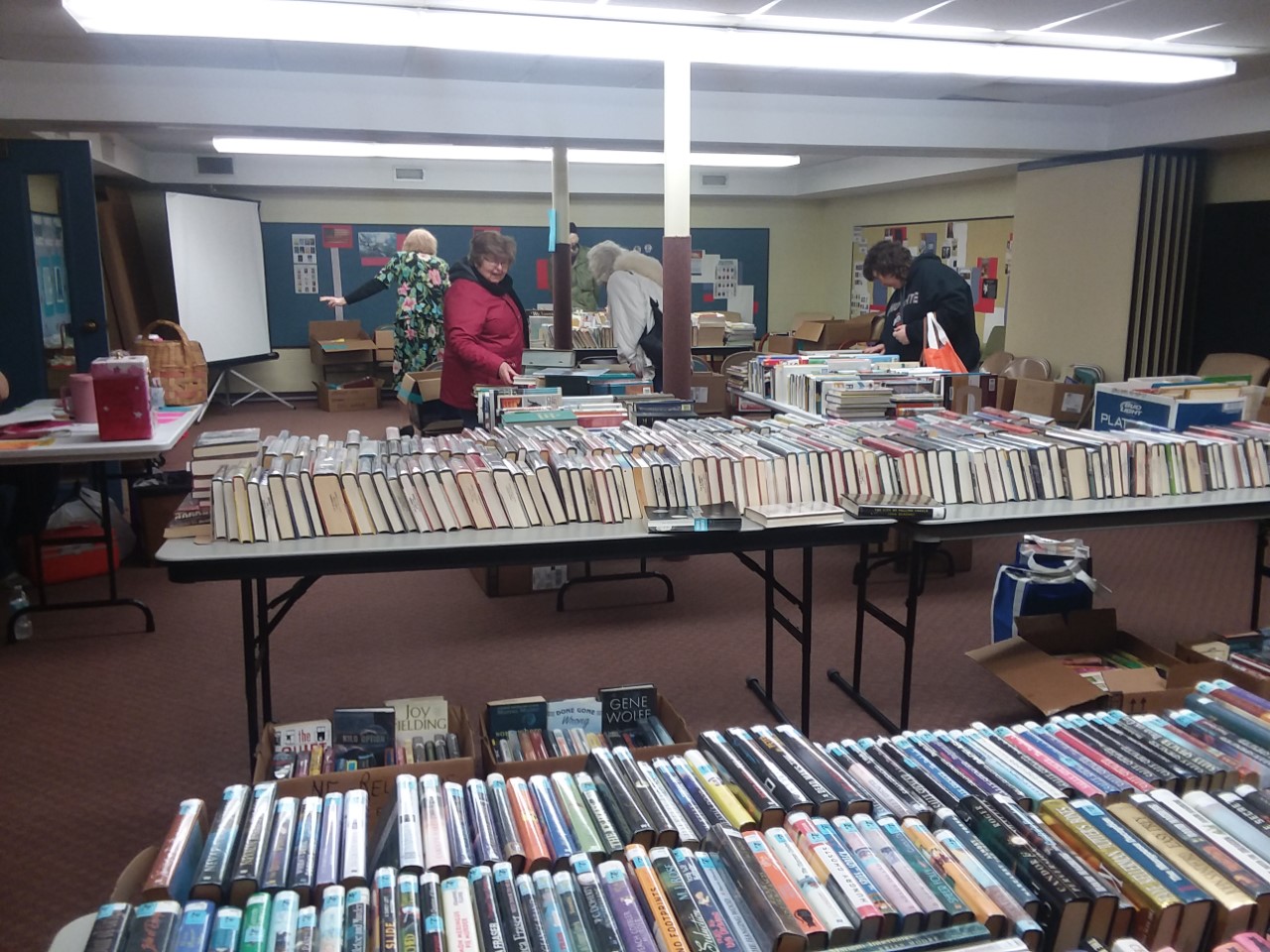
Today, Friends of the Library hold book sales in the basement of the Carnegie Library.

Friends of the Library was formed at a time when there was a need for more room at the library. Over the next thirty years, the Carnegie Library added a large addition, a new library was built in Byesville,and Crossroads Library became the relocation for administrative offices and technical services.

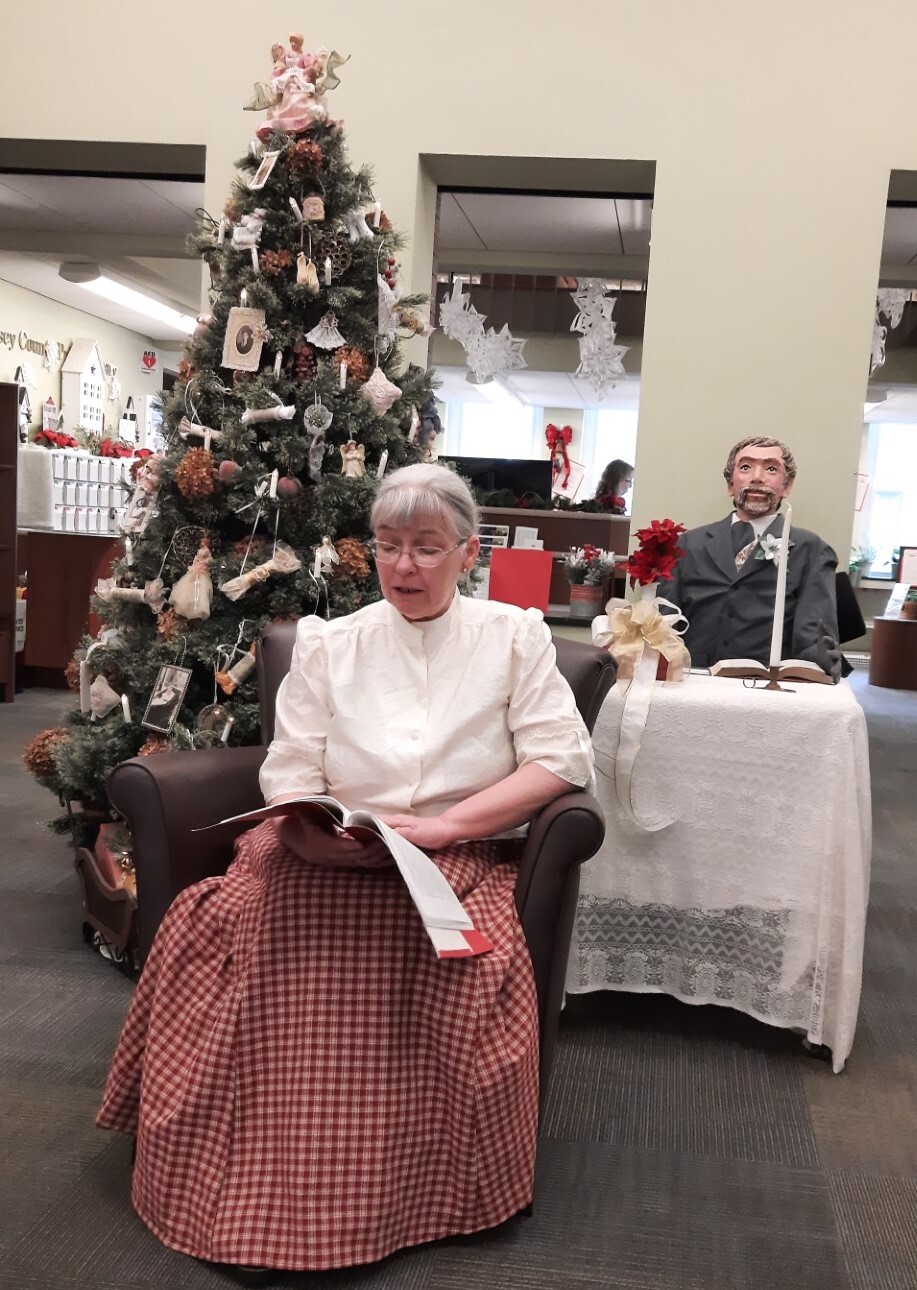
The annual Dickens Marathon Reading takes place in the main lobby.

By 1910, there were 2,200 people using the library of 6,332 books. By 1922, there were 2,745 using 9,123 books. In 2024, the Guernsey County Library has over 70,000 books plus many other resources.

Director Michael Limer is proud of their new Bookmobile which serves places around the county.

Michael Limer, present director, expresses well the connection with today’s library and the community. “I am really proud of all work the staff has done to help the library become an integral part of the community. Besides all the great things you would expect at a public library, I feel the staff has strived to excel in engaging with the public. From great programs and new services to our work with our many community partners, I am thrilled with how we reach out to serve the public, both within our walls and throughout the county. “

Libraries have been an important part of our community for many years and continue to be a place to find free reading materials, movies, and more.

Knowledge is free at the library, just bring your own container. Visit your library sometime soon!

Rick Booth Remasters Guernsey County History

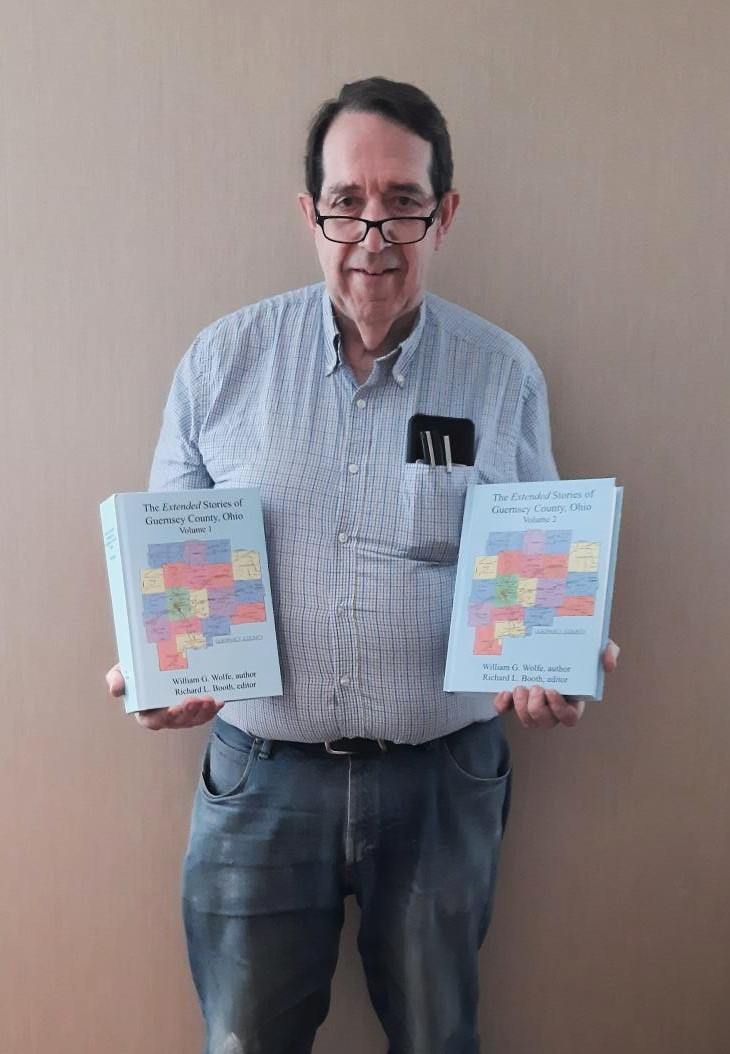
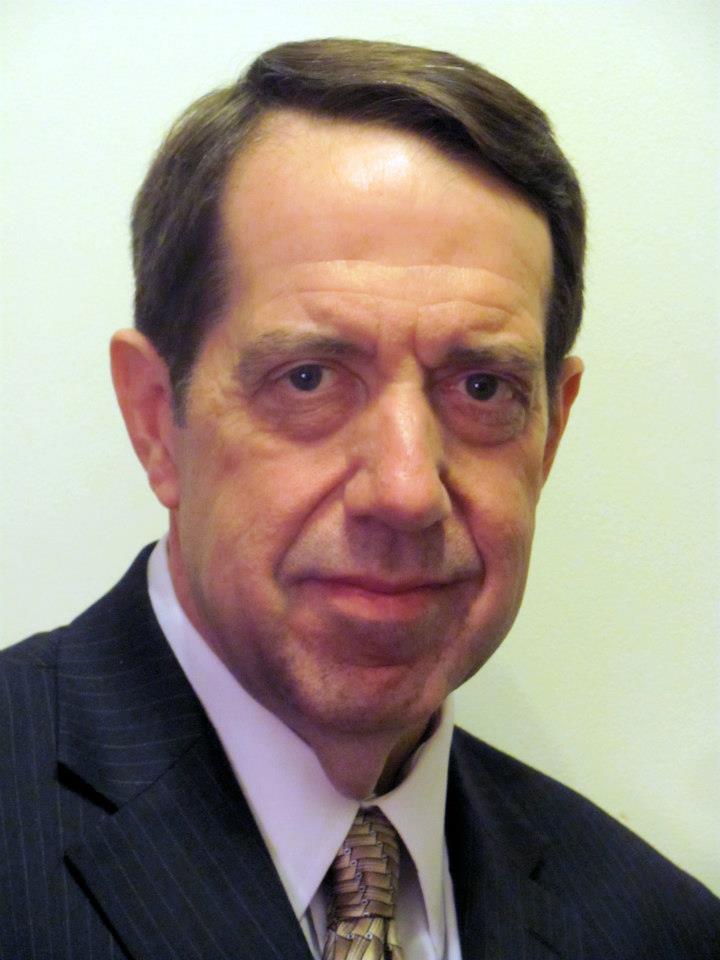
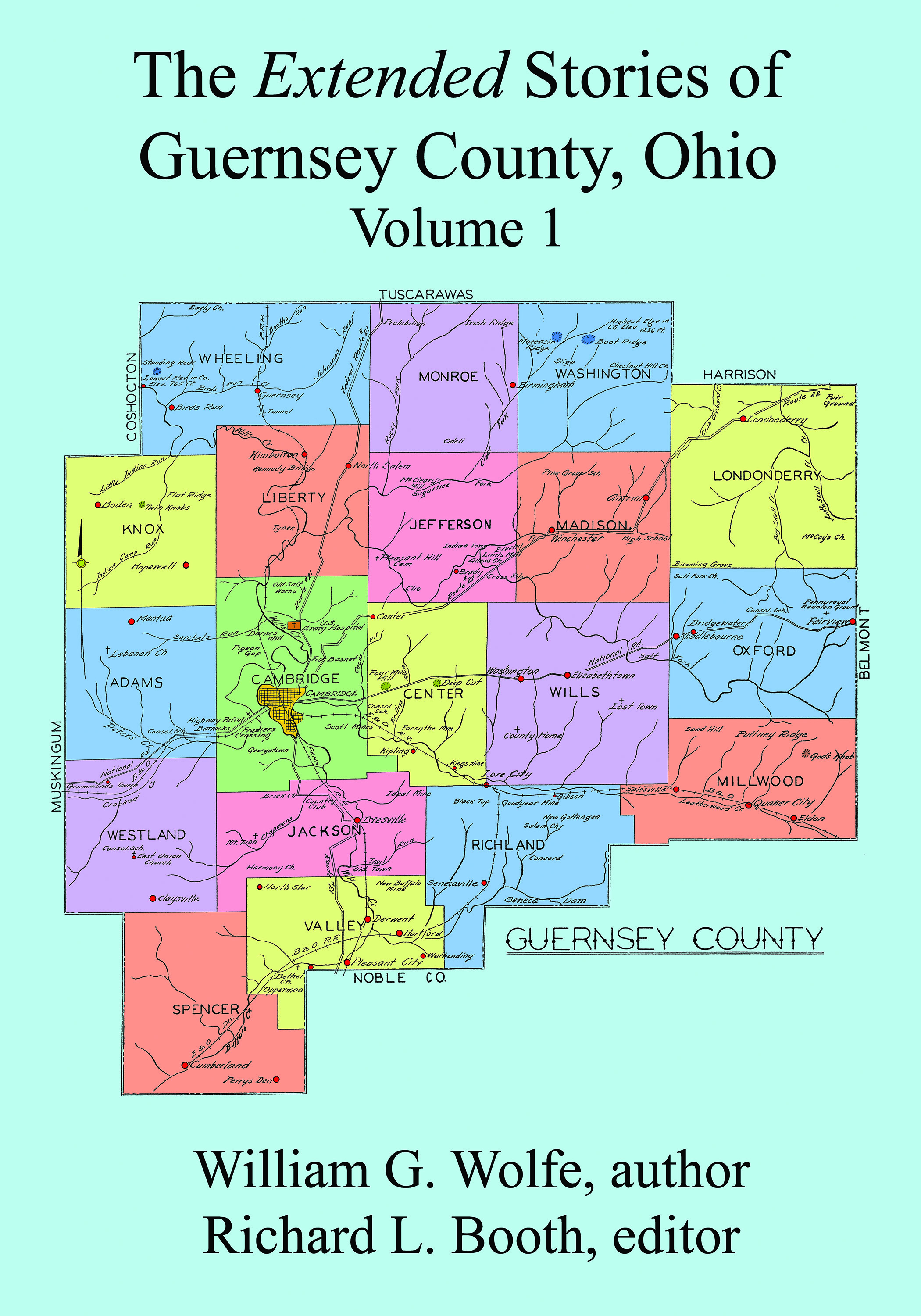
Rick Booth holds both volumes of his newly published book set, The Extended Stories of Guernsey County, Ohio.

The Extended Stories of Guernsey County, Ohio, Volumes 1 and 2, has recently been released after seven months of detailed work by Rick Booth, who spent 20 to 30 hours per week republishing the writings of William G. Wolfe, an early historian from Guernsey County. This new 1,640-page book set contains all the historical writings of Wolfe that Rick could find.

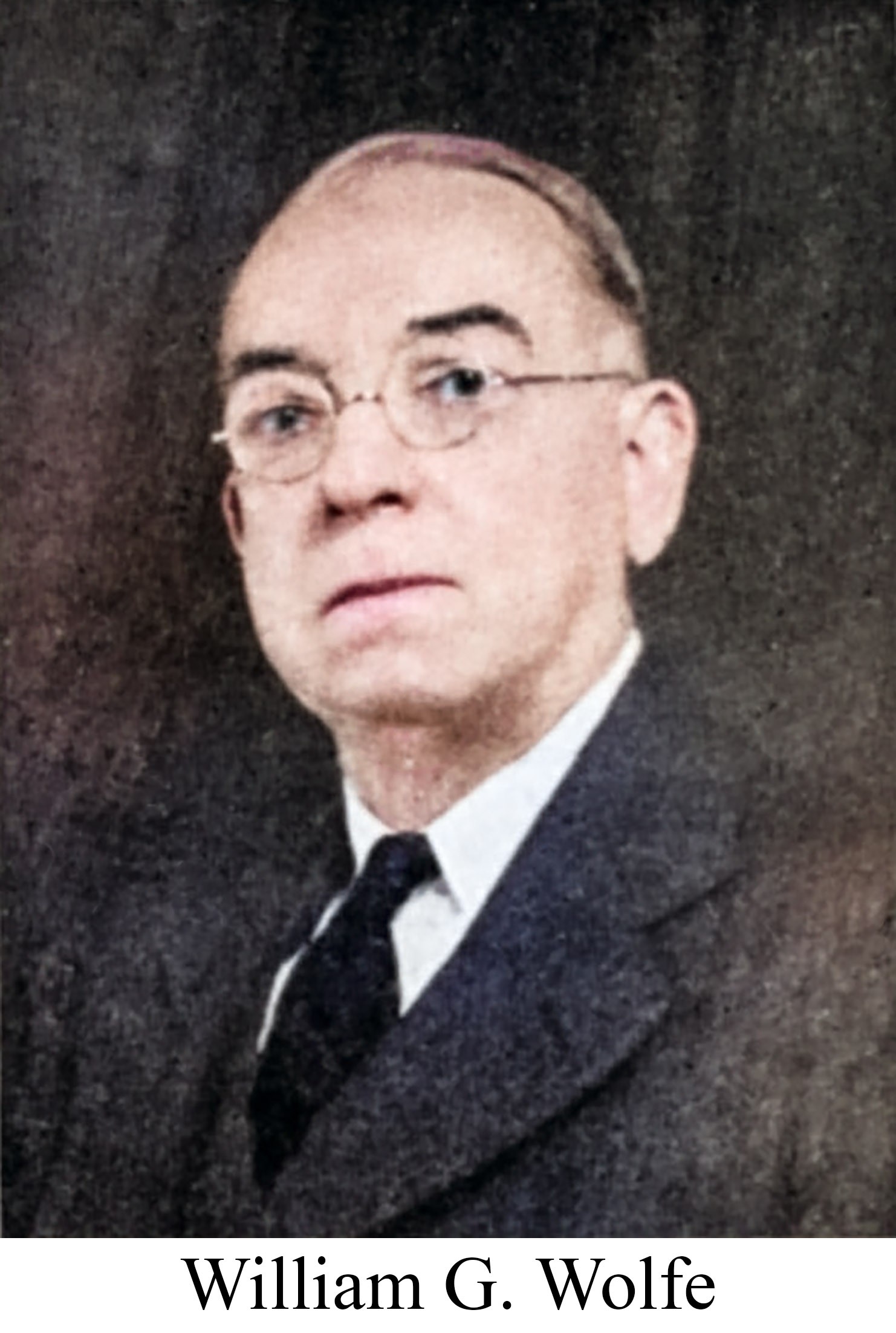
William G. Wolfe was born in Quaker City in 1874, attended Ohio Northern University, and received his teaching certificate at the age of 23. He then spent 47 years in the Guernsey County School system as a teacher, Superintendent of Quaker City Schools, and then Superintendent of Guernsey County Schools.

Rick’s desire to make Wolfe’s out-of-print stories available forever began when Rick found forgotten Wolfe articles in online newspaper archives, and he thought they should be added to the original Wolfe’s history. Rick decided then to remaster Wolfe’s original 1943 history book, Stories of Guernsey County, Ohio, the most comprehensive Guernsey County history book ever written. This book, reproduced as Volume 1, was based on 313 historical articles that Wolfe had written for Cambridge’s Daily Jeffersonian newspaper in the 1930s. Rick placed it in a modern format and added a second volume of the additional 171 “forgotten” stories he discovered in Daily Jeffersonian archives.
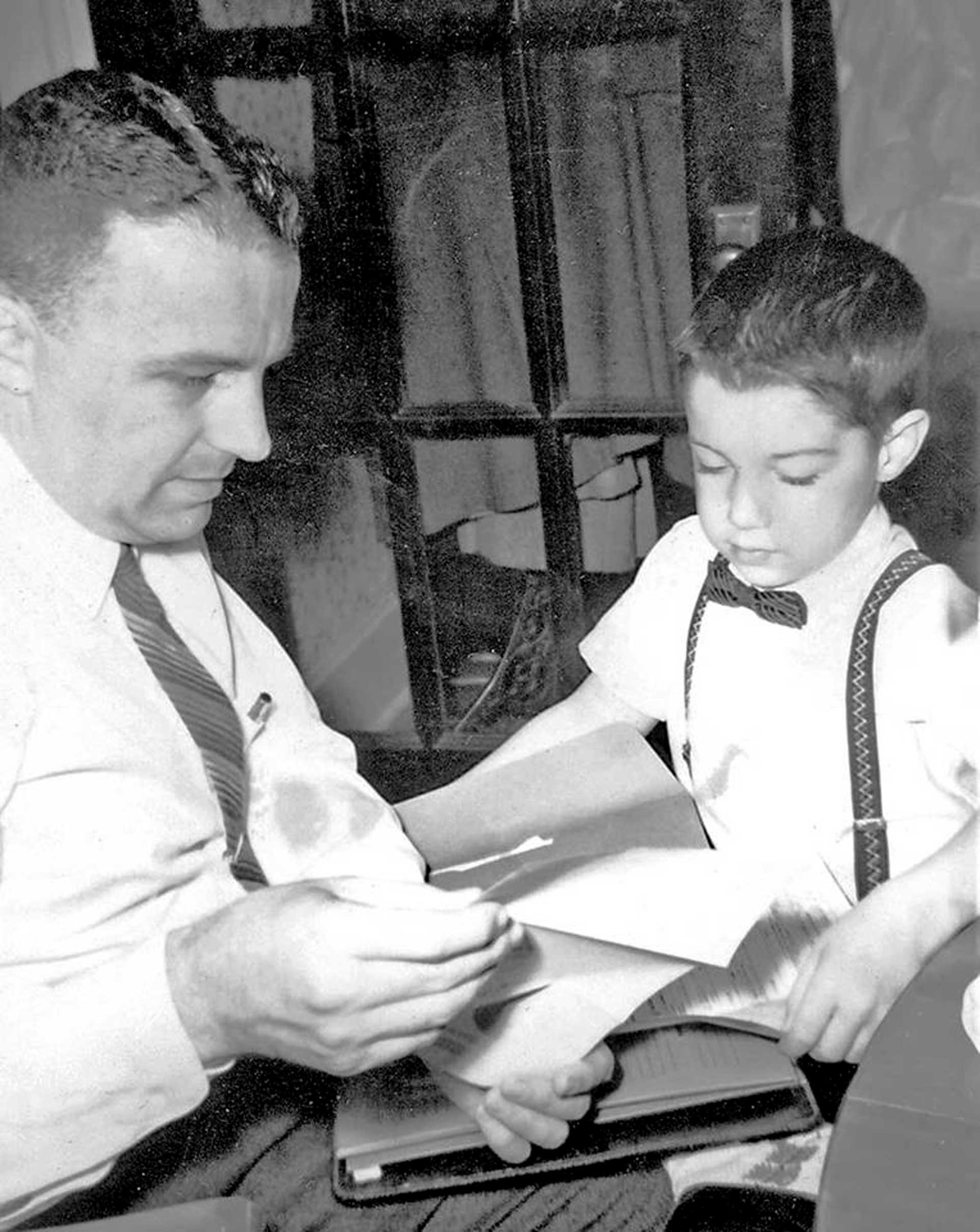
Rick studied history with his dad, Atty. Russell Booth, at any early age.

Most know Rick Booth as our local historian, but all may not be familiar with his background. Rick grew up in Guernsey County, the son of another historian, Atty. Russell Booth. History was an important part of their lives, and from his earliest memories, Rick recalls his dad telling him bedtime stories based on tales from history and many from Wolfe’s book. Atty. Booth treasured the copy of Wolfe’s Stories of Guernsey County which Wolfe personally signed for him in 1943 when a high school freshman. Rick was immersed in history from a very early age.

Rick studies the Apollo 11 Saturn V rocket just days before it took men to the moon.

After Rick graduated from Cambridge High School, there were many years when Guernsey County history was not of chief importance. After graduating from Princeton University, Rick spent two years in medical school at Columbia University in New York City before deciding to instead join the exciting new personal computer revolution just then emerging.

“A Boy and His Blob” is Rick’s best known gaming credit and still followed today.

For most of the 1980s, he worked for Sesame Street’s computer division, creating and designing software tools for their early educational computer game products. Later, he also designed core sound and animation systems for Nintendo cartridge and Sega CD-ROM games for video game companies. His best-known gaming credit is for the 1989 NES cartridge game “A Boy and His Blob,” which retains a niche following to this day.

In 1997, he wrote a computer book, “Inner Loops.” This book was designed for computer professionals and hobbyists to get high performance out of their computers. He also co-authored another computer book at Intel’s request, “Programming Itanium-based Systems: Developing High Performance Applications for Intel’s New Architecture.” Much of his later career involved digital video engineering and Internet-over-cable systems.

While living in the Philadelphia area, Rick was instrumental in saving the Cornwells Heights Amtrak Station in Bensalem, PA, which was needed for easy access to his work in New York City. (There’s a remarkable story attached for perhaps another article by Rick.) He witnessed history, too, having been on perhaps the last train to enter NYC before the Hudson River railroad tunnels were shut down in the chaos of 9/11.

He returned to Guernsey County in 2007. Then his efforts to keep Guernsey County alive began as he watched his father, Atty. Russell Booth writing about and researching local history.

At that time, his dad was writing monthly articles for Now & Then magazine. When his dad was no longer able to do that, Rick stepped in and continued those historical articles, completing the transition in 2012.

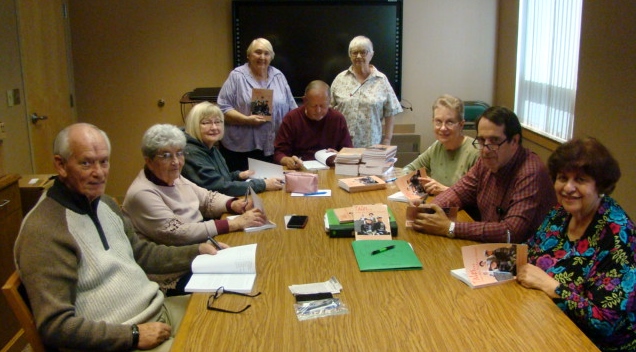
Rick with a group of Rainy Day Writers at a book signing get together.

Rick has been an important part of Rainy Day Writers since its beginning. Here he not only contributes interesting stories to their annual books but also helps with the publication process and serves as treasurer.

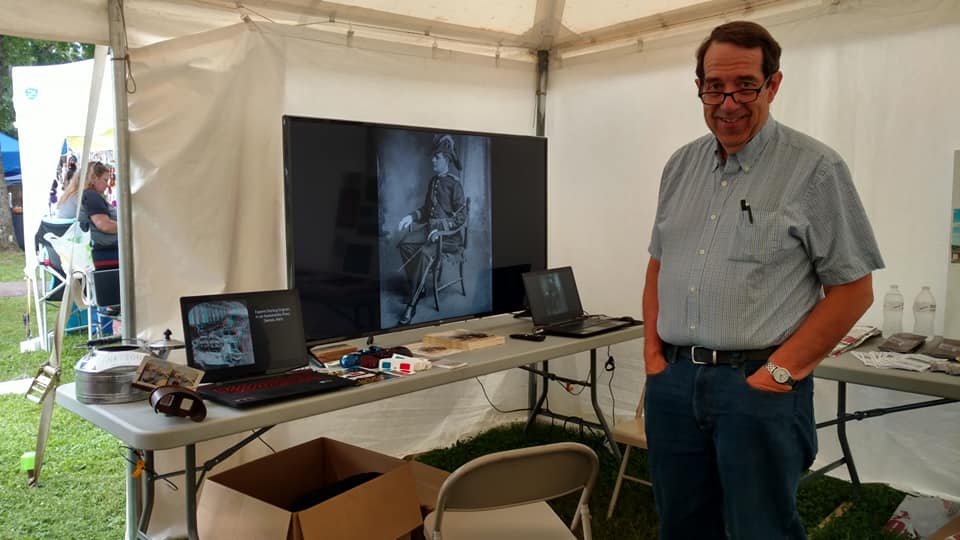
Spreading local history at the Heritage Arts Tent during the Salt Fork Festival is another of Rick’s contributions.

When Now & Then ceased publication in 2019, Rick seamlessly kept the stream of monthly history articles going in Crossroads magazine. Rick also keeps others informed about our history through his leadership at the Guernsey County History Museum where he is Treasurer and Director of Digitization.

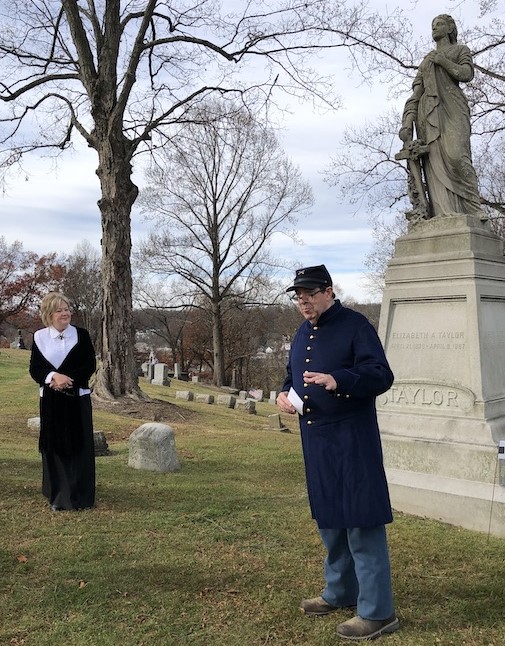
He writes the script for the Cemetery Tours and then portrays one of the “Coming Alive” characters.

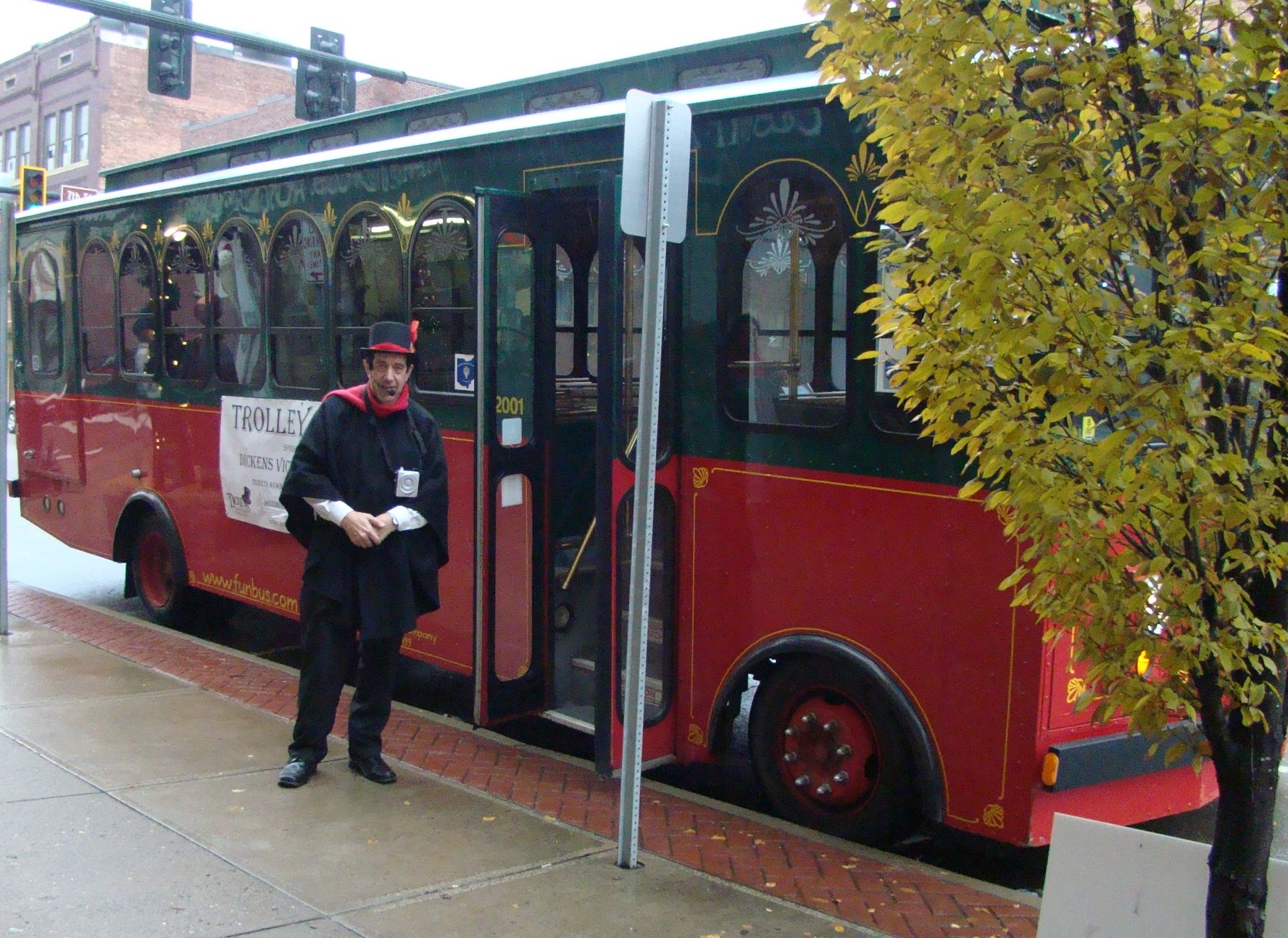
He also does many downtown tours in Cambridge, developing and participating in Cemetery Tours, and being the guide for Trolley Tours during Dickens season.

Dressed at John Herschel Glenn, Sr., Rick gives tours of the John & Annie Glenn Museum.

In New Concord, Rick portrays the role of John Herschel Glenn, Sr. to keep the history of John & Annie Glenn alive at the museum there. He also led the effort to get the official Ohio Historical Marker for Fletcher General Hospital and WWII POW Camp, which most locals later knew as the Cambridge State Hospital. Everyone wonders when this man sleeps.

During the Dickens Victorian Village season, Rick narrates historic Trolley Tours on special Saturdays.

For all his hard work in the community, in 2023 he received the Chamber of Commerce Distinguished Public Service Award.

In 2024, Rick digitized, proofread, and republished the writings of William G. Wolfe, the author of Guernsey County’s most extensive history book, Stories of Guernsey County, Ohio. His new collection is called The Extended Stories of Guernsey County, Ohio. He has used digital image manipulation to enhance the photos in some of the articles and add new ones to others, making them even more interesting. There are also 76 pages of newly-added historical township landowner maps, each with a QR code for easy cell phone viewing of every township in Guernsey County in the last few chapters of Volume 1 for those who enjoy comparing maps from 1855, 1870, 1902, and today.

An amazing thing about these volumes is the indexing. In the second volume, Rick has listed every name that is in both volumes and the pages where they appear. Over 23,000 name references were compiled into the new 131-page “all names” index! This provides an easy way to find family connections.

In proofreading Wolfe’s materials, Rick was surprised that he credited Cambridge Iron and Steel Company as the reason for Cambridge’s turn-of-the century (1900) sudden growth. Most recall the glass and pottery industry being a big boost to the local economy.

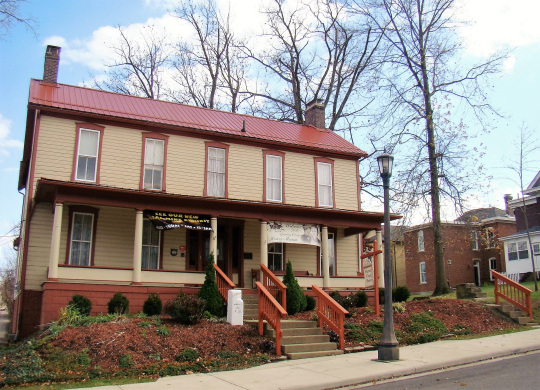
Pick up his new book set at the Guernsey County Museum.

Both volumes of The Extended Stories of Guernsey County, Ohio are available on Amazon, or you can pick them up at the Guernsey County Museum, 218 North Eighth Street, at a total cost of $80 for the two-volume set. Rick is giving a percentage of the profits to the museum. These volumes are printed in a perpetual hardcover print-on-demand book form so the work won’t go out of print again and the history of Guernsey County will live on, especially in historical and genealogical societies.

If you enjoy history of the Guernsey County area, you are certain to find this book set a treasure filled with memorable events that have shaped our lives.

Roger Pickenpaugh…Research is Key

Local educator and author, Roger Pickenpaugh of Caldwell, enjoys the challenge of discovering information about topics of interest so he can organize them into a book filled with accurate historical facts.

Roger graduated from Ohio State University and earned his Master’s Degree there as well. He retired from Shenandoah Middle School after teaching thirty years. Over the years, he has written 20 books filled with local and national history. Five of his books focus on the Civil War.

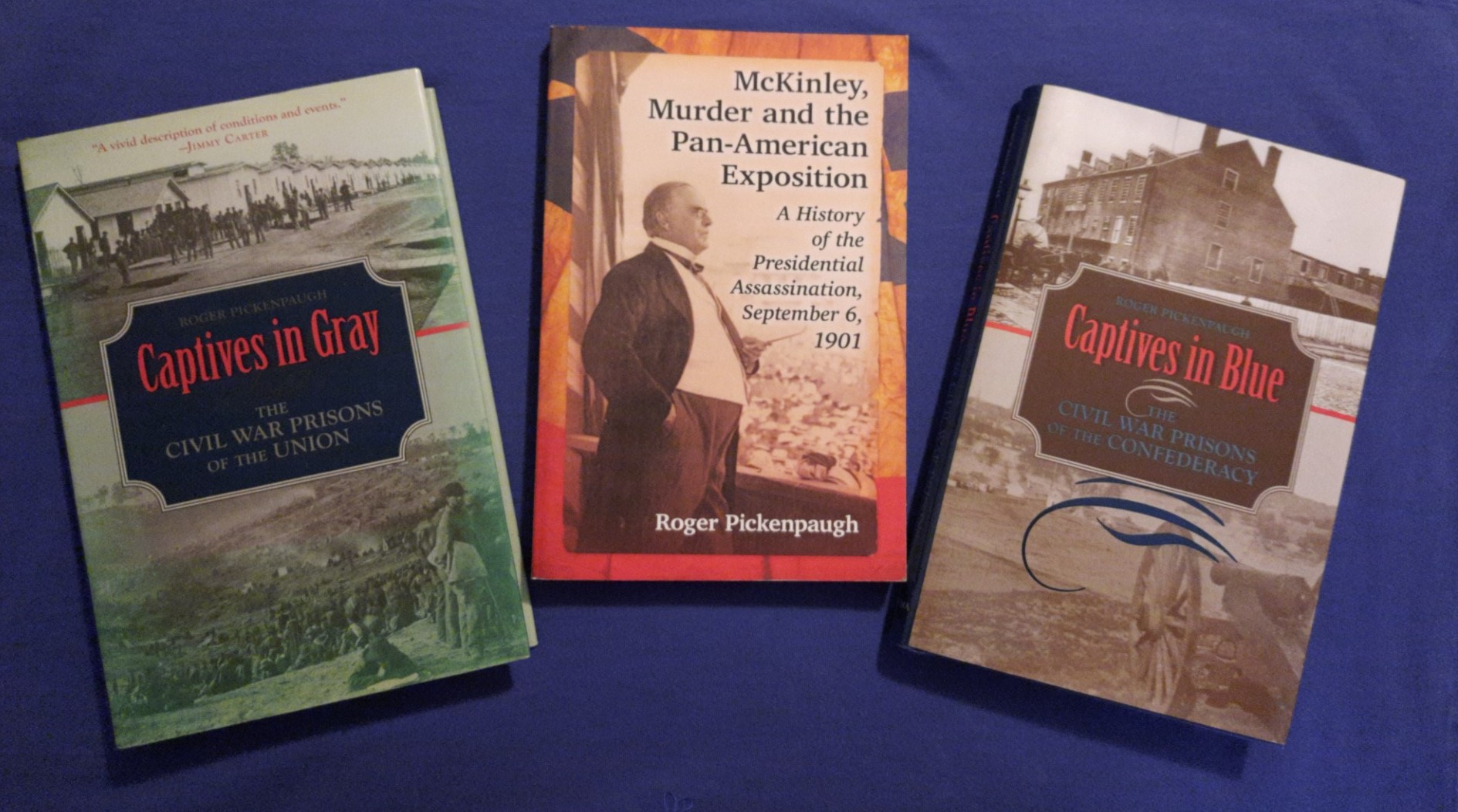
These three books are samples of those where he used traditional publishing.

Roger has always been interested in history. Even as a child, he liked to read books with a historical touch. Although he does admit to also reading some comic books.

His interest in the Civil War stems back to the fact that his grandfather and uncle were both very interested in Civil War events so he became interested just by listening. He also had a relative who took part in the Vicksburg campaign.

His interest in writing began when a student at OSU where he did writing and research on term papers for college and found he enjoyed the exploration.

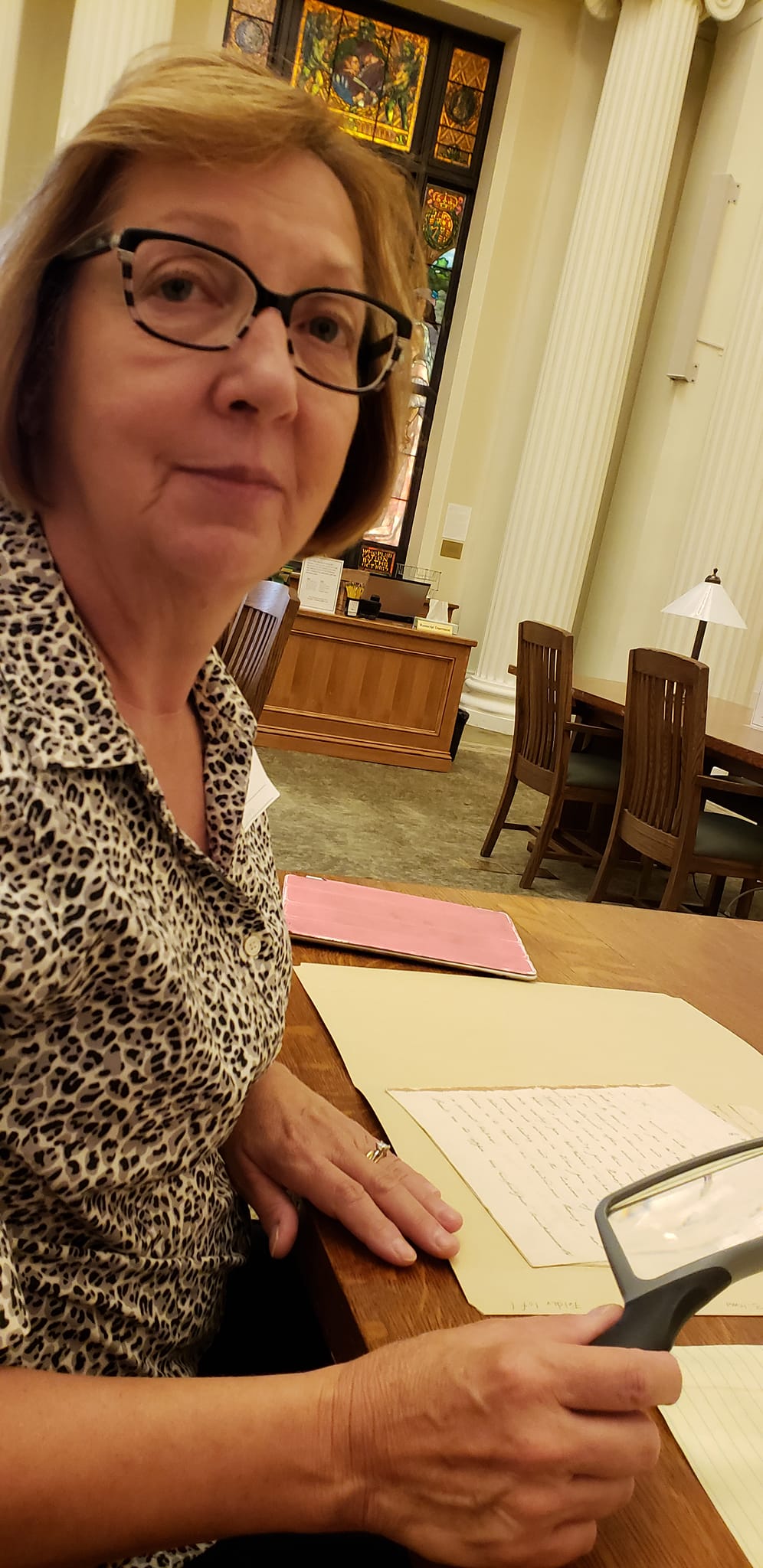
His late wife Marion felt research was much like a Treasure Hunt.

Since most of his books require accurate historical information, research has always been an important part of his life. He credits his late wife, Marion, for being the research organizer and the reason for his success in writing historical books.

Some of those early books required research before the advent of computers. Roger remember Marion’s patience and tenacity as she searched through books on the library shelf looking for that piece of missing information. Note cards were made with information gathered and then placed in order. Indexes in his books are an important part so he feels accuracy is extremely necessary.

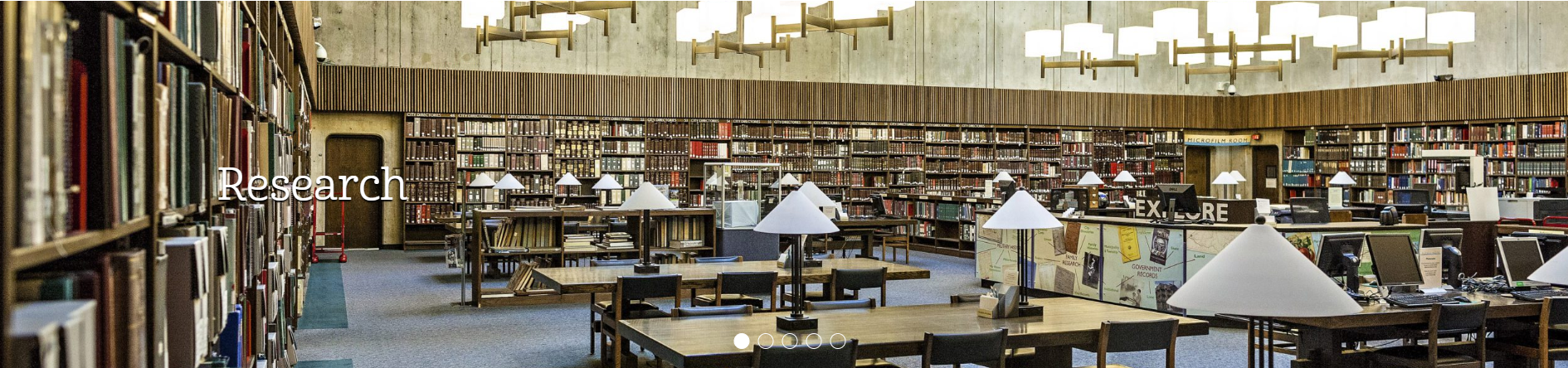
Roger frequently uses resources at the Ohio Historical Society for his research.

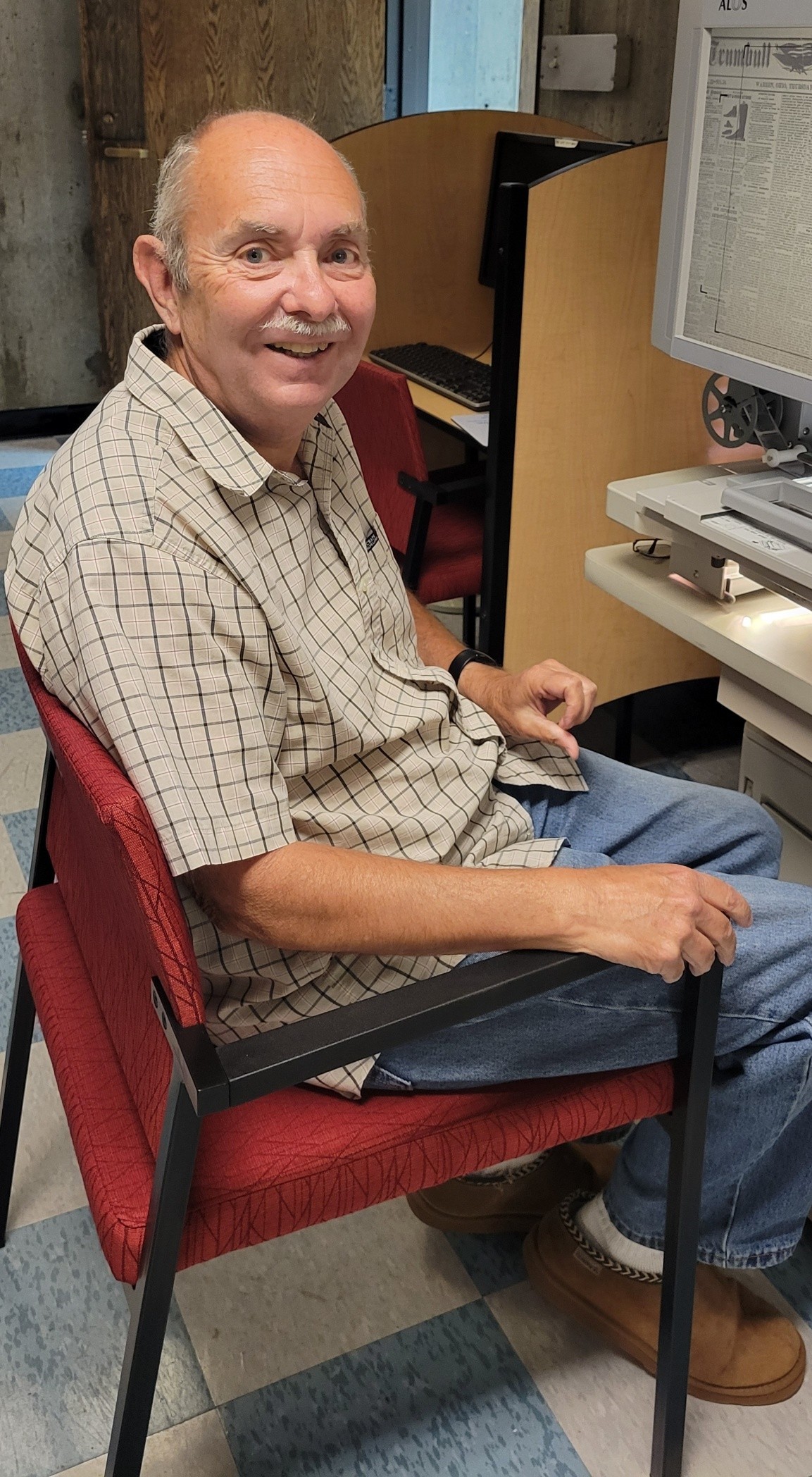
Research over the years has been from interviews over the phone to personal visits at places he is researching. There he makes good use of their local libraries for old newspaper records. National Archives, State Historical Societies, and many universities or colleges have provided needed information through books or diaries. When you read his books, you clearly see how important this research was.

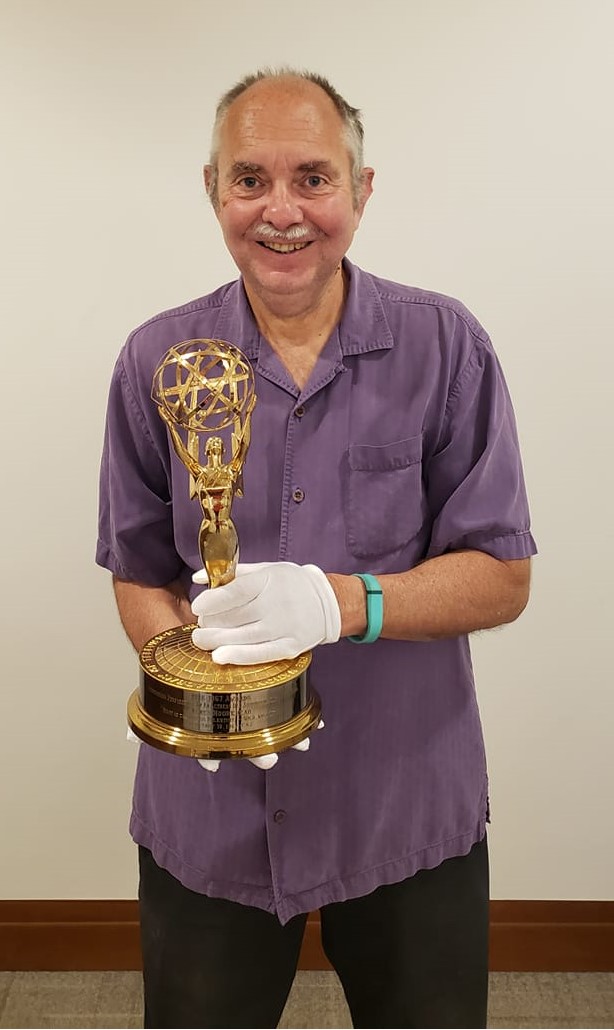
Roger enjoyed a close look at Agnes Moorehead’s Emmy while doing research at Muskingum University Library.

One of his favorite local places for research is the Muskingum University Library. They have been so helpful to him with use of equipment and finding the resources he needs. Roger said, “I never could do this writing without them.”

Friendships with members of the Noble County Writers Group have proved valuable over the years. Writers need to have other writers to talk with and share ideas. Other members of the group also are great at proofreading and giving ideas for improvement. They have even written some books together.

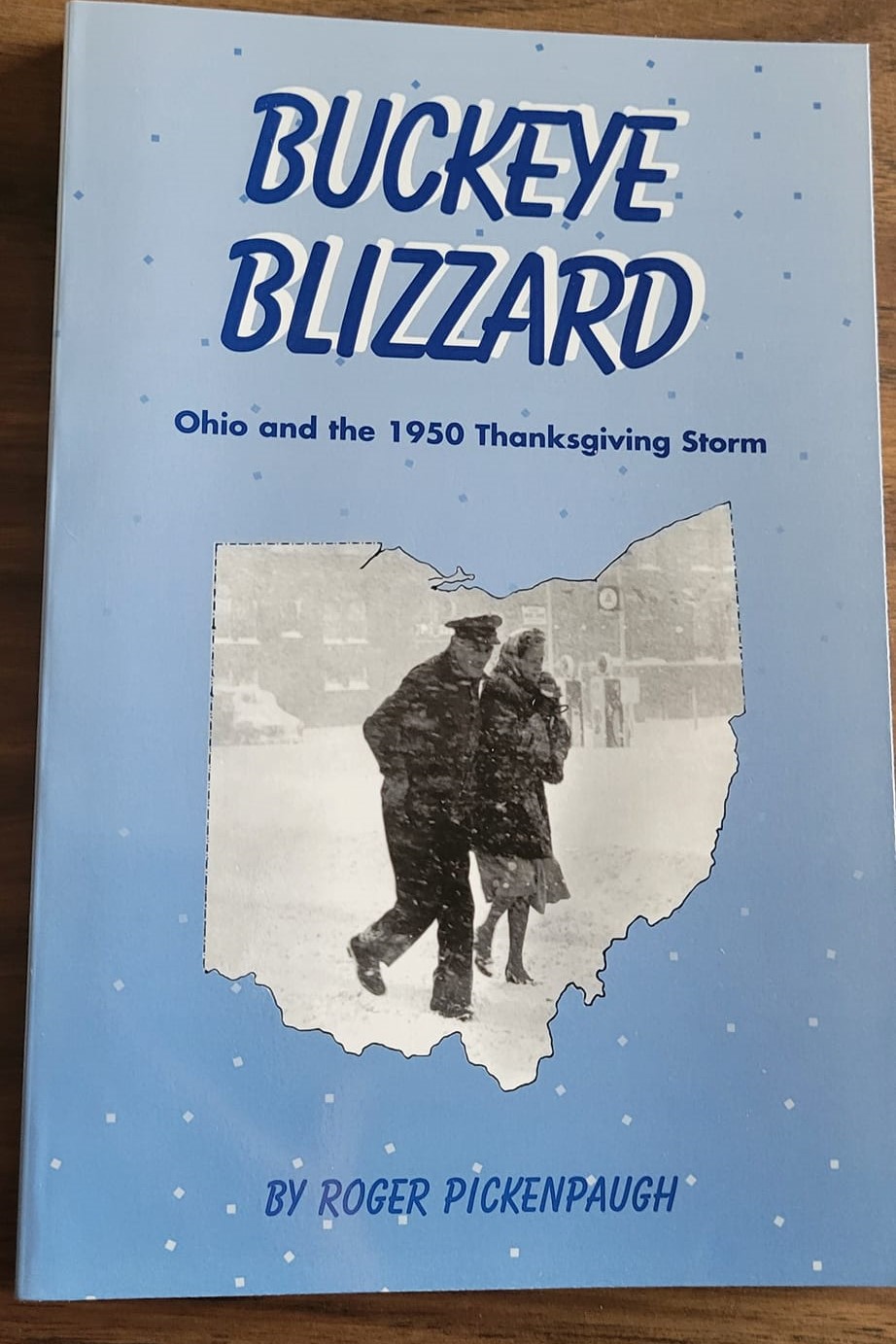
This early book of Roger’s tells personal tales of that terrible blizzard. True and often humorous!

At this point in time, Roger has published 20 books. Eight of them were with traditional publishers, the first being Rescue by Rail: Troop Transfer and Civil War in the West, 1863, which was published in 1998 and took about three years to write. That book had a local touch as some of the trains ran through Guernsey County on the B&O.

Johnson’s Island: A Prison for Confederate Officers (Civil War in the North) was published in 2016 and won the Bowling Green Center for Archival Collections Local History Publication Award.

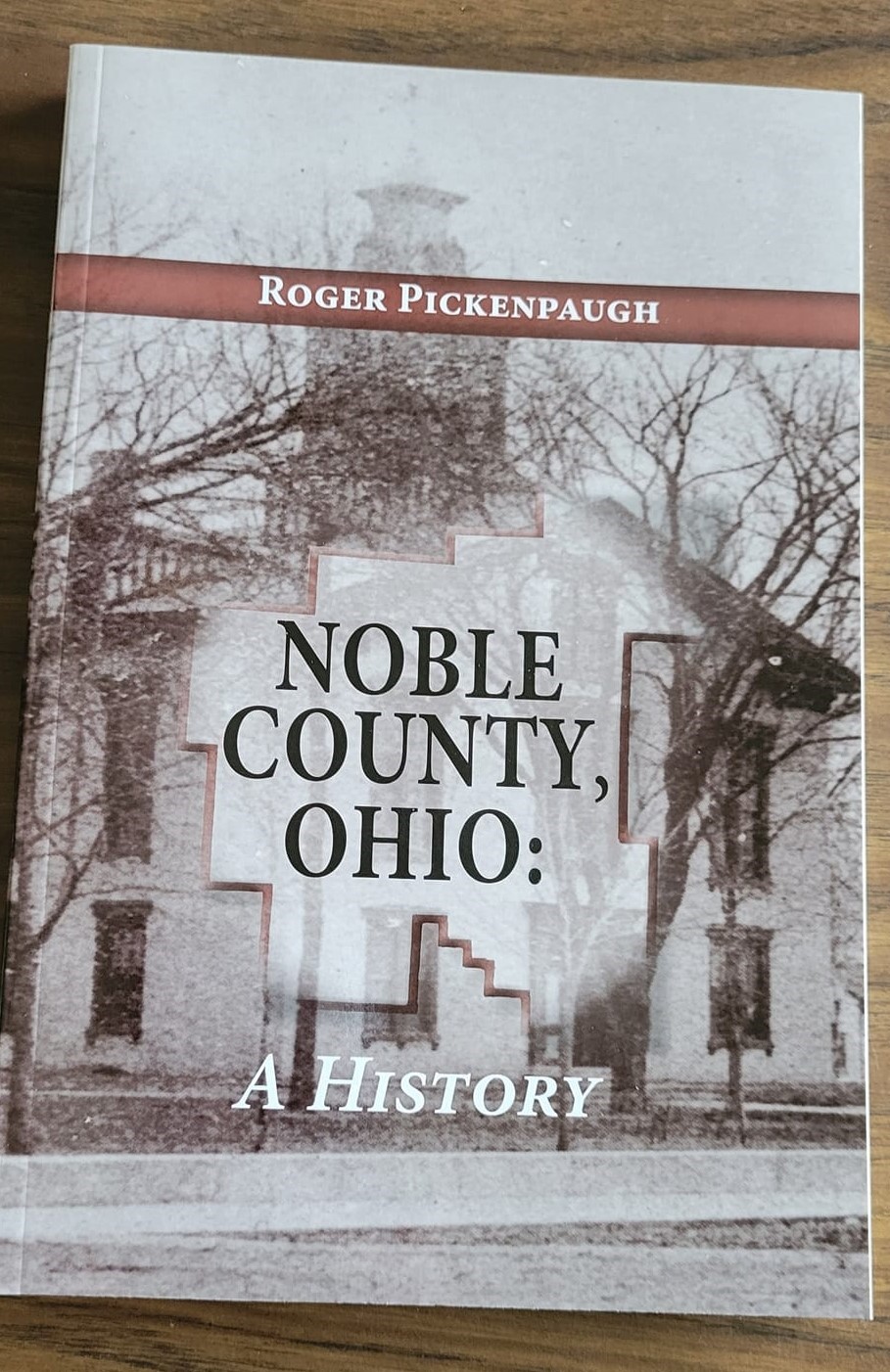
Noble County, Ohio was Roger’s first book, which he self-published.

He also has twelve books of local nature that are self-published. A History of Noble County, Ohio 1887-1987 was his first self-published book back in 1988. He spent nearly eight years researching over 100 newspapers to get the accurate information he needed.

Roger feels local books can be self-published but if you are writing about a national event, it will best be received if going through a traditional publisher.

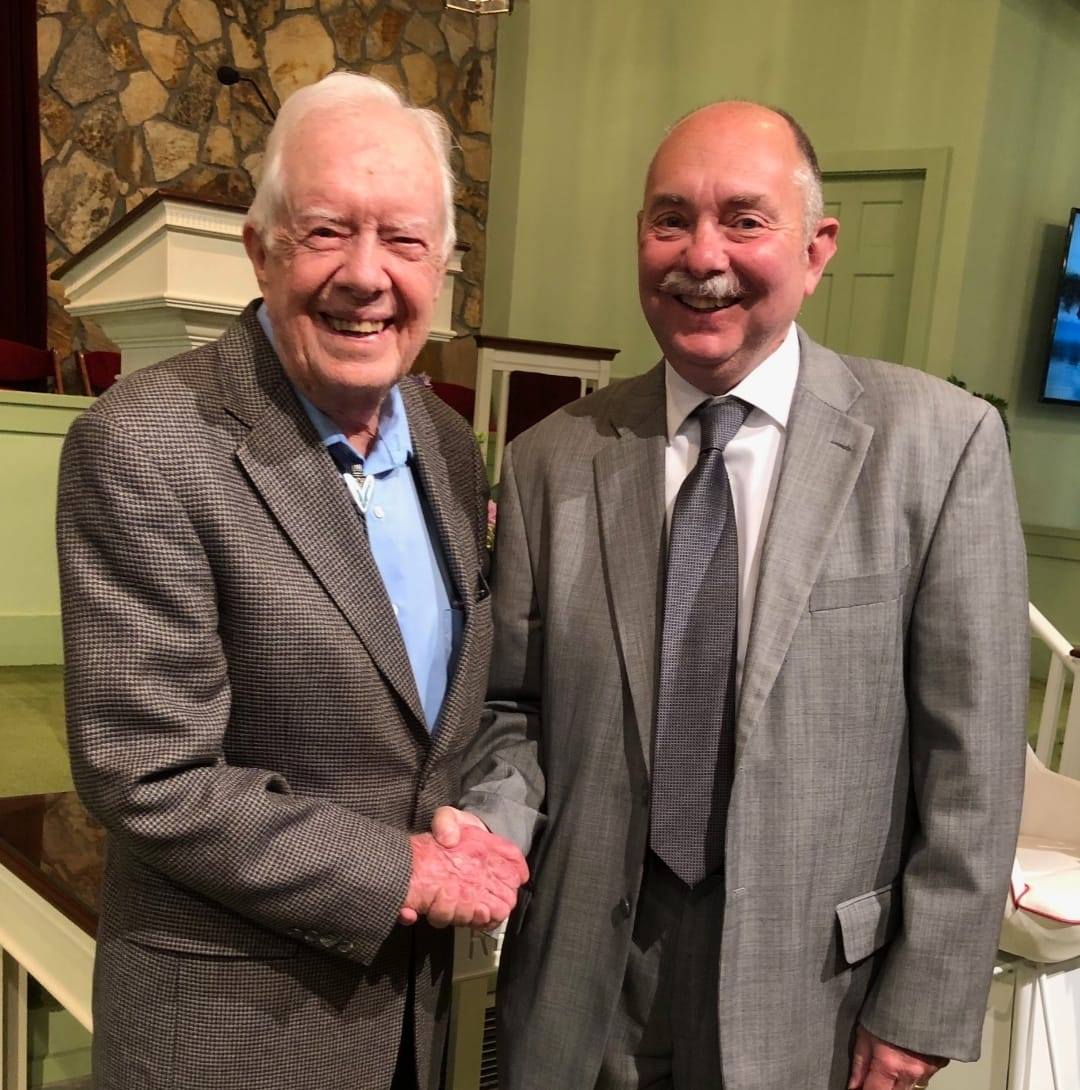
In their travels, Roger visited his sister Jill and her husband in Georgia, where they worked with President Jimmy Carter. They attended services at the Baptist Church where President Carter taught Sunday School. Today his sister is Superintendent of Jimmy Carter National Historic Site in Plains, Georgia. Roger was pleased to have his picture taken with the president and President Carter left a review on Amazon for one of Roger’s books.

Meeting President Jimmy Carter was a special moment for Roger.

When Roger is not researching, he enjoys being active with daily walks and work in his garden. His walking goal was to have a thousand consecutive days with over 10,000 steps and he has probably reached it by now as had 900 consecutive days in mid-May.

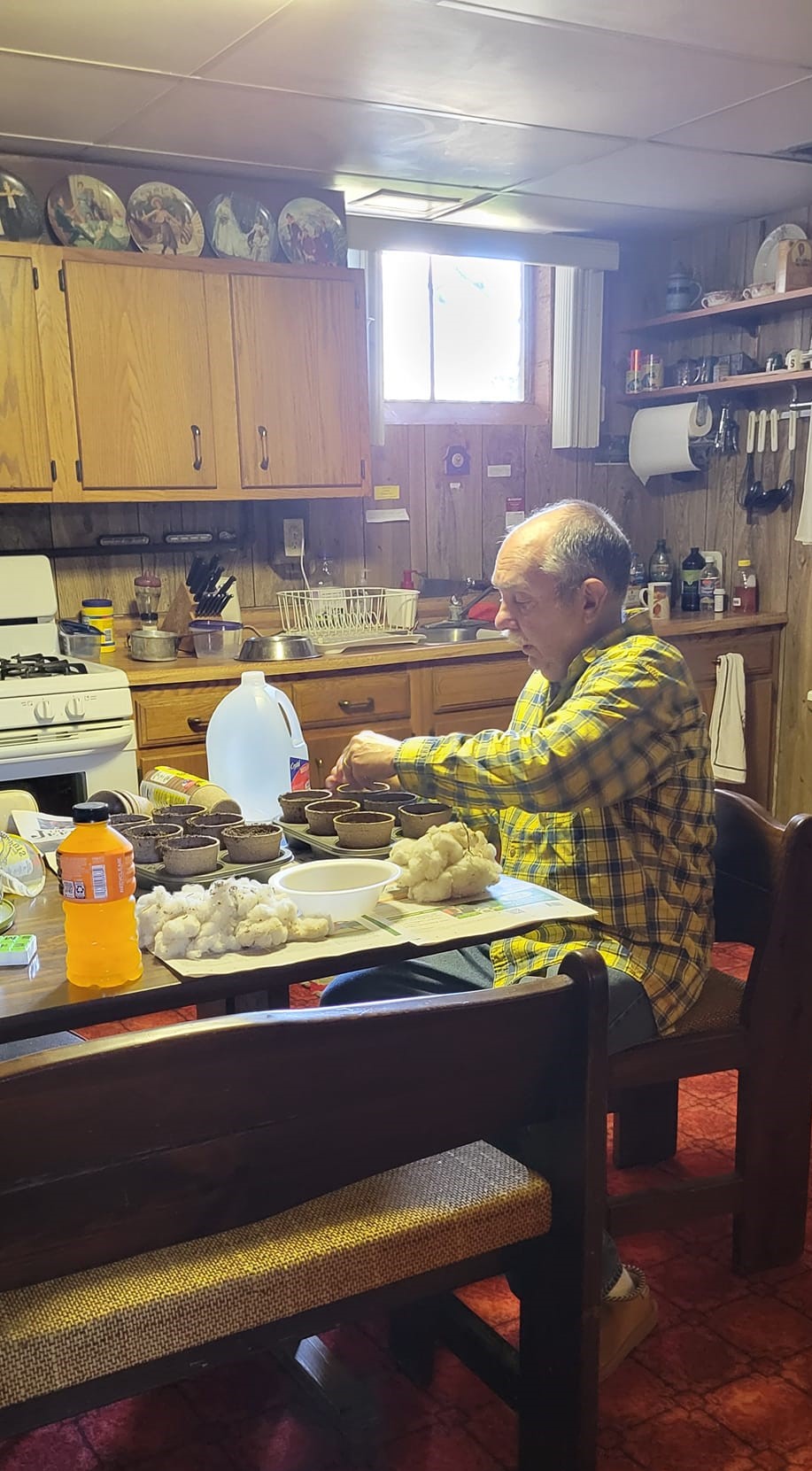
Roger starts his garden early inside. During the summer, he enjoys working in his garden.

He is putting the finishing touches on a book about John F. Kennedy’s sense of humor. The working title right now is John F. Kennedy: The Kennedy Wit.

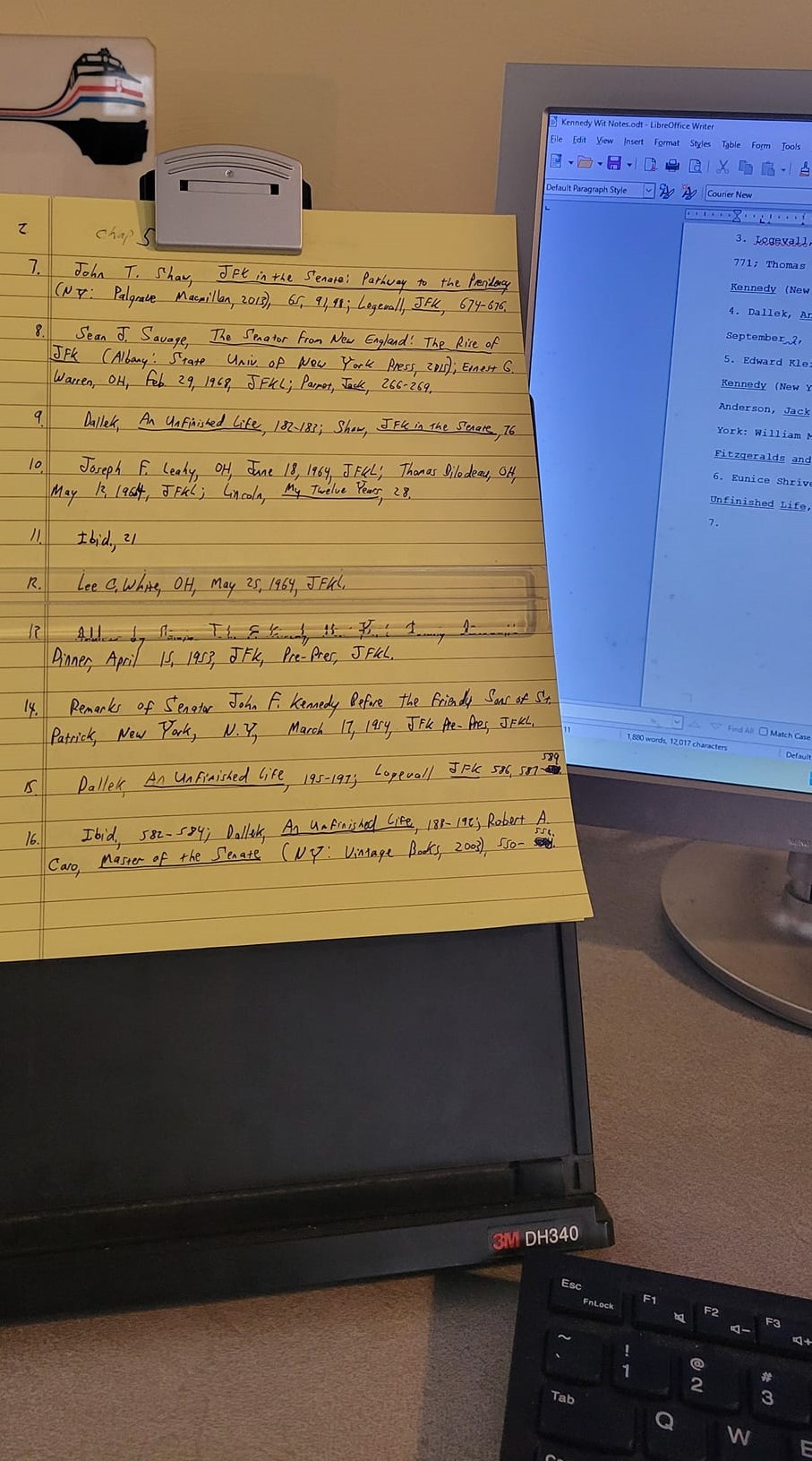
Transferring handwritten notes to the computer is time consuming.

Currently, Roger is also researching information about Ohio in the early days of the Civil War. This is being done in various newspaper archives and finds the ones at Ohio Historical Society very helpful.

His list of books is extensive but most can be found on Amazon or if you happen to see Roger at a book fair or local promotion. He often promotes his books at places like Art on the Square in Caldwell, Bookology in Cambridge, and Buckeye Book Fair.

If you enjoy history, you are certain to appreciate the research Roger Pickenpaugh has done to make his books accurate. His style of writing makes history interesting.

Jason Hammond Demonstrates Traditional Woodworking

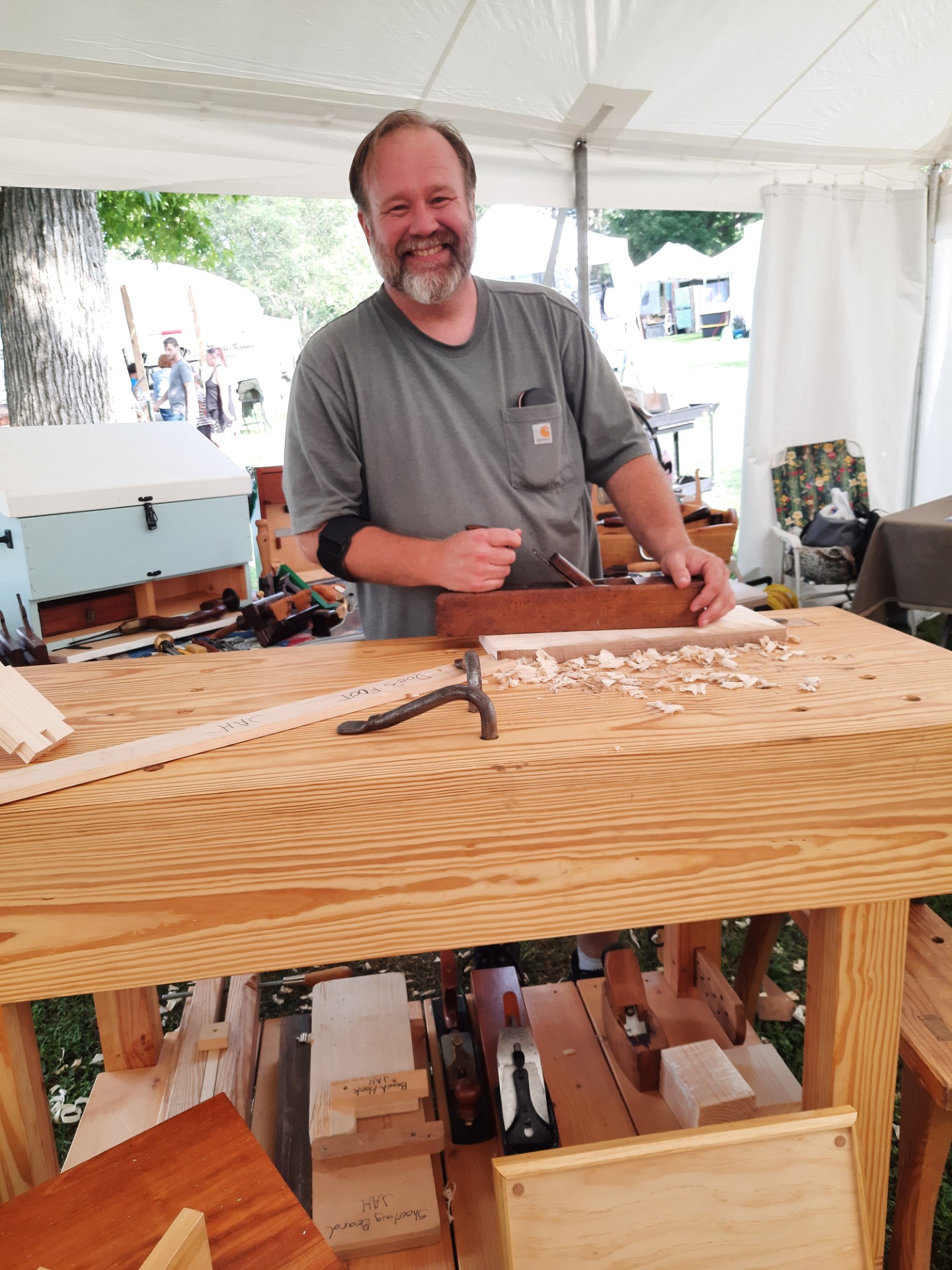
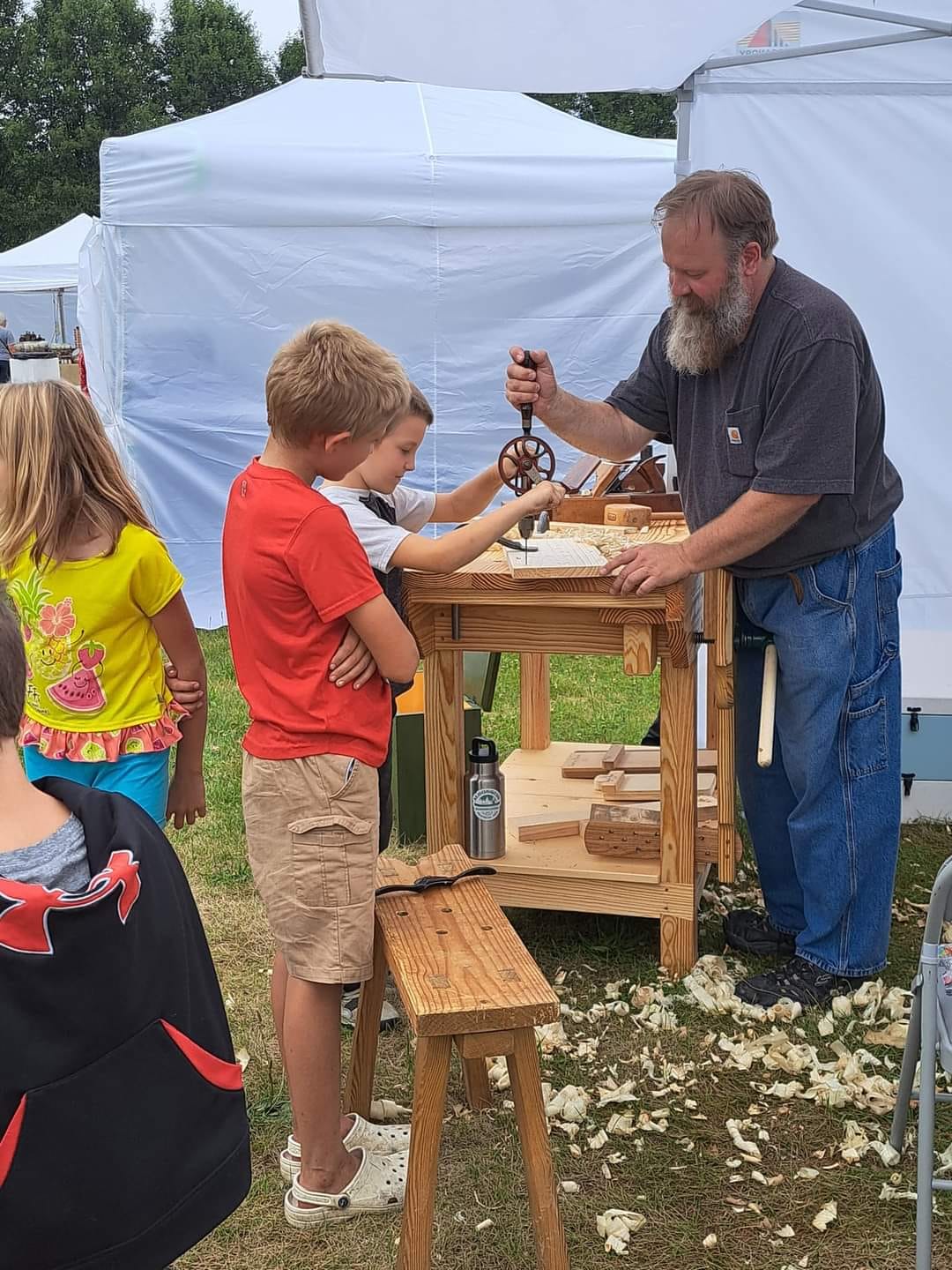
Jason Hammond demonstrates old tools in the Heritage Tent at the Salt Fork Festival.

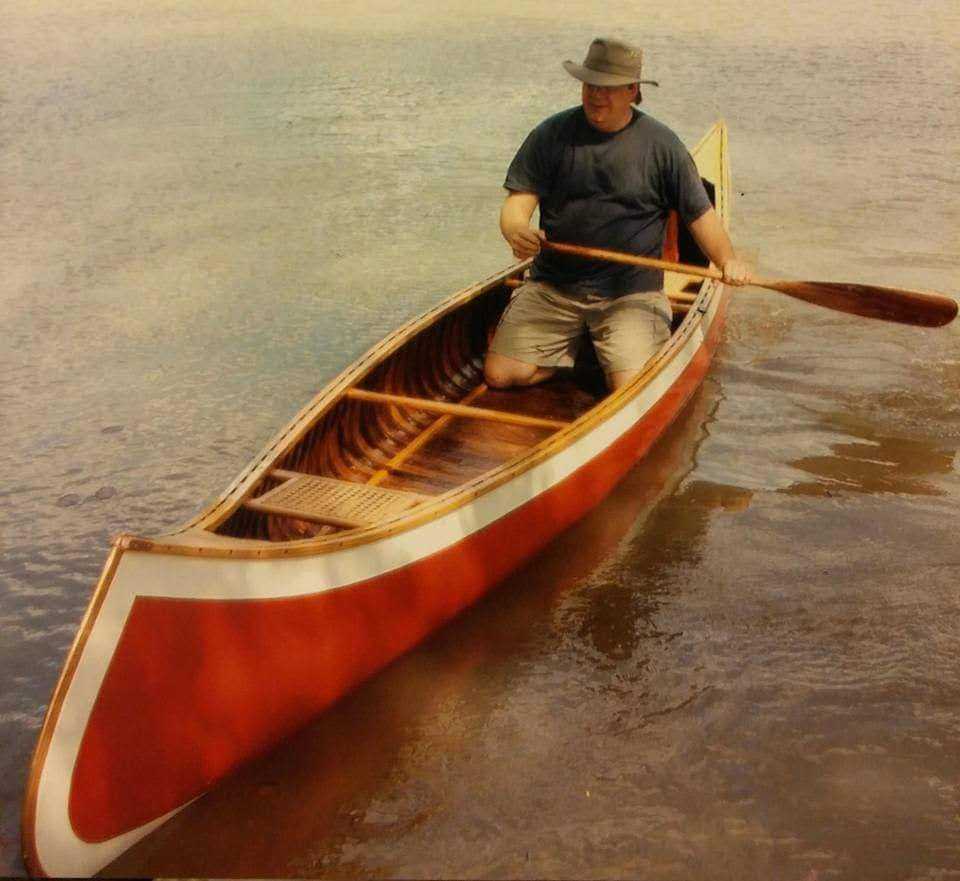
Heritage furniture has become a passion for Jason Hammond of Yellowleaf Wood Crafts in Zanesville. He loves history, restoring old tools, and paddling old canoes.

Demonstrating his use of traditional hand tools attracts visitors at the Salt Fork Festival where Jason will again be in the Heritage Arts Tent August 9-11 this year.

He has collected and refurbished old tools for many years.

Here he explains to visitors what woodworkers went through 150 years ago. Manpower, sweat, and tears were necessary for even a simple piece of furniture. Each step of the process took hours compared to minutes today.

During 1800-1850, there were eight small shops in Guernsey County where furniture was made by one to five men, often in someone’s home. It was difficult and expensive for those early settlers to move furniture with them. Builders used the wood available to create needed furniture. so cherry, maple, and walnut replaced the mahogany used for heirloom furniture in the east.

Jason’s interest in woodworking began when he was a child while watching “The Woodwright’s Shop” on PBS with his dad, who was interested in the historical aspect of various things. That show explained how to use tools from the past.

High School shop was his first experience at woodworking. There he made simple things like a bookshelf and a pen holder for his mom. At home, he experimented with walking sticks and arrows for his bow.

Blanket chests and toy boxes are popular items.

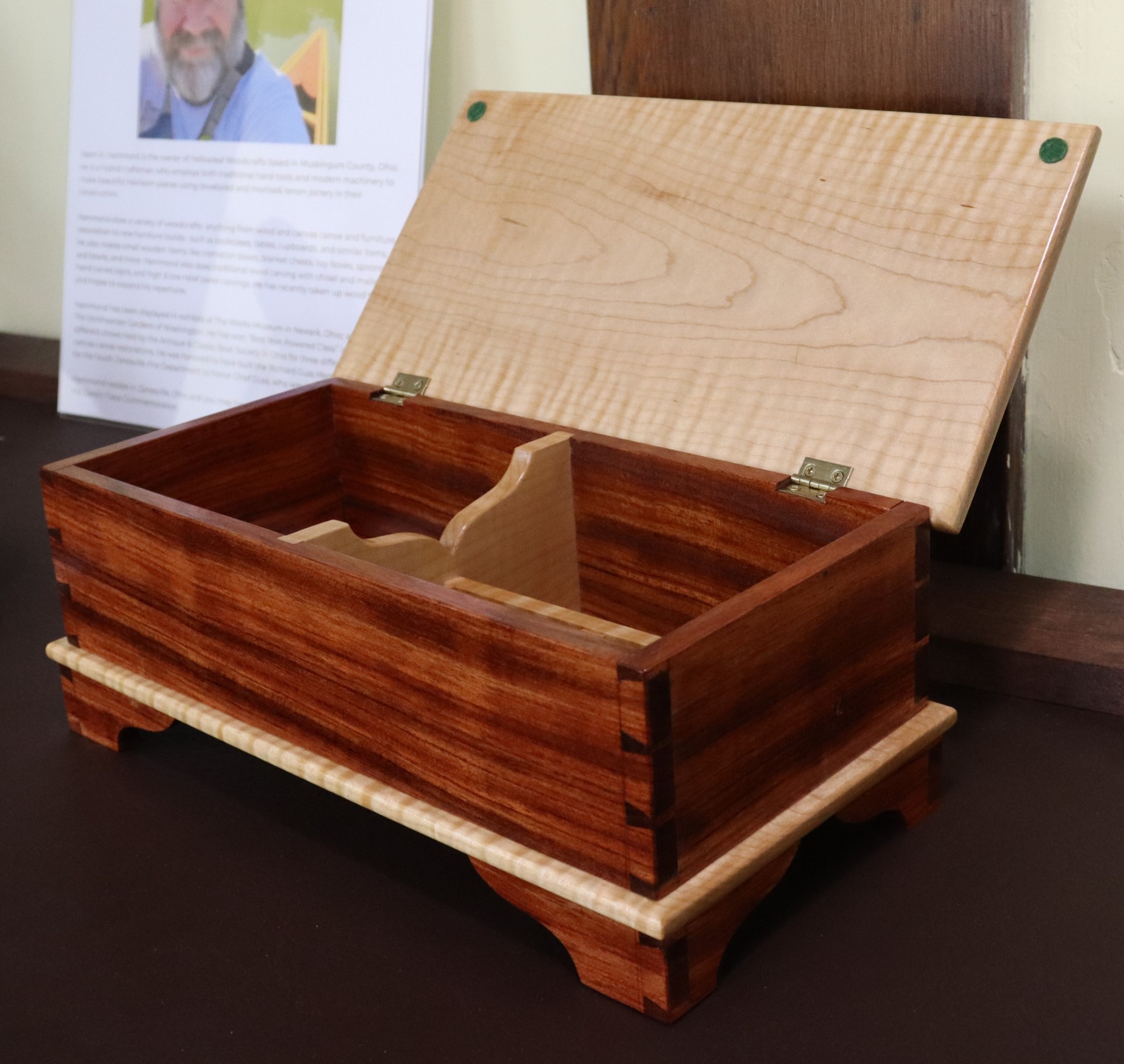
Gradually, he began collecting hand tools, that were broken and needed to be fixed, at flea markets or tool dealers online. Today he uses both traditional hand tools and modern machinery to create his heirloom pieces, which include bookcases, tables, blanket chests, toy boxes, and wood carvings.

However, you can tell what he enjoys the most when he commented, “I do think that learning and developing hand tool skills in woodworking and the decorative arts is essential in doing quality work. There are times when machines can only take you so far. It’s the skill and confidence in handwork that can take you the rest of the way.”

Jason takes Hiawatha, his restored Indian canoe, on the lake for a test drive.

Always being interested in history, when Jason was thinking of a name for his business, he received an idea from a line in a Longfellow poem, “The Song of Hiawatha.” When Hiawatha described the canoe he built, the last line reads, “and it shall float upon the river like a yellow leaf in autumn, like a yellow waterlily.” Yellowleaf Wood Crafts seemed a logical choice.

At the present time, he also works at the Zanesville Art Gallery where he helps with setting up exhibits and repairing or building things. Some of his smaller pieces are also available in their Gift Shop.

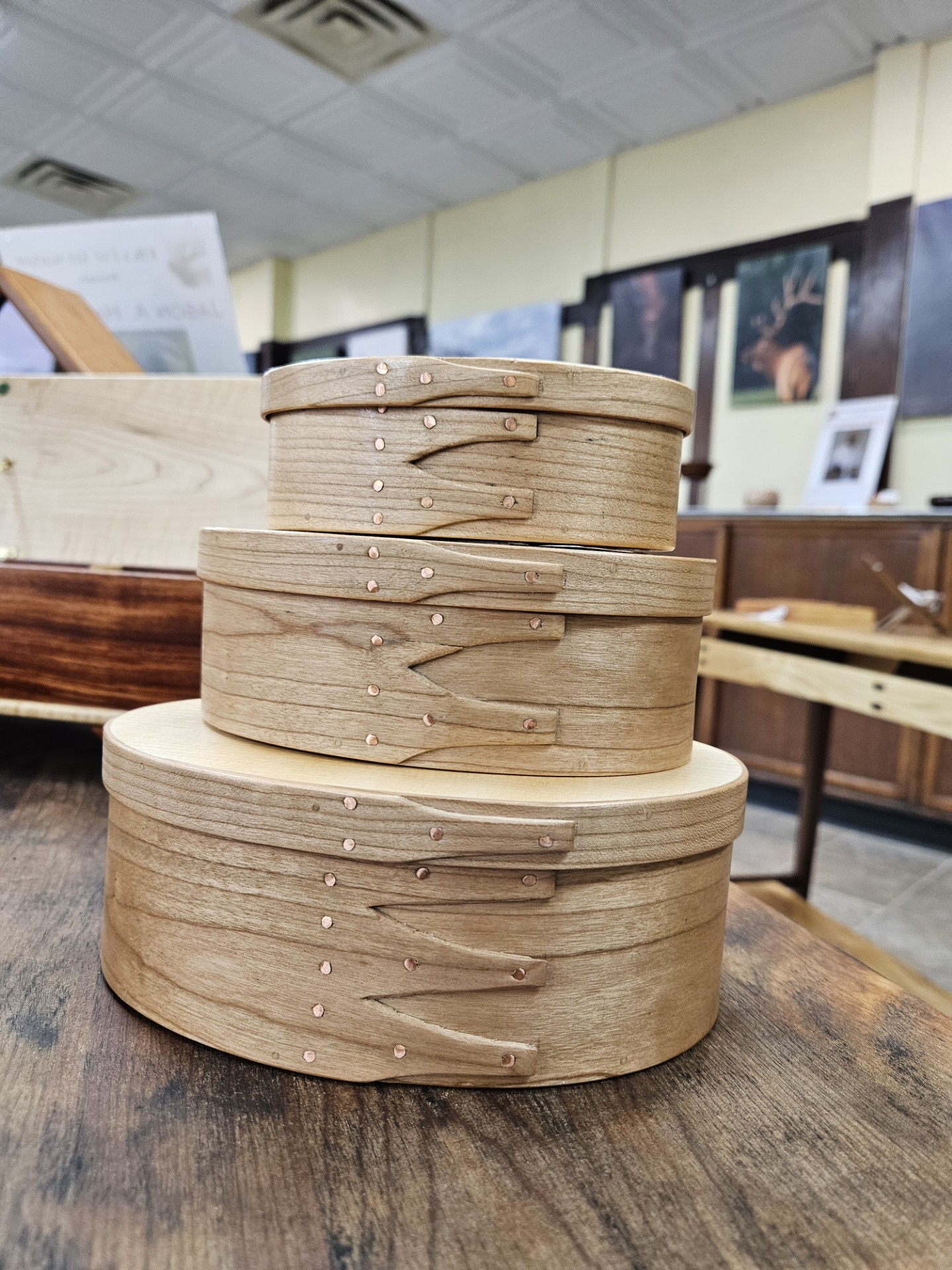
Oval wooden boxes like these were used by the Shaker religious group for various purposes.

His work can also be seen today at Elk’s Eye Endeavors in downtown Zanesville. There he displays smaller items such as accent tables, chests, and Shaker oval boxes. The Shakers religious group used those boxes to ship their seeds, as a sewing box, or even a spittoon. Jason remarked, “It was the cardboard box of its time.”

Bending the wood for these boxes required them to use steam heat and boiling water. Then the wood is bent around a form. This process was also used by the American Indians to form their canoes and snowshoes.

Speaking of canoes, Jason has won several awards for his restoration of old canoes. At the Antique Boat & Canoe Classic Show, he has won the Best Nonpowered Class in three shows for cedar and canvas canoe restoration. When he has extra time, relaxing on the water in his canoe or taking a hike in nature are his favorite activities.

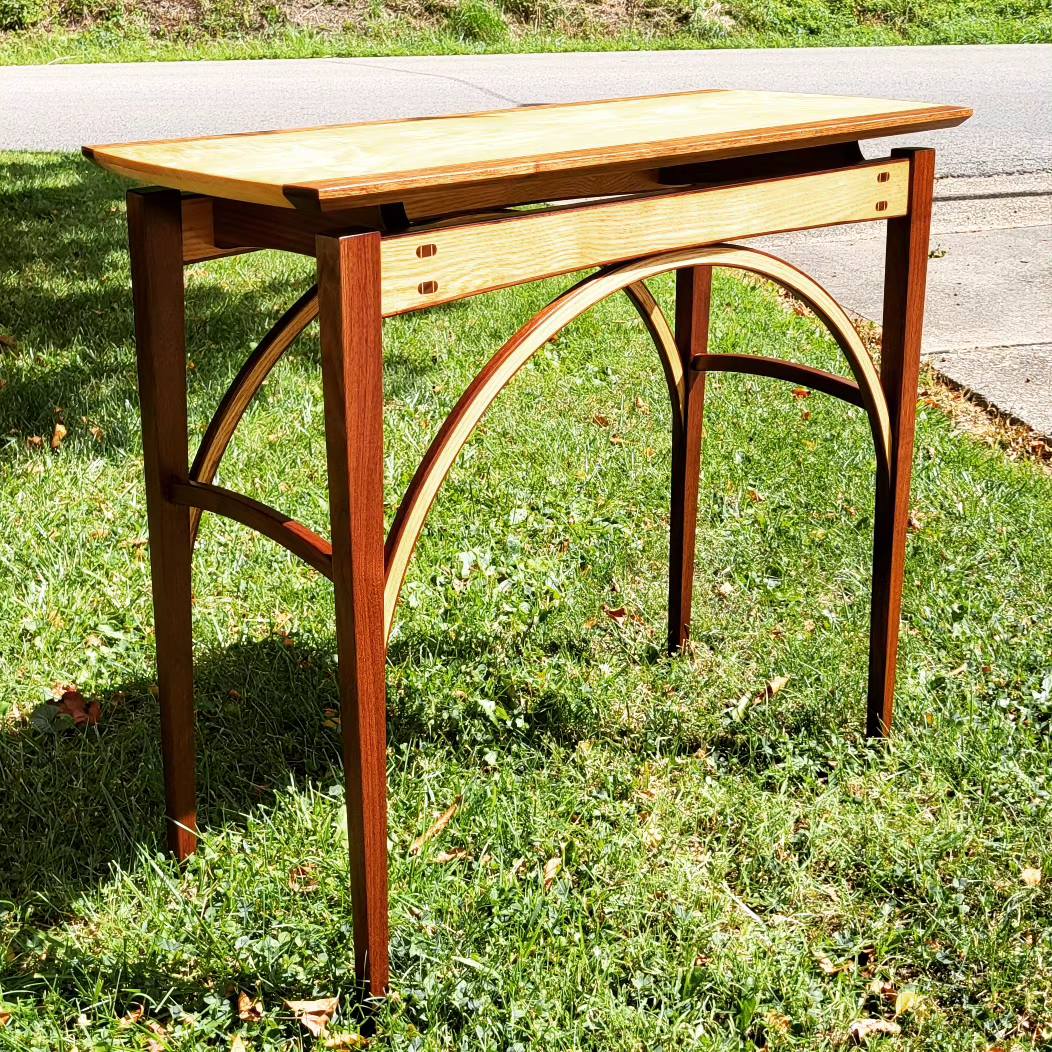
His most recent table creation sold quickly at Elk’s Eye Endeavors.

He takes great pleasure in reaching the finishing line on a project. After he has researched the history, drawn the plan, and selected the wood, putting on the finish and seeing the texture of the wood come to life is his vision coming to fruition.

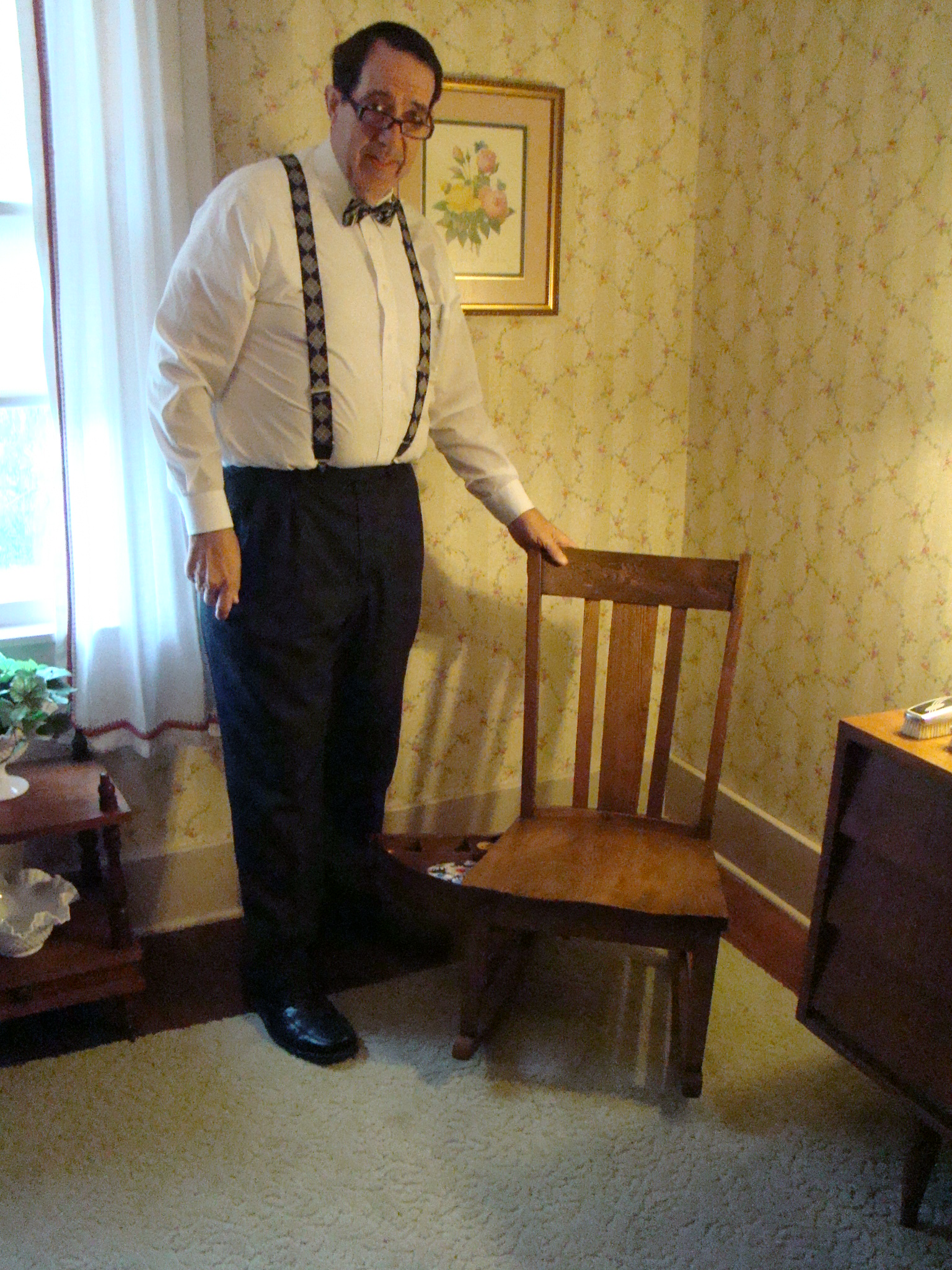
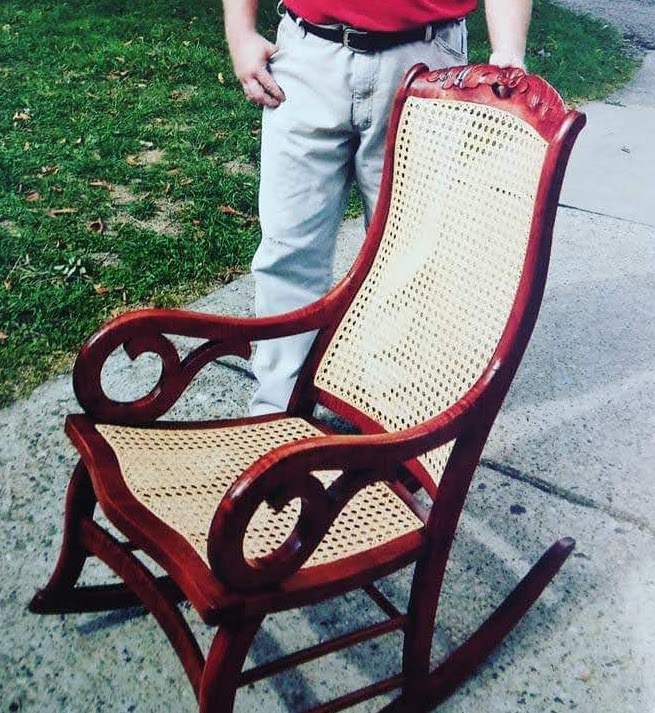
Refurbishing this heirloom rocking chair took hours of work.

Restoring furniture to its heirloom state gives him pleasure as well. Often he has to re-engineer a piece to make it more functional. For example, a rocking chair might need its rockers adjusted to keep it from tipping

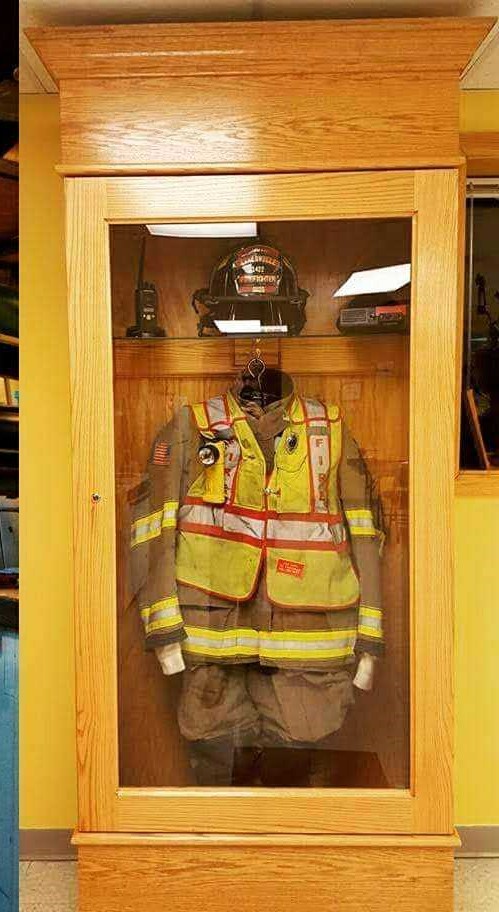
Jason is proud of a cabinet he built to honor a former fire chief in South Zanesville.

He is very proud of a large display case he constructed for the South Zanesville Volunteer Fire Department to honor a fire chief who passed suddenly. The cabinet is tall enough to hold the entire turnout gear of the chief from boots to helmet.

Contact Jason at Yellowleaf Wood Crafts on Facebook or Instagram at yellowleafwoodcrafts. If you are interested in a commissioned piece, email him at jasonhammond1416@gmail.com. He has special pieces for sale at Elk’s Eye Endeavors in Zanesville as well as in the gift shop at the Zanesville Art Museum.

When talking about the craftsmen at the festivals, Jason feels, “There is a resurgence of handwork in this country. There are people who are taking up weaving, pottery, basket making, carving, etc. again. They want to produce something that has the slight imperfections that only the human touch can make. The creativity of doing such work gives satisfaction and a sense of accomplishing something that is lacking in this day and age.”

Jason enjoys participating in the Zane Trace Commemoration.

Visit Jason at the Heritage Arts Tent at the Salt Fork Festival in Cambridge on August 9-11 or at Zane Trace Commemoration in Zanesville where he demonstrates his use of traditional tools for woodworking. You are sure to enjoy listening to his stories as you watch him work.

Epworth Park for Peacefulness of Days Gone By

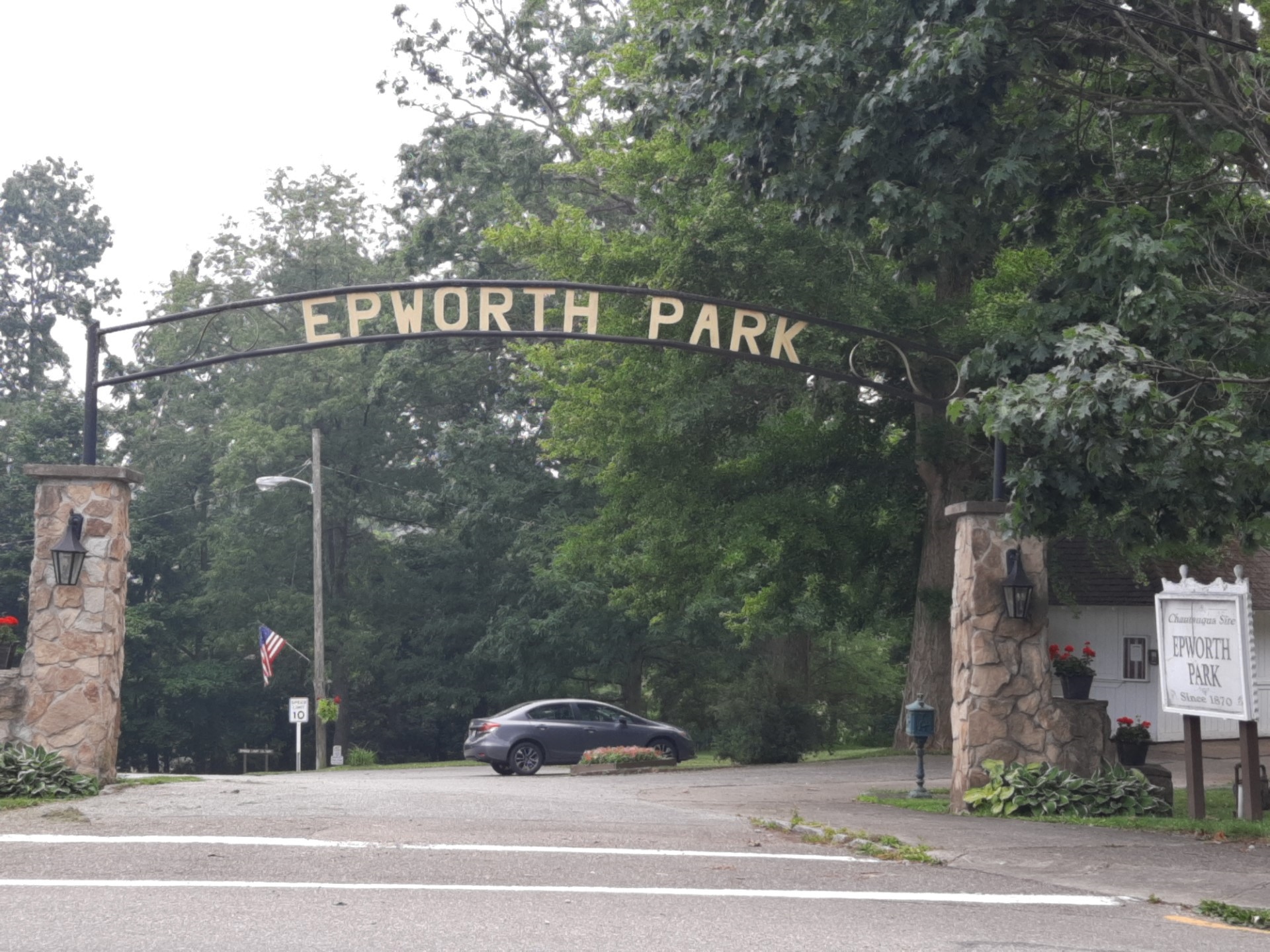
Epworth Park is located in the center of Bethesda, Ohio.

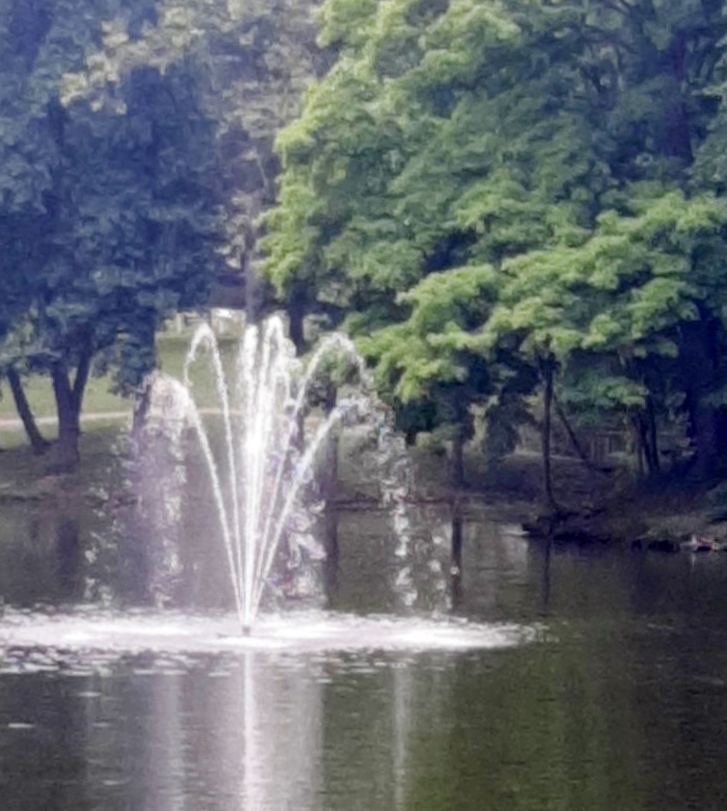
Escape from the fast pace of life at Epworth Park in Bethesda. Experience the peacefulness of days gone by as you stroll along the lake, enjoy the beautiful fountain, and reminisce under the majestic oaks. It all began in 1870 as the “Garden of Oaks” for use as a Methodist Camp Ground – a place for spiritual fellowship, instruction, and renewal.

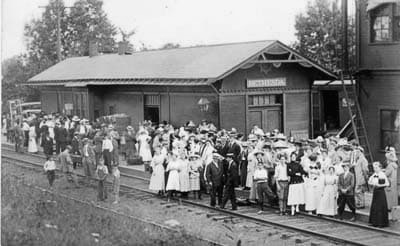
Many came by train to those early camp meetings at Epworth Park.

Horse-drawn wagons and trains carried as many as 10,000-15,000 people to camp meetings in the late 19th and early 20th centuries. With the park’s rising popularity, cottages were built in the late 1800s to serve as a retreat for people who wanted to escape city life. Epworth Park was “the place to be.”

In the early 1900s, the camp meetings were replaced by the National Chautauqua movement, which focused on education, culture, and entertainment for those living in small towns. It began at the Methodist retreat on Chautauqua Lake, New York. The Chautauqua assemblies attracted the most famous actors, musicians, and lecturers of the time including William Jennings Bryan and William McKinley.

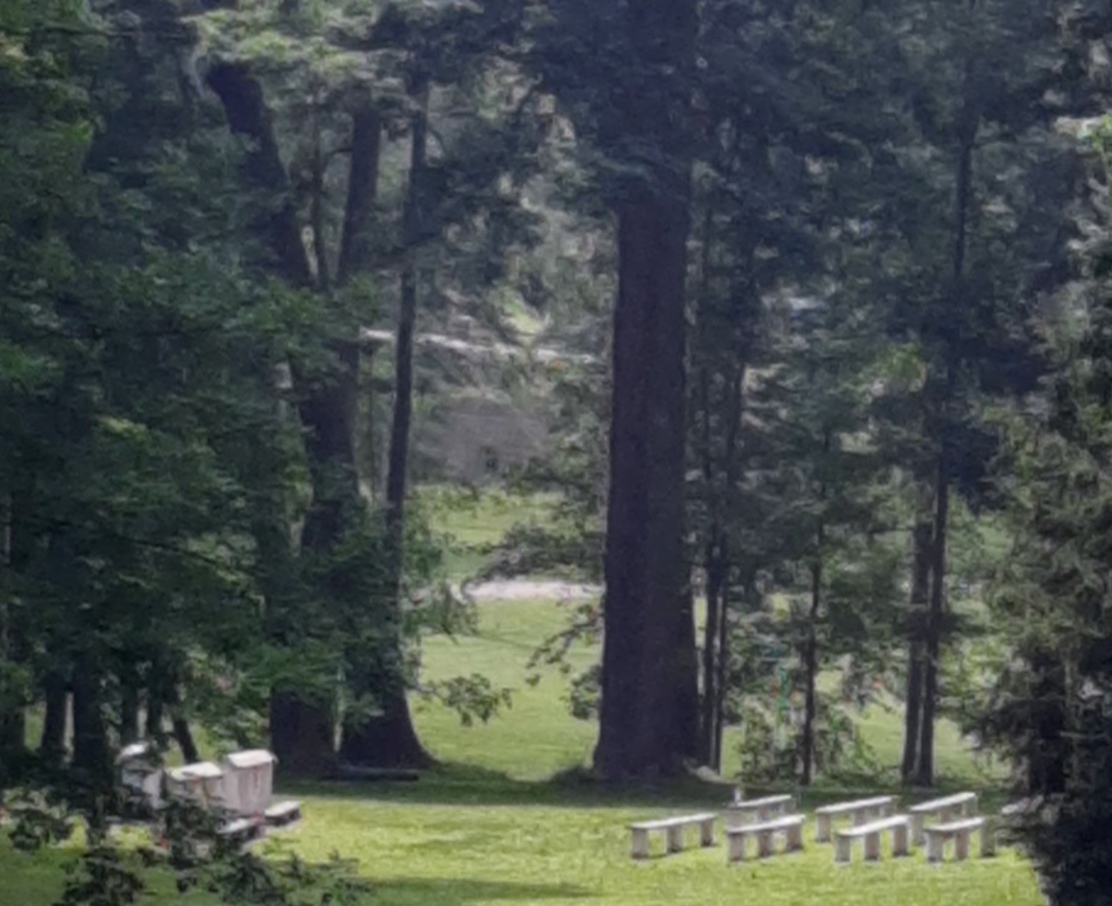
These beautiful old oaks make the perfect place for an outdoor chapel meeting.

Today that heritage continues with an annual Chautauqua Homecoming Days and the Bethesda Festival during the second weekend in July with a new, more modern form of entertainment. This is a community event where everyone comes to celebrate the history of Epworth Park through a variety of activities including entertainment, a car show, fishing tournament, and vendors.

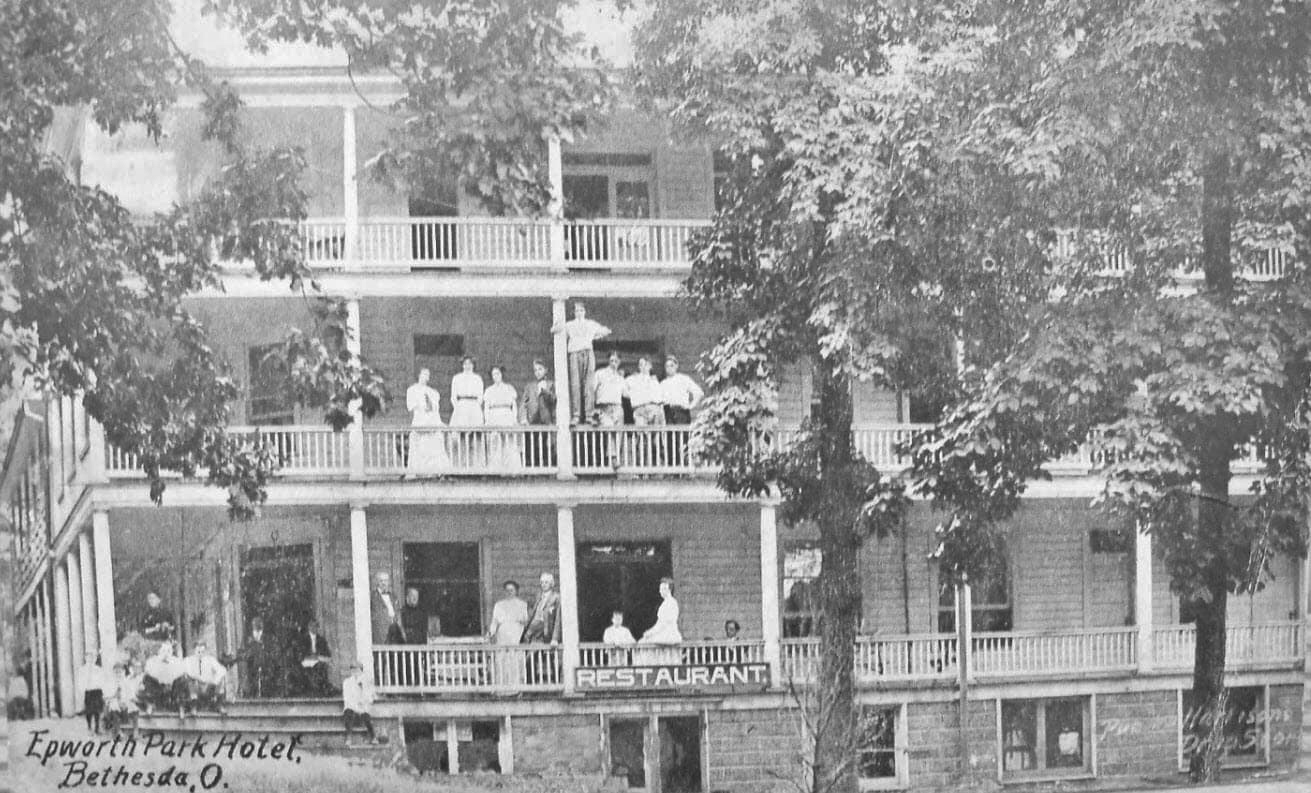
In its day, Epworth Hotel was ‘the place to stay’ at Epworth Park.

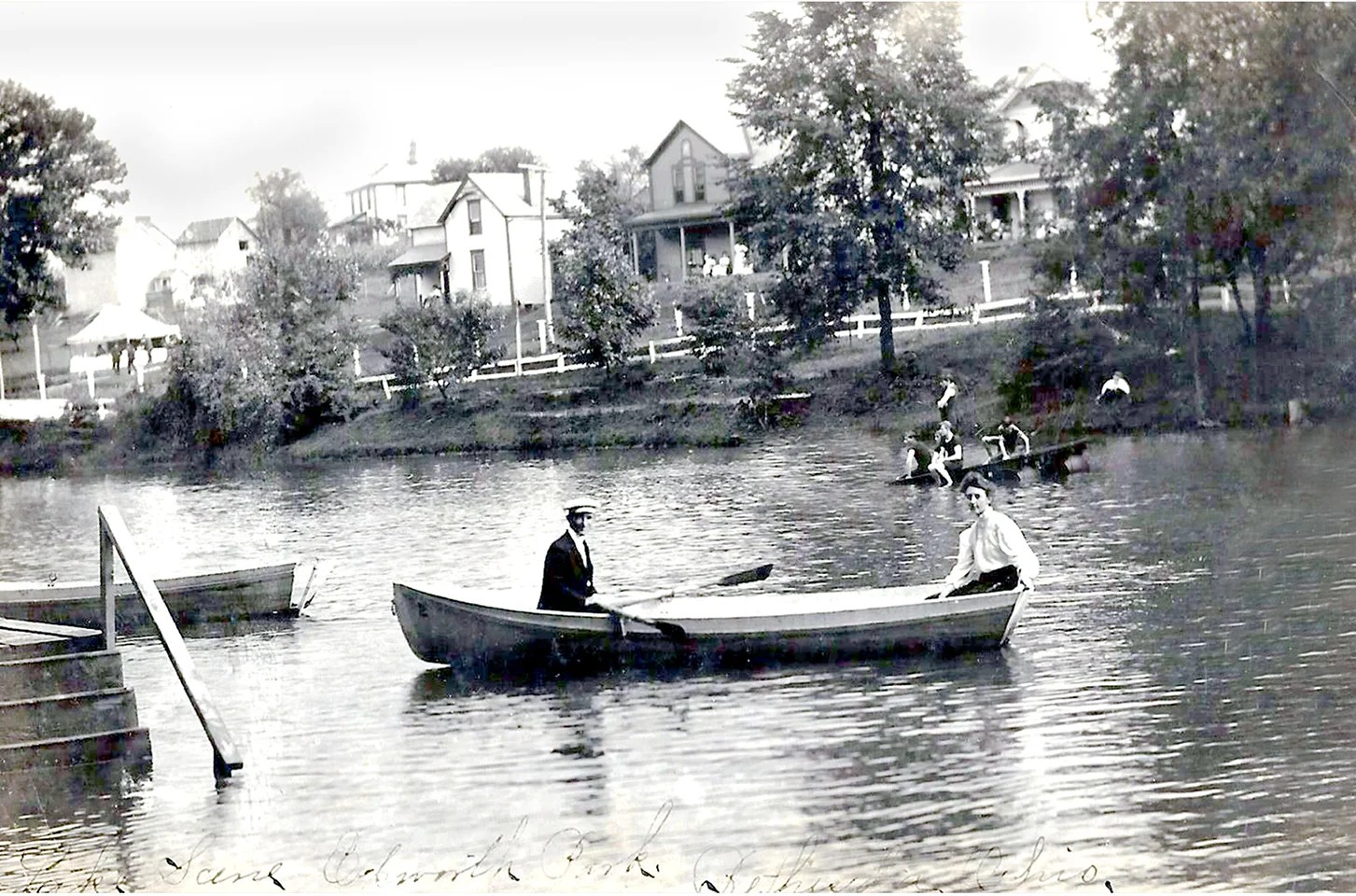
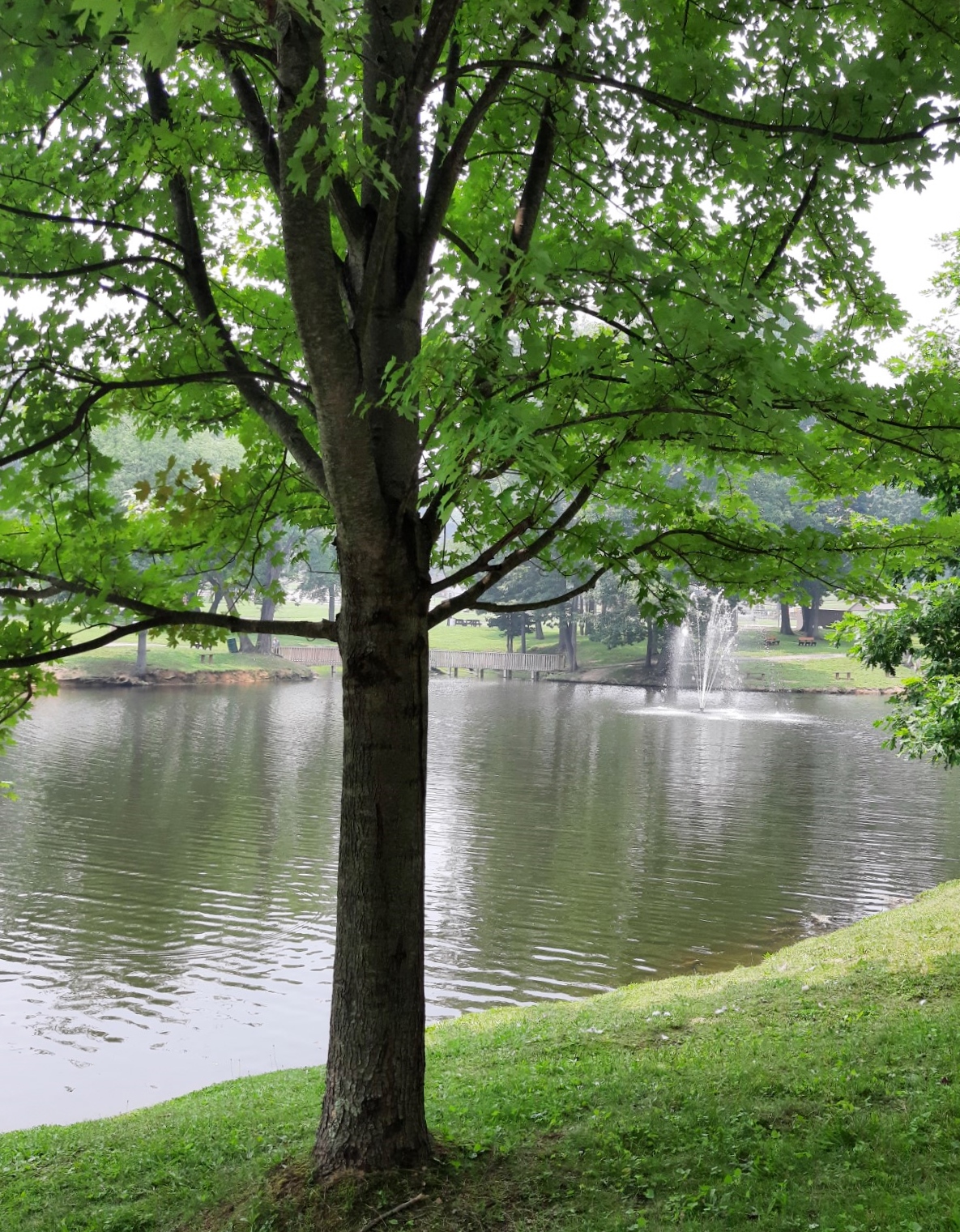
A beautiful, three-story hotel was added in those early days as well as a lake and auditorium. Unfortunately, the hotel no longer exists but in those early days was near the site of today’s concession stand. The lake not only added to the beauty of the park but provided a place for swimming and boating. Today a fountain adds beauty along with two bridges over the lake.

Boating on the lake was a popular way to spend the day.

This seven-acre park is surrounded by a grove of oak trees and consists of sixty privately-owned Victorian cottages, a common house for meetings, and the original outdoor chapel/amphitheater for services, weddings, and concerts with room for up to 250 guests.

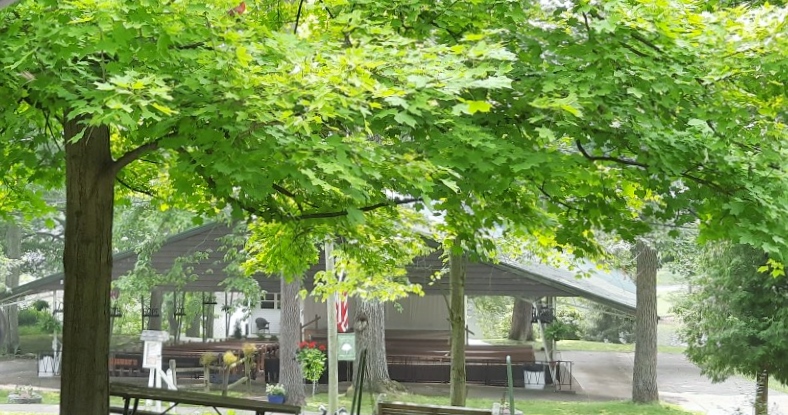
Concerts, meetings, and weddings are held in their large outdoor amphitheater.

May through October is the perfect time for a wedding in the “Garden of Oaks” in their open-air, covered auditorium. Take time to stroll down the sidewalks and enjoy the old Victorian cottages that have been around for quite some time. Notice all the beautiful flowers, gardens, and American flags on your walk.

The water fountain adds a peaceful touch.

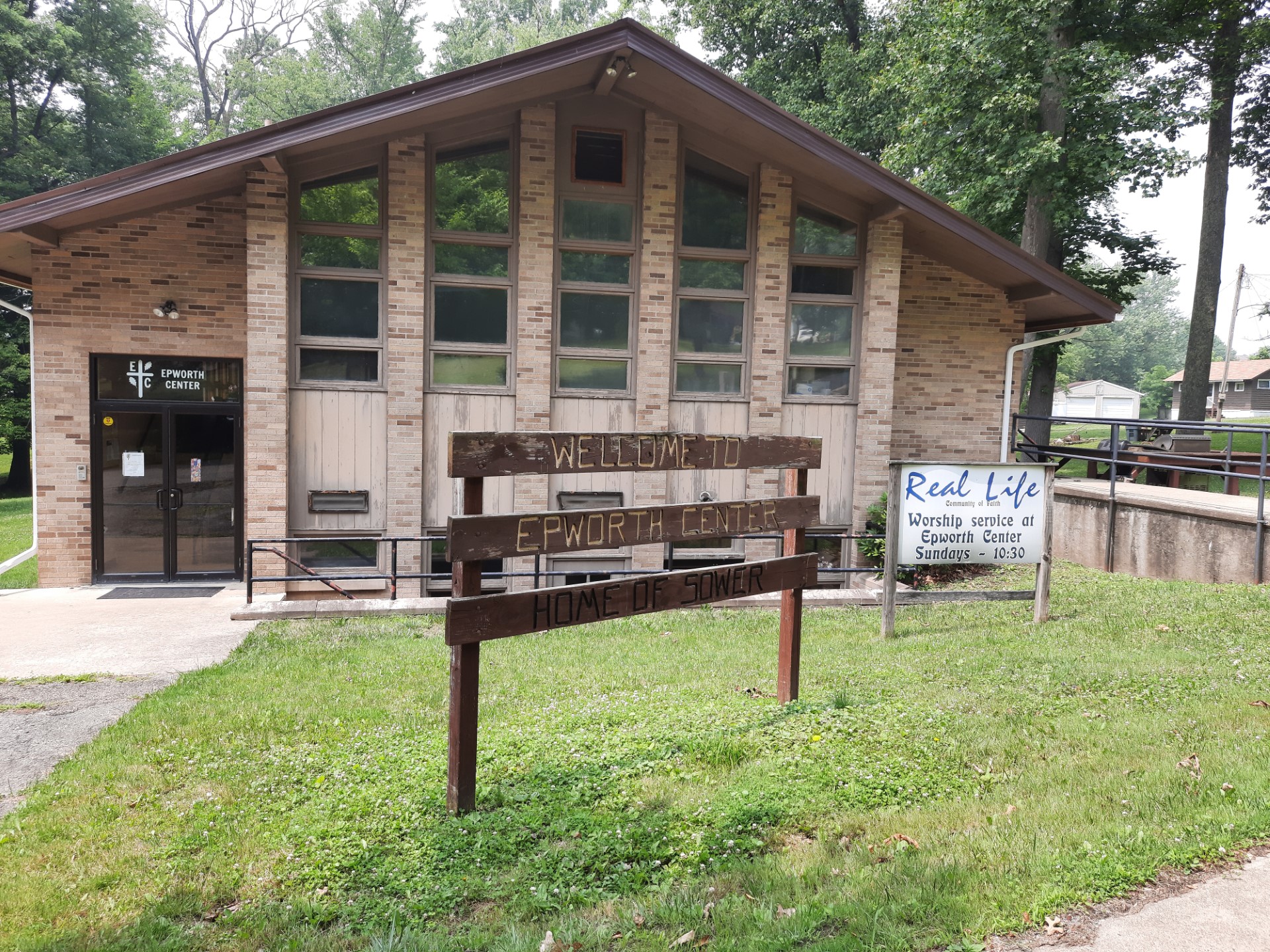
Until 2018, the Methodist Church East Ohio Conference owned the entire park. Today they have maintained ownership of Epworth Center but the remaining land has been sold to cottage owners and the Village of Bethesda.

Epworth Center was originally part of the Methodist campground.

Epworth Lodge, the present home of Epworth Center, was built in 1967 as a learning center. Their outreach missions include home repairs, food pantry distribution, and community support. Today, it is a wonderful place for seminars, retreats, meetings, and weddings. Four cabins house 44 people and there are extra rooms at the lower level of the lodge.

Take a walk along these early Victorian-style cottages.

Cottages are owned primarily by folks from the Upper Ohio Valley and have been passed down from generation to generation. Most are used as summer homes. The village purchased the south side of the property where the lake is located and has a wonderful recreational area there now with playground equipment, ball fields, and basketball court. It’s a great place for a picnic or family reunion as there are several shelters.

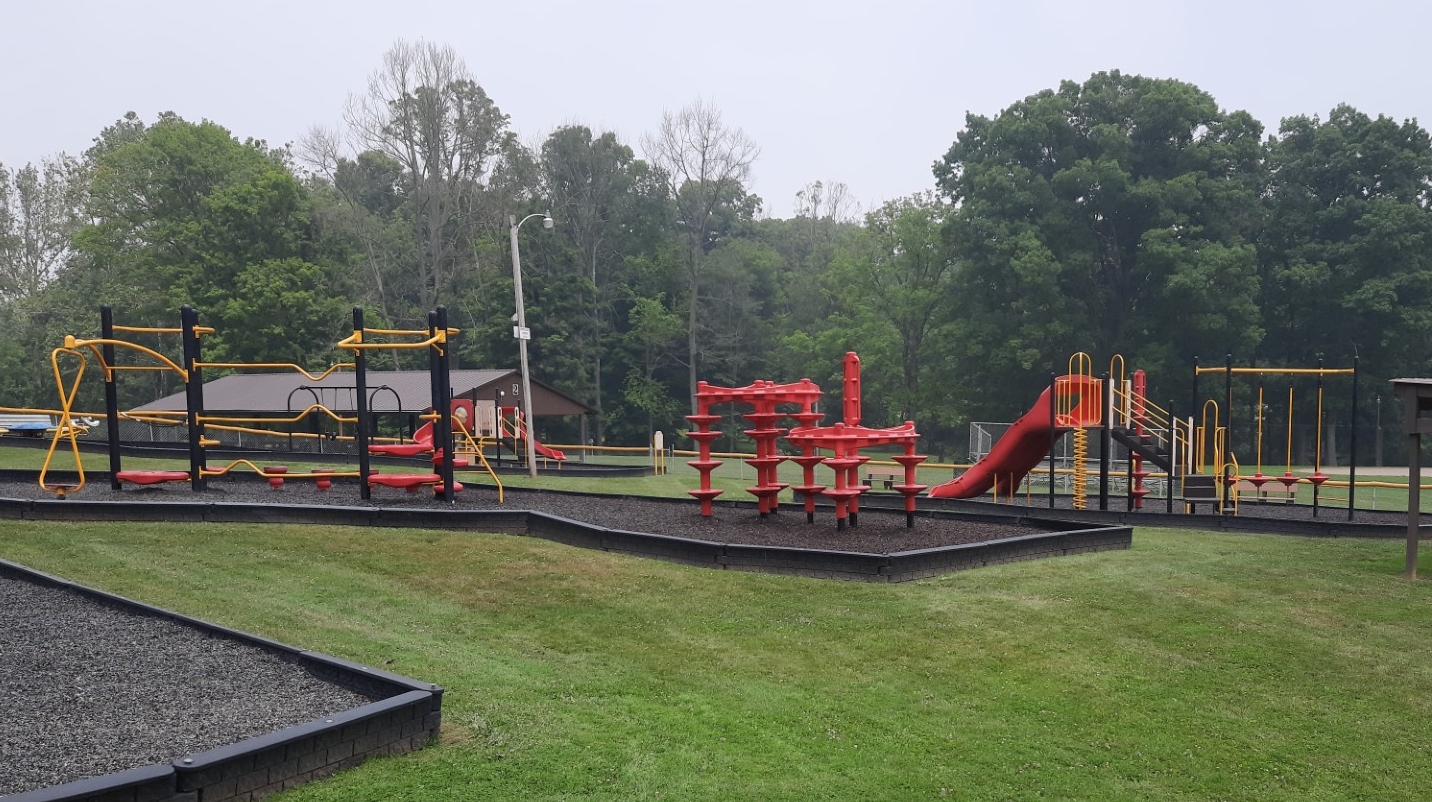
A playground close to the lake is provided by the town of Bethesda.

Many from Bethesda and nearby towns come to enjoy the fun of fishing with their children in the nearby Epworth Lake even if it is catch and release. It’s a great place to teach children the joys of fishing. While at the lake, take time to walk on a bridge across the edge of the lake so you can watch the fish below. It’s the perfect place to watch or feed the ducks and geese that live there.

For over 150 years, the people of Bethesda and surrounding area have enjoyed visits to Epworth Park. There are activities all year long from Easter Egg Hunts to concerts in the park – quite often on Saturdays. There are many locations perfect for photo opportunities.

Lakeside seems the perfect place to take a photo…or your fishing pole!

Perhaps you will want to visit Epworth Park and see its charm. Check their schedule at www.epworthpark.org for upcoming events such as concerts and movies in the amphitheater. While it may not have the glamour of those early days, it’s still a great place for relaxation and family togetherness. Experience the tranquility of days long ago any time of the year at Epworth Park.

Epworth Park is located off I-70 Exit 208. Go south about two miles to the town of Bethesda. The park is located off Route 147. You can’t miss the entrance way!

Giants of Seville, Ohio

While many giant skeletons have been found in mounds across the country, there is an accurate record of two giants, who resided in Ohio in the late 1800s.

The Seville Historical Society Museum is interested in preserving the history of their area.

The Seville Historical Society Museum, located just a few miles west of Akron, contains the history of these two giants. Their display includes life-sized statues of Martin and Anna Bates as well as a pair of Captain Bates’ shoes and his hat.

 Life size statues of Martin and Anna Bates are shown with museum volunteer, Sheila Reidel.

Martin Van Buren Bates began a tremendous growth spurt about the age of six or seven. By the time he was twelve years old, he was over 6 ft. tall and weighed over 200 pounds.

Captain Martin Bates’ boots are on display.

During the Civil War in 1861, Bates joined the 5th Kentucky Infantry at the age of 16 as a private in the Confederate Cavalry. His large figure and ferocious manner quickly earned him the rank of captain and the title “Kentucky Giant.” However, he was wounded in battle around the Cumberland Gap area and captured. He was imprisoned for a time at Camp Chase in Columbus, but later discharged due to his size. He was still often called Captain Bates for the rest of his life.

This picture shows Anna with her parents.

Anna Haining Swan was born in Nova Scotia in 1848 where she was known as the Nova Scotia Giantess. Because of her size at 7’11” tall and weighing 413 pounds, she began working for P.T. Barnum at the age of 16. She had no interest in his traveling shows, but held receptions and teas at the P.T. Barnum’s American Museum in New York City.

After the war, Martin toured with a small circus. While the circus was on tour in Halifax, Canada, the 7’11” tall Anna Haining Swan appeared as part of the P.T. Barnum show, being billed as “The Tallest Woman on Earth.” She and Martin, who was now 7’8” tall and weighed 470 pounds, soon got to know each other, being the tallest people around, as they toured extensively.

Martin and Anna were married in England with a dress made by Queen Victoria’s seamstresses.

Martin and Anna were frequent guests at Buckingham Palace often performing skits together or giving readings. Anna even played the piano. When Queen Victoria heard they were getting married, she had her seamstresses make a beautiful wedding dress for Anna using 60 yards of lace and 50 yards of material.

This wedding on June 17, 1871 at St. Martin-in-the-Fields in London, England drew thousands of people due to the unusual pair getting married. Queen Victoria herself attended the wedding and gave them two extra-large watches as wedding presents. Martin’s watch was as big as a saucer.

This is an original tall door from the home of the giants.

On a visit to the United States, the barker from Barnum brought them to the area of Seville where he lived. They both found it a pleasant place to live and soon acquired a 130 acre farm there in 1871. Martin built a massive house with 14′ high ceilings to accommodate their larger size with all furniture built to order. At the Seville Baptist Church, a special extra wide pew had to be built to accommodate their size.

The giant couple attended this First Baptist Church in Seville

Anna taught Sunday School at the First Baptist Church and had a carpenter build a large shoe which she filled with presents for the children. Then they were treated to lunch at Anna’s home, a place the children loved to visit as they liked climbing on the extra large elevated furniture where they could sit in the giants’ laps and have stories read or told to them. They also loved riding in their giant sized carriage or sleigh.

Babe’s original extra-large baby bed.

While Martin wanted to be a farmer and had the best breeds of cattle and Norman draught horses, their size made them an unusual attraction. In 1878-1880, Martin and Anna were leading attractions of the W.W. Cole circus as a break from country living. P.T. Barnum remained a personal friend throughout their lives. They often entertained friends from the circus at special Christmas parties in their home.

Martin’s dress hat is also an original.

A favorite story tells how the men of the town were arguing in the dry goods store about how strong the retired Captain Bates really was. Usually people could hear Bates as he approached town because of the hoofbeats of his large horse. However, this time he was not heard. He came into the store just as the owner was saying, “If Bates can pick up this barrel of sugar (possible weight varied from 350 to 500 pounds), I will give it to him.”


Bates easily picked up the barrel and carried it to his wagon. When he returned to the store, he asked, “Do you have any other heavy barrels you want to give away?”

Martin had this statue made in France for the grave of his wife, Anna.

Anna died in 1888 and Martin ordered a statue from France of a beautiful woman for her grave in Mound Hill Cemetery. One son is buried there also, while their first son was buried in London, where he died just hours after his birth.

Martin sold their oversized house, and moved to town. He did remarry in 1897 but this time it was to a woman of 5’4”, Annette LaVonne Weatherby, and lived a peaceful life until his death at the age of 74 in 1919 of nephritis, an inflammation of the kidneys.

Martin is pictured with his second wife, Annette, and Frank Bowman, the shortest man in the world

The farm house burned down years ago, but the barn is still standing that Martin Bates built. You can still faintly see “M V Bates 1883” on the roof in giant letters of course. The doors are also giant size so he could enter easily. There is a nearby pen used to hold wild animals he owned, as well as animals from the circus when it passed through.

The museum is open on Saturday mornings from 9-12 during the months of May – September where you will also find a Farmers’ Market. In March, April, October, November, and December they are open the first Sunday of each month from 9-12. The museum is closed in January and February.

Martin and Anna Bates left a large footprint on the village. A piece of history for all to still enjoy today. Be sure to visit the Seville Historical Society Museum, Mound Hill Cemetery, and First Baptist Church while in town and perhaps drive just outside of town to see the old barn. This was an unusual couple of giants. It’s worth the trip!