Tis the Season to Catch the Christmas Spirit

Entering Tis the Season Christmas Shoppe, you see the real reason for the season displayed.
Decorating for Christmas helps lift the spirits of a world which is normally a bit on the gloomy side at this time of year. If you need any ideas, Tis the Season Christmas Shoppe near Berlin might be the perfect place to visit. With over 20,000 square feet to explore, you’ll feel like you’re in a Christmas Wonderland surrounded by the songs of the Christmas season all year long.

Jo Ann is pleased with her new White on White Christmas display surrounded by angels.
The story of Tis the Season Christmas Shoppe and Jo Ann Schrock-Hershberger are inseparable. Over twenty years ago, Jo Ann was traveling and visited a Christmas store. She wondered if that idea would work back at her home near Berlin, Ohio.
Jo Ann’s grandfather served as an Amish bishop. Her father and mother broke away from the Amish tradition when Jo Ann was two years old. She wasn’t real sure if Christmas would be an attraction in Amish country. So she tried a small shop first. It worked!
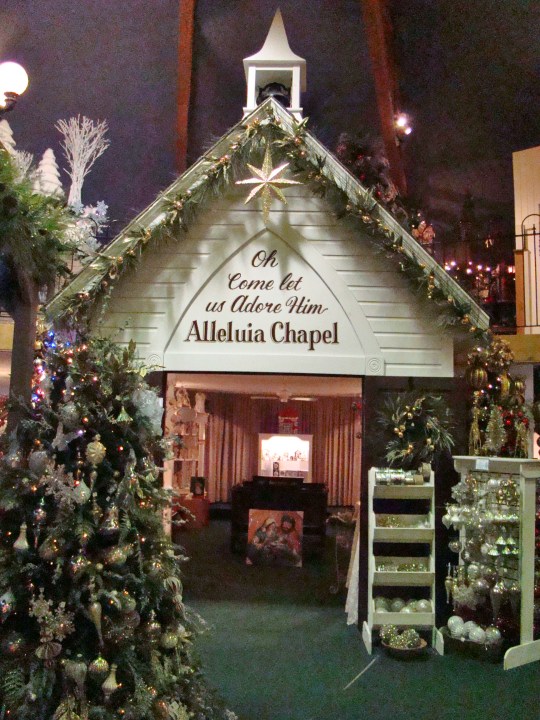
A multitude of angels welcome you in Alleluia Chapel filled with antique pews and stained glass windows.
Their unique round barn, once part of the Schrock farm, became the home for Tis the Season. When designing the layout of the entire shoppe herself, Jo Ann made sure “no matter where you are, you can see the reason for the season.” A large nativity scene sets high in the center, with the Alleluia Chapel on the main floor.
When you step through the front door, it’s like walking into Christmas. Greeted by the sounds of Christmas music, spectacular trees, beautiful collectibles, and innumerable ornaments, you are immediately filled with the holiday spirit.
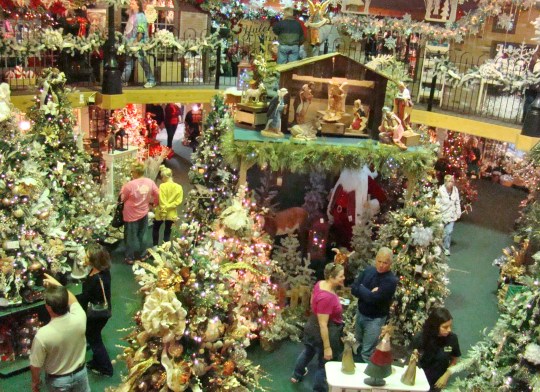
This overview from the circular walkway on the second floor displays the spirit of Tis the Season.
Three levels provide room to explore. The main level has decorated trees of every style and color while the upper loft, with circular walkway, has rooms filled with specific decorations. One room overflows with snowmen, while another has various Santa ornaments. A room brimming with gingerbread decorations also holds various candy canes.
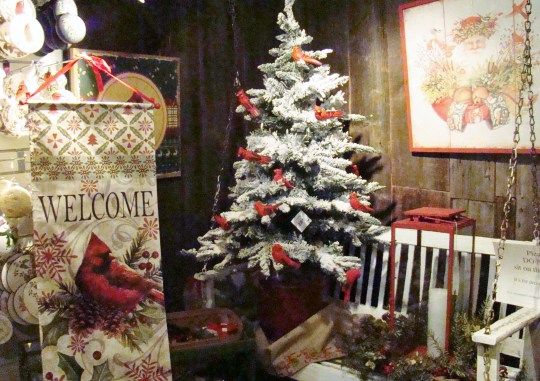
Birds happen to be one of their most popular decorations for trees. This cardinal tree is perfect for Ohio.
The bottom floor contains examples of many trees, ranging from 2′ to 10′. Here you’ll find a great variety of trees: silver, twig, slim, prelit and more. There are over a hundred decorated trees throughout the building with varying themes from reindeer to angels. Each one is beautiful in its own way and gives you many ideas for decorating your own tree.
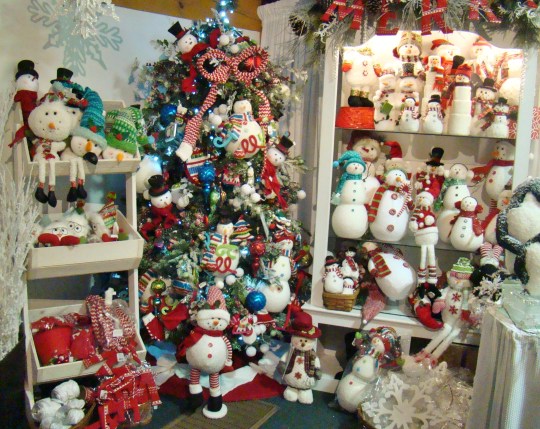
On the upper floor, snowmen dominate one of the rooms.
Their constantly expanding inventory now includes thousands of bulbs, tree toppers and garlands. Over a hundred different kinds of lights are available. It’s Ohio’s largest year round Christmas shop.
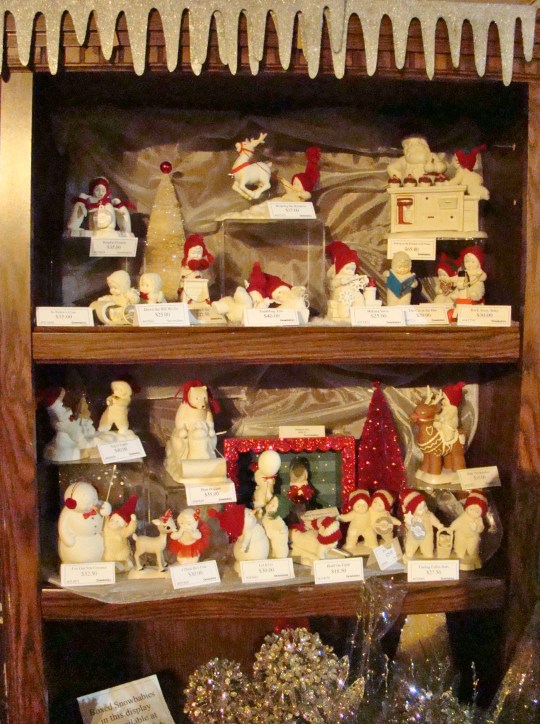
Collectibles like Snowbabies make delightful gifts. Various collectibles can be found throughout the shop.
Not only will you find everything you need to give your home a festive Christmas appearance, but they also have unique home decor and holiday gifts from dolls to gift baskets. Many collectibles are available here that can’t be easily found elsewhere.
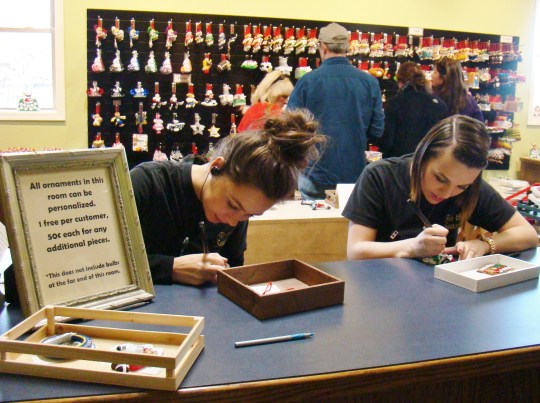
The most popular area personalizes from a large selection of ornaments.Selena and Logan find this a happy place to work.
Happy employees abound, but who wouldn’t be happy surrounded by Christmas. However, the main reason the employees enjoy working here is Jo Ann. She works side by side with them, roasting nuts or running the cash register. Everyone has a headset, which keeps them all in close contact.
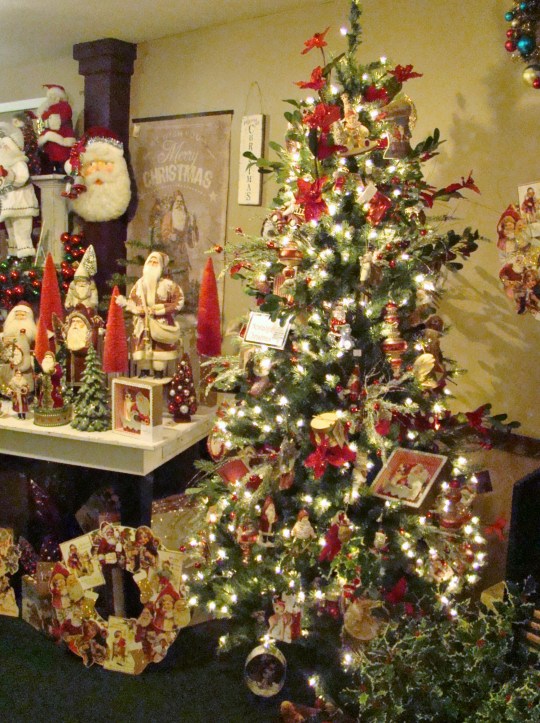
A nostalgic Christmas tree contains old-fashioned ornaments.
People come here from all over the world because they love Christmas and can find unique Christmas decorations. Men, women, and children enthusiastically explore all three floors. Once in a while a husband could be found patiently waiting on one of their many comfy sofas and chairs. Many come on family outings. Almost everyone leaves with a piece of Christmas.
When Jo Ann has time, she and her husband enjoy traveling and most likely visit Christmas shops along the way. While they have traveled extensively throughout the United States and taken many cruises, one place left on her bucket list is the homeland of her ancestors – Southern Germany and Austria. Everyone needs a change of pace now and then.
Plan an escape from daily routine and catch the spirit of the holidays at Tis the Season Christmas Shoppe. It’s the kind of place you return time and time again…I do.

This old-fashioned Santa bell was my choice this year.
There’s only one problem. Which lovely Christmas decorations should you take home with you? Several of their ornaments hang on my tree every year, and an old-fashioned Santa was added on this road trip. Visit Tis the Season Christmas Shoppe where it’s nothing but Christmas all year long.
Tis the Season Christmas Shoppe can be found along State Route 39 near Millersburg, Ohio. It sets down off the road in a small valley as part of Schrock’s Amish Farm and Village.
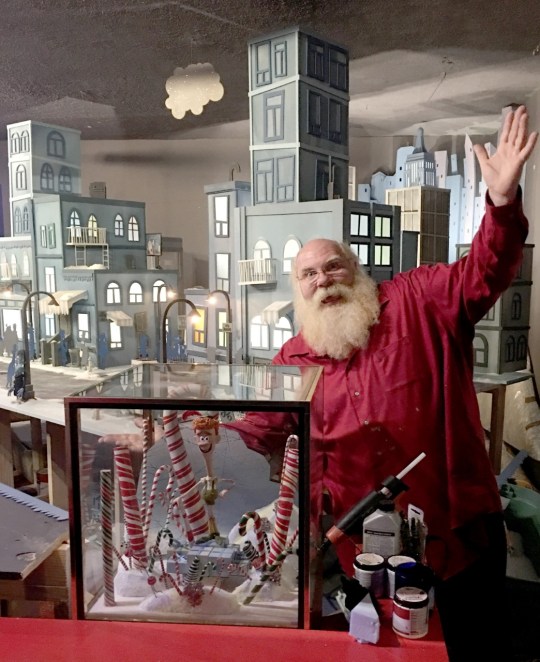

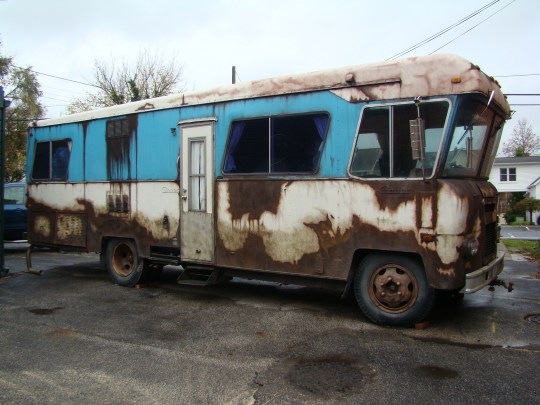




















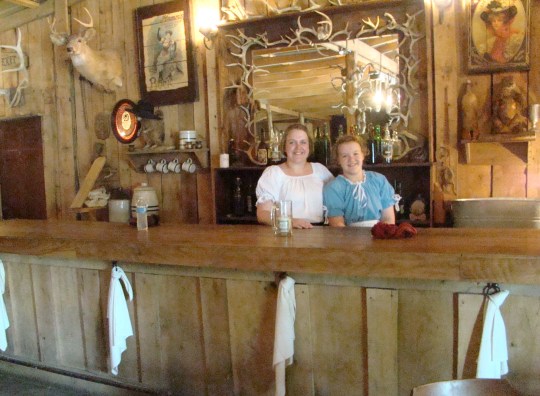
 Howdy, partner!




 For some reason, power plants attract me! This Willow Island Hydroelectric Plant was located across the Ohio River on my drive going up the river from Marietta, Ohio.
 It was the perfect time of year for a Farmers Market to pick up some fresh Marietta tomatoes, sweet corn and a couple pieces of fudge. Valley View Farm Market even had a U-Pic section to pick your own peppers and tomatoes.
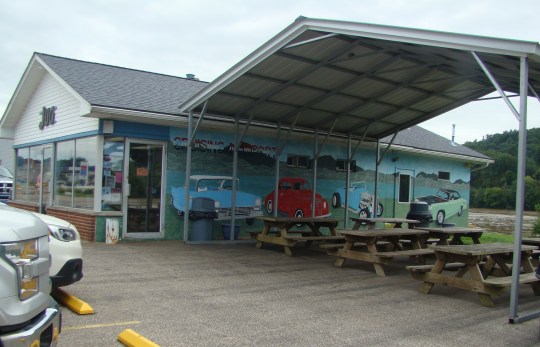 The Jug Restaurant in Newport, Ohio was a great stop for a refreshing drink and a chance to sit along the Ohio River for a while. They had a great mural of old cars on the side of their building as well as picnic tables and a nearby shelter.
 It’s always nice to see families enjoying the day together. Here father and son walk along the pier as they enjoy the river scene.
 This Illinois tugboat going up the river was pushing thirty barges. Later in the day they came back loaded and covered. People were guessing they were loaded with steel.
 Reached the Fly Ferry in time for a couple rides at $1 per person from Fly, Ohio to Sistersville, WV. One time there were several motorcycles riding along.
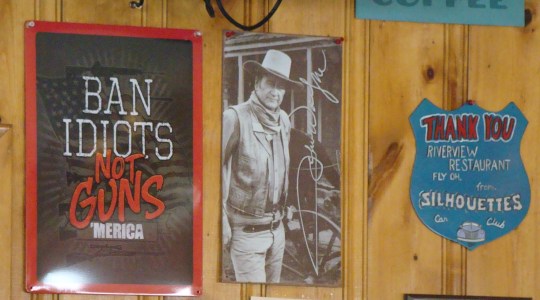 The Riverview Restaurant is a great place for a tasty lunch while watching the river activity out the window. Guess that’s why they call is Riverview! Had to agree with this sign on their wall next to a picture of John Wayne.
 Heading home over a crooked back road made for a perfect ending for the day. Along the way the cows were learning to live with the pipeline that was invading their pasture.
 Most of the way, farmland and beautiful homes and barns reminded me of a saying:
 Almost home but stopped by Seneca Lake for a peaceful time by the water. This picture looks out from the dam area to that popular island for boaters. Guess you can tell that hanging out near the water is a favorite pastime of mine.
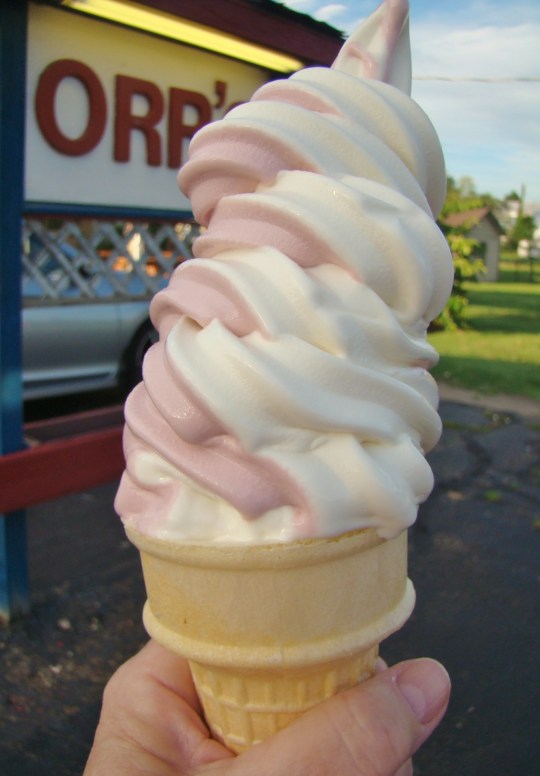 One last stop before home to get a favorite ice cream cone from Orr’s Drive-In. Always enjoy that raspberry twist!
