Places to go and things to see by Gypsy Bev

Archive for the ‘Ohio’ Category

“Digging the Past” at Campus Martius Museum in Marietta, Ohio
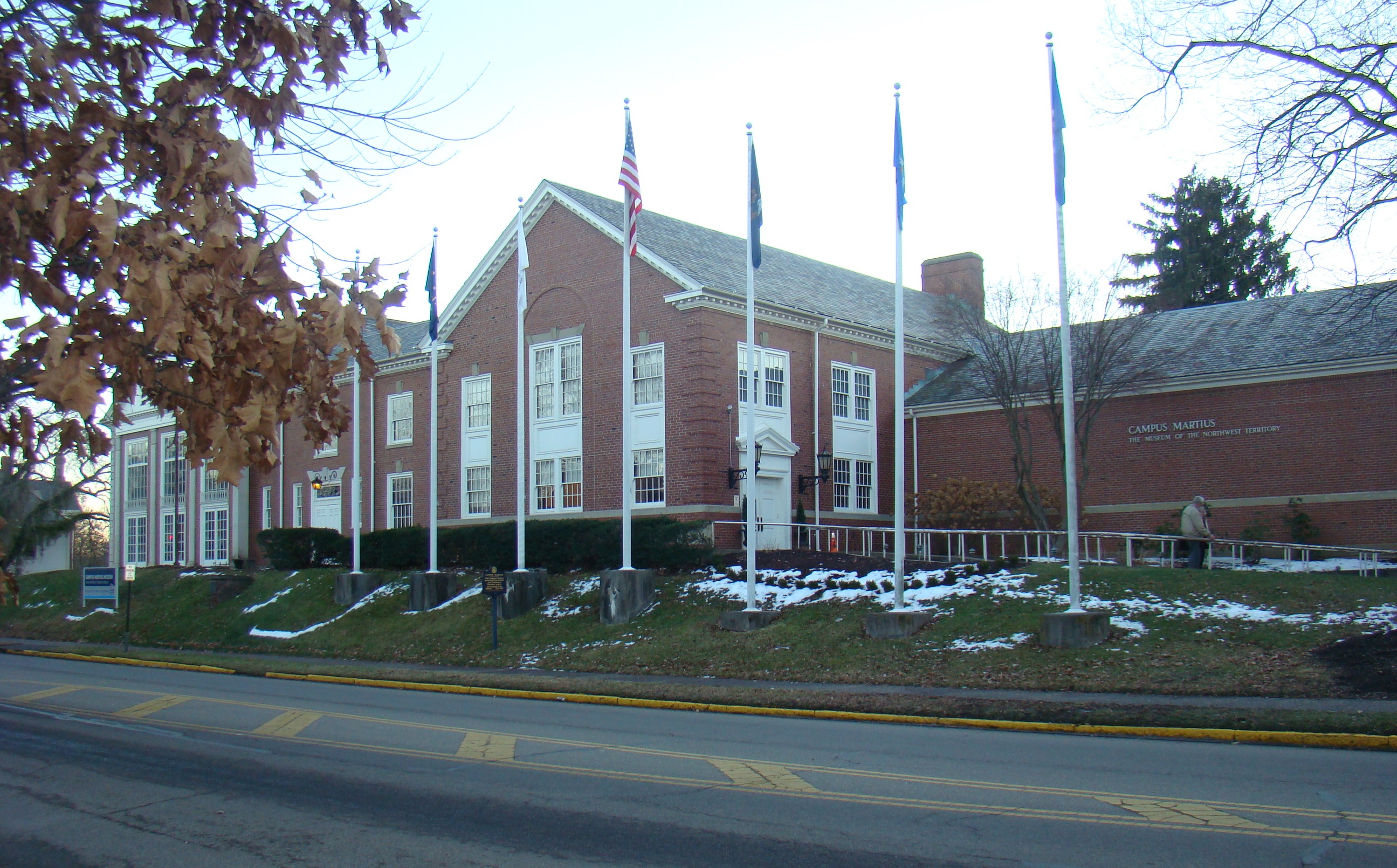
Campus Martius Museum in Marietta, Ohio

Campus Martius Museum in Marietta, Ohio

Dig into the past and discover facts about people who lived hundreds or even thousands of years ago. At Campus Martius Museum in Marietta, Ohio, those interested in archaeology had an exciting day called “Digging the Past”. Special displays by area people, who are interested in what is under the ground, provided valuable information for anyone who wished to listen.
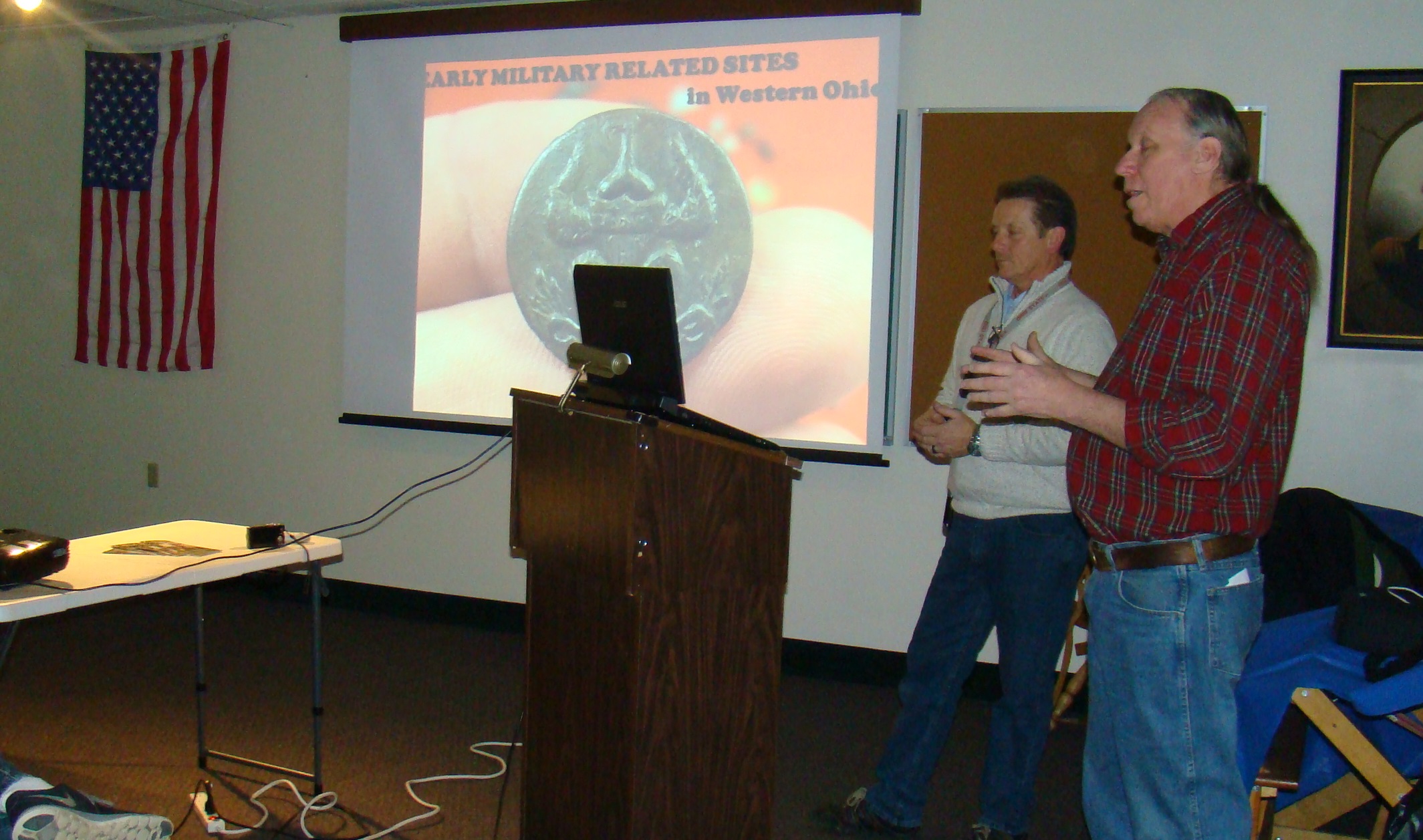
One of the speakers at Archaeology presentation

One of the speakers at Archaeology presentation

Five knowledgeable archaeologists and collectors gave slide show lectures on various archaeological subjects. Some of my favorite dealt with the various groups of mounds around the state of Ohio. Bruce Lambardo, ranger at the Hopewell Culture National Historic Park, explained why we should change the term “mounds” to “earthworks”. These structures are not just piles of dirt built by early Native Americans, but precise, geometrical art works that were not only enormous in size, but also aligned astronomically. He described the Hopewell Culture site near Chillicothe as the most spectacular configuration of Earthworks in the world.

Dr. Jarrod Burks, Director of Archaeological Geophyics at Ohio Valley Archaeology, discussed the earthworks throughout the state including Newark, Chillicothe, and Marietta. While many of the mounds have been destroyed by farming and housing developments, there are still new ones being discovered in the last fifty years.
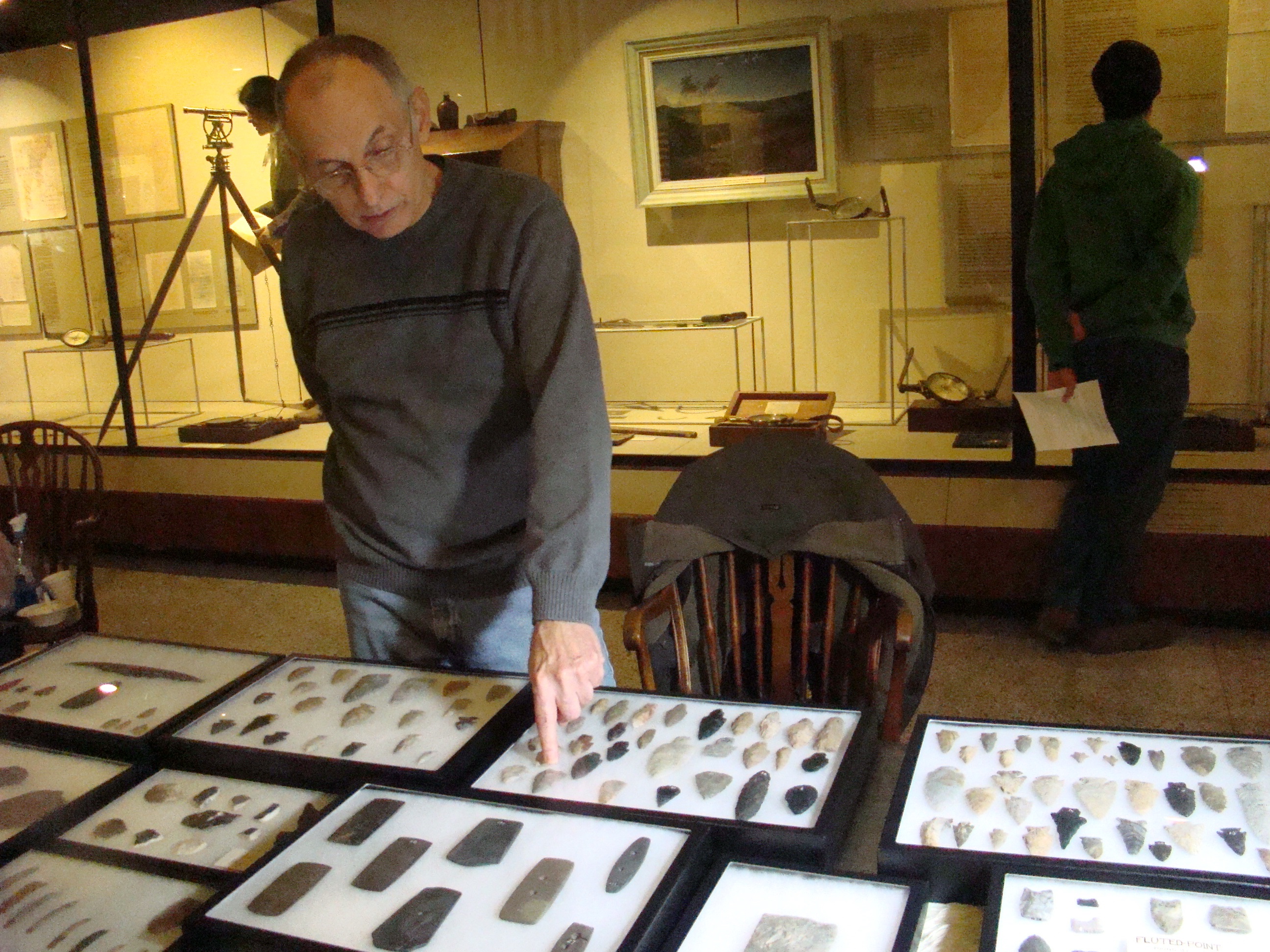
Mound City Artifacts explained.

Mound City Artifacts explained.

There seemed to be a strong connection between the Newark and Chillicothe Earthworks when they were constructed in 300 B.C. – 400 A.D. These earth architects constructed these ceremonial mounds, where the circles had the exact same diameter, and squares measured the same corner to corner. Even more exacting was the fact that the circle would fit perfectly inside the square. How did these early people perform such mathematically correct shapes and even have them aligned to the winter and summer solstices? How did they construct Great Hopewell Road directly between the two mound centers? Either they were geniuses or perhaps they had some extraterrestrial help. Keep your mind open to all possibilites.

Wes Clark explained his finds at The Castle Museum, where pottery and earthworks artifacts have been discovered. Nathaniel Clark Pottery (1808 -1849) existed on the same site as today’s Castle, so many pieces of pottery have been discovered from red earthenware to stoneware. Earthworks artifacts also frequently appear, including flint arrowheads.

From all the buttons found at the military sites, Archaeologist Greg Shipley remarked, with a smile, that the thread must not have been very strong. A wide variety of buttons appeared in archaeological digs in western Ohio military sites while looking for footprints of an outpost there. The hot spot for buttons seemed to be in the area of the taverns.
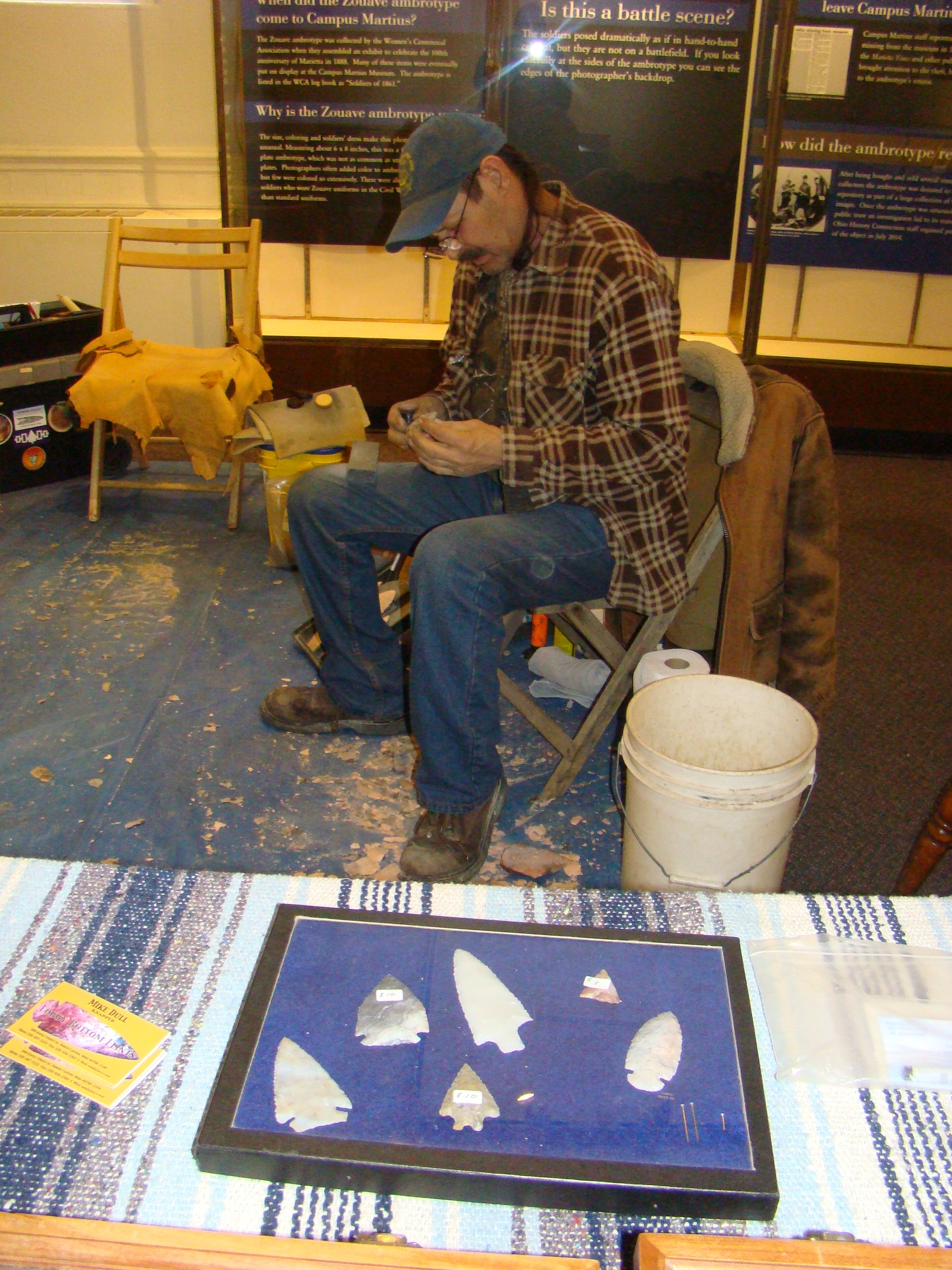
Flint Knapper demonstrates skills.

Flint Knapper demonstrates skills.

Flint knappers displayed  the intricate methods they use to shape the pieces of flint found. Their methods are beyond my description as they magically formed arrowheads by chipping and shaping the layers of the flint. Long ago the Indians used either stone or bone to shape their arrows from flint, in much the same manner. After use, the arrowheads would need re-sharpened by removing flakes to reshape, so they would get smaller and sharper as time passed. The flint knapper at Marietta had been creating flint pieces for fifteen years so was quite excellent at his craft.
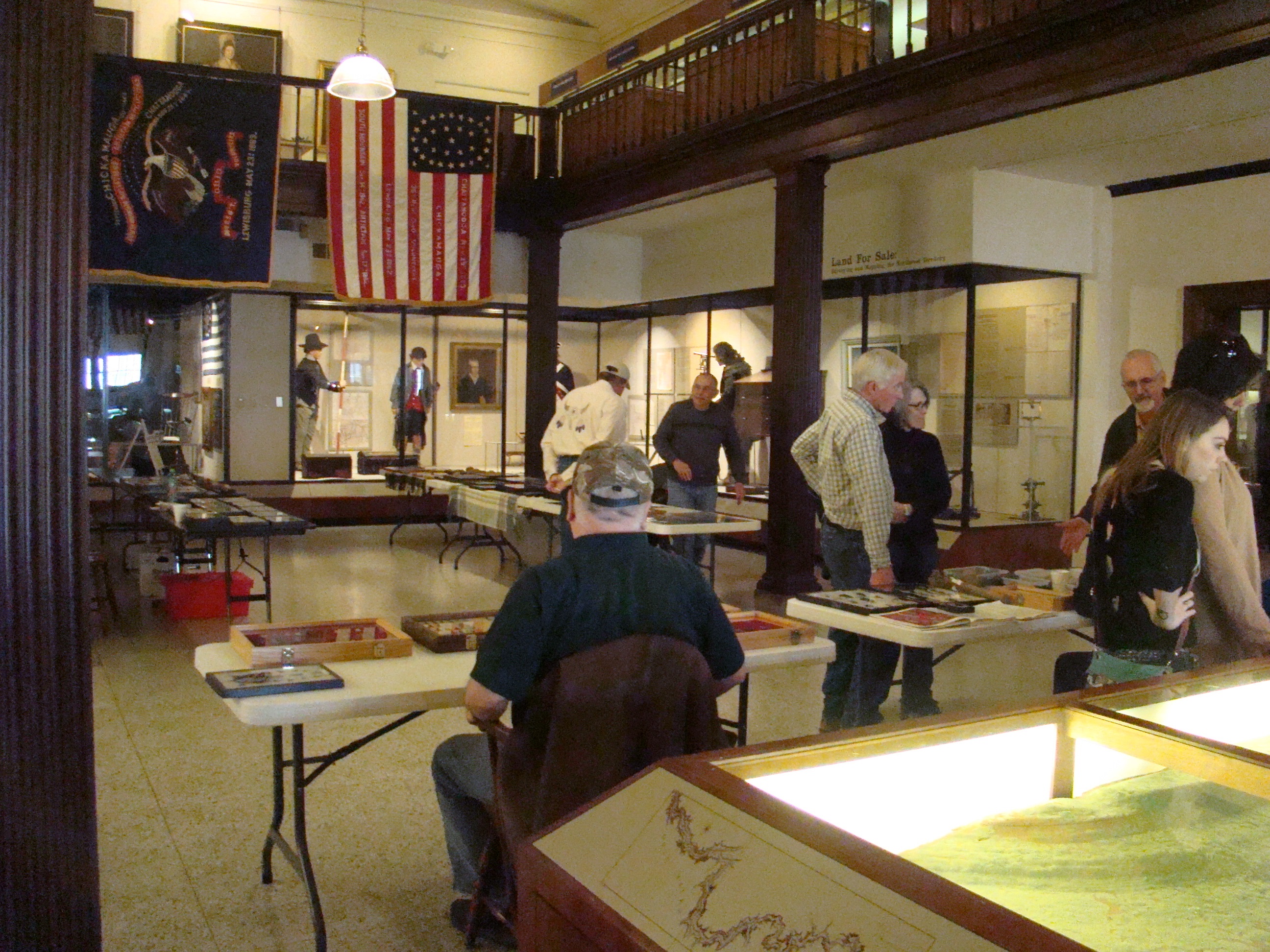
Archaeology displays filled the lobby of Campus Martius Museum.

Archaeology displays filled the lobby of Campus Martius Museum.

Numerous displays throughout the lobby included historic artifacts from collections around the state. Not only were there Indian artifacts from the Adena and Hopewell people, but also artifacts from military camps of the Revolutionary and Civil Wars as well as historic Marietta.  The Pipe Tomahawk intrigued me with a head that has an ax on one edge with a pipe bowl on the other. It enjoyed multiple uses as a pipe to smoke, a ceremonial instrument, and also a weapon.
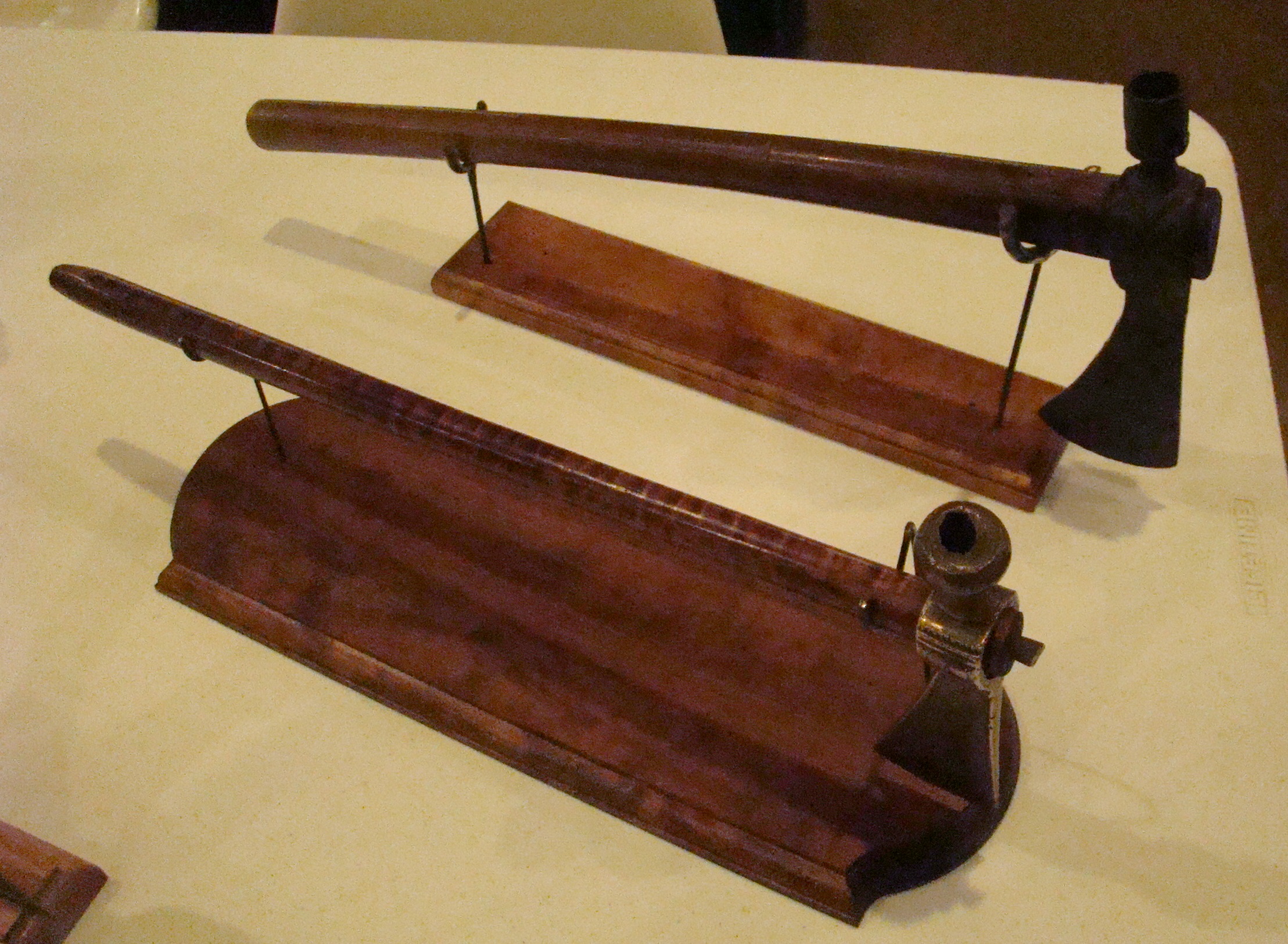
Tomahawk Peace Pipe

Tomahawk Peace Pipe had several uses.

Campus Martius Museum in Marietta holds informative speakers throughout the year on a wide variety of subjects. If you are interested in Ohio history, check out their schedule at Campus Martius Museum website.

Marietta is located on the beautiful Ohio River just off I-77. Take Exit 1 to downtown Marietta and follow State Route 7 / 60. Turn left on Washington Street and one block down on the right hand side, you’ll see Campus Martius Museum. There is parking to the right of the building or one block behind at the Ohio River Museum. Visit both museums if time permits.


‘Born Hustler’ Now Creates Marvelous Bronze Statues

If people knew how hard I have had to work to gain my mastery,
it wouldn’t seem wonderful at all.
~Michelangelo


Alan Cottrill's Sculpture Studio is watched over by Chief Nemocilin, an American Indian who helped blaze the National Road.

Alan Cottrill’s Sculpture Studio & Gallery is watched over by Chief Nemacolin, an American Indian who helped blaze the National Road through Pennsylvania.

Often in life, people return to their hometown area for various reasons. Alan Cottrill came back to Zanesville, Ohio in 2003 to open a Sculpture Studio & Gallery at 110 South 6th Street. Here he found the perfect spot for his artistic designs in the former Zanesville News building, where the words from Michelangelo hang on his wall.

Alan tells about all the busts he made during his first two years.

Alan tells about all the busts he made during his first two years of sculpting.

Like many young people from a poor background on the farm, where his dad was a Meadow Gold milkman, Cottrill explored several careers during his lifetime. As a youngster, he never seemed to run out of ideas or job opportunities. In high school, he sold candy bars at lunchtime, worked as a guard, supervised Y-City umpires, and helped at the Skyway Drive-In.

After trying the college scene, the army, and being a milkman himself, he founded the Four Star Pizza franchise with his dad, and became an international entrepreneur. As he traveled the world, art museums attracted his attention and he began collecting art and paintings – his first being in Bulgaria.

Alan with his Sculptor's Bible, an old anatomy book.

Alan holds his Sculptor’s Bible, an old anatomy book.

Then in 1990 in California, PA, Cottrill touched clay for the first time, realizing his intense passion for creating. He sold his business and devoted himself full-time to becoming the finest figurative sculptor in the world. His studies at the Art Students League and National Academy of Design in New York City developed his abilities.

Cottrill sculpted a brass plaque of the McIntire Library in Zanesville, because he said it opened the world to him. His love of books continues to this day. His Sculptor’s Bible is a well-worn book on anatomy, as he feels the need for accuracy in all of his creations, which display intricate design but most importantly, emotion.

Outside his studio, statues line the street making it a treat to drive past his gallery, but it also gives a desire to know what’s inside. His working studio is on the ground floor, with the gallery above. The bronze sculptures demonstrate his passion and curiosity to always be looking for something new. He feels, “The degree of passion in artwork shows the degree of passion one has within.”

Alan checks his favorite sculpture - two tombstones for him and his wife.

Alan checks his favorite sculpture – tombstones for him and his wife.

Once Cottrill receives an inspiration or a consignment, he then assembles photographs of objects, researches clothing and accessories, and then begins the formation of a clay bust, where he makes the face come to life with emotion. The clay he uses comes from Laguna Clay in nearby Byesville, Ohio.

In order to have quality bronze available, Cottrill, along with his lifelong friend, Charles Leasure, established Coopermill Bronzeworks, Ltd.  All of his pieces are bronzed there and they also do work for other artists.

Woody Hayes sculpture at OSU Center

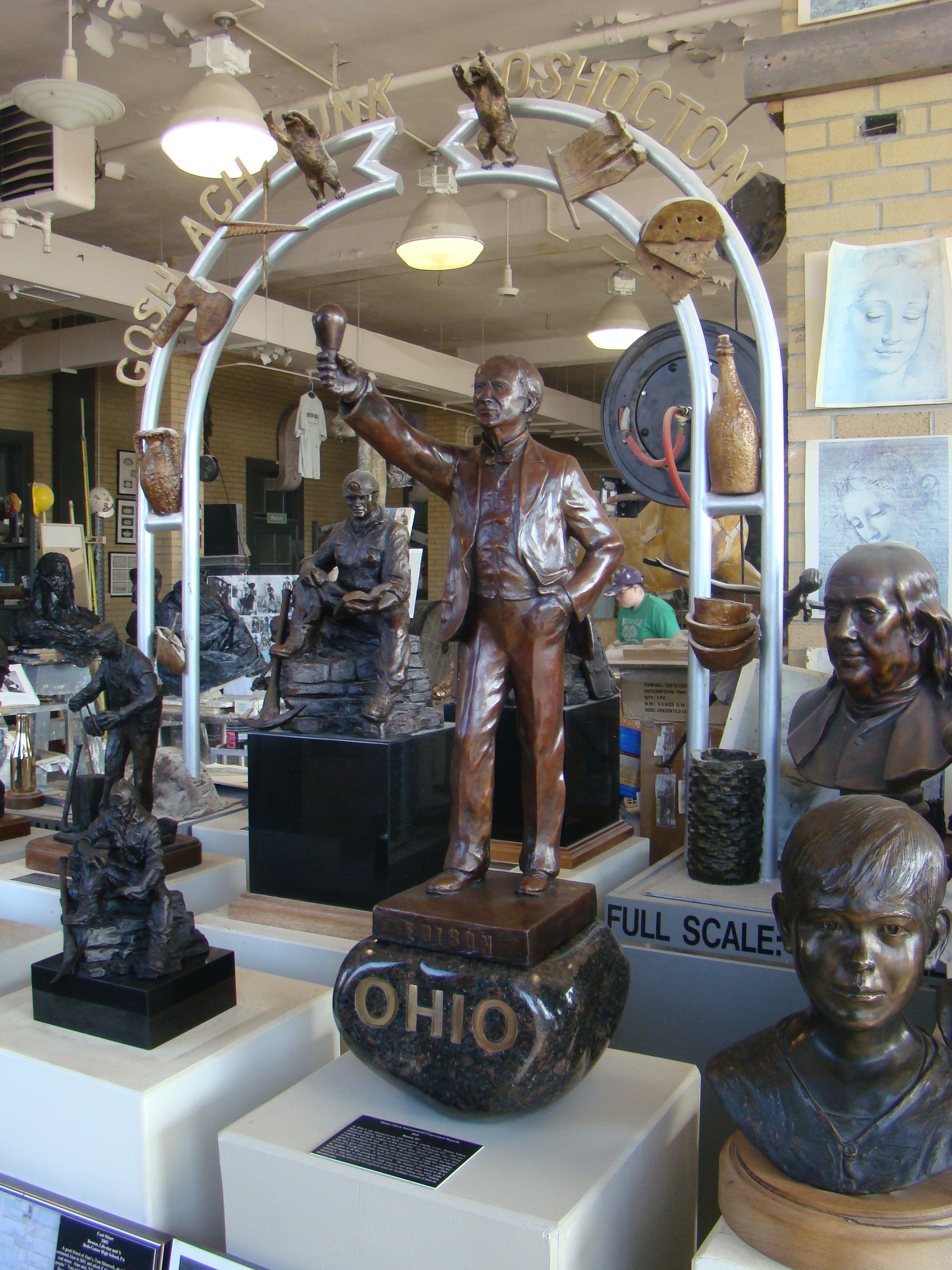
Thomas Edison Bronze Sculpture will soon be placed in U.S. Capitol to represent Ohio.

Over 400 bronze sculptures are displayed in his Zanesville studio. They range in size from 18 inches to lifesize, which takes about seven weeks to complete. While his favorite piece of work is the tomb sculpture he did for him and his wife, the one that receives the most attention is his Woody Hayes bronzework, which appears in front of the Woody Hayes Center at OSU in Columbus, Ohio.

Bronze Ohio Coal Miner Statue

Bronze Ohio Coal Miners Statue stands at the old railroad station in Byesville.

In nearby Byesville, he sculpted the Ohio Coal Miners Statue, paid for by contributions from those who rode the train over a several year span. His Thomas Edison statue has recently been accepted for the U.S. Capitol; while for Cambridge, Ohio, the Hopalong Cassidy bronze statue is only just begun.

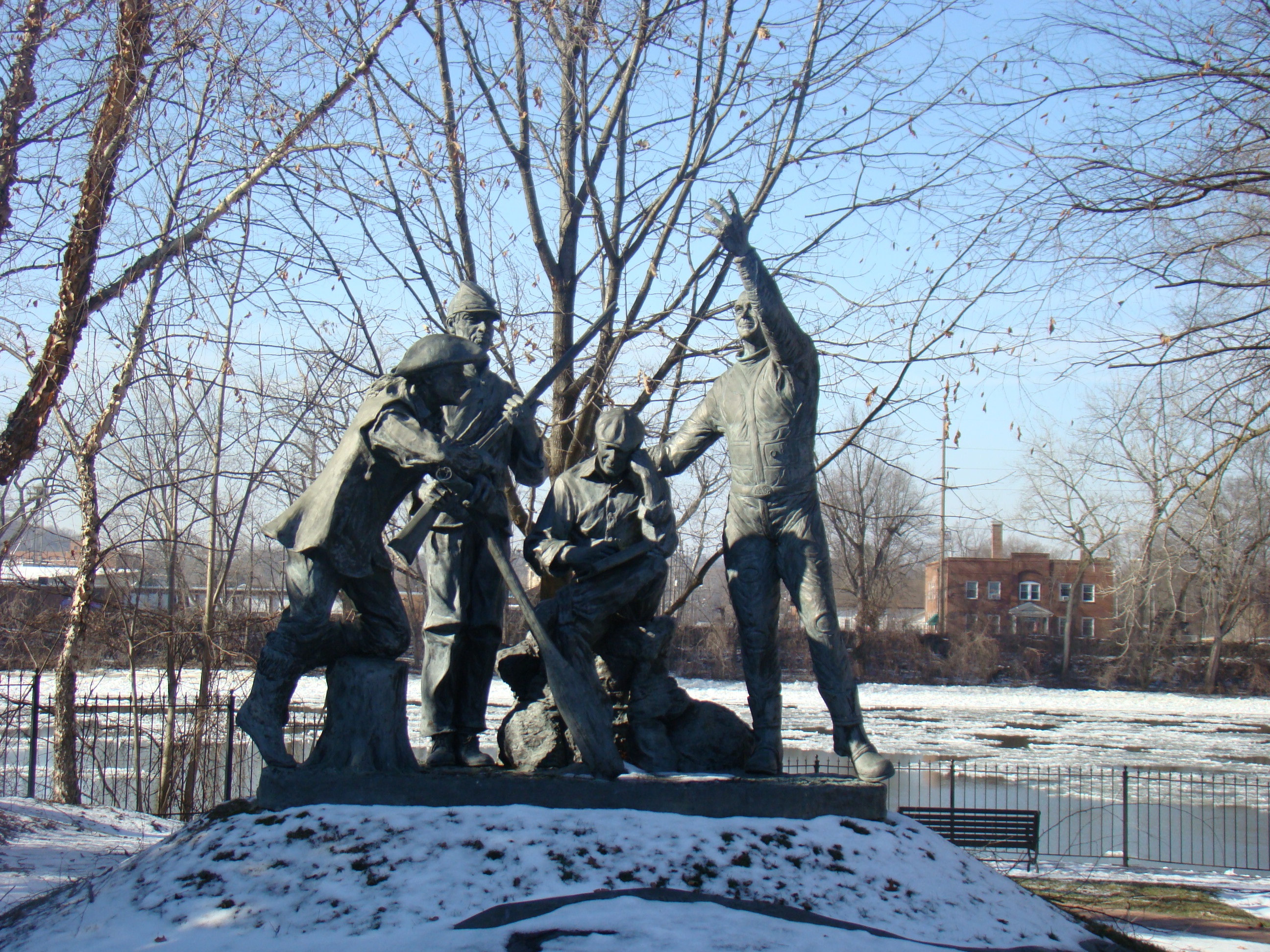
Bicentennial Legacy Monument stands on a mound at Zane's Landing on the Muskingum River.

Bicentennial Legacy Monument stands on a mound at Zane’s Landing on the Muskingum River.

Watch Alan Cottrill at work in his studio in Zanesville, Ohio, where you will find the world’s largest bronze sculpture collection of any living sculptor. If you are lucky, he will share stories of his life and his passion. This amazing sculptor still works seven days a week…but doesn’t start as early anymore!

To discover Alan Cottrill Sculpture Studio, take I-70 exit 155. Drive south a half-mile. Turn right onto Marietta St., then right again onto S. 6th St. The studio is one block ahead on the right. Look for the statues lining the street.

Queen’s Parade Brings a Delightful Regal Touch to Dickens Victorian Village


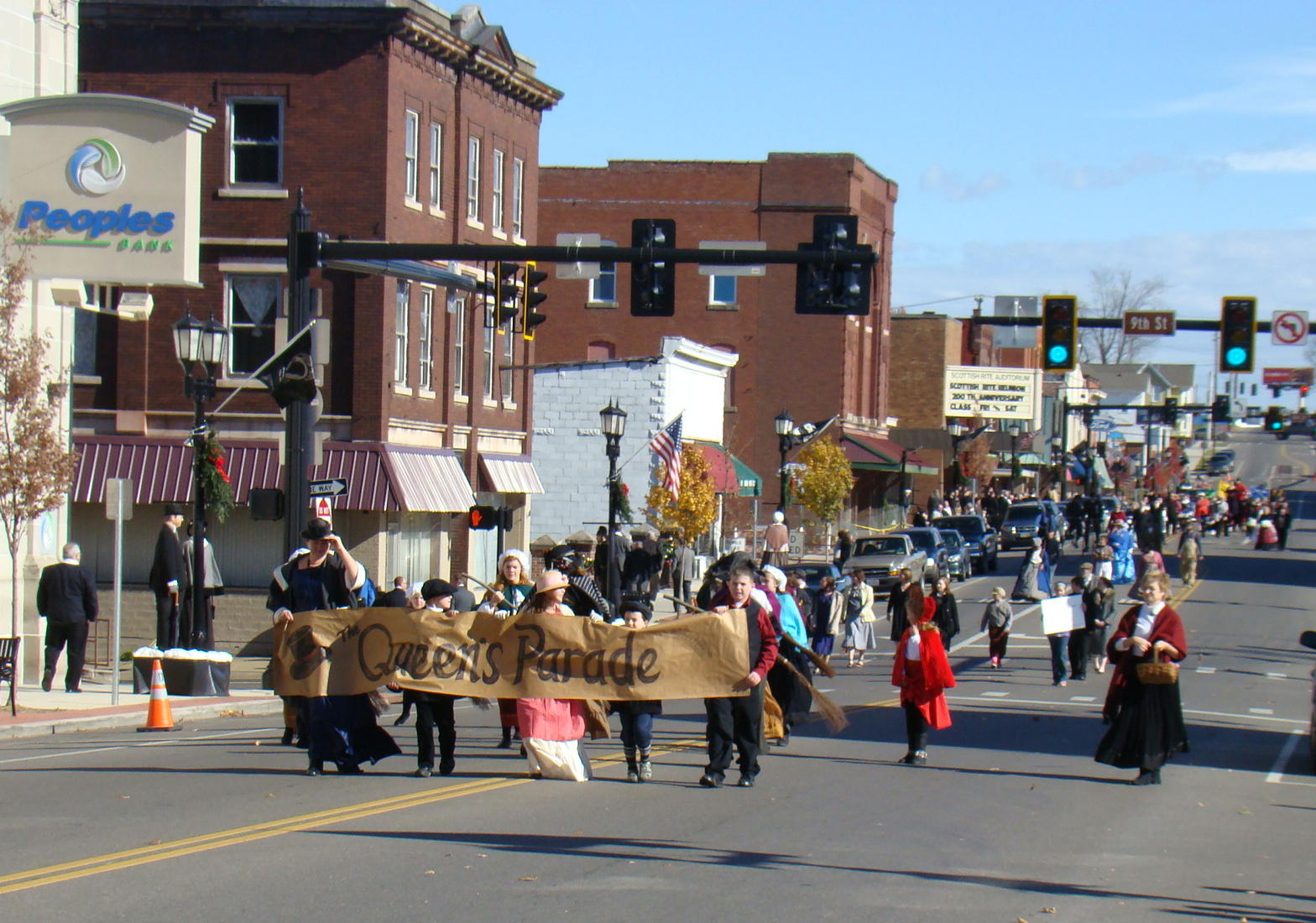
The Queen's Parade

The Queen’s Parade

Everyone loves a parade, and the Queen’s Parade brings a touch of life from times gone by. People line the streets of downtown Cambridge for the Dickens Victorian Village’s second annual Queen’s Parade on Nov. 8. The parade, in honor of elegant Queen Victoria, will head down Wheeling Avenue at 1:00, as a touch of royalty enters the streets of Cambridge. The Queen will be accompanied by Gerald Dickens, great-great grandson of Charles Dickens.

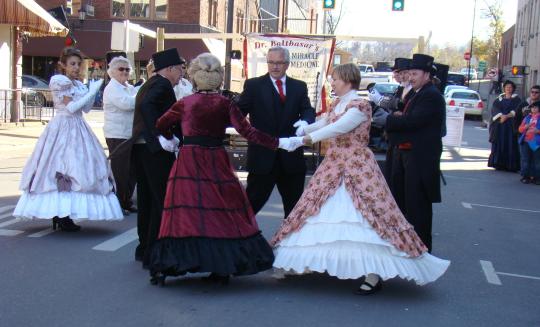
Cambridge Social Dance Club

Cambridge Social Dance Club performance

Step back to a time before motorized vehicles, as many entertaining groups, too numerous to list, either walk, ride horseback, or are driven in carriages.  Among those walking are members of the Cambridge Social Dance Club, who have been a part of the annual celebrations for several years. See them dance their way down the street as well as perform at the Victorian Street Fair on E. 8th Street. They’re just getting warmed up for Mr. Fezziwig’s Ball next weekend.

Local dance studio students parade down Wheeling Avenue as street sweepers, who were needed in the time of Charles Dickens. The newly formed band at East Guernsey Schools will be making an appearance and perhaps a portion of the ever popular Cambridge City Band will perform for this occasion as an old-fashioned Clown Band.

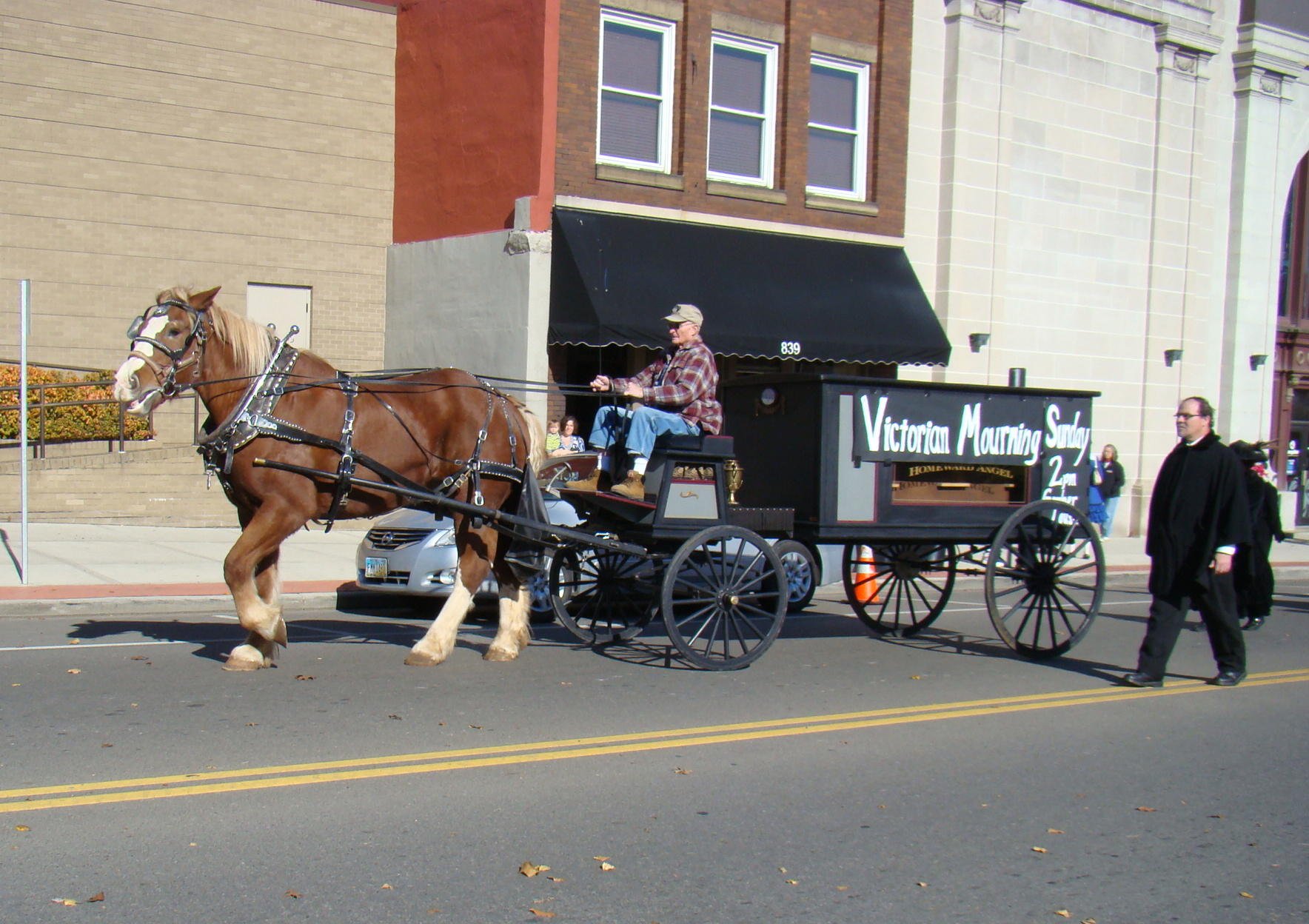
Funeral Hearse followed by mourners

Funeral Hearse followed by mourners

A procession of mourners follow the horse-drawn hearse as they head to the “Victorian Funeral Experience”, which will be held the following day, Sunday, Nov. 8th at 1:00 at the Gross Mansion.

The Medicine Man, Dr.Thelonious Balthazar, rides in a carriage at the parade. The Medicine Man will actually have two shows on Saturday at the Victorian Street Fair. The first show is at 11:00 before the parade, while the second performance will be at 4:00 in the afternoon. You won’t want to miss his words of medical advice!

Participants in “Whiskers Wars” also walk in the parade. Come out and encourage these manly men, as they have been grooming their beards all summer long. Several categories exist for beard entries and judging will be held at the Dickens Street Fair on the steps of the bank. Most entrants dress in costumes of the Dickens era, so show your Victorian spirit and cheer for your favorite contestant.

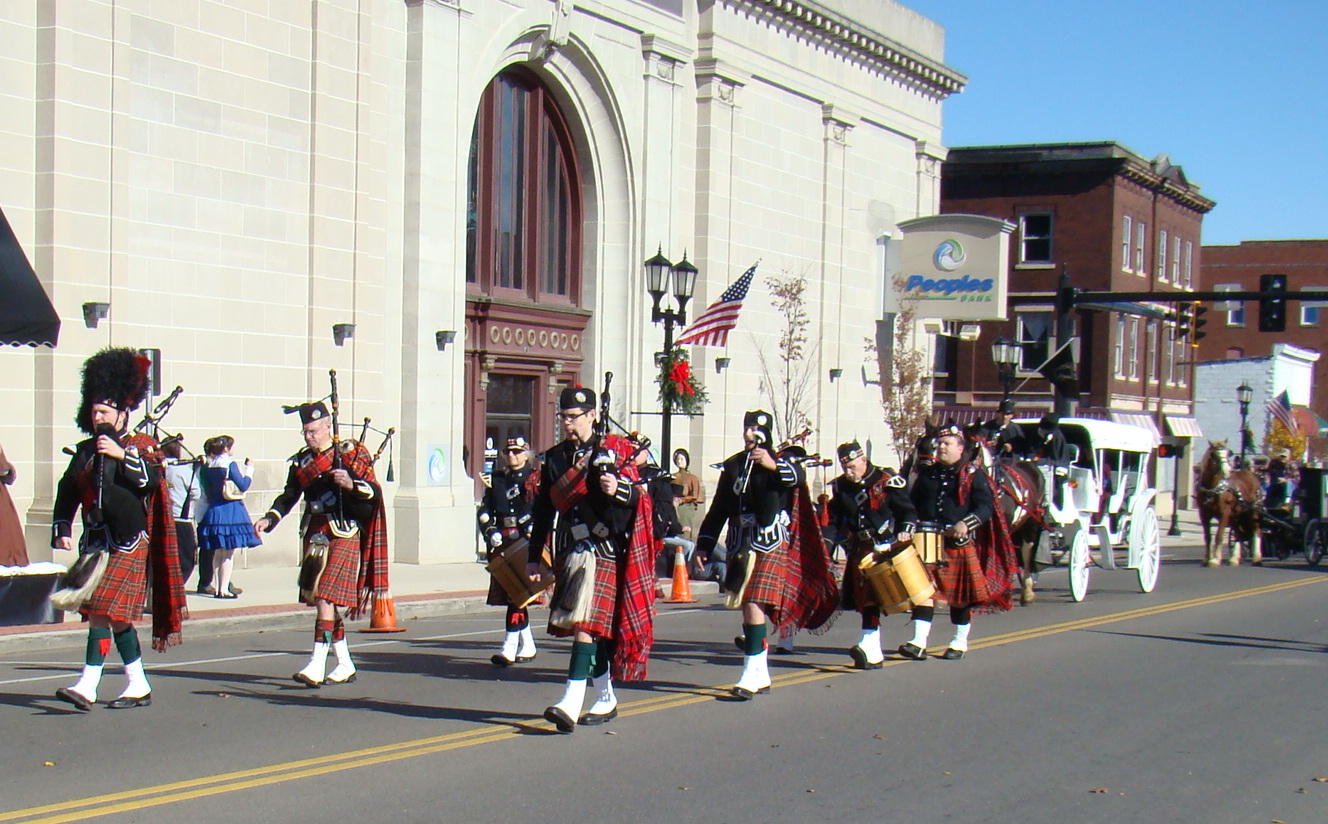
Bagpipers escort the Queen

Bagpipers escort the Queen

The sounds of the Akron Bagpipe Band announce the arrival of Queen Victoria’s elegant, horse-drawn carriage. Then the Queen heads to the Victorian Street Fair where she oversees activities for the remainder of the afternoon.

However, the parade is just a small portion of the excitement for “Queen Victoria Weekend”, the second themed weekend of the Dickens Victorian Village season. If you would like to learn about additional activities, visit their website at http://www.DickensVictorianVillage.com or call 1-800-933-5480.

Dickens Victorian Village takes place from November through mid-January each year when Historic Downtown Cambridge comes to life with 92 scenes of 166 life-like figures representing classic scenes from Victorian society. To add to the festive atmosphere, each evening from 5:30-9:00, the magnificent 1881 Guernsey County Courthouse Music & Light Show pulsates to holiday music with synchronized lights.

See you at the parade!

Dickens Victorian Village is located in Downtown Cambridge, Ohio near the crossroads of I-70 and I-77. Take any Cambridge exit and you are sure to find yourself on Route 40, which heads straight through Downtown Cambridge.


Downton Abbey Weekend Opens Dickens Season

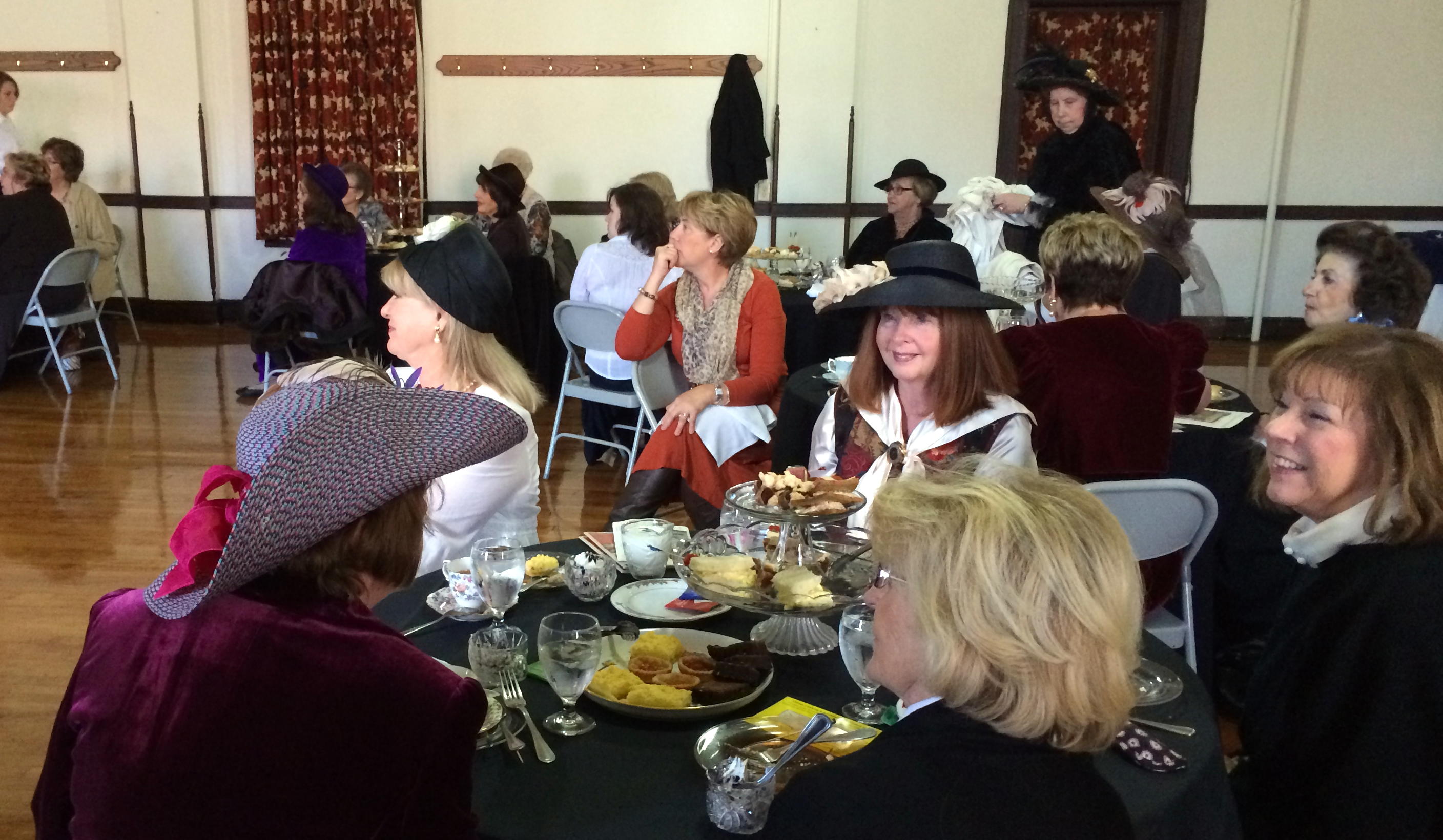
Downton Abbey Tea Party

Downton Abbey Tea Party

The pleasure and eloquence of merry olde England will appear in historic downtown Cambridge, Ohio during the 9th season of Dickens Victorian Village. Fans of Downton Abbey will be especially pleased during the first weekend of Nov 1 – 2 with Desperate for Downton events, including etiquette instruction, a tea party, and fashion show.

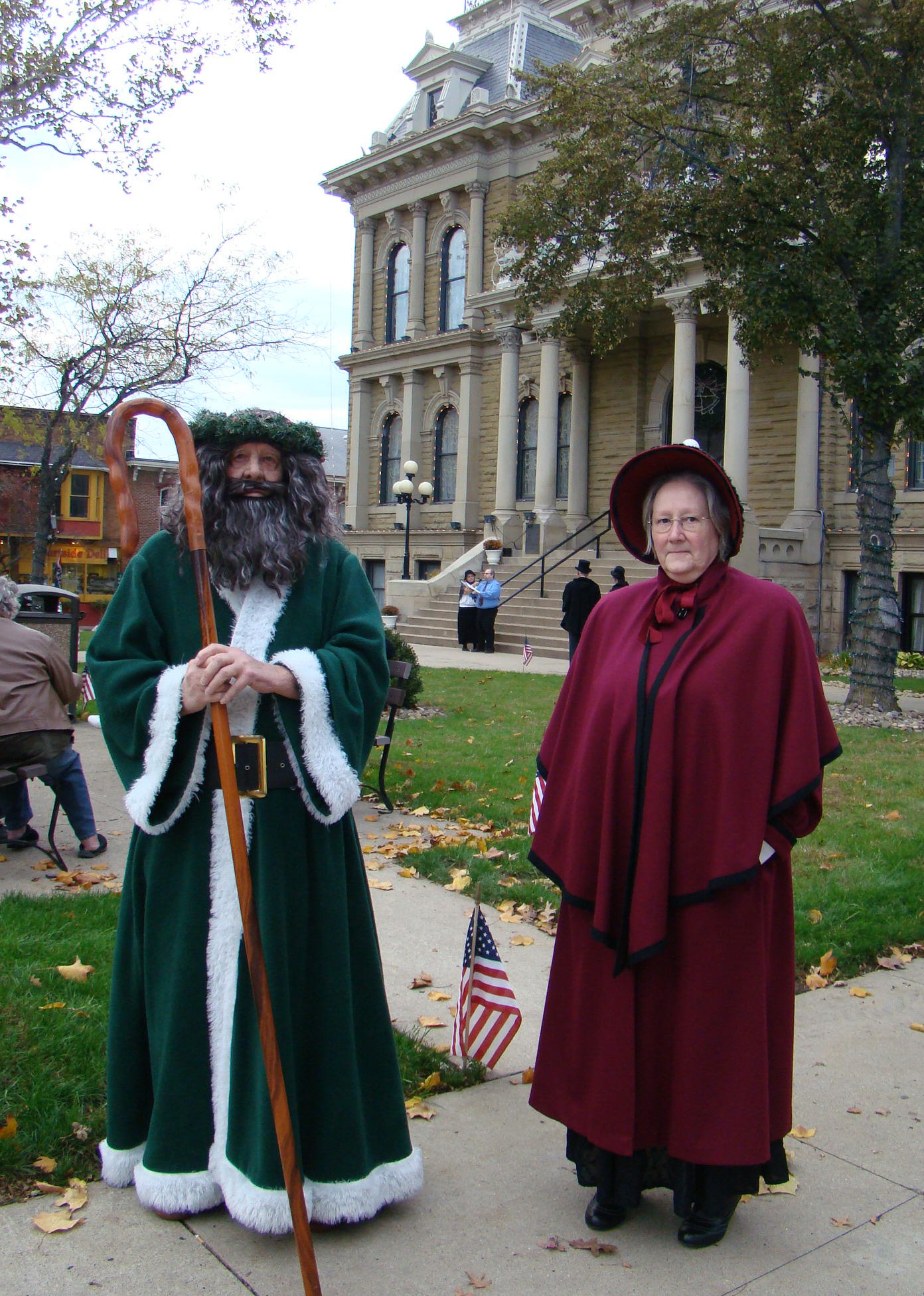
Father Christmas and his wife enjoy opening festivities.

Father Christmas and his wife enjoy opening festivities.

Opening ceremonies will be held at the Guernsey County Courthouse with entertainment by local groups, candle lighting, and caroling. Then watch the 2014 debut of the Guernsey County Courthouse Music & Light Show. You’ll be impressed.

Abbey Etiquette at the Cambridge Glass Museum

Abbey Etiquette at the Cambridge Glass Museum

A touch of old Victorian England presents itself through this special Desperate for Downton weekend. Begin with an etiquette class that will have you eating prim and proper for the rest of the holiday season. The National Museum of Cambridge Glass prepares an opulent location for this learning experience, as well as a feast for the eyes with their elegant table setting. Learn proper etiquette, then meander through the aisles of the glittering Cambridge Glass Museum.

Join in the fun of a Downton Abbey Painting Party  in the Dickens Welcome Center and Curiosity Shop located at 745 Steubenville Avenue. Try your hand at painting a Victorian style picture that is likely to become a treasured memory. Cost is $15 per person with all materials furnished.

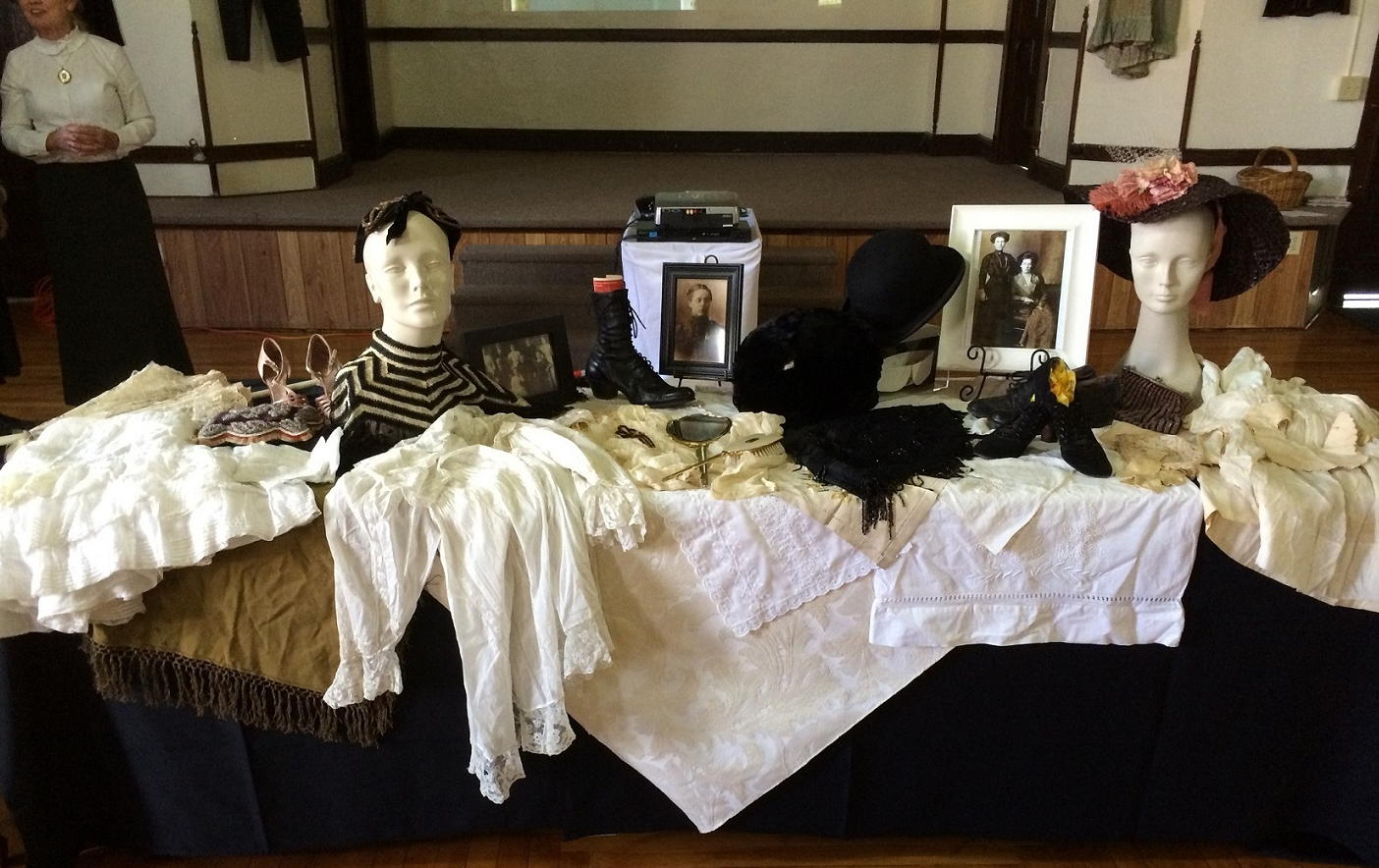
Diplay of Victorian items at Downton Abbey Tea & Fashion Show

Diplay of Victorian items at Downton Abbey Tea & Fashion Show

The highlight of this Desperate for Downton weekend happens during the Downton Abbey Tea and Fashion Show. Spend an autumn afternoon at a delightful Victorian tea party in the breathtaking Masonic ballroom at 730 Wheeling Avenue. Classic Faire’s dainty delights on each tea tower will stimulate the taste buds, while The Alley Vintage and Costume Store will present the amazing trim styles of period fashions.

Get in the spirit of the day. Dress in your finest dress, hat and gloves in either historic or contemporary style and spend a charming afternoon for $30 per person. Even those who entertain on Downton Abbey would feel at home during this event.

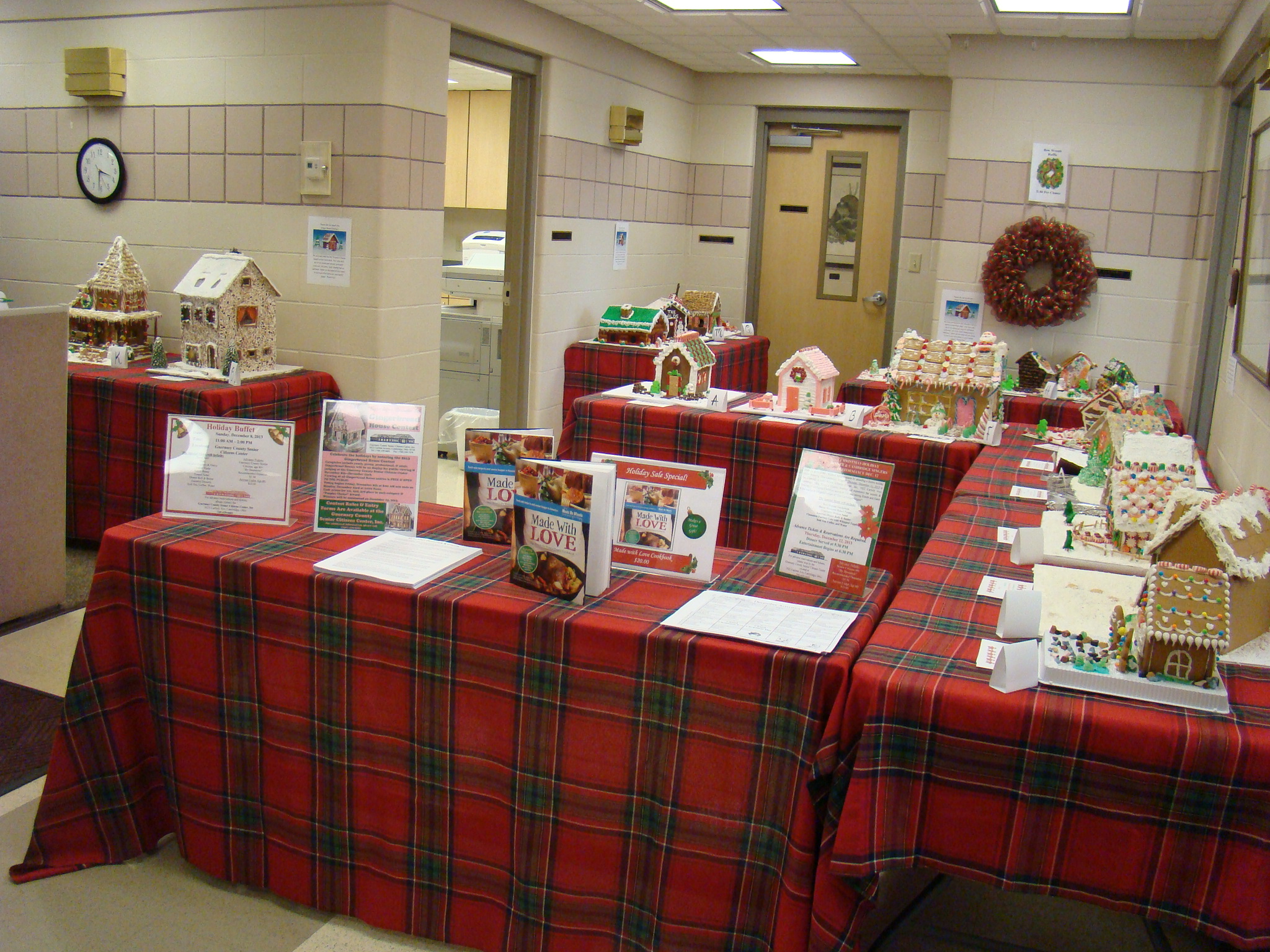
Learn how to decorate your own Gingerbread House.

Learn how to decorate your own Gingerbread House.

If perhaps you aren’t in the mood for tea and fashion, Sunday afternoon at 1:00 there will also be a Family Fun Gingerbread Decorating class at the Guernsey County Senior Center at 1022 Carlisle Avenue. Parents and children have the opportunity to join forces and create a special gingerbread house.

Guernsey County Music & Light Show

Guernsey County Music & Light Show

Dickens Victorian Village takes place from November through early January each year. Historic Downtown Cambridge comes to life with 92 scenes of 166 lifelike figures representing classic scenes from Victorian society. To add to the festive atmosphere, each evening from 5:30 – 9:00 pm view the magnificent 1881 Guernsey County Courthouse Music & Light Show where thousands of lights pulsate in synchronized rhythm to seasonal music.

Come join in the fun!

Cambridge, Ohio is located at the crossroads of I-70 and I-77. Follow old Route 40, the National Trail, as it leads right through downtown Cambridge where you will see Dickens Victorian Village. 

Ghost Tales Flourish in Historic Marietta

Welcome to Hidden Marietta, where some stories – and some people – simply refuse to die.

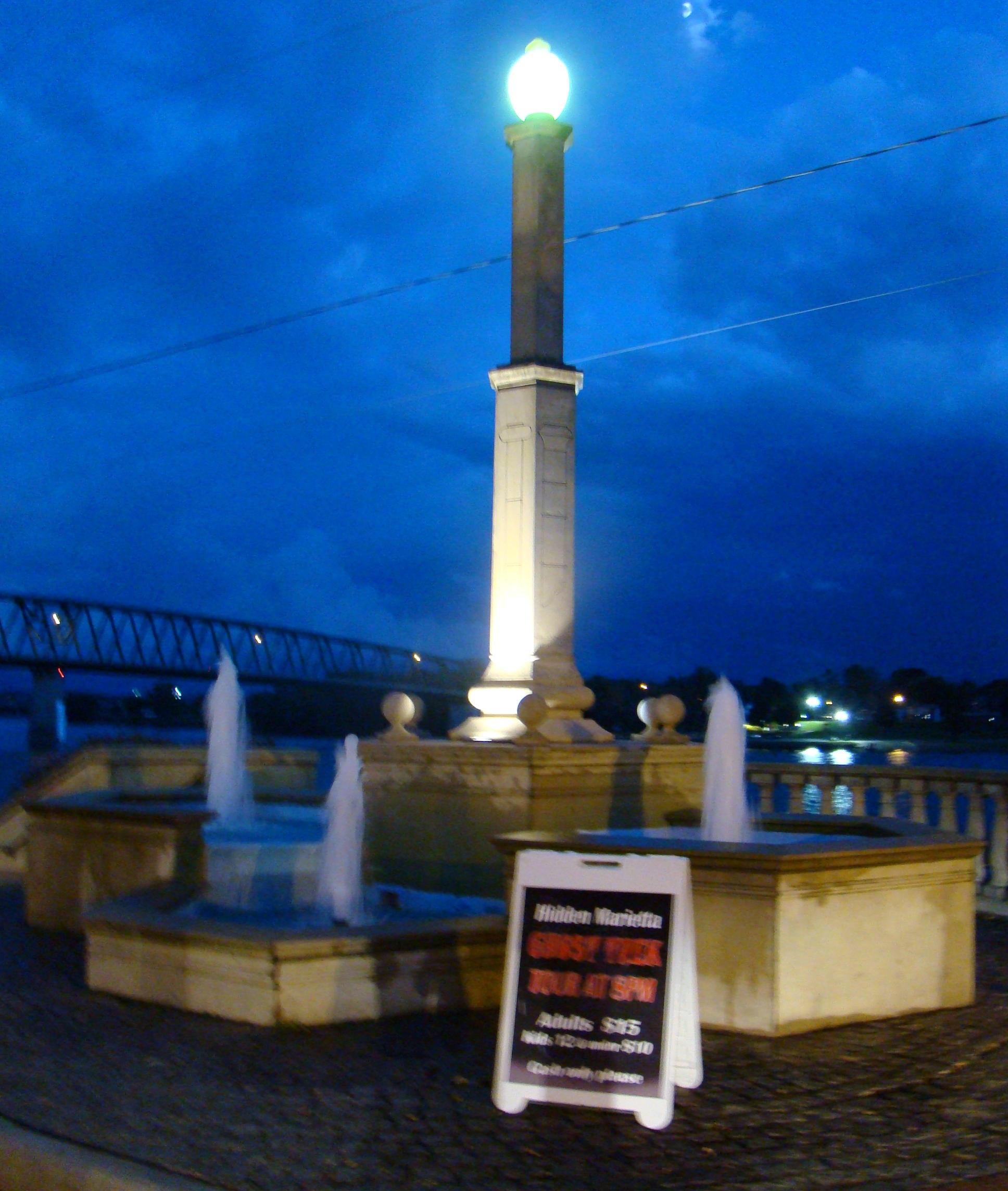
The fountain marks the starting place for the Ghost Trek.

The fountain marks the starting place for the Ghost Trek.

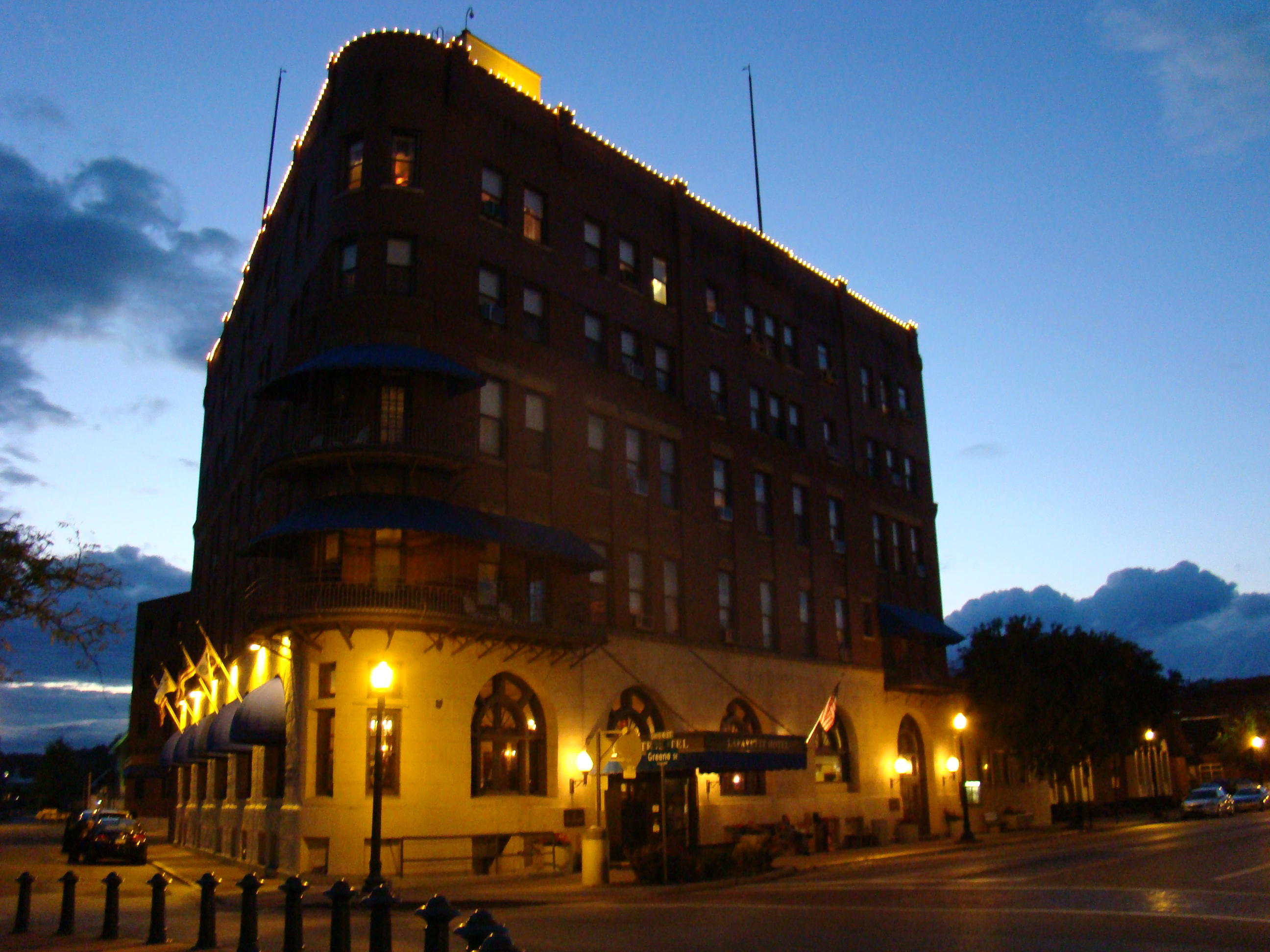
The most haunted town in Ohio seems a natural place for a Ghost Trek – the streets of Marietta. Meeting near the Lafayette Hotel along the Ohio River, excellent guides tell some of the scariest stories about restless spirits left over from the past in this paranormal hot spot. Even rain won’t dampen your spirits.
While ghost stories are told at each stop, the tour also tells the history of early Marietta. As you hear stories of murder and paranormal activities, the heart races just a little faster as you glance around to see if there’s anything unusual happening.

The tour takes about two hours with perhaps a dozen stops, so many interesting ghost and historic tales are told along the way. Buckley Island in the middle of the Ohio River has experienced everything from Native American Indian attacks to an amusement park. At one point it also contained “Pest House”, where all sick people were quarantined to prevent illness from spreading on land. Once there, you stayed permanently. Today, hikers still feel sick and weak on the island…perhaps leftover energy?

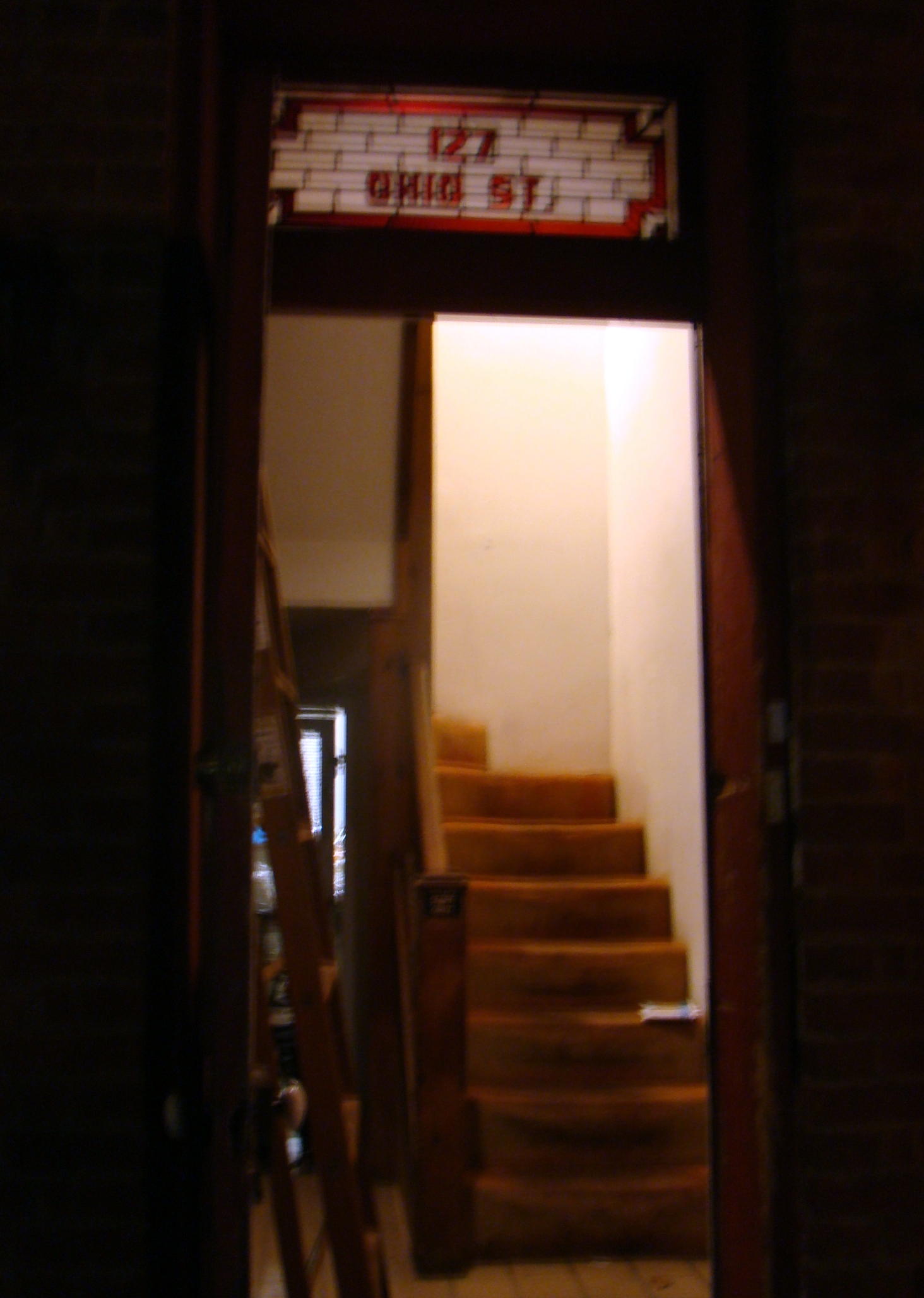
Staircase the Ax Murderer used in 1890's.

Staircase the Ax Murderer used in 1890’s.

Walking down the brick streets, with Victorian style buildings, gives you the feeling of stepping back in time. Listen to the tales of footsteps, knocks, and voices in the night. When you visit the old La Belle Hotel, the eerie glow of the night beckons for a close look at the staircase where the ax murderer walked slowly up, then ran down. Those footsteps are still heard frequently today and reflect a residual haunting – energy left over from 130 years ago.

Today, guests at the Lafayette Hotel often comment about unusual happenings in their rooms. Glasses may be moved, lights turned on or off, and people are frequently seen roaming the halls. One of those nighttime visitors appears to be Mr. Hoag, former owner, in his brown derby hat.

Haunted Lafayette Hotel

Haunted Lafayette Hotel

Employees of long ago recognized Mr. Hoag as the best possible manager. Employees today say that sometimes during the night, the elevator will suddenly light up for 6th floor, which is where maintenance equipment is stored, and the manager frequently visited. After a short time, the elevator comes back down to the ground floor. Just Mr. Hoag, still checking on his hotel.

Former home of Marietta Sanitorium

Former home of Marietta Sanitarium

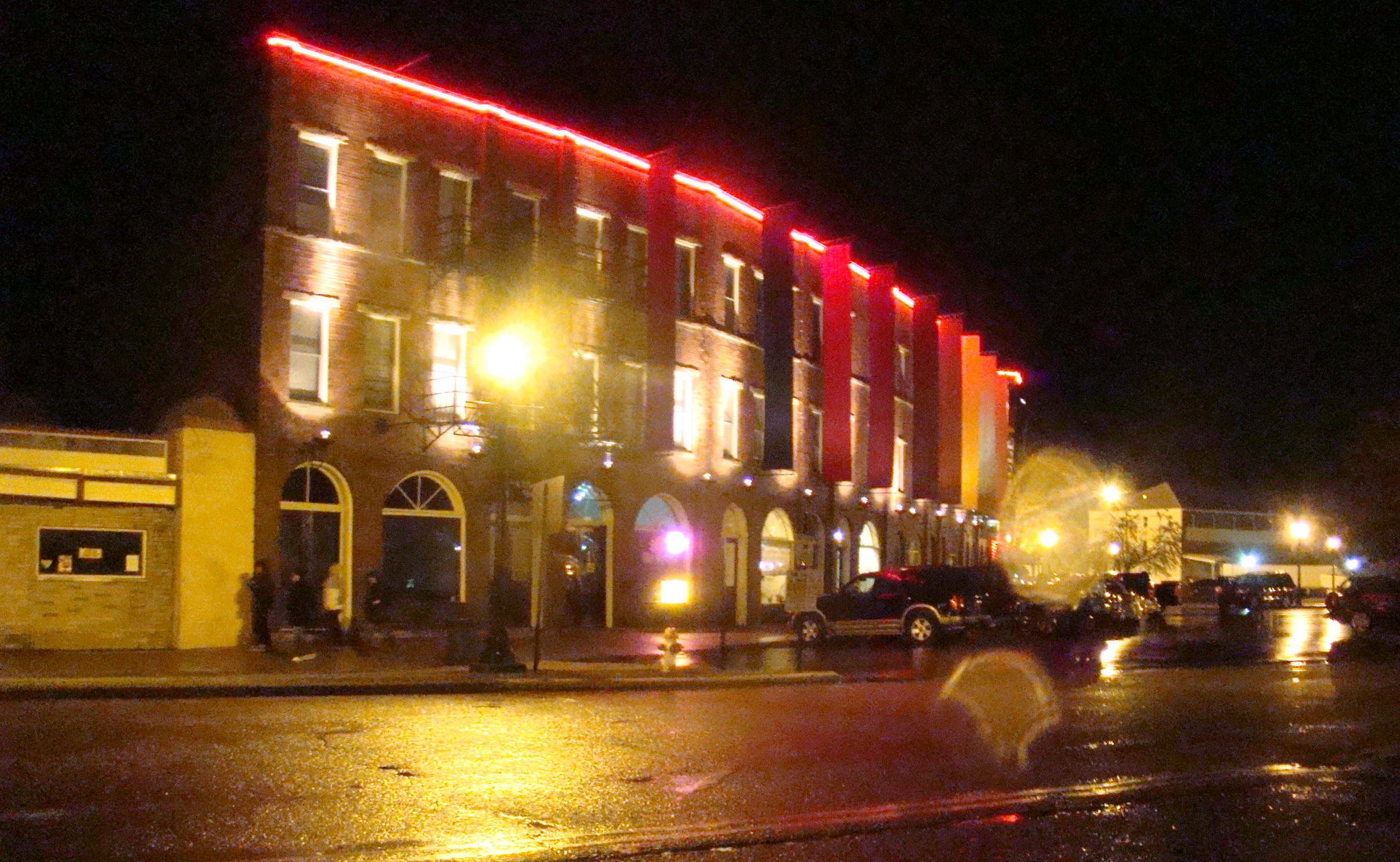
Another eerie stop was the Tiber Way Grille, where people hear moaning and sobbing. Close inspection of the old ghost advertisement on the side of the building, brings out the letters saying: Chronic Disease- Marietta Sanitarium. After the hospital moved, a funeral parlor occupied this building. Now you see the reason for the crying sounds. Soon this will become a Victorian style hotel – complete with ghosts.
Now that you have heard a few of the ghost stories, perhaps you’ll enjoy a visit to Marietta sometime soon yourself. While Halloween seems the perfect time for a Ghost Trek, this event is held every Friday and Saturday evening from June to November at 8:00. Meet at the corner of Front and Greene Streets, at the fountain by the famous haunted and historic Lafayette Hotel.

Watch out for those ghosts!

To arrive in Marietta, Ohio take Exit 1 off I off I-77 and head west on Route 7, Greene Street. Where the Muskingum River meets the Ohio River, you will find the old Lafayette Hotel, the starting point for the Ghost Trek. This walking tour is under the expert guidance of Lynne Sturtevant, founder of Hidden Marietta and author of several books of Marietta history.


Earthship at Blue Rock Station – “House of Trash”

Blue Rock Station entrance sign

Blue Rock Station entrance sign

If you recycle bottles and tires, perhaps you should try to use them to build something. Some of the possibilities are quite surprising.

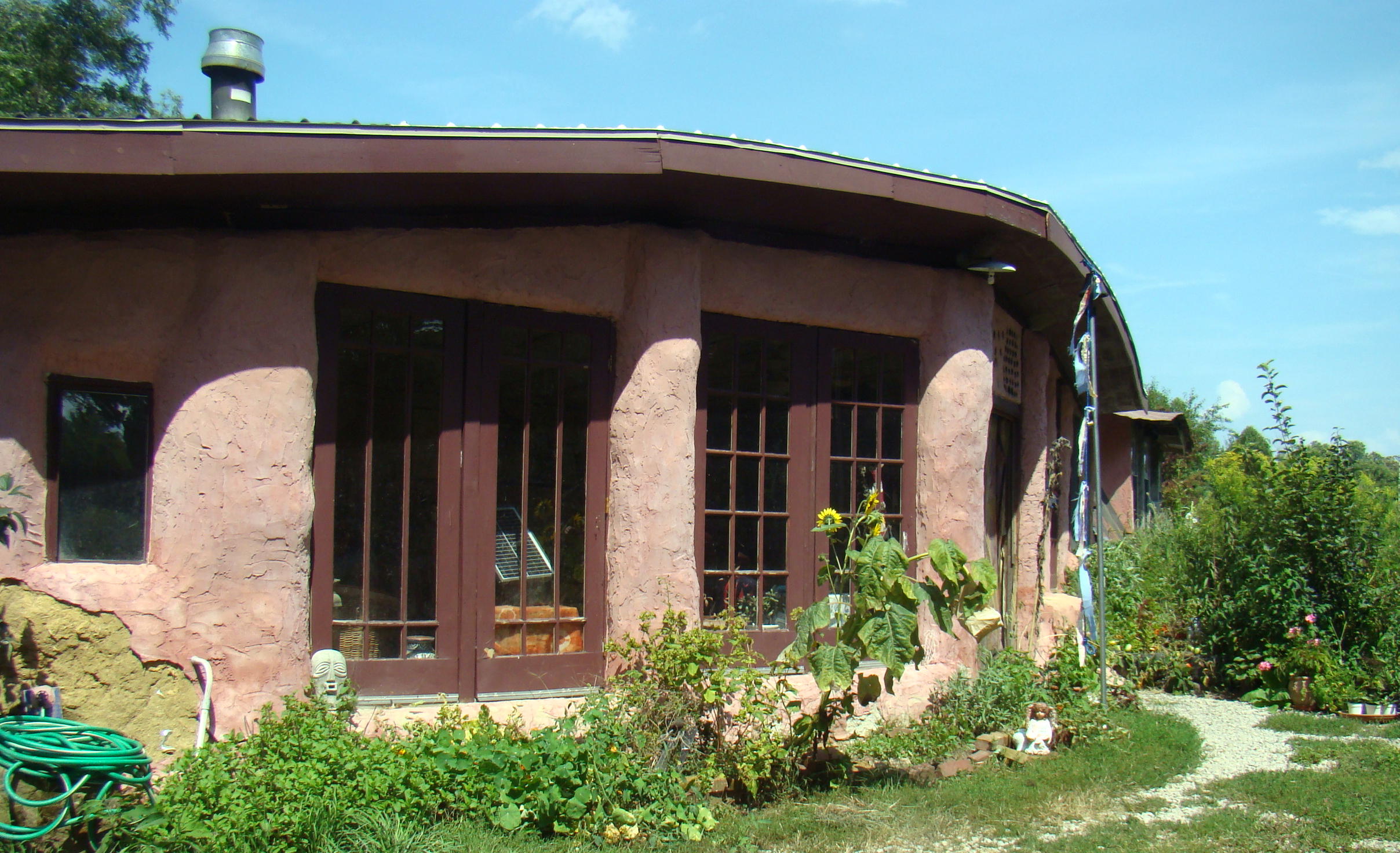
Just ask Jan and Annie Warmke at Blue Rock Station south of Philo, where you can find their Earthship or “House of Trash” as some call it. They had an intense passion to use whatever they could find to build their home in the country. All of their buildings are composed of recycled materials and pieces of nature.

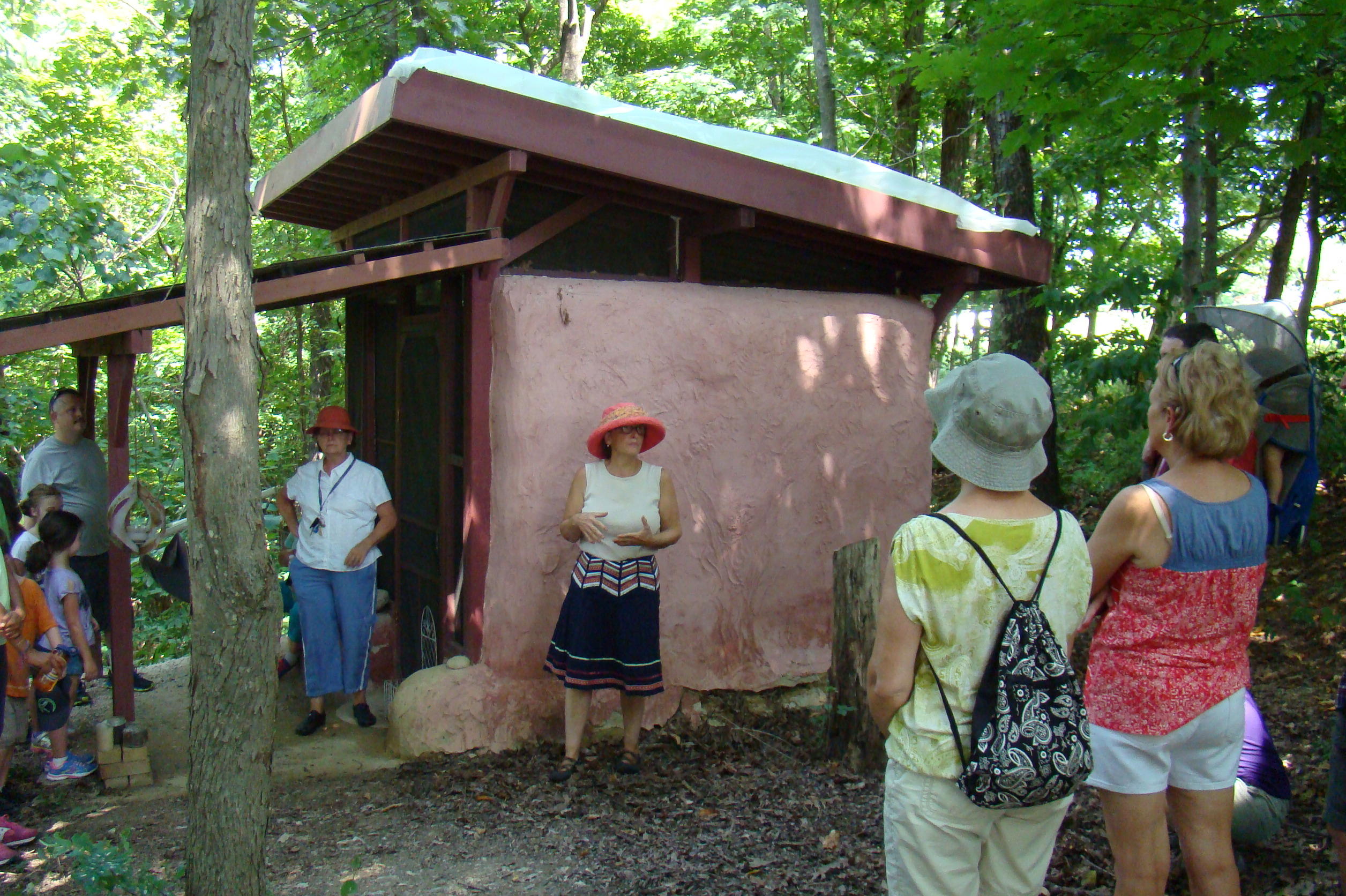
Annie, the Mother of Creativity, guides the tour of her dream come to fruition. She served as both creator and contractor of Blue Rock Station. With the help of a few interns, mostly college students, projects are designed and completed during the summer months.
Interns are encouraged by Annie to let their minds expand while they try new things, even if they fail. “If you haven’t screwed up at least once, you’re not thinking hard enough.”
Plastic two-liter bottle Greenhouse

Plastic two-liter bottle Greenhouse

A greenhouse built of plastic two liter bottles provides a place to start plants and grow food throughout the year. Over one thousand plastic bottles used to construct it will never need replaced since they don’t decompose.

Annie, the owner and guide, is easily spotted with her pink hat.

Annie, the owner and guide, is easily spotted wearing her pink hat.

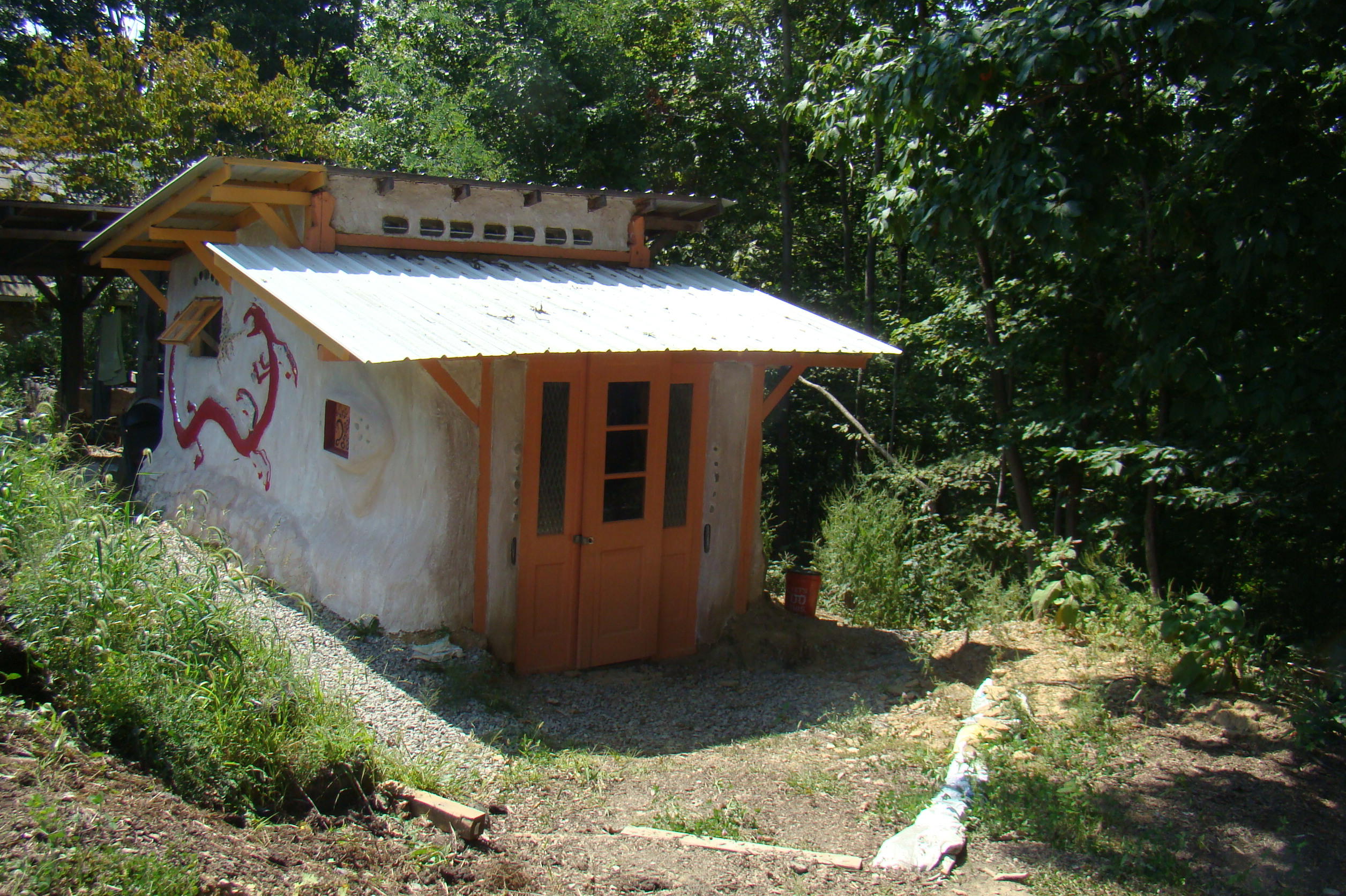
Cottages provide housing for overnight guests and/or interns. Made of bales of straw, they’re covered with “earth plaster”. This adobe-like covering consists of mud, straw, milk, salt, flour and linseed oil – so it won’t crack. Pickle jars placed in the ceiling gather outdoor light. Bottle bottoms create beautiful window substitutes.

Outdoor Patio

Outdoor Patio

An outdoor patio makes the perfect place to relax under the shade of the trees. Nearby is one of two composting outdoor toilets, as well as the garden since both need to be in close proximity to the main house, Earthship. Needless to say, pesticides are not used.

Annie has tea prepared for the group inside Earthship. A few mint leaves dropped in the ice tea make it extra refreshing on a very hot day. In addition, salted cucumber slices, cherry tomatoes, sandwiches and cookies complete the back to nature table setting. There Annie sits in a comfortable swing, while answering questions from the group.

"House of Trash"

“House of Trash”

Tires, bottles, cans, plastic two liter bottles and milk jugs form the walls of the house. Then this core material is covered with earth plaster and a coat of lime paint to brighten it. With help from old barns being torn down and pressed tin for the ceiling, the house becomes a showplace.

Oven in Kitchen Area

Herbs drying near oven in kitchen area

A unique brick oven in one corner contained guard rails, pipe and even metal rods from old campaign signs for the grill of the oven. On a cold winter day, Annie sometimes wraps in a blanket and curls up on the brick wall to relax, read, or nap.

Due to window placement for maximum use of winter sun, and wall structure which absorbs and releases heat, temperature in the house never goes below 55 degres…with no stove needed, although sometimes used! Rooms are U-shaped, which holds heat extra well. It seems very similar to living in a cave

All roofs collect water into a cistern from which they get water for basic use, but not for drinking. Over the year they collect over 150,000 gallons of water from their rooftops.

Dragon guest cottage

Dragon guest cottage

Something I know works from experience is a solar shower. Water, in a black plastic bag on the roof, gathers heat from the sun. A switch on the end of the bag opens the shower head and produces a nice warm, sometimes hot, shower. However, Annie wants to add a bathtub very soon.

As experiments continue, new ideas come to the forefront that they perhaps wish they would have known about a few years back. Their newest project is solar energy installation. A solar panel with a wind turbine gathers energy in one place, while the house has a small solar panel. More will be installed shortly.

Reservations must be made in advance so either call 740-674-4300 or visit their website at http://www.bluerockstation.com.

Take a drive along the Muskingum River and visit this unusual “House of Trash” or Earthship, as they feel more correctly describes it.  Peace abounds at Blue Rock Station with only nice voices, open hearts, and inquiring minds desired. Perhaps it will inspire you to be more creative with your natural resources…and your trash.

Earthship can easily be reached traveling along the Muskingum River on Route 60. Cross over the Muskingum River to the west on Route 66, North Street. At the stop sign turn left on Old River Road.  In less than a mile you will come to a hill with a fork in the road. There is a Blue Rock Station sign pointing toward the right on Virginia Ridge Road. From then on, follow the Blue Rock Station signs until you reach the gate of the property.


Cruisin’ down the Ohio River with Mark Twain on the Valley Gem

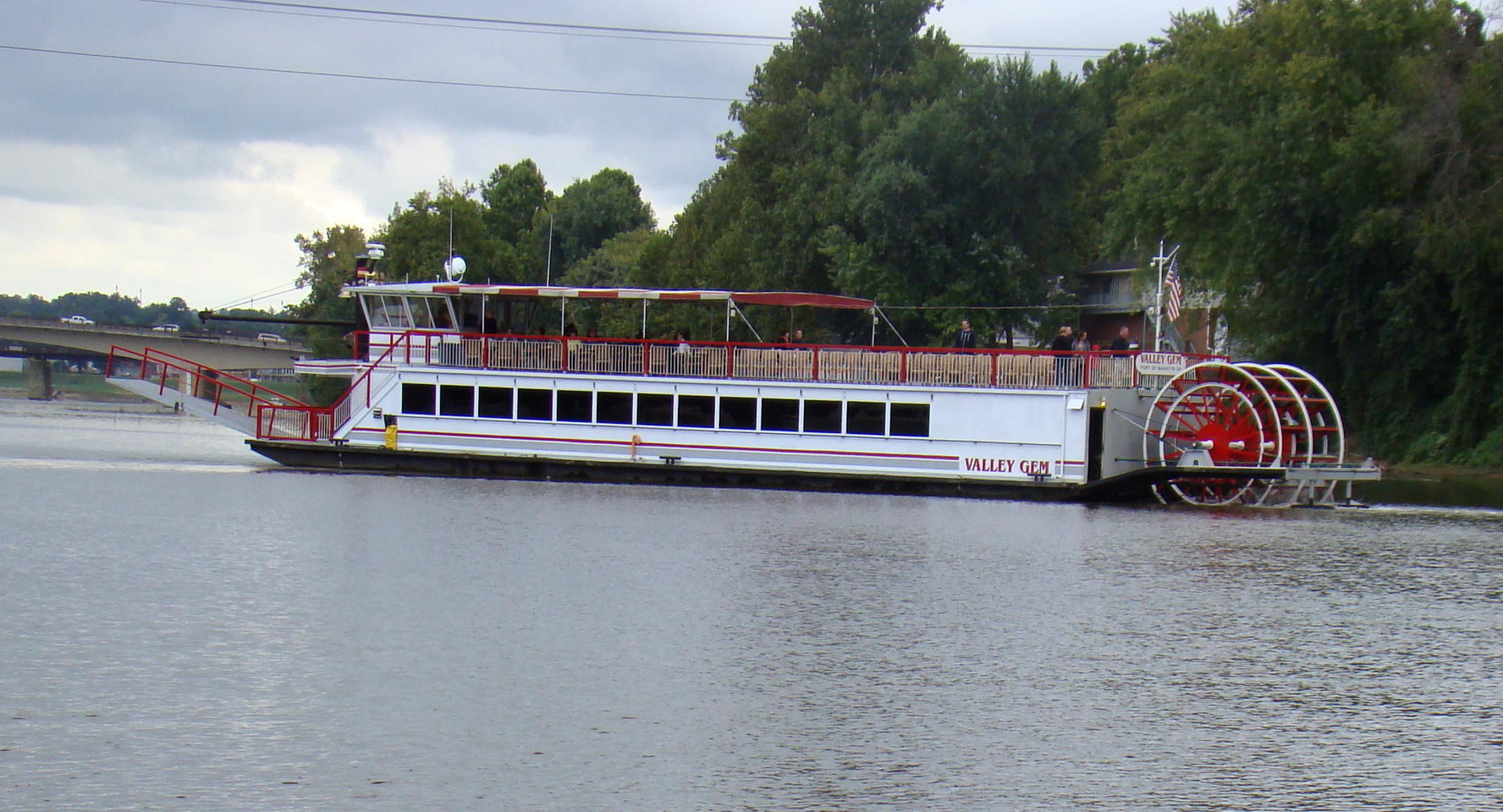
Valley Gem heads down the Muskingum River to its confluence the Ohio River.

Valley Gem heads down the Muskingum River to its confluence with the Ohio River.

Riverboat’s a comin’!

Nothing excited Samuel Clemens more than his time on the riverboats.  The sound of the paddlewheel hitting the water thrilled him, while the changing landscape gave him opportunity to see deer and even Injuns, while sitting in the pilot house.

Some say Clemens received his pen name, Mark Twain, from this passion for the river, since Mark Twain means “mark number two”. The second mark on the water measuring stick signified  twelve feet of water – a safe depth for boats to pass easily.

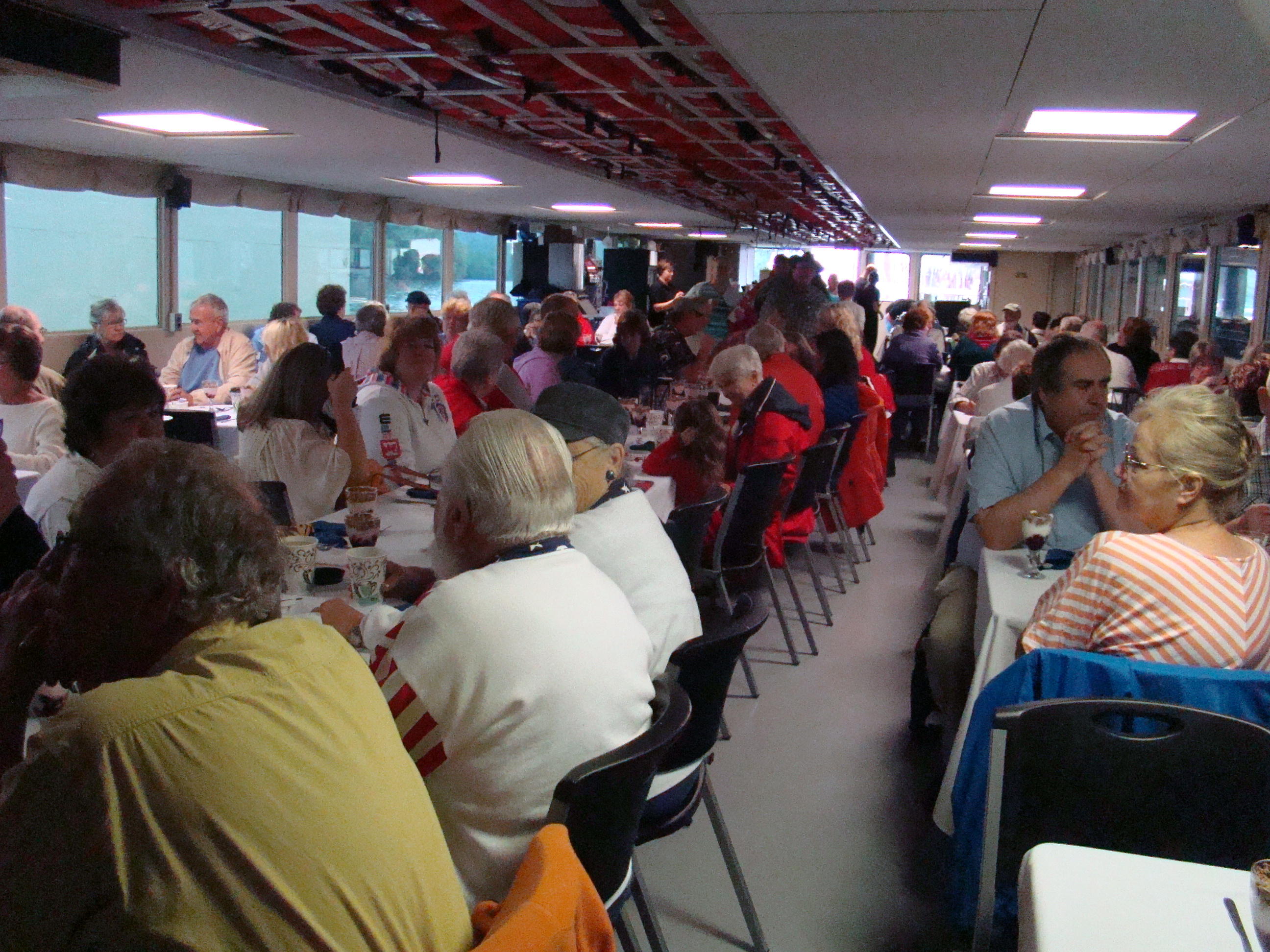
Breakfast Cruise on Valley Gem

Breakfast Cruise on Valley Gem

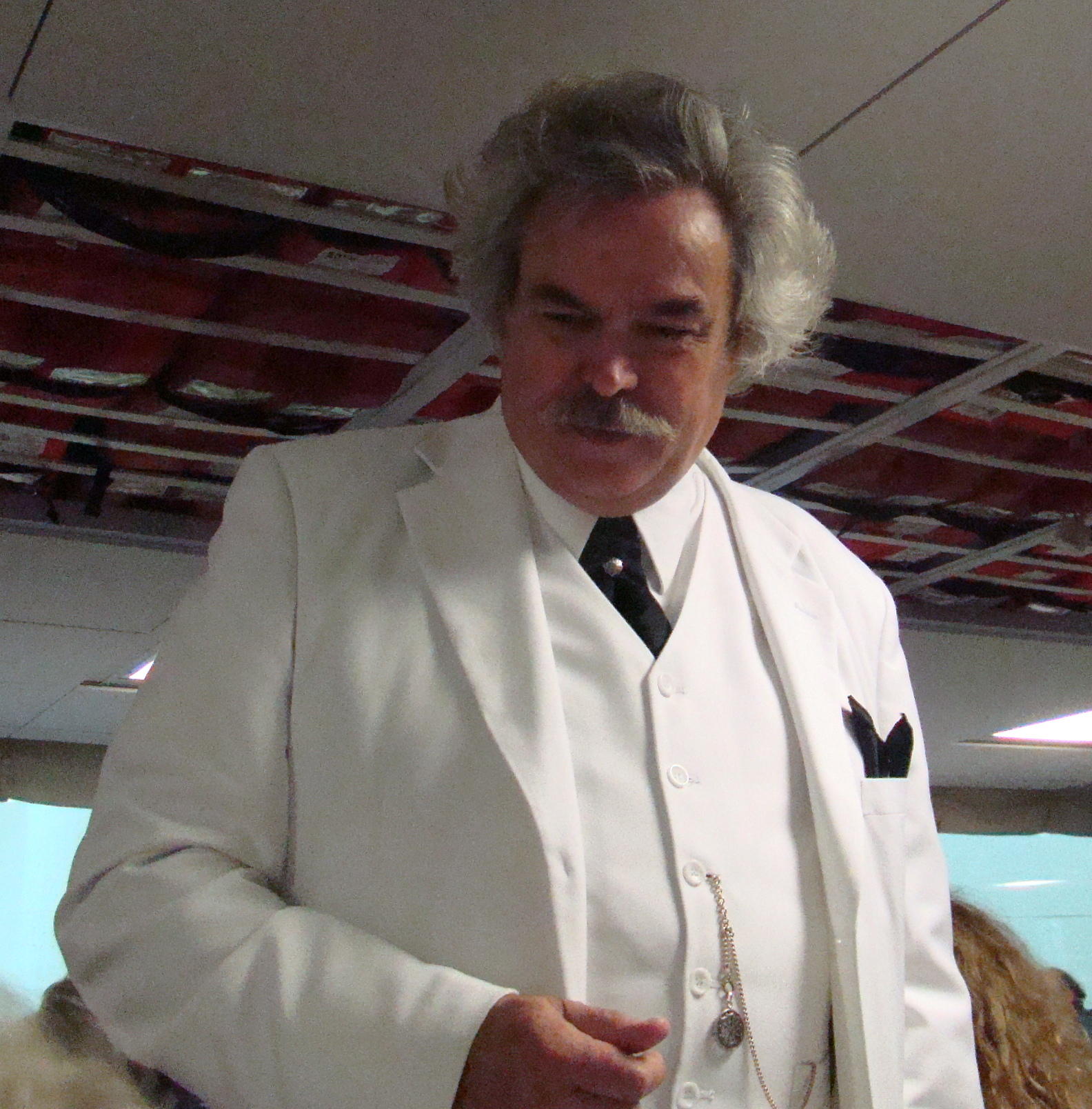
Spending time on the Valley Gem, with the charming impersonator of Mark Twain, delighted all passengers. They also enjoyed a tasty breakfast buffet as they cruised the Muskingum and Ohio Rivers. Mark Twain, portrayed by Stephen Hollen, greeted everyone with a hearty welcome as they stepped aboard the Valley Gem at Marietta, Ohio.

Immediately his sense of humor became apparent as he strolled from table to table encouaging everyone to try the marinated road possum and grits. His enjoyment in that role quickly ignited the crowd into a happy mood.

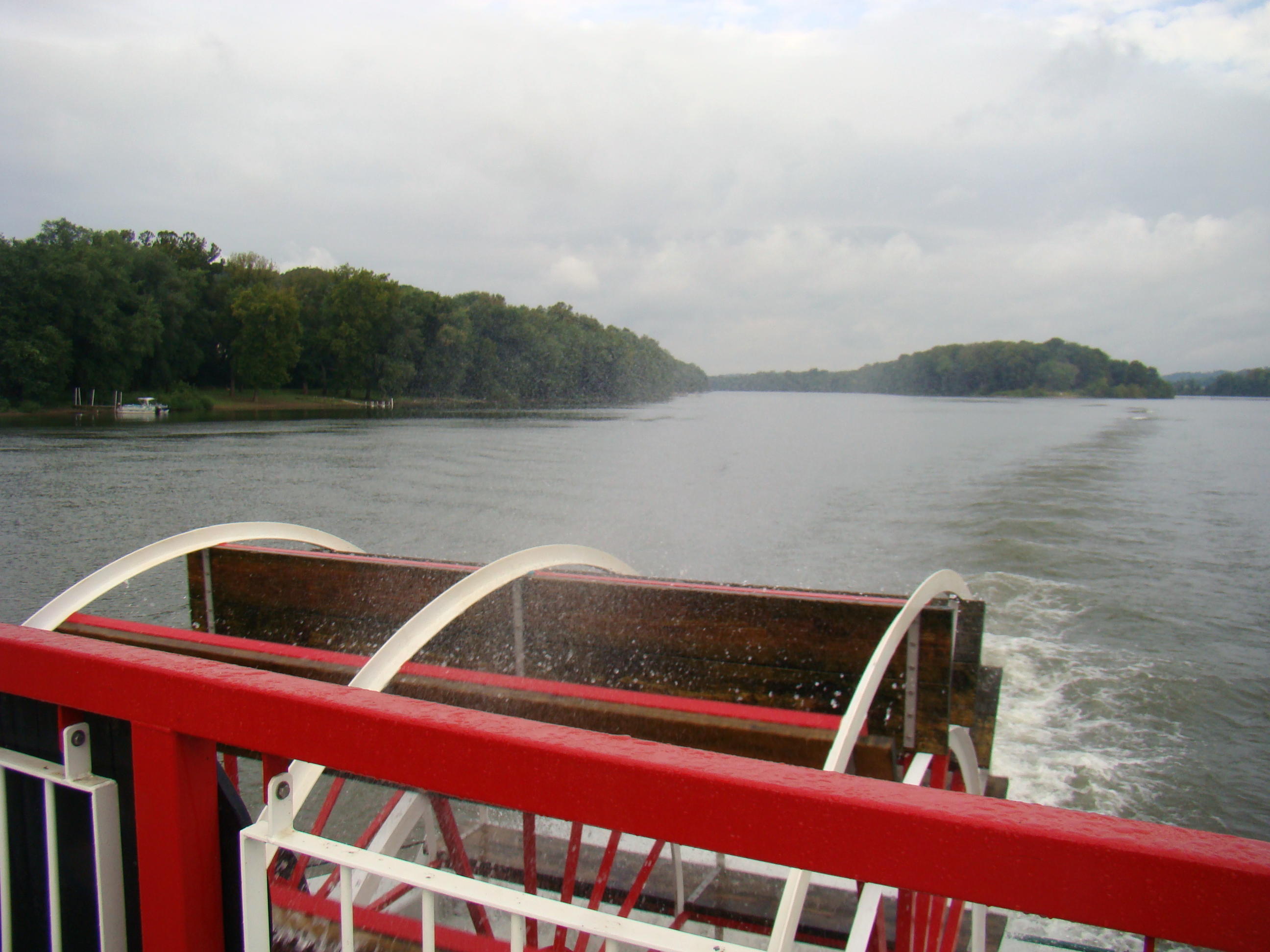
View behind the paddle wheel

View behind the paddle wheel

The cruise was a smooth two hour ride up and down the river. Many enjoyed going to the top deck to get a better view and feel the breeze. The paddle wheel created quite a spray so those standing near it received a generous sprinkling. After some fresh air, passengers returned to the main cabin to listen to Mark Twain spin his yarns.

Twain then told of his being born in 1835 at Florida, Missouri – population 99. Growing up,  he was given a big spoon of cod liver oil every day. He remarked that his tongue and body were so slippery, he could have eaten broken glass and it would have passed.

Twain visited everyone.

Twain visited everyone.

At 13, Samuel Clemens became a printer’s apprentice and soon joined his brother Orion’s newspaper, where he discovered he enjoyed writing stories.

A few years later he headed to St. Louis, Missouri for another newspaper job but got sidetracked by falling in love …with the river.

For two years he served as an apprentice receiving $500 at the end of that period. Training was not as easy as it might sound. In order to get a license, pilots had to know the 2,000 miles of the Mississippi like the back of their hand. Even at nighttime, pilots were required to remember the placement of every sandbar and the name of every twist and turn, like Eagles Fork or Johnsons Landing. But Mark Twain said during those years, “I had the time of my life.”

After becoming a full-fledged riverboat pilot, he was paid $250 a month. The only other people in the United States at that time that made $250 a month, besides river pilots, were the vice-president of the United States and Chief Justice of the Supreme Court. Riverboat pilot was much more profitable than writing fiction!

When riverboat travel became impossible in 1861 due to the Civil War, Mark Twain returned to the world of the newspaper. His adventures led him across the United States from coast to coast as well as to Europe and the Middle East.

After his travels, he settled in Hartford, Conneticut with his wife and family in 1873. That is where he wrote stories based on his memories of growing up in Hannibal, and enjoying the Mississippi River. Tom Sawyer and Huckleberry Finn came to life through his pen.

Mark Twain says thanks to each passenger as they leave.

Mark Twain says thanks to each passenger as they leave.

The journey was closed with Mark Twain telling his favorite story, “Golden Arm”. It was the story of a rich family from Hannibal, who always came to the landing to see the riverboats arrive and hear the calliope. Mark Twain even sang a Riverboat Song and had the audience join in on the chorus:

Down the river, Down the river, Oh down the O-hi-o.

I’ll not tell the story though, perhaps the next time he visits Marietta you will get a chance to hear more of his delightful tales.

Later in life Mark Twain uttered this comment: “I came in with Halley’s Comet in 1835. It is coming again next year, and I expect to go out with it. It will be the greatest disappointment of my life if I don’t go out with Halley’s Comet. The Almighty has said, no doubt: ‘Now here are these two unaccountable freaks; they came in together, they must go out together.’ ”  And Mark Twain was not disappointed.

The Valley Gem is located next door to the Ohio River Museum at 601 Front Street, Marietta, Ohio, one block from Ohio State Route 7, and minutes from I-77.

Powhatan Point on the Ohio River

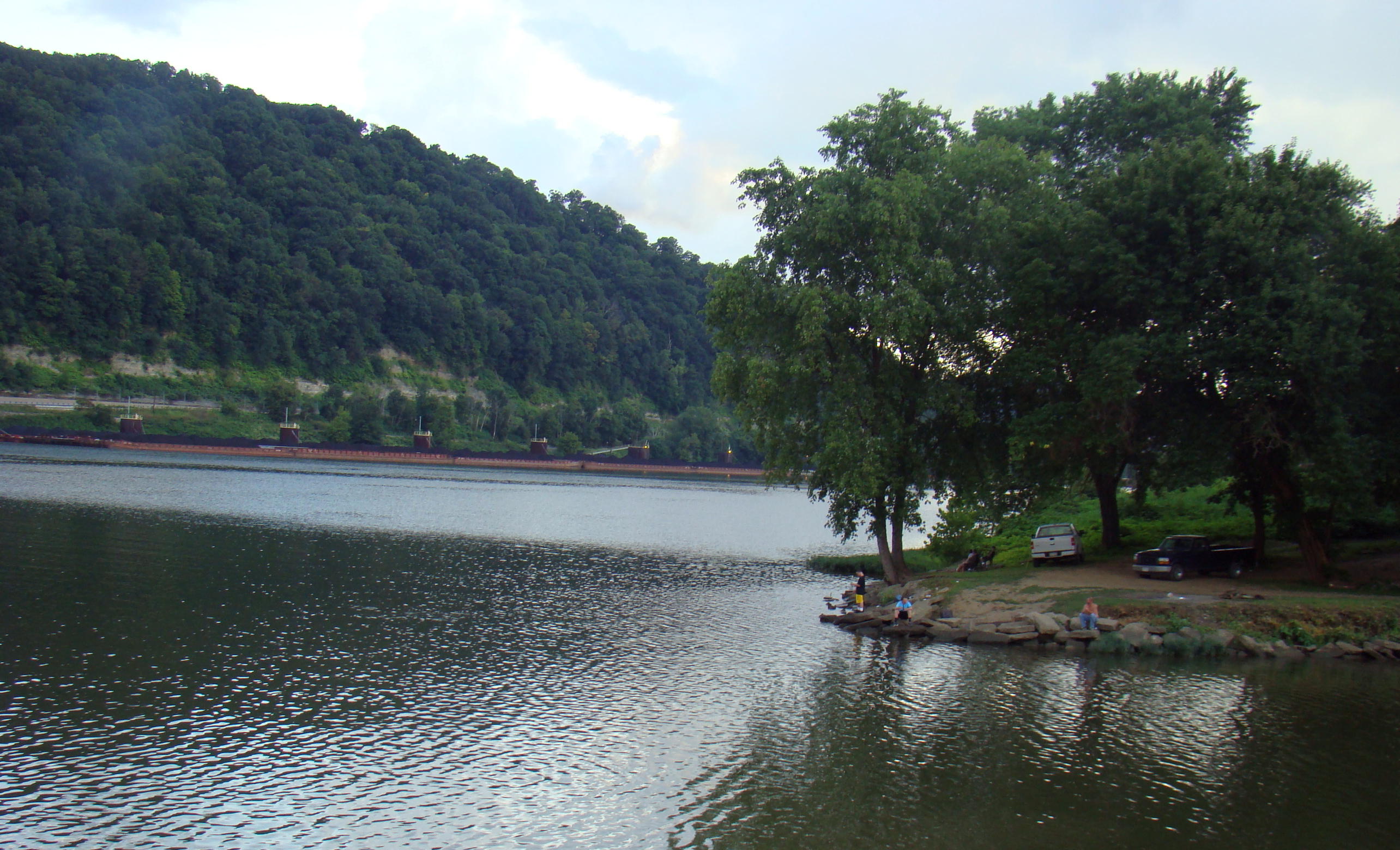
The Point on the Ohio River

The Point where the Captina Creek and the Ohio River meet

Chief Powhatan is memorialized here at the Point where the Captina Creek meets the Ohio River. The town laid out here in 1847 was named Powhatan Point in his honor. Captina Creek was the site of many Mingo, Powhatan, and Shawnee Indian camps in the late 1700’s, with exploration by famous white leaders such as Lewis Wetzel, George Washington and Ebenezer Zane.

Today the banks of the beautiful Ohio River provide a peaceful place to watch the barges float by, or relax with a fishing pole in hand in the cool of the evening.

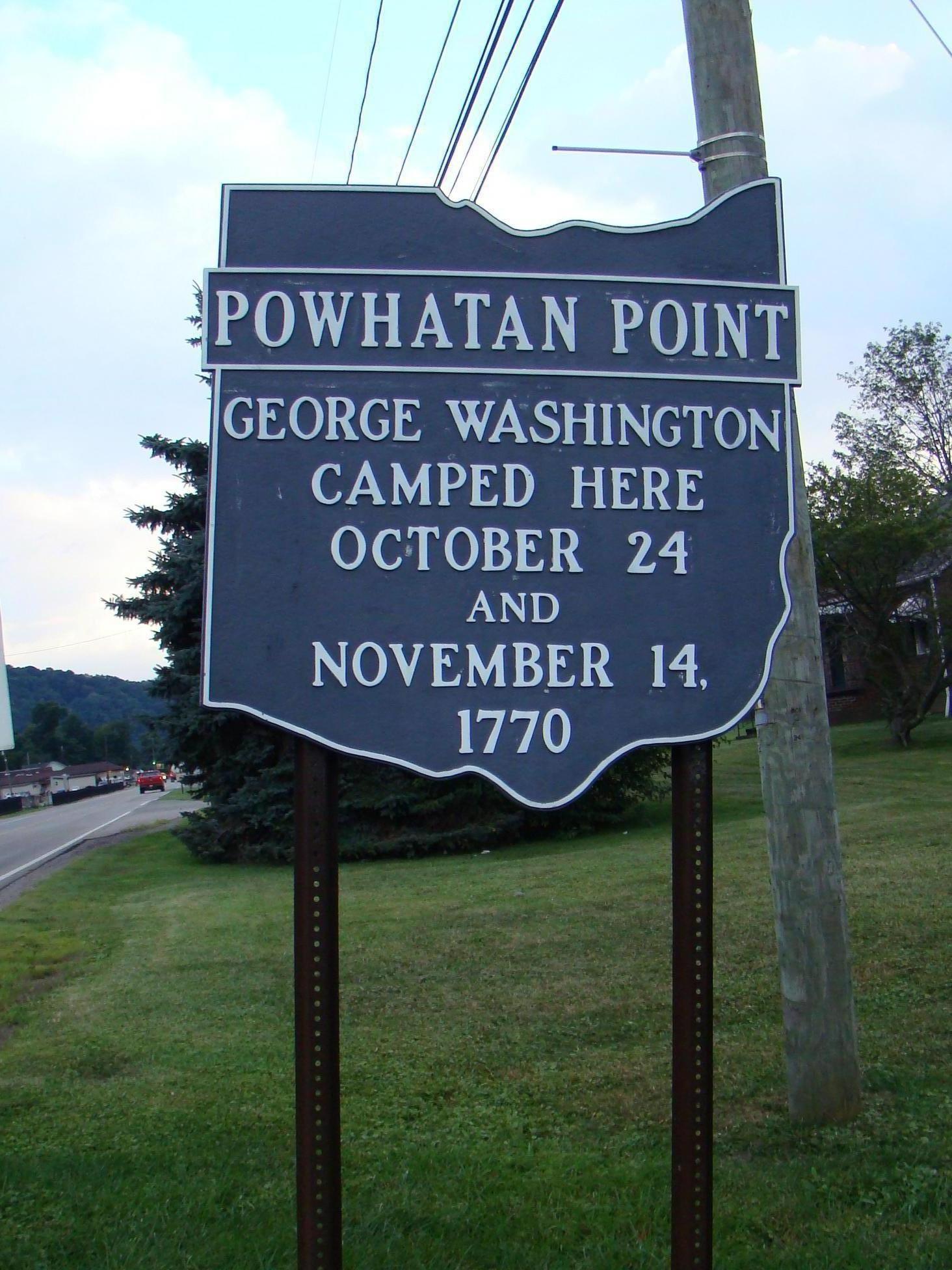
Historical sign

Historical sign

When you enter town, an Ohio historical sign greets you. It states that George Washington camped at what is now known as Powhatan Point on October 24 and November 14, 1770. Some say that is the most important thing that ever happened in this small town, but there was more happening during the last visit.

Chief Powhatan was famous for his dealing with the Whites, but even before the Europeans came to this section of America, he had conquered 30 different Indian tribes. Later Chief Powhatan, with the chiefs from those 30 tribes, tried to recover their lands, which they felt had been stolen by the English and European immigrants.

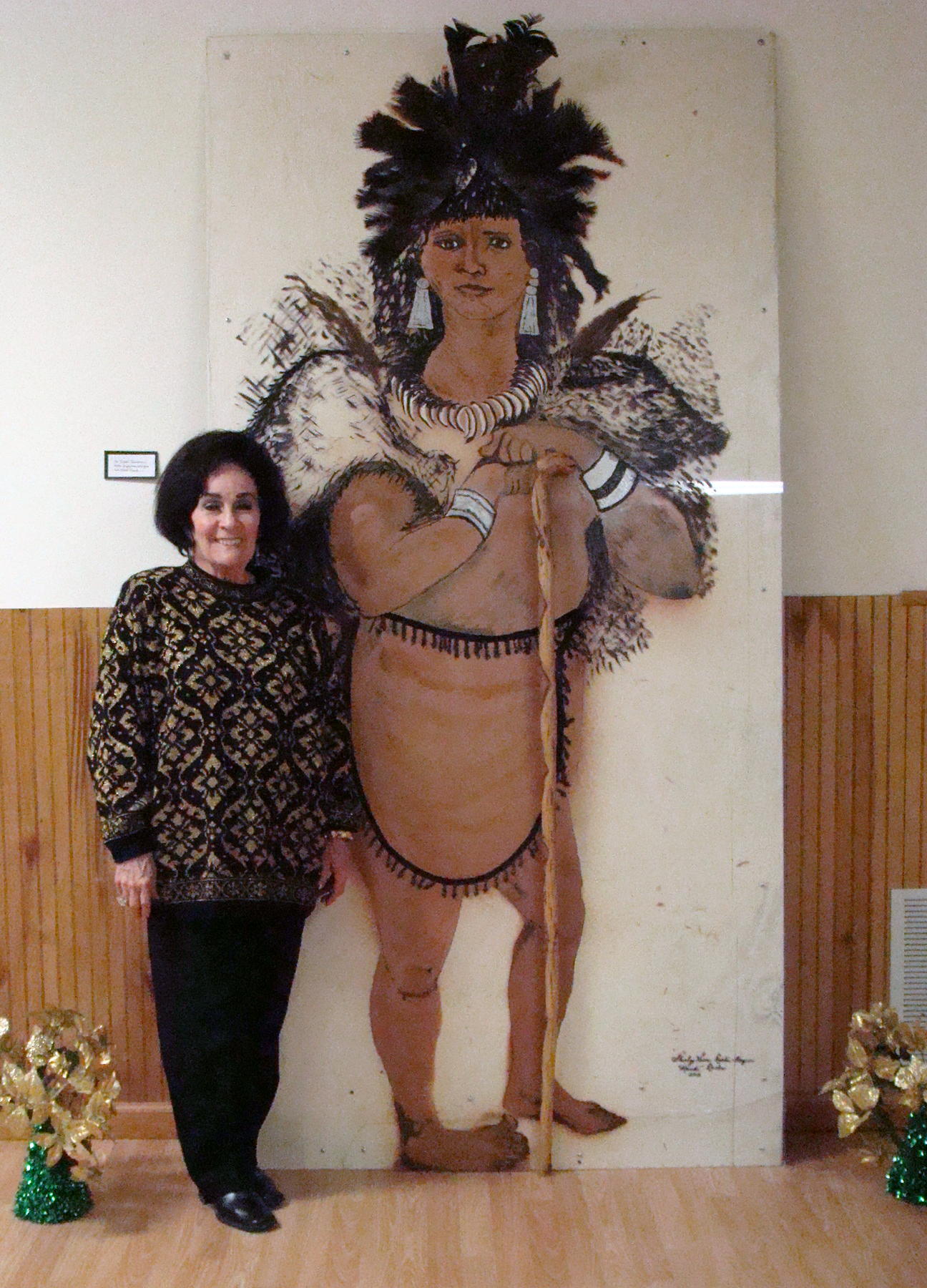
Kandi's Chief Powhatan

Kandi’s Chief Powhatan

Since the town was named for Chief Powhatan, it seemed fitting for one West Virginia artist, Kandi Roche, to compose a modern day sculpture of the Chief for The Art Gallery at Powhatan Point Village.  The art gallery is situated at what they call “The Gateway to the Appalachias”. Kandi made an unusual Chief Powhatan statue, which was painted on plexi-glass, and left for the community to enjoy. This chief was the father of the famous Indian maiden, Pocahontas (1595-1617), who was a peacemaker to the first white settlers.

A beautiful fence covered with Native American tribal patterns greets you when you arrive at The Gallery here. Inside are paintings, pottery, glass and photography. Art classes have been available from time to time. Since this is a relaxed atmosphere, little is scheduled, but friends enjoy getting together along the river banks.

Community Center

Community Center and home to Christmas in the Village

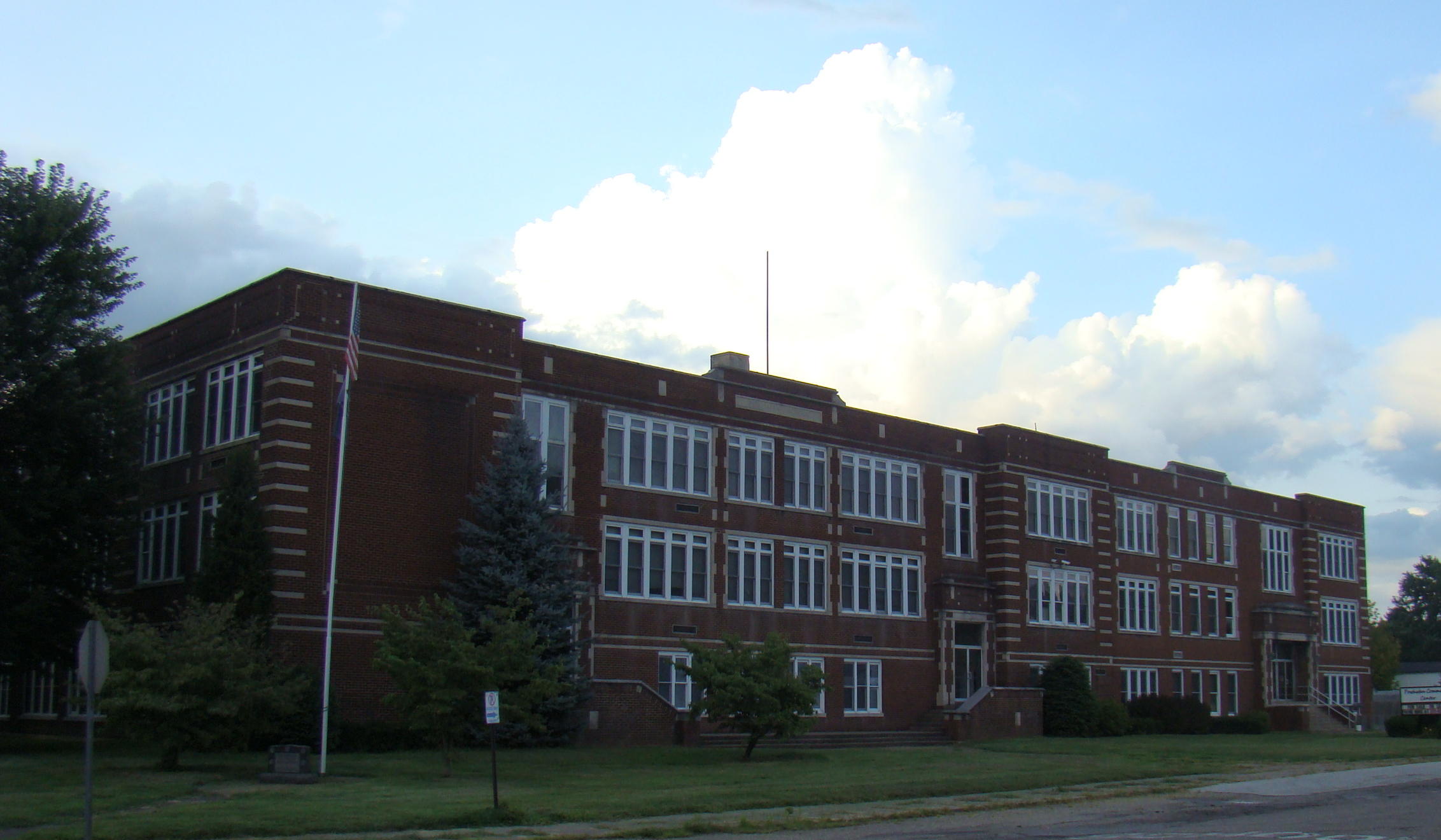
Just down the street from the gallery is the abandoned Powhatan Point High School, which today has been turned into a community center. During the month of December, Christmas in the Village is held here. The 9th Annual celebration will be held in 2014 with crafts, food vendors, entertainment and of course, Santa. But if funds aren’t made available soon, this facility may be lost to the community.

Kammer-Mitchell Power Plang across the river from Powhatan Point.

Kammer-Mitchell Power Plant across the river from Powhatan Point.

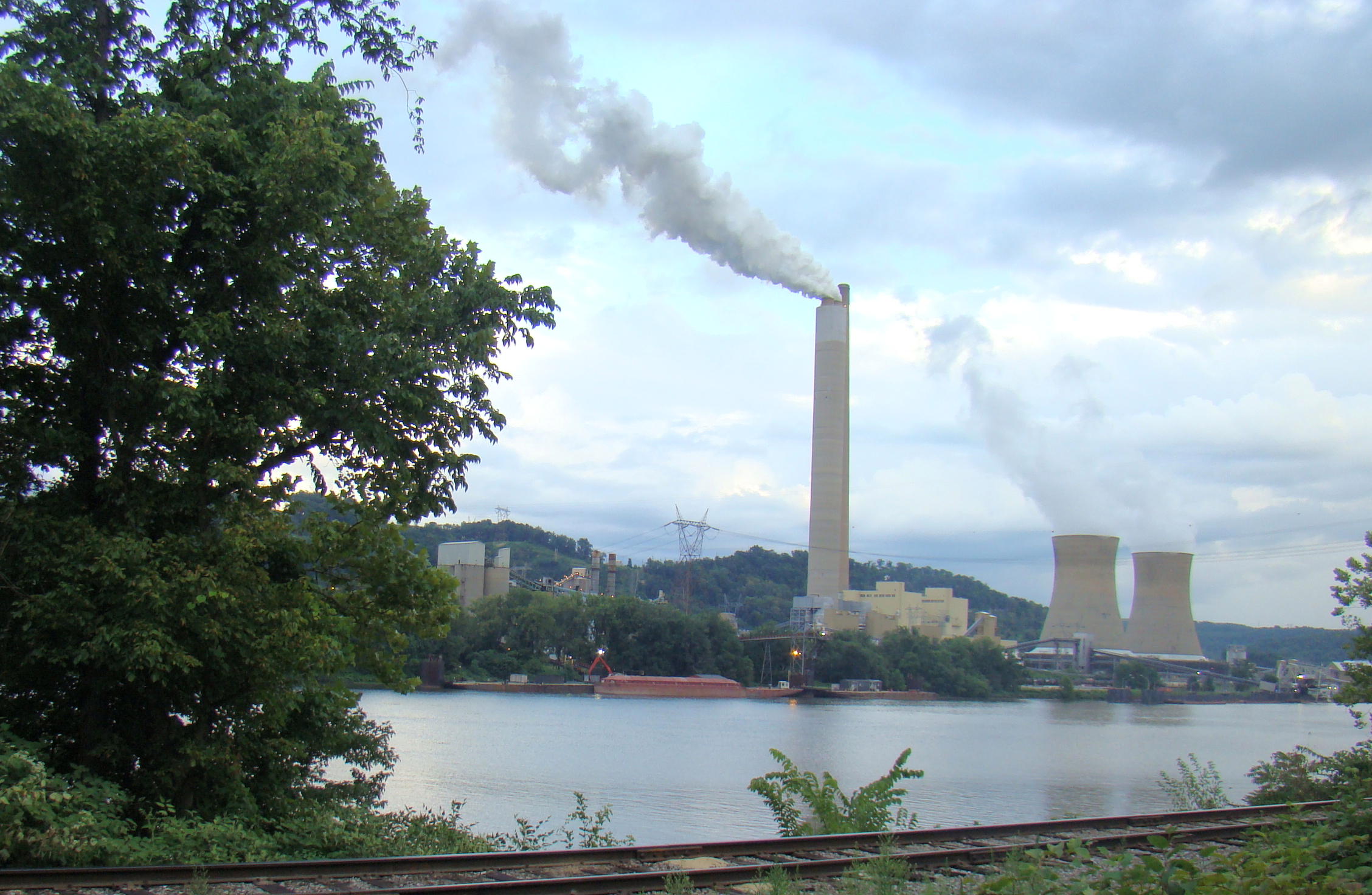
Just south of Powhatan Point is the Kammer-Mitchell Power Plant providing electricity and employment for parts of Ohio and West Virginia. Today this American Electric Power (AEP) plant is partially shut down due to failure to meet EPA standards. They must convert their wet coal ash to a dry coal ash bed to return to full operation. This coal-fired plant has the sixth highest power plant chimney in the world.

Drive through our beautiful land and watch for pieces of history wherever you happen to visit. Every small town has its place in history, and Powhatan Point is no exception.

Drive along the beautiful Ohio River on Ohio Route 7 and you will come to the town of Powhatan Point, about fifteen miles south of  Bridgeport, Ohio.


Life on The Farm at Walnut Creek

View at The Farm at Walnut Creek
View of The Farm at Walnut Creek


Did you ever want something to eat out of the palm of your hand? Visit The Farm at Walnut Creek where many animals rush for the feed in your extended palm.

 This beautiful Amish farm, set in the rolling hills of Holmes County, makes a great place to spend the day. Everything here moves at a much slower pace – even farm work. This is definitely a working farm where you can see various chores being done, depending on the season of the year: plowing, thrashing, canning or quilting to name a few. This is a unique educational experience for the entire family.

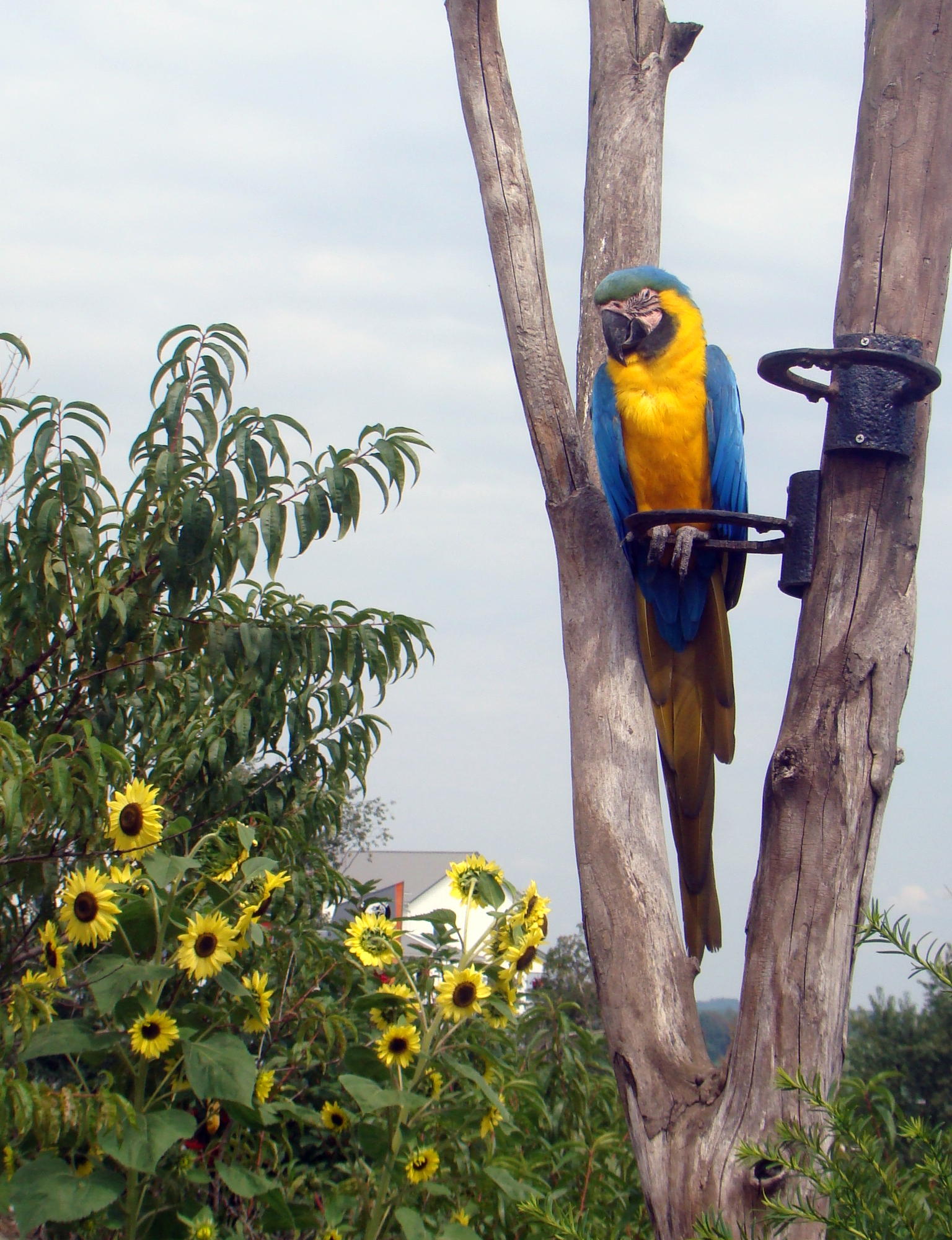
Colorful Macaw watches over activities.

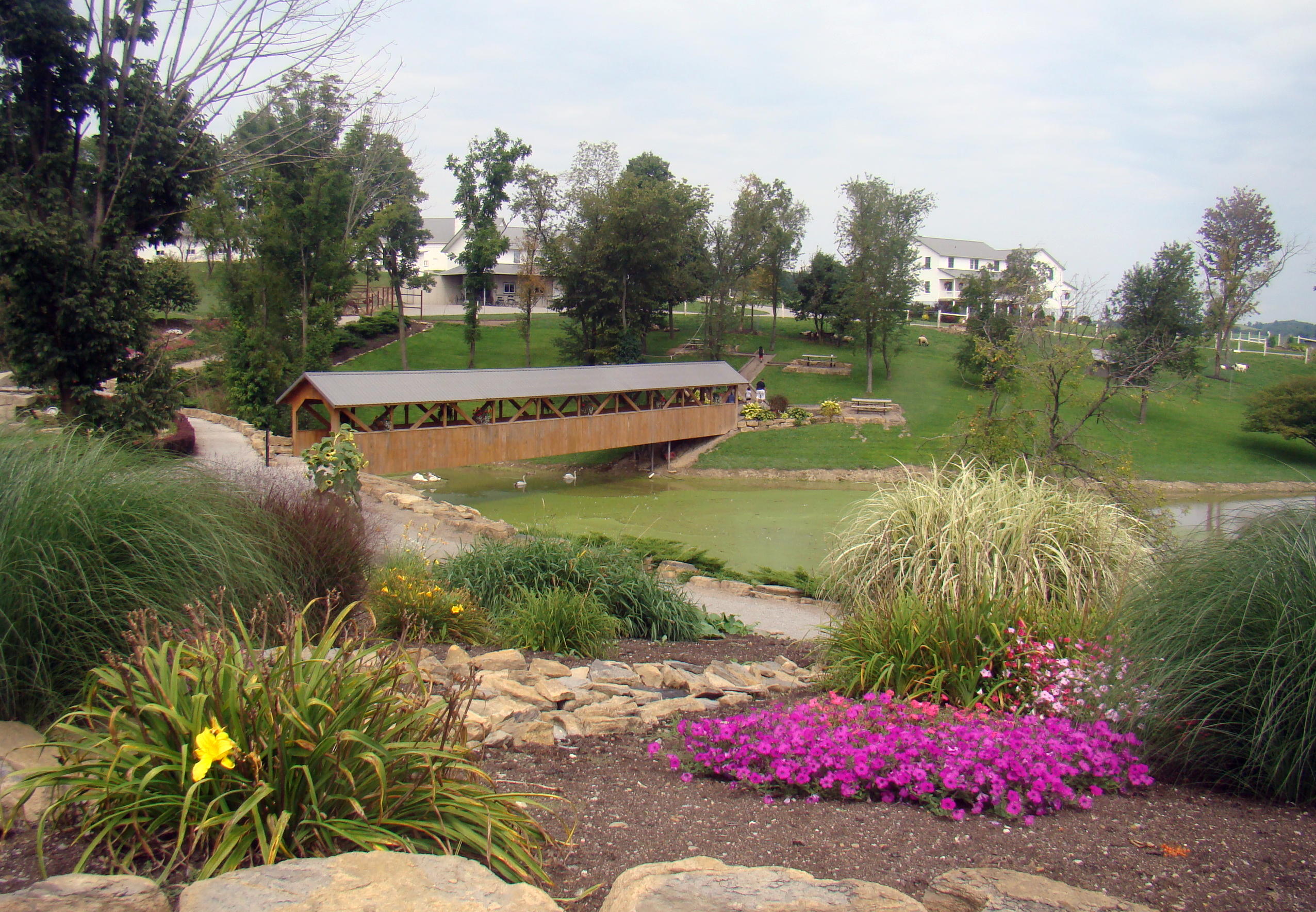
Tour inside an authentic, non-electric, Amish farmhouse where you might be lucky enough to get a freshly baked cookie. Check out several barns, observe a blacksmith at work in his shop, and admire their beautiful flower gardens. A covered bridge creates a perfect setting for relaxation at a small pond surrounded by plants and flowers.

But children and the young at heart come mainly to feed the farm’s 500 animals from six different continents. While everyone expects to see sheep, goats and cattle, a surprised look crosses their face when a Dromedary camel, giraffe or Grevy zebra appears. A special feature is the African Spurred Tortoise, the largest mainland turtle in the world at over 30 inches long and weighing up to 200 pounds.

Luke and mother, Libery in the Giraffe Pen.
Luke and mother, Liberty, in the Giraffe Pen.

Two options exist for viewing the animals: by car or on a horse-drawn wagon pulled by beautiful Percheron draft horses. Try both for the best experience. By car, feeding seems a little safer since you can gently put up the car window if they try to stick their head inside the car…and they definitely will! Speed limit for cars is 5 mph to protect animals and passengers

Grevy Zebra and pony
Grevy Zebra and colt

The most fun of the day occurs on the hour-long wagon ride where everyone is given a filled feed bucket for the animals. At least three horse-drawn wagons headed out each hour…and this visit happened on a Monday. The driver tells stories about the animals, as the horses trot slowly down the lane.

Stops to watch the zebras and giraffes top the tour. Everyone has to be careful of the zebras as they might bite, so pour their food onto the ground. Mother zebra keeps a close eye on her two-week old colt. The picture of this zebra pair was taken through my windshield on the car tour. They wouldn’t get off the road!

Even though the giraffes are inside a high fence, they easily reach over to eat out of your hand. Here a special treat was mother giraffe, Liberty, and her five-day old calf, Luke.

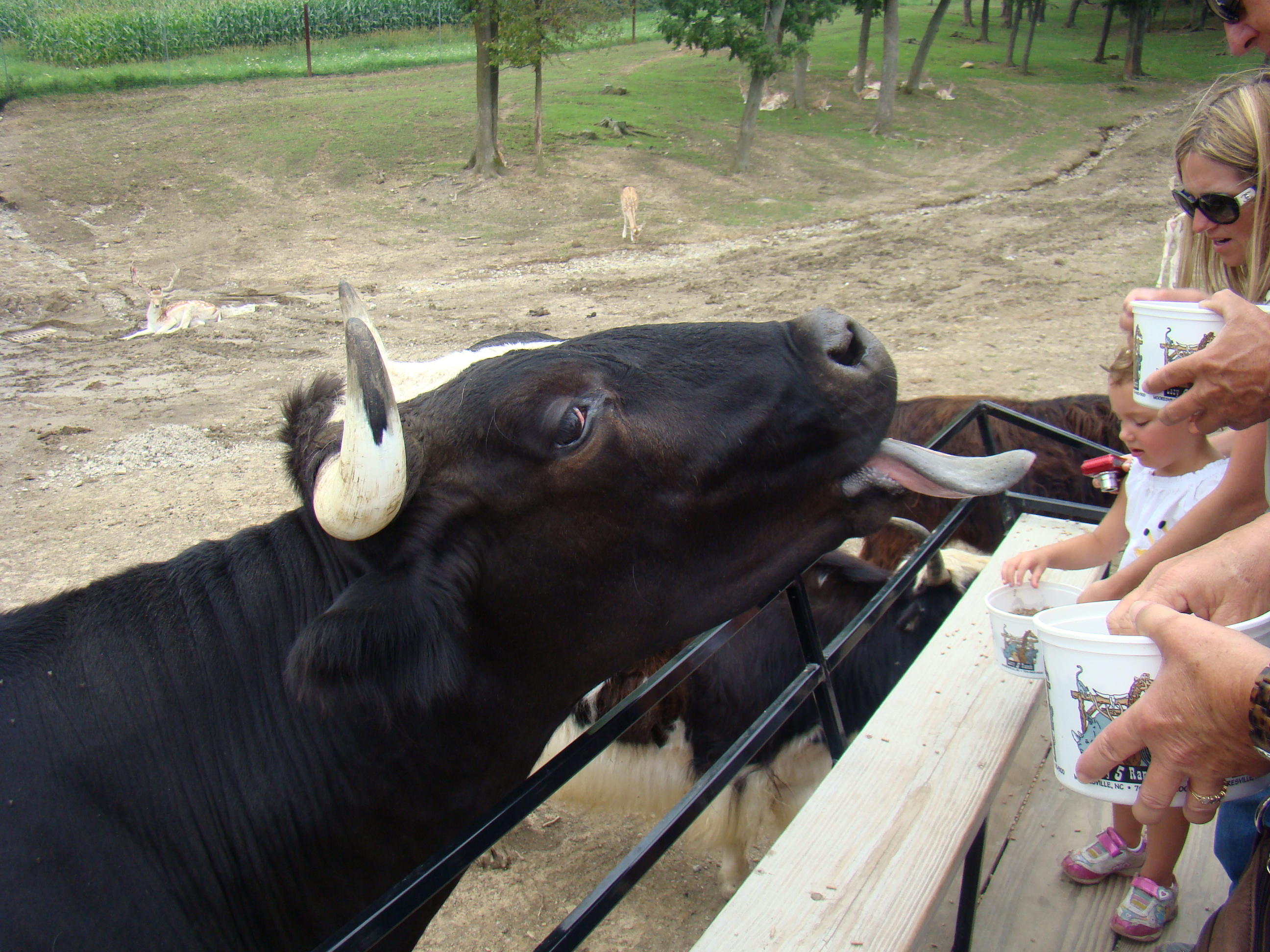
Big Bad John is always hungry.

The Farm at Walnut Creek is truly where the deer and the antelope play, along with many other domestic and exotic animals. Feeding Big Bad John, a horned steer, requires caution, due to his long tongue reaching out for feed and his horns swinging from side to side. Everyone from child to adult enjoys feeding the animals and wishes the ride could last a little longer.

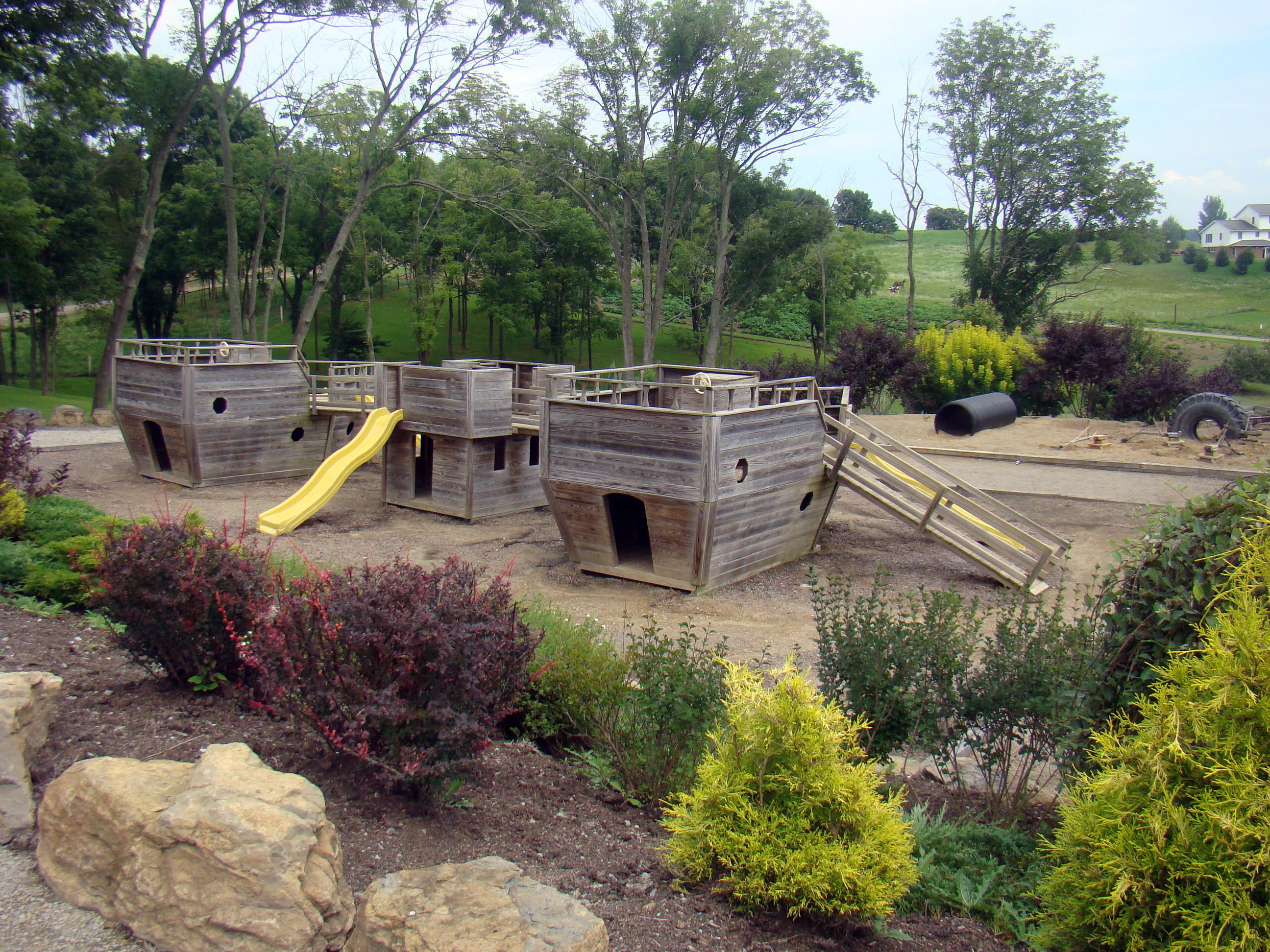
Noah's Ark Playground
Noah’s Ark Playground

At the end of this great family outing, spread out a picnic near the lake. A Noah’s Ark playground seems the perfect play area for a day filled with animals. Take the plank up to the top of the ark, then come down one of several slides. Nearby is a sandy volleyball court.

The Farm at Walnut Creek provides fun activities from April – October. Summer hours are Monday – Saturday 8:30 – 6:00. Closed on Sunday. During the Fall Festival, you might try their famous pumpkin slingshot, or watch the Percherons press sorghum cane stalks into molasses.

Plan to spend a day at the Farm at Walnut Creek this summer!

The road to The Farm at Walnut Creek is a pleasant drive. Take I-77 to Exit 93, which will be SR 39. Turn left on SR 39 and go approximately 14 miles to a left turn on Co Hwy. 114. Signs are posted so watch carefully.

Steamboat History Flourishes at Ohio River Museum

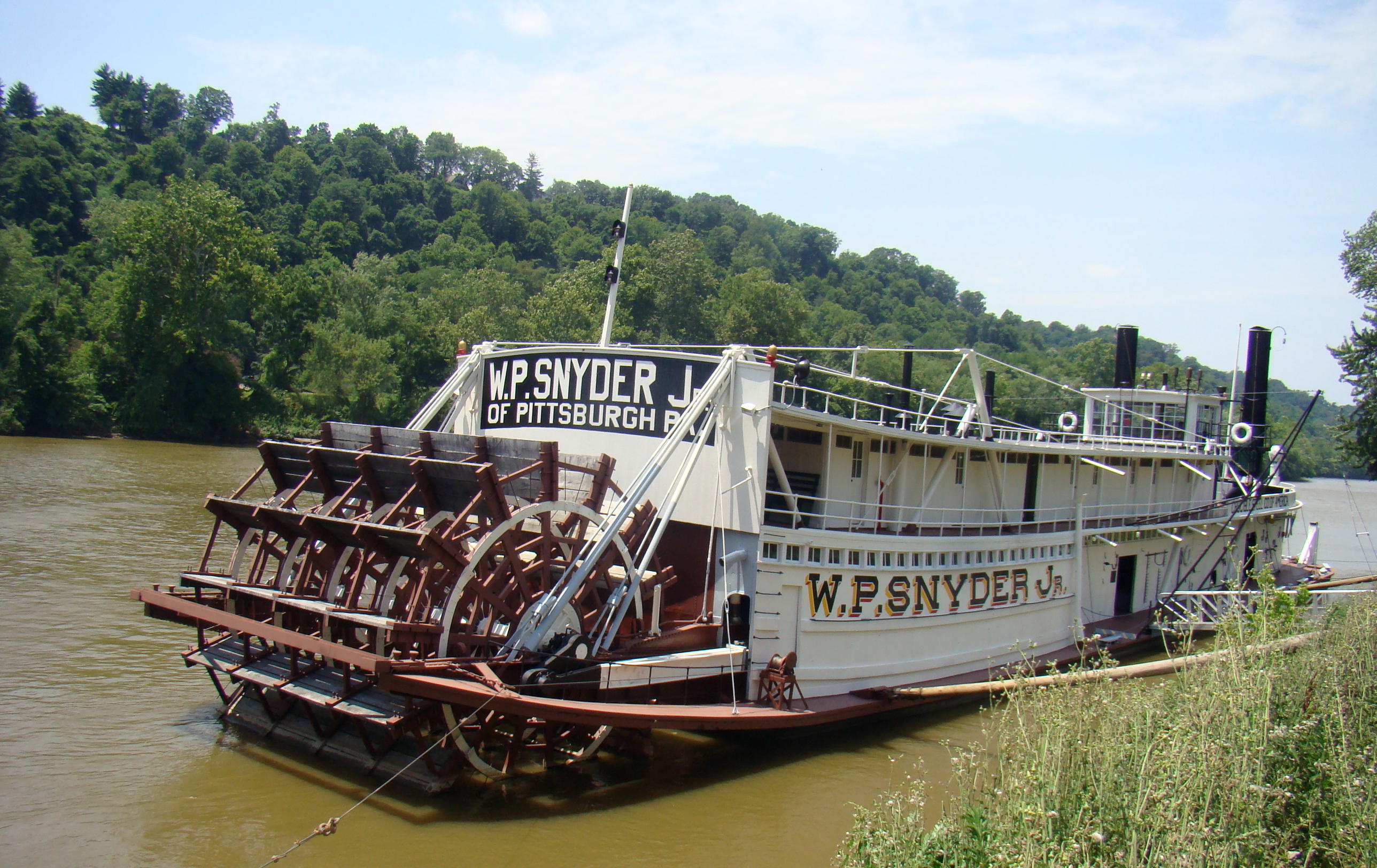
W.P. Snyder, Jr on the Muskingum River in Marietta, Ohio

W.P. Snyder, Jr on the Muskingum River in Marietta, Ohio

“Say Steam” Those are the special words the guide used when taking pictures of visitors on the steam-powered W.P. Snyder, Jr. at the Marietta River Museum in Marietta, Ohio. You can feel the river beneath your feet as you walk the deck, listening to the guide’s description of life on the river many years ago.

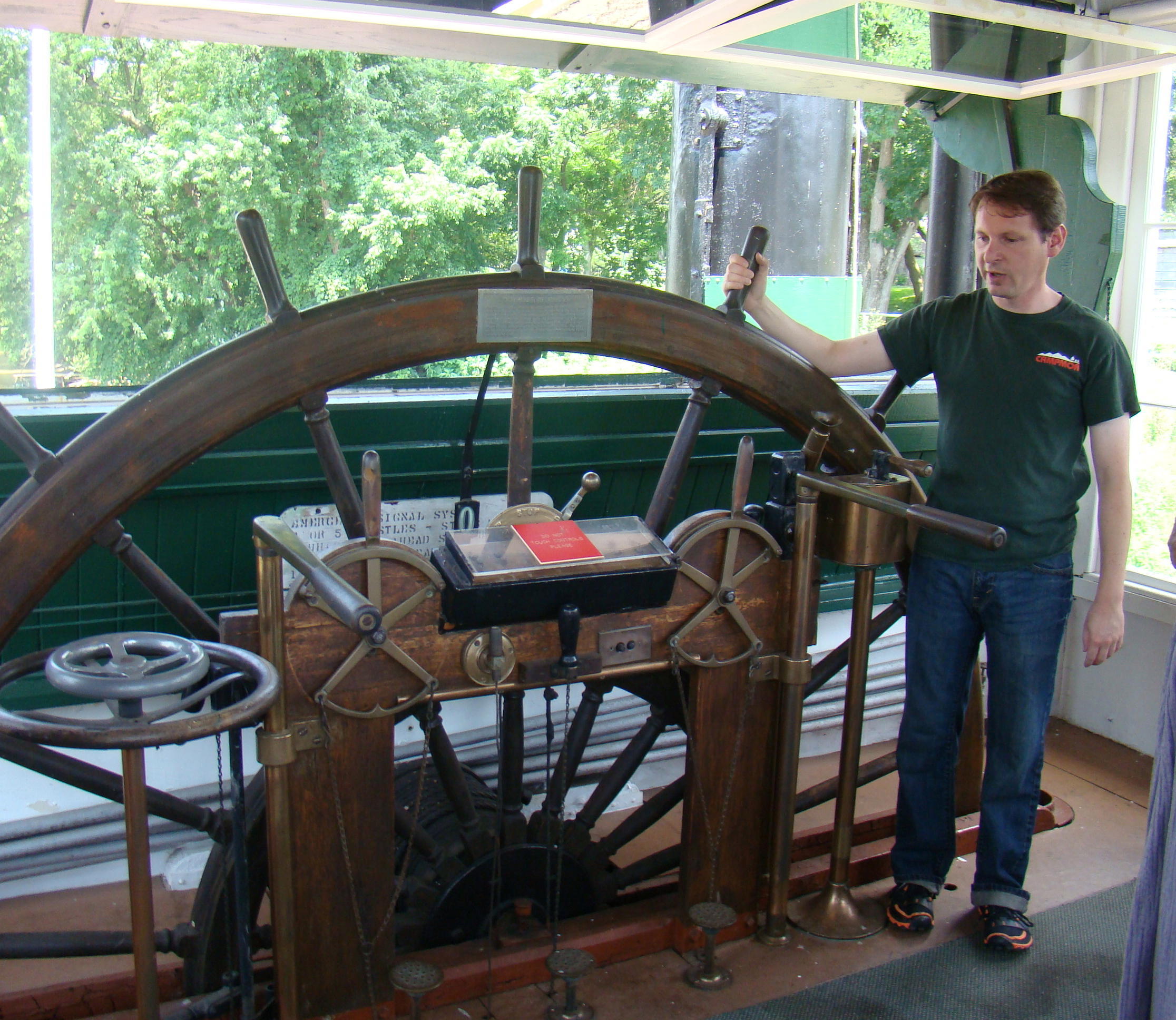
Pilot Wheel of W.P. Snyder, Jr.

Pilot Wheel of W.P. Snyder, Jr.

This early tugboat replaced the mules that walked along the banks of the river towing the barges. Tugboat probably wasn’t the best name for this type of boat, because they didn’t tug anything…they pushed it instead.

W.P. Snyder, Jr. was built in Pittsburgh in 1936 as the result of a terrible winter there. The wooden boats were brutally torn apart by the ice on the Monongahela River, so for the first time, a tugboat was constructed of steel by Carnegie Steel Co, and called W.H. Clingerman.

After years of service, it was retired due to its coal furnaces. In 1955, the Sons and Daughters of Pioneer Rivermen purchased the boat, now re-named the W.P. Snyder, Jr. for $1.00, and moved it to the banks of the Muskingum River in Marietta. This tugboat is the last intact steam-powered, stern-wheeled tugboat in the United States.

But the effects of weathering made it necessary, in October of 2013, for the W.P. Snyder to leave the dock at Marietta for refurbishing, mainly on the exterior. The trip back had a slight delay because the Ohio River was too high in late May, 2014 for the W.P. Snyder to get under the Putnam Avenue Bridge.

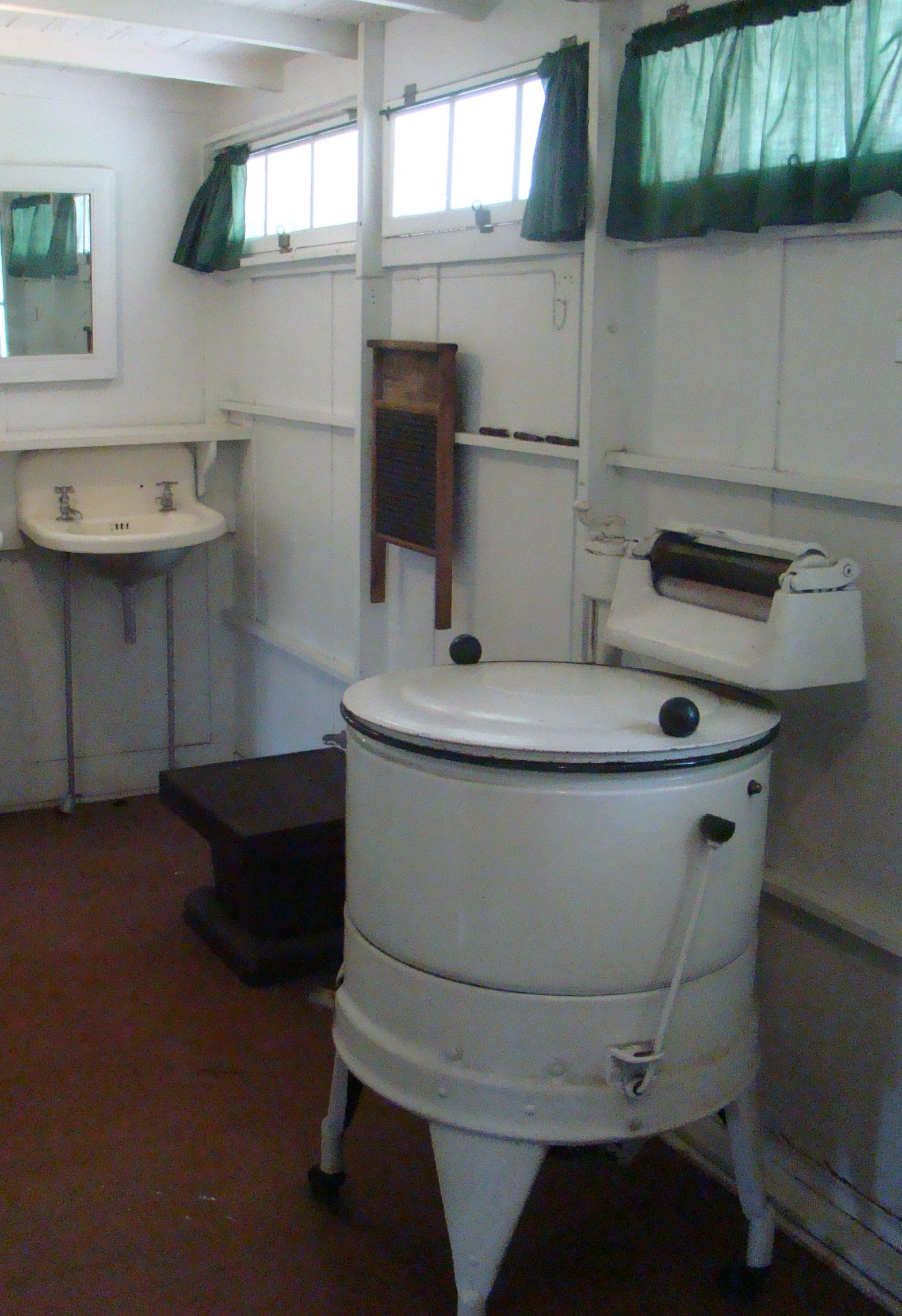
Laundry Room with wringer washer and washboard

Laundry Room with wringer washer and washboard

Pushed back by two antique tugboats, Lady Lois (‘28) and J.S. Lewis (‘31) the W.P. Snyder, Jr is now moored at the confluence of the Muskingum and Ohio Rivers, ready for tour.

On board, you will see the Engine Room, where the engineer controlled passage by using not only steam but also electricity. A system of bells could be pulled to signal conditions or problems. There was even a telegraph handy for outside communication.

Officers and crew were provided completely separate living quarters on the upper deck. If at all possible, officers and crew went out of their way to keep from crossing paths. Two separate bathrooms, a laundry room, and kitchen completed the facilities onboard.

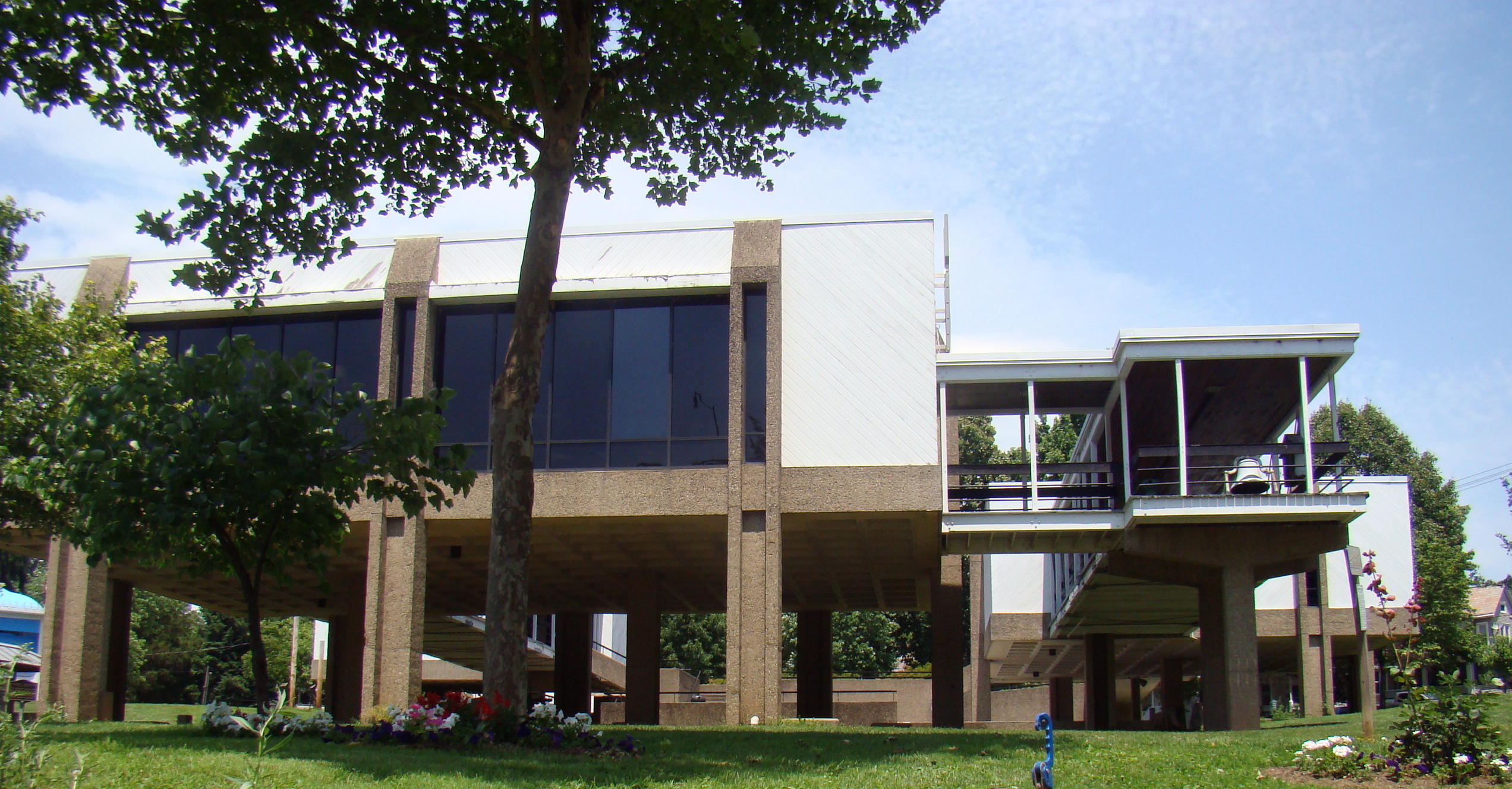
Ohio River Museum

Ohio River Museum

While the tugboat draws many visitors to the museum, there are three separate buildings nearby that contain a history of the Ohio and Muskingum Rivers, and the steamboats that frequented their waters.

An introductory film, History of Steamboats, opens the door to exploration inside the museum. The buildings are filled with models of steamboats, related artifacts, and stories of early life on the river…and much more!

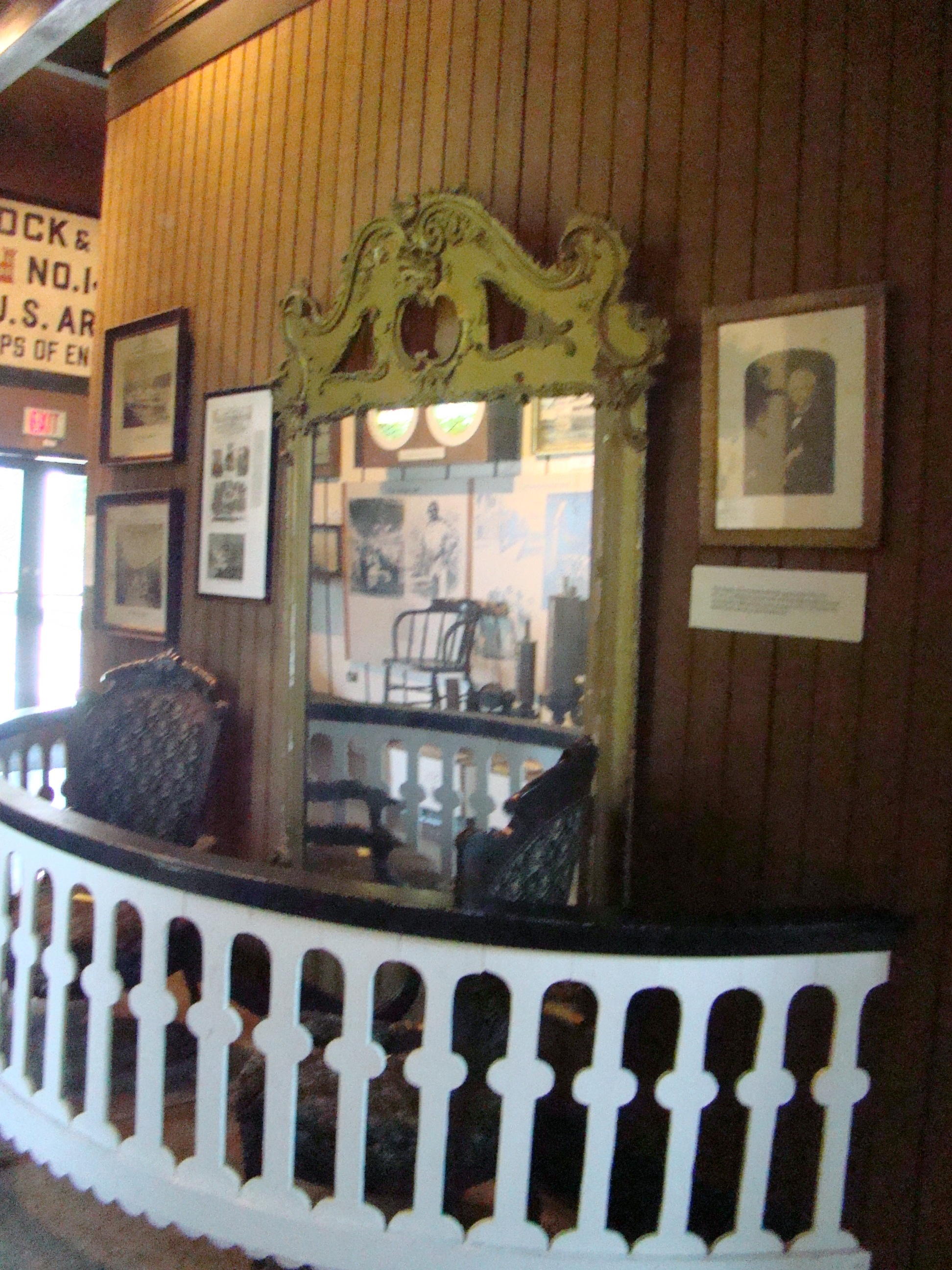
Mirror from Mark Twain's Crystal Palace

Mirror from Mark Twain’s Crystal Palace

Among the historic pieces, the exhibit contains a dug-out canoe that was used as a ferry between Fort Harmer and Marietta. There is even a reminder of Mark Twain through a display of an ornate mirror that hung in the Crystal Palace steamboat, where Mark Twain served as pilot.

Near the river’s edge, a flatboat that was used during Ohio’s early settlement is on display. Close by stands the oldest existing Western Rivers’  steamboat pilothouse from the steamboat, Tell City, which sank in 1917. An interesting section of poles shows the heights of some of the worst floods in Marietta history, three of the worst being : 54.5′ in 1884, 55′ in 1937 and 60.3′ in 1913.

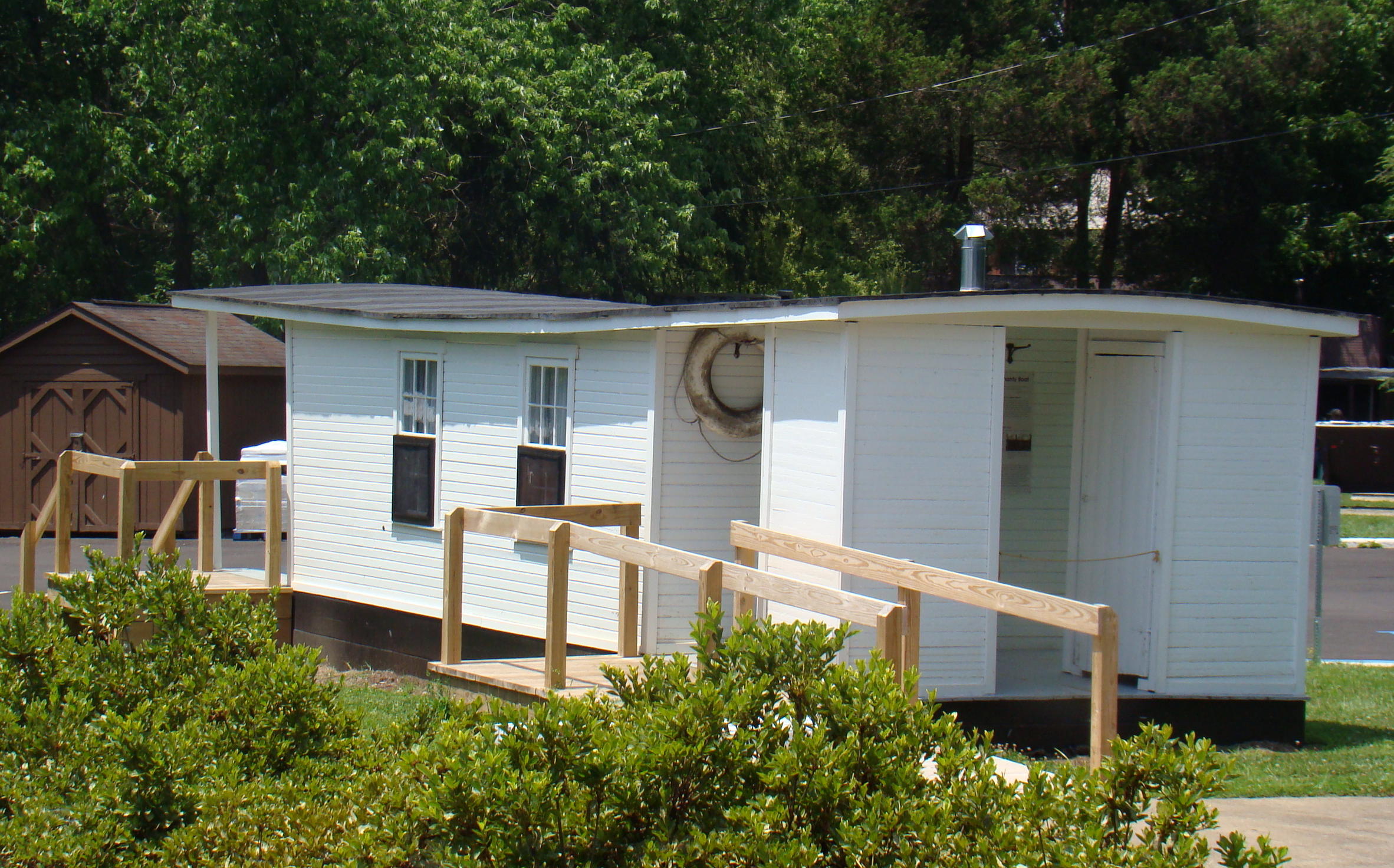
Shanty Boat where folks flew under the radar

Shanty Boat where folks flew under the radar

Don’t miss the old shanty boat, probably from the 1920’s to 1930’s. It possibly could be the oldest surviving shanty boat on the inland river system. People actually lived on these boats or had businesses there. Many of those who lived on the boats were trying to hide from something. Here they could avoid taxes as they were always on the move, and needless to say, the shanty boat provided the perfect place for thieves and lawbreakers, of many sorts, to hide from the law.

These floating shanty boats were banned in 1930 from the Ohio and Muskingum Rivers. However, a friend said when he was a kid in Parkersburg along the Ohio River, there were still shanty boats in the 50’s . Evidentally, more law breakers! The gypsy in me still likes the idea of being able to fly under the radar during those early years with no address, but much freedom.

End your day by cruisin’ down the river on the Valley Gem docked right next door to the Ohio River Museum.

The Ohio River Museum is located at 601 Front Street, Marietta, Ohio, one block from Ohio State Route 7, and minutes from I-77. Plenty of free parking is available and cost of admission is very reasonable.