Places to go and things to see by Gypsy Bev

Archive for the ‘Ohio’ Category

Shenandoah Crash Recollections with Ed Lehotay
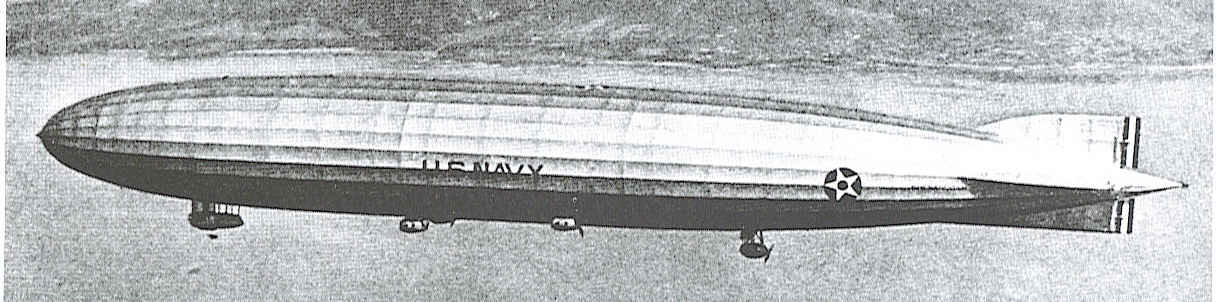
USS Shenandoah airship

USS Shenandoah airship

Step back 88 years to September, 1925 as we visit an observer, Ed Lehotay, a lively 97 years old. He and his family actually saw the giant Shenandoah airship that fateful morning before it crashed in nearby Ava, Ohio.

USS Shenandoah was the first of four US Navy rigid airships built at Lakehurst Naval Air Station in New Jersey.  It made the first airship crossing of North America at speeds of up to 69 mph.  On its 57th flight, this “strongest airship in the world” was on a publicity tour of Midwestern State Fairs when it was caught in a thunderstorm in the rolling hills of southeastern Ohio.  Surprisingly, 29 of the crew of 43 survived the crash.
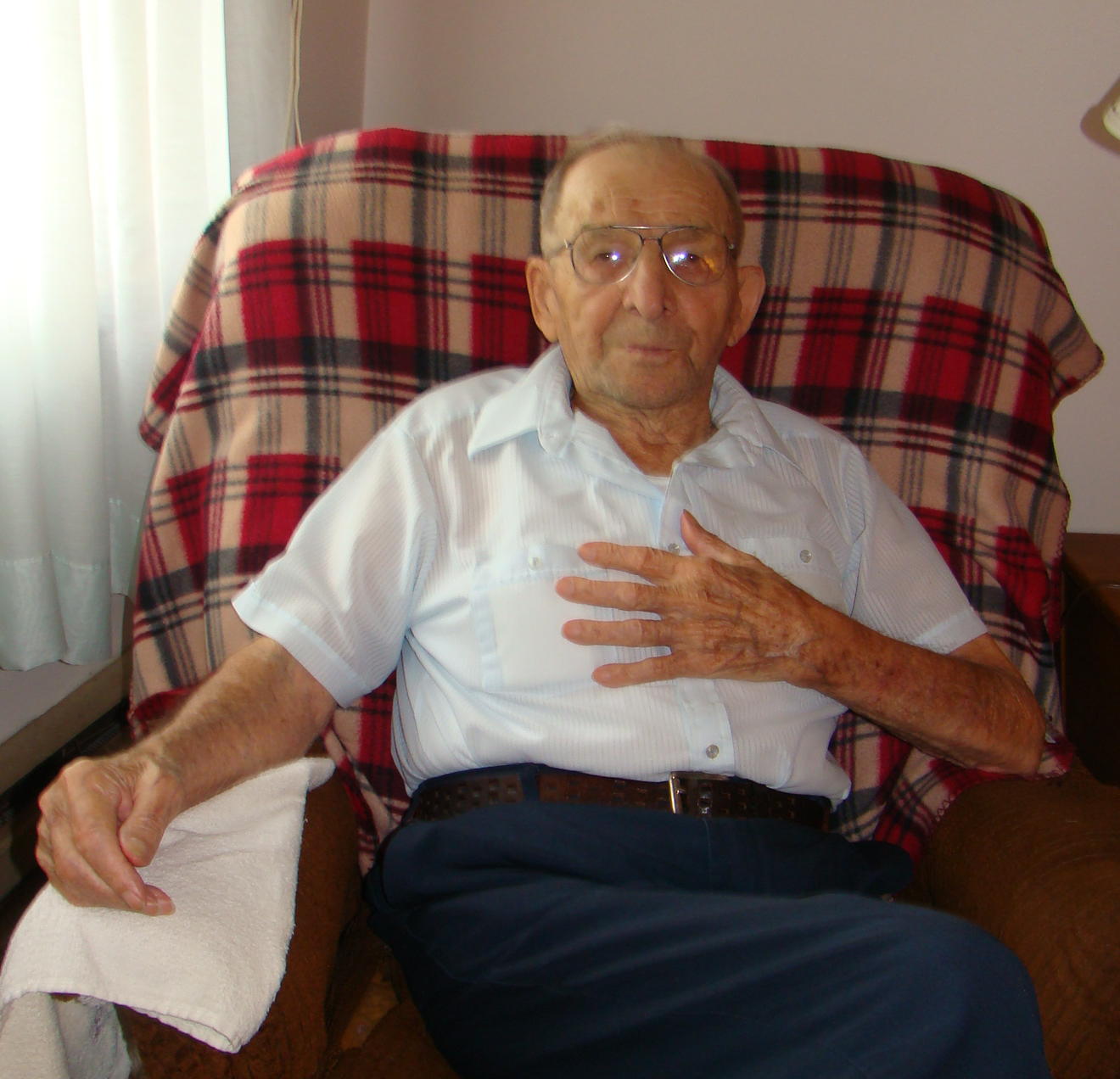
Ed Lehotay at 97 years of age

Ed Lehotay at 97 years of age

Nine year old Ed Lehotay recalled September 2 as being a dreary day with the threat of a storm in the air. They had gone to bed about 10:00 that night in their family home on Patton Hollow Road just south of Cambridge. Their house shook in the terrible storm with torrents of rain pouring down. As the lightning flashed and lit up the sky, their father had noticed a large airship pitching back and forth like a bucking horse directly over their house. His father woke the whole family at 4:00 in the morning on September 3, 1925. The children’s eyes were wide with wonder at the huge airship over their house being lit up by the lightning.

The Shenandoah moved slowly just over the rooftop. Their family was shocked to see the 680′ long airship with a diameter of nearly 80′ so close, rolling from side to side. That’s as long as two and a half football fields!  When the sound of the roaring engines combined with the rolling thunder, the noise was unforgettable. From the living room window, the family watched the airship as it drifted across the road, over the barn, and up the hill nearly touching the top of their cherry orchard. The crew threw the spider lines from the airship in hopes they would either get tangled in the tree tops, or perhaps someone would be able to reach them and restrain the airship.

Ed and his family would never forget the sight of the USS Shenandoah (ZR-1) on that eventful morning. As the squall line continued to pummel  the zeppelin, the ship eventually broke in half with part of it landing near Ava, Ohio in Noble County, and the rest being scattered about ten miles farther, with many of the crew falling to the ground along the way.
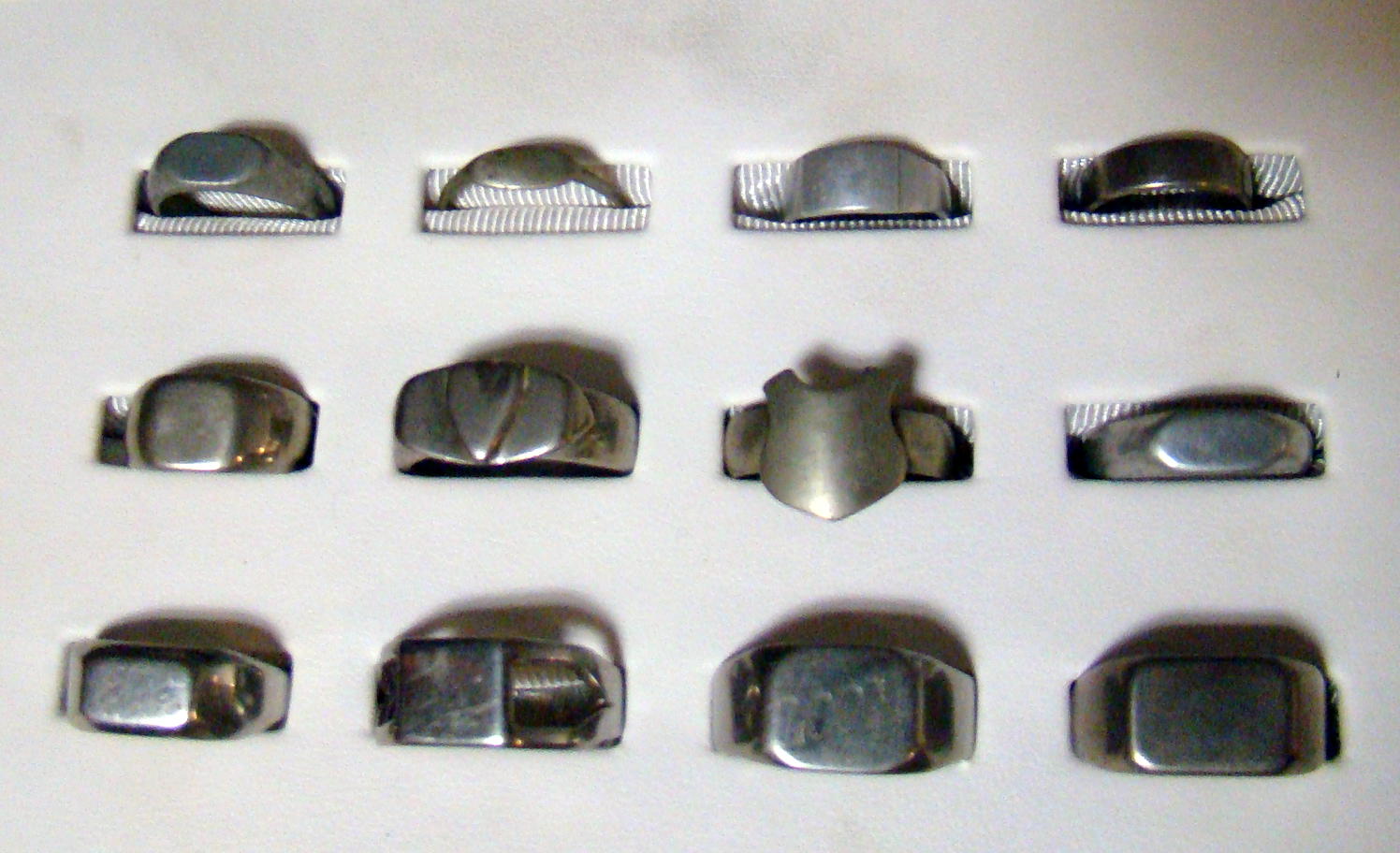
Rings made from Shenandoah's aluminum frame

Rings made from Shenandoah’s aluminum frame.

People made a beeline to the crash location in the continuing rain. Ed begged his family to let him go to the site, but they felt there would be too much confusion there for a youngster. Instead his brother drove to Ava through the mud roads in his new Willy’s Baby Overland. Once there they saw people cutting up the fabric of the airship for raincoats. Even though it was raining, people still needed drinking water so a local farmer, fearing his well would go dry from so many users, began charging for water – something rare in those days. Another young entrepreneur brought thirst quenching bottles of pop to sell at the site. Many took pieces of Shenandoah’s aluminum frame as souvenirs.  Ed’s brother brought him a piece of aluminum, which Ed melted in their forge and fashioned into rings. His dad put on one of those rings with a diamond shape on top, wore it every day and was even buried with it on his hand.
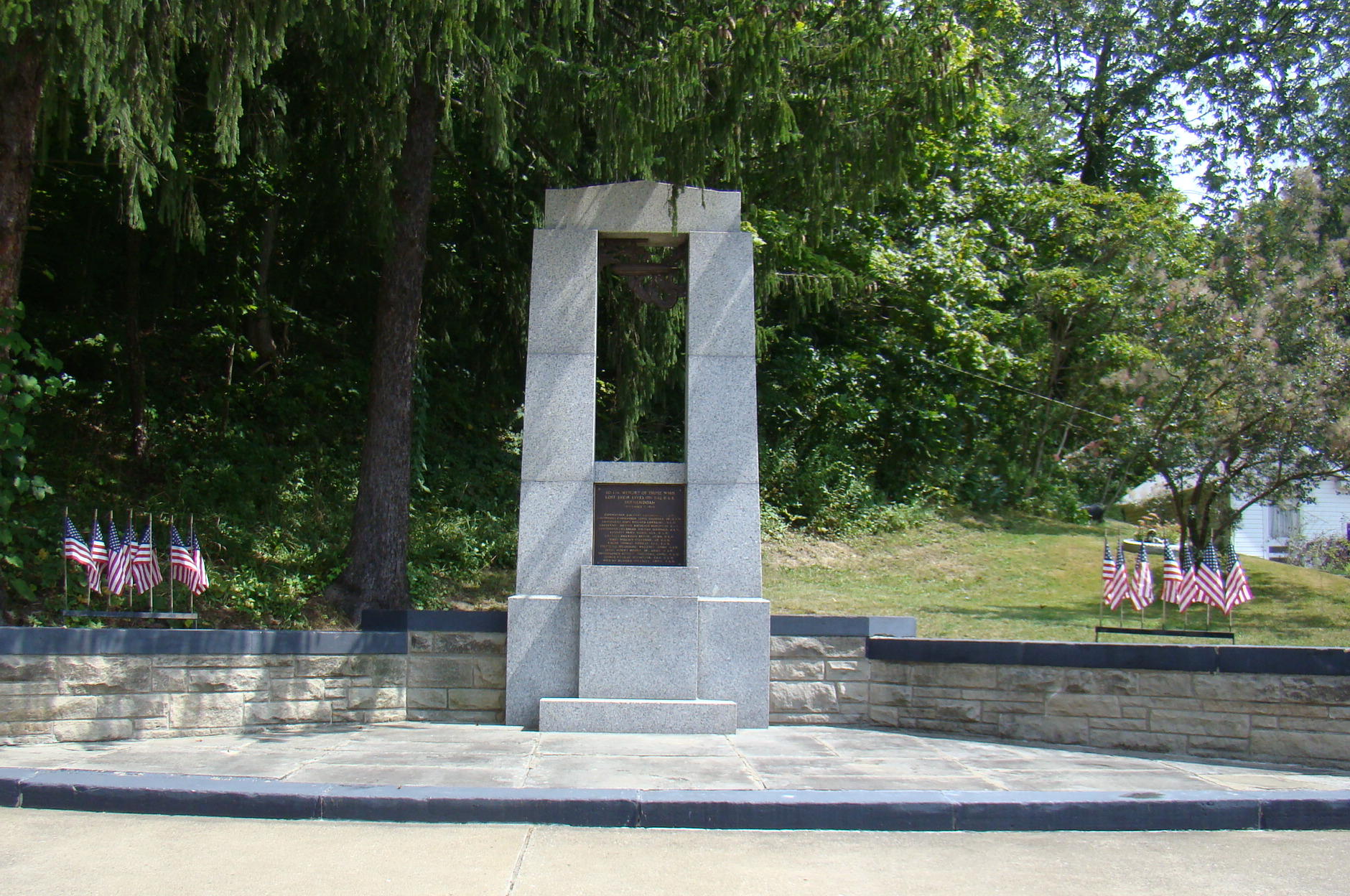
Shenandoah Memorial in Ava Ohio

Shenandoah Memorial in Ava Ohio

Today the Shenandoah Memorial stands near the place of the crash. Originally, the memorial was back in the woods at the actual site of the crash, but today it has been moved where people can visit it more easily. It consists of a small metal replica of the Shenandoah airship inside a tall granite archway , which is surrounded by swirling metal storm clouds. A bronze plaque lists names of those who lost their lives in the crash.

At the southern end of Ava, there is a USS Shenandoah Memorial Trailer Museum beside Rayner’s Garage. Bryan and Teresa Rayner have saved many pieces of memorabilia regarding that crash in 1925. Bryan has a special interest since his family owned one of the farms where pieces were found.

A local high school in Noble County carries on the historic memory of this event by having their high school sports team called the Shenandoah Zeps.  Their logo is a sleek dirigible.

How wonderful it would have been to view the Shenandoah in all its magnificence as it glided through the sky. Thanks to all those who help memories of the  famous airship and its crash still live on!

To visit the Shenandoah crash site, take I-77 to Exit 28 , Belle Valley. From the west side of the interstate, take Hwy 821 North 5 miles to Ava. The monument is on the north side of town on the east side of the road and well marked. Rayner’s Garage and the Shenandoah Trailer Museum are on the south side of town. The museum has limited open hours.
School Is In The Air

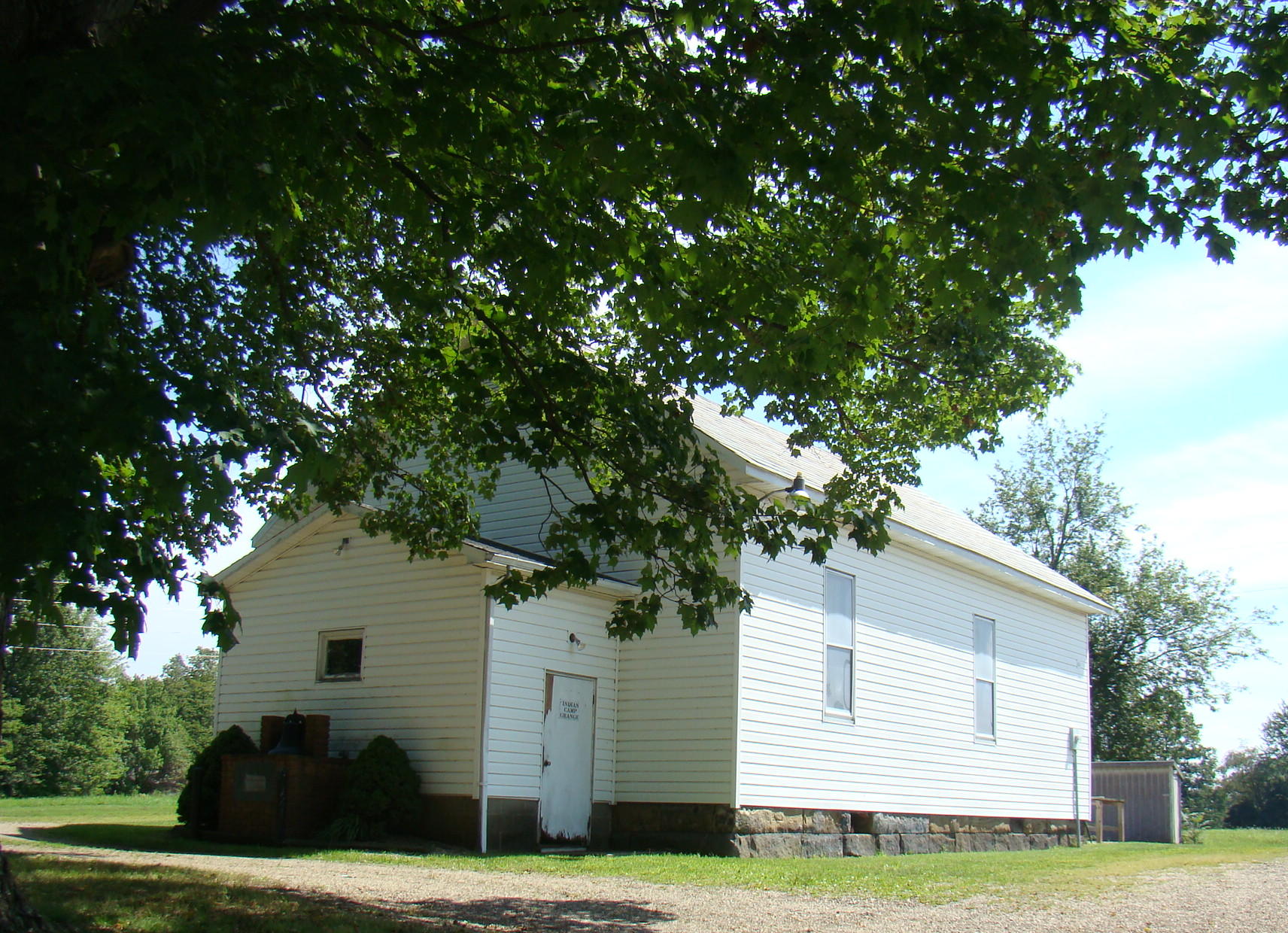
Hopewell One-Room School at Indian Camp

Hopewell One-Room School at Indian Camp

The cool morning air whispers Time for school. Memories flood back of days at a one-room school in Indian Camp. All eight grades were in one room so students helped each other climb the ladder of learning. Perhaps today is the perfect time to take a road trip leading back many years ago to Hopewell School. Chances are someone you know, or even you, yourself, have attended a similar school.

After driving the winding roller-coaster road of State Route 658 northwest of Cambridge, Ohio, the old school brings a smile. Those sturdy sandstone foundation blocks remain intact where so many students received building blocks for their lives from 1905-1955. Today the school is kept in repair while being used by the Indian Camp Grange, 4-H club, Hopewell Homemakers and once a year, the Hopewell One-Room-School Reunion.

Favorite Recess Tree

Favorite Recess Tree

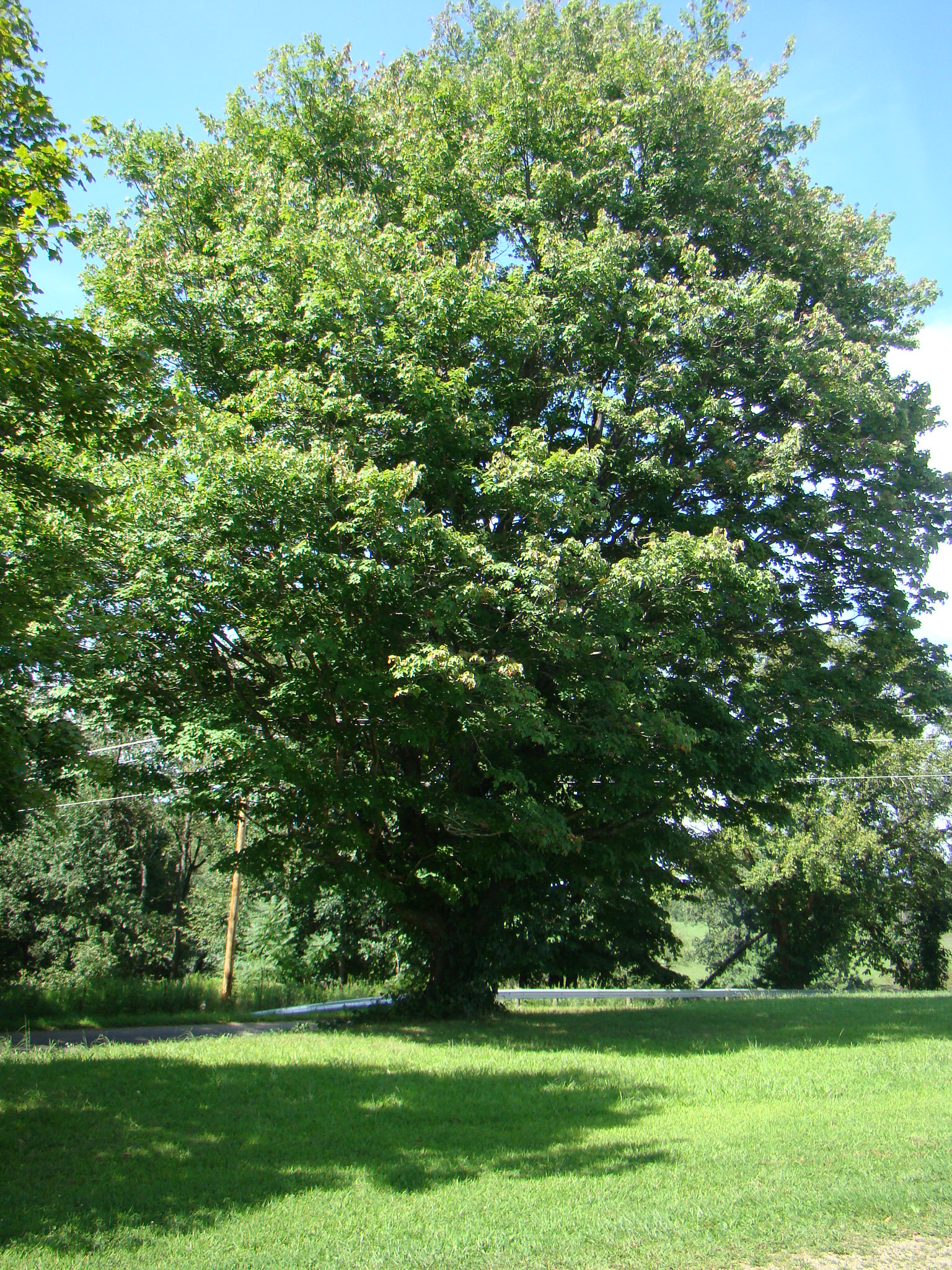
The trees have grown noticeably larger in front of the school.  Their branches provided the perfect places to sit while watching others play on the large surrounding field, or sharing secrets with your friends. In the absence of playground equipment, students played hopscotch at the top of the drive, baseball behind the school, or Annie Annie Over across the roof.

Children from miles around arrived at Hopewell School by bus, horseback, bicycle or walking. On the first day of school they proudly carried their yellow Big Chief tablet and a pencil or two. If they were lucky, they might have a box of eight new Crayola Crayons and Elmer’s School Paste.  Those scents still stir up memories.

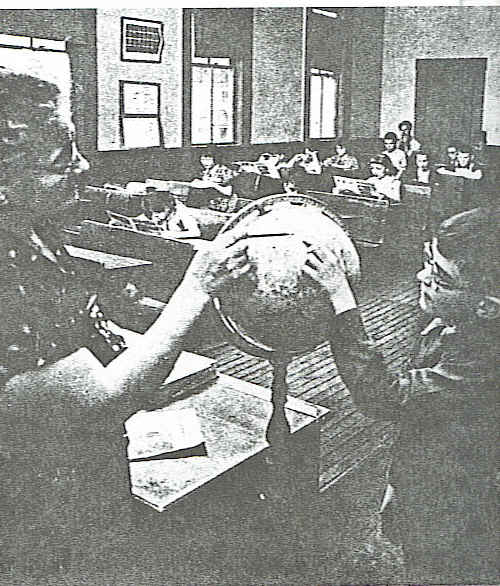
Teacher, Mrs. Mary Clark, uses the globe to explain geography.
Teacher, Mrs. Mary Clark, uses the globe to explain geography  during the 1950’s.
Inside the building, the pot bellied stove and the old desks are gone. The teacher or a student who lived close by came early in the morning to get the room warm for students. During the day, the boys took turns filling the coal bucket at the coal shed behind the school. Many boys volunteered for this chore and took their time, some even sneaking a smoke in the coal shed. But other things are still the same. An original blackboard still has initials carved in it, and the closets where coats and lunches were kept are exactly as they were years ago.

Lunches were brought in either a paper bag or a metal lunch box, which might last for several years. A personal favorite had a picture of Roy Rogers riding Trigger, and it even had a thermos. Lunch might include a bologna sandwich, boiled potato, dill pickle, and on special days, a thermos of homemade soup.

Since there was no water on the grounds, the boys carried water from a near-by house. After it was poured into a large keg at the back of the room, students would use a dipper to get a drink – everyone using the same dipper and no one getting sick!  No water also meant outdoor toilets with a rather unpleasant smell, flies, and even an occassional varmint.

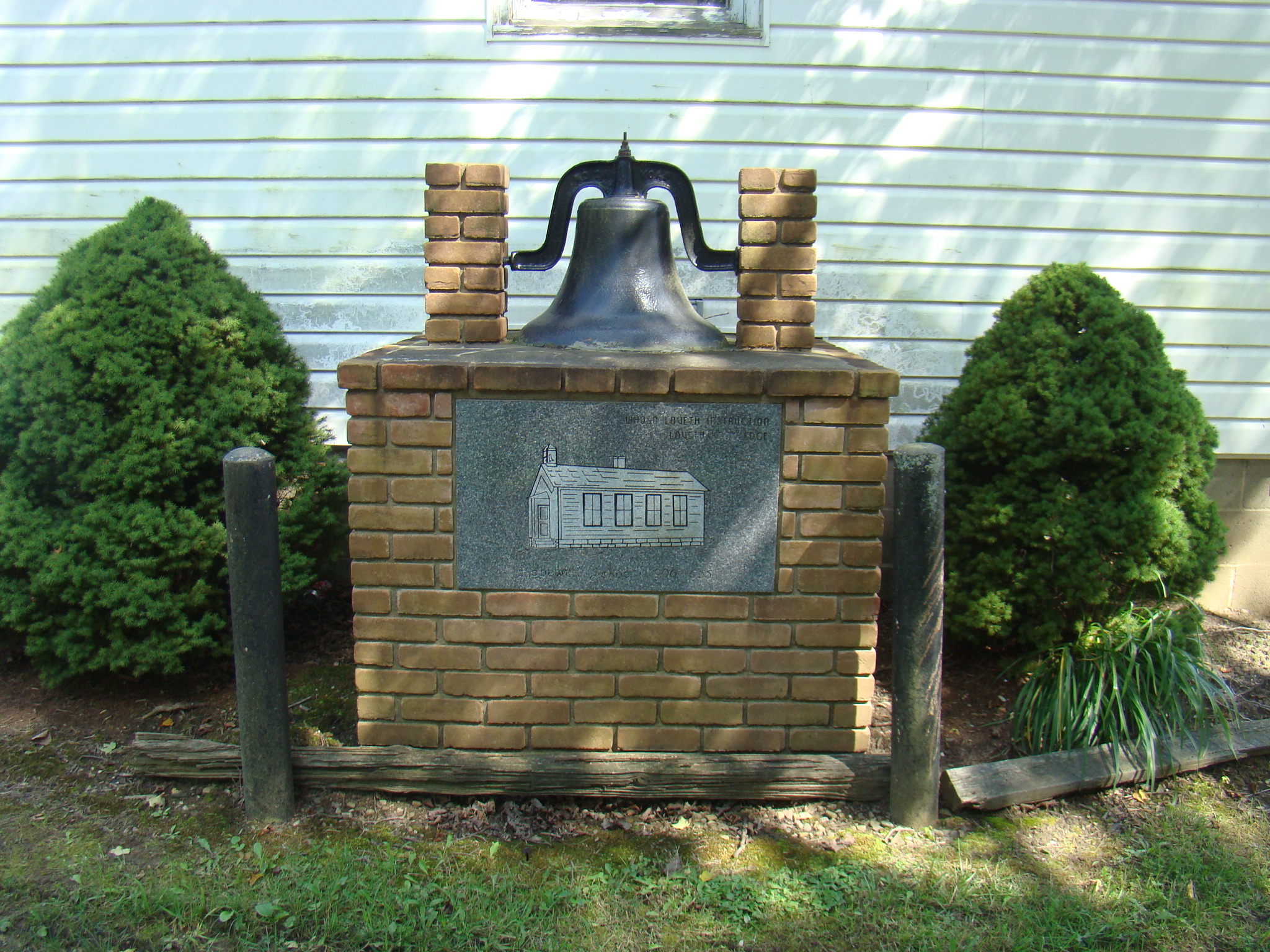
Original Bell at Hopewell School

Original Bell at Hopewell School with picture of school “Whoso Desireth Education, Desireth Knowledge”.

In 1994, former students constructed a brick base with a picture of old Hopewell School engraved on a plague and words that expressed the aim of the school: “Whoso Desireth Education, Desireth Knowledge”.  At the top of the base sets the school bell that called students to school in the morning, and reminded them that it was time to return to the classroom after recess. Students didn’t always stay on the grounds during recess as some went to Gerty’s Store just down the road, or in winter time might be sledding on the neighboring hills of the Cowden family farm. This bell is a beautiful heritage to the people that have received their education here, and also to their children for generations to come.

In spite of all the old-fashioned ways, lessons were learned and life-long friendships were developed. The one-room school was the perfect place to be taught the 4 R’s – Reading, ‘Riting, “Rithmetic…and Respect.

If you would enjoy a trip to the country to see Hopewell School, follow State Route 209 west from Cambridge, Ohio through Browns Heights. After a couple of miles, turn right on State Route 658 and continue until you reach the town of Indian Camp. At the north end of Indian Camp make another right hand turn on Mt. Herman Road. You are there!  

Ohio’s Scenic Seneca Lake Park Gem of the Appalachians

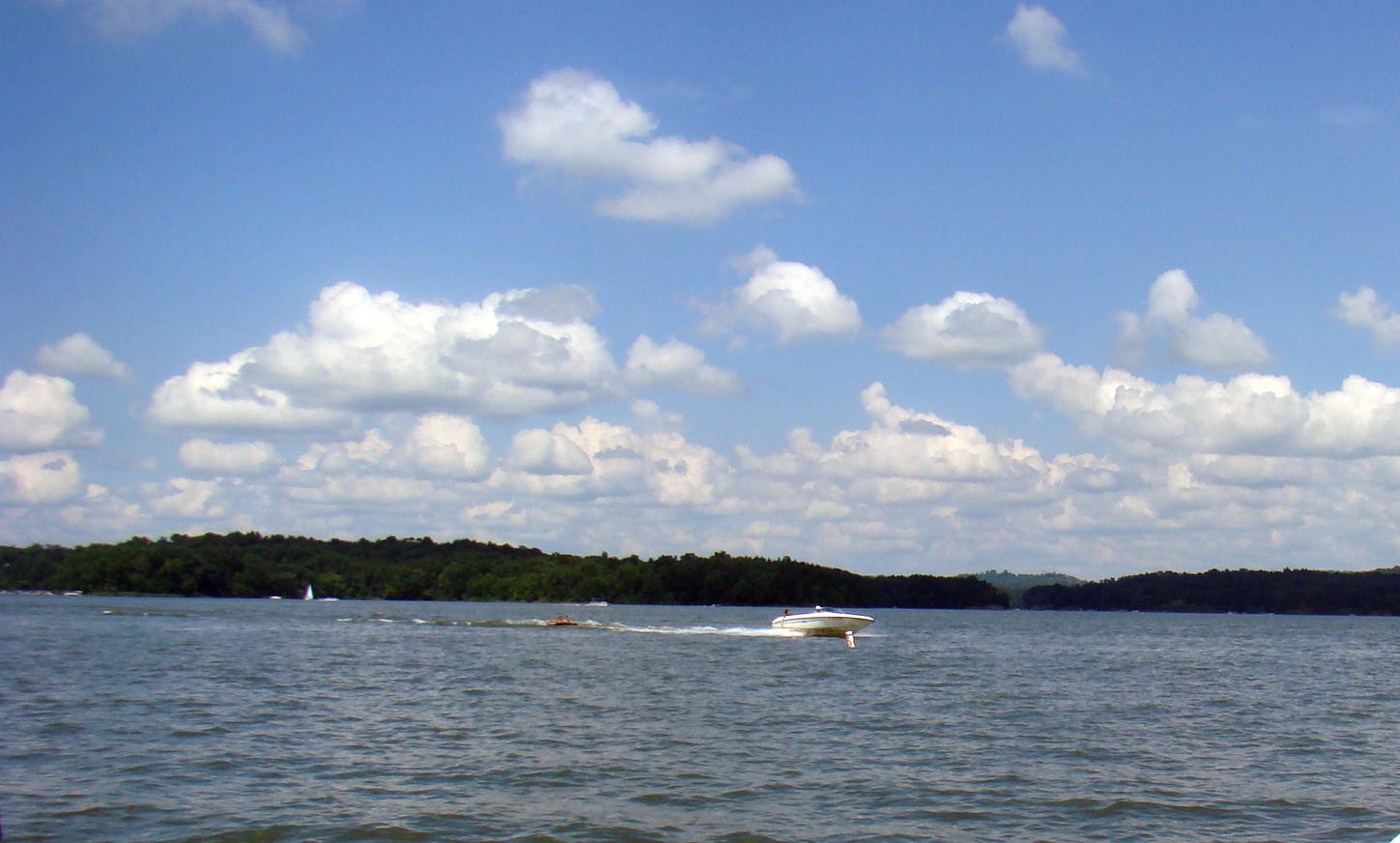
Seneca Lake under a cloud filled sky

Seneca Lake under a cloud filled sky

Drifting into a peaceful world is something everyone would hope to do. At beautiful Seneca Lake in the foothills of the Appalachians, this is not only a possibility, but a likelihood.

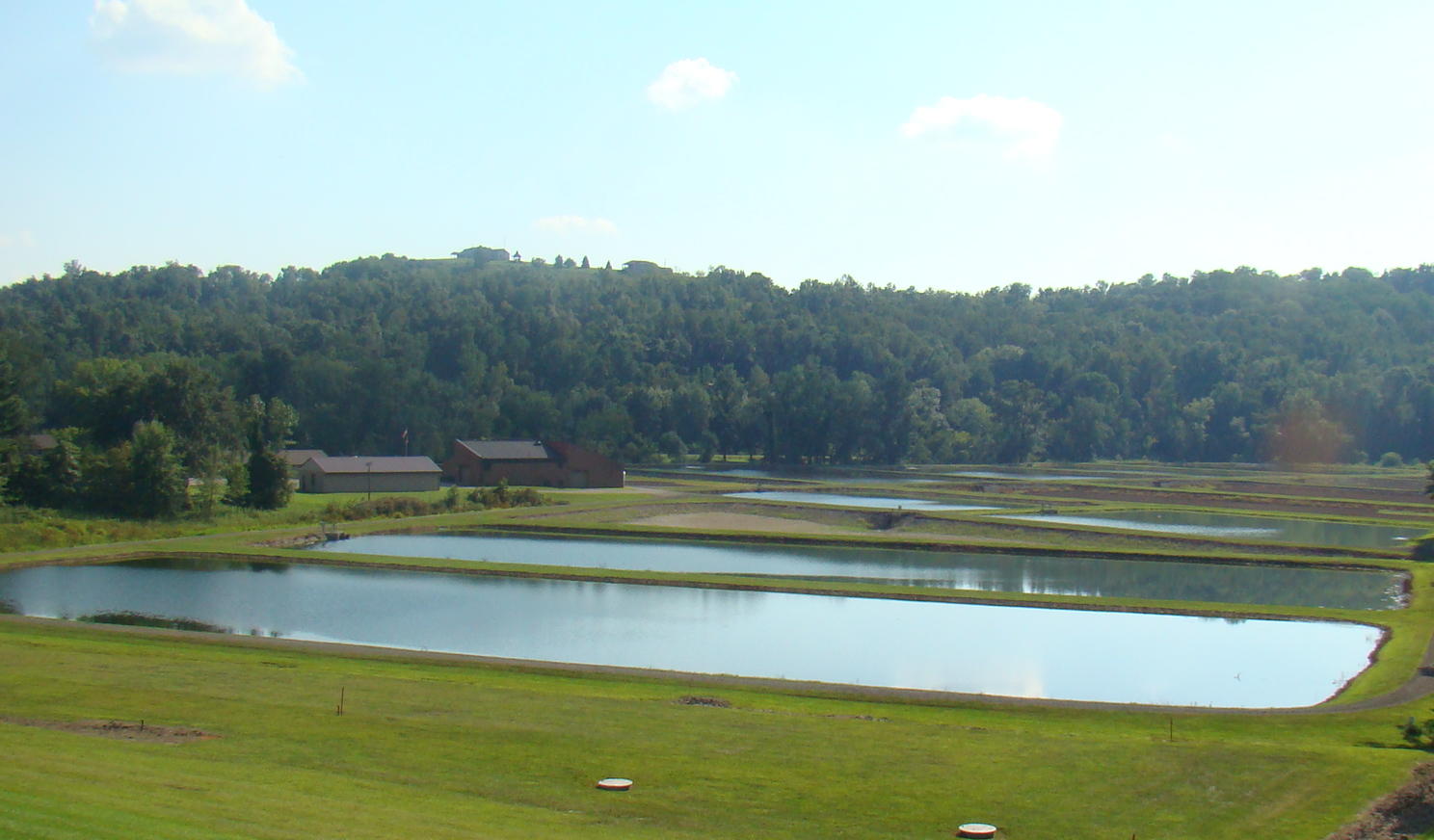
Senecabille State Fish Hatchery

Senecaville State Fish Hatchery

Created in 1937, Seneca Lake Park in southeastern Ohio is part of the Muskingum Water Conservatory. This dam was originally constructed to contain floods on the Seneca Branch of Wills Creek. Here over 3,550 acres of water are filled with fish, boats, swimmers and fishermen!  The main entrance to the park leads you past the dam and the fish hatchery, which has 37 one-acre ponds.

New water toy at the beachHeaded up over the hill and through the woods, you arrive at the entrance to the beach and picnic area. This is a spot where family reunions have been held for over seventy years  Picnic baskets always overflowed with fried chicken, potato salad, baked beans, and homemade pie or cake during those long ago reunions. The shady picnic area made for an inviting place for moms and dads to visit while the children enjoyed the playground or swam at the nearby beach. An awesome water toy installed in 2013 provides a special place for the young ones to play

Many call this their summer home, as cabins are frequent along the shores. Boat docks are placed nearby home locations, since most campers want the pleasure of drifting on the waters for a relaxing get-away. There are a wide variety of homes in this rural area ranging from small cabins to elegant residences.

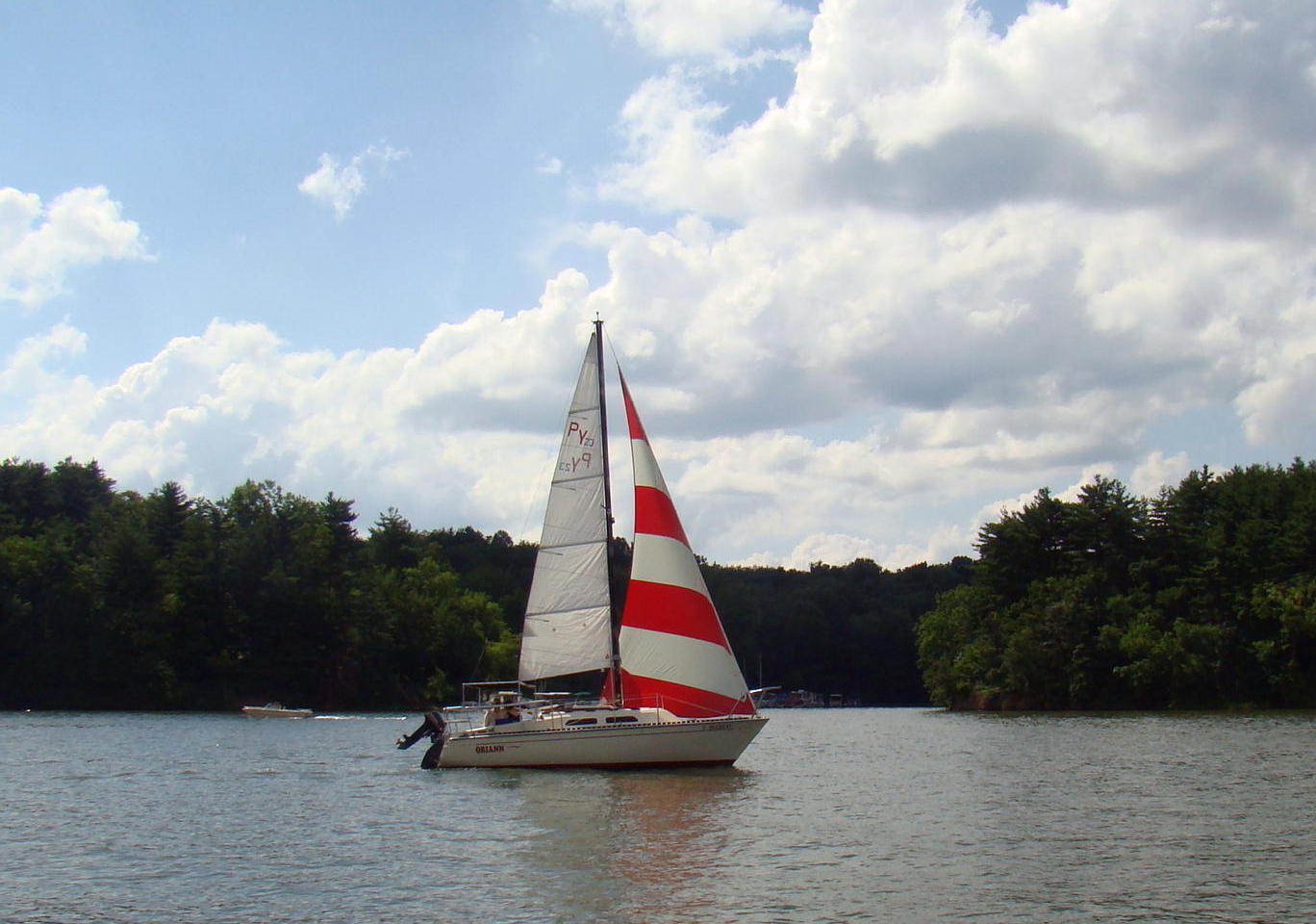
Sailing along on Seneca Lake

Sailing along on Seneca Lake

But perhaps you would rather rough it a little and stay in your camper or even your tent. There are 513 campsites available if you prefer getting back to nature. Some of those tent sites are located near the beach. If you are wanting a vacation from cooking as well, The Dockside Restaurant at the entrance to the campground provides delicious food with the choice of dining inside, or perhaps on the deck overlooking the lake..

The Bar where friends meet

The Bar where friends meet

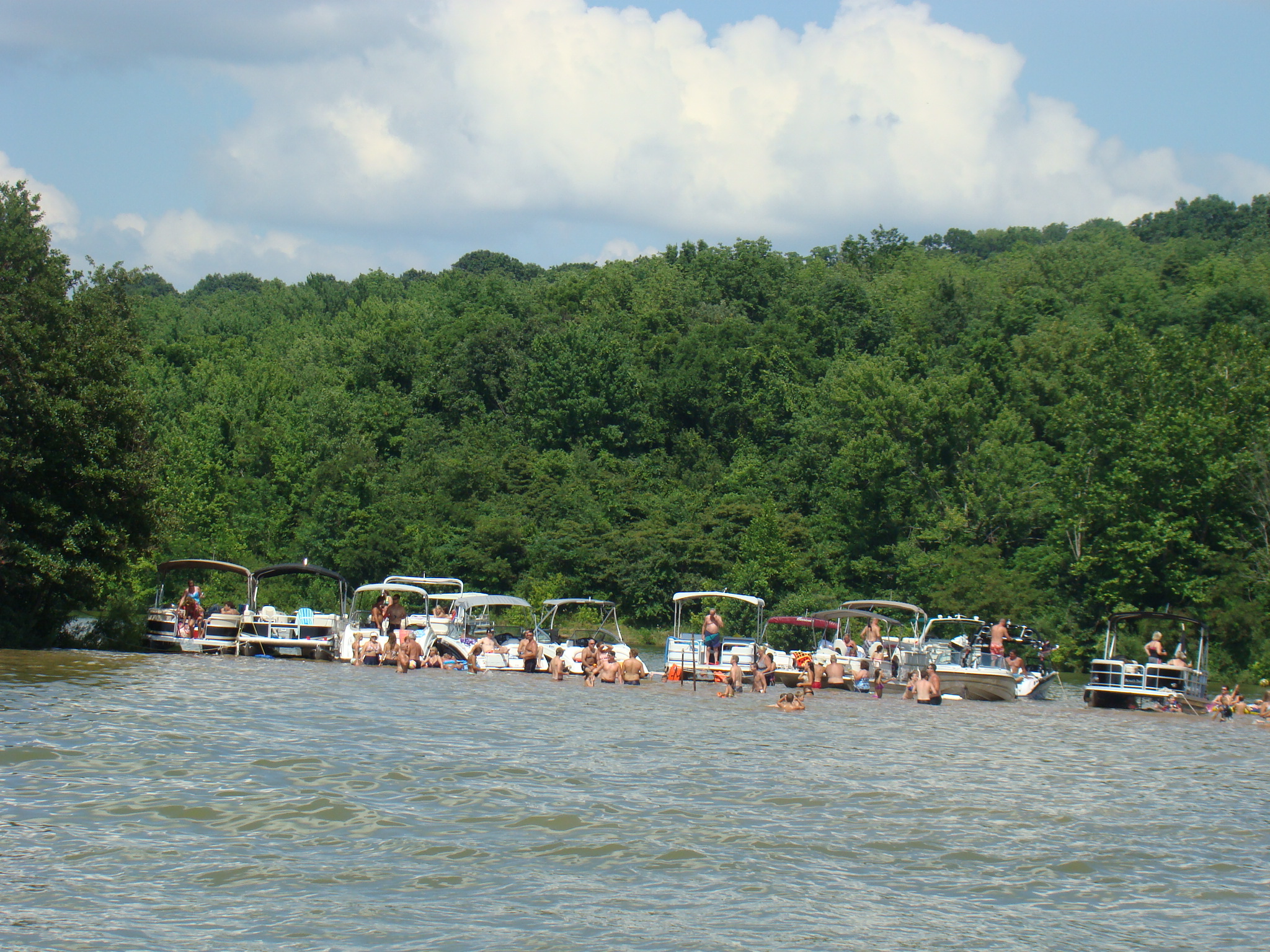
If you are going out for the day, you might want to rent a canoe or kayak at Ray’s for a reasonable daily rate. Then you can guide yourself into the many coves, or float around the island where many  stop for a picnic or party. There is a second swimming area called “The Bar”, where boats are anchored while children and adults jump overboard and enjoy cooling off in the fresh water lake.

Water skiing is another popular summer time activity. One young man didn’t quite make the attempted turn and landed in the lake. When he climbed back on the boat, he was alarmed to find a blue gill in his swimming trunks. His friends won’t let him forget that story.

Seneca Lake, the third largest inland lake in Ohio, is definitely a Gem in the Appalchian area.

Seneca Lake Park is located approximately thirteen miles south of Cambridge off I-70. Take exit  #37 to Buffalo and Senecaville and proceed straight ahead at the four way stop in Senecaville. The main entrance to the park it just a few miles down the road on the right hand side. Watch for signs!

Following Morgan’s Raiders Trail 150 Years Later

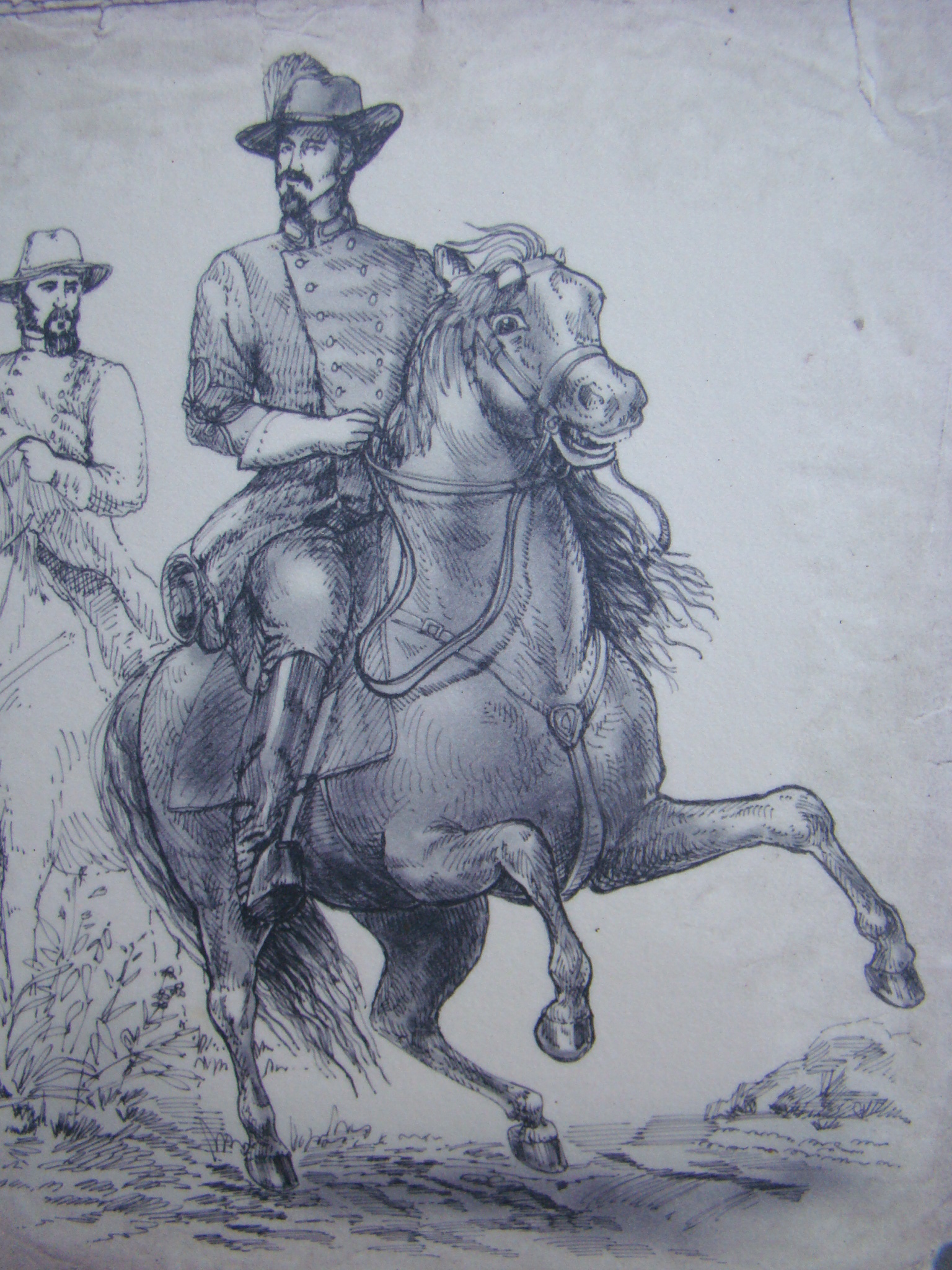
Sketch of Brig Gen John Hunt Morgan

Sketch of Brig Gen John Hunt Morgan

During the Civil War, 150 years ago in July of 1863, Brigadier General John Hunt Morgan led a band of scoundrels, known as Morgan’s Raiders, through Ohio on a two week expedition consisting of many raids and robberies. Their purpose was to create terror and deviate the attention of the Union troops from Confederate forces.

The Ohio Historical Society has commemorated that John Hunt Morgan Heritage Trail with 56 interpretive signs from Cincinnati to West Point in northeastern Ohio. Official dedication took place at the entry point into Ohio at Harrison in July of 2013, although planning has taken several years.

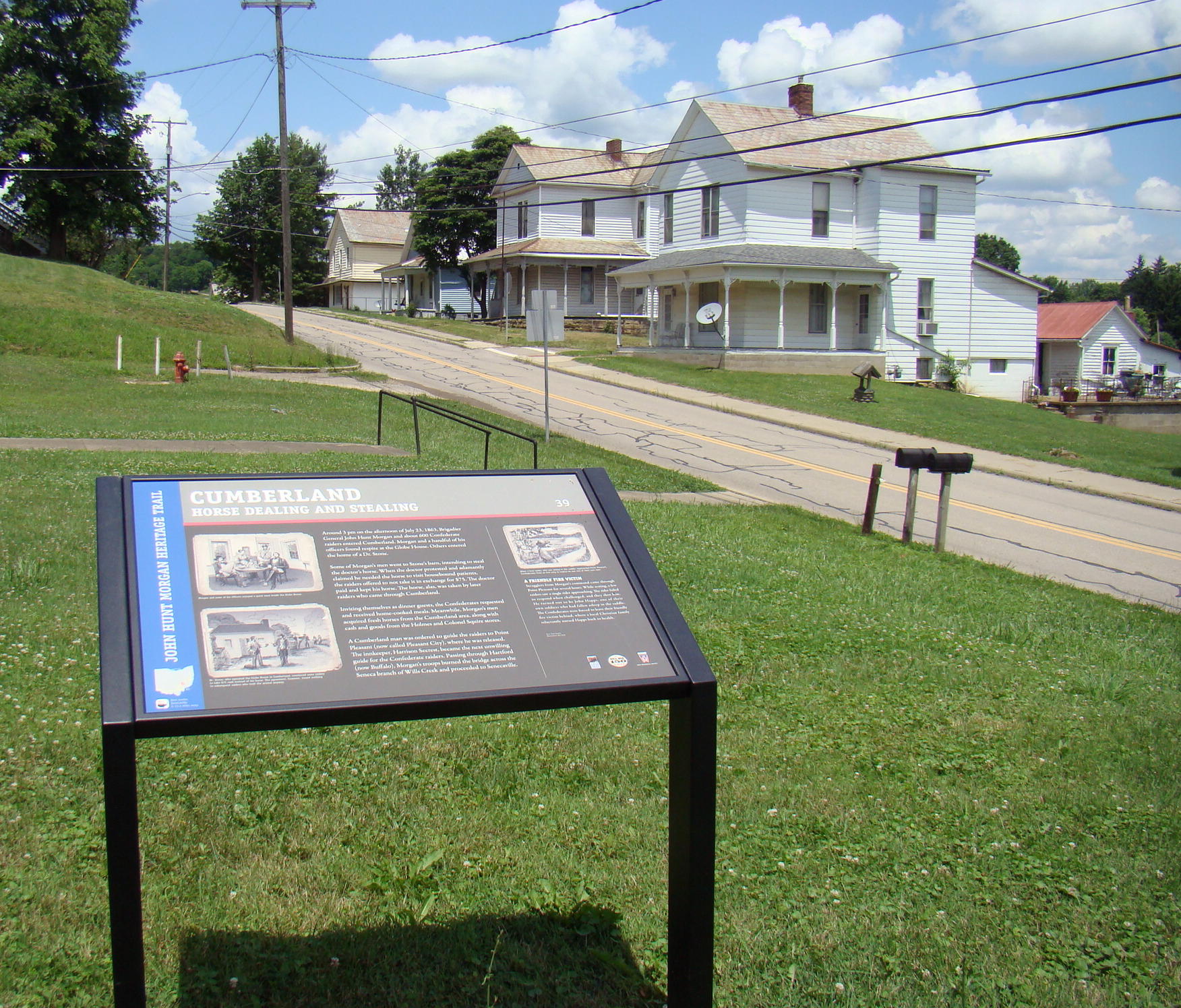
First Morgan's Trail sign in Guernsey County at Cumberland, Ohio

First Morgan’s Trail sign in Guernsey County at Cumberland, Ohio

Wanting to explore the local side of this route, my drive began in Cumberland, Ohio, which is the first place in Guernsey County, my home county, that Morgan’s Raiders appeared. Here in front of the old Cumberland High School is plaque #39, which begins the local trail of clever escapes by Morgan. Having invited themselves as dinner guests, Morgan’s men stole horses, cash, and even a guide before heading on to Point Pleasant (today’s Pleasant City).

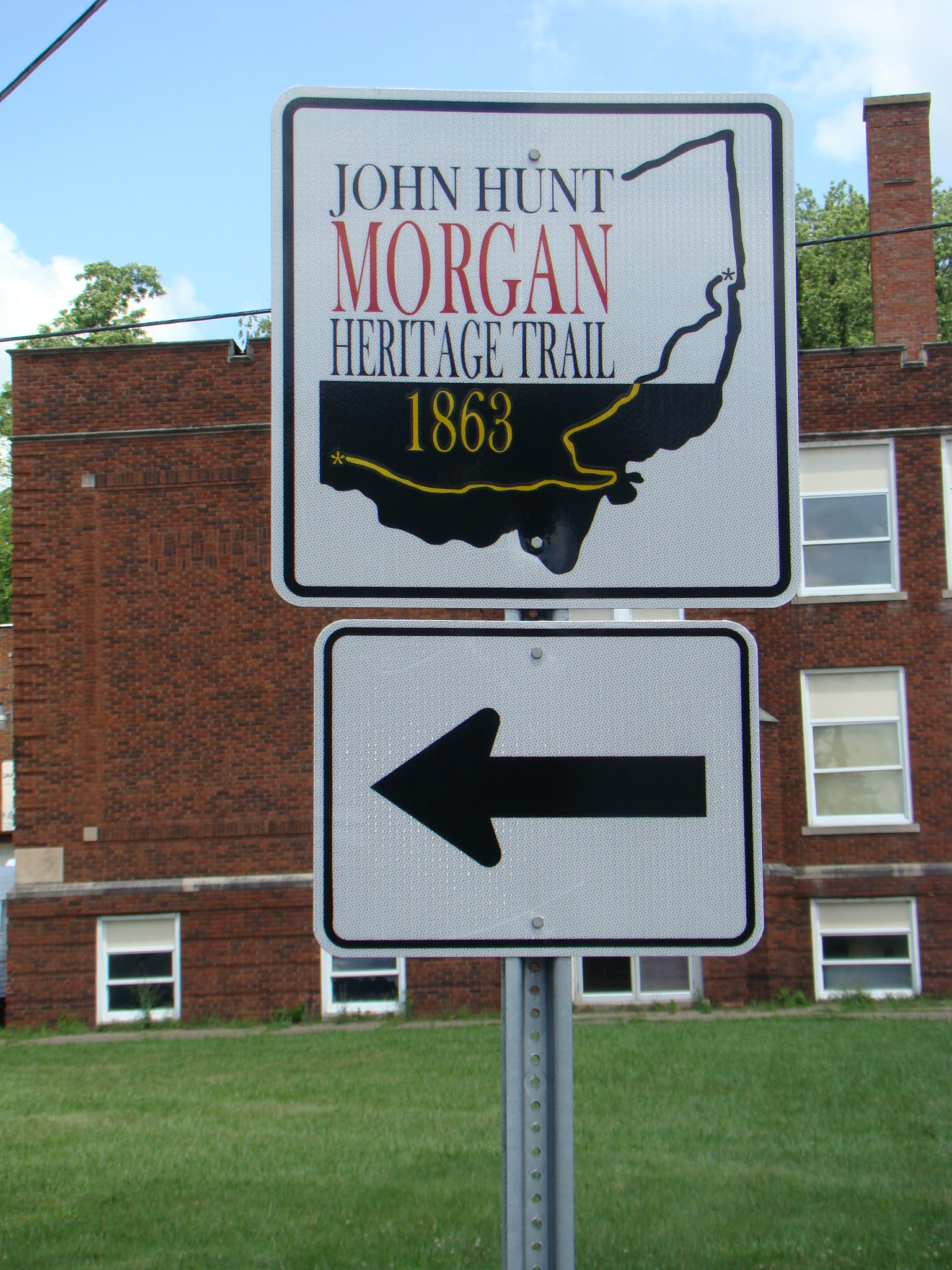
Watch for signs like this to follow the trail easily.

Watch for signs like this to follow the trail easily. Former Pleasant City High School sits in the background.

Morgan’s Trail is well-marked with signs at frequent intervals so you can rest assured you are still on the correct route. Stories on the plaques tell about real events that happened near each marker and all contain a couple beautiful old pictures from Civil War days. Each sign also explains, in the lower left hand corner, the location of the next commemorative stop

At the corner of State Routes 313 and 285 in Senecaville, followers will find plaque #40. On July 24 at 3 am, Morgan’s men rode into the village boldly knocking on doors to find out local road information. Lucky for Morgan, Colonel William Wallace of the Ohio Infantry had received an erroneous report and hours earlier had moved from that very crossroads. Ever since the battle at Buffington Island, Brig. Gen. James Shackelford had been in hot pursuit of the Raiders and seemed to be closing the gap.

Interpretive sign #41 at Lore City trailhead.

Interpretive sign #41 at Lore City trailhead.

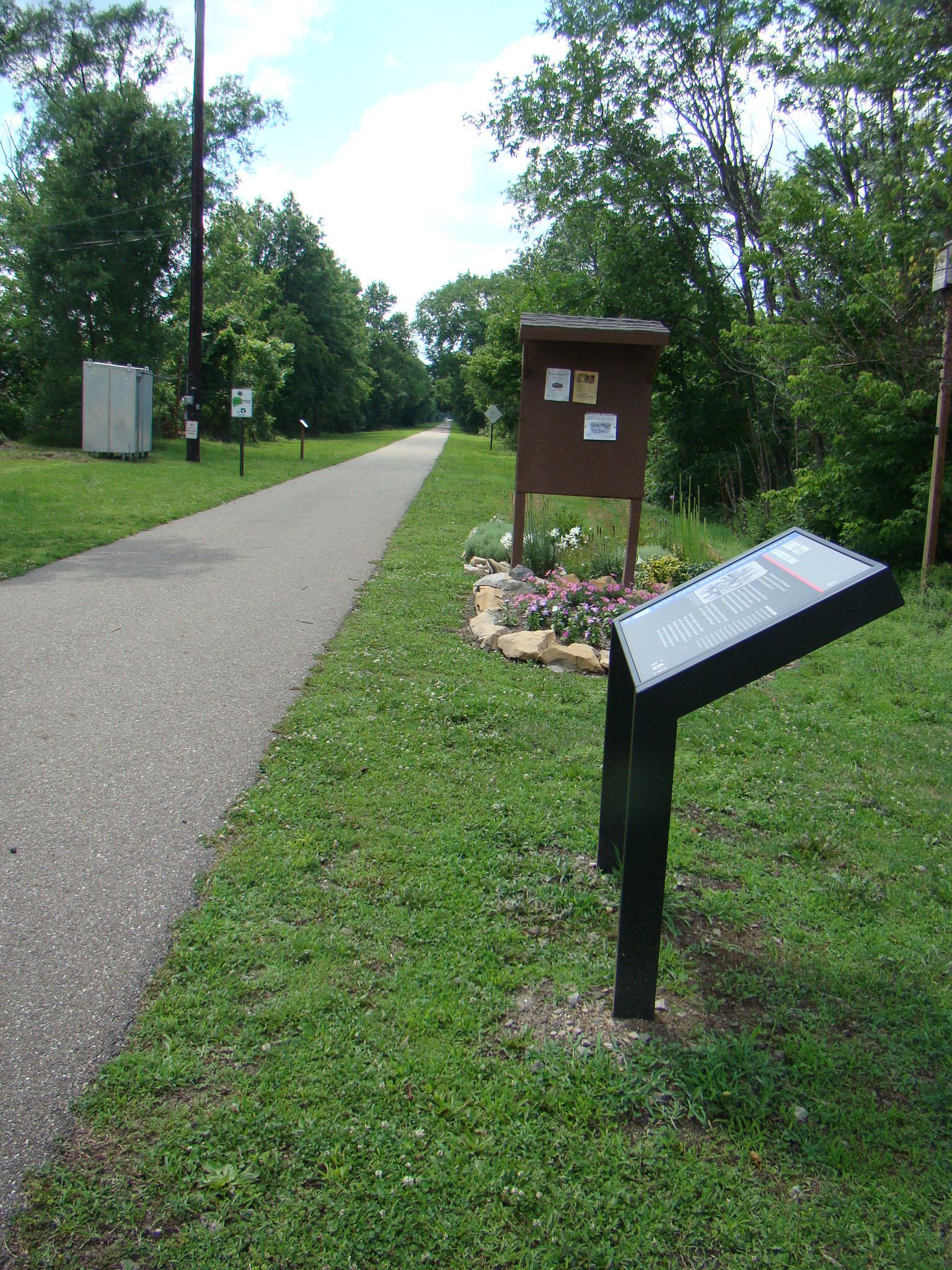
Campbell’s Station (today’s Lore City) had the most destruction of any place in Guernsey County with Shackelford being only seven miles behind. Located at the trailhead of the Guernsey Trail, #41 plaque area was the only one in Guernsey County that had been expanded with other information about the history of that area, as well as beautiful flowers.

At the edge of town on Old Mill Road, the battle at Washington (today’s Old Washington) is recognized. Sign #42 is near Cemetery Hill where Shackelford’s troops began firing on Morgan’s Raiders, who had spent the night in Washington. The officers had moved in, unwanted, to the American Hotel while others slept throughout the town, even in the streets. It came as a surprise that the plaque was not downtown with the 1927 monument to this skirmish.

Those four stops mark the route through Guernsey County, then the Trail guides you on toward Piedmont. By now you are beginning to get caught up in the thrill of the chase and to understand the lay of the territory they are crossing. Winding roads follow the Trail as best they possibly can, but Morgan’s Raiders attempted to travel through the woods quite often so the route is close, but can’t possibly be perfect.

Imagine the surprise and fear when up to 2000 Confederate soldiers arrived in one of these small towns along the way.  No wonder the unruly children were disciplined with the phrase: Morgan will get you!

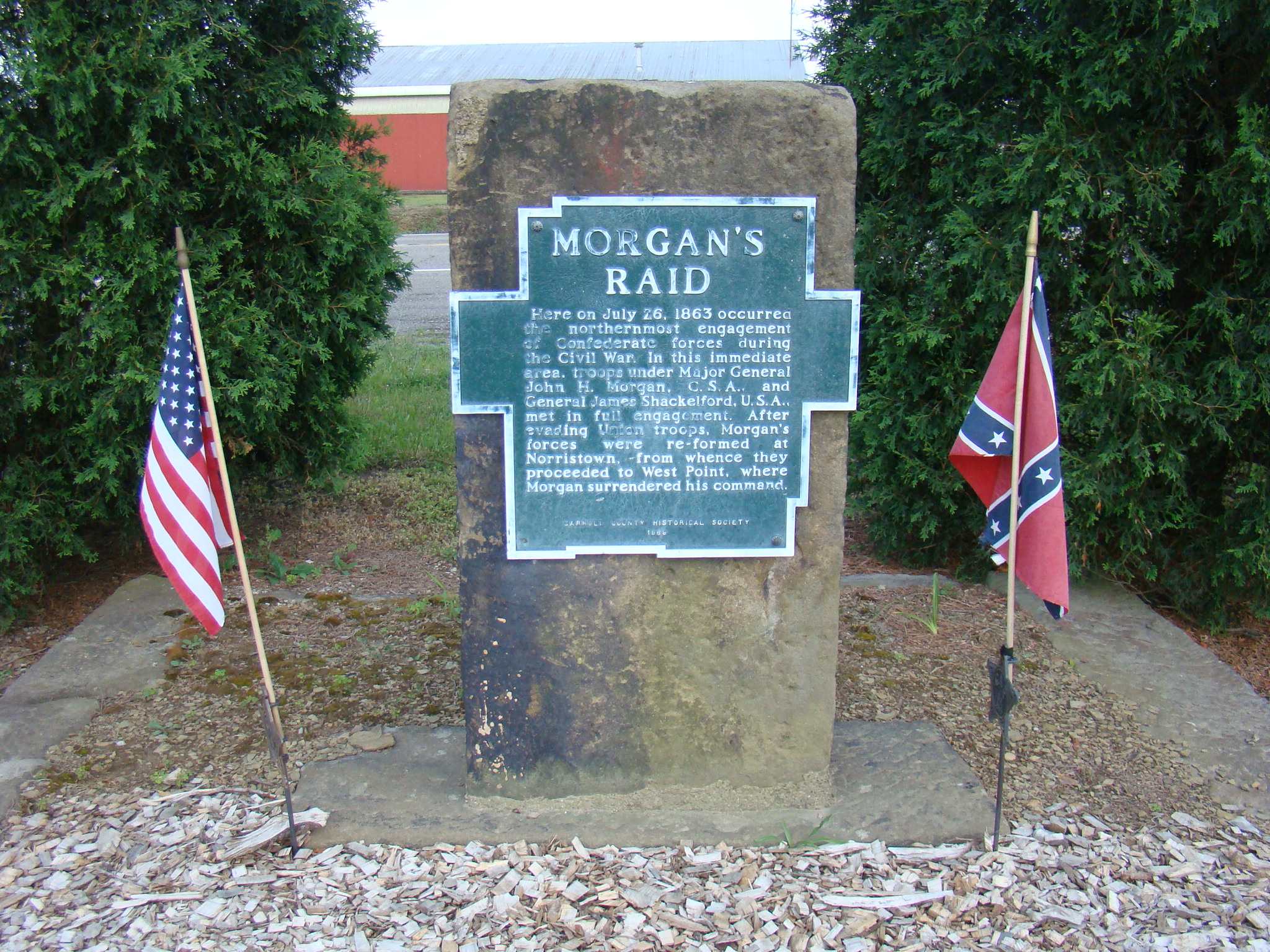
Monument to honor Morgan's Raid erected by Carroll County Historical Society in 1868.

Monument to honor Morgan’s Raid erected by Carroll County Historical Society in 1868.

My original plan had been to follow Morgan’s Trail just through Guernsey County, but once caught up in following Morgan’s Raiders, it was impossible to stop before reaching the spot where Morgan was captured. Being led through Harrison, Monroe, Jefferson and Carroll counties, the posted signs by the Ohio Historical Society were  easy to follow.

With troop numbers diminishing at each spot, Morgan continued to use clever escape tactics as long as he could.  The Raiders might pretend to be Union soldiers, stir up dust to hide themselves, or give promises they could never fulfill.

The last few marked encounters led through rugged, gravel roads. As you slowed down on these rutted and often muddy roads, you could almost feel the weariness of the troops.

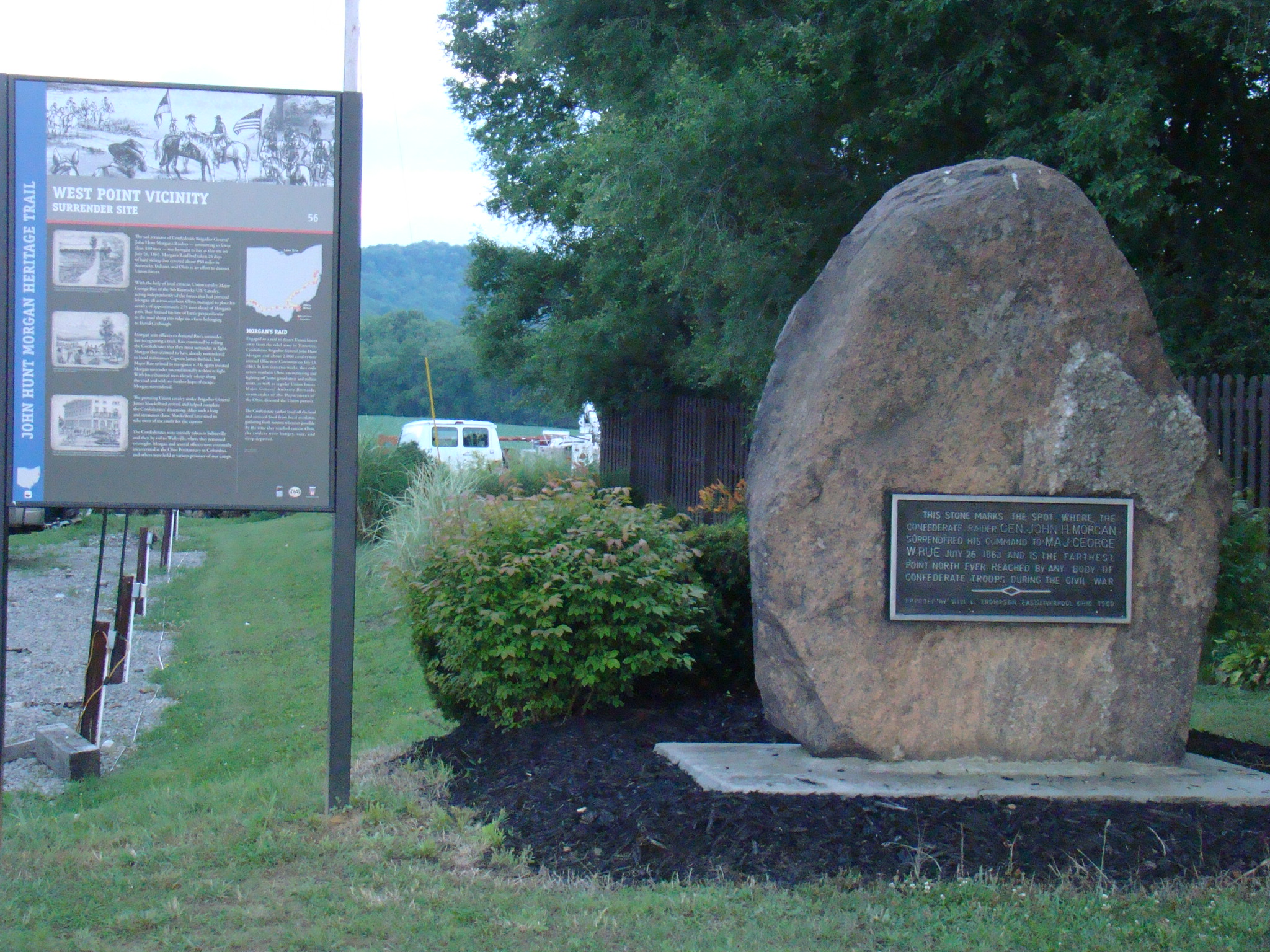
End of Trail near West Point, Ohio

End of Trail near West Point, Ohio

Finally, Morgan’s Trail, with plaque #56 entitled West End, came to an end in someone’s front yard where a monument had also been placed years ago. Morgan had tried his best to get back to cross the Ohio River and he was getting so close. Minutes later, I saw the beautiful Ohio River and felt a little sympathy for Morgan’s never reaching it.

The Heritage Trail from Cumberland to West End took Morgan’s Raiders four days from July 23 – July 26. By car, it took about eight and a half hours and I didn’t steal any horses, demand any dinners, or burn any buildings. They must have been worn out to have covered all that territory so quickly on horseback.

Even though he was captured for the moment, his cleverness helped him escape prison and travel unknowingly with a Union soldier on a train back home. Despite the chaos and destruction left behind, he taught the importance of never giving up in your quest to reach a goal.

Tour Daweswood House Museum “Let the Flowers Grow Where They May”

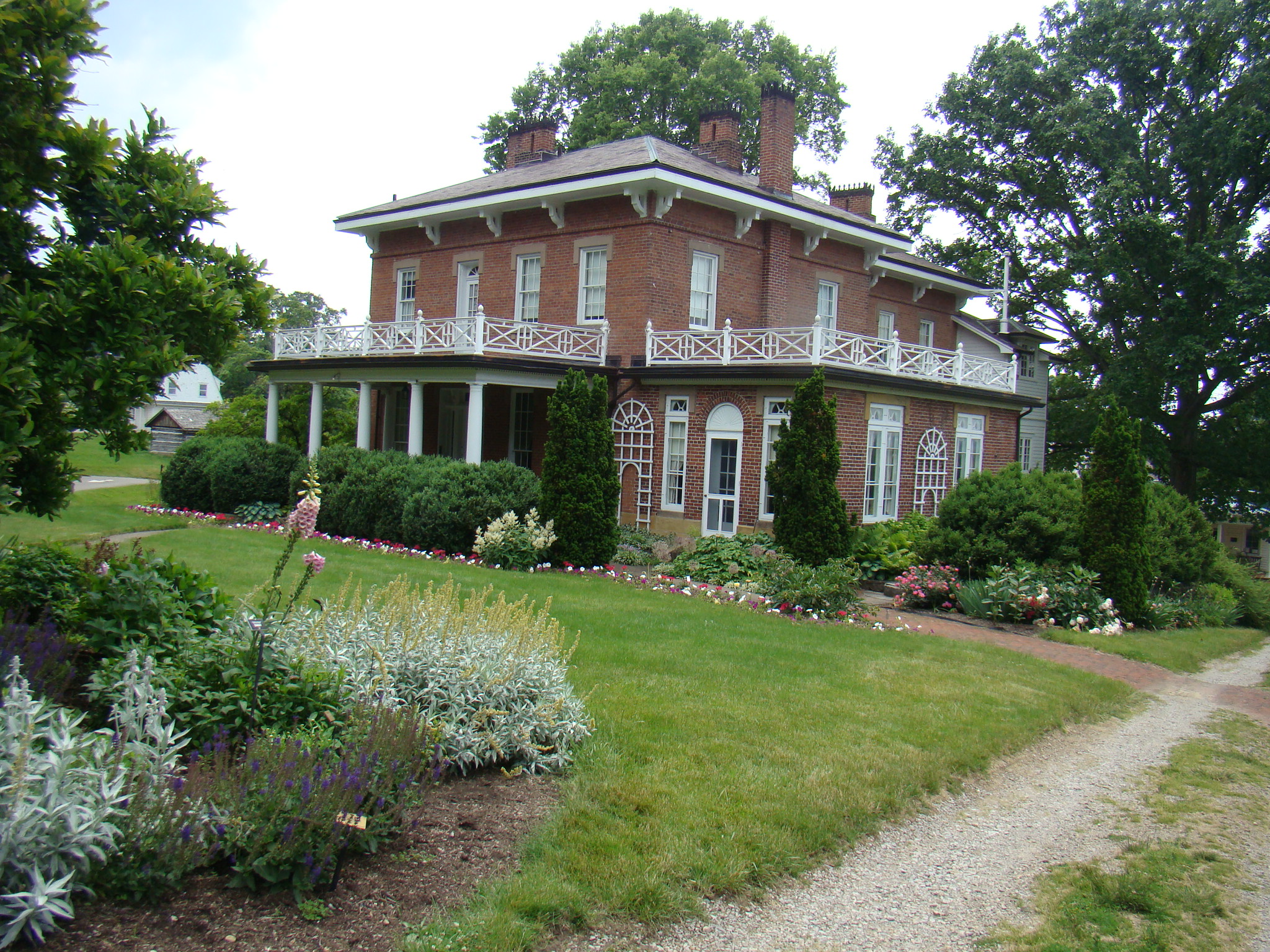
Daweswood House Museum

Daweswood House Museum

Exploring Daweswood takes visitors back in time to absorb the lifestyle of the Dawes family in the early 1900’s near Newark, Ohio. Being greeted by Debby, the youngest granddaughter of Beman and Bertie Dawes, made the tour doubly enjoyable. Her added stories of childhood visits added life to the beautiful old home.

Outside, the playful, lighthearted garden design reflects Bertie’s favorite saying, “Let the flowers grow where they may”. Beautiful flower beds surround the home turned museum, and help visitors realize the importance of plants and flowers to the Dawes family.

Inside, Daweswood House Museum, actually built in 1867,  is filled with antiques, unique collections of natural history, and stories which seem to pour from the walls. The flooring and spiral walnut staircase in the entryway are original and from lumber cut on the farm back in the late 1800’s. Everything was built with loving care in the best tradition of the times.

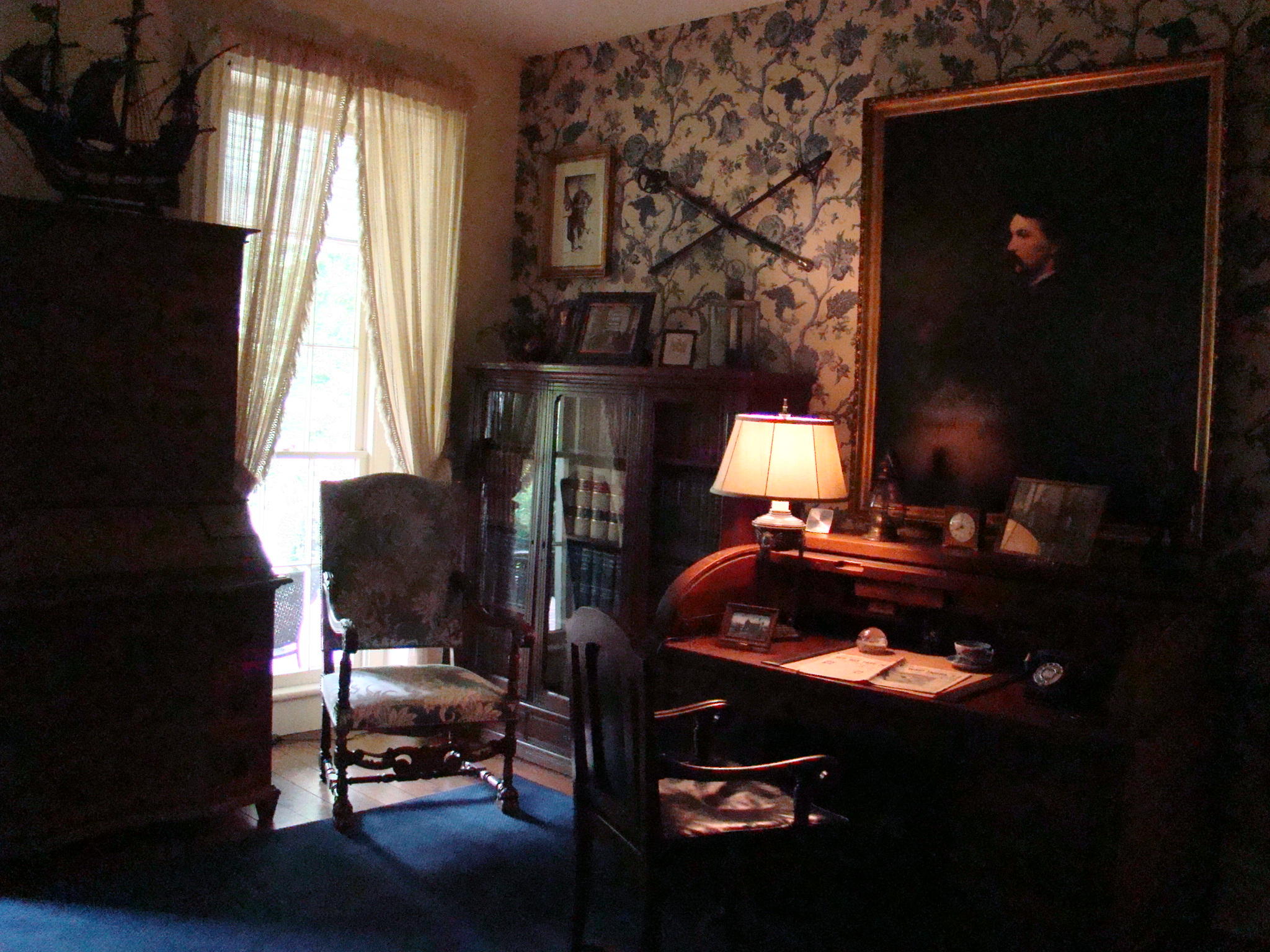
Office of Beman Dawes

Office of Beman Dawes

Born in Marietta, Ohio, Beman Dawes graduated from Marietta College. After serving two terms as US Representative, he founded Pure Oil Co with headquarters in nearby Columbus, Ohio. The profits from that endeavor became the source of funds to develop Dawes Arboretum for the enjoyment of  people from all over the world, as well as the Dawes family. Debby mentioned that some of her fondest memories of childhood were the family picnics in the pines at Dawes. It seemed the children enjoyed the out-of-doors, just like their grandparents. Today the family still gathers at Dawes Arboretum every summer for an old-fashioned picnic.

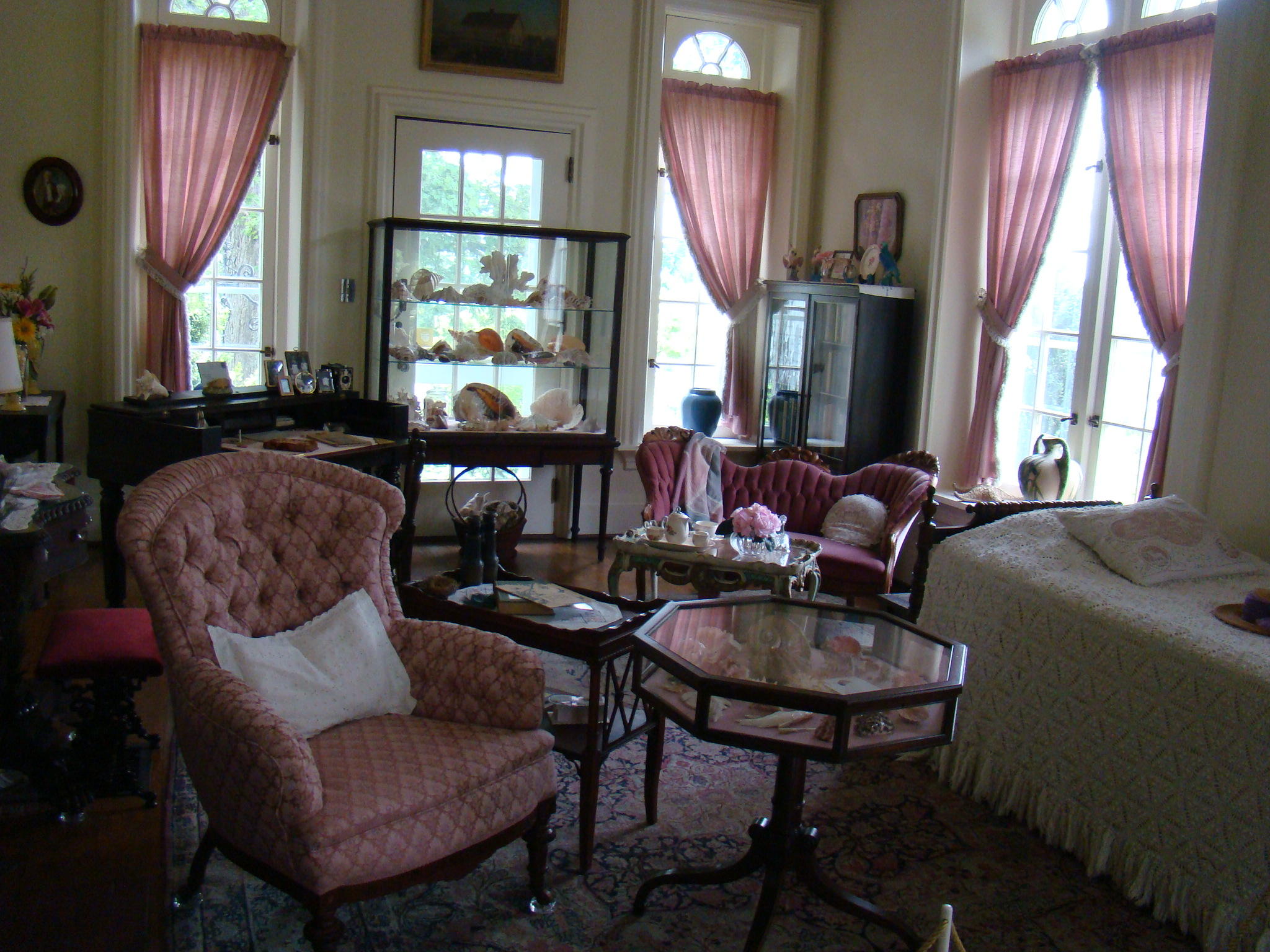
Bertie Dawes' studio

Bertie Dawes’ studio

His wife, Bertie, displayed her collections in her special studio, which overlooked the garden. Shells, butterflies, and humming birds all held special places in her heart. The beautiful bedspread in the room had been handmade by Bertie as well. This elegant lady was definitely a woman of many talents and interests… including raising peacocks. Perhaps she had time to do these things since there were housekeepers that tended to the daily chores of the family. Since there were five children, this would have been a busy household.

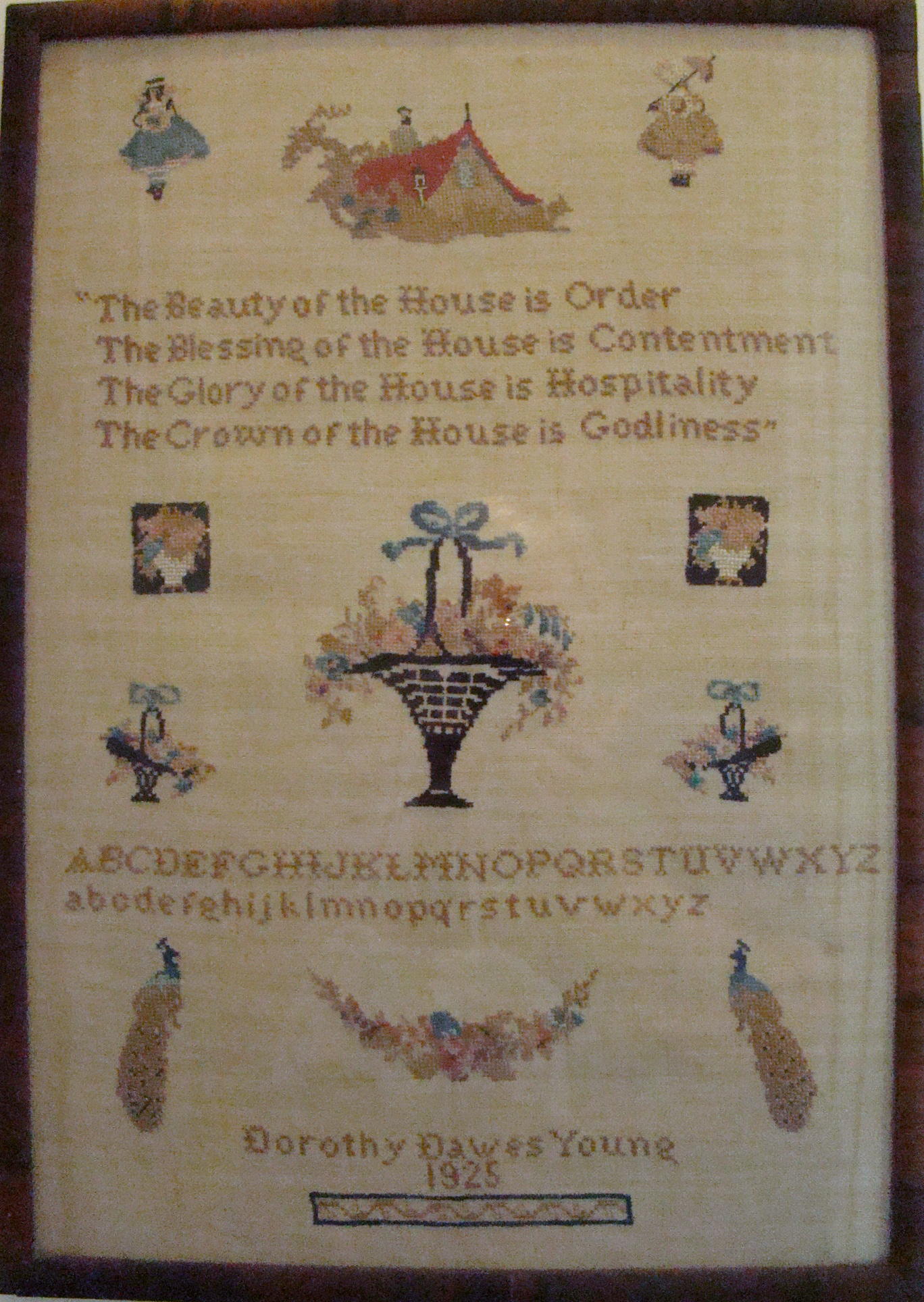
"Our House" embroidered by daughter, Dorothy Dawes Young in 1925.

“Our House” embroidered by daughter, Dorothy Dawes Young in 1925.

One beautiful family tradition occurred in the formal dining room where the family met each Sunday for dinner. The grandchildren still recall those formal dinners with Grandfather and Granny as being a highlight of their visit.  This family had early access to some of the little luxuries, with electricity in Daweswood as early as 1929. Five stone fireplaces throughout the house provided a warm atmosphere. The warmth of family could be seen in the beautiful embroidered picture hanging in the kitchen to remind everyone of the importance of their Daweswood home.

A basement constructed of handhewn stone, where the children used to play, is now home to the Rathskeller. The walls are now filled with shovels and plaques of those invited for tree dedication ceremonies. Initials of the dedicators were placed on the ceiling with soot from a burning candle in the beginning, but today they are usually written with a marking pen…to save space.  Back in 1927, Ohio Governor James Cox was the first to dedicate a tree.  Over 100 people have been invited by the family to dedicate trees and some of those names are quite familiar: John Glenn, Jack Hanna, Richard Byrd, Red Grange, and Orville Wright to mention a few.

Smokehouse and Gardens

Smokehouse and Gardens

Behind the house is an old log smokehouse surrounded by Bertie’s garden. Nearby, on the right side of the picture, you can see the corner of the roof of the History Archives Building, which is being constructed to hold photographs, family journals, and Arboretum records.

Plan your visit to Daweswood on the weekend as hours are limited. Tours are given every Saturday and Sunday at 12:00 and 2:00.  Admission is $2 for adults and $1 for students, and tickets must be purchased at theVisitors Center. If you like beautiful old homes and the beauties of nature, you will definitely enjoy a visit at Daweswood.

Dawes Arboretum is located near Newark, Ohio just off I-70.  Take Exit 132 , Route 13 , and proceed North on Route 13 for about three miles.  The entrance is located on the left hand side of the road at 7770 Jacksontown Road. Daweswood House Museum is down the first road to the right just inside the gate, but first you must go to the Visitors Center to purchase your ticket.

John Morgan’s Raid in Ohio 150th Anniversary Celebration

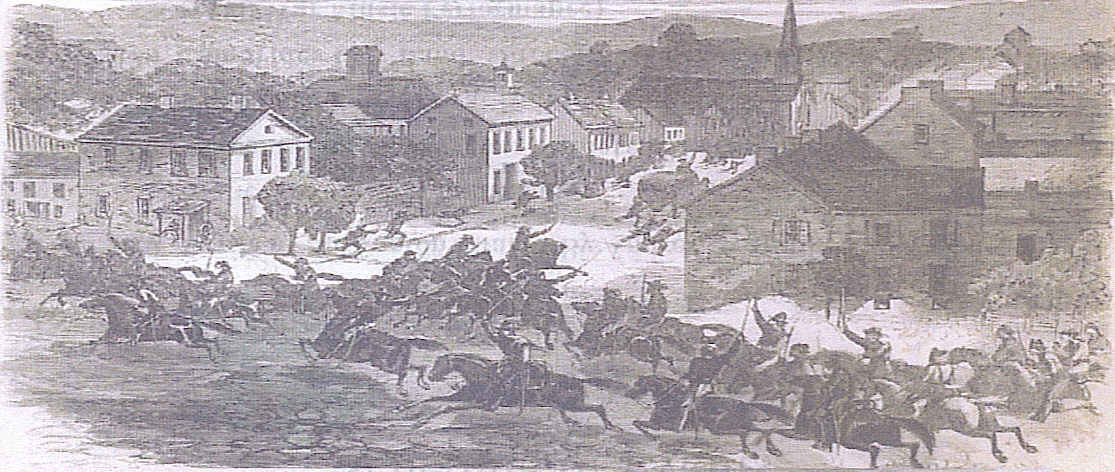
Morgan's Freebooters enter Washington, Ohio ~Harper's Weekly, Aug, 1863

Morgan’s Freebooters enter Washington, Ohio
~Harper’s Weekly, Aug, 1863

John Morgan with the remnant of a band composed of the most villanous cut-throats and scoundrels….made his way into this county on Thursday, the 22nd. (Guernsey Times Extra Addition Cambridge, Ohio July 28, 1863)

This statement by the local newspaper back in 1863  sums up the feeling of Northern residents regarding the antics of Brig. Gen. John Hunt Morgan, who led his raiders on a chase through Ohio during the Civil War.  His main goals were to destroy supply lines while creating chaos and fear.

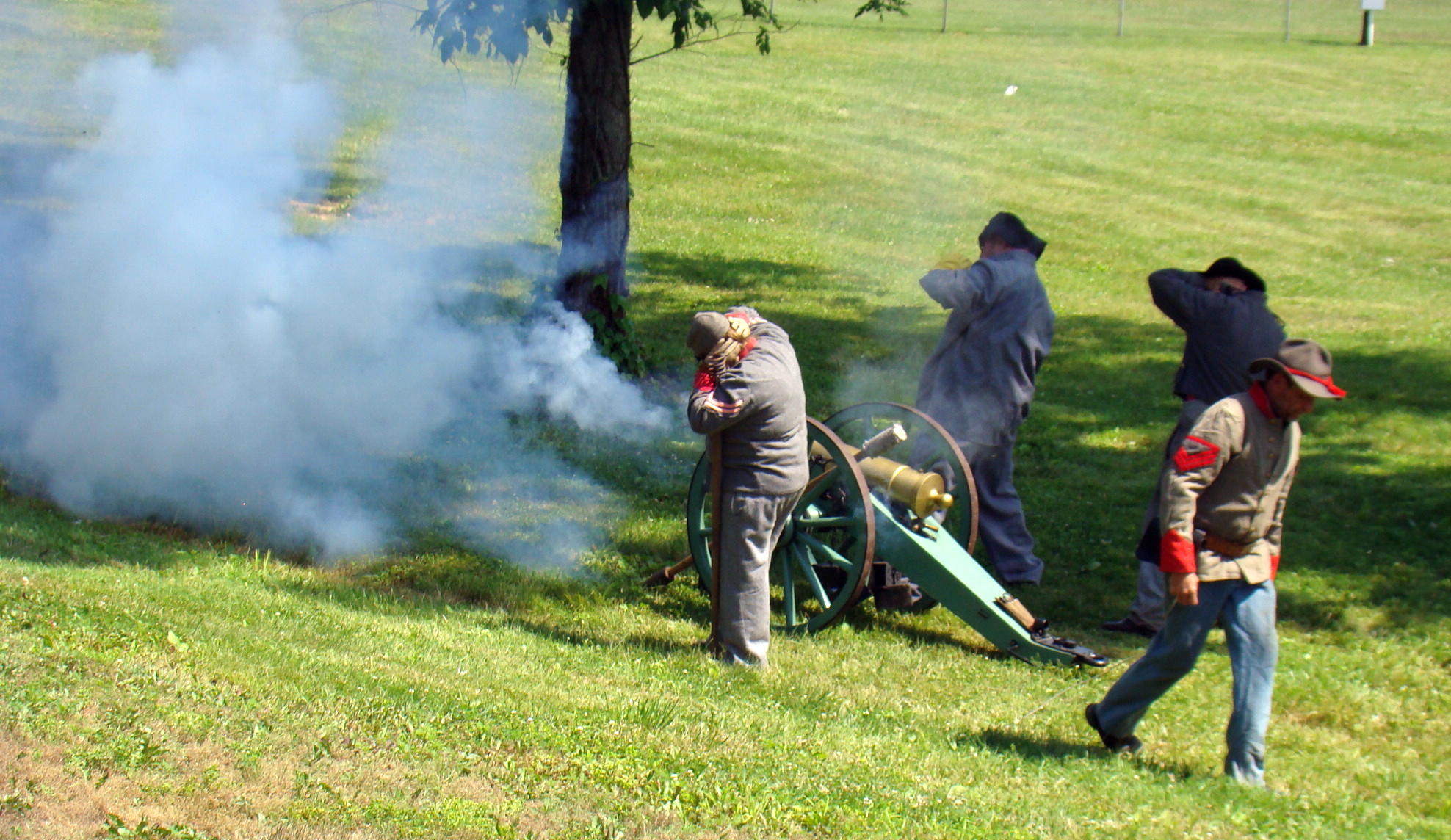
Cannon fire ignites celebration.

Cannon fire ignites celebration.

This special celebration took place in Lore City, Ohio at the Leatherwood Park trailhead of The Great Guernsey Trail, which is a paved pathway from Lore City to Cambridge used for walking and biking.  Often you see parents pushing their children in strollers, or children pushing their parents in wheelchairs. This six mile trail has become a favorite spot to exercise and get some fresh air in the Guernsey County area.

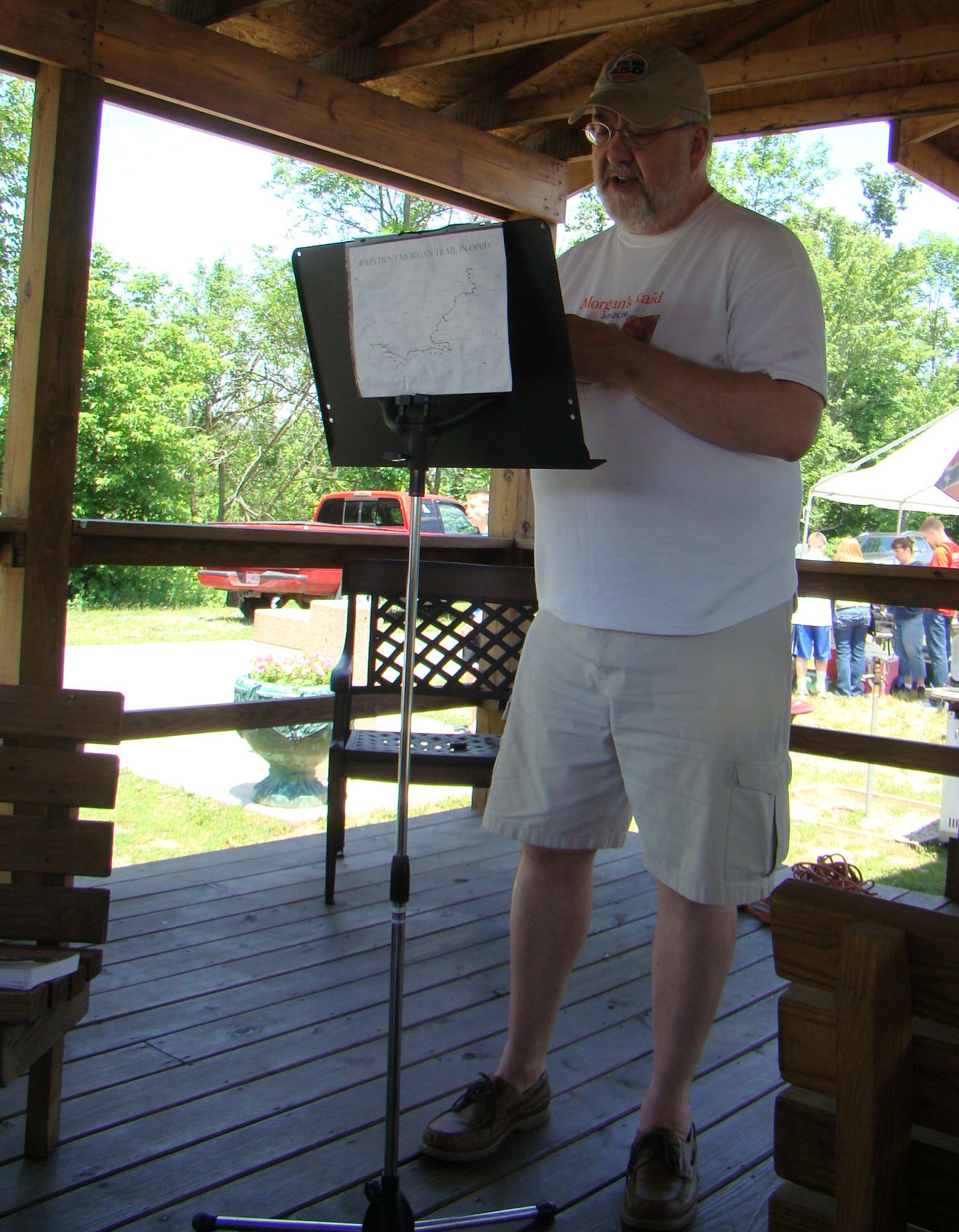
Andy Warhola, Civil War speaker

Andy Warhola, Civil War speaker

Local Civil War Roundtable members, Andy Warhola and Tom Snyder, explained Morgan’s ravaging two week raid through Ohio with slides, maps and pictures. They told of Morgan’s stealing two steamboats in order to cross the Ohio River into Indiana. Proceeding into Ohio above Cincinnati, they headed across the state with Union forces in pursuit.

Thinking the best way to escape was to again cross the Ohio River, Morgan led his men to a ford, which would let them have easy access to Buffington Island, a stepping stone across the Ohio. But his plan went amiss when Morgan decided to wait until morning for the crossing instead of attempting to move in the pitch darkness of night. The next morning however produced heavy fog, so again he was delayed, thus giving the USS Moose time to reach their crossing point. This is said to be the only Civil War battle in Ohio. Here the Union turned Morgan and his Confederates away with heavy losses.  What had started out as 2500 men, was down to approximatley 1100 after the battle at Buffington Island.

After this they headed towards Guernsey County entering at Cumberland and continuing to Londonderry. Finally they were captured in Salineville, heading to the Ohio River again. Along the way they were hungry and needed horses so there was plenty of thievery and destruction.

In the town of Campbell’s Station, which is today Lore City, there was more financial damage than anywhere else in the county.  They robbed the safe in the warehouse of $4,000, then burned the warehouse, train station and bridge as well as three railroad cars filled with tobacco…all this before the Union forces arrived.

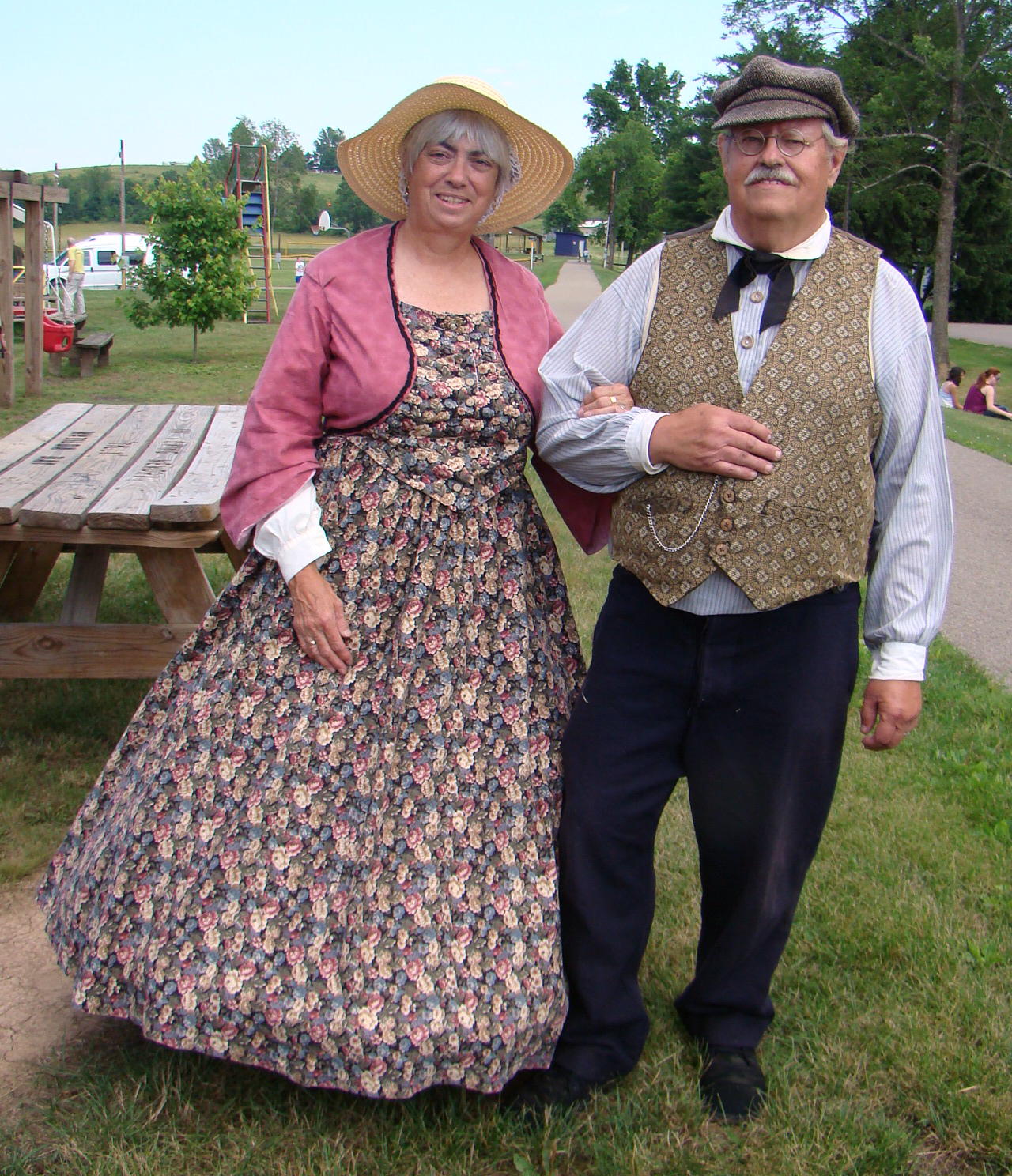
Couple in Civil War dress

Couple in Civil War dress

Nearly 150 years later, Lore City was filled with a Civil War feeling as many dressed in clothing of the time. A cannon was fired several times after careful loading by a group of Morgan County Re-enactors dressed as Confederate soldiers.

Local historian, Dave Adair, described the town of Campbell’s Station, which at the time of attack had only about sixty people. Their telegraph office was kept busy sending messages and receiving replies regarding Morgan’s Raiders. Due to the messages, Morgan and his Rebel scoundrels changed their route to avoid a railroad trestle, where a hundred men were waiting to ambush them.

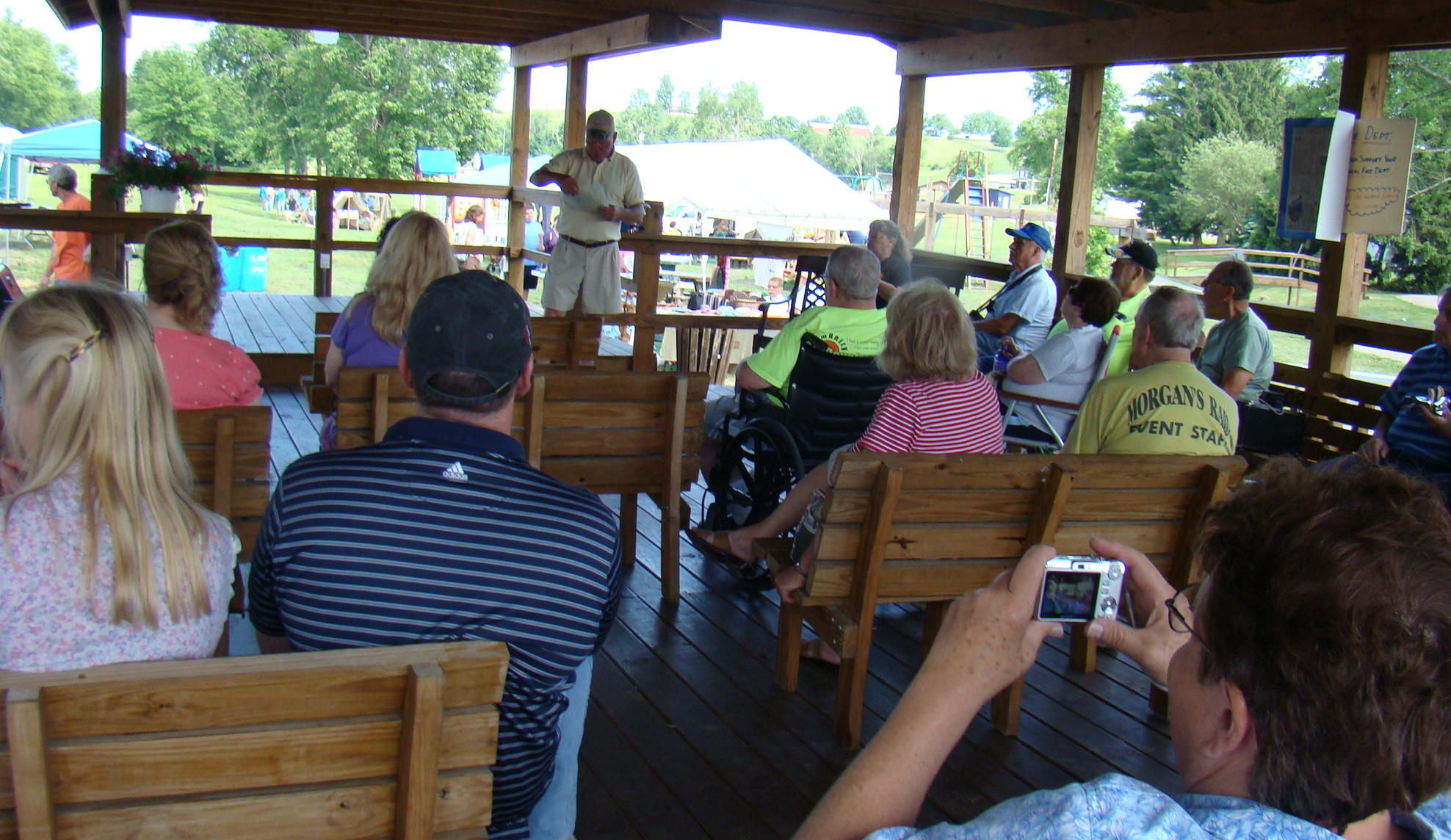
Dave Adair speaks in the pavilion, which was the site of the original train station in Campbell's Station.

Dave Adair speaks in the pavilion, which was the site of the original train station in Campbell’s Station.

Dave also explained why Campbell’s Station changed its name to Lore City.  There happened to be two Campbell’s Stations at that time and the larger one kept the name. When deciding what to rename the smaller town, the Irish Catholics had a big hand in it. Their church were attempting to educate the people in this small community; therefore devised the new name as The City of Learning or Lore City… lore meaning knowledge or learning.

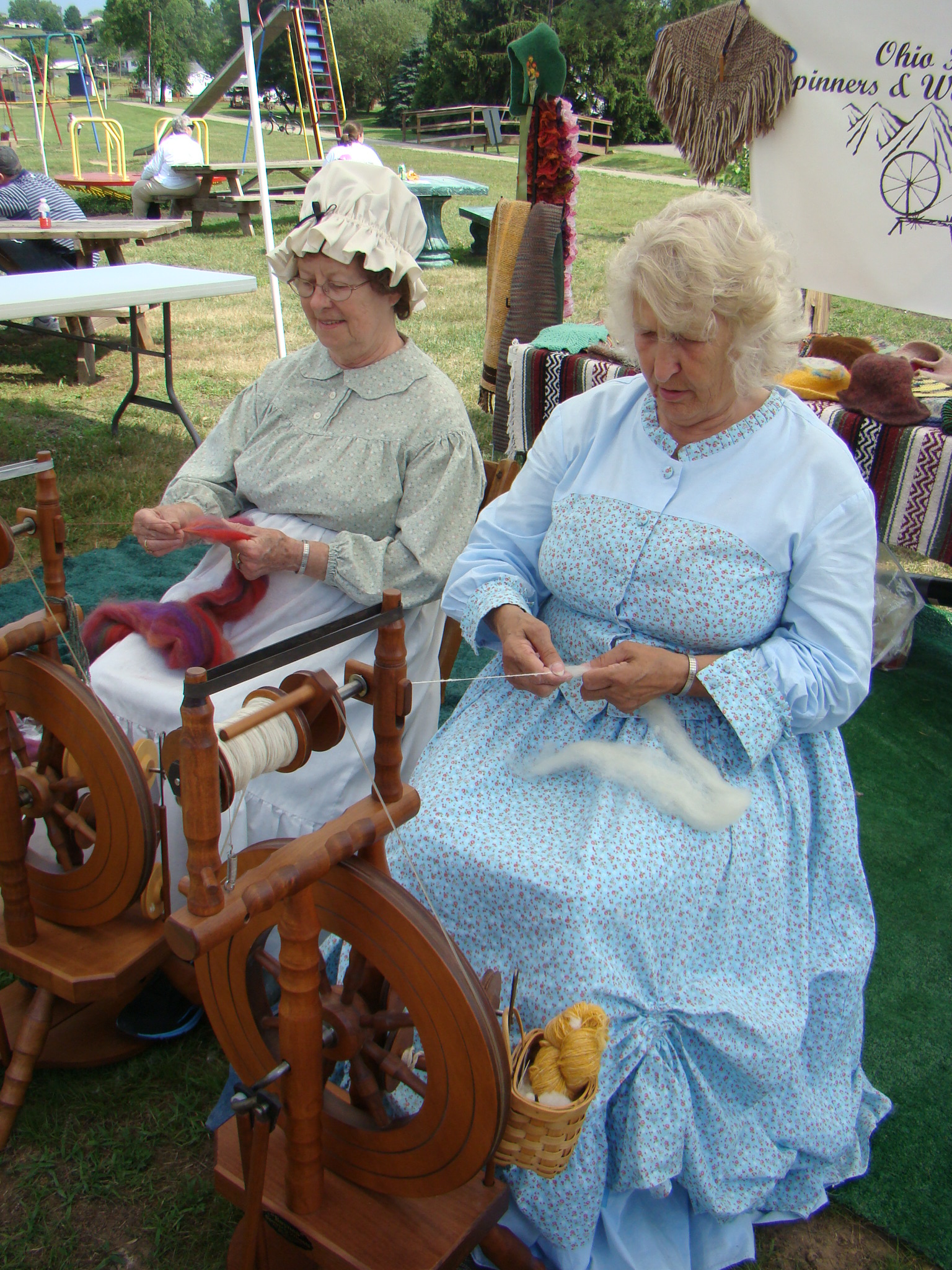
Ohio Hills Spinners and Weavers

Ohio Hills Spinners and Weavers

Spinning and weaving demonstrations were given by members of The Ohio Hills Spinners and Weavers, who also added stories of working conditions during the Civil War. Music was plentiful from start to finish. Bluegrass music, which included many Civil War songs, was provided by Mr and Mrs Small. While many of the Civil War songs were of a sad nature, Mrs. Small had written a happy song, Black Berries, to which everyone sang along. Cambridge City Band swung into action with their rendition of Civil War hits such as: Listen to the Mockingbird, Swanee River and many more. This was followed later by Dynamic Trio, who played 50’s and 60’s rock and roll.

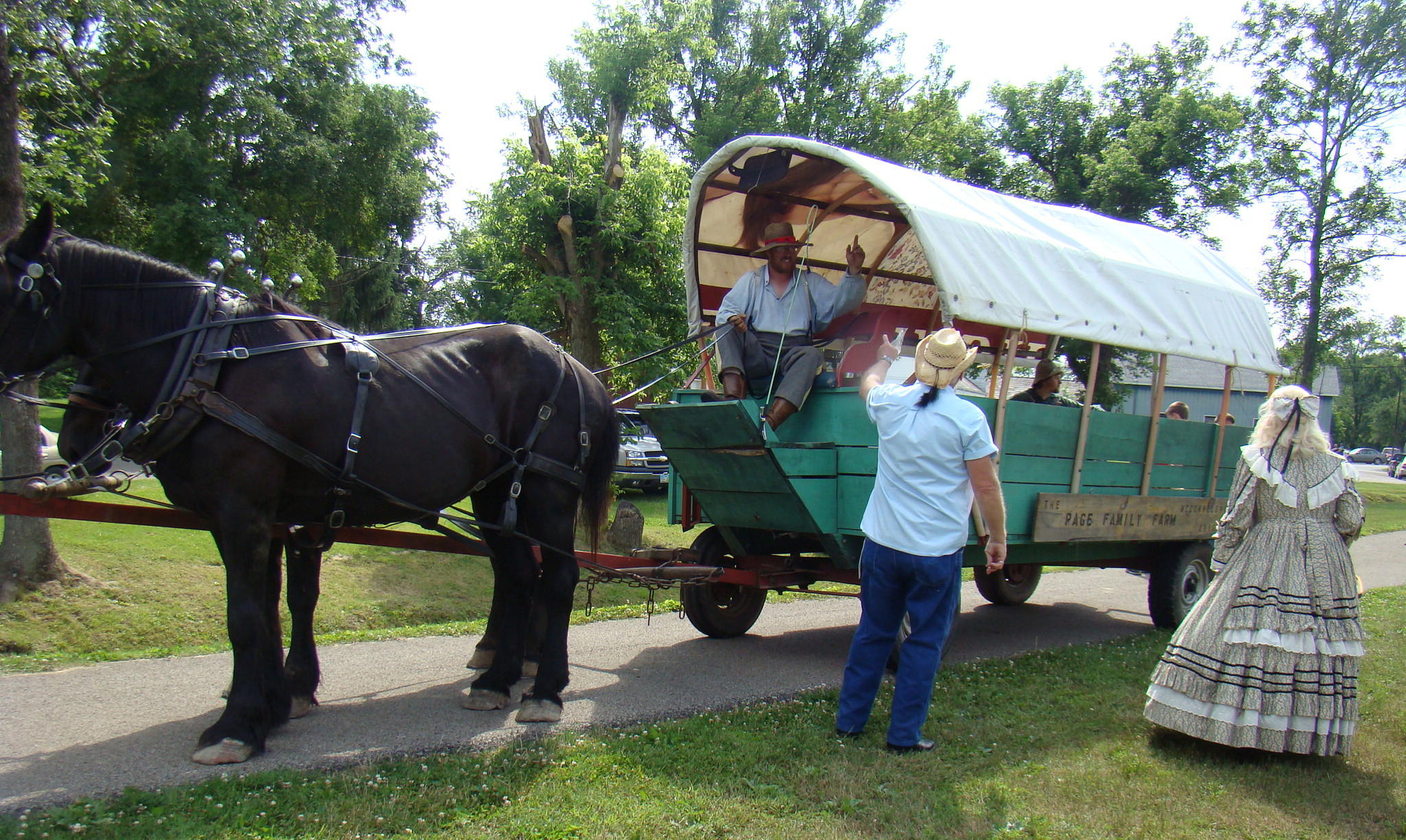
Riders enjoying the horse and wagon ride were greeted by Mayor Carpenter and wife, Sharon.

Horse and wagon riders were greeted by Mayor Carpenter and wife, Sharon.

Horses were an important part of the Civil War and it is estimated that over a million horses and mules were lost during the battles. General Morgan was indeed known as “The King of Horse Thieves”.  Wagon rides, which seemed fitting for the anniversary celebration, were provided along a segment of the Lore City trailhead in a wagon resembling the wagons used during the war to carry generals, the wounded and supplies.

If you want to get a little more adventuresome, today you can follow the trail that Morgan made during his raid. Signs have been posted from Cumberland to Londonderry with information regarding the events that took place in that particular area. Would make an interesting Sunday drive!

Lore City, Ohio is located in Guernsey County just east of I-77. Take exit 46, US Route 40 east, then follow Route 40 for four miles and turn right on State Route 265.  Continue on 265 until a four way stop, where a right hand turn leads you over the bridge to Lore City.  Leatherwood Park is to the left after you cross the bridge.

Relax with Nature at Dawes Arboretum

Dawes All Season Garden

Dawes Arboretum

Imagine being where no one is in a hurry. Dawes Arboretum could be the perfect place for you! This nature haven is dedicated to increasing the love and knowledge of trees, history, and the natural world. Young and old walk around the grounds at a leisurely stroll and traffic has a speed limit of 15 mph. Ah!  This is a spot to relax!

Way back in 1917, Beman and Bertie Dawes purchased a farm known as Woodland in Licking County. The family renamed it Daweswood and began planting trees, from all over the world, that would grow in Ohio. He hoped to encourage others to plant trees at their farms also. In 1929, Dawes Arboretum was formed and by then, Beman had planted over 50,000 trees and purchased more land.

The Visitors Center is a great place to begin your visit. Here you can pick up a map to guide you throughout the 1800 acres, and discover a little history of Dawes Arboretum as well as their family.  Beman Dawes’ father was a Civil War veteran, who served in The Iron Brigade. His brother, Charles, served as Vice-President of the United States under Calvin Coolidge.

Dawes All Season Garden

Dawes All Season Garden

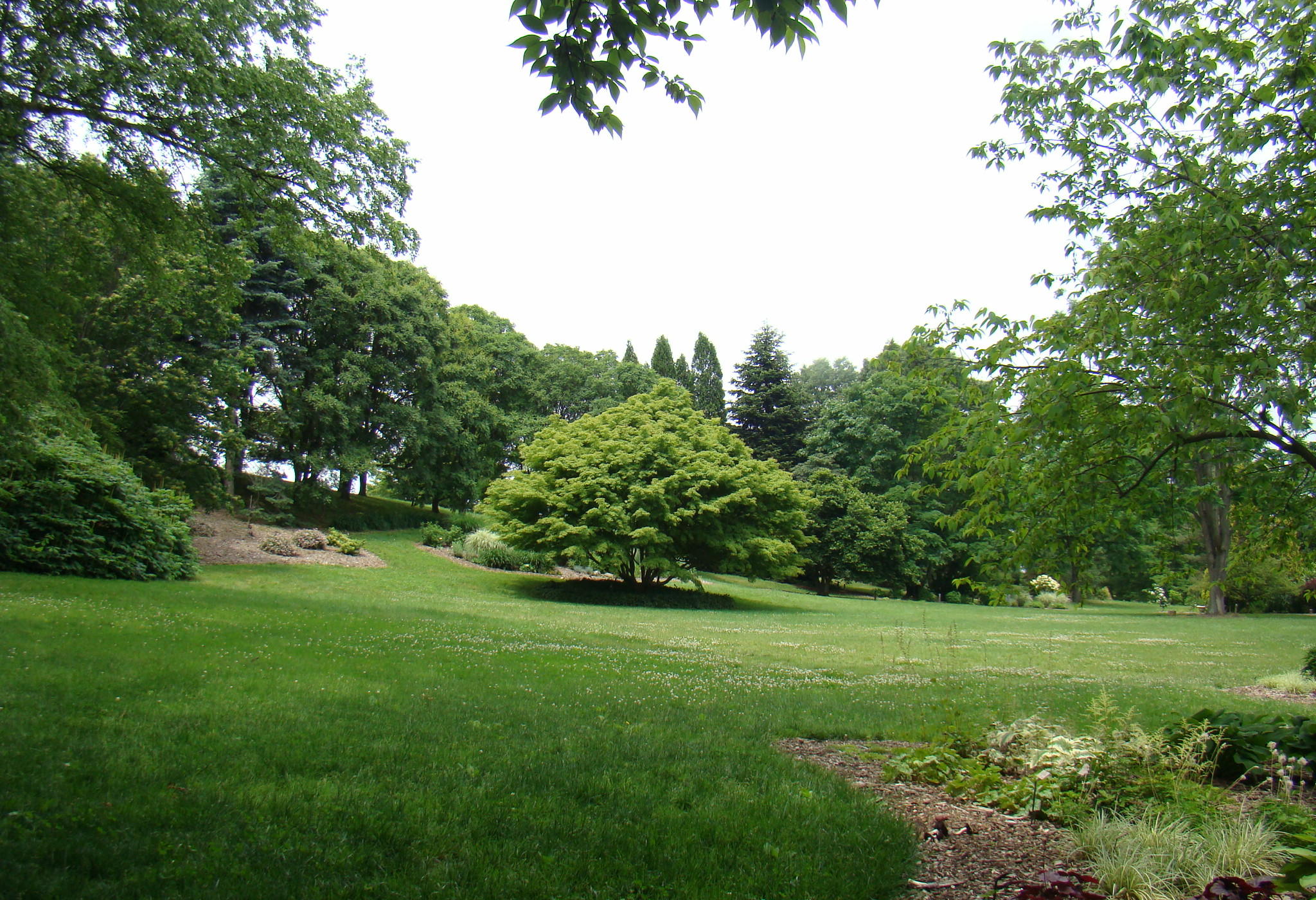
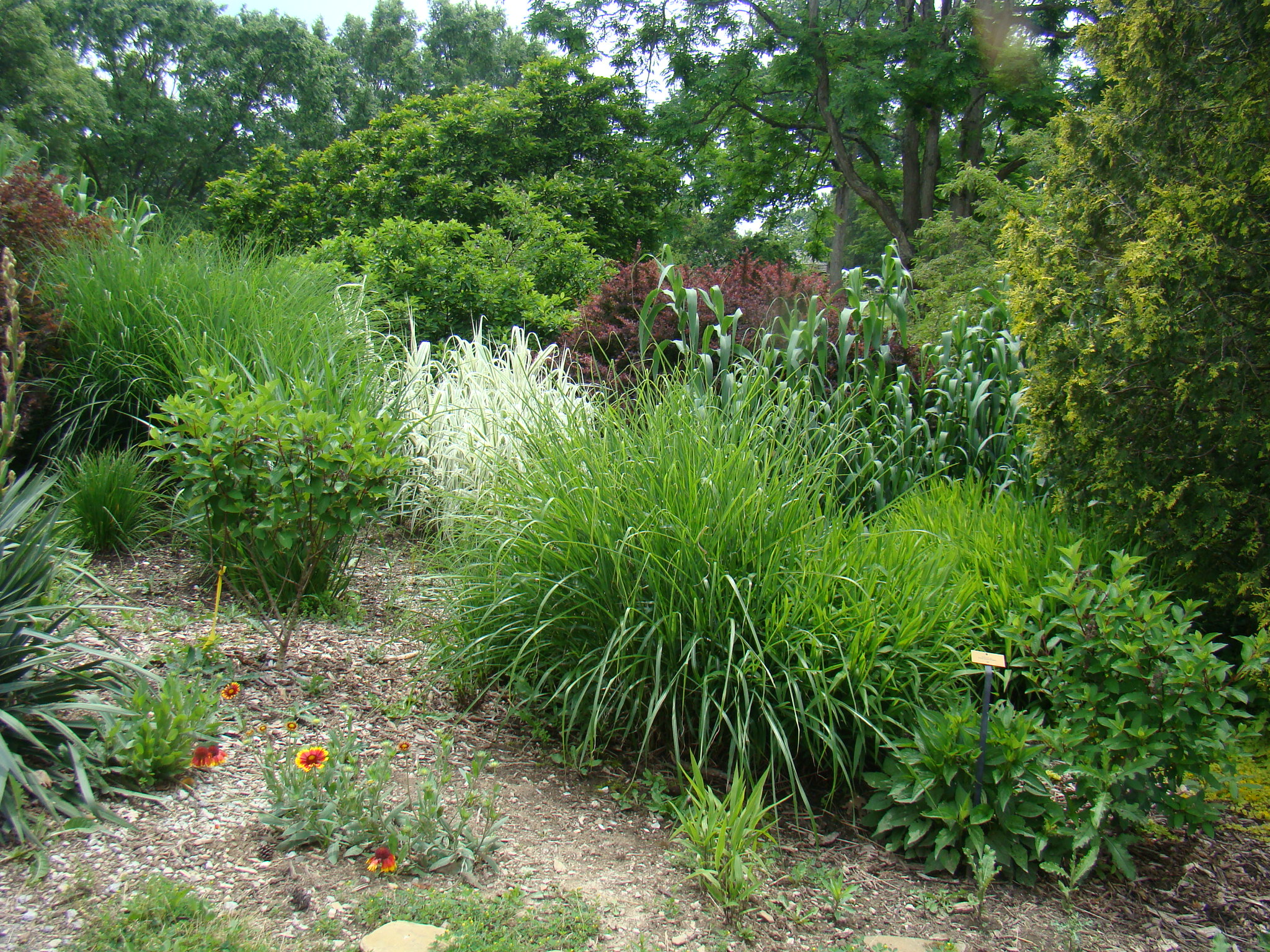
One of my favorite spots is walking leisurely through All-Seasons Garden behind the Visitors Center. Here you are greeted with the flowers of each season from Spring through Fall – tulips to mums. There is a wide variety of plants here, some perennials and some annuals, but all striking in their setting. Name plates are frequently found near trees and plants with both their scientific and common names for easy identification.  Benches provide a spot to relax and to take time to smell the roses. A charming gazebo offers a touch of shelter on a rainy or sunny day, and provides another spot for viewing the garden.

Lake at Japanese Gardens

Lake at Japanese Gardens

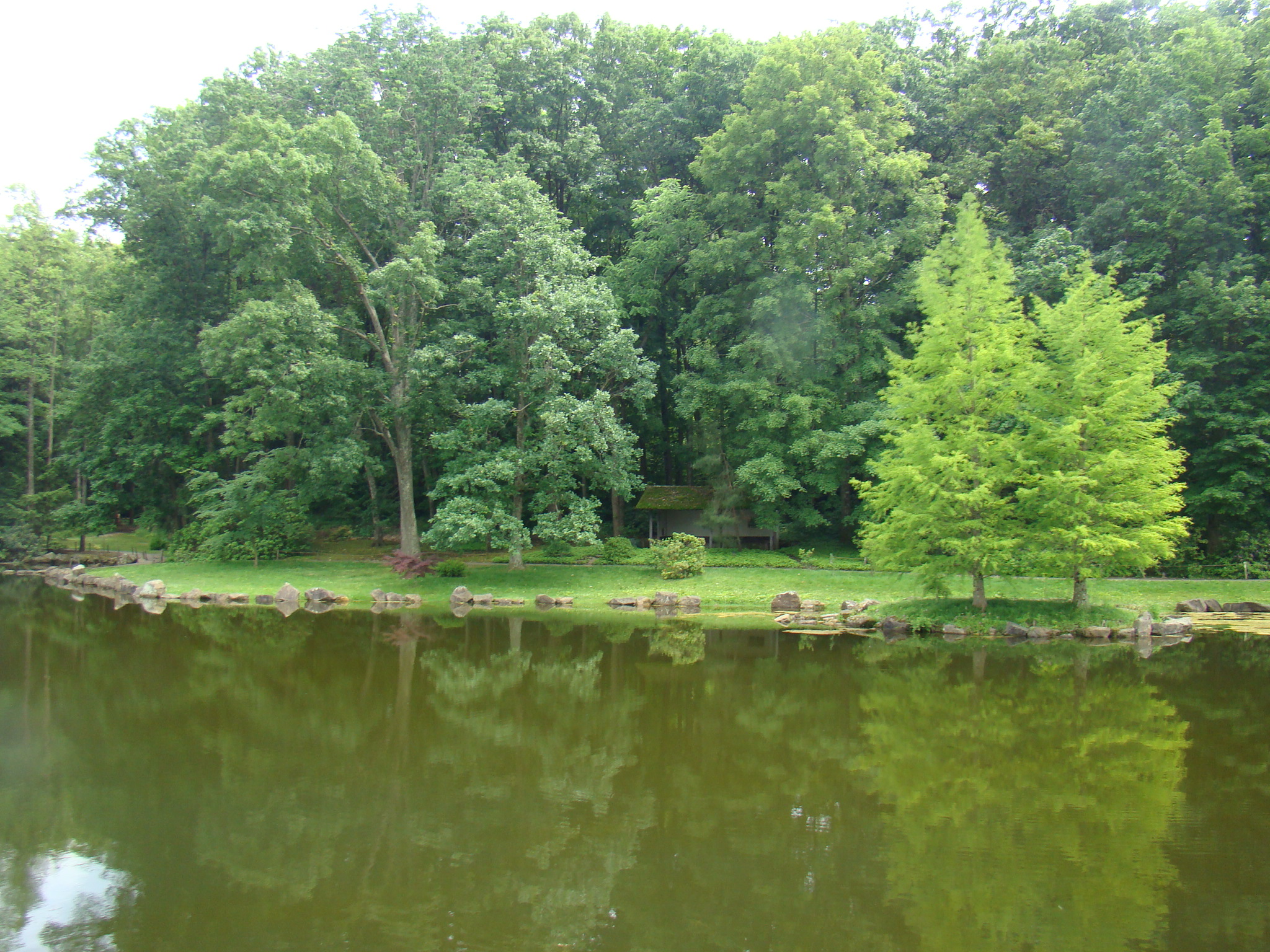
The Japanese Garden creates one of the most tranquil spots at Dawes. With a beautiful small lake at its center, the plants of Japan weave their way around the pond and into your being. Give your feet a rest in the small meditation house at the edge of the reflecting pool to let the tranquility soak in.  A stone path crosses the pool filled with colorful koi, making it a favorite of young and old alike.

Since Dawes is located in Ohio, the Buckeye state, it seemed only fitting that buckeye trees would be included in the landscape. The Dawes family decided to plant 17 trees in the shape of the number seventeen honoring Ohio’s admission to the Union as the 17th state.

Large Hedge spells our Dawes Arboretum.

Large Hedge spells our Dawes Arboretum.

Dawes Observation Tower

Dawes Observation Tower

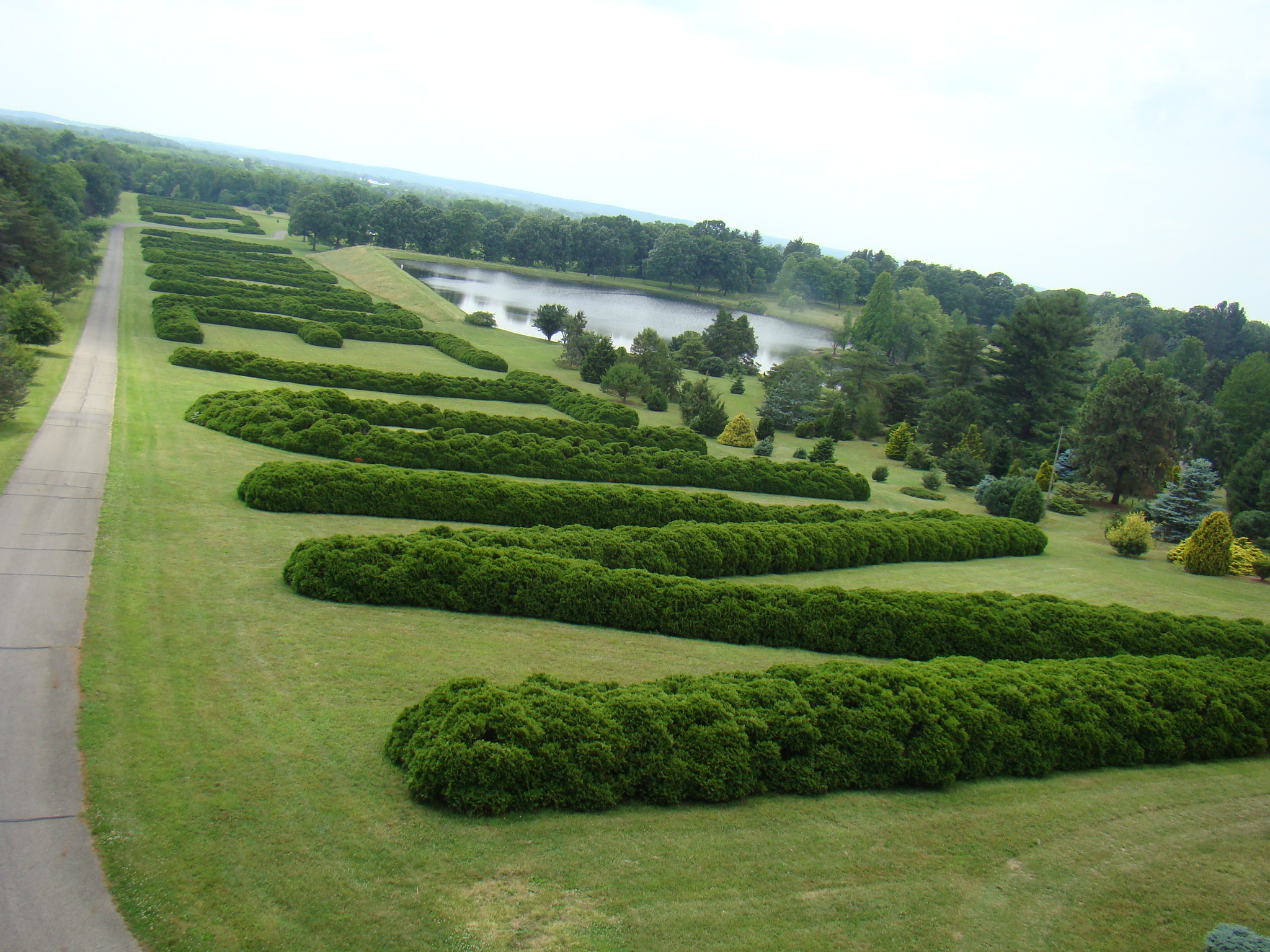
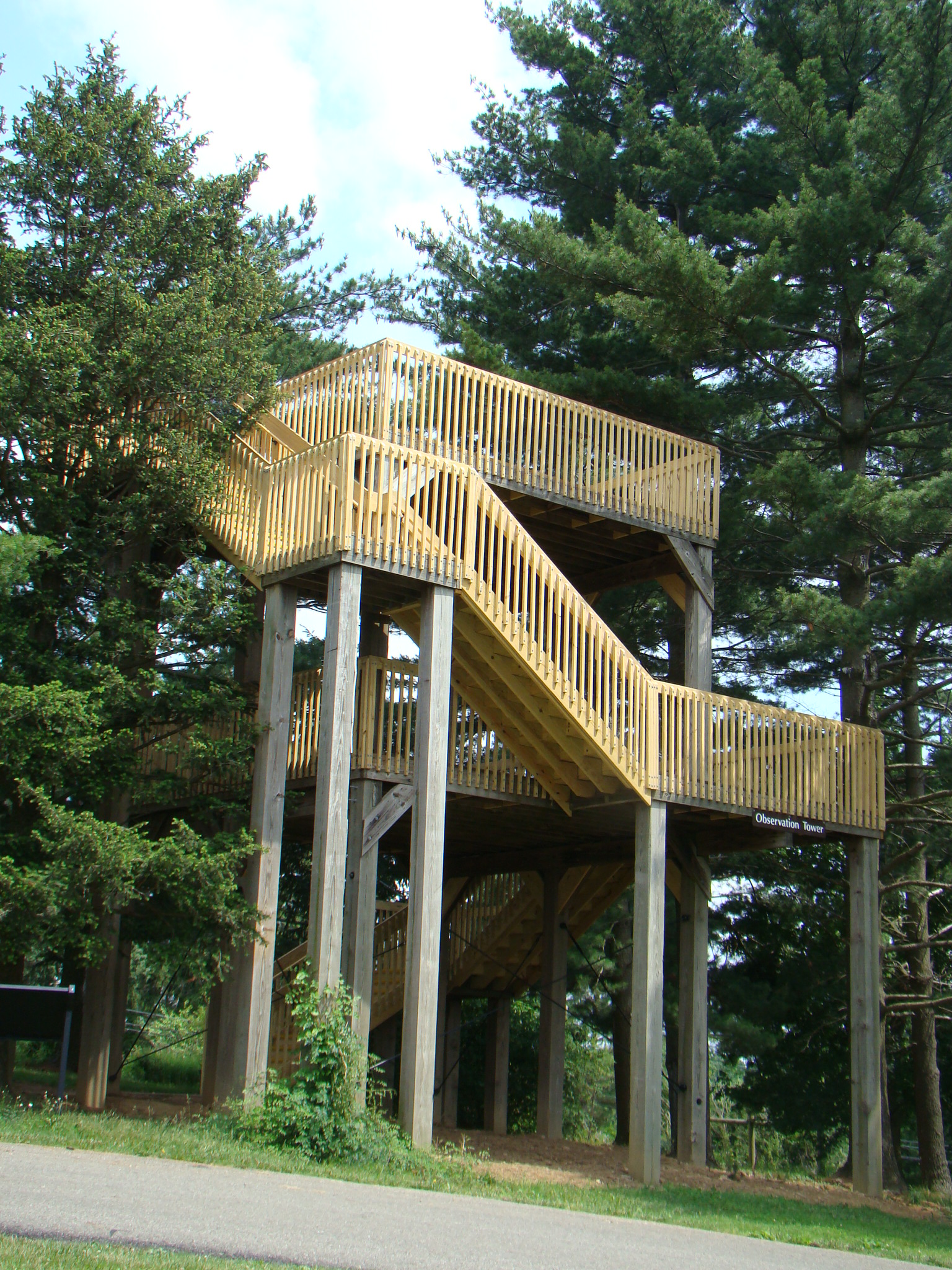
Perhaps you will notice as you approach the arboretum that there is a large hedge, which spells out DAWES ARBORETUM quite clearly. As you slowly drive through the wooded areas, toward the end of your tour, you will arive at The Observation Tower at the southeastern end of the arboretum. Climbing the tower gives a great view of the surroundings including the hedge. This hedge is thought to be the longest hedge in the world at  2,040 feet long and approximatley six feet high. Bernie Dawes decided to build the hedge for the enjoyment of planes flying into the Columbus Airport.

Bald Cypress Swamp Trees with Knees

Trees with Knees

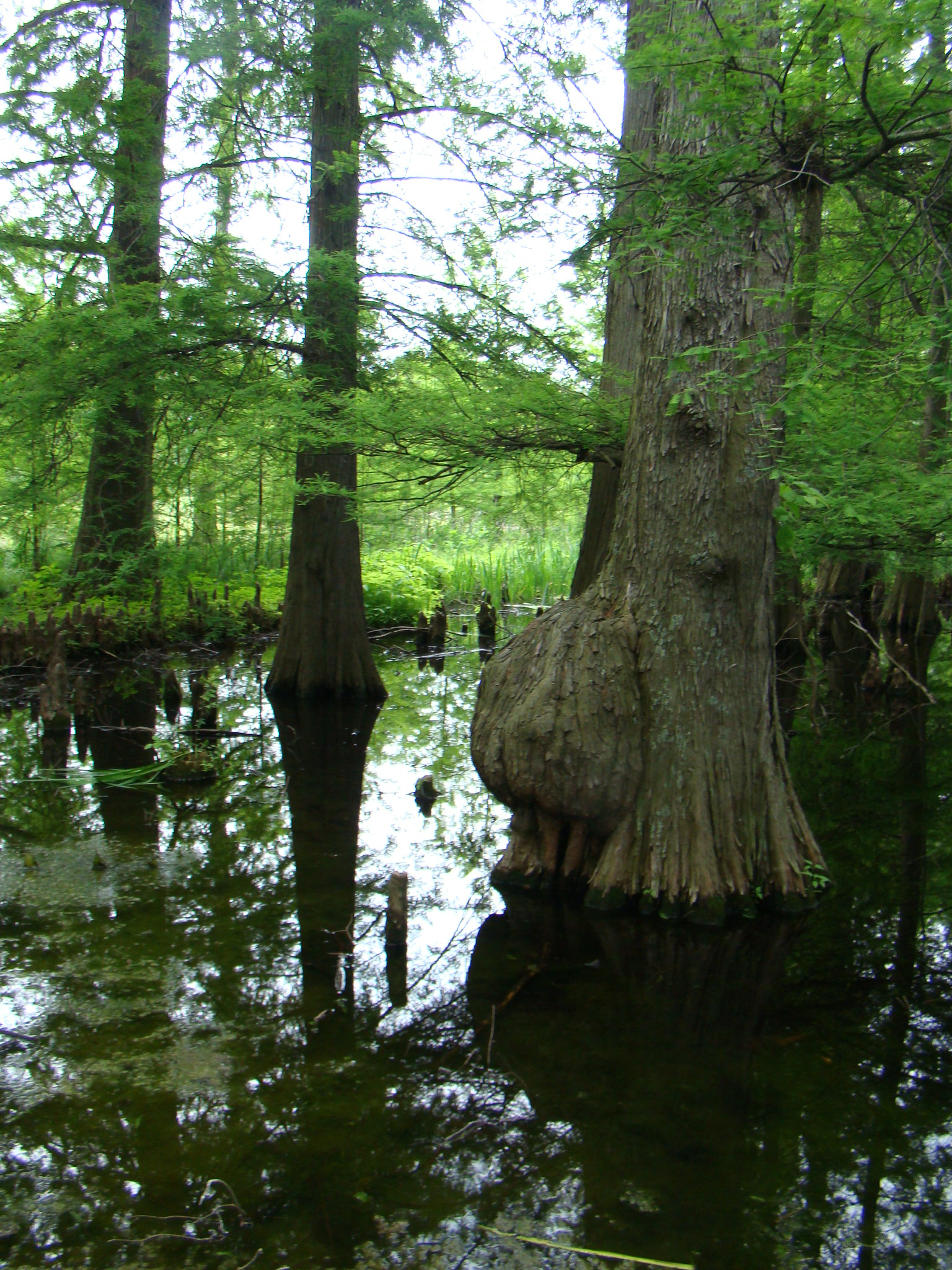
One last treat before you leave is the Cyprus Swamp. This Bald-Cypress Swamp is one of the most northern swamps in North America.  A delightful boardwalk gives guests an up-close and personal view of the trees and their root system, as well as the creatures in the water.  The bumps you see coming out of the water have given these trees a nickname: Trees with Knees. Botanists aren’t really sure what their purpose is but some think it might help them breathe, while others think it is perhaps to help brace them from the wind.

Every season of the year brings a variety of trees, plants, and blossoms to center stage. This is definitely one of those spots where you can enjoy a walk through the trails, or a drive down the roadway, at any time of the year.  Beautiful scenes appear around every bend.

Meander through the grounds anytime of the year surrounded by the beauties of nature at Dawes Arboretum with over 16,000 living plants. It’s opened 362 days a year and admission is free.  You’ll want to come back each season!

Dawes Arboretum is located near Newark, Ohio just off I-70.  Take Exit 132 , Route 13 , and proceed North on Route 13 for about three miles.  The entrance is located on the left hand side of the road at 7770 Jacksontown Road.

St Francis Hospital Museum Growing Piece By Piece

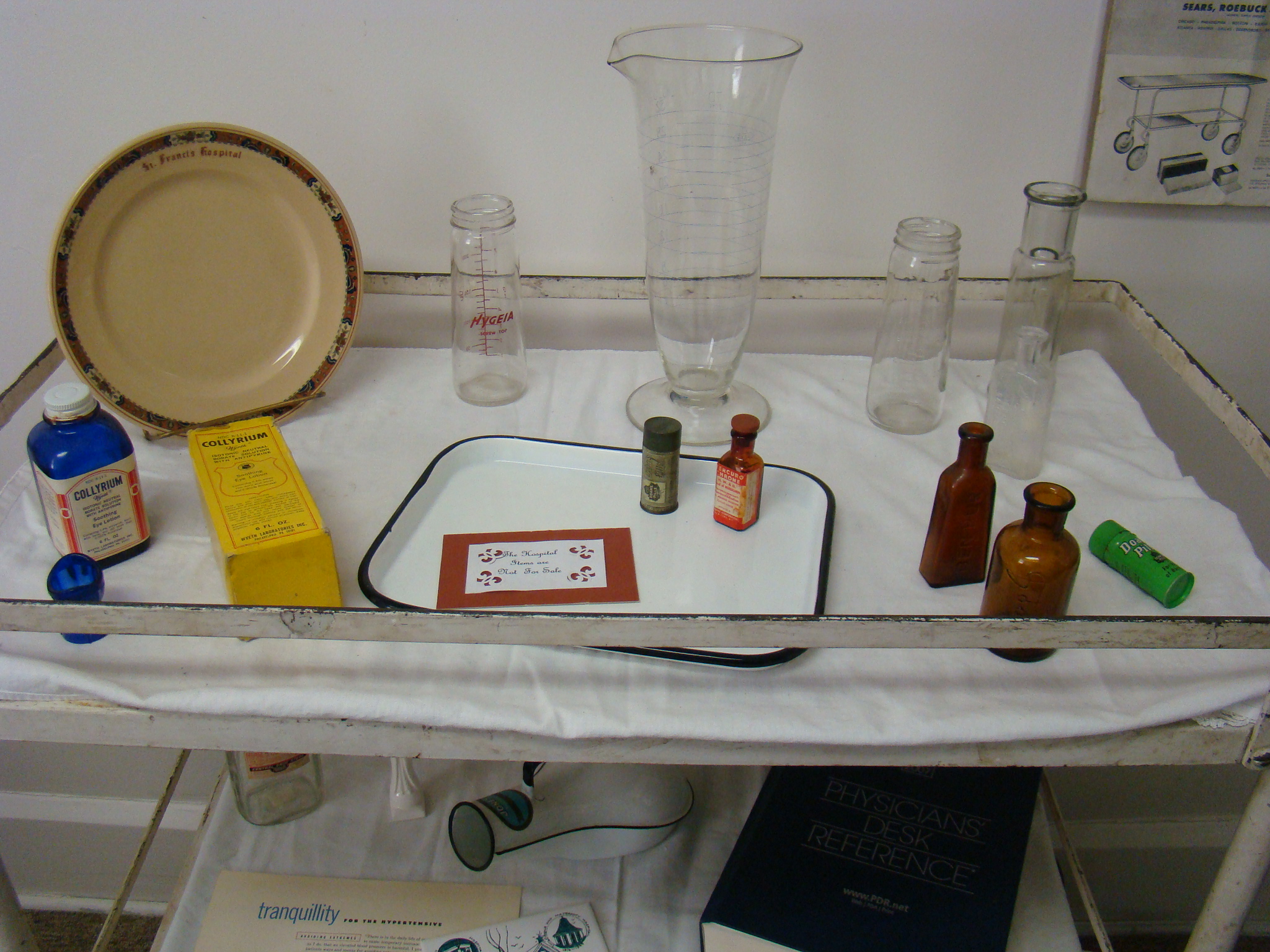
Items used at St Francis Hospital

Items used at St Francis Hospital

Many times unexpected treasures appear when exploring an old building. Such was the case in 2012 when Dave and Sarah Scott purchased an antique store housed in a former local hospital.  There in the corners and unexplored rooms, many items formerly used in the early hospital were discovered.

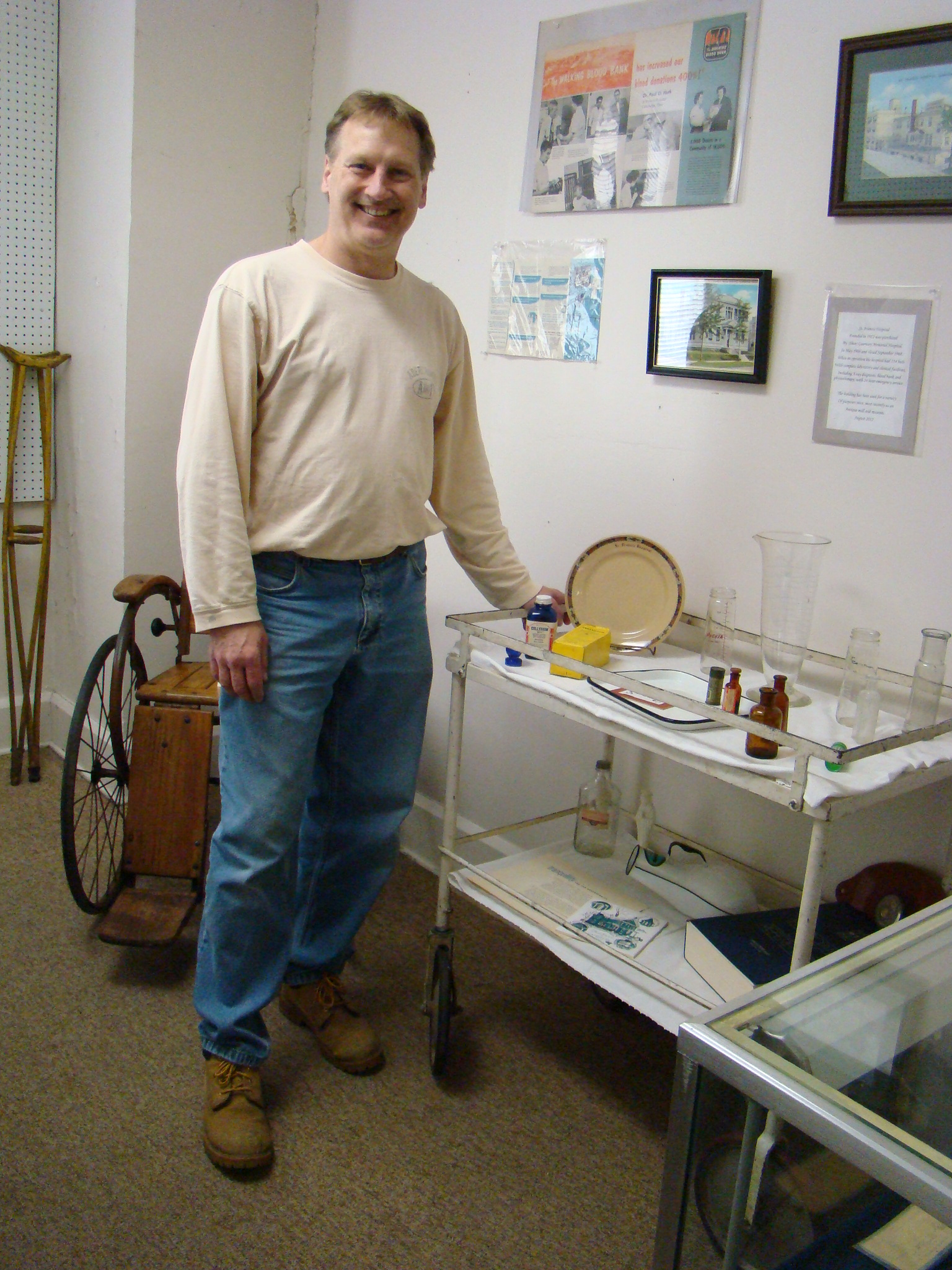
Dave Scott, owner, stands with medical supplies in their museum.

Dave Scott, owner, stands with medical supplies in their museum.

At the present time, Dave and Sarah have dedicated one room of their Scott’s 10th St. Antique Mall to a place called St. Francis Hospital Museum.  Nearly all of the items in the room are from the original hospital, having been found in the corners of the building.  Dave Scott, owner, stands beside some of the medical equipment used during the days of St Francis Hospital. The crutches in the background were found in a room in the basement while exploring the building.Only two items, a wheel chair and a bed, have been purchased and both were from the same time period as when St. Francis Hospital was in operation.

Back in 1922, this medical center began when the  Wells Hospital opened its doors on 10th Street in Cambridge, Ohio. This was a much needed addition to the city at that time and Dr. Henry L. Wells dedicated it to his parents. Dr. Wells was a tireless and modest physician whose feelings were summarized when he said, “I feel very highly rewarded with the respect and confidence that the community seems to have in me.”

The Order of St. Francis Nuns began operating that same facility in 1945 as St Francis Hospital. After WWII was over, Dr. Paul Huth arrived in the area and took over as head surgeon at the hospital. The hospital received a boost in 1957 when Cambridge Glass Company selected St. Francis Hospital for all hospitalization of workers needing medical attention. All emergency cases were to be sent to the hospital as well, with Dr. Paul Huth named as company physician.

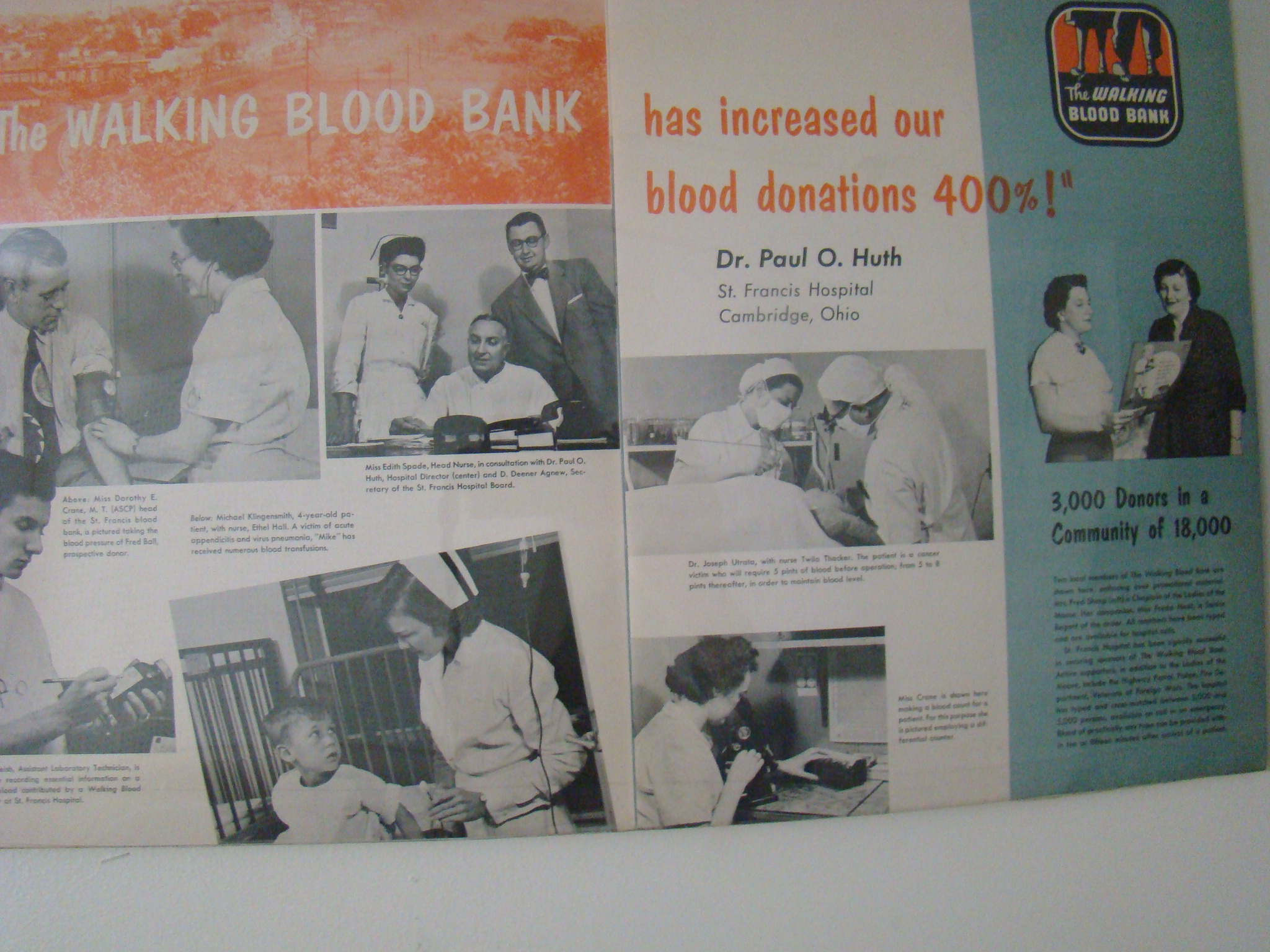
The Walking Blood Bank poster

The Walking Blood Bank poster

An old poster features familiar faces in our local medical world encouraging people to give to the blood bank…at that time a Walking Blood Bank. Dr. Paul Huth, the hospital director is shown with Edith Spade while Dr. Joseph Utrata is being assisted by Twila Thacker.  Both Miss Spade and Miss Thacker served the community as nurses until recent years.

A visitor at the museum stated that he had been born in the hospital, and maybe even in the room where the museum stands. He remembered stories of the early hospital days as well as the doctors who cared for the patients.  Area residents remember that at that time appendectomies were as popular as knee replacements are today. So he smiled when remarking, “If you came in for an ingrown toenail, chances are you would not leave before having an appendectomy.”

1946 Hospital Bill

1946 Hospital Bill

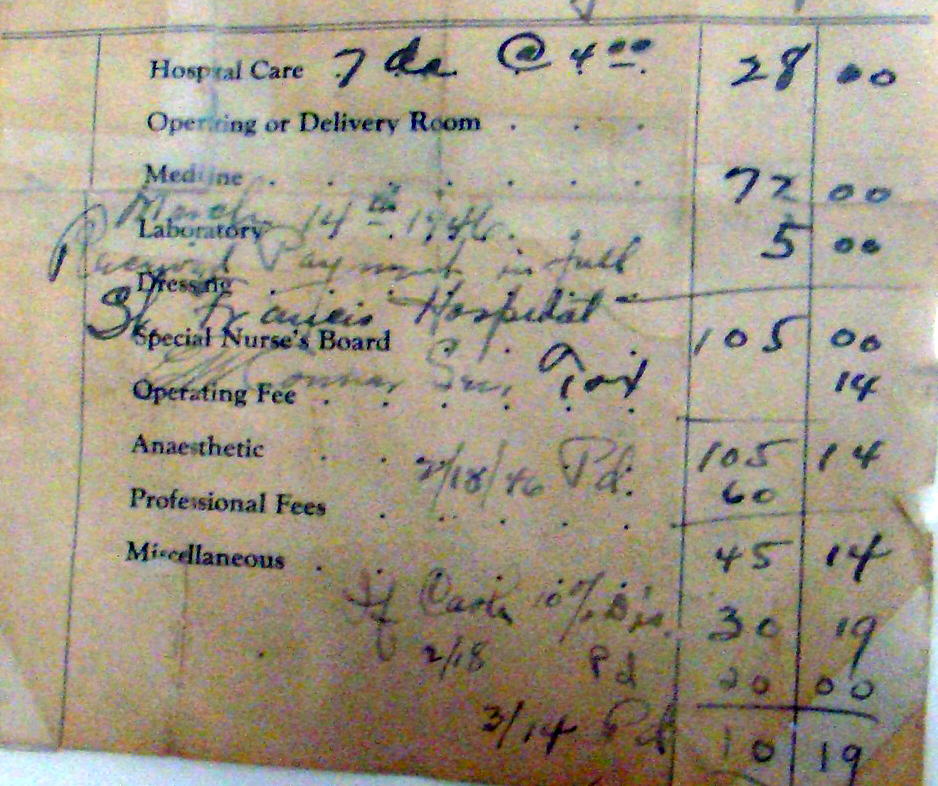
An interesting hospital bill hangs on the wall.  It shows the costs for everything needed during the hospital stay. One surprising item was the cost of the room. The patient was there for seven days at $4 a day for a total room charge of $28. How times have changed!

St. Francis Hospital was finally closed in 1968 with the opening of a larger, more modern facility, Guernsey Memorial Hospital.  Today that hospital has been further improved and modernized and is now called Southeastern Medical Center of Ohio.

If perhaps, you have any knowledge of St. Francis Hospital or pieces of its history that you would care to share with future generations, please contact Dave or Sarah Scott at their 10th Street Antique Mall. Who knows what could develop here?

The St. Francis Hospital Museum is located in the Scott’s 10th St Antique Mall in downtown Cambridge. There is easy access as Cambridge is at the crossroads of I-70 and I-77. Wheeling Avenue is their main street and the museum is just a half block south of Wheeling Avenue on 10th Street.

Rootin’ Tootin’ Western Fun Hopalong Cassidy Festival

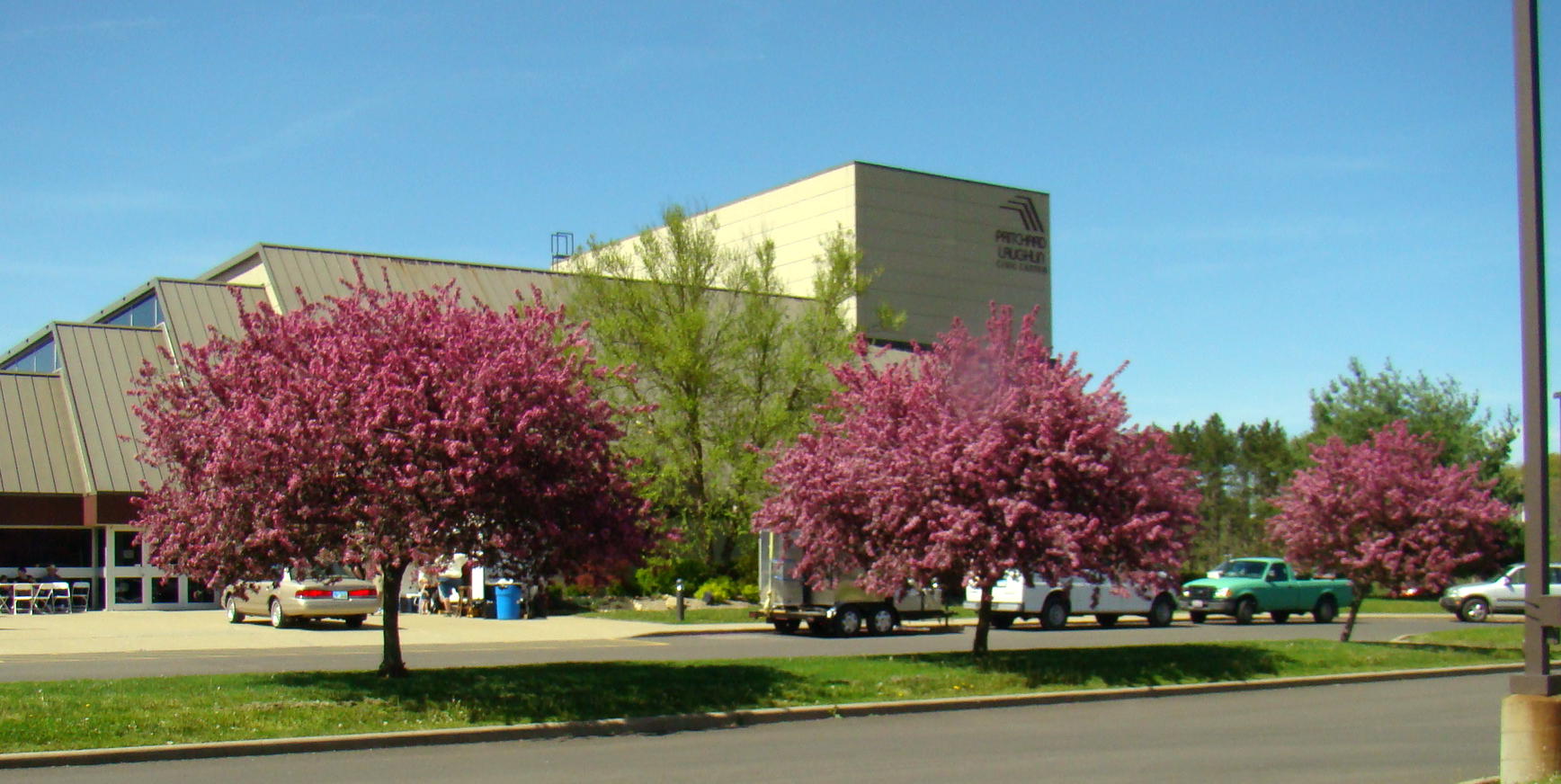
Pritchard Laughlin Civic CenterMore fun than a pig in mud !  That description summed up the feeling of those participating in the 23rd Annual Hopalong Cassidy Festival held at Pritchard-Laughlin Civic Center during the first weekend of May near Cambridge, Ohio. Everyone there seemed to be having fun in this beautiful springtime setting!

From the moment of arrival, you were greeted outside the center with some good old-fashioned BBQ by Smokin’ C BBQ from nearby Old Washington. This provided a break from the action anytime hunger appeared during the day. Their pulled pork sandwiches and BBQ baked potatoes are always favorites.

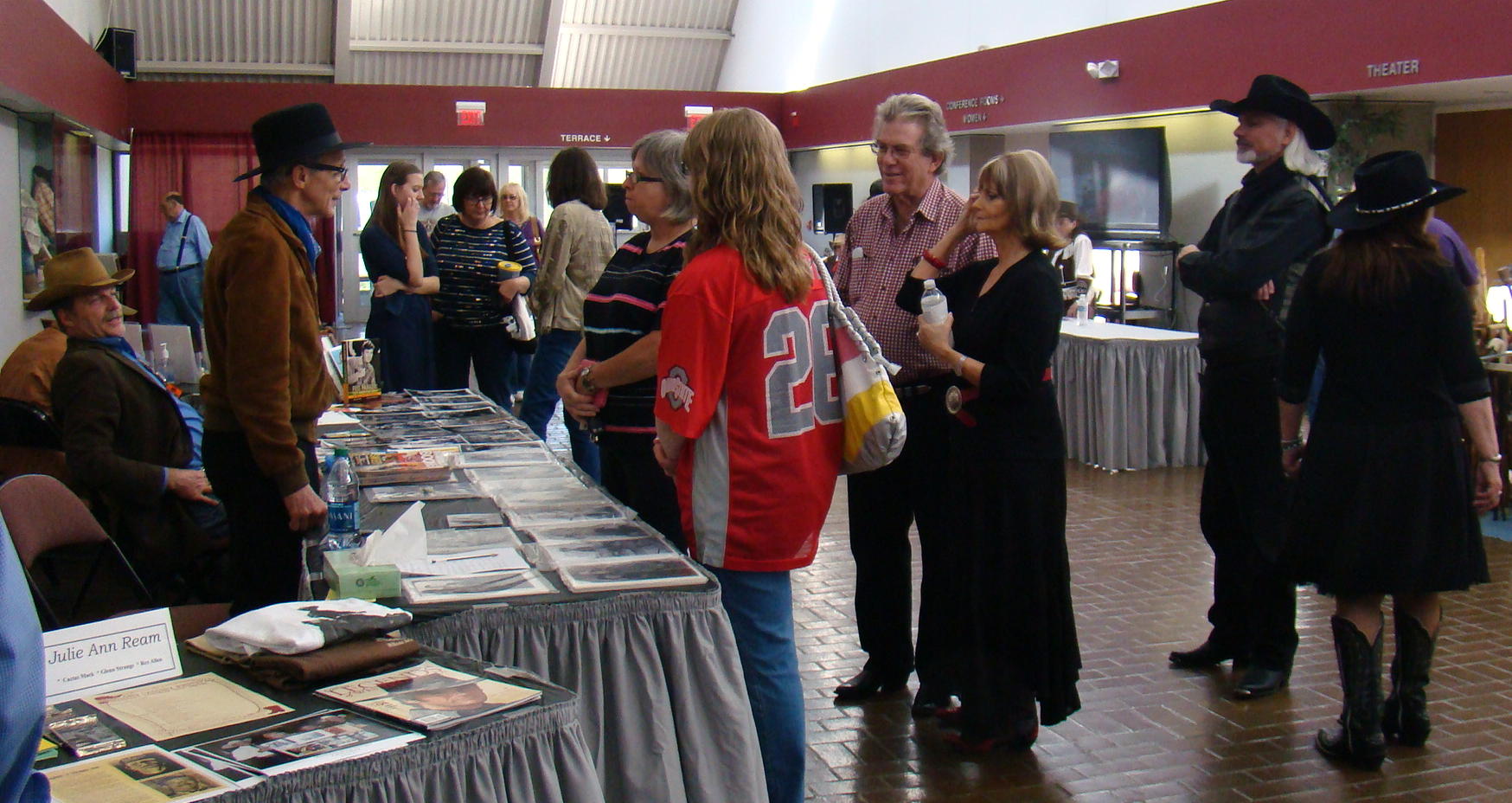
Festival LobbyInside was where the legend of Hopalong Cassidy was being kept alive. The lobby contained Western actors from days gone by. They autographed pictures, posed with fans, and answered questions in a friendly manner.

The large banquet room had hundreds of items for sale from days of Hopalong Cassidy, Roy Rogers, Daniel Boone and other favorite Western stars. Fans and dealers from all over the nation come to explore over one hundred tables of collectibles to see if they can find a treasure.

Panel of Stars

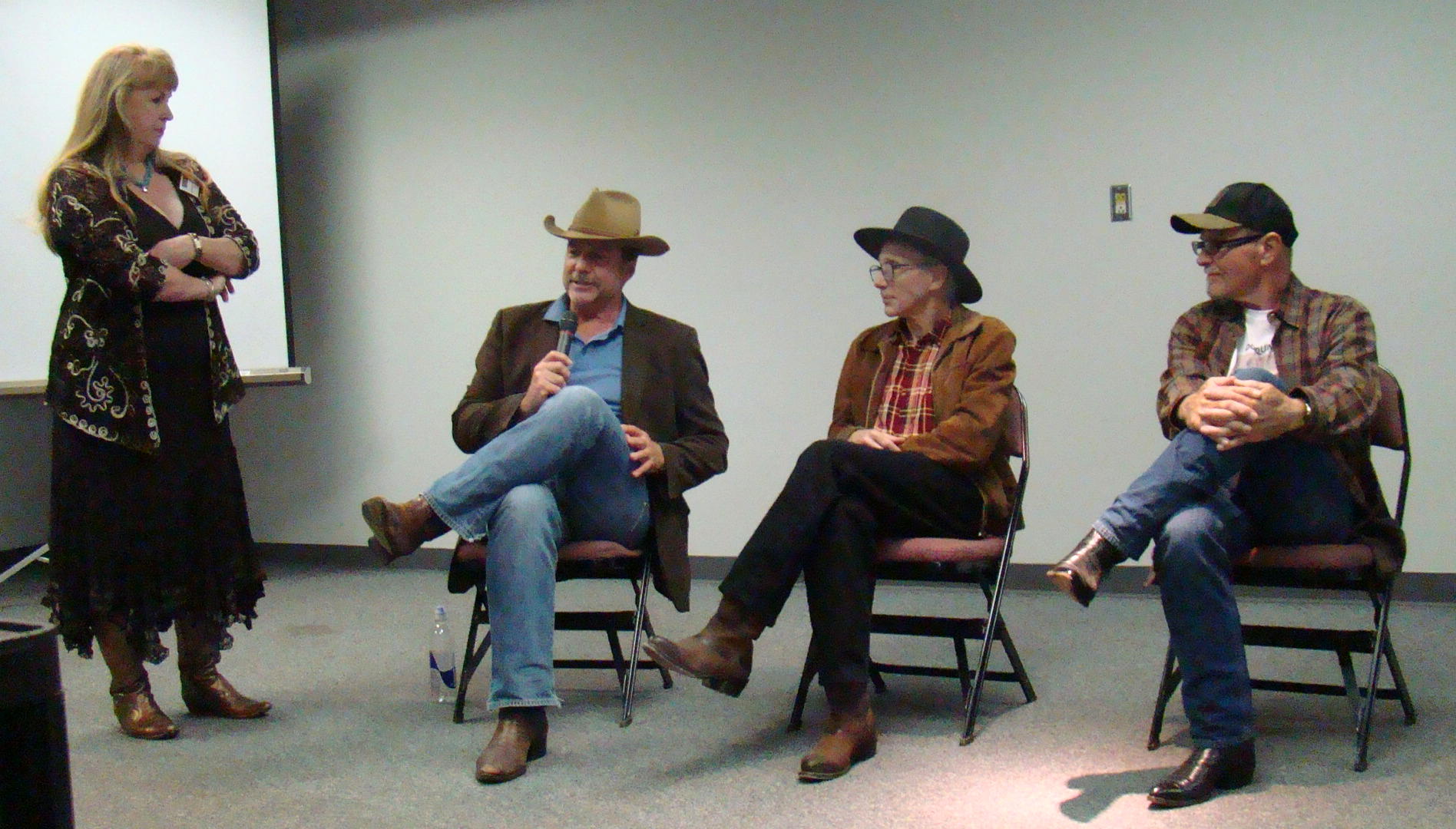
Julie Ream narrated a Panel of Stars including: Darby Hinton, Johnny Crawford, and Don Quine.

Cowboys from the past seemed to be one of the main drawing cards.  Meet the Stars drew a large crowd in the Bar 20 Annex.  These stars were all from California, but enjoying the small town greeting. Western history expert Julie Ream, who remembered the days of attending Charm School, informed the audience that her cousin, Cactus Mack McPeters was the first to make a Western with Republic Pictures, while her Uncle Rex Allen, The Arizona Cowboy, made the last Western for them.

Representing The Virginia was Don Quine, who played the role of the grandson, Stacey. Today he spends his free time writing a book, but he would not give any inside information as to what that book was about. Perhaps it is his memoirs.

An actual descendant of Daniel Boone, Darby Hinton accidentally fell into a role in the Daniel Boone TV series when his mother, running late as usual, dropped him off in front of the studio while she went to park the car. Here he was to try out for the part of a von Trapp lad in Sound of Music. So when Darby went inside, he fell right in line with the rest of the youngsters. He charmed those interviewing and got the part easily. However, when his mother arrived, she discovered he had gone to the wrong floor and instead of interviewing for Sound of Music, had accepted a role in Daniel Boone as his son. Today he is working on a PBS documentary of the life and times of the real Daniel Boone.

A sense of humor seemed to be the strong point for Johnny Crawford, who appeared on Rifleman for five years in the role of a son. When asked what he did when he became an adult, Johnny said, “I never grew up.” Music seemed to be his avocation these days and he sang Sweet Sue to the group…well, as much of it as remembered. Johnny said he could do the beginning of most songs.

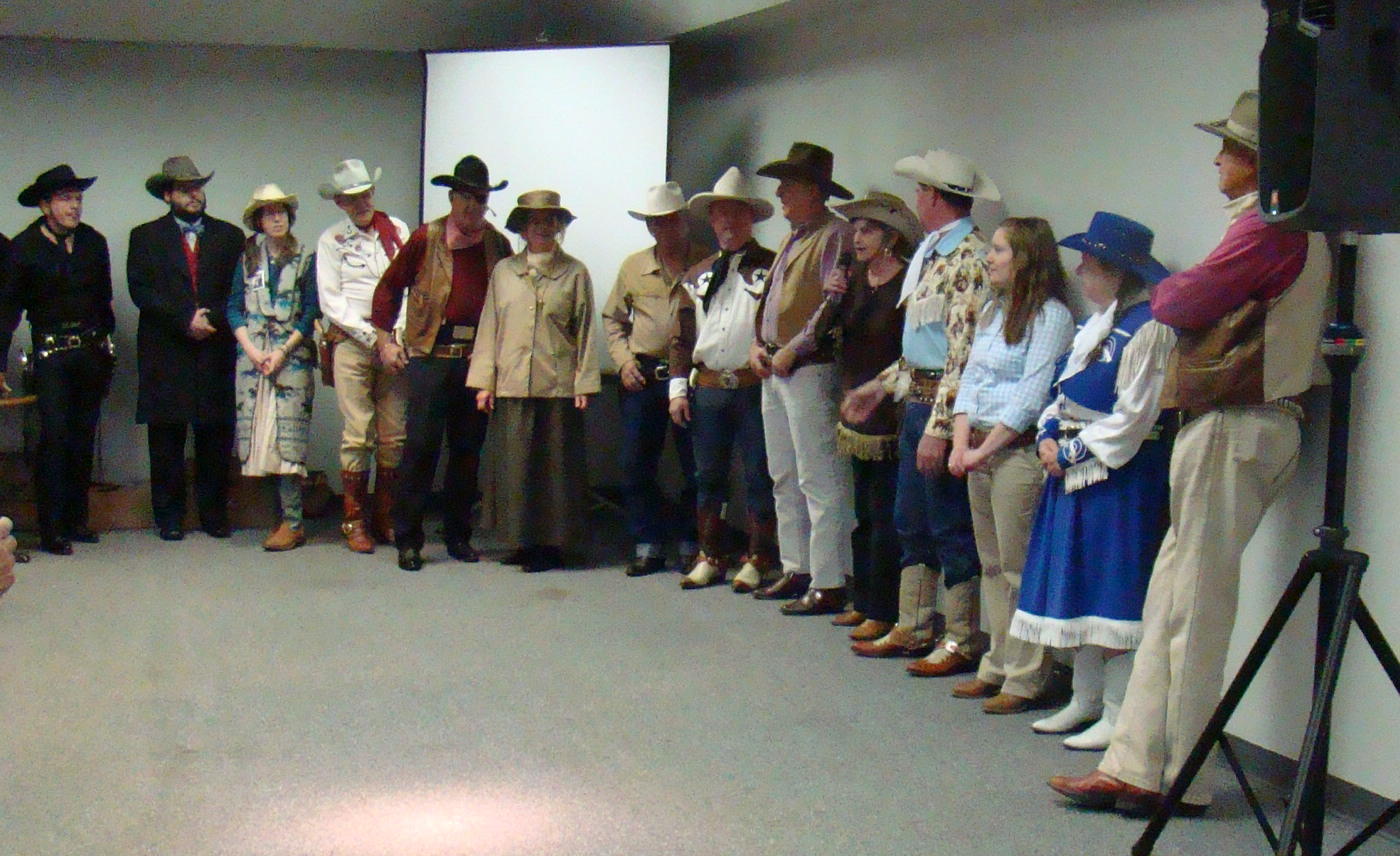
Look Alike ContestAnother highlight was the Look-Alike Contests for young and old alike, which was judged by audience clapping. Youngsters dressed in Western gear competed for trophies, but just being there was the most fun for all of them.

In the adult division, Johnny Crawford served as moderator and put the competitors through their paces. While he sang, he had them perform in various ways such as dancing, cracking the whip, doing tricks with their guns, and testing their beards to see if they were real.  Gabby Hayes quipped, “My teeth aren’t real, but my beard is.”

Johnny noted, “Being a cowboy is a hard life.”

To which Gabby responded, “Durn tootin’.”

The Roy Rogers Look-Alike was a real estate broker, who wore his Roy Rogers hat to work every day. His rendition of Happy Trails to You brought a round of applause.

However, John Wayne’s Look-Alike was the overall winner of the contest. This big, strong fellow looked and sounded like The Duke. His dance steps were even quite smooth for a cowboy of his size.

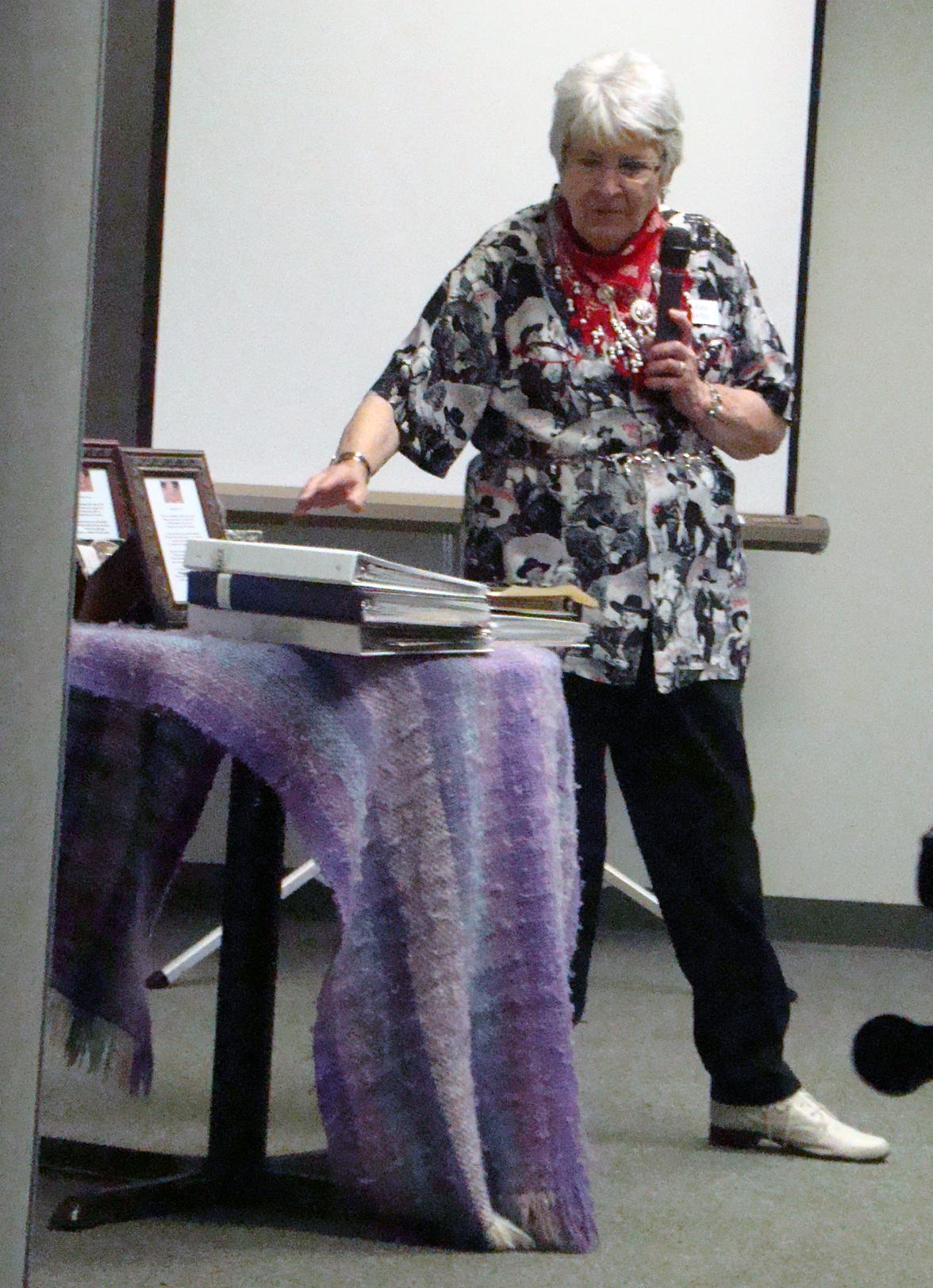
Laura Bates, founder and chairmanLaura Bates, the founder of the Hopalong Cassidy Festival, paid tribute to Grace Boyd, Hopalong’s wife. Laura and Grace had become good friends over the years with Laura visiting their California home on the Pacific Ocean frequently. Laura dressed in a shirt of Hoppy’s that Grace had given her, and had the table covered in a scarf from their home. While the festival was to honor hometown cowboy hero, Hopalong Cassidy, his wife actually was a guest there for several years and became a real favorite of those attending. Grace went to the corral where cowboys and their families go after they leave this old world at the age of 97.

Many of the attendees come year after year to the Festival. One couple from Jacksonville FL said they had been there for 17 years. Seeing old friends, who are fans of Hoppy, is one of the best reasons for coming back year after year. See y’all next year!

The Hopalong Cassidy Festival is held annually at Pritchard Laughlin Civic Center near Cambridge Ohio.  It is easily reached from I-70 at Exit  176. Turn right coming off the exit onto Glenn Highway Road, and in about half a mile the civic center is on the left side of the road.

Ohio’s Historic Lafayette Hotel – A Haunting Experience

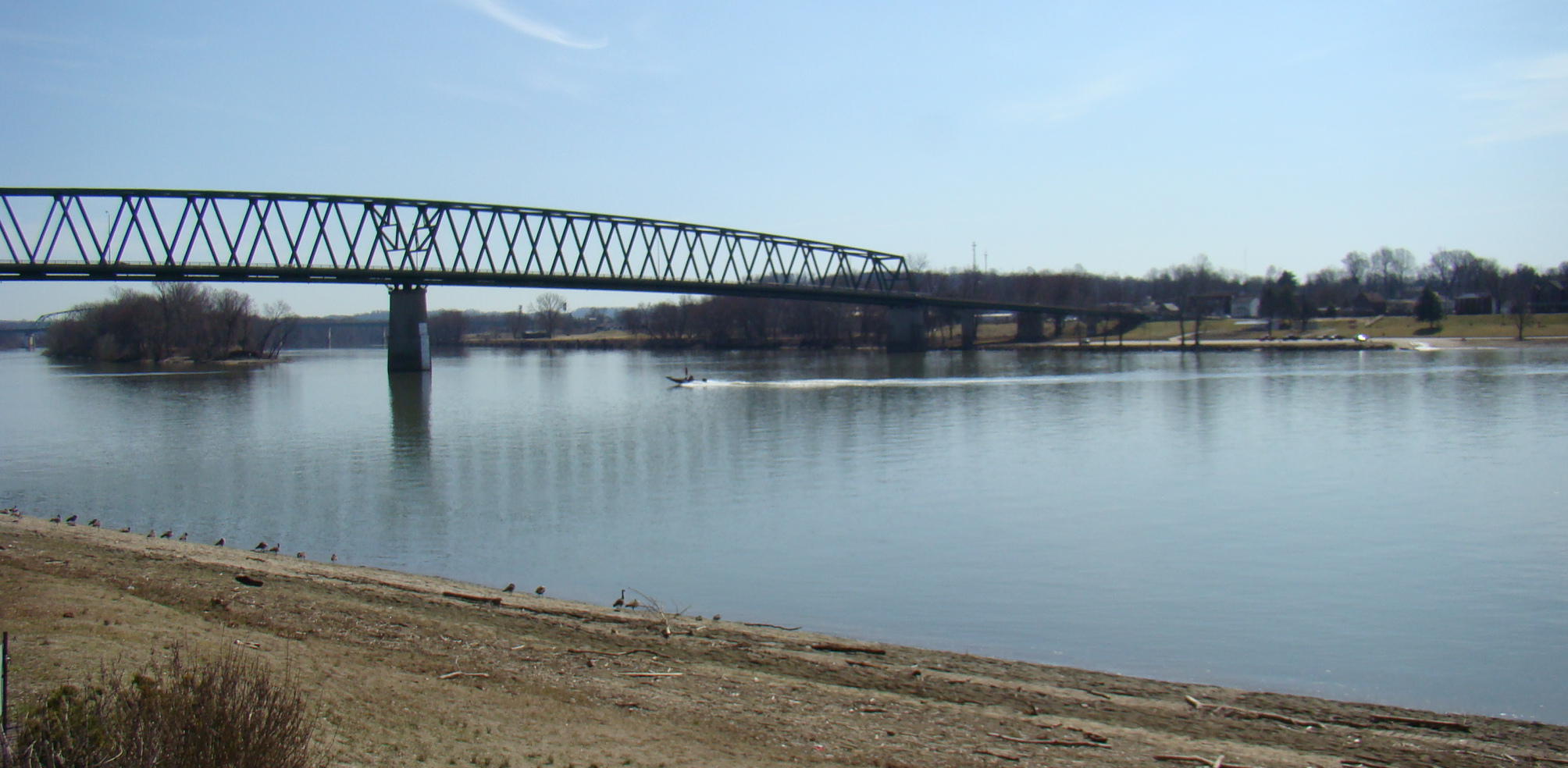
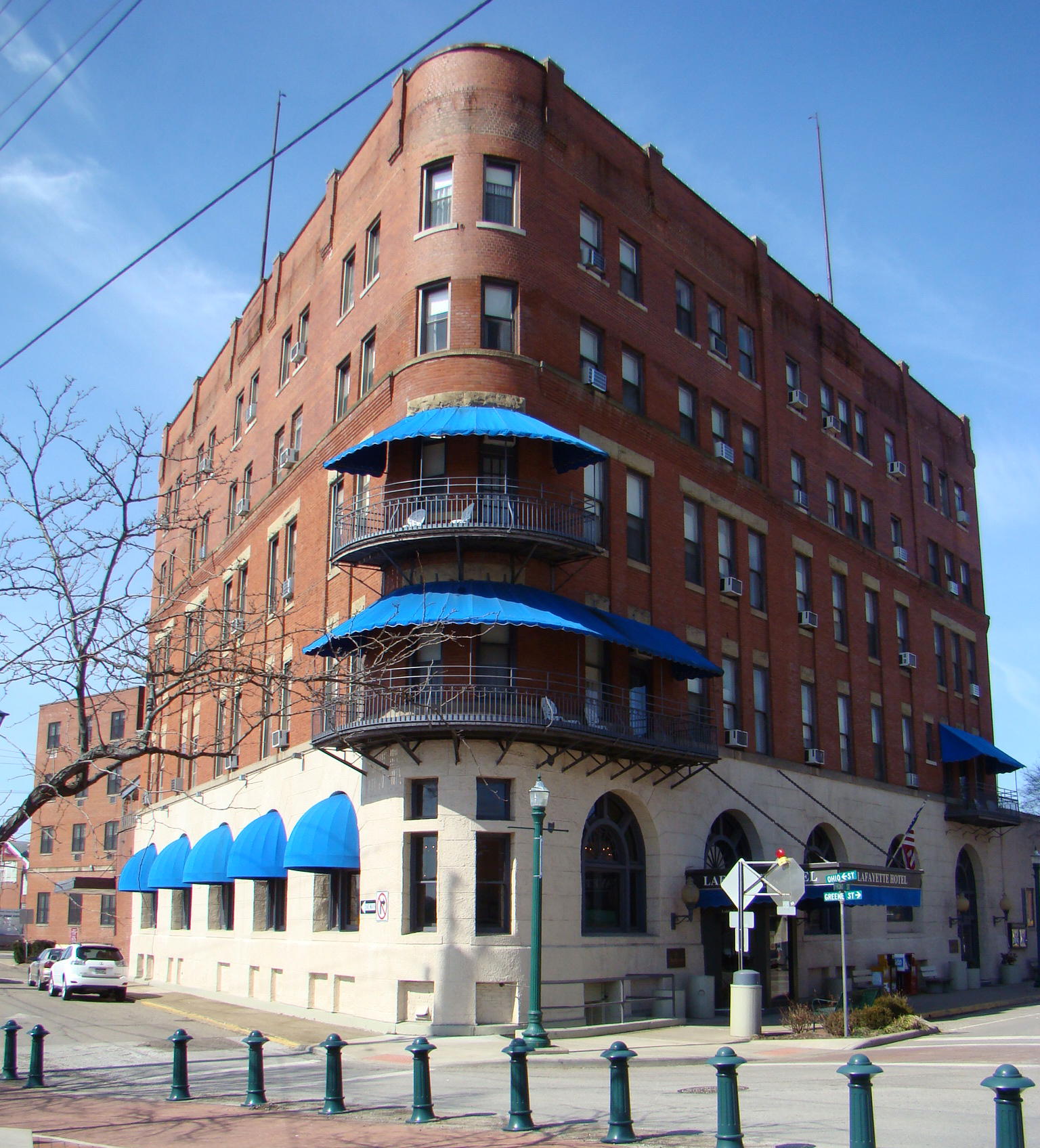
Ohio River at MariettaMay the ghosts be with you while you spend the day or night at the Lafayette Hotel in historic downtown Marietta, Ohio.  Visitors and employees anxiously report stories of paranormal activity in this grand hotel on the banks of the confluence of the Muskingum and Ohio Rivers.

Back in 1882, river traffic was heavier than it is today. The Ohio River provided the freight and passenger routes for much of the eastern part of the United States. Of course, these riverboat travelers needed a place to get meals as well as a place to spend the night. Here at the meeting place of two major rivers, the Bellevue Hotel was built. This quite modern hotel, for the late 1800’s, had a fast running elevator taking guests to 55 rooms, five of which had baths. Rates at the Bellevue were $2.00 a night

lafayette hotel 013After a fire destroyed the Bellevue Hotel, another hotel was constructed on the original foundation. In 1918 the present triangular shaped Lafayette Hotel opened for business. The name was chosen to honor Marquis de Lafayette, French hero of the American Revolution, who was believed to be the first tourist to visit Marietta in 1825. There is even a plaque, near the hotel at the edge of the Ohio River, marking the spot where he came ashore.

A popular meeting room bears the name of Rufus Putnam, who many list as the founder of Ohio.  His leadership established Marietta as the first permanent United States settlement in the Northwest Territory.   In a letter sent to his former home, Rufus Putnam described the land along the Ohio River to his friend as: “a country of most pleasant climate and of the rarest beauty and enduring charm”.

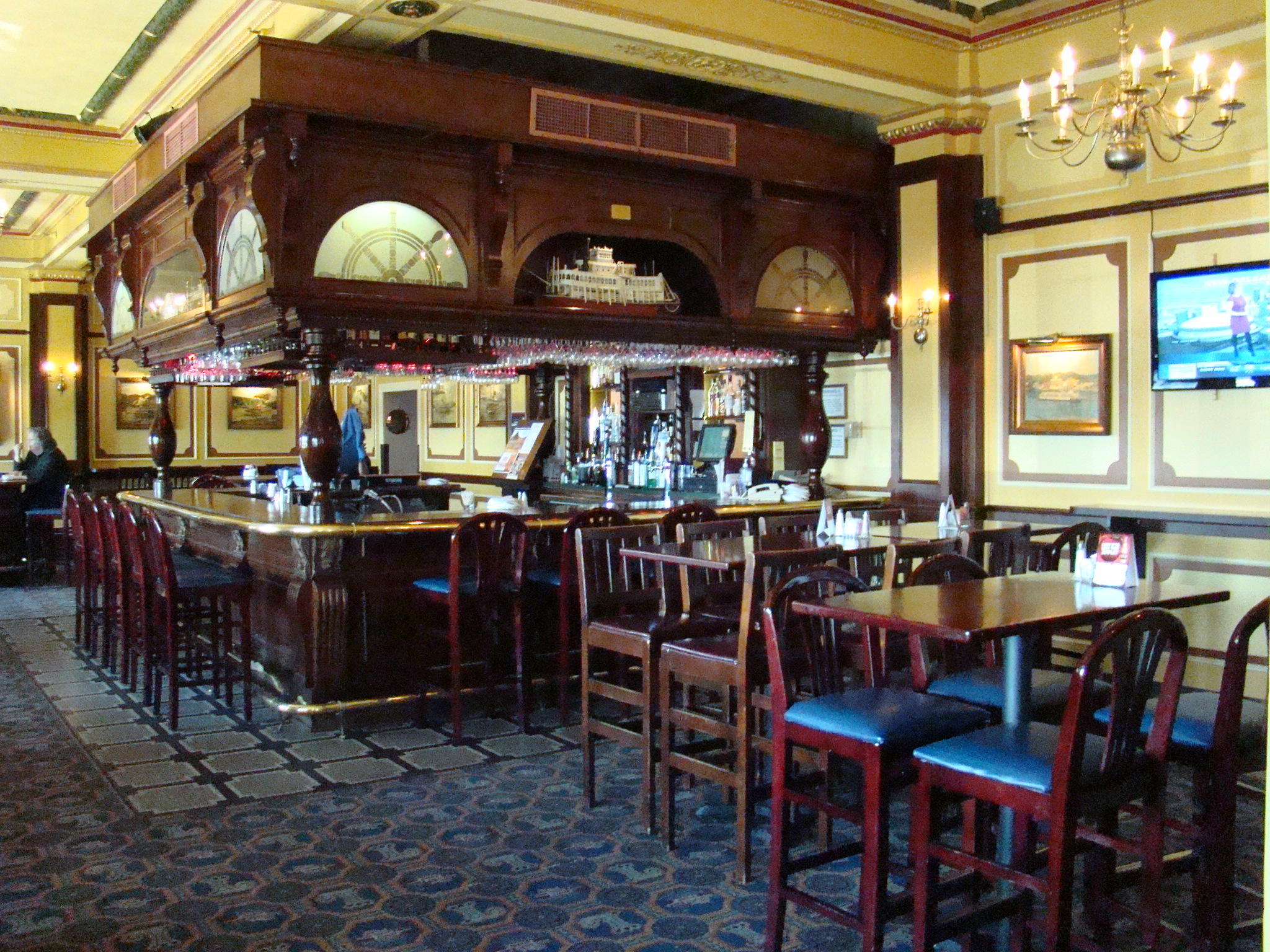
Riverview LoungeThe Riverview Lounge is where the “Lady in White”  often appears hovering over the carpet, while she smoothly moves through the room. The bar happens to occupy the same area where the ladies’ dressing room was located  in the original hotel.

When selecting a room in Marietta’s only downtown hotel, you will probably be given a choice of view – either the Muskingum River or the Ohio River. Here the ghost of Mr. Durward Hoag, former owner of the hotel, watches over guests and staff from both directions. Sometimes guests feel an icy cold draft pass through their well heated room. Evidence of his presence appears in flashing light bulbs, rearranged papers, hidden objects,  and often merely a wisp of light. Maybe Mr. Hoag’s spirit is bored!

When speaking with recent visitors, footsteps were reported outside their door, but no one was in evidence. The elevator, carrying no passengers, left the floor a couple times during the evening and headed to the rooftop. Later that night when they were in bed, another couple felt someone jump in the center of the bed where they were resting. All guaranteed they had not visited the Riverview Lounge.

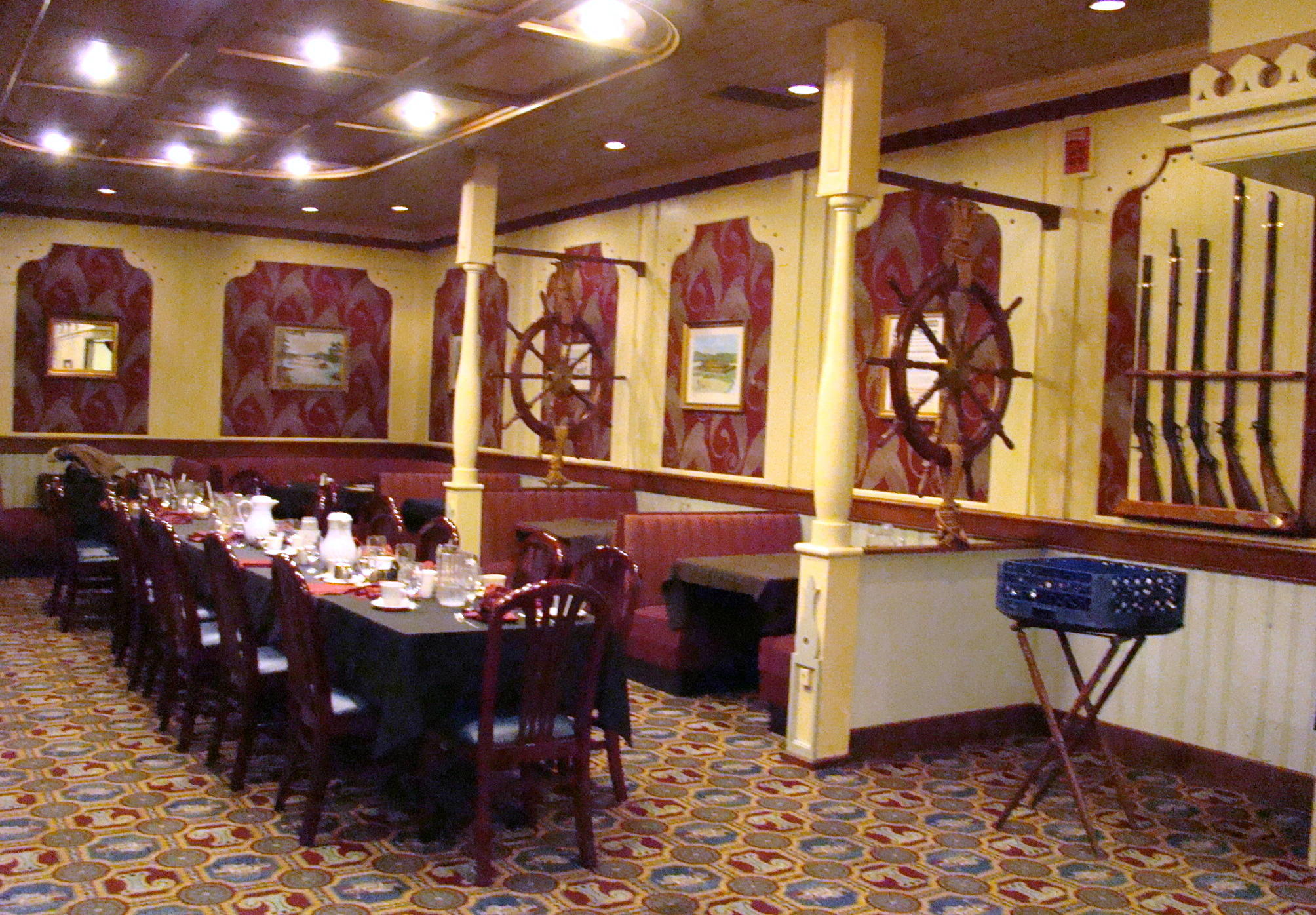
Gun RoomThe Gun Room is a popular place for lunch. The walls are adorned with photos of great majestic sternwheelers that traveled the Ohio River.  A display of antique long rifles contains one made by J.J. Henry that accompanied the Benedict Arnold expedition to Canada in 1775. Waitresses tell of coming in early to work and seeing a figure leaving the front section of the restaurant. Often the swinging doors to the kitchen open for no reason at all. Some feel that Mr. Hoag is checking on his staff.  On the plus side, these spirits are never harmful.

Enjoy the ambience of this richly historical Lafayette Hotel on the river sometime soon. They have been expecting you for nearly a hundred years!

The Lafayette Hotel is located  at 101 Front Street in Marietta, Ohio. Exit I-77 at Exit 1 and follow Route 7 South, which is also Pine Street.  At the third light, Pine Street continues straight and becomes Green Street. Continue on Green Street until you come to the hotel on the corner of Green Street and Front Street. Parking is available between the hotel and the Ohio River as well as on the other side of the hotel.