Places to go and things to see by Gypsy Bev

Archive for the ‘Ohio’ Category

Remains of Civil War Veteran Rededicated at Sarahsville, Ohio

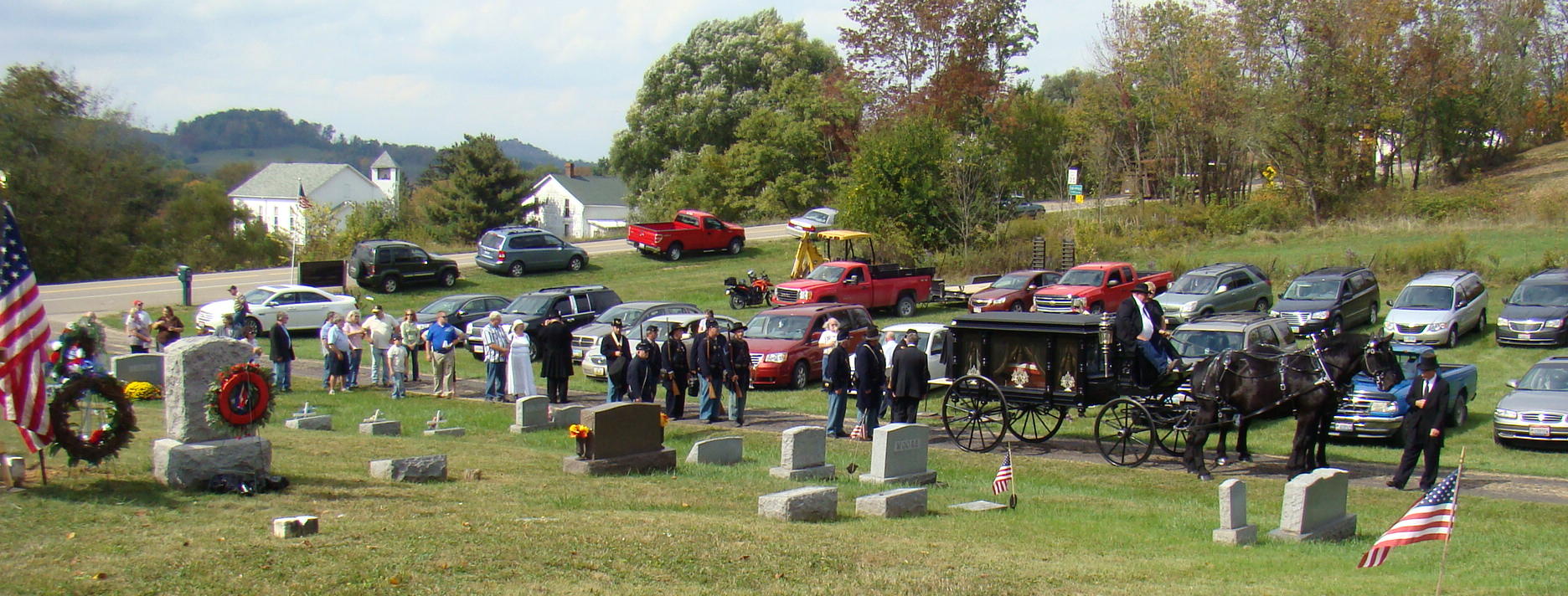
Funeral Procession arrives at Village View Cemetery.

Funeral Procession arrives at Village View Cemetery.

Village View Cemetery in Sarahsville, Ohio was the scene of the rededication of the remains of Pvt. Absalom (Abner) Robinson, Civil War veteran.  2013 was the 120th anniversary of Abner’s death and the 150th anniversary of President Lincoln’s well-known Gettysburg Address.

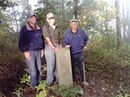
Robinson brothers arrived ready to help at original burial site.

Robinson brothers arrived ready to help at original burial site.

Actual preparation for the ceremony began earlier in the week when three great-great-grandsons of Pvt. Abner Robinson met on top a hill in East Union with township trustees and the local funeral home. They knew exactly where Abner Robinson had been buried as the tombstone was still on the hill. Seems that in 1893, Abner died after being struck in the eye by a rusty nail while helping with work on a barn. At that time they were not certain of the actual cause of death or what illness might be involved, so decided to bury Abner on top of a far away hill so he wouldn’t spread his possible disease, most likely tetanus, to anyone else.

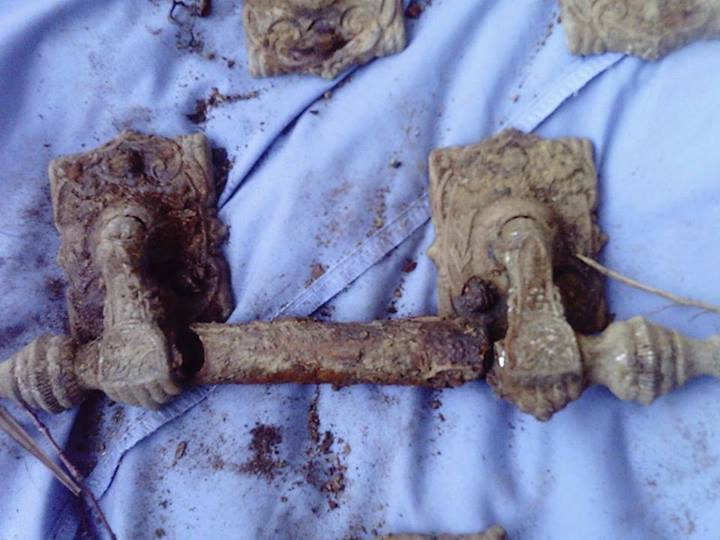
Hardware from 1893 casket

Hardware from 1893 casket

Knowing the story, the family decided they would like Abner Robinson’s remains to be moved to their family plot. After digging by the tombstone, they found no sign of any remains. But when one of the relatives suggesting digging closer to the cedar tree, they made some exciting discoveries.   Not only did they find the original cedar casket, which was squashed to about eight inches, but inside they found several bones, part of the skull, and teeth. There were also hinges that still worked on the lid as well as other pieces of rusted metal.

The local funeral home, McVay-Perkins of Caldwell, took those body parts found in the 1893 casket, and put them in a pouch to be placed inside the new casket, which was made of cherry wood.

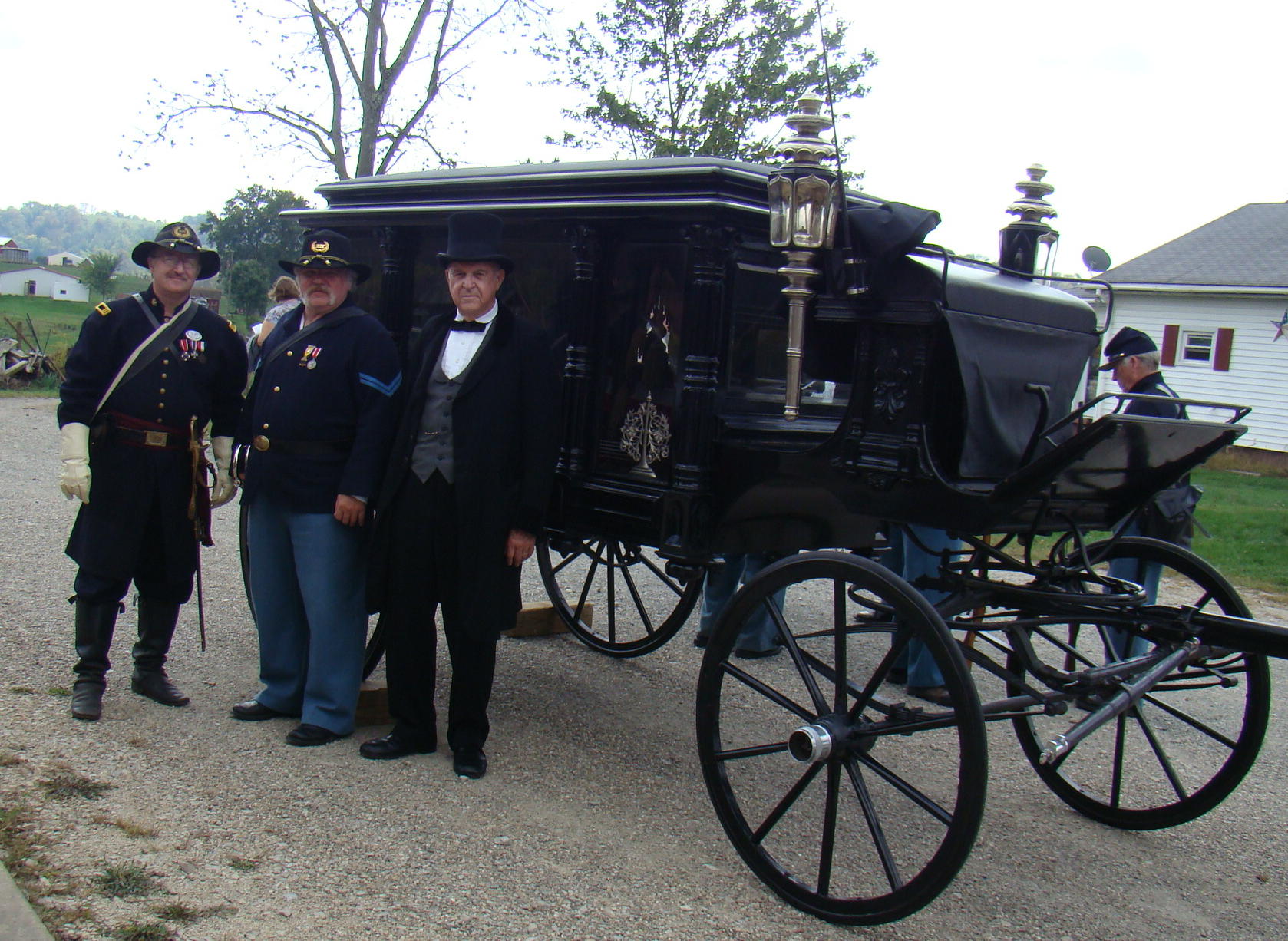
Hearse with Sons of Union Civil War Veterans and Governor Dollison

Hearse with Sons of Union Civil War Veterans and Governor Dollison

When approaching a distinguished gentleman in a top hat before the ceremony, I asked him if he would be so kind as to let me take his picture with the Sons of Union Veterans that were present. His answer surprised me, “You are speaking to Governor Dennison, the 23rd Governor of Ohio. Next thing you know women like you will be asking for the right to vote.” When asked about the Civil War, he freely expressed his opinion, “That was a war of southern rebellion, there was nothing civil about it.”

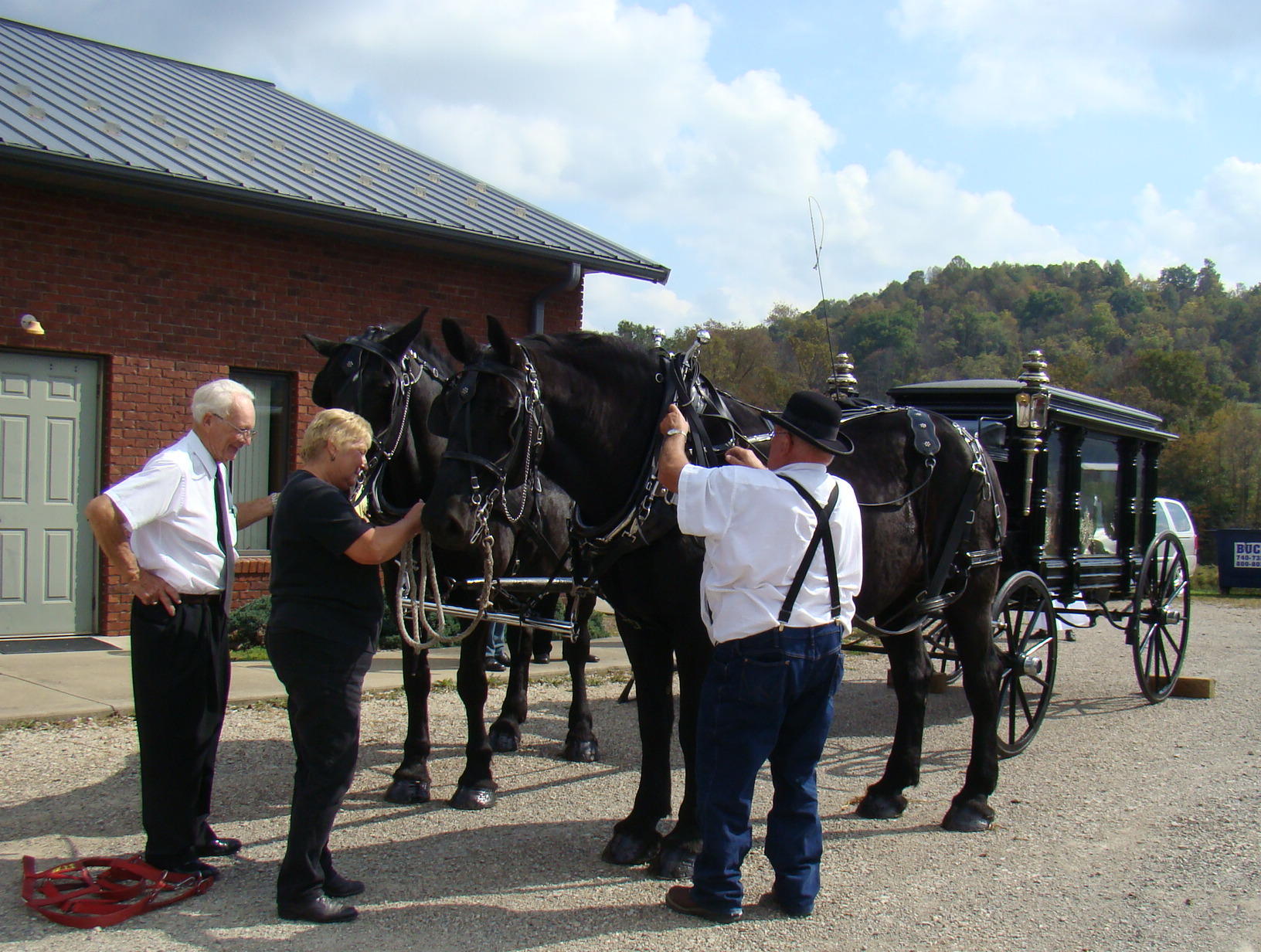
Two black Perchenon horses prepare for the procession.

Two black Percheron horses prepare for the procession.

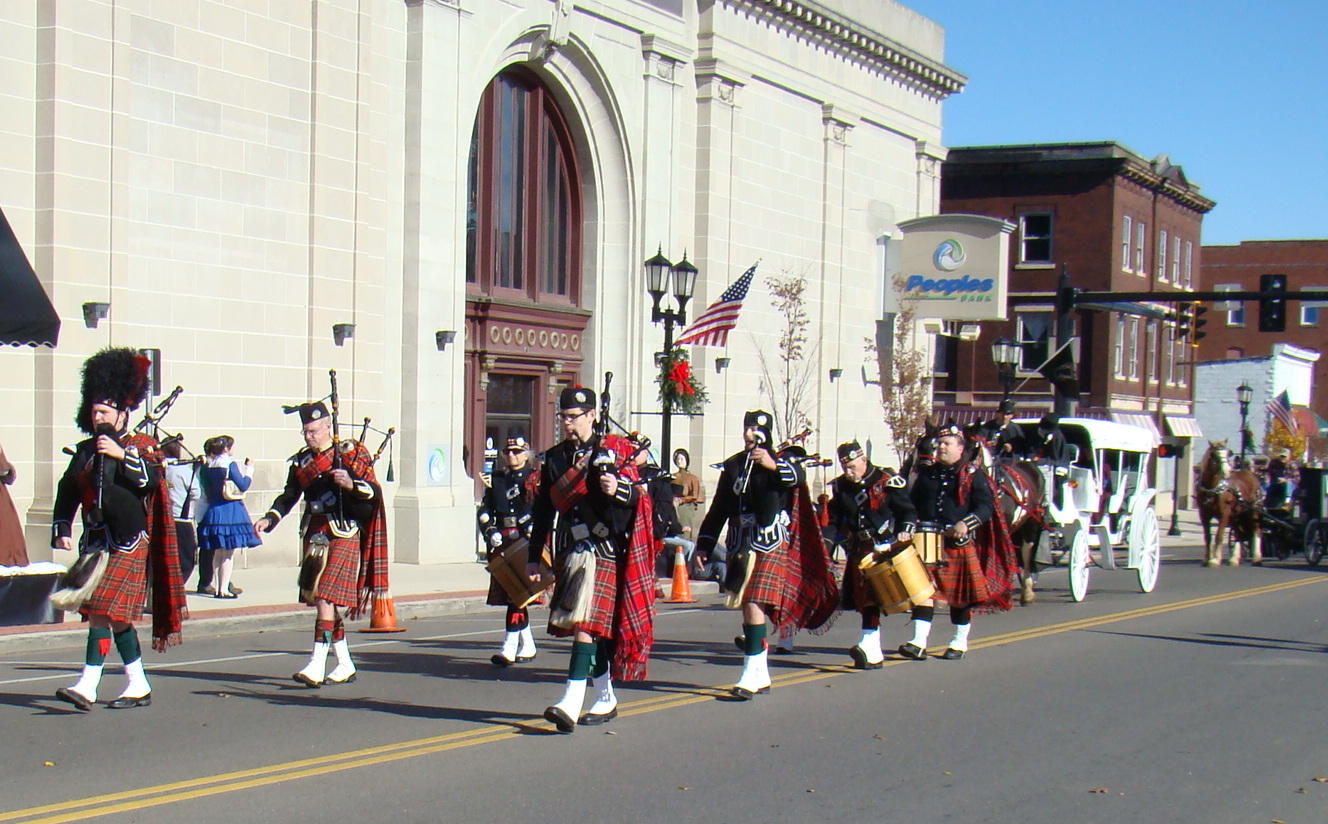
The funeral hearse drawn by twin black Percheron horses and provided by Robert Baird of Troy, Ohio, started their route at the Sarahsville Center Free Methodist Church.  What a procession it was! Following the horse-drawn funeral carriage bearing Pvt. Robinson’s cherry casket, members of Sons of Union Veterans of the Civil War marched to the cadance of the fife and drum corps. Many descendents of Abner also walked the half mile road to Village View Cemetery in Sarahsville.

Abner Robinson (1836-1893) served as a Private in Company G, 62nd Ohio Volunteer Infantry during the Civil war. Three of his brother, William, George, and John, were also members of the Union forces.  Abner’s unit saw active service in places such as Shenandoah Valley, Peninsula Campaign, Beaufort, Morris Island and Fair Oaks.

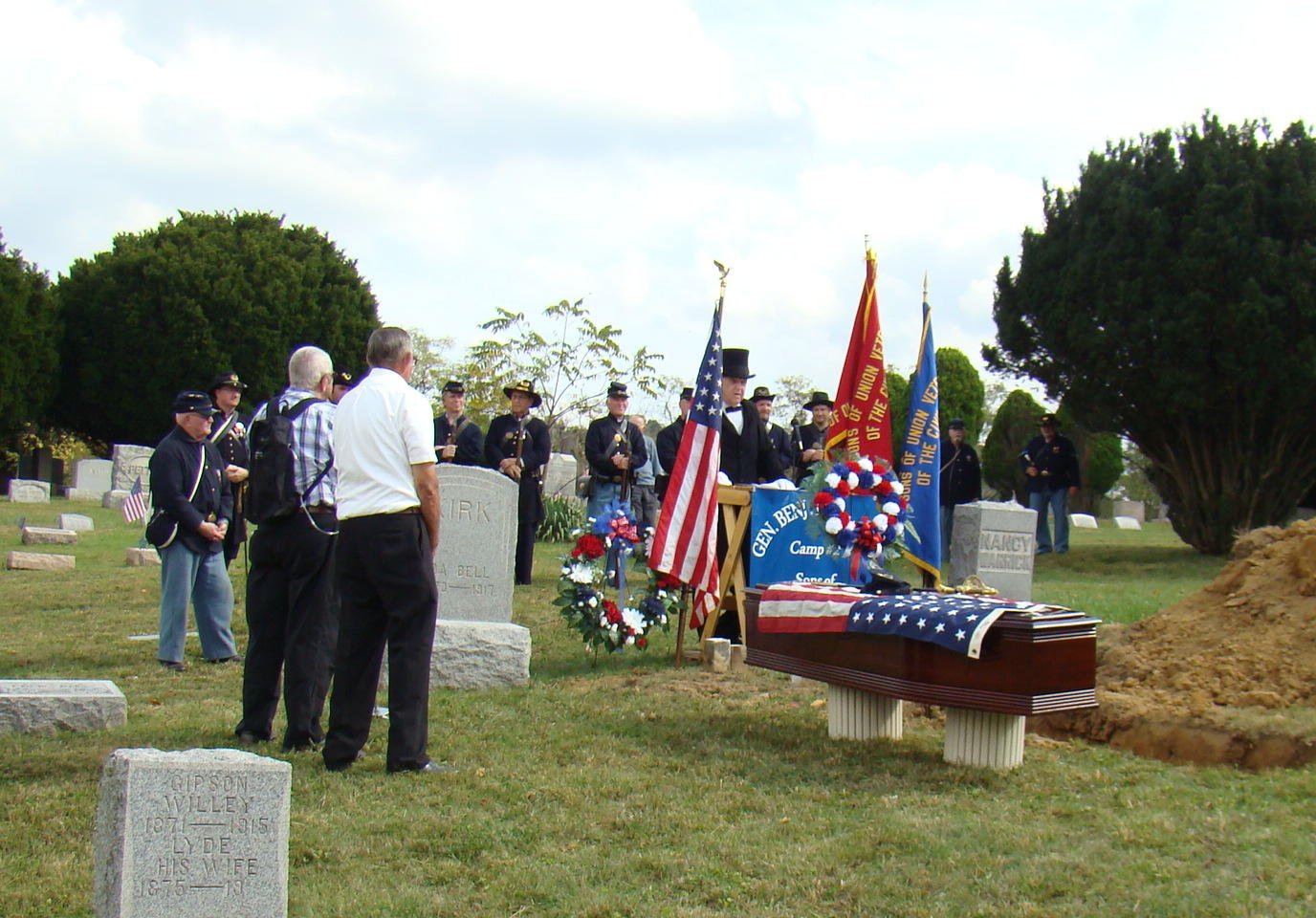
Many speakers participated in the graveside service, which lasted about an hour, before the casket covered with a 34 star flag, which was later given to the family. Family members presented a wreath in honor of all Union soldiers in the Civil War conflict

Governor Dennison rededicated Pvt. Robinson's remains.

Governor Dennison rededicated Pvt. Robinson’s remains.

One of the highlights was the speech by Robert W. Davis, portraying Governor William F Dennison. His main purpose was to rededicate the remains of Abner Robinson to their new resting place. However, Gov. Dennison also portrayed his role during the  Civil War by saying, “I will defend any slaves that come to Ohio with a bayonet.” His boldness was clearly expressed when he exclaimed, “All rebels should be hung.” When President Lincoln told the governor he needed 10,000 men, Gov. Dennison replied that he only had 18,000 men total, but within the week he had over 13,000 men marching into Columbus headquarters ready to fight.  He proclaimed, “We will keep this United States together until our last breath.”

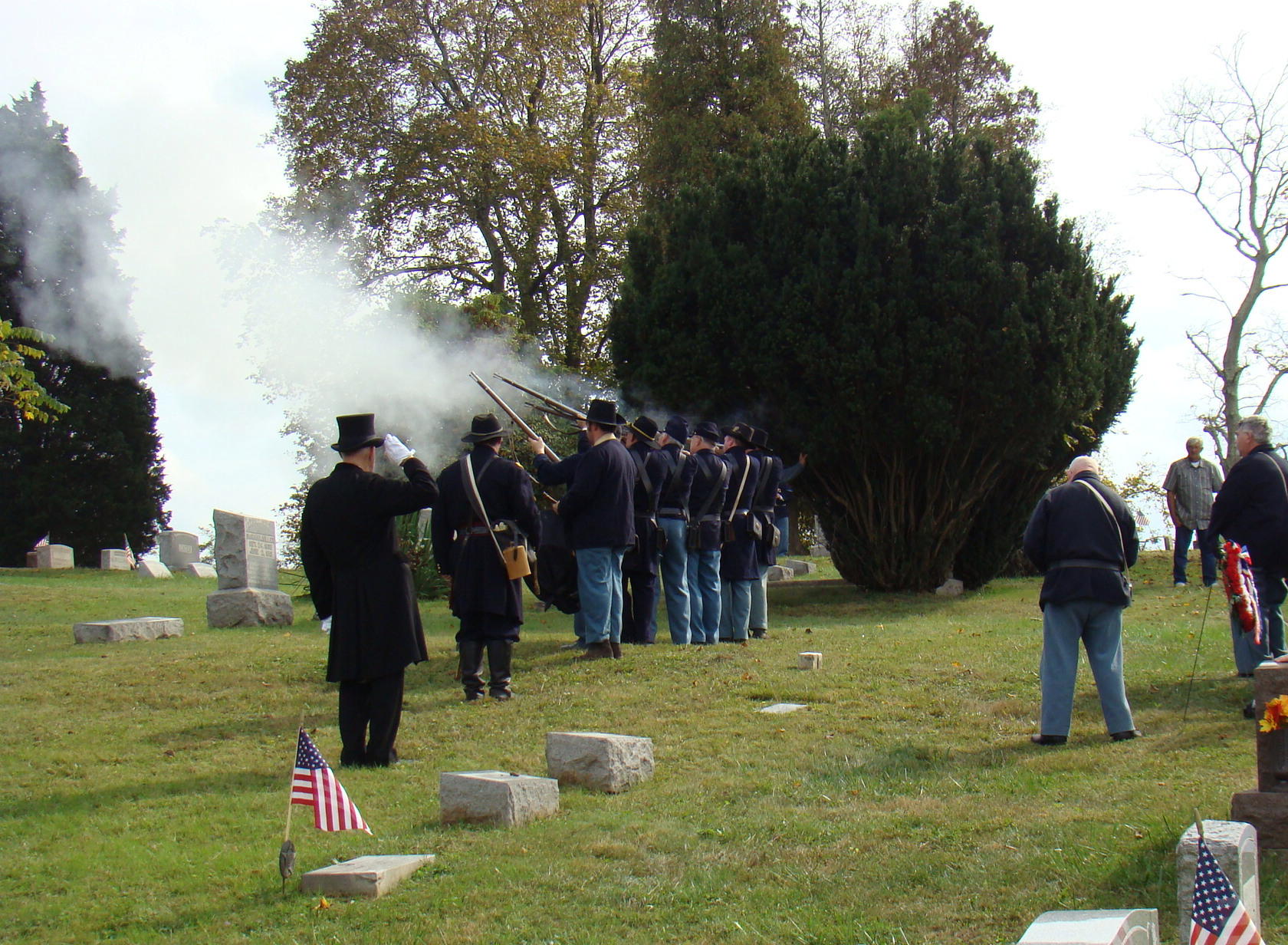
21 gun salute ends the ceremony.

A three round rifle salute ends the ceremony.

The ceremony was brought to an end with a three round rifle salute by the color guard. A traditional fife rendition of Taps and a prayer concluded the events.

Abner’s life must have been a difficult one from his Civil War battles to the farm in McCleary, Ohio (now East Union). When he died, the copy of Probate Court papers declared that his amount of personal property would be about $2.00 and his real estate about $15.00. Have to imagine that the rededication of his remains was more expensive than anything he could possibly have imagined.
This ceremony held extra interest for this Gypsy since Pvt. Abner Robinson was the great-great-grandfather of my cousin’s husband, Jerry Robinson. Jerry is one of those pictured at the original grave site and helped with discovering the remains.

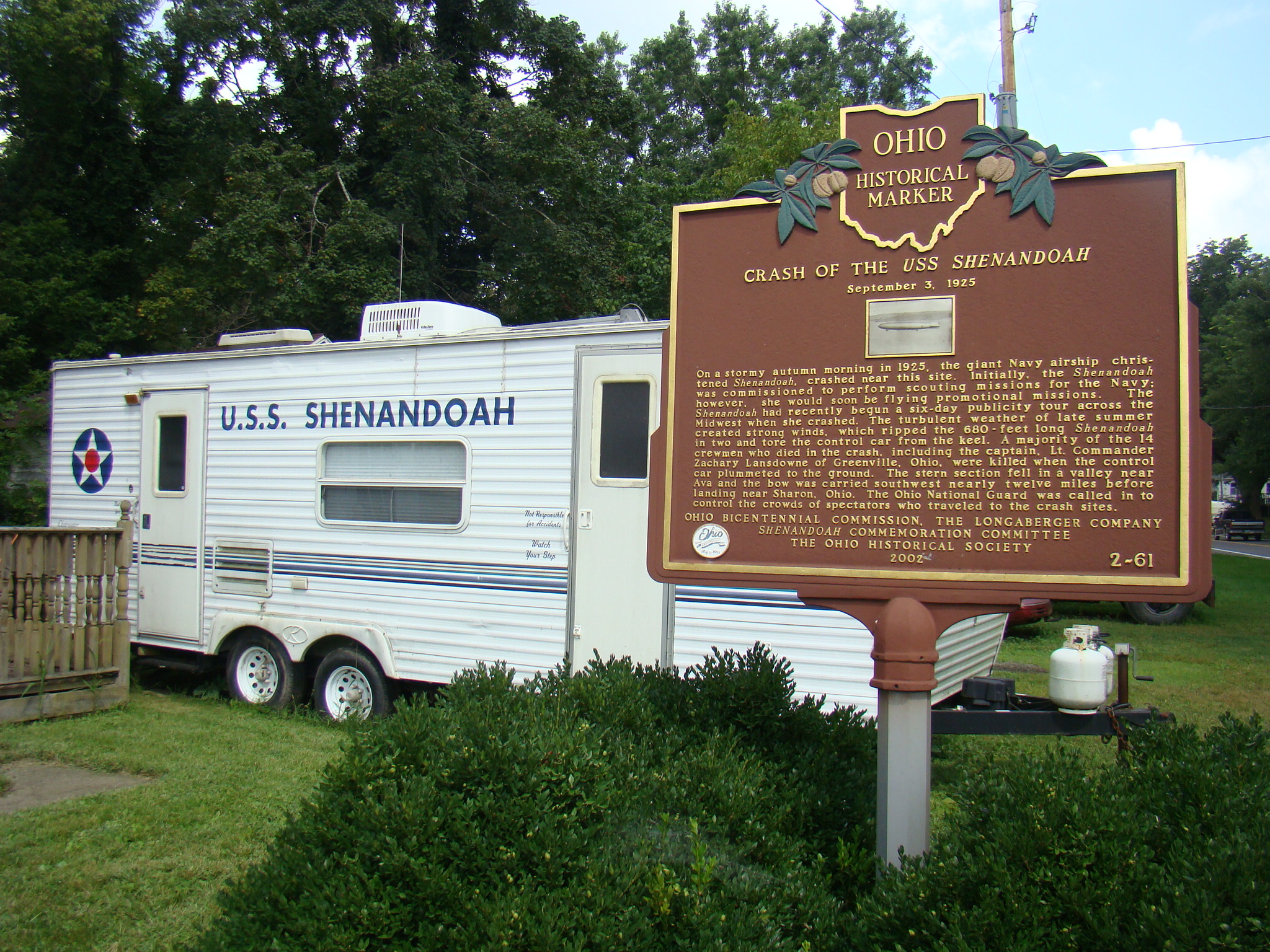
Shenandoah Airship Trailer Museum

Shenandoah Airship Trailer Museum in Ada, Ohio

U.S.S. Shenandoah Airship Trailer Museum in Ada, Ohio

In a remote corner of southeastern Ohio, those interested in history will feel fortunate to stumble upon U.S.S. Shenandoah Trailer Museum. This small, but very nice, camper trailer nearly overflows with historic memorabilia, which the Rayner family began organizing for display back in the 1980’s. Rayner’s Towing Garage in Ada, Ohio has a fantastic collection of items related to the Shenandoah Airship crash back in 1925, and the historical marker out front explains the story of the crash. Commander Zachary Lansdowne had been warned not to take this particular flight due to the rapid changes in Ohio weather during September. But on its tour of midwestern state fairs, he wanted to fly the immense 680′ zeppelin over his family home in Greeville, Ohio where his mother was living at that time.

USS Shenandoah Station Memorial Post Card

USS Shenandoah Station Memorial Post Card

Bryan and Theresa Rayner were eager to share their knowledge on a recent visit to their museum. Theresa, who works at the local post office, attempted to have a commemorative stamp made on the 80th anniversary, but that wasn’t possible due to government disaster regulations following 9/11. Therefore, for the 85th anniversary, the post office did have a commemorative post card developed. Part of the airship landed on the family farm of Bryan Rayner, who developed his interest way back at the age of three when he went with his grandfather to take people to the crash site at their farm.. Unfortunately, Bryan recently suffered a severe heart attack and now joins those who died in the Shenandoah crash.

The walls are covered with pictures and stories of the 1925 crash of the famous airship, Shenandoah. There were actually three places where major sections of the airship fell to earth. The stern section of the ship crashed  near Ava and a memorial can be seen from I-77, heading south, between the Buffalo and Belle Valley exits. The control car crashed on nearby Andy Gamary Farm, while the bow section drifted a bit farther south to Sharon, Ohio along State Route 78.

The Shenandoah was built for naval purposes and not designed for luxury travel. Frequently while on its missions, it would be tied to a naval carrier in the ocean. When released it could float away above the clouds. By lowering a “spy car” just below the clouds, it accomplished its missions of reconnaissance on enemy ships and subs.

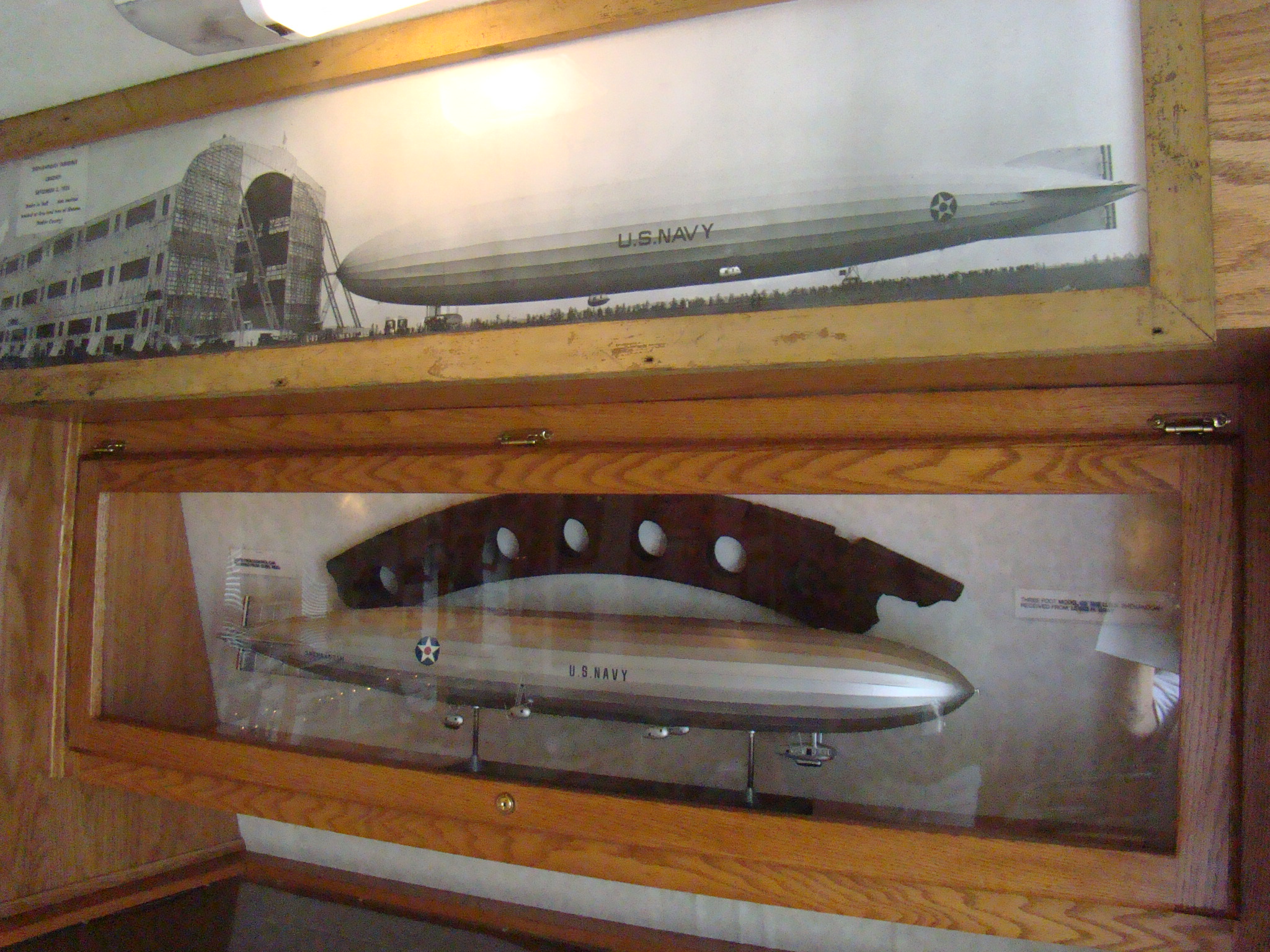
Display showing the skeleton of the famous Shenandoah airship

Display showing the skeleton of the famous Shenandoah

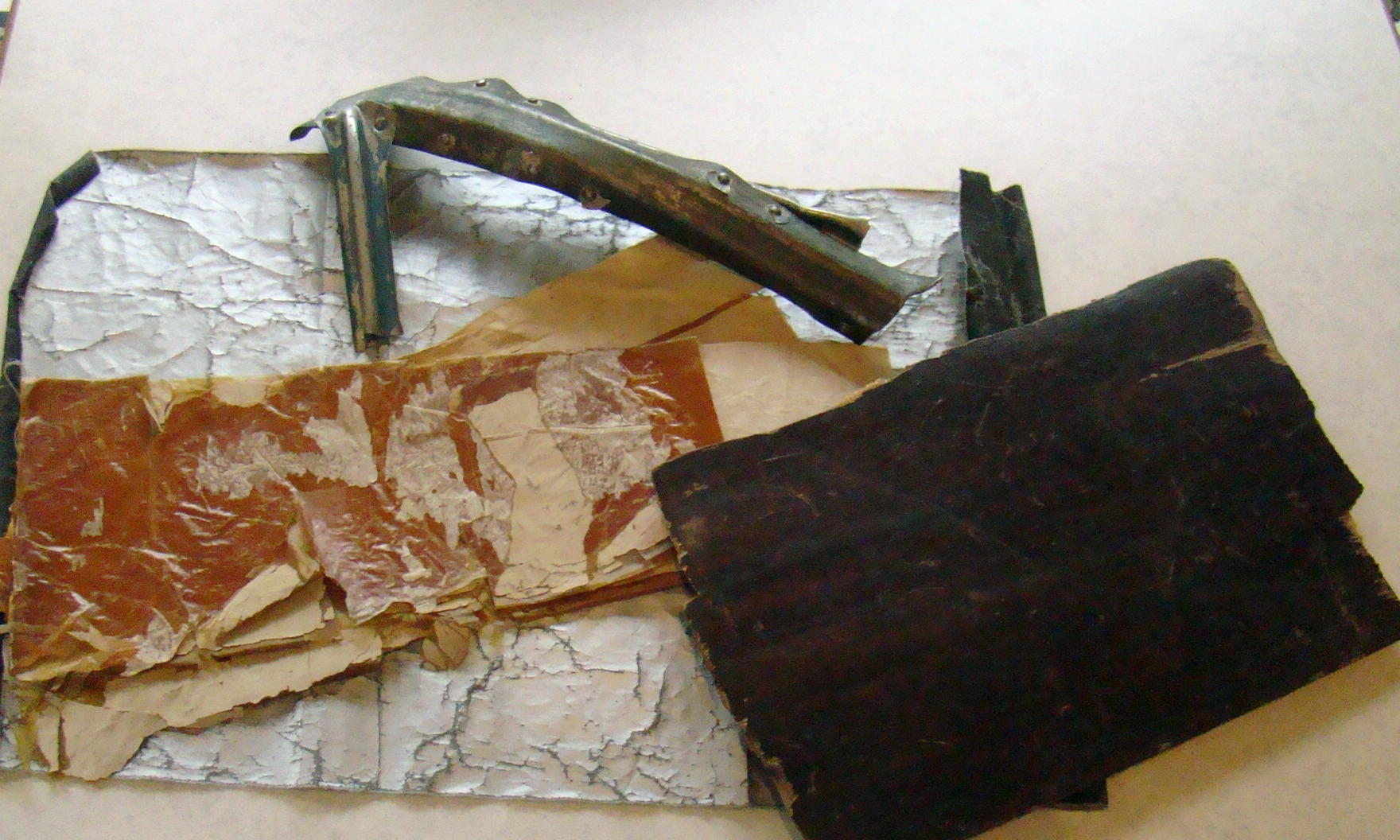
The skeleton of the ship was made of aluminum girders with the fabric covering coated with silvery aluminum paint. Inside the ship there was actually a long walkway, along which the crew could sleep and eat. There were twenty gas cells with their outside covering being made of cotton and the inside made of “goldbeaters skin”, the stomach lining of oxen.

Pieces of Shenandoah: oxen stomach lining, aluminum and wood frame

Pieces of Shenandoah outside fabric, oxen stomach lining, aluminum and wood frame

Pieces of all these parts are available to see and even touch inside the museum. Most are behind glass, but they feel it is important to have young people especially, be able to touch the original pieces to gain a better feel for their historic importance. The Rayners took items to local schools in Noble County to share the story with the children over the years. They even set up a 12″ walkway, which was the actual size of the walkway inside the airship, for children to duplicate the experience of the limited space inside.

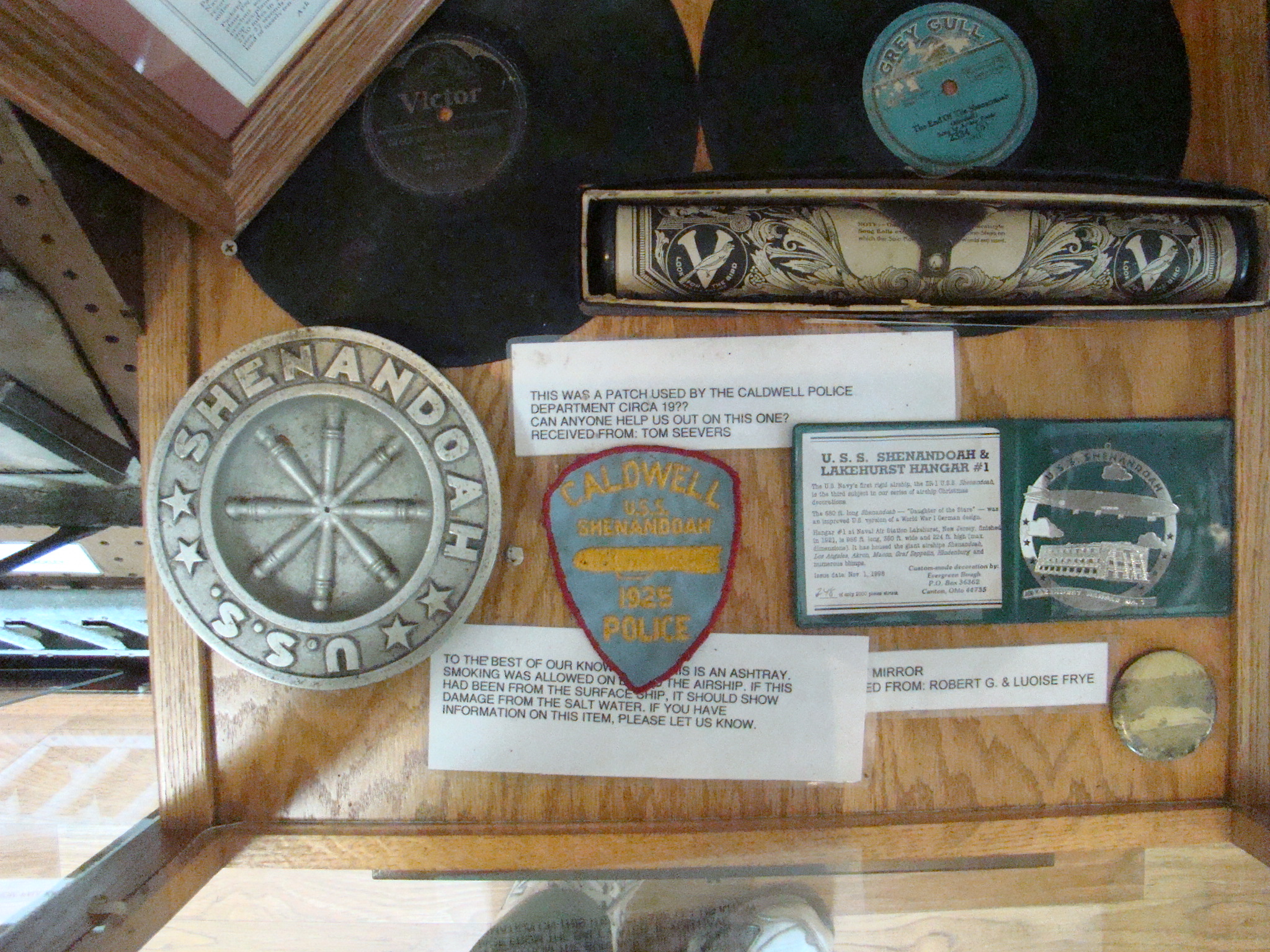
One of many glass cases filled with memorabilia

One of many glass cases filled with memorabilia

Glass cases are packed with memorabilia that has been gathered from many sources. Some items have been donated to the museum and others have been purchased. Old 78 records with songs about the Shenandoah, such as “The End of The Shenandoah”, have been collected. Sheet music of “The Wreck of Shenandoah” can also be viewed. A large collection of rings made from pieces of the airship fill a special exhibit case. Some were purchased as gifts for Bryan, who had a real passion for keeping the memory of the Shenandoah alive.

You might be surprised at the number of visitors who have toured the U.S.S. Shenandoah Trailer Museum from all over the United States, Canada, England, Australia, and New Zealand. Over the years many, who actually lost family members in that crash, stopped by to leave a piece of history and view the grand collection of memorabilia. On the 2013 anniversary of the crash, Commander Zachary Lansdowne’s granddaughter and family visited the museum.

This is one of those times when an individual or two have made a real difference in the world by keeping alive the stories and events of the airship Shenandoah.

The U.S.S. Shenandoah Trailer Museum can be found in Ada, Ohio just off I-77. To visit the Shenandoah crash site, take I-77 to Exit 28 , Belle Valley. From the west side of the interstate, take Hwy 821 North 5 miles to Ava. The monument is on the north side of town on the east side of the road and well marked. Rayner’s Garage and the Shenandoah Trailer Museum are on the south side of town. The museum has limited open hours.

End of an Era: Morrison’s Store Sycamore Valley, Ohio

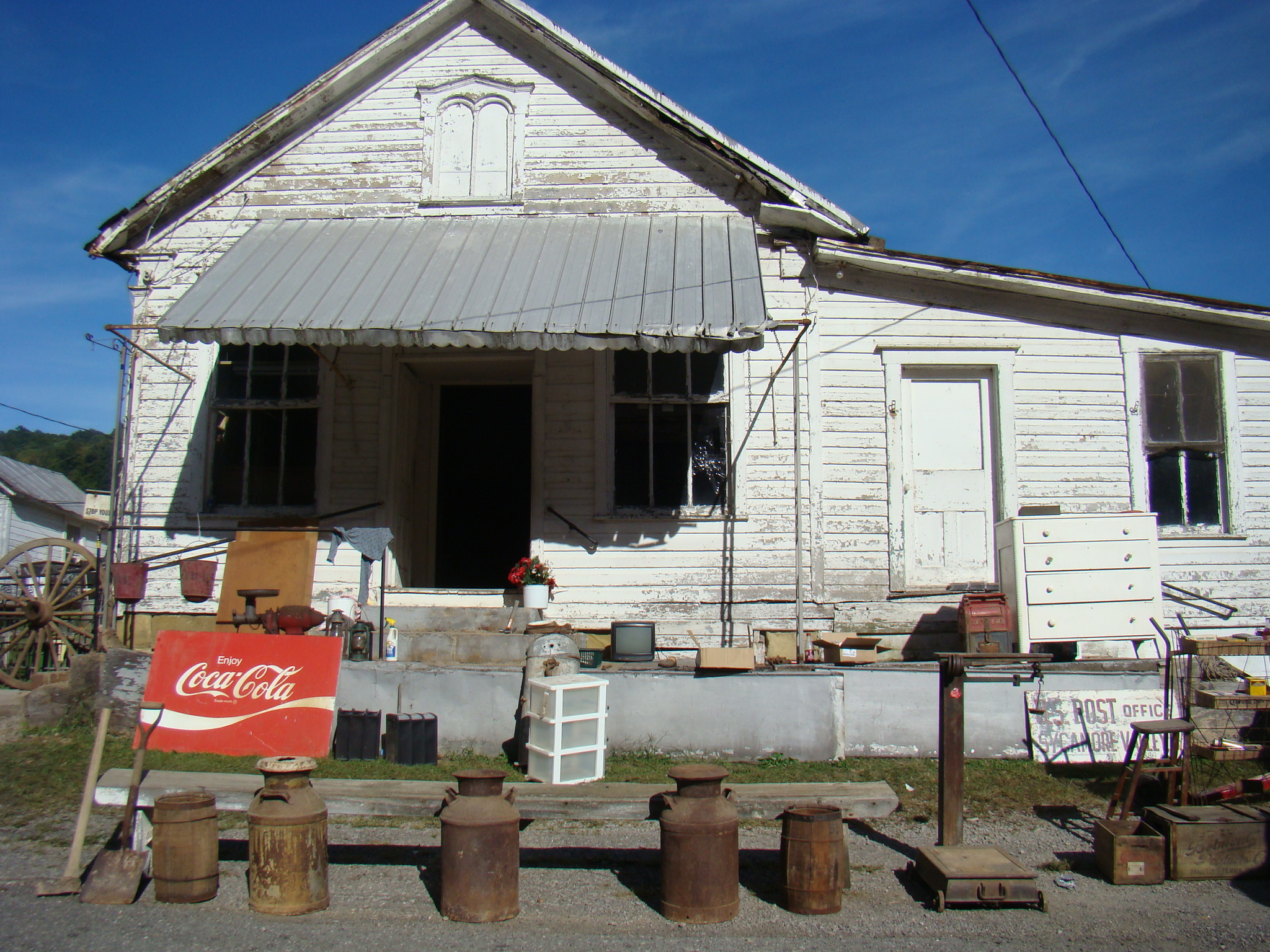
Morrison General Store in Sycamore Valley, Ohio

Morrison’s General Store in Sycamore Valley, Ohio

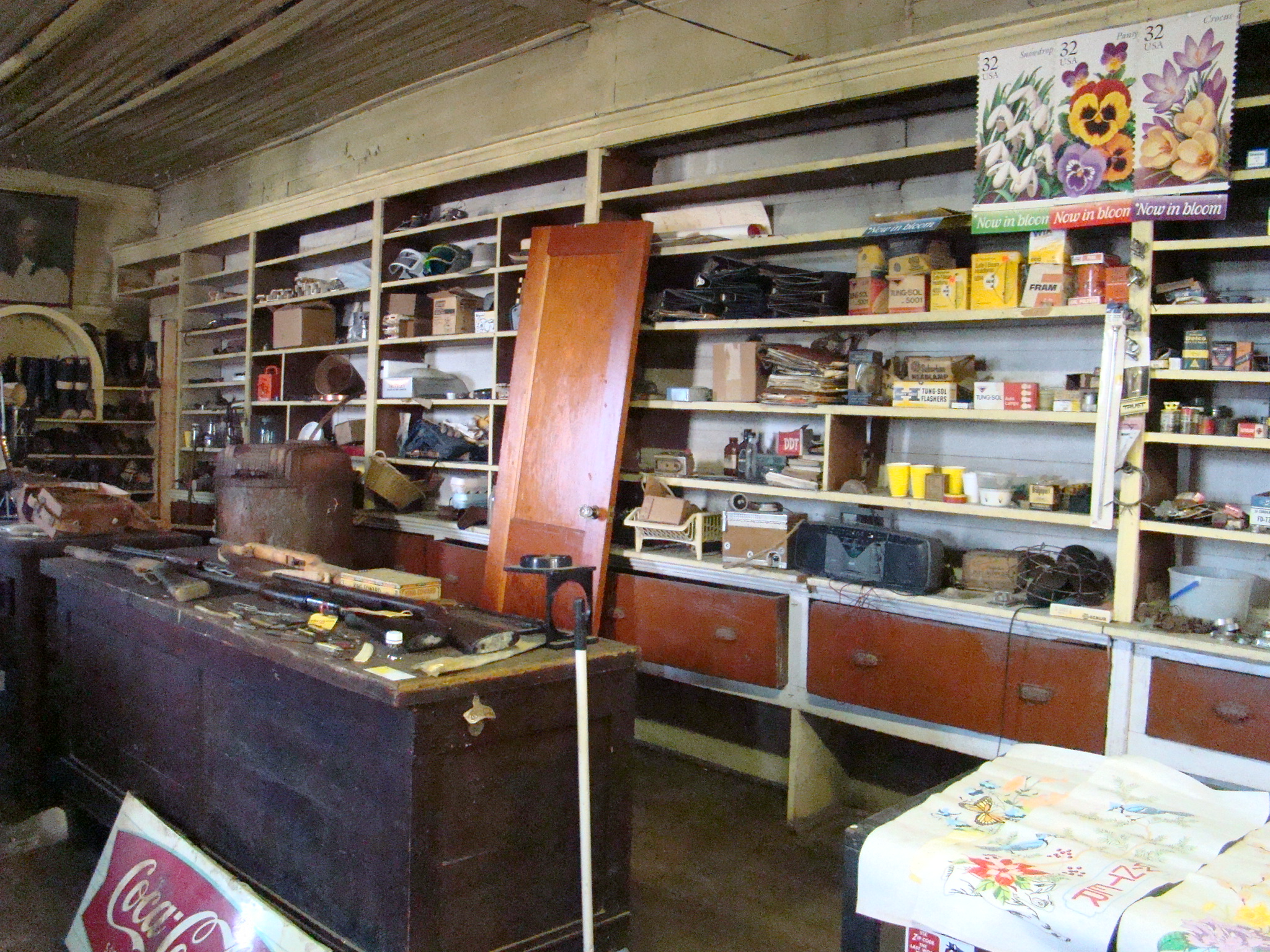
Driving down the long steep Creighton Hill to Sycamore Valley, thoughts of years gone by began to creep into the mind. At the bottom of the hill in a beautiful tree-filled valley sat the little town of Sycamore Valley, Ohio. Located in Monroe County, this small town has a rich history centered around their meeting place, Morrison’s General Store.

Shelves at Morrison Store

Shelves at Morrison Store

Built back in the 1880’s, this was the supply center for most of the people of that valley. No other towns were close by so at Morrison’s General they found not only groceries for the family, but also feed for their livestock at an adjacent feed mill. Included on the shelves were everything needed for the home, farm, and even boots and hats for the farmer. When looking through the old ledgers for the store, total sales for the month of December, 1943 totaled $1,429.32. An unusual sign on the scales inside summed up the philosophy of the store:

We have no quarrel with those who sell for less They know what their merchandise is worth.

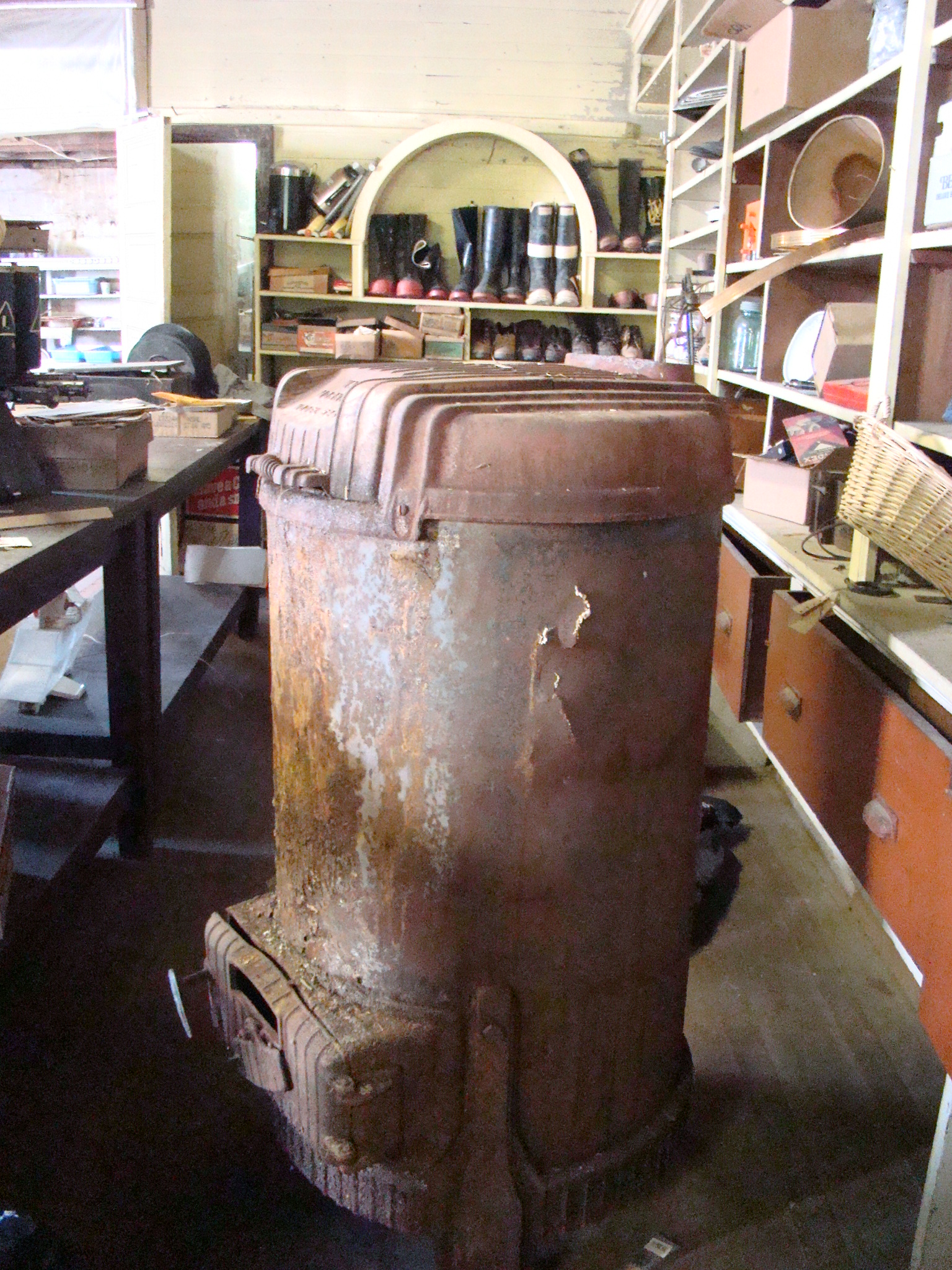
Warm Morning Meeting Place

Warm Morning Meeting Place

Even though there was a gas light at the entrance, inside the store was dark and gloomy cheered only by the friendly folks of the Valley. Many remembered coming to the store two or three times a week to get everything they needed for their family. No matter if you needed eggs and cheese or nuts and bolts, this was the original one-stop shopping center. One man said he came from the age of three to the store where his mother met with some other ladies for quilting. This was a time when folks would gather around the old Warm Morning wood stove, prop up their feet and share the latest Valley news.

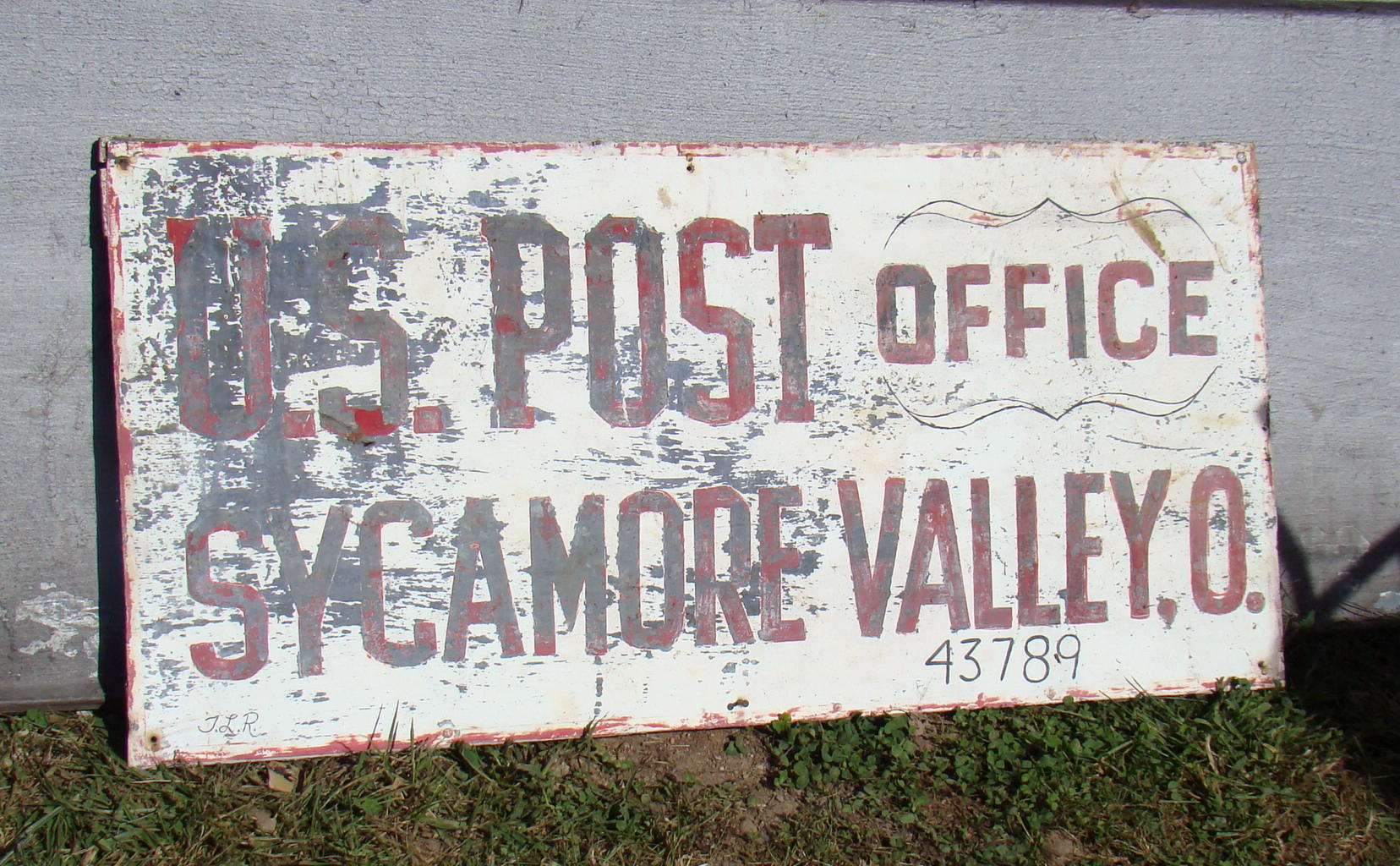
Sycamore Valley Post Office

Sycamore Valley Post Office

Sycamore Valley Post Office

Sycamore Valley Post Office

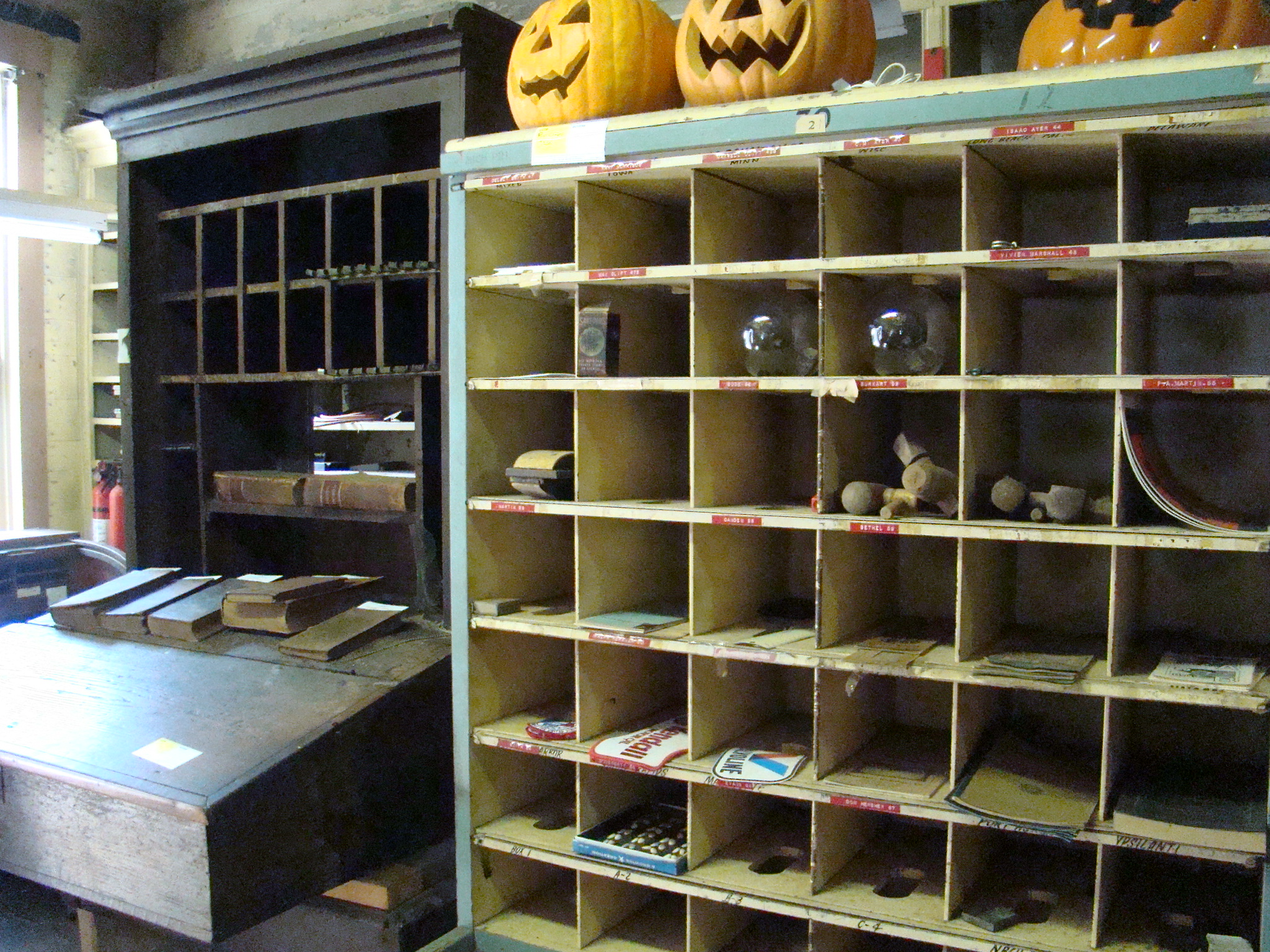
The store here in Sycamore Valley also served as a one-pump Ashland gas station as well as the post office, which served over 100 addresses at its peak. Inside you can still see the post office boxes where mail was kept for pick-up. While there Morris, the last postmaster, told about his 34 years running the post office. Morris’ dad owned the store previous to that time.

Times were rough in the Valley and keeping the store open was a difficult encounter during the best of times. Finally, the store was closed but the post office continued for several more years. Morris did sell candy, pop and a few small items until it finally closed in 2008 when the government shut down many small post offices.

Old Bridge Abutment

Old Bridge Abutment

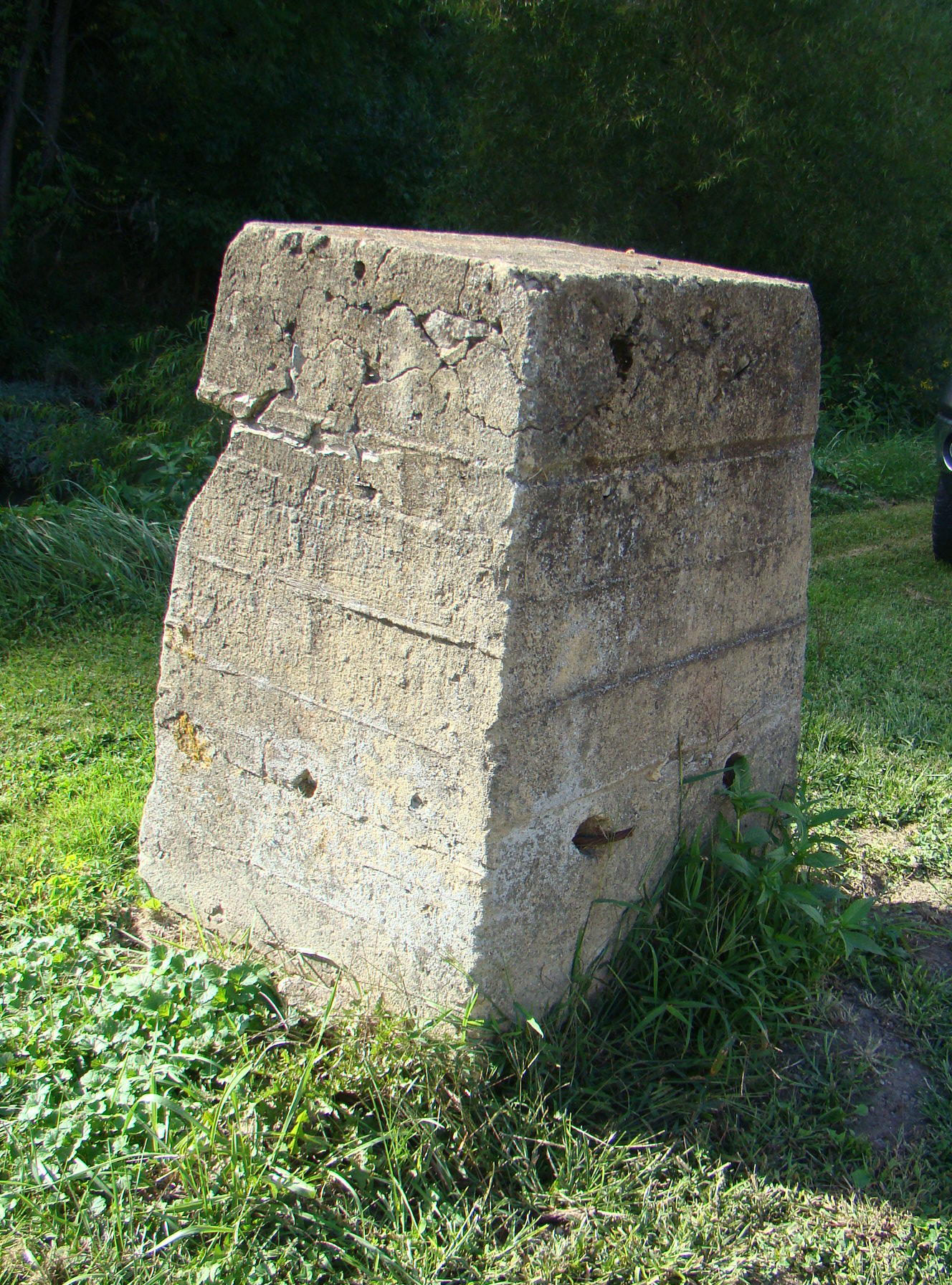
Across the narrow road, this concrete marker was the vertical support for a bridge that went across the creek. The store owner kept his cattle on the other side of the little creek and the bridge was firectly across the road in front of the store door.

Leaving Sycamore Valley, long time residents of the area told stories about going back up the steep Creighton Hill to the ridge top. When someone was wanting to buy a car back even in the early days, Creighton Hill was the test site.  If it could make it up the hill, then the car was worthy of being purchased. The speed with which it climbed the hill determined its price! This was one of the original test strips for automobiles.

At times it is interesting to explore what used to be, but we are certainly lucky to have the improvements that we have today – electricity and indoor plumbing come instantly to mind.

Sycamore Valley can be found in Southeastern Ohio on the perfect Gypsy Road Trip. After leaving I-77 in Ohio at exit 25, you will enjoy a scenic route of twists and turns. Better get out your road map or GPS (if it can get a signal) to find the way.

90th Birthday Words of Wisdom “Family first and always”

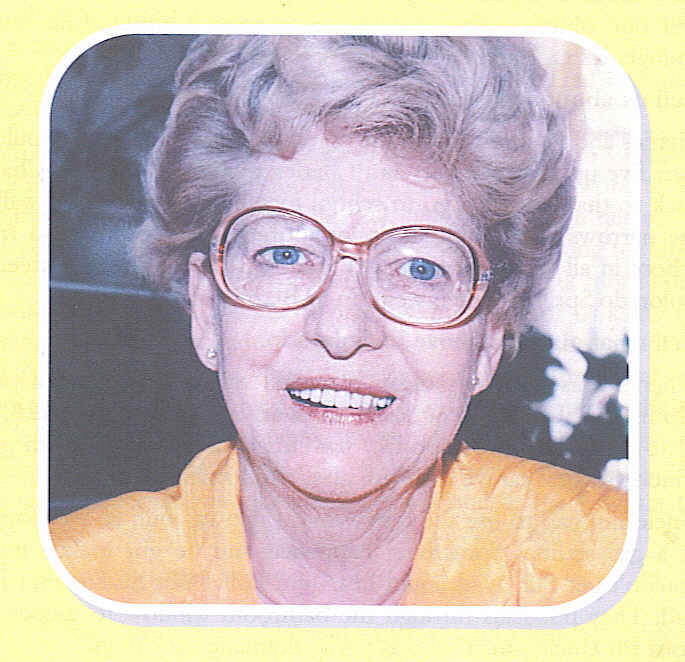
Luella's favorite photo of herself

Luella’s favorite photo of herself

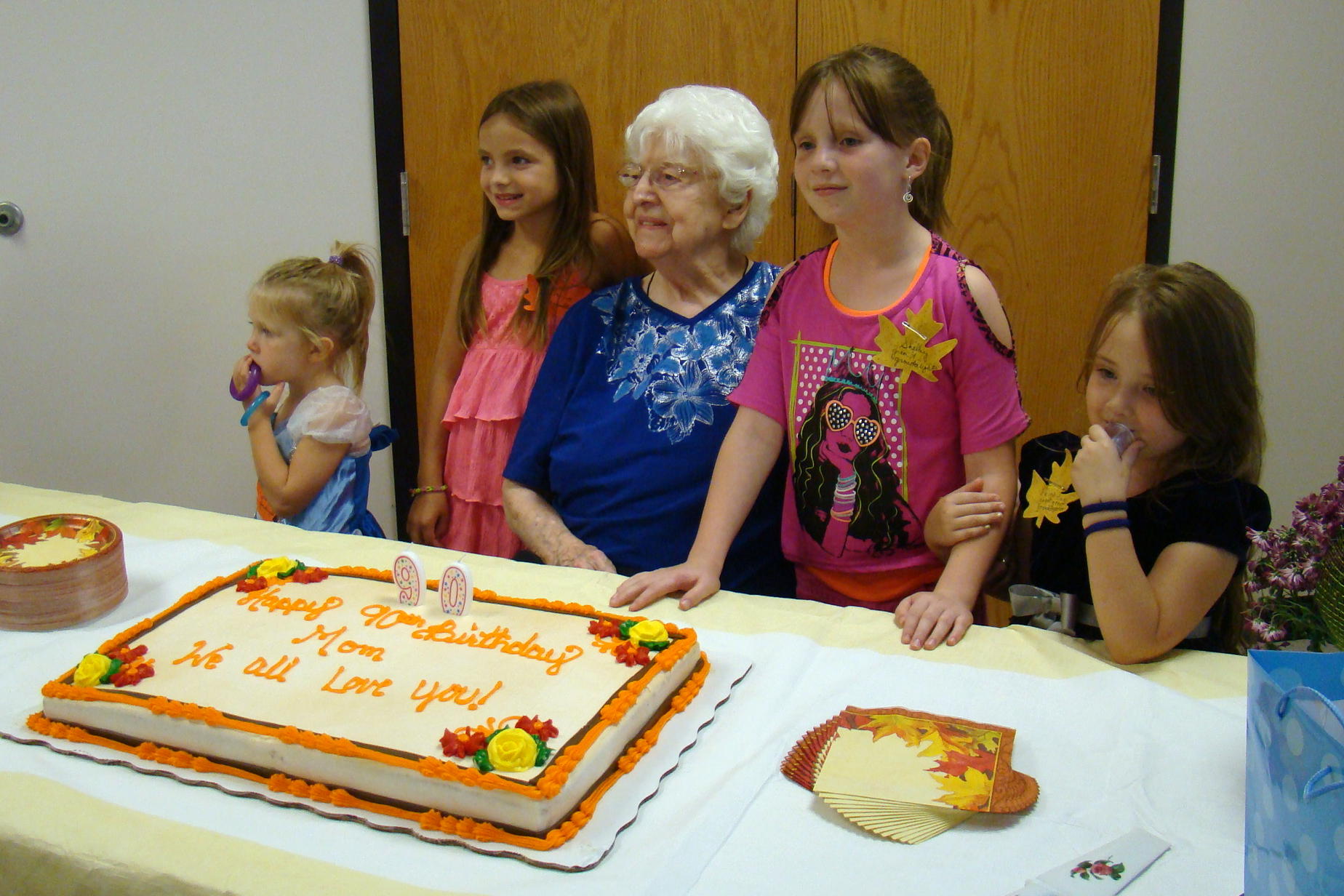
How does it feel to be 90 years old? “I love it!” exclaimed Luella Polcyn of Coshocton, Ohio as she celebrated her 90th birthday with family and friends.  Now ninety candles on a cake could cause quite a flame, so they wisely scheduled the party at Three Rivers Fire House – just in case!

When she blew out the candles at her 80th birthday party, someone asked her what she had wished for. She quickly replied, “I wished everyone of you would be at my 90th birthday celebration.” Now she wants a repeat performance at age 100.

Luella began school at the age of four, walking with her brother Charles along the narrows of Wills Creek to school at Tyner in Guernsey County, Ohio. They walked about a mile each way in all kinds of weather to get their education at this one room school.

The family moved to Colorado when she was ten. Seven people fit in that 1928 Olds – their first car with glass windows – with the trip taking seven days. She graduated from high school at the age of sixteen in Colorado Springs before going to Blair Business College. That was quite the education for a young lady at that time.

Some of Luella's grandchildren look over her 90th birthday cake.

Some of Luella’s grandchildren look over her 90th birthday cake. She still likes sweets!

Her first job at sixteen was a waitress at a restaurant. They were allowed to eat one free meal a day including dessert. Luella has always had a sweet tooth and dessert is sometimes her entire meal these days, but then she just couldn’t resist having ice cream on her pie…two desserts. That time her sweet tooth got her fired, even though it seemed to her that they had plenty of each.

At a carnival in Colorado Springs, she met the man who was to be her husband, Louie Polcyn, and was married in 1942.  Two years later, Louie was off to WWII and stationed in Burma where he was a mule skinner. While he was at war, Luella worked at the Nabisco Cracker Company for 46 cents an hour. Somehow with the $30 Louie sent home from his military pay each month, and her working at Nabisco, Luella saved $1,000, which was used for down payment on a house. They also bought a Model A Ford about that time, and she remembers that the gas prices were 10-12 cents a gallon.

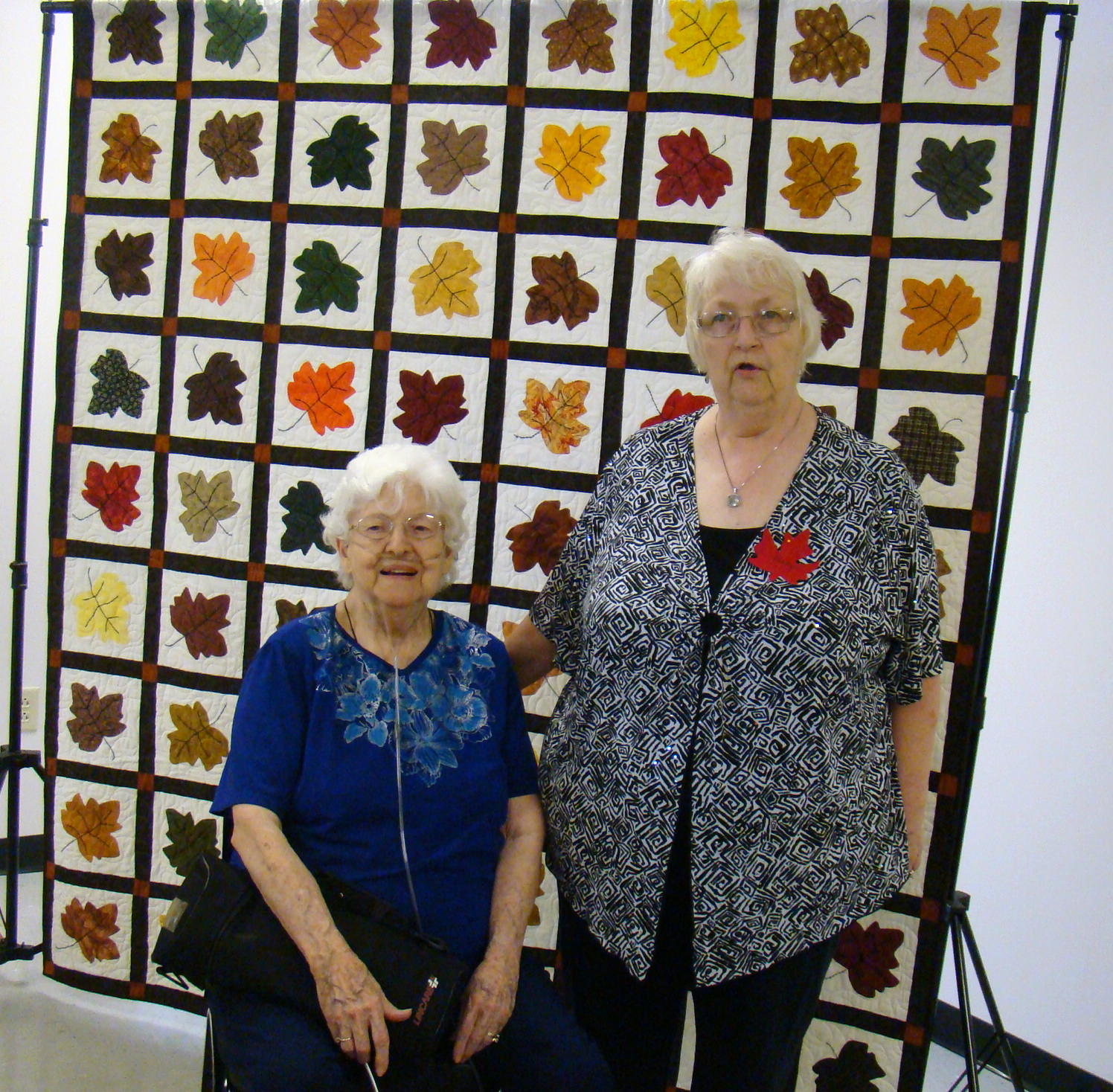
Luella's family made this quilt especially for her birthday.

Luella’s family made this quilt especially for her 90th birthday.

At the age of 50, Luella found a job that would change her life. Her children were raised and she began working at Frontier Airlines. Now she was traveling to places she had previously only dreamed of – Rome, Russia, Mexico, Portugal, Alaska, and many more. She was footloose and fancy free.

Now Luella enjoys relaxing at home so a beautiful autumn leaf quilt was made by members of the family – one square at a time. Luella has made many quilts over the years and all the family has enjoyed a gift quilt for some special occassion – birthday, graduation, wedding, new baby and the list could continue. So today they thought it fitting to reward her wtih a quilt they made especially for her. Each person who assisted wrote their name on one of the leaves. Before the party was finished, everyone in attendance had written their name and good wishes on the back of the quilt. Now on a cold winter’s day, Luella will be surrounded with the love of her family and friends.

This 90 year old lady has seen many changes over her lifetime. Some would automatically expect that all the new technology would be the biggest change, but Luella says that is not so. To her the biggest difference in today’s world is how people treat each other and have lack of consideration for another person’s life. She never thought she would see the crime we have today.

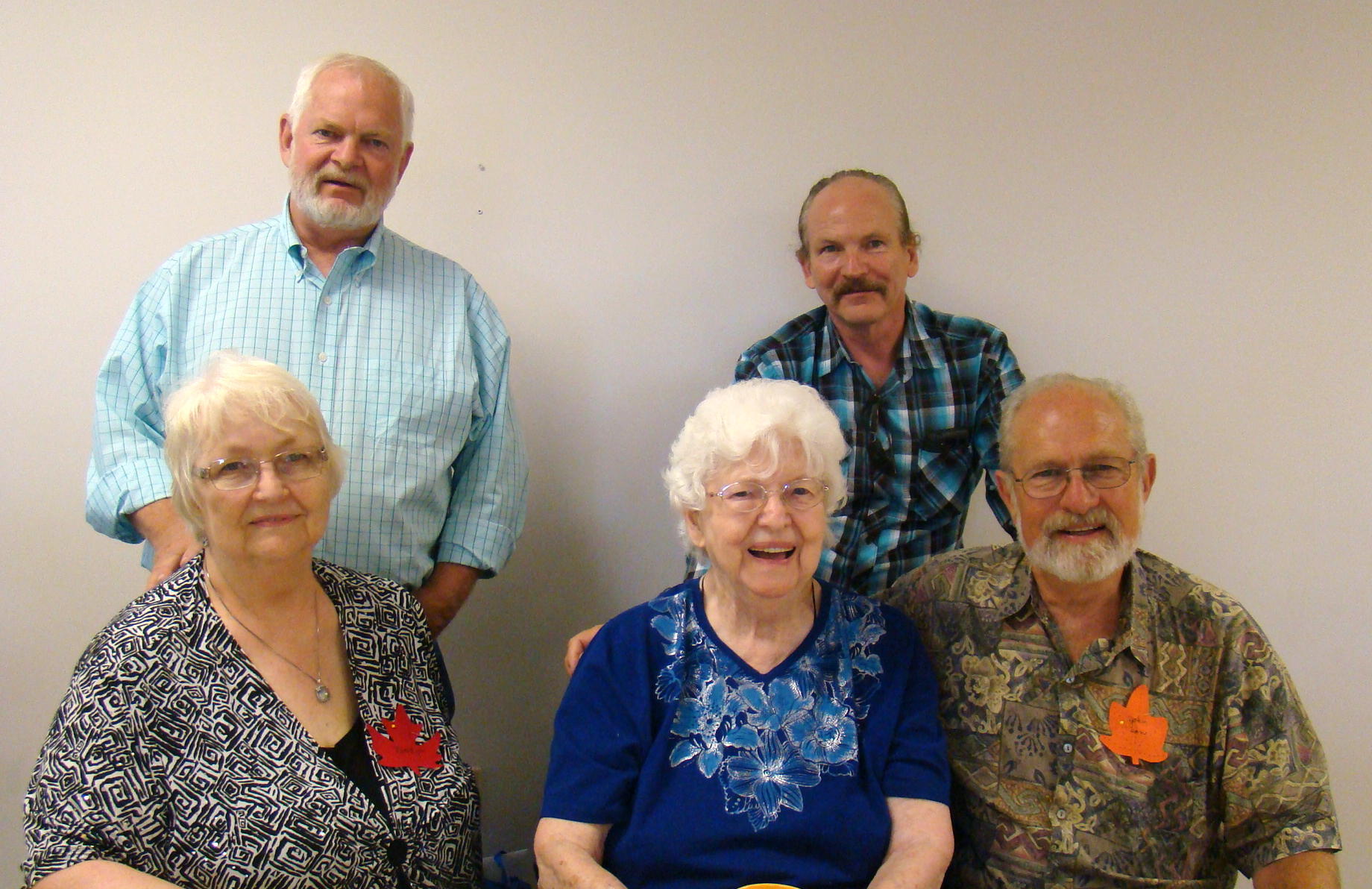
Luella surrounded by her children: Gladys, Randy, Greg, and John.

Luella surrounded by her children: Gladys, Randy, Greg, and John.

Her greatest accomplishlment in life, however, is her loving family. Their love of children shines through with every addition to the family, and there have been plenty of those. Besides her four children, who came to the celebration from Colorado, Hilliard, Ohio, and Coshocton, Luella has 13 grandchildren, 17 great-grandchildren, and 7 great-great-grandchildren.  She tells everyone, “One thing you should never forget – family first and always.”

Shenandoah Crash Recollections with Ed Lehotay

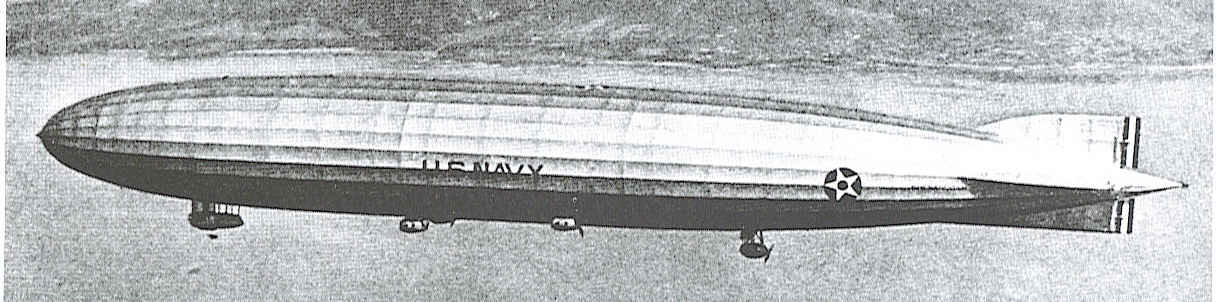
USS Shenandoah airship

USS Shenandoah airship

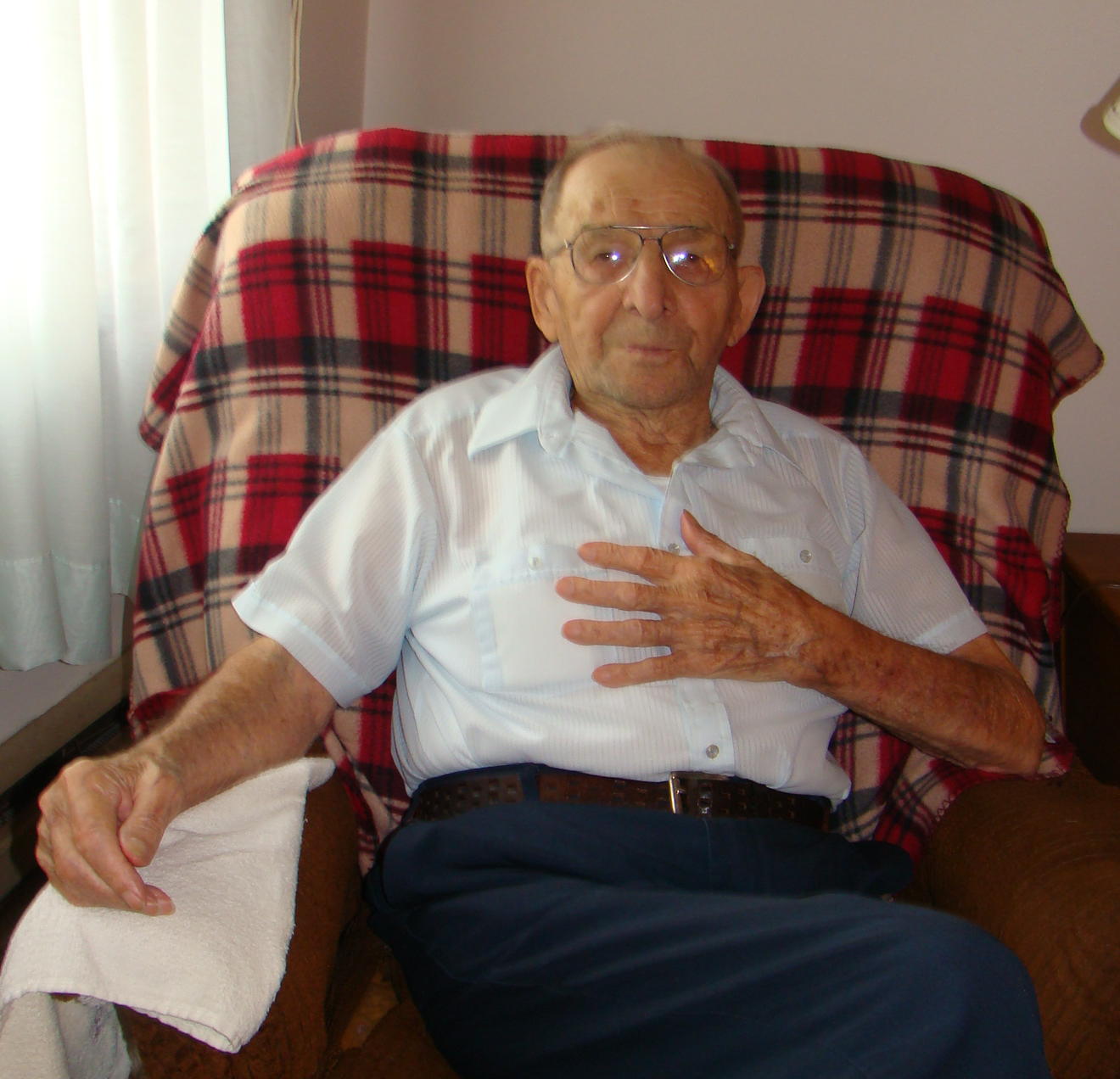
Step back 88 years to September, 1925 as we visit an observer, Ed Lehotay, a lively 97 years old. He and his family actually saw the giant Shenandoah airship that fateful morning before it crashed in nearby Ava, Ohio.

USS Shenandoah was the first of four US Navy rigid airships built at Lakehurst Naval Air Station in New Jersey.  It made the first airship crossing of North America at speeds of up to 69 mph.  On its 57th flight, this “strongest airship in the world” was on a publicity tour of Midwestern State Fairs when it was caught in a thunderstorm in the rolling hills of southeastern Ohio.  Surprisingly, 29 of the crew of 43 survived the crash.

Ed Lehotay at 97 years of age

Ed Lehotay at 97 years of age

Nine year old Ed Lehotay recalled September 2 as being a dreary day with the threat of a storm in the air. They had gone to bed about 10:00 that night in their family home on Patton Hollow Road just south of Cambridge. Their house shook in the terrible storm with torrents of rain pouring down. As the lightning flashed and lit up the sky, their father had noticed a large airship pitching back and forth like a bucking horse directly over their house. His father woke the whole family at 4:00 in the morning on September 3, 1925. The children’s eyes were wide with wonder at the huge airship over their house being lit up by the lightning.

The Shenandoah moved slowly just over the rooftop. Their family was shocked to see the 680′ long airship with a diameter of nearly 80′ so close, rolling from side to side. That’s as long as two and a half football fields!  When the sound of the roaring engines combined with the rolling thunder, the noise was unforgettable. From the living room window, the family watched the airship as it drifted across the road, over the barn, and up the hill nearly touching the top of their cherry orchard. The crew threw the spider lines from the airship in hopes they would either get tangled in the tree tops, or perhaps someone would be able to reach them and restrain the airship.

Ed and his family would never forget the sight of the USS Shenandoah (ZR-1) on that eventful morning. As the squall line continued to pummel  the zeppelin, the ship eventually broke in half with part of it landing near Ava, Ohio in Noble County, and the rest being scattered about ten miles farther, with many of the crew falling to the ground along the way.

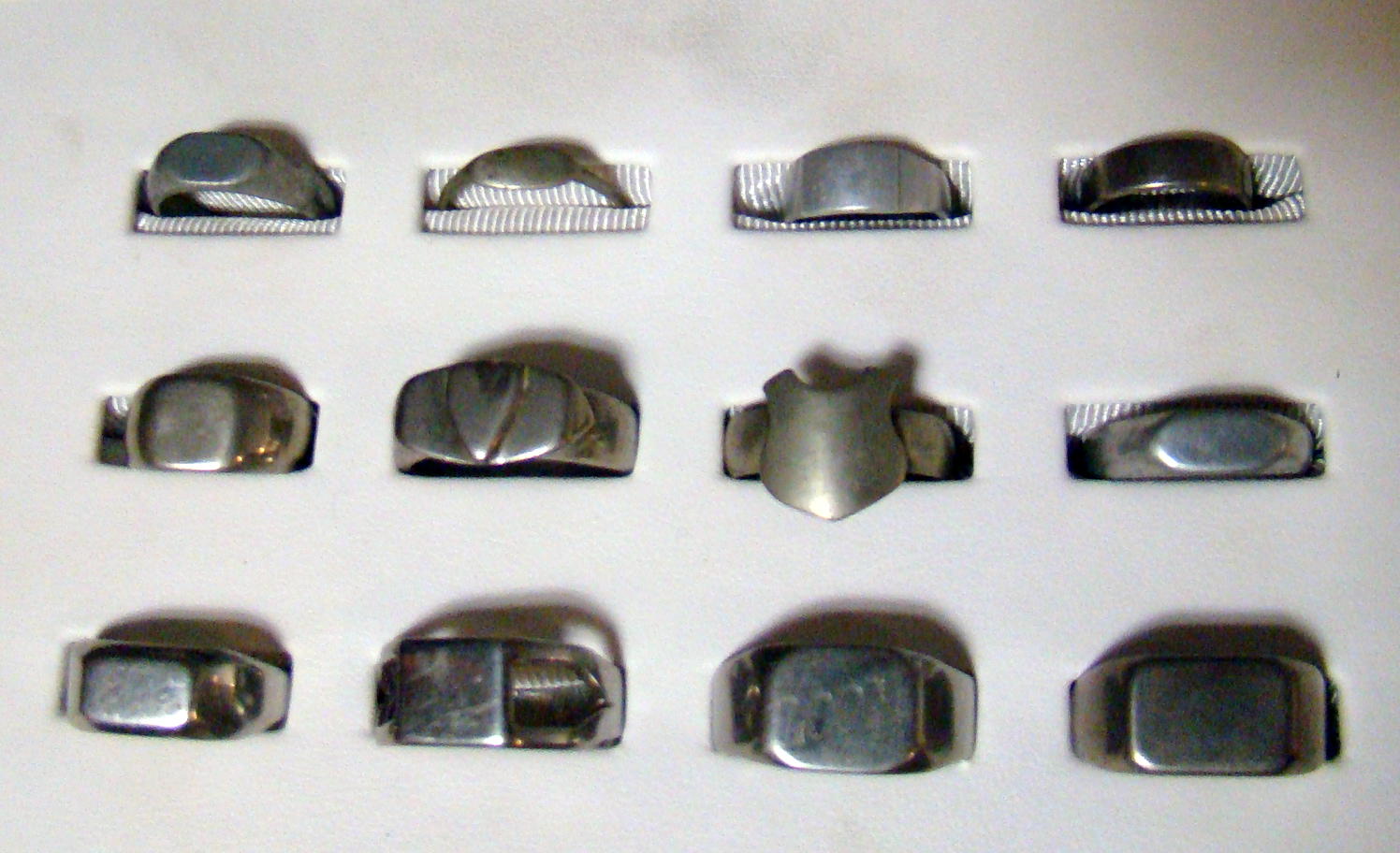
Rings made from Shenandoah's aluminum frame

Rings made from Shenandoah’s aluminum frame.

People made a beeline to the crash location in the continuing rain. Ed begged his family to let him go to the site, but they felt there would be too much confusion there for a youngster. Instead his brother drove to Ava through the mud roads in his new Willy’s Baby Overland. Once there they saw people cutting up the fabric of the airship for raincoats. Even though it was raining, people still needed drinking water so a local farmer, fearing his well would go dry from so many users, began charging for water – something rare in those days. Another young entrepreneur brought thirst quenching bottles of pop to sell at the site. Many took pieces of Shenandoah’s aluminum frame as souvenirs.  Ed’s brother brought him a piece of aluminum, which Ed melted in their forge and fashioned into rings. His dad put on one of those rings with a diamond shape on top, wore it every day and was even buried with it on his hand.

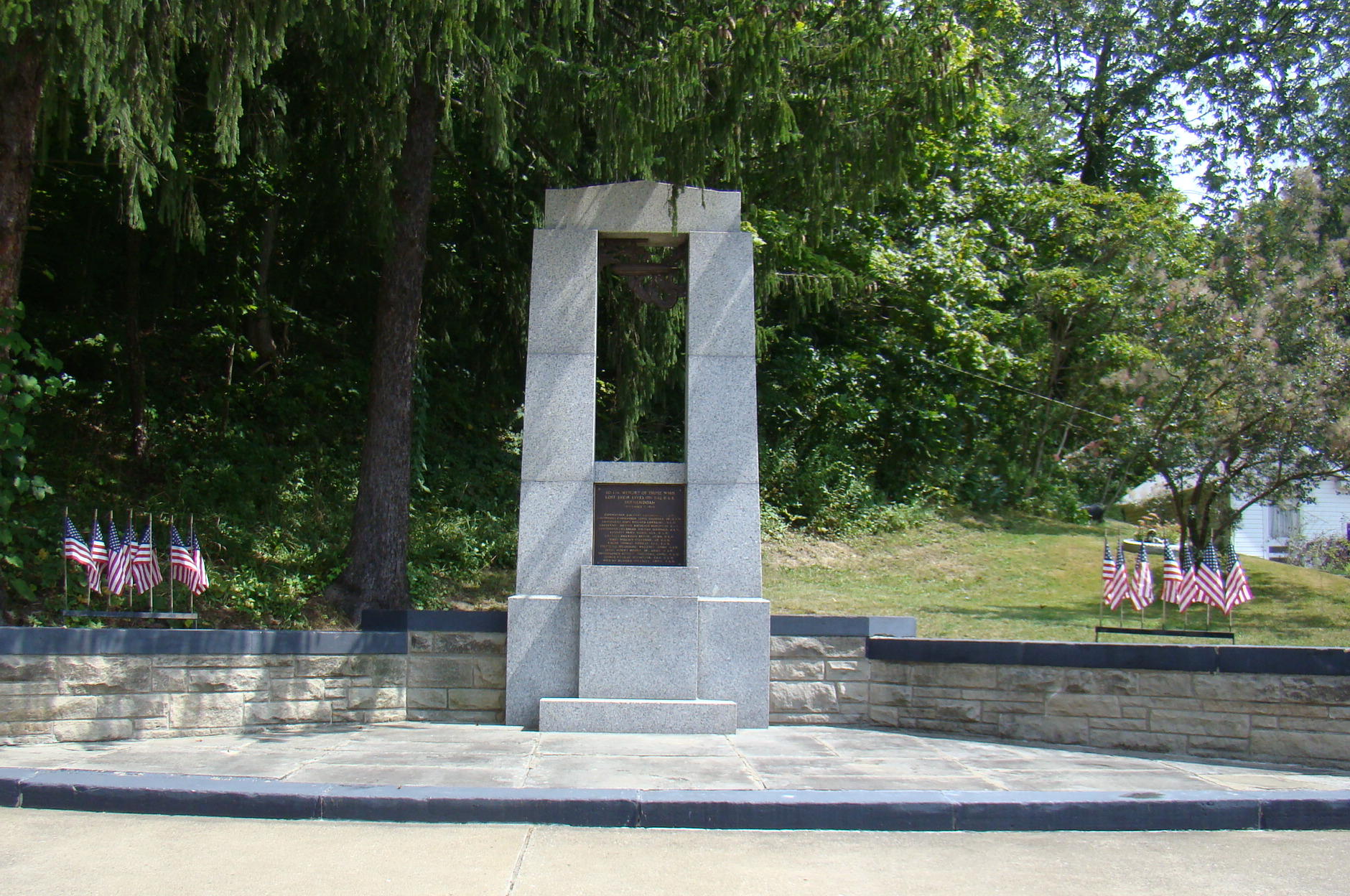
Shenandoah Memorial in Ava Ohio

Shenandoah Memorial in Ava Ohio

Today the Shenandoah Memorial stands near the place of the crash. Originally, the memorial was back in the woods at the actual site of the crash, but today it has been moved where people can visit it more easily. It consists of a small metal replica of the Shenandoah airship inside a tall granite archway , which is surrounded by swirling metal storm clouds. A bronze plaque lists names of those who lost their lives in the crash.

At the southern end of Ava, there is a USS Shenandoah Memorial Trailer Museum beside Rayner’s Garage. Bryan and Teresa Rayner have saved many pieces of memorabilia regarding that crash in 1925. Bryan has a special interest since his family owned one of the farms where pieces were found.

A local high school in Noble County carries on the historic memory of this event by having their high school sports team called the Shenandoah Zeps.  Their logo is a sleek dirigible.

How wonderful it would have been to view the Shenandoah in all its magnificence as it glided through the sky. Thanks to all those who help memories of the  famous airship and its crash still live on!

To visit the Shenandoah crash site, take I-77 to Exit 28 , Belle Valley. From the west side of the interstate, take Hwy 821 North 5 miles to Ava. The monument is on the north side of town on the east side of the road and well marked. Rayner’s Garage and the Shenandoah Trailer Museum are on the south side of town. The museum has limited open hours.

School Is In The Air

Hopewell One-Room School at Indian Camp

Hopewell One-Room School at Indian Camp

The cool morning air whispers Time for school. Memories flood back of days at a one-room school in Indian Camp. All eight grades were in one room so students helped each other climb the ladder of learning. Perhaps today is the perfect time to take a road trip leading back many years ago to Hopewell School. Chances are someone you know, or even you, yourself, have attended a similar school.

After driving the winding roller-coaster road of State Route 658 northwest of Cambridge, Ohio, the old school brings a smile. Those sturdy sandstone foundation blocks remain intact where so many students received building blocks for their lives from 1905-1955. Today the school is kept in repair while being used by the Indian Camp Grange, 4-H club, Hopewell Homemakers and once a year, the Hopewell One-Room-School Reunion.

Favorite Recess Tree

Favorite Recess Tree

The trees have grown noticeably larger in front of the school.  Their branches provided the perfect places to sit while watching others play on the large surrounding field, or sharing secrets with your friends. In the absence of playground equipment, students played hopscotch at the top of the drive, baseball behind the school, or Annie Annie Over across the roof.

Children from miles around arrived at Hopewell School by bus, horseback, bicycle or walking. On the first day of school they proudly carried their yellow Big Chief tablet and a pencil or two. If they were lucky, they might have a box of eight new Crayola Crayons and Elmer’s School Paste.  Those scents still stir up memories.

Teacher, Mrs. Mary Clark, uses the globe to explain geography.

Teacher, Mrs. Mary Clark, uses the globe to explain geography  during the 1950’s.

Inside the building, the pot bellied stove and the old desks are gone. The teacher or a student who lived close by came early in the morning to get the room warm for students. During the day, the boys took turns filling the coal bucket at the coal shed behind the school. Many boys volunteered for this chore and took their time, some even sneaking a smoke in the coal shed. But other things are still the same. An original blackboard still has initials carved in it, and the closets where coats and lunches were kept are exactly as they were years ago.

Lunches were brought in either a paper bag or a metal lunch box, which might last for several years. A personal favorite had a picture of Roy Rogers riding Trigger, and it even had a thermos. Lunch might include a bologna sandwich, boiled potato, dill pickle, and on special days, a thermos of homemade soup.

Since there was no water on the grounds, the boys carried water from a near-by house. After it was poured into a large keg at the back of the room, students would use a dipper to get a drink – everyone using the same dipper and no one getting sick!  No water also meant outdoor toilets with a rather unpleasant smell, flies, and even an occassional varmint.

Original Bell at Hopewell School

Original Bell at Hopewell School with picture of school “Whoso Desireth Education, Desireth Knowledge”.

In 1994, former students constructed a brick base with a picture of old Hopewell School engraved on a plague and words that expressed the aim of the school: “Whoso Desireth Education, Desireth Knowledge”.  At the top of the base sets the school bell that called students to school in the morning, and reminded them that it was time to return to the classroom after recess. Students didn’t always stay on the grounds during recess as some went to Gerty’s Store just down the road, or in winter time might be sledding on the neighboring hills of the Cowden family farm. This bell is a beautiful heritage to the people that have received their education here, and also to their children for generations to come.

In spite of all the old-fashioned ways, lessons were learned and life-long friendships were developed. The one-room school was the perfect place to be taught the 4 R’s – Reading, ‘Riting, “Rithmetic…and Respect.

If you would enjoy a trip to the country to see Hopewell School, follow State Route 209 west from Cambridge, Ohio through Browns Heights. After a couple of miles, turn right on State Route 658 and continue until you reach the town of Indian Camp. At the north end of Indian Camp make another right hand turn on Mt. Herman Road. You are there!  

Ohio’s Scenic Seneca Lake Park Gem of the Appalachians

Seneca Lake under a cloud filled sky

Seneca Lake under a cloud filled sky

Drifting into a peaceful world is something everyone would hope to do. At beautiful Seneca Lake in the foothills of the Appalachians, this is not only a possibility, but a likelihood.

Senecabille State Fish Hatchery

Senecaville State Fish Hatchery

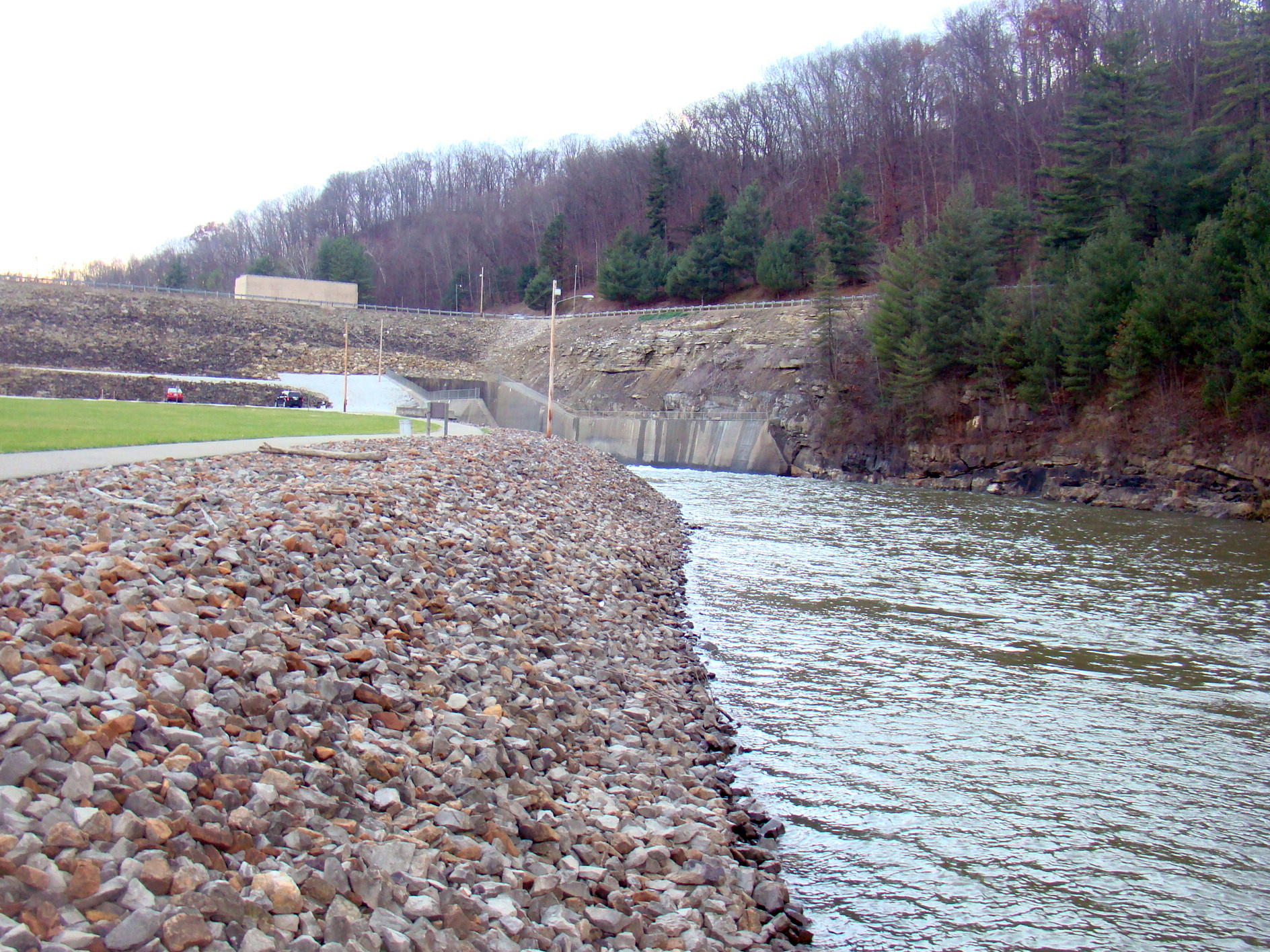
Created in 1937, Seneca Lake Park in southeastern Ohio is part of the Muskingum Water Conservatory. This dam was originally constructed to contain floods on the Seneca Branch of Wills Creek. Here over 3,550 acres of water are filled with fish, boats, swimmers and fishermen!  The main entrance to the park leads you past the dam and the fish hatchery, which has 37 one-acre ponds.

New water toy at the beachHeaded up over the hill and through the woods, you arrive at the entrance to the beach and picnic area. This is a spot where family reunions have been held for over seventy years  Picnic baskets always overflowed with fried chicken, potato salad, baked beans, and homemade pie or cake during those long ago reunions. The shady picnic area made for an inviting place for moms and dads to visit while the children enjoyed the playground or swam at the nearby beach. An awesome water toy installed in 2013 provides a special place for the young ones to play

Many call this their summer home, as cabins are frequent along the shores. Boat docks are placed nearby home locations, since most campers want the pleasure of drifting on the waters for a relaxing get-away. There are a wide variety of homes in this rural area ranging from small cabins to elegant residences.

Sailing along on Seneca Lake

Sailing along on Seneca Lake

But perhaps you would rather rough it a little and stay in your camper or even your tent. There are 513 campsites available if you prefer getting back to nature. Some of those tent sites are located near the beach. If you are wanting a vacation from cooking as well, The Dockside Restaurant at the entrance to the campground provides delicious food with the choice of dining inside, or perhaps on the deck overlooking the lake..

The Bar where friends meet

The Bar where friends meet

If you are going out for the day, you might want to rent a canoe or kayak at Ray’s for a reasonable daily rate. Then you can guide yourself into the many coves, or float around the island where many  stop for a picnic or party. There is a second swimming area called “The Bar”, where boats are anchored while children and adults jump overboard and enjoy cooling off in the fresh water lake.

Water skiing is another popular summer time activity. One young man didn’t quite make the attempted turn and landed in the lake. When he climbed back on the boat, he was alarmed to find a blue gill in his swimming trunks. His friends won’t let him forget that story.

Seneca Lake, the third largest inland lake in Ohio, is definitely a Gem in the Appalchian area.

Seneca Lake Park is located approximately thirteen miles south of Cambridge off I-70. Take exit  #37 to Buffalo and Senecaville and proceed straight ahead at the four way stop in Senecaville. The main entrance to the park it just a few miles down the road on the right hand side. Watch for signs!

Following Morgan’s Raiders Trail 150 Years Later

Sketch of Brig Gen John Hunt Morgan

Sketch of Brig Gen John Hunt Morgan

During the Civil War, 150 years ago in July of 1863, Brigadier General John Hunt Morgan led a band of scoundrels, known as Morgan’s Raiders, through Ohio on a two week expedition consisting of many raids and robberies. Their purpose was to create terror and deviate the attention of the Union troops from Confederate forces.

The Ohio Historical Society has commemorated that John Hunt Morgan Heritage Trail with 56 interpretive signs from Cincinnati to West Point in northeastern Ohio. Official dedication took place at the entry point into Ohio at Harrison in July of 2013, although planning has taken several years.

First Morgan's Trail sign in Guernsey County at Cumberland, Ohio

First Morgan’s Trail sign in Guernsey County at Cumberland, Ohio

Wanting to explore the local side of this route, my drive began in Cumberland, Ohio, which is the first place in Guernsey County, my home county, that Morgan’s Raiders appeared. Here in front of the old Cumberland High School is plaque #39, which begins the local trail of clever escapes by Morgan. Having invited themselves as dinner guests, Morgan’s men stole horses, cash, and even a guide before heading on to Point Pleasant (today’s Pleasant City).

Watch for signs like this to follow the trail easily.

Watch for signs like this to follow the trail easily. Former Pleasant City High School sits in the background.

Morgan’s Trail is well-marked with signs at frequent intervals so you can rest assured you are still on the correct route. Stories on the plaques tell about real events that happened near each marker and all contain a couple beautiful old pictures from Civil War days. Each sign also explains, in the lower left hand corner, the location of the next commemorative stop

At the corner of State Routes 313 and 285 in Senecaville, followers will find plaque #40. On July 24 at 3 am, Morgan’s men rode into the village boldly knocking on doors to find out local road information. Lucky for Morgan, Colonel William Wallace of the Ohio Infantry had received an erroneous report and hours earlier had moved from that very crossroads. Ever since the battle at Buffington Island, Brig. Gen. James Shackelford had been in hot pursuit of the Raiders and seemed to be closing the gap.

Interpretive sign #41 at Lore City trailhead.

Interpretive sign #41 at Lore City trailhead.

Campbell’s Station (today’s Lore City) had the most destruction of any place in Guernsey County with Shackelford being only seven miles behind. Located at the trailhead of the Guernsey Trail, #41 plaque area was the only one in Guernsey County that had been expanded with other information about the history of that area, as well as beautiful flowers.

At the edge of town on Old Mill Road, the battle at Washington (today’s Old Washington) is recognized. Sign #42 is near Cemetery Hill where Shackelford’s troops began firing on Morgan’s Raiders, who had spent the night in Washington. The officers had moved in, unwanted, to the American Hotel while others slept throughout the town, even in the streets. It came as a surprise that the plaque was not downtown with the 1927 monument to this skirmish.

Those four stops mark the route through Guernsey County, then the Trail guides you on toward Piedmont. By now you are beginning to get caught up in the thrill of the chase and to understand the lay of the territory they are crossing. Winding roads follow the Trail as best they possibly can, but Morgan’s Raiders attempted to travel through the woods quite often so the route is close, but can’t possibly be perfect.

Imagine the surprise and fear when up to 2000 Confederate soldiers arrived in one of these small towns along the way.  No wonder the unruly children were disciplined with the phrase: Morgan will get you!

Monument to honor Morgan's Raid erected by Carroll County Historical Society in 1868.

Monument to honor Morgan’s Raid erected by Carroll County Historical Society in 1868.

My original plan had been to follow Morgan’s Trail just through Guernsey County, but once caught up in following Morgan’s Raiders, it was impossible to stop before reaching the spot where Morgan was captured. Being led through Harrison, Monroe, Jefferson and Carroll counties, the posted signs by the Ohio Historical Society were  easy to follow.

With troop numbers diminishing at each spot, Morgan continued to use clever escape tactics as long as he could.  The Raiders might pretend to be Union soldiers, stir up dust to hide themselves, or give promises they could never fulfill.

The last few marked encounters led through rugged, gravel roads. As you slowed down on these rutted and often muddy roads, you could almost feel the weariness of the troops.

End of Trail near West Point, Ohio

End of Trail near West Point, Ohio

Finally, Morgan’s Trail, with plaque #56 entitled West End, came to an end in someone’s front yard where a monument had also been placed years ago. Morgan had tried his best to get back to cross the Ohio River and he was getting so close. Minutes later, I saw the beautiful Ohio River and felt a little sympathy for Morgan’s never reaching it.

The Heritage Trail from Cumberland to West End took Morgan’s Raiders four days from July 23 – July 26. By car, it took about eight and a half hours and I didn’t steal any horses, demand any dinners, or burn any buildings. They must have been worn out to have covered all that territory so quickly on horseback.

Even though he was captured for the moment, his cleverness helped him escape prison and travel unknowingly with a Union soldier on a train back home. Despite the chaos and destruction left behind, he taught the importance of never giving up in your quest to reach a goal.

Tour Daweswood House Museum “Let the Flowers Grow Where They May”

Daweswood House Museum

Daweswood House Museum

Exploring Daweswood takes visitors back in time to absorb the lifestyle of the Dawes family in the early 1900’s near Newark, Ohio. Being greeted by Debby, the youngest granddaughter of Beman and Bertie Dawes, made the tour doubly enjoyable. Her added stories of childhood visits added life to the beautiful old home.

Outside, the playful, lighthearted garden design reflects Bertie’s favorite saying, “Let the flowers grow where they may”. Beautiful flower beds surround the home turned museum, and help visitors realize the importance of plants and flowers to the Dawes family.

Inside, Daweswood House Museum, actually built in 1867,  is filled with antiques, unique collections of natural history, and stories which seem to pour from the walls. The flooring and spiral walnut staircase in the entryway are original and from lumber cut on the farm back in the late 1800’s. Everything was built with loving care in the best tradition of the times.

Office of Beman Dawes

Office of Beman Dawes

Born in Marietta, Ohio, Beman Dawes graduated from Marietta College. After serving two terms as US Representative, he founded Pure Oil Co with headquarters in nearby Columbus, Ohio. The profits from that endeavor became the source of funds to develop Dawes Arboretum for the enjoyment of  people from all over the world, as well as the Dawes family. Debby mentioned that some of her fondest memories of childhood were the family picnics in the pines at Dawes. It seemed the children enjoyed the out-of-doors, just like their grandparents. Today the family still gathers at Dawes Arboretum every summer for an old-fashioned picnic.

Bertie Dawes' studio

Bertie Dawes’ studio

His wife, Bertie, displayed her collections in her special studio, which overlooked the garden. Shells, butterflies, and humming birds all held special places in her heart. The beautiful bedspread in the room had been handmade by Bertie as well. This elegant lady was definitely a woman of many talents and interests… including raising peacocks. Perhaps she had time to do these things since there were housekeepers that tended to the daily chores of the family. Since there were five children, this would have been a busy household.

"Our House" embroidered by daughter, Dorothy Dawes Young in 1925.

“Our House” embroidered by daughter, Dorothy Dawes Young in 1925.

One beautiful family tradition occurred in the formal dining room where the family met each Sunday for dinner. The grandchildren still recall those formal dinners with Grandfather and Granny as being a highlight of their visit.  This family had early access to some of the little luxuries, with electricity in Daweswood as early as 1929. Five stone fireplaces throughout the house provided a warm atmosphere. The warmth of family could be seen in the beautiful embroidered picture hanging in the kitchen to remind everyone of the importance of their Daweswood home.

A basement constructed of handhewn stone, where the children used to play, is now home to the Rathskeller. The walls are now filled with shovels and plaques of those invited for tree dedication ceremonies. Initials of the dedicators were placed on the ceiling with soot from a burning candle in the beginning, but today they are usually written with a marking pen…to save space.  Back in 1927, Ohio Governor James Cox was the first to dedicate a tree.  Over 100 people have been invited by the family to dedicate trees and some of those names are quite familiar: John Glenn, Jack Hanna, Richard Byrd, Red Grange, and Orville Wright to mention a few.

Smokehouse and Gardens

Smokehouse and Gardens

Behind the house is an old log smokehouse surrounded by Bertie’s garden. Nearby, on the right side of the picture, you can see the corner of the roof of the History Archives Building, which is being constructed to hold photographs, family journals, and Arboretum records.

Plan your visit to Daweswood on the weekend as hours are limited. Tours are given every Saturday and Sunday at 12:00 and 2:00.  Admission is $2 for adults and $1 for students, and tickets must be purchased at theVisitors Center. If you like beautiful old homes and the beauties of nature, you will definitely enjoy a visit at Daweswood.

Dawes Arboretum is located near Newark, Ohio just off I-70.  Take Exit 132 , Route 13 , and proceed North on Route 13 for about three miles.  The entrance is located on the left hand side of the road at 7770 Jacksontown Road. Daweswood House Museum is down the first road to the right just inside the gate, but first you must go to the Visitors Center to purchase your ticket.

John Morgan’s Raid in Ohio 150th Anniversary Celebration

Morgan's Freebooters enter Washington, Ohio ~Harper's Weekly, Aug, 1863

Morgan’s Freebooters enter Washington, Ohio
~Harper’s Weekly, Aug, 1863

John Morgan with the remnant of a band composed of the most villanous cut-throats and scoundrels….made his way into this county on Thursday, the 22nd. (Guernsey Times Extra Addition Cambridge, Ohio July 28, 1863)

This statement by the local newspaper back in 1863  sums up the feeling of Northern residents regarding the antics of Brig. Gen. John Hunt Morgan, who led his raiders on a chase through Ohio during the Civil War.  His main goals were to destroy supply lines while creating chaos and fear.

Cannon fire ignites celebration.

Cannon fire ignites celebration.

This special celebration took place in Lore City, Ohio at the Leatherwood Park trailhead of The Great Guernsey Trail, which is a paved pathway from Lore City to Cambridge used for walking and biking.  Often you see parents pushing their children in strollers, or children pushing their parents in wheelchairs. This six mile trail has become a favorite spot to exercise and get some fresh air in the Guernsey County area.

Andy Warhola, Civil War speaker

Andy Warhola, Civil War speaker

Local Civil War Roundtable members, Andy Warhola and Tom Snyder, explained Morgan’s ravaging two week raid through Ohio with slides, maps and pictures. They told of Morgan’s stealing two steamboats in order to cross the Ohio River into Indiana. Proceeding into Ohio above Cincinnati, they headed across the state with Union forces in pursuit.

Thinking the best way to escape was to again cross the Ohio River, Morgan led his men to a ford, which would let them have easy access to Buffington Island, a stepping stone across the Ohio. But his plan went amiss when Morgan decided to wait until morning for the crossing instead of attempting to move in the pitch darkness of night. The next morning however produced heavy fog, so again he was delayed, thus giving the USS Moose time to reach their crossing point. This is said to be the only Civil War battle in Ohio. Here the Union turned Morgan and his Confederates away with heavy losses.  What had started out as 2500 men, was down to approximatley 1100 after the battle at Buffington Island.

After this they headed towards Guernsey County entering at Cumberland and continuing to Londonderry. Finally they were captured in Salineville, heading to the Ohio River again. Along the way they were hungry and needed horses so there was plenty of thievery and destruction.

In the town of Campbell’s Station, which is today Lore City, there was more financial damage than anywhere else in the county.  They robbed the safe in the warehouse of $4,000, then burned the warehouse, train station and bridge as well as three railroad cars filled with tobacco…all this before the Union forces arrived.

Couple in Civil War dress

Couple in Civil War dress

Nearly 150 years later, Lore City was filled with a Civil War feeling as many dressed in clothing of the time. A cannon was fired several times after careful loading by a group of Morgan County Re-enactors dressed as Confederate soldiers.

Local historian, Dave Adair, described the town of Campbell’s Station, which at the time of attack had only about sixty people. Their telegraph office was kept busy sending messages and receiving replies regarding Morgan’s Raiders. Due to the messages, Morgan and his Rebel scoundrels changed their route to avoid a railroad trestle, where a hundred men were waiting to ambush them.

Dave Adair speaks in the pavilion, which was the site of the original train station in Campbell's Station.

Dave Adair speaks in the pavilion, which was the site of the original train station in Campbell’s Station.

Dave also explained why Campbell’s Station changed its name to Lore City.  There happened to be two Campbell’s Stations at that time and the larger one kept the name. When deciding what to rename the smaller town, the Irish Catholics had a big hand in it. Their church were attempting to educate the people in this small community; therefore devised the new name as The City of Learning or Lore City… lore meaning knowledge or learning.

Ohio Hills Spinners and Weavers

Ohio Hills Spinners and Weavers

Spinning and weaving demonstrations were given by members of The Ohio Hills Spinners and Weavers, who also added stories of working conditions during the Civil War. Music was plentiful from start to finish. Bluegrass music, which included many Civil War songs, was provided by Mr and Mrs Small. While many of the Civil War songs were of a sad nature, Mrs. Small had written a happy song, Black Berries, to which everyone sang along. Cambridge City Band swung into action with their rendition of Civil War hits such as: Listen to the Mockingbird, Swanee River and many more. This was followed later by Dynamic Trio, who played 50’s and 60’s rock and roll.

Riders enjoying the horse and wagon ride were greeted by Mayor Carpenter and wife, Sharon.

Horse and wagon riders were greeted by Mayor Carpenter and wife, Sharon.

Horses were an important part of the Civil War and it is estimated that over a million horses and mules were lost during the battles. General Morgan was indeed known as “The King of Horse Thieves”.  Wagon rides, which seemed fitting for the anniversary celebration, were provided along a segment of the Lore City trailhead in a wagon resembling the wagons used during the war to carry generals, the wounded and supplies.

If you want to get a little more adventuresome, today you can follow the trail that Morgan made during his raid. Signs have been posted from Cumberland to Londonderry with information regarding the events that took place in that particular area. Would make an interesting Sunday drive!

Lore City, Ohio is located in Guernsey County just east of I-77. Take exit 46, US Route 40 east, then follow Route 40 for four miles and turn right on State Route 265.  Continue on 265 until a four way stop, where a right hand turn leads you over the bridge to Lore City.  Leatherwood Park is to the left after you cross the bridge.