Places to go and things to see by Gypsy Bev

Archive for the ‘West Virginia’ Category

Mammoth Mound Mysteries Grave Creek Mound Complex

Mammoth Grave Creek Mound in Moundsville, WV

Mammoth Grave Creek Mound in Moundsville, WV

Step back in time, way back in time, to 200 BC.  Buried beneath the surface of this gigantic mound in Moundsville, West Virginia are ancient treasures from two thousand years ago.

Driving past this 62′ high mound, many people possibly see it merely as a big pile of dirt. But when you explore inside the Grave Creek Mound Archeological Complex located beside it, you discover surprises regarding this unusual structure in Moundsville near the Ohio River. For many it will get their mental wheels turning as they want to search for more information.

To get a better picture of the area in your mind, Grave Creek Mound, the largest conical mound in the United States, is 62′ high with a base of 240′ and was surrounded with a moat, which has since been filled in. There was only one way across the moat – an earthen path. This was part of a much larger ceremonial area, which seemed to begin at the Ohio River.
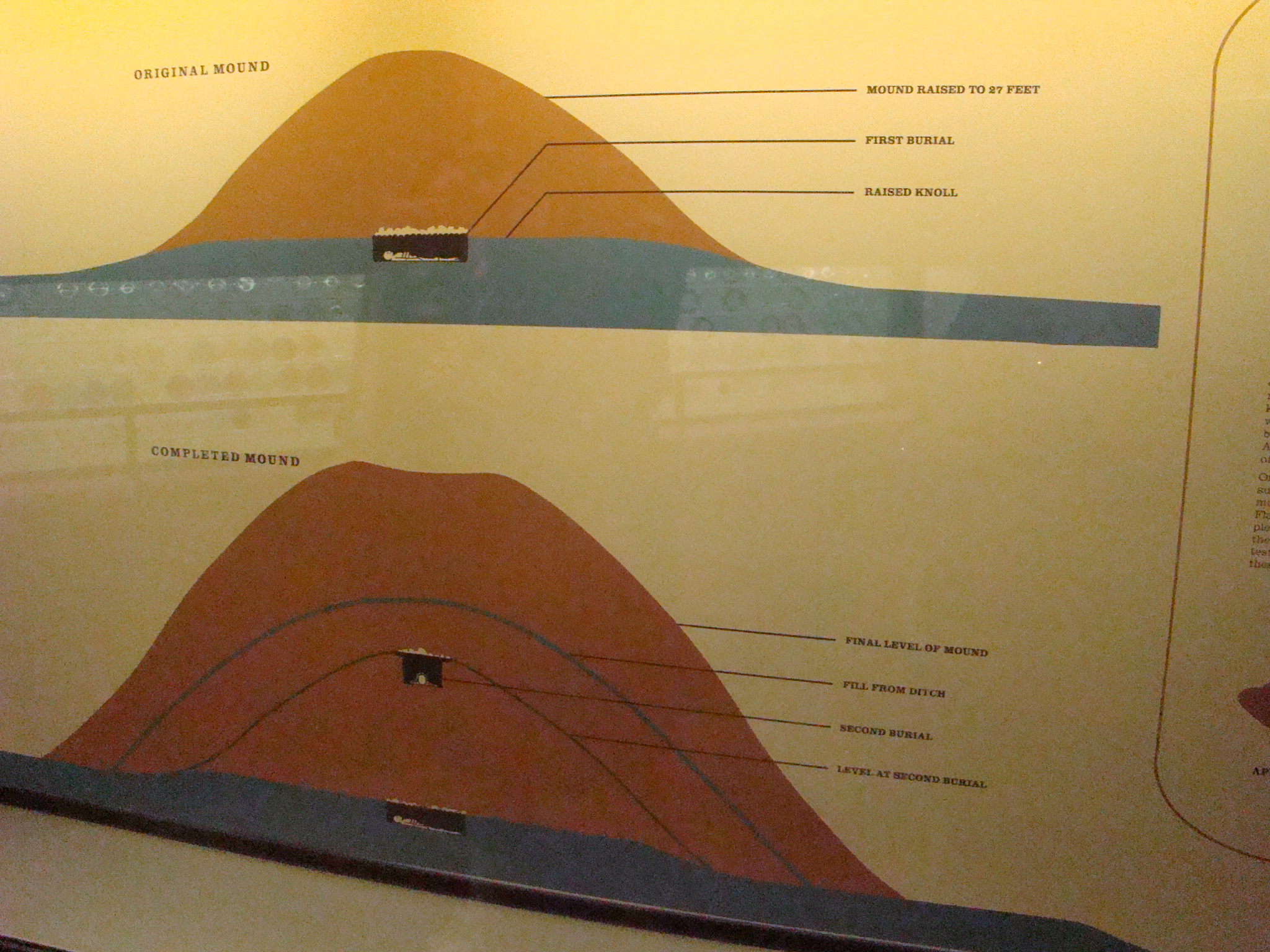
The mound was built over a period of 200 years with burial vaults at different layers.

The mound was built over a period of 200 years with burial vaults at different layers.

This Adena burial mound required a lot of work to move 60,000 Tons of earth to form this mound over a period of years.  Included are multiple burials at different levels from 250 – 150 BC. It appears to have been build in stages with most of the burials being by cremation.

Since it seems that people arrived on the Ohio River, there was what many called a Sacred Way leading from the river to The Mound. But the Way didn’t stop there, as it turned at right angles to an octagon shape, which is no longer in existence. This Sacred Way was actually paved back 2000 years ago…with mussel shells. How do we know this? When ground was moved for building the homes and stores in Moundsville, layers of mussel shells several inches thick were found along The Sacred Way. Hopefully, you are beginning to form a picture of what could have been.
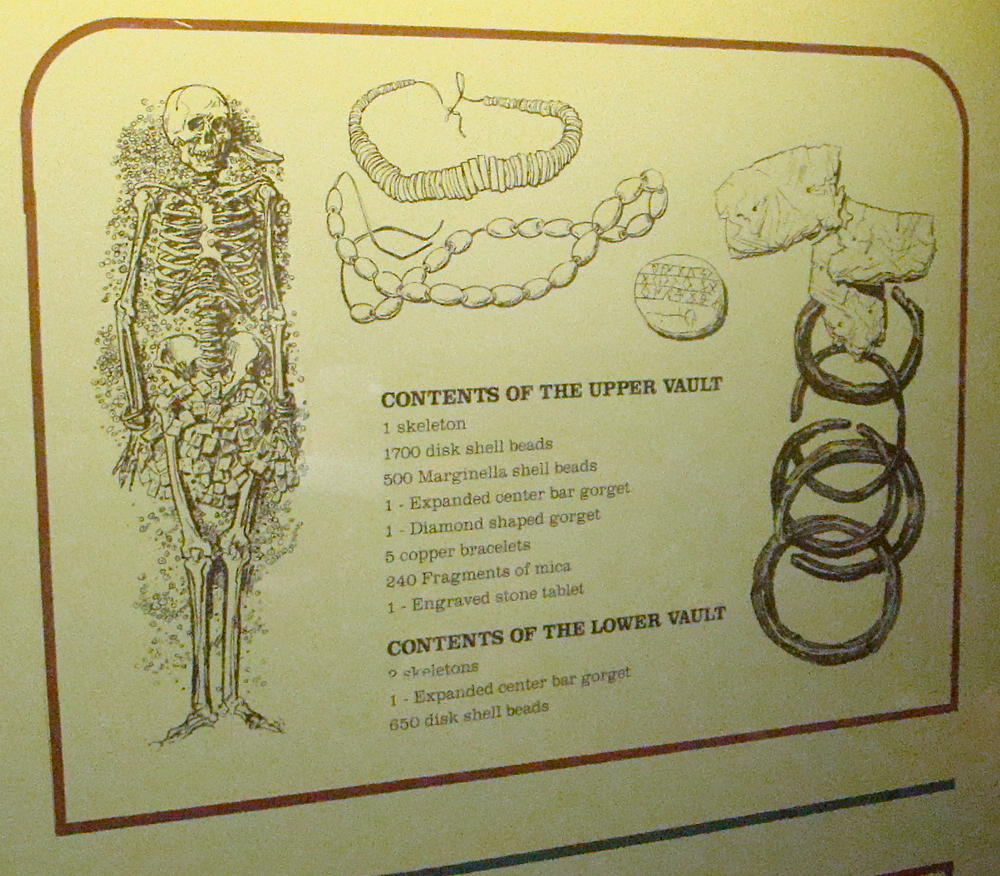
Display at Grave Creek Mound of objects found during an early dig at the mound.

Display at Grave Creek Mound of objects found during an early dig at the mound.

Back in 1838, some curious amateurs decided to do a little exploring of their own and began digging into The Mound with gusto through two shafts, one horizontal and one vertical. Their discoveries were surprising, but they had little idea of how much historic information they had really pulled from the ground. A burial vault made of logs and smooth stones from the river was found in the center near ground level. It contained two skeletons with tools, beads, pipes and ornaments indicating these were important people in their culture.

A most amazing skeleton, which they named Tasach for reasons to be given later, appeared at the bottom layer of the earthen mound.  The items found either on his body or with his body were quite astonishing. Around its 7’2″ frame were pieces of sea shells- some scattered and others formed into beads. On the wrist were seven copper bracelets and around the waist was a band of small mica squares. What do all of these pieces mean?
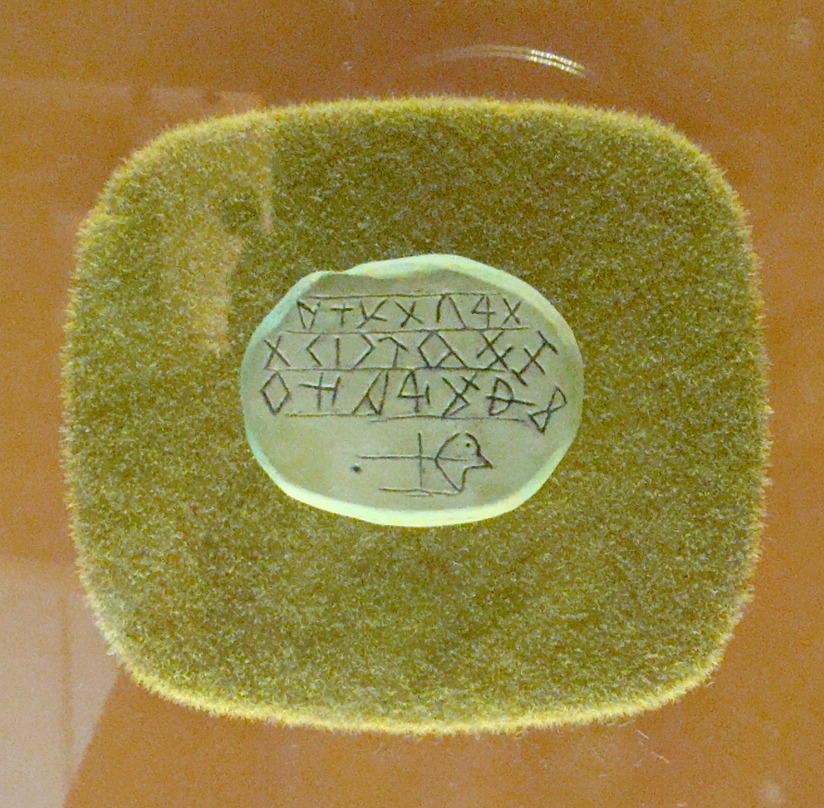
Replica of Grave Creek Tablet

Replica of Grave Creek Tablet

To add to the mystery, near the second, smaller skeleton was a small, flat sandstone tablet with three lines of symbols indicating a form of communication during that long ago time. This has become known as the Grave Creek Tablet and one of many interpretations, but the one that seems likely in my mind reads:

“The mound raised on high for Tasach. This tile his queen caused to be made.”

My first thought was that perhaps Tasach was a leader of an ancient tribe.  Since copper and mica both resonate with healing qualities, perhaps he was considered a shaman. He may have appeared at the octagon shaped structure and greeted visitors, who came by boat on the Ohio River then walked the Sacred Way through the Mound and to the octagon.  It would seem this was perhaps a spiritual ceremony of some nature by people over 2000 years ago.  Remarkable! But that was just my interpretation. Wonder what ideas you might have?

Shortly after that early  excavation, in 1843 local enthusiasts decided to use the two excavation shafts into The Mound as a museum. In the horizontal bricked shaft was an underground exhibit of the skeleton discovered with his buried treasures as well as an early gift shop. Inside the vertical shaft, a spiral staircase was built to allow visitors a way to the top of the mound where a three-story observatory was constructed. The museum was short-lived as the walls came tumbling inward, but a second stone museum was built on the south side of the mound in 1941 with many of the items available for sale having been made by the prisoners at the penitentiary across the street.
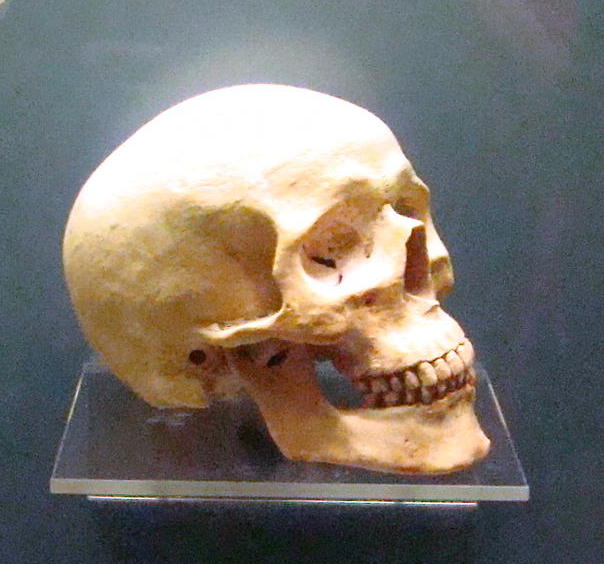
Replica of Pre-Indian skull found in 1838 excavation

Replica of Pre-Indian skull found in 1838 excavation

Today’s modern museum is housed in the Grave Creek Mound Archeological Complex, which shares many of the mysteries of The Mound with visitors through exhibits and video presentations. It opens the mind to exploring the wonders of time before the Native American Indians. These early visitors on our lands had far reaching commerce as items were from all over the country and the world. Their architectural skills were amazing and nearly all of their structures were perfectly aligned mathematically with the sun , the moon, and the stars.

Where did these people come from?  Where did they go? The mysteries continue.

The Mound is located in Moundsville, West Virginia. Just ten miles south of Wheeling along the east bank of the beautiful Ohio River. From Wheeling, follow Route 2 into Moundsville. Turn left on 8th Street and after two blocks turn right onto Jefferson Ave. The mound is too large to miss!
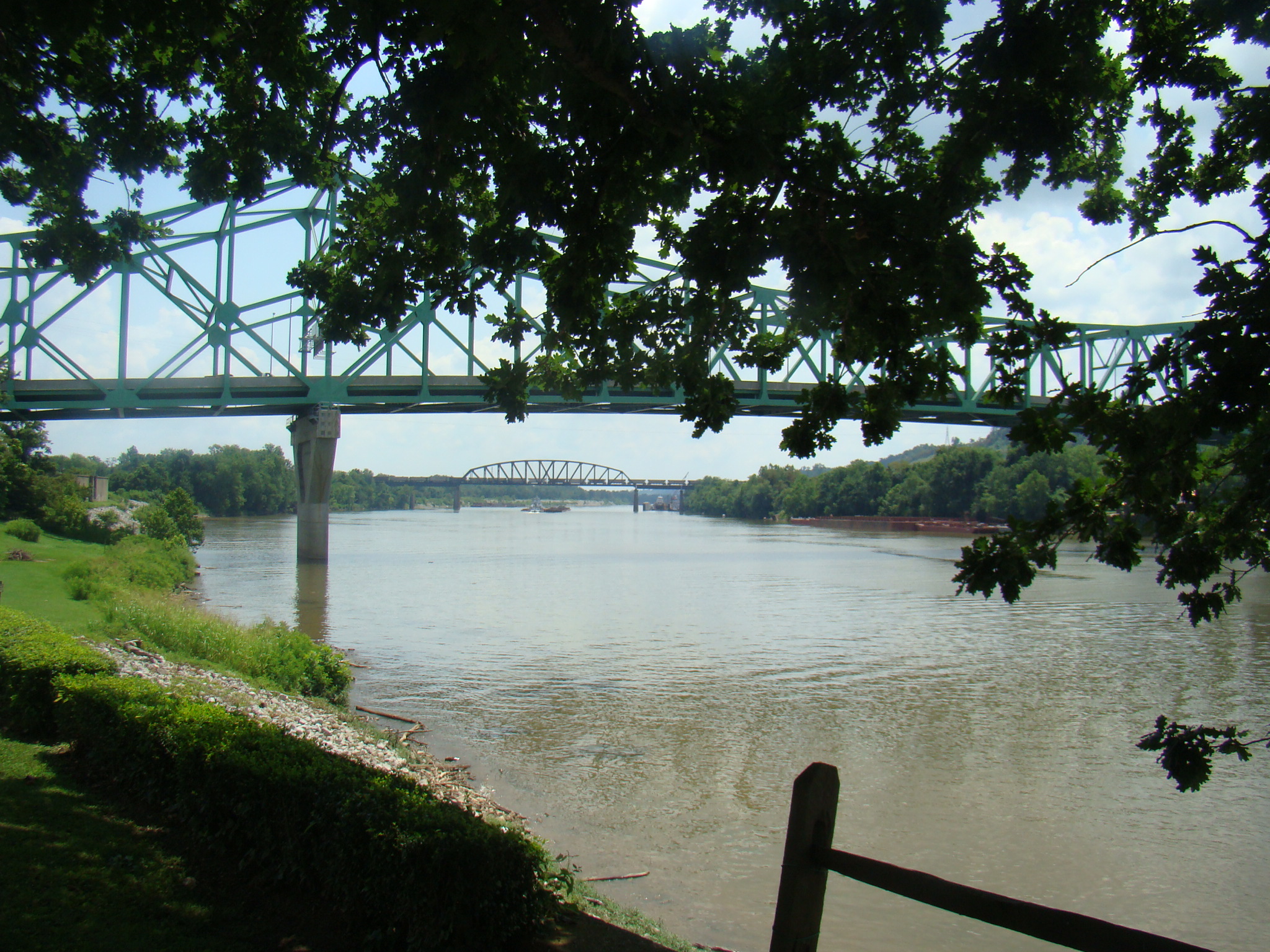
“The Point Between Two Waters” Tu-Endie-Wei State Park

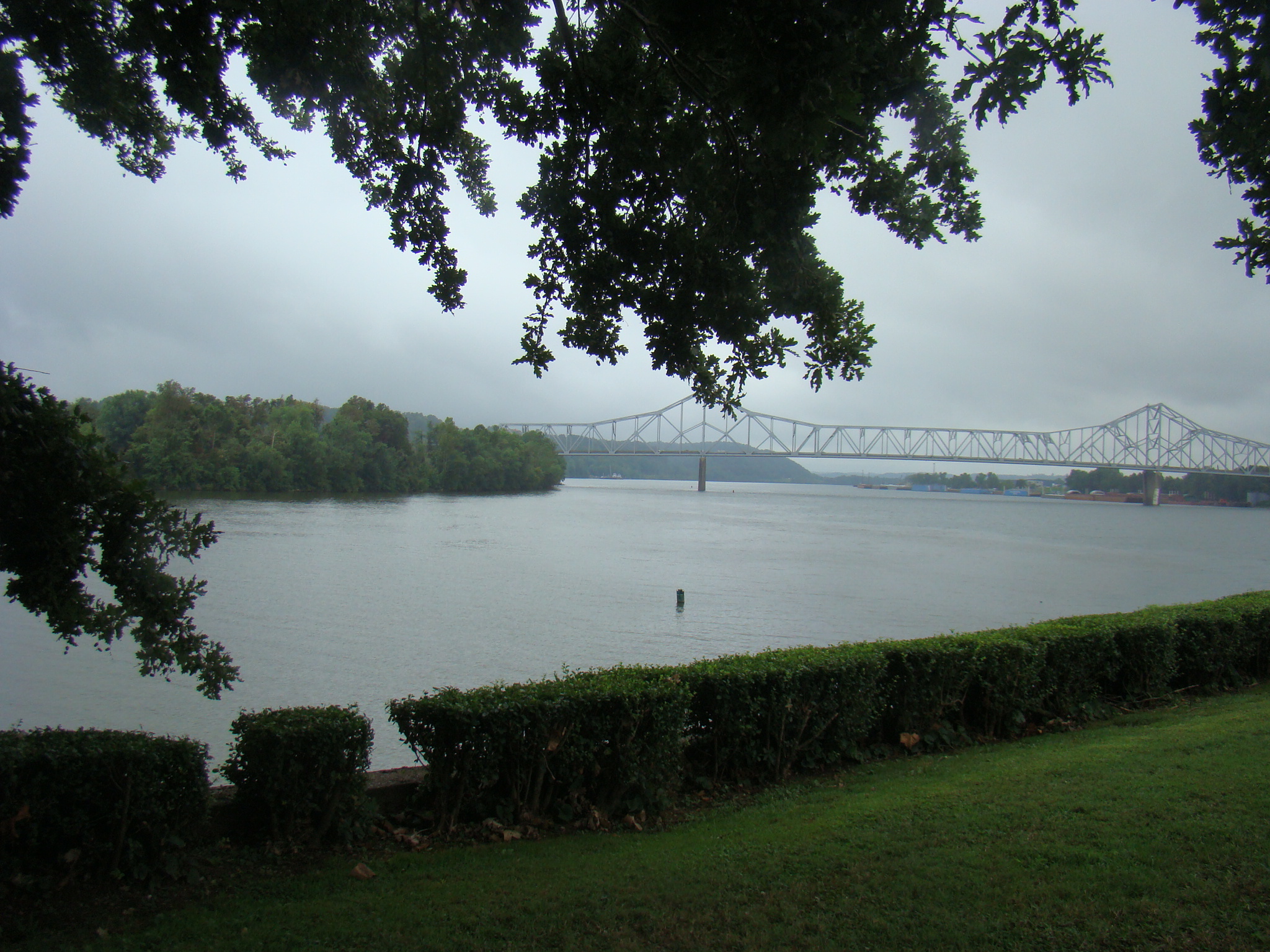
Bridge over Kanawha River where it joins the Ohio River.

View of bridge over Kanawha River while relaxing on the banks of the Ohio RIver.

Located at the junction of the Ohio River and Kanawha River, Tu-Endie-Wei State Park in Mount Pleasant, West Virginia  marks the spot where the Battle of Point Pleasant was fought during the Revolutionary War. Here in 1774 the Virginia militia, led by General Andrew Lewis, fought hand-to-hand with warriors from the Northwestern Confederated Tribes under the leadership of renowned Indian Shawnee chief, Cornstalk.

The Congressional Declaration states:  “This plan, however, as the world now knows, was thwarted as to the place of conflict, when the traitorous Dunmore failed to join Lewis at the mouth of the Kanawha River and they to march together into the enemy’s country.” The original plan called for Governor Dunmore and General Lewis to have the two wings of their Virginia militia meet at the mouth of the Kanawha and pursue the Indians back into their own country, north of the Ohio River. Some feel perhaps Dunmore purposely didn’t arrive in hopes that the Shawnee would defeat the militia, since Dunmore soon became a prominent leader of the British War effort during the Revolutionary War.

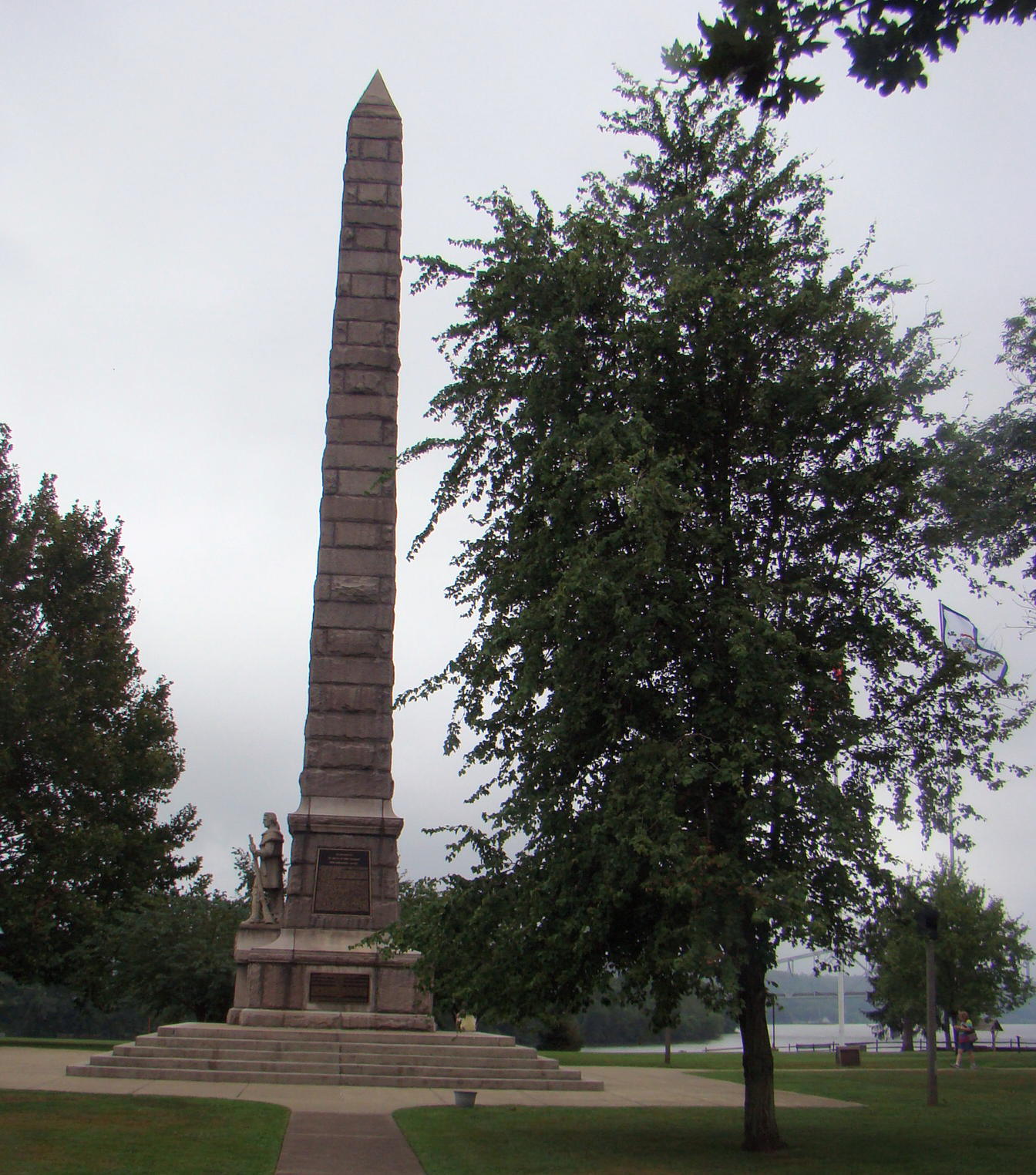
This 84' granite oblisk commemorates the Birginia militiamen who gave their lives during the battle.

This 84′ granite obelisk commemorates the Virginia militiamen who gave their lives during the battle.

An 84-foot tall granite obelisk stands in the center of the park in remembrance of the Virginia militiamen, who lost their lives during the battle. At the base of this statue is a figure of a frontiersman. The importance of this battle stretches far beyond that one day encounter as it put to rest Indian wars on the frontier and prevented an Indian alliance with the British.

Throughout the park, several smaller memorials have been placed dedicated to some of the main heroes in this battle that many claim was the first battle of the Revolutionary War.

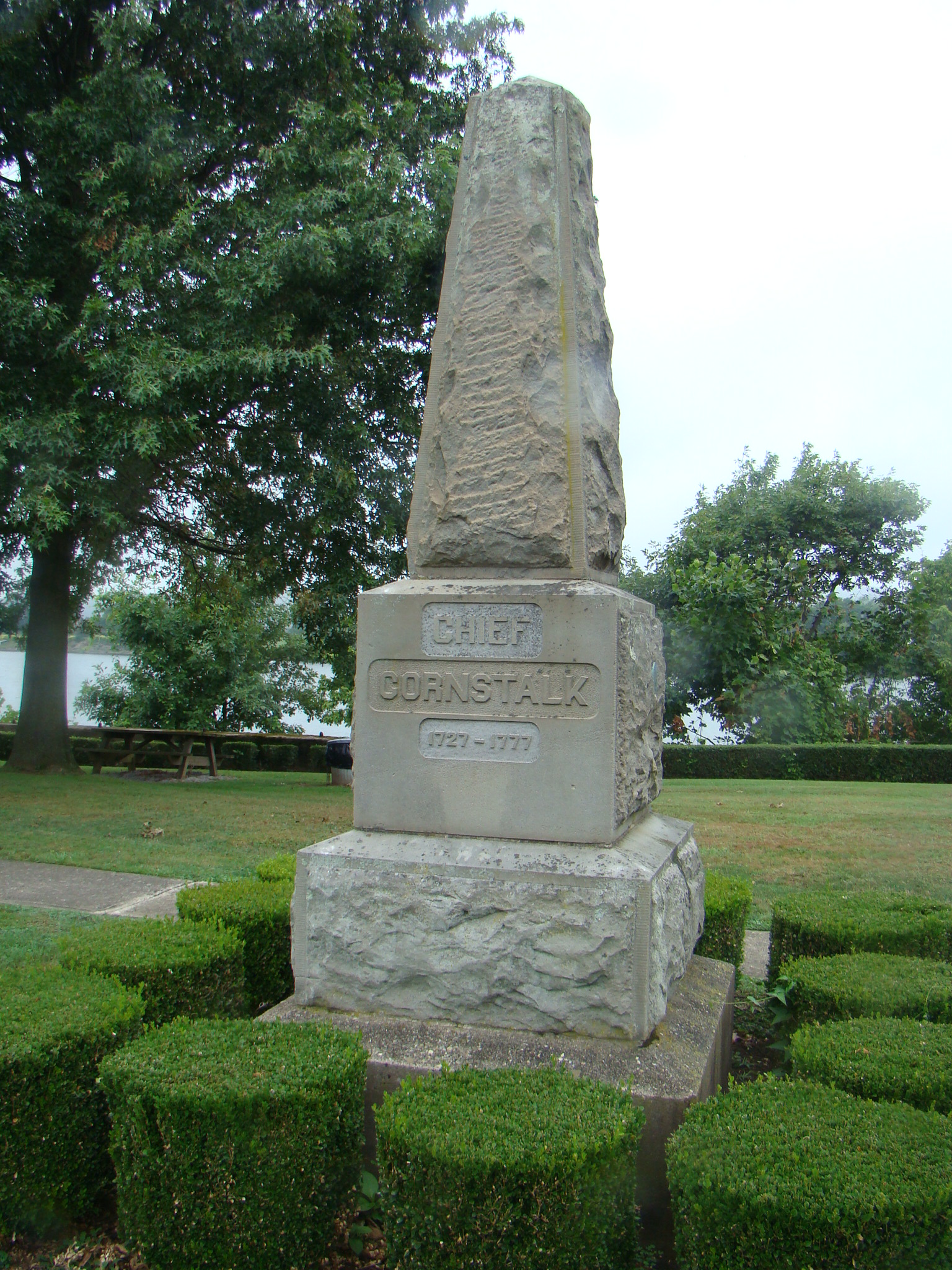
Chief Cornstalk Monument

Chief Cornstalk Monument

Keigh-tugh-qua, better known as Chief Cornstalk, was a well respected leader in the Ohio Valley. Both Indians and white men knew Chief Cornstalk as a man who wanted peace with the white men.  But he felt forced to defend his people on this spot at Point Pleasant, against who he called “Long Knives”, the colonists of Virginia. At that point he wanted to turn the frontier red with the Long Knives’ blood.  Although the Indians were defeated, Chief Cornstalk did survive this battle.

In 1777, Cornstalk returned to Point Pleasant to warn the settlers that the British were trying to incite his tribesmen to attack.  Fearing an unpleasant encounter, Cornstalk and companions were imprisoned at Fort Randolph, where he was killed by a dozen rifle shots while standing at the doorway of his room. After moving his burial place several times, his remains were brought back here for their final resting place near the field of his most famous battle.

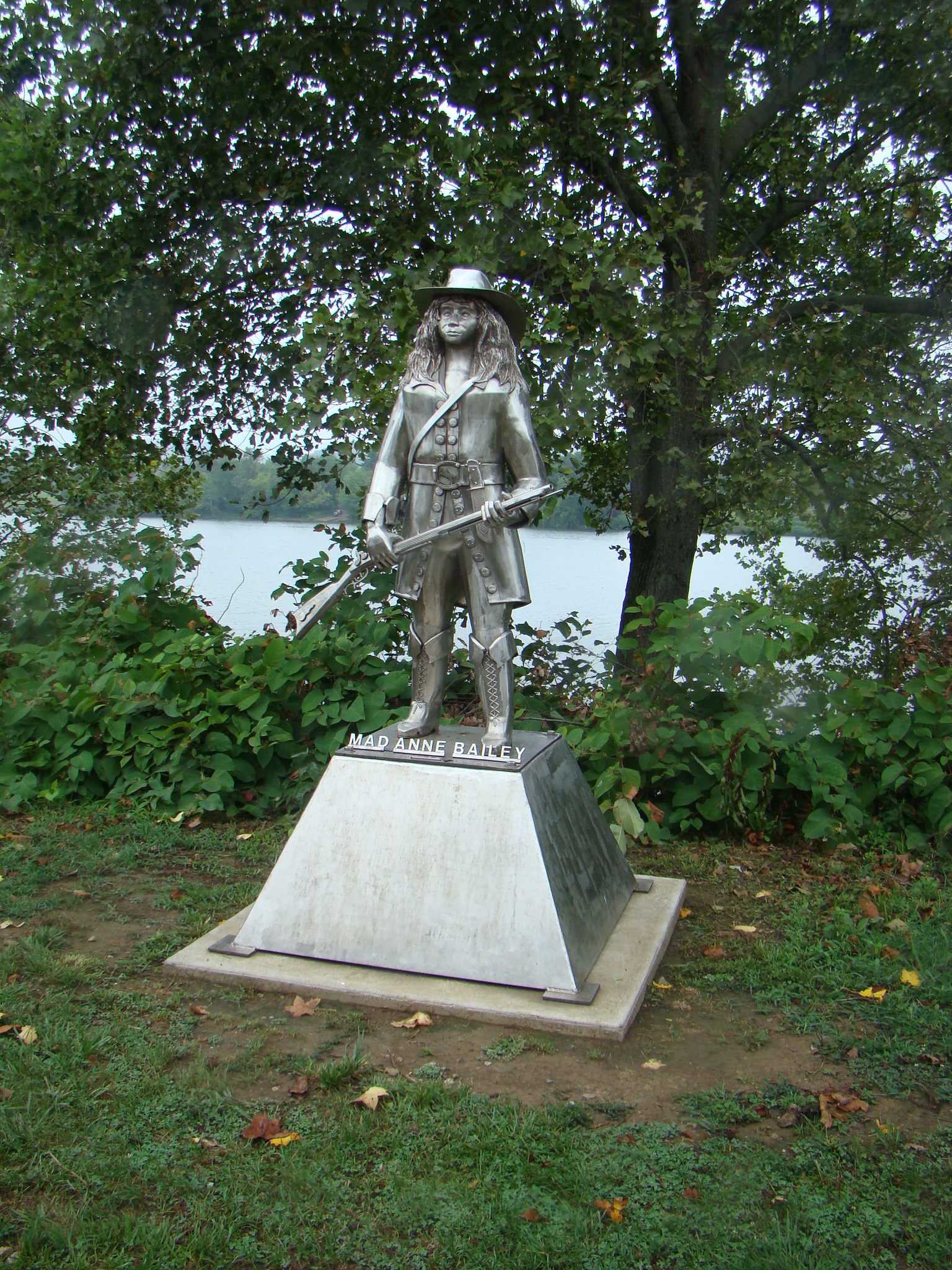
Statue of Mad Anne Bailey along the Ohio River

Statue of Mad Anne Bailey along the Ohio River

One interesting monument marks the burial spot of Mad Anne Bailey, whose husband, Richard Trotter, was killed at the Battle of Point Pleasant. This statue along the Ohio River shows frontier scout Mad Anne dressed in buckskins as she delivered messages to remote places throughout the Virginia area to avenge her husband’s death. “Mad” escapades in fighting the red savages on the frontier earned her the nickname of “Mad Anne”. Later she married John Bailey, who was stationed at Fort Lee (Charleston). Mad Anne has been given credit for saving Fort Lee from destruction as she rode alone at nearly fifty years of age for gunpower to Fort Savannah (Lewisburg), which was a two hundred mile trip. Her reward ? The black horse she rode. At the age of seventy, Mad Anne lived in a cave until her son William, who she left with friends at the age of seven, found her and took her to Gallipolis to live in a tiny cabin near his family.

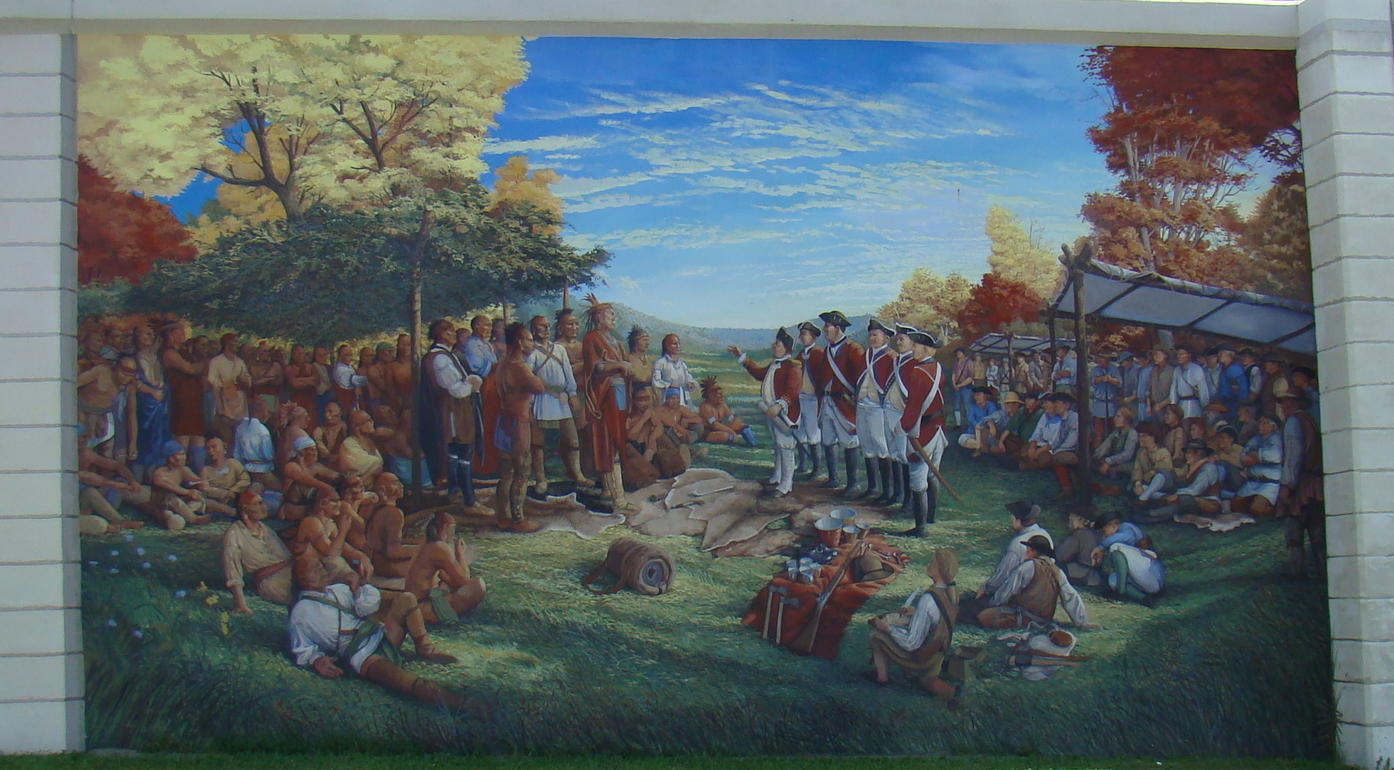
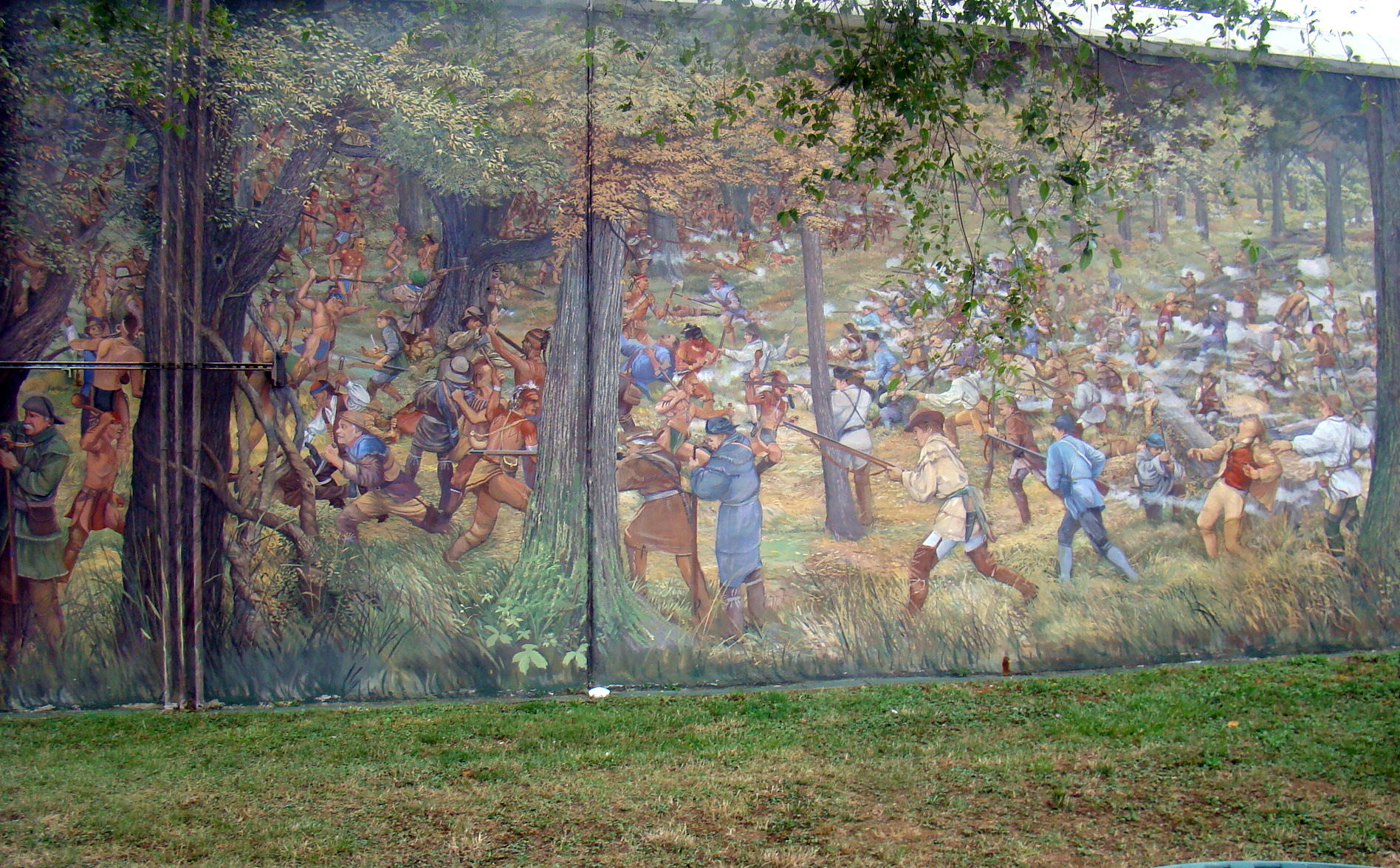
Mural on floodwall along the Ohio River

Mural on floodwall along the Ohio River

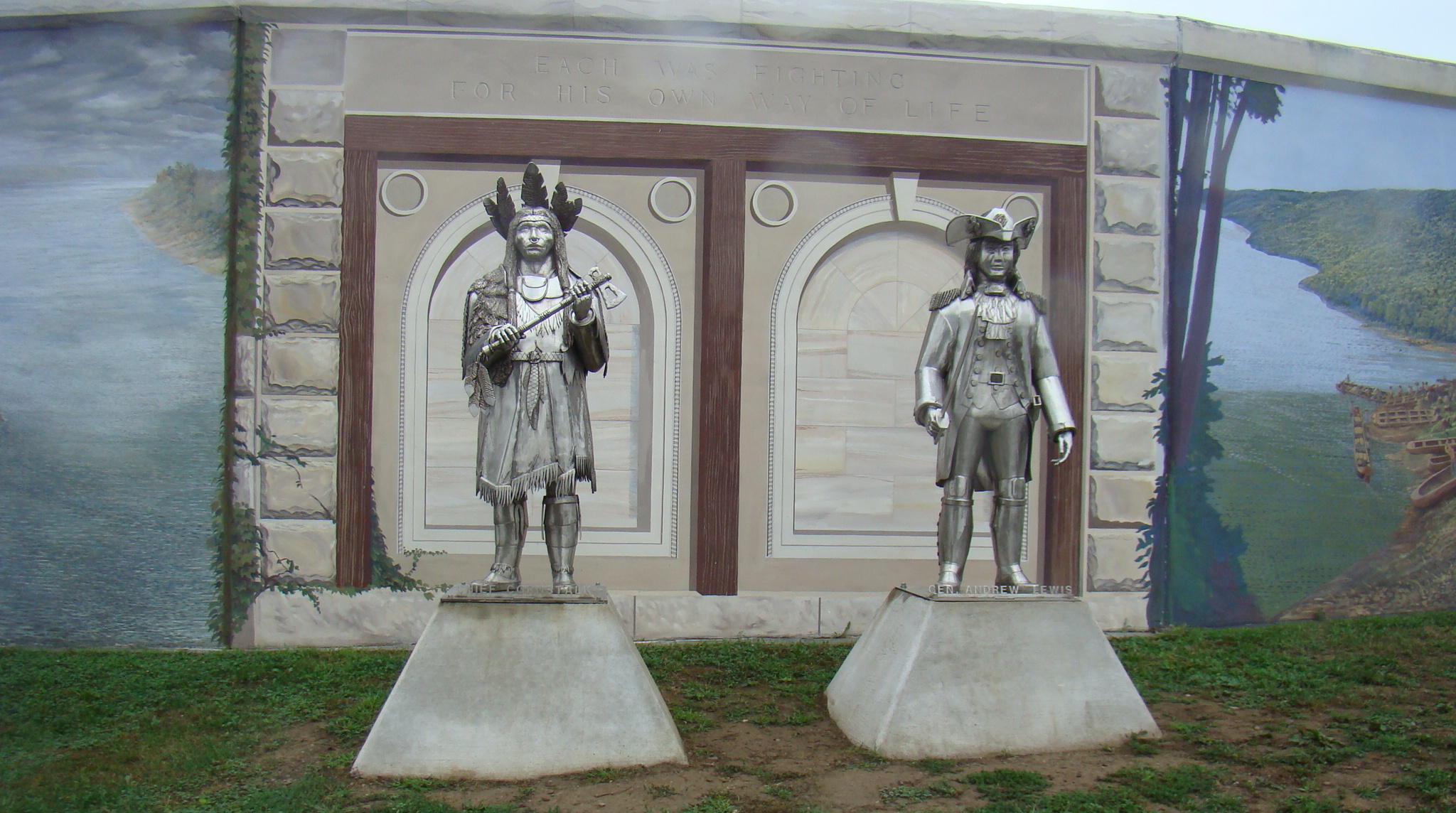
Murals depicting the meeting of the tribes and various battlefield scenes line the floodwalls of the Riverwalk along the Ohio River. Painted by artist, Robert Dafford, these scenes bring to life the memory of that one-day battle so long ago that changed the course of history. The inscription above one of those murals explains: Each was fighting for his own way of life.

Today, like in times throughout history, we each continue to fight for what we believe. May your battles be a little less severe.

Tu-Endie-Wei State Park is located at Point Pleasant, West Virginia  at the end of Main Street where the Ohio and Kanawha Rivers meet. Take a stroll down the Riverwalk to enjoy the beautiful Ohio River, the floodwall murals, and many statues along the way. Frequent festivals throughout the year are held here and it is often a stopping point for riverboats. 

Grave Creek Mound Archeological Complex

Grave Creek Archeological Center in Moundsville, WV

Grave Creek Archeological Center in Moundsville, WV

It’s not what you find
It’s what you find out.
~David Hurst Thomas

That sign was the first thing that caught my eye as I entered the Grave Creek Mound Archeological Complex in Moundsville, West Virginia.  Those words put the mind in a state of exploration – the goal of this facility. While the focal point of this entire complex is the large earthen Grave Creek Mound beside the parking lot, today the visit will be inside the complex.

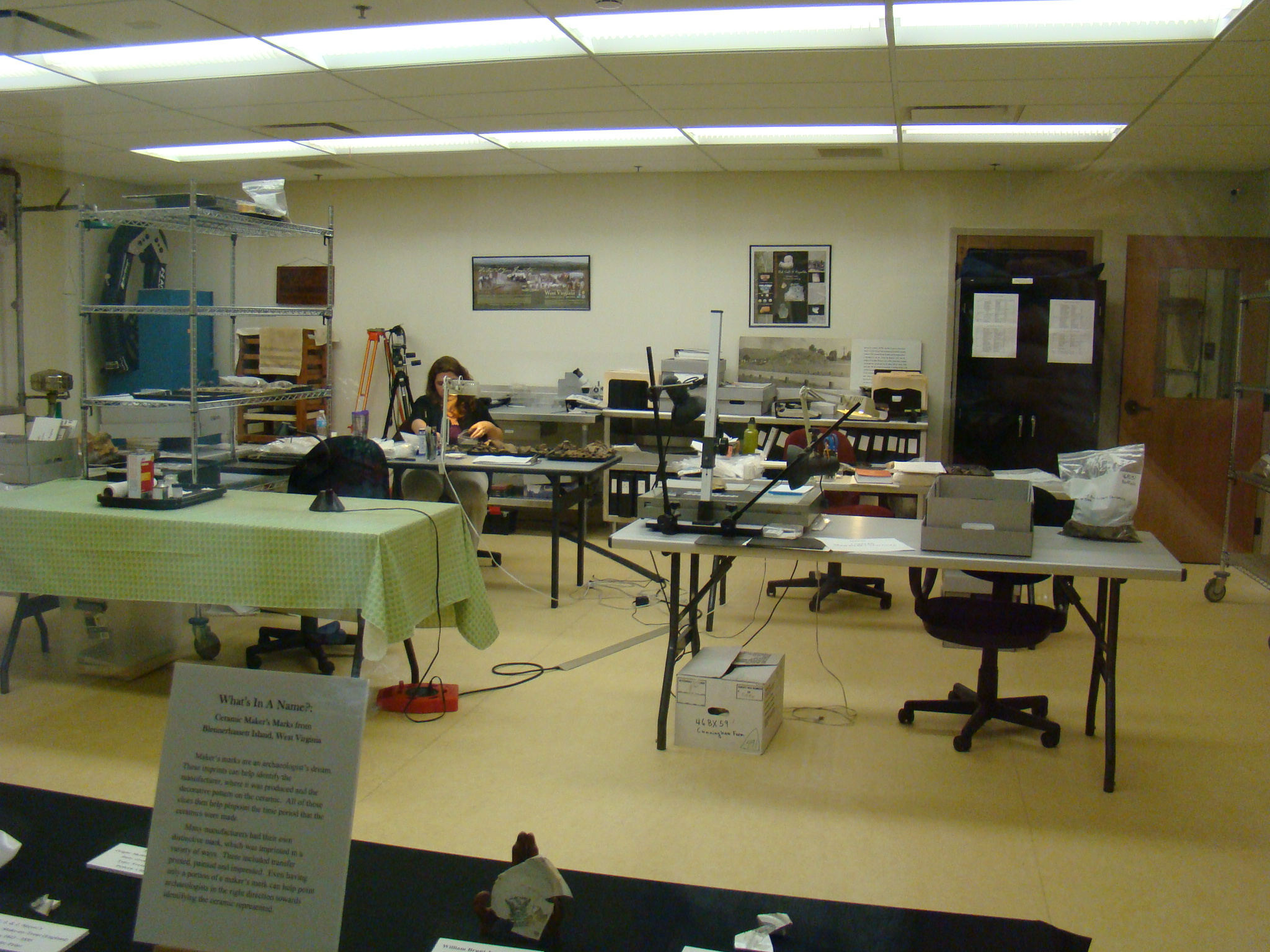
Curators at work in the research facility

Curators at work in the research facility

Close to the entrance into the building is a large glass wall so visitors can view recent finds being researched and recorded by curators in West Virginia Archeological Research Facility, which is a recently added wing in 2008. This is where artifacts, from various archeological digs all over the state, are processed, studied and recorded.

One portion of the complex, Delf Norona Museum, displays information regarding the lives of prehistoric people and the structure of The Mound inself.  This complex is indeed complex, as it holds not only information regarding the Grave Creek Mound, but also touches on rotating displays of many local cultural and historic exhibits entitled: West Virginia’s Gift to The World.  They have given themselves space to grow as exhibits are not in the least bit crowded, making viewing a pleasure.  Throughout the year, lectures and films in their 135 seat theater are held to inform the public on Native Americans and Ancient Americans.

Ron Hinkle's display of blownglass creations

Ron Hinkle’s display of blownglass creations

Ron Hinkle’s Blown Glass immediately caught my eye since my father was also a glassblower. Ron’s wall-size blown glass display sparkles with a bit of magic as every piece is unique. Since opening his own company in 1994, Ron hopes to keep the spirit and art of glassblowing alive and well in the area.

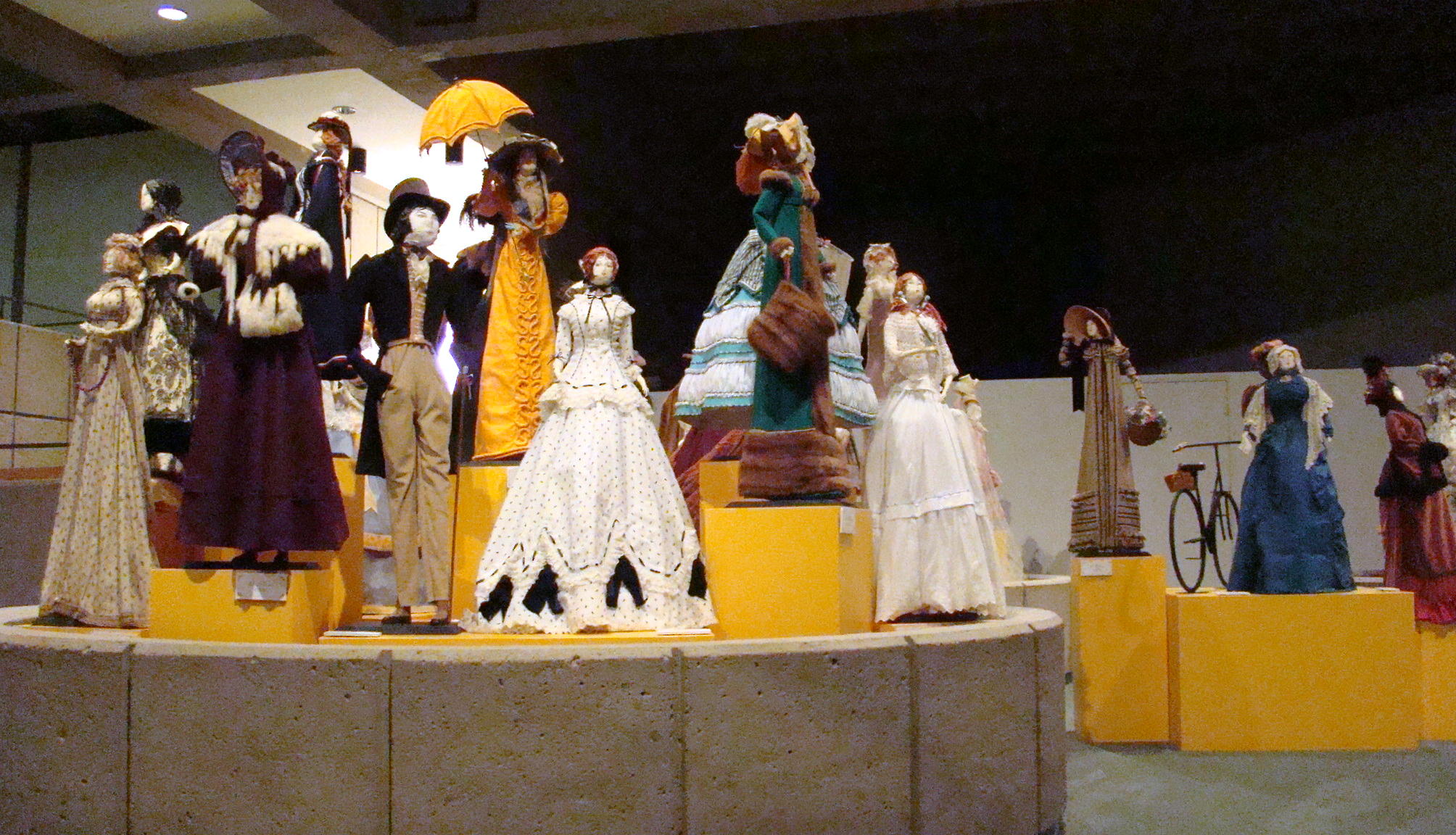
Fashion Dolls of Pete Ballard

Fashion Dolls by Pete Ballard

Ladies Fashion Dolls of the Nineteenth Century by Pete Ballard catches the eye of most ladies as they enter the front door.  This collection shows the changes in ladies’ fashions from 1770 to 1930 in a large display where each of the fifty-six dolls has a brass plate with its name, year, and number for easy cross reference to a booklet which can be picked up just inside the room. The oldest doll, Elizabeth, was from the style of 1800, being dressed in a green and red wool pattern.

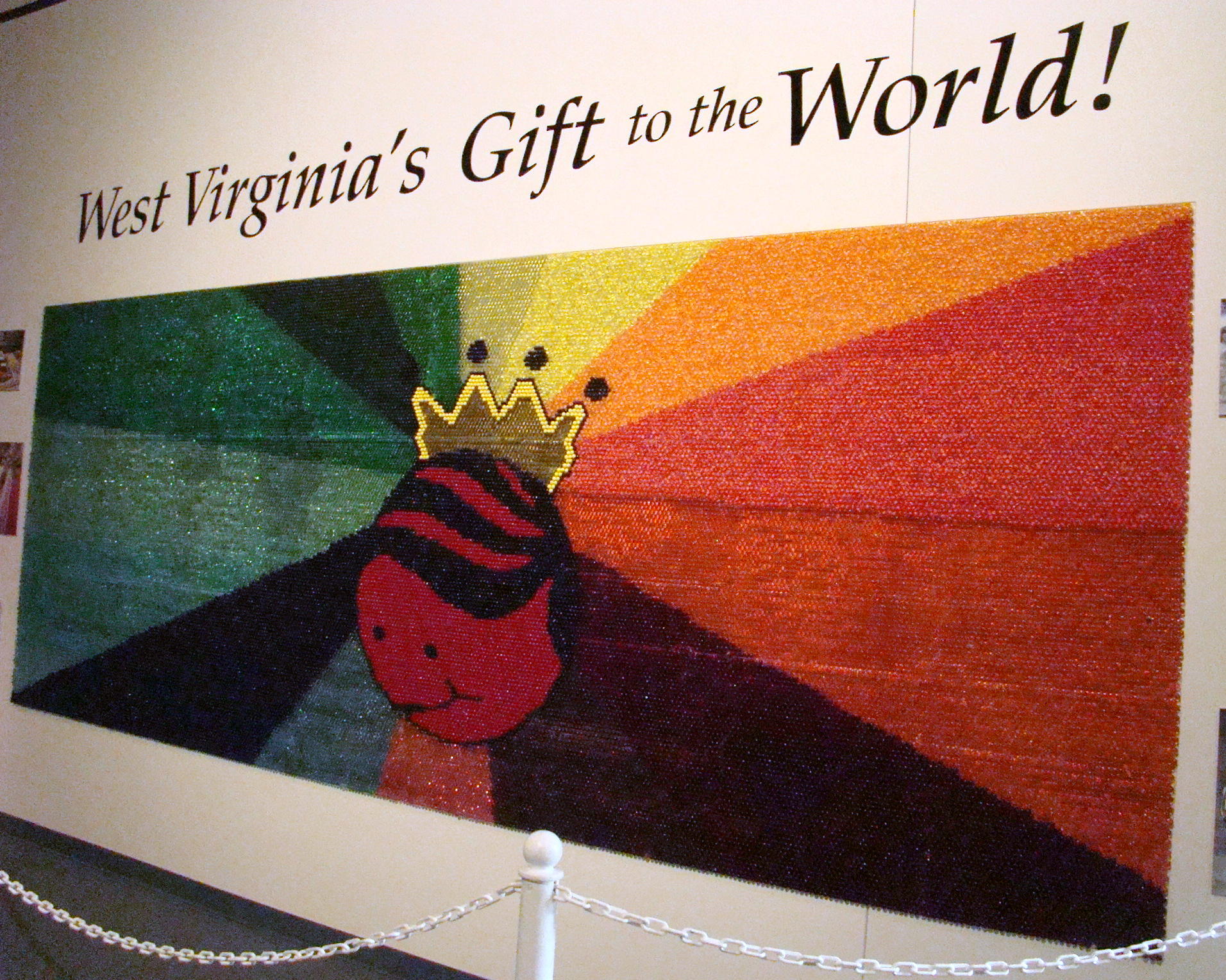
Marble King's creative design with marbles

Marble King’s creative design with marbles

The Marble King actually received its name from a gentleman named Berry Pink. While working for Peltier Glass, Berry traveled across the country hosting marble tournaments and giving away marbles at each stop. Reminds me of Johnny Appleseed ! When Peltier Glass could no longer keep up with the demand, Berry and a partner formed a company and named it after Berry’s nickname, The Marble King. Not only do children still enjoy playing marbles either in the traditional way or with games, but many artistic designs have also been created using their beautiful colors. Marbles are thought to be the first competitive sport as far back as the Greek and Roman Empires.

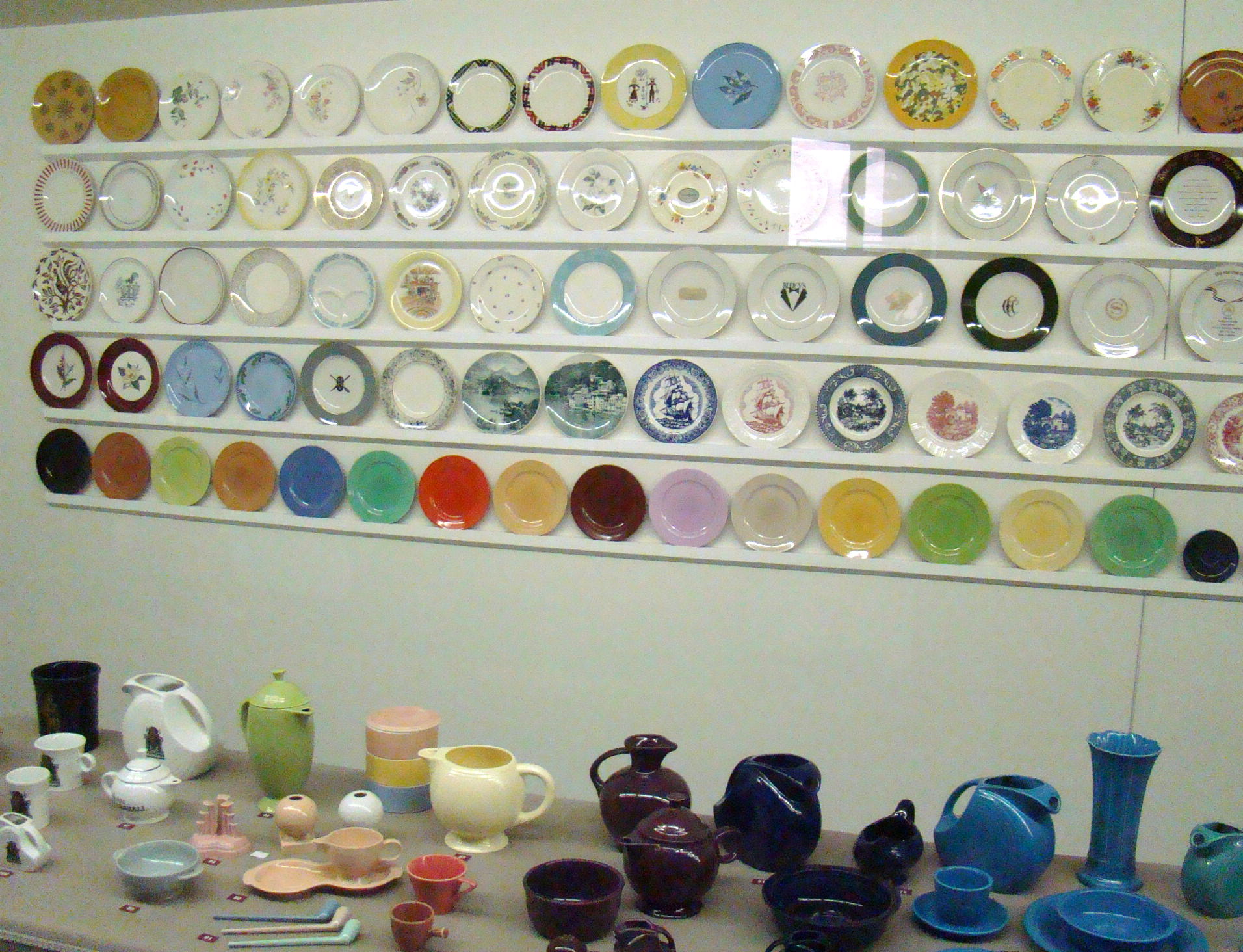
Display of Homer Laughlin China Company's popular items

Display of Homer Laughlin China Company’s popular items

Homer Laughlin China Company has provided many families with quality chinaware for nearly 150 years. Homer and Shakespeare Laughlin started their company way back in 1871 in East Liverpool, Ohio. In 1902, Homer moved the kilns to Newell, WV just across the Ohio River using the new suspension bridge and trolleyline as a means to bring his trained potters across to West Virginia. Here they constructed the largest pottery plant ever built in the world. This fine pottery is a highly collectible item in the area, but many families still use it for special occassions. This large display will bring back memories for many of the viewers.

The remainder of this museum deals with the history of the basic reason for this entire complex – Grave Creek Mound – just outside the building. This large mound measuring 62′ high with a 240′ base diameter, is the largest conical earthen mound in the New World.  The secrets of this mound will require another tale. So stay tuned…for the rest of the story.

Grave Creek Mound Archeological Complex in Moundsville, West Virginia is located on the east bank of the Ohio River. Traveling on the West Virginia side of the river, follow Route 2 into Moundsville.  Turn left on 8th Street and after two blocks turn right onto Jefferson Ave. You can’t miss The Mound! Admission is free and the complex is open Tuesday – Saturday from 9am – 5pm.

A “Pleasant Point” Along the Ohio River

“A pleasant point” was the description given by surveyor, George Washington, when he arrived at the confluence of the Great Kanawha  and Ohio Rivers. Today the town that grew there is called Point Pleasant in West Virginia. The beautiful Riverfront Park is a pleasant surprise here and a wonderful place to take a leisurely stroll with the Ohio River on one side and large murals depicting the town’s history on the other.You can glimpse the Silver Memorial Bridge close to  the point where the Great Kanawha River joins the Ohio River near the end of the Riverwalk in the State Park, Tu-Endie-Wei, which adjoins.

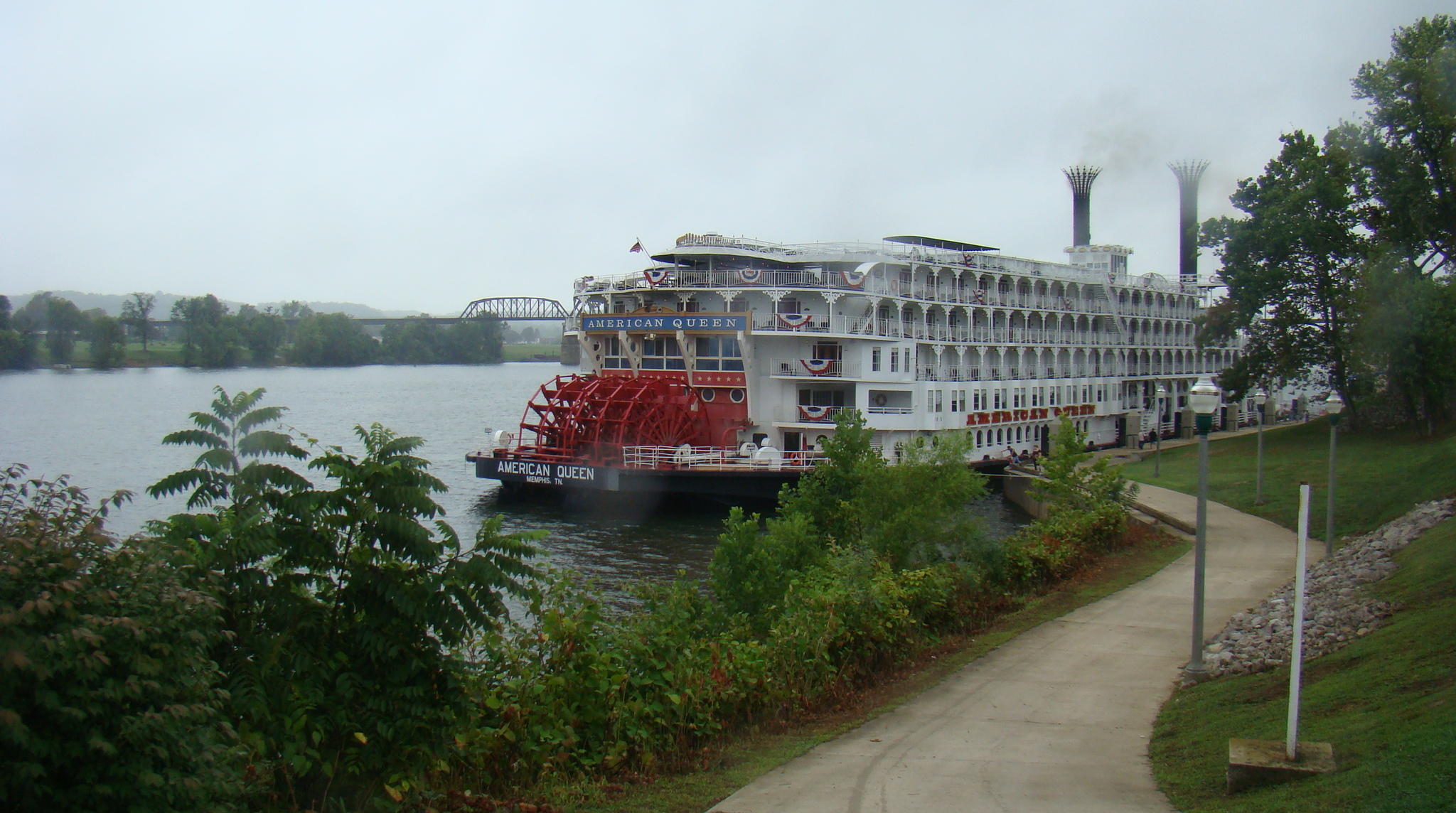
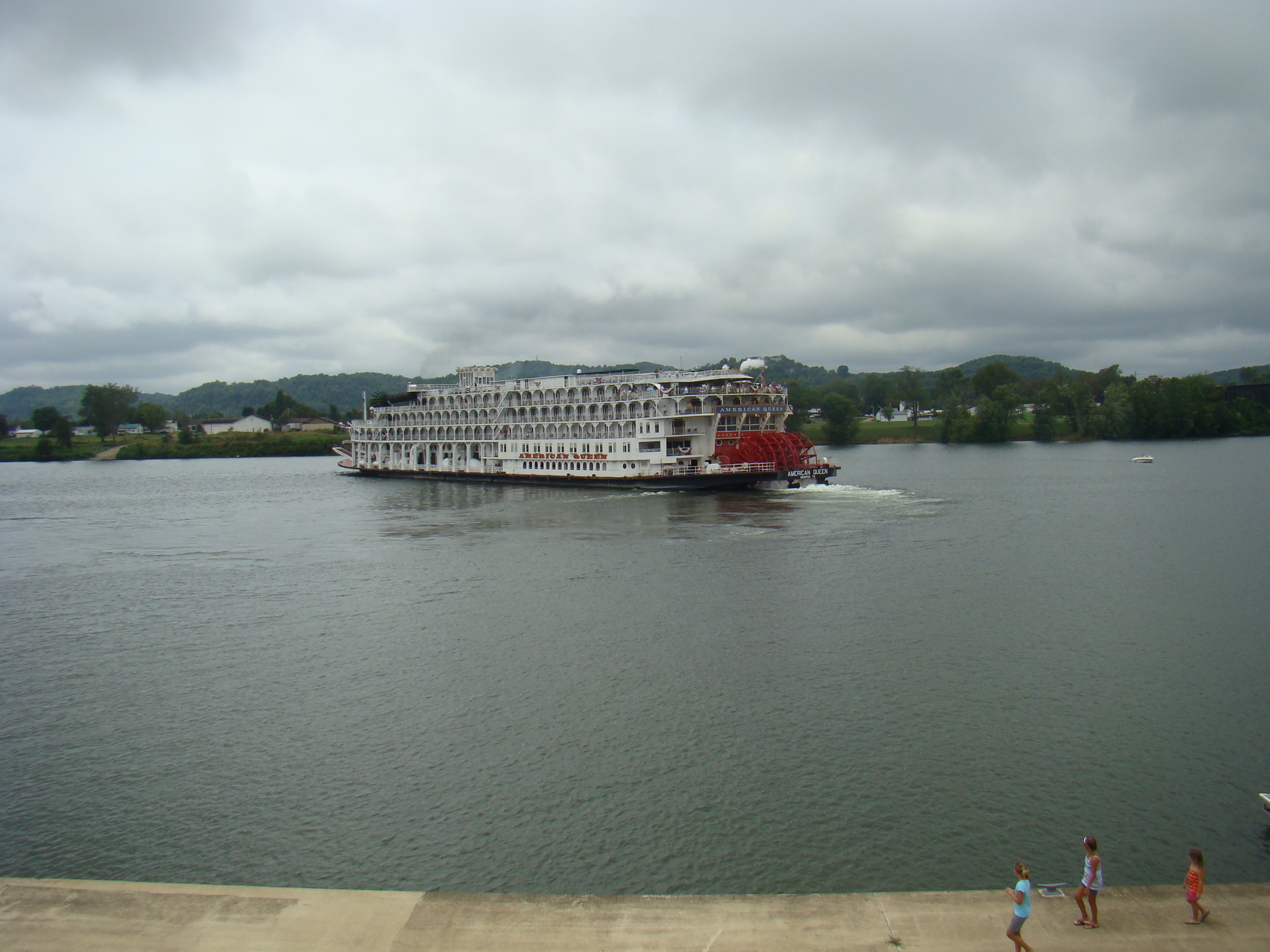
The Ohio River peacefully flows carrying boats of various sizes for many purposes.  There are coal barges, speedboats, riverboats, and luckily this day the spectacular American Queen, the largest steamboat even built in the world. Built in 1995,  this beautiful riverboat is a  six-deck re-creation of a classic Mississippi Steamboat.  Its flat-bottomed style makes it possible to even continue if the waters become shallow.

Murals are painted on the floodwalls flanking the Ohio and Kanawha Rivers representing scenes from the Battle of Point Pleasant as well as other pieces of Point Pleasant history, including the Indian settlements of earlier days. Each large mural, measuring from 100-250 feet long, has one single monumental scene painted by artist Robert Dafford. His murals can be found in several cities along the Ohio River from here at Point Pleasant, West Virginia to Paducah, Kentucky.

One depicts the 19-year old George Washington surveying the wilderness where he met Benjamin Franklin and some land speculators, who were founders of the Great Ohio Company. This group intended to found a new colony called Vandalia that would have encompassed most of today’s West Virginia and Kentucky.  What a surprise to learn that on the eve of the American Revolution, there were thoughts of creating a fourteenth colony with Point Pleasant as its capital.

On the other side of the murals is the historic Lowe Hotel, the largest landmark in Point Pleasant. Built in 1901 of Cleveland Berea stone and red brick, this monument was originally called the Spencer Hotel in honor of J.S. Spencer, friend and financial backer of the Smith brothers who owned the hotel.  At that time, traffic on the Ohio River was heavy, so a place to spend the night became an important attraction at Point Pleasant.  Today that  hotel is said to be haunted by guests who decided not to check out, one of those being Captain Jim who is waiting for his steamboat.

Two unusual metal statues of Chief Cornstalk and Colonel Andrew Lewis caught my eye along the Riverwalk. These were the two combatants in what many say was the first battle of the Revolutionary War…the Battle of Point Pleasant. The Virginia Militia led by Andrew Lewis defeated Chief Cornstalk, the Shawnee leader, and his braves, thus preventing the Native Americans from forming an alliance with the British. This in turn had a major influence on the outcome of the War of Independence. Their statues are located in front of a mural depicting the Battle of Point Pleasant in 1774.

By late afternoon, the American Queen paddlewheels begin turning and the riverboat slowly, almost magically, floats away from the shore. Calliope music fills the air and seems to take one back in time to a happier, more peaceful way of life. This is a great spot to sit down in a swing and watch the river and your cares drift away.

The Riverwalk at Point Pleasant, West Virginia is located just a half block from Main Street and of course, along the Ohio River. Frequent festivals throughout the year are held here and it is often a stopping point for riverboats. 

Mysterious Mothman Museum Keep Your Eyes on the Sky

“Something bad is going to happen. Don’t go back.” “Be careful girl, I’ll get you.” These were just a couple of the messages received by residents of Point Pleasant, West Virginia after the appearance of what locals call “The Mothman”.

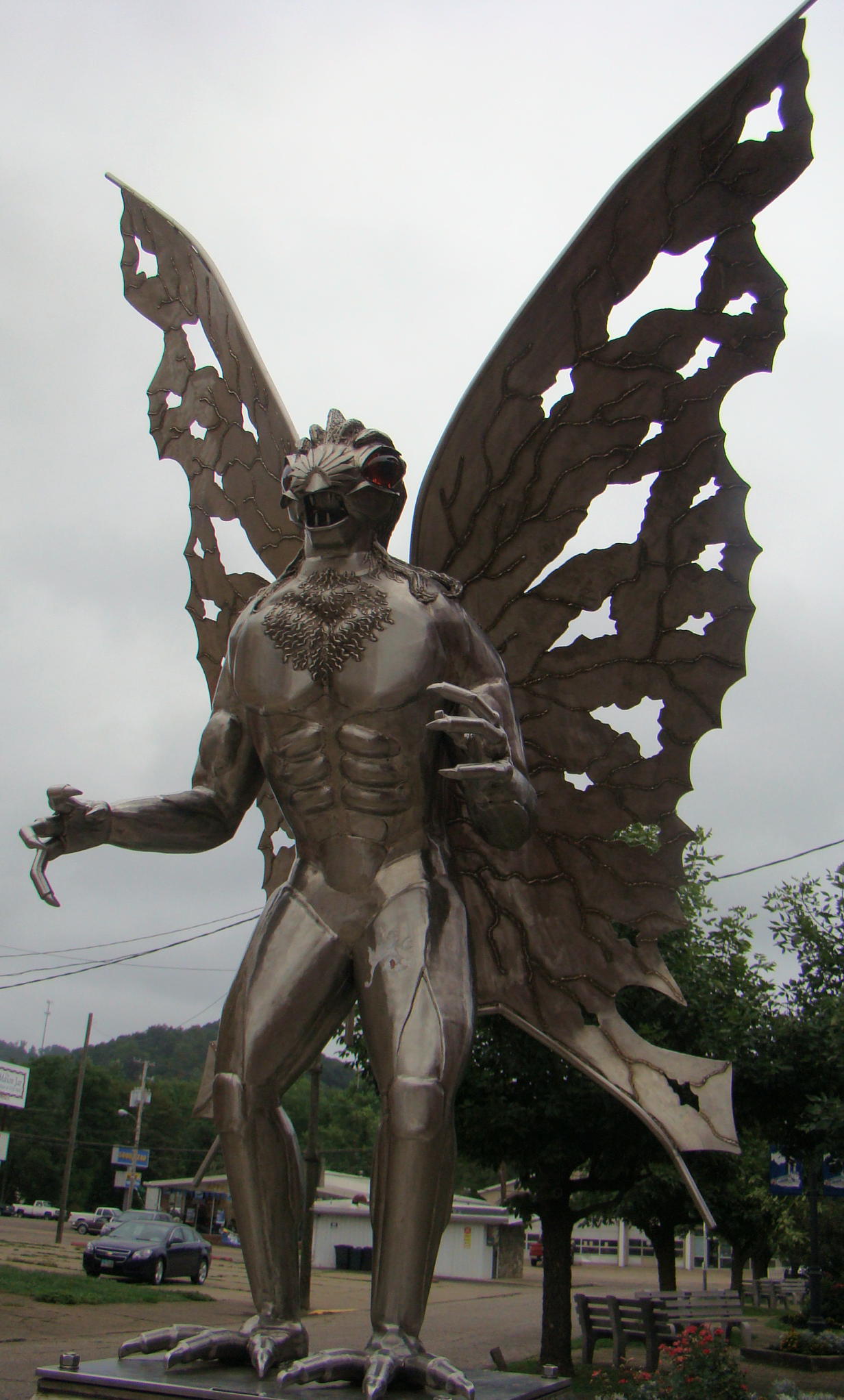
First stop on your Mothman adventure in downtown Point Pleasant will probably be the statue of Mothman at the corner of Main and Fourth Streets. This stainless steel sculpture by artist Robert Roach was unveiled in 2003 in what is now called Mothman Park. Red eyes are one of the outstanding features of this life size creature and are set to glow at night.

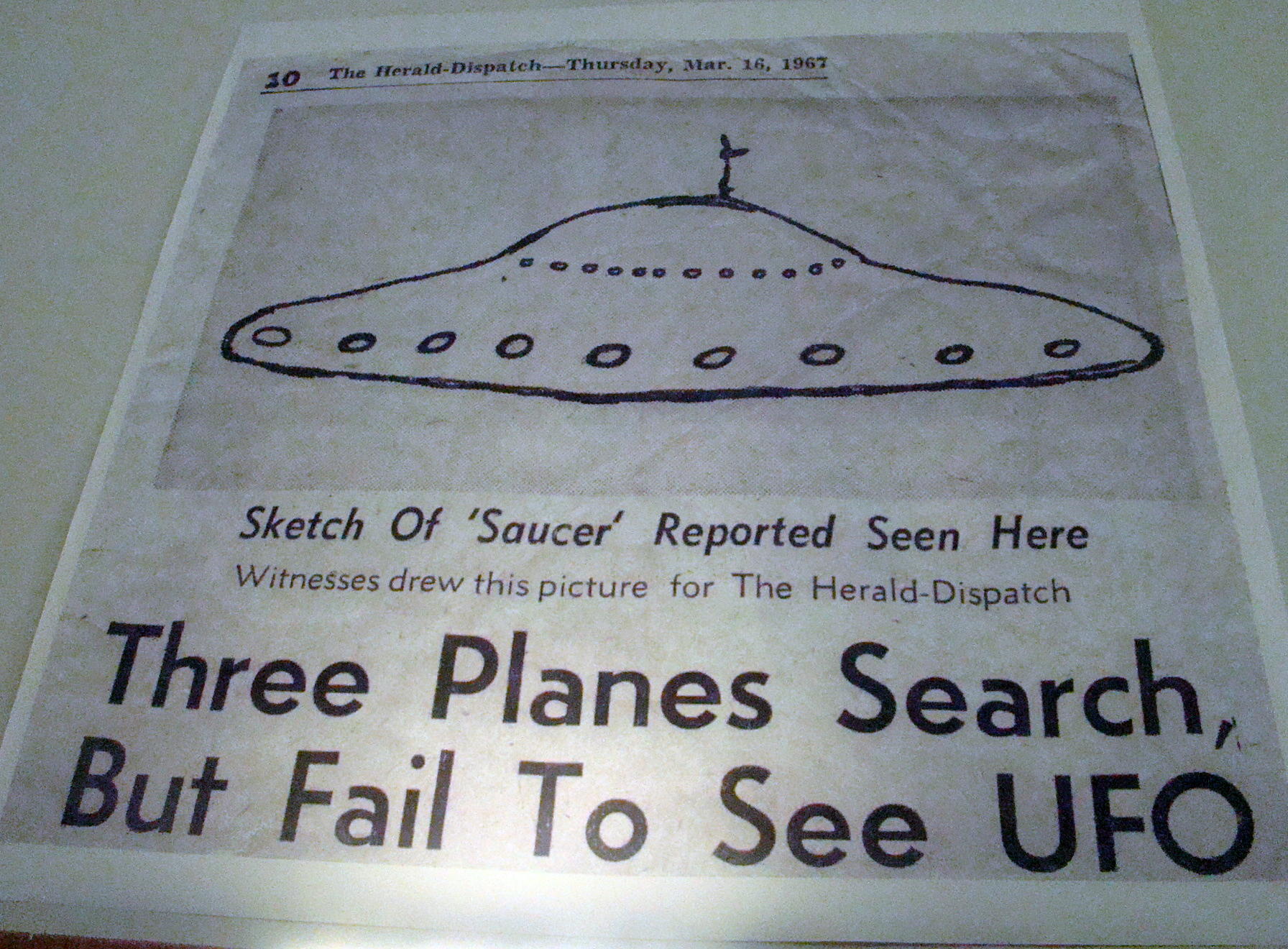
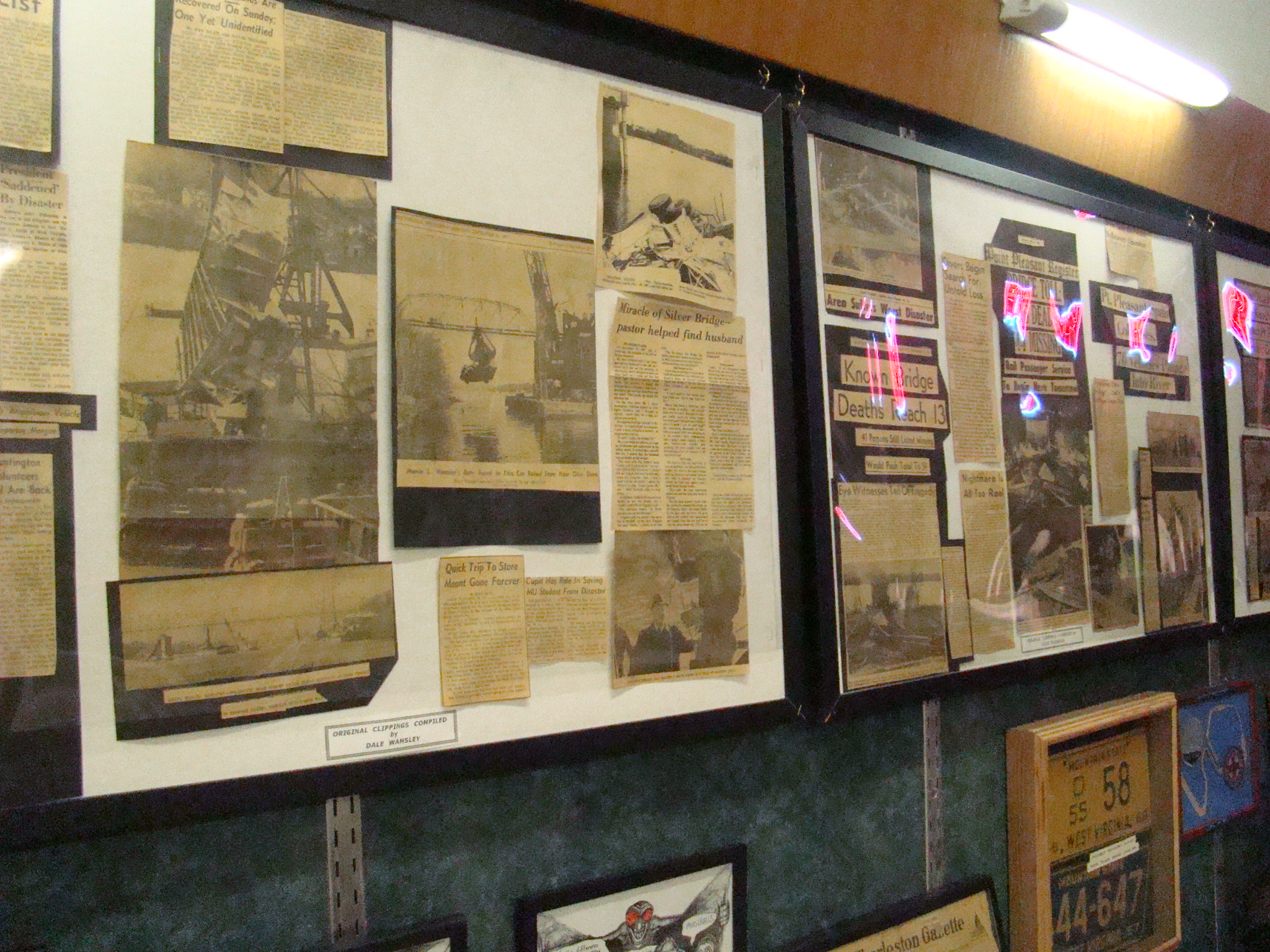
Today a visit to Mothman Museum will review the story of this unexplained mystery through videos, recordings, newspaper clippings of Mothman sitings, photos of the Silver Bridge collapse, and props from the Mothman Prophecies movie.

In 1966-67, over a hundred appearances by Mothman in the surrounding area frightened residents to the point that they were afraid to go out at night.  A seven foot tall figure would first be seen appearing to have wings with feathers, which had a ten foot wingspan. As it got closer the glow of its fiery red eyes seemed to be one of its most frightening features. Those who saw it would have terrible headaches, dreams, and visions.

At nearly the same time, UFO’s were also seen in town. Law enforcement as well as local residents were searching for Mothman and the UFO’s at night with search lights, as though they were searching for Frankenstein. The UFO’s were said to be disc shaped objects in the night sky with red lights encircling them.

Another mystery was the arrival in town of Men in Black. Really!  These men dressed in black suits would threaten those who had seen Mothman to silence…or else.  One newspaper reporter said the Men in Black visited her or phoned her and told her not to publish any more stories about the Mothman or UFO’s. One curious thing about them was that they never blinked their eyes. The government denied any involvement. These same Men in Black were seen crawling around the bridge before its collapse. This same reporter had visions of many Christmas packages floating in the Ohio River, which actually happened at the time of the collapse of the Silver Bridge on December 15, 1967.

When the Silver Bridge collapsed, witnesses reported it came down like dominoes. A loud cracking sound was heard and in less than a minute, the entire bridge collapsed into the icy waters of the Ohio River. Forty-six people died when the bridge completely disappeared under the water.  Mothman had appeared 13 months prior to the collapse, which occurred at Pier 13. Several possible reasons were given for the disastrous bridge collapse: 1) structural failure, 2) a sonic boom, or 3) the Curse of Chief Cornstalk.

While structural failure seems the most likely, could a sonic like boom have been caused by the sinister Men in Black crawling over the bridge shortly before it collapsed, or by Mothman’s wings?  Or was Chief Cornstalks’s curse responsible? Chief Cornstalk worked hard to keep his people neutral and was a member at treaty councils. When Chief Cornstalk surrendered in 1774 at the Battle of Point Pleasant, he signed a peace treaty with the Virginia militia, but a couple years later Cornstalk and his son were executed by the British. At this time, Cornstalk is said to have placed a curse of death and destruction on the town of Point Pleasant, as recorded in part here:

“I came to the fort as your friend and you murdered me. You have murdered by my side, my young son…. For this, may the curse of the Great Spirit rest upon this land. May it be blighted by nature. May it even be blighted in its hopes. May the strength of its peoples be paralyzed by the stain of our blood.”

However, after careful review, it was found that a weak eyebar was the most probable cause of the collapse, perhaps stressed by the additional weight of all the rush hour holiday traffic.

Many feel that the Mothman was a Prophet of Doom, warning the people that a tragedy was going to happen, as there are no stories of him attempting to harm anyone.  Fascinating Mothman appearances don’t seem to be limited to this one spot as there have been sightings around the world from Cincinnati to Afghanistan before major tragedies, for example: the earthquake in Mexico City, and the Chernobyl nuclear power plant in Ukraine.

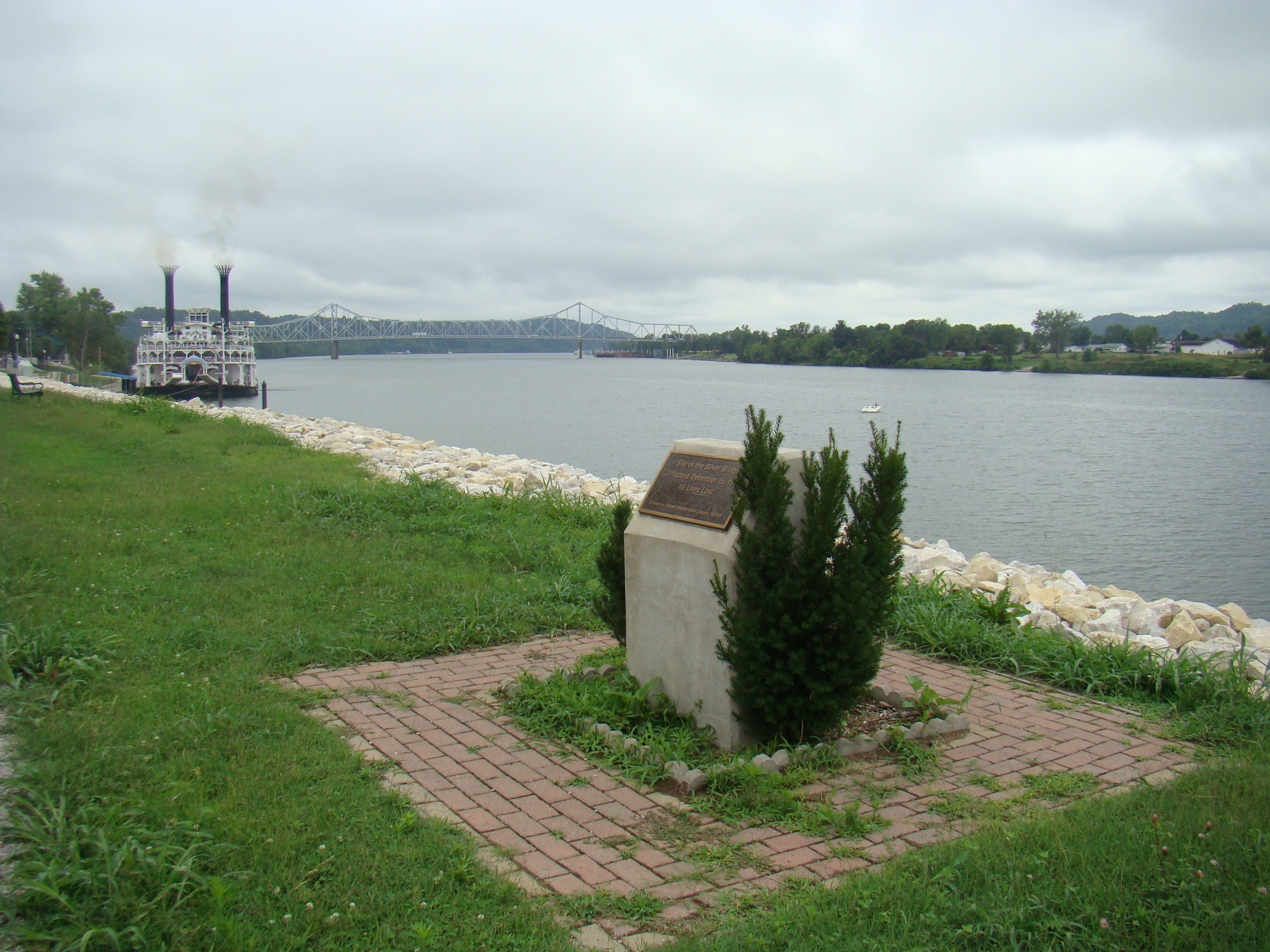
Before leaving town  If you walk up the street a half block to the Ohio River you can also see along the Riverwalk a stone set at the place of the original Silver Bridge, which is just up the river from today’s bridge crossing the Ohio River to the Gallipolis area. During this visit, the American Queen can be seen docked between the two points.

After the Silver Bridge collapsed, there were no further sightings of Mothman, the UFO’s or the Men in Black.  Just mere chance? You decide. Best to keep an open mind as someday it could happen to you.  What will you do if YOU see Mothman?

Mothman Museum, one of the sidewalk shops of the famous Lowe Hotel, is along the Ohio River in Point Pleasant, West Virginia.  Across the street from the Mothman Statue on Main Street, the museum is open every afternoon.

Waddington Farm Becomes Oglebay Park

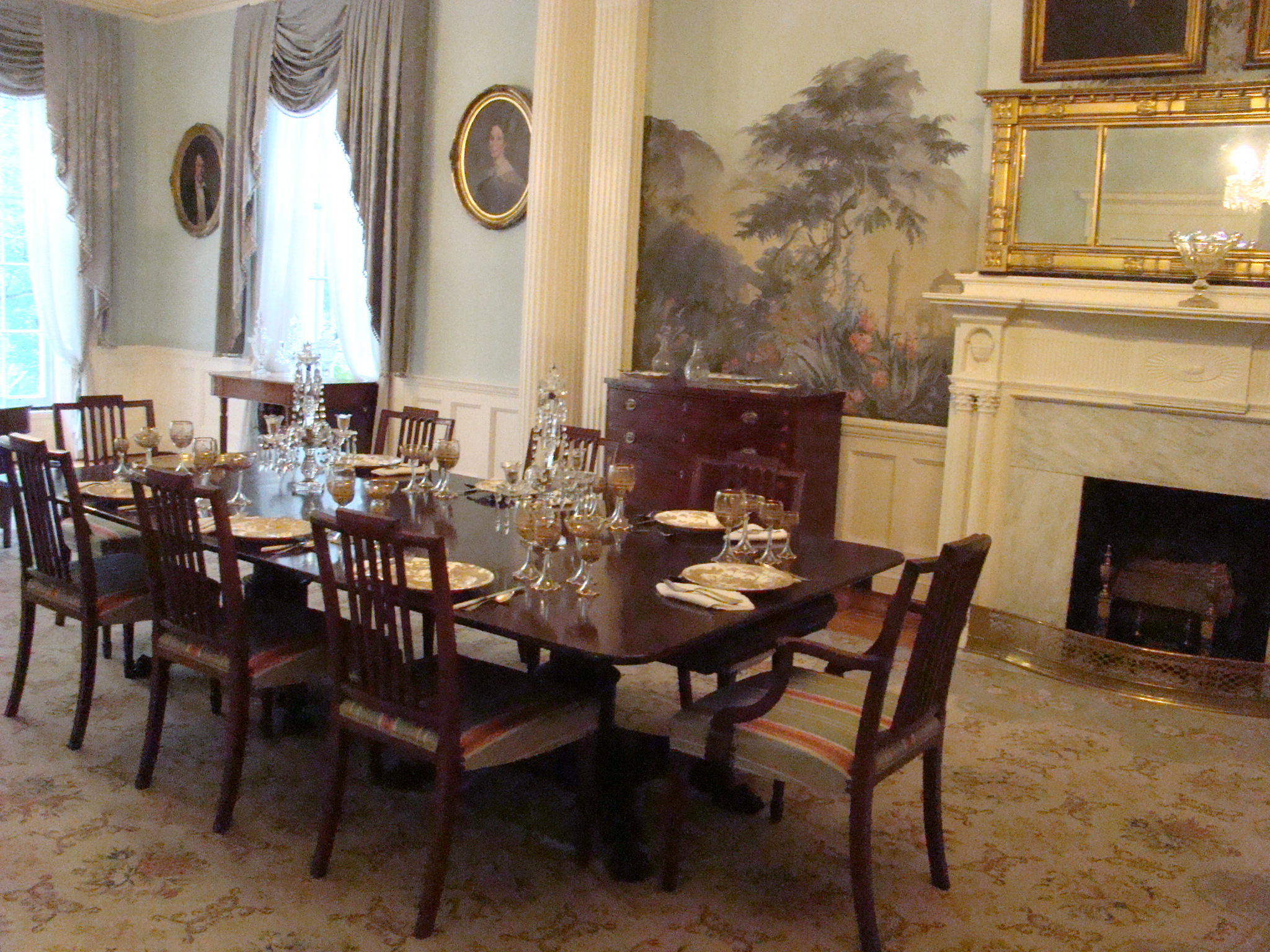
Exquisite! A feeling of wealth poured from the Oglebay Mansion Museum in Wheeling, West Virginia. In 1900, Earl Oglebay, Cleveland industrialist and Wheeling financier, purchased Waddington Farm to use it for experimental ideas such as crop rotation and soil improvement. He worked hard to develop quality of life for rural farmers and supported development of 4-H clubs.  His methods were considered outlandish at the time, but soon opened the eyes of many in the world of agriculture. After his death, he left Waddington Farm to the people of Wheeling and today it is Oglebay Park.

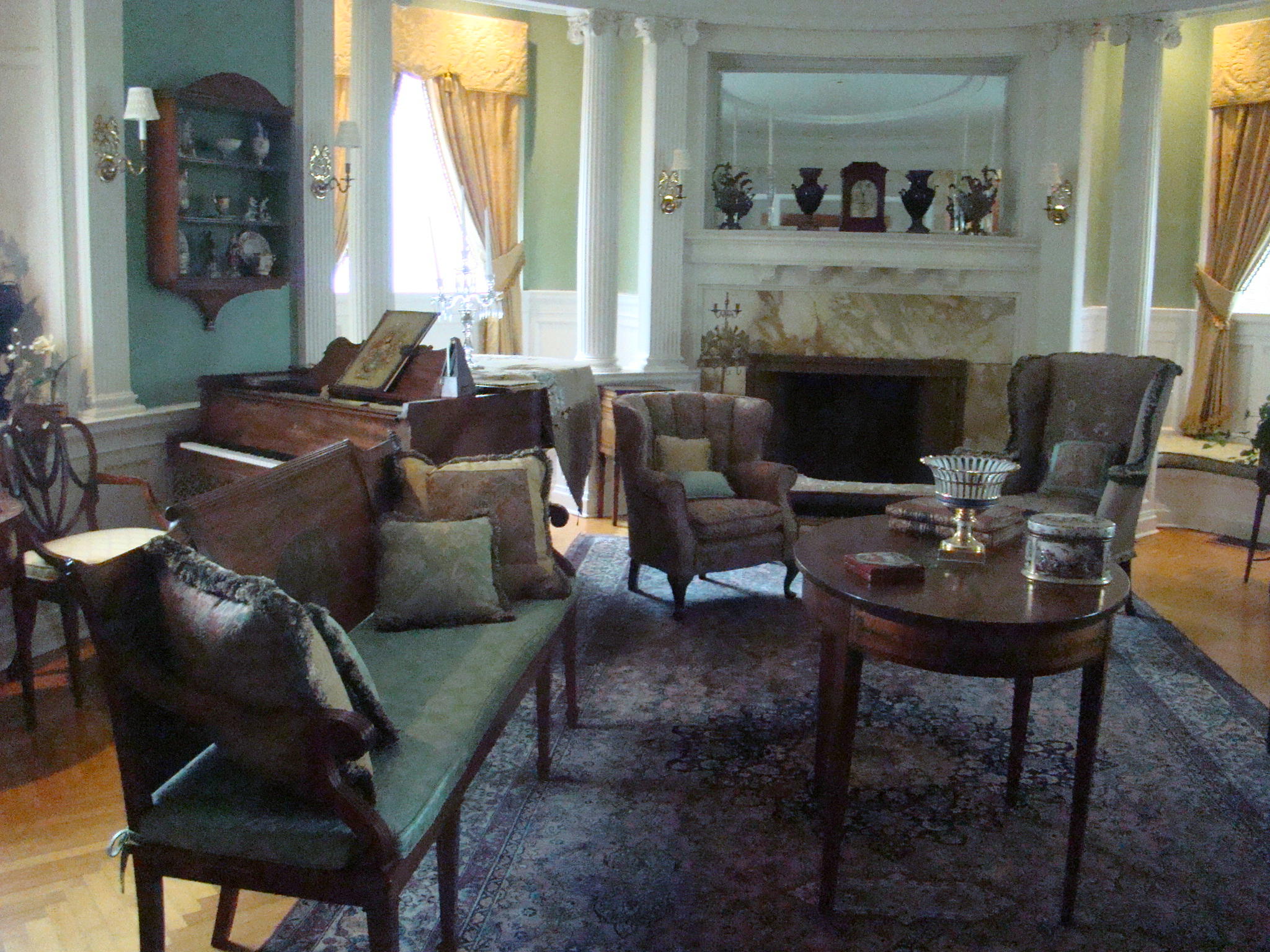
Everywhere you looked, you saw high quality, beautiful antiques in their home. When you visit, there are recordings to tell you about the furnishings, paintings, and life of the family in each room. But the Museum has more in store for you than just beautiful furnishings and paintings, as they have gone to great lengths to provide a history of the area as well.

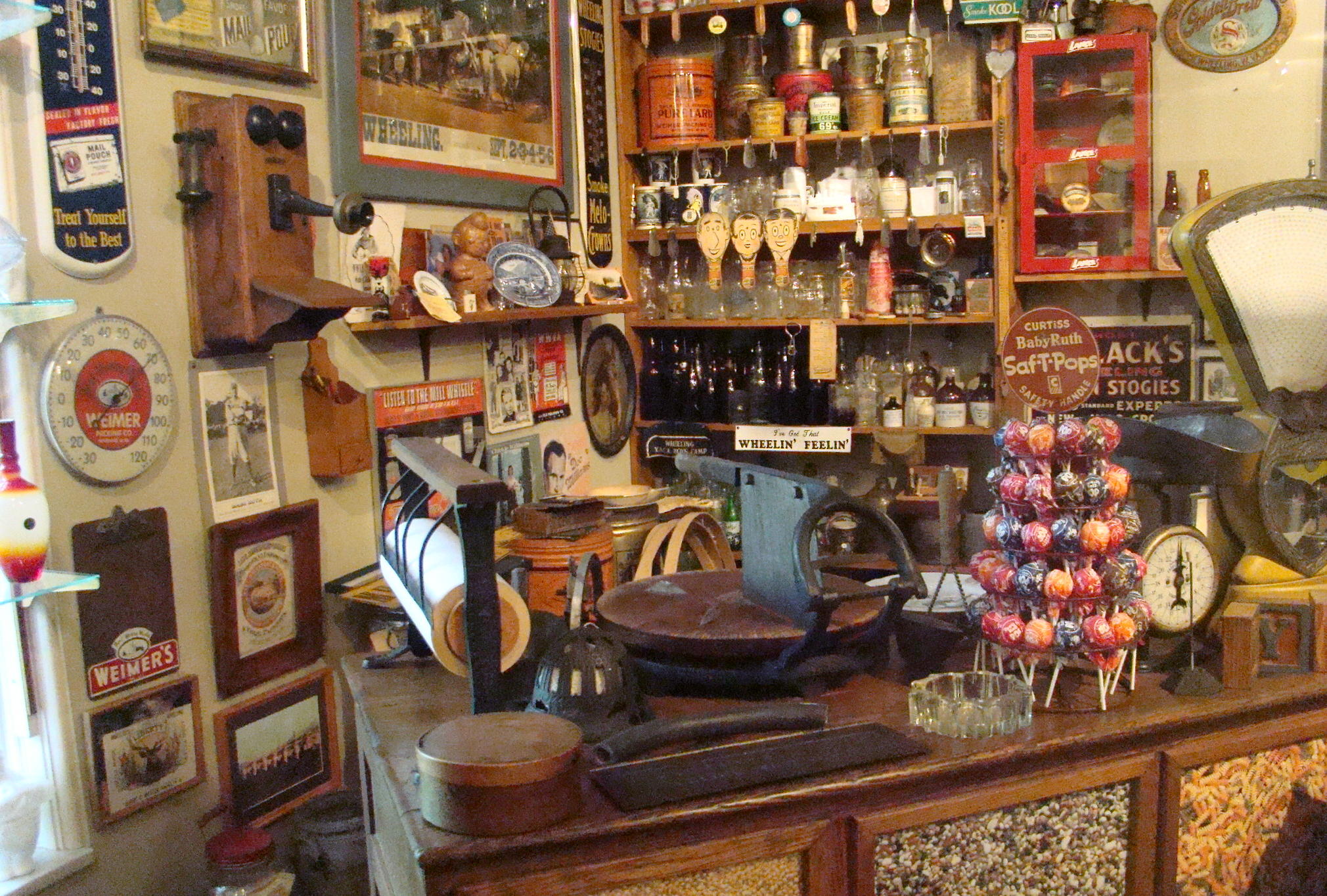
The Pioneering Spirit Exhibition features the history of Wheeling, plus stores and rooms of the early 1900s. Wymer General Store and Sinclair Pharmacy are two of the highlights. Especially enjoyed the General Store as my grandfather had a very similar one. It was a step back in time to see the old candy case, roll of meat wrapping paper, scales, and all the things that created a  one stop place to shop many years ago.

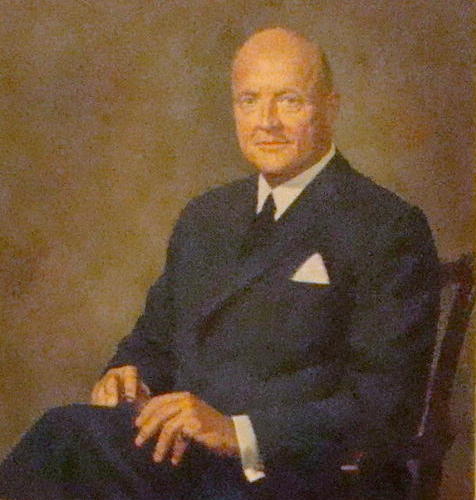
Earl Oglebay’s only grandson, Courtney Burton, was much in evidence in several large oil paintings scattered throughout the house. Courtney always enjoyed horses, even as a child.  The story was told that he even brought one to the bedroom in the mansion, after riding around what is today Oglebay Park.  As he grew up, his love for horses made him a champion polo player and a master of foxhounds.

Here you find the history of Wheeling from pioneer to Victorian time depicted in pictures, stories, and displays. The name Wheeling was actually a piece of Native American vocabulary, Weelunk, which means place of scalp or skull. Indians decapitated early settlers there and placed their skulls on poles in the Ohio River, creating a unique “No Trespassing” sign. But when Ebenezer Zane’s family settled there in 1769, they said Wheeling was “a vision of paradise.”

Downstairs there is a changing exhibit, which at this time was In Their Wake: Wheeling and the Steamboat Revolution. 2011 is the bicentennial anniversary of the first successful steamboat, New Orleans, that traveled  down the Ohio and Mississippi Rivers to New Orleans with passage costing $30.  The exhibit displayed the many changes that occurred in Wheeling manufacturing and the influx of travelers and new residents into the city.  Wheeling is listed as the birthplace in 1816 of the  American steamboat, The George Washington, which set the pattern for future steamboats.  Also on display were pictures of the original Wheeling Suspension Bridge built in 1847. At that time it was 1,010′ from tower to tower and the longest suspension bridge in the world.

What a beautiful mansion in the rolling mountains of West Virginia!  Imagine spending a quiet evening in the favorite room of the Oglebays surrounded by the treasures of yesteryear. Musical activities were a popular relaxation and many of the rooms contained a piano, organ, or record player. What an elegant place to spend the evening. What a wonderful life!

Oglebay Mansion Museum is part of the Oglebay Institute in Wheeling, West Virginia.  Located just off I-70 at Exit 2A, follow posted signs to Oglebay Park. Continue on Lodge Drive up the mountain side to the Mansion, which is open most days from 9-5. 

Oglebay Institute Glass Museum Sparkles

Fire Art!  Hot! Hot! Hot! From the days of the early Romans to today in West Virginia, the art of blowing glass hasn’t changed dramatically. Inspire your imagination while visiting Oglebay Institute in Wheeling, West Virginia.

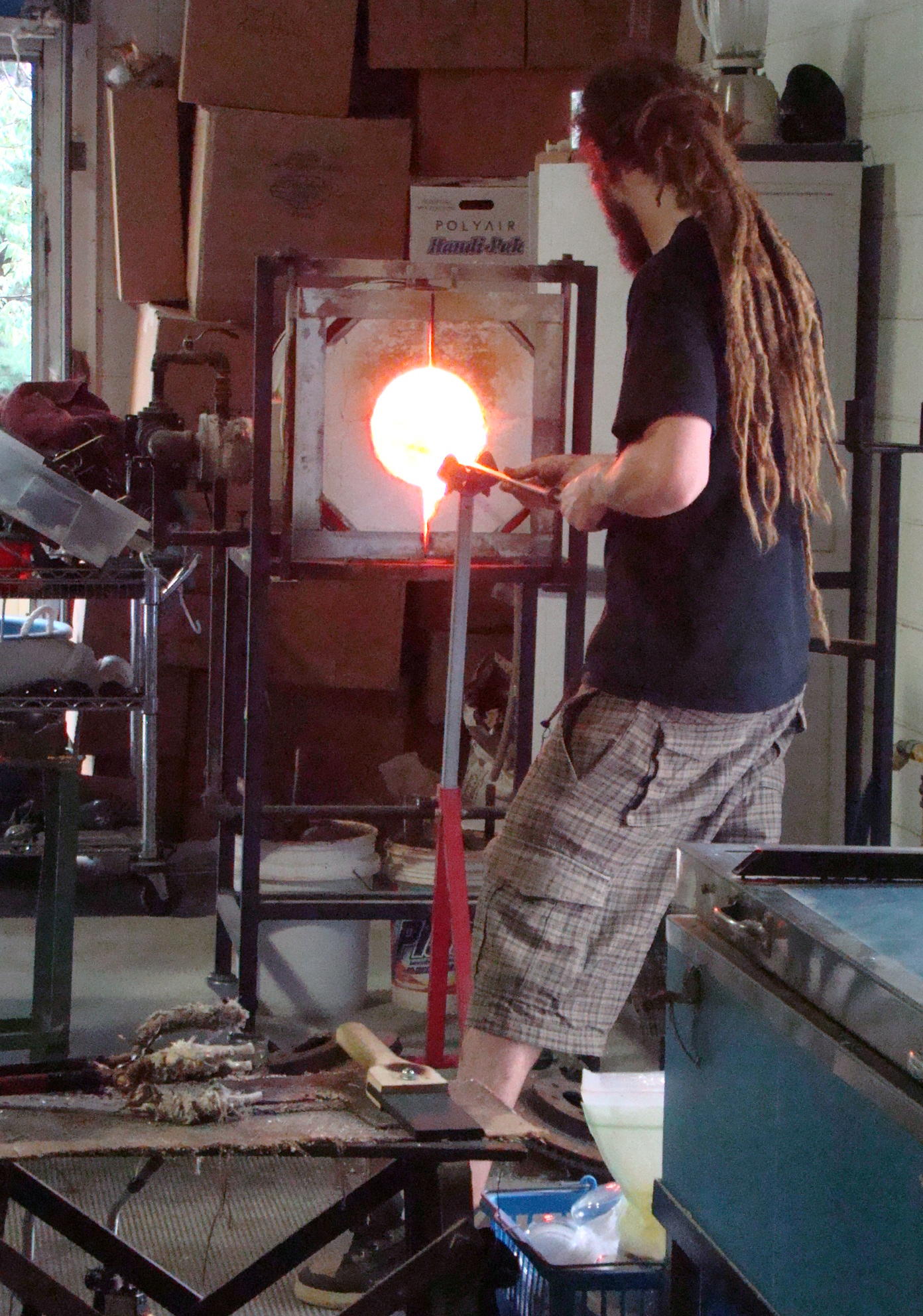
In the lower level of Carriage House Glass, the Oglebay Institute Glass Museum demonstrated the art of making various objects using glass blowing techniques.  A young man showed visitors how to form bowls, bottles, and paperweights using his many artistic skills.

Imagine working day after day in front  of an oven where the temperature was 2400 degrees F.  Yes, that figure is correct. Would feel like heat from an erupting volcano! That is the temperature needed to melt the raw materials used in the manufacture of glass.

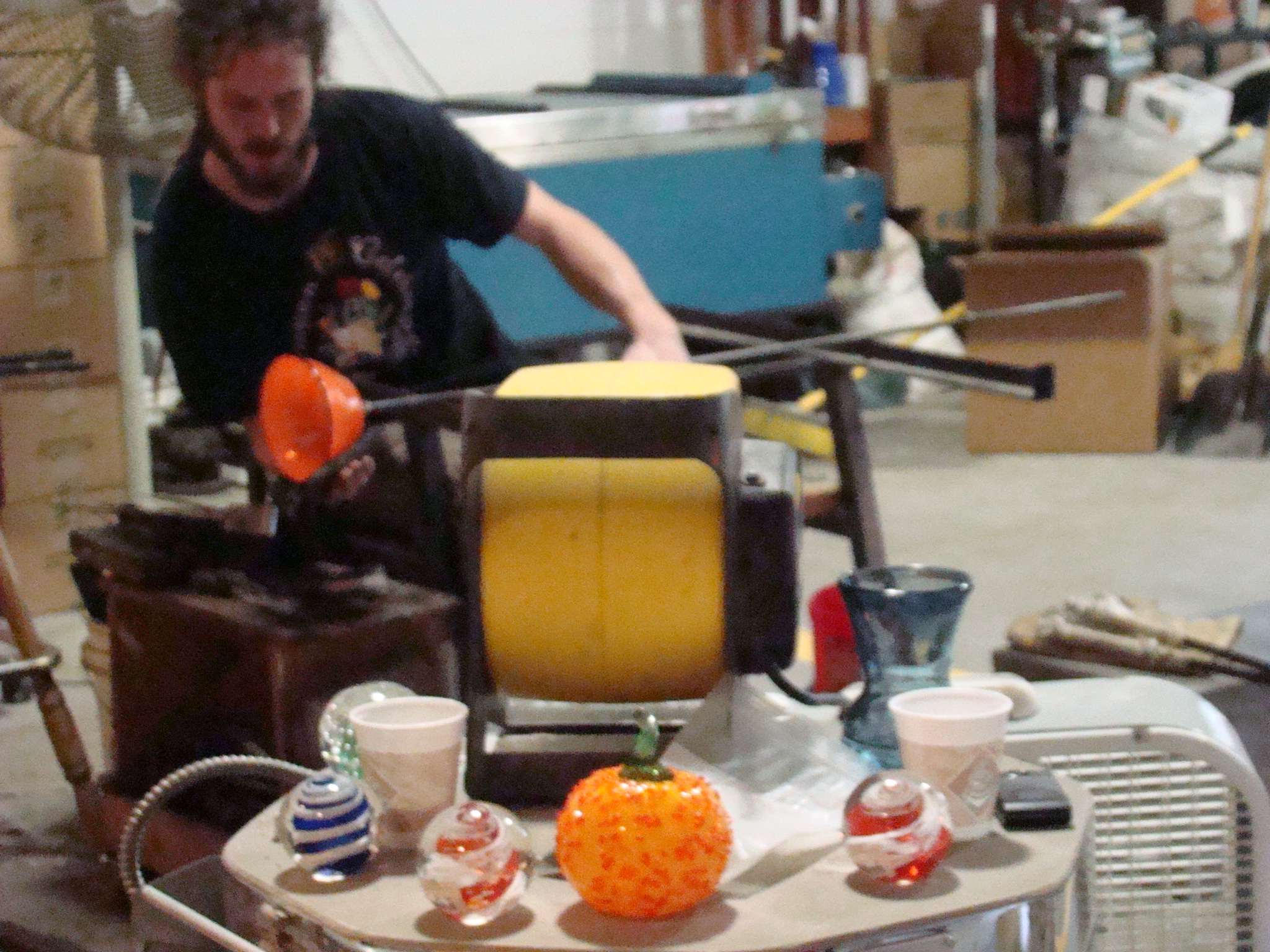
After the glassblower gathered a ball of glass on his blowpipe, the pipe was placed into the heating drum to get the glass to a temperature of at least 2200 degrees.  This is one hot job! He then took the glass and placed it in a mold to shape the glass into the object he wished to turn out. Several trips were necessary between the furnace and workbench to shape, finish off the rough edges, and flatten the bottom before he could break the newly formed object from the blowpipe.  He just hoped he had used the right temperature, and the correct strength of tapping to remove the object, or else his work would have been in vain and there would be a pile of broken glass.

But this time all went well and the glassblower, who had been doing this for five years now, put the bottle in a cooling tank, called an annealing oven, where the temperature would slowly be reduced to prevent cracking. In a regular glass factory, this cooling process would take place on a cool-down conveyor belt. In the picture at the left, you see examples of some of the beautiful paperweights, cups, and containers made using the art of glassblowing. Individuals can also make their own paperweights here…with a little help from the glassblower!

The glassblowing demonstration was just a small corner of the Glass Museum, where over 3000 pieces of Wheeling Glass (1829-1939) were on display as well as Northwood carnival glass, Victorian art glass, and many more.  Display cases glistened with the sparkling handcrafted glassware, as well as Ohio Valley pottery.

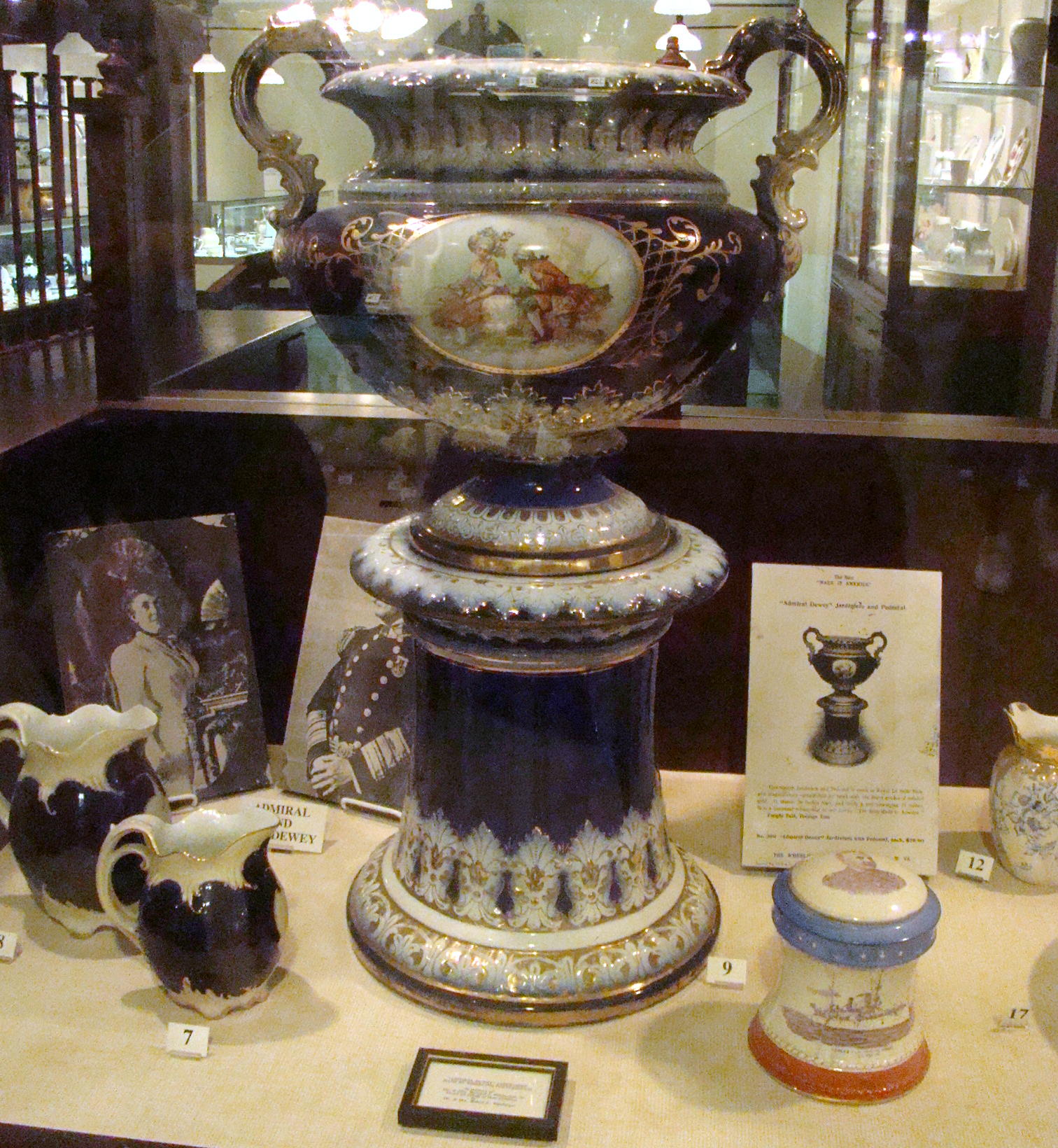
Among the popular pottery pieces, stands  a magnificent Flow Blue Jardiniere and Pedestal that belonged to Admiral Dewey.  Made by the Wheeling Pottery Company, it features a scene of Spanish American War naval hero, Admiral George Dewey. It was presented to the Deweys on a visit to Wheeling in the late 1800s. The Jardiniere stands about 3 1/2′ high and would originally have been used to hold flowers in a well-to-do Victorian home. This is thought to be the only Dewey Jardiniere of this size still existing.

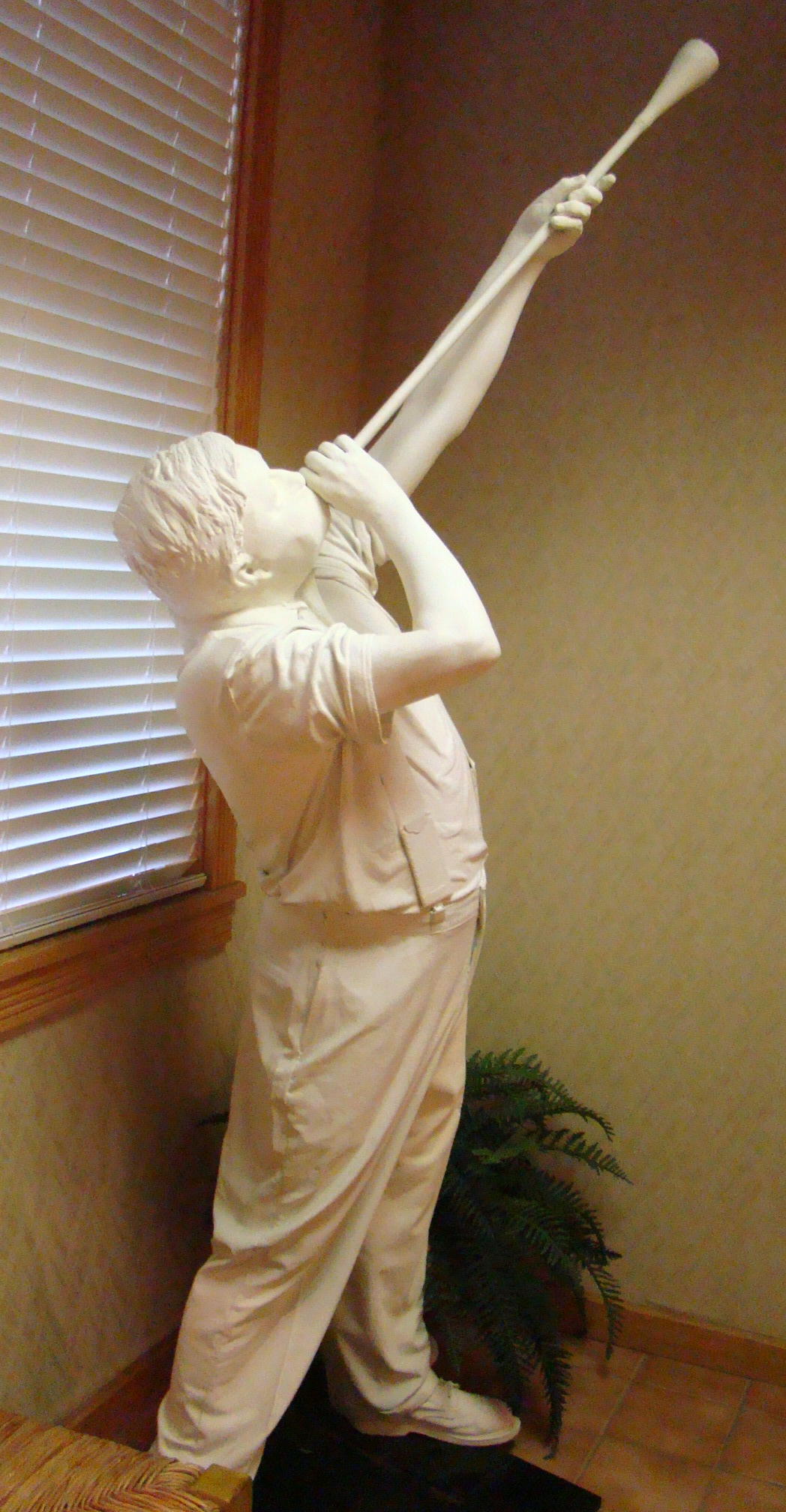
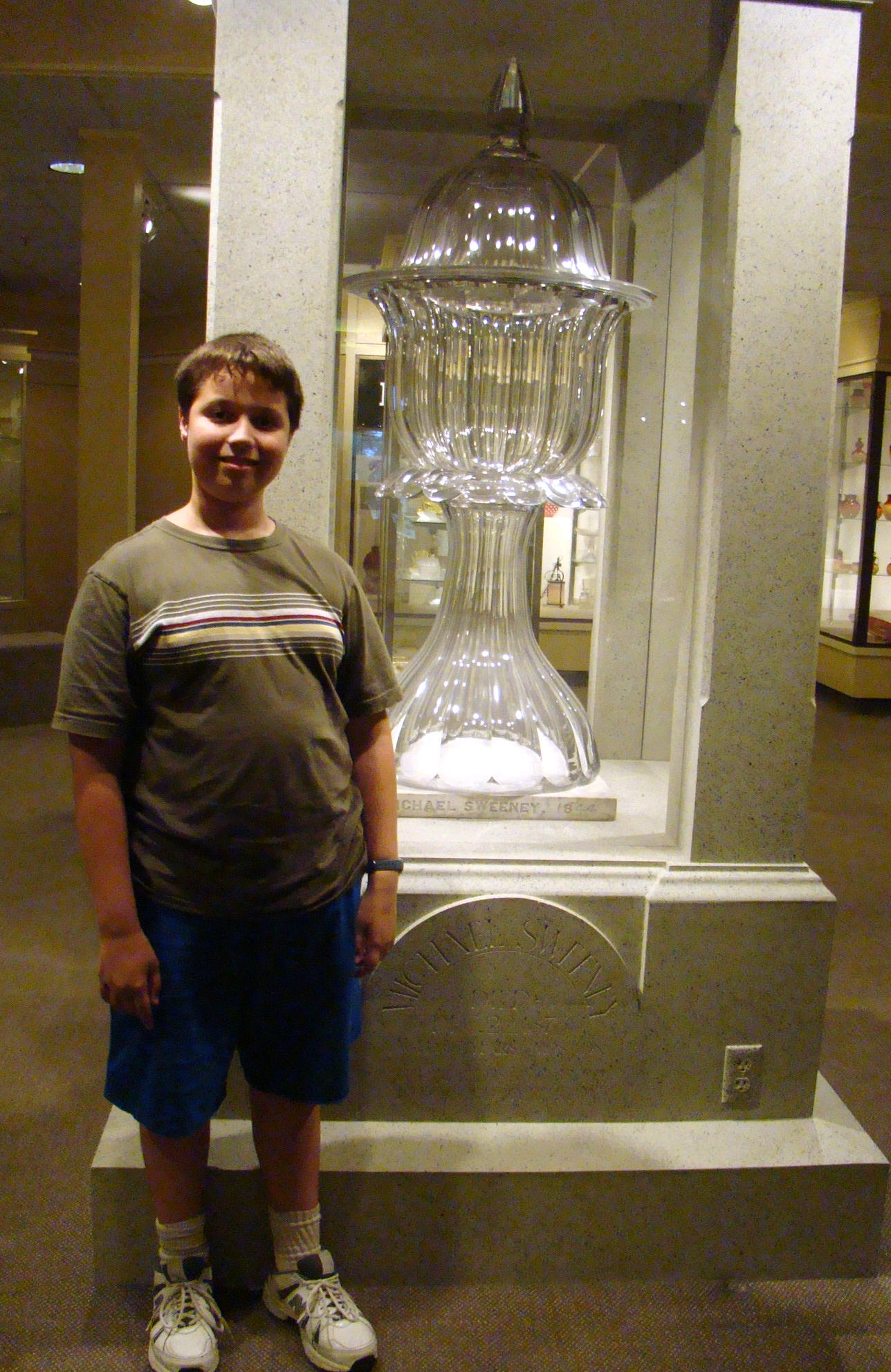
in 1849, the Sweeney brothers, Michael and Thomas, designed the largest cut glass crystal punch bowl ever made.  Sweeney Punch Bowl weighs 225 pounds and stands five feet tall, nearly as tall as the young man in the picture. After a disagreement occurred between the brothers,  Michael claimed the piece as his own work,  and for seventy four years it sat glass encased on his grave in Greenwood Cemetery in Wheeling, West Virginia. As you might imagine, when Thomas returned to the area and found the work claimed by Michael alone,  he was speechless. Today this priceless work of art is the centerpiece of the Oglebay Institute Glass Museum.

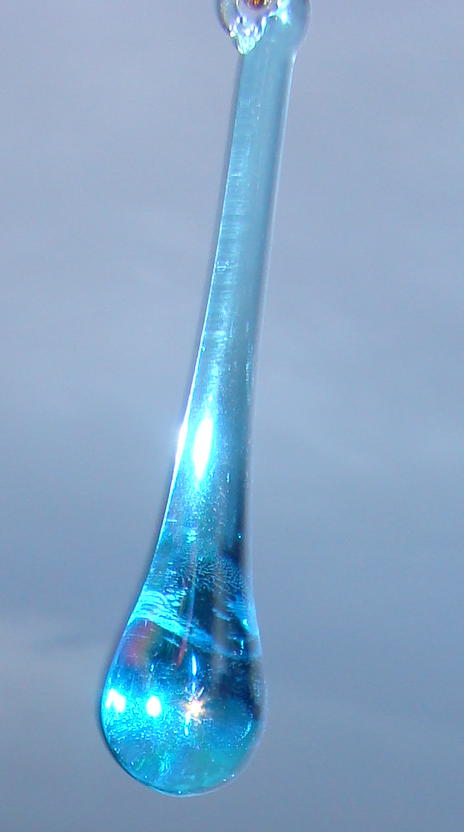
Back upstairs, Carriage Hill Glass Gift Shop was filled with unique, decorative gifts made of glass and pottery. There was everything from stained glass pieces to beautiful dinnerware, and their popular Glass Rain Drops. As a single raindrop raises the sea, so each of us makes a difference in the world – some cause storms and others grow flowers. Handcrafted glass continues to make a big difference in the world as people create their individual masterpieces.

The Museums of Oglebay Institute are located in Wheeling, West Virginia just off I-70 at Exit 2A. Then follow the Oglebay Park signs. Admission for both museums is a reasonable $10 per person.