Places to go and things to see by Gypsy Bev

Hoppy 1

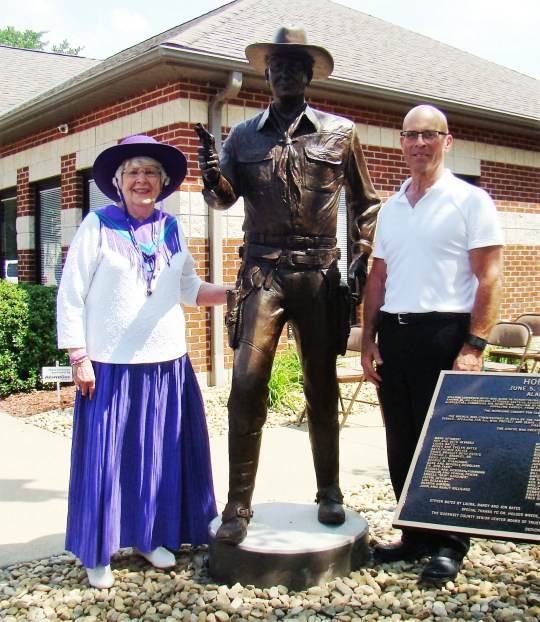
Laura Bates, Hopalong Cassidy Fan Club founder, stands beside the newly dedicated bronze statue of Hopalong Cassidy with the sculptor, Alan Cottrill.

The legend of Hopalong Cassidy lives on in Cambridge, Ohio where he grew up as William Boyd. In June, 2016, a bronze statue was placed at the Guernsey County Senior Center to honor this local hero. June was a fitting month for this to happen as June 5 was both the birthday of William Boyd and the date of his marriage to Grace.

Laura Bates had a vision and a dream to have this memorial statue built for her hero. Through the efforts of Laura and her dedicated Hoppy Fan Club members, money was raised for a life size statue of Hopalong Cassidy. Laura has been the organizer for Hopalong Cassidy Festivals in the Cambridge area for 25 years, and has printed a monthly newsletter that she shares with Hoppy’s Fan Club.

Guests appeared from all over the United States for the dedication, which Laura emceed in a western turquoise and purple outfit – the favorite colors of Hoppy’s wife, Grace. Why, the courthouse in downtown Cambridge was even lit in turquoise and purple to honor this special dedication.
Hoppy 2

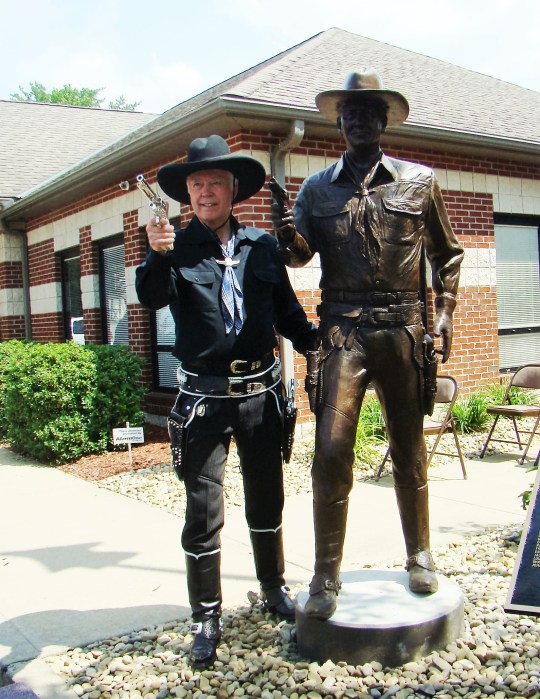
John Gilliland was the cowboy, who posed for Alan Cottrill when he designed the statue. He was kind enough to imitate that pose again at the dedication ceremony..

This celebration recalled those special values that Hopalong displayed and taught. He was a good man doing the right thing…the kind of cowboy who was clean living and never shot to kill anyone in his movies or television shows. Hoppy never smoked or drank and supported his home county even when he was in Hollywood. During WWI and WWII, when Hoppy bought savings bonds, he always gave the bond credit to Guernsey County.
Hoppy 4

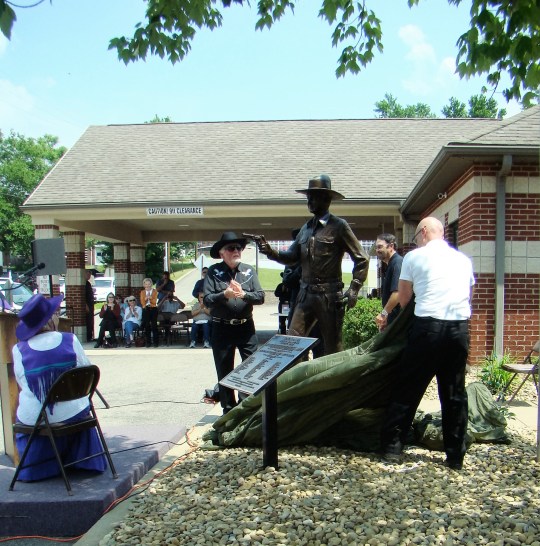
Laura Bates watches as the Hopalong Cassidy statue is unveiled.

The bronze statue made by Alan Cottrill, international sculptor, was brought to Cambridge a couple days earlier to be set on its foundation. Laura said this was not an easy thing to watch as they had a rope around Hoppy’s neck and were swinging him around so much that she feared he would be broken. No harm was done but it still was a very traumatic experience for her.
Hoppy Grace

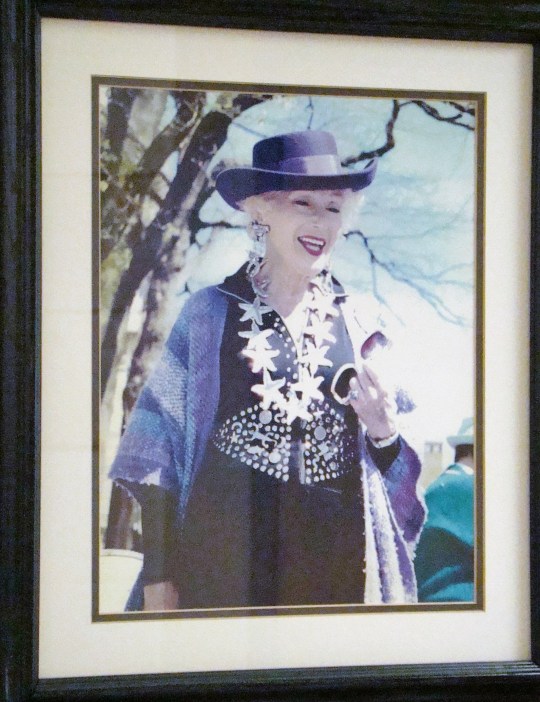
A picture of Grace Boyd was presented to the Senior Center and can be found in the entrance hall.

Having this statue placed at our Senior Center makes it the only Senior Center in Ohio with a bronze statue by the talented Alan Cottrill. His work is detailed and outstanding with a couple of his popular creations being the Thomas Edison bronze statue on display in Washington D.C and one of Woody Hayes on the Ohio State campus.
Hoppy Plaque

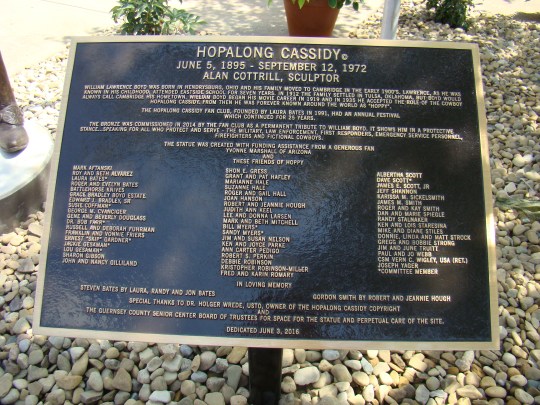
This plaque beside the statue acknowledges all those who contributed to keeping alive the memory of William Boyd, best known as Hopalong Cassidy.

Many dignitaries were in attendance to give words of praise for this legendary cowboy. Several mentioned that his words should continue to resonate throughout America. He stood for those values that we long to see come back. He always reminded children at the end of his programs to be mindful of how we treat each other.
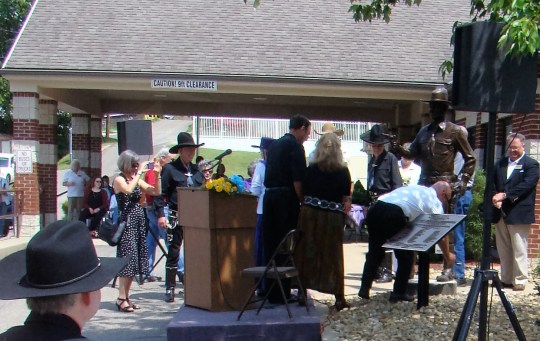
Hoppy DirtAt the conclusion of the dedication ceremony, several honored guests placed special soil around the bottom of the statue. This soil came from near the cabin where the Boyds stayed when films were being made in California.

The program ended with the reading of Hoppy’s Creed. The final words were:

Be glad and proud to be an American.
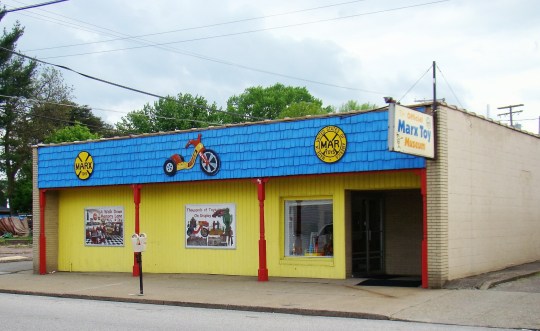


Marx Toy Museum

Marx Toy Museum has been in Moundsville, WV for fifteen years.

Closing  June 30, 2016.

When this day arrives, the Marx Toy Museum will close the doors on a vast collection of Marx toys that have stood the test of time. Located in Moundsville, West Virginia at 915 Second Street, Francis Turner opened Marx Toy Museum in 2001. This former Boner’s Meat Market seemed the perfect place to display his large collection of toys, which he accumulated over thirty years. It’s the largest collection of Marx toys in the world.

Marx Big Loo (1)

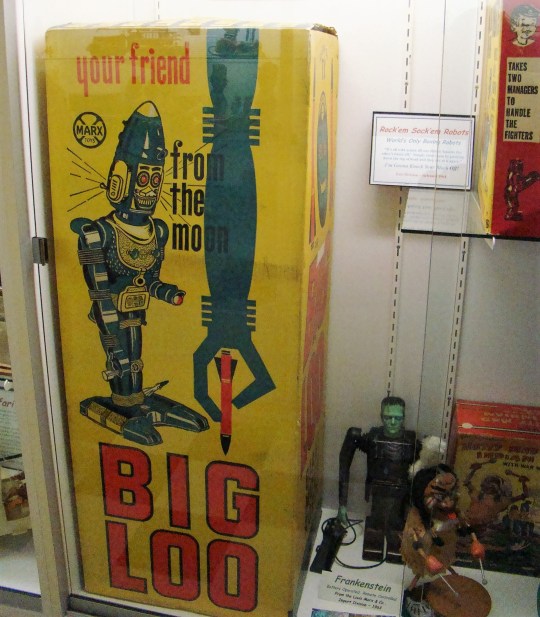
Big Loo, the robot, is the only known one in its original box. This 1963 robot can shoot darts, squirt water and even talk.

Back in 1986, Francis began buying and selling Marx toys. Why Marx? Because many of the toys were made up the river at the Marx factory in Glen Dale, West Virginia from 1934-1980. There were also two plants in Pennsylvania. Over the years, they made everything from dollhouses to ride-on toys.

The plant in Glen Dale was the largest toy factory under one roof in the world for many years. Formerly, this location housed an airplane factory, Fokker Airplanes, who built the trimotor, Josephine Ford, flown by Commander Richard Byrd over the North Pole in 1927.

August 4, 1927 was a big day for the Fokker air strip in Glen Dale. That was the day that Charles Lindbergh, famous American aviator and explorer, landed there in his Ford Tri-Motor airplane. Over 140,000 came out to see this famed aviator.

Marx Doll House 2

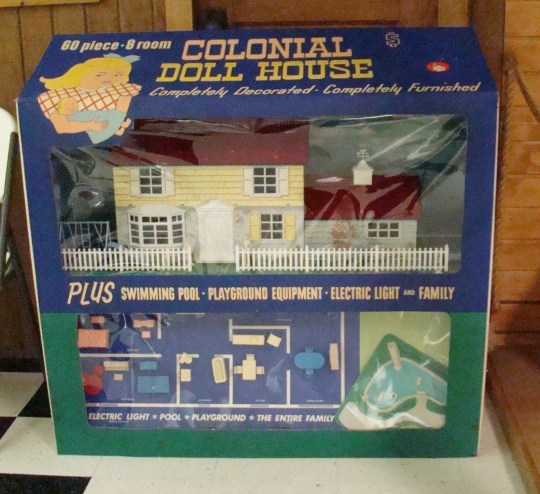
This Colonial Dollhouse in its original box would have been quite the gift.

Francis is passionate about finding choice Marx toys from all over the world. When describing his extensive toy collection, his voice showed pride and enthusiasm. “All the toys in the museum are in their original condition. Nothing has been repaired or repainted.” He has no favorites as likes them all, and enjoys demonstrating them since they still work quite well.

Marx Creation center

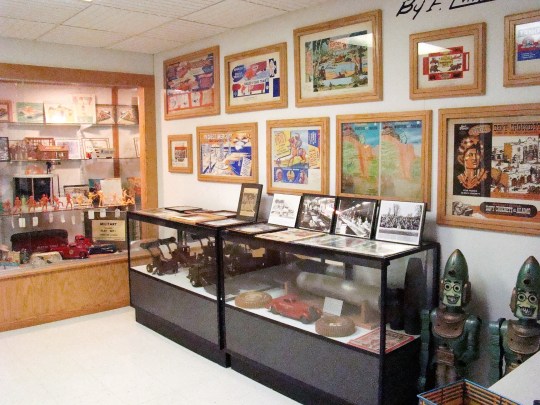
The Marx Prototype Room displays original sketches and one-of-a-kind ideas that were never actually produced.

Tour groups always stop at the museum when in the Moundsville area. Francis recalled, “Visitors love the museum. There are a lot of memories here. It’s a piece of history.” People frequently shed a few tears as one of the toys brings back a memory of a gift they received as a child. This museum is packed with room after room of memories.

Marx Francis 2

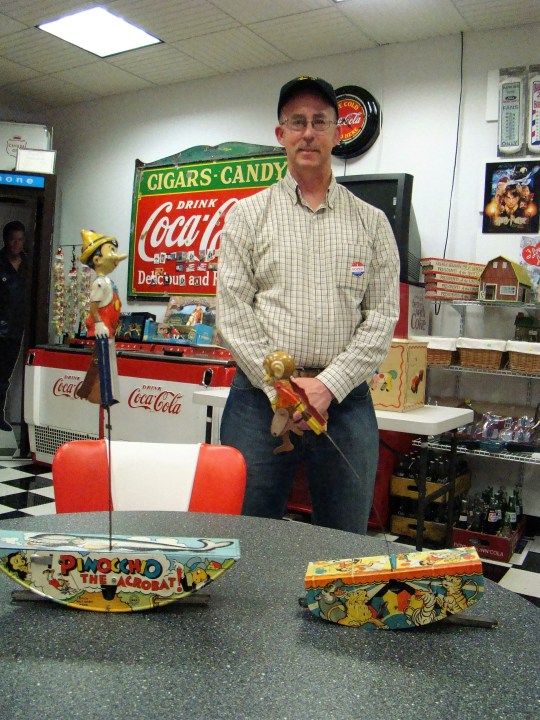
Francis likes to use his Toy Chest to show visitors some of the oldest Marx toys. Pinocchio the Acrobat is 76 years old, while Marvel the Monkey is 80 years old. Francis holds the famous Climbing Monkey.

Louis Marx began working in 1912 at the age of sixteen in the office of toymaker Strauss, before Marx served in WWI.  In 1916, that company went bankrupt and Marx took one of their popular items, Zippo  the Climbing Monkey, and tweaked it just slightly to start his own business and make millions from this one toy.

Marx Louis Figures

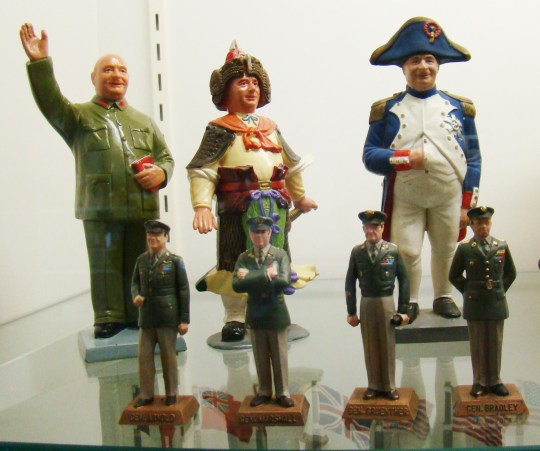
Marx always had a passion for the military so made these famous figures in his own image: Commander Mao, Genghis Khan, and Napoleon.

Marx was the Henry Ford of toy-making as he wanted toys that everyone could afford. All the early toys were made of metal until WWII, when metal was needed for the military. Then it became necessary to find an alternative, and plastic seemed to be the best choice.

Over the years, Louis Marx earned the name, “King of Toy Makers”, throughout the world. His toys were not only creative, but of high quality. In 1955, one of every three toys made in America was made by Louis Marx & Co.

Marx Brad Paisley

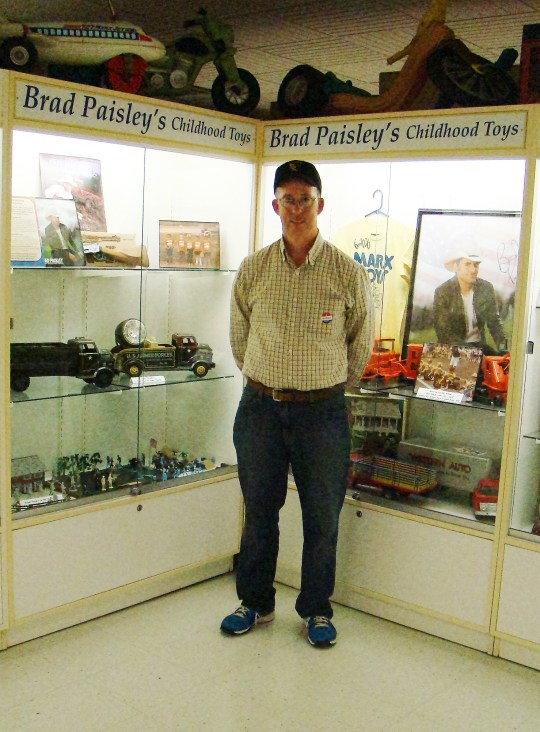
A display of Brad Paisley’s toys shows his Big Wheel on the top. Francis said Brad used the Big Wheel most of the time, but drove the 727 Marx Jet when in a hurry.

The most popular toy ever sold was the Marx Big Wheel back in 1960. Disney even had Mickey Mouse riding Big Wheel. At the peak of its popularity, three assembly lines ran 24 hours a day at the Glen Dale plant, and made 9,000 Big Wheels each day. Brad Paisley’s Big Wheel is on display, since he grew up in Glen Dale and participated in the Big Wheel races there

Marx Diner

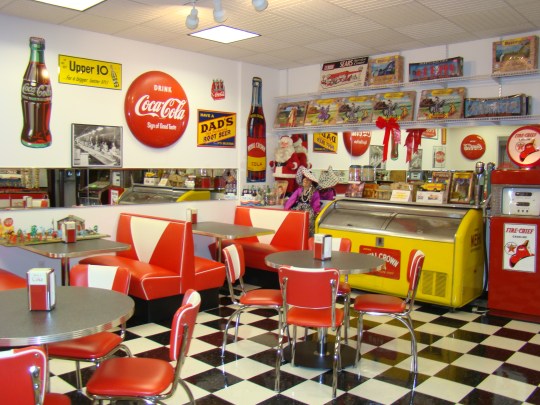
This vintage 1950s dining area provides a great place to relax while having a Coke and some popcorn as you watch old television commercials from that era.

Plans for the future include a virtual website of Marx toys with the intention of preserving the history of Marx around the world. Francis and his son, Jason, also plan to have traveling toy exhibits of the most popular Marx toys. These displays will be available to museums throughout the country, where Francis will be able to share his toys with more people than ever. Their goal is to keep Marx history alive.

Everyone will find something to enjoy at the Marx Toy Museum. It definitely brought back many memories of my childhood and that of my sons. Better hurry down and see this great collection before it closes at the end of June, 2016. Step back into The Toyland of Yesteryear.

Visit Marx Toy Museum at 915 Second Street in Moundsville, WV or at their website: http://www.marxtoymuseum.com for continued information about Marx toys.


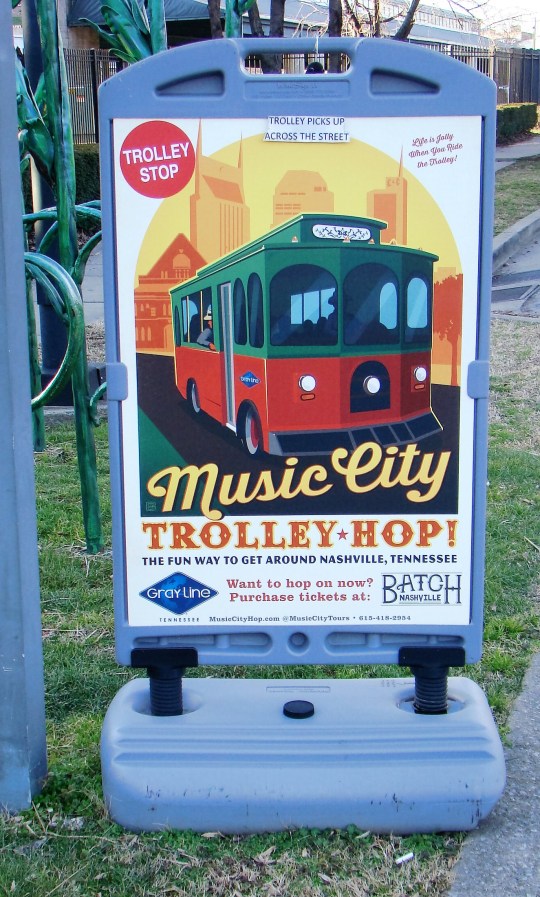
Trolley SignWaiting for the red trolley car to arrive, there was time to visit the Farmer’s Market in Nashville, Tennessee. Downtown parking seemed rather expensive at $20 for the afternoon but it was free to park at the Farmer’s Market and hop on the trolley at that point.
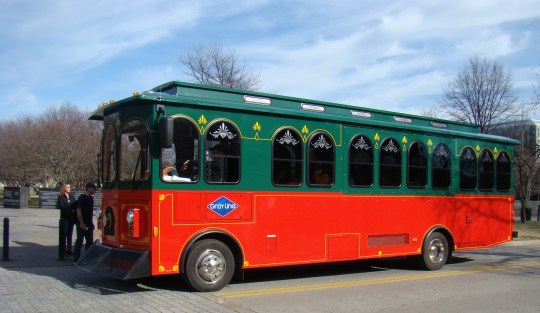
TrolleyThe driver and guide made the trip fun with a great assortment of historical facts, stories of businesses and some downright corny jokes. The Trolley Tour is a hop-on tour so you can get off at seventeen various stops and hop right back on later in the day. Sure saves fighting downtown traffic.
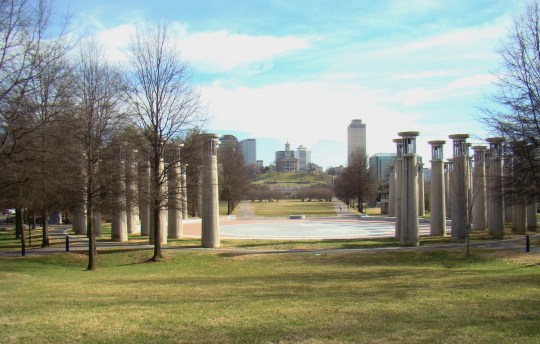
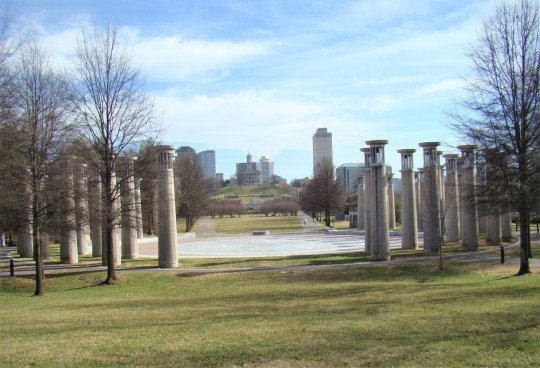
Trolley CapitolGetting on at this point, the first stop is the Bicentennial Capitol Mall State Park. Not sure if the guide was stretching the truth or not, but he said the fountain of water supported a large granite ball weighing 18,000 pounds!
The view of the capitol building brings out everyone’s cameras. The capitol building is framed by the 50 columns, representing the 50 states in the United States. The 95 bell carillon rings out on the hour and represents the 95 counties in Tennessee.

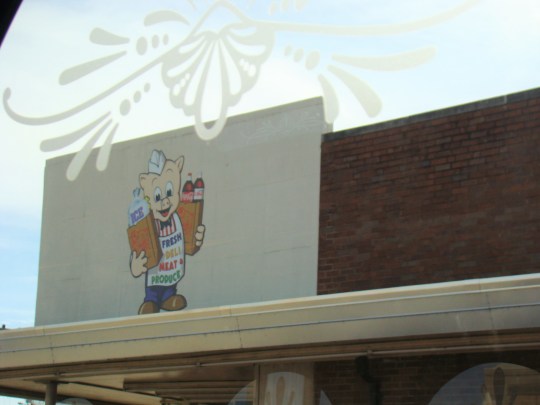
Trolley Piggly WigglyAttention was given to the local Piggly Wiggly as this chain began in Memphis, Tennessee as the first self-service grocery store back in 1916 by Clarence Saunders. Previous to this time, shoppers gave their orders to the clerk and the clerk then gathered everything from the shelves. Saunders rearranged the stores to make shopping much faster for the customer and the clerk. Today there are 600 Piggly Wigglys in 17 states.
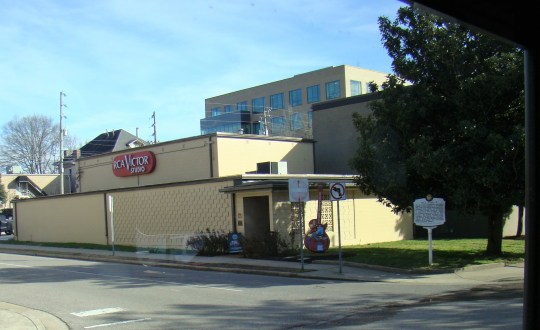
Trolley RCARCA Studio B created Nashville magic for over 35,ooo songs, making it an international recording center  known as one of the cradles of the “Nashville Sound”. Popular artists, such as Elvis Presley, Chet Atkins, Dolly Parton, Willie Nelson, and Eddy Arnold recorded their songs here.
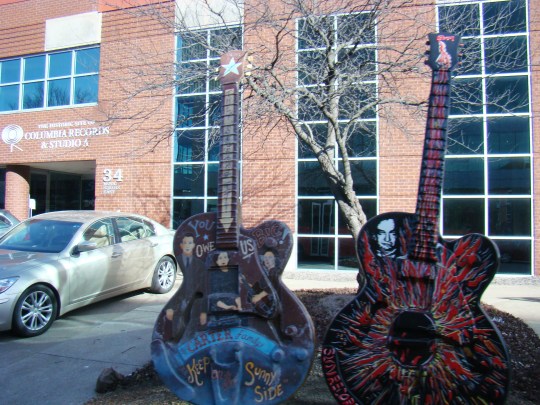
Trolley ColumbiaNearby, the historic site of Columbia Records Studio A displays large guitars indicating the Carter Family and Johnny Cash recorded many of their songs here. Today both of these formerly popular studios are learning centers for Belmont University.
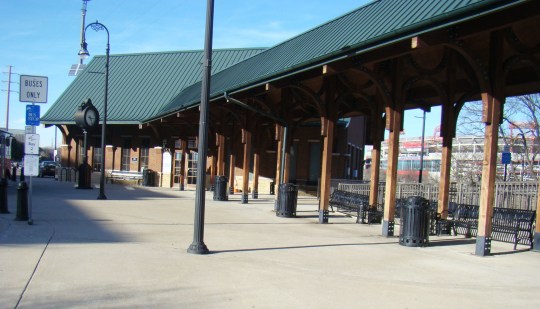
Trolley StationAt Riverfront Train Station, the trolley takes a short break before continuing on the rest of the route. This site was previously the home of another train depot which was build in 1902. The present station was built in 2005 and they have attempted to capture the Old World flavor.
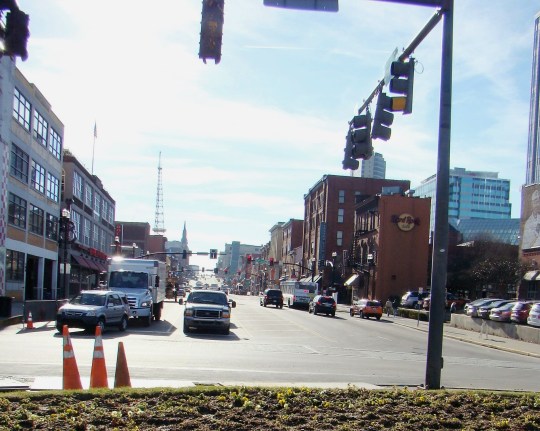
Trolly Honky TonkStraight across the street from the station is Honky Tonk Row. This is where many stars and hopefuls play during the evening hours as entertainment in many local clubs. They provide encouragement,  a stage, and a tip jar for musicians.
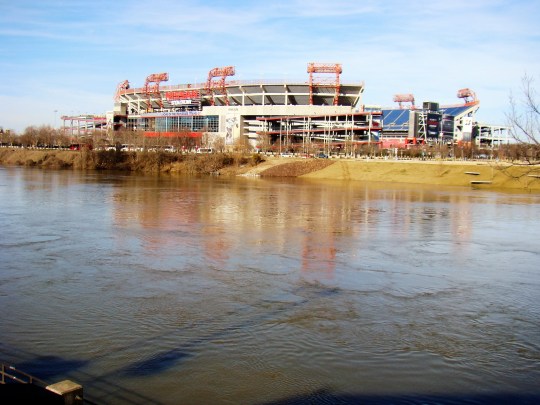
Trolley StadiumThe beautiful Cumberland River flows behind the station and gives a grand view of the Nissan Stadium, home of the Tennessee Titans football team, on the other side. You can actually walk across the river to the stadium on the Shelby Street Pedestrian Bridge. The Cumberland River is 688 miles long and eventually joins the Ohio River in Kentucky.
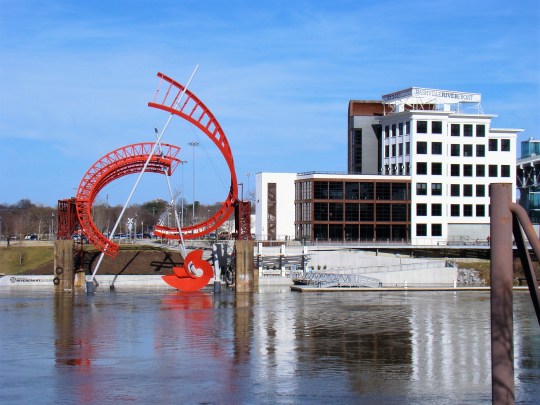
Trolley SculptureA beautiful sculpture brightens the waters also. Ghost Ballet East Bank Machineworks received its name because as you look at the sculpture from different angels, it suggests movement, similar to that of a dancer. This gives a little time to watch the river flow by and gain a little peace from the busy day.
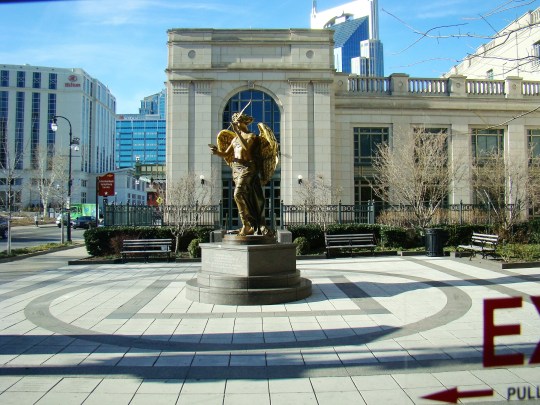
Trolley Art CenterOn our way back to Farmers Market, evidence appears that Nashville hosts more than country music. A glimmering bronze statue, The Recording Angel, stands at the corner of the Schermerhorn Symphony Center, home of the Nashville Symphony, which provides classical music entertainment. But they are no snobs, as often country music favorites appear accompanied by the orchestra.
This tour will perhaps be taken again someday when there is more time to visit various stops along the way. It is the perfect way to see Nashville…without fighting downtown traffic or trying to find a parking place! Try the Hop-On Tour the next time you visit Nashville.
 

WILE Beatty Ave

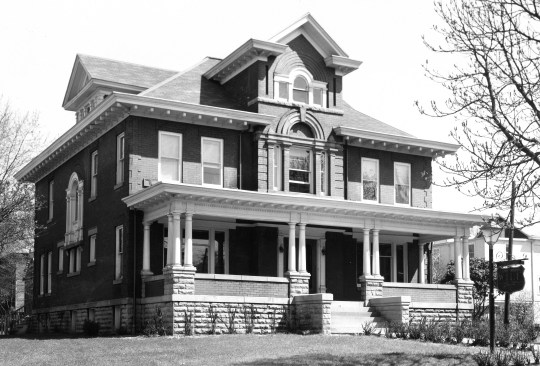
WILE moved into this beautiful old home on Beatty Avenue in 1948.

You’re listening to WILE, 1270 on your radio dial.

Thus a radio station began broadcasting in the hills of southeastern Ohio in Cambridge on April 9, 1948 after playing “Beautiful Ohio” as their sign-on song. Located at 917  Beatty Avenue in the old Orme home, this daytime-only radio station operated on 1000 watts.

Enthusiastic young locals began working at the station in various capacities. Several young ladies were continuity writers, who wrote those much needed commercials, while young men became announcers.  They also had to keep things on schedule. Since everything was live at this time, that often became a difficult task.

WILE Sesqui - Square Studio

WILE placed a temporary station on the courthouse lawn to get people interested in their new venture.

WILE Donahoe - Sesqui Court

Howard Donahoe, founder, managing director, and co-owner, appears at the Sesquicentennial Court facing penalties for not having a beard.

1948 provided big excitement in downtown Cambridge as it celebrated the Sesquicentennial of Guernsey County. In order that area residents could learn more about this new radio station, WILE placed a temporary studio on the courthouse square for broadcasting. This perhaps began their popular remotes.

WILE Musical Farmers

“Dallas Bond and the Musical Farmers” had a regular Saturday program.

Early programs featured locals in everything from music to ministry. Groups came to the station for live performances. A popular musical show, “Dallas Bond and the Musical Farmers”, combined several small groups of local performers in Studio A.

Oak & Ash Hosfelt boys 001

Ray and John Hosfelt, known as Oak and Ash, brightened everyone’s day.

Another of those local groups contained two young men from Indian Camp, Ray and John Hosfelt, better known as Oak & Ash, “The Forest Rangers”. They sang their way into the hearts of many listeners throughout the county.

On Saturday morning, boys and girls gathered around the radio to listen to “Story Time for Children”. In the afternoon, “Junior Talent Time” gave youngsters a chance to shine by singing or playing a musical instrument. A couple friends practiced singing with me “You Are My Sunshine”, in hopes that someday we would get the courage to go to the radio station. But we never did.

WILE Beatty Ave Studio

Announcers had a grand piano for backup in the studio.

Donna Lake Shafer, who started working as a continuity writer at WILE in the summer after she graduated from Cambridge High School in 1948, remembers Election Night being a very important event at the radio station. Election results came over the station’s Teletype machine, which printed messages from news wire services. Only a few local places received up-to-the-minute reports of the Truman – Dewey presidential election.

Even though the radio station was off the air, people crowded inside the Beatty Avenue headquarters to hear results coming in on the Teletype machine. Donna stayed busy that night keeping hot coffee and cookies ready at this big election party, which was attended by owners of the radio station, local officials and curious citizens. Remember, television sets in homes didn’t exist at this time.

These were not high paying jobs, according to Laura Bates, an early employee of WILE. When she started in 1952, her salary was $140 a month. But Laura recalls, “I loved to write and use my imagination. Working at WILE was enjoyable. You felt like you were a family.”

WILE Velvetones B

VelvetonesB  were part of the WILE scene. Edgar Fisher on the right was later one of our city councilmen.

In those early days, the station manager banned certain music from the air. Sometimes it was too loud, or occasionally the lyrics might be offensive. The radio served as the voice of the community.

Many changes have been made over the years. The station is now located on College Hill, where its transmitter  stood years ago. Almost everything is recorded these days and the station airs around the clock. From Land ‘O Lakes Broadcasting Corporation in 1948 to AVC Communications today, their community spirit still gets broadcast over the hills of Southeastern Ohio.


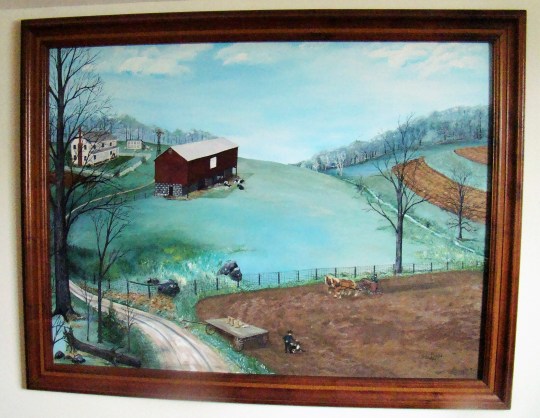
Judy Amish painting

Judy painted this picture of an Amish farm using bits and pieces from several farms.

Blessed with talents! Creative abilities seem to pour forth from Judy Howald when she isn’t spending time helping her husband, Jim, at their farm on the outskirts of Birmingham. No matter what she does, her whole heart and energy are focused on her current project. When a new project captures her thoughts, she often spends some sleepless nights thinking about what she should do next.

Over the years, Judy spent most of her time working in a factory on an assembly line. Even there she was always creating signs for the business or developing new ideas for improving quality and design.

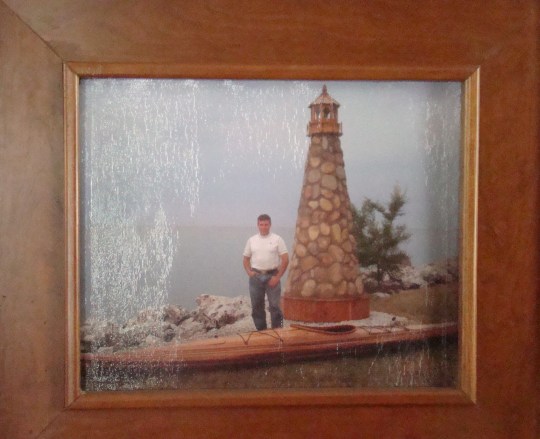
Judy's son

It appears her son, Andy, may follow in her creative footsteps. While Judy built this small lighthouse on Lake Erie, Andy built the kayak.

Perhaps her creative talents received their start when Judy followed her dad as he designed plans for homes he was building. The details fascinated her. Today in her woodshop, intricate plans that she has drawn for projects can be seen on the work tables.

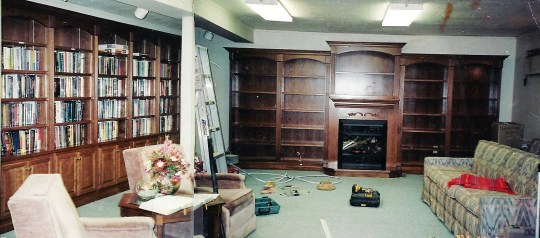
Jodi's library 001

One of her early projects was to create this library and entertainment section for an assisted living complex near Kent State University.

When Jim and Judy purchased the farm, it seemed that cutting the timber would help with payments. But lumber prices were low at that time, so Jim would cut the trees, take them to the mill, dry and straight edge them, then return them to the farm where Judy began turning them into furniture. And beautiful furniture she created!

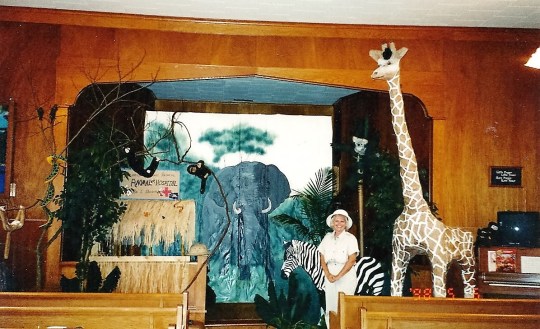
Jodi Giraffe 001

Judy created this scene for her church’s Bible School one summer.

Being very active in the Birmingham United Methodist Church, at Bible School time several years ago, Judy created a scene of animals from Noah’s Ark. She painted a background with an elephant and zebra, then made a giraffe of paper mache.

Judy Ark 2

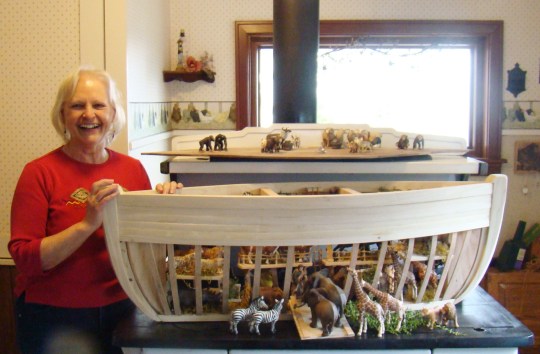
One of her current projects is building Noah’s Ark.

Maybe that began her thinking about making a small replica of Noah’s Ark, which she is working on today.  This ark is about 42″ long and has small partitions inside for the various animals. The roof is on the shelf above and plans are to build a small house on the top, which might be where Noah and his family stayed.

Judy Puzzle

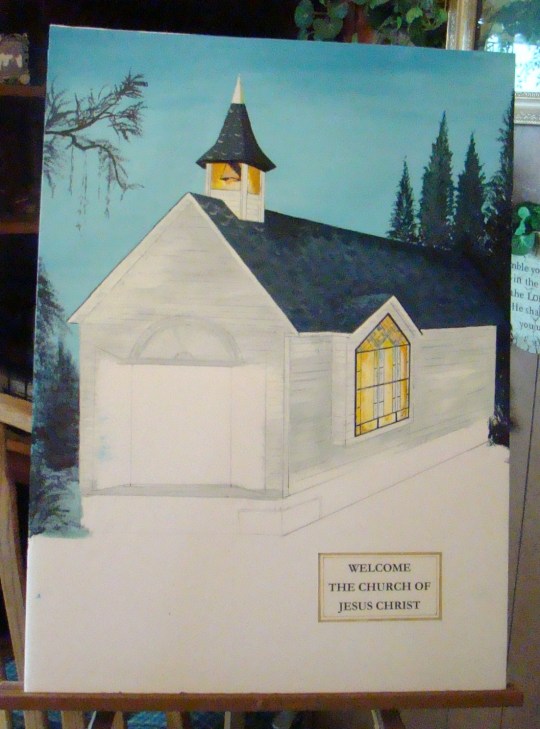
This is just the beginning of a painting that will be turned into a “Sermon Puzzle” for use during a Sunday morning service.

Another project underway right now for her church is a “Sermon Puzzle”. Her pastor asked if she could create a picture that they could use to tell a story by fitting in various parts of the puzzle – a cornerstone here or a steeple there. Her beginnings are reminiscent of a Thomas Kinkade painting with the light shining through at intricate places.

Jodi's book 001

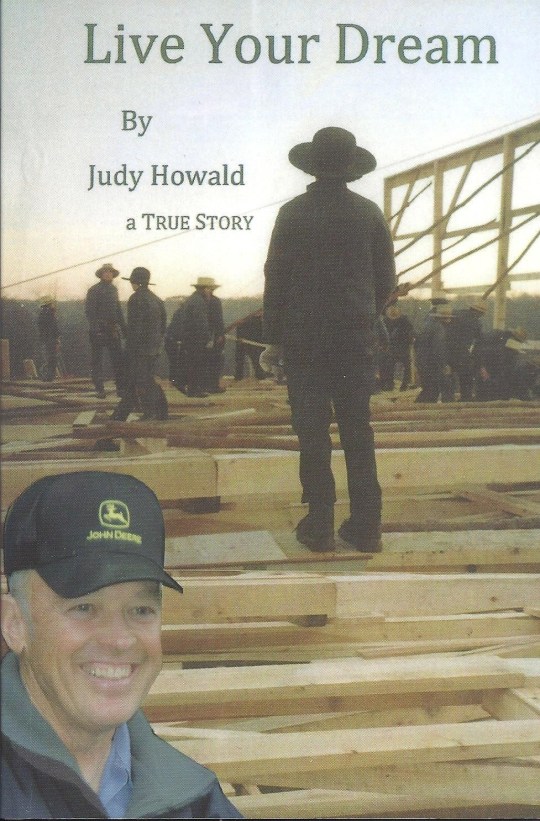
Her book tells the story of the determination of her husband, Jim, to live his dream.

A tour of their home showcases her talents as every room has the creative touch of this amazing woman. Let’s not forget that Judy is also an author. She has written and published one book – the life of her husband, Jim, from Alaska to Birmingham, Ohio. All the proceeds from her book go to that little home church.

Judy Woodshop

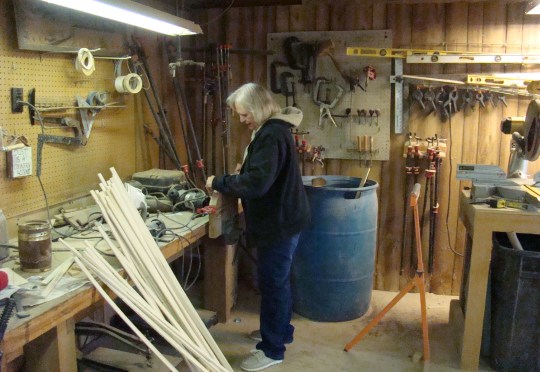
This section of her woodshop is where Judy steams the strips of wood so she can bend them to make the sides of the ark.

Her woodshop is above the garage just outside her back door. It is fully equipped for all of her projects. Here she steams and bends the pieces of wood to make the ark and other artistic pieces. Heat for the woodshop and the house is provided by a wood burner.  They use the tops of the trees, that can’t be turned into beautiful projects, as their fuel.

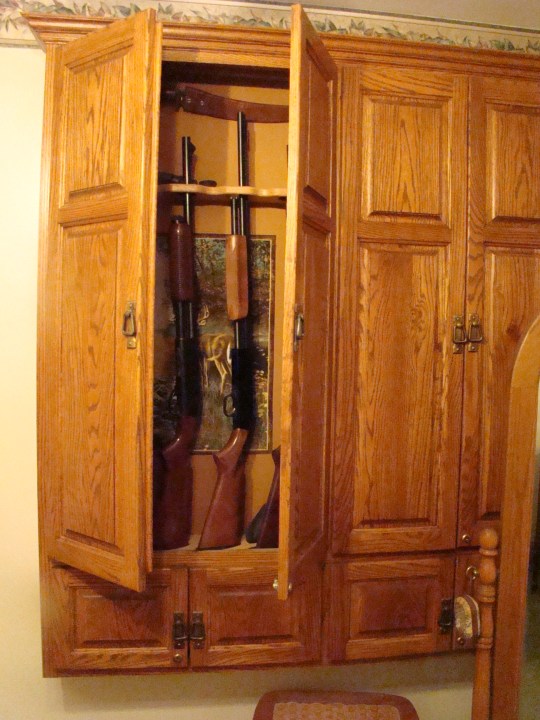
Judy Guncabinet

This beautiful gun cabinet was made as a gift for her husband, Jim.

While finishing the ark and puzzle keep her occupied right now, you have to wonder what project is next on her mind. Whatever it happens to be, you can be certain it will be something of high quality…and beautiful.


Cedar Falls 1

Welcome sign to Cedar Falls

Should I or shouldn’t I?  That was the question upon approaching the one hundred steps down to Cedar Falls. The naturalist said they were easy steps so with the help of my walking stick, the walk down began.

Cedar Falls steps

Looking back to the top

From the very top, the roar of the falls could be heard distinctly. That brought a smile to my face as several trips to the falls in previous years were made in the summer time when the water was not running with much force.

In Hocking Hills State Park, it was also surprising how many others were looking for that peaceful walk through nature. Step  by step the bottom got closer, but the sound of the falls got farther away. Well-placed benches along the way provided not only a place to rest, but a place to meditate and connect with nature.

Cedar Falls flowers

Tiny white spring blossoms

Since this trip was solo, there was no need to hurry so it was possible to leisurely enjoy the sights and sounds of the forest along the way. Springtime just had its beginnings that day and small flowers were popping up through the ground.

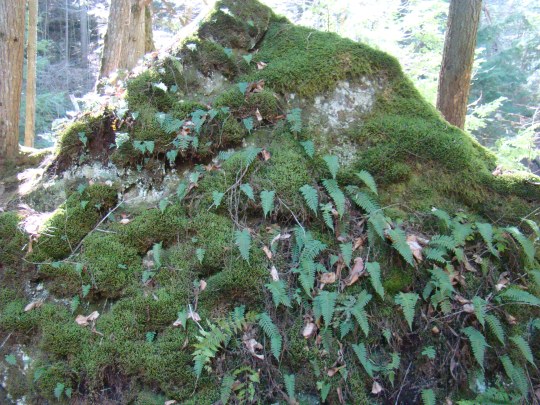
Cedar Falls Ferns

Fern and moss covered rock

Ferns were coming back to life and the trees were budding. A good day to be out for a walk.

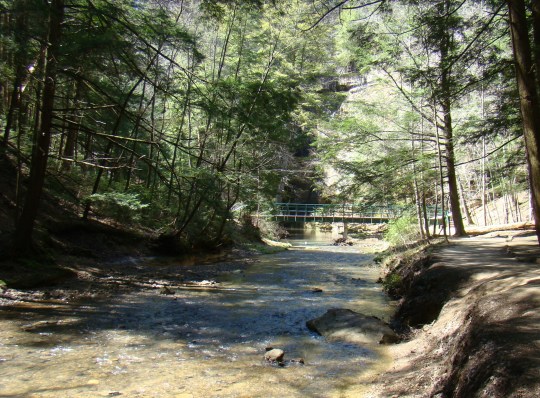
Cedar Falls stream

Bridge over the stream

To be in nature is to know peace. At the bottom of the stairs, a path along the stream, called Queer Creek by the early settlers, brought relaxation, because this far from the falls the stream ran quietly. But the nearer the path came to the falls, the stream became a bubbling brook with water rippling over the stones. Seemed like a great place to build a cabin.

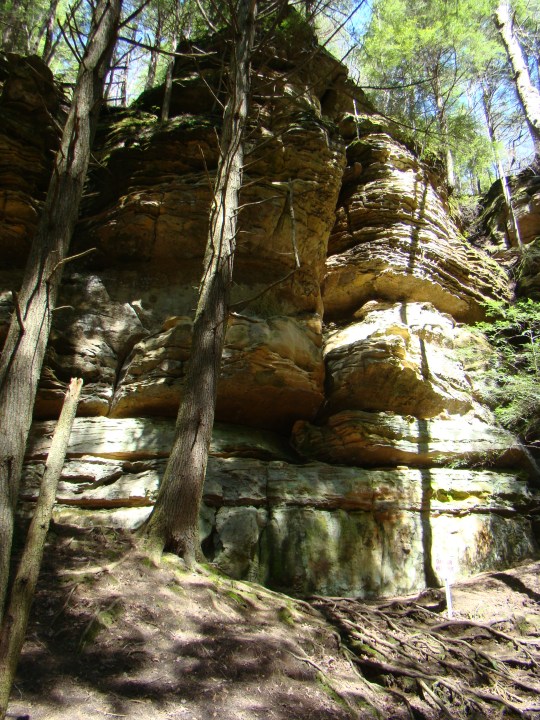
Cedar Falls cliffs

Surprisingly high cliffs

This remote area was bound by steep rock walls and grottos. While it may be a wild and lonely place, its beauty made the trip worthwhile.

Cedar Falls

Powerful Cedar Falls

After crossing the gentle bubbling brook, a path led closer to the waterfalls. Around a bend, it could be heard full force. As the stream tumbled over the face of Blackhand Sandstone, the amazing force of the water was displayed. A large rock platform or another small bridge made perfect places to take pictures of the waterfalls and drink in their beauty and power.

Cedar Falls roots

Roots for support

While standing at the largest waterfall, a hawk spread its wings and flew overhead as if to welcome everyone. It served as a reminder to observe the world from a higher perspective. While the forest is predominantly hemlock trees, the early settlers mistook them for cedar trees – thus the name, Cedar Falls.

Although there were many people all along the path and at the waterfalls, it was unbelievably quiet. Folks talked in soft voices…almost whispers, so as not to disturb the intense feeling of Cedar Falls. It’s one of those places you don’t want to leave.

But now for the walk back along the path and up those steps. Thanks to my walking stick, the climb back up wasn’t as difficult as one might think. Ah! What a beautiful day for a walk in the forest.

Cedar Falls is located in Hocking Hills State Park in the south-central section of Ohio. Find your closest route to Logan, Ohio, then follow OH-664 S until you reach Hocking Hills State Park. Watch for signs to guide you to Cedar Falls and other points of interest. A walk in the park is good for the soul.

Come as you are in the family car!

That’s the motto of Lynn Auto Theatre, where you can drive in to watch a family movie any evening after dark during the summer months, or on weekends in the spring. Many remember going to a drive-in movie, walking to the concession stand for snacks, and hanging the speaker on your car window.

Lynn's screen before show

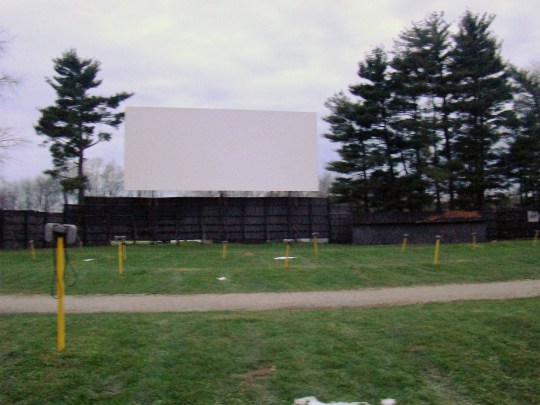
Lynn Auto Theatre is one of the few grass drive-in theatres left in the world. There was actually patches of snow on the ground that evening.

You can still do this at Lynn’s near Strasburg. Here you’ll find a piece of Tuscarawas County history – the oldest drive-in theater in Ohio, and the second oldest continually operating in the world. When it opened its doors in 1937, it was called Boyers Auto Theatre.

Lynn's Boyer Theater

This shows the entire complex as it was in 1937.

Boyers was more than a drive-in movie. They had a train ride, miniature golf, an arcade, restaurant and gasoline station. This family entertainment complex was one of four drive-ins built before WWII.

Lynn's Popcorn stand

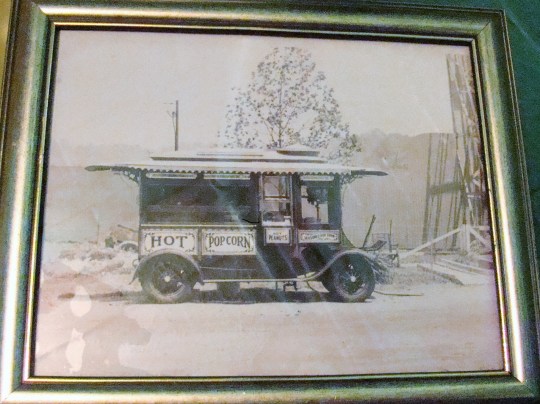
Concession stands for popcorn and hot dogs were on wheels.

Why would it be called Lynn Auto Theatre today? When Ward Franklin and Ray McComb purchased the drive-in, they named is after McComb’s daughter, Judy Lynn.

Lynn's Dick Reding

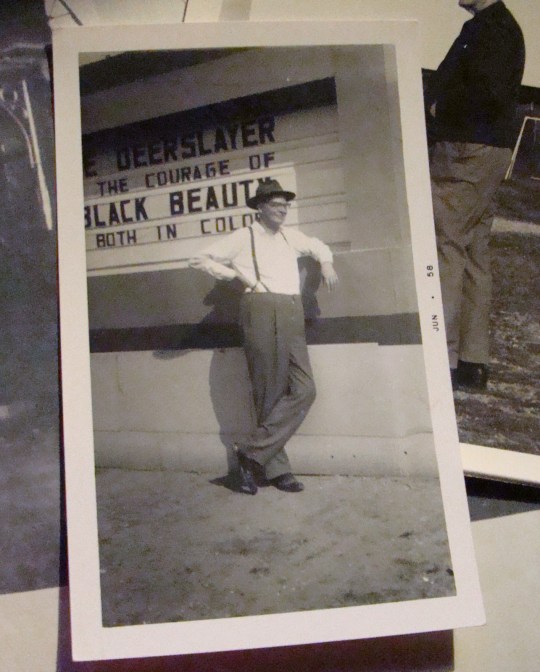
Dick Reding stands at the marquee in the late 1950s.

Then the Reding family entered the scene. Dick Reding  always had a passion for movies. During the time of silent movies, he played the records for the musical accompaniment that went along with the films when a live musician was not available. In 1957, Dick managed a string of theaters in the Canton area, but drive-ins became very popular about then, so he decided to purchase Lynn’s.

Lynn's ticket booth

Darla and cat, Gizmo, run the ticket booth.

Since that time, it has been passed down through the same family for 59 years from grandpa to son, and now run by the grandsons, Rich and Jamie Reding. This family affair continues at the ticket booth, where Rich’s wife, Darla, with cat, Gizmo, welcomes guests. Family members and their friends also manage the concession stand where prices are reasonable. Footlong coneys with cheese, and popcorn are their most popular items.

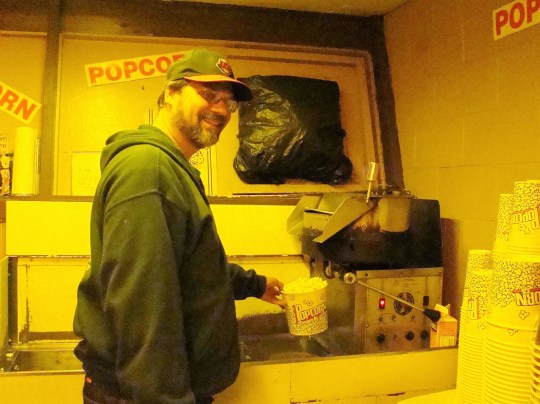
Lynn Popcorn

The soft yellow glow of the concession stand reminds one of buttery popcorn. Rich still proudly uses the 1962 C. Cretors & Co. Popcorn Marchine.

Rich reminisced that grandpa continued his love for the drive-in even after he and his wife moved to an assisted living facility. He recalled grandpa looking out the window at a large field and remarking, “That would be a nice place to build a drive-in.” Love of theater ran in his blood.

Lynn's Speaker

Those old speakers can still be used.

In the early days of the drive-in, sound for the movies came through speakers under the screen. These “Boom Speakers” could be heard over the sound of a roaring train. Next came the speakers to hang on the window of your car. Today you have a choice, you can still listen through the old speaker, or you can turn to a designated FM station on your radio dial to hear the movie in stereo sound.

Back in 1967, a second screen was added so patrons had a bigger choice of movies. Often during a summer weekend, both screens will be sold out and cars turned away. Space is limited to 390 vehicles.

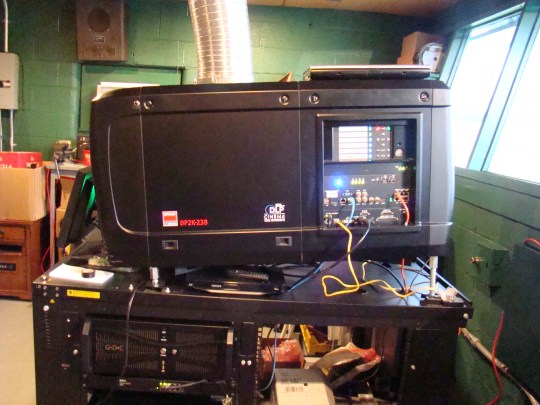
Lynn's digital projector

The new digital projector makes life much easier for the Redings, and more enjoyable for those watching.

One of the big recent changes came about because of new technology. 33 mm films are no longer being made by the movie industry, so it was necessary to switch to a digital projector, which was very expensive costing $75,000. But it makes for a much clearer picture on the movie screen and fantastic sound.

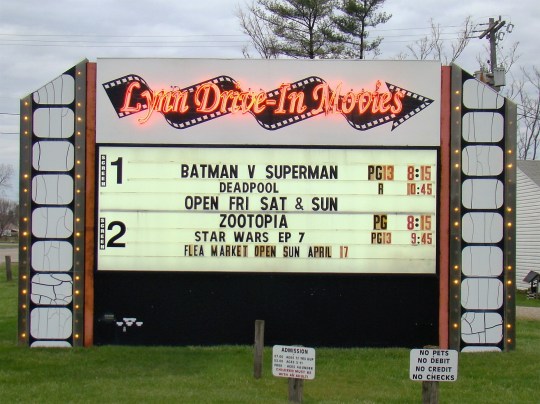
Lynn's Marquee

This giant marquee announces two choices of double features each evening.

When driving down SR 250, you can’t miss Lynn Auto Theatre where you see the Mammoth Classic Neon Marquee, which displays the latest family films for summer enjoyment. Admission is very reasonable at $7.00 per adult with $3.00 per child 5-11. Under 5 are free.

In Rich’s opinion, success of the theater depends on two major factors: nice weather and Hollywood producing movies that everyone wants to see. With the new digital projectors, ‘prom posals’ and even wedding proposals are popular items to show on the screen.

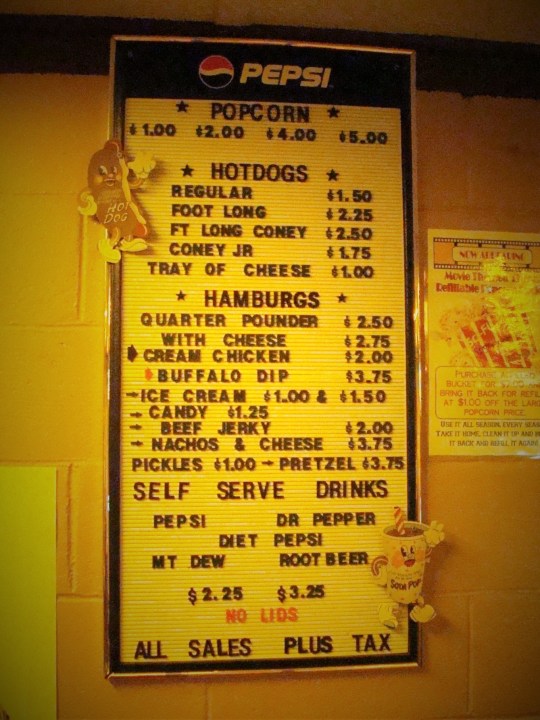
Lynn's Menu

Their menu lists reasonable prices.

Right now the theater is only open on the weekends, but what a great trip it would be to revisit the drive-in, get some popcorn from the concession stand, and relax in the comfort of your car while seeing a double feature. You even have a choice of two different double features happening on the same evening.

Lynn Auto Theatre is a great place to spend an evening, and see the stars under the stars.

Lynn Auto Theatre has easy access just north of Strasburg at 9735 SR 250, where State Route 250 and 21 split. 


TN Capitol View

View of the Capitol building from Bicentennial State Park

An unexpected abundance of Tennessee history is located in Nashville just outside the Farmers’ Market near Bicentennial Capitol Mall State Park. This collection of strategically placed monuments appears in the historic French Lick, where Native Americans, trappers and settlers camped in those early days.

In 1997, Tennessee’s Bicentennial Celebration, planners noted that this was the best place to get an unobstructed view of the Tennessee Capitol Building. Then the planning began for preserving the state’s history in this nineteen acre park.

Its 95 Bell Carillon  plays a song of Patsy Cline, a favorite Tennessee daughter. “Crazy” rings out every hour. The bells represent the 95 counties of Tennessee as well as its musical legacy. A 96th bell rings in answer from the Capitol building symbolizing the government answering to the people.

Farmer's Market Granite Wall 2

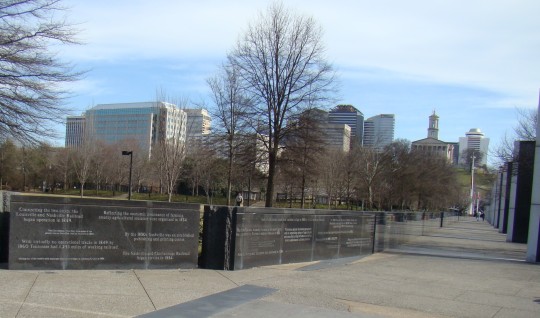
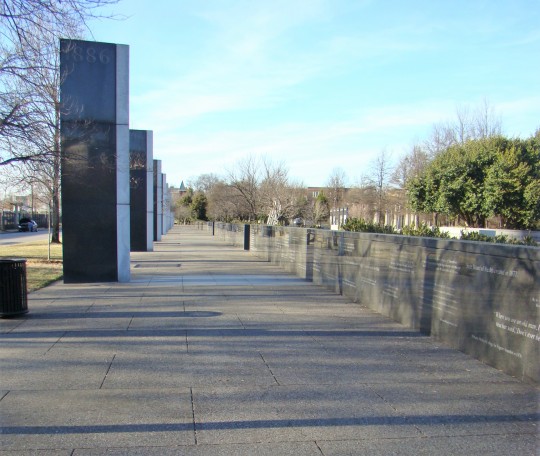
Granite walls along Pathway of History

The Pathway of History displays 1400′ of granite stones engraved with memorable events and pictures in chronological order so you can easily follow the development of history for the last two centuries in Tennessee. The tall columns to the right indicate the date so you can see the accurate timeline.

TN Lincoln stone

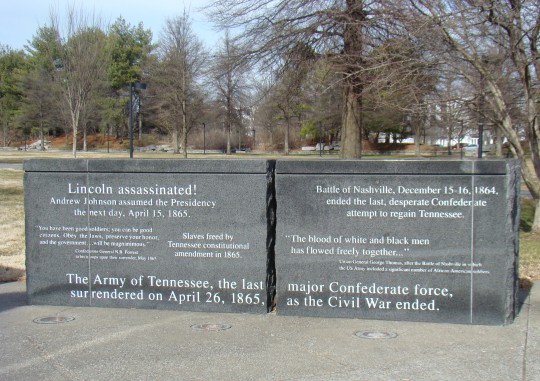
Civil War section of the wall

The wall breaks at the time of the Civil War to show the impact it had on the state.

TN WWII

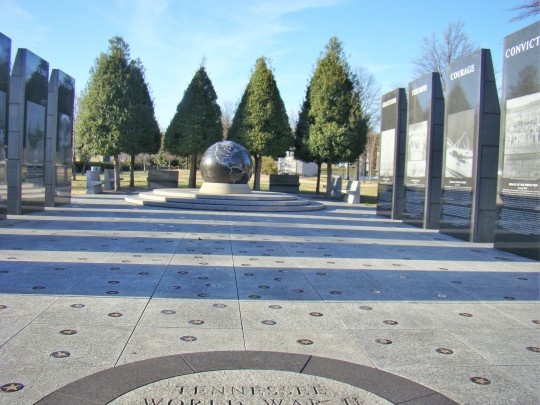
WWII Memorial to Tennessee military

A World War II Memorial lists Tennessee men and women who lost their lives fighting for our country during WWII. A gigantic 18,000 pound granite ball with a map of the world is supported by the water of the fountain.

TN Centennial Memorial

Centennial Memorial

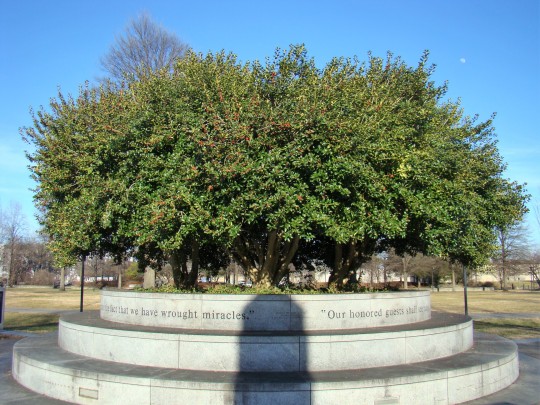
The Centennial Memorial stands in the center of the park. Beautiful trees stand in its center, surrounded with the words of Governor Bob Taylor when he greeted President McKinley during the 1897 Centennial Exposition.

“Our honored guests shall see today the triumphs of our brain and brawn and the tangible evidence of our activity. And some of them who saw our ruined country thirty years ago will certainly appreciate the fact that we have wrought miracles.”

A large outdoor Tennessee Amphitheater seats 2,000. Keeping with the Greek heritage of the Parthenon nearby, the amphitheater was designed with terraced lawns replicating the theater in Epidaurus.


TN Farmers Market

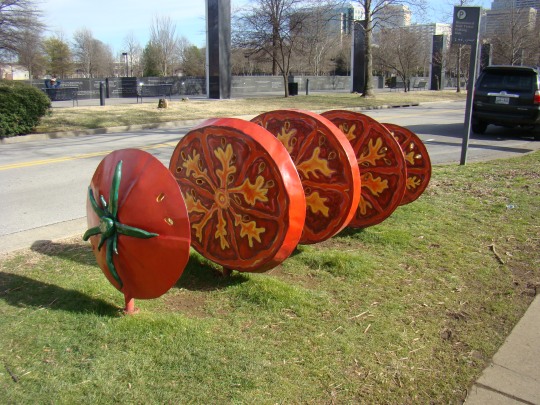
Sliced Tomato metal art outside Farmers’ Market

The Nashville Farmers’ Market is along the edge of Bicentennial Park. This metal sculpture  of a sliced tomato draws everyone’s attention. Here you find a wide variety of popular local dishes as well as fresh fruits and vegetables in season. It’s a great place to visit for some real Tennessee treasures..

TN Pathway of History

Tennessee History Walk

Every state has a story to tell and Tennessee history is certainly being kept alive along this Pathway of History in its capital, Nashville. It’s a great place to stroll through history.

Bicentennial Capitol Mall State Park is less than two miles from I-24E in Nashville. Take Exit 47 for 1st Street South, which leads to Jefferson Avenue. After crossing over the beautiful Cumberland River, make a left turn on 6th Street. The park will be on your right. Enjoy a trip through Tennessee History.

Earth Healing Ceremony

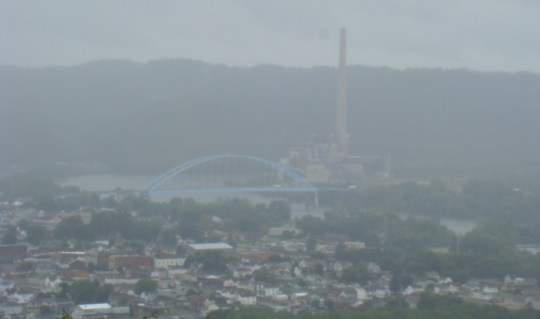
Fog over Ohio RiverOn a rainy day at Grand Vue Park near Moundsville, WV, fog hung in the air making the valley below seem mystical. Through the mist you could see the bridge over the Ohio River. A celebration of our connection to the sacredness of earth was the focus of this Earth Healing and Water Blessing Day, but it seemed the rain had already performed the Water Blessing part.
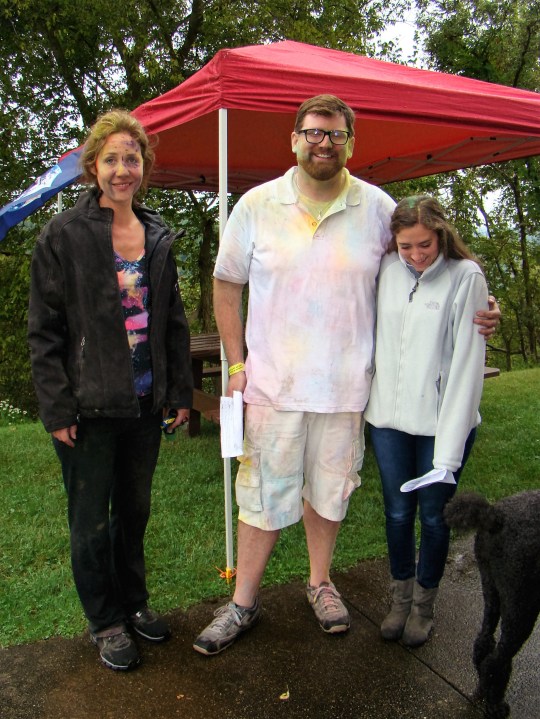
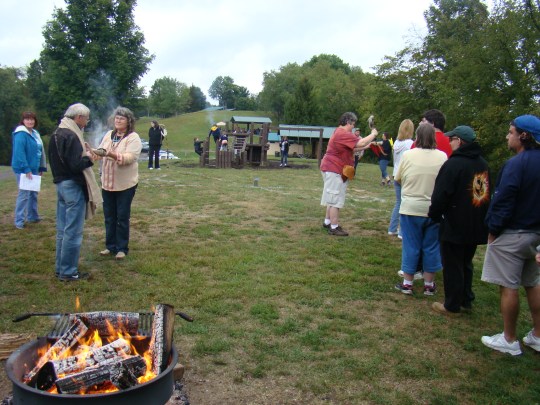
Amanda DeShong and Mick Burk conducted the ceremony in a shelter at the park with help from many of their friends. This was a day of coming together for the healing of the earth and water, by participating in traditions of cultures from around the world.

Andy story teller

Andy Frankel, a multicultural storyteller, captured the group’s attention as everyone gathered around to hear this master narrator tell tales of other cultures and traditions. He told the story of Chief Seattle, who predicted that man’s appetite would devour this land. By request, he told a second story of a Jewish man looking for justice.

Paint Day

Some had just returned from the Festival of Colors at The Temple of Gold located nearby. The Festival of Colors is a family gathering of friendship, re-enacting a pastime of Lord Krishna with his devotees over five thousand years ago.  Bright colored powders are thrown on other participants until they appear to be in technicolor.

Water Purification

A water anointing was performed on the way to the Prayer Circle. Its intention was to generate energy to heal Mother Earth during this time of extreme turmoil and pollution. One young lady brought a bottle of water from Wheeling Creek to be blessed at the ceremony, thus beginning the purification process. She reported that when she poured the water into the creek that evening, the water in that area became clear enough to see the bottom of the stream.

The group then formed a circle around the Medicine Wheel to honor the Seven Directions Prayer. Everyone joined in the directional prayers, which were led by various people in attendance.

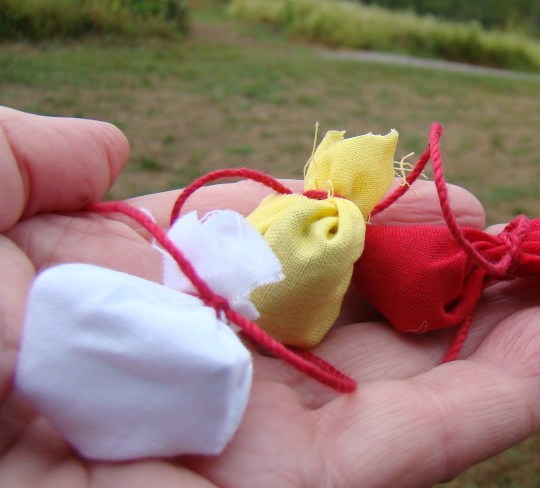
Prayer BundlesPrayer bundles were then made for a Despacho Fire Ceremony. A prayer request was written on a small piece of paper and placed inside a small piece of cloth with some special herbs. After praying over the prayer bundle, it was then tossed into the fire so prayers could ascend to the heavens.

Sunshine JonesSunshine Jones led the group in a session of drumming to connect with Spirit. Everyone had the opportunity to use some kind of instrument for participation in the event.
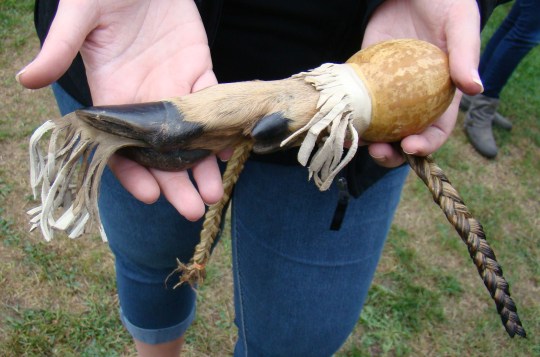
Deer Foot ShakerOne unusual instrument was the foot of a deer topped with a shaker ball, which made a delightful sound…and the foot was easy to grip.

DrummingMuch dancing and singing took place around the fire as people got caught up in the spirit of the afternoon of earth healing. That healing must begin within ourselves, so we can then spread our energy to influence everything we touch.
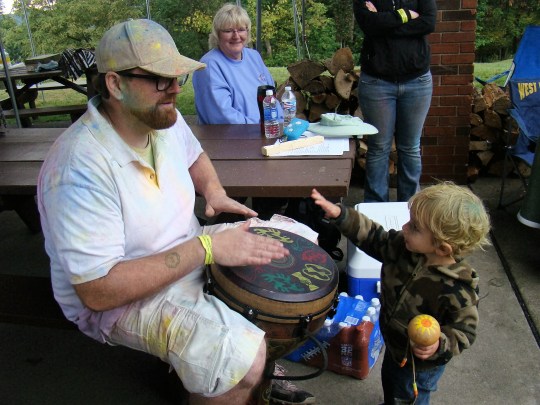
Druming

This was a great day for meditation and connection with like-minded friends. There was a feeling of peace on the hilltop that is not often found in our busy lives today. Everyone left looking for things to appreciate in the world around them.


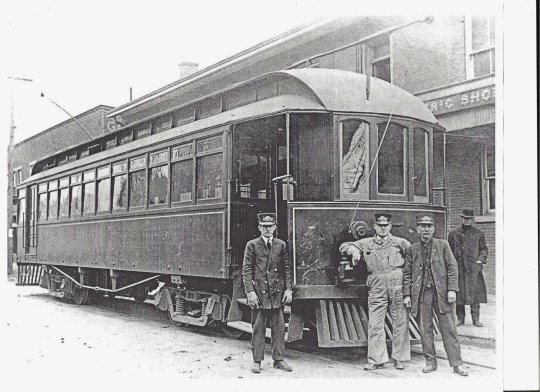
Imagine what it would’ve been like to take a Gypsy Road Trip a hundred years ago. At that time a modern means of transportation in Guernsey County was the Interurban, a type of electric railway with light, self-propelled, electric cars. Midland Power & Traction provided the electricity from their location  on Foster Avenue at 2nd Street (recent home of Variety Glass) in Cambridge, Ohio.

Just for fun, let’s step on the Guernsey County Interurban and take a little road trip with Granny through Guernsey County on a summer day long ago. She has a special destination for her trip today, but will enjoy all the sights along the way.

All aboard for a ride into the past.

Interurban on 8th St 001

Tickets could be purchased at The Electric Shop across from the courthouse.

Having saved her pennies for weeks now, it’s time to purchase her round trip ticket for a quarter. The Electric Shop on the corner of South 8th Street across from the courthouse is a handy place to get a ticket.

Cambridge Glass Company Baseball Diamond

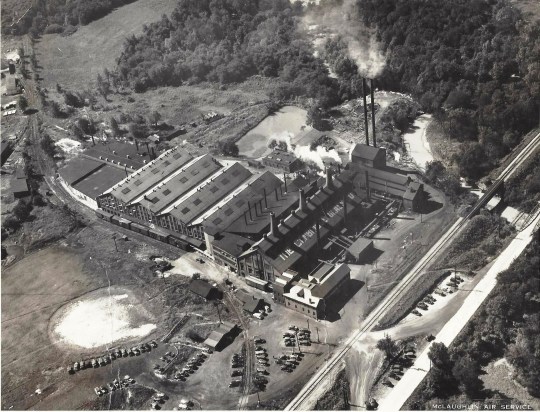
This aerial shot of the old Cambridge Glass Company shows the baseball diamond, a popular weekend form of entertainment.

At the first stop on the trestle by the Cambridge Glass Company on Morton Avenue, glass workers wait. Many employees use this for their ride home after work, even on a Saturday. Granny notices the baseball teams preparing to enjoy the summer day. Looks like the semi-pro teams of Cambridge Glass Clear Cuts and Byesville Bobcats are ready to “Play Ball”.

Today a stop will be made at the Byesville Driving Park along Chapman Creek. Many depart the train at Stop #7, called Marjorie or Springfield, and walk about a quarter of a mile to the grandstands at the park to watch the horse races.

Korte

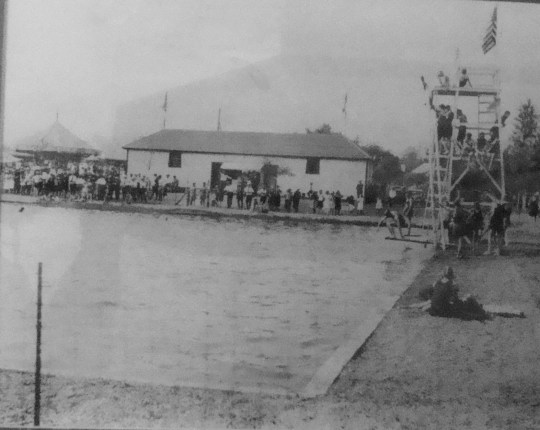
Korte’s Park had perhaps the only swimming pool in Ohio back in the early 1900s.

Others get off at Stop #9 and visit the nicest picnic area around at Korte’s Park. This is said to have been the only swimming pool in the state of Ohio, so quite a popular spot during the summer months.

Interurban Car on Byesville Depot Street

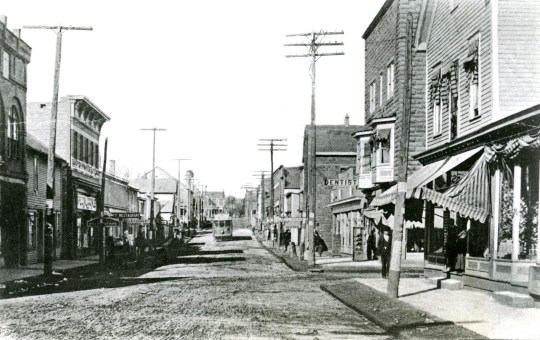
The Interurban rolls down Depot Street (now Second Street) in Byesville.

This Saturday afternoon when all the coal miners are shopping in Byesville, the Interurban has to slow down a little because of the miners and their families flooding this main thoroughfare. Coal miners were not welcome to shop in Cambridge, so Byesville was a busy town.

Interurban Rocky Bottom 001

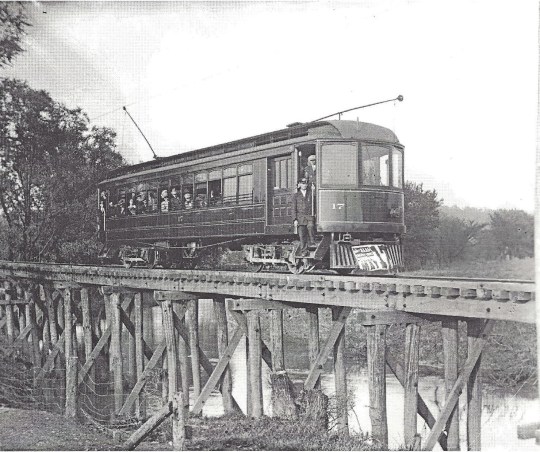
Interurban passes over Rocky Bottom swimming hole, a popular summer hang-out.

Just outside of Byesville at Little Kate, the tracks lead over Wills Creek on a trestle. Granny’s eyes light up as she notices a sign on the cowcatcher that says “Haag Railroad Show”. That sounds like something she would like to see.

As you pass over “Rocky Bottom”, a favorite swimming hole for youngsters, watch out for skinny dippers.  Sometimes they make people laugh, and other times cause embarrassment to those riding the rails. Granny has to cover her eyes!

Trail Run Mine is a busy town with over 1500 residents. You have to be quick as the interurban only stops here for seconds unless there are milk cans, ice, dynamite, or other freight to unload. They must keep on schedule.

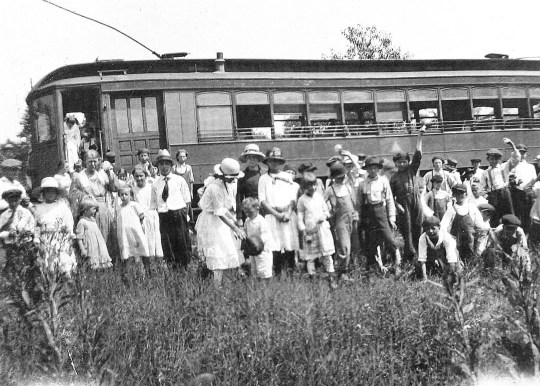
Interurban Vacation Bible Class in 1925

Vacation Bible class of Lucasburg and Buckeyeville stops for a picnic at Ball’s Grove.

Up on the hillside, Granny spots families having a picnic under the trees. There is a spring nearby and she has heard that Ball’s Grove (today the northbound I-77 roadside rest) is a perfect place for a family to enjoy relaxing while the children play tag or kick-the-can.

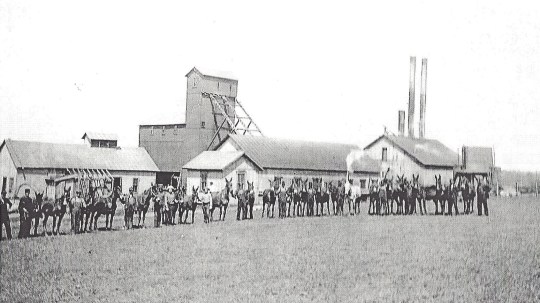
Puritan Mine 001

Miners and mules line up outside Puritan Mine.

As the Interurban stops at Puritan Mine (Seneca Lane), coal miners get on board to head home for the evening. Granny fusses just a little to make sure they don’t get coal dust or grease on her best dress as she has almost reached her destination. The large cars have seats for forty-two, but often two hundred dirty miners will crowd on board, eager to head home for the day.

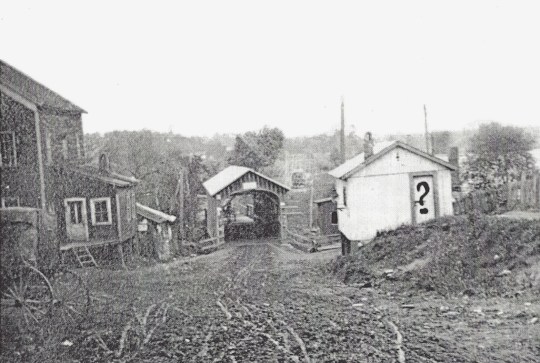
Interurban at Pleasant City 001

The Interurban can be seen on the other side of the covered bridge leaving Pleasant City to return to Cambridge.

By the time the cars have made it all the way to Pleasant City, the end of the line, there is reduced power for the trip back to Cambridge. Voltage is so low that cars leave at a crawl with their overhead lights no brighter than lightning bugs. Now you can see why they need that new substation on Morton Avenue to provide power to the stations at Pleasant City and Byesville.

Today’s a  special day for Granny as it’s her birthday. Her sisters live in Pleasant City and greet her as she gets off the Interurban. They are amazed that she has come so far all by herself.

Granny is excited to tell them about the Haag Railroad Show that is coming next week. “Maybe we could all go see their trained bears, ponies and blue-faced monkeys. There’s always something exciting happening around Guernsey County these days.”

Wouldn’t it have been an adventure to take a Gypsy Road Trip with Granny on the Interurban?