Places to go and things to see by Gypsy Bev

Mom’s Potato Quips

Gardening requires lots of water,
Mostly in the form of perspiration!
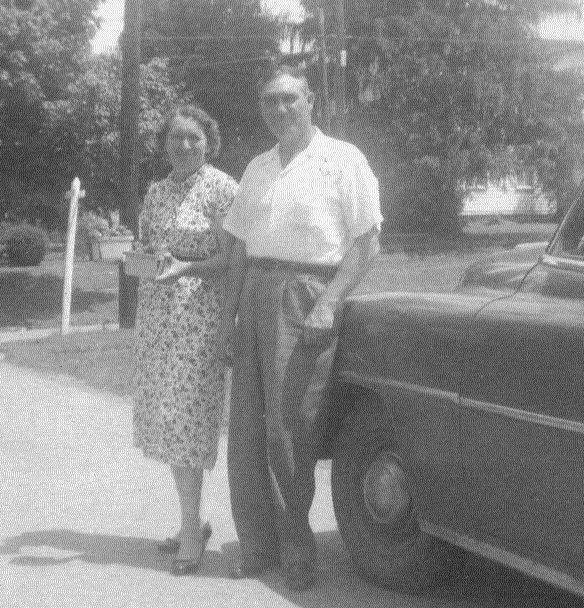
Mom and Dad take family and friends strawberries from their garden

Mom and Dad take family and friends strawberries from their garden

Mom and Dad spent much of their summer perspiring and watering the garden. A large part of their garden was a potato patch. They would pile dirt around the base of the potato plants to protect them from the sun by hilling them, hoeing carefully to avoid damaging any of the potatoes growing under the ground. These potatoes, a favorite comfort food, would last them through the winter if cared for properly.

Mom, a country girl at heart, had many uses for the potatoes. She always carried a raw potato in her apron pocket to prevent rheumatism, while her mashed potatoes and fried chicken dinner became a popular request for family and friends alike.

One morning the children, Mike and Rachel, were home from school, neither one feeling very well. Since poor little Rachel was running a fever, Mom told Rachel to lie down on the couch. Mom hurried to the kitchen to peel some potatoes, which she wrapped in a clean pillowcase before taking them to the living room.

“Rachel, I’m going to place these on your forehead. They’ll draw the fever out and you’ll feel better soon.” Rachel curled up on the couch under a colorful afghan, and soon fell asleep.

In the meantime, Mike complained of an earache. “Mom, would you fix something for my ear? You’re almost magic the way you make everyone feel better.” Mom dashed to the kitchen where she was boiling potatoes for supper. After she mashed some potatoes finely in a ricer, she wrapped the warm mashed potatoes in a clean kitchen towel, then placed the towel around his ear.

“These mashed potatoes will keep your ear warm as toast, because potatoes stay warm for a long time. Be sure to keep them on your ear. You’ll feel better by supper time,” Mom explained in a soft voice to her son. Since Mike was a busy little boy, he didn’t want to lie down so instead sat on the porch whittling a stick with his penknife.

Soon Mom heard Mike cry out, “Ouch! A bee stung me.”

“Don’t worry,” Mom advised, “a slice of potato is just what you need to cool down the swelling from that bee sting. Hold it on the sting while you take the dog for a walk.”

At supper that evening when they sat down to golden brown fried chicken and mashed potatoes, Rachel sat in deep thought. “Mom, I can’t believe there are so many uses for a potato. But the best of all is your mashed potatoes, especially with that creamy chicken gravy.”

The smile on Mom’s face lit up the room. Next year they definitely would plant more potatoes!

This story appeared in the Daily Jeffersonian of Cambridge, Ohio as part of Rainy Day Writers stories for Mothers’ Day. While the picture is actually one of my mom and dad, the names of the children  in the story are fictitious. If you have any great ideas that your mom used to cure aches and pains, please let me know as I enjoy using natural remedies whenever possible.
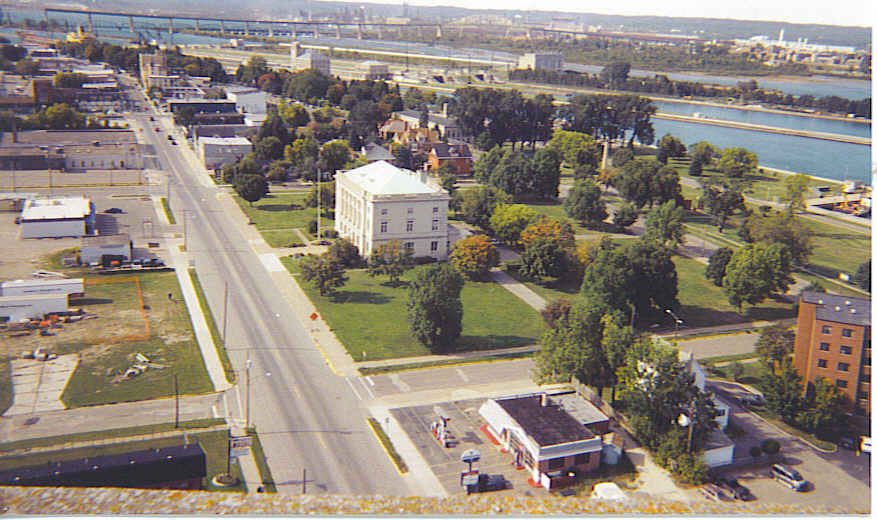
The roaring river of St Mary’s separates the twin cities,  Sault Ste Marie, Ontario and Sault Ste Marie, Michigan on the northwestern tip of the UP of Michigan.  The International Bridge takes road traffic over the St Mary’s River, which is the connecting river between two of the Great Lakes:  Lake Superior to Lake Huron.

Soo LocksThis is home to The Soo Canal, the longest locking system in the world, commonly called “The Soo” by locals. A stop at the Information Center gives you additional information regarding the magnitude of the locks and their importance to shipping in the Great Lakes Region.  Through The Soo, it is possible to watch very large ships being lifted or dropped 21′ as they go through the rapids from lake to lake. Two of the ships being moved this particular day were the S S Atlanta Huron, a bulk Canadian freighter measuring 736′ X 76′, and Lee A Tregurtha, an original WWII tanker now sailing for over sixty years,measuring even larger at 826′ X 75′.

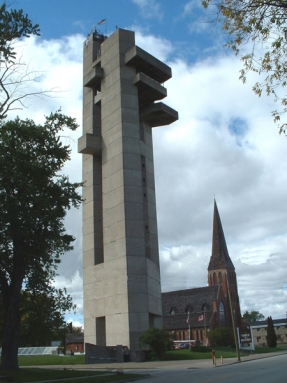
Tower of HistoryIt was fascinating to watch the ships being moved and there were several vantage points.  A nearby tower provided an overview of the area, while it was also possible to watch the ships from the dock area – nearly close enough to touch them.

The Tower of History also gave great overviews of the city as well as the locks. Built in 1969 by the Catholic Church, its purpose was to tell the history of the early missionaries. Today the story of Native Americans as well as the early missionaries is told with pictures, films and displays. 2000 years ago the Native American Indians gathered near the waters here due to the abundant supply of fish and furs. The Tower of History is 210′ high with outside balconies to make viewing a pleasure.  Since it was a very windy day, it was advised that visitors not go to the top. But that was just a challenge and proved quite scenic.

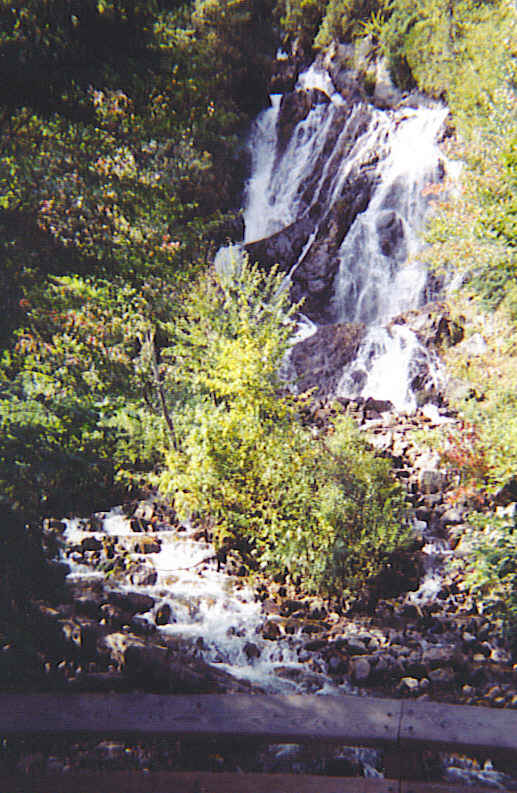
Agawa Canyon FallsThe following day, an early morning train, Agawa Canyon Tour Train, left Sault Ste Marie on the Canadian side. The round trip of 228 miles over towering trestles into the Canadian wilderness provided a scenic view including many lakes, waterfalls and pines.  At the farthest end of the tour, the train sweeps down into Agawa Canyon with a stop at Canyon Park, home to many beautiful waterfalls.

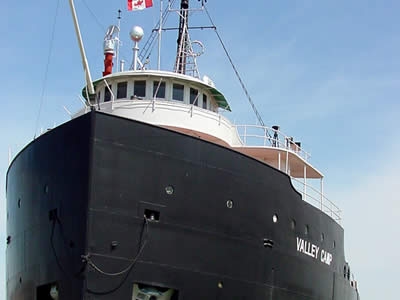
Before leaving Sault Ste Marie the next day, visited the Museum Ship Valley Camp, an actual retired ship. The S.S. Valley Camp was built in 1917 by a shipbuilding company in Lorain, Ohio. It is possible to walk not only the decks, but also visit the living quarters and explore inside from top to bottom. Valley Camp once had a crew of 29 men, so is the perfect place to display lifestyle of the Great Lakes’ sailors. From the more luxurious Captain’s Quarters to the rather plain cabins of the Oilers and Coal Passers, visitors receive a true glimpse into how they lived and worked onboard.

Museum Ship Valley CampA museum with over a hundred exhibits exists inside Valley Camp. Many items are displayed that have been recovered from sunken ships in the Great Lakes. An attractive aquarium features many of the fish who swim in the St Mary’s waters.

Sault Ste Marie does not claim to be tourist country, but it certainly holds many interesting pieces of the past for the curious to explore.

To reach Sault Ste Marie on the US side, take I-75 North to its end. 

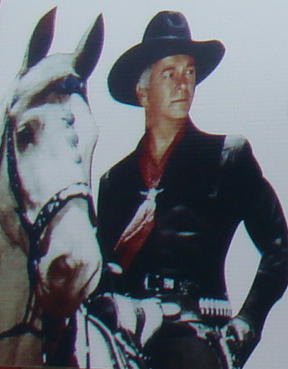
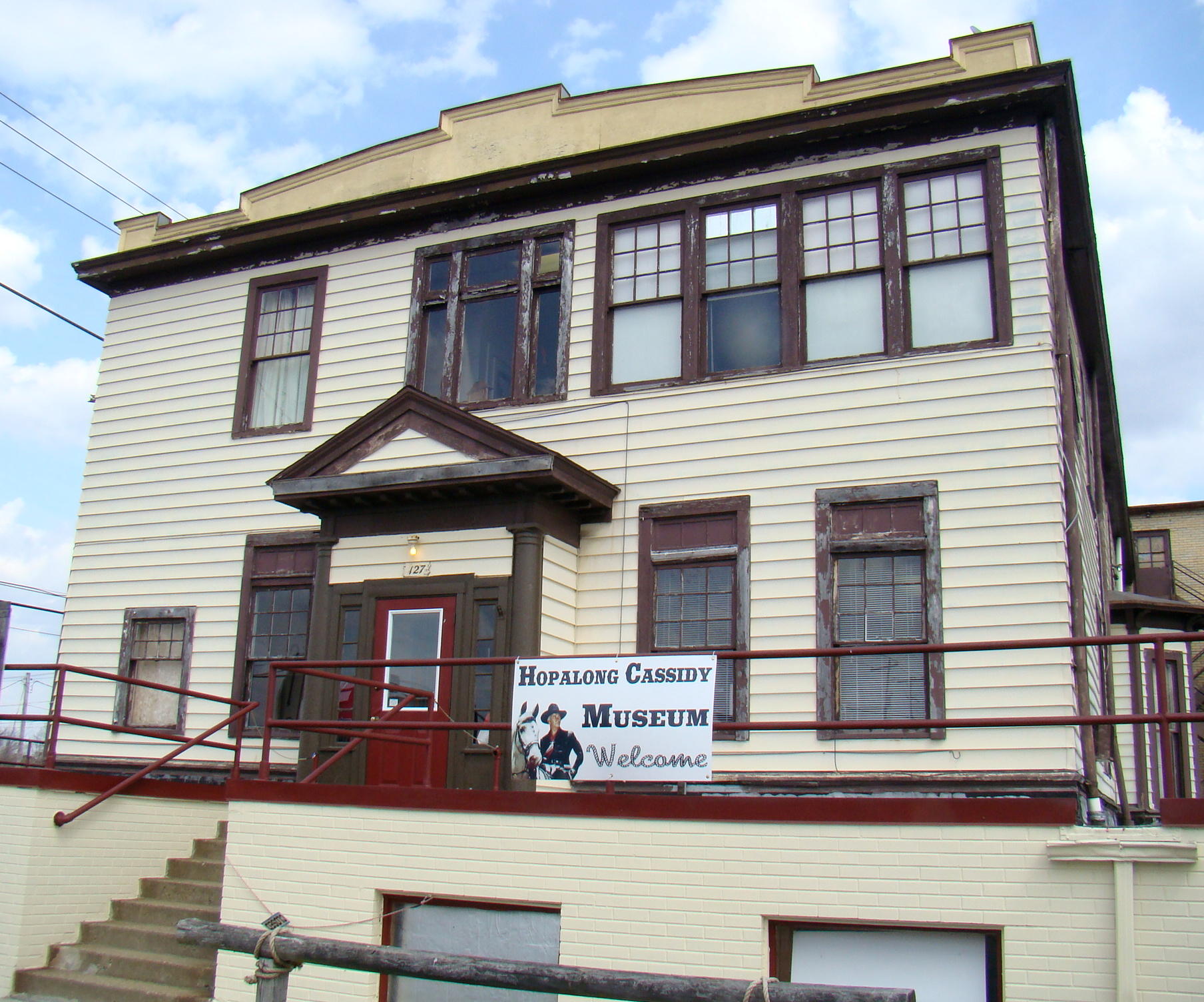
Hopalong Cassidy Hopalong Cassidy, “Pride of the West”, is also “Pride of Cambridge, Ohio”,  the boyhood home to Hopalong Cassidy and the Hopalong Cassidy Museum. William Boyd, aka Hopalong Cassidy, was born close by in Hendrysburg, Ohio in Belmont County back in 1895. While he only resided in Cambridge twelve years, they are still proud to call him a home-town boy. The family moved West at that time to Tulsa, Oklahoma, and at about the age of 20, William ended up in California where his good looks and winning manner were noticed by the film industry.

None other than Cecil B DeMille, who became a long time friend, took William Boyd under his wing, and got him his first acting contract at $25 a week back in 1918 as leading man in the silent film industry. When the role of fictional cowboy, Hopalong Cassidy, came up, director Harry Sherman felt William Boyd was a natural. In his black cowboy hat riding Topper, his white horse, Boyd soon became a national hero known for his gallantry and fair play. After 66 movies portraying Hopalong Cassidy, William Boyd became better known as Hoppy to his friends.

The story of his nickname began with Cassidy getting shot in the leg during a gun fight. When recovering from his gun wound, someone asked how he was feeling, to which he replied, “I’ll manage to hop along.”  Thus the name Hop-along Cassidy. After its success at the movie theaters, it was decided to have a Hopalong Cassidy TV series…also a big success. In 1950, Hopalong Cassidy became the first network Western television series.

Laura Bates and Hopalong CassidyForty years later, in the town of Cambridge, Ohio, Laura Bates was host of a show called “Talk of the Town” on their local television station. One particular day she was interviewing someone from New York doing research at the local library regarding Hopalong Cassidy. They commented, “It’s a shame no one in Cambridge ever did anything about Hopalong Cassidy, since he grew up here.”

Laura said, “That was like a slap in the face from the Big Apple.” After that, she began pursuing the idea and in 1990 it was decided to use Hopalong Cassidy for the theme of their Spring Festival.  Today, that Hopalong Cassidy Festival still is enjoyed by people from all over the world and is now held annually in May at the Pritchard-Laughlin Civic Center just outside the city.

Many movie stars attend the Festival to pay homage to Hoppy, one of those great cowboy legends. Hugh O’Brien from Wyatt Earp has attended as well as several stars of Gunsmoke: Bo Hopkins, Ben Costello, and Becky Burgoyne. Even William Boyd’s wife, Grace, has been in attendance.  Fans are still eager to catch a glimpse of these celebrities and perhaps obtain their autographs.

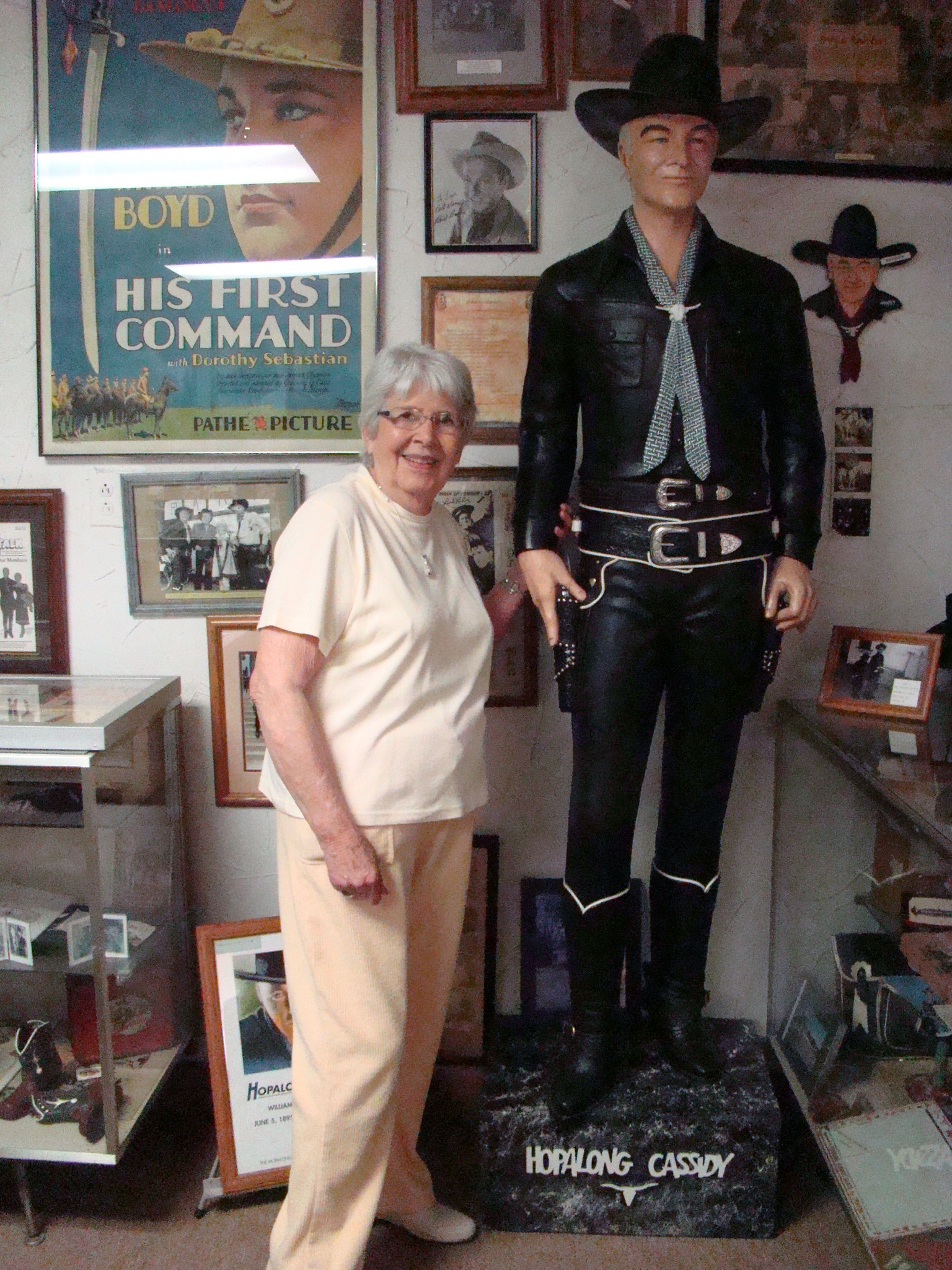
Hopalong Cassidy MuseumToday there is a museum in Cambridge, Ohio which houses a giant assortment of cowboy collectibles. Located at Scott’s 10th St. Antique Mall, this is a hot spot during the annual Hopalong Cassidy Festival. Three rooms are packed with Hoppy memorabilia, all part of a personal collection owned by Laura Bates, local Hoppy organizer and enthusiast. Here fans have purchased an old tin lunch bucket and thermos for the price of $395.00 or an Easter card signed by Hoppy for $195.00. There are many memorabilia available…for the right price.

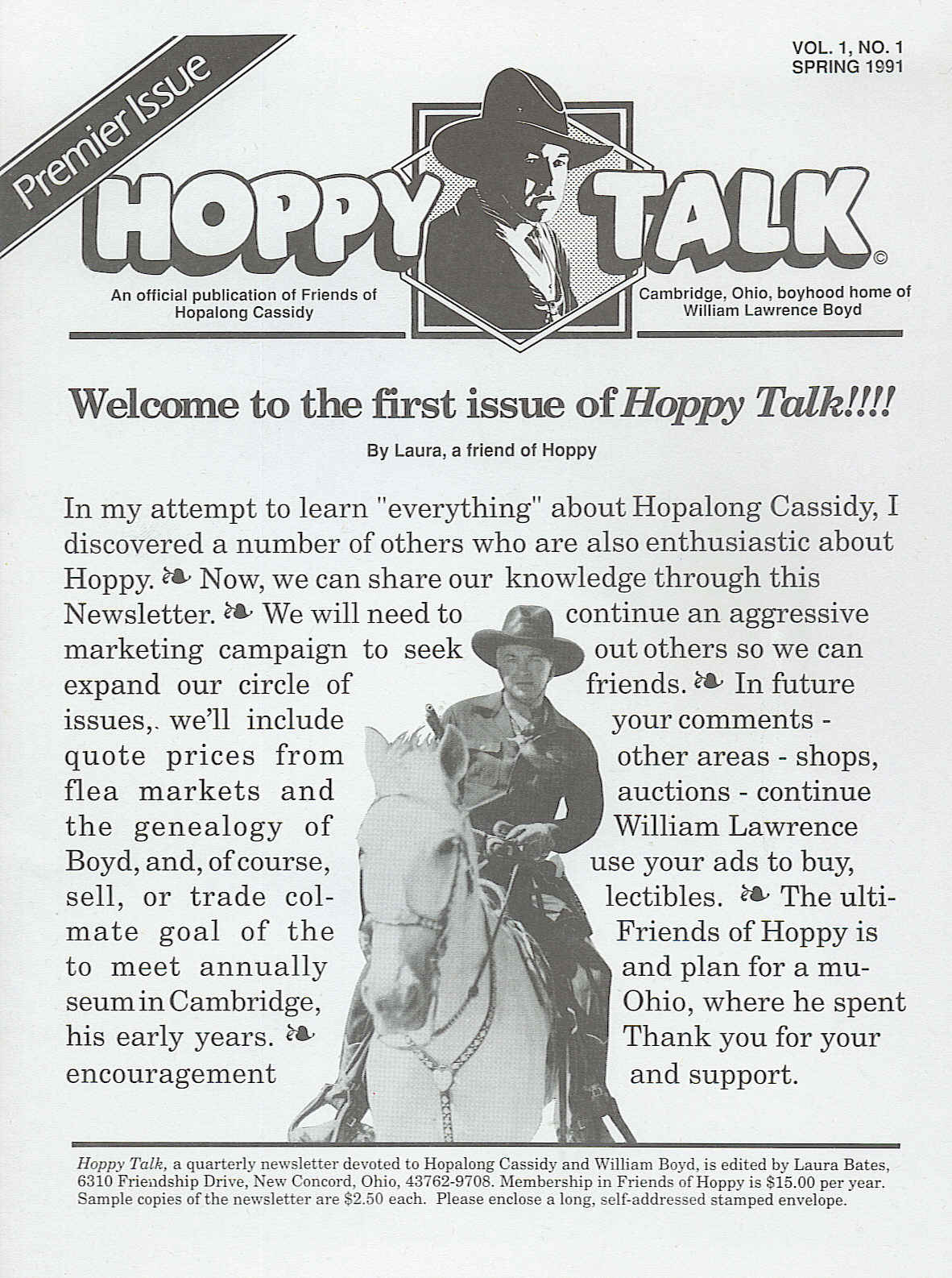
Hoppy TalkIn his hey-day, Hoppy received around 15,000 fan mail letters a week. Today there is still a meeting of the Hoppy  Fan Club during the annual Hopalong Cassidy Festival in Cambridge, Ohio.  Laura Bates is president of the fan club, which was formed back in 1991 and publishes quarterly a newsletter, “Hoppy Talk”, which is distributed to members of Friends of Hoppy. Membership was around 500 in the beginning, but has dropped to about 300 members today as younger adults have little memory of those great cowboy heroes. “Hoppy Talk” is celebrating its 24th year of publication in 2013.

William Boyd and Hopalong Cassidy are synonymous…Hopalong Cassidy, his alter ego. When he finally retired, he turned over his entire crew and cast to a new Western just coming on the scene…Gunsmoke. Boyd didn’t sing, dance, play sports, or race cars, he was simply Hopalong Cassidy.  He smiled, waved and shook hands.  He was everybody’s Mr. Good Guy and his favorite drink was a nonalcoholic sarsaparilla!

The Hopalong Cassidy Museum is located in the South Tenth Street Antique Mall in downtown Cambridge. There is easy access as Cambridge is at the intersection of I-70 and I-77. Wheeling Avenue is their main street and the museum is just a half block south of Wheeling Avenue on 10th Street.

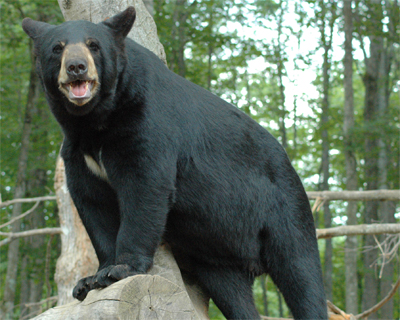
Black Bear RanchOn a trip through the Upper Peninsula of Michigan, commonly called the UP, a sign for a Black Bear Ranch appeared along the road. Bears are a symbol of courage and bravery, having appeared in many Native American legends. All my life this gypsy has been attracted to bears and their habitat, so this was a bonus find along the way.

Oswald’s Black Bear Ranch is the largest strictly bear ranch in the United States. Located on the back roads near Newberry, Michigan, it has become one of the top ten family attractions in the area.  Owned by Dean and Jewel Oswald, this family affair began as a rescue operation for black bear cubs. Dean brought them to his ranch, fed them, and gave them loving care. Once word spread of his love for bears, people from all around the world would call to say they had found a small bear cub, but were no longer able to care for it. Then Dean would bring it to its new home.

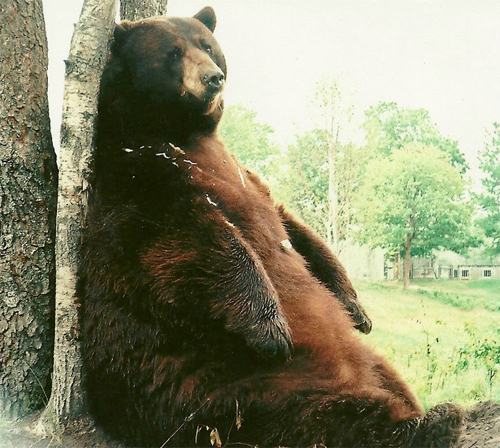
Tyson BearThe main attraction in the early days of Oswald’s Black Bear Ranch was Tyson, the largest black bear in the United States and possibly the world. Although the name black bear suggests the color black for all those bears, their colors range from cinnamon to dark chocolate to jet black. Tyson weighed in at 880 pounds, but the Oswalds believe he reached 1000 pounds, before taking his last breath in 2000.

Those curious about bears are free to walk throughout the property – outside the fences of course. It’s an enjoyable stroll to encircle one of their four enclosed areas and view the bears as they lumber along. This experience is more personal than a visit to a zoo, since visitors usually get closer to a real bear than they have ever been before. Today they have added a trolley for older or handicapped visitors, who aren’t able to make the long walk, but would still enjoy seeing the bears in their wilderness habitat.

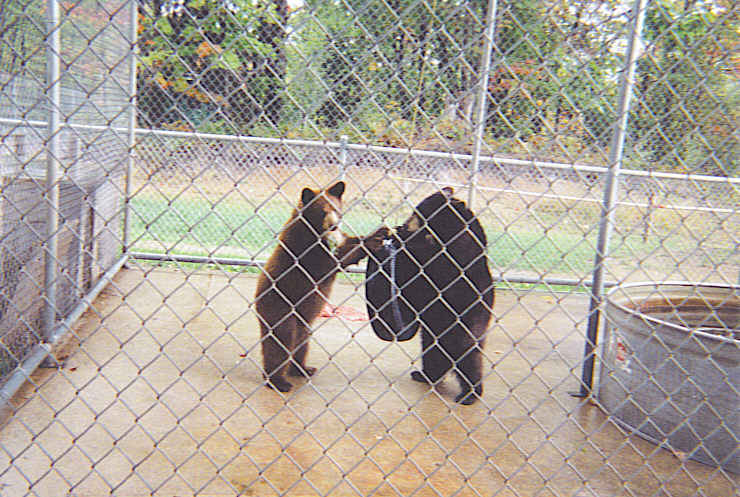
Baby Bears Play AreaTwo little bear cubs enjoyed playing with an old swinging tire in their cage. They amused themselves for quite some time pushing it from side to side and sometimes getting on it for a ride. The cubs seemed quite pleased with themselves while swinging. Nearby was a big pool of water where they bathed and splashed each other, exactly like two children might do.  Cute is the word that best described their antics. Each year a contest is held in the local area to name the newest bear cubs.

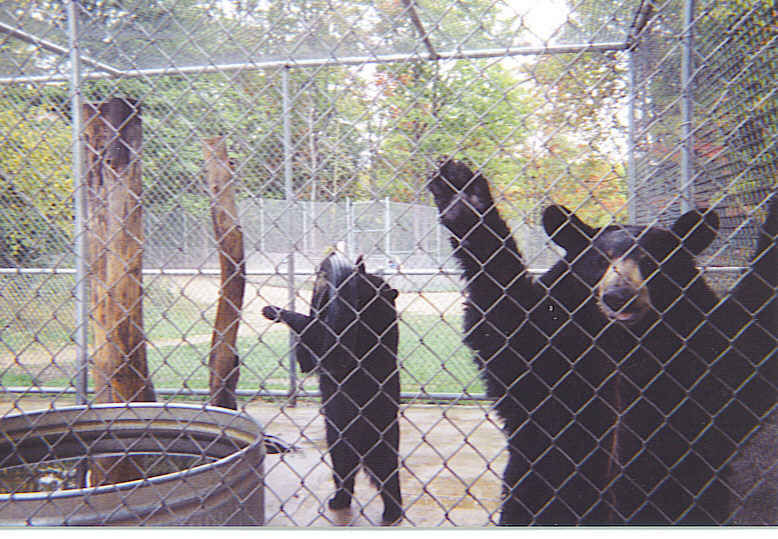
Bear Waiting for SnackAnother favorite activity involves feeding the bears. The larger bears might be fed apples, while the younger ones prefer Fruit Loops.  Eagerly awaiting their snacks, bears bravely approach the fence. These small cubs, all under the age of four months, received many gentle rubs and even hugs, as it was permissible to pet them during a previous visit. However, last year the government stepped in and now prohibits touching the bears or taking pictures with them. Some still feel Dean Oswald lets visitors a little too close for comfort, but the children and young at heart certainly enjoy being allowed this close contact.

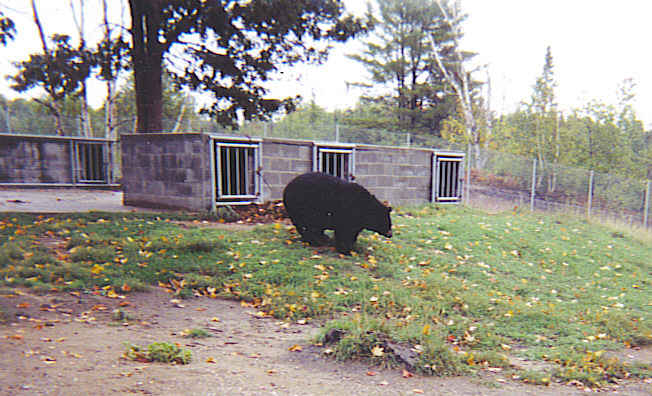
Black Bear HibernationThe older bears lived in a large fenced in area with a half mile perimeter to roam. The high fence protected visitors but still gave the bears freedom more closely resembling the wilderness where bears usually live. At the back of the fenced in area were cement block houses for winter hibernation. With straw covered, wooden floors inside, bears had a comfortable environment for their winter sleep.

Today there are 27 bears at Oswald’s Black Bear Ranch. Of course, there is also a souvenir shop for those who want to take home a memory. My treasure was a warm flannel nightgown with Oswald Ranch written among the black bears. It feels like getting a warm, soft hug from a bear!

Oswald Black Bear Ranch is located just 20 minutes south of Tahquamenon Falls, or from Newberry go 4 miles north on M-123 towards Tahquamenon Falls. Turn left at 4 Mile Corner (Deer Park Rd., Muskallonge Lake, H-37 H-407). Then it’s 4 1/2 more miles to see the former home of Tyson Bear .

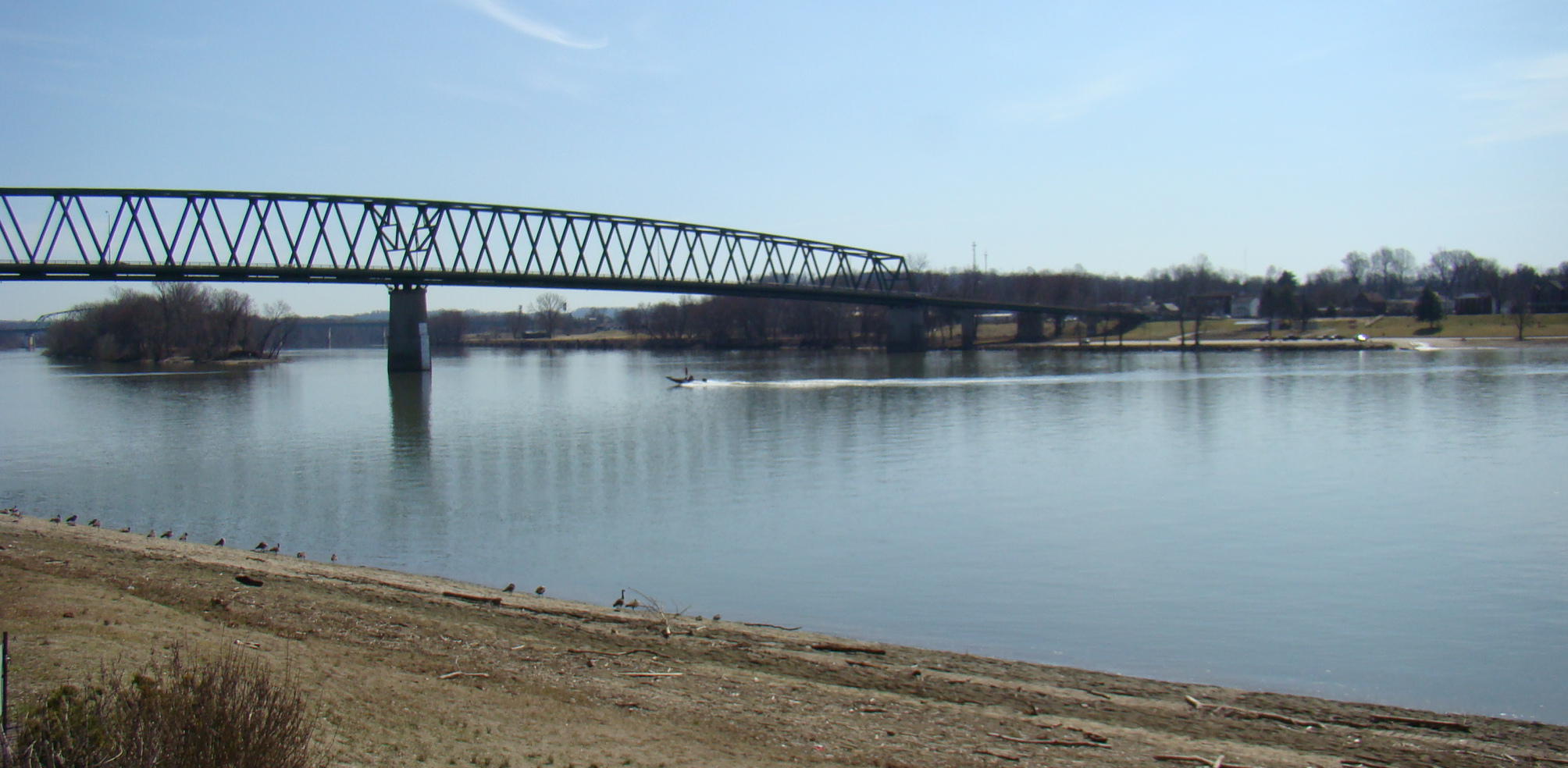
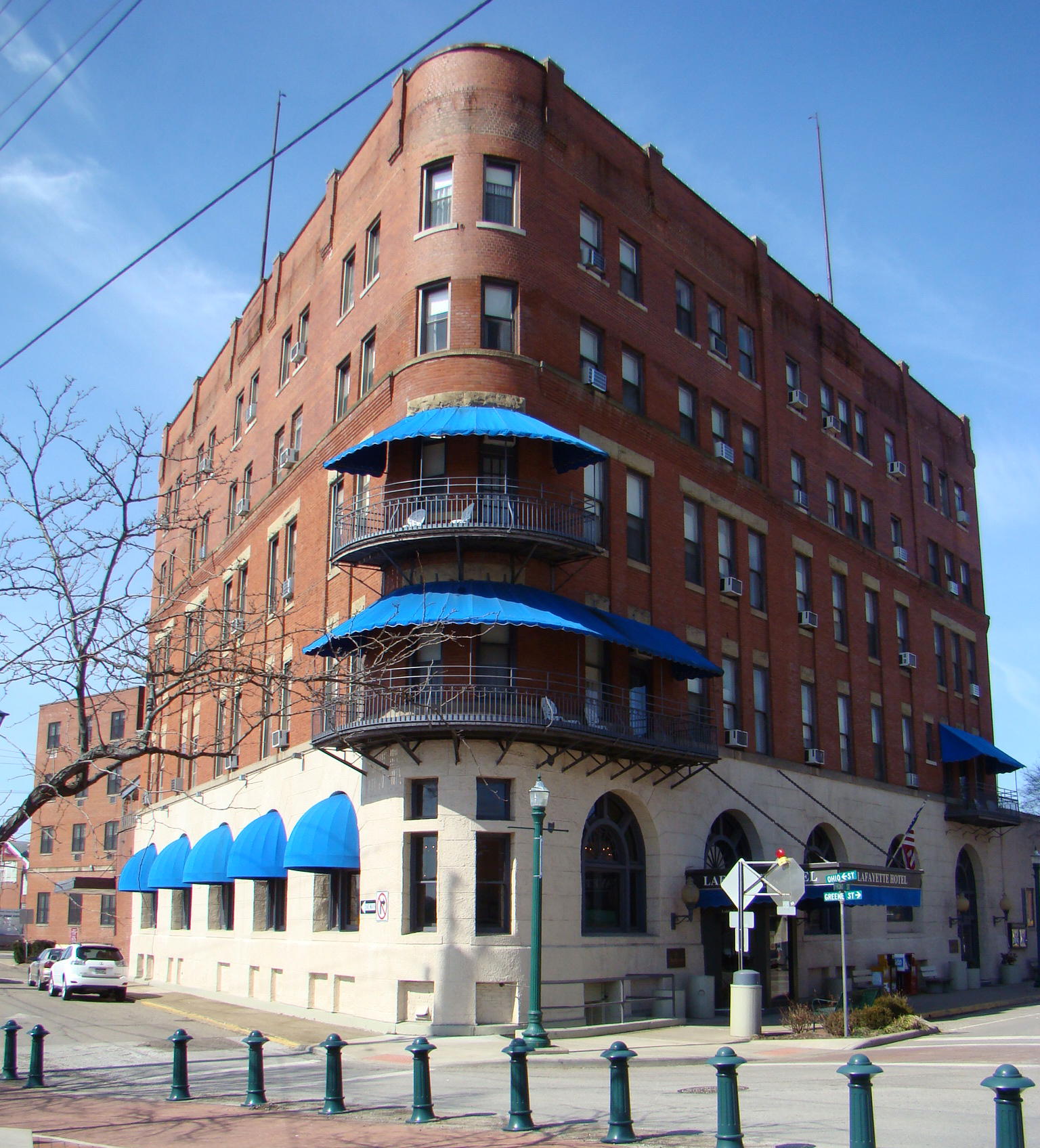
Ohio River at MariettaMay the ghosts be with you while you spend the day or night at the Lafayette Hotel in historic downtown Marietta, Ohio.  Visitors and employees anxiously report stories of paranormal activity in this grand hotel on the banks of the confluence of the Muskingum and Ohio Rivers.

Back in 1882, river traffic was heavier than it is today. The Ohio River provided the freight and passenger routes for much of the eastern part of the United States. Of course, these riverboat travelers needed a place to get meals as well as a place to spend the night. Here at the meeting place of two major rivers, the Bellevue Hotel was built. This quite modern hotel, for the late 1800’s, had a fast running elevator taking guests to 55 rooms, five of which had baths. Rates at the Bellevue were $2.00 a night

lafayette hotel 013After a fire destroyed the Bellevue Hotel, another hotel was constructed on the original foundation. In 1918 the present triangular shaped Lafayette Hotel opened for business. The name was chosen to honor Marquis de Lafayette, French hero of the American Revolution, who was believed to be the first tourist to visit Marietta in 1825. There is even a plaque, near the hotel at the edge of the Ohio River, marking the spot where he came ashore.

A popular meeting room bears the name of Rufus Putnam, who many list as the founder of Ohio.  His leadership established Marietta as the first permanent United States settlement in the Northwest Territory.   In a letter sent to his former home, Rufus Putnam described the land along the Ohio River to his friend as: “a country of most pleasant climate and of the rarest beauty and enduring charm”.

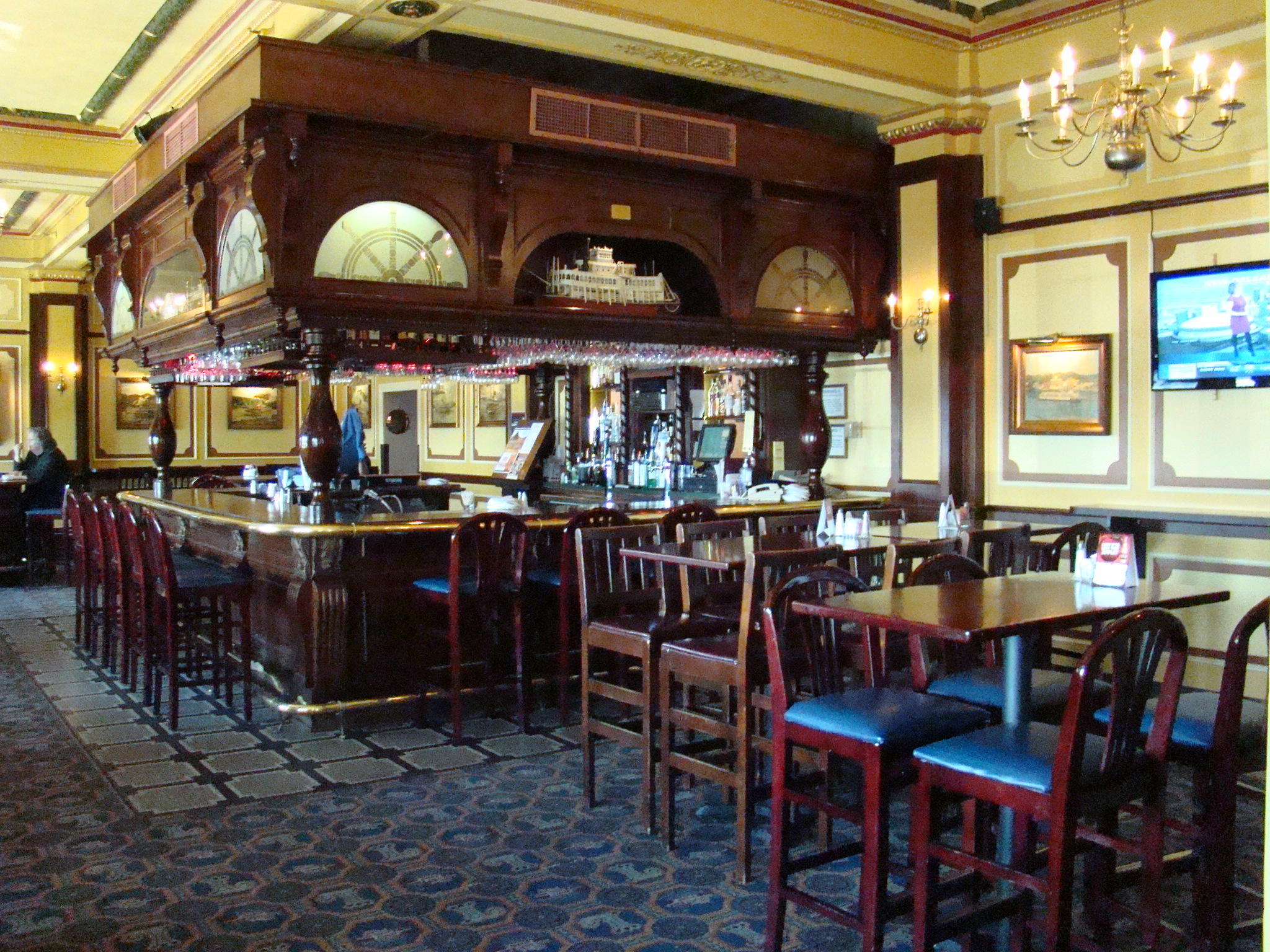
Riverview LoungeThe Riverview Lounge is where the “Lady in White”  often appears hovering over the carpet, while she smoothly moves through the room. The bar happens to occupy the same area where the ladies’ dressing room was located  in the original hotel.

When selecting a room in Marietta’s only downtown hotel, you will probably be given a choice of view – either the Muskingum River or the Ohio River. Here the ghost of Mr. Durward Hoag, former owner of the hotel, watches over guests and staff from both directions. Sometimes guests feel an icy cold draft pass through their well heated room. Evidence of his presence appears in flashing light bulbs, rearranged papers, hidden objects,  and often merely a wisp of light. Maybe Mr. Hoag’s spirit is bored!

When speaking with recent visitors, footsteps were reported outside their door, but no one was in evidence. The elevator, carrying no passengers, left the floor a couple times during the evening and headed to the rooftop. Later that night when they were in bed, another couple felt someone jump in the center of the bed where they were resting. All guaranteed they had not visited the Riverview Lounge.

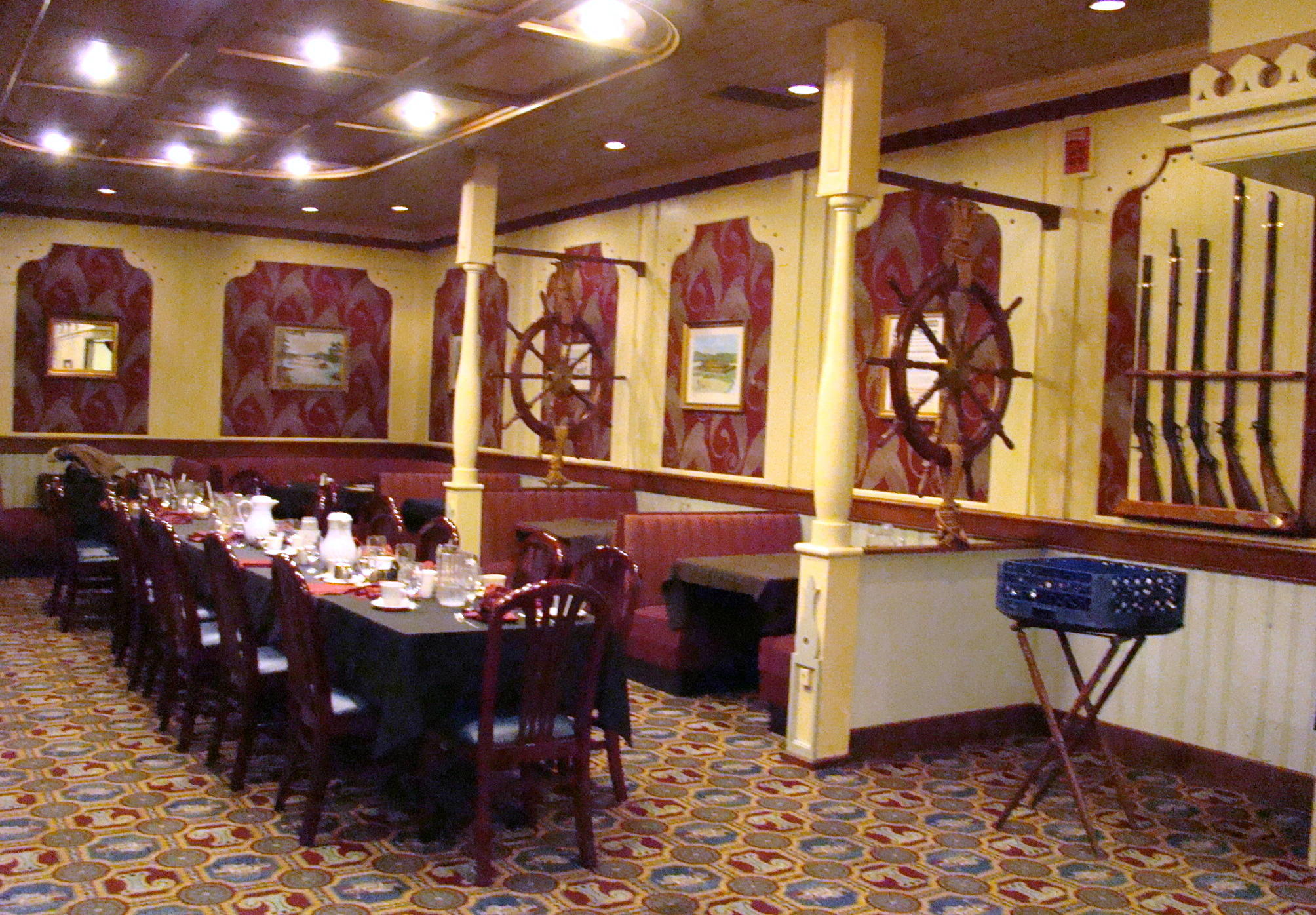
Gun RoomThe Gun Room is a popular place for lunch. The walls are adorned with photos of great majestic sternwheelers that traveled the Ohio River.  A display of antique long rifles contains one made by J.J. Henry that accompanied the Benedict Arnold expedition to Canada in 1775. Waitresses tell of coming in early to work and seeing a figure leaving the front section of the restaurant. Often the swinging doors to the kitchen open for no reason at all. Some feel that Mr. Hoag is checking on his staff.  On the plus side, these spirits are never harmful.

Enjoy the ambience of this richly historical Lafayette Hotel on the river sometime soon. They have been expecting you for nearly a hundred years!

The Lafayette Hotel is located  at 101 Front Street in Marietta, Ohio. Exit I-77 at Exit 1 and follow Route 7 South, which is also Pine Street.  At the third light, Pine Street continues straight and becomes Green Street. Continue on Green Street until you come to the hotel on the corner of Green Street and Front Street. Parking is available between the hotel and the Ohio River as well as on the other side of the hotel.

Easter Sunrise in the beautiful red rocks of Colorado provides a spectacular view. Imagine watching the sun rise over the mile high city of Denver, Colorado in the Red Rock Amphitheater, formerly known as the Garden of Angels. Mother Nature displays her beautiful handiwork every direction the eyes turn.

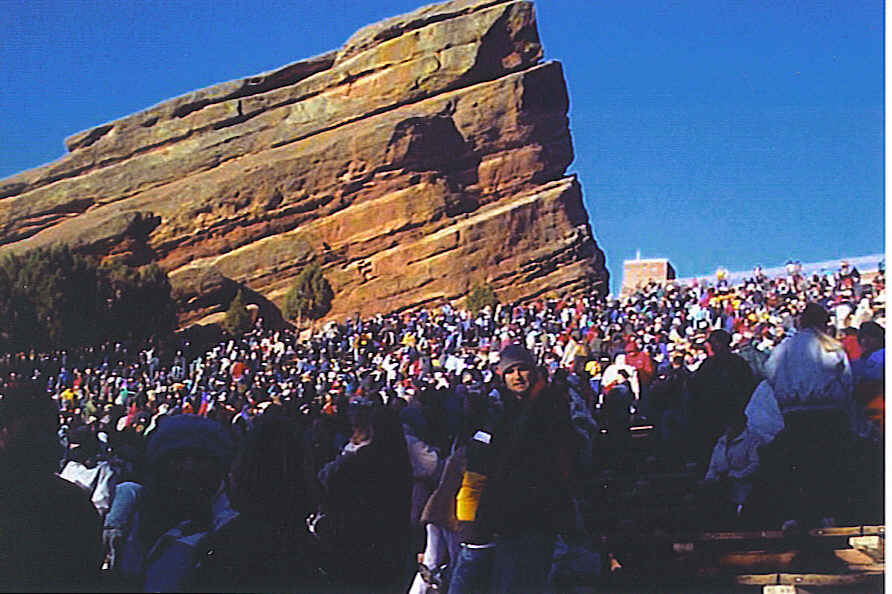
Red Rock AmphitheaterNestled in the Rocky Mountains, The Red Rock Amphitheater, only  fifteen miles west of Denver, sets a magical stage for Easter Sunrise as well as many concerts throughout the year. Great acts including John Denver, the Beatles, Sting, U-2, the opera, and many symphony orchestras vie to perform in this magnificent setting. This geological phenomenon, at an elevation of 6,450 feet, happens to be the only naturally occurring, acoustically perfect amphitheater in the world.

250,000,000 years ago, the shifting movement of the earth’s plates pushed up two large rocks.  Today these two, extending 300′ above the amphitheater stage, are called Ship Rock and Creation Rock. They form the natural amphitheater shape with perfect acoustics. Those surroundings naturally attracted performing artists to a roughly built stage as early as 1906, but most likely the Ute Indians used this setting for ceremonies long before that time.

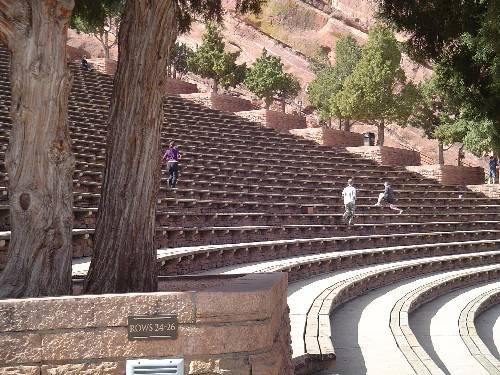
Steps and Seating at AmphitheaterThe amphitheater steps and seats were built by hand during the great depression. The Civilian Conservation Corp completed work in 1935. It was dedicated in 1941 with the first service in the newly constructed setting being an Easter Sunrise Service.

In order to get a good seat and a close parking place for Easter Sunrise Service, arrive at Red Rock Amphitheater by 4:00 in the morning. Otherwise, you could have quite a long walk up the mountainside. Seating might not be a problem since it can easily hold 9,000 people. On many occasions however, it is filled to capacity.
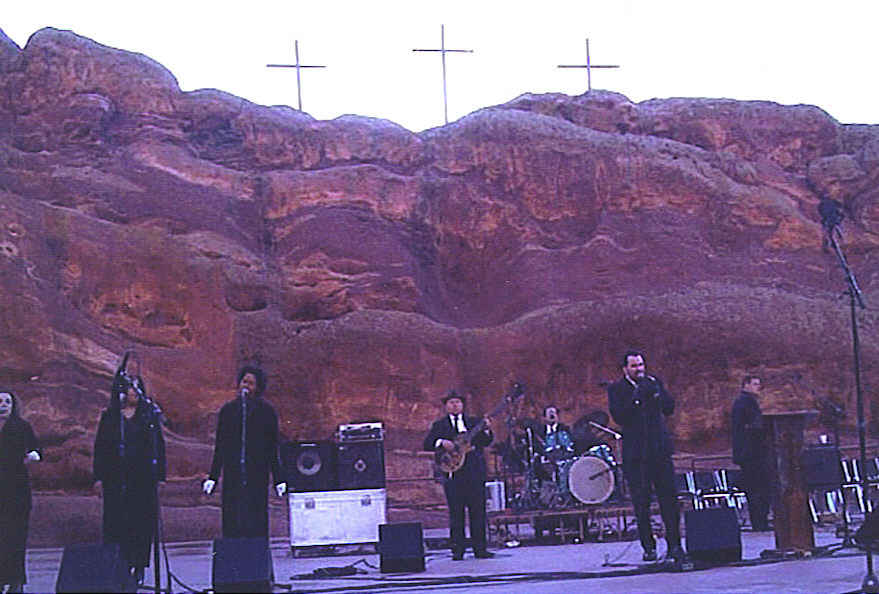
Reverend Leon's RevivalEaster Sunrise is always the first performance of the season. In a recent trip, Reverend Leon’s Revival began the early morning service by reciting and singing one of his favorites, Refrigerator Call.  Rev James Ryan, Executive Director of the Colorado Council of Churches, has conducted the service since 1999.  The service culminated with an Indian in full dress playing a melodic flute solo.

Release of a hundred doves took place just as the sun rose on the horizon. Three crosses atop Stage Rock made a spectacular backdrop for sunrise. Listening to nearly nine thousand people lift their voices in the song, He Lives, was an amazing experience never to be forgotten.
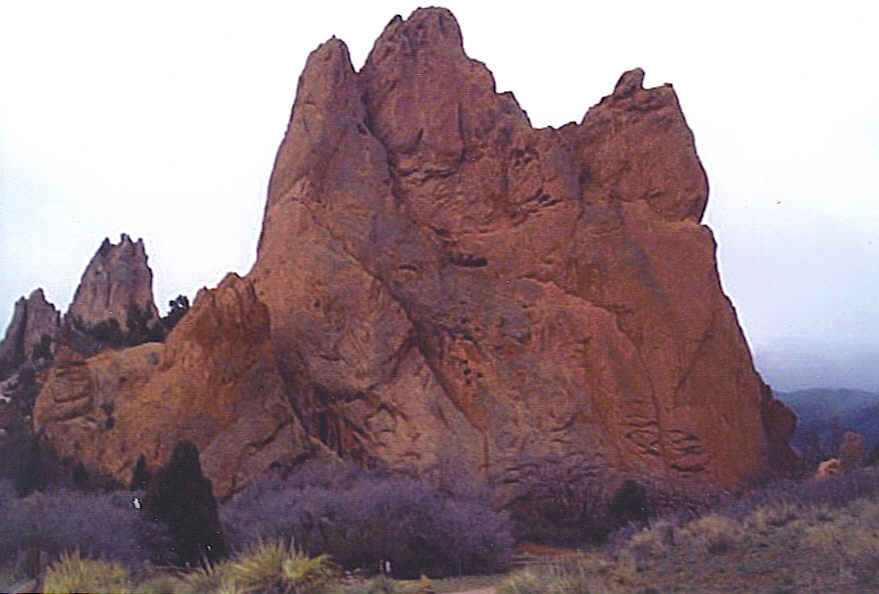
Garden of the GodsWhile in the area, travel just a little south of the Red Rock Amphitheater to Colorado Springs. There you can stroll through the geological masterpiece, Garden of the Gods, which provides a place of inspiration and relaxation. Take time to wander among the great red giants. Around every bend of the path, unusual red rock shapes loom skyward.  Upon closer observation, petroglyphs left by the ancient Ute Indians, who used this as a tribal meeting ground, add a bit of intrigue. This is definitely Red Rock Country!

Red Rocks Amphitheater is located in Red Rocks Park near Morrison, Colorado, 15 miles west of Denver. Coming from Downtown Denver, take I-70 west to exit 259, turn left at the bottom of the Morrison exit ramp, cruise on downhill 1.5 miles to the Red Rocks Park entrance. Coming from south Denver, take C-470 to the Morrison exit, turn west and follow the signs to the Park entrances.

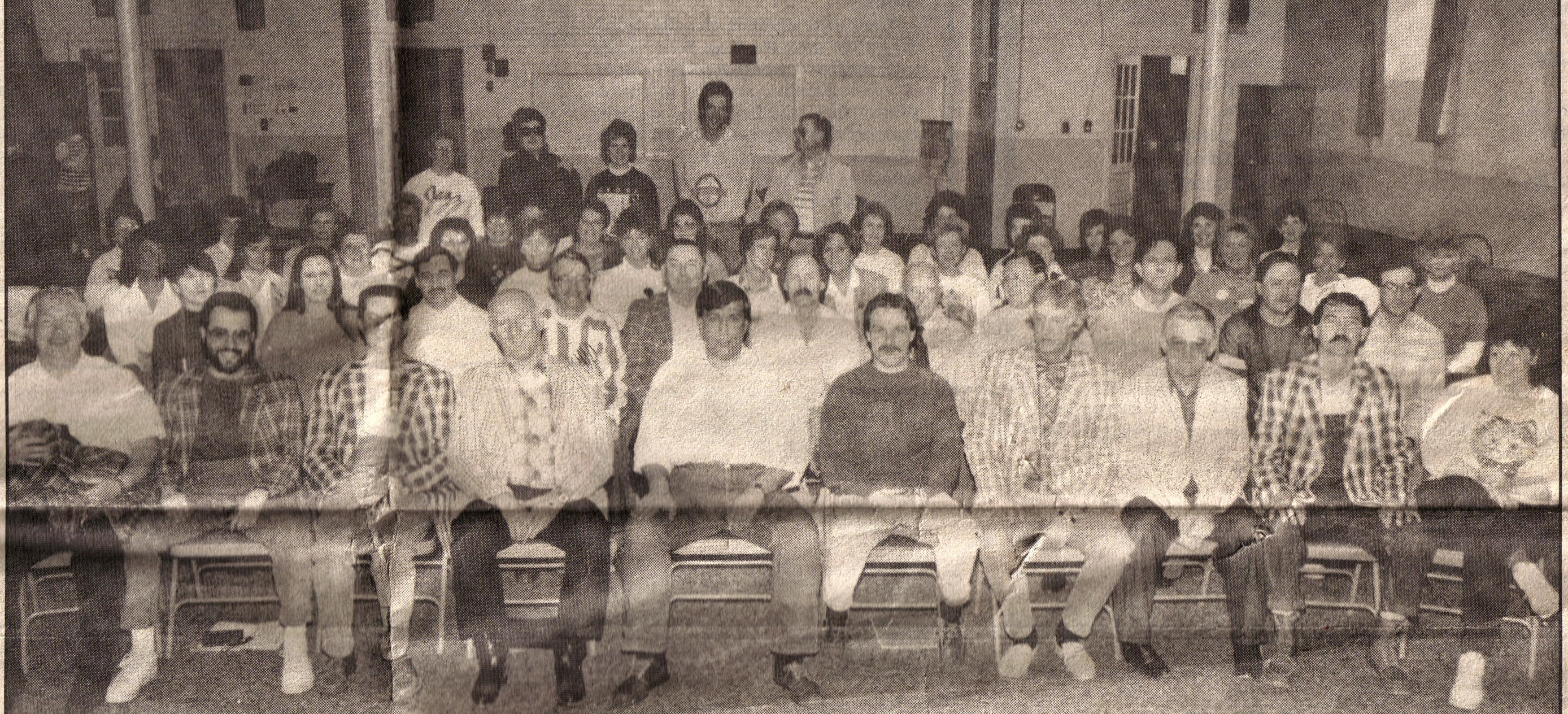
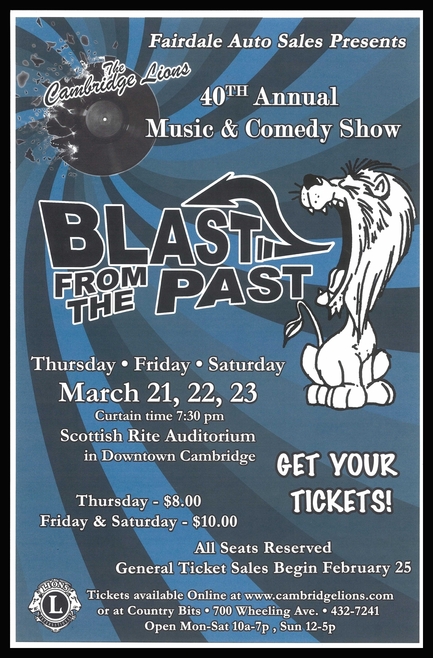
Lions Club Chorus PracticeIt’s time to celebrate and have a good time as the Cambridge Lions Club prepares for their 40th Annual Variety Show.  Back in 1974, that first show was simply called, A Minstrel Show. Many familiar local personalities participated in that first show at the State Theater for a two night run.

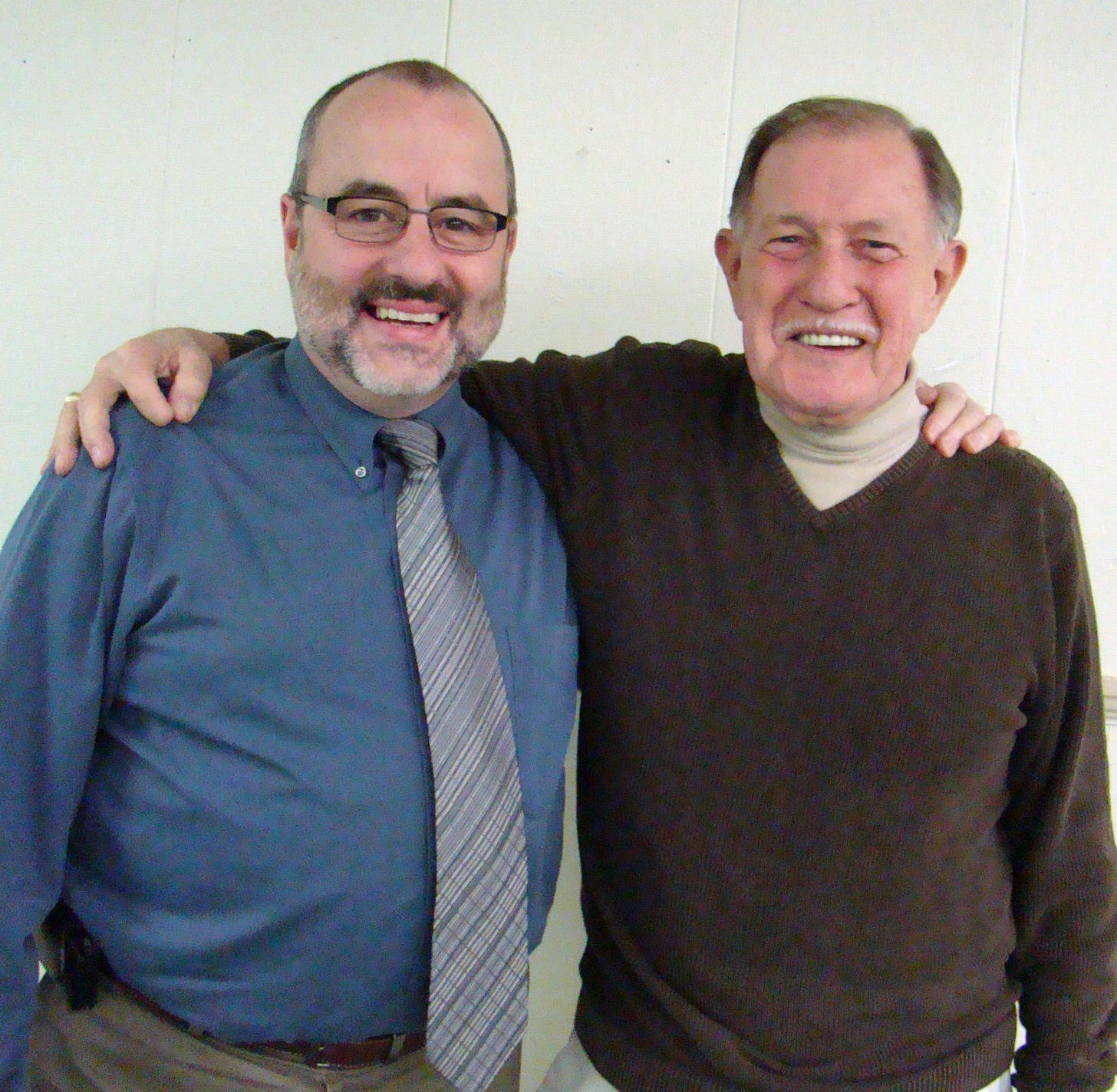
Dave Wilson and Ron GuthrieTwo of those performers, Ron Guthrie and Dave Wilson, actually happen to still be around today, and will be participating in this year’s show, Blast From the Past. These guys never seem to tire of the antics of the Lions Club Show. Both fun loving fellows remember that first year when members persuaded young Dave Wilson to surprise Ron Guthrie with a pie in the face before intermission.  Little did they realize that the cream on top had soured after being left at room temperature for several hours.  When Ron got his pie-in-the-face, he also got quite sick for most of the second half of the show.

By the way, Ron did get even for the pie-in-the-face, as he had promised Dave that first night.  Several years later, five to be exact, it was arranged for Dave Wilson to get arrested during one of the skits. Handcuffs seemed the appropriate method to get his hands behind his back. And you guessed it, Ron surprised him with a pie-in-the- face.  Dave said recently he was rather relieved at that time, because he had been waiting for it to happen for all five years.

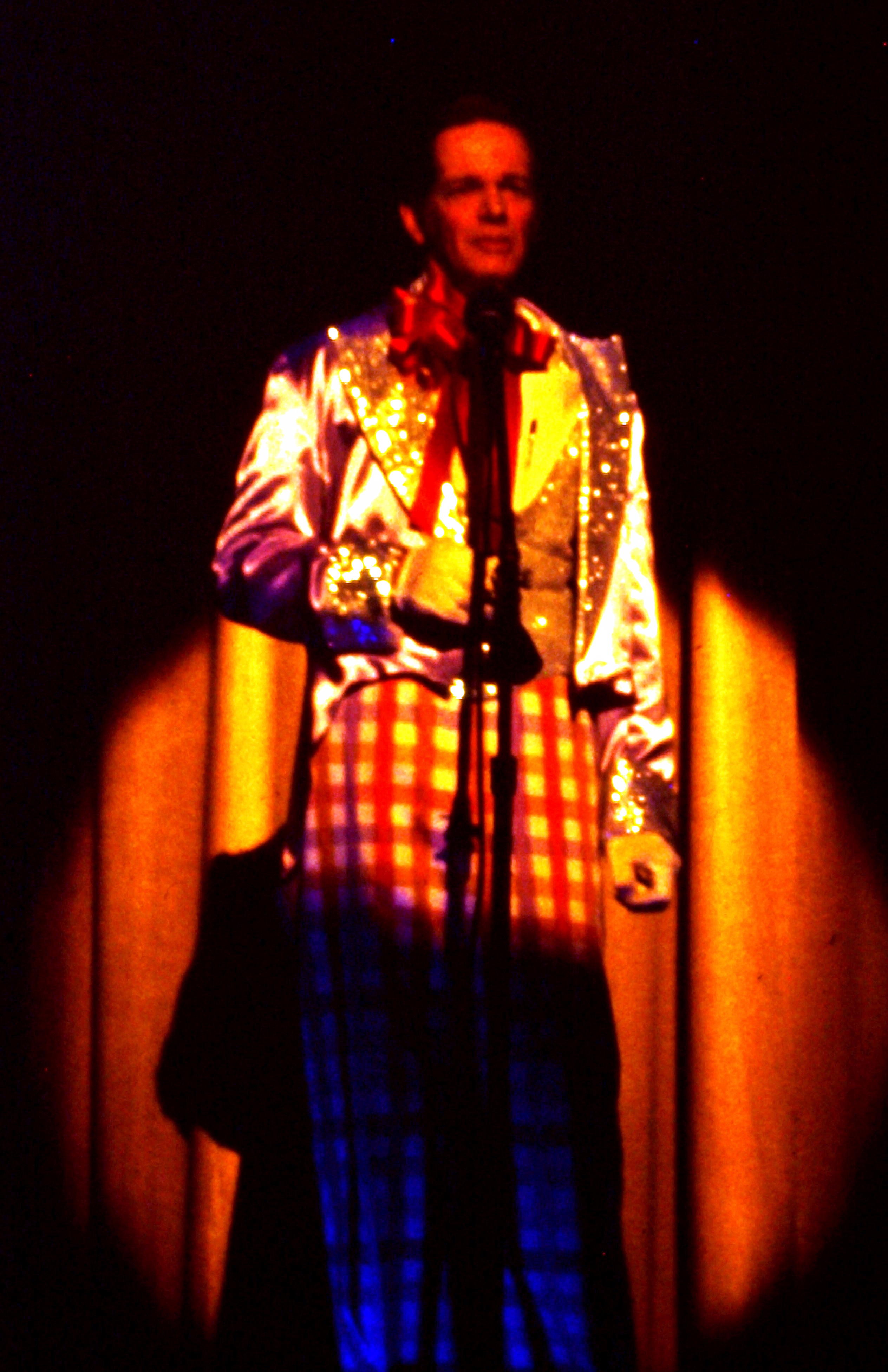
Bob JonardHow did this all get started? Back in 1973 the Lions Club had agreed to help finance a wing for Guernsey Memorial Hospital and they were looking for a way to raise some extra dollars. As luck would have it, Bob Jonard moved to the Cambridge area with his musical family.  Bob had recently been involved with minstrel shows in both Adena and Wooster, so he encouraged the local Lions to give it a try.

Of course, many felt it wouldn’t work.  However, Bob Jonard found a great listening ear and enthusiasm in Ron Guthrie. Soon John Mehaffey and his wife, Frances, became supporters. This team put together that first show around their kitchen tables, and it was a great success.

Many of the performers have been around since their youth, have gone away to college or jobs, and then returned to their home town to again join in the fun of the show. For many of the participants, this is one of the highlights of their year.

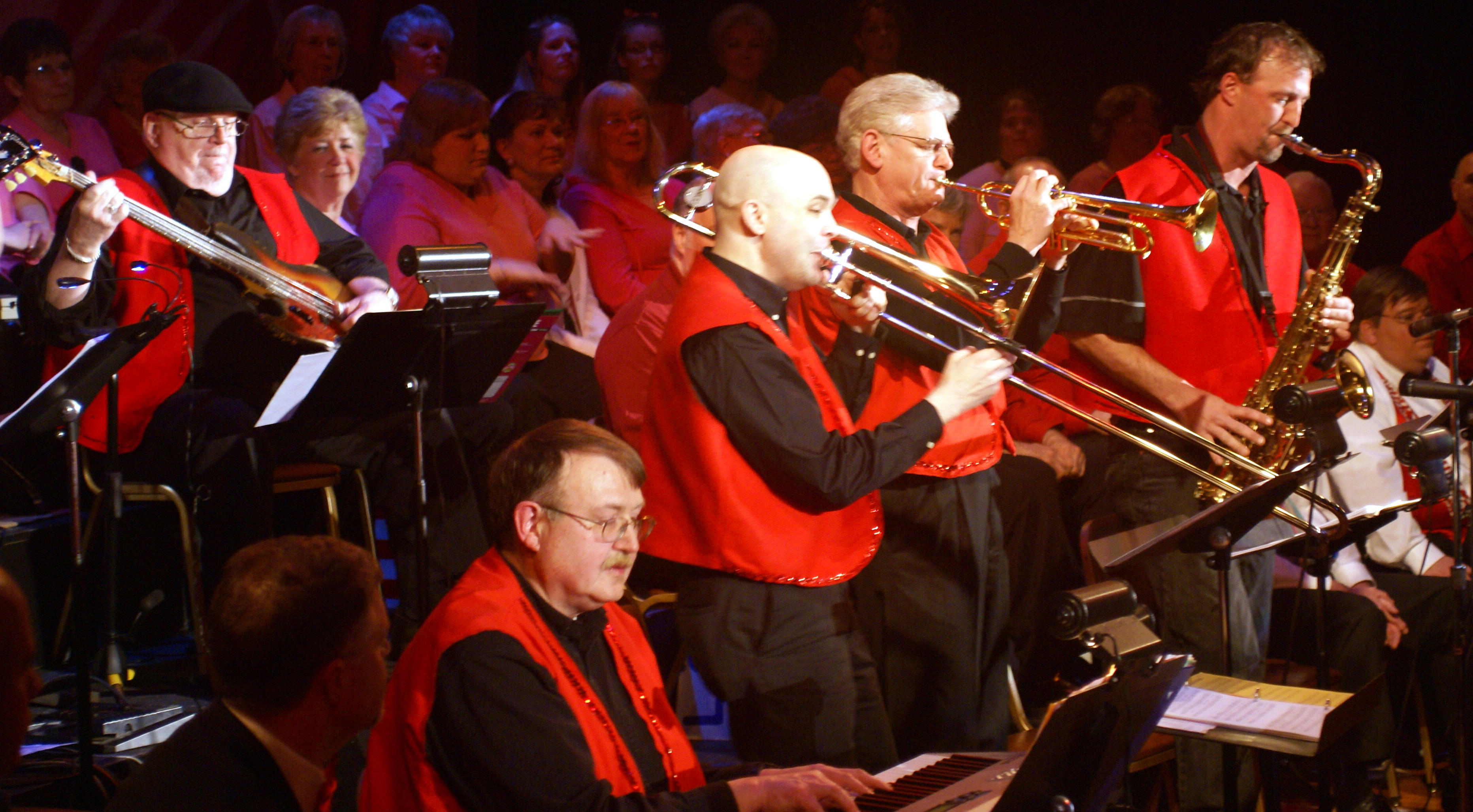
Lions Show BandWhile funny skits and jokes filled the State Theater years ago, music was the main part of the program and still is today. The chorus, groups, and solos would be at a loss without the accompaniment of the Lions Show Band.  In the early years, the chorus only had a mimeographed copy of the basic music with no harmony parts included. They each sang their own special harmony to create a beautiful sound. Some of the songs from that first show included: A Bird in the Gilded Cage, Daddy Sang Bass, Sweet Gypsy Rose, and Mammy.  

The Flappers danced their way into people’s hearts with a bit of the Charleston to the then popular, Ballin’ the Jack. Since then, the can-can, black light dance specials, and even line dancing have entertained the crowds. You never really know what is going to happen at a Lions Club Show.

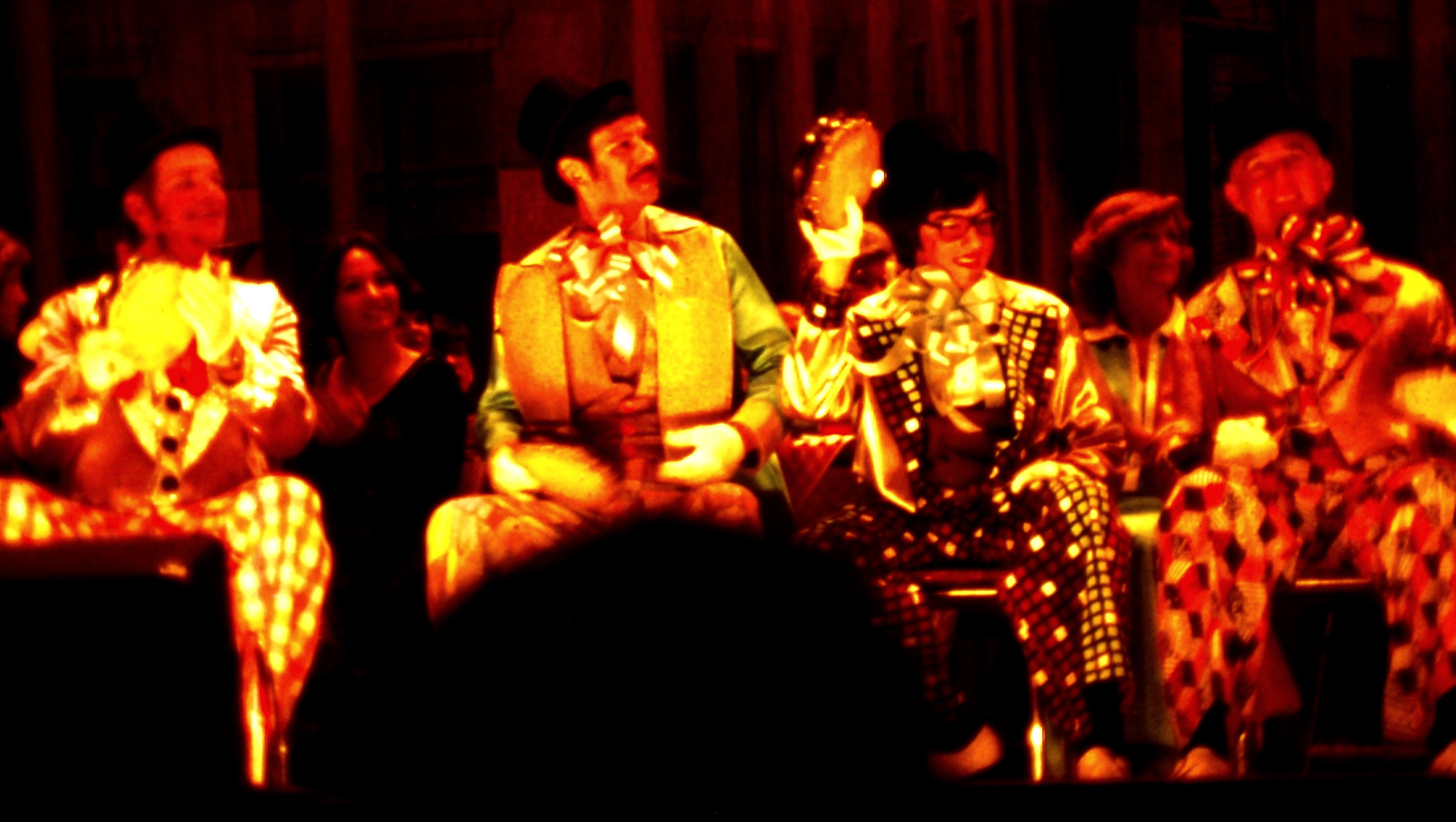
Bob Jonard, Howard Cherry, Dave Wilson and Bob Bistor during a 1977 showThe End Men and Interruptions create most of the laughter during the evening. The Lions Club members enjoy their own brand of humor as they tell jokes and often dress in outrageous costumes. They have great fun themselves while entertaining the crowd. Every year and even every night their antics are a little different.

Focus for the Cambridge Lions Club is on helping the blind and visually impaired. These Knights for Sight use all proceeds from the show to help those in need pay for eyeglasses and eye-related treatments. Your ticket purchase helps a great cause!

Lions_Show_2013Even though The Lion Sleeps Tonight in Cambridge, Ohio, you can be certain to Hear Those Lions Roar on March 21, 22, and 23. They will be roaring their “Blast from the Past” at the Scottish Rite Auditorium with a 7:30 showtime each evening.  They want to entertain you and will tell you in song, It’s true we make a better day, just you and me. They have over the years discovered that singing helps one harmonize with the universe. Come on and Celebrate!

Coming to the show from out of town? From I-70 take Exit 178 at SR 209. Proceed west on 209/Southgate Road until you arrive downtown at the Courthouse. Make a right hand turn and two traffic lights later you are in front of the Scottish Rite Auditorium at the corner of Wheeling Avenue and 10th Street.  It is across from the Cambridge Post Office. Coming from I-77, take Exit 180B, which is US 40 West. After approximately one mile, you will arrive in downtown Cambridge. At the corner of Wheeling Avenue and 10th Street, you will find the Scottish Rite Auditorium. Hope to see you there!

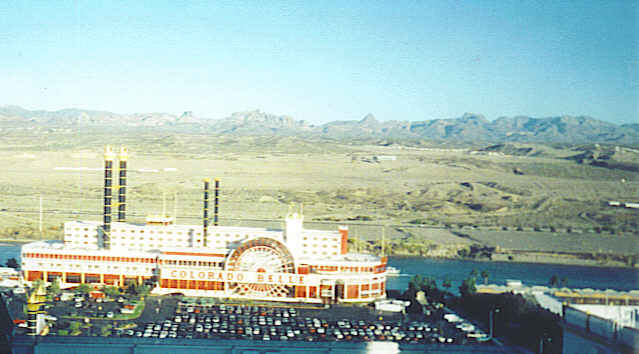
Colorado Belle CasinoMountains on the river…a spot to relax! On the banks of the beautiful Colorado River at the very southern tip of Nevada sits a lovely little town called Laughlin. Casinos are the main business in town, so many visitors try their luck at the slots or gaming tables. The Colorado Belle Casino, a 600′ replica of a 19th century Mississippi paddle-wheel riverboat, is certain to catch everyone’s attention.  However, gambling isn’t necessary to enjoy a stay in Laughlin.

When Don Laughlin, for whom the town is named, purchased the land in 1964, he opened a small casino, Riverside Resort, which had just twelve slot machines and two gaming tables. On the other side of the river in Arizona, the town of Bullhead City ran shuttle boats to the casinos as the number of them grew in Laughlin. Finally, in 1987 Don Laughlin himself provided the $3.5 million needed to build a bridge to span the river between the towns. Then business really picked up. Today, this little town is a popular gaming destination and family vacation center since it is located on the banks of the river with desert and mountains in view.  The casino strip isn’t very long with ten major casinos, but it has all the glitter of Las Vegas. The actual town of Laughlin is situated on the other side of the mountains, away from the casino activity.

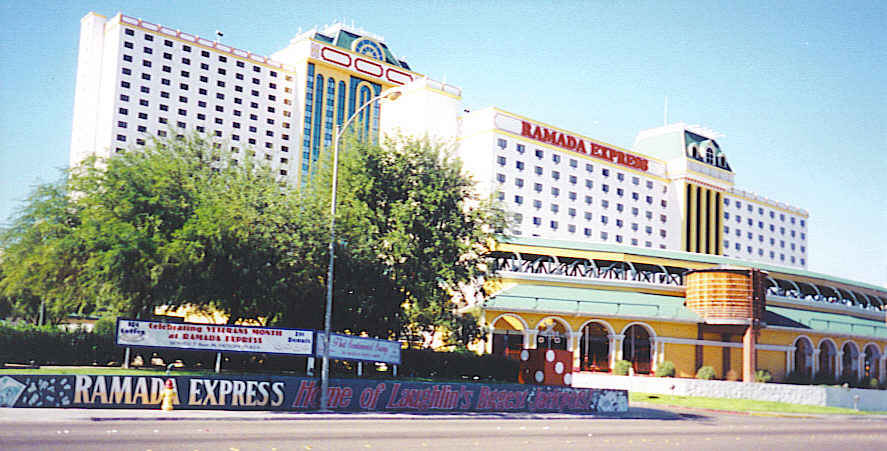
Ramada ExpressA stay at the Ramada Express, now the Tropicana Express, was always a pleasant experience. Express being its name, trains were its theme, having a pool shaped like a locomotive – with a spa in the wheel, and a train that ran around the entire hotel with several stops for less walking. Their patriotic museum honored all veterans from WWII through Desert Storm and regularly showed a four, large screen tribute, “On the Wings of Eagles.”

A stop at the little Colorado River Museum displayed information about the growth of the surrounding area. An evening ride down the Colorado River on the Celebration riverboat became a shimmering experience as the lights of Laughlin casinos reflected off the water. The captain was full of information about the river’s edge and talked a hundred miles an hour.  If riverboats are not to your liking, enjoy the river’s edge on a beautiful boardwalk that is a relaxing stroll day and night.

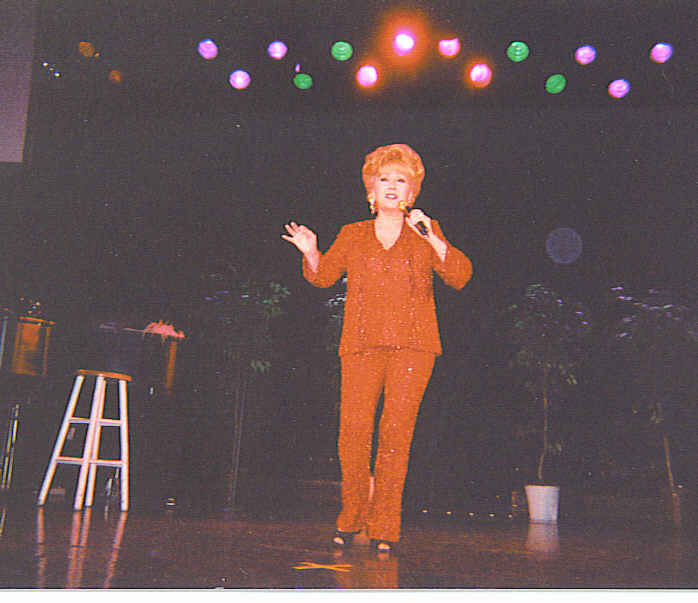
Debbie Reynolds at RiversideNo stay in a casino town would be complete without heading to at least one show. Debbie Reynolds, a star I admired as a child, was performing at Don Laughlin’s Riverside so decided to see if I could get a ticket.  As luck would have it, they had one seat available, and it was in the front row! Afterwards, I went backstage and got an autograph and picture with Ms Reynolds.

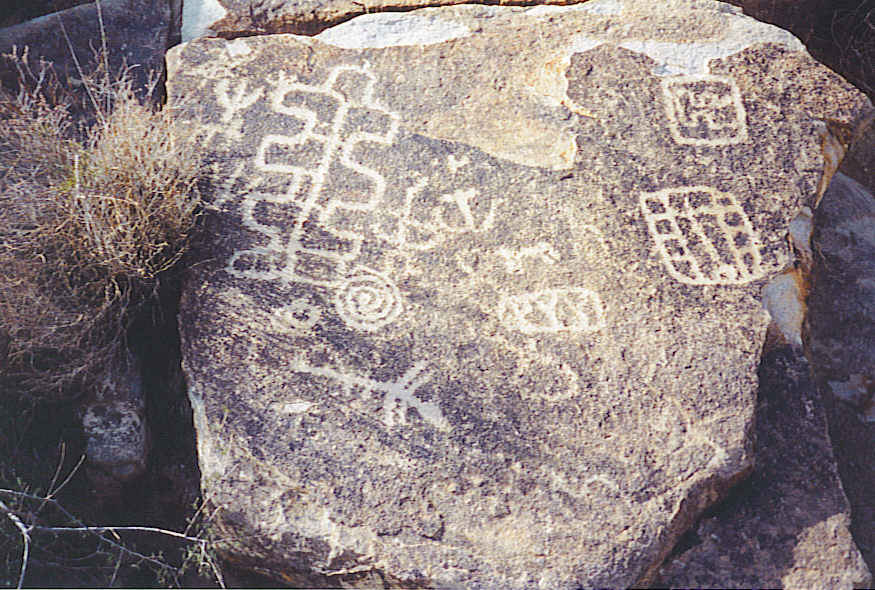
But the Laughlin area was more than casinos.  Accessed by a well maintained dirt road, nearby Spirit Mountain took one on a walk into the past. Petroglyphs on the mountain walls and rocks gave a glimpse into the Indian heritage that ePetroglyphs near Laughlinxisted in this area many years ago.  This remote granite mountain gave one a sense of tranquility, perhaps because the ancestors of the Indians reside there to this day.

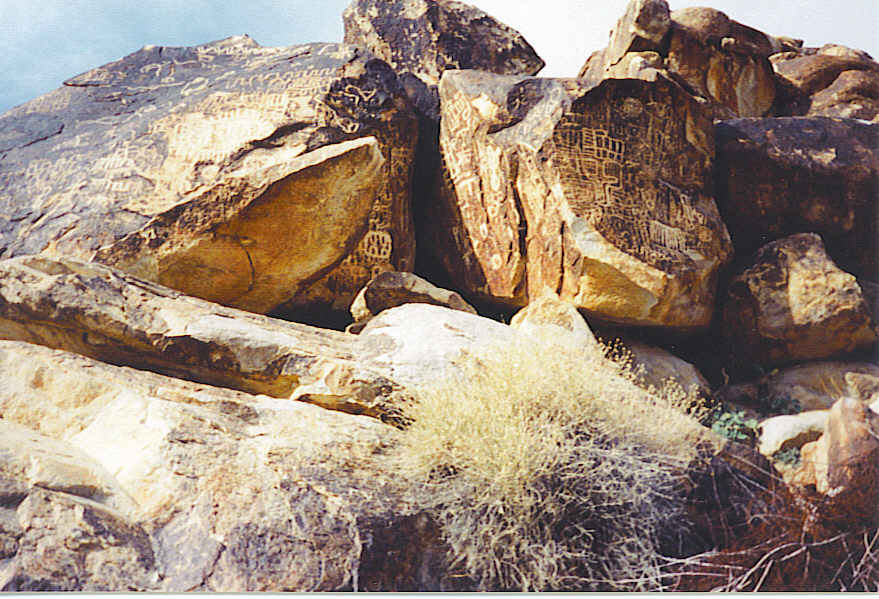
Only seven miles west of Laughlin in Christmas Tree Pass, visitors will find over 700 petroglyphs. Estimates on the original time of the glyphs have been placed from 1100-1500 AD at a time when the Mojave Indians roamed this area. While their meaning is not positively known, one possibility is that they tell the Mojave story of how the Colorado River came into existence. This is one of those places where a bottle of water and a sunhat are recommended as temperatures in the summer soar to 120 degrees.

Christmas Tree PassA long desert-mountain walk in the Indian petroglyphs concluded this week’s stay in Laughlin.  Never had I seen so many glyphs in one place, especially at the entrance of the Christmas Tree Pass. Farther up the mountainside, you could see what appeared to be the outline of an old Indian village.  Return trip expected for further exploration!

Laughlin, Nevada can be reached from I-40 taking Exit 141 to 95 North, the Needles Highway, for 23 miles. Turn right onto Bruce Woodbury Drive and after about 3 miles turn right on Casino Drive. Visitors will be greeted by Riverside Resort and the Casino Strip.

ColoradoA “Colorado Rocky Mountain High” surrounds you while driving through spectacular mountains, which  open to the valley where ski resort town, Aspen, is located.  This town was first built during the late 1880”s on one of the richest silver lodes in the Rockies.  Aspen was the leading silver producer in the nation in 1891 accounting for a sixth of the silver output in the United States.  However, their boom was sort lived because in 1893, the US government returned to the gold standard, pulling the plug on the basis for their silver production.

Developing ski slopes seemed a natural, next step in this fantastic mountain region. That first ski lift acquired the name of “Boat Tow”. This very primitive lift, which was constructed partially from old silver mine parts, contained an old motor, two mini hoists, and two 10-person sleds. But that was then, and this is now!

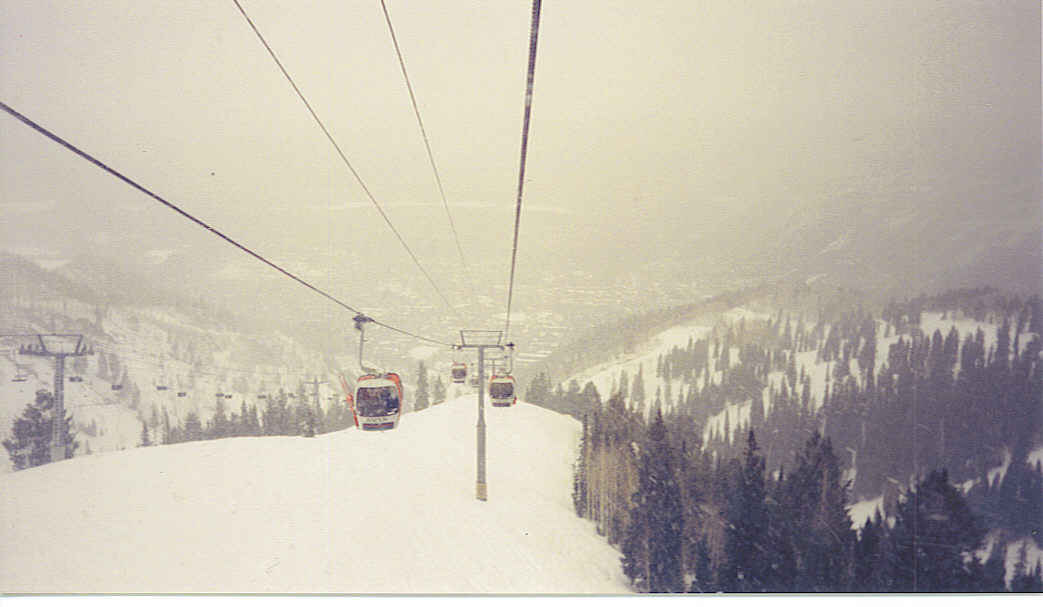
Silver Queen GondolaToday this Rocky Mountain playground of the rich and famous is one of the world’s top ski resorts.  The mountainside aspen forests, which gave the town its name, still grow in abundance. Tourism is now where its treasure can be found. The Silver Queen Gondola gives an all-day ticket for skiers, as well as onlookers, to the top of Aspen Mountain and back down. Ski lifts being my idea of fun, several trips were made during the day.

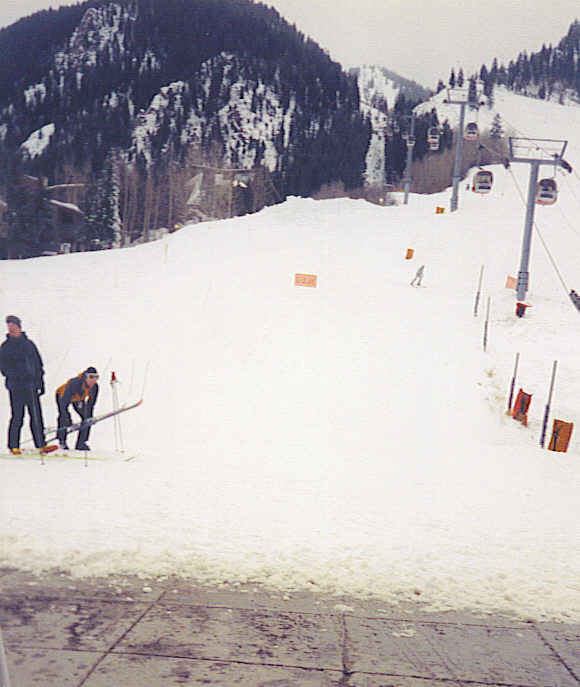
Beginning SkiersThe ride to the top of 11,212′, about two and a half miles by ski lift, took about fifteen, breathtaking minutes. The gondola held quite a crowd and of course, many were carrying their ski gear along as well. They seemed to frown upon those going along just for the ride, so tried to stay back in a corner out of their way.

Somewhere on this mountainside a shrine has been built to John Denver, composer of “Rocky Mountain High”, which is now one of the two state songs of Colorado. Aspen was one of his favorite places to ski so it seemed natural to gather a collection of photos, posters, records and even wind chimes here on the mountainside at an undisclosed location, known and discovered by only a few.

At the top was a beautiful lodge, Sundeck, with a grand fireplace where you could sit with a cup of hot chocolate and watch the snow fly by the floor-to-ceiling windows.  Watching the skiers go down the trails through glades, bumps and steeps was great fun as well.  These trails were actually named according to their difficulty, for example, starting with the most difficult to the easiest: Sunset, Pussyfoot, One Leaf, and Slow.

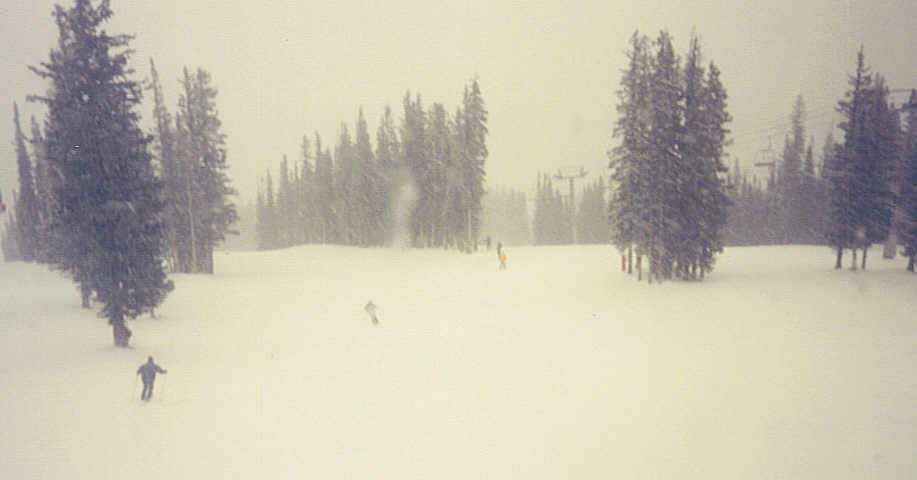
Skiing through the snowflakesAt the top, snow started coming down heavily so headed back down one last time before finding a place to stay for the night. Had plans on going on east that evening, but the road had been snowed in for two months so had to backtrack just a bit.  The interstate was getting snow-covered also and the lighted sign across the road said, “Chains required 10 miles ahead.”  This was one of those nights when any motel looked like a great place to stop…no matter the price!

This snowy journey continued the following day as the interstate still called for chains. So I took a quiet, slow, snow-covered back road through the mountains. It was called “Top of the Rockies” at about 10,000′ with the peaks being about 14,000′.  Arrived the next day at the  slopes at Vail Ski Resort, which had 28″ of snow on the ground.  At Vail can be found another paradise for those who enjoy the slopes, and a great museum dedicated to skiers, Colorado Ski Museum and Ski Hall of Fame, where  “Skiing is a dance, and the mountain always leads”. These slopes fascinated me!

However, if snow is not your passion, come back in the spring for plentiful wildflowers in the alpine meadows. These mountains are beautiful any season of the year.

From I-70 in Colorado, take exit #116 south ,Colorado Highway 82. After about 40 miles, take a right on 7th Street in Aspen, then a left on Main Street.  You will definitely be able to spot the ski slopes!

Extraterrestrial, Paranormal, or Prank? Recently the Hopewell Mound Group near Chillicothe, Ohio  became a hot spot for crop circle investigation. An unusual sight of an intricately designed crop circle was noticed from an airplane flying over the area.  Therefore, this gypsy decided it was a great time to take a road trip to learn more about the mounds, as well as the crop circle.

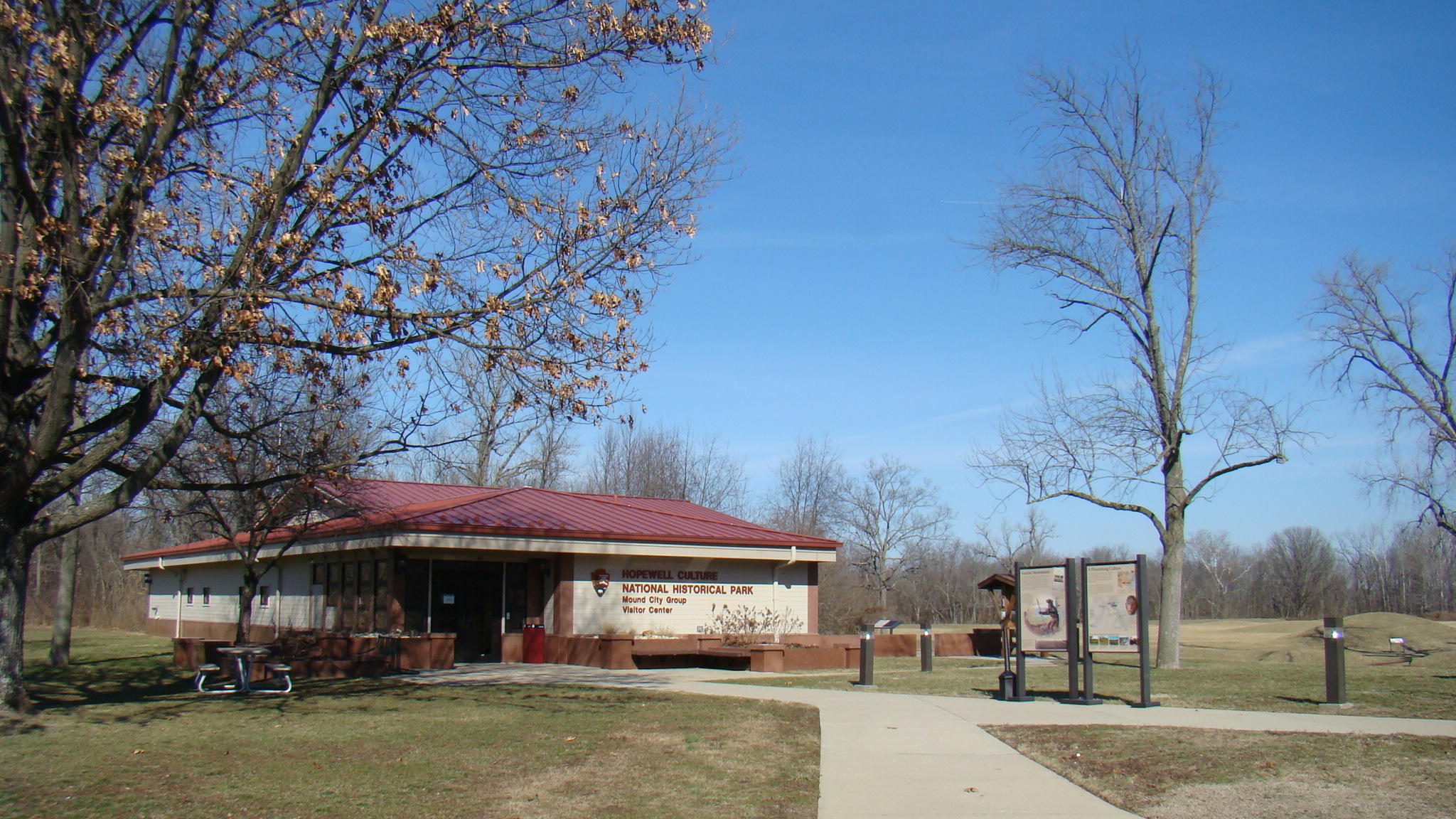
Hopewell Mounds Visitors' CenterHopewell Culture National Historic Park’s Visitors’ Center provides an excellent short film giving possible history and reasons for the mounds being constructed in this area.  Located in the  beautiful Scioto River Valley, easily accessible water for daily use, as well as transportation, was of great importance to that early culture.

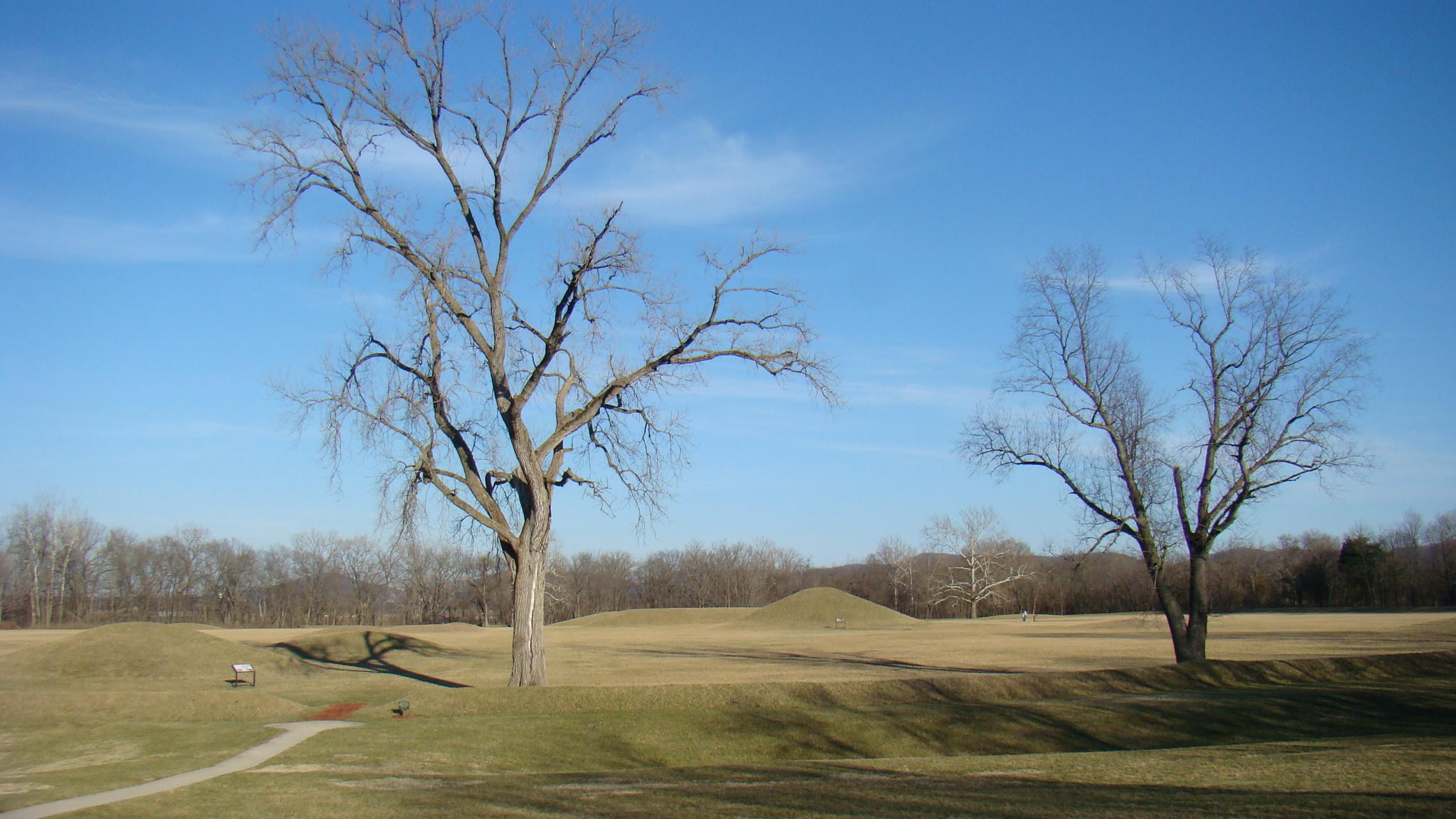
Hopewell MoundsThese historic mounds were the ceremonial center of the Hopewell culture from 200 BC – 500 AD. A stretch of land along the North Fork of Paint Creek contains the most striking total set of Hopewell culture remains in Ohio. This enormous legacy of geometric landmarks was created by unknown inhabitants prior to the time of the American Indians living on this land. Their name actually comes from Confederate General Mordecai Hopewell, who owned the land when the mounds were first discovered back in 1840. No one actually knows what name those original builders called themselves.

Interesting similarities, shared by the five mound groups in the Hopewell Culture, make them part of a larger picture.  Each field usually has a small circle, a larger circle and a square. Each square is 27 acres and the larger circle would fit perfectly within the square. The large circles all have the same diameter and encompass 20 acres. Many of these appear to have been laid out for their astrological significance.

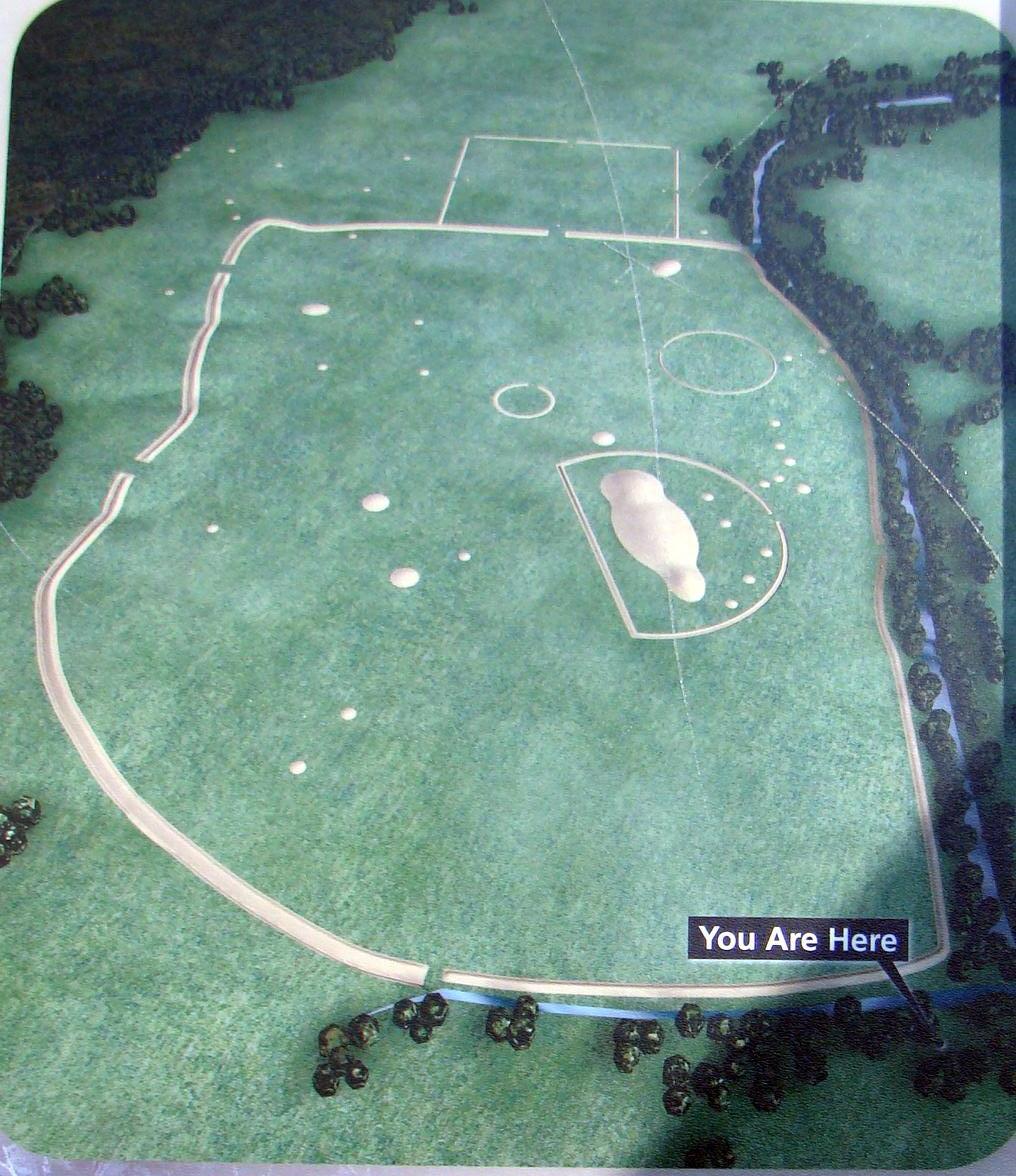
Hopewell Mound 25The main section is often called the “Great Enclosure”, a six foot high, rough, rectangular, earthen enclosure measuring approximately 2800′ X 1800′. Mound 25 is located within this area and was the site of early excavations in the 1800’s. This treasure trove contained shells from the Gulf Coast, copper from Lake Superior region, and obsidian from Wyoming.  It appears that when the ceremonial life of a site was finished, they built a mound much like we would put up a headstone or monument.

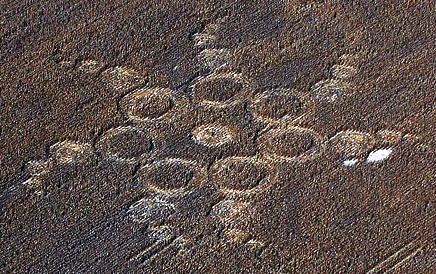
Hopewell Crop CirclesThe recently sighted Crop Circle seems to be located very near this enclosure, but on the other side of the treeline, in the old channel of the North Fork of Paint Creek riverbed.  Since it is on adjoining property and under study, access is not permitted at this time. Circles were first seen from an airplane on September 20, 2012 as the pilot was headed toward the Serpent Mounds. This forty-three circle pattern in standing corn is not visible from any nearby road.   Some thought this pattern resembled a “reversible electric motor” and felt it appropriate to have been drawn near high tension power lines, which are located about 330 yards away. Was there a message intended?

Hopewell Mound Group MapThis map of the Hopewell Culture Group shows its boundaries as well as the location near the upper right hand side of Mound 25. From all information received, the crop circle appeared to the right of the Mound 25 circle and across the tree line. When explored by the Independent Crop Circle Researchers’ Association,  it was determined that the cornstalks were smoothly bent in many swirled and intricate patterns at heights from 2 inches to 4 feet. No footprints were found or any evidence of stepping on plants.

One significant difference came in comparison testing of the length of growth nodes in the crop circle vs those in the untouched field. Those in the circle were elongated, an unhoaxable effect, producing accelerated growth. These effects are often brought about by high levels of radiation.

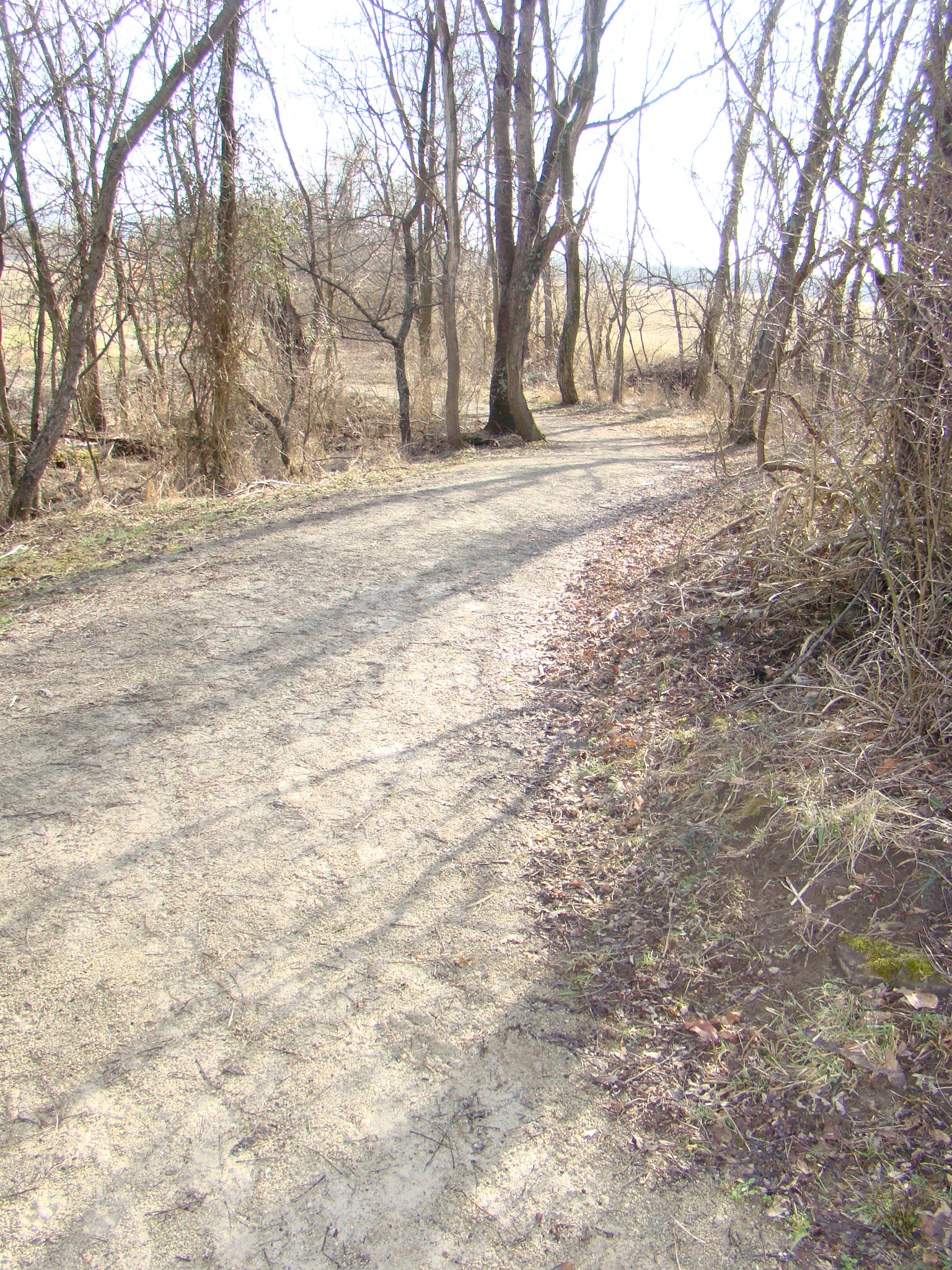
Hopewell Hiking TrailTook a relaxing walk around the entire Hopewell Mound Group using their hiking trail, which was rather muddy and slippery in spots, and ending on the Bike Trail. Felt accompanied on that walk by someone from that long ago time. Believe I passed close to the spot where the Crop Circle was located from all the clues given, but could see nothing from the ground view.

When asked about the Crop Circle at the Visitors’  Center, the answer was  “there is no tangible evidence”, but they reminded visitors that Hopewell Culture is a very spiritual place.  Guess everyone will have to reach their own conclusion. The mysteries persist! Any ideas?

Actually, this is not an easy spot to find as it’s located in the middle of south-central Ohio without any nearby interstate access.  The Hopewell Mound City Group Visitors’ Center is located at 16062  SR 104, about 1.5 miles north of US 35 just outside Chillicothe, Ohio.  The Visitors’ Center is the best place to start your tour and they have maps available for each mound group. Rangers on hand are very helpful in giving driving directions. If anyone knows the location of Crop Circle University, please respond.