Places to go and things to see by Gypsy Bev

Nearly 100 years in bloom ! Fifty acres of beautifully landscaped floral beds capture your attention as you wander along the meandering paths through Butchart Gardens near Victoria, British Columbia.  The Canadians certainly created a masterpiece here on Vancouver Island.

Robert and Jennie Butchart, pioneers in the manufacture of Portland Cement, came to Vancouver Island in 1904 because of rich limestone deposits needed for cement production. A few years later, the limestone quarry was exhausted so Mrs. Butchart pictured it replaced with a beautiful garden.  Being transported by horse and cart, tons of top soil were placed on the floor of the quarry.  Little by little the floor blossomed into the spectacular Sunken Garden, which is one of the exquisite spots at Butchart Gardens.

While Mrs. Butchard enjoyed planning her garden, Mr. Butchard collected ornamental birds from all over the world. A parrot lived in their house, peacocks strutted across the front lawn, and birdhouses were placed strategically throughout the garden.

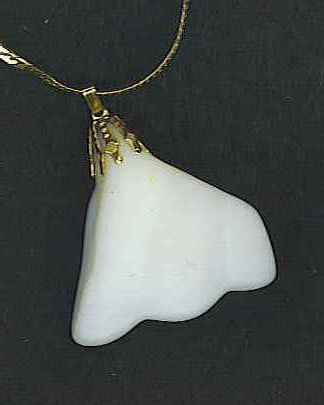
Totem poles carved by artists of the Tsartlip and Tsawout First Nations are a recent addition to the gardens. Totems are very symbolic and designed to tell a story, quite often starting at the bottom. This particular totem tells a story about Butchart Gardens. The bottom figure represents all the people who come to the gardens. In the center is carved a whale, symbolizing the fact that people traveled from afar to arrive here. On top is the mystical, yet powerful, thunderbird, which watches over the gardens and protects it with his outstretched wings.

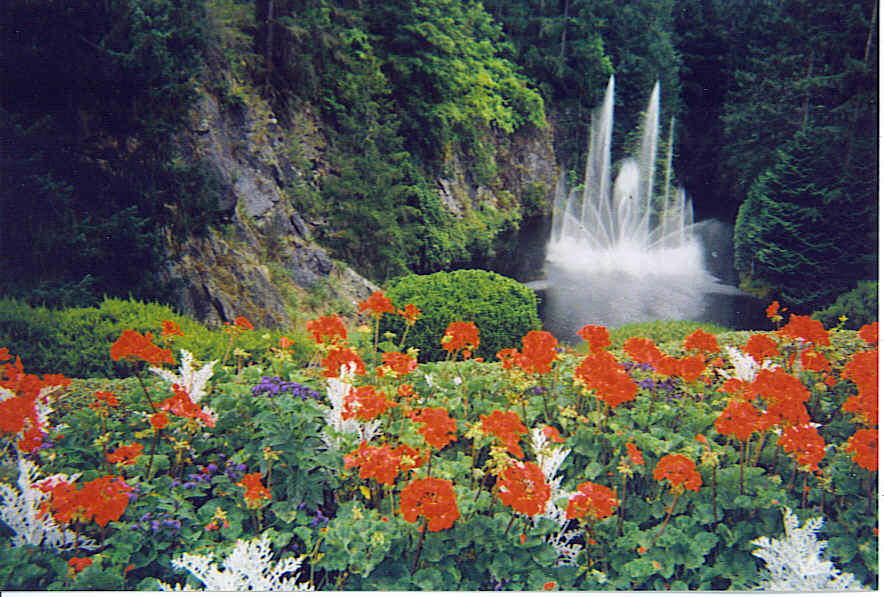
In 1939, the Butcharts gave the gardens to their grandson, Ian Ross  for quite the spectacular 21st birthday present. Ross Fountain was installed on the 60th Anniversary of the gardens. The Ross Pond with fountain looks great at any season, or any time of the day or night. Today the gardens are still family owned with great-granddaughter, Robin-Lee Clarke, being the present owner/manager.

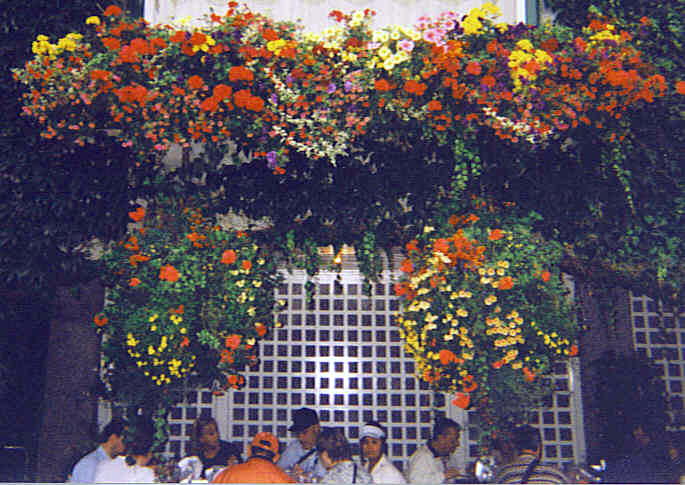
Through a floral covered archway, visitors find themselves in the relaxing Italian Garden, which includes a dining area where you can sit outside or enjoy the view of the beautifully landscaped pond from inside. Afternoon tea outside under the beautiful hanging baskets, and plants cascading from window boxes, is a scrumptious experience.

Butchart Gardens is delightful every season of the year, which seems quite surprising for Canada. But the gardens are located on the coast so their weather is a little milder than what we might imagine Canada to experience. Beautiful Night Illumination occurs each evening, when the garden looks magical with the flickering lights. Saturday Fireworks draws such large crowds, people sometimes wait in line for hours to get inside the gates.

Every year millions visit these gardens at all seasons of the year in one of the loveliest corners of the world.  Maybe you will get a chance sometime soon to visit there too. During my last visit in the summer when glorious blossoms were at their peak, they even offered me a job in their greenhouse or gift shop.  See you there?

Butchart Gardens can easily be reached from every direction on Vancouver Island. Start out on Route 17, then turn west on Keating X Road, which becomes Benvenuto Avenue and leads directly to the gardens. Cruise ships frequently stop at Vancouver Island and offer transportation to the gardens as well.

“Absence of evidence is not evidence of absence.” This quote from distinguished astronomer, Dr Carl Sagan, is popular with Bigfoot investigators. They are still searching for more clues that will prove their Bigfoot theory.

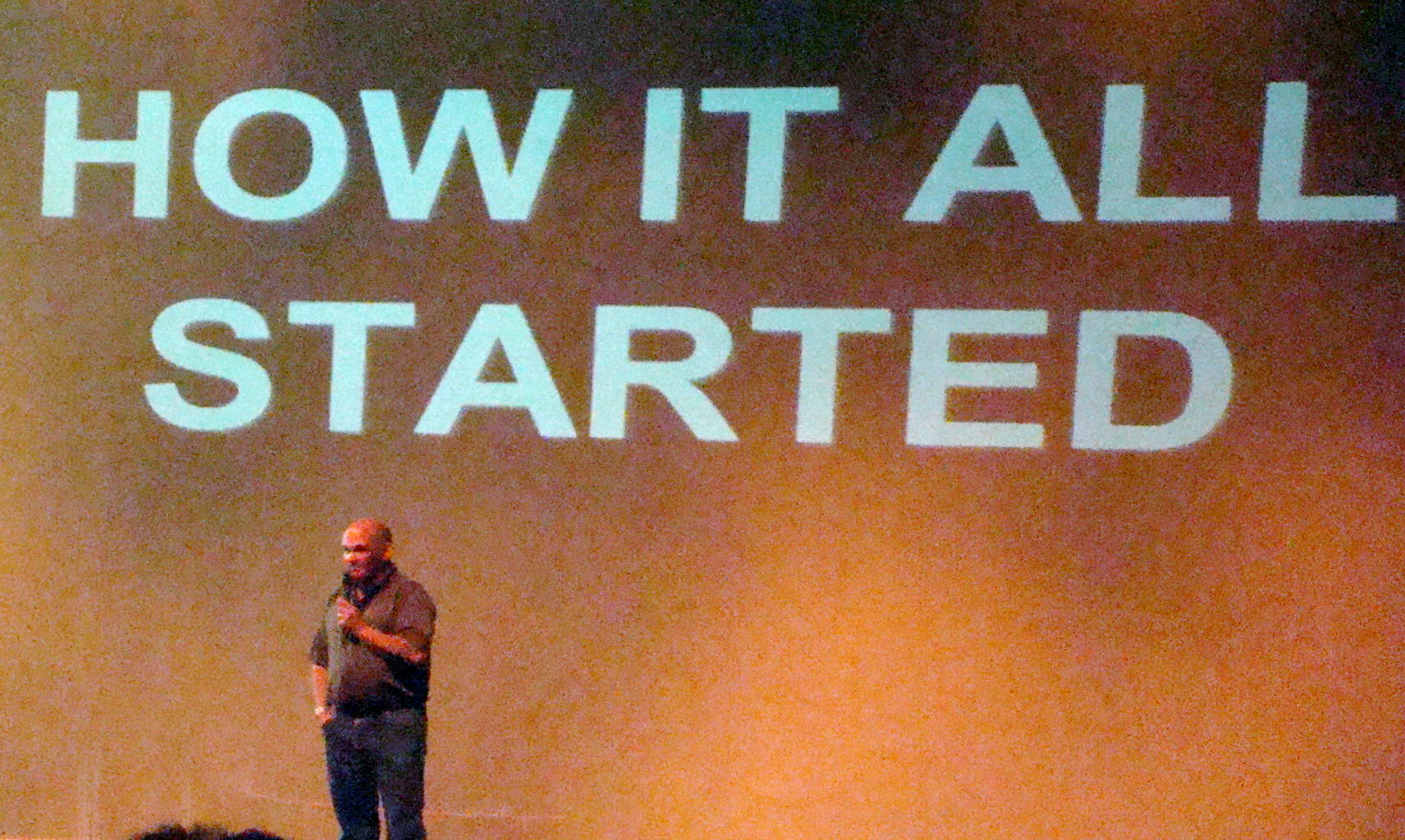
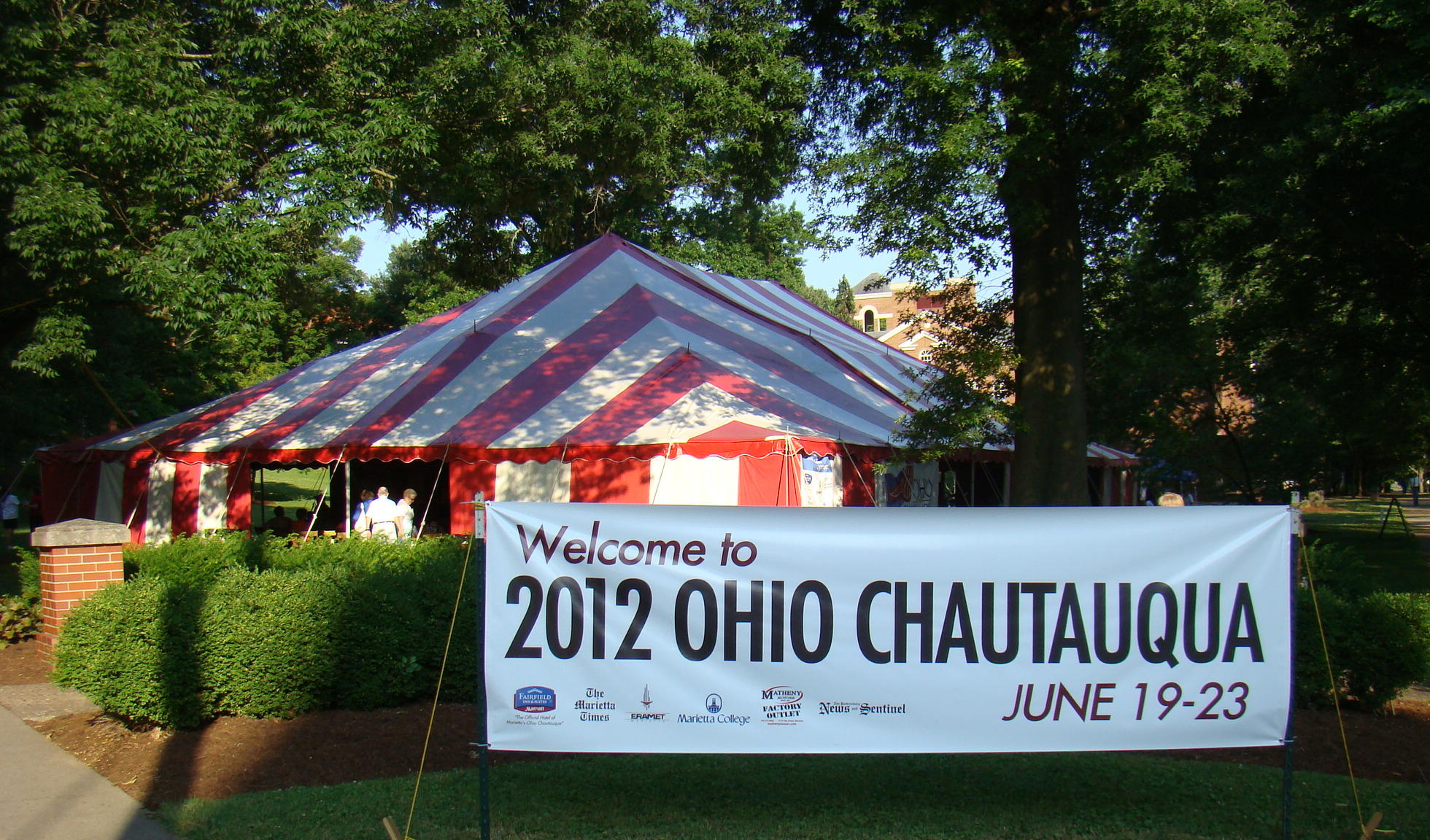
Guernsey County, Ohio is one of those “hot spots” for Bigfoot investigators.  Annually, the Ohio Bigfoot Conference gathers informative speakers to share their adventures with the gathering crowd.  The 2012 conference was held at Pritchard Laughlin Civic Center near Cambridge, Ohio after previously being held at Newcomerstown and then Salt Fork Lodge. The move was partially made to accommodate the growing attendance as last year at Salt Fork they overflowed the conference room and many were  forced to watch the program on big screen TVs in the lobby.  The Bigfoot enthusiasts have increased from less than a hundred in 1989 to over seven hundred at present.

The goal of the Ohio Bigfoot Organization is to find, recognize, and protect what many believe to be an unclassified primate, commonly known as Bigfoot, and residing in North America.

A highlight of the meeting this year was the appearance of legendary Bigfoot seeker, Peter Byrne, who fascinated visitors in the lobby with his Bigfoot stories. Peter, the star of the show, has led professional expeditions in search of Yeti and Bigfoot.  His book, The Search for Bigfoot, tells of his fascinating life exploring since 1946 in the Himalayas for Yeti, the Himalayan version of Bigfoot.  Even though he is 86 years old, Peter still has a curious mind and continues his search for Bigfoot on the Oregon Coast.

Before the scheduled speakers, curious visitors checked out tables in the lobby with lots of unusual items. Of course, there were videos of possible sightings as well as plaster casts of large footprints left behind by something or someone. Lengths of these footprints average about 16″ long, but some range up to 22″, and are much wider than a human footprint.

Soaps and lotions carried the name Sasquatch, the Canadian Bigfoot rendition. One popular soap made in Canada bore the title Sasquatch Sweat Soap – Guaranteed not to grow hair. Sasquatch Sweat Cream was also available. Not certain if their purpose was to repel or attract Bigfoot.   There were even cookies for sale shaped like…yes, you guessed it, Bigfoot.

The first speaker of the day was past president, Don Keating, who led this conference for 23 years. He first heard of Bigfoot in 1984 from a story in the Newcomerstown News that told of strange sightings of a large, hairy creature in and around the Newcomerstown area. Later Don began investigating some of the unusual sightings he heard from neighboring Guernsey County as well – glowing red eyes, large footprints, and very tall creatures.

Salt Fork Lake area became one of those places where frequent strange events seemed to occur. Often something eerie seemed to be happening at Hosak’s Cave in the late evening hours, especially when there was a full moon.  For their safety, people were even strongly advised to leave the area by park rangers.

When Don Keating said he was leaving his president’s position to devote more time to his weather research, someone in the audience asked an interesting question: “Do you find predicting the weather a lot like investigating Bigfoot?” To which Don answered, “With both, you put your neck on the line.”

Grabbed a Bigfoot cookie to munch while listening to additional speakers which included: Dr John Bindernagel, wildlife biologist; Bill Draginis, surveillance and security expert; and Mike Esordi, crypto zoologist with artistic abilities. All are active in Bigfoot research and frequently share their knowledge through lectures around the world.

Whether you believe in the existence of Bigfoot or not, you could hear some interesting adventures at the conference. Maybe some evening you will want to spend the night at Salt Fork State Park. If you listen carefully, you might hear strange calls, branches breaking in the woods, or rocks being thrown into the lake. Could these sounds be made by Bigfoot?  Keep your eyes and ears open!

Salt Fork State Park is located just five miles north of Cambridge, Ohio just off Route 22. I-70 and I-77 intersect close by so you will have easy access to the area.  While in town, stop at Mr. Lee’s or Theo’s Restaurant as both have delicious home cooked meals at reasonable prices.

Superstitious Mom

Decided to take a different kind of trip for Mother’s Day…one down memory lane. My mom was a very wonderful person full of words of wisdom and lots of superstitions. Things she said are often still  talked about today by family and friends although mom is no longer here. So this little story is based on my “Memories of Mom”.
Superstitious Mom

Mmm, roast beef! The tantalizing smell seeped through the door out into the yard. Even the neighbors could probably smell what Mom cooked for dinner.

Since it was raining cats and dogs, an umbrella covered Cecilia and her two children, Tommy and Rosy, as they headed from the car to the kitchen door. The children each carried some purple petunias for Cecilia’s Mom, better know to them as Gran. Opening the door, Cecilia called out, “Hi, Mom.  Happy Mother’s Day!”

“Oh, my! Thanks for these beautiful petunias.  You know purple is my favorite color. But you better close that umbrella before you come in,” scolded a busy Gran.  “An open umbrella in the house will bring bad luck.”

“OK, Mom,” sighed Cecilia rolling her eyes. She had heard her mother’s superstitions since childhood.  Mothers never changed.

As they sat down at the dinner table to sample the roast beef with trimmings, Tommy knocked a spoon off the table. “Now we need to set another place,” exclaimed Gran, hurrying around the kitchen.  “When a spoon falls on the floor, it means a woman is coming to visit.” If a fork dropped, you could expect a man, and if a knife dropped then an unwelcomed guest would soon arrive. Gran even knew the direction they were coming, depending on the way the handle pointed.

“Remember that time when we started to town and a black cat crossed in front of our car?” questioned Cecilia.  “You made us all come back home, take off our coats and sit down in the front room.  We sat there for at least half an hour, so we could get rid of the bad luck from that black cat.”

“Now, Cecilia,” scolded Gran shaking her finger. “You know we didn’t have any problems after we came back home and rested. You have to believe in magic.”

Laughing at her grandmother, little Rosy accidentally knocked over her glass of water. “Oh my, looks like we’re in for another rain storm,” exclaimed Gran. “Any time someone spills water on the table you can be sure you’re going to have lots of rain.”

“Oh, Gran,” pouted little Rosy with her quivering lip about to touch her chin, “I don’t want more rain today.”

Gran went over to Tommy and tapped on his head jokingly, “Knock on wood, I certainly hope it doesn’t either. Always knock on wood to keep bad luck away. If you don’t have anything wooden around, I always knock on a wooden head like Tommy’s.”  Everyone laughed.

After dinner, the children went out in the yard to play since the sun had peeked through the clouds. Tommy and Rosy searched for four-leaf clovers because Gran always said they were good luck. Today Cecilia even helped them and when she found one remarked, “I’m really lucky to have a wonderful Mom like Gran. She may be superstitious, but she’s certainly brought a lot of luck and happiness into our lives.”

When they left that evening, Cecilia checked her guardian angel hanging from the rear view mirror before heading home. Rolling his eyes, Tommy whispered to his sister, “Mom is starting to act just like Gran.” Superstitions carry on.

Does your family have any superstitions? It would be interesting to hear some of them, if you don’t mind sharing.  If possible, put the name of your state or country with the comment to  better understand superstitions around the world.

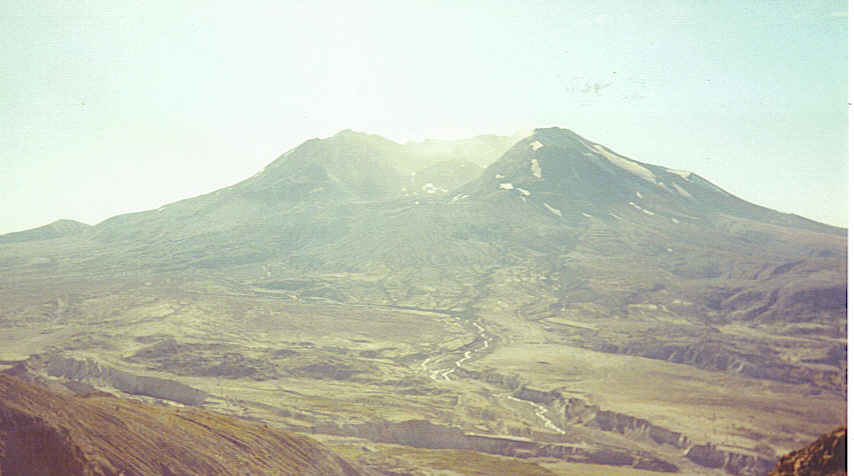
Earthquakes! Steam explosions! Molten lava!  All of these were present during the 1980 awakening and subsequent eruption of Mount St Helens in Washington. Today this area, home of the largest volcanic landslide in recorded history, is designated as Mount St Helens National Volcanic Monument as a place for research, recreation and education.

Johnston Ridge Observatory, just one of the visitors’ centers, was a great place to start exploring. Their theater showed great footage of the 1980 eruption. Here you also found first hand accounts of individuals who were actually in the vicinity that day. Of particular interest were the machines that recorded the seismic activity presently occurring.

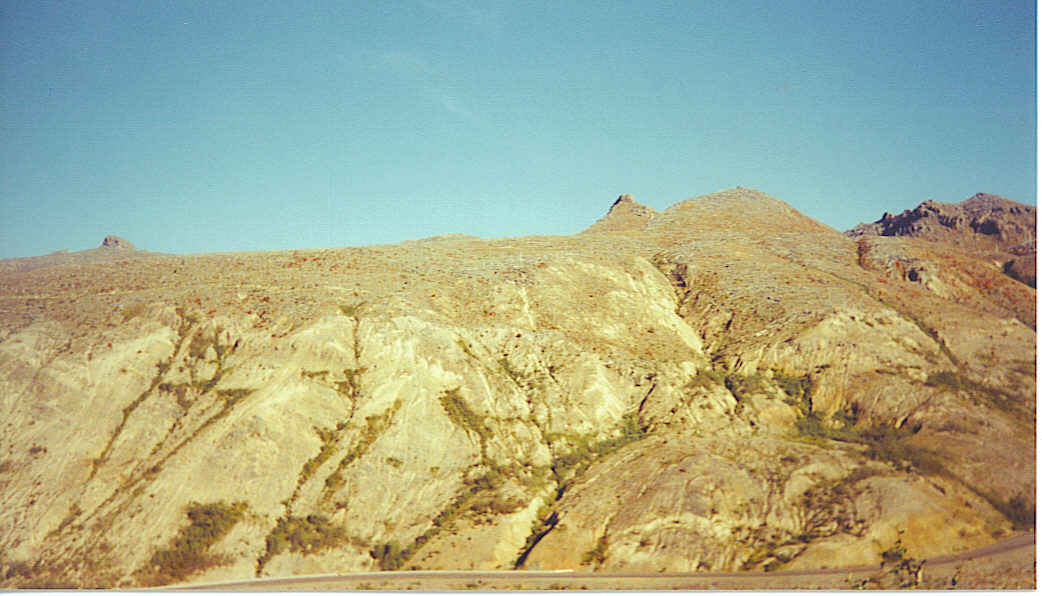
There were several trails leading up the side of Mount St Helens, which appeared mostly barren being covered with ashes. You could walk among the fallen trees that were flattened by the blast. If you felt braver and went a little farther, you could even see vehicles and heavy logging equipment that was damaged when Mount St Helens blew her top. Took the path as far as was permitted at that time. The hiking trails stay open according to the mood of the volcano.  When she is steaming or spewing forth lava, they obviously need to be closed. But what a thrill to get as close as possible to the top of Mount St Helens.

The 1980 eruption left behind a trail that is still visible today. Due to the force of rocks and ice, trees in the lava path were struck down like bowling pins.  Today they still lay there on the ground but the forestry department has gradually handplanted new seedlings amongst the fallen trees.

From 1986 – 2004, the mountain slumbered until in 2004 earthquakes rippled through the earth. Later that year a smaller eruption began and about a dump truck load of lava oozed out of Mount St Helens every second thus slowly rebuilding the mountain.  By 2011 the amount of lava oozing from the mountain was reduced to a dump truck load every fifteen seconds.  If the eruptions would continue at their present rate, the mountain would be back to its original height in about 180 years.

During the 1980 blast, everything within miles was covered with ash from the volcano.  So suppose it was easy for the ash to be gathered and sold as souvenirs.  Still have a pen said to contain ash from that volcanic eruption.The entire landscape has changed from that 1980 blast. New river routes have been formed and even new lakes. Here you see a real change of scenery due to the awesome power of nature.  Will a major eruption happen again? Probably not in our life time, as most volcanoes erupt every 100-300 years.  The future holds hope for reforestation and rebuilding…unless another eruption occurs sooner than expected.

Hope your life will erupt with much happiness, and may you spread that happiness for miles around.

Mount St Helens National Volcanic Monument is located in Washington approximately 96 miles south of Seattle, Washington and 50 miles northeast of Portland, Oregon. One easy access route is from I-5, Exit 68 onto the Spirit Lake Memorial Highway/ WA 504. This route passes through the various visitors’ centers and into the center of the original blast zone.  

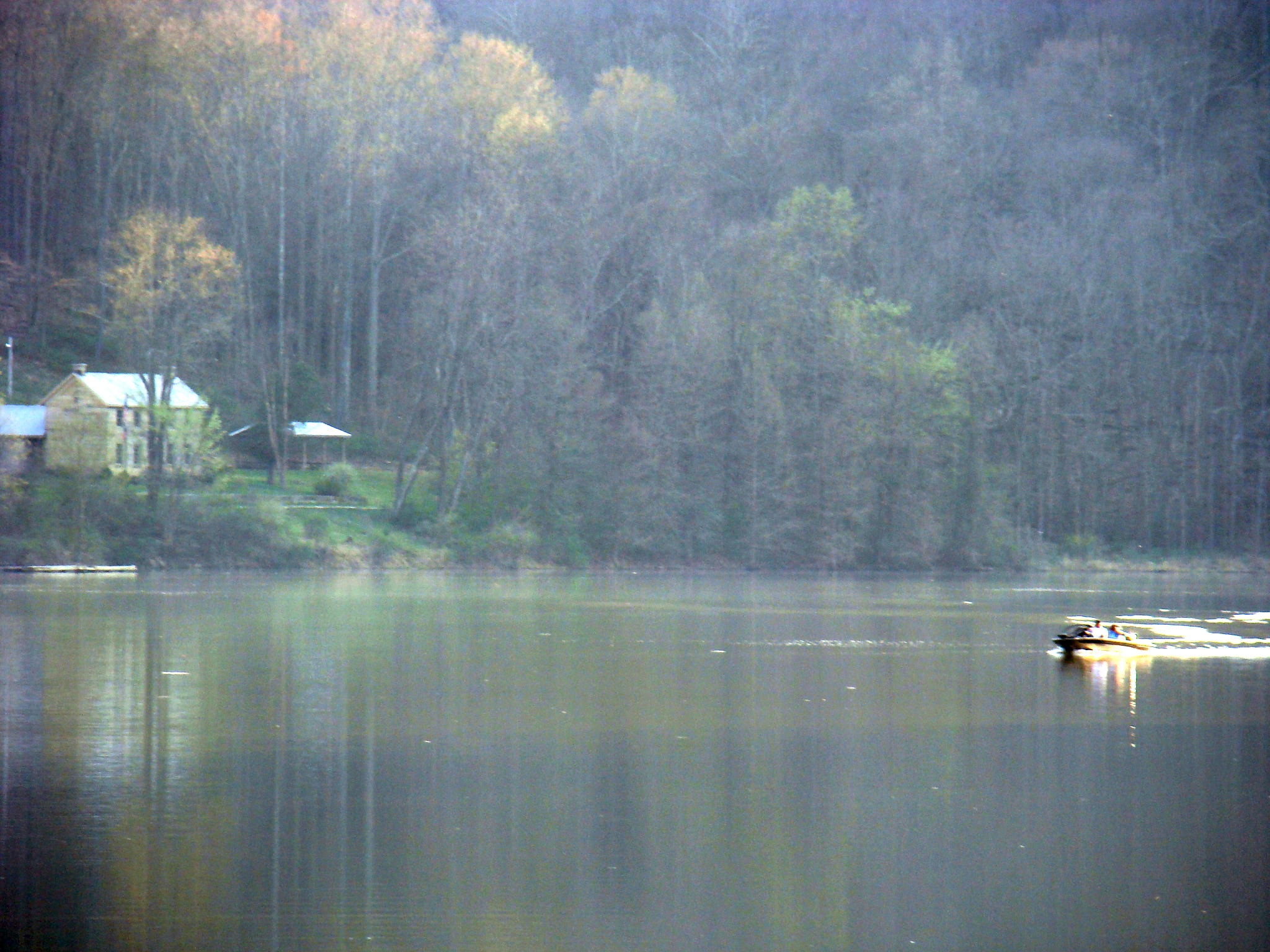
Warm weather in Ohio sends people outdoors, even on an overcast day.  One of their favorite spots near Cambridge in southeastern Ohio is Salt Fork State Park, Ohio’s largest state park. This lake is a rather recent creation and those past fifty can still remember when farm land covered this area with  Salt Fork Creek running through it. Back in 1967, the earthen dam was completed here and the filling of the lake began.

Vacationing at the lake has many possible accommodations: camping, renting a cottage or staying at the lodge. The campground sites all supply electrical hook-ups and nearby is a heated shower house.  Only a few sites provide sewer and water hook-ups as well. If you prefer a cottage, several are available with hillside and lakeside locations.  All of the cottages are completely furnished with a screened-in porch, and even include kitchen utensils.

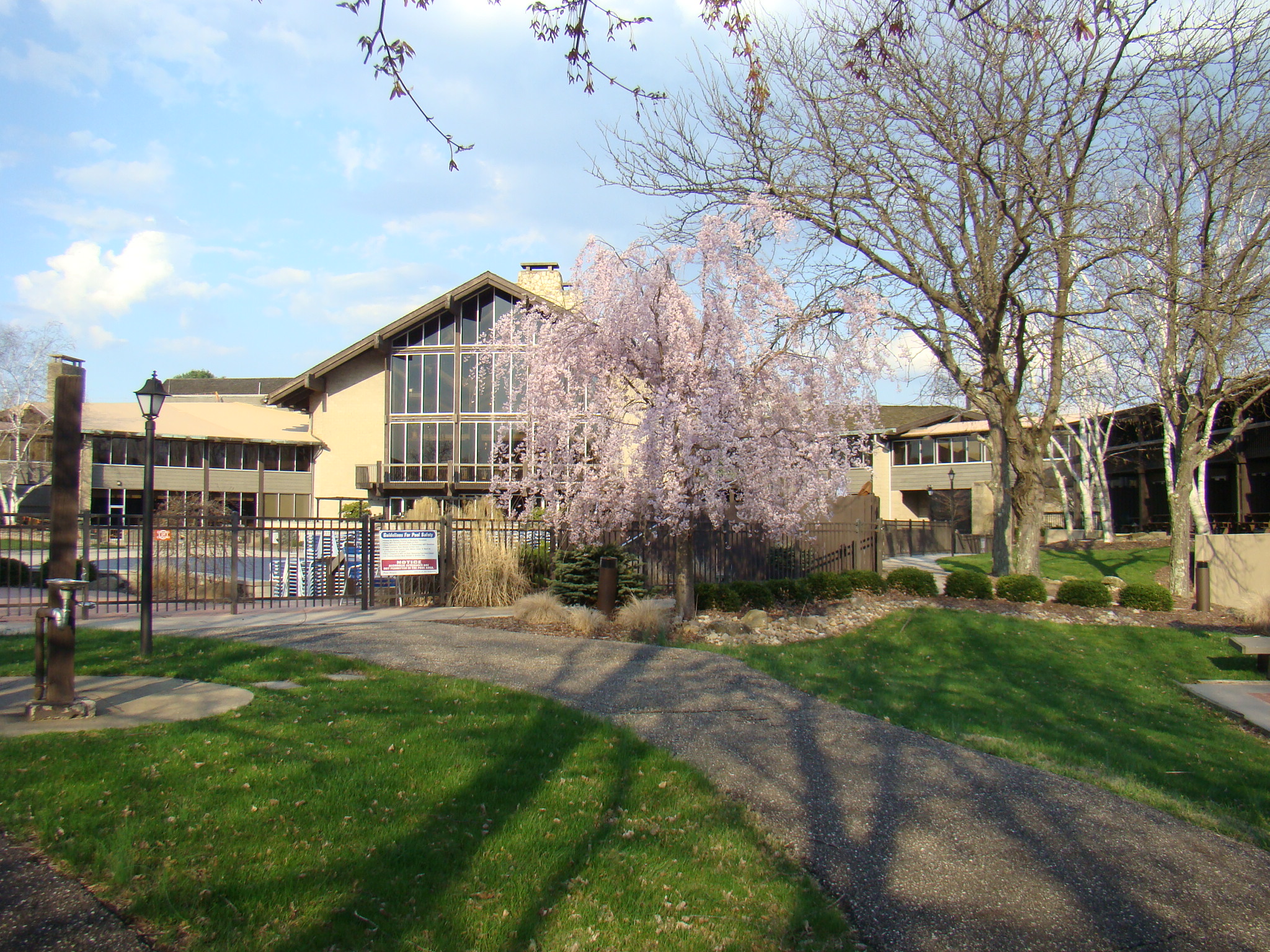
Others prefer the comfort and convenience of Salt Fork Lodge. This beautiful stone lodge with its pine beams sets high above the lake in the rolling hills of Southeastern Ohio. Frequently used for meetings as well as vacations, the lodge contains a wonderful dining area as well as beautiful stone fireplaces that give you a warm feeling no matter what the season. Indoor and outdoor swimming pools provide entertainment all year long. Outside you will find a fantastic playground for the youngsters as well as tennis, volleyball, basketball and shuffleboard courts, so there is little excuse for anyone to be bored.

Just a half mile down the road is the entrance to the 18-hole championship golf course, which is a challenge in these rolling hills so a golf cart is highly recommended.  Deer are frequent visitors on the golf course and don’t seem the least bit afraid of golfers. Here you will also find a pro shop, putting green, and driving range.

Of course, no lake would be complete without a beach and Salt Fork’s 2500 foot beach is one of the longest inland beaches in Ohio.  Everyone has plenty of room to enjoy swimming or building castles in the sand. When you want a break from the beach, stop by the concession stand, grab some clubs to play miniature golf, or tour the nice Nature Center in the main bathhouse building.

Two marinas provide storage for boats year round and some years you must get your reservations in early to claim a spot. Otherwise, ten easy access ramps   accommodate boat trailers.  No boat of your own? Be assured a variety of rental boats are available. There is even a pontoon tour boat to take you and your guests around the lake for an enjoyable time on the water.

Fourteen hiking trails range from easy to moderate in difficulty, so just about everyone can enjoy the hike. One popular trail leads to Hosak’s Cave formed by interesting rock layer erosion, which has also created small waterfalls. Along the path you will find beautiful wildflowers, hear the songs of many birds and relax to the calming sound of the bubbling brook. If you are lucky, a wild turkey might cross your path or even a deer.

A longer trail leads to Kennedy Stone House where they have restored the only house left standing when Salt Fork Park was created.  This historic stone structure was built in 1837 through the plans of Benjamin Kennedy of Ireland. Stones used were quarried from the hills nearby and shaped with detail so they fit tightly together to make a sturdy structure that still stands after 175 years. Original cost was only $600, which was quite a bargain even long ago. Recently a road has been cut down to the house so you can now drive there also, but most find it more exciting to approach from the trail or even from a boat.  Call ahead and see if you can schedule a tour.

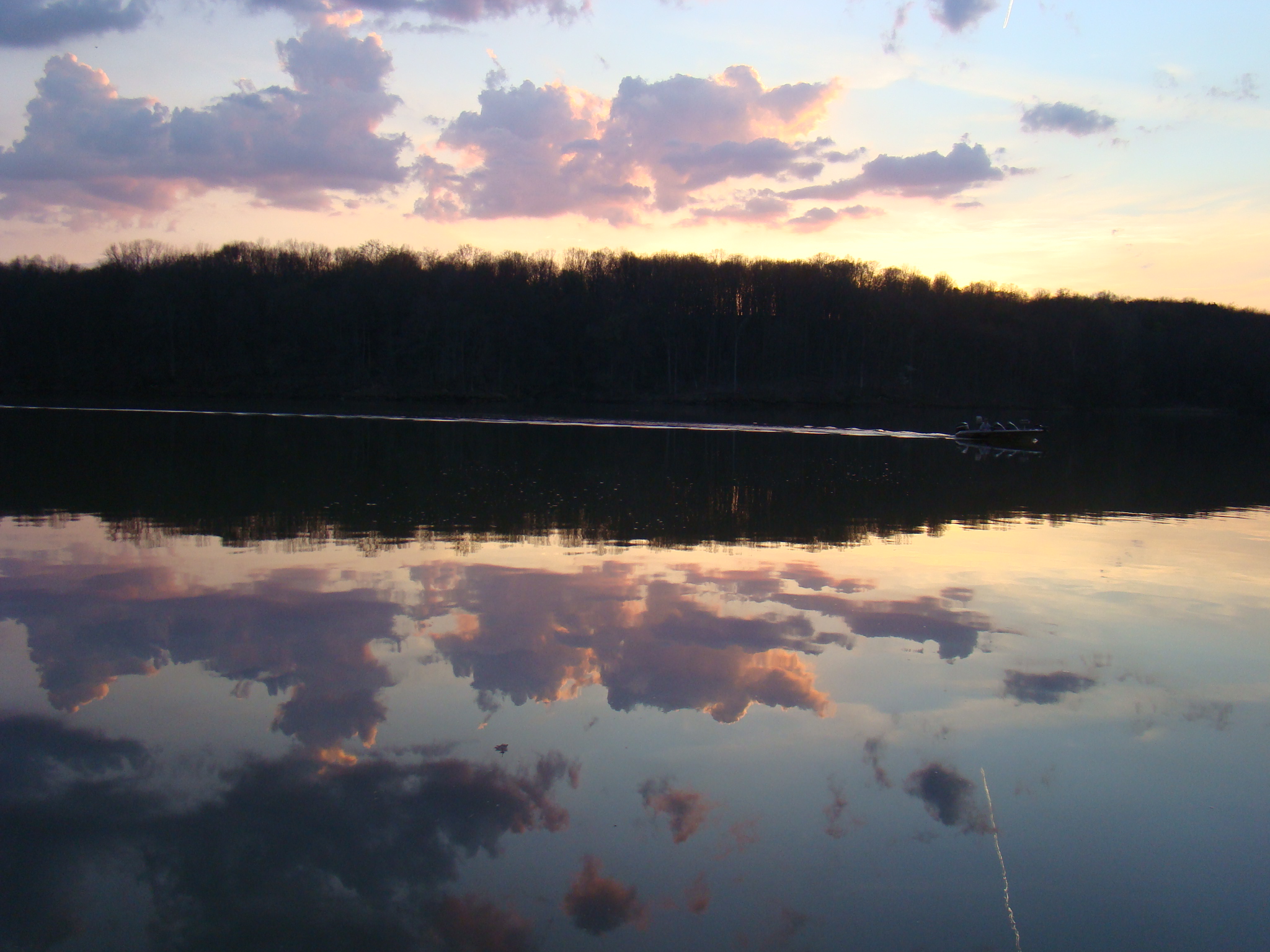
Sunsets are always beautiful over the water and Salt Fork Lake is no exception. What a great way to end the day or begin the evening.  Salt Fork State Park is a fun filled place for a family vacation as it has varied activities for all age groups. If you are lucky enough to live in the area, enjoy a day at the beach or a ride on the lake anytime. The lake is also a great place to do nothing – just sit by the water and watch the waves from the boats passing by, or the motion of tree branches blowing in the wind.  Relax and enjoy!

Salt Fork State Park is located just six miles north of Cambridge, Ohio on Route 22. Once you turn left into the main entrance of the park, watch for wooden signs along the way that lead you to the various places of interest.

The surprises kept coming on the beautiful Pacific Coast Highway, which began in Washington and continued along the edge of the Pacific Ocean through Oregon and California, stopping at San Diego. Meandering roads kept driving speeds at 15-20 mph, or perhaps it was partly due to the spectacular views. When driving and watching the scenery at the same time, slower speeds were definitely required especially with many steep cliffs at the ocean’s edge.

With beaches galore and piers aplenty, Pacific Coast Highway, also known as America’s Most Beautiful Drive, renewed your spirit and your senses, as you encountered many unusual scenes along the way. This curving highway passed right  through the awesome giant redwoods on a stretch called Avenue of the Giants.This was the place where trees were large enough for a car to drive through or even have a gift shop inside. Words can not describe the wonder of these giants as you attempted  to look skyward  to see their highest branches. These towering trees, rock formations and ocean waves made you realize the power of Mother Nature and the role she plays in our beautiful world.

Even on a foggy morning, the picturesque combination of mountainous cliffs  on one side, and the waves crashing against the rocks on the other, made your heart beat just a little faster. After spotting a sign that said Pebble Beach Golf Links, thought the golfers in my family would be happy to know I stopped for a visit, as this is home to some of the world’s most prestigious golf tournaments.  Evidently it was a day without a tournament scheduled, as admission was granted to drive up to the luxurious lodge and even to walk on the course. My camera definitely wanted to snap a picture of the famous 18th green to prove my story wasn’t fiction.

Near Big Sur the mountains seemed to plunge into the Pacific. Unusual black rock formations rose out of the water to create amazing and different views around each bend of the road.  . These towering black rocks made a sharp contrast against the constant waves of the Pacific and the blue sky. Surfers in their wetsuits rode the waves and kayaks bounced across the ocean. A couple young men enjoyed hang gliding and the winds must have been perfect that day as they were airborne  for a very long time.  Might have to try that on another trip to experience the sensation of flying! Everywhere you felt the happiness of people relaxing from the cares of the day.

There was no resisting the temptation to find a place to pull off the road and walk on the beaches. Leave your shoes behind so you can feel the power of the waves wash over your feet. Two golden labs approached with a frisbee in their mouth so ended up the day playing catch with the labs.  Memories of the ocean will live on, long after the footprints in the sand are gone.

The Pacific Coast Highway, Highway 1, begins in Oxnard, Washington and continues along the coast through Oregon into California all the way to San Diego. Sometimes Highway 101 bends inland so watch carefully if you want to enjoy the scenic journey along the coastal region.

The sounds of power tools, sewing machines and vacuums fill the air as volunteers have their first work session at Dickens Universal, the new storage home for Dickens Victorian Village  in Cambridge, Ohio. This was former home to Universal Potteries founded in 1934 where beautiful pieces of dinnerware, tiles and even bricks were created and are collectors items today.  Plans for tours of the facility are underway for both bus groups and area residents. Even a trolley tour is planned for the next Dickens season.

Quite often the question is asked: How do you create this amazing display? No doubt it all begins with the amazing volunteers who help all year long. Many of the mannequins need restored so damage can be repaired from the winds and precipitation of winter months on the street. The figures are torn apart, repaired and reassembled anytime problems are noted. One may have a broken leg needing repaired, while another needs new buttons on their coat. All of this takes time and patience from many volunteers, who take pride in the finished products and the enjoyment it brings many visitors.

Quite an accumulation of clothing is available for use on the mannequins through kind donations from area residents and even from those who have visited during the Dickens season. Thrift shops are frequently visited by the volunteer crew to seek treasures that might be used on the figure displays.  This first night someone brought in a great pair of work boots, which may be used in a blacksmith scene. Another item was a beautiful shawl to wrap around one of the ladies,  plus a blanket, which will be cut into several pieces and hemmed, for use as a throw where the figures are sitting.

 Another area is filled with Dickens figures sitting on table tops awaiting repair to faces that had too much winter weather. This particular face has cracks caused by the wind, rain and snow of last winter and will be repaired and repainted by local artists before the new season begins.

One group removed platform attachments for dresses and  the snow-like covers,  so platforms could be repaired and perhaps mannequins moved from setting to setting.  Some volunteers were vacuuming figures and settings so that people could work on them more easily while another group of ladies were busy cutting and sewing dresses, blankets, and coats. Dickens Universal is without question a busy place!

In the center of Dickens Universal is a long, long room which they call Main Street. Here you see the figures as they will appear on Wheeling Avenue in downtown Cambridge next Dickens season, and in their proper order. This makes it easy when scenes are being switched around so they can see exactly how they are going to appear in the actual downtown setting. With nearly 200 mannequins, this is no easy task.

The Spirit of Cambridge rivals the Spirit of Christmas as many volunteers prepare for another Dickens season.  One lady remarked, “The average person has no idea how much work goes on behind the scenes to make this come to life during the winter months.”

Maybe someday soon you will get a chance to take a peek inside Dickens Universal as they create Christmas from long ago.  Once you see the friendly atmosphere and experience the wonder of the project, maybe you too will want to help make this another successful year for Dickens Victorian Village.  See you soon?

Open by appointment only.  If you have any questions or suggestions please email: info@dickensvictorianvillage.com

Nothing here but rocks! Hell’s Half Acre is a lava field several thousand years old where lava just oozed out of the ground over two hundred plus acres.  Early in the 1800’s on the Snake River Plain in southeastern Idaho, fur traders looking for passage through the Rocky Mountains stumbled upon this rugged land and named it Hell’s Half Acre.  That term was commonly used at that time to describe rough land.

There was some plant growth in this desolate region, and it was pretty amazing to walk over an old lava field. Caution had to be used as there were deep fissures to avoid, as well as frequent rattlesnakes. This uninhabited plain looks barren except for a few wild horses, and is the perfect place for the Idaho National Engineering Laboratory. Since 1949, more nuclear reactors, over fifty of them, have been built on this plain than anywhere else in the world. The first nuclear power plant was located here just south of Arco, Idaho.

Arco was the first city in the world to be lit by atomic energy way back in 1955. The power was generated by the Experimental Breeder Reactor No. 1 to a reactor close by, known as the Borax III, located on the Idaho National Engineering Laboratory. This was only a temporary solution to their power situation, however, as the reactor suffered a partial meltdown – another world’s first!

Be sure to visit the Experimental Breeder Reactor No. 1 – Atomic Museum on US 20/26. Here in this block building, EBR-1 became the first power plant to generate electricity from atomic energy. They actually made plutonium-239 in the block building where the museum is now located. Inside you could see four nuclear reactors, remote handling devices for radioactive material, and lots more.

Outside you could view the Heat Transfer Reactor Equipment, which was the engine used to transfer nuclear power to a conventional program. Plans were being considered in 1947 for nuclear power to be used as fuel for planes. Since the runway for take-off needed to be about 15,000 feet, the empty plains nearby seemed the perfect place to locate this facility.  But due to advances in conventional aircraft engine design plus public concerns about nuclear reactors flying over their homeland, this project was shelved in 1960.

If interested in the history of nuclear energy, this is an educational stop. The museum is open each Summer and you can either take a self-guided tour or have one of the tour guides fill you in on the importance of EBR-1.   Experiments here paved the path for nuclear energy for the entire world and consequently, it is now a National Historic Landmark. See how it all began!

To reach Hell’s Half Acre in Idaho take I-15 to the Blackfoot Rest Area exit 93, which is southwest of Idaho Falls and just five miles east of Blackfoot.  Here there is a parking area on both sides of the interstate where you have easy access to two walking trails. You can choose a 1 1/2 mile loop or a longer 4 1/2 mile loop. Both are a little on the rough side though partially paved. The Atomic Museum is located west of here on the south side of U S Highway 26. Arco is just a few miles northwest on U S 20/26. Have an explosive experience!

Step back into the Victorian era when orchids were a symbol of luxury, and walk leisurely through the Orchid Forest at the Franklin County Conservatory and Botanical Gardens in Columbus, Ohio.  These beautiful orchids, entitled Orchids! Vibrant Victoriana, are displayed in the Dorothy M Davis  Show House, which was built in 1895.  The exotic orchid speaks of refinement and innocence and the elegant Victorian garden is filled with hundreds of incredible orchids in all sizes, shapes and scents.

Paul Busse’s Garden Railroad featuring children’s fairy tales is a popular place to stop and take a break.  In this magical world amongst the foliage in the Himalayan Mountain Biome, three dimensional structures are all made from natural materials.  You might see roof shingles made from fungus, a chimney cap from an acorn, or a door hinge from a tiny leaf.  Moss, twigs, leaves and seeds combine to form houses, bridges, and castles. Children will definitely enjoy the fairy tale settings, while adults will marvel at the construction of the scenery.

In an outdoor garden area, discovered the Hot Shop where a young man, who had been blowing glass for two and a half years, showed the curious visitors how to create a vase. From gathering the hot, hot glass to dipping it in either powdered colored glass or pellets, the glassmaking process produced many questions from those watching. Especially found fascinating the use of thick layers of wet newspaper being used to shape the glass, as seen in the picture above. The young man told the attentive audience, “We are still finding out new things about glass every day.  It is an ongoing learning experience.” His finished vase, which started out with a red glow, turned out to be a beautiful violet shade.

An added attraction was the beautiful blown glass art work by Debora Moore, Collectanea Botanica – Orchidaceae, showing her interpretations of orchids in blown glass sculptures. The Blue Orchid Tree, a beautiful Moore creation, is featured just inside the Cardinal Health Gallery. Debora feels that her work is a figment of her imagination combining the real qualities of the orchid with what she sees in her mind. This glass artist was a student and later an instructor at the Pitchuck Glass School, which was founded by Dale Chihuly whose work is also featured throughout the conservatory on a permanent basis.

My favorite artistic display was the large Pink Glass Orchid. Nature has always been Debora’s inspiration as she uses the medium of glass to express the grandeur and fragility of the natural world. She constantly learns and combines new methods with traditional glassblowing techniques to create her masterpieces.

Today, orchids are the top house plant with 25,000 varieties available. Symbolizing rare and delicate beauty, the orchid is an alluring and captivating plant to enjoy in your home. Franklin Conservatory is one of those places you can visit again and again, as they have featured shows throughout the year as well as an outdoor garden that blooms seasonally.

Walt Whitman wrote,”Give me a garden of flowers where I can walk undisturbed.” This is one of those special places that answers that request.

Franklin Park Conservatory can easily be reached off I-70 as it passes through Columbus, Ohio. Exit on 315 North and quickly you will make another exit onto Route 40 where you will turn right.  You are almost there as just a few blocks through the city, you will find Franklin Park on the right hand side.

In a gold mine, what is the difference between genius and talent?

“Genius is the gold and the miner is the talent that brings it out of the ground.” ~Marguerite Blessington 

This quote came to mind while traveling through Montana and spotting an abandoned gold mine at the edge of the road. Heading toward Old Virginia City, a well preserved 1960’s mining community, this old mine at Alder Gulch deserved a closer look to discover more about the gold and the miners. The gulch was aptly named due to the large number of alder trees that grew along the creek there.

Fourteen-Mile City was the name given to the numerous settlements that built up along Alder Gulch after gold was discovered there in 1863 by Bill Fairweather and his party.  This gold strike was an accident, which occurred when Fairweather’s Yellowstone bound party got distracted by a band of Crow Indians. After escaping the Indians, gold beyond belief was discovered very near their camping ground. This was said to be the richest placer gold strike in world history with $30 million worth of gold being taken from the mine during the first three years.  Now that’s a lot of value even today, but imagine how special that would have been back in the 1860’s. Everyone wanted to strike it rich in the gold field as 10,000 people flooded the area. Most of Montana’s population was right there along the gulch.

As miners staked their claims, the first rough buildings of Virginia City were hurriedly built with approximately 5,000 people settling there the first year.  People lived in tents and shacks, and it is often said that every third building was a saloon. This was the first social center and early Capitol of the Territory.  Virginia City was a booming gold mining town. These settlers were really “sitting on a gold mine”.

In the early days, there was no rail service to Virginia City, but it did reach as close as Alder just ten miles away. That made it much easier to receive needed parts for the gold mines’ dredges. In 1964, history buffs Charlie and Sue Bovey decided to establish the Alder Gulch Short Line using an old Baldwin 1910 locomotive, which looks and sounds authentic. This is indeed a Short Line as it only runs the one and a half  mile track between Virginia City and Nevada City.

The Virginia City Depot today is actually the original depot used by the Northern Pacific in Harrison, Montana around 1895. Enjoyed the tale told at the depot of the arrival of the actual depot building by train in 1964. One elder resident of Virginia City said, “I have often gone down to depots to watch the train pull in, but this is the first time I ever went down to the train to watch the depot pull in.”

Today Old Virginia City has approximately 150 residents year round. Over one hundred historic buildings complete with artifacts and furnishings are on display – a priceless collection of Western American history. Being a bit of a gypsy myself, had to stop in at the Gypsy Arcade, home of the classic fortuneteller booth – only a couple left in the world! Here the Mills’ Verbal Machine speaks your fortune from one of two wax cylinder recordings on an Edison gramophone…one for women, and one for men. By the way, my fortune said I was going to travel!

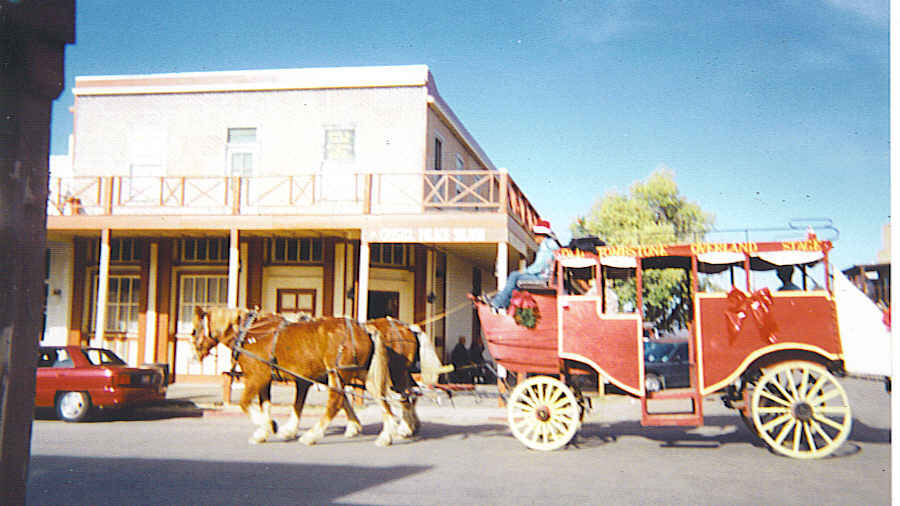
During your visit, you might even get a chance to ride in a stagecoach or on the Alder Gulch Short Line.  There are still a few placer mines and hard rock operations today getting a little gold out of them thar hills, but little compared to that original find. You can even pan for gold yourself at Alder Gulch Gold and keep any you happen to find.

Some folks made a fortune here, but what they left behind was priceless.

Old Virginia City is located in the southwestern corner of Montana. I-90 and I-15 intersect close by and State Route 287 leads you through Alder Gulch and Old Virginia City. This is a great spot to include on a trip to Yellowstone National Park as it is only about 90 miles away. Enjoy the scenery!