Places to go and things to see by Gypsy Bev

Posts tagged ‘Civil War’

Roger Pickenpaugh…Research is Key

Local educator and author, Roger Pickenpaugh of Caldwell, enjoys the challenge of discovering information about topics of interest so he can organize them into a book filled with accurate historical facts.

Roger graduated from Ohio State University and earned his Master’s Degree there as well. He retired from Shenandoah Middle School after teaching thirty years. Over the years, he has written 20 books filled with local and national history. Five of his books focus on the Civil War.
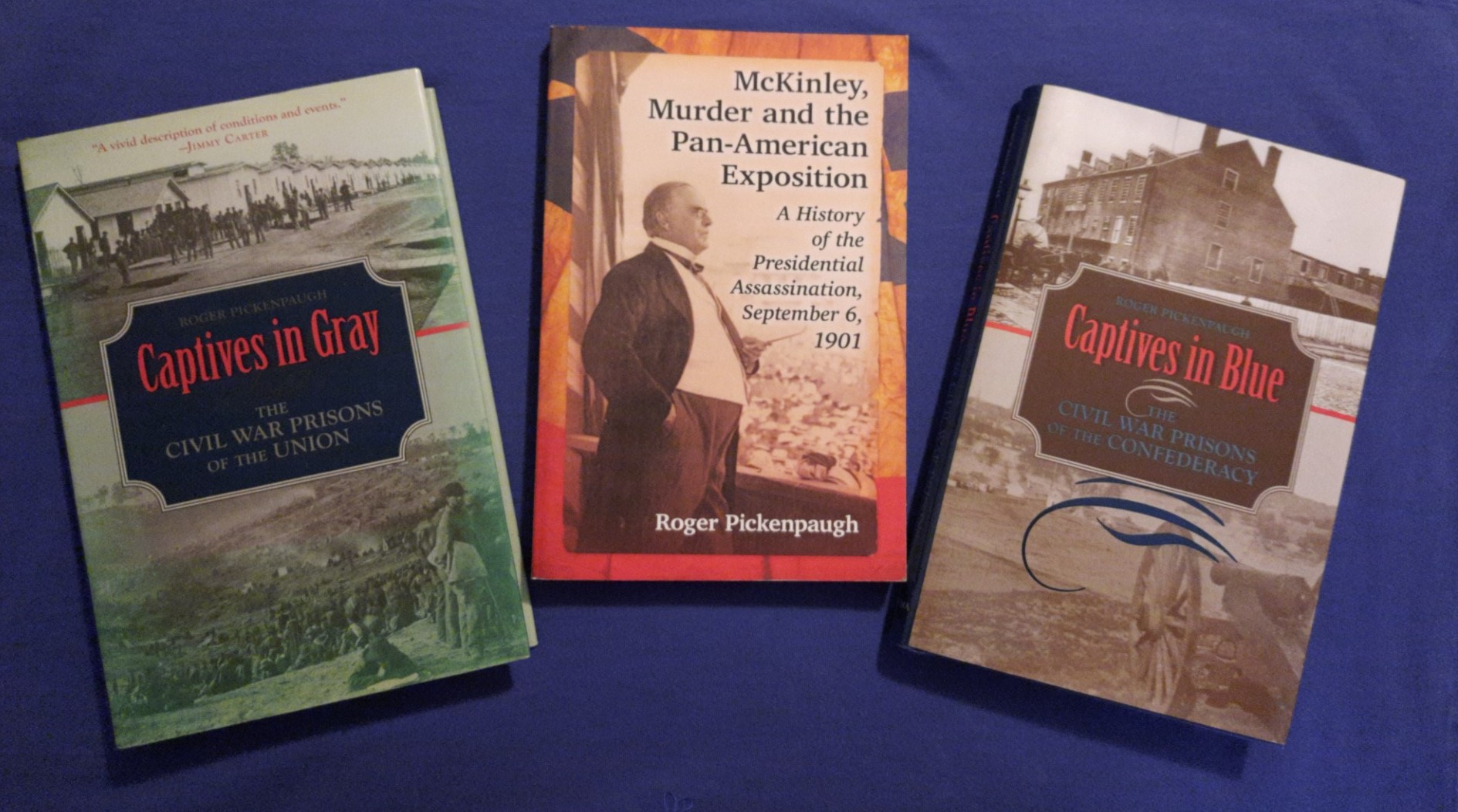
These three books are samples of those where he used traditional publishing.

Roger has always been interested in history. Even as a child, he liked to read books with a historical touch. Although he does admit to also reading some comic books.

His interest in the Civil War stems back to the fact that his grandfather and uncle were both very interested in Civil War events so he became interested just by listening. He also had a relative who took part in the Vicksburg campaign.

His interest in writing began when a student at OSU where he did writing and research on term papers for college and found he enjoyed the exploration.
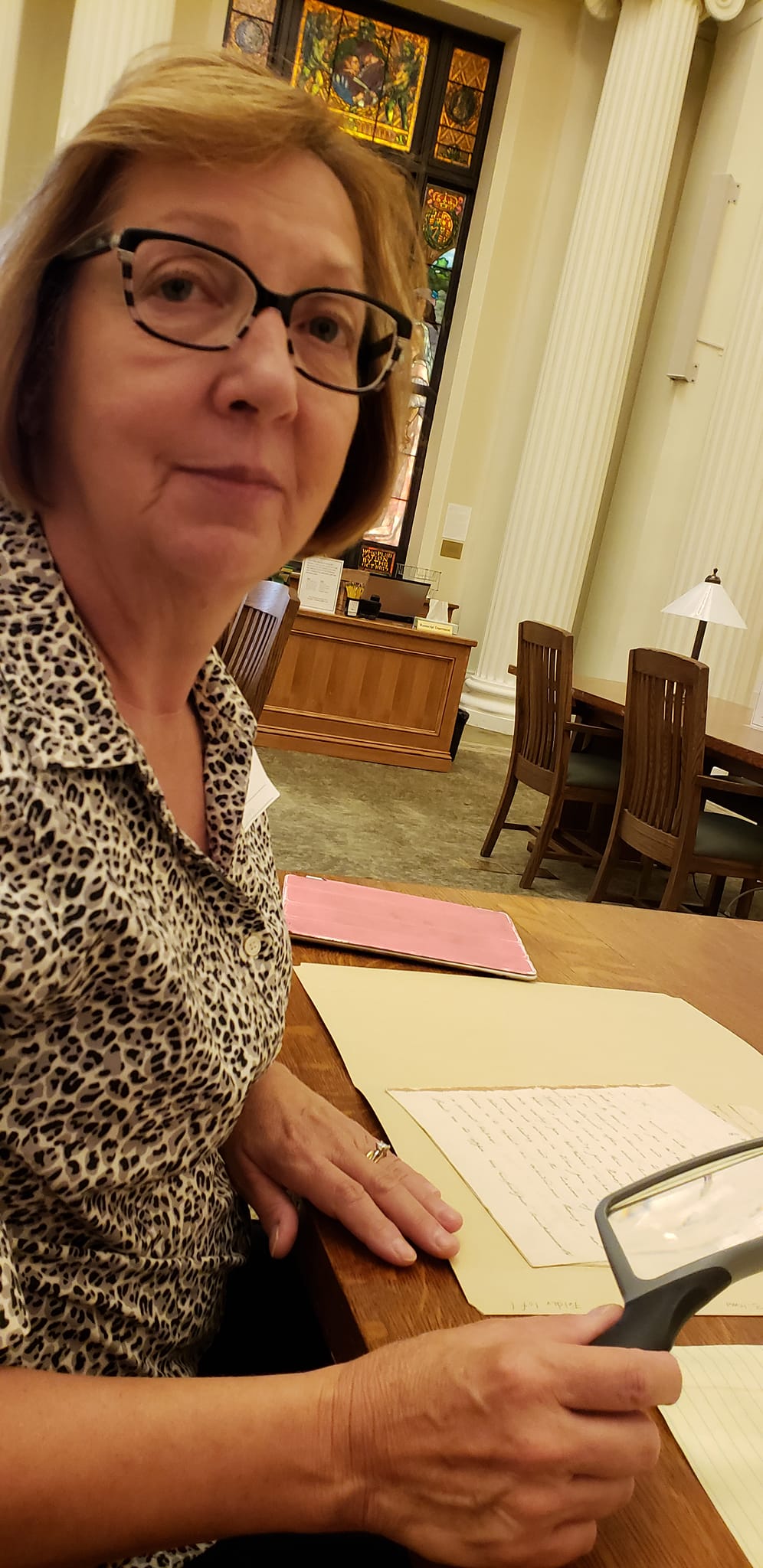
His late wife Marion felt research was much like a Treasure Hunt.

Since most of his books require accurate historical information, research has always been an important part of his life. He credits his late wife, Marion, for being the research organizer and the reason for his success in writing historical books.

Some of those early books required research before the advent of computers. Roger remember Marion’s patience and tenacity as she searched through books on the library shelf looking for that piece of missing information. Note cards were made with information gathered and then placed in order. Indexes in his books are an important part so he feels accuracy is extremely necessary.
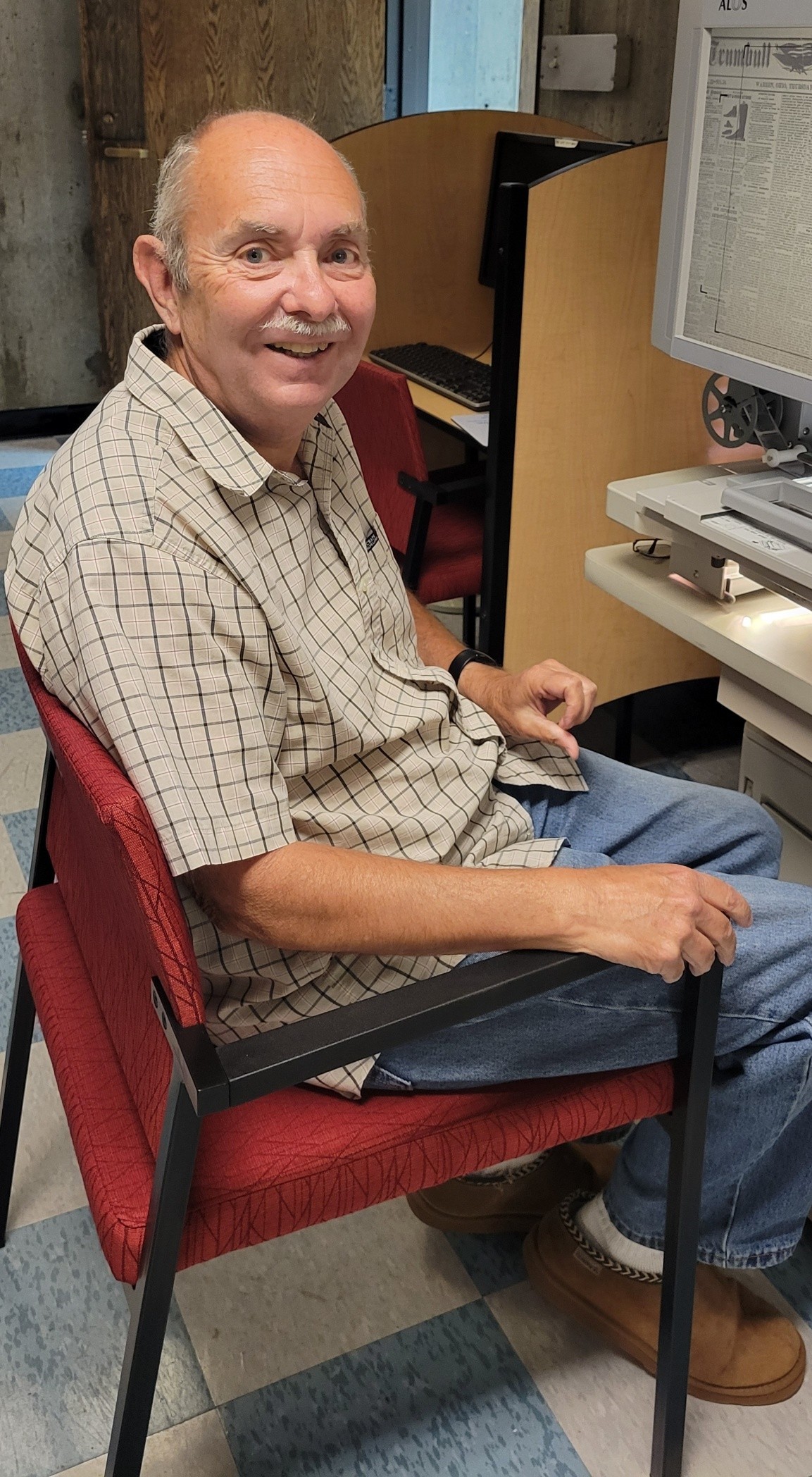
Roger frequently uses resources at the Ohio Historical Society for his research.

Research over the years has been from interviews over the phone to personal visits at places he is researching. There he makes good use of their local libraries for old newspaper records. National Archives, State Historical Societies, and many universities or colleges have provided needed information through books or diaries. When you read his books, you clearly see how important this research was.
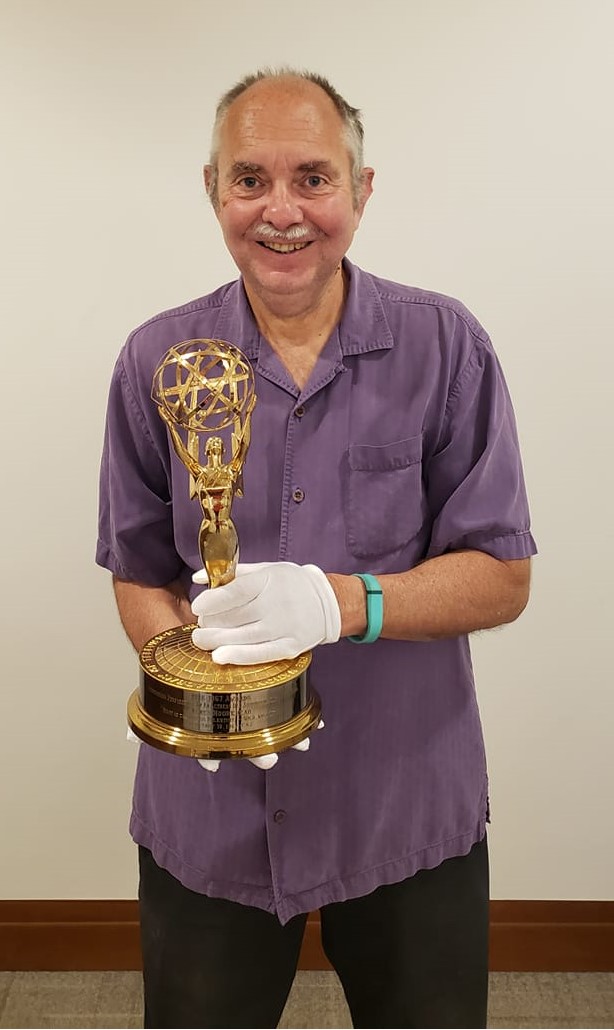
Roger enjoyed a close look at Agnes Moorehead’s Emmy while doing research at Muskingum University Library.

One of his favorite local places for research is the Muskingum University Library. They have been so helpful to him with use of equipment and finding the resources he needs. Roger said, “I never could do this writing without them.”

Friendships with members of the Noble County Writers Group have proved valuable over the years. Writers need to have other writers to talk with and share ideas. Other members of the group also are great at proofreading and giving ideas for improvement. They have even written some books together.
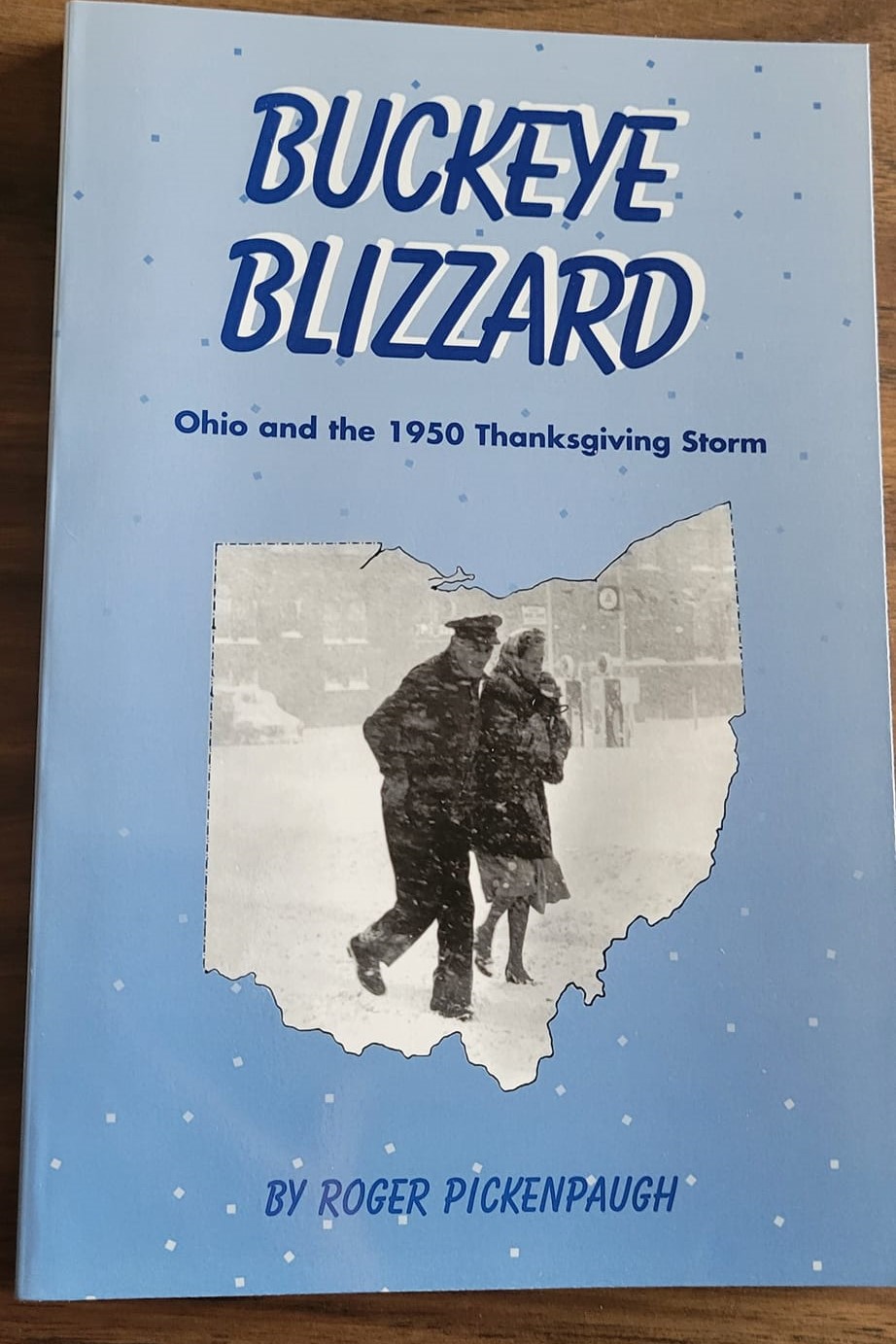
This early book of Roger’s tells personal tales of that terrible blizzard. True and often humorous!

At this point in time, Roger has published 20 books. Eight of them were with traditional publishers, the first being Rescue by Rail: Troop Transfer and Civil War in the West, 1863, which was published in 1998 and took about three years to write. That book had a local touch as some of the trains ran through Guernsey County on the B&O.

Johnson’s Island: A Prison for Confederate Officers (Civil War in the North) was published in 2016 and won the Bowling Green Center for Archival Collections Local History Publication Award.
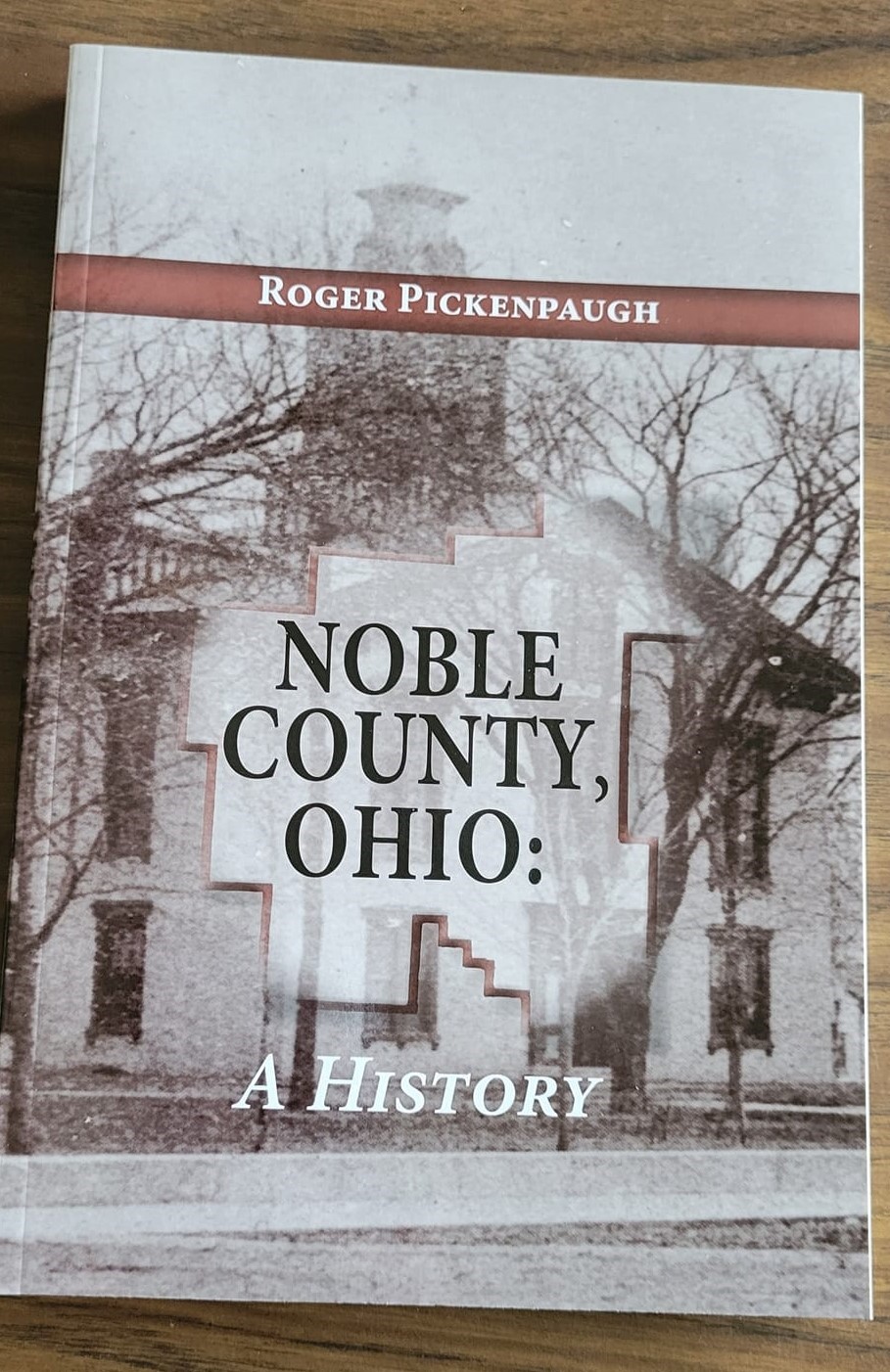
Noble County, Ohio was Roger’s first book, which he self-published.

He also has twelve books of local nature that are self-published. A History of Noble County, Ohio 1887-1987 was his first self-published book back in 1988. He spent nearly eight years researching over 100 newspapers to get the accurate information he needed.

Roger feels local books can be self-published but if you are writing about a national event, it will best be received if going through a traditional publisher.

In their travels, Roger visited his sister Jill and her husband in Georgia, where they worked with President Jimmy Carter. They attended services at the Baptist Church where President Carter taught Sunday School. Today his sister is Superintendent of Jimmy Carter National Historic Site in Plains, Georgia. Roger was pleased to have his picture taken with the president and President Carter left a review on Amazon for one of Roger’s books.
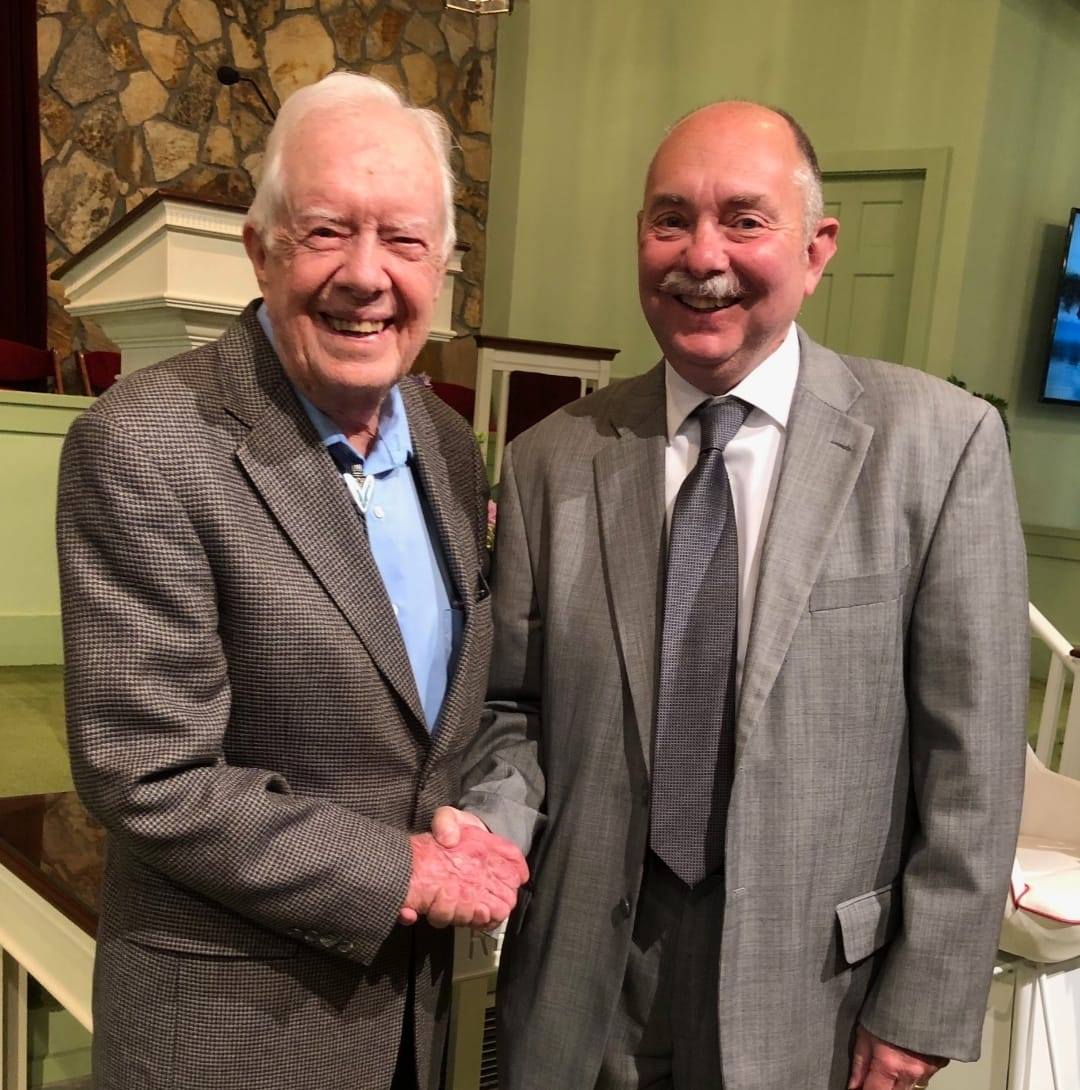
Meeting President Jimmy Carter was a special moment for Roger.

When Roger is not researching, he enjoys being active with daily walks and work in his garden. His walking goal was to have a thousand consecutive days with over 10,000 steps and he has probably reached it by now as had 900 consecutive days in mid-May.
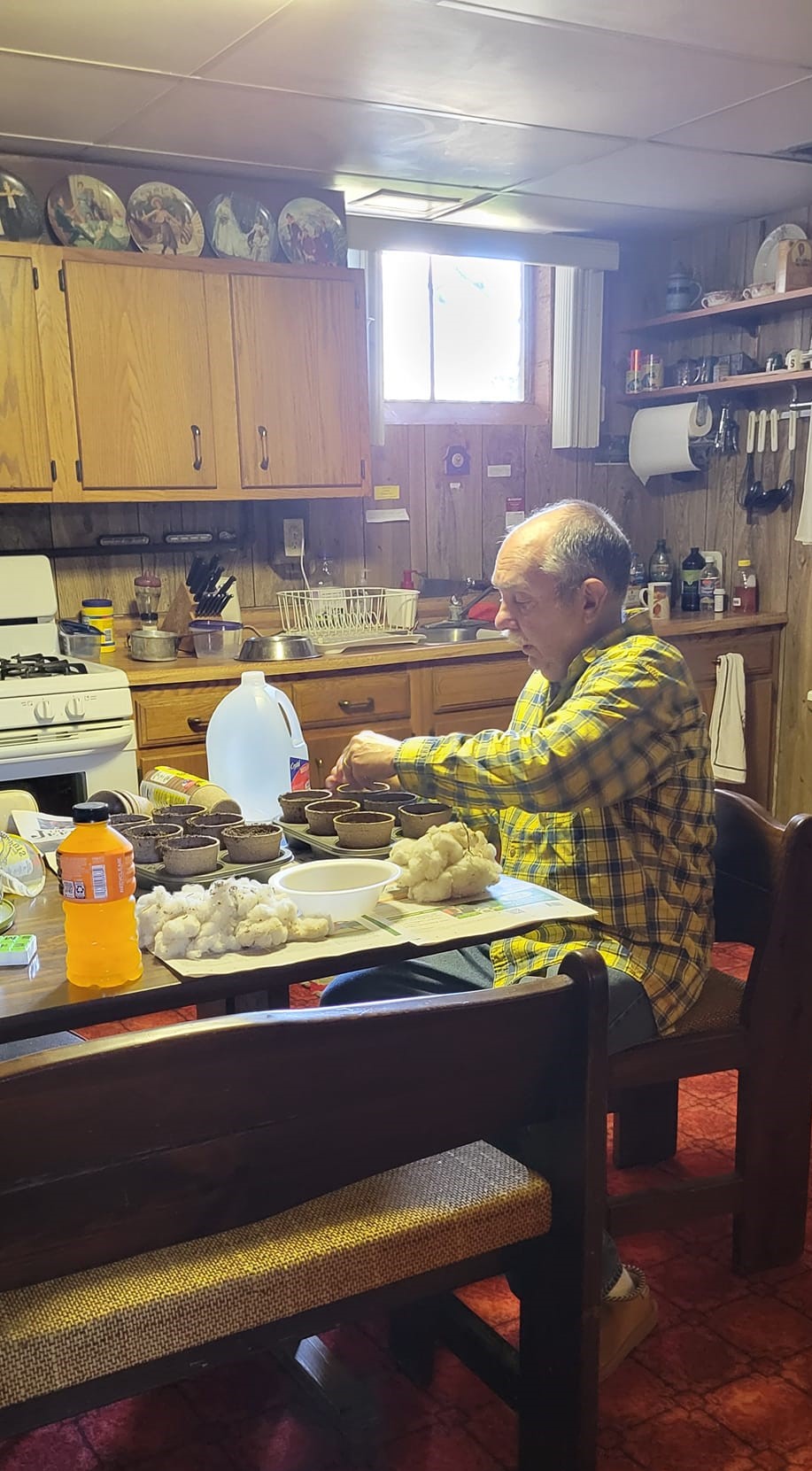
Roger starts his garden early inside. During the summer, he enjoys working in his garden.

He is putting the finishing touches on a book about John F. Kennedy’s sense of humor. The working title right now is John F. Kennedy: The Kennedy Wit.
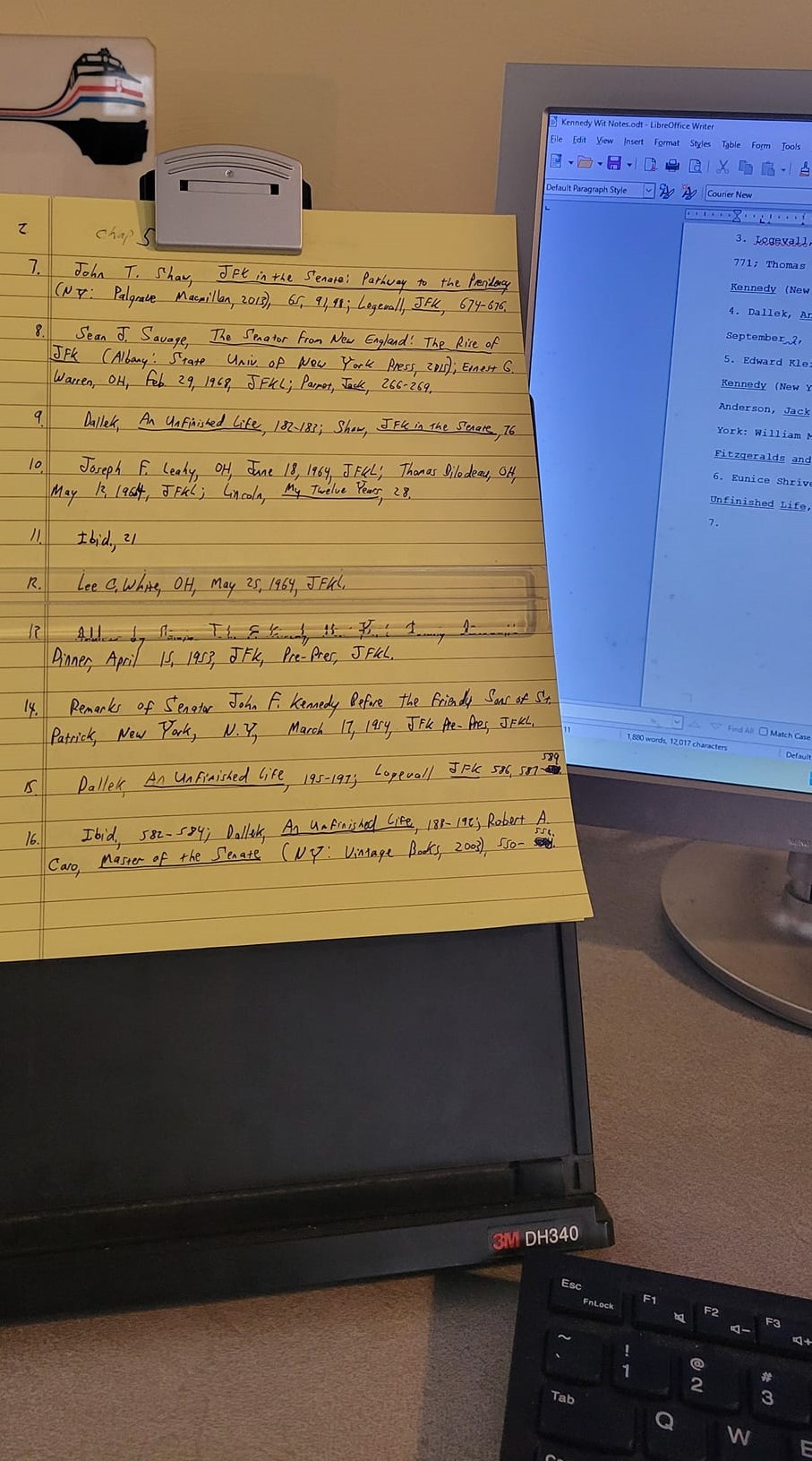
Transferring handwritten notes to the computer is time consuming.

Currently, Roger is also researching information about Ohio in the early days of the Civil War. This is being done in various newspaper archives and finds the ones at Ohio Historical Society very helpful.

His list of books is extensive but most can be found on Amazon or if you happen to see Roger at a book fair or local promotion. He often promotes his books at places like Art on the Square in Caldwell, Bookology in Cambridge, and Buckeye Book Fair.

If you enjoy history, you are certain to appreciate the research Roger Pickenpaugh has done to make his books accurate. His style of writing makes history interesting.
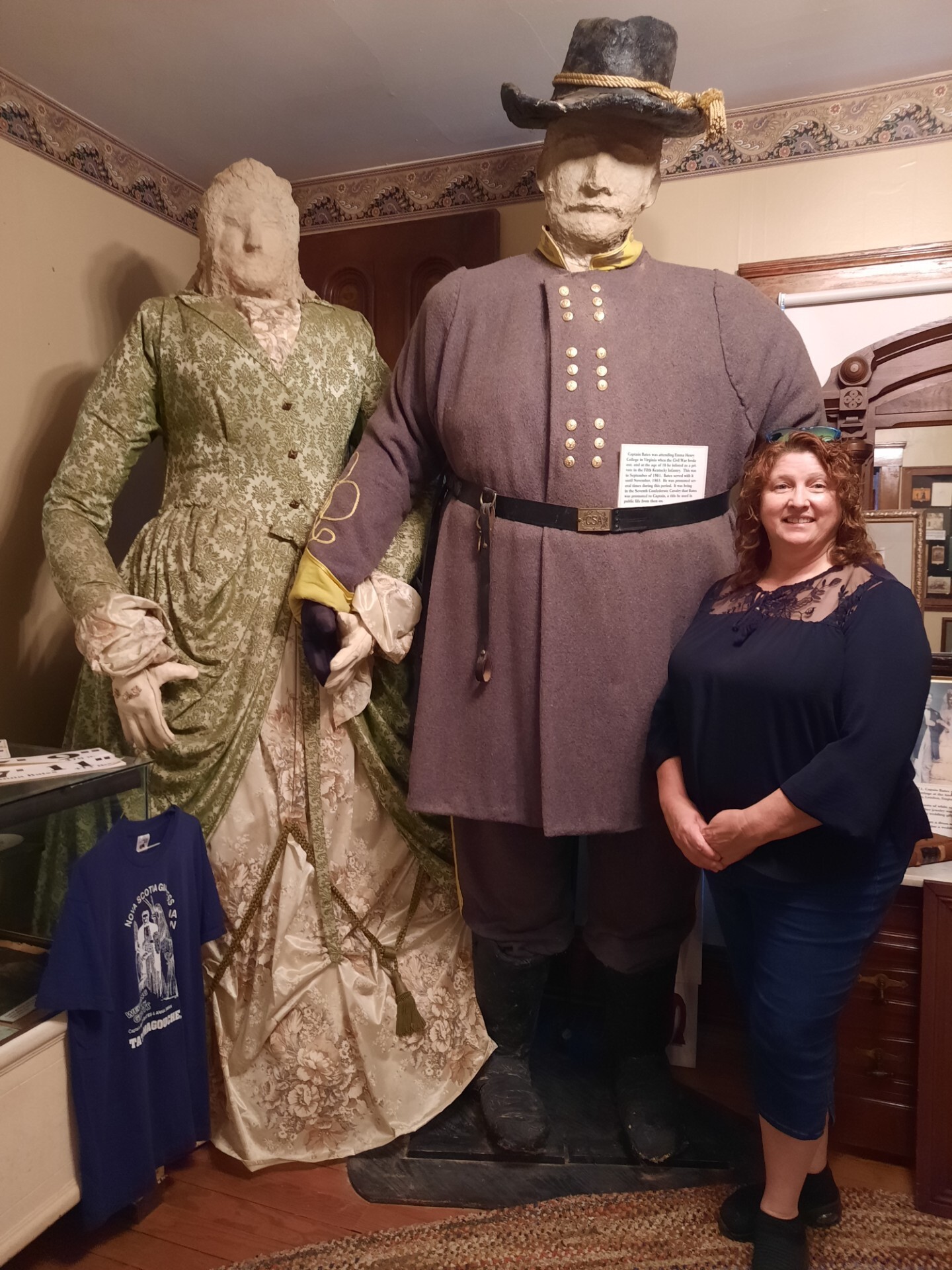
Giants of Seville, Ohio

While many giant skeletons have been found in mounds across the country, there is an accurate record of two giants, who resided in Ohio in the late 1800s.

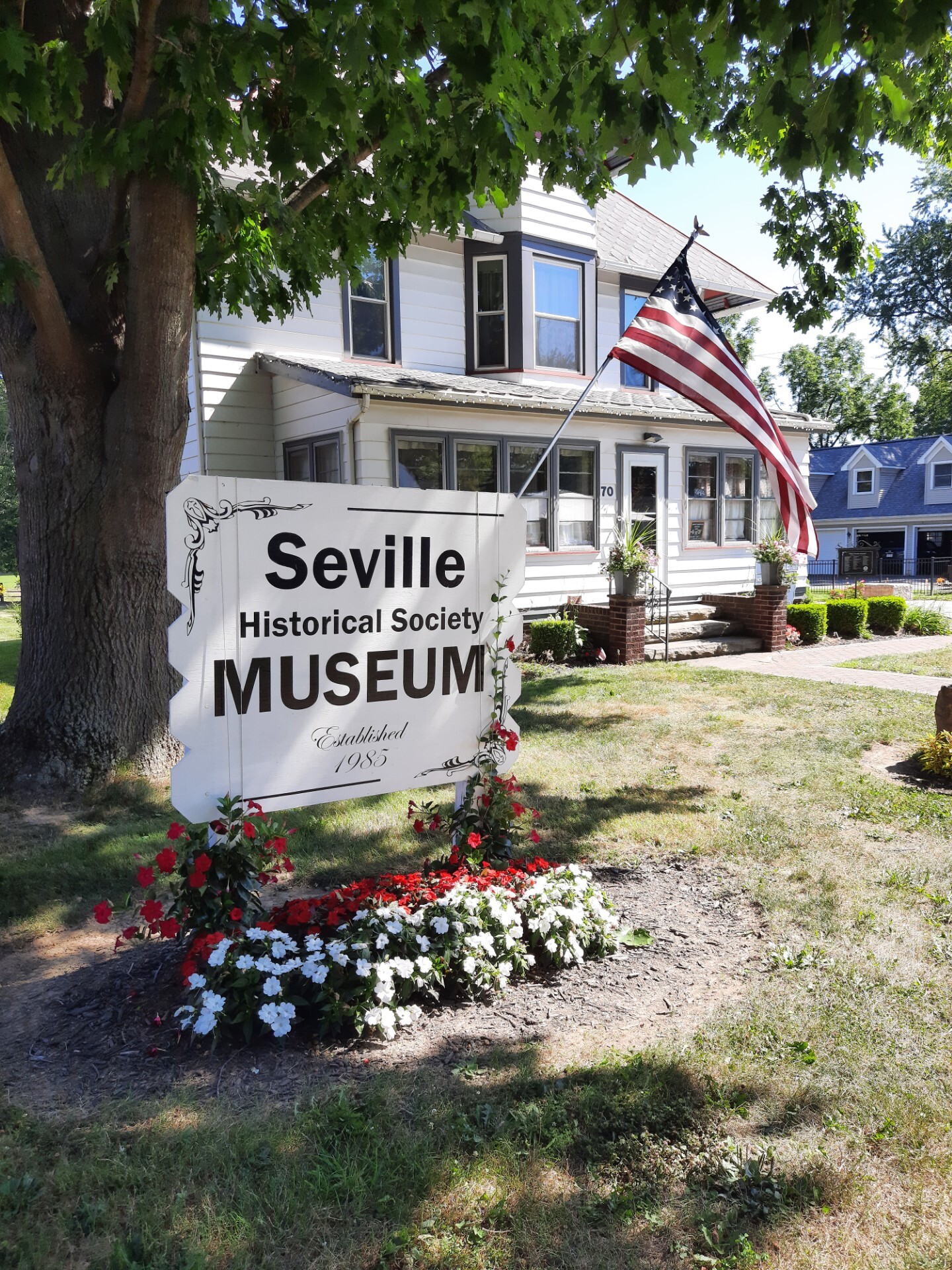
The Seville Historical Society Museum is interested in preserving the history of their area.

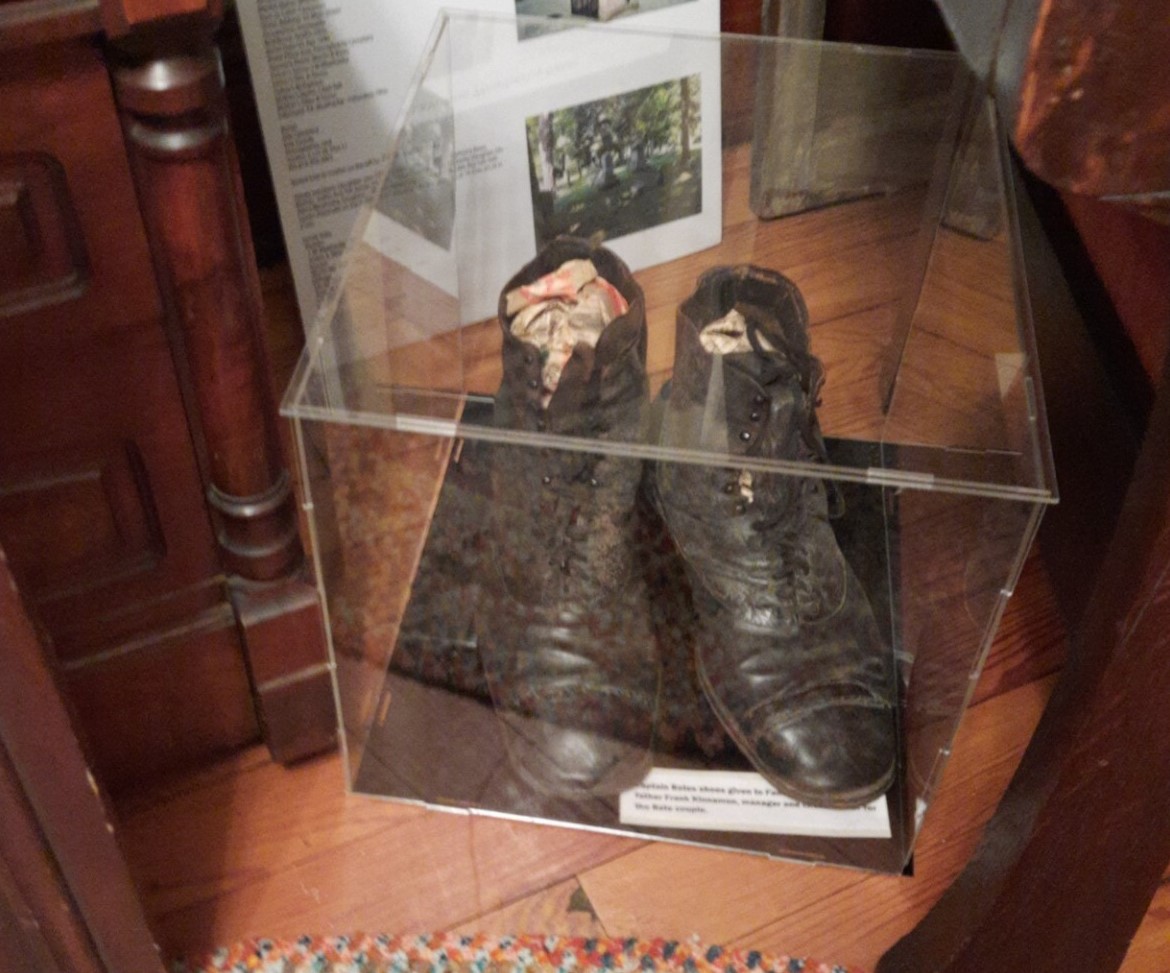
The Seville Historical Society Museum, located just a few miles west of Akron, contains the history of these two giants. Their display includes life-sized statues of Martin and Anna Bates as well as a pair of Captain Bates’ shoes and his hat.

 Life size statues of Martin and Anna Bates are shown with museum volunteer, Sheila Reidel.

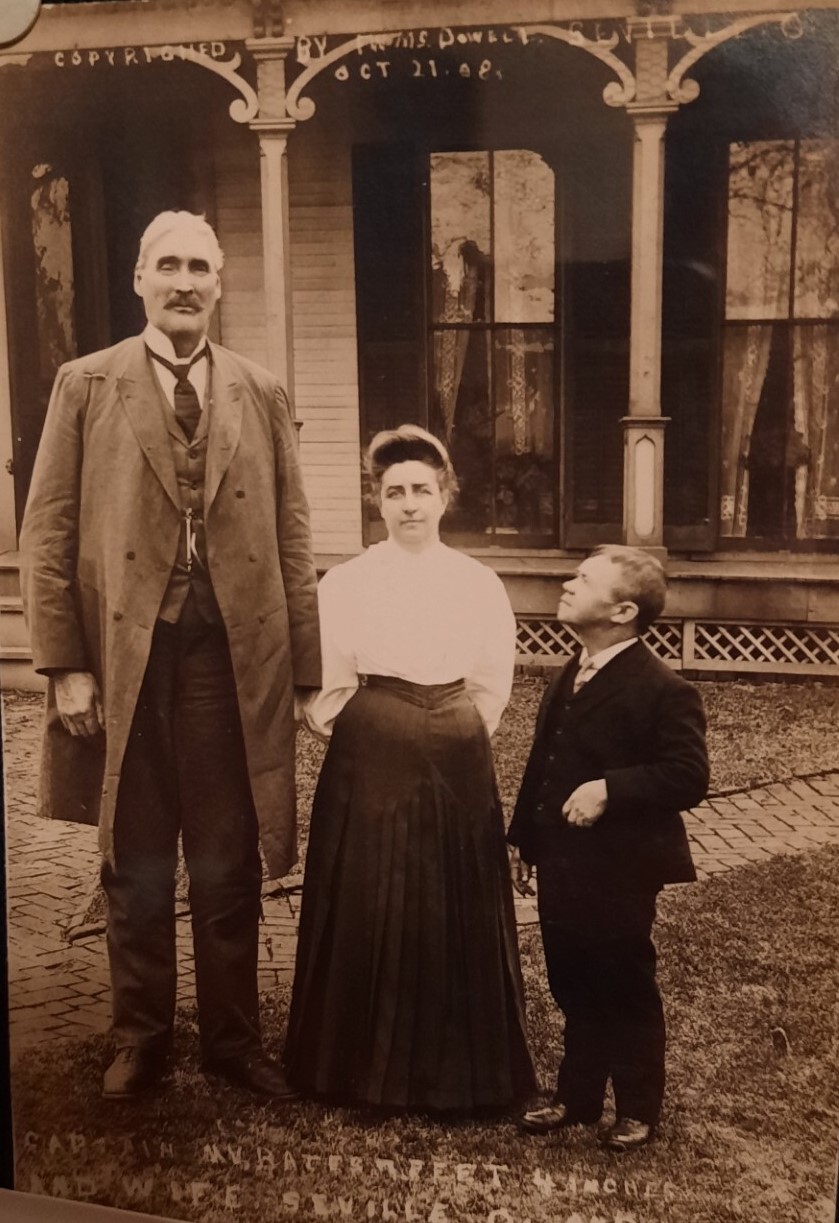
Martin Van Buren Bates began a tremendous growth spurt about the age of six or seven. By the time he was twelve years old, he was over 6 ft. tall and weighed over 200 pounds.

Captain Martin Bates’ boots are on display.

During the Civil War in 1861, Bates joined the 5th Kentucky Infantry at the age of 16 as a private in the Confederate Cavalry. His large figure and ferocious manner quickly earned him the rank of captain and the title “Kentucky Giant.” However, he was wounded in battle around the Cumberland Gap area and captured. He was imprisoned for a time at Camp Chase in Columbus, but later discharged due to his size. He was still often called Captain Bates for the rest of his life.

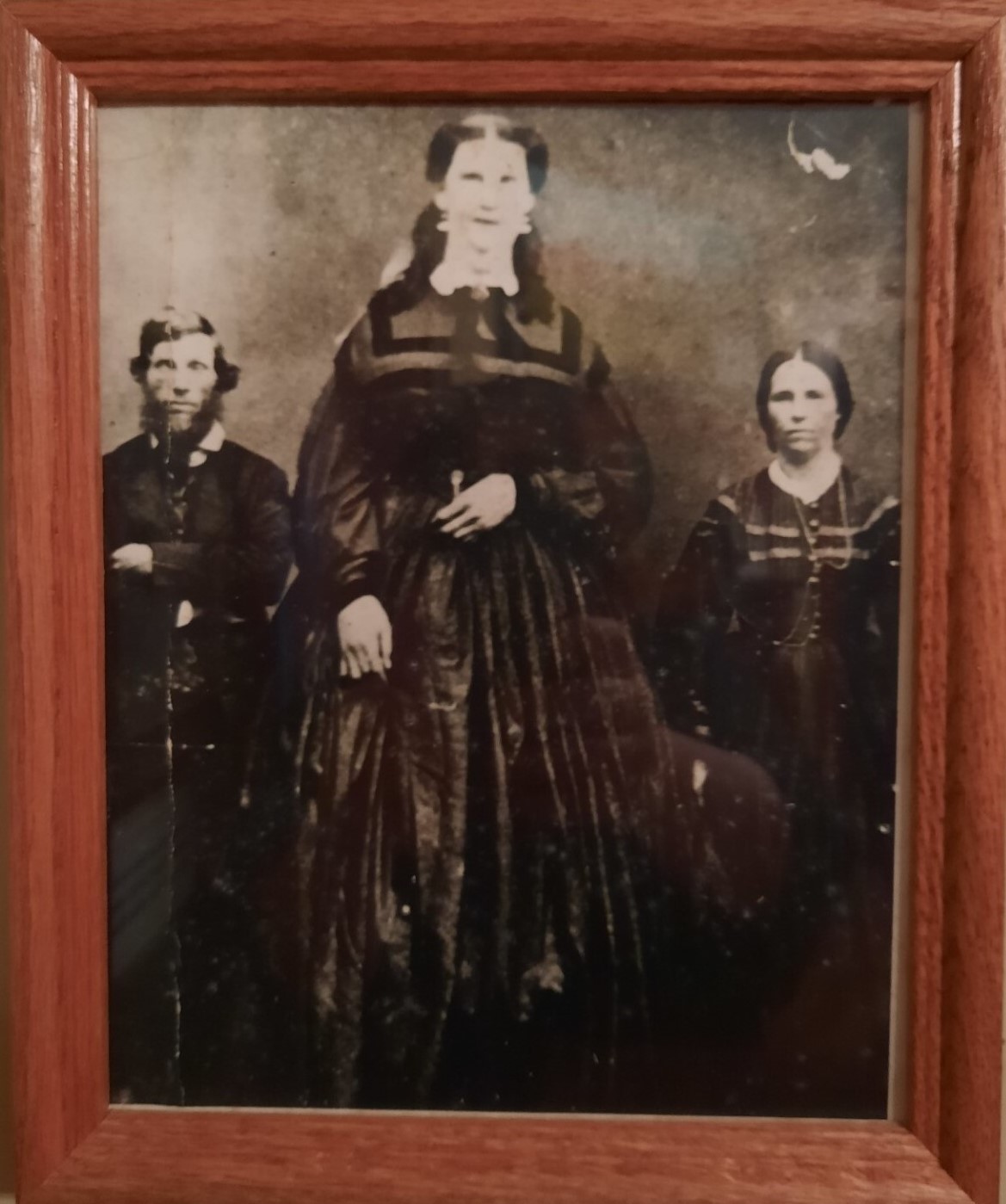
This picture shows Anna with her parents.

Anna Haining Swan was born in Nova Scotia in 1848 where she was known as the Nova Scotia Giantess. Because of her size at 7’11” tall and weighing 413 pounds, she began working for P.T. Barnum at the age of 16. She had no interest in his traveling shows, but held receptions and teas at the P.T. Barnum’s American Museum in New York City.

After the war, Martin toured with a small circus. While the circus was on tour in Halifax, Canada, the 7’11” tall Anna Haining Swan appeared as part of the P.T. Barnum show, being billed as “The Tallest Woman on Earth.” She and Martin, who was now 7’8” tall and weighed 470 pounds, soon got to know each other, being the tallest people around, as they toured extensively.

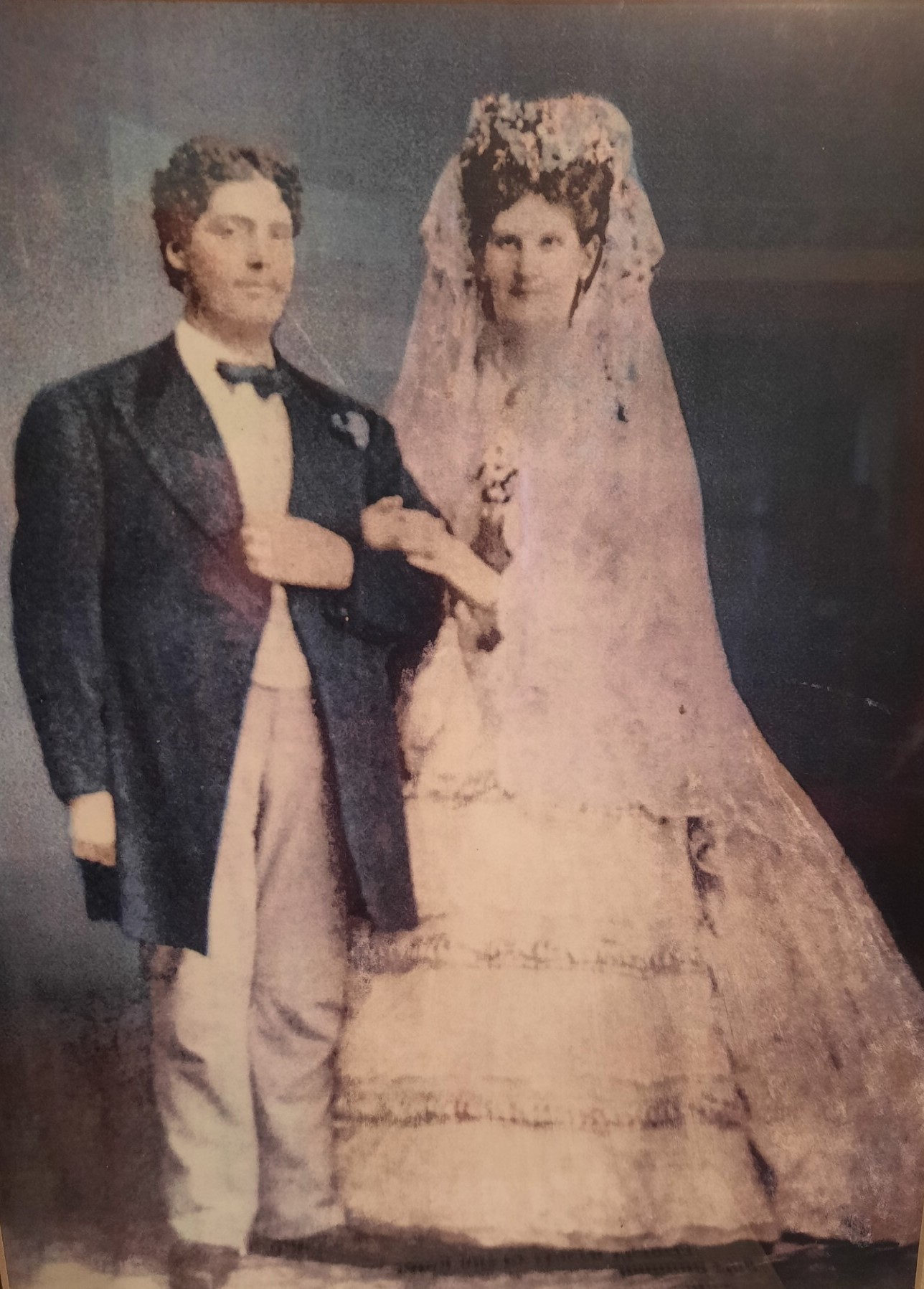
Martin and Anna were married in England with a dress made by Queen Victoria’s seamstresses.

Martin and Anna were frequent guests at Buckingham Palace often performing skits together or giving readings. Anna even played the piano. When Queen Victoria heard they were getting married, she had her seamstresses make a beautiful wedding dress for Anna using 60 yards of lace and 50 yards of material.

This wedding on June 17, 1871 at St. Martin-in-the-Fields in London, England drew thousands of people due to the unusual pair getting married. Queen Victoria herself attended the wedding and gave them two extra-large watches as wedding presents. Martin’s watch was as big as a saucer.

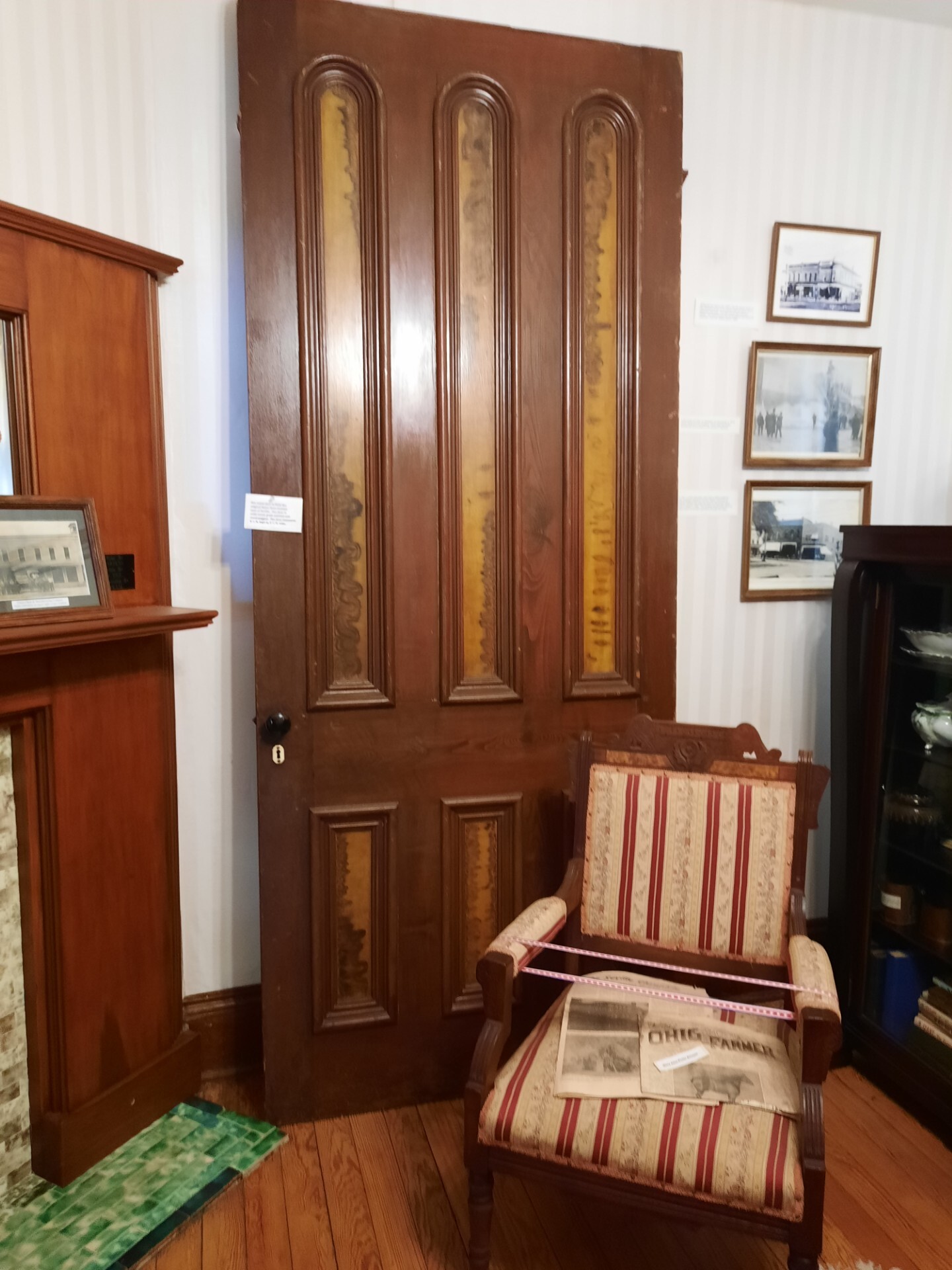
This is an original tall door from the home of the giants.

On a visit to the United States, the barker from Barnum brought them to the area of Seville where he lived. They both found it a pleasant place to live and soon acquired a 130 acre farm there in 1871. Martin built a massive house with 14′ high ceilings to accommodate their larger size with all furniture built to order. At the Seville Baptist Church, a special extra wide pew had to be built to accommodate their size.

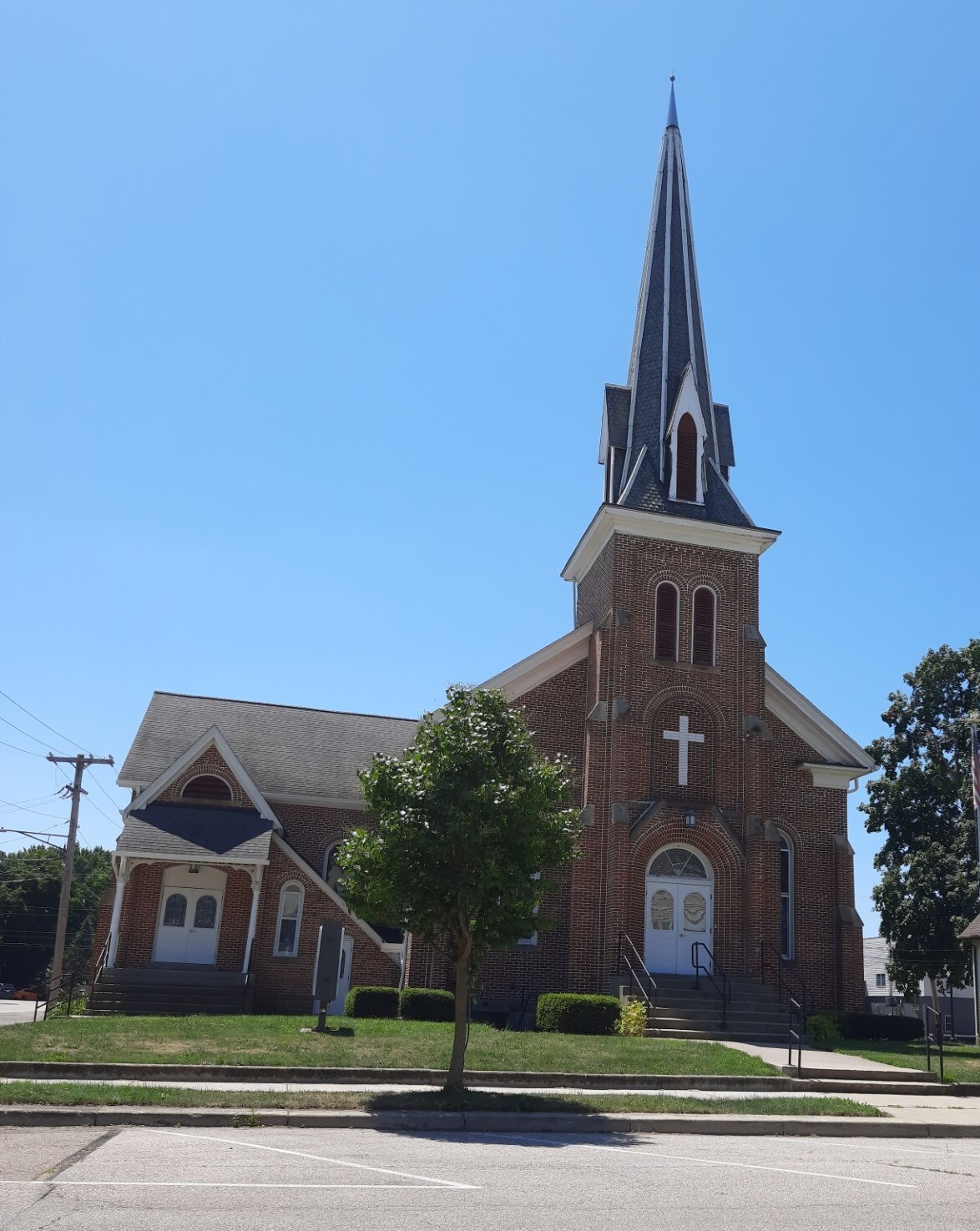
The giant couple attended this First Baptist Church in Seville

Anna taught Sunday School at the First Baptist Church and had a carpenter build a large shoe which she filled with presents for the children. Then they were treated to lunch at Anna’s home, a place the children loved to visit as they liked climbing on the extra large elevated furniture where they could sit in the giants’ laps and have stories read or told to them. They also loved riding in their giant sized carriage or sleigh.

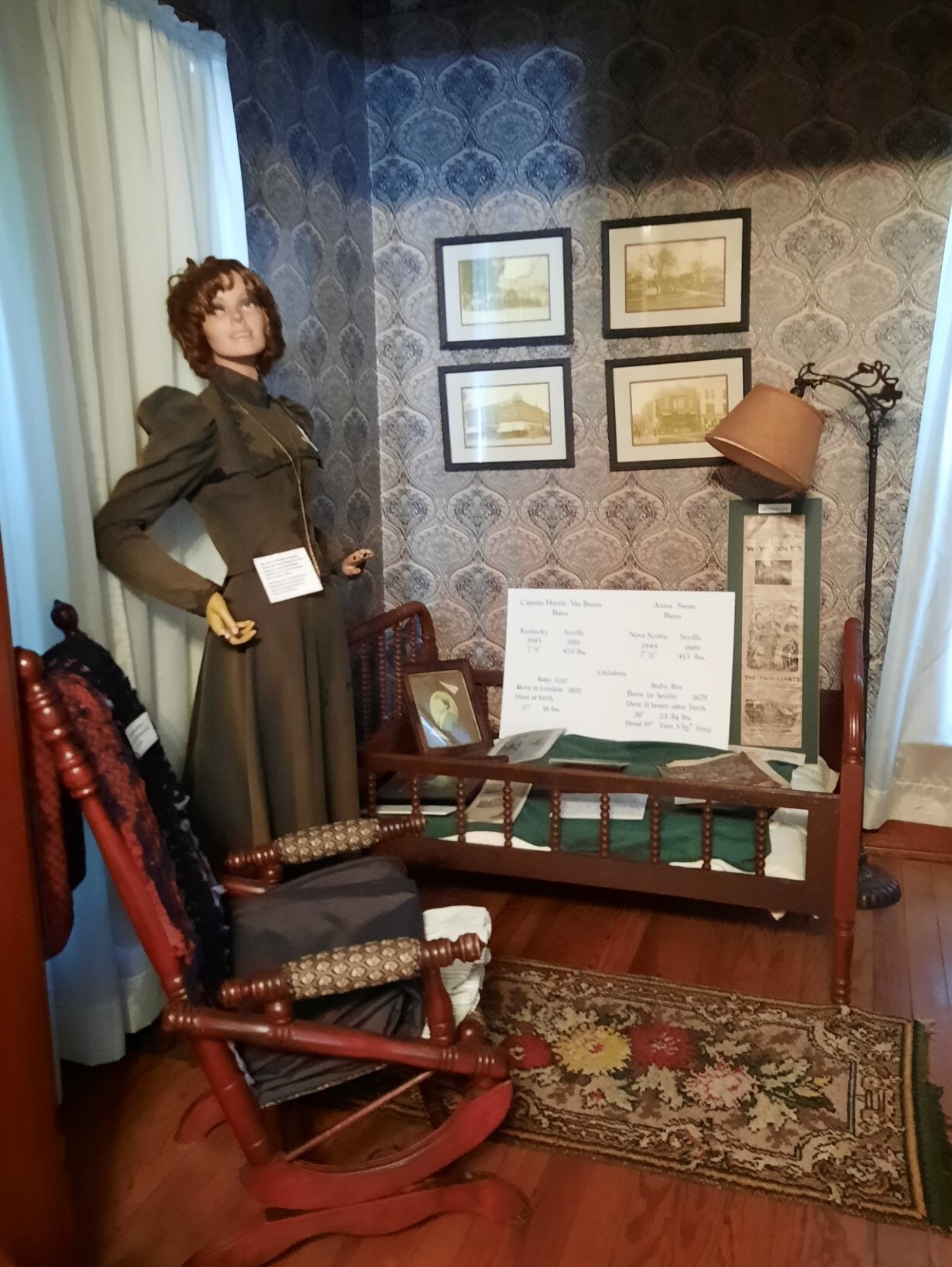
Babe’s original extra-large baby bed.

While Martin wanted to be a farmer and had the best breeds of cattle and Norman draught horses, their size made them an unusual attraction. In 1878-1880, Martin and Anna were leading attractions of the W.W. Cole circus as a break from country living. P.T. Barnum remained a personal friend throughout their lives. They often entertained friends from the circus at special Christmas parties in their home.

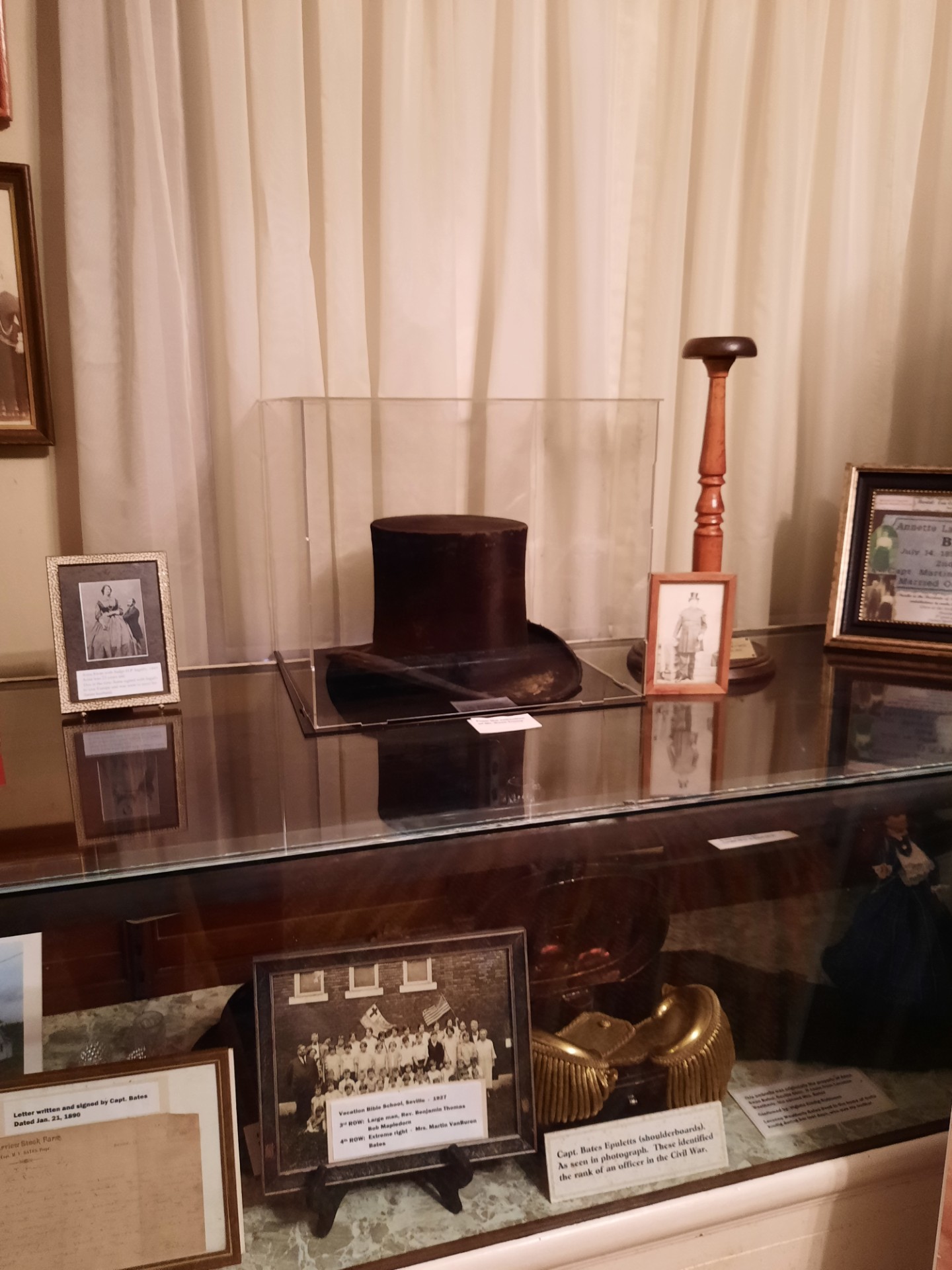
Martin’s dress hat is also an original.

A favorite story tells how the men of the town were arguing in the dry goods store about how strong the retired Captain Bates really was. Usually people could hear Bates as he approached town because of the hoofbeats of his large horse. However, this time he was not heard. He came into the store just as the owner was saying, “If Bates can pick up this barrel of sugar (possible weight varied from 350 to 500 pounds), I will give it to him.”


Bates easily picked up the barrel and carried it to his wagon. When he returned to the store, he asked, “Do you have any other heavy barrels you want to give away?”

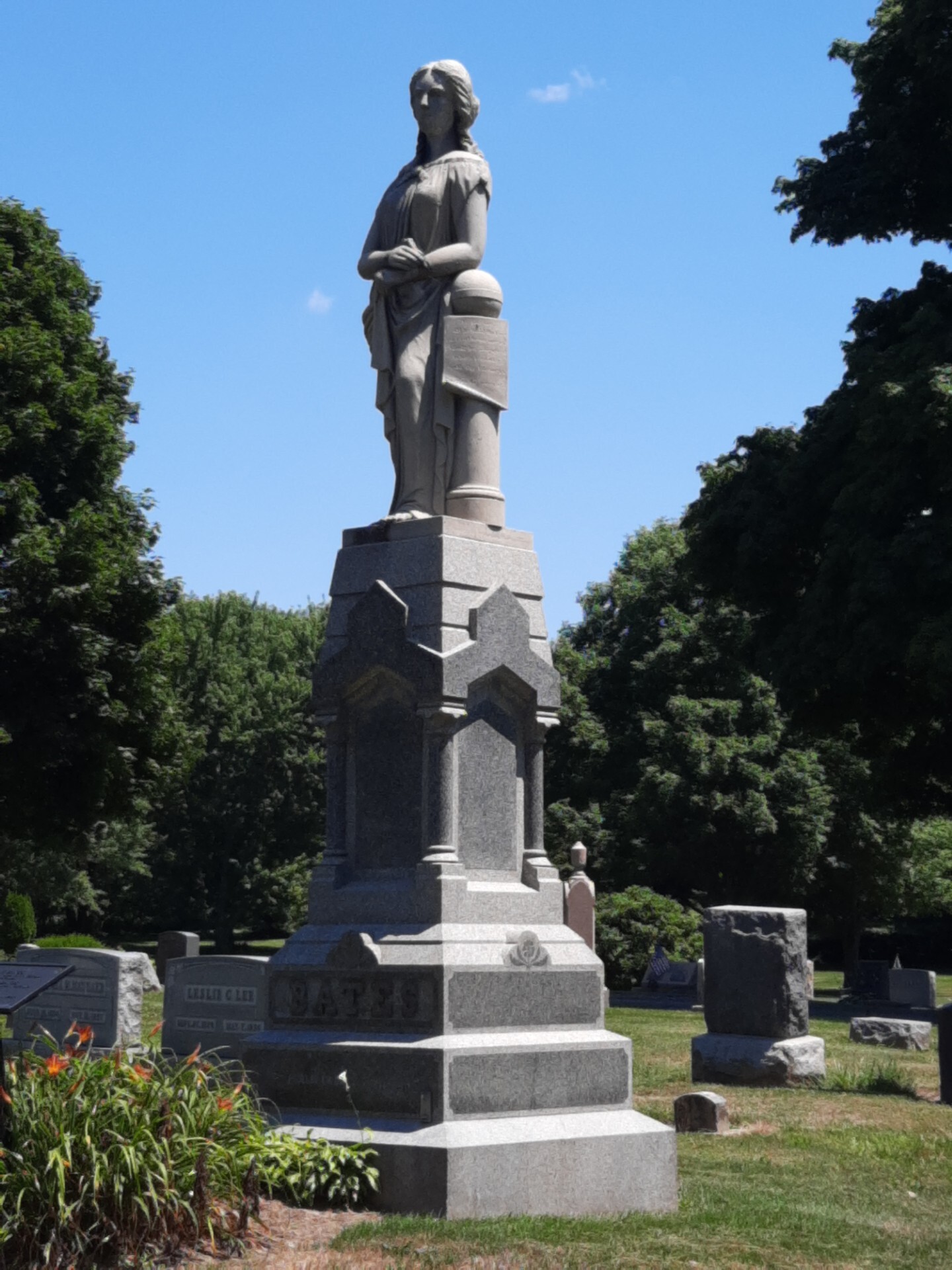
Martin had this statue made in France for the grave of his wife, Anna.

Anna died in 1888 and Martin ordered a statue from France of a beautiful woman for her grave in Mound Hill Cemetery. One son is buried there also, while their first son was buried in London, where he died just hours after his birth.

Martin sold their oversized house, and moved to town. He did remarry in 1897 but this time it was to a woman of 5’4”, Annette LaVonne Weatherby, and lived a peaceful life until his death at the age of 74 in 1919 of nephritis, an inflammation of the kidneys.

Martin is pictured with his second wife, Annette, and Frank Bowman, the shortest man in the world

The farm house burned down years ago, but the barn is still standing that Martin Bates built. You can still faintly see “M V Bates 1883” on the roof in giant letters of course. The doors are also giant size so he could enter easily. There is a nearby pen used to hold wild animals he owned, as well as animals from the circus when it passed through.

The museum is open on Saturday mornings from 9-12 during the months of May – September where you will also find a Farmers’ Market. In March, April, October, November, and December they are open the first Sunday of each month from 9-12. The museum is closed in January and February.

Martin and Anna Bates left a large footprint on the village. A piece of history for all to still enjoy today. Be sure to visit the Seville Historical Society Museum, Mound Hill Cemetery, and First Baptist Church while in town and perhaps drive just outside of town to see the old barn. This was an unusual couple of giants. It’s worth the trip!

Majestic McKinley Monument Honors 25th President

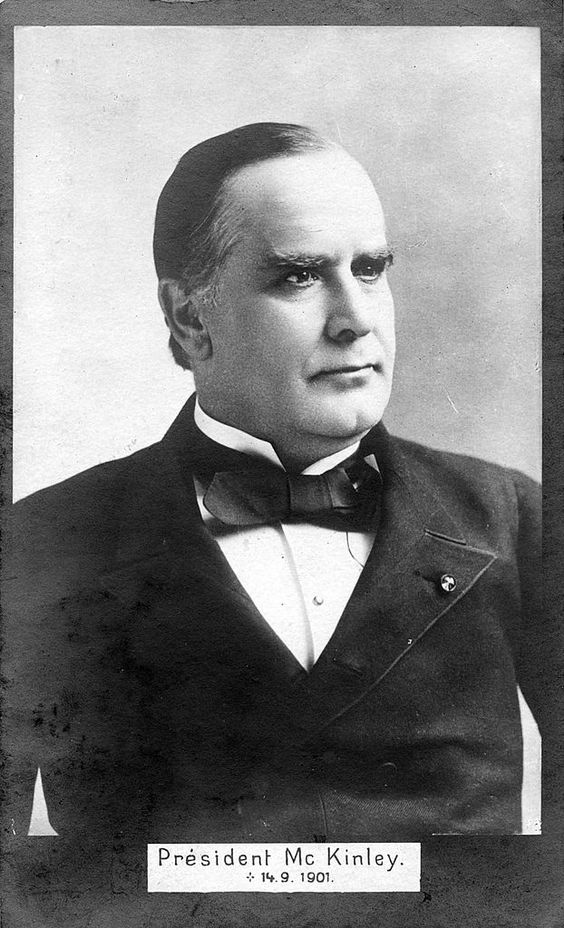
“I have never been in doubt since I was old enough to think intelligently, that I would someday be made president.”  These words were  spoken during his youth by William McKinley, the first president to ride in an automobile while in office as well as the first to use a telephone as part of his campaign.

McKinley Monument can be seen on the east side of I-70 in Canton, Ohio.

The resting place of William McKinley, 25th president of the United States, catches your eye over the tree tops while driving down I-77 through Canton, Ohio.  The domed mausoleum is more than a mere resting place but serves as a monument to Canton’s favorite son and former governor of Ohio. 

William and Ida McKinley made a campaign visit to Canton.

There are several reasons that McKinley is a favorite in this area even though he was born in Niles, Ohio. Canton is where he started his law career, found his true love, and ran for the highest office in the land. While attending the 1901 Pan-American Exposition in Buffalo, New York, President McKinley was assassinated just seconds after giving the good luck red carnation from his label to a little girl waiting in line.

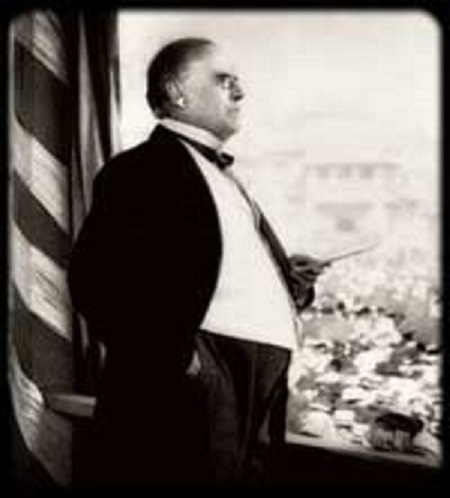
This photo of President McKinley making his first public address was used as the basis for his statue at the monument.

In 1905 construction began after selecting a memorial design drafted by Harold Van Buren Magonigle. This architect began his career at the age of thirteen when he worked as a draftsman for the firm that designed Central Park in New York City.

The amount being raised for the purchase of land and the mausoleum was $600,000. Local businesses and friends were large contributors. However, many school children contributed their pennies toward the building of this mausoleum, which was completed in 1907.

This view from the top of the steps shows people exercising there.

The front steps seem to be a real attraction for area residents as a wonderful place for exercise, either walking or running.  Since there are 108 steps up to the McKinley Monument, it is a challenge to young and old alike. The front steps are fifty feet wide and are broken into four flights of twenty-four steps with the final flight having only twelve. 

The plaque on this bronze statue of McKinley lists his many qualities.

Nearing the top of the stairs, visitors are greeted by a 9 1/2′ bronze statue of William McKinley created by Charles Henry Nishaus. It depicts President McKinley delivering his final public address at Buffalo, NY in 1901.

The circular, domed mausoleum recaptured the spirit of ancient cultures and formed the center of the cross design Magonigle intended to create. The longer arm of the cross was formed by front steps and what was called Long Water.

This beautiful cascading waterfall was part of the original monument area.

Originally Long Water was a spectacular part of the monument with a 575-foot lagoon, consisting of five different water levels cascading downward into a reflecting pool.  Unfortunately, due to stagnant water caused by poor circulation, this lagoon was filled back in the 1950’s. Both side arms of the cross were formed by shorter entry steps, and the top portion was a driveway behind the monument.

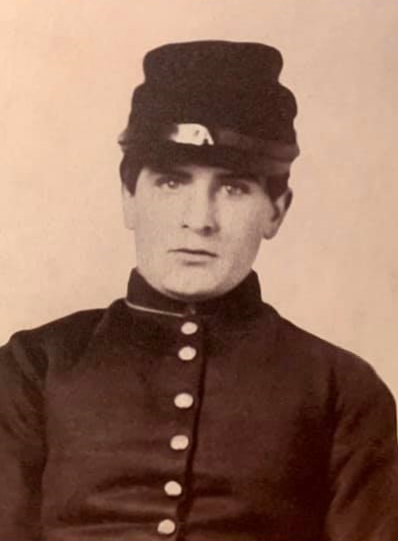
McKinley’s love of country was shown at the early age of 18 when he joined the OVI during the Civil War.

Magonigle considered this shape to have a double meaning. The upper part of the cross resembled the handle of a sword, while the Long Water symbolized the blade.  This seemed appropriate due to McKinley’s military career during the Civil War as well as his being commander-in-chief during the Spanish-American War.

Wreaths are often placed on the granite marble burial marker inside.

Above ground in the pink marble memorial, President McKinley and his First Lady are entombed in two side-by-side sarcophagi of elegant green granite on a dark maroon granite base.  Their two daughters have found their final resting place here also, entombed in the back wall of the memorial. Katherine died at the age of four from typhoid fever while Ida died during her first year.

Wreaths are constantly being placed by individuals and organizations at the foot of the granite-clad coffins. Most of the wreaths are in traditional red, white and blue.

This skylight contains 45 stars, the number of states at the time of McKinley’s death.

Seventy-five feet overhead is a beautiful red, white and blue skylight with a 45 star design, representing the number of states in the Union at the time of McKinley’s death. While it looks small from below, this beautiful window to the sky measures twelve feet in diameter.

If you wish to visit the memorial without climbing all those stairs, there are two possibilities. A steep road leads up the hill behind the Memorial or there is also an elevator, which operates only during museum business hours by use of a special code, which you must ask for at the museum’s admission office nearby. Admission to the McKinley Monument is free.

Hopefully, this monument and the life of William McKinley will be an inspiration to someone today.  President McKinley had hoped for this when he said, “That’s all a man can hope for during his lifetime, to set an example, and when he is dead, to be an inspiration to history.”

The McKinley Monument is located in downtown Canton, Ohio just off I-77. Take Exit 105 for OH 172, then turn right on 7th Street NW. Take the first left onto McKinley Monument Drive and enjoy a little piece of history.

General Custer Honored at Birthplace

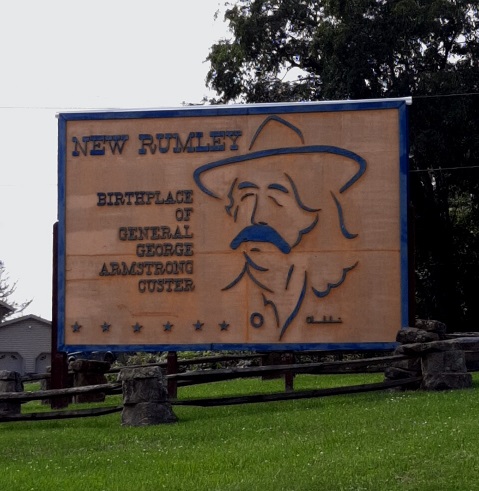
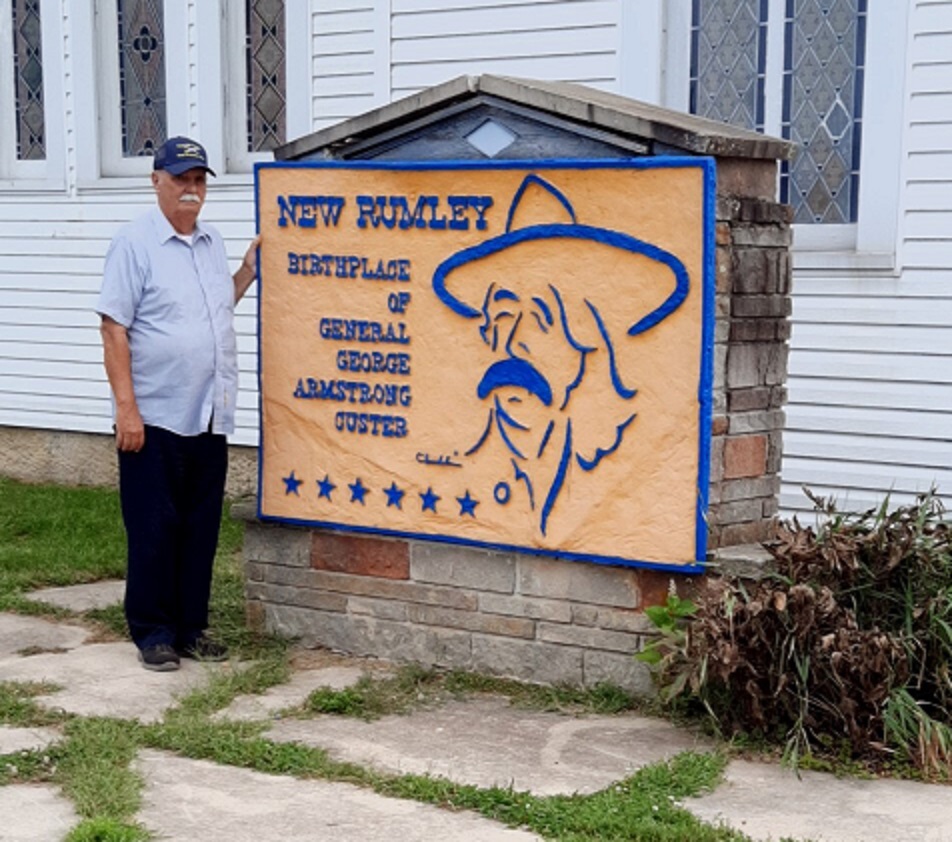
A large outdoor sign points the way to New Rumley and the museum.

New Rumley, Ohio, the birthplace of General George H. Custer, honors him with an annual Custer Observance on the first Saturday of June. This year on June 4, 2022, the day begins with music by JT Thompson of Scio at 11 am by the monument. Members of the Jewett Veterans of Foreign Wars General George Armstrong Custer Post 3071 will raise the flag.

Infantry will demonstrate Civil War-style before Custer Observance Day.

Dr. Mandal Haas of Carrolton returns with his Civil War cannon along with artillery and infantry reenactors to explain the equipment and give demonstrations of their use. Kevin Haney will have his collection of muzzleloaders on display featuring Ager rifles.

Steve and Lisa Ball will sing Civil War songs that tell of life at that time.

After lunch at New Rumley United Methodist Church, Civil War music will be provided by Steve and Lisa Ball. Not only are their songs entertaining, but the stories they tell of their historic significance are always a crowd-pleaser.

The Custer Museum is inside this old church.

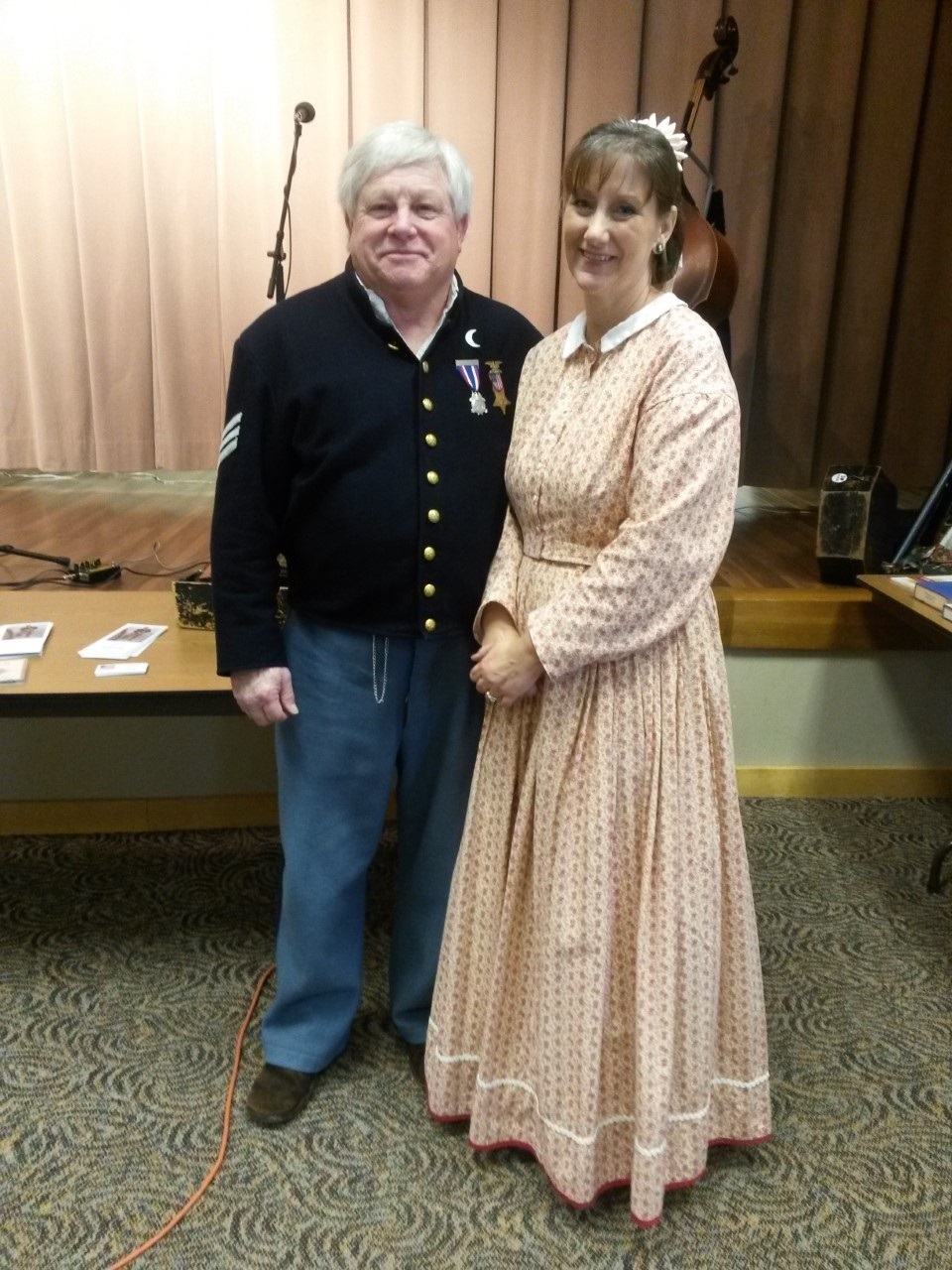
An auction of Civil War and Wild West-related items will follow in the sanctuary. The day’s events culminate with remarks from General Custer (aka Rick Williams). Take time to view the museum packed with memorabilia and the historic signs in the pavilion near the monument.

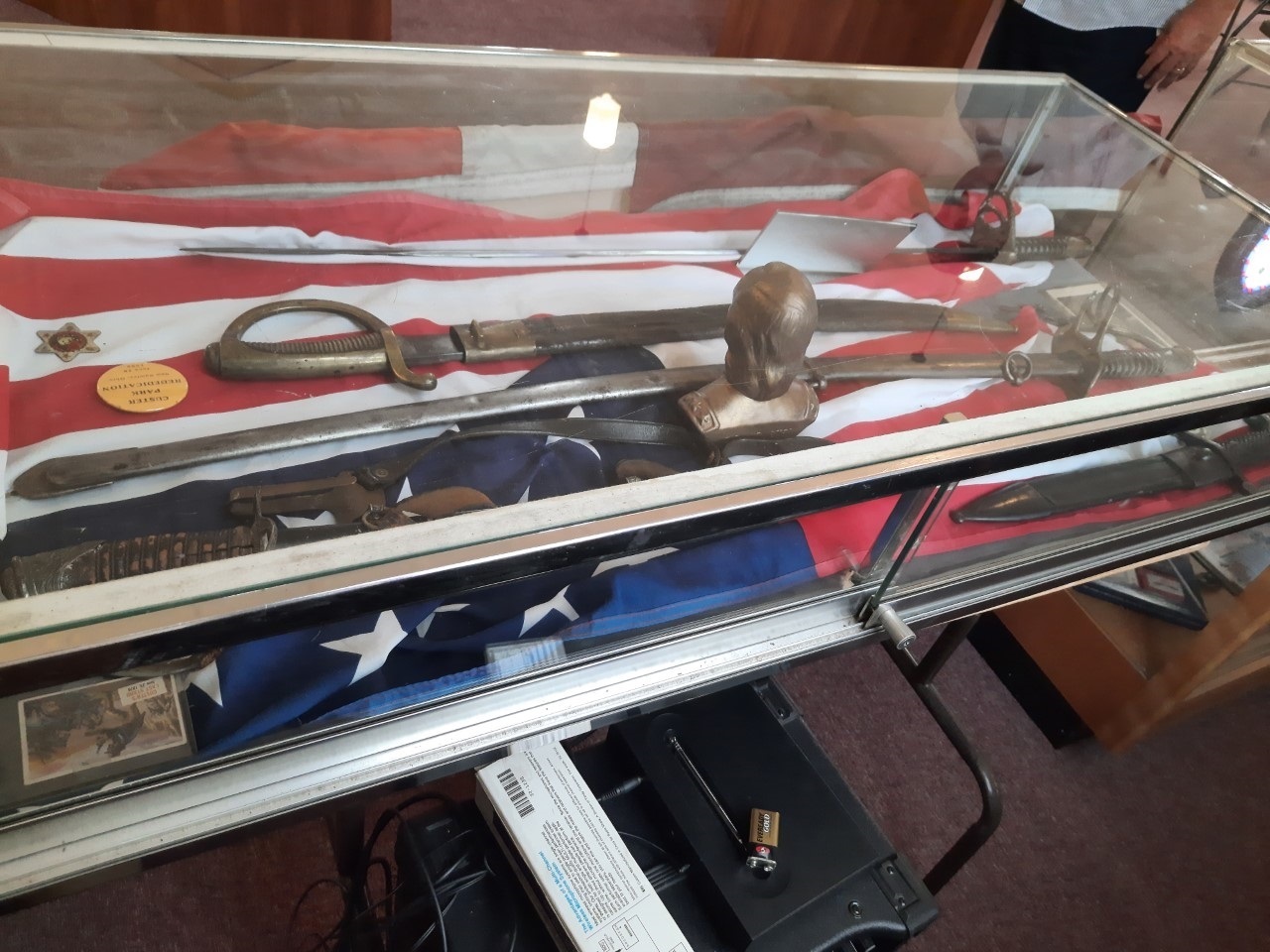
Their collection of Civil War swords is a favorite.

The General Custer Museum in New Rumley, Ohio has a collection of memorabilia from General Custer as well as general Civil War artifacts. One of the most impressive items there is the swords that were used during the Civil War.

Visitors enjoy exploring the museum.

Another impressive piece is a document with the signature of General George H. Custer from 1873 when he was stationed in Memphis, TN. On this particular document, it says that he inspected the horses for the cavalry.

Dave Rose, president, enjoys telling visitors about the museum.

Dave Rose, president of the Custer Museum in New Rumley, has a long-time interest in the Civil War after his great-great-grandfather gave him his Civil War jacket. Dave served in the U.S. Army Cavalry and said they didn’t ride horses but tanks. He spent twenty-four years in Germany serving our country.

When asked to describe General Custer, Dave said, “He was brave…a fighter and hunter.”

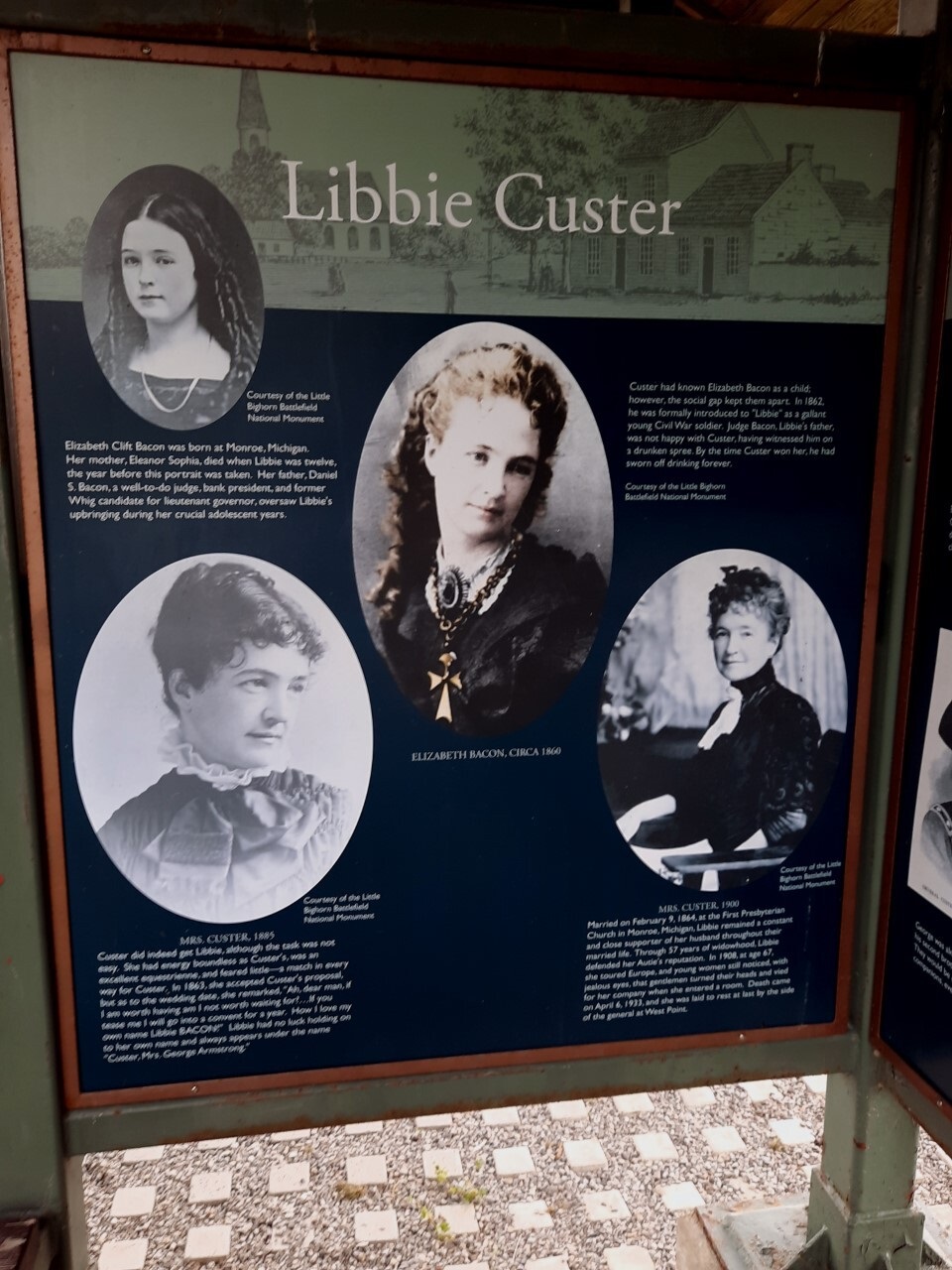
George Custer grew up in a family of several brothers and one sister. George had an attraction to a young lady, whose father was a judge. He didn’t like George’s drinking and forbid his daughter to see him. From that time on George never took another drink as he wanted to marry Elizabeth.

A nearby exhibit tells the story of Libbie, the General’s wife.

George attended West Point and taught school before finally marrying Libbie, who went with him wherever he was sent. George Custer served in the Civil War as Brigadier General and often Libbie stayed in a tent with the military or nearby in a fort. She was always by his side and his biggest cheerleader.

While some feel General Custer wanted to destroy the Indians, everyone does not feel that story to be true. Custer made many friends with the Indians when he was out west and often went hunting with them. General Grant did not like Custer’s affiliation with the Indians and wanted him to leave the Army. At that time many feel Grant sent Custer to Little Big Horn, knowing it would be his downfall. At that final Battle of Little Big Horn, five members of the Custer family died.

George W. Custer statue is a highlight of your visit.

In 1932, the town of New Rumley decided to honor their local hero with a statue. Elizabeth Custer then lived in New York and was unable to attend but through the amazing world of technology even at that early date, she gave a speech from New York that was heard at the dedication ceremony in New Rumley.

The exhibit pavilion near the statue tells the story of General Custer.

Today they have added information boards in a pavilion that tell the history of the general with many pictures included that can be seen throughout the year. It is on the same ground where his birthplace was located and the outline of the bricks shows where the actual house stood.

New Rumley isn’t the only place that holds memories of General George Custer. Monroe, Michigan has a large statue of him on horseback while nearby Cadiz has his signed calling cards and a lock of his hair and Scio has a collection of books and pictures.

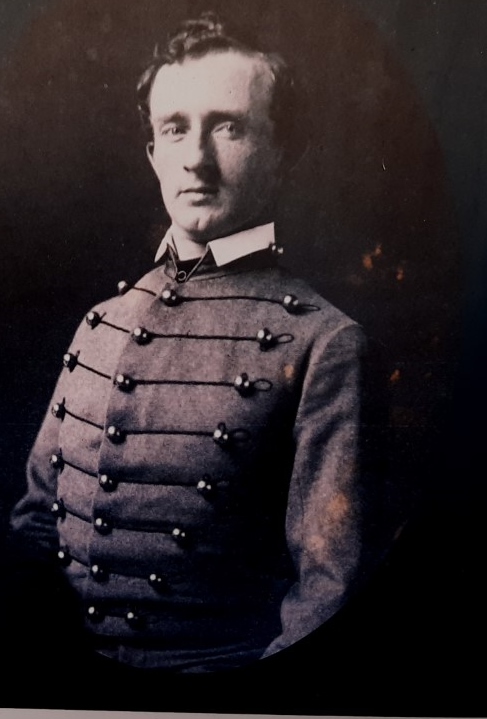
This early picture of George Custer shows him as a West Point cadet.

Visit the Custer Museum in New Rumley on the last Sunday of each month from now until September. The museum will be open on the first Saturday in June from 10 – 5 during the Custer Observance. Enjoy a day learning more about the Civil War and General Custer.

Carl Wickham Creates Miniature Civil War Wagons and Artillery

Carl wheel woodshop

Carl holds a hard-to-make wheel in his workshop.

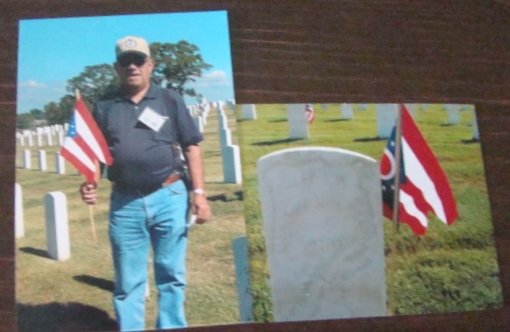
When Carl Wickham retired, he began researching his genealogy. To his surprise, many of his relatives had been defending our country since the French & Indian War and the Revolutionary War. What made the biggest impact was the fact that he had several relatives in the Civil War including his great-great-grandfather, who was killed at the Battle of Missionary Ridge. Carl traveled there in 2016 to put a flag on his grave.

Carl - flag on grave

Carl visited the grave of his great-great-grandfather, who fought at Missionary Ridge during the Civil War.

   Then began the research on artillery and supply wagons that were used during the Civil War. In his spare time, he began carving a rough cannon out of wood, but it just wasn’t good enough for Carl.

Carl designs

He discovered a book with dimensional drawings of the Civil War equipment.

   He found a book, “Artillery for the Land Service of the United States,” containing detailed drawings for artillery used during the Civil War and used those illustrations to produce his 1/8” scale models out of wood.

Carl wagon 2

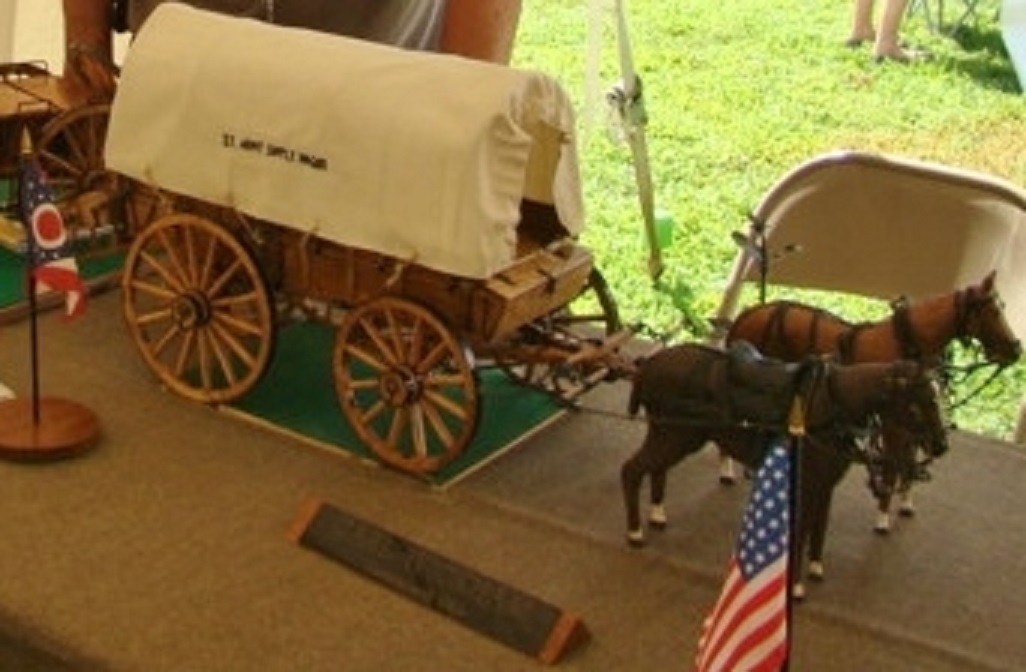
Carl even hand-carved the horses for this supply wagon.

   He has worked for nine years on developing his collection of models, which he often displays not only around the Ohio area but also at events in Michigan and Pennsylvania.

Carl miniatures

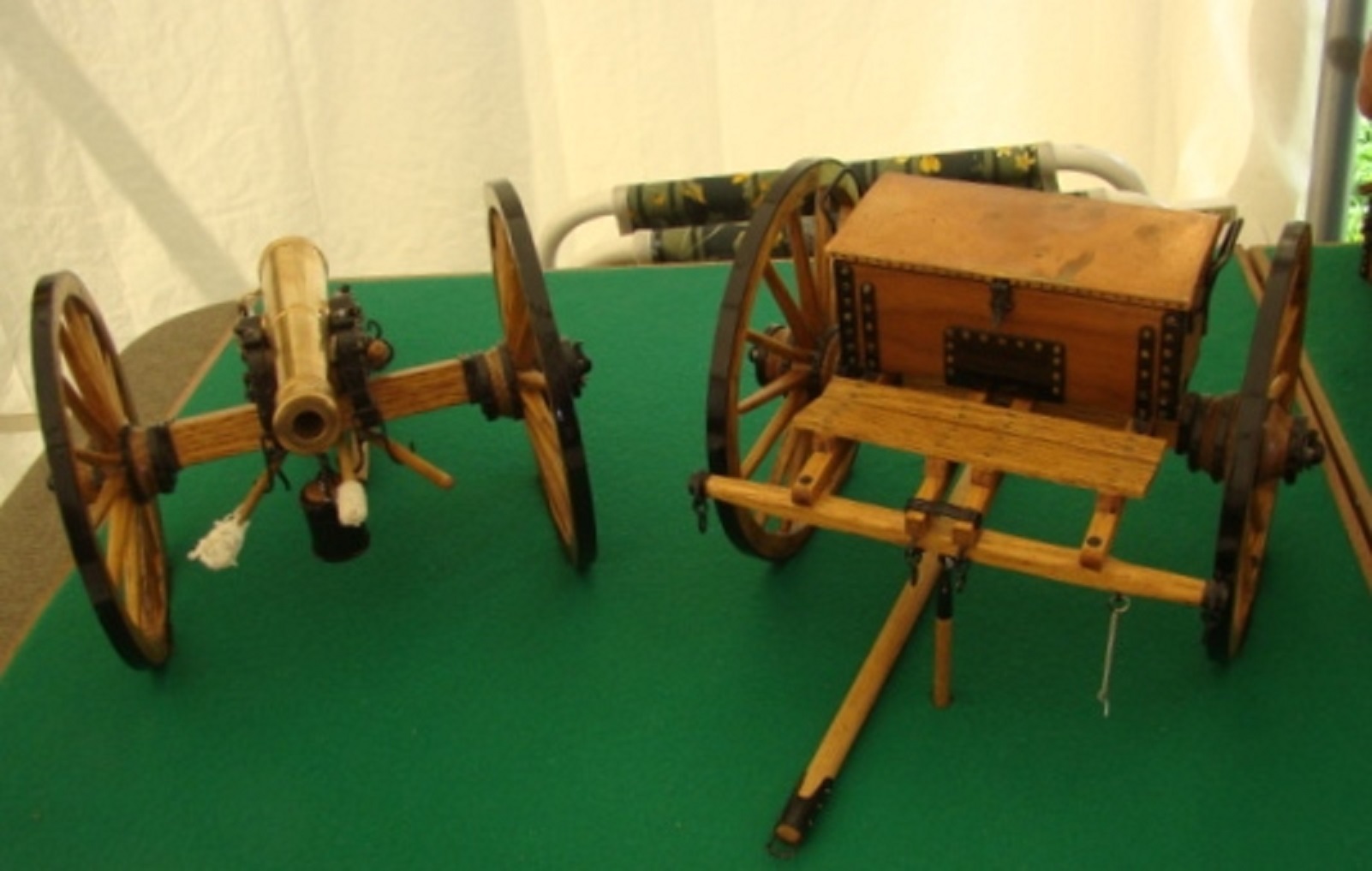
The cannon and wagon are 1/8″ scale Civil War Miniatures.

   It’s no wonder he has great skill with woodworking as his dad was a carpenter. Carl said, “I was raised in the woodshop.” He recalls wonderful years of growing up on the farm where they had beef cattle, horses and many fruit trees. The day they got their first tractor, a ’52 Ford, was a special occasion.

   Great memories of the farm surfaced easily. Butchering hogs and beef were big events for the whole family. He especially remembers the special treat of cracklins’, a small deep-fried piece of pork fat with a layer of skin attached. Eggs were delivered to M&K in Cumberland with a stop at Young’s Feed Mill to get sacks to match for his mom to make dresses.

Carl - Welded art

Welded artwork was his favorite early in life.

   Art and mechanical drawing at Shenandoah High School started Carl on the road to being a welder. His dad had an anvil so Carl decided to try blacksmithing. This was something he learned on his own through trial and error by reading books. Blacksmithing turned out to be his favorite hobby for most of his life.

Carl and Sandy welded porch railing

Carl and Sandy stand behind the ornate porch railing he created with golden leaves.

   Carl and Sandy were married in 1968 before he left to serve in the Army. There he was a radio operator and kept track of the battalion’s equipment. Upon his return home, Carl worked at Philo Electric. When it closed he got a job which was to last for thirty-five years – a mechanic for Central Ohio Coal.

Carl Big Muskie

His job for many years was repairman for the Big Muskie.

   For most of that time, he welded on the Big Muskie fixing parts that were broken. It took a lot of welding to fix anything due to its size. He worked on it until 1991, when the Big Muskie was dismantled. During that time, Carl worked seven days a week as was always on call for needed repairs. He continued working as a welder on Central Ohio Coal equipment until his retirement.

Carl - cupboard and map

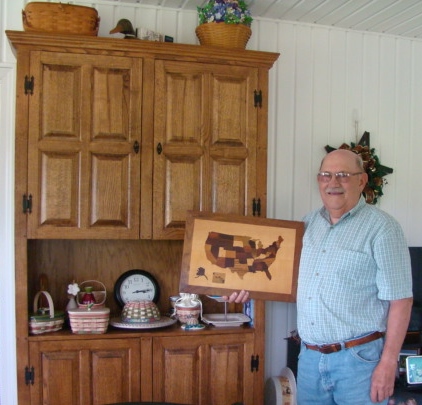
He created this beautiful wooden cabinet and an inlaid map he holds.

   This man through the years has enjoyed many different activities around the farm but is perfectly content to stay home rather than travel. His many creations are shared with his family. He never sells any of his work. Everything from beautiful wooden cupboards, stands, and wooden inlaid pictures can be found around their home.

   In his younger years, Carl enjoyed having a large garden and many flower beds. Sandy, his wife for fifty-one years, said, “Carl can do about anything.” Sometimes she has to reheat meals for him as he gets so wrapped up in his work that he forgets to eat.

Carl miniature engine line shaft

This miniature engine he made works to perfection.

   While he has done gardening, blacksmithing, and welding in the past, today his energy is devoted to the Civil War miniatures that are amazing in their accuracy. He even carved the horses that pull the supply wagon. Their harnesses were made from an old leather coat he purchased at Goodwill.

Carl showing how to make a wheel

Carl spends many hours working in his shop to make perfect miniatures.

   Carl gives all the credit to “someone up above who gave me my talents.” He enjoys all of his various creative works which feel like play to him. “I am truly blessed.”

Carl miniature tools

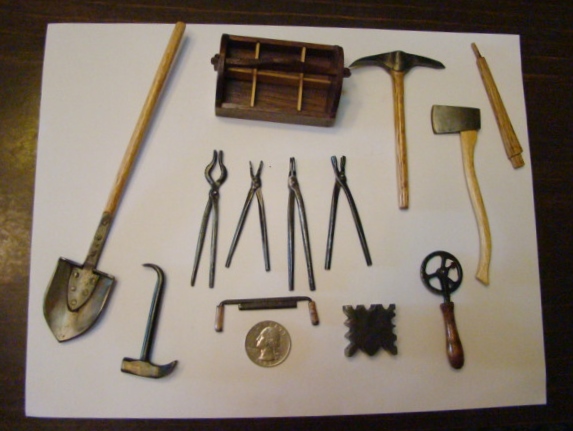
Compare these carved miniature wooden tools with the quarter at the bottom center.

   His next shows will be in 2020 on January 18-19 at Kabin Fever in Lebanon Valley Expo Center in PA. Following that on April 25-26, Carl will be at the Yack Arena in Wyandotte, MI. Carl always enjoys telling everyone about his miniatures!

“Civil War Songs and the Stories They Tell” with Steve and Lisa Ball

Stee and Lisa Ball

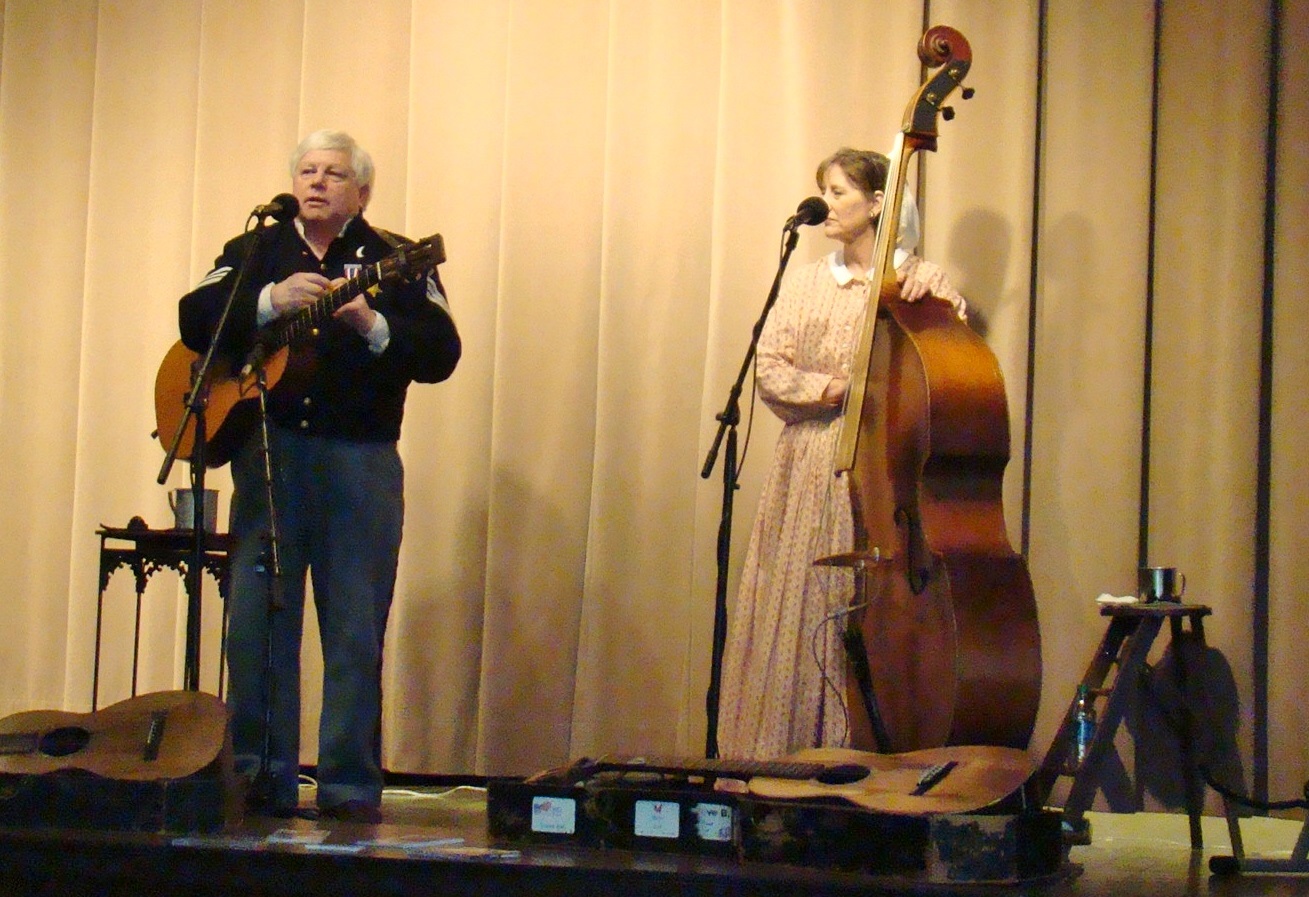
Steve and Lisa Ball  perform Civil War songs at Crossroads Library.

Music plays an important role in the ranks of the military. They have used music to signal their troops for hundreds of years. Often music served as a boost to morale of the soldiers after a hard day of battle.

Be entertained by tales of the Civil War put to music as Steve and Lisa Ball present an entertaining and informative program “Civil War Songs and Stories They Tell”. This musical way of teaching history of the Civil War from 1861-65 is shared around the country about a hundred times each year. The songs come alive with their wonderful vocal and instrumental skills.

Steve Ball guitar

An 1855 Martin is one of Steve’s favorite guitars.

Martin guitars of the Civil War era, from Steve’s private collection, are used in their presentation. All the Martins are in their original coffin cases. Steve’s only the caretaker for these guitars as they will hopefully be passed on from generation to generation. He frequently calls Lisa ‘his band’ as she joins with her upright bass and voice.

Steve’s interest in the Civil War began as a teen, when he learned his Great-Great-Grandfather, William Tyler Butts, was a Union private from Athens, Ohio. He was part of the 73rd Ohio Volunteer Infantry Regiment out of Chillicothe. Steve is a member of the Sons of Union Veterans of the Civil War and wears his SUV medal on his uniform.

He’s spent the last twenty years studying the music of the Civil War era and the development of the first American folk songs. A long list of accomplishments could follow his name. They also have a Stephen Foster program telling the history of many of those popular folk songs.

During their program, the variety is astounding. There are not only patriotic pieces, but also silly marches and songs of lost love. You’ll be drawn to their music and stories even if you aren’t a Civil War buff.

Lisa's cello

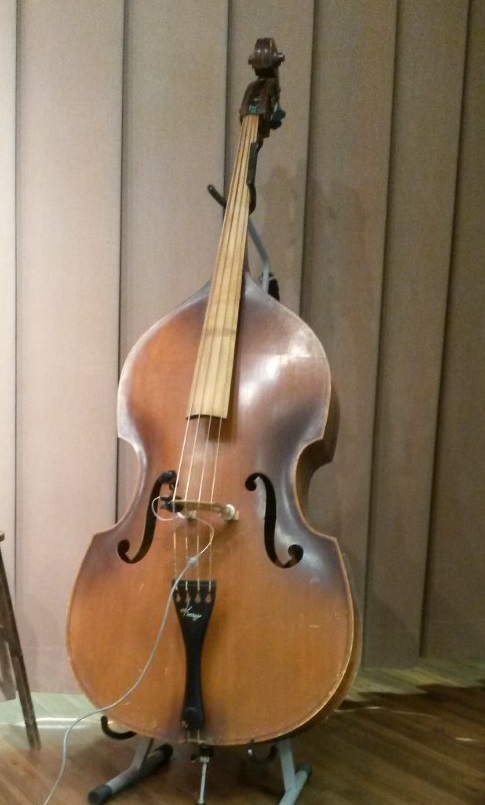
Lisa plays bass and vocalizes with Steve.

Their performances happen at reenactments, indoor presentations, Civil War roundtables, and even the Ohio Statehouse. Being a Civil War buff , he researches everything so it’s authentic. Steve is living his dream.

Learn more about the history of the Civil War and come away with a better understanding of life during that time as Steve and Lisa Ball tell the story through song.

Many of the songs have a unique history, such as “Darling Nellie Gray”, a song written by Benjamin Hanby, who operated an Underground Railroad in Rush, Ohio. It told about his girlfriend, Nellie Gray, who wanted to escape to Canada. You can learn more about this song by visiting the Hanby House in Westerville, Ohio.

Steve and Lisa

Steve and Lisa add much background information on songs to their performances.

Another song “Aura Lea”, was written by Willie Fosdick (lyrics) and George Poulton (music) in Cincinnati, Ohio. Willie’s wife was Aura Lee, the woman with the golden hair. In 1955, Elvis Presley used the tune of “Aura Lee” and added new lyrics to become his theme song, “Love Me Tender”.

A popular Southern song was “Goober Peas”. Burle Ives liked the folk song. The Balls  had everyone singing along.

Peas, peas, peas, peas, eating Goober peas

Goodness how delicious, eating Goober peas..

Steve Ball CD

Listen to Civil War songs anytime with their popular CDs.

Next time you hear that Steve and Lisa Ball are performing in your area, be certain to drop by and hear their story of the Civil War in song, or perhaps you’ll hear his story of the music and life of Stephen Foster. Either way, you’re sure to enjoy their stories and music.


Victorian Fashion and Civil War Artifacts – An Amazing Combination

Cindy and Tom Nord

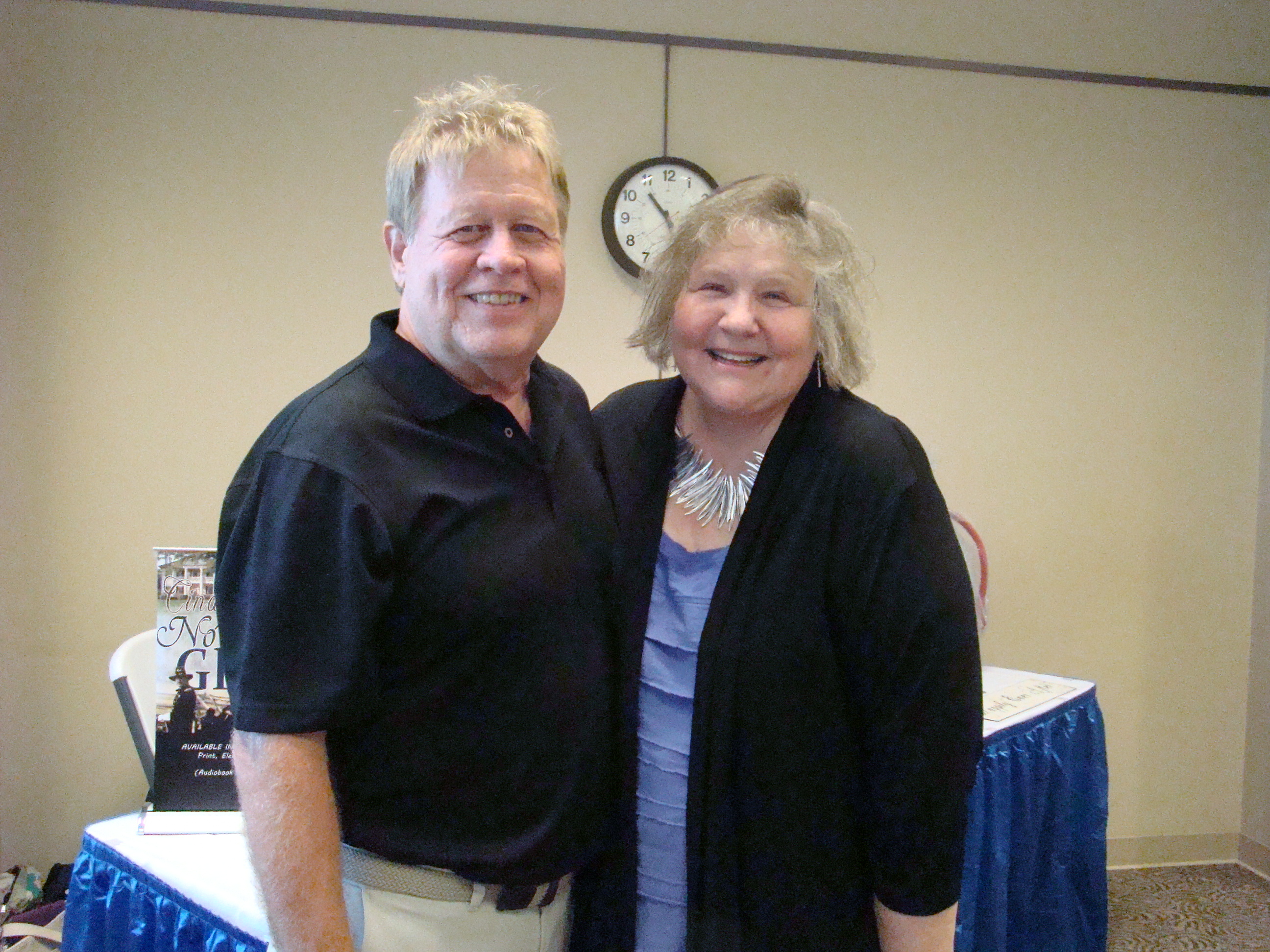
Tom and Cindy Nord…Civil War historian and Victorian romance writer.

The perfect pair!  Once in a while you encounter a couple that seem to be the perfect match. That was the case with Victorian romance writer, Cindy Nord, and Civil War historian, Tom Nord. Where did they meet? A Civil War Reenactment!

Cindy Nord

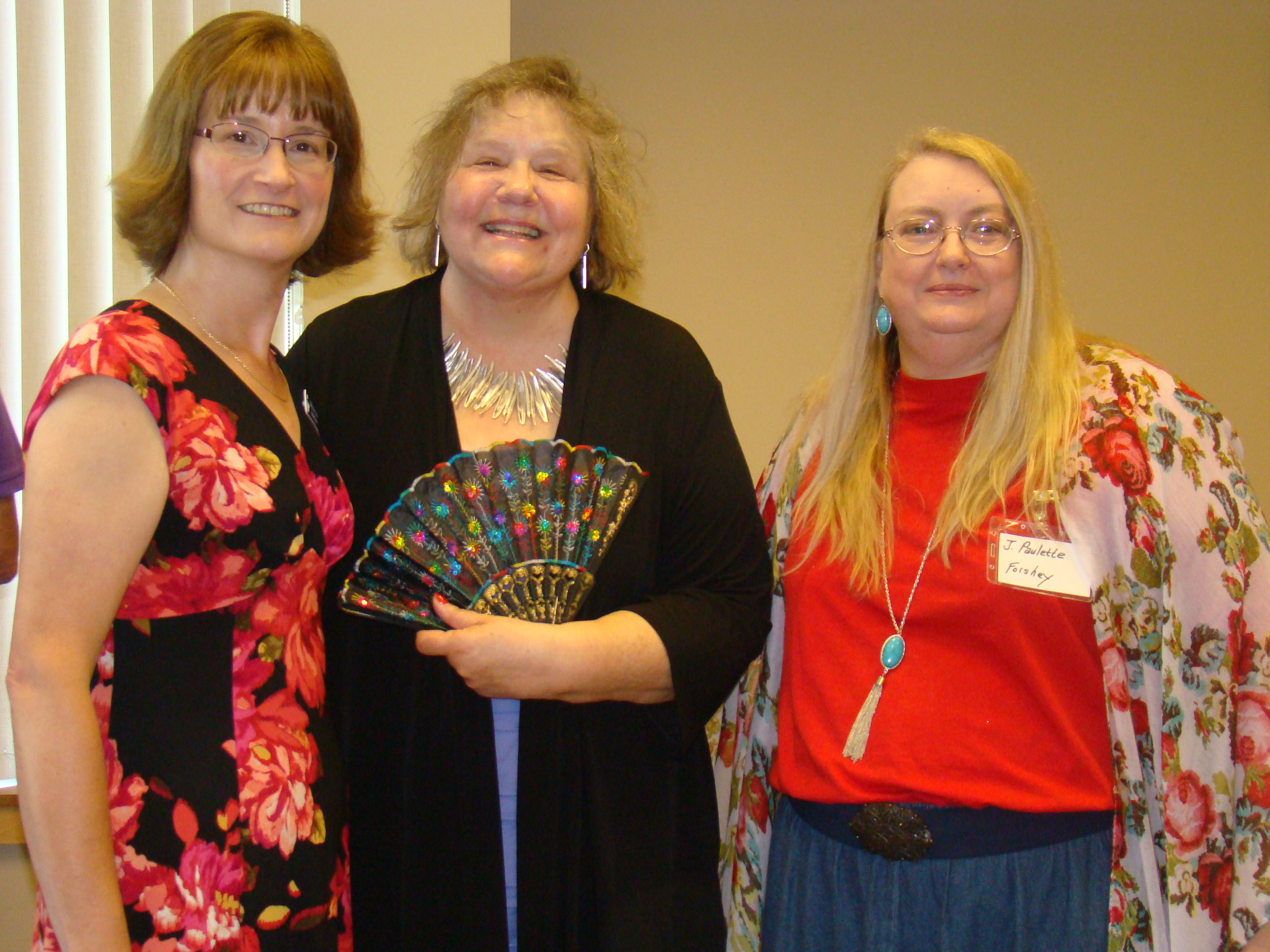
This program was sponsored by Melissa Essex, Crossroads Library with co-sponsor Paulette Forshey, Cambridge Writers.

Their program, “Victorian Fashions and Military Artifacts of the Civil War”, travels the country presenting an interesting and informative program based in the mid 1800s. Their journey has taken them across the United States from Dallas to D.C. and New Orleans to Michigan. This time it took them to Crossroads Library in Cambridge, Ohio.

They travel around the country sharing Tom’s history of the Civil War and Cindy’s information on Victorian fashion, which she includes accurately in her romance novels. They don’t claim to know everything, but as Tom mentioned they want “to share what we know.”

Cindy Nord Civil War

 Original Civil War items on display could be gently touched.

Tom’s knowledge of Civil War Reenactments led to recruitment by filmmakers in Hollywood. He organized all reenactments in “North and South” with Patrick Swayze, “Glory” with Denzel Washington and “Lincoln”, based on the novel by Gore Vidal.

The program began with Tom describing the uniforms worn by North and South. Then shifted gears to the artillery used by both sides. The officers carried pistols, while the infantrymen used rifles. Bayonets were often attached to the ends of rifles for close range battle, while swords had several purposes.

Tom with a Civil War rifle

Tom gave detailed information on the artillery available.

When a cavalryman rode horseback, a shielded sword, rifle, cartridge box and breastplate were part of his gear. That sword could slash its way through an attacking regiment. Afterwards, it might be used to cut branches off a tree or even dig a trench.

Their display contained numerous items from a heavy cannon ball to rifles, pistols, and ammunition. Everything could be touched, which definitely made it more memorable.

Cindy Nord Victorian

This sampling of Victorian items gave a peek into the fashion of that time. Note the book: The American Frugal Housewife, 1833.

Next Cindy told about Victorian dress. She stated, “The women had to take care of everything while the men were playing war.” But when the soldiers came home from battle, they wanted the women to be beautiful from head to toe.

Queen Victoria, queen of England from 1837 – 1901, ruled the fashion world at that time. This young queen brought bright colors into popularity and was responsible for nearly all the fashion and hairstyles of that era.

Nord Tom and Cindy

Cindy and Tom dressed for a reenactment.

Pictures and actual garments exhibited the progression of fashion from 1840 – 1900. Looking good ranked first in importance to the well-heeled lady as her main purpose in life was to find a husband.

Corsets kept the waist small, while skirts lined with crinolines took on a bell shape. Until the Civil War ended, bonnets shielded their faces from the sun and offered potential suitors only a glimpse of the lovely lady.

Nord Tom and Cindy in Williamsburg

Tom and Cindy visited Williamsburg.

During that time “a lady was to be seen and not heard”. Cindy does not fit that description today, as she captivates the audience with her great sense of humor and writes romance novels that capture your attention even if you aren’t a Civil War fan. Every word in her story has importance.

Cindy book signing

Cindy always takes time for book signing and talks with fans wherever they travel.

When Tom and Cindy aren’t talking Victorian Dress and Civil War, they enjoy camping, hiking, and an occasional luxurious cruise. They frequently stop along the way to visit  places like the Mayan Ruins or the Grand Canyon. Of course, stopping at a Civil War battlefield is always high on their list.

True love awaits you in the writings of Cindy Nord. She found hers in Tom…and the rest is romantic history.

Check out her website at: Writings of Cindy Nord.

Visit Henderson Hall Plantation 19th Century Hoarders

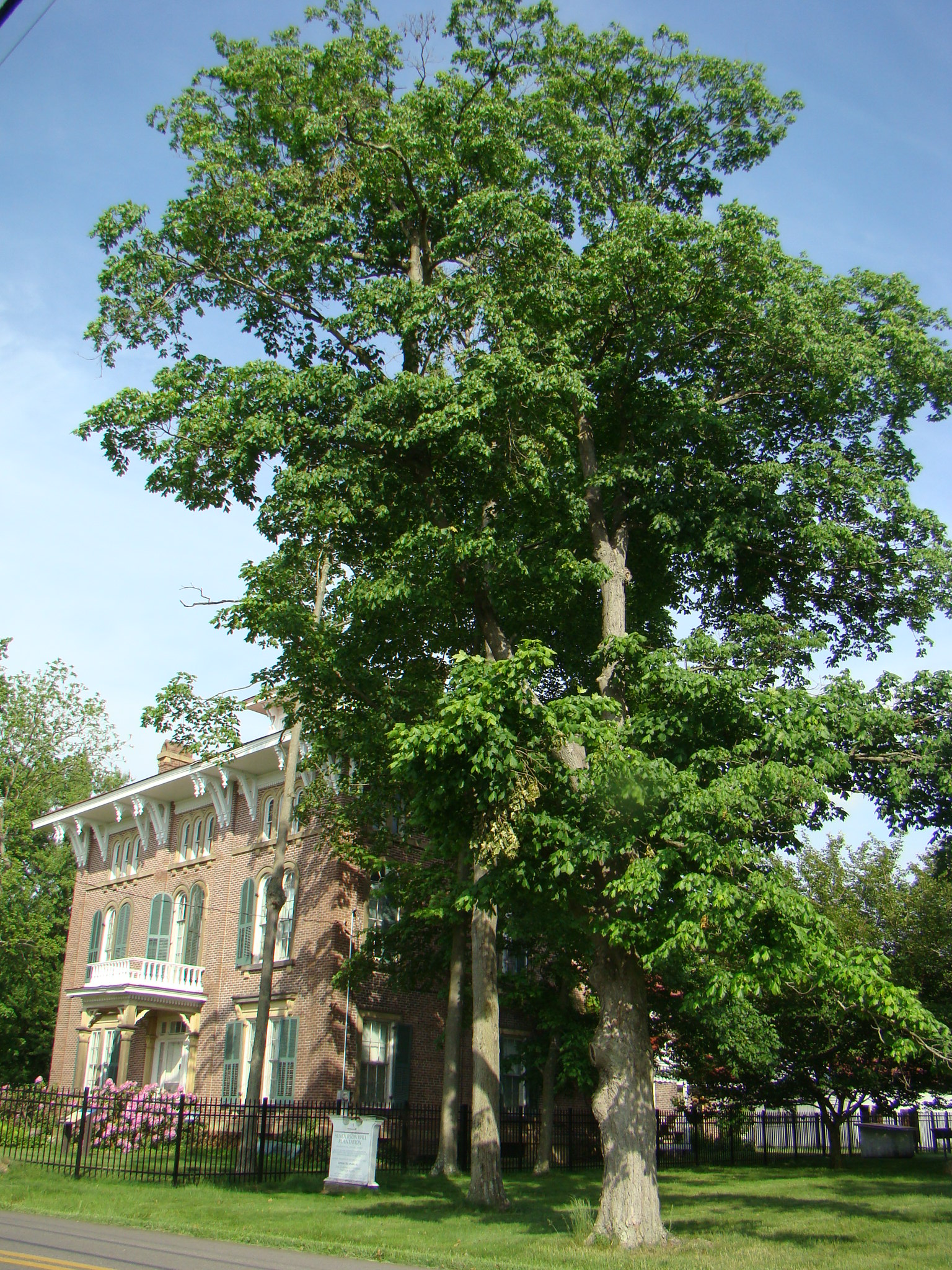
Henderson Hall

Henderson Hall

Look for a hidden treasure across the river from Marietta, Ohio along the banks of the Ohio River. Here a Victorian plantation mansion from nearly two hundred years ago seems to watch over the river between Williamstown and Parkersburg, WV.

Even before Henderson Hall came into being, the Henderson family played a vital role in the Ohio River Valley. Vice-President Aaron Burr and Harman Blennerhassett thought that perhaps the Henderson brothers would help in their attempt to set up a separate nation west of the Alleghenies. Hendersons would not be coerced, called their father’s friend President Thomas Jefferson, and testified in the Burr-Blennerhassett trail in 1807.

Henderson Hall was built shortly thereafter in 1835 by George Washington Henderson and Elizabeth Ann Tomlinson Henderson, grand-daughter of original claimant of Williamstown. This merger of estates encompassed 2600 acres on the eastern bank of the Ohio River. It seemed that everything they touched turned to gold, from the land they purchased, to breeding fine horses, to owners of an oil field boom.

Henderson Indian Mound

Adena Indian Mound

Walking to the house, one of the three Indian mounds on the property is clearly visible. Dating back 2,000 years, Adena mounds appear in several places in the Ohio Valley. Inside the mounds were found skeletal remains and artifacts.

Even though the Henderson family supported the efforts of the Union during the Civil War, they did themselves keep thirty slaves. Some of those slaves actually left through the Underground Railroad, which the Henderson family supported, in Marietta, Ohio.

This well preserved Victorian plantation propels visitors into the past with twenty-nine rooms to explore. All the rooms overflow with memorabilia from the 18th century to the present. It seems the Hendersons kept everything. 250 years of letters and diaries were found in the home – what treasures! Even more impressive is the trail of famous historic figures, who visited frequently.

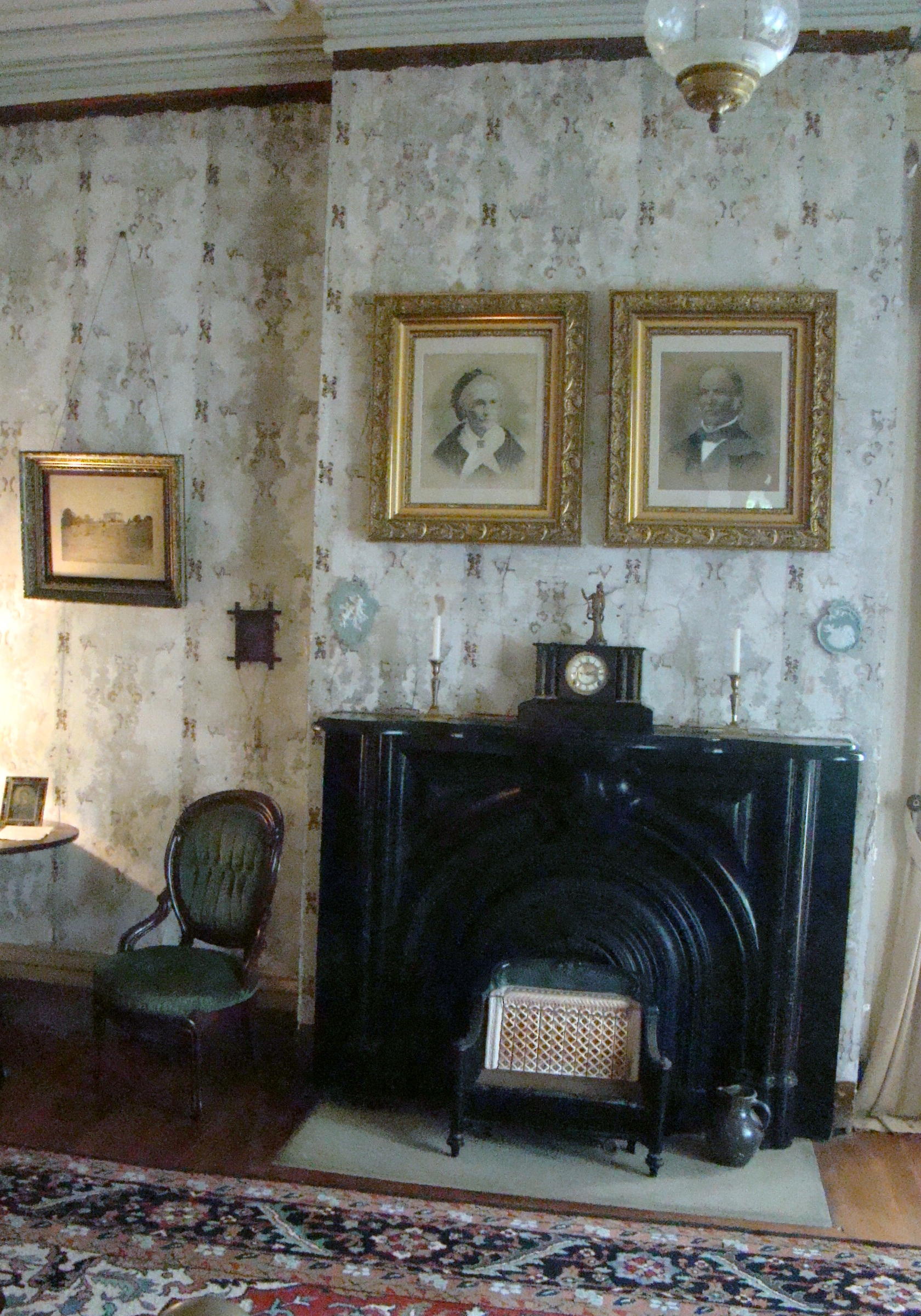
Front Parlor

Front Parlor

In the front parlor with its gold leaf wallpaper, pictures of Elizabeth and George hang over the mantle of the fireplace. In the picture she wore a hair broach, which was considered mourning jewelry. Having twelve children during their lifetime, six of them died before the age of ten. Elizabeth took a lock of hair from each of those six children to weave into an intricate pattern for her broach, which she always wore. The broach remains on display today in their small museum.

Collections from these 19th century hoarders give visitors a chance to see the changes made in many areas of life. The overwhelming amount of treasures saved, ranges from toys to wedding gowns to beautiful dining room settings. A winding staircase curves up to the third floor ballroom, making the mind wonder how those ladies managed these steep stairs in their flowing gowns.

The original kitchen

The original kitchen

The 1836 kitchen holds household cooking utensils and crockery dating back a couple centuries. This was part of the original smaller house before the 1859 impressive addition. Many of the rusted kitchen utensils can be found stored in the basement today.

When the last family member died in 2007, the historic house was deeded to the Board of West Virginia Oil & Gas Museum. Today they keep the place in repair and have great guides to share the Henderson story.

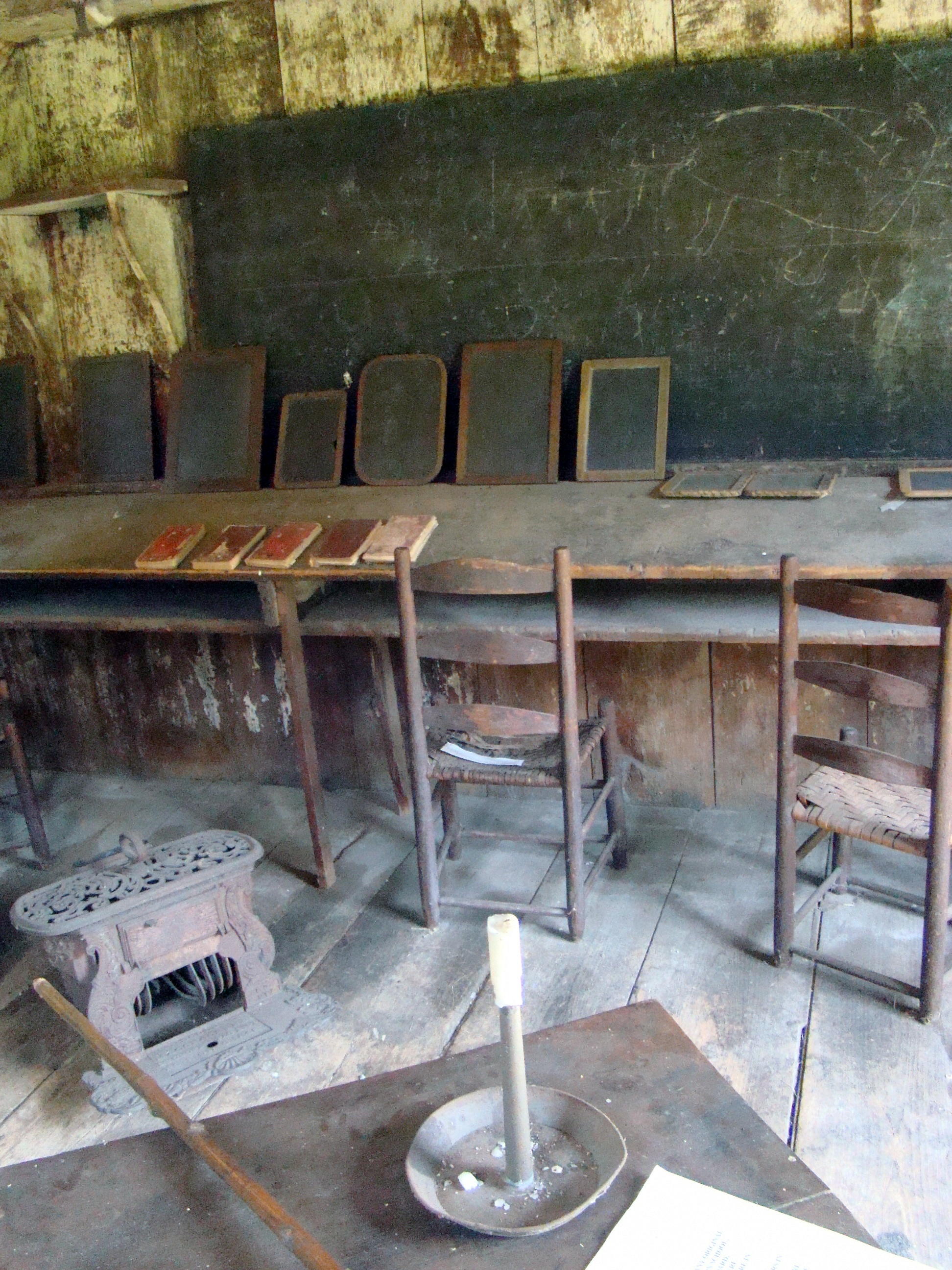
First school houe in West Virginia

First school houe in West Virginia

The earliest school in the area was here behind Henderson Hall in 1836. Note the teacher’s desk with candle and switch – for pointing and for correcting. Several old books from that time period have been placed on the students’ desk along with slates to practice writing and mathematics. Original equipment includes:  slates, blackboards, and seats. What a thrill to gently touch the slates, which were used by youngsters from the 1800’s.

The Carriage House contains different buggies. Among them is the actual buggy used by the original founders, George and Elizabeth, on their honeymoon to Niagara Falls.

Henderson Hall overflows with treasures too numerous to mention. Hopefully you have now received a taste of history that will whet your appetite for more. Johnny Chapman, John James Audubon, and Stephen Foster always enjoyed their visits here.  Shouldn’t you?

Henderson Hall Plantation is just a few miles off I-77 at the Williamstown, WV exit. Follow Route 14 South, then turn right on Old River Road. Summer hours are noon- 5 p.m. daily.


Remains of Civil War Veteran Rededicated at Sarahsville, Ohio

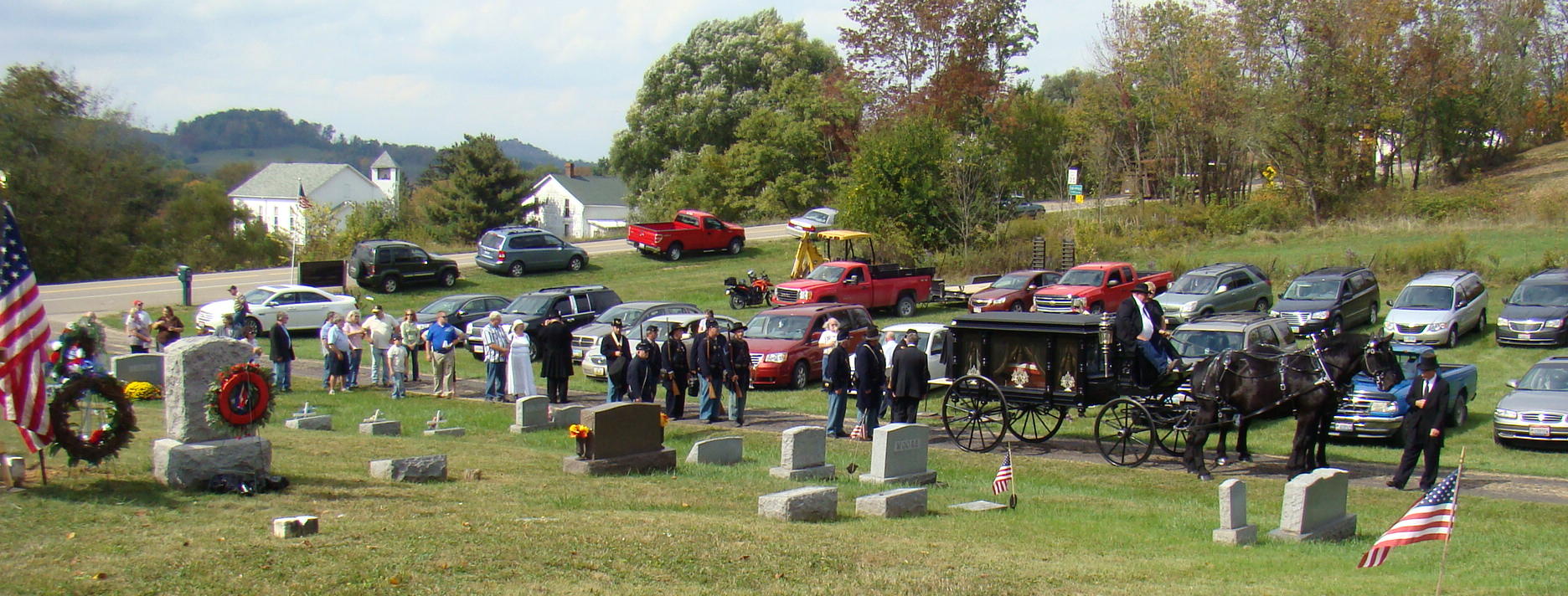
Funeral Procession arrives at Village View Cemetery.

Funeral Procession arrives at Village View Cemetery.

Village View Cemetery in Sarahsville, Ohio was the scene of the rededication of the remains of Pvt. Absalom (Abner) Robinson, Civil War veteran.  2013 was the 120th anniversary of Abner’s death and the 150th anniversary of President Lincoln’s well-known Gettysburg Address.

Robinson brothers arrived ready to help at original burial site.

Robinson brothers arrived ready to help at original burial site.

Actual preparation for the ceremony began earlier in the week when three great-great-grandsons of Pvt. Abner Robinson met on top a hill in East Union with township trustees and the local funeral home. They knew exactly where Abner Robinson had been buried as the tombstone was still on the hill. Seems that in 1893, Abner died after being struck in the eye by a rusty nail while helping with work on a barn. At that time they were not certain of the actual cause of death or what illness might be involved, so decided to bury Abner on top of a far away hill so he wouldn’t spread his possible disease, most likely tetanus, to anyone else.

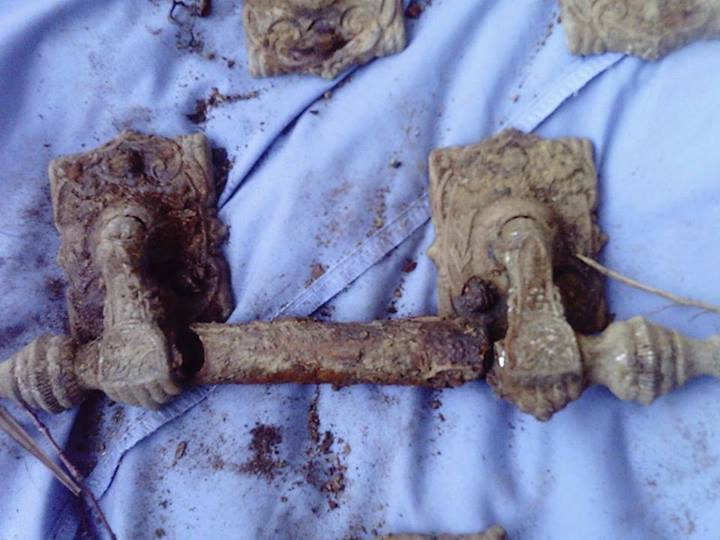
Hardware from 1893 casket

Hardware from 1893 casket

Knowing the story, the family decided they would like Abner Robinson’s remains to be moved to their family plot. After digging by the tombstone, they found no sign of any remains. But when one of the relatives suggesting digging closer to the cedar tree, they made some exciting discoveries.   Not only did they find the original cedar casket, which was squashed to about eight inches, but inside they found several bones, part of the skull, and teeth. There were also hinges that still worked on the lid as well as other pieces of rusted metal.

The local funeral home, McVay-Perkins of Caldwell, took those body parts found in the 1893 casket, and put them in a pouch to be placed inside the new casket, which was made of cherry wood.

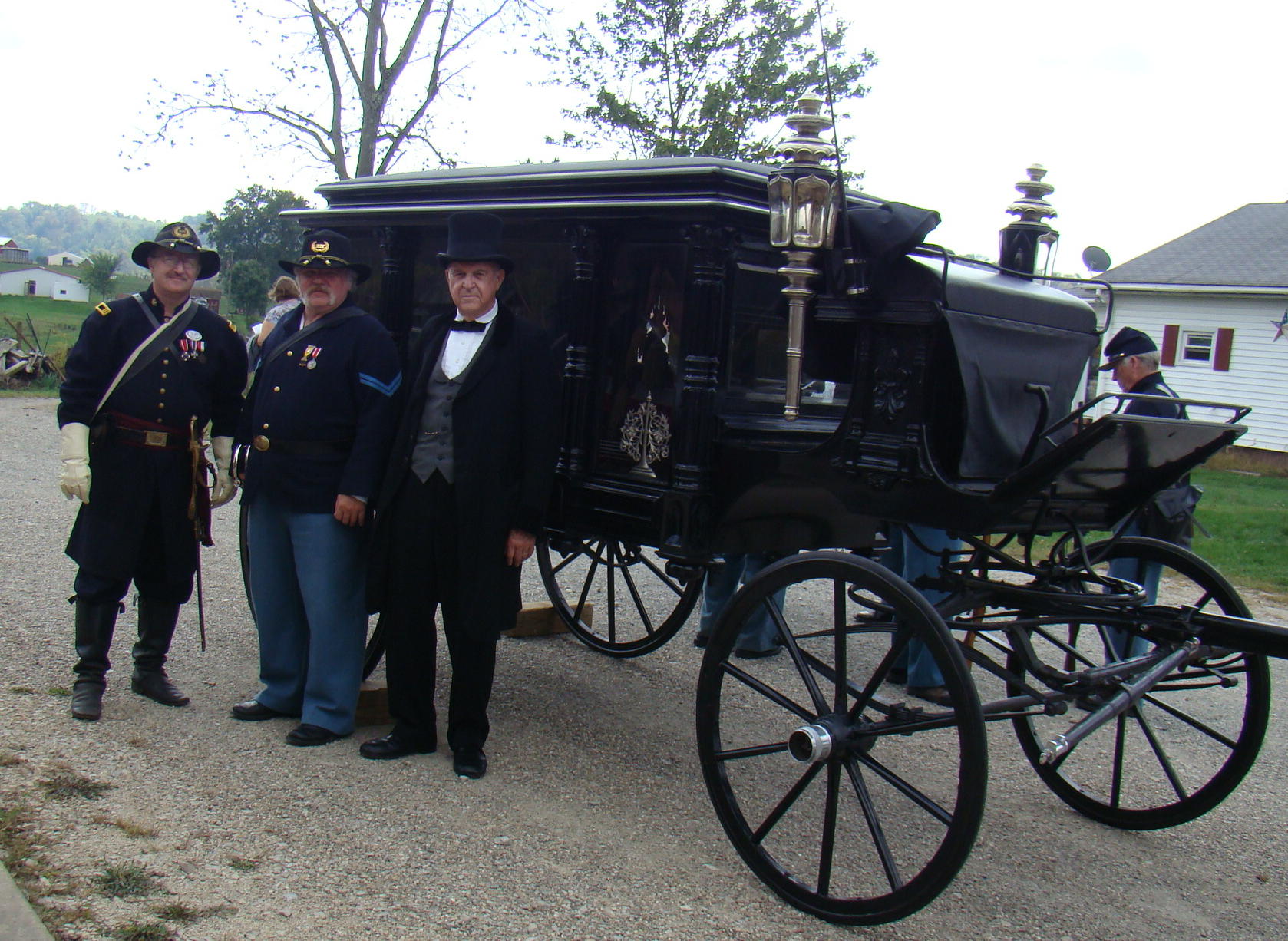
Hearse with Sons of Union Civil War Veterans and Governor Dollison

Hearse with Sons of Union Civil War Veterans and Governor Dollison

When approaching a distinguished gentleman in a top hat before the ceremony, I asked him if he would be so kind as to let me take his picture with the Sons of Union Veterans that were present. His answer surprised me, “You are speaking to Governor Dennison, the 23rd Governor of Ohio. Next thing you know women like you will be asking for the right to vote.” When asked about the Civil War, he freely expressed his opinion, “That was a war of southern rebellion, there was nothing civil about it.”

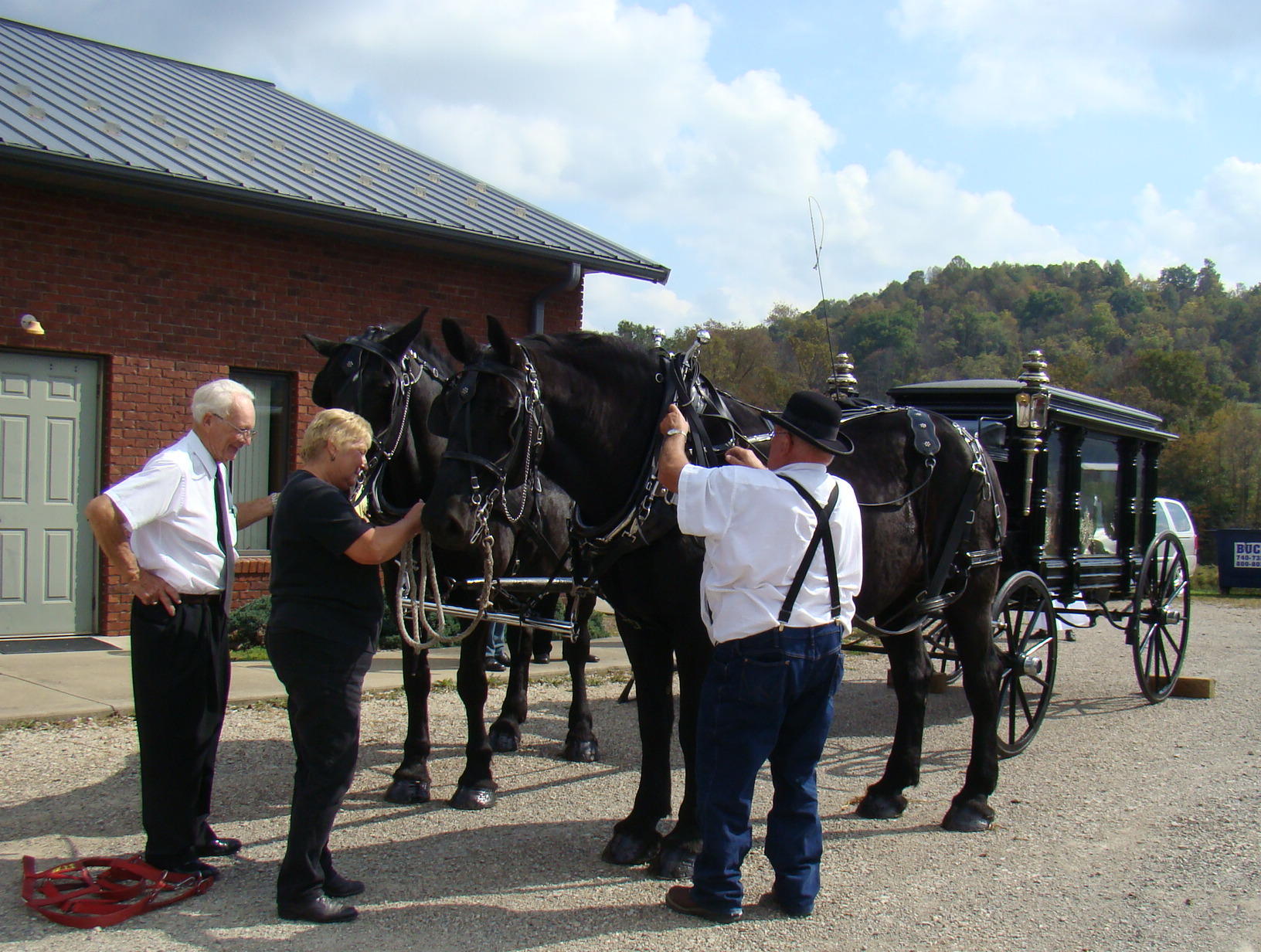
Two black Perchenon horses prepare for the procession.

Two black Percheron horses prepare for the procession.

The funeral hearse drawn by twin black Percheron horses and provided by Robert Baird of Troy, Ohio, started their route at the Sarahsville Center Free Methodist Church.  What a procession it was! Following the horse-drawn funeral carriage bearing Pvt. Robinson’s cherry casket, members of Sons of Union Veterans of the Civil War marched to the cadance of the fife and drum corps. Many descendents of Abner also walked the half mile road to Village View Cemetery in Sarahsville.

Abner Robinson (1836-1893) served as a Private in Company G, 62nd Ohio Volunteer Infantry during the Civil war. Three of his brother, William, George, and John, were also members of the Union forces.  Abner’s unit saw active service in places such as Shenandoah Valley, Peninsula Campaign, Beaufort, Morris Island and Fair Oaks.

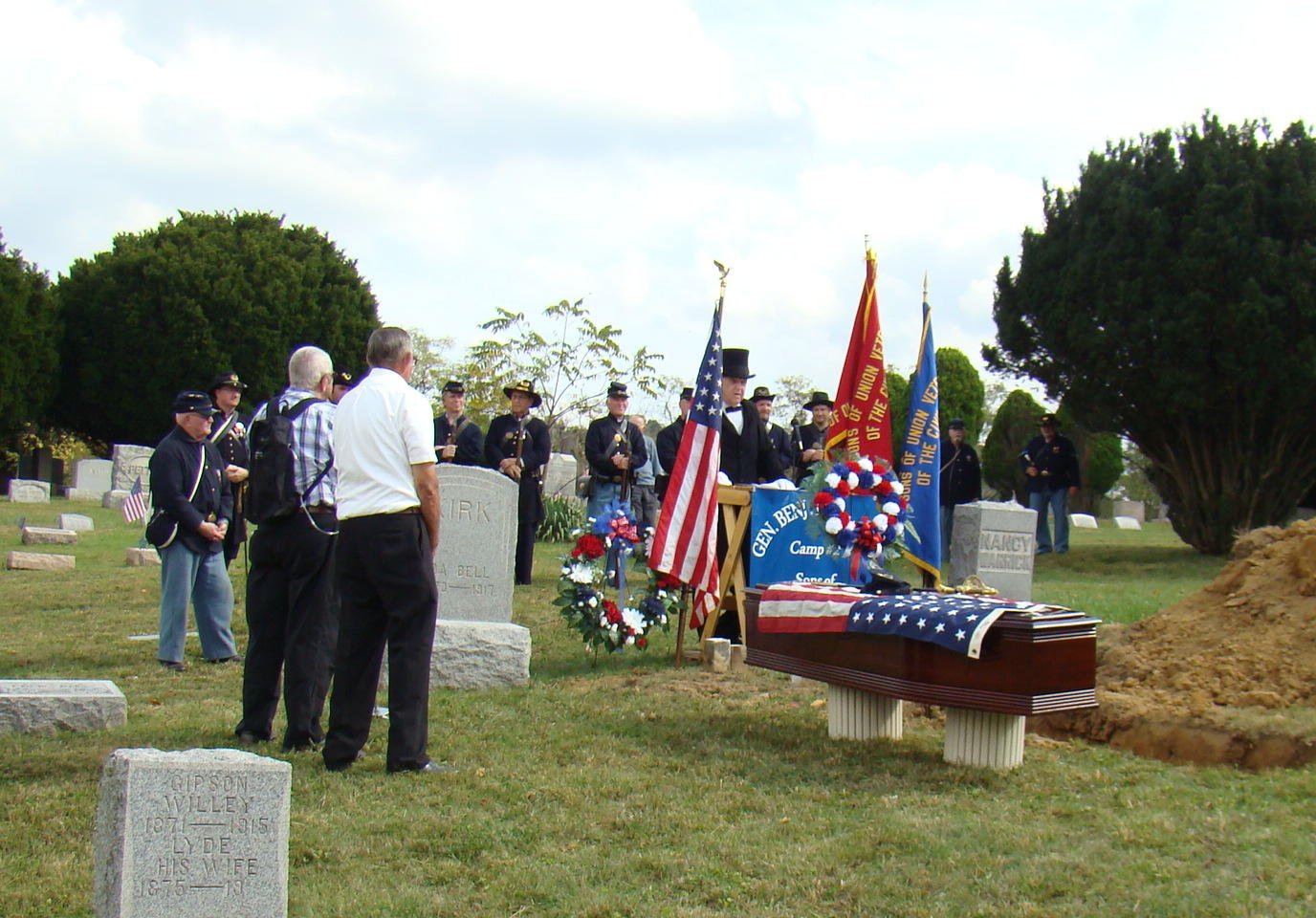
Many speakers participated in the graveside service, which lasted about an hour, before the casket covered with a 34 star flag, which was later given to the family. Family members presented a wreath in honor of all Union soldiers in the Civil War conflict

Governor Dennison rededicated Pvt. Robinson's remains.

Governor Dennison rededicated Pvt. Robinson’s remains.

One of the highlights was the speech by Robert W. Davis, portraying Governor William F Dennison. His main purpose was to rededicate the remains of Abner Robinson to their new resting place. However, Gov. Dennison also portrayed his role during the  Civil War by saying, “I will defend any slaves that come to Ohio with a bayonet.” His boldness was clearly expressed when he exclaimed, “All rebels should be hung.” When President Lincoln told the governor he needed 10,000 men, Gov. Dennison replied that he only had 18,000 men total, but within the week he had over 13,000 men marching into Columbus headquarters ready to fight.  He proclaimed, “We will keep this United States together until our last breath.”

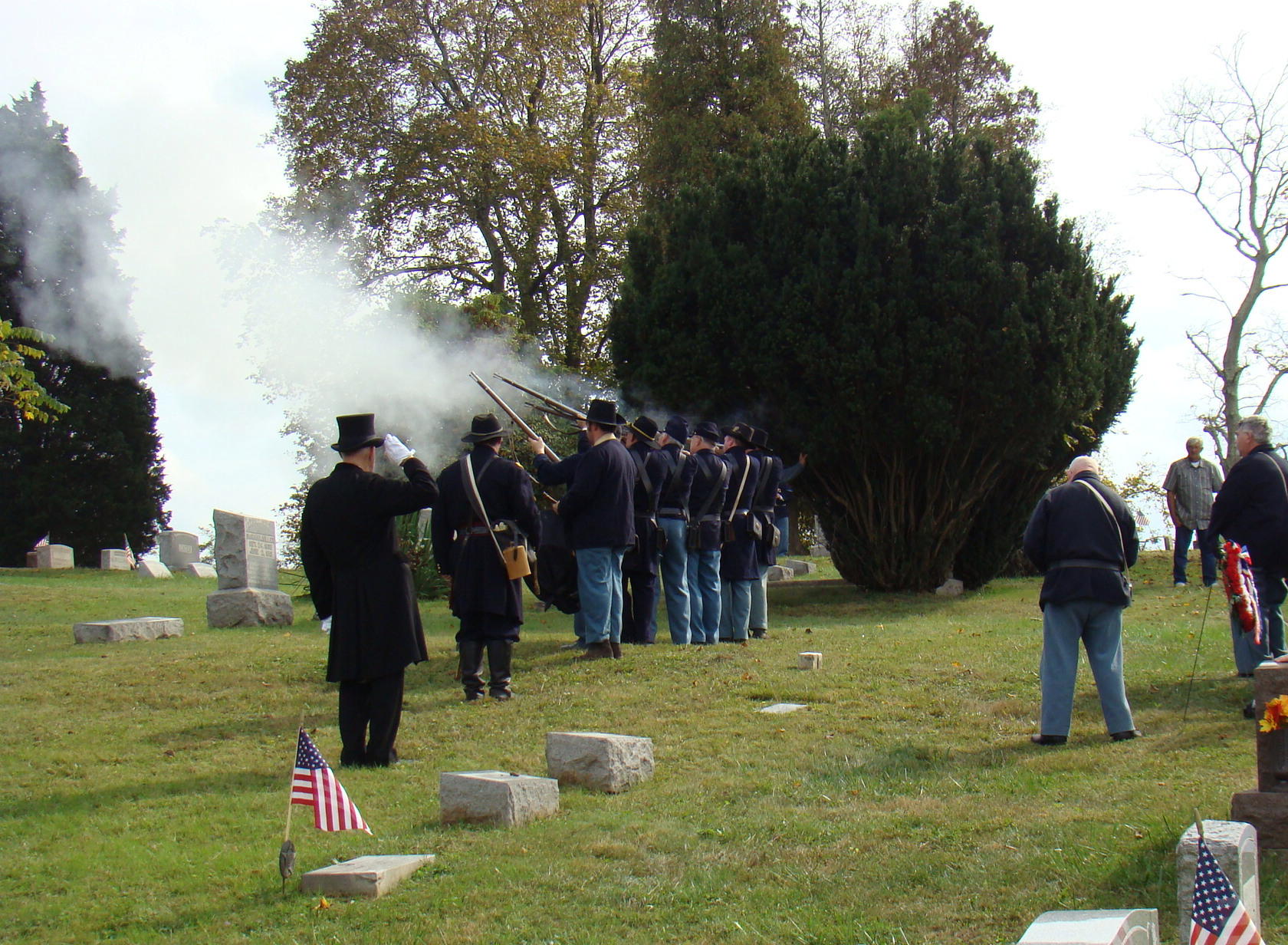
21 gun salute ends the ceremony.

A three round rifle salute ends the ceremony.

The ceremony was brought to an end with a three round rifle salute by the color guard. A traditional fife rendition of Taps and a prayer concluded the events.

Abner’s life must have been a difficult one from his Civil War battles to the farm in McCleary, Ohio (now East Union). When he died, the copy of Probate Court papers declared that his amount of personal property would be about $2.00 and his real estate about $15.00. Have to imagine that the rededication of his remains was more expensive than anything he could possibly have imagined.

This ceremony held extra interest for this Gypsy since Pvt. Abner Robinson was the great-great-grandfather of my cousin’s husband, Jerry Robinson. Jerry is one of those pictured at the original grave site and helped with discovering the remains.

John Morgan’s Raid in Ohio 150th Anniversary Celebration

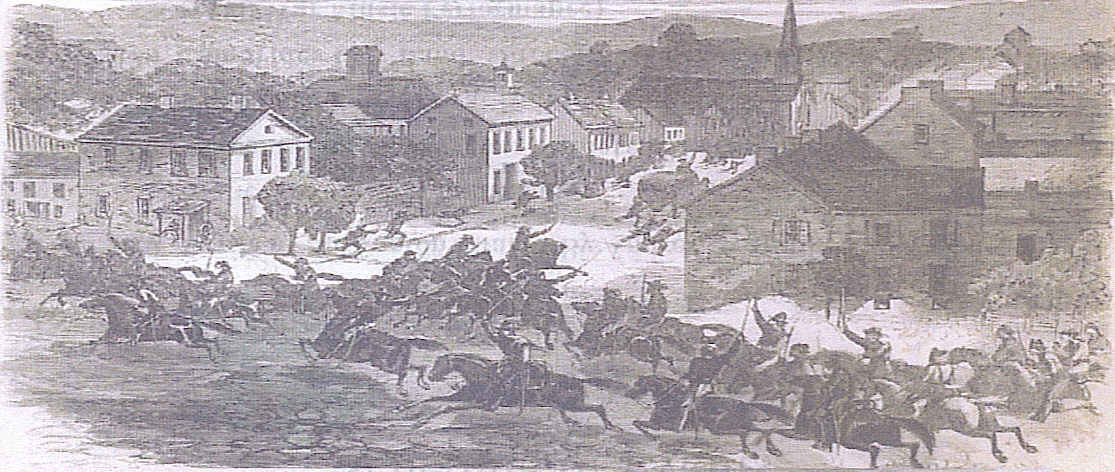
Morgan's Freebooters enter Washington, Ohio ~Harper's Weekly, Aug, 1863

Morgan’s Freebooters enter Washington, Ohio
~Harper’s Weekly, Aug, 1863

John Morgan with the remnant of a band composed of the most villanous cut-throats and scoundrels….made his way into this county on Thursday, the 22nd. (Guernsey Times Extra Addition Cambridge, Ohio July 28, 1863)

This statement by the local newspaper back in 1863  sums up the feeling of Northern residents regarding the antics of Brig. Gen. John Hunt Morgan, who led his raiders on a chase through Ohio during the Civil War.  His main goals were to destroy supply lines while creating chaos and fear.

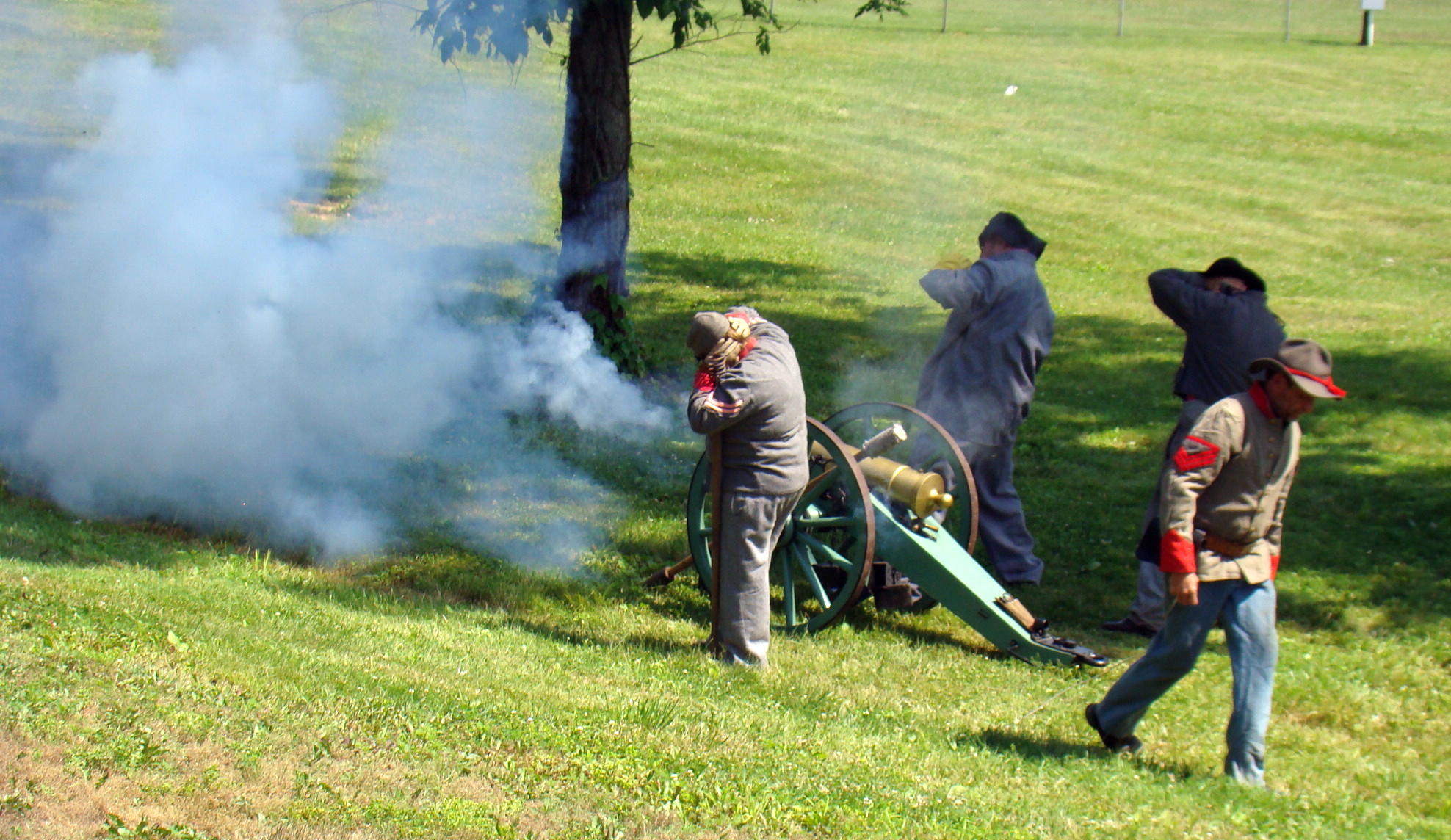
Cannon fire ignites celebration.

Cannon fire ignites celebration.

This special celebration took place in Lore City, Ohio at the Leatherwood Park trailhead of The Great Guernsey Trail, which is a paved pathway from Lore City to Cambridge used for walking and biking.  Often you see parents pushing their children in strollers, or children pushing their parents in wheelchairs. This six mile trail has become a favorite spot to exercise and get some fresh air in the Guernsey County area.
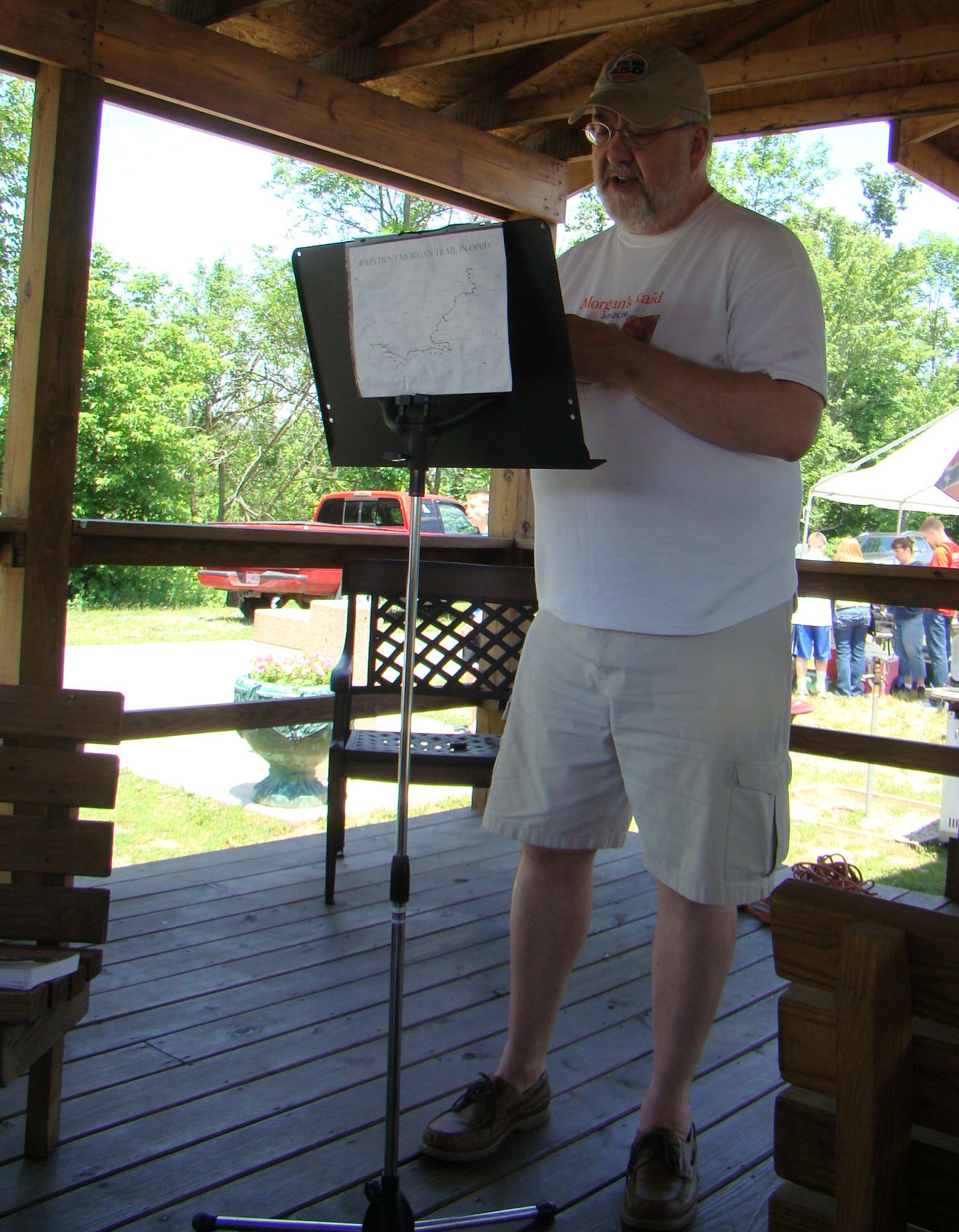
Andy Warhola, Civil War speaker

Andy Warhola, Civil War speaker

Local Civil War Roundtable members, Andy Warhola and Tom Snyder, explained Morgan’s ravaging two week raid through Ohio with slides, maps and pictures. They told of Morgan’s stealing two steamboats in order to cross the Ohio River into Indiana. Proceeding into Ohio above Cincinnati, they headed across the state with Union forces in pursuit.

Thinking the best way to escape was to again cross the Ohio River, Morgan led his men to a ford, which would let them have easy access to Buffington Island, a stepping stone across the Ohio. But his plan went amiss when Morgan decided to wait until morning for the crossing instead of attempting to move in the pitch darkness of night. The next morning however produced heavy fog, so again he was delayed, thus giving the USS Moose time to reach their crossing point. This is said to be the only Civil War battle in Ohio. Here the Union turned Morgan and his Confederates away with heavy losses.  What had started out as 2500 men, was down to approximatley 1100 after the battle at Buffington Island.

After this they headed towards Guernsey County entering at Cumberland and continuing to Londonderry. Finally they were captured in Salineville, heading to the Ohio River again. Along the way they were hungry and needed horses so there was plenty of thievery and destruction.

In the town of Campbell’s Station, which is today Lore City, there was more financial damage than anywhere else in the county.  They robbed the safe in the warehouse of $4,000, then burned the warehouse, train station and bridge as well as three railroad cars filled with tobacco…all this before the Union forces arrived.

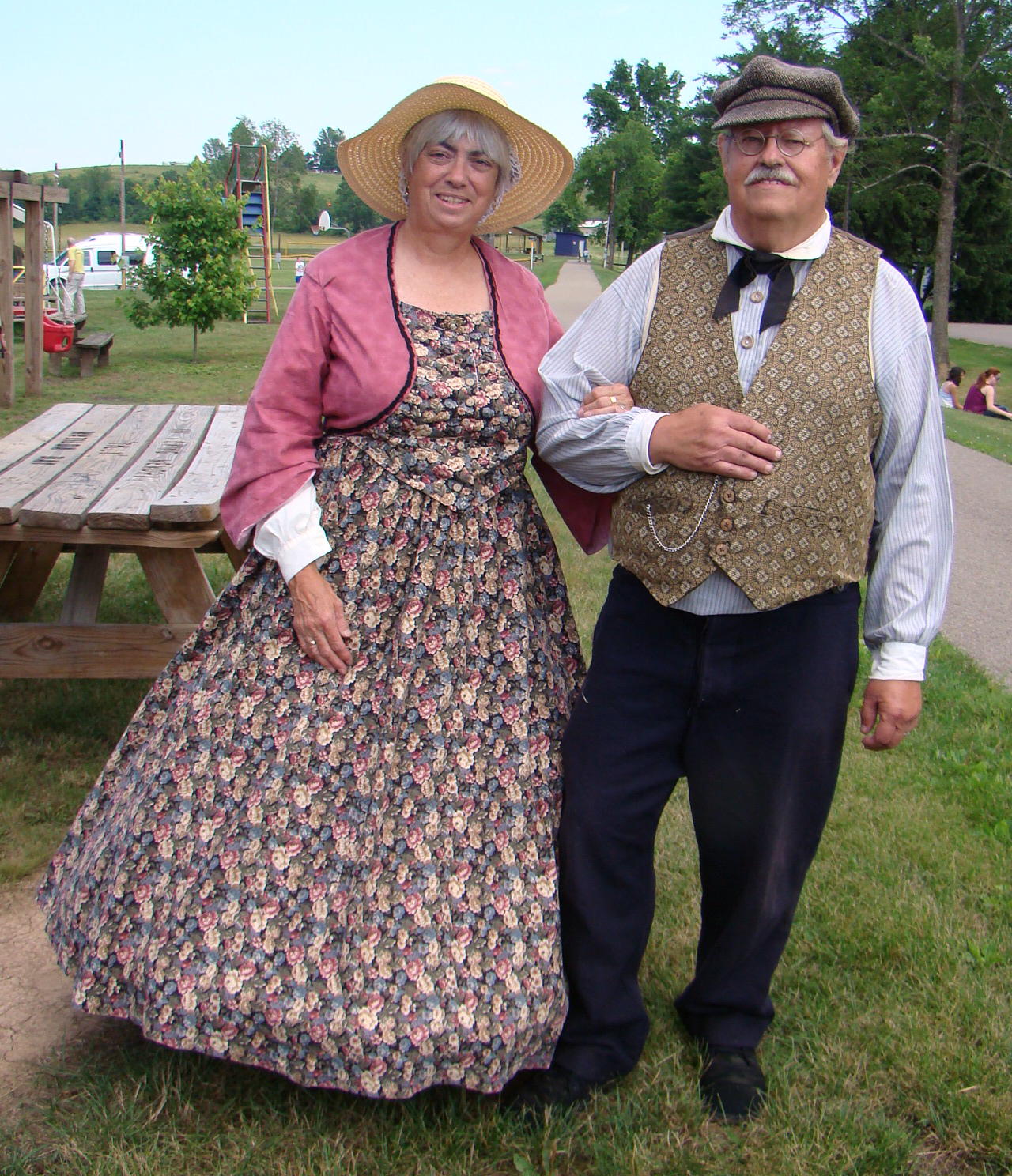
Couple in Civil War dress

Couple in Civil War dress

Nearly 150 years later, Lore City was filled with a Civil War feeling as many dressed in clothing of the time. A cannon was fired several times after careful loading by a group of Morgan County Re-enactors dressed as Confederate soldiers.

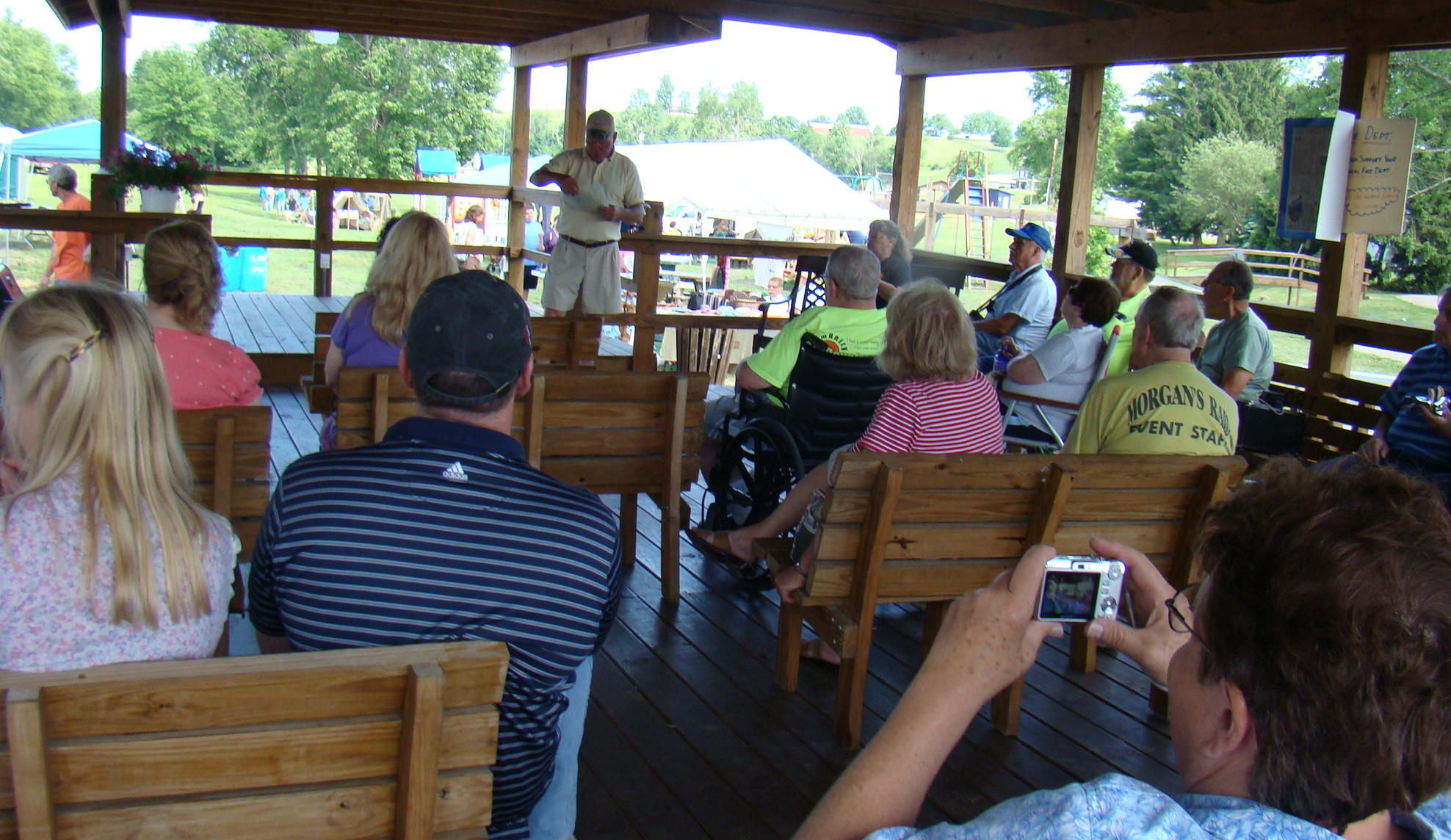
Local historian, Dave Adair, described the town of Campbell’s Station, which at the time of attack had only about sixty people. Their telegraph office was kept busy sending messages and receiving replies regarding Morgan’s Raiders. Due to the messages, Morgan and his Rebel scoundrels changed their route to avoid a railroad trestle, where a hundred men were waiting to ambush them.

Dave Adair speaks in the pavilion, which was the site of the original train station in Campbell's Station.

Dave Adair speaks in the pavilion, which was the site of the original train station in Campbell’s Station.

Dave also explained why Campbell’s Station changed its name to Lore City.  There happened to be two Campbell’s Stations at that time and the larger one kept the name. When deciding what to rename the smaller town, the Irish Catholics had a big hand in it. Their church were attempting to educate the people in this small community; therefore devised the new name as The City of Learning or Lore City… lore meaning knowledge or learning.
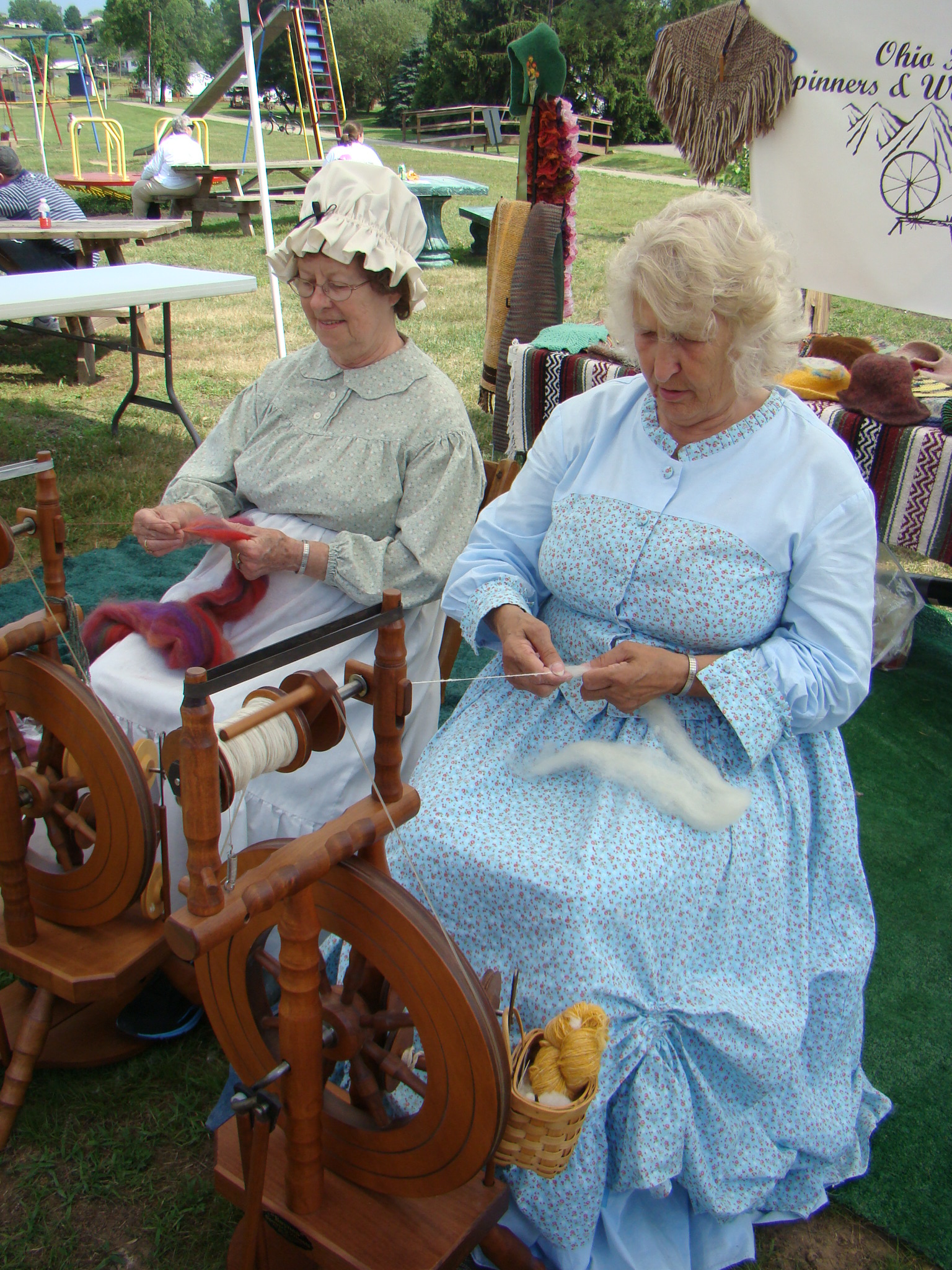
Ohio Hills Spinners and Weavers

Ohio Hills Spinners and Weavers

Spinning and weaving demonstrations were given by members of The Ohio Hills Spinners and Weavers, who also added stories of working conditions during the Civil War. Music was plentiful from start to finish. Bluegrass music, which included many Civil War songs, was provided by Mr and Mrs Small. While many of the Civil War songs were of a sad nature, Mrs. Small had written a happy song, Black Berries, to which everyone sang along. Cambridge City Band swung into action with their rendition of Civil War hits such as: Listen to the Mockingbird, Swanee River and many more. This was followed later by Dynamic Trio, who played 50’s and 60’s rock and roll.
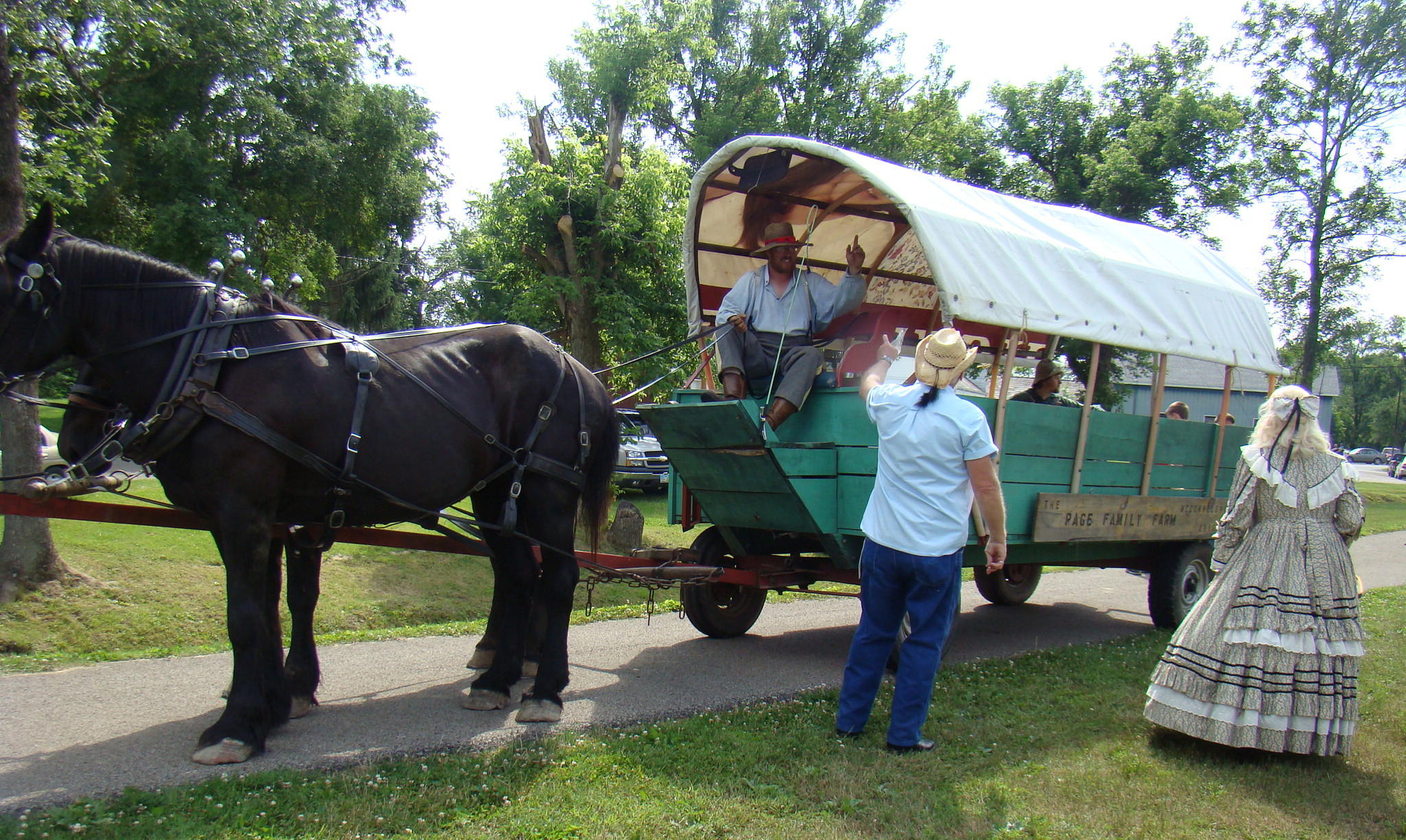
Riders enjoying the horse and wagon ride were greeted by Mayor Carpenter and wife, Sharon.

Horse and wagon riders were greeted by Mayor Carpenter and wife, Sharon.

Horses were an important part of the Civil War and it is estimated that over a million horses and mules were lost during the battles. General Morgan was indeed known as “The King of Horse Thieves”.  Wagon rides, which seemed fitting for the anniversary celebration, were provided along a segment of the Lore City trailhead in a wagon resembling the wagons used during the war to carry generals, the wounded and supplies.

If you want to get a little more adventuresome, today you can follow the trail that Morgan made during his raid. Signs have been posted from Cumberland to Londonderry with information regarding the events that took place in that particular area. Would make an interesting Sunday drive!

Lore City, Ohio is located in Guernsey County just east of I-77. Take exit 46, US Route 40 east, then follow Route 40 for four miles and turn right on State Route 265.  Continue on 265 until a four way stop, where a right hand turn leads you over the bridge to Lore City.  Leatherwood Park is to the left after you cross the bridge.