Places to go and things to see by Gypsy Bev

Posts tagged ‘travel’

Life on a Riverboat

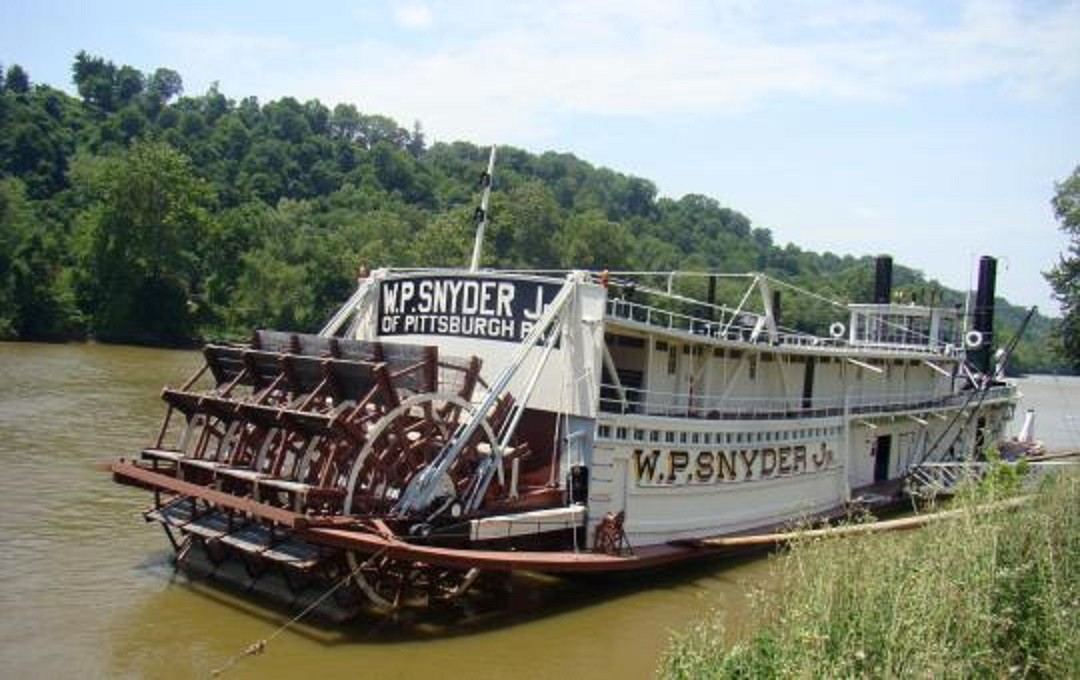
W. P. Snyder, Jr. is an historic towboat moored in Marietta on the Muskingum River.

Drifting with the current down the Ohio River has been experienced by many for centuries. While those early days provided an easy way to move products and people, today there have been many changes on the river, especially with the riverboats driven by steam.

During those early days before the railroad or paved roads, towboats were frequent on the river hauling coal, food, and steel. This was a quick and easy way to move things. Men in good physical condition worked on these boats around the clock surrounded by hazardous conditions and constant noise.
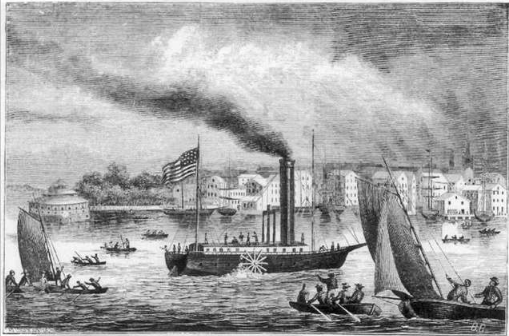
New Orleans was the first steamboat on the Ohio and Mississippi Rivers.

In 1811, the New Orleans made the first steamboat trip down the Ohio River and Mississippi River from Pittsburgh to New Orleans. The success of this adventure opened the door for more trading to the cities along the rivers. Passengers began using it as a faster method of getting from place to place.
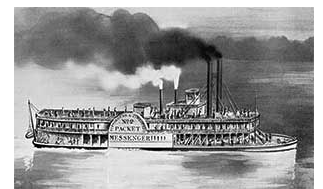
The Messenger carried Charles Dickens down the Ohio River.

For five months in 1842, Charles Dickens visited America with his wife, Kate, her maid, Anne Brown, and his secretary, George Putnam. They traveled to Pittsburgh by canal, stagecoach, and train before climbing aboard the riverboat, Messenger, for a trip down the Ohio River.

The Messenger held about 40 people on deck with the lower level being filled with the poor, emigrants, and children. Dickens felt lucky that they had a cabin in the stern as he worried about the fierce fire that raged in the body at the forward end of this boat built of what he called “a frail pile of painted wood

Meal time was not pleasant for him as there was no lively conversation. He said the creatures would empty their trough then head to stand around the fire and spit, a habit which he deplored.
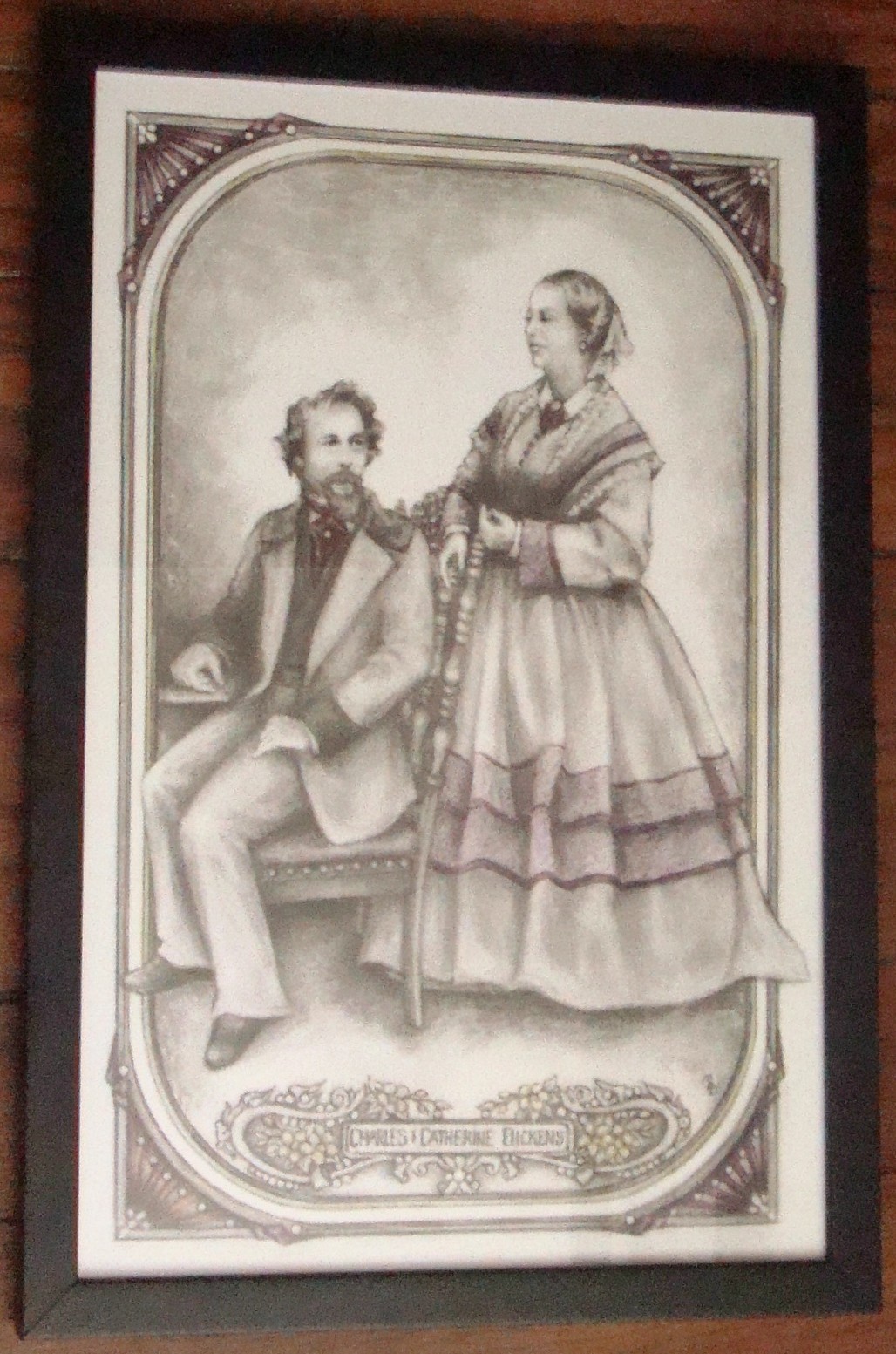
This sketch of Charles and Kate Dickens was by the late Mary Ruth Duff.

Charles and Kate would sit outside their small room on the gallery where they could watch the scenery as they drifted down the river. Charles explained the scenery in this colorful way:

For miles and miles the banks were unbroken by any sign of human life or trace of human footsteps. Nor is anything seen to move about them but the blue jay, whose colour is so bright, and yet so delicate, that it looks like a flying flower.

After three days, they reached Cincinnati where Dickens finally found some intelligent conversation. He loved the town and the free schools, as education was something very important to Charles Dickens.
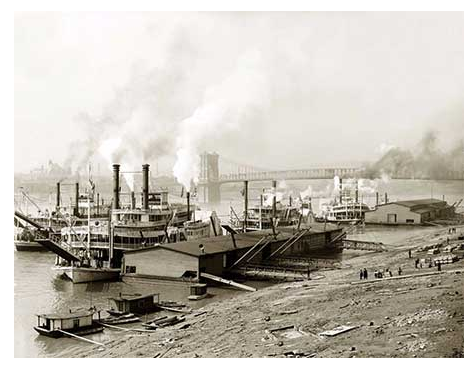
When Dickens arrived in Cincinnati, shantyboats could be seen along the riverbanks.

As they pulled into Cincinnati, they could see shantyboats along the shore. These rough built homes were used by those who wanted to move from place to place along the river with their families. Often, they were homes for people looking for work but also for thieves and law breakers. They always served as a great place to escape paying taxes.
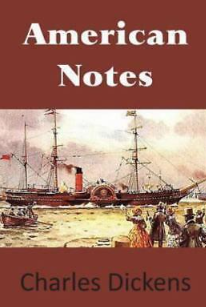
Charles Dickens wrote of his journey in American Notes.

Throughout his journey, it’s no surprise that Dickens wrote in his journal daily about what he saw and felt about America. Perhaps you would like to read his entire story in his American Notes.
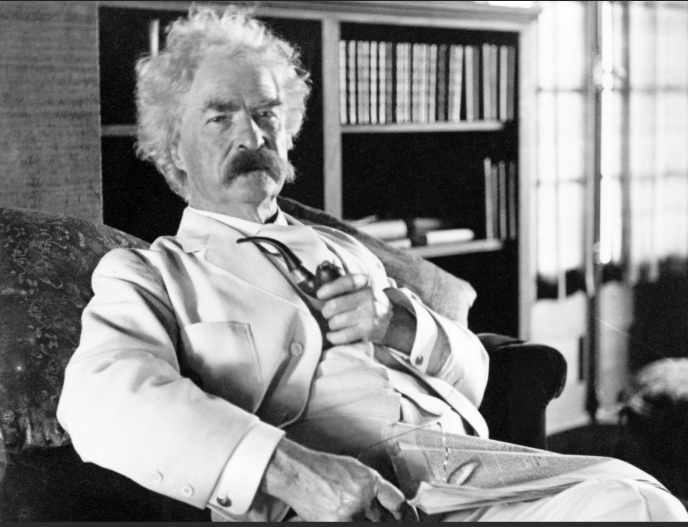
Mark Twain’s stories of his travels on the Mississippi boosted the number of riverboat passengers.

A few years later, Mark Twain published a book about his travels on the Mississippi River. When Twain wanted to get his riverboat pilot’s license, he was told he had to memorize the 1,200-mile Mississippi River in detail. The story of his adventures as a pilot and later as a passenger became a boon to the riverboat industry as more and more people wanted to experience the tales told by Mark Twain in his book , Life on the Mississippi
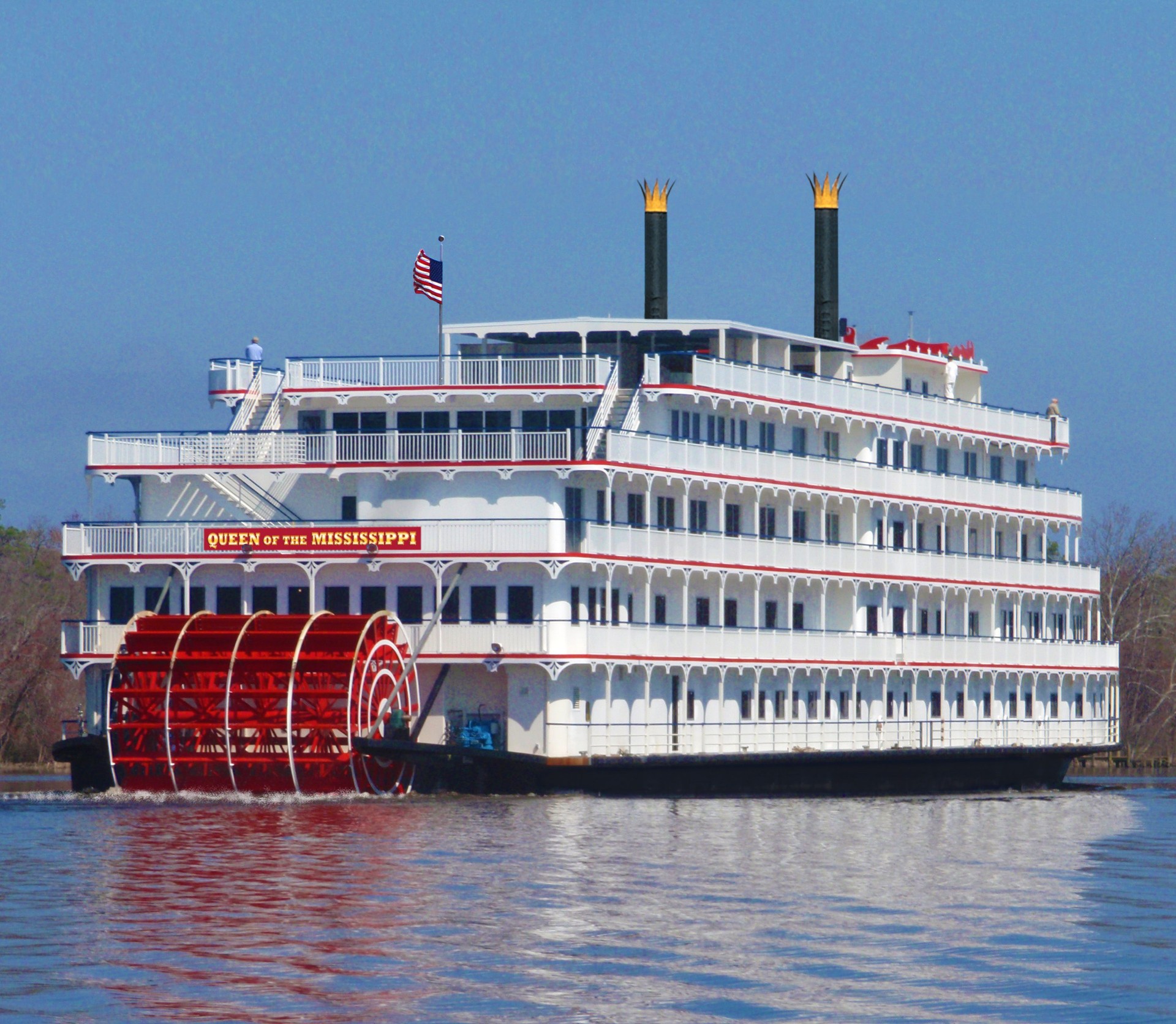
Today’s Queen of the Mississippi is a luxurious riverboat.

Today, riverboat travel on the Ohio and Mississippi has changed with the boats being more luxurious. Many people enjoy taking a short vacation on the river while being served gourmet meals, visiting historical spots along the way, and having evening entertainment.

When a boat pulls into dock at one of the towns along the way, as soon as people hear the sound of the calliope, they head to the shore to watch the paddlewheels and listen to the music.
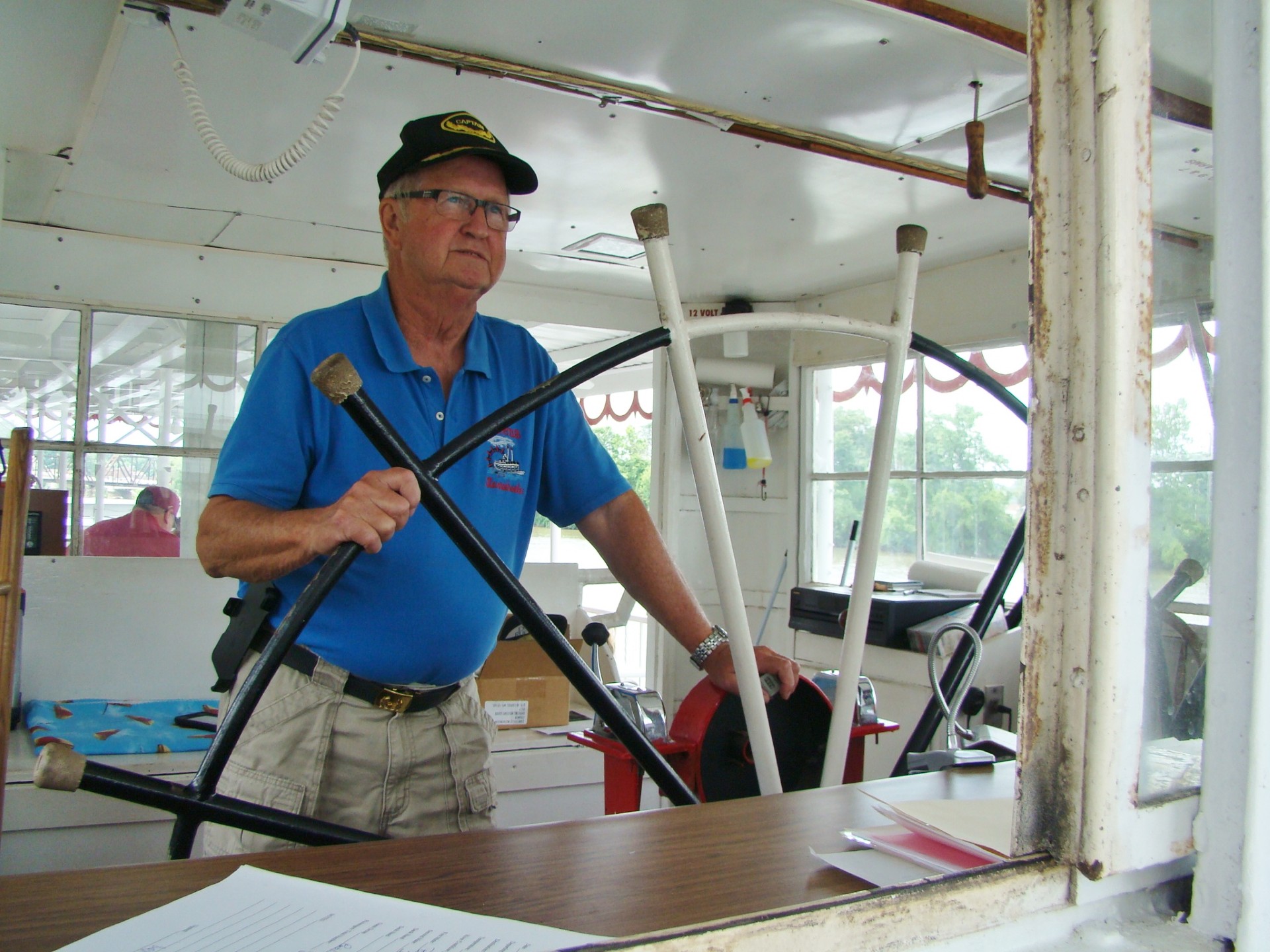
Captain Bill enjoys taking the wheel of the Lorena on the Muskingum River.

Our area is fortunate to have two small riverboats, Valley Gem and Lorena, operating for day trips in Marietta and Zanesville. These rides are always a pleasure as you catch a slight breeze as you feel the boat moving through the water and catch a little spray from the paddlewheel. It’s a cool way to spend a hot summer day.
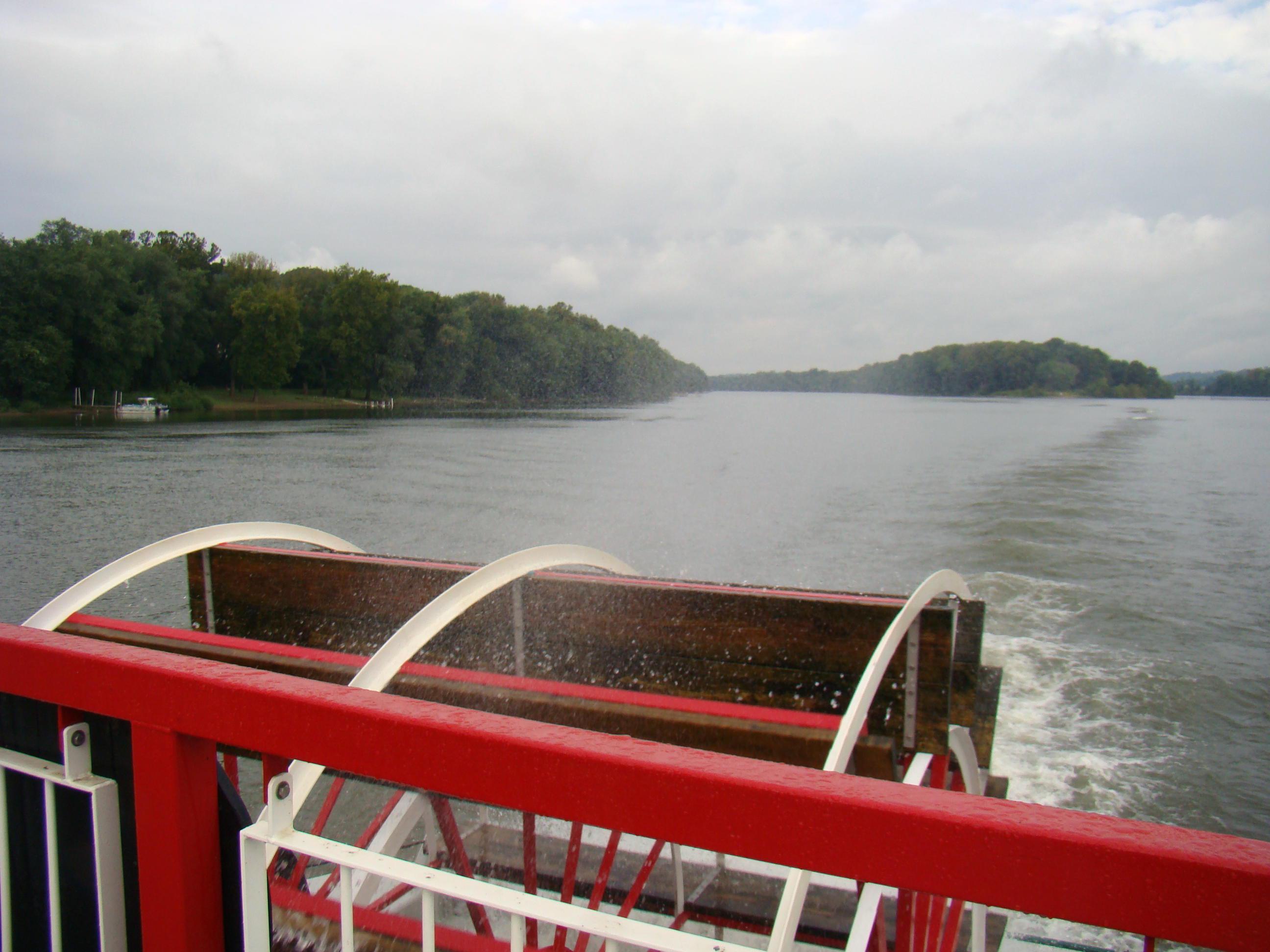
The paddlewheels of the Valley Gem move us on the Ohio River.

Perhaps you would enjoy a riverboat ride down the Ohio River. It’s on my bucket list!
Deloris Ullmann Discovers Painting

Live your life and forget your age

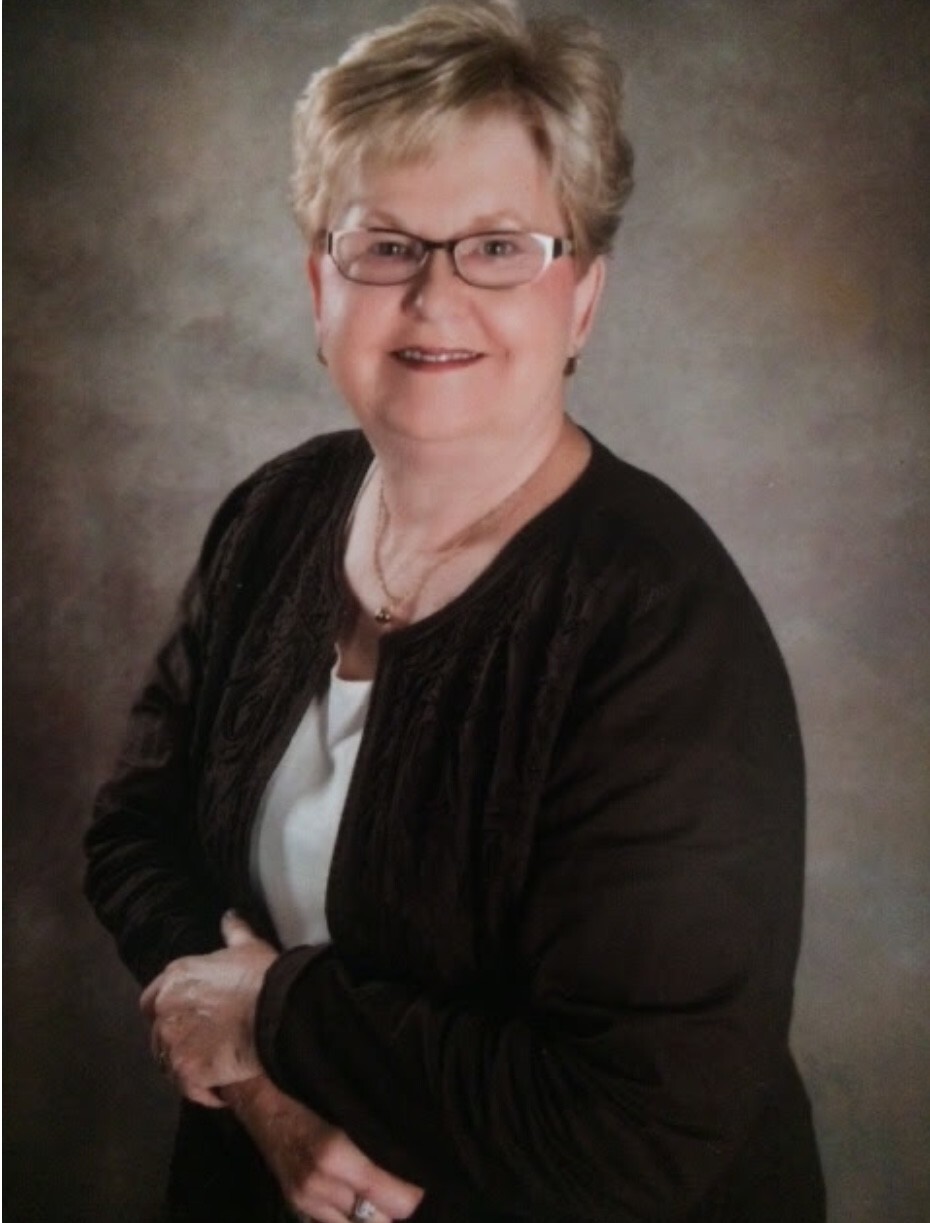
Sometimes a hand reaches out and touches you in an unexpected way leading you on a new pathway. Such was the case with Deloris Ullmann, a retired educator from Shenandoah.

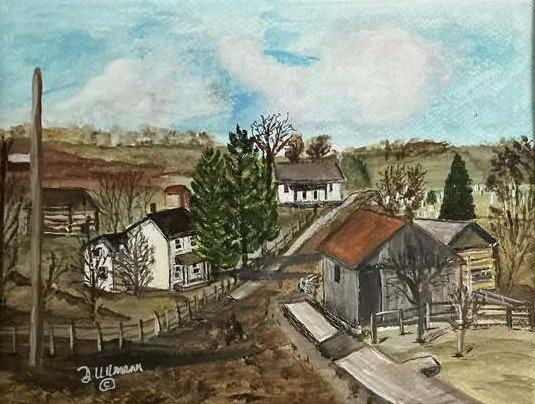
This painting shows her hometown of Mt. Ephraim many years ago.

Deloris grew up in Mt. Ephraim and started her education at a two-room school there before graduating from Sarahsville High School. She received her Bachelor’s Degree from Ohio University and later her Master’s Degree from Marietta College.

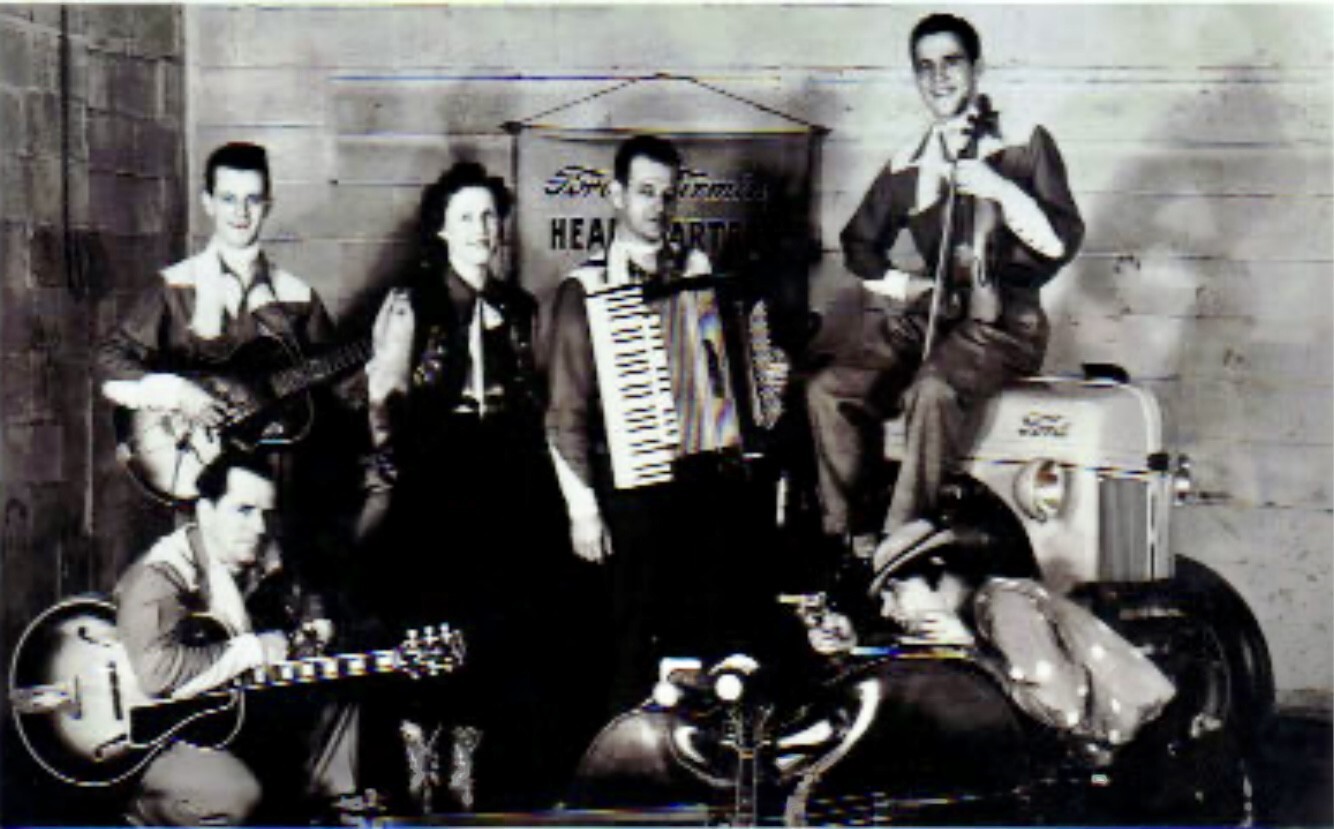
Her family enjoyed music. Dallas Bond, front left, and her mother played on WILE in the late 40s.

In her younger years, Deloris was surrounded by a family that enjoyed music. Her parents organized “Dallas Bond and The Musical Farmers,” which was the first live musical group to air on radio station WILE in the late 40s. Deloris and her sisters also performed on WILE a few years later as “The Bond Sisters.” Because of that interest, Deloris can play piano, guitar, violin, and mandolin.

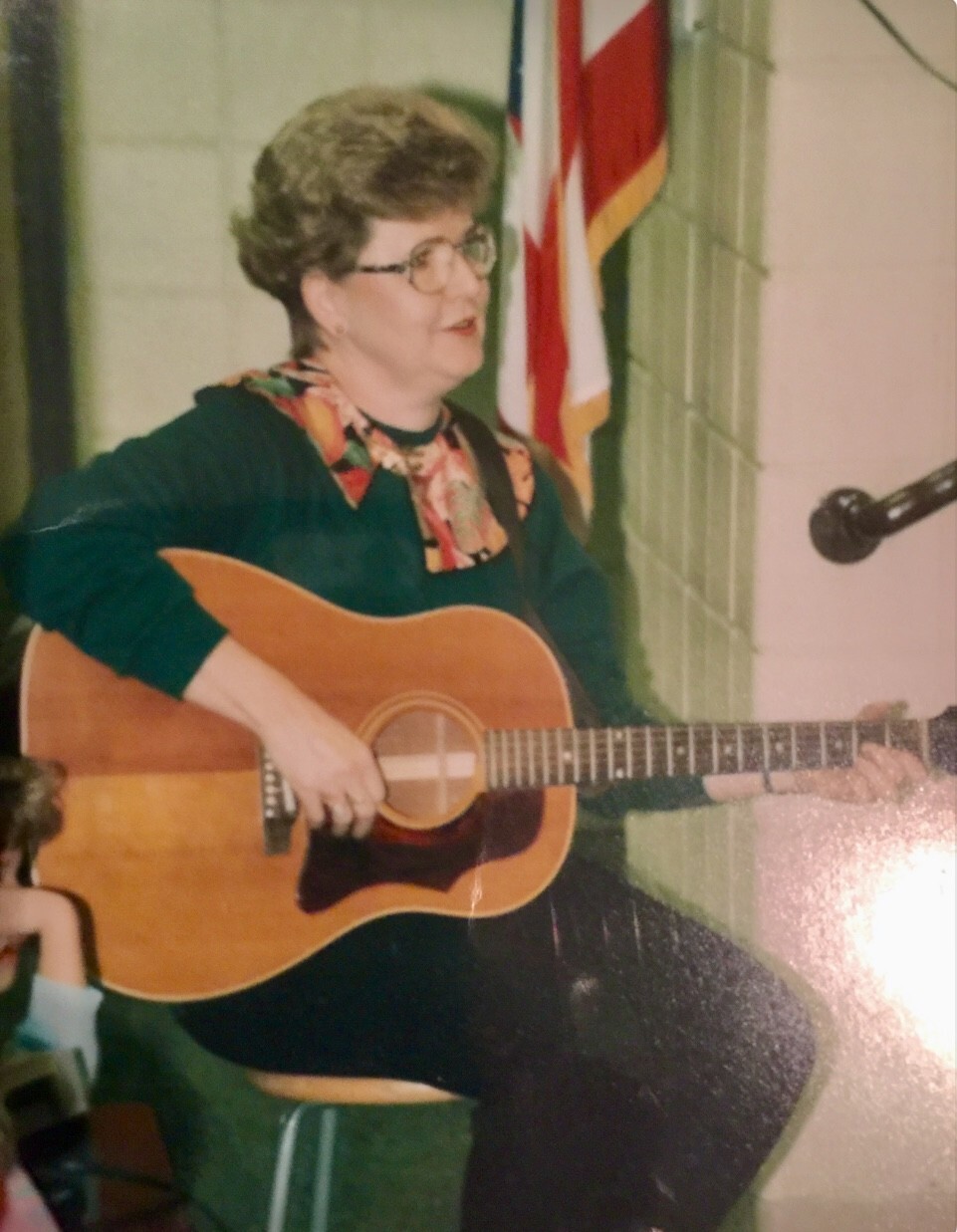
Deloris played guitar and sang at her retirement assembly.

She played guitar and sang “Love Letters in the Sand” at 4-H camp during Talent Night and played the fiddle with Jim’s Jammers at a Grange Banquet at Shenandoah High School. Even when she retired, she played the guitar and sang at her retirement assembly.

After retirement, a new path opened unexpectedly one day ten years ago when her neighbor Judy McKee, an art teacher from Shenandoah, came across the road for a visit. She asked Deloris, “Did you ever think of painting?”

Deloris smiled as she said, “I can’t even draw a circle.” Deloris said at that time the only thing she had ever painted was a paint-by-number picture.

Judy was persuasive and told her, “You can learn. I’ll give you lessons in my studio.”

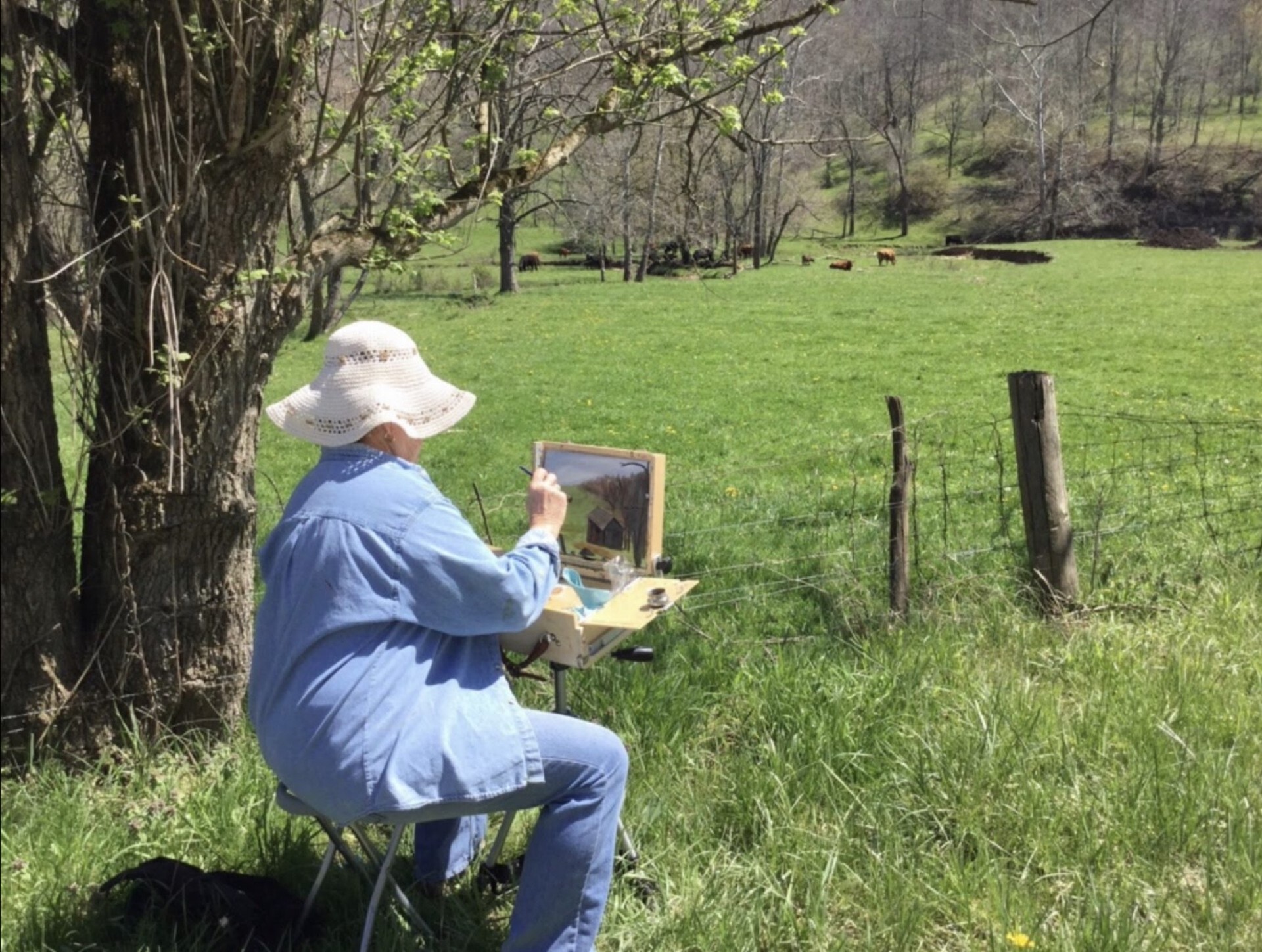
She enjoys stopping along the road and painting an outdoor scene or whatever catches her eye.

Thus began a weekly encounter where Deloris learned something different every week. Judy had her try different paints – acrylic gouache wash, oils, and watercolors. They would take rides in the country and stop to paint a house, a church, a friendly animal, or flowers that caught their eye.

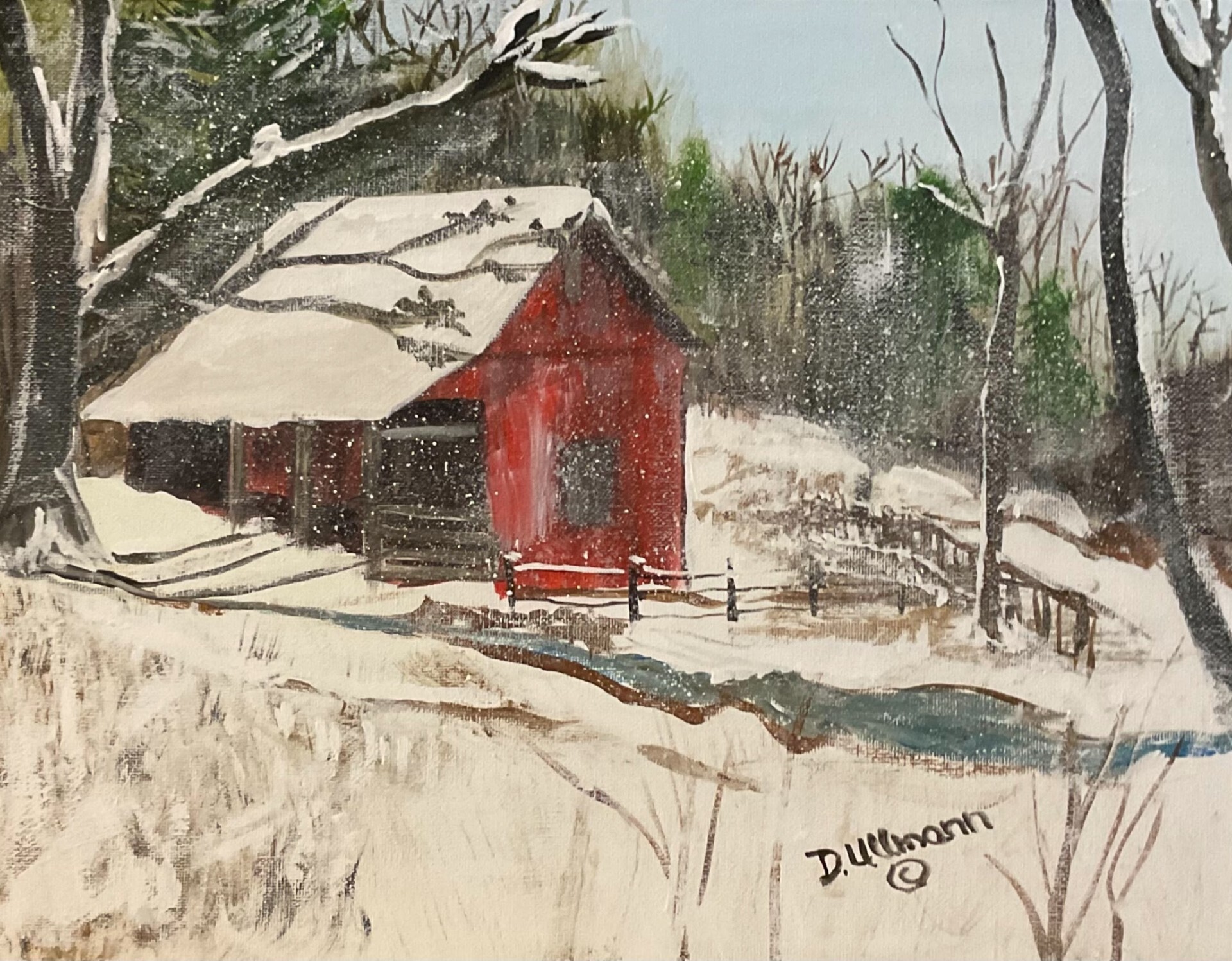
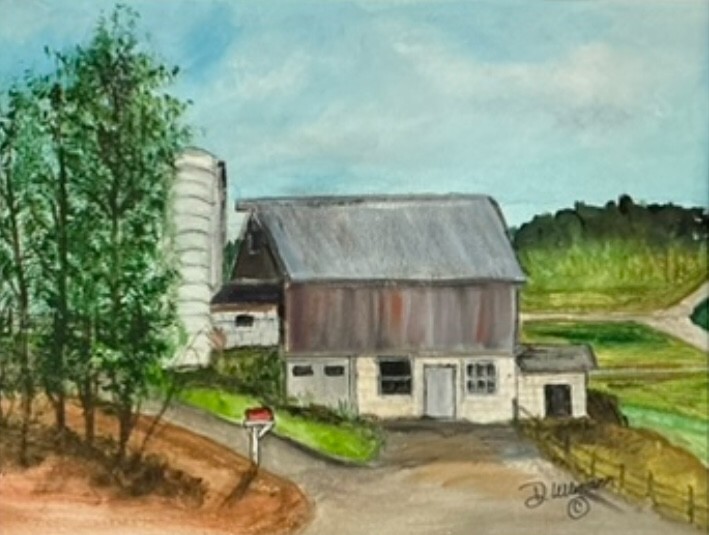
This painting is her favorite winter scene sharing one of her many barn pictures.

Barns became a favorite object for her paintings. They drove out Route 564 and she took pictures of all the barns along the road. Then from the photos, she painted pictures of those barns on 11×14 canvas.

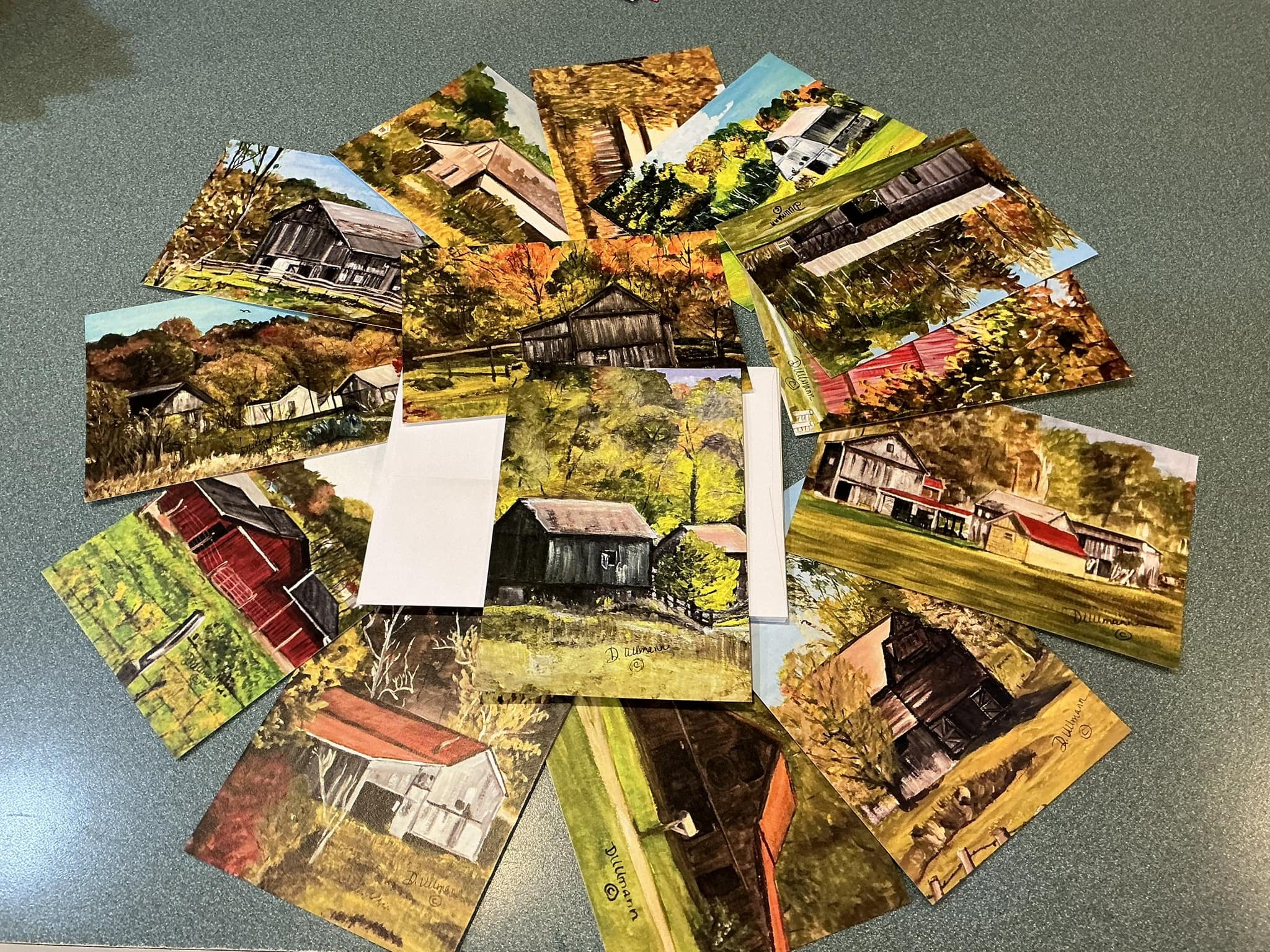
This set of her cards share the series of barn pictures that she drew. Nice for a quick note to a friend!

Those paintings were also converted into cards that make delightful colorful notes to friends. It’s a creative way for more people to be able to enjoy her paintings.

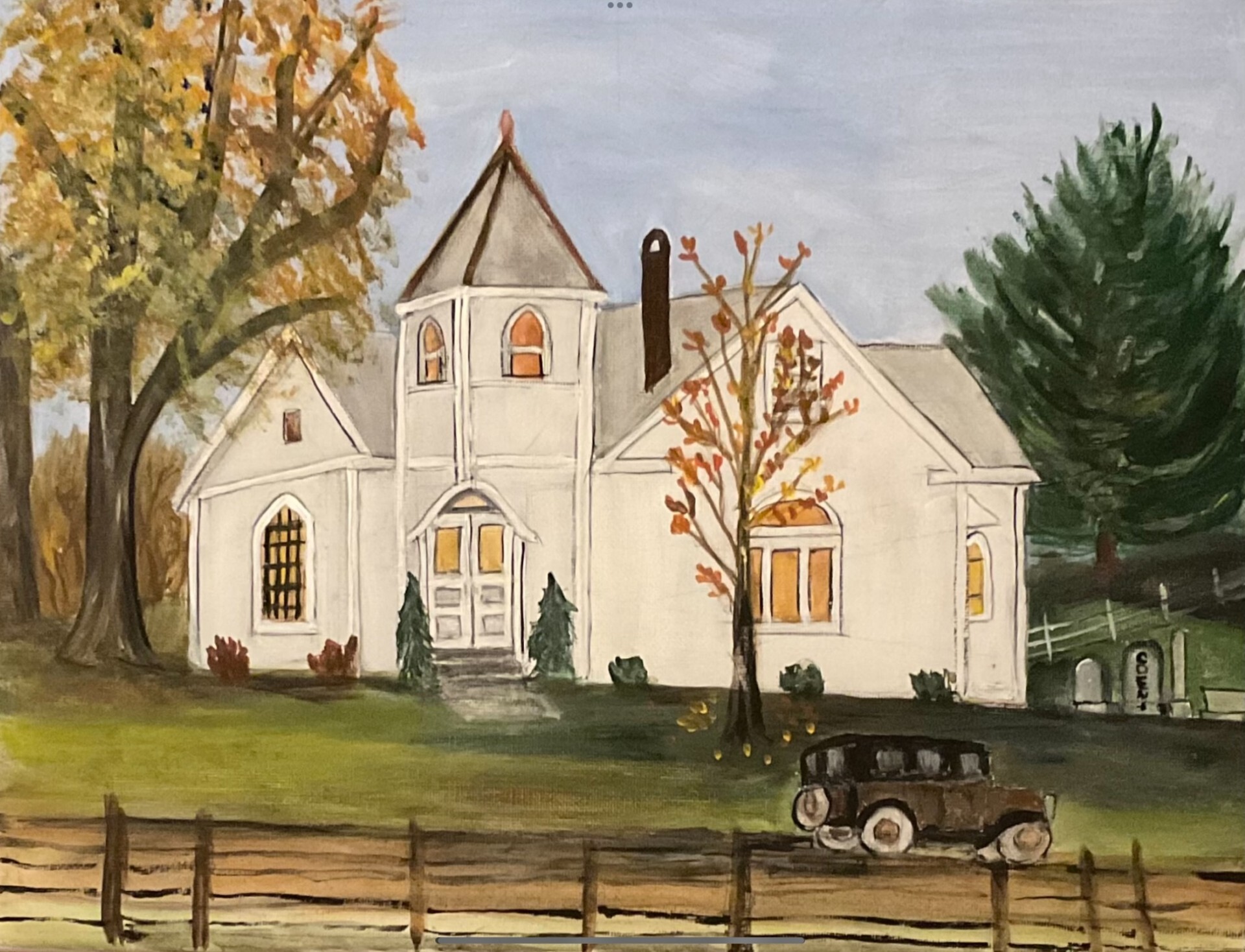
Deloris remembered picnics at Coen’s Church grounds near Seneca Lake after it closed in the 1930s.

Something she especially enjoys is painting a scene from the past. It might be an old church or town that no longer exists. Recreating them from old pictures makes great paintings and great gifts.

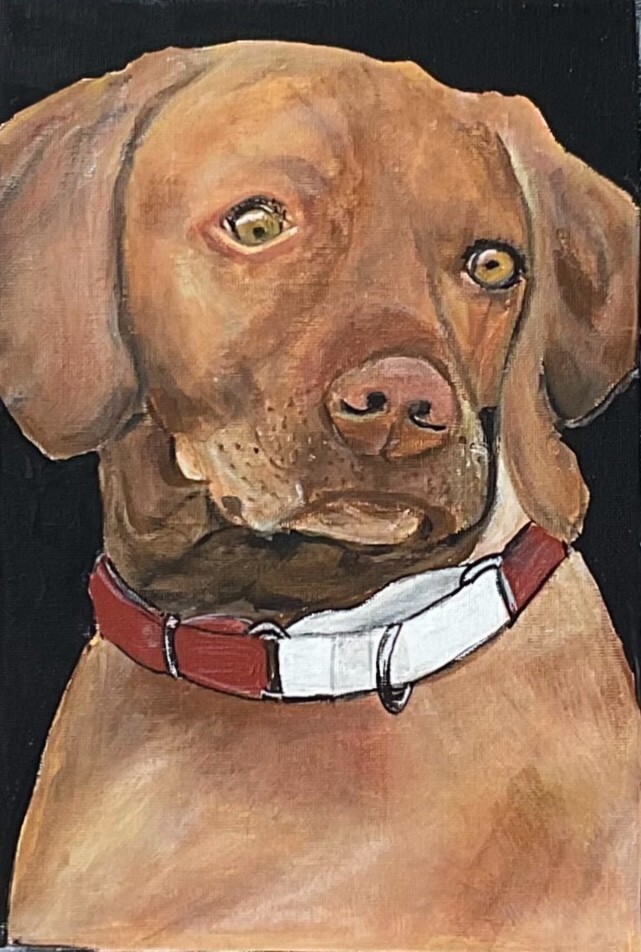
She enjoyed painting Izzy, her sister’s dog.

While Deloris does sell her paintings, quite often she uses them as gifts to friends and family. When asked if she painted every day, Deloris shook her head, “I was taught to only paint when you feel like it. Never throw anything away. Let it set for a couple of days, then go back and add what is needed.”

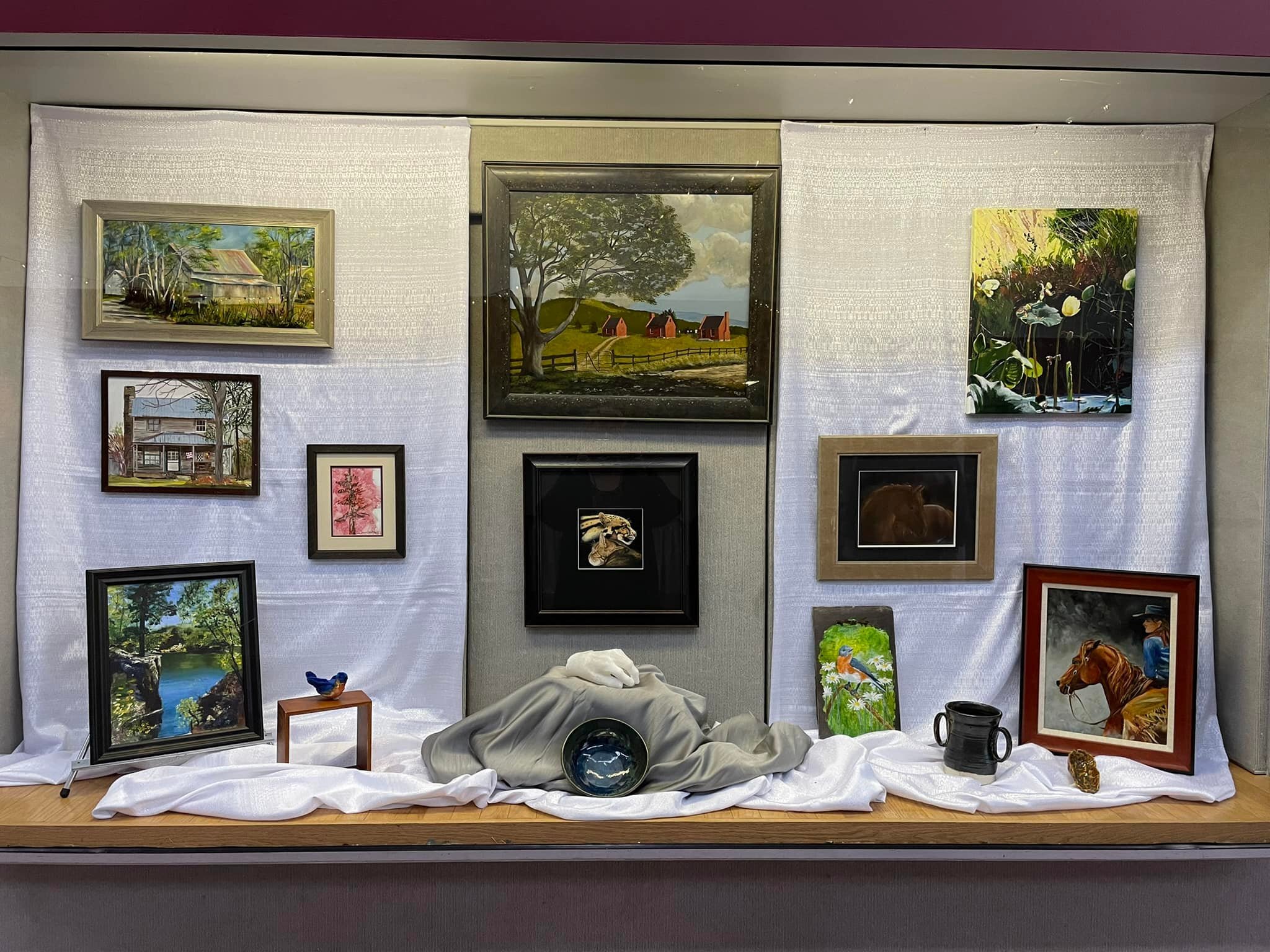
Some of her paintings were displayed an at art guild show at Pritchard Laughlin Civic Center.

Her instructor, Judy, began painting at the age of four and participated in a local Art Guild. At one time, Judy encouraged Deloris to display her paintings with the guild when they had a show at Pritchard Laughlin Civic Center. Her paintings were also displayed in Art Market 649 in downtown Cambridge a few years back.

This painting shows their barn on Mud Run Road. Her paintings are filled with memories.

During this time, Deloris also wrote a book just for her family. The title of the book is “Two D’s in a Pod,” a clever way of mentioning her and her husband, Don. It is a collection of pictures and stories of their family from childhood on. It also includes many of her paintings.

In her spare time, she often plays piano at Mr. Ephraim Methodist Church. She recently sewed 100 aprons for an Eastern Star fund raiser. Don and Deloris also enjoy traveling. They have visited Germany several times, did a European tour, and have enjoyed many trips in the United States including Alaska and Hawaii.

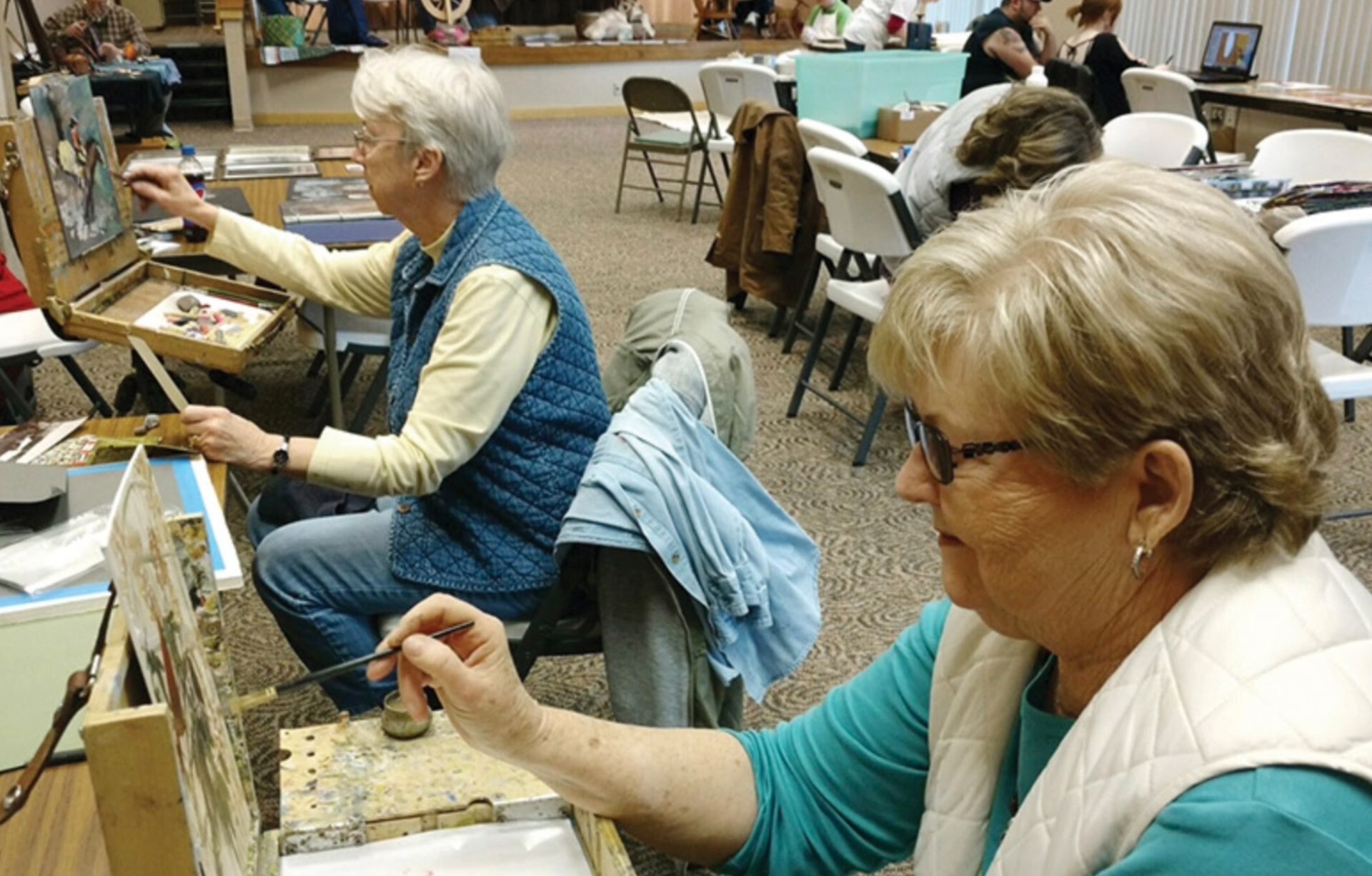
Her teacher, Judy McKee, and Deloris enjoyed painting at the Guernsey County Library.

While Deloris discovered painting late in life, she finds it a wonderful relaxation. “Painting makes me really happy.”

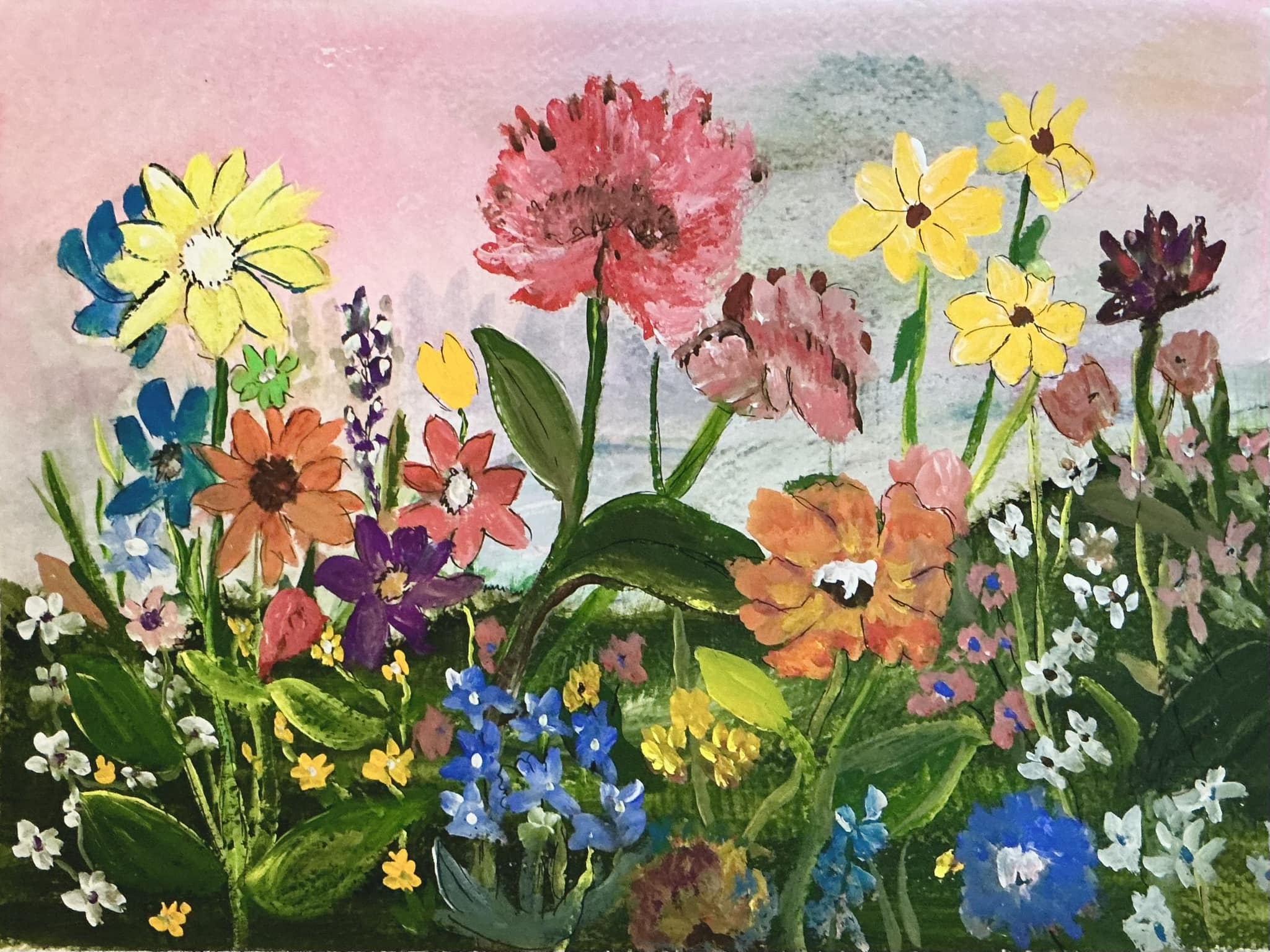
This colorful painting of flowers reminded me of summertime.

Visit her Facebook page to see some of her paintings. If you would like to have Deloris paint something for you, send her a picture of your house, barn, animals, or flowers and her painting is sure to please you. Contact her at 740-509-1672 or drudou@gmail.com. Visit her website at http://www.delorisullmannart.com where most of her work is posted both old and new. Some items can be purchased online.

Age is just a number. The mind has the real potential for learning at any stage of life. Deloris Ullmann is proof of that.

Heartland Travel Showcase 2018

Foggy Buffalo

This foggy view from our hotel room featured the new Metro Rail.

Last week I had the opportunity to participate in the 2018 Heartland Travel Showcase to let others know about attractions and events in the Cambridge, Ohio area, and especially tell them about Dickens Victorian Village.  It’s always a pleasure to tell others about your hometown.

Buffalo, New York hosted the 2018 Heartland Travel Showcase. Arriving by coach with several other travel associates, we were greeted by a fog covered Buffalo due to warm temperatures and a still frozen Lake Erie.

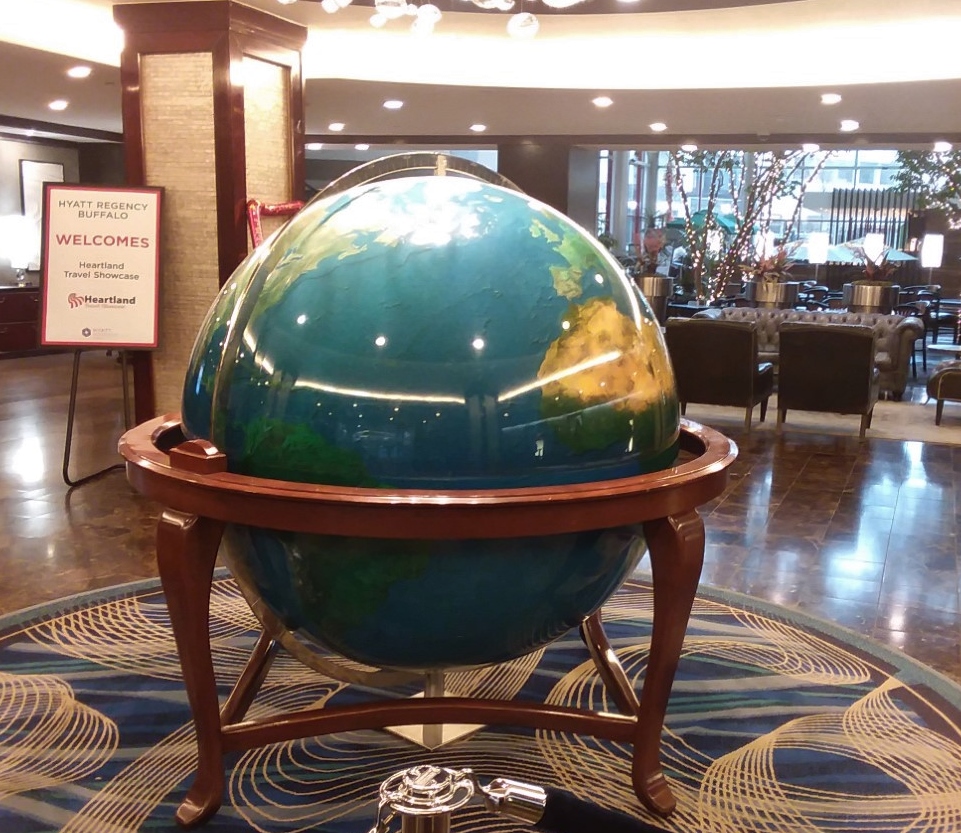
Hyatt entrance

The lobby of the luxurious Hyatt Regency Hotel welcomed us.

After getting settled into the Hyatt Regency Hotel in downtown Buffalo, it was time to have dinner with fellow travelers. These travel showcases are the perfect place to make new connections for future tours.

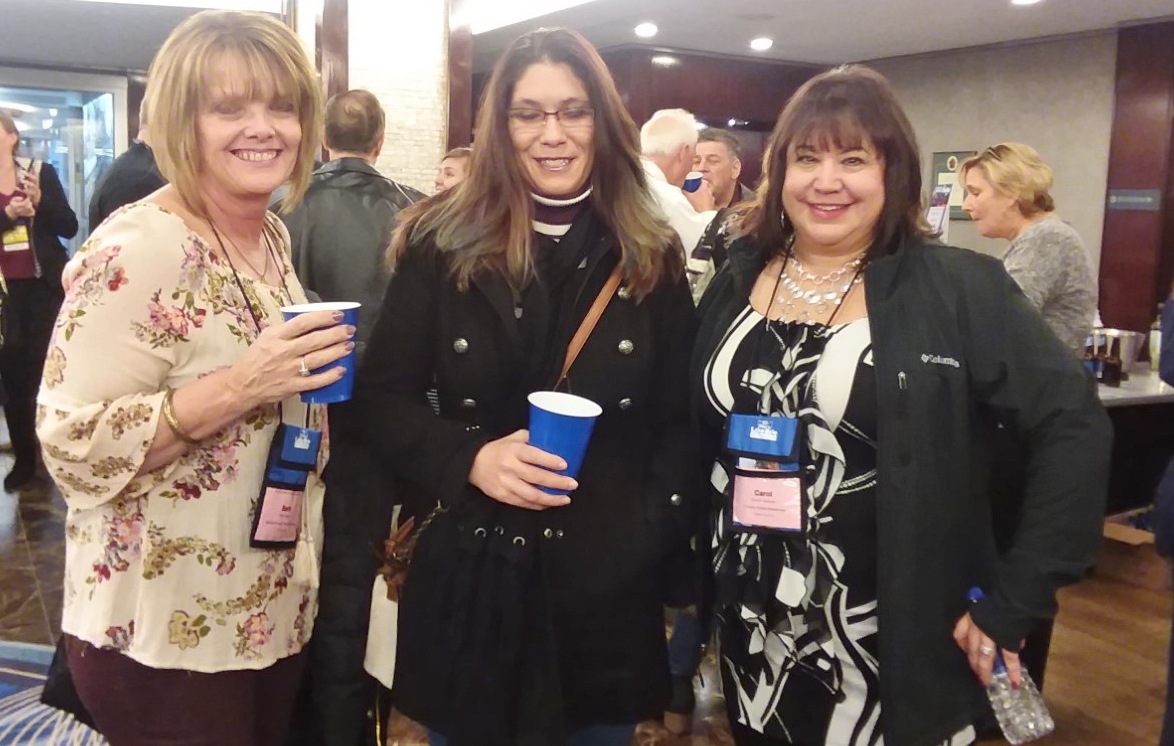
Tourism Reception

Barb, January and Carol enjoyed meeting friends at one of the receptions.

Heartland is where booking group travel is a Heart-to-Heart business. Numerous occasions provide a chance to network with others. It’s also the place where you can create a more personal relationship with possible clients during receptions and meetings.

Chocolate

A couple chocolate samples still untouched. The Goo Goo Cluster was created and distributed by the Grand Ole Opry.

Treats were non-stop from the time we stepped on the charter coach, where a box of chocolates were passed around. The Chocolate Tasting continued day after day with many chocolate treats being given in the form of candy or desserts.

Heartland Aisles

Exhibitor booths were placed in nine long aisles for ease of locating.

Contacts, leads, ideas and bookings are what Heartland is all about. With over two hundred exhibitors and sixty tour operators at the Buffalo Niagara Convention Center, it’s a great chance to learn more about the travel industry as you meet new people and learn about their wants and needs.

Teddy Roosevelt

President Theodore Roosevelt told us about some of his accomplishments. Buffalo served as his Inauguration site after the assassination of Pres. McKinley.

An exciting forum gave newcomers a chance to learn from more experienced faces in the tour industry. Technology has changed the face of the industry as more publicity is being done via social media. They stressed the importance of promoting posts as well as using keywords to help people connect.

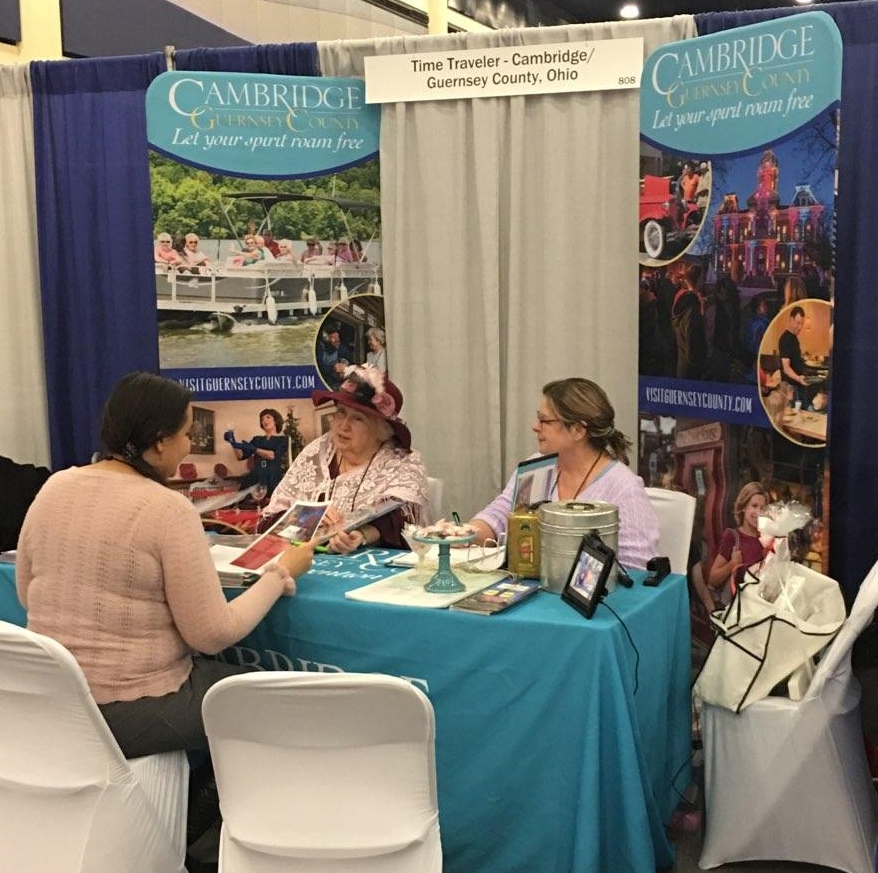
Potential Client

Cambridge tourism partners, Bev and Dixie, explain local attractions to a tour company.

Much of the three day session was spent one-on-one with tour directors meeting exhibitors and learning more about their places to visit. What a difficult job they would have in deciding as each place sounded like the perfect place for a group tour.

Dinner guests

Exhibitors Mary, Mary and Chris sparkled during an evening reception at the Lafayette Brewery.

You could schedule up to forty meetings with various group leaders. The rest of the time was spent either visiting other people’s booths or talking to people who stopped by your booth. Communication about travel was the name of the game.

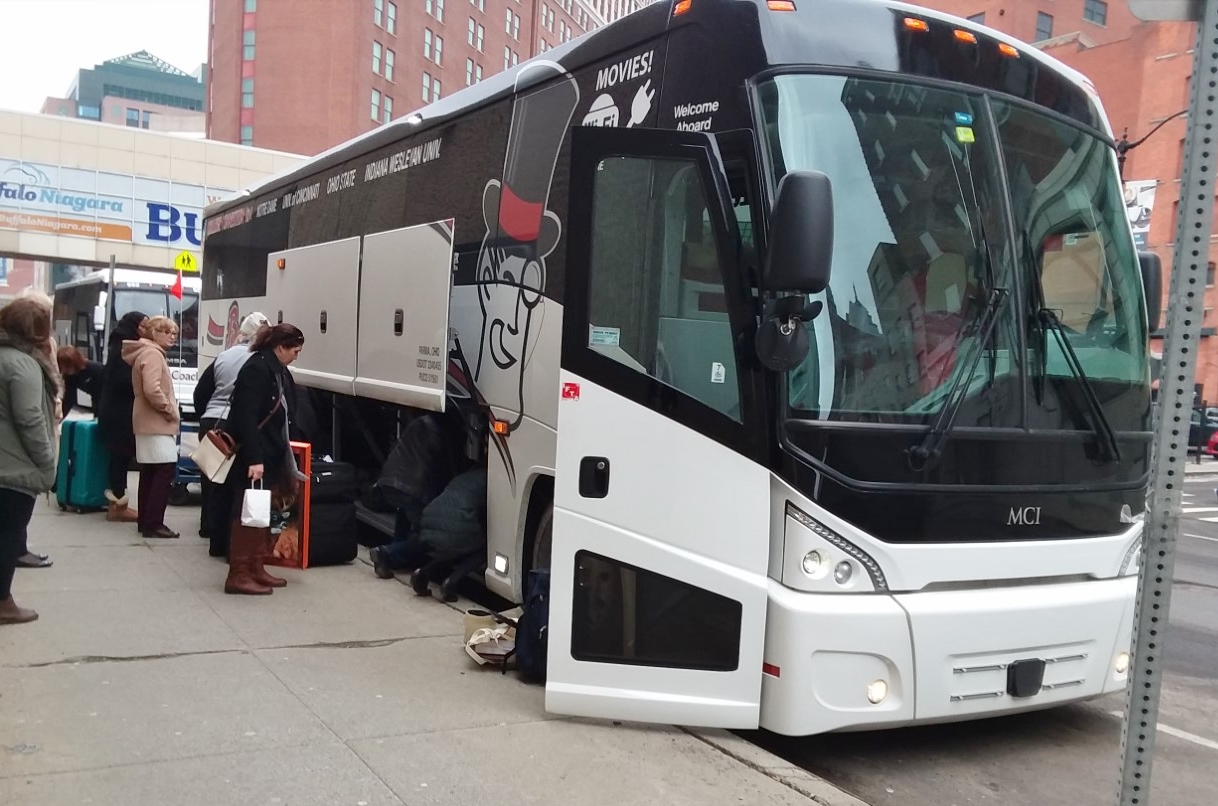
Return Bus

Three days later, the coach was loaded for the return trip home.

The event definitely spread the word about an event or destination. Most attending say it is their favorite travel show of the year. It is one of the friendliest places you can imagine.

Buffalo Skyline

This painting of the skyline of Buffalo hung in the walkway to the Convention Center.

Shuffle off to Buffalo or your favorite travel destination sometime soon. New places await your exploration.

Life on The Farm at Walnut Creek

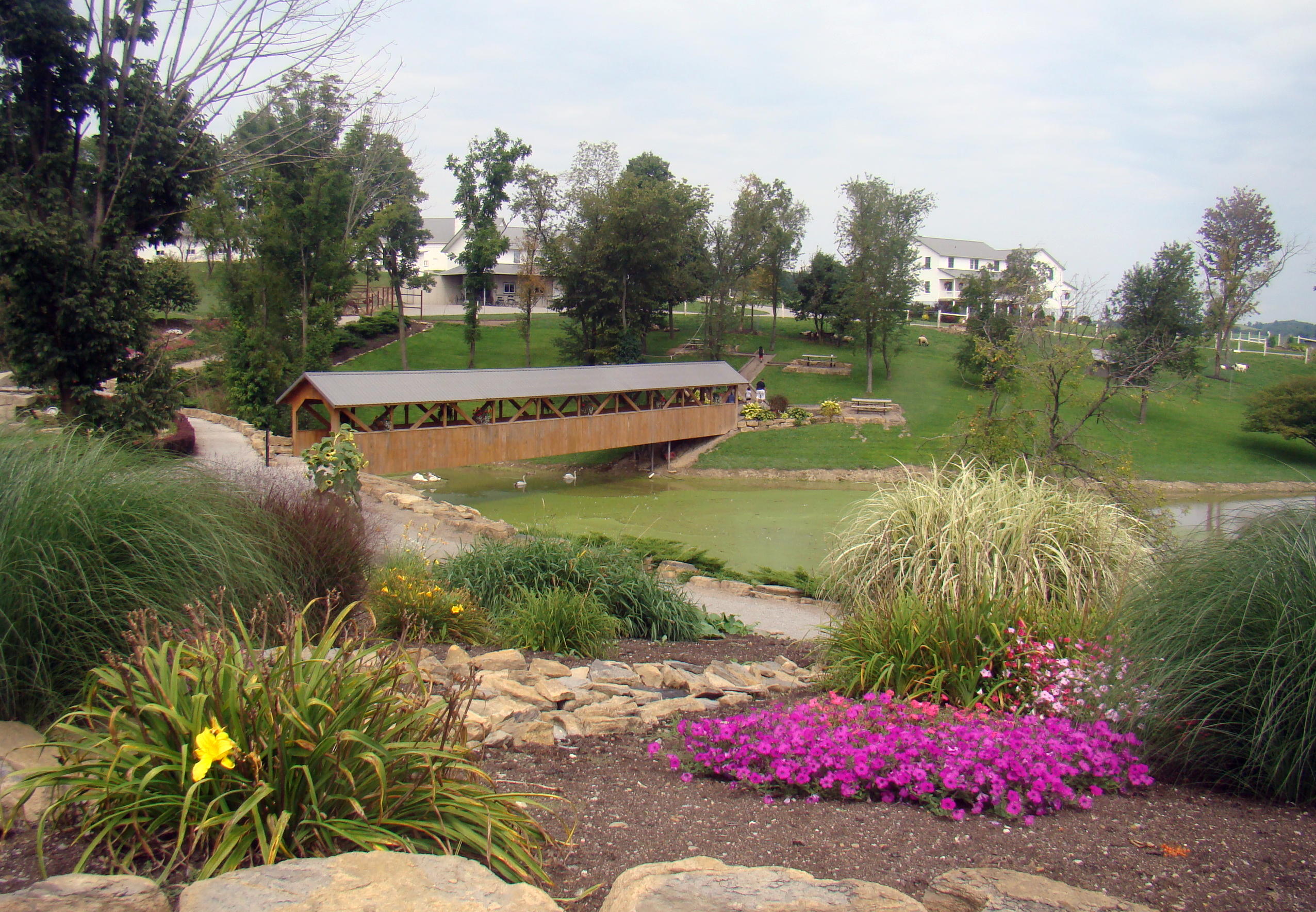
View at The Farm at Walnut Creek
View of The Farm at Walnut Creek


Did you ever want something to eat out of the palm of your hand? Visit The Farm at Walnut Creek where many animals rush for the feed in your extended palm.

 This beautiful Amish farm, set in the rolling hills of Holmes County, makes a great place to spend the day. Everything here moves at a much slower pace – even farm work. This is definitely a working farm where you can see various chores being done, depending on the season of the year: plowing, thrashing, canning or quilting to name a few. This is a unique educational experience for the entire family.

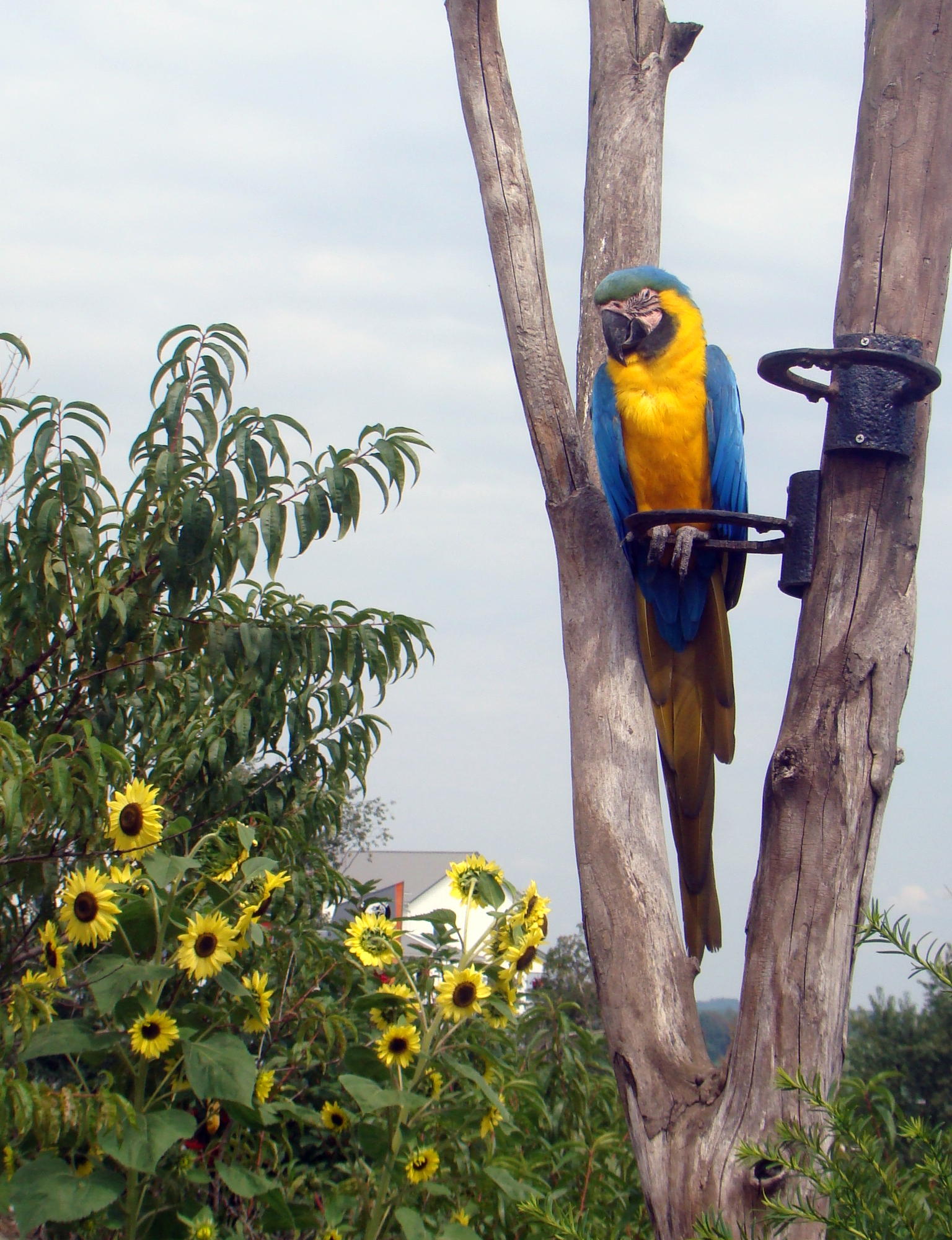
Colorful Macaw watches over activities.

Tour inside an authentic, non-electric, Amish farmhouse where you might be lucky enough to get a freshly baked cookie. Check out several barns, observe a blacksmith at work in his shop, and admire their beautiful flower gardens. A covered bridge creates a perfect setting for relaxation at a small pond surrounded by plants and flowers.

But children and the young at heart come mainly to feed the farm’s 500 animals from six different continents. While everyone expects to see sheep, goats and cattle, a surprised look crosses their face when a Dromedary camel, giraffe or Grevy zebra appears. A special feature is the African Spurred Tortoise, the largest mainland turtle in the world at over 30 inches long and weighing up to 200 pounds.

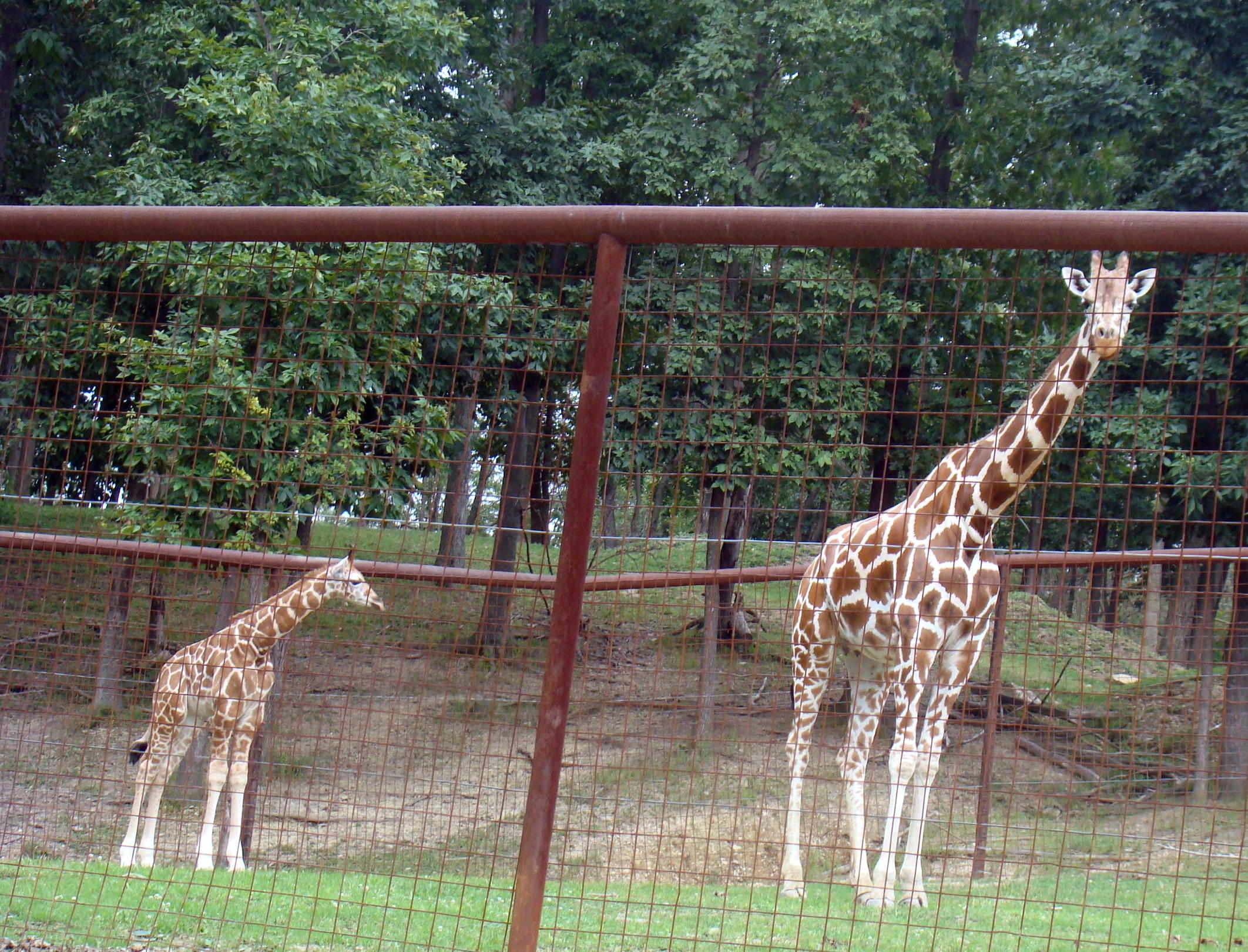
Luke and mother, Libery in the Giraffe Pen.
Luke and mother, Liberty, in the Giraffe Pen.

Two options exist for viewing the animals: by car or on a horse-drawn wagon pulled by beautiful Percheron draft horses. Try both for the best experience. By car, feeding seems a little safer since you can gently put up the car window if they try to stick their head inside the car…and they definitely will! Speed limit for cars is 5 mph to protect animals and passengers

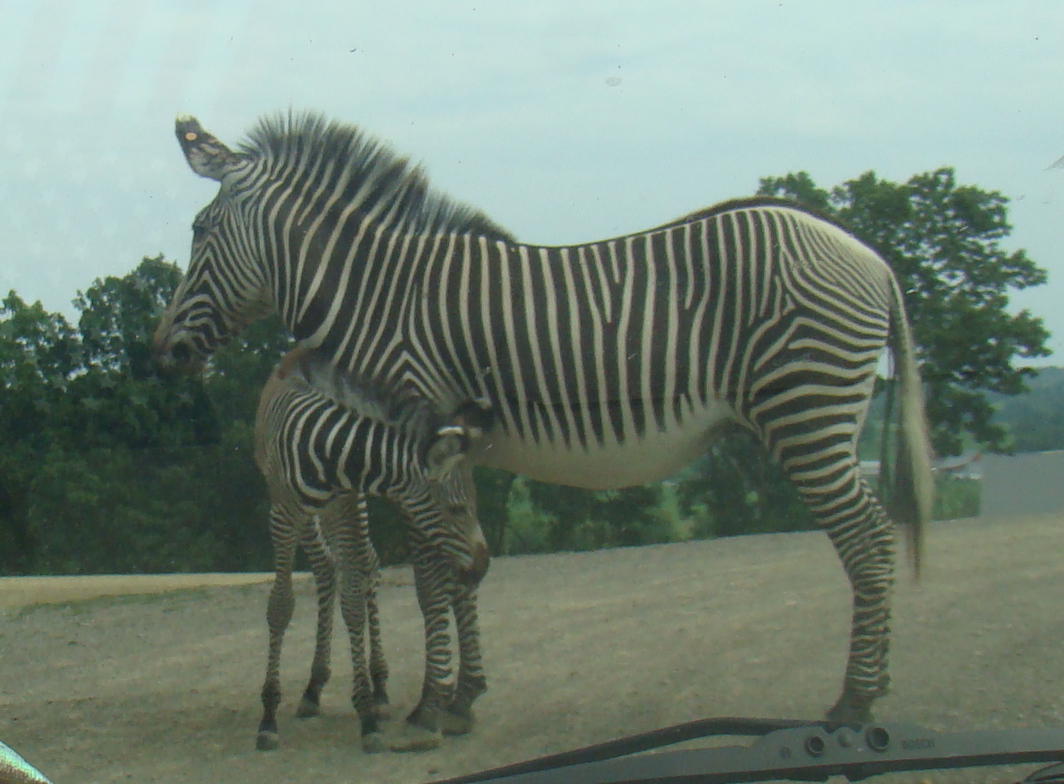
Grevy Zebra and pony
Grevy Zebra and colt

The most fun of the day occurs on the hour-long wagon ride where everyone is given a filled feed bucket for the animals. At least three horse-drawn wagons headed out each hour…and this visit happened on a Monday. The driver tells stories about the animals, as the horses trot slowly down the lane.

Stops to watch the zebras and giraffes top the tour. Everyone has to be careful of the zebras as they might bite, so pour their food onto the ground. Mother zebra keeps a close eye on her two-week old colt. The picture of this zebra pair was taken through my windshield on the car tour. They wouldn’t get off the road!

Even though the giraffes are inside a high fence, they easily reach over to eat out of your hand. Here a special treat was mother giraffe, Liberty, and her five-day old calf, Luke.

Big Bad John is always hungry.

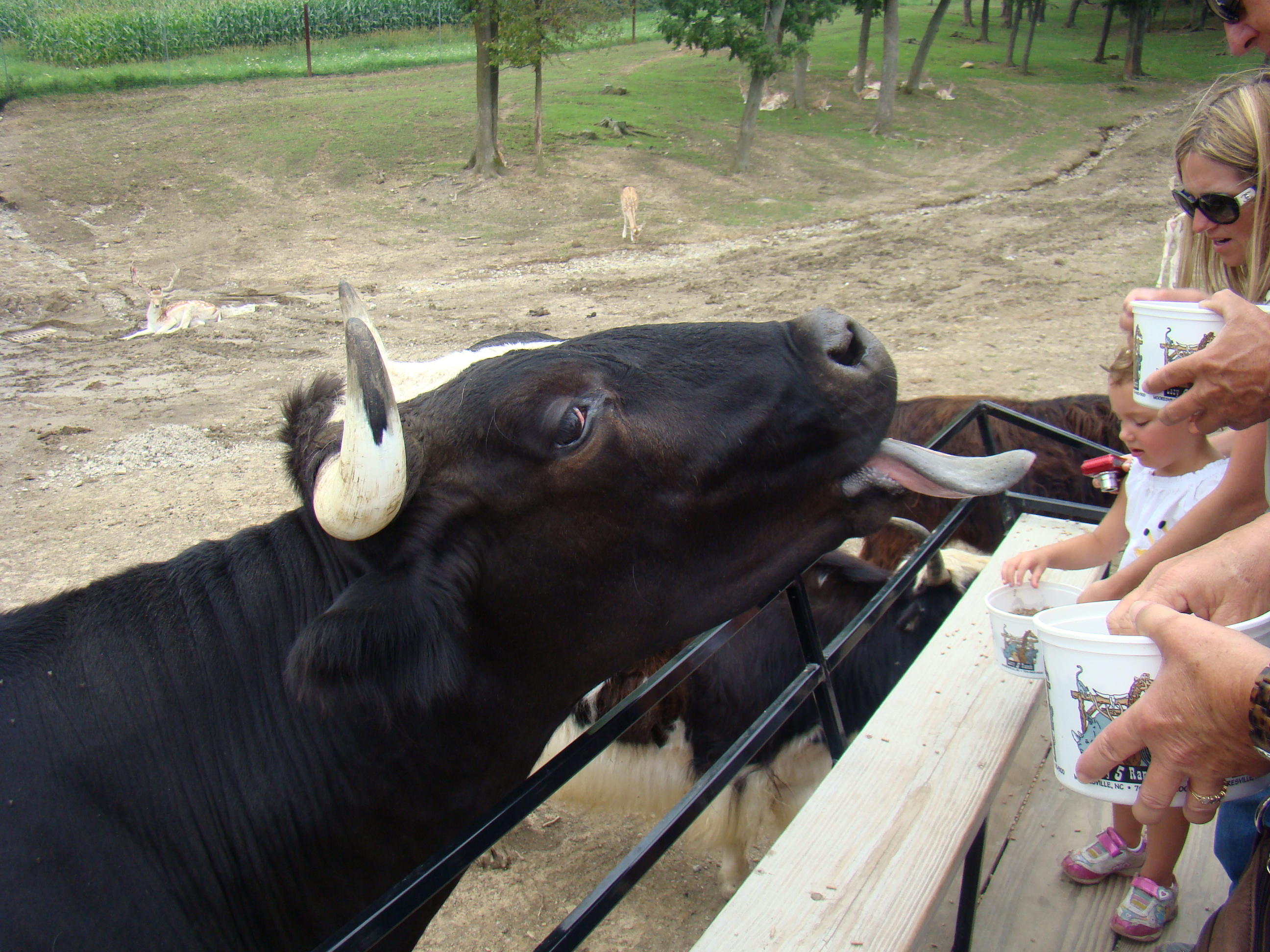
The Farm at Walnut Creek is truly where the deer and the antelope play, along with many other domestic and exotic animals. Feeding Big Bad John, a horned steer, requires caution, due to his long tongue reaching out for feed and his horns swinging from side to side. Everyone from child to adult enjoys feeding the animals and wishes the ride could last a little longer.

Noah's Ark Playground
Noah’s Ark Playground

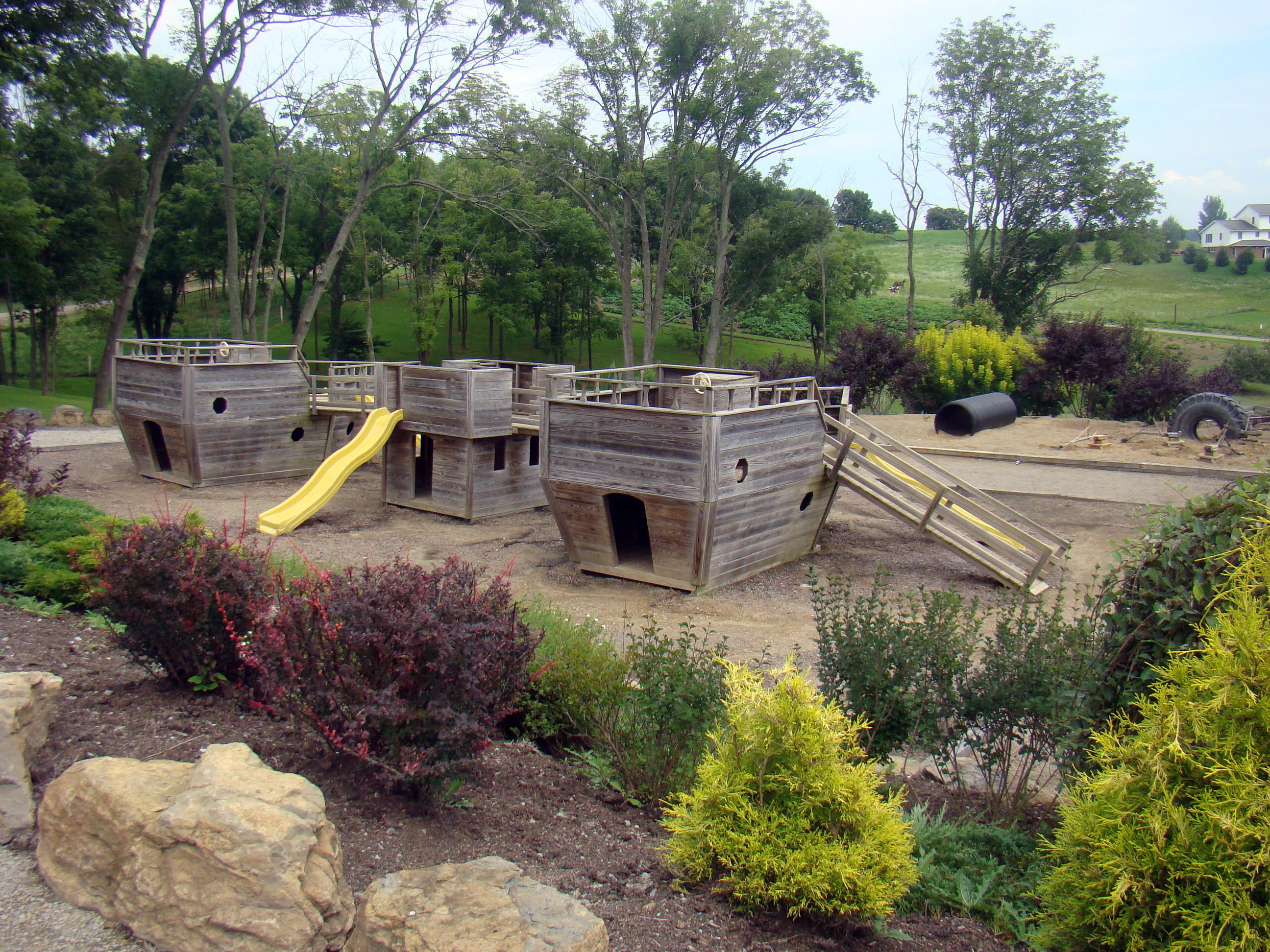
At the end of this great family outing, spread out a picnic near the lake. A Noah’s Ark playground seems the perfect play area for a day filled with animals. Take the plank up to the top of the ark, then come down one of several slides. Nearby is a sandy volleyball court.

The Farm at Walnut Creek provides fun activities from April – October. Summer hours are Monday – Saturday 8:30 – 6:00. Closed on Sunday. During the Fall Festival, you might try their famous pumpkin slingshot, or watch the Percherons press sorghum cane stalks into molasses.

Plan to spend a day at the Farm at Walnut Creek this summer!

The road to The Farm at Walnut Creek is a pleasant drive. Take I-77 to Exit 93, which will be SR 39. Turn left on SR 39 and go approximately 14 miles to a left turn on Co Hwy. 114. Signs are posted so watch carefully.

The International Peace Garden May Peace Prevail on Earth

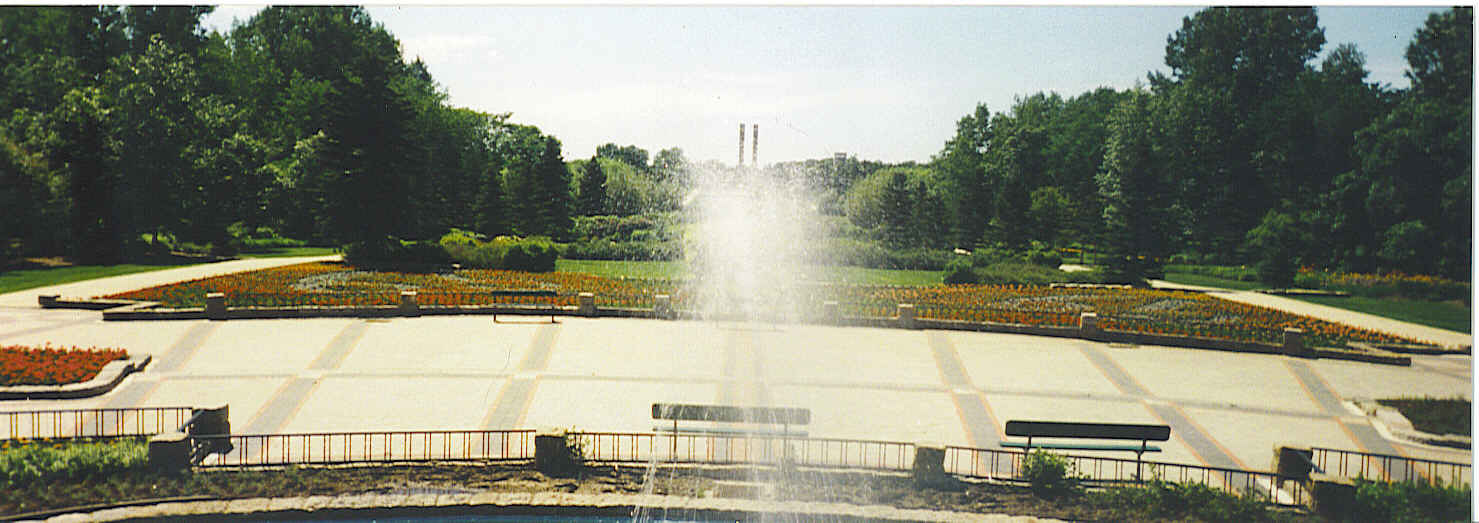
Opened on July 14, 1932 the International Peace Garden on the border of Canada and the USA near Dunseith, North Dakota is the world’s largest unfortified border, “Like No Other Place On Earth”. It encompasses 2,300 acres of botanical gardens and on a stone caim on the border are inscribed these words:

TO GOD IN HIS GLORY,
we two nations
dedicate this garden
and pledge ourselves
that as long as men
shall live, we will
not take up arms
against one another.

What a great thought all those years ago as a symbol of friendship between the two nations.

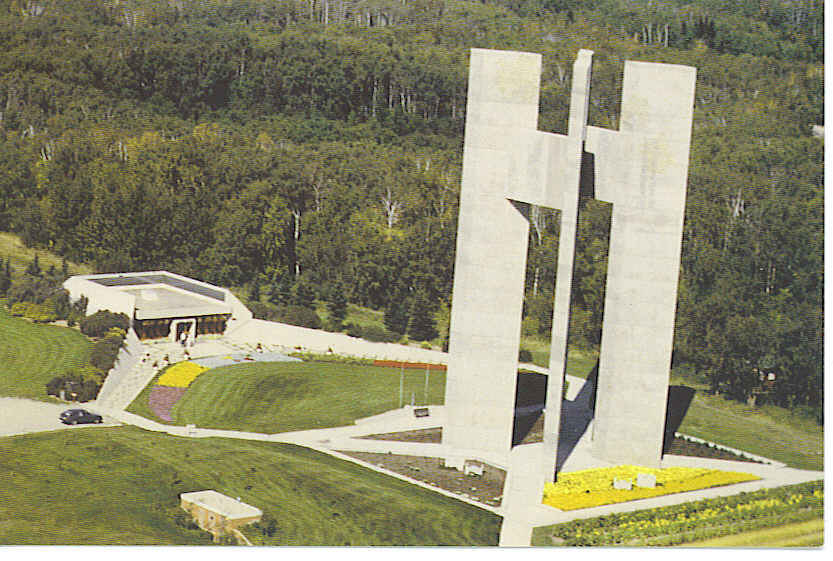
The sounds of bell chimes faintly echo every fifteen minutes from the Veterans Memorial Bell Tower.  The nearby 120′ concrete Peace Tower has four columns symbolizing the four corners of the world from which thousands of immigrants arrived in Canada and the United States to make better lives for themselves. Two of the columns are in Manitoba, Canada while the other two columns are in North Dakota.  The foundation symbolizes one solid base of democratic beliefs between the two countries.

The Peace Chapel provides the perfect place to sit down and relax, meditate, or read the positive thoughts written on the walls. The Peace Chapel has been a long time project of area members of the Order of the Eastern Star and is the only building which straddles the United States and Canadian border. While the chapel is a simple building, the addition of amber glass windows from France gives it a soft, golden, peaceful glow.

The three encircling walls into which quotations have been engraved were one of the special features that grabbed my attention. All quotations were either spoken or written by great men of peace throughout history. Some of the limestone walls still have embedded fossils of strange marine life, which had been molded into the bed of a tropical sea in the Manitoba region millions of years ago.

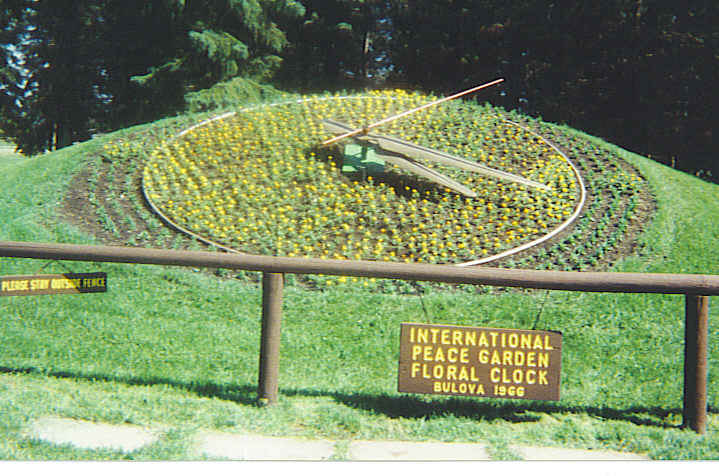
Flower beds are around every corner here, but two displays that have been constant from the beginning are beds forming the United States and Canadian flags.  A beautiful International Peace Garden Floral Clock actually works and was originally donated by Bulova in 1966. This original was designed as a replica of the famous Bulova Floral Clock in Berne, Switzerland, but inner workings were replaced in recent years by a clock from St Louis, Missouri.  The clock contains over 2,000 flowers with the design changing yearly, and reminds visitors to take time for the peaceful feeling surrounding the gardens.

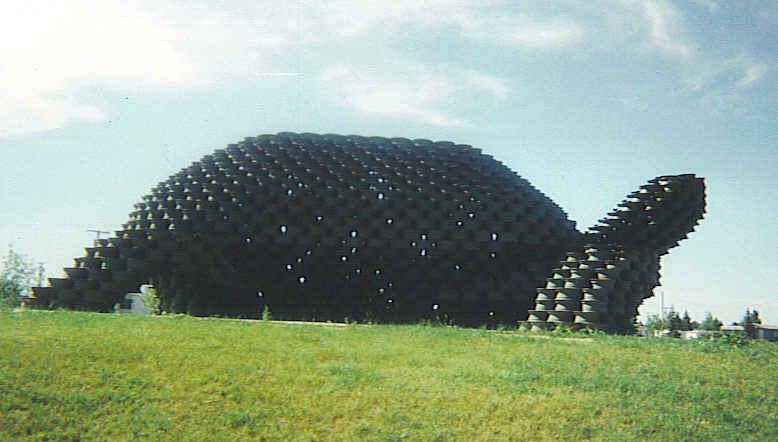
Just down the road in the Turtle Mountains near Dunseith, North Dakota is the largest man-made turtle in the world. Constructed of nearly 2,000 wheel rims, this “W’eel Turtle made from Wheels” has a head that actually bobs up and down. While the turtle is nearly forty feet long, its head alone weighs almost a ton! Stop and visit this tire rim sculpture at Dale’s Thrifty Barn – a gas-station, cafe, and motel in Dunseith, North Dakota. Little extras like this always bring a smile.

Turtle Mountains seem to be a perfect location for the International Garden of Peace as the slow movement of the turtle gives a relaxed and peaceful feeling just like the gardens. May peace prevail in your world as well. We should all attempt to be more like the turtle… at ease in our own shell.

The International Peace Garden in North Dakota can be reached by taking I-29 North in North Dakota to Exit 203.  Take Route 81/281 West to Dunseith where 281 bends North to the Canadian border.  This is a beautiful back-road drive away from the crowds.

Colorful Hot Air Balloon Festival Up, Up and Away

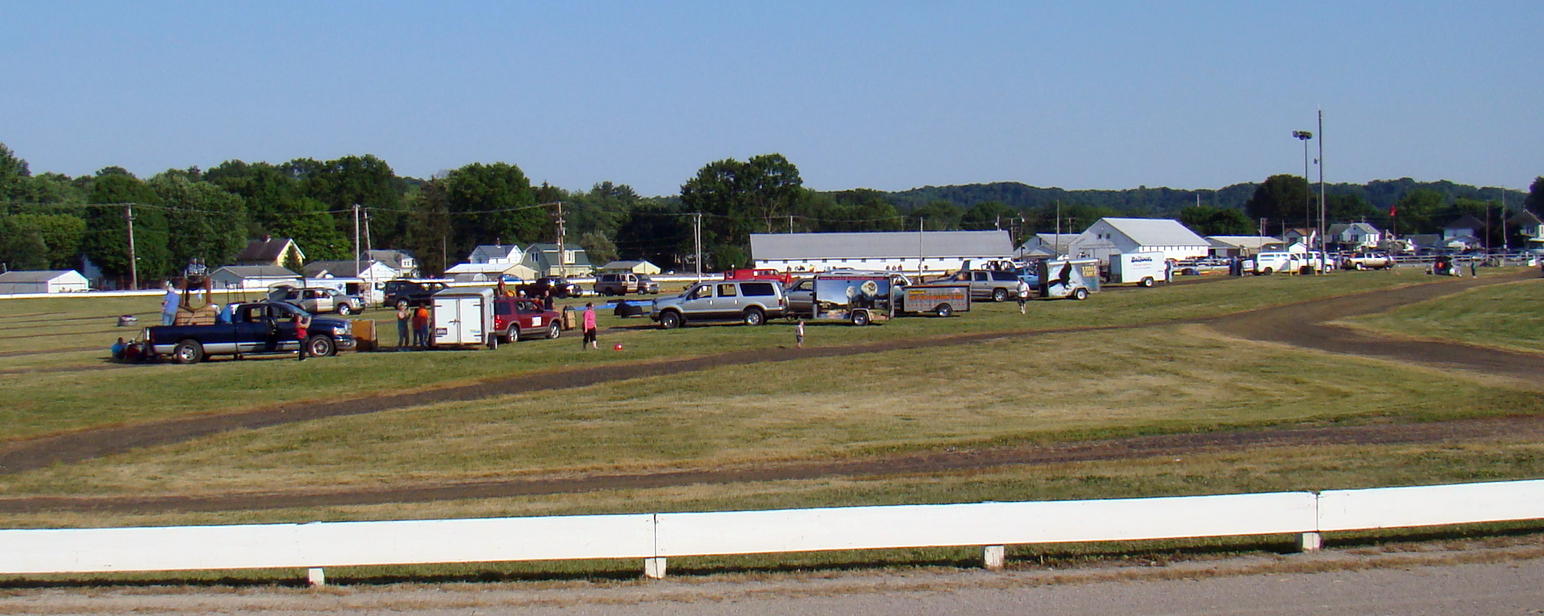
“Up, up and away, my beautiful, my beautiful balloon” could be the theme song for any hot air balloon festival.  Even though there wasn’t a chance to hit the skies personally, it still was a pleasure to watch the colorful balloons take to the air at the 31st annual Coshocton Hot Air Balloon Festival. The scene in the middle of the Coshocton Fairgrounds doesn’t appear very exciting at first glance…just filled with trucks and trailers. But this would all change before the evening was over.  This scene could occur at two times of the day since just before sunset or near sunrise are the best two times for flying.

Seems that man has always wanted to fly! The first hot air balloon ascended way back in 1783 in France.  The Montgolfier brothers, paper manufacturers, created a special balloon using a combination of linen and paper. Capturing the magical smoke from the fire, they were able to  lift a basket, for about fifteen minutes, carrying animals: a sheep, duck and rooster. At Coshocton Fair Grounds, the Montgolfier name lives on through a business called Montgolfier Balloon Gift Shoppe, where you can find everything imaginable for the balloon enthusiast.

The father of modern day ballooning, Ed Yost, made the sport more practical by building the balloon from nylon, later taffeta, and heating the air inside with a propane burner. The Balloon Works developed a parachute valve so the amount of air inside could be controlled to vary altitude and even land. Rattan wicker baskets carry pilot, passengers, propane tanks, and equipment needed to control the balloon. A variometer shows vertical speed, a digital temperature gauge reflects balloon and air temperatures, and an altimeter tells how high the balloon is above sea level.

In the center of the track is a flag pole with a red flag hanging, which indicates the launch isn’t ready to proceed. Sometimes shows must be cancelled if weather analysis determines there is either not enough wind to fly or if the wind direction is constantly changing. But tonight the wind blows favorably and the crowd cheers as the flag is changed to green. It’s  time for the men to start blowing up the balloons with their handy propane tanks. Anticipation is the name of the game as each balloon is stretched out on the ground, slowly filled with gas, and finally launched into the sky.

Out in the countryside, two targets have been placed to make the evening a little more challenging. Whoever comes the closest to these targets will receive the highest score. Just being part of this spectacular balloon launch would be reward enough. Approximately twenty balloons headed for the hills to see where they would land, which basically depends on where the wind takes them. The only real control the pilot has is to either make the balloon ascend or descend by controlling the heat in the balloon.

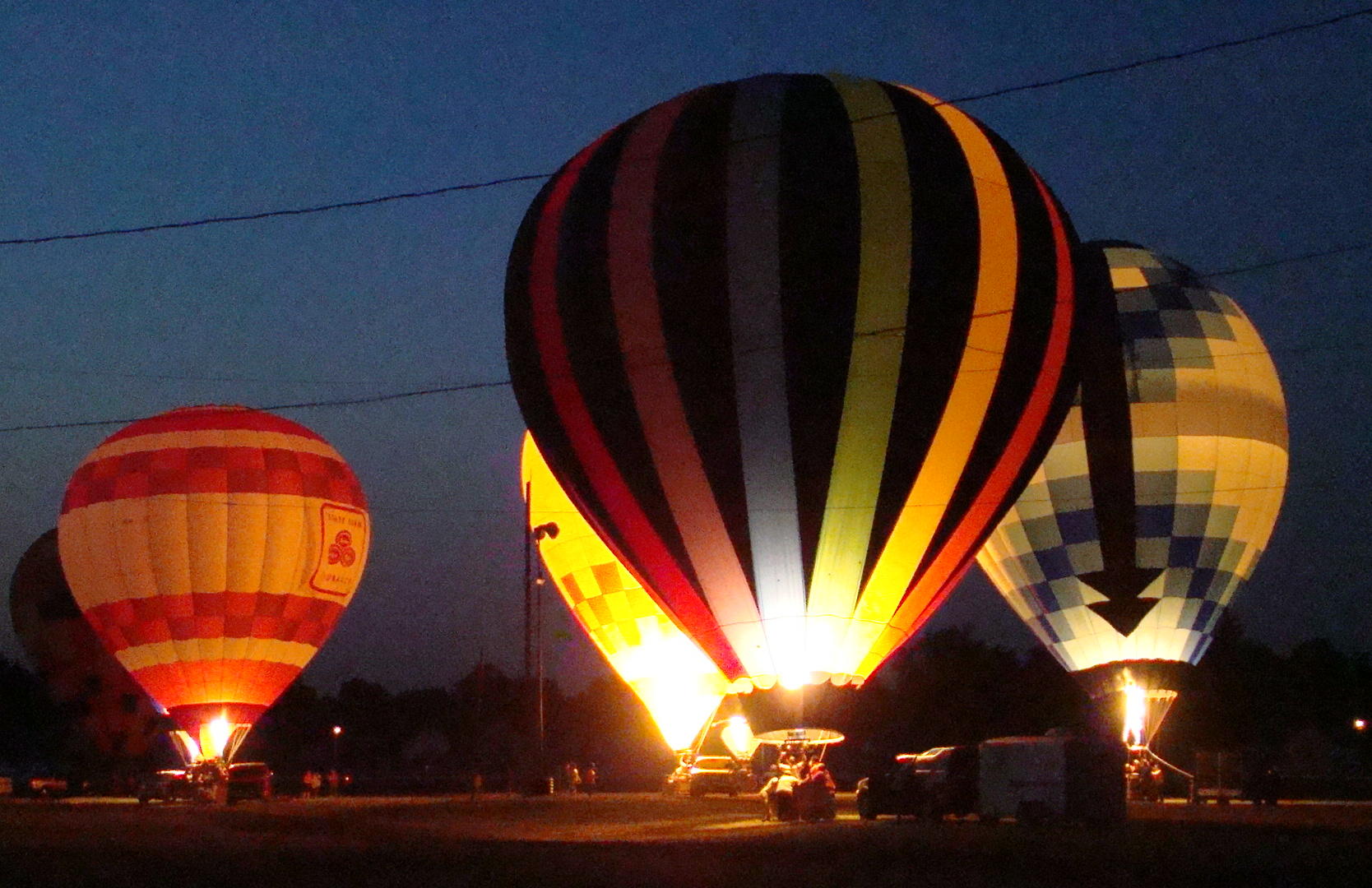
At dusk,  a special Night Glow lit up the evening sky while the balloons were anchored instead of being launched. This spectacular sight is created as the  hot air balloon burners illuminate the colorful fabrics of the balloons against the twilight sky. Only six groups participated in the finale here, but displayed some beautiful synchronized lighting patterns.

The only way this day could have been more spectacular is to have been riding in one of the baskets below the hot air balloons. Perhaps someday you can experience the thrill of soaring through the air as there are places in Ohio. such as Hot Air Balloon Rides, that have some pretty exciting trip packages. Look for a hot air balloon launching wherever you happen to live or visit.

The Irish, in typical tradition, added this toast to hot air ballooning, which describes the journey very accurately:

The winds have welcomed us with softness.                                                                           The sun has blessed us with it’s warm hands.                                                                         We have flown so high and so well                                                                                             that God has set us gently back                                                                                                           into the loving arms of mother earth.        

Come fly with me!. As you soar into the air like a bird on the wing and feel the touch of the air on your skin, relax and enjoy the serenity of this beautiful adventure.

Every June, The Coshocton Hot Air Balloon Festival is held at the Fairgrounds in Coshocton, Ohio. Coming into Coshocton on Route 36 , exit at Roscoe Village then proceed over the bridge on Chestnut Street past the courthouse. Make a left turn on 7th Street and after several blocks you will arrive at the Coshocton Fair Grounds on the left side of the street. 

Cambridge Glass Company: Quality Heritage Preserved


Elegance of a bygone era is evident at The National Museum of Cambridge Glass, which is near downtown Cambridge, Ohio. Here you will find over 6000 pieces of handcrafted quality glassware – some of the finest in the world.

Cambridge Glass Company was founded back in 1902 with Arthur James Bennett, a glassmaker from Boston, as its president.  Cambridge was chosen as the site of this new venture because of its easy access to natural gas wells and coal mines, as well as railroads to bring in supplies and deliver the finished products. To get those furnaces blasting hot, they even had their own coal mine at Near Cut. Due to the intense heat of those furnaces, it was quite common to work early in the morning during the summer months so temperatures were a little cooler.

How many people do you think handled an elegant piece of glass from start to finish? That number could run as high as seventy five individuals! All of them were extremely proud to be part of this high quality product.

Back in 1973, a group was formed to establish this museum to display, study, and preserve the history of Cambridge Glass Co. At that time they created a revised logo based on the original one used by Cambridge Glass, but added the beginning and ending dates of operation.

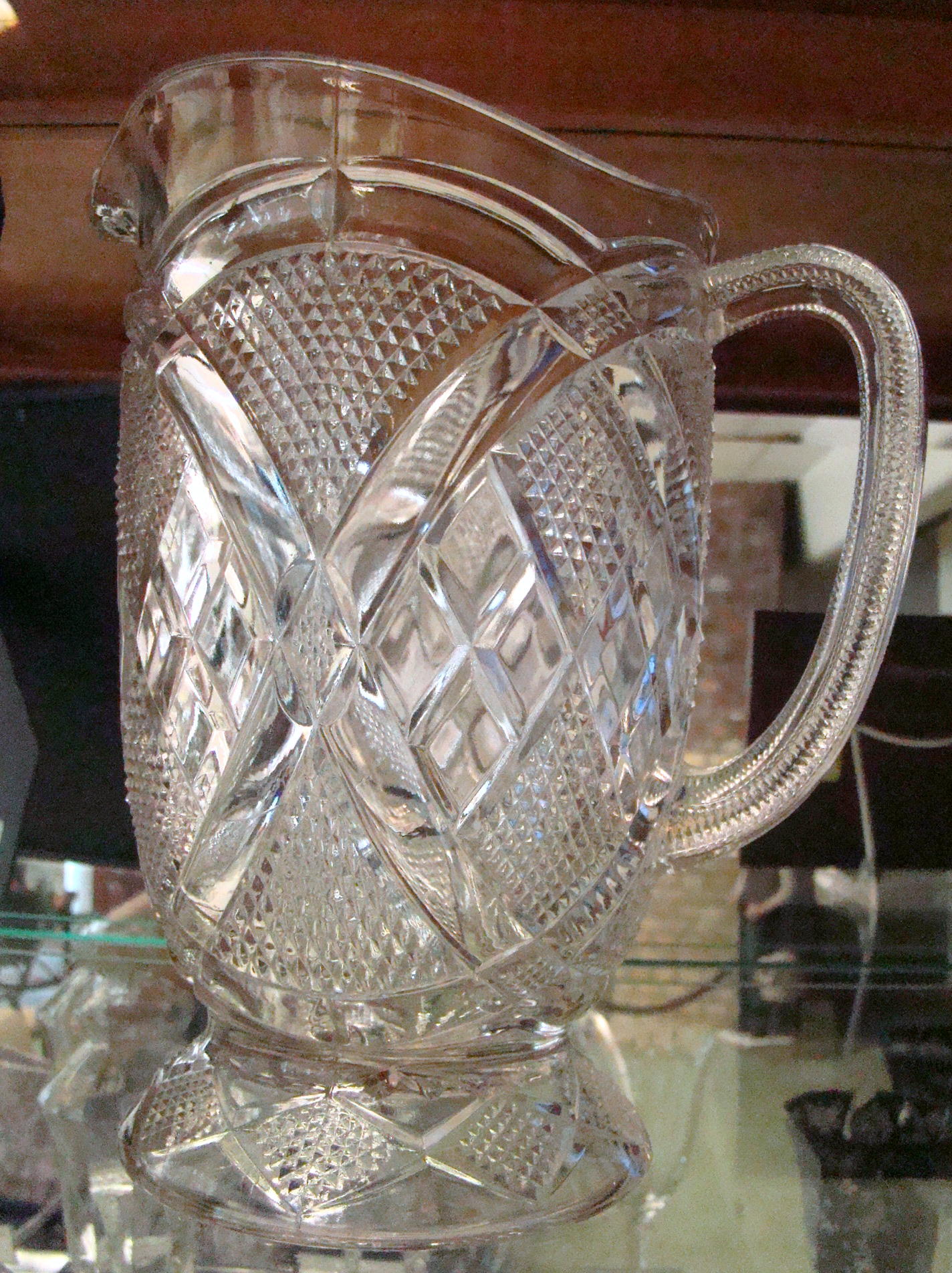
Upon entering the museum, the beautiful colors and designs sparkle in rows and rows of showcases. Guides are on hand to explain the history of the glass making process at Cambridge Glass Company from 1902-1958. Back in 1902, the first dazzling piece produced was a crystal water pitcher, the Big X, which is on display at the museum.

One great place to begin your tour is in the Auditorium where they have a short video showing the glass making process. Here you will view actual films of work at Cambridge Glass back in the 1940s. These color enhanced films show workers of that time gathering, shaping, etching and engraving their beautiful glass pieces. There are also on display several original pieces of equipment, which were used at Cambridge Glass Company.

Etched glass attracts the eye of almost everyone who appreciates the beauty of fine hand workmanship. Some of the etched patterns have real gold fused on the glass for trim. as well as gold in the intricate pattern of the etchings. Rose Point is the most popular etching with elaborate wild roses midst vines and leaves. Rose Point is the most collected pattern and while it is usually in crystal, it can be found rarely in other colors.  The guides will often let you experience the method of etching using templates from Cambridge Glass.

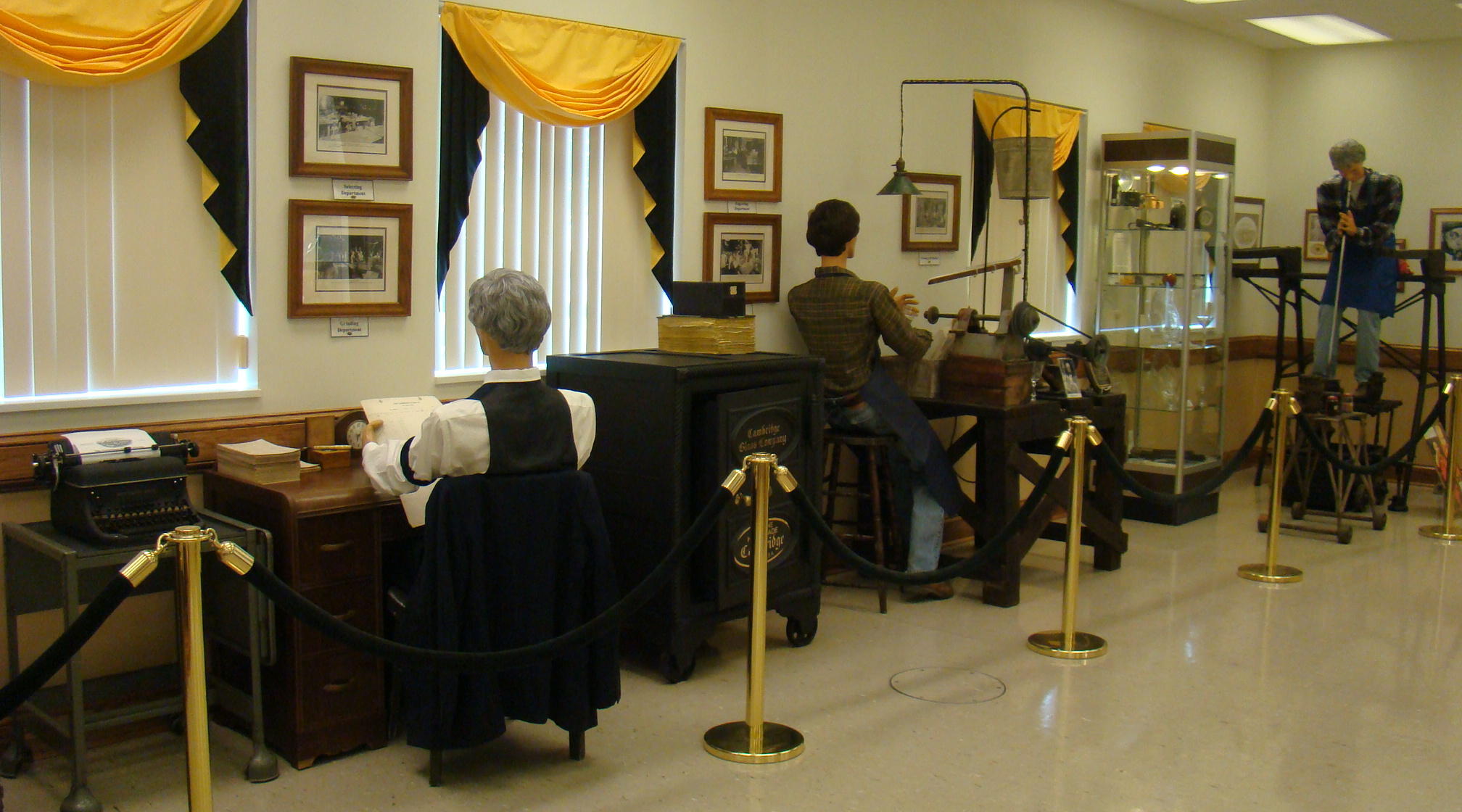
The interpretive area sheds light on the history through an interesting display of tools and molds used during their productive years. Here you see an office worker overlooking the time sheets, an engraving table with a high tech bucket cooling system, and the popular glass blower. The addition of color to the glass made Cambridge Glass even more sought after as a collector’s item. As early as 1903, colors of Opal, Turquoise, Blue, Green and Amber were being produced, but not very extensively. Gradually more colors were added and in the early 30s a glass chemist created some of the most popular colors for collectors today.  Everyone has their favorite, but one of the most popular colors  is Crown Tuscan, a flesh colored pink milkglass, while other favorites are Carmen, Royal Blue or Amethyst.

Department stores in that era used Cambridge Glass in their displays for various reasons. These stores used glass holders to display their perfumes and millinery, as well as sparkling glassware displays. Some of the items that are in the museum today were actually purchased from Chicago and New York department stores.

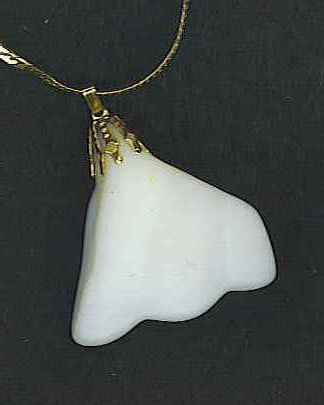
The gift shop has actual pieces of Cambridge Glass for sale as well as books. A recent addition has been jewelry and Christmas ornaments made from broken pieces of Cambridge Glass that have been refinished, making each piece unique.   One of my favorites is a necklace purchased there a couple years ago made from the milkglass wing of a Cambridge Glass swan.  Special memories are included since my father worked at Cambridge Glass from the age of twelve as a carrying-in boy, and later as a presser, finisher and glassblower until the plant closed.

Add some sparkle to your life and stop by The National Cambridge Glass Museum to view fascinating local history. Join visitors from all over the world while you learn more about the rich heritage of glassmaking in the Cambridge area.

The National Museum of Cambridge Glass is located in Cambridge, Ohio on 136 South  Ninth Street, just half a block off Wheeling Avenue. Head to downtown Cambridge off any Cambridge exit near the crossroads of I-77 and I-70. The easily recognizable Cambridge Glass logo is on the front of the museum. The museum is open from April 1st through October 31st, Wednesday through Saturday 9 a.m. – 4 p.m. and Sunday Noon – 4 p.m.  Admission is very reasonable at $5 per adult and $4 for senior.  Children under twelve are free when accompanied by an adult.  If you have any questions regarding the museum, call 740-432-4245. Visit their website at www.cambridgeglass.org .

Butchart Gardens on Vancouver Island

Nearly 100 years in bloom ! Fifty acres of beautifully landscaped floral beds capture your attention as you wander along the meandering paths through Butchart Gardens near Victoria, British Columbia.  The Canadians certainly created a masterpiece here on Vancouver Island.

Robert and Jennie Butchart, pioneers in the manufacture of Portland Cement, came to Vancouver Island in 1904 because of rich limestone deposits needed for cement production. A few years later, the limestone quarry was exhausted so Mrs. Butchart pictured it replaced with a beautiful garden.  Being transported by horse and cart, tons of top soil were placed on the floor of the quarry.  Little by little the floor blossomed into the spectacular Sunken Garden, which is one of the exquisite spots at Butchart Gardens.

While Mrs. Butchard enjoyed planning her garden, Mr. Butchard collected ornamental birds from all over the world. A parrot lived in their house, peacocks strutted across the front lawn, and birdhouses were placed strategically throughout the garden.

Totem poles carved by artists of the Tsartlip and Tsawout First Nations are a recent addition to the gardens. Totems are very symbolic and designed to tell a story, quite often starting at the bottom. This particular totem tells a story about Butchart Gardens. The bottom figure represents all the people who come to the gardens. In the center is carved a whale, symbolizing the fact that people traveled from afar to arrive here. On top is the mystical, yet powerful, thunderbird, which watches over the gardens and protects it with his outstretched wings.

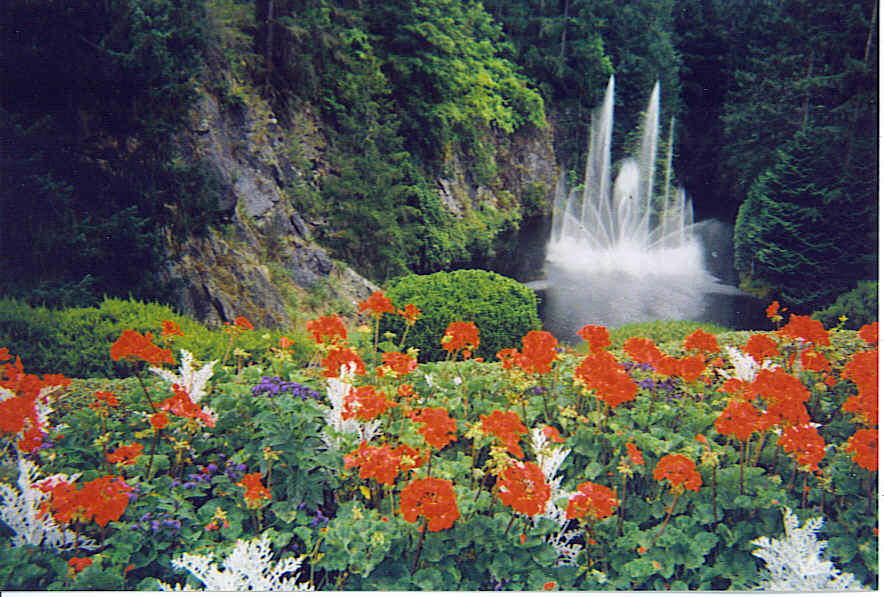
In 1939, the Butcharts gave the gardens to their grandson, Ian Ross  for quite the spectacular 21st birthday present. Ross Fountain was installed on the 60th Anniversary of the gardens. The Ross Pond with fountain looks great at any season, or any time of the day or night. Today the gardens are still family owned with great-granddaughter, Robin-Lee Clarke, being the present owner/manager.

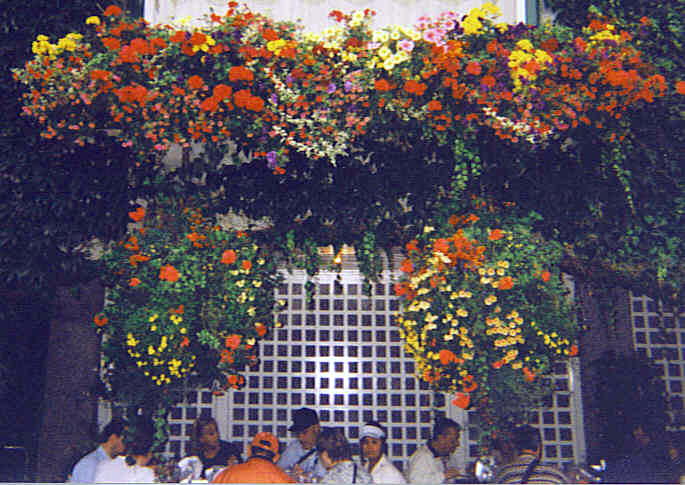
Through a floral covered archway, visitors find themselves in the relaxing Italian Garden, which includes a dining area where you can sit outside or enjoy the view of the beautifully landscaped pond from inside. Afternoon tea outside under the beautiful hanging baskets, and plants cascading from window boxes, is a scrumptious experience.

Butchart Gardens is delightful every season of the year, which seems quite surprising for Canada. But the gardens are located on the coast so their weather is a little milder than what we might imagine Canada to experience. Beautiful Night Illumination occurs each evening, when the garden looks magical with the flickering lights. Saturday Fireworks draws such large crowds, people sometimes wait in line for hours to get inside the gates.

Every year millions visit these gardens at all seasons of the year in one of the loveliest corners of the world.  Maybe you will get a chance sometime soon to visit there too. During my last visit in the summer when glorious blossoms were at their peak, they even offered me a job in their greenhouse or gift shop.  See you there?

Butchart Gardens can easily be reached from every direction on Vancouver Island. Start out on Route 17, then turn west on Keating X Road, which becomes Benvenuto Avenue and leads directly to the gardens. Cruise ships frequently stop at Vancouver Island and offer transportation to the gardens as well.

Mysterious Bigfoot Legend – Skeptic or Believer?

“Absence of evidence is not evidence of absence.” This quote from distinguished astronomer, Dr Carl Sagan, is popular with Bigfoot investigators. They are still searching for more clues that will prove their Bigfoot theory.

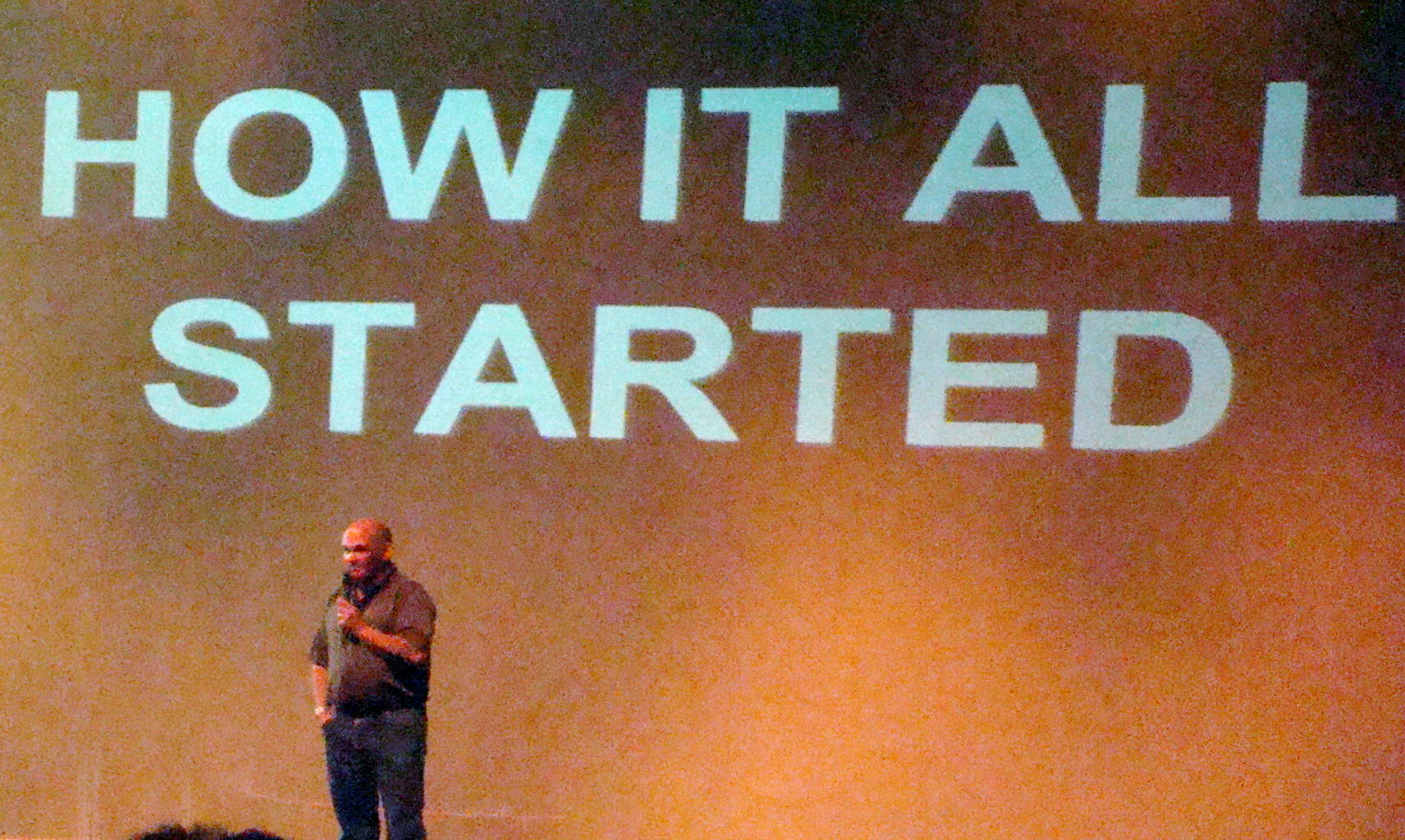
Guernsey County, Ohio is one of those “hot spots” for Bigfoot investigators.  Annually, the Ohio Bigfoot Conference gathers informative speakers to share their adventures with the gathering crowd.  The 2012 conference was held at Pritchard Laughlin Civic Center near Cambridge, Ohio after previously being held at Newcomerstown and then Salt Fork Lodge. The move was partially made to accommodate the growing attendance as last year at Salt Fork they overflowed the conference room and many were  forced to watch the program on big screen TVs in the lobby.  The Bigfoot enthusiasts have increased from less than a hundred in 1989 to over seven hundred at present.

The goal of the Ohio Bigfoot Organization is to find, recognize, and protect what many believe to be an unclassified primate, commonly known as Bigfoot, and residing in North America.

A highlight of the meeting this year was the appearance of legendary Bigfoot seeker, Peter Byrne, who fascinated visitors in the lobby with his Bigfoot stories. Peter, the star of the show, has led professional expeditions in search of Yeti and Bigfoot.  His book, The Search for Bigfoot, tells of his fascinating life exploring since 1946 in the Himalayas for Yeti, the Himalayan version of Bigfoot.  Even though he is 86 years old, Peter still has a curious mind and continues his search for Bigfoot on the Oregon Coast.

Before the scheduled speakers, curious visitors checked out tables in the lobby with lots of unusual items. Of course, there were videos of possible sightings as well as plaster casts of large footprints left behind by something or someone. Lengths of these footprints average about 16″ long, but some range up to 22″, and are much wider than a human footprint.

Soaps and lotions carried the name Sasquatch, the Canadian Bigfoot rendition. One popular soap made in Canada bore the title Sasquatch Sweat Soap – Guaranteed not to grow hair. Sasquatch Sweat Cream was also available. Not certain if their purpose was to repel or attract Bigfoot.   There were even cookies for sale shaped like…yes, you guessed it, Bigfoot.

The first speaker of the day was past president, Don Keating, who led this conference for 23 years. He first heard of Bigfoot in 1984 from a story in the Newcomerstown News that told of strange sightings of a large, hairy creature in and around the Newcomerstown area. Later Don began investigating some of the unusual sightings he heard from neighboring Guernsey County as well – glowing red eyes, large footprints, and very tall creatures.

Salt Fork Lake area became one of those places where frequent strange events seemed to occur. Often something eerie seemed to be happening at Hosak’s Cave in the late evening hours, especially when there was a full moon.  For their safety, people were even strongly advised to leave the area by park rangers.

When Don Keating said he was leaving his president’s position to devote more time to his weather research, someone in the audience asked an interesting question: “Do you find predicting the weather a lot like investigating Bigfoot?” To which Don answered, “With both, you put your neck on the line.”

Grabbed a Bigfoot cookie to munch while listening to additional speakers which included: Dr John Bindernagel, wildlife biologist; Bill Draginis, surveillance and security expert; and Mike Esordi, crypto zoologist with artistic abilities. All are active in Bigfoot research and frequently share their knowledge through lectures around the world.

Whether you believe in the existence of Bigfoot or not, you could hear some interesting adventures at the conference. Maybe some evening you will want to spend the night at Salt Fork State Park. If you listen carefully, you might hear strange calls, branches breaking in the woods, or rocks being thrown into the lake. Could these sounds be made by Bigfoot?  Keep your eyes and ears open!

Salt Fork State Park is located just five miles north of Cambridge, Ohio just off Route 22. I-70 and I-77 intersect close by so you will have easy access to the area.  While in town, stop at Mr. Lee’s or Theo’s Restaurant as both have delicious home cooked meals at reasonable prices.

Will Mount St Helens Erupt Again?

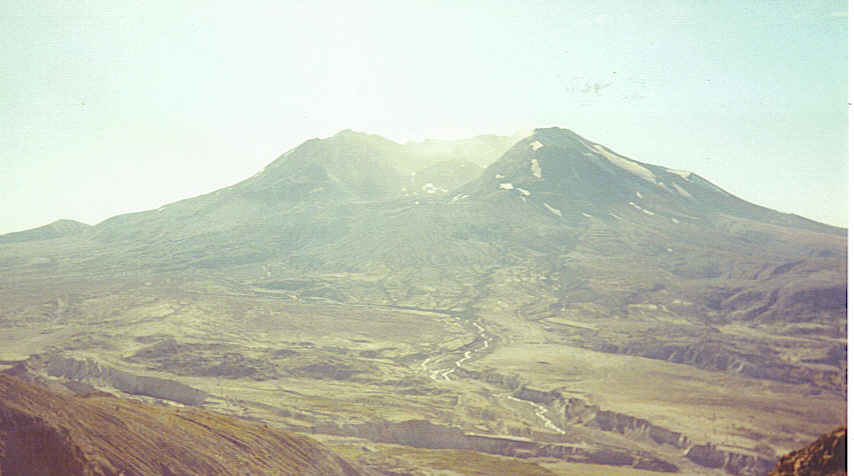
Earthquakes! Steam explosions! Molten lava!  All of these were present during the 1980 awakening and subsequent eruption of Mount St Helens in Washington. Today this area, home of the largest volcanic landslide in recorded history, is designated as Mount St Helens National Volcanic Monument as a place for research, recreation and education.

Johnston Ridge Observatory, just one of the visitors’ centers, was a great place to start exploring. Their theater showed great footage of the 1980 eruption. Here you also found first hand accounts of individuals who were actually in the vicinity that day. Of particular interest were the machines that recorded the seismic activity presently occurring.

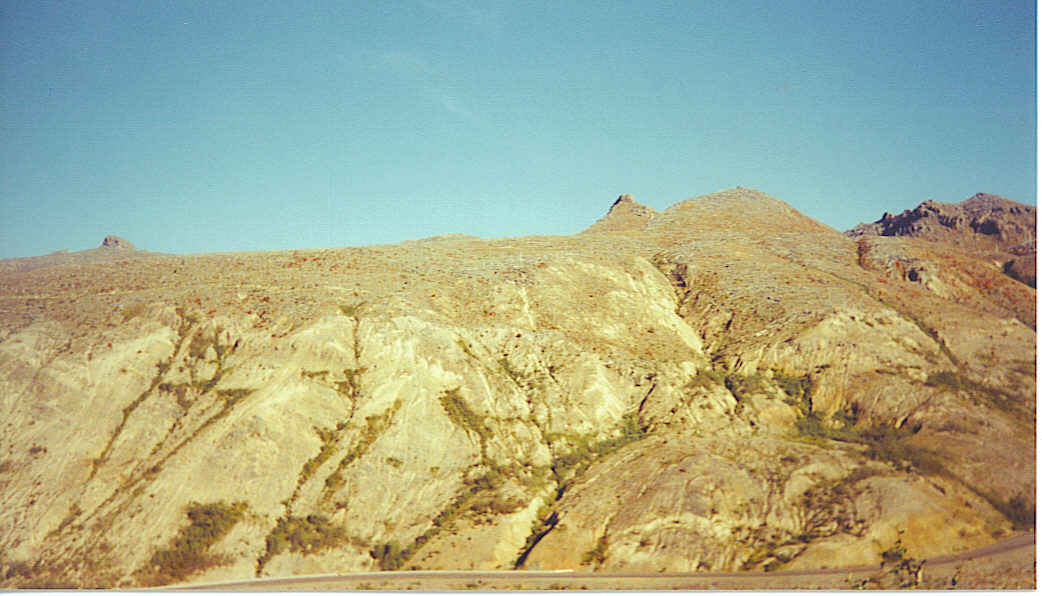
There were several trails leading up the side of Mount St Helens, which appeared mostly barren being covered with ashes. You could walk among the fallen trees that were flattened by the blast. If you felt braver and went a little farther, you could even see vehicles and heavy logging equipment that was damaged when Mount St Helens blew her top. Took the path as far as was permitted at that time. The hiking trails stay open according to the mood of the volcano.  When she is steaming or spewing forth lava, they obviously need to be closed. But what a thrill to get as close as possible to the top of Mount St Helens.

The 1980 eruption left behind a trail that is still visible today. Due to the force of rocks and ice, trees in the lava path were struck down like bowling pins.  Today they still lay there on the ground but the forestry department has gradually handplanted new seedlings amongst the fallen trees.

From 1986 – 2004, the mountain slumbered until in 2004 earthquakes rippled through the earth. Later that year a smaller eruption began and about a dump truck load of lava oozed out of Mount St Helens every second thus slowly rebuilding the mountain.  By 2011 the amount of lava oozing from the mountain was reduced to a dump truck load every fifteen seconds.  If the eruptions would continue at their present rate, the mountain would be back to its original height in about 180 years.

During the 1980 blast, everything within miles was covered with ash from the volcano.  So suppose it was easy for the ash to be gathered and sold as souvenirs.  Still have a pen said to contain ash from that volcanic eruption.The entire landscape has changed from that 1980 blast. New river routes have been formed and even new lakes. Here you see a real change of scenery due to the awesome power of nature.  Will a major eruption happen again? Probably not in our life time, as most volcanoes erupt every 100-300 years.  The future holds hope for reforestation and rebuilding…unless another eruption occurs sooner than expected.

Hope your life will erupt with much happiness, and may you spread that happiness for miles around.

Mount St Helens National Volcanic Monument is located in Washington approximately 96 miles south of Seattle, Washington and 50 miles northeast of Portland, Oregon. One easy access route is from I-5, Exit 68 onto the Spirit Lake Memorial Highway/ WA 504. This route passes through the various visitors’ centers and into the center of the original blast zone.