Places to go and things to see by Gypsy Bev

Archive for the ‘History’ Category

Washboards – Not Relics of the Past
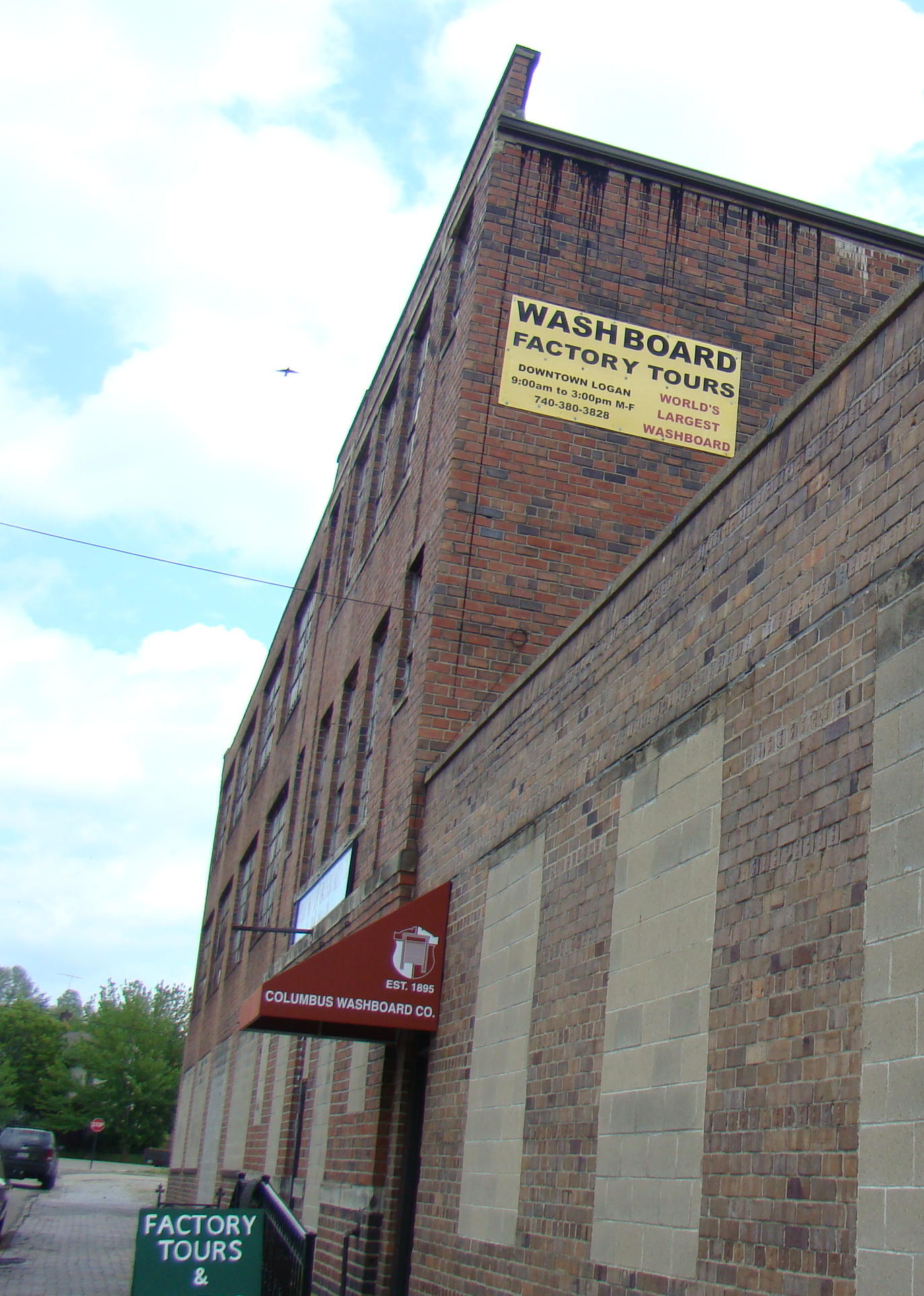
 

Columbus Washboard Factory

Columbus Washboard Factory in Logan, Ohio

Scrub a Dub Dub! That’s the sound of clothes being washed on what most consider an old-fashioned washboard. But that’s not the case at all! People around the world still use washboards and many of those are being made today by the Columbus Washboard Factory in Logan, Ohio.

In 1895, Frederic Martin, Sr. began building washboards called “Bear Easy” in his back yard near Columbus, Ohio on Oxley Avenue in Grandview. The business didn’t really take off until his son, Frederic, Jr. expanded the business in 1925. Their peak year was in 1941 when they sold 1,287,757 washboards. During their lifetime they sold over 23,000,000. But eventually the business was sold and in 1999 moved to Logan, Ohio where the new owners promoted some alternative uses for washboards.
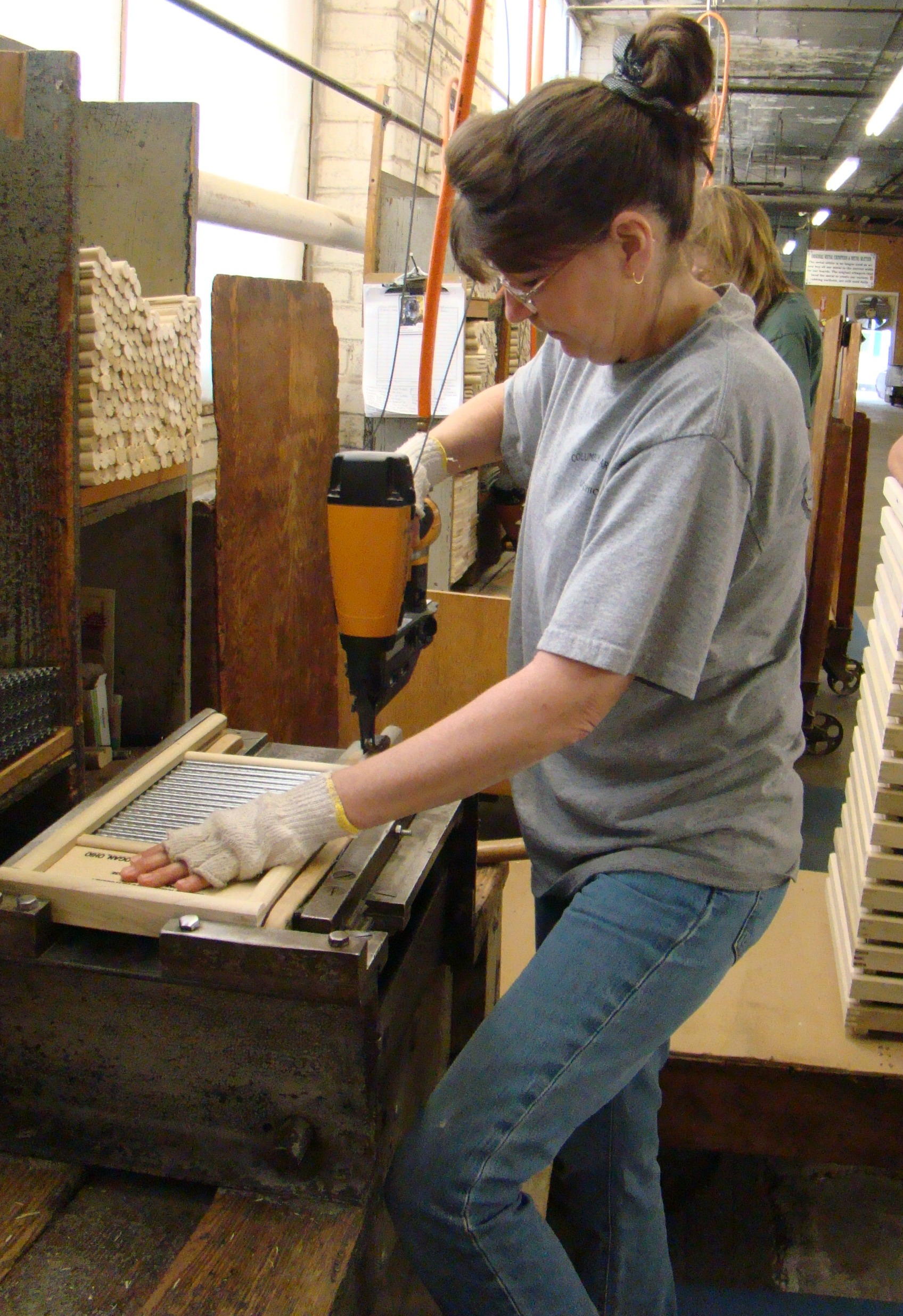
Washboard being made

Washboard being made

Today Columbus Washboard Company is the only company in the United States that makes washboards. They emphasize originality and high quality in over 80 different boards they manufacture.  Signs posted throughout the small factory make it quite easy to do a self-guided tour. Workers eagerly answer any questions you might have. If you have a group of six or more,  a guided tour will be provided.

Production has slowed and there are usually about 200 washoards made per day now. Once the materials are assembled, it takes less than a minute to make a washboard. They have the one-at-a-time assembly down to a science.

A crimper holds a roll of metal, which runs through a device that bends the metal to create various rubbing surfaces. The two most popular washboards are Maid Rite and Dubl Handi, which gets its name from double sides on the washboard. One side is rough for those tough spots, while the other side is fairly smooth for fine garments.
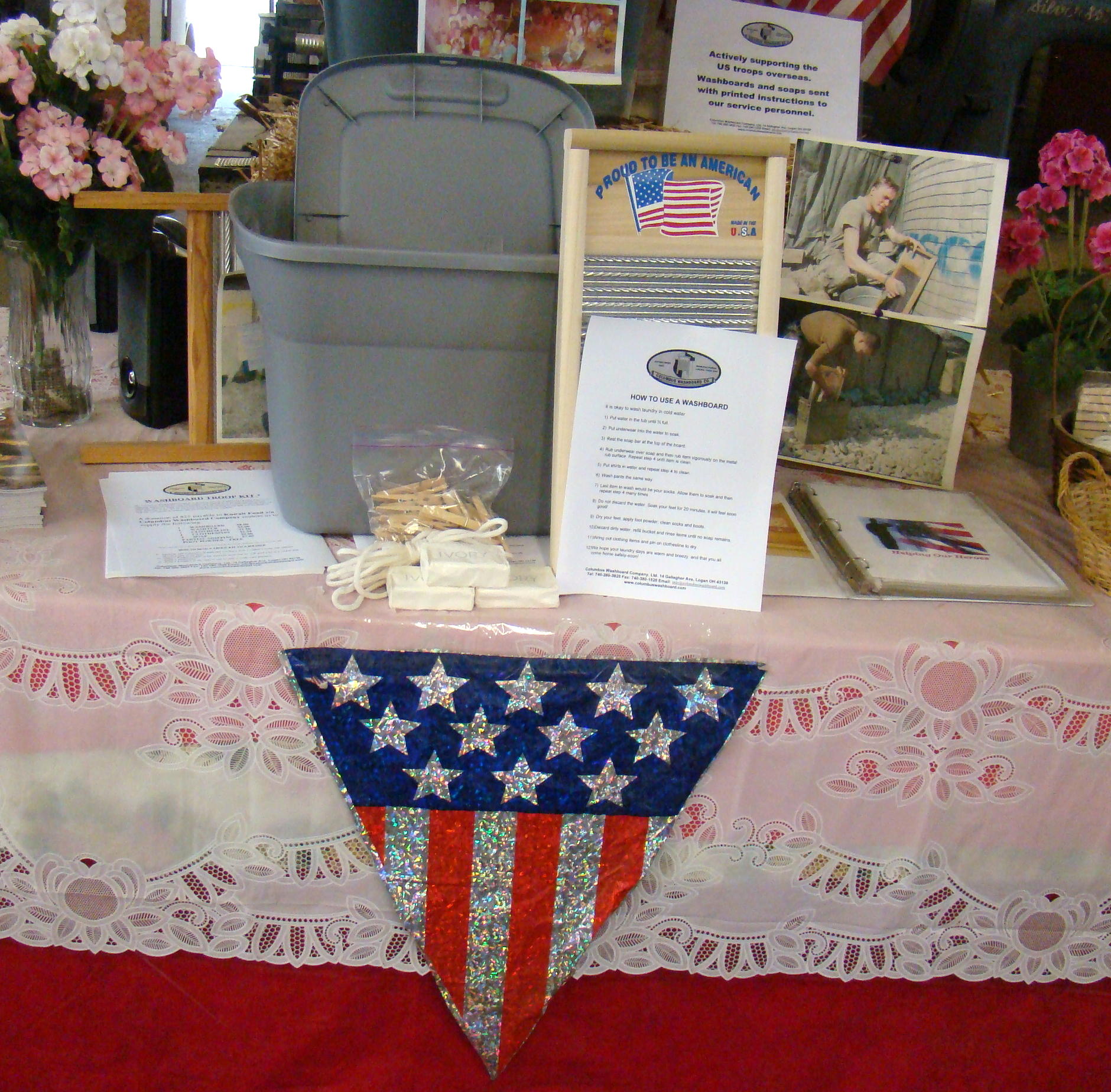
Washboard kit for Armed Service members

Washboard kit for Armed Service members

The fact that the washboards and all parts are Made in the USA creates a special added attraction. A Washboard Kit makes an excellent gift for members of the armed forces stationed away from civilization. Each kit includes a covered tub, washboard, bar of soap, clothesline, clothespins, and, of course, instructions.
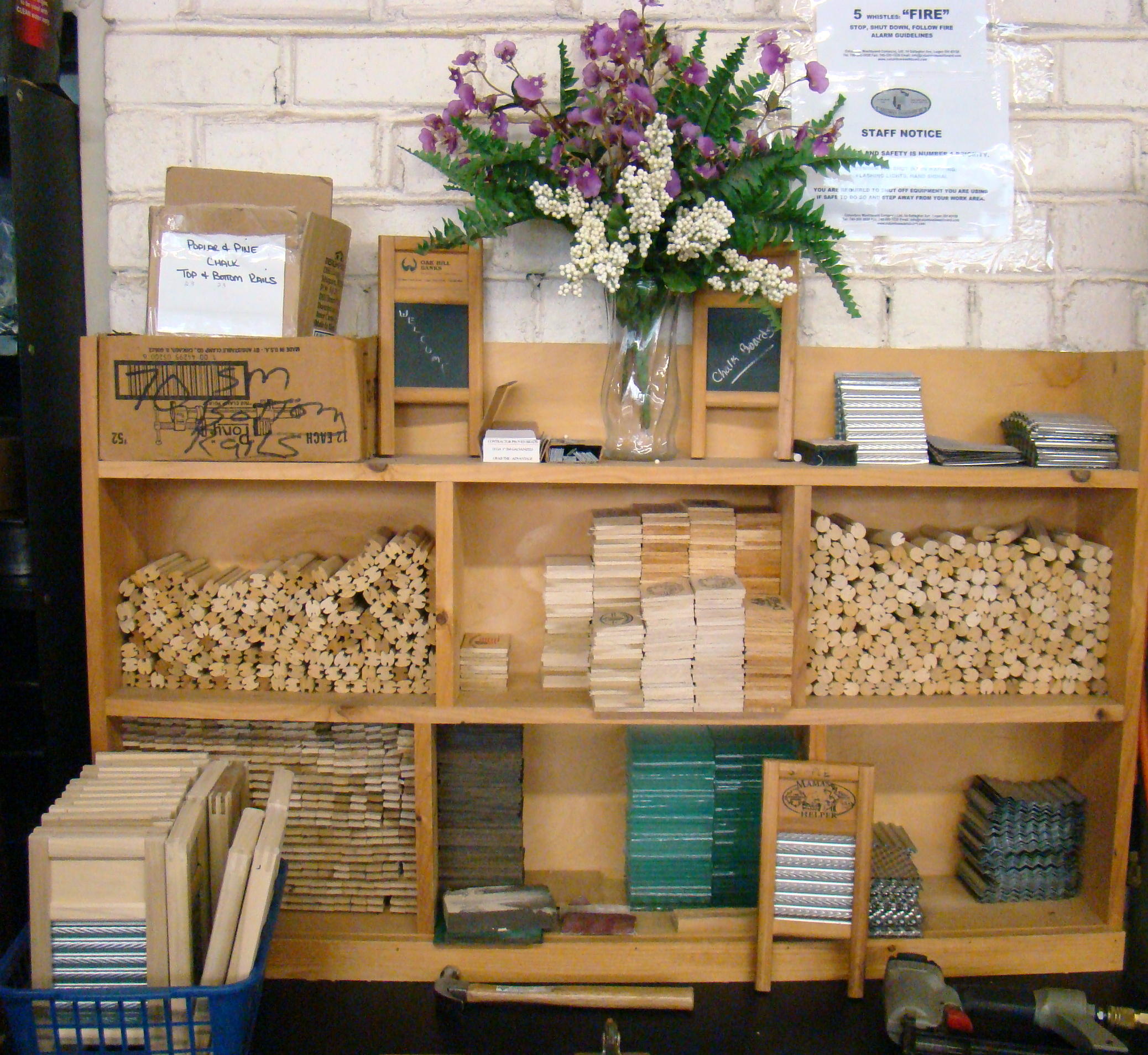
Various Washboard sizes

Various Washboard sizes

If you have a member of the armed services who might have need of a washboard kit, Columbus Washboard Factory will send a kit free of charge. Send a name and address of someone in the armed services to Columbus Washboard Factory, 14 Gallagher Avenue, Logan, Ohio  43138. Donations are appreciated, but not required.

Once in a while the washboards get used in unique ways. One such time happened when a soldier received some steaks. How could they cook them? They used the wood on the washboard to start a fire and then used the rough metal surface for the grill. Those military guys think outside the box.

These boards get shipped around the world. Some of the frequent customers outside the United States live in England, France, Japan, Australia, and all of the tropical islands.

Columbus Washboard Factory has discovered other uses for the washboards besides laundry. At the Veterans hospital in Waco, Texas, they decided to cover the walls of the elevator and cafeteria with washboards. Guess they wanted a scrubbed clean look!  Many people today use them for decorative purposes and some have a blackboard in place of the metal so it can be used for a message board.

Their gift shop includes many unique items besides all the various washboards. You can find products that Grandma would have used such as Laundry Powder, Bluing, and Dolly Clothespins.
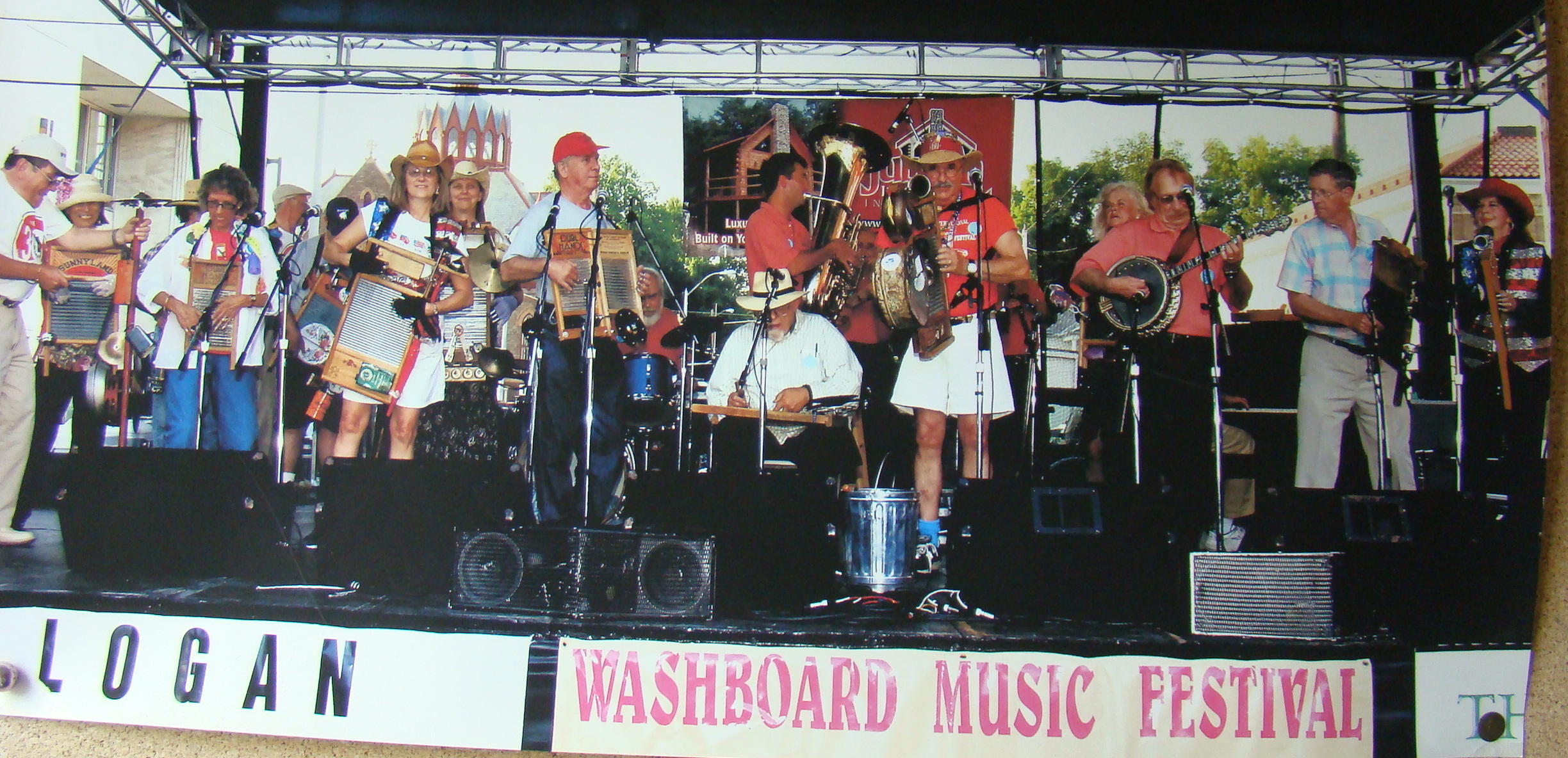
Washboard Music Festival in Logan, Ohio

Washboard Music Festival in Logan, Ohio

Today one of the most popular uses is as a musical instrument. Every year on Father’s Day weekend, three blocks of downtown Logan are closed off to host the Washboard Music Festival. It is listed as the Most Unique Music Festival in the area. The streets overflow with toe-tapping music, arts and crafts, a quilt show, antique tractors, and even washboard solos. Perhaps you would like to purchase a washboard and join in the fun this year.

There is no easy way to arrive at Logan, Ohio.  State Route 33 runs through the town in south central Ohio. The journey is not one for those who enjoy interstate travel, but perfect for a gypsy.

Historic Mount Pleasant’s Abolitionist Tradition

Quaker Meeting House

Quaker Meeting House in Mount Pleasant, Ohio

Once in a while, the roads you travel lead on an adventure not expected. Such was the case with a detour through the town of Mount Pleasant, Ohio. Meeting local people, while viewing their historic buildings, led to information unexpected but very exciting.

Back in 1803, Mount Pleasant in Eastern Ohio became home for a large group of Quakers, who were searching for a haven from slavery.  Before long, the Quaker Meeting House was constructed and became the first yearly meeting house for Quakers west of the Alleghenies. The basic design reflects the simplicity of Quaker life, while its two-foot-thick brick walls show their strength.
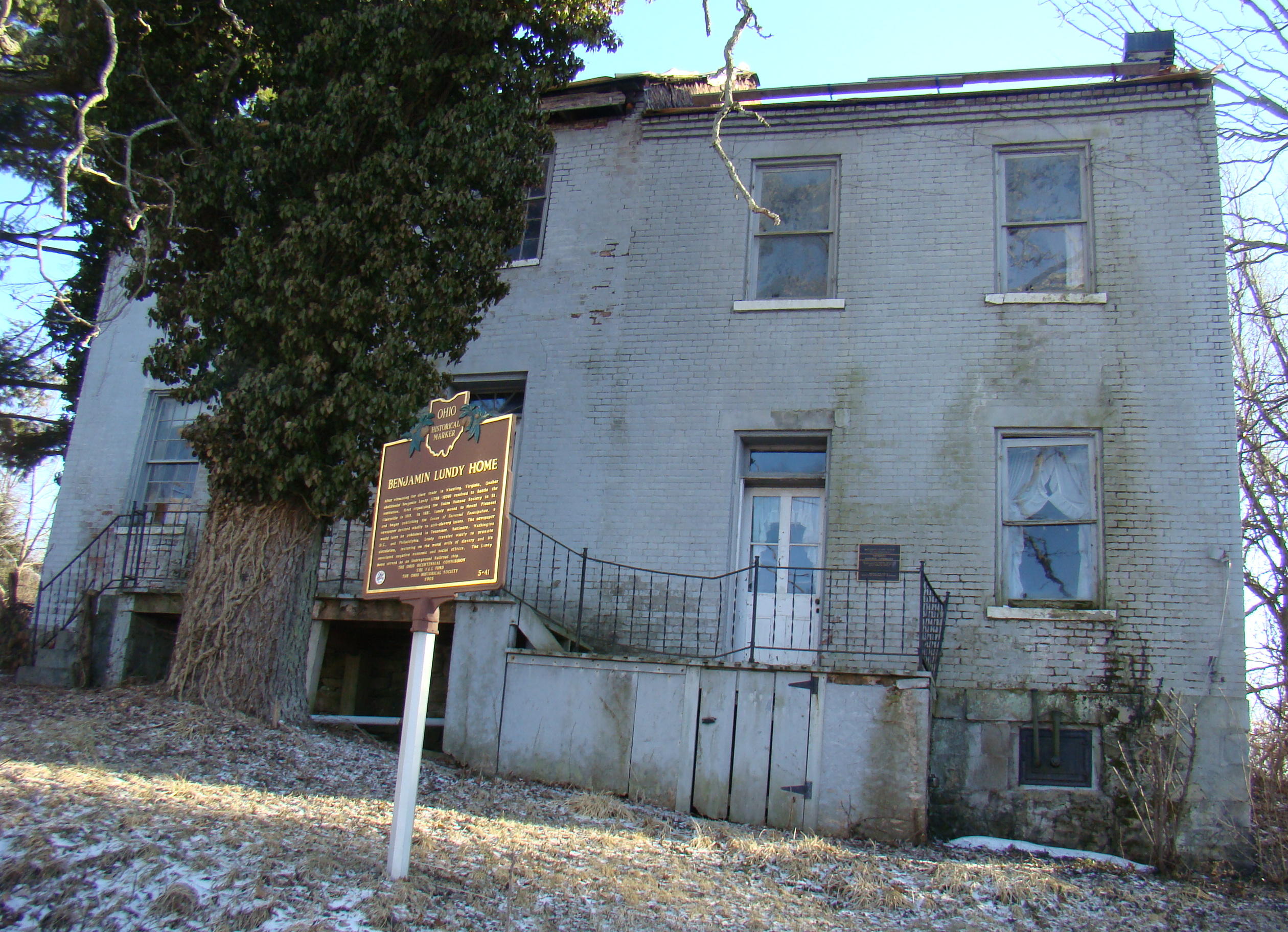
Benjamin Lundy Home

Benjamin Lundy Home

Much of the history of this small town relates to the settlement of abolitionists and their active anti-slavery movement. The entire community was an early safe haven for runaway slaves, even before the Civil War.

One of those Underground Railroad stops was the home of Benjamin Lundy, who desired to battle the institution of slavery in several ways. Moving to Mount Pleasant in 1821, he began publishing a paper called, Genius of Universal Emancipation, devoted entirely to anti-slavery issues. He traveled all over the country explaining the evils of slavery.

Harris-Bone Cabin through the front window

Harris-Bone Cabin through the front window

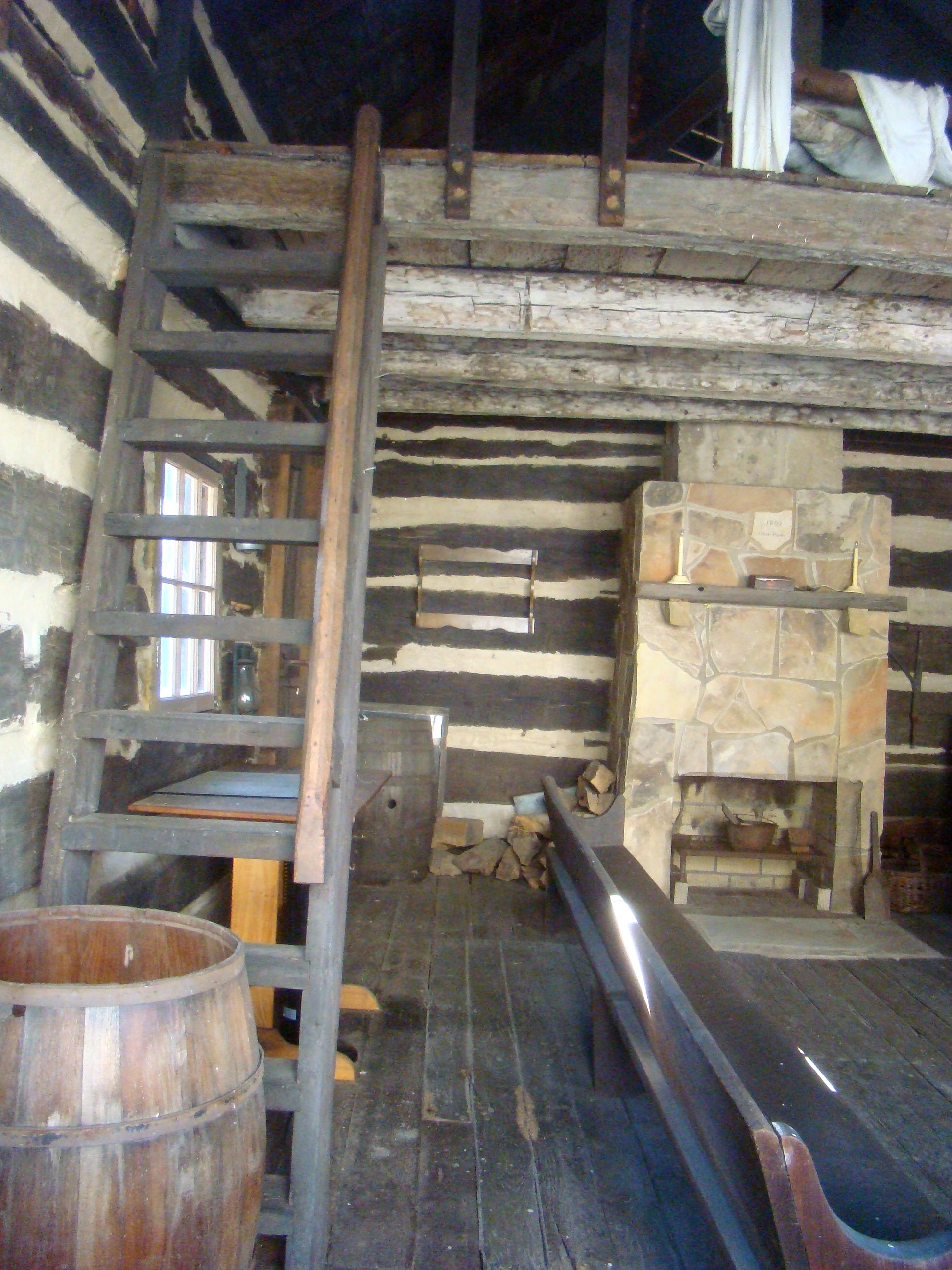
One of the early stores was the Harris-Bone Store built of logs in 1804. Today that store still stands on a prominent corner in Mount Pleasant attracting passers-by to stop and take a peek inside. During the summer months, tours are held, but otherwise you can still get a great look through the front windows.

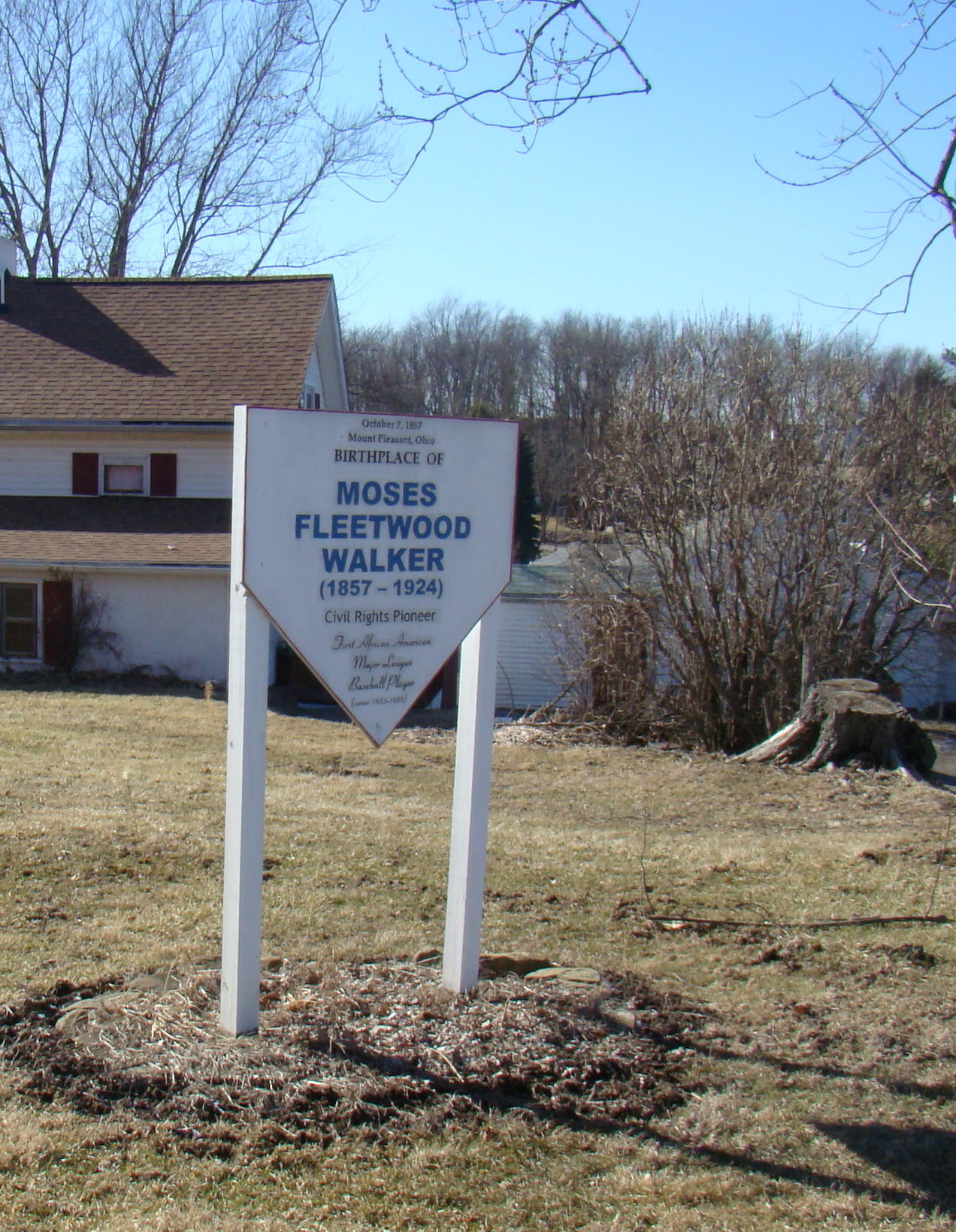
You wouldn’t really think about a small town like this having a famous personality, but it definitely did. Listen up baseball fans! Who was the first African-American Major League baseball player? Jackie Robinson? Not so! At the side of the log cabin store, a sign displays in large letters that this is the birthplace of Moses Fleetwood Walker, the first African-American to play in the American Association back in 1883.

Sign marking birthplace of Moses Fleetwood Walker

Sign marking birthplace of Moses Fleetwood Walker

Moses’ father, Dr. Moses W. Walker,  served as a medical doctor in western Pennsylvania prior to the Civil War. Upon moving to Mount Pleasant, Dr. Walker served as a minister at the Baptist Church and became instrumental in helping many slaves through the Underground Railroad. While the slaves were staying with him, they helped build the Walker family home.

“Fleet” possessed a rock arm in his position of catcher for Oberlin College, University of Michigan Law School and then the professional Toledo Blue Stockings. After a season of being scorned and jeered by opposing teams as well as his own teammates, Fleet returned to the minors after an injury. Following his baseball career, Walker attempted several business ventures: owning a hotel, movie theater and even an opera house in Cadiz, Ohio.

Just a short walk from the Harris-Bone Store can be found the “Hidden Gardens” of Pete and Jean Petra. Pete has a greenhouse in a section of his house and raises most of his plants. Every year he tries to have something new and interesting in his Garden, which basically surrounds his house and extends to an open lot nearby. Prepare to be surprised!

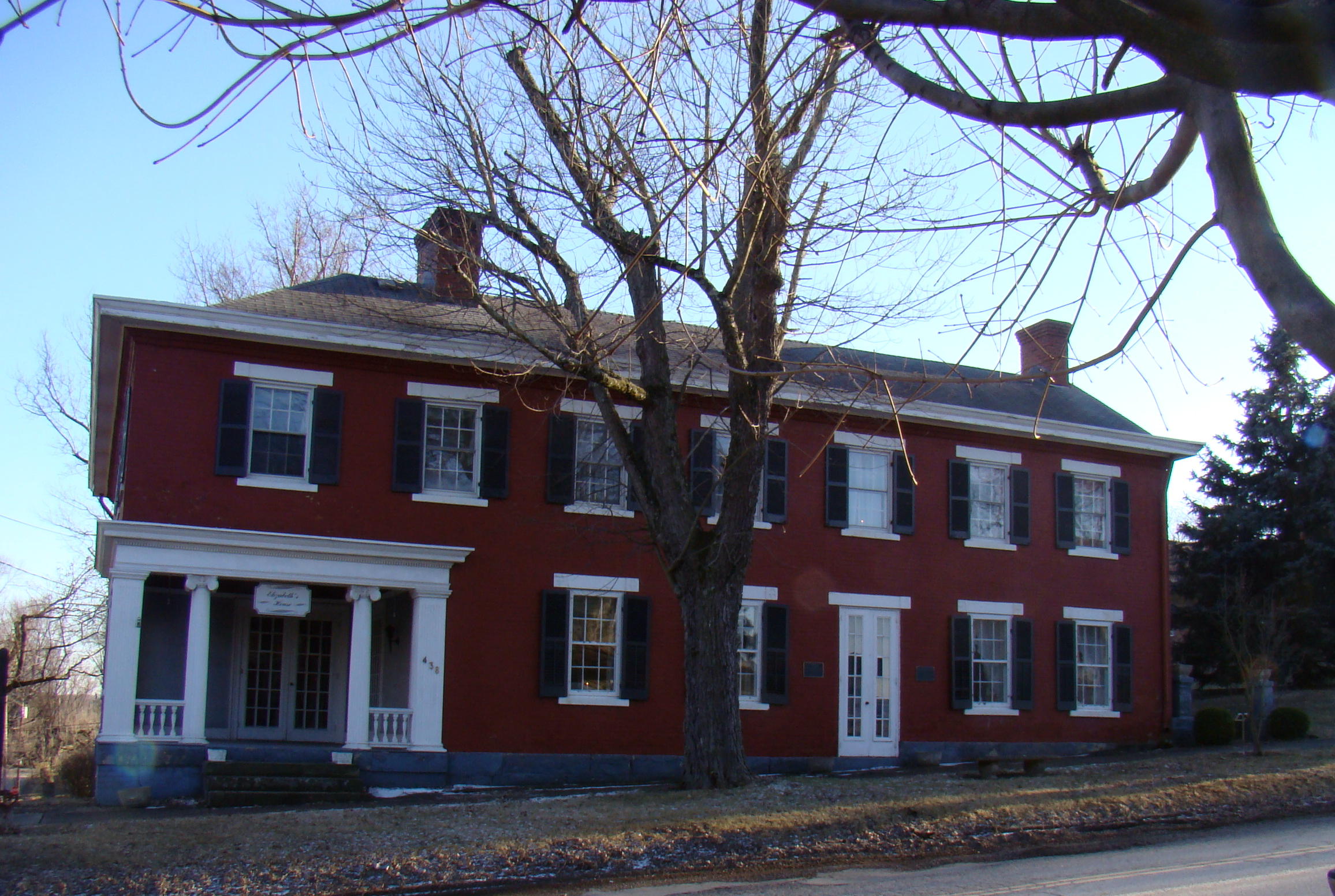
Elizabeth House

Elizabeth House Mansion

Another spot filled with memories of the past is the Elizabeth House Mansion, formerly the John Gill home built in 1835. Gill actually planted a mulberry tree here, then imported silkworms from China to perform their magic. In the 1800’s, this tree produced the silk for the first American flag ever made out of silk.

The first weekend in August is a perfect time to visit Mount Pleasant as at that time they give tours of the town and Pete and Jean’s  “Hidden Gardens” are at their peak. Climb aboard the Underground Railroad as you walk the streets of this friendly old town where the anti-salvery movement got an early start.

Mount Pleasant, Ohio is located on Scenic Byway State Route 150 in Southern Jefferson County. It can be reached most easily from I-70 by taking Exit 215 and following the curving, scenic route to the town.


Maximum Security at Moundsville Penitentiary

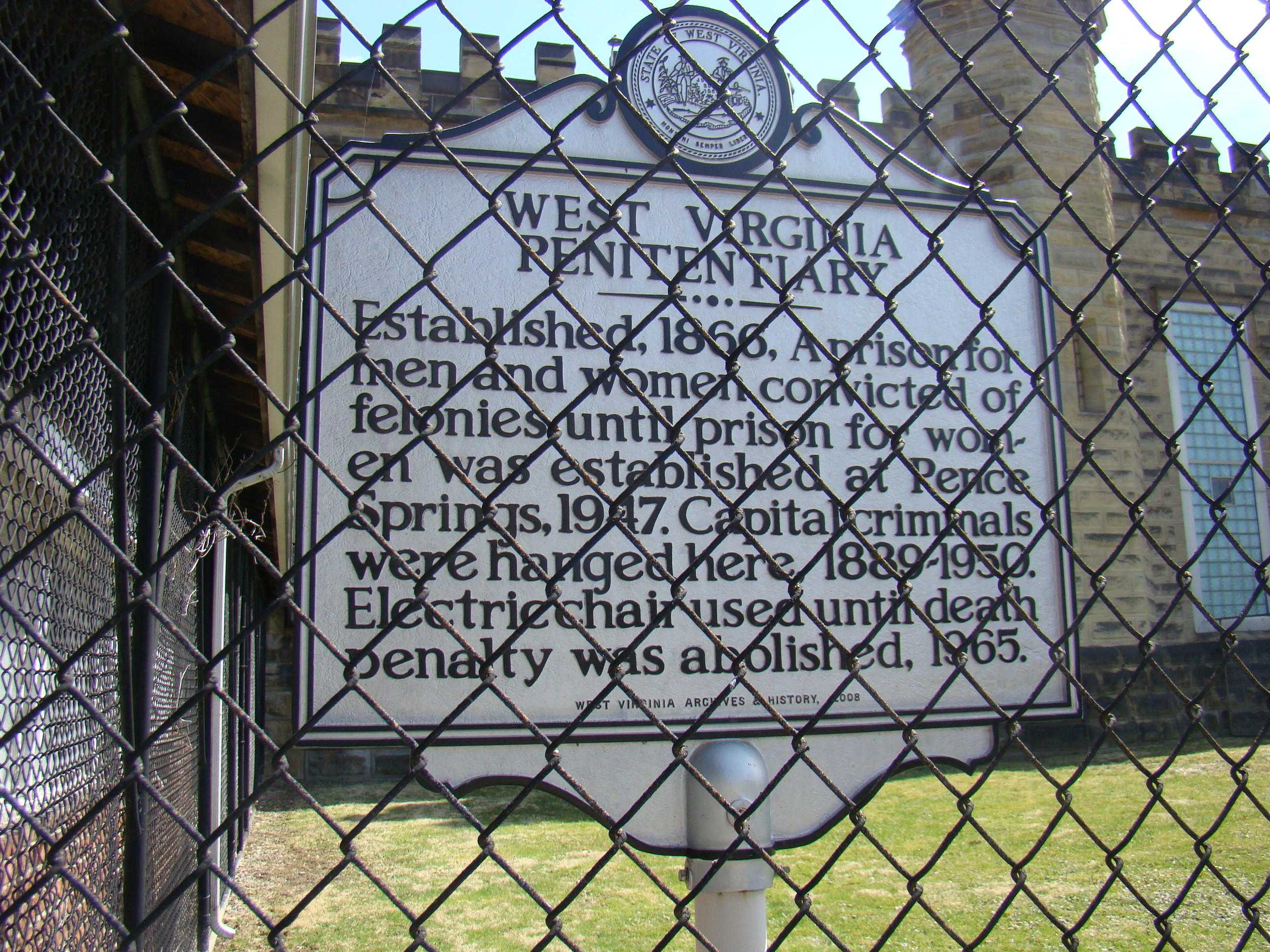
WV Penitentiary Welcome Sign

West Virginia Penitentiary Welcome Sign

Welcome to a living hell! The most violent and vicious prison in the United States describes conditions at the original West Virginia Penitentiary in Moundsville, West Virginia. Maximum Security became home for the worst of those prisoners.

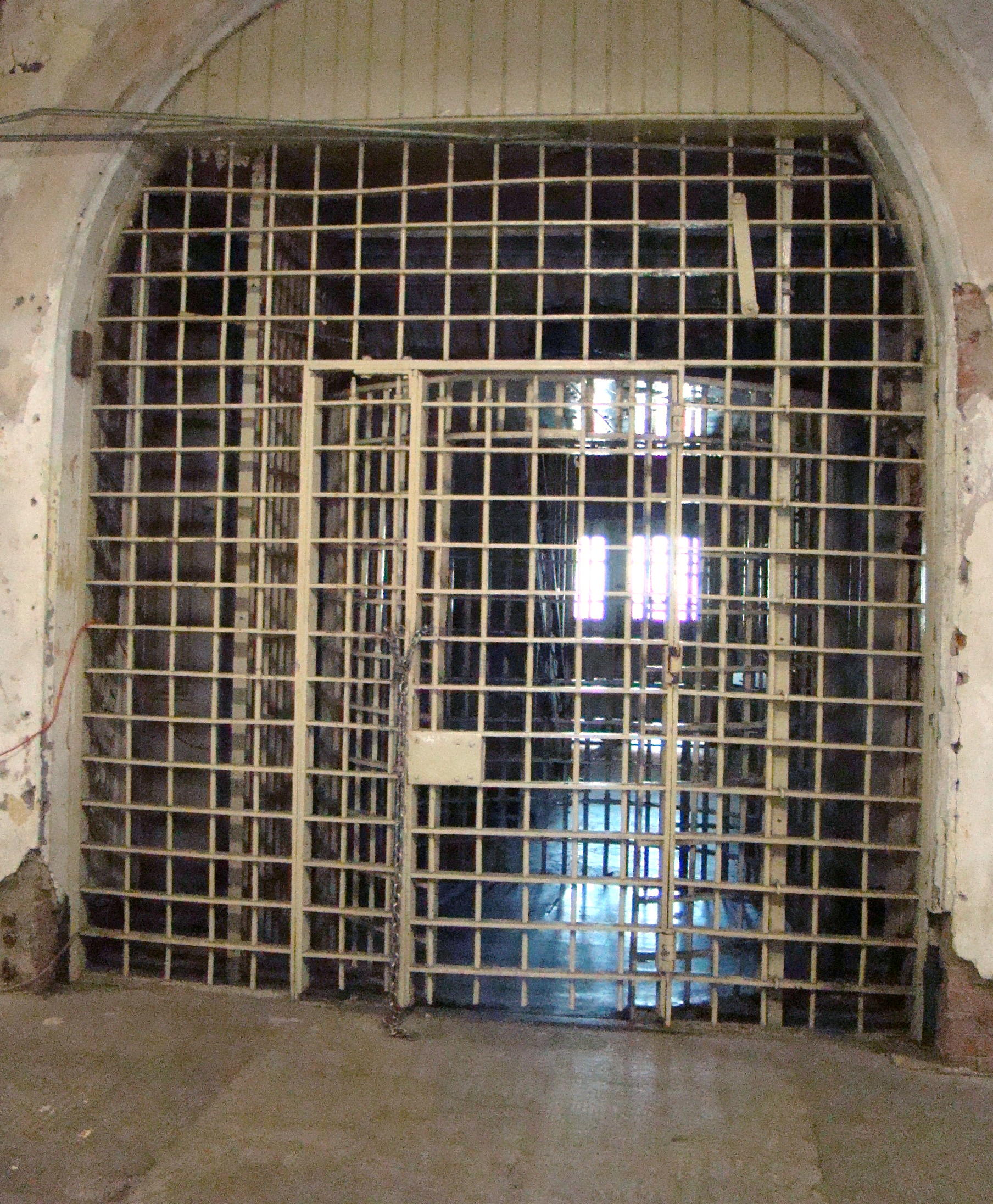
Hanging Gate where hangings occurred from the ceiling

Hanging Gate where hangings occurred from the ceiling

From 1866-1995, many deaths occurred within those prison walls. 9 prisoners died in the electric chair, 85 hung with a noose around their neck, and 998 documented murders occurred – two guards and the rest prisoners. Now you get a taste of their violence.

The most dangerous criminals were placed in The North Hall, called the Alamo.  The worst prisoners lived here twenty-two hours a day, because of their unpredictable behavior. On a daily basis, they were given one hour in the Bull Pen, where they could exercise in an area enclosed with stainless steel razor wire. They showered with lye soap and often cold water – once a week under supervision.

Being in their cells most of the day gave them time to plan. One Maximum Security prisoner actually used dental floss and toothpaste to cut through the bars on his cell door. Another seemed to have a longing to become a writer, as he wrote stories on the walls of his cell. His being in prison resulted from his murdering his girlfriend.

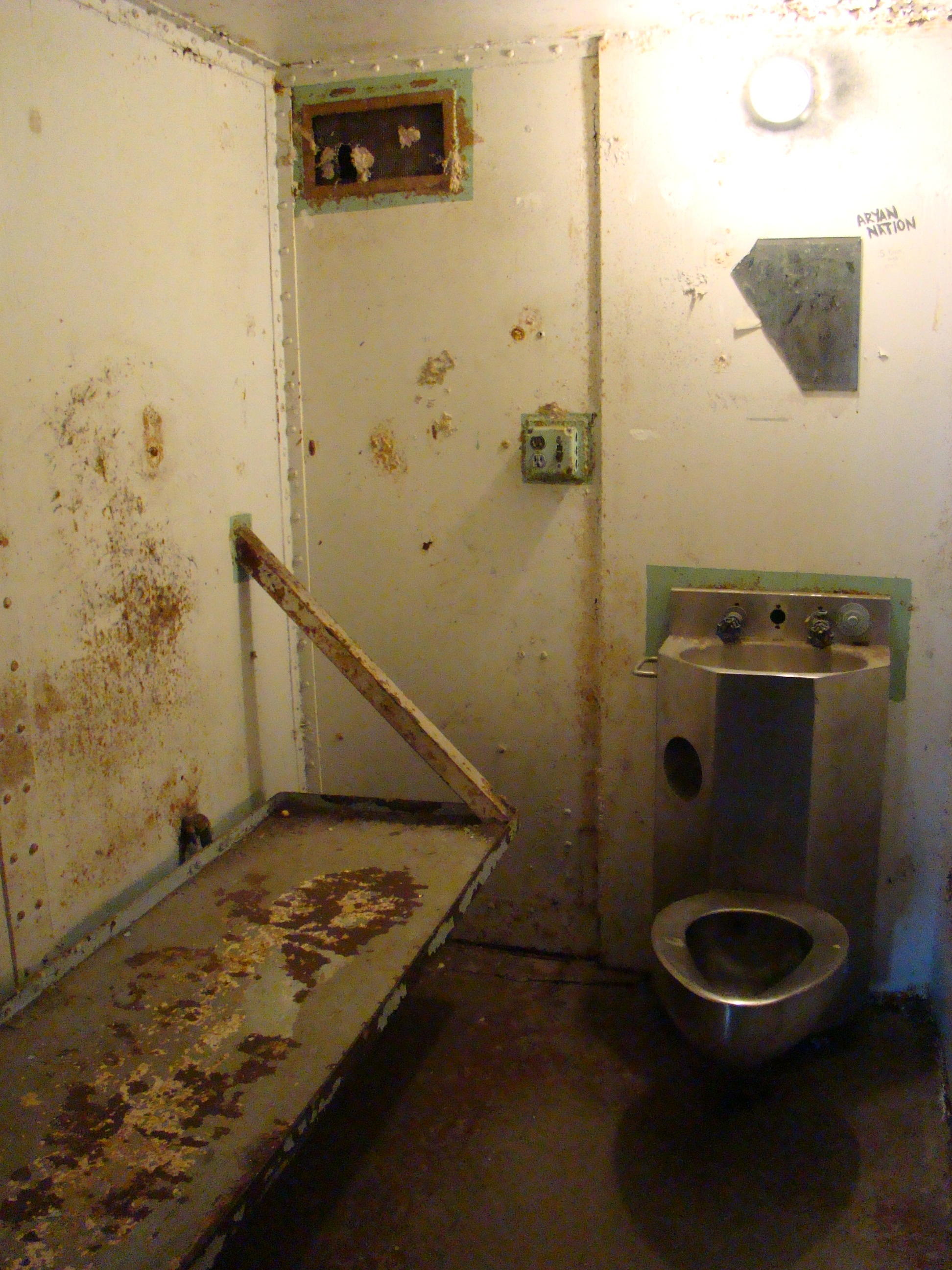
Comfort was not known in Maximum Security cells, but prisoners wouldn’t have been there if their crimes had not been vicious. These cells were not pleasant temperature-wise either, as the furnace couldn’t possibly heat the prison adequately, and air conditioning didn’t exist. That meant that in the winter, cells were often around forty degrees, while in the summer they could be a hundred and twenty. Walking through the halls today you get a chilling feeling of the cold, hostile people who resided there years ago.

Red Snyder's cell

Red Snyder’s cell

All the prisoners in Maximum Security always ate in their small cells, which measured 5’X7′. There was a small place through which the guard could place their meals on a  paper plate with plastic knife and spoon. Inside the cell was a bed hanging from the wall, a sink, and a toilet. The bed had a thin mattress and a small pillow.

Once in a while, a prisoner would get special privileges for good behavior. Such was the case with a couple Maximum Security trustees, who were allowed to work in the greenhouse. These model prisoners planned their escape carefully.

As they worked in the greenhouse, they dug a four foot high tunnel from the greenhouse under the prison wall, which was six feet at its base. They lined the walls of the tunnel with plywood used in the greenhouse. What did they do with the dirt? They put the dirt in bags marked PEAT MOSS. This was the last escape ever attempted from the orginal West Virginia Penitentiary and the culprits were eventually caught.

If all of this wasn’t bad enough, when a prisoner became uncontrollable, he was placed for thirty days in what they called The Hole.  The only thing in that hole was a bucket for bathroom purposes. These prisoners stayed there twenty-four hours a day on a dirt floor, with bread and water being sent down to them once a day. They obviously didn’t want to even be threatened with The Hole, a personal living hell.

Old Sparky, the electric chair

Old Sparky, the electric chair made by a prisoner.

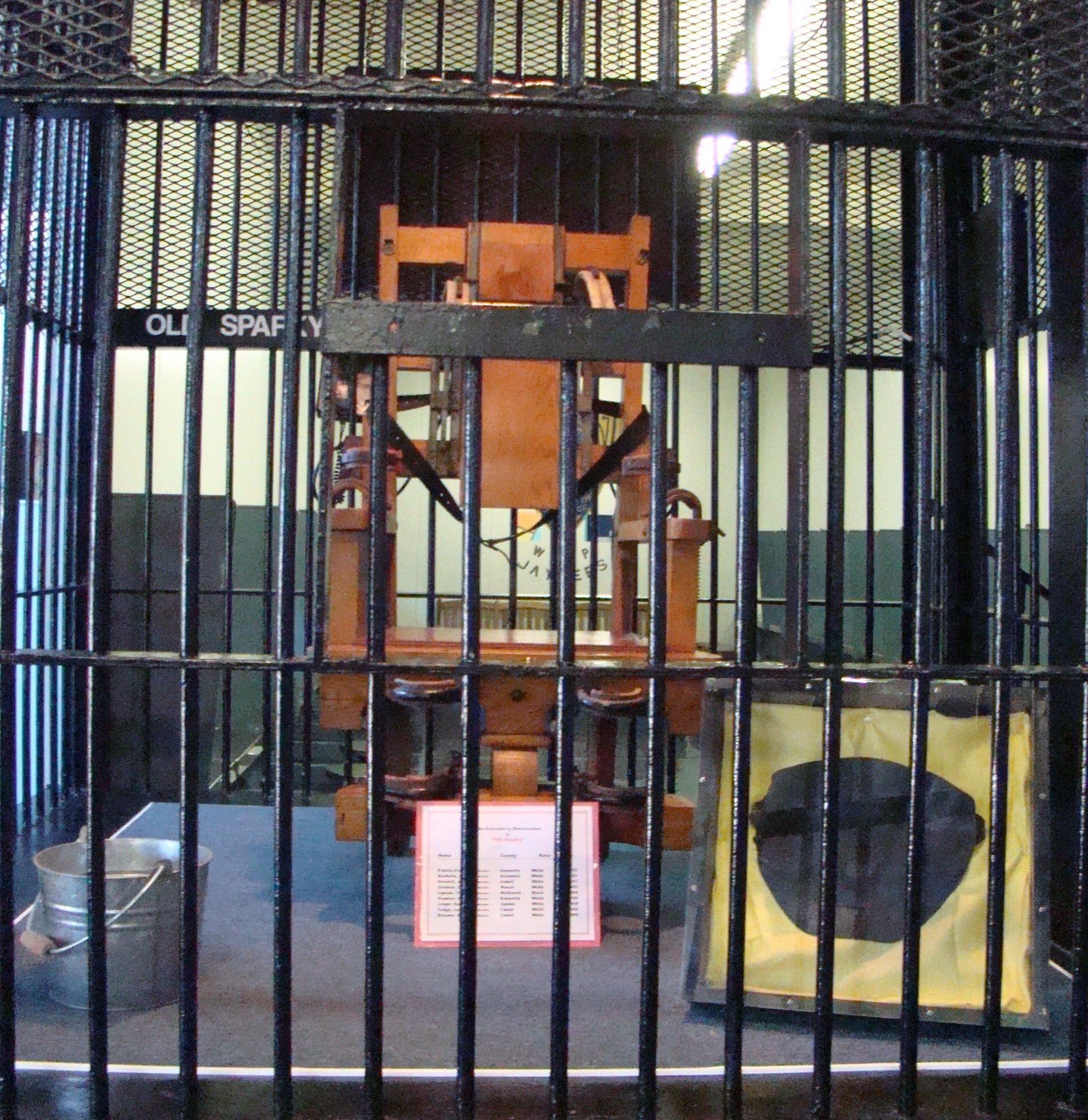
Of course, the worst punishment was Old Sparky, the electric chair built by a prisoner in 1950. No surprise, that prisoner had to be placed in protective custody. A leather bag dropped over the condemned person’s head as electricity in this chair went through the head first.

As you have read the conditions under which these prisoners lived, is it any wonder that the State of West Virginia decided to close this penitentiary due to abusive treatment of the prisoners? Could you have survived the imprisonment? Maybe you would like to take a tour and experience the tortured souls that remain inside.

West Virginia Penitentiary is located in Moundsville, West Virginia just ten miles south of Wheeling along the east bank of the beautiful Ohio River. From Wheeling, follow Route 2 into Moundsville. Turn left on 8th Street and after two blocks turn right onto Jefferson Ave. The penitentiary is on the left side of the street. You can’t miss it!


Unique Collections Fill Historic Roscoe Village Museum

Johnson-Humerickhouse Museum

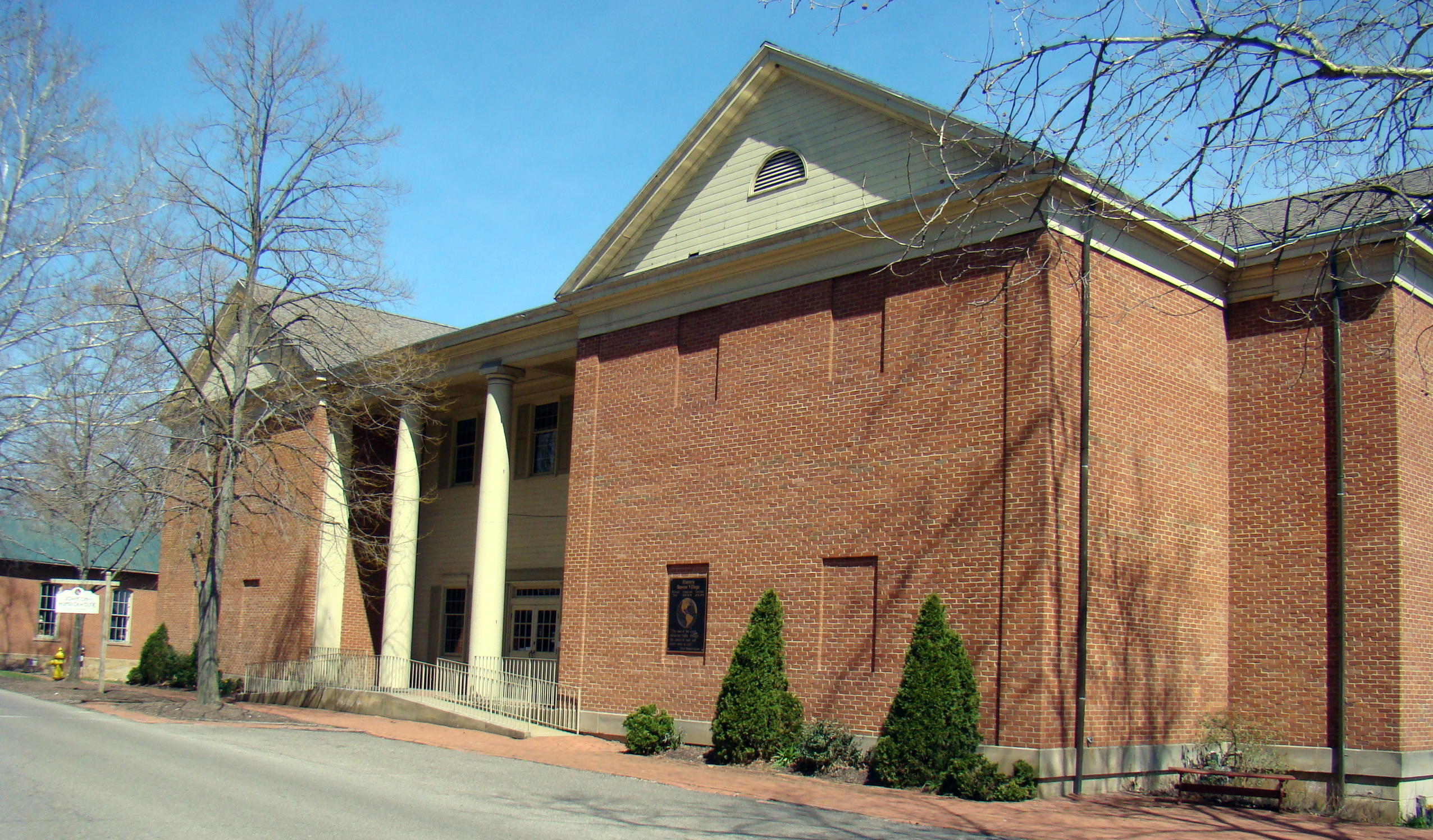
Johnson-Humrickhouse Museum in Roscoe Village, Coshocton, Ohio

Sometimes when visiting a place time after time, you miss a treasure right in its midst. Such was the case with Coshocton’s Roscoe Village, a favorite spot for festivals over the years. However, there at its edge, a beautiful brick structure, The Johnson-Humrickhouse Museum, overflows with unusual historic exhibits.

This actually had its start back in the mid-1800’s when two brothers, John and David Johnson, spent their childhood in Coshocton. In later years, these brothers traveled the world collecting artifacts from all the places they visited.

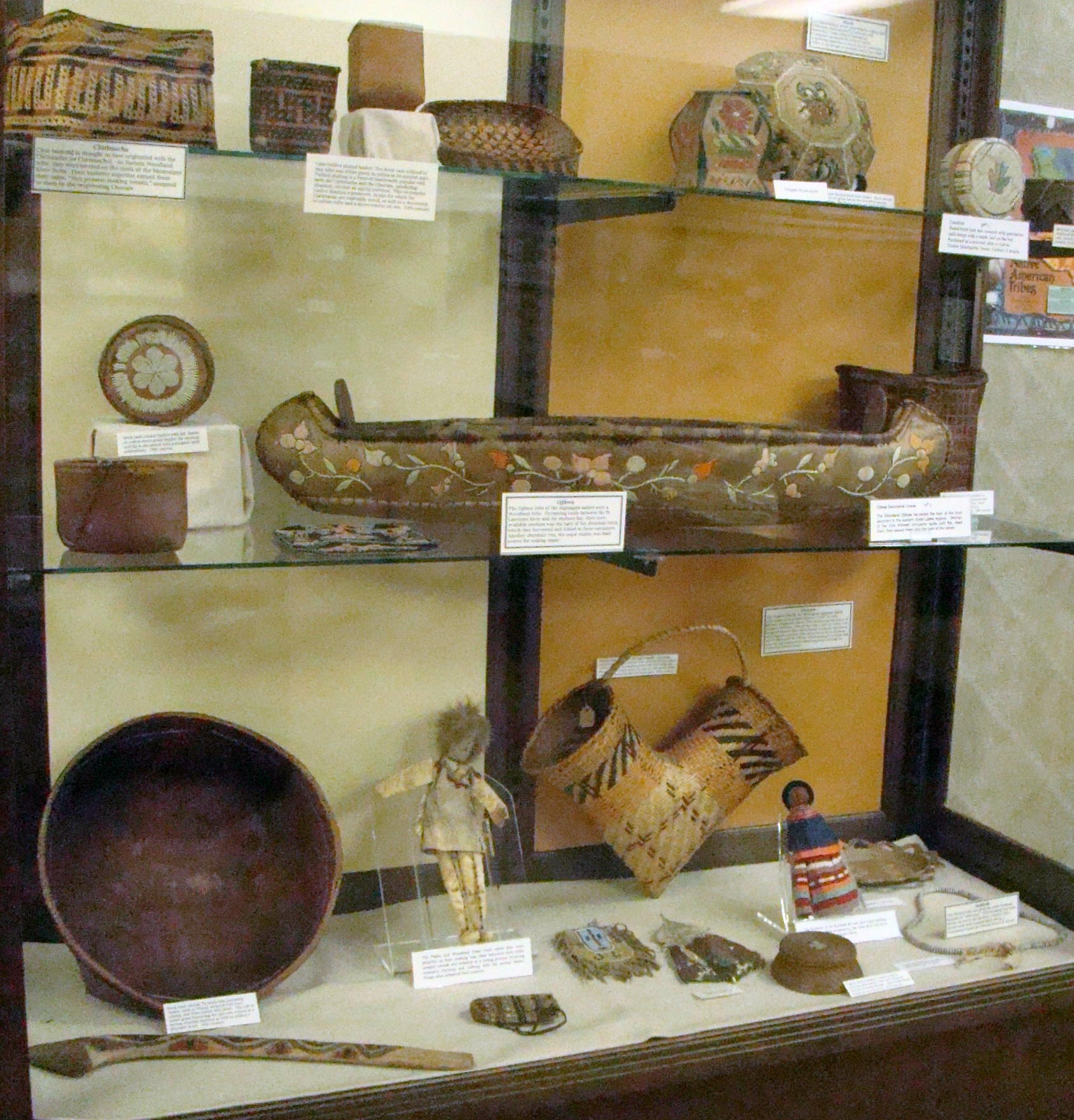
Indian woven artifacts and Kachina dolls

Indian woven artifacts and Kachina dolls

In 1931, the Johnson brothers gave 15,000 collected objects to their hometown with the stipulation that a museum would be established to honor their parents, Joseph Johnson and Mary Susan Humrickhouse. Thus, the Johnson-Humrickhouse Museum became a reality and has since added collections of other local residents. Displays frequently change because the museum has more artifacts than can be displayed at one time.

Two floors contain four main areas to explore: Native American, Ohio History, Coshocton Area Memorabilia, and The Asian Room. Each holds objects that are certain to lead you to recall memories of the past and even create a puzzle or two in your mind.

American Indian artifacts display natives’ skills at pottery, beadwork and basket weaving. These outstanding collections show not only local Native American handiwork but that of Indians throughout the United States. A large collection of kachina dolls, who hold a spiritual essence to the Indian tribes, and items used by the medicine men are a couple of the noteworthy displays.

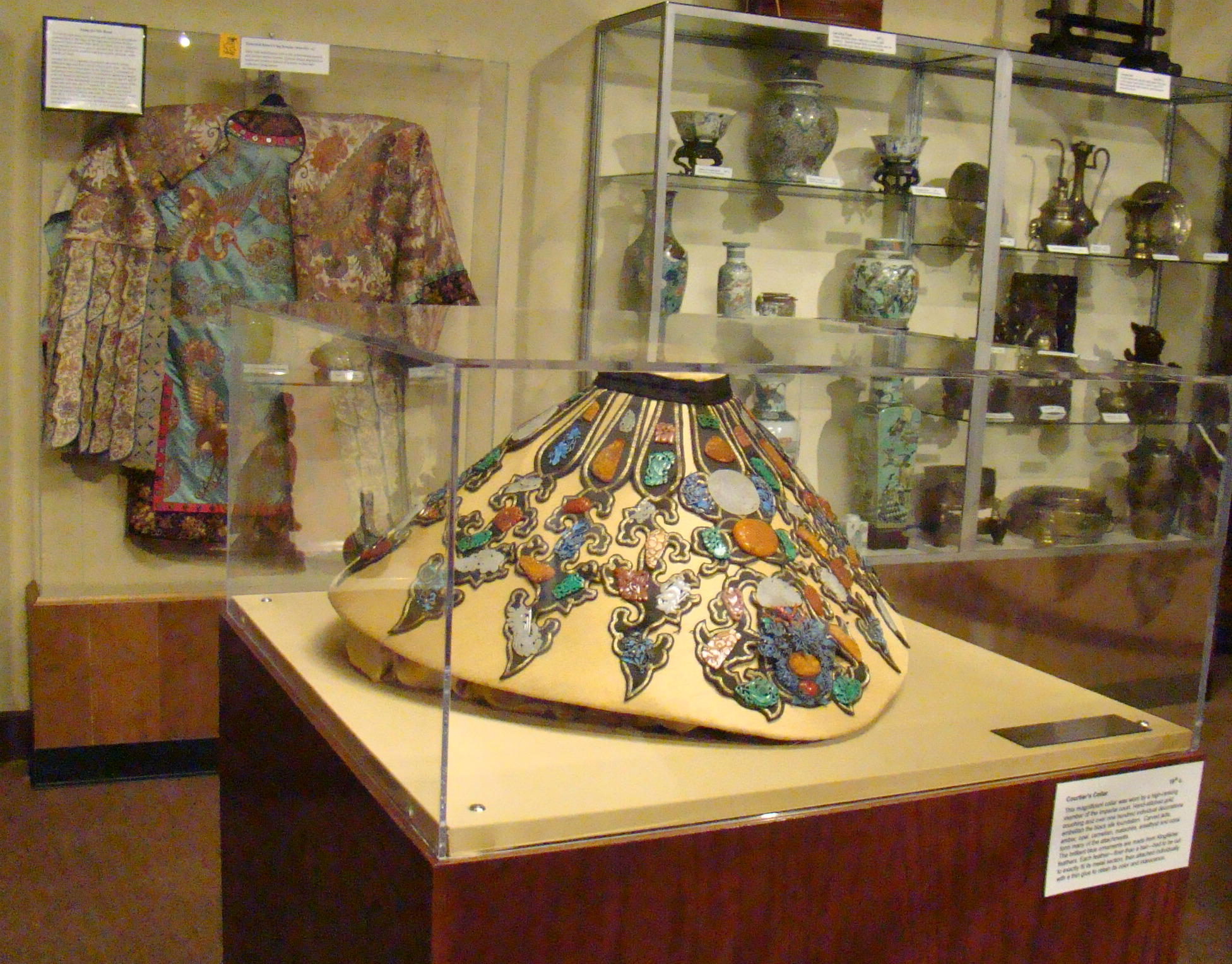
Chinese royalty collar with silk kimona and pottery in the background

Chinese royalty collar with Ch’ing silk theatrical robe and pottery in the background

An Asian Room contains both Japanese and Chinese treasures. A Japanese warrior in full dress protects that section of the room, while Buddha statues and kimonas express the Chinese traditions. A beautiful jeweled collar worn by a member of the Imperial Court contains over a hundred embellishments.

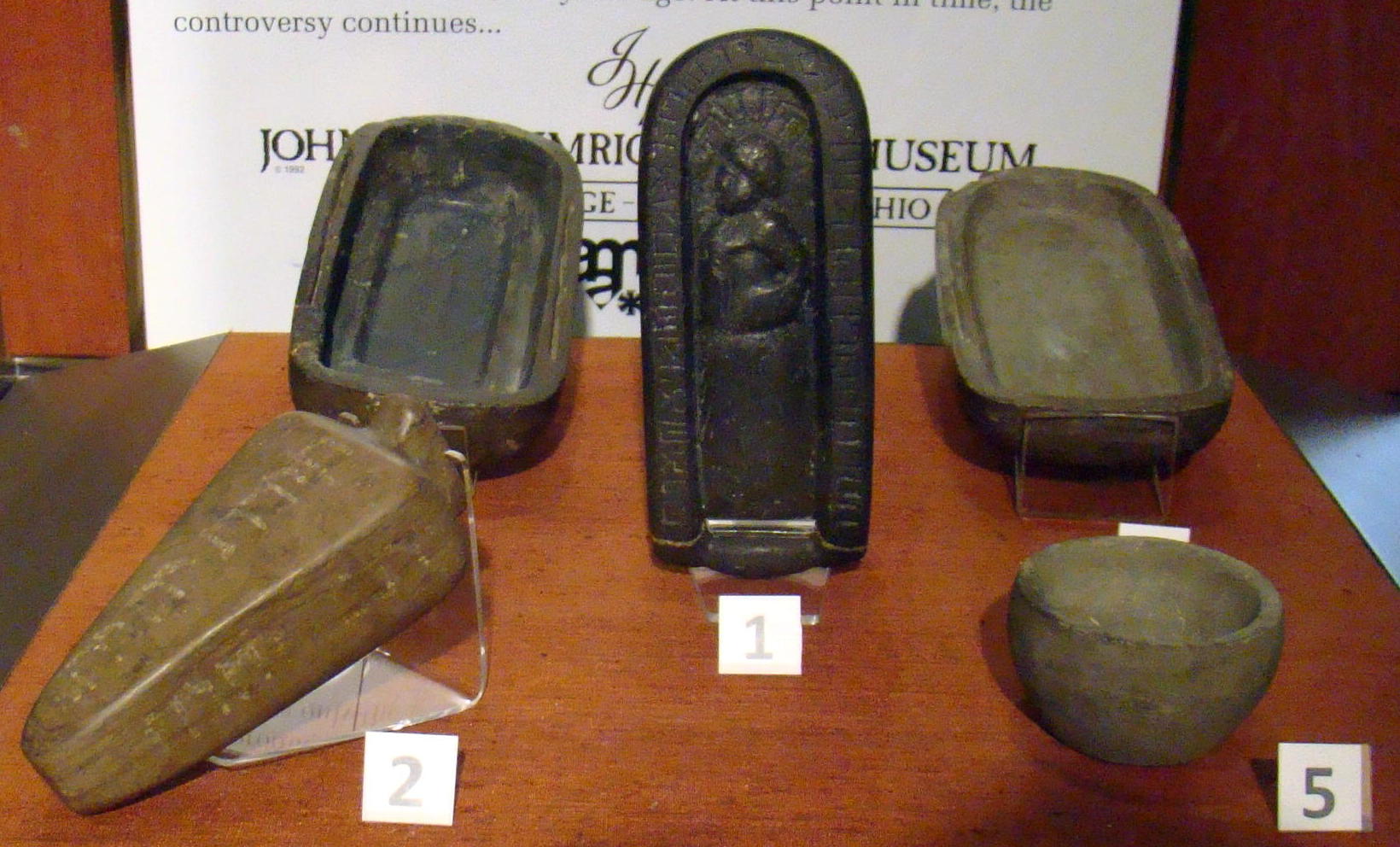
Controversial Newark Holy Stones

Controversial Newark Holy Stones

The Newark Holy Stones present a controversial subject as these objects were found in 1860 while excavating a mound in Newark, Ohio. The largest stone, the Decalogue Stone, appears to have Hebrew writing around its edges. Many link it to the Hopewell Indian culture, which existed there between 100 BC and 500 AD, while others are skeptical as to its origin.

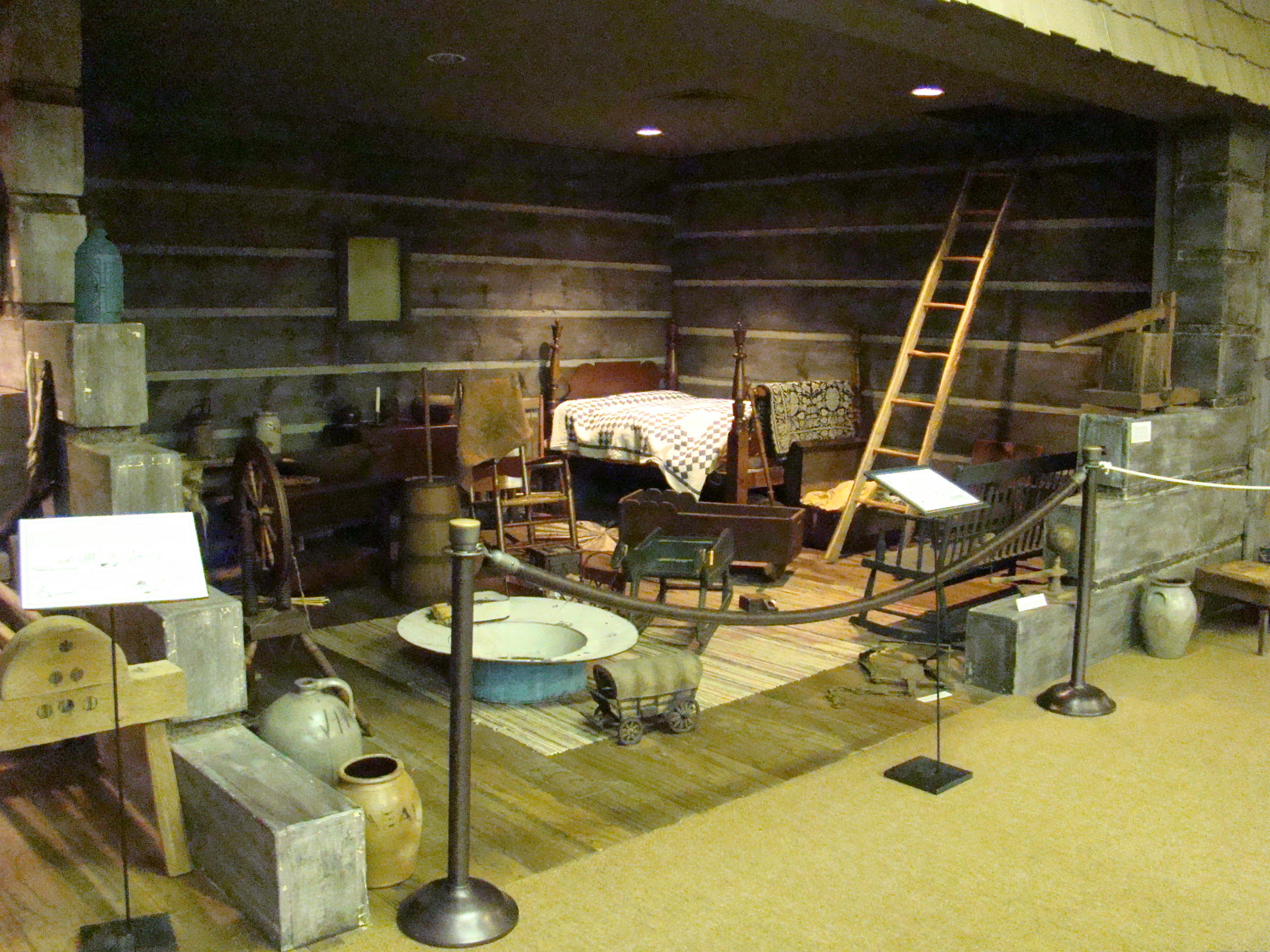
Early pioneer cabin in Coshocton area

Early pioneer cabin in Coshocton area

Much of the Historic Ohio Display has been donated by great-grandchildren of Nicholas Miller and Mary Darling, early Ohio pioneers. Nicholas came to the Coshocton area in 1802 with $36 and two axes. That first winter, Nicholas made his home in a cave with his dog. Then in 1806, the Darling family migrated to Ohio from Viriginia. 18 year-old Mary drove her family’s four-horse team pulling a covered wagon containing eleven brothers and sisters to settle in the Coshocton area.

Nicolas’ trade as surveyor provided him opportunity to purchase prime land with money that he earned. Therefore, when he married Mary Darling, they settled in the Coshocton area. Today a replica of the cave he slept in provides children a place to hide and pretend. Beside it, a cabin has been reconstructed similar to the one where Nicholas and Mary lived to raise their family.

As you can tell, there are displays here for various interests, and at a low admission price. Throughout the year, various speakers and workshops provide a variety of subjects for area residents. Visit this treasure filled museum that isn’t far from home. While you are there, step back in time and stroll the brick streets of historic Roscoe Village.

Johnson-Humrickhouse Museum is located in  Roscoe Village near the south end at 300 N Whitewoman Street, Coshocton, Ohio.  From Ohio 83, exit onto North Whitewoman Street and follow it through Roscoe Village. The museum will be at the south end on the left hand side.


Underground Railroad Museum Flushing, Ohio

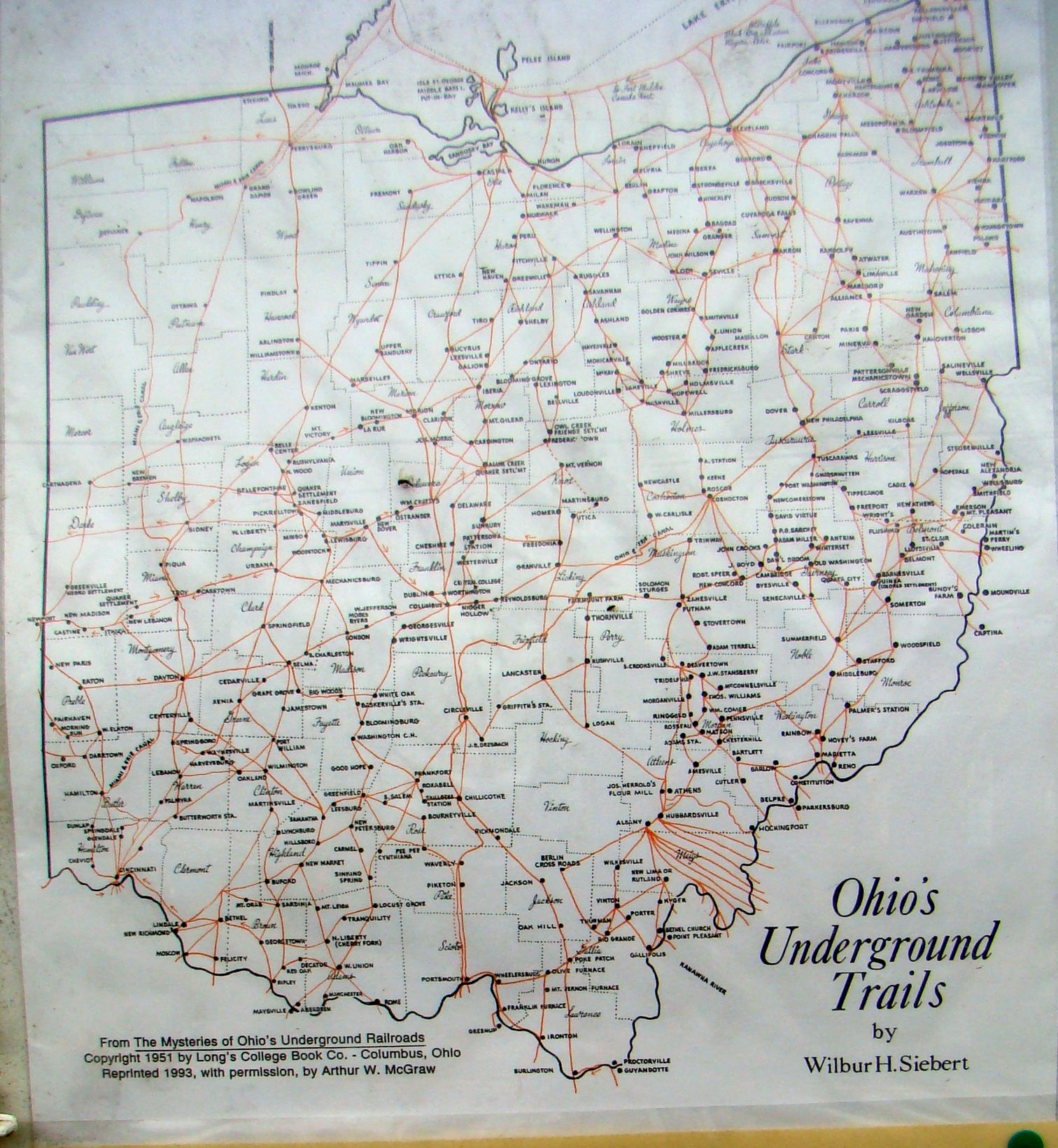
Ohio's Underground Trails

Map of Ohio’s Underground Railroad Trails

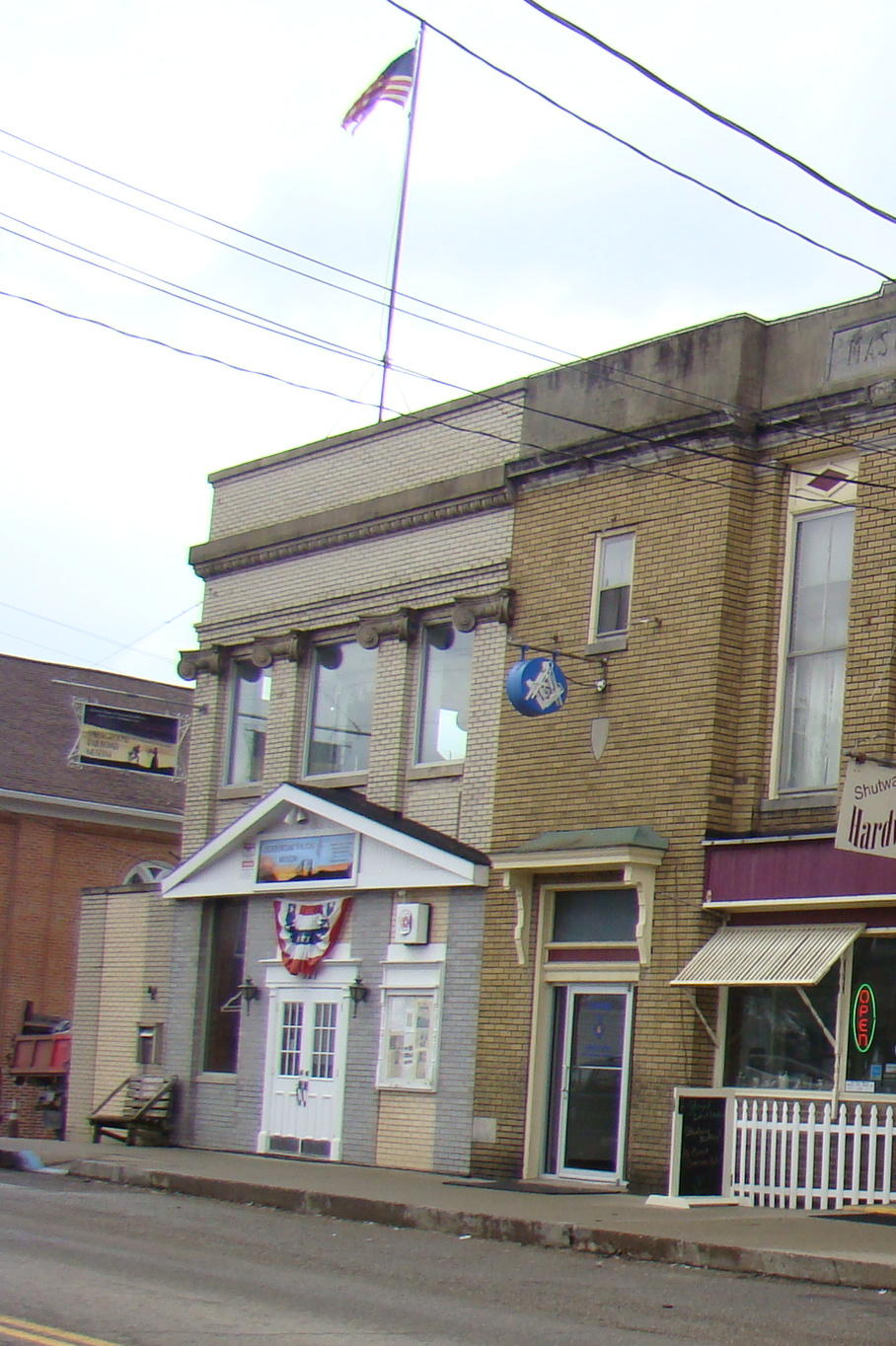
Underground Railroad Museum in Flushing, Ohio

Underground Railroad Museum in Flushing, Ohio

“Filled to the brim.” Those words accurately describe the Underground Railroad Museum in Flushing, Ohio. Outside the old brick building seems typical of those found in many small towns. Inside there is so much information it would take days to just read what is hanging on the walls, let alone all the books available.

Located in the hills of Southeastern Ohio, The Underground Railroad Museum contains over 18,000 items. This particular building was constructed in 1922 as Community National Bank, then became the insurance office of John Mattox.

In 1998, Dr. Mattox decided it would be the perfect spot to share his knowledge and collection of items dealing with slavery and the Underground Railroad. He wanted to tell the story of fugitive slaves and slave hunters, and how the Underground Railroad helped the former and misled the latter.

Dr. Lorle Porter of Muskingum University played a large role in helping John establish the museum. Today, Belmont Technical College students frequently help at the museum through research, organization, and cleaning.

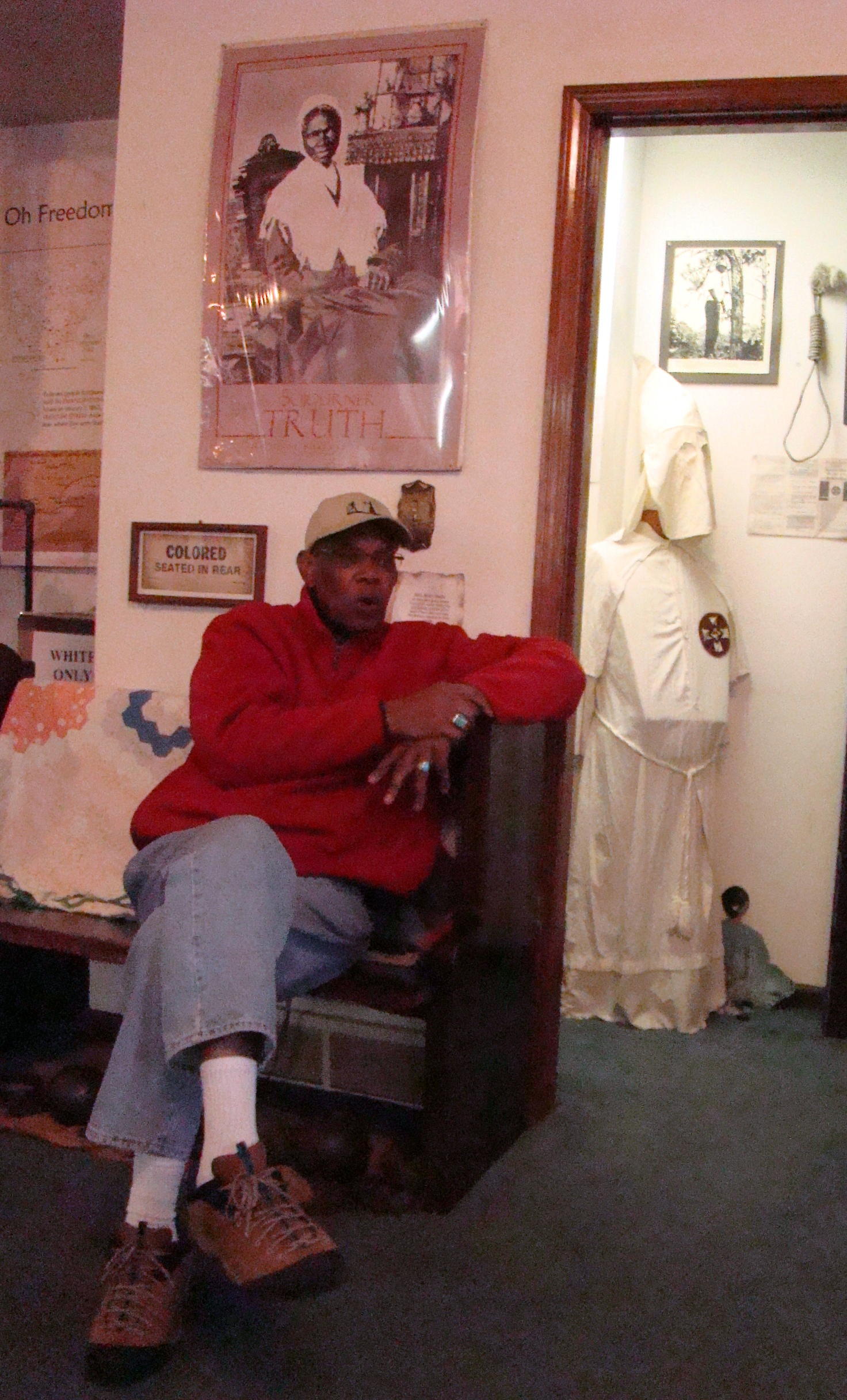
Dr. John Mattox, curator of the museum

Dr. John Mattox, founder and curator of the museum

Stories of slavery abound here thanks to an exceptionally good story teller, Dr. John Mattox, founder and curator of the museum.  John’s family had previoiusly been slaves from Holland, so he knew first hand of the life they lived.  While John told his story, the outfit of a Klu Klux Klan member, displayed on a statue behind him, awakens an unpleassnt reminder. Still John had a great positive attitude as he said, “I’ll tell you ‘xactly how it was, slavery could be good.”

John told of those Sunday mornings when slaves were privileged to go to “The Big House” for breakfast. The menu most often was hot biscuits and potlikker. Now, for those of you not familiar with potlikker, that would be a pot of turnip, collard, and mustard greens boiled with a piece of pork. Pour that over some hot biscuits and you had a breakfast to look forward to all week long.

However, nearby slave collars, whips and shackles help tell the other side of the story of life as a slave. Poster advertisements were placed for auctions about to be held. Ox teams, fox hounds, and Negro slaves were all included on the same sign.

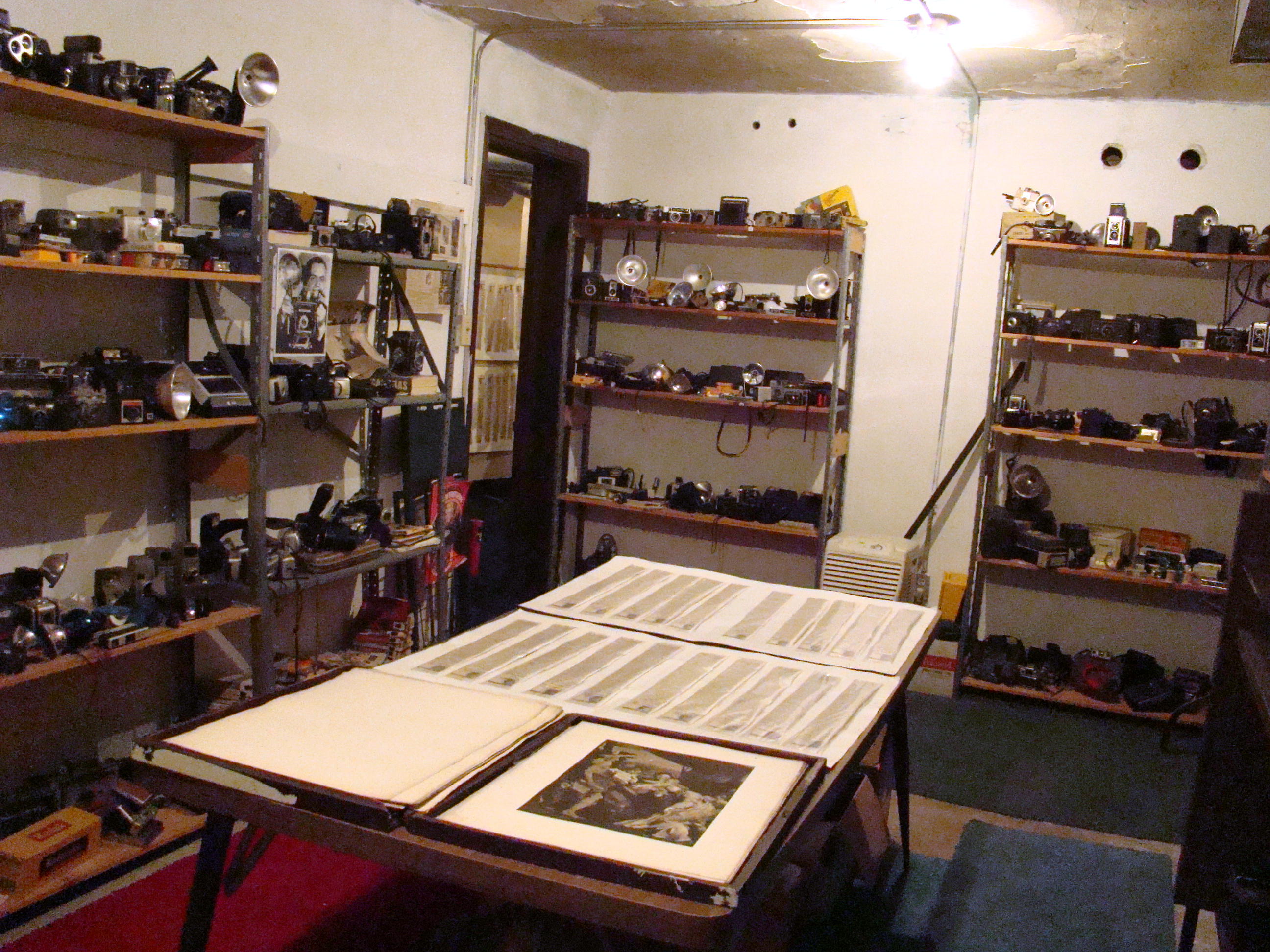
Camera Collection

Camera Collection

In the basement of the Underground Railroad Museum, Dr. Mattox shared his private collection of over 700 vintage cameras. His favorite seemed to be his first Polaroid, a 1970 Rolex SX70, which he used to take pictures of his wife when they went to Hawaii. An 1886 Conley and an original Brownie Camera were also part of that collection.

A replica of a slave cabin, where an average of eight people lived, has been constructed in the basement. This one tiny room was their “home” for eating, playing and sleeping. Only one bed could be seen in a corner of the room, and the “old person” got to sleep there. The rest slept on straw spread on the dirt floor.

Inside of slave cabin

Inside of slave cabin

The slaves, or those assisting through the Underground Railroad, left many signals for other slaves following their path. Sometimes a special knock on the door was used and the password, “Friend of a friend” gained them entry to safety. An X strategically placed on a tree gave the slaves direction to the next stop. Great courage was shown by those who often risked everything to escape.

The major task of the Underground Railroad operation was to get the fugitives across the Ohio River to safety. Martins Ferry was the first Ohio stop for many in 1788. The Ohio map shows that their flight continued across Ohio in every direction.

John expressed his attitude toward life by saying, “Don’t blame everyone else for what happened to you. New ideas are just old ones recycled.” He was a fantastic guide so hope he continues sharing his stories for a long time. Just the thought of losing all his knowledge reminded me of an African proverb that hung on the wall of the museum, “When an old man dies, a library burns down.” Recording our history is so important for future generations.

The easiest route to the Underground Railroad Museum in Flushing, Ohio is off I-70.  Take Ohio Exit 208 and head north on State Highway 149. The road has many bends, but leads to Flushing, then SR149 makes a right turn on E High Street. The museum is located at 121 E. High. 

West Virginia Penitentiary Visit: A Chilling Experience

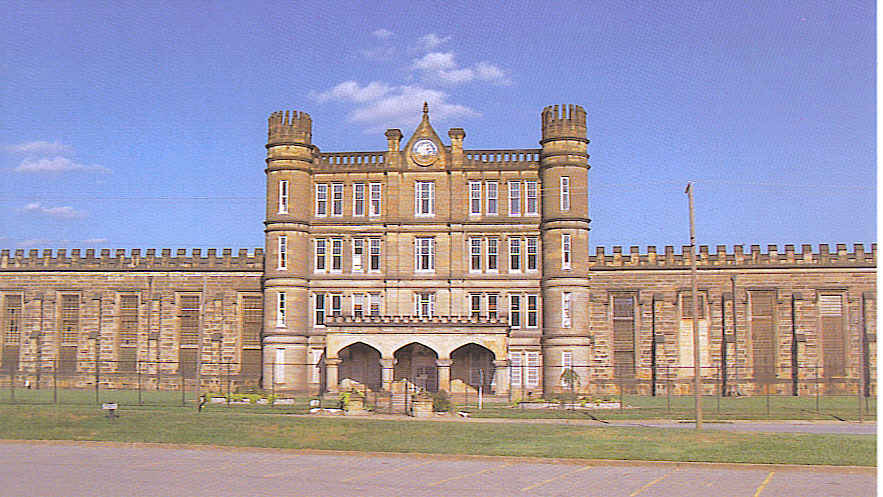
Former West Virginia Penitentiary

Former West Virginia Penitentiary

Feel the chill of the prison walls.  Hear the stories of former prisoners. Walk the halls of the former West Virginia Penitentiary in Moundsville, West Virginia, as cold sensations permeate the skin. Some say this happens because the spirits of many former prisoners still hang out at the prison. Or perhaps it is that feeling of being locked away from the world that causes the chilling sensations.

The prison began back in 1866 when the government of West Virginia made a major decision. Eleven acres of land became available for govenment use in Moundsville, West Virginia. The choice was between building West Virginia University there, or a State Penitentiary. Those in charge concluded that a penitentiary would bring more jobs into the area and give them an economic boost.

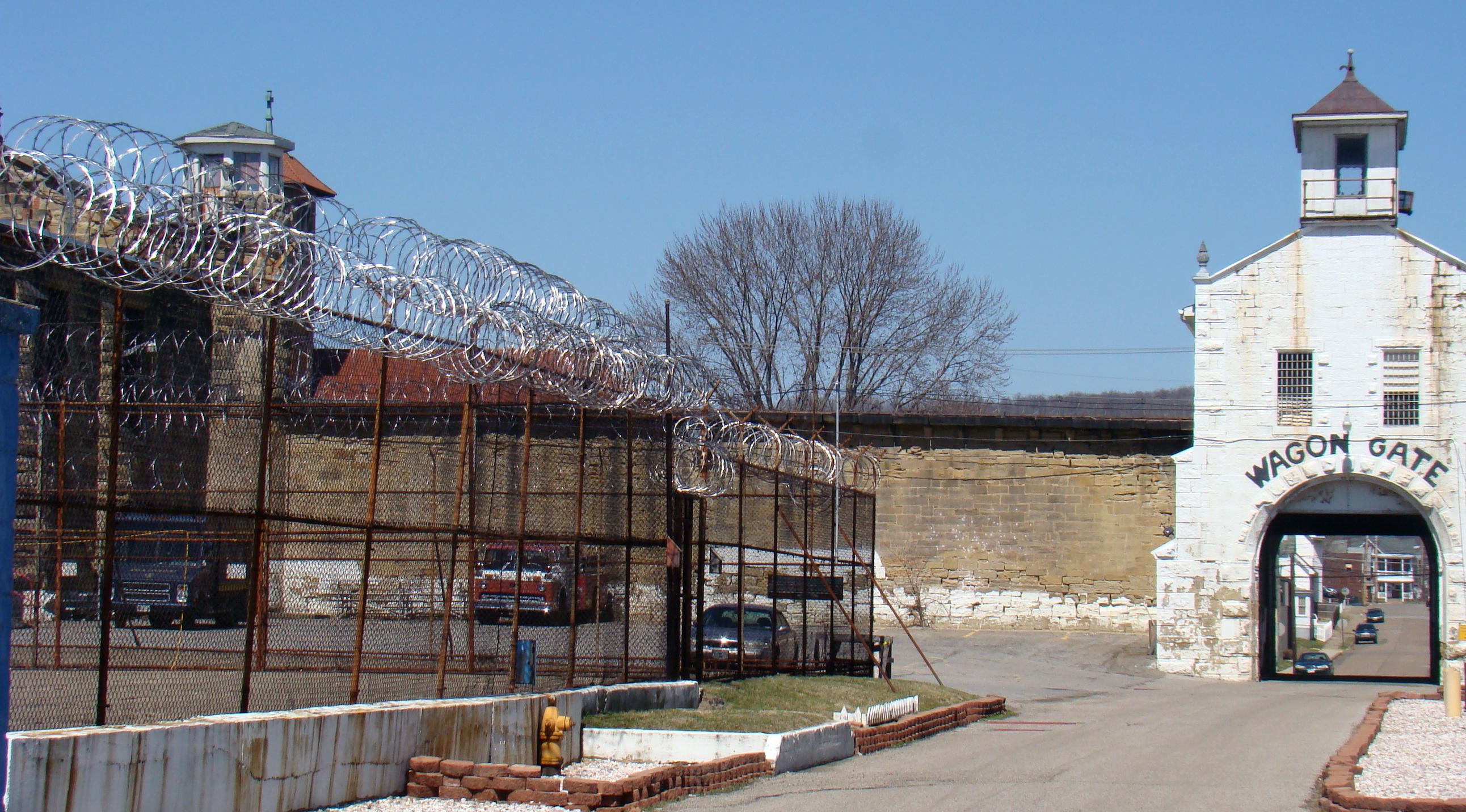
Wagon Gate and nearby Bull Pen

Wagon Gate and nearby Bull Pen

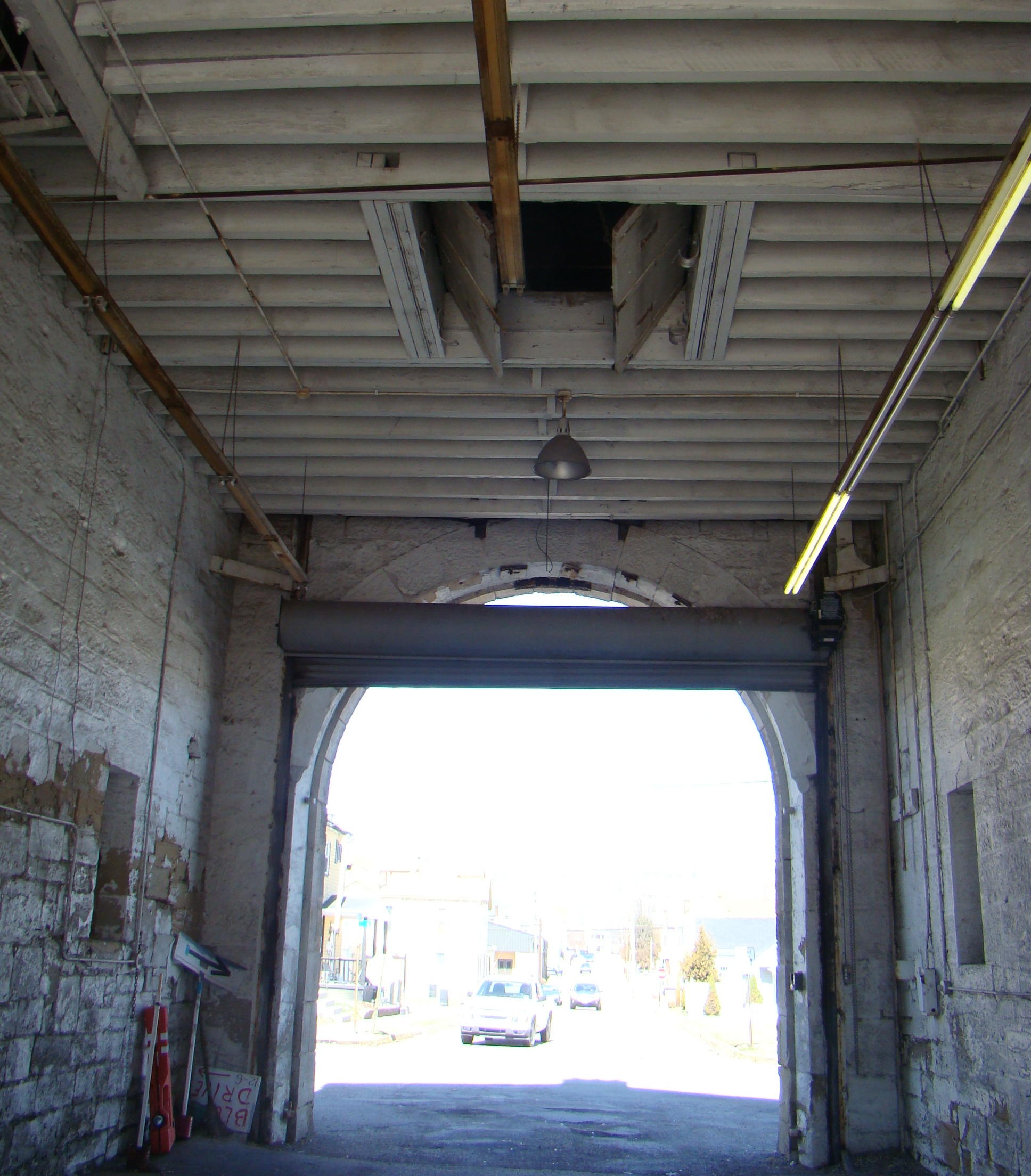
The prison originally occupied the Wagon Gate, a prison used for confederate prisoners during the Civil War. One hundred prisoners could be held there in two stories. These prisoners were taken daily to the stone quarry where they cut stones to expand the prison – now three city blocks long.

It was here inside the Wagon Gate that they also had a Hanging Gate. 85 prisoners were hung either at the gate or on the courthouse square. Since people had no television to watch back then, in the early 1900’s thousands would gather on the courthouse lawn to watch the hangings while eating their picnic lunches.

The Bull Pen, with stainless steel razor wire around its top, served as an exercise place for maximum security prisoners. They most likely appreciated their one hour outside each day.

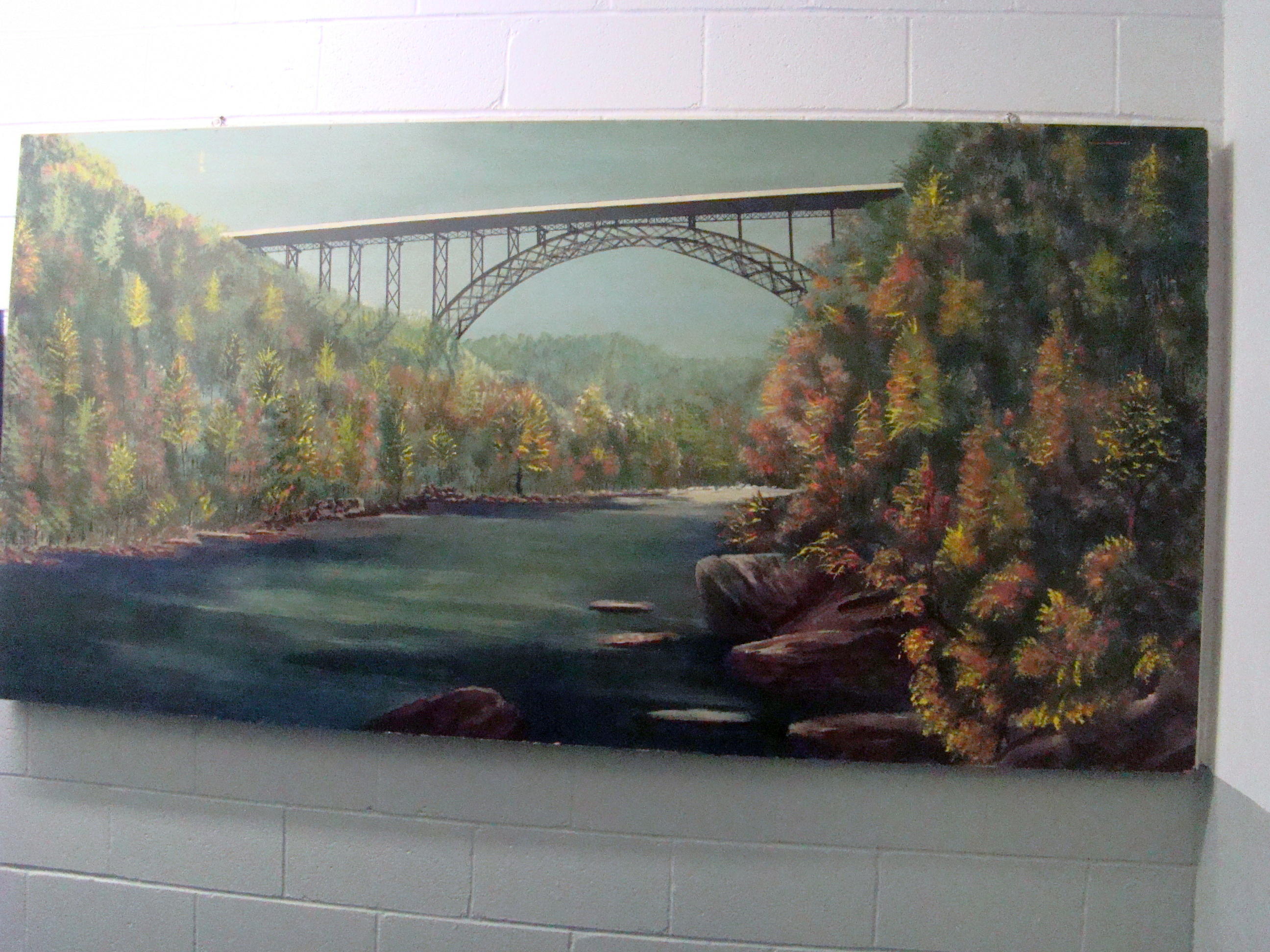
One of many paintings by the prisoners

One of many paintings by the prisoners

West Virginia Penitentiary was a self-sufficient prison. The only things they had to purchase were salt and sugar! Besides quarrying rock to build their own prison, the prisoners produced many valuable items that were used in the prison and sold to local residents – some of them through the Mound Museum Gift Shop located across the street. Hand tooled leather purses, brooms, whips, soap, signs and beautiful paintings and drawings were products of prisoner endeavors. Since they had lots of time on their hands, they often became very creative.

One noteworthy prisoner was Charles Manson’s mother, in prison for armed robbery. Charles Manson himself wrote a letter to the warden asking to be transferred to the West Virginia Penitentiary so he could be closer to his mother. Everyone knew the reputation of Charles Manson, so the warden immediately answered with just four words: “When Hell freezes over.”

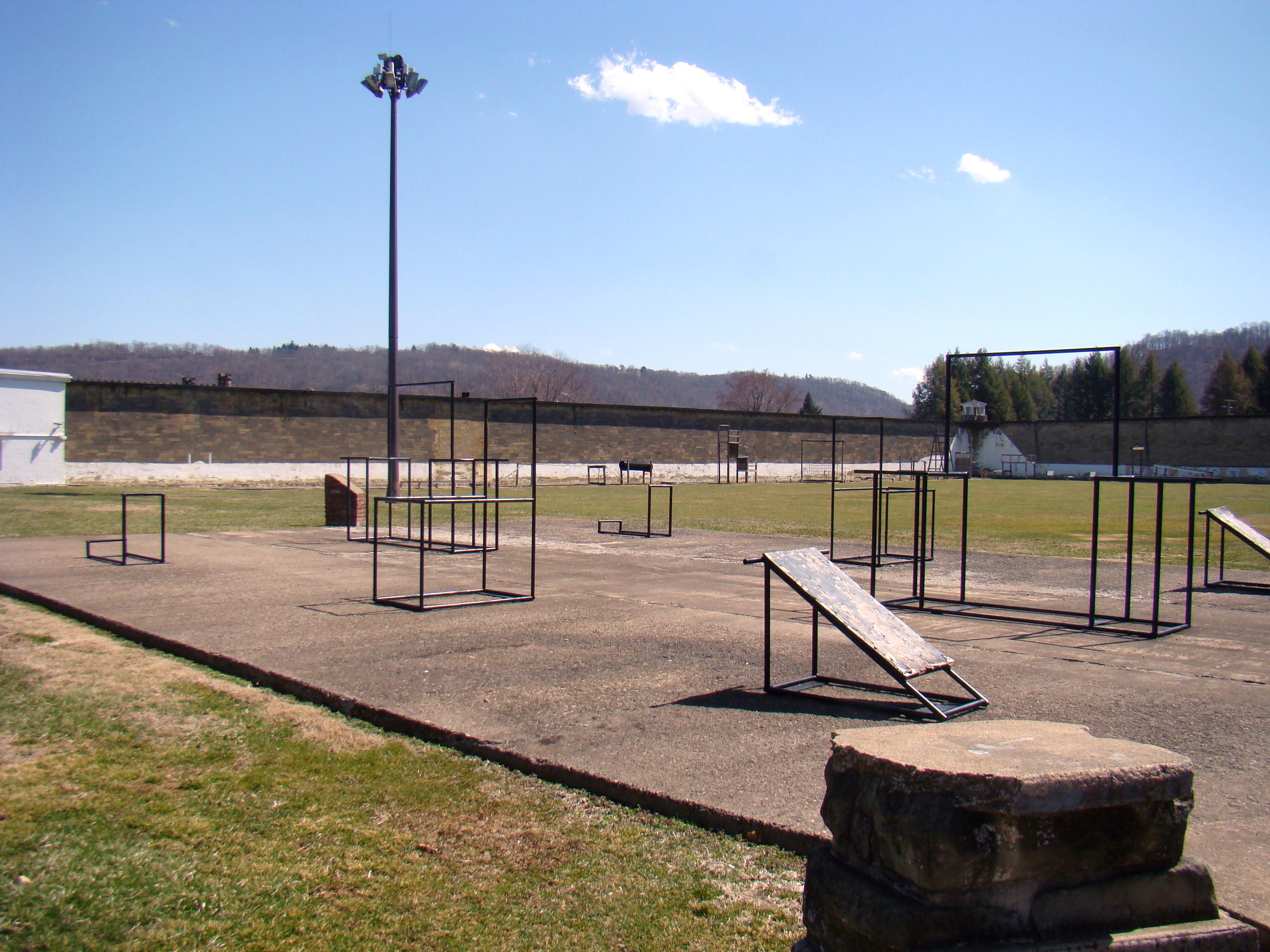
Exercise Yard

Exercise Yard

Prisoners had inside freedoms according to the crime for which they were imprisoned. The worst were kept in Maximum Security, which will be more fully described in a future blog. Most however were in the “Main Street”, where they actually were able to get out of their cells for most of the day if they desired.

Many of these passed the day with their crafts as well as participating in sports in the yard. Basketball, softball, boxing, weight lifting, and table games were all possible activities to keep them occupied. There was a beautiful chapel in “The Yard” in case they desired to worship.

Cells were not very comfortable spots so spending as much time as possible outdoors was a goal. Most cells were very small with usually two cots for prisoners, who shared a small sink and toilet. At a time when there were 2400 prisoners at the penitentiary, it became necessary to have three men to a cell. That was rough as the third person had a mat on the floor. This made his head located right at the base of the toilet bowl. They always slept with their feet toward the bars as otherwise someone might bash in their head as they passed by.

Revolving Door to Freedom

Revolving Door of Justice

The front door is a locking, revolving door where prisoners either entered or were freed from the prison. Imagine the thrill of seeing that door after years of imprisonment, knowing that through the glass was a free world waiting. Today some say they still see that door slowly spinning on its own – maybe from the energy of some of the inmates who walked through it.

West Virginia Penitentiary is located in Moundsville, West Virginia just ten miles south of Wheeling along the east bank of the beautiful Ohio River. From Wheeling, follow Route 2 into Moundsville. Turn left on 8th Street and after two blocks turn right onto Jefferson Ave. The penitentiary is on the left side of the street. You can’t miss it!

The Little White Chapel on the Hill

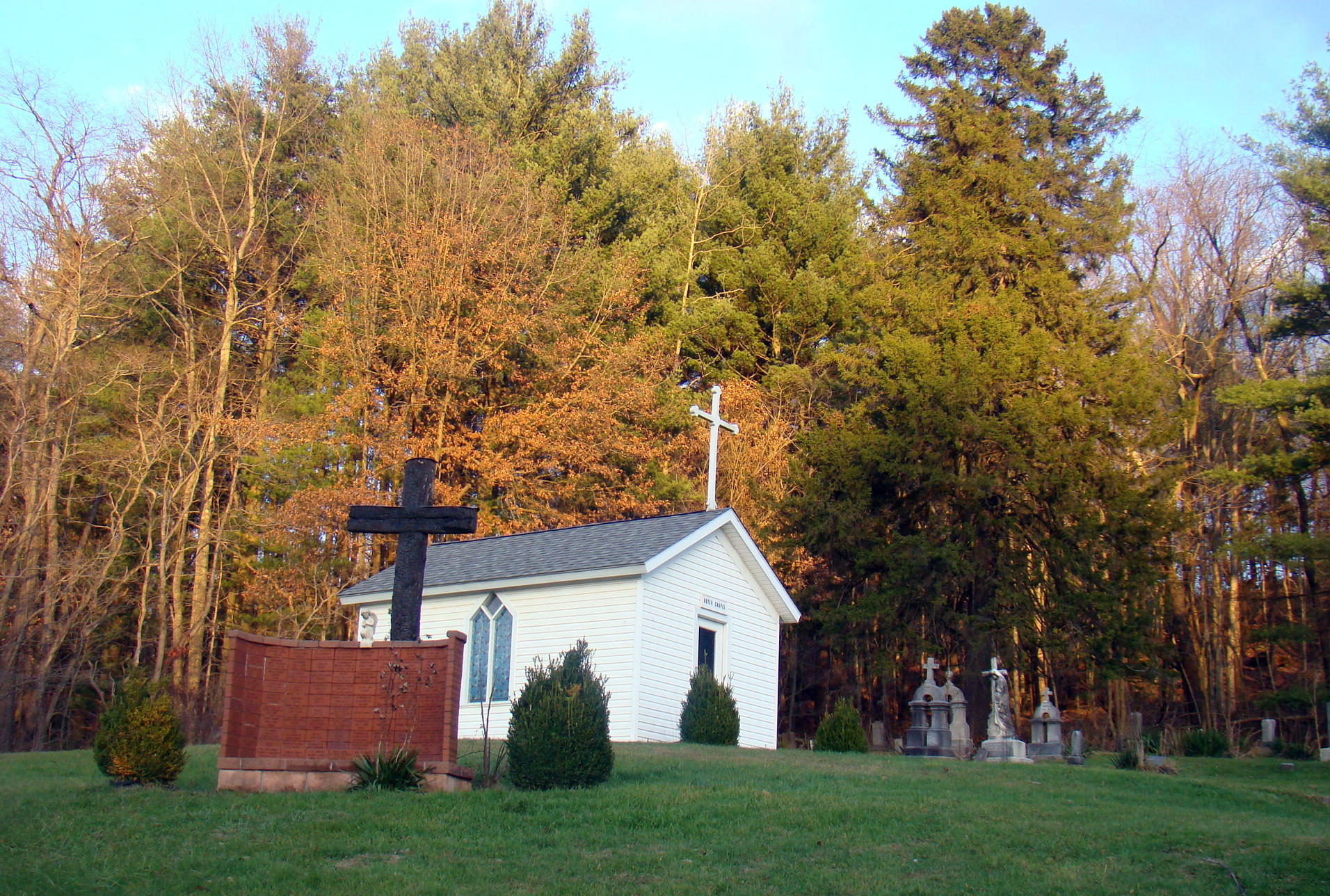
Royer Chapel with Memorial Wall

Royer Chapel with Memorial Wall

Pleasant surprises often appear when least expected. Such was the case with little Royer Chapel, which sets back off winding Route 83 on Franklin Township Road 280, very near Wills Creek Dam in Coshocton County. Many claim that Royer Chapel is the smallest chapel in Ohio.

Originally built in 1897 through the efforts of Anne Royer, the chapel served as a memorial to her husband, Martin. Wood from an abandoned St. Nicholas Church and a stained glass window from old St. George Church were used in the construction.

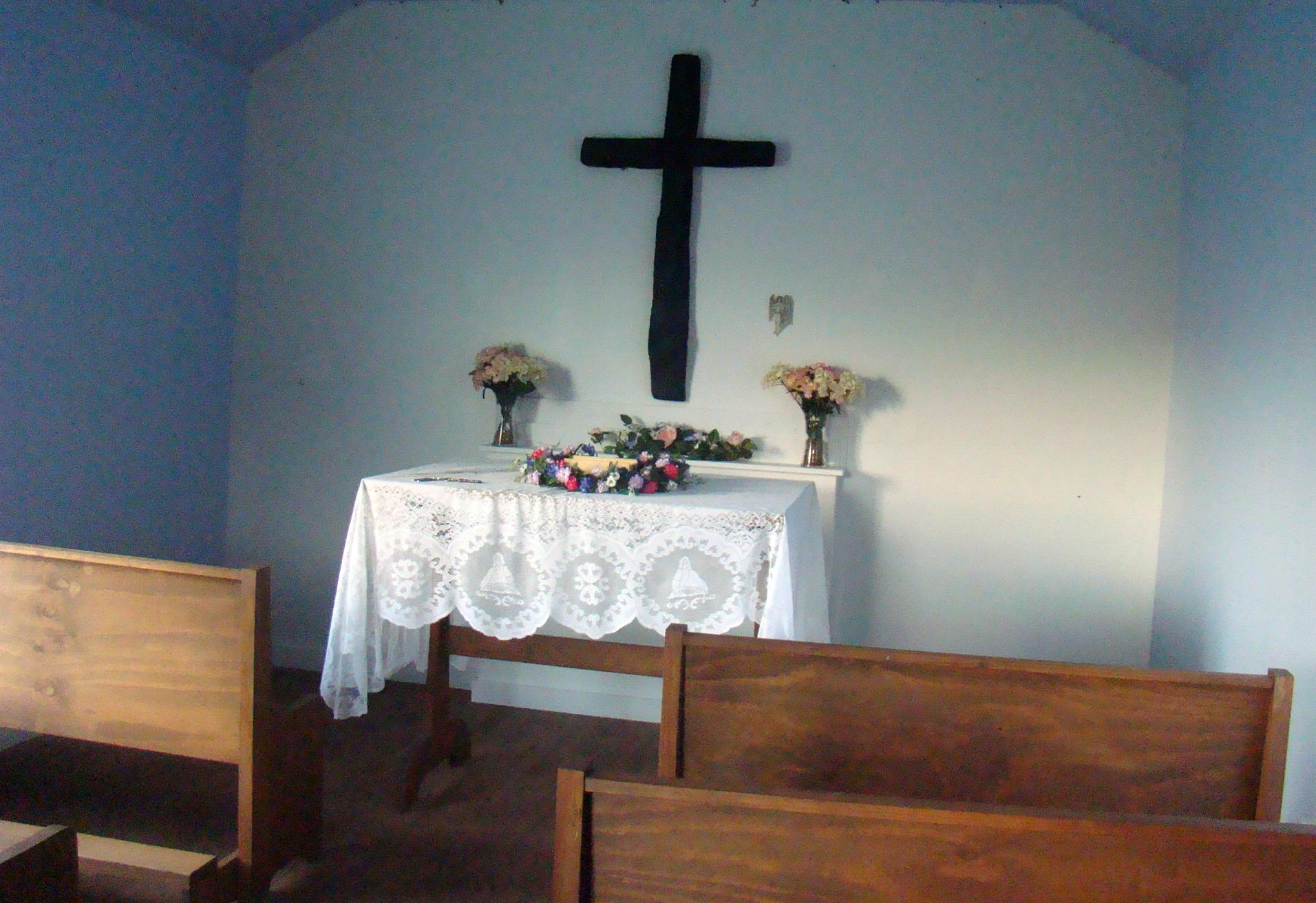
Cross of Burned Timbers at the altar of Royer Chapel

Cross of Burnt Timbers above the altar of tiny Royer Chapel

When arriving at the chapel, a cross made of burnt wood stands out behind the Memorial Wall. Later information discloses that the original church was destroyed by arson on December 8, 2002 and rebuilt by men of the community a few years later. Two crosses were made from the burnt wood – one outside and another inside above the altar. Funds for constructing the new chapel were raised in part from memorial bricks engraved with the names of loved ones or contributors. The Memorial Wall standing out front was built with these same bricks.

Martin's marker and Clara's memorial, a likeness of her imported from France

Martin’s marker and Clara’s memorial, a likeness of her imported from France

Tiny Royer Family Chapel measures about ten feet wide by eighteen feet long, and is located near a cemetery where Martin and his daughter, Clara, were buried in 1888 and 1896 respectively. Clara’s monument, which was imported from France, displays a statue in her actual likeness. The chapel and cemetery were located across the road from the old family farm to accommodate Anne’s frequent visits.

Don and Esther Royer initiated the reconstruction process to keep alive family tradition started by Don’s great-great-aunt Anne. In ten days, four hundred friends and neighbors signed their petition for assistance, so they knew the community supported their plans to rebuild the chapel “just like it used to be”. Since Don and Esther’s wedding had taken place there years before, they had pictures showing exactly what it looked like inside. Those pictures made it easier for Don, in his own shop,  to build new pews and windows to closely match the originals.The reconstructed chapel was built on a new foundation but maintained its original size.

In a recent phone conversation, Anne recalled her wedding day. The seven pews of Royer Chapel were crowded with twenty-one family members. When they turned to walk down the aisle, through the door she could see the yard outside the building filled with her fellow workers from the Coshocton Tribune.

Prayer Box

Prayer Box

Inside, a peaceful chapel scene appears when you gently open the door, which is never locked. At the front of the chapel, a table contains a prayer box surrounded by a wreath of flowers. The inscription on the side of the box reads: Where dreams come true. Inside the box are numerous requests written on slips of paper available on the table.

Here’s a great place to sit down and enjoy the silence of peace while reflecting on life and its many twists and turns – rather like the road leading to the chapel.

Wills Creek Dam

Wills Creek Dam

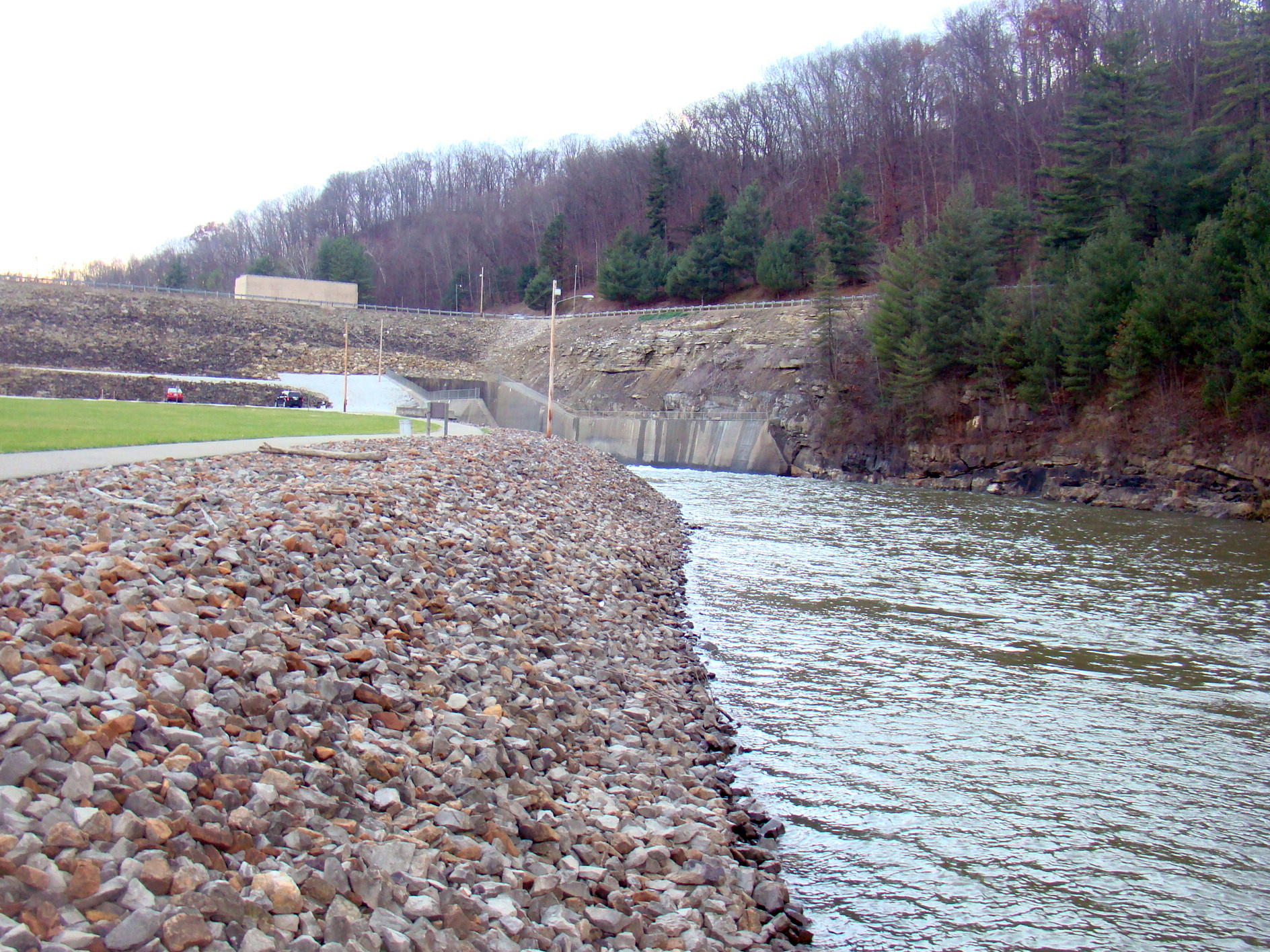
While electricity, water, and heat do not exist at Royer Chapel, services were held every Sunday until recently when they were changed to approximately once a year. Maybe you will want to take a half hour leisurely drive northwest of Cambridge and explore a hidden treasure nearby. You might even want to take a short drive to Wills Creek Dam. Waters flow north on Wills Creek from its beginning near Pleasant City to where it flows into the Muskingum River near Coshocton.

This little chapel on the hill serves as a reminder to be thankful for the small things in life – a smile, a card or email, the joy of each new day.

Royer Chapel can be reached traveling State Route 83.  If traveling north from New Concord, Ohio you will pass through Bloomfield and head down the hill toward Wills Creek Dam. It is approximately 15 miles from New Concord to the dam. The church is difficult to spot unless you are watching. It sets on the east side of the road and can be clearly seen as soon as you turn onto Franklin Township Road 280, while Wills Creek Dam is on the west side about a mile down the road. Approaching from Coshocton on 83, directions are reversed.

The Marietta Mound Cemetery Burial Ground for Heroes of War and Peace

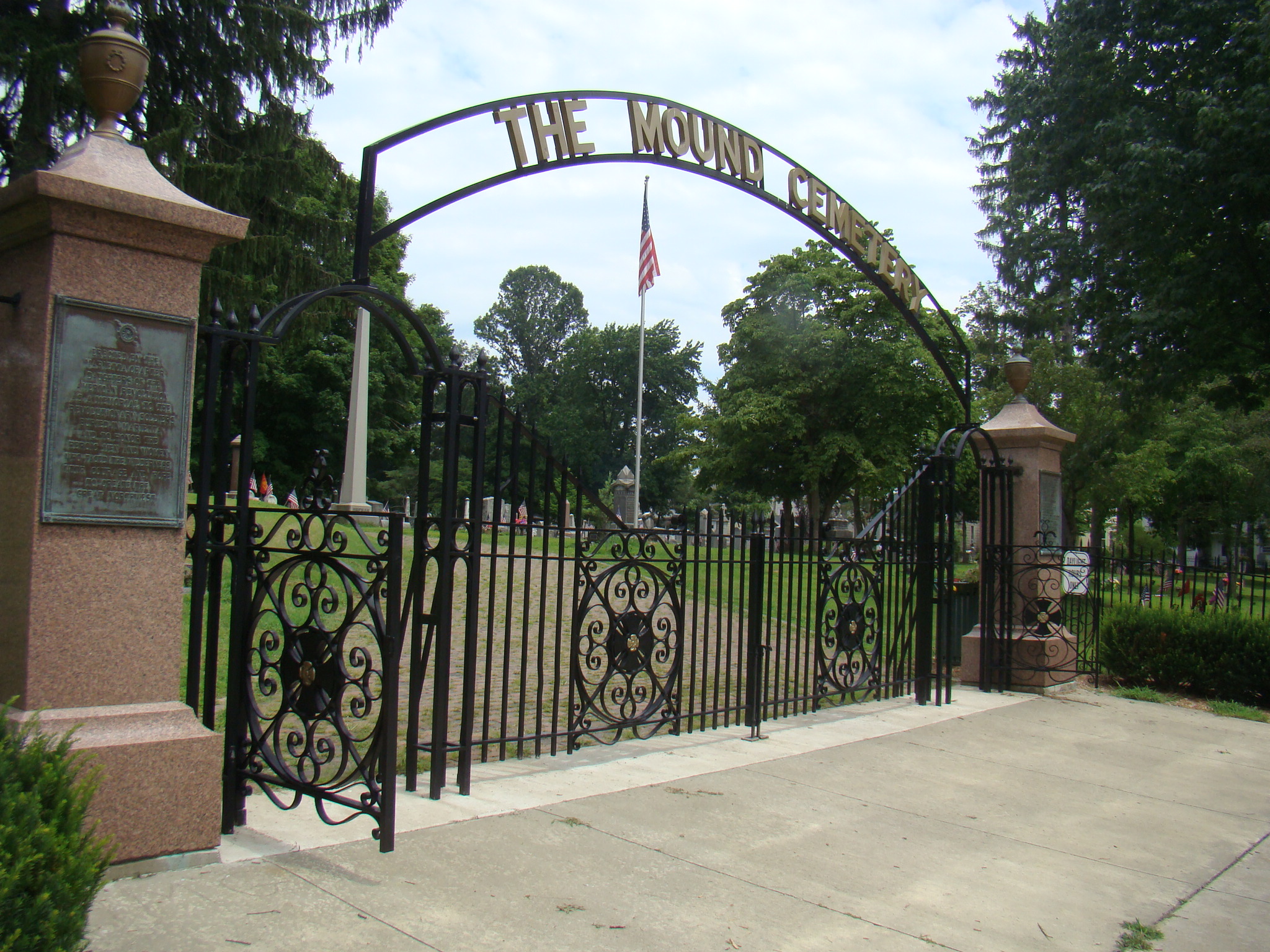
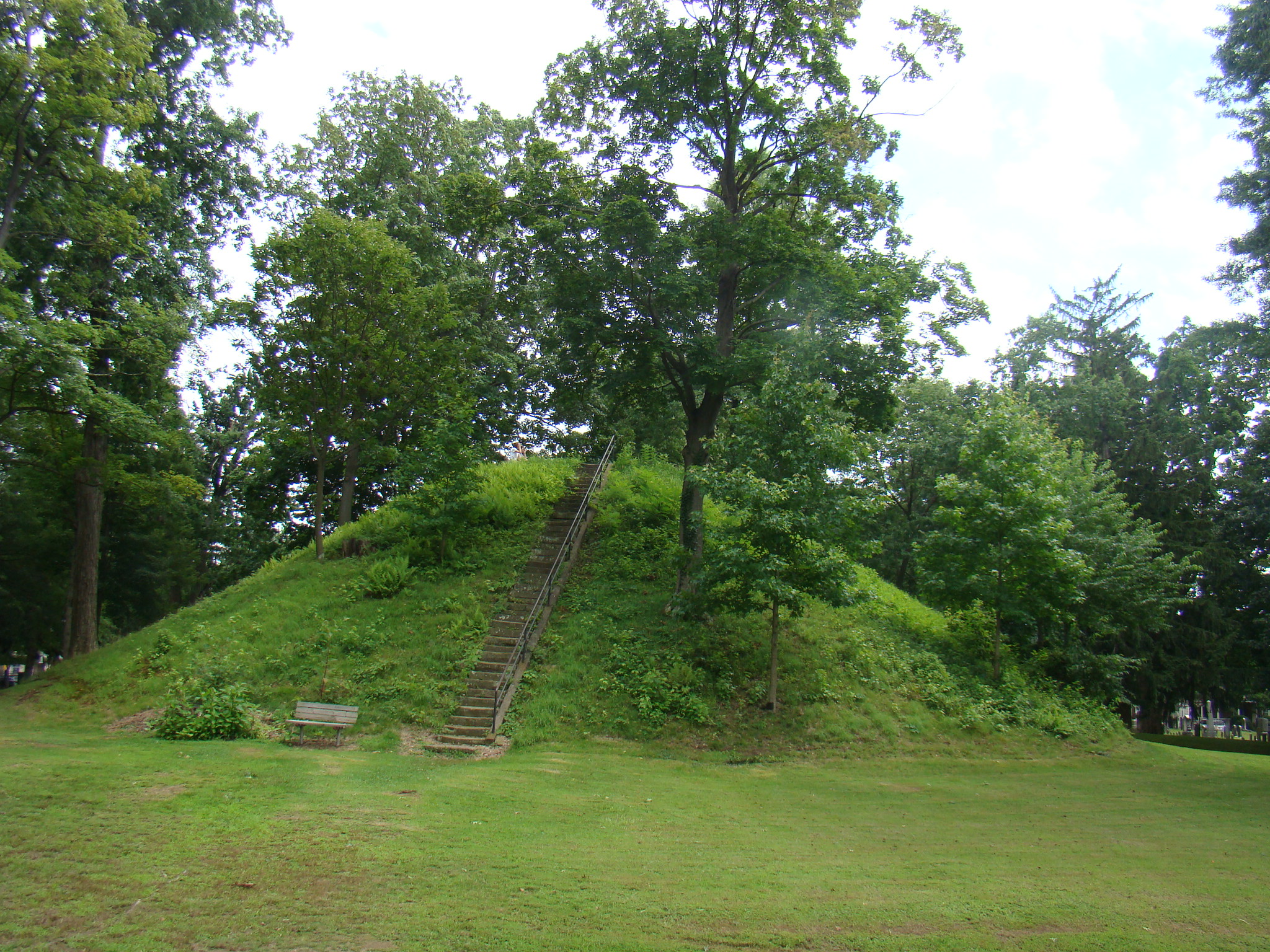
Marietta Mound Cemetery in Marietta, Ohio

Marietta Mound Cemetery in Marietta, Ohio

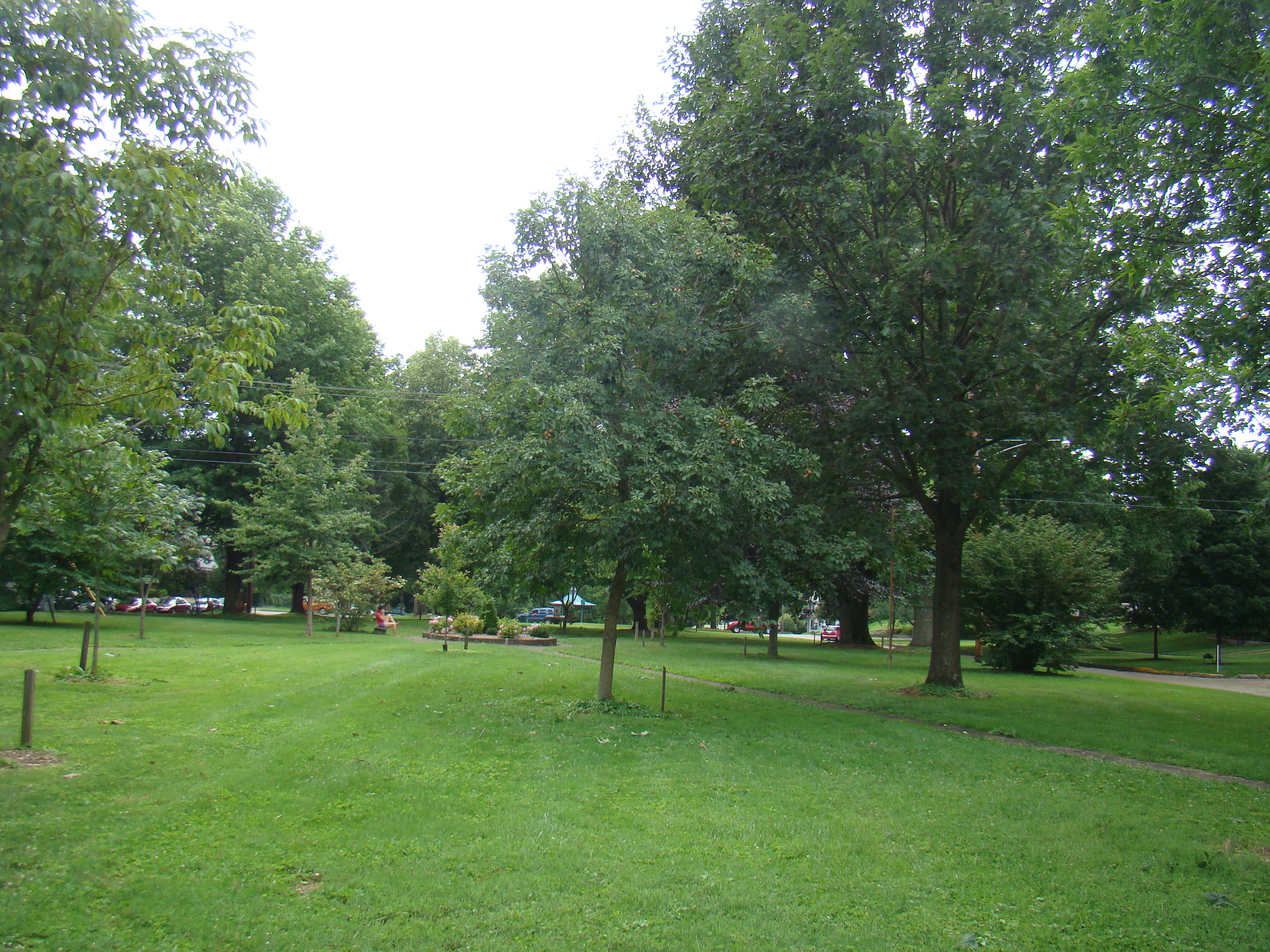
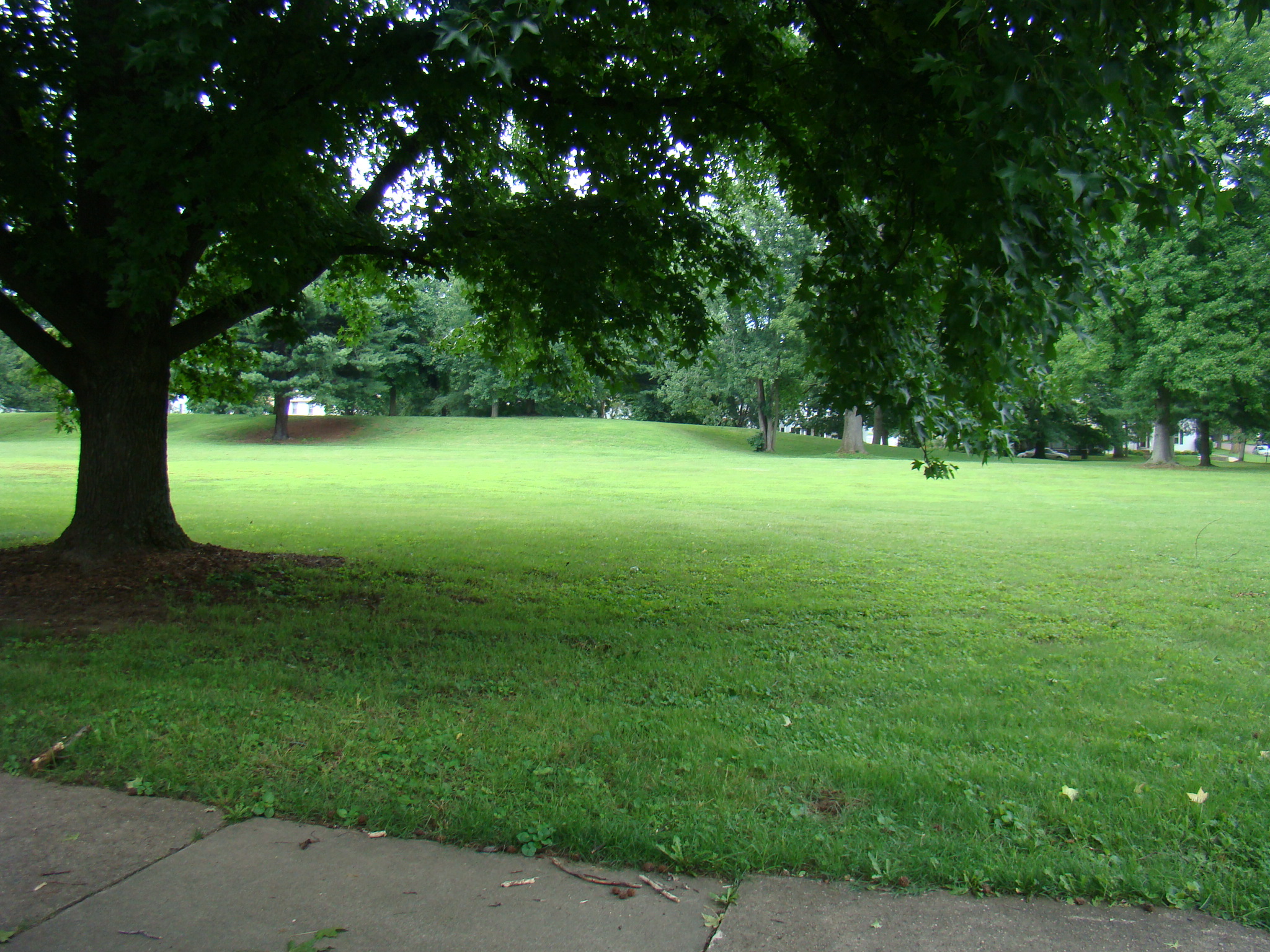
Since the prehistoric Moundbuilders came to the Ohio Valley and Marietta, sometime between 800 BC and 700 AD, those early ancients remain quite mysterious. It is thought the Adena culture built The Great Mound, where Marietta Mound Cemetery is today located. The Hopewell, descendents of the Adena culture, are responsible for a portion of the mounds in the Marietta complex.

Sacra Via, The Sacred Way

Sacra Via – The Sacred Way

From the Muskingum River to what is now 2nd Street, a roadway called Sacra Via, meaning Sacred Way, was constructed of white crushed mussel shells, which made a solid pavement. The reflective light from the moon on the mussel shells almost made it seem like a lighted path when the ships would dock on the Ohio and Muskingum RIvers. Today that Sacred Way is maintained as a public park where the Ohio Land Company members are honored.

Large Pyramid Mound in Marietta Mound Complex

Large Pyramid Mound in Marietta Mound Complex

Sacra Via continued to what is now called the Marietta Earthworks. This archeological complex included a large square enclosure surrounding four flat-topped pyramidal mounds, another smaller square and the conical shaped mound in the cemetery. Brick walls enclosed the Sacred Way from the Muskingum River to the Quadranaou, the largest flat topped earthen pyramid. The walls of the enclosure were aligned with the winter solstice since astrology played a major role in celebrations and rituals of those early cultures. The bricks were removed in 1843 to use as home foundations.

Great Mound, Conus

Great Mound – Conus

The roadway ended at the largest mound, called Great Mound or Conus, where city developers created a cemetery, Marietta Mound Cemetery, in 1801.  More Revolutionary War officers are buried in this county than at any other place in the United States. General Rufus Putnam and General Benjamin Tupper, both founders of the Ohio Land Company, are buried here. Serving originally as the burial place for chieftains, 30′ tall Conus is the Adena culture’s largest conical, ringed mound still visible today.

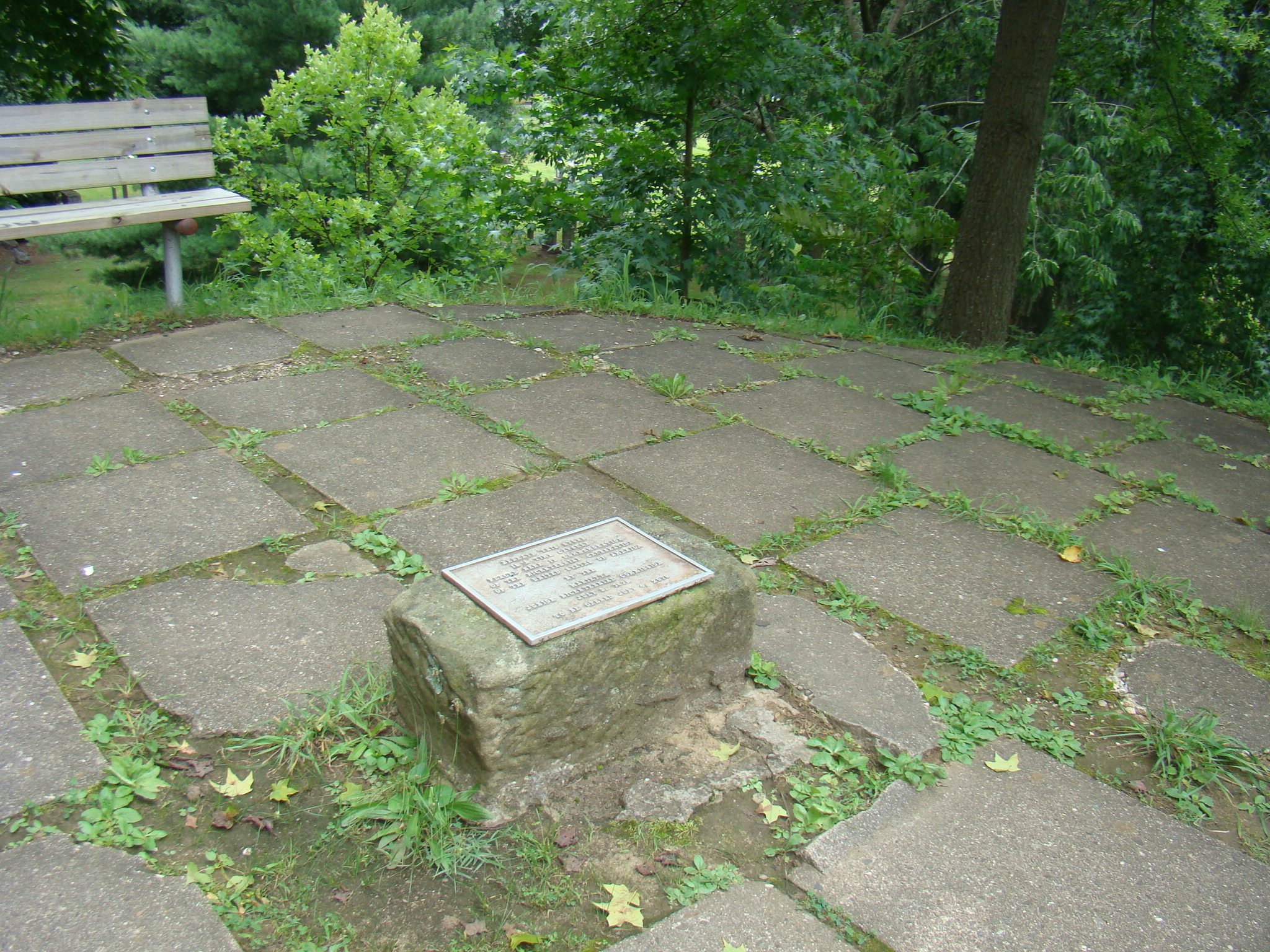
Rock covering capsule at top of the Great Mound

Rock covering capsule at top of the Great Mound

To keep the mound from being destroyed, original pioneers in Marietta had the cemetery fenced in back in 1837. When a slight excavation of the site occurred, bones of an adult Adena Indian and some of his possessions were discovered buried in a horizontal position and covered with a large stone. Once it was discovered this was a burial site, further excavation was halted. The mound was sowed with grass, and stone steps were built to the top. Those same steps can be climbed today with the addition of a handrail for easier climbing.

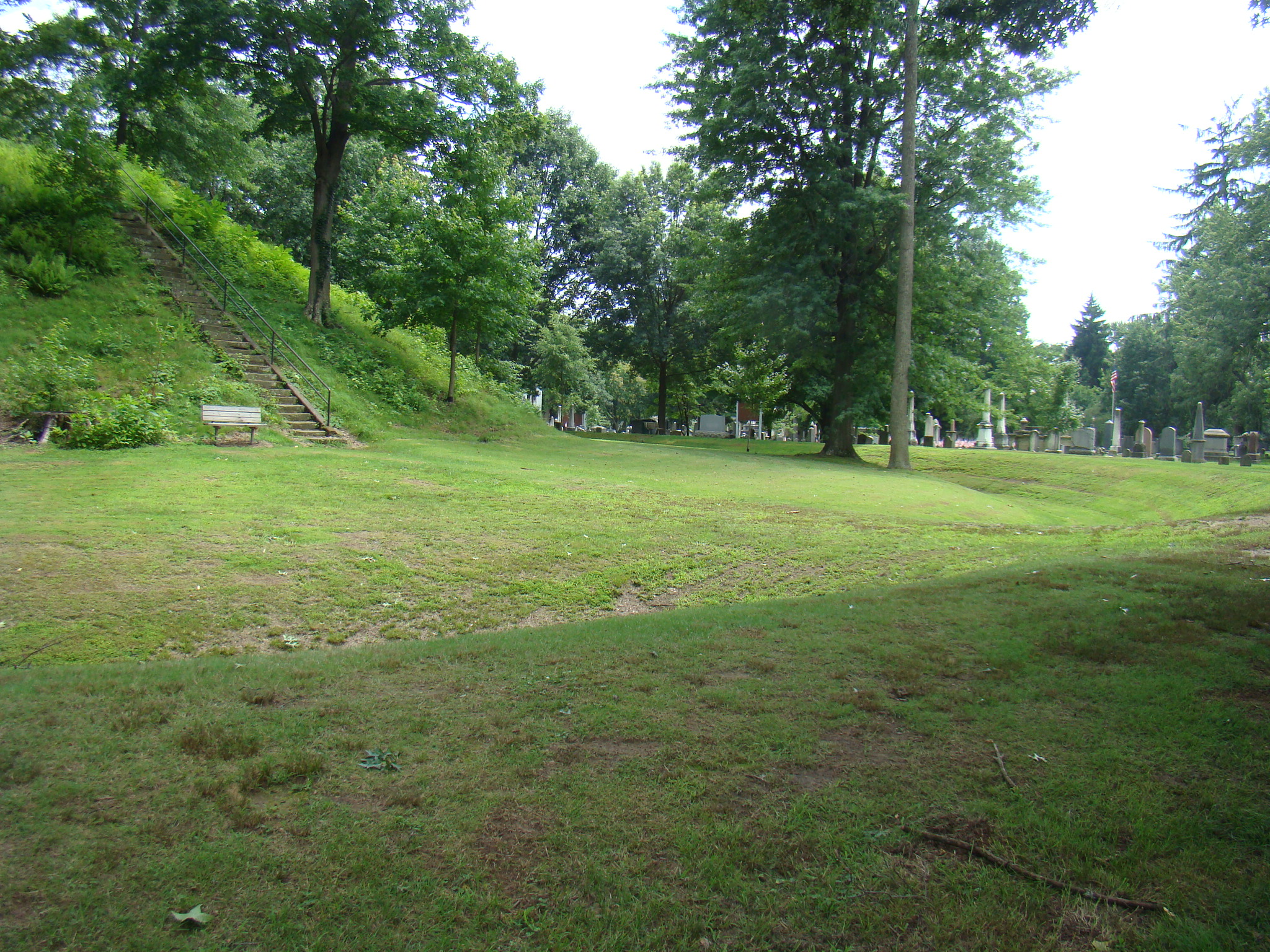
Ditch and embankment surrounding The Great Mound

Ditch and embankment surrounding Conus

After climbing 45 steps, the top of the tree covered mound has benches for resting and viewing the city of Marietta,   A cool breeze was welcome after the strenuous climb but it lasted only a minute.  From the top you can see the 15′ wide ditch and  4′ deep embankment that surround Conus.  An interesting stone at the top of Conus states: Beneath this stone is a time capsule placed here in commemoration of the bicentennial celebration of the United States of America. Junior Bicentennial Commission, July 3, 1976 to be opened July 4, 2076.

Here in this cemetery, seen from high on the mound, are buried a Moundbuilder chief, veterans of the French and Indian War, the Revolutionary War, the War of 1812, the Mexican, Civil and Spanish American Wars plus many heroes of peace. The spirits of those who helped build this nation live on.

Marietta Mound Cemetery is located in Marietta, Ohio off I-77. Take Exit 1 along the beautiful Ohio River following Route 7 West. The cemetery is located at the intersection of 5th Street and Scammel Street. From Route 7, turn right on Greene Street / 7th Street, then right onto 4th Street and another right onto Scammel Street. The Cemetery will be directly in front of you. You can’t miss it!

Fort Henry Days Celebrated Oglebay Park, West Virginia

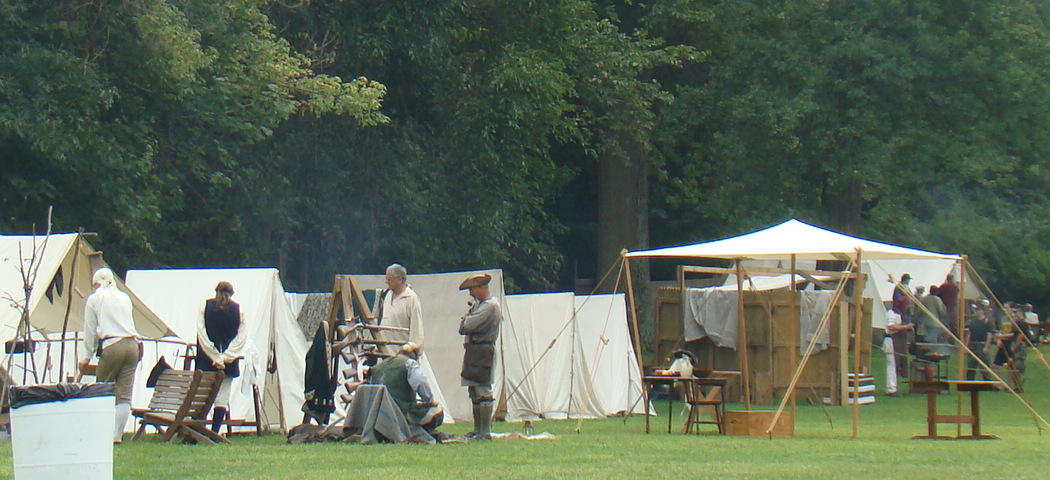
For Henry Days Encampment at Oglebay Park

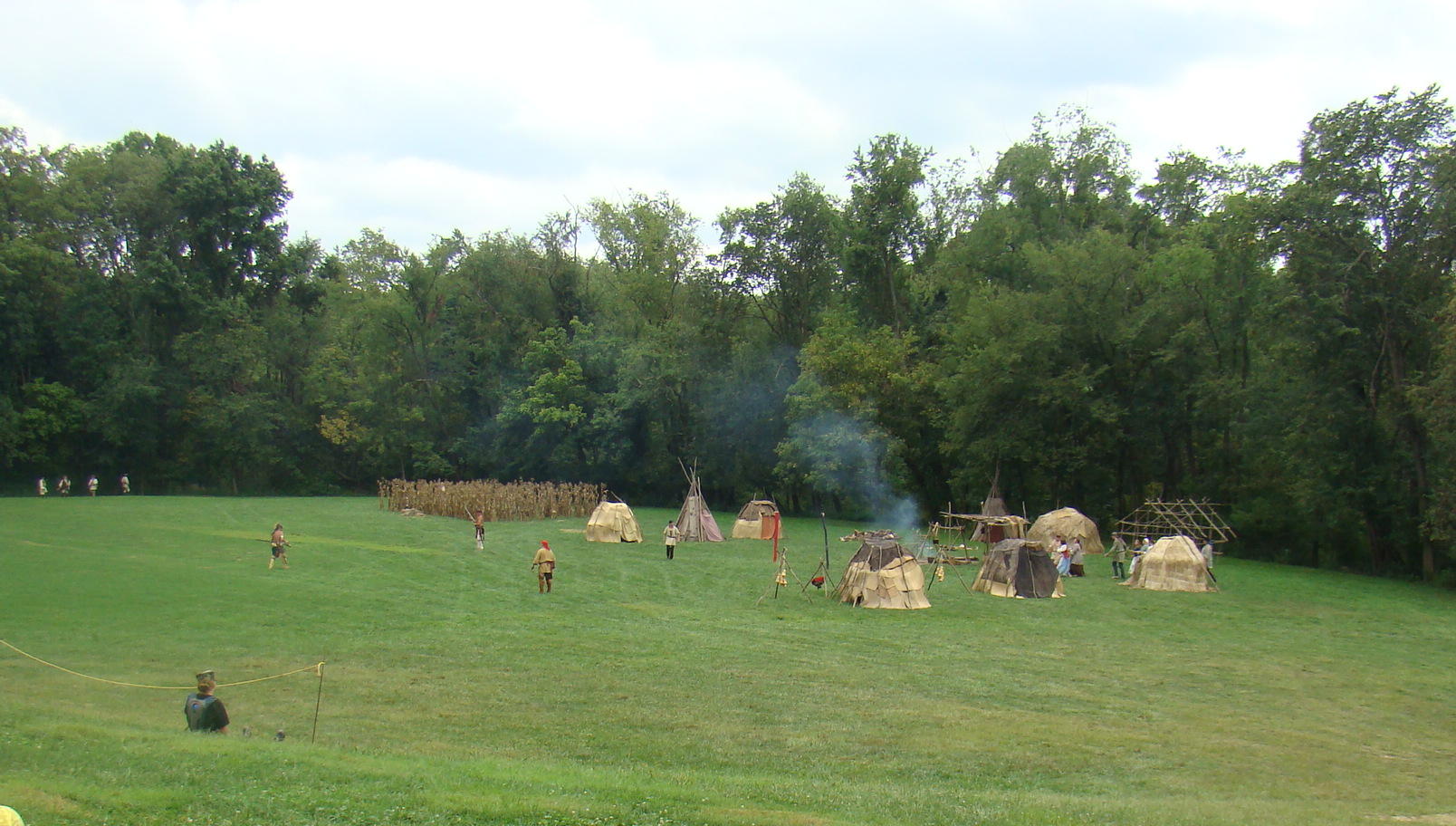
Fort Henry Days Encampment at Oglebay Park

After driving the scenic, winding, mountain roads of Oglebay Park, the scene changed to one resembling a Revolutionary War Camp. We had arrived at Fort Henry Days celebrating life as it was on the frontier in the late 1700’s. Fort Henry was built as protection from the Indians during Dunmore’s War and also used during the Revolutionary War. Originally it was called Fort Fincastle in honor of Viscount Fincastle, Lord Dunmore, Royal Governor of Virginia. Later the name was changed to Fort Henry, to honor Patrick Henry, the Revolutionary Governor of Virginia.

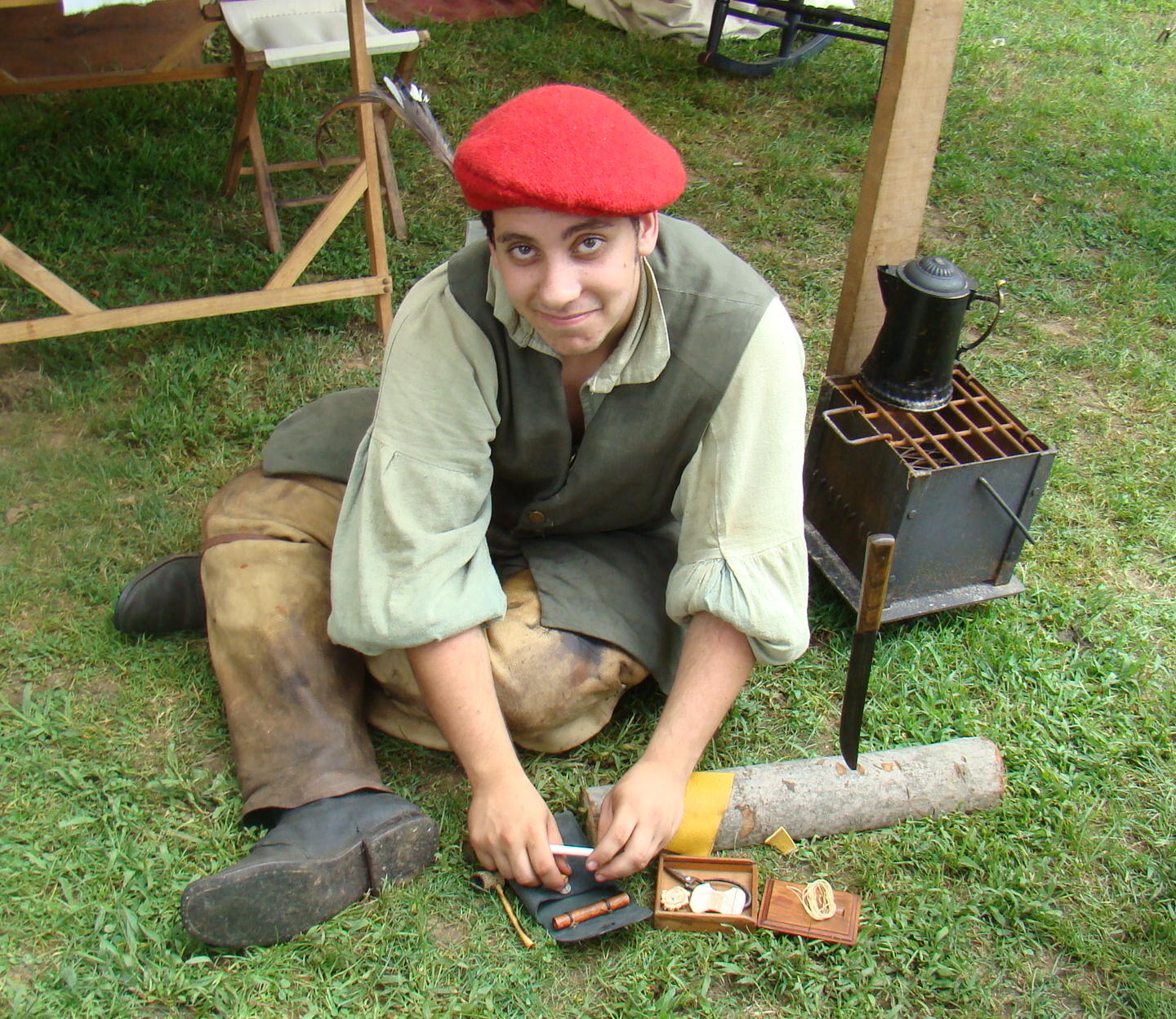
Young settler makes a stem for his pipe.

Young settler makes a stem for his pipe.

A stroll through the grounds indicated there would be a variety of ideas to explore with people who were very knowledgeable regarding the war as well as life during that time. Everyone was camped in tents using only supplies and equpment that would have been available during the late 1700’s.  One family told of seeing deer grazing nearby and even having a red fox and her cub come into their tent.

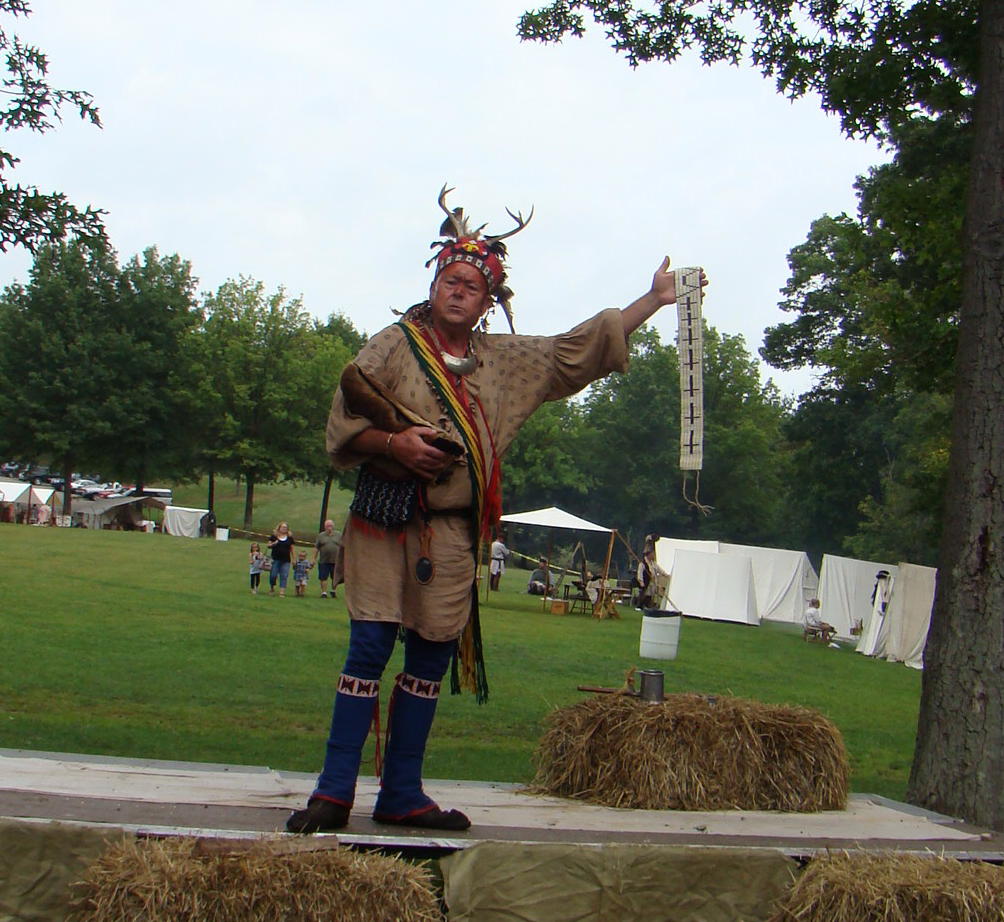
Near the center of the encampment, benches had been placed to face a platform made of bales of straw covered with sheets of plywood. This was the spot for today’s presentations. Dan Cutler, dressed in Indian garb with a headdress made of antlers, portrayed Chief John Logan. This mild-mannered chief extended a wampum belt of friendship to the white man. His kindness shone through when he made a pair of beaded deerskin moccasins for a barefoot, little girl of the settlers.

Chief Logan displays a Christian peace offering.

Chief Logan displays a Christian peace offering.

Chief Logan told of the Indians’ struggles with the settlers at Yellow Creek after they had killed his brother and other female relatives.  Chief Logan, who by Indian custom had the right to retaliate for their murders, then raised a hatchet that had long been buried. His hatchet handle contained fourscore notches – one for each scalp taken in their subsequent attacks on settlers.

Later in the afternoon, Dan Cutler also portrayed Chief Cornstalk and told tales of the chief’s adventures at Fort Randolph on the Scioto River, where they floated quietly on rafts of driftwood to surprise the settlers. Having the standing of warrior was very important, but some felt it important for the young men to get an education. When the educated returned to their tribe, they were considered “good for nothing” …no longer warriors.

Chief Cornstalk told of the Ohio Company promising the land to the Indians, but then supporting the British and pushing the Indians off their promised land. He vividly remembered the first surveyor of the Ohio Company, George Washington, who didn’t even know how to read and write…according to Chief Cornstalk..

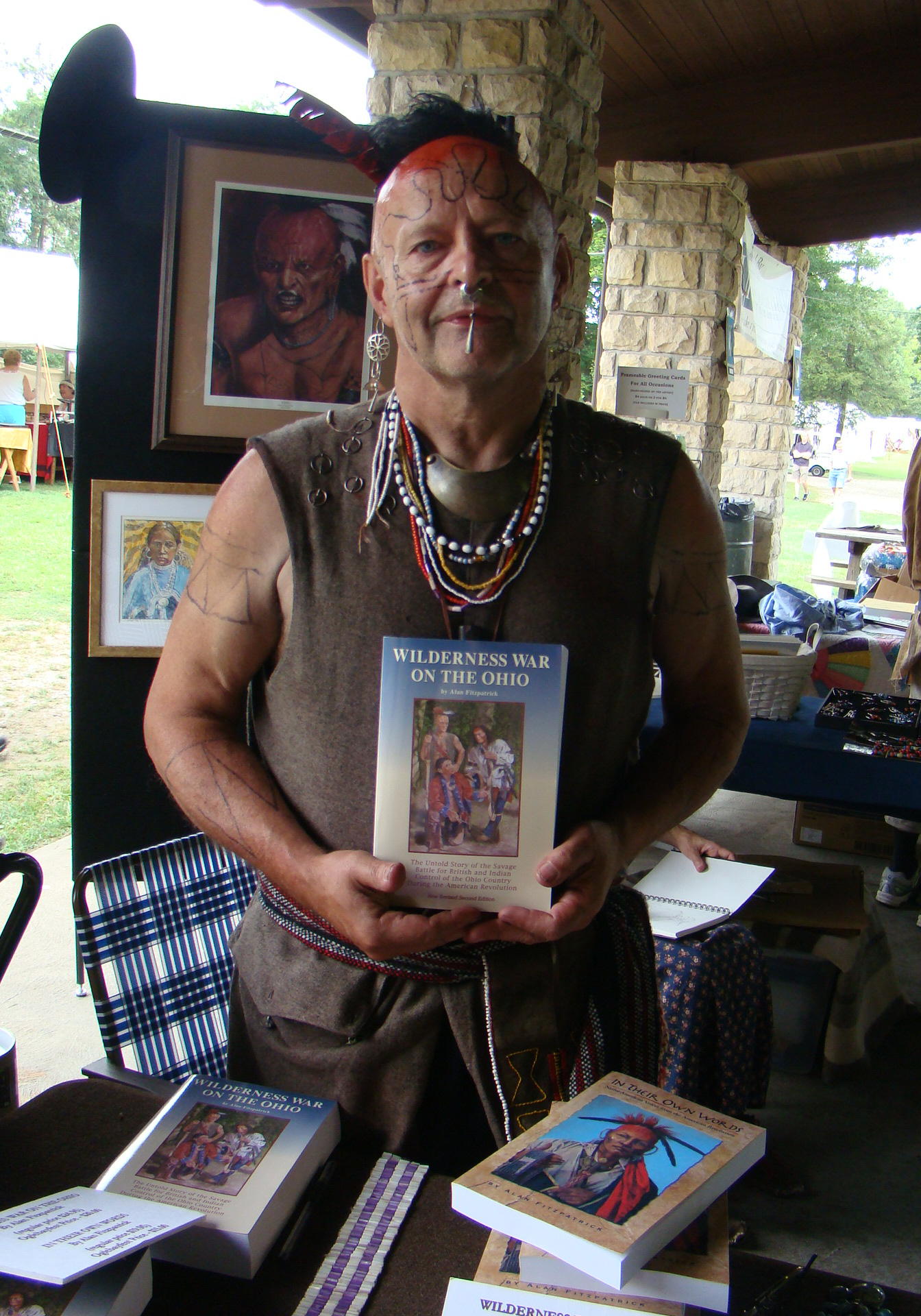
Alan Fitzpatrick, author of Indian legends

Alan Fitzpatrick, author of Indian legends

The grounds at Oglebay Park were filled with battle re-enactors, people depicting life of the times, and vendors selling wares. Under the pavilion were located Sons of the American Revolution, Daughters of the American Revolution, Wheeling Area Historical Society, and authors selling their books. One of these authors was Alan Fitzpatrick, author of Wilderness War on the Ohio and In Their Own Words. His tales of life at that time are based on written records he has found. Anyone in that era who could read and write was very highly sought after with quill, ink, and tablet. There was also beautiful handmade Native American jewelry for sale…my Fort Henry Days’ remembrance – a thunderbird necklace!

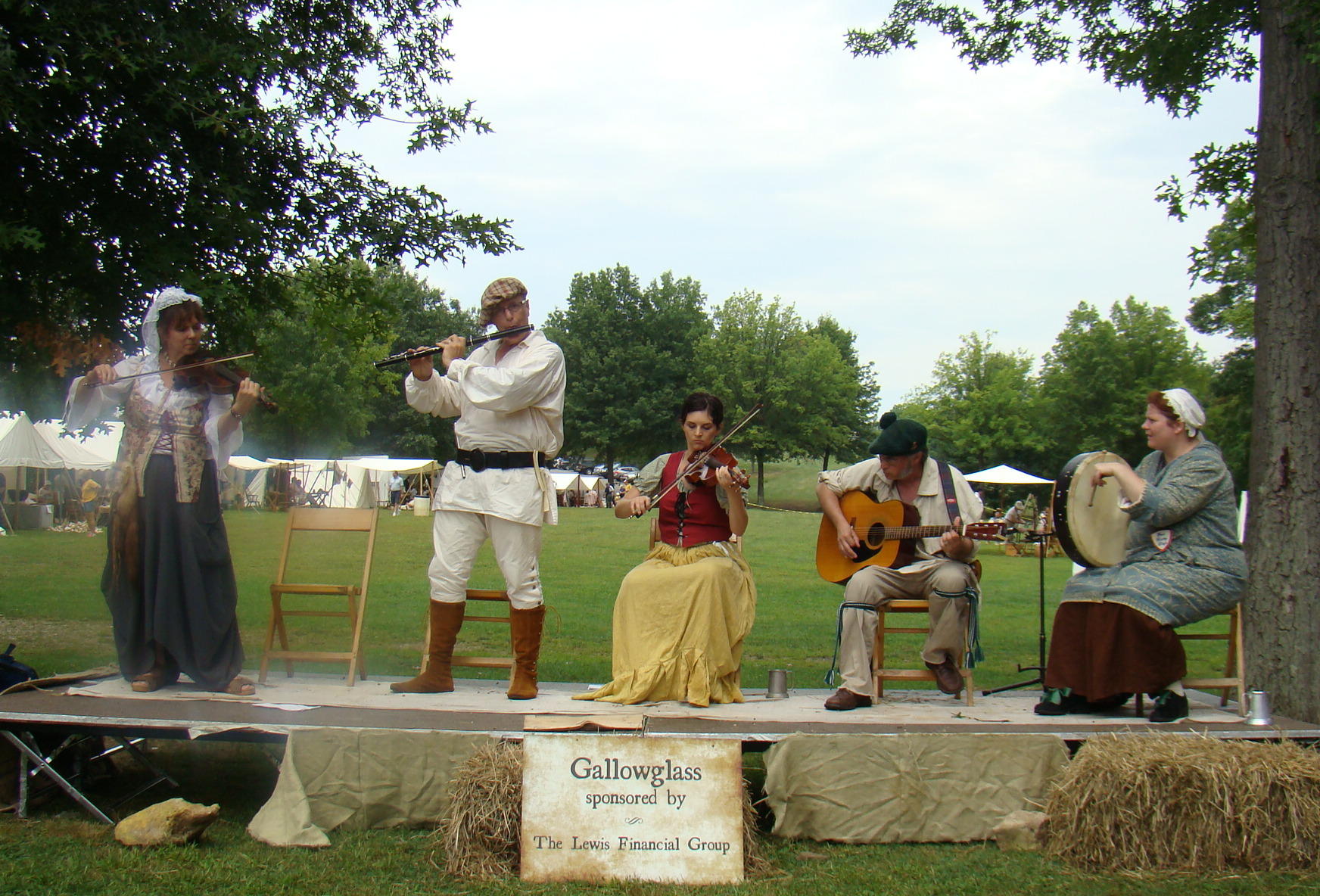
Gallowglass musical entertainment

Gallowglass provides musical entertainment.

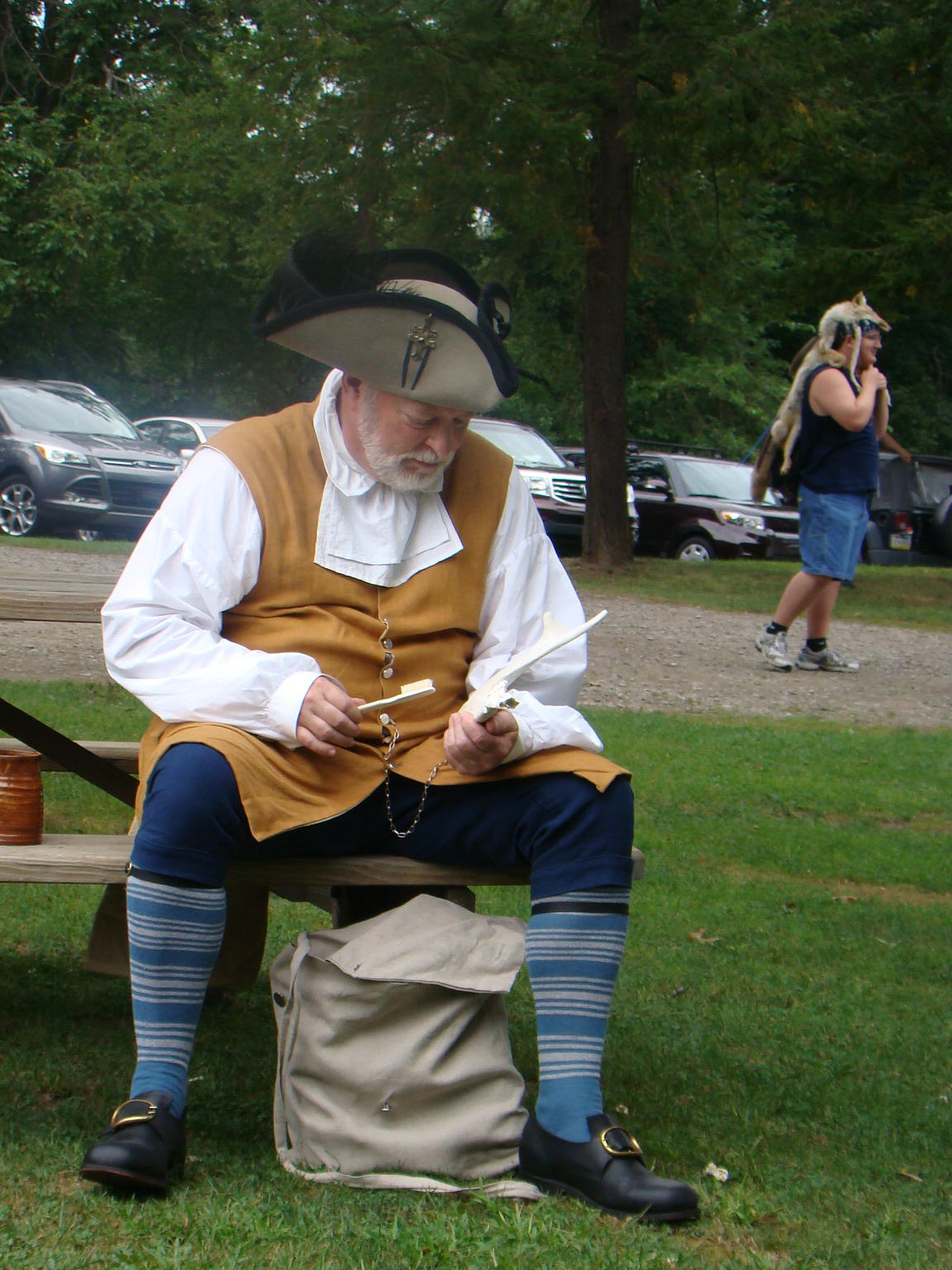
Member of the Wayward Companions plays a jawbone.

Member of the Wayward Companions plays a jawbon

Musical entertainment was provided by Gallowglass, a lively group playing and singing period music as well as old Irish tunes. There seemed to be a lot of drinking ballads in the mix.This group has been performing at Fort Henry Days for several years and their performance contained not only songs but humorous stories as well. Included in their performance were: Welcome Home, Nancy Whiskey, and several reels. A member of the Wayward Companions joined in on many of their songs by playing a bovine jawbone with a period bone toothbrush that he had brought from Gettysburg.

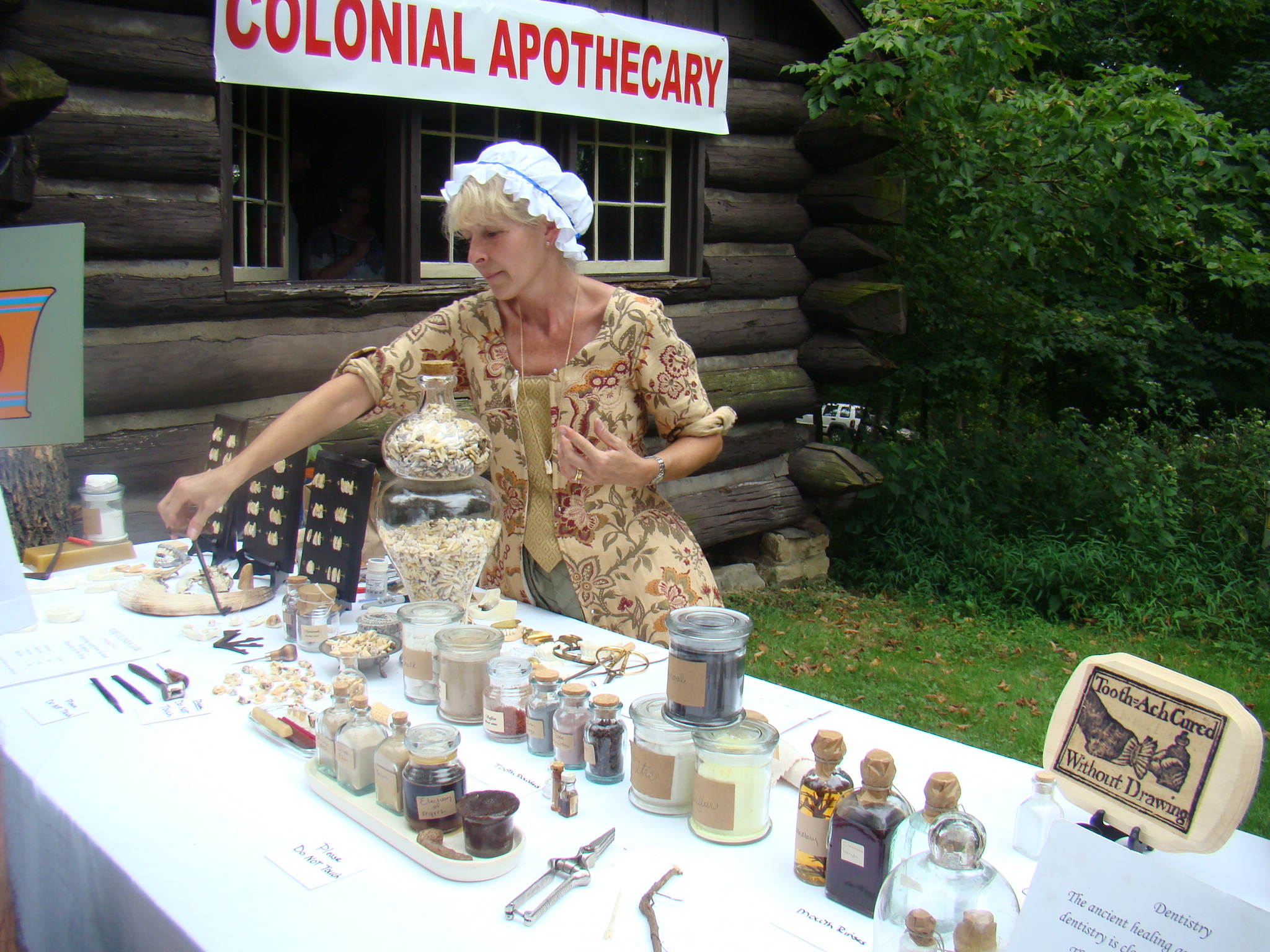
Dr. Jessica Fisher, dentist

Dr. Jessica Fisher, dentist

An interesting frontier dentist informed those gathered at her office about dental practices of that time.  Arsenic was one favorite remedy for a toothache. Their favorite mouthwash was a combination of mint or rosemary in orange water or rose water mixed with alcohol, of course. When someone died or was killed, their teeth were removed to replace those lost by the living. ..an early concept of “tooth implants”?

Indian Village for Reenactment

Indian Village for Reenactment

The culmination of the day was a Battle Re-enactment, unlike any I had ever seen before. This recreation told a true story, which was narrated over a loudspeaker. This event occurred back in 1782 at Sandusky, Ohio where the frontiersmen were attacking an Indian village. The natives were doing their normal chores with children playing in the cornfields. An Indian warning call was the sign for everyone to run for cover. They even set the cornfield on fire! Many were captured but some fled to freedom.

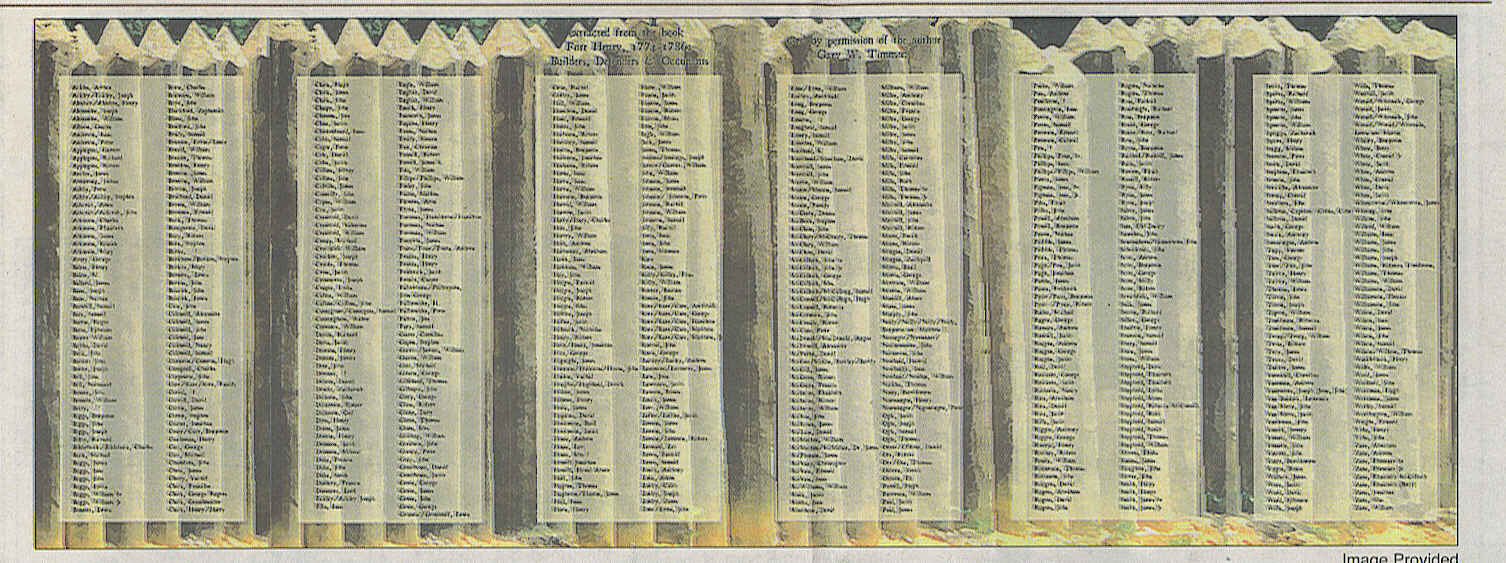
Fort Henry Memorial Wall

Fort Henry Memorial Wall

Not much is left of the old Fort Henry, but locals are trying to keep alive the memories. There is a granite Fort Henry marker in the parking lot on the right hand side just past Capitol Theater. A list has been started, but not complete by any means, of those who were in Wheeling at the time of the American Revolution. All these names have been placed on a wall, which is being displayed throughout the Ohio Valley. Should your family name be there?

Fort Henry Days are held the first weekend of September annually. Celebration is held in Oglebay Park at Wheeling, WV. Once you get to the park, signs will direct you to the activities. If you know of any names that need to be added to the wall or wish to display the Fort Henry Wall, contact the Fort Henry Living History board by email at don@feenerty.com.

Remains of Civil War Veteran Rededicated at Sarahsville, Ohio

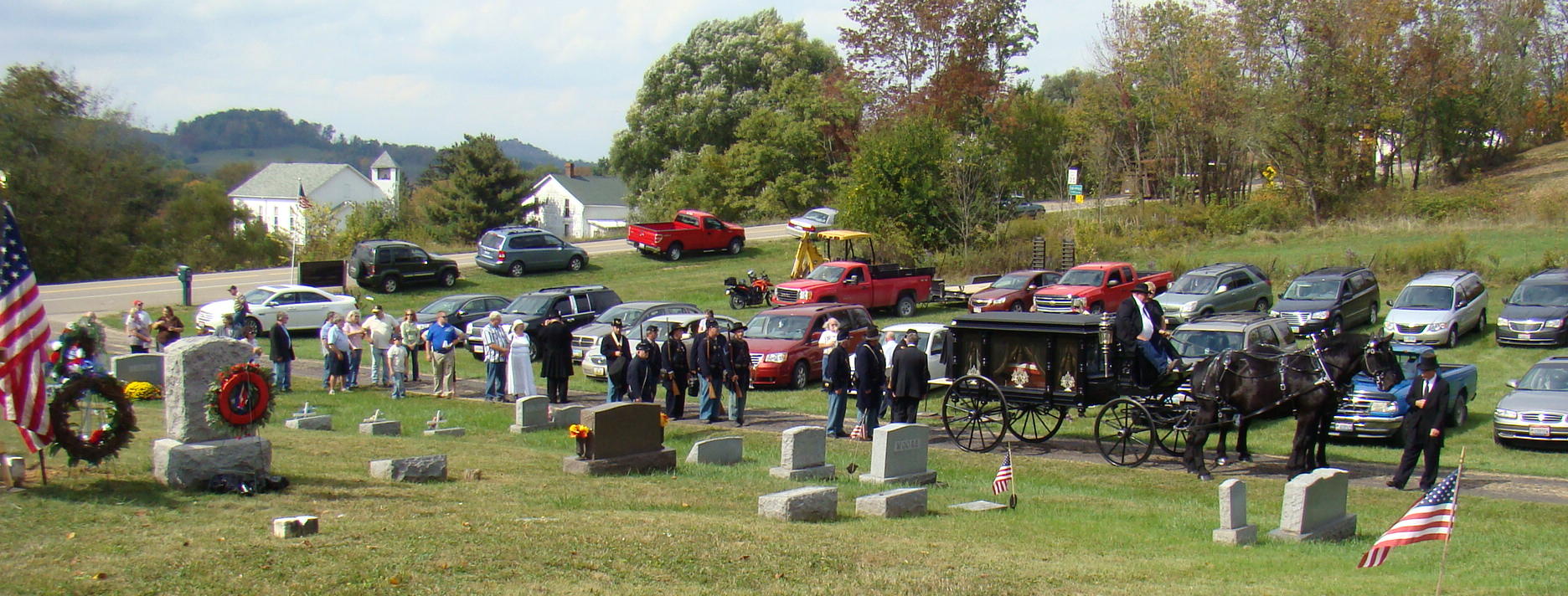
Funeral Procession arrives at Village View Cemetery.

Funeral Procession arrives at Village View Cemetery.

Village View Cemetery in Sarahsville, Ohio was the scene of the rededication of the remains of Pvt. Absalom (Abner) Robinson, Civil War veteran.  2013 was the 120th anniversary of Abner’s death and the 150th anniversary of President Lincoln’s well-known Gettysburg Address.

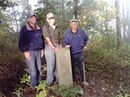
Robinson brothers arrived ready to help at original burial site.

Robinson brothers arrived ready to help at original burial site.

Actual preparation for the ceremony began earlier in the week when three great-great-grandsons of Pvt. Abner Robinson met on top a hill in East Union with township trustees and the local funeral home. They knew exactly where Abner Robinson had been buried as the tombstone was still on the hill. Seems that in 1893, Abner died after being struck in the eye by a rusty nail while helping with work on a barn. At that time they were not certain of the actual cause of death or what illness might be involved, so decided to bury Abner on top of a far away hill so he wouldn’t spread his possible disease, most likely tetanus, to anyone else.

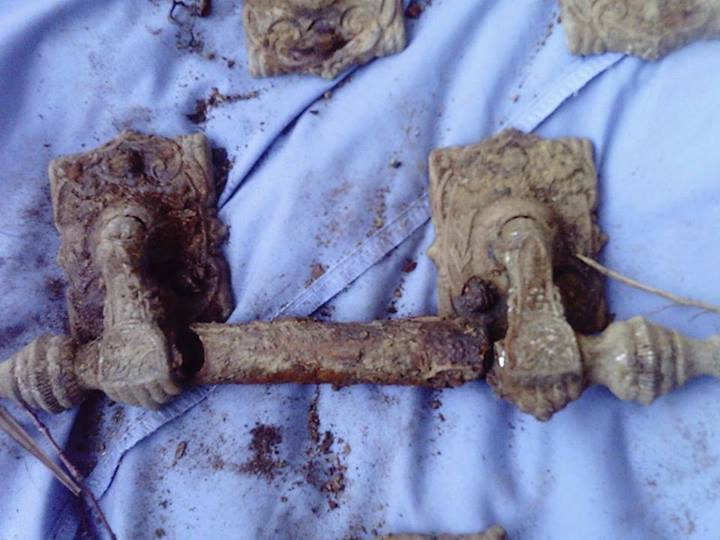
Hardware from 1893 casket

Hardware from 1893 casket

Knowing the story, the family decided they would like Abner Robinson’s remains to be moved to their family plot. After digging by the tombstone, they found no sign of any remains. But when one of the relatives suggesting digging closer to the cedar tree, they made some exciting discoveries.   Not only did they find the original cedar casket, which was squashed to about eight inches, but inside they found several bones, part of the skull, and teeth. There were also hinges that still worked on the lid as well as other pieces of rusted metal.

The local funeral home, McVay-Perkins of Caldwell, took those body parts found in the 1893 casket, and put them in a pouch to be placed inside the new casket, which was made of cherry wood.

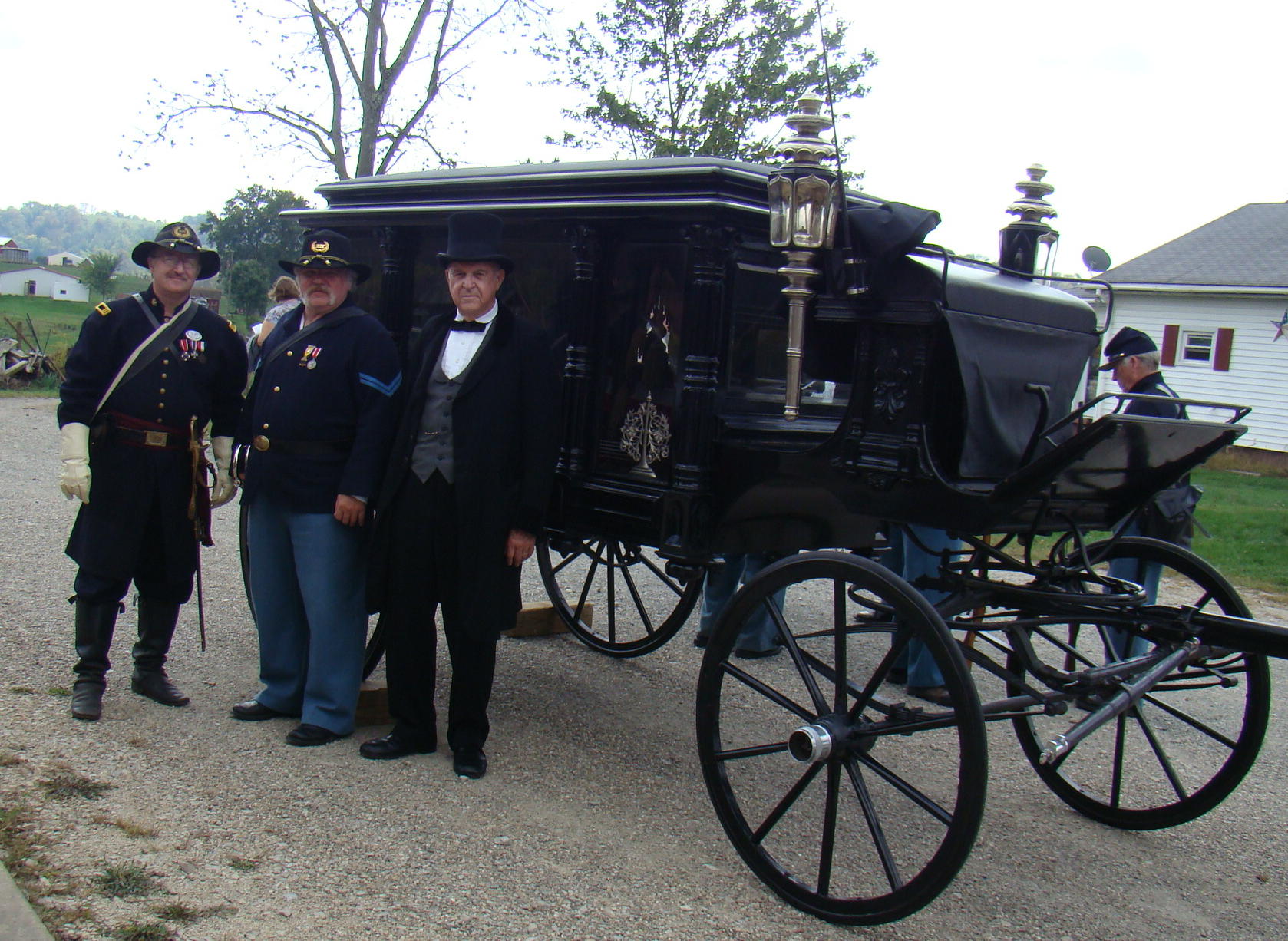
Hearse with Sons of Union Civil War Veterans and Governor Dollison

Hearse with Sons of Union Civil War Veterans and Governor Dollison

When approaching a distinguished gentleman in a top hat before the ceremony, I asked him if he would be so kind as to let me take his picture with the Sons of Union Veterans that were present. His answer surprised me, “You are speaking to Governor Dennison, the 23rd Governor of Ohio. Next thing you know women like you will be asking for the right to vote.” When asked about the Civil War, he freely expressed his opinion, “That was a war of southern rebellion, there was nothing civil about it.”

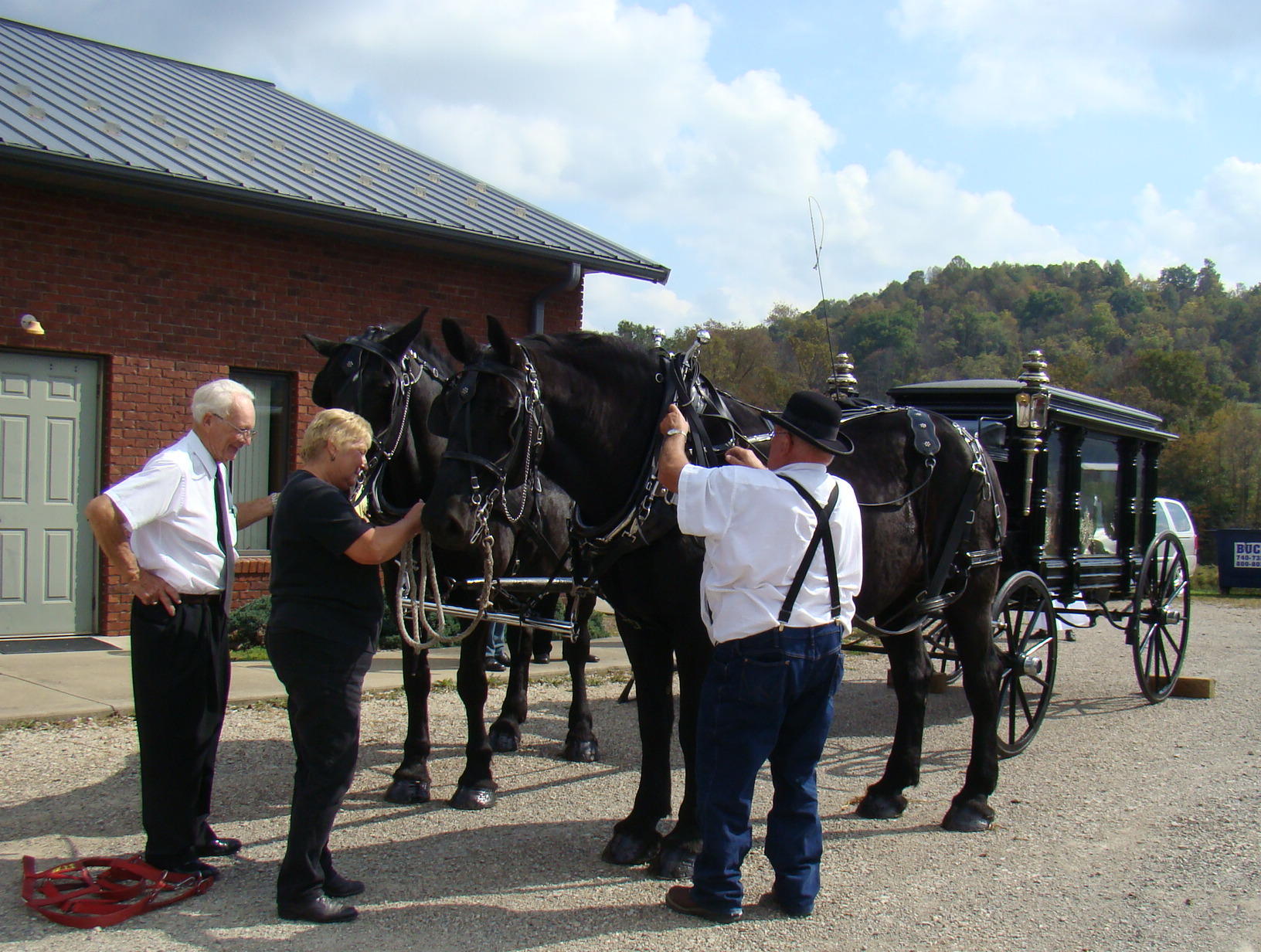
Two black Perchenon horses prepare for the procession.

Two black Percheron horses prepare for the procession.

The funeral hearse drawn by twin black Percheron horses and provided by Robert Baird of Troy, Ohio, started their route at the Sarahsville Center Free Methodist Church.  What a procession it was! Following the horse-drawn funeral carriage bearing Pvt. Robinson’s cherry casket, members of Sons of Union Veterans of the Civil War marched to the cadance of the fife and drum corps. Many descendents of Abner also walked the half mile road to Village View Cemetery in Sarahsville.

Abner Robinson (1836-1893) served as a Private in Company G, 62nd Ohio Volunteer Infantry during the Civil war. Three of his brother, William, George, and John, were also members of the Union forces.  Abner’s unit saw active service in places such as Shenandoah Valley, Peninsula Campaign, Beaufort, Morris Island and Fair Oaks.

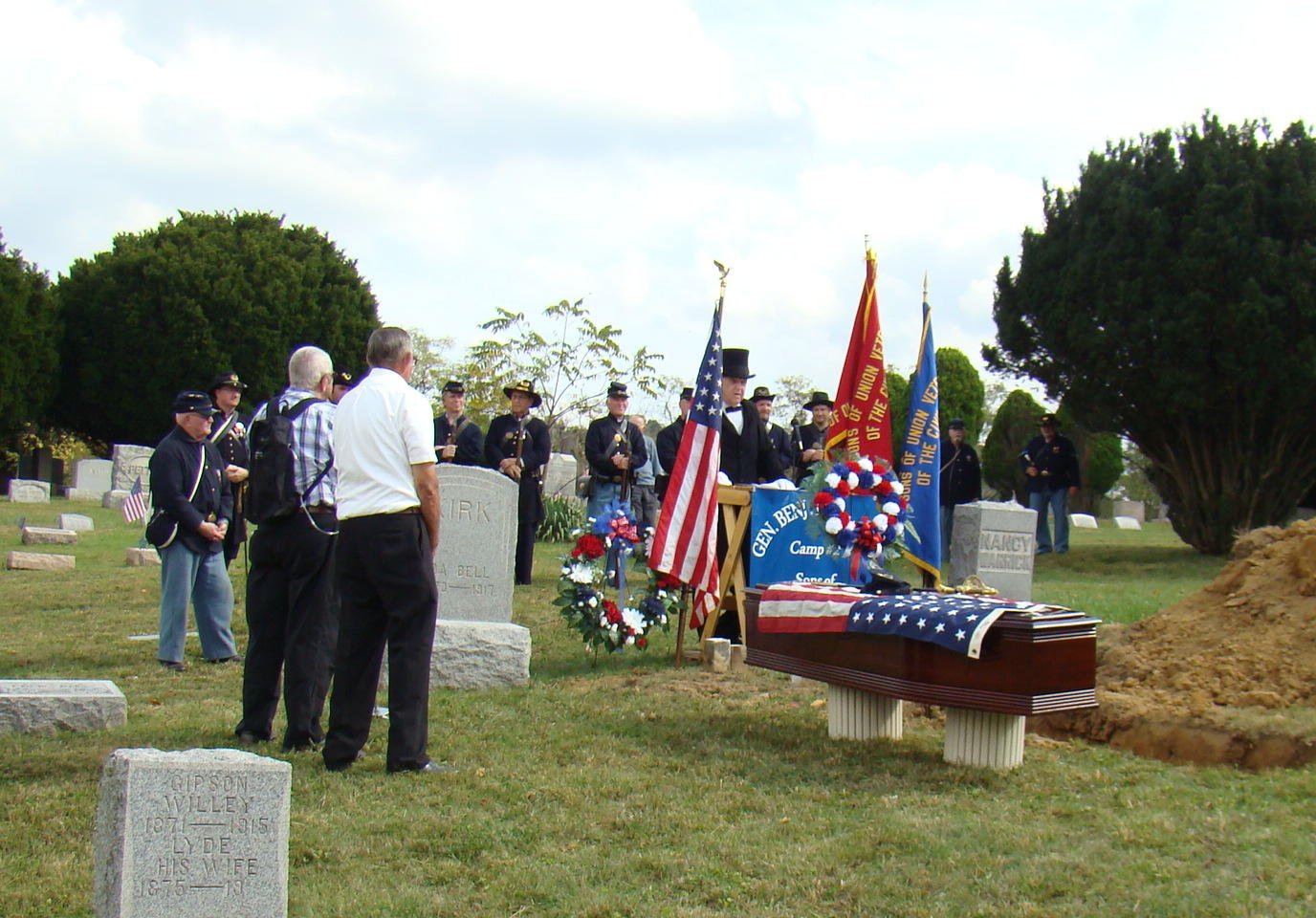
Many speakers participated in the graveside service, which lasted about an hour, before the casket covered with a 34 star flag, which was later given to the family. Family members presented a wreath in honor of all Union soldiers in the Civil War conflict

Governor Dennison rededicated Pvt. Robinson's remains.

Governor Dennison rededicated Pvt. Robinson’s remains.

One of the highlights was the speech by Robert W. Davis, portraying Governor William F Dennison. His main purpose was to rededicate the remains of Abner Robinson to their new resting place. However, Gov. Dennison also portrayed his role during the  Civil War by saying, “I will defend any slaves that come to Ohio with a bayonet.” His boldness was clearly expressed when he exclaimed, “All rebels should be hung.” When President Lincoln told the governor he needed 10,000 men, Gov. Dennison replied that he only had 18,000 men total, but within the week he had over 13,000 men marching into Columbus headquarters ready to fight.  He proclaimed, “We will keep this United States together until our last breath.”

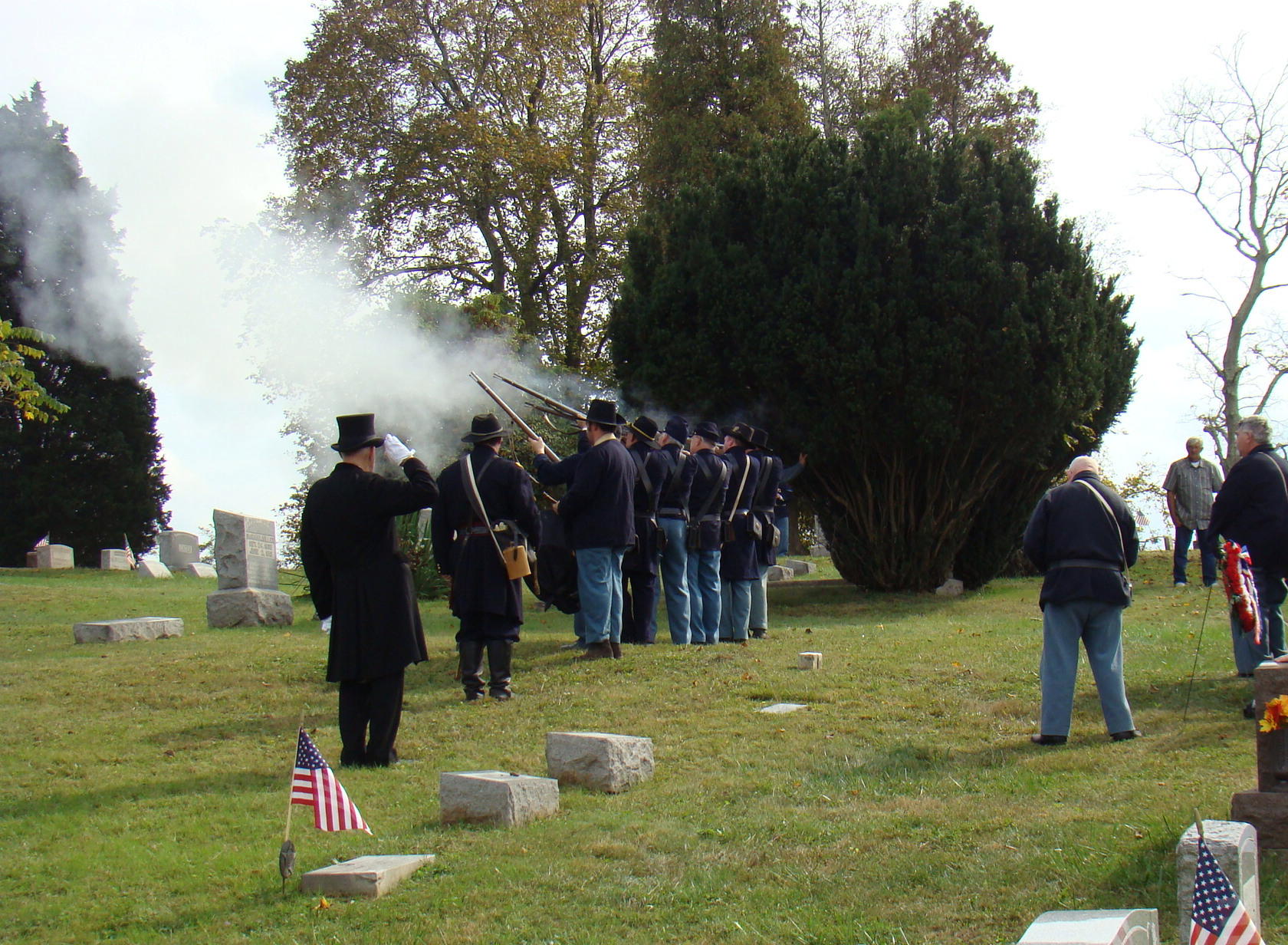
21 gun salute ends the ceremony.

A three round rifle salute ends the ceremony.

The ceremony was brought to an end with a three round rifle salute by the color guard. A traditional fife rendition of Taps and a prayer concluded the events.

Abner’s life must have been a difficult one from his Civil War battles to the farm in McCleary, Ohio (now East Union). When he died, the copy of Probate Court papers declared that his amount of personal property would be about $2.00 and his real estate about $15.00. Have to imagine that the rededication of his remains was more expensive than anything he could possibly have imagined.

This ceremony held extra interest for this Gypsy since Pvt. Abner Robinson was the great-great-grandfather of my cousin’s husband, Jerry Robinson. Jerry is one of those pictured at the original grave site and helped with discovering the remains.