Places to go and things to see by Gypsy Bev

Archive for the ‘History’ Category

Tour Daweswood House Museum “Let the Flowers Grow Where They May”
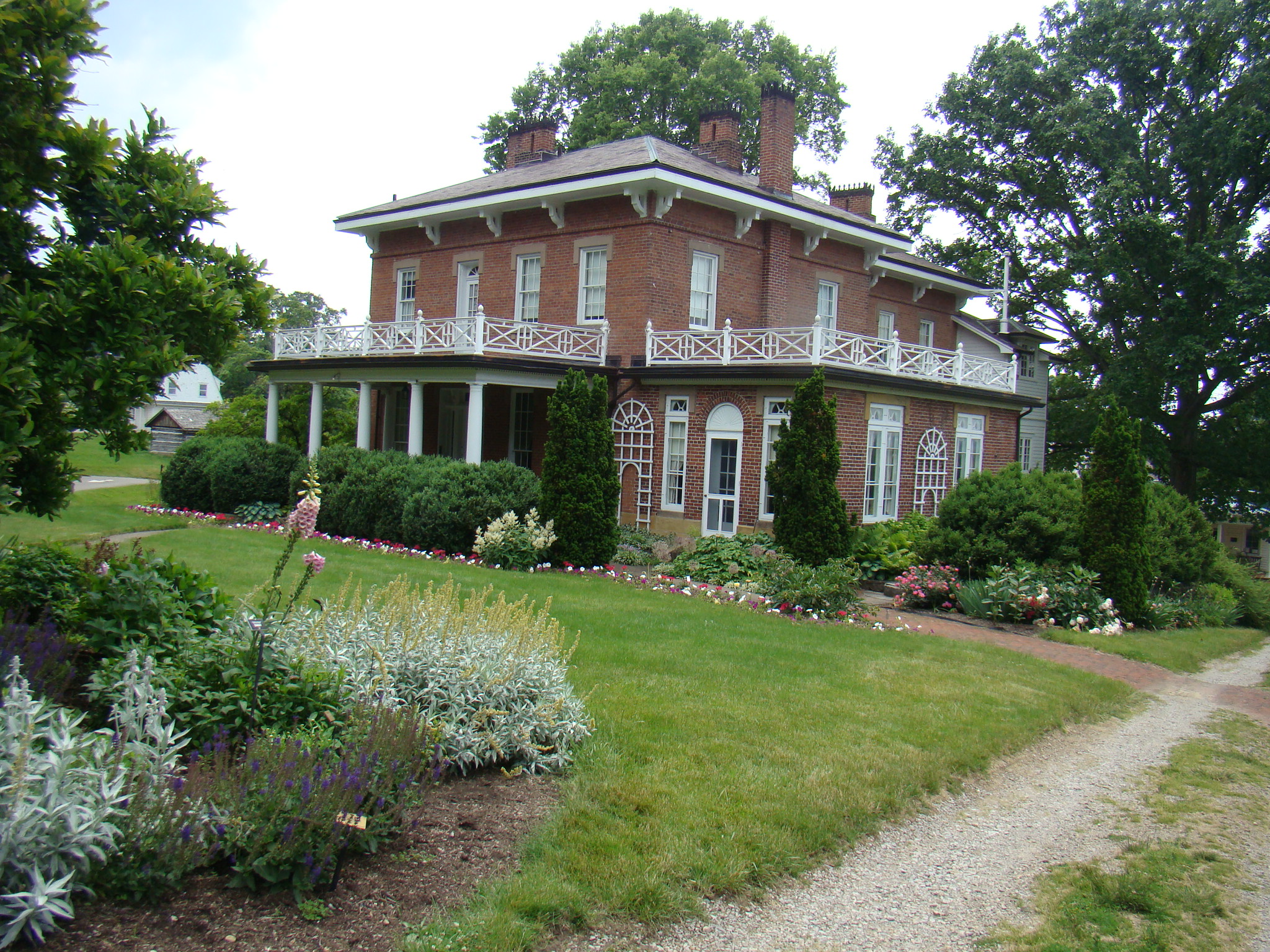
Daweswood House Museum

Daweswood House Museum

Exploring Daweswood takes visitors back in time to absorb the lifestyle of the Dawes family in the early 1900’s near Newark, Ohio. Being greeted by Debby, the youngest granddaughter of Beman and Bertie Dawes, made the tour doubly enjoyable. Her added stories of childhood visits added life to the beautiful old home.

Outside, the playful, lighthearted garden design reflects Bertie’s favorite saying, “Let the flowers grow where they may”. Beautiful flower beds surround the home turned museum, and help visitors realize the importance of plants and flowers to the Dawes family.

Inside, Daweswood House Museum, actually built in 1867,  is filled with antiques, unique collections of natural history, and stories which seem to pour from the walls. The flooring and spiral walnut staircase in the entryway are original and from lumber cut on the farm back in the late 1800’s. Everything was built with loving care in the best tradition of the times.
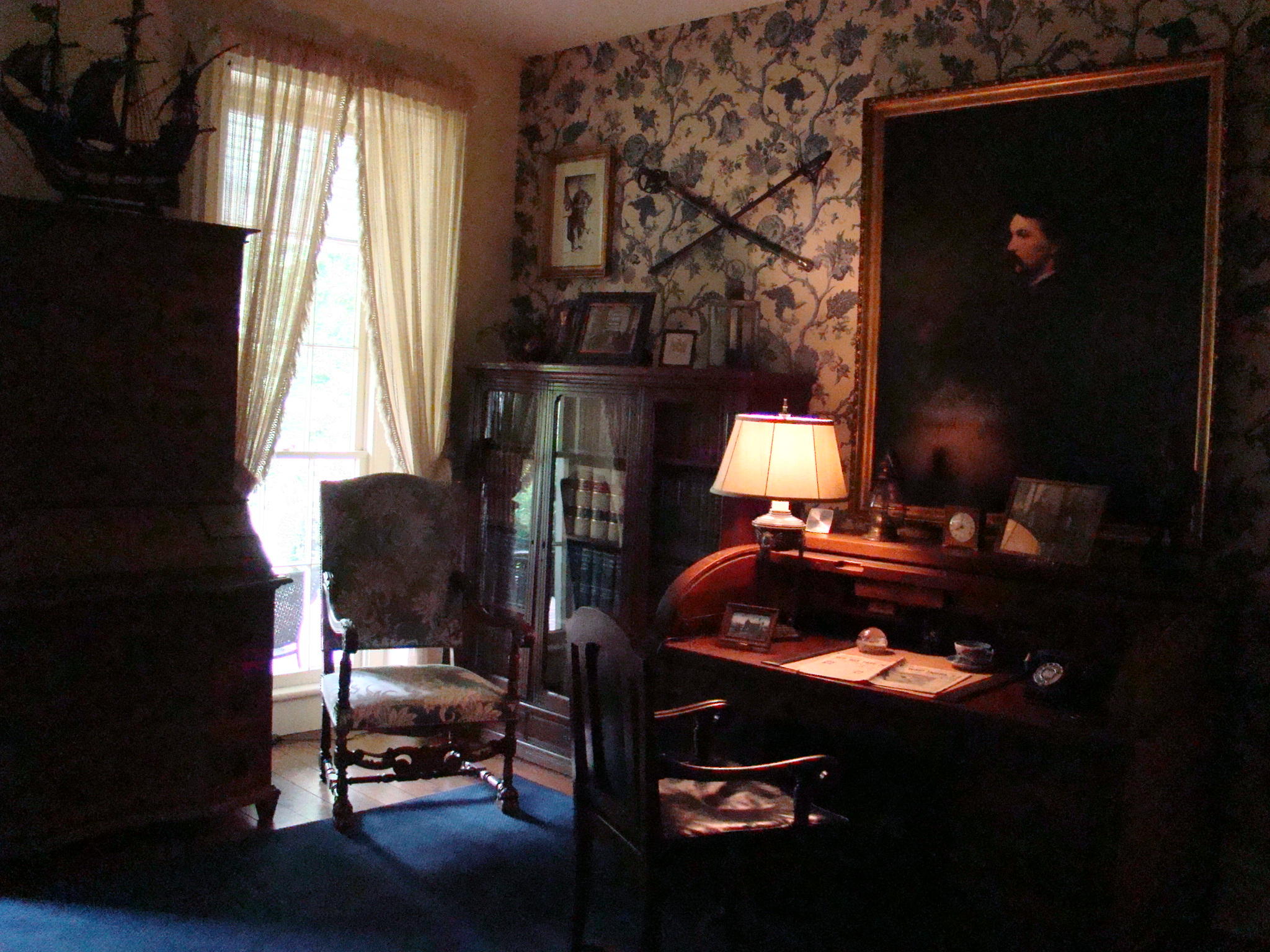
Office of Beman Dawes

Office of Beman Dawes

Born in Marietta, Ohio, Beman Dawes graduated from Marietta College. After serving two terms as US Representative, he founded Pure Oil Co with headquarters in nearby Columbus, Ohio. The profits from that endeavor became the source of funds to develop Dawes Arboretum for the enjoyment of  people from all over the world, as well as the Dawes family. Debby mentioned that some of her fondest memories of childhood were the family picnics in the pines at Dawes. It seemed the children enjoyed the out-of-doors, just like their grandparents. Today the family still gathers at Dawes Arboretum every summer for an old-fashioned picnic.
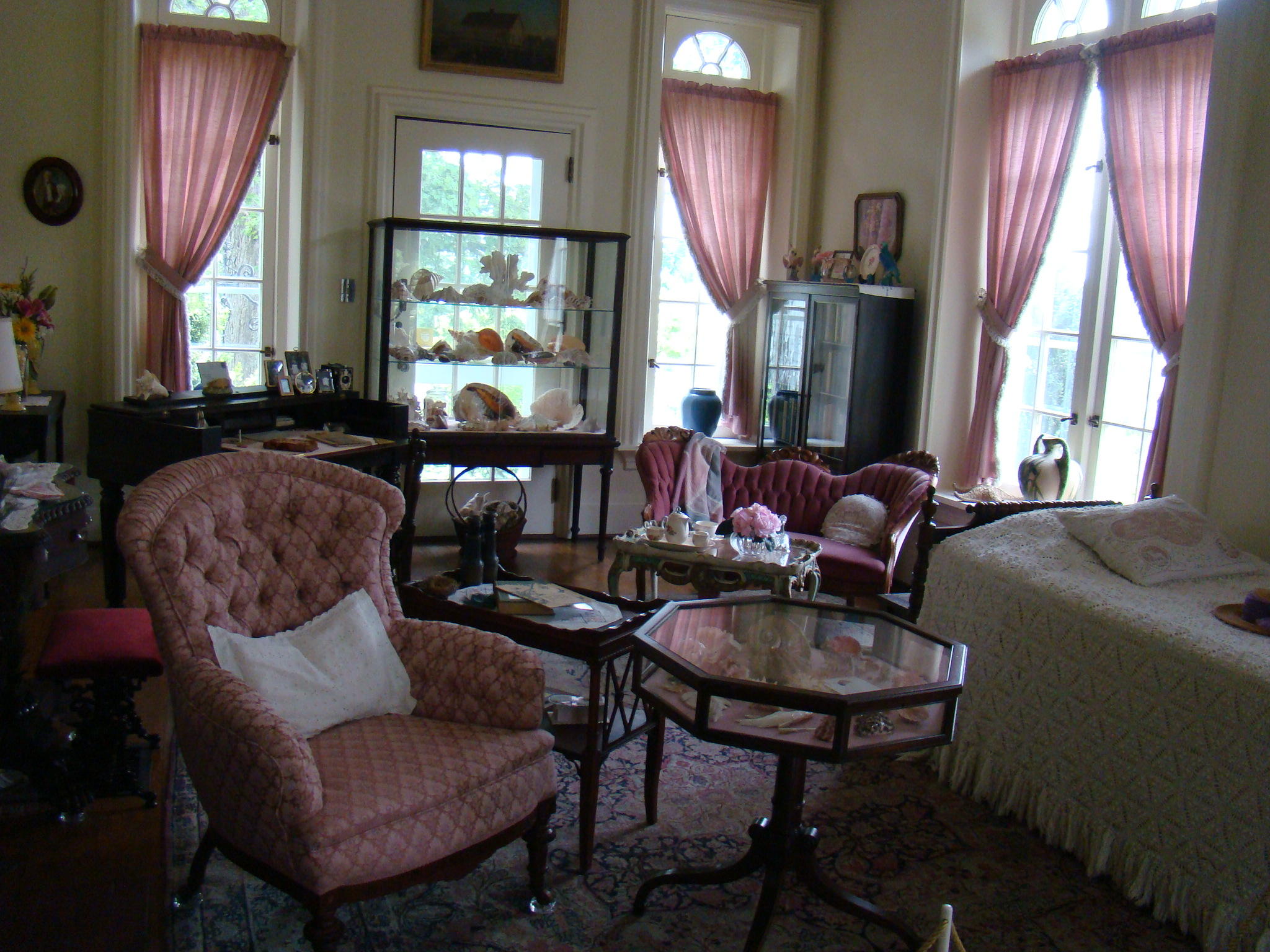
Bertie Dawes' studio

Bertie Dawes’ studio

His wife, Bertie, displayed her collections in her special studio, which overlooked the garden. Shells, butterflies, and humming birds all held special places in her heart. The beautiful bedspread in the room had been handmade by Bertie as well. This elegant lady was definitely a woman of many talents and interests… including raising peacocks. Perhaps she had time to do these things since there were housekeepers that tended to the daily chores of the family. Since there were five children, this would have been a busy household.
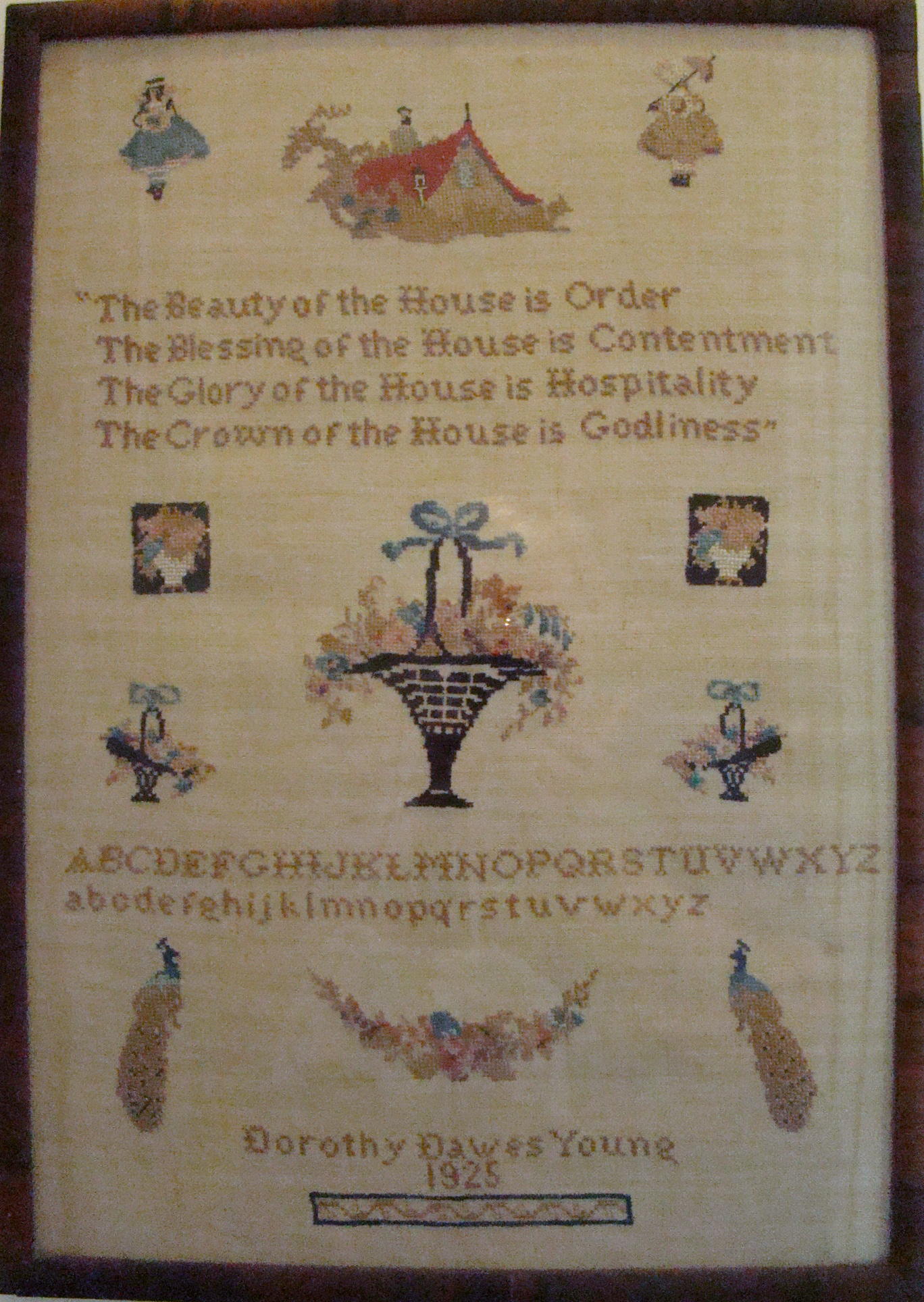
"Our House" embroidered by daughter, Dorothy Dawes Young in 1925.

“Our House” embroidered by daughter, Dorothy Dawes Young in 1925.

One beautiful family tradition occurred in the formal dining room where the family met each Sunday for dinner. The grandchildren still recall those formal dinners with Grandfather and Granny as being a highlight of their visit.  This family had early access to some of the little luxuries, with electricity in Daweswood as early as 1929. Five stone fireplaces throughout the house provided a warm atmosphere. The warmth of family could be seen in the beautiful embroidered picture hanging in the kitchen to remind everyone of the importance of their Daweswood home.

A basement constructed of handhewn stone, where the children used to play, is now home to the Rathskeller. The walls are now filled with shovels and plaques of those invited for tree dedication ceremonies. Initials of the dedicators were placed on the ceiling with soot from a burning candle in the beginning, but today they are usually written with a marking pen…to save space.  Back in 1927, Ohio Governor James Cox was the first to dedicate a tree.  Over 100 people have been invited by the family to dedicate trees and some of those names are quite familiar: John Glenn, Jack Hanna, Richard Byrd, Red Grange, and Orville Wright to mention a few.

Smokehouse and Gardens

Smokehouse and Gardens

Behind the house is an old log smokehouse surrounded by Bertie’s garden. Nearby, on the right side of the picture, you can see the corner of the roof of the History Archives Building, which is being constructed to hold photographs, family journals, and Arboretum records.

Plan your visit to Daweswood on the weekend as hours are limited. Tours are given every Saturday and Sunday at 12:00 and 2:00.  Admission is $2 for adults and $1 for students, and tickets must be purchased at theVisitors Center. If you like beautiful old homes and the beauties of nature, you will definitely enjoy a visit at Daweswood.

Dawes Arboretum is located near Newark, Ohio just off I-70.  Take Exit 132 , Route 13 , and proceed North on Route 13 for about three miles.  The entrance is located on the left hand side of the road at 7770 Jacksontown Road. Daweswood House Museum is down the first road to the right just inside the gate, but first you must go to the Visitors Center to purchase your ticket.
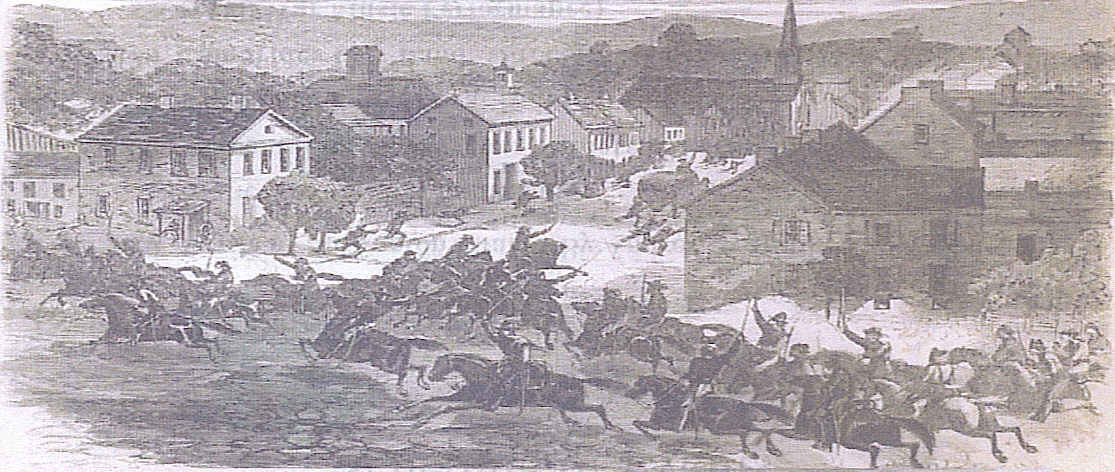
John Morgan’s Raid in Ohio 150th Anniversary Celebration

Morgan's Freebooters enter Washington, Ohio ~Harper's Weekly, Aug, 1863

Morgan’s Freebooters enter Washington, Ohio
~Harper’s Weekly, Aug, 1863

John Morgan with the remnant of a band composed of the most villanous cut-throats and scoundrels….made his way into this county on Thursday, the 22nd. (Guernsey Times Extra Addition Cambridge, Ohio July 28, 1863)

This statement by the local newspaper back in 1863  sums up the feeling of Northern residents regarding the antics of Brig. Gen. John Hunt Morgan, who led his raiders on a chase through Ohio during the Civil War.  His main goals were to destroy supply lines while creating chaos and fear.

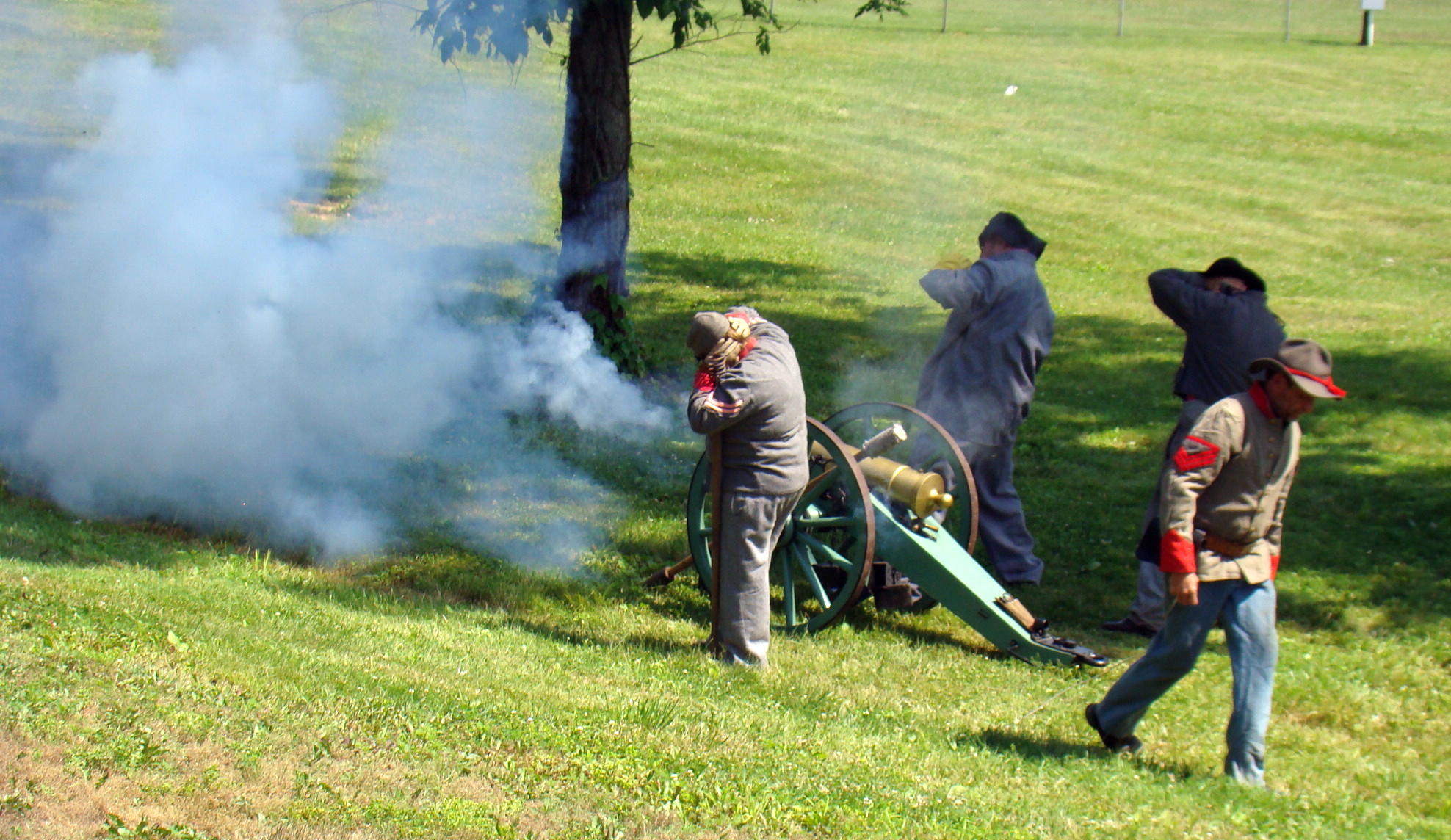
Cannon fire ignites celebration.

Cannon fire ignites celebration.

This special celebration took place in Lore City, Ohio at the Leatherwood Park trailhead of The Great Guernsey Trail, which is a paved pathway from Lore City to Cambridge used for walking and biking.  Often you see parents pushing their children in strollers, or children pushing their parents in wheelchairs. This six mile trail has become a favorite spot to exercise and get some fresh air in the Guernsey County area.

Andy Warhola, Civil War speaker

Andy Warhola, Civil War speaker

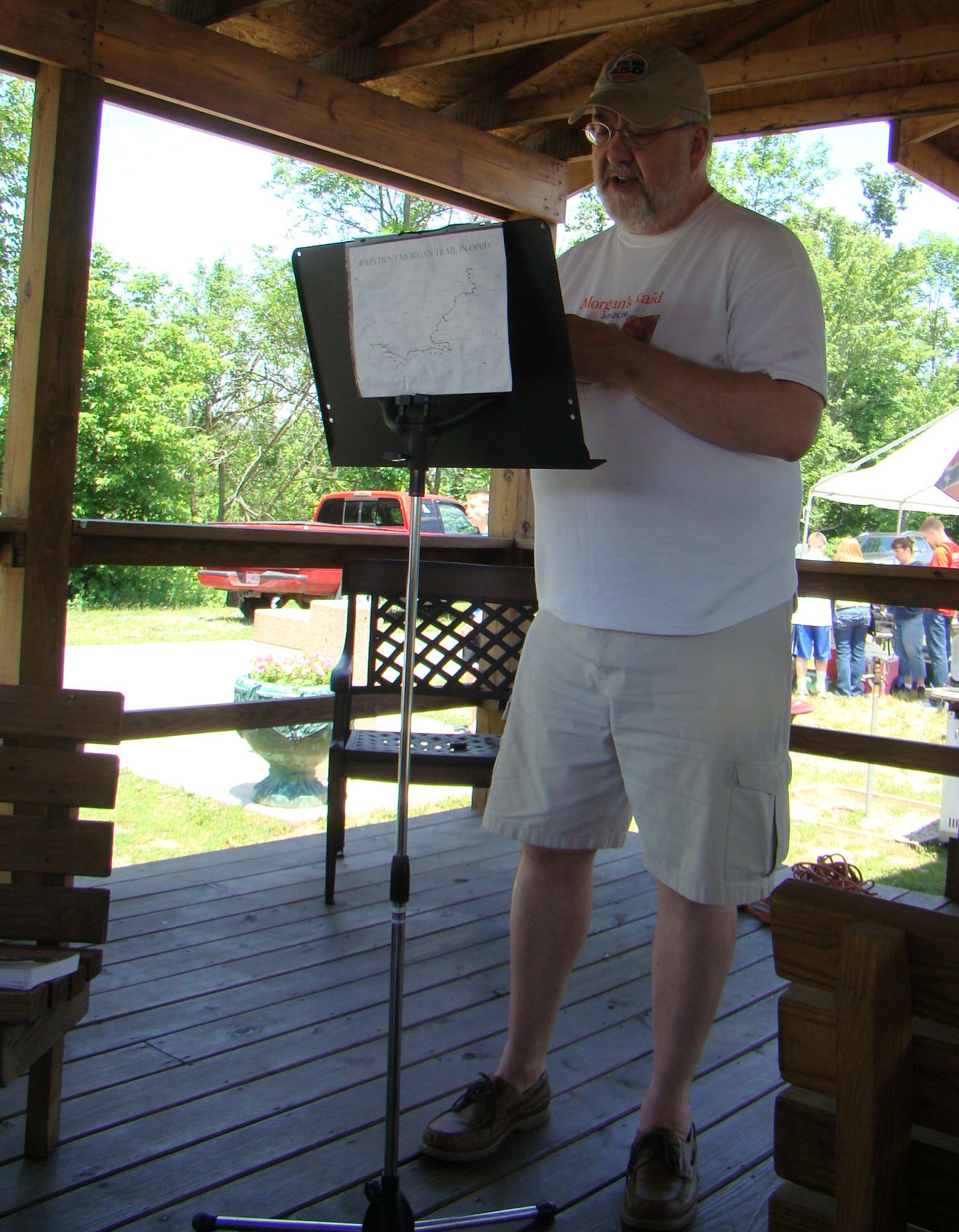
Local Civil War Roundtable members, Andy Warhola and Tom Snyder, explained Morgan’s ravaging two week raid through Ohio with slides, maps and pictures. They told of Morgan’s stealing two steamboats in order to cross the Ohio River into Indiana. Proceeding into Ohio above Cincinnati, they headed across the state with Union forces in pursuit.

Thinking the best way to escape was to again cross the Ohio River, Morgan led his men to a ford, which would let them have easy access to Buffington Island, a stepping stone across the Ohio. But his plan went amiss when Morgan decided to wait until morning for the crossing instead of attempting to move in the pitch darkness of night. The next morning however produced heavy fog, so again he was delayed, thus giving the USS Moose time to reach their crossing point. This is said to be the only Civil War battle in Ohio. Here the Union turned Morgan and his Confederates away with heavy losses.  What had started out as 2500 men, was down to approximatley 1100 after the battle at Buffington Island.

After this they headed towards Guernsey County entering at Cumberland and continuing to Londonderry. Finally they were captured in Salineville, heading to the Ohio River again. Along the way they were hungry and needed horses so there was plenty of thievery and destruction.

In the town of Campbell’s Station, which is today Lore City, there was more financial damage than anywhere else in the county.  They robbed the safe in the warehouse of $4,000, then burned the warehouse, train station and bridge as well as three railroad cars filled with tobacco…all this before the Union forces arrived.

Couple in Civil War dress

Couple in Civil War dress

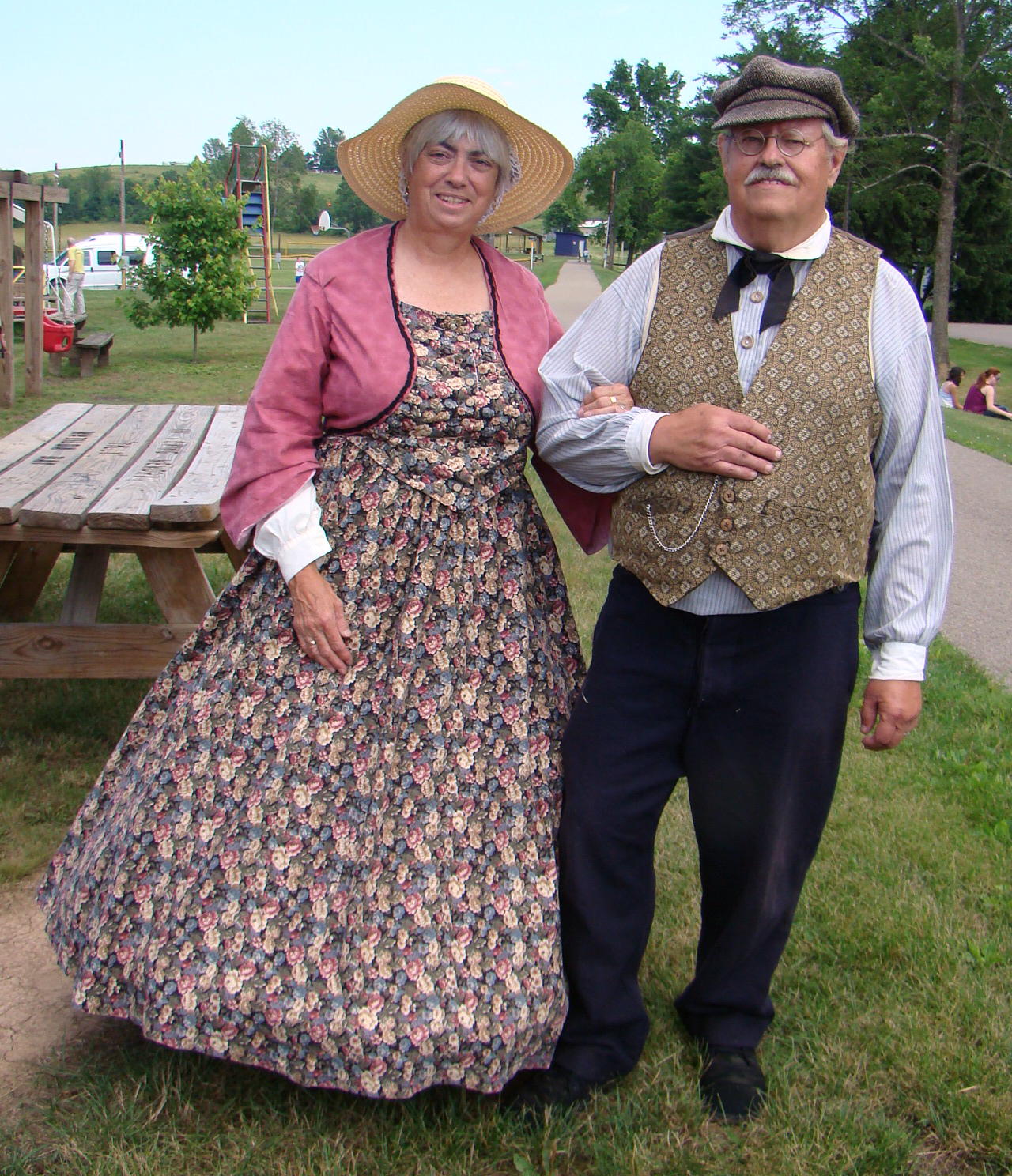
Nearly 150 years later, Lore City was filled with a Civil War feeling as many dressed in clothing of the time. A cannon was fired several times after careful loading by a group of Morgan County Re-enactors dressed as Confederate soldiers.

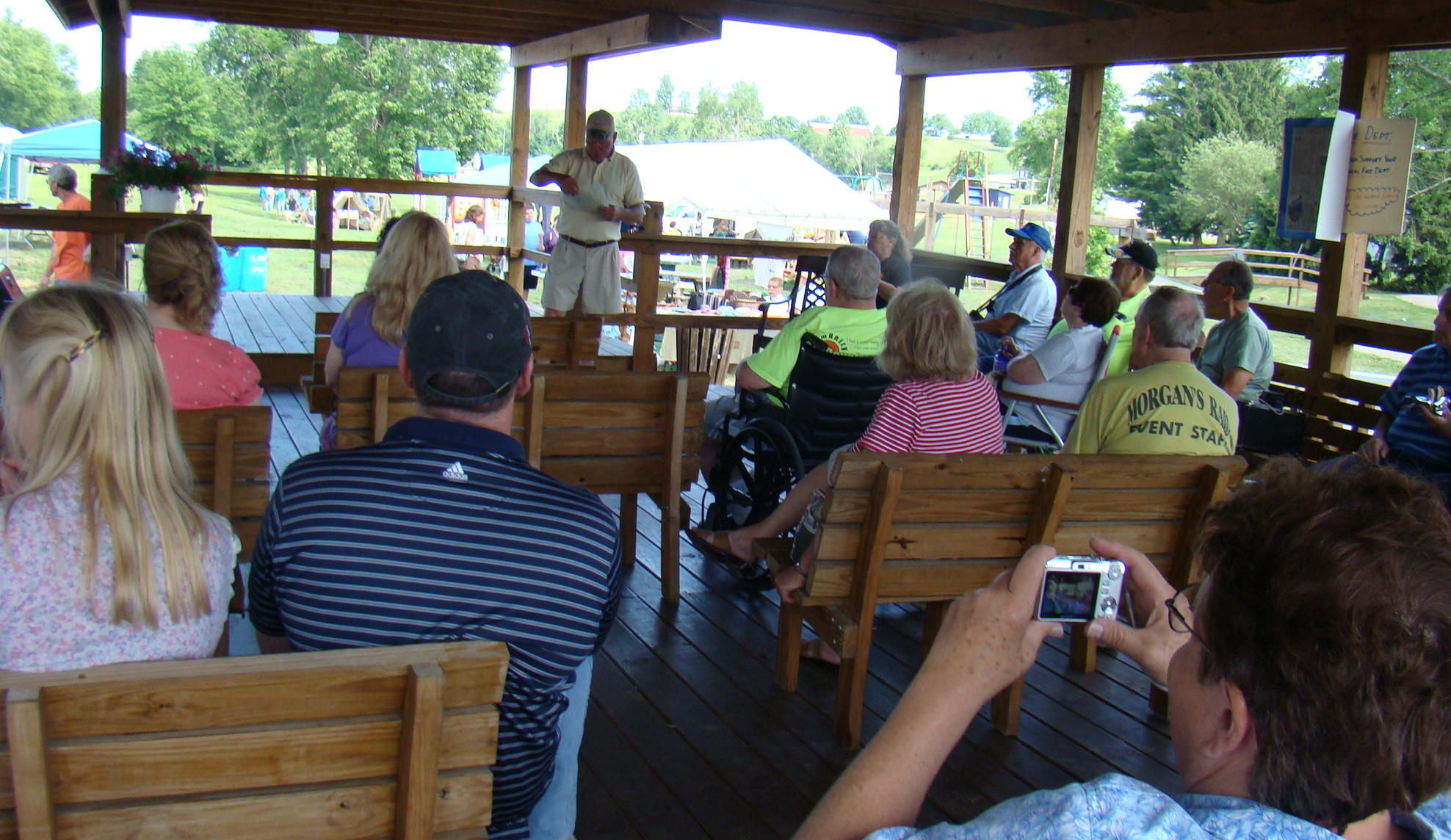
Local historian, Dave Adair, described the town of Campbell’s Station, which at the time of attack had only about sixty people. Their telegraph office was kept busy sending messages and receiving replies regarding Morgan’s Raiders. Due to the messages, Morgan and his Rebel scoundrels changed their route to avoid a railroad trestle, where a hundred men were waiting to ambush them.

Dave Adair speaks in the pavilion, which was the site of the original train station in Campbell's Station.

Dave Adair speaks in the pavilion, which was the site of the original train station in Campbell’s Station.

Dave also explained why Campbell’s Station changed its name to Lore City.  There happened to be two Campbell’s Stations at that time and the larger one kept the name. When deciding what to rename the smaller town, the Irish Catholics had a big hand in it. Their church were attempting to educate the people in this small community; therefore devised the new name as The City of Learning or Lore City… lore meaning knowledge or learning.

Ohio Hills Spinners and Weavers

Ohio Hills Spinners and Weavers

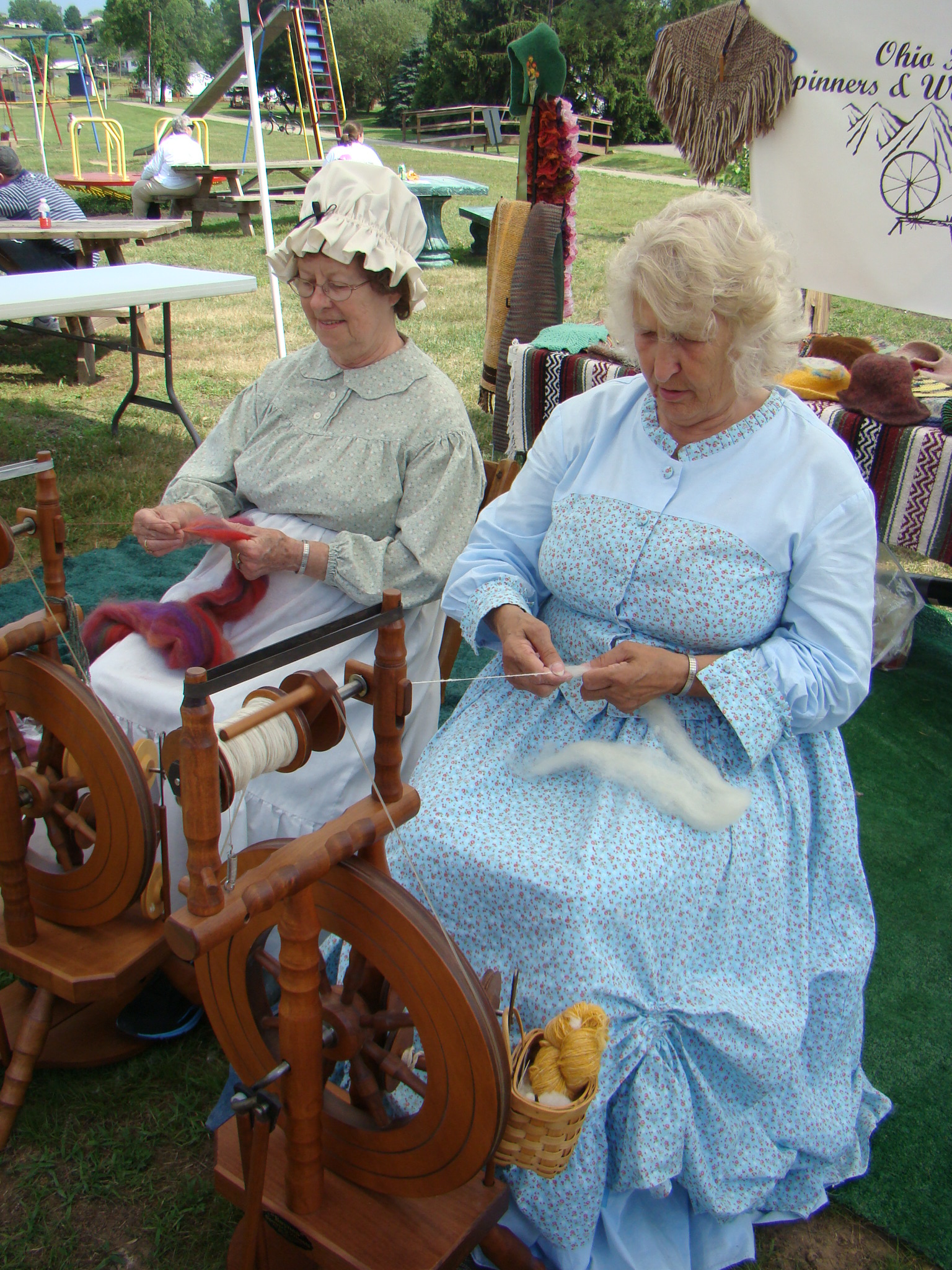
Spinning and weaving demonstrations were given by members of The Ohio Hills Spinners and Weavers, who also added stories of working conditions during the Civil War. Music was plentiful from start to finish. Bluegrass music, which included many Civil War songs, was provided by Mr and Mrs Small. While many of the Civil War songs were of a sad nature, Mrs. Small had written a happy song, Black Berries, to which everyone sang along. Cambridge City Band swung into action with their rendition of Civil War hits such as: Listen to the Mockingbird, Swanee River and many more. This was followed later by Dynamic Trio, who played 50’s and 60’s rock and roll.

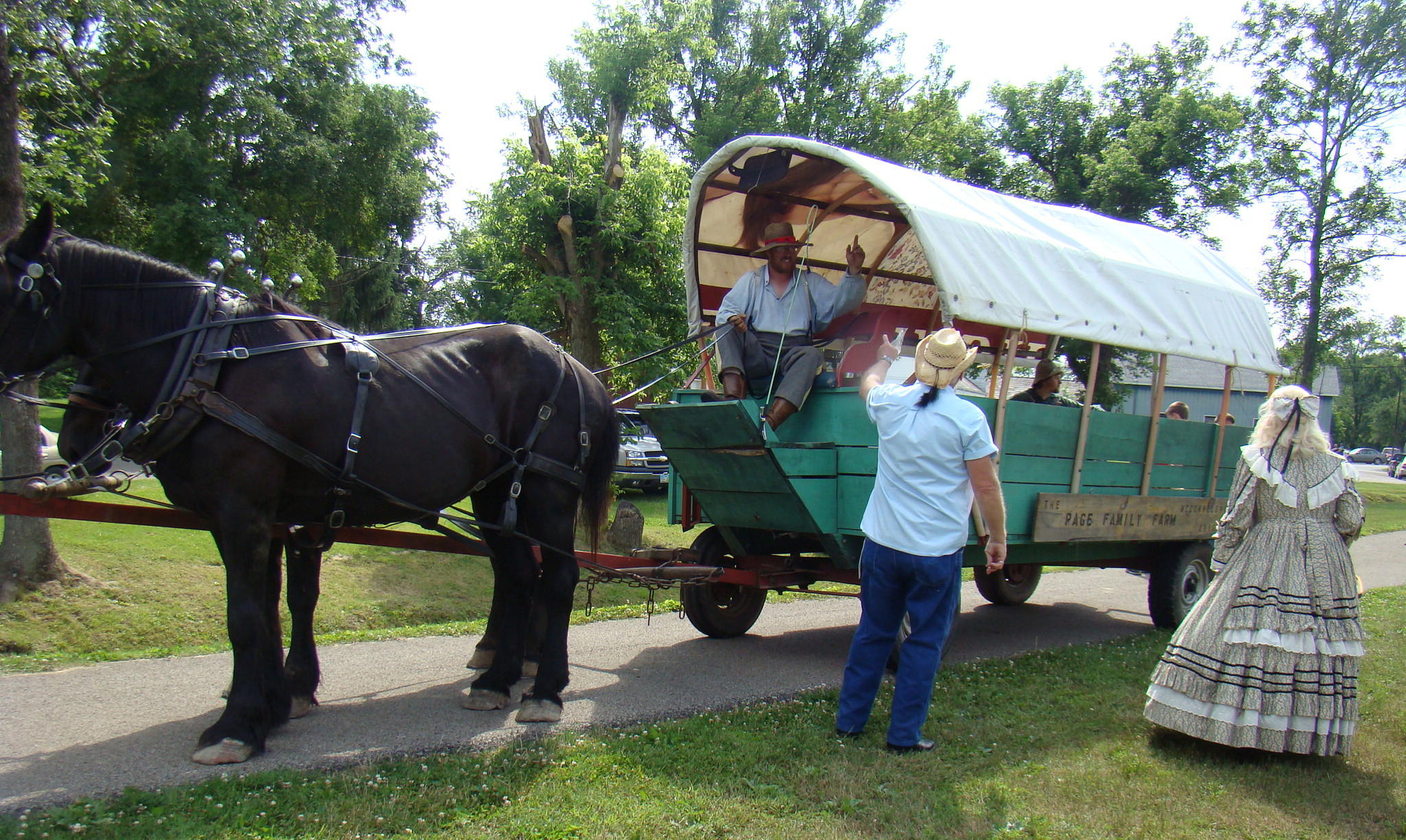
Riders enjoying the horse and wagon ride were greeted by Mayor Carpenter and wife, Sharon.

Horse and wagon riders were greeted by Mayor Carpenter and wife, Sharon.

Horses were an important part of the Civil War and it is estimated that over a million horses and mules were lost during the battles. General Morgan was indeed known as “The King of Horse Thieves”.  Wagon rides, which seemed fitting for the anniversary celebration, were provided along a segment of the Lore City trailhead in a wagon resembling the wagons used during the war to carry generals, the wounded and supplies.

If you want to get a little more adventuresome, today you can follow the trail that Morgan made during his raid. Signs have been posted from Cumberland to Londonderry with information regarding the events that took place in that particular area. Would make an interesting Sunday drive!

Lore City, Ohio is located in Guernsey County just east of I-77. Take exit 46, US Route 40 east, then follow Route 40 for four miles and turn right on State Route 265.  Continue on 265 until a four way stop, where a right hand turn leads you over the bridge to Lore City.  Leatherwood Park is to the left after you cross the bridge.

Deming Luna Mimbres Museum Sundry Southwest Collections

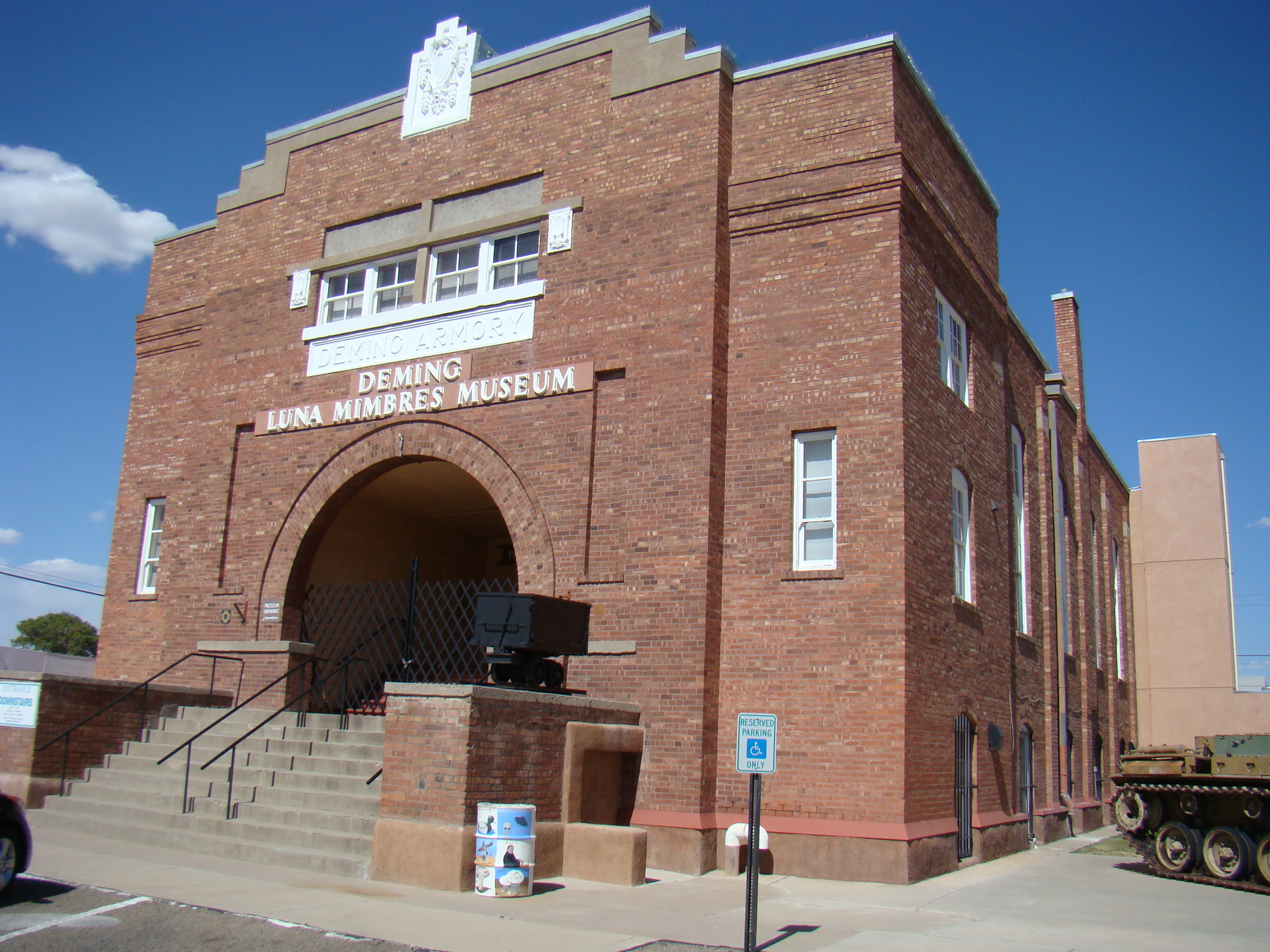
Deming Luna Mimbres Museum

Deming Luna Mimbres Museum

Variety is the spice of life…and of museums. No matter what your interests, chances are you can find something to arouse your curiosity at the Deming Luna Mimbres Museum in Deming, New Mexico. Everything there is from the private collection of local residents, or former locals.

Housed in an old National Guard Armory, their unusual exhibits range from Mimbres pottery to Geodes and Gems to a Military Room. There is something that everyone can enjoy. Visiting the Deming Luna Mimbres Museum is a great chance to explore the history of Deming as well as the Mimbres heritage.

Since there is such a large variety of rooms to explore, only a few favorites will be visited here. This is one of those places where you could go back again and again to absorb the history that pours from its treasures.

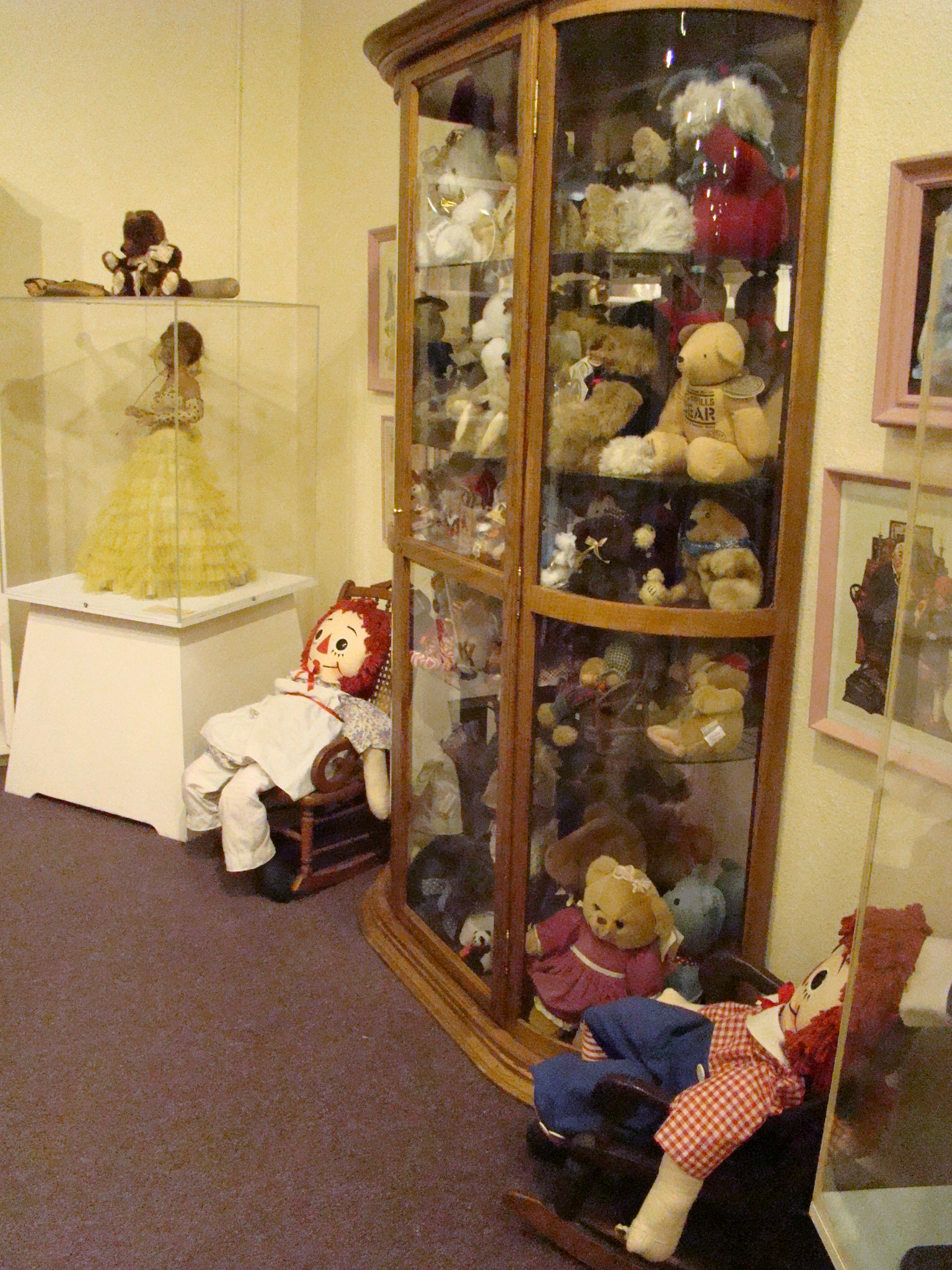
Doll Room Teddy Bear Collection

Doll Room Teddy Bear Collection

The Doll Room happens to be just inside the front door so is a natural place to begin your visit.  This impressive collection contains about 1000 dolls, the oldest of which are those with China heads. Being a bear enthusiast, the teddy bear exhibit caught my eye. There is even a doll brought back by a sailor from  the rubble at Hiroshima after the Atom Bomb exploded. But there is much more in this room than just dolls.  Here you will find wonderful old books – the oldest I spotted was one by Louisa Mae Alcott, Jo’s Boys, dated 1866. Beautiful doll houses, antique toys and bears are scattered throughout the room.

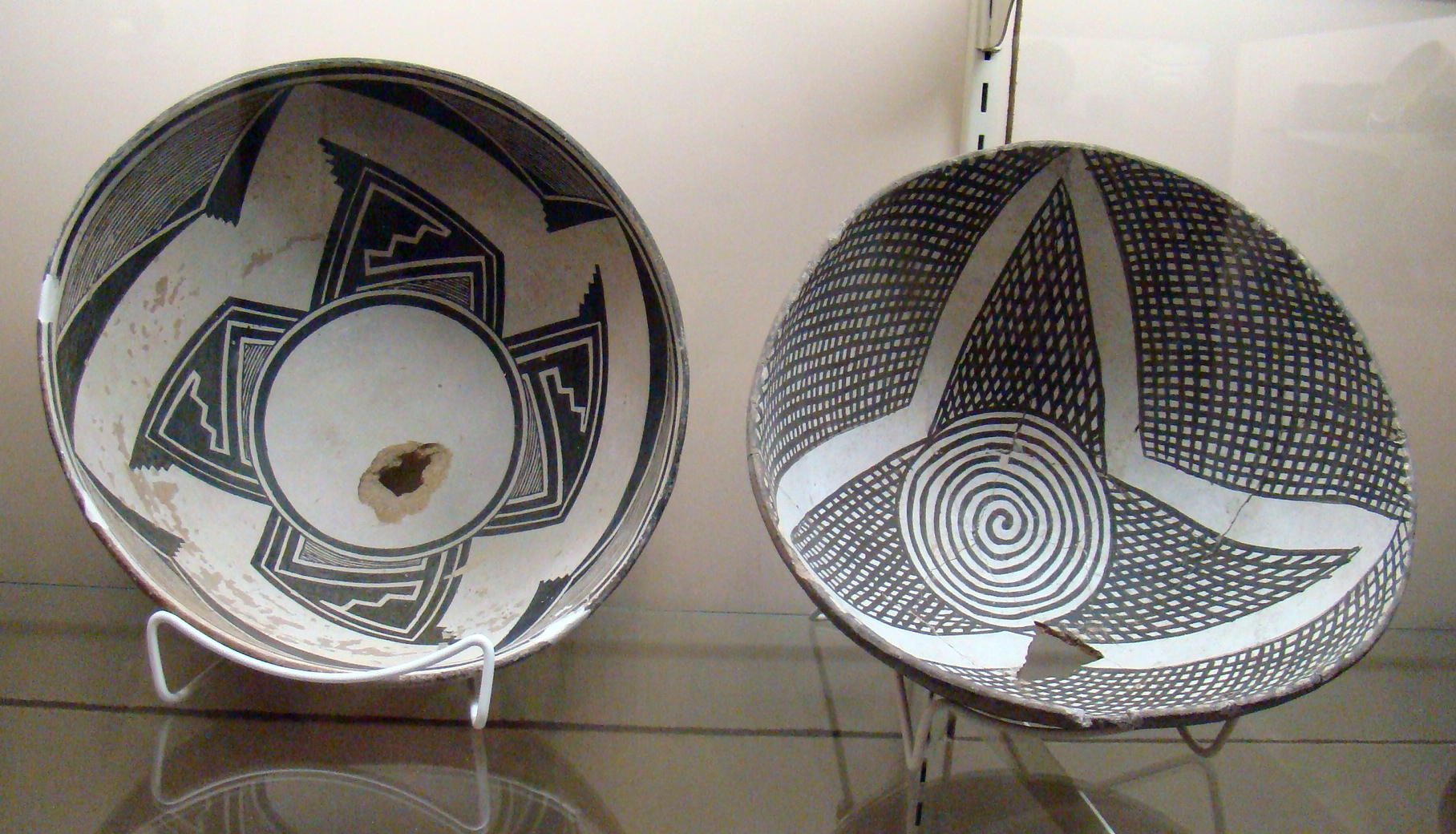
Mimbres Pottery

Mimbres Pottery

Another spot of high interest is one of the best collections of Mimbres Pottery in existence. The Mimbres Indians lived in this area in approximately 1000 A.D. Bits and pieces of pottery found in the area are displayed here with the black and white pieces being a favorite of Mimbres followers. Pictures of their burial method proved interesting as the deceased were placed in the ground, usually under their houses, in an upright sitting position. Then one of their beautiful bowls was placed on their head with a hole in the top so their spirit could go to another world.

Square Grand Piano

Square Grand Piano

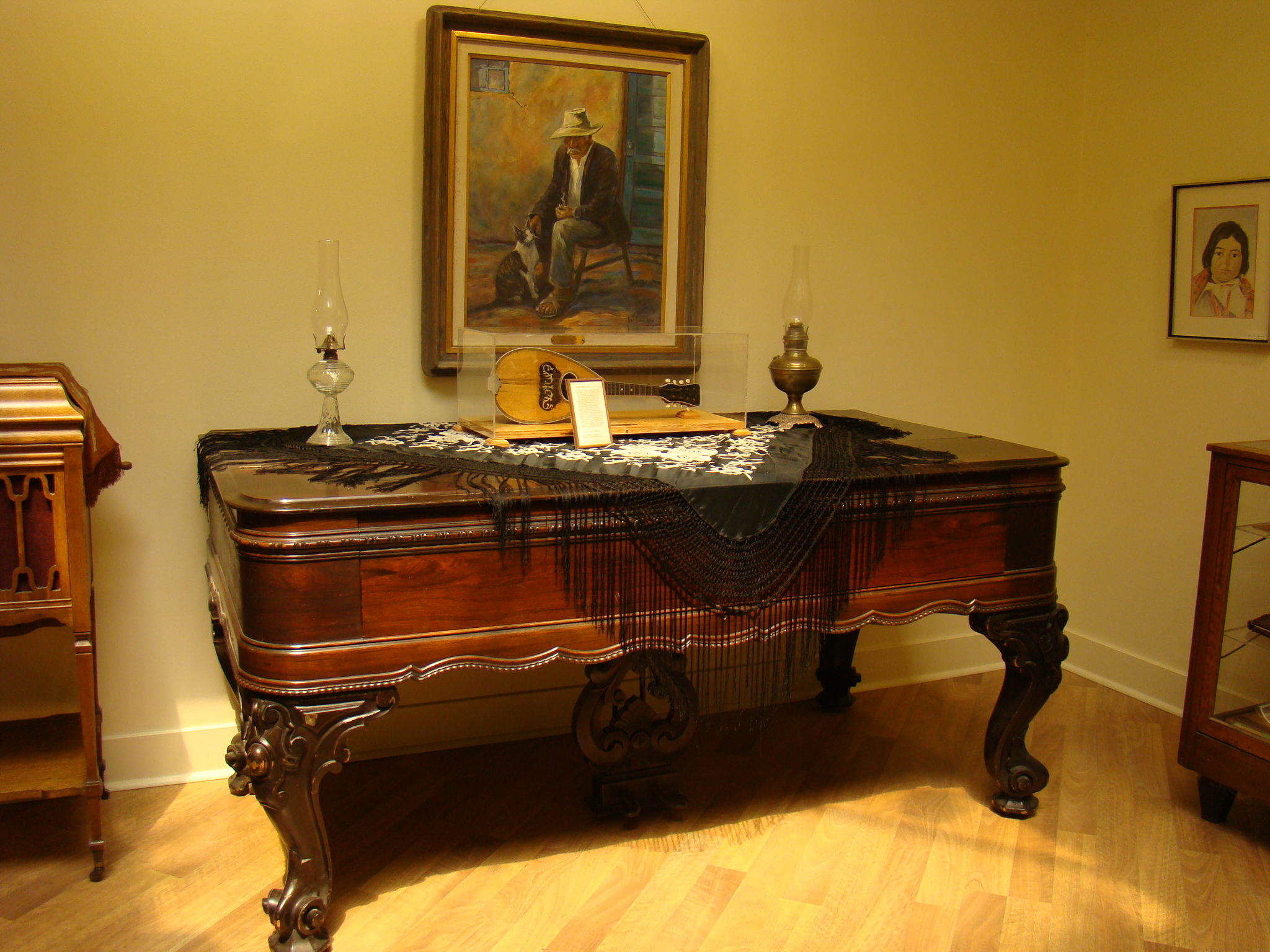
A square grand piano caught my eye in the solarium of the Art Gallery. Made of Brazilian rosewood with two strings per key, this 1867 treasure was created by Hallet, David & Co in Boston. Grand pianos were often the centerpiece in Victorian parlors.  Perhaps you might enjoy listening to a Brahms Waltz played on a Square Baby Grand.

An historic replica of the famous Silver Stake was on display in the Transportation Room. Back in 1881, Deming was the meeting place of the second transcontinental railroad in the United States where Southern Pacific and Atchison, Topeka & Santa Fe railroads joined together with the Silver Stake ceremony. Situated ten miles east of its present location, Deming at that time was a town of tents and shacks. Author James McKenna stated, “The great event in town was either the arrival of the stagecoach or the train.”

Admission to the museum is free but donations are accepted…after you have seen the exhibits. You can’t get much friendlier than that!

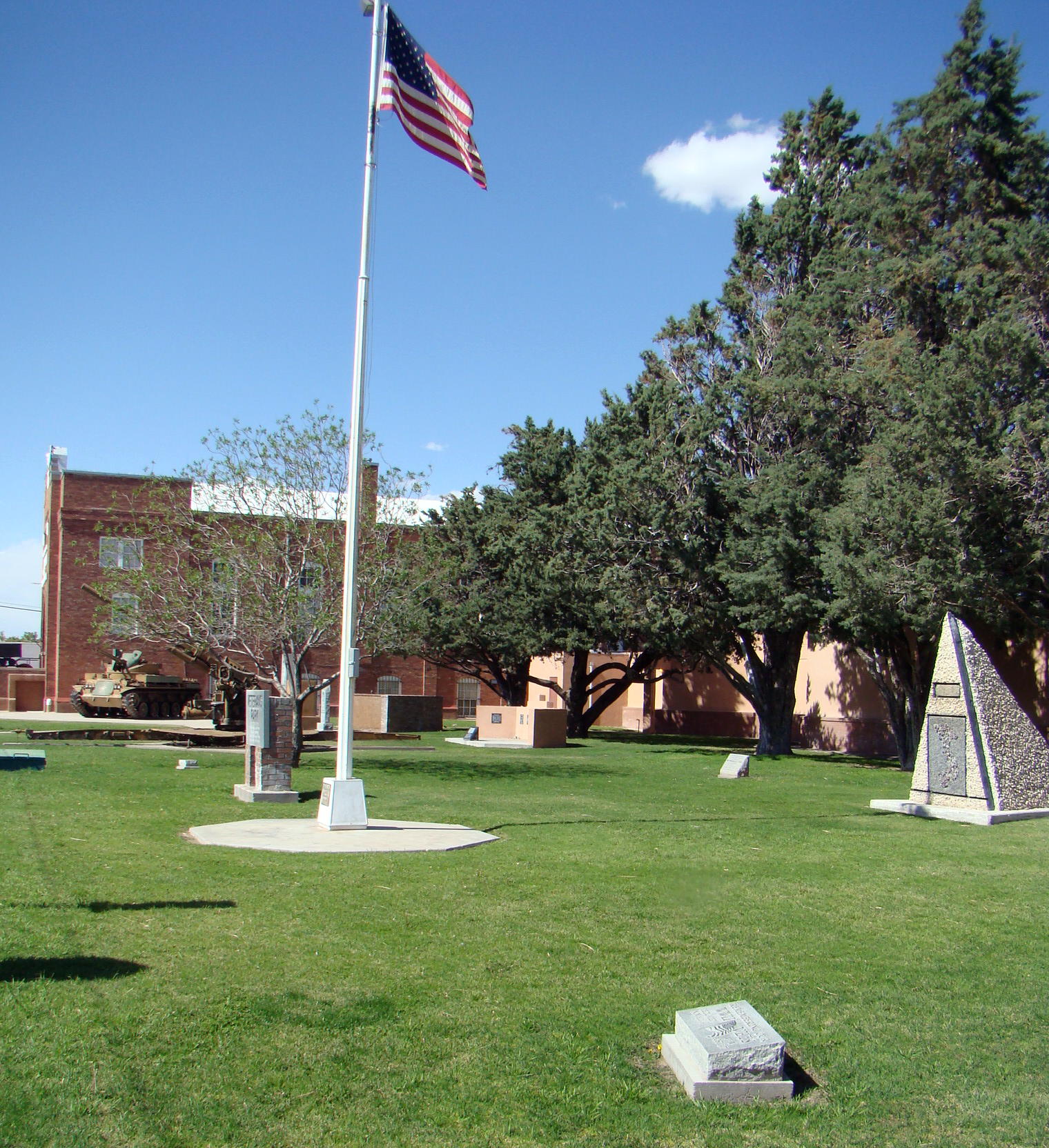
Veterans ParkOutside a well-tended Veterans’ Park remembers wars, conflicts and attacks all around the world. The sign reads:

Do spread the word

Tell the passerby

That in this little world

Men knew how to die.

Deming Luna Mimbres Museum and Veterans Park can be found near downtown Deming, New Mexico just off I-10.  From the east take Exit 82B and from the west take Exit 82A. This should exit left on Pine Street, which leads right downtown. Turn left again on South Silver Street, which leads to the courthouse. The museum and park are on the left side after two blocks.

Rootin’ Tootin’ Western Fun Hopalong Cassidy Festival

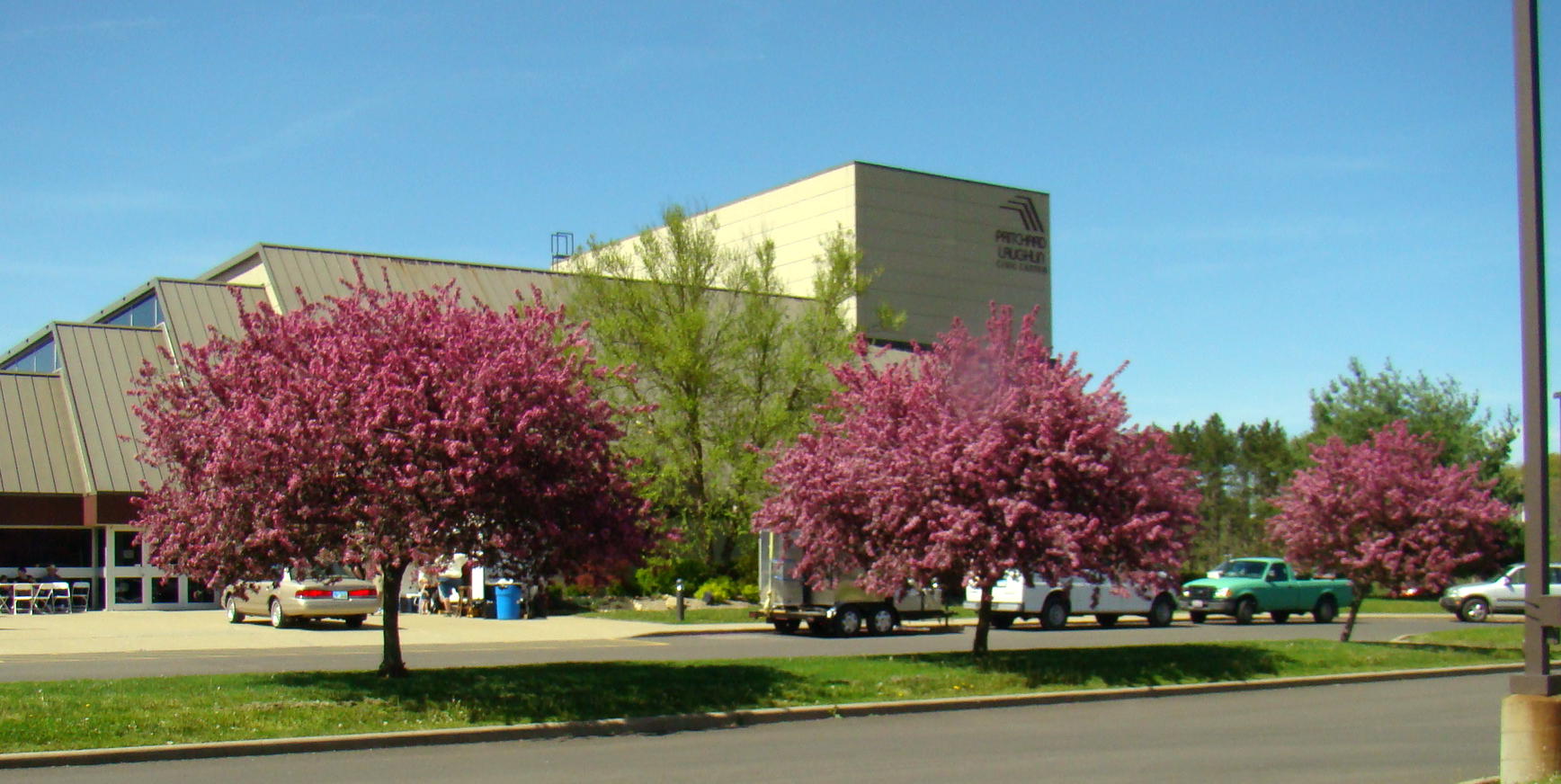
Pritchard Laughlin Civic CenterMore fun than a pig in mud !  That description summed up the feeling of those participating in the 23rd Annual Hopalong Cassidy Festival held at Pritchard-Laughlin Civic Center during the first weekend of May near Cambridge, Ohio. Everyone there seemed to be having fun in this beautiful springtime setting!

From the moment of arrival, you were greeted outside the center with some good old-fashioned BBQ by Smokin’ C BBQ from nearby Old Washington. This provided a break from the action anytime hunger appeared during the day. Their pulled pork sandwiches and BBQ baked potatoes are always favorites.

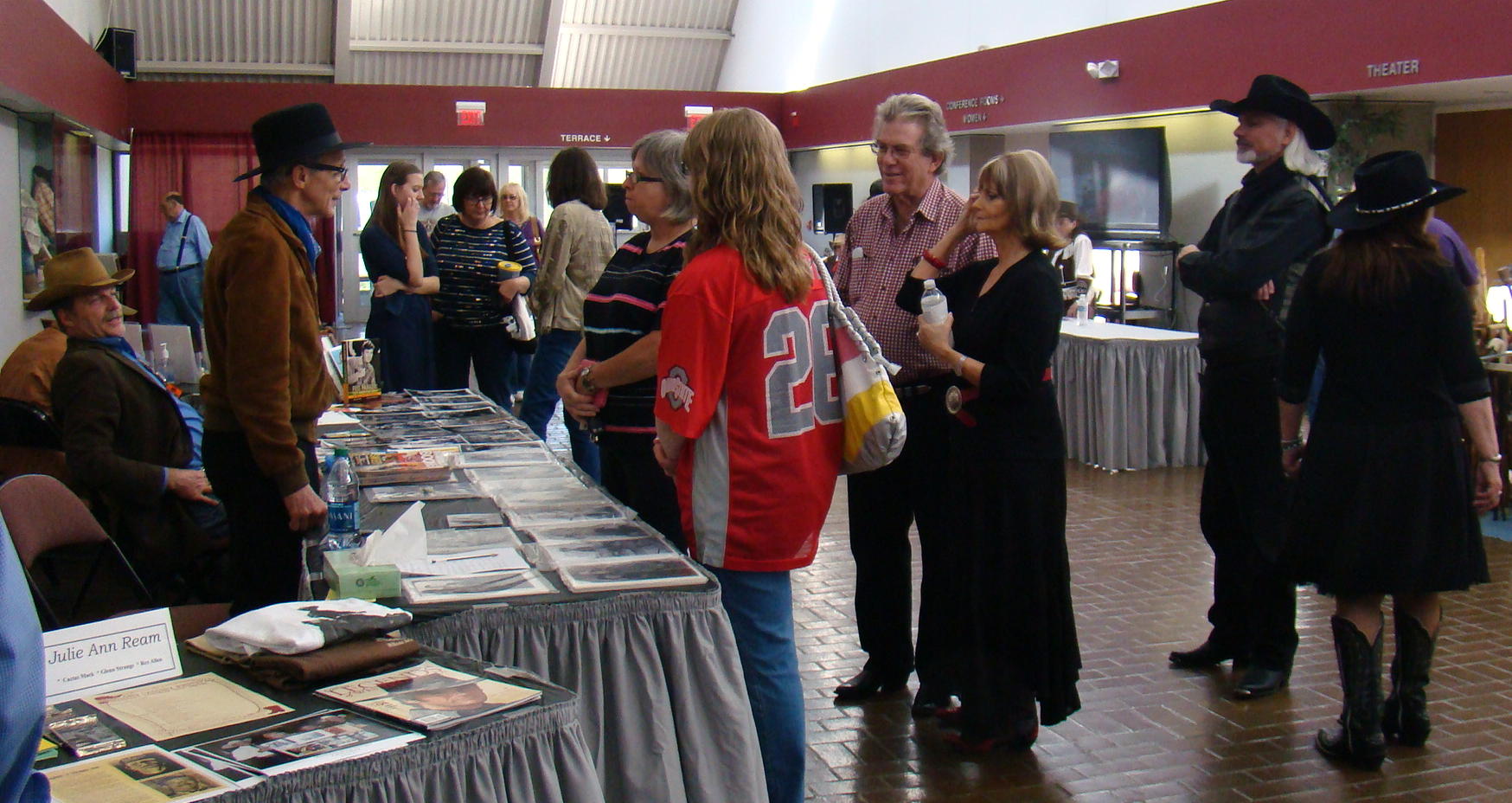
Festival LobbyInside was where the legend of Hopalong Cassidy was being kept alive. The lobby contained Western actors from days gone by. They autographed pictures, posed with fans, and answered questions in a friendly manner.

The large banquet room had hundreds of items for sale from days of Hopalong Cassidy, Roy Rogers, Daniel Boone and other favorite Western stars. Fans and dealers from all over the nation come to explore over one hundred tables of collectibles to see if they can find a treasure.

Panel of Stars

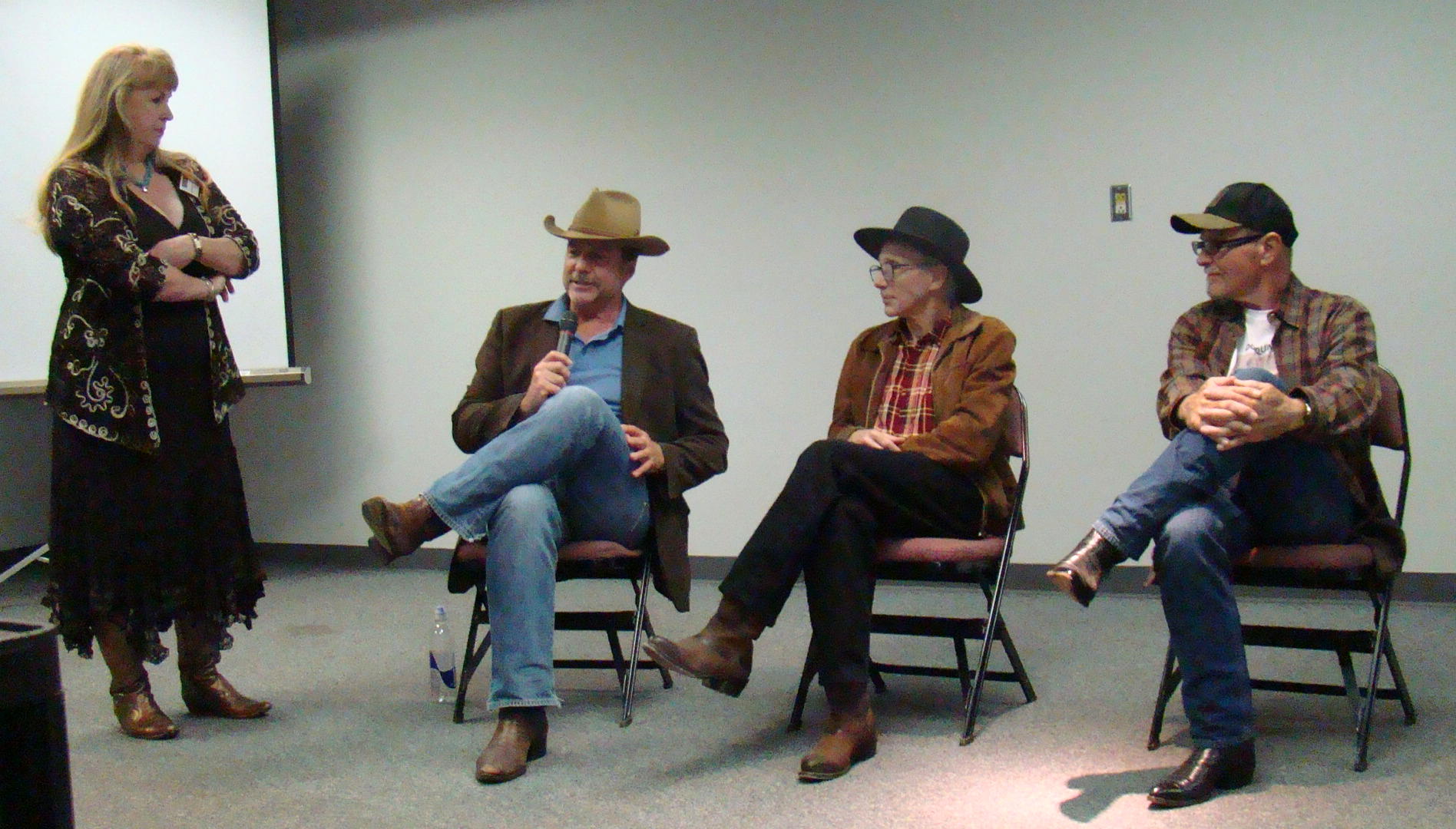
Julie Ream narrated a Panel of Stars including: Darby Hinton, Johnny Crawford, and Don Quine.

Cowboys from the past seemed to be one of the main drawing cards.  Meet the Stars drew a large crowd in the Bar 20 Annex.  These stars were all from California, but enjoying the small town greeting. Western history expert Julie Ream, who remembered the days of attending Charm School, informed the audience that her cousin, Cactus Mack McPeters was the first to make a Western with Republic Pictures, while her Uncle Rex Allen, The Arizona Cowboy, made the last Western for them.

Representing The Virginia was Don Quine, who played the role of the grandson, Stacey. Today he spends his free time writing a book, but he would not give any inside information as to what that book was about. Perhaps it is his memoirs.

An actual descendant of Daniel Boone, Darby Hinton accidentally fell into a role in the Daniel Boone TV series when his mother, running late as usual, dropped him off in front of the studio while she went to park the car. Here he was to try out for the part of a von Trapp lad in Sound of Music. So when Darby went inside, he fell right in line with the rest of the youngsters. He charmed those interviewing and got the part easily. However, when his mother arrived, she discovered he had gone to the wrong floor and instead of interviewing for Sound of Music, had accepted a role in Daniel Boone as his son. Today he is working on a PBS documentary of the life and times of the real Daniel Boone.

A sense of humor seemed to be the strong point for Johnny Crawford, who appeared on Rifleman for five years in the role of a son. When asked what he did when he became an adult, Johnny said, “I never grew up.” Music seemed to be his avocation these days and he sang Sweet Sue to the group…well, as much of it as remembered. Johnny said he could do the beginning of most songs.

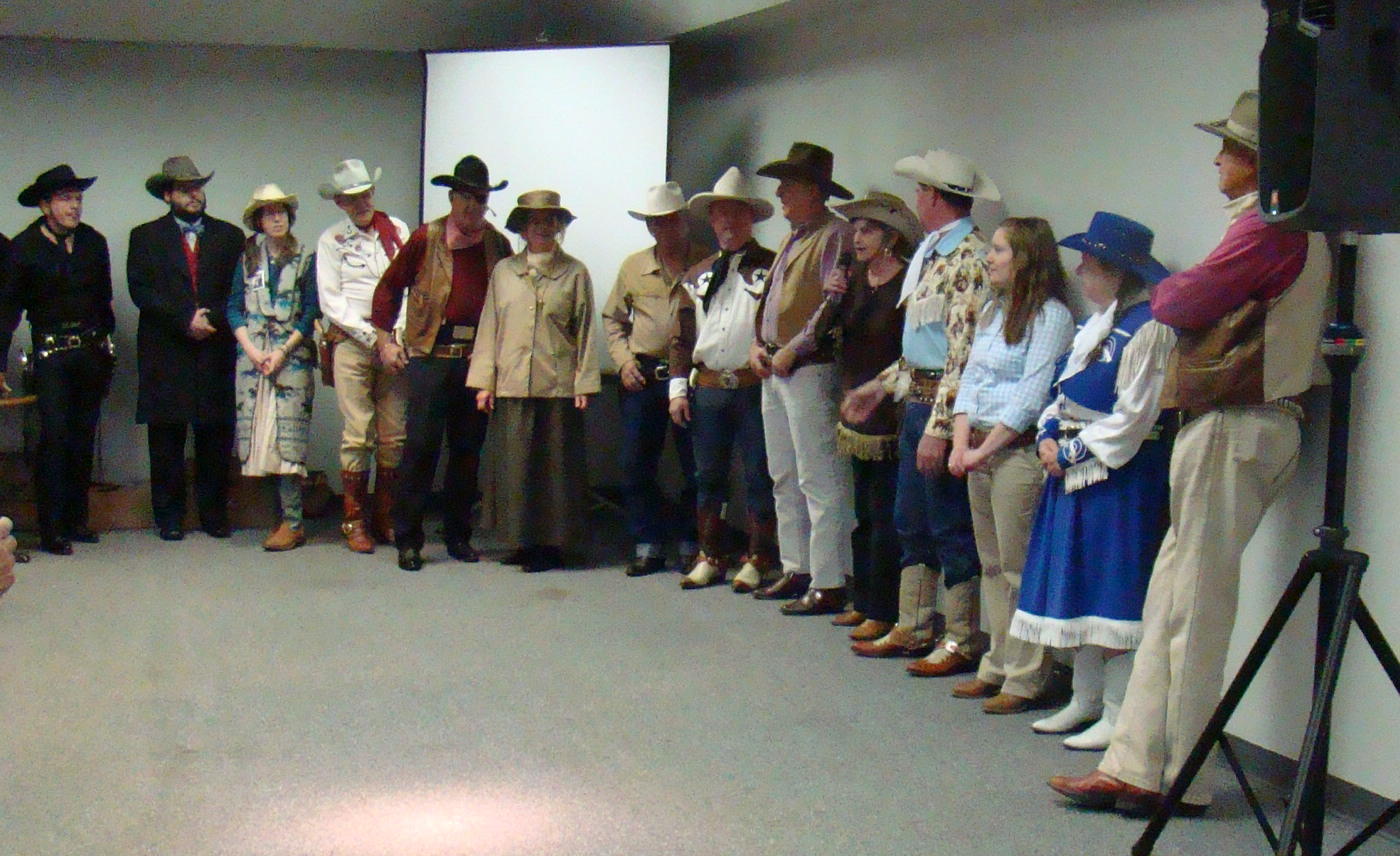
Look Alike ContestAnother highlight was the Look-Alike Contests for young and old alike, which was judged by audience clapping. Youngsters dressed in Western gear competed for trophies, but just being there was the most fun for all of them.

In the adult division, Johnny Crawford served as moderator and put the competitors through their paces. While he sang, he had them perform in various ways such as dancing, cracking the whip, doing tricks with their guns, and testing their beards to see if they were real.  Gabby Hayes quipped, “My teeth aren’t real, but my beard is.”

Johnny noted, “Being a cowboy is a hard life.”

To which Gabby responded, “Durn tootin’.”

The Roy Rogers Look-Alike was a real estate broker, who wore his Roy Rogers hat to work every day. His rendition of Happy Trails to You brought a round of applause.

However, John Wayne’s Look-Alike was the overall winner of the contest. This big, strong fellow looked and sounded like The Duke. His dance steps were even quite smooth for a cowboy of his size.

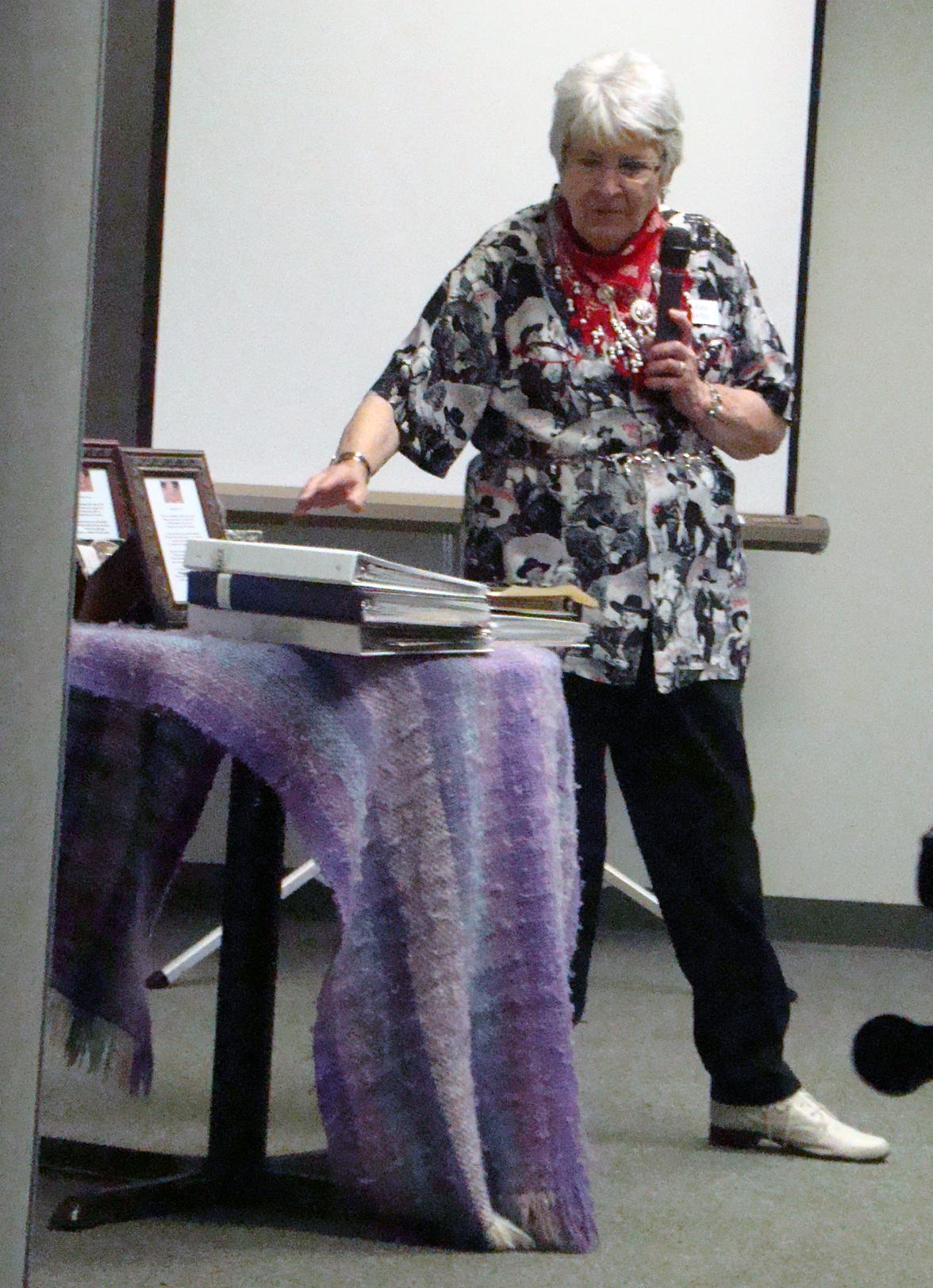
Laura Bates, founder and chairmanLaura Bates, the founder of the Hopalong Cassidy Festival, paid tribute to Grace Boyd, Hopalong’s wife. Laura and Grace had become good friends over the years with Laura visiting their California home on the Pacific Ocean frequently. Laura dressed in a shirt of Hoppy’s that Grace had given her, and had the table covered in a scarf from their home. While the festival was to honor hometown cowboy hero, Hopalong Cassidy, his wife actually was a guest there for several years and became a real favorite of those attending. Grace went to the corral where cowboys and their families go after they leave this old world at the age of 97.

Many of the attendees come year after year to the Festival. One couple from Jacksonville FL said they had been there for 17 years. Seeing old friends, who are fans of Hoppy, is one of the best reasons for coming back year after year. See y’all next year!

The Hopalong Cassidy Festival is held annually at Pritchard Laughlin Civic Center near Cambridge Ohio.  It is easily reached from I-70 at Exit  176. Turn right coming off the exit onto Glenn Highway Road, and in about half a mile the civic center is on the left side of the road.

Sault Sainte Marie, Michigan “The Rapids of St. Mary”

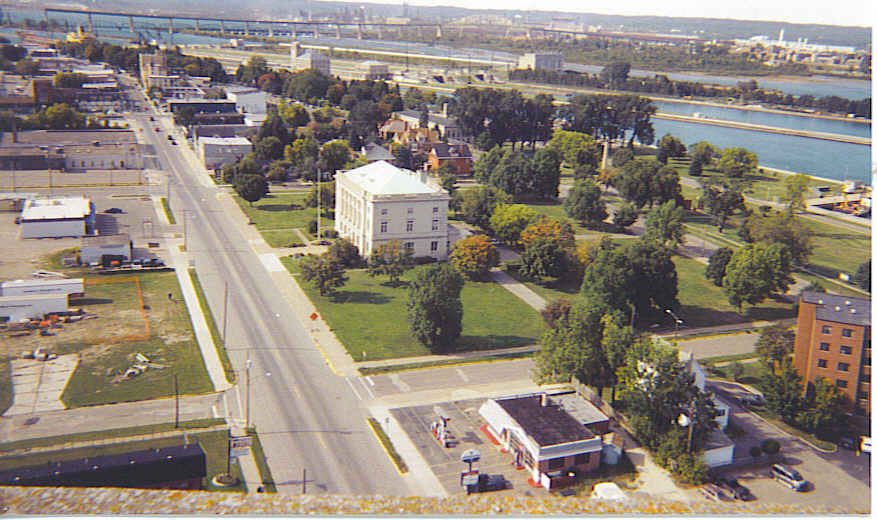
The roaring river of St Mary’s separates the twin cities,  Sault Ste Marie, Ontario and Sault Ste Marie, Michigan on the northwestern tip of the UP of Michigan.  The International Bridge takes road traffic over the St Mary’s River, which is the connecting river between two of the Great Lakes:  Lake Superior to Lake Huron.

Soo LocksThis is home to The Soo Canal, the longest locking system in the world, commonly called “The Soo” by locals. A stop at the Information Center gives you additional information regarding the magnitude of the locks and their importance to shipping in the Great Lakes Region.  Through The Soo, it is possible to watch very large ships being lifted or dropped 21′ as they go through the rapids from lake to lake. Two of the ships being moved this particular day were the S S Atlanta Huron, a bulk Canadian freighter measuring 736′ X 76′, and Lee A Tregurtha, an original WWII tanker now sailing for over sixty years,measuring even larger at 826′ X 75′.

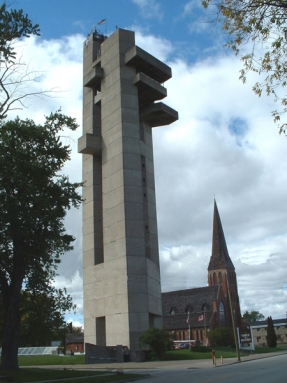
Tower of HistoryIt was fascinating to watch the ships being moved and there were several vantage points.  A nearby tower provided an overview of the area, while it was also possible to watch the ships from the dock area – nearly close enough to touch them.

The Tower of History also gave great overviews of the city as well as the locks. Built in 1969 by the Catholic Church, its purpose was to tell the history of the early missionaries. Today the story of Native Americans as well as the early missionaries is told with pictures, films and displays. 2000 years ago the Native American Indians gathered near the waters here due to the abundant supply of fish and furs. The Tower of History is 210′ high with outside balconies to make viewing a pleasure.  Since it was a very windy day, it was advised that visitors not go to the top. But that was just a challenge and proved quite scenic.

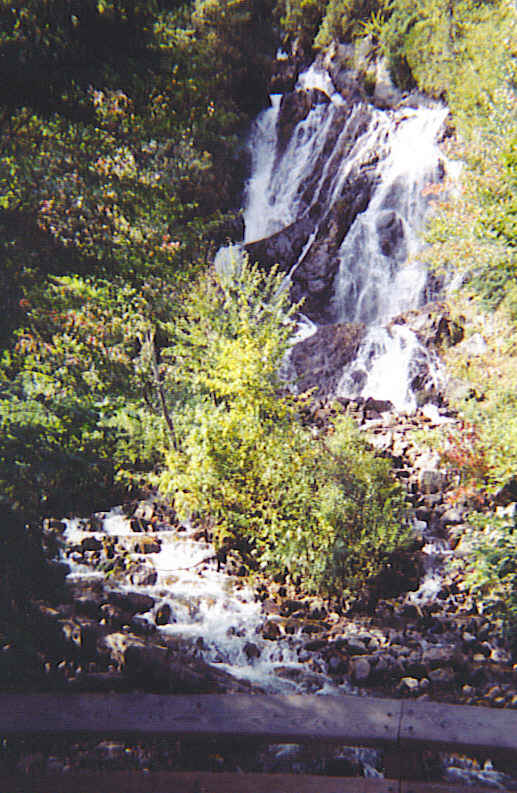
Agawa Canyon FallsThe following day, an early morning train, Agawa Canyon Tour Train, left Sault Ste Marie on the Canadian side. The round trip of 228 miles over towering trestles into the Canadian wilderness provided a scenic view including many lakes, waterfalls and pines.  At the farthest end of the tour, the train sweeps down into Agawa Canyon with a stop at Canyon Park, home to many beautiful waterfalls.

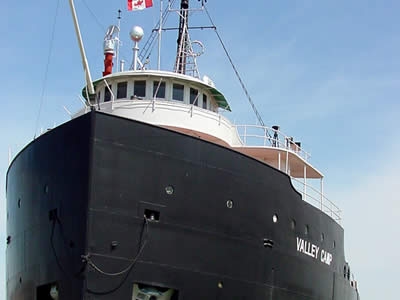
Before leaving Sault Ste Marie the next day, visited the Museum Ship Valley Camp, an actual retired ship. The S.S. Valley Camp was built in 1917 by a shipbuilding company in Lorain, Ohio. It is possible to walk not only the decks, but also visit the living quarters and explore inside from top to bottom. Valley Camp once had a crew of 29 men, so is the perfect place to display lifestyle of the Great Lakes’ sailors. From the more luxurious Captain’s Quarters to the rather plain cabins of the Oilers and Coal Passers, visitors receive a true glimpse into how they lived and worked onboard.

Museum Ship Valley CampA museum with over a hundred exhibits exists inside Valley Camp. Many items are displayed that have been recovered from sunken ships in the Great Lakes. An attractive aquarium features many of the fish who swim in the St Mary’s waters.

Sault Ste Marie does not claim to be tourist country, but it certainly holds many interesting pieces of the past for the curious to explore.

To reach Sault Ste Marie on the US side, take I-75 North to its end. 

Hopalong Cassidy Museum Where the Wild West Lives Again

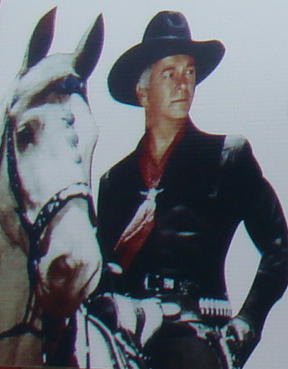
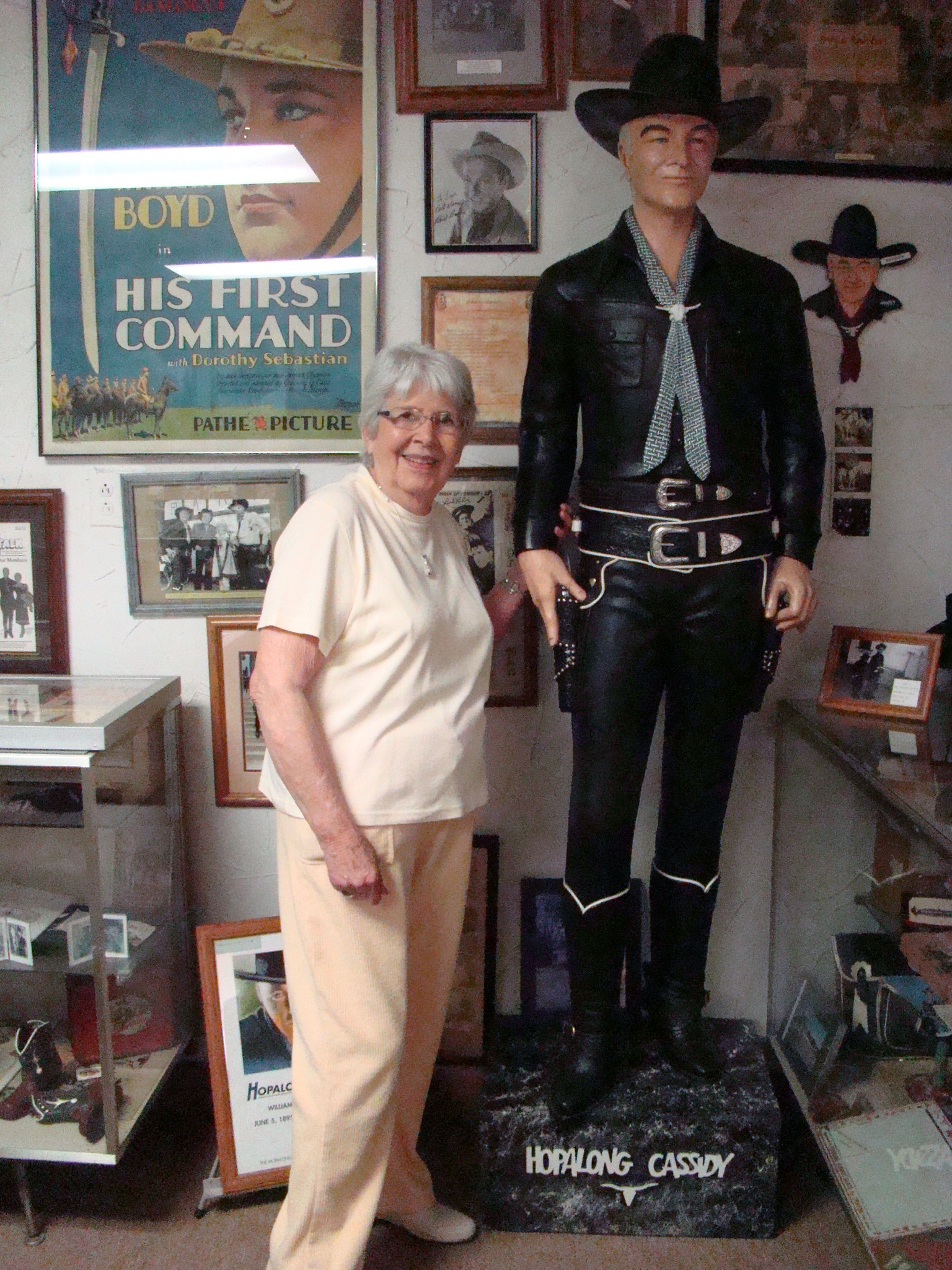
Hopalong Cassidy Hopalong Cassidy, “Pride of the West”, is also “Pride of Cambridge, Ohio”,  the boyhood home to Hopalong Cassidy and the Hopalong Cassidy Museum. William Boyd, aka Hopalong Cassidy, was born close by in Hendrysburg, Ohio in Belmont County back in 1895. While he only resided in Cambridge twelve years, they are still proud to call him a home-town boy. The family moved West at that time to Tulsa, Oklahoma, and at about the age of 20, William ended up in California where his good looks and winning manner were noticed by the film industry.

None other than Cecil B DeMille, who became a long time friend, took William Boyd under his wing, and got him his first acting contract at $25 a week back in 1918 as leading man in the silent film industry. When the role of fictional cowboy, Hopalong Cassidy, came up, director Harry Sherman felt William Boyd was a natural. In his black cowboy hat riding Topper, his white horse, Boyd soon became a national hero known for his gallantry and fair play. After 66 movies portraying Hopalong Cassidy, William Boyd became better known as Hoppy to his friends.

The story of his nickname began with Cassidy getting shot in the leg during a gun fight. When recovering from his gun wound, someone asked how he was feeling, to which he replied, “I’ll manage to hop along.”  Thus the name Hop-along Cassidy. After its success at the movie theaters, it was decided to have a Hopalong Cassidy TV series…also a big success. In 1950, Hopalong Cassidy became the first network Western television series.

Laura Bates and Hopalong CassidyForty years later, in the town of Cambridge, Ohio, Laura Bates was host of a show called “Talk of the Town” on their local television station. One particular day she was interviewing someone from New York doing research at the local library regarding Hopalong Cassidy. They commented, “It’s a shame no one in Cambridge ever did anything about Hopalong Cassidy, since he grew up here.”

Laura said, “That was like a slap in the face from the Big Apple.” After that, she began pursuing the idea and in 1990 it was decided to use Hopalong Cassidy for the theme of their Spring Festival.  Today, that Hopalong Cassidy Festival still is enjoyed by people from all over the world and is now held annually in May at the Pritchard-Laughlin Civic Center just outside the city.

Many movie stars attend the Festival to pay homage to Hoppy, one of those great cowboy legends. Hugh O’Brien from Wyatt Earp has attended as well as several stars of Gunsmoke: Bo Hopkins, Ben Costello, and Becky Burgoyne. Even William Boyd’s wife, Grace, has been in attendance.  Fans are still eager to catch a glimpse of these celebrities and perhaps obtain their autographs.

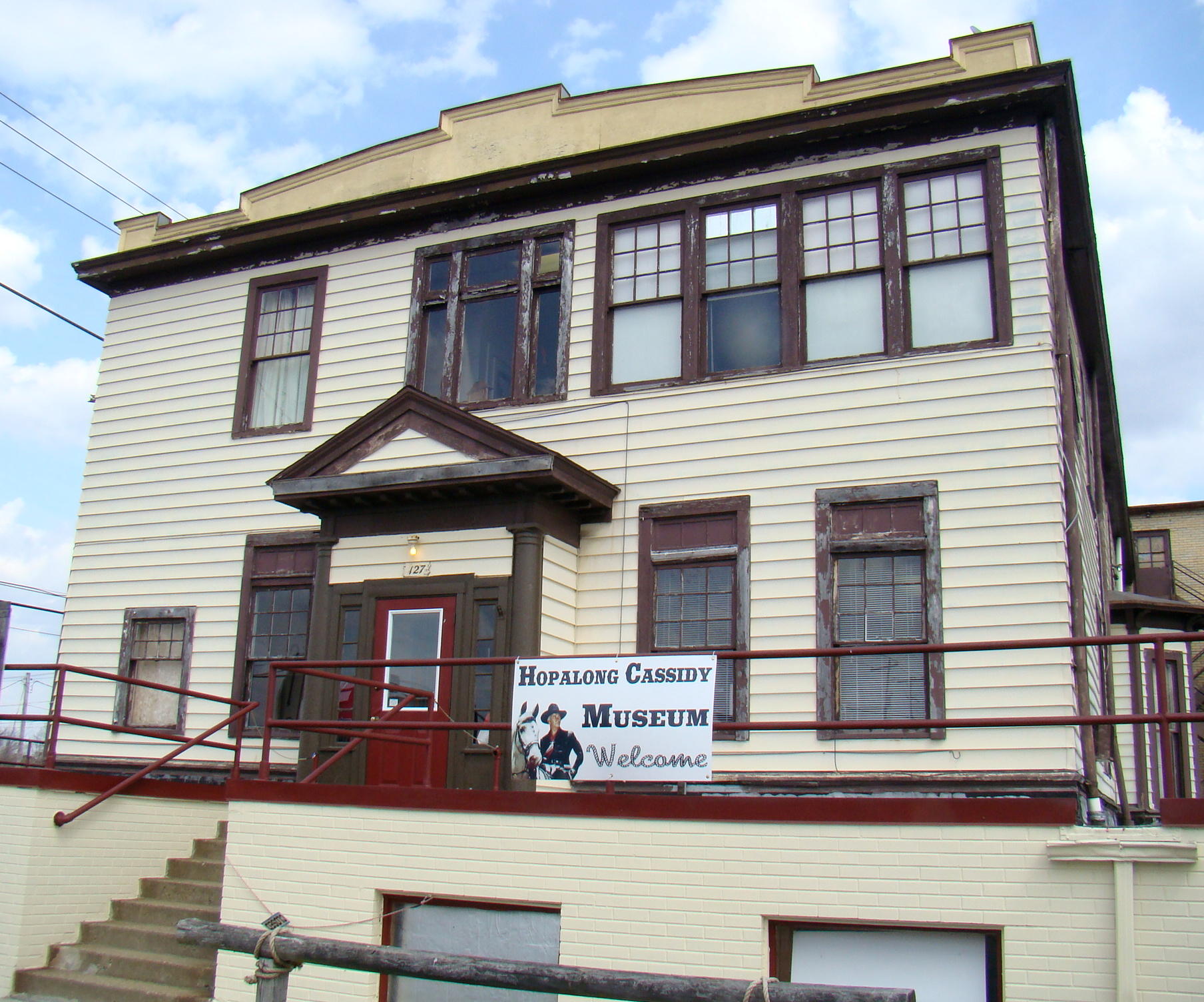
Hopalong Cassidy MuseumToday there is a museum in Cambridge, Ohio which houses a giant assortment of cowboy collectibles. Located at Scott’s 10th St. Antique Mall, this is a hot spot during the annual Hopalong Cassidy Festival. Three rooms are packed with Hoppy memorabilia, all part of a personal collection owned by Laura Bates, local Hoppy organizer and enthusiast. Here fans have purchased an old tin lunch bucket and thermos for the price of $395.00 or an Easter card signed by Hoppy for $195.00. There are many memorabilia available…for the right price.

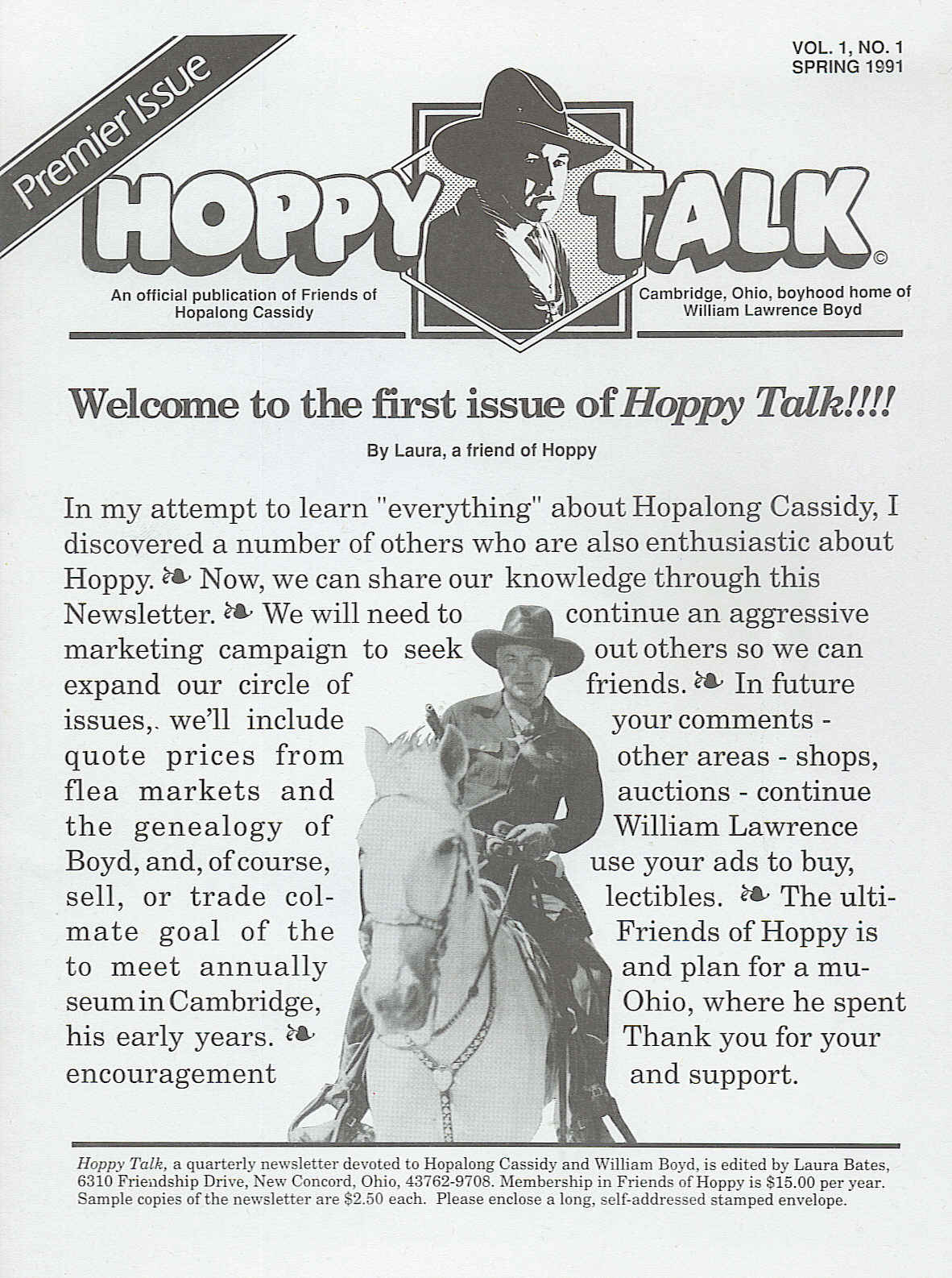
Hoppy TalkIn his hey-day, Hoppy received around 15,000 fan mail letters a week. Today there is still a meeting of the Hoppy  Fan Club during the annual Hopalong Cassidy Festival in Cambridge, Ohio.  Laura Bates is president of the fan club, which was formed back in 1991 and publishes quarterly a newsletter, “Hoppy Talk”, which is distributed to members of Friends of Hoppy. Membership was around 500 in the beginning, but has dropped to about 300 members today as younger adults have little memory of those great cowboy heroes. “Hoppy Talk” is celebrating its 24th year of publication in 2013.

William Boyd and Hopalong Cassidy are synonymous…Hopalong Cassidy, his alter ego. When he finally retired, he turned over his entire crew and cast to a new Western just coming on the scene…Gunsmoke. Boyd didn’t sing, dance, play sports, or race cars, he was simply Hopalong Cassidy.  He smiled, waved and shook hands.  He was everybody’s Mr. Good Guy and his favorite drink was a nonalcoholic sarsaparilla!

The Hopalong Cassidy Museum is located in the South Tenth Street Antique Mall in downtown Cambridge. There is easy access as Cambridge is at the intersection of I-70 and I-77. Wheeling Avenue is their main street and the museum is just a half block south of Wheeling Avenue on 10th Street.

Ohio’s Historic Lafayette Hotel – A Haunting Experience

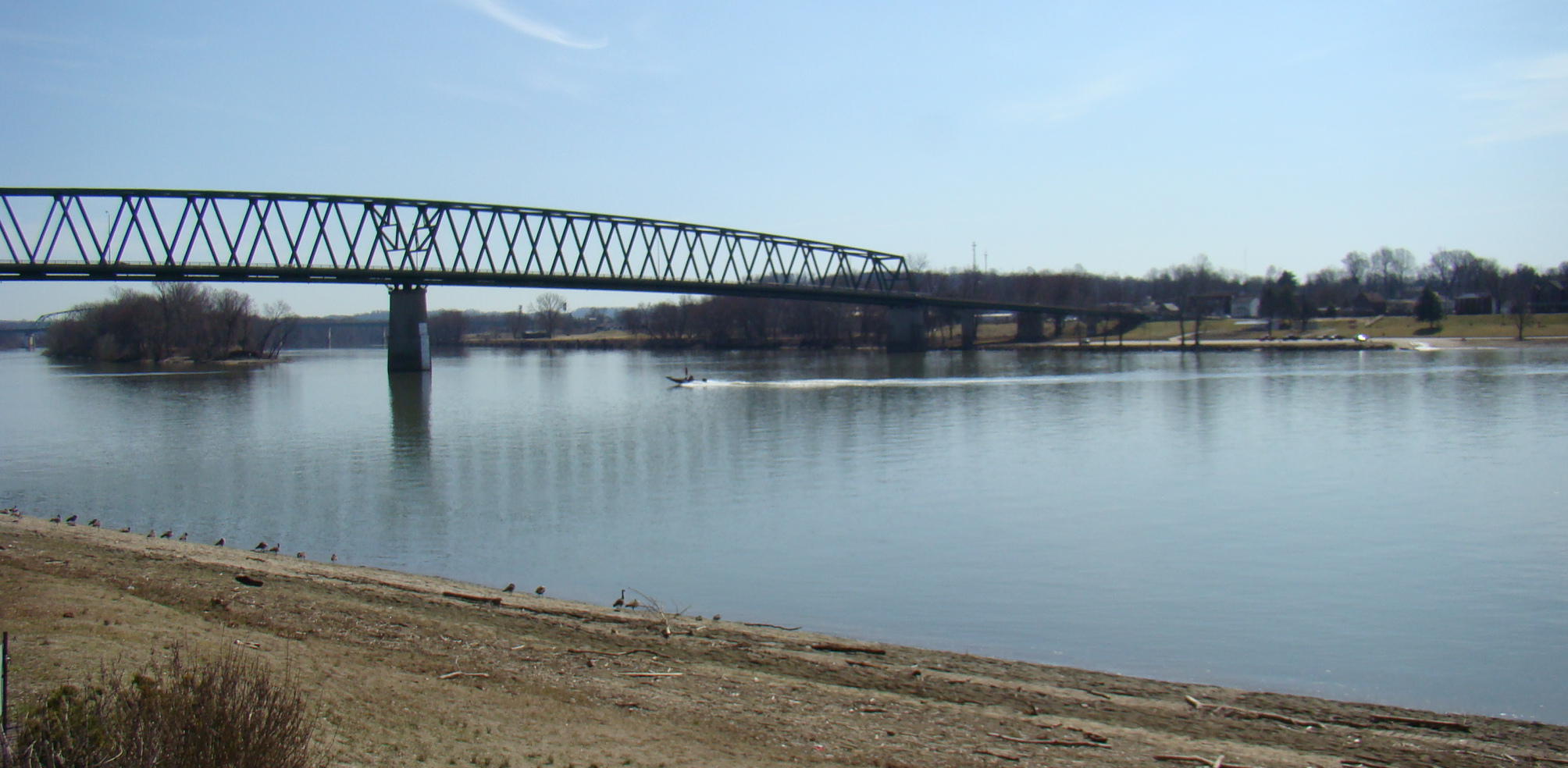
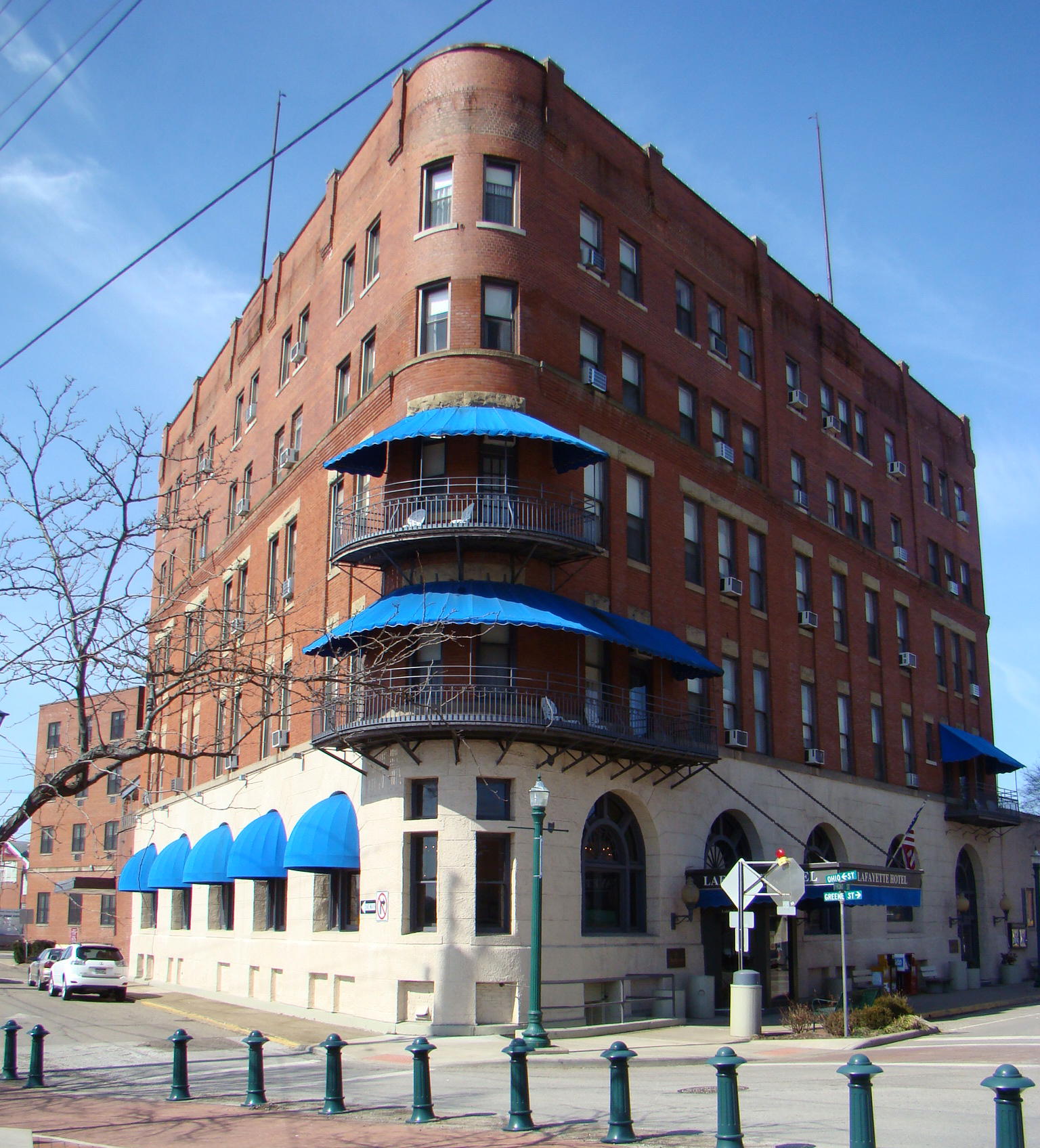
Ohio River at MariettaMay the ghosts be with you while you spend the day or night at the Lafayette Hotel in historic downtown Marietta, Ohio.  Visitors and employees anxiously report stories of paranormal activity in this grand hotel on the banks of the confluence of the Muskingum and Ohio Rivers.

Back in 1882, river traffic was heavier than it is today. The Ohio River provided the freight and passenger routes for much of the eastern part of the United States. Of course, these riverboat travelers needed a place to get meals as well as a place to spend the night. Here at the meeting place of two major rivers, the Bellevue Hotel was built. This quite modern hotel, for the late 1800’s, had a fast running elevator taking guests to 55 rooms, five of which had baths. Rates at the Bellevue were $2.00 a night

lafayette hotel 013After a fire destroyed the Bellevue Hotel, another hotel was constructed on the original foundation. In 1918 the present triangular shaped Lafayette Hotel opened for business. The name was chosen to honor Marquis de Lafayette, French hero of the American Revolution, who was believed to be the first tourist to visit Marietta in 1825. There is even a plaque, near the hotel at the edge of the Ohio River, marking the spot where he came ashore.

A popular meeting room bears the name of Rufus Putnam, who many list as the founder of Ohio.  His leadership established Marietta as the first permanent United States settlement in the Northwest Territory.   In a letter sent to his former home, Rufus Putnam described the land along the Ohio River to his friend as: “a country of most pleasant climate and of the rarest beauty and enduring charm”.

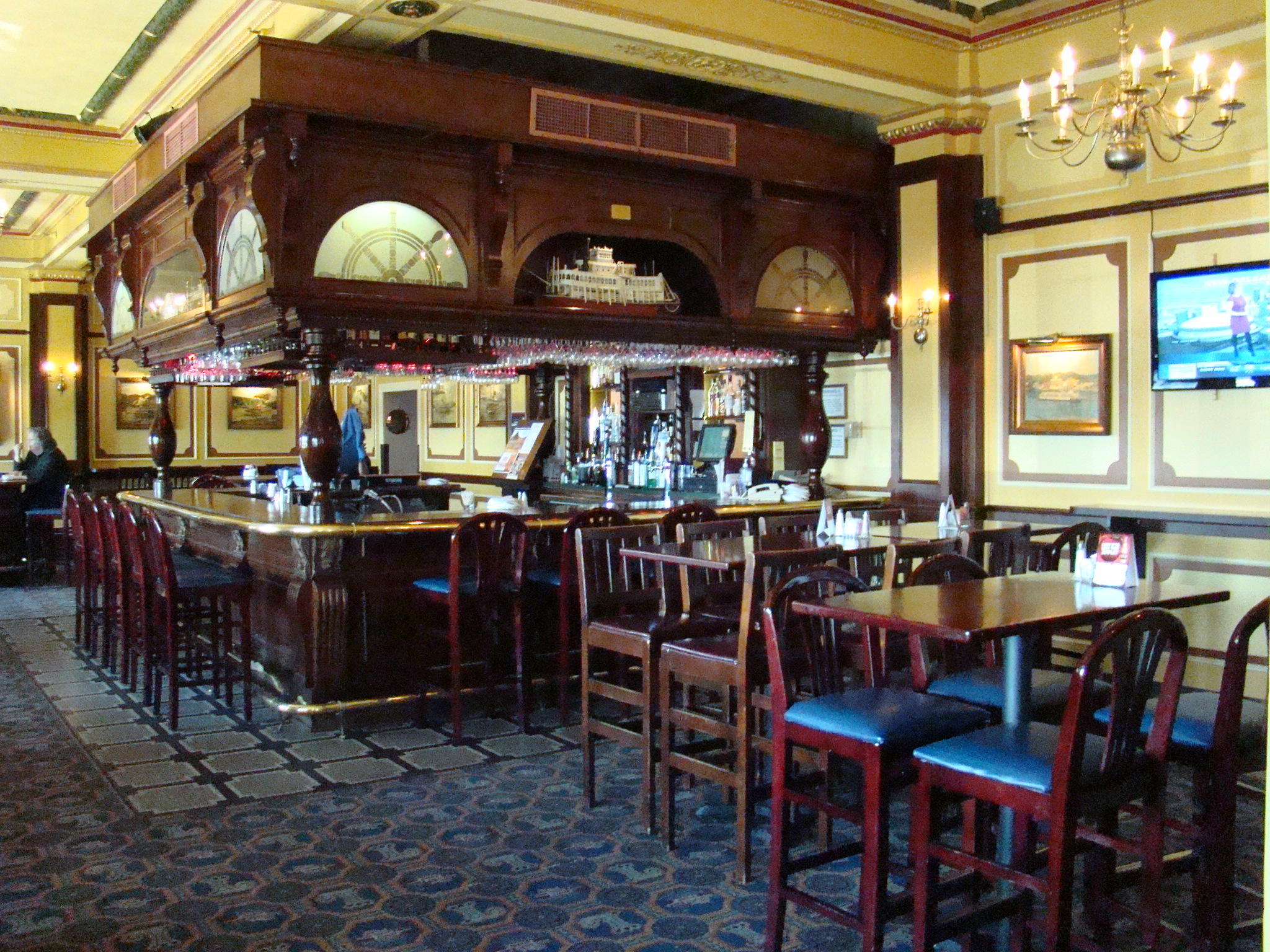
Riverview LoungeThe Riverview Lounge is where the “Lady in White”  often appears hovering over the carpet, while she smoothly moves through the room. The bar happens to occupy the same area where the ladies’ dressing room was located  in the original hotel.

When selecting a room in Marietta’s only downtown hotel, you will probably be given a choice of view – either the Muskingum River or the Ohio River. Here the ghost of Mr. Durward Hoag, former owner of the hotel, watches over guests and staff from both directions. Sometimes guests feel an icy cold draft pass through their well heated room. Evidence of his presence appears in flashing light bulbs, rearranged papers, hidden objects,  and often merely a wisp of light. Maybe Mr. Hoag’s spirit is bored!

When speaking with recent visitors, footsteps were reported outside their door, but no one was in evidence. The elevator, carrying no passengers, left the floor a couple times during the evening and headed to the rooftop. Later that night when they were in bed, another couple felt someone jump in the center of the bed where they were resting. All guaranteed they had not visited the Riverview Lounge.

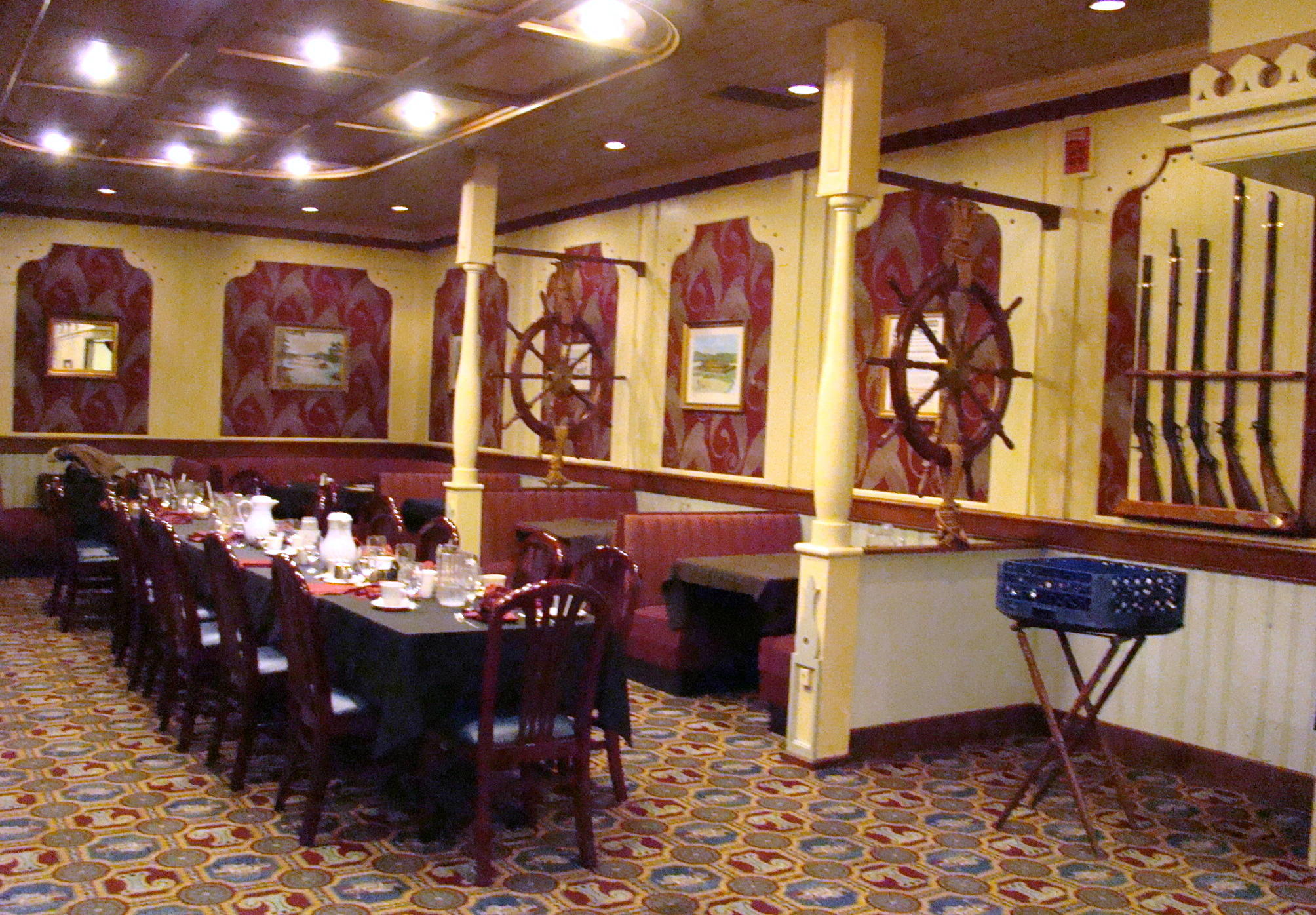
Gun RoomThe Gun Room is a popular place for lunch. The walls are adorned with photos of great majestic sternwheelers that traveled the Ohio River.  A display of antique long rifles contains one made by J.J. Henry that accompanied the Benedict Arnold expedition to Canada in 1775. Waitresses tell of coming in early to work and seeing a figure leaving the front section of the restaurant. Often the swinging doors to the kitchen open for no reason at all. Some feel that Mr. Hoag is checking on his staff.  On the plus side, these spirits are never harmful.

Enjoy the ambience of this richly historical Lafayette Hotel on the river sometime soon. They have been expecting you for nearly a hundred years!

The Lafayette Hotel is located  at 101 Front Street in Marietta, Ohio. Exit I-77 at Exit 1 and follow Route 7 South, which is also Pine Street.  At the third light, Pine Street continues straight and becomes Green Street. Continue on Green Street until you come to the hotel on the corner of Green Street and Front Street. Parking is available between the hotel and the Ohio River as well as on the other side of the hotel.

Casinos and Ancient Petroglyphs Make an Unusual Combination in Laughlin, Nevada

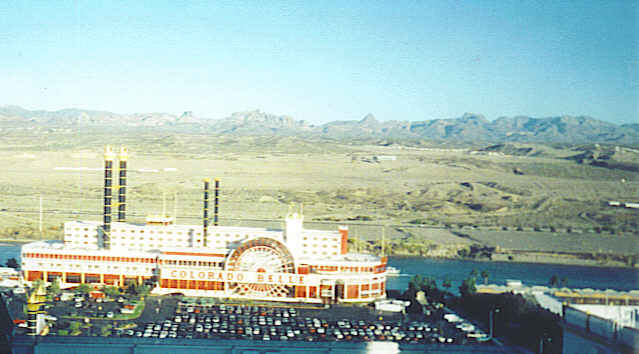
Colorado Belle CasinoMountains on the river…a spot to relax! On the banks of the beautiful Colorado River at the very southern tip of Nevada sits a lovely little town called Laughlin. Casinos are the main business in town, so many visitors try their luck at the slots or gaming tables. The Colorado Belle Casino, a 600′ replica of a 19th century Mississippi paddle-wheel riverboat, is certain to catch everyone’s attention.  However, gambling isn’t necessary to enjoy a stay in Laughlin.

When Don Laughlin, for whom the town is named, purchased the land in 1964, he opened a small casino, Riverside Resort, which had just twelve slot machines and two gaming tables. On the other side of the river in Arizona, the town of Bullhead City ran shuttle boats to the casinos as the number of them grew in Laughlin. Finally, in 1987 Don Laughlin himself provided the $3.5 million needed to build a bridge to span the river between the towns. Then business really picked up. Today, this little town is a popular gaming destination and family vacation center since it is located on the banks of the river with desert and mountains in view.  The casino strip isn’t very long with ten major casinos, but it has all the glitter of Las Vegas. The actual town of Laughlin is situated on the other side of the mountains, away from the casino activity.

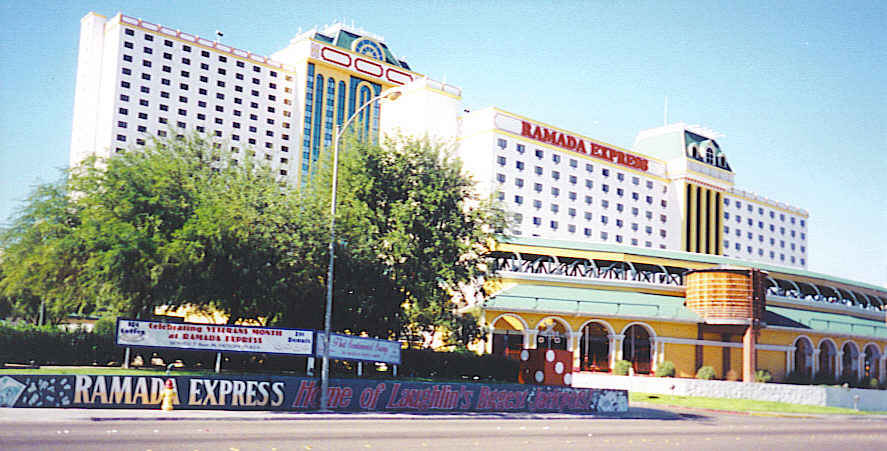
Ramada ExpressA stay at the Ramada Express, now the Tropicana Express, was always a pleasant experience. Express being its name, trains were its theme, having a pool shaped like a locomotive – with a spa in the wheel, and a train that ran around the entire hotel with several stops for less walking. Their patriotic museum honored all veterans from WWII through Desert Storm and regularly showed a four, large screen tribute, “On the Wings of Eagles.”

A stop at the little Colorado River Museum displayed information about the growth of the surrounding area. An evening ride down the Colorado River on the Celebration riverboat became a shimmering experience as the lights of Laughlin casinos reflected off the water. The captain was full of information about the river’s edge and talked a hundred miles an hour.  If riverboats are not to your liking, enjoy the river’s edge on a beautiful boardwalk that is a relaxing stroll day and night.

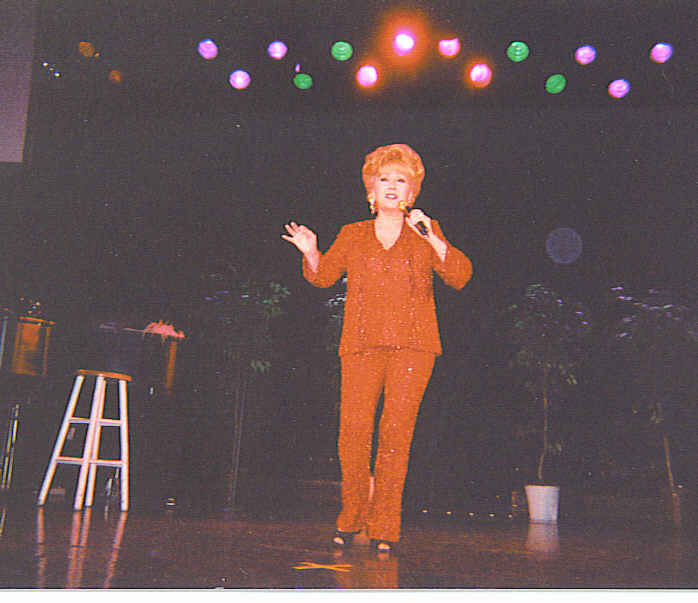
Debbie Reynolds at RiversideNo stay in a casino town would be complete without heading to at least one show. Debbie Reynolds, a star I admired as a child, was performing at Don Laughlin’s Riverside so decided to see if I could get a ticket.  As luck would have it, they had one seat available, and it was in the front row! Afterwards, I went backstage and got an autograph and picture with Ms Reynolds.
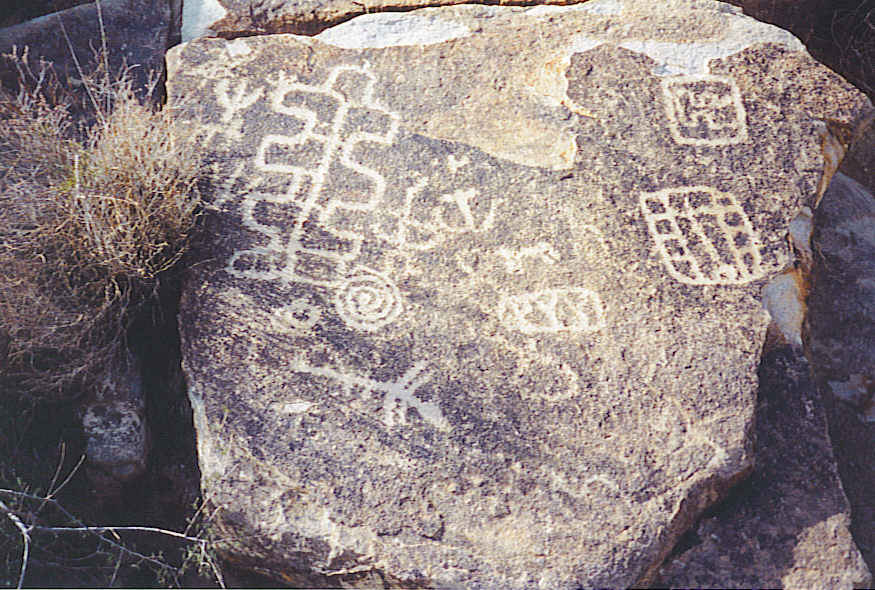
But the Laughlin area was more than casinos.  Accessed by a well maintained dirt road, nearby Spirit Mountain took one on a walk into the past. Petroglyphs on the mountain walls and rocks gave a glimpse into the Indian heritage that ePetroglyphs near Laughlinxisted in this area many years ago.  This remote granite mountain gave one a sense of tranquility, perhaps because the ancestors of the Indians reside there to this day.

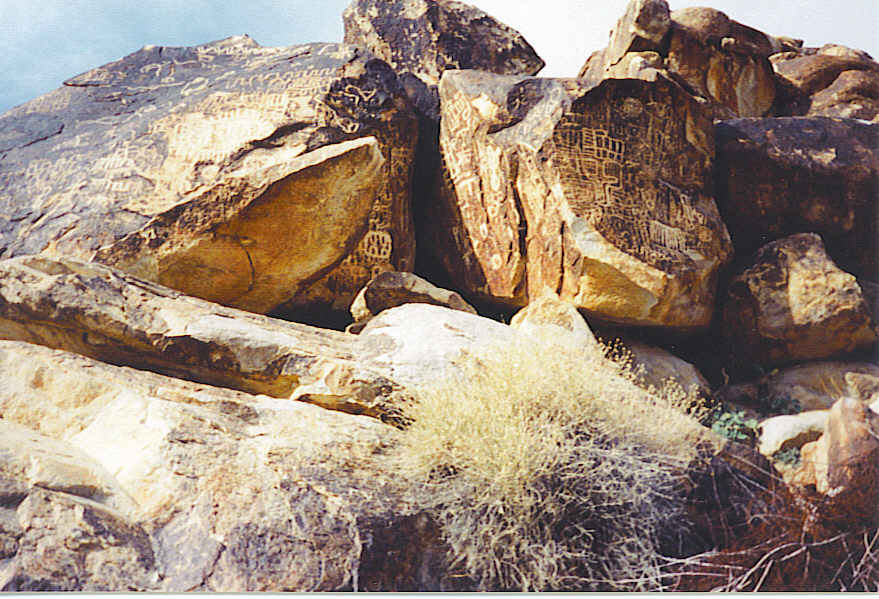
Only seven miles west of Laughlin in Christmas Tree Pass, visitors will find over 700 petroglyphs. Estimates on the original time of the glyphs have been placed from 1100-1500 AD at a time when the Mojave Indians roamed this area. While their meaning is not positively known, one possibility is that they tell the Mojave story of how the Colorado River came into existence. This is one of those places where a bottle of water and a sunhat are recommended as temperatures in the summer soar to 120 degrees.

Christmas Tree PassA long desert-mountain walk in the Indian petroglyphs concluded this week’s stay in Laughlin.  Never had I seen so many glyphs in one place, especially at the entrance of the Christmas Tree Pass. Farther up the mountainside, you could see what appeared to be the outline of an old Indian village.  Return trip expected for further exploration!

Laughlin, Nevada can be reached from I-40 taking Exit 141 to 95 North, the Needles Highway, for 23 miles. Turn right onto Bruce Woodbury Drive and after about 3 miles turn right on Casino Drive. Visitors will be greeted by Riverside Resort and the Casino Strip.

Snow on Aspen Mountain Creates Colorado Rocky Mountain High

ColoradoA “Colorado Rocky Mountain High” surrounds you while driving through spectacular mountains, which  open to the valley where ski resort town, Aspen, is located.  This town was first built during the late 1880”s on one of the richest silver lodes in the Rockies.  Aspen was the leading silver producer in the nation in 1891 accounting for a sixth of the silver output in the United States.  However, their boom was sort lived because in 1893, the US government returned to the gold standard, pulling the plug on the basis for their silver production.

Developing ski slopes seemed a natural, next step in this fantastic mountain region. That first ski lift acquired the name of “Boat Tow”. This very primitive lift, which was constructed partially from old silver mine parts, contained an old motor, two mini hoists, and two 10-person sleds. But that was then, and this is now!

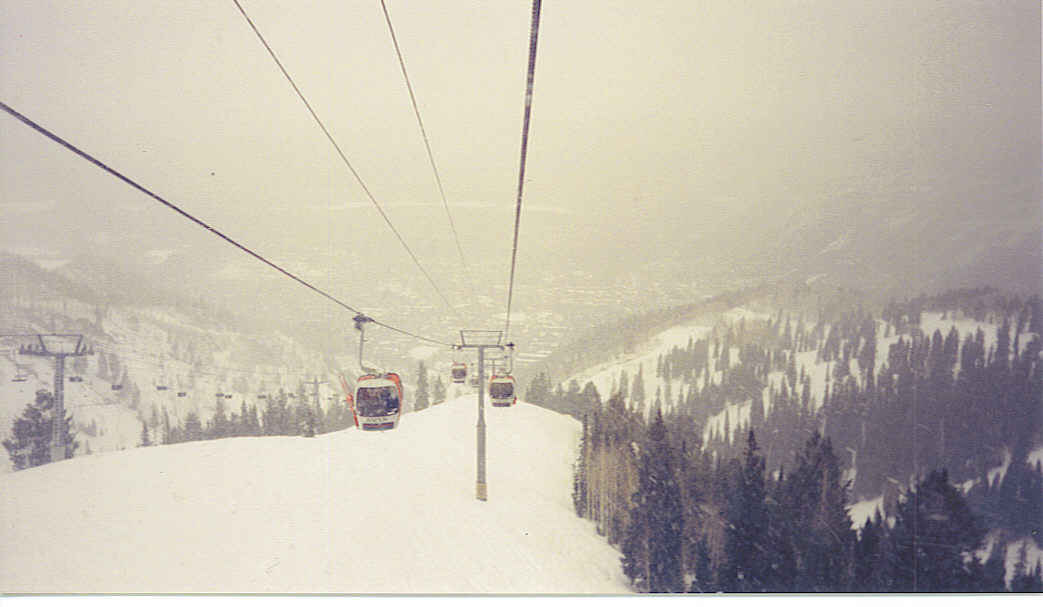
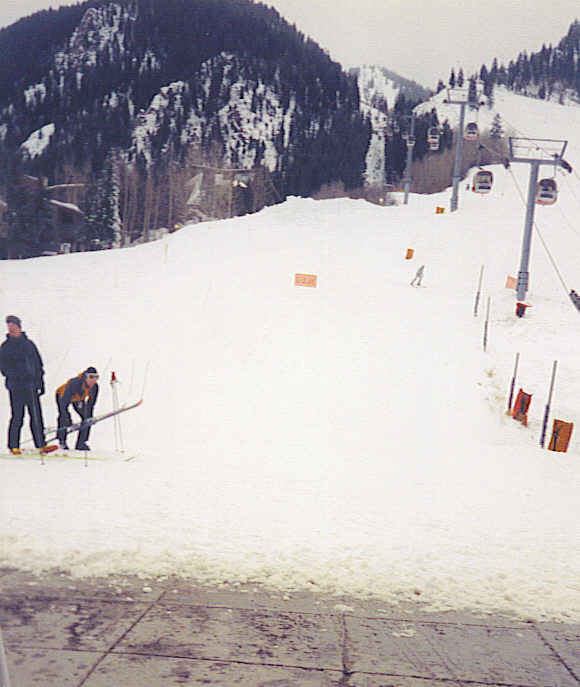
Silver Queen GondolaToday this Rocky Mountain playground of the rich and famous is one of the world’s top ski resorts.  The mountainside aspen forests, which gave the town its name, still grow in abundance. Tourism is now where its treasure can be found. The Silver Queen Gondola gives an all-day ticket for skiers, as well as onlookers, to the top of Aspen Mountain and back down. Ski lifts being my idea of fun, several trips were made during the day.

Beginning SkiersThe ride to the top of 11,212′, about two and a half miles by ski lift, took about fifteen, breathtaking minutes. The gondola held quite a crowd and of course, many were carrying their ski gear along as well. They seemed to frown upon those going along just for the ride, so tried to stay back in a corner out of their way.

Somewhere on this mountainside a shrine has been built to John Denver, composer of “Rocky Mountain High”, which is now one of the two state songs of Colorado. Aspen was one of his favorite places to ski so it seemed natural to gather a collection of photos, posters, records and even wind chimes here on the mountainside at an undisclosed location, known and discovered by only a few.

At the top was a beautiful lodge, Sundeck, with a grand fireplace where you could sit with a cup of hot chocolate and watch the snow fly by the floor-to-ceiling windows.  Watching the skiers go down the trails through glades, bumps and steeps was great fun as well.  These trails were actually named according to their difficulty, for example, starting with the most difficult to the easiest: Sunset, Pussyfoot, One Leaf, and Slow.

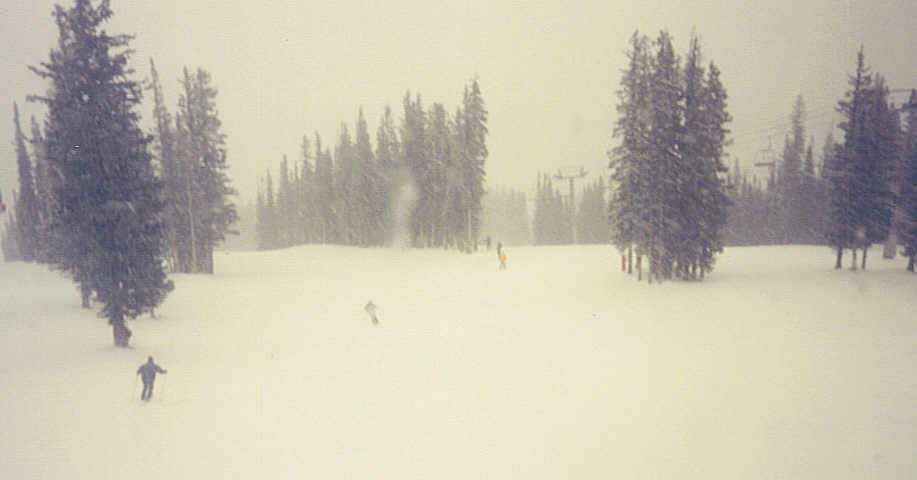
Skiing through the snowflakesAt the top, snow started coming down heavily so headed back down one last time before finding a place to stay for the night. Had plans on going on east that evening, but the road had been snowed in for two months so had to backtrack just a bit.  The interstate was getting snow-covered also and the lighted sign across the road said, “Chains required 10 miles ahead.”  This was one of those nights when any motel looked like a great place to stop…no matter the price!

This snowy journey continued the following day as the interstate still called for chains. So I took a quiet, slow, snow-covered back road through the mountains. It was called “Top of the Rockies” at about 10,000′ with the peaks being about 14,000′.  Arrived the next day at the  slopes at Vail Ski Resort, which had 28″ of snow on the ground.  At Vail can be found another paradise for those who enjoy the slopes, and a great museum dedicated to skiers, Colorado Ski Museum and Ski Hall of Fame, where  “Skiing is a dance, and the mountain always leads”. These slopes fascinated me!

However, if snow is not your passion, come back in the spring for plentiful wildflowers in the alpine meadows. These mountains are beautiful any season of the year.

From I-70 in Colorado, take exit #116 south ,Colorado Highway 82. After about 40 miles, take a right on 7th Street in Aspen, then a left on Main Street.  You will definitely be able to spot the ski slopes!
Explore Dennison Depot Museum WWII Dreamsville U.S.A.

Dennison Depot Museum“Grease the pig!  Tallowpot, grab that banjo and throw on some diamonds so we can bake a cake.” Commands similar to these could have been heard around the Pennsylvania Railroad in Dennison back in its prime. This railroad slang translated into our everyday English, would sound something like: “Oil the engine! Fireman, grab that shovel and throw on some coal so we can build up steam.”

Dennison Depot Museum in Dennison, Ohio displays the history of their depot in a rather unusual manner…in the cars of a train! Each car displays a particular section of interest varying from hospital car to telegraph office. There is much to explore and all is well marked with explanations.

Model RailwayWhy would they have decided to buy the land to establish a town, where none existed, in this particular place back in 1865? Well, it wasn’t by chance! The spot they later named Dennison was exactly 100 miles between Pittsburgh, PA and Columbus, OH. The steam engines of that time could only travel a hundred miles before needing water, so this became their mid-way stop. Approximately forty trains stopped here daily during its peak, when Dennison had the most complete and largest railway yard in the nation. This model train lay-out shows in great detail part of that yard, and is maintained by a group of local model train enthusiasts.

Salvation Army CanteenMost exciting of all seemed to be the story of how they became known as Dreamsville, U.S.A. During WWII, the Salvation Army Canteen ,with nearly 4,000 volunteers, provided free food to around 1.3 million servicemen.

Arriving Servicemen's Train Car The train stops were only five to seven minutes long, so the girls went out on the platform to meet the train. They could see the loneliness, hunger and despair on the soldiers’ faces, so those young girls tried to have a smile and a kind word for everyone.

The soldiers said it brought back fond memories  of their hometowns.  These friendly, smiling girls reminded them of their moms, sisters, or girlfriends…plus there was free food.  A dream come true!  Thus the name Dreamsville, USA.

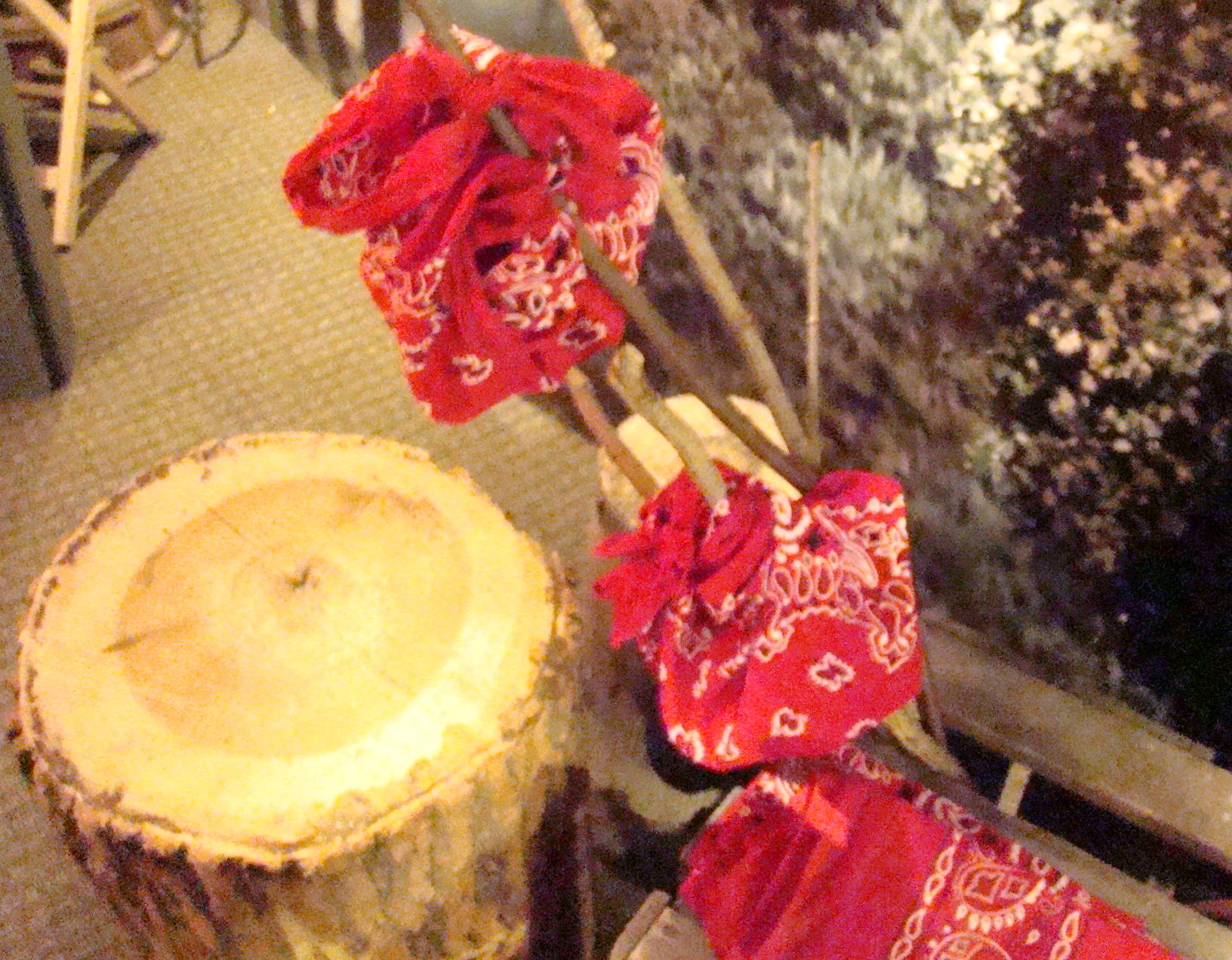
Hobo Message StumpBecause of all the trains, Dennison was a hotbed of hobo activity.  Whenever a train would stop, many hobos would hop off looking for a place to get handouts. It was common practice for the hobos to make marks on a nearby tree or on the house itself, so other hobos would know if they would be well received. Marks of simple circles, arrows, or even animals signified: Good road to follow. Free telephone. House is well guarded. A kind old lady. They even had a camp along the Pennsylvania Railroad in the city dump, where they made makeshift shelter of tin wrapped around tree trunks.

Friendly volunteers patiently answered questions, making the day enjoyable as well as informative. Boarding takes place here for the Polar Express, which during the Christmas season takes children on a magical ride where they encounter Santa. Special events are scheduled throughout the year from Private Bulldog Bing’s Birthday Party to Ghost Tours in the fall.

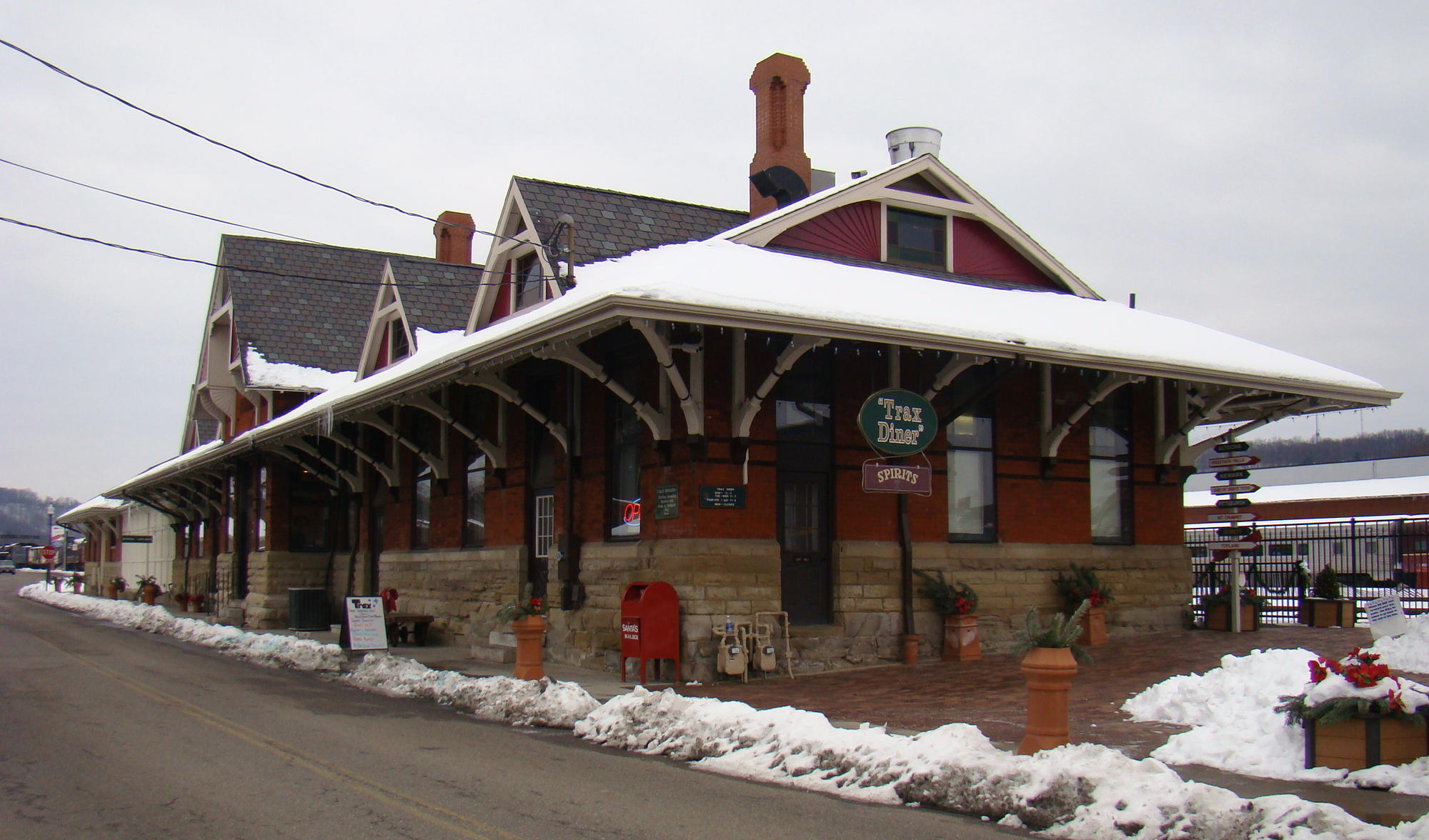
After visiting the museum, the Trax Diner, located in the old depot, is a perfect place for a meal or a snack.  Children were full of “whoo-whoos” while they were enjoying the atmosphere. Although they have delicious full-course meals, I chose a “Hobo Basket” filled with British style beer battered fish and chips. Since an English lady operates the diner, this seemed like a logical and delicious choice.

“Coal Cars”, stuffed potato skins, also chugged across the menu.  Might have to return for “The Caboose”, a sugar and cinnamon shell filled with ice cream and toppings. Think a Caboose would be a perfect ending for a meal, a train… or a blog post!

Dennison Depot Museum is located in Dennison, Ohio  not far from I-77.  Take exit 81, 36 East, to the Dennison exit. Turn right on Second Street and continue on Second Street until you reach the tracks. Turn left on Center Street and after two blocks you will see the museum. Parking is on the left side of the street.