Places to go and things to see by Gypsy Bev

Archive for the ‘History’ Category

Ohio’s Johnny Appleseed Ap*peel*ing to the Core

An apple a day keeps the doctor away is a saying we have heard most of our lives. But John Chapman, better known as Johnny Appleseed, has a slightly different version:  Eat an apple before you go to bed, and make the doctor beg his bread.
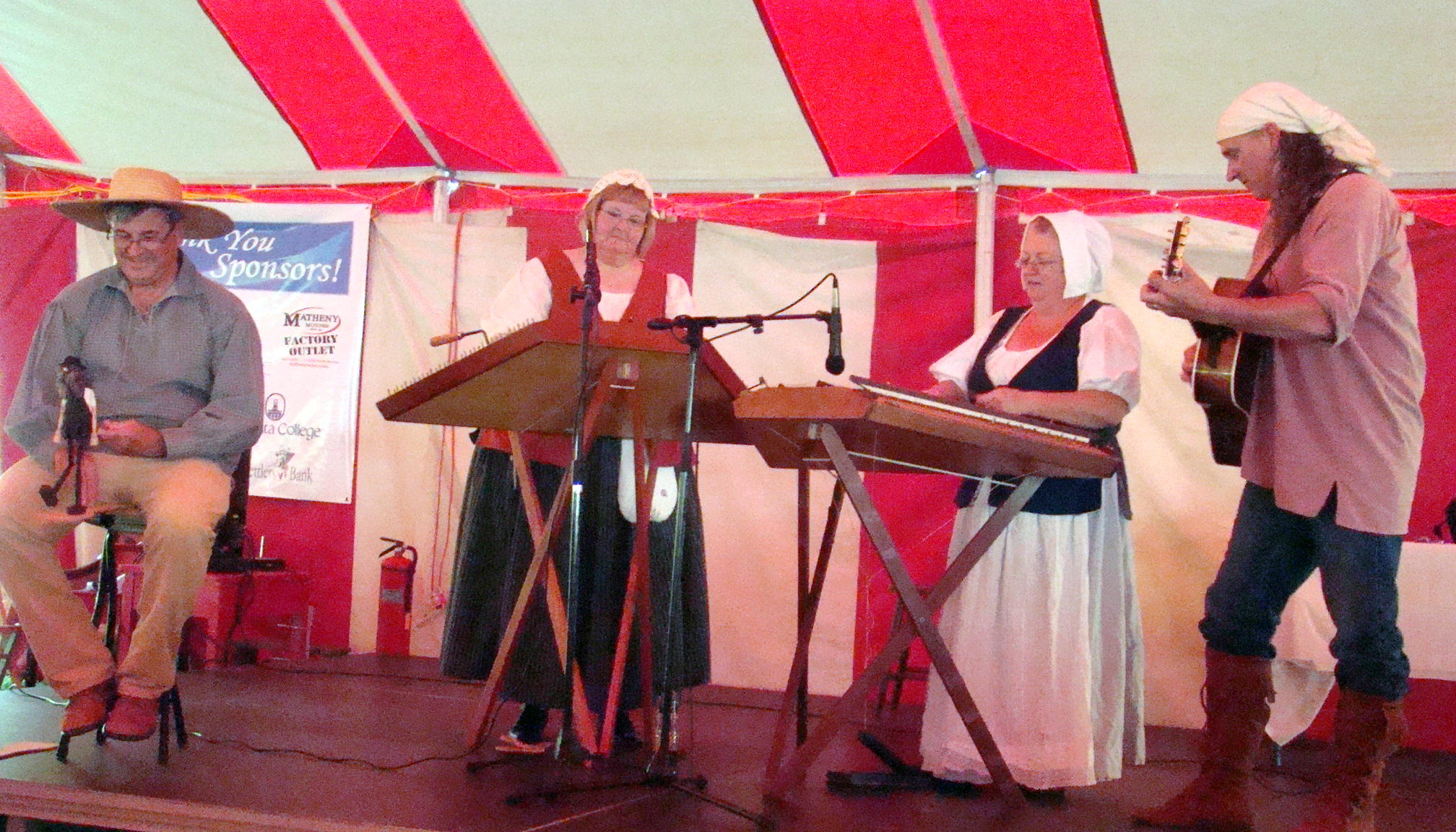
Each evening before the appearance of historical scholars, local musical groups entertained with songs from frontier times.  This particular evening a group called Unwound presented lively music on two hammer dulcimers accompanied by guitar and tapping Limberjacks.  They got the crowd in the Chautauqua tent at Marietta Ohio ready for the appearance of Johnny Appleseed, an excellent yarn spinner.
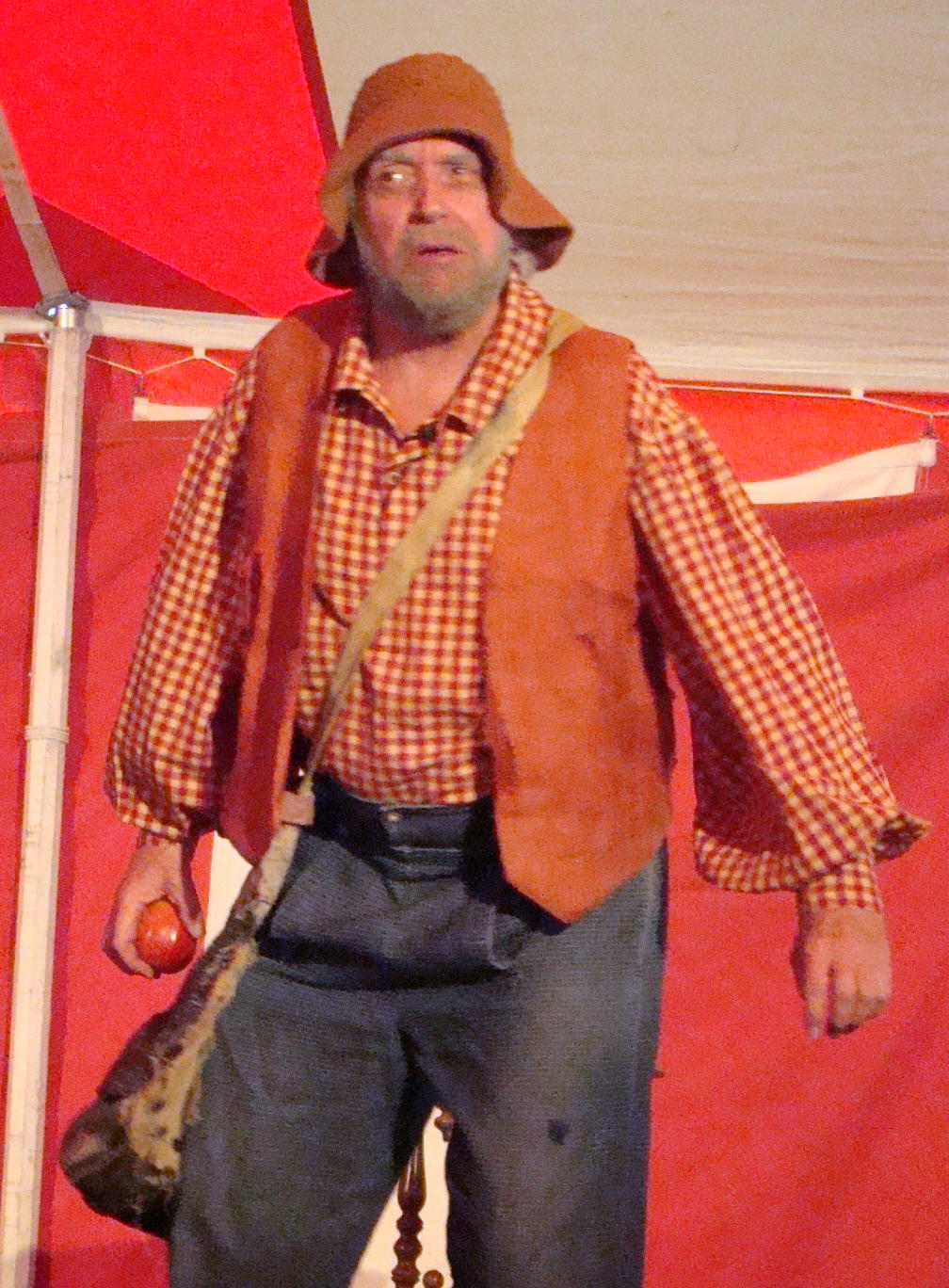
John Chapman wanted to do something useful with his life that would also support his ministry. Apples seemed to be the perfect tool as they were the only fruit that could stay fresh for an extended time. There was a litany of uses given by John regarding his favorite fruit: apple chips, apple butter, apple brandy, and even payment for taxes…to name a few. Would you believe his favorite color is apple red?

Starting a nursery for Johnny was a simple affair: poke a hole, plant a seed, cover it up. He tried to anticipate where people would be settling in two or three years and would start a nursery in that vicinity. Johnny said that in order to claim the land, the homestead law required settlers to plant fifty apple trees during the first year. Sometimes you might see him going down the Ohio River with two canoes:  Johnny in the first one, 50 apple seedlings or apple seeds in the second.

In 1812 when troubles in America erupted with the British and the Indians, Johnny said the fear grew deeper than the snow. These war years were painful for Johnny, as he had always been friends with both Indians and whites.  Trying to make peace was like trying to put out a fire – while you were stomping on one, you were fanning the rest. At this time, he felt the Indians were like a tornado – you never knew where they were going to strike.  But you couldn’t always trust the British either as they burned whole villages – another white man’s promise up in smoke!
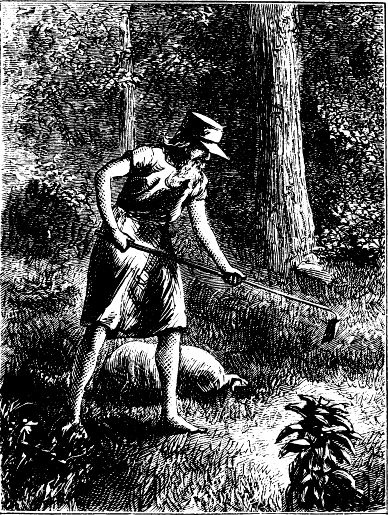
With his constant good humor, he admonished listeners not to believe everything they heard about him, “Gossip is like the measles, sooner or later it will turn your face red.”  For example, barefoot Johnny Appleseed did not walk over the entire country.  His travels and consequent apple tree plantings only occurred in New York, Pennsylvania, Virginia, Ohio, Michigan, Indiana, Illinois and often in a State of Confusion.

Johnny was deeply religious and felt his religion gave him a peaceful path to tread. His was the perfect life in his eyes because sometimes he was with people… but sometimes by himself.  He often enjoyed being alone and said he was not “the marrying kind”.

He spent his life doing good deeds for others and planted more than just apple trees. He also planted spiritual seeds that nourished the soul.
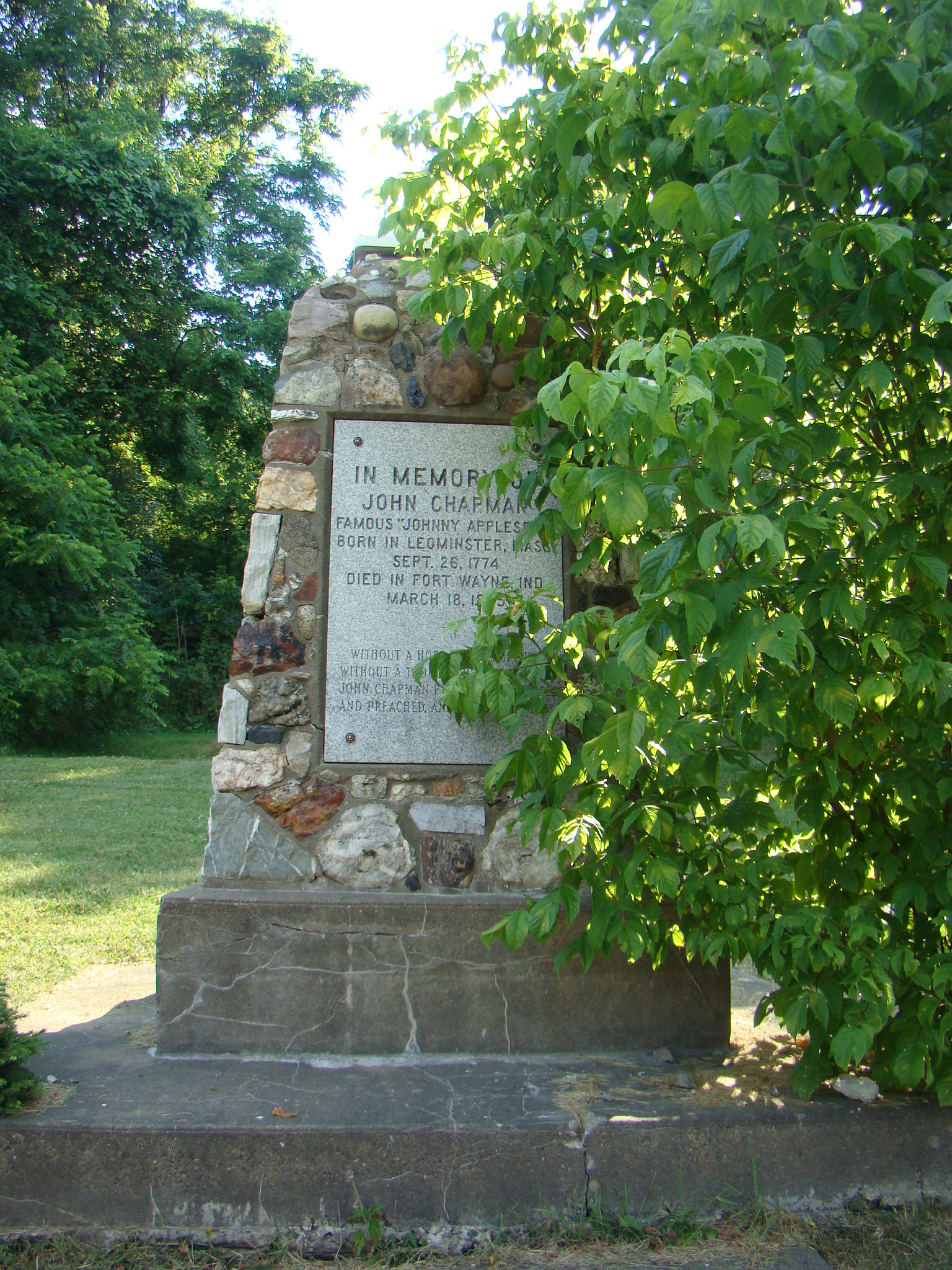
Along the way to Marietta, stopped just south of Dexter City on SR 821 to see a monument dedicated to Johnny Appleseed.  It is made of small rocks contributed by people in areas where Johnny planted apple tree.  The grave sites of his family are located nearby.  The tree to the right behind it is, of course, an apple tree.

Hank Fincken displayed a great sense of humor in his portrayal of Johnny Appleseed /John Chapman.  Johnny was the first historic figure that Hank ever developed. He feels it opened doors for him much the way Johnny’s seedlings opened doors for early settlers.

2012 Ohio Chautauqua continues throughout the summer with week long performances and workshops in Gallipolis (July 17-21) and Warren (July 24-28). Hope you find time to join them and learn a little more about “When Ohio Was the Western Frontier”.

Peaceful Chief John Logan Propelled to Revenge

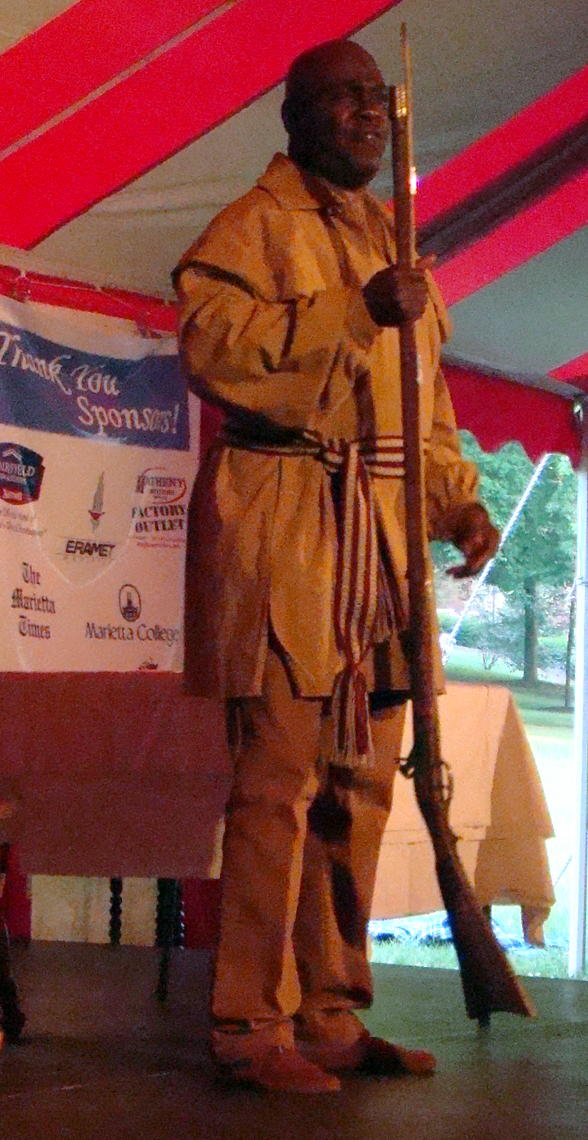
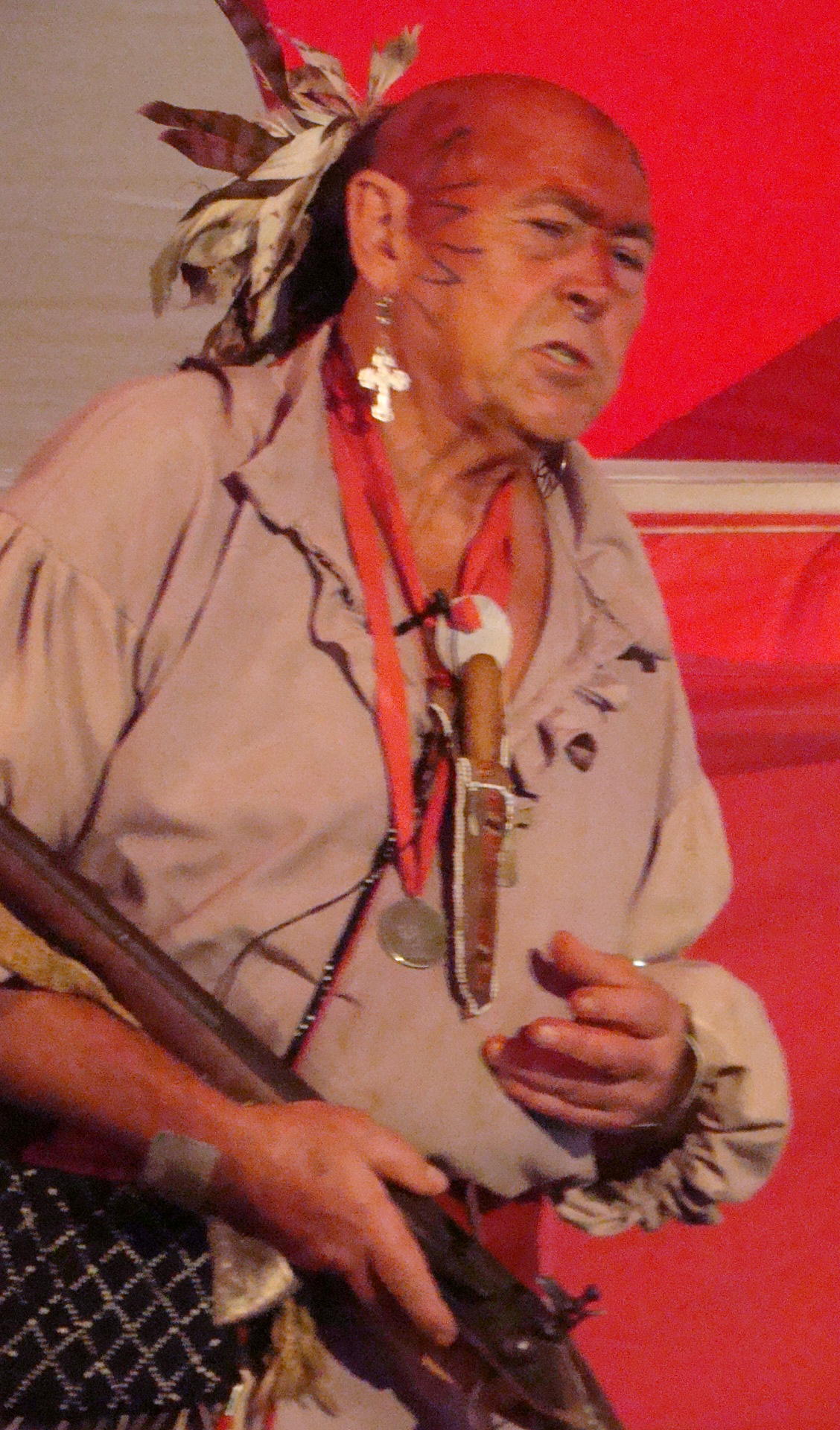
Dressed in buckskin clothes, the appearance of Chief Logan transported the audience back to frontier times. Silver armbands, bracelets, a nose ring and earrings – one a cross- glittered in the sunlight as he took the stage at the Ohio Chautauqua during the 225th Anniversary of Marietta – The Crown Jewel of the Appalachians.   Tattoos also adorned his body with a tobacco leaf tattoo on his ear symbolizing “truthful hearing” while a red hawk on his head denoted his tribal connection.

John Logan began his life on the Susquehanna River and followed his father’s Jesuit teachings where John’s “sins were washed away”. Friendly with the white settlers, John was always a peacemaker for the Iroquois, who were usually called Mingos when settling in the Ohio Country, and John Logan is most often referred to as Chief of the Mingos. Perhaps his role as peacemaker gave him reason to learn eight different Indian dialects as well as English, French, Dutch and even Latin. However, Chief Logan could neither read nor write.

The Ohio Land Company kept expanding their boundaries to include more and more of the Indian lands. The Mingos ignored the marks of surveyors saying, “You can’t sell the wind in the sky or the water in the river.”

Along the Ohio River, settlers frequently met at the tavern for stories, nourishment and ale.  One evening, Logan’s camp along Yellow Creek, near present day Wellsville, Ohio, was invited by a nasty frontiersman, Jacob Greathouse, to a tavern across the Ohio River.  During the course of the evening, some of Logan’s family was shot and killed in an ugly massacre.  This changed Logan’s peaceful ways in a hurry.  In the words of Logan, “It made me want to raise my hatchet that had long been buried and color it with the blood of the English.” Sometime during this period, he walked away from the Christian teachings.

While he told the settlers of his anger, he also said the Indians were not all angry…just Logan, as they had killed his people.  Known as Logan’s Revenge, he vowed to take ten white man’s scalps for every Indian that had been murdered on the Ohio River that evening. Every time he took a scalp, he made a mark on his hatchet. According to Native American custom, he had a right to this retaliation.

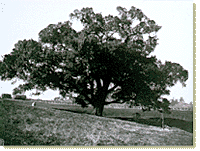
Chief Logan refused to attend peace talks in 1774 at Camp Charlotte on the Scioto River, but issued his now famous speech, Logan’s Lament, under an elm tree. While the beautiful old elm no longer exists, the words of his speech can be found today engraved on his memorial at Logan Elm State Memorial near Circleville, Ohio. His speech concluded:

“Logan feels not fear. He would not turn on his heel to save his life for who is there left to mourn Logan? Not one.”

The remainder of his life was spent as a kind man who sold deer skins for a dollar each, so he could bury his sorrows in the taverns he visited.  In 1781, he was killed by his nephew, because John Logan was no longer considered an asset to his people. Today there is not a drop of Logan’s blood in any living creature.

Dan Cutler portrayed Chief Logan with ease as he has spent about a dozen years in that role in West Virginia as well as the Ohio Valley.  Frequently he also slips into the roles of The Cornstalk Warrior, Tecumseh and Simon Girty. Dan is currently active in a new outdoor drama, “Drums Along the Mohawk”, which will premier late this summer in New York.

2012 Ohio Chautauqua continues throughout the summer with week long performances and workshops in Gallipolis (July 17-21) and Warren (July 24-28). Hope you find time to join them and learn a little more about “When Ohio Was the Western Frontier”.
York, Slave of William Clark, Once Felt Freedom

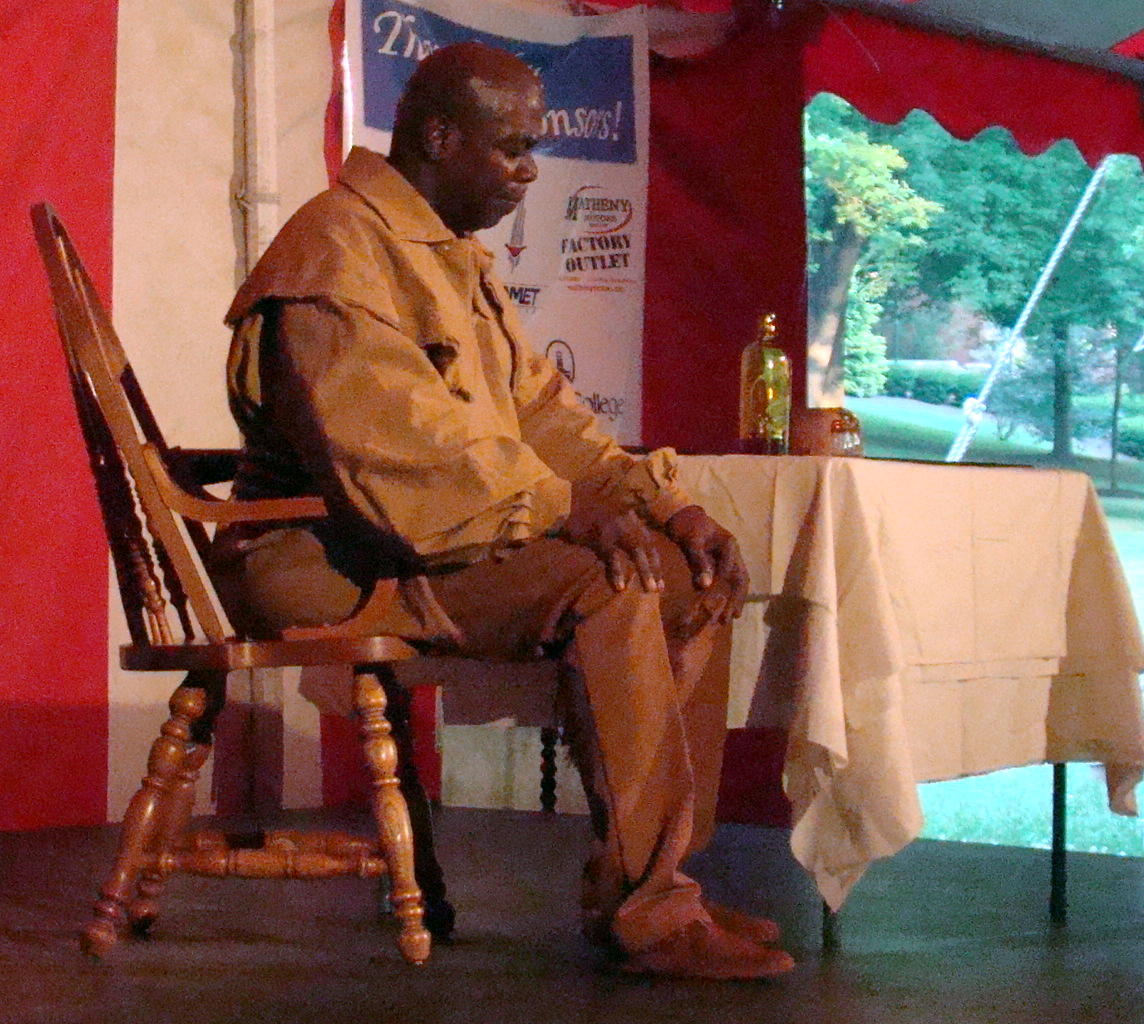
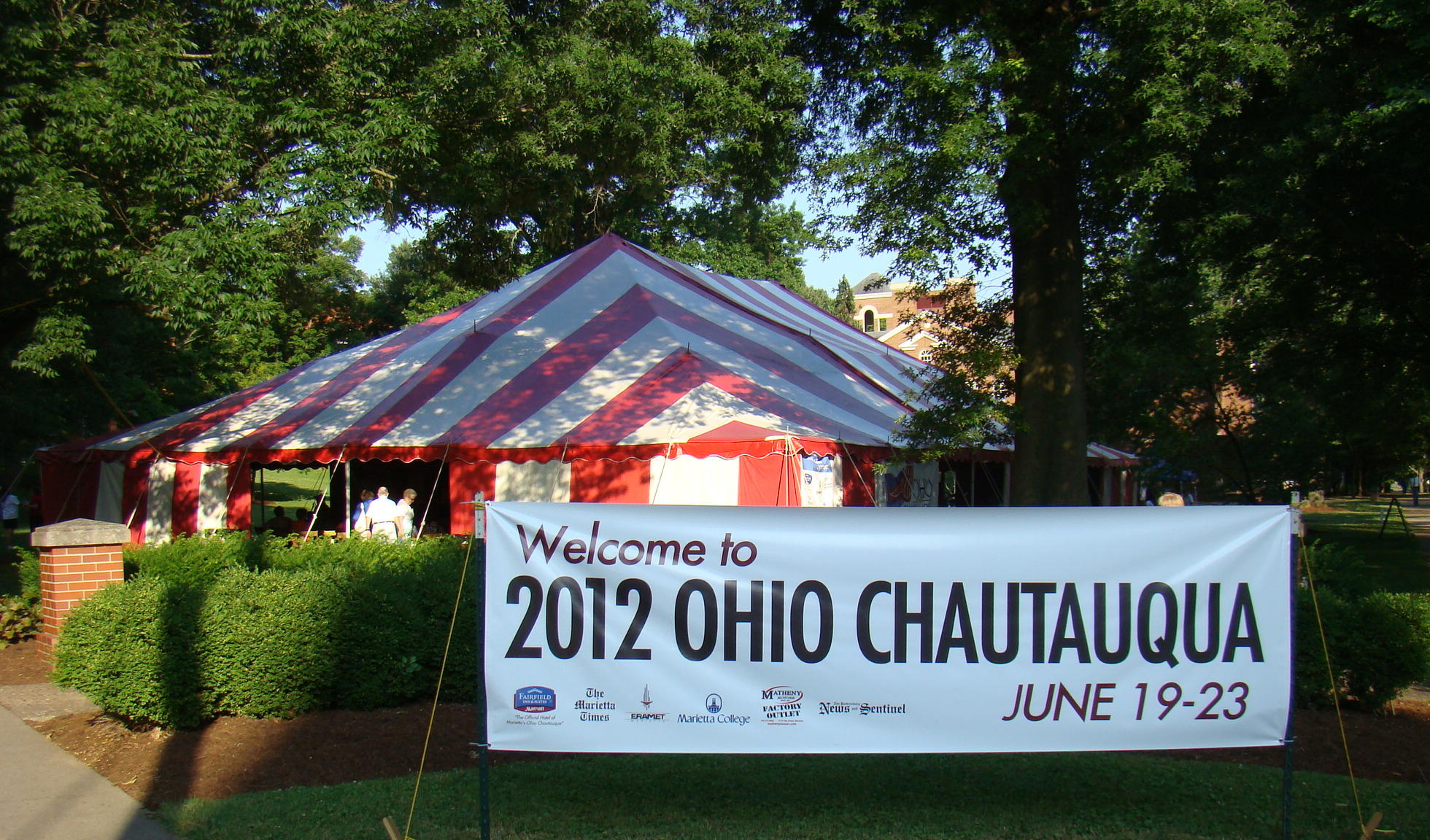
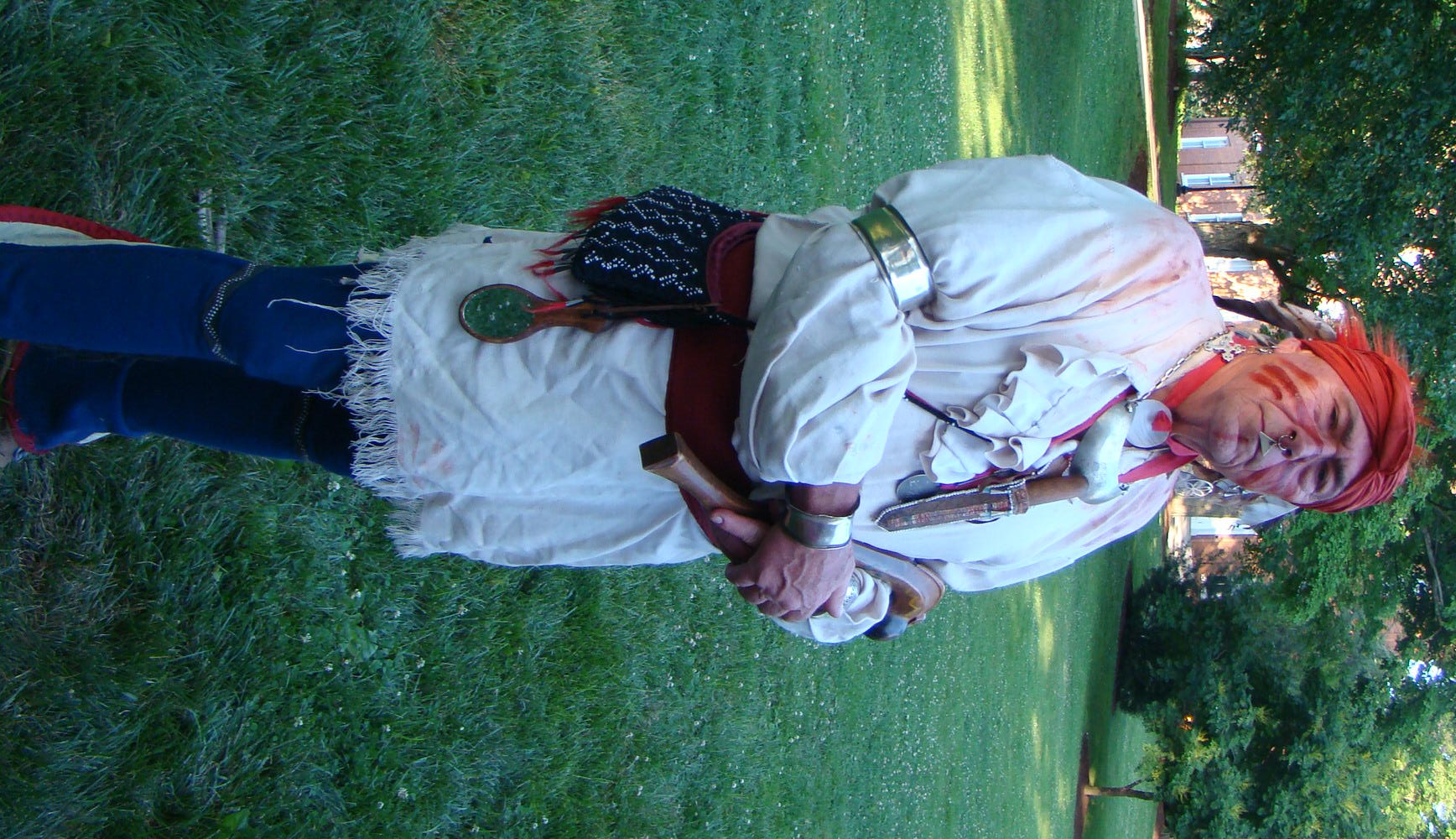
Tracker… Negotiator…Ambassador…Doctor.  All these words were used at one time or another to describe York, Captain William Clark’s black manservant, who was part of the Lewis and Clark expedition to the Pacific Ocean and back to the East. York’s story was told under the red and white striped tent at the 2012 Chautauqua celebration in Marietta, Ohio on the campus of Marietta College. This year’s theme, “When Ohio Was the Western Frontier”, introduced characters that played a role in Ohio’s early history. York, being from Virginia, spent much time on and along the Ohio River.

As the first recorded black explorer, York created much excitement as he traveled across the Western frontier.  Due to his large size and black skin, his presence amazed and intrigued the Indians along the way. Thinking perhaps that he was painted black, at many stops the Indians would spit on their fingers and try to rub the black color from his skin. Indian tribes considered him a friend and referred to him as Big Medicine, since he frequently gave them liniments and herbs to heal their ailments. Some even called him Giant Medicine due to his size, and felt that his skin had sacred power.  This was a time in York’s life when he said, “How great it felt to be admired.  I felt ten feet tall.”

Because he enjoyed storytelling and drinking, York was very popular in taverns wherever he went. His speech was much like “the white man’s” since he had grown up in his master’s household. Never having been taught to read or write, he relied on his tall tales, some higher than the mountains, to entertain the explorers and those he met along the way. The Indian squaws favored him with special treatment, and he entertained the children with stories of being wild. His contribution as a peace maker with the Indians helped make the expedition more successful.

Life was not easy on the journey as they were often cold and hungry. They drank bear fat and even ate candles to survive. At times when food was scare, York was entrusted with a musket, something that never would have been permitted this slave while in Virginia. There were times when they were fortunate to encounter a herd of elk.  Then they ate elk, elk, and more elk all day long. If no other meat was available, they even ate their dogs and found them quite tasty. The children in the tent at Marietta that evening were quite concerned about the expedition eating dogs, and were assured it was only done during an emergency when no other food was available.

When they returned to the East, York reverted to his position as a manservant. He only wanted freedom to be with his wife but this was not to be. Instead he was flogged, even jailed and then hired out to a severe master where he was given spoiled food and further mistreated.

Even though York was married, he seldom saw his wife as she too was a slave. They lost contact completely when she was sent to Mississippi to work on a plantation. So even though he knew she was expecting their child, he never got to see the child or even know of its whereabouts. When he asked Captain Clark if he could be sold as a slave with his wife, Clark said it was out of the question. York said the most painful time he encountered in his life was saying goodbye to his wife.

What really happened to York? Some accounts say that he was eventually freed, but given the fact that he had no knowledge of business was not able to make his way in the world.  Other accounts say he was spotted later with the Crow Indians in the Rocky Mountains. Hope it was the later!

As York sat at the tavern on the Chautauqua stage, he said he was thankful for the Expedition as for a short time he knew what freedom felt like. There his color was not a curse but a blessing. His dream was to eventually go back to the Indians.  His presentation concluded with a toast to the Great Expedition, the beauty and majesty of our great nation, Captain Clark, the Indians, and Big Medicine.

Marvin Jefferson did a very believable portrayal of York. His background as an educator and historical scholar has given him incite into Civil Rights issues and he frequently portrays Martin Luther King, Jr and Paul Robeson in his stage performances.

2012 Ohio Chautauqua continues throughout the summer with week long performances and workshops in Urbana (June 26-30), Gallipolis (July 17-21) and Warren (July 24-28).  Hope you find time to join them and learn a little more about “When Ohio Was the Western Frontier”.
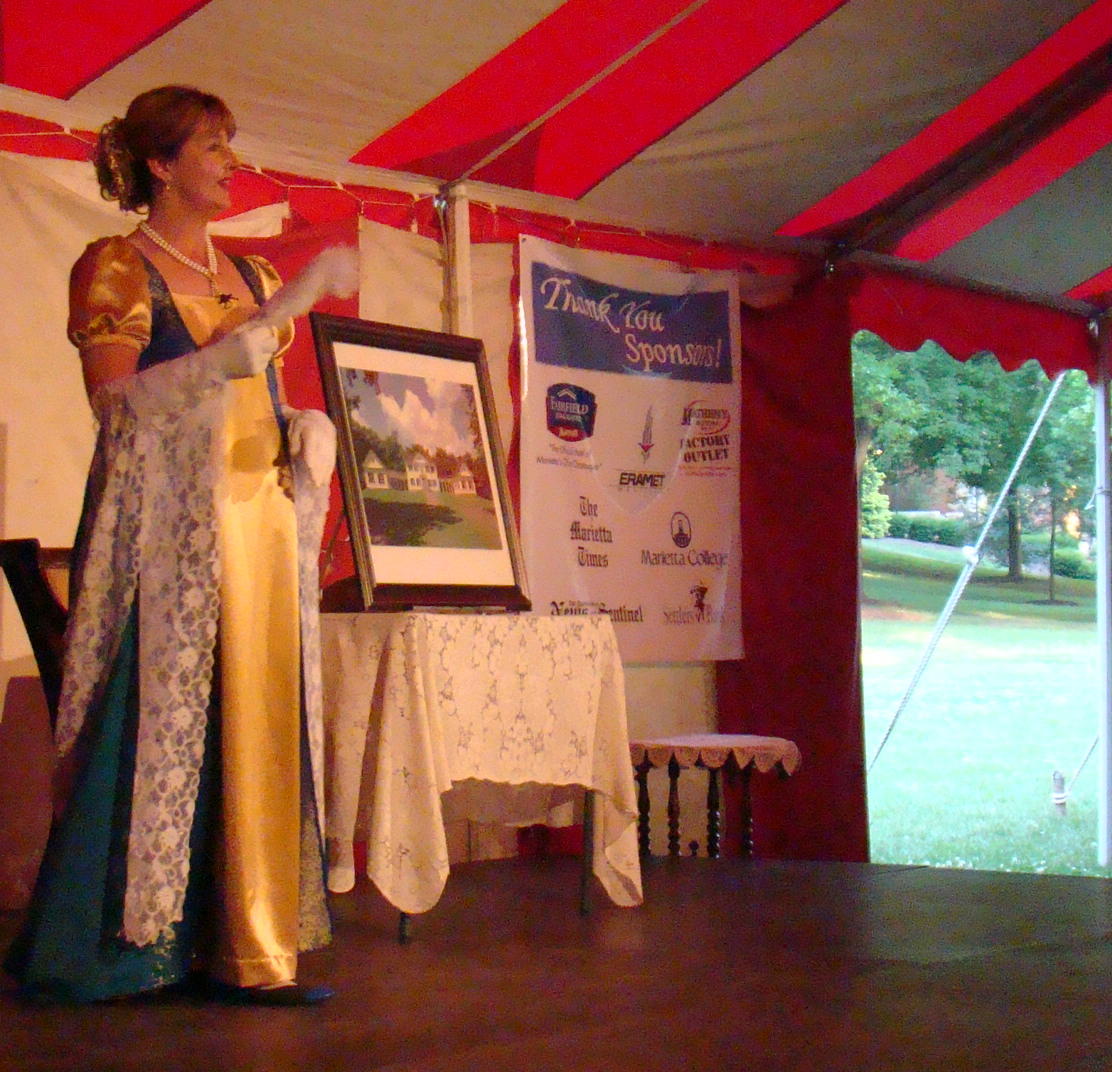
Margaret Blennerhassett Prosperity to Poverty

More is better! That was the feeling of Harman and Margaret Blennerhassett as they came to the United States from England in 1797. Their marriage was frowned upon by friends and family in England since Harman was Margaret’s uncle; therefore, their best chance at a happy life together would have to be in a far away country.  Having sold his castle in England, the Blennerhassetts arrived in the United States with lots and lots of money…$140,000! While this fortune seemed limitless at that time, the Blennerhassetts spent their fortune recklessly and unwisely, always wanting more.

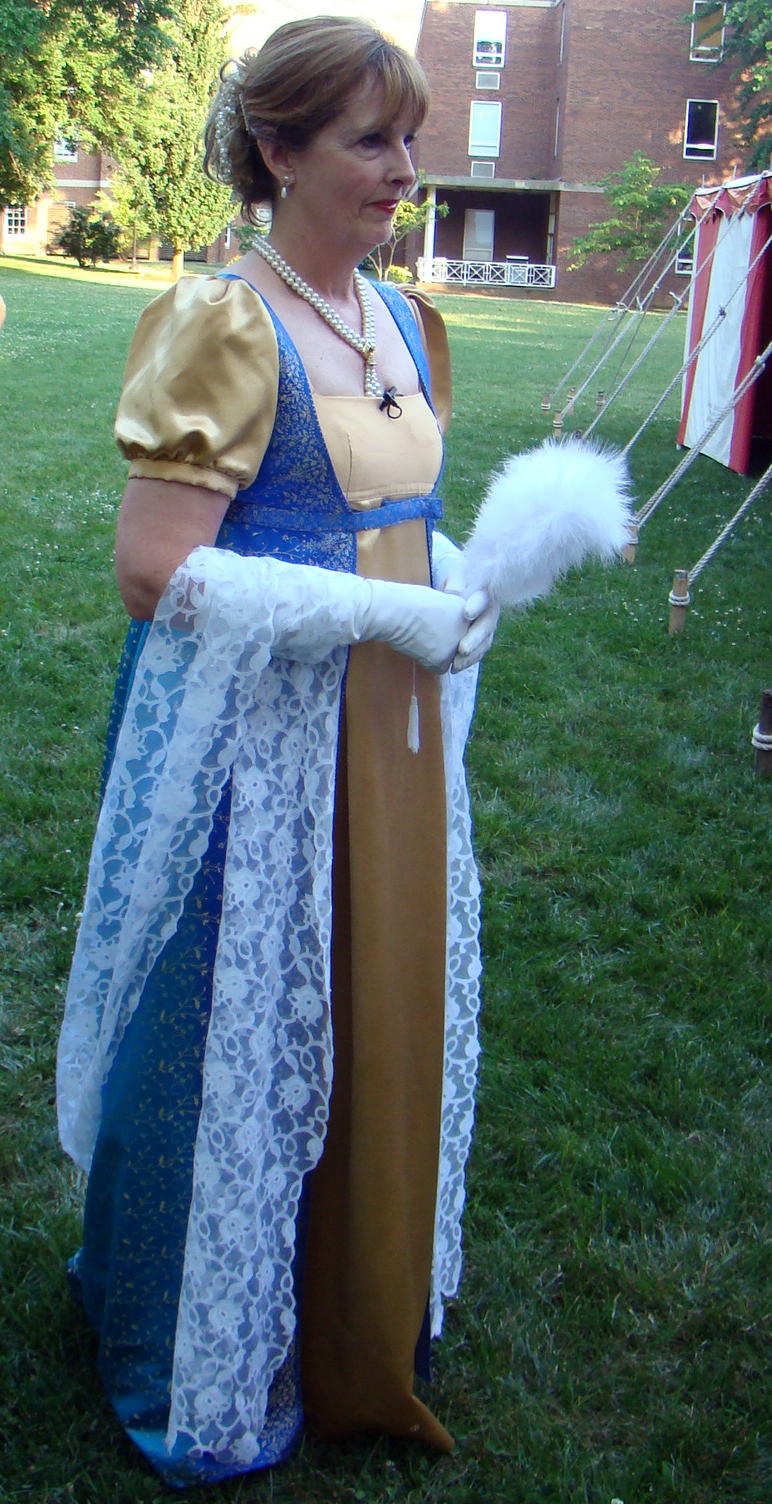
The aristocratic Margaret Blennerhassett was the first historic character for  “When Ohio Was the Western Frontier”, the theme for  2012 Ohio Chautauqua in Marietta, Ohio on the campus of Marietta College.  She received a warm welcome as temperatures soared to near 100 in the red and white striped tent.

Margaret’s story continued with their search for a place to built their new home, and ultimate discovery of  a beautiful tree covered island in the middle of the Ohio River. Margaret thought this would be the perfect place for the elegant home she had in mind so they bought half of the island, approximately 180 acres, for $4500.

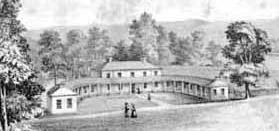
One corner of the island was cleared of the huge trees so the mansion would appear as a pearl against green velvet as the boats passed by on the Ohio River. Here they built a luxurious twelve room mansion that had thirty-six glass windows, something not common at that time of log cabins with tar paper windows. Two covered porticos flanked the main house leading to its two appendages: Harman’s office and the summer kitchen.

Not only was the house a beautiful spot but there were acres of gardens and a greenhouse where citrus fruits grew all winter long. There was even special shrubbery trimmed in the shape of the original thirteen colonies.  Margaret especially enjoyed riding her white horse, Robin, over the island appearing as an exotic bird in her scarlet riding cape and feathered hat. Yes, more was definitely better.

But their happy life was short-lived here on the spot they called Blennerhassett Island. Some compared it to the beautiful Garden of Eden, but both seemed to have a snake that spoiled their pleasure. This time it was a snake in the form of Aaron Burr that wanted something forbidden.

Margaret said that Aaron Burr was a genius who applied to college at the age of eleven and graduated from Princeton at an early age. Burr was a very handsome man who loved fine things especially when procured through other people’s money. After a tie in a presidential election between Thomas Jefferson and Aaron Burr, the recount made Jefferson the President, and the loser, Aaron Burr, the vice-president. Things did not start out on a good foot here, and Burr was more than a little dissatisfied.

In 1805, Burr visited Blennerhassett Island for dinner as he was curious about the eccentric foreigner … or perhaps he had heard of the money Blennerhassett had available to “invest” in his plans. Burr led them to believe that this was an easy way for them to increase their fortune.  These events took place at a time when the Blennerhassett funds were running low.

Margaret felt that Thomas Jefferson was the real serpent that crawled into their Garden of Eden in order to destroy them. There was a lot of animosity between Jefferson and Burr.  Margaret said that Jefferson was not the wonderful president that many thought he was.  She felt the Louisiana Purchase was illegal, and while considered an inventor said he only had invented two things: a wheel cypher secret decoder and a plow. Thomas Jefferson was said to even cut parts out of the Bible that he didn’t like or wish to follow in his life. It was quite obvious that Margaret did not have fond feelings for President Jefferson.

Jefferson tried to destroy Aaron Burr and by association, Harman Blennerhassett. He attempted to use his power to have Burr found guilty of treason.  However, Chief Justice John Marshall stood up to Jefferson, and the jury found Aaron Burr not guilty. Burr and Blennerhassett were both released from prison.

By this time, their house on the island had been looted with most of the fine things being carried off. The remainder of the items were sold at auction to pay off debts accumulated by the Blennerhassetts. In 1811, their beautiful mansion was burned to the ground. At this point, the Blennerhassett family fell into hardships and eventual poverty for the remainder of their lives.  Their hopes and dreams were shattered.

Debra Conner’s portrayal of Margaret Blennerhassett was outstanding. Debra actually spent much of her youth in the Marietta community and graduated from Marietta High School.  Often during the year, she presents similar programs to the area schools on both sides of the Ohio River as part of their Ohio or West Virginia history curriculum.

2012 Ohio Chautauqua continues throughout the summer with week long performances and workshops in Urbana (June 26-30), Gallipolis (July 17-21) and Warren (July 24-28).  Hope you find time to join them and learn a little more about “When Ohio Was the Western Frontier”.
The Town Too Tough To Die Tombstone, AZ

“The only rock you will find out there will be your own tombstone,” was the advice given to Ed Schieffelin when he headed to the mountains of Arizona to hunt for ore samples.  When Schieffelin filed his first claim after discovering silver, he suitably named his first mine Tombstone, and organized the Tombstone Mining and Milling Company.

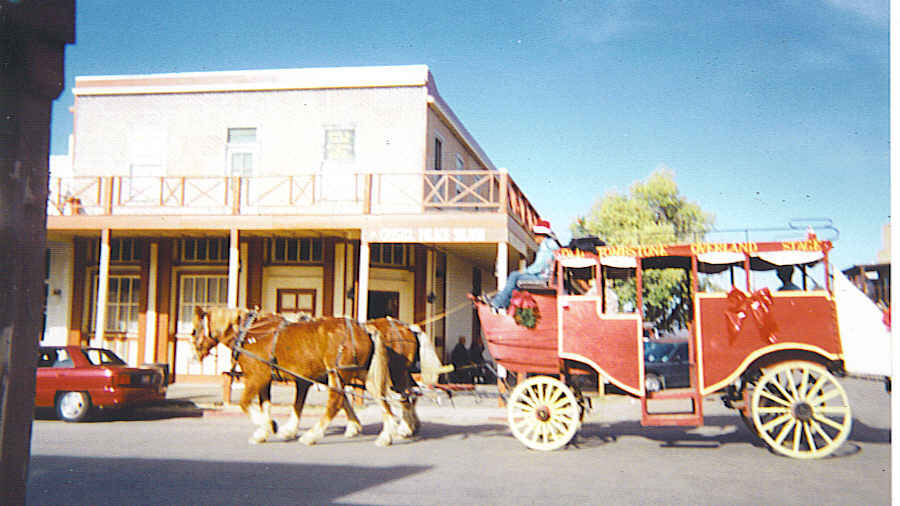
If you want an informative trip through Tombstone, Arizona, hop on the guided horse-drawn stagecoach tour. Here you will hear the basic history of the town with lots of humorous stories thrown in. Don’t be surprised if you see a gunfight or stagecoach robbery along the way. Then you can walk or ride to your favorite places throughout the town for a closer look.

The stagecoach is pictured in front of the Crystal Palace Saloon, which was originally built in 1882 but restored in 1963.  Prominent citizens of Tombstone liked to congregate here as the saloon was know for its “Good Whiskey, Tolerable Water, and Best Food in Town” as well as an honest gambling room. Add to that the fact that upstairs were located offices that furnished all the latest news, and you can see why it was such a popular spot. The second floor contained offices of Marshall Virgil Earp – in the front, Dr George Goodfellow, leading surgeon, and Atty George Berry.

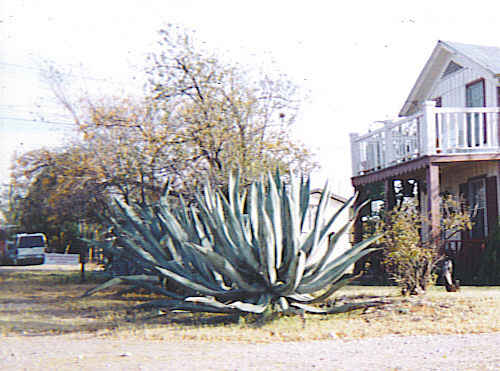
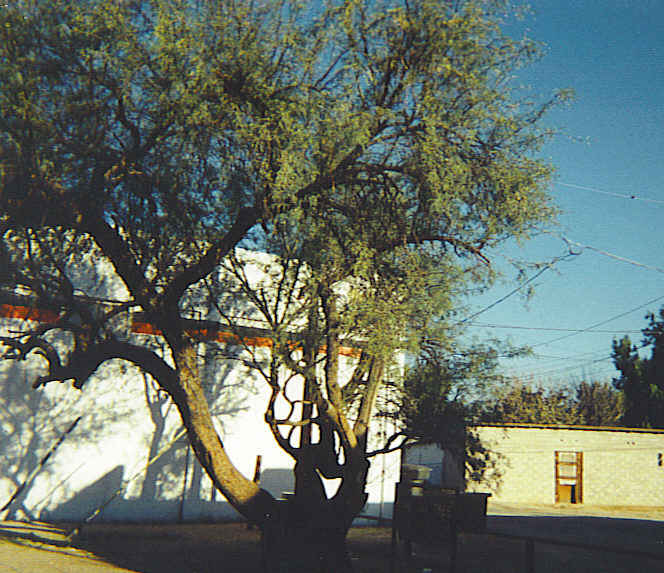
Since plants are one of my pleasures, couldn’t help noticing this huge century plant located in a resident’s yard. This plant’s name is derived from the fact that they only bloom once in a long, long time, but not quite a century. Usually they grow for around twenty five years before the plant puts forth its tall wooden seed stalk filled with blooms.  This blooming spike grows so fast that it takes all the nutrients out of the plant causing it to die.  But the seed lives on!  These plants are used for their medicinal properties, fiber, food, and even needles.

As you can imagine this was rough territory with tough, lawless characters calling it home. Being only twenty miles from the Mexican border, a group of bandits called The Cowboys, led by Billy Clanton and the McLaury brothers, began rustling cattle from Sonora, Mexico to the fields near Tombstone. That brought lawmen onto the scene in the form of the Earp brothers. The Cowboys were welcome in town since they spent a lot of money there, but shootings often occured. Here you will also find The Hanging Tree, which was used for executions when the gun just wasn’t enough punishment.

Early in 1881 however, one story reports that The Cowboys attempted to rob a stagecoach of $26,000 worth of  silver, and killed two passengers. The events that ensued culminated in the now famous Gunfight at the O K Corral where US Federal Marshall Virgil Earp, his brothers, Wyatt and Morgan, and Doc Holliday shot and killed three of The Cowboys.  They are buried today on Boothill, one of the city’s most popular tourist attractions.

Boothill reportedly received its name because so many died violent deaths in that area and were buried with their boots on. Wording on the tombstones tells a lot about the life of those times. Some simply say: MURDERED or HANGED. The tombstone of Lester Moore is one of the most often viewed and remembered on Boothill as it has the epitaph:

HERE LIES LESTER MOORE, 4 SLUGS FROM A 44, NO LES NO MORE

The world’s largest rosebush is also in Tombstone so growing conditions must be exceptional. Planted in 1885, this Lady Banksia Rose covers the roof of an inn as well as this terrace. The trunk of the rose bush is twelve feet wide, which you may be able to spot in the shadows. That rose bush must also have been Too Tough To Die.

Since 1880 until the present day, the local publication, The Tombstone Epitaph…The Old West’s most famous newspaper, has kept locals and visitors informed regarding what’s happening in Tombstone. There are now actually two editions: a monthly historical national and a bi-monthly local.  Check out some of their historical issues at The Tombstone Epitaph online.

Even though this two-fisted, trigger-happy boomtown has settled down quite a bit, Tombstone is proud of its Wild West history.  This is a real town with real inhabitants today and in the past.  That is why they are pleased to call it: The Town Too Tough To Die.

Tombstone is located in the southeastern corner of Arizona, just 70 miles from Tucson. Follow I-10 to exit  303 and head southeast on route 80 for about 23 miles. If time permits, head on down to relaxing Bisbee and tour their Queens Copper Mine, one of the richest copper mines in history.

The Crazy Horse Memorial : Never Forget Your Dreams

A very great vision is needed, and the man who has it must follow it as the eagle seeks the deepest blue of the sky. ~ Crazy Horse

In the Black Hills of South Dakota at Crazy Horse Memorial, the beginning of the largest mountain carving in the world sets in the glowing sunlight high on a mountain top, or perhaps it is the shining spirit of Crazy Horse that lights up the sky. This memorial to honor the culture, tradition and living heritage of North American Indians was started back in 1948 inside an army surplus tent.

Rattling Blanket Woman gave birth to a son, Cha-O-Ha, later called Crazy Horse, in this Black Hills region. Crazy Horse was a legendary Lakota Sioux hero, who was a true leader of his people for his  time on earth of approximately thirty-five years. His short life  was devoted to serving his people through caring for the children, the elderly and the sick. In the late 1800s, Crazy Horse attempted to defend the Indian lands from encroachment by the US Federal Government. He is best remembered for being one of the leaders in a war party, inspired by visions of Sitting Bull, which  led to the defeat of General Custer at The Battle of Little Bighorn, or as the Indians called it, The Battle of the Greasy Grass.  “All we wanted was peace and to be left alone,” were among the last words of Crazy Horse.

Sculptor Korczak Ziolkowski began work in 1940 designing Crazy Horse to be carved in the granite of Thunderhead Mountain. Korczak originally worked with Gutzon Borglum in the carving of Mount Rushmore, but left the area for a while to serve in World War II where he took part in the Normandy Invasion. Upon his return, he was approached by Chief Henry Standing Bear to design the statue of Crazy Horse because “Indian chiefs would like white man to know the red man has great heroes too. ”

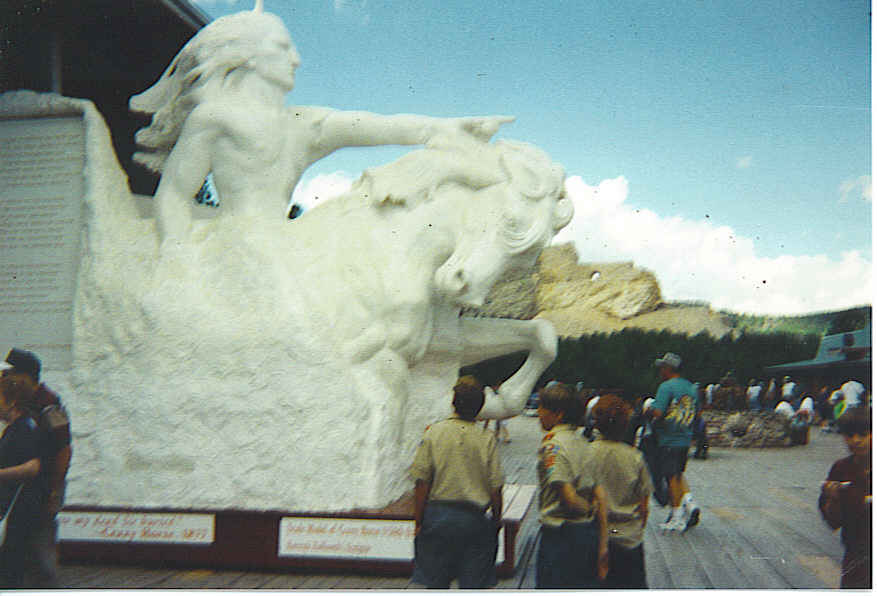
The statue of Crazy Horse astride his horse, Vice Ganda, will stand 563 feet tall when completed. The horse’s head itself is 22 stories high, while Crazy Horse’s head is nine stories tall.  All four heads on Mount Rushmore would fit in the head of Crazy Horse. No wonder it has taken so long to complete!

Seems that Korczak loved sculpting as this was just one of his many projects.  The list is quite impressive and includes: Ignacy Jan Paderewski, Noah Webster, Wild Bill Hickok, and Chief Henry Standing Bear just to name a few of his major works. Another creation is a plaster model of the Crazy Horse mountain carving which is 1/34 scale and located on the main grounds. With some help from his sons, Korczak even carved a tomb for his final resting place at the base of the Crazy Horse sculpture where he remains today after his death in 1982. The epitaph reads: KORCZAK Storyteller in Stone.

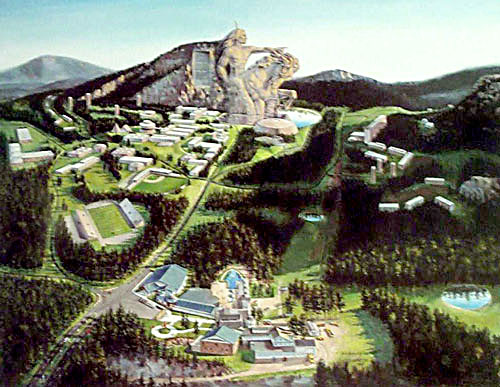
This project has many dreams as seen in this illustration from the Master Plans of Crazy Horse Memorial. A poem written by Korczak will be carved in the side of the mountain in letters three feet high. To encourage education, American Indian Training and Medical University Center will be along the Avenue of the Chiefs.

This is a grand work in progress and they rely on fees for entry to the site and donations to continue and complete. The Crazy Horse Foundation decided  this was a project for the public and has never received government funds. While visiting there be sure to explore the Native American Educational and Cultural Center, the home of sculptor Korczak, gift shops and restaurant.

A plaster model made to a 1/1200 scale sets on my mantel as a reminder of the courage and caring nature of Crazy Horse. Sculptor Korczak left us these words of wisdom:

“When the legends die, the dreams end;  When the dreams end, there is no more greatness. Don’t forget your dreams.”                                                                          

Today his wife, Ruth, and their ten children continue developing his dream. The spirit of Crazy Horse still challenges young men to be the warriors of their generation by getting an education.

Crazy Horse Memorial is located five miles north of Custer, South Dakota on US 16 -385. Admission at this time is $10 per adult or you can take a carload for $27. Free admission is given to: children under age six, Native Americans, active military personnel, scouts in uniform, and Custer County, South Dakota residents. While in the area visit Mount Rushmore and Custer State Park nearby.

Will Mount St Helens Erupt Again?

Earthquakes! Steam explosions! Molten lava!  All of these were present during the 1980 awakening and subsequent eruption of Mount St Helens in Washington. Today this area, home of the largest volcanic landslide in recorded history, is designated as Mount St Helens National Volcanic Monument as a place for research, recreation and education.

Johnston Ridge Observatory, just one of the visitors’ centers, was a great place to start exploring. Their theater showed great footage of the 1980 eruption. Here you also found first hand accounts of individuals who were actually in the vicinity that day. Of particular interest were the machines that recorded the seismic activity presently occurring.

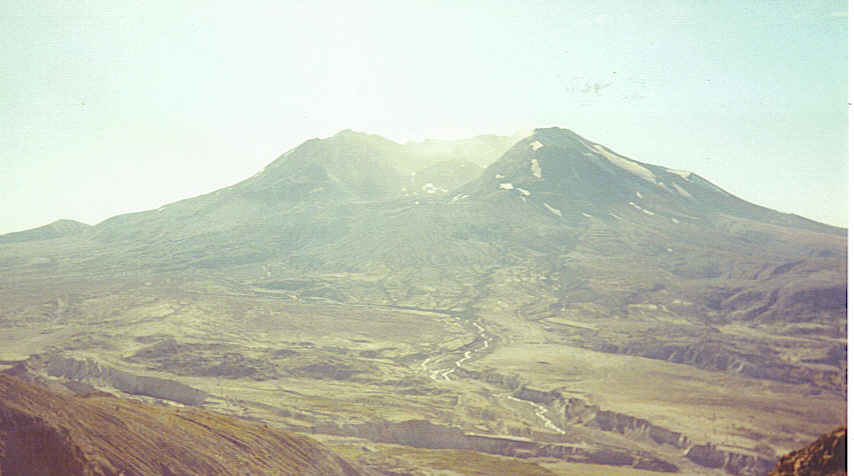
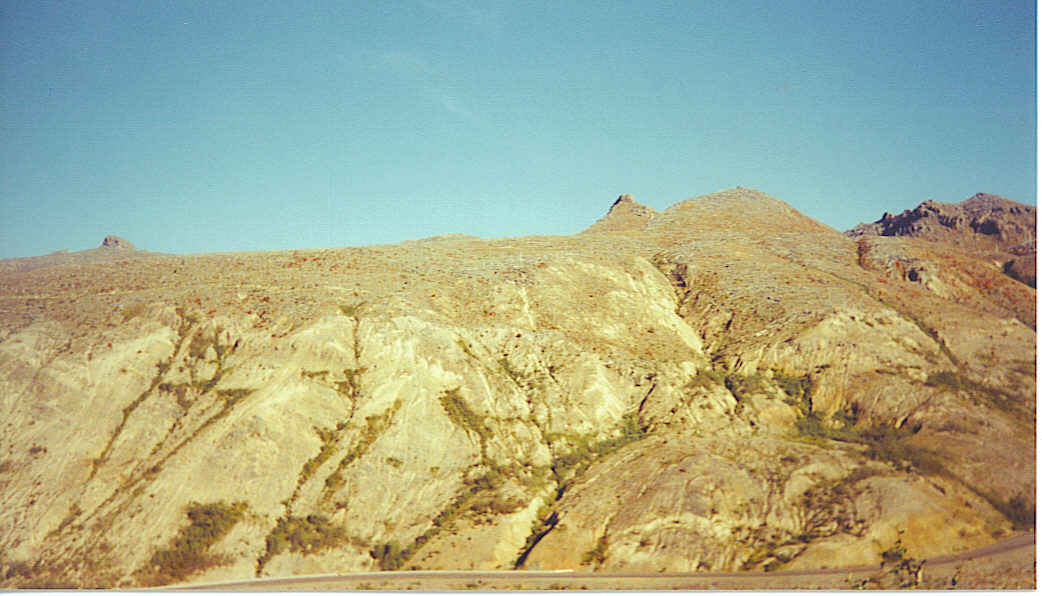
There were several trails leading up the side of Mount St Helens, which appeared mostly barren being covered with ashes. You could walk among the fallen trees that were flattened by the blast. If you felt braver and went a little farther, you could even see vehicles and heavy logging equipment that was damaged when Mount St Helens blew her top. Took the path as far as was permitted at that time. The hiking trails stay open according to the mood of the volcano.  When she is steaming or spewing forth lava, they obviously need to be closed. But what a thrill to get as close as possible to the top of Mount St Helens.

The 1980 eruption left behind a trail that is still visible today. Due to the force of rocks and ice, trees in the lava path were struck down like bowling pins.  Today they still lay there on the ground but the forestry department has gradually handplanted new seedlings amongst the fallen trees.

From 1986 – 2004, the mountain slumbered until in 2004 earthquakes rippled through the earth. Later that year a smaller eruption began and about a dump truck load of lava oozed out of Mount St Helens every second thus slowly rebuilding the mountain.  By 2011 the amount of lava oozing from the mountain was reduced to a dump truck load every fifteen seconds.  If the eruptions would continue at their present rate, the mountain would be back to its original height in about 180 years.

During the 1980 blast, everything within miles was covered with ash from the volcano.  So suppose it was easy for the ash to be gathered and sold as souvenirs.  Still have a pen said to contain ash from that volcanic eruption.The entire landscape has changed from that 1980 blast. New river routes have been formed and even new lakes. Here you see a real change of scenery due to the awesome power of nature.  Will a major eruption happen again? Probably not in our life time, as most volcanoes erupt every 100-300 years.  The future holds hope for reforestation and rebuilding…unless another eruption occurs sooner than expected.

Hope your life will erupt with much happiness, and may you spread that happiness for miles around.

Mount St Helens National Volcanic Monument is located in Washington approximately 96 miles south of Seattle, Washington and 50 miles northeast of Portland, Oregon. One easy access route is from I-5, Exit 68 onto the Spirit Lake Memorial Highway/ WA 504. This route passes through the various visitors’ centers and into the center of the original blast zone.  

Relax at Salt Fork State Park

Warm weather in Ohio sends people outdoors, even on an overcast day.  One of their favorite spots near Cambridge in southeastern Ohio is Salt Fork State Park, Ohio’s largest state park. This lake is a rather recent creation and those past fifty can still remember when farm land covered this area with  Salt Fork Creek running through it. Back in 1967, the earthen dam was completed here and the filling of the lake began.

Vacationing at the lake has many possible accommodations: camping, renting a cottage or staying at the lodge. The campground sites all supply electrical hook-ups and nearby is a heated shower house.  Only a few sites provide sewer and water hook-ups as well. If you prefer a cottage, several are available with hillside and lakeside locations.  All of the cottages are completely furnished with a screened-in porch, and even include kitchen utensils.

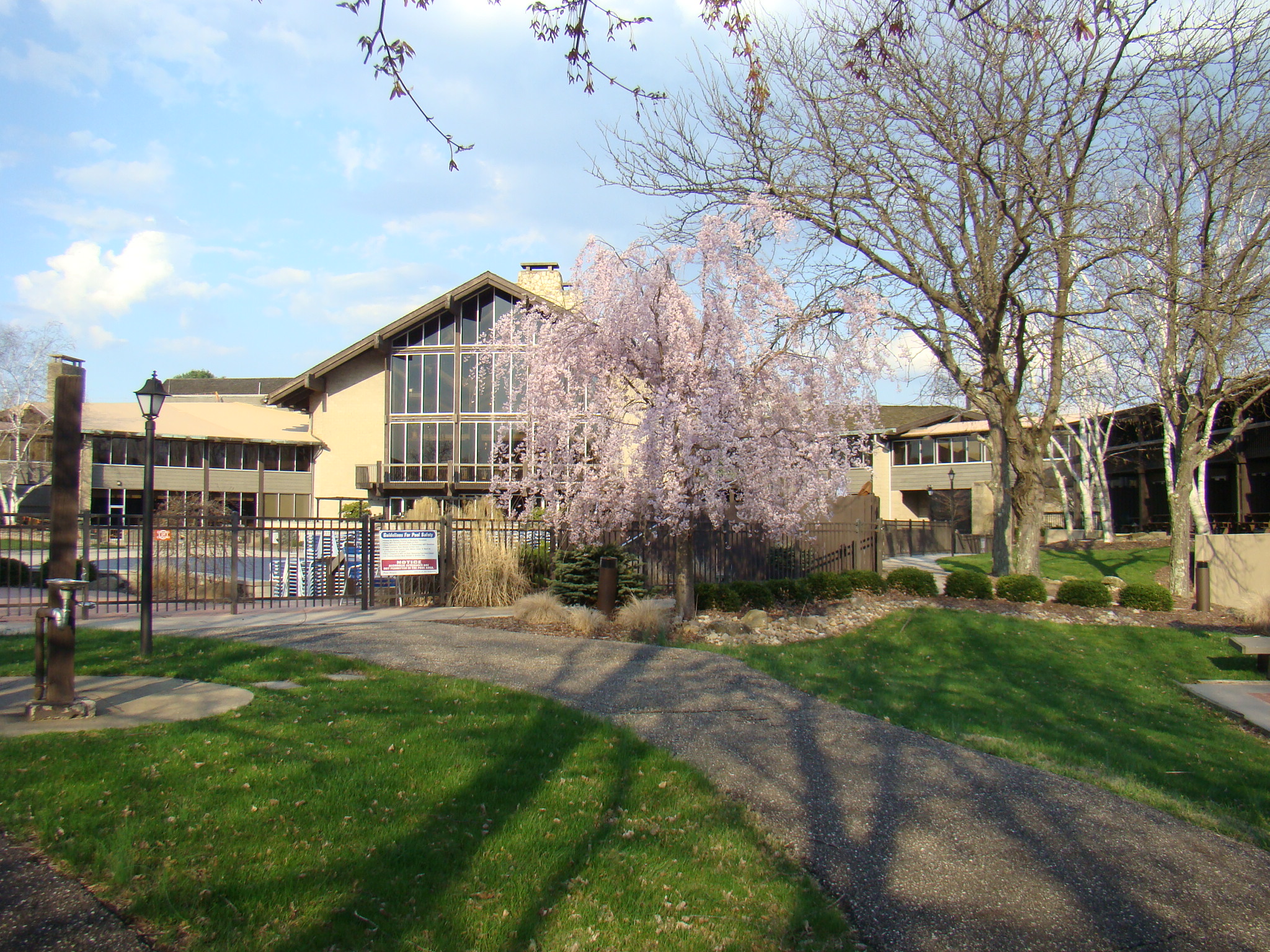
Others prefer the comfort and convenience of Salt Fork Lodge. This beautiful stone lodge with its pine beams sets high above the lake in the rolling hills of Southeastern Ohio. Frequently used for meetings as well as vacations, the lodge contains a wonderful dining area as well as beautiful stone fireplaces that give you a warm feeling no matter what the season. Indoor and outdoor swimming pools provide entertainment all year long. Outside you will find a fantastic playground for the youngsters as well as tennis, volleyball, basketball and shuffleboard courts, so there is little excuse for anyone to be bored.

Just a half mile down the road is the entrance to the 18-hole championship golf course, which is a challenge in these rolling hills so a golf cart is highly recommended.  Deer are frequent visitors on the golf course and don’t seem the least bit afraid of golfers. Here you will also find a pro shop, putting green, and driving range.

Of course, no lake would be complete without a beach and Salt Fork’s 2500 foot beach is one of the longest inland beaches in Ohio.  Everyone has plenty of room to enjoy swimming or building castles in the sand. When you want a break from the beach, stop by the concession stand, grab some clubs to play miniature golf, or tour the nice Nature Center in the main bathhouse building.

Two marinas provide storage for boats year round and some years you must get your reservations in early to claim a spot. Otherwise, ten easy access ramps   accommodate boat trailers.  No boat of your own? Be assured a variety of rental boats are available. There is even a pontoon tour boat to take you and your guests around the lake for an enjoyable time on the water.

Fourteen hiking trails range from easy to moderate in difficulty, so just about everyone can enjoy the hike. One popular trail leads to Hosak’s Cave formed by interesting rock layer erosion, which has also created small waterfalls. Along the path you will find beautiful wildflowers, hear the songs of many birds and relax to the calming sound of the bubbling brook. If you are lucky, a wild turkey might cross your path or even a deer.

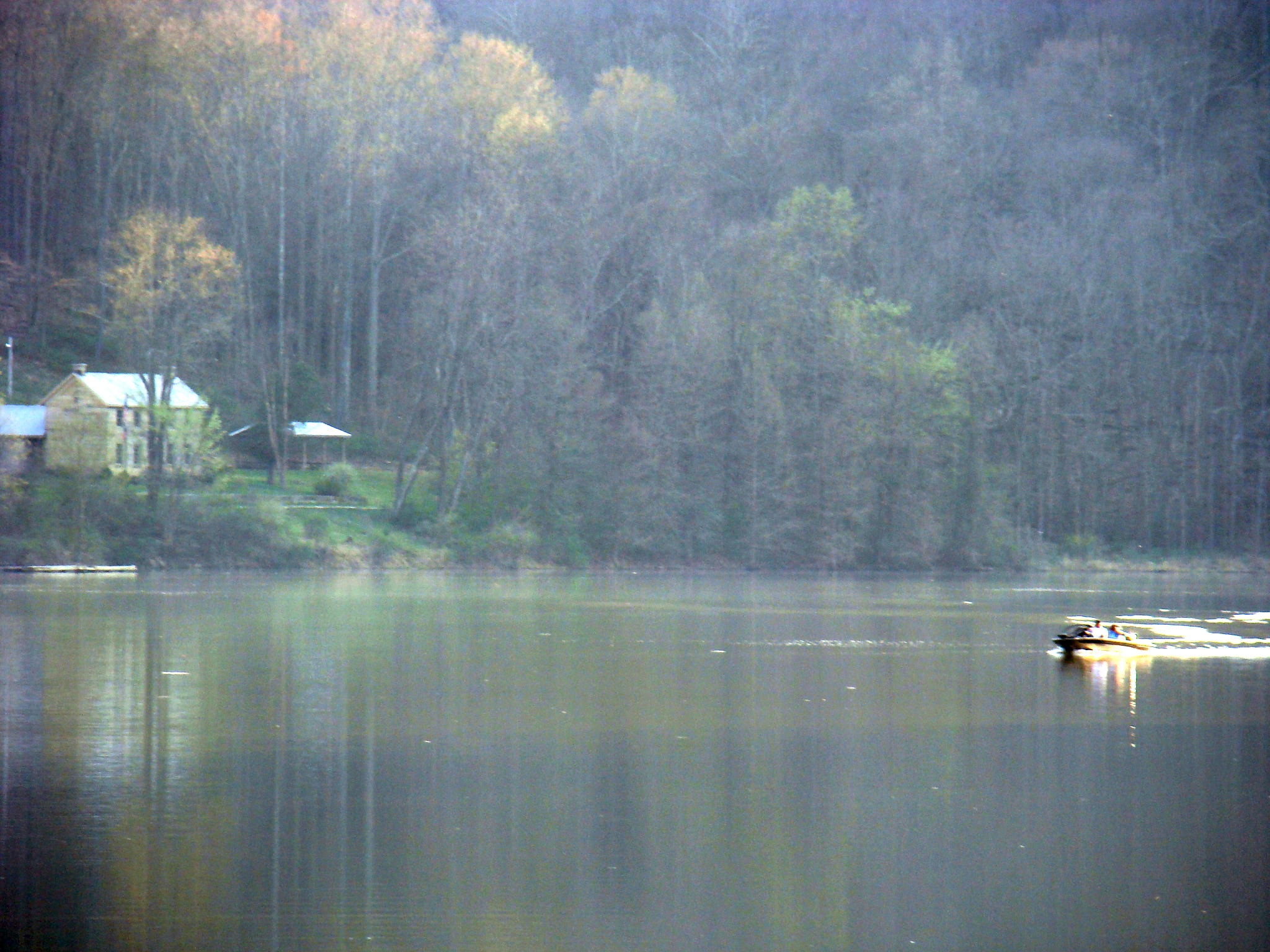
A longer trail leads to Kennedy Stone House where they have restored the only house left standing when Salt Fork Park was created.  This historic stone structure was built in 1837 through the plans of Benjamin Kennedy of Ireland. Stones used were quarried from the hills nearby and shaped with detail so they fit tightly together to make a sturdy structure that still stands after 175 years. Original cost was only $600, which was quite a bargain even long ago. Recently a road has been cut down to the house so you can now drive there also, but most find it more exciting to approach from the trail or even from a boat.  Call ahead and see if you can schedule a tour.

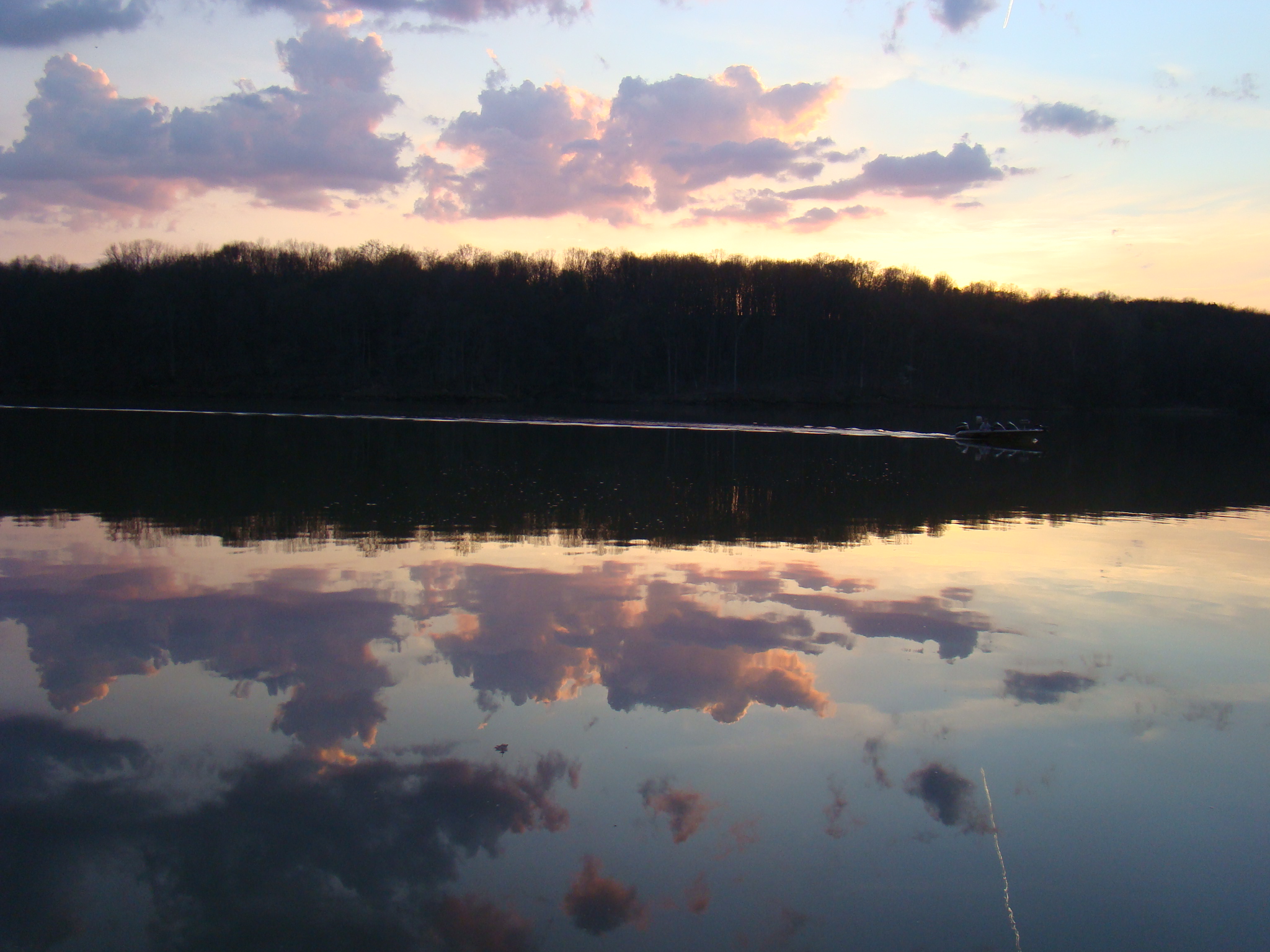
Sunsets are always beautiful over the water and Salt Fork Lake is no exception. What a great way to end the day or begin the evening.  Salt Fork State Park is a fun filled place for a family vacation as it has varied activities for all age groups. If you are lucky enough to live in the area, enjoy a day at the beach or a ride on the lake anytime. The lake is also a great place to do nothing – just sit by the water and watch the waves from the boats passing by, or the motion of tree branches blowing in the wind.  Relax and enjoy!

Salt Fork State Park is located just six miles north of Cambridge, Ohio on Route 22. Once you turn left into the main entrance of the park, watch for wooden signs along the way that lead you to the various places of interest.

There’s Gold in Them Thar Hills

In a gold mine, what is the difference between genius and talent?

“Genius is the gold and the miner is the talent that brings it out of the ground.” ~Marguerite Blessington 

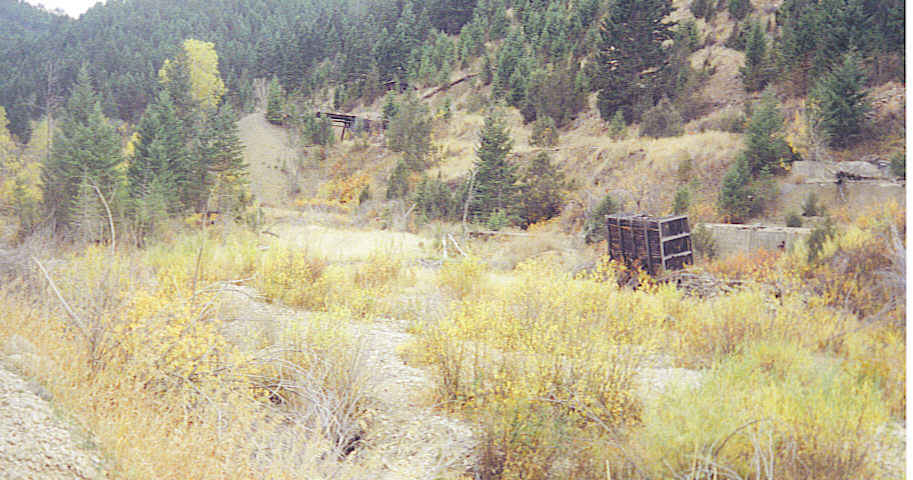
This quote came to mind while traveling through Montana and spotting an abandoned gold mine at the edge of the road. Heading toward Old Virginia City, a well preserved 1960’s mining community, this old mine at Alder Gulch deserved a closer look to discover more about the gold and the miners. The gulch was aptly named due to the large number of alder trees that grew along the creek there.

Fourteen-Mile City was the name given to the numerous settlements that built up along Alder Gulch after gold was discovered there in 1863 by Bill Fairweather and his party.  This gold strike was an accident, which occurred when Fairweather’s Yellowstone bound party got distracted by a band of Crow Indians. After escaping the Indians, gold beyond belief was discovered very near their camping ground. This was said to be the richest placer gold strike in world history with $30 million worth of gold being taken from the mine during the first three years.  Now that’s a lot of value even today, but imagine how special that would have been back in the 1860’s. Everyone wanted to strike it rich in the gold field as 10,000 people flooded the area. Most of Montana’s population was right there along the gulch.

As miners staked their claims, the first rough buildings of Virginia City were hurriedly built with approximately 5,000 people settling there the first year.  People lived in tents and shacks, and it is often said that every third building was a saloon. This was the first social center and early Capitol of the Territory.  Virginia City was a booming gold mining town. These settlers were really “sitting on a gold mine”.

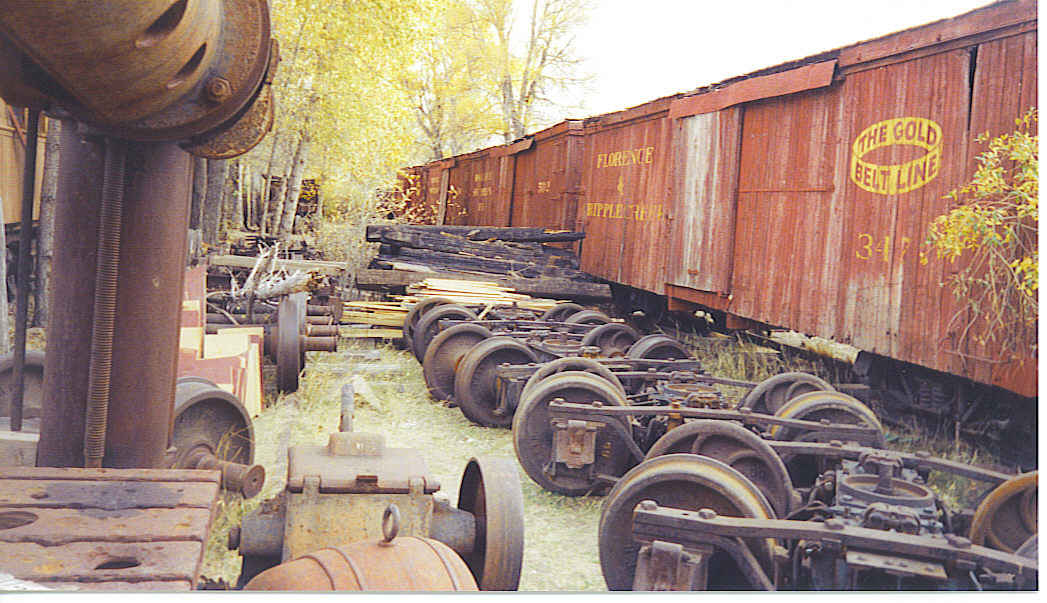
In the early days, there was no rail service to Virginia City, but it did reach as close as Alder just ten miles away. That made it much easier to receive needed parts for the gold mines’ dredges. In 1964, history buffs Charlie and Sue Bovey decided to establish the Alder Gulch Short Line using an old Baldwin 1910 locomotive, which looks and sounds authentic. This is indeed a Short Line as it only runs the one and a half  mile track between Virginia City and Nevada City.
The Virginia City Depot today is actually the original depot used by the Northern Pacific in Harrison, Montana around 1895. Enjoyed the tale told at the depot of the arrival of the actual depot building by train in 1964. One elder resident of Virginia City said, “I have often gone down to depots to watch the train pull in, but this is the first time I ever went down to the train to watch the depot pull in.”

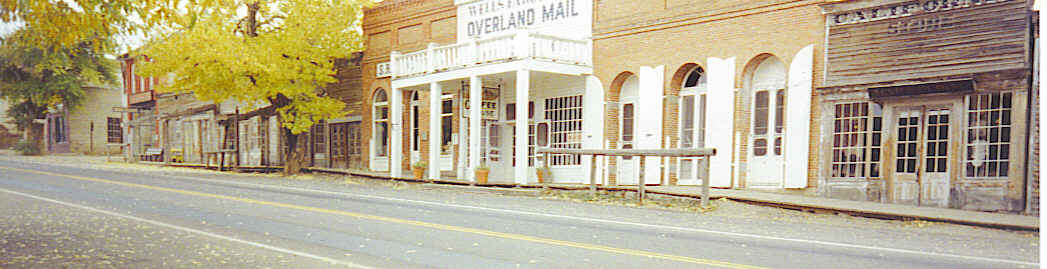
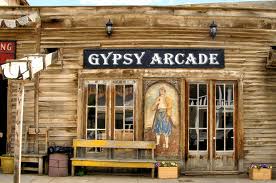
Today Old Virginia City has approximately 150 residents year round. Over one hundred historic buildings complete with artifacts and furnishings are on display – a priceless collection of Western American history. Being a bit of a gypsy myself, had to stop in at the Gypsy Arcade, home of the classic fortuneteller booth – only a couple left in the world! Here the Mills’ Verbal Machine speaks your fortune from one of two wax cylinder recordings on an Edison gramophone…one for women, and one for men. By the way, my fortune said I was going to travel!

During your visit, you might even get a chance to ride in a stagecoach or on the Alder Gulch Short Line.  There are still a few placer mines and hard rock operations today getting a little gold out of them thar hills, but little compared to that original find. You can even pan for gold yourself at Alder Gulch Gold and keep any you happen to find.

Some folks made a fortune here, but what they left behind was priceless.

Old Virginia City is located in the southwestern corner of Montana. I-90 and I-15 intersect close by and State Route 287 leads you through Alder Gulch and Old Virginia City. This is a great spot to include on a trip to Yellowstone National Park as it is only about 90 miles away. Enjoy the scenery!

Way Down South – Key West

“Cayo Hueso” – Spanish for “Bone Island” – was the original name for Key West because of all the skeletons found on the beaches during the days of pirates and sunken treasures. This is the southernmost city in the continental United States with Cuba just 90 miles away! With the Atlantic Ocean connecting with the Gulf of Mexico on its shores, the sunsets here are spectacular and always accompanied by a gentle breeze.

Just getting here is an adventure as you travel across forty two bridges through the Keys on US Highway 1, the Overseas Highway. The route is only 113 miles from the southern mainland of Florida to Key West with the longest bridge being seven miles long.  All the way you are surrounded by tropical beauty and aquamarine waters. You see the coves where pirates landed long ago, and where drug smugglers currently hide their stash.

The highway here is actually built on the original route of the Overseas Railroad, which was constructed by Henry Flagler back in 1912. When the railroad and its bridges were destroyed in a hurricane in 1935, it was rebuilt and reopened as a highway in 1940.

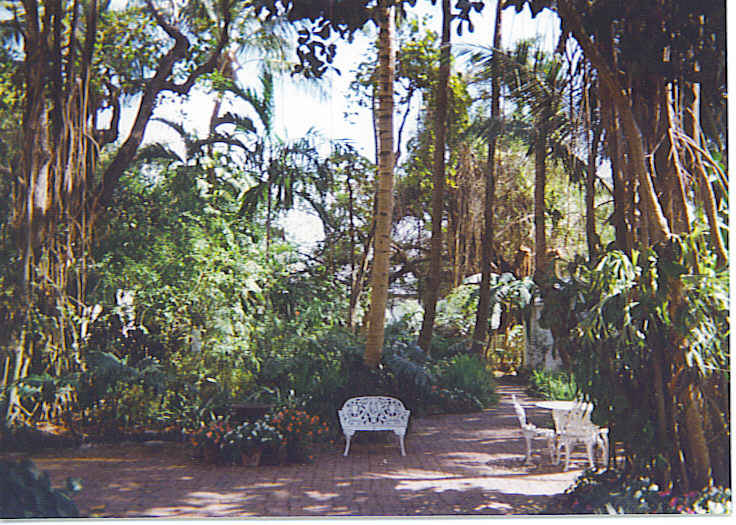
Ernest Hemingway, John James Audubon and Harry S Truman all were frequent visitors here. The Hemingway house is one of the favorite stops and has a relaxing garden, which is a photographer’s dream. Nobel Prize Winner  Ernest Hemingway called the island home for ten years and found solace here along the turquoise waters. Be sure to look for the 40-50 six-toed cats that are descendants of Hemingway’s favorite tomcat, Snowball. Did seem fitting to take home one of his books, so selected his final work published during his lifetime, which not surprisingly had an ocean theme, Old Man and the Sea.

Conch Tour Train gives a guided tour of the island and even makes a stop at Sloppy Joe’s, the most famous bar in Key West. Opened in 1933, the day after Prohibition was repealed, owner Joe Russell had previously operated an illegal speakeasy. Hemingway and his “Mob” of literary cohorts were regular customers, who philosophized and drank the days away.  Today the bar is filled with historic memorabilia dating back to the days when Hemingway – known as Papa – stopped in for a drink with one of his best friends, Joe Russell – known as Sloppy Joe.

Heritage House Museum, the historic Porter family home, gives visitors a taste of the pirate folklore and island life. Built in 1834, this is one of the oldest houses on the island where Jessie Porter established a creativity haven for many famous artists and writers.  The Robert Frost winter cottage in the garden has a beautiful orchid collection. Each year the Robert Frost Poetry Festival is held at this site to promote Key West as a literary destination.

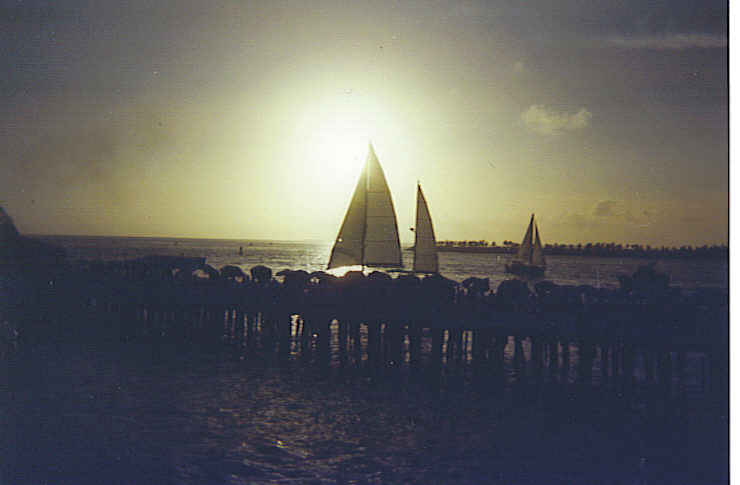
Sunset Pier on the Gulf Coast of Florida is the best seat in the house for the fantastic sunsets of Key West. Here at the Sunset Celebration you watch the sun sink into the Gulf of Mexico while the streets are filled with arts and crafts exhibits, entertainers, psychics, and of course, food!

As poet Wallace Stevens once wrote: Key West is the real thing – the sweetest doing nothing contrived.

Key West, Florida can be reached by crossing all the bridges through The Keys down US Highway 1 to its very end. It is the only highway going that direction so there is no possibility of getting lost.  Enjoy the journey!