Drift Along on the Monticello III Canal Boat at Roscoe Village
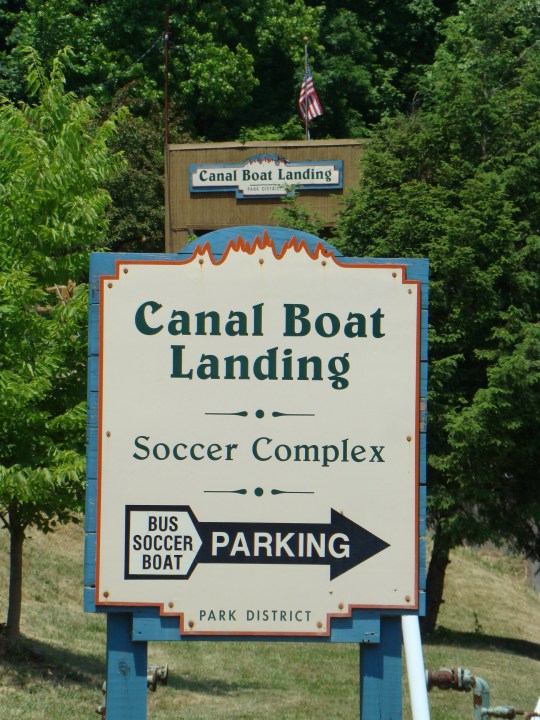
Look for this sign off Route 83 near Coshocton to find the Canal Boat Landing.
The smoothest ride you’ve ever had!
That describes the trip along the restored Ohio-Erie Canal near Roscoe Village. Two horses, Rock and Bill, slowly walk the original tow path as they gently pull a replica of the canal boats that traveled this same route in the early 1800s. Sit back and relax on this forty minute ride while you listen to the captain tell the story of life on the canal.
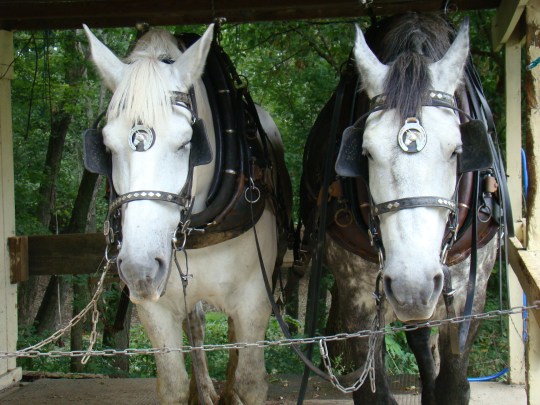
Bill and Rock, two huge draft horses, wait patiently in their stable.
Two Percheron horses pull the Monticello III canal boat quite easily. The hoggee, or horseman, leads them along the tow path. He uses 150′ of rope to guide them as they pull with great ease this flat bottomed boat weighing twenty-five tons.
In 1803, the need for a canal was evident. They would place a boat carrying goods on the Muskingum River, and it would drift downstream to the spot in Marietta where it met the Ohio River. They had no way to get the boat back upstream, so they had to dismantle the boat and carry it piece by piece to be reassembled. The canal eliminated that problem.
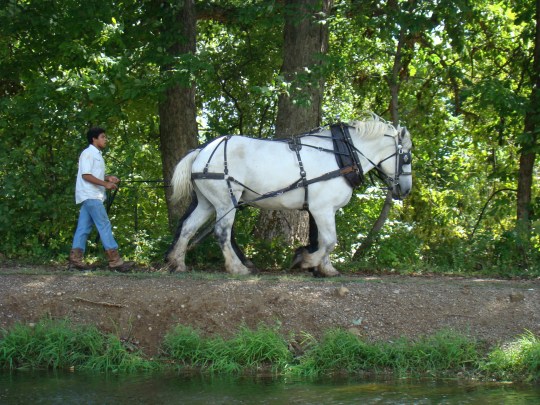
The hoggee walks along the original canal towpath as he guides the horses.
Ground breaking for the canal began in 1825.The canal was built by Irish immigrants, who worked for 30 cents a day and four jiggers of whiskey. The need for whiskey came into play to avoid the condition known as canal fever.
First, the canal was dug by hand to a depth of four feet, then lined with clay to make a sturdy bottom. How did they pack the clay? With a sheep-foot roller – a herd of sheep ran over it to smooth it.
Completion occurred in 1832, seven years later. Transportation at that time gave few choices – either a stagecoach or a passenger boat. Rates for the boats were fifty cents a day, which included room and board, while stagecoach fares were typically five cents a mile.
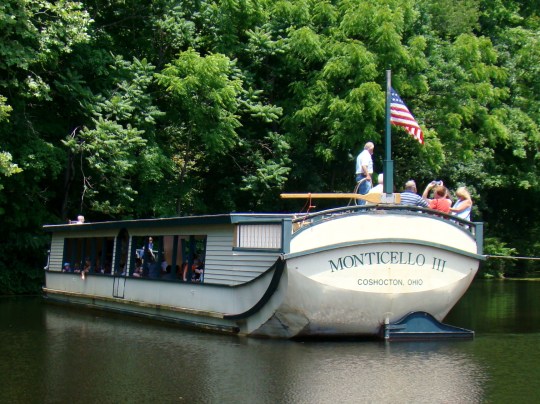
Monticello III gives a smooth ride that is certain to relax you.
Often three hundred boats traveled on the canal at one time. Passing became the real challenge as their tow ropes could easily get tangled. This intricate job fell to the hoggees, the boys who guided not only the horses, but also the tow ropes. Quite often they were teenage orphans with no other way to find food and shelter.
Former president, James Garfield, worked as a hoggee in 1847 when he was a teenager. The story was told that Garfield fell into the canal so often, he became ill. After that experience, that young man decided that college would be a better choice.
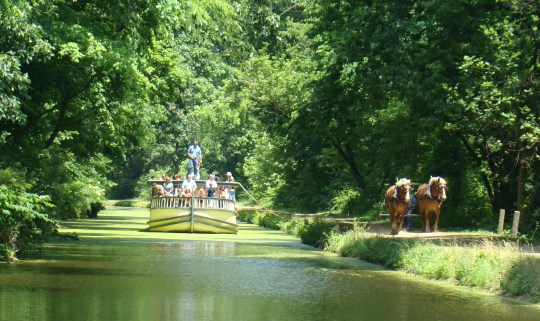
Everyone enjoys their trip down the restored Ohio-Erie Canal.
Captains often lived in the cabin on the boats with their family. The females of the family would be the cooks and do household tasks as they traveled on the canal. All garbage and waste was thrown to the towpath side. So if the cooks needed extra water for cooking they would dip it from the side opposite the towpath.Turtle soup was a favorite treat.
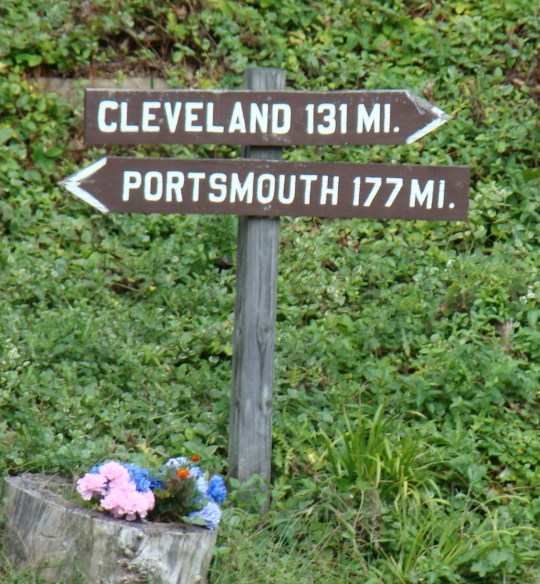
This sign at the edge of the landing tells distances from the Roscoe Port to Cleveland and Portsmouth.
As humorous as it may sound, there was a speed limit for boats on the canal to keep the banks from eroding. Four miles an hour was the limit and they were fined for speeding. Speed was determined by how long it took to get from one lock to the next.

This map of Ohio shows the route on the eastern side of the Ohio-Erie Canal from Cleveland to Marietta and Portsmouth.
In 1913, a major flood throughout Ohio wiped out the Erie Canal. Parts of it still exist today from Cleveland to Portsmouth. View a bit of history and take the smoothest ride imaginable at Roscoe Village sometime this summer. It’s relaxing!
The canal boat ride at Roscoe Village is seasonal from Memorial Day to Labor Day on Tuesday – Saturday at 1:00, 2:00, and 3:00 and Sunday at 1:00 and 2:00.

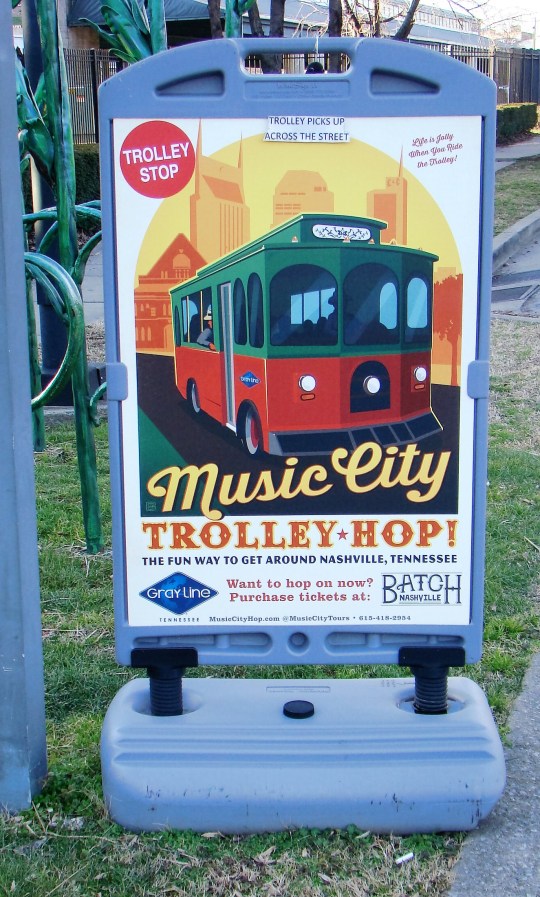 Waiting for the red trolley car to arrive, there was time to visit the Farmer’s Market in Nashville, Tennessee. Downtown parking seemed rather expensive at $20 for the afternoon but it was free to park at the Farmer’s Market and hop on the trolley at that point.
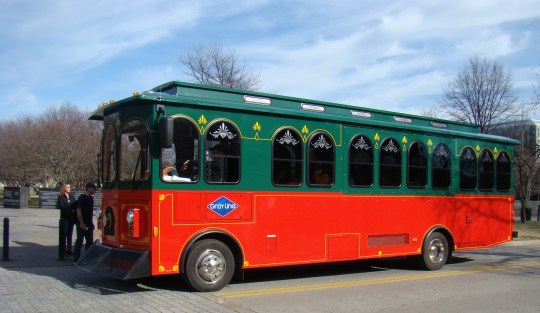 The driver and guide made the trip fun with a great assortment of historical facts, stories of businesses and some downright corny jokes. The Trolley Tour is a hop-on tour so you can get off at seventeen various stops and hop right back on later in the day. Sure saves fighting downtown traffic.
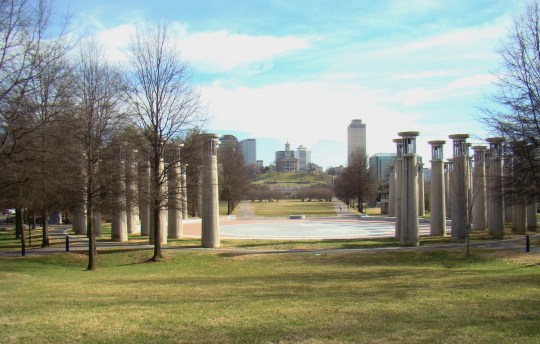 Getting on at this point, the first stop is the Bicentennial Capitol Mall State Park. Not sure if the guide was stretching the truth or not, but he said the fountain of water supported a large granite ball weighing 18,000 pounds!
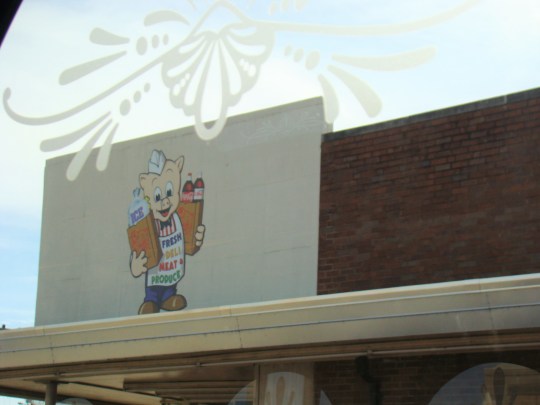 Attention was given to the local Piggly Wiggly as this chain began in Memphis, Tennessee as the first self-service grocery store back in 1916 by Clarence Saunders. Previous to this time, shoppers gave their orders to the clerk and the clerk then gathered everything from the shelves. Saunders rearranged the stores to make shopping much faster for the customer and the clerk. Today there are 600 Piggly Wigglys in 17 states.
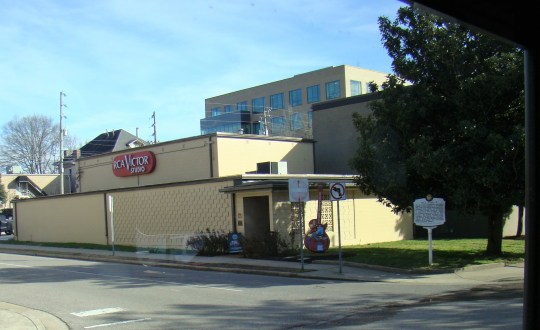 RCA Studio B created Nashville magic for over 35,ooo songs, making it an international recording center known as one of the cradles of the “Nashville Sound”. Popular artists, such as Elvis Presley, Chet Atkins, Dolly Parton, Willie Nelson, and Eddy Arnold recorded their songs here.
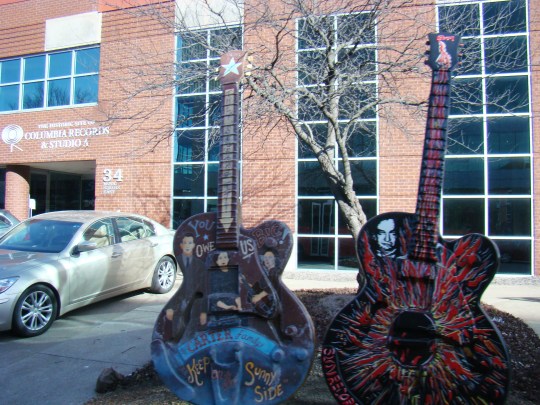 Nearby, the historic site of Columbia Records Studio A displays large guitars indicating the Carter Family and Johnny Cash recorded many of their songs here. Today both of these formerly popular studios are learning centers for Belmont University.
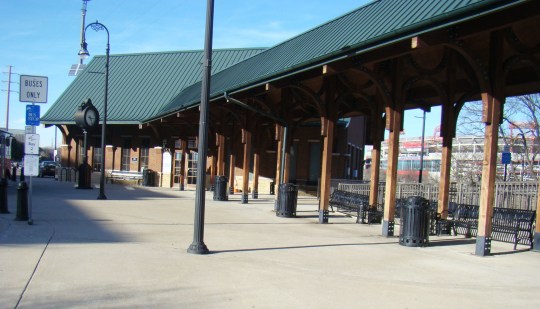 At Riverfront Train Station, the trolley takes a short break before continuing on the rest of the route. This site was previously the home of another train depot which was build in 1902. The present station was built in 2005 and they have attempted to capture the Old World flavor.
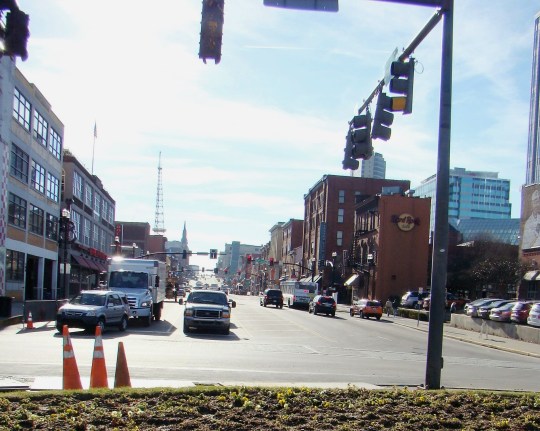 Straight across the street from the station is Honky Tonk Row. This is where many stars and hopefuls play during the evening hours as entertainment in many local clubs. They provide encouragement, a stage, and a tip jar for musicians.
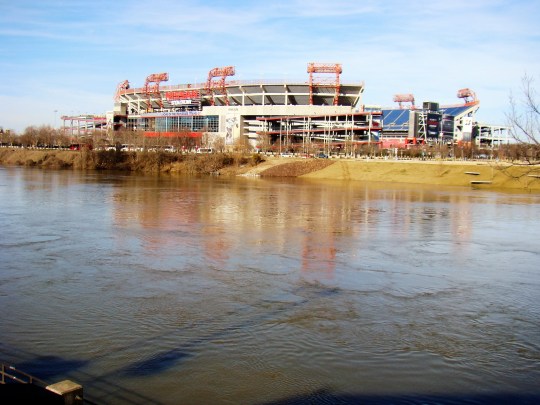 The beautiful Cumberland River flows behind the station and gives a grand view of the Nissan Stadium, home of the Tennessee Titans football team, on the other side. You can actually walk across the river to the stadium on the Shelby Street Pedestrian Bridge. The Cumberland River is 688 miles long and eventually joins the Ohio River in Kentucky.
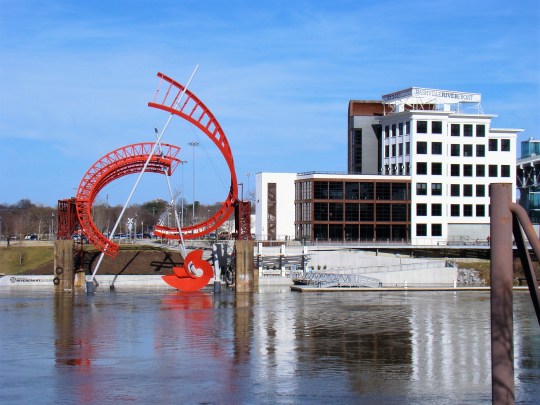 A beautiful sculpture brightens the waters also. Ghost Ballet East Bank Machineworks received its name because as you look at the sculpture from different angels, it suggests movement, similar to that of a dancer. This gives a little time to watch the river flow by and gain a little peace from the busy day.
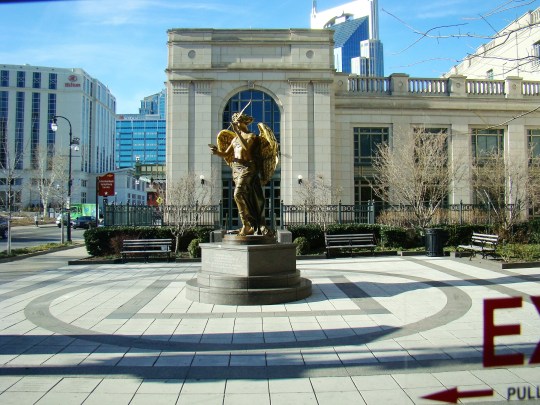 On our way back to Farmers Market, evidence appears that Nashville hosts more than country music. A glimmering bronze statue, The Recording Angel, stands at the corner of the Schermerhorn Symphony Center, home of the Nashville Symphony, which provides classical music entertainment. But they are no snobs, as often country music favorites appear accompanied by the orchestra.



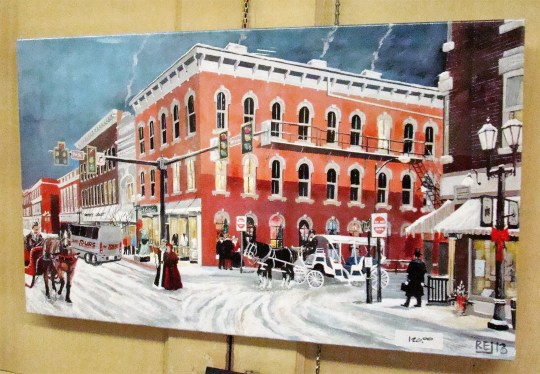
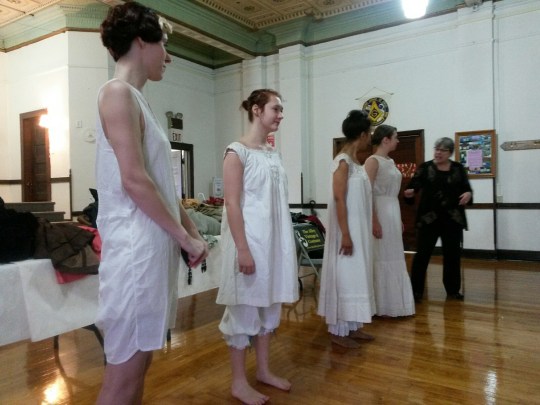
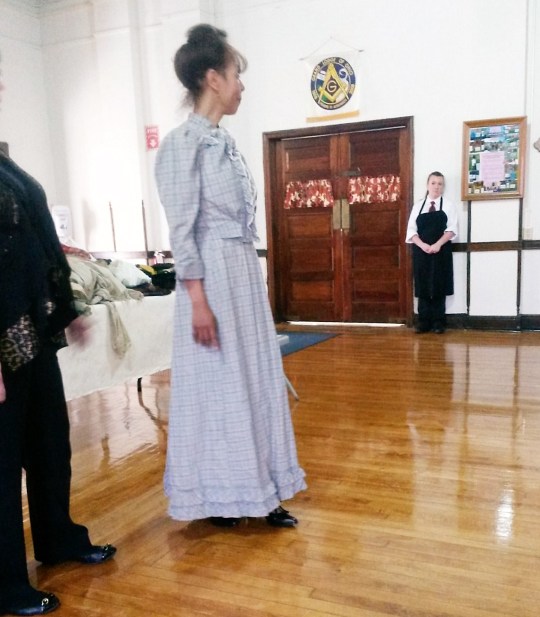
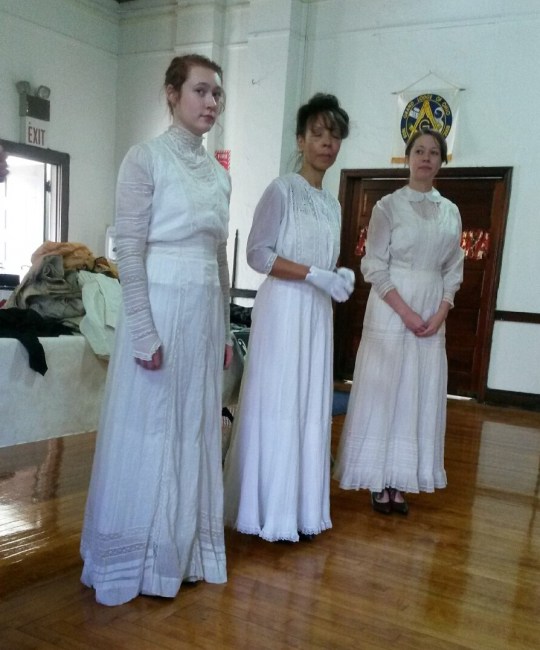
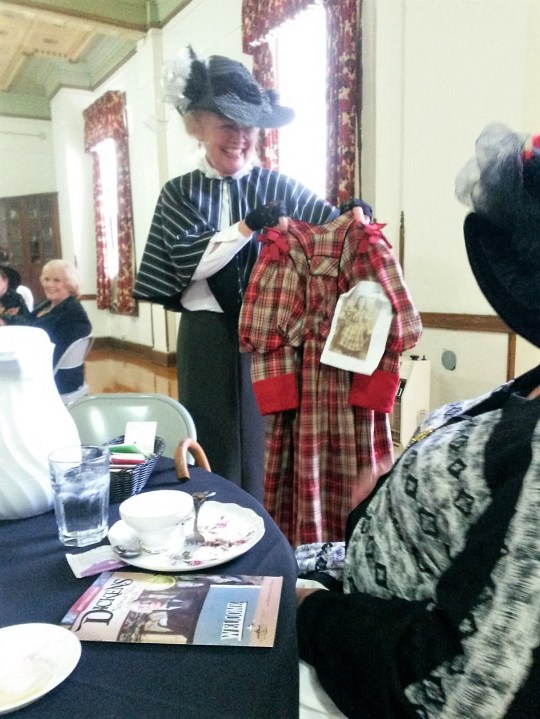
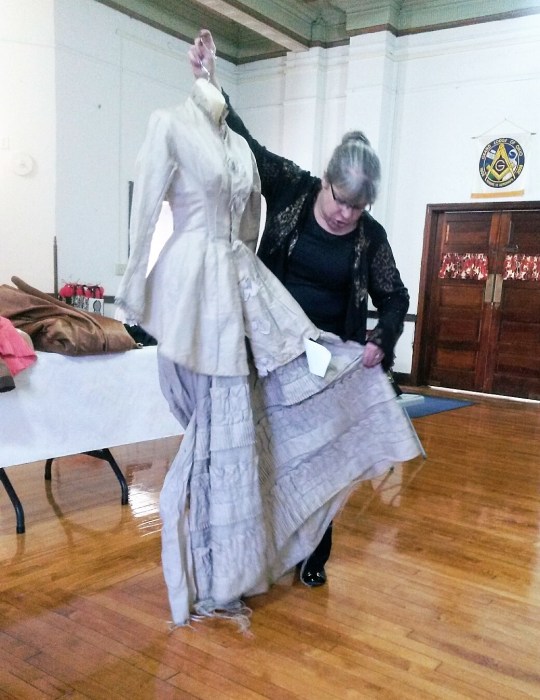
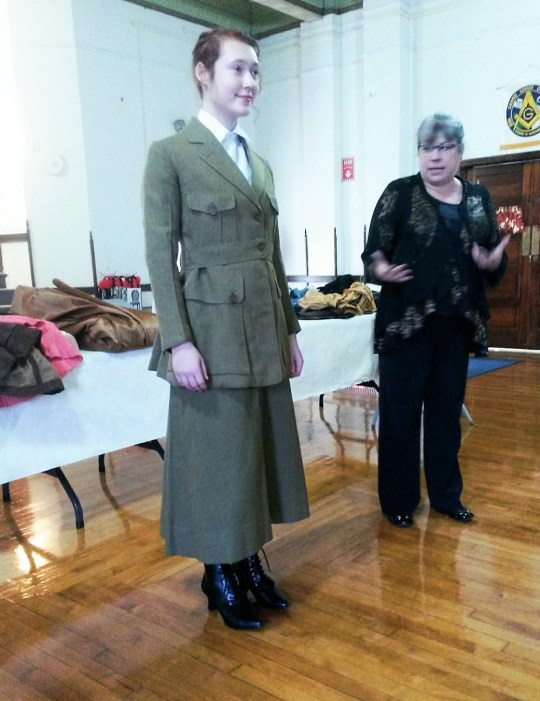
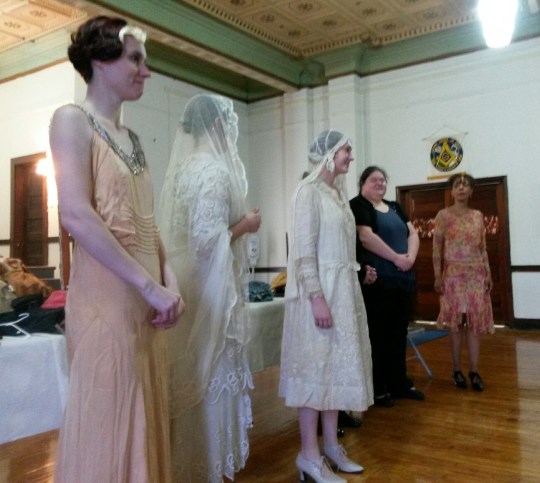
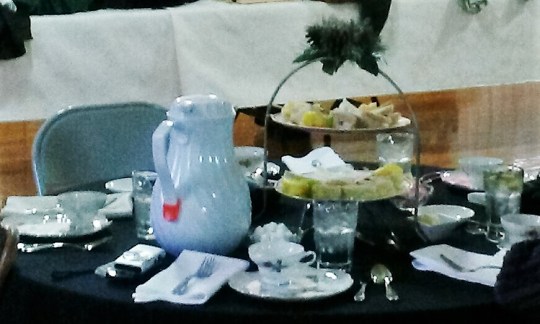 A Dickens Victorian Village Tea and Fashion Show did not at first sound appealing to me, but it turned out to be quite an interesting and enjoyable event. The first surprise came upon entering the stunning Masonic Ballroom with its floor to ceiling windows, gleaming dance floor, and ornate tin ceiling.
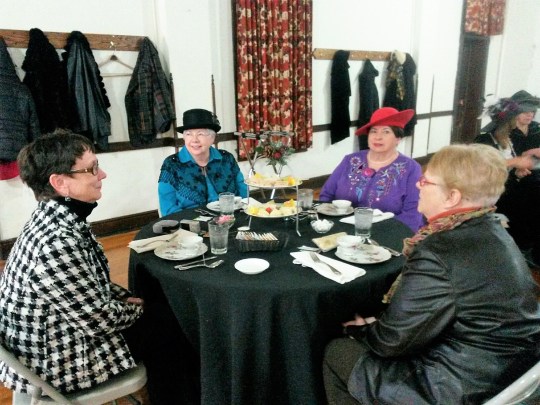 Many of those in attendance were dressed in Victorian style with beautiful, large hats and long skirts – a special part of the day. They felt part of a time long past as they enjoyed conversation with friends.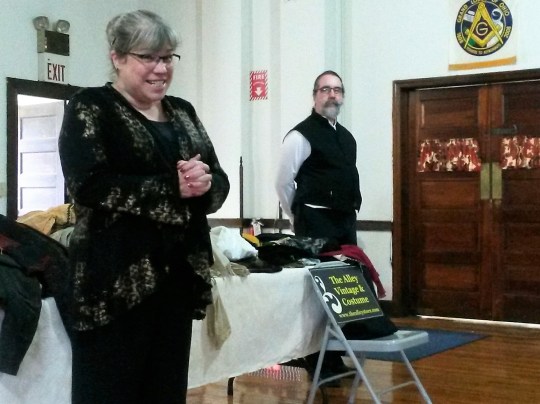
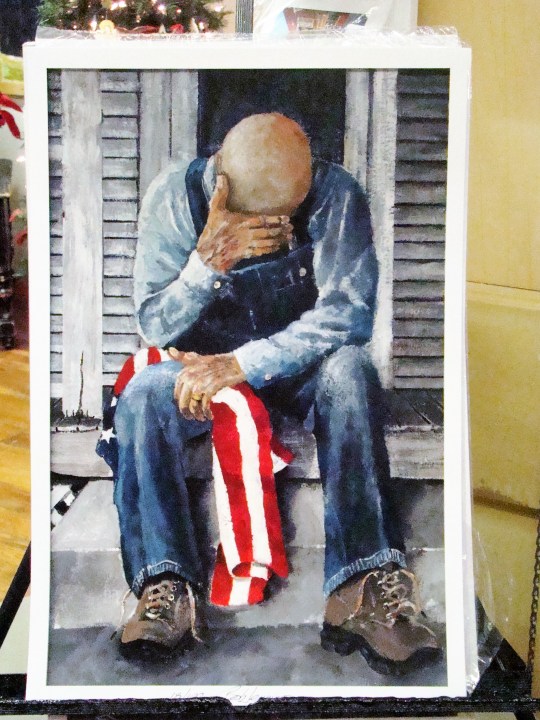
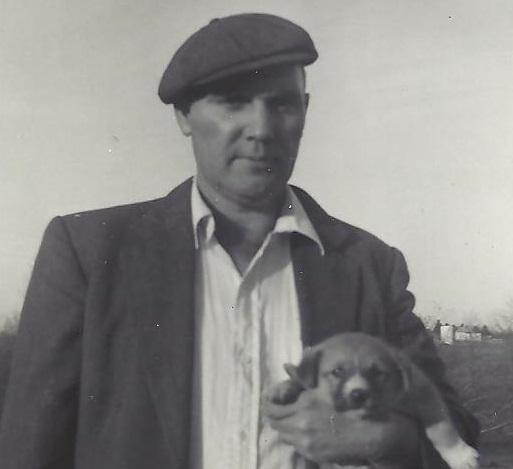 However, “The Angel in Disguise” had a different idea. When he lost both parents as a young child, Rudy learned to appreciate the small things in life. He was the kind of man who would try to brighten up a child’s world by buying the youngster an ice cream cone.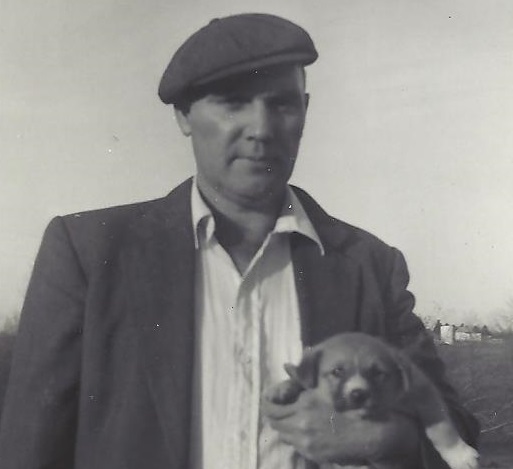


 Gypsy Road Trip