Places to go and things to see by Gypsy Bev

Archive for the ‘Museums’ Category

A Whole Lot of Poppin’ Goin On at Wyandot Popcorn Museum

The better way to snack!
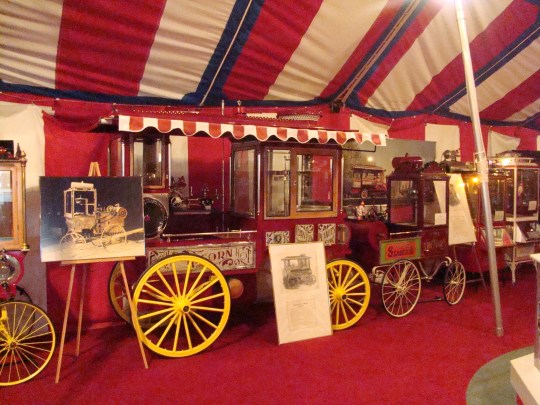
Wyandot Overview

The museum carries a circus theme under a red, white and blue canopy.

Popcorn and circus tents seem to go hand in hand so it’s no surprise that the inside of the Wyandot Popcorn Museum in Marion resembles a large circus tent. Under the tent, you’ll discover the largest collection of restored popcorn antiques in one place. This is one of only two popcorn museums in the world with working machines, the other one also being in Ohio at Holland.
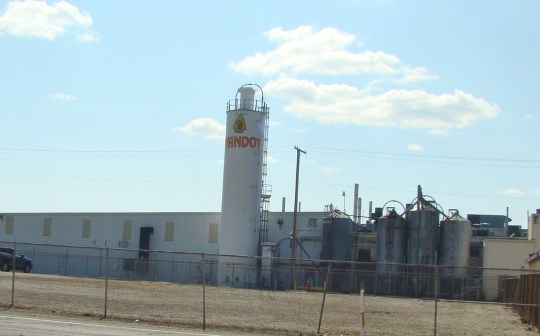
Wyandot Factory

Wyandot Snacks now occupies the old popcorn factory.

   This collection began as part of a research project on the history of the Wyandot Popcorn Company by George K. Brown. At first Brown kept his collection in a one-room schoolhouse built in 1882. W. Hoover Brown, the founder of Wyandot Popcorn Company, attended this school and started the company there. But soon the collection exceeded the space available.
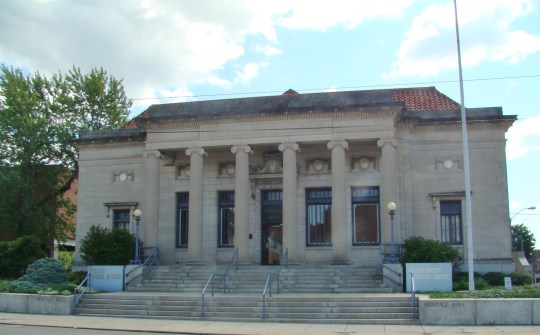
Wyandot Popcorn Museum in Marion

Wyandot Popcorn Museum is located in an old U.S. Post Office in Marion.

   After having displays at several locations, in 1989 the ninety-year-old U.S. Post Office building in downtown Marion became available for purchase. Heritage Hall became the perfect place for not only the Wyandot Popcorn Museum but also the Marion County Historical Society. So when you come for a visit, you get two museums for the price of one.
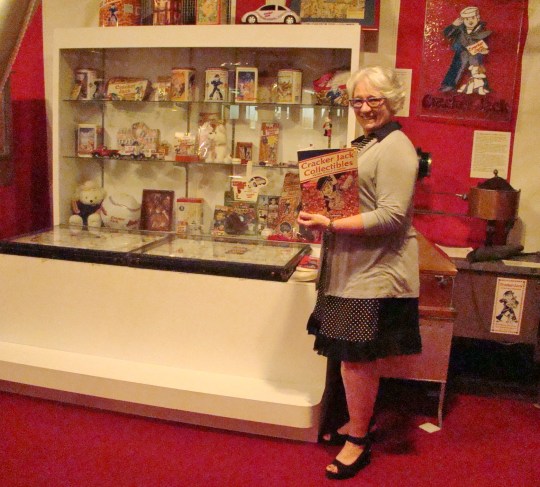
Wyandot Cracker Jack display

Informative guide, Val Mettler, explained that Wyandot made Cracker Jack for a decade.

   At this point, the Wyandot Popcorn trustees agreed to give financial support to the project if they could maintain 40% of the display space on the first floor for their popcorn memorabilia. The guides at the museum make the popcorn history come alive through the meaningful stories they tell.
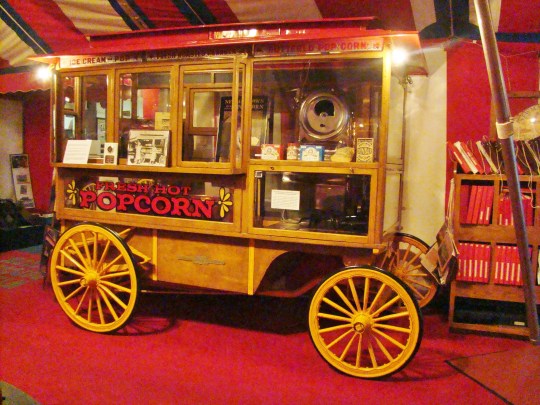
Wyandot Paul Newman

This 1909 Dunbar horse-drawn wagon was used by Paul Newman to introduce his new line of popcorn in New York City.

   A machine owned by Paul Newman is a favorite at the museum. When Newman decided to move into the popcorn industry, he wanted to work with a purely American company so he chose Wyandot with a little friendly persuasion from George Brown. The cart on display was used in New York City to introduce his popped corn.
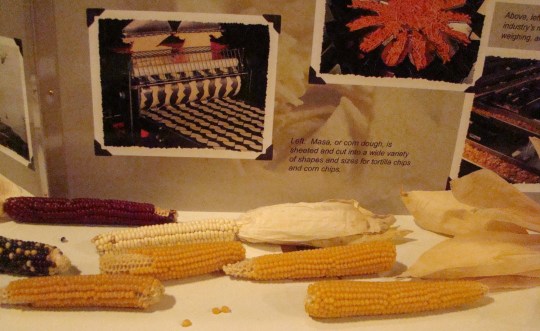
Wyandot Popcorn

Different varieties of popcorn create different shapes when popped.

   The owner, Brown, worked diligently to create hybrid popcorn grains that would have the proper moisture content so grains would pop evenly and there would be no unpopped kernels, called Old Maids, left behind. They also developed grains that would have bigger kernels when popped so it would take less popcorn to fill a bag.
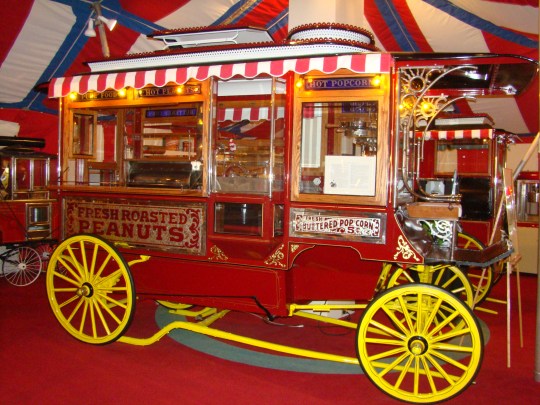
Wyandot Circus Wagon Barnum & Bailey

Barnum & Bailey used this popcorn machine and peanut roaster.

   In 1996, Wyandot Popcorn Co had a major fire and the factory was closed for about a year. During that time, George paid more than 300 workers 60% of their regular pay as well as providing medical insurance for their families. When they resumed operation, each worker received a $1,000 bonus. It’s no surprise that 98% of the employees returned to work. With goodwill like this, it makes you want to find some Wyandot products to purchase.

Wyandot Sign

The sign’s logo indicates the town’s connection to the Wyandots, an early area Indian tribe.

   Today the business operates under the name, The Wyandot Snack Co., although now they make more than just popcorn. They produce grain-based snacks such as tortilla chips, cheese curls, corn chips and candy covered popcorn. The smells from their company at the edge of town let everyone know what they’re making that day.
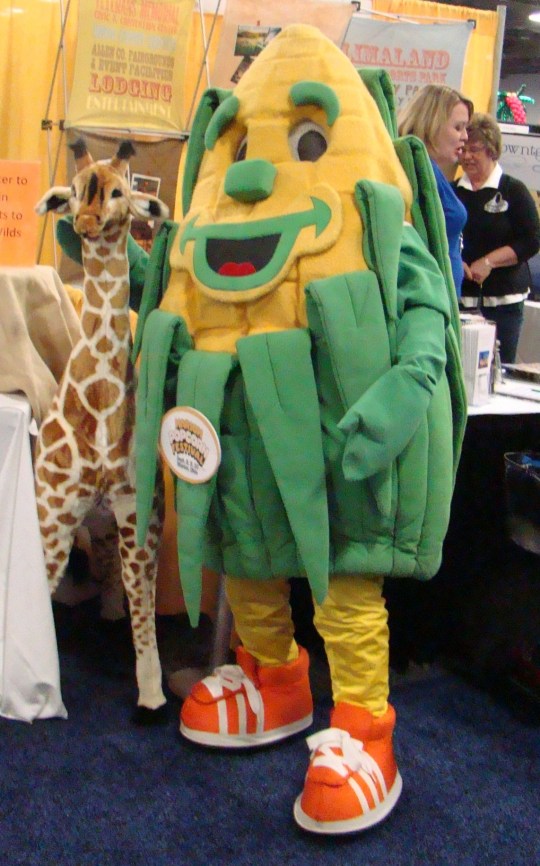
Mr. Popcorn

Poppy is the mascot for Marion’s annual Popcorn Festival.

   Each September, the first weekend after Labor Day, Marion holds a Popcorn Festival starting with a parade on Thursday evening. This is the largest popcorn festival in the world and the weekend is filled with activities and entertainment. Admission to the museum is free this weekend of Sept. 6-8.
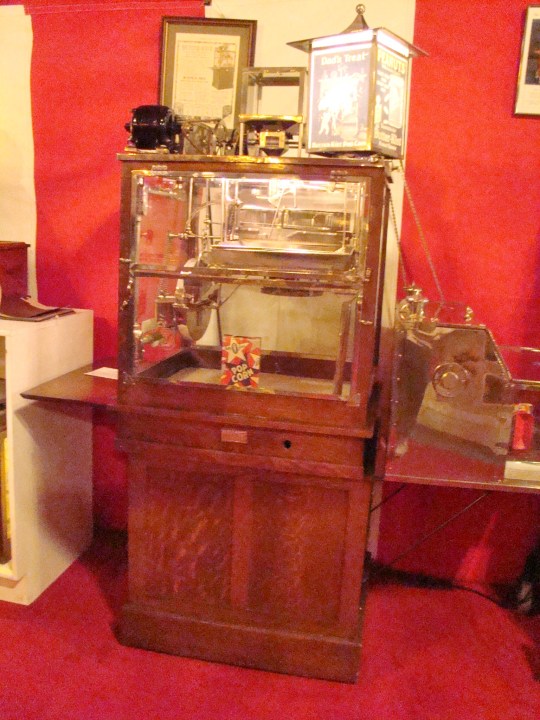
Wyandot Holcomb & Hoke

This beautiful 1918 Holcomb & Hoke buttered each kernel individually.

   Regular visiting hours for the museum through October are Wednesday thru Sunday from 1-4. Remember there’s more to see in Marion as this is the home of President Warren G. Harding. That will require a future Gypsy Road Trip.
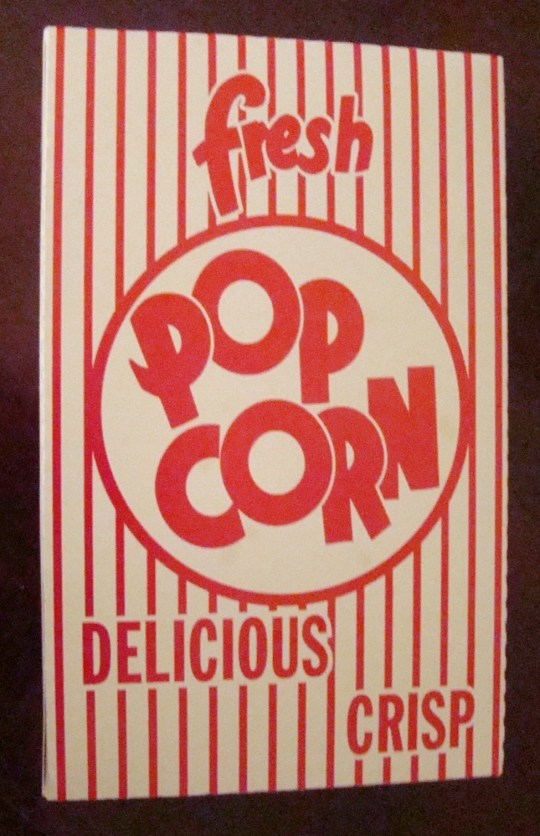
Wyandot Box of Popcorn

Everyone receives a free box of popcorn when they finish the tour.

   Stop in at Wyandot Popcorn Museum for a poppin’ good time!

Wyandot Popcorn Museum is located at 169 E Church Street in Marion, Ohio, which is north of Columbus on Route 23. You can park on the street or there is handicapped parking in the rear. 
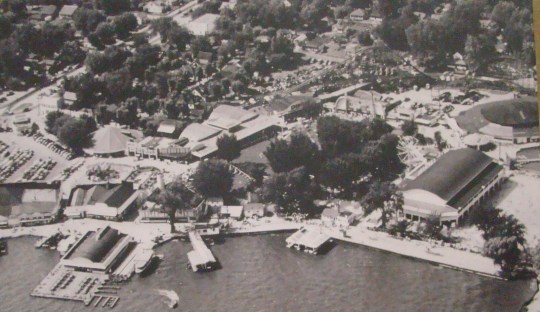
Buckeye Lake Amusement Park Memories Linger at Buckeye Lake Museum

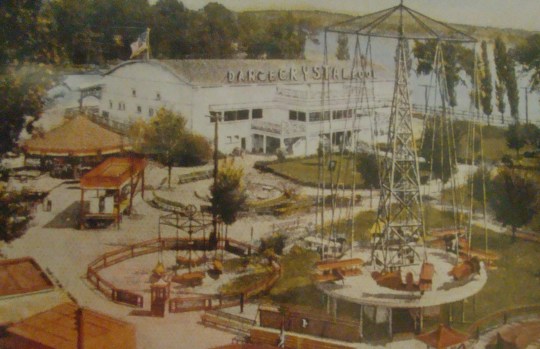
Buckeye Lake 1950s

This is an overview of Buckeye Lake Amusement Park as it appeared in the 1950s.

Trips to Buckeye Lake Amusement Park can be remembered by many adults today. As children, they would head there with their parents or neighbors for a full day of rides along the lake. Almost everyone took along a picnic lunch.

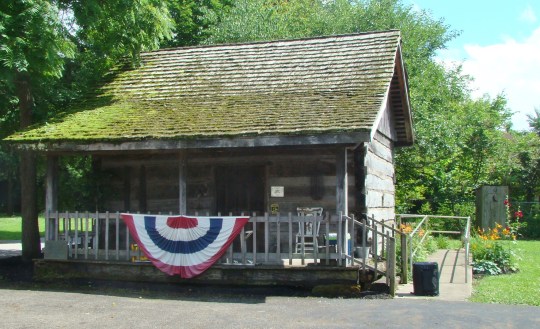
Buckeye Lake First Cabin

The first cabin built at Buckeye Lake has been restored next to the Buckeye Lake Museum.

   Today the Amusement Park is gone but the memories still remain at the Buckeye Lake Museum in Buckeye Lake. The museum opened its doors in 1998 and is located about a mile west of the original entrance to the amusement park.

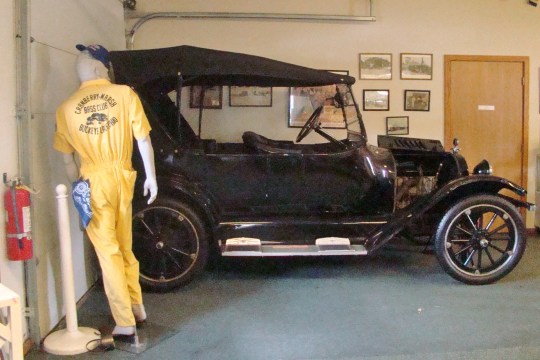
Buckeye Lake 1918 Chevy

This 1918 Chevrolet 490 Touring Car brought visitors to the Cranberry Marsh Bass Club.

   Construction of the Ohio & Erie Canal gave a reason for Buckeye Lake to be created in 1826. This original swamp land had been left behind by a retreating glacier thousands of years ago. Buffalo Swamp was dug and dammed to create a source of water for the canal.

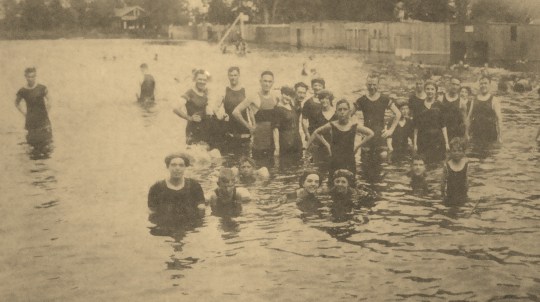
Buckeye Lake Swimming Pool

The Crystal Swimming Pool was a gathering place for the entire family.

   When the canal became inactive after the railroads gave a better and faster means of transportation, the state developed Buckeye Lake as a popular resort. With over 3800 acres of water, 35 miles of shoreline and twenty islands, people began flocking to the area. Twenty-one hotels sprang up along the shoreline.

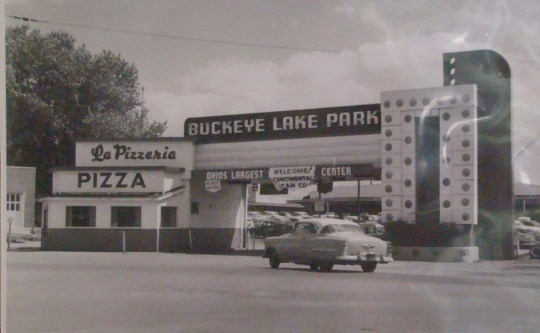
Buckeye Lake Entrance 2

Cars came bumper to bumper through this entrance gate to the park.

   The Ku Klux Klan had rallies at Buckeye Lake in 1923 when 75,000 people attended. Then in 1925, it is said that 500,000 KKK members attended since the Grand Dragon of the five-state area lived in Newark.

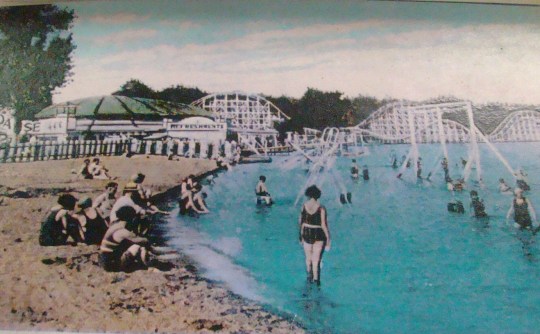
Buckeye Lake Dip and Beach

The Dips Roller Coaster, which went over the lake, could be seen from the beach.

   After a few years, the lake seemed like a great place to add an Amusement Park. In 1931, “The Dips” Roller Coaster was built. This was a huge attraction as the roller coaster took passengers out over the lake. The roller coaster lasted until 1958 when a serious accident injured several passengers. It never ran again.

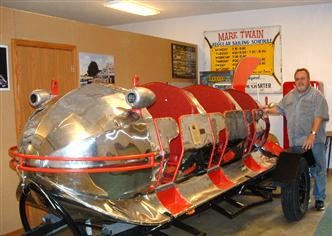
Buckeye Lake Rocket Ride

This was the popular Rocket ride.

   Rides like The Whip, Big Slide, Dodge ’em Cars, Octopus, Wild Mouse and Rocket brought crowds to the lake. Folks enjoyed the taste of their Caramel Corn and Salt Water Taffy, which were shipped all over the country.

Buckeye Lake Rides

Rides were part of the attraction for a visit to the amusement park.

   No wonder it was known as The Playground of Ohio with often 50,000 people in a single day. You could hardly get through the crowds, but still, people patiently waited bumper to bumper and shoulder to shoulder.

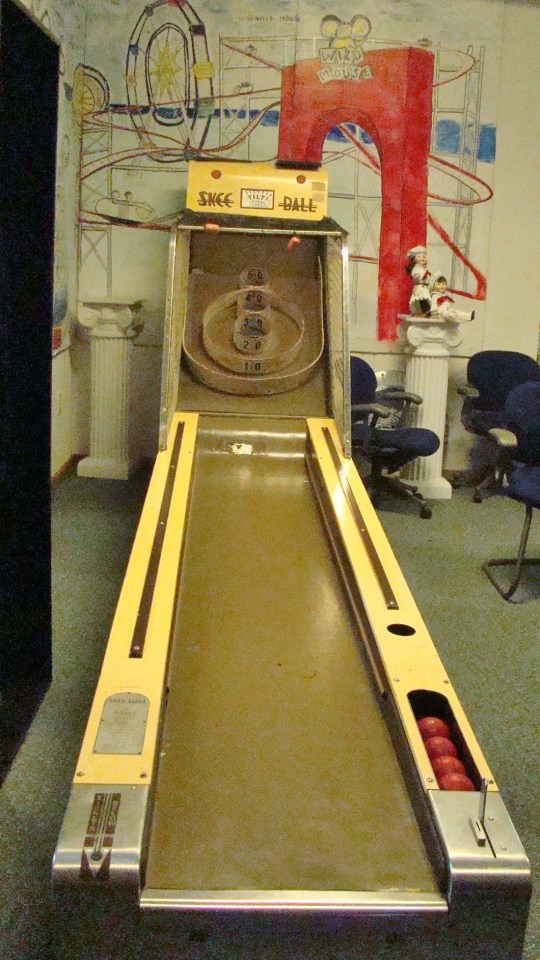
Buckeye Lake Skee Ball and Wild Mouse drawing

A popular skee ball game can still be played at the Buckeye Lake Museum.

   Many companies held their annual picnics at Buckeye Lake Amusement Park. Guernsey County residents will recall RCA having picnics at the lake. Admission to the park was free during most of its operation, and later $2 a car. Every Thursday was Family Day when the cost of each ride was five cents for children and eight cents for adults.

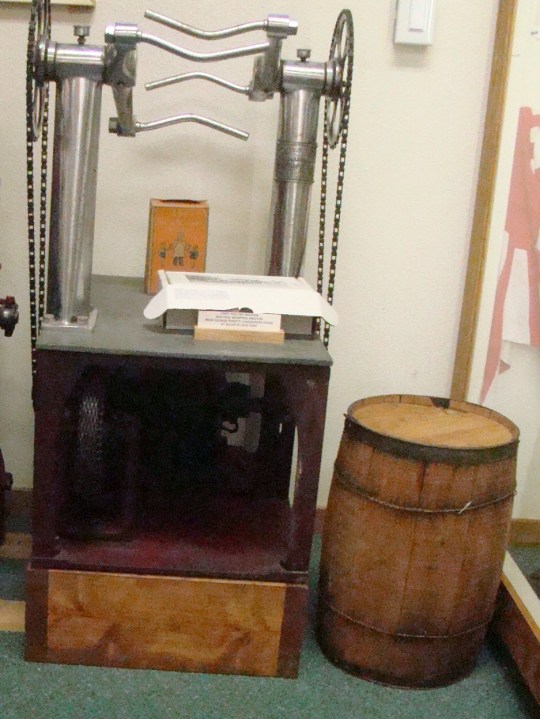
Buckeye Lake Taffy

This was the machine that made their famous salt water taffy.

   Their Crystal Ballroom brought quality entertainment to the area. The “Buckeye Lake Waltz” was a popular dance tune. Louie Armstrong, Bob Hope, Sammy Kaye, Guy Lombardo, and Glenn Miller were among the names who appeared at their ballrooms. This was a happening place!

   Big bands also performed at Skateland, which had a 50,000 sq.ft. round floor. It was not unusual to have 2000 skaters there in an evening.

Buckeye Lake Mastodon

A skeleton of a mastodon was found nearby. A cast of its head can be found at the museum.

   The park finally closed in 1970 after an attempt to revive it as a Country Western Theme Park.

  Just four miles down the road, when they were digging to build a golf course, they found the large skeleton of a  mastodon, called the Burning Tree Mastodon, that is the most complete skeleton ever found. It’s estimated to be nearly 12,000 years old. A cast of the head can be found at the museum.

Buckeye Lake today

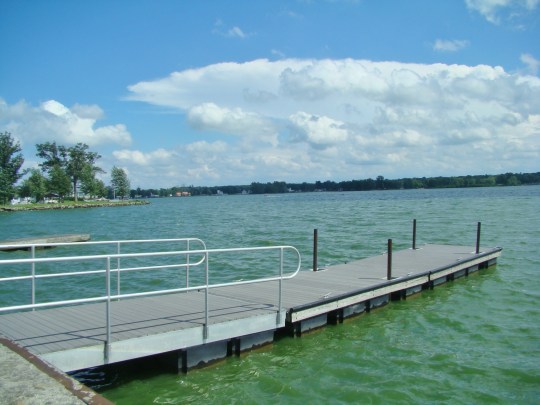
Today, Buckeye Lake is still a great place for a boat ride, walk or picnic.

   Rides on the lake aboard a sternwheeler were popular even after the amusement park closed. But due to problems with the dam, the water level was not deep enough for the sternwheeler to operate.

Buckeye Lake Queen of the Lake III

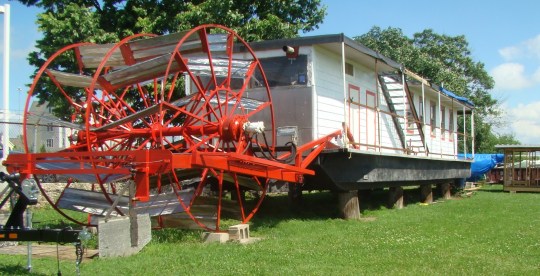
Queen of the Lake III sternwheeler is being refurbished for cruises on Buckeye Lake.

   In 2015, a new Queen of the Lake III was donated to the museum by Dr. Ronald and Cindy Downing of Zanesville. This sternwheeler can operate in less than two feet of water so the low level of the water in the lake will not affect it. Right now they are working on refurbishing The Queen of the Lake III into a dinner boat to help raise funds for the museum. Their dream is to have it on the water by late summer.

Buckeye Lake Covered Fountain

This covered fountain in the construction zone is the only piece of the original amusement park that remains.

   The only piece of the amusement park that remains is the fountain, which still stands in the original park’s location at Alexander’s Landing. Perhaps you’ll want to visit there and let your mind wander back to those days of fun and excitement at the Buckeye Lake Amusement Park. You can still take a picnic with you!

Buckeye Lake Museum is located off I-70 at Exit 129. Take OH 79 South aout two and a half miles to 4729 Walnut Road. The museum will be on the left hand side of the road.

Find Victorian Splendor at The Castle in Marietta

Castle

The castle, built in 1855, features many history-related events throughout the year.
Oozing Victorian charm, The Castle in Marietta, Ohio takes one back to a simpler time – from a wealthy point of view. Even though now situated in the center of town, back in 1855 when it was first built, the house was on one of the highest spots in the area and overlooked the then existing town of Marietta. One large tree still stands in the front yard where it was planted over a hundred and fifty years ago.

     Today The Castle is part of The Betsey Mills Corporation, a group of community-minded women, who wish to educate the public regarding Marietta history as well as life in Victorian times. Tours of The Castle are given by guides, who are very knowledgeable of its history and share many humorous stories that make the visit extra enjoyable. If you enjoy life in Victorian times, perhaps this glimpse inside will make you eager to visit there yourself.

Castle - Harley

Harley Noland, board member, initiated the idea for their annual Tour of Homes, and helps at The Castle in many ways.

     Starting in the Carriage House, which now serves as the Visitors’ Center, a video explains a brief history of the people who have resided at The Castle over the years. The property was used by Nathaniel Clark, the potter, as early as 1808 when he made milk pans, jugs and jars. Remnants of their pottery still surface from time to time or are found on archaeological digs.

Castle - Oldest piece

This 1745 clock is the oldest piece of furniture in The Castle.

     In 1855 Melvin Clarke paid $2000 for two empty lots where the house was to be built. Ownership by five prominent and influential citizens began with the original owner/builder, who was an attorney and first city solicitor, and continuing with the person who established the Bank of Marietta, the owner of Marietta Gazette, and even an Ohio State Senator.

Castle - Margaret inside shutters

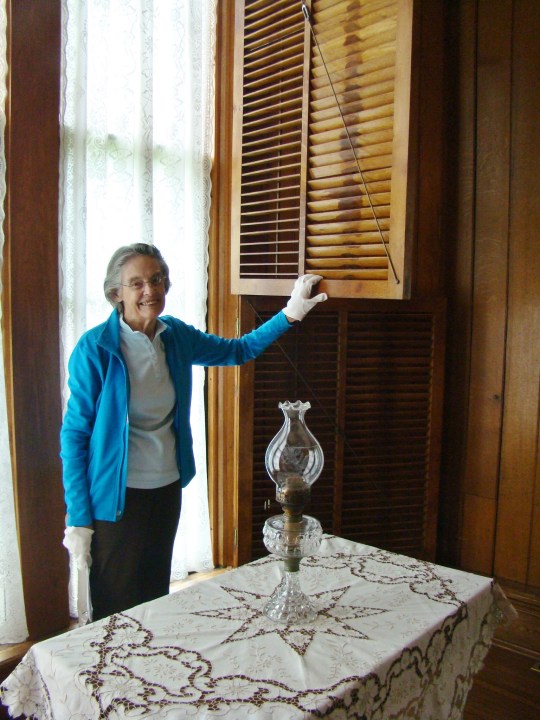
Margaret Fredericks, our tour guide, displayed the unique shutters inside the balcony.

     All furnishings in The Castle are either original Victorian items, which had actually been used in the home, or furnishings from other Marietta homes of that time. Wood trim and doors were made of red oak downstairs where guests would be entertained, but upstairs were made of pine, as only the family would be upstairs.

Castle- Lithograph

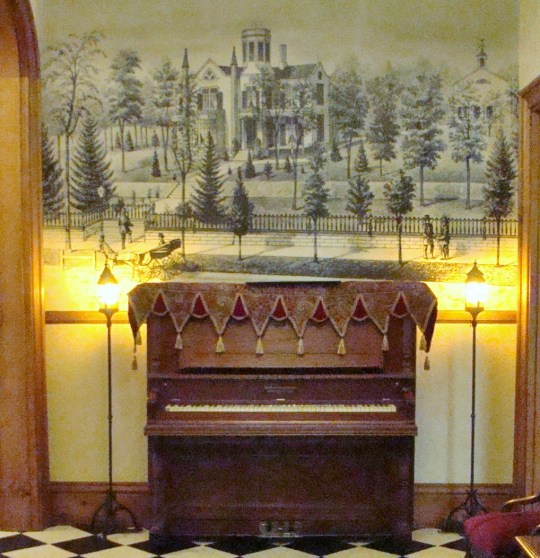
The entrance way contained an early lithograph of The Castle above an old pump organ.

     Victorian times were filled with music. A pump organ from Stevens Organ and Piano Company can be found inside the front door. Two more pianos are in the parlors, as well as an Edison music box from 1892, which played the cylinder records of hard black wax. The song, “Echo All Over the World”, was on display in its original case from Edison Gold Moulded Records.

Castle - Library

Captain William Holden had what they called ‘the first laptop’ on the desk in the library…a wooden box in which he could carry all of his important papers.

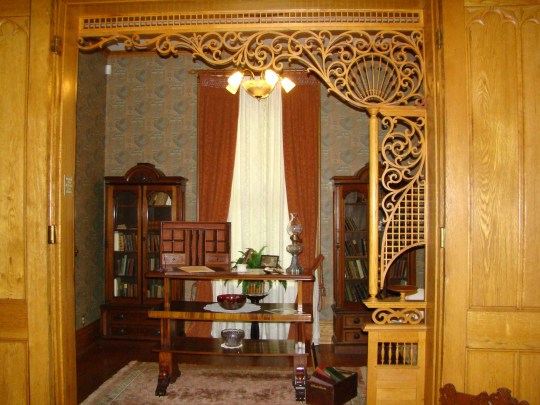
     The library showcased Captain William Holden’s box where he kept all his important papers and could close it like a briefcase to take them with him. Some called it the first lap-top. Adults would sit here and read while younger ladies were having gentlemen callers in the adjoining sitting room. Even though the chairs of ladies and gentlemen were separated by a table, someone had to watch and listen to ensure proper behavior was being observed.

     The chairs, themselves, were unique in that they sat very low to the floor. That way there could be no chance that the young ladies’ ankles would show, an act of disgrace during Victorian times.

Castle - hair art

This hair wreath was begun from family hair while Anna Marie Weinheimer had diphtheria in 1866.

     When you wanted to remember a special person, you could weave a lock of their hair into a special design. Men might braid their special lady’s hair into a watch chain to attach a pocket watch to their jacket. The ladies would make necklaces and broaches in intricate designs.

Castle - Chest

This chest was built in Marietta to contain three drawers in which one eastern lady carried her belongings to her new home.

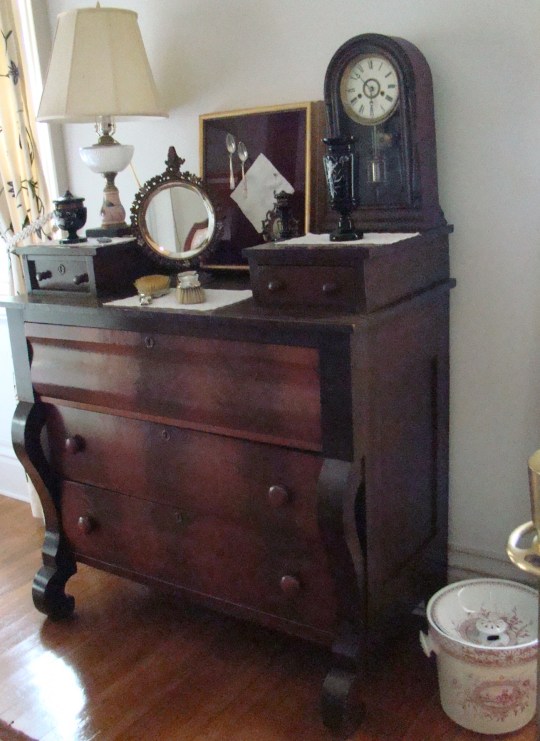
     A unique dresser can be found in an upstairs bedroom. When the lady moved here from the east coast, she only had room to bring three drawers full of her belongings. When they arrived in Marietta, a dresser was built to hold those three drawers. Women gave up a lot to be pioneers.

Castle - bed

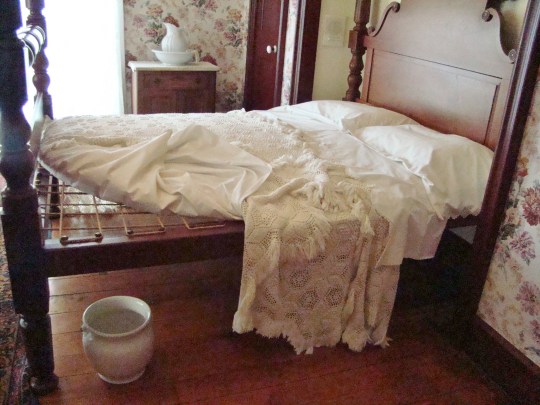
Rope beds needed to be tightened frequently to ensure a good night’s sleep, thus the saying: Sleep tight!

     All the furnishings in The Castle were either original Victorian items, which had actually been used in the home, or furnishings from other Marietta homes of that era. Wood trim and doors were made of red oak downstairs where guest would be entertained; however, upstairs the doors were of pine as only the family would be upstairs.

Castle Nye cookstove

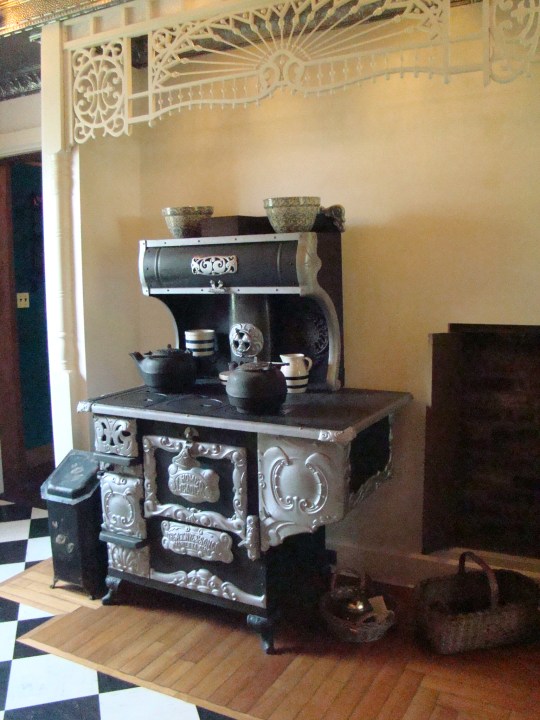
A castle cookstove was made in the late 1800s by Marietta’s Nye Foundry, which is still in operation today.

     One beautifully designed wall shelf had originally held a collection of Captain Holden’s, who they called the original Spiderman. He had collected 3,000 different spiders and kept them on display.

Castle - Nathaniel's house

This is part of the original home of Nathaniel Clark and displays some of his early 1800s pottery.

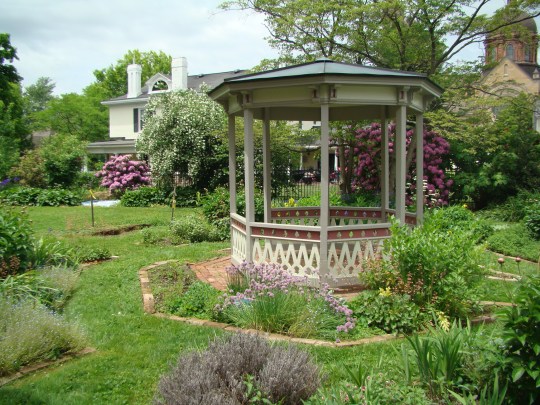
     A section attached to The Castle served as the original home of Nathaniel Clark and several of his pottery vases were on display there. Outside the door near the gazebo, the outline of the original kiln has been found and excavation of that area will take place as time permits. It’s a rather large area about fourteen feet long.

Castle - Gazebo

Near the Gazebo, it’s possible to see a new discovery – the edges of Clark’s original kiln.

     You’ll find a great variety of activities at The Castle throughout the year. Check their website at www.mariettacastle.org for the latest information. There are activities for every age level from workshops and teas to ghost tours and children’s programs. You’re sure to find something of interest!
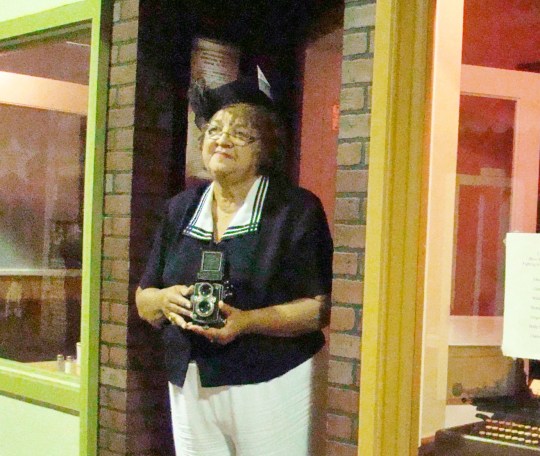
The Castle is located in Marietta, Ohio at 418 4th Street. Take Exit 1 off I-77. Castle is open April through December. Hours for June, July and August are 10-4 most days, except closed on Wednesday. Sunday hours are 1-4.
Temperance Tavern Museum Holds Tales of Newcomerstown Area

Temperance Tavern Sign

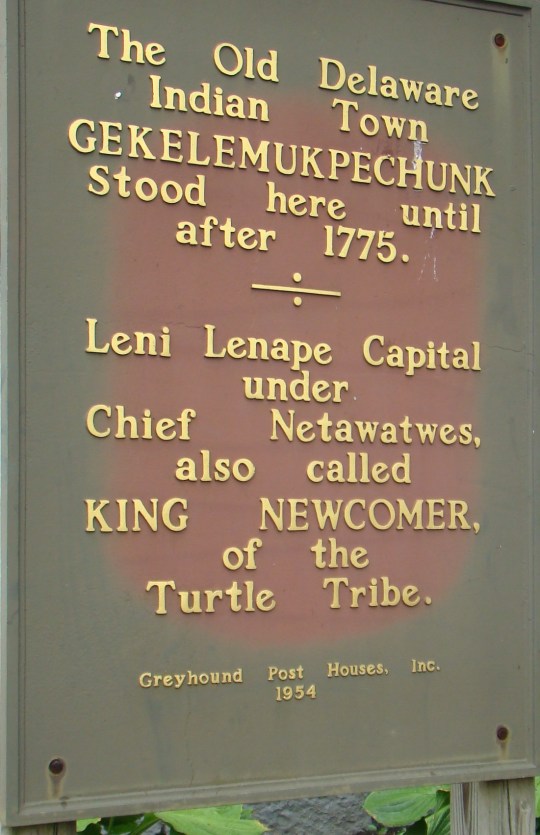
This sign in front of the museum explains the history of the town.

The Delaware Indians settled a village along the Tuscarawas River at what is today Newcomerstown. In 1776, over 700 Delaware Indians lived there with a few English colonists. The Indians called their village Gekelemukpechunk, but the settlers called it Newcomerstown after the Delaware Chief Newcomer of the Turtle Tribe.

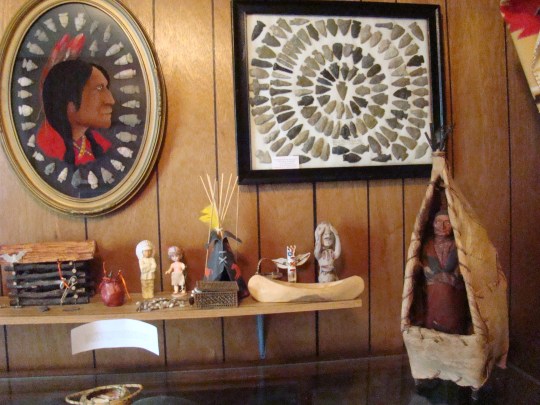
Temperance Tavern Delaware Indians

These Delaware Indians arrowheads and artifacts are an important part of the town’s history.

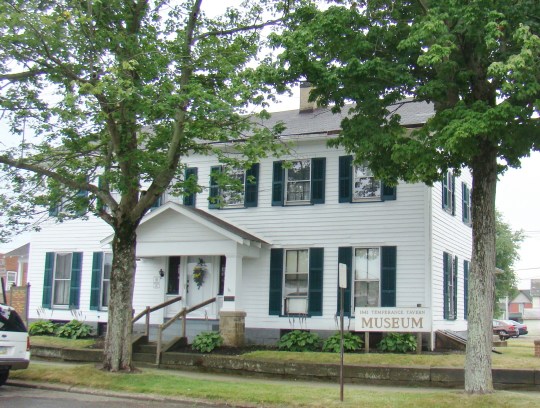
   During the time of the Ohio & Erie Canal, the tavern and inn in Newcomerstown, Ohio was a popular stop for canal boats. One of the oldest homes in town, built in 1841 by Andrew Creter, Temperance Tavern was made of black walnut and still contains many of the original features.

Temperance Tavern

Temperance Tavern Museum, a beautiful old tavern and inn, is one of the oldest homes in Newcomerstown.

   The home and tavern was conveniently built between the canal and the stagecoach trail. One home on Canal Street still has the original canal ditch in their front yard. The ditch was never filled in.

   The Creter family lived on the first floor, while rooms on the second floor housed only women. Single men were literally locked in the attic to keep any embarrassing moments from happening with the lady guests. The basement contained Temperance Tavern. While the names don’t seem to fit together perfectly, no alcohol was served in this tavern.

   Miss Elizabeth, wife of Andrew Creter, still visits the house in spirit. While her form is seldom seen, frequently doors move and cabinets open. She keeps watch over her house.

Temperance Tavern Fireplace

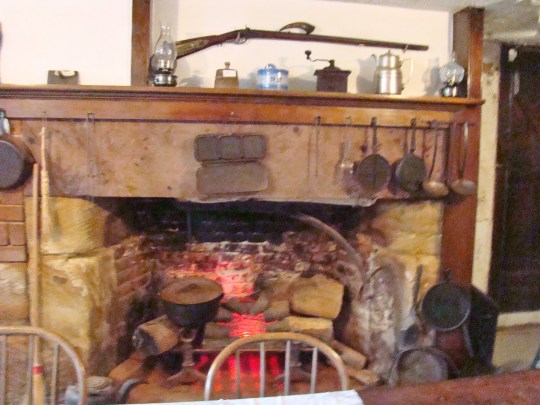
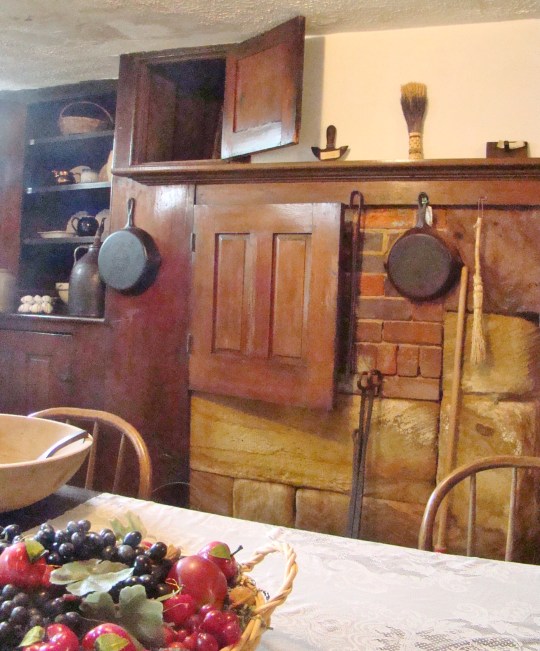
This stone fireplace provided a place to cook meals for visitors to the inn.

   The kitchen has a large fireplace where all the tavern meals were cooked. The cast iron utensils hung over the fireplace for easy access in meal preparation. Meals were cooked and served here for people from the canal and stage, but it was also a local gathering place. The table served not only as a place for meals, but operations took place there as well.

Temperance Tavern Oven

Behind this cabinet was where slaves were hidden on the Underground Railroad.

   This was also a stop for the Underground Railroad. Slaves were hidden in the cellar of this house. You can still see a cabinet that concealed where slaves hid on their Underground Railroad route.

Temperance Tavern Miss Rose Tea Set

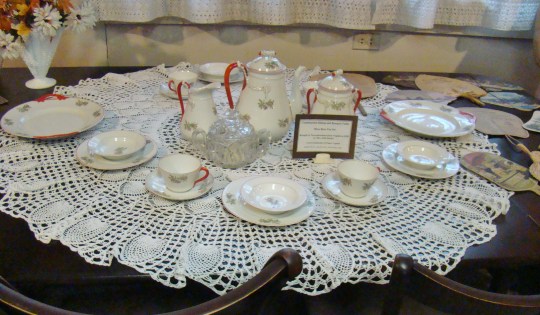
This beautiful Moss Rose Tea Set came all the way from Virginia in 1820.

   The dining room table displayed a beautiful Moss Rose Tea Set, which was brought to Newcomerstown from Virginia in 1820 by Mrs. John Snyder. The living room features military artifacts as well as a collection of dresses from the 1800-1900 time frame.

Temperance Tavern Wedding Dress

The wedding dress of Maude Scott highlights this display of clothing from 1800-1900.

   A wedding dress from 1894 belonging to Maude Scott shows the style of the time. It also gives history of one of those early prominent women in the Tuscarawas County area. Maude Scott was the first woman in the county to be elected to public office and formed the first Republican Women’s Club there, a couple examples of her forward thinking.

   Here also, you will find memorabilia honoring two of Newcomerstown’s favorite sons, Cy Young, the most winning pitcher in baseball, and Woody Hayes, Ohio State’s well-known and adored coach.

Temperance Tavern Woody

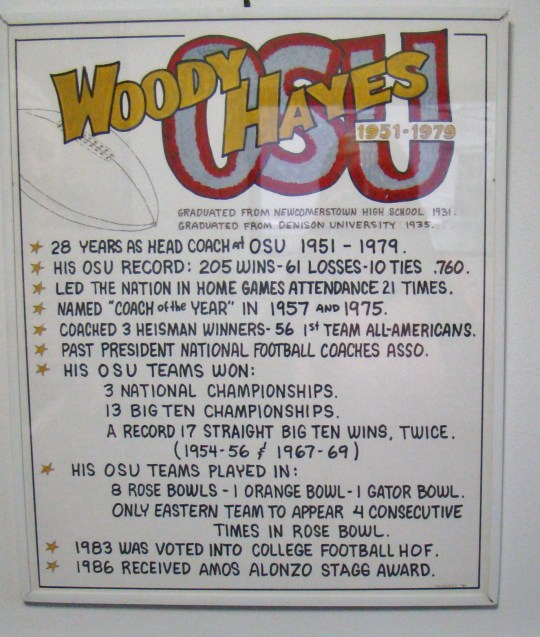
Woody Hayes, Ohio State University football coach, went to school here.

   Woody’s dad was superintendent of schools in Newcomerstown. After graduation from Newcomerstown High School, Woody coached football at Mingo Junction and New Philadelphia before moving on to Ohio State.

Temperance Tavern Cy Young

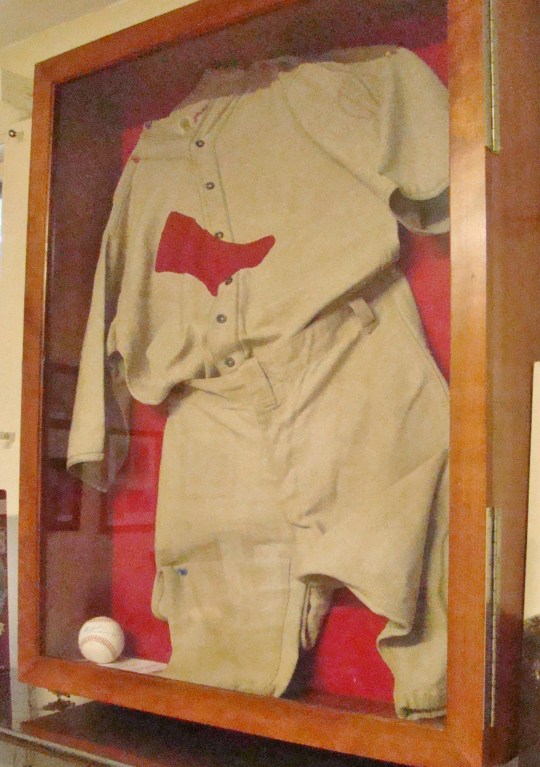
This 1908 Boston Red Sox uniform belonging to Cy Young is on display at the museum.

   One special item in the museum is Cy Young’s complete 1908 Boston Red Sox uniform. The memorabilia span his life from baseball player to retiree, who enjoyed sitting on his front porch in a rocking chair, which is also in the museum today. From 1890-1911, Young won 511 games with an ERA if 2.63. No wonder he is a local hero.

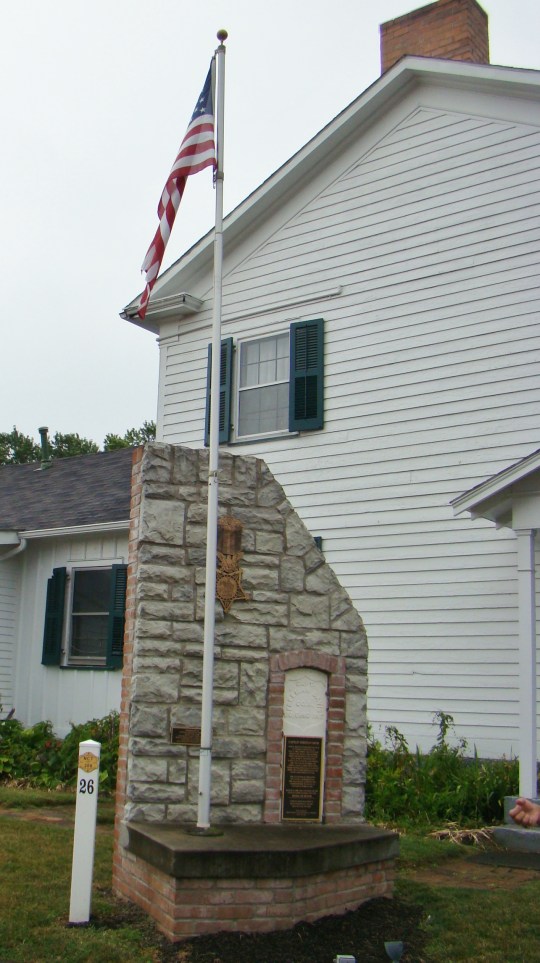
Temperance Tavern Civil War Monument

Outside the museum stands a monument to Freeman Davis, a local Civil War hero.

   Outside the Temperance Tavern Museum is a monument honoring Freeman Davis, a local man who earned the Congressional Medal of Honor during the Civil War. Davis served as a sergeant with Company B, 80th Ohio Volunteer Infantry during the war and his commendation came due to his bravery in the Battle of Missionary Ridge in Tennessee.

Main Street BJ

BJ McFadden has served as president of the Newcomerstown Historical Society for several years but recently stepped down from that post.

   Located at 221 Canal Street in Newcomerstown, the Temperance Tavern Museum opens its doors each Memorial Day weekend through the end of October on Tuesday – Sunday. Every small town has interesting history to share. Stop by and explore Temperance Tavern Museum this summer!

The museum is located at 221 West Canal Street in Newcomerstown, Ohio. Off I-77, take Exit 65 for US 36, Turn left on US 36 and then take the second exit, Ohio 258, to Newcomerstown to the left onto Pilling Street. After a short distance, turn right onto East Canal Street and about a mile down the street you’ll find the museum on the left.

Spring Has Sprung at The Dawes Arboretum

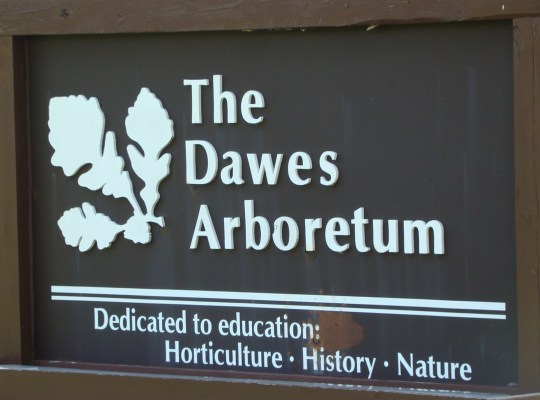
Dawes Entrance

This sign greets you at the entrance. You have arrived!

Sunshine beckons nature enthusiasts to venture outside for fresh air, a walk or a drive. The Dawes Arboretum near Newark provides the perfect escape. Here you can walk the paths or slowly drive through their four mile auto trail without hurrying as speed limit is 15 mph.

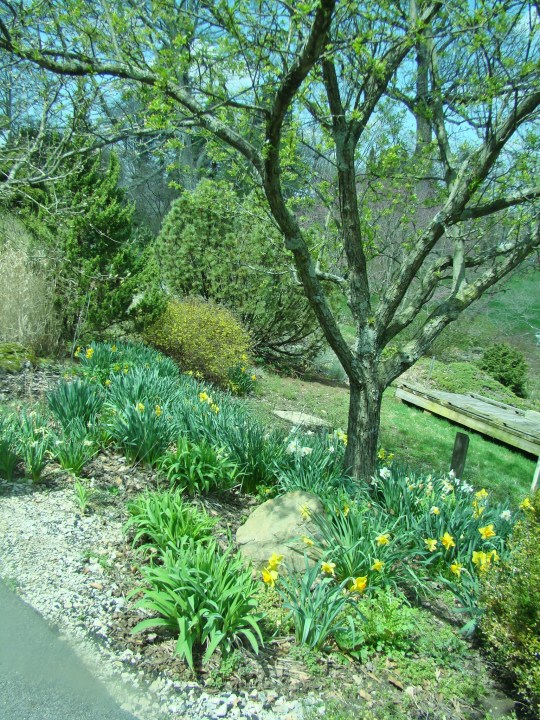
Dawes Daffodil setting

Expect to find flowers, like daffodils in the spring, in their All Seasons Garden.

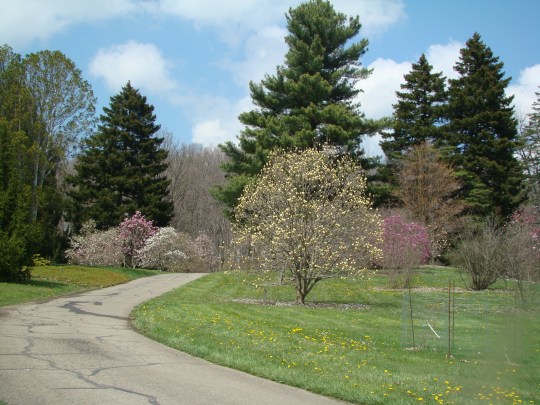
     Azaleas and magnolias bloomed around every bend, it seemed, on a recent spring trip there. Daffodils flourished in their gardens and banks were covered in a blanket of violets.

     The Dawes Arboretum began through the efforts of Beman and Bertie Dawes back in 1929. Due to their love of trees and shrubs, they wanted to create a place where a large variety of trees would have a home. This nature haven is dedicated to increasing the knowledge of trees, history and the natural world.

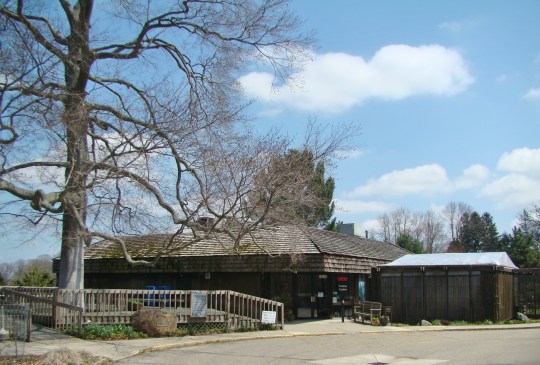
Dawes Visitors Center

Begin your visit at the Visitors Center under a century old beech tree. Here you will find  a Discovery Center and Bird Watching Garden.

     Their Visitors Center is a great place to start your visit and pick up a map to guide you through the 1800 acres. It includes a nice Discovery Center to learn more about the plants and animals in this part of Ohio. A viewing window overlooks the Certified Wildlife Habitat outside so you can watch birds and small animals as they live in their natural world.

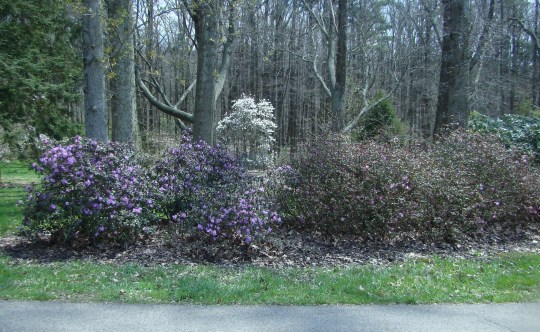
Dawes Azaleas

Enjoy the breathtaking beauty of Azalea Glen.

     All-Seasons Garden right behind the Visitors Center features seasonal flowers throughout the year from daffodils to mums. Name plates are found near the flowers and trees for easy identification. There are many places to sit, relax and enjoy the peacefulness as you take time to smell the roses.

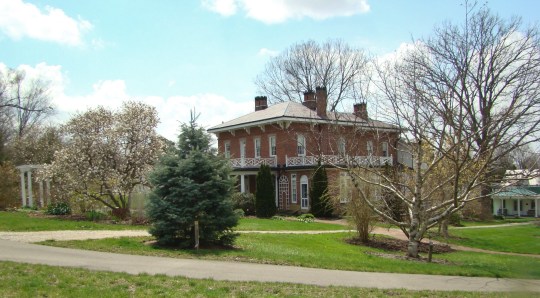
Dawes Summer Home

Daweswood House Museum gives a glimpse of life in the summertime with the original Dawes family.

     Their summer home, Daweswood House, can still be toured on weekends. The garden at the home maintains the flowers that Bertie planted long ago. They’re accurate as Bertie kept a journal describing what she was planting.

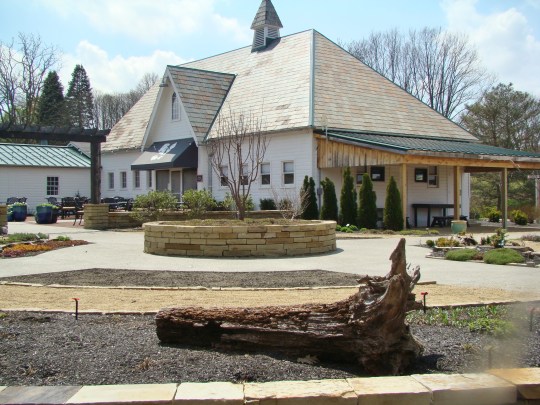
Dawes Education Center

The newest addition is the Zand Education Center for special horticultural programs.

     A new addition near the home expands their educational ability. The Zand Center provides a learning garden to hold classes for students mainly, but can also be used for adults. Many field trips stop here to learn about the bonsai trees or give children an opportunity to create their own planter.

Dawes Japanese Garden

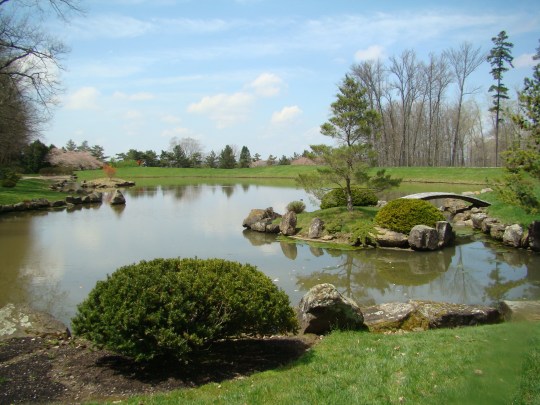
The Japanese Garden creates a peaceful scene with its rocks, pond and flowering trees.

     One of my favorite places to wander here is the Japanese Garden. The peacefulness surrounds you as you walk around the lake with blossoming trees and stone paths.

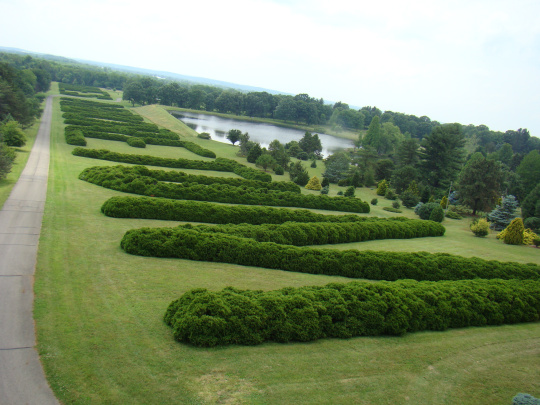
Dawes Hedge

The trail passes the six foot high hedge spelling DAWES ARBORETUM.

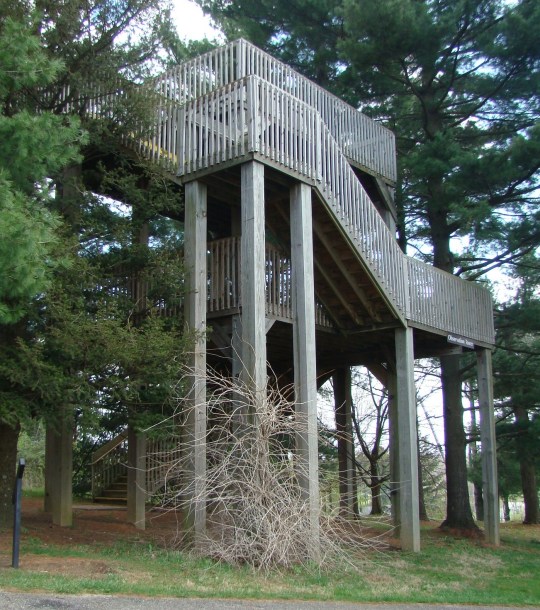
Dawes Tower

The Observation Tower gives a great view of the grounds and the hedge lettering.

     A highlight of the arboretum is their 2,040 foot long, six foot high hedge forming the letters DAWES ARBORETUM. Beman had this designed for the enjoyment of planes flying into the Columbus Airport. An observation tower close by gives a great view of the hedge letters.

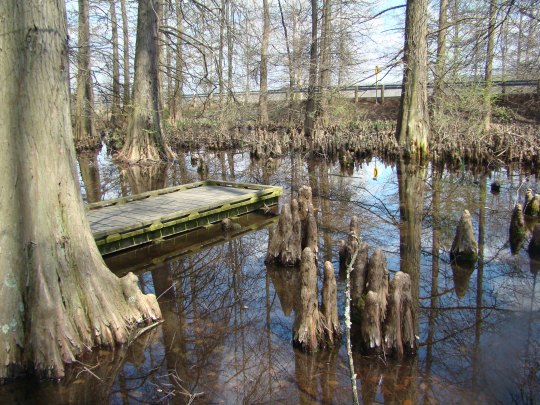
Dawes Cypress Swamp

Bald Cypress Swamp is the northernmost cypress swamp in North America.

     A surprise waits in the form of Bald Cypress Swamp, not something you would expect to find in Ohio. This is thought to be the most northern cypress swamp in North America. The bumps you see coming out of the water have given these trees a special nickname – Trees with Knees. A boardwalk gives guests a chance to get an up close look at the bald cypress trees as well as the creatures in the water.

Dawes Picnic

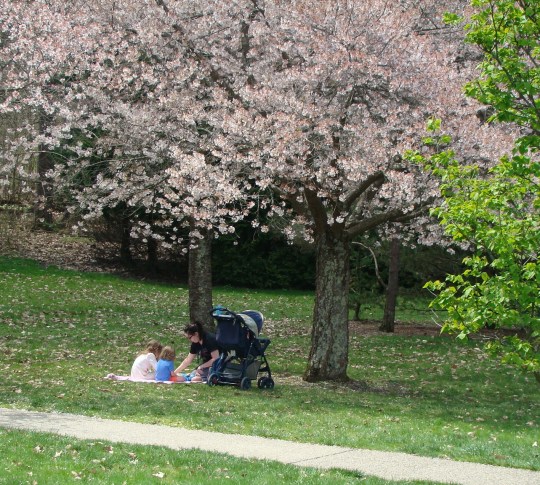
A picnic under the blossoming cherry trees makes for a perfect family outing.

     Families were enjoying the day as children played on the banks. Picnics were popular. The most popular activity here is walking, with over twelve miles of hiking trails. People were walking their dogs, pushing their little ones in strollers, or listening to their headsets while they did some power walking. The paths are easy with most being paved.

Dawes Magnolia Drive

Magnolia blossoms presented a pleasant surprise around one bend in the Auto Trail.

     Meander through the grounds any time of the year surrounded by the beauties of nature at Dawes Arboretum with over 16,000 living plants. It’s open 362 days a year and admission is free. You’ll want to come back each season!

Dawes Arboretum is located off I-70 at exit 132, OH-13 North. After about five miles north, the arboretum can be found on the left side of the road at 7770 Jacksontown Road. If you enjoy nature, you are certain to enjoy a visit here.

Button Designs by Frieda Warther

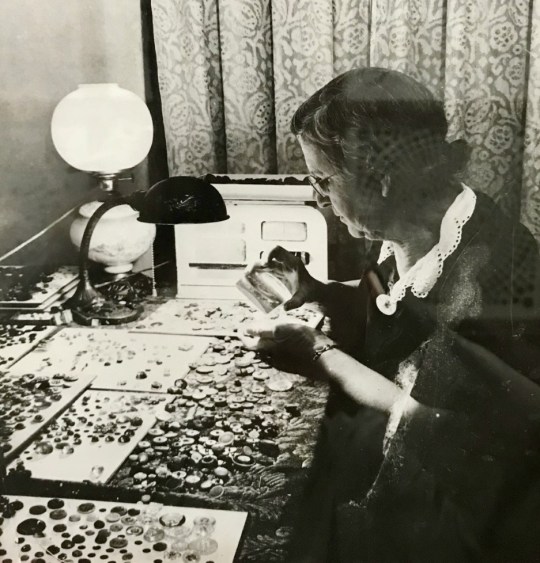
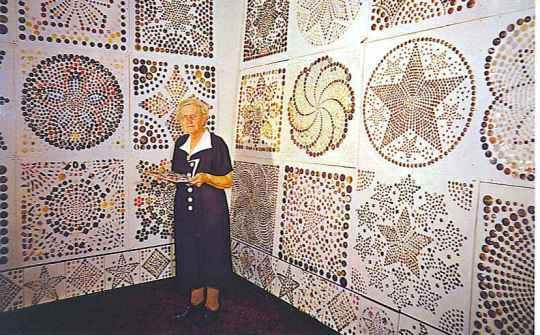
frieda-and-her-buttons.jpg

Frieda surrounded herself with buttons and more buttons.

Almost everyone keeps a container of buttons someplace in their home. At one time, many cut off the buttons on old clothes and kept them in a jar or can. You never knew when you might need an extra button.

Frieda Warther did much the same thing.

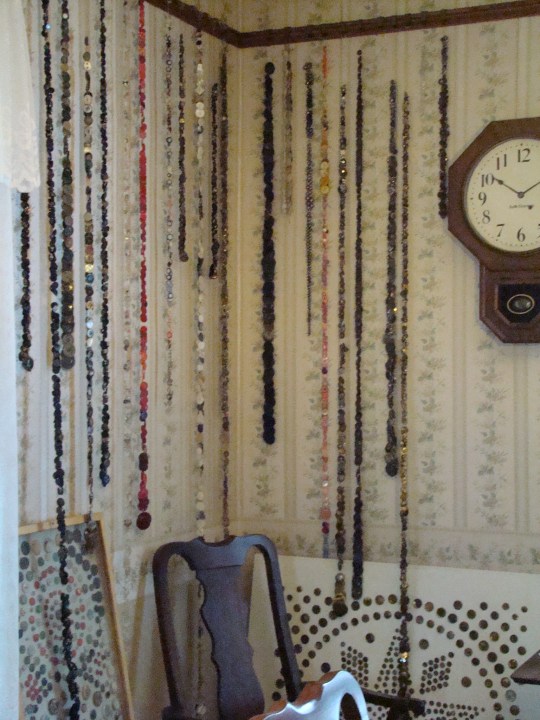
Frieda Button Strings

Buttons hung on strings around the walls of their dining room so she could reach them easily.

Living in Switzerland until the age of four, the family then came to the United States and settled in Dover, Ohio. Frieda was the oldest of thirteen children. It was a Swiss tradition that the oldest child would receive their mother’s box of buttons and sewing tools. Thus began Frieda’s love of buttons.

Frieda Button House

This Button House originally housed the Warther Museum to display Mooney’s trains.

Today those buttons have been used in some of the designs at the Warther Button House, which is just outside Warther’s Museum in Dover.

When Frieda first met Earnest Warther, called Mooney by his friends, their first date consisted of a field trip to hunt arrowheads. After marrying Mooney, Frieda became a wonderful mother to their five children and Mooney’s main support as he developed into a master woodcarver.

Her main relaxation came from tending the gardens outside their home and Mooney’s workshop. She designed them to remind her of her back yard in Switzerland. When the children were young, these gardens contained many vegetables as well. Today, those flower gardens provide a peaceful place to relax with many benches available.

Frieda Bank

During the depression, Mooney hid his money under the coal in this train. But Frieda knew!

Mooney frequently ‘borrowed’ items from his wife to use in his carving creations. When he needed a belt to run one of his model trains, he would borrow it from her sewing machine and replace it when he found one in his journeys. He often liked to use red and green sparkling gems on his trains as well. These he borrowed from Frieda’s brooches.

When visitors came to see all of Mooney’s carvings in those early days, they often spent the afternoon viewing trains brought from storage in the various rooms of their house and even the attic. Frieda decided in 1936, it was time for a museum, so they built the small museum, which is today her Button House.

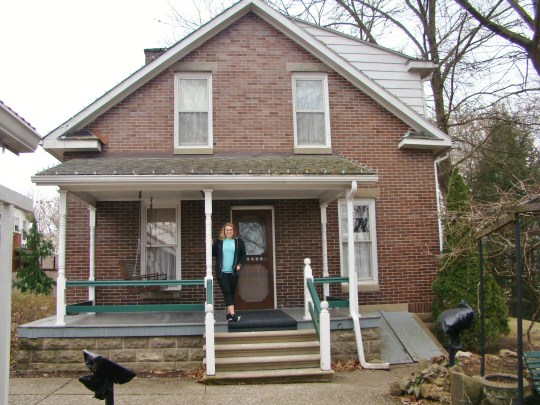
Frieda House

Kristen, great-granddaughter of  Mooney and Frieda, stands on the porch of the Warther’s’ home.

The porch of the Warther Home gave Mooney and Frieda the perfect place to watch trains go by on tracks just across the street. From here they could also watch their children playing in a large playground Mooney had created for them. It’s no surprise that there is a red caboose there also, since Mooney carved so many trains during his lifetime.

Inside the Warther Home, you’ll learn more about Frieda and the family. They lived in their original residence for sixty-three years.

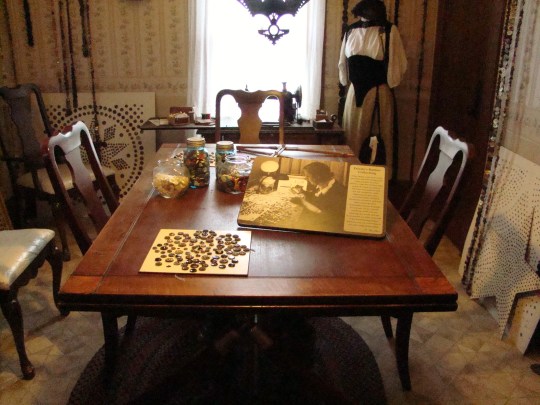
Frieda Table 2

This table served as Frieda’s workplace for most of her button creations.

Life was busy for young Frieda, so it wasn’t until she turned sixty that she began working on her button designs at their dining room table. She began experimenting with various combinations and then attached them to a board with either wire or dental floss to make beautiful hanging designs.

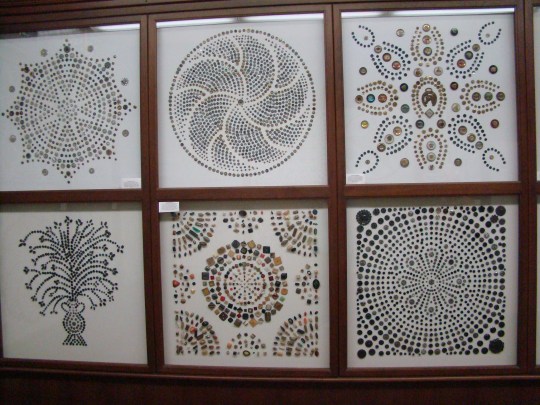
Frieda Button Wall Favorite

Beautiful button designs fill the walls and ceiling of the Button House.

Mooney enjoyed her artistic endeavors by saying, “Sometimes while Frieda was working, she would drill too deep and hit our table. One look at her breathtaking designs and you will realize it was well worth all the holes.” Those holes can still easily be seen.

She also used buttons to make jewelry, a button tree, chess sets and many games. Strings of buttons hung in her kitchen just waiting to be used.

frieda-warther

This picture postcard show Frieda in her Button House.

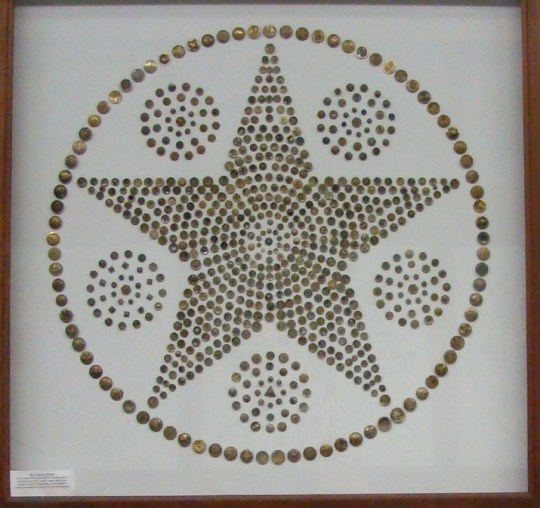
Today many of those creations containing 73,000 buttons can be found on the walls and ceiling of the Button House. Here you will find buttons of many kinds of materials: hand-painted ceramic, pearl, metal and wooden. Amazing as it may sound, there are no duplicates in the displays.

Frieda Lincoln Button

This button design features a button in the center from Mrs. Lincoln’s inaugural dress.

One of her favorite designs has, as its centerpiece, a button from the Inaugural Dress of Abraham Lincoln’s wife. Lincoln was a favorite of the Warthers, and Mooney followed Lincoln’s philosophy of life.

Because the family loved children, Frieda made one design especially for them. It consists of Cracker Jack prizes, novelties, and what she called Goofy Buttons.

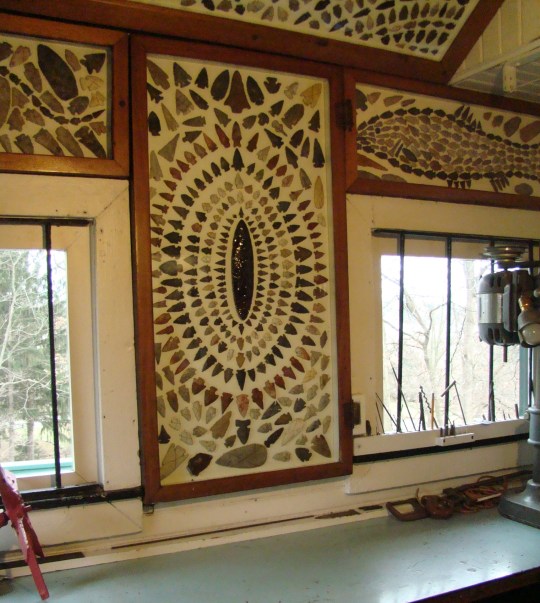
Frieda Arrowheads

Arrowhead displays by Frieda also hung in Mooney’s workshop.

If you look carefully, you can also spot her button designs in another spot – the ladies’ restroom inside the Warther Museum. Had to inquire from a gentleman visitor regarding what was on the wall in the men’s restroom. Here Frieda made a creative display of Mooney’s arrowheads he found on his trips to the country with their family. You never know where creative objects might be found.

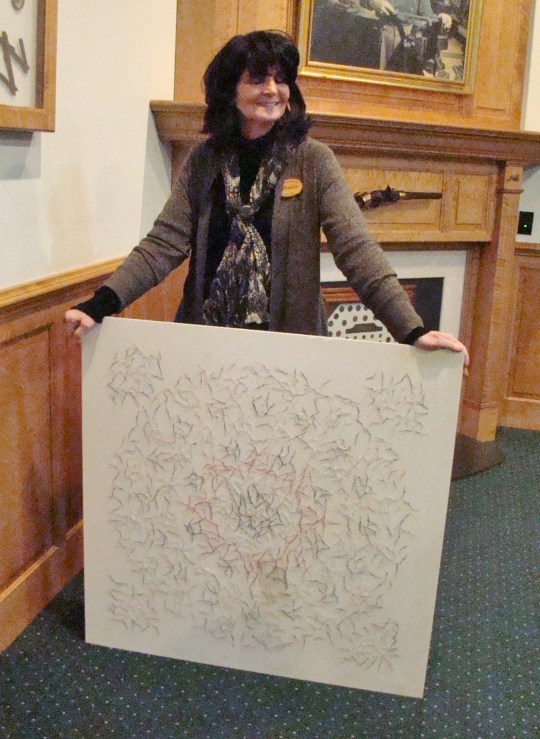
Frieda back

The back of a button display was shown by Sheila, our guide and daughter of Mooney’s barber.

There are still unfinished patterns that Frieda had planned. Even when she was in her final days at the age of 98, she was still asking people for one of their buttons if she saw an unusual one.

Soon thousands of springtime tulips will be blooming in Frieda’s Swiss Flower Garden. Many of the spring flowers were originally planted by Freida. Stop by and relax on a bench and imagine what it would have been like to live at “Dumb Street” along the Calico Ditch.

Warthers Museum can be found easily off I-77 in Dover, Ohio. Take Exit 83 to the east and follow the well placed signs to Warthers.

Ted Lewis’ Grand Refrain – “Is Everybody Happy?”

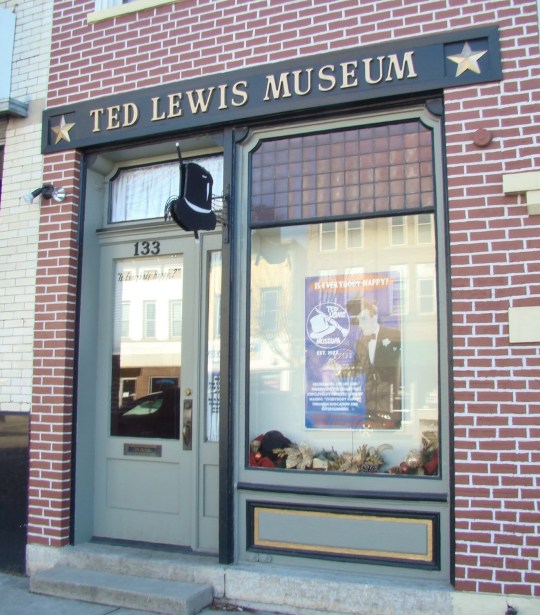
Ted Lewis Museum

The Ted Lewis Museum was renovated last year for its 40th Anniversary.

For those interested in old entertainers and movies, Ted Lewis Museum in Circleville, Ohio will arouse your curiosity. Ted’s first professional singing job happened in 1906 in between movies at the Circleville Electric Nickelodeon. His salary – $4 a week. But that was just the beginning.

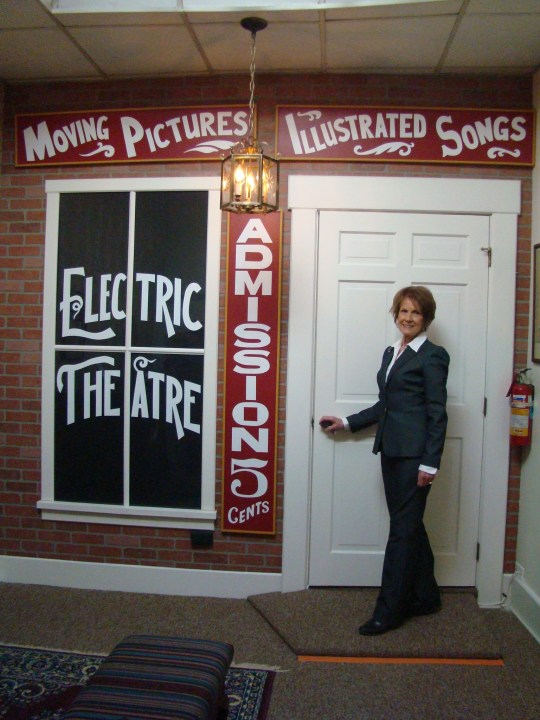
Ted Theater with Joyce

Joyce Keller, president of the museum, stands in front of a replica of the first theater where Ted  performed.

Born Theodore Friedman in Circleville, Ohio, his younger years were spent helping his parents in Friedman’s Bazaar, an emporium which supplied women of Pickaway County with the latest fashions. Ted spent his time sweeping inside and outside the store, as well as making deliveries. It wasn’t something he enjoyed.

His earliest musical instrument experience came at the age of nine when he played piccolo in the Circleville Cadet Band. His fingers weren’t long enough yet to play the clarinet. But Ted mowed lawns during the summer to save money to buy an E-flat clarinet he knew he wanted to play.

However, Ted became fascinated with syncopation and began taking lessons after school with Cricket Smith, a black barber. Jazz ran in Ted’s blood, which had him dismissed from the Cadet Band. The band teacher later apologized when Ted became famous.

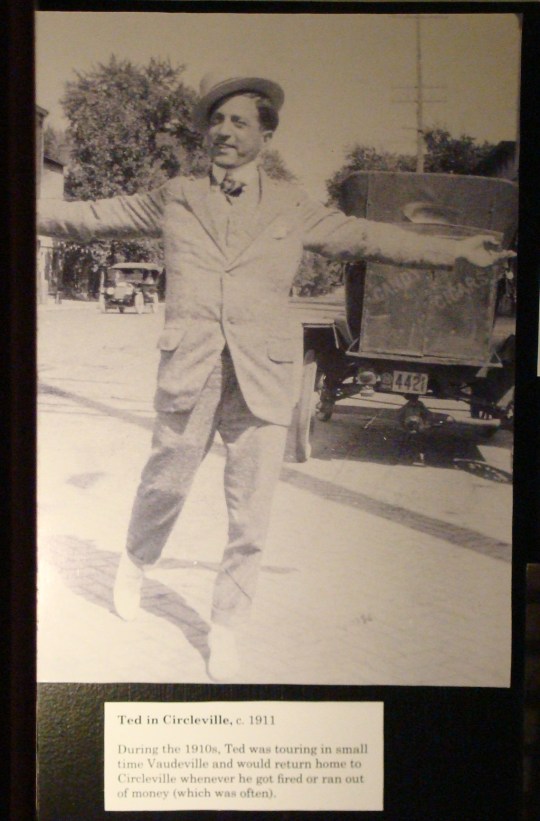
Ted Early Days

In 1911, Ted would return home from tours when he ran out of money, which was often.

As a teenager, he played his clarinet to help draw a crowd for Dr. Cooper’s Medicine Man Show and sold balloons and cotton candy. He’d carry circus banners in parades and even followed them out of town. This caused his parents much embarrassment and they tried to send him to business college in Columbus, but to no avail.

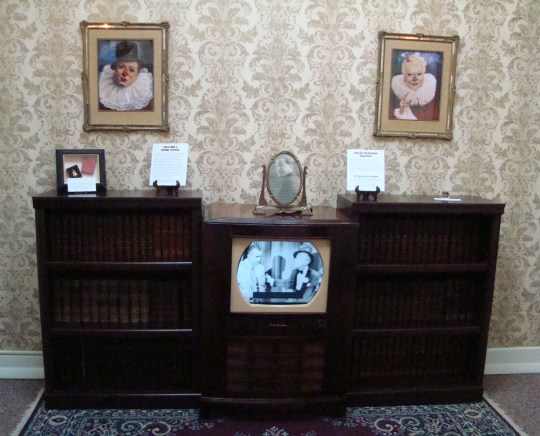
Ted Apartment 2

The books, bookcase and photos of life long friends, Ted and Sophie Tucker, are from his New York City apartment. Even the gold wallpaper has been replicated.

Ted kept busy following his dream of becoming an entertainer. He paired up with Jack Lewis under the billing Lewis and Friedman. One day in South Carolina, he saw the billing said Lewis & Lewis. The manager said that fit on the marquee better. After that he was always known as Ted Lewis, even though he never legally changed his name.

Ted Top Hat 2

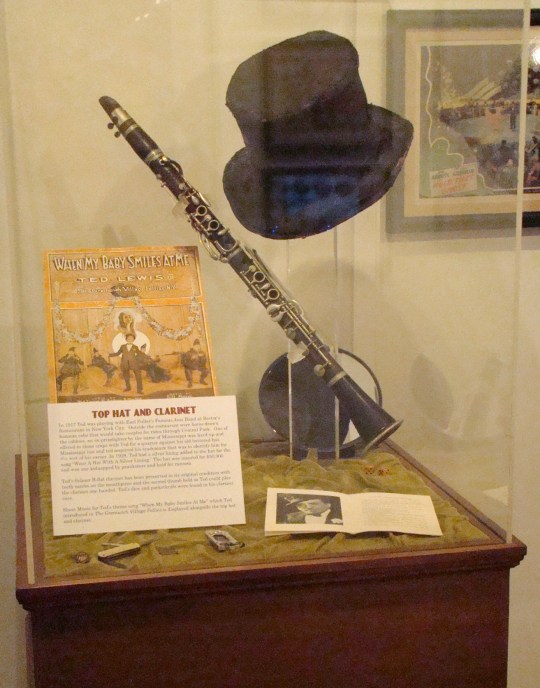
His battered top hat, cane, and clarinet are on prominent display.

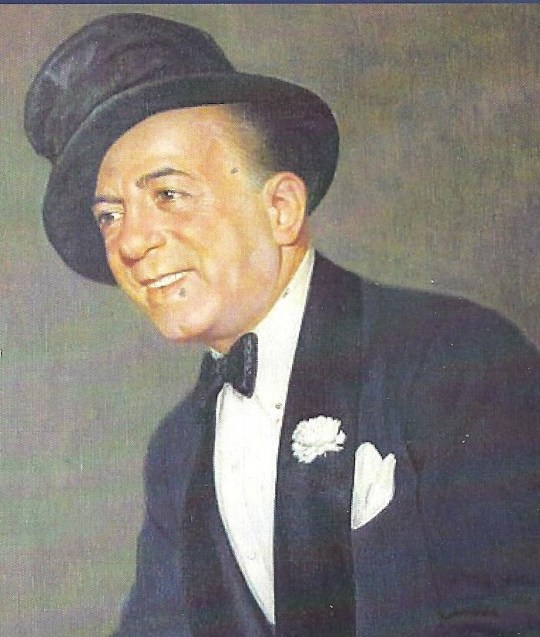
In 1916, at the age of 26, Ted formed his first band – Ted Lewis Nut Band. They were very popular in the New York City area and performed at Rector’s Restaurant, a high class venue. While there, he won an old top hat in a dice game from a cab driver called Mississippi. That top hat, his clarinet, cane and the question: “Is everybody happy?” were always part of his act.

Ted Lewis 001

Ted Lewis always wore his old battered hat at every performance.

Ted Phonograph

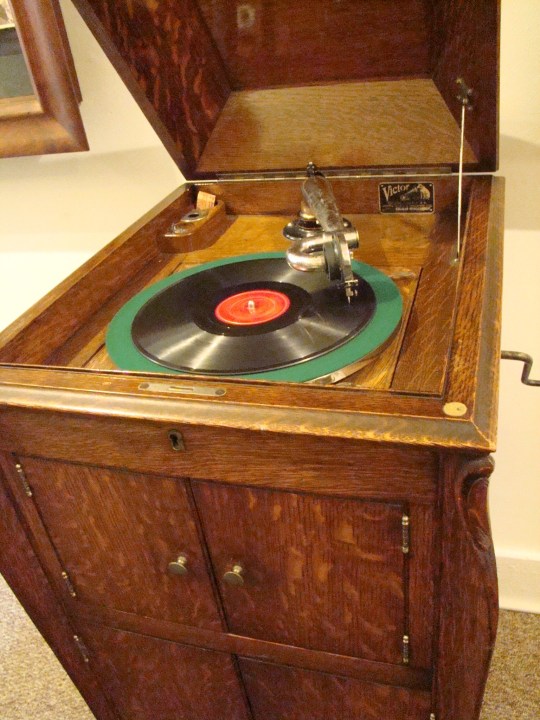
This old hand-crank Victrola played “Blues My Naughty Sweetie Gives to Me”.

His theme song, “When My Baby Smiles at Me” and hits such as “Tiger Rag” and “On the Sunny Side of the Street” earned him the title, “King of Jazz”. In 1926, his Columbia recording of “Tiger Rag” sold more than five million copies. He was their highest paid artist in the 1920s. This popular performer presented his act to nine United States Presidents and even did a command performance for King George V of England.

Ted Me and My Shadow

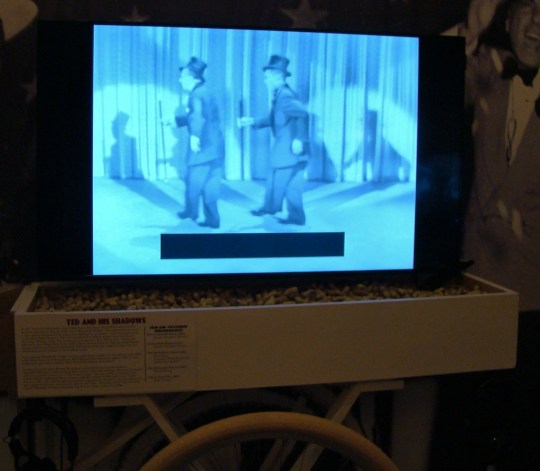
A video in a peanut cart plays “Me and My Shadow”.

During one performance, Ted noticed the doorman, Eddie Chester, mimicking him from the wings and asked him to join him on stage. Thus was born his signature routine, “Me and My Shadow”.

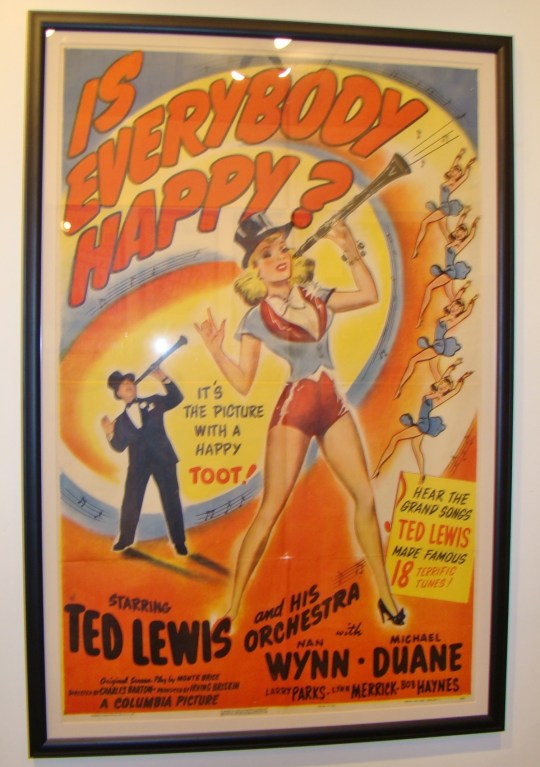
Ted Is Everybody Happy

Ted starred in a movie about his life. Beautiful women played a large part in his acts.

Ted Lewis Museum opened in 1977 across the street from where Ted was born. Here you’ll be able to see classic memorabilia and watch videos of Ted Lewis performing. He told his wife that when he died he wanted everything to come back to Circleville, “The Capital of the World”.

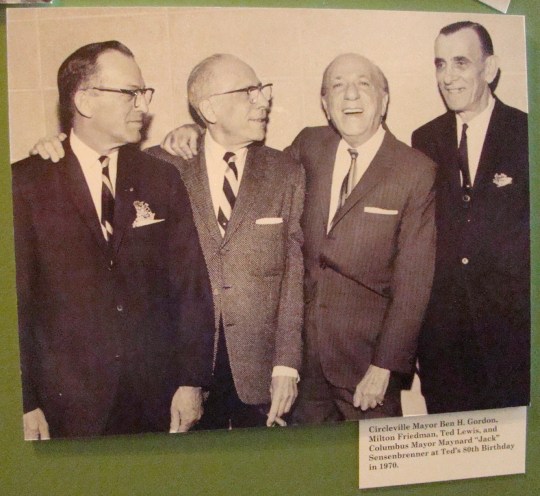
Ted 80th 2

Pictured at Ted’s 80th birthday party are Circleville Mayor Gordon, brother Milton Friedman, Ted, and Columbus Mayor Sensenbrenner.

This showman never forgot his hometown. Ted and his wife, Adah, devoted themselves to making Circleville a better place to live. They supported Berger Hospital, the local schools, and even made possible a 13-acre Ted Lewis Park complete with playground equipment, ball fields, and a swimming pool at that time. Ted entertained the troops during WWII and was a leader in selling war bonds.

Ted and friends

Ted’s friends included Benny Goodman, Sophie Tucker, George Jessel, and Eddie Cantor.

The museum on Main Street only opens on Friday and Saturday from 1-5. After your visit you’ll be ready to put on some tap shoes while grabbing a top hat and cane.

Ted Lewis Museum is located at 133 W Main Street in Circleville, Ohio. Follow US 22 for a scenic ride.


Pro Football Hall of Fame: Legends Live Here

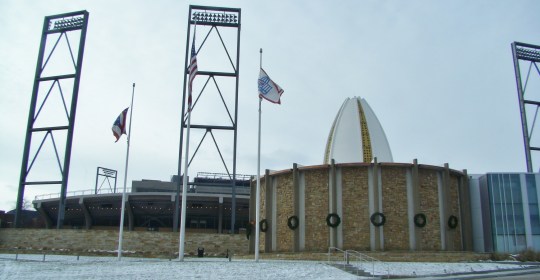
HOFWith pro football season leading up to Super Bowl LII on February 4, what better time than now to visit the Pro Football Hall of Fame in Canton, Ohio. Find your favorite gridiron heroes inside the football shaped rotunda, and learn interesting facts about their careers.
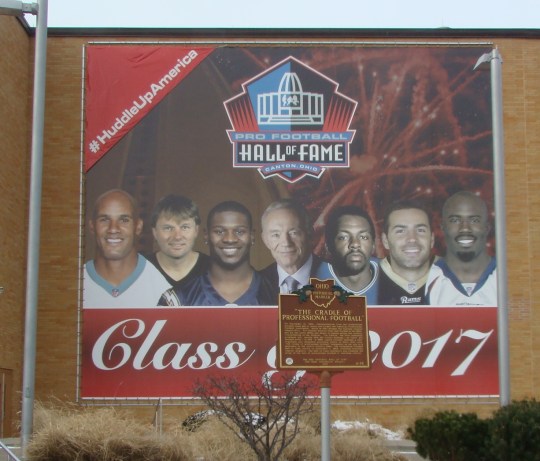
HOF Class of 2017

When arriving at the Hall of Fame, you are greeted by this wall-size picture of the Class of 2017.

The Hall of Fame is a tribute to those men who have made football America’s favorite sport. Many wonder why this Hall of Fame was located in Canton. Back in 1920 the American Professional Football Association, renamed National Football League, was founded in Canton.

HOF Pre NFL

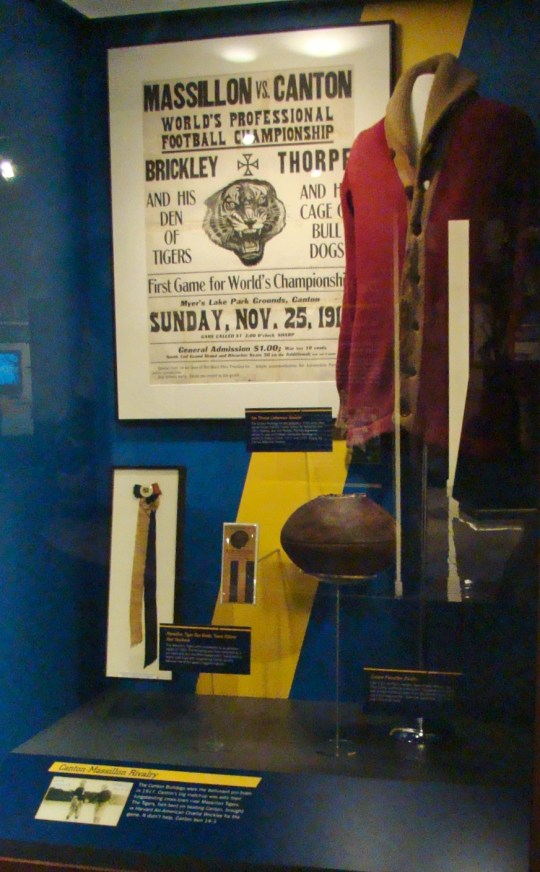
Professional football hit Canton before the NFL was formed when the Canton Bulldogs and Massillon Tigers played at Myers Lake Park Grounds.

The Canton Bulldogs were one of the early pro football powers, even before the days of the NFL and had as their rivals the Massillon Tigers. Today, local high school teams are still called Canton Bulldogs and Massillon Tigers. And they remain rivals.

The Bulldogs won the championship of the NFL in 1922 and 1923. Jim Thrope played his first pro football with the Bulldogs, starting in 1915.

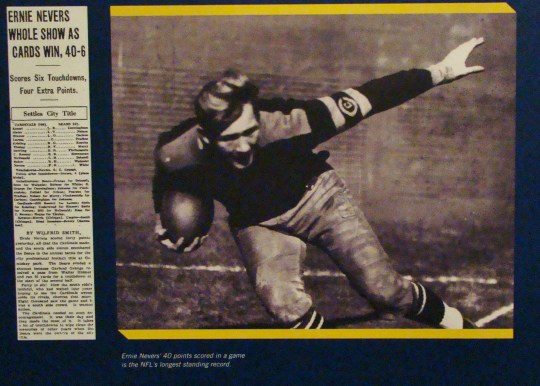
HOF Ernie Nevers

Ernie Nevers has the NFL’s longest standing record. Nevers was the ‘whole show’ in 1929, when he scored all 40 points for the Chicago Cardinals.

Sounds like there were plenty of reasons to build the Pro Football Hall of Fame in Canton. It’s mission is to honor the heroes of the game, preserve its history, promote its values and celebrate excellence everywhere. Some call it the Sistine Chapel of Football.

HOF Jim Thorpe

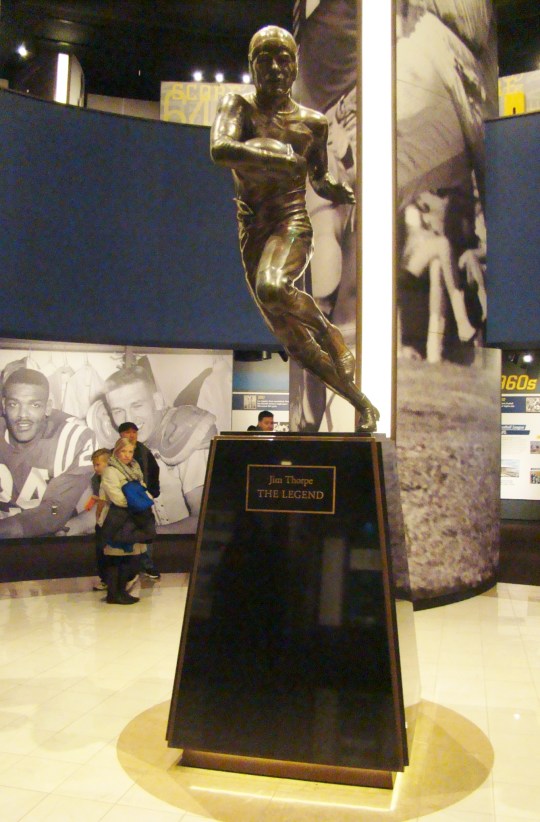
A statue of the legendary Jim Thorpe stands at the center of the rotunda’s football history.

The circular football shaped rotunda shows progress of football from its beginning in the 1920s to 2010s. A statue of Jim Thorpe, “The Legend”, stands in the center. The walls are filled throughout with interesting football statistics.

HOF Busts 2

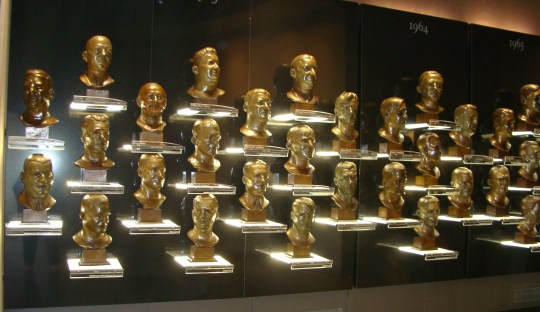
310 bronze busts fill the Hall of Fame Gallery beginning with the Classes of 1963 and 1964.

One special spot is the Hall of Fame Gallery, which features a bronze bust of each of the members of the Hall of Fame starting with that first class in 1963. As of 2017, there are 310 members in this prestigious display. Only 1% of the people who play professional football make it to the Hall of Fame Gallery.

Hall of Fame Stadium 001

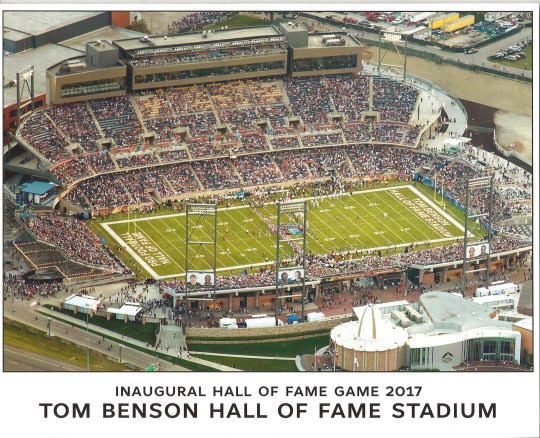
Tom Benson Hall of Fame Stadium hosts the annual Hall of Fame game as well as various high school and college football events.

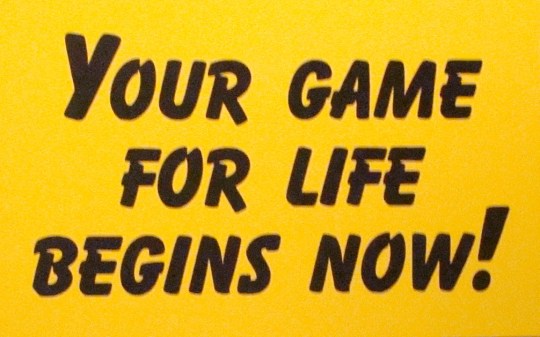
A holographic theater presents A Game for Life. This presentation puts you in a Locker Room, which uses a hologram of Joe Namath to teach life lessons instead of the game of football. This high tech presentation teaches the importance of character, confidence and respect through advice given by football legends. As you leave through the game tunnel, a sign says, “YOUR Game of Life begins now”.


HOF Game for Life

After the Game for Life presentation, this encouraging sign hangs in the game tunnel.

The Lamar Hunt Super Bowl Gallery is thus named because Hunt came up with the name “Super Bowl”. He also suggesting using Roman numerals to designate the years – a practice that has been maintained for 51 years. 2017 being Super Bowl LI.


From that first Super Bowl ring until last years, the diamonds have increased from 1 to 283, to signify the 28-3 deficit the Patriots overcame to win the Super Bowl.

In Super Bowl Theater, seating revolves to show you a progression of scenes from regular season to Super Bowl. The video shown was the 2017 game highlights between New England Patriots and Atlanta Falcons, often called the greatest comeback in the history of the Super Bowl. It was also the first overtime in Super Bowl history, which gave the Patriots an exciting victory.

HOF Johnson Controls

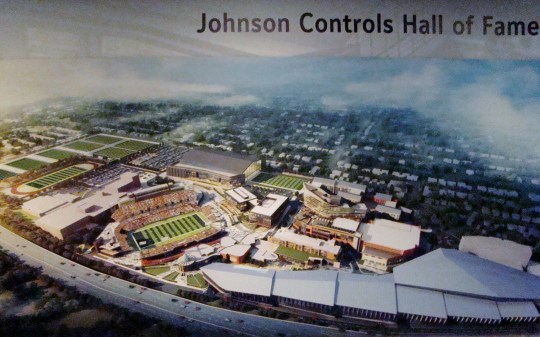
Johnson Controls Hall of Fame Village plans to open for the 100th NFL season in 2019.

Expansion at the Hall of Fame location promises increased traffic in the Canton area. The new complex being developed at a cost of $700,000,000 is called Johnson Controls Hall of Fame Village, where everything is tied together in a network called a “smart city”. It includes a four star hotel, an inside water park and amusement center, training facilities, and a retirement center just to name a few highlights.

HOF - Exit

Perhaps you’d enjoy visiting “The Most Inspiring Place on Earth”.

Hundreds of thousands of fans from across the globe trek to Canton annually to visit the Pro Football Hall of Fame. It was heartwarming to see many fathers sharing stories of football heroes with their sons. If you’re a football fan, this Hall of Fame is a place you would certainly enjoy visiting.
Then, get ready for the action of Super Bowl LII.

Castle Noel – A Family Christmas Experience

Castle Noel Buddy

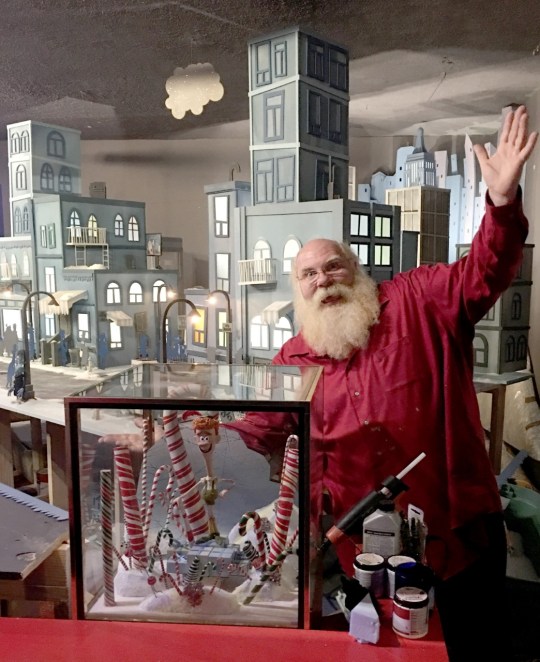
Mark Klaus is ready to welcome you to Castle Noel and their newest movie set, “Elf: Buddy’s Musical Christmas”, starring Buddy!

The most amazing thing you’ve ever seen

is Castle Noel in ’17.”

That’s how Mark and Dana Klaus feels about Castle Noel, which captures the spirit of a family Christmas in several ways. The heart and soul of Castle Noel in Medina is Mark Klaus – with a name like that and a full beard, Christmas seemed a natural passion.

Sweet Shoppe Window

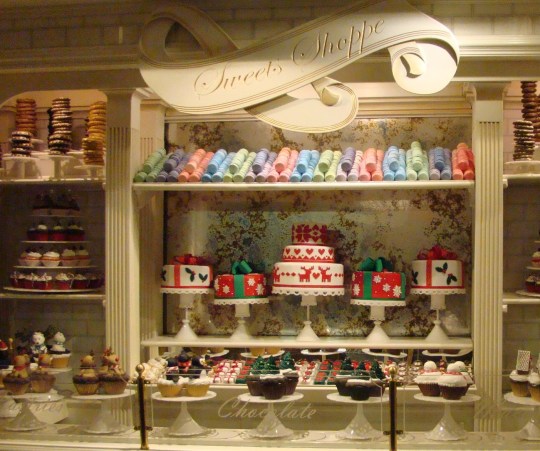
This Sweet Shoppe window display from Saks 5th Avenue is a favorite of visitors.

Growing up, Mark’s dad loved decorating for Christmas. Neighbors came from miles around to see his 16′ Christmas tree, as well as the reindeer and sleigh hanging from their ceiling. The Klaus house looked like a Christmas Wonderland.

Castle Noel Ornament

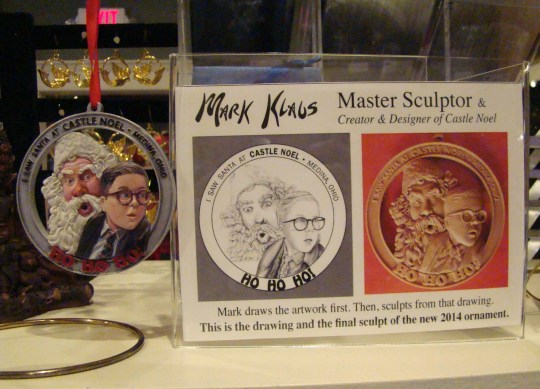
Mark’s sculpting skills create beautiful ornaments.

Mark, a world renowned master sculptor, displays many of his sculpted ornaments and angels in their gift shop. His miniature detail is accomplished through using dental tools and magnifying glasses. Angels are one of his favorite sculptures. Why?

Mark’s mother was killed in an automobile accident when he was sixteen. It happened on Christmas Eve. Mark said, “This all is a tribute to my mom.”

Castle Noel Church

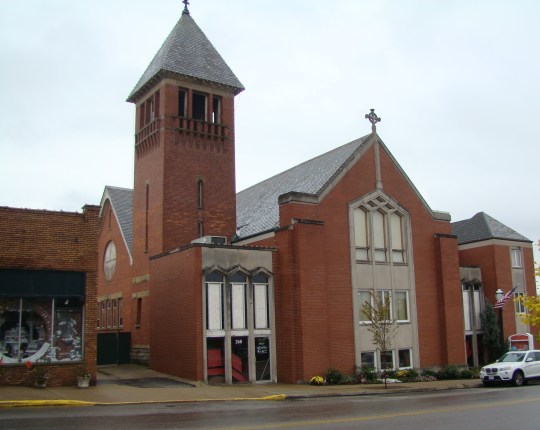
This former Methodist church in Medina is now home to Castle Noel.

When Mark was searching for the perfect place to locate his enormous Christmas collection, he looked all over the United States but decided to come back to his home area. He found an abandoned Methodist Church built in 1891 in Medina that reminded him of a castle, thus the name, Castle Noel, which opened in 2013.

Castle Noel Lampoon Vacation

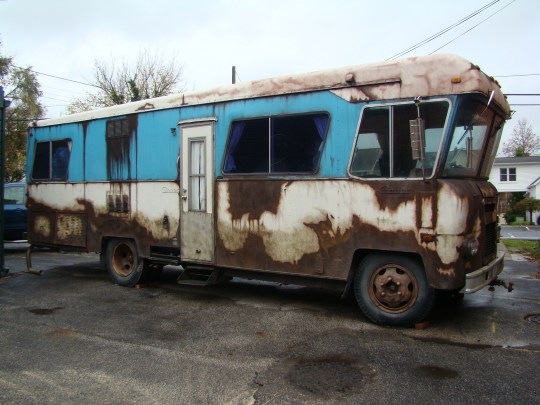
Mark drove the camper from Lampoon Vacation all the way from California to Ohio.

Usually Mark and his wife, Dana, work seven days a week and think about Castle Noel twenty four hours a day. Once in a while, they go on vacation. Walt Disney’s parks top the list as Mark’s favorite spots. But he doesn’t go there for the reasons most attend…Mark goes for inspiration for another idea to make Castle Noel even better.

Castle Noel Vortex

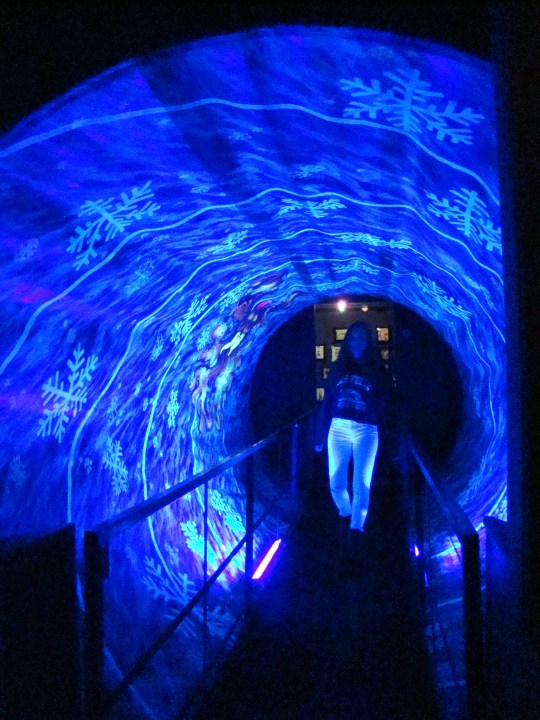
Walking through the Blizzard Vortex had everyone hanging onto the handrails.

Every year there’s something new to see at Castle Noel as Mark constantly makes improvements so it can continue to be “America’s Largest Indoor Year Round Christmas Entertainment Attraction”.

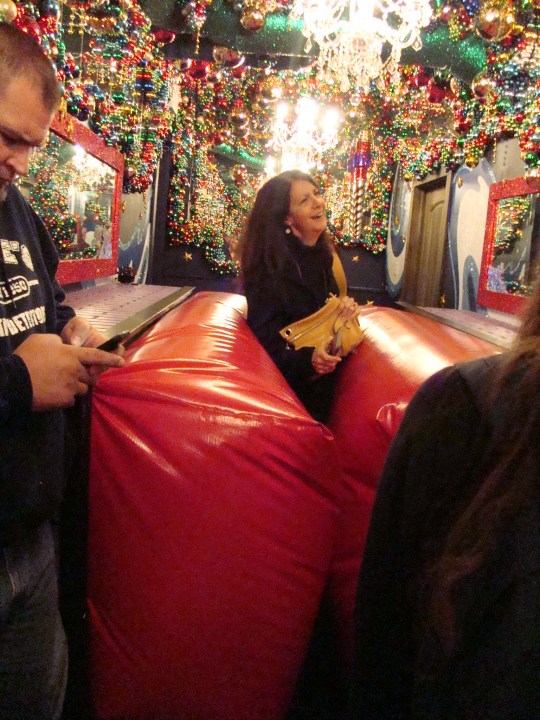
Castle Noel Santa Squeeze

Get the feeling of Santa going down the chimney in Santa Squeeze with 100,000 glass bulbs overhead for some extra Christmas cheer.
There seems to be something exciting around each corner, so only a few of the highlights are mentioned here.


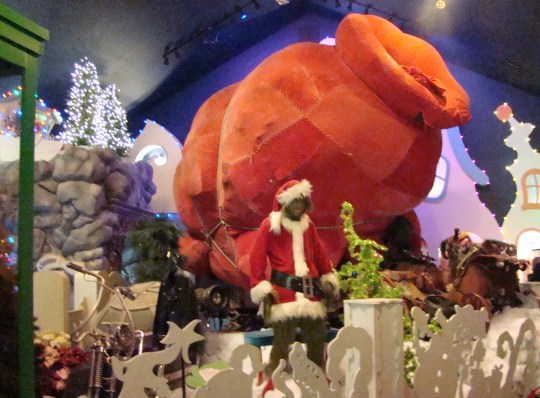
Castle Noel Grinch set

This is an actual movie set from “How the Grinch Stole Christmas”.

His fantastic collection of Christmas movie sets, props and costumes that are worn in the Hollywood movies is mind boggling. He authenticates everything before displaying it in Castle Noel.

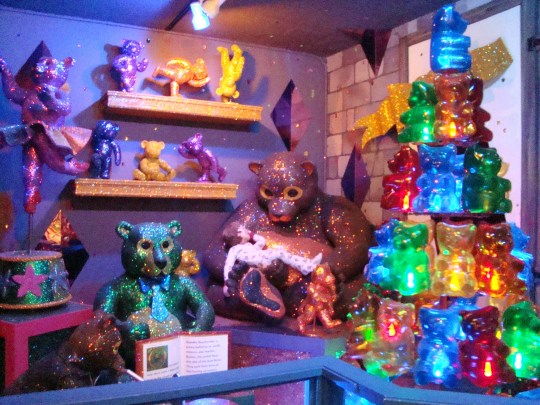
Castle Noel Gummy Bears

Mark was given three hours to remove this gummy bear display from Bloomingdale’s.

As you continue your journey you travel to New York City at Christmas time and stroll through the Platinum award winning animated window displays from Saks Fifth Avenue and Lord & Taylor. Windows from our own Higbee’s in the 60s, Bloomingdale’s, plus Macy’s of Pittsburgh, New York and Washington state create a magical journey for all ages.

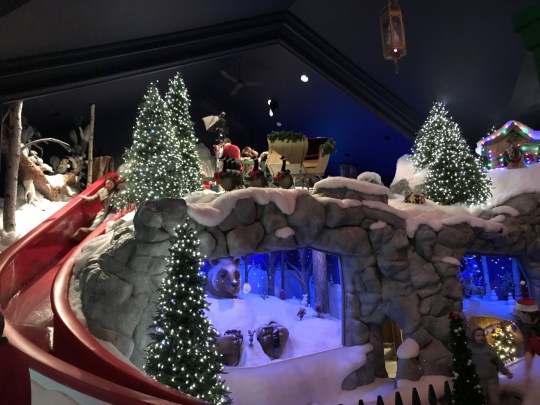
Caslte Noel Slide

Go up the stairs through the Enchanted Mountain, see Santa, and ride the slide down…just like Ralphie.

Last stop is Enchanted Mountain filled with animated animals. But it’s the slide back down that everyone enjoys. Seated on a burlap mat, all ages enjoy the thrill of sliding down the giant red slide like Ralphie in “A Christmas Story”. A great way to end the tour!

Castle Noel Alien Golf

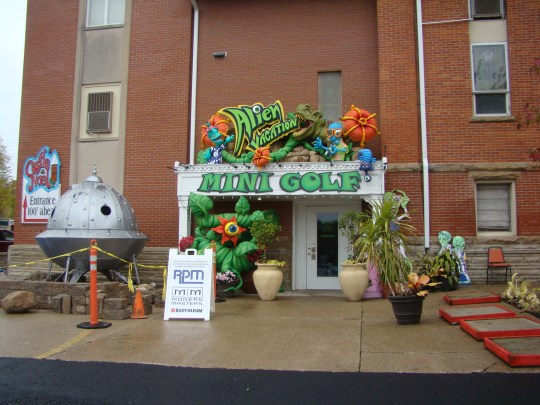
Have some extra excitement at Alien Vacation Mini Golf.

But wait, there’s more! Outside you’ll find the entrance to Alien Vacation Mini Golf. You enter a 3D wonderland with miles of fiber optics. It now has 19 holes since the landing of the Alien Spaceship. You’ll enjoy this 3D spot whether you decide to play mini-golf or not.

Castle Noel Mark Klaus

A working Mark Klaus has fun with visitors after the tour.

Castle Noel is the perfect place for folks of every generation to make lasting Christmas memories. As Mark and Dana would tell you, “We like having fun around here.”

Castle Noel is located at 260 S Court Street, Medina, Ohio. From I-77 take exit 122B for US-224 W. Take exit 7 for OH-57 into the town of Medina. 

Victorian Elegance at Barnesville Mansion Museum

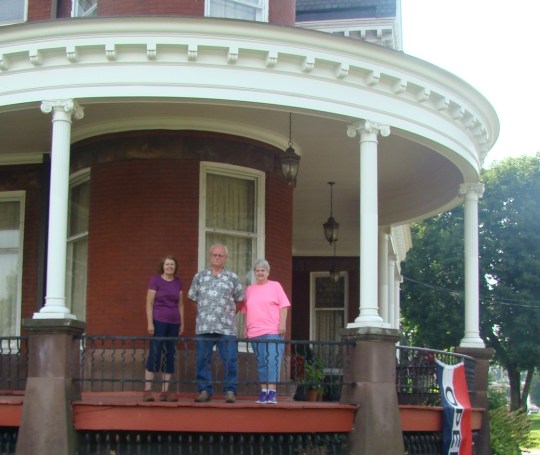
Barnesville Mansion

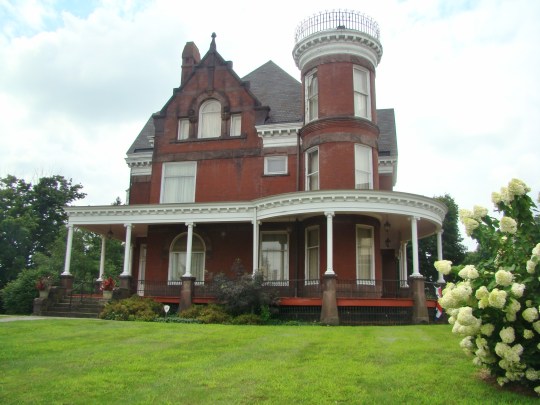
This eye-catching mansion showcases the luxurious Victorian era.

Feel the spirit of Victorian times in this elegant, historic mansion in Barnesville. The beauty of Barnesville Victorian Mansion Museum lasts year around, but comes alive at Christmas time when it is beautifully decorated in Victorian style.

Barnesville Owner

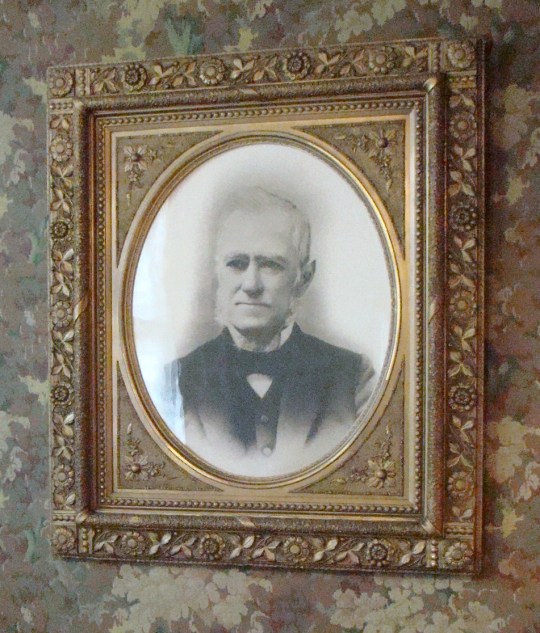
A portrait of John Bradford, the original owner appears upstairs.

Twenty-six rooms have been restored to the original style of its construction during 1888-1893 for John W. “Dias” Bradford, a well-known merchant and highly respected citizen of Barnesville. It took five years to build this fine Victorian home as a great architect worked with the finest craftsmen to finish everything to perfection. Not only did he build this fine house, but Bradford was also responsible for building the first bank in Barnesville.

Barnesville Griffin

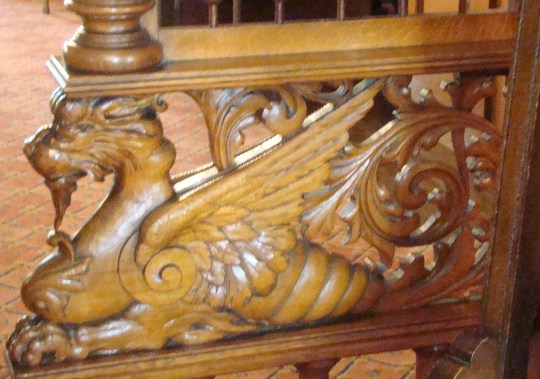
A protective griffin in the fretwork greets visitors upon entering.

Arriving through the carriage entrance, you’re greeted by a carved oak fretwork, a design formed by intricate scrolling. A winged griffin was included in the carving, as it was believed a griffin would prevent misfortune.

Barnesville Door Hinges

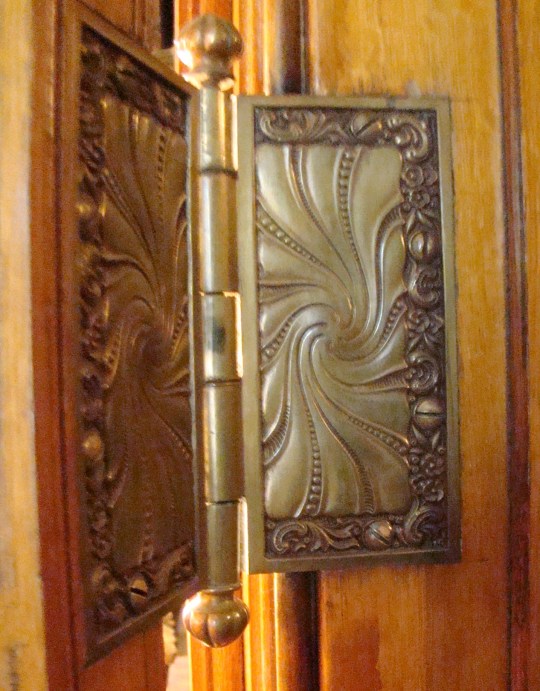
Even the door hinges showed intricate designs.

Everything speaks of elegance with eleven fireplaces, which have decorative carved wooden mantles. Woodwork throughout is handcarved so even the spirals on the banister have an individual air. The floors show a beautiful parquet design from room to room. Even the hinges on the doors have an intricate design, which was then matched on the doorknobs and staircase. No cost was spared.

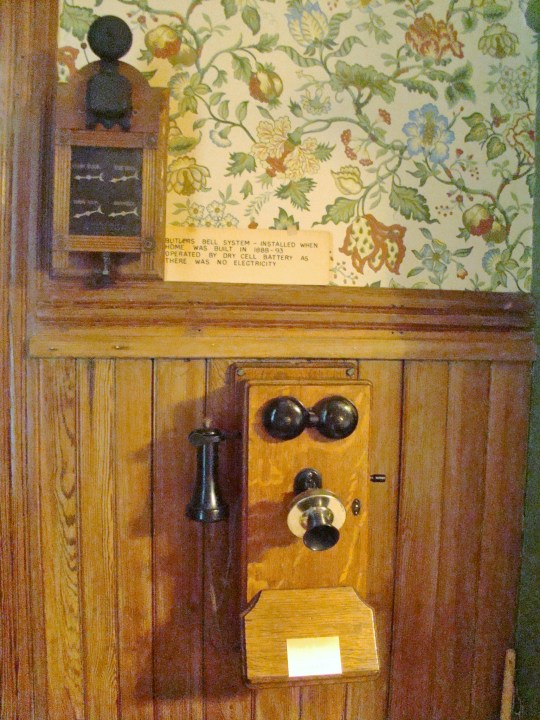
Barnesville Butler's Bell

A butler’s bell system was installed when the home was built with the telephone later added below it.

Even at this early time, the builder had the foresight to wire the house for electricity. Therefore, the lights could use either gas or electric.

Barnesville Child's Dress

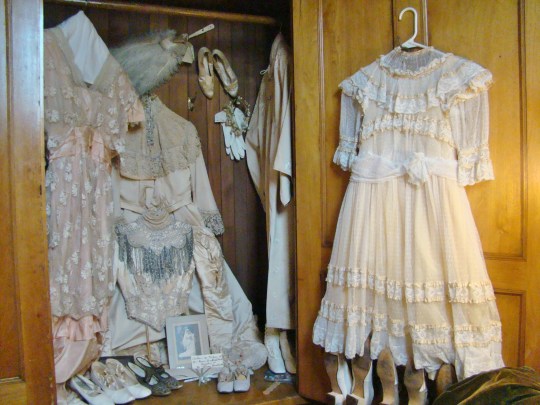
This pretty yellow lace dress was found in a trunk in the attic.

Finding drinking water in those early days created a problem. Most places had a cistern, which caught rain water and drainage from other sources. This water made everyone sick so it was only used for cleaning and bathing. Their drinks consisted of beer, cider, whiskey and wine. Life expectancy was forty-six years.

Inglenook, a special courting room, set back into the wall. The man sat on one end and the girl on the other. In this special room, the acoustics were such that they could talk softly to one another, but no one else could hear them.

Barnesville Growlery

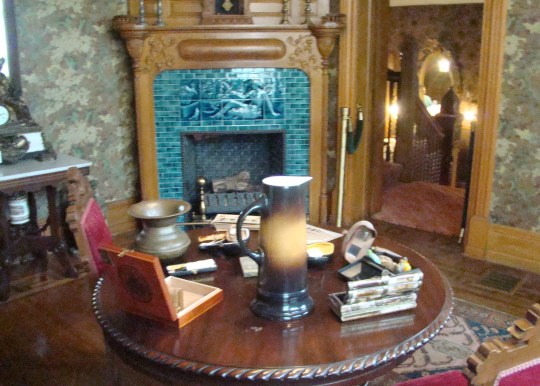
The Growlery provided a place for men to relax during the evening.

The Growlery was the place men often met after dinner to discuss business while smoking and playing games. Beautifully carved ivory and clay pipes rested on the game table as well as an ornate spittoon and snuff bottles. A stereoscope had viewing cards handy.

While the house had many fireplaces, the one in the Growlery had a special charm. Made with blue and white tile from Consolidated Pottery of Zanesville, it contained the image of Diana, Goddess of the Hunt.

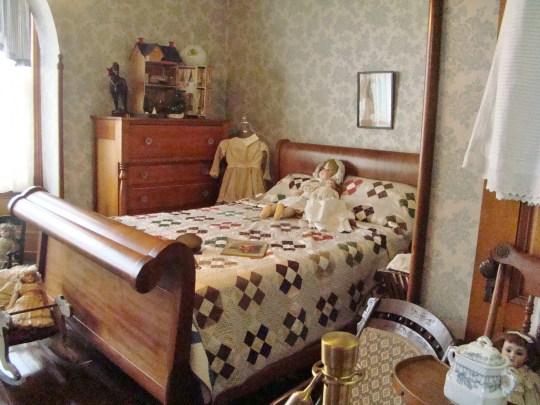
Barnesville Bed with Doll

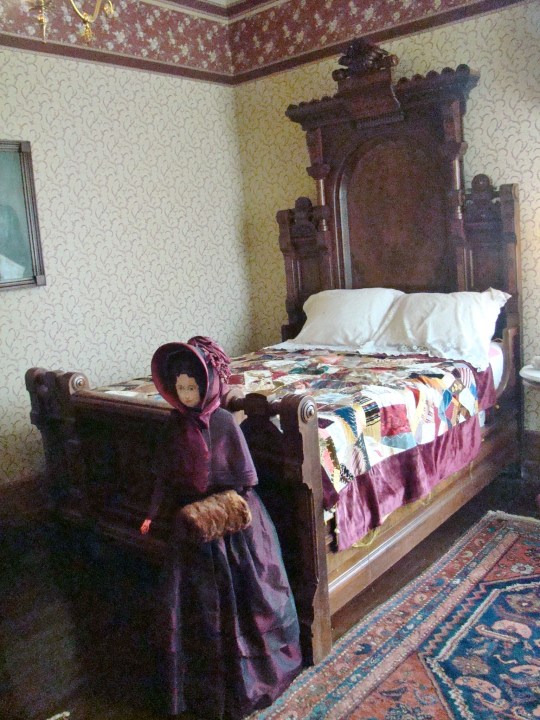
A Shannon Doll from a West Virginia collection stands at the foot of an original bed.

Bathrooms presented an interesting story as there were three inside, one downstairs – a powder room, and two upstairs. However, they were suspicious of going to an indoor toilet since they feared sewer gases could be dangerous. The servants’ rooms were located near the bathrooms.

Barnesville Child's Bedroom

This child’s bedroom contained everything a little girl would enjoy.

The powder room and one upstairs bath had 22K gold decorations. Two 540 gallon tanks located on the third floor supplied running water.

In that day, most people took one bath a week. Every month they washed their hair with a special rinse of eggs and vinegar to give it a lasting shine.

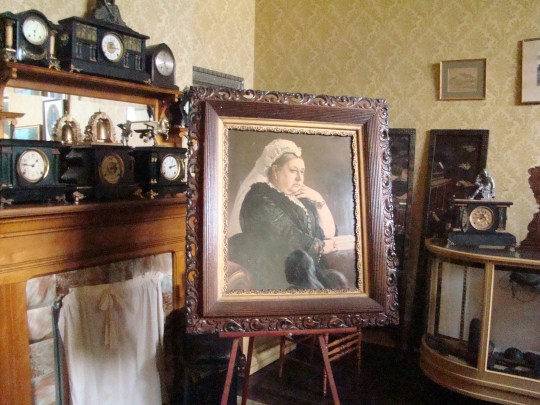
Barnesville Clock Room

A picture of Queen Victoria had been placed in their clock room.

Clocks held an importance far above just telling time. You could tell the quality of the home as well as their finances by the kinds of clocks they had on display. Taking care of the clocks was always the man’s duty, or sometimes the oldest son. The museum has a large clock collection on the third floor.

That third floor also held the ballroom, which was typical of Victorian mansions. Twelve couples could easily dance around the floor. An adjoining room held an old Victrola, organ and banjo.

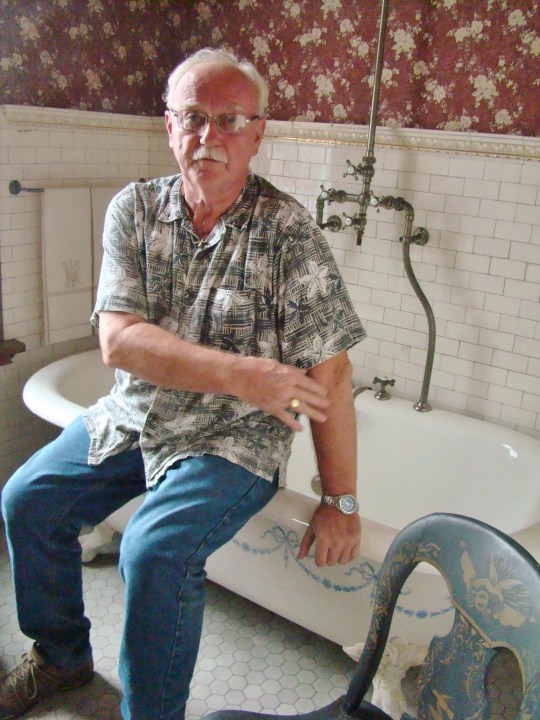
Barnesville Bathrub

Emery Stewart drew flowers on this bathtub in 1966.

Excellent guides created an informative day. They all enjoyed sharing stories of the mansion. One of those guides, Emery Stewart, started working at the museum when he was a student at Barnesville High School in 1966. His first assignment was to paint flowers on the bathtub in the upstairs bathroom. He’s been a volunteer ever since and loves his hometown of Barnesville.

One amazing picture, a “hair” picture, had been made from pieces of family hair. This unusual picture formed a family tree with pieces of each person’s hair on their branch of the tree. Lovingly made step by step by an aunt or grandmother, the whole family story could be told from the “hair family tree”.

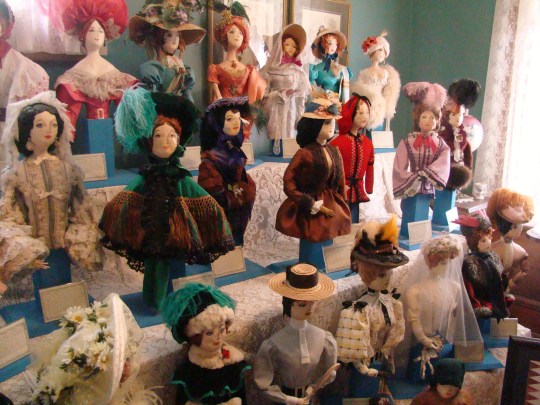
Barnesville Doll Collection

A large collection of Pete Ballard dolls can be found upstairs.

Barnesville sat along the railroad line and was a wealthy city in its heyday, having eleven hotels, seventeen saloons, and several mansions. The Board members were very pleased to receive a grant from the Ohio Arts Council to be used for television broadcasting so they could share the history of their mansion and hometown.

The Barnesville Victorian Mansion Museum at 532 N. Chestnut Street is open for tours May 1 through October 1, Wednesday through Sunday from 1:00-4:00 pm. Groups and buses can be scheduled at any time by contacting the museum.

Barnesville Volunteers on Porch

Volunteers Sherry McClellan, Emery Stewart, and Judy Jenewein help keep history alive.

Specials events take place at the mansion throughout the year. They’ve had wine tastings, graveyard tours, and their lovely Christmas tour. Here you can see a Victorian style Christmas from the weekend after Thanksgiving until the weekend before Christmas.

Keeping the spirit of their beginning alive will hopefully carry over from generation to generation.

The Barnesville Victorian Museum is located at 532 N Chestnut Street in Barnesville, Ohio. Take OH-800 S off I-70 into Barnesville. Make a left on Walton Avenue and the museum will be on the left.