Places to go and things to see by Gypsy Bev

Archive for the ‘Museums’ Category

John Glenn Delights Audience during Charlie Rose Interview
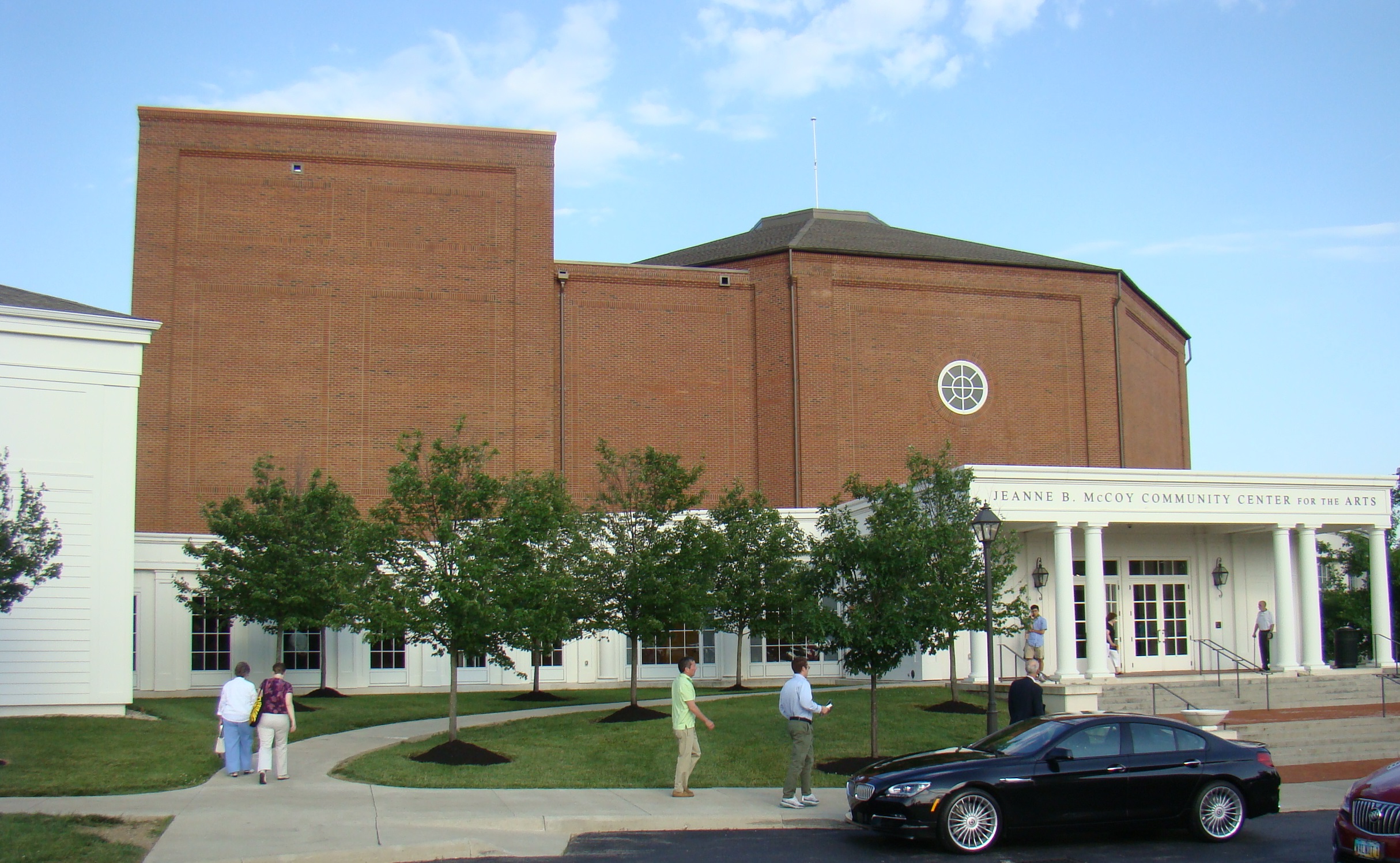
New Albany's McCoy Center presents the Jefferson Series.

New Albany’s McCoy Center presented Glenn as part of The Jefferson Series.

Blasting off to outer space may be something we joke about, but for John Glenn, it was the real thing. Born in Cambridge, Ohio, John Glenn grew up in nearby New Concord. Always interested in science, there he acquired the determination and desire to enter the military and eventually become part of NASA’s space team.

Recently, 93-year-old Glenn spoke in an interview setting conducted by award winning journalist, Charlie Rose, at the McCoy Center in New Albany. Inspired by Thomas Jefferson’s life-long adventure in learning, New Albany Community Center conducts The Jefferson Series, comprised of interviews with great thinkers of our time.

Video showed history of John Glenn.

Video showed history of John Glenn.

Prior to the actual interview, a short video was shown covering Glenn’s childhood and many of his major accomplishments. This provided opportunity for the audience to get to know John Glenn better.  His interest in flying began when he was eight years old and his dad took him flying from a small airport near Cambridge. Glenn was hooked! He immediately went home and began building model airplanes.

When 93-year old Glenn came on stage, there was a standing ovation for this Ohio born, national hero. Throughout the evening, his recall of events of his life was phenomenal, as well as his ability to think about the future. His sense of humor often filled the auditorium with laughter during the interview.

In introduction, Rose proclaimed, “Glenn is one of the great national heroes of our time.” Although Glenn was very humble about that remark, his participation in the Marines, space program, US Senate, and education programs verify that title.

He flew 149 combat missions as a Marine fighter pilot where he was awarded six Distinguished Flying Crosses, the Air Medal, The World War II Victory Medal, and four Service Medals. When asked, “Who’s the best pilot you ever knew?” Glenn quickly responded, “Me!” He said if you don’t have the correct training and attitude of being the best, you shouldn’t be a fighter pilot.
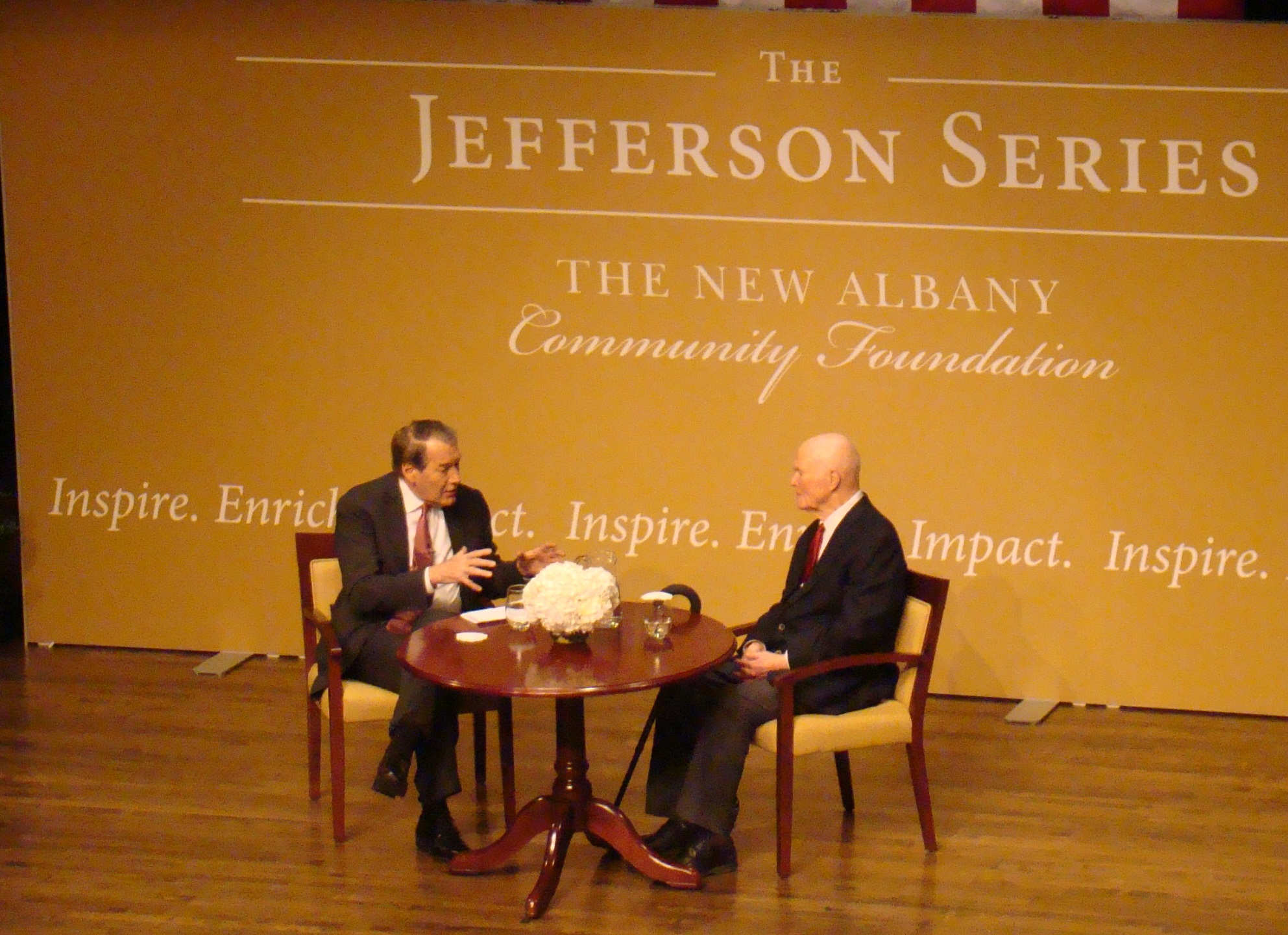
Charlie Rose interviews John Glenn, age 93.

Charlie Rose interviews John Glenn in 2015.

Then he entered the space program where he flew two missions. He was the first American to orbit the earth in 1962 on Friendship 7, and later in 1998, at the age of 77, Glenn volunteered for another orbital mission to experiment on the effects of space travel on the elderly. The second flight was another record setter, as it made him the oldest man to fly in space.

One of the favorite things to do on these flights is look out the window. Glenn described the beauty of the sunsets from space, where the angle of the sun’s rays makes all the colors of the spectrum visible. Charlie Rose told him, “You sound like a poet, not a pilot.”

John and Annie Glenn and Charlie Rose welcomed students on stage.

John and Annie Glenn with Charlie Rose welcomed students on stage.

The International Space Station holds special interest for Glenn, but it upsets him that we pay Russia $65,000,000 for each astronaut to be taken there. He obviously wants the United States to become more active in their own space program as the lessons learned are valuable.

Between those space flights, Glenn served as U.S. Senator from Ohio for four terms. Glenn said he had aspirations of being in politics since he was a youngster and credited his high school teachers for instilling that value. Doing something for your country is exhilarating. He reminded the crowd, “Every person here is a politician and part of this solution.”

Glenn thought for a few seconds when Charlie Rose asked him, “Which president do you admire the most?” Glenn’s answer, “Bill Clinton.” He said Clinton brought about good programs, and for the first time in a long, long time we were actually paying down the national debt.

When asked about his feelings on troops being sent to Iraq, Glenn quickly answered, “No, I would not have voted for the war in Iraq.” He said he had been through two wars and they were not very pleasant things. He was also skeptical that recent deployments of military advisors to Iraq will make much of a difference, since “they’ve been fussing over there for 2,000 years”.

Students in attendance had the opportunity to be on stage with the Glenns and Rose.

Students in attendance had the opportunity to be on stage with the Glenns and Rose.

Education has become a big issue for the future as we are now in a global competition. He credited his teachers for starting him on the right path and encouraged students to learn about their government through Civics class promotion. At the end of his interview, he asked all students to come on stage. At that time his wife, Annie, joined him and they had their pictures taken with the group.
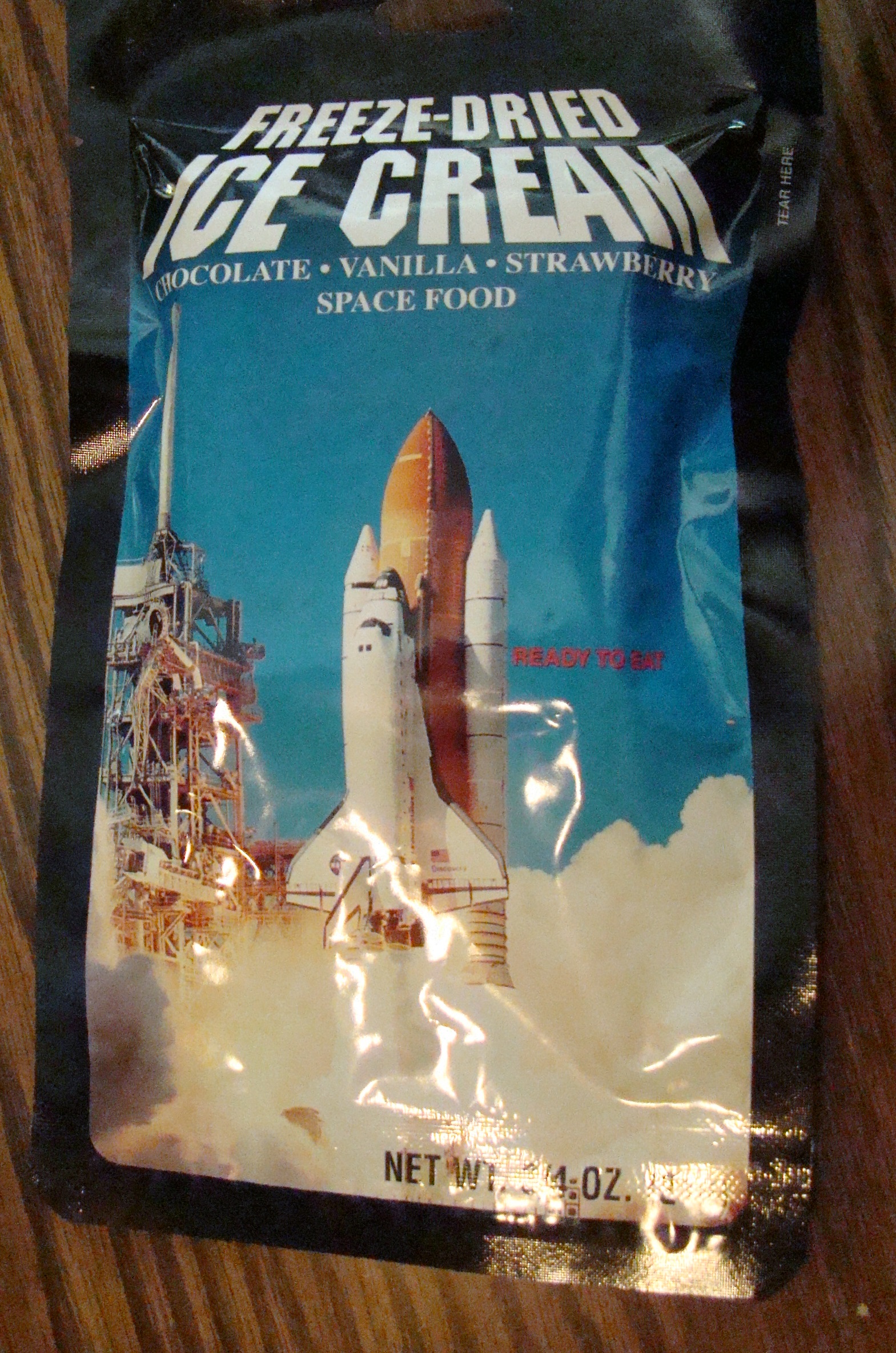
Freeze dried ice cream added flavor to the road trip.

Freeze dried ice cream added flavor to the road trip.

There wasn’t a dull moment in the interview, as Glenn and Rose brought vitality to the stage while discussing past, present and future. Today you can learn more about John and Annie Glenn by stopping in New Concord at John & Annie Glenn Historic Site, where a visit earlier in the evening provided dinner dessert, Freeze-Dried Ice Cream.

Makes me proud to be from the same area where John and Annie Glenn grew up.

Visit the John & Annie Glenn Historic Site, located in Glenn’s boyhood home, at 72 W. Main Street in New Concord, Ohio on old US Route 40 between Cambridge and Zanesville. 
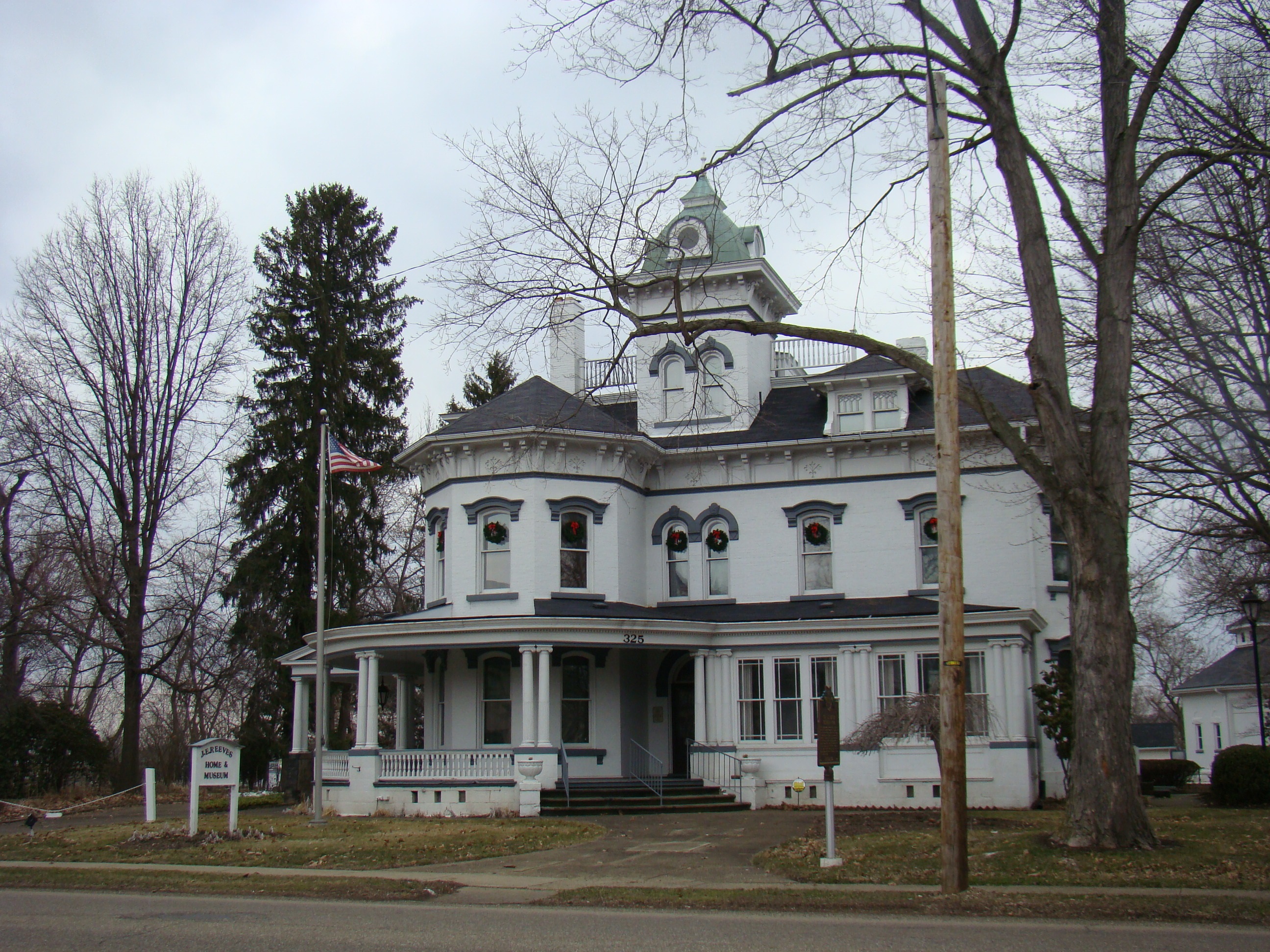
Discover Elegance at J.E. Reeves Victorian Home in Dover, Ohio

J.E. Reeves Victorian Home holds many treasures.

J.E. Reeves Victorian Home holds many treasures.

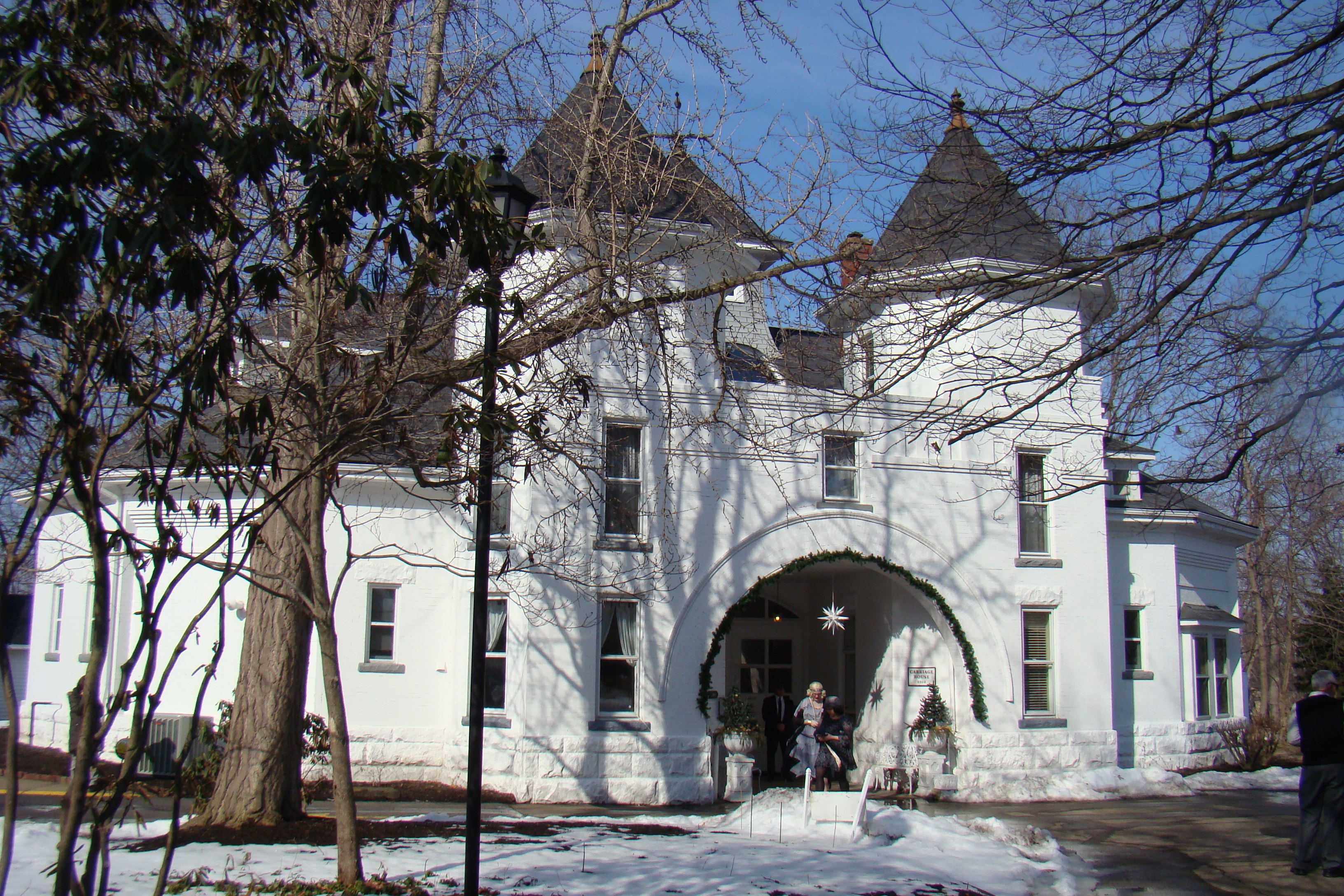
“Ahead of its time” would best describe the magnificent home of Jeremiah and Jane Reeves in Dover, Ohio during the early 1900s. Today, the J.E.Reeves Victorian Home and Carriage House Museum still remain a showpiece of beauty and craftsmanship.

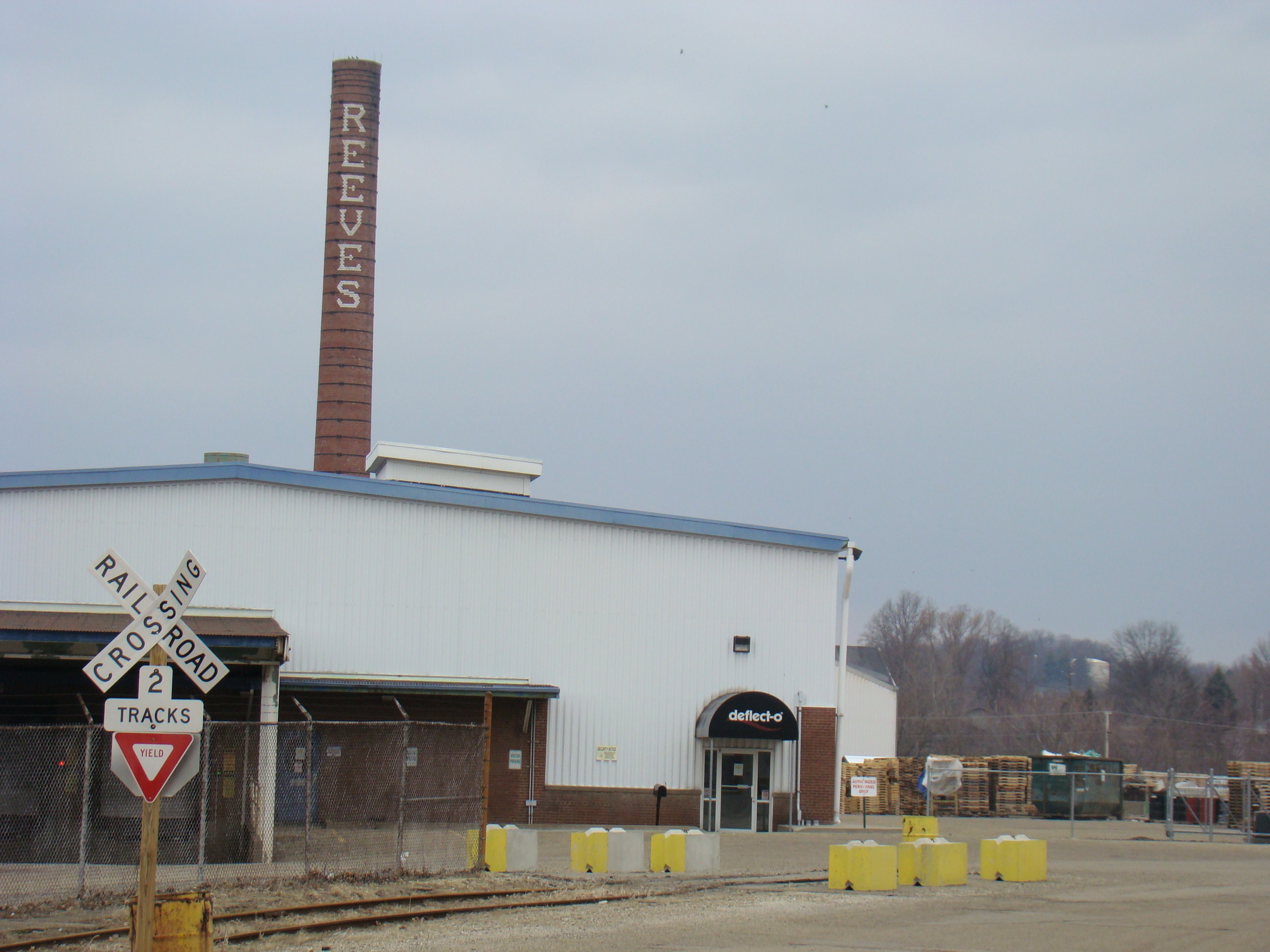
Reeves smokestack still stands today in acreage behind the house.

Reeves smokestack still stands in Dover today on acreage behind the home.

But Jeremiah did not always live in such grandeur. Born in England in 1845, Jeremiah began working as a boilermaker in Wales at the age of ten. When he was eighteen, he and his brothers moved to the United States, where they worked in the mills in Cleveland and Pittsburgh. A few years later in Niles, Ohio, they organized Reeves Boiler Works.

When they heard that Dover Rolling Mill was having financial problems, they purchased and reorganized that industry in the growing canal city. Reeves Steel became the backbone of industry in the Tuscarawas County area. The family remained in the iron and steel business for the rest of their lives, but had many other interests as well.

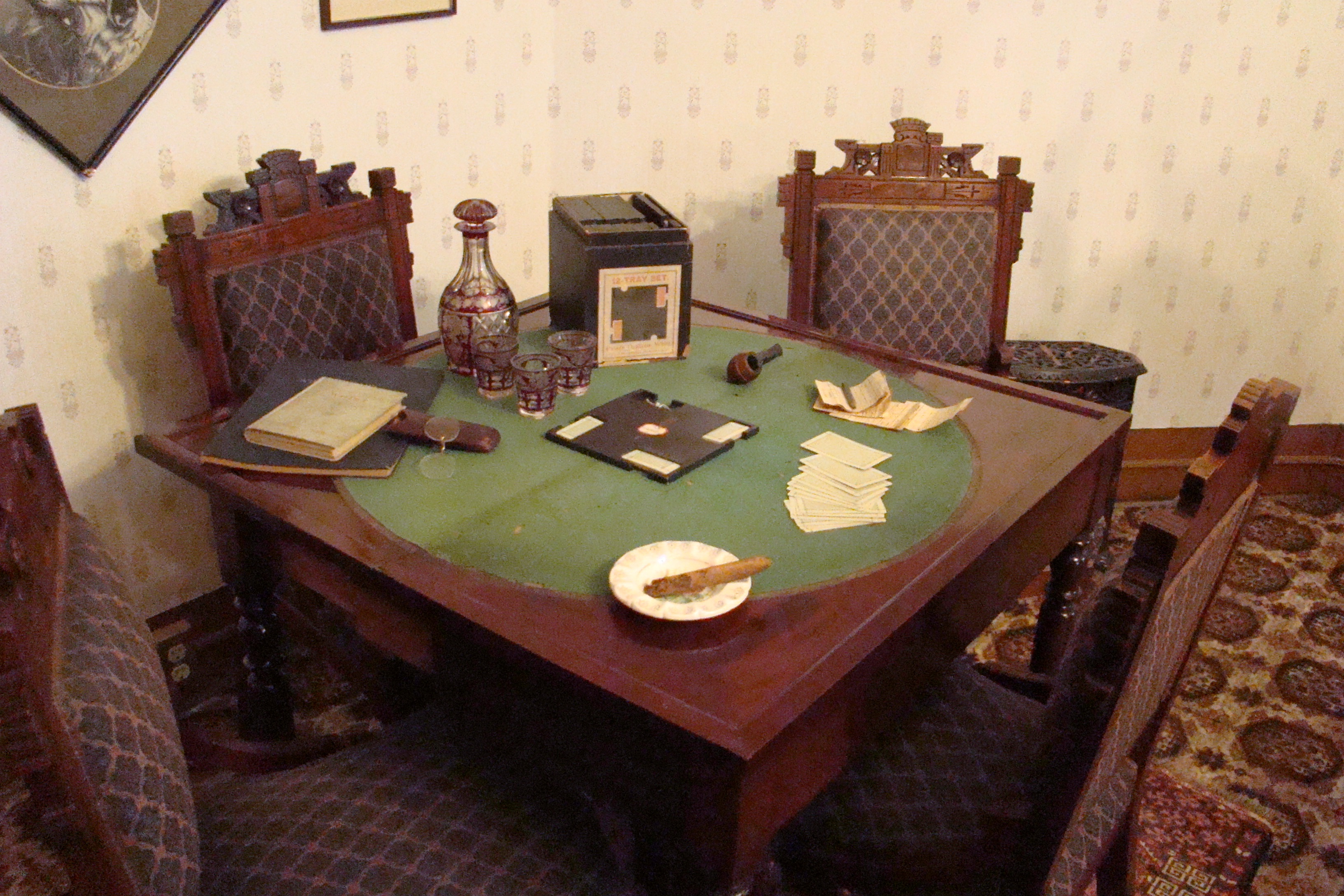
The wealthy played Whisk around the game table.
The wealthy played a card game of Whist around the game table.
When Jeremiah needed money to expand his business, no area banks would loan him the needed funds. But that didn’t deter Mr. Reeves. He opened his own bank. Over the years, he also built workers’ homes in Tin Town, a hospital, a streetcar line, Reeves Hotel and much more. Jeremiah definitely held the key to successful business encounters.
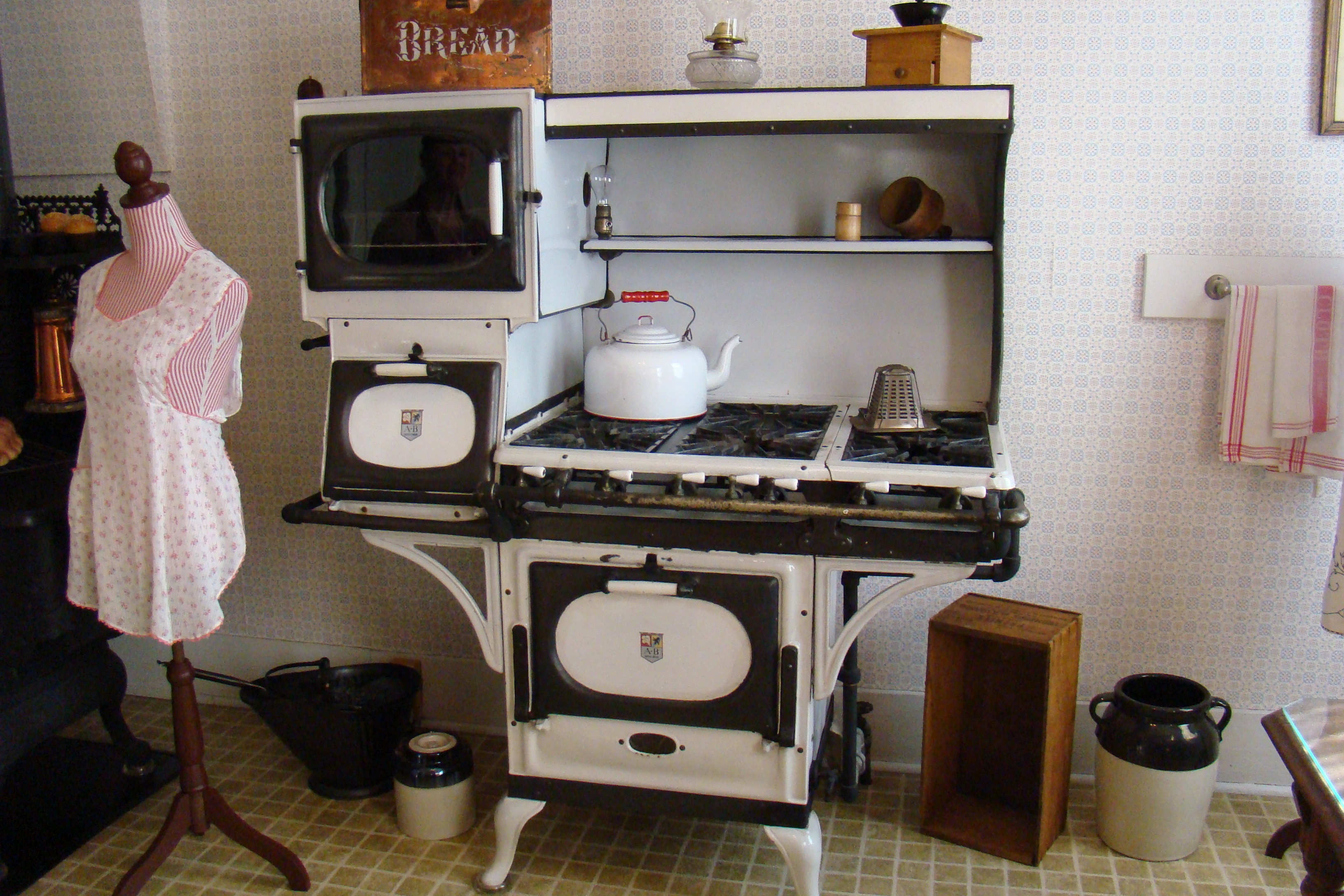
Reeves kitchen displays a warmer oven, local made teapot, and old-fashioned toaster.

Reeves kitchen displays a warmer oven, locally made teapot, and old-fashioned toaster.

J.E. Reeves wanted to help others by letting them help themselves. During the depression, a man knocked on his door, asking for money to help his family. Mr. Reeves refused to give the man cash, but told him, “I’ll give you a broom and you can sweep the sidewalks. Then I’ll pay you.”

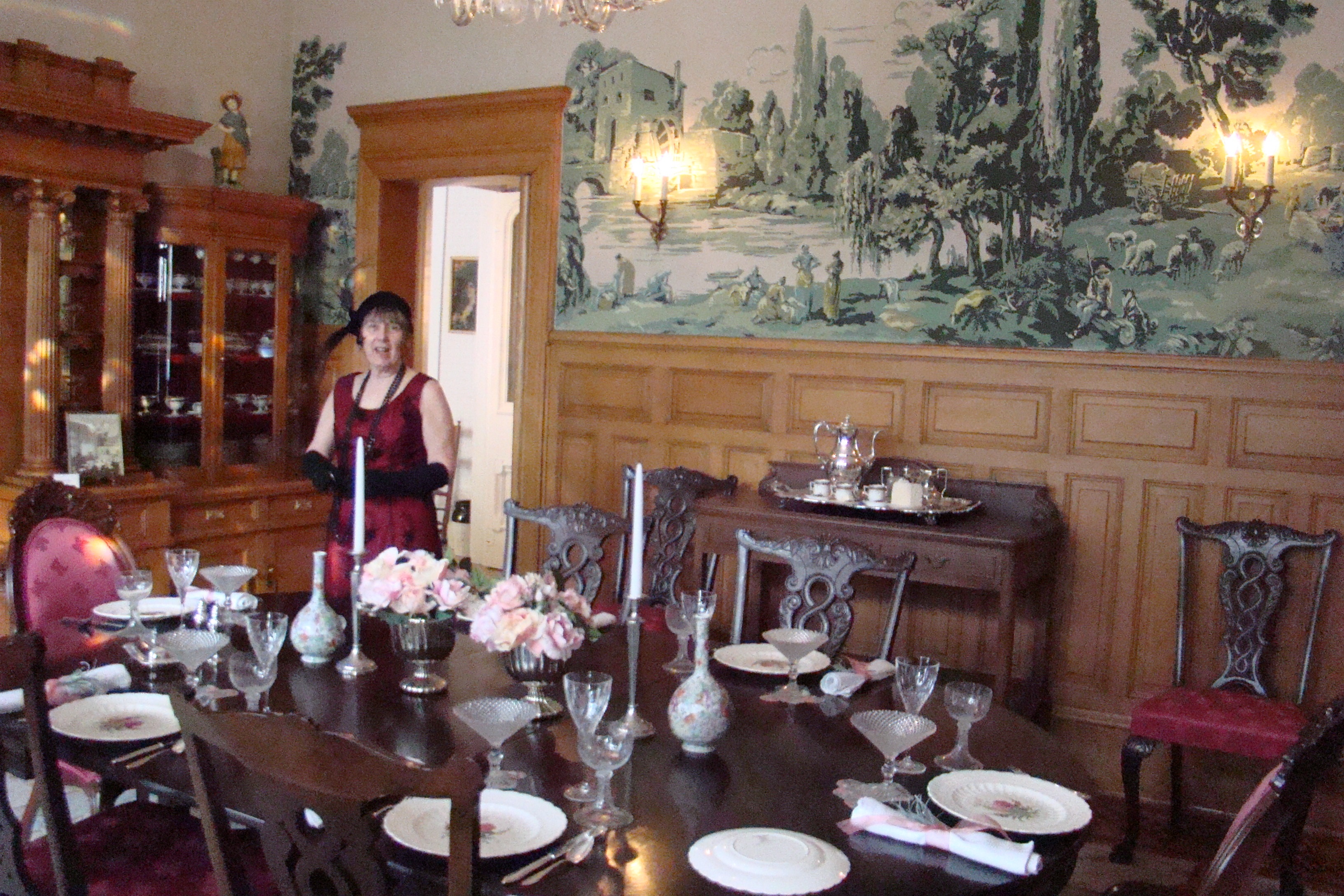
Guide, Shirley, describes the elegant dining room with silk screen wall covering.

Guide, Shirley, describes the elegant dining room with silk screen wall covering.

Back in 1901, Jeremiah Reeves moved his family to a refurbished farmhouse on the outskirts of the growing canal city of Dover. Their Dover farmhouse became the most fashionable home for miles around. Mr. Reeves made certain that his family enjoyed all the modern facilities. In the early 1900s, this home had running water, gas heat, and electric lights. Nearly all the furniture and antiques seen in the home were originally part of the family home 100 years ago. Walls contain family photographs and outstanding artwork, while stained glass and leaded windows appear over door frames inside and out.

Next to the home stands a Carriage House Museum with a fairytale like appearance. This fancy barn actually held Mr. Reeves’ horses and carriages, and had space for a workshop.  Today inside this fancy garage, visitors will find a vast collection of vehicles: the family’s hansom, sleigh, rare electric car, and a restored doctor’s buggy. Upstairs the Carriage House features a history of Dover, when it was Canal Dover before railroads were prominent there.

Reeves Carriage House has a fairy tale like appearance.

Reeves Carriage House has a fairytale like appearance.

The mansion is open for tours, conducted by outstanding guides, for many special events such as Gatsby Night, Living History Tours, and their elegant Victorian Christmas. On a recent visit during Gatsby Night, entertainment was provided by the Moravian Choir and Big Band. Mrs. Reeves was a devout Moravian all her life, and Reeves Library can be found today at the Moravian College in PA.

The museum has been opened since 1976, when it was sold to the Dover Historical Society by Jeremiah’s grandson, Samuel, for the amount of $1.00. The family hoped that it would be preserved for its historical value…and that has been done with grandeur.

J.E. Reeves Victorian Home and Carriage House Museum can be found off I-77 at exit 83. Take a right on Tuscarawas Avenue, left on W Front Street, right on Wooster Ave, and a left on Iron Avenue. The Home and Museum can be found at 325 E Iron Avenue. Parking is in the rear of the home.

Toys and Trains for All Generations

Kruger Street Museum

Kruger Street Museum in Wheeling, WV

All of us are children at heart. Find the child within you by visiting the Kruger Street Toy & Train Museum, a hidden gem in Wheeling, WV. Discover toys from your childhood as well as multitudes of model trains.

A one hundred-year-old Victorian schoolhouse, Kruger Street School on the edge of Wheeling, WV, has been converted into a haven of toys from years gone by. With two floors containing ten rooms of toys, the child in you will want to explore for hours.

This lifetime dream of a toy museum for father and son, Allan Robert and Allan Raymond Miller, came true back in 1998. The vision began with a collection of Lionel trains, and the Millers’ thoughts and plans expanded to the present day museum.

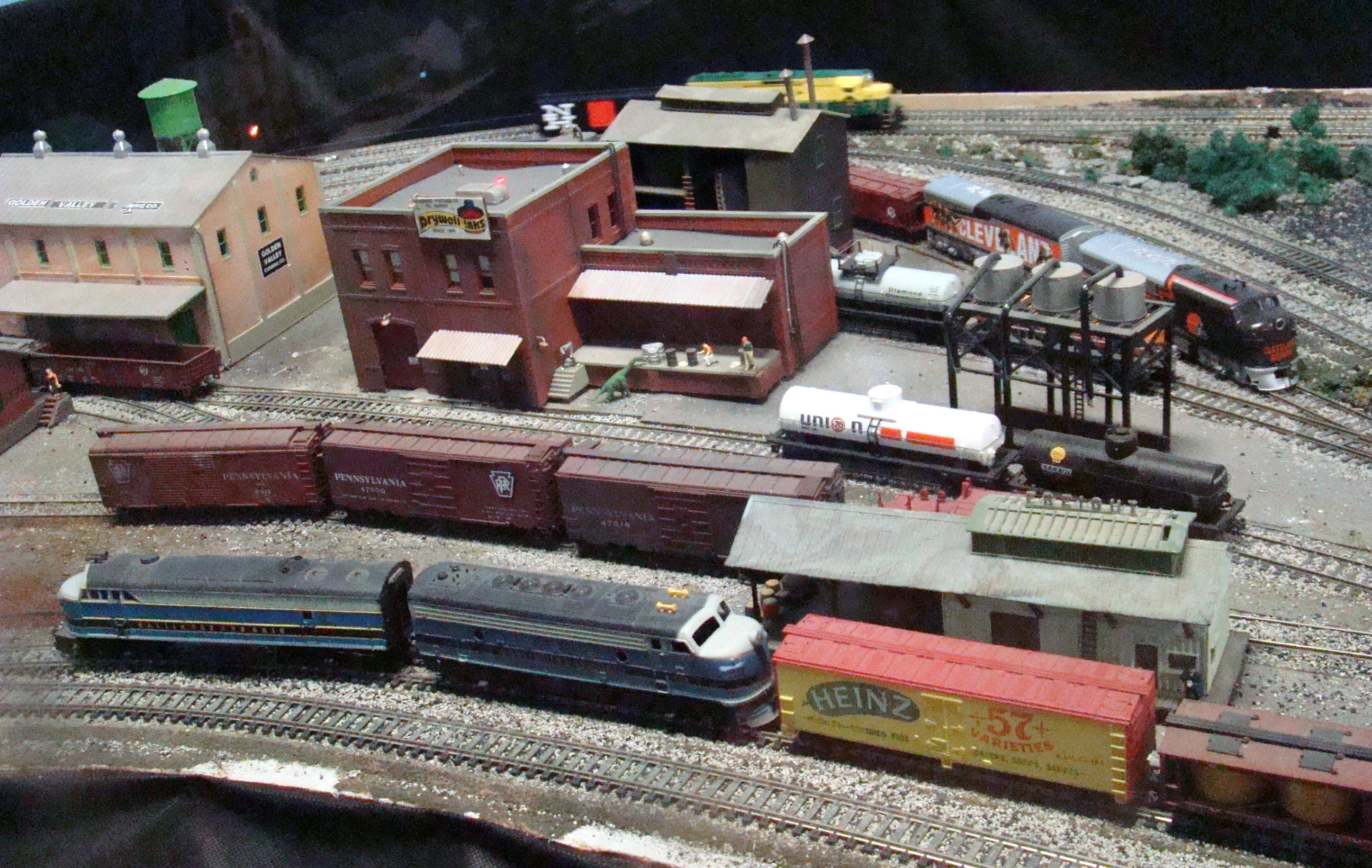
Can you find the dinosaur hidden in the HO-Gauge Train Display?

Can you find the dinosaur hidden in the HO-Gauge Train Display?

Upstairs, trains fill several rooms and all offer interactive buttons so you can be a railroad engineer for a short time. While the HO-Gauge Train set, with dinosaurs hidden within, is a major attraction, there are several layouts on display. One attractive display uses local business names on stores and train cars. Names like Riesbeck’s, Coleman’s, Bleifus Tires, and Wes Banco draw viewers’ attention.


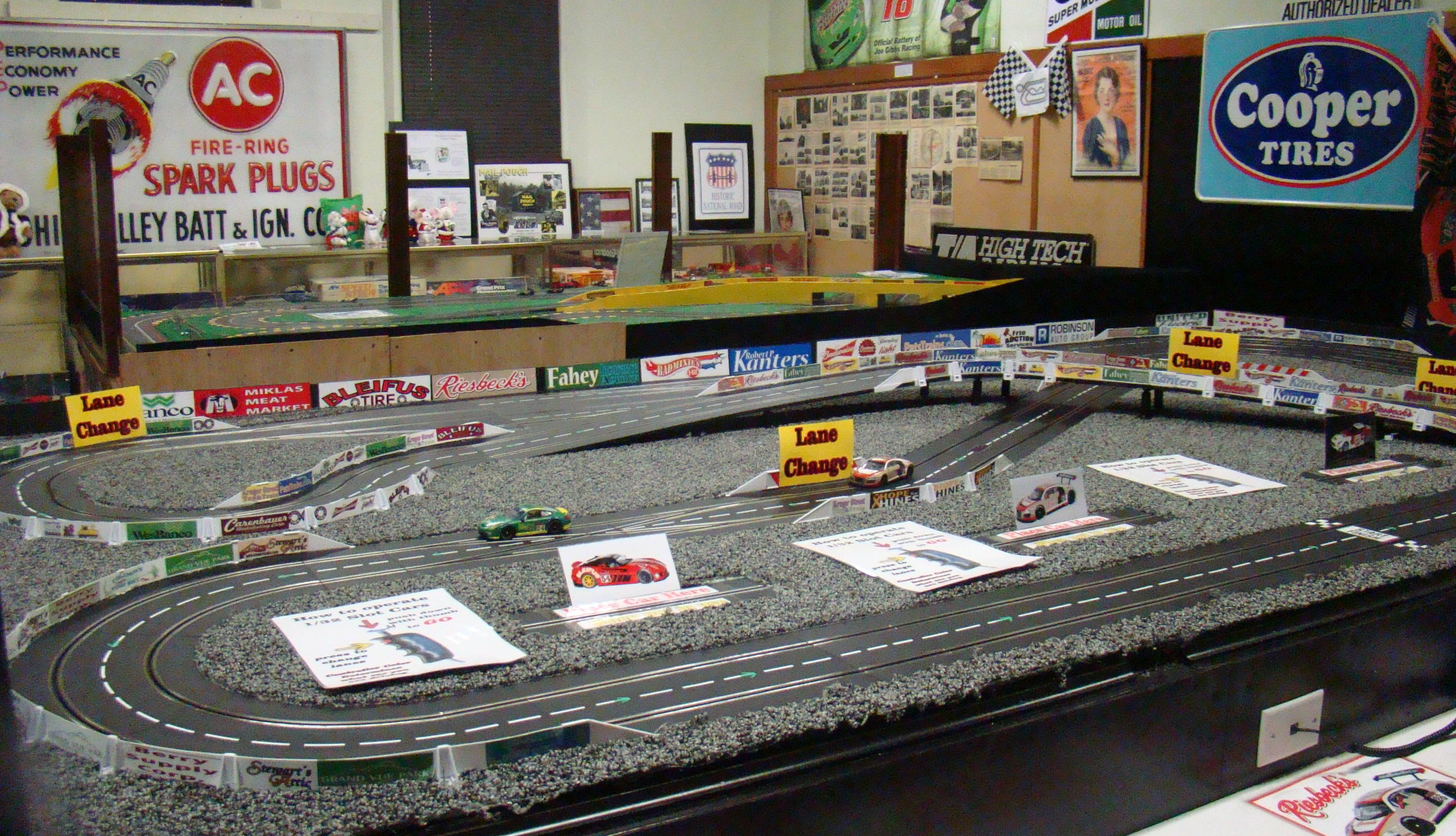
Interactive Slow Car Race Tracks

Interactive Slot Car Race Tracks

A slot car room gives opportunity to participate in driving the track, and is a favorite of many youngsters. Even this gypsy had to give it a try. Every room contains something children can play, as well as chairs for parents to sit and watch. Perhaps you will even meet Loo, the cat, who wanders freely while enjoying encounters with visitors.

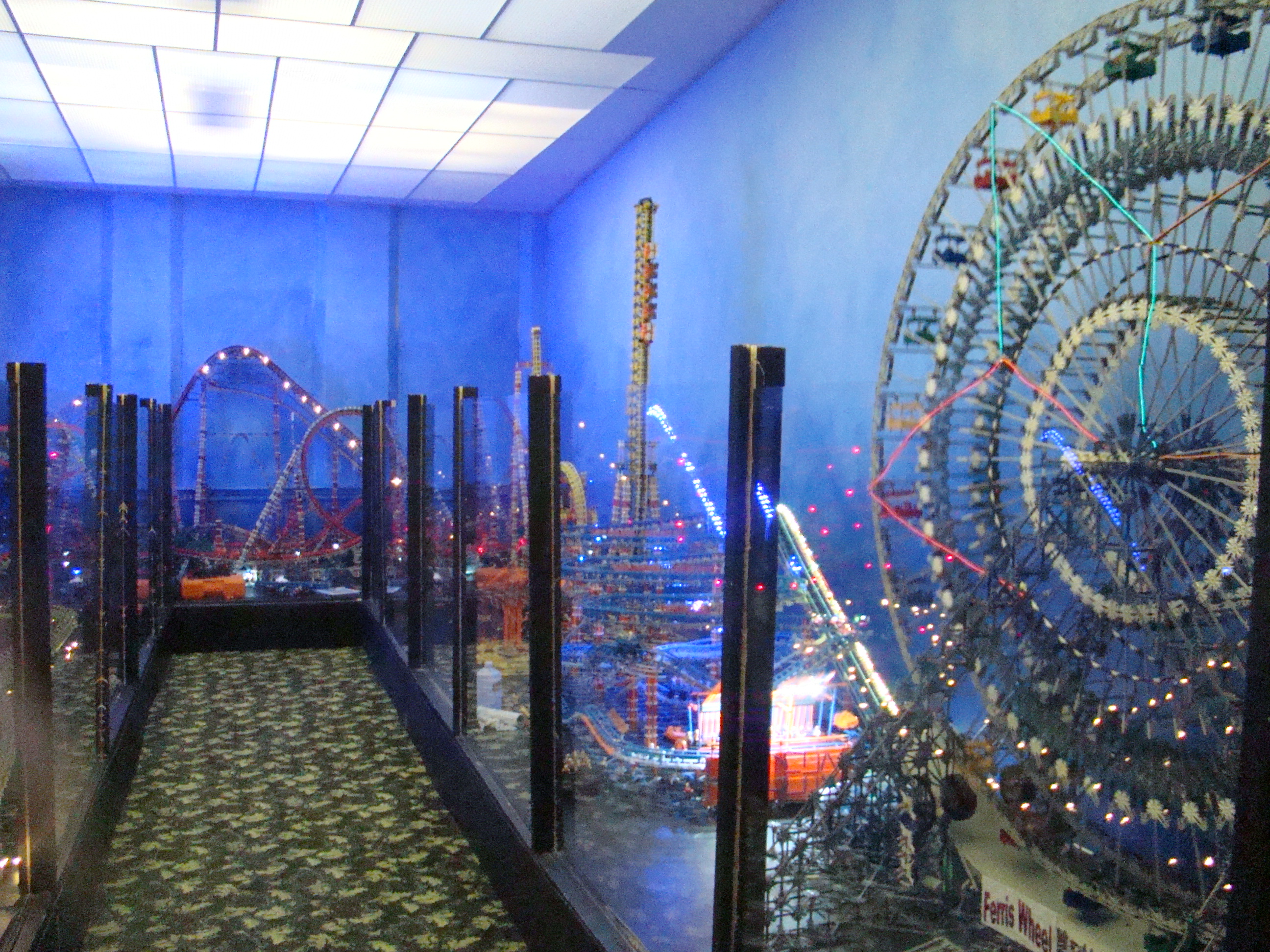
K-Land Amusement Park

K-Land Amusement Park

The present curator, James Schulte, enjoys seeing entire families bond wth new memories as they discuss their favorite toys. Schulte also constructed the rides in a room called K-Land Amusement Park, from his own creative designs using the K’NEX building system. There you will find a ferris wheel, old-fashioned swings, and roller coaster that work at the push of a button.

Popular Pinball Machine

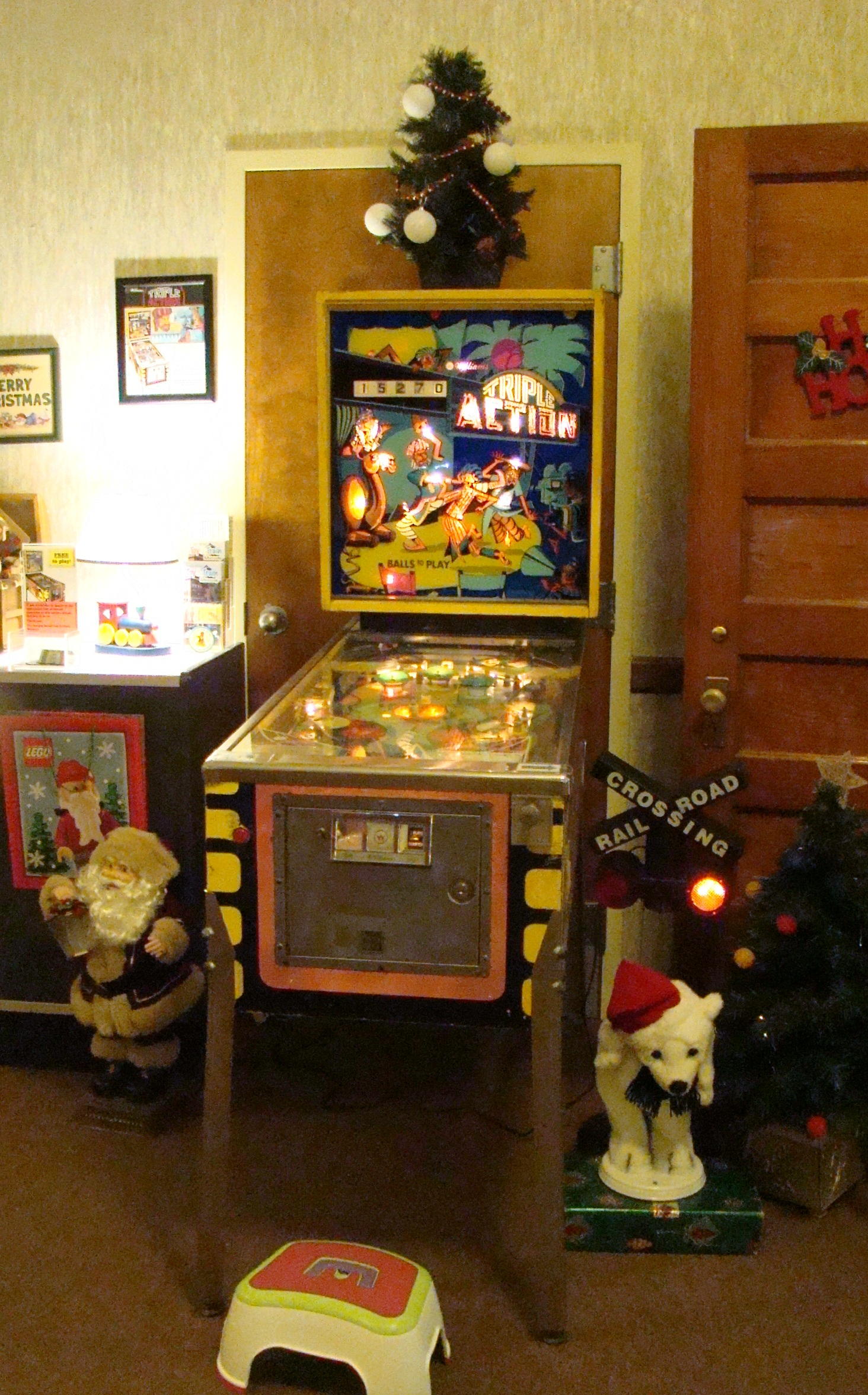
Popular Pinball Machine

Downstairs an old-fashioned Nickelodeon plays tunes for a quarter, while at the other end of the lobby you can play a vintage pinball machine, the most popular game here. This gives children a chance to experience fun before video games. It is a favorite of all generations with a long line quite often waiting for a chance to play.

The Game Room contains a mixture of traditional games from the 1900s, such as Candy Land, Rubik’s Cube  and Rock ‘Em Sock ‘Em Robots, a long ago favorite. A large selection of games are available to actually play such as foozball, checkers, blocks, and dominos.

Dollhouses from floor to ceiling

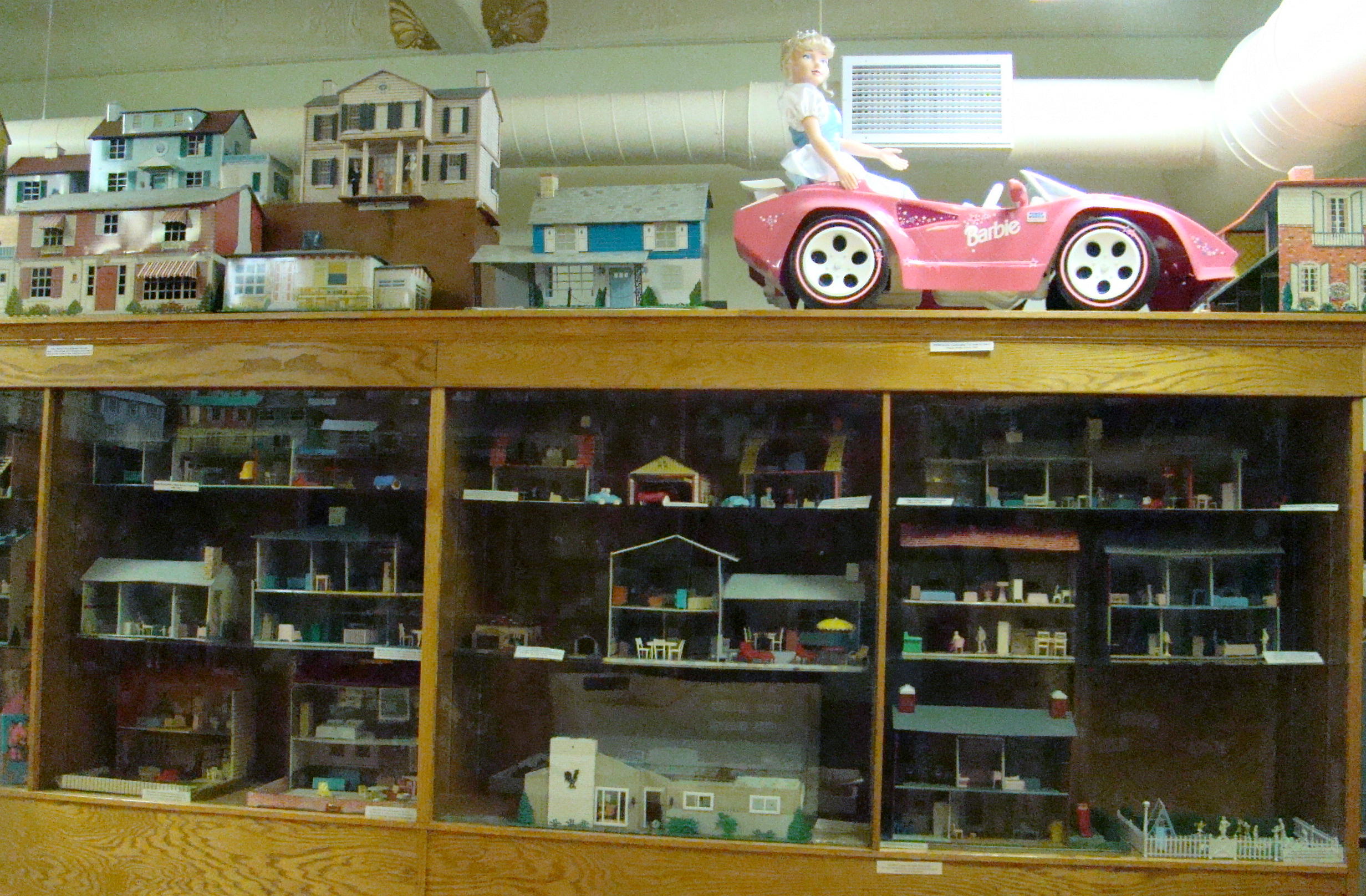
Dollhouses from floor to ceiling

Dollhouses and many dolls, including Barbies, Raggedy Ann and Andy, and Dippity Flip Flop, entertain the young ladies. Packed from floor to ceiling, dollhouses of all eras, Barbie cars, and several doll collections are on display.

For the 17th year, the Marx Convention will be held mid-June at the Kruger Street Toy & Train Museum. Over a hundred tables display Marx toys, but the biggest attraction is the group of former enthusiastic Marx employees, who have stories to tell regarding their part in the toy making.

1890's Tut Tut Car - oldest toy at the museum

1890’s Tut Tut Car – oldest toy at the museum

Stop by their Gift Shop, which has been described as one big toy box, to take home a lasting memory. A special section features glassware from Wilkerson’s Glass in Moundsville, WV. The museum is open every day from 9- 4 in June – December. During January – May, they’re only open on weekends, except for special arranged tours.

Relive your childhood memories at Kruger Street Toy & Train Museum sometime soon, when you can spend the day.  So many toys create a wonderland for the young at heart.

Kruger Street Toy & Train Museum can easily be reached just off I-70 in Wheeling, WV at Exit 4, Elm Grove. Take a right on Route 40, then go straight through the intersection to Kruger Street, with the museum on the right hand side. The sign is easily spotted.

Powhatan Point on the Ohio River

The Point on the Ohio River

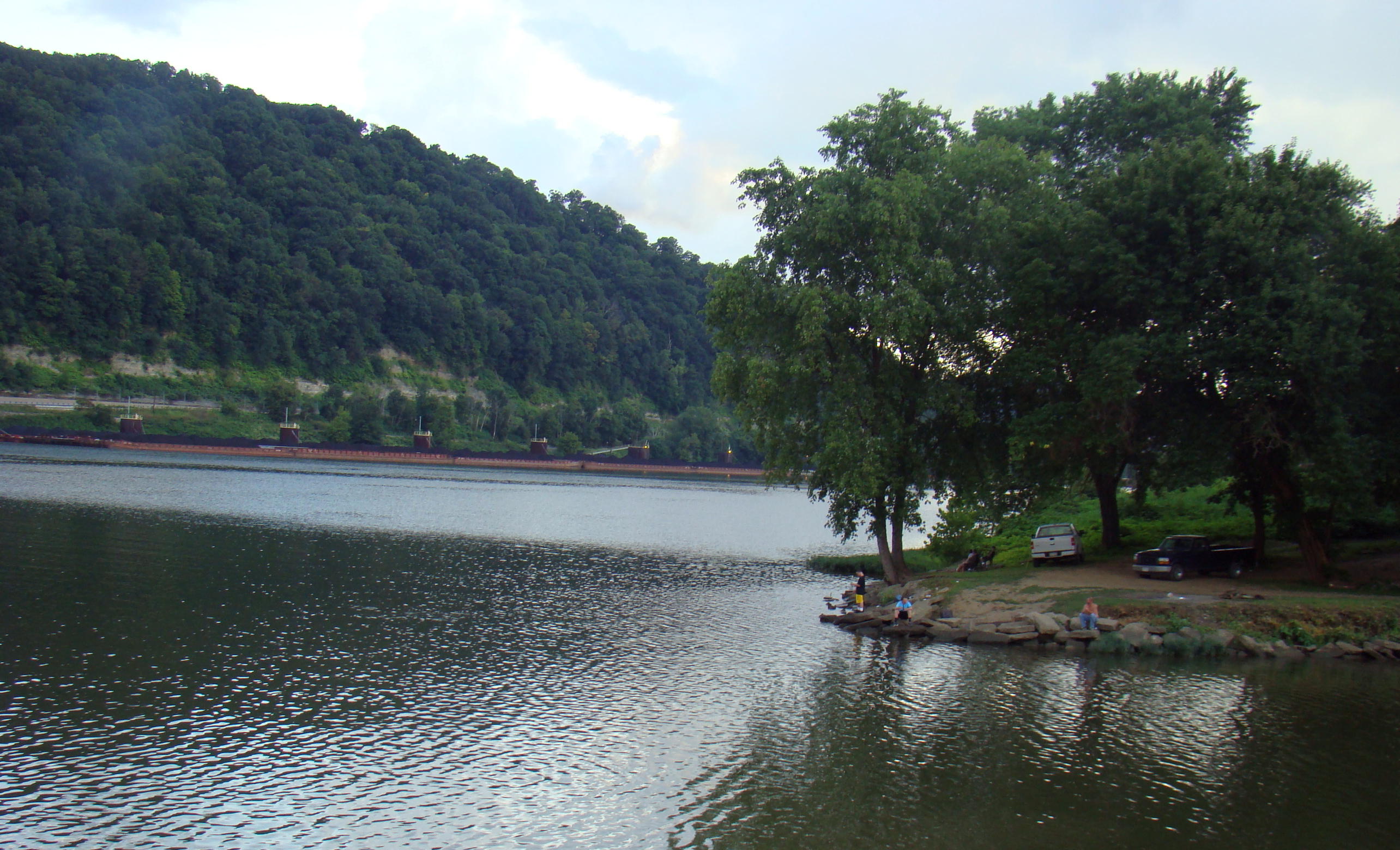
The Point where the Captina Creek and the Ohio River meet

Chief Powhatan is memorialized here at the Point where the Captina Creek meets the Ohio River. The town laid out here in 1847 was named Powhatan Point in his honor. Captina Creek was the site of many Mingo, Powhatan, and Shawnee Indian camps in the late 1700’s, with exploration by famous white leaders such as Lewis Wetzel, George Washington and Ebenezer Zane.

Today the banks of the beautiful Ohio River provide a peaceful place to watch the barges float by, or relax with a fishing pole in hand in the cool of the evening.

Historical sign

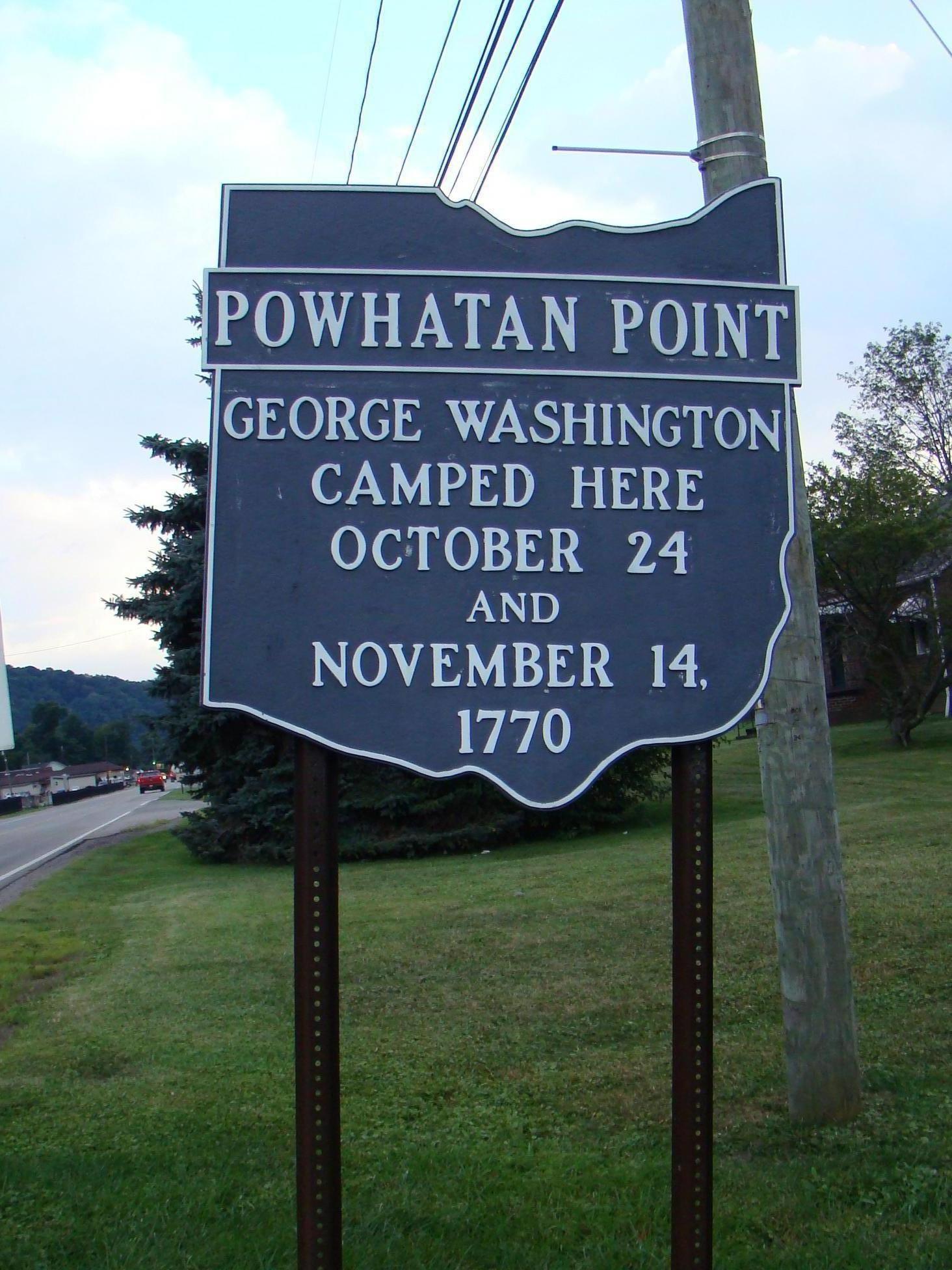
Historical sign

When you enter town, an Ohio historical sign greets you. It states that George Washington camped at what is now known as Powhatan Point on October 24 and November 14, 1770. Some say that is the most important thing that ever happened in this small town, but there was more happening during the last visit.

Chief Powhatan was famous for his dealing with the Whites, but even before the Europeans came to this section of America, he had conquered 30 different Indian tribes. Later Chief Powhatan, with the chiefs from those 30 tribes, tried to recover their lands, which they felt had been stolen by the English and European immigrants.

Kandi's Chief Powhatan

Kandi’s Chief Powhatan

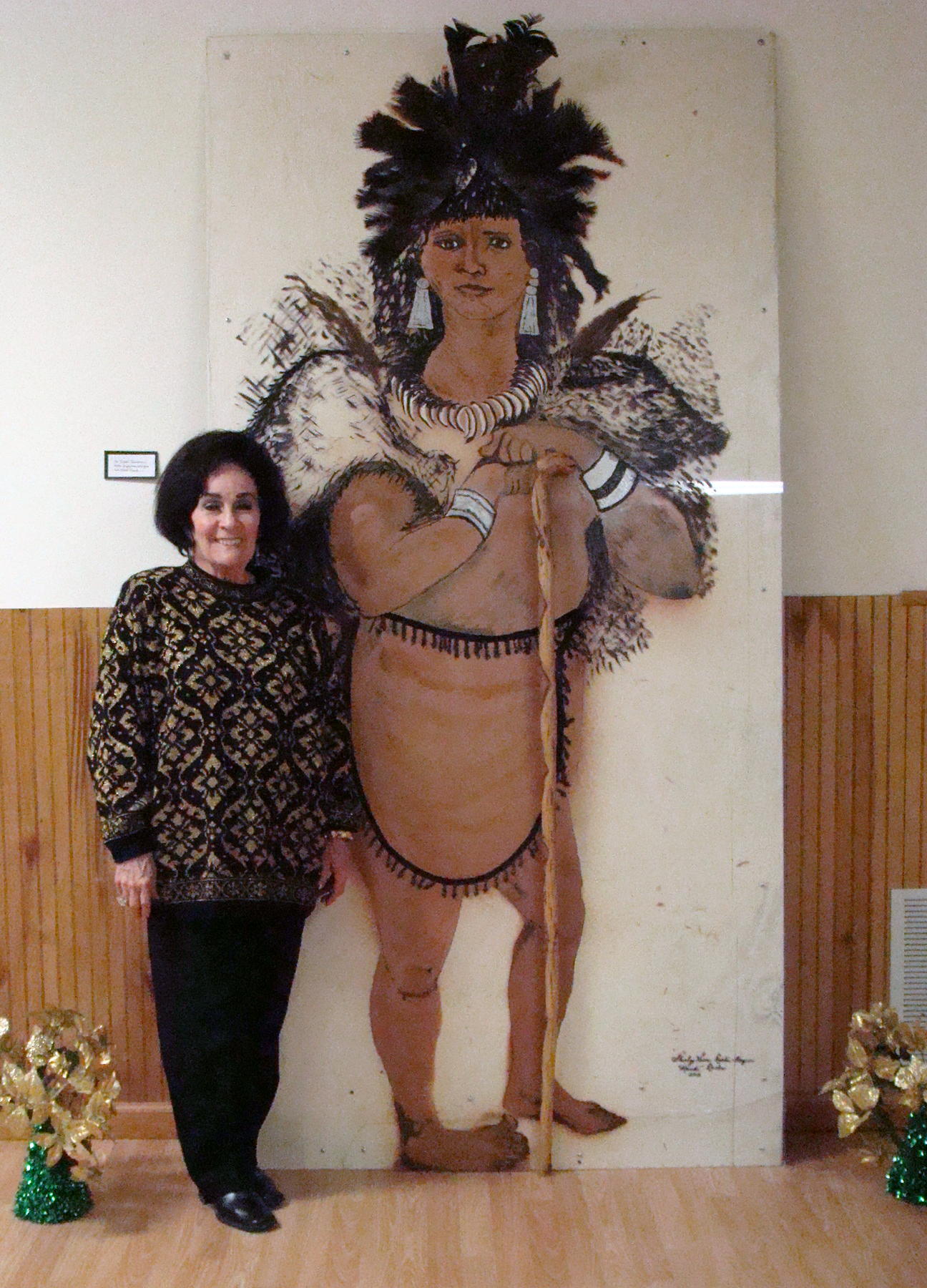
Since the town was named for Chief Powhatan, it seemed fitting for one West Virginia artist, Kandi Roche, to compose a modern day sculpture of the Chief for The Art Gallery at Powhatan Point Village.  The art gallery is situated at what they call “The Gateway to the Appalachias”. Kandi made an unusual Chief Powhatan statue, which was painted on plexi-glass, and left for the community to enjoy. This chief was the father of the famous Indian maiden, Pocahontas (1595-1617), who was a peacemaker to the first white settlers.

A beautiful fence covered with Native American tribal patterns greets you when you arrive at The Gallery here. Inside are paintings, pottery, glass and photography. Art classes have been available from time to time. Since this is a relaxed atmosphere, little is scheduled, but friends enjoy getting together along the river banks.

Community Center

Community Center and home to Christmas in the Village

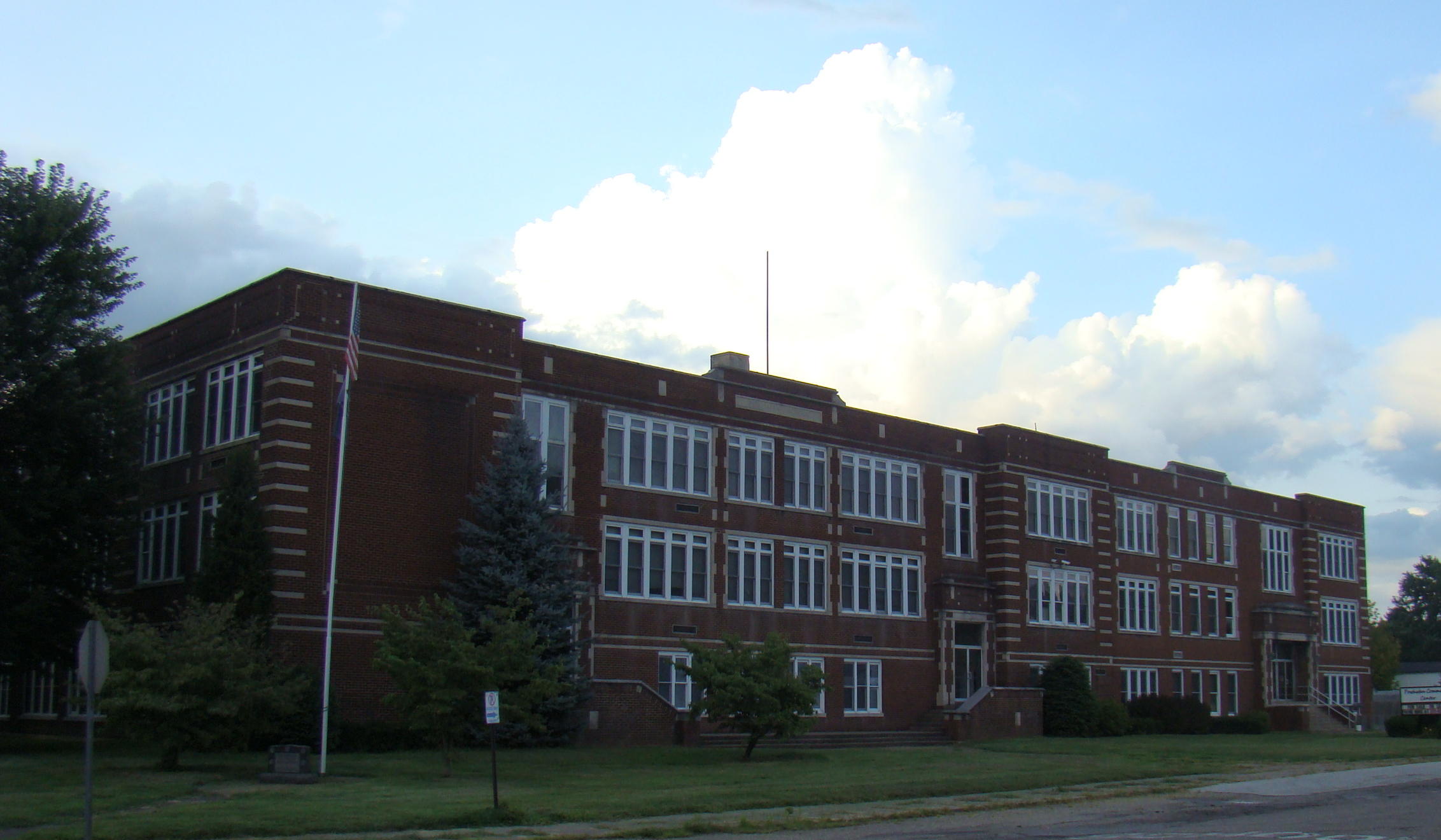
Just down the street from the gallery is the abandoned Powhatan Point High School, which today has been turned into a community center. During the month of December, Christmas in the Village is held here. The 9th Annual celebration will be held in 2014 with crafts, food vendors, entertainment and of course, Santa. But if funds aren’t made available soon, this facility may be lost to the community.

Kammer-Mitchell Power Plang across the river from Powhatan Point.

Kammer-Mitchell Power Plant across the river from Powhatan Point.

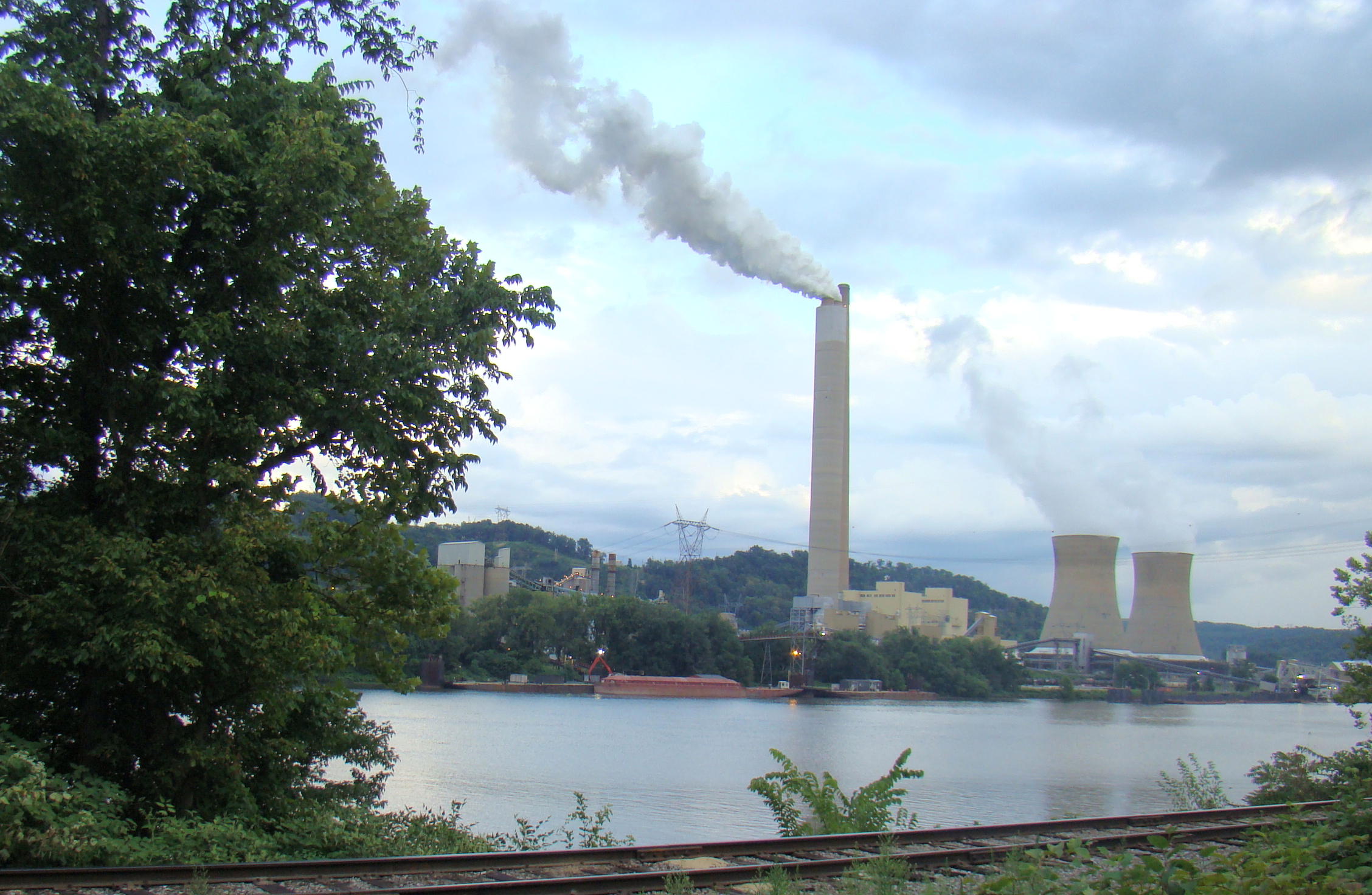
Just south of Powhatan Point is the Kammer-Mitchell Power Plant providing electricity and employment for parts of Ohio and West Virginia. Today this American Electric Power (AEP) plant is partially shut down due to failure to meet EPA standards. They must convert their wet coal ash to a dry coal ash bed to return to full operation. This coal-fired plant has the sixth highest power plant chimney in the world.

Drive through our beautiful land and watch for pieces of history wherever you happen to visit. Every small town has its place in history, and Powhatan Point is no exception.

Drive along the beautiful Ohio River on Ohio Route 7 and you will come to the town of Powhatan Point, about fifteen miles south of  Bridgeport, Ohio.


Steamboat History Flourishes at Ohio River Museum

W.P. Snyder, Jr on the Muskingum River in Marietta, Ohio

W.P. Snyder, Jr on the Muskingum River in Marietta, Ohio

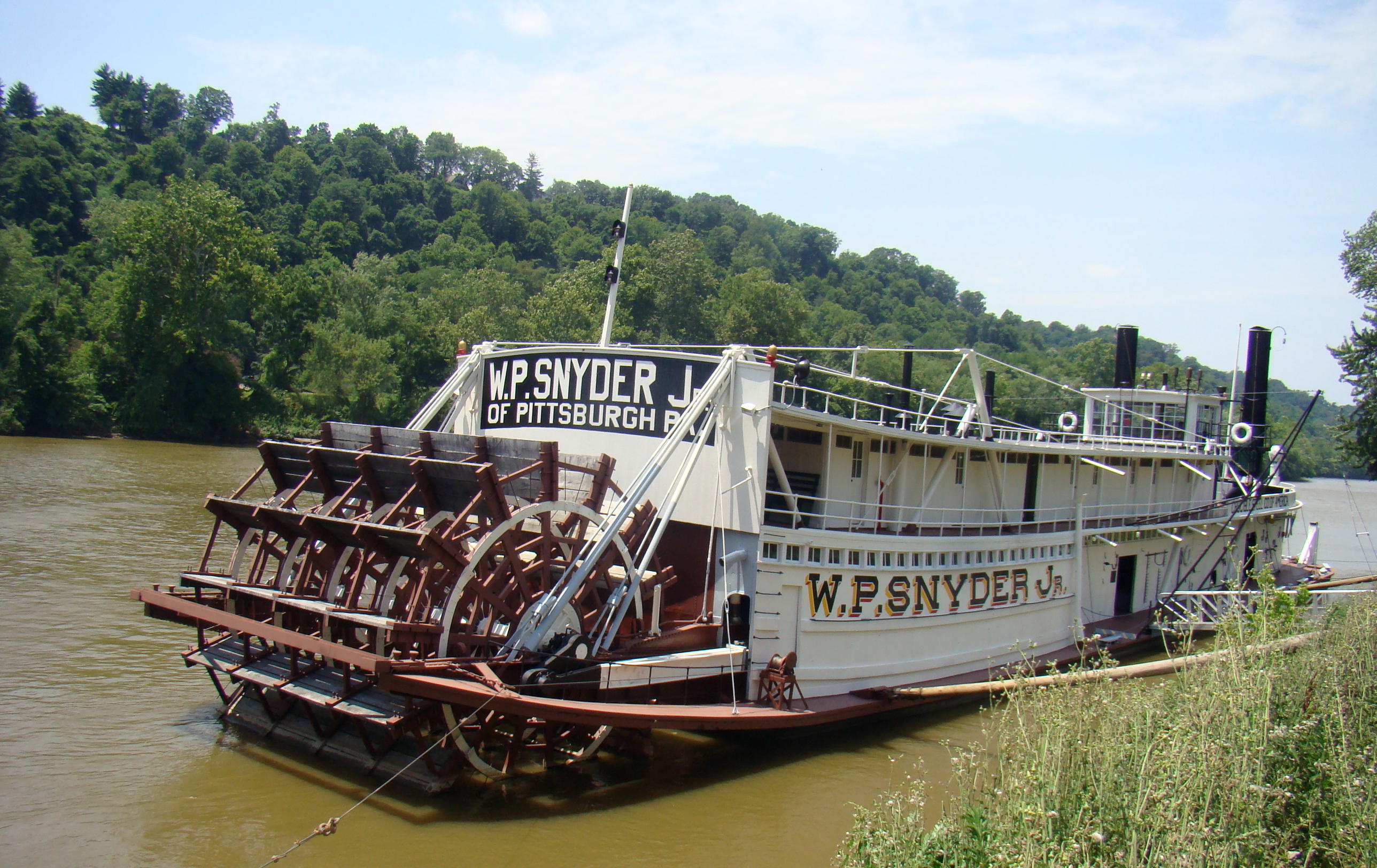
“Say Steam” Those are the special words the guide used when taking pictures of visitors on the steam-powered W.P. Snyder, Jr. at the Marietta River Museum in Marietta, Ohio. You can feel the river beneath your feet as you walk the deck, listening to the guide’s description of life on the river many years ago.

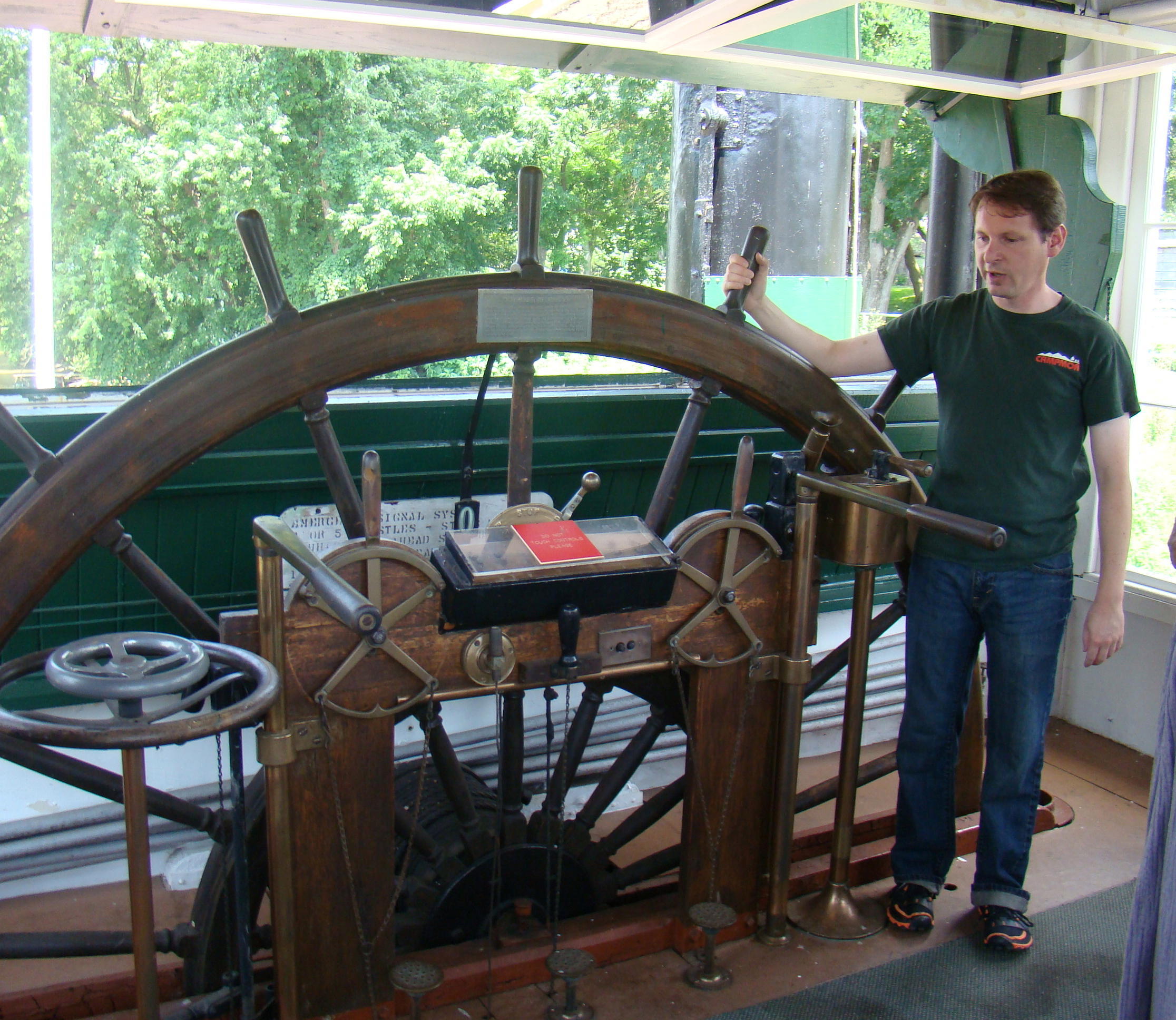
Pilot Wheel of W.P. Snyder, Jr.

Pilot Wheel of W.P. Snyder, Jr.

This early tugboat replaced the mules that walked along the banks of the river towing the barges. Tugboat probably wasn’t the best name for this type of boat, because they didn’t tug anything…they pushed it instead.

W.P. Snyder, Jr. was built in Pittsburgh in 1936 as the result of a terrible winter there. The wooden boats were brutally torn apart by the ice on the Monongahela River, so for the first time, a tugboat was constructed of steel by Carnegie Steel Co, and called W.H. Clingerman.

After years of service, it was retired due to its coal furnaces. In 1955, the Sons and Daughters of Pioneer Rivermen purchased the boat, now re-named the W.P. Snyder, Jr. for $1.00, and moved it to the banks of the Muskingum River in Marietta. This tugboat is the last intact steam-powered, stern-wheeled tugboat in the United States.

But the effects of weathering made it necessary, in October of 2013, for the W.P. Snyder to leave the dock at Marietta for refurbishing, mainly on the exterior. The trip back had a slight delay because the Ohio River was too high in late May, 2014 for the W.P. Snyder to get under the Putnam Avenue Bridge.

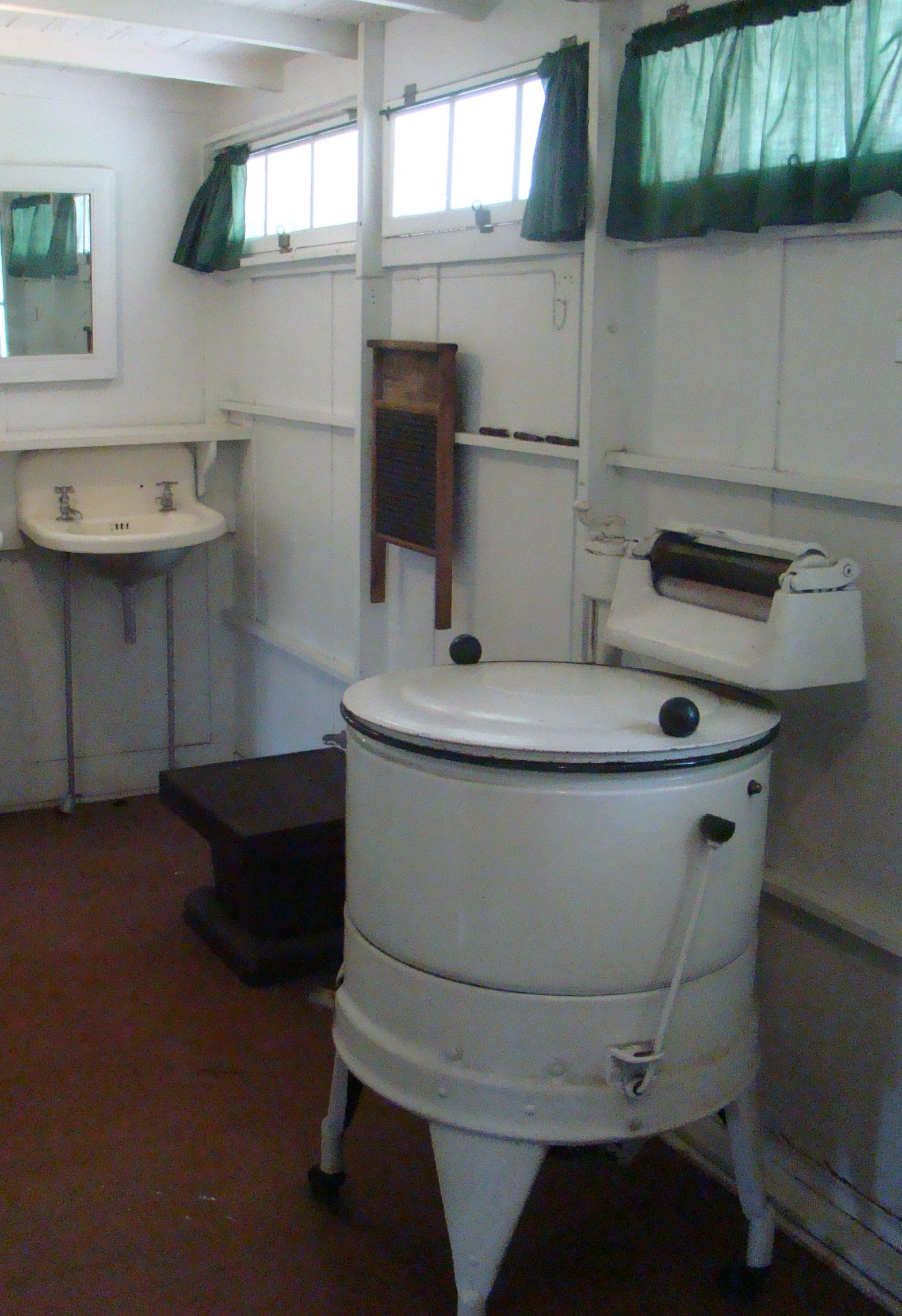
Laundry Room with wringer washer and washboard

Laundry Room with wringer washer and washboard

Pushed back by two antique tugboats, Lady Lois (‘28) and J.S. Lewis (‘31) the W.P. Snyder, Jr is now moored at the confluence of the Muskingum and Ohio Rivers, ready for tour.

On board, you will see the Engine Room, where the engineer controlled passage by using not only steam but also electricity. A system of bells could be pulled to signal conditions or problems. There was even a telegraph handy for outside communication.

Officers and crew were provided completely separate living quarters on the upper deck. If at all possible, officers and crew went out of their way to keep from crossing paths. Two separate bathrooms, a laundry room, and kitchen completed the facilities onboard.

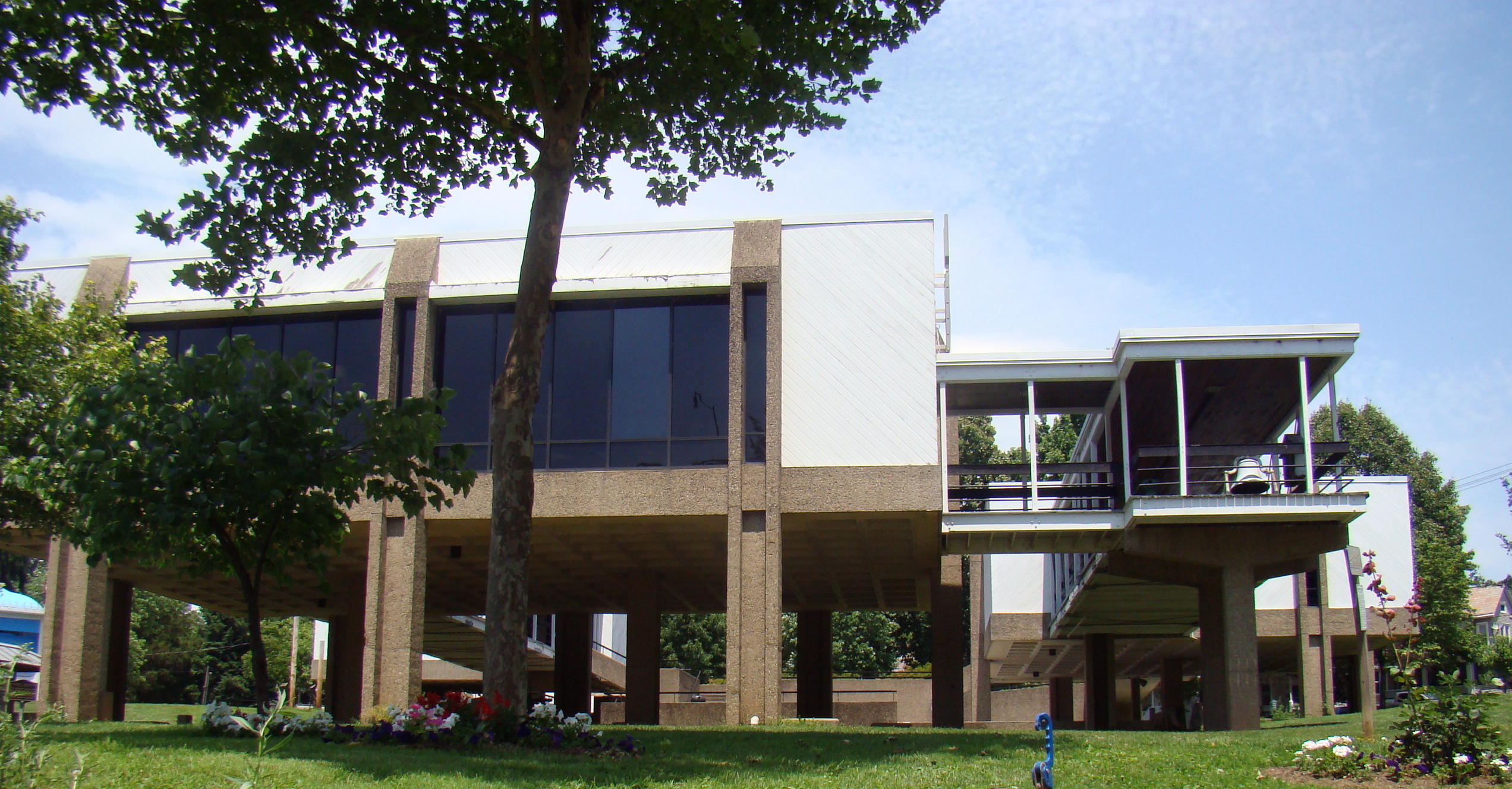
Ohio River Museum

Ohio River Museum

While the tugboat draws many visitors to the museum, there are three separate buildings nearby that contain a history of the Ohio and Muskingum Rivers, and the steamboats that frequented their waters.

An introductory film, History of Steamboats, opens the door to exploration inside the museum. The buildings are filled with models of steamboats, related artifacts, and stories of early life on the river…and much more!

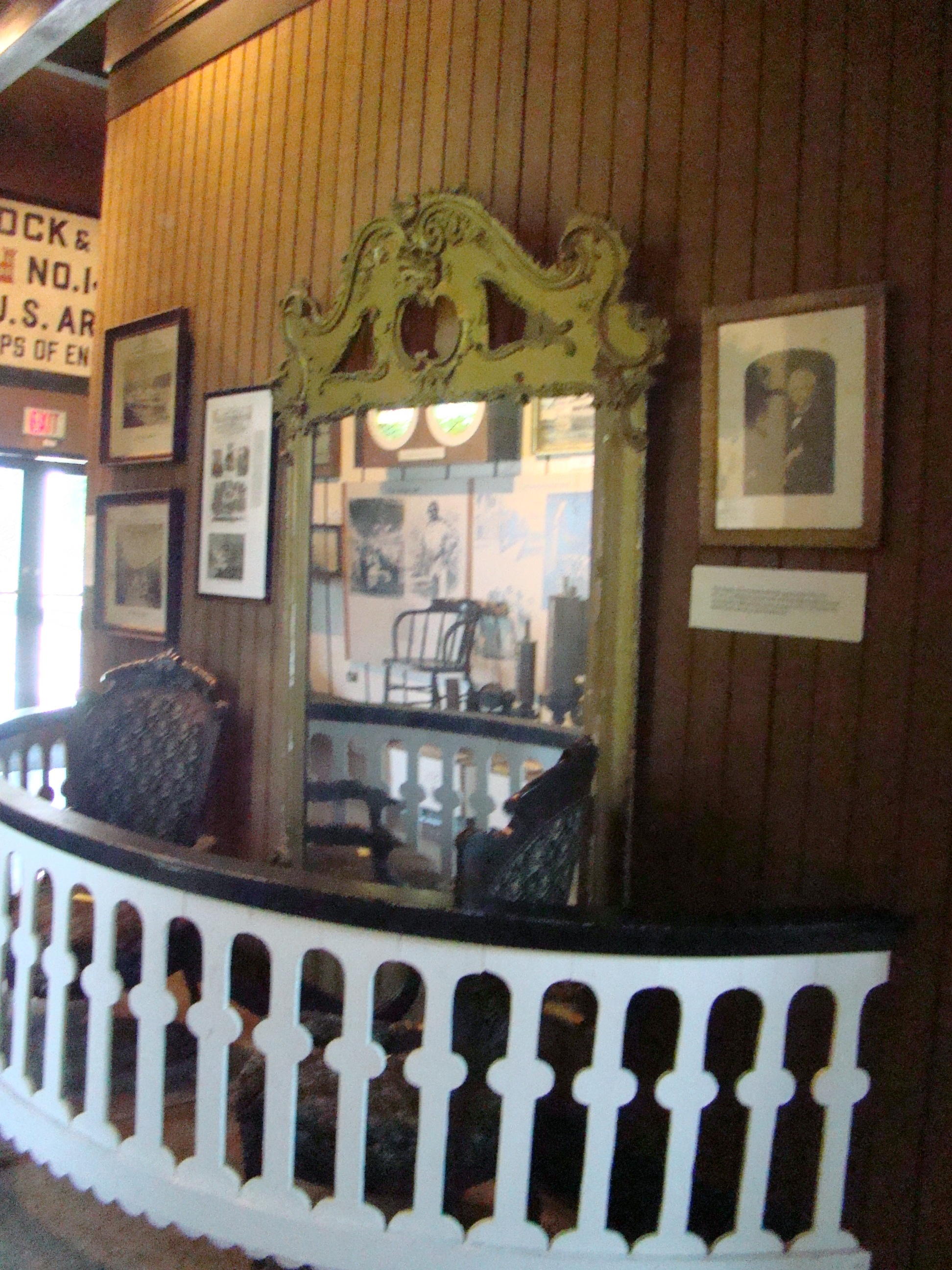
Mirror from Mark Twain's Crystal Palace

Mirror from Mark Twain’s Crystal Palace

Among the historic pieces, the exhibit contains a dug-out canoe that was used as a ferry between Fort Harmer and Marietta. There is even a reminder of Mark Twain through a display of an ornate mirror that hung in the Crystal Palace steamboat, where Mark Twain served as pilot.

Near the river’s edge, a flatboat that was used during Ohio’s early settlement is on display. Close by stands the oldest existing Western Rivers’  steamboat pilothouse from the steamboat, Tell City, which sank in 1917. An interesting section of poles shows the heights of some of the worst floods in Marietta history, three of the worst being : 54.5′ in 1884, 55′ in 1937 and 60.3′ in 1913.

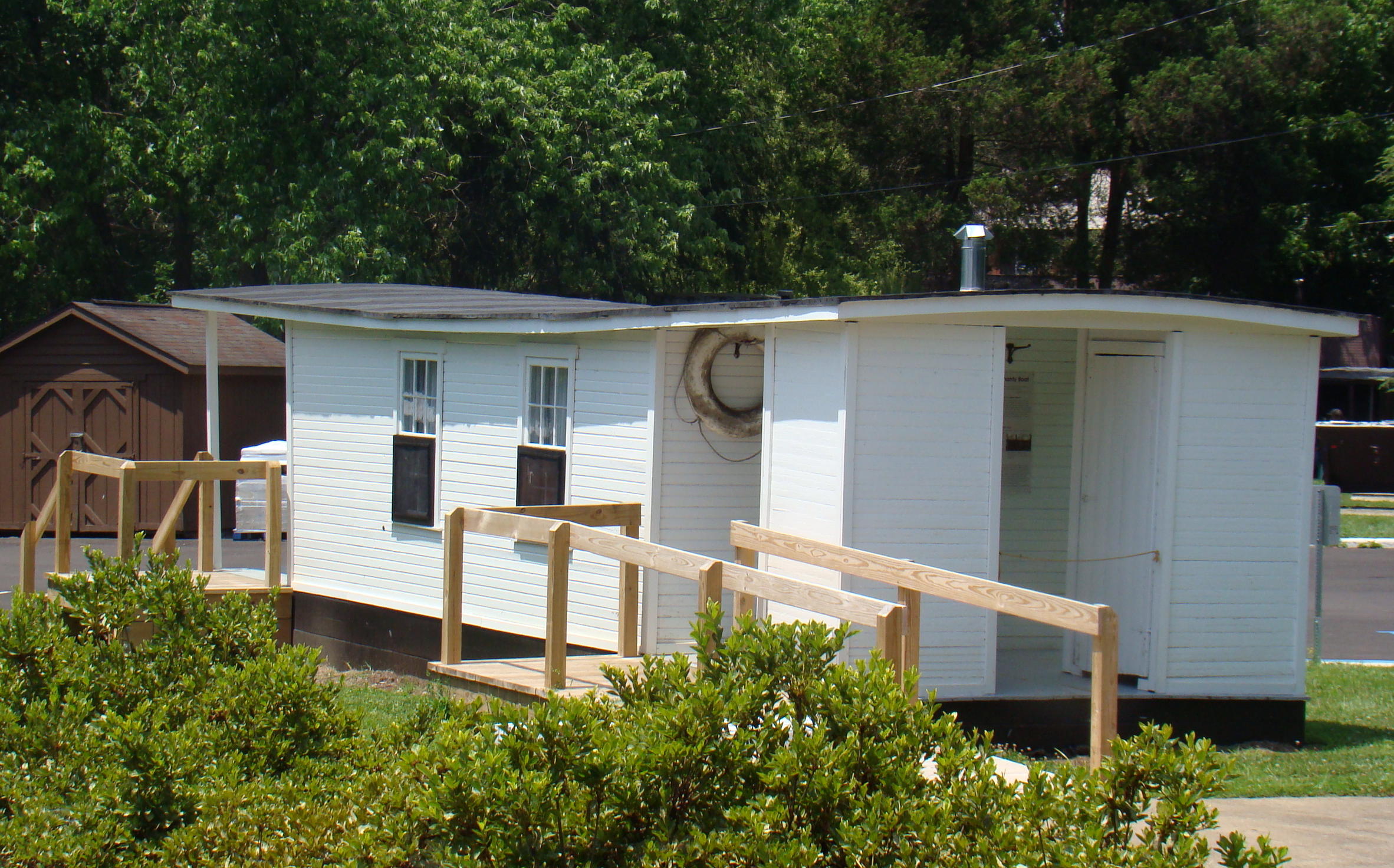
Shanty Boat where folks flew under the radar

Shanty Boat where folks flew under the radar

Don’t miss the old shanty boat, probably from the 1920’s to 1930’s. It possibly could be the oldest surviving shanty boat on the inland river system. People actually lived on these boats or had businesses there. Many of those who lived on the boats were trying to hide from something. Here they could avoid taxes as they were always on the move, and needless to say, the shanty boat provided the perfect place for thieves and lawbreakers, of many sorts, to hide from the law.

These floating shanty boats were banned in 1930 from the Ohio and Muskingum Rivers. However, a friend said when he was a kid in Parkersburg along the Ohio River, there were still shanty boats in the 50’s . Evidentally, more law breakers! The gypsy in me still likes the idea of being able to fly under the radar during those early years with no address, but much freedom.

End your day by cruisin’ down the river on the Valley Gem docked right next door to the Ohio River Museum.

The Ohio River Museum is located at 601 Front Street, Marietta, Ohio, one block from Ohio State Route 7, and minutes from I-77. Plenty of free parking is available and cost of admission is very reasonable.

History of the Steam Engine – Ernest Warther Carvings

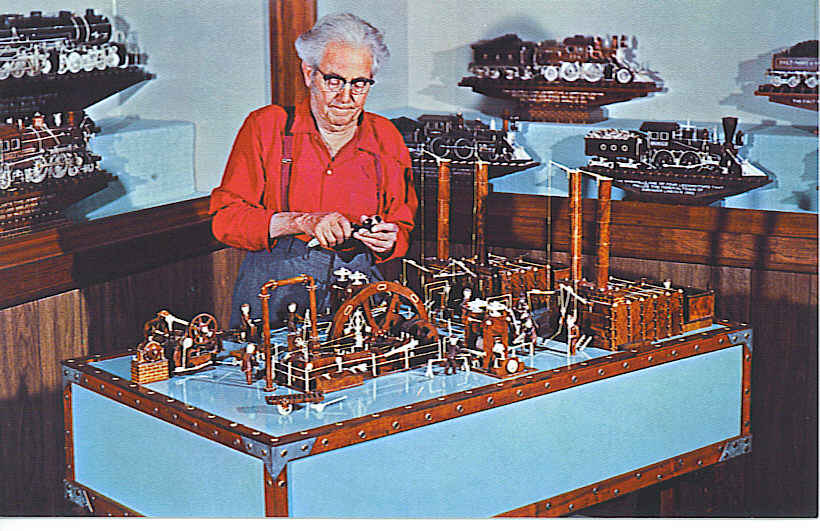
Ernest "Mooney" Warther

Ernest “Mooney” Warther working on one of many displays

“You have to have a vision.”  These words guided Master Carver Ernest Warther throughout his life. He instilled that concept in his family, who today can be found at Warthers in Dover, Ohio. The Smithsonian describes this museum’s displays as “Priceless works of art.”

Early in life, Ernest, called Mooney by most who knew him, worked for the railroad. When he began whittling, it seemed natural to use his passion to create the history of steam engines with moving parts.

During his early years when money was scarce, Mooney used chipped and cracked cue balls made of ivory for his trains. When he rode his bicycle around town, he would often stop at pool halls on his trips to a favorite spot, Woolworths. Cue balls, walnut, coal, mussel shells and beef bone formed his early locomotives because…they were free.

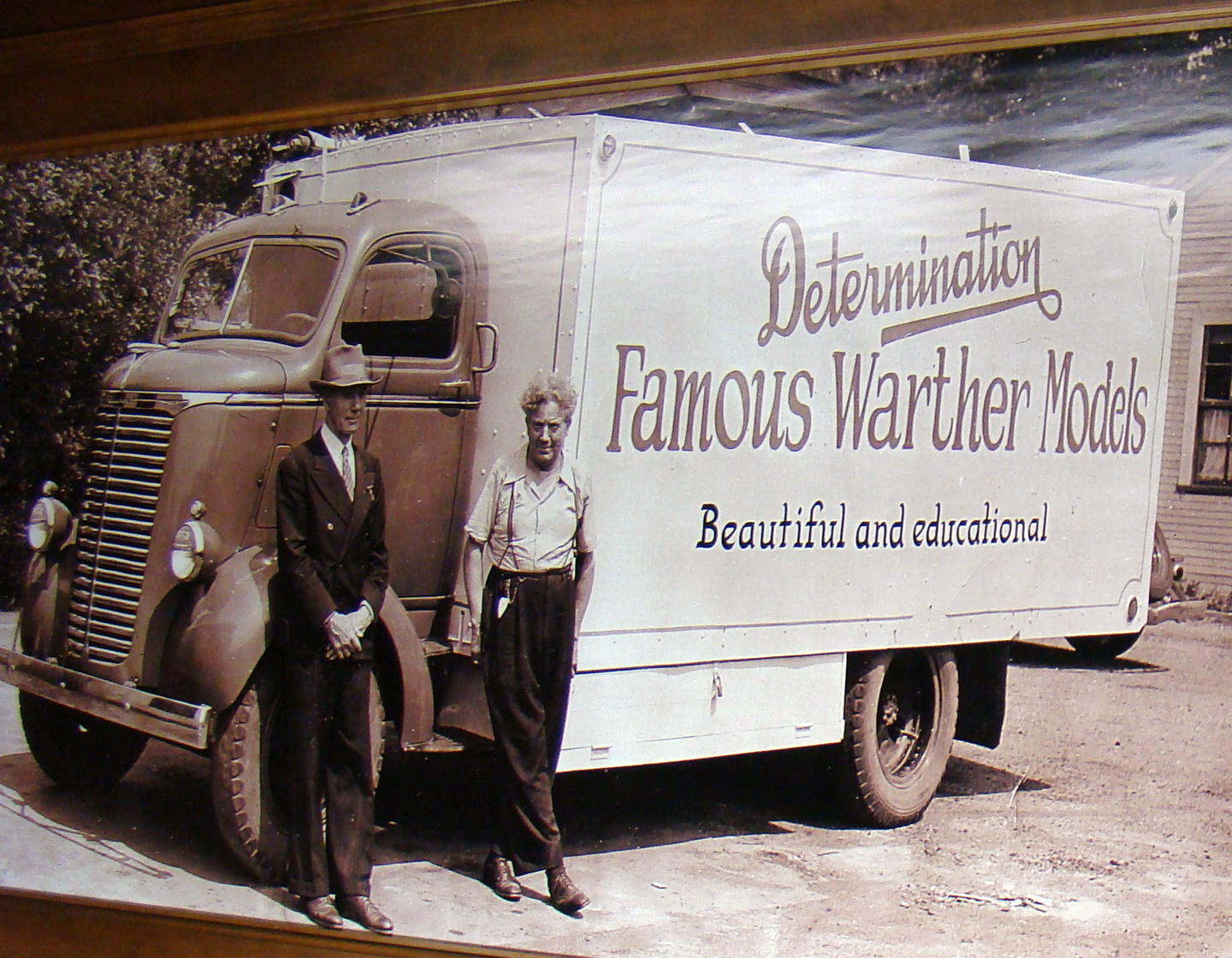
Brothers Fred and Ernest with their Famous Warther Models traveling show

Brothers Fred and Ernest with their Famous Warther Models traveling show

At this point, he no longer called it whittling, as now he carved trains to perfection. His intricate designs were displayed in New York Central Railroad and later in their traveling road show, Famous Warther Models, that carried his engines to the forty-eight continental states during its thirty year run.

Completion of one carving at a time was the order of business for this mathematical and mechanical genius. While Master Carver Mooney used walnut wood and soup bones for his early carvings, he later used ivory for the white parts of his trains and ebony for the black. None of his trains were glued, but parts were intricately pegged together.

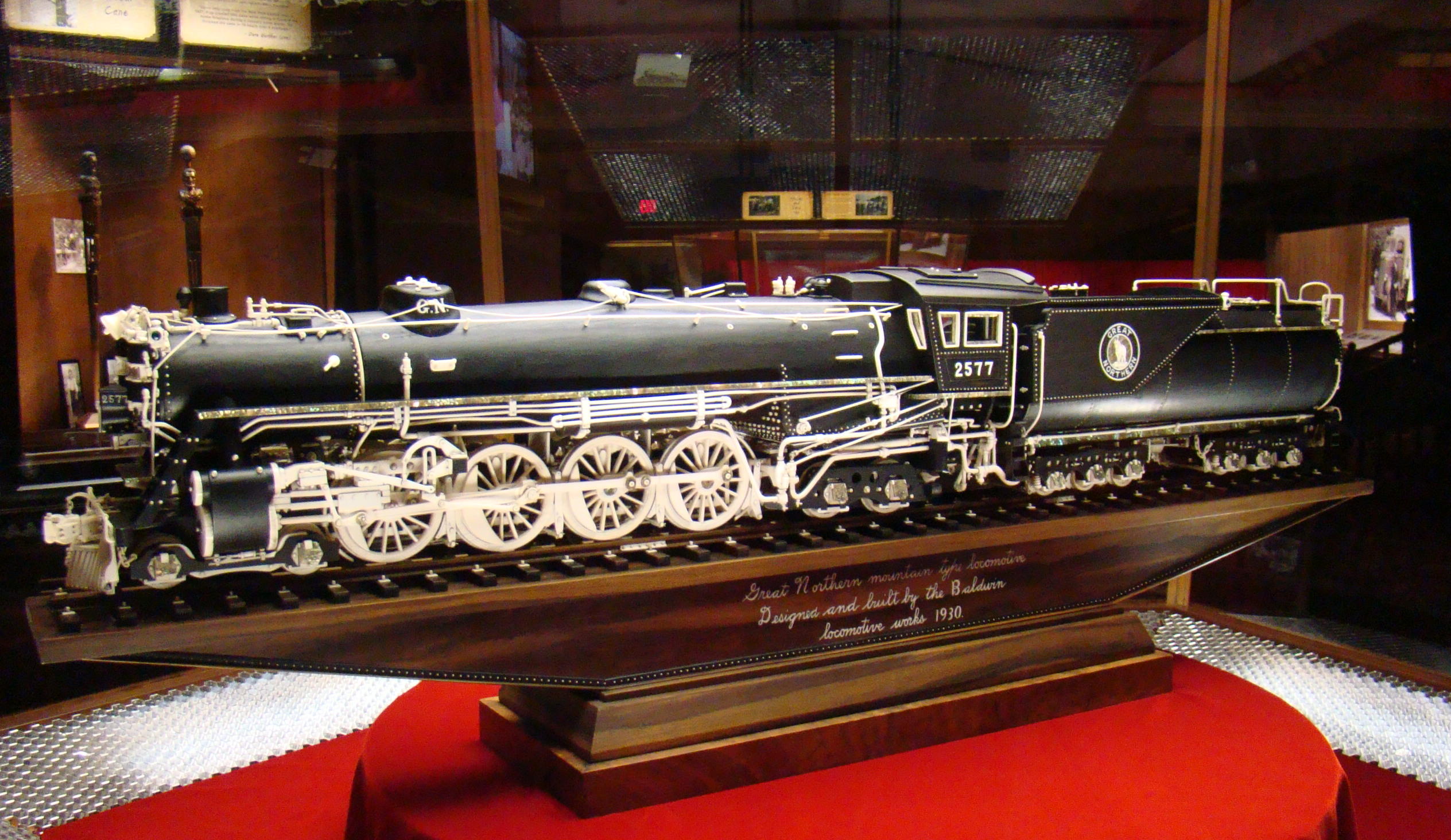
The Great Northern Locomotive

The Great Northern Locomotive

Mooney carved one of his best and favorite replicas, The Great Northern Locomotive, in 1932-33.  The cursive words on the side were all hand carved out of ivory – each word a solid piece. The number on the side of the locomotive represents the number of pieces used – backwards; therefore, this carving contained 7,752 pieces, many of them moving.

A hobo at the train station told him about a  self-lubricating wood, arguto. If Mooney used this hardwood on the bearing surface, the parts would  never need oiling. Those trains built with arguto still run smoothly today nearly 80 years later.

Mooney enjoyed the neighborhood children stopping by his workshop. He kept a brick outside his workshop door. When children would stop by and ask Mooney to play with them, he had a quick answer. “If I throw up this brick and it stays in the air, I have to work in my shop.” The children adored him.

Abraham Lincoln Funeral Train

Abraham Lincoln Funeral Train

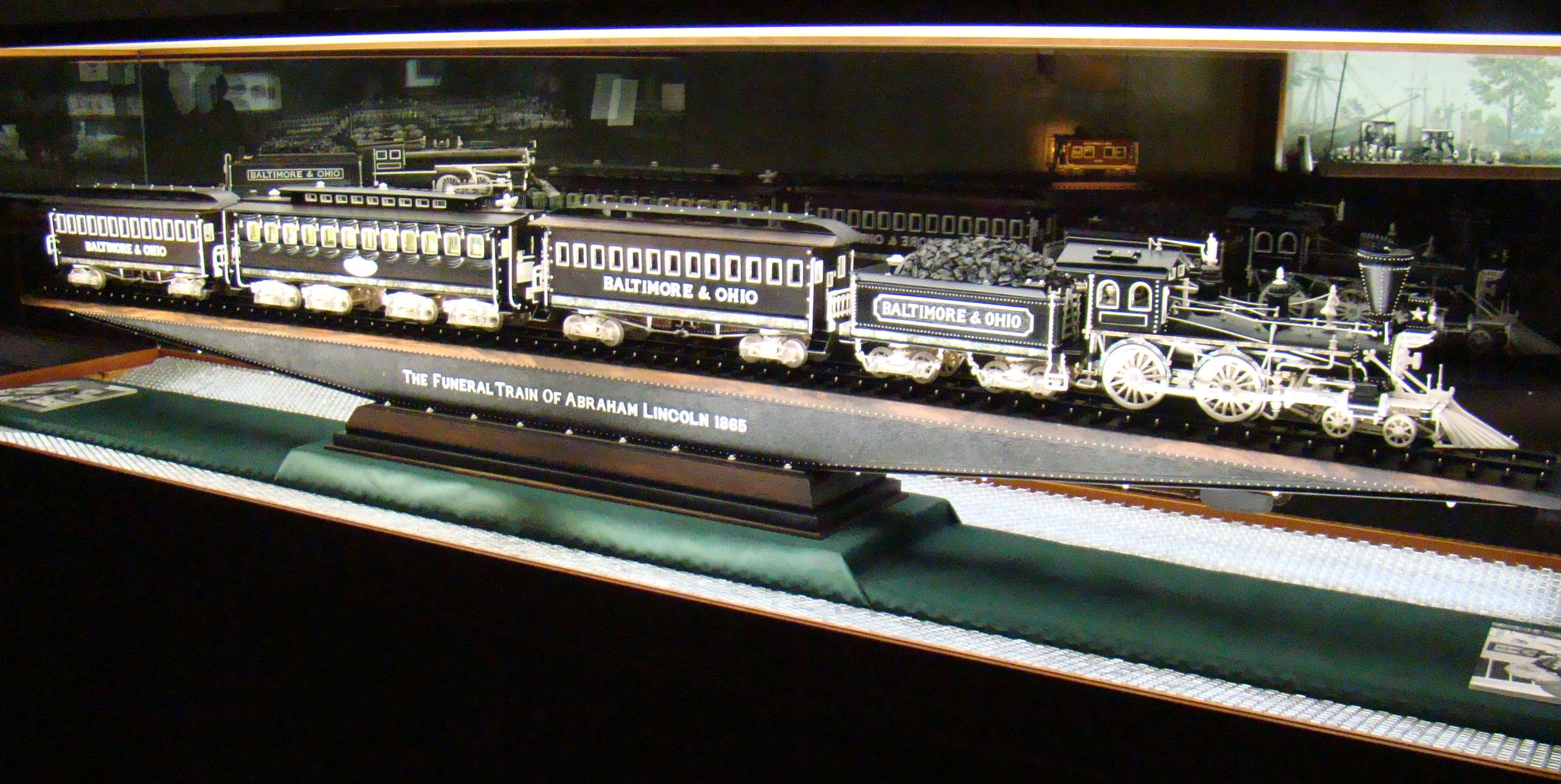
The eyetooth of the hippo, the finest grade of ivory, was used in the famous Lincoln Funeral Train, which Mooney carved at the age of eighty. Being a big fan of the history and philosophy of Lincoln, he paid tribute to him by carving his funeral train on the 100th anniversary of his assassination.

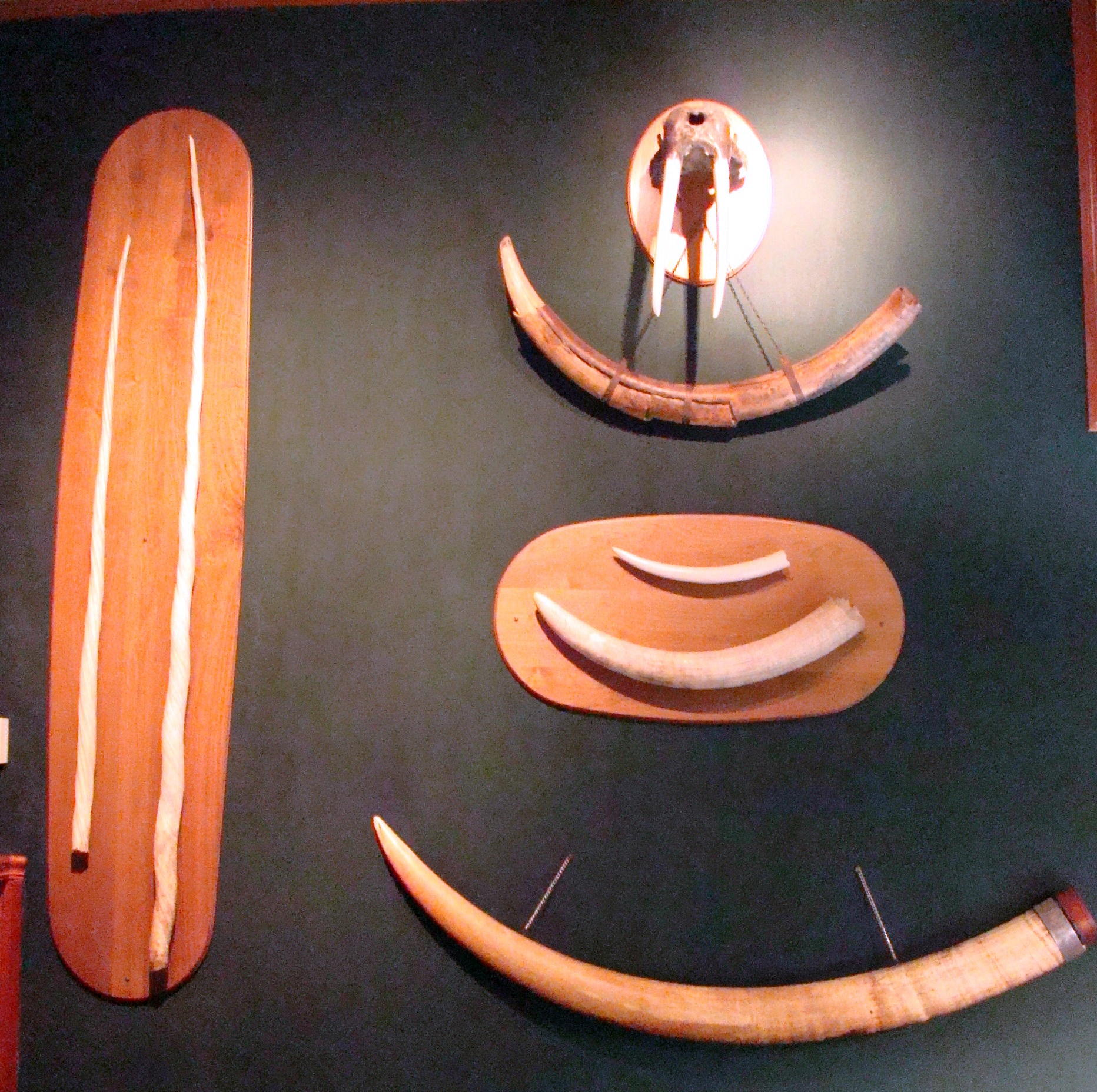
Types of ivory

Types of ivory

Since it was often difficult to find the treasured hippo ivory, he then settled for the second best – ivory of a walrus, and even third- that from an elephant. Much of the ivory came from baby elephants when they lost their baby tusks. You can imagine the excitement at the railroad yard as the ivory was always delivered by train.

The last carving completed was Old Ironsides in 1966. Mooney always tried to be accurate in his scale models and often used 1/2″ to a foot. Speed never figured into his carvings, as he might carve about 1,000 small pieces a month.

The Warther family story serves as an inspiration to organize your time so you can create something special, while leaving time for family first. In his eyes, everyone had a significant talent, the trick was in finding it. His exceptional natural talent for whittling and carving has filled the museum with amazing pieces. As Mooney remarked regarding his carvings, “Pretty good for a second grade education!”

Warthers can be found easily off I-77 in Dover, Ohio. Take Exit 83 to the east and follow the well placed signs to Warthers.

Underground Railroad Museum Flushing, Ohio

Ohio's Underground Trails

Map of Ohio’s Underground Railroad Trails

Underground Railroad Museum in Flushing, Ohio

Underground Railroad Museum in Flushing, Ohio

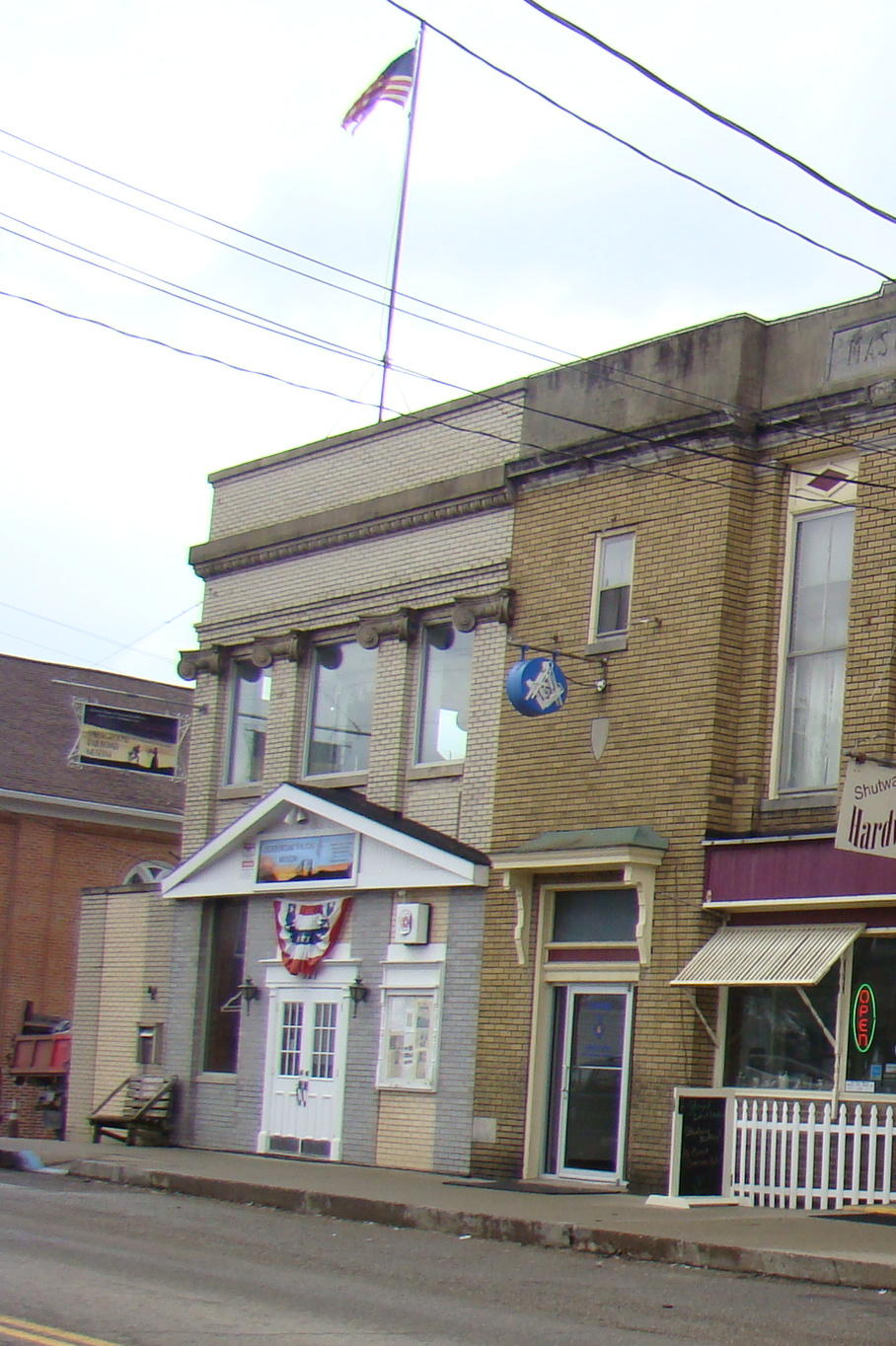
“Filled to the brim.” Those words accurately describe the Underground Railroad Museum in Flushing, Ohio. Outside the old brick building seems typical of those found in many small towns. Inside there is so much information it would take days to just read what is hanging on the walls, let alone all the books available.

Located in the hills of Southeastern Ohio, The Underground Railroad Museum contains over 18,000 items. This particular building was constructed in 1922 as Community National Bank, then became the insurance office of John Mattox.

In 1998, Dr. Mattox decided it would be the perfect spot to share his knowledge and collection of items dealing with slavery and the Underground Railroad. He wanted to tell the story of fugitive slaves and slave hunters, and how the Underground Railroad helped the former and misled the latter.

Dr. Lorle Porter of Muskingum University played a large role in helping John establish the museum. Today, Belmont Technical College students frequently help at the museum through research, organization, and cleaning.

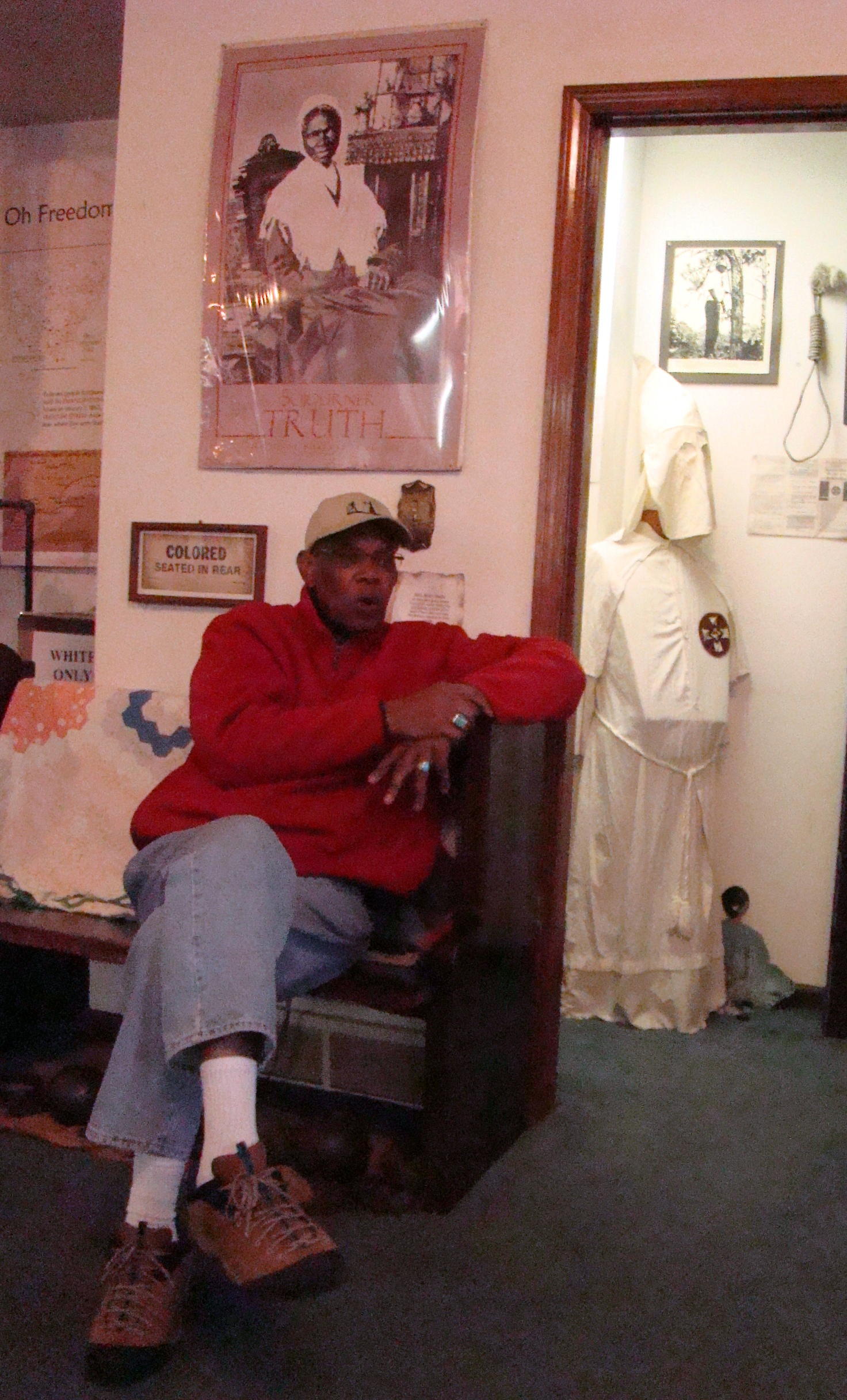
Dr. John Mattox, curator of the museum

Dr. John Mattox, founder and curator of the museum

Stories of slavery abound here thanks to an exceptionally good story teller, Dr. John Mattox, founder and curator of the museum.  John’s family had previoiusly been slaves from Holland, so he knew first hand of the life they lived.  While John told his story, the outfit of a Klu Klux Klan member, displayed on a statue behind him, awakens an unpleassnt reminder. Still John had a great positive attitude as he said, “I’ll tell you ‘xactly how it was, slavery could be good.”

John told of those Sunday mornings when slaves were privileged to go to “The Big House” for breakfast. The menu most often was hot biscuits and potlikker. Now, for those of you not familiar with potlikker, that would be a pot of turnip, collard, and mustard greens boiled with a piece of pork. Pour that over some hot biscuits and you had a breakfast to look forward to all week long.

However, nearby slave collars, whips and shackles help tell the other side of the story of life as a slave. Poster advertisements were placed for auctions about to be held. Ox teams, fox hounds, and Negro slaves were all included on the same sign.

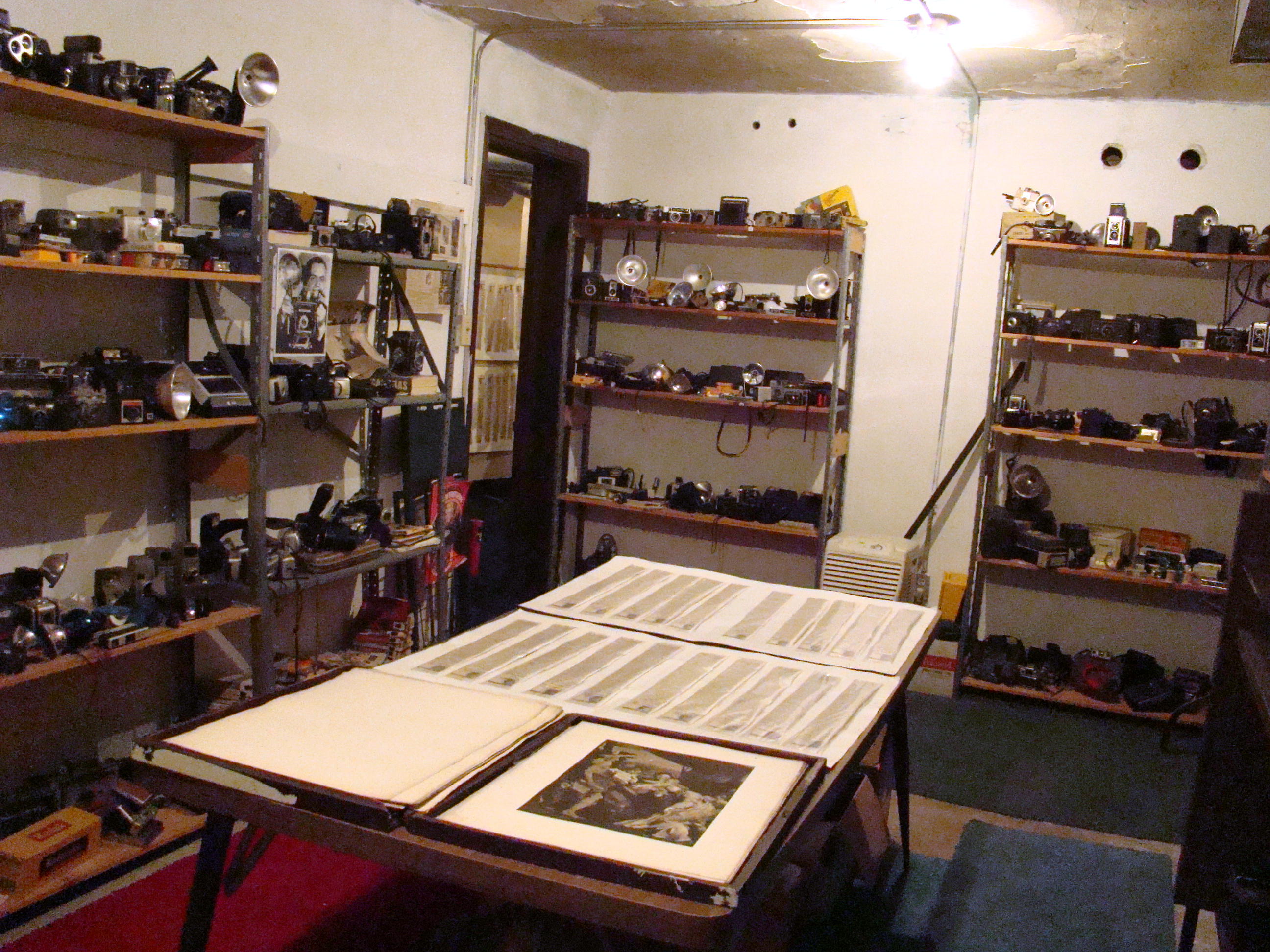
Camera Collection

Camera Collection

In the basement of the Underground Railroad Museum, Dr. Mattox shared his private collection of over 700 vintage cameras. His favorite seemed to be his first Polaroid, a 1970 Rolex SX70, which he used to take pictures of his wife when they went to Hawaii. An 1886 Conley and an original Brownie Camera were also part of that collection.

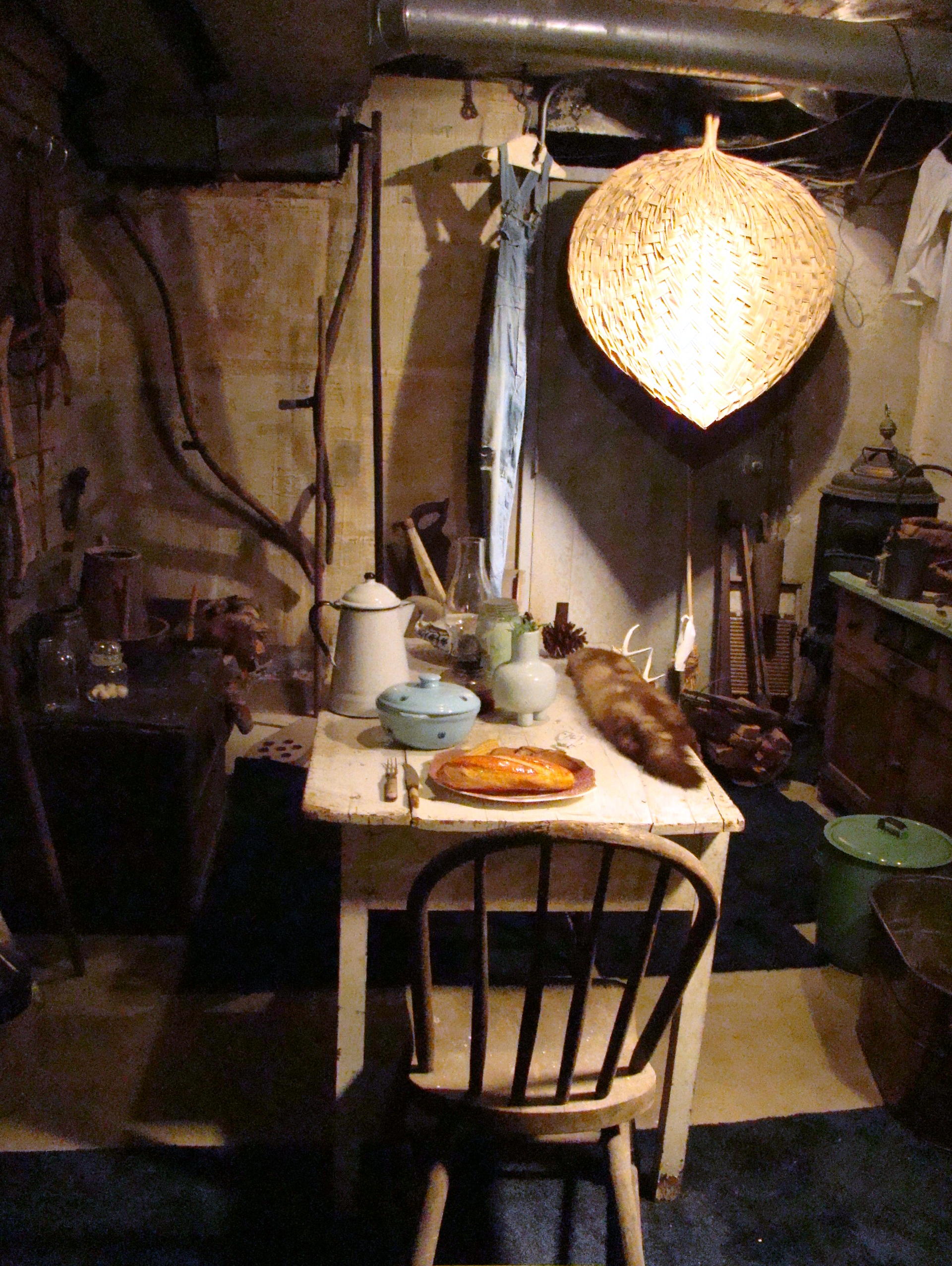
A replica of a slave cabin, where an average of eight people lived, has been constructed in the basement. This one tiny room was their “home” for eating, playing and sleeping. Only one bed could be seen in a corner of the room, and the “old person” got to sleep there. The rest slept on straw spread on the dirt floor.

Inside of slave cabin

Inside of slave cabin

The slaves, or those assisting through the Underground Railroad, left many signals for other slaves following their path. Sometimes a special knock on the door was used and the password, “Friend of a friend” gained them entry to safety. An X strategically placed on a tree gave the slaves direction to the next stop. Great courage was shown by those who often risked everything to escape.

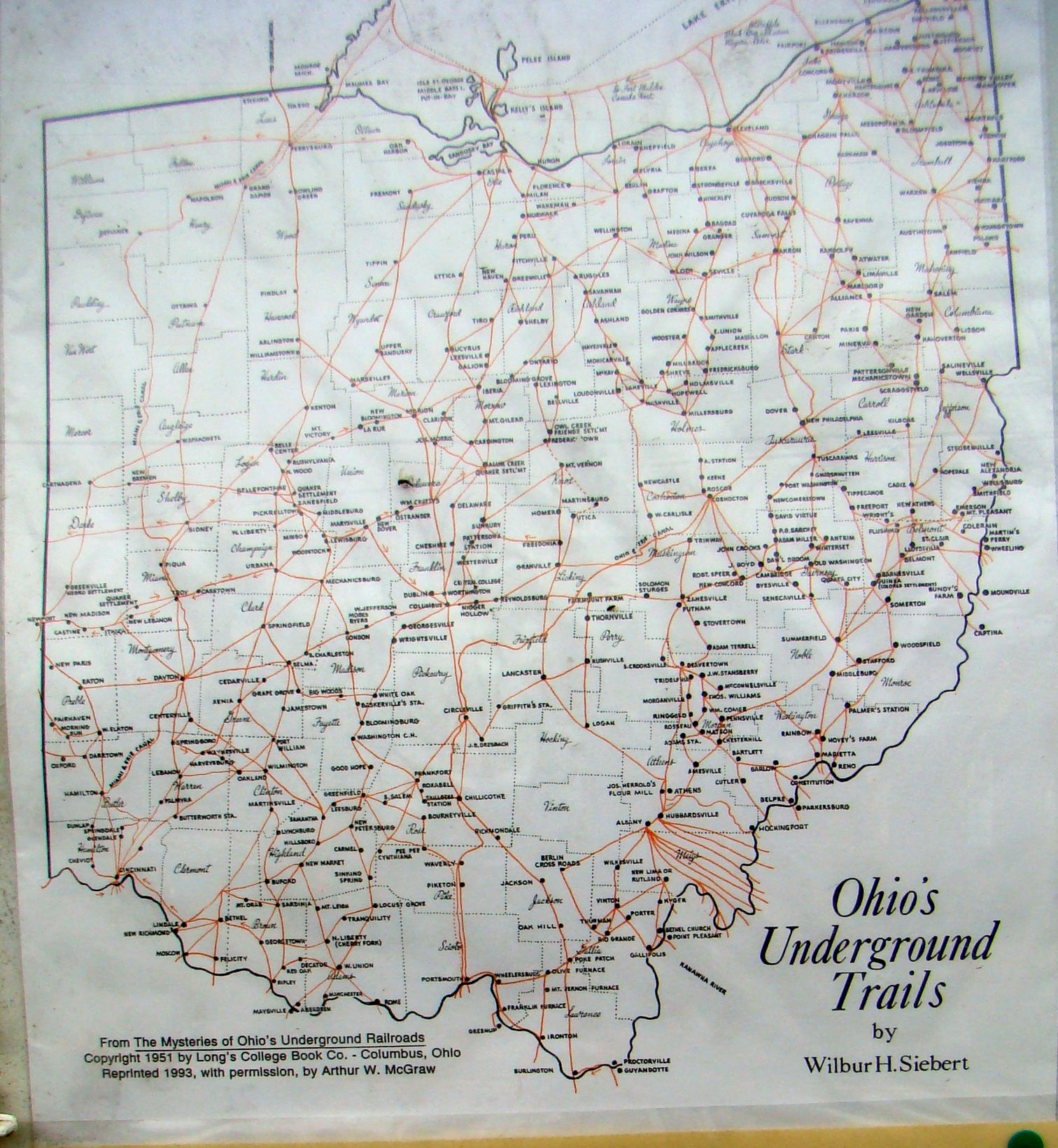
The major task of the Underground Railroad operation was to get the fugitives across the Ohio River to safety. Martins Ferry was the first Ohio stop for many in 1788. The Ohio map shows that their flight continued across Ohio in every direction.

John expressed his attitude toward life by saying, “Don’t blame everyone else for what happened to you. New ideas are just old ones recycled.” He was a fantastic guide so hope he continues sharing his stories for a long time. Just the thought of losing all his knowledge reminded me of an African proverb that hung on the wall of the museum, “When an old man dies, a library burns down.” Recording our history is so important for future generations.

The easiest route to the Underground Railroad Museum in Flushing, Ohio is off I-70.  Take Ohio Exit 208 and head north on State Highway 149. The road has many bends, but leads to Flushing, then SR149 makes a right turn on E High Street. The museum is located at 121 E. High. 

The Sharpest Edge Around – Warther Cutlery

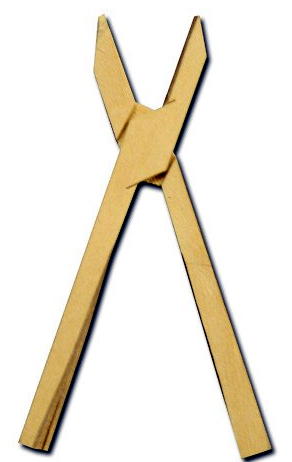
Warther's signature Single Pliers

Warther’s signature Single Pliers

World’s Master Carver Ernest Warther spent a life-time in Dover, Ohio. When Ernest was three years old, his father died leaving the children to help support the family. While the youngsters were unable to attend school regularly, Ernest’s inborn abilities surfaced by chance along life’s path.

For a penny a day, young Ernest did his part by driving neighborhood cows outside of town to pasture, then returning them home in the evening. When five-year-old Ernest was driving cattle, he spotted a treasure on the ground. A pen knife! His life’s adventure was about to begin.

A few years later Ernest met a whittling hobo at the local train station. This hobo could form a small piece of wood into a moving pair of pliers by making only ten strategically placed cuts in the small, rectangular, wooden block.

Ernest, called Mooney by his friends, watched the hobo carefully before he headed off to another town. Soon Mooney was making these magical pieces with ease. During his lifetime it is estimated he made nearly 750,000 pairs of pliers, most of which he gave to children. His fastest time for carving a pair of pliers occurred on the Johnny Carson “Tonight Show” when Mooney finished in 9.4 seconds.

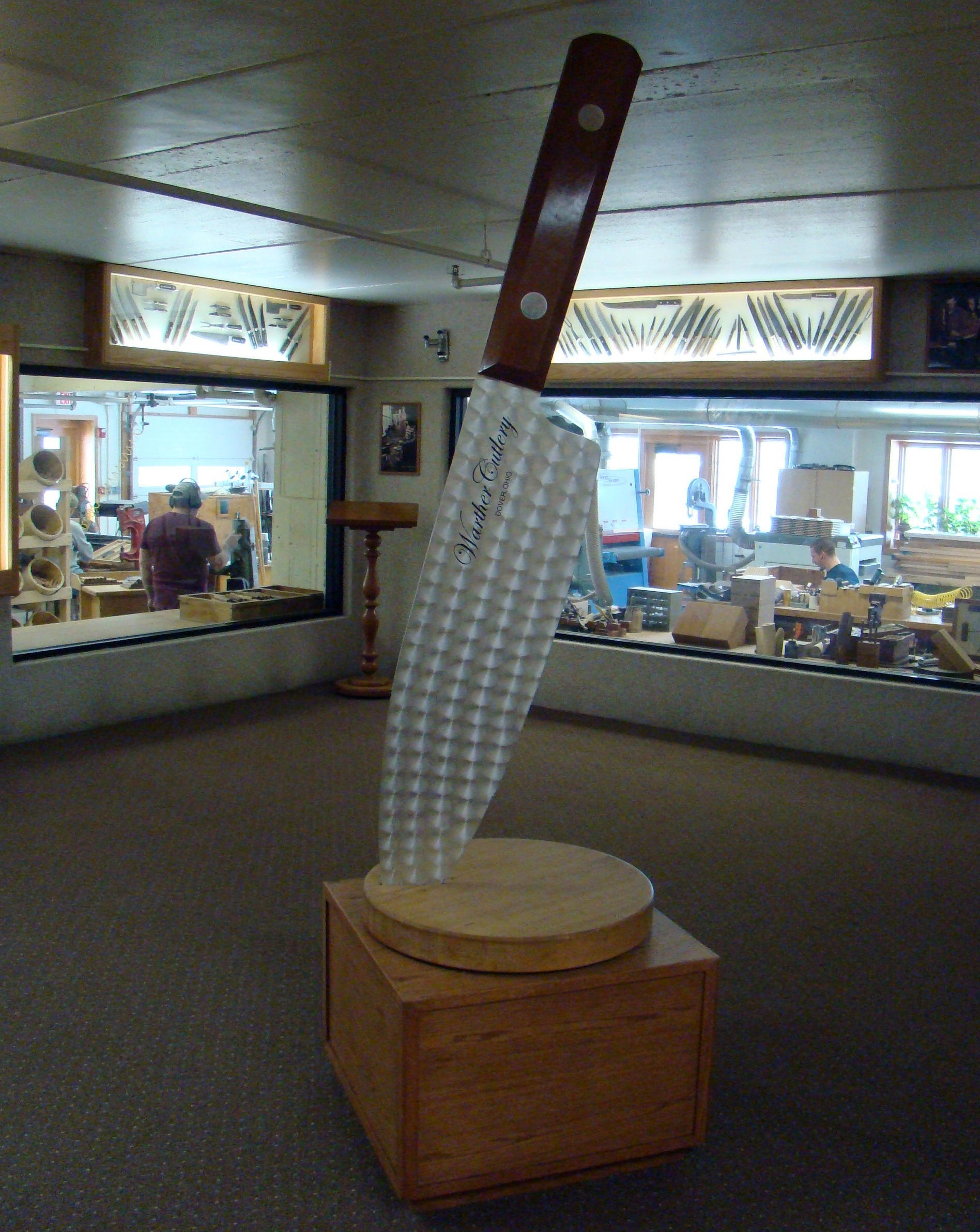
Whittling became Mooney’s favorite pasttime, now making double pliers and more. But as is often the case, one thing leads to another. What do you need the most for whittling, especially ebony and ivory? A sharp knife! That was something Mooney could not find. Sometimes the best way to do something is to do it yourself, so Mooney developed a knife that would keep its sharp edge.

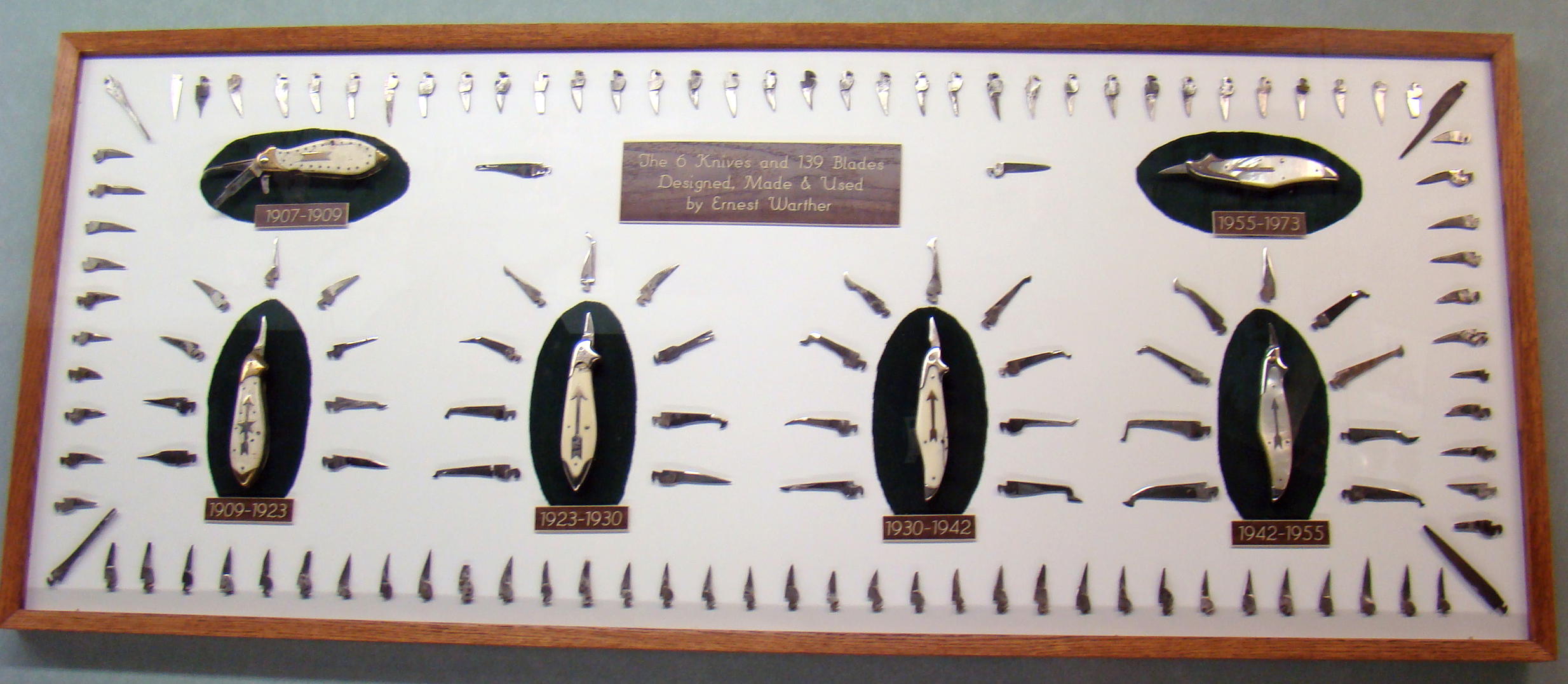
These are the knives Mooney used himself with  their accompanying 139 blades.

These are the knives Mooney used himself with their accompanying 139 blades.

In his workshop, Mooney developed techniques for tempering and sharpening steel blades so they would hold their sharpness. For whittling purposes, the knife had to have a big handle with small blades – shorter than his thumb. His knife had 139 interchangeable blades so he could work easily with any material of any size.

Warther Cutlery knife shop

Warther Cutlery knife shop

When his mother needed a sharper paring knife in the kitchen, seventeen-year-old Mooney created a small kitchen knife for her. Soon the neighbors were all wanting a knife just like Mooney’s mother used.He added a distinguishing trademark swirl on the blade so his knives were easily recognized. Thus began the business of Warthers Cutlery, handcrafted in the USA since 1902.

Realizing his real riches laid at home, his five daily hours of carving were scheduled for early in the morning before the family awoke. After breakfast, Mooney would ride his bicycle to work at the steel mill, then spend time in the afternoon playing with the children he adored. He didn’t really care much for money; however, when the family needed something, Mooney would make knives. He never sold his carvings.

In 1912, Mooney ended his whittling with a plier tree that can be seen in a glass case today.The tree was made with 511 cuts and was featured at Ripley’s Believe It or Not. This is the point where his whittling turned to carving as he began his history of the steam engine in walnut, ebony, and ivory.

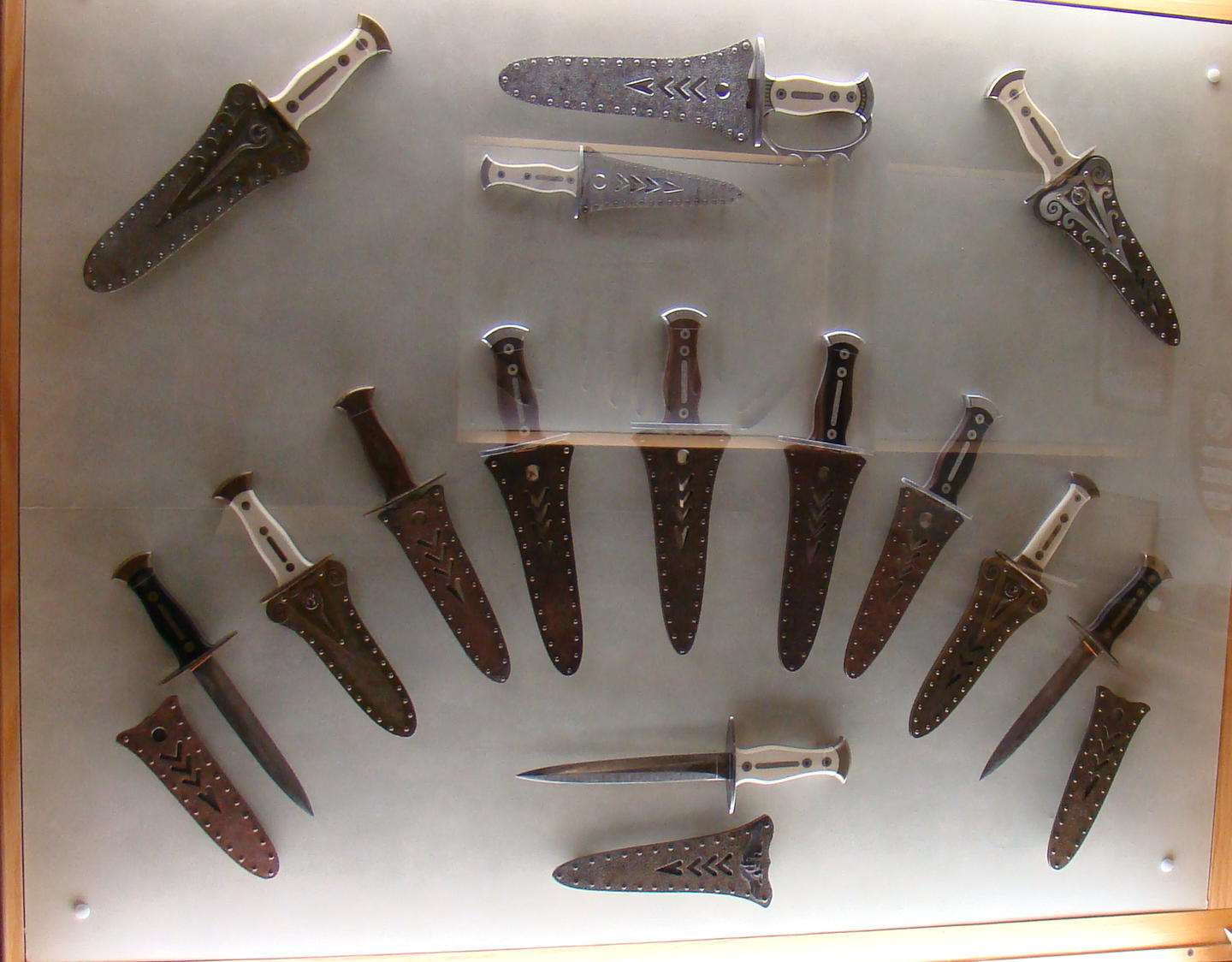
Commando Knives made during WWII.

Commando Knives made during WWII.

During WWII, a lady asked Mooney to make a knife for her son to carry with him during conflict. Mooney made 1100 Commando Knives during this time and carved the names of the military men into the handles.

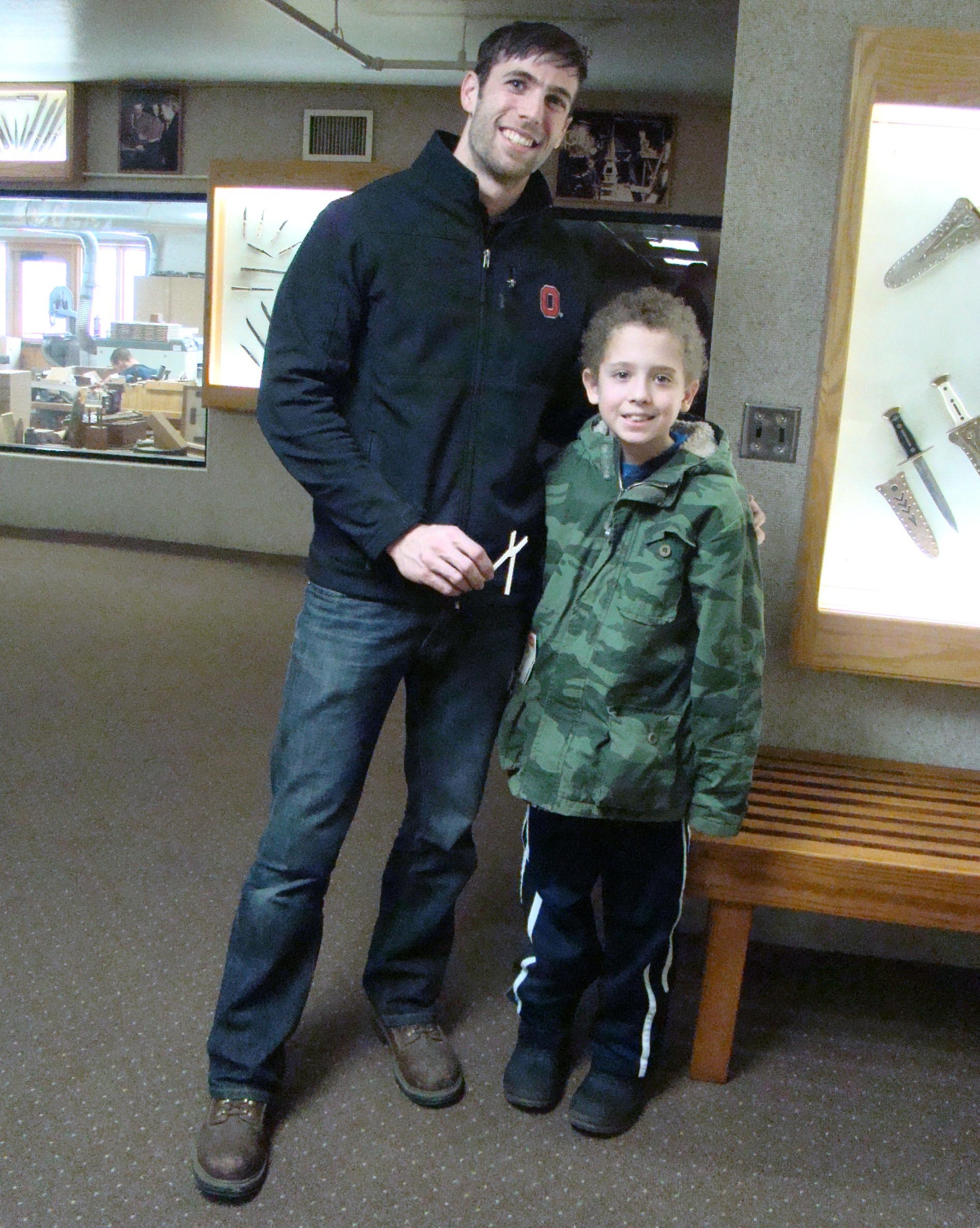
Family member, Steven Cunningham, makes pliers for children today.

Family member, Steven Cunningham, makes pliers for children today.

Today the knives of Warther Cutlery are still made in Dover, Ohio with all USA products by third and fourth generation family members. They continue demonstrating Mooney’s signature pair of pliers for visitors, with children usually receiving the newly carved pair.

Before you leave, stop by the gift shop and purchase one of the Warther Cutlery knives with swirl trademark. My little paring knife, “Old Faithful”, was purchased there over twenty-five years ago and is still like new. Whenever you happen to be in the area, visit their knife shop where they will sharpen your Warther knife for life at no cost. When you stop by, they will ask you which hand you use to cut with, so they can sharpen the blade accordingly. They strive for perfection!

Older residents still remember Mooney riding his bicycle down the middle of the road with his white hair flying. The basket on his bicycle was always handy for items he found or was given along the way that eventually might become part of his carvings, either mechanically or in their design. While Ernest Warther worked at his passion nearly every day for 83 years, he died almost penniless, but happy beyond imagination.

Warthers can be found easily off I-77 in Dover, Ohio. Take Exit 83 to the east and follow the well placed signs to Warthers.

The Train to Nowhere

The Train to Nowhere

The Train to Nowhere

A beautiful diesel-electric locomotive awaits on the tracks in the small town of Byesville, Ohio. At this point in time, it is called “The Train to Nowhere”, as it remains in place unable to move down the Byesville Scenic Railway due to circumstances beyond their control. But that doesn’t mean the spirit of the railroad isn’t alive here! It continues with a program called “The Coal Miners’ Story.”

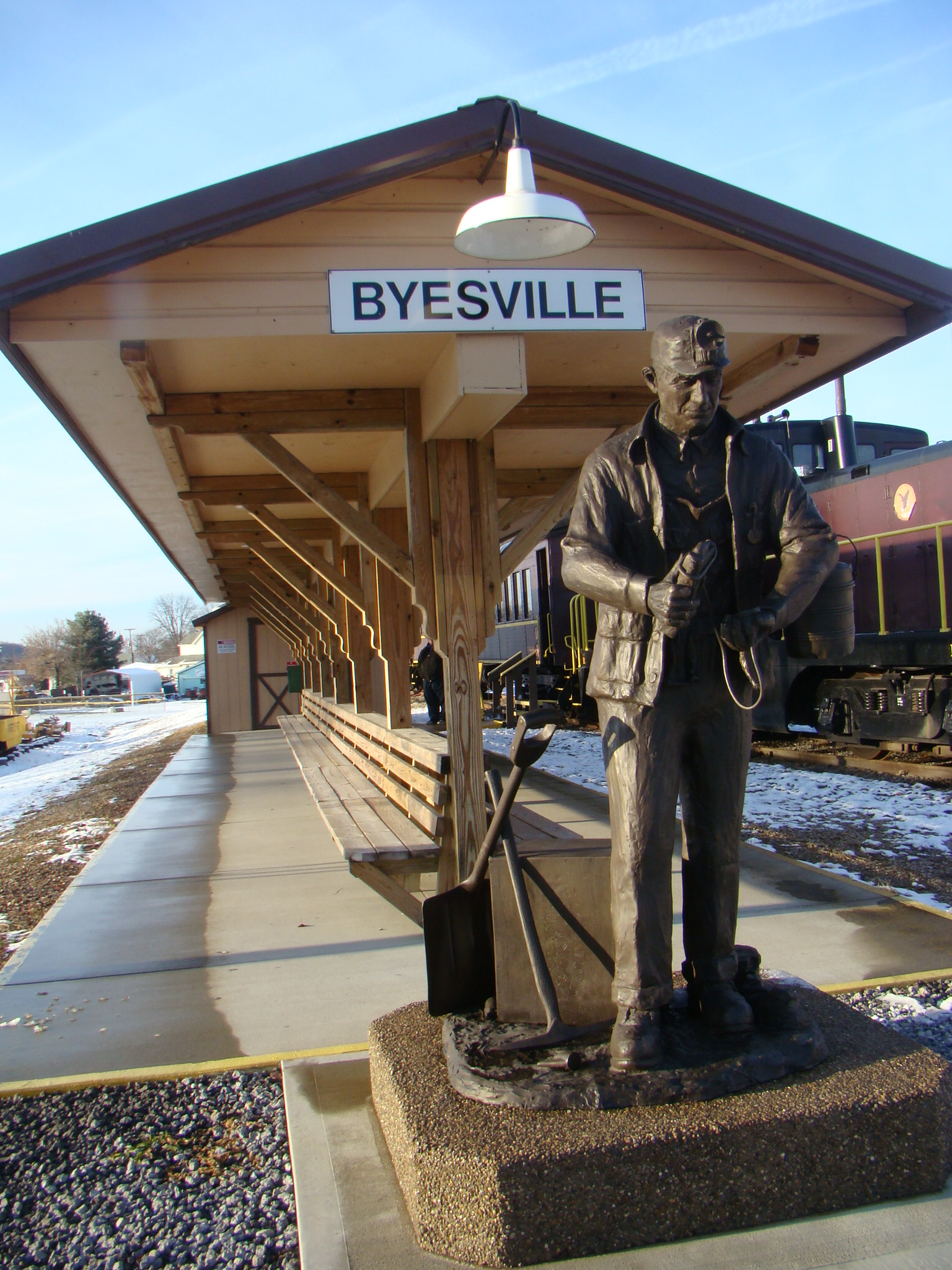
Bronze Coal Miner Statue

Bronze Ohio Coal Miner Statue

As soon as you pull into the parking lot, the bronze coal miner statue catches your eye. The Ohio Coal Miner was sculpted by Alan Cottrill at Cottrill Sculpture Studio and Gallery in Zanesville, Ohio, and dedicated in September of 2012. This statue is a tribute to miners and their families in Ohio, as well as across the entire nation. The miner’s brass tag reads 382, the number of coal miners who lost their lives in the deep mines of Guernsey County over the mines’ sixty active years. During the past few years, all contributions given to the Byesville Scenic Railway during their train rides were dedicated to building this memorial statue, which actually cost nearly $40,000 to reach completion.

A portion of the plaque in front of the statue states: May your personal sufferings, sacrifices and the hardships endured by your families, never be forgotten nor taken for granted.

Sadly, the train is not able to chug down the track these days due to some issues over insurance and track ownership, but the volunteers at Byesville Scenic Railway are still sharing a unique presentation of life during the days when coal mines were booming in the early 1900’s. At that time, Byesville had 77 mines, and was considered to be “The Coal Mining Capital of Southeastern Ohio”.

Visitors are invited to take a seat on “The Train to Nowhere”, where they are given information regarding the 1917 train cars and the diesel locomotive. Back in the coal mining heyday, the train ran from Cleveland to Marietta delivering coal from Guernsey County mines. The Byesville Scenic Railway volunteers are optomistic that the train will be running again a few years down the track.

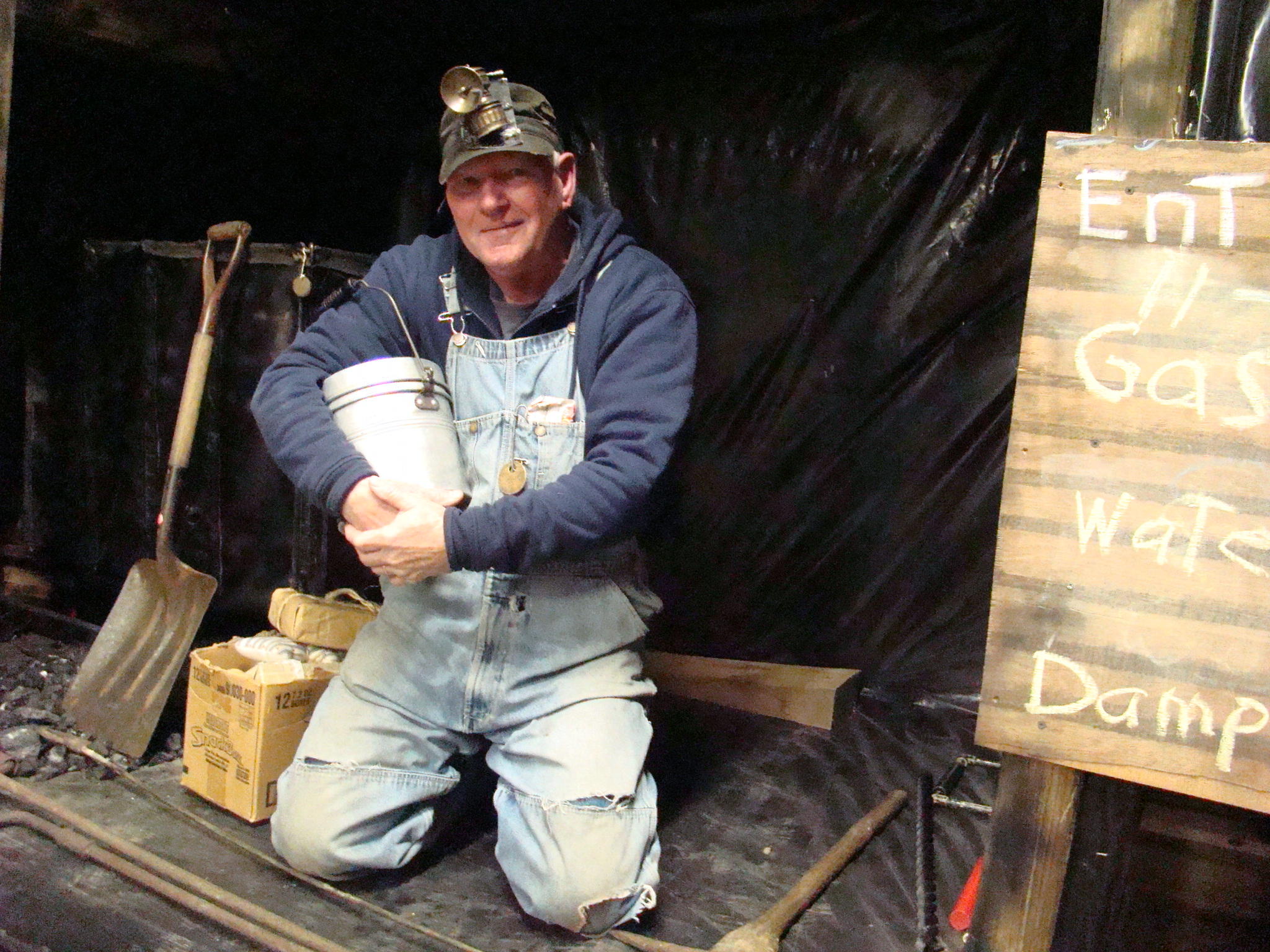
Dave Adair tells coal miners' stories.

Dave Adair tells coal miners’ stories.

In their “old greasy mechanic garage” – sometimes used as a movie theater room, the volunteers have constructed a makeshift mine of black plastic walls. It is here in Entry 7 South that a living history of a local coal miner is portrayed by volunteer, Dave Adair. He describes the harsh life of a miner as well as the poor home conditions. Beans and cabbage were two frequent items on their supper menu, with meat seldom being a part of their food supply. According to Miner Dave, “All were poor but no one realized it because all were the same.”

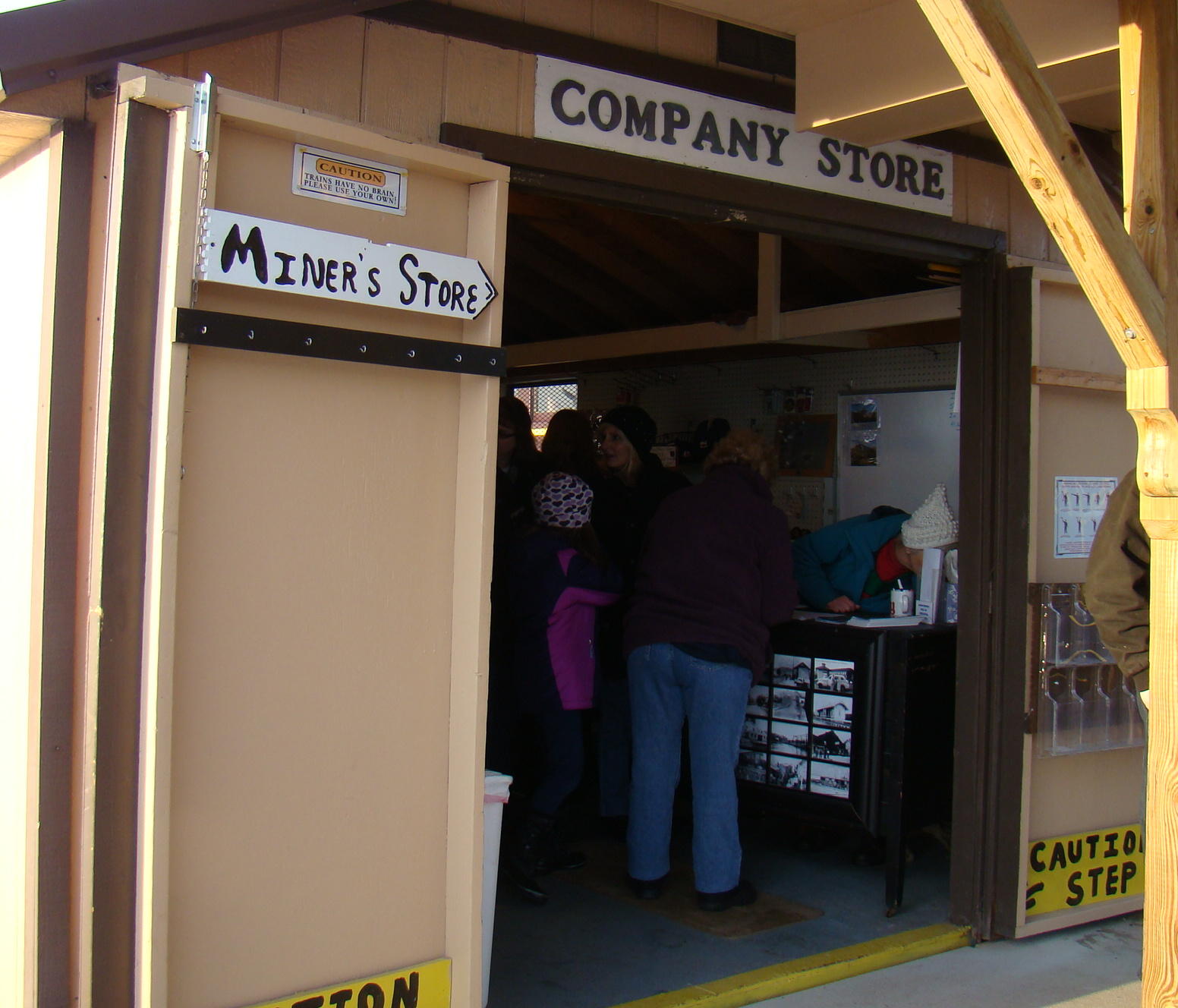
"I owe my soul to the Company Store."

“I owe my soul to the Company Store.”

Miners were very superstitious and often carried lucky pieces in their pockets. Over the entrance to the mine, a horseshoe was often placed. It had to be placed with the open side up so the luck wouldn’t run out with 100,000 ton of rock above their heads.

Treasures for families of coal miners and train enthusiasts can be found in the Company Store. A variety of gifts for young and old alike range from engineer hats and handkerchiefs to mugs and wine glasses. You won’t want to go home without a memory of those hard working miners.

Steve Stolarik explains Mineres Museum.

Steve Stolarik explains Miners’ Museum.

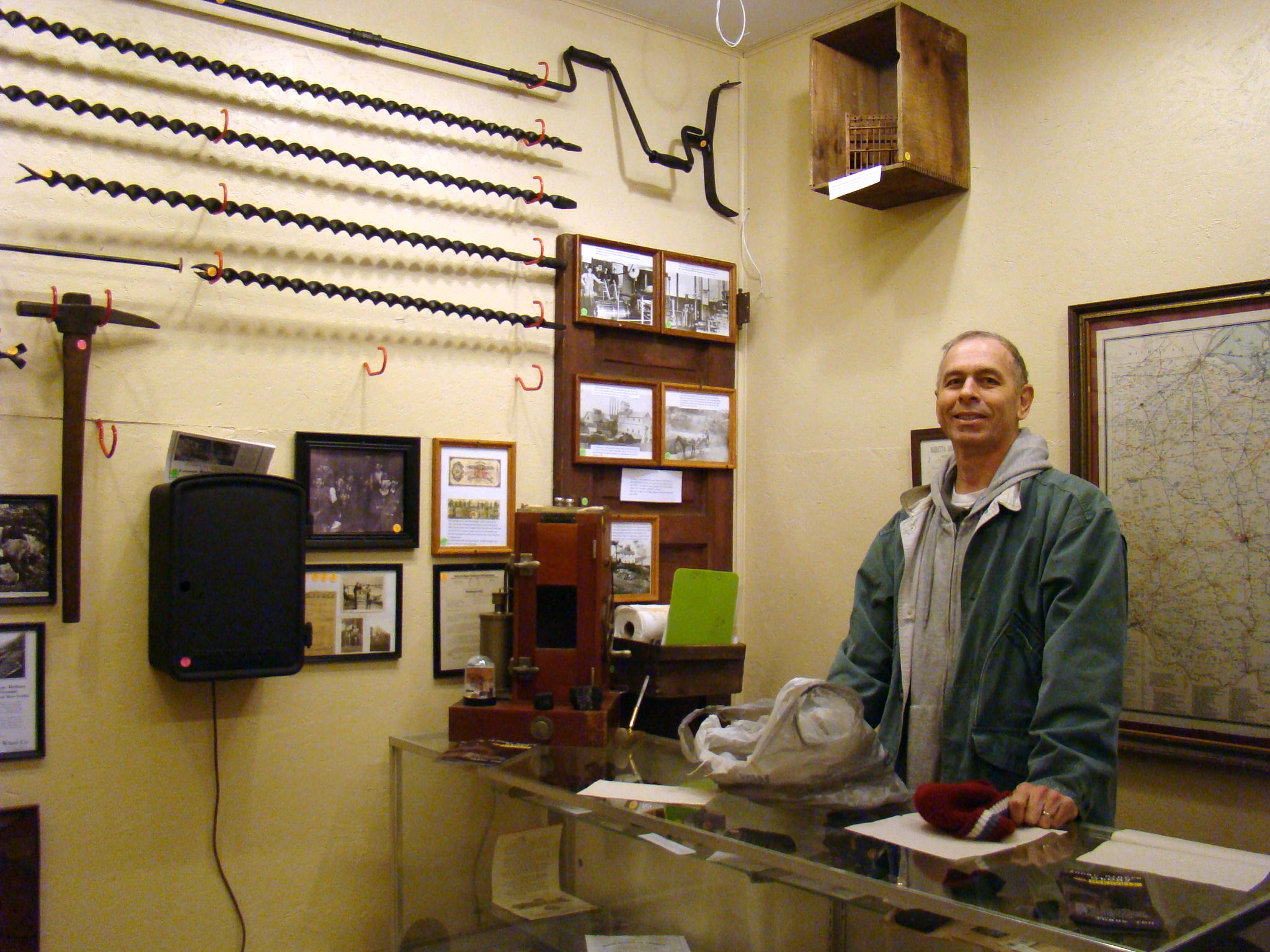
The Miners’ Museum has been developed in more recent years for the education of the general public. It contains a collection of original coal mining equipment used in the local mines. On the wall are displayed the various bits used to drill into the coal face to insert a stick of dynamite, which the miners had to buy themselves from the company store. Steve Stolarik was on hand to explain how the bits and lanterns functioned when the miners were deep in the mines. Included for display are numerous pictures of the old Guernsey County Coal Mines.

Keep your eye on the track to see when the “Train to Nowhere” will again be on the move. In the meantime, visit the website of Byesville Scenic Railway to see their scheduled events. Local train enthusiasts are singing hopefully, “I hear that train a comin’, it’s rollin’ round the bend.” 

Byesville Scenic Railway is located in Byesville, Ohio just off I-77 (Exit 41) south of Cambridge. Turn toward Main Street of Byesville, then left at the traffic light.  The train depot is one block on the right. Free parking is available along Second Street and Seneca Avenue. 

Toy and Plastic Brick Museum “Unofficial LEGO Museum”

The sign out front says "Unofficial Lego Museum".

The sign out front says “Unofficial Lego Museum”.

Building blocks have been a favorite gift for many years. That tradition continues today with evolvement of blocks from wooden to plastic, including animation possibilities.

An active imagination can create almost anything from Lego plastic bricks. Dan Brown, museum curator at the Toy and Plastic Brick Museum, displays proof of that.  He has collected enough Lego blocks to earn the museum the title of “Largest Personal Collection of Lego Blocks in the World”. There’s no doubt about that fact as Dan has over four million Lego blocks…a number  that increases almost daily.

This Toy Museum is for all those who enjoy the world of Lego art- young and old alike. The name Lego actually comes from a contraction of two Danish words: leg godl, translated “play well.”  Lego began as a builder of wooden toys. Then in 1937 Ole Kirk Christiansen began making plastic blocks.

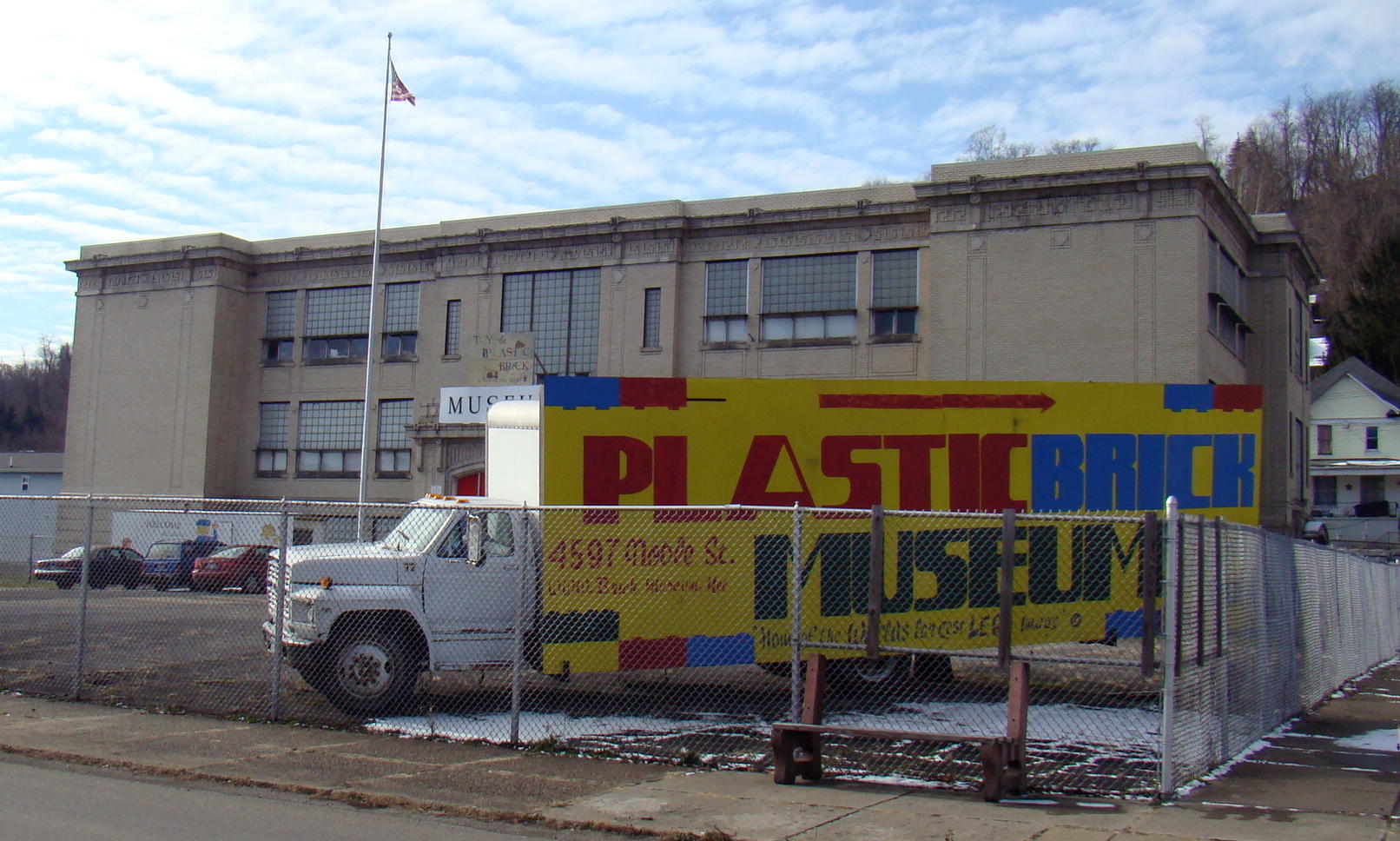
Plastic Brick Museum Sign in front of building.

Plastic Brick Museum Sign in front of old school building.

You can’t judge a book, or a building, by its cover, as surprise after surprise waits inside this old school. The former Gravel Hill Middle School in Bellaire, Ohio has three floors of amazing suprises, which all involve Lego blocks!  Since there wasn’t enough room here for Dan, he bought another local school to store his spare parts. Dan has a great sense of humor as he hoards Legos for future use. While shaking his head, Dan describes himself as “a crazy guy who wanted to retire and open a Lego Museum in Bellaire, Ohio!”

"The Vault" contains original Monopoly set in gold.

“The Vault” contains original Monopoly set in gold.

When entering the main lobby on the second floor, amid all the Lego creations, a large display case called “The Vault” catches the eye. This was purchased from Disneyland and features a real gold 2 x 4 brick and an original gold Monopoly set. Throughout the museum, items from all over the world appear…most of them being Legos!

Lego Mona Lisa with Lego artist giving a final touch.

Lego Mona Lisa with Lego artist giving a final touch.

Lego creations of Mt Rushmore and Mona Lisa also add interest. Mona Lisa has a small Lego figure painting the finishing touches on that portrait. Major creations, like these murals, have been glued together to save future repair work, while many of the Legos are assembled just as youngsters would at home. Another fun fact on the walls of the museum estimates there are 52 Lego blocks for every person on the planet.  Do you have your share?

World's Largest Lego Mural on gym floor.

World’s Largest Lego Mural on gym floor with animated band on stage.

After walking down a carpet made in the pattern of Lego blocks, you arrive in the old gymnasium. Before your eyes is the largest Lego image in the world – a mosaic of an 18-wheeler tractor trailer. Designed by Brian Korte, this giant image was created by over 250 local school children with the help of AFOLs (Adult Friends of Legos). It contains over 1.2 million Lego blocks and measures 44 feet by 21 feet.

Some of those same Lego enthusiasts, the builders of tomorrow, are now attempting to construct the tallest Lego tower in the world. It begins in the basement, going up through an air shaft. They have even cut a hole in the roof so it can reach the sky. Plans at this point are for the tower to reach forty feet above the building.

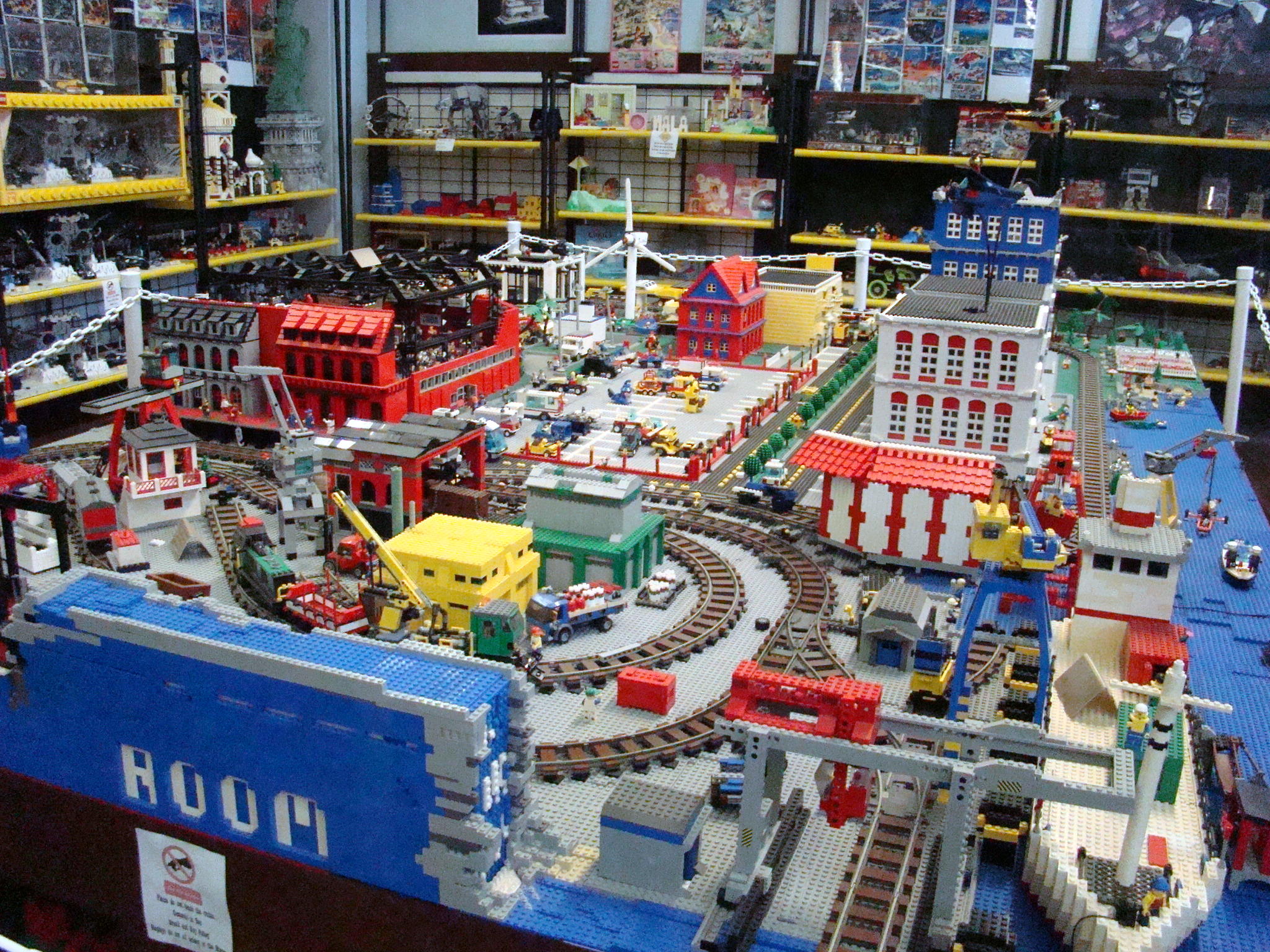
Lego Train Room is animated at the push of a button.

Lego Train Room is animated at the push of a button.

Each of the classrooms throughout the building overflows with themed room Lego designs from Knights Room to Mission to Mars.  The Toy Museum also has Guiness World Records for the largest Lego castle, and longest Lego castle wall. As you can imagine, the sign “Do Not Touch” appears frequently throughout the museum but some find it hard to resist. Therefore, they have a special area where you can sit and build your own creations.

Designs from this favorite plastic brick come to life with many examples of animation…a favorite being a lively band called Plastica, which appears on the stage in the old gymnasium. The musical figures were purchased from a department store in New York City, the place Dan called home for most of his life while he worked in the world of computers. The band is powered pneumatically, showing that the world of Legos is more complicated than just building with blocks. It’s a world of engineering as well.

Youngsters always have fun with Lego projects.

Youngsters always have fun with Lego projects.

If you or someone in your family enjoys creating with Lego blocks, this is the perfect place to explore.  Buiding with blocks is a real brain stimulator. Did you know that possible combinations of six Lego eight-plugged blocks can create 209,000,000 seemingly endless combinations? You might get some new ideas while you explore! What will you build next with your Legos?

Bellaire Toy and Plastic Block Museum can be reached off I-70 at the Bridgeport exit. Take Route 7 south to the 48th Street Drive. Turn west two blocks until you reach a dead end. Turn left and within two blocks you will be at the museum on the right hand side at 4597 Noble Street. Hours during the winter months are 12-5 on weekends, while during the summer season, the museum is open Wed. – Sun. 12-5. For more information, call 740-671-8890.