Places to go and things to see by Gypsy Bev

Archive for the ‘Native Culture’ Category

Casinos and Ancient Petroglyphs Make an Unusual Combination in Laughlin, Nevada
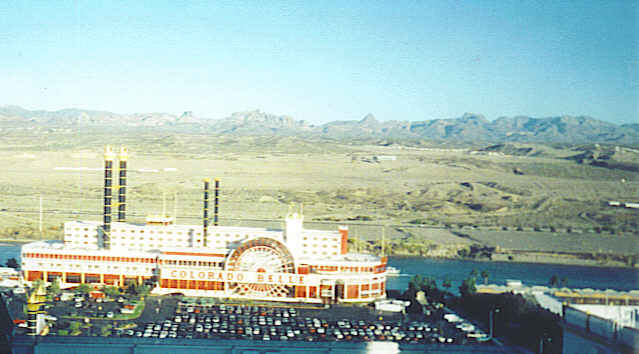
Colorado Belle CasinoMountains on the river…a spot to relax! On the banks of the beautiful Colorado River at the very southern tip of Nevada sits a lovely little town called Laughlin. Casinos are the main business in town, so many visitors try their luck at the slots or gaming tables. The Colorado Belle Casino, a 600′ replica of a 19th century Mississippi paddle-wheel riverboat, is certain to catch everyone’s attention.  However, gambling isn’t necessary to enjoy a stay in Laughlin.

When Don Laughlin, for whom the town is named, purchased the land in 1964, he opened a small casino, Riverside Resort, which had just twelve slot machines and two gaming tables. On the other side of the river in Arizona, the town of Bullhead City ran shuttle boats to the casinos as the number of them grew in Laughlin. Finally, in 1987 Don Laughlin himself provided the $3.5 million needed to build a bridge to span the river between the towns. Then business really picked up. Today, this little town is a popular gaming destination and family vacation center since it is located on the banks of the river with desert and mountains in view.  The casino strip isn’t very long with ten major casinos, but it has all the glitter of Las Vegas. The actual town of Laughlin is situated on the other side of the mountains, away from the casino activity.

Ramada ExpressA stay at the Ramada Express, now the Tropicana Express, was always a pleasant experience. Express being its name, trains were its theme, having a pool shaped like a locomotive – with a spa in the wheel, and a train that ran around the entire hotel with several stops for less walking. Their patriotic museum honored all veterans from WWII through Desert Storm and regularly showed a four, large screen tribute, “On the Wings of Eagles.”

A stop at the little Colorado River Museum displayed information about the growth of the surrounding area. An evening ride down the Colorado River on the Celebration riverboat became a shimmering experience as the lights of Laughlin casinos reflected off the water. The captain was full of information about the river’s edge and talked a hundred miles an hour.  If riverboats are not to your liking, enjoy the river’s edge on a beautiful boardwalk that is a relaxing stroll day and night.
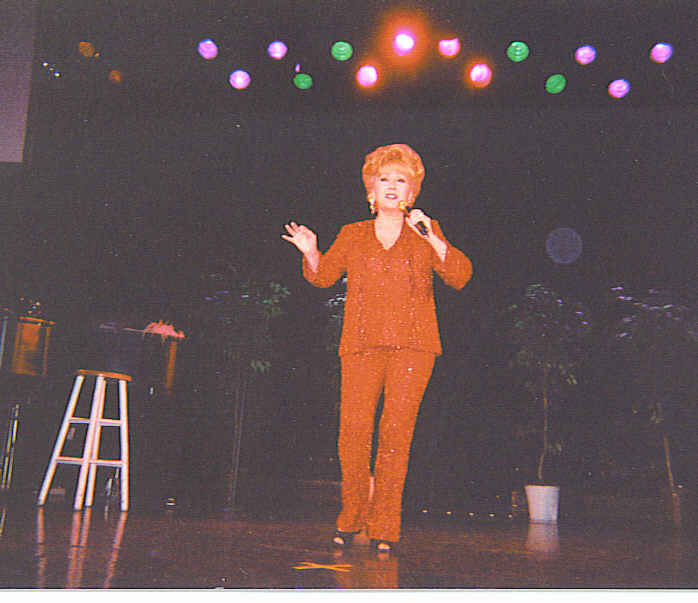
Debbie Reynolds at RiversideNo stay in a casino town would be complete without heading to at least one show. Debbie Reynolds, a star I admired as a child, was performing at Don Laughlin’s Riverside so decided to see if I could get a ticket.  As luck would have it, they had one seat available, and it was in the front row! Afterwards, I went backstage and got an autograph and picture with Ms Reynolds.

But the Laughlin area was more than casinos.  Accessed by a well maintained dirt road, nearby Spirit Mountain took one on a walk into the past. Petroglyphs on the mountain walls and rocks gave a glimpse into the Indian heritage that ePetroglyphs near Laughlinxisted in this area many years ago.  This remote granite mountain gave one a sense of tranquility, perhaps because the ancestors of the Indians reside there to this day.
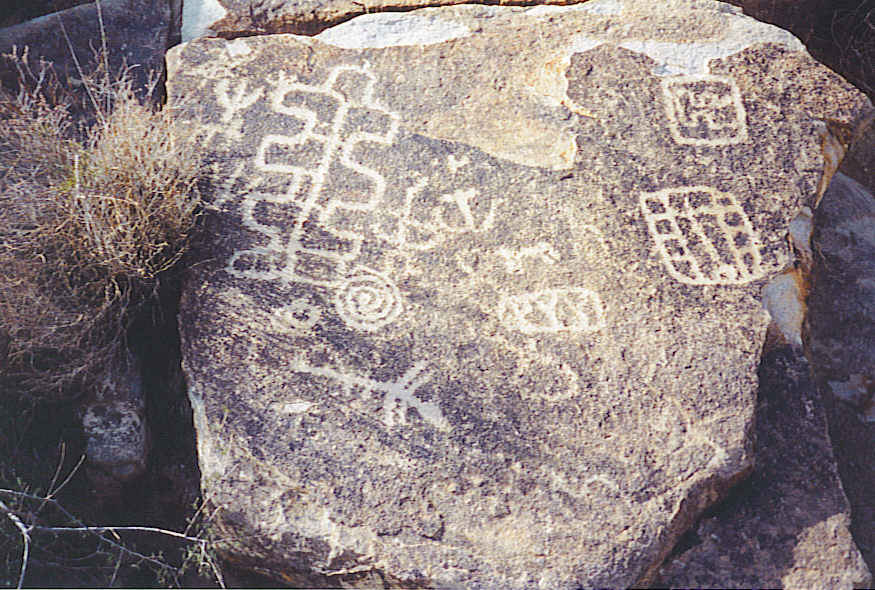
Only seven miles west of Laughlin in Christmas Tree Pass, visitors will find over 700 petroglyphs. Estimates on the original time of the glyphs have been placed from 1100-1500 AD at a time when the Mojave Indians roamed this area. While their meaning is not positively known, one possibility is that they tell the Mojave story of how the Colorado River came into existence. This is one of those places where a bottle of water and a sunhat are recommended as temperatures in the summer soar to 120 degrees.
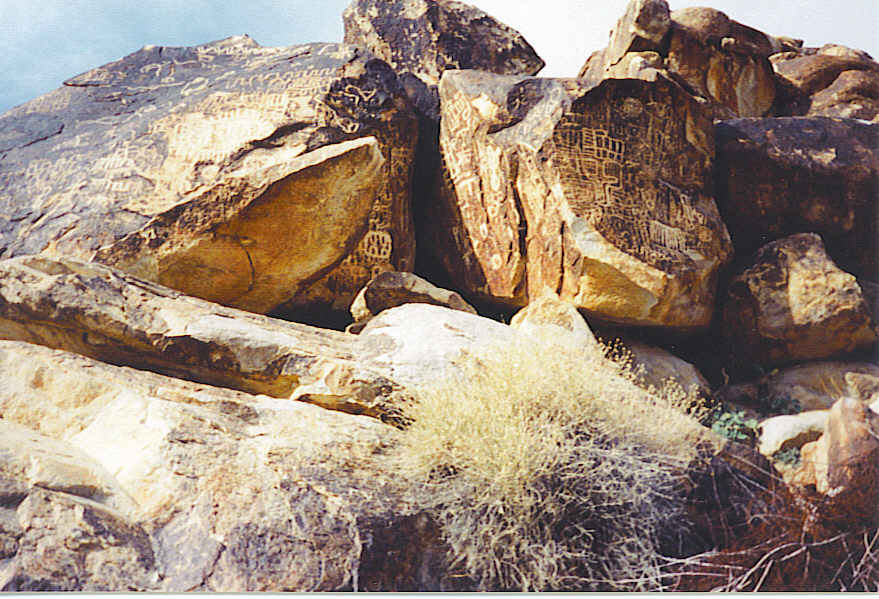
Christmas Tree PassA long desert-mountain walk in the Indian petroglyphs concluded this week’s stay in Laughlin.  Never had I seen so many glyphs in one place, especially at the entrance of the Christmas Tree Pass. Farther up the mountainside, you could see what appeared to be the outline of an old Indian village.  Return trip expected for further exploration!

Laughlin, Nevada can be reached from I-40 taking Exit 141 to 95 North, the Needles Highway, for 23 miles. Turn right onto Bruce Woodbury Drive and after about 3 miles turn right on Casino Drive. Visitors will be greeted by Riverside Resort and the Casino Strip.
Hopewell Mound Group’s Mysterious Crop Circle

Extraterrestrial, Paranormal, or Prank? Recently the Hopewell Mound Group near Chillicothe, Ohio  became a hot spot for crop circle investigation. An unusual sight of an intricately designed crop circle was noticed from an airplane flying over the area.  Therefore, this gypsy decided it was a great time to take a road trip to learn more about the mounds, as well as the crop circle.

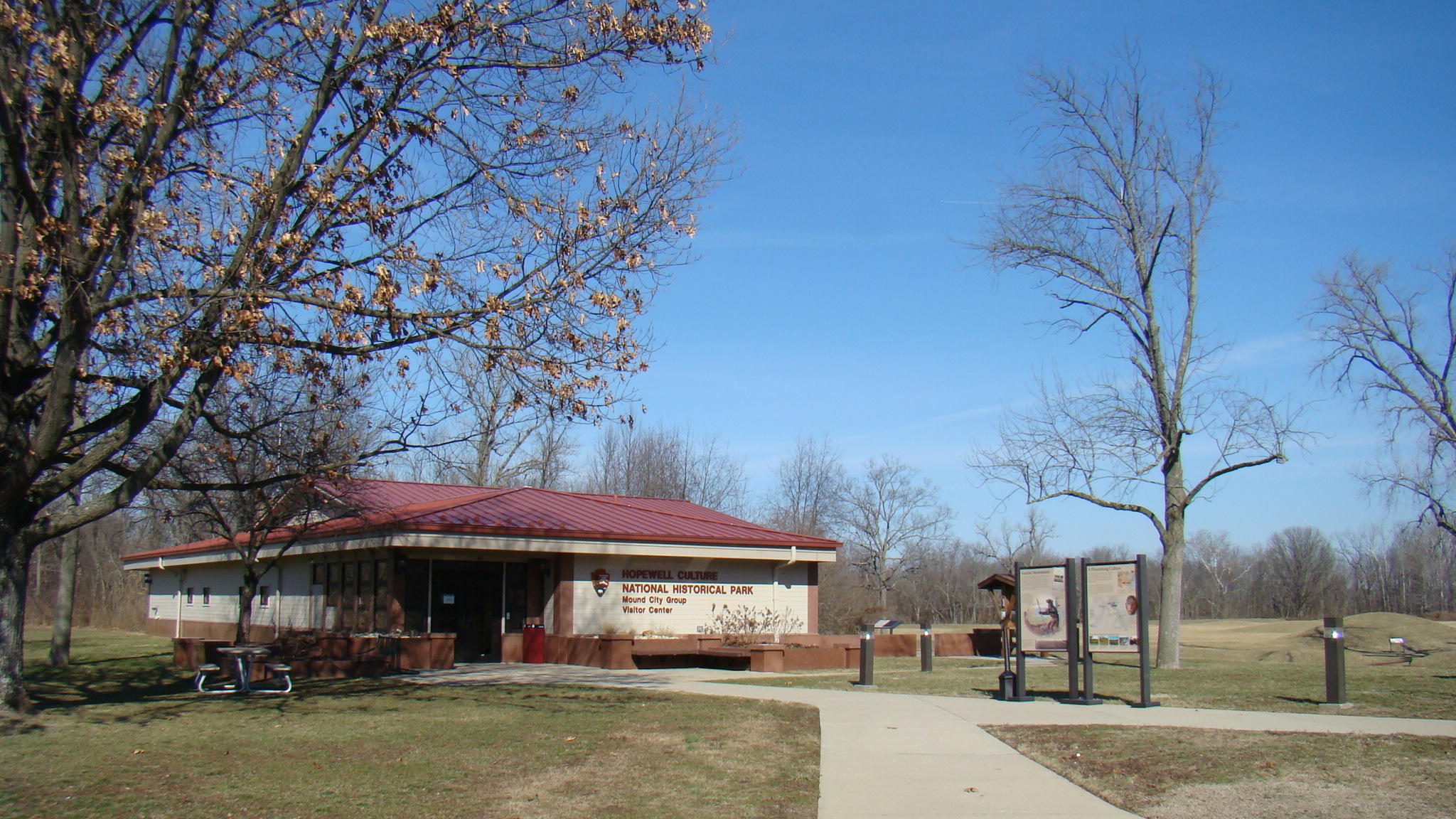
Hopewell Mounds Visitors' CenterHopewell Culture National Historic Park’s Visitors’ Center provides an excellent short film giving possible history and reasons for the mounds being constructed in this area.  Located in the  beautiful Scioto River Valley, easily accessible water for daily use, as well as transportation, was of great importance to that early culture.

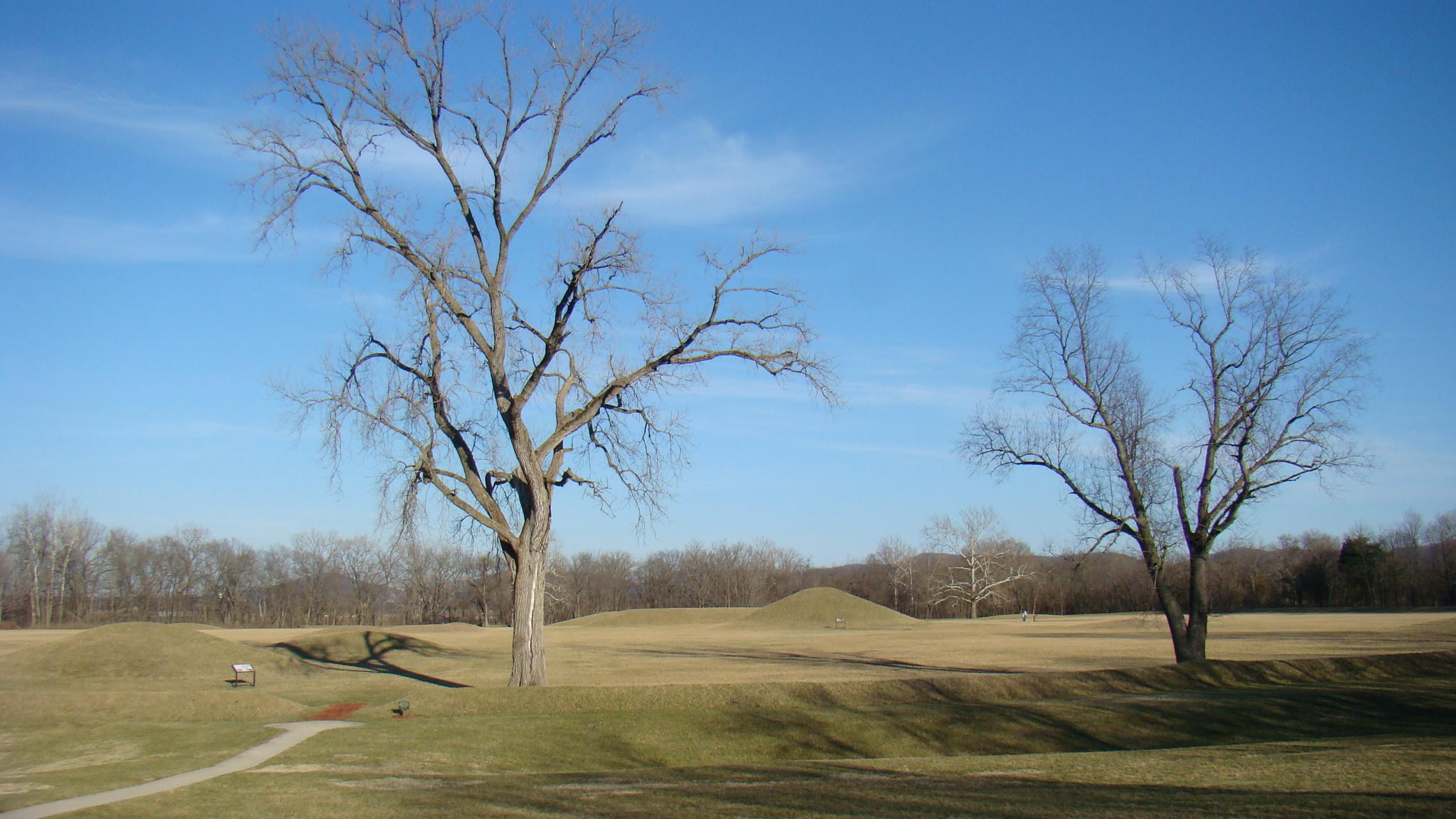
Hopewell MoundsThese historic mounds were the ceremonial center of the Hopewell culture from 200 BC – 500 AD. A stretch of land along the North Fork of Paint Creek contains the most striking total set of Hopewell culture remains in Ohio. This enormous legacy of geometric landmarks was created by unknown inhabitants prior to the time of the American Indians living on this land. Their name actually comes from Confederate General Mordecai Hopewell, who owned the land when the mounds were first discovered back in 1840. No one actually knows what name those original builders called themselves.

Interesting similarities, shared by the five mound groups in the Hopewell Culture, make them part of a larger picture.  Each field usually has a small circle, a larger circle and a square. Each square is 27 acres and the larger circle would fit perfectly within the square. The large circles all have the same diameter and encompass 20 acres. Many of these appear to have been laid out for their astrological significance.

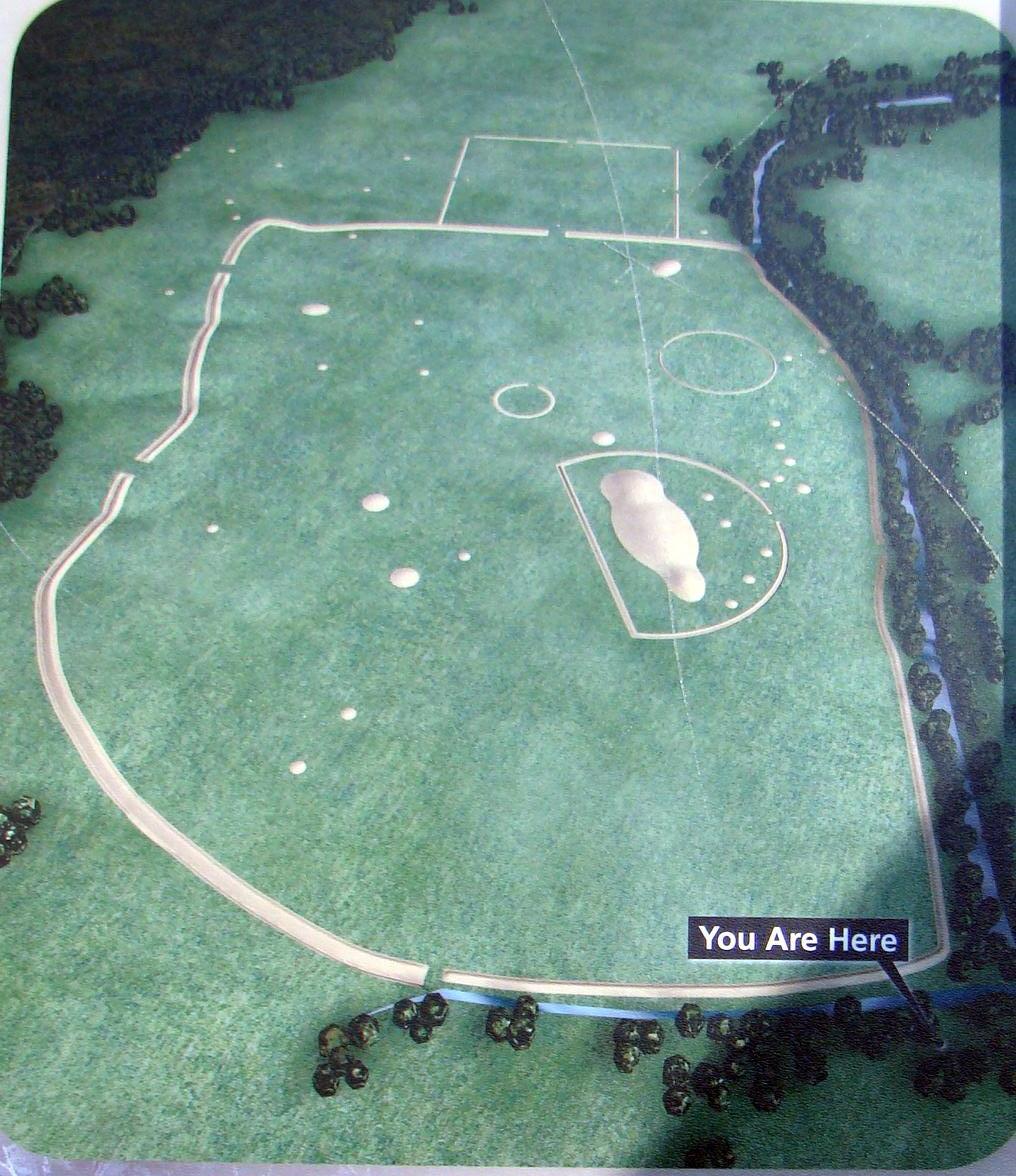
Hopewell Mound 25The main section is often called the “Great Enclosure”, a six foot high, rough, rectangular, earthen enclosure measuring approximately 2800′ X 1800′. Mound 25 is located within this area and was the site of early excavations in the 1800’s. This treasure trove contained shells from the Gulf Coast, copper from Lake Superior region, and obsidian from Wyoming.  It appears that when the ceremonial life of a site was finished, they built a mound much like we would put up a headstone or monument.

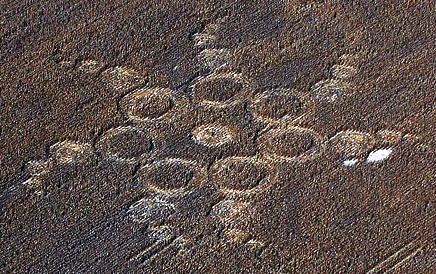
Hopewell Crop CirclesThe recently sighted Crop Circle seems to be located very near this enclosure, but on the other side of the treeline, in the old channel of the North Fork of Paint Creek riverbed.  Since it is on adjoining property and under study, access is not permitted at this time. Circles were first seen from an airplane on September 20, 2012 as the pilot was headed toward the Serpent Mounds. This forty-three circle pattern in standing corn is not visible from any nearby road.   Some thought this pattern resembled a “reversible electric motor” and felt it appropriate to have been drawn near high tension power lines, which are located about 330 yards away. Was there a message intended?

Hopewell Mound Group MapThis map of the Hopewell Culture Group shows its boundaries as well as the location near the upper right hand side of Mound 25. From all information received, the crop circle appeared to the right of the Mound 25 circle and across the tree line. When explored by the Independent Crop Circle Researchers’ Association,  it was determined that the cornstalks were smoothly bent in many swirled and intricate patterns at heights from 2 inches to 4 feet. No footprints were found or any evidence of stepping on plants.

One significant difference came in comparison testing of the length of growth nodes in the crop circle vs those in the untouched field. Those in the circle were elongated, an unhoaxable effect, producing accelerated growth. These effects are often brought about by high levels of radiation.

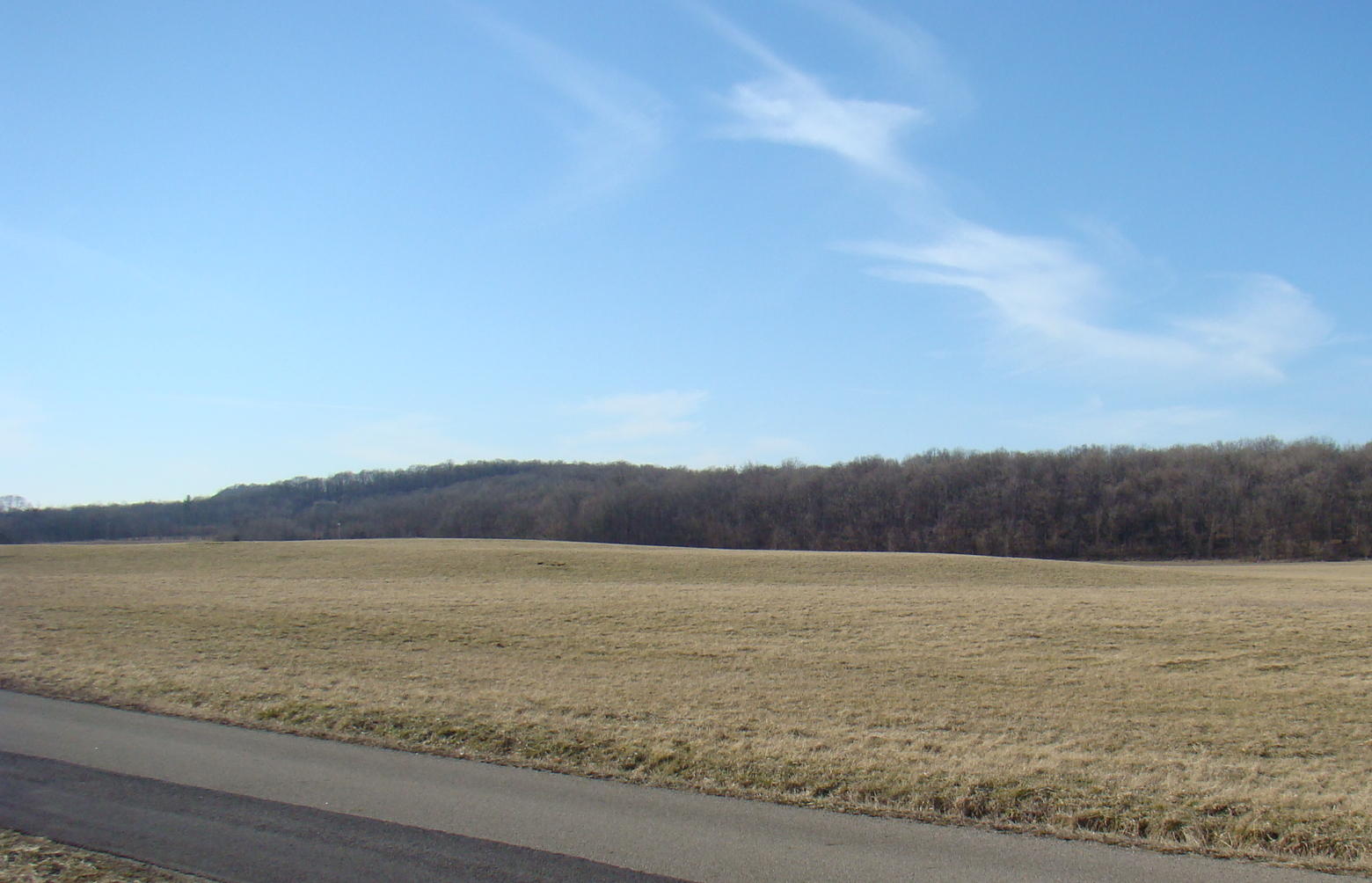
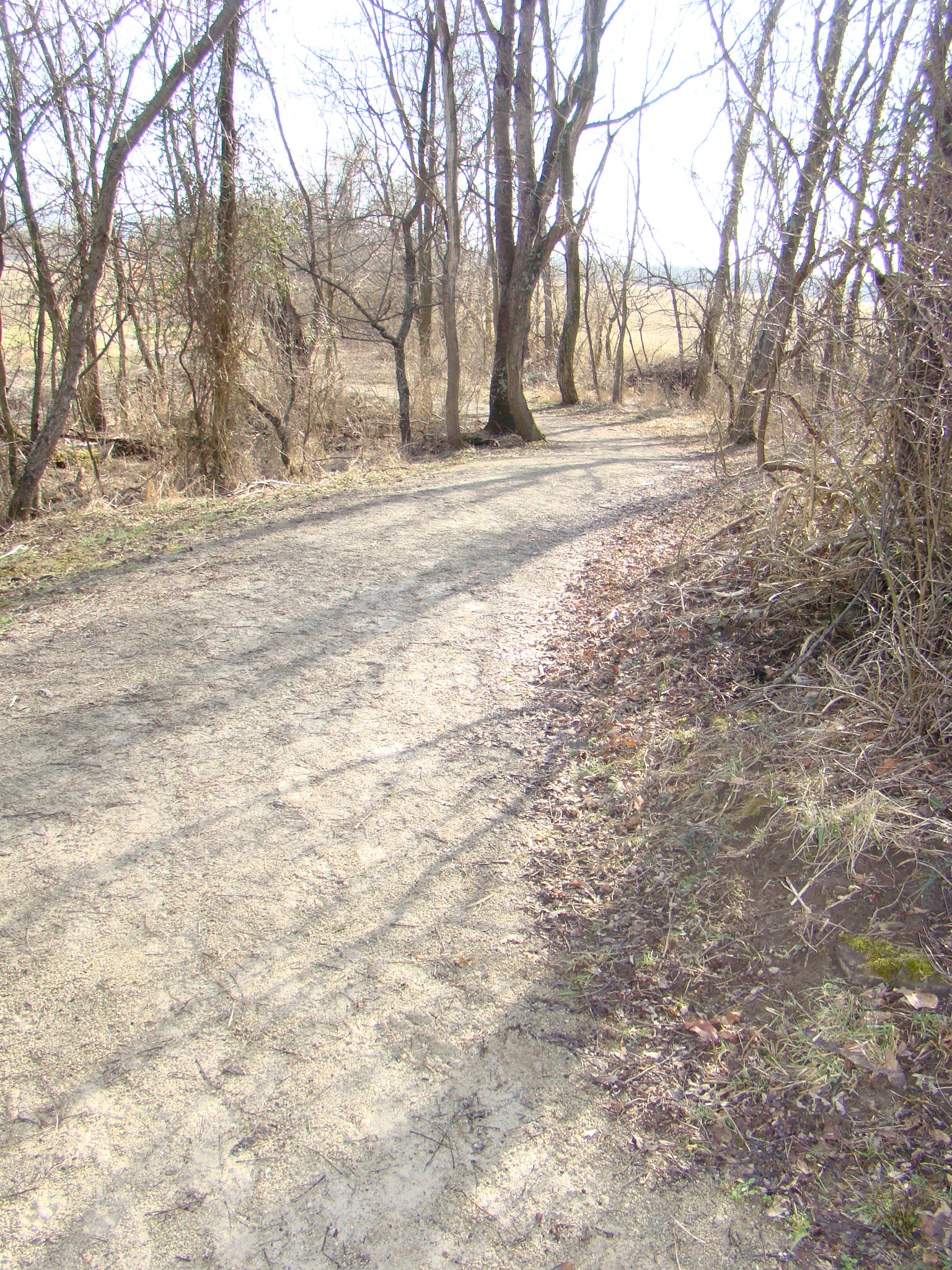
Hopewell Hiking TrailTook a relaxing walk around the entire Hopewell Mound Group using their hiking trail, which was rather muddy and slippery in spots, and ending on the Bike Trail. Felt accompanied on that walk by someone from that long ago time. Believe I passed close to the spot where the Crop Circle was located from all the clues given, but could see nothing from the ground view.

When asked about the Crop Circle at the Visitors’  Center, the answer was  “there is no tangible evidence”, but they reminded visitors that Hopewell Culture is a very spiritual place.  Guess everyone will have to reach their own conclusion. The mysteries persist! Any ideas?

Actually, this is not an easy spot to find as it’s located in the middle of south-central Ohio without any nearby interstate access.  The Hopewell Mound City Group Visitors’ Center is located at 16062  SR 104, about 1.5 miles north of US 35 just outside Chillicothe, Ohio.  The Visitors’ Center is the best place to start your tour and they have maps available for each mound group. Rangers on hand are very helpful in giving driving directions. If anyone knows the location of Crop Circle University, please respond.

Buffalo Hills Resort Welcomes Native American Pow Wow

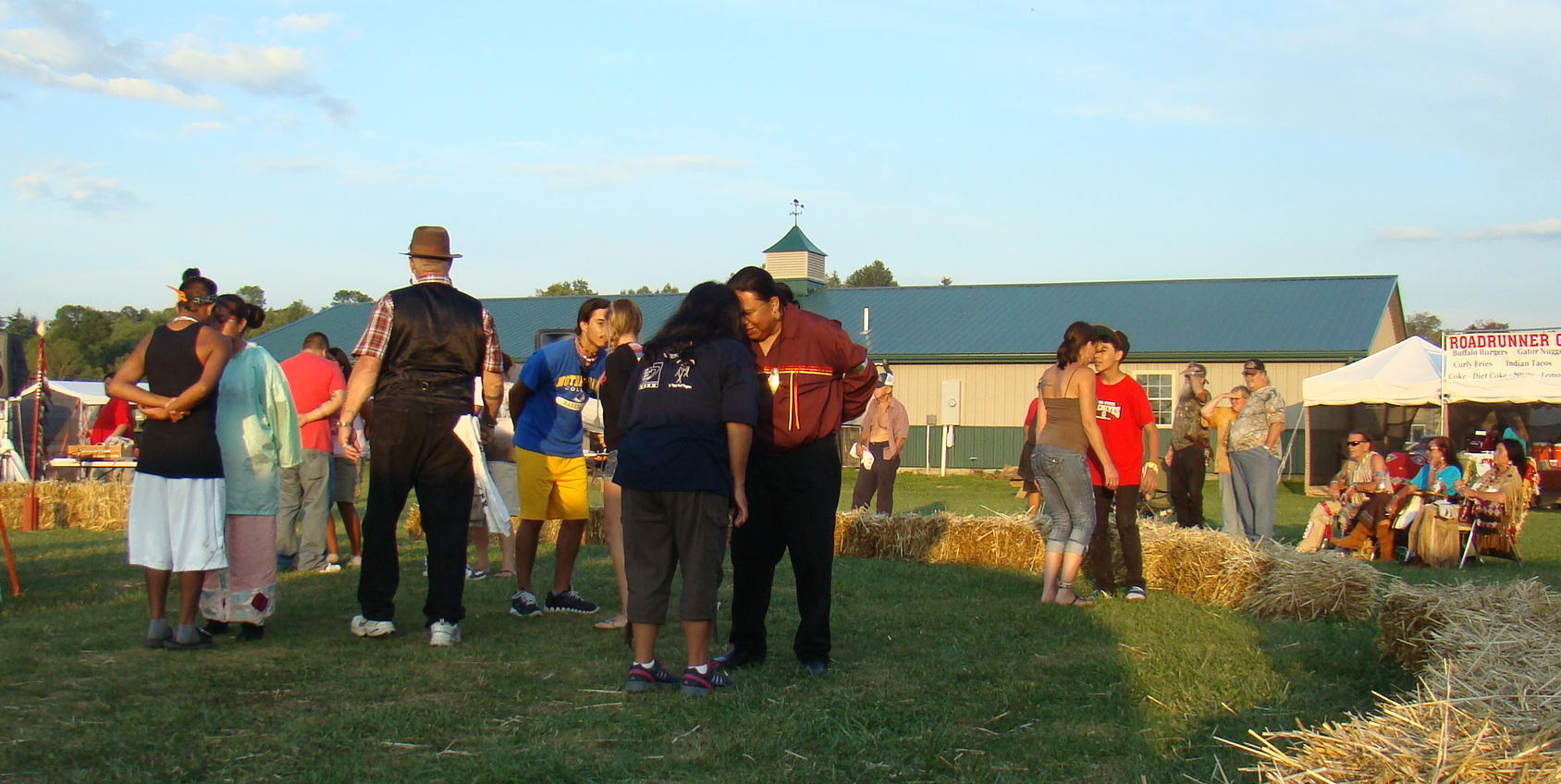
Native Americans are proud of their heritage as was witnessed at the gathering of tribes near Senecaville, Ohio at Buffalo Hills Resort.  Indian Pow Wows join together tribe members  for dancing, singing, socializing, and most of all, honoring their Indian culture. This seemed like the “real thing” as Native Americans congregated for their own enjoyment, not just entertainment. Any lessons learned by White Man were considered a bonus.

Did you ever taste Frybread? Native Americans will often remark, “Frybread is the story of our survival.”  Over a hundred years ago when the US forced Indians to take “The Long Walk” from Arizona to New Mexico, they nearly starved in their new landscape. To keep them from starving, the US government gave them flour, sugar, and lard – the makings of frybread, which later led to various health problems. At the Pow Wow, authentic Indian food was served by concessions and Frybread was delicious either served as the base for an Indian Taco, or covered with sugar and cinnamon. Also on the menu were Buffalo Burgers and Gator Nuggets on a Stick, with Snowballs for dessert.

Native costumes caught the eye of visitors as Indian maidens seemed to float over the ground with their smooth movements.  Delicate woodland flowers and vines added beauty to the deerskin dresses, as did the unusual jewelry made with the help of Mother Nature. Necklaces and bracelets were designed from acorns, spices, dried corn and seeds. This beautiful maiden was called Gentle Dove and said to be a Messenger for Love and Peace.

A circle of baled hay made a comfortable place to observe the Indians’ presentations. In the afternoon an entertaining storyteller told traditional Indian legends, most of which centered around animals.  All their stories have special meaning, and hopefully an effect on the listeners. The story of a Snake taught children to beware of wild animals, while the adventures of Bear and Rabbit with Buzzard described why Buzzard has a deep mark on his face to this day.

John Red Deer filled the spot of medicine man for the day with his extensive knowledge of herbs for healing. While there were many interesting items in his display, the popular 7 Grandfathers All Purpose Salve topped the list. As you can see from the sign, it can be used for many different ailments as well as a detox. John Red Deer feels inspired to make this in cream, liquid for detox, and even in stick form to carry with you for cuts and bites.

Peppermint and Spearmint form the base of this magical salve plus seven other herbs, which he feels he will reveal soon so others can carry on his work. Plants are harvested as he is guided by the voice of Spirit, and later the herb combination is brewed during the Summer Solstice.  This time of solar and lunar infusion gives the perfect blending of the herbs. A severe storm this year, while he was making the salve, produced two hours of intense energy, which John Red Deer felt increased the strength and effectiveness of that salve. His plans are to make a medicinal soap in the near future.

With the drums and flutes of Southern Pine in the center of the circle, the evening dance was a pleasure to watch.  Leading the procession of dancers were Native Americans carrying the USA flag, an MIA flag, as well as their traditional eagle staff with an eagle head on the top. The opening prayer was given first in Choctaw language, followed by English.

Songs were sung to relatives who had passed on to another world and veterans were honored with the blowing of the eagle whistle. Beautiful dresses filled the center and individual dances were performed.  The Jingle Dress glistened in the sunlight and jingled to the beat of the drums.

To close the evening, couples did a Potato Dance with a potato held between their foreheads as they constantly moved to the music. The last couple to keep the potato from dropping to the ground was the winner of a small monetary prize.

Find an Indian Pow Wow in your area to attend so you, too, can learn of the American Indian traditions. While sometimes stories are heard about the Indian attacks long ago, they basically wanted to be peaceful people and enjoy their style of life in the quiet of their homes.  Imagine sitting in the woods with the drums beating, chants filling the air, and the Spirit surrounding you. That’s the way life is meant to be!

Buffalo Hills Resort encompasses over 300 acres in southeastern Ohio making it one of Ohio’s largest campgrounds. Campers have their choice of primitive camping, parking for their RV, as well as cabin or perhaps teepee rental.  While it isn’t far from the interstate, it is definitely peaceful country and near Seneca Lake. Leaving I-77, take exit 37 to the East  (State Route 313) until you come to the four-way stop at Senecaville.  Make a right hand turn on State Route 285  then shortly a left at the fork on State Route 566, also called Opossum Run Road. After a couple miles, campers will find Buffalo Hills Resort on the left hand side.  

American History Shall March Along That Skyline

Six Grandfathers Mountain, now known as Mount Rushmore, was spiritual home to the Lakota Sioux Indians. Many of the Sioux were insulted by the building of the Memorial on their sacred land. Add to that the fact that the monument celebrates the Europeans, who killed so many of their tribesmen as well as appropriating their land, and it is no wonder there is still controversy between the Sioux and the US government today.

As far back at 1923, the people of the Black Hills region of South Dakota were searching for an idea to bring tourists to their part of the country. After seeing samples of carvings done by Gutzon Borglum, he was invited by historian Doane Robinson, The Father of Mount Rushmore, to the Black Hills so they could find an acceptable place for a large carving.  After dismissing the idea of using the Needles range, they settled on the granite faced Mount Rushmore near Keystone, South Dakota. The granite was relatively free of fractures, and it also faced southeast for more sun exposure. When the selection was made, sixty year old Borglum remarked, “American history shall march along that skyline.”

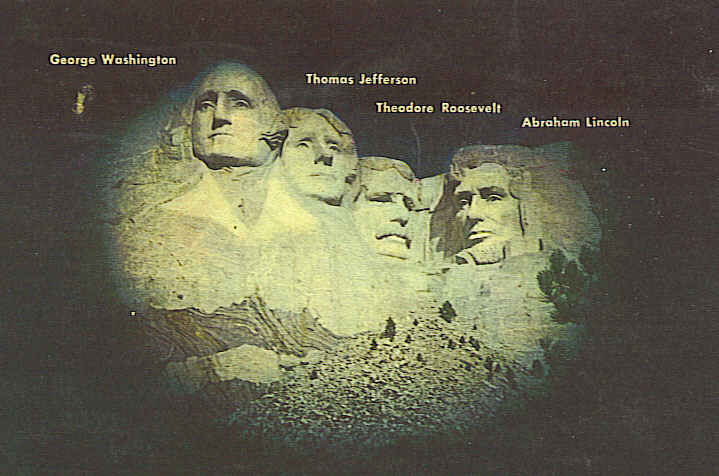
For one hour each evening, Mount Rushmore, The Presidents’ Mountain, is illuminated with steadily increasing lights that make this carving glow in brilliant splendor. The four presidential faces shown on this 1989 postcard are from left to right: George Washington, the father of our country; Thomas Jefferson, principal author of the Constitution, and instrumental in the Louisiana Purchase; Theodore Roosevelt, champion of conservation; and Abraham Lincoln, leader during the Civil War.

Today we can see the results of Gutzon Borglum’s  guidance of approximately four hundred workers, including his son,  from 1927-1941.  The four sixty foot likenesses of the faces rest on 1,278 acres. Original plans were to sculpt them down to the waists, but that idea was cancelled due to insufficient funds. Upon his death, Gutzon’s son, Lincoln Borglum, was in charge of completing the project, but he basically left it as the monument appeared upon his father’s death.

Today you can visit the Lincoln Borglum Museum where a film provides an introduction to the memorial site plus historic exhibits.  Take a lunch break at Carvers’  Cafe where you might find on the menu tasty dishes such as Jeffersonian Gourmet Salad or Teddy’s Bison Chili. If you are lucky, you can sit at a table by the large wall of windows, which provides a great view of Mount Rushmore. The Sculptor’s Studio displays the unique plaster models used prior to sculpting on the mountain side, as well as the tools used while carving. A recent addition is the Native American Heritage Village devoted to Indian culture and the Indians’ place in local history.

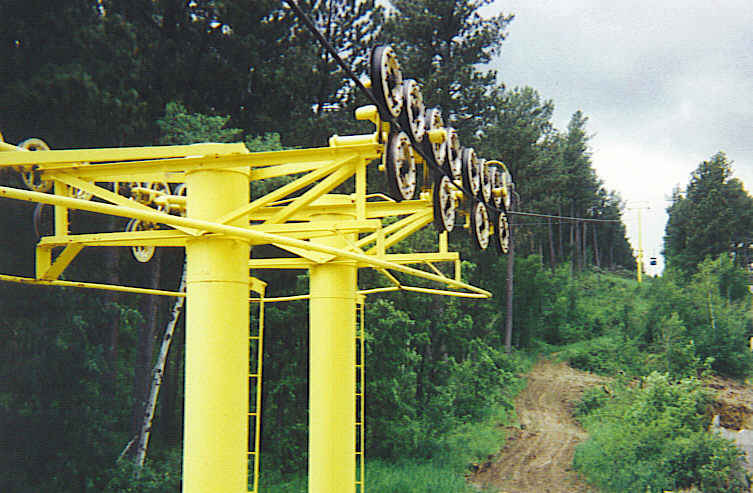
For another close-up view of the mountain, take the scenic chairlift ride through the Ponderosa pines. Views are spectacular and there is a park at the summit as well as a small outdoor grille.  You must be careful getting on and off as the chairlift stops for no one.  You do get a unique view of the presidential faces as well as enjoying the feeling of flying up the mountainside on the chairlift. Coming down you can either return on the chairlift or descend on the Alpine Slide.  This new slide is 2000 feet long and you are able to control the speed downhill on a wheeled sled with brakes. So it is up to you!  Either take a slow and leisurely ride down, or get a rush of excitement.

On the side of the mountain behind the faces is an interesting tunnel called the Hall of Records. In 1998, they began construction of a vault there that would hold sixteen porcelain enamel panels.  On these panels are: text of The Declaration of Independence, Constitution, biographies of the four presidents, and a short history of the United States.  All this is being done to preserve our present history for future generations. At this time, the Hall of Records is not accessible to the public.

Here at Mount Rushmore, you and your family can have a great educational experience by learning about the Indian heritage as well as the significance of the four faces carved there. Leaving the park, there was an interesting view from the back road where it appeared that George Washington was keeping watch on everything with eyes eleven feet across. The pupils of each eye are made of granite so they appear to twinkle when the sun hits them.  Maybe that is the reason the eyes seem to follow you!  Join the nearly three million people who visit here each year to see the faces march along the skyline.

Mount Rushmore Memorial in western South Dakota can easily be reached off I-90 off Exit 57 to Highway 16, which goes to Keystone. At Keystone take Highway 244 to the Mount Rushmore entrance. 

Canyon de Chelly – Home to Navajo Indians

Navajo Blessing
We walk in our moccasins upon the Earth
and beneath the sky
As we travel on life’s path of beauty
We will live a good life and reach old age.

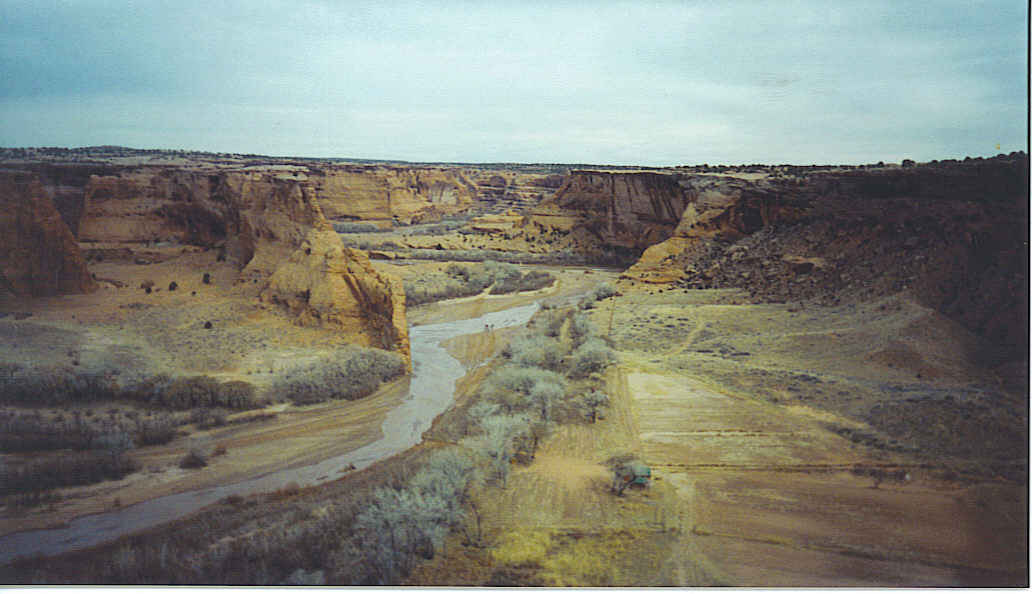
Many American Indians still enjoy life in the Southwest,  and some call Canyon de Chelly (pronounced day Shay) home. Chelly is a slightly modified Navajo word Tseyi, meaning canyon or literally, under the rock.

Located in northeastern Arizona, Canyon de Chelly is completely located within the Navajo nation’s boundaries. Navajo Indians live and work here today among the red rock cliffs with ancient dwellings along their faces and lush valleys below.

Right at the edge of the South Rim parking lot, several wild horses that frequent the area, grazed on the sparse grass. This beautiful scenic drive takes about three hours so be certain that you have plenty of drinking water. There are trails to the bottom but you must be escorted by a guide from the Navajo tribe on all trails except the one leading to the White House Ruins.

One of the spectacular points along the rim trail is Spider Rock, twin sandstone spires with the tallest being 800 feet high. Traditional Navajo believe the taller of the two spires is home to Spider Grandmother. Spider Rock is considered sacred to the Navajo and is associated with Spider Woman, who taught the Navajo how to weave on a loom which Spider Man told them how to make.  Spider Woman also is the enforcer of obedience in children. Part of a Navajo chant heard there still remains in my mind today: With beauty in Nature, I walk.

Another highlight in the area is White House Ruins, which are remains in a sandstone cave of adobe dwellings from a previous culture.  They are believed to have been constructed by Anasazi people “the Ancient Ones”.  There was a time when you could roam up into the cave and walk where the Anasazi walked. But today it is fenced off due to tourists taking bits for souvenirs and thus destroying the historic value of the spot.

At the information center, the Navajo Indians have a beautiful gift shop with handmade Indian crafts. While visiting there talked with Gary Henry and his brother Teddy, Navajo jewelry craftsmen, and their sister Winnie, who leads many of the tours and weaves beautiful blankets.

The beautiful but tough sister, Winnie,  says that weaving is “to weave together the pieces of your own life.” Weaving is her special art given by Spider Woman’s spiritual touch.  Her mother told her, “If you know who you are, where you come from, and where you are going, you will never get lost in this world.” Winnie will tell you that her culture and religion live within her and will never come out.

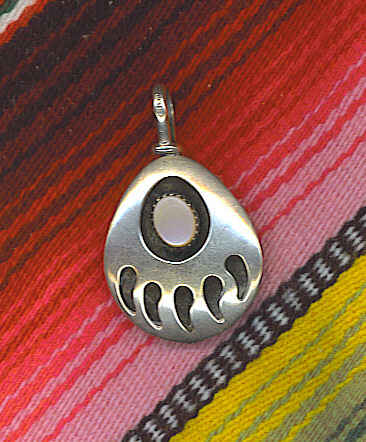
Gary designed this beautiful two-sided necklace of native stones in a bear claw design – my treasure for this adventure. He grew up in Canyon de Chelly, running up and down the trails as a child. They lived in a hogan, a traditional Navajo dwelling, and their family raised sheep. At that time there was no water or electricity in the canyon, so meals were cooked over a fire, and the evening was spent listening to stories and playing their music.

Canyon de Chelly is a spiritual place where the soul responds to the beauty of nature, which abounds. When we leave, they say Hagona, which means “see you again”. To walk in beauty and die naturally of old age is the Navajo notion of the good life. Hozona h’astleen! May everything go well!

Canyon de Chelly is located in northeastern Arizona.  Take Route 191 to Chinle, Arizona and the Canyon is directly east of town. From the Visitors Center you have a choice of the North Rim Drive or South Rim Drive.  Each drive takes about three hours to complete.

Tecumseh Only Sleeps

Brothers, we all belong to one family; we are all children of the Great Spirit. We walk in the same path, slake our thirst at the same spring, and now affairs of the greatest concern lead us to smoke the pipe around the same council fires.

These were the words of a wise Tecumseh as he requested support from all Indian tribes to battle the white man’s encroachment of their lands. Filled with vision and purpose, he frequently mentioned the Great Spirit and there was an attitude of prayer before all decisions were reached.

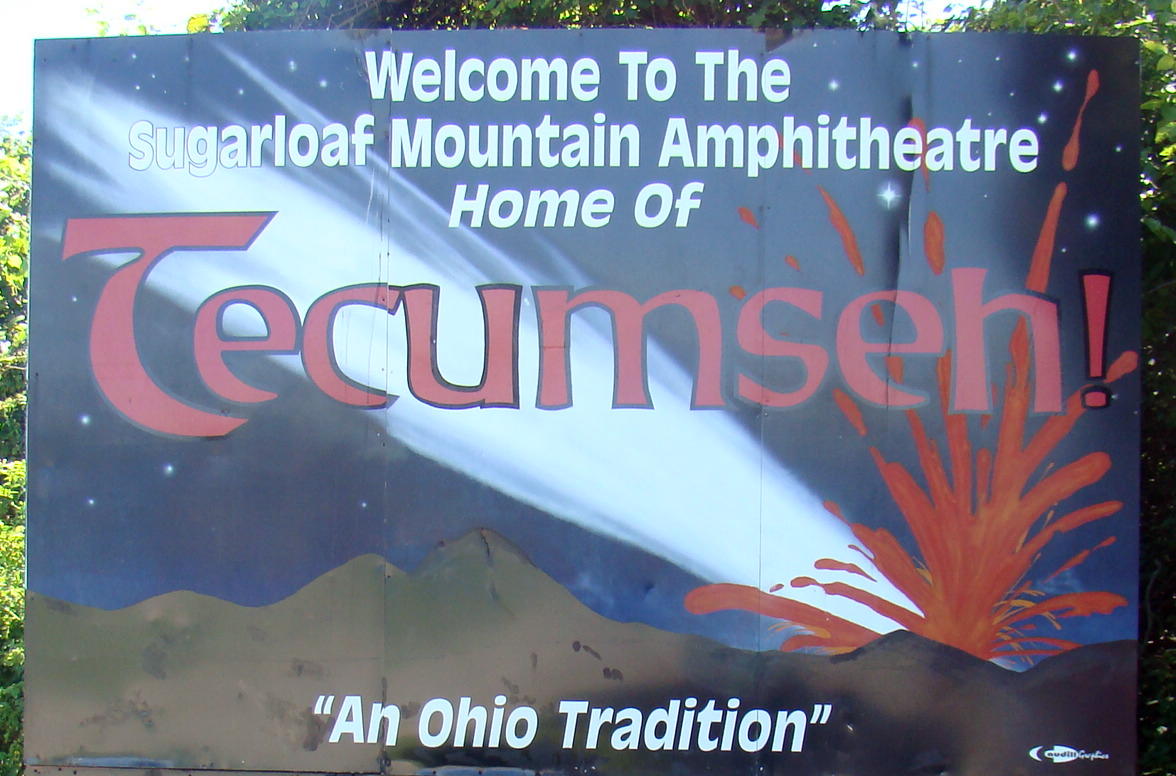
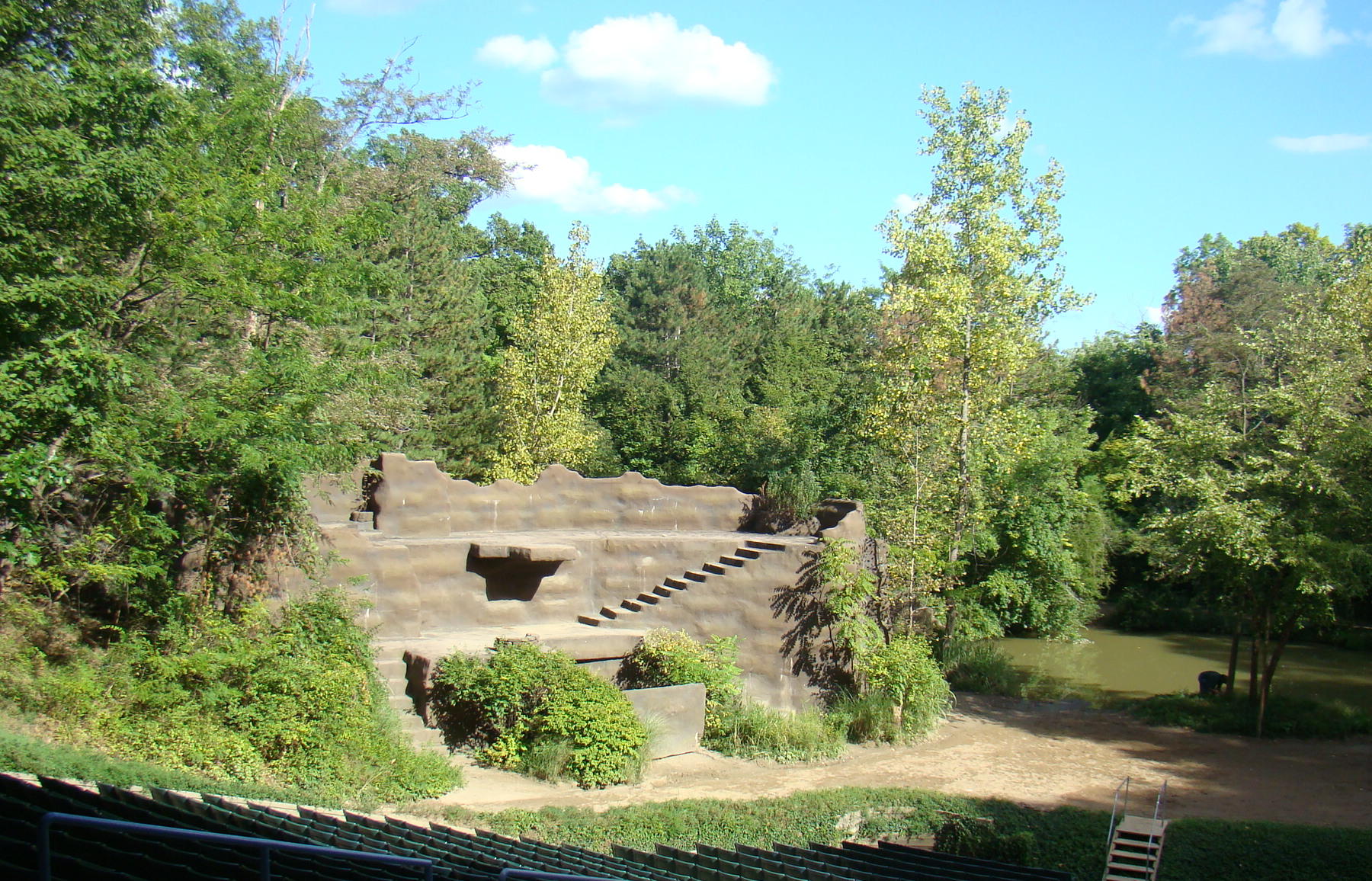
At Sugarloaf Mountain Amphitheatre near Chillicothe, Ohio a spectacular outdoor drama presents the story of “Tecumseh” each summer with a cast of nearly one hundred.  Since 1973, over 2.5 million visitors have sat beneath the stars surrounded by night sounds, to watch the story of a remarkable Indian legend. This beautiful amphitheatre seats approximately 1,700 guests and every seat gives a great view of the saga written by Allan W Eckert, Pulitzer Prize and Emmy recipient.

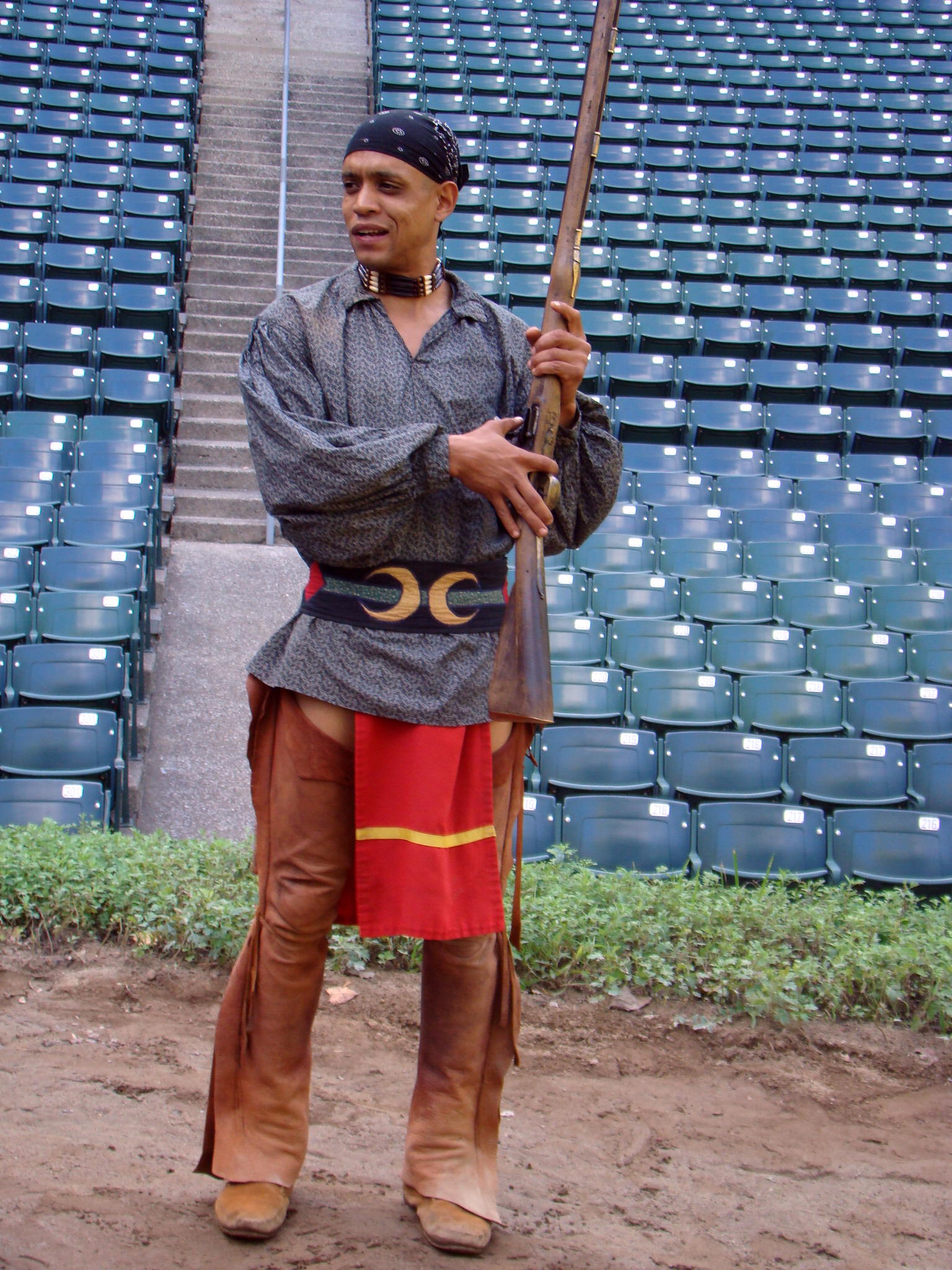
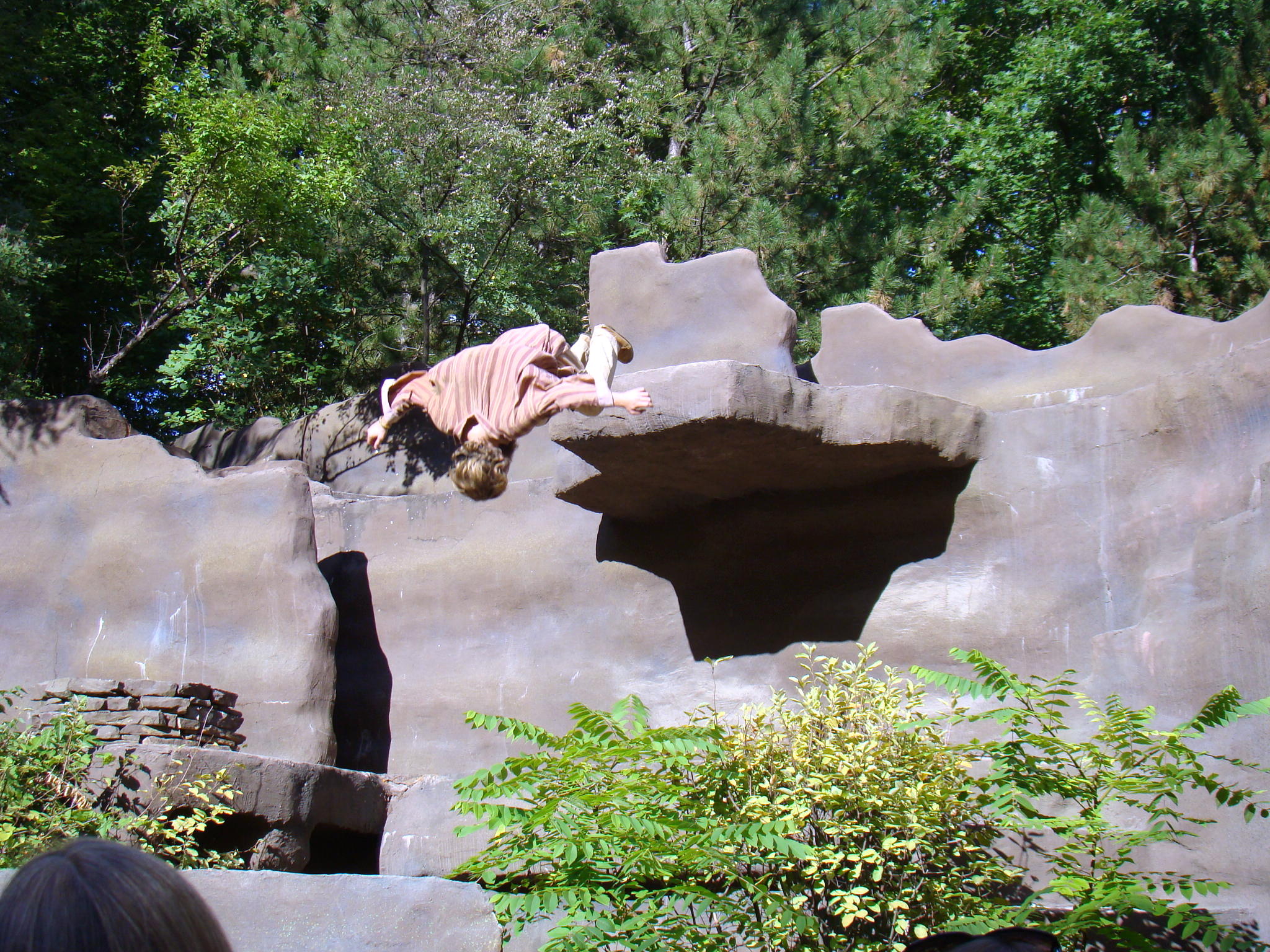
Before the show, cast members lead interested fans on a Behind-the-Scenes Tour, the only place cameras were permitted. The stuntmen of “Tecumseh” displayed firing of various weapons used in battle including the Brown Bess, Kentucky Hunter Rifle, and our guide’s favorite the 12 Gauge Shotgun.  At this point, the Indian shot another cast member off a cliff to display how they fell and the protection they were provided.  He said they always screamed before they fell for two reasons: first, to get all the air out of their lungs so a lung wouldn’t burst, and second, because it was really scary.

After visiting the stables where ten horses were kept, another cast member gave us some make-up and effects information.  She showed us how they were able to give the appearance of bleeding easily by using bags crushed to their body, eggs usually used on the head, and a knife where the handle was filled with red detergent.  Would have been nice if they had a knife like that for sale to fool friends!

Those are just a few of the highlights as it was an hour tour back stage and highly interesting.    Would definitely recommend it if you happen to attend a performance next season.

If you desire, there is a nice buffet available under a pavilion so you feel like you are eating outside with a fresh breeze relaxing the scene.  Also available is a snack bar, a mini-museum of Indian artifacts, and of course,  no tourist attraction is complete without a Gift Shop.

This is also a great time to exchange Tecumseh stories. An interesting one heard that day at dinner occurred when Tecumseh was visiting with William Henry Harrison. Tecumseh and Harrison were sitting on a log near the joining of the Tippecanoe and Wabash Rivers.  Tecumseh began to move closer to Harrison causing Harrison to move down the log.  This continued until Harrison was ready to fall off the log.  He questioned Tecumseh as to why he kept moving closer and closer to him.  Tecumseh answered by saying: “It is what you are doing to my people.  You are pushing them into the Great Waters.”

Time for the drama to begin and this scene to be filled with Shawnees as they planned how to save their land. Actual performance was about two and a half hours of non-stop drama with galloping horses, firing cannons, and dazzling battles.  Everything was spectacular including scenery, costumes, lighting, and sound effects.  At times the cannons and guns were so loud and fierce that you felt like you were in the midst of the battle.  A traditional Indian War Dance brought an impromptu round of applause from the crowd.

While Tecumseh attempted to be a man of peace, he saw the need for attack to drive the Whites from their country. This performance tells  the story of that quest ending with the Battle of Thames where Tecumseh went over the great divide.  No white man or Shawnee knows where their beloved Tecumseh is buried, but they feel his Spirit will return one day.  Tecumseh only sleeps.

Sugarloaf Mountain Amphitheatre is located north of Chillicothe, OH at 5968 Marietta Road, just off State Route 159.  Signs are posted frequently so access is exceptionally easy.

Alaska’s First City – Ketchikan

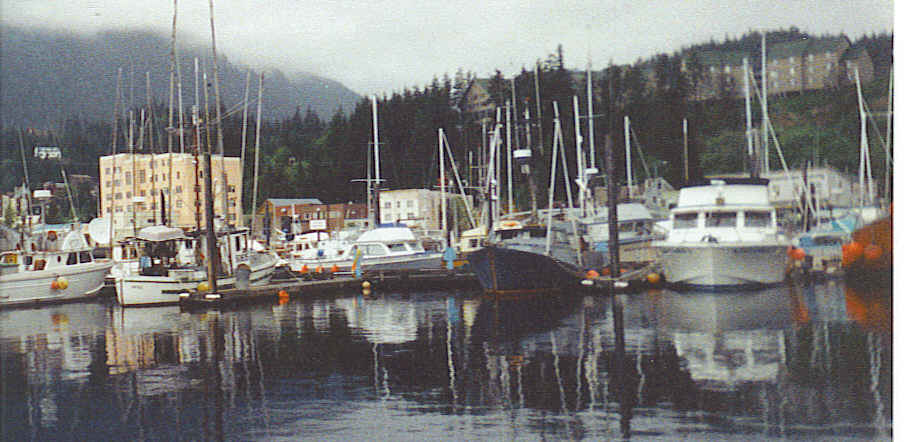
When traveling up the Inside Passage to Alaska, Ketchikan is the first major port that travelers visit. Ketchikan is located on a small island and was originally an Indian fishing camp. This is a popular destination due to its superb fishing, native culture, and outdoor heritage.

First we head for an excursion of salmon fishing.  Here we fish on the beautiful scenic waterway, catch the plentiful salmon, then head to shore where they have it prepared to be packaged to take back home.  Of course, there is also a campfire on shore waiting with delicious, fresh salmon cooked to perfection.  The only thing that could make this better would be the appearance of a bear hungry for a meal.  Everyone wants to see a bear while they are in Alaska, but not at close range.

Next we are fascinated to see the world’s oldest collection of totem poles at Totem Bight State Park, a former Indian campsite.  Each totem is carved to tell the family story. Often they have a fish being held to ensure that the family will have a good food supply.  The top of the totem frequently has an eagle or thunderbird to watch over the home and protect it from harm. There are carvers at work so you can see how totems are made and perhaps want to purchase one to have shipped back to your home.

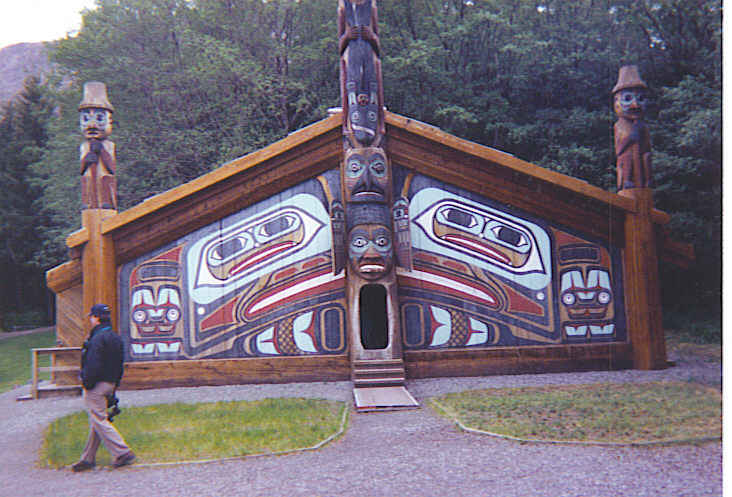
The Tlingt Indian Clan House was an interesting meeting place for the Indian tribe. Now traditional Native dances are performed inside the clan house at designated times.   It has been kept in good repair and at the front has a Living Door, said to bring good luck to all who pass through it.  Had to have a picture taken going through the door.

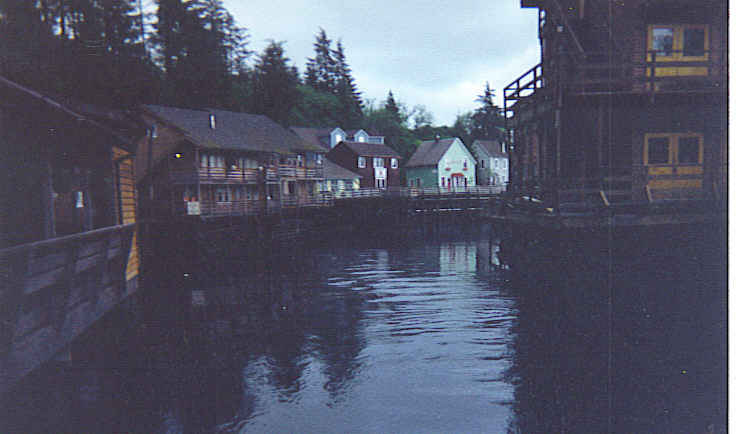
At one end of town is Creek Street,the goldminers’ Red Light District.  Here you can tour a brothel or just walk the criss cross streets along the water’s edge.  It is intriguing to imagine the goldminers in the early 1900s coming back from the mountains and spending their evenings along these same streets you are walking.  Many of the buildings are original but perhaps slightly refurbished.

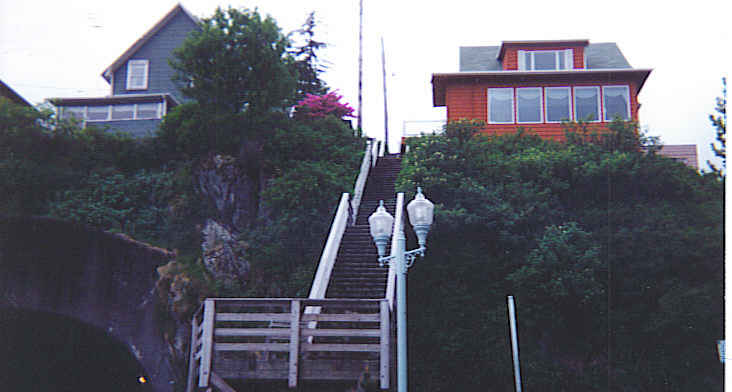
Living here would not be for the frail of body and spirit as there are steep steps everywhere leading up the mountainside to homes and businesses.  It is a beautiful town where kayaks and sea planes are the best way to travel.  No roads lead out of Ketchican!