Places to go and things to see by Gypsy Bev

Archive for the ‘Ohio’ Category

Life Lessons Learned at an Amish School

Coming together is a beginning…

Keeping together is progress…

Working together is Success!

Amish 9

Glen Rock Amish School was filled with peacefulness.

The above words caught my eye upon entering the Glen Rock Amish School near Adamsville.  The peacefulness filling the classroom was very noticeable and unusual for a school setting. Students and teachers talked in very soft voices to promote the calm atmosphere.

Being respectful of their beliefs, no pictures were taken of the students or teachers. A gas well on the property supplied fuel to heat the classroom. The solar panel on the school roof generated enough power to light the room well, and perfectly clean outdoor restroom facilities were located behind the school.

Amish 7

Student transportation to school waited just outside the door.

Students arrived in the morning by horse drawn cart or buggy. Older brothers and sisters were responsible for bringing young ones to school. They brought along their lunch buckets, which often contain a sandwich, cookie and fruit. An oven is available in the classroom if part of their lunch needs to be heated.

Amish 10

Lunch boxes and coats were just inside the front door.

School days last from 8-3, beginning in September through part of May.  One classroom holds 31 students from first to eighth grade, the last grade Amish children are required to attend. Three young teachers oversee their work.

Amish 1

Their classroom was extremely neat when they went to recess.

Another sign on the wall showed their deep base in religion as learning Bible verses is part of their curriculum.

Bible memories are ‘ beary’ good.

On the wall beside this saying, cards for each student indicated how many Bible verses they had learned.  German spelling papers hung on the walls as well, since they learn to write English and German, which is used in prayer and church services.

Amish 3

One student’s books included Math, Spelling and German.

With a few soft words from the teacher, students moved smoothly to one side of the room and shared the old traditional school desks with inkwell hole and pencil holder at the top, and fold down seat. Song books were passed down the rows and students joined in singing two songs of religious nature, one of them being ‘Mansion Over the Hilltop’.

Amiah 9

Their playground gave good opportunity to run off extra energy at recess time.

All of the students appeared to be in great physical condition.  The obesity problem noticed throughout the United States was not evident in this Amish school setting.  They did have a basic playground of merry-go-round, slide and swings, and the children eagerly ran outside to play.

Recess gave children a chance to play their favorite games. Older students played volleyball while the younger ones engaged in a game called “Rabbit”, similar to dodge ball, but with a very soft ball.

A hand pump supplied water for students and the classroom. They were eager to help others fill their personal cup with water using this hand pump. Behaviors, such as splashing or unkind words, did not exist on their playground.
Amish5

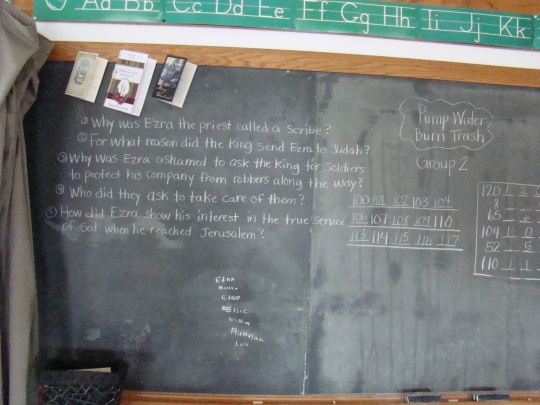
Bible questions on the board were part of the daily lesson.

When asked what they liked best about school, several said spelling and learning their Bible verses. The Golden Rule posted in the classroom provides their guide for daily life.

In the evening students look forward to going home to tend their animals. You could see the pride and excitement on their faces as they talked about their rabbits, goats, horses, and chickens.
Amish 2

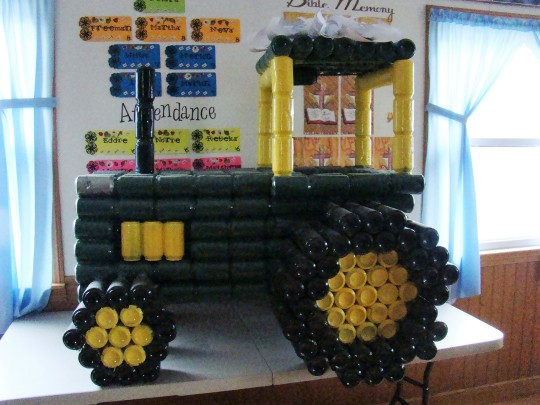
The children said they had fun making this tractor out of pop cans.

This feeling of freedom in a peaceful manner brings thoughts of a simpler life long ago. In this Amish school setting, their basic education system provides not only the three Rs, but also life lessons for being harmonious, caring individuals as they learn to live by the Golden Rule.

As one teacher expressed, “We are thankful we have our own schools.” Some day these students will realize what a blessing their education has provided.

Wouldn’t it be wonderful if we all would attempt to live by the Golden Rule?

Do unto others as you would have them do unto you.
Ohio Beginnings with Rufus Putnam

Putnam Museum Front

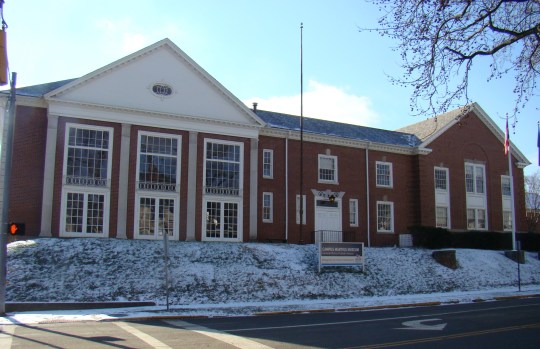
Campus Martius Museum in Marietta contains interesting early Ohio history.
How is The Bunch of Grapes Tavern in Boston, Massachusetts connected to Campus Martius Museum in Marietta, Ohio?

After the Revolutionary War, in March, 1786, a group of men met at The Bunch of Grapes Tavern in Boston to purchase land in the Northwest Territory.  Rufus Putnam, Benjamin Tupper, Samuel Parsons, and Rev. Manasseh Cutler formed the Ohio Company of Associates, also known as The Ohio Company, and purchased what was to become about one-fifth of the state of Ohio.

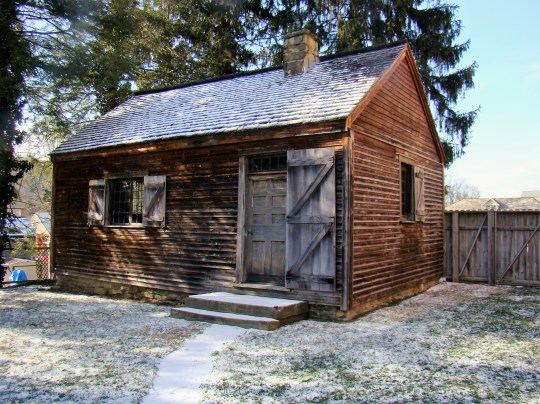
Putnam Land Office

The Ohio Company Land Office, where Rufus Putnam and his partners worked, is the oldest known building in Ohio. Built in 1788, many hopeful land owners walked the path to its door.

These Revolutionary war soldiers were given land grants in lieu of payment for services rendered during the war. They purchased approximately 1,500,000 acres at roughly eight and a half cents per acre along the Ohio River in southeastern Ohio.

Provisions in this land grant were made for two sections in the center to be set aside for an educational institution. The first land grant college was to be called American Western University, but before opening changed its name to Ohio University.

Putnam Portrait

Rufus Putnam served as a member of the Ohio Company, which laid out the plans for Marietta.

Even though Rufus Putnam. the leader of the Ohio Company, was a self-educated man and did not have any formal schooling after the age of nine, he promoted higher education by serving as a trustee at Ohio University. He also claims a connection to West Point. where he built a fort during the Revolutionary War. Fort Putnam is today being preserved and operated by the United States Army Garrison, West Point.

In his memoirs, which are today at Marietta College, he shared his wish for a better education. One line said, “hence neglecting Spelling and gramer when young I have suffered much through life on that account.” But that didn’t keep him from recording records of all his correspondence, while he also kept a daily journal.

Putnam Sugar

An interesting item on the kitchen table was a cone of sugar wrapped in blue paper from the West Indies, with sugar nippers close by to get the perfect amount of sugar for a cup of coffee or tea. The blue paper had a second use as Persis could use it to dye her spun thread.

Rufus Putnam established the first Ohio Company settlement on the banks of the Ohio River in 1788. This became the first settlement in the Northwest Territory. Adelphia, meaning brotherhood, became its first name, but that was soon changed to Marietta in honor of Queen Marie Antoinette of France.

There the Ohio Company built a fortification to protect themselves from the Indians. They called their stockade, Campus Martius. Rufus Putman’s home was one of a row of plank houses inside this stockade.

A few years later, fortification was no longer needed, so the stockade was disassembled. However, the Putnam house remained at the original site, but with added rooms. He purchased the corner blockhouse for $70 and used its lumber for his house addition.

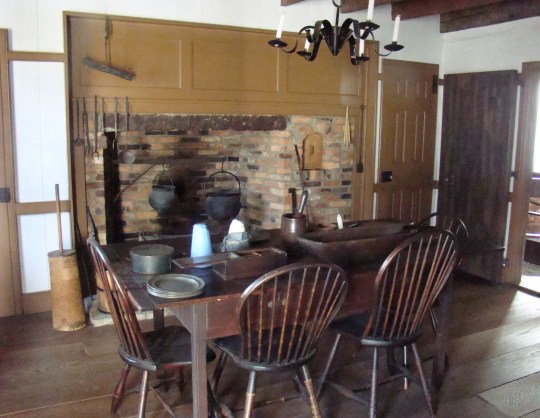
Putnam Kitchen

This is the original kitchen where the Putnam family prepared and ate their meals.

His wife, Persis and eight children, joined him in Ohio at their new home on the bluff of the Muskingum River. Their home here contained a kitchen, sewing/sitting room and two bedrooms upstairs. Now you can see the need for an addition.

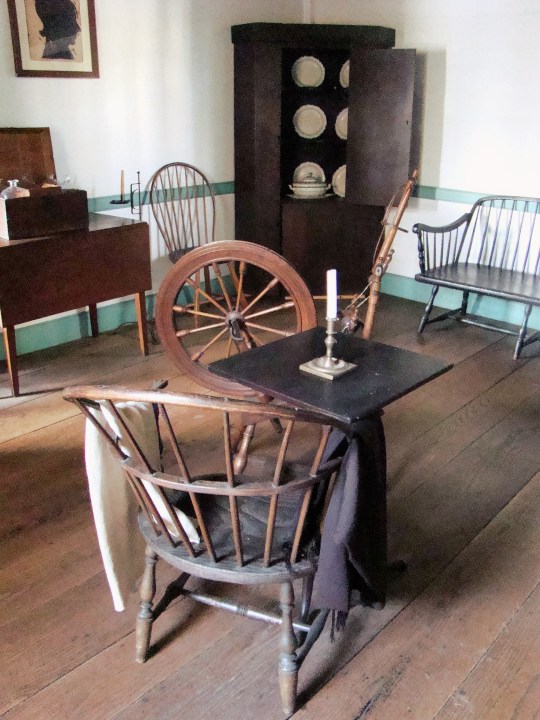
Putnam Spinning Wheel

Mrs. Putnam used the spinning wheel frequently as her seamstress abilities were well known. When Rufus was on his trips for the country, she often had to earn money for essentials by sewing.

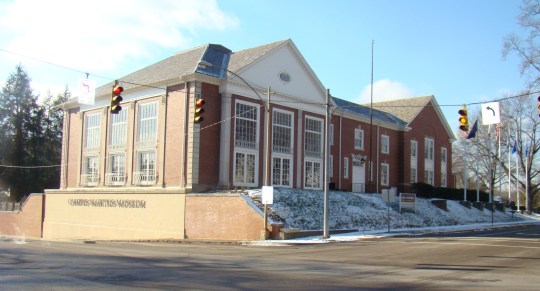
Putnam Museum

Treasures of early Ohio can be found inside this building in Marietta.

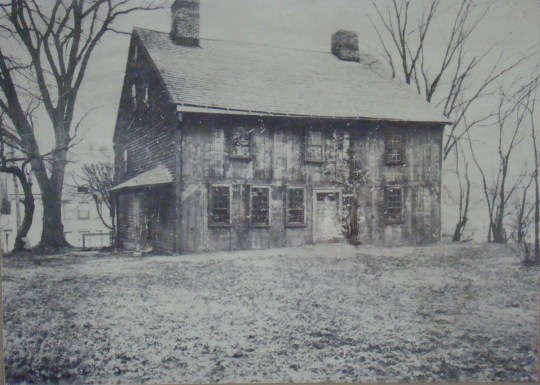
What’s behind all those windows at Campus Martius Museum in Marietta, Ohio today? Inside is the full size house of Rufus Putnam and it still stands where it was built back in 1788. The museum was built around the house in 1931 after the Daughters of American Revolution with assistance from the state of Ohio saved it from destruction.

Putnam 1931

The house is pictured as it was in 1931 before preservation began.

Rufus Putnam served his country faithfully and was respected by his superiors, especially by his favorite leader, George Washington.  It has been said that so long as the history of his country shall be written and read, the part Rufus Putnam played in that history will be found occupying one of its broadest and brightest pages.

Visit Campus Martius Museum to see where the Putnam family lived and learn more about their new life in Ohio. The museum overflows with Ohio history.

Campus Martius Museum is located at 601 Second Street, Marietta, Ohio, on Ohio State Route 7, and minutes from I-77. Plenty of free parking is available and cost of admission is very reasonable.

Humble Artist Captures Area Landscapes

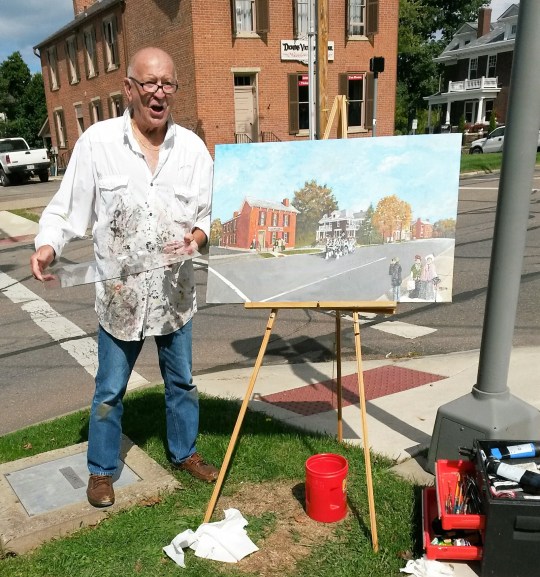
Bob Jennings

Bob can often be found on the street corners painting one of his beautiful pictures. Here he captures the spirit of DIckens Victorian Village at their Welcome Center.

If you walk down the streets of Cambridge, Ohio on a warm day, you’re likely to see an artist standing on a corner painting precise pictures of area architecture. Bob Jennings enjoys capturing the landscapes, but even more he enjoys talking to the people, who stop to watch him move his brush to magically capture the buildings to perfection.

Inspiration for a new picture might happen at an unusual moment. Part of what he paints is what he really sees, and part is imagination.

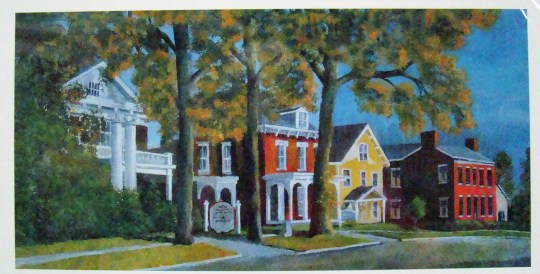
Bob Painting 3

Most people from Cambridge will recognize this group of historic houses along Steubenville Avenue.

The world of art isn’t new to Bob, as he has been drawing pictures since childhood. He frequently entered the art contests in the Cleveland Plain Dealer. Even as a fourth grader at Garfield School, he entertained others with his drawing. At that time the playground was gravel, so Bob took his shoe and drew a perfect outline of a horse to the astonishment of those watching.

Throughout life, Bob couldn’t resist drawing pictures, and took a few art classes now and then. When he was working at Champion, other employees remember his talent as he would draw pictures on his breaks. It seems that Bob’s flair for illustrating just couldn’t help but show itself wherever he happened to be.

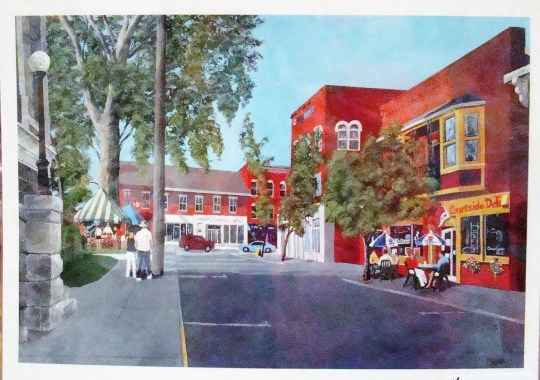
Bob Painting 2

Here Bob captured the scene along W. 8th Street beside the courthouse. His architectural ability shines forth in his paintings.

Thomas Jefferson has always been his hero. Jefferson’s ability to create fine American architecture started that connection. But Bob also considered Jefferson to be very intelligent, as he had a wide variety of interests, and seemed to be able to do just about anything.

Architecture became a real passion for Bob and he began designing kitchens. This led to more extensive plans for beautiful homes, additions to homes, and even churches. His intense enthusiasm as a self-made architect led to his precision in drawing, as Bob had to have everything perfect – right down to a small fraction of an inch.

Bob's painting

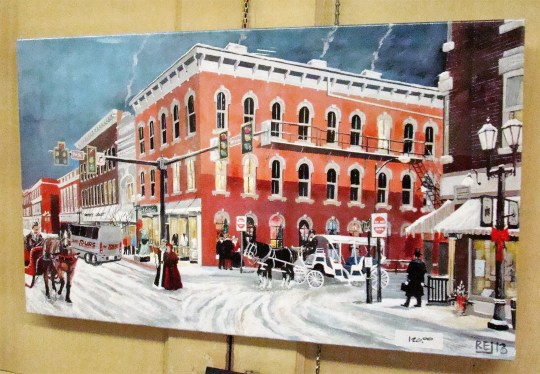
This winter scene displays the many ways people enjoy Dickens Victorian Village as they come by bus or car, and often take a horse and carriage ride. 

After retirement, his real art work began. In his studio at home and on the streets of the town where he lives, Bob’s pictures look as real as a photograph. But they have that extra quality of giving the building a personality.

Bob at Art Guild

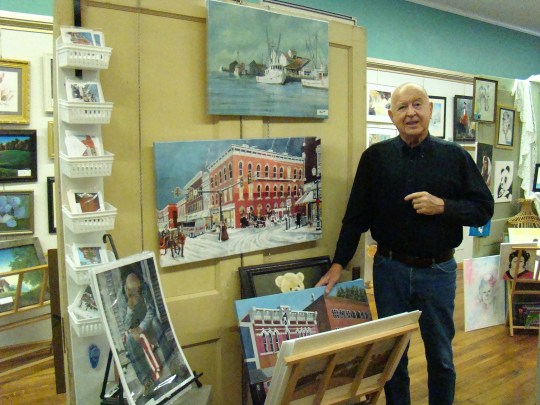
Bob is always ready to talk about his passion for painting at the Art Market.

Today, Bob can frequently be found at the Art Market in downtown Cambridge. You can see his love for people as everyone who enters the door receives a sincere greeting from Bob, and he falls into a natural conversation with them. He usually tells them, in his humble way, “I’m not the brightest star in the sky”, but when it comes to his art work, he shines more than he wishes to acknowledge.

Bob sign

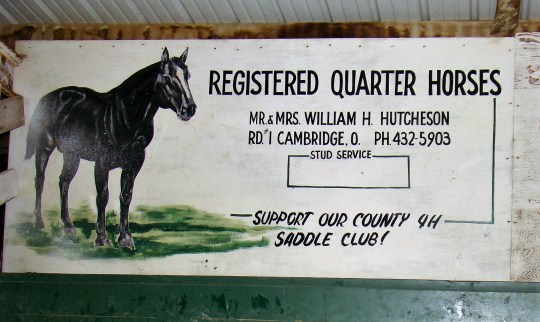
This sign was painted by the artist years ago at the Guernsey County Fair.

After seeing all these beautiful paintings of buildings, it was surprising to learn that Bob’s favorite thing to draw is horses. Yes, horses! Years ago he painted a quarter horse on a sign in the 4-H barn at the Guernsey County Fairgrounds, and that painting can still be found there today. At his home, his wall is covered with a large painting of horses.

Bob 2

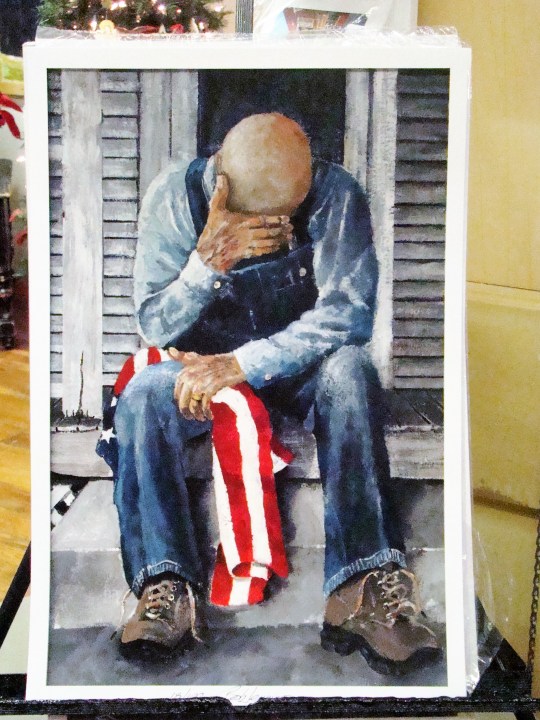
What does this painting mean to you?

When asked if there was something special he would enjoy doing, Bob answered that he would like to get away from the precise drawings and do more “loose” paintings. Portraits came to mind as he recently painted a portrait of a man sitting on his porch with the American flag draped over his leg. Many interpretations have been made regarding this painting.

Recently, Bob saw a little boy that inspired him. Artists seem to have that innate ability to recall in detail what they have seen. He remembers exactly what that little boy looked like and what he wore. Why, he can describe him down to the creases in his pants.

Bob Painting 4

Once in a while Bob heads out of state for some art time.

When asked what advice he would give a young person, who enjoys drawing, Bob was quick to answer. “Pursue it. Even though they might never be a great artist, they would still appreciate art.”

For Bob, he feels his painting ability to be a God-given gift. He believes, “We all have our talents. No one is greater than anyone else.”

It doesn’t seem likely that we have seen the last of this humble Bob Jennings’ creations.

A Stroll Through History Portsmouth Flood Wall Murals

Floodwall 7

Early life in Portsmouth can be seen in the Stagecoach Mural, Hanging Rock Iron Furnaces, and the Ohio and Erie Canal at its southernmost point.

2000 seems to be the magic number in Portsmouth. 2000 years of Scioto County History on 2000 feet of Portsmouth Flood Wall Murals.

Floodwall Flood

The disastrous Ohio River Flood of 1937 led to the construction of this floodwall.

In 1937, a disastrous flood caused the U.S. Army Corps of Engineers to construct a flood wall along the Ohio River to prevent the same thing from happening in the future.

While the flood wall served its purpose, it wasn’t very pleasing to the eye. Dr. Louis Chaboudy  and his wife, Ava, had visited Steubenville, Ohio in 1992 and were pleased with the murals they saw there. They decided to begin the search for a person who might not only paint pictures of the history of Scioto County, but bring it to life so it would attract visitors to their city.

Floodwall Mounds

The Portsmouth Earthworks is a large mound complex constructed by the Ohio Hopewell Culture from 100 BCE to 500 CE.

Robert Dafford, an internationally known muralist, seemed the perfect person for that role and painting began on the largest mural, 20′ x 160′ in 1993. One artist created all 2000′ of the Flood Wall Murals by October of 2002. The remainder of the murals are 20′ x 40′. Whether you are an artist or have little appreciation for fine art, these murals will grab your attention and tell you the story of the changes that have taken place in Portsmouth over the years.

Floodwall 9

The Greyhound Bus Station was a popular place during WWII gas rationing. Or you could have joined local legend, Roy Rogers, riding Trigger.

The murals tell the story of the history of the area, and depict all the former factories, the great flood of 1937, sports history and much, much more. See detailed paintings of historical Portsmouth, which include local legends, such as Roy Rogers, Branch Rickey, and the Portsmouth Spartans NFL football team. The Spartans could not survive in the small town of Portsmouth during the depression, and in 1934 were sold to Detroit, where they became the Detroit Lions.

Floodwall 8

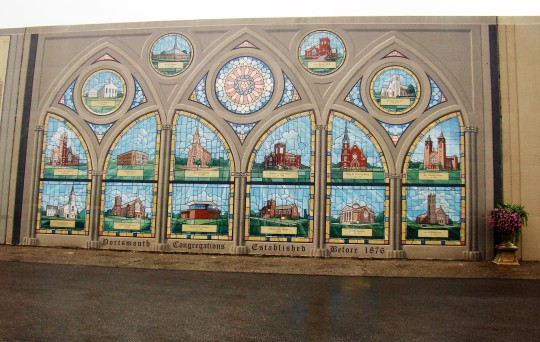
Sixteen churches established in the 1800s are featured in this stained glass motif. 

Some surprises appear along the way whether you are walking for the best view, or driving along in your vehicle. Discover that the shoe industry had six factories here in the early 1800s employing over 6,000 people. Look carefully at the mural of the Portsmouth Motorcycle Club and see if you can spot the reflection of the muralist, Robert Dafford, in one of the hubcaps.

After the initial 2000′ were painted, there have been four murals added. One of them depicts famous baseball players from the area, while another shows a bicycle tour from Columbus to Portsmouth.

Floodwall Ohio River

The Ohio River flows just outside the flood wall where the U.S. Grant Bridge crosses over to Kentucky. 

The great thing is…it’s FREE!  Take a leisurely stroll along the murals or view from them the sidewalk across the street for a different perspective. An amazing feature is that there are paintings on both sides of the wall so don’t forget to view the wall from the Ohio River side as well.

Portsmouth Outer Wall

The Ohio River side of the flood wall was begun before the mural side. You can drive along most of the outside of the wall along the Ohio River.

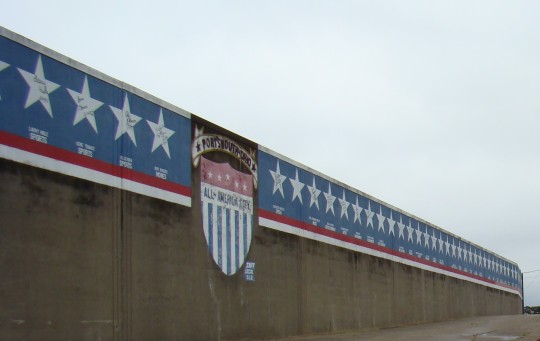
Here the flood wall has been designated at the Portsmouth Wall of Fame, where accomplishments of area natives are recognized. Their name is placed beneath a star with an autograph of the person being honored in many cases – Don Gullett, Al Oliver, Roy Rogers, Dan Quayle, Larry Hisle and Gene Tenace being a few of those recognized.

Floodwall Town Mural

Downtown Portsmouth in the 1900s is the cover of the Scioto County Visitors’ Guide. The Steel Industry played a major role in the town’s growth.

The Portsmouth Flood Wall serves as a great example of how something that serves a needed purpose doesn’t have to be dull or boring. With a little bit of talent, it can brighten up the world.

Portsmouth is located in the southern part of Ohio along back country roads. Your best bet for directions is using your GPS. 

Goodbye Summer! Hello Fall!

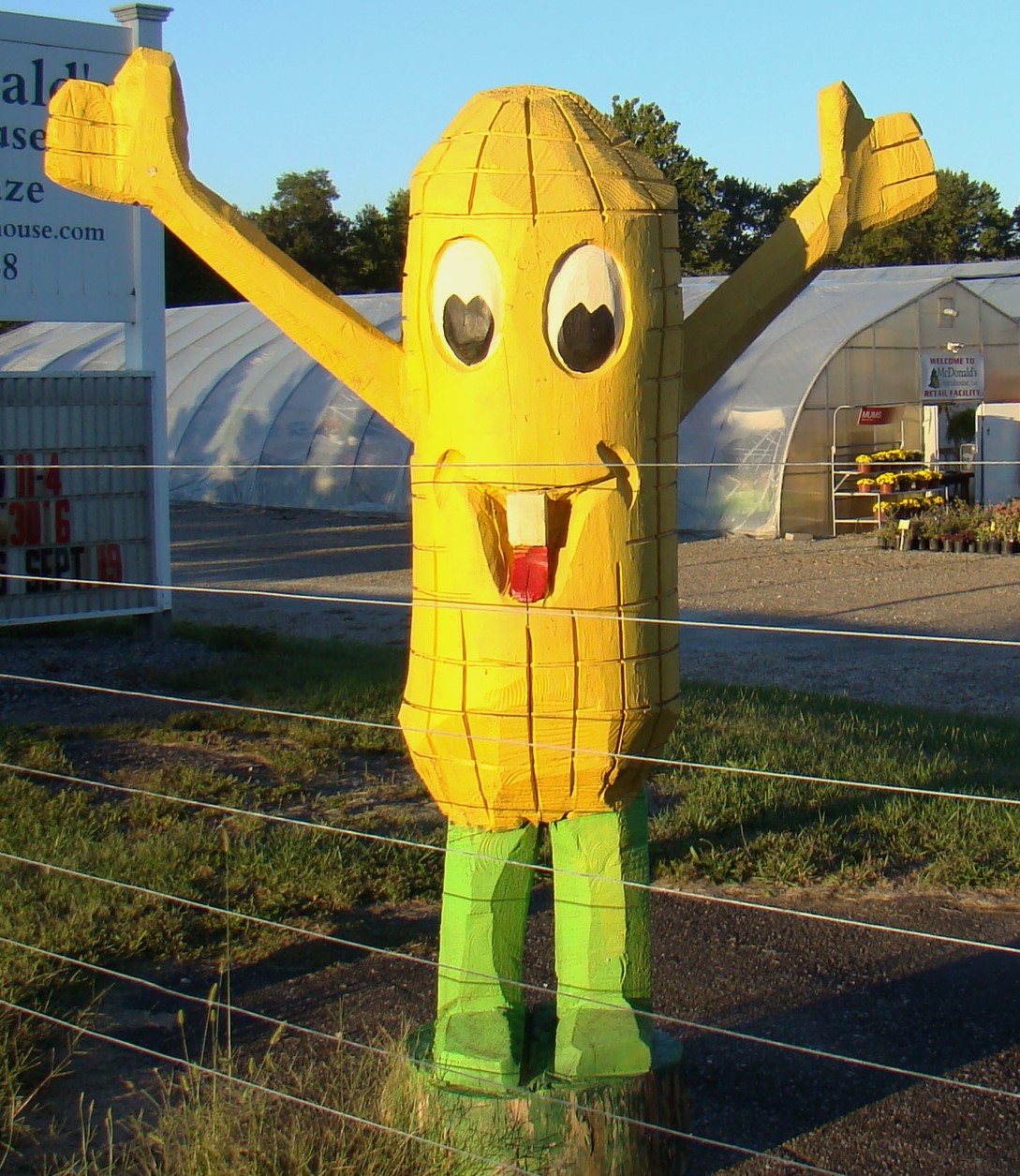
This giant ear of corn welcomes you to McDonald's Corn Maze.

This giant ear of corn welcomes you to McDonald’s Corn Maze.

Pumpkins + Corn Maze = Thoughts of Fall

McDonald’s Corn Maze provides the perfect spot for families to discover the spirit of the fall season. In 2006, the corn maze was created with hopes that a few children might be able to enjoy it. Never did they expect that over 3,000 would make their way through the maze that very first year.

The theme each year differs. This year the five-acre corn maze features a cowboy with a lasso standing by a saguaro. Wonder if he’s going to lasso a pumpkin?

A play area along side the corn maze offers many possibilities to explore.

A play area along side the corn maze offers many possibilities to explore.

This is indeed a family affair involving three generations. Jim and Susan McDonald built their home between their parents’ farms on Adamsville Road in Muskingum County. This makes for close family ties and grandparents have opportunity to watch their two grandsons grow up.

Agriculture is their main interest and they want to teach youngsters and adults more about the process of getting food from the farm to the table. Jim lived on a farm all of his life so it was no surprise when he graduated from Ohio State University at their Agricultural Technical Institute with a degree in greenhouse and management production. He opened his first greenhouse the year after he graduated.

All kinds of pumpkins are waiting to be taken home for decorations.

All kinds of pumpkins are waiting to be taken home for decorations. Those in the front are called “Witches Warts”.

There’s no shortage of pumpkins here as McDonald’s has fifteen acres of pumpkins with choices of different sizes, shapes, and colors. Choose from Buckskin, White Pumpkins, or Witches Warts to name a few. They expect to have over 10,000 pumpkins this year as well as a large supply of mums, gourds, and cornstalks. Everything you need for a fantastic fall scene.

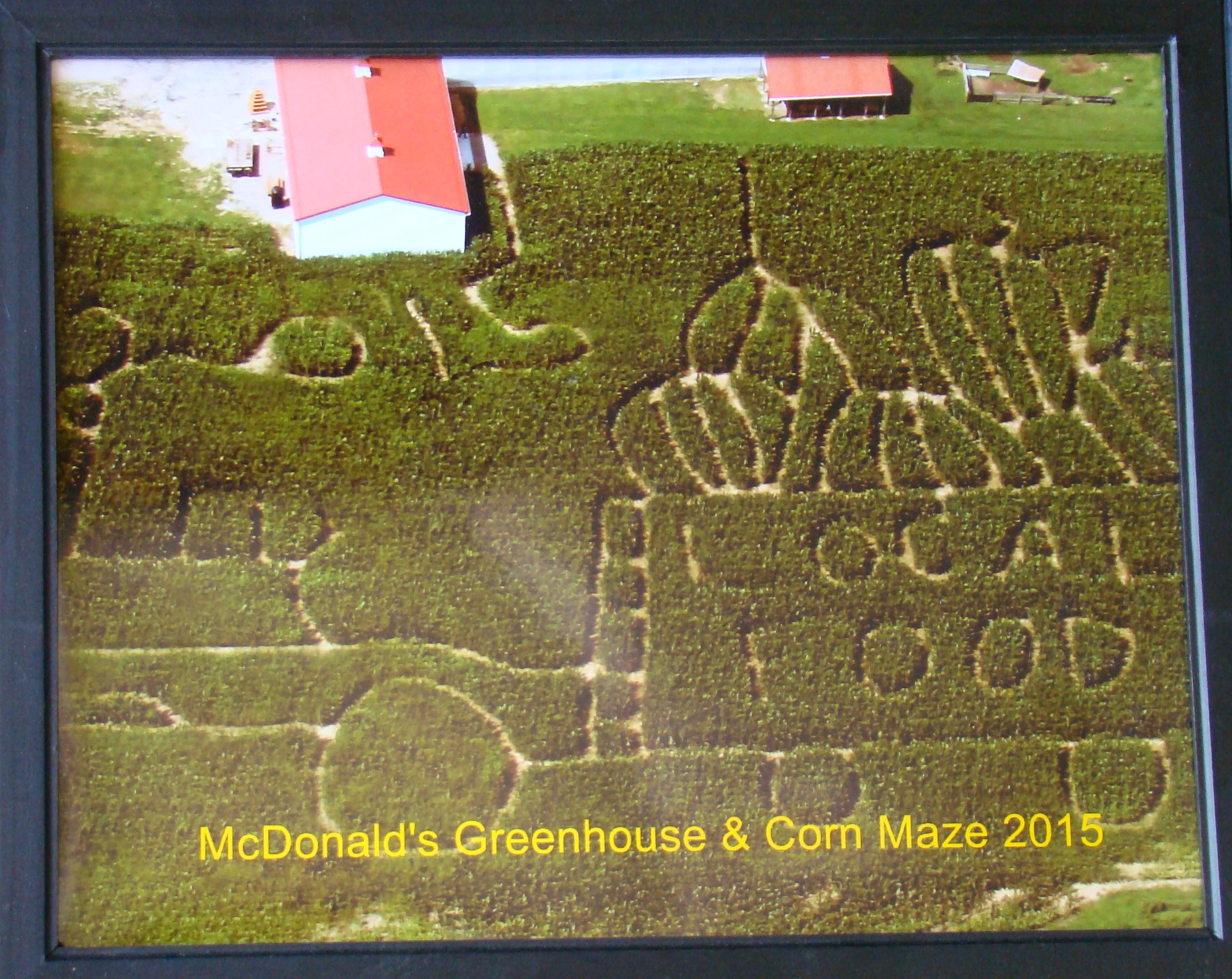
Pictures is an overview of the 2015 maze.

Pictured is an overview of the 2015 maze.

They cut the maze in June when the corn was about a foot high. The drawing of the maze scene was placed on a grid, then Susan carefully directed Jim on his mower foot by foot to make it perfect. That’s no small feat in a five acre maze.

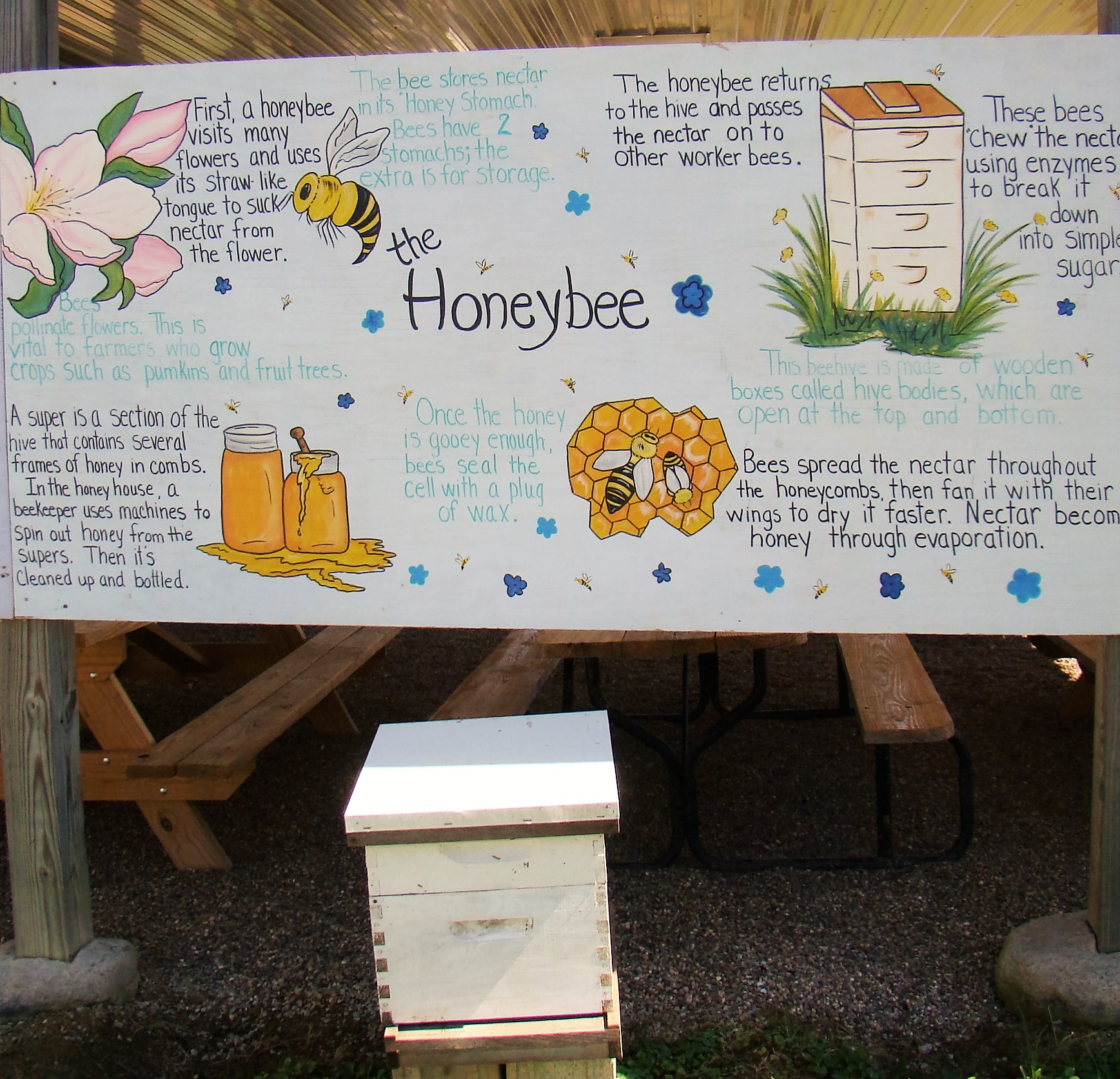
Educating students and adults about honey bees is one of Jim's enjoyments.

Educating students and adults about honey bees is one of Jim’s enjoyments.

Affectionately called Old McDonald, Jim has farming in his blood. School groups, 4-H clubs, scout troops and even seniors enjoy his stories about the farm. As you would expect, it’s not unusual for a verse or two of “Old MacDonald Had a Farm” to be part of the day’s events.

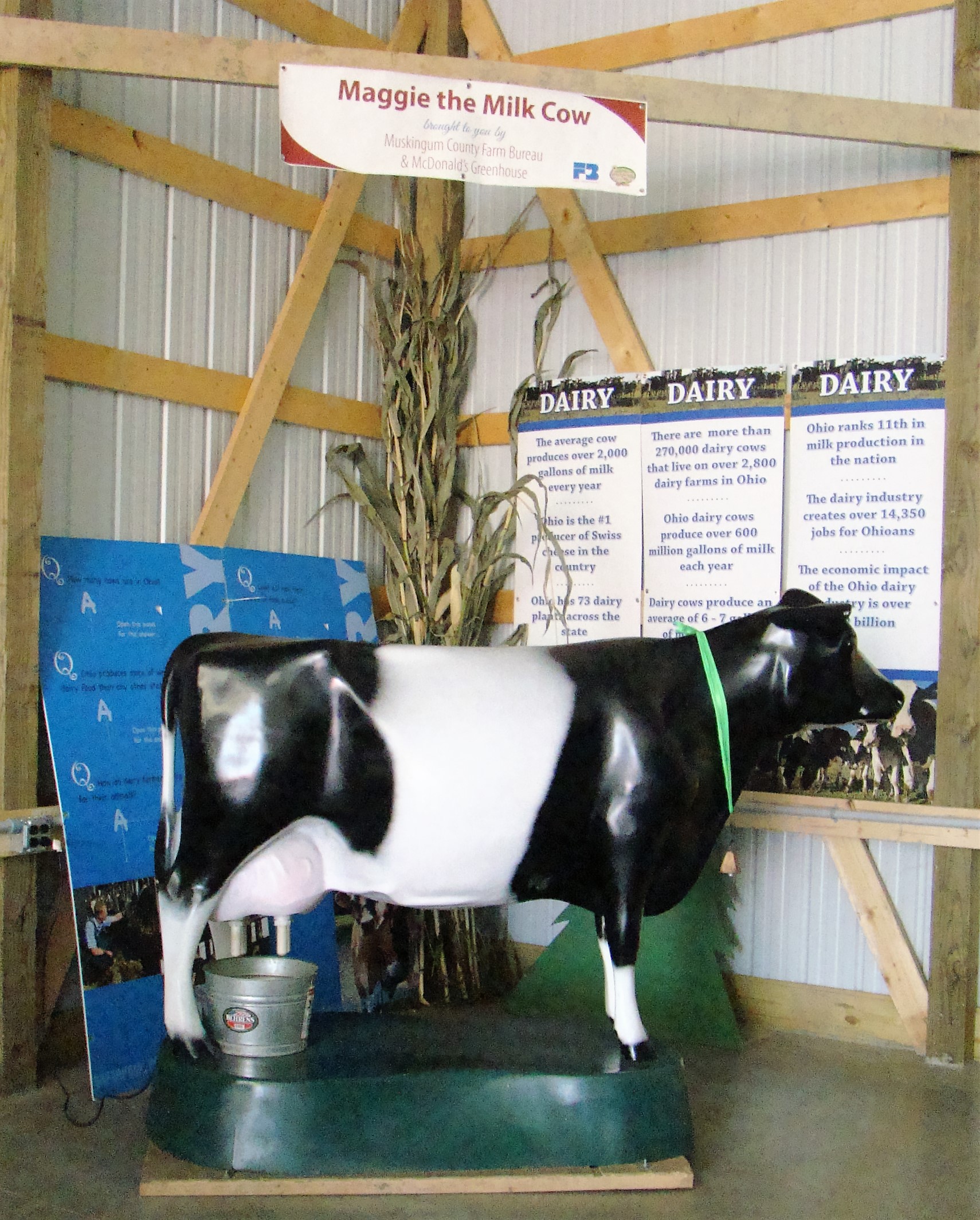
Maggie the Milk Cow even goes to the county fair for demonstrations on how to milk a cow.

Maggie the Milk Cow goes to the county fair for demonstrations on how to milk a cow.

Today’s children don’t have much opportunity for up-close contact with real farm life. Jim wants them to understand where their food comes from. His enthusiasm about farm life is almost tangible. Even though it’s hard work, it obviously has its rewards as he enjoys telling children about pollination by honey bees, milking a cow, growing pumpkins and why it’s always earth day for a farmer.

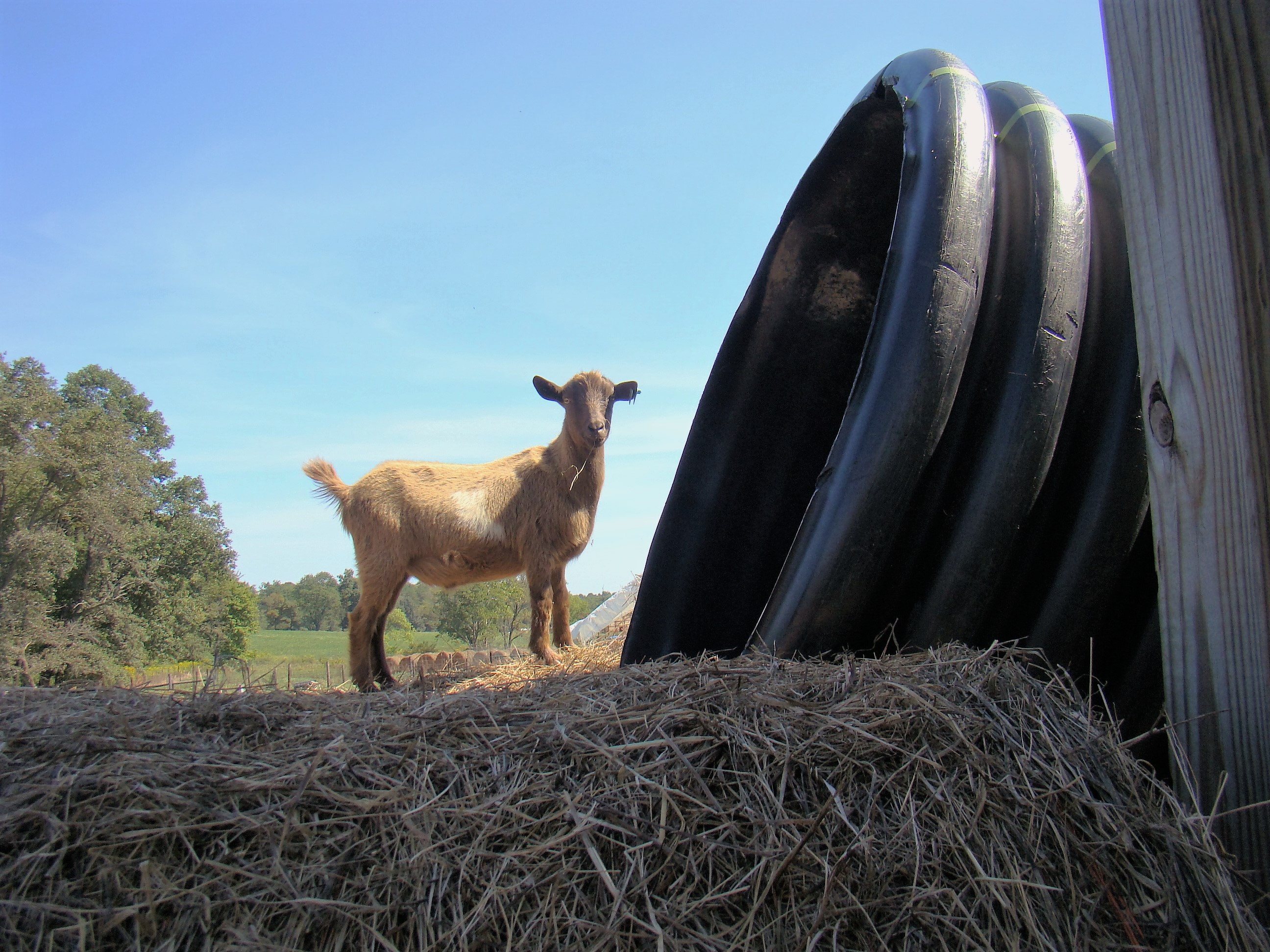
This goat stands on top of a large bale of round ray and peers into the plastic pipe used as a slide. Should he or shouldn't he?

This goat stands on top of a large round bale of hay and peers into the plastic pipe used as a slide. Should he or shouldn’t he?

A petting zoo gives everyone a chance to be in contact with different baby animals such as a lamb, goat, duck, pig, or rabbit. Nearby a small playground contains a unique “sandbox” – a round watering tank filled with fifty bushels of shelled corn. There’s also stones to play hopscotch, and a slide made of plastic pipe atop bales of hay.

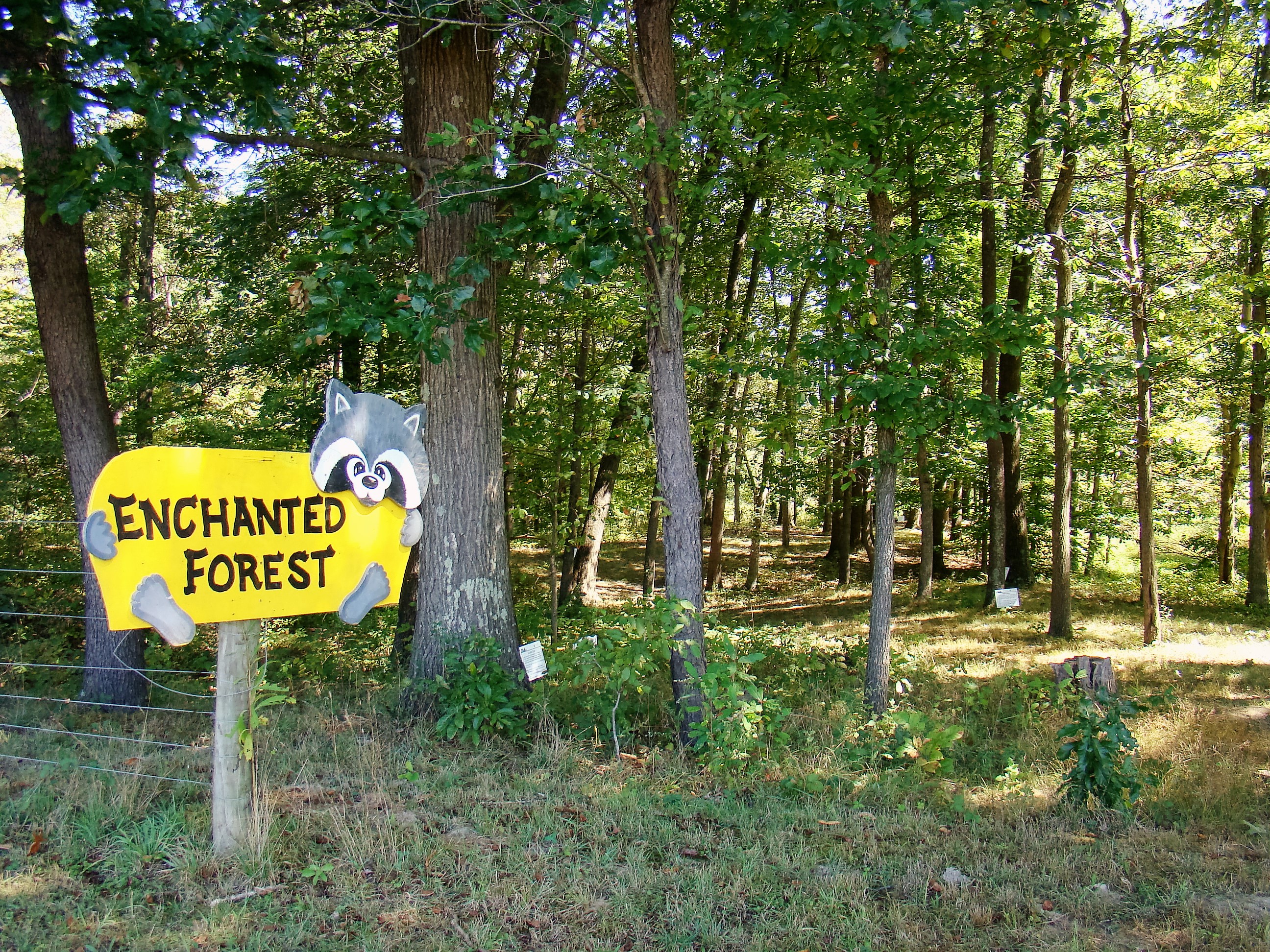
Take a walk in the Enchanted Forest and discover how early farmers lived.

Take a walk in the Enchanted Forest and discover how Ohio’s first farmers lived.

Then take a leisurely walk through Enchanted Forest and surround yourself with nature. Listen for the special sounds of the woods and learn about the plants that grow there as many have markers with names and uses. Deep in the woods is a teepee, home of Ohio’s first farmers.

McDonald's Greenhouse also has a large assortment of mums to brighten your fall.

McDonald’s Greenhouse also has a large assortment of mums to brighten your fall.

Sometime during your visit, be sure and climb on the hay wagon for a ride through the beautiful countryside filled with autumn leaves. Sit on bales of hay while the tractor pulls you down a path to see the fall season in beautiful Ohio. There’s a small admission price of only $6 per person for the day, but unlimited fun as it includes all activities.

A visit here adds up to a perfect fall experience filled with learning and fun…no ghosts or witches allowed, except for Witches Wart Pumpkins.

McDonald’s Corn Maze is located east of Zanesville, Ohio off I-70. Take Exit 157 (State Route 93) north to 3220 Adamsville Road. It’s only about two and a half miles from the interstate.

Cambridge Glass Collectors Show “Ebony and Ivory

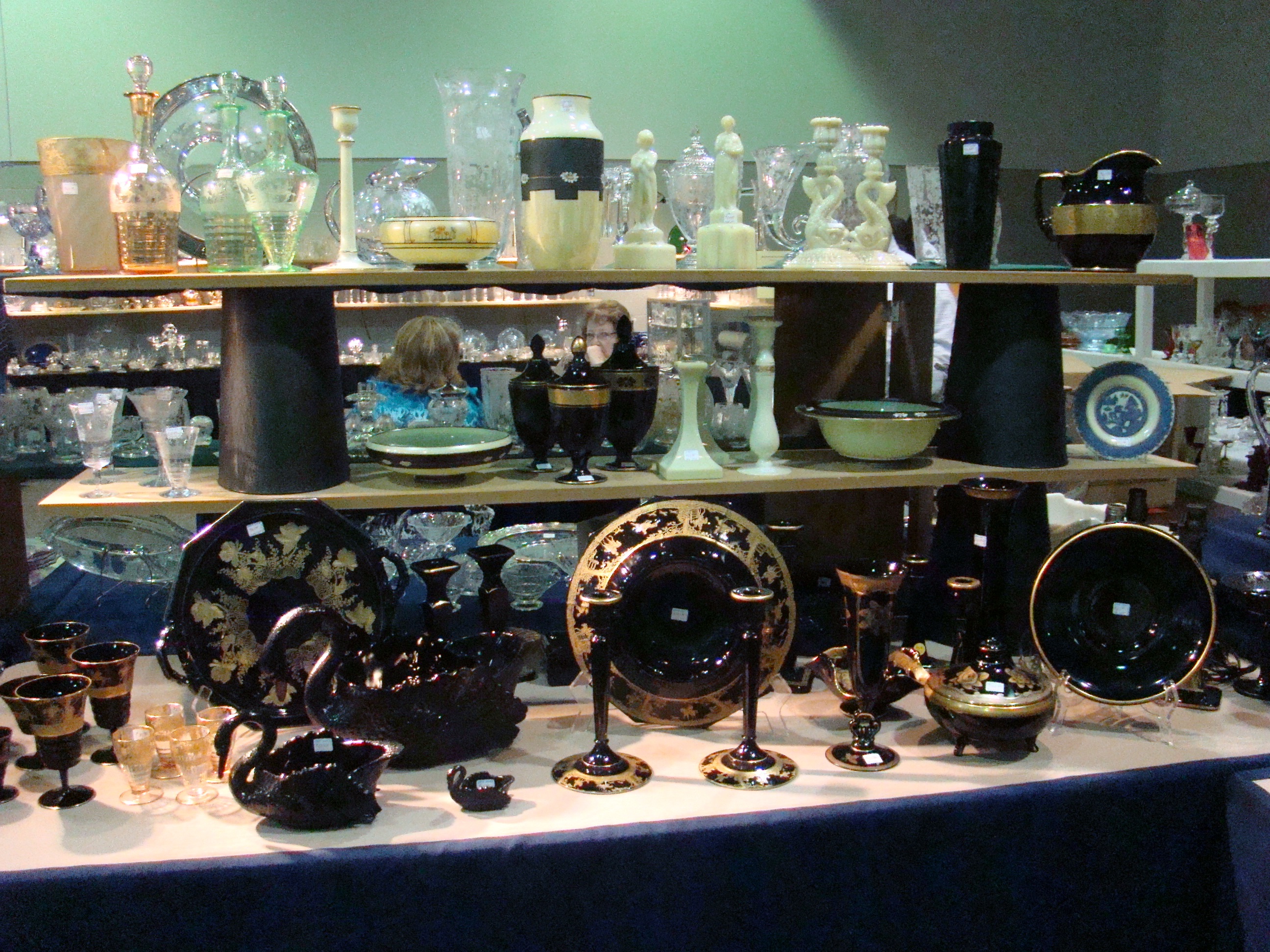
Gold embossed Ebony

Gold embossed Ebony with Ivory above

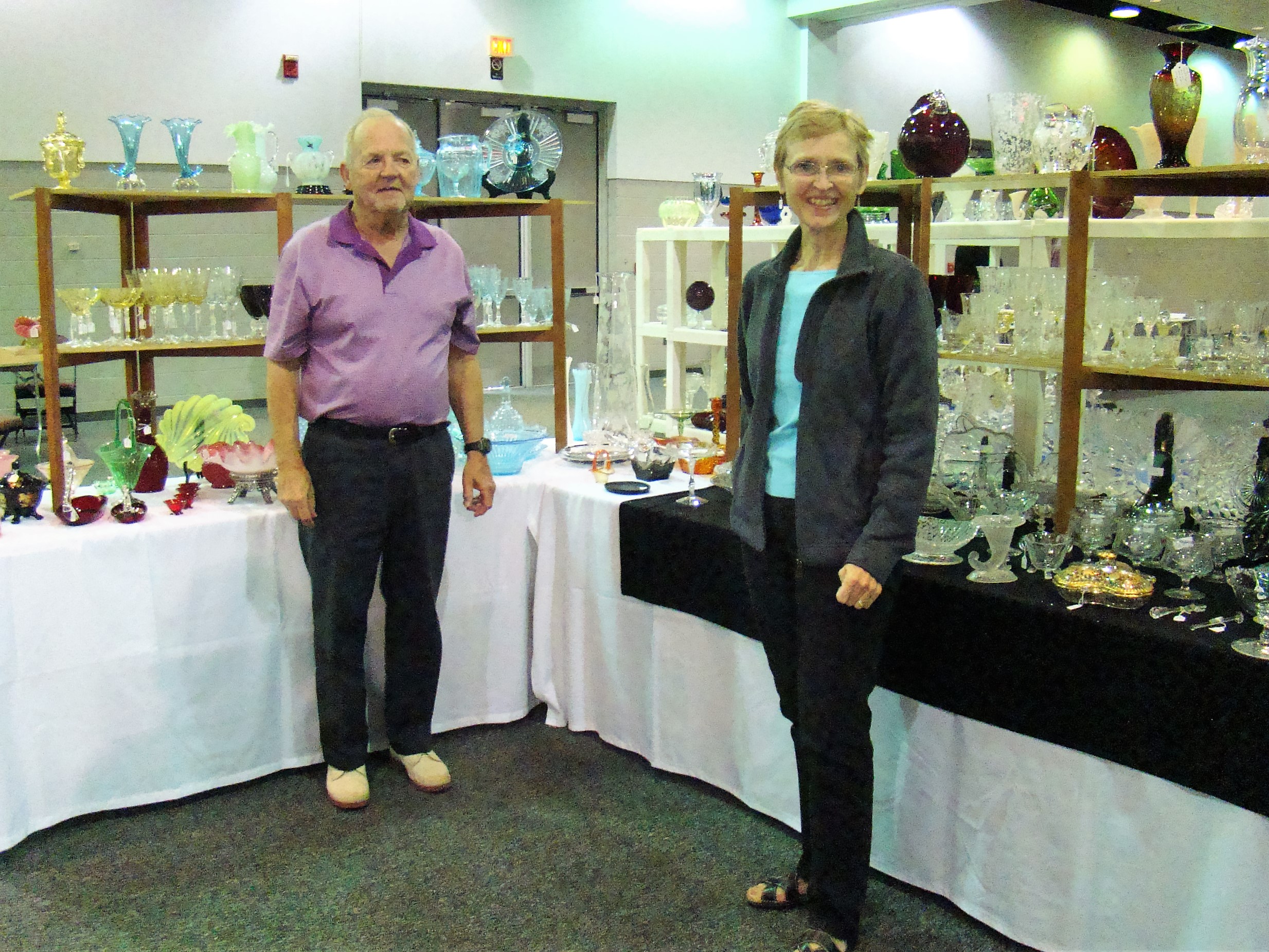
“Ebony & Ivory” served as the theme for the National Cambridge Collectors Club Convention in 2015.  Each year, collectors of Cambridge Glass meet to display and sometimes sell, parts of their collections. People come great distances to participate in this event. California, Florida, South Carolina, and Minnesota were a few of the places mentioned as vendors were visited throughout the displays.

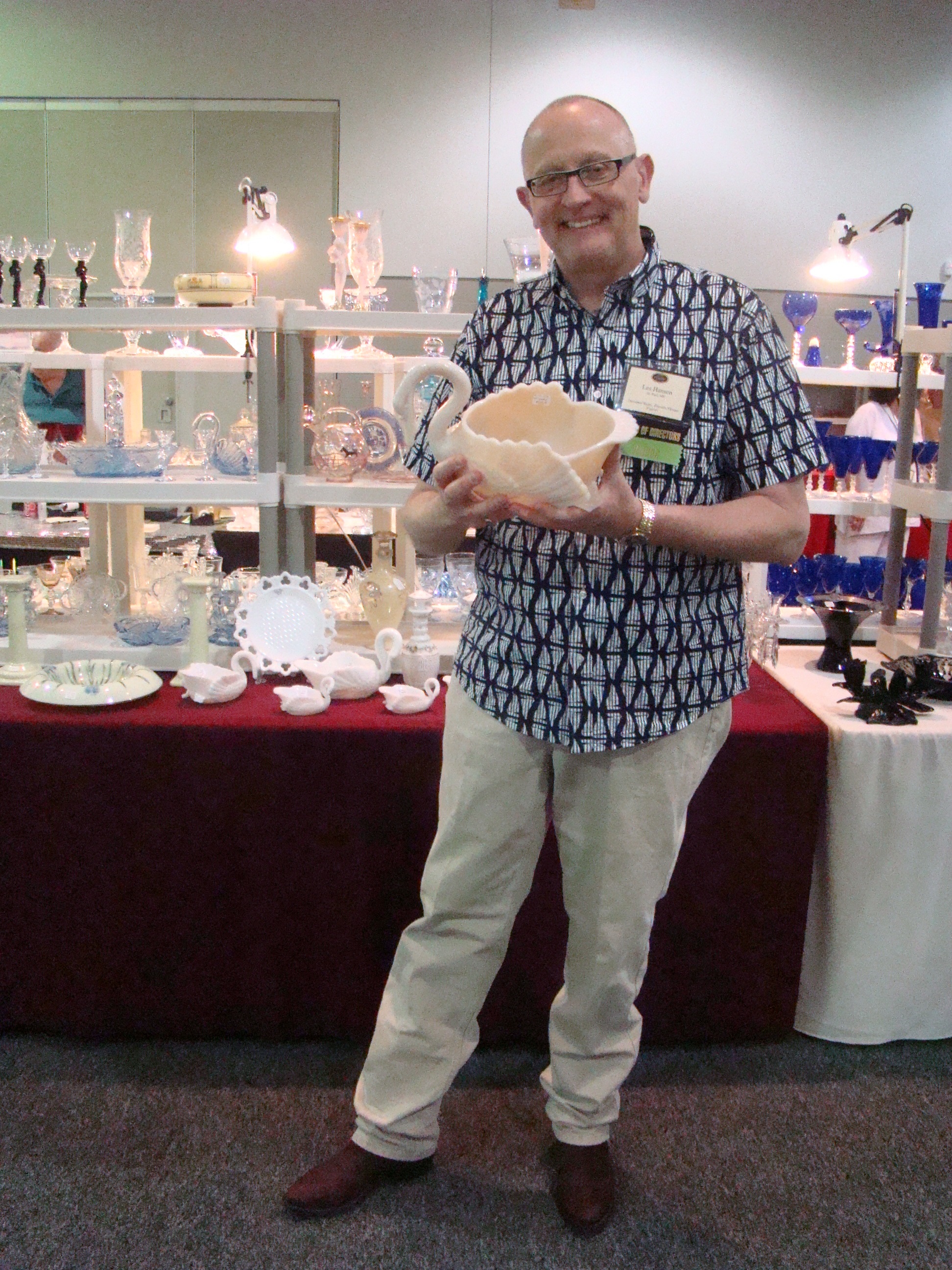
Les Hanson presented the opening night program of

Les Hanson presented the opening night program of “Ebony & Ivory”.

From St. Paul, Minnesota, Les Hanson discussed his favorite Cambridge Glass item – swans. Les has a collection of over 125 swans of all sizes, styles and color combinations. They seemed to be his pride and joy. But he also collected, in order of preference, hand painted enamel on crystal, ebony, and decorated nude stems.

When asked how he got interested in Cambridge Glass, Les smiled as he thought back. For some reason, he always liked the beauty of swans. When at a glass show with a friend many years ago, they saw a beautiful green Cambridge Glass swan, which wasn’t very high priced. His friend bought him the swan for a birthday present. Turns out the reason it wasn’t high priced was because it was chipped. Les learned two lessons that day: 1) he was hooked on Cambridge Glass, and 2) chipped glass takes values down rapidly.

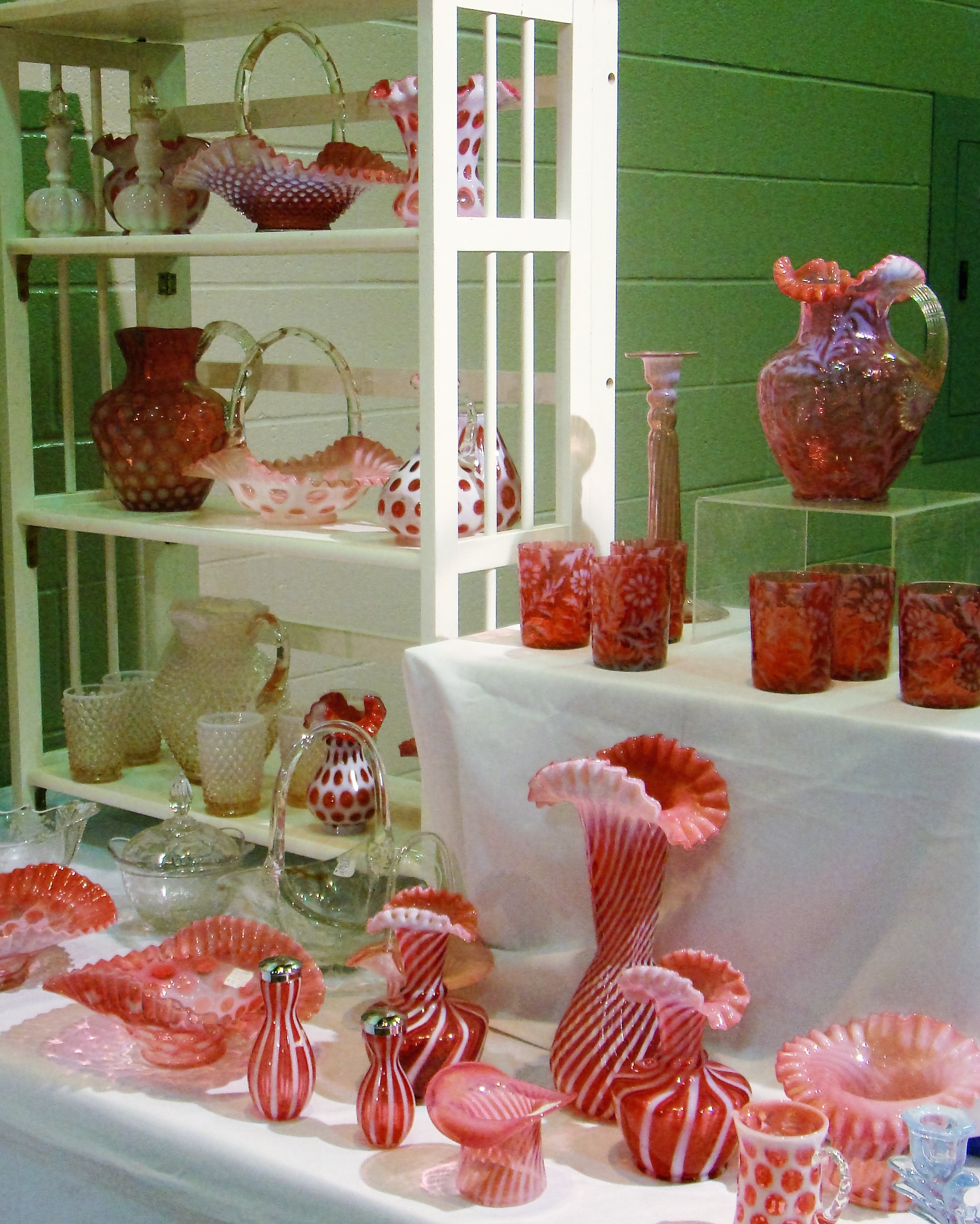
Sneaking in one of my favorites from the show - Cranberry Opalescent Coin Dot.

Sneaking in one of my favorites from the show – Cranberry Opalescent Coin Dot.  This show provides a great variety of collections from various glass manufacturers. This collection happens to be Fenton.

One gentleman. whose name eludes me, had an extensive collection of cream and sugar sets. Someone from Cambridge contacted him about attending the glass show years ago and he has been there ever since. At his peak, he had 480 cream and sugar sets. He was formerly a helicopter pilot for the Air Force and the helicopter he flew is now being restored in the Fort Worth Vintage Flying Museum. He said that this show has, “the best Cambridge glass for sale anyplace in the United States.” If anyone knows his name, please let me know.

Autley and Kathy Newton were the new kids on the block at this year's show.

Autley and Kathy Newton were the new kids on the block at this year’s show.

From Hammond, California, Autley and Kathy Newton displayed for the first year ever. They were the newbies at the show and had not only Cambridge Glass but treasured pieces of other glass lines as well as some beautiful pottery pieces. They said that Rick Jones had seen their display at another show and invited them to Cambridge.

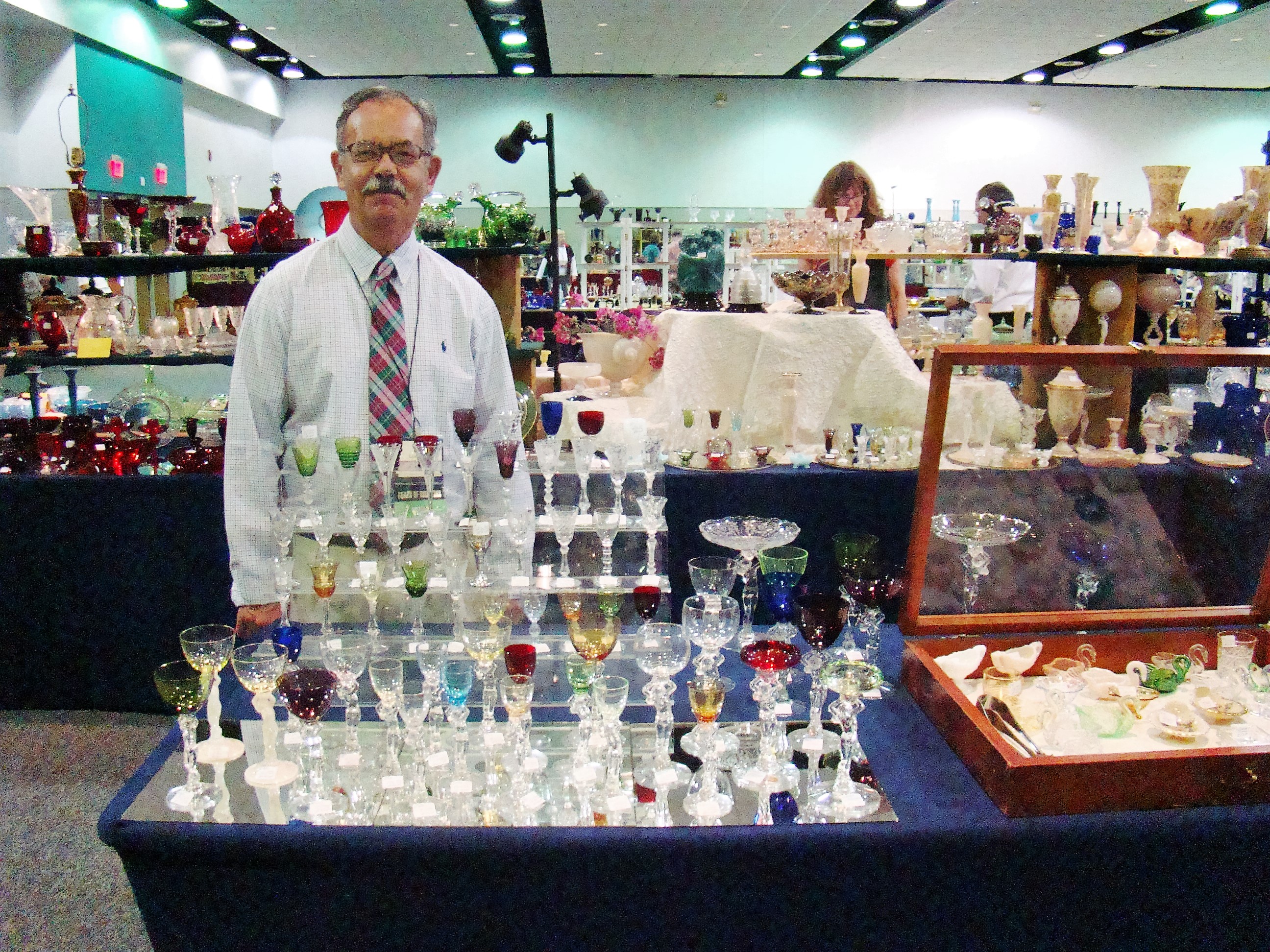
Lynn Welker, Mr Cambridge, displayed part of his cordial collection.

Lynn Welker, Mr Cambridge, displayed part of his cordial collection.

Of course, no show of Cambridge Glass would be complete without the presence of Mr. Cambridge, Lynn Welker, from nearby New Concord. Lynn has an extensive collection of over 11,000 pieces of Cambridge Glass. Cordials are his favorite because they are small and easy to move around, yet delicate and beautiful.

Lynn has been interested in glass all his life as his mother had an antique shop in New Concord and Lynn spent many hours at the store. He bought a glass bottle at an auction at the age of nine and has been hooked ever since. For sixty-one years, his vacations and adventures involve trade shows and museums. No wonder he is called Mr. Cambridge.

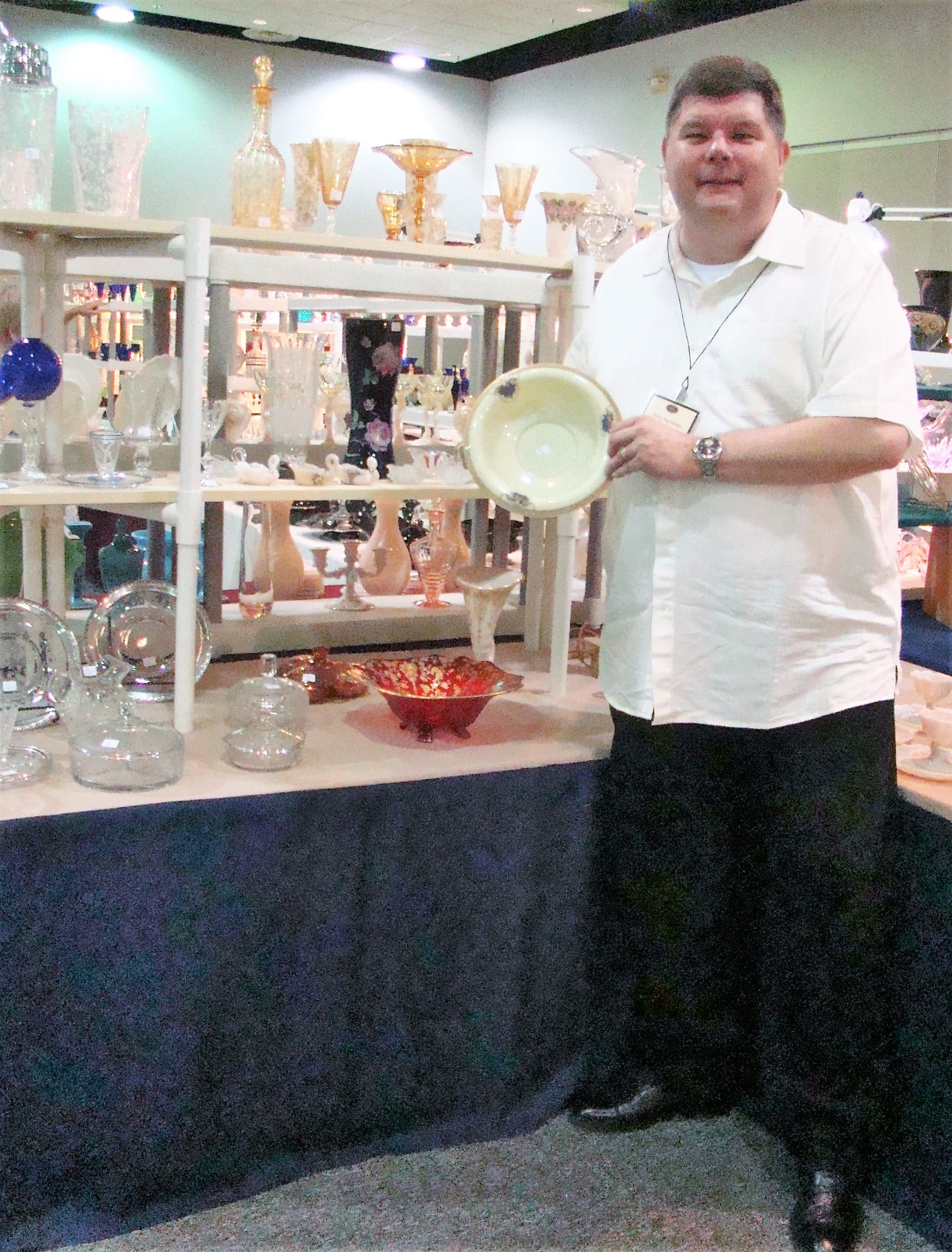
Doug shares his top quality glassware, but friendships are what keep him coming back.

Doug shares his top quality glassware, but friendships are what keep him coming back.

From Minnesota, Doug Ingraham, who has been collecting for forty-two years, is said to have “the best of the best”. This all began when his grandmother left him a collection of Cambridge Glass. Someplace he met Elizabeth Moe and she told him, “If you want to know about Cambridge Glass, join the collectors.”

Doug said that while the glass is beautiful, “What keeps me coming back are the friendships.”

Happy Trails Lead to Roy Rogers Festival

Every August western fans hit the trail to Portsmouth, Ohio to honor an old favorite, Roy Rogers, King of the Cowboys, and his wife, Dale Evans, Queen of the West. 2015 made the 32nd year the Roy Rogers Festival has been held there.

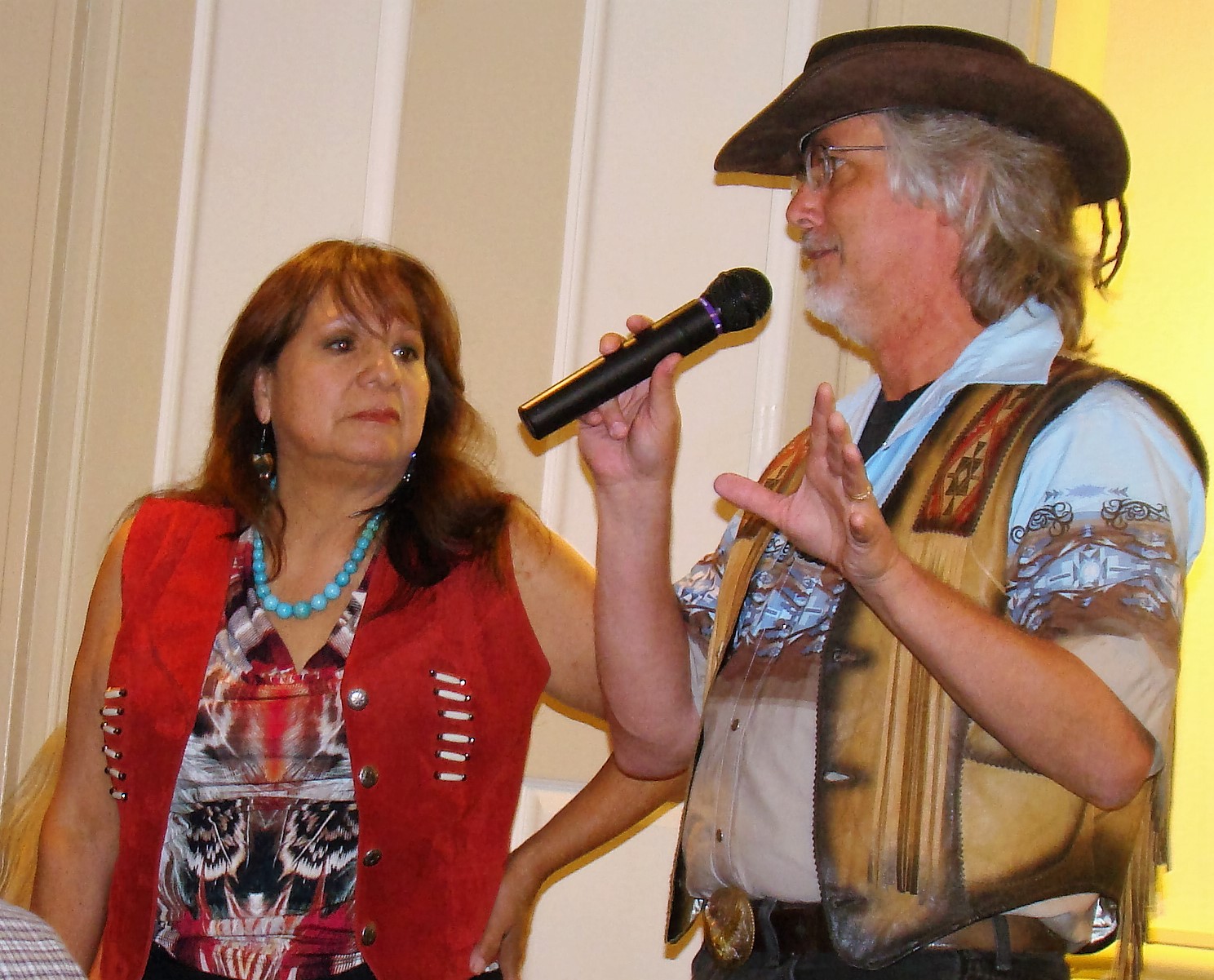
Roy and Dale's youngest daughter, Dodie, and her husband, John Patterson.

Roy and Dale’s youngest daughter, Dodie, and her husband, Jon Patterson.

Meeting Dodie Rogers Patterson, the daughter of Roy Rogers, had to be a highlight of the day for many. Her husband, Jon, provided entertainment as well. Dodie is the youngest of Roy and Dale’s nine multi-cultural children. She is of the Choctaw tribe, which also ran in Roy’s blood.

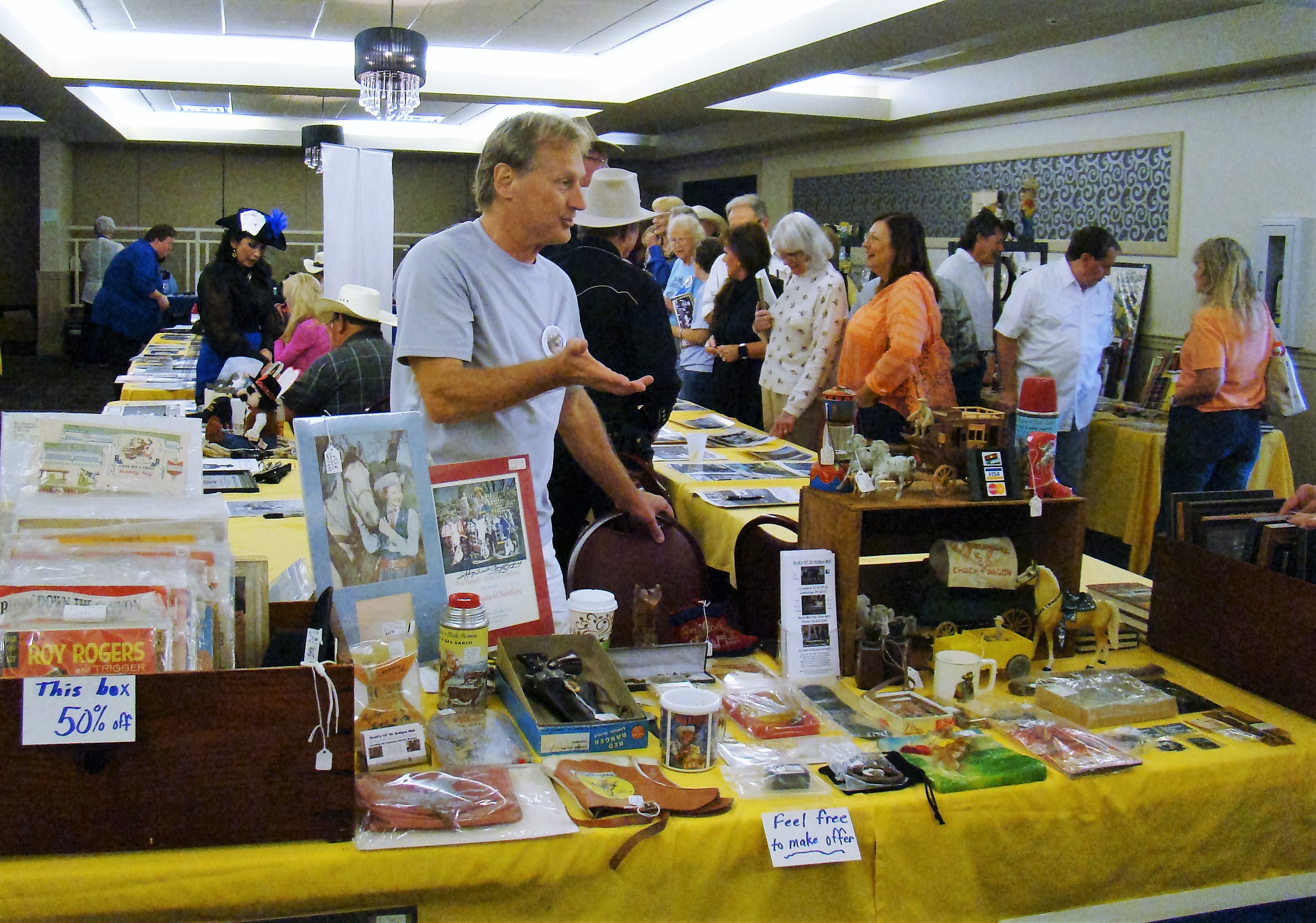
It was a pleasant surprise to find hometown dealer, Dave Scott, with Roy Rogers memorabilia.

It was a pleasant surprise to find hometown dealer, Dave Scott, with Roy memorabilia.

Activities centered around the dealers’ room where items could be viewed and purchased from many sellers. In the afternoon, there was a question and answer session with the stars that provided an inside look at their lives and what they had overcome. Being a star is not always as glamorous as it may seem.

Steve Connors, son o Chuck Connors from the Rifleman, certainly had the image of his father.

Steve Connors, son o Chuck Connors from the Rifleman, certainly had the image of his father.

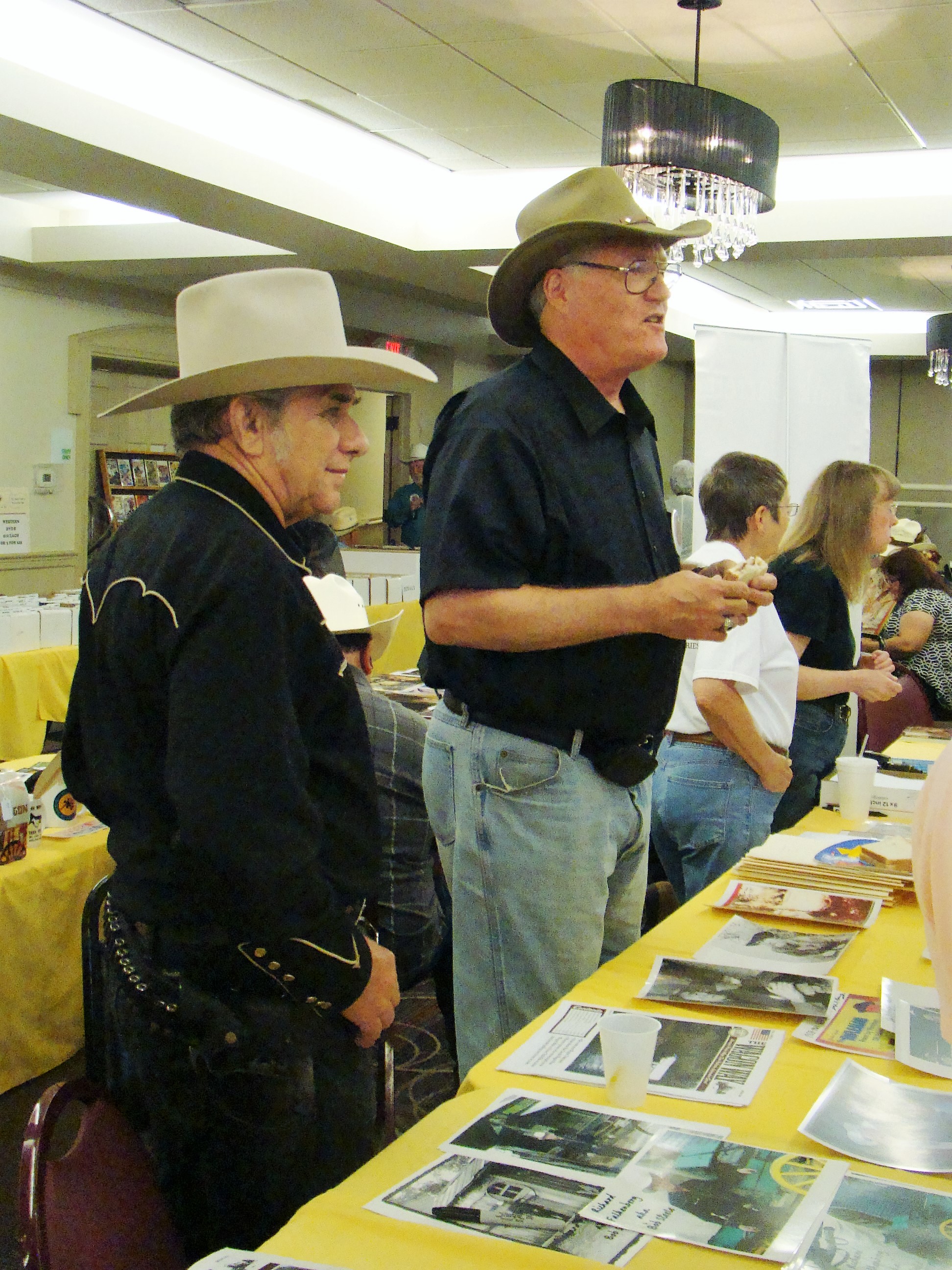
Many stars were in attendance, and several of them had also been at a recent Hopalong Cassidy Festival. Fuzzy took a fall but came back stronger than he was before.  Steve Connors, son of Chuck Connors, who was The Rifleman and Johnny Crawford, who also starred in that show as a young lad, both had a great sense of humor.

Roy Rogers home on Duck Creek near Portsmouth.

Roy Rogers home on Duck Creek near Portsmouth.

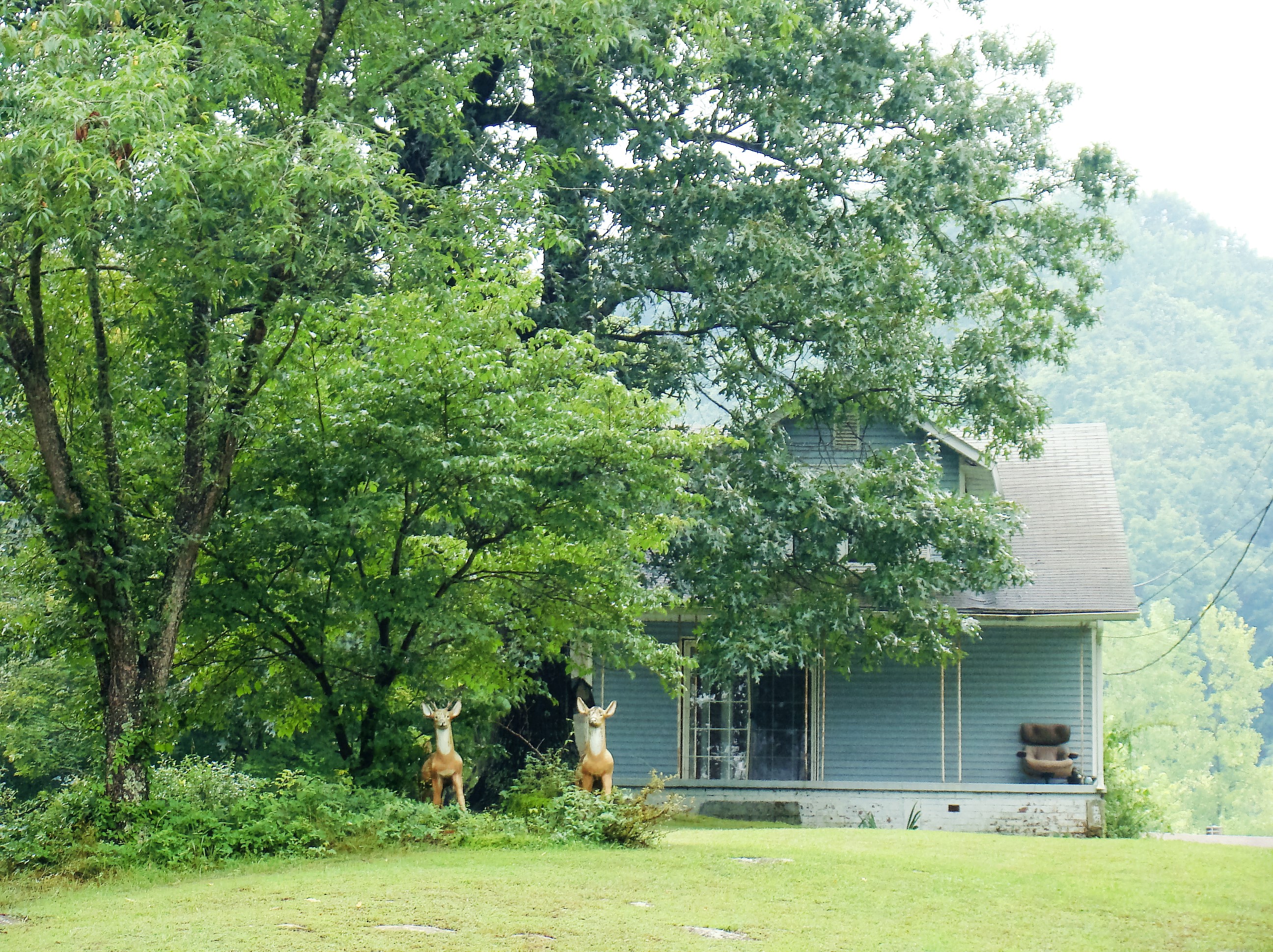
The boyhood home of Roy Rogers was located at Duck Creek about twelve miles from Portsmouth. There is an Ohio Historical Marker at his home as well as a marble marker. Roy lived here until he was a teenager at which time they moved to California.

Roy Rogers painting on the Portsmouth Flood Wall.

Roy Rogers painting on the Portsmouth Flood Wall.

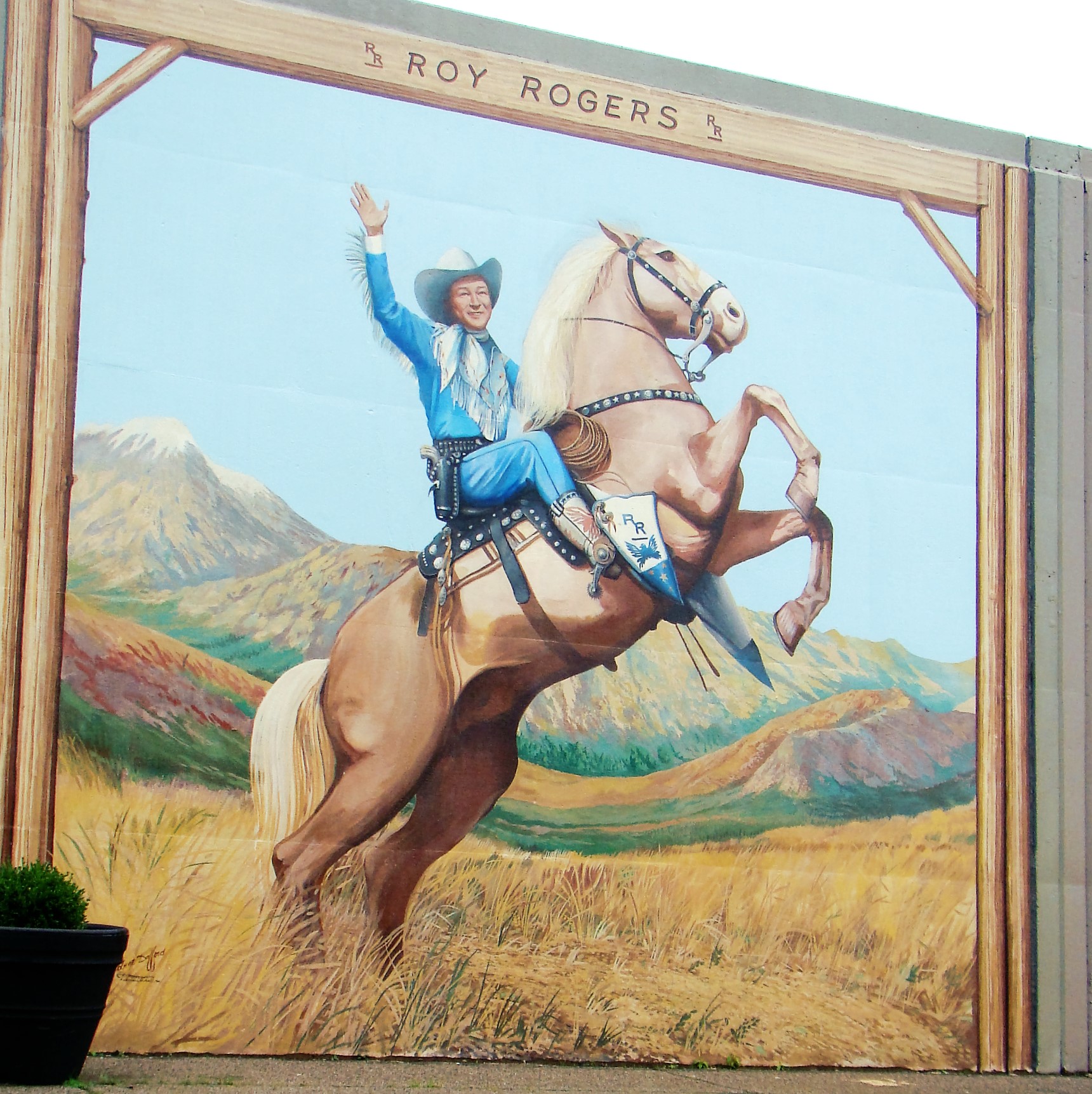
The Portsmouth Floodwall by Robert Dafford  contains 2,200 feet of artwork, the largest by any single artist. This mural along the Ohio River displays a 160′ section called “King of the Cowboys”, dedicated to Roy Rogers, a legend in his time.

Roy and Dale were the most loved western couple of all time and were proud of the US flag and our country. As Roy and Dale would sing, “Happy trails to you, ’til we meet again.”

Newark Earthworks Connection to Ancient Civilizations

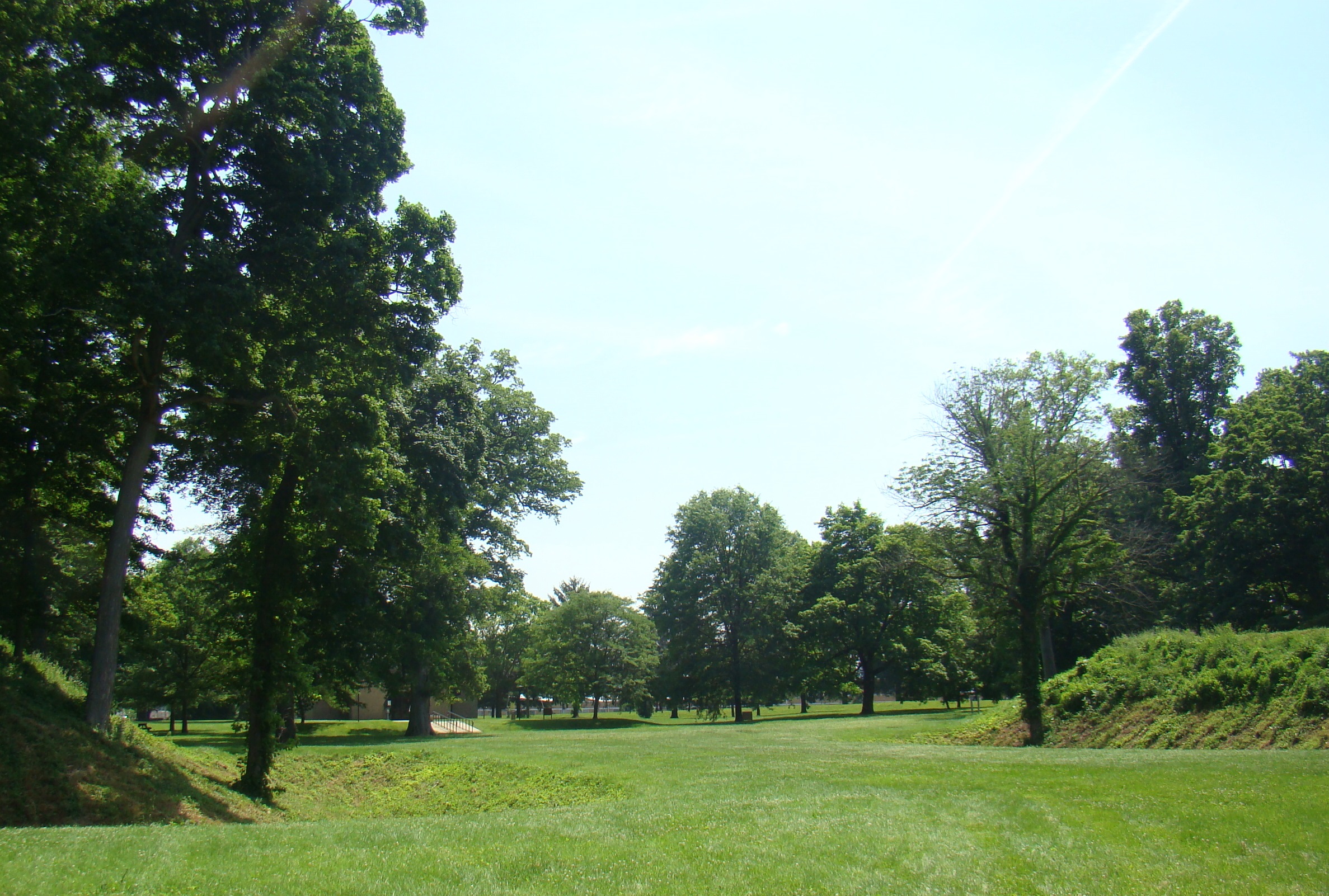
An eight foot wall and 5 foot deep ditch created the Great Circle.

An eight foot wall and 5 foot deep ditch surround the Great Circle.

“Walk with me. We lived here long ago. Large ceremonies with many people were held here.” This was the feeling that permeated the atmosphere while walking over and around the large mounds called Newark Earthworks built by the Hopewell culture at Newark, Ohio. There are three sections to these earthworks: The Great Circle, The Octagon, and The Wright Earthworks, which were not visited on this road trip.

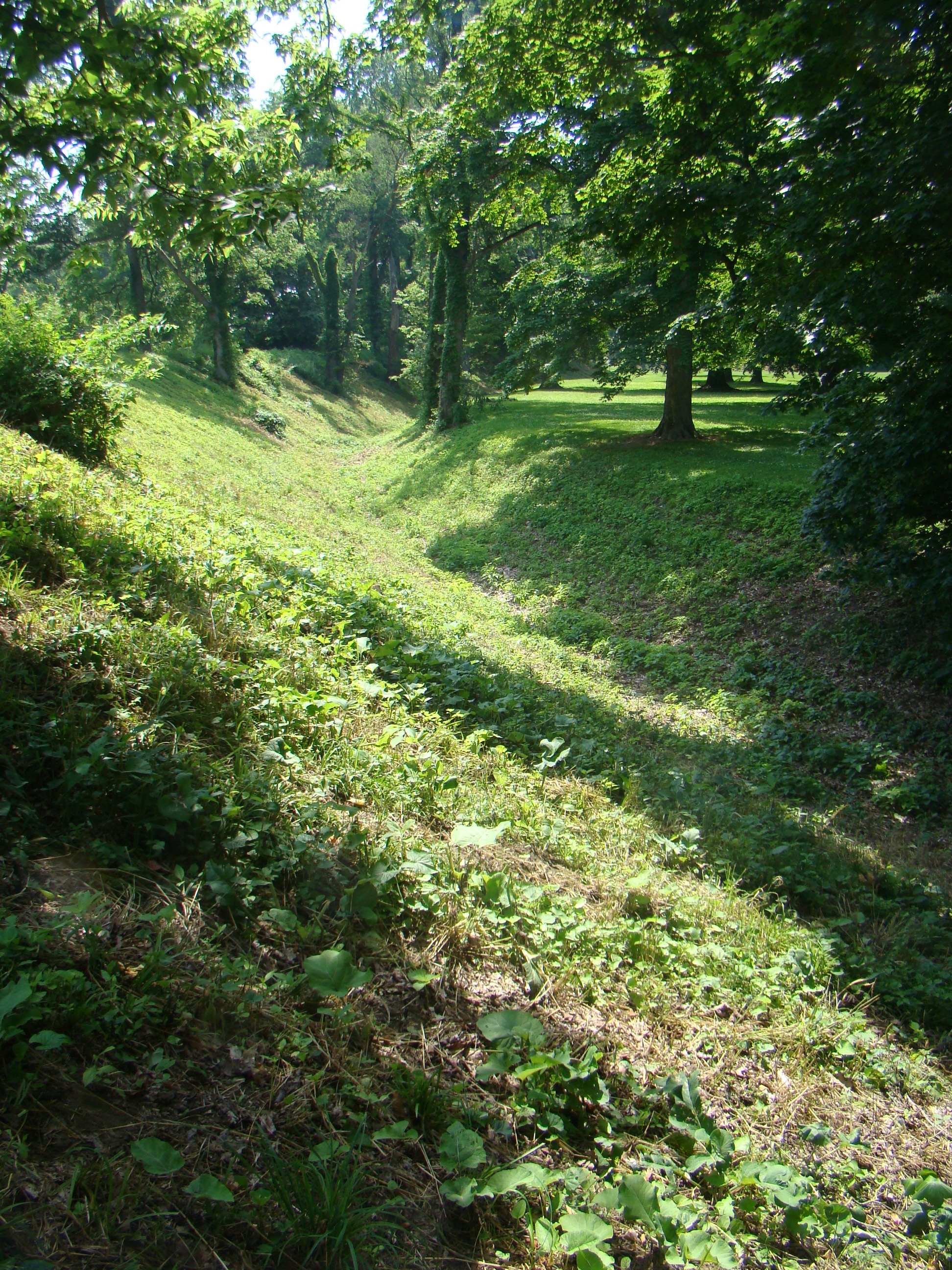
Surrounded by fields of wild strawberries and gigantic trees, these mounds take your mind and spirit back many years to somewhere between 100 BC and 500 AD. The Great Circle, representing the circle of life, is located in Heath and has eight foot high walls, which surround a five feet deep moat. In the center of the Great Circle are some smaller mounds, one called the Eagle Mound, which covers the remains of an old ceremonial longhouse of the Hopewells.

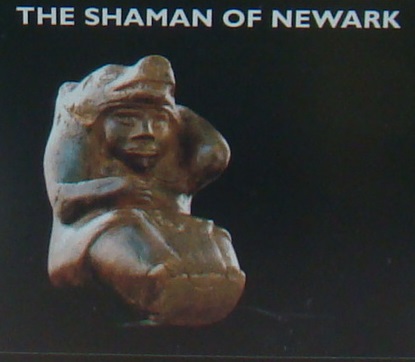
The only known artifact could have been the form of a shaman.

An ancient artifact from these mounds could have been the form of a shaman.

An ancient artifact that is known to have come from these mounds is a small stone sculpture. No one is certain whether it is a person, who was a hero in one of their stories, or perhaps a spiritual being. Some even think it could be a shaman wearing bear regalia. Many, however, also believe the Holy Stones were truly from the mound as well, while some feel they are not authentic. These Holy Stones can be viewed in Coshocton at the Johnson-Humrickhouse Museum.

During the 1850s, the Great Circle provided a home for the Licking County Fairgrounds. Later use varied from horse racing track to military drill field. The Ohio National Guard has held encampments at this location.

Mound opening leads to the informative Welcome Center.

Mound opening leads to the informative Welcome Center.

The Welcome Center contains an excellent interactive video that takes you on an exploration of the largest geometric earthworks in the world from the comfort of an air-conditioned area. Guides there provide answers to most of your questions as they are very well informed.

Archaeological surveys report that the Newark Earthworks were connected to the Hopewell Culture Historical National Park in Chillicothe, Ohio by a hand built road. The road was sixty miles long and ten feet wide and paved with crushed shells. Called the Great Hopewell Road, today hiking groups still walk that pathway every year.

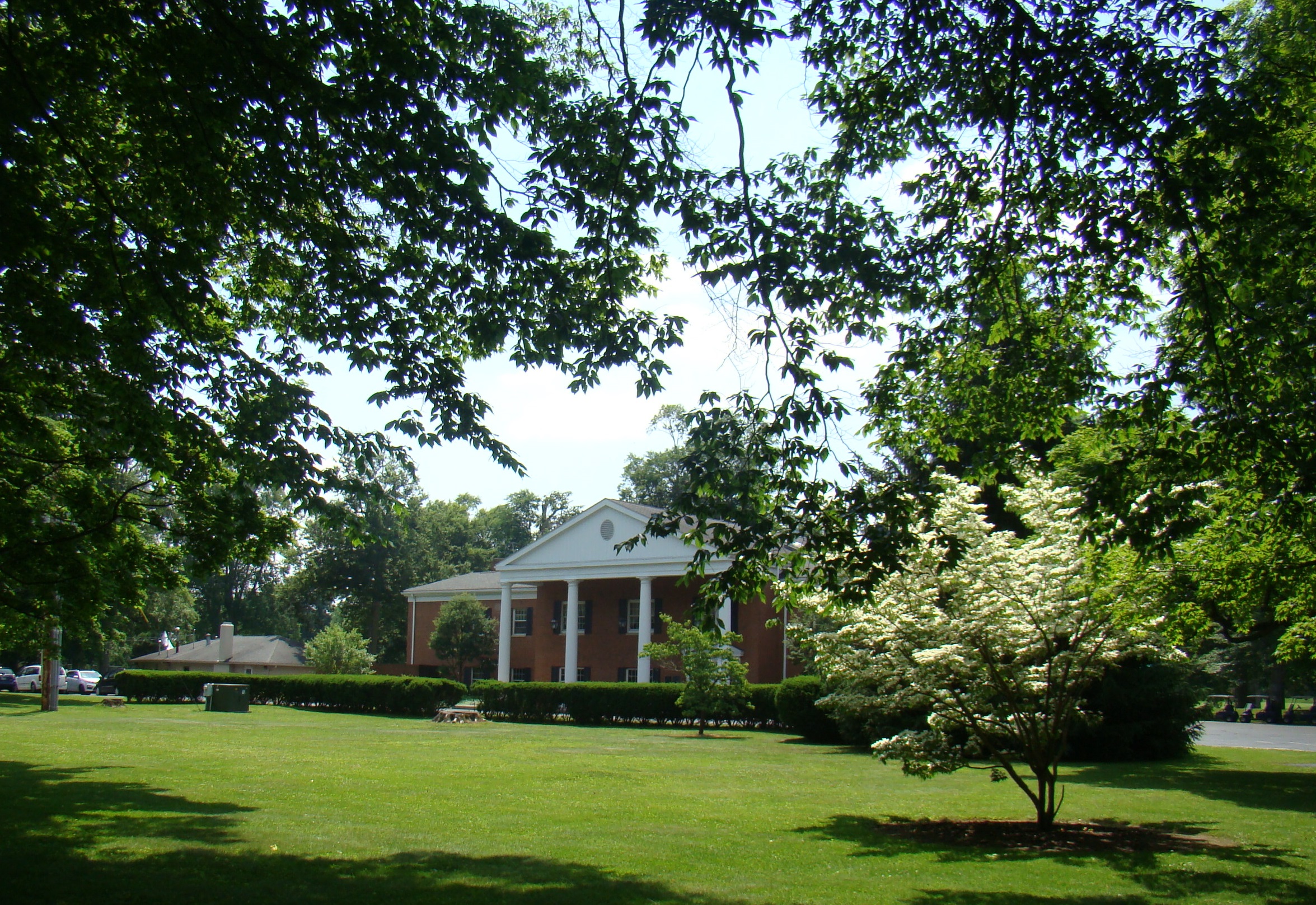
Moundbuilders Country Club leases the Octagon Mound.

Moundbuilders Country Club leases the Octagon Mound.

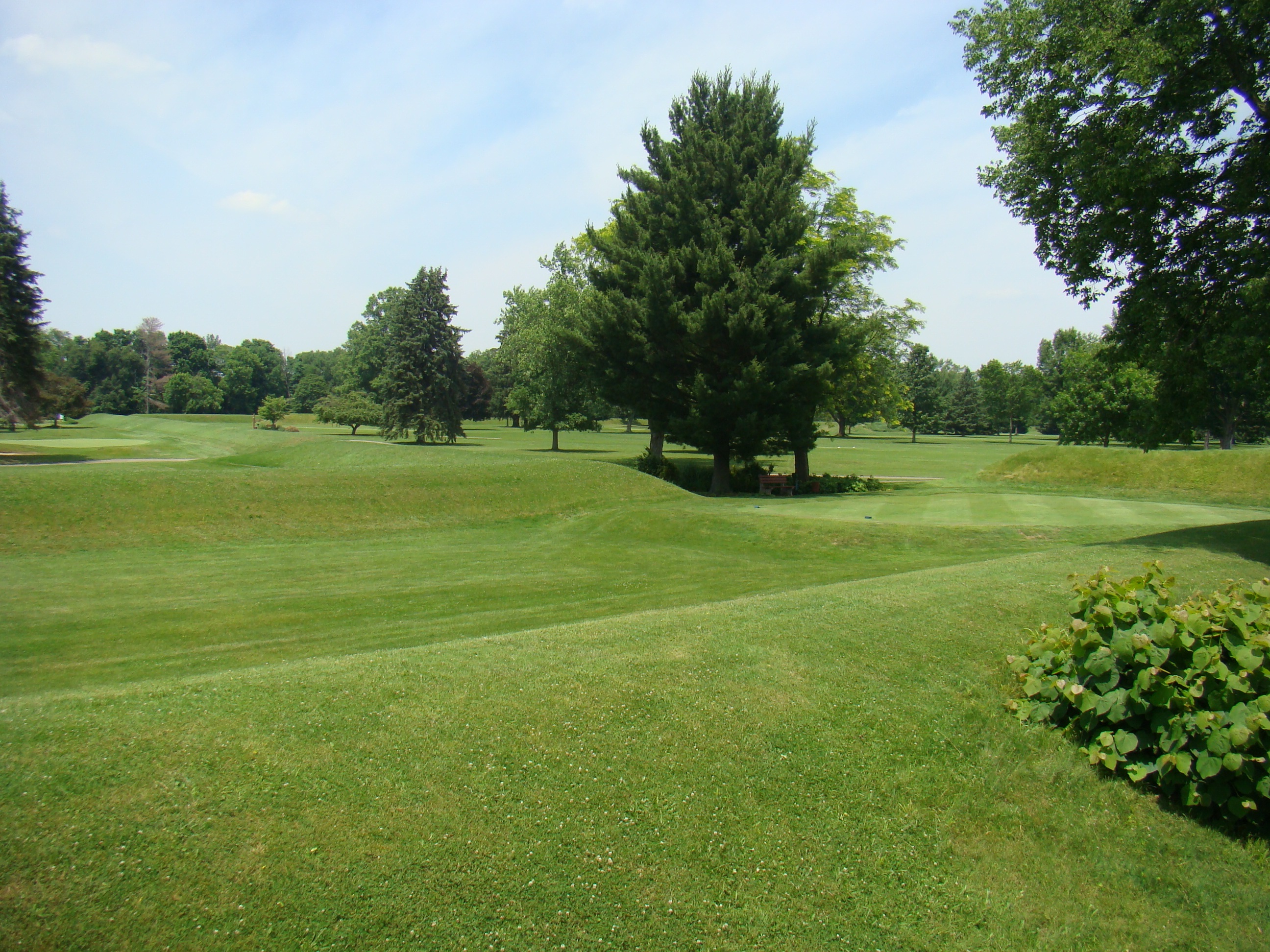
On to the Octagon Earthworks! Something seems amiss here as these are located on a golf course, or a golf course is located on them. Yes, signs guide you to the Moundbuilders Country Club, where visitors are not permitted on the mounds as they might interrupt someone’s golf game. There is an observation platform so you can see the general outline of the mounds, but walking must follow a strict schedule around golf events. The Country Club keeps the Octagon beautifully maintained and provides time each year, for those interested, to actually walk where the ancients walked.

These are by no means small formations as the Great Circle contains 40 acres, while the Octagon surrounds 80. The video at the Welcome Center proclaimed the Newark Mounds as the largest geometric complex in the world…four square miles total.

Octagon Mound can be seen from the Observation Deck.

Octagon Mound. part of the golf course, can be seen from the Observation Deck.

However, just standing at their edge gave a feeling of connection to those ancient people. Researchers believe the earthworks were used for ancient burial places, ceremonies and astronomical viewings, especially the lunar solstices.

Many of the mounds at this complex have been destroyed as it lies within the cities of Newark and Heath. Over the years farming, construction of roads, and development of the city, have changed the face of the earth. But parts of the original complex are being preserved by the Ohio Historical Society with help from Moundbuilders Country Club.

There are usually about three or four days a year that you can freely walk these historic mounds without playing a round of golf. Make plans to visit during the Octagon Mound’s next Open House, which is October 11, 2015. You will enjoy the connection!

Newark Mound Earthworks can be found just off I-70 east of Columbus, Ohio at Exit 129. Take Route 79 to Health to stop first at the Welcome Center at 455 Hebron Road, Heath.

.

Beautiful Flower Gardens Found in Lore City, Ohio

A  beautiful flower garden reflects the caring of its owners.

A beautiful flower garden reflects the caring of its owners.

Sometimes we overlook the beauty in our small towns. On a recent walk through Lore City, the beauty of their flowers caught my eye. Several people throughout the town must spend the entire summer in their beds…flower beds, that is.

Recent rains have made a lush covering of flowers this year, but that makes weeding more difficult and time consuming as well. These flower beds were cared for out of pure love for flowers.

People still enjoy gardens for fresh vegetables.

People still enjoy gardens for fresh vegetables.

During a time when many people have given up gardening, this is not the case in Lore City. Here gardens thrive and townfolk are quite proud of their fresh vegetables. Gardens brimming with vegetables and flowers provide a popular mix throughout the town.

Beautiful flowers brighten this country home.

Beautiful flowers brighten this country home.

On a back country lane, one home stands out above the rest. This land previously was home to the now abandoned coalmining town of Goodyear. Back in its heyday, twenty-seven homes stood along this now rutted lane with grass growing down the middle. On a bank above the home is the place where the railroad track previously took coal from the coal mine.

This old hand pump was used when Goodyear was an active coal mining town.

This old hand pump was used when Goodyear was an active coal mining town.

Along the way, you even find a remaining handle pump that was used during the time that Goodyear prospered. One water pump would be used for two homes. It still works today!

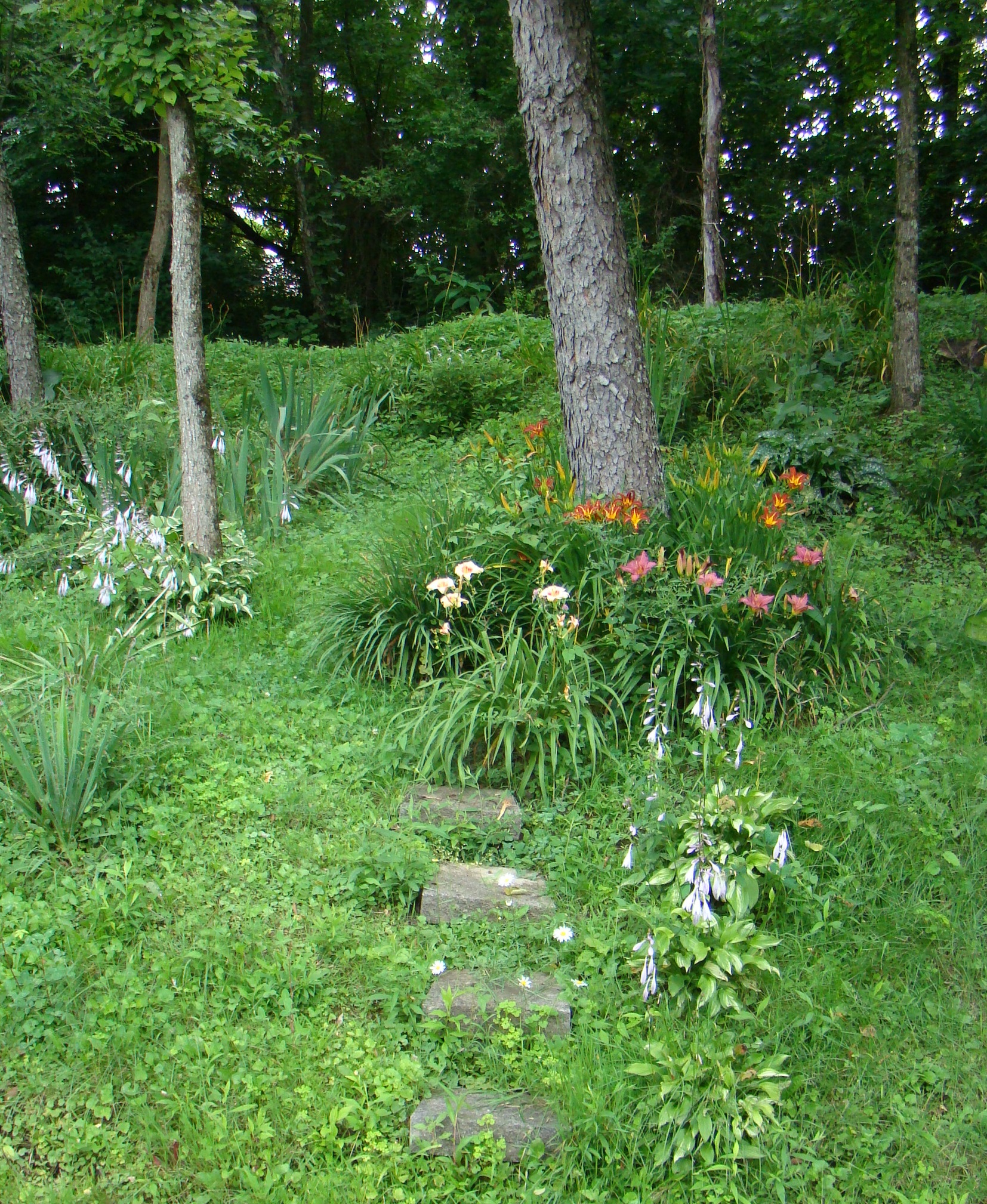
Flowers line the steps to the old coal mining road.

Flowers line the steps to the old coal mining road.

When the flowers get overcrowded in their beds, rather than destroy them, some folks have attempted to plant them on the hillsides. A clump of day lilies or coneflowers give added color to the slopes.

Sunflowers were beginning to bloom.

Ten foot tall Sunflowers were beginning to bloom.

Even the backyards are filled with flowers. One last stop for the day led to discovery of beautiful sunflowers over ten feet high. Now, over the years sunflower seeds have been planted at my house, but no plants have ever grown. Oh, to have beautiful sunflowers like these.

Beautiful flowers and stones surround a small pond in a neighbor's yard.

Beautiful flowers and stones surround a small koi pond in a neighbor’s yard.

Then, as I drove out of town, a lady was working in her beautiful flower garden with a small koi pond. The care these people give their gardens is amazing. As they pull weeds and pinch blossoms, their mind is filled with nature and the problems of the world are temporarily forgotten.

Every small town has its beauty, if we have eyes to see.

Lore City is located in southeastern Guernsey County on OH-285 about ten minutes from Cambridge in the rolling hills of beautiful Ohio.

Zoar Village Garden’s Symbolic Design

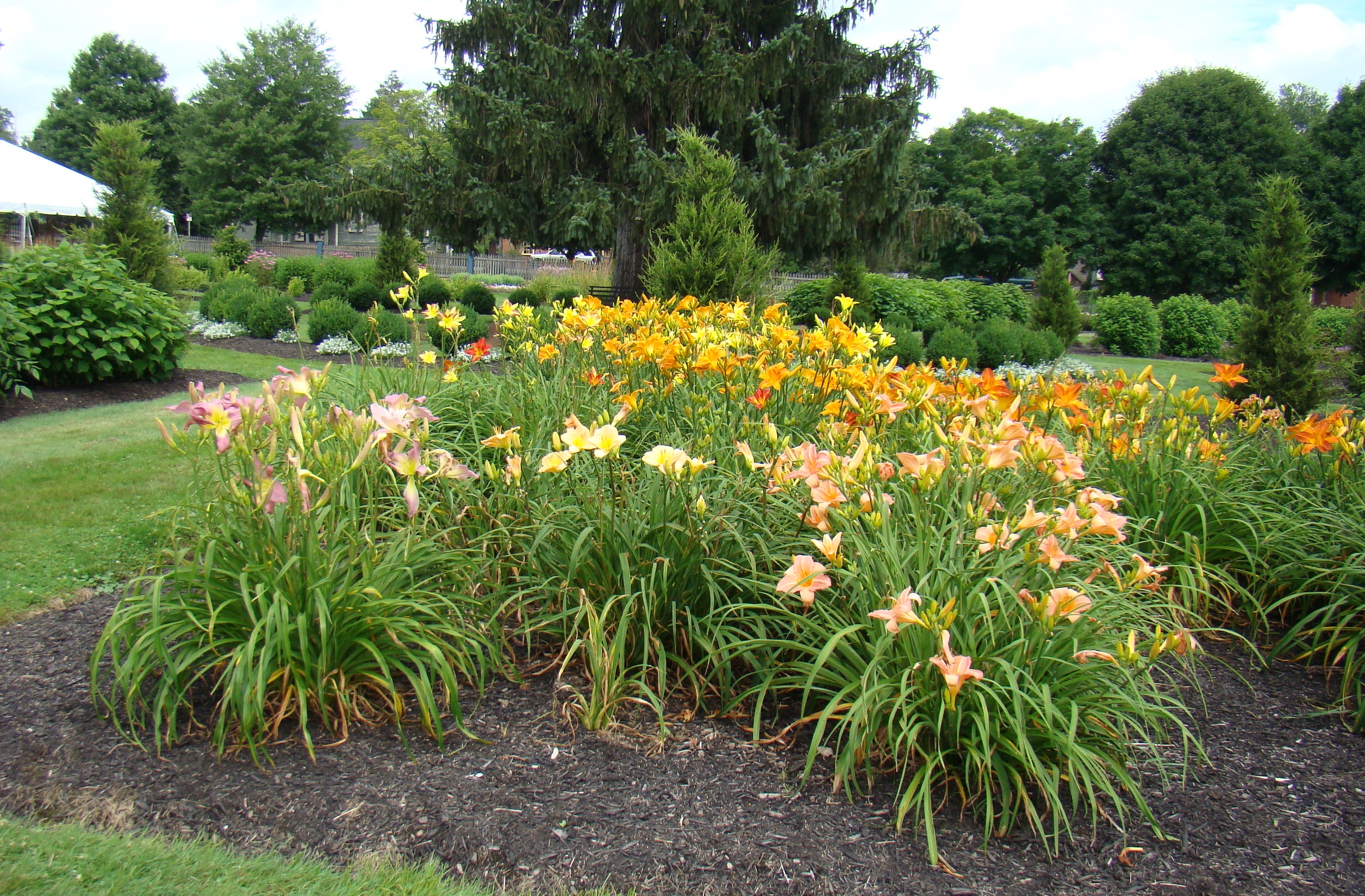
Day Lilies greet visitors to the Zoar Gardens.

Day Lilies greet visitors at Zoar Garden.

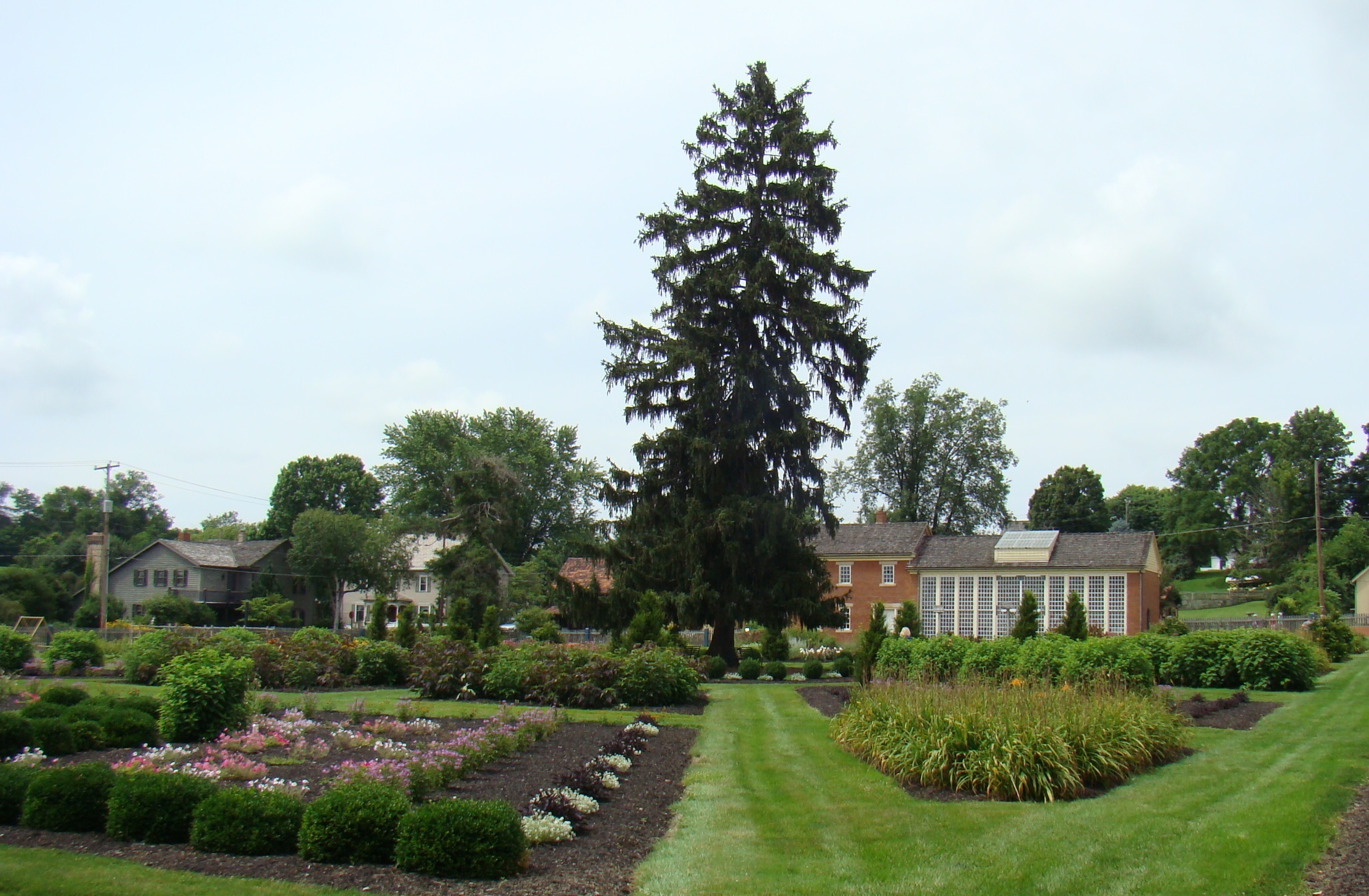
Summer time and the flowers are blooming! The beautiful garden at Zoar Village seems most spectacular during the month of July. An entire block of vegetable and flower beds will have you wanting to find a seat and enjoy the scenery, or casually stroll down the pathways.

Long ago this garden began as a place for the communal village to grow their vegetables as well as brighten their life with flowers. Who tended those early gardens at Zoar? School boys and elderly men received this assignment as the female occupants all had household chores that must be done daily, while the men were either working the fields or building the Ohio and Erie Canal.

The center of the block garden has a special spiritual significance.

The center of the block garden has a special spiritual significance.

The spectacular Zoar Garden symbolized New Jerusalem to those German Separatists in the early 1800s. At its center stands a tall, slightly bent, Norway spruce, which represents Jesus. Surrounding the tall pine, twelve smaller junipers depict the twelve disciples.

These in turn are circled by an arbor vitae hedge, indicating heaven. Paths in the garden are proclaimed as pathways to paradise showing that no matter what path you take, if you look to Christ, you will be led to heaven.These people had strong religious beliefs now that they were free to worship as they pleased in the United States.

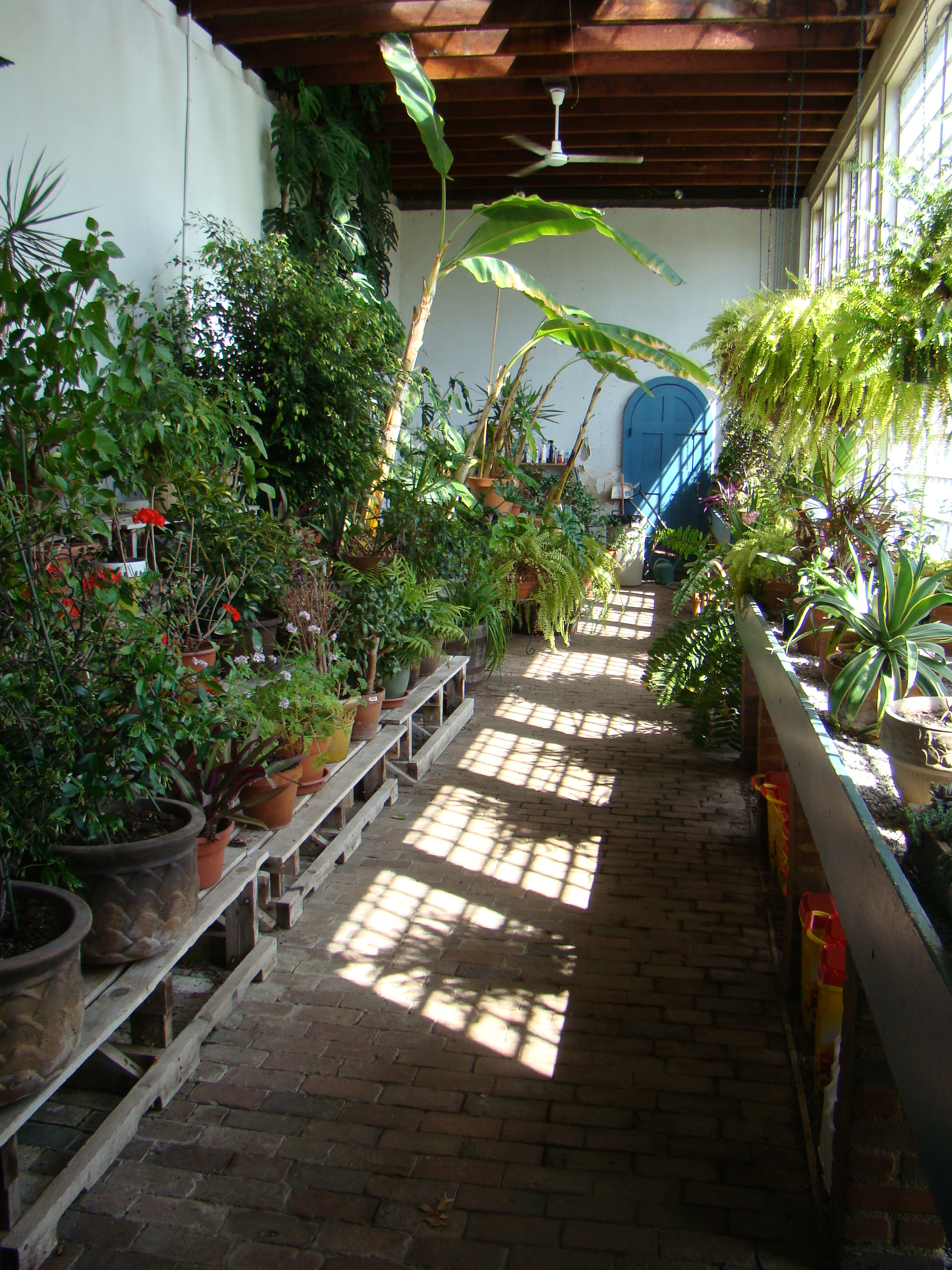
During the winter months, the greenhouse is filled with tropical plants.

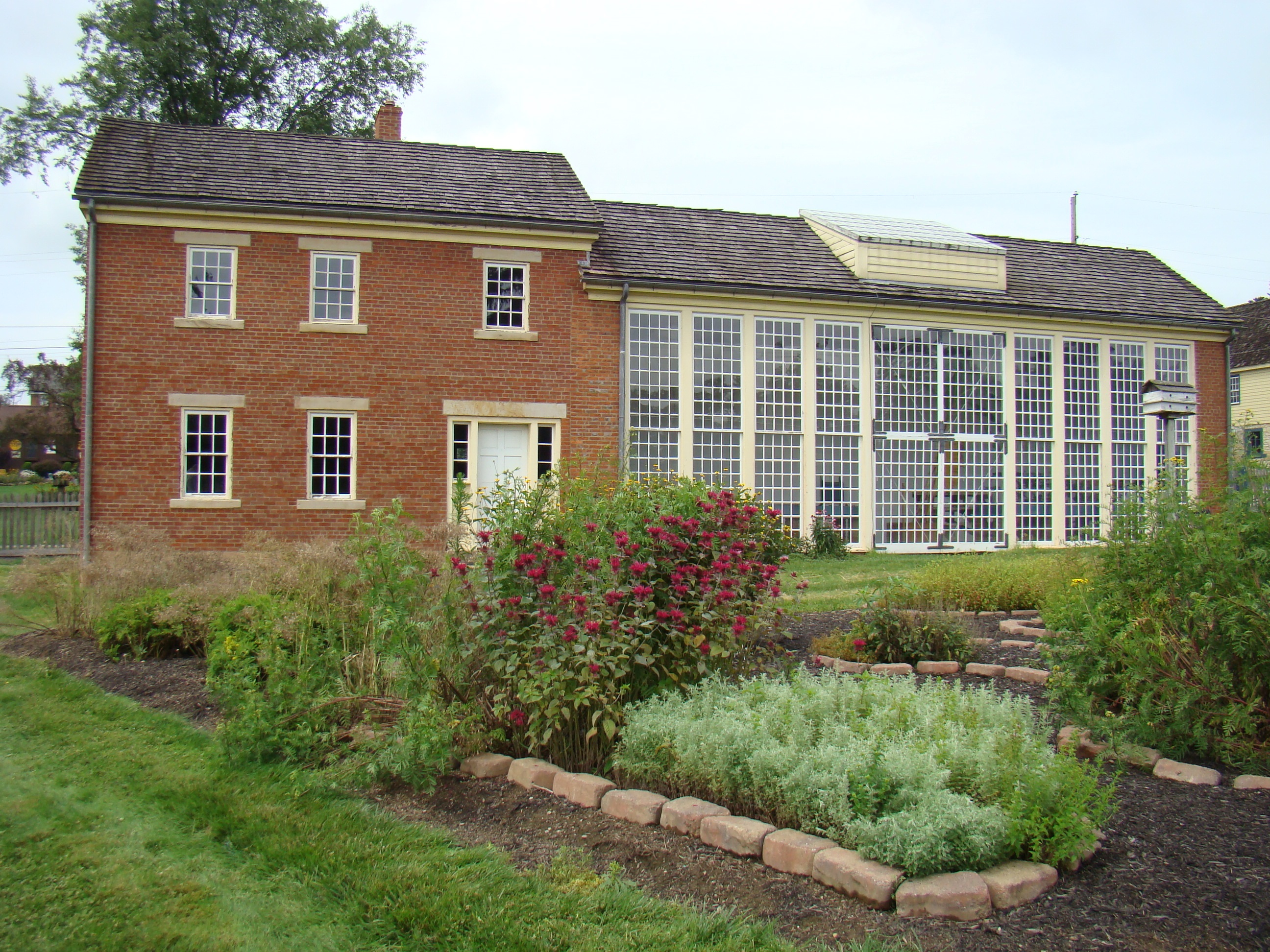
The Gardener’s House had a conveniently attached greenhouse.

At the north end of the garden stands the Gardener’s House, which served as residence for gardener, Simon Beuter, and his family back in 1835. Shortly thereafter, a greenhouse, or hothouse, was added. Since they grew oranges, lemons and other fruit in the middle of winter in the greenhouse, it was also called the Orangerie.

Tropical plants were stored in the greenhouse during the winter months.

Tropical plants were stored in the greenhouse during the winter months.

Hothouses were unheard of in Ohio at this time. The tropical fruit trees were kept outside in large wooden tubs in the summer, but could easily be moved into the greenhouse during the cold winter months. After the Ohio and Erie Canal was built, wealthy Clevelanders would send their plants during winter to Zoar to be kept in the greenhouse, because of its unique underground heating system.

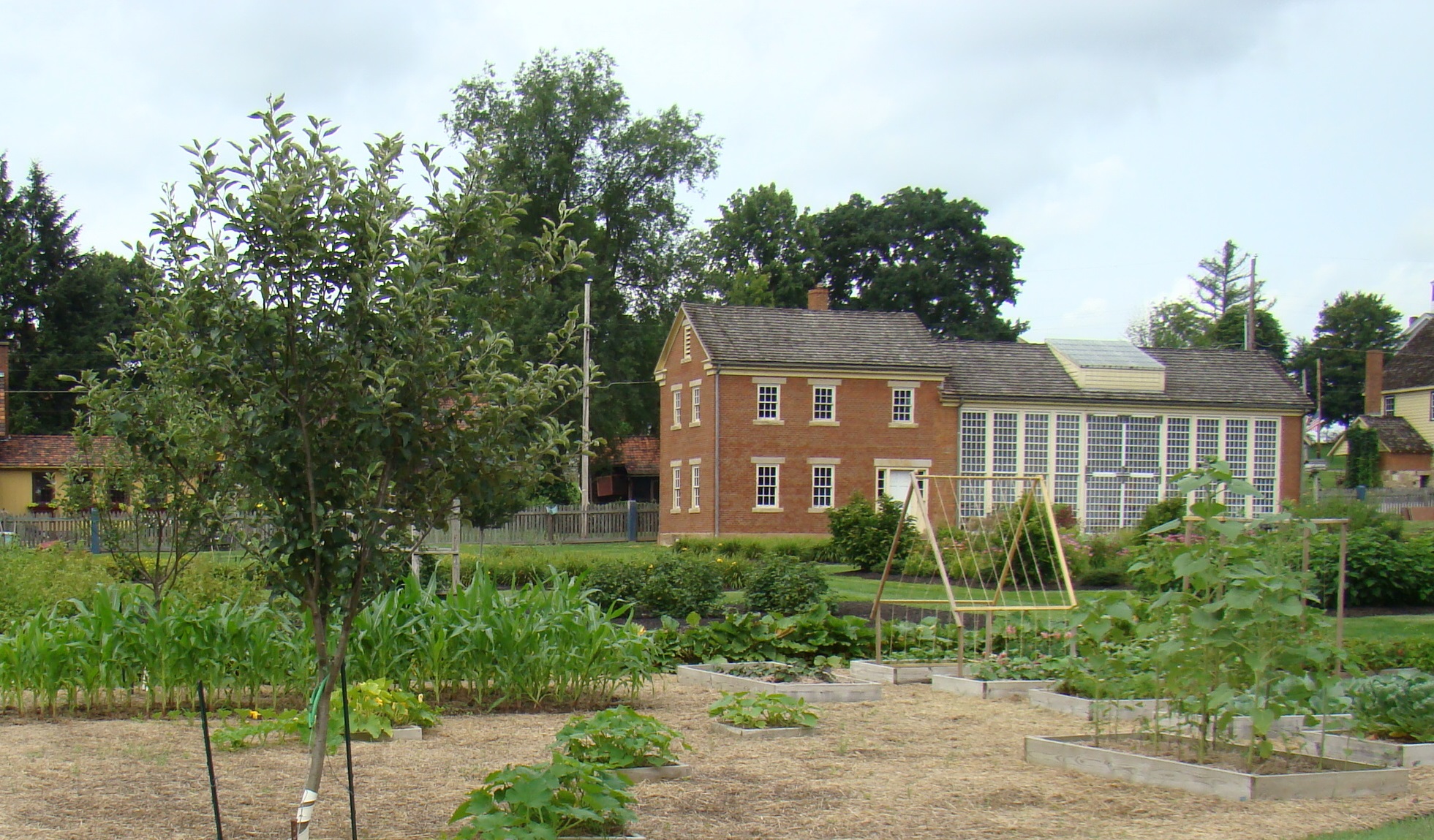
A vegetable garden would naturally have been part of the Zoarites Garden.

A vegetable garden would naturally have been part of the Zoarites’ Garden.

Research shows the Separatists frequently used many home remedies for ailments so grew medicinal types of herbs in their communal garden. They also grew fresh fruits and vegetables to provide strawberries and cabbages for the Zoar Hotel, where President William McKinley often dined on a Sunday afternoon.

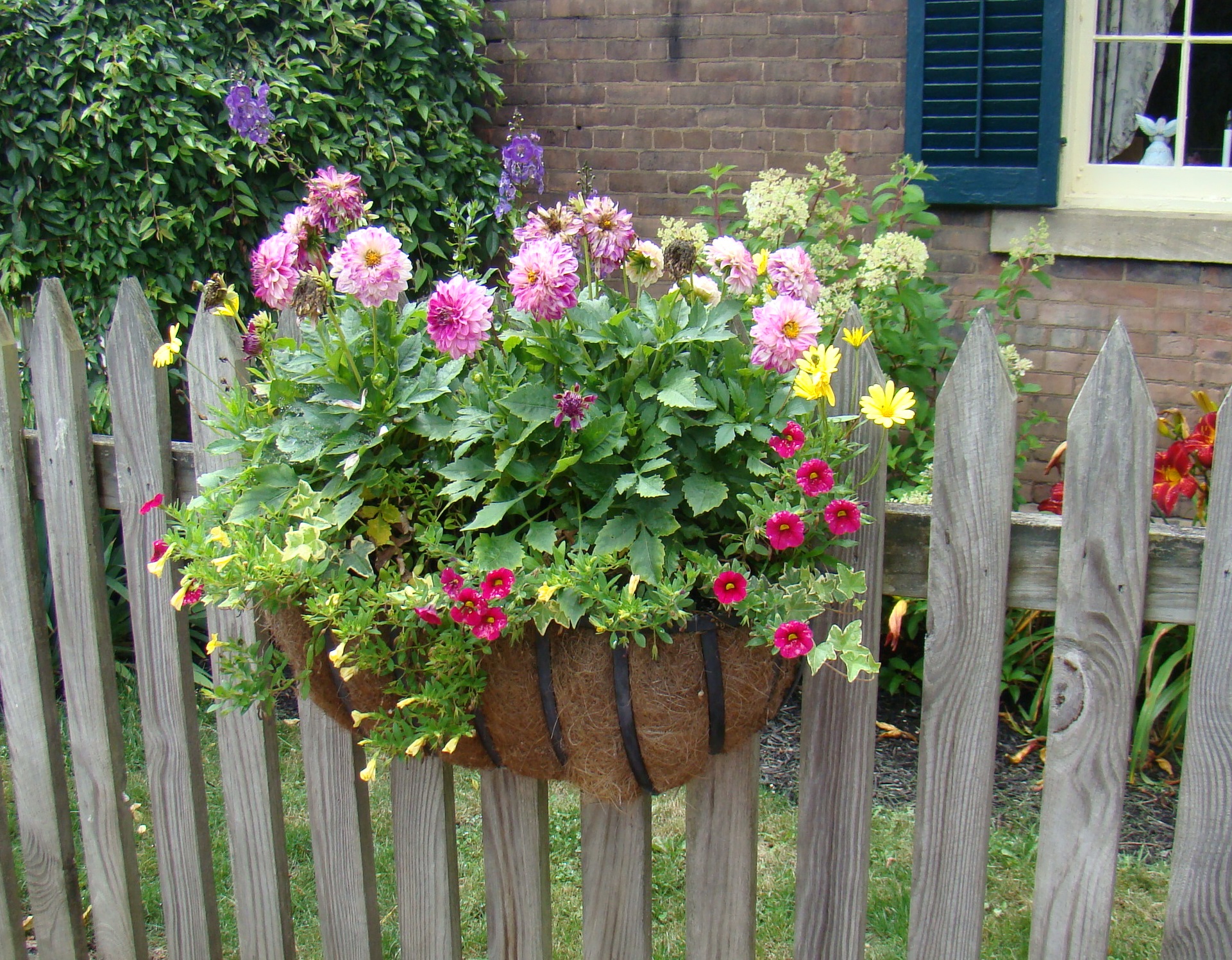
Charming flower boxes on local fences added to the beauty of the village.

Charming flower boxes on local fences add to the beauty of the village.

Along the streets of town, many residents have beautiful flower gardens of their own. Baskets of flowers grace fences, and bushes bloom with beauty. There is much to see and do throughout the village with costumed guides telling about life there long ago.

While in the area take a stroll through Zoar Wetlands Arboretum or find the Trailhead nearby for the one-hundred mile long Towpath Trail of the old Ohio and Erie Canal.

Plan a visit to delightful Zoar Village on the banks of the Tuscarawas River where a guide remarked, “You could live your whole life here and never need cash. They believed cash was corrupting. It turns out they were right.”

Zoar Village can be reached just three miles off I-77 at Exit 93 between Dover and Canton, Ohio.