Places to go and things to see by Gypsy Bev

Archive for the ‘Uncategorized’ Category

Auman Museum of Radio and TV – Sights and Sounds of Years Gone By
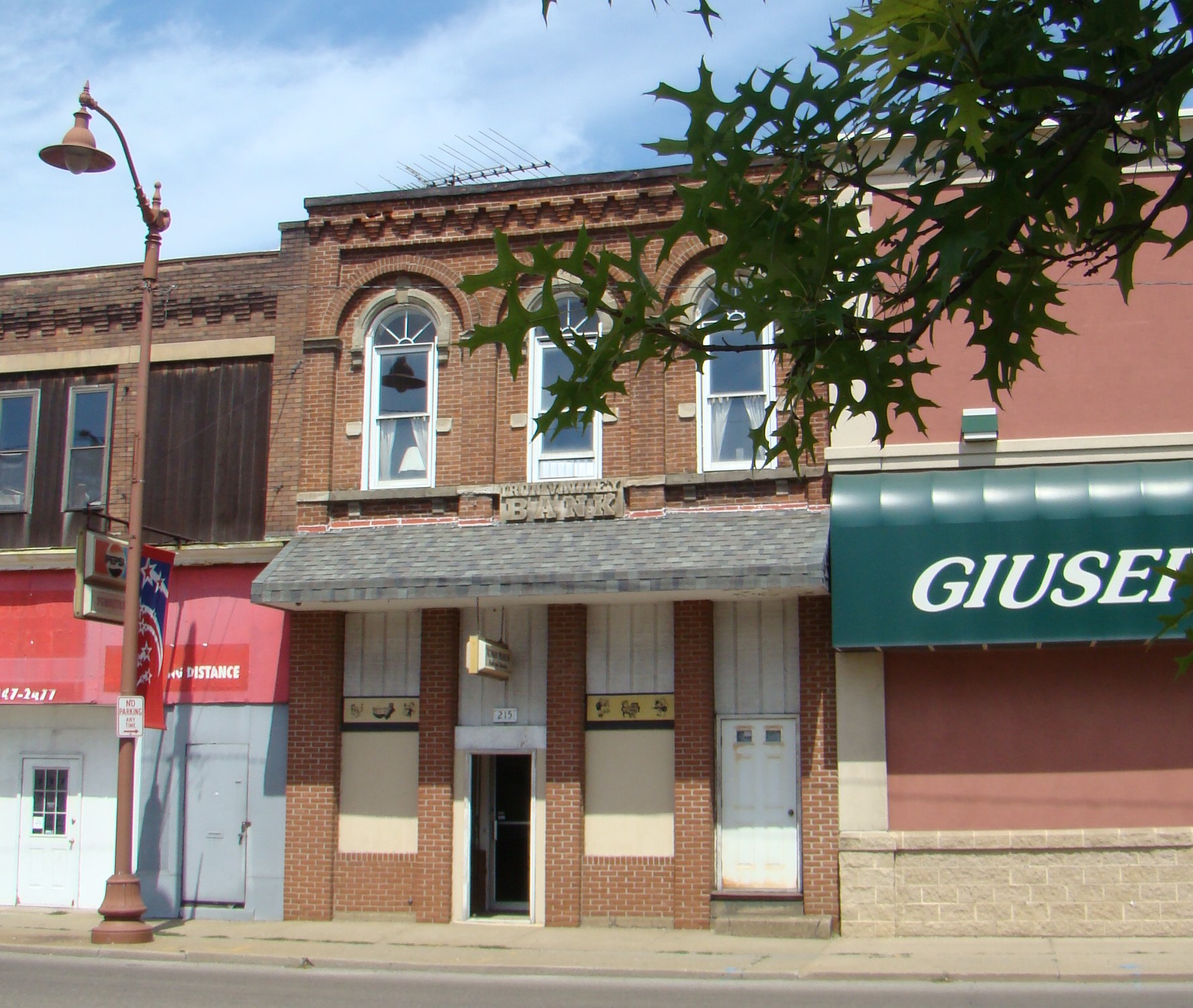
   

Auman's Museum of Radio & TV still has an antenna on its roof.

Auman Museum of Radio & TV still has a working antenna on its roof.

Television won’t be able to hold on to any market after six weeks. People will soon get tired of staring at a plywood box every night.      

~Darryl Zamuck, head of 20th Century Fox, 1946

Who had the first TV in your neighborhood? Step inside a door marked Auman Museum of Radio & TV  in Dover, Ohio to discover television sets from days of old, and you just might see a TV like that one in your neighbor’s house long ago.

Larry Auman, owner, has accomplished what he set out to do after 50 years of collecting. His interest began way back in 1948 when he first saw a working TV in the window of Western Auto, while walking down the street with his mom and dad on a Saturday night.

He takes great pride in his display and the joy it brings to visitors. “My museum gives people a chance to experience sights and sounds of years gone by.”

Owner, Larry, points out the first TV his family had back in 1951.

Owner, Larry, points out a 10″ GE television, the first set his family had back in 1951.

After graduating from DeVry, Larry opened Auman’s TV & Electronic Service at his home near Dover. At some point, television sets brought in for repair began to accumulate,and soon he had a room full of sets that showed a history of their development.

In 2001, Larry moved his radio and television collection from a room above his garage to the former Iron Valley Bank building in downtown Dover. What was formerly filled with cash, now has priceless memorabilia on display from 1900-1950. The museum contains nearly 150 early TV sets from 60 different companies – none of which are in existence today, Zenith being the last to go.
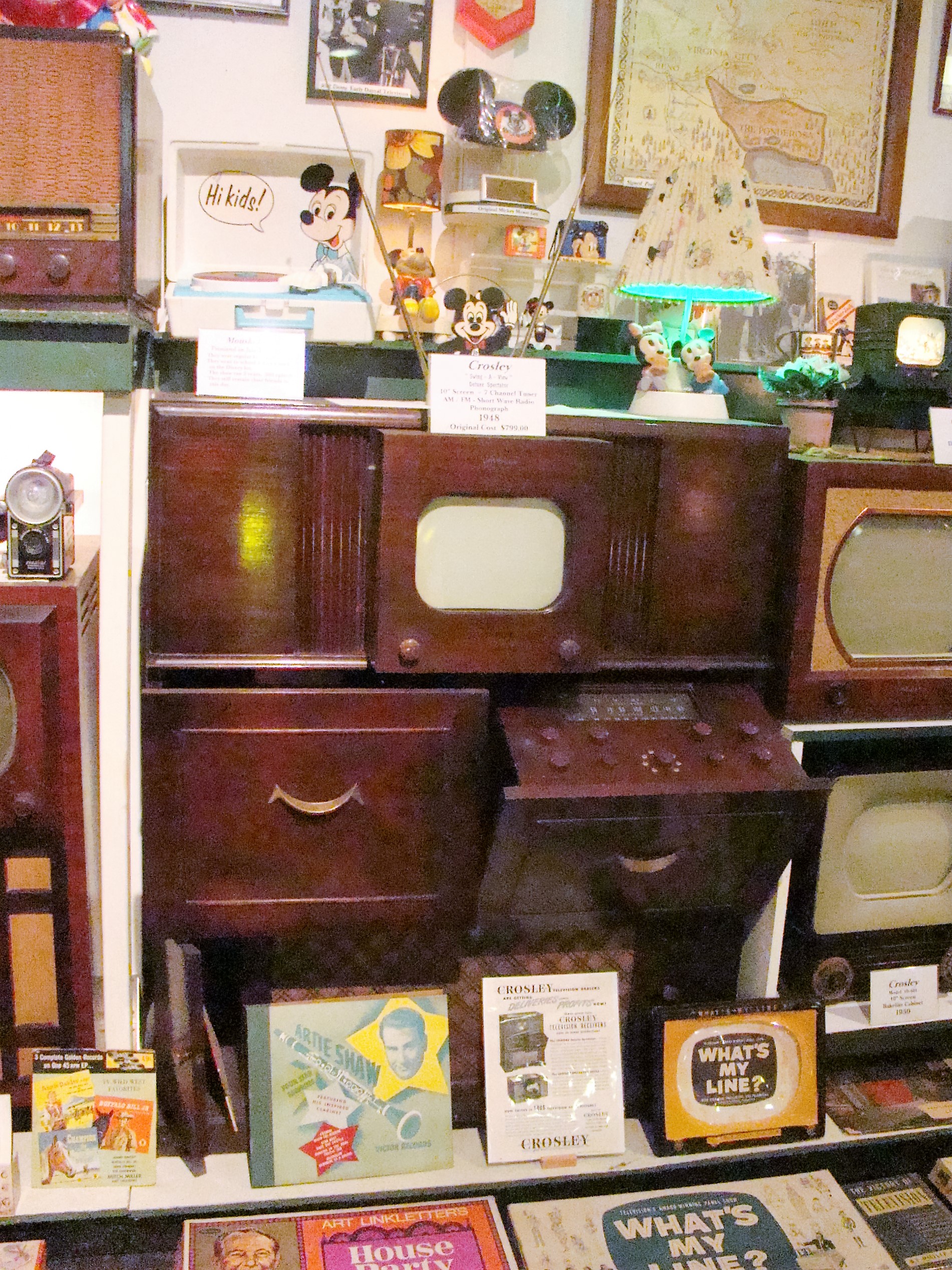
This early home entertainment center from 1948 contained a TV, record player, and radio.

This home entertainment center from 1948 contained a TV, record player, and radio.

Viewing the old radios, memories might pop into your mind of listening to “Fibber McGee and Molly”, “Amos and Andy”, or “The Life of Riley”. Since Larry attempts to keep all the sets in working order, you might enjoy watching an early television rendition of those old favorites. Some people spend most of their visit going back in time as they watch old shows and commercials.

During those early days of television, viewing time was very limited. There were no programs at all on Thursday or Sunday, and the rest of the week, hours were from 4:00 pm – 8:00 pm. How times have changed!
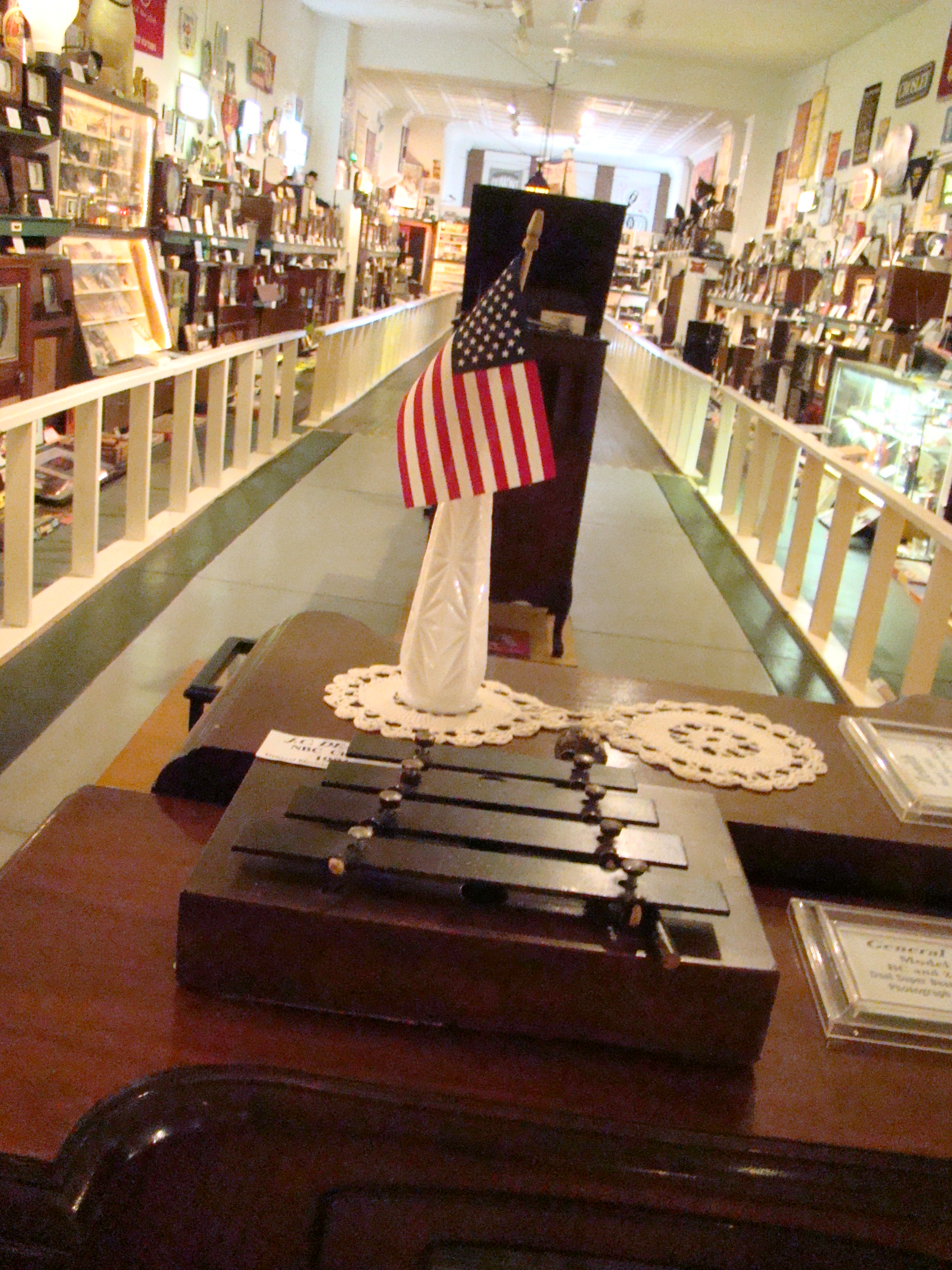
This played the NBC sign-on tones. The fourth bar was only used during WWII.

This played the NBC sign-on tones. The fourth bar was only used during WWII.

Over the last 50 years, Larry collected hundreds of varied items that relate to early days of television and the shows it brought to life. Game boards, toys, posters, comic books and much, much more can be found in his one-room showplace.

Auman Museum has received great publicity since the 70s when Larry appeared on TV as a segment of PM Magazine out of Cleveland. Numerous magazine and newspaper articles have been written about his collection, and he has been filmed numerous times for television specials. Often the sets he has collected appear in special programs also.
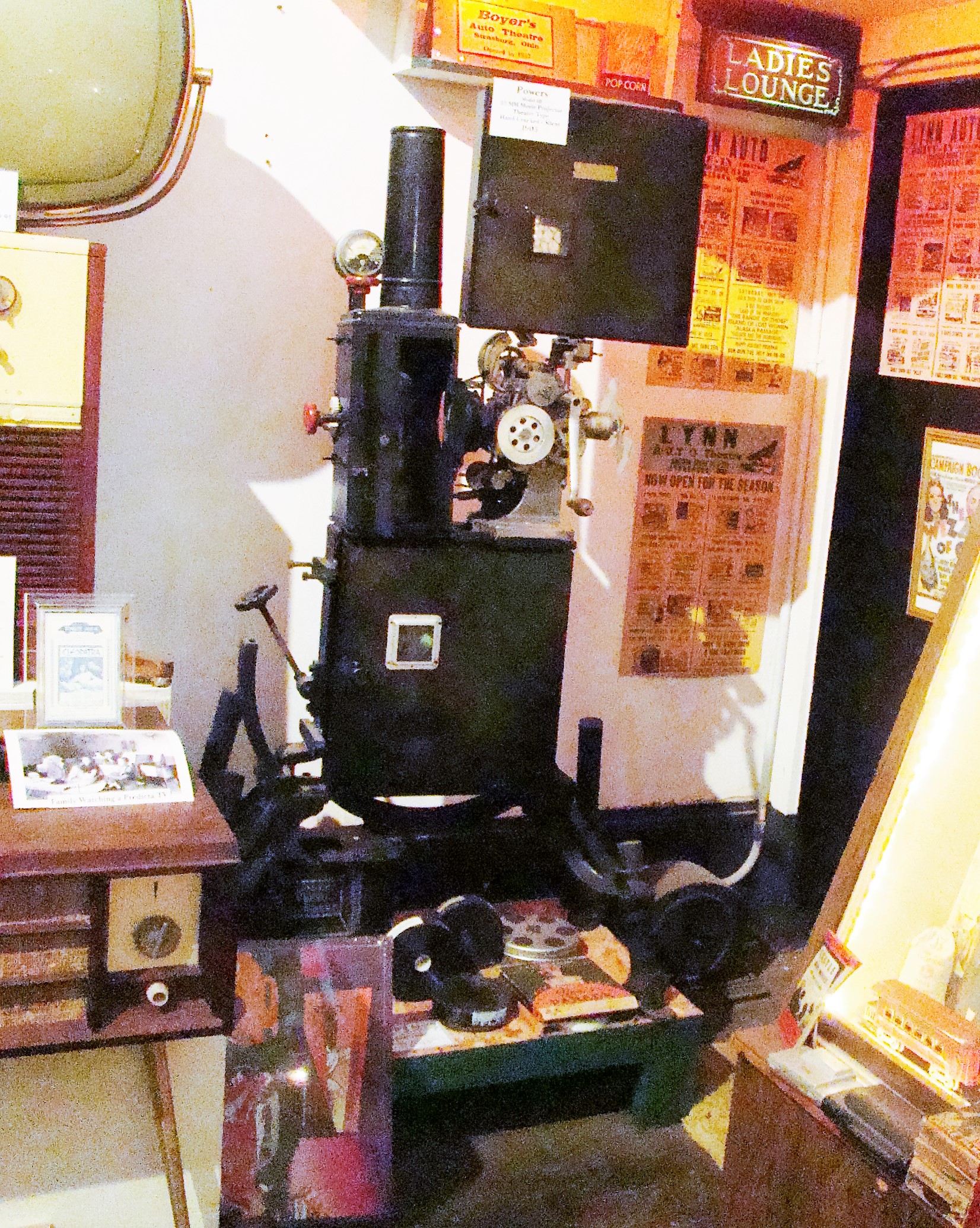
This handcranked silent movie projector contained a surprise when purchased - a film of Bing Crosby's

This hand-cranked silent movie projector contained a surprise when purchased – a film of Bing Crosby’s “Going My Way”.

If you listened to the radio or watched TV growing up, you will really enjoy this museum. Actually, almost everyone, even youngsters, find it fascinating. Larry tells many captivating stories about the equipment he has found and the unusual ways things have come into his possession.
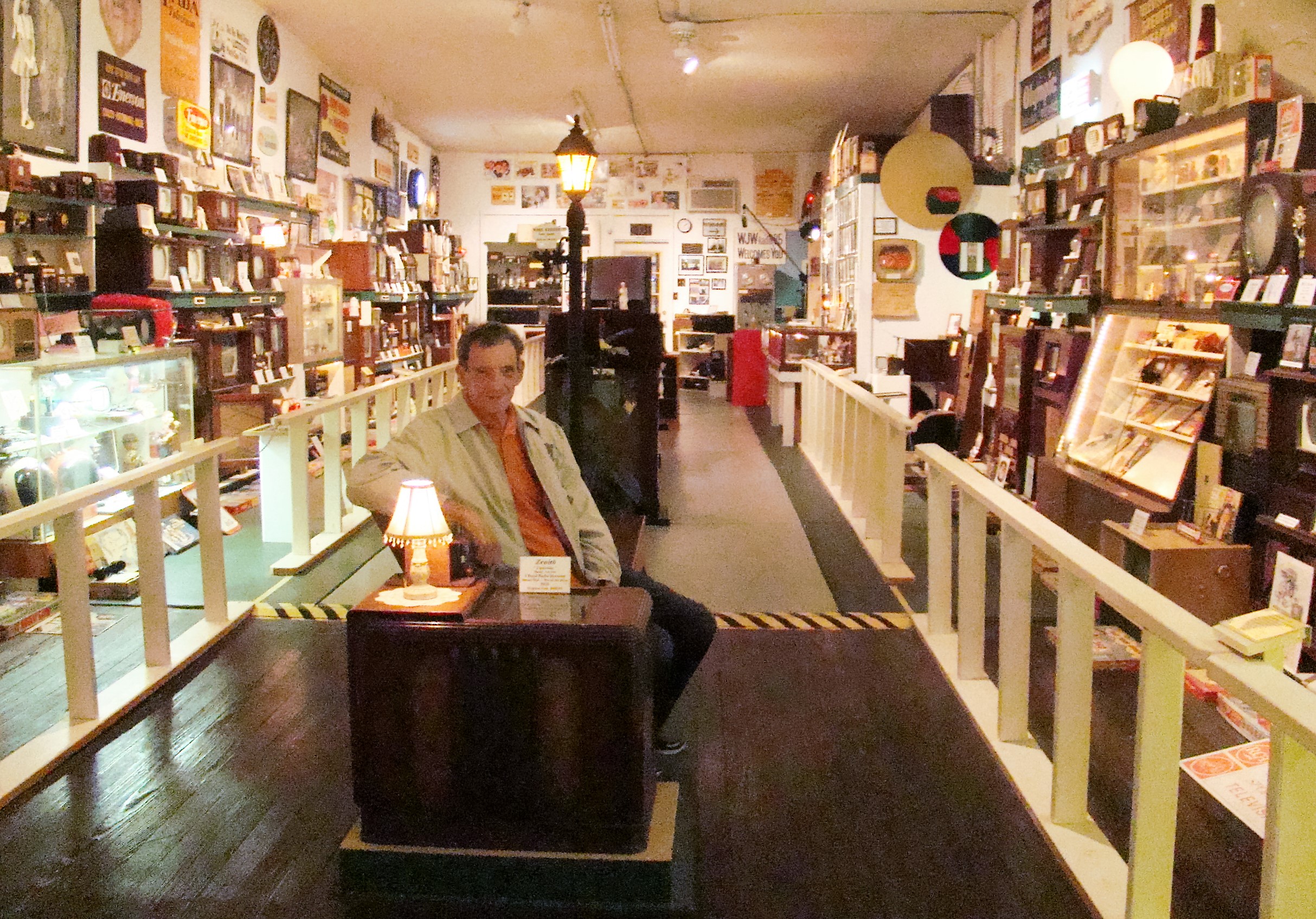
Larry shows how easily this premier radio operated from either side.

With a view of a portion of the museum in the background, Larry sits next to a Zenith Chairside Radio.

Hours for the museum are extremely flexible but only opened by request. Call Larry at (330) 364-1058 and he can usually accommodate a visit with a little notice.Television has come a long, long way, but people have never tired of staring at the TV screen.

Auman Museum is located at 215 North Tuscarawas Avenue in Dover, Ohio along Route 211. Off I-77 take exit 81 and turn on Ohio 39 E. Go straight onto W. 3rd Street about .6 mile, then turn right onto Tuscarawas Ave.
Henry David Thoreau’s Thoughts Still Meaningful Today

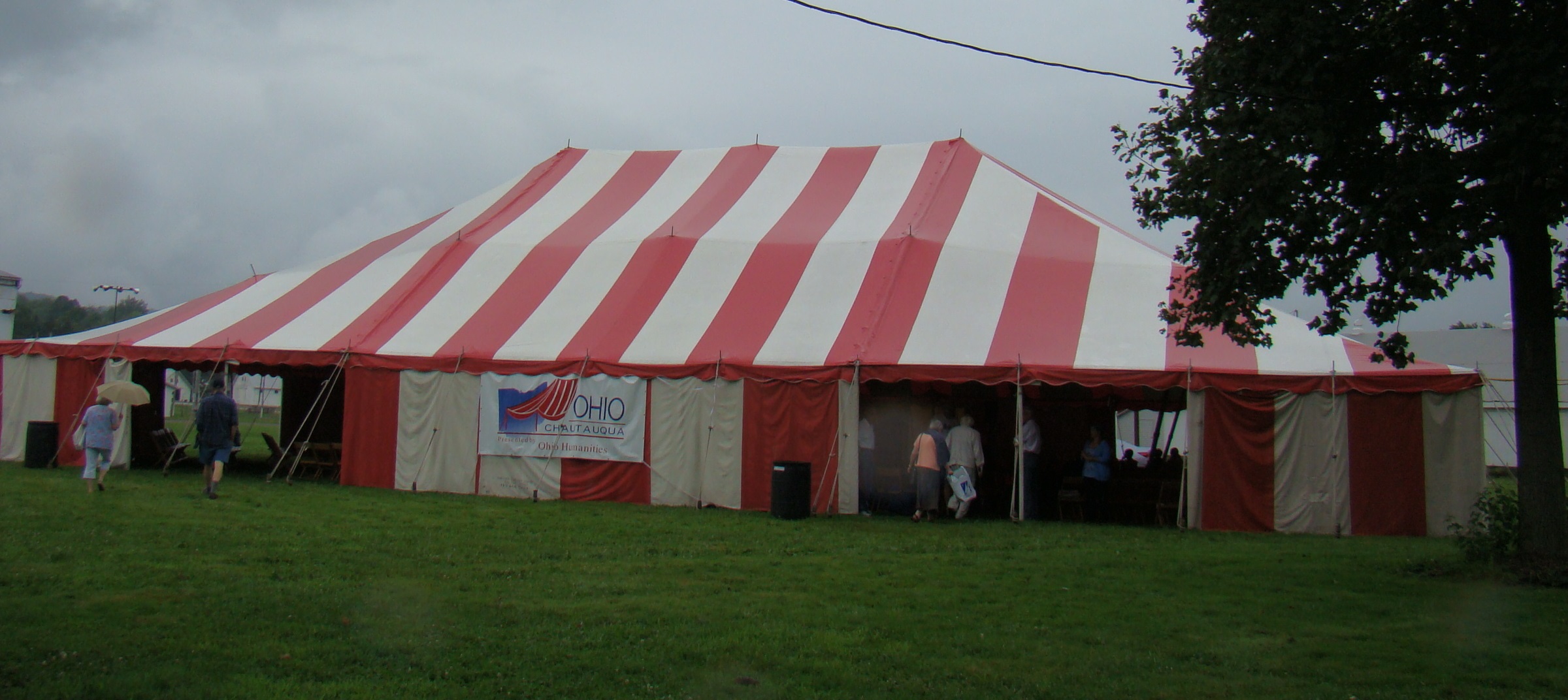
Chautauqua in Coshocton on a rainy evening

Chautauqua in Coshocton on a rainy evening

An early morning walk is a blessing for the whole day.

Ohio Chautauqua always brings informative and interesting characters to the stage. A recent performance in Coshocton was no exception as Kevin Radaker, professor of English at Anderson University in Indiana, portrayed Henry David Thoreau, one of the greatest writers of American Literature. Even though Thoreau wrote from 1817-1862, his thoughts still influence and inspire countless people today. The audience sat mesmerized during his lecture…you could have heard a text message beep.

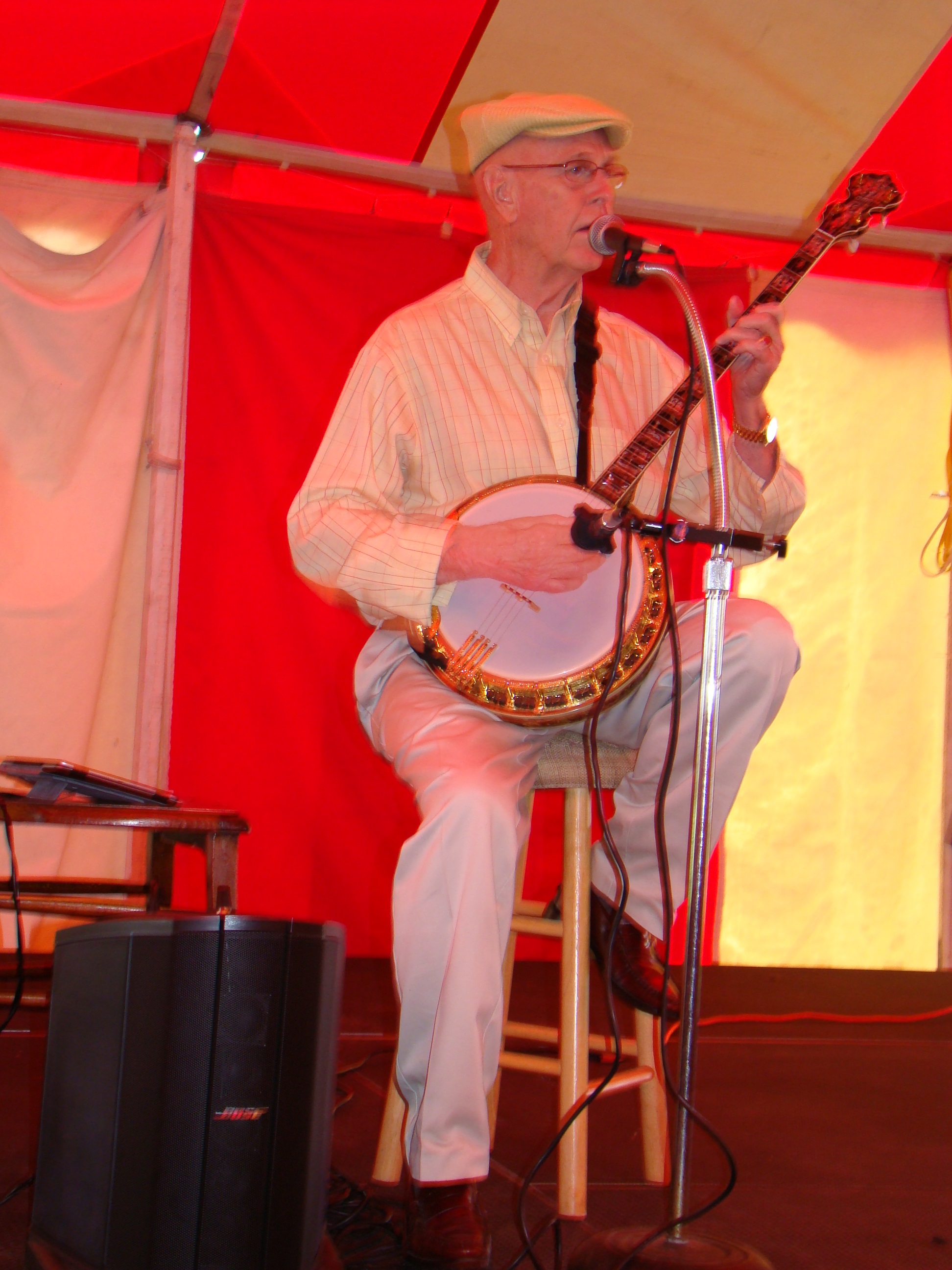
Banjo player entertained before the main speaker.

Banjo player, Jerry Weaver, entertained before the main speaker.

Thoreau was born and raised in Concord, Massachusetts and chose to reside there his entire life. Two sisters and a brother rounded out the Thoreau family where his father ran a pencil factory, and his mother had strong views as an abolitionist. He worked for a while in his father’s pencil factory and as a carpenter, but said he was just so-so at carpentry. However, he did become a devout abolitionist for the rest of his life, following in the footsteps of his mother. He considered himself a writer by profession, a mystic and philosopher.

After graduating from Harvard, Thoreau became friends with Ralph Waldo Emerson, who encouraged him in his writing and introduced him to Transcendentalism, which emphasized the spiritual matters over the physical world. Thoreau felt that every seventh day should be a day of work, while the rest of the week be treated as the Sabbath.

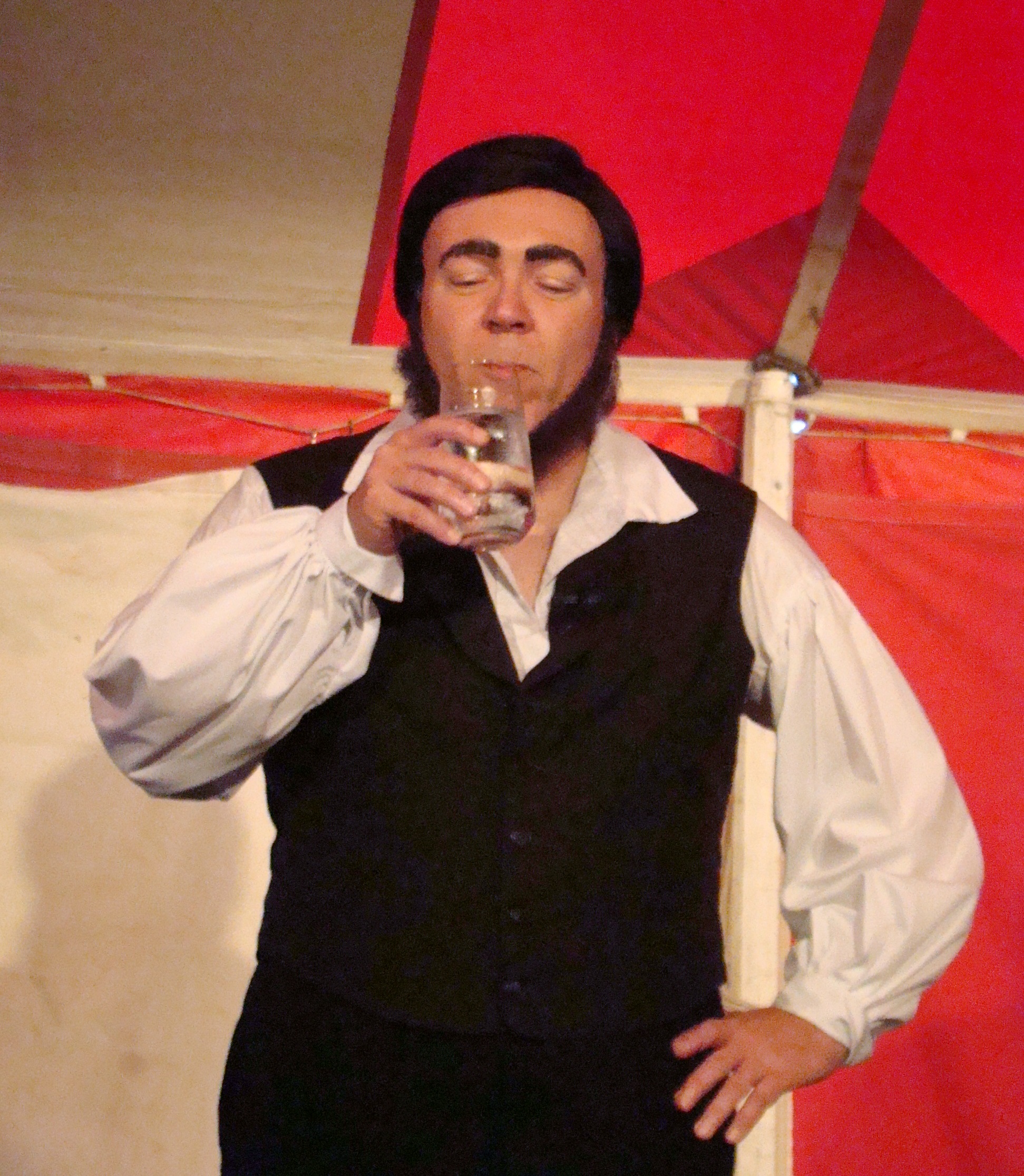
Thoreau holds his favorite drink - water.

Thoreau holds his favorite drink – “Water is the only drink of a wise man.”

His best know masterpiece, Walden, was written while Thoreau lived for two years in a small cabin at the edge of Walden Pond, not far from Concord, on property owned by Emerson. His daily walks in the woods are best described in his own words: “There is nothing so sanative and so poetic as a walk in the woods and fields.” He compared the value given him by his walks to what others get by going to church. Walden Pond was his greatest adventure.

Even though Thoreau spent most of his live in Concord, he did venture to other places. Cape Cod and Maine helped him picture in words the wrath of the sea, yet capture the vigor and health of Nature. He felt national preserves should be created, not for recreation but re-creation of the wilderness, his main fascination.

He was a great fan of travel, but a slightly different kind than what we might presume. His mystical travel required an inward journey, which is accomplished by using our imagination and intuition. Through these inward journeys, Thoreau came to realize what the ancient Orientals meant by contemplation and forsaking work. Sometimes he loved to sit on his porch for the entire day, while his neighbors scoffed at his poor work ethic.

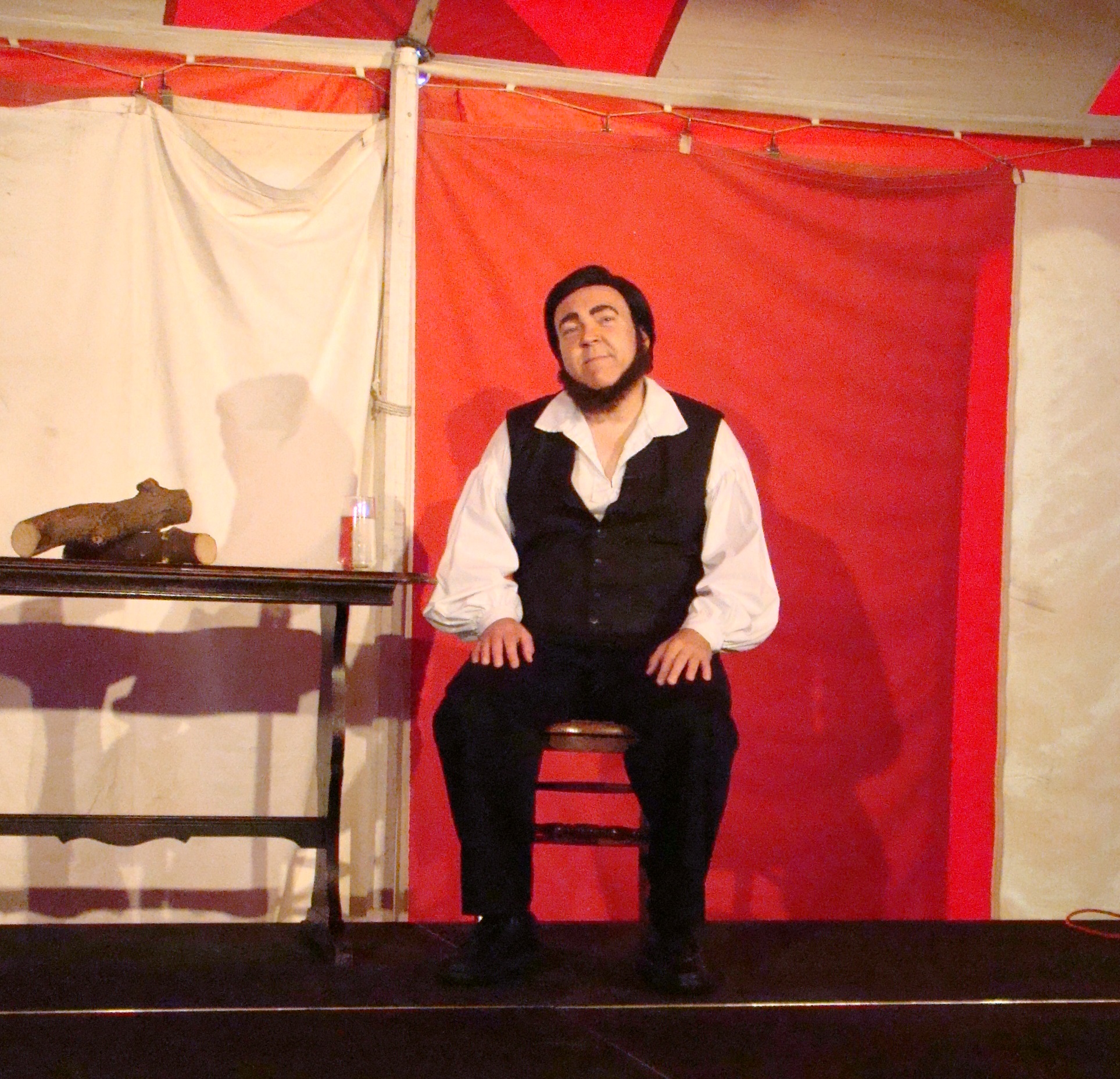
Thoreau relaxes on stage.

Thoreau relaxes on stage.

Perhaps he liked to read some of his favorite books as he sat on the porch for a day. Those would include: The Bible, Hindu’s Mahabharata, and Chinese teachings in Four Books of Confucius. He felt that all these similar teachings should be written side by side for better comparison.

Thoreau encourages his readers to take an inward journey, pointing out that it may very well be more difficult than being on a ship with hundreds of other people crossing the ocean.

What he wrote a hundred and fifty years ago is still relevant today.


The Cambridge Glass Museum Sparkles with Memories

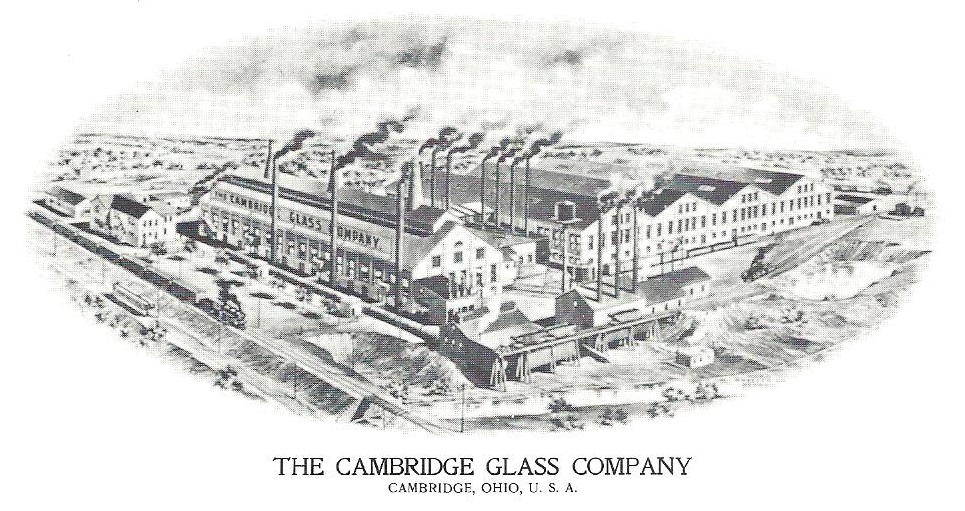
Picture of the original Cambridge Glass Company in 1909

Picture of the original Cambridge Glass Company in 1909

Stepping inside the National Museum of Cambridge Glass in Cambridge, Ohio makes former employees and their families feel a great sense of pride in the fine work displayed within its walls. Visitor after visitor marvels at the fine workmanship that has stood the test of time. Over 6,000 pieces of the finest glass in the world are on display.

Original finishing bench from Cambridge Glass. Dad could have sat here.

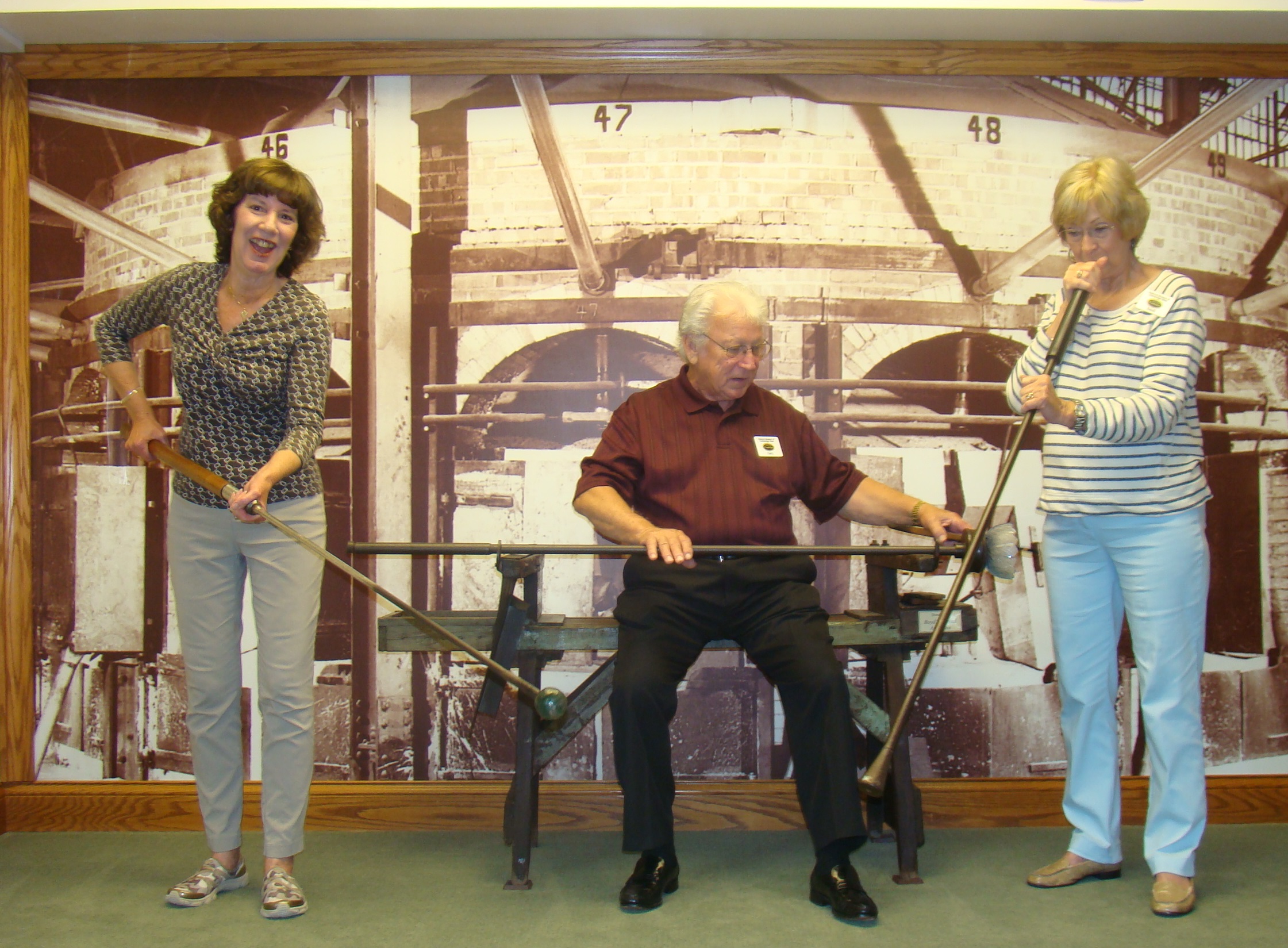
Volunteers Cindy, Gary, and Sandi demonstrate making glass around an original finishing bench from Cambridge Glass. Dad might have sat on that bench.

My thoughts always turn to Dad and Mom when I enter its doors. Working at Cambridge Glass Co. for over thirty years, my dad, Rudy Wencek, learned to do many different jobs: carrying-in boy, presser, finisher, and blower. Mom, known as Kate to her friends, only worked there a few years in the packing department.

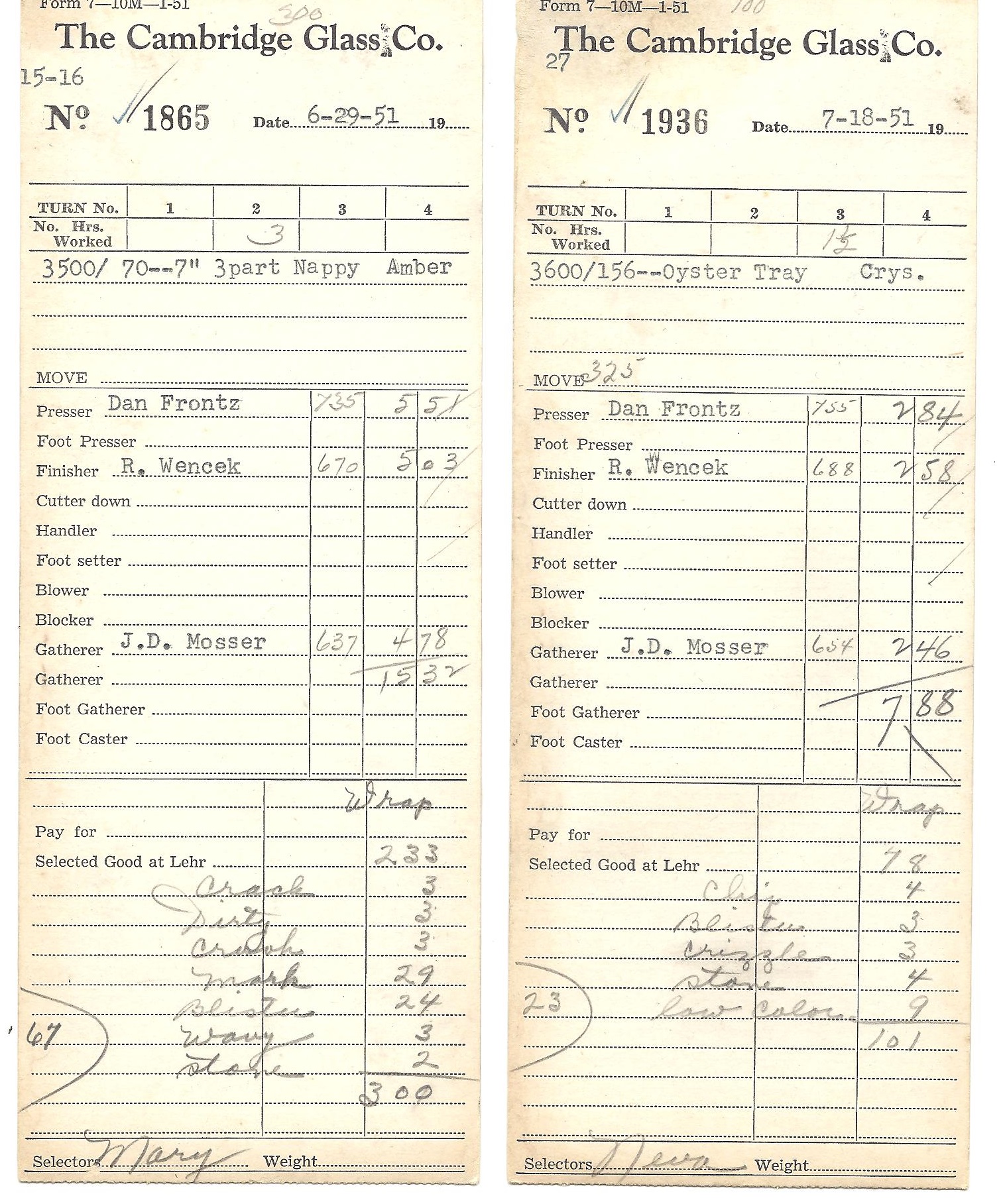
Two of Dad's turncards show he was finisher, the item being made, and amount paid.

Two of Dad’s turncards show he was finisher, the item being made, and amount paid.

All of the employees remember it being a great place to work. Since times were tough during many of those years, the company provided a factory restaurant, where employees could get an economical meal and have it deducted from their pay.  They also were able to get coal to heat their homes at a reduced rate from Cambridge Glass’s Near Cut Coal Mine. Insurance was even provided for their employees.

Our long driveway was covered, not with gravel, but with ashes from the furnaces of Cambridge Glass. Many recall employees’ sidewalks and driveways having a coating of Cambridge Glass ash.

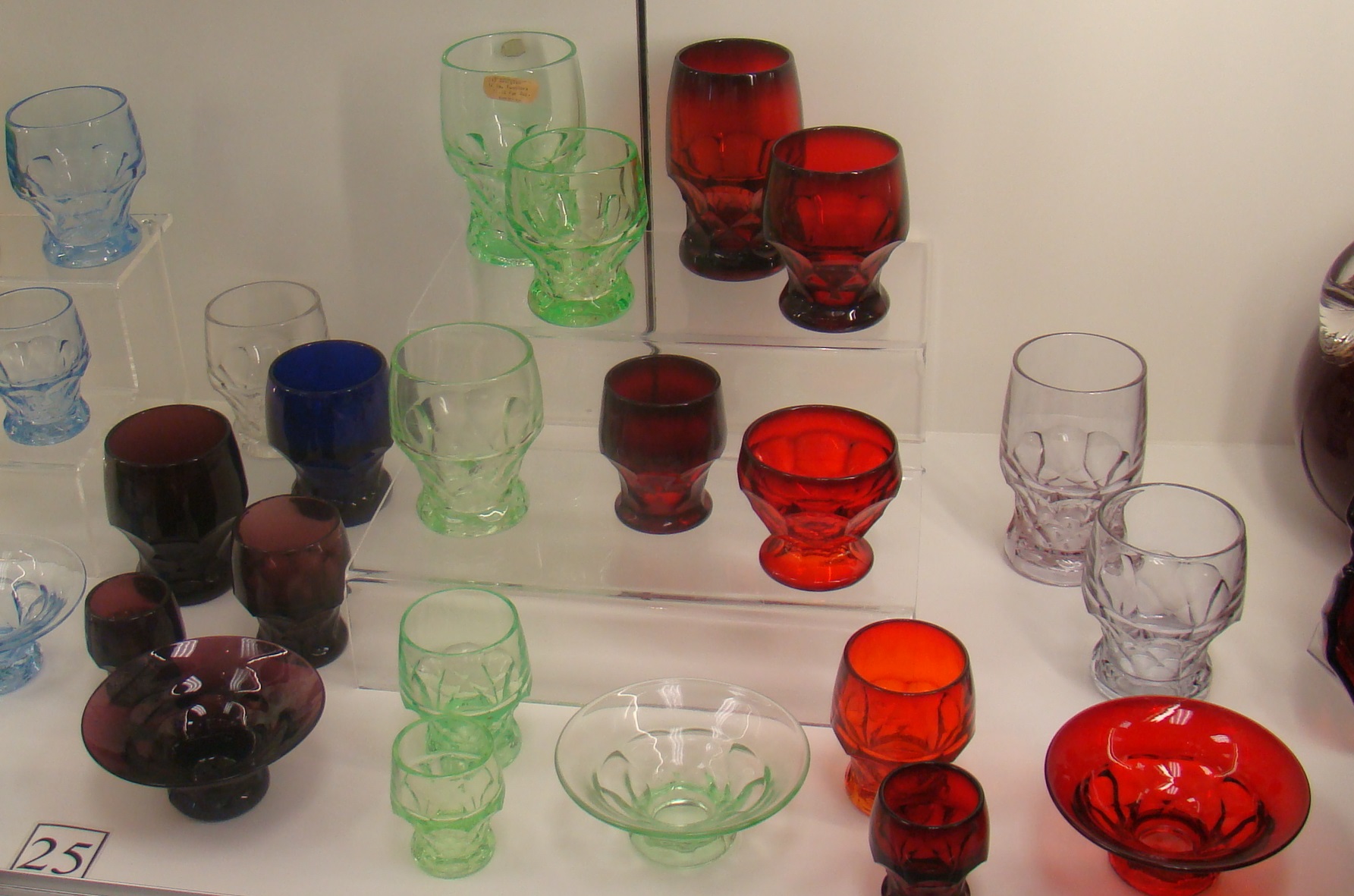
These popular Georgian tumblers were used daily at my parents'home.

These popular Georgian tumblers were used daily at my parents’ home.

When the plant closed in 1958, glass enthusiasts wanted to preserve its history, so in 1983 they opened the first National Museum of Cambridge Glass. Today their museum is on 9th Street just off Wheeling Avenue in downtown Cambridge.

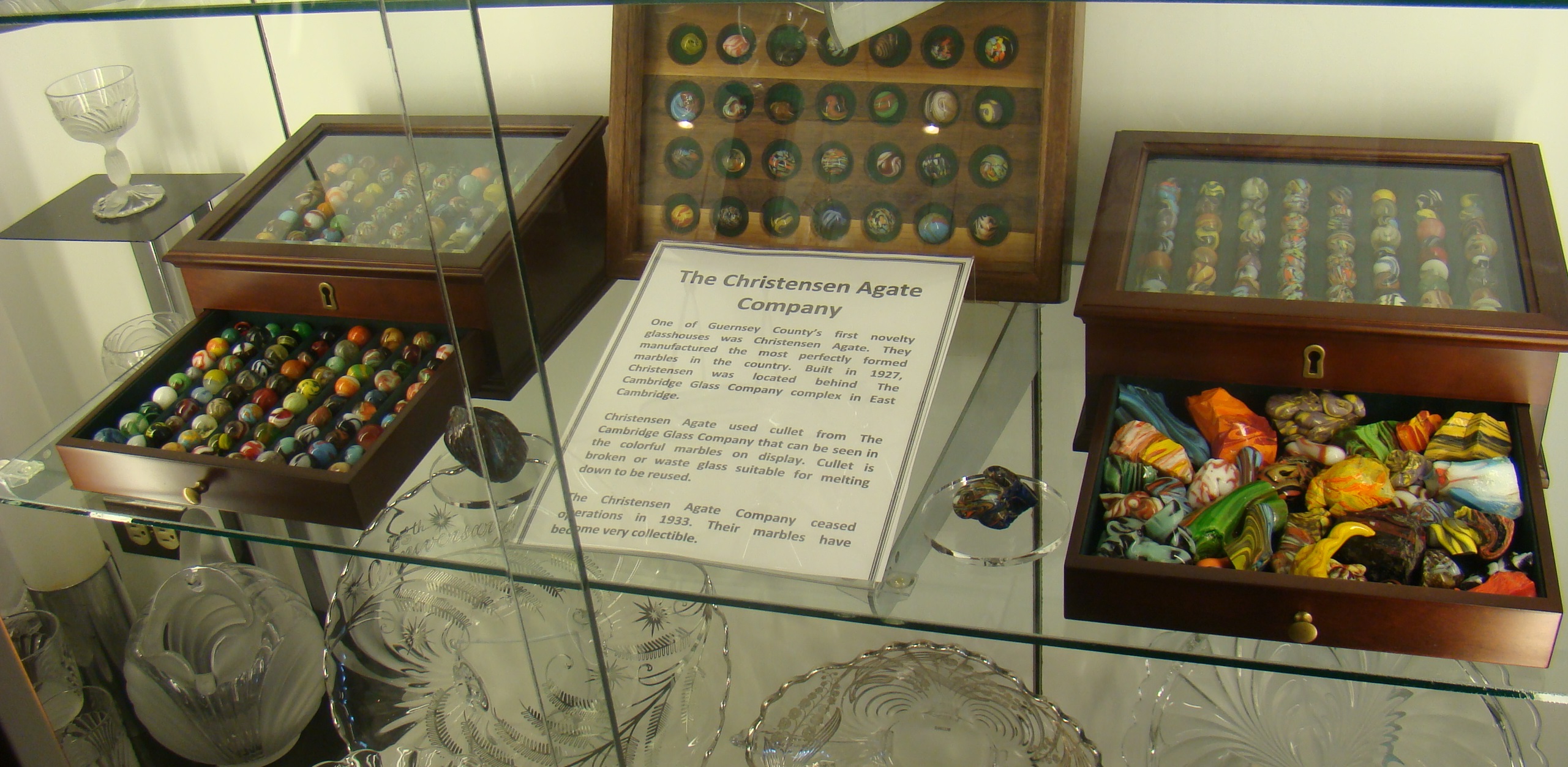
These marbles from Christensen Agate Co. were made from Cambridge cullet glass.

These marbles from Christensen Agate Co. were made from Cambridge cullet.

This past year they have created two new displays that are fascinating. One involves marbles. The Christensen Agate Co. made “the world’s most perfectly formed marbles.” They were located right behind the Cambridge Glass Company. To make the beautiful colors in their marbles, they used Cambridge Glass Company’s broken or waste glass called cullet, which they remelted to form the marbles..

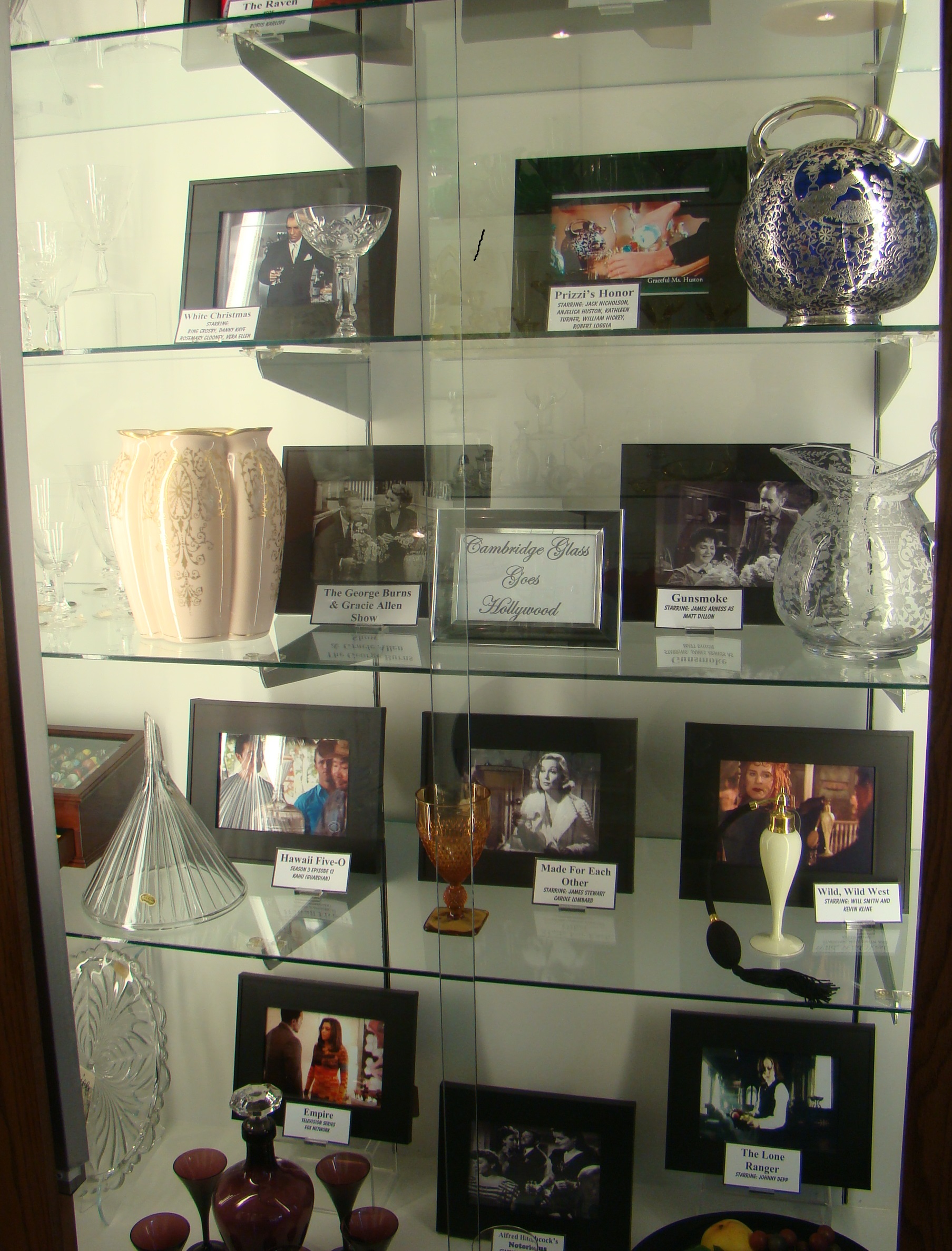
This display shows some of the Cambridge Glass used in movies or television shows.

This display shows some of the Cambridge Glass used in movies or television shows.

A larger display is called Hollywood Glass. Here you can spot Cambridge Glass pieces that have actually been used in movies and television shows. It’s quite impressive to realize that the things made in this small town are considered fine enough quality to be used in such manner as: a wine glass in White Christmas, an etched pitcher in Gunsmoke, a funnel on Hawaii Five-O, plus many more.

School and bus groups frequently tour the museum. Beginning with a short video actually filmed at the Cambridge Glass Company in the 1940s, visitors are then given a quiz regarding the video. Those with the correct answers are dressed in working gear as the process is reviewed.

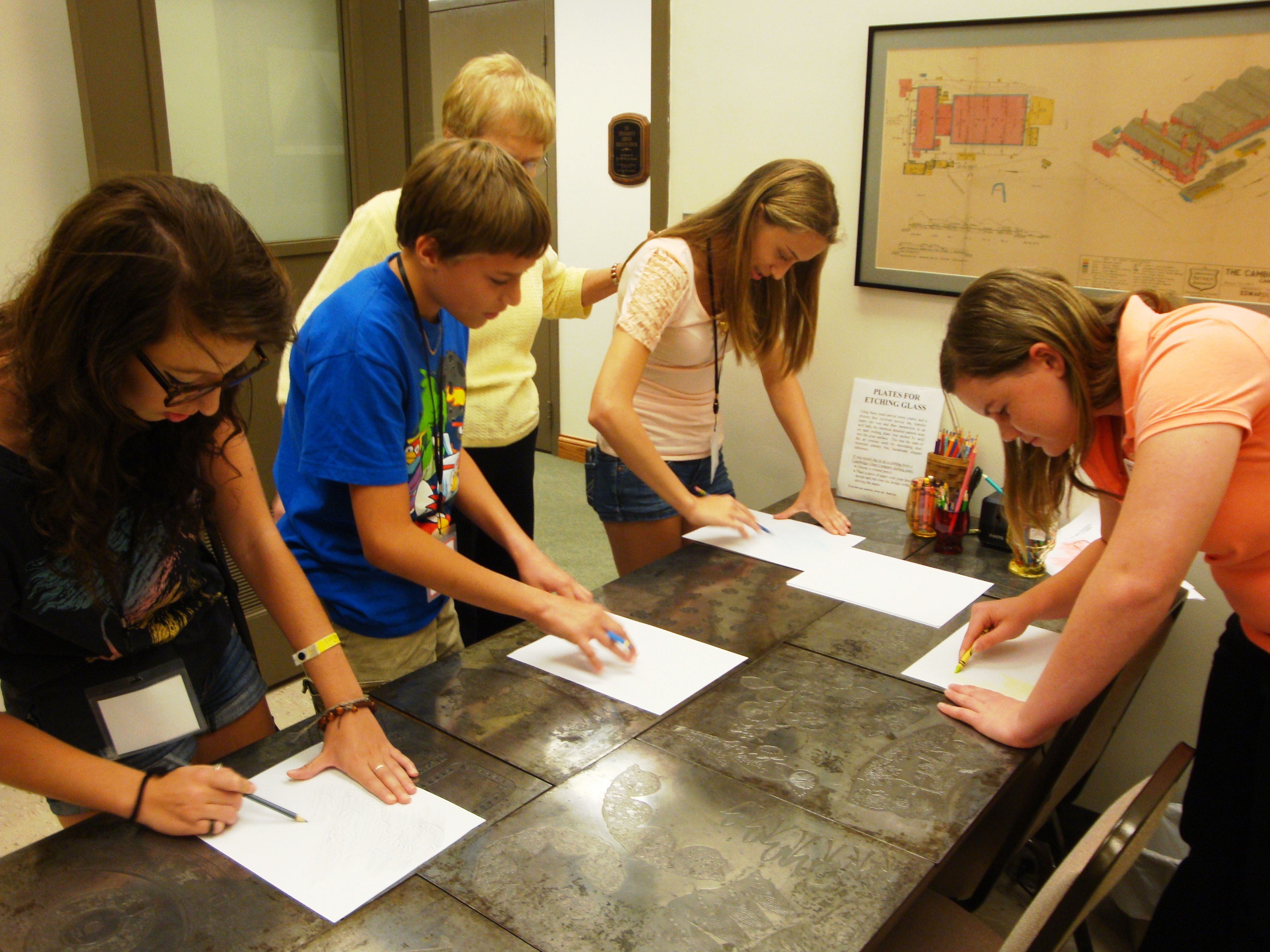
Students enjoy using the etching plates.

Students enjoy using the etching plates.

Another aspect that greatly interests adults and students happens in the etching department. Here they are given actual Cambridge Glass etching plates, for such patterns as Rose Point, Dragon, or Chantilly, and can see the patterns emerge on a paper trail rather than glass. Of course, beautiful, etched glass creations are visible throughout the museum.

Hopefully, someday you will take the time to see these pieces of glass artwork made by friends and family right here in Guernsey County. Dad and his co-workers should feel great pride in the beautiful gems they have created. Part of them lives on in their handiwork.

The National Museum of Cambridge Glass is located in Cambridge, Ohio at 136 S 9th Street, just a half block off its main street, Wheeling Avenue – also called old Route 40. Admission is a reasonable $6 for adults, $5 for seniors, and children under 12 are admitted free.

The Personality of a Hat


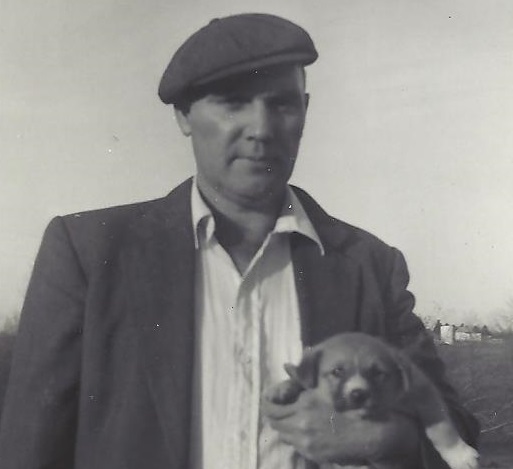
Dad usually wore this hat.

Dad usually wore this working hat.

When you put on a hat, you take on its character. Children put on a cowboy hat and pretend they are riding the range, or a helmet and pretend to be headed for space. A woman puts on a Victorian hat and feels more a lady.

   My Dad always wore a hat. Before leaving the house, he’d pick up a hat and with a snap of his fingers, place it on his head. Each time a different hat appeared on his head, Dad’s personality seemed to change.

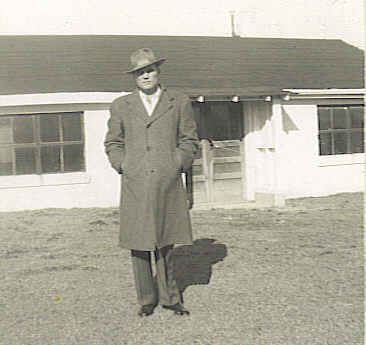
Dad dons his felt hat.

Dad dons his felt hat when he gets dressed up.

   Most days he would grab an old “hunky cap” when heading for work at Cambridge Glass Company or on the farm. “Hunky” was a term used disparagingly in the early 1900s to describe the men from Hungary and Czechoslovakia who did manual labor. This flat hat with a snap on the bill was worn most often. When wearing this hat, his demeanor usually became more serious.

   Going to town on Saturday or to church on Sunday, a different hat would appear. Wearing a white shirt and dress slacks, Dad always donned a gray felt hat that dipped slightly over his right eye. That gave him a debonair look in my eyes. I’m sure he felt like a handsome gentleman when tipping his hat to the ladies.

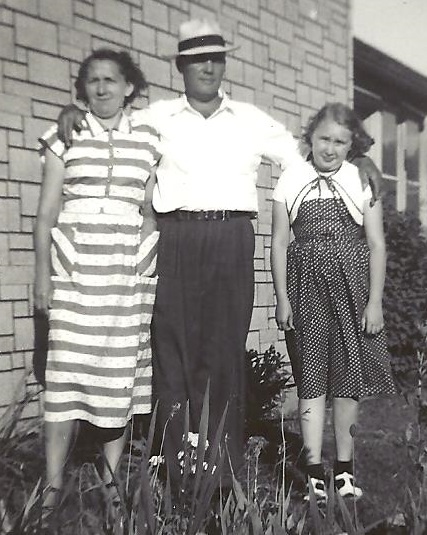
Dad wears his straw hat with his two favorite girls.

Dad wears his straw hat with his two favorite girls.

   Every time we visited, this well-mannered fellow removed his hat in the house and would place it on the couch or chair nearby. Children clamored to sit by this storyteller, but he’d warn them, with a shake of his finger and a wink of his eye, “Don’t sit on my hundred dollar hat.”

   When summer arrived, Dad dressed in yet another hat. This time it was a Panama hat to stay cooler in the hot summer sun. He always smiled when wearing that hat. Perhaps the warm summer days brought happiness, or maybe this time of year held delightful memories, but he always walked with a spring in his step when wearing that straw hat.

   No matter what hat Dad wore, his face always wore a smile.

Summer Fun Awaits at Oglebay’s Good Zoo

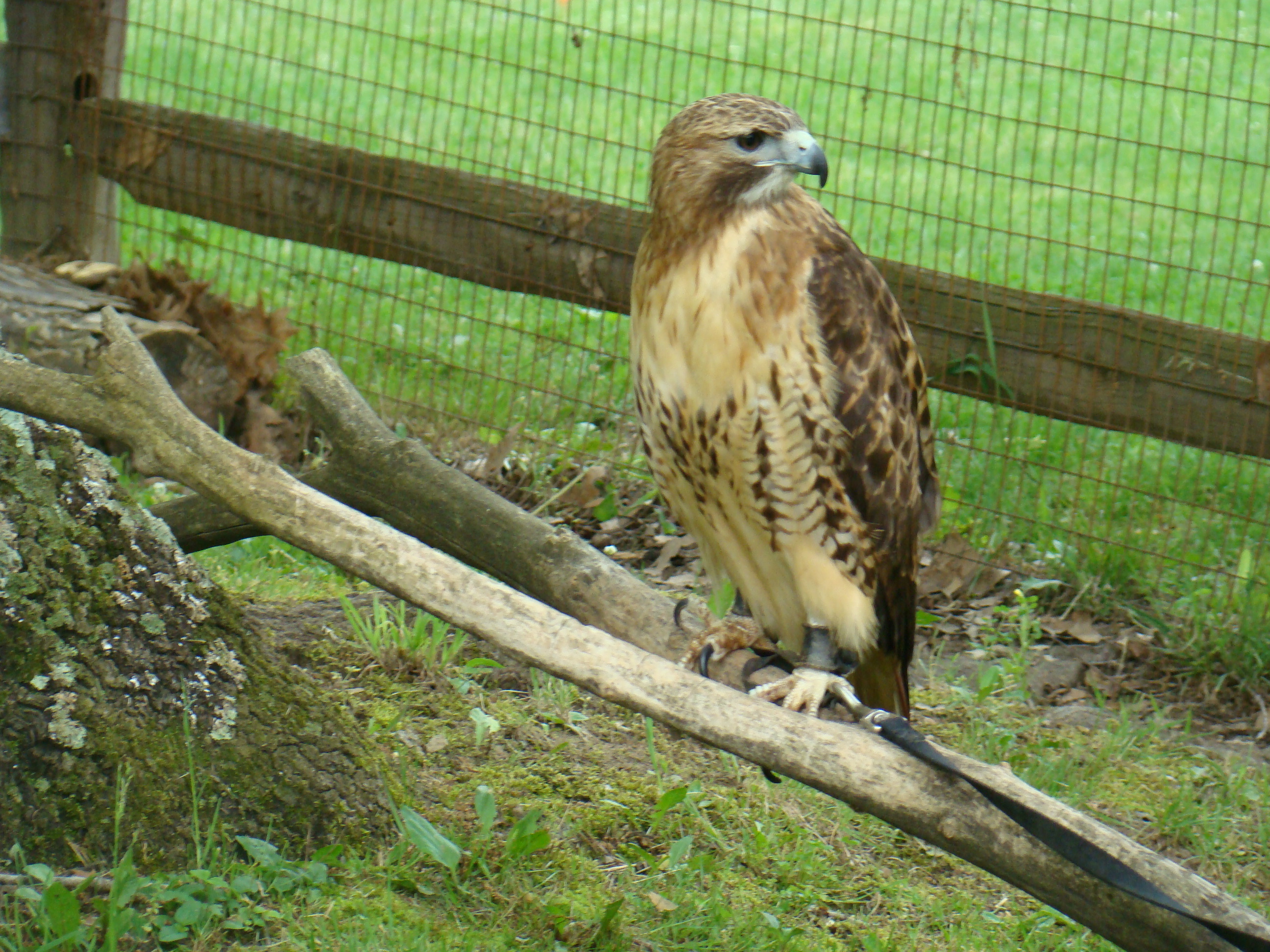
This red-railed hawk travels as a Good Zoo representative from Raptor Protection.

This red-tailed hawk travels as a Good Zoo representative from their Raptor Protection program.

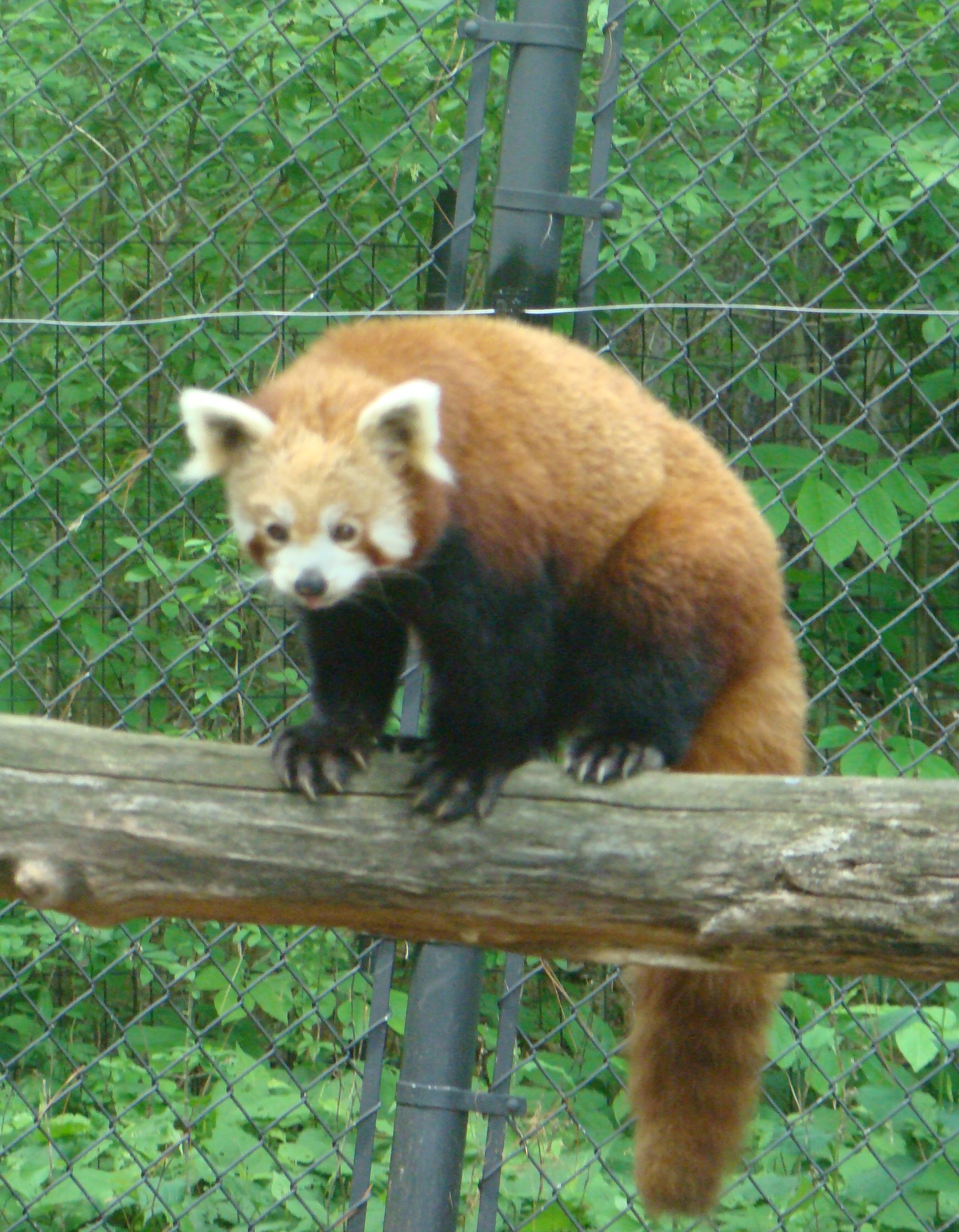
The Red Panda is a zoo favorite.

The Red Panda is a zoo favorite.

Children and animals have a special bonding so it becomes only natural that children enjoy visiting the zoo. Oglebay’s Good Zoo, a small zoo in Wheeling, West Virginia, gives children opportunity to get some up close and personal contact with many of their animals.The zoo was named in memory of Philip Mayer Good, a seven year old boy who left this world too soon.

In 1977, Philip’s parents, Barbara and Larry Good, who managed the family business of L.S. Good in Wheeling, sponsored getting the 30 acres established as a place that all children could enjoy. Thousands of contributions poured in from the community, while school children collected jars of pennies to help the cause.

Originally, the animals at the zoo came from North America, but over the years endangered species have been added to the viewing area. That expanded list now includes: the Red Panda, Grevy’s Zebra, African Wild Dogs, and Tamarin Monkeys.

Today the Good Zoo houses over five hundred animals. A walk down the shaded sidewalk fills a child’s heart and step with wonder. What animal will they see around the next bend?

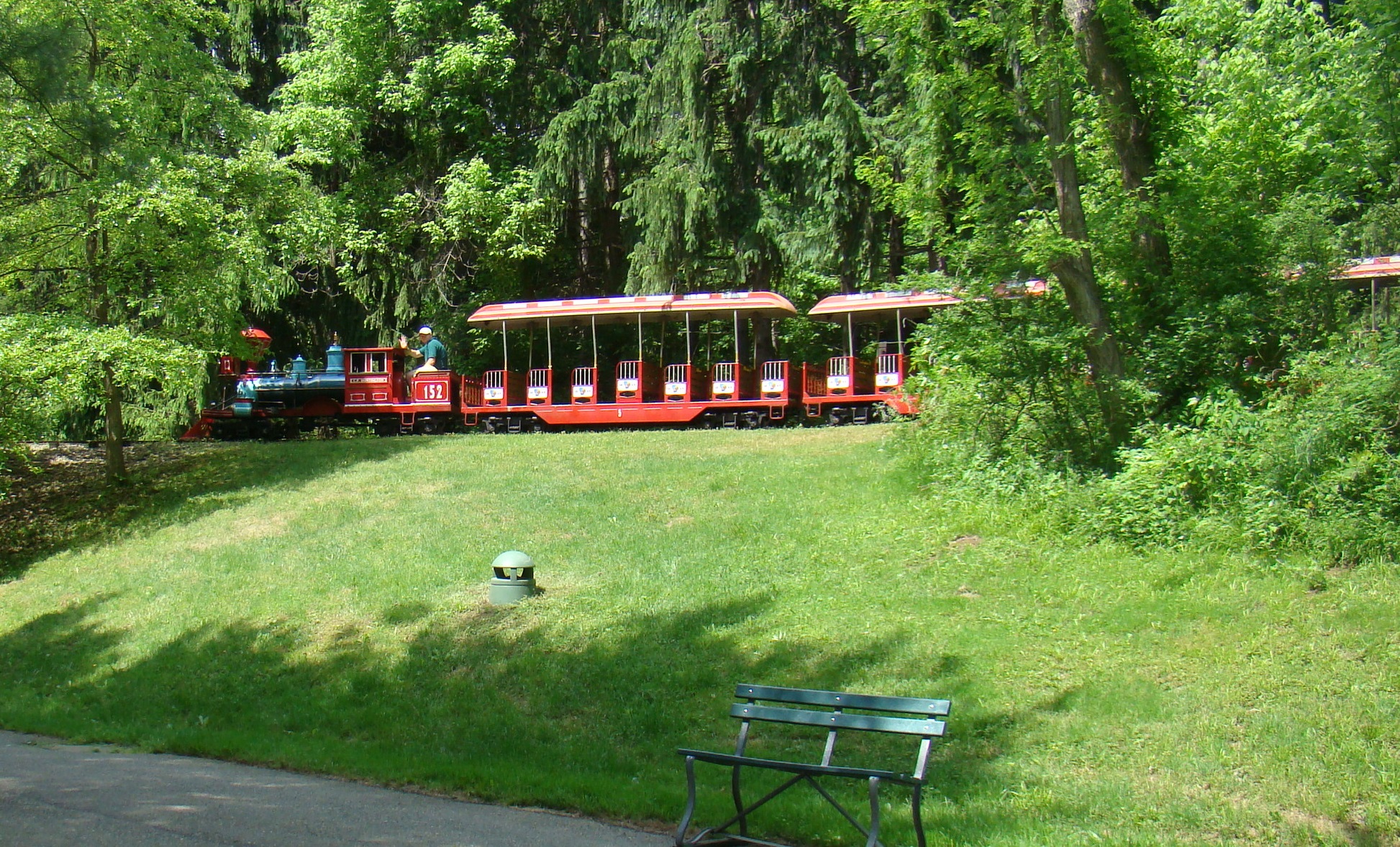
C.P. Huntington Train Ride

C.P. Huntington Train Ride

While the animals are the most important part of the Good Zoo, a ride on the C.P. Huntington Train takes visitors on a mile and a half ride through the edge of the zoo where many animals can be spotted. Everyone enjoys a ride on the open air train while the toot-toot of the whistle brings cheers from those on board.

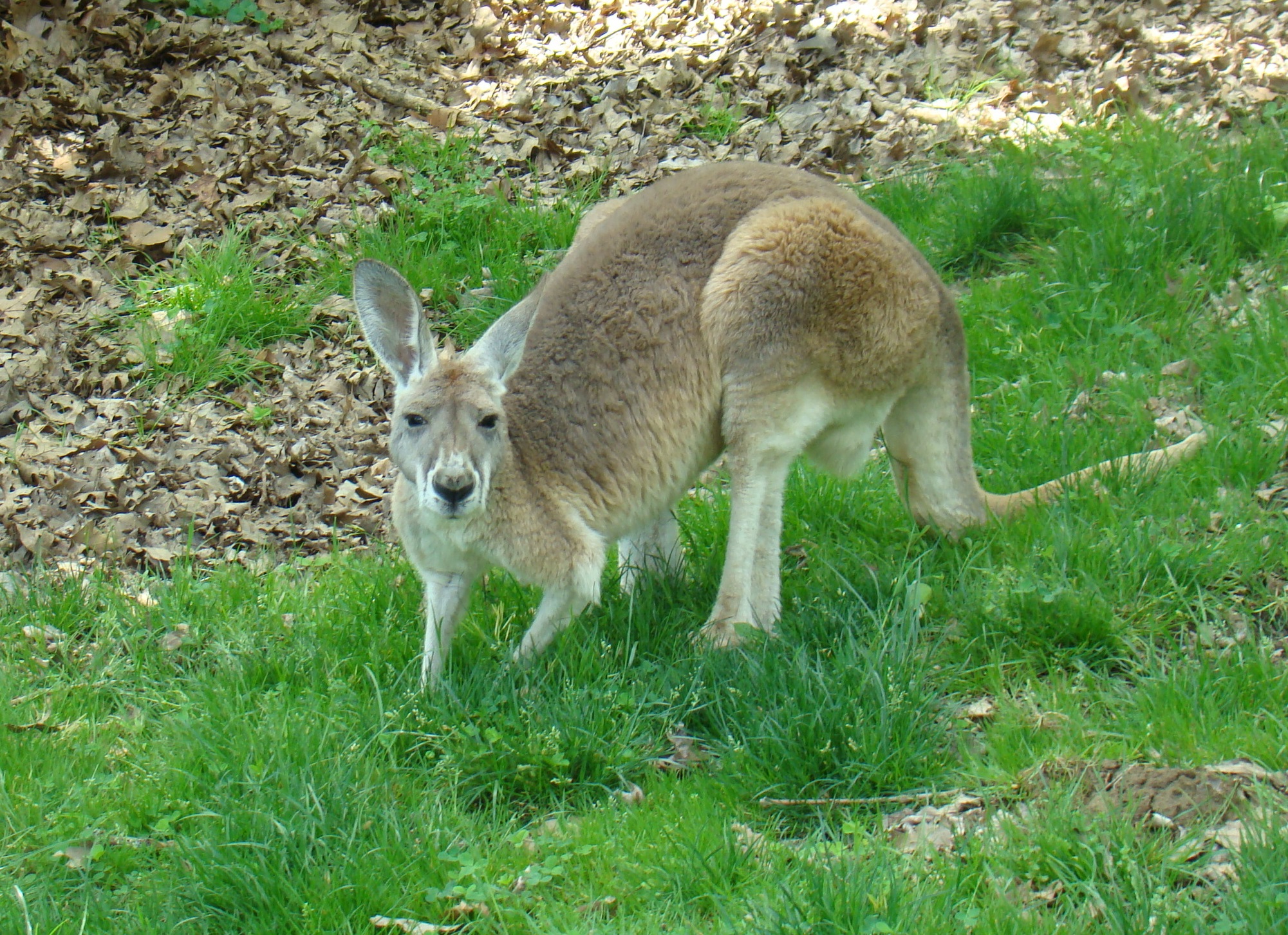
Walk with the kangaroos.

Walk with the kangaroos.

Two of the newer exhibits are The Outback and Lorikeet Landing. The Outback contains Kangaroo Creek Mining Company, where you can pan for gemstones and fossils. A “G’Day Mates” sign welcomes you to an enclosed area with a sidewalk, permitting guests to walk within a couple feet of the kangaroos. The aviary section at Lorikeet Landing allows feeding the beautiful Rainbow Lorikeets while walking in their midst.

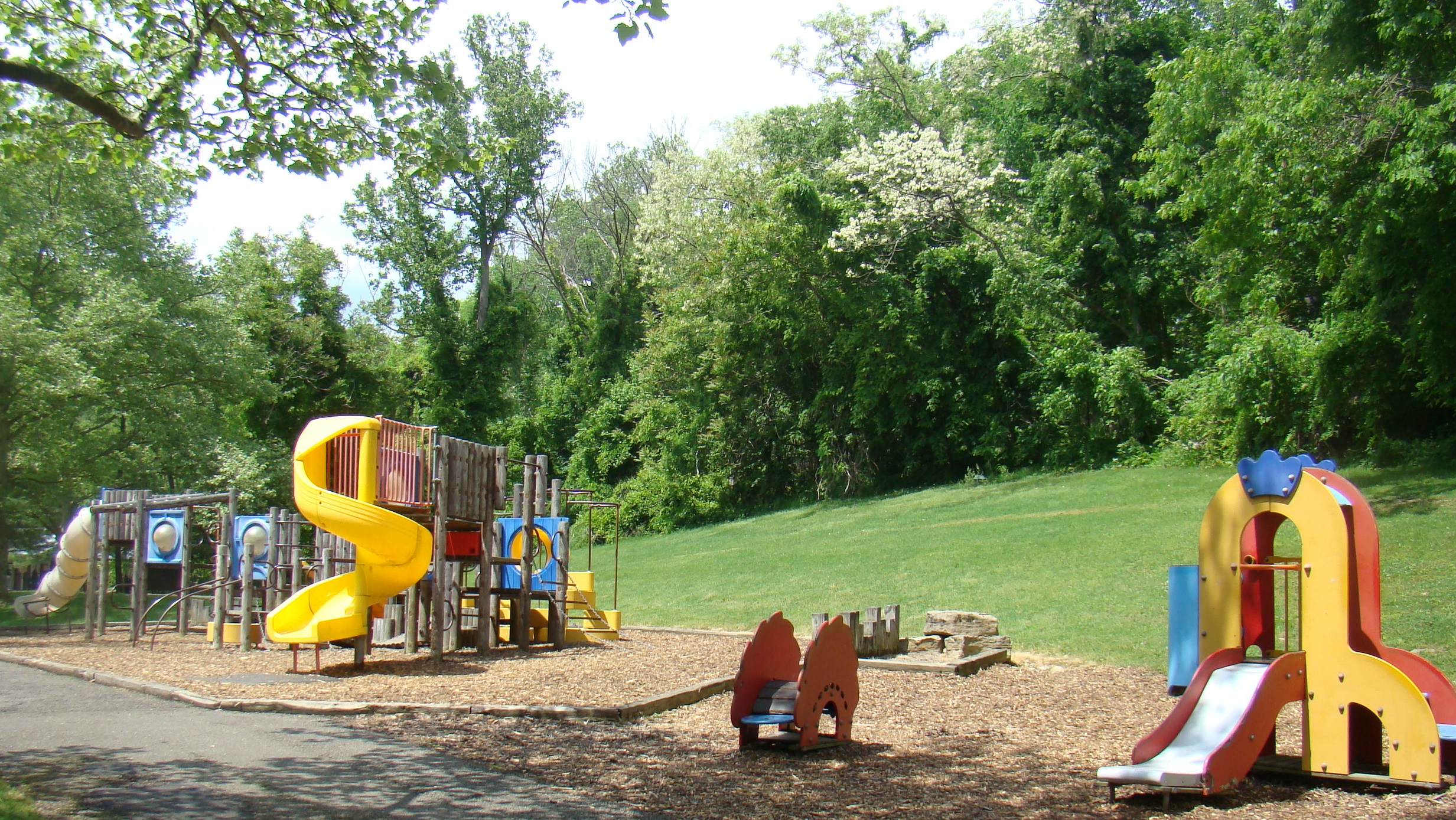
Take a break at the playground.

Take a break at the playground.

Let the children run off some of their extra energy at the outstanding playground. Here they can climb up ladders into forts, or crawl through tunnels until they’re ready to walk on to the next animal adventure.

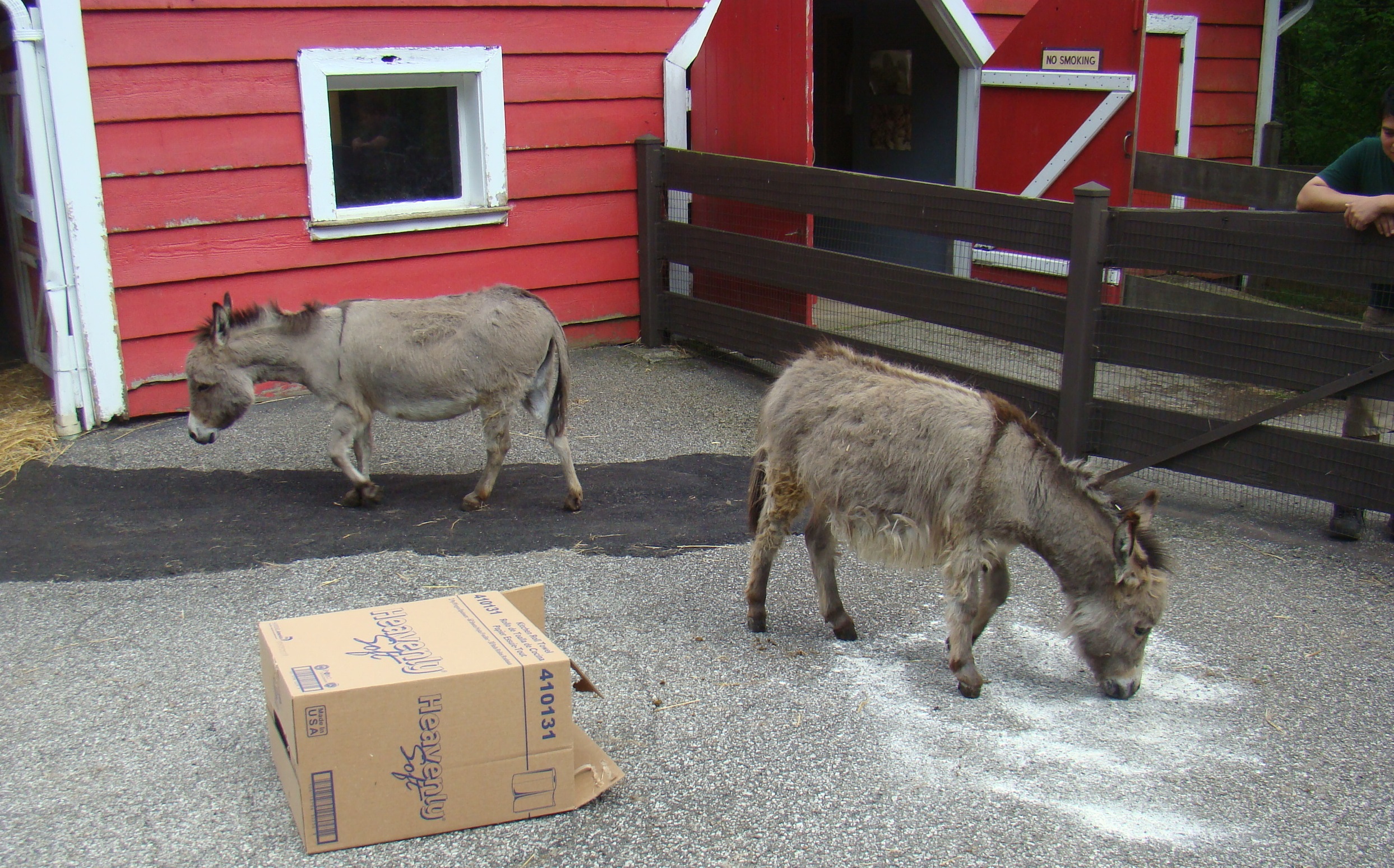
Donkeys play with powder and box at the Red Barn.

Donkeys like toys too. Here they play with a box and roll in the powder at the Red Barn.

The Red Barn has always been a favorite spot where friendly domesticated animals reside. Here you might see donkeys, goats, and llamas. Some you can get close enough to pet.

On the grounds, a Veterinary Hospital provides care for all the animals plus those in Raptor Rehabilitation. This program cares for injured animals found in the area. Owls and vultures had broken wings that needed repaired, while a red-tailed hawk became a permanent resident after the loss of one eye.

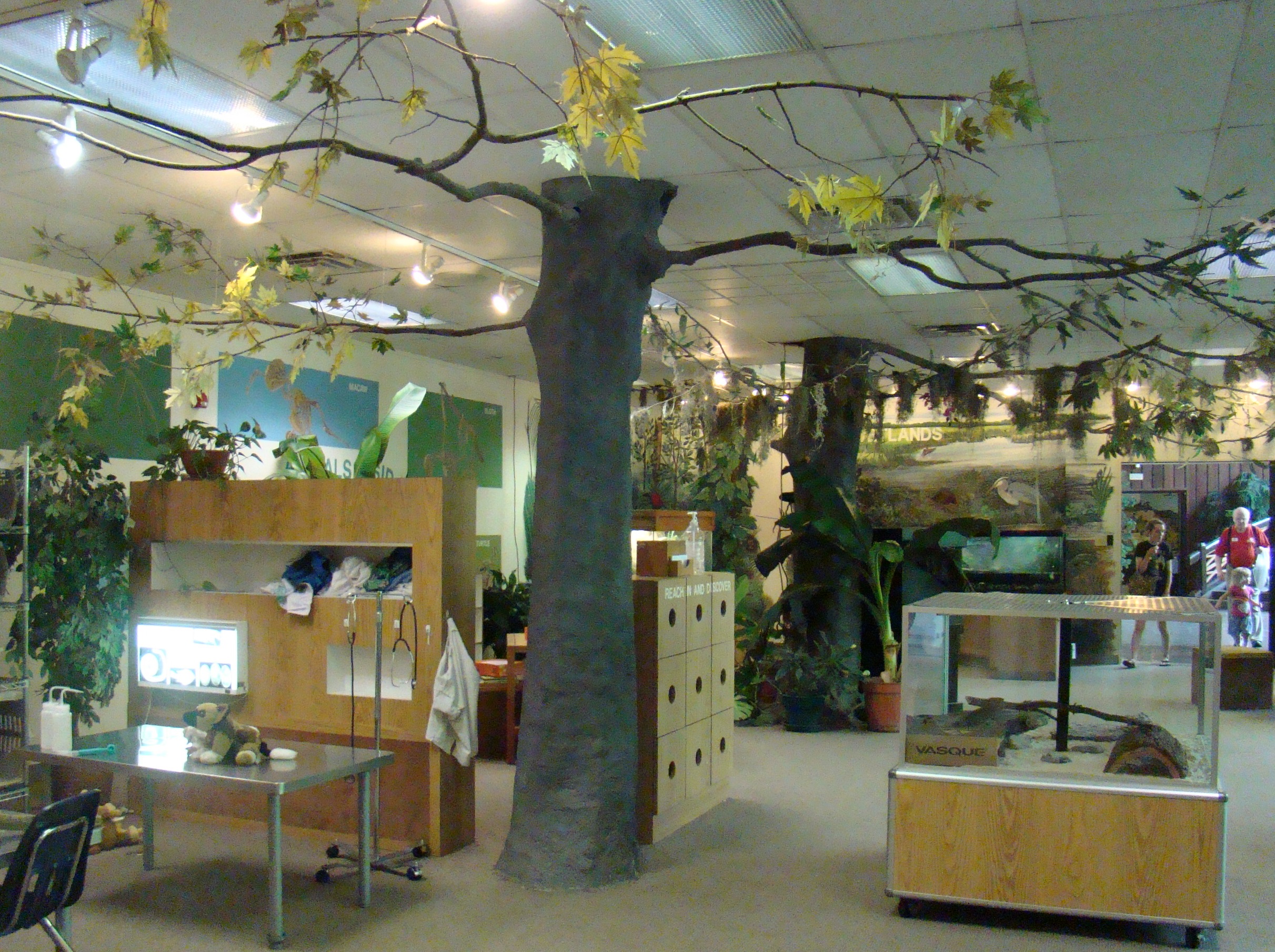
Find hands on learning at the Discovery Center.

Find hands-on learning at the Discovery Center.

But there’s more inside! The Good Zoo lists conservation and education as their key features. A hands-on Discovery Center lets students observe small animals such as dart frogs, turtles and tamarin monkeys. The Benedum Theater & Planetarium shares a wide variety of programs about nature and the universe.

Engineers ready the O-gauge trains for the summer season.

Operators ready the O-gauge trains for the summer season.

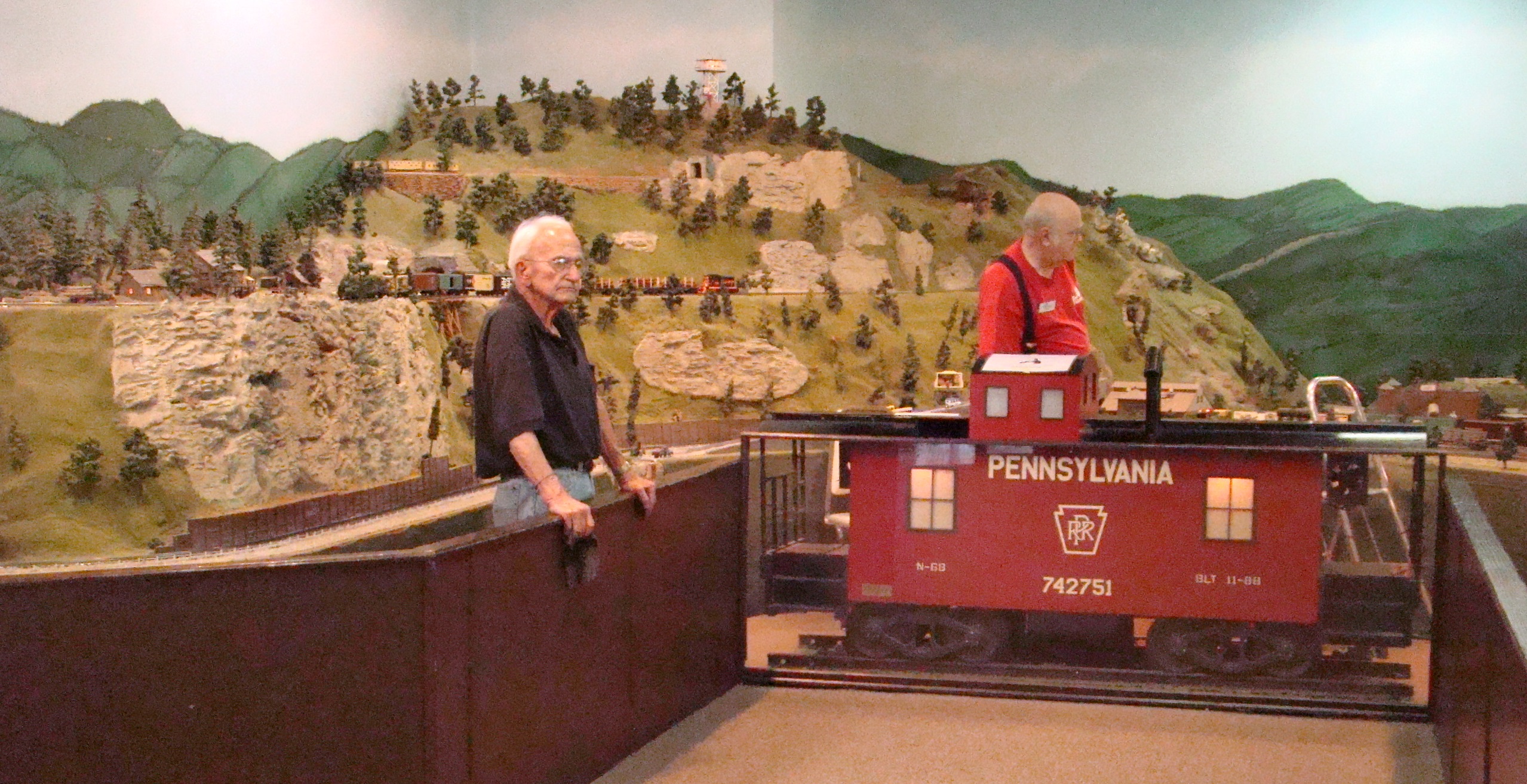
A special section that entertains children and dads is their train display started in 1981. Here you will find West Virginia’s largest public O-gauge model train exhibit with 900′ of track. Detailed buildings located on mountainous terrain combine with Lionel trains to create exciting viewing from every angle.

All through the year, the Good Year has activities which delight youngsters and parents alike. These include fun experiences at an Easter egg hunt, “Boo at the Zoo”, and  “The Good Zoo Lights Up for You” during the Christmas season.

Sounds like the fun continues all year long at the Good Zoo.

Oglebay’s Good Zoo is located just off I-70 near Wheeling, West Virginia. Take Exit 2A and follow Bethany Pike, then make a left on WV-88 North. Signs along the way help greatly with directions.

Adam Miller Plays Music for Regular Folks – Folk Music

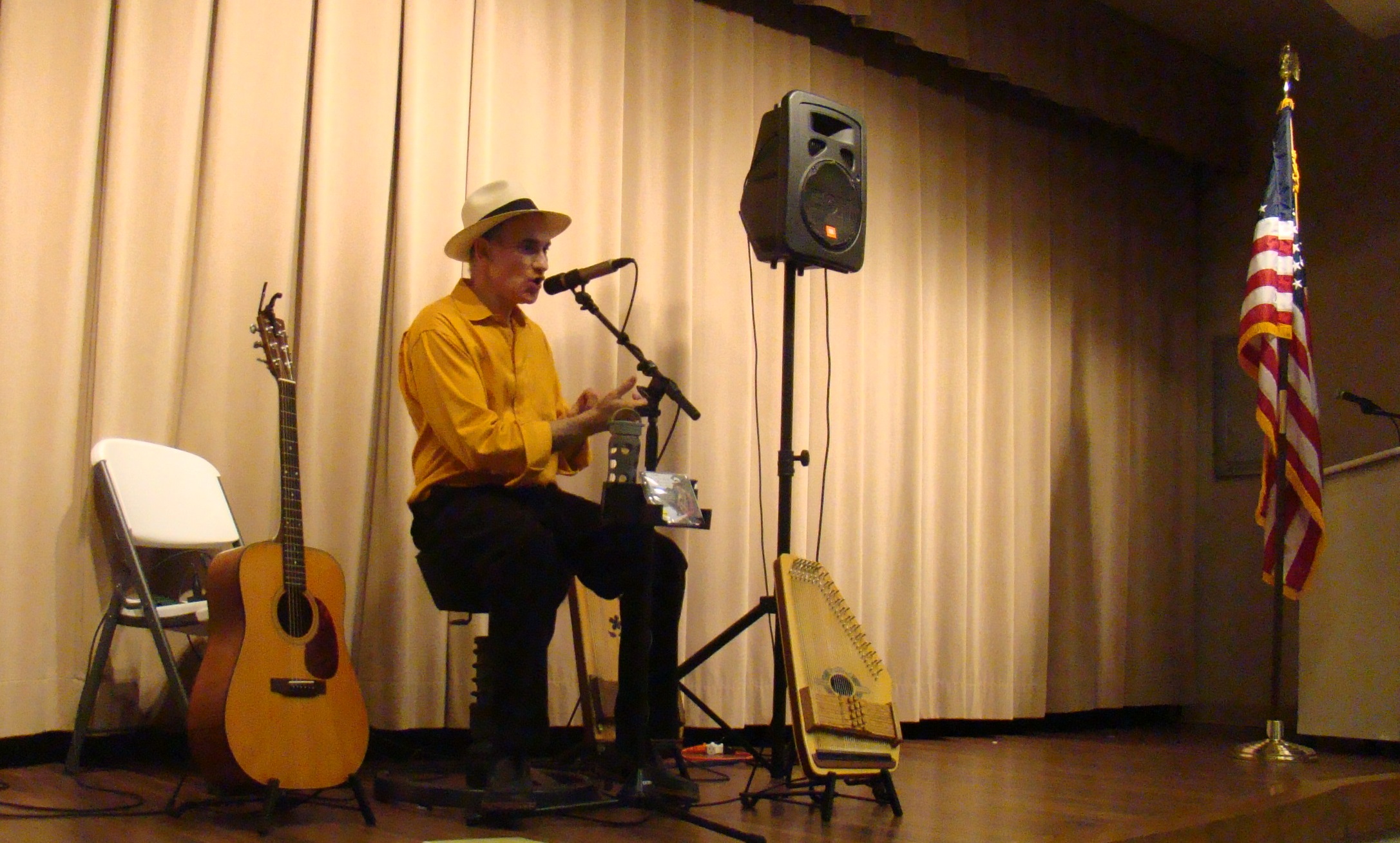
Adam on stage

Adam Miller presents one of his American Folk Music Programs for Libraries, entitled “Singing Through History”.

Folk songs always tell a story. But when you add a storyteller with an autoharp to the mix, you have entertainment at its best. Adam Miller is an extraordinary storyteller as he weaves the history of our nation and the world into the introductions of the folk songs that he sings. That’s not to mention his fantastic ability at the autoharp and guitar, as he delights the audience with song after song in his rich baritone voice.

The magical way Adam weaves history into his program makes history seem very exciting for everyone. “Of course,” Adam remarked, “history is better than fiction.” Often he performs for school groups and they, too, find him fascinating. To date he has performed for over 1,000,000 students as part of his journey from the Everglades to the Arctic Circle.

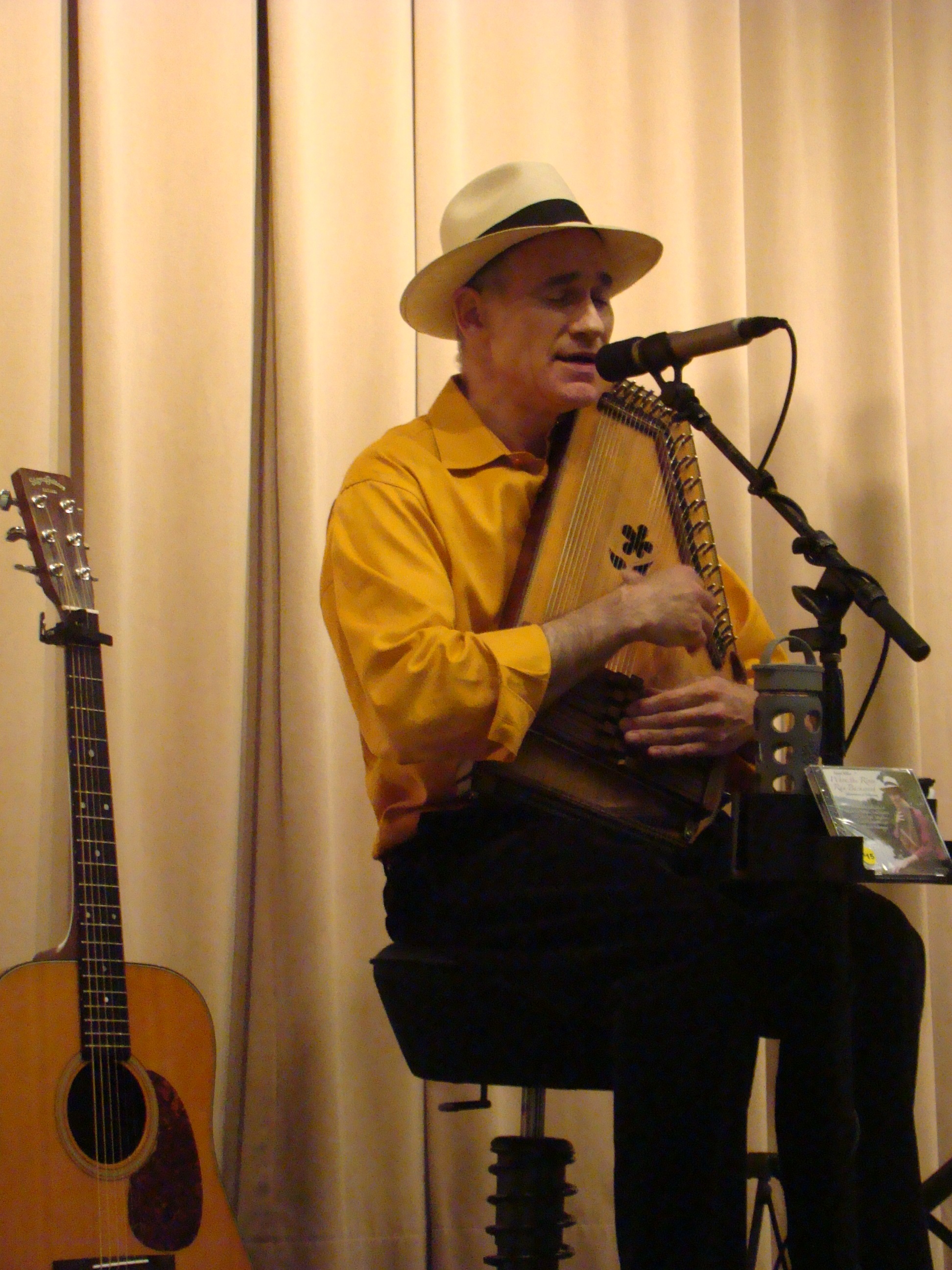
Adam Miller performs folk music using his autoharp.

Adam Miller performs folk music using his autoharp.

While the guitar is the most popular instrument in the US today, it wasn’t long ago that the autoharp had that prestige. A hundred years ago Sears catalogue had autoharps listed for $6.95 and many teachers used them in their classroom. Adam’s ability with the autoharp far surpasses any this gypsy has seen. The fluid sound resounded without any apparent effort on his part.

Involving the crowd seemed to come naturally to Adam as he often works with school groups. Frequently throughout the program, he had the audience singing along on choruses. Since this fantastic musician appears at approximately a hundred libraries a year, he has much practice. A repertoire of folk music programs called “Singing Through History”, which he uses at the library presentations, ranges from “Old Songs for Young Folks” to “Steamboatin’ Days”.

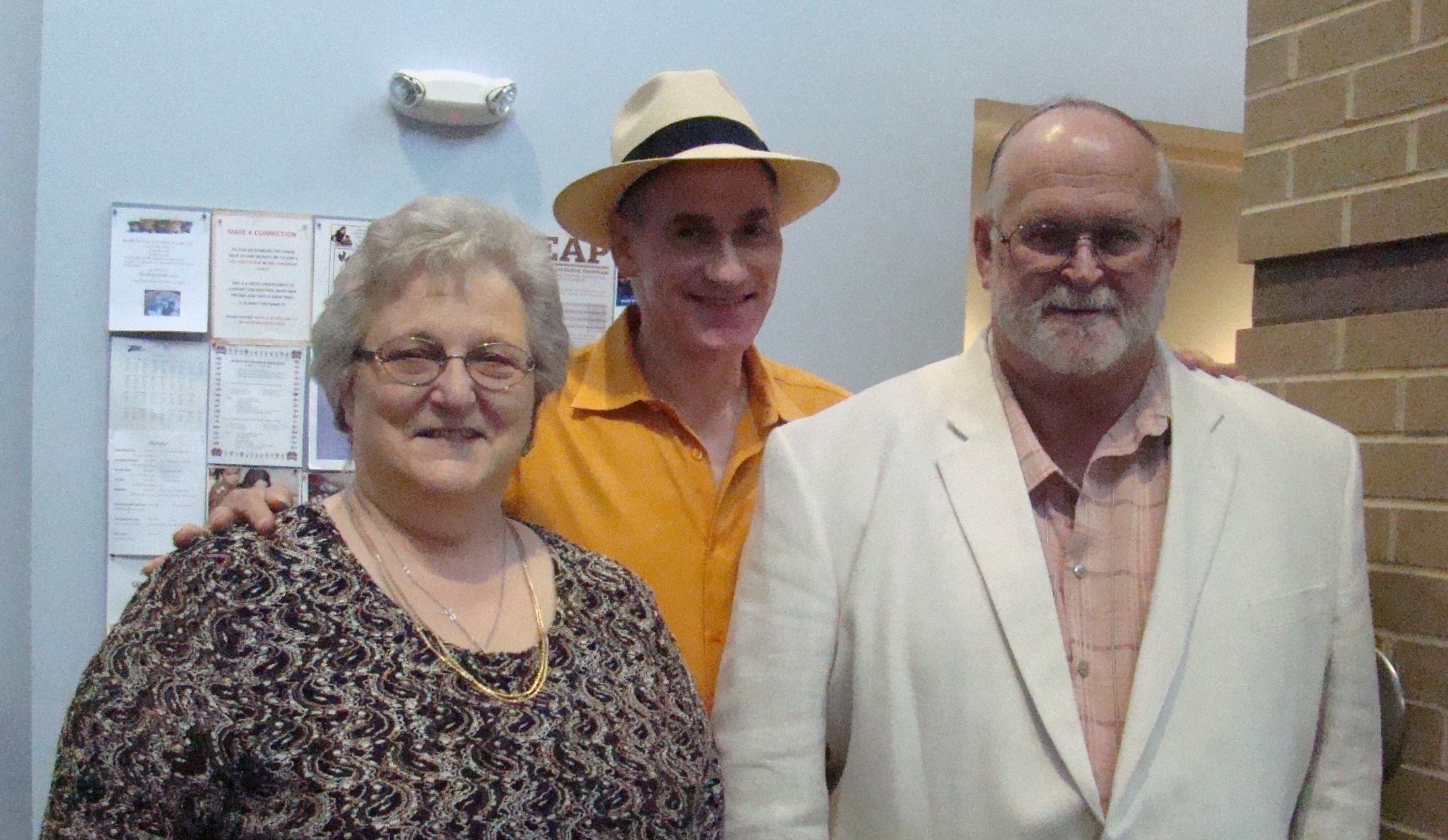
Jerry and Joan Albaugh from Friends of the Library were instrumental in bringing this program to Cambridge.

Jerry and Joan Albaugh from Friends of the Library were instrumental in bringing Adam Miller to Cambridge.

Friends of the Library at Cambridge, Ohio were certainly fortunate to connect with Adam Miller. This busy man travels over 70,000 miles a year as he goes from town to town sharing his love of folk music. He builds his show on whatever people want.

The recent show at the Crossroads Library had the theme, “I’m Goin’ to the West”, which included the song and story of the famous Orphan Train. The chorus began, “Take us in. We have rode the Orphan Train.”

The story began in Ireland, where the potato famine destroyed many families and left children orphans. Many youngsters were sent to the U.S. for a chance at a better life. That didn’t actually happen where they landed near New York City, so a Catholic priest there raised funds to send them, and orphans left by the Civil War, by train to the new western settlements to help build railroads among other things. In a short period of time, 250,000 children rode west on what was soon to be called the Orphan Train.

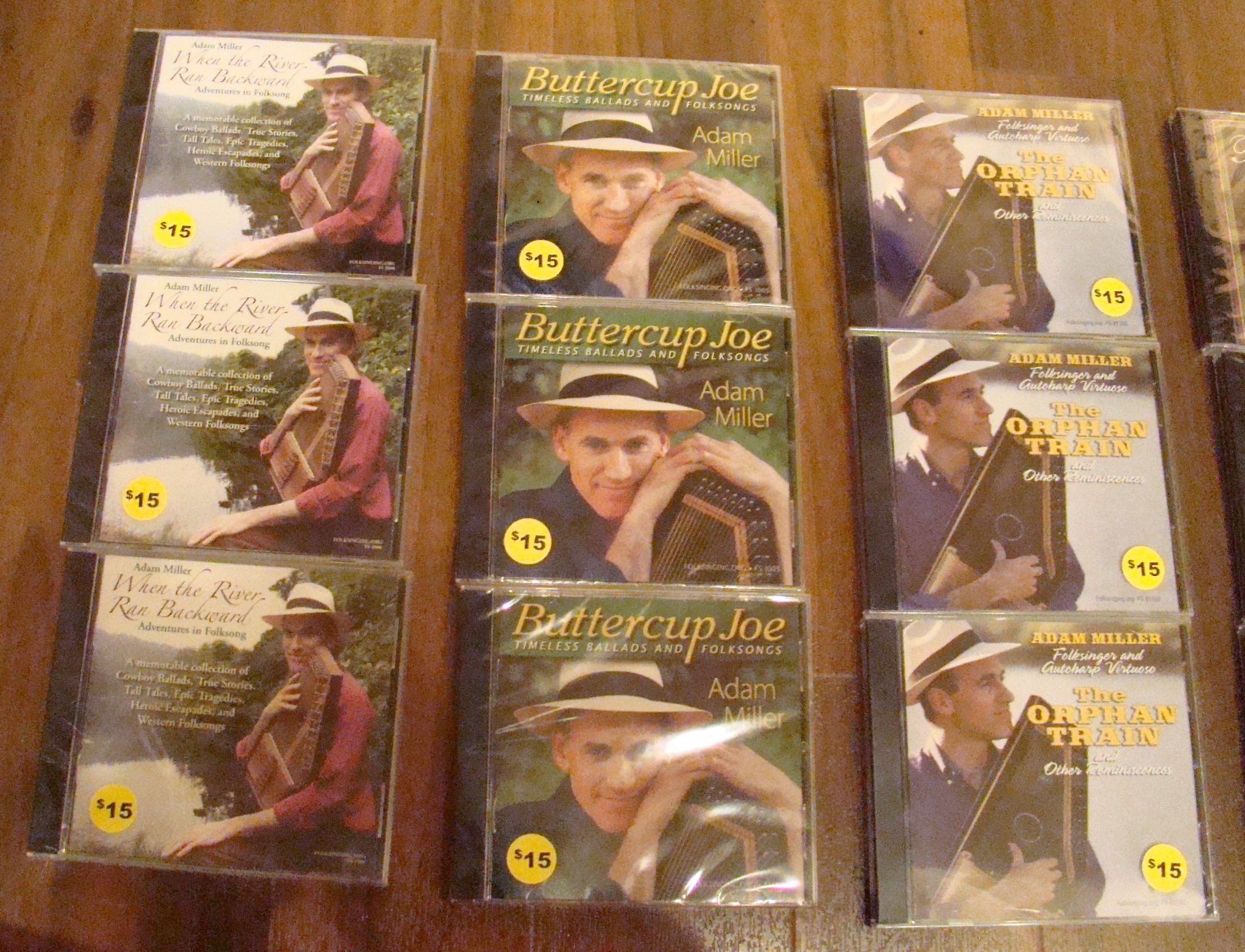
Adam's CDs help make his love of folk songs live on even after he has left the area.

Adam’s CDs help make his love of folk songs live on even after he has left the area.

The oldest folksong. which has been around over five hundred years, has many different versions. That timeless ballad, “Froggy Went a Courtin”, moves at a rapid fire pace, but with the theme of a frog dating a mouse, it seems humorous that it became so popular.

Even as a child, folk songs captured Alan’s heart and he began collecting these old songs back when he was in grade school. His goal was to learn every song he heard. Today Adam knows and performs over 5,000 songs through his large repertoire of shows. There’s no doubt that he is a master at what he does, and he does it with enthusiasm. Exceptional entertainment!

If your school, group, or library would like to contact Adam Miller for a program, email him at autoharper@earthlink.net or visit his website at http://www.Folksinging.org.  Here you can also purchase some of his CDs, which are very entertaining and relaxing.

Coopers Rock Beckons Nature Lovers

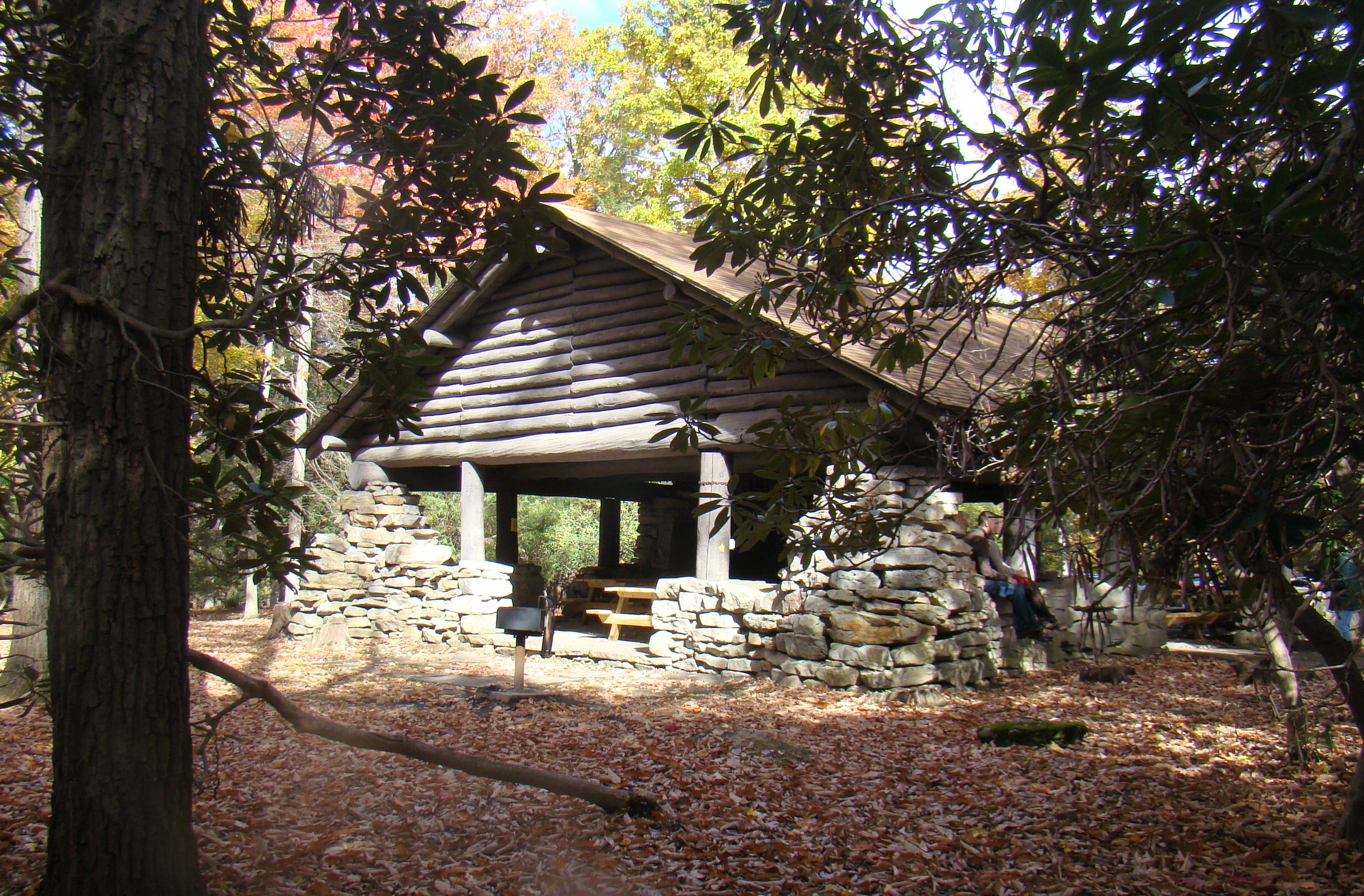
Cooper Rock Picnic Shelter

Coopers Rock Picnic Shelter

“The Rock with a View” describes a visit to Coopers Rock between Morgantown and Bruceton Mills in West Virginia, bordering Pennsylvania. The crowded park grounds gave a festival like appearance with beautiful American chestnut and stone picnic shelters welcoming families and groups to spend the day. Fifty miles of hiking trails provide an outlet for exercise surrounded by nature. During the winter months, these trails are used for cross-country skiing.

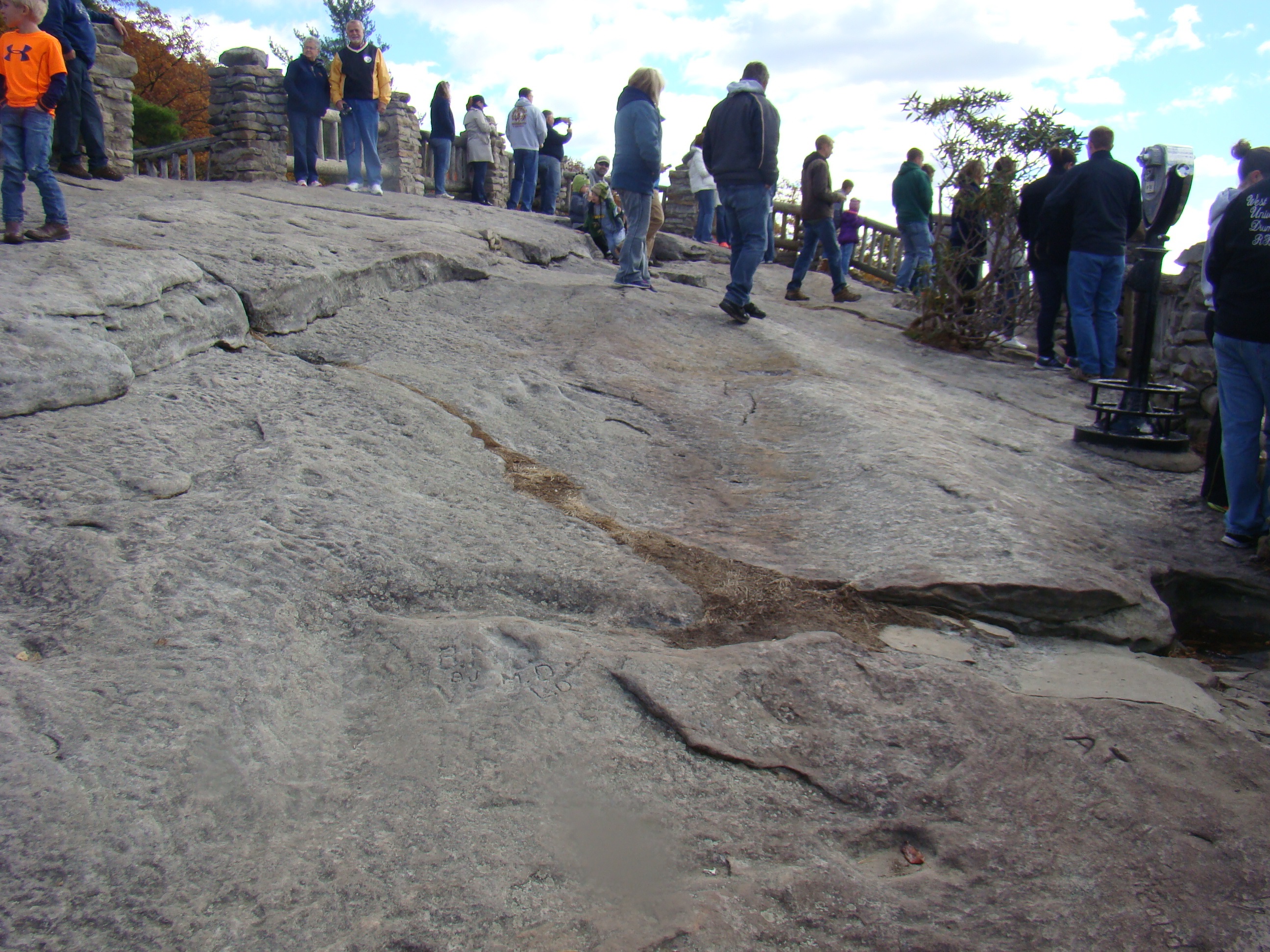
But the picnic area and hiking trails weren’t the attraction here. After walking down a short scenic path, you arrived at an immense rock, which serves as a scenic overlook for miles around. Caution must be used on this very steep and slippery rock.

Climb cautiously on Cooper Rock.

Climb cautiously on Coopers Rock.

Legend has it that Coopers Rock received its name from a barrel maker, also called a cooper. The story goes that a fugitive hid away from the law for several years under the shelter of the rocks in this vicinity. In his new mountain hideaway, the cooper made barrels, which he sold to people in the nearby communities.

The early history of the area centers around the iron ore industry, with many iron furnaces located nearby as early as 1798. With the discovery of iron ore and limestone, the abundance of hardwood trees for fuel made this the perfect spot for Henry Clay Iron Furnace, which produced pig iron.

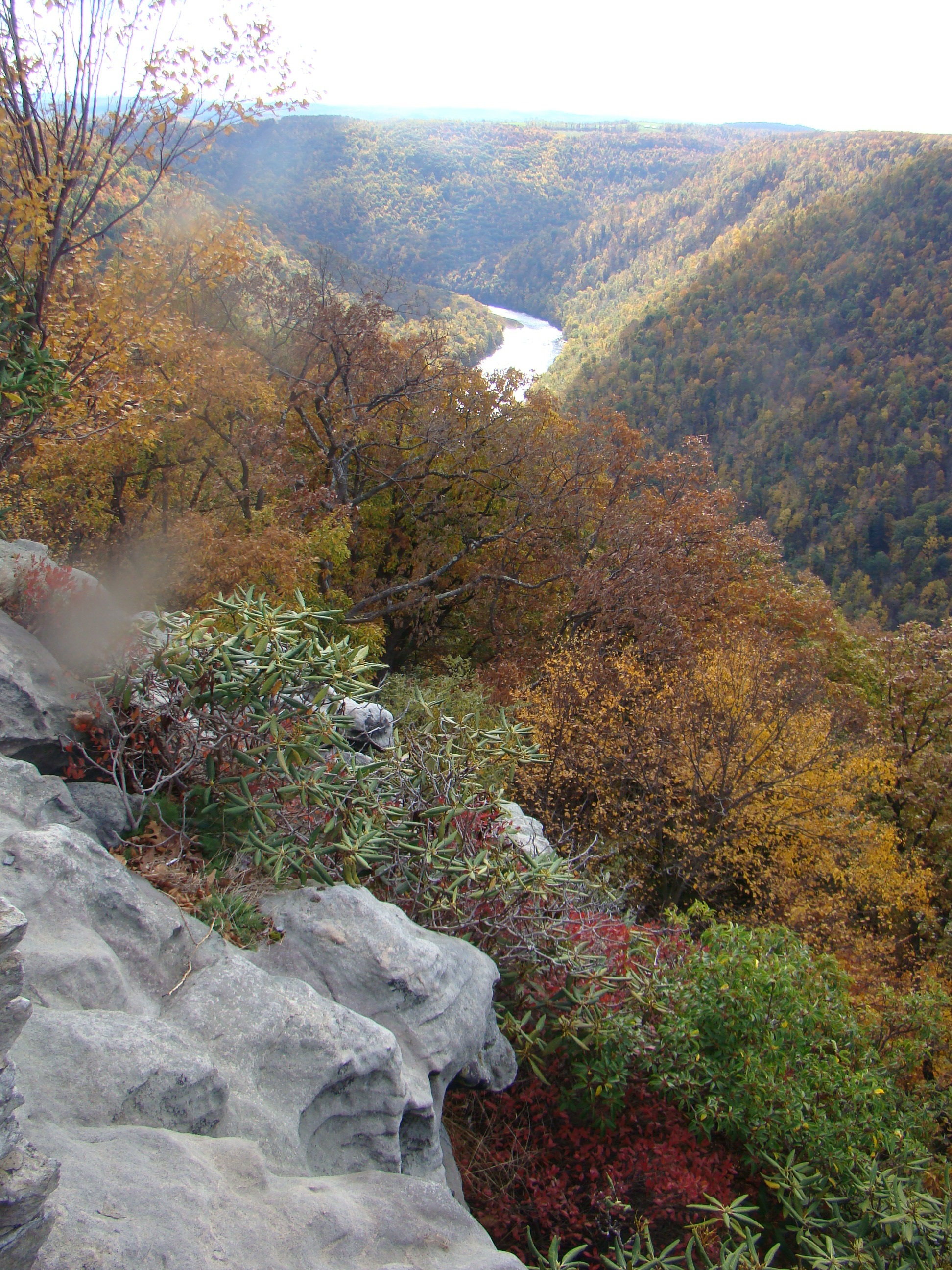
View from Cooper Rock

View of Cheat River Gorge from Coopers Rock

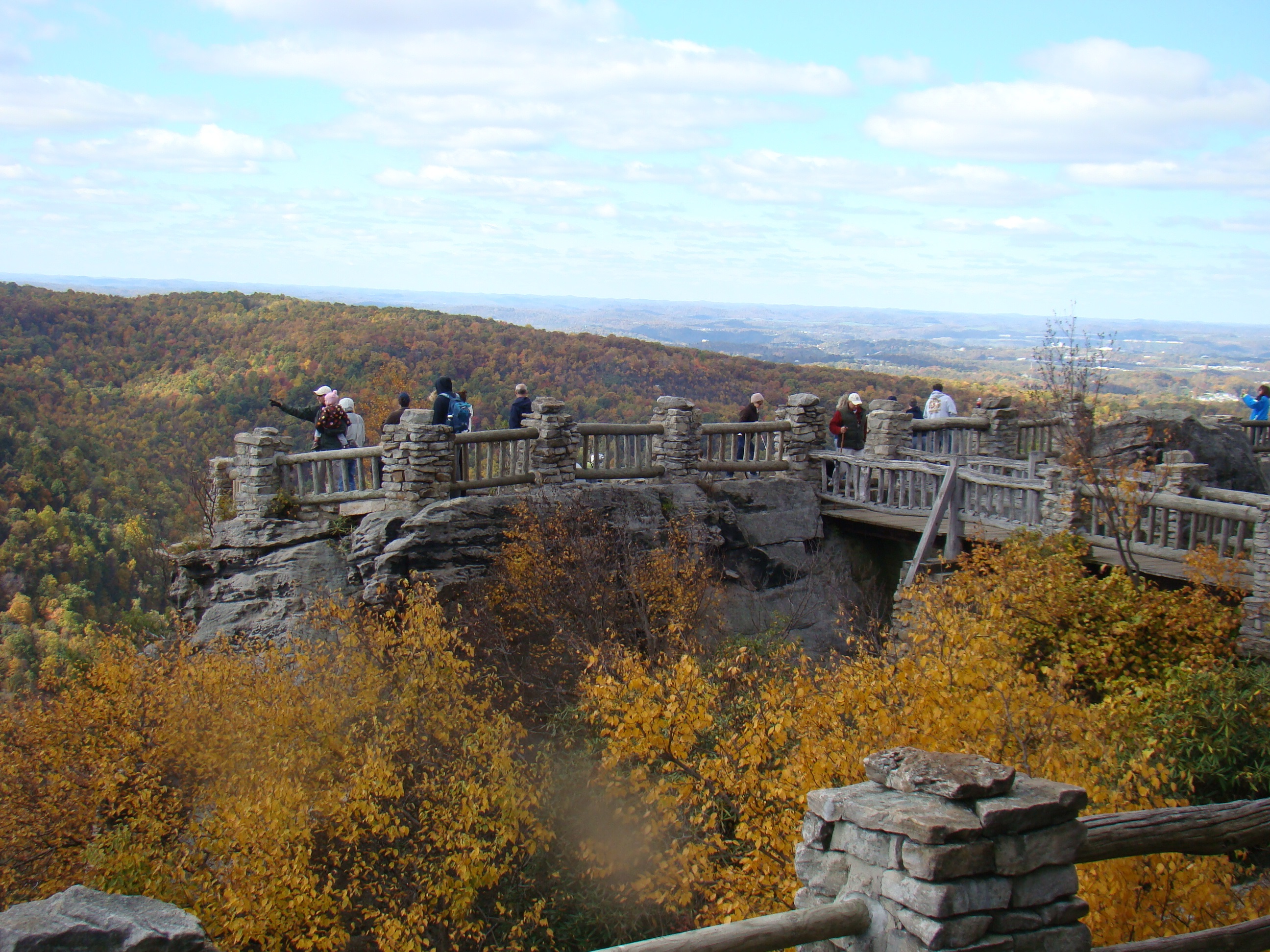
Standing on the Main Overlook, Cheat River Gorge appears in panoramic view. Fall is the perfect time to enjoy the scenic gorge and river surrounded by autumn colors. Enormous boulders and cliffs encourage rock climbers and hikers to explore.

Cooper Rock Overlook

Stone Bridge to Coopers Rock Overlook

An astounding piece of work is the stone bridge which connects the overlook to the main ridge. The steps were carved out of the mountain during the Great Depression by the Civilian Conservation Corps. The view from the bridge is quite spectacular as well.

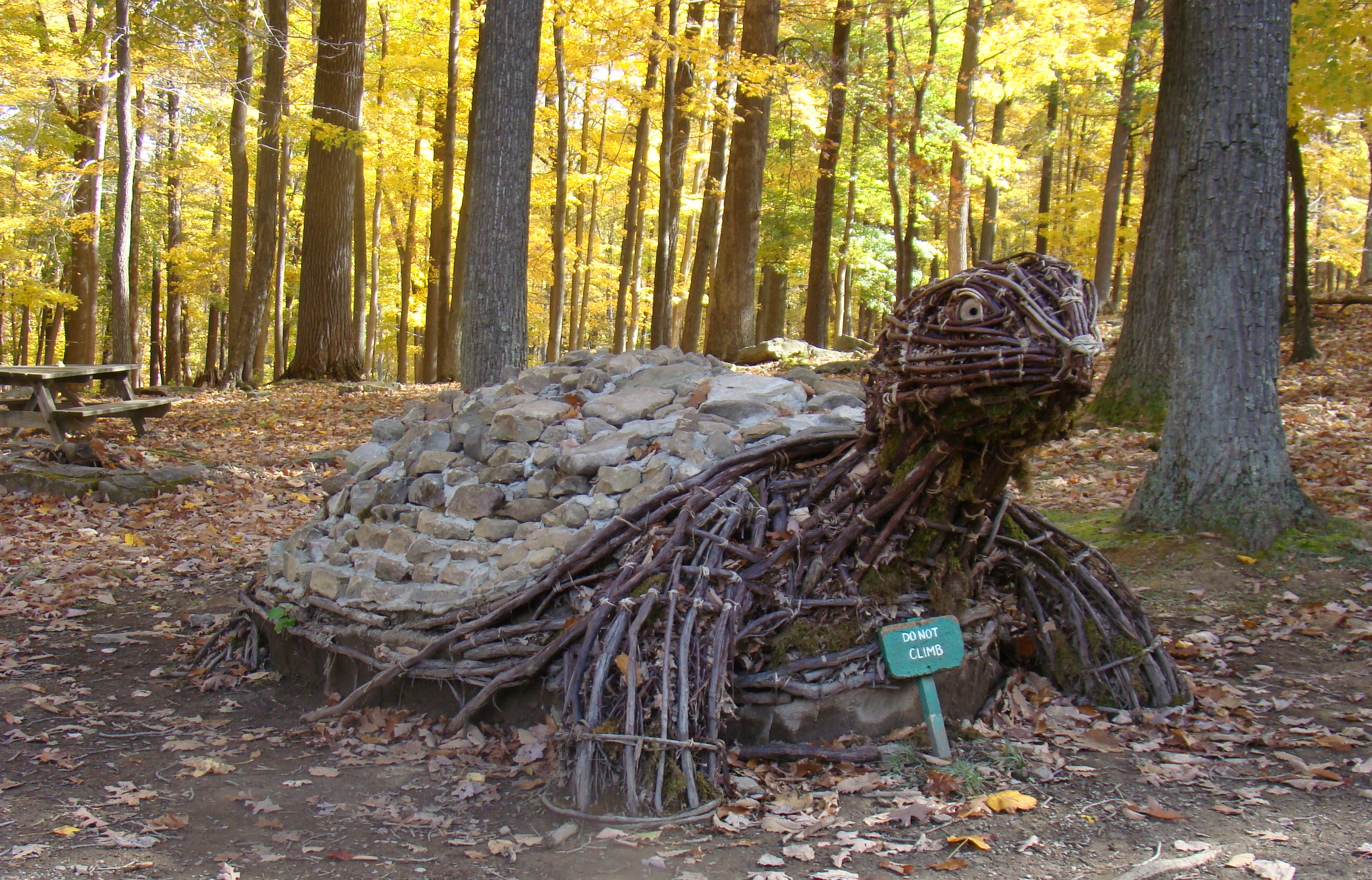
Eco Turtle

Eco-sculpture of Coopers Rock Turtle by Gazsi

During the last few years on Earth Day, Benjamin Gazsi of West Virginia University made eco-sculptures near the parking lot of Coopers Rock to create another reason for people to visit. The Sleeping Giant, Standing Bear and Coopers Rock Turtle are the first three structures to be completed using products of the forest. These characters made of tree branches, mud, grass, leaves, and moss will be enjoyed by visitors until nature returns them to the forest floor.

Access to the park is closed during December until March 31 for motor vehicles, but you can still park at the first lot and walk in. There is no charge for visiting and hiking this fantastic forest. Being in a peaceful spot surrounded by nature clears the mind and relaxes the body.

 Coopers Rock State Forest has easy access just east of Morgantown, WV from I-68 off Exit 15. I-68 actually bisects the State Forest into two areas.


Polar Frontier at Columbus Zoo – A Cool Place to Visit

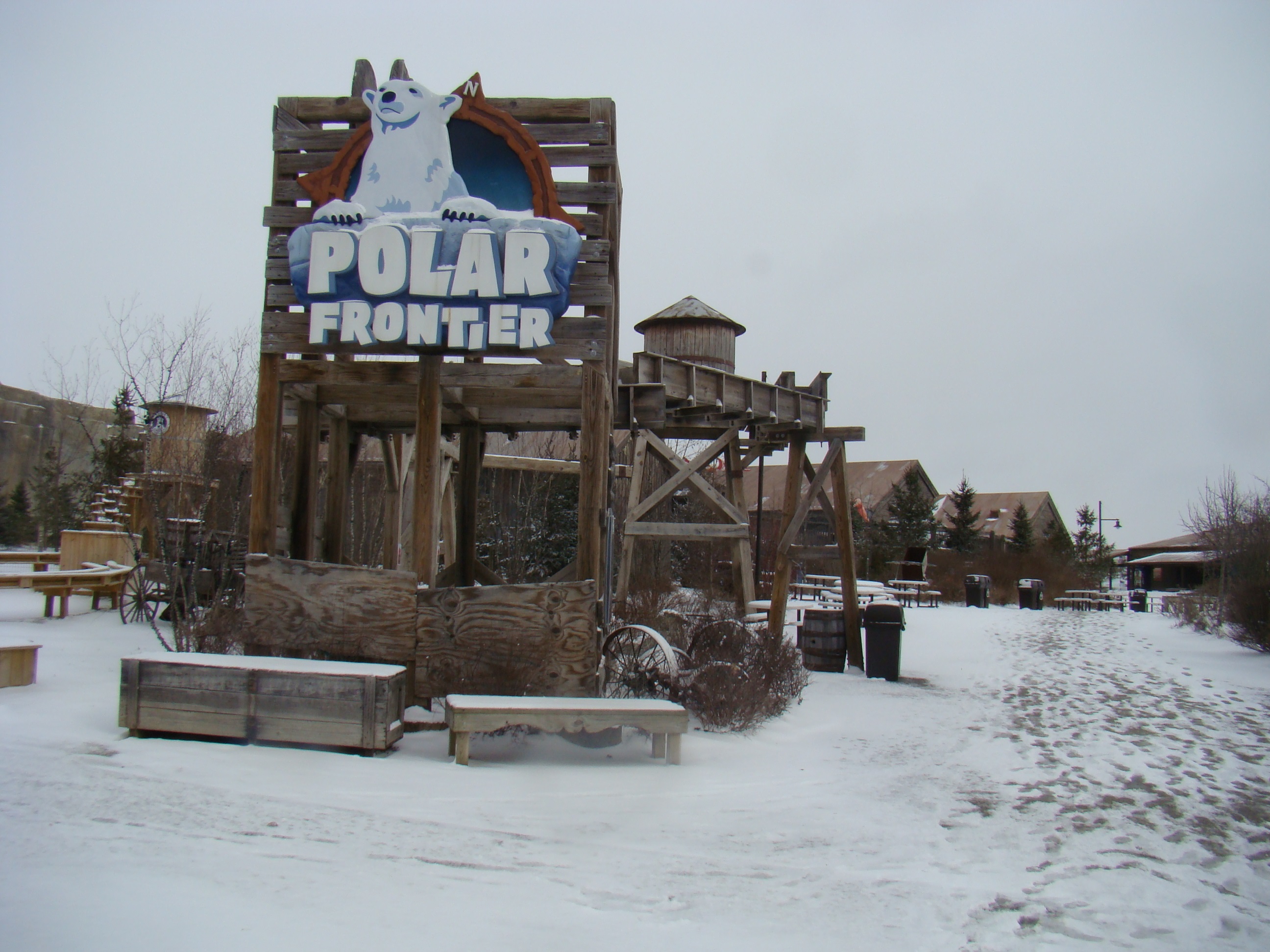
Polar Frontier Entrance

Polar Frontier Entrance

Perhaps the “coolest” spot at the Columbus Zoo & Aquarium occurs in North America’s Polar Frontier. On a recent visit to the zoo, howling winds and cold temperatures seemed the perfect time to check out the Polar Bears. They certainly weren’t bothered by the cold.

Set in what appears to be an abandoned mine camp in the Arctic Circle, Polar Frontier is home to four Arctic foxes, two brown bears, and two polar bears. Snow, ice and cold help create the atmosphere for their favorite time of the year. A sign near the entrance states:

An Arctic without ice would be like a garden without soil.

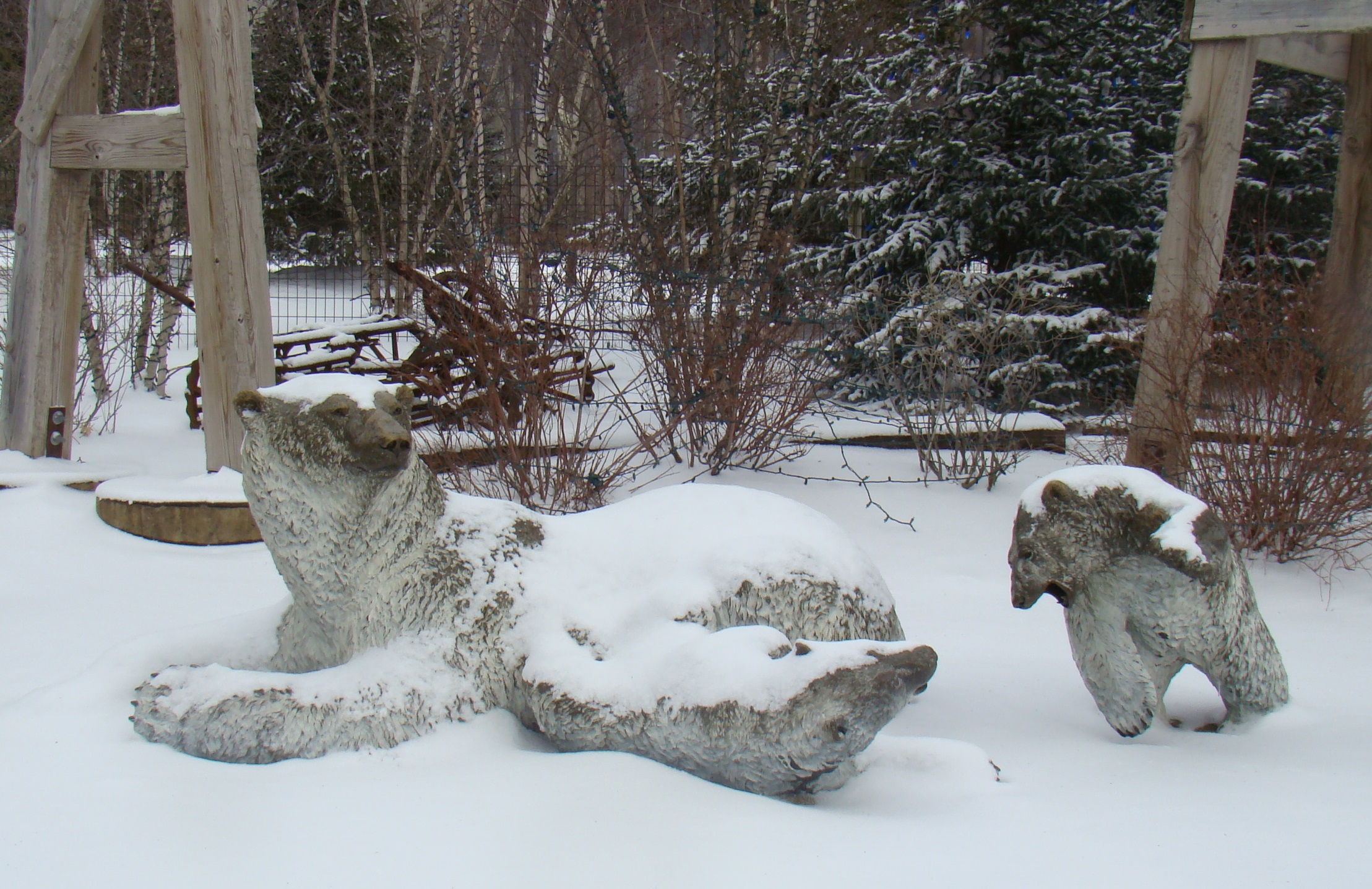
Polar Bear statues

Statues of Mother Polar Bear and two cubs

Polar bear statues of mother and two cubs welcome visitors to the Polar Frontier. Since North High School in Columbus, Ohio had as their mascot a Polar Bear, their alumni organizations funded the statues. Local artist, Mathew Palmer, created these delightful bronze figures covered with a white patina. Statues of animals frequently appear throughout the zoo and are perfect places for a close up picture with the animals.

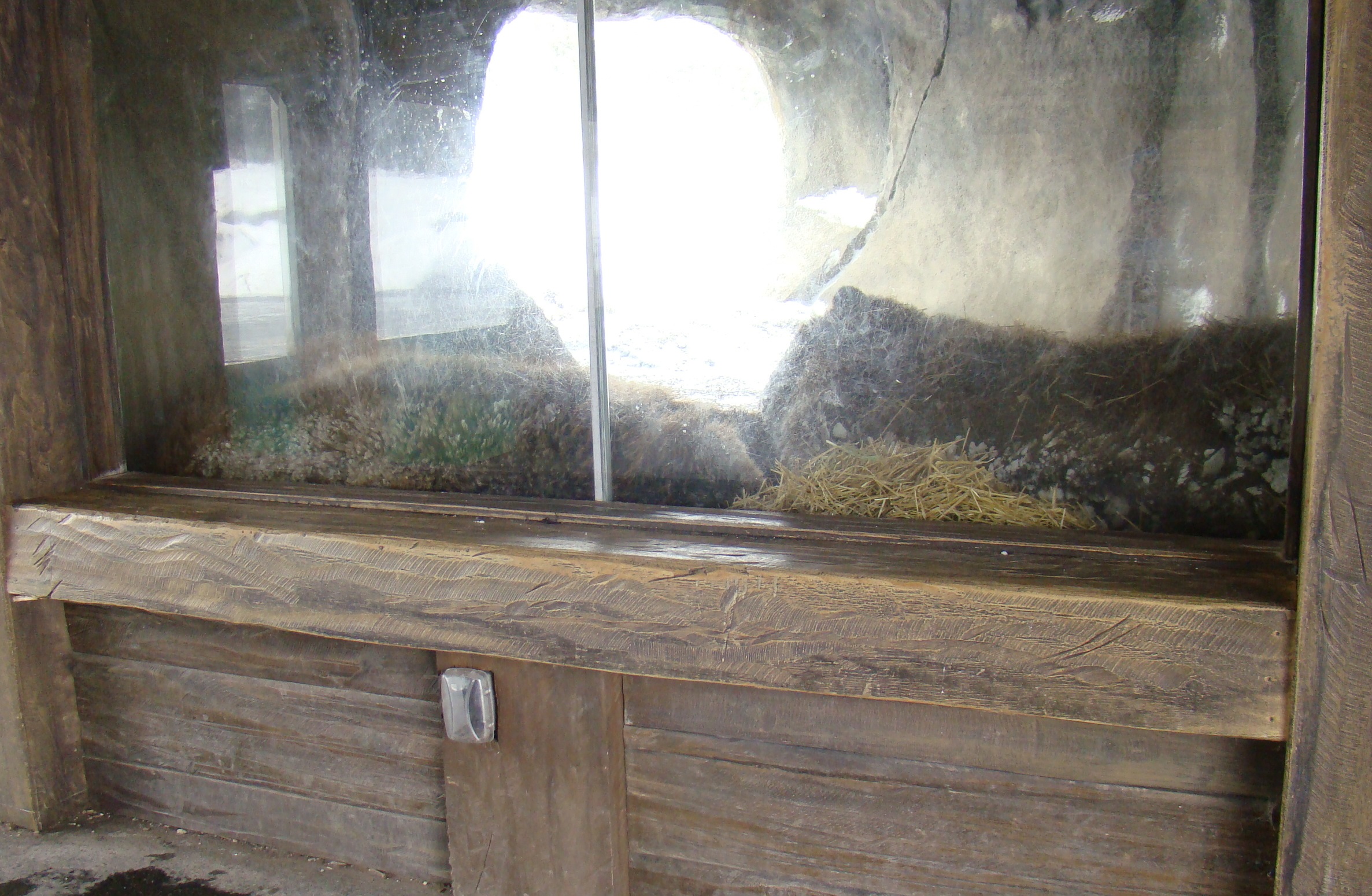
Two brown bears sleep inside their glass cave.

Two brown bears sleep inside their glass cave.
Two Alaskan brown bears, brother Brutus and Buckeye – from Ohio of course, sleep soundly as they huddle against a heavy glass wall. They appear to believe in hibernation even at the zoo. Usually, they can be found swimming in their own small pool or having a bear wrestling match.
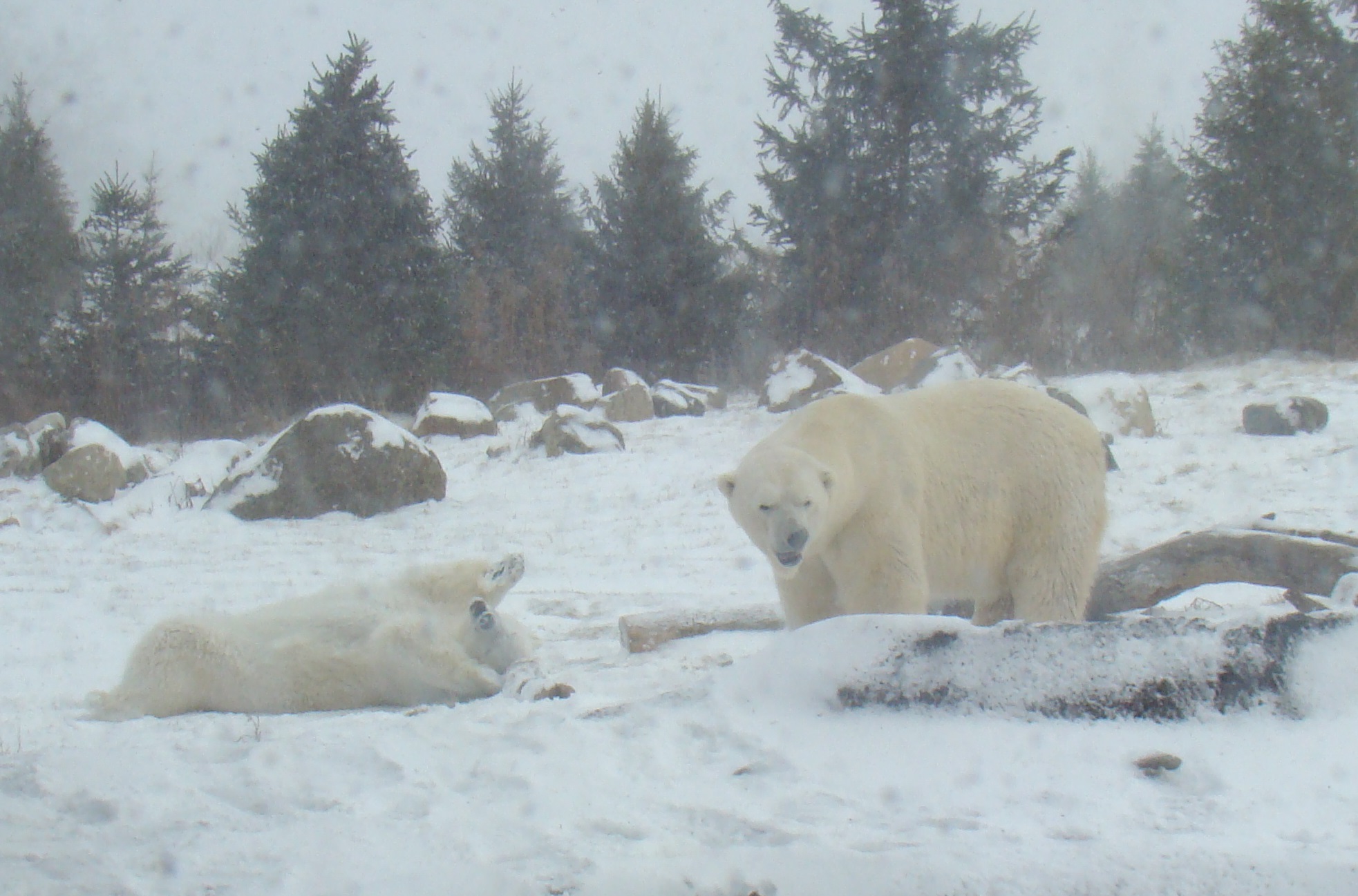
Polar bears play in the snow.

Polar bears play in the snow.

Polar bears, Aurora and Anana, have a playful time in the new fallen snow. Both rolled around on their backs taking a snow bath or perhaps just relaxing . Today they seemed happy to play in the snow and didn’t venture into either of their two pools for a dip

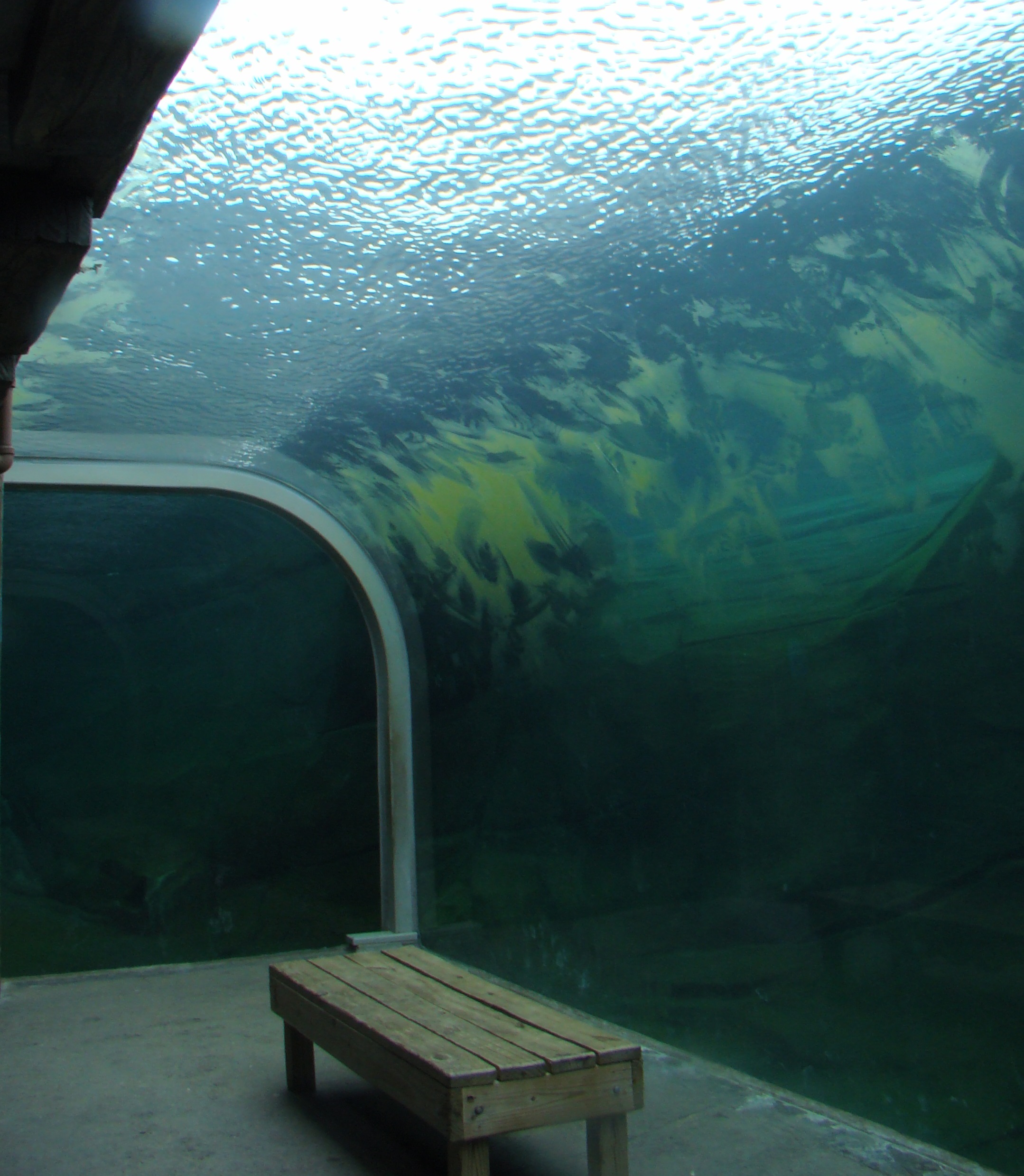
Salt water tunnel where  polar bears often swim overhead.

Salt water tunnel where polar bears often swim overhead.

The polar bears have a 167,000 gallon pool of salt water in which to swim and catch lunch. You can observe the bears diving in for a swim from eye-level, or underneath through a 5″ thick acrylic tunnel. There is an ample supply of fresh trout available when the polar bears decide they might like a snack. Two underground geothermal tanks keep the water in their pools at the perfect temperature for polar bears to enjoy.

Compare the size of various bears.

Compare the size of various bears.

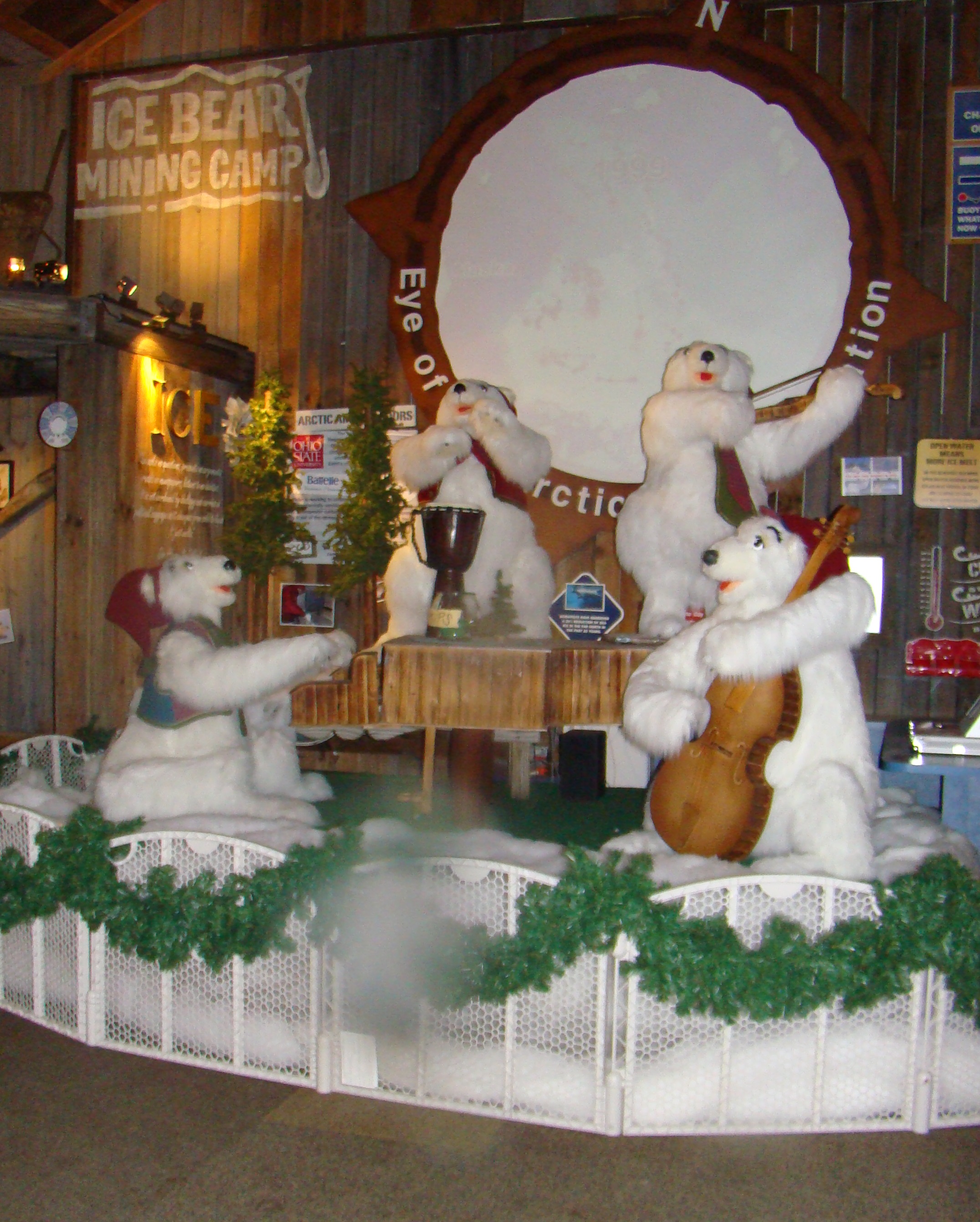
Inside the Battelle Ice Bear Outpost, you can find videos regarding the life of the bears. This interpretive center provides many activities that focus on polar bears and climate changes. It shares ways to practice conservation at home to save the polar bears. They have pictures to compare the sizes of various bears and even an animated Polar Bear Band at Ice Bear Mining Camp.

Bear Band

Bear Band at Ice Bear Mining Camp

A fantastic playground for the youngsters is right outside the Polar Bear Exhibit where children can build an igloo, ride an ice teeter-totter, or slide down a snow bank. Parents can grab a snack at the Polar Grille and chill out while the children have a cool time.

This corner of the zoo is one of the favorite stops for most visitors. A winter visit also has the benefit of being able to see the animals more easily as the zoo isn’t crowded. Make sure you save time for the Polar Frontier…any time of the year!

To visit Columbus Zoo & Aquarium, take I-270 around Columbus, Ohio and use Exit 20. From there you will see signs directing you to the zoo. You’re sure to have a great day!

Chillin’ Out at the Columbus Zoo

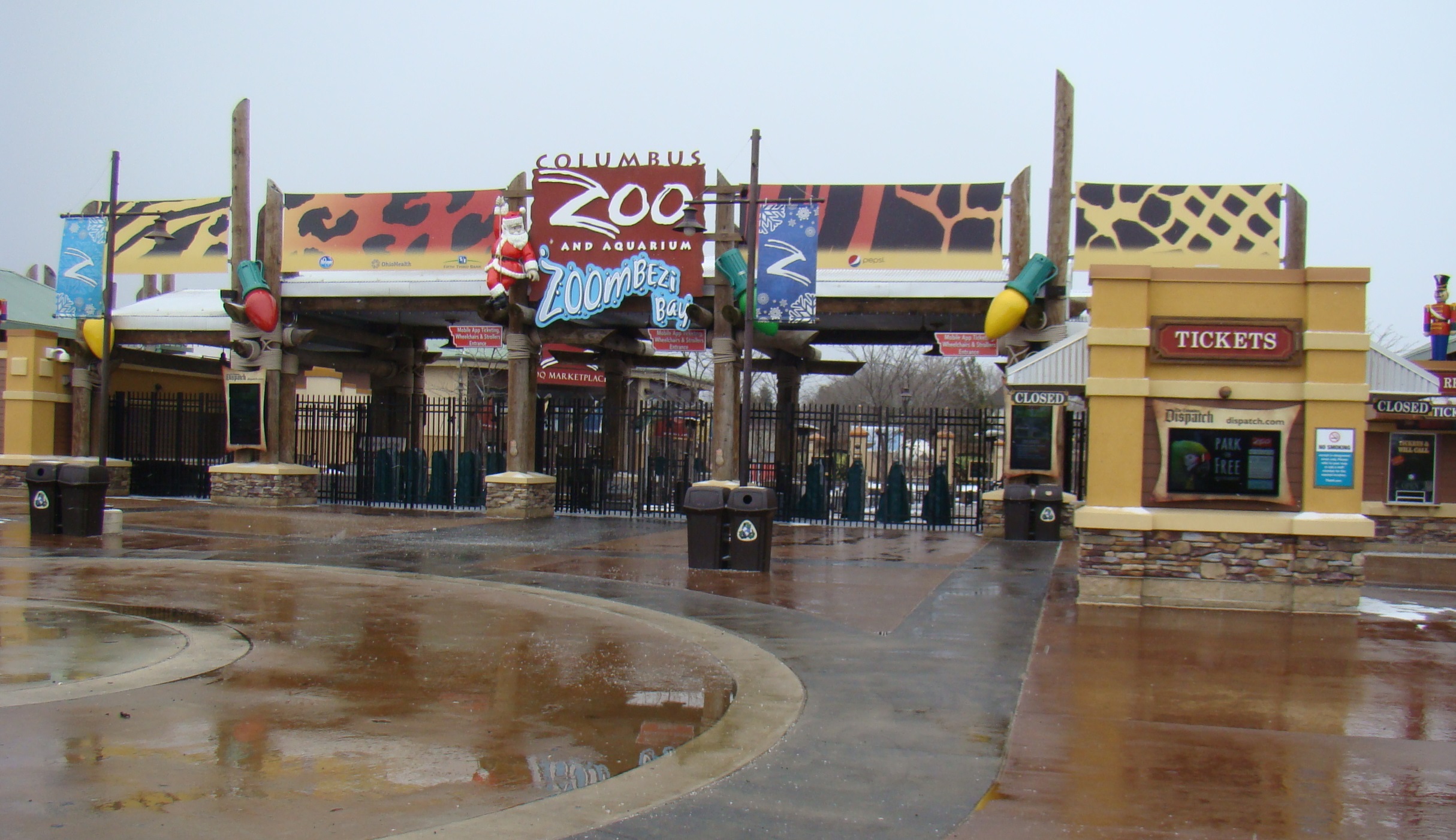
Zoo Entrance with just snow flurries upon arrival.

Zoo Entrance with just snow flurries upon arrival. That soon changed.

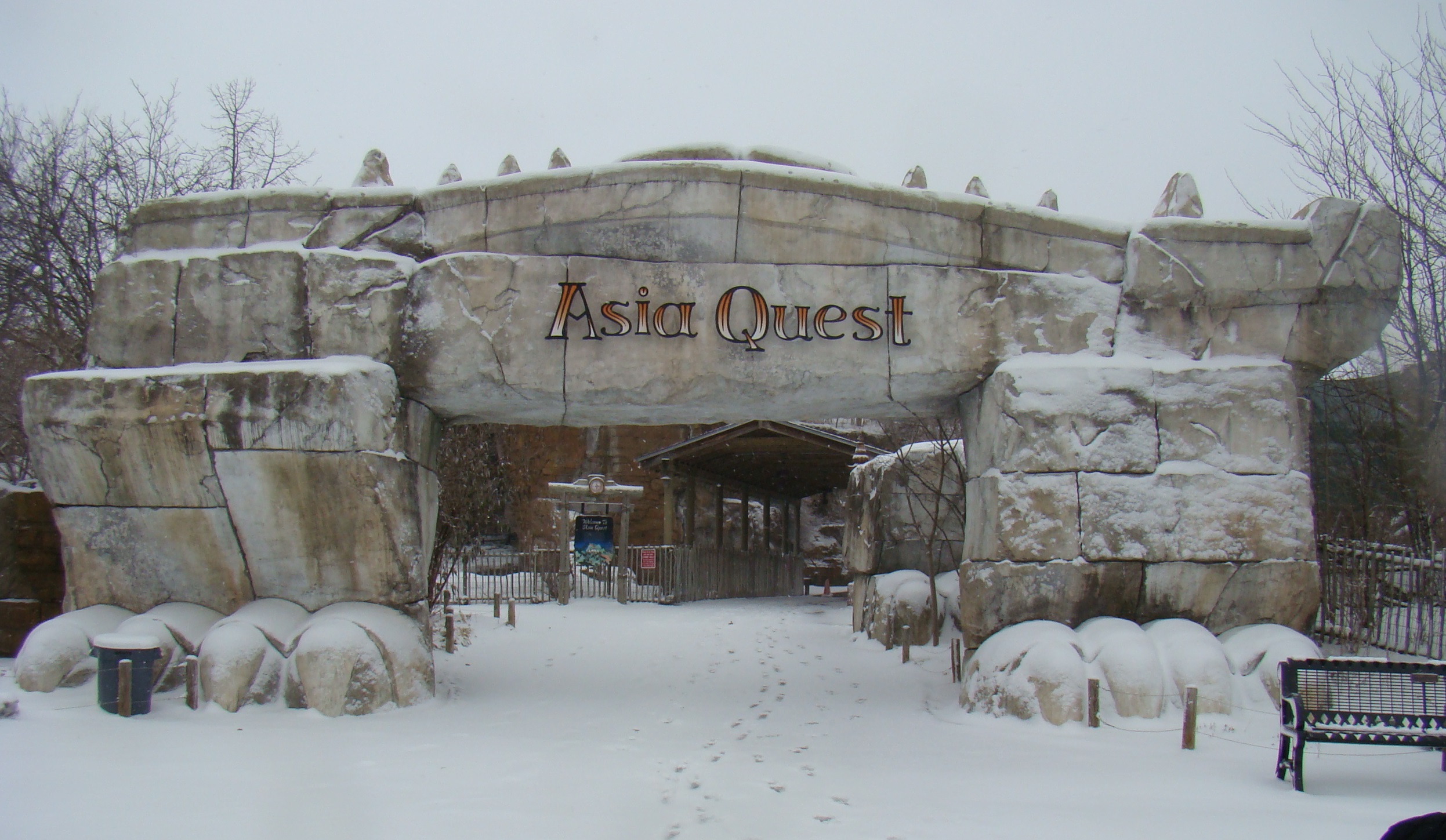
Have cabin fever? Put on your warmest clothes and visit the Columbus Zoo for an entertaining, learning experience. Upon arrival,  a few snow flakes bounced through the air, but before long the zoo was blanketed in a cover of white.

Even on a crisp, cold winter day, the zoo had many visitors, although just a small portion when compared to a summer visit. Many animals were inside display areas or tucked away in barns just waiting for the summer season to arive, but there was still much to enjoy.

Snow covered Asian Quest very soon.

Snow quickly covered Asia Quest.

While the present Columbus Zoo opened in 1937, Jack Hanna, graduate of Muskingum College, developed the zoo into one of the best zoos in the United States. Hanna served as director from 1978-93 and still serves as director emeritus. Today over 9,000 animals live there.

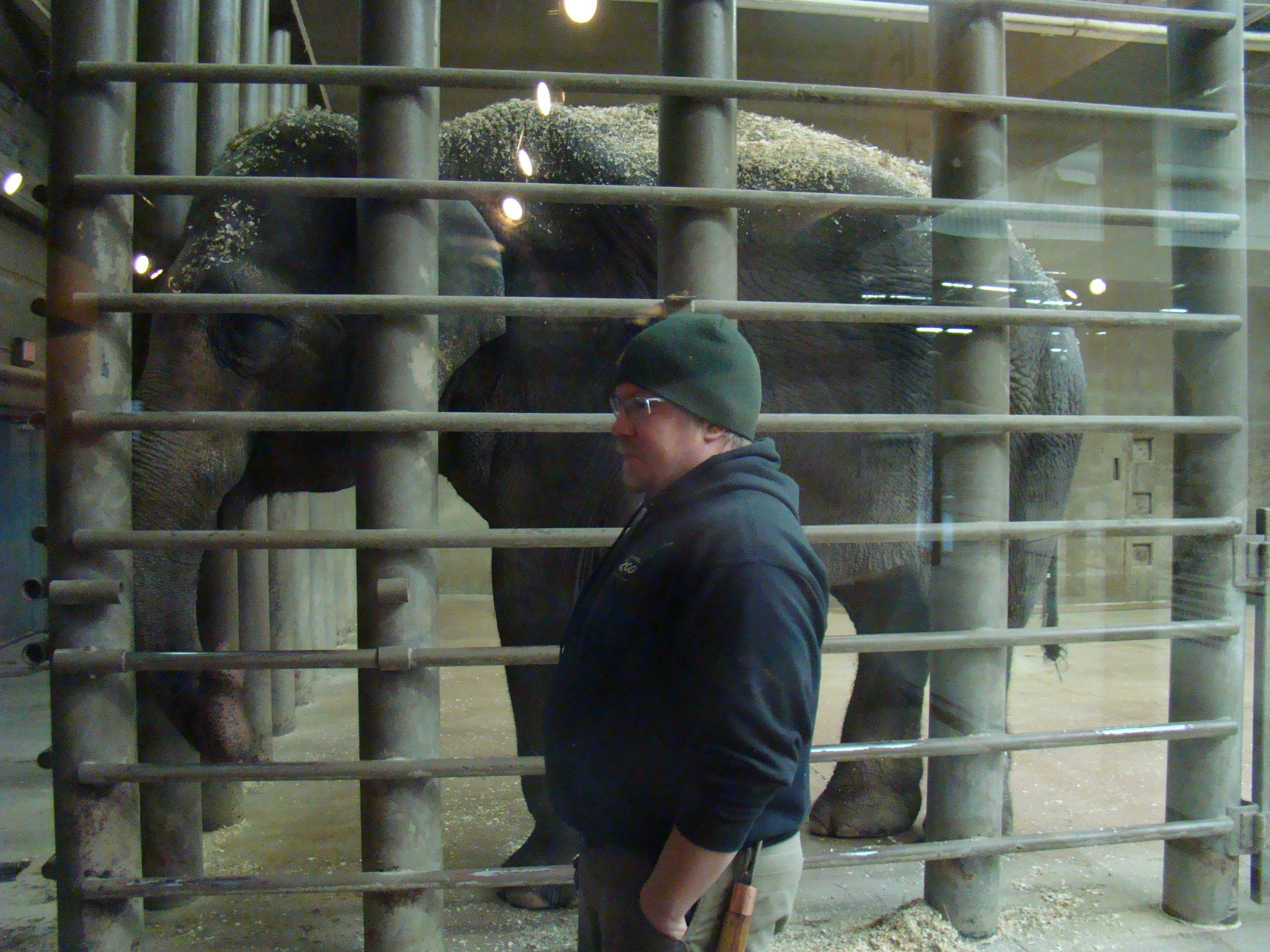
This young elephant was inside bars during petting and feeding.

This young elephant was inside bars during petting and feeding.

Columbus Zoo & Aquarium provides something for everyone through five main areas: North America, Asia Quest, Australia & Islands, Congo, and Heart of Africa, the newest exhibit, which was closed on this visit. Still numerous displays make a visit worthwhile and memorable during the winter months, without the usual stops at the many gift shops and snack stands along the way.

While it’s impossible to mention all the adventures this winter day, here are a few gypsy highlights.

Hank, the largest elephant in a North American zoo weighed in at 15,600 pounds and measured 9’5″ tall. That’s one big elephant! People had the opportunity to pet and feed one of the smaller elephants, who kept looking for more treats.

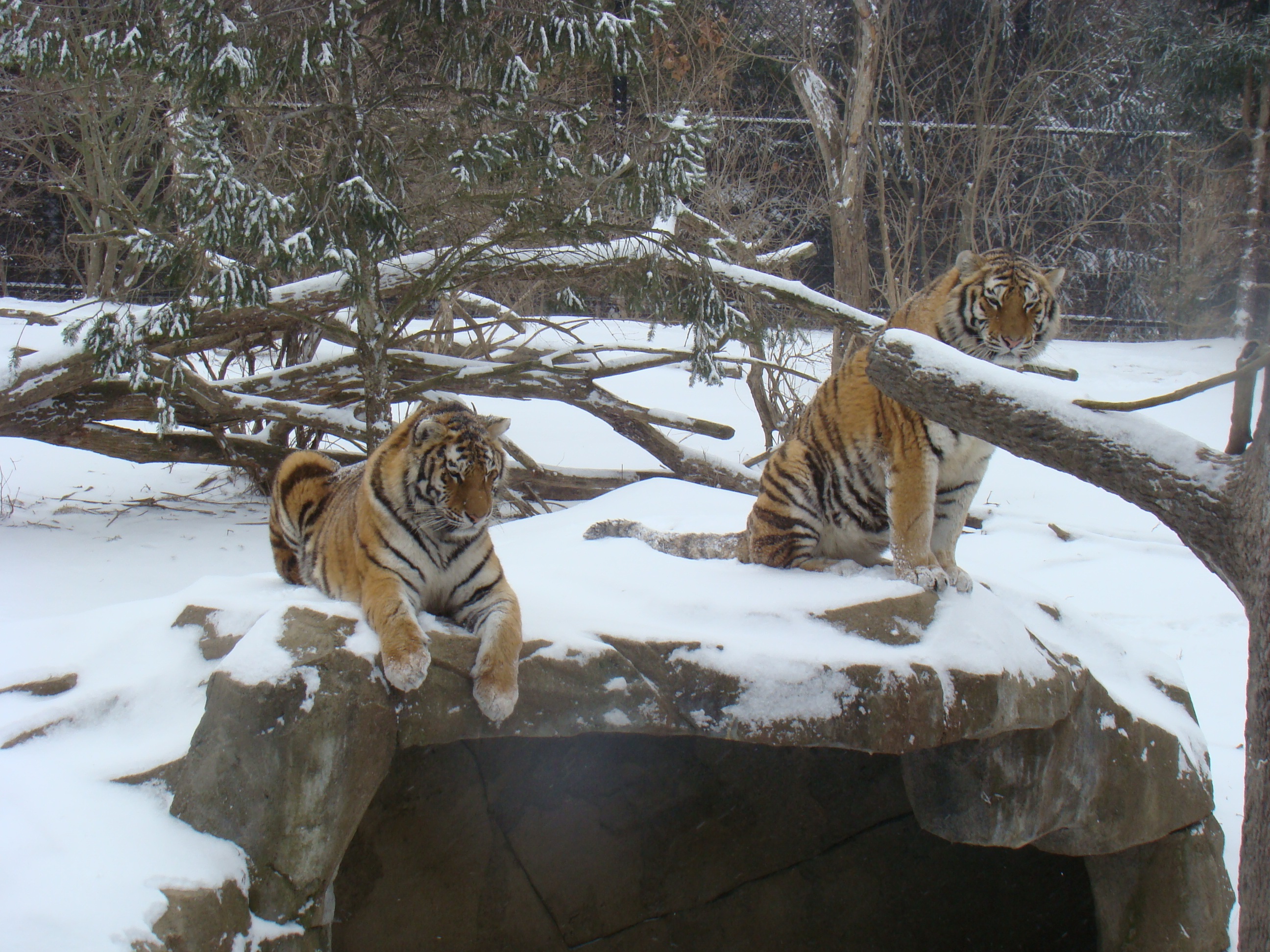
Two Siberian Tigers lounge on top of their cave.

Two Siberian Tigers lounge on top of their cave.

Outside on Tiger Walk, several Siberian Tigers lounged in the snow, while one snuggled up in a corner of a stone cave. They watched movements carefully, probably ready to pounce at the slightest provocation.

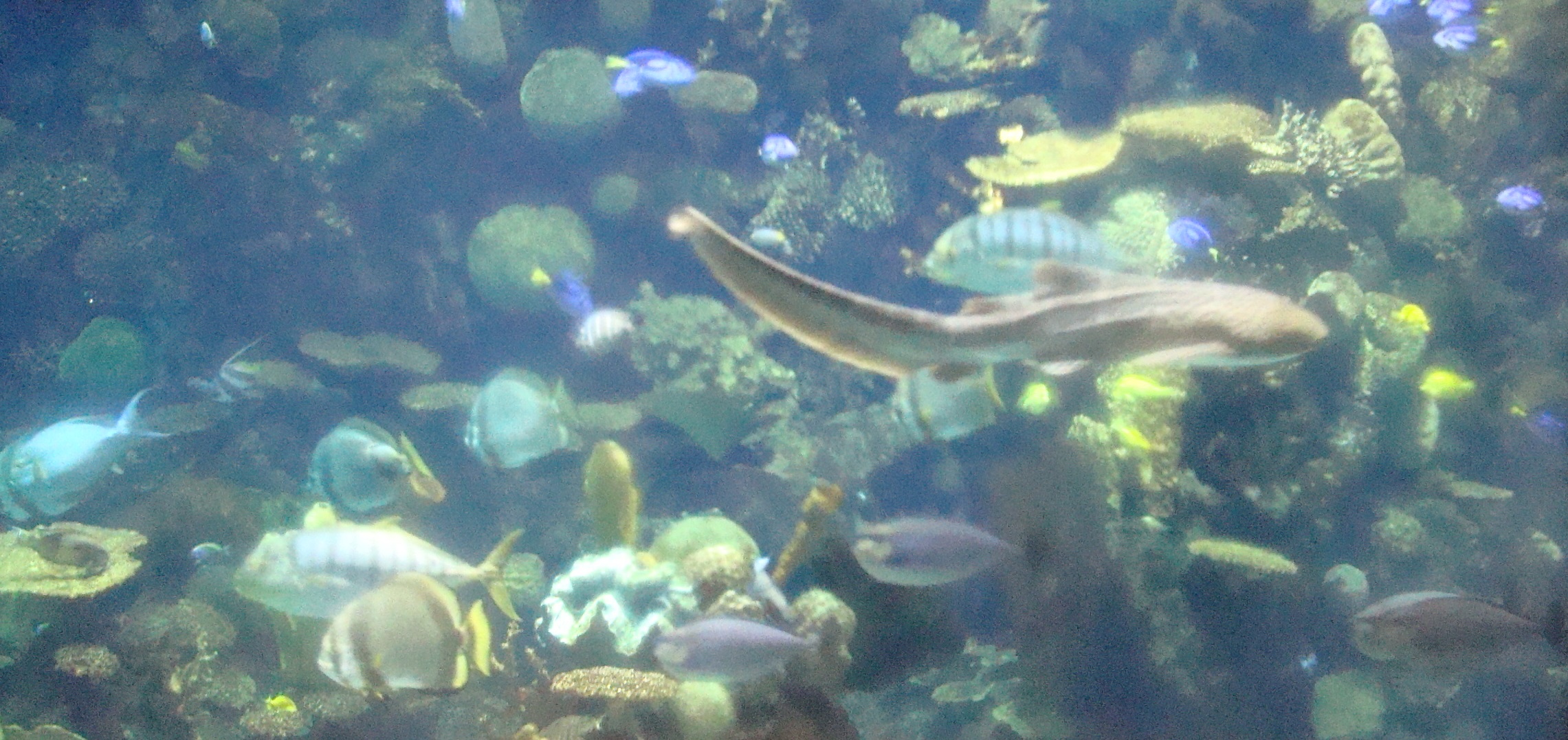
Discovery Reef's Aquarium provides a break in the day.

Discovery Reef’s Aquarium provides a warm break in the day where you can sit and watch the fish among the coral reefs.

On a winter day, you might want a break from the cold, and a chance to rest your legs. Several possibilities exist. The giganitic Aquarium at Discovery Reef provides bleacher seats to watch the antics of the fish in a 100,000 gallon salt water aquarium. When you observe all the different species of fish from around the world swimming peacefully together, it seems there might be a lesson for those watching.

Close by, manatees also entertain as they pull lettuce and cabbage as a tasty treat from the surface of the water. Or perhaps you might want to slither over to the Reptile Building to see the snakes, lizards, and even turtles.

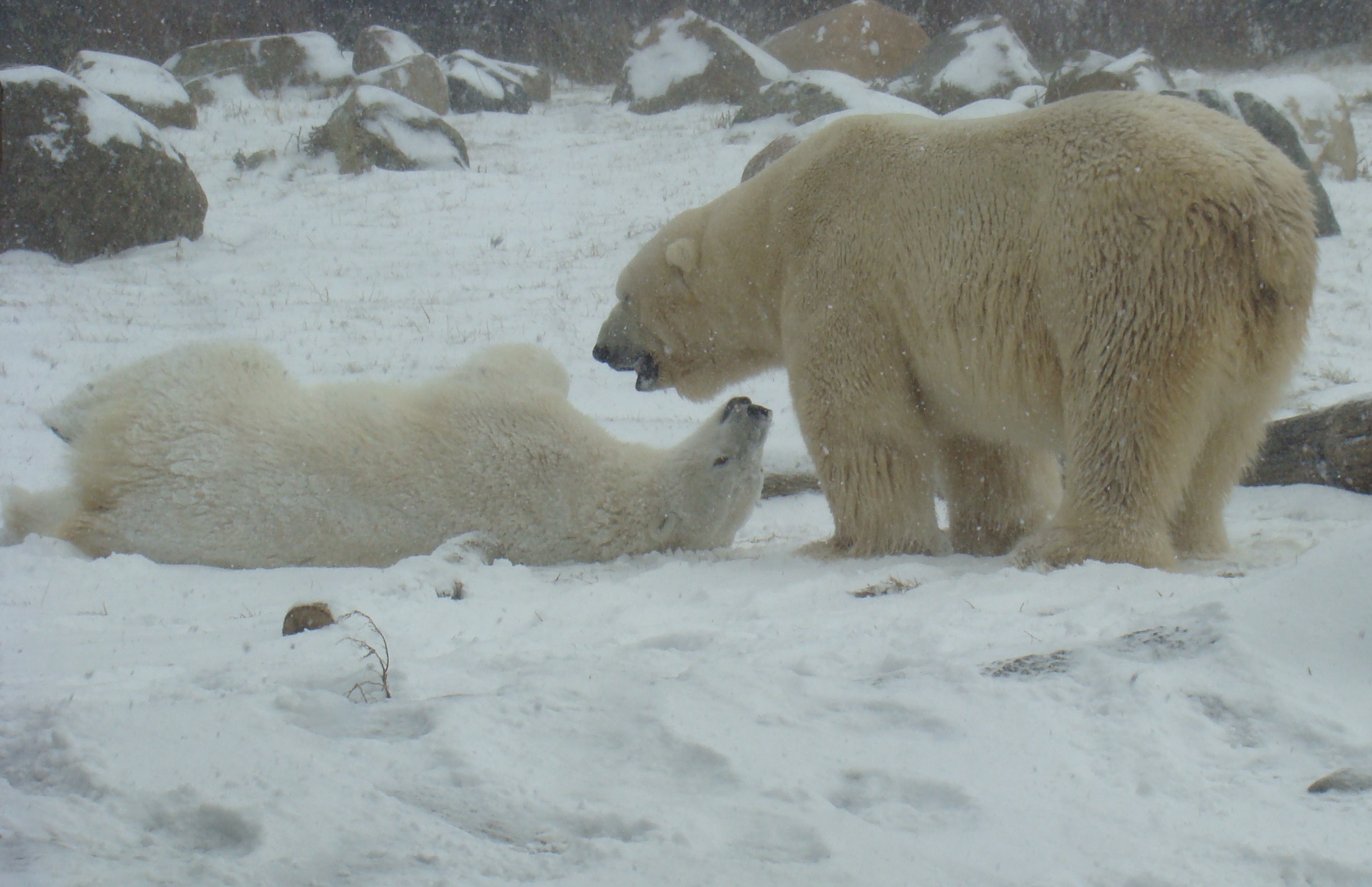
Two polar bears roll in the snow.

Two polar bears roll in the snow.

Visit North American’s Polar Frontier, which opened in 2010, to watch polar bears enjoy the new fallen snow. They like to be clean and dry as dirty fur provides little insulation, so they take a bath by rolling in the snow. Imagine the polar bears thought the weather perfect.

The Columbus Zoo & Aquarium is open every day of the year except Thanksgiving and Christmas Day. Of one thing you can be certain, every day’s a different experience while at the zoo. You never know what the animals will do next. Go to the zoo any season of the year!

To visit Columbus Zoo & Aquarium, take I-270 around Columbus, Ohio and use Exit 20. From there you will see signs directing you to the zoo. You’re sure to have a great day!

“Digging the Past” at Campus Martius Museum in Marietta, Ohio

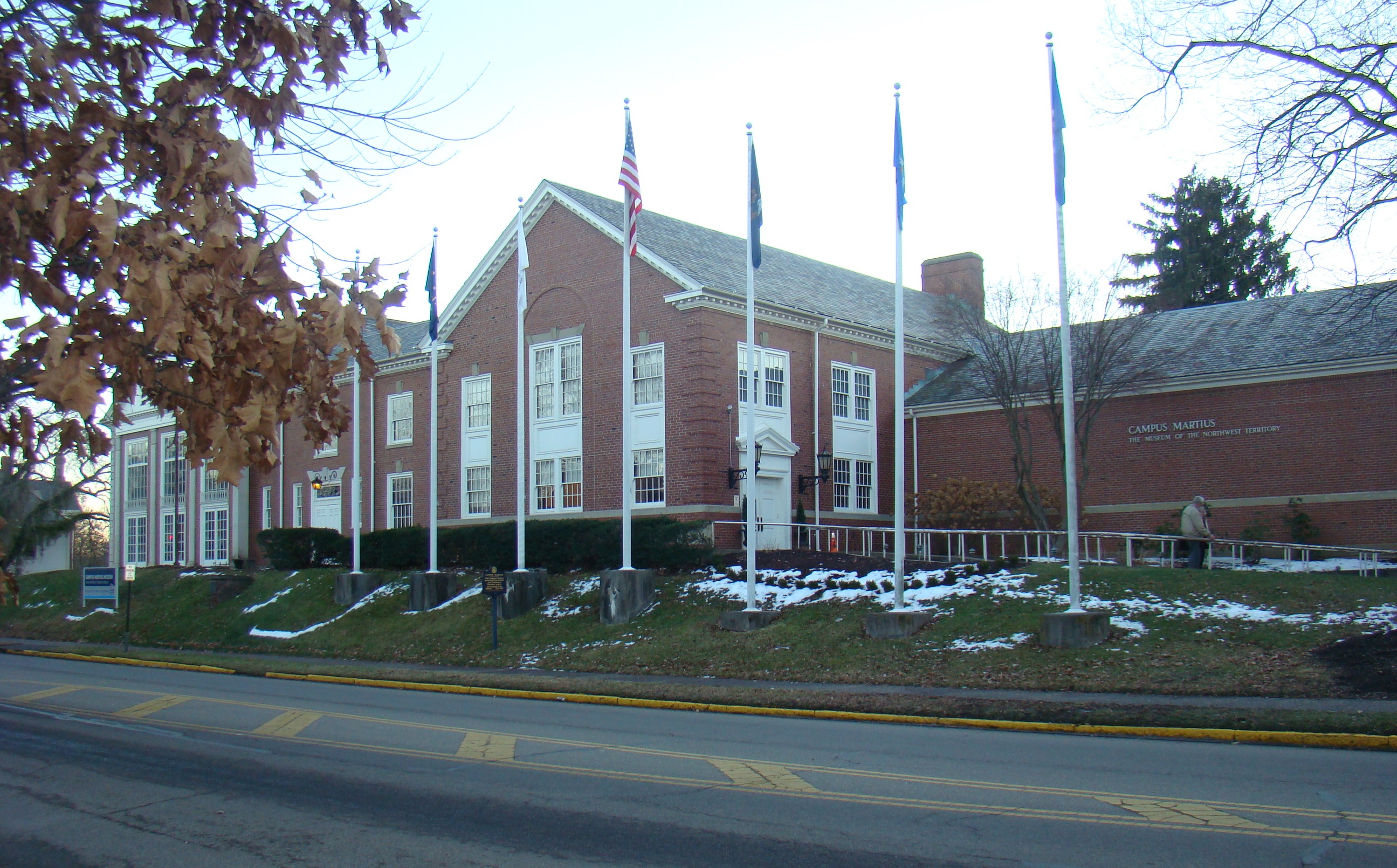
Campus Martius Museum in Marietta, Ohio

Campus Martius Museum in Marietta, Ohio

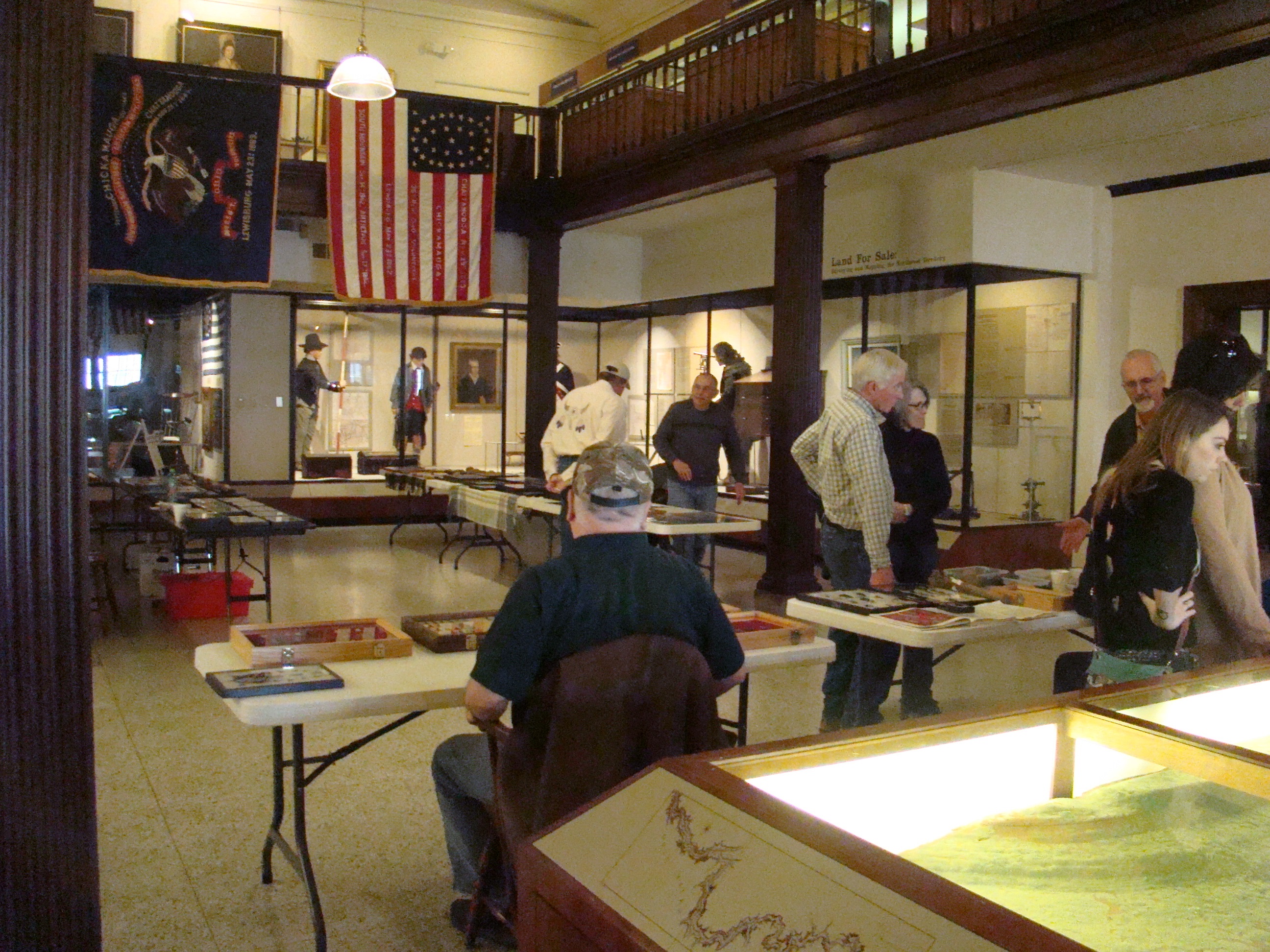
Dig into the past and discover facts about people who lived hundreds or even thousands of years ago. At Campus Martius Museum in Marietta, Ohio, those interested in archaeology had an exciting day called “Digging the Past”. Special displays by area people, who are interested in what is under the ground, provided valuable information for anyone who wished to listen.

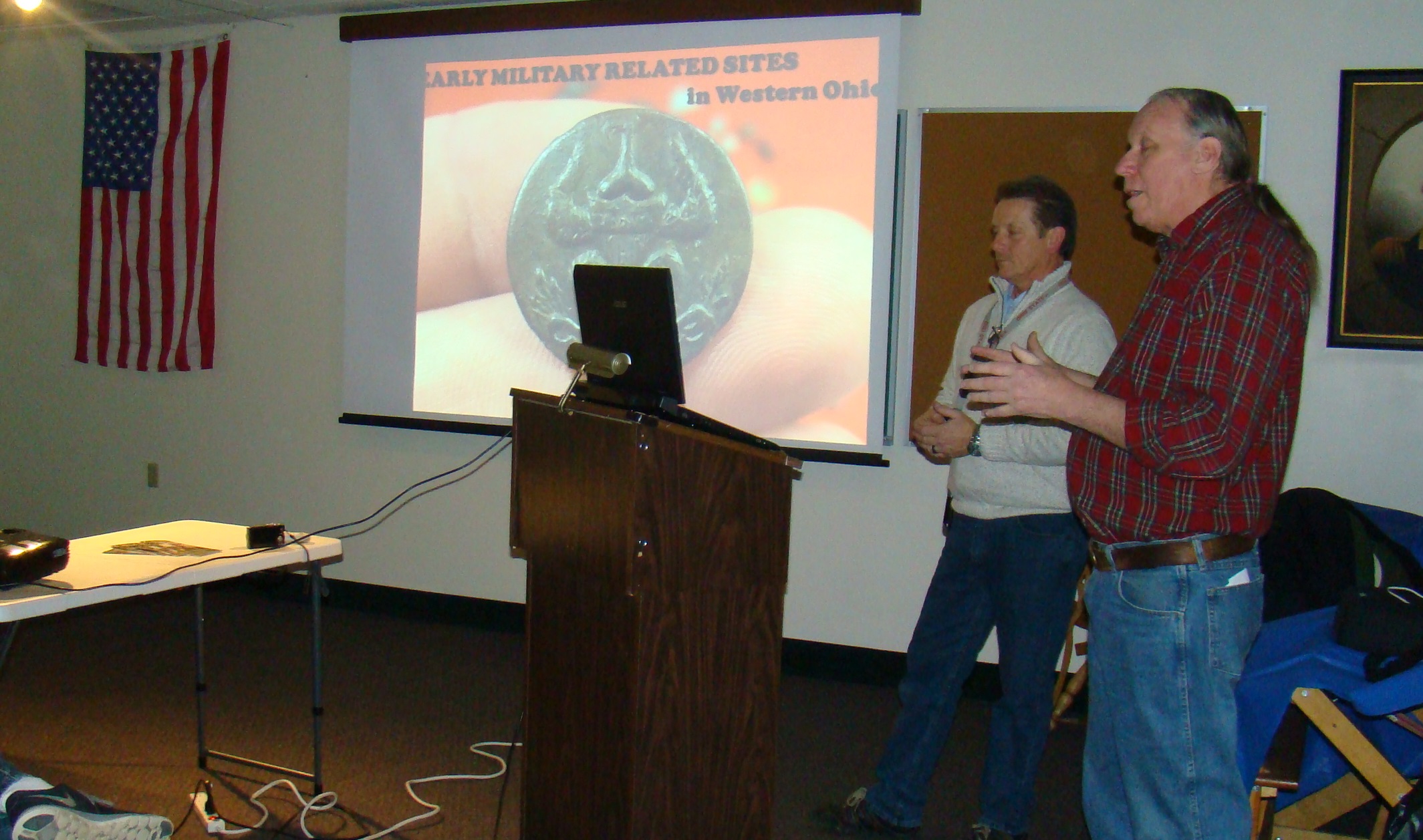
One of the speakers at Archaeology presentation

One of the speakers at Archaeology presentation

Five knowledgeable archaeologists and collectors gave slide show lectures on various archaeological subjects. Some of my favorite dealt with the various groups of mounds around the state of Ohio. Bruce Lambardo, ranger at the Hopewell Culture National Historic Park, explained why we should change the term “mounds” to “earthworks”. These structures are not just piles of dirt built by early Native Americans, but precise, geometrical art works that were not only enormous in size, but also aligned astronomically. He described the Hopewell Culture site near Chillicothe as the most spectacular configuration of Earthworks in the world.

Dr. Jarrod Burks, Director of Archaeological Geophyics at Ohio Valley Archaeology, discussed the earthworks throughout the state including Newark, Chillicothe, and Marietta. While many of the mounds have been destroyed by farming and housing developments, there are still new ones being discovered in the last fifty years.

Mound City Artifacts explained.

Mound City Artifacts explained.

There seemed to be a strong connection between the Newark and Chillicothe Earthworks when they were constructed in 300 B.C. – 400 A.D. These earth architects constructed these ceremonial mounds, where the circles had the exact same diameter, and squares measured the same corner to corner. Even more exacting was the fact that the circle would fit perfectly inside the square. How did these early people perform such mathematically correct shapes and even have them aligned to the winter and summer solstices? How did they construct Great Hopewell Road directly between the two mound centers? Either they were geniuses or perhaps they had some extraterrestrial help. Keep your mind open to all possibilites.

Wes Clark explained his finds at The Castle Museum, where pottery and earthworks artifacts have been discovered. Nathaniel Clark Pottery (1808 -1849) existed on the same site as today’s Castle, so many pieces of pottery have been discovered from red earthenware to stoneware. Earthworks artifacts also frequently appear, including flint arrowheads.

From all the buttons found at the military sites, Archaeologist Greg Shipley remarked, with a smile, that the thread must not have been very strong. A wide variety of buttons appeared in archaeological digs in western Ohio military sites while looking for footprints of an outpost there. The hot spot for buttons seemed to be in the area of the taverns.

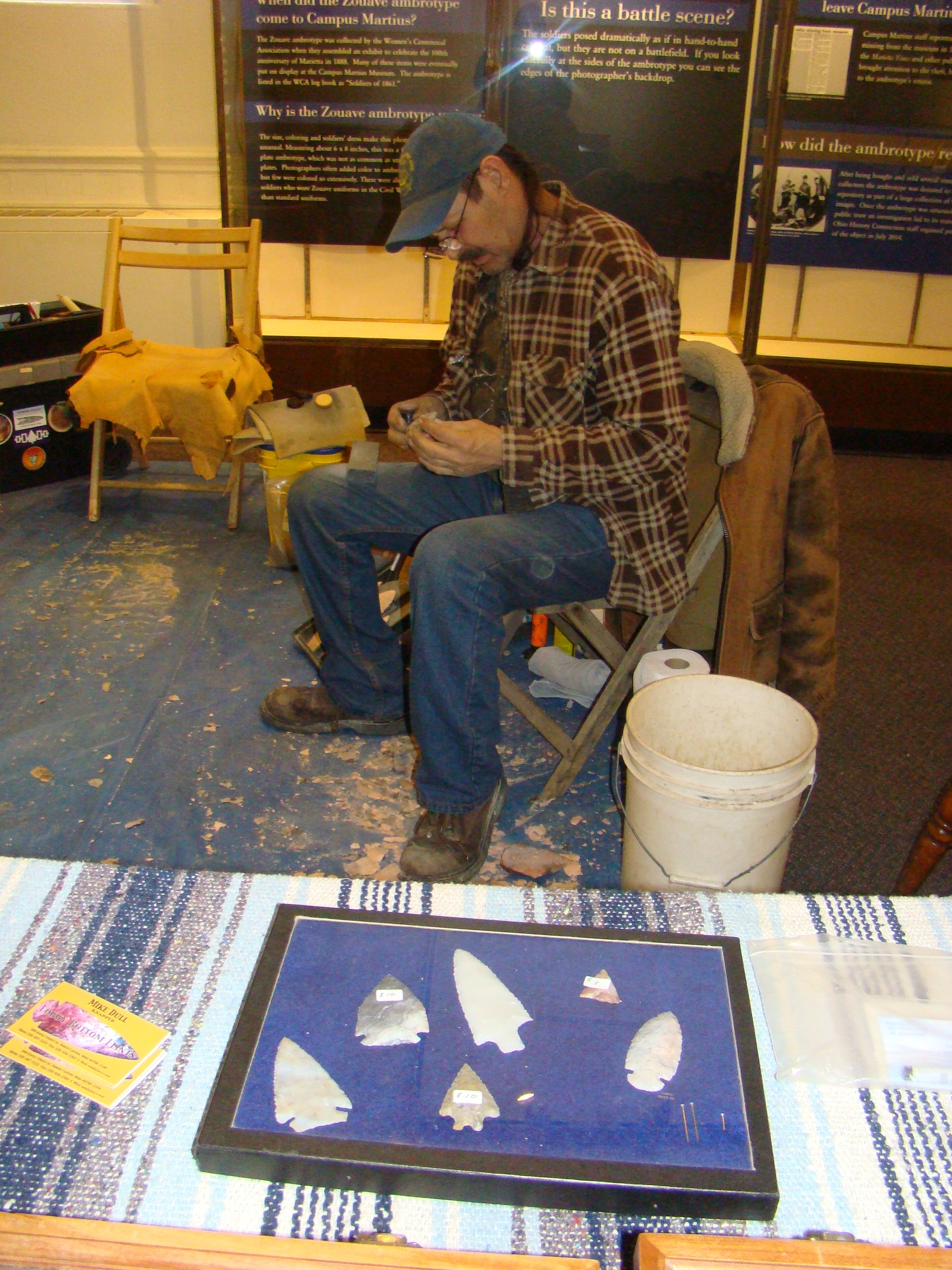
Flint Knapper demonstrates skills.

Flint Knapper demonstrates skills.

Flint knappers displayed  the intricate methods they use to shape the pieces of flint found. Their methods are beyond my description as they magically formed arrowheads by chipping and shaping the layers of the flint. Long ago the Indians used either stone or bone to shape their arrows from flint, in much the same manner. After use, the arrowheads would need re-sharpened by removing flakes to reshape, so they would get smaller and sharper as time passed. The flint knapper at Marietta had been creating flint pieces for fifteen years so was quite excellent at his craft.

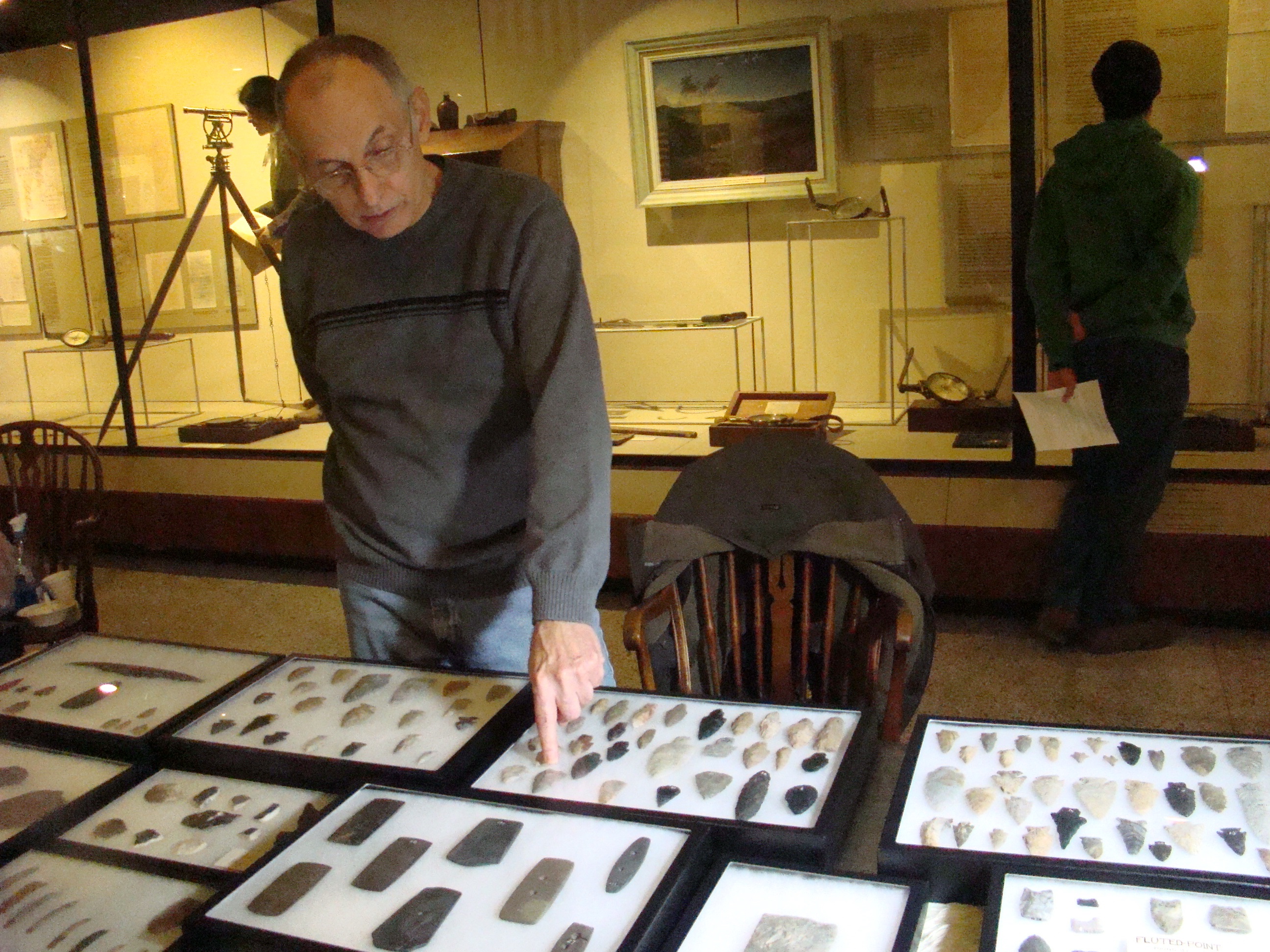
Archaeology displays filled the lobby of Campus Martius Museum.

Archaeology displays filled the lobby of Campus Martius Museum.

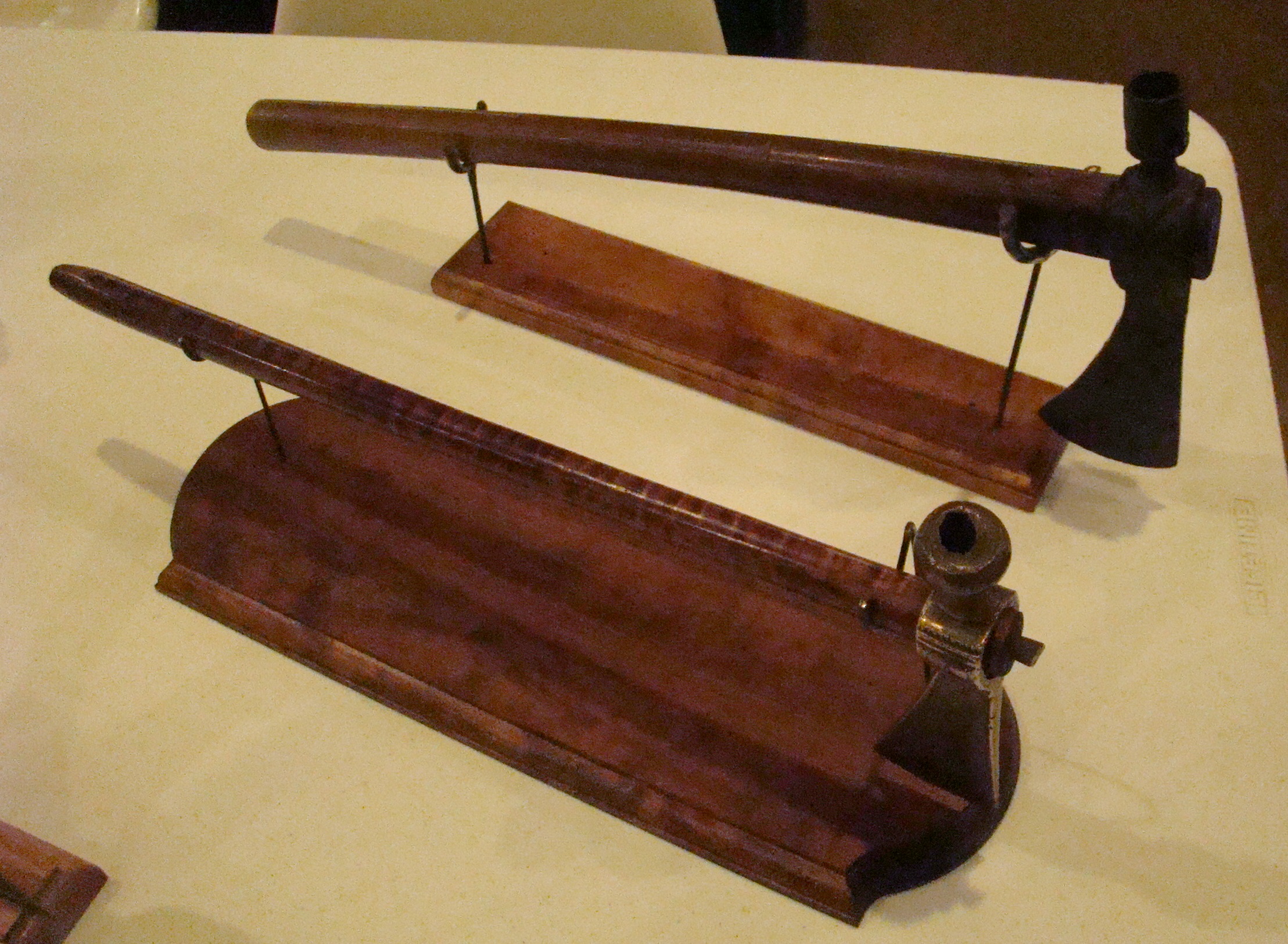
Numerous displays throughout the lobby included historic artifacts from collections around the state. Not only were there Indian artifacts from the Adena and Hopewell people, but also artifacts from military camps of the Revolutionary and Civil Wars as well as historic Marietta.  The Pipe Tomahawk intrigued me with a head that has an ax on one edge with a pipe bowl on the other. It enjoyed multiple uses as a pipe to smoke, a ceremonial instrument, and also a weapon.

Tomahawk Peace Pipe

Tomahawk Peace Pipe had several uses.

Campus Martius Museum in Marietta holds informative speakers throughout the year on a wide variety of subjects. If you are interested in Ohio history, check out their schedule at Campus Martius Museum website.

Marietta is located on the beautiful Ohio River just off I-77. Take Exit 1 to downtown Marietta and follow State Route 7 / 60. Turn left on Washington Street and one block down on the right hand side, you’ll see Campus Martius Museum. There is parking to the right of the building or one block behind at the Ohio River Museum. Visit both museums if time permits.