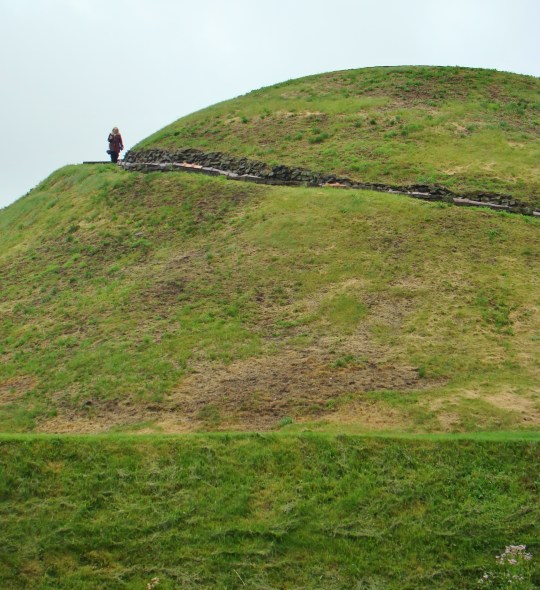
While climbing Grave Creek Mound, this young lady wonders about the past.
What’s inside Grave Creek Mound at Moundsville, WV? That’s a question many people are curious about. Years ago someone actually made a tunnel into the Mound and found some interesting things. An eight foot tall skeleton with copper bracelets and mica breastplate were discovered and actually placed on display for some time in a museum inside the Mound.

Alexander is doing a doctoral study on use of varied equipment to receive data on what is inside the Mound.
Now, archaeologists are not able to disturb ancient burial grounds so an alternative method of looking inside is being tried. In the spring of 2016, Alexander Corkum, a doctoral student at the University of Bradford in West Yorkshire, UK, used a non-invasive technique to investigate the Grave Creek Mound.
Modern equipment was used, such as: (ERT) electical resistivity tomography, topographic survey, GPR (Ground Penetrating Radar) survey, and photogrammetry. Most of this equipment had never been seen before in the valley. Actually, Grave Creek Mound is the first place this combination of equipment has been used anywhere in America, according to Corkum. The only previous place for gathering data with this equipment was at England’s Stonehenge, where they discovered a new Super Henge.

This GPR produces a type of picture of the internal Mound as it gets readings from electronic currents sent into the ground.
In the past, archaeologists have had digs to find pieces of history hidden under the ground. With this new equipment, they are hopeful to find images that will give valuable information about the past without disturbing the ground. Corkum feels that archaeology is destructive.
His team feels that every place does not require excavation. They feel the best way to preserve history is to keep it in the ground, while doing a remote geological survey.
The GPR had been taken up and down the mound in several directions to get as many remote sensory readings as possible. An electronic current is injected into the ground and this produces a radargram. My mind wondered if this was similar to an MRI of the ground.
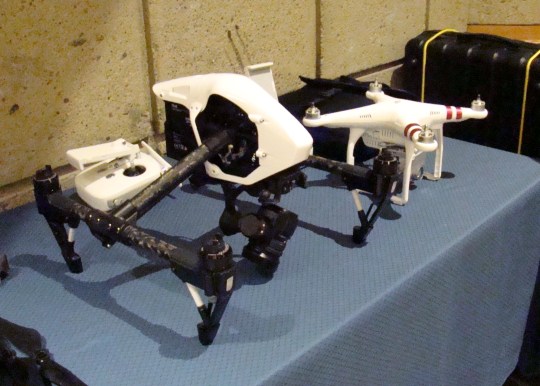
This large drone contains a better camera, which produces clearer pictures.
Drones were also used to take pictures – photogrammetry. They were programmed to take pictures every foot and can then produce a model of the object being photographed, in this case the Grave Creek Mound.
When asked why they came to Grave Creek Mound, they replied, “There’s no other place quite like it.”
For several days, data was collected but little legitimate conclusions have been reached at this point in time. They expect valuable data will be available when the results are carefully analyzed. This could take several months.
One thing the data will not clearly show are fossils and artifacts. Radar will show different disturbances in the ground area such as stones, water and soil density.
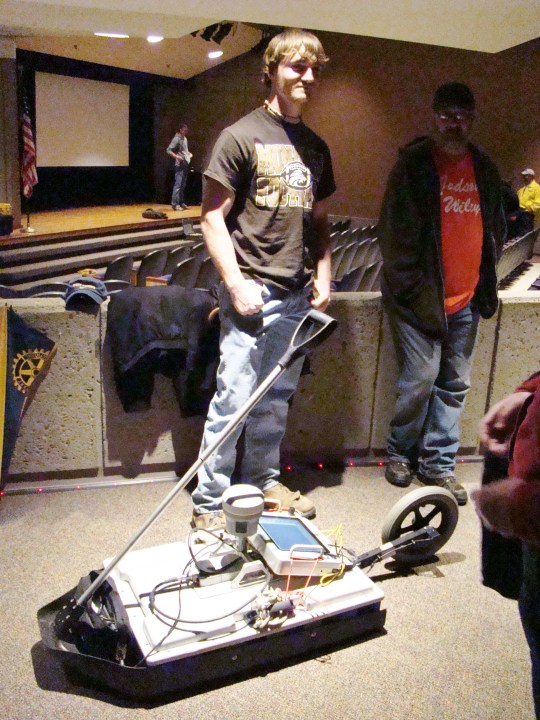
This high school student was lucky enough to get to assist with the experiments.
Jarrod, a sophomore at John Marshall High School, was fortunate to be able to assist with this project throughout the week. His youth enabled him to climb the mound time after time, pulling the equipment. Some days that included as many as seventy trips. Jarrod was very knowledgeable about the mound and interested in the process. Someday this exceptional young man hopes to become a geoarchaeologist.

A drone flies overhead taking pictures during its flight.
After the lecture, everyone went outside to either walk to the top of the mound, or watch as they demonstrated the drones taking pictures.
The final result of all this imagery will be to construct a model of the mound both inside and out. There is always something new to explore in the interesting world in which we live.
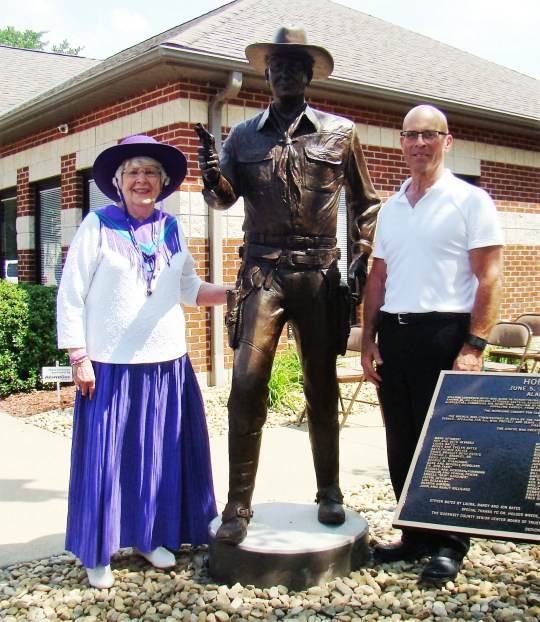
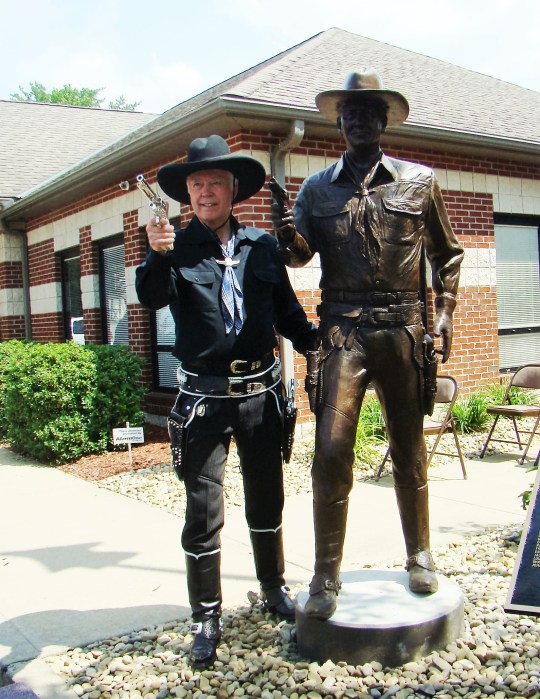
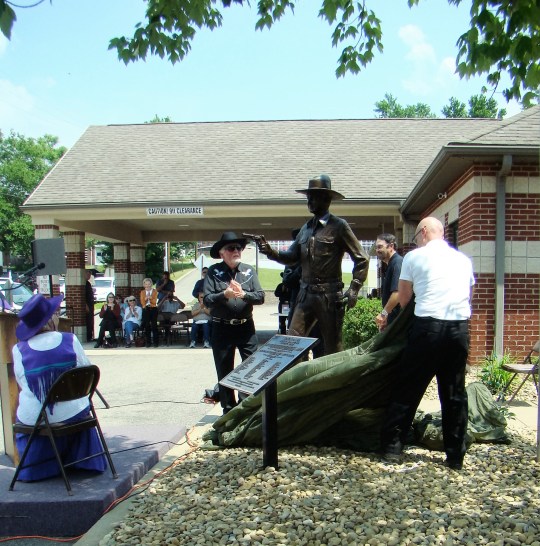

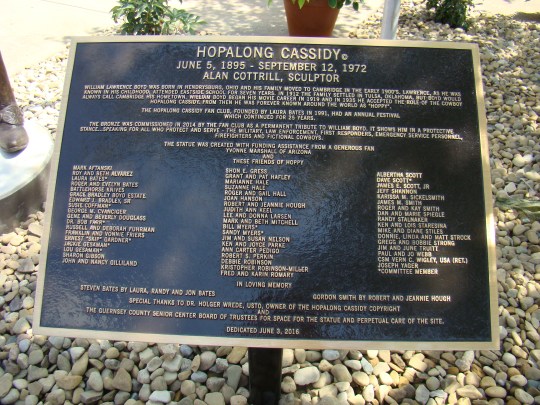
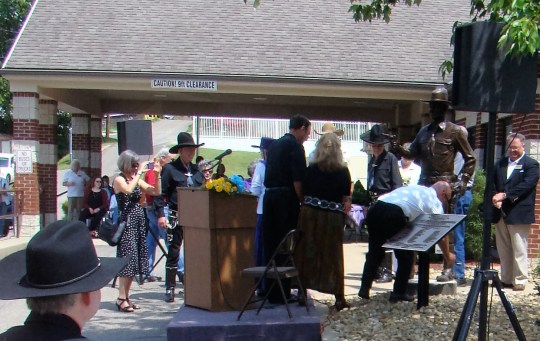 At the conclusion of the dedication ceremony, several honored guests placed special soil around the bottom of the statue. This soil came from near the cabin where the Boyds stayed when films were being made in California.


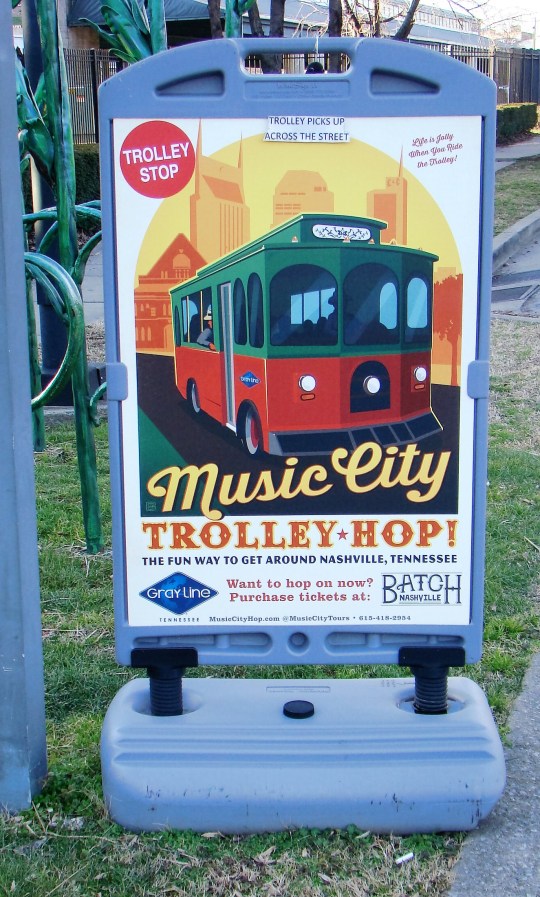 Waiting for the red trolley car to arrive, there was time to visit the Farmer’s Market in Nashville, Tennessee. Downtown parking seemed rather expensive at $20 for the afternoon but it was free to park at the Farmer’s Market and hop on the trolley at that point.
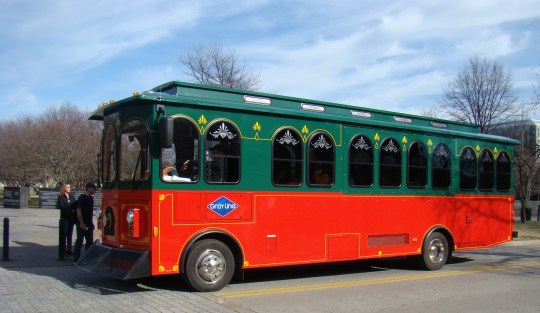 The driver and guide made the trip fun with a great assortment of historical facts, stories of businesses and some downright corny jokes. The Trolley Tour is a hop-on tour so you can get off at seventeen various stops and hop right back on later in the day. Sure saves fighting downtown traffic.
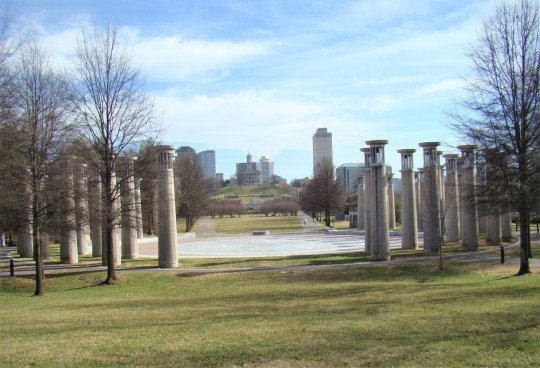
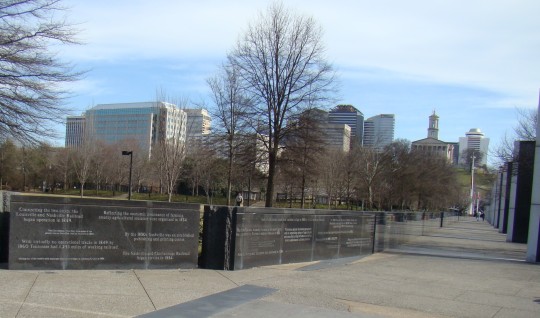
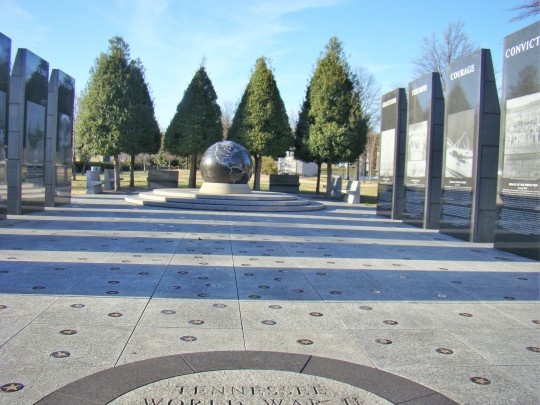
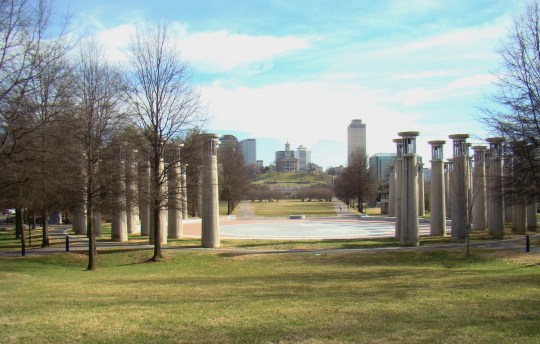 Getting on at this point, the first stop is the Bicentennial Capitol Mall State Park. Not sure if the guide was stretching the truth or not, but he said the fountain of water supported a large granite ball weighing 18,000 pounds!
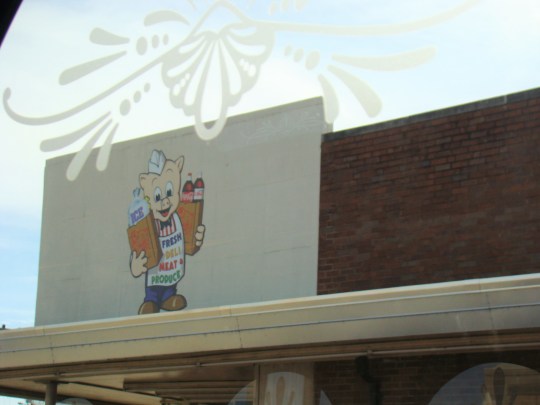 Attention was given to the local Piggly Wiggly as this chain began in Memphis, Tennessee as the first self-service grocery store back in 1916 by Clarence Saunders. Previous to this time, shoppers gave their orders to the clerk and the clerk then gathered everything from the shelves. Saunders rearranged the stores to make shopping much faster for the customer and the clerk. Today there are 600 Piggly Wigglys in 17 states.
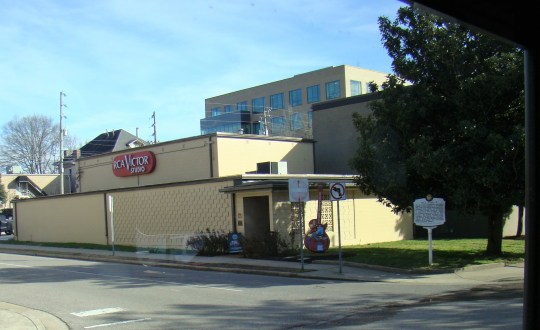 RCA Studio B created Nashville magic for over 35,ooo songs, making it an international recording center known as one of the cradles of the “Nashville Sound”. Popular artists, such as Elvis Presley, Chet Atkins, Dolly Parton, Willie Nelson, and Eddy Arnold recorded their songs here.
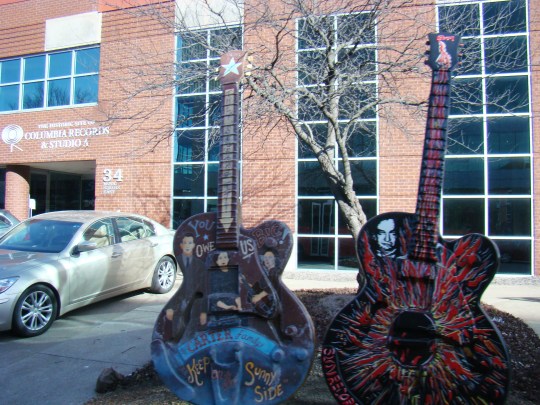 Nearby, the historic site of Columbia Records Studio A displays large guitars indicating the Carter Family and Johnny Cash recorded many of their songs here. Today both of these formerly popular studios are learning centers for Belmont University.
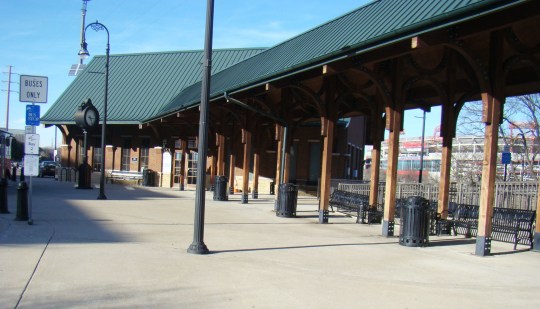 At Riverfront Train Station, the trolley takes a short break before continuing on the rest of the route. This site was previously the home of another train depot which was build in 1902. The present station was built in 2005 and they have attempted to capture the Old World flavor.
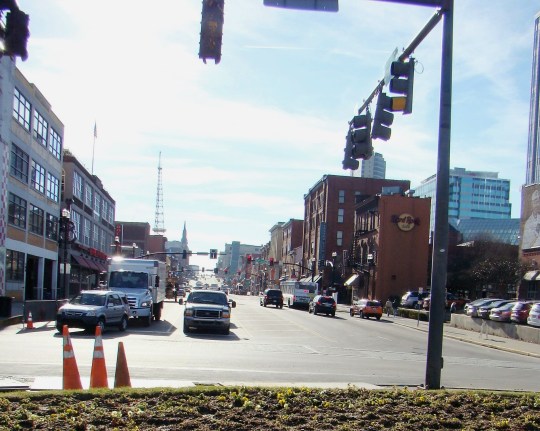 Straight across the street from the station is Honky Tonk Row. This is where many stars and hopefuls play during the evening hours as entertainment in many local clubs. They provide encouragement, a stage, and a tip jar for musicians.
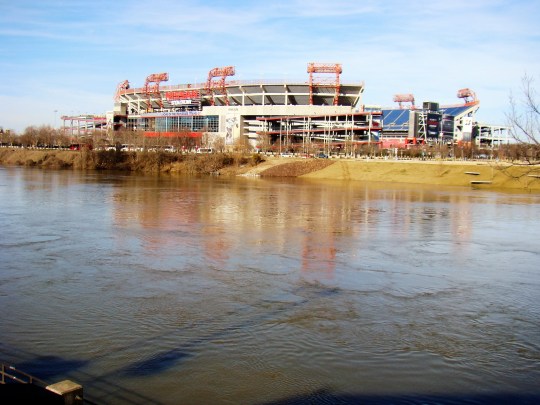 The beautiful Cumberland River flows behind the station and gives a grand view of the Nissan Stadium, home of the Tennessee Titans football team, on the other side. You can actually walk across the river to the stadium on the Shelby Street Pedestrian Bridge. The Cumberland River is 688 miles long and eventually joins the Ohio River in Kentucky.
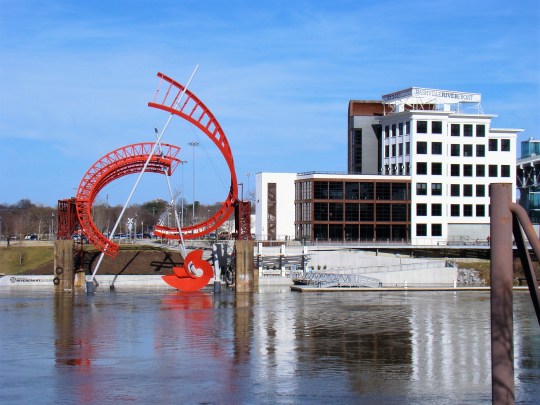 A beautiful sculpture brightens the waters also. Ghost Ballet East Bank Machineworks received its name because as you look at the sculpture from different angels, it suggests movement, similar to that of a dancer. This gives a little time to watch the river flow by and gain a little peace from the busy day.
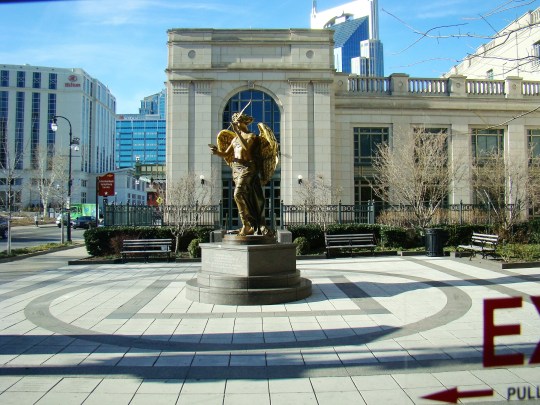 On our way back to Farmers Market, evidence appears that Nashville hosts more than country music. A glimmering bronze statue, The Recording Angel, stands at the corner of the Schermerhorn Symphony Center, home of the Nashville Symphony, which provides classical music entertainment. But they are no snobs, as often country music favorites appear accompanied by the orchestra.













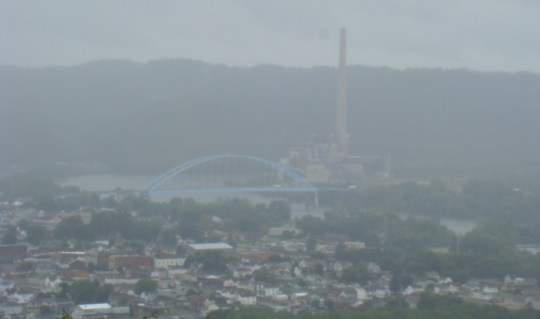 On a rainy day at Grand Vue Park near Moundsville, WV, fog hung in the air making the valley below seem mystical. Through the mist you could see the bridge over the Ohio River. A celebration of our connection to the sacredness of earth was the focus of this Earth Healing and Water Blessing Day, but it seemed the rain had already performed the Water Blessing part.
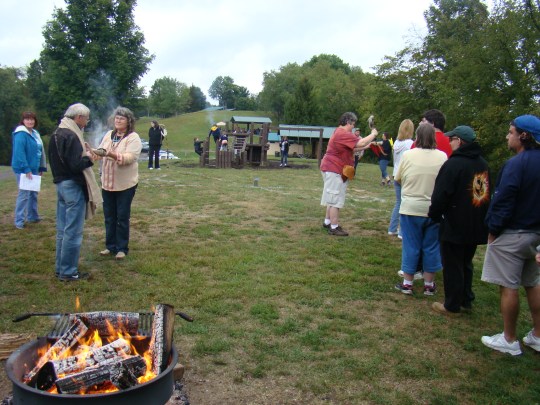
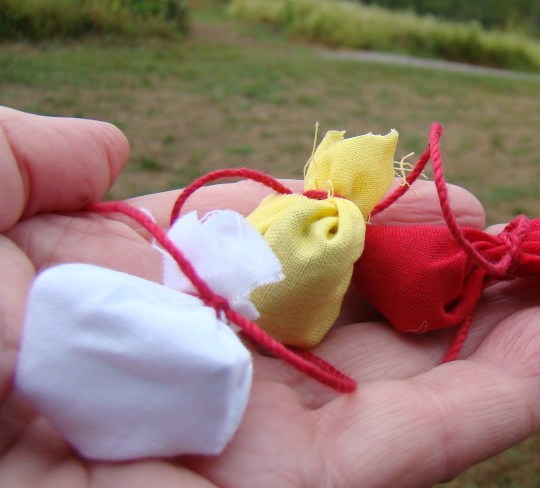 Prayer bundles were then made for a Despacho Fire Ceremony. A prayer request was written on a small piece of paper and placed inside a small piece of cloth with some special herbs. After praying over the prayer bundle, it was then tossed into the fire so prayers could ascend to the heavens.
 Sunshine Jones led the group in a session of drumming to connect with Spirit. Everyone had the opportunity to use some kind of instrument for participation in the event.
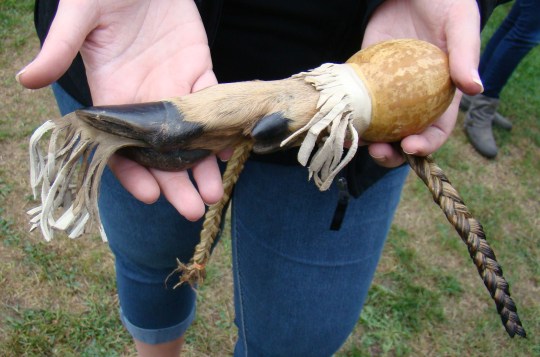 One unusual instrument was the foot of a deer topped with a shaker ball, which made a delightful sound…and the foot was easy to grip.
 Much dancing and singing took place around the fire as people got caught up in the spirit of the afternoon of earth healing. That healing must begin within ourselves, so we can then spread our energy to influence everything we touch.