Places to go and things to see by Gypsy Bev


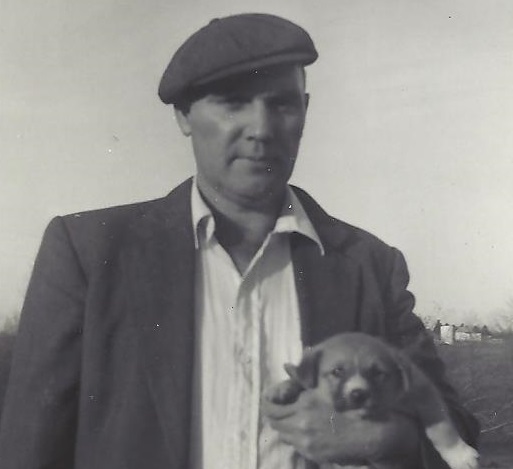
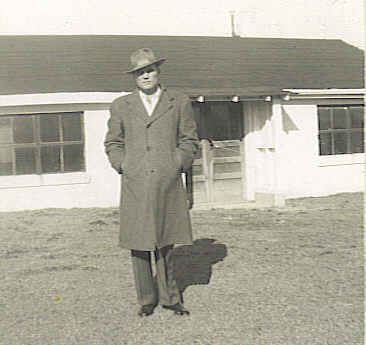
Dad usually wore this hat.

Dad usually wore this working hat.

When you put on a hat, you take on its character. Children put on a cowboy hat and pretend they are riding the range, or a helmet and pretend to be headed for space. A woman puts on a Victorian hat and feels more a lady.

   My Dad always wore a hat. Before leaving the house, he’d pick up a hat and with a snap of his fingers, place it on his head. Each time a different hat appeared on his head, Dad’s personality seemed to change.

Dad dons his felt hat.

Dad dons his felt hat when he gets dressed up.

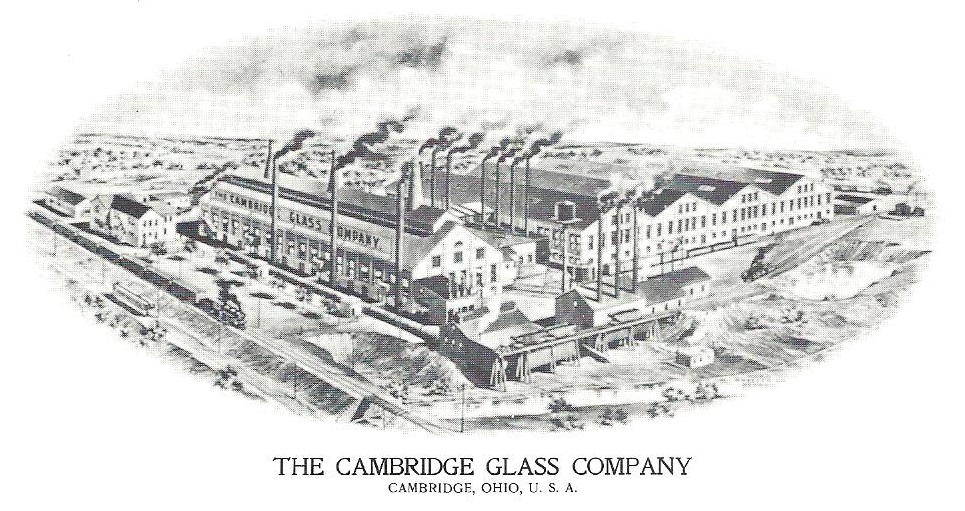
   Most days he would grab an old “hunky cap” when heading for work at Cambridge Glass Company or on the farm. “Hunky” was a term used disparagingly in the early 1900s to describe the men from Hungary and Czechoslovakia who did manual labor. This flat hat with a snap on the bill was worn most often. When wearing this hat, his demeanor usually became more serious.

   Going to town on Saturday or to church on Sunday, a different hat would appear. Wearing a white shirt and dress slacks, Dad always donned a gray felt hat that dipped slightly over his right eye. That gave him a debonair look in my eyes. I’m sure he felt like a handsome gentleman when tipping his hat to the ladies.

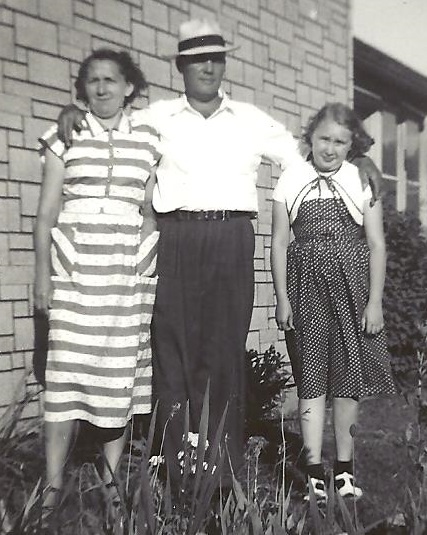
Dad wears his straw hat with his two favorite girls.

Dad wears his straw hat with his two favorite girls.

   Every time we visited, this well-mannered fellow removed his hat in the house and would place it on the couch or chair nearby. Children clamored to sit by this storyteller, but he’d warn them, with a shake of his finger and a wink of his eye, “Don’t sit on my hundred dollar hat.”

   When summer arrived, Dad dressed in yet another hat. This time it was a Panama hat to stay cooler in the hot summer sun. He always smiled when wearing that hat. Perhaps the warm summer days brought happiness, or maybe this time of year held delightful memories, but he always walked with a spring in his step when wearing that straw hat.

   No matter what hat Dad wore, his face always wore a smile.

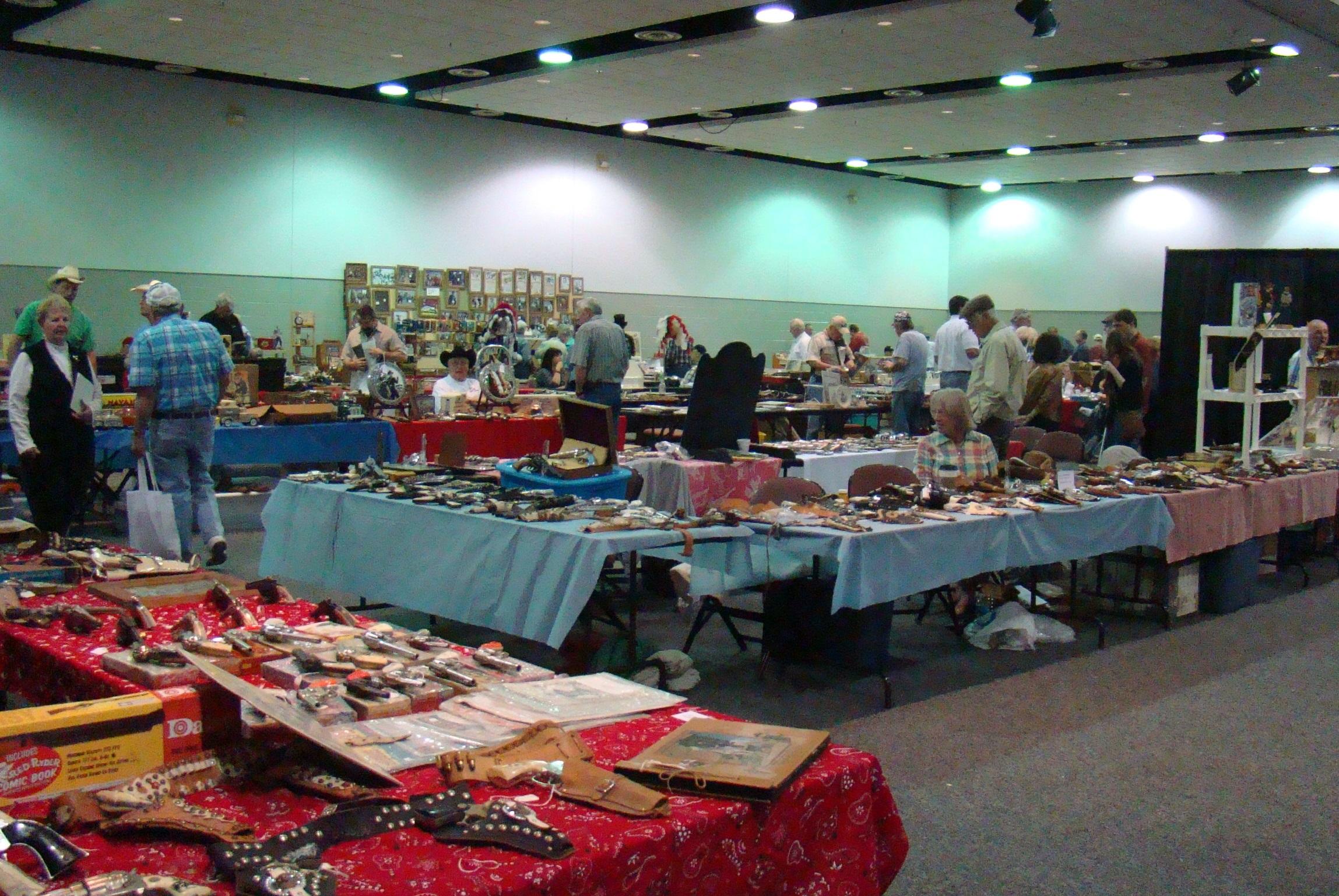
Vendors from all over the United States displayed their western wares.

Vendors from all over the United States displayed their western wares.

Hoppy and his horse greeted visitors to the 25th Hopalong Cassidy Festival.

Hoppy and his horse greeted visitors to the 25th Hopalong Cassidy Festival.

“Have a Hoppy Day!”

Old friends and familiar faces congregated May 1-3, 2015  to honor the last Hopalong Cassidy Festival. Started in 1991, this year marked the 25th Anniversary and the final year for the festival. But the enthusiasm did not end even though participants knew the end was in sight.

William “Hopalong Cassidy” Boyd grew up in the Cambridge area where he attended Park School and the Second Presbyterian Church. The Silver Anniversary of the festival celebration took place at Pritchard Laughlin Civic Center near Cambridge, Ohio.

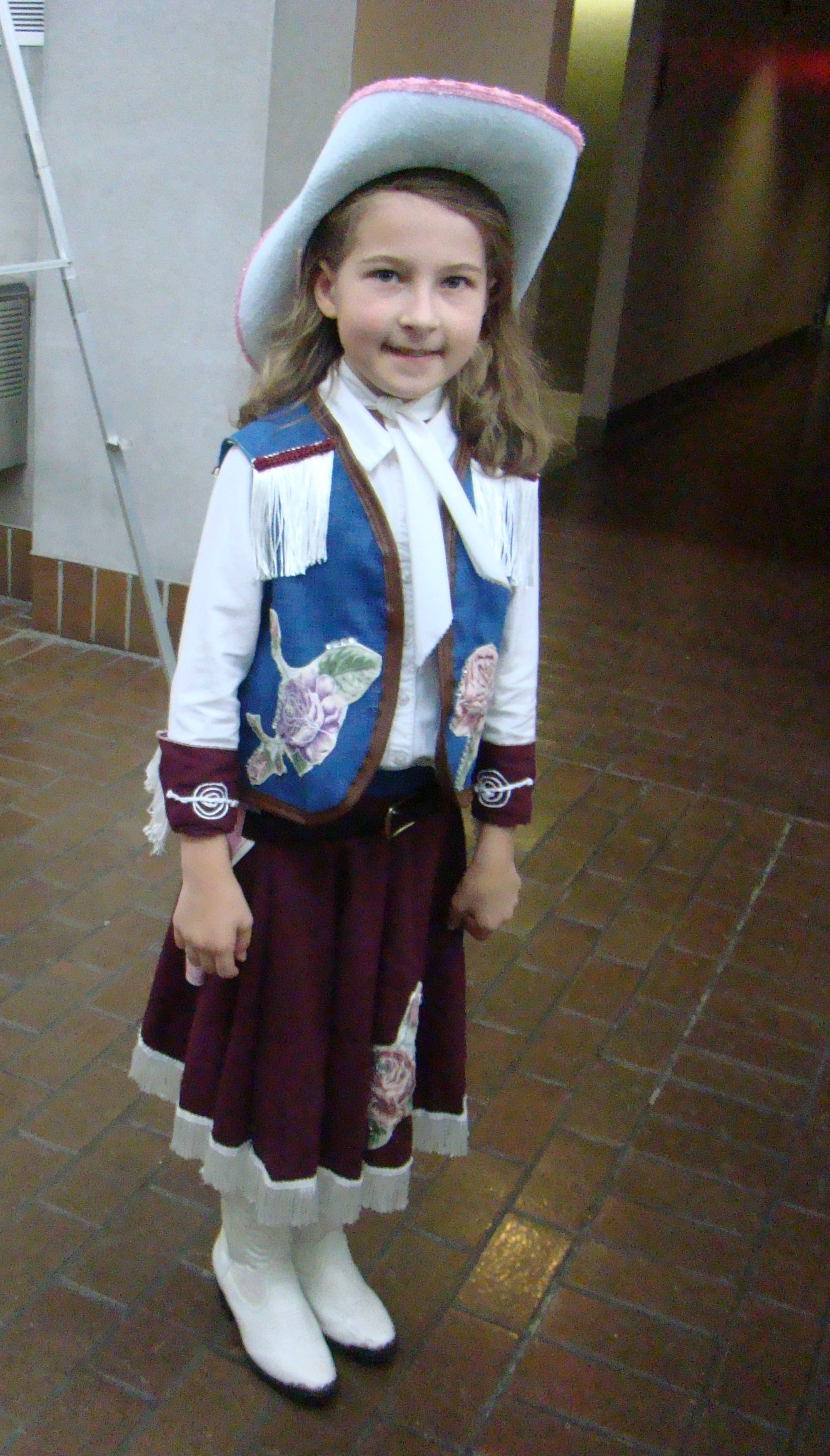
This little cowgirl enjoyed the day.
This little cowgirl enjoyed the day.
Laura Bates, founder, has been the driving force of the Hopalong Cassidy Festival all 25 years. Laura became good friends with Grace, Hoppy’s wife, and Laura’s knowledge and collection of Hoppy memorabilia grew and grew. When Laura speaks of those dedicated followers who attended year after year, she fondly calls them “faithful buckaroos”.

Getting a festival together requires lots of hard work. Making the connections with nearly a hundred vendors in itself would take a lot of time. Add to that the necessity to connect with old western stars and you can see how overwhelming the task would be. Besides, the general public today does not have the intense interest about those old westerns as those who grew up watching them.

Look-a-likes John Wayne, enjoy visiting with the crowd.

Look-a-likes John Wayne, Lash LaRue, and Bob Steele enjoy visiting with the crowd.

Old friends, who dressed as look-a-likes, enjoyed posing together. John Wayne, Lash LaRue, and Bob Steele definitely looked their part. Most people were selling pictures, but some were giving them away. Vendors set up tables selling all kinds of Western and cowboy items.
LaRue and his wife got married in the same church where Hoppy used to attend in Cambridge.

Francis Reeves and his wife got married in the same church Hoppy attended in Cambridge.

Most participants come across as common ordinary folks, who enjoyed talking about their life and connection to Hopalong Cassidy. One interesting gentleman, Francis Reeves, had won six Hoppy look-alike contests over the years. His initial contact came through Fred Scott, who sent a card to him telling him about the festival.

Twenty years ago Francis married his wife in Cambridge at the Second Presbyterian Church, the same church Hoppy attended. At 85 years old, Francis is still muscle bound and full of energy. When asked about the end of the festival, Francis remarked, “Everything comes to an end.” He looks forward to better things ahead.

Scruffy and Laura Bates give a final farewell.

Fuzzy and Laura Bates, founder, give a final farewell.

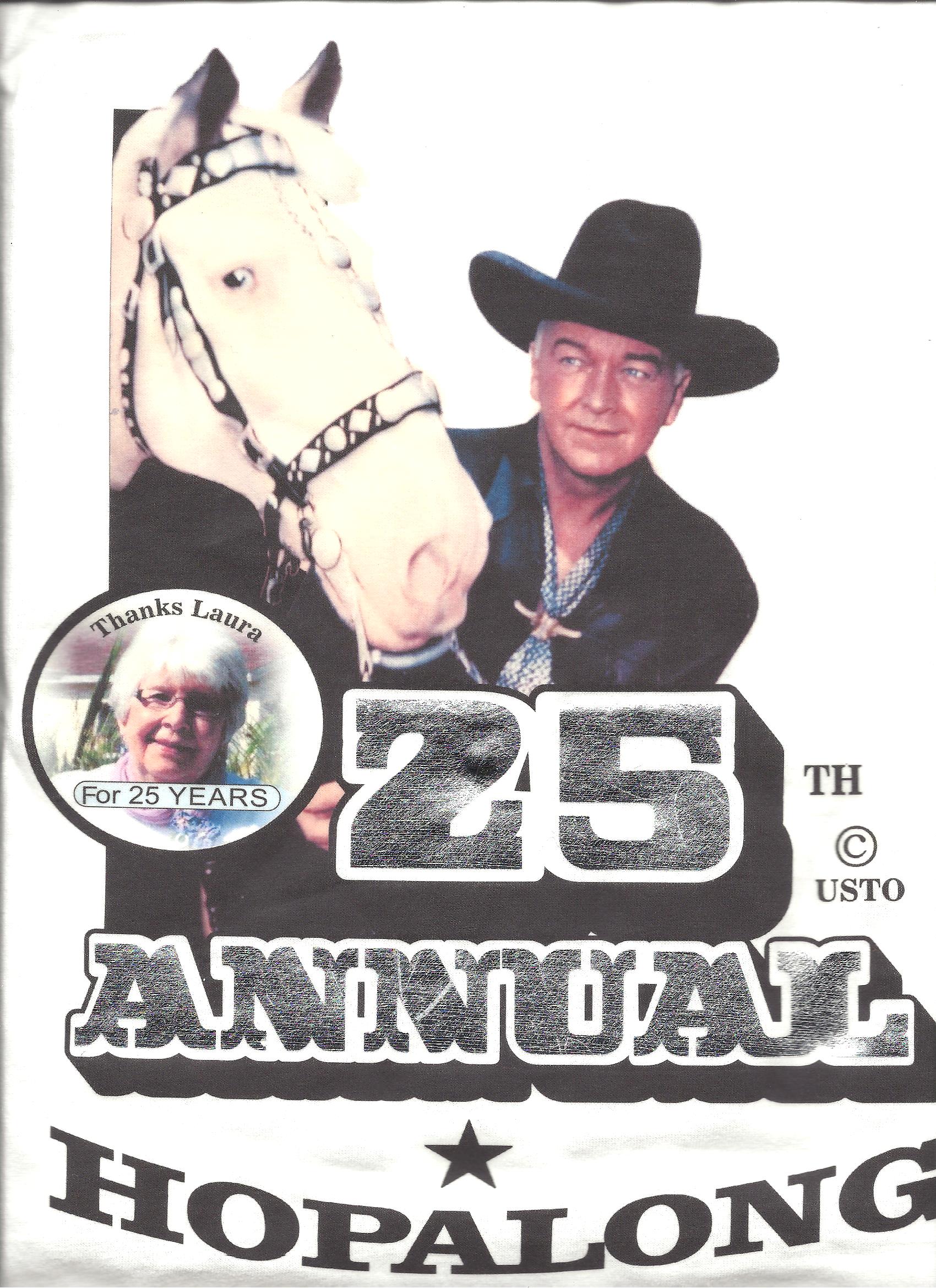
25th Anniversary tee shirt designed to honor Laura Bates.

25th Anniversary tee shirt designed to honor Laura Bates.

Fuzzy of American Westerns designed the logo for the festival. This year he designed a special tee shirt for the 25th anniversary. He included a picture of Laura Bates on that tee, as a special surprise to her. But like many, Fuzzy travels around the country with his acts and displays, covering seventeen different states.

Hoppy plans for the future include a bronze statue of Hopalong Cassidy in Cambridge, Ohio. The Hopalong Cassidy Museum will still contain Laura’s collection and she will probably stop by and charm visitors with her stories.

Everyone remained in good spirits even when the festival came to a close. One cowgirl said she would continue at other festivals in this part of the country.”I’ve been horsing around all my life,” she quipped, “and not ready to stop.”

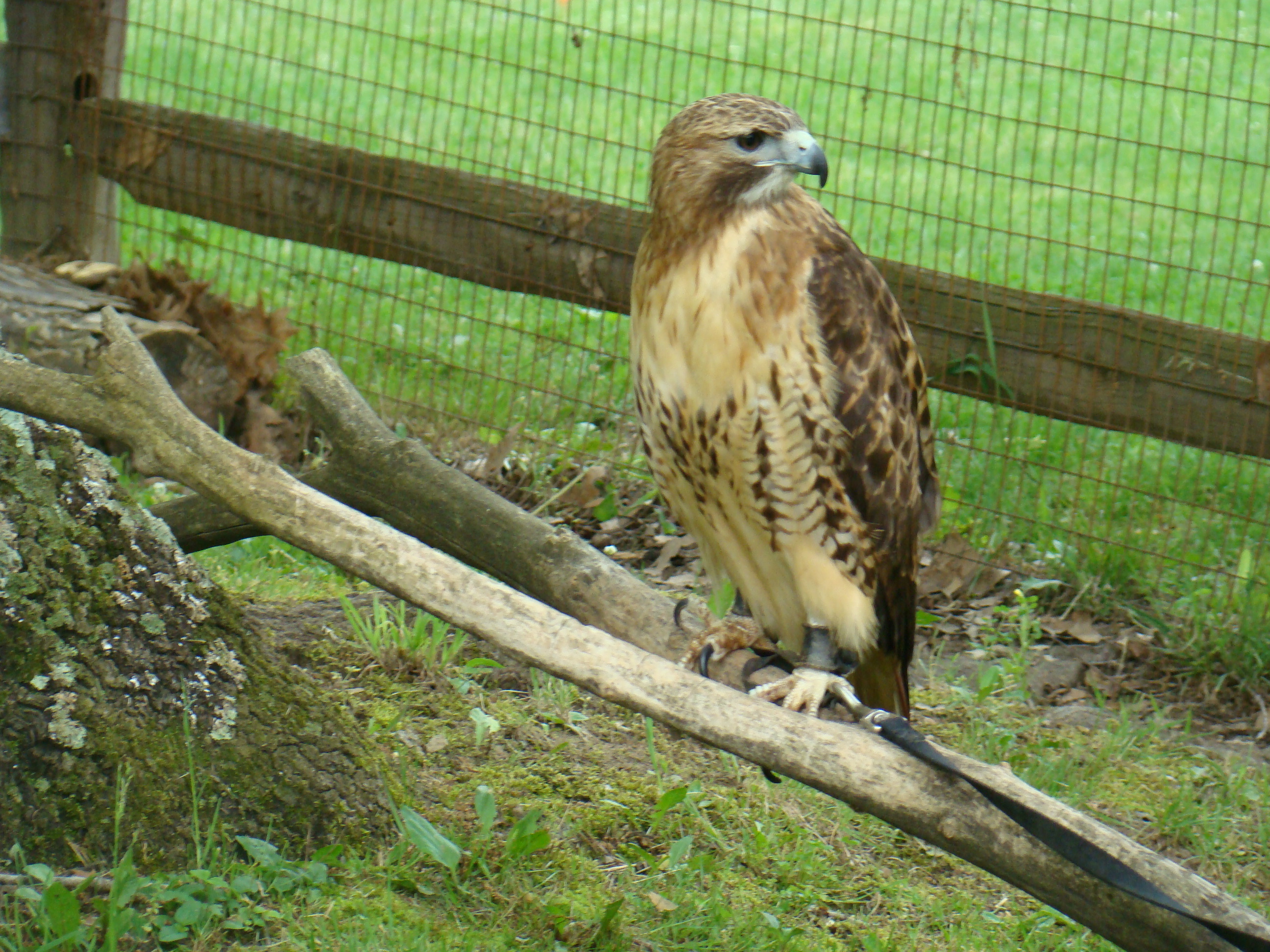
This red-railed hawk travels as a Good Zoo representative from Raptor Protection.

This red-tailed hawk travels as a Good Zoo representative from their Raptor Protection program.

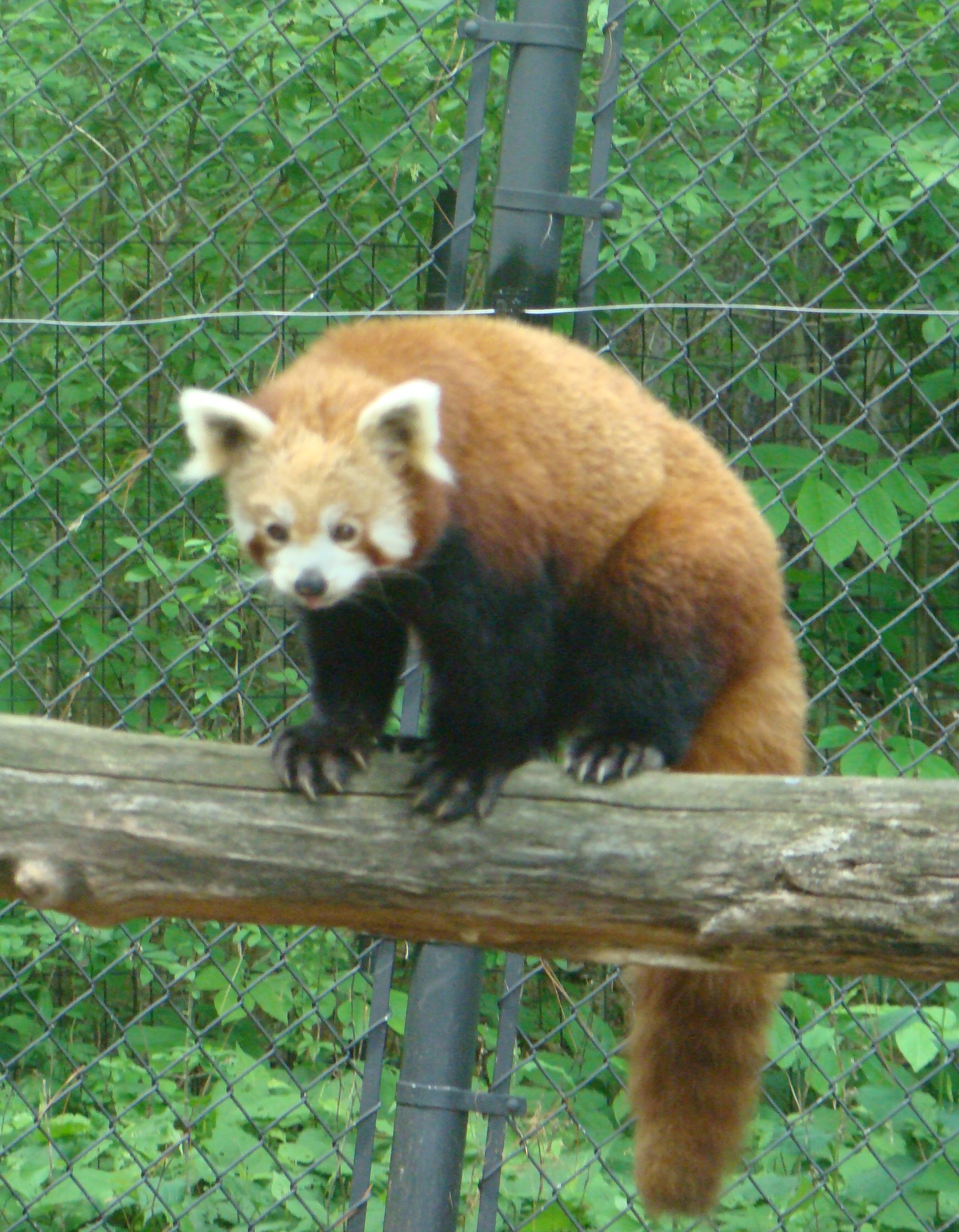
The Red Panda is a zoo favorite.

The Red Panda is a zoo favorite.

Children and animals have a special bonding so it becomes only natural that children enjoy visiting the zoo. Oglebay’s Good Zoo, a small zoo in Wheeling, West Virginia, gives children opportunity to get some up close and personal contact with many of their animals.The zoo was named in memory of Philip Mayer Good, a seven year old boy who left this world too soon.

In 1977, Philip’s parents, Barbara and Larry Good, who managed the family business of L.S. Good in Wheeling, sponsored getting the 30 acres established as a place that all children could enjoy. Thousands of contributions poured in from the community, while school children collected jars of pennies to help the cause.

Originally, the animals at the zoo came from North America, but over the years endangered species have been added to the viewing area. That expanded list now includes: the Red Panda, Grevy’s Zebra, African Wild Dogs, and Tamarin Monkeys.

Today the Good Zoo houses over five hundred animals. A walk down the shaded sidewalk fills a child’s heart and step with wonder. What animal will they see around the next bend?

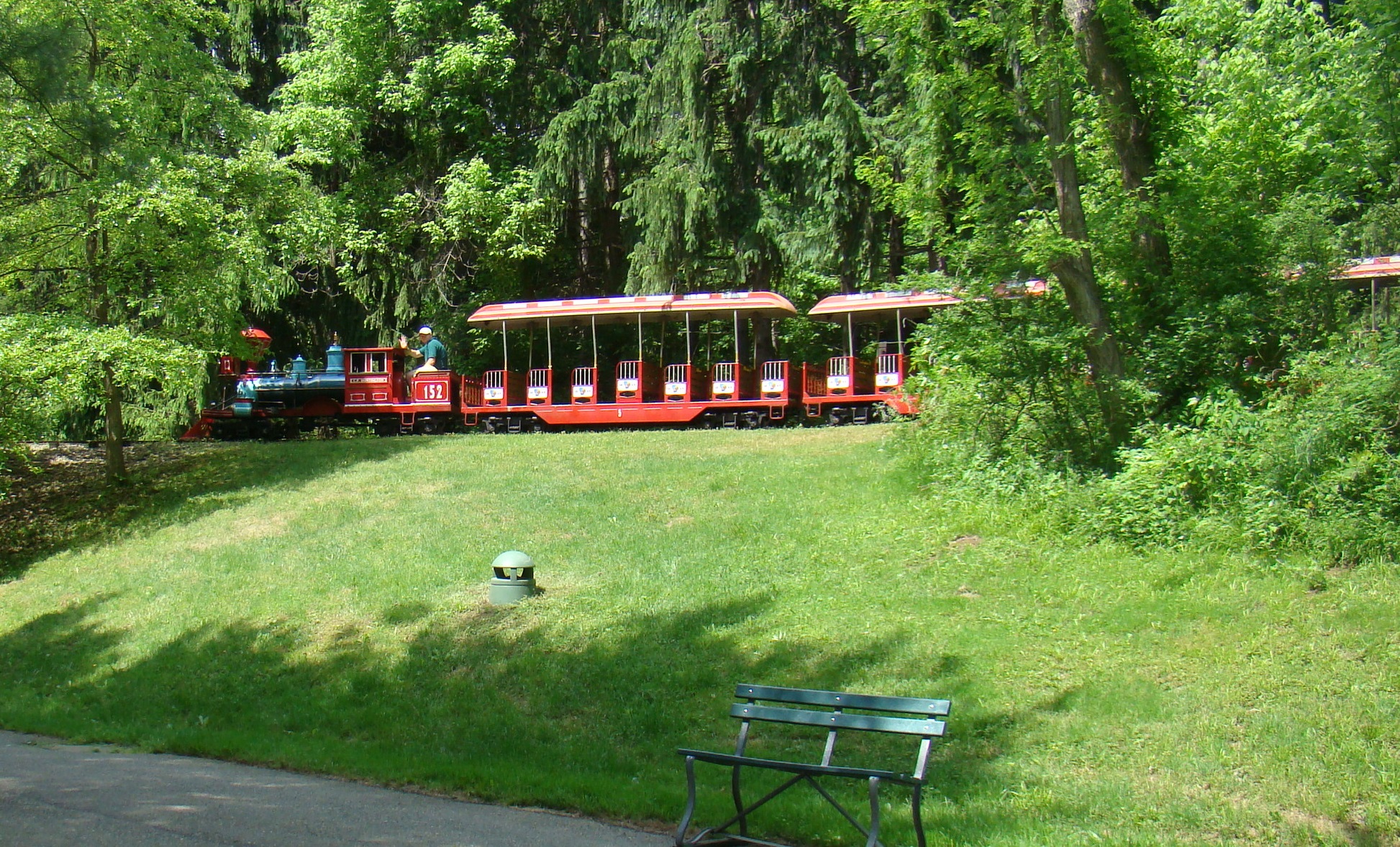
C.P. Huntington Train Ride

C.P. Huntington Train Ride

While the animals are the most important part of the Good Zoo, a ride on the C.P. Huntington Train takes visitors on a mile and a half ride through the edge of the zoo where many animals can be spotted. Everyone enjoys a ride on the open air train while the toot-toot of the whistle brings cheers from those on board.

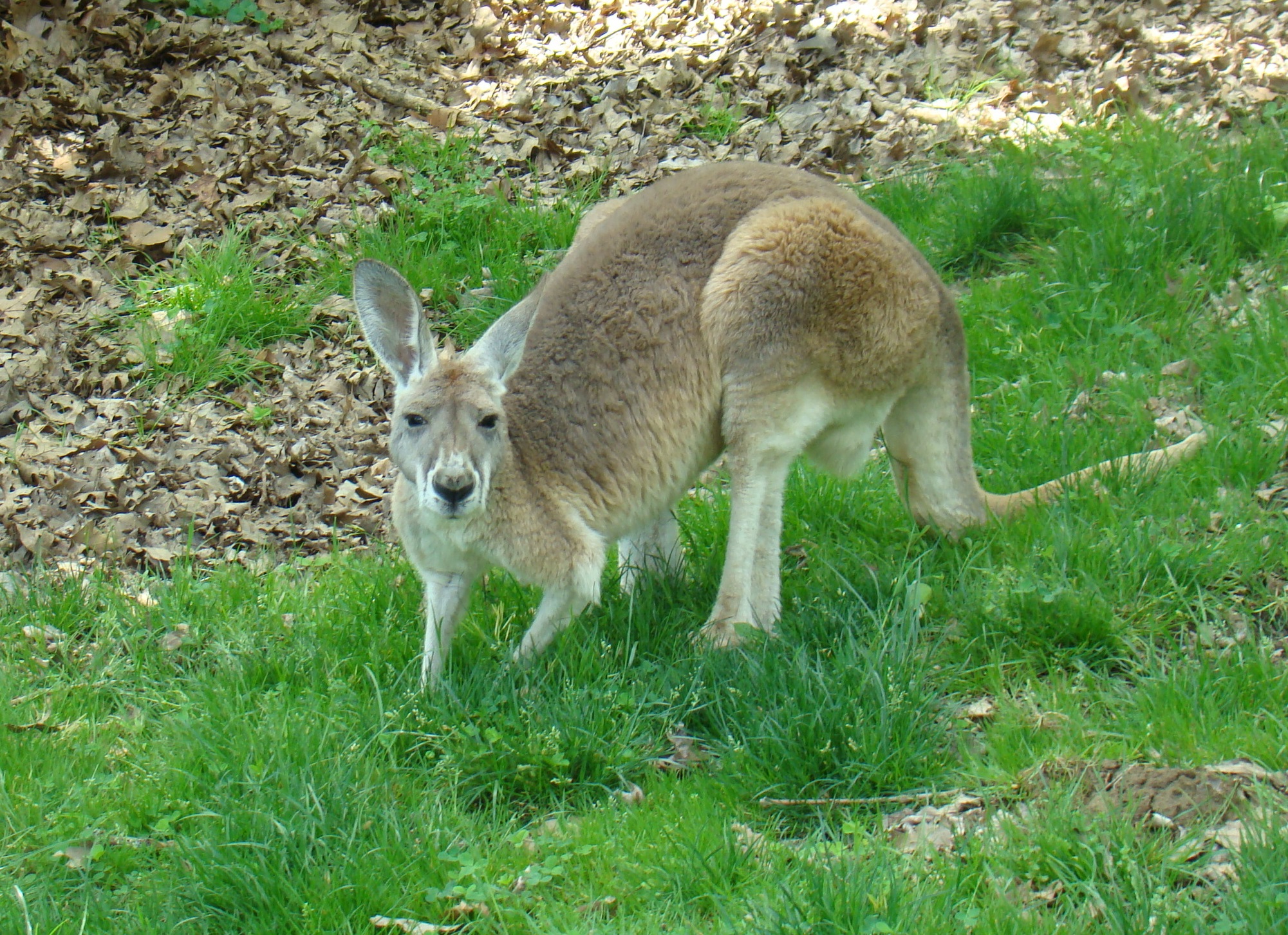
Walk with the kangaroos.

Walk with the kangaroos.

Two of the newer exhibits are The Outback and Lorikeet Landing. The Outback contains Kangaroo Creek Mining Company, where you can pan for gemstones and fossils. A “G’Day Mates” sign welcomes you to an enclosed area with a sidewalk, permitting guests to walk within a couple feet of the kangaroos. The aviary section at Lorikeet Landing allows feeding the beautiful Rainbow Lorikeets while walking in their midst.

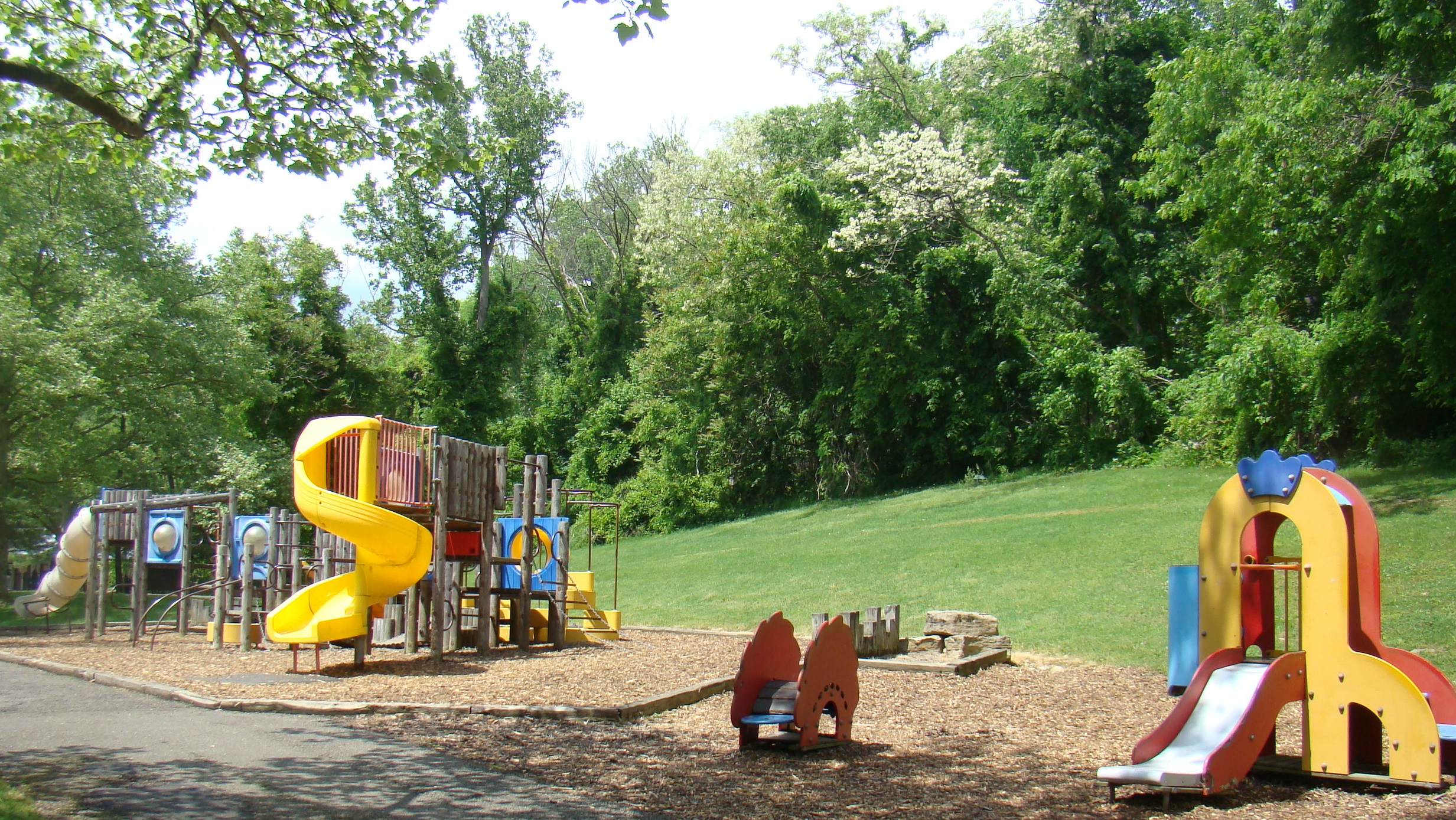
Take a break at the playground.

Take a break at the playground.

Let the children run off some of their extra energy at the outstanding playground. Here they can climb up ladders into forts, or crawl through tunnels until they’re ready to walk on to the next animal adventure.

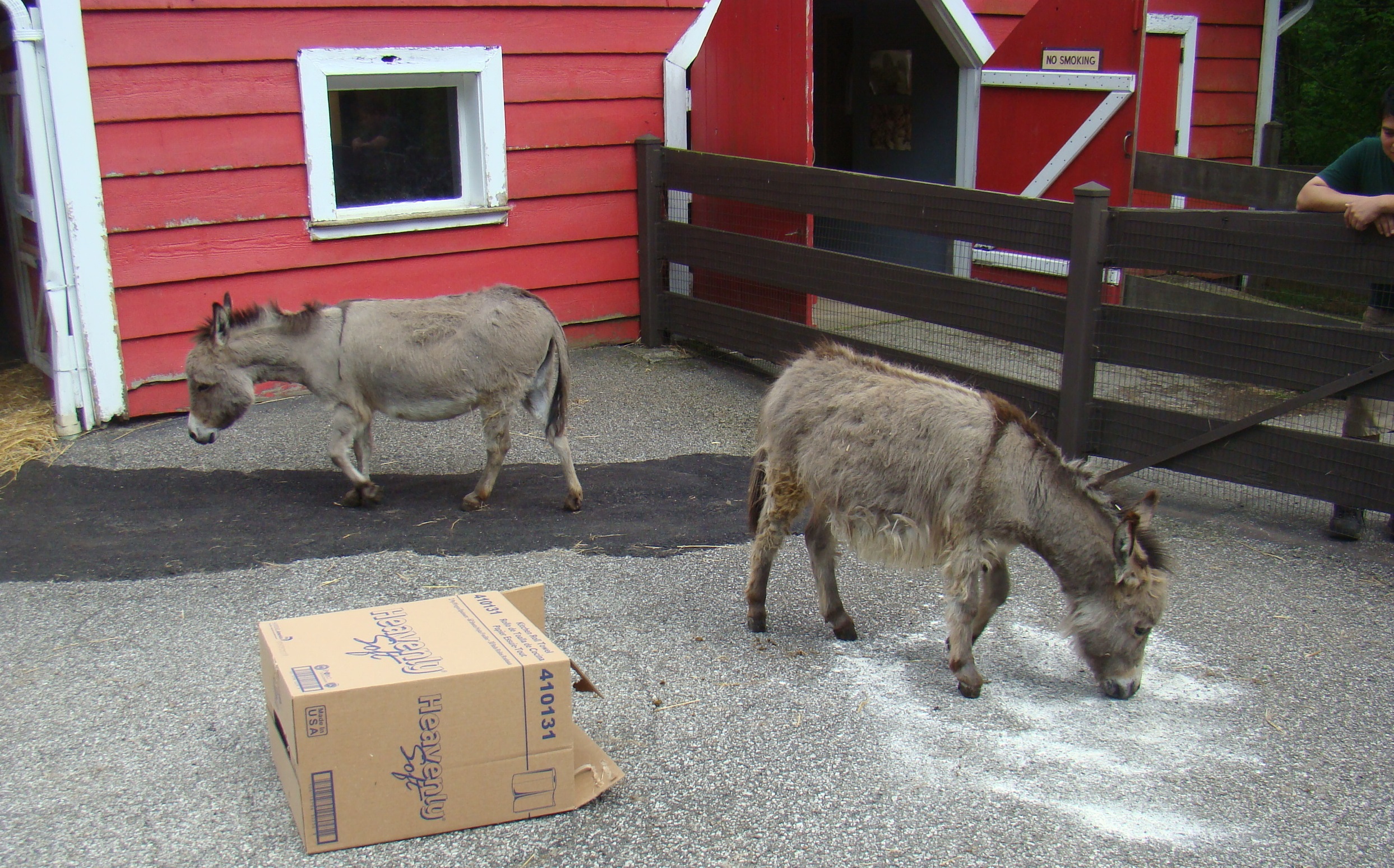
Donkeys play with powder and box at the Red Barn.

Donkeys like toys too. Here they play with a box and roll in the powder at the Red Barn.

The Red Barn has always been a favorite spot where friendly domesticated animals reside. Here you might see donkeys, goats, and llamas. Some you can get close enough to pet.

On the grounds, a Veterinary Hospital provides care for all the animals plus those in Raptor Rehabilitation. This program cares for injured animals found in the area. Owls and vultures had broken wings that needed repaired, while a red-tailed hawk became a permanent resident after the loss of one eye.

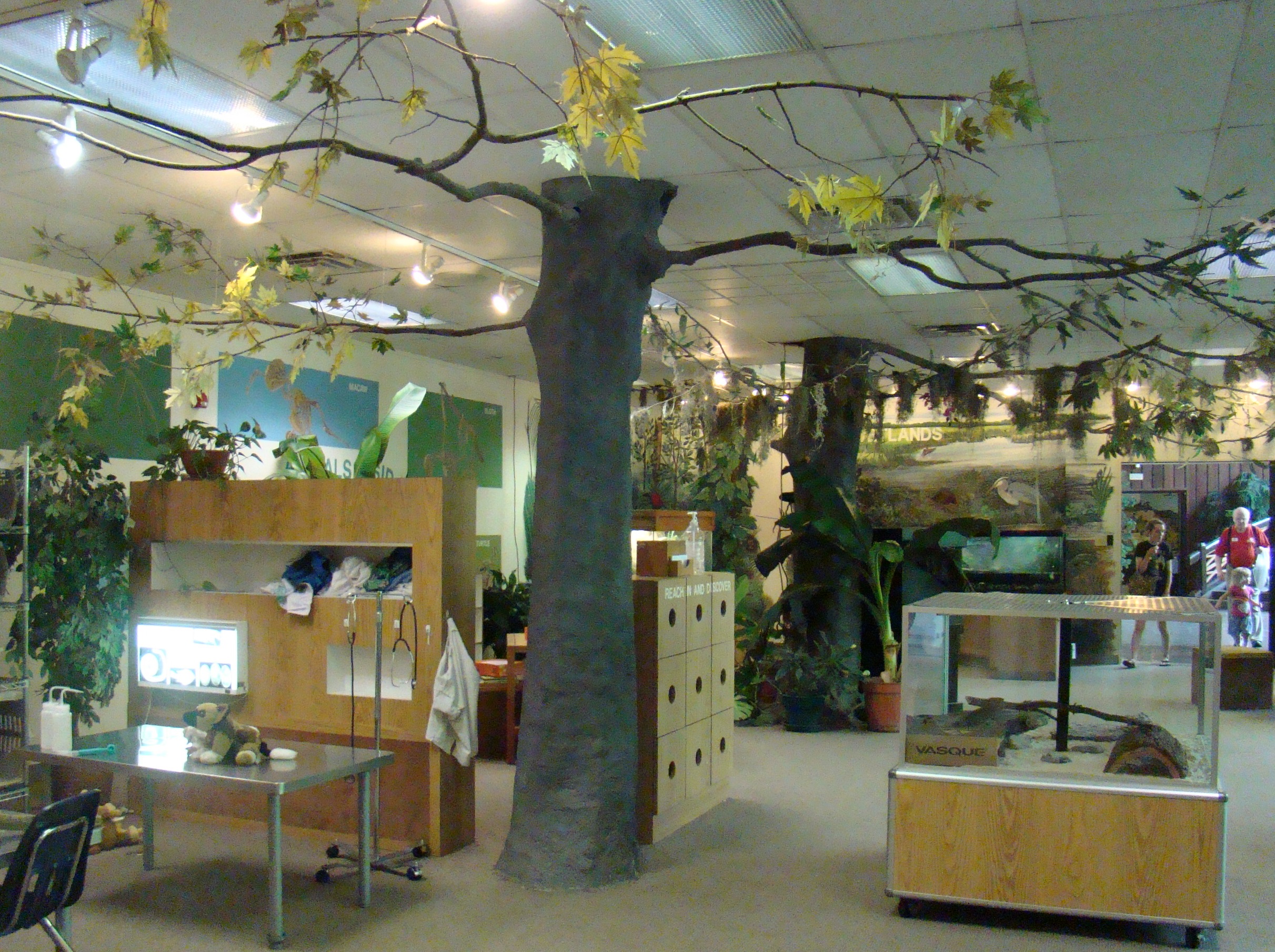
Find hands on learning at the Discovery Center.

Find hands-on learning at the Discovery Center.

But there’s more inside! The Good Zoo lists conservation and education as their key features. A hands-on Discovery Center lets students observe small animals such as dart frogs, turtles and tamarin monkeys. The Benedum Theater & Planetarium shares a wide variety of programs about nature and the universe.

Engineers ready the O-gauge trains for the summer season.

Operators ready the O-gauge trains for the summer season.

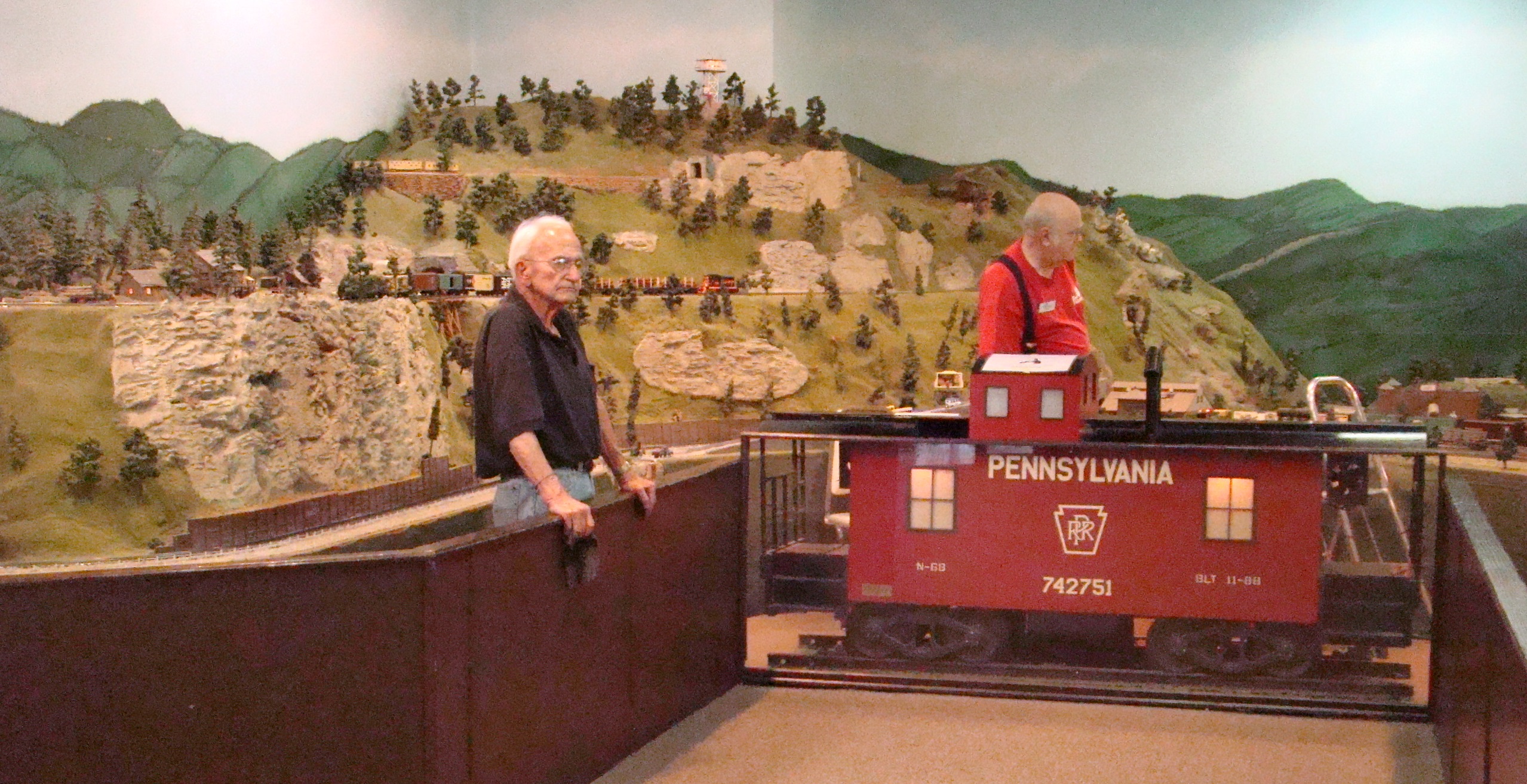
A special section that entertains children and dads is their train display started in 1981. Here you will find West Virginia’s largest public O-gauge model train exhibit with 900′ of track. Detailed buildings located on mountainous terrain combine with Lionel trains to create exciting viewing from every angle.

All through the year, the Good Year has activities which delight youngsters and parents alike. These include fun experiences at an Easter egg hunt, “Boo at the Zoo”, and  “The Good Zoo Lights Up for You” during the Christmas season.

Sounds like the fun continues all year long at the Good Zoo.

Oglebay’s Good Zoo is located just off I-70 near Wheeling, West Virginia. Take Exit 2A and follow Bethany Pike, then make a left on WV-88 North. Signs along the way help greatly with directions.

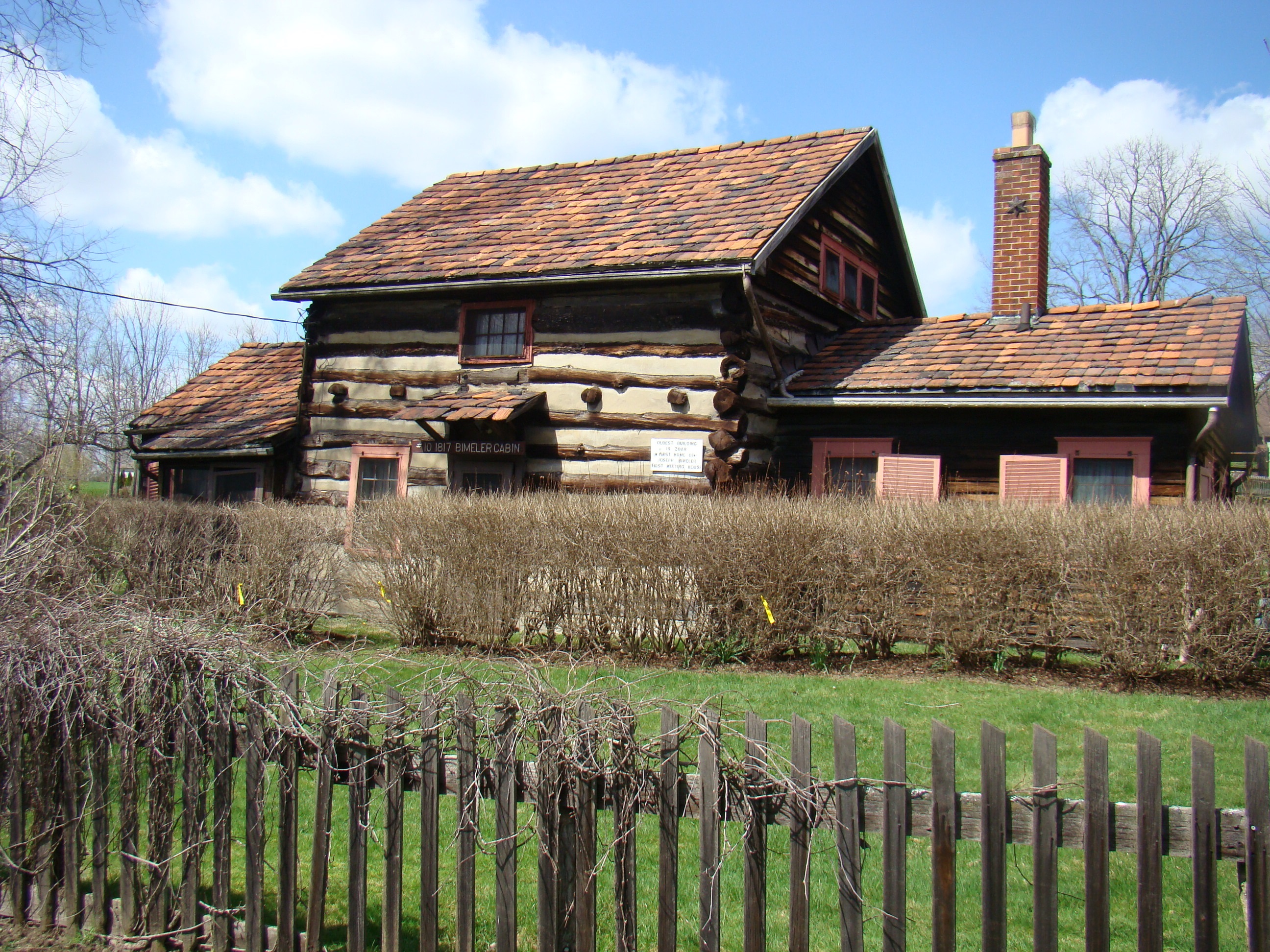
Bimeler Cabin was built in 1817.

Bimeler Cabin was built in 1817 by their original leader, Joseph Bimeler.

Desire for religious freedom caused about 200 German Separatists to escape their homeland and eventually make their new American home at Zoar Village in 1817. The town received its name from a Biblical source as Lot sought refuge in Zoar from the destruction of Sodom and Gomorrah.

The group’s leader, Joseph Bimeler, first led the group to Pennsylvania, where they received help from the local Quaker community. The Quakers gave them jobs and finally loaned them money to buy about 5000 acres in northeastern Ohio.

Many in the group were having financial problems so they decided to put all their money together. The Society of the Separatists of Zoar held all property and finances, as they established one of the most successful communal settlements in American history.

Ohio & Erie Canal Museum with an original firehouse door as background

Ohio & Erie Canal Museum with an original firehouse door as background

In their early days, constructing the Ohio & Erie Canal gave work for the people of Zoar, plus easy access to receiving and shipping goods. Zoar actually became a shipping port during the days of the canal. The settlement lasted about 80 years before a public auction sold all communal property, and people began working for themselves.

Today, ten historic buildings offer a peek into life of the people who lived here. Guides dressed in costume give valuable information to make the day entertaining and informative. Special programs are held throughout the year that are educational and fun – from speakers to making hands-on projects. Take a step back in time and explore their way of life.

Residents in the 1800s would meet in the Assembly House each morning where they would be assigned daily tasks. The German women honored cleanliness in all things, so whitewashed walls and even scrubbed trees in their front yards.

The village blacksmith became responsible for making wheels for the buggies that the Zoarites used. Perhaps he had a hand in making the keg wagon that took beer to the workers in the fields. If you didn’t work, you didn’t get any beer!

Zoar School

Today, the former Zoar Public School contains memorabilia and a perfect place for educational programs.

Zoar Public School instructed students grades 1–8 from the village and surrounding area. Grades 1-4 studied downstairs with easy access to the playground, while older students in grades 5-8 were instructed upstairs until the school closed in 1960. At its beginning all instruction was in German, but over the years it gradually switched bit by bit to English.

Zoar Baker

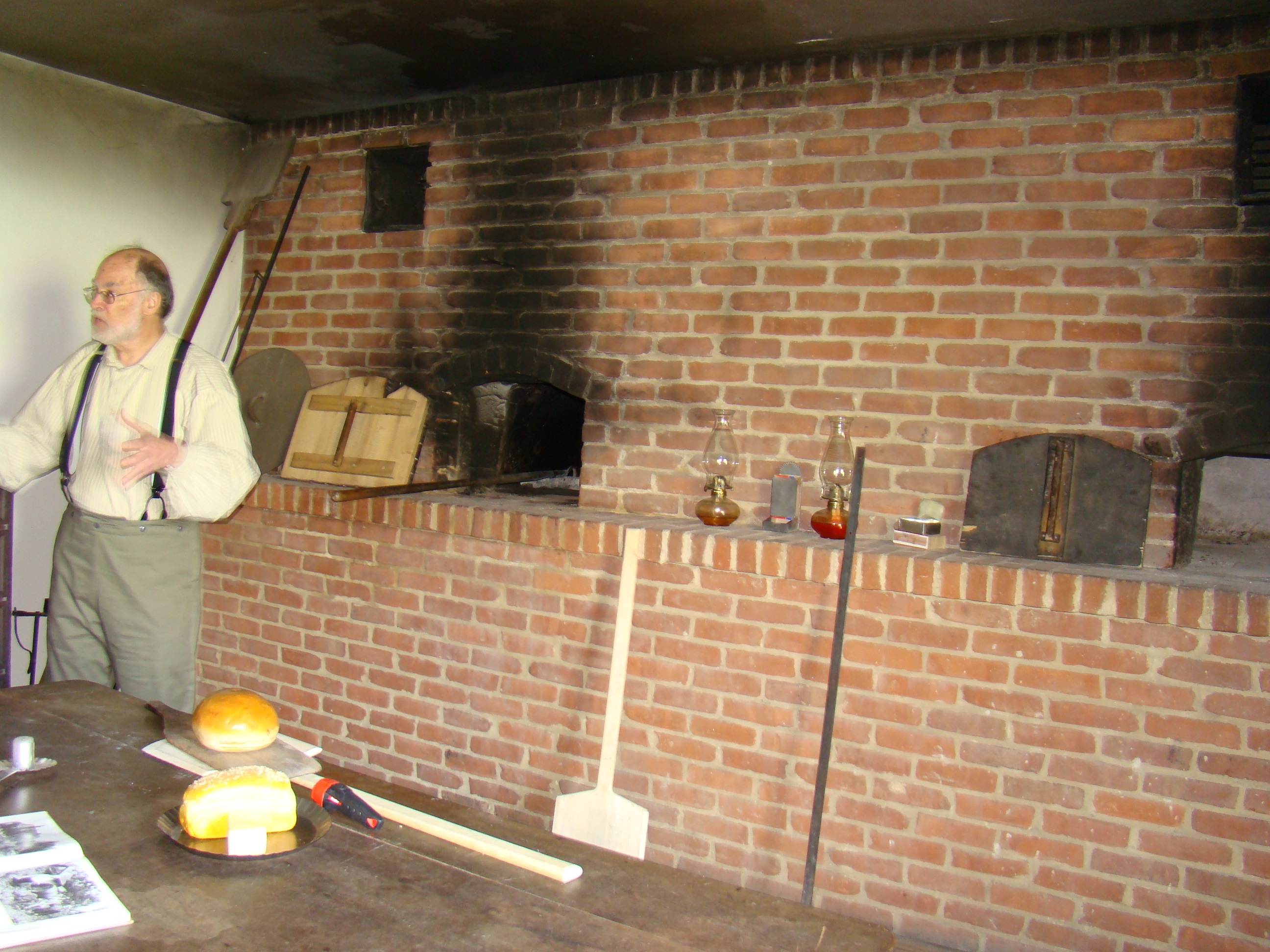
Baker explains how the brick ovens were used.

A bakery contained three main rooms.  One room held bins of various kinds of flour, potatoes, and ingredients necessary for making the baked goods. Another contained a 6′ deep, brick oven, which filled an entire wall. Here 80-100 loaves of bread, each weighing 4-5 pounds, were baked each day. Finally, the distribution room handed out baked goods to students, who delivered various goods each day after school.

Two museums are located at the Town Hall. The Ohio & Erie Canal Museum is downstairs and contains pictures and memorabilia from the days of the canal through that area. Upstairs, The Museum of Zoarite Artifacts contains tools, pictures, spinning wheels, and toys used in those early days.

Pipe Organ at the old Meeting House

Pipe Organ at the old Meeting House

The Meeting House, built in  1853, contains Zoar-made bricks and sandstone from Zoarite quarries. Their unique sounding bell perhaps resulted from silver dollars being mixed with the ore while the bell was being cast. The beautiful pipe organ, purchase in 1892, filled the air with hymns while visitors joined their voices.

The original cabin of the founder still looked like a place this gypsy wouldn’t mind living. In many ways, these people were way ahead of their time!

Zoar Village is off I-77 at State Route 212 between Canton and New Philadelphia, Ohio. Their spectacular garden and greenhouse calls for a return trip and a separate posting. Don’t forget to stop at the Firehouse Grille & Pub for a relaxing break…everything was delicious.

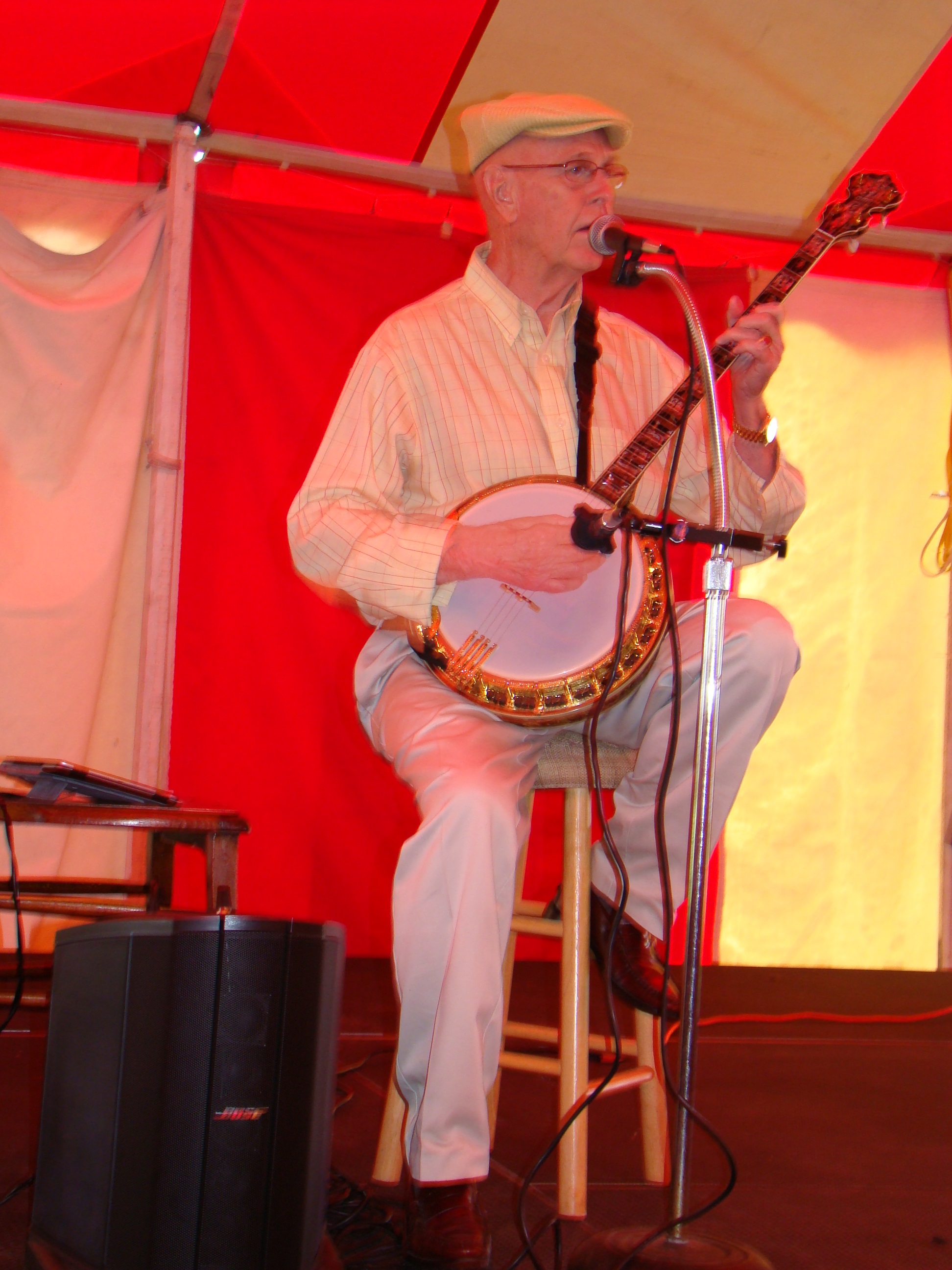
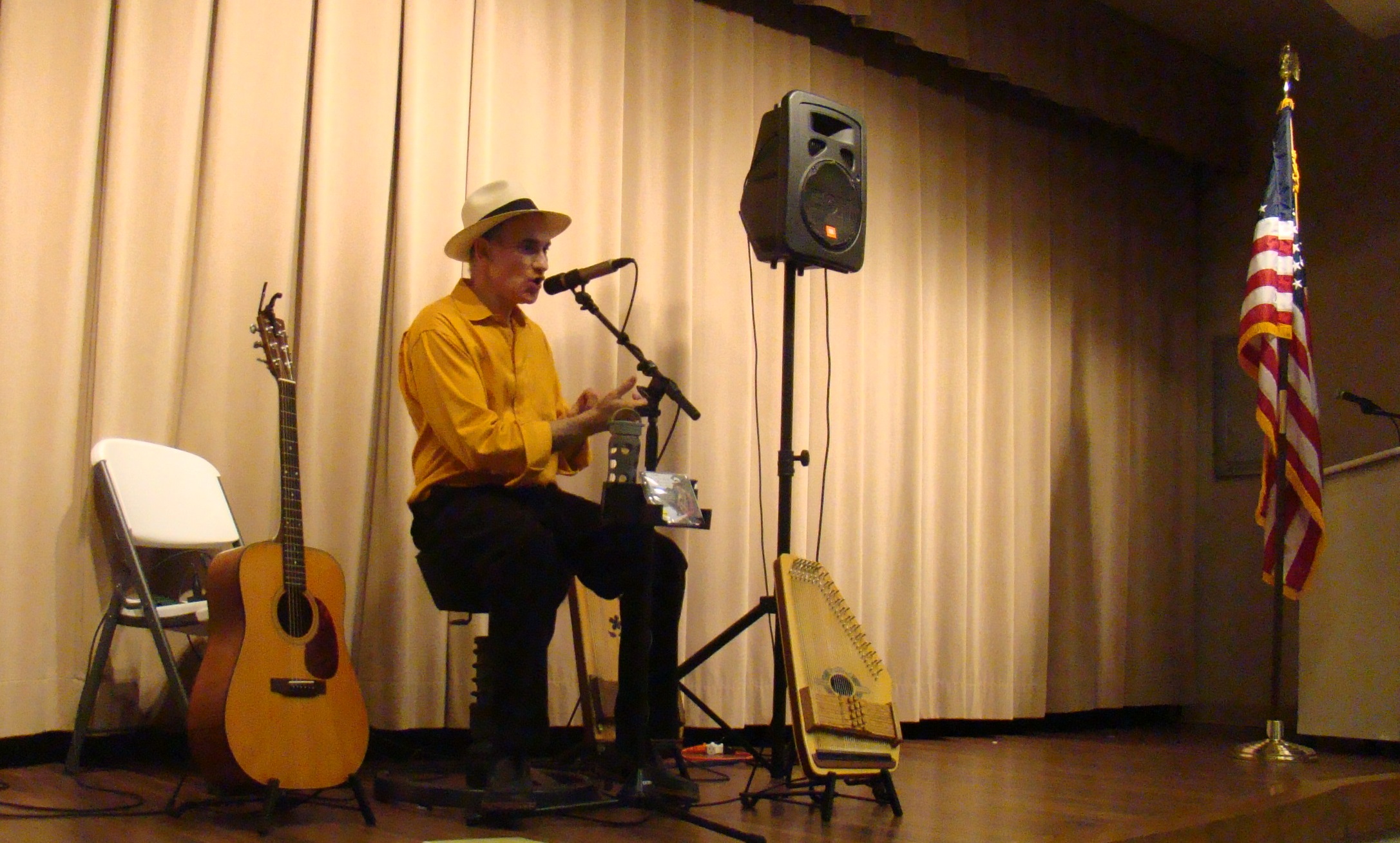
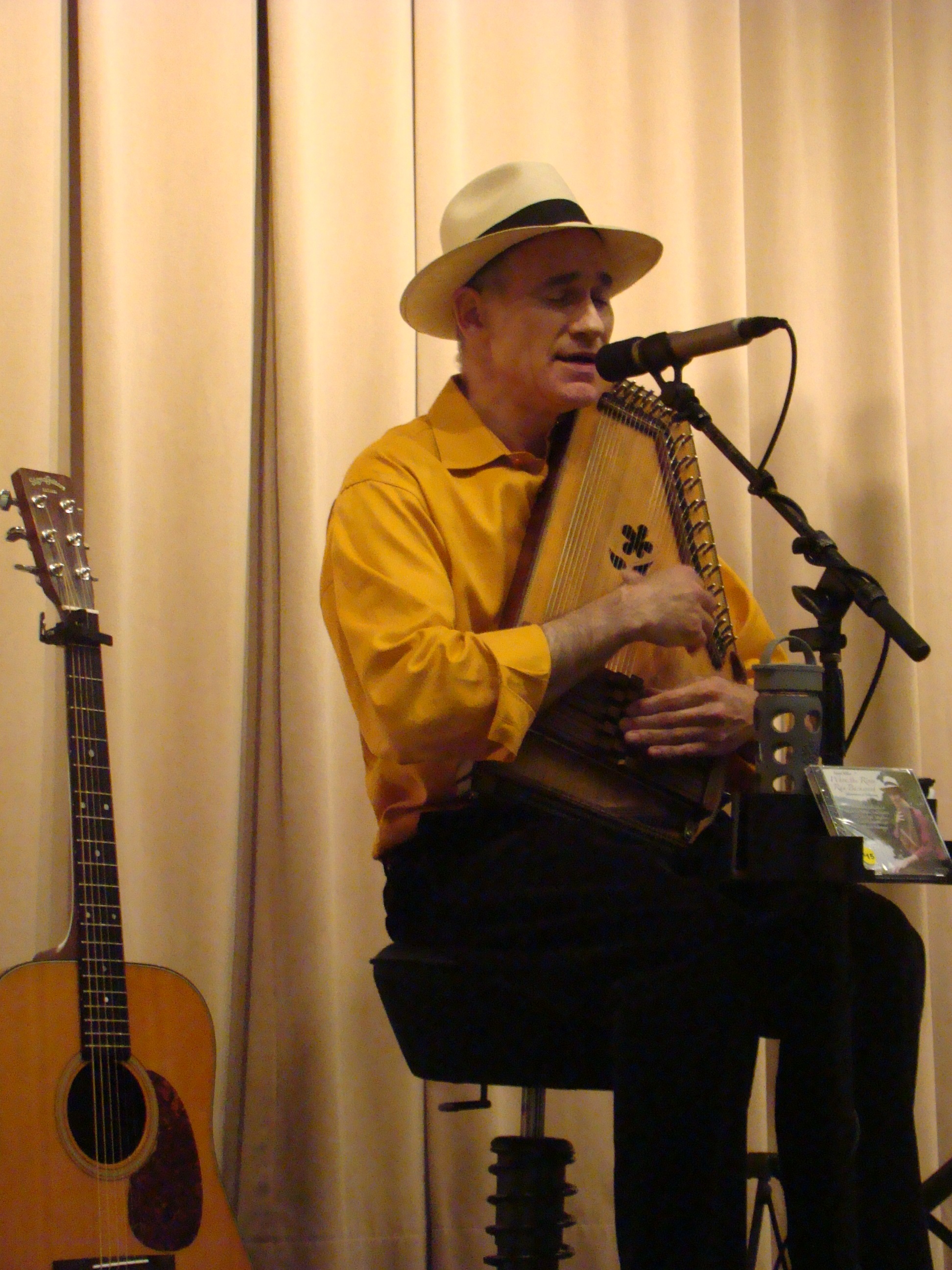
Adam on stage

Adam Miller presents one of his American Folk Music Programs for Libraries, entitled “Singing Through History”.

Folk songs always tell a story. But when you add a storyteller with an autoharp to the mix, you have entertainment at its best. Adam Miller is an extraordinary storyteller as he weaves the history of our nation and the world into the introductions of the folk songs that he sings. That’s not to mention his fantastic ability at the autoharp and guitar, as he delights the audience with song after song in his rich baritone voice.

The magical way Adam weaves history into his program makes history seem very exciting for everyone. “Of course,” Adam remarked, “history is better than fiction.” Often he performs for school groups and they, too, find him fascinating. To date he has performed for over 1,000,000 students as part of his journey from the Everglades to the Arctic Circle.

Adam Miller performs folk music using his autoharp.

Adam Miller performs folk music using his autoharp.

While the guitar is the most popular instrument in the US today, it wasn’t long ago that the autoharp had that prestige. A hundred years ago Sears catalogue had autoharps listed for $6.95 and many teachers used them in their classroom. Adam’s ability with the autoharp far surpasses any this gypsy has seen. The fluid sound resounded without any apparent effort on his part.

Involving the crowd seemed to come naturally to Adam as he often works with school groups. Frequently throughout the program, he had the audience singing along on choruses. Since this fantastic musician appears at approximately a hundred libraries a year, he has much practice. A repertoire of folk music programs called “Singing Through History”, which he uses at the library presentations, ranges from “Old Songs for Young Folks” to “Steamboatin’ Days”.

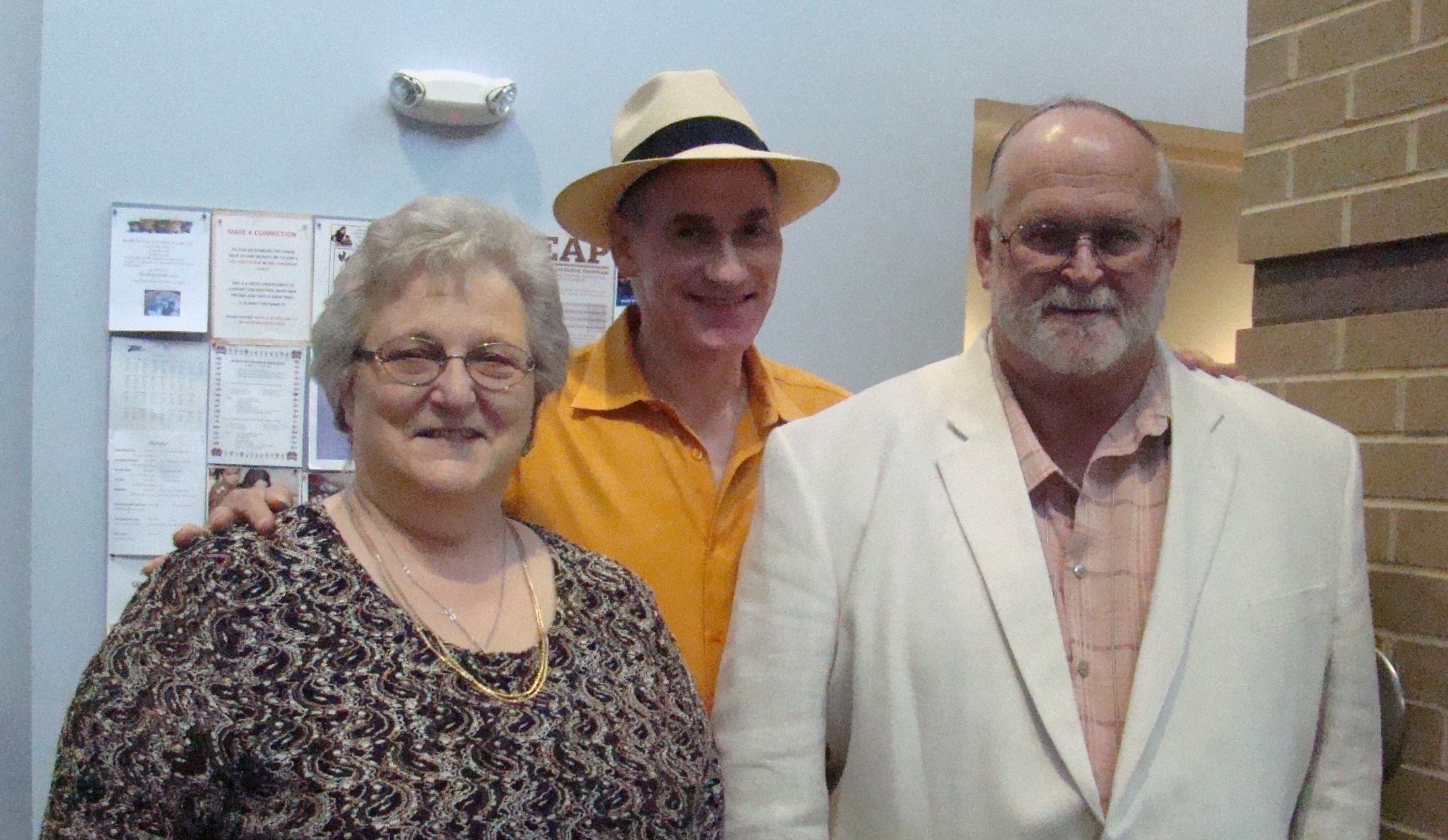
Jerry and Joan Albaugh from Friends of the Library were instrumental in bringing this program to Cambridge.

Jerry and Joan Albaugh from Friends of the Library were instrumental in bringing Adam Miller to Cambridge.

Friends of the Library at Cambridge, Ohio were certainly fortunate to connect with Adam Miller. This busy man travels over 70,000 miles a year as he goes from town to town sharing his love of folk music. He builds his show on whatever people want.

The recent show at the Crossroads Library had the theme, “I’m Goin’ to the West”, which included the song and story of the famous Orphan Train. The chorus began, “Take us in. We have rode the Orphan Train.”

The story began in Ireland, where the potato famine destroyed many families and left children orphans. Many youngsters were sent to the U.S. for a chance at a better life. That didn’t actually happen where they landed near New York City, so a Catholic priest there raised funds to send them, and orphans left by the Civil War, by train to the new western settlements to help build railroads among other things. In a short period of time, 250,000 children rode west on what was soon to be called the Orphan Train.

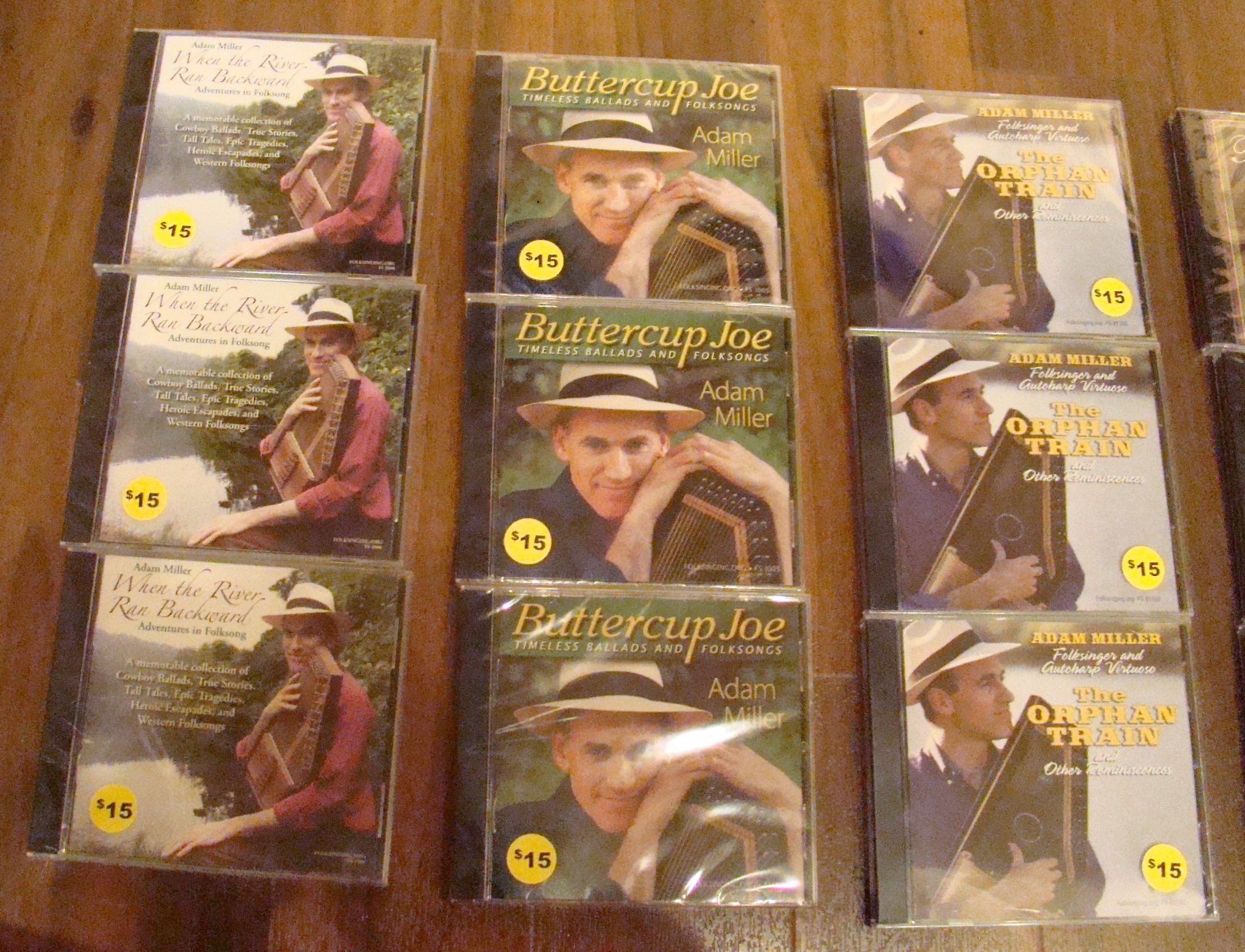
Adam's CDs help make his love of folk songs live on even after he has left the area.

Adam’s CDs help make his love of folk songs live on even after he has left the area.

The oldest folksong. which has been around over five hundred years, has many different versions. That timeless ballad, “Froggy Went a Courtin”, moves at a rapid fire pace, but with the theme of a frog dating a mouse, it seems humorous that it became so popular.

Even as a child, folk songs captured Alan’s heart and he began collecting these old songs back when he was in grade school. His goal was to learn every song he heard. Today Adam knows and performs over 5,000 songs through his large repertoire of shows. There’s no doubt that he is a master at what he does, and he does it with enthusiasm. Exceptional entertainment!

If your school, group, or library would like to contact Adam Miller for a program, email him at autoharper@earthlink.net or visit his website at http://www.Folksinging.org.  Here you can also purchase some of his CDs, which are very entertaining and relaxing.

Anderson Hancock Planetarium at Marietta College

Anderson Hancock Planetarium at Marietta College

“Twinkle, twinkle little star, how I wonder what you are!”

Everyone gains a better understanding about those little stars in the sky after watching the night sky from the comfort of a cozy seat at Anderson Hancock Planetarium on the campus of Marietta College in Marietta, Ohio.  As the present night sky appears overhead, the movement and stories of the constellations provide a fascinating time of entertainment and increased knowledge of our expanding Universe.

Named after Emeritus Professors Dr. Les Anderson ’55 and Dr. Whit Hancock, the planetarium is equipped with a hybrid projection system that combines an optical mechanical star projector with a powerful full dome digital video projector.

Gog Chronos star projector

Goto Chronos hybrid star projector

Marietta College is currently one of a handful of planetariums in the country to feature the Goto Chronos hybrid system, which can replicate with great accuracy the night sky from thousands of years in the past to thousands of years in the future from countless vantage points in the Universe. This projects the night sky onto the dome, which is about 40′ in diameter.

Every month, the planetarium hosts a special sky program with two showings on a Thursday evening and Sunday afternoon. Recent topics have explored “Cosmic Castaways”, “Chasing Ghost Particles” and most recently the premiere of “Space Aliens: Looking for Life in the Universe”.

During a visit to see “Space Aliens”, experts Hopeful and Skeptical took those in attendance on a journey from the ocean floor to an adventure across the galaxy as they tried to convince each other whether life exists outside of earth. No definite conclusion was reached except that we keep discovering more and more about our vast Universe all the time.

Dr. Ann Bragg, director

Dr. Ann Bragg, planetarium director

The planetarium director, Dr. Ann Bragg, has been with the program since it opened in the spring of 2009. Since her goal is to educate the community as well as the students, she projects a contagious enthusiasm, which hooks the viewers.

Dr. Bragg, also associate professor of physics, enjoys teaching and opening students’ minds to new possibilities. She feels, “The process of discovery is often more interesting than what is actually discovered.”

Star talks about the current evening sky always precede the special program. Here they tell about and display the different constellations that are visible in the sky. This provides a tremendous opportunity for adults and children to learn more about our vast Universe. During the year, nearly 4000 students visit the planetarium with school, scout and camp groups.

The lobby also features quiet study areas and current science programming from NASA’s ViewSpace data/video feed. It’s a great place to catch up on some of the latest NASA developments.

Planetarium Auditorium

Planetarium Auditorium with 40′ dome ceiling

During the summer months at least two of their showings will be geared toward students. While all shows are free, the planetarium requires reservations as seating is limited in their 102 seat auditorium. Perhaps you would like to visit the Anderson Hancock Planetarium at Marietta College and witness several of their outstanding presentations in the future.

Sometimes your road trip needs to leave earth and explore what is beyond.

Be sure to check out their website at http://www.mariette.edu/planetarium for future programs. To visit Anderson Hancock Planetarium, take Interstate 77 toward Marietta to Exit 1. At Exit 1, turn right onto ramp, which will be Ohio 7 (Pike Street). Remain on Pike Street until turning right onto Fourth Street. Take the first right onto Butler Street. Parking will be immediately on your right in the lot adjacent to Hermann Fine Arts Center.

A scenic gravel road through wild, wonderful West Virginia in the fall of the year

A scenic gravel road through wild, wonderful West Virginia in the fall of the year

Often a gravel country road leads to places that give us a better understanding of our country’s history. Sometimes the things we find along the way don’t look as important as they really are.

Such is the case with one of the most significant landmarks in West Virginia, the Fairfax Stone located at Fairfax Stone Historical Monument Park near Thomas, WV. This stone marks the North headwaters of the Potomac River, which flows all the way to Virginia. Today the original stone is gone, but a replacement stone marks the spot so future generations will not forget how the states’ boundaries were determined.

Fairfax Stone National Historical Park

Fairfax Stone Historical Monument Park

The reason for the search for the headwaters of the Potomac River came about because the King of England gave Thomas Fairfax all the land from the Potomac River to the Rappahannock River. Naturally, Lord Fairfax wanted to know where the boundaries of his land actually were.

This was part of the Northern Neck Land Grant. The surveying for this western boundary of Maryland was done by Colonel Peter Jefferson, Thomas Jefferson’s father, and Thomas Lewis. Many historians say that George Washington perhaps set the original stone himself as a young surveyor.

Two Fairfax Stones - 1910 and 1985

Two Fairfax Stones – 1910 and 1957

Way back in 1746, the original stone was placed there  to honor a boundary dispute between Thomas Fairfax, 6th Lord Fairfield of Cameron and the English Privy Council.. Later it became the spot to mark the state boundary of West Virginia and Maryland. The dispute over the boundary between Maryland and Virginia, later West Virginia, was so severe that it ended by being solved by the Supreme Court. Now it is easy to see its importance.

Fairfax Stone plaque describes its purpose.

Fairfax Stone plaque describes its history.

The original stone was a small pyramid of sandstone and had the letters “F.X.” scratched into the stone. Now an engraved six ton rock with a flat surface displaying an engraved metal plague sets over the site of the actual spring, the beginning of the North Branch of the Potomac River in West Virginia. An inscription on the plaque tells the historical significance of the stone. The marker from 1910 rests close by.

Nearby Mountaineer Wind Energy Center generates electricity.

Nearby Mountaineer Wind Energy Center generates electricity.

Even though this park contains only four acres, the Fairfax Stone Historical Monument Park attracts many historians, who want to walk where their forefathers trod. Then take a ride just south of here and view some modern history in the making – the Mountaineer Wind Energy Center, the largest wind farm east of the Mississippi that provides electricity to many of the mid-Atlantic states.

Next time you take a drive, perhaps you will want to explore some of those dirt roads along the way. You may be surprised at what you find.

Fairfax Stone Historical Monument Park can be found off U.S. Route 219 near Thomas, WV. Turn onto county Route 9 and travel .5 miles. Turn right at Fairfax Stone Monument sign and travel 1.5 miles to Fairfax Stone. Great signs help make this easier to find.

J.E. Reeves Victorian Home holds many treasures.

J.E. Reeves Victorian Home holds many treasures.

“Ahead of its time” would best describe the magnificent home of Jeremiah and Jane Reeves in Dover, Ohio during the early 1900s. Today, the J.E.Reeves Victorian Home and Carriage House Museum still remain a showpiece of beauty and craftsmanship.

Reeves smokestack still stands today in acreage behind the house.

Reeves smokestack still stands in Dover today on acreage behind the home.

But Jeremiah did not always live in such grandeur. Born in England in 1845, Jeremiah began working as a boilermaker in Wales at the age of ten. When he was eighteen, he and his brothers moved to the United States, where they worked in the mills in Cleveland and Pittsburgh. A few years later in Niles, Ohio, they organized Reeves Boiler Works.

When they heard that Dover Rolling Mill was having financial problems, they purchased and reorganized that industry in the growing canal city. Reeves Steel became the backbone of industry in the Tuscarawas County area. The family remained in the iron and steel business for the rest of their lives, but had many other interests as well.

The wealthy played Whisk around the game table.

The wealthy played a card game of Whist around the game table.

When Jeremiah needed money to expand his business, no area banks would loan him the needed funds. But that didn’t deter Mr. Reeves. He opened his own bank. Over the years, he also built workers’ homes in Tin Town, a hospital, a streetcar line, Reeves Hotel and much more. Jeremiah definitely held the key to successful business encounters.

Reeves kitchen displays a warmer oven, local made teapot, and old-fashioned toaster.

Reeves kitchen displays a warmer oven, locally made teapot, and old-fashioned toaster.

J.E. Reeves wanted to help others by letting them help themselves. During the depression, a man knocked on his door, asking for money to help his family. Mr. Reeves refused to give the man cash, but told him, “I’ll give you a broom and you can sweep the sidewalks. Then I’ll pay you.”

Guide, Shirley, describes the elegant dining room with silk screen wall covering.

Guide, Shirley, describes the elegant dining room with silk screen wall covering.

Back in 1901, Jeremiah Reeves moved his family to a refurbished farmhouse on the outskirts of the growing canal city of Dover. Their Dover farmhouse became the most fashionable home for miles around. Mr. Reeves made certain that his family enjoyed all the modern facilities. In the early 1900s, this home had running water, gas heat, and electric lights. Nearly all the furniture and antiques seen in the home were originally part of the family home 100 years ago. Walls contain family photographs and outstanding artwork, while stained glass and leaded windows appear over door frames inside and out.

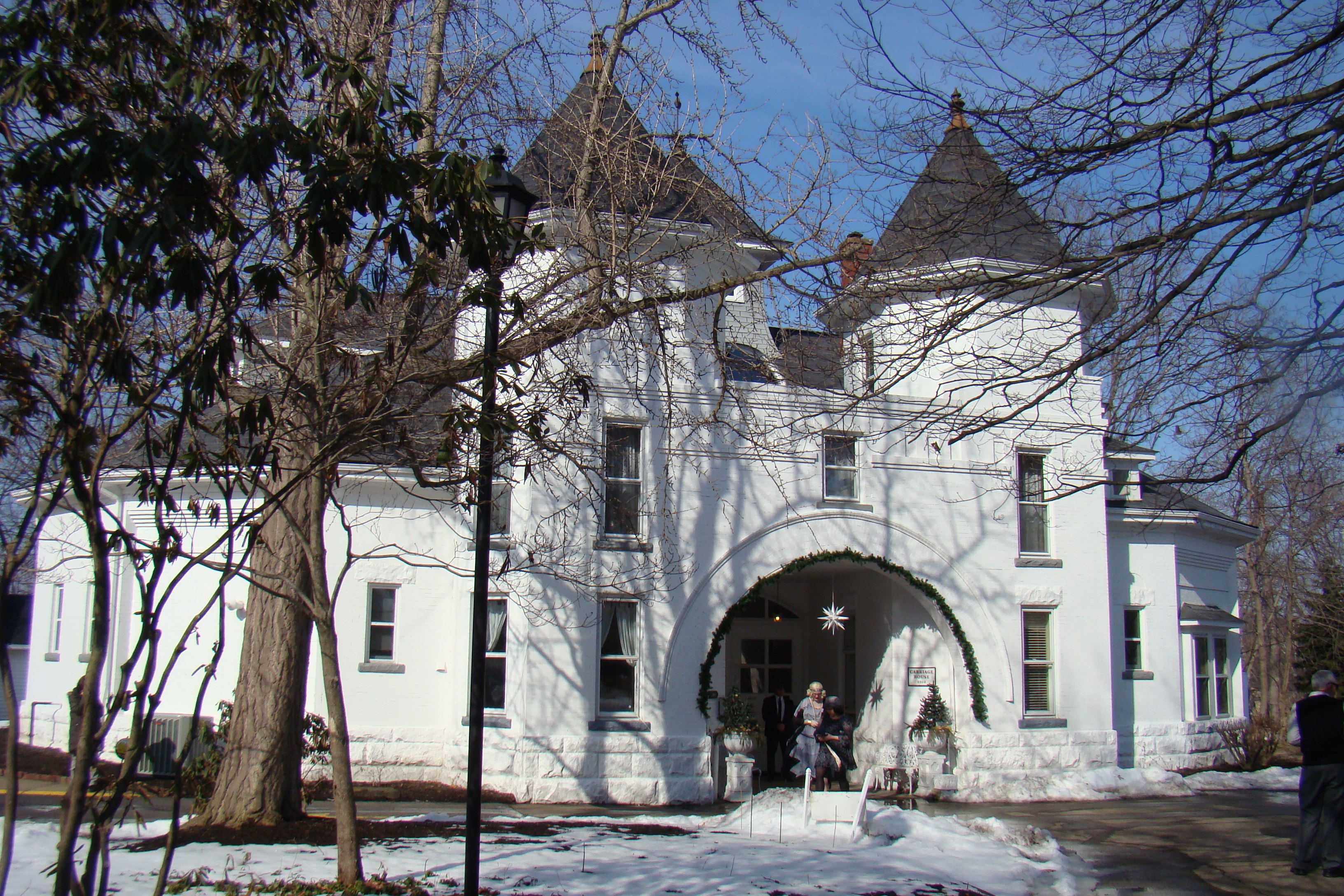
Next to the home stands a Carriage House Museum with a fairytale like appearance. This fancy barn actually held Mr. Reeves’ horses and carriages, and had space for a workshop.  Today inside this fancy garage, visitors will find a vast collection of vehicles: the family’s hansom, sleigh, rare electric car, and a restored doctor’s buggy. Upstairs the Carriage House features a history of Dover, when it was Canal Dover before railroads were prominent there.

Reeves Carriage House has a fairy tale like appearance.

Reeves Carriage House has a fairytale like appearance.

The mansion is open for tours, conducted by outstanding guides, for many special events such as Gatsby Night, Living History Tours, and their elegant Victorian Christmas. On a recent visit during Gatsby Night, entertainment was provided by the Moravian Choir and Big Band. Mrs. Reeves was a devout Moravian all her life, and Reeves Library can be found today at the Moravian College in PA.

The museum has been opened since 1976, when it was sold to the Dover Historical Society by Jeremiah’s grandson, Samuel, for the amount of $1.00. The family hoped that it would be preserved for its historical value…and that has been done with grandeur.

J.E. Reeves Victorian Home and Carriage House Museum can be found off I-77 at exit 83. Take a right on Tuscarawas Avenue, left on W Front Street, right on Wooster Ave, and a left on Iron Avenue. The Home and Museum can be found at 325 E Iron Avenue. Parking is in the rear of the home.

Blacksmith at work in his shop

Blacksmith at work in his shop

Peace and charm of living in a small rural community, previously the Miller family homestead, came to life at the 1890s Rural Village at Meadowcroft Rockshelter and Historic Village. Set at the far end of the complex, a visit here provided a relaxing spot in the day.

The village blacksmith demonstrated making a hook for a Dutch oven. Heat for the red-hot forge was produced by coal or coke. “Fanning the flame” provided the hottest heat needed for the perfect hook.

Miller home with garden

Miller home with garden

Betty Lamp

Betty Lamp was originally called the Better Lamp because it burned all night long using animal fat with a wick of twisted cloth.

The Miller Log House, constructed in 1795 by their great-great-grandfather, has been moved to the village. A garden planted nearby gave easy access to fresh vegetables.

While the children’s bedroom was upstairs, parents slept downstairs to protect them and keep the fire going through the night. All the furniture in the large downstairs’ room sat against the walls. That made it possible to come in the front door and walk straight to the fireplace on those cold winter days.

The guide explained that a second frame for a bed usually existed under the other beds so unexpected company could easily be handled. Their beds were made of straw and tightened with ropes to give them shape. Sometimes insects would get in the straw during the night, thus the saying: Good night, Sleep tight, Don’t let the bedbugs bite.

Desks with slates in old schoolhouse

Desks with slates in old schoolhouse

Bancroft Schoolhouse served as a one-room school for 10-20 students from 1834-1921. At that time, there were seven schools in a given mile radius. During the visit, a schoolmarm presented lessons of long ago to those in attendance. Original signatures of Bancroft students covered the blackboard while pictures of George Washington and Abraham Lincoln decorated the walls. Atop the double desks, two slates provided a place for students to write their lessons.

Entering the Methodist Episcopal Church from 1870 provided a glimpse back to the bare essentials of the church. Floors were bare with little ornate decorations around the church. A buggy, which brought the minister to the church service, waited outside.

Methodist Church

Methodist Episcopal Church with minister’s buggy outside

The Rural Village is just one part of the Meadowcroft Historical Complex, which also contains the famous Rockshelter archaeological site and Indian Village. Bring a picnic lunch and spend the day exploring, when they reopen in May.

Meadowcroft Rockshelter is found near Avella, PA off the beaten path. Your easiest bet might be to have your GPS guide you to 401 Meadowcroft Road in Avella, PA.

Cooper Rock Picnic Shelter

Coopers Rock Picnic Shelter

“The Rock with a View” describes a visit to Coopers Rock between Morgantown and Bruceton Mills in West Virginia, bordering Pennsylvania. The crowded park grounds gave a festival like appearance with beautiful American chestnut and stone picnic shelters welcoming families and groups to spend the day. Fifty miles of hiking trails provide an outlet for exercise surrounded by nature. During the winter months, these trails are used for cross-country skiing.

But the picnic area and hiking trails weren’t the attraction here. After walking down a short scenic path, you arrived at an immense rock, which serves as a scenic overlook for miles around. Caution must be used on this very steep and slippery rock.

Climb cautiously on Cooper Rock.

Climb cautiously on Coopers Rock.

Legend has it that Coopers Rock received its name from a barrel maker, also called a cooper. The story goes that a fugitive hid away from the law for several years under the shelter of the rocks in this vicinity. In his new mountain hideaway, the cooper made barrels, which he sold to people in the nearby communities.

The early history of the area centers around the iron ore industry, with many iron furnaces located nearby as early as 1798. With the discovery of iron ore and limestone, the abundance of hardwood trees for fuel made this the perfect spot for Henry Clay Iron Furnace, which produced pig iron.

View from Cooper Rock

View of Cheat River Gorge from Coopers Rock

Standing on the Main Overlook, Cheat River Gorge appears in panoramic view. Fall is the perfect time to enjoy the scenic gorge and river surrounded by autumn colors. Enormous boulders and cliffs encourage rock climbers and hikers to explore.

Cooper Rock Overlook

Stone Bridge to Coopers Rock Overlook

An astounding piece of work is the stone bridge which connects the overlook to the main ridge. The steps were carved out of the mountain during the Great Depression by the Civilian Conservation Corps. The view from the bridge is quite spectacular as well.

Eco Turtle

Eco-sculpture of Coopers Rock Turtle by Gazsi

During the last few years on Earth Day, Benjamin Gazsi of West Virginia University made eco-sculptures near the parking lot of Coopers Rock to create another reason for people to visit. The Sleeping Giant, Standing Bear and Coopers Rock Turtle are the first three structures to be completed using products of the forest. These characters made of tree branches, mud, grass, leaves, and moss will be enjoyed by visitors until nature returns them to the forest floor.

Access to the park is closed during December until March 31 for motor vehicles, but you can still park at the first lot and walk in. There is no charge for visiting and hiking this fantastic forest. Being in a peaceful spot surrounded by nature clears the mind and relaxes the body.

 Coopers Rock State Forest has easy access just east of Morgantown, WV from I-68 off Exit 15. I-68 actually bisects the State Forest into two areas.