Places to go and things to see by Gypsy Bev

Goodbye Summer! Hello Fall!

This giant ear of corn welcomes you to McDonald's Corn Maze.

This giant ear of corn welcomes you to McDonald’s Corn Maze.

Pumpkins + Corn Maze = Thoughts of Fall

McDonald’s Corn Maze provides the perfect spot for families to discover the spirit of the fall season. In 2006, the corn maze was created with hopes that a few children might be able to enjoy it. Never did they expect that over 3,000 would make their way through the maze that very first year.

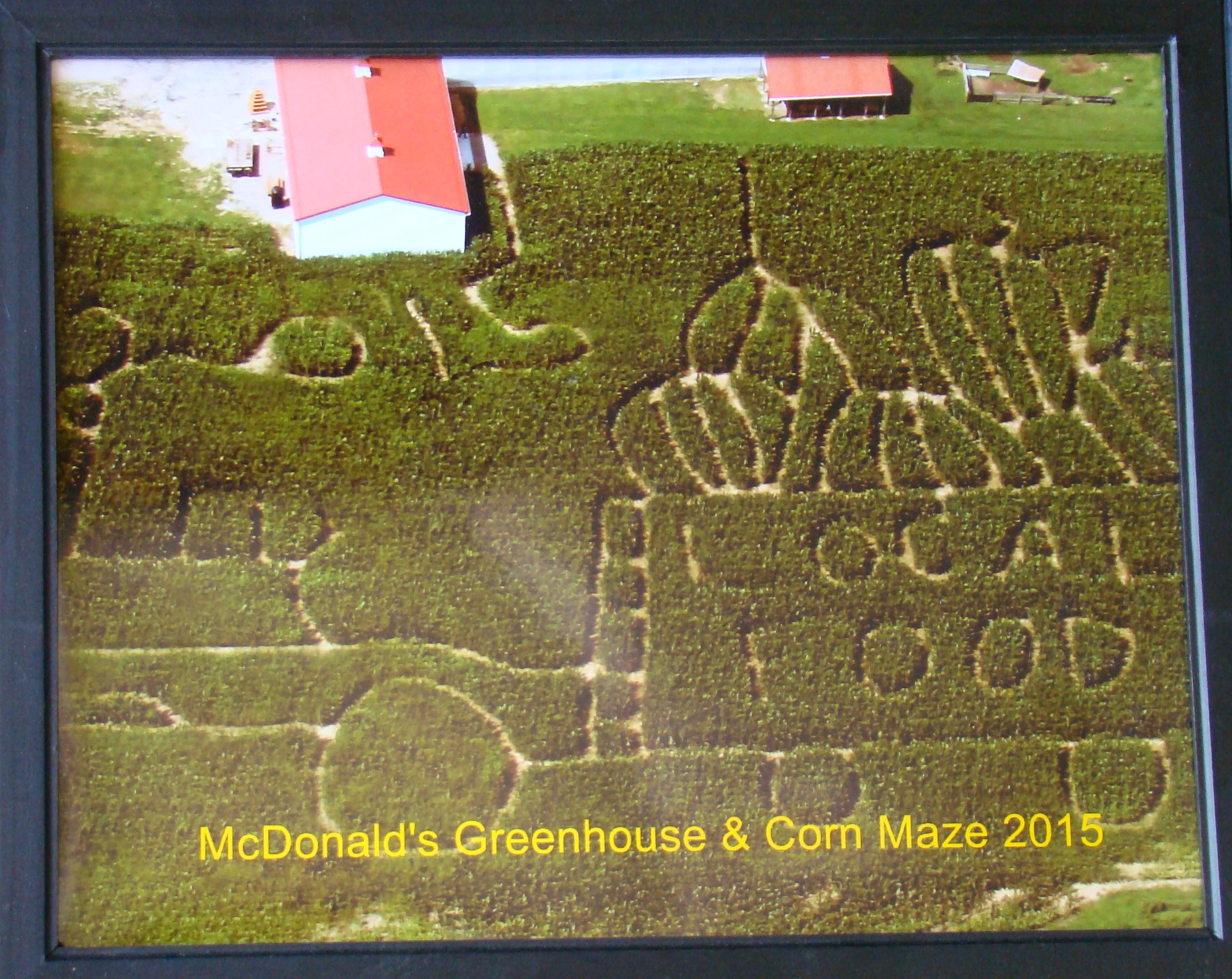
The theme each year differs. This year the five-acre corn maze features a cowboy with a lasso standing by a saguaro. Wonder if he’s going to lasso a pumpkin?

A play area along side the corn maze offers many possibilities to explore.

A play area along side the corn maze offers many possibilities to explore.

This is indeed a family affair involving three generations. Jim and Susan McDonald built their home between their parents’ farms on Adamsville Road in Muskingum County. This makes for close family ties and grandparents have opportunity to watch their two grandsons grow up.

Agriculture is their main interest and they want to teach youngsters and adults more about the process of getting food from the farm to the table. Jim lived on a farm all of his life so it was no surprise when he graduated from Ohio State University at their Agricultural Technical Institute with a degree in greenhouse and management production. He opened his first greenhouse the year after he graduated.

All kinds of pumpkins are waiting to be taken home for decorations.

All kinds of pumpkins are waiting to be taken home for decorations. Those in the front are called “Witches Warts”.

There’s no shortage of pumpkins here as McDonald’s has fifteen acres of pumpkins with choices of different sizes, shapes, and colors. Choose from Buckskin, White Pumpkins, or Witches Warts to name a few. They expect to have over 10,000 pumpkins this year as well as a large supply of mums, gourds, and cornstalks. Everything you need for a fantastic fall scene.

Pictures is an overview of the 2015 maze.

Pictured is an overview of the 2015 maze.

They cut the maze in June when the corn was about a foot high. The drawing of the maze scene was placed on a grid, then Susan carefully directed Jim on his mower foot by foot to make it perfect. That’s no small feat in a five acre maze.

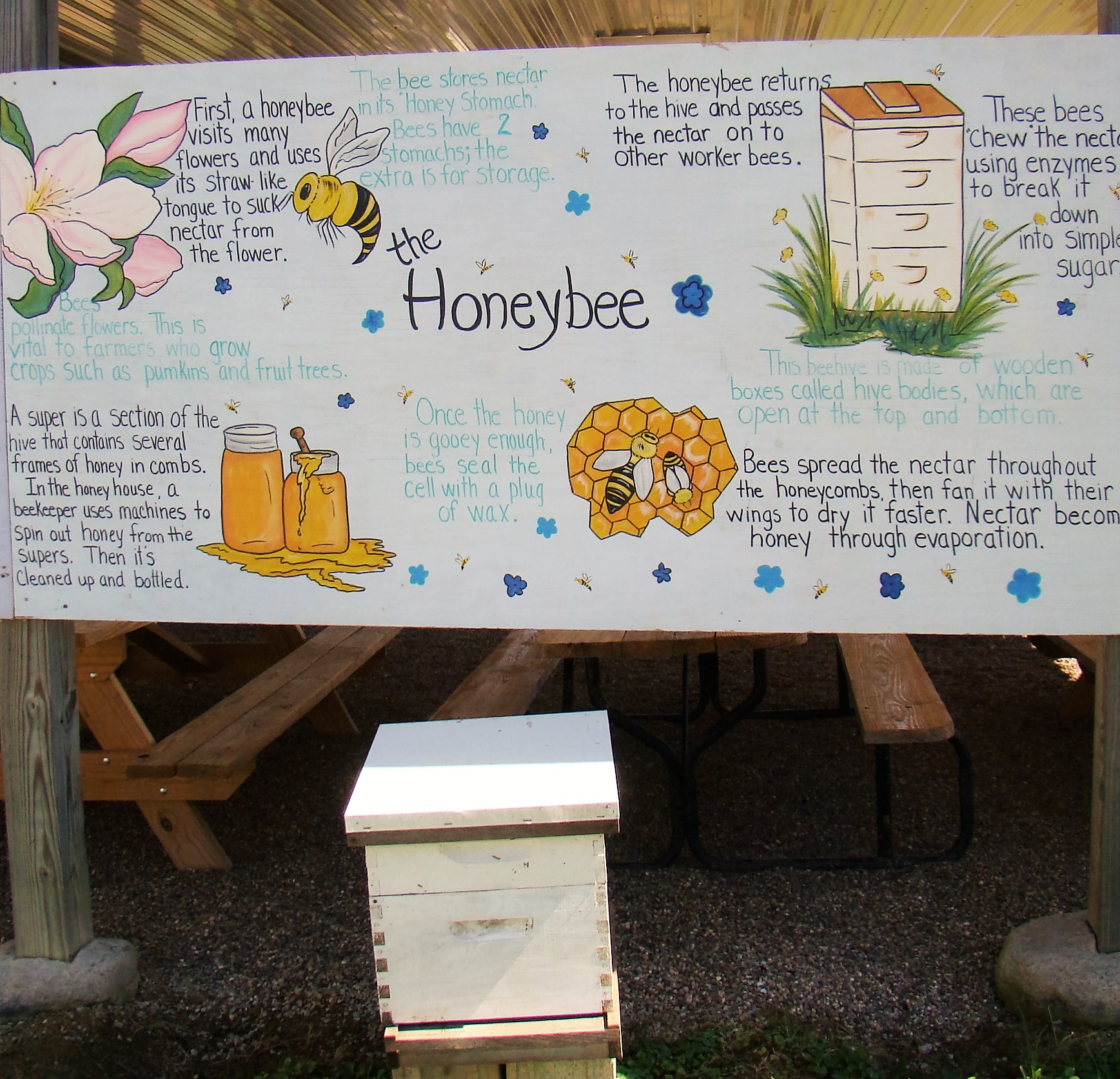
Educating students and adults about honey bees is one of Jim's enjoyments.

Educating students and adults about honey bees is one of Jim’s enjoyments.

Affectionately called Old McDonald, Jim has farming in his blood. School groups, 4-H clubs, scout troops and even seniors enjoy his stories about the farm. As you would expect, it’s not unusual for a verse or two of “Old MacDonald Had a Farm” to be part of the day’s events.

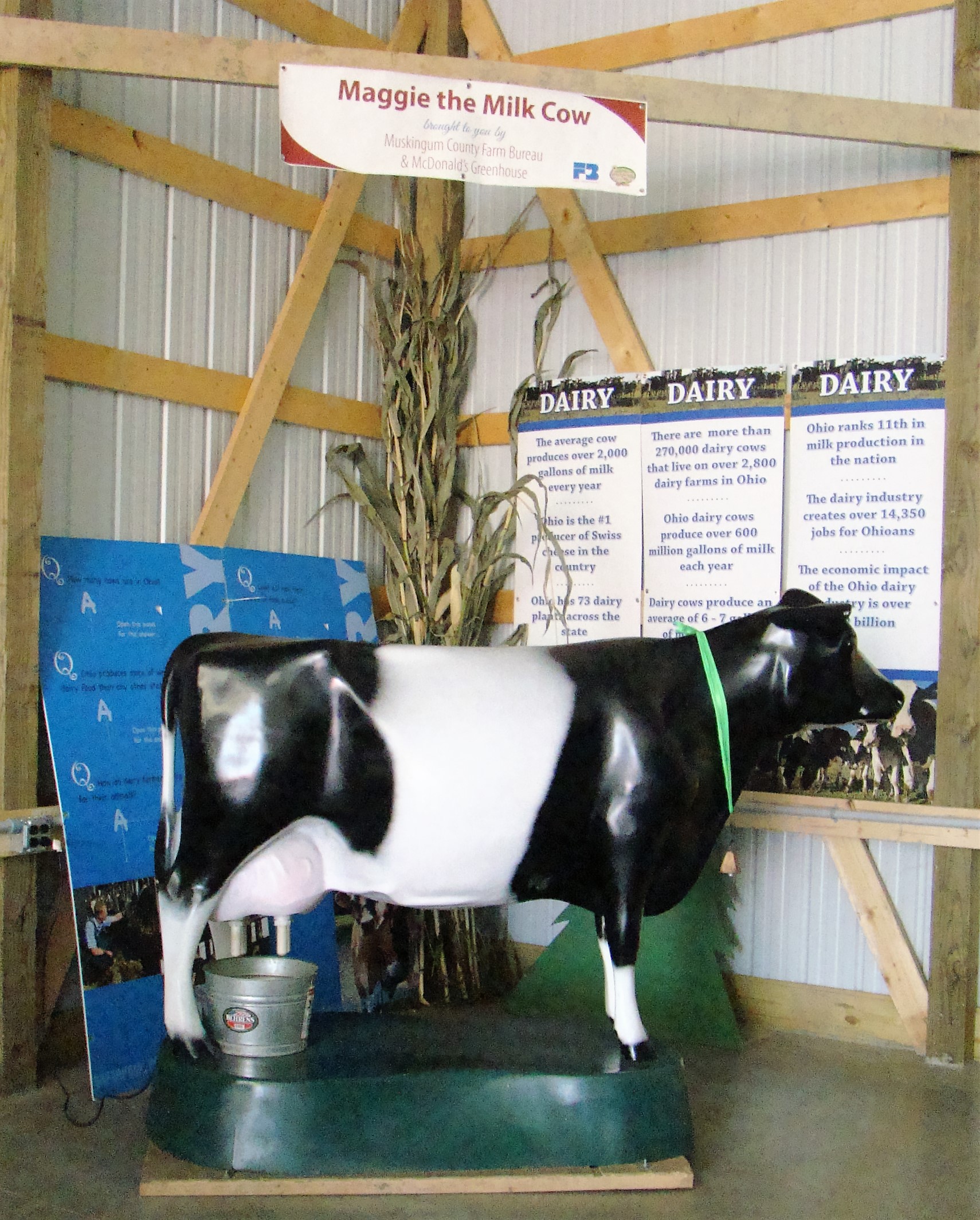
Maggie the Milk Cow even goes to the county fair for demonstrations on how to milk a cow.

Maggie the Milk Cow goes to the county fair for demonstrations on how to milk a cow.

Today’s children don’t have much opportunity for up-close contact with real farm life. Jim wants them to understand where their food comes from. His enthusiasm about farm life is almost tangible. Even though it’s hard work, it obviously has its rewards as he enjoys telling children about pollination by honey bees, milking a cow, growing pumpkins and why it’s always earth day for a farmer.

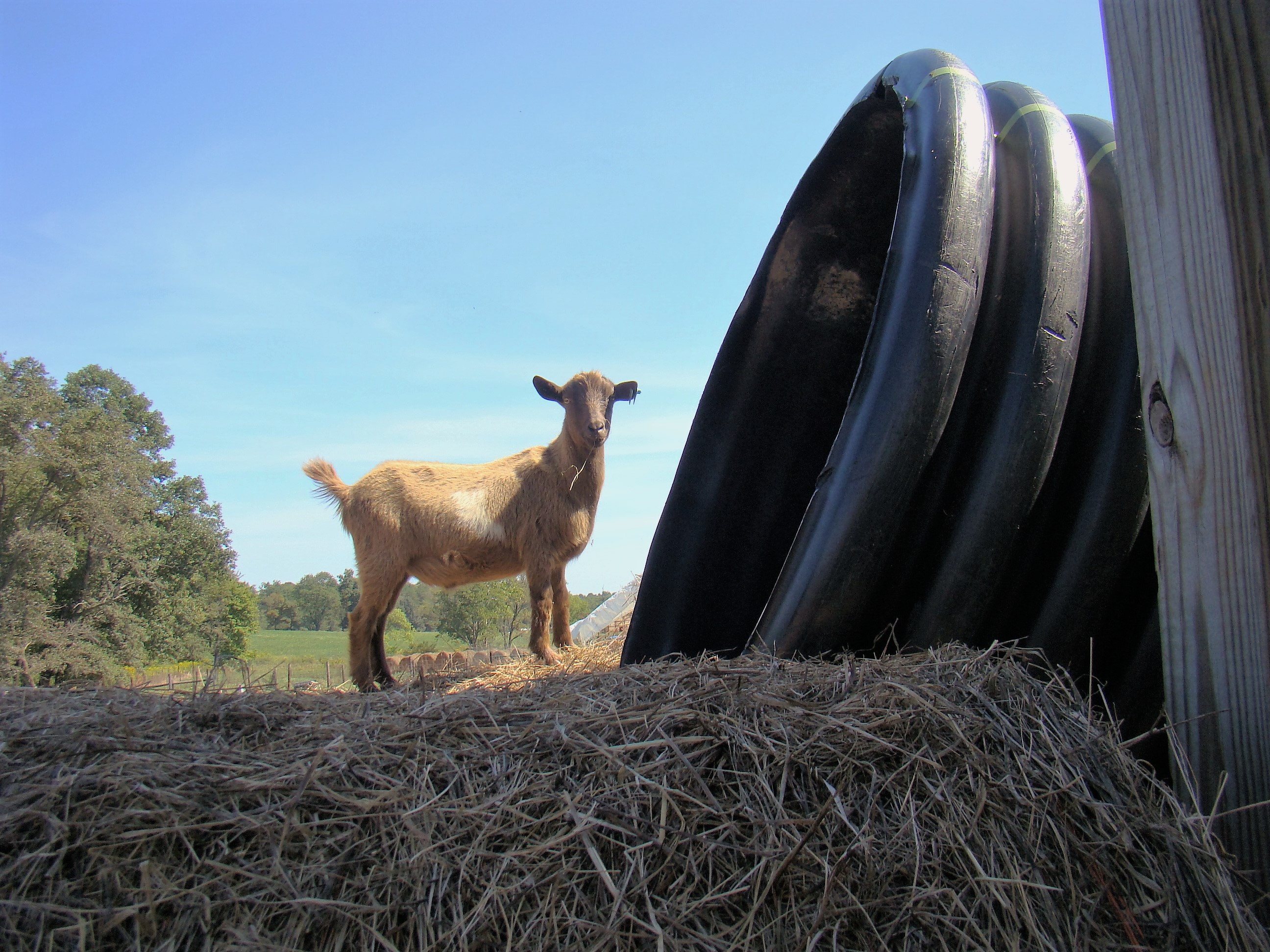
This goat stands on top of a large bale of round ray and peers into the plastic pipe used as a slide. Should he or shouldn't he?

This goat stands on top of a large round bale of hay and peers into the plastic pipe used as a slide. Should he or shouldn’t he?

A petting zoo gives everyone a chance to be in contact with different baby animals such as a lamb, goat, duck, pig, or rabbit. Nearby a small playground contains a unique “sandbox” – a round watering tank filled with fifty bushels of shelled corn. There’s also stones to play hopscotch, and a slide made of plastic pipe atop bales of hay.

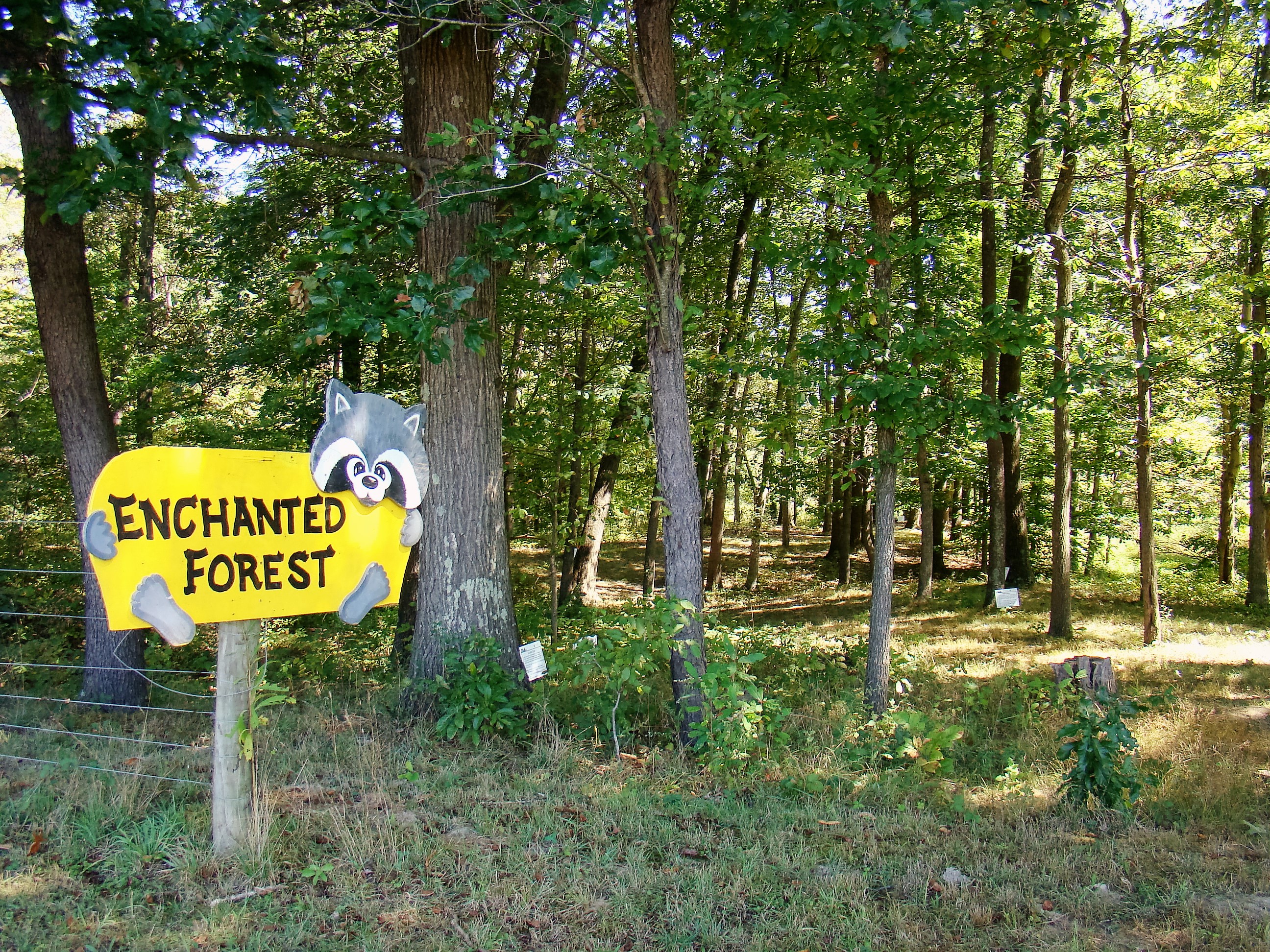
Take a walk in the Enchanted Forest and discover how early farmers lived.

Take a walk in the Enchanted Forest and discover how Ohio’s first farmers lived.

Then take a leisurely walk through Enchanted Forest and surround yourself with nature. Listen for the special sounds of the woods and learn about the plants that grow there as many have markers with names and uses. Deep in the woods is a teepee, home of Ohio’s first farmers.

McDonald's Greenhouse also has a large assortment of mums to brighten your fall.

McDonald’s Greenhouse also has a large assortment of mums to brighten your fall.

Sometime during your visit, be sure and climb on the hay wagon for a ride through the beautiful countryside filled with autumn leaves. Sit on bales of hay while the tractor pulls you down a path to see the fall season in beautiful Ohio. There’s a small admission price of only $6 per person for the day, but unlimited fun as it includes all activities.

A visit here adds up to a perfect fall experience filled with learning and fun…no ghosts or witches allowed, except for Witches Wart Pumpkins.

McDonald’s Corn Maze is located east of Zanesville, Ohio off I-70. Take Exit 157 (State Route 93) north to 3220 Adamsville Road. It’s only about two and a half miles from the interstate.

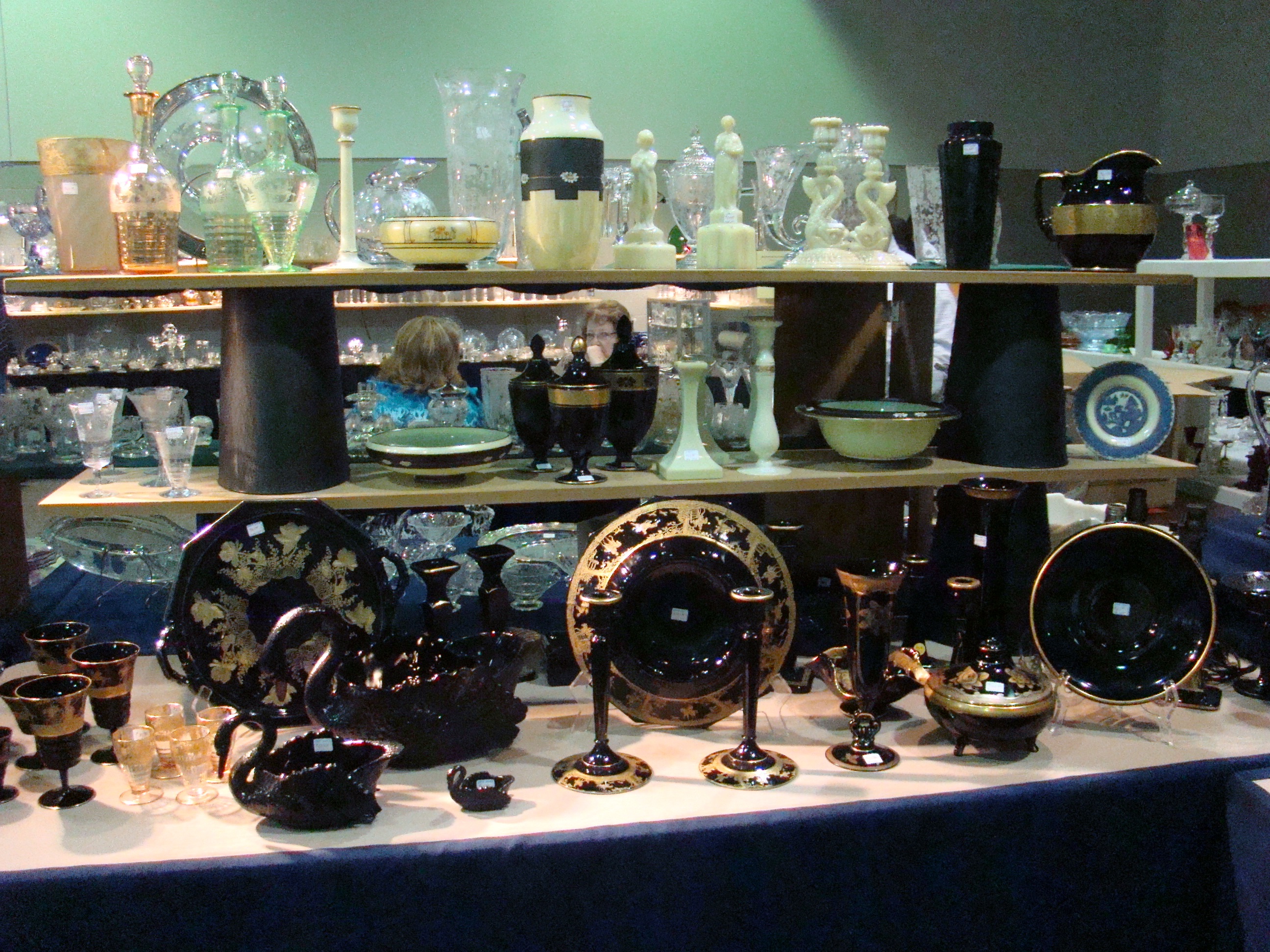
Gold embossed Ebony

Gold embossed Ebony with Ivory above

“Ebony & Ivory” served as the theme for the National Cambridge Collectors Club Convention in 2015.  Each year, collectors of Cambridge Glass meet to display and sometimes sell, parts of their collections. People come great distances to participate in this event. California, Florida, South Carolina, and Minnesota were a few of the places mentioned as vendors were visited throughout the displays.

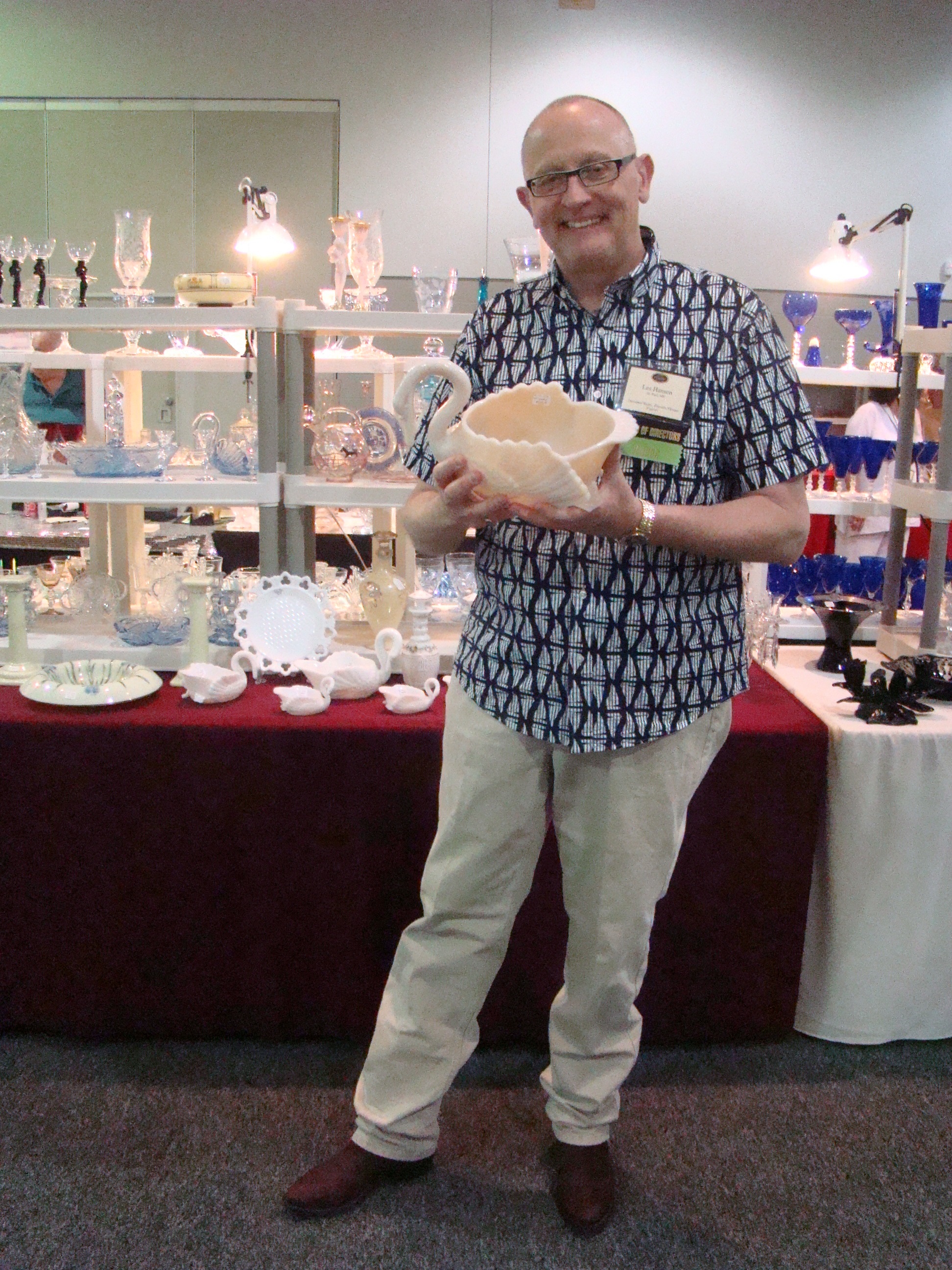
Les Hanson presented the opening night program of

Les Hanson presented the opening night program of “Ebony & Ivory”.

From St. Paul, Minnesota, Les Hanson discussed his favorite Cambridge Glass item – swans. Les has a collection of over 125 swans of all sizes, styles and color combinations. They seemed to be his pride and joy. But he also collected, in order of preference, hand painted enamel on crystal, ebony, and decorated nude stems.

When asked how he got interested in Cambridge Glass, Les smiled as he thought back. For some reason, he always liked the beauty of swans. When at a glass show with a friend many years ago, they saw a beautiful green Cambridge Glass swan, which wasn’t very high priced. His friend bought him the swan for a birthday present. Turns out the reason it wasn’t high priced was because it was chipped. Les learned two lessons that day: 1) he was hooked on Cambridge Glass, and 2) chipped glass takes values down rapidly.

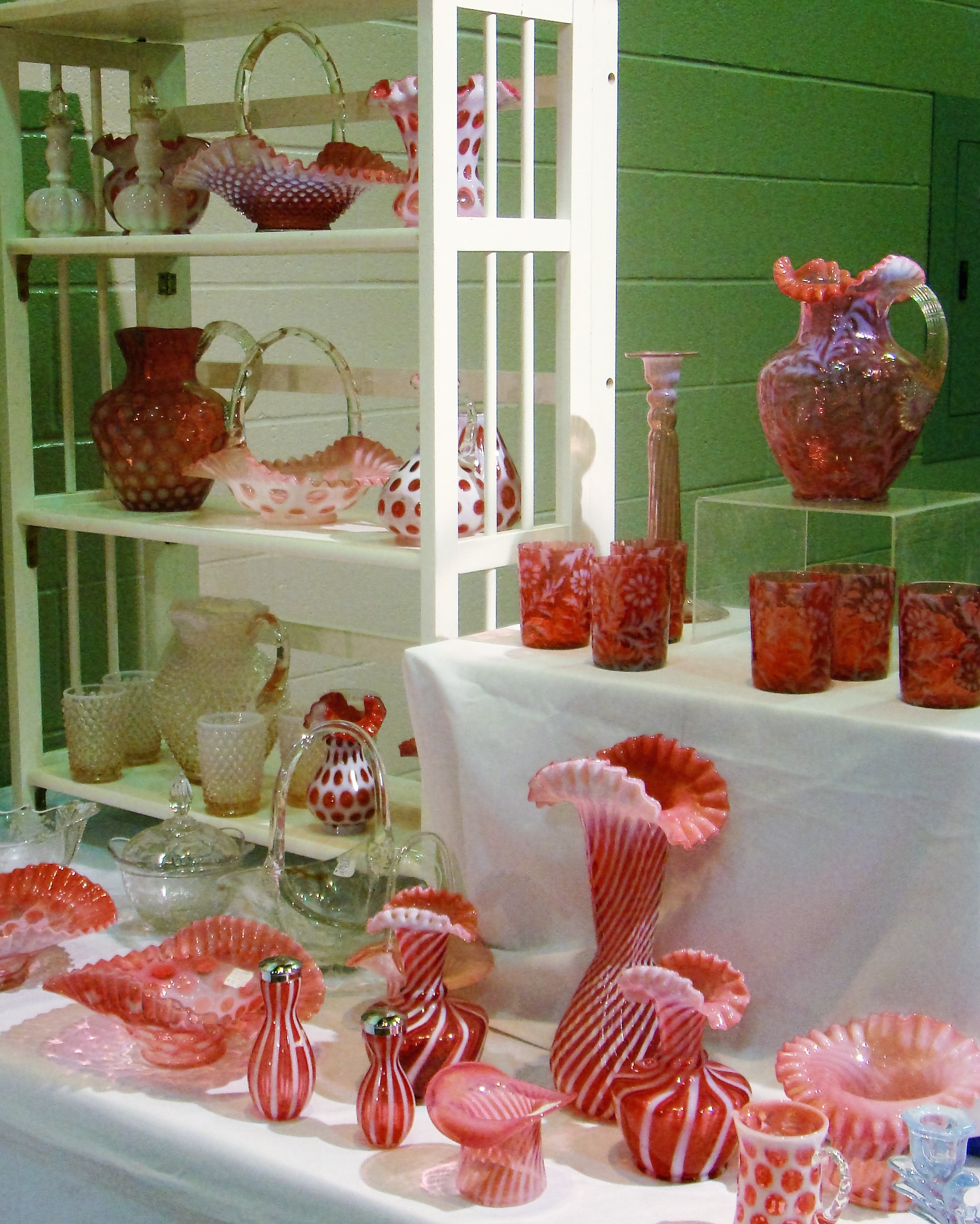
Sneaking in one of my favorites from the show - Cranberry Opalescent Coin Dot.

Sneaking in one of my favorites from the show – Cranberry Opalescent Coin Dot.  This show provides a great variety of collections from various glass manufacturers. This collection happens to be Fenton.

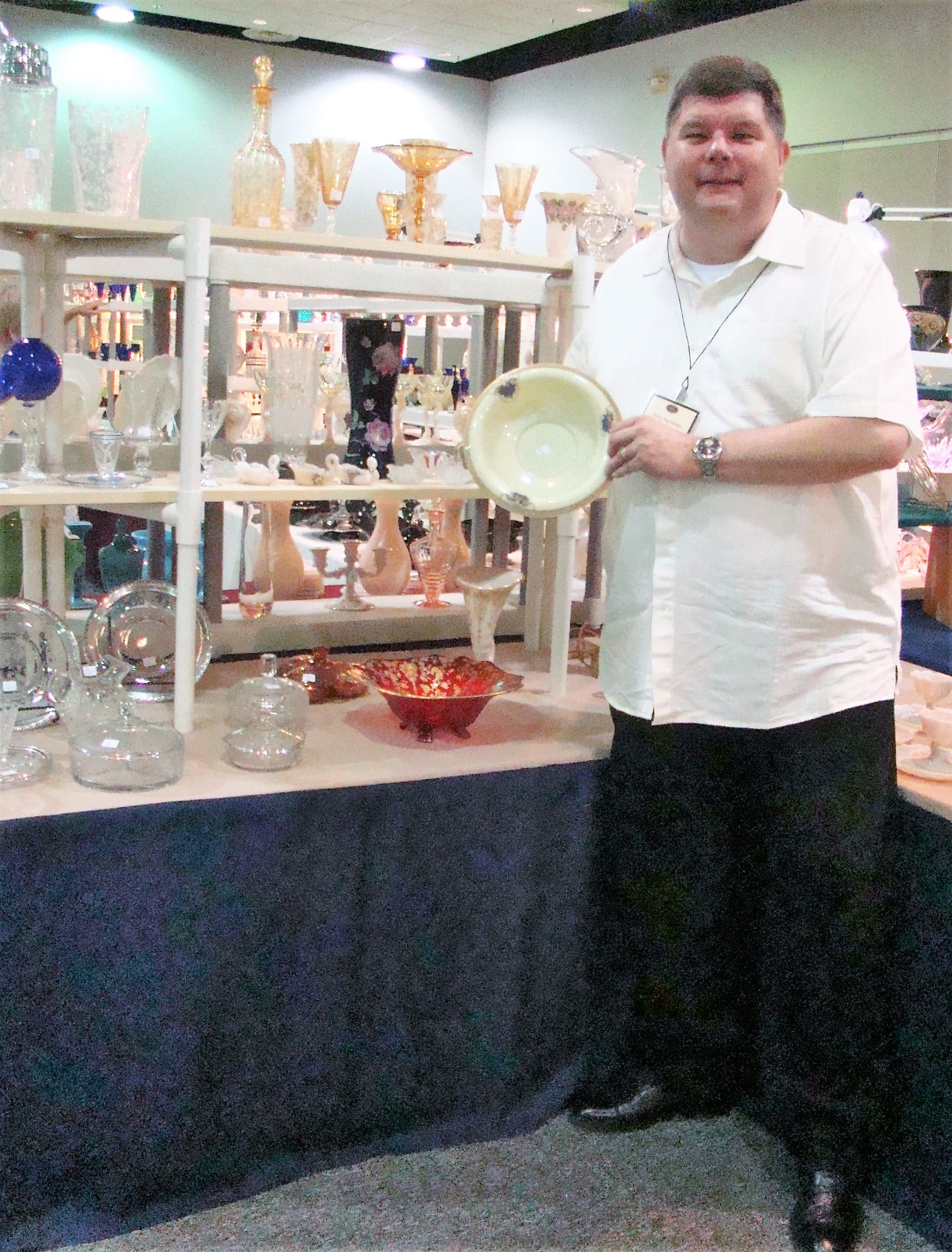
One gentleman. whose name eludes me, had an extensive collection of cream and sugar sets. Someone from Cambridge contacted him about attending the glass show years ago and he has been there ever since. At his peak, he had 480 cream and sugar sets. He was formerly a helicopter pilot for the Air Force and the helicopter he flew is now being restored in the Fort Worth Vintage Flying Museum. He said that this show has, “the best Cambridge glass for sale anyplace in the United States.” If anyone knows his name, please let me know.

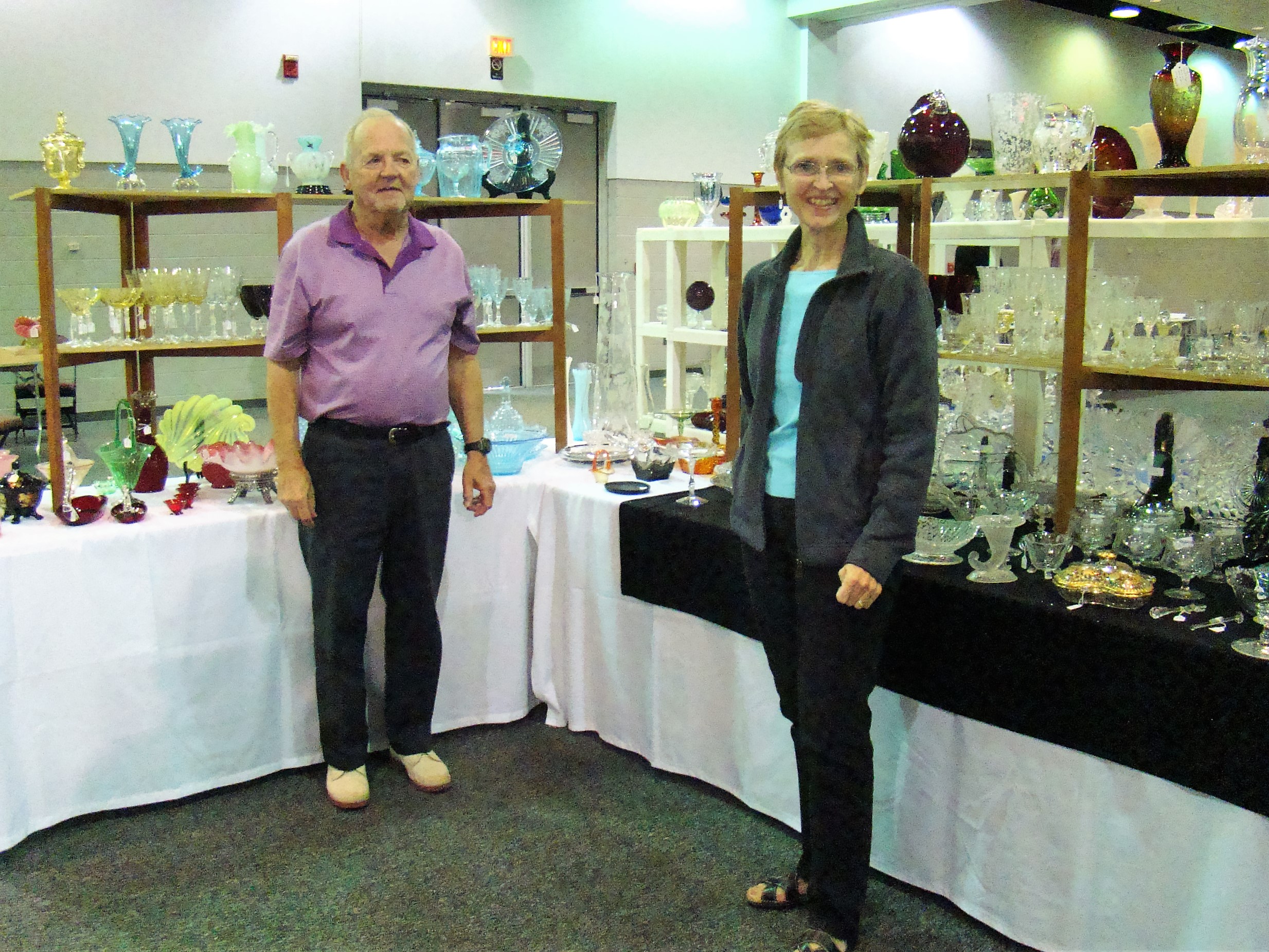
Autley and Kathy Newton were the new kids on the block at this year's show.

Autley and Kathy Newton were the new kids on the block at this year’s show.

From Hammond, California, Autley and Kathy Newton displayed for the first year ever. They were the newbies at the show and had not only Cambridge Glass but treasured pieces of other glass lines as well as some beautiful pottery pieces. They said that Rick Jones had seen their display at another show and invited them to Cambridge.

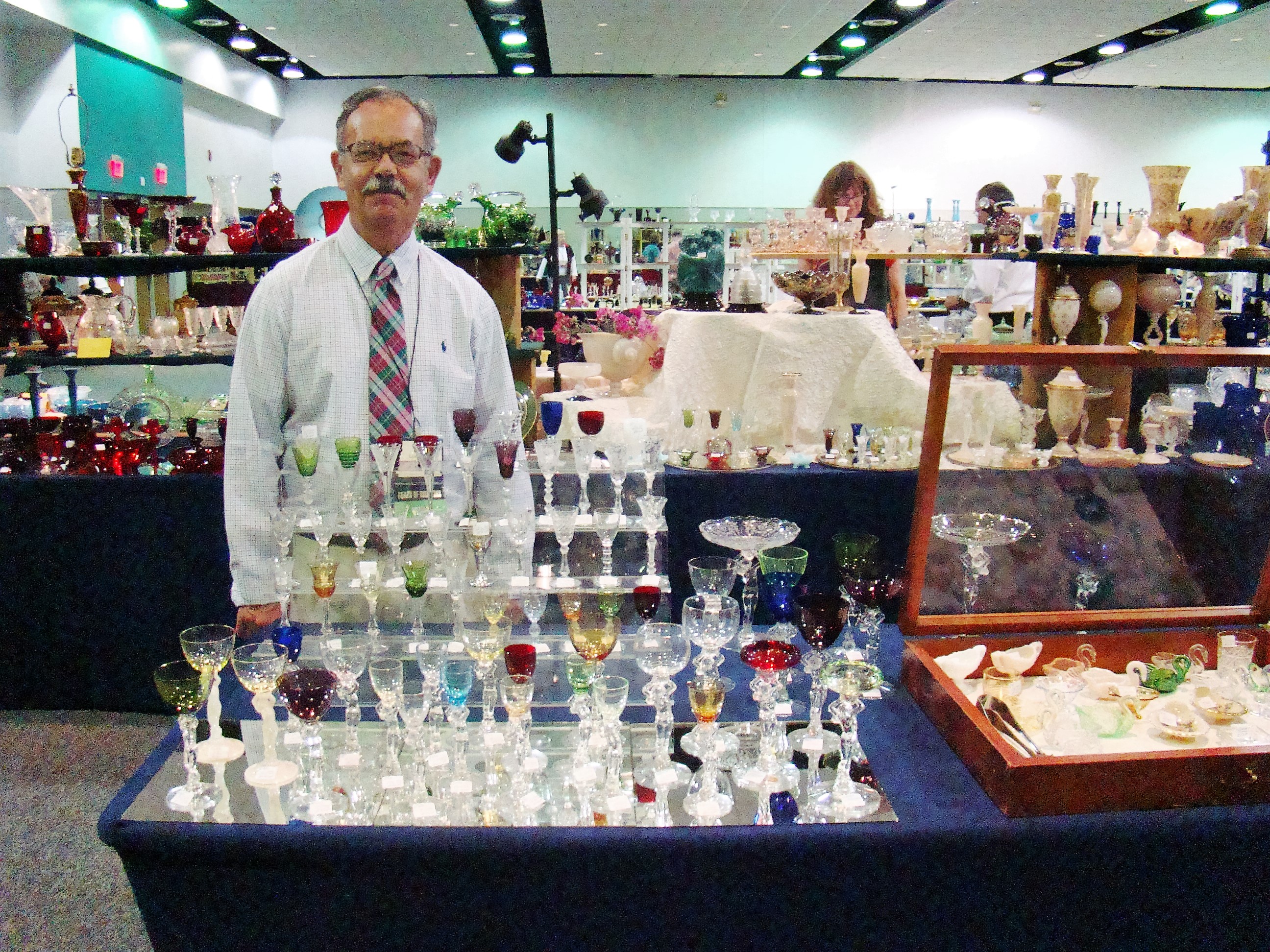
Lynn Welker, Mr Cambridge, displayed part of his cordial collection.

Lynn Welker, Mr Cambridge, displayed part of his cordial collection.

Of course, no show of Cambridge Glass would be complete without the presence of Mr. Cambridge, Lynn Welker, from nearby New Concord. Lynn has an extensive collection of over 11,000 pieces of Cambridge Glass. Cordials are his favorite because they are small and easy to move around, yet delicate and beautiful.

Lynn has been interested in glass all his life as his mother had an antique shop in New Concord and Lynn spent many hours at the store. He bought a glass bottle at an auction at the age of nine and has been hooked ever since. For sixty-one years, his vacations and adventures involve trade shows and museums. No wonder he is called Mr. Cambridge.

Doug shares his top quality glassware, but friendships are what keep him coming back.

Doug shares his top quality glassware, but friendships are what keep him coming back.

From Minnesota, Doug Ingraham, who has been collecting for forty-two years, is said to have “the best of the best”. This all began when his grandmother left him a collection of Cambridge Glass. Someplace he met Elizabeth Moe and she told him, “If you want to know about Cambridge Glass, join the collectors.”

Doug said that while the glass is beautiful, “What keeps me coming back are the friendships.”


Auman's Museum of Radio & TV still has an antenna on its roof.

Auman Museum of Radio & TV still has a working antenna on its roof.

Television won’t be able to hold on to any market after six weeks. People will soon get tired of staring at a plywood box every night.      

~Darryl Zamuck, head of 20th Century Fox, 1946

Who had the first TV in your neighborhood? Step inside a door marked Auman Museum of Radio & TV  in Dover, Ohio to discover television sets from days of old, and you just might see a TV like that one in your neighbor’s house long ago.

Larry Auman, owner, has accomplished what he set out to do after 50 years of collecting. His interest began way back in 1948 when he first saw a working TV in the window of Western Auto, while walking down the street with his mom and dad on a Saturday night.

He takes great pride in his display and the joy it brings to visitors. “My museum gives people a chance to experience sights and sounds of years gone by.”

Owner, Larry, points out the first TV his family had back in 1951.

Owner, Larry, points out a 10″ GE television, the first set his family had back in 1951.

After graduating from DeVry, Larry opened Auman’s TV & Electronic Service at his home near Dover. At some point, television sets brought in for repair began to accumulate,and soon he had a room full of sets that showed a history of their development.

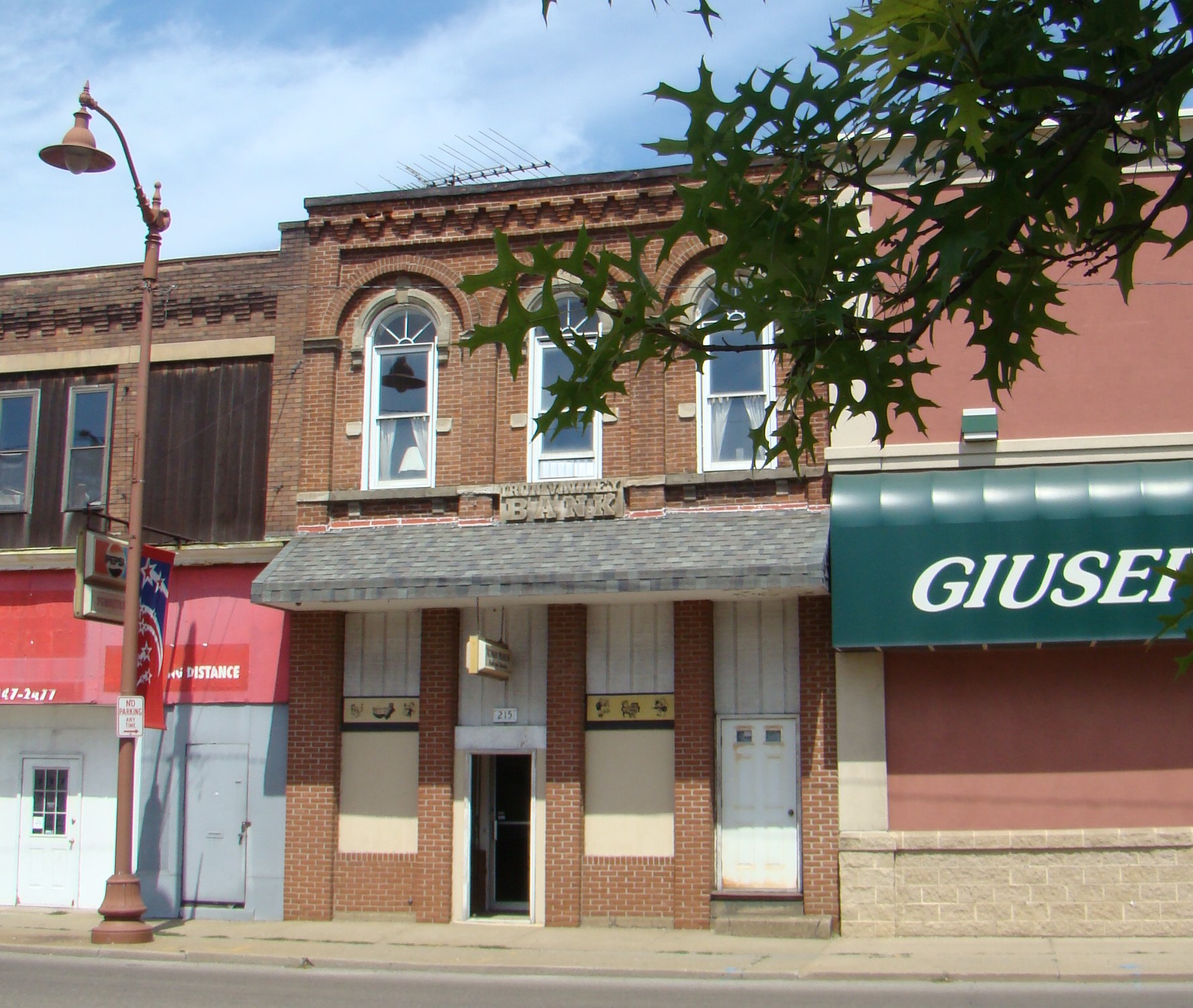
In 2001, Larry moved his radio and television collection from a room above his garage to the former Iron Valley Bank building in downtown Dover. What was formerly filled with cash, now has priceless memorabilia on display from 1900-1950. The museum contains nearly 150 early TV sets from 60 different companies – none of which are in existence today, Zenith being the last to go.

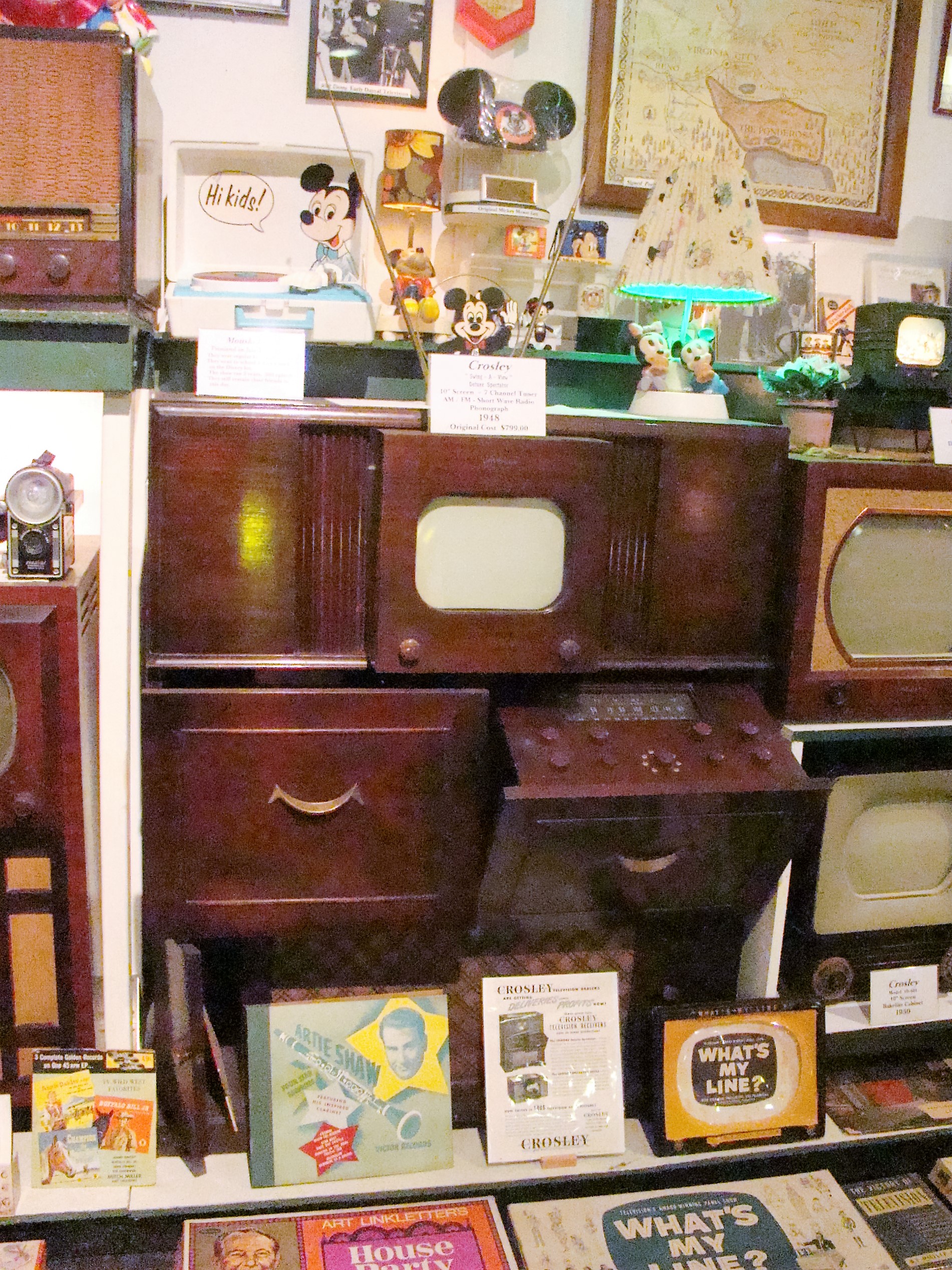
This early home entertainment center from 1948 contained a TV, record player, and radio.

This home entertainment center from 1948 contained a TV, record player, and radio.

Viewing the old radios, memories might pop into your mind of listening to “Fibber McGee and Molly”, “Amos and Andy”, or “The Life of Riley”. Since Larry attempts to keep all the sets in working order, you might enjoy watching an early television rendition of those old favorites. Some people spend most of their visit going back in time as they watch old shows and commercials.

During those early days of television, viewing time was very limited. There were no programs at all on Thursday or Sunday, and the rest of the week, hours were from 4:00 pm – 8:00 pm. How times have changed!

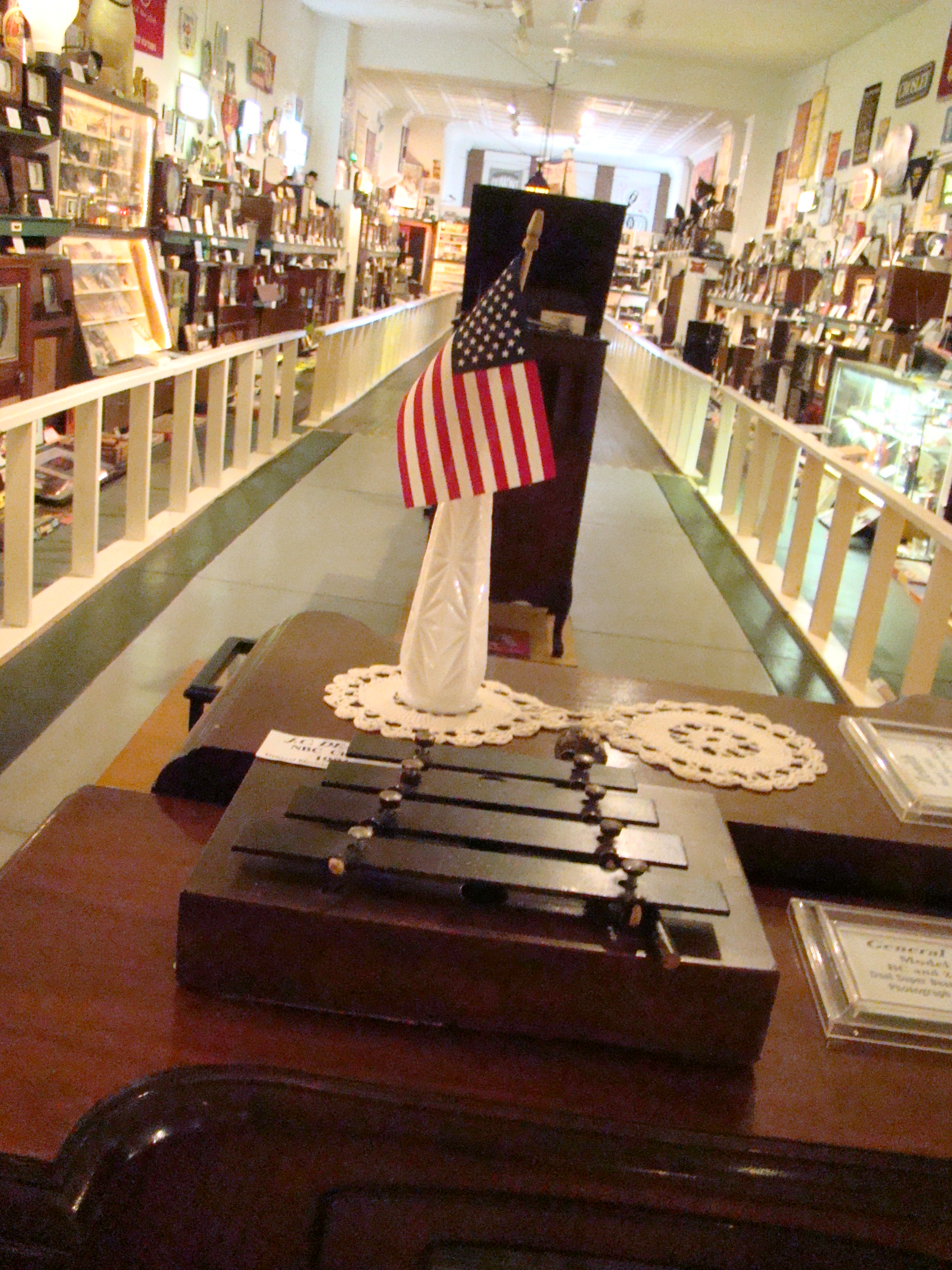
This played the NBC sign-on tones. The fourth bar was only used during WWII.

This played the NBC sign-on tones. The fourth bar was only used during WWII.

Over the last 50 years, Larry collected hundreds of varied items that relate to early days of television and the shows it brought to life. Game boards, toys, posters, comic books and much, much more can be found in his one-room showplace.

Auman Museum has received great publicity since the 70s when Larry appeared on TV as a segment of PM Magazine out of Cleveland. Numerous magazine and newspaper articles have been written about his collection, and he has been filmed numerous times for television specials. Often the sets he has collected appear in special programs also.

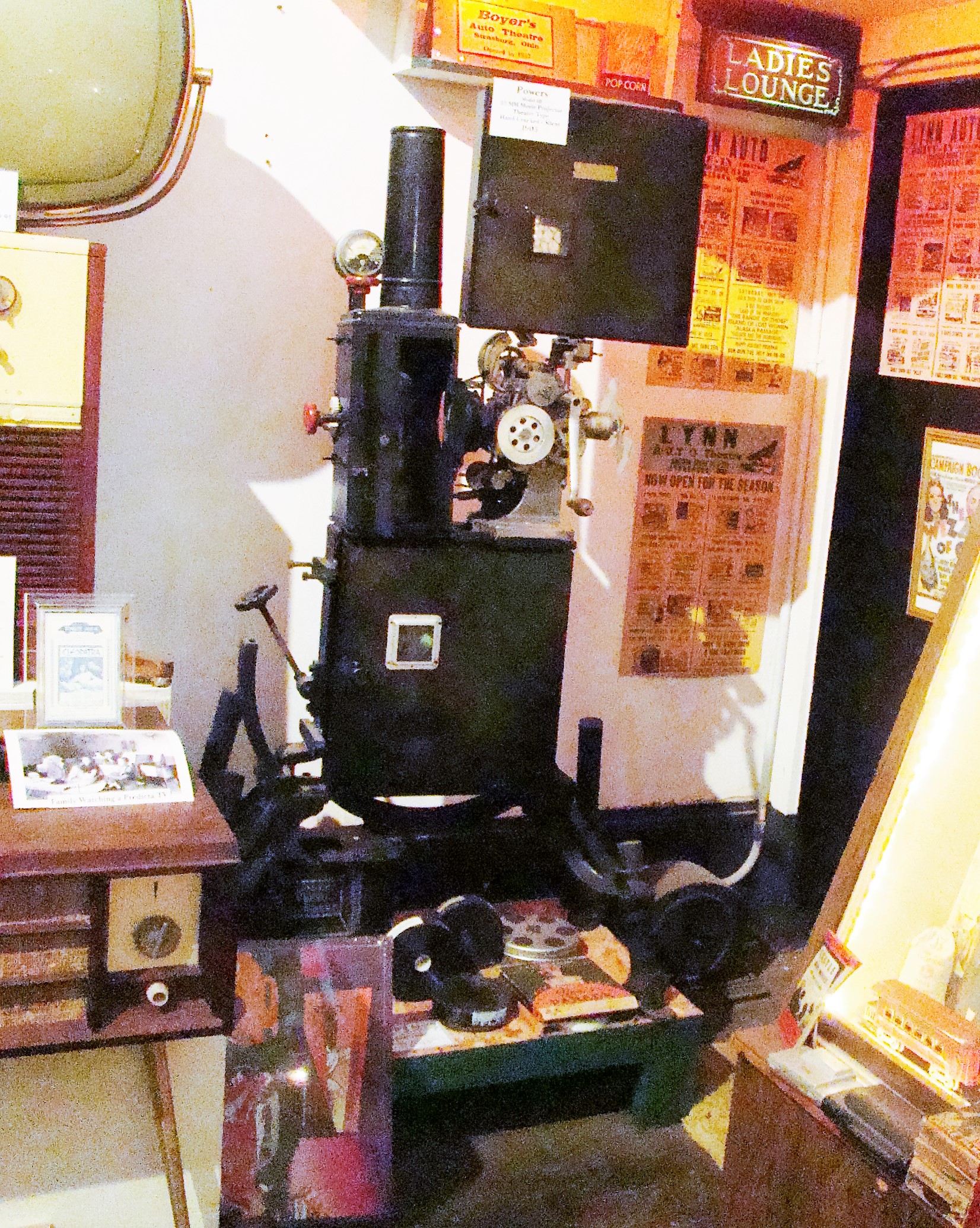
This handcranked silent movie projector contained a surprise when purchased - a film of Bing Crosby's

This hand-cranked silent movie projector contained a surprise when purchased – a film of Bing Crosby’s “Going My Way”.

If you listened to the radio or watched TV growing up, you will really enjoy this museum. Actually, almost everyone, even youngsters, find it fascinating. Larry tells many captivating stories about the equipment he has found and the unusual ways things have come into his possession.

Larry shows how easily this premier radio operated from either side.

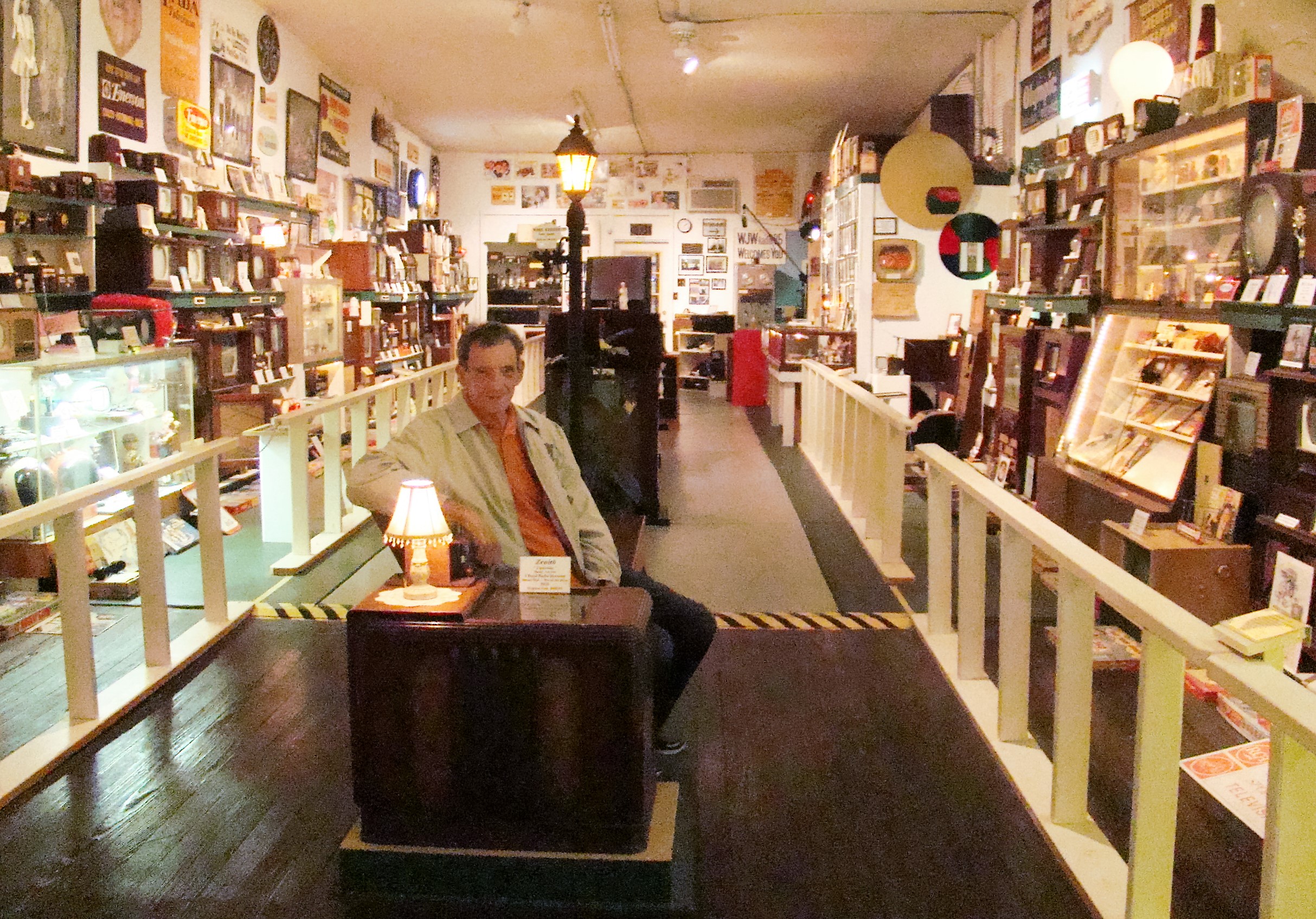
With a view of a portion of the museum in the background, Larry sits next to a Zenith Chairside Radio.

Hours for the museum are extremely flexible but only opened by request. Call Larry at (330) 364-1058 and he can usually accommodate a visit with a little notice.Television has come a long, long way, but people have never tired of staring at the TV screen.

Auman Museum is located at 215 North Tuscarawas Avenue in Dover, Ohio along Route 211. Off I-77 take exit 81 and turn on Ohio 39 E. Go straight onto W. 3rd Street about .6 mile, then turn right onto Tuscarawas Ave.

Every August western fans hit the trail to Portsmouth, Ohio to honor an old favorite, Roy Rogers, King of the Cowboys, and his wife, Dale Evans, Queen of the West. 2015 made the 32nd year the Roy Rogers Festival has been held there.

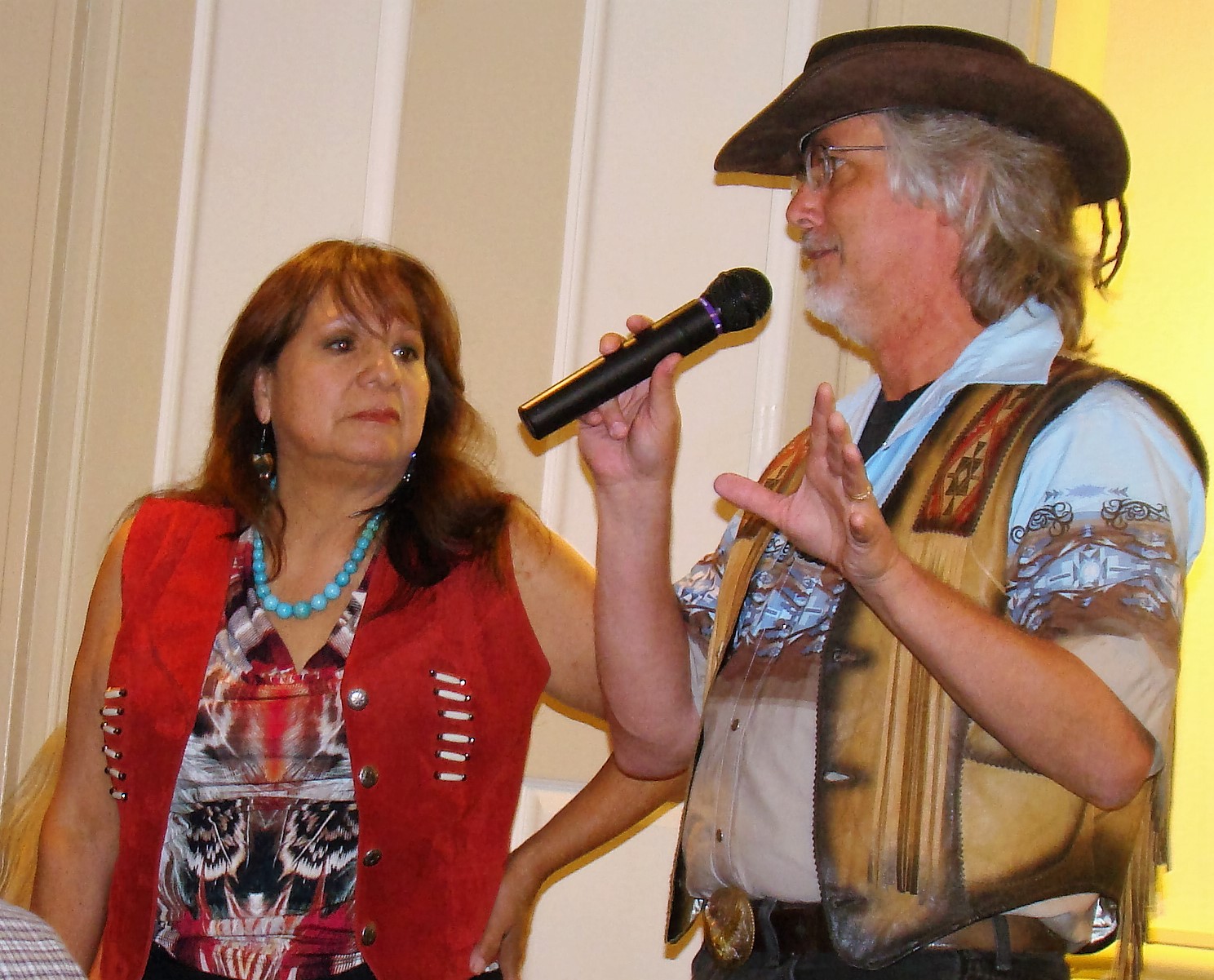
Roy and Dale's youngest daughter, Dodie, and her husband, John Patterson.

Roy and Dale’s youngest daughter, Dodie, and her husband, Jon Patterson.

Meeting Dodie Rogers Patterson, the daughter of Roy Rogers, had to be a highlight of the day for many. Her husband, Jon, provided entertainment as well. Dodie is the youngest of Roy and Dale’s nine multi-cultural children. She is of the Choctaw tribe, which also ran in Roy’s blood.

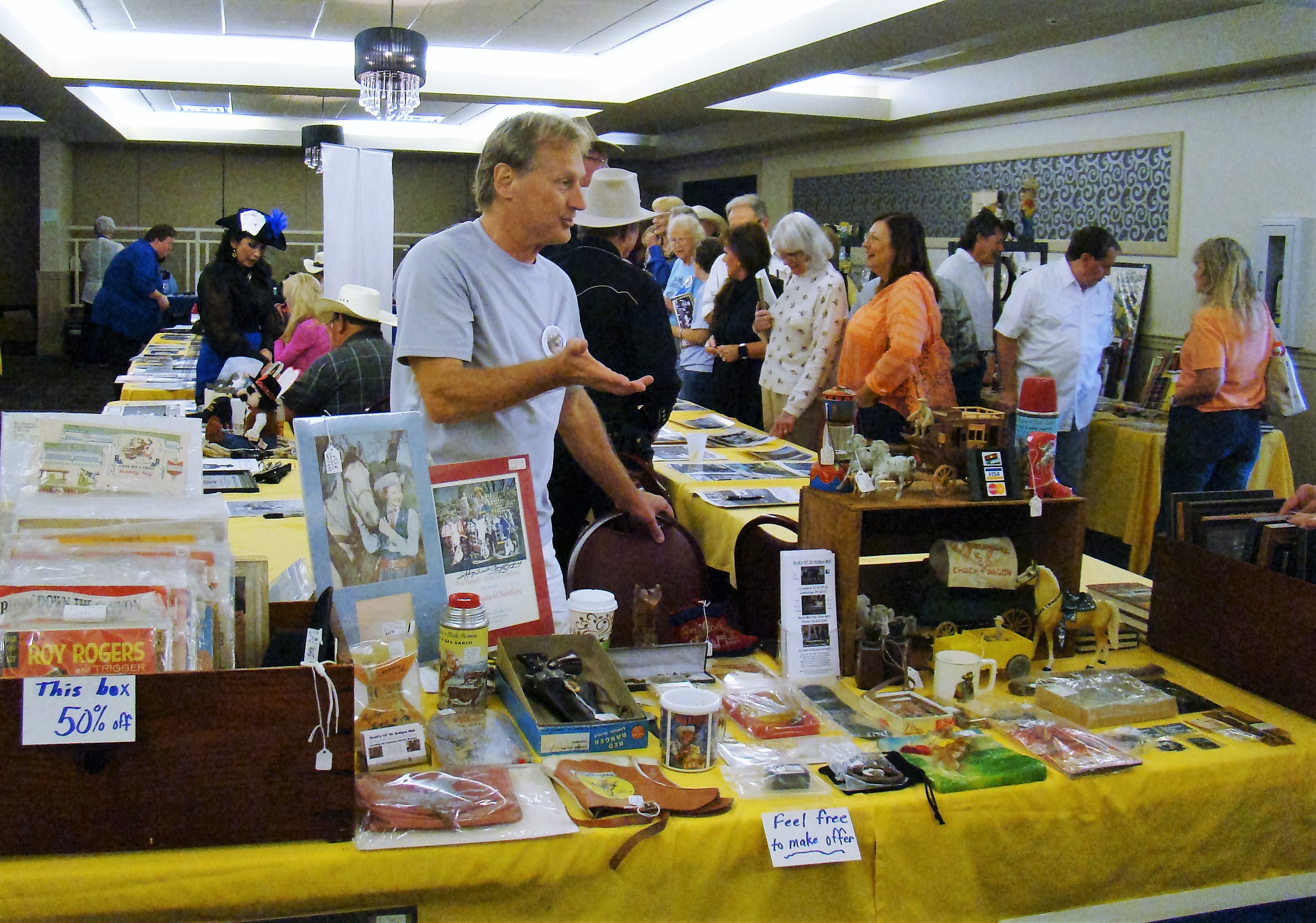
It was a pleasant surprise to find hometown dealer, Dave Scott, with Roy Rogers memorabilia.

It was a pleasant surprise to find hometown dealer, Dave Scott, with Roy memorabilia.

Activities centered around the dealers’ room where items could be viewed and purchased from many sellers. In the afternoon, there was a question and answer session with the stars that provided an inside look at their lives and what they had overcome. Being a star is not always as glamorous as it may seem.

Steve Connors, son o Chuck Connors from the Rifleman, certainly had the image of his father.

Steve Connors, son o Chuck Connors from the Rifleman, certainly had the image of his father.

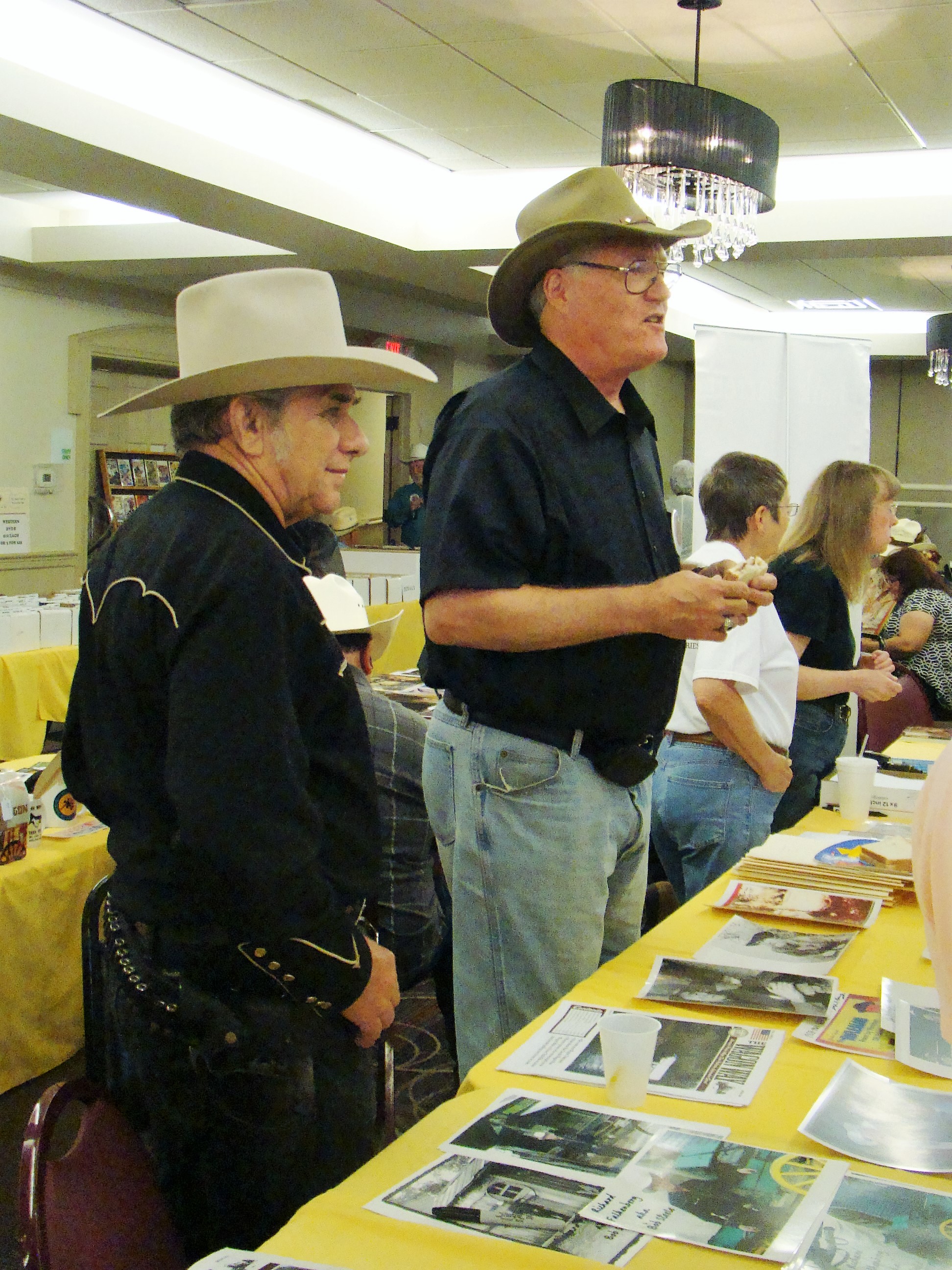
Many stars were in attendance, and several of them had also been at a recent Hopalong Cassidy Festival. Fuzzy took a fall but came back stronger than he was before.  Steve Connors, son of Chuck Connors, who was The Rifleman and Johnny Crawford, who also starred in that show as a young lad, both had a great sense of humor.

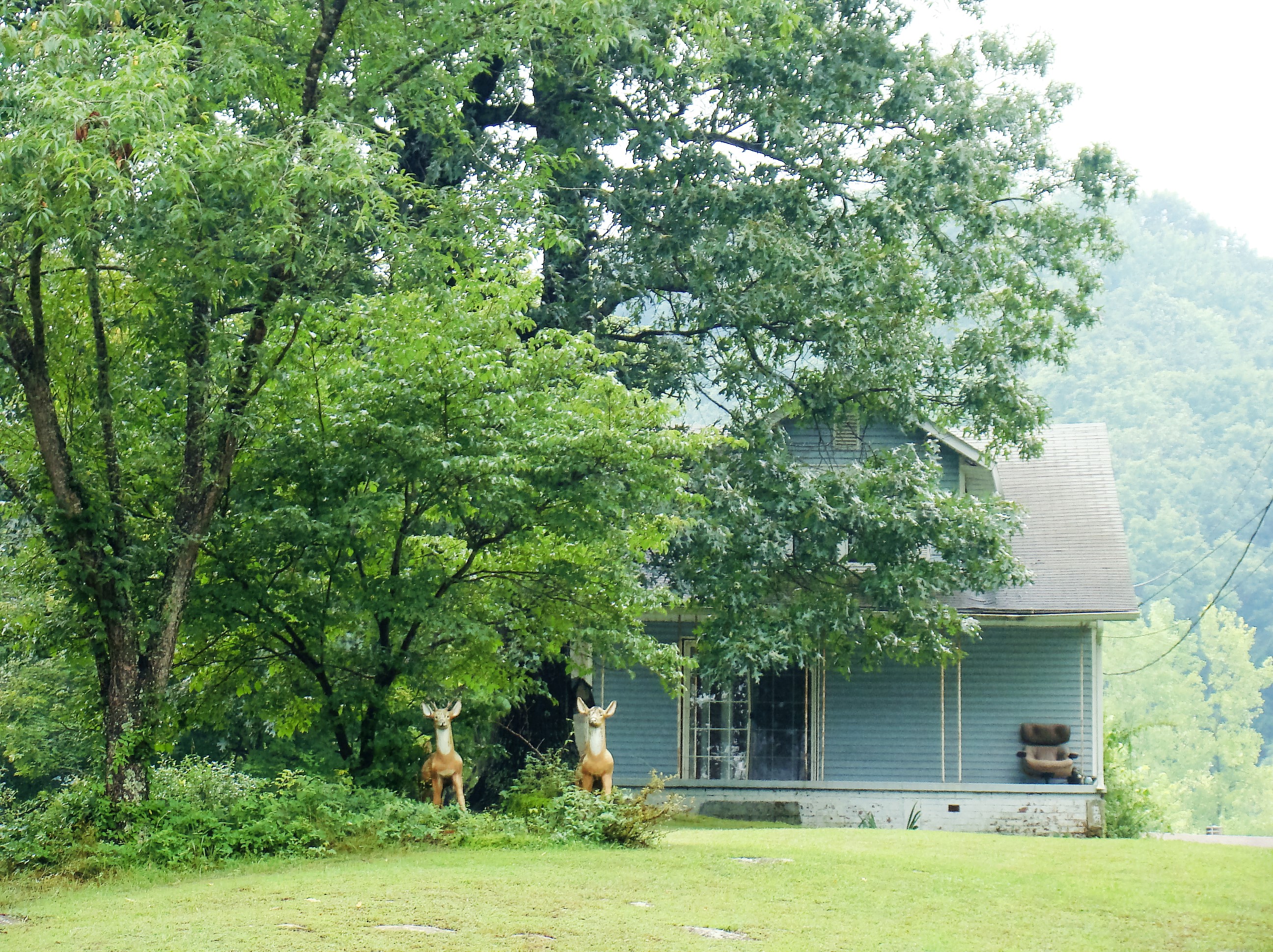
Roy Rogers home on Duck Creek near Portsmouth.

Roy Rogers home on Duck Creek near Portsmouth.

The boyhood home of Roy Rogers was located at Duck Creek about twelve miles from Portsmouth. There is an Ohio Historical Marker at his home as well as a marble marker. Roy lived here until he was a teenager at which time they moved to California.

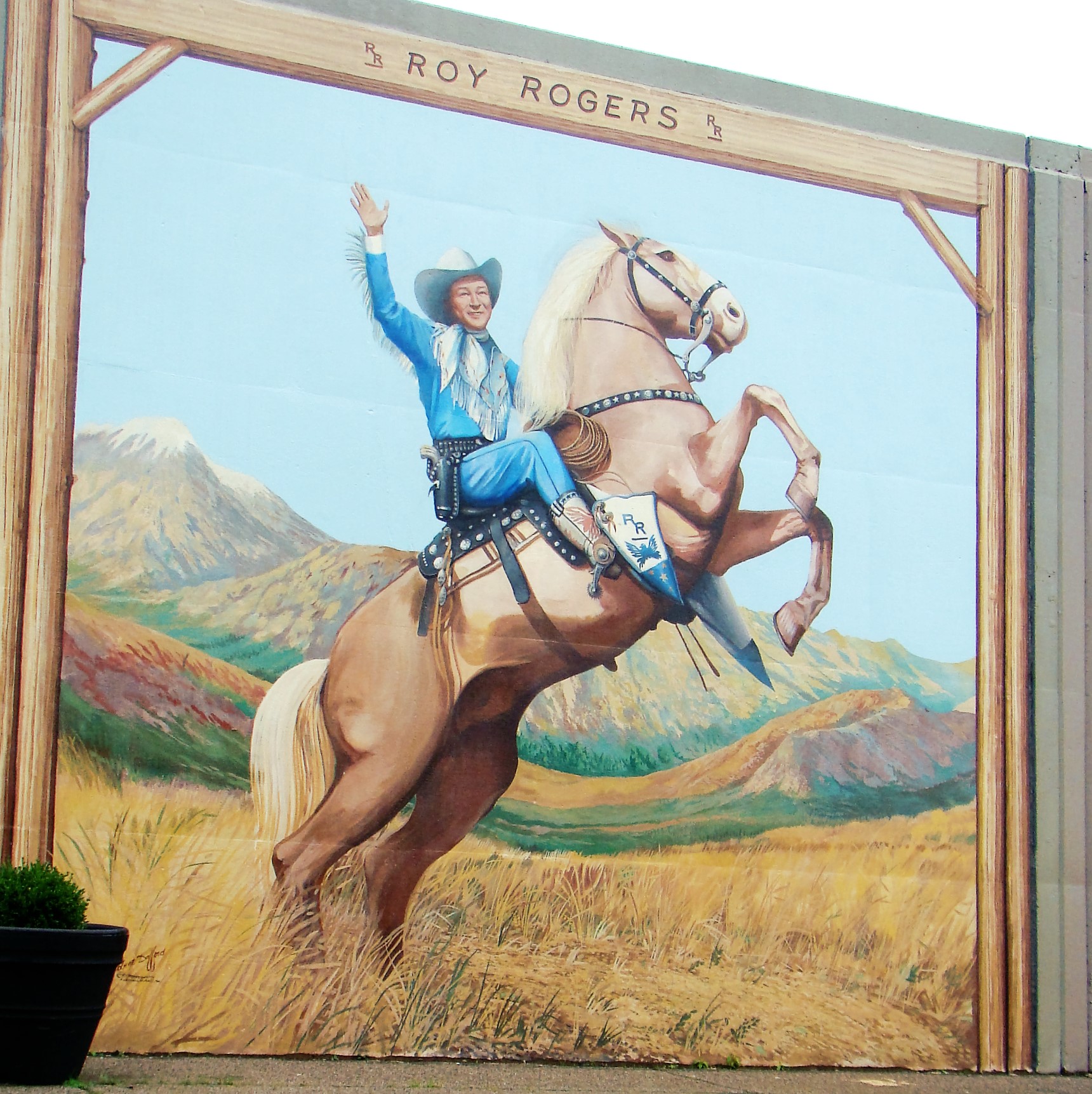
Roy Rogers painting on the Portsmouth Flood Wall.

Roy Rogers painting on the Portsmouth Flood Wall.

The Portsmouth Floodwall by Robert Dafford  contains 2,200 feet of artwork, the largest by any single artist. This mural along the Ohio River displays a 160′ section called “King of the Cowboys”, dedicated to Roy Rogers, a legend in his time.

Roy and Dale were the most loved western couple of all time and were proud of the US flag and our country. As Roy and Dale would sing, “Happy trails to you, ’til we meet again.”

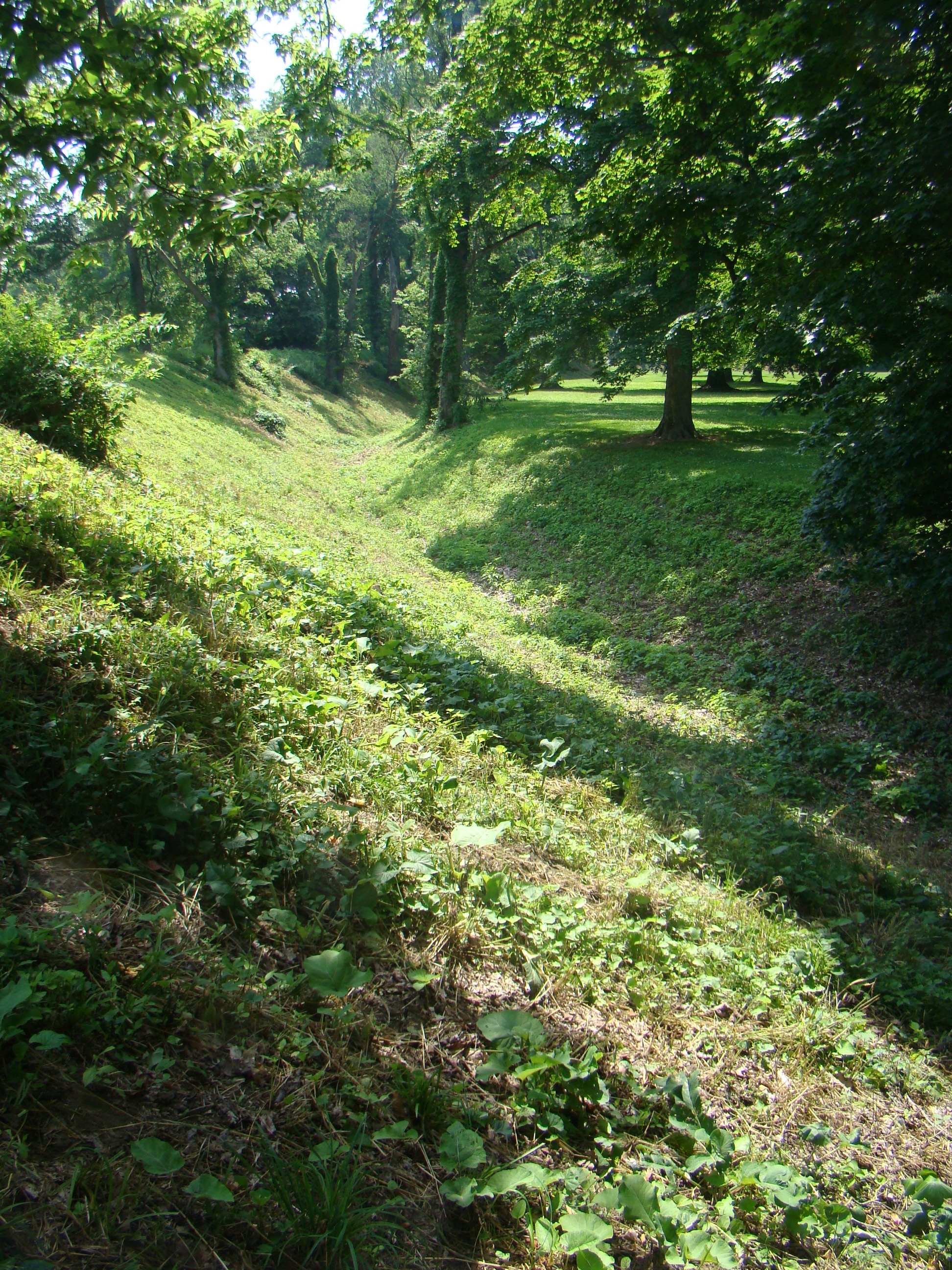
An eight foot wall and 5 foot deep ditch created the Great Circle.

An eight foot wall and 5 foot deep ditch surround the Great Circle.

“Walk with me. We lived here long ago. Large ceremonies with many people were held here.” This was the feeling that permeated the atmosphere while walking over and around the large mounds called Newark Earthworks built by the Hopewell culture at Newark, Ohio. There are three sections to these earthworks: The Great Circle, The Octagon, and The Wright Earthworks, which were not visited on this road trip.

Surrounded by fields of wild strawberries and gigantic trees, these mounds take your mind and spirit back many years to somewhere between 100 BC and 500 AD. The Great Circle, representing the circle of life, is located in Heath and has eight foot high walls, which surround a five feet deep moat. In the center of the Great Circle are some smaller mounds, one called the Eagle Mound, which covers the remains of an old ceremonial longhouse of the Hopewells.

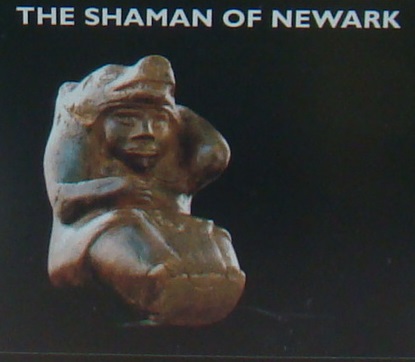
The only known artifact could have been the form of a shaman.

An ancient artifact from these mounds could have been the form of a shaman.

An ancient artifact that is known to have come from these mounds is a small stone sculpture. No one is certain whether it is a person, who was a hero in one of their stories, or perhaps a spiritual being. Some even think it could be a shaman wearing bear regalia. Many, however, also believe the Holy Stones were truly from the mound as well, while some feel they are not authentic. These Holy Stones can be viewed in Coshocton at the Johnson-Humrickhouse Museum.

During the 1850s, the Great Circle provided a home for the Licking County Fairgrounds. Later use varied from horse racing track to military drill field. The Ohio National Guard has held encampments at this location.

Mound opening leads to the informative Welcome Center.

Mound opening leads to the informative Welcome Center.

The Welcome Center contains an excellent interactive video that takes you on an exploration of the largest geometric earthworks in the world from the comfort of an air-conditioned area. Guides there provide answers to most of your questions as they are very well informed.

Archaeological surveys report that the Newark Earthworks were connected to the Hopewell Culture Historical National Park in Chillicothe, Ohio by a hand built road. The road was sixty miles long and ten feet wide and paved with crushed shells. Called the Great Hopewell Road, today hiking groups still walk that pathway every year.

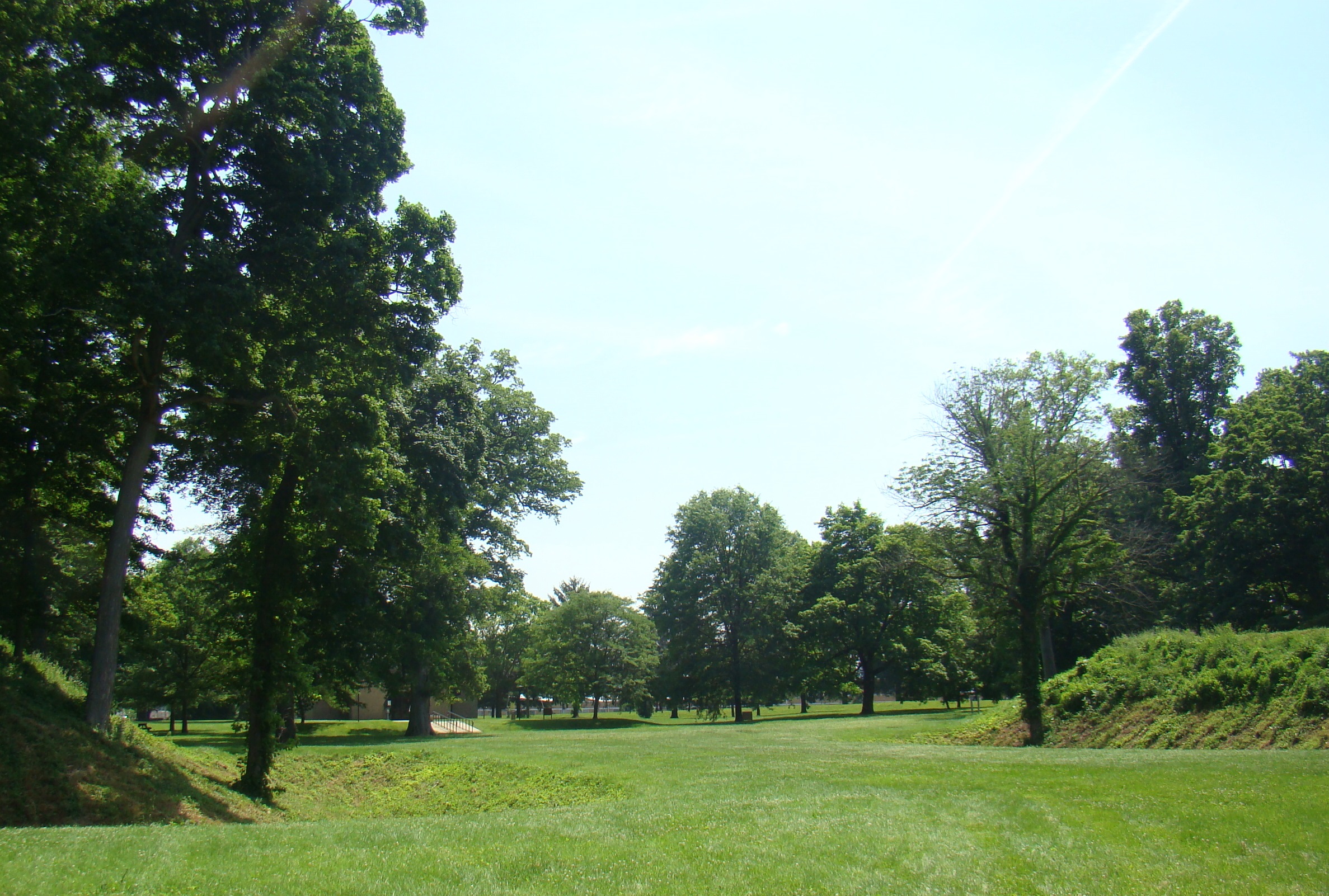
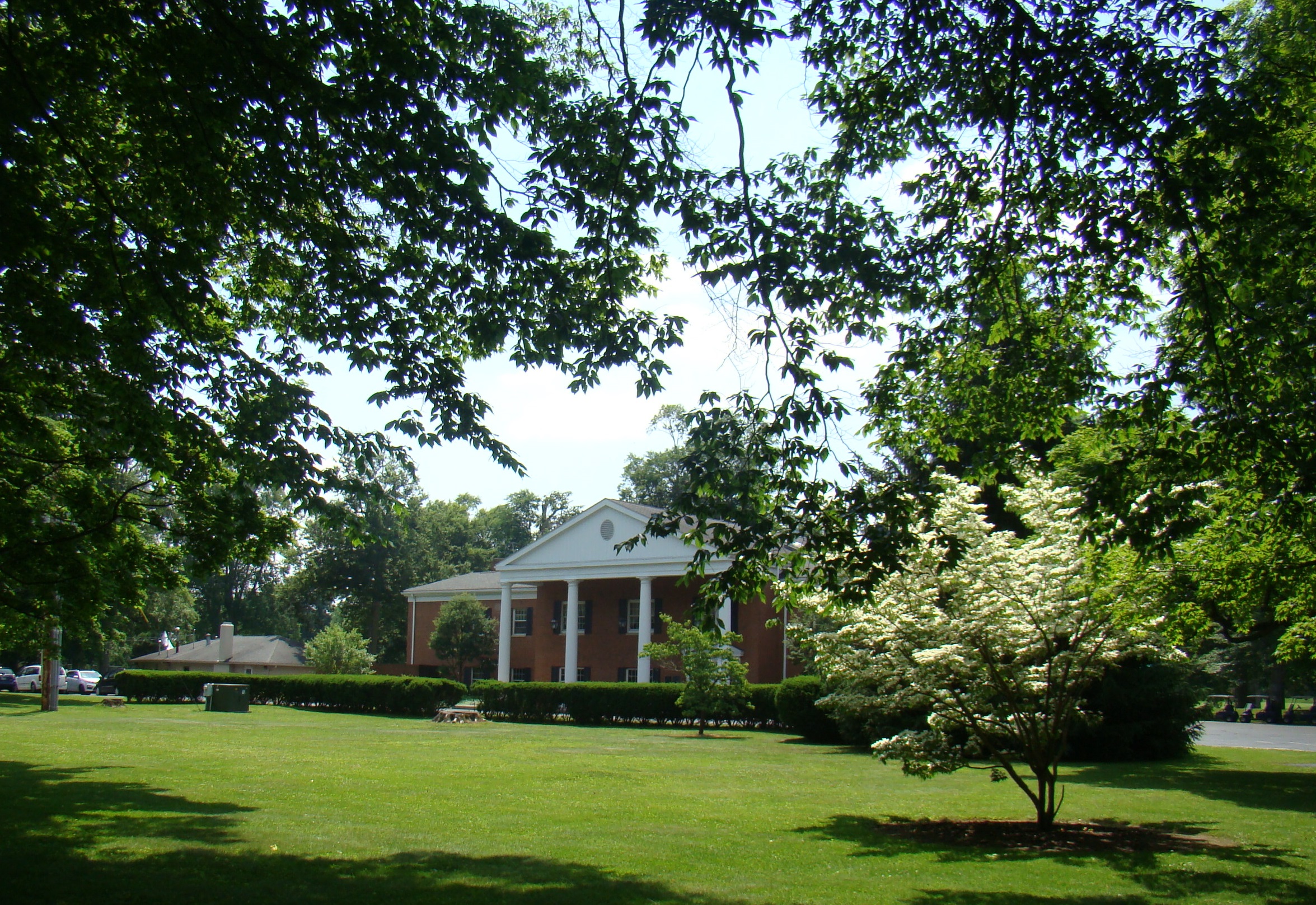
Moundbuilders Country Club leases the Octagon Mound.

Moundbuilders Country Club leases the Octagon Mound.

On to the Octagon Earthworks! Something seems amiss here as these are located on a golf course, or a golf course is located on them. Yes, signs guide you to the Moundbuilders Country Club, where visitors are not permitted on the mounds as they might interrupt someone’s golf game. There is an observation platform so you can see the general outline of the mounds, but walking must follow a strict schedule around golf events. The Country Club keeps the Octagon beautifully maintained and provides time each year, for those interested, to actually walk where the ancients walked.

These are by no means small formations as the Great Circle contains 40 acres, while the Octagon surrounds 80. The video at the Welcome Center proclaimed the Newark Mounds as the largest geometric complex in the world…four square miles total.

Octagon Mound can be seen from the Observation Deck.

Octagon Mound. part of the golf course, can be seen from the Observation Deck.

However, just standing at their edge gave a feeling of connection to those ancient people. Researchers believe the earthworks were used for ancient burial places, ceremonies and astronomical viewings, especially the lunar solstices.

Many of the mounds at this complex have been destroyed as it lies within the cities of Newark and Heath. Over the years farming, construction of roads, and development of the city, have changed the face of the earth. But parts of the original complex are being preserved by the Ohio Historical Society with help from Moundbuilders Country Club.

There are usually about three or four days a year that you can freely walk these historic mounds without playing a round of golf. Make plans to visit during the Octagon Mound’s next Open House, which is October 11, 2015. You will enjoy the connection!

Newark Mound Earthworks can be found just off I-70 east of Columbus, Ohio at Exit 129. Take Route 79 to Health to stop first at the Welcome Center at 455 Hebron Road, Heath.

.

A  beautiful flower garden reflects the caring of its owners.

A beautiful flower garden reflects the caring of its owners.

Sometimes we overlook the beauty in our small towns. On a recent walk through Lore City, the beauty of their flowers caught my eye. Several people throughout the town must spend the entire summer in their beds…flower beds, that is.

Recent rains have made a lush covering of flowers this year, but that makes weeding more difficult and time consuming as well. These flower beds were cared for out of pure love for flowers.

People still enjoy gardens for fresh vegetables.

People still enjoy gardens for fresh vegetables.

During a time when many people have given up gardening, this is not the case in Lore City. Here gardens thrive and townfolk are quite proud of their fresh vegetables. Gardens brimming with vegetables and flowers provide a popular mix throughout the town.

Beautiful flowers brighten this country home.

Beautiful flowers brighten this country home.

On a back country lane, one home stands out above the rest. This land previously was home to the now abandoned coalmining town of Goodyear. Back in its heyday, twenty-seven homes stood along this now rutted lane with grass growing down the middle. On a bank above the home is the place where the railroad track previously took coal from the coal mine.

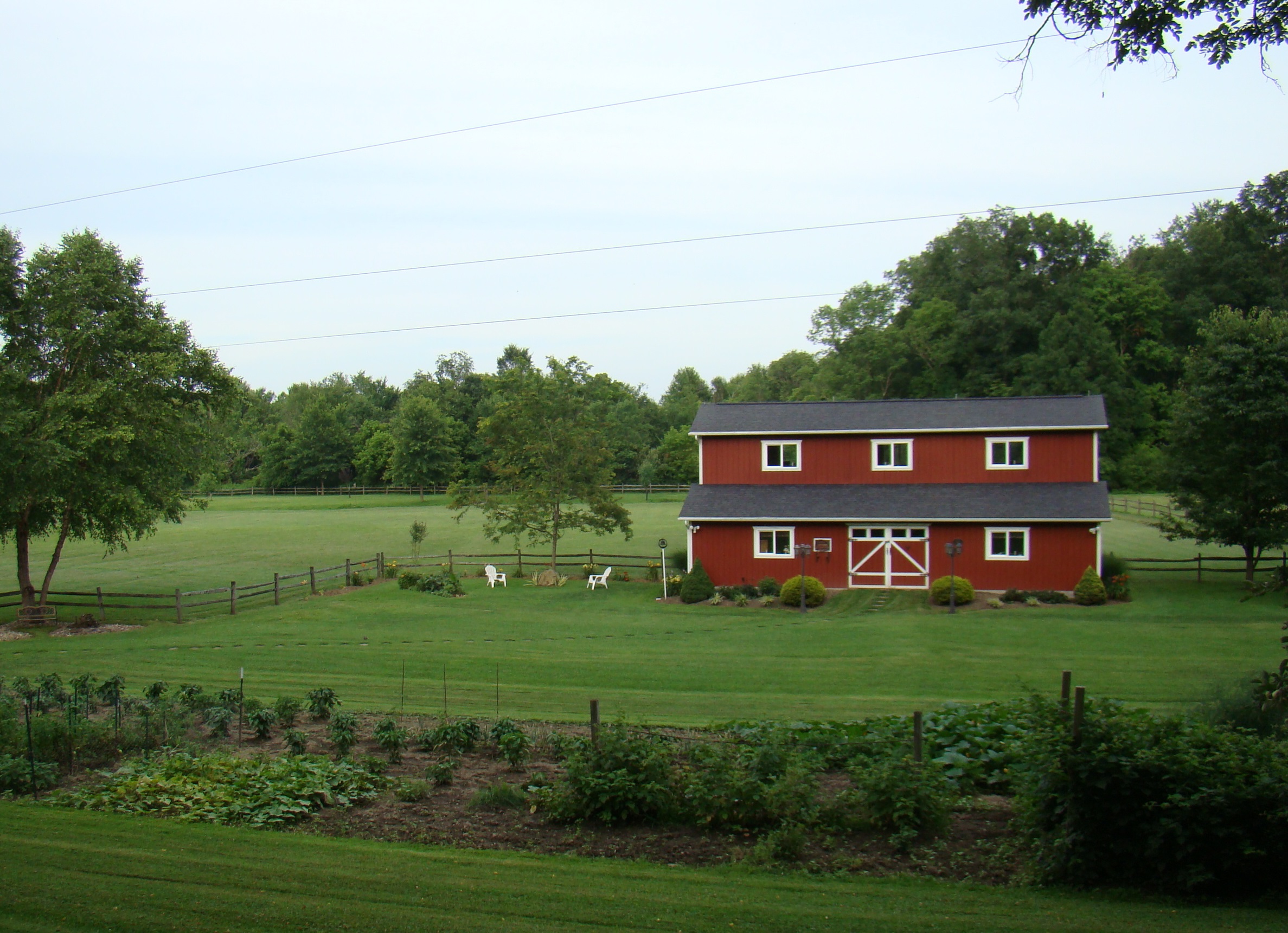
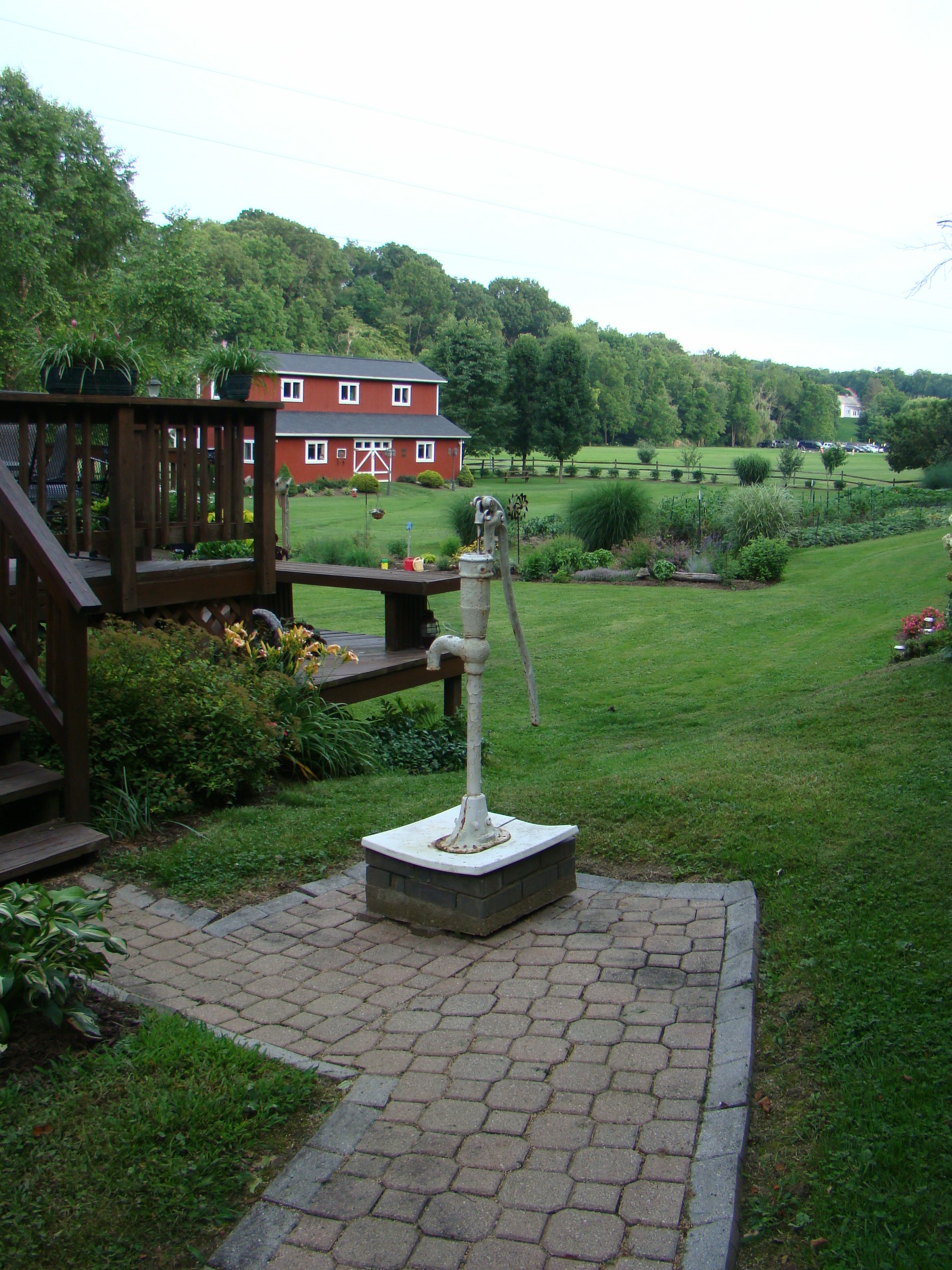
This old hand pump was used when Goodyear was an active coal mining town.

This old hand pump was used when Goodyear was an active coal mining town.

Along the way, you even find a remaining handle pump that was used during the time that Goodyear prospered. One water pump would be used for two homes. It still works today!

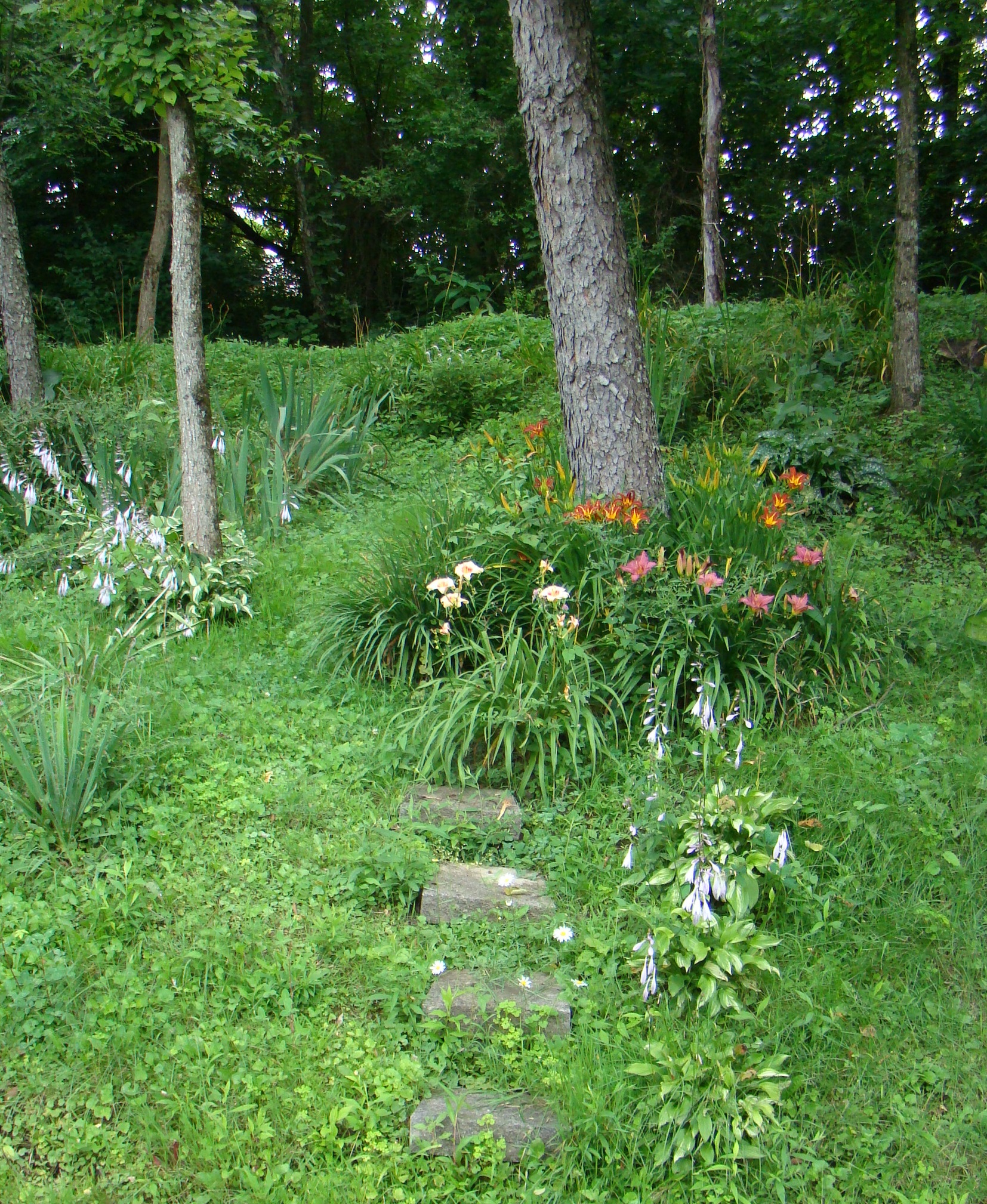
Flowers line the steps to the old coal mining road.

Flowers line the steps to the old coal mining road.

When the flowers get overcrowded in their beds, rather than destroy them, some folks have attempted to plant them on the hillsides. A clump of day lilies or coneflowers give added color to the slopes.

Sunflowers were beginning to bloom.

Ten foot tall Sunflowers were beginning to bloom.

Even the backyards are filled with flowers. One last stop for the day led to discovery of beautiful sunflowers over ten feet high. Now, over the years sunflower seeds have been planted at my house, but no plants have ever grown. Oh, to have beautiful sunflowers like these.

Beautiful flowers and stones surround a small pond in a neighbor's yard.

Beautiful flowers and stones surround a small koi pond in a neighbor’s yard.

Then, as I drove out of town, a lady was working in her beautiful flower garden with a small koi pond. The care these people give their gardens is amazing. As they pull weeds and pinch blossoms, their mind is filled with nature and the problems of the world are temporarily forgotten.

Every small town has its beauty, if we have eyes to see.

Lore City is located in southeastern Guernsey County on OH-285 about ten minutes from Cambridge in the rolling hills of beautiful Ohio.

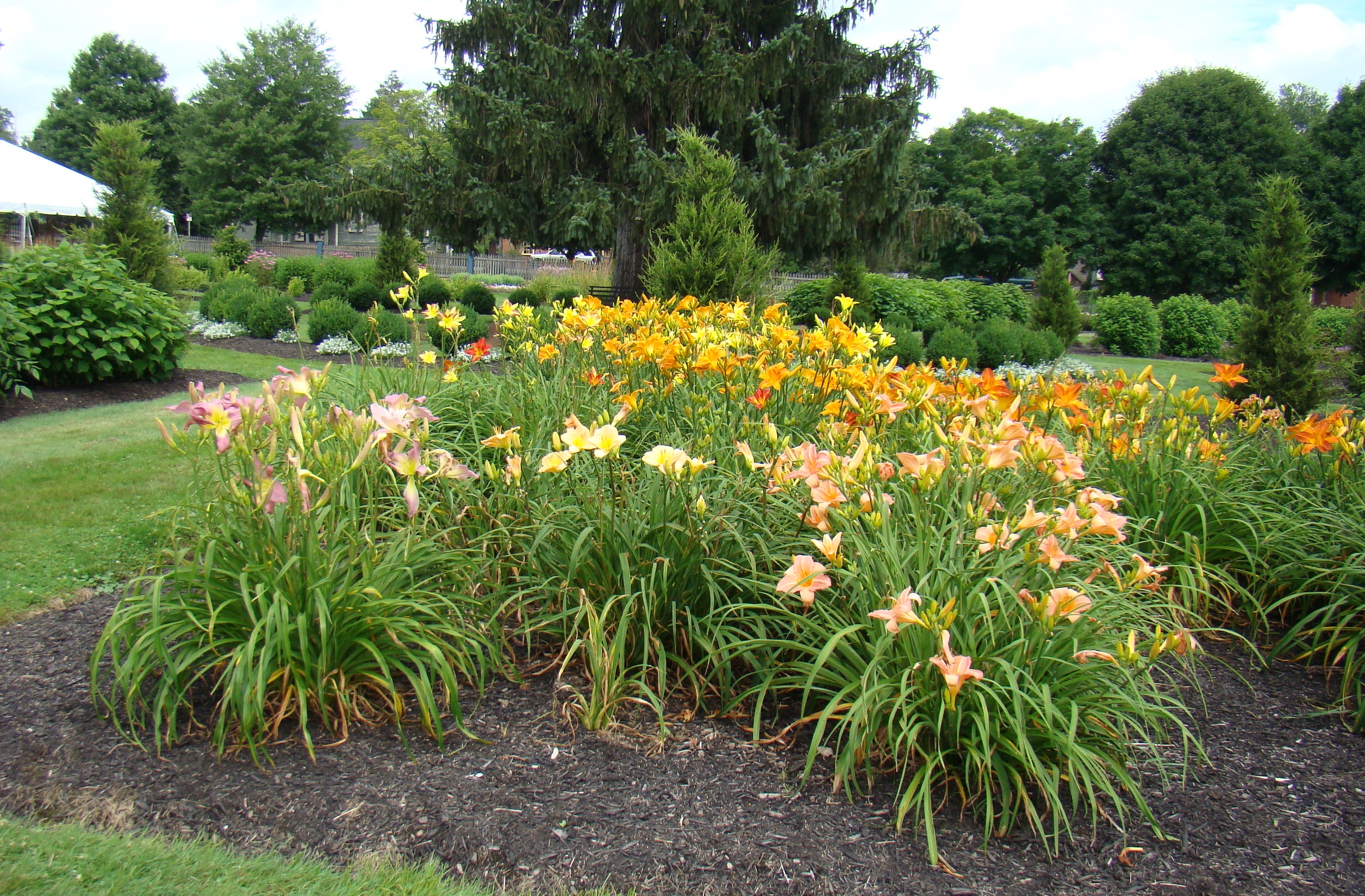
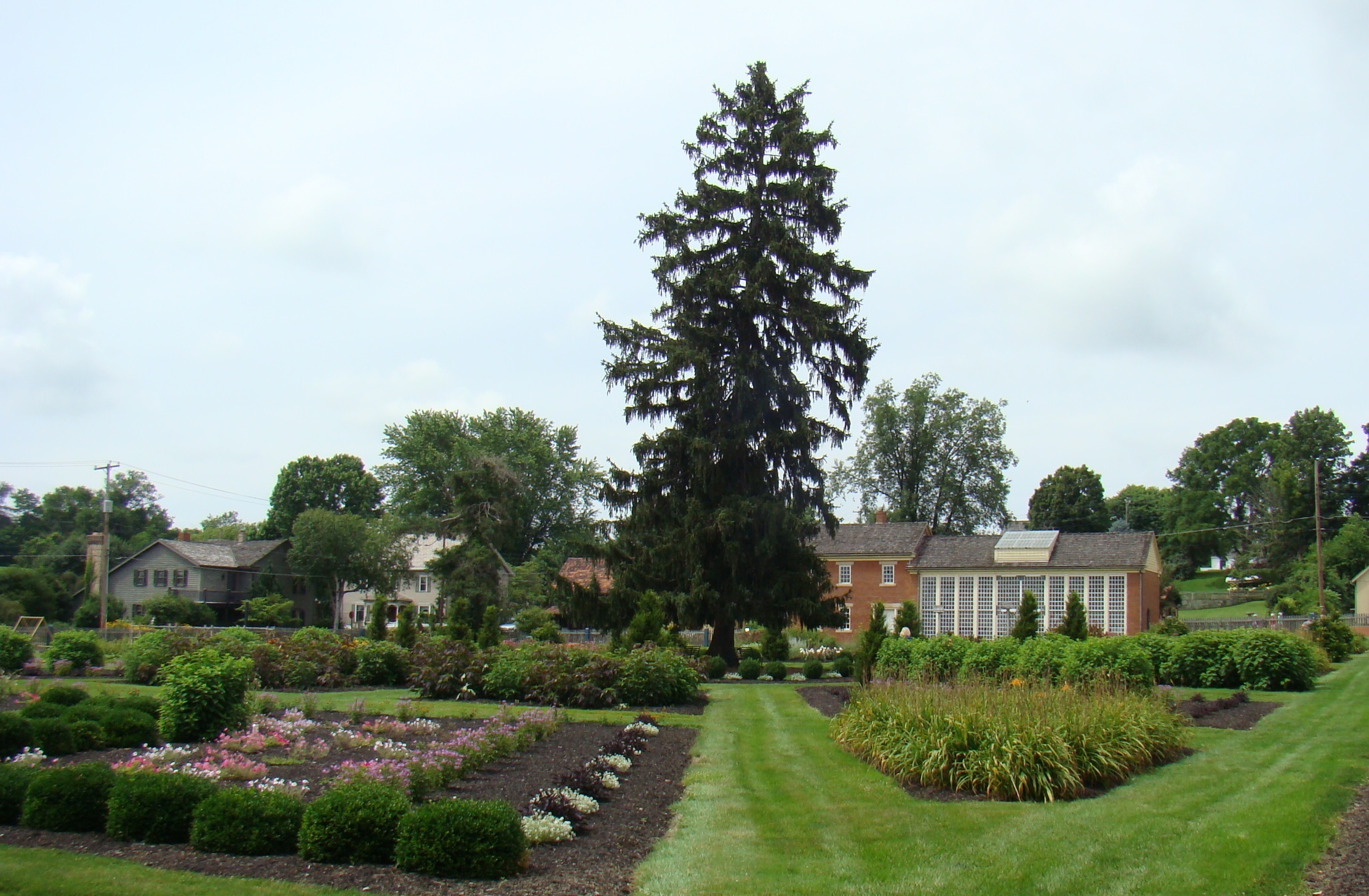
Day Lilies greet visitors to the Zoar Gardens.

Day Lilies greet visitors at Zoar Garden.

Summer time and the flowers are blooming! The beautiful garden at Zoar Village seems most spectacular during the month of July. An entire block of vegetable and flower beds will have you wanting to find a seat and enjoy the scenery, or casually stroll down the pathways.

Long ago this garden began as a place for the communal village to grow their vegetables as well as brighten their life with flowers. Who tended those early gardens at Zoar? School boys and elderly men received this assignment as the female occupants all had household chores that must be done daily, while the men were either working the fields or building the Ohio and Erie Canal.

The center of the block garden has a special spiritual significance.

The center of the block garden has a special spiritual significance.

The spectacular Zoar Garden symbolized New Jerusalem to those German Separatists in the early 1800s. At its center stands a tall, slightly bent, Norway spruce, which represents Jesus. Surrounding the tall pine, twelve smaller junipers depict the twelve disciples.

These in turn are circled by an arbor vitae hedge, indicating heaven. Paths in the garden are proclaimed as pathways to paradise showing that no matter what path you take, if you look to Christ, you will be led to heaven.These people had strong religious beliefs now that they were free to worship as they pleased in the United States.

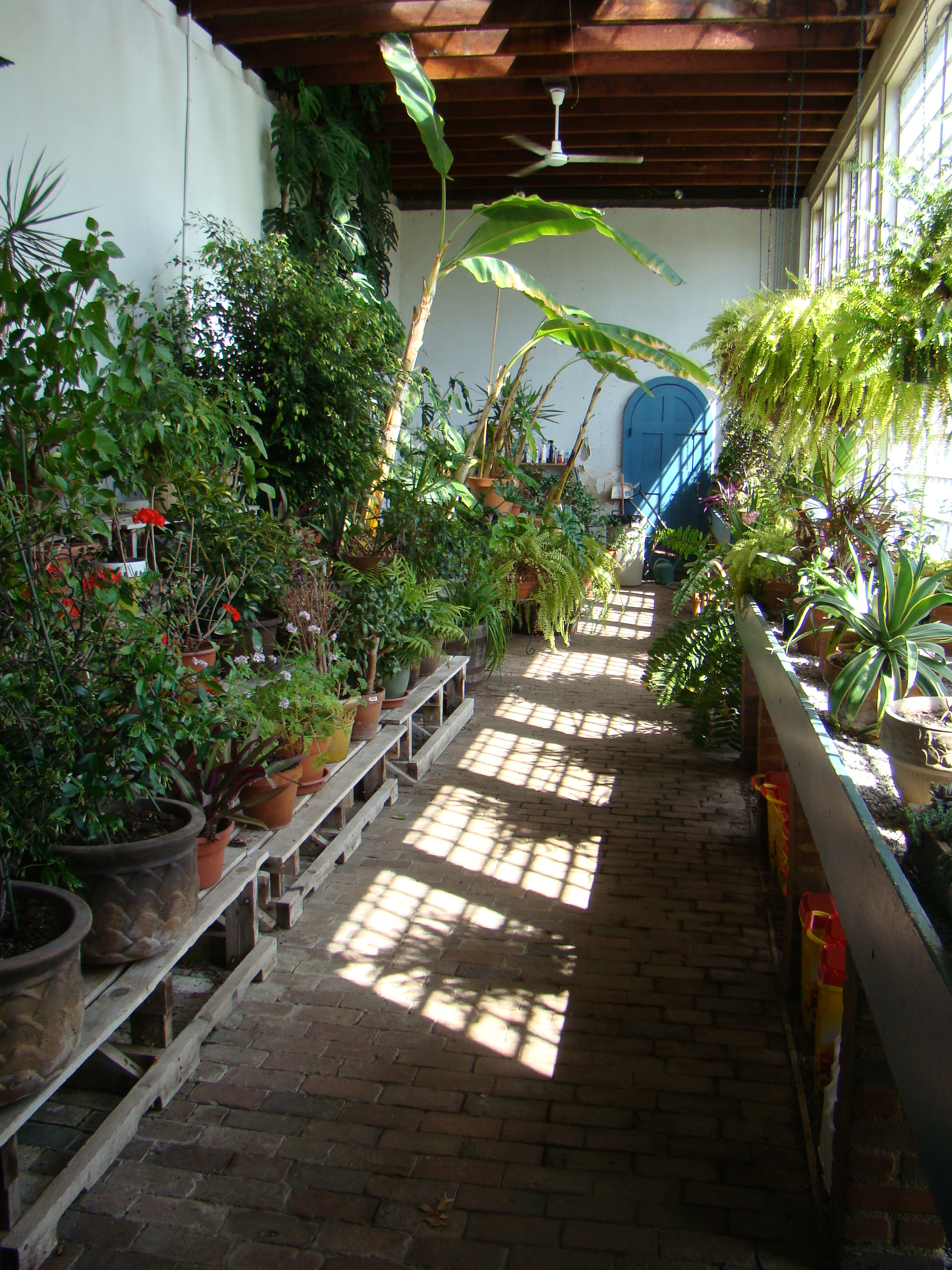
During the winter months, the greenhouse is filled with tropical plants.

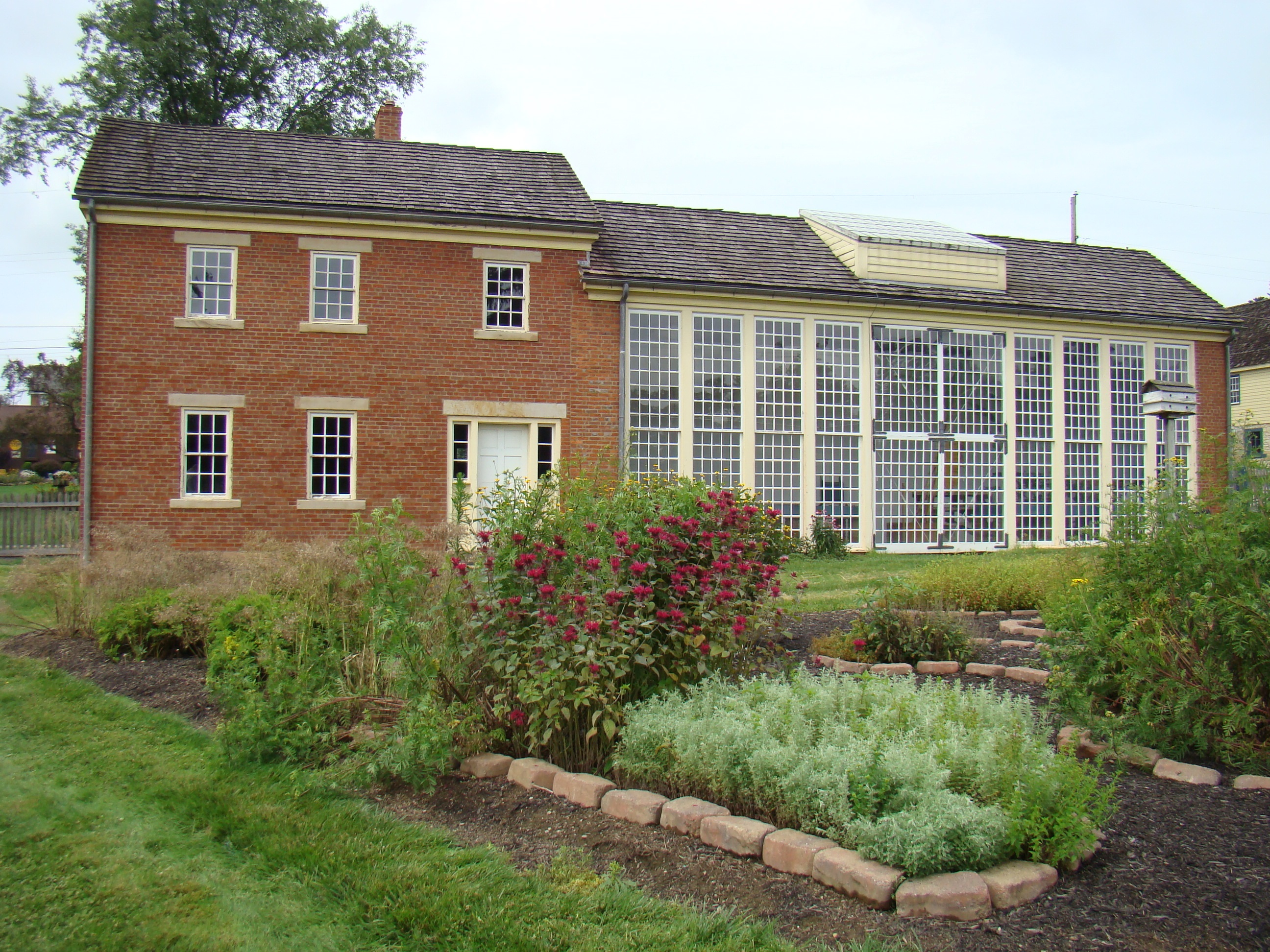
The Gardener’s House had a conveniently attached greenhouse.

At the north end of the garden stands the Gardener’s House, which served as residence for gardener, Simon Beuter, and his family back in 1835. Shortly thereafter, a greenhouse, or hothouse, was added. Since they grew oranges, lemons and other fruit in the middle of winter in the greenhouse, it was also called the Orangerie.

Tropical plants were stored in the greenhouse during the winter months.

Tropical plants were stored in the greenhouse during the winter months.

Hothouses were unheard of in Ohio at this time. The tropical fruit trees were kept outside in large wooden tubs in the summer, but could easily be moved into the greenhouse during the cold winter months. After the Ohio and Erie Canal was built, wealthy Clevelanders would send their plants during winter to Zoar to be kept in the greenhouse, because of its unique underground heating system.

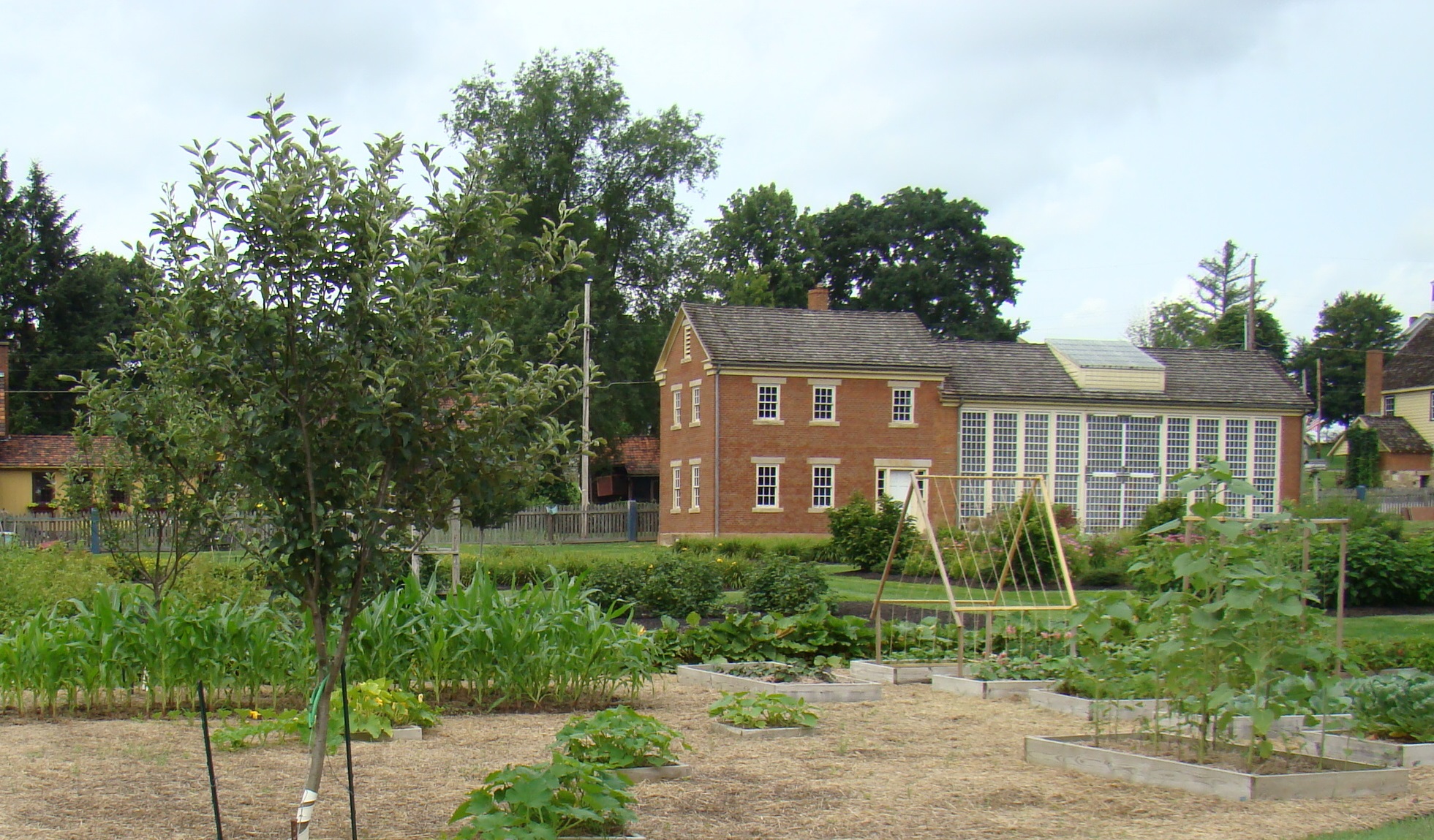
A vegetable garden would naturally have been part of the Zoarites Garden.

A vegetable garden would naturally have been part of the Zoarites’ Garden.

Research shows the Separatists frequently used many home remedies for ailments so grew medicinal types of herbs in their communal garden. They also grew fresh fruits and vegetables to provide strawberries and cabbages for the Zoar Hotel, where President William McKinley often dined on a Sunday afternoon.

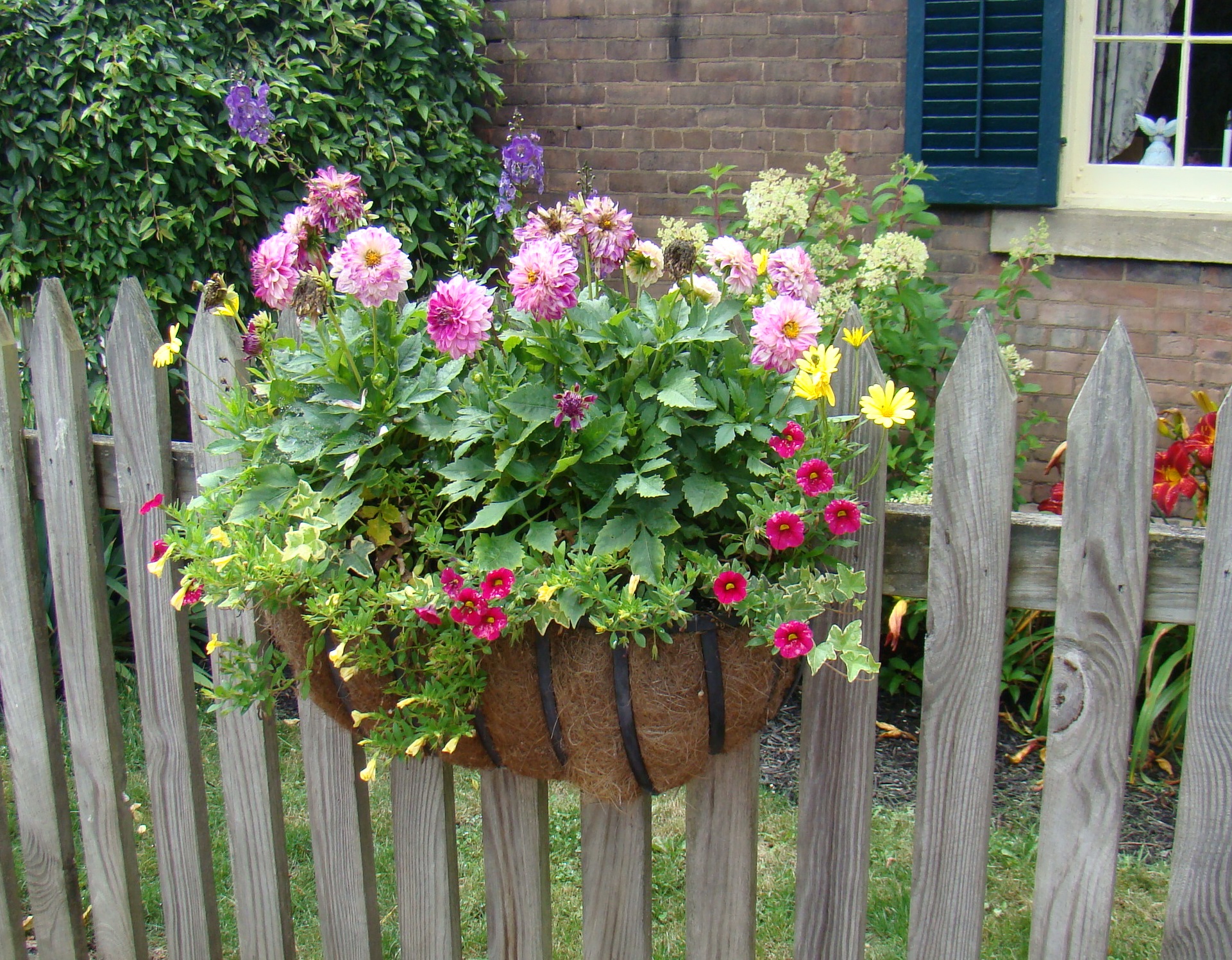
Charming flower boxes on local fences added to the beauty of the village.

Charming flower boxes on local fences add to the beauty of the village.

Along the streets of town, many residents have beautiful flower gardens of their own. Baskets of flowers grace fences, and bushes bloom with beauty. There is much to see and do throughout the village with costumed guides telling about life there long ago.

While in the area take a stroll through Zoar Wetlands Arboretum or find the Trailhead nearby for the one-hundred mile long Towpath Trail of the old Ohio and Erie Canal.

Plan a visit to delightful Zoar Village on the banks of the Tuscarawas River where a guide remarked, “You could live your whole life here and never need cash. They believed cash was corrupting. It turns out they were right.”

Zoar Village can be reached just three miles off I-77 at Exit 93 between Dover and Canton, Ohio. 

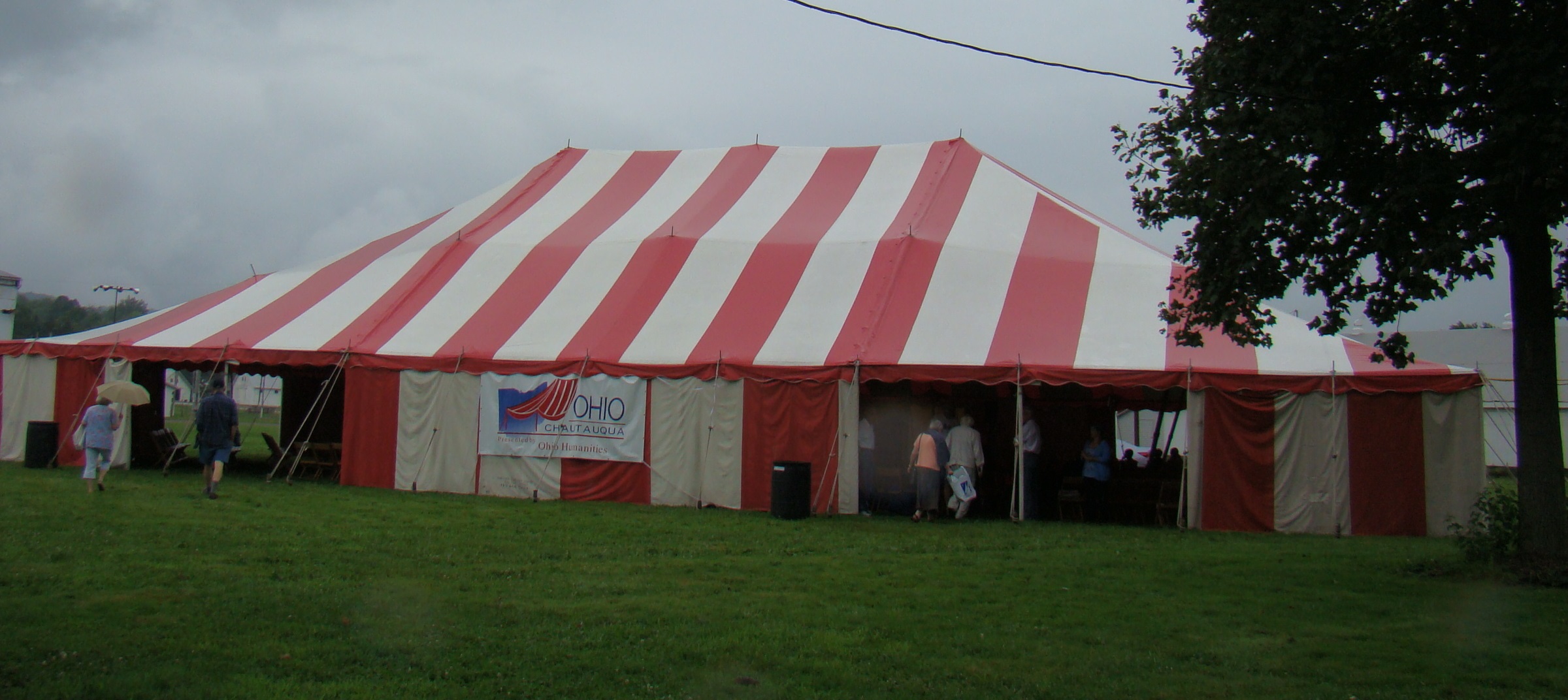
Chautauqua in Coshocton on a rainy evening

Chautauqua in Coshocton on a rainy evening

An early morning walk is a blessing for the whole day.

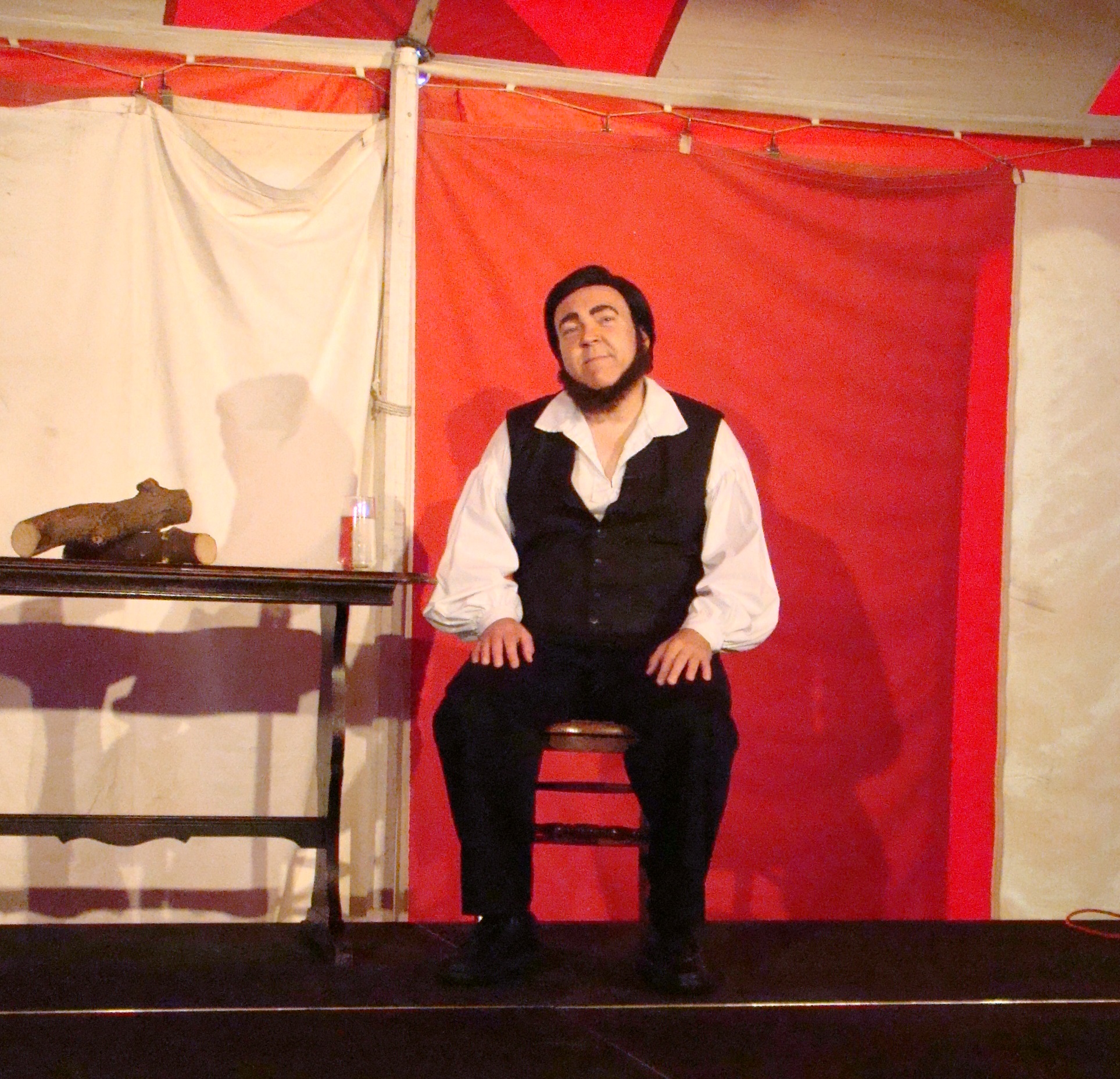
Ohio Chautauqua always brings informative and interesting characters to the stage. A recent performance in Coshocton was no exception as Kevin Radaker, professor of English at Anderson University in Indiana, portrayed Henry David Thoreau, one of the greatest writers of American Literature. Even though Thoreau wrote from 1817-1862, his thoughts still influence and inspire countless people today. The audience sat mesmerized during his lecture…you could have heard a text message beep.

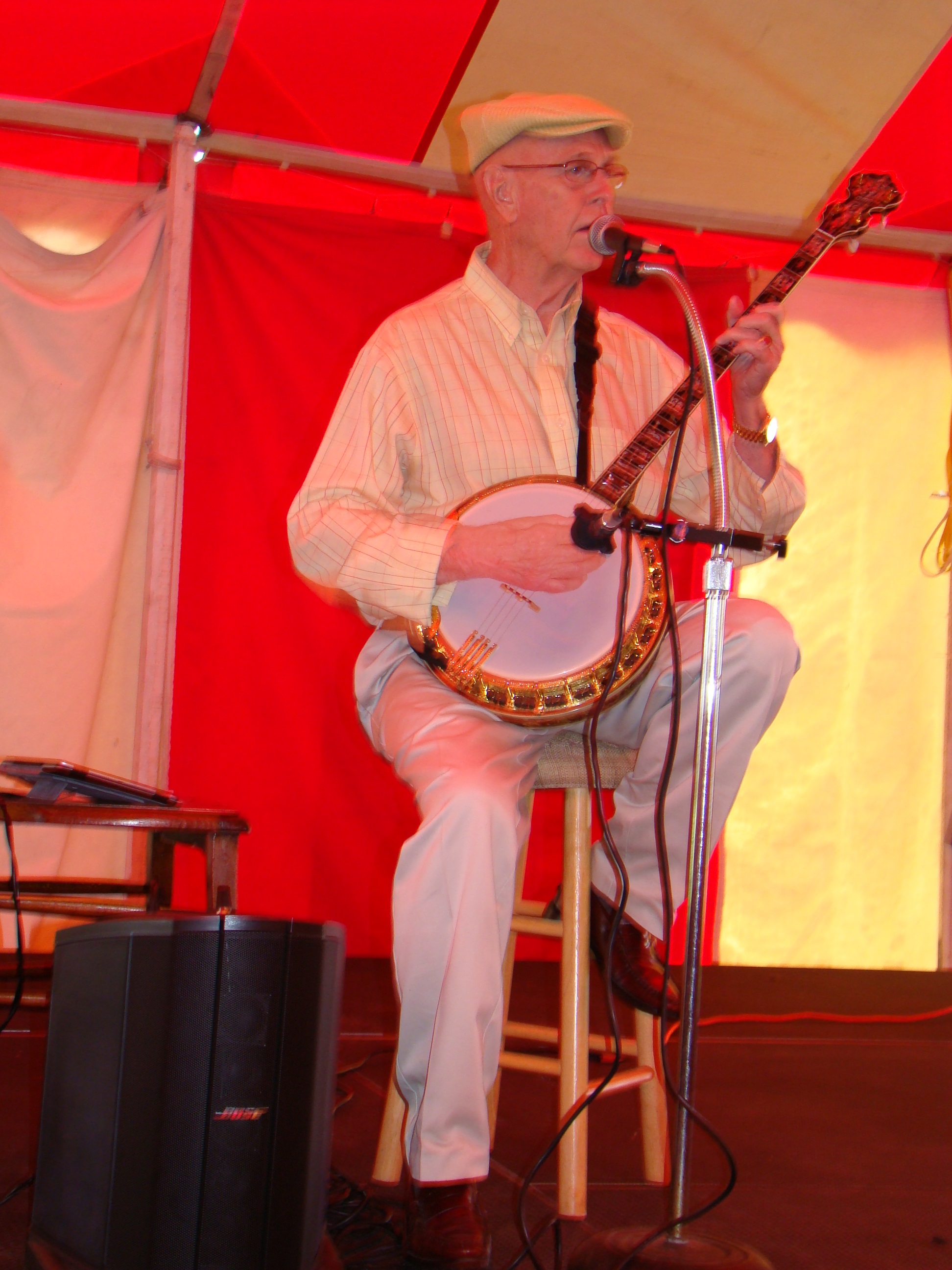
Banjo player entertained before the main speaker.

Banjo player, Jerry Weaver, entertained before the main speaker.

Thoreau was born and raised in Concord, Massachusetts and chose to reside there his entire life. Two sisters and a brother rounded out the Thoreau family where his father ran a pencil factory, and his mother had strong views as an abolitionist. He worked for a while in his father’s pencil factory and as a carpenter, but said he was just so-so at carpentry. However, he did become a devout abolitionist for the rest of his life, following in the footsteps of his mother. He considered himself a writer by profession, a mystic and philosopher.

After graduating from Harvard, Thoreau became friends with Ralph Waldo Emerson, who encouraged him in his writing and introduced him to Transcendentalism, which emphasized the spiritual matters over the physical world. Thoreau felt that every seventh day should be a day of work, while the rest of the week be treated as the Sabbath.

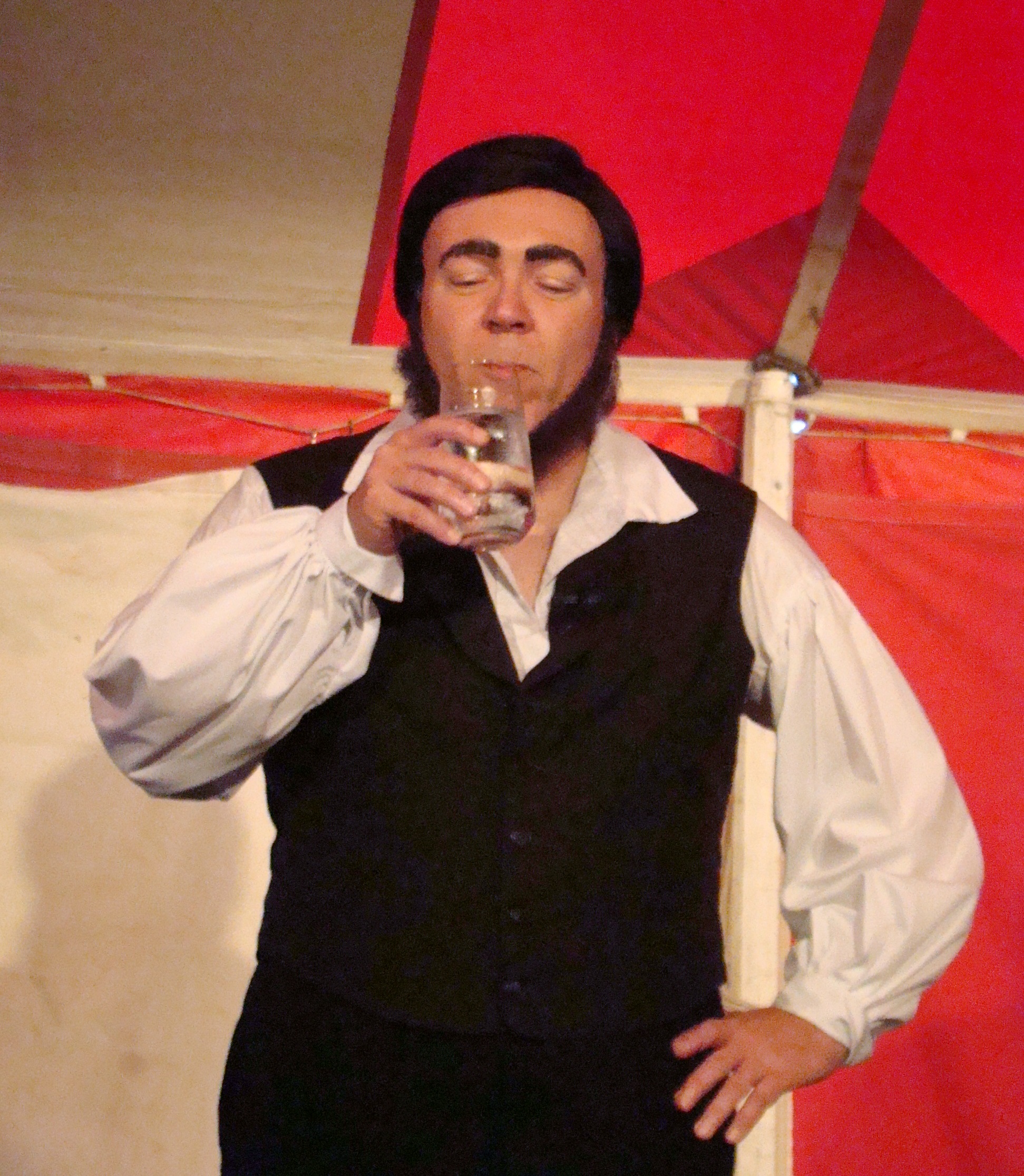
Thoreau holds his favorite drink - water.

Thoreau holds his favorite drink – “Water is the only drink of a wise man.”

His best know masterpiece, Walden, was written while Thoreau lived for two years in a small cabin at the edge of Walden Pond, not far from Concord, on property owned by Emerson. His daily walks in the woods are best described in his own words: “There is nothing so sanative and so poetic as a walk in the woods and fields.” He compared the value given him by his walks to what others get by going to church. Walden Pond was his greatest adventure.

Even though Thoreau spent most of his live in Concord, he did venture to other places. Cape Cod and Maine helped him picture in words the wrath of the sea, yet capture the vigor and health of Nature. He felt national preserves should be created, not for recreation but re-creation of the wilderness, his main fascination.

He was a great fan of travel, but a slightly different kind than what we might presume. His mystical travel required an inward journey, which is accomplished by using our imagination and intuition. Through these inward journeys, Thoreau came to realize what the ancient Orientals meant by contemplation and forsaking work. Sometimes he loved to sit on his porch for the entire day, while his neighbors scoffed at his poor work ethic.

Thoreau relaxes on stage.

Thoreau relaxes on stage.

Perhaps he liked to read some of his favorite books as he sat on the porch for a day. Those would include: The Bible, Hindu’s Mahabharata, and Chinese teachings in Four Books of Confucius. He felt that all these similar teachings should be written side by side for better comparison.

Thoreau encourages his readers to take an inward journey, pointing out that it may very well be more difficult than being on a ship with hundreds of other people crossing the ocean.

What he wrote a hundred and fifty years ago is still relevant today.


Dover Museum can be found upstairs at the Reeves Carriage House.

Dover Museum can be found upstairs at the Reeves Carriage House, which had a fairytale like appearance during a winter visit. Perhaps this will cool you off!

Little pieces of Canal Dover’s history can be found on the second floor of the Reeves Carriage House Museum in Dover, Ohio.  Each town needs to have their history preserved in some fashion and the Dover Historical Society has found a perfect way to showcase Canal Dover from its founding in 1807 through the Great Flood of 1913.

While this was for a special opening during the winter months, events are held here all year long. Summer is a great time to explore the Reeves Victorian House and Museum as it is open Wednesday through Sunday, noon until 4:00 from June through October 31. Then their spectacular Victorian Christmas display happens from November 11 through December 22.
This old Victrola sign advertised the business of Wnkler in Canal Dover.

This old Victrola sign advertised the business of W.A. Winkler in Canal Dover.

Reeves Banking and Trust Company was organized when local banks refused to loan money to Reeves.

Reeves Banking and Trust Company was organized when local banks refused to loan money to Reeves.

In 1818, Dover only had five buildings, three of them being taverns. But when in 1825 the Tuscarawas River was included in the layout of the Ohio-Erie Canal, growth became imminent and the first schoolhouse was soon built in a forested area on Fourth Street. Canal Dover became the tolling station on the Tuscarawas as boats traveled from the Ohio River to the Great Lakes.

Soon mills were built along the river banks making steel a growing industry. Naturally, this switch to an industrial area brought with it the arrival of the railroads in 1854. Steel became big business until a coal strike in 1920 closed mills for about a year.

When Jeremiah Reeves desired additional funds for his business operation, local banks refused to give him a loan. So in August, 1903, Mr. Reeves opened his own bank, Reeves Banking and Trust Company.  This bank continued in operation until 1982 when it merged with Huntington National Bank.

Original switchboard used in Dover.

Original switchboard used in Dover.

During WWII, most industries in the state converted their systems to supply the armed forces.  Women employed at Reeves Steel made steel castings for military use. There is a historical plaque on the Reeves Home honoring employees who lost their lives in service during WWII.

Even with the presence of mills, Dover’s water supply remained clean and was untreated until 1998. In fact, it was the last city east of the Mississippi to require sterilization of its water.

Their fire department was organized in the 1870s. The original horse drawn, wooden fire wagon on display was probably used by local firefighters. The cart was kept inside the firehouse, then pulled outside by one of the firemen. Horses were then hitched to carry it to the reported fire. While this firewagon had seats, most did not so the firemen had to run along side the wagon as it went to the fire. When someone decided to attach boards alongside the wagon for the firemen to stand on as they rode, these boards became called “running boards” because they saved the men from running.

This horse drawn fire wagon had a two man seat, which was unusual at that time.

This horse drawn fire wagon had a two man seat, which was unusual at that time.

Telephone companies operated via the switchboard for many years. Here the operator, or operators, would manually transfer each call coming in to the proper person.  An old time clock added a touch of yesteryear to the tour.

In 1908, the city was voted “dry” putting 22 saloons and two breweries out of business overnight. The Great Flood of 1913 definitely wet things down for a short time and made many changes in Canal Dover. After 48 straight hours of rain, the Tuscarawas River overflowed its banks with flood waters between three and ten feet deep.This was the end of the Erie Canal but the beginning of plans for Dover Dam to prevent future similar floods from happening.

Upstairs at the Reeves Carriage House Museum contains historic photos, interesting anecdotes, and unusual museum artifacts. The history of Dover tells the story of the United States as well. Every generation helps make our country great and strong.

Reeves Carriage House Museum can be found behind the Reeves Victorian Home off I-77 at exit 83. Take a right on Tuscarawas Avenue, left on W Front Street, right on Wooster Ave, and a left on Iron Avenue. The Home and Museum can be found at 325 E Iron Avenue. Parking is in the rear of the home near the Carriage House Museum.

This island contained an Amusement Park in 1900.

In 1900, Buckley Island contained an Amusement Park during the day, then became a Lawless Wonderland at night.

You had to be bold and brave if you dared walk on the seedy side of town in Marietta, Ohio back in the early 1900s. But Lynne Sturtevant recently led a crowd of fifty on an adventure back to early days as the old sections of Marietta were revisited. Along the way, characters in costume greeted the tour and told of dangerous adventures at that time.

Riverfront man and Lynne, our guide

Riverfront man and Lynne, our guide

Crime was a severe problem all along the Ohio and Muskingum Rivers in Marietta, with bars, bars, and more bars. The Ohio River flowed around a small island, that served as an amusement park during the day, but a whole new crowd arrived in the evening. They enjoyed all the vices of the time – drinking, gambling, prostitution, and murder. Going to the island in the evening had an added enticement of cheap beer. Along the shore beer was twenty-five cents a glass, but on the island, only five cents. The Island, now known as Buckley Island, was a lawless wonderland. If you wanted to do anything illegal, the island was the place!

Old hotel and bar

Notice the popular shadow advertisement of WHISKEY at The Levee House – just above the table tops.

Despicable characters roamed the streets, drinking and arguing over everything imaginable. One man and his wife were each found with bullets in their head after an argument over a wristwatch. The stories told were all true reports of the Marietta newspaper from that time.

Proud bartender

Proud bartender

Dance halls and saloons were the main businesses in town. Shadow advertising can still be seen on many buildings with words like WHISKEY worked right into the brick works.

Along the way, the group met a delightful bartender who told of some of the fights he had witnessed at the bars. The job he hated the most was cleaning the spittoons.

A character portraying Oliver Hyde, mayor of Marietta in 1904, spoke to the group in front of the police station. The building also served as the electric company and the mayor had his office on the top floor. He gave the latest police report describing real events in Marietta in 1904.

Historic Harmar Bridge

Historic Harmar Railroad Bridge

The historic Harmar Railroad Bridge provided a scenic walkway over the Muskingum River. This is the country’s oldest operating railroad swinging bridge, still using a hand crank to swing it open for passing boats. Where the Harmar Historical Village stands today, Fort Harmar existed in 1785 for the protection of the Indians.

Walking over the bridge, one of the roughest sections of town was on Maple Street. A young man, who lived there, told about his neighborhood. He spoke of Mr. and Mrs. Hayes, who were well known local folks. Mrs. Hayes served as a madam, while her husband usually caused problems. Mr. Hayes was very jealous of his wife and accused her of seeing the local bartender. She begged him, “Don’t kill me!”

He did.

Guy from the rough side of town

Guy from the rough side of town

The young man said the Marietta Police had never caught the husband and asked the mayor why he wasn’t working on it. The mayor, in typical mayor fashion said, “It’s under investigation.” The young man told the group to get back over the bridge as quickly as possible as the area was not a safe one.

While visiting a housewife in Sin City, she told of a murder that happened next door to her house. She was hanging out the laundry when she heard a husband and wife fighting next door. The husband yelled, “I’ll break your face right in if you do that again.”

Later she smelled a fire burning in their back yard and hurried to get her clothes off the line. About 5:00 the next morning, there was a knock at her door. At the door stood the next door neighbor. “Good morning, the missus has gotten drunk and fell into the fire and burned right up. She’s always getting drunk.”

When the police arrived at the scene, over half of the woman’s body was severely burned, but they could see severe bruises on her neck. Perhaps she didn’t just fall into the fire, but was pushed. You’ll have to visit to find out…the rest of the story.

A rainy ending to an educational and interesting day

A rainy ending to an educational and interesting day

Rain held off until the very end of the tour, when it came down from the sky in buckets. The wind, rain and lightning made it seem that this place was perhaps still dangerous.

Marietta, Ohio is located at the confluence of the Muskingum and Ohio Rivers in southern Ohio. Take Exit 1 off I -77 in Ohio to experience this delightful town. Characters along the way were provided by Paskawych Entertainment, LLC of Marietta.