Places to go and things to see by Gypsy Bev

Posts tagged ‘Ohio’

‘Born Hustler’ Now Creates Marvelous Bronze Statues

If people knew how hard I have had to work to gain my mastery,
it wouldn’t seem wonderful at all.
~Michelangelo


Alan Cottrill's Sculpture Studio is watched over by Chief Nemocilin, an American Indian who helped blaze the National Road.

Alan Cottrill’s Sculpture Studio & Gallery is watched over by Chief Nemacolin, an American Indian who helped blaze the National Road through Pennsylvania.

Often in life, people return to their hometown area for various reasons. Alan Cottrill came back to Zanesville, Ohio in 2003 to open a Sculpture Studio & Gallery at 110 South 6th Street. Here he found the perfect spot for his artistic designs in the former Zanesville News building, where the words from Michelangelo hang on his wall.

Alan tells about all the busts he made during his first two years.

Alan tells about all the busts he made during his first two years of sculpting.

Like many young people from a poor background on the farm, where his dad was a Meadow Gold milkman, Cottrill explored several careers during his lifetime. As a youngster, he never seemed to run out of ideas or job opportunities. In high school, he sold candy bars at lunchtime, worked as a guard, supervised Y-City umpires, and helped at the Skyway Drive-In.

After trying the college scene, the army, and being a milkman himself, he founded the Four Star Pizza franchise with his dad, and became an international entrepreneur. As he traveled the world, art museums attracted his attention and he began collecting art and paintings – his first being in Bulgaria.

Alan with his Sculptor's Bible, an old anatomy book.

Alan holds his Sculptor’s Bible, an old anatomy book.

Then in 1990 in California, PA, Cottrill touched clay for the first time, realizing his intense passion for creating. He sold his business and devoted himself full-time to becoming the finest figurative sculptor in the world. His studies at the Art Students League and National Academy of Design in New York City developed his abilities.

Cottrill sculpted a brass plaque of the McIntire Library in Zanesville, because he said it opened the world to him. His love of books continues to this day. His Sculptor’s Bible is a well-worn book on anatomy, as he feels the need for accuracy in all of his creations, which display intricate design but most importantly, emotion.

Outside his studio, statues line the street making it a treat to drive past his gallery, but it also gives a desire to know what’s inside. His working studio is on the ground floor, with the gallery above. The bronze sculptures demonstrate his passion and curiosity to always be looking for something new. He feels, “The degree of passion in artwork shows the degree of passion one has within.”

Alan checks his favorite sculpture - two tombstones for him and his wife.

Alan checks his favorite sculpture – tombstones for him and his wife.

Once Cottrill receives an inspiration or a consignment, he then assembles photographs of objects, researches clothing and accessories, and then begins the formation of a clay bust, where he makes the face come to life with emotion. The clay he uses comes from Laguna Clay in nearby Byesville, Ohio.

In order to have quality bronze available, Cottrill, along with his lifelong friend, Charles Leasure, established Coopermill Bronzeworks, Ltd.  All of his pieces are bronzed there and they also do work for other artists.

Woody Hayes sculpture at OSU Center

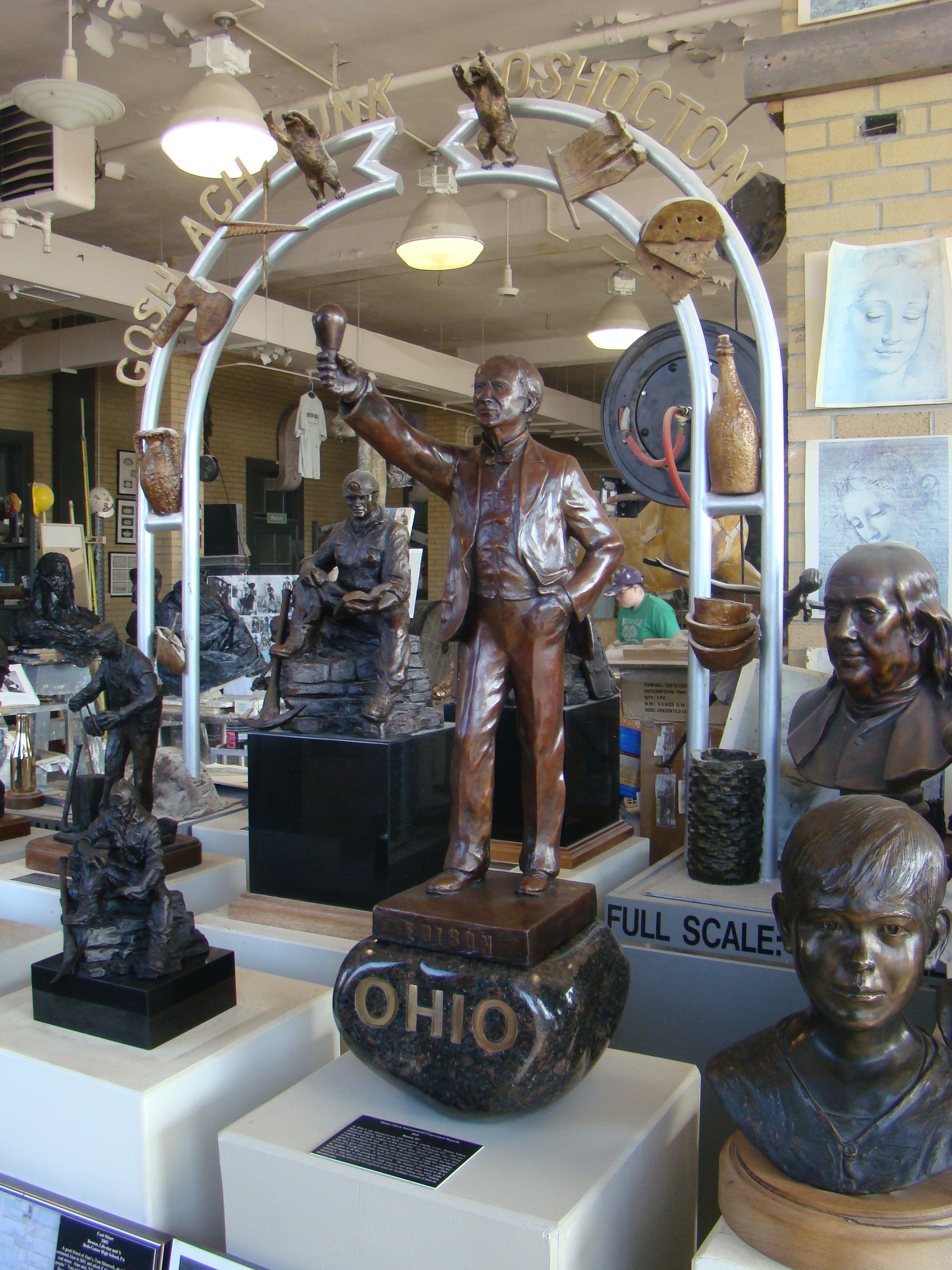
Thomas Edison Bronze Sculpture will soon be placed in U.S. Capitol to represent Ohio.

Over 400 bronze sculptures are displayed in his Zanesville studio. They range in size from 18 inches to lifesize, which takes about seven weeks to complete. While his favorite piece of work is the tomb sculpture he did for him and his wife, the one that receives the most attention is his Woody Hayes bronzework, which appears in front of the Woody Hayes Center at OSU in Columbus, Ohio.

Bronze Ohio Coal Miner Statue

Bronze Ohio Coal Miners Statue stands at the old railroad station in Byesville.

In nearby Byesville, he sculpted the Ohio Coal Miners Statue, paid for by contributions from those who rode the train over a several year span. His Thomas Edison statue has recently been accepted for the U.S. Capitol; while for Cambridge, Ohio, the Hopalong Cassidy bronze statue is only just begun.

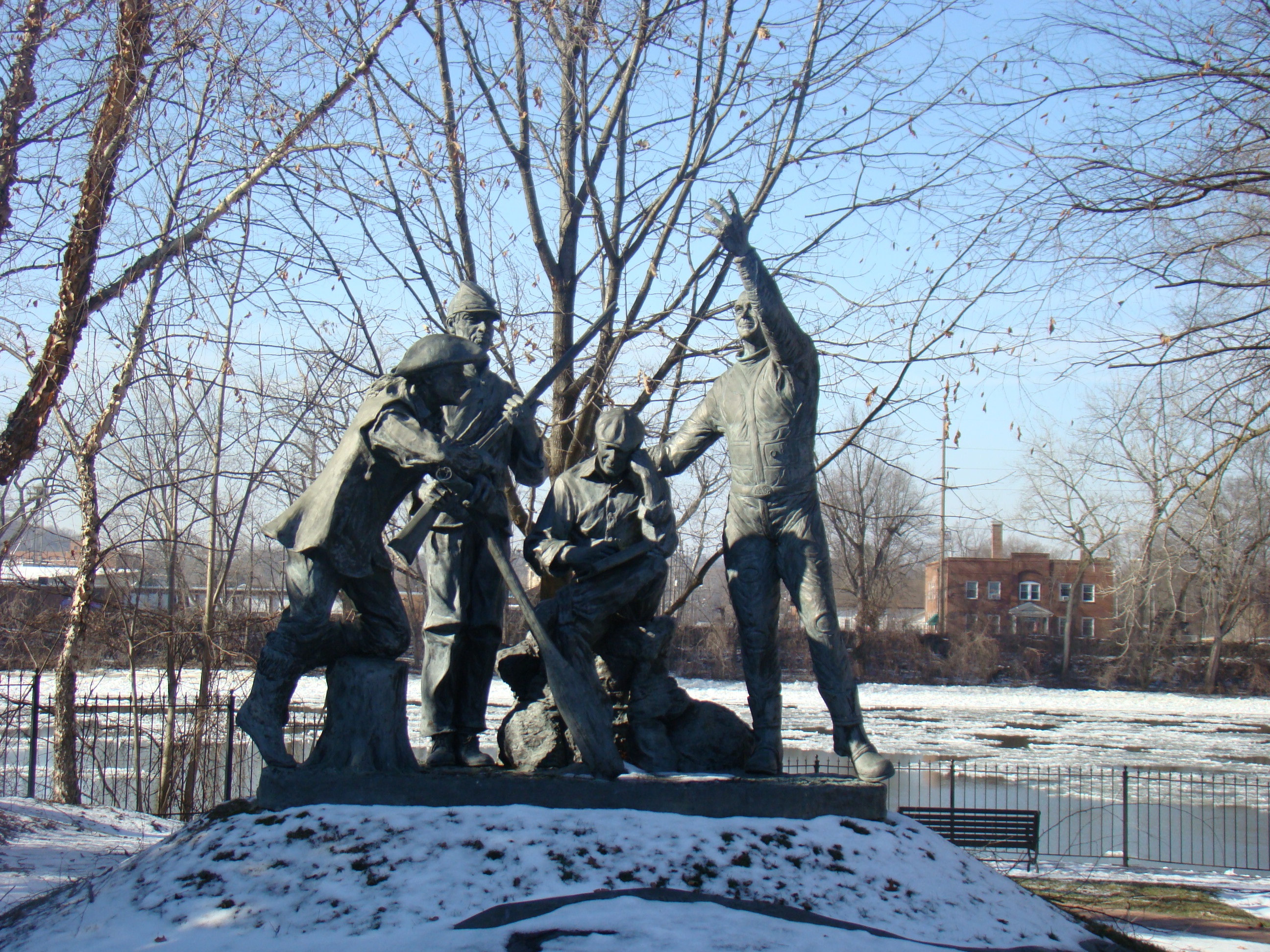
Bicentennial Legacy Monument stands on a mound at Zane's Landing on the Muskingum River.

Bicentennial Legacy Monument stands on a mound at Zane’s Landing on the Muskingum River.

Watch Alan Cottrill at work in his studio in Zanesville, Ohio, where you will find the world’s largest bronze sculpture collection of any living sculptor. If you are lucky, he will share stories of his life and his passion. This amazing sculptor still works seven days a week…but doesn’t start as early anymore!

To discover Alan Cottrill Sculpture Studio, take I-70 exit 155. Drive south a half-mile. Turn right onto Marietta St., then right again onto S. 6th St. The studio is one block ahead on the right. Look for the statues lining the street.

Gross Mansion in Cambridge, Ohio – House of Many Uses

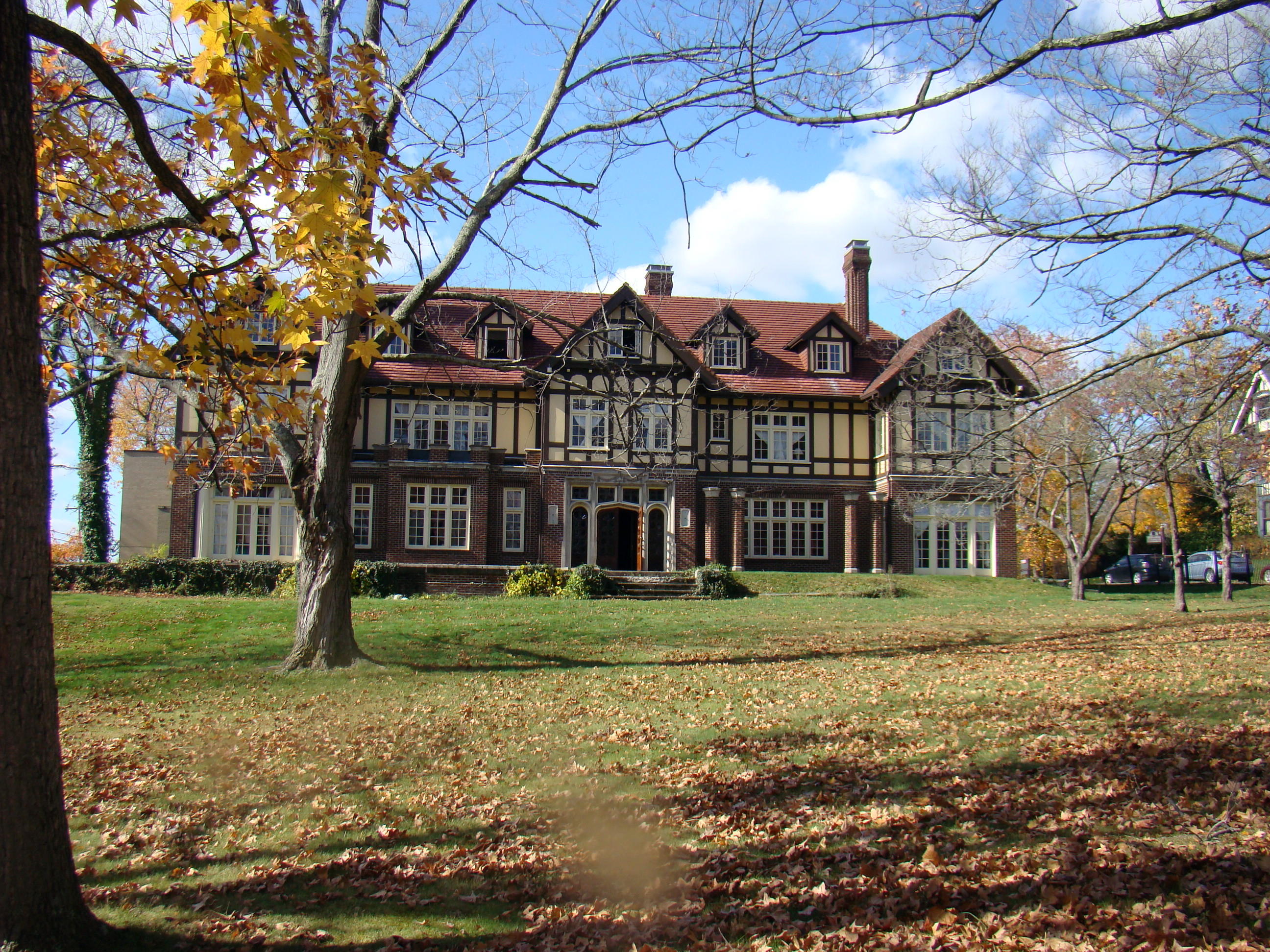
Gross Mansion today
Gross Mansion today

A mansion on a hilltop perfectly describes Gross Mansion. The mere mention of its name brings instant recognition. While most know where it is, few know its history, or the history of the only family to call this “home”.

Born in 1868, Charles F. Gross began working at the age of twenty-one in the oil fields of Ohio, West Virginia, and Oklahoma. Charles saved his wages carefully, and began buying shares of The Hill Oil and Gas Company based in Columbus, Ohio.

This company had extensive holdings in Oklahoma and Texas, and Charles Gross of Cambridge had increased his holdings to one-fifth interest. The Cushing Field in Oklahoma consisted of 6,000 acres and produced 20,000 barrels of oil a day. When he sold his one-fifth interest in this field, Charles had money to purchase land and build a house.

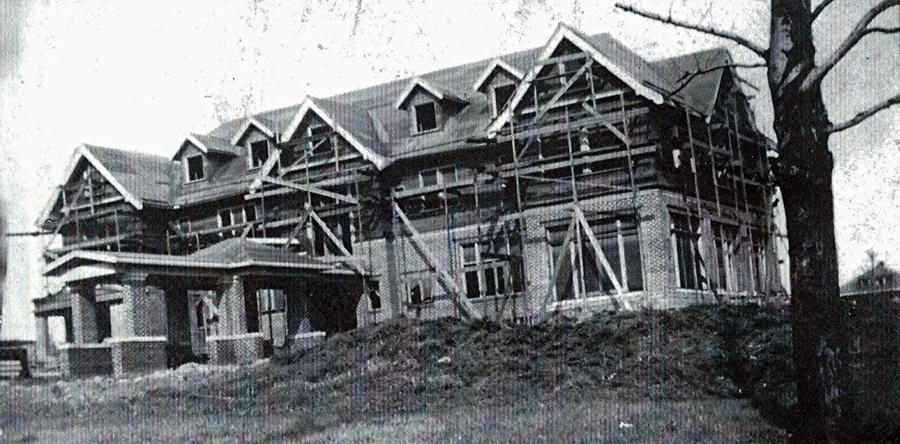
Gross Mansion under construction

Harriett, his wife, had her heart set on having the nicest house in Cambridge, and that is what Charles set out to accomplish. Charles had purchased a city block between Sixth and Seventh Streets in a strictly residential area.

Beautiful tile in the entry way

The Gross Mansion, completed in 1921, was situated in a park-like setting. A winding carriage lane wove through a beautiful landscape of flowers and trees. Relaxing while working in the garden became one of Charles’ cherished times.

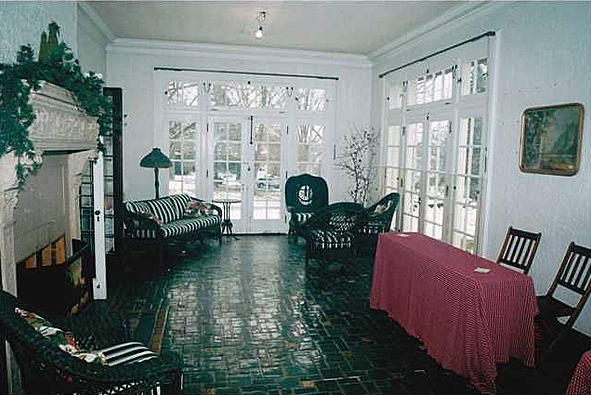
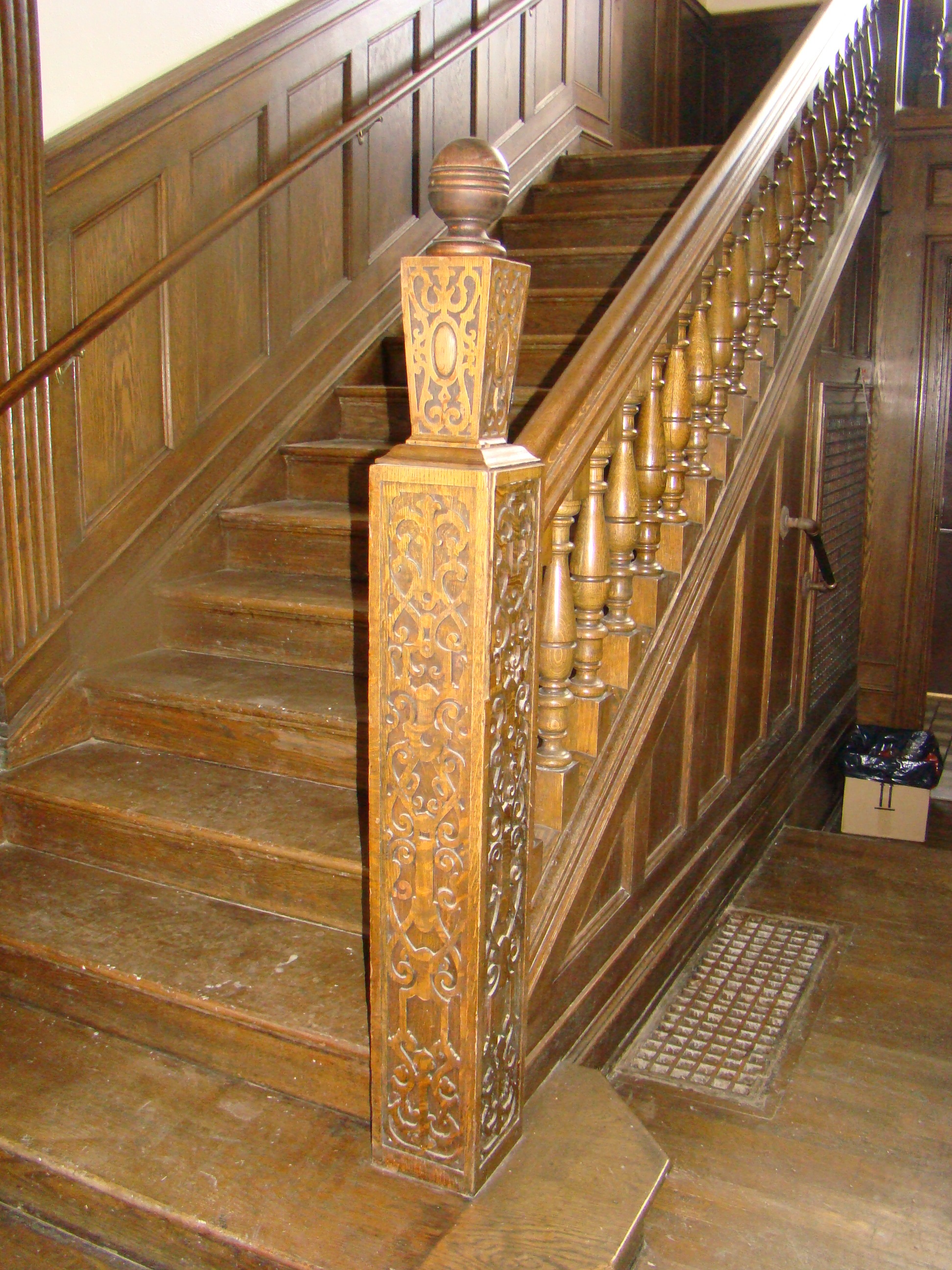
No cost was spared in the construction of this 12,000 square foot home with twenty-four rooms. Even today the beautiful tile floors, walnut paneling, carved stone fireplaces and beautiful stairway with carved newel posts exemplify the richness intended many years ago.

Stories are still told of the Gross family as many parties and weddings were held at the mansion. Trick or treaters that were brave enough to come to the door of the big house, were rewarded with a fifty cent piece.

Gross Mansion Sunroom

Teachers at the 9th Street School, where Harriett was a student, had an annual dinner there served by the Gross family. It was a day the children remembered, not because of the mansion, but because when the teachers went for lunch, school was dismissed for the rest of the day.

Stairway with carved newel post

Young Harriett also had the pleasure of owning a brown and white pony that she enjoyed riding inside that tall fence around the mansion. That high fence with spiked top is of special interest as it was constructed by the family to protect their only child. This happened right after the kidnapping of the Lindbergh baby and the Gross family feared that with their wealth gained from the oil fields, their daughter could be a possible target. They even had a hidden staircase installed in the house for easy escape.

A personal memory takes me back to days as a young child when my mother delivered fresh eggs and chickens, butchered that morning, to the Gross family. Mom let me carry a dozen eggs to the side door while she took the chickens. Dad waited patiently in the car.

While Charles Gross got his start in the oil fields, he became a very prominent member of the Cambridge community. In 1918, he was elected to the board of directors of The National Bank of Cambridge and served until his death in 1942. His funeral was held at the Gross Mansion.

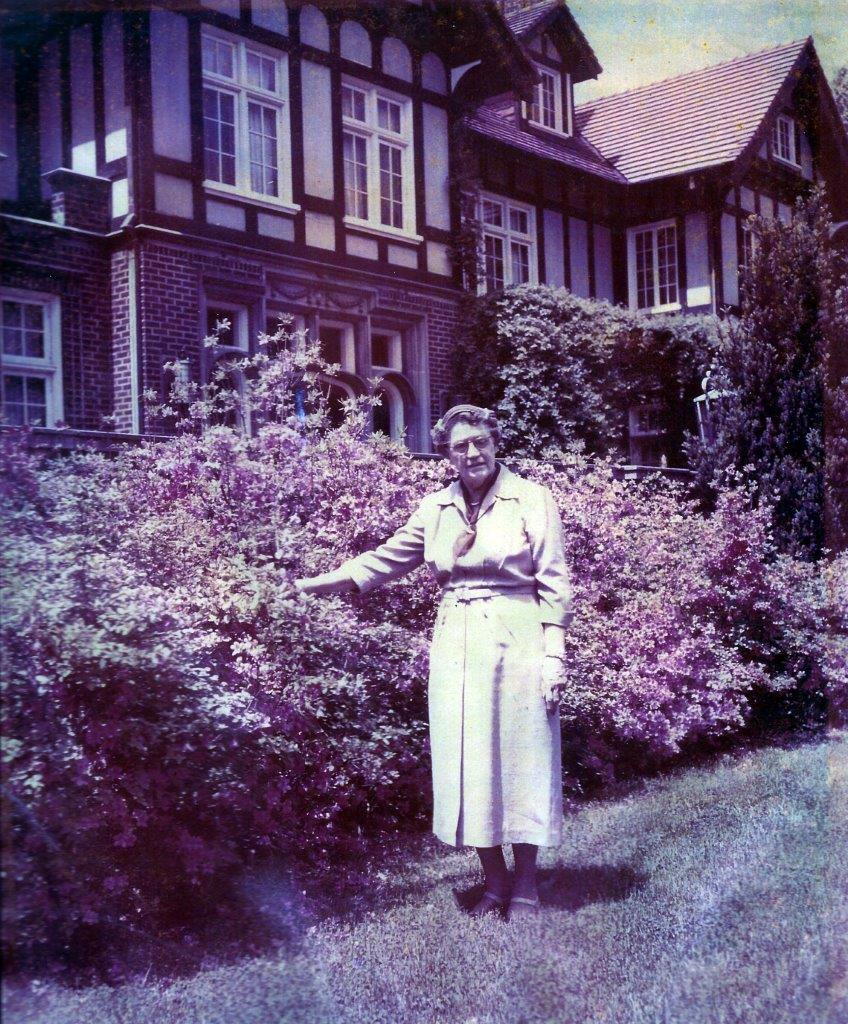
Harriett Gross in front of Mansion
Mother Harriett Gross in front of Mansion

Daughter Harriett was one of those who got married at the mansion when she wed Howell Bates, an ensign in the Navy. Later Harriett and Howell would be the ones to sell the mansion in 1958 to the Cambridge YMCA.

Gross Mansion still catches the eye of visitors to the city and makes them catch their breath as they view this beautiful home from nearly a hundred years ago. Chances are rare of building anything this grand again. Wouldn’t it be wonderful if it would be returned to its former richness and impressive beauty?.

Recently, Dickens Victorian Village held a Victorian Funeral Experience in the mansion. Hopefully other community events will take place in this beautiful spot soon.

How nice to see life at the mansion once again!

Gross Mansion is located between 6th and 7th Streets in Cambridge, Ohio. Once in town, head down 6th Street where parking is available in a lot across the street.

Powhatan Point on the Ohio River

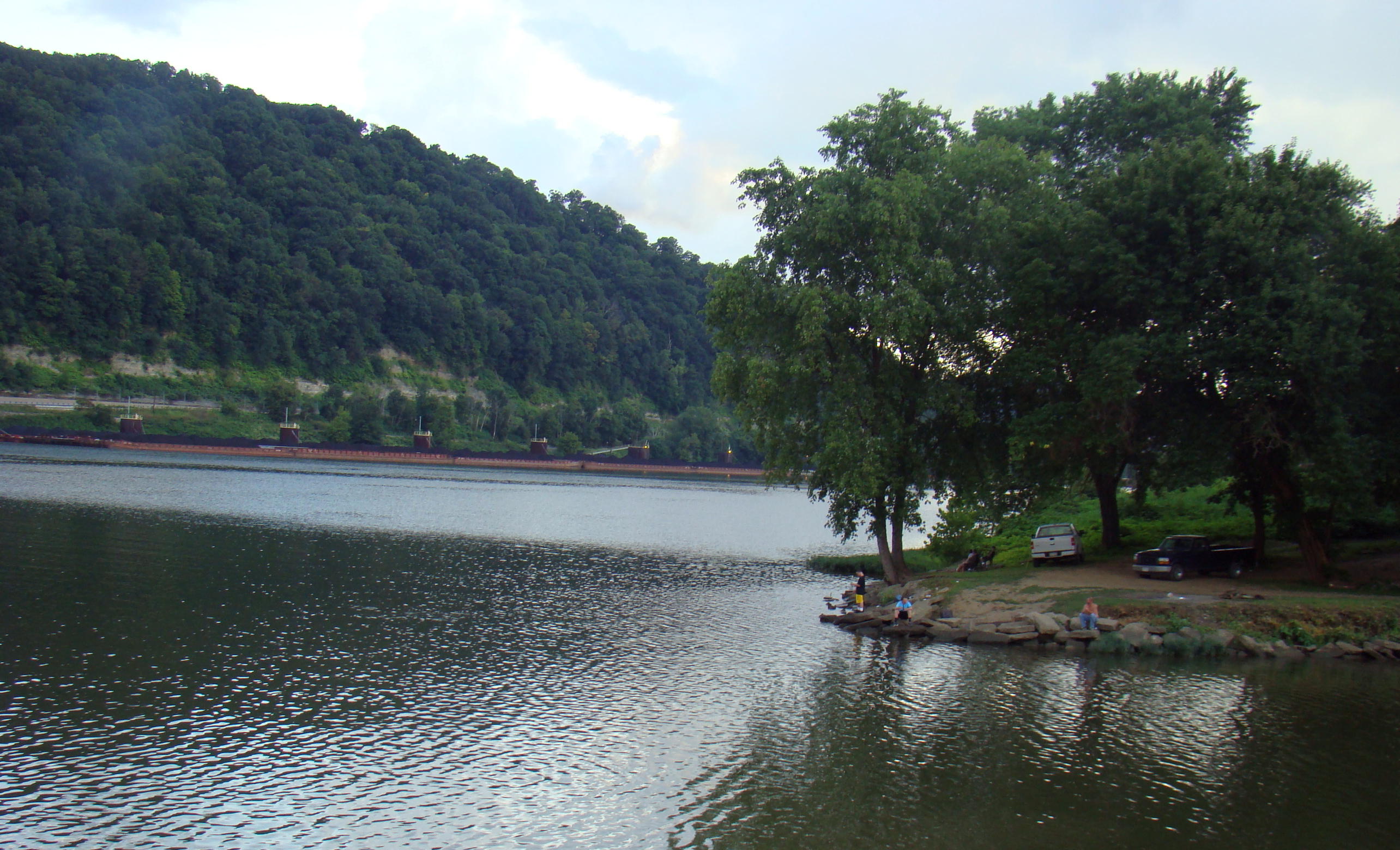
The Point on the Ohio River

The Point where the Captina Creek and the Ohio River meet

Chief Powhatan is memorialized here at the Point where the Captina Creek meets the Ohio River. The town laid out here in 1847 was named Powhatan Point in his honor. Captina Creek was the site of many Mingo, Powhatan, and Shawnee Indian camps in the late 1700’s, with exploration by famous white leaders such as Lewis Wetzel, George Washington and Ebenezer Zane.

Today the banks of the beautiful Ohio River provide a peaceful place to watch the barges float by, or relax with a fishing pole in hand in the cool of the evening.

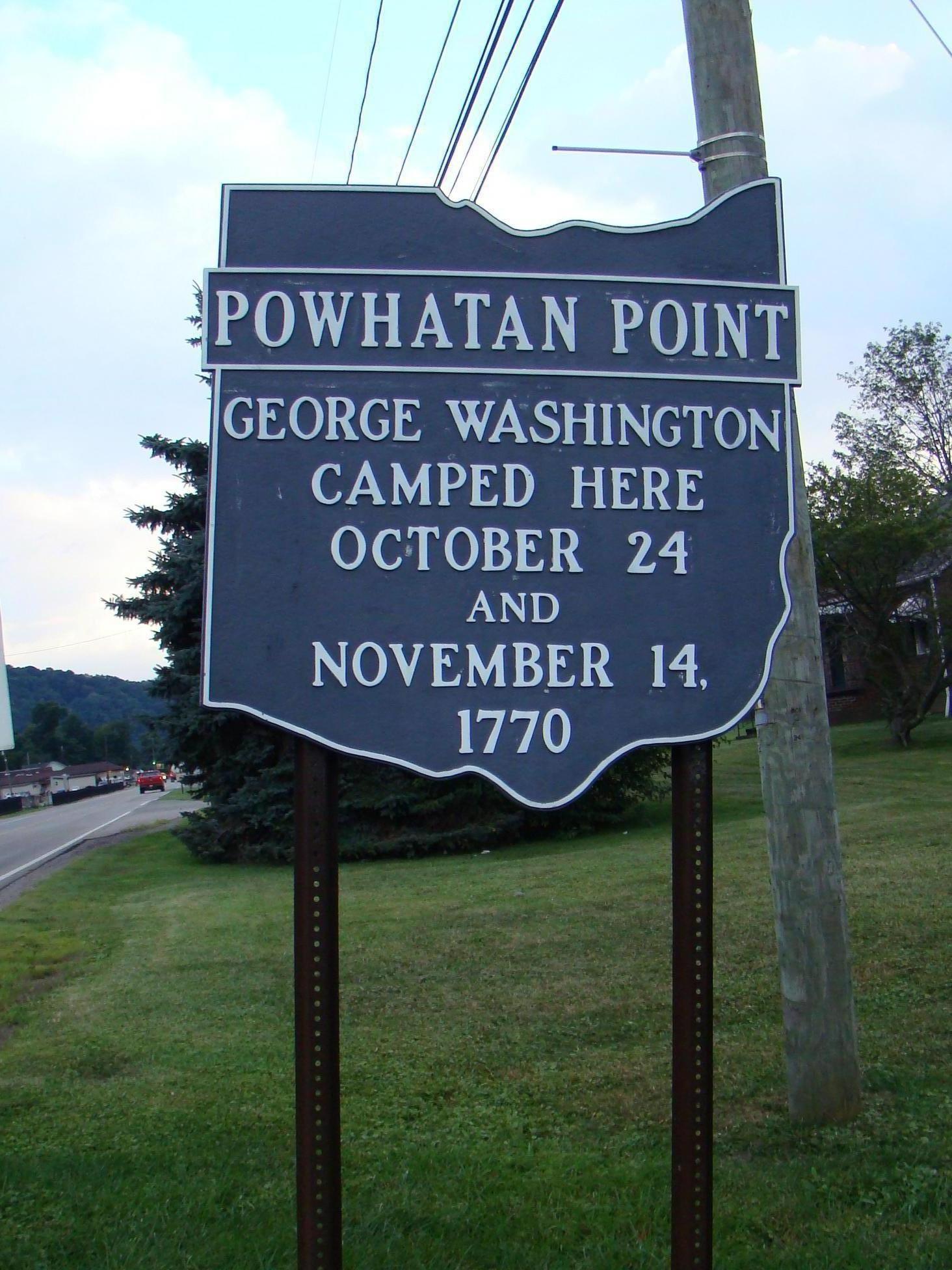
Historical sign

Historical sign

When you enter town, an Ohio historical sign greets you. It states that George Washington camped at what is now known as Powhatan Point on October 24 and November 14, 1770. Some say that is the most important thing that ever happened in this small town, but there was more happening during the last visit.

Chief Powhatan was famous for his dealing with the Whites, but even before the Europeans came to this section of America, he had conquered 30 different Indian tribes. Later Chief Powhatan, with the chiefs from those 30 tribes, tried to recover their lands, which they felt had been stolen by the English and European immigrants.

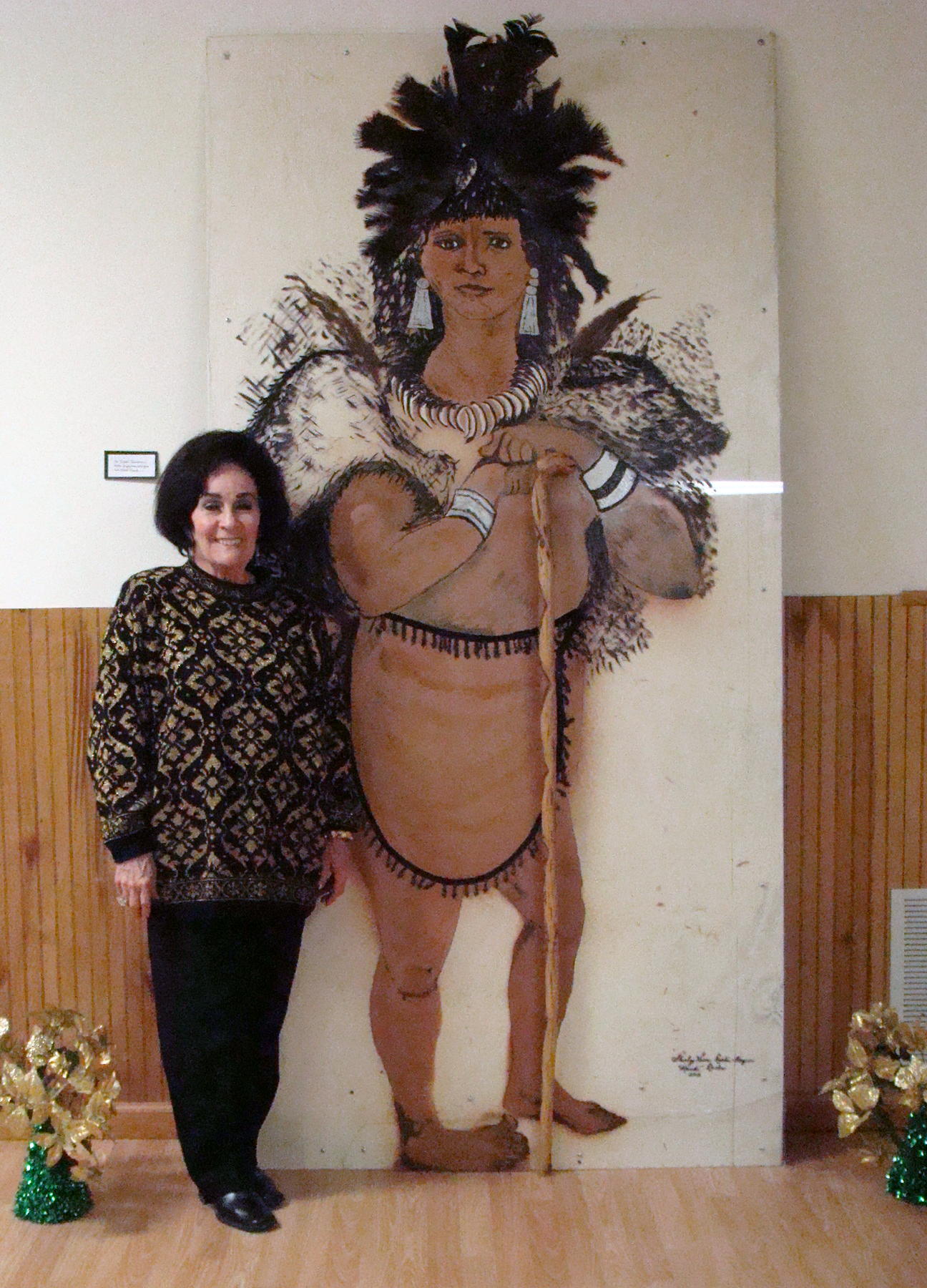
Kandi's Chief Powhatan

Kandi’s Chief Powhatan

Since the town was named for Chief Powhatan, it seemed fitting for one West Virginia artist, Kandi Roche, to compose a modern day sculpture of the Chief for The Art Gallery at Powhatan Point Village.  The art gallery is situated at what they call “The Gateway to the Appalachias”. Kandi made an unusual Chief Powhatan statue, which was painted on plexi-glass, and left for the community to enjoy. This chief was the father of the famous Indian maiden, Pocahontas (1595-1617), who was a peacemaker to the first white settlers.

A beautiful fence covered with Native American tribal patterns greets you when you arrive at The Gallery here. Inside are paintings, pottery, glass and photography. Art classes have been available from time to time. Since this is a relaxed atmosphere, little is scheduled, but friends enjoy getting together along the river banks.

Community Center

Community Center and home to Christmas in the Village

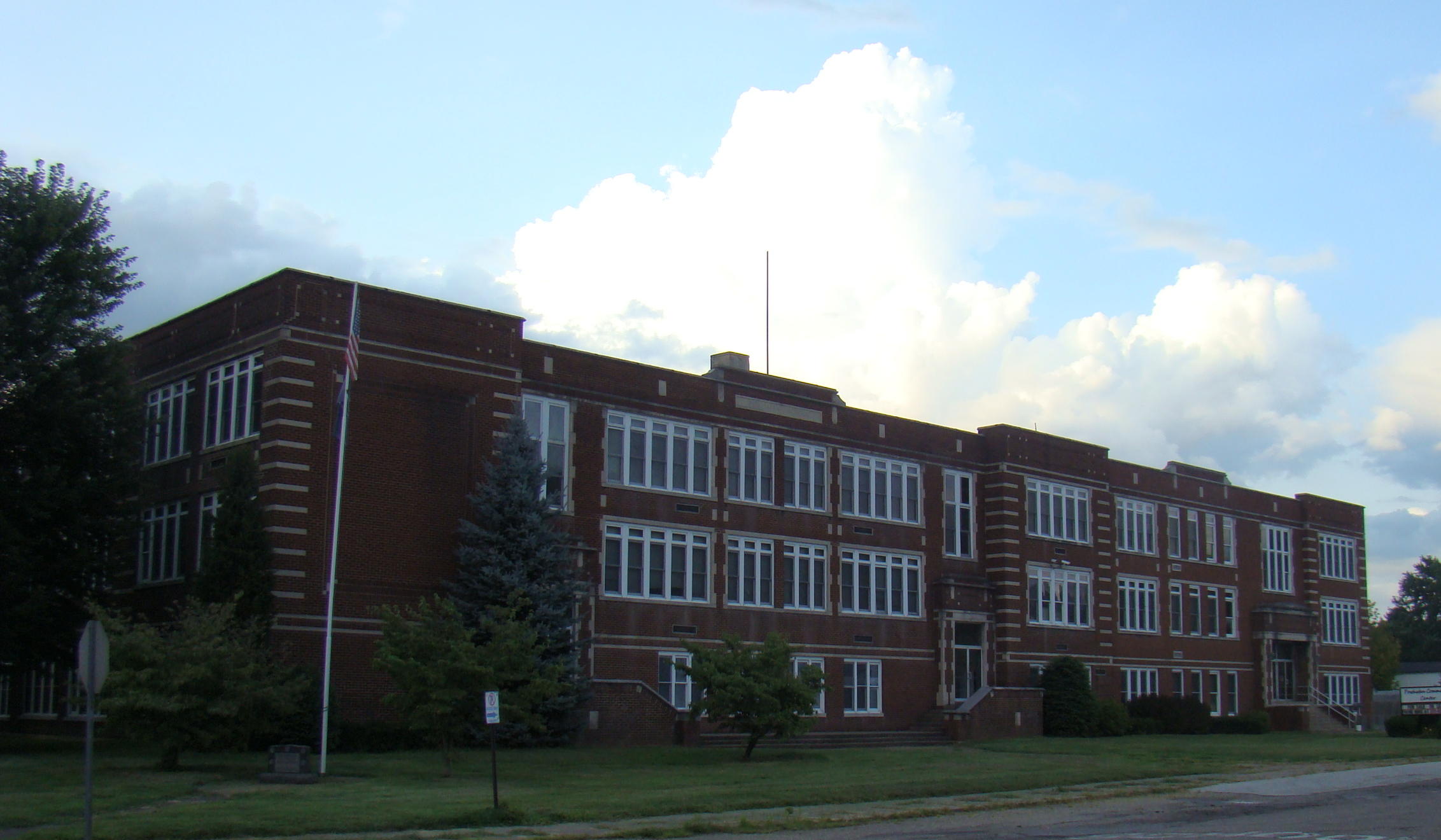
Just down the street from the gallery is the abandoned Powhatan Point High School, which today has been turned into a community center. During the month of December, Christmas in the Village is held here. The 9th Annual celebration will be held in 2014 with crafts, food vendors, entertainment and of course, Santa. But if funds aren’t made available soon, this facility may be lost to the community.

Kammer-Mitchell Power Plang across the river from Powhatan Point.

Kammer-Mitchell Power Plant across the river from Powhatan Point.

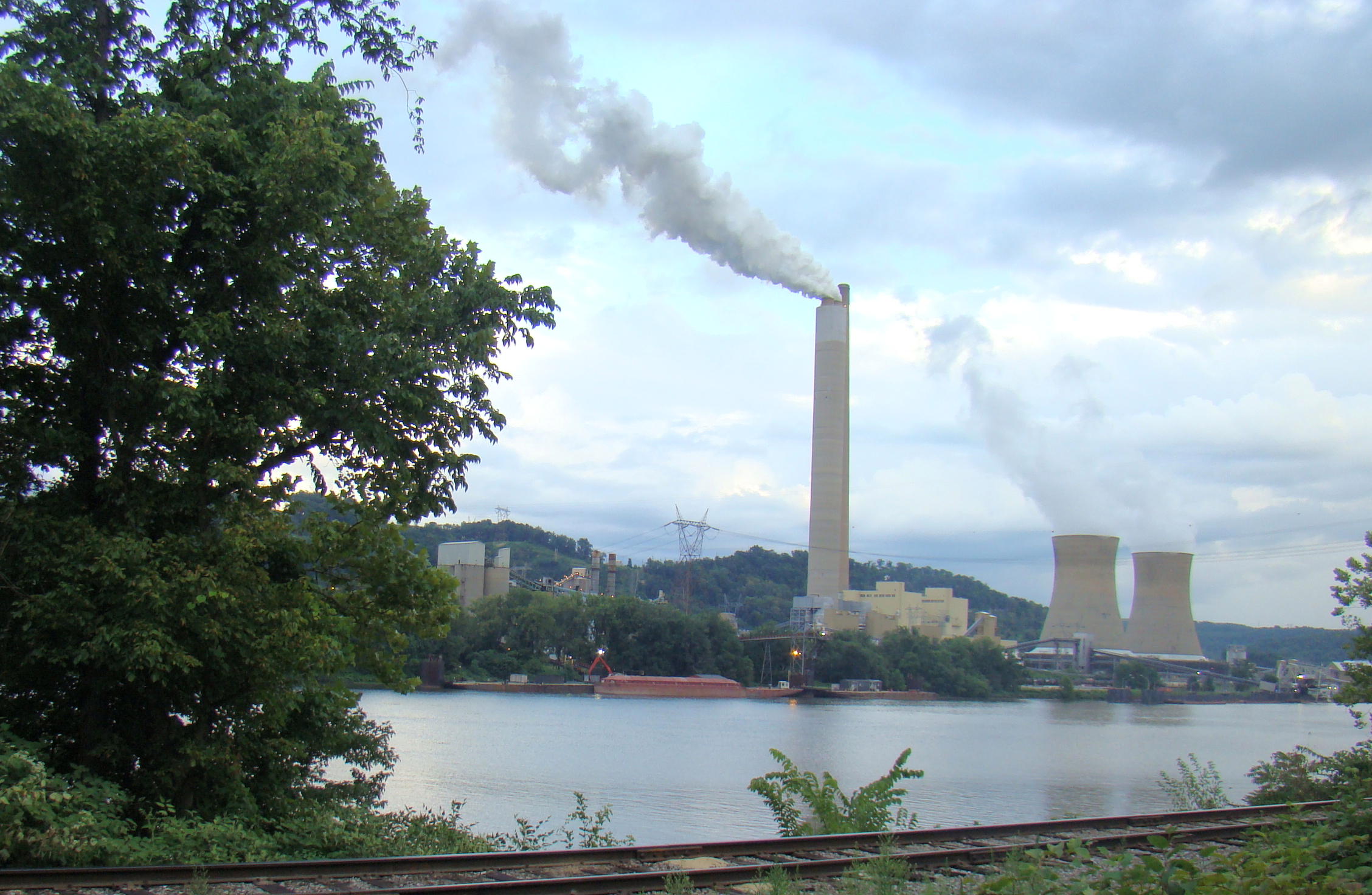
Just south of Powhatan Point is the Kammer-Mitchell Power Plant providing electricity and employment for parts of Ohio and West Virginia. Today this American Electric Power (AEP) plant is partially shut down due to failure to meet EPA standards. They must convert their wet coal ash to a dry coal ash bed to return to full operation. This coal-fired plant has the sixth highest power plant chimney in the world.

Drive through our beautiful land and watch for pieces of history wherever you happen to visit. Every small town has its place in history, and Powhatan Point is no exception.

Drive along the beautiful Ohio River on Ohio Route 7 and you will come to the town of Powhatan Point, about fifteen miles south of  Bridgeport, Ohio.


Steamboat History Flourishes at Ohio River Museum

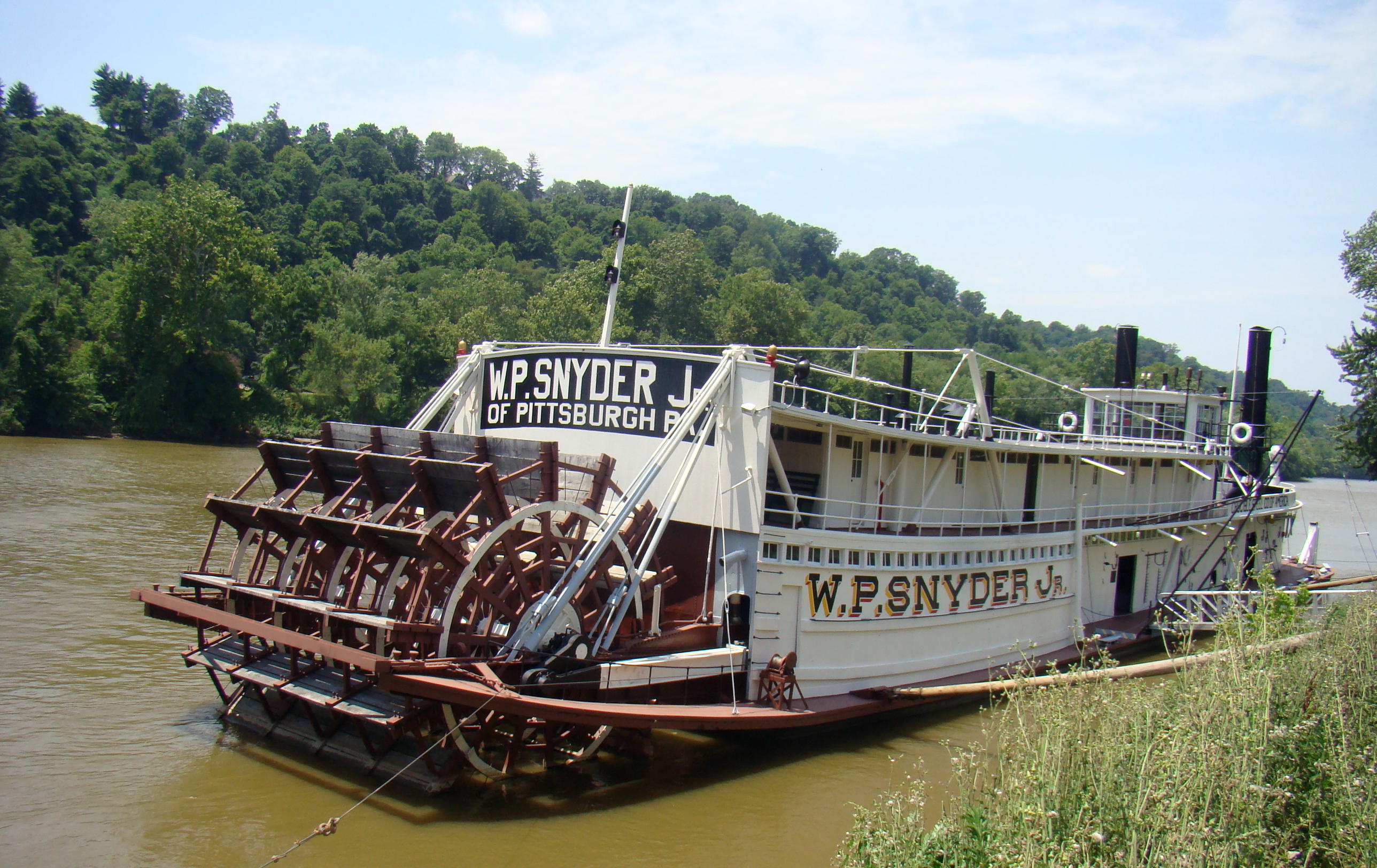
W.P. Snyder, Jr on the Muskingum River in Marietta, Ohio

W.P. Snyder, Jr on the Muskingum River in Marietta, Ohio

“Say Steam” Those are the special words the guide used when taking pictures of visitors on the steam-powered W.P. Snyder, Jr. at the Marietta River Museum in Marietta, Ohio. You can feel the river beneath your feet as you walk the deck, listening to the guide’s description of life on the river many years ago.

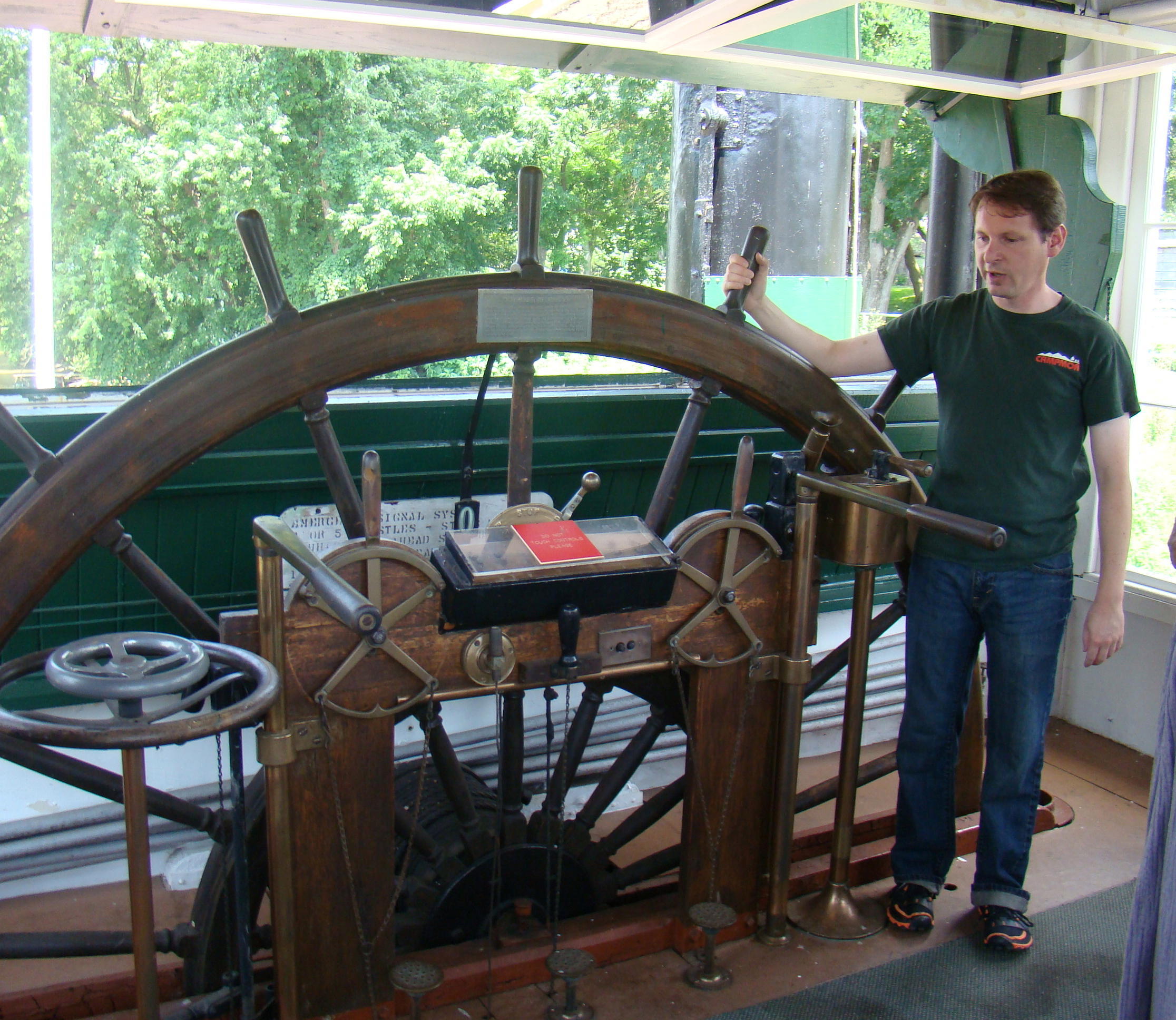
Pilot Wheel of W.P. Snyder, Jr.

Pilot Wheel of W.P. Snyder, Jr.

This early tugboat replaced the mules that walked along the banks of the river towing the barges. Tugboat probably wasn’t the best name for this type of boat, because they didn’t tug anything…they pushed it instead.

W.P. Snyder, Jr. was built in Pittsburgh in 1936 as the result of a terrible winter there. The wooden boats were brutally torn apart by the ice on the Monongahela River, so for the first time, a tugboat was constructed of steel by Carnegie Steel Co, and called W.H. Clingerman.

After years of service, it was retired due to its coal furnaces. In 1955, the Sons and Daughters of Pioneer Rivermen purchased the boat, now re-named the W.P. Snyder, Jr. for $1.00, and moved it to the banks of the Muskingum River in Marietta. This tugboat is the last intact steam-powered, stern-wheeled tugboat in the United States.

But the effects of weathering made it necessary, in October of 2013, for the W.P. Snyder to leave the dock at Marietta for refurbishing, mainly on the exterior. The trip back had a slight delay because the Ohio River was too high in late May, 2014 for the W.P. Snyder to get under the Putnam Avenue Bridge.

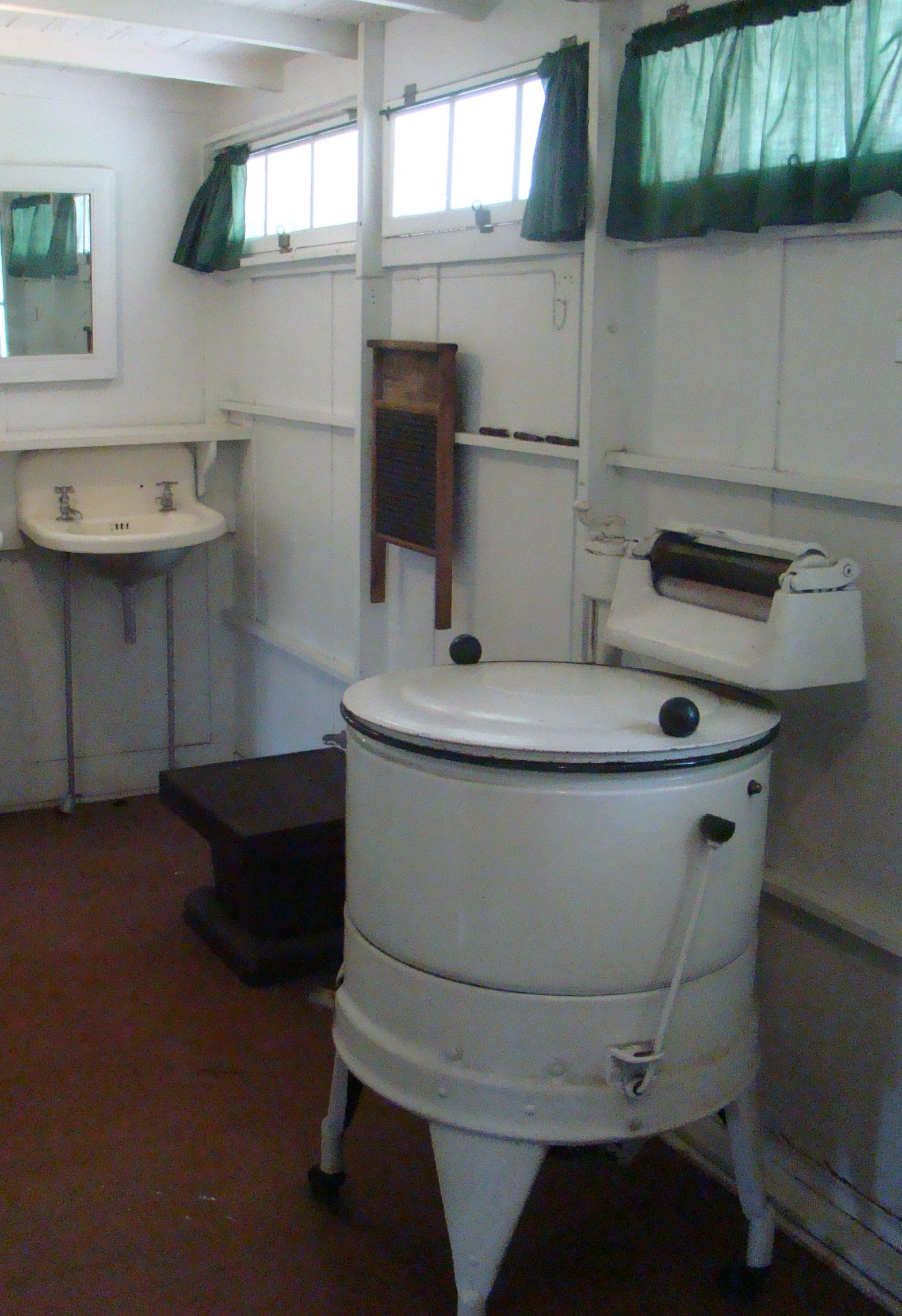
Laundry Room with wringer washer and washboard

Laundry Room with wringer washer and washboard

Pushed back by two antique tugboats, Lady Lois (‘28) and J.S. Lewis (‘31) the W.P. Snyder, Jr is now moored at the confluence of the Muskingum and Ohio Rivers, ready for tour.

On board, you will see the Engine Room, where the engineer controlled passage by using not only steam but also electricity. A system of bells could be pulled to signal conditions or problems. There was even a telegraph handy for outside communication.

Officers and crew were provided completely separate living quarters on the upper deck. If at all possible, officers and crew went out of their way to keep from crossing paths. Two separate bathrooms, a laundry room, and kitchen completed the facilities onboard.

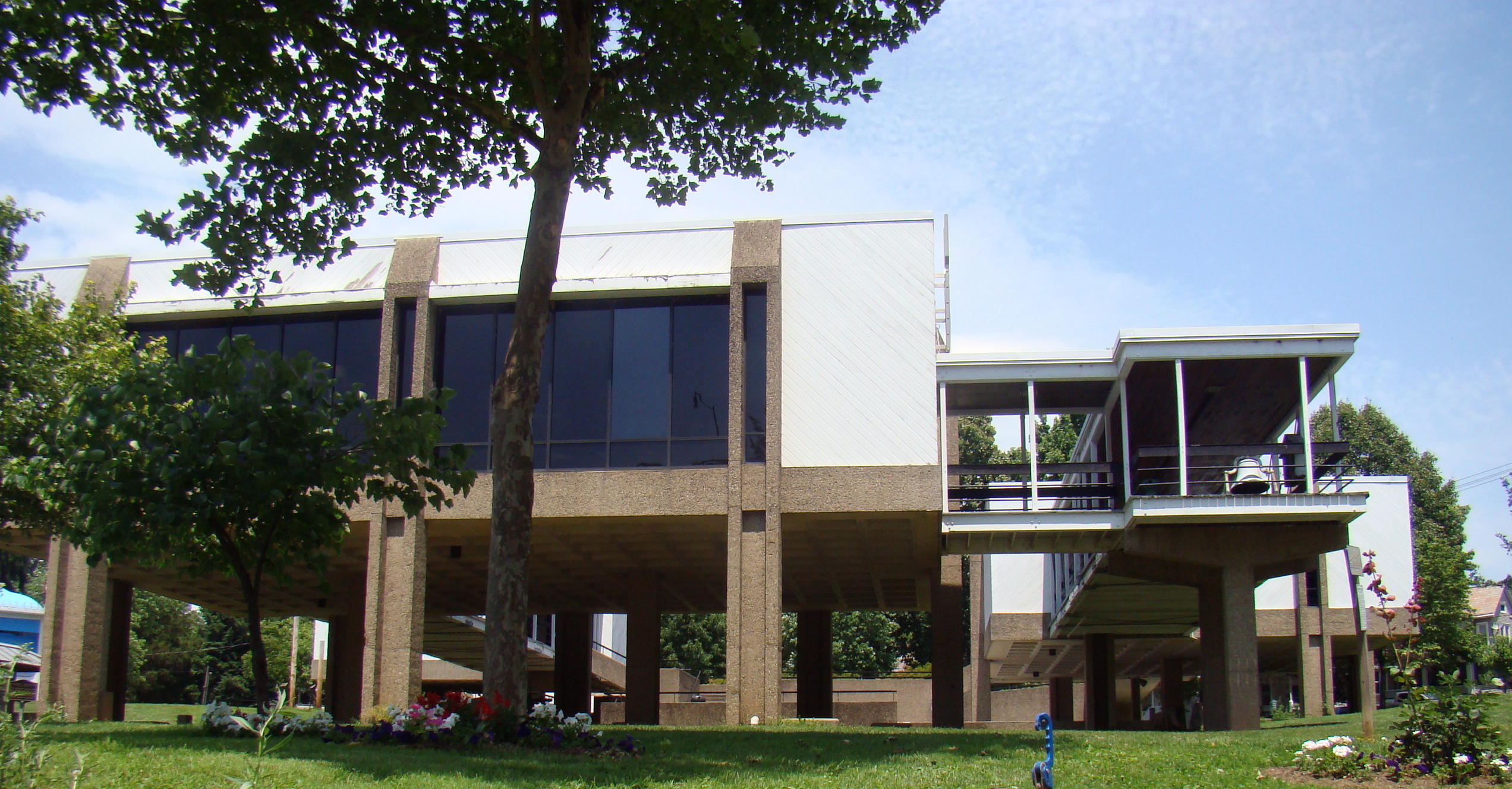
Ohio River Museum

Ohio River Museum

While the tugboat draws many visitors to the museum, there are three separate buildings nearby that contain a history of the Ohio and Muskingum Rivers, and the steamboats that frequented their waters.

An introductory film, History of Steamboats, opens the door to exploration inside the museum. The buildings are filled with models of steamboats, related artifacts, and stories of early life on the river…and much more!

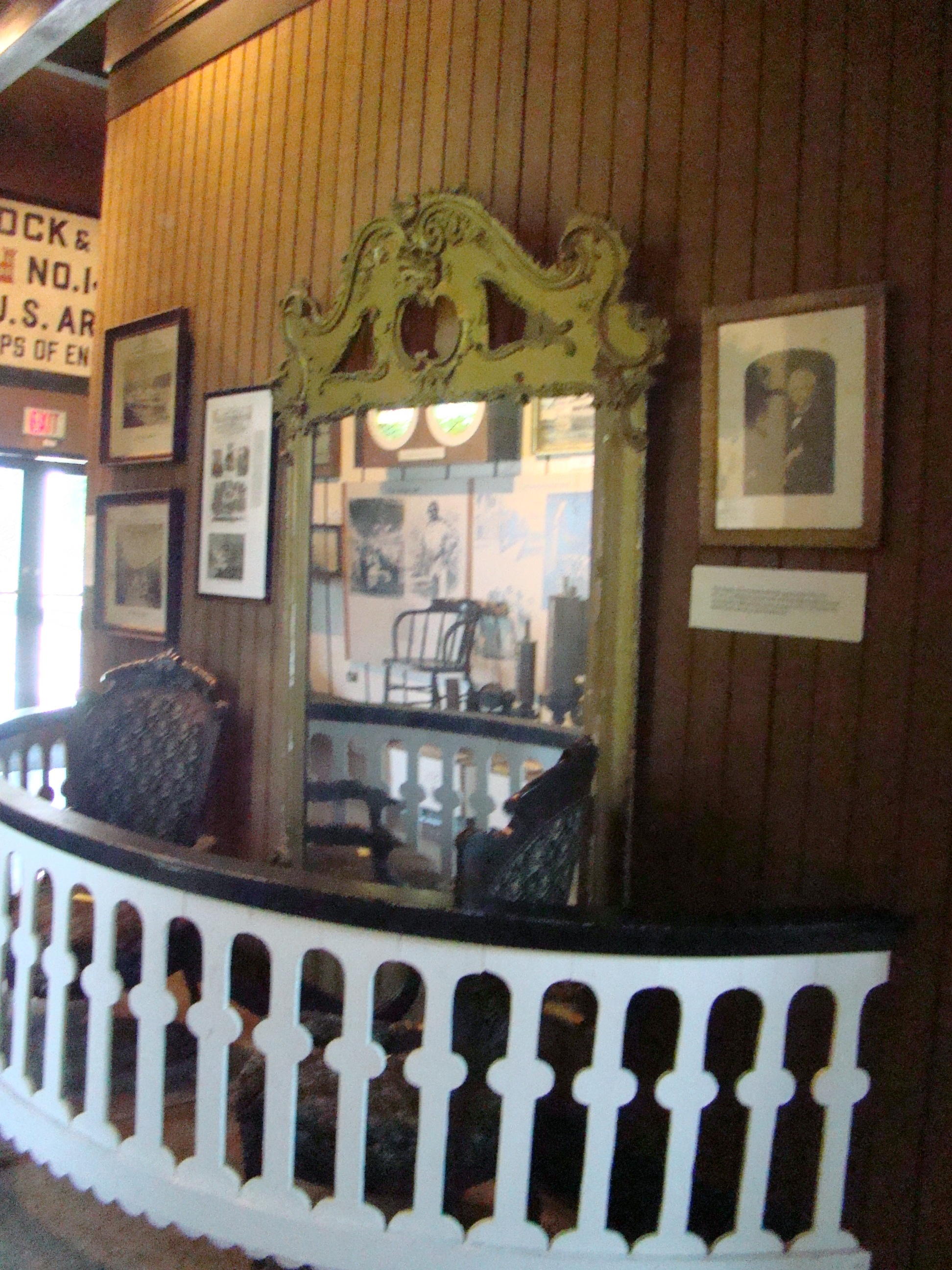
Mirror from Mark Twain's Crystal Palace

Mirror from Mark Twain’s Crystal Palace

Among the historic pieces, the exhibit contains a dug-out canoe that was used as a ferry between Fort Harmer and Marietta. There is even a reminder of Mark Twain through a display of an ornate mirror that hung in the Crystal Palace steamboat, where Mark Twain served as pilot.

Near the river’s edge, a flatboat that was used during Ohio’s early settlement is on display. Close by stands the oldest existing Western Rivers’  steamboat pilothouse from the steamboat, Tell City, which sank in 1917. An interesting section of poles shows the heights of some of the worst floods in Marietta history, three of the worst being : 54.5′ in 1884, 55′ in 1937 and 60.3′ in 1913.

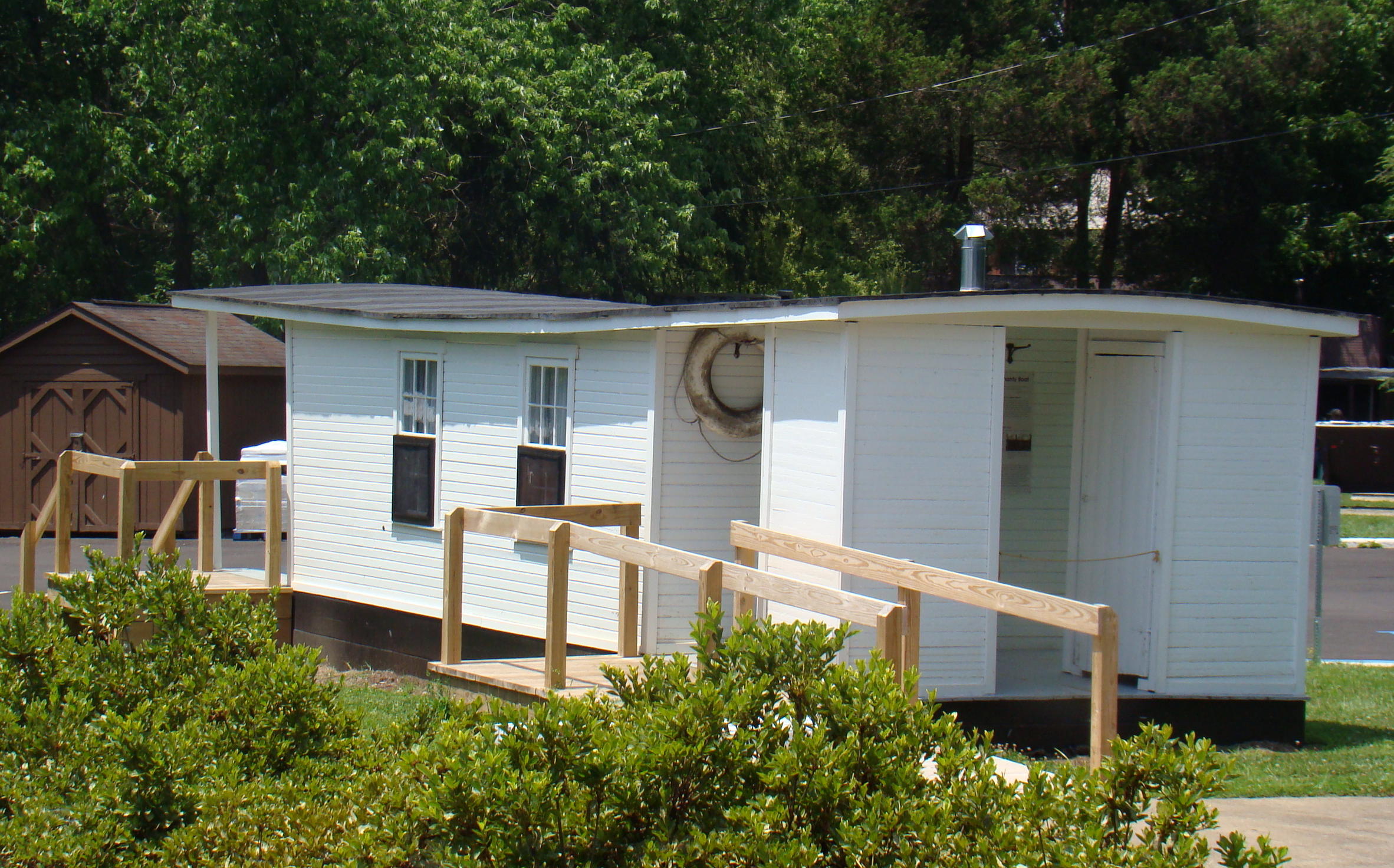
Shanty Boat where folks flew under the radar

Shanty Boat where folks flew under the radar

Don’t miss the old shanty boat, probably from the 1920’s to 1930’s. It possibly could be the oldest surviving shanty boat on the inland river system. People actually lived on these boats or had businesses there. Many of those who lived on the boats were trying to hide from something. Here they could avoid taxes as they were always on the move, and needless to say, the shanty boat provided the perfect place for thieves and lawbreakers, of many sorts, to hide from the law.

These floating shanty boats were banned in 1930 from the Ohio and Muskingum Rivers. However, a friend said when he was a kid in Parkersburg along the Ohio River, there were still shanty boats in the 50’s . Evidentally, more law breakers! The gypsy in me still likes the idea of being able to fly under the radar during those early years with no address, but much freedom.

End your day by cruisin’ down the river on the Valley Gem docked right next door to the Ohio River Museum.

The Ohio River Museum is located at 601 Front Street, Marietta, Ohio, one block from Ohio State Route 7, and minutes from I-77. Plenty of free parking is available and cost of admission is very reasonable.

Washboards – Not Relics of the Past


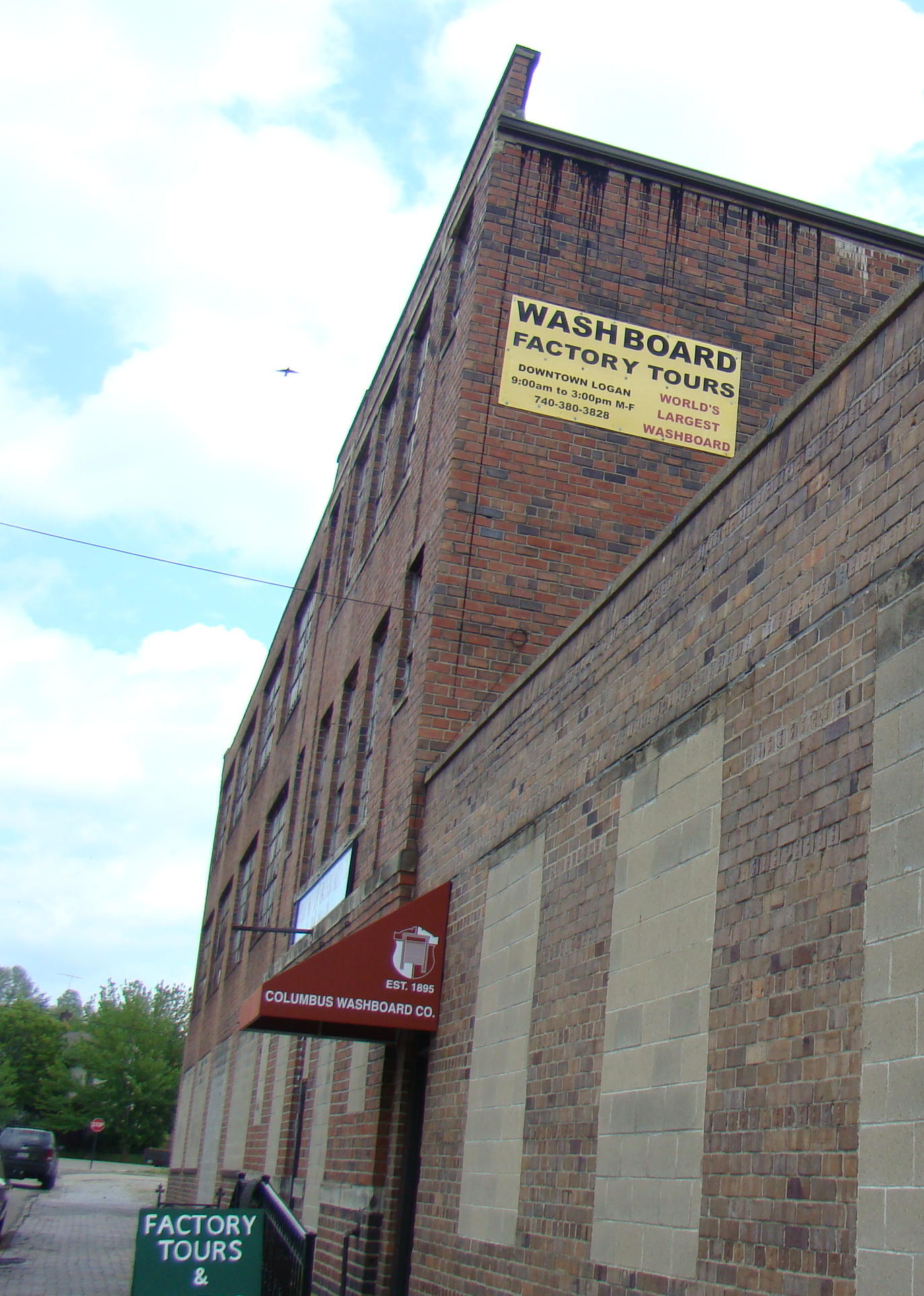
Columbus Washboard Factory

Columbus Washboard Factory in Logan, Ohio

Scrub a Dub Dub! That’s the sound of clothes being washed on what most consider an old-fashioned washboard. But that’s not the case at all! People around the world still use washboards and many of those are being made today by the Columbus Washboard Factory in Logan, Ohio.

In 1895, Frederic Martin, Sr. began building washboards called “Bear Easy” in his back yard near Columbus, Ohio on Oxley Avenue in Grandview. The business didn’t really take off until his son, Frederic, Jr. expanded the business in 1925. Their peak year was in 1941 when they sold 1,287,757 washboards. During their lifetime they sold over 23,000,000. But eventually the business was sold and in 1999 moved to Logan, Ohio where the new owners promoted some alternative uses for washboards.

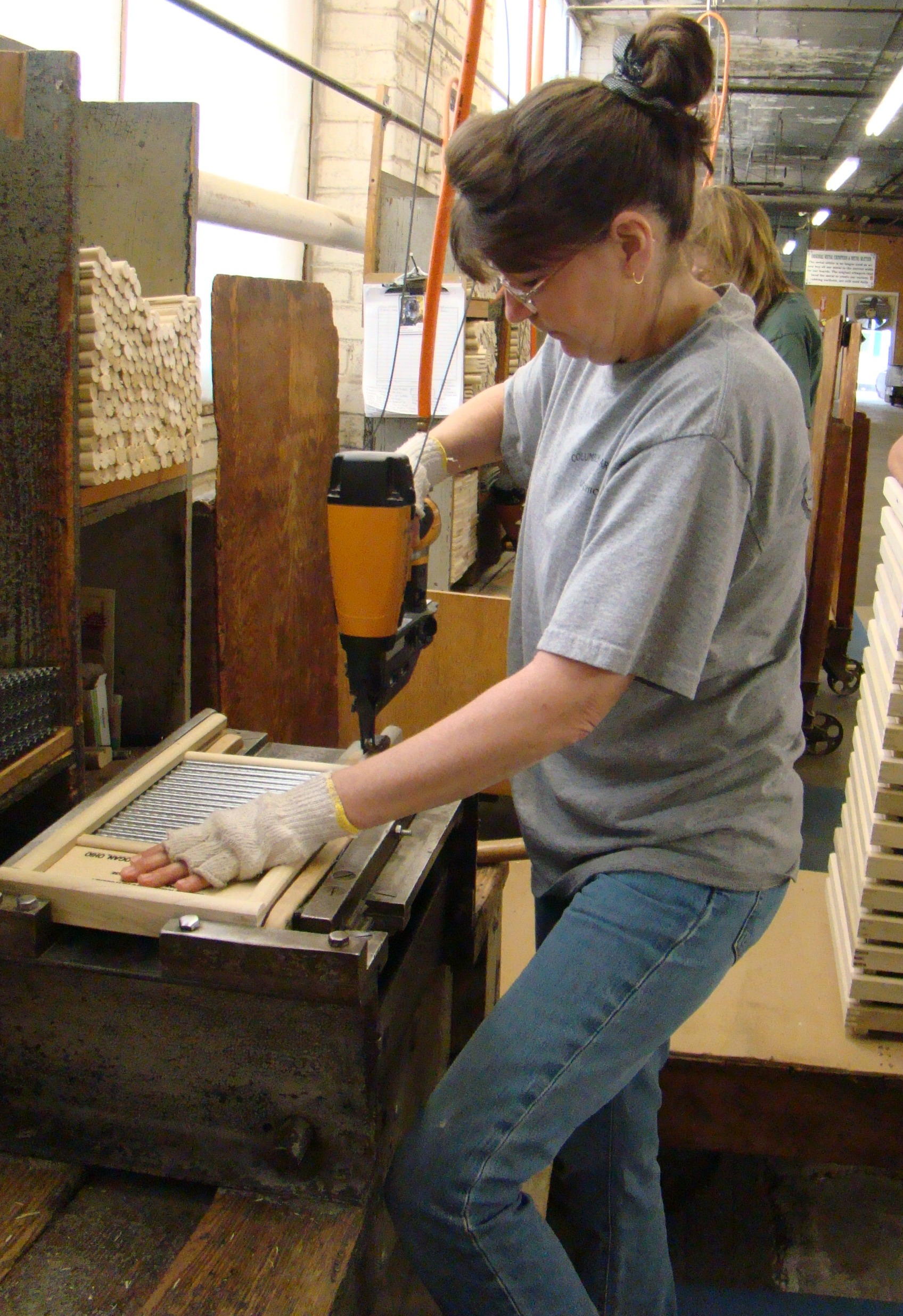
Washboard being made

Washboard being made

Today Columbus Washboard Company is the only company in the United States that makes washboards. They emphasize originality and high quality in over 80 different boards they manufacture.  Signs posted throughout the small factory make it quite easy to do a self-guided tour. Workers eagerly answer any questions you might have. If you have a group of six or more,  a guided tour will be provided.

Production has slowed and there are usually about 200 washoards made per day now. Once the materials are assembled, it takes less than a minute to make a washboard. They have the one-at-a-time assembly down to a science.

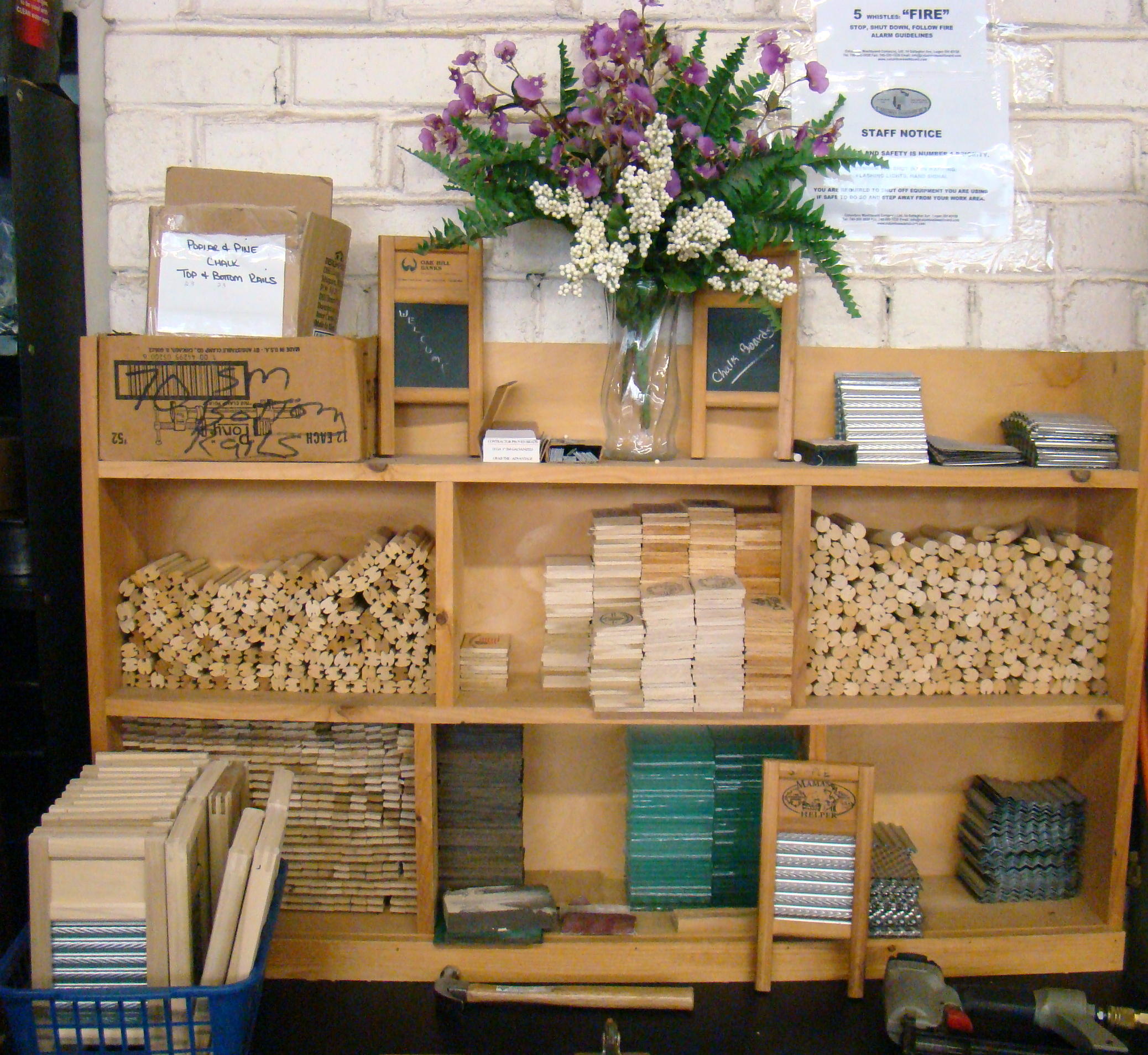
A crimper holds a roll of metal, which runs through a device that bends the metal to create various rubbing surfaces. The two most popular washboards are Maid Rite and Dubl Handi, which gets its name from double sides on the washboard. One side is rough for those tough spots, while the other side is fairly smooth for fine garments.

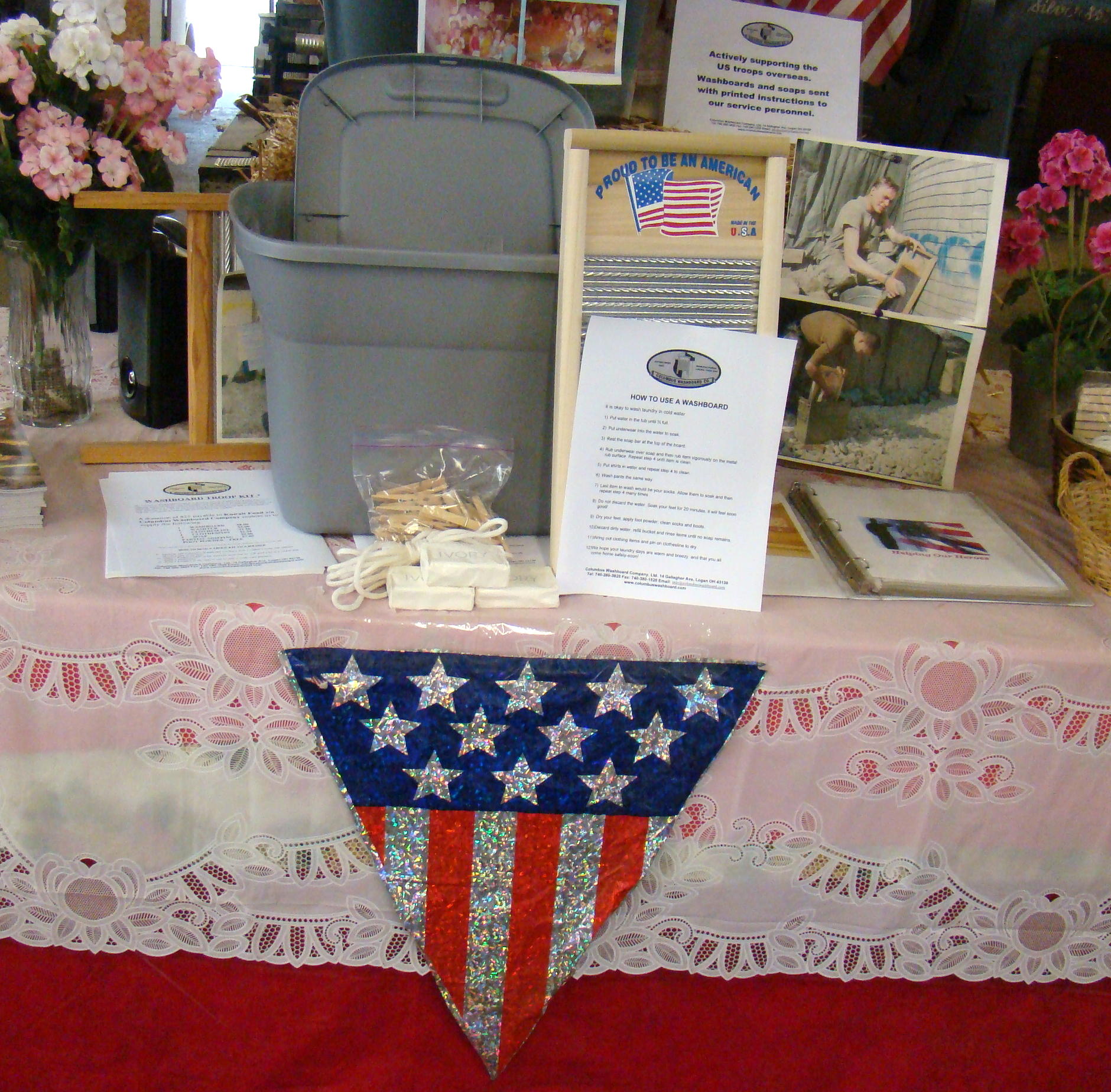
Washboard kit for Armed Service members

Washboard kit for Armed Service members

The fact that the washboards and all parts are Made in the USA creates a special added attraction. A Washboard Kit makes an excellent gift for members of the armed forces stationed away from civilization. Each kit includes a covered tub, washboard, bar of soap, clothesline, clothespins, and, of course, instructions.

Various Washboard sizes

Various Washboard sizes

If you have a member of the armed services who might have need of a washboard kit, Columbus Washboard Factory will send a kit free of charge. Send a name and address of someone in the armed services to Columbus Washboard Factory, 14 Gallagher Avenue, Logan, Ohio  43138. Donations are appreciated, but not required.

Once in a while the washboards get used in unique ways. One such time happened when a soldier received some steaks. How could they cook them? They used the wood on the washboard to start a fire and then used the rough metal surface for the grill. Those military guys think outside the box.

These boards get shipped around the world. Some of the frequent customers outside the United States live in England, France, Japan, Australia, and all of the tropical islands.

Columbus Washboard Factory has discovered other uses for the washboards besides laundry. At the Veterans hospital in Waco, Texas, they decided to cover the walls of the elevator and cafeteria with washboards. Guess they wanted a scrubbed clean look!  Many people today use them for decorative purposes and some have a blackboard in place of the metal so it can be used for a message board.

Their gift shop includes many unique items besides all the various washboards. You can find products that Grandma would have used such as Laundry Powder, Bluing, and Dolly Clothespins.

Washboard Music Festival in Logan, Ohio

Washboard Music Festival in Logan, Ohio

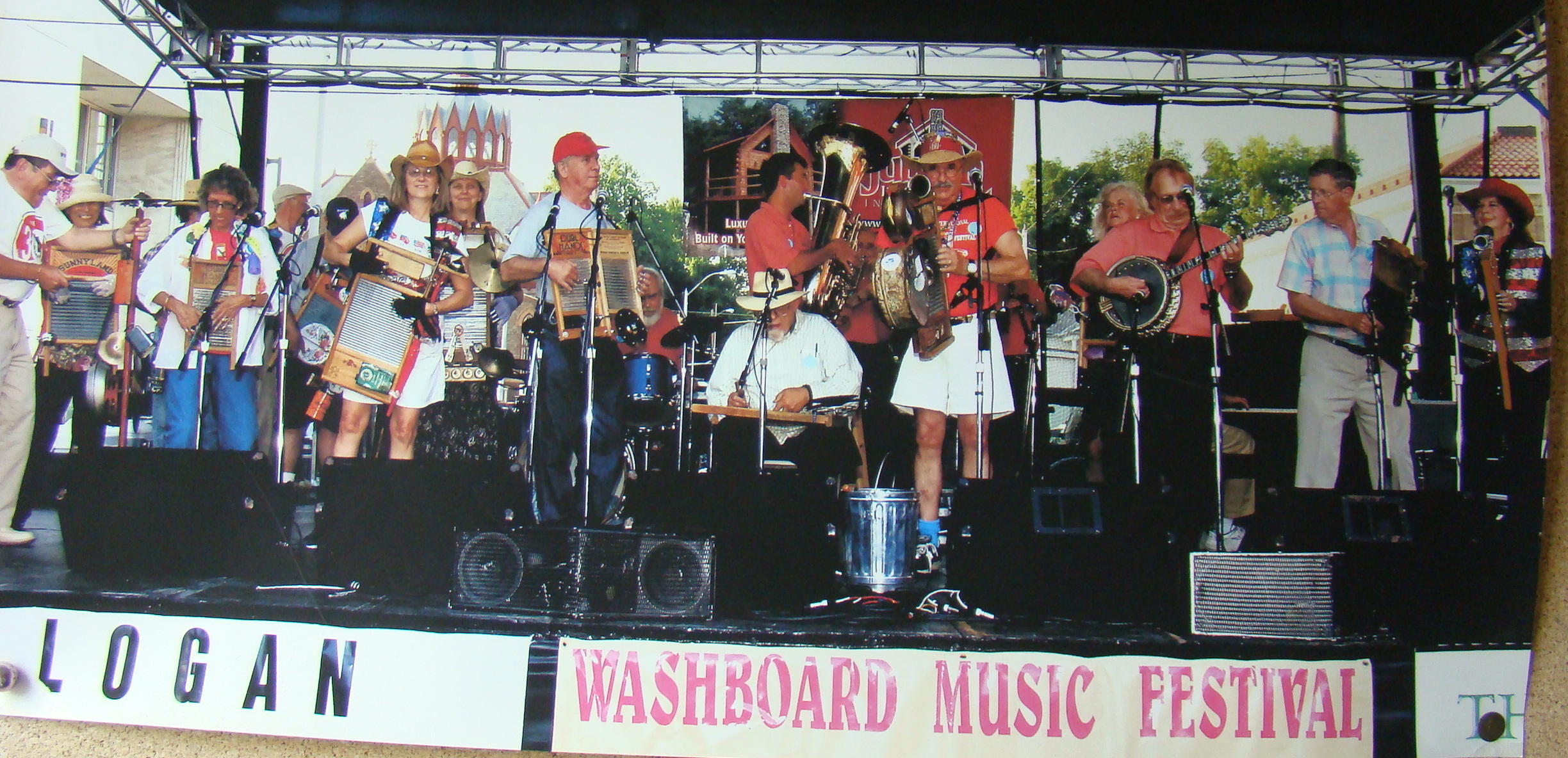
Today one of the most popular uses is as a musical instrument. Every year on Father’s Day weekend, three blocks of downtown Logan are closed off to host the Washboard Music Festival. It is listed as the Most Unique Music Festival in the area. The streets overflow with toe-tapping music, arts and crafts, a quilt show, antique tractors, and even washboard solos. Perhaps you would like to purchase a washboard and join in the fun this year.

There is no easy way to arrive at Logan, Ohio.  State Route 33 runs through the town in south central Ohio. The journey is not one for those who enjoy interstate travel, but perfect for a gypsy.

Historic Mount Pleasant’s Abolitionist Tradition

Quaker Meeting House

Quaker Meeting House in Mount Pleasant, Ohio

Once in a while, the roads you travel lead on an adventure not expected. Such was the case with a detour through the town of Mount Pleasant, Ohio. Meeting local people, while viewing their historic buildings, led to information unexpected but very exciting.

Back in 1803, Mount Pleasant in Eastern Ohio became home for a large group of Quakers, who were searching for a haven from slavery.  Before long, the Quaker Meeting House was constructed and became the first yearly meeting house for Quakers west of the Alleghenies. The basic design reflects the simplicity of Quaker life, while its two-foot-thick brick walls show their strength.

Benjamin Lundy Home

Benjamin Lundy Home

Much of the history of this small town relates to the settlement of abolitionists and their active anti-slavery movement. The entire community was an early safe haven for runaway slaves, even before the Civil War.

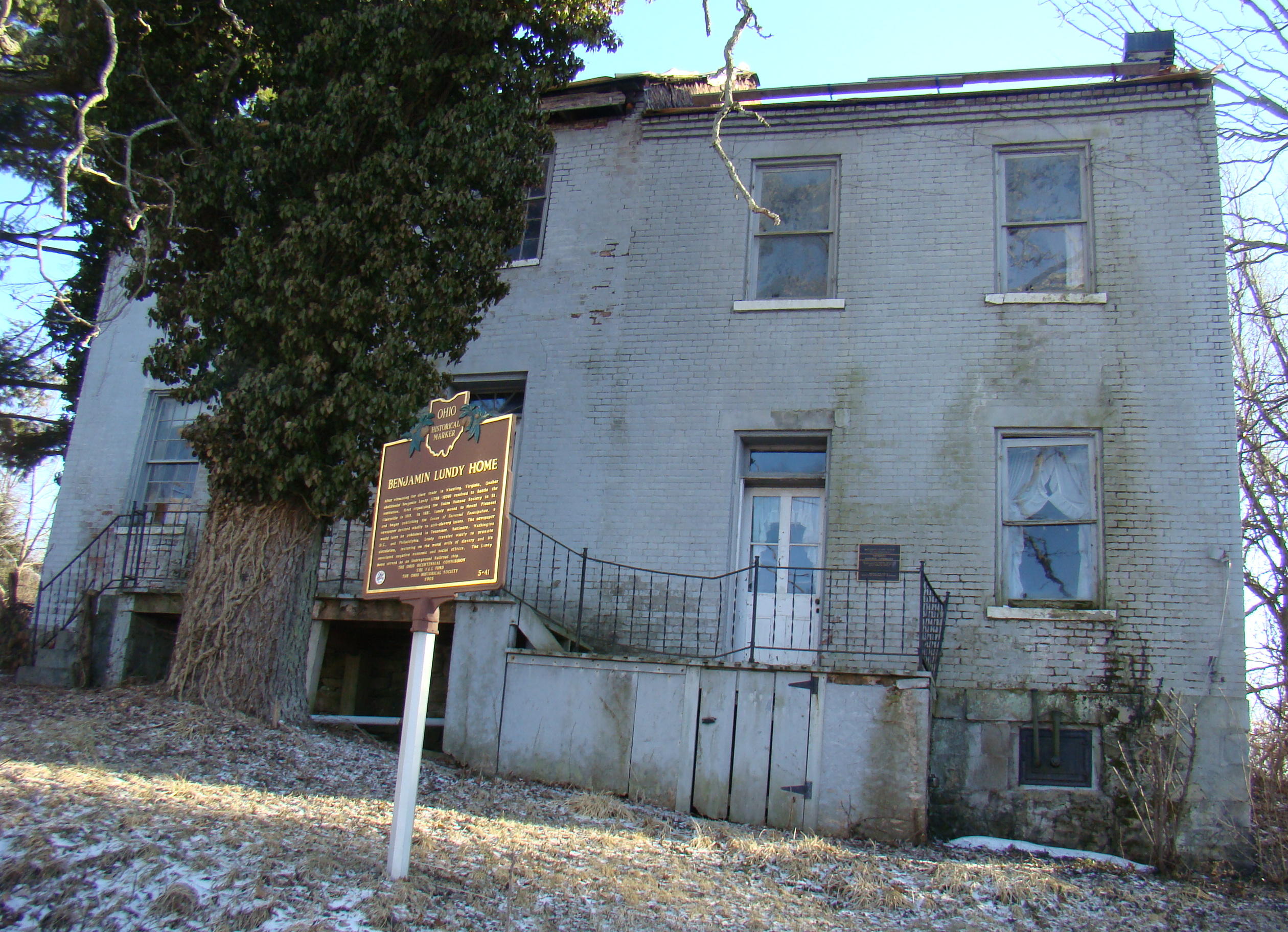
One of those Underground Railroad stops was the home of Benjamin Lundy, who desired to battle the institution of slavery in several ways. Moving to Mount Pleasant in 1821, he began publishing a paper called, Genius of Universal Emancipation, devoted entirely to anti-slavery issues. He traveled all over the country explaining the evils of slavery.

Harris-Bone Cabin through the front window

Harris-Bone Cabin through the front window

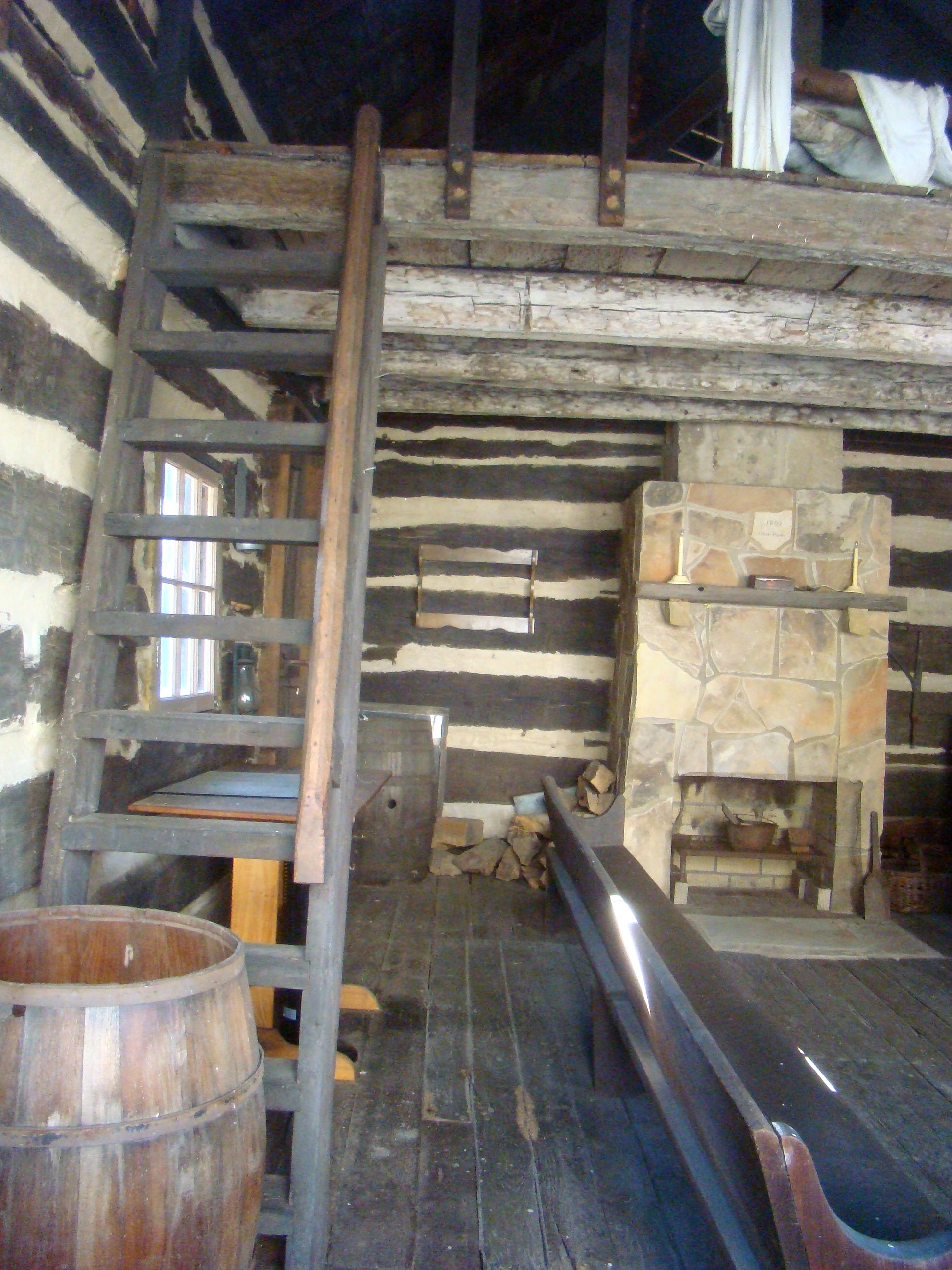
One of the early stores was the Harris-Bone Store built of logs in 1804. Today that store still stands on a prominent corner in Mount Pleasant attracting passers-by to stop and take a peek inside. During the summer months, tours are held, but otherwise you can still get a great look through the front windows.

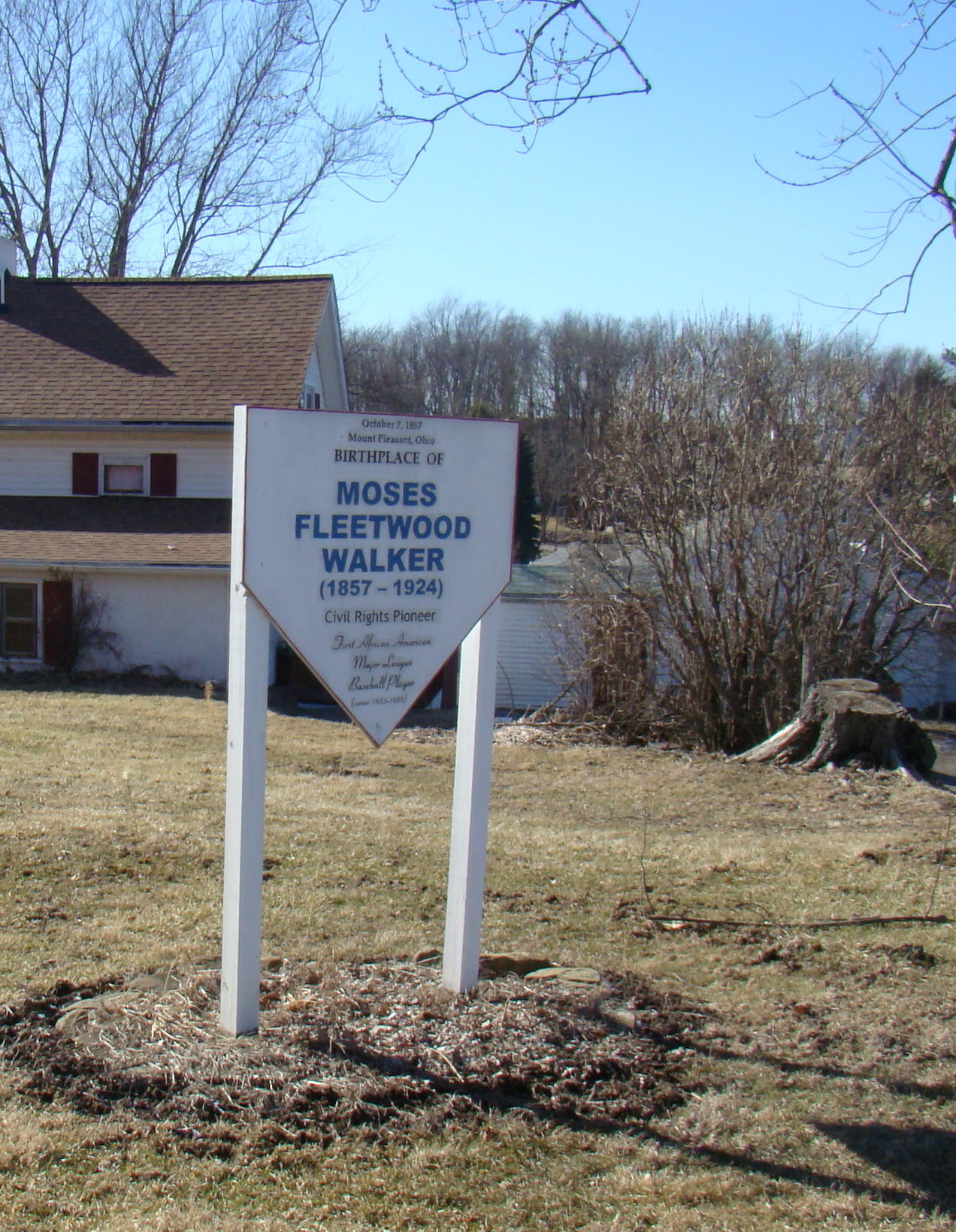
You wouldn’t really think about a small town like this having a famous personality, but it definitely did. Listen up baseball fans! Who was the first African-American Major League baseball player? Jackie Robinson? Not so! At the side of the log cabin store, a sign displays in large letters that this is the birthplace of Moses Fleetwood Walker, the first African-American to play in the American Association back in 1883.

Sign marking birthplace of Moses Fleetwood Walker

Sign marking birthplace of Moses Fleetwood Walker

Moses’ father, Dr. Moses W. Walker,  served as a medical doctor in western Pennsylvania prior to the Civil War. Upon moving to Mount Pleasant, Dr. Walker served as a minister at the Baptist Church and became instrumental in helping many slaves through the Underground Railroad. While the slaves were staying with him, they helped build the Walker family home.

“Fleet” possessed a rock arm in his position of catcher for Oberlin College, University of Michigan Law School and then the professional Toledo Blue Stockings. After a season of being scorned and jeered by opposing teams as well as his own teammates, Fleet returned to the minors after an injury. Following his baseball career, Walker attempted several business ventures: owning a hotel, movie theater and even an opera house in Cadiz, Ohio.

Just a short walk from the Harris-Bone Store can be found the “Hidden Gardens” of Pete and Jean Petra. Pete has a greenhouse in a section of his house and raises most of his plants. Every year he tries to have something new and interesting in his Garden, which basically surrounds his house and extends to an open lot nearby. Prepare to be surprised!

Elizabeth House

Elizabeth House Mansion

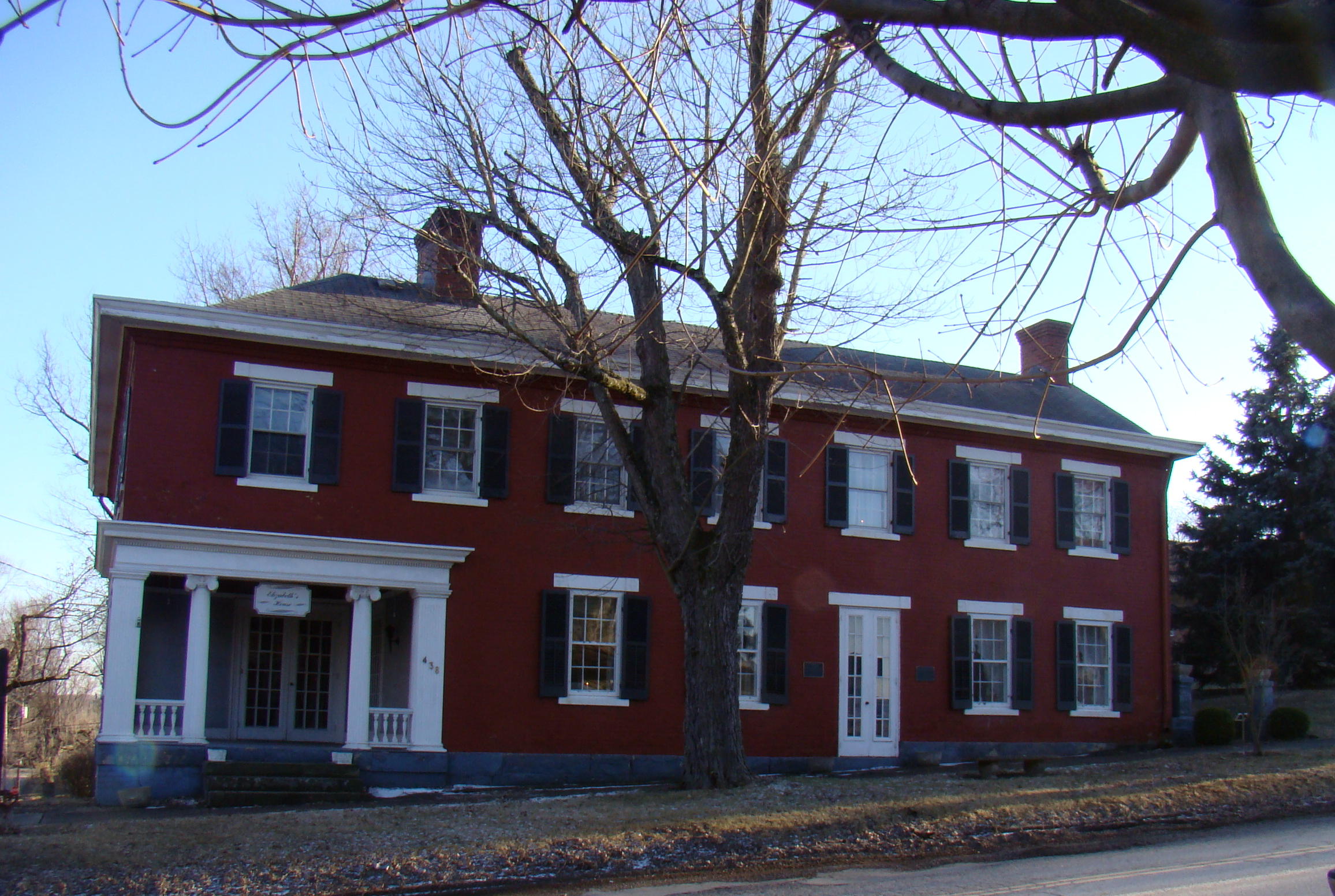
Another spot filled with memories of the past is the Elizabeth House Mansion, formerly the John Gill home built in 1835. Gill actually planted a mulberry tree here, then imported silkworms from China to perform their magic. In the 1800’s, this tree produced the silk for the first American flag ever made out of silk.

The first weekend in August is a perfect time to visit Mount Pleasant as at that time they give tours of the town and Pete and Jean’s  “Hidden Gardens” are at their peak. Climb aboard the Underground Railroad as you walk the streets of this friendly old town where the anti-salvery movement got an early start.

Mount Pleasant, Ohio is located on Scenic Byway State Route 150 in Southern Jefferson County. It can be reached most easily from I-70 by taking Exit 215 and following the curving, scenic route to the town.


Unique Collections Fill Historic Roscoe Village Museum

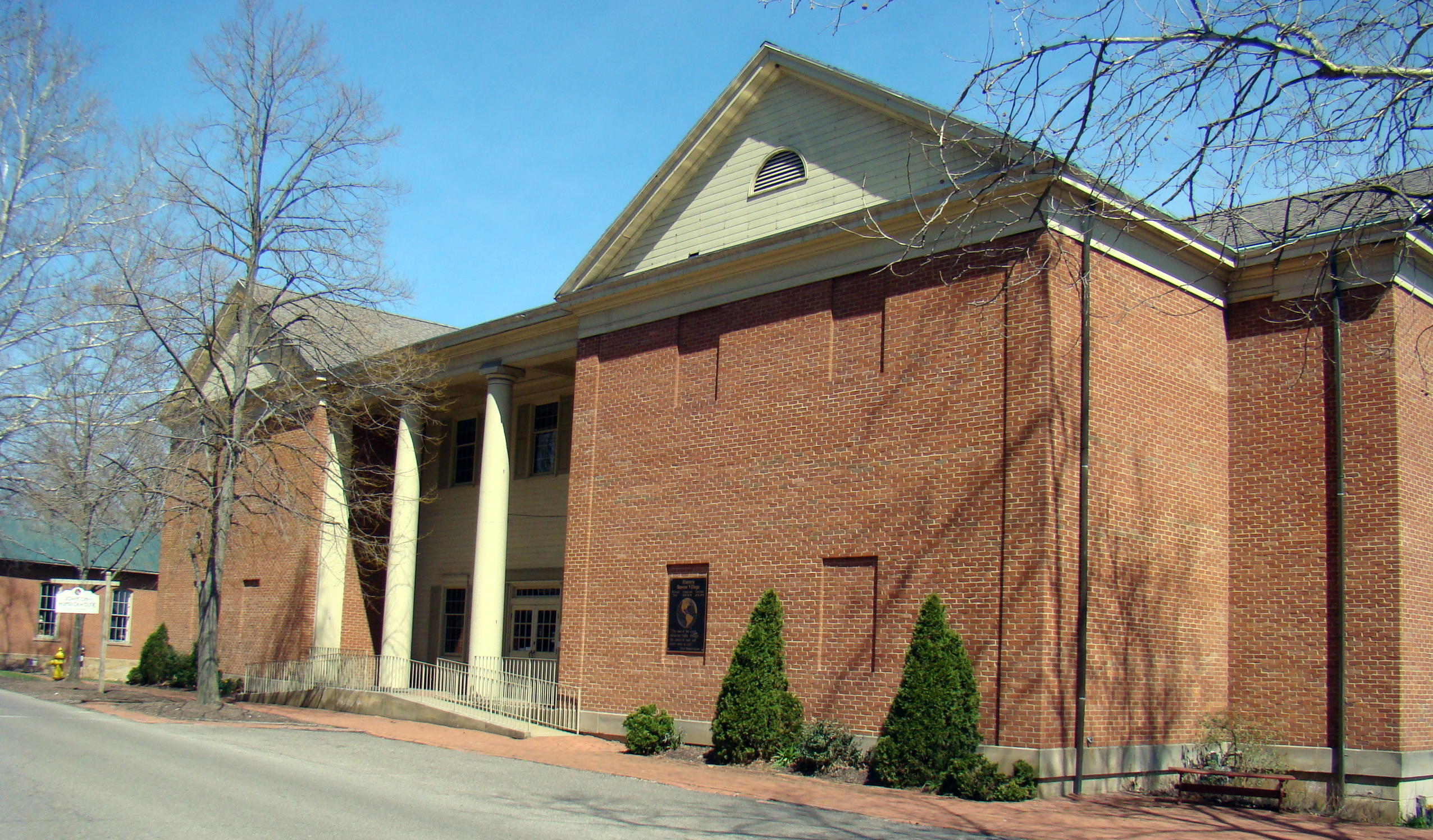
Johnson-Humerickhouse Museum

Johnson-Humrickhouse Museum in Roscoe Village, Coshocton, Ohio

Sometimes when visiting a place time after time, you miss a treasure right in its midst. Such was the case with Coshocton’s Roscoe Village, a favorite spot for festivals over the years. However, there at its edge, a beautiful brick structure, The Johnson-Humrickhouse Museum, overflows with unusual historic exhibits.
This actually had its start back in the mid-1800’s when two brothers, John and David Johnson, spent their childhood in Coshocton. In later years, these brothers traveled the world collecting artifacts from all the places they visited.

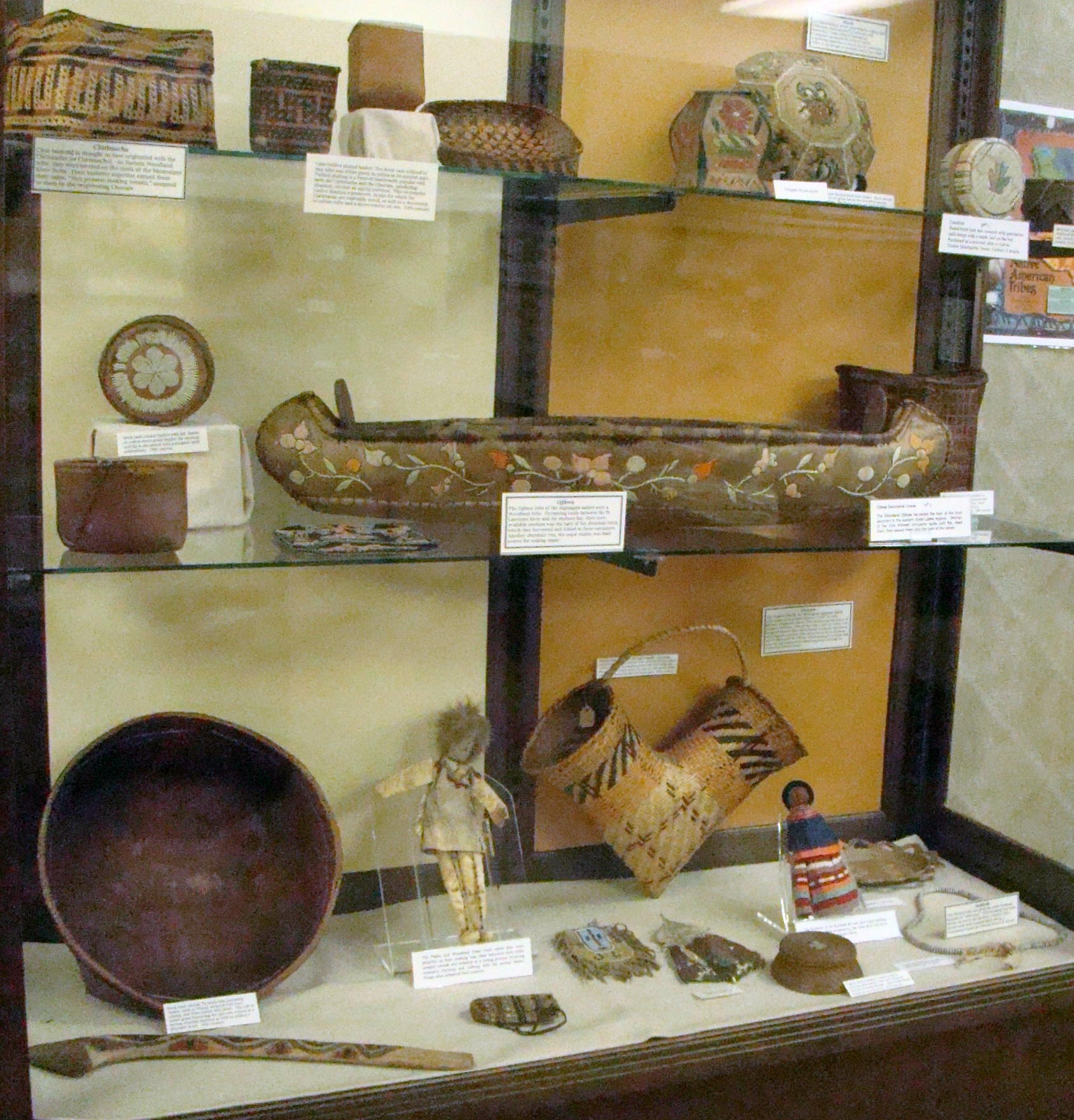
Indian woven artifacts and Kachina dolls

Indian woven artifacts and Kachina dolls

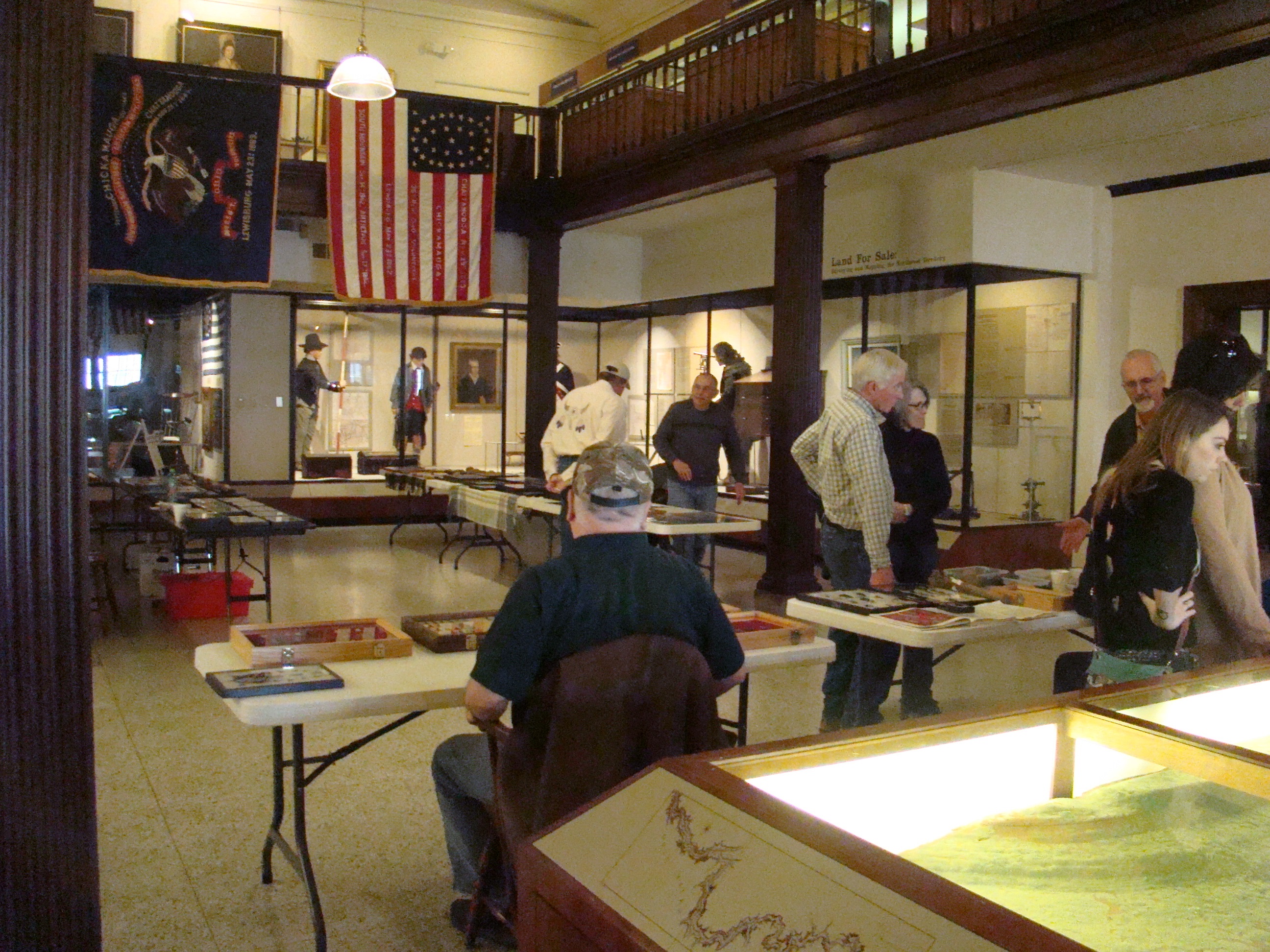
In 1931, the Johnson brothers gave 15,000 collected objects to their hometown with the stipulation that a museum would be established to honor their parents, Joseph Johnson and Mary Susan Humrickhouse. Thus, the Johnson-Humrickhouse Museum became a reality and has since added collections of other local residents. Displays frequently change because the museum has more artifacts than can be displayed at one time.
Two floors contain four main areas to explore: Native American, Ohio History, Coshocton Area Memorabilia, and The Asian Room. Each holds objects that are certain to lead you to recall memories of the past and even create a puzzle or two in your mind.

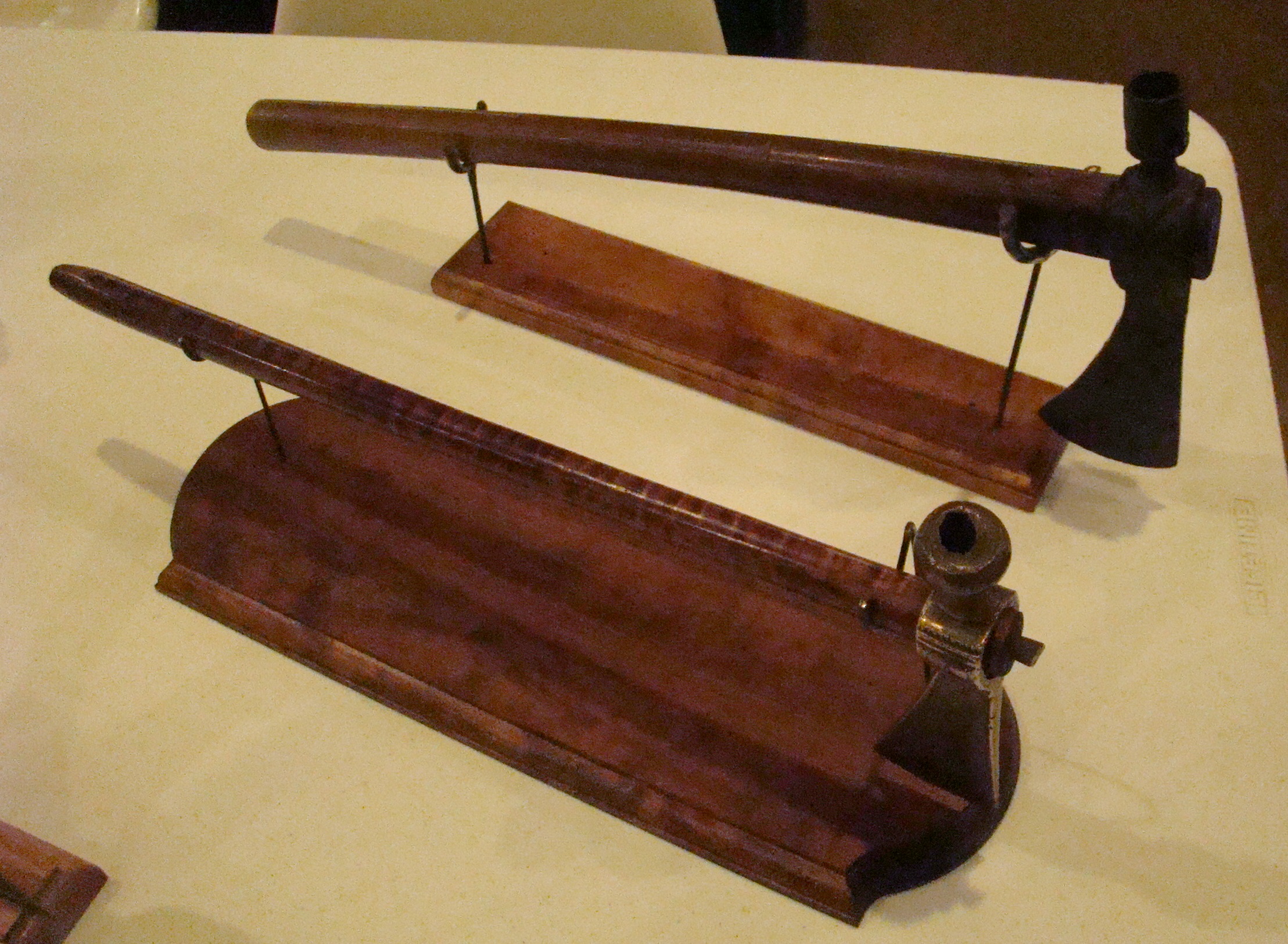
American Indian artifacts display natives’ skills at pottery, beadwork and basket weaving. These outstanding collections show not only local Native American handiwork but that of Indians throughout the United States. A large collection of kachina dolls, who hold a spiritual essence to the Indian tribes, and items used by the medicine men are a couple of the noteworthy displays.
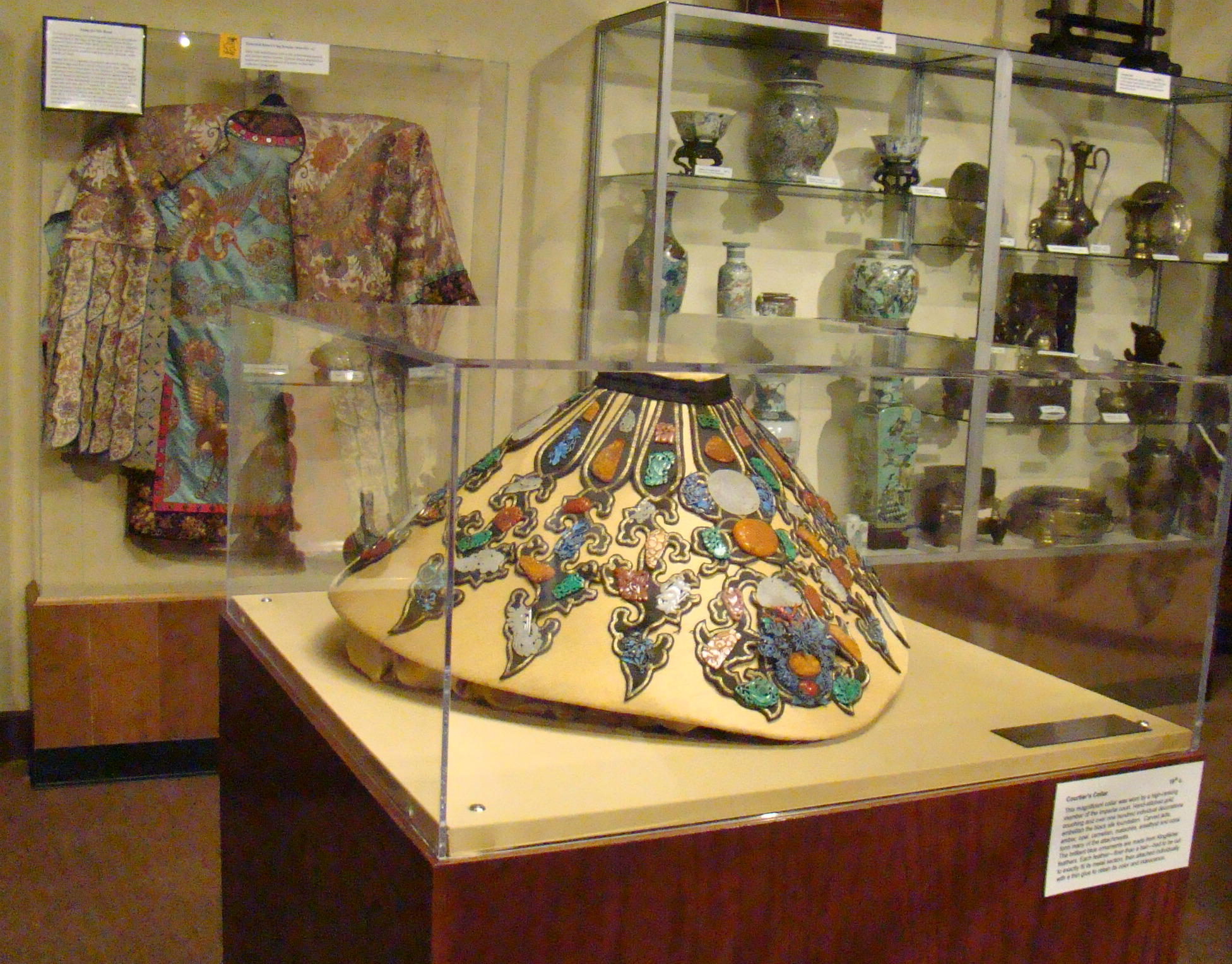
Chinese royalty collar with silk kimona and pottery in the background

Chinese royalty collar with Ch’ing silk theatrical robe and pottery in the background

An Asian Room contains both Japanese and Chinese treasures. A Japanese warrior in full dress protects that section of the room, while Buddha statues and kimonas express the Chinese traditions. A beautiful jeweled collar worn by a member of the Imperial Court contains over a hundred embellishments.

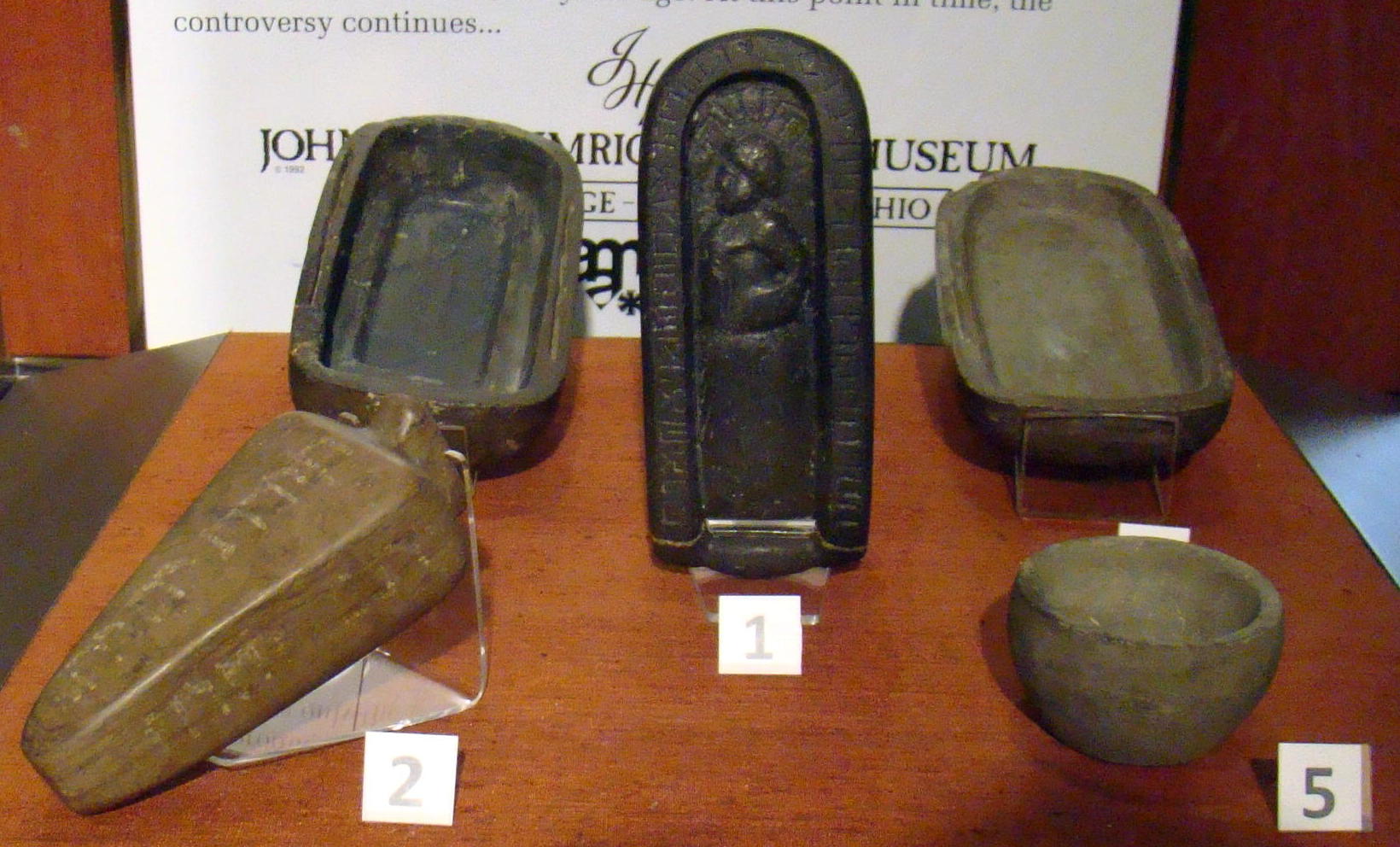
Controversial Newark Holy Stones

Controversial Newark Holy Stones

The Newark Holy Stones present a controversial subject as these objects were found in 1860 while excavating a mound in Newark, Ohio. The largest stone, the Decalogue Stone, appears to have Hebrew writing around its edges. Many link it to the Hopewell Indian culture, which existed there between 100 BC and 500 AD, while others are skeptical as to its origin.

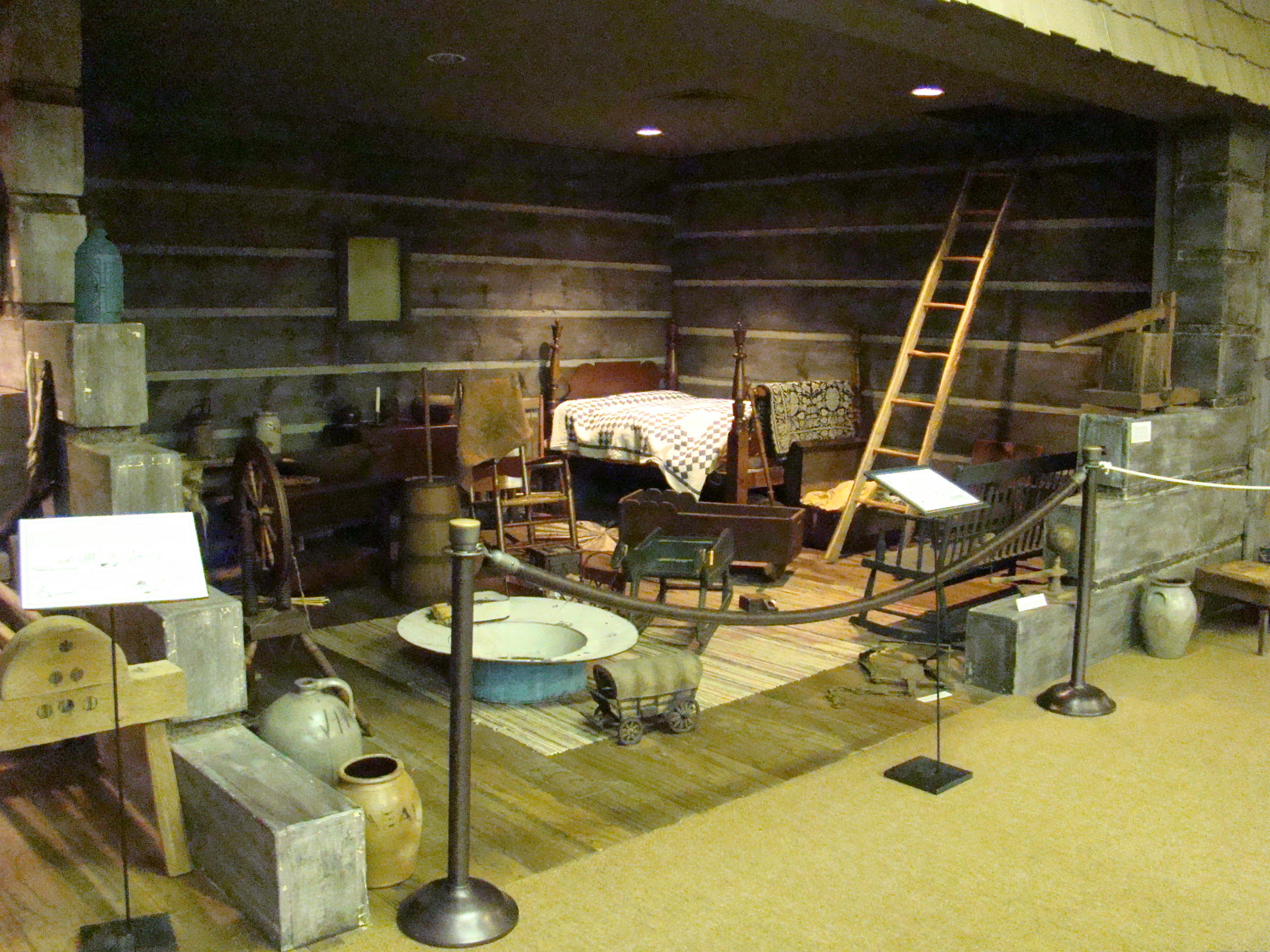
Early pioneer cabin in Coshocton area

Early pioneer cabin in Coshocton area

Much of the Historic Ohio Display has been donated by great-grandchildren of Nicholas Miller and Mary Darling, early Ohio pioneers. Nicholas came to the Coshocton area in 1802 with $36 and two axes. That first winter, Nicholas made his home in a cave with his dog. Then in 1806, the Darling family migrated to Ohio from Viriginia. 18 year-old Mary drove her family’s four-horse team pulling a covered wagon containing eleven brothers and sisters to settle in the Coshocton area.

Nicolas’ trade as surveyor provided him opportunity to purchase prime land with money that he earned. Therefore, when he married Mary Darling, they settled in the Coshocton area. Today a replica of the cave he slept in provides children a place to hide and pretend. Beside it, a cabin has been reconstructed similar to the one where Nicholas and Mary lived to raise their family.

As you can tell, there are displays here for various interests, and at a low admission price. Throughout the year, various speakers and workshops provide a variety of subjects for area residents. Visit this treasure filled museum that isn’t far from home. While you are there, step back in time and stroll the brick streets of historic Roscoe Village.

Johnson-Humrickhouse Museum is located in  Roscoe Village near the south end at 300 N Whitewoman Street, Coshocton, Ohio.  From Ohio 83, exit onto North Whitewoman Street and follow it through Roscoe Village. The museum will be at the south end on the left hand side.


Underground Railroad Museum Flushing, Ohio

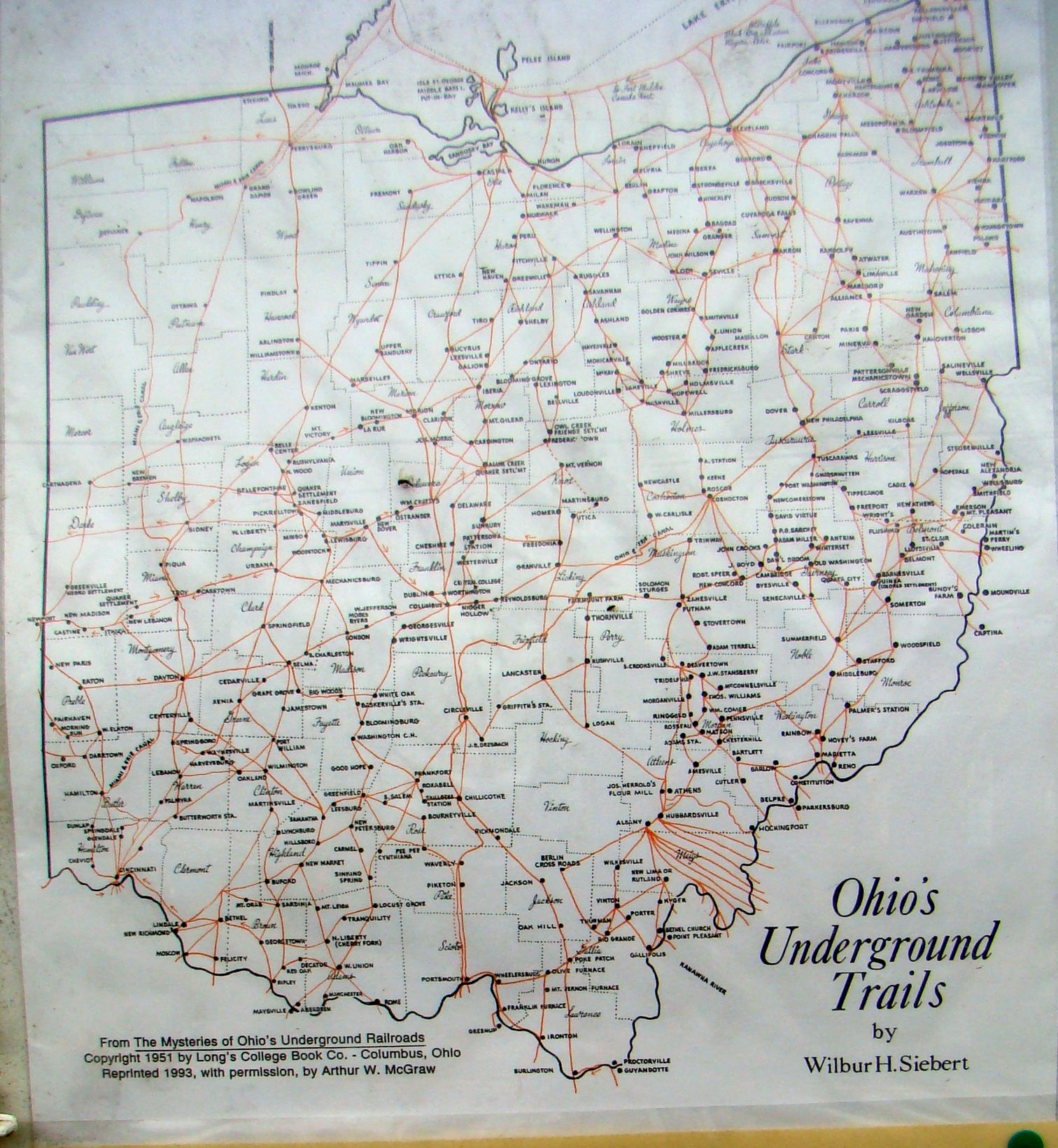
Ohio's Underground Trails

Map of Ohio’s Underground Railroad Trails

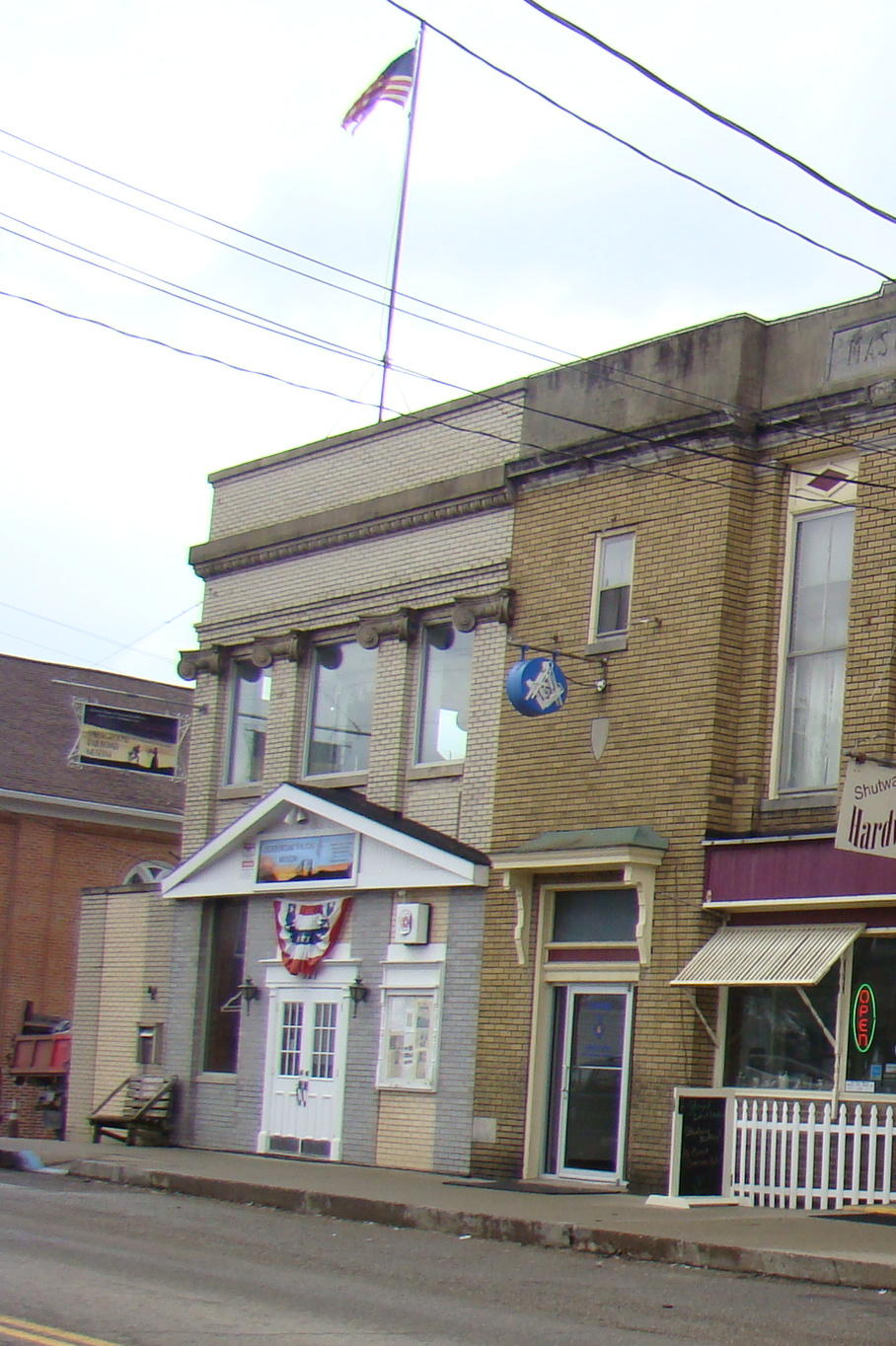
Underground Railroad Museum in Flushing, Ohio

Underground Railroad Museum in Flushing, Ohio

“Filled to the brim.” Those words accurately describe the Underground Railroad Museum in Flushing, Ohio. Outside the old brick building seems typical of those found in many small towns. Inside there is so much information it would take days to just read what is hanging on the walls, let alone all the books available.

Located in the hills of Southeastern Ohio, The Underground Railroad Museum contains over 18,000 items. This particular building was constructed in 1922 as Community National Bank, then became the insurance office of John Mattox.

In 1998, Dr. Mattox decided it would be the perfect spot to share his knowledge and collection of items dealing with slavery and the Underground Railroad. He wanted to tell the story of fugitive slaves and slave hunters, and how the Underground Railroad helped the former and misled the latter.

Dr. Lorle Porter of Muskingum University played a large role in helping John establish the museum. Today, Belmont Technical College students frequently help at the museum through research, organization, and cleaning.

Dr. John Mattox, curator of the museum

Dr. John Mattox, founder and curator of the museum

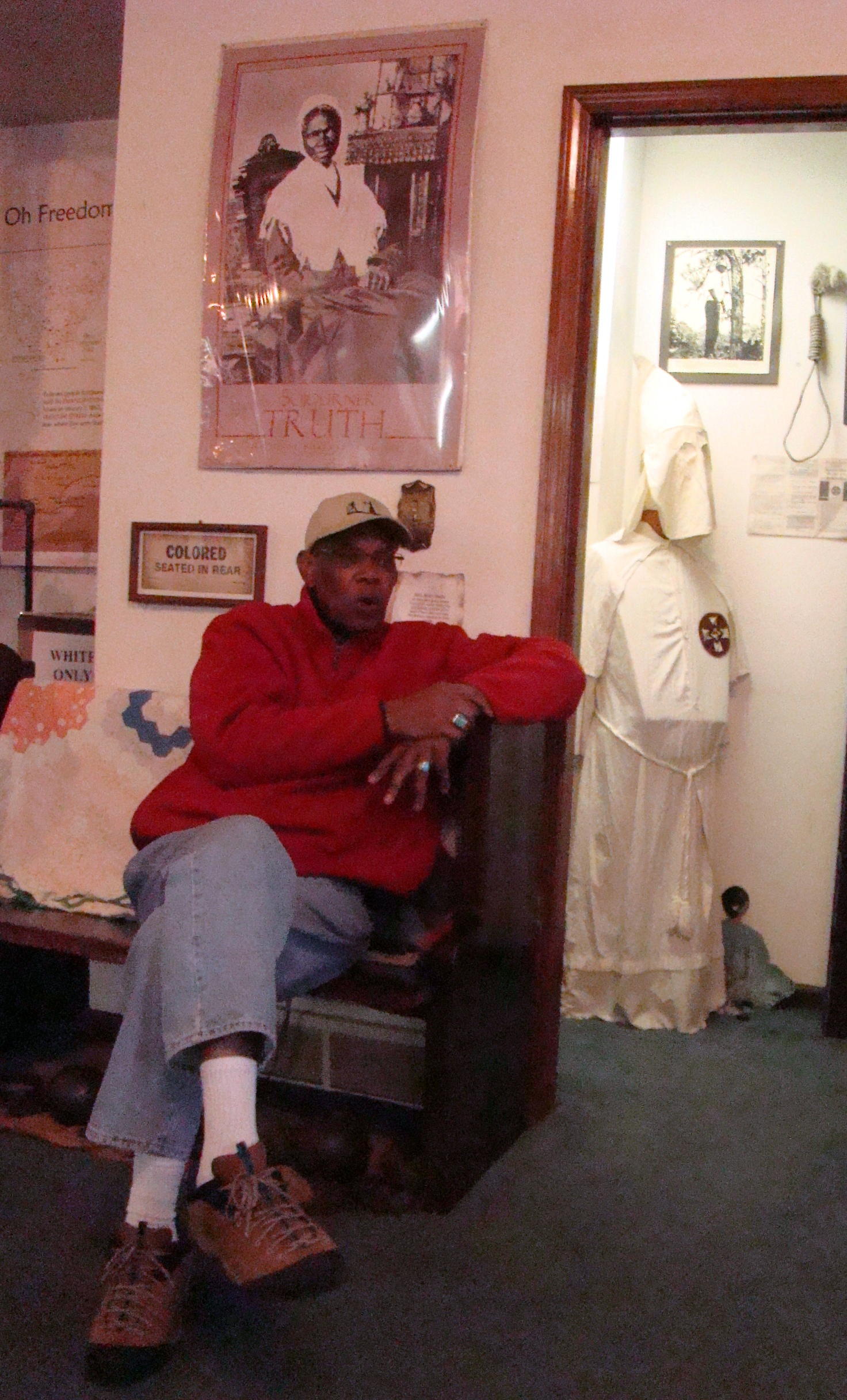
Stories of slavery abound here thanks to an exceptionally good story teller, Dr. John Mattox, founder and curator of the museum.  John’s family had previoiusly been slaves from Holland, so he knew first hand of the life they lived.  While John told his story, the outfit of a Klu Klux Klan member, displayed on a statue behind him, awakens an unpleassnt reminder. Still John had a great positive attitude as he said, “I’ll tell you ‘xactly how it was, slavery could be good.”

John told of those Sunday mornings when slaves were privileged to go to “The Big House” for breakfast. The menu most often was hot biscuits and potlikker. Now, for those of you not familiar with potlikker, that would be a pot of turnip, collard, and mustard greens boiled with a piece of pork. Pour that over some hot biscuits and you had a breakfast to look forward to all week long.

However, nearby slave collars, whips and shackles help tell the other side of the story of life as a slave. Poster advertisements were placed for auctions about to be held. Ox teams, fox hounds, and Negro slaves were all included on the same sign.

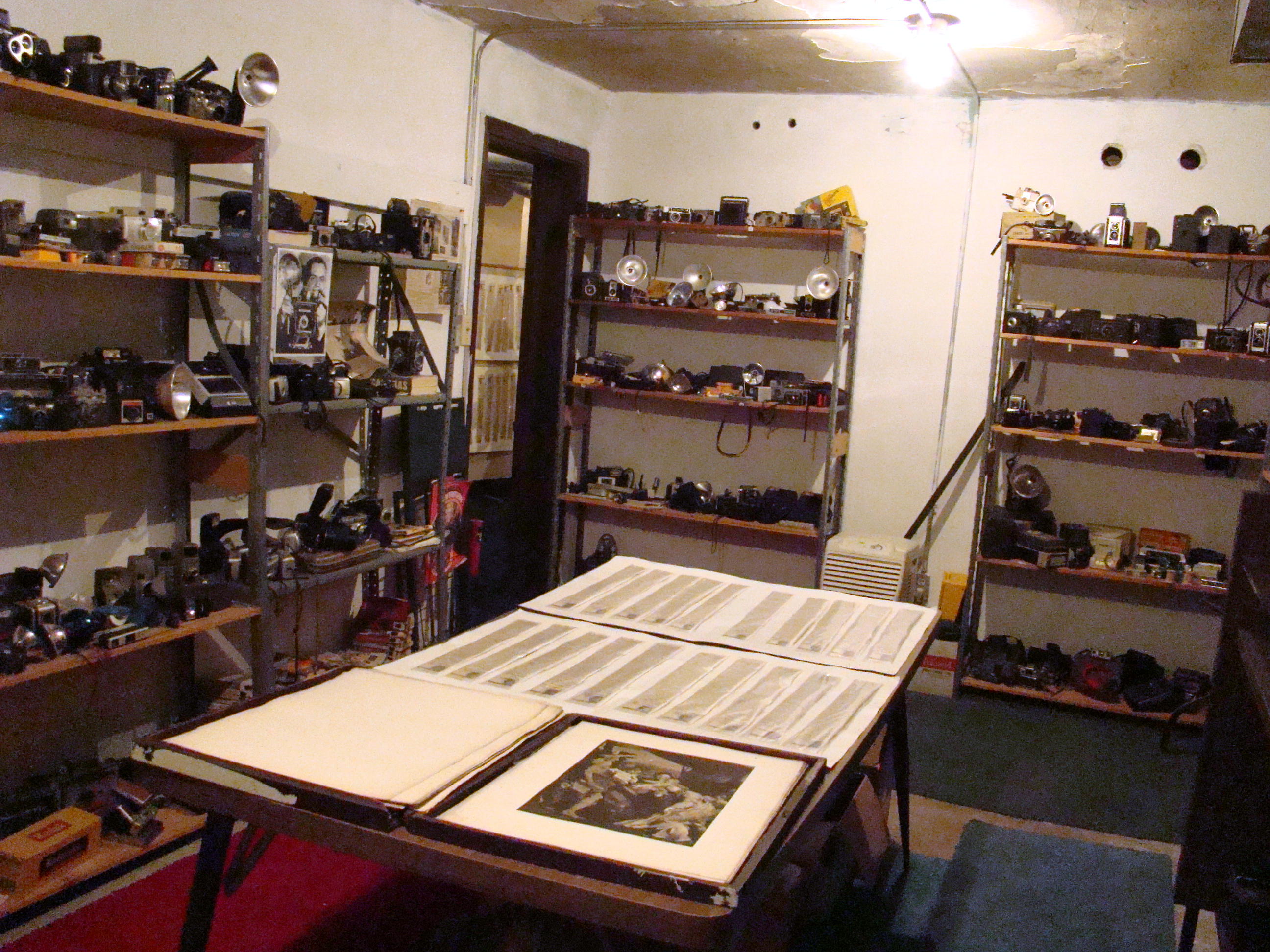
Camera Collection

Camera Collection

In the basement of the Underground Railroad Museum, Dr. Mattox shared his private collection of over 700 vintage cameras. His favorite seemed to be his first Polaroid, a 1970 Rolex SX70, which he used to take pictures of his wife when they went to Hawaii. An 1886 Conley and an original Brownie Camera were also part of that collection.

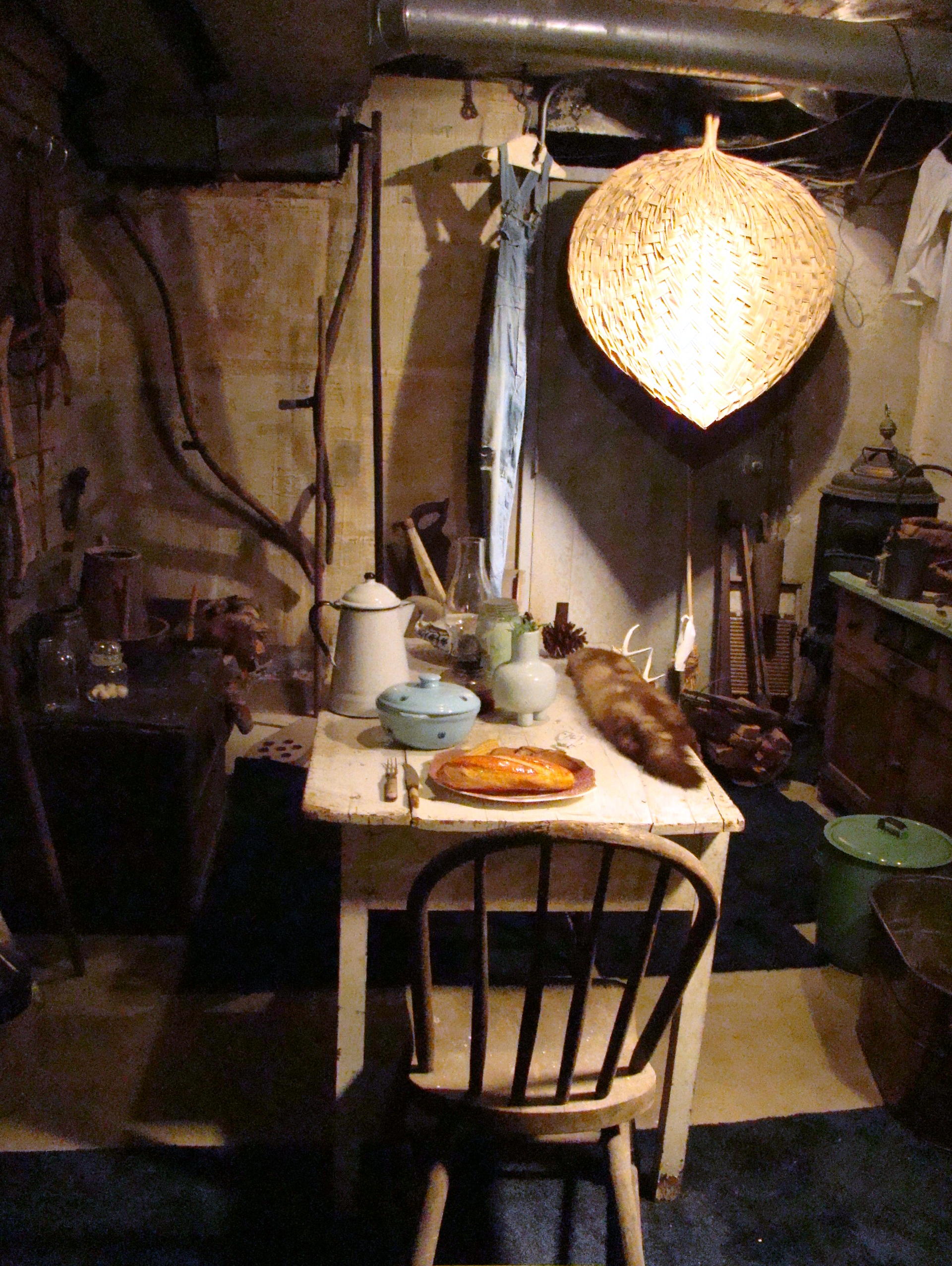
A replica of a slave cabin, where an average of eight people lived, has been constructed in the basement. This one tiny room was their “home” for eating, playing and sleeping. Only one bed could be seen in a corner of the room, and the “old person” got to sleep there. The rest slept on straw spread on the dirt floor.

Inside of slave cabin

Inside of slave cabin

The slaves, or those assisting through the Underground Railroad, left many signals for other slaves following their path. Sometimes a special knock on the door was used and the password, “Friend of a friend” gained them entry to safety. An X strategically placed on a tree gave the slaves direction to the next stop. Great courage was shown by those who often risked everything to escape.

The major task of the Underground Railroad operation was to get the fugitives across the Ohio River to safety. Martins Ferry was the first Ohio stop for many in 1788. The Ohio map shows that their flight continued across Ohio in every direction.

John expressed his attitude toward life by saying, “Don’t blame everyone else for what happened to you. New ideas are just old ones recycled.” He was a fantastic guide so hope he continues sharing his stories for a long time. Just the thought of losing all his knowledge reminded me of an African proverb that hung on the wall of the museum, “When an old man dies, a library burns down.” Recording our history is so important for future generations.

The easiest route to the Underground Railroad Museum in Flushing, Ohio is off I-70.  Take Ohio Exit 208 and head north on State Highway 149. The road has many bends, but leads to Flushing, then SR149 makes a right turn on E High Street. The museum is located at 121 E. High. 

A Delightful Touch of Spring : Blooms and Butterflies

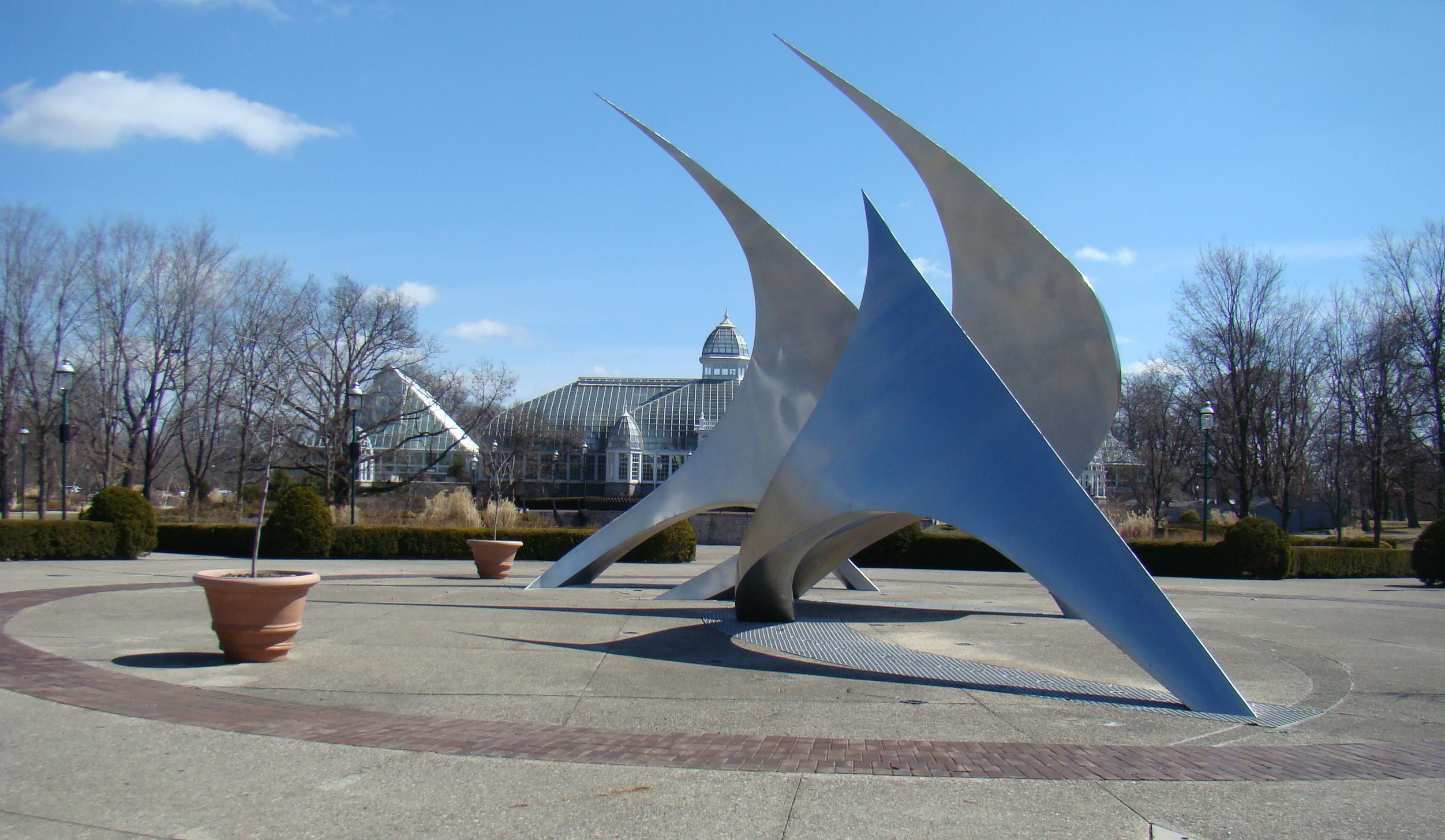
Franklin Park Conservatory

Franklin Park Conservatory

Ready for Spring? After a long, frigid winter, most of us are ready to watch the earth come back to life again with green plants and flowers. If you happen to crave the taste of spring, a trip to Franklin Park Conservatory in Columbus, Ohio will temporarily satisfy your longing for beautiful blossoms and greenery.

Butterfly on Bloom

Butterfly on Bloom

Right now, their theme of “Blooms and Butterflies” seems the perfect way to put a touch of spring in the air. Franklin Park Conservatory provides a wide variety of experiences from botanical gardens and greenhouses to art sculptures and glass exhibits. Those who enjoy flower gardening soak up the scents and admire the picture perfect displays. Visitors enjoy blooms at the conservatory all year long, but the butterflies are a special added attraction.

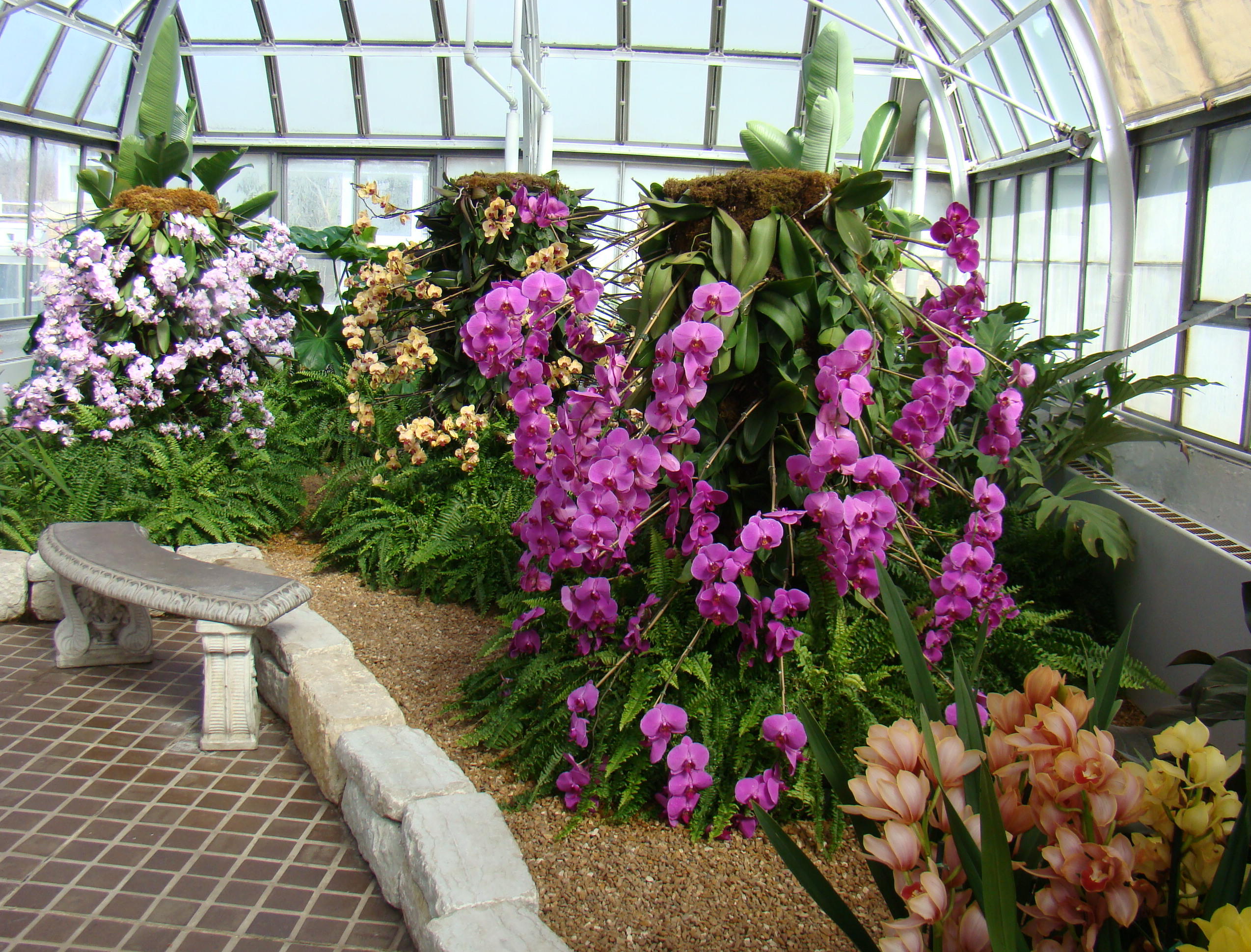
Beautiful orchids in various hues and scents

Beautiful orchids in various hues and scents

In the Dorothy M. Davis Showhouse, the featured blooms are “Orchids!”. Their varied orchids are much larger than most of us could hope to grow, but provide a peaceful place to relax and dream. Over 1000 orchids of all sizes and hues create a beautiful scene and scent. Soon spring blossoms outside will appear, including tulips, azaleas, lilies, and rhododendrons. Every season has its floral beauty at Franklin Park Conservatory.

Children are fascinated as they watch the butterflies emerge from their chrysalises. Parents have the chance to educate their youngsters on the life of the butterfly from the eggs they lay to the spinning of their protective covering before the appearance of a beautiful butterfly.

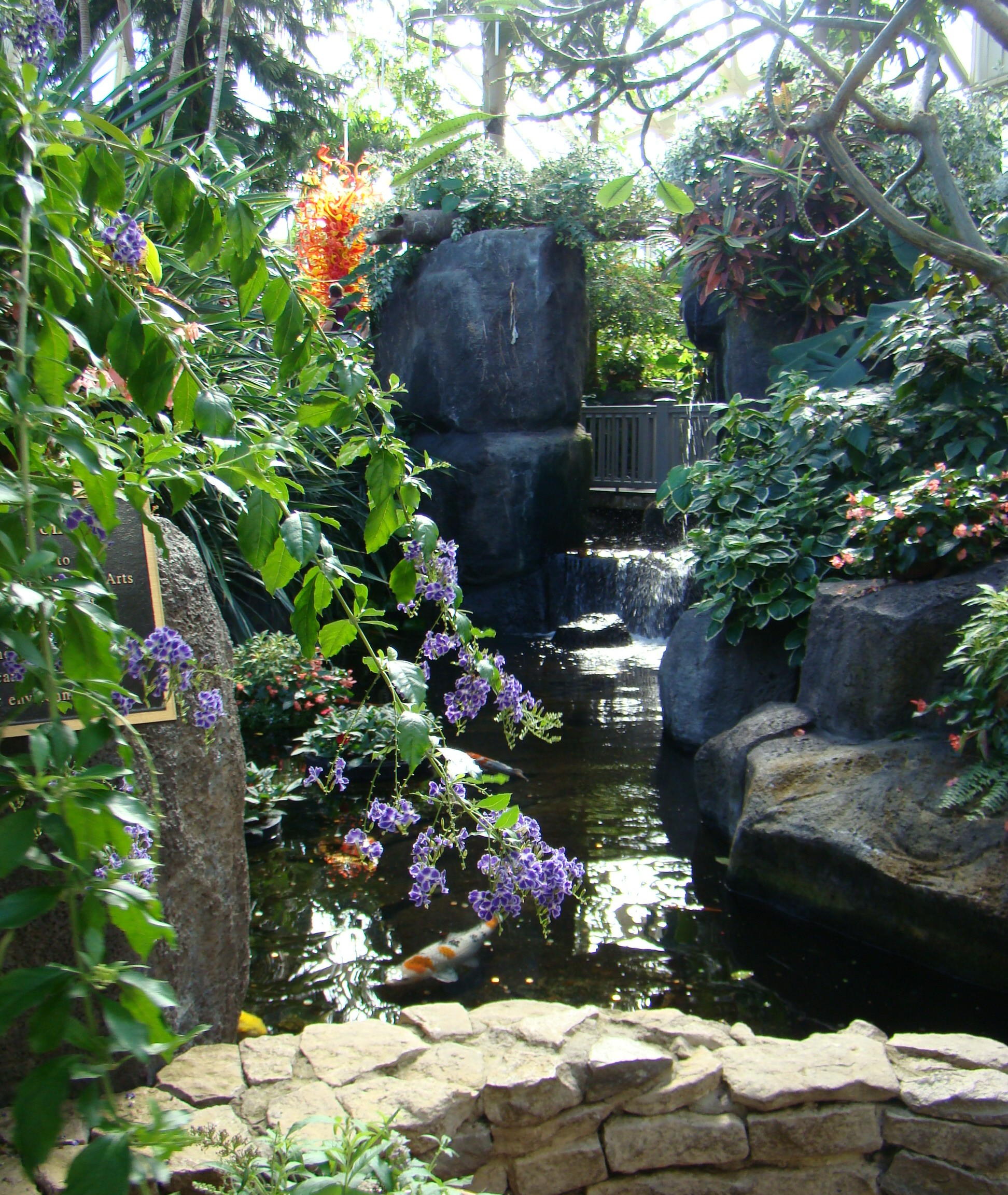
Peaceful Annie's Pond

Peaceful Annie’s Pond

Large displays of chrysalises at the Emergence Center give ample opportunity to watch the butterflies come to life. Everything from a small 1 ½” butterfly to a 12″ Attacus Atlas Moth might be making their premiere appearance as you watch.

When the butterflies first emerge, they may hang upside down for several minutes while their wings dry so they can fly away and explore some nearby blossoms. They must enjoy themselves quickly as their average life span is only about two weeks.

Inside the Pacific Island Water Gardens’ section of the conservatory, butterflies fill the air. At least 2000 butterflies are in this warm tropical paradise each day. A Butterfly Release occurs twice a day so the newly free can test their wings as they taste nectar from bright tropical blooms.

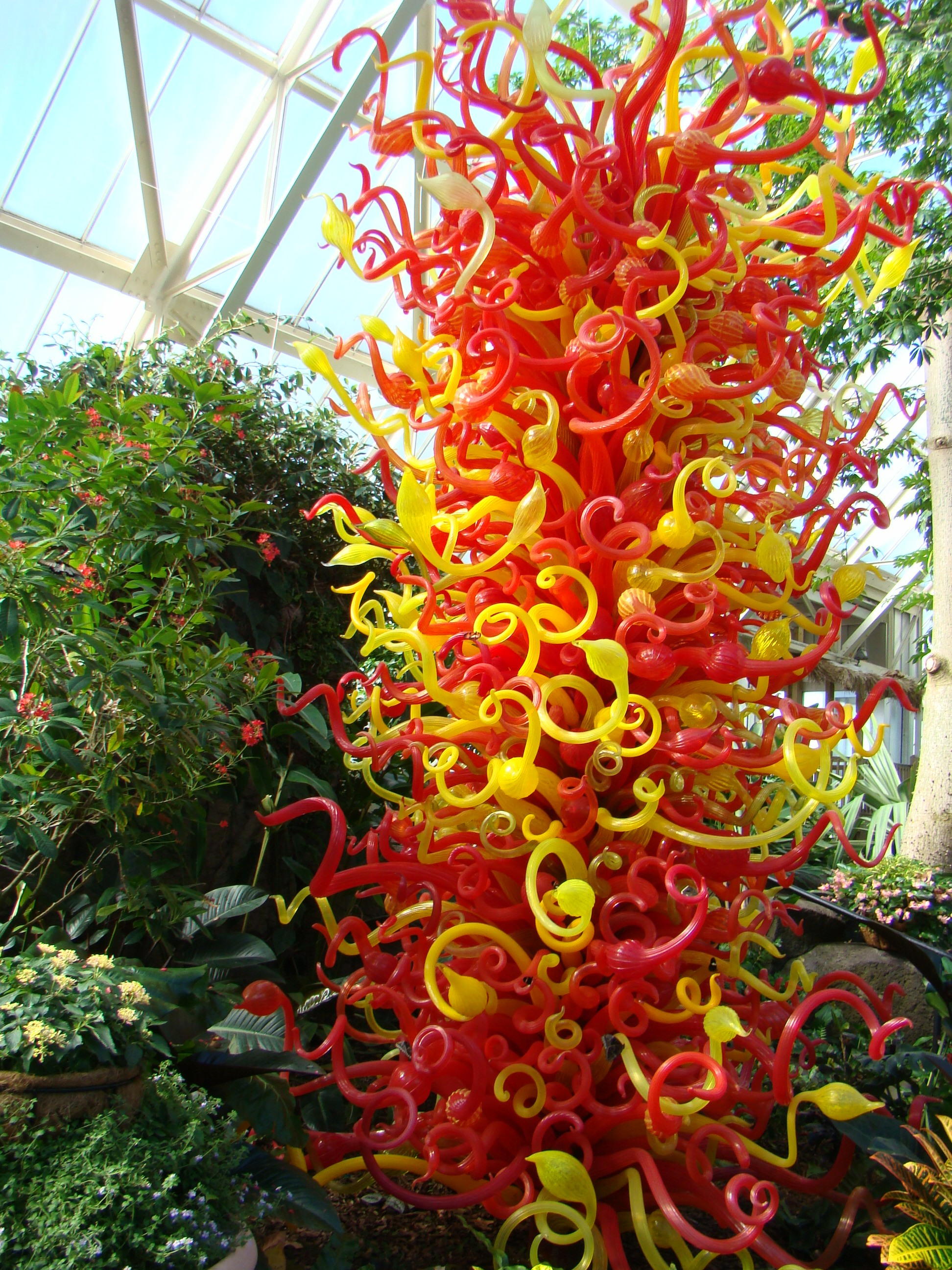
"The Sunset Tower" provides a gathering place for many butterflies.

“The Sunset Tower” provides a gathering place for many butterflies.

A favorite resting place for the butterflies was a beautiful piece of art by Chihuly, whose glass designs can be viewed throughout the conservatory. “The Sunset Tower”, in golden sunset tones, gave the butterflies a place to congregate peacefully.

Since most children desperately want an exotic butterfly to land on them for good luck, the naturalist often places the newly released butterfly on a child’s shoulder. Those who could sit still long enough were actually butterfly magnets, and might have three or four butterflies on their shirt. Watching the children brought to mind a piece of advice from Nathaniel Hawthorne:

“Happiness is a butterfly, which when pursued, is always just beyond your grasp, but which if you sit down quietly, may alight upon you.”

The next time you aren’t pleased with the weather and want to be surrounded by the beauties of nature, take a trip to Columbus and visit the Franklin Park Conservatory. As summer approaches, there is an outdoor butterfly garden to attract Native Ohio Butterflies. Celebrate the 20th Anniversary of “Blooms and Butterflies” this year with your family or friends. You won’t even think about the snow that fell during the winter!

Franklin Park Conservatory can be easily reached off I-70 in Columbus, Ohio using the Broad Street Exit. Turn right onto Broad Street and the conservatory is about one mile down Broad on the left hand side. Watch for entrance signs.

Beautiful Ohio’s Winter Wonderland

Jackson Park near Byesville provides a scenic place to walk on a winter day.

Jackson Park near Byesville is a great place to walk on a winter day.

Snow flakes fall against the window panes while the wind howls through the cracks in the wall. Looking out the window here in Ohio, there is snow as far as the eye can see. This is the perfect time to get out the picture album and reminisce about other snowy days.

Dad shovels snow.

Dad bundles up to shovel snow.

Shoveling snow has always been a winter chore throughout the years. Often this task got delegated to the man of the house as he bundled up in buckled boots, old overcoat, and toboggan to protect himself against the winter cold. At the time of this picture, the car wasn’t driven into the garage because the tires had chains on them to enable better traction in the snow. Sometimes it may have been days before anyone cleared the roads. It may be a neighbor with a blade on his tractor or perhaps the highway department, that finally opened the roads for needed supplies. Often when the snowplows cleared the roads, they would push a pile of snow a couple feet high across the end of your driveway. Or you may have lived in a place where the winds blew drifts several feet high. Those were and still are the times that try men’s souls and their backs.

Children enjoy a sled ride.

Children enjoy a sled ride.

Children always enjoy a ride on their sled whether they are being pulled by someone or gliding down a hill. Many neighborhoods have a favorite hill where children gather to race on their sleds. Sometimes they may use a large lid or piece of cardboard with the front bent up so it can slide easily down the hills without getting caught in the snow. An old innertube also provides a great way to slide down a hill. You can be certain that everyone is going to come home covered with snow and ready for some hot chocolate.

Carrot nose placed on his first snowman.

Carrot nose placed on his first snowman.

Another favorite activity in the wintertime is building a snowman. Parents enjoy helping youngsters build that first snowman as it makes dad and mom feel young again too. To add the finishing touches, a nose is created by using a carrot, while its mouth and two eyes are made out of coal. Many times a hat is placed on the snowman’s head with a scarf around their neck. Then everyone hopes it doesn’t melt away too quickly after all that hard work.

Pepper, the Pony, pulls a sleigh through the snow.

Pepper, the Pony, pulls a sleigh over the snow.

If you are lucky enough to have a horse of your own, or a kind neighbor with a horse, hooking up a sled or sleigh behind a horse is great fun. It is important that someone either lead the horse or ride it as otherwise the horse might take off too quickly leaving passengers on the ground in the snow. What a treat when it works properly!

Deer wander over the Ohio hills.

Deer wander over the Ohio hills, as seen from my kitchen window.

This is also the time to see animals seemingly enjoying the snow as well. Kittens leap over snow covered chairs and playfully wrestle on the ground, while dogs might just sit and watch the activites around them. Deer graze on a few blades of grass still poking through the snow, while keeping alert to any danger around.

While this is not a favorite season for all, many truly enjoy taking a walk in the snow, skiing, or ice skating on a frozen farm pond. Winter recollections can be an enjoyable way to pass a homebound day. Wonder what your favorite wintertime activities might be? To tell the truth, this gypsy would rather take a road trip on a sunshiny day!