Places to go and things to see by Gypsy Bev

Archive for the ‘Art’ Category

National Road – Zane Grey Museum
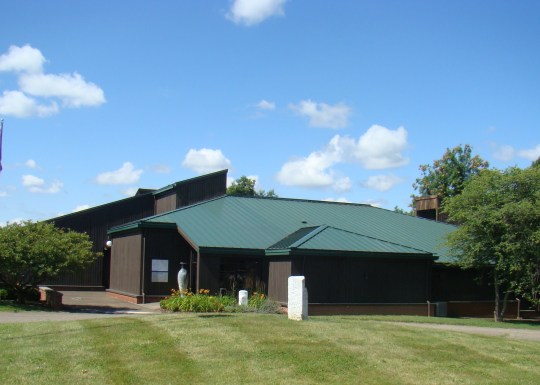
Zane Grey Museum

The Zane Grey Museum was originally constructed to resemble a frontier fort.

Three pieces of history are superbly woven together at the National Road – Zane Grey Museum between New Concord and Zanesville, Ohio along old Route 40. Learn about the road to the West, famous author Zane Grey, and Zanesville potteries.

Way back in 1811, Ebenezer Zane discussed with George Washington the need for a road across the newly settled country. Washington agreed it was vital to the future of the country so proclaimed, “Open a wide door, and make a smooth Way.” That began Zane’s Trace, which became part of the National Road.
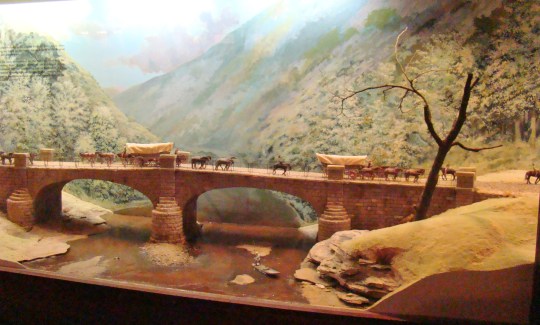
Zane Grey Crossing

Diorama sections show their difficult work in constructing The National Road over streams.

The museum presents a detailed 136′ diorama depicting life on the original National Road, often called “The Main Street of America”. All the figures are hand made from clay and accurate down to the tiniest detail.  The first road was dirt, followed by the Corduroy Road made of logs, making it very rough. Eventually a stone foundation was in place with crushed stone on the top, and finally bricks
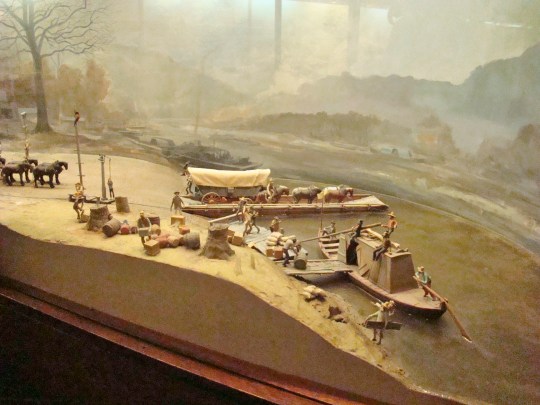
Zane Grey Ferries

Ferries took wagons and supplies across the Ohio River.

Every mile a stone mile marker gave travelers information on mileage to various towns along the way. A Gunter Chain, 66′ long, was used to measure the distance of one mile time and time again. If you moved the 66′ chain X 80 times = 5,280 ‘, the distance of one mile. The Gunter Chain also measured the distance across the road – 66’.
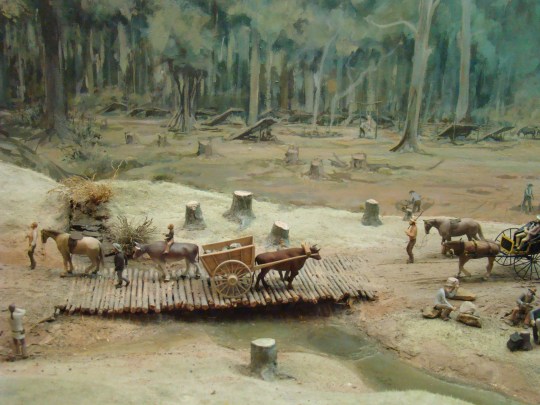
Zane Grey Diorama

Logs formed the Corduroy Road, a rough stretch to travel.

After WWI, Dwight Eisenhower led a convoy of trucks across the National Road, and during WWII, General Eisenhower discovered the Autobahn in Germany. When he became president he felt it of high importance to develop better highways in America. Thus began our interstate highway system.
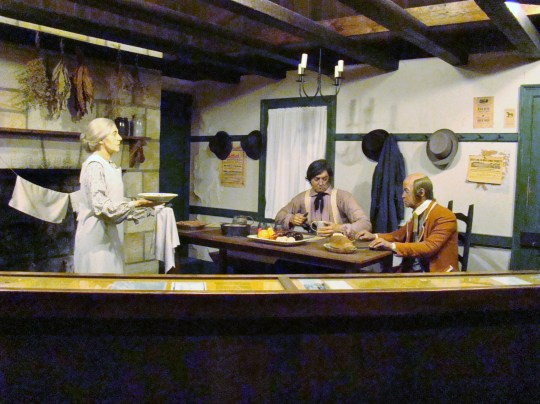
Zane Grey Stop

The 10 Mile House provided refreshments along the highway. Baker’s Motel is located on that spot today.

Pearl Zane Grey, being born in Zanesville, traveled this road frequently. His early writing attempts were squelched by his father, who insisted that Zane attend the University of Pittsburgh so he could be a dentist and follow in his father’s footsteps. Zane did graduate with a degree in dentistry after enjoying a time of pitching his great curve ball on the college baseball team, where he enjoyed a full baseball scholarship.

When he married Dolly, her encouragement and editing abilities, along with a nice inheritance, made it possible for Zane to abandon his dental practice and begin following his passions…writing and fishing.
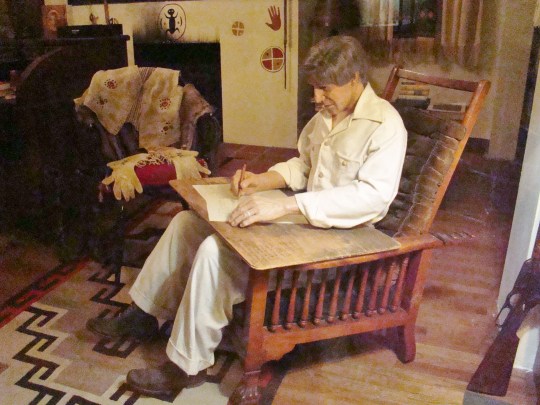
Zane Grey Study

Zane Grey wrote his books by hand in his study, surrounded by native American items he had collected in his travels.

His first book was Betty Zane, the story of a young girl who helped save Fort Henry. But it was Riders of the Purple Sage that put popularity into Grey’s writings. His books sold like hot cakes. Zane wrote all his stories in long hand, then his wife, Dolly, typed them and had them published. Many were turned into movies.

Zane enjoyed fishing more than anything else and spent over 300 days a year at that sport. He split the money from the books with Dolly, and he spent his half on fishing, boats, and travel. When he traveled out West, he filled his tablets with descriptions of the scenes he saw, for use in his stories.
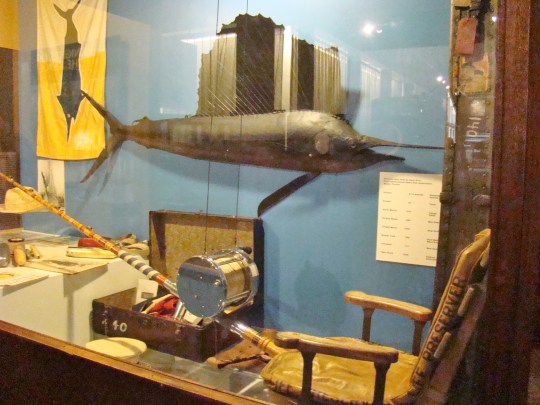
Zane Grey fishing

Big-game fishing was the real passion in his life.

The only books that sold more copies than Grey’s at that time were the Bible and school primers. Hemingway was quite jealous of Grey, not because of his successful writing career, but because of his great fishing ability. Zane’s love of the great out-of-doors can be seen in all of his books through his detailed descriptions. 

Now how does the fantastic collection of pottery fit in? The perfect clay for making pottery could be found in this area quite easily – in dirt roads, such as the National Road, which had clay as their base. Potters would go out to the road and dig up a small portion of clay to make a vase or bowl. This became known as a “potters’ hole”. Thus the term we use today for a hole in the road – “pot hole”.
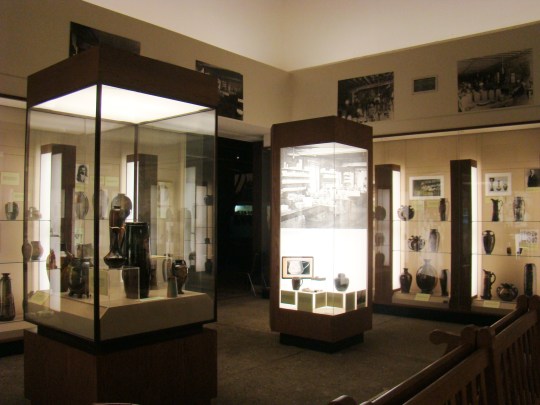
Zane Grey Pottery

This is a small section of the Zanesville Pottery collection on display.

But the collection goes beyond those humble beginnings and includes the work of over 132 potteries in the Zanesville area. Thousands of workers contributed to this large display, which was originally the collection of Mr. Downey, the owner of Conn’s Potato Chips. Upon his death, half of his pottery was given to the Zane Grey Museum for display, while the other half is in the Zanesville Museum of Art.
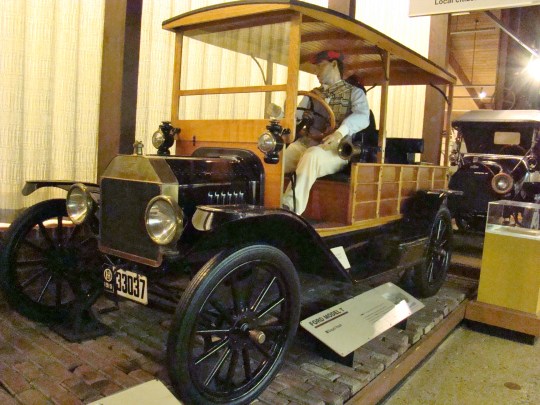
Zane Grey Model T

Find surprises along the way like this Model T Ford.

Next time you travel along the Old National Road, today’s Route 40, stop at the National Road – Zane Grey Museum and watch a film about the life of Zane Grey. The knowledgeable guides will lead you down the road to books, movies, pottery…and some surprises along the way.

National Road – Zane Grey Museum is located on old Route 40 about a half mile from I-70, Exit 164, Norwich Exit. The museum is located between New Concord and Zanesville, Ohio.
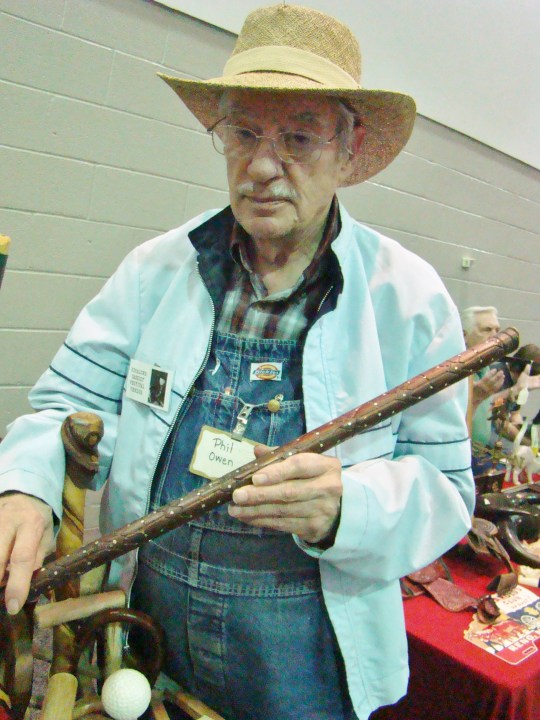
 

Canes, Walking Sticks and Quilts Designed by Philip Owen

philip-owen

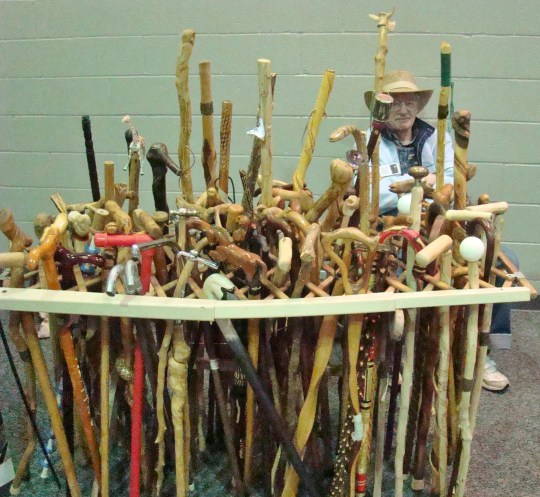
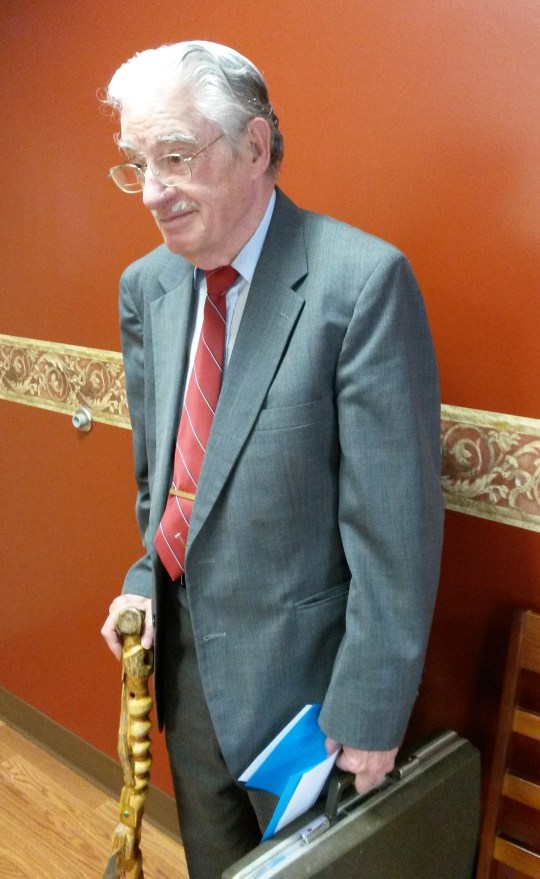
His walking sticks have been displayed at various festivals in our area. Here, Philip holds one of his favorites.

A soft-spoken gentleman exhibits a surprising hidden talent – taking pieces of wood, and turning them into beautiful canes and walking sticks with intricate designs.

Philip Owen made his first walking stick as a young boy of seven or eight years old in Rawlinsville, PA. Illness dominated his childhood, and Philip will admit, “I was spoiled rotten.” Often when walking to check on the cows, he would pick up a stick and begin carving it.

As a youngster, Philip had tuberculosis and was in a sanitarium for eleven months one time, and twenty-two months the next. During that last visit in 1946, Philip said he was “a streptomycin guinea pig”. They administered one hundred forty-four shots of streptomycin to Philip and one other young man. Both were cured. With this new discovery, it wasn’t long before the sanitarium was closed.

philip

His display of walking sticks and canes consists of some that he made and some he purchased from all over the world.

During his lifetime he has made, given away, traded or sold many walking sticks and canes. At this time, he is working on numbers 1105 and 1106 out of American chestnut, a rare wood with a beautiful grain. These creations have been shipped all over the world.

Many kinds of wood make up these walking sticks and canes. One of his favorite designs was free-lanced on PA rosebud. Since the canes and sticks must be strong as well as beautiful, he favors using maple, walnut and cherry wood. It might surprise you to learn that the structure of the sticks depends on whether an individual prefers using their right or left hand.

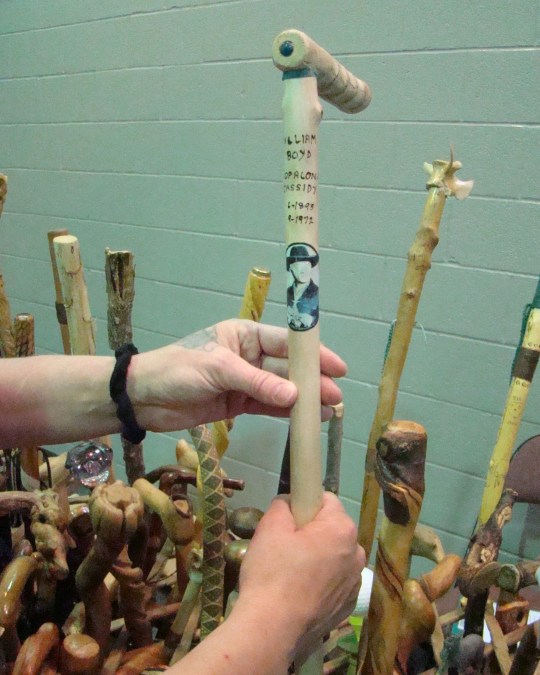
Hopalong Cassidy Cane

Festival attender checks out a Hopalong Cassidy Cane.

One thing of which he should be extremely proud is the fact that he has carved canes for five US Presidents – from Richard Nixon to George Bush. Even more interesting, he has received thank-you notes from all of them including their signatures. Philip hopes that his grandson will someday appreciate having those special treasures.

In 1988, Philip Owen’s nephew, Mike Huber, had a 40th birthday. Philip made a cane for him as a joke since Mike was now “going down hill”. Along with the birthday greetings, Philip said, “You are hereby appointed President of ANCC.” Those letters stood for American National Cane Collectors, which was later changed to the American National Cane Club to include makers, not just collectors. Philip volunteered to be the Secretary/Treasurer so they had two members. This organization’s newsletter became known as “The Twisted Stick.”

20150511_180311

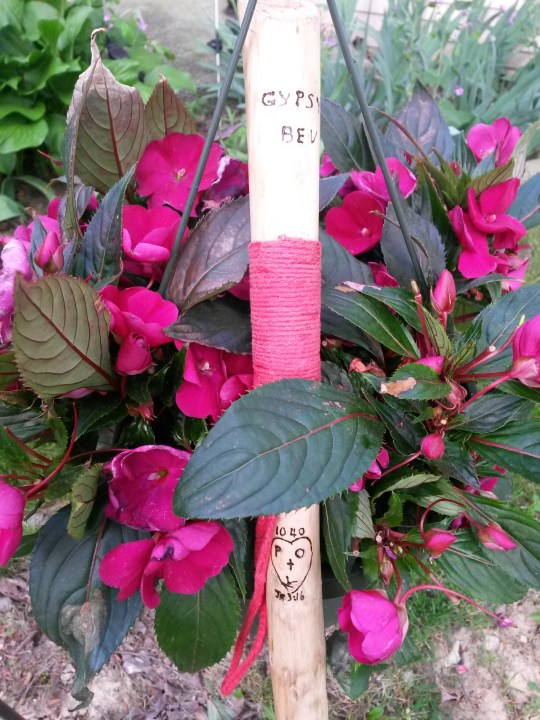
My Gypsy Walking Stick leans against a special basket of flowers.

Two years ago, Philip carved a right-handed walking stick for this gypsy. He included some of my favorite things on the stick – bears. Many knots were cleverly turned into bear heads. On each stick, Philip puts his signature – a heart containing his initials and a cross in the center with John 3:16 under the heart. Above the heart is the number of the cane.

My walking stick almost always stays in the trunk of my car to be used when walking over rough territory, or even in the snow. Gypsy Bev is written around the top so it’s not bound to get mixed up with someone else’s.

bow-tie-quilt

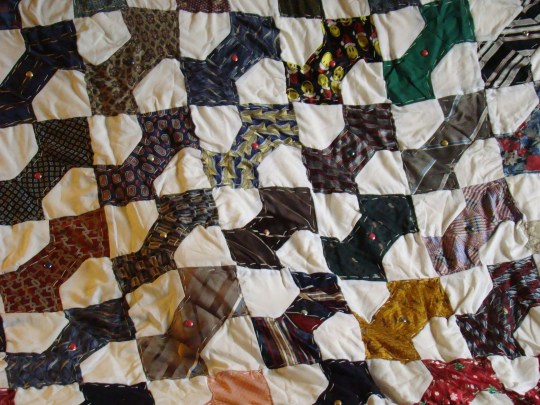
This bow tie quilt consists of 169 bow ties. Philip seems to make use of whatever he receives.

Family is very important to Philip, as he grew up in a loving family of twelve children. He was number eleven, his twin brother number twelve. His love of another hobby, quilting, began with his parents. His father cut out the squares for each of the twelve children to have “Grandmother’s Flower Garden”, then his mother sewed them together. Families are like quilts – pieced together and stitched with love.

necktie-quilt

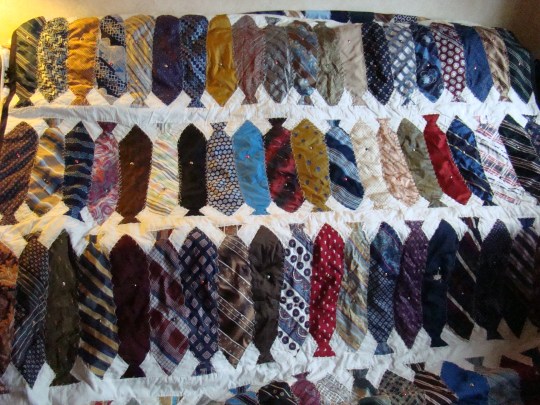
The necktie quilt is made of 145 neckties. No two are alike!

Quilts he has made include a novel “necktie quilt”. The idea came when a friend gave him a large pile of neckties. It seems Philip likes free things, in fact his wife often said, “Don’t offer Philip anything free, or he’ll take it.” And it appears he puts these things to creative use.

Right now he’s in the process of making a quilt called “Around the World” for a missionary in their church. He has 800 pieces laid out for the quilt. The center is red for the blood shed by Jesus, surrounded by white to signify salvation, and then a row of heavenly blue. The rest is alternate rows of print and solid colors. Even he admits, “I sometimes get carried away.”

piece-of-grandfathers-quilt

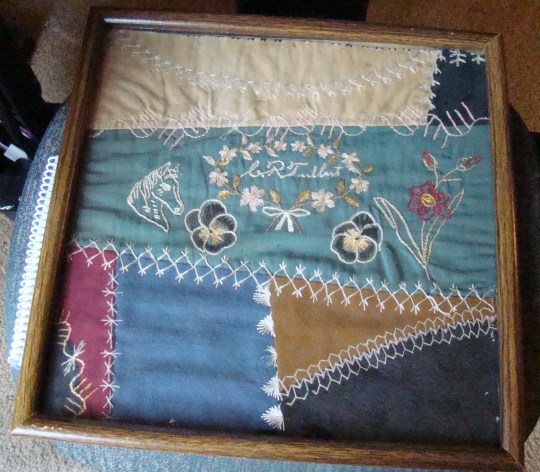
The framed piece of a quilt given to his grandfather is treasured by the family.

On the wall of his apartment, he proudly displays a picture of his grandfather. On each side are framed pieces of a quilt given to his grandfather by his church congregation. Philip’s sister took it apart as it was beginning to fray and framed a piece of it for each of the twelve children.

philip-owen

One of Philip’s missions in life is to teach others to study the Bible.

Today Philip lives in Cambridge, Ohio where he keeps busy giving free lessons to those interested in making canes, walking sticks, baskets or wall plaques. He also teaches a special class on how to write you Life Story. Since he is a retired minister, he enjoys conducting Bible study at the Senior Center. When you consider that Philip is 88 years old, you can see why he feels blessed and wants to share his knowledge with others.

philip-and-gene

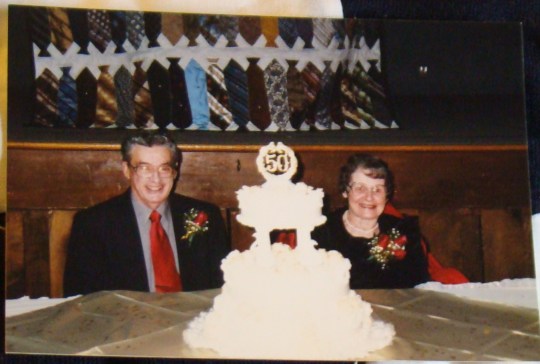
This picture of Philip and his wife, Gene, was taken on their 50th wedding anniversary. They were married for 56 years.

Philip and his wife, Gene, had three children, who have followed in his footsteps. Joel and Philip are pastors, while daughter Barbara has served several years as a missionary. A grandson is following that path also, making four generations of pastors in their family. In Philip’s words, “The most important thing in life is to know God’s will…and do it.”

When asked if he wished he could have done anything else in life, Philip responded, “If I were able, I’d have a garbage collection business.” He sees so many things thrown away that could possibly be recycled into something new. His creative mind never sleeps.


Walt Taylor: Creative Inspiration to the Community

walt-student

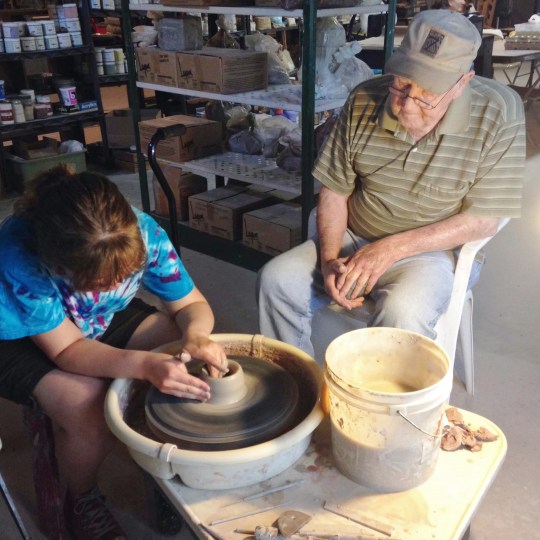
Walt instructs one of his students in the proper way to use a pottery wheel.

One of the areas where Walt Taylor excels is passing on his love for art. That’s why he enjoys sharing his knowledge with adults and especially young people, as they’re our future artists.

As a small child he lived on a farm in Lebanon, Ohio where  he attended a one-room school that was very typical of schools in those days: no running water, out door toilets, a pot bellied stove, and a paddle hanging on the wall behind the stove.

Walt had a story to tell about that paddle. A school bully pushed him around one day and Walt swung his lunch bucket, and hit the bully in the head knocking him to the ground. Both were taken inside and leaned over a desk for a paddling. First, the bully received a stern thrashing while Walt quaked. When it was Walt’s turn, the teacher swung the paddle one time so hard it hit the side of the desk and broke in two. No paddling for Walt that day. Doesn’t sound like an accident on the part of the teacher to me.

vases-with-applique

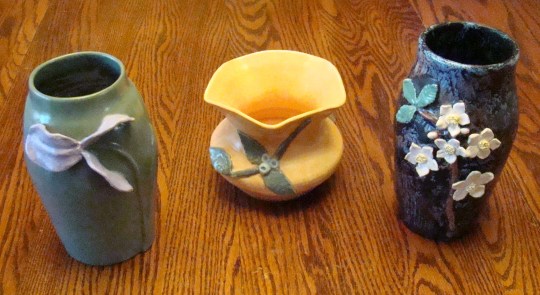
He enjoys creating one of a kind vases with floral applique.

The family moved often. His father said, “A rolling stone gathers no moss, but it gains a great polish.” At one time they lived near Fort Ancient and Walt followed his dad around the field when he was plowing, and found many arrowheads. 

Woodcrafting has been a hobby since he was a young man. His building skills still go on today as he makes cabinets, chairs, and recently a communion stand for a local church that had just rebuilt.

walt-cabinet

This talented man made these oak chairs and the cabinet behind them.

For the past few years, he has been making one new chair for their dining room each year. But he said he has been procrastinating about finishing the last two. He even joined the Procrastinators Anonymous, but they haven’t had a meeting yet.

He also enjoyed working on automobiles so developed mechanical skills as well.  That came in handy as he and his wife, Sheila, motorcycled all over the country. His favorite places to ride were in the mountains out west. It was in those mountains of Montana, where they saw the work of western potters, that an interest for making pottery began.

They also discovered many things on those back roads that you just can’t see from the interstate. He thought he noticed something that looked like Stonehenge on one such road, but it turned out to be Carhenge. Here cars were buried front first in the ground. Then there was the House on a Rock, a motel on an Indian reservation, and the list goes on.

walt-first-piece

Walt holds the first piece of pottery he ever made…out of kitty litter.

It wasn’t until 1992 that Walt tried his hand at pottery. At Octoberfest, he purchased his first kiln and making pottery has become his passion ever since. The first bowl he made was out of ‘unused’ kitty litter! He learned that kitty litter had a clay base and when mixed with a little bit of water could be worked into shape. That bowl still sets on his bedroom stand today.

walt-sheila-001

Walt and Sheila  have attended many festivals in the area to display and sell their creations.

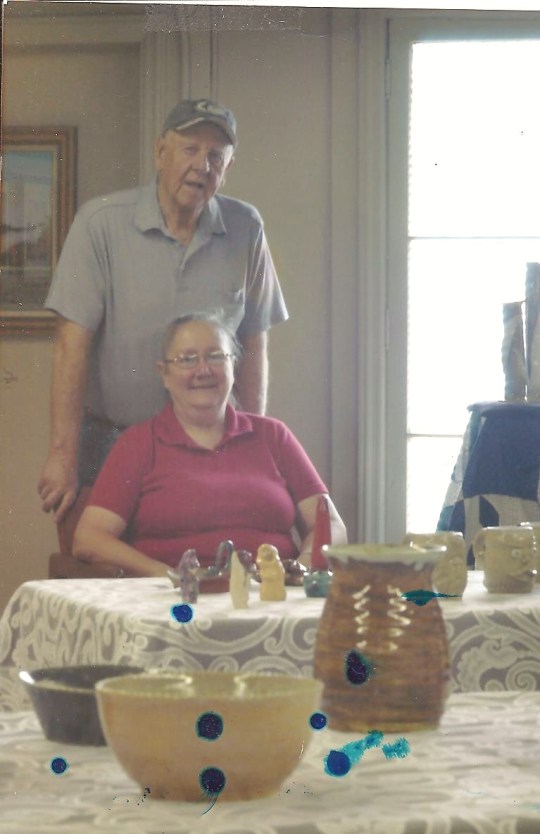
To begin with, he made pottery items just because he enjoyed doing it. Then he began giving them to his friends, who told him that he should be selling them. That began a business they ran until last year, Taymoor Pottery…a combination of his last name and his wife, Sheila’s maiden name.

walt-at-salt-fork-festival

Walt has a smile on his face while working with youngsters at Art in the Park during the Salt Fork Festival.

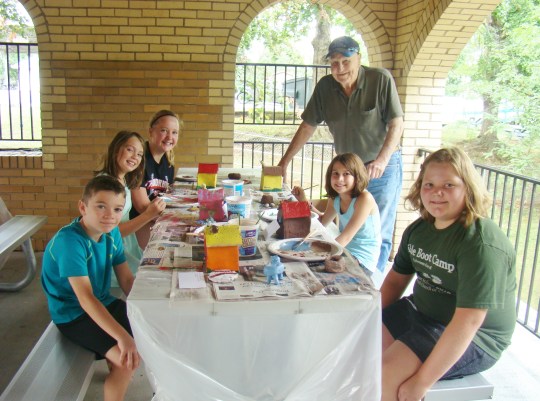
Walt and Sheila, hope to teach youngsters to enjoy art as much as they do. They’ve helped teach children’s art classes at the Salt Fork Festival for several years. Wherever Walt is making pottery, children can usually be found watching. Talking about children always brings a smile to his face as ,“They are fun to work with. If you treat them as equals, they accept you as you are.”

father-christmas-and-wife-2

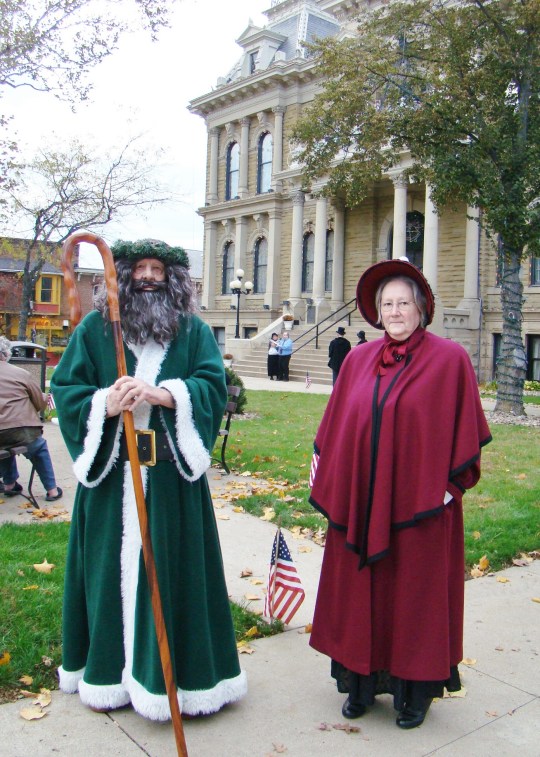
Walt greeted visitors as Father Christmas for ten years, with help from Sheila.

For the last ten years, Walt has portrayed Father Christmas for Dickens Victorian Village. He would meet buses on the street or in the Welcome Center and probably has his picture in many family albums as a result. He’s not sure if he’ll be able to do that this year at the age of 91.

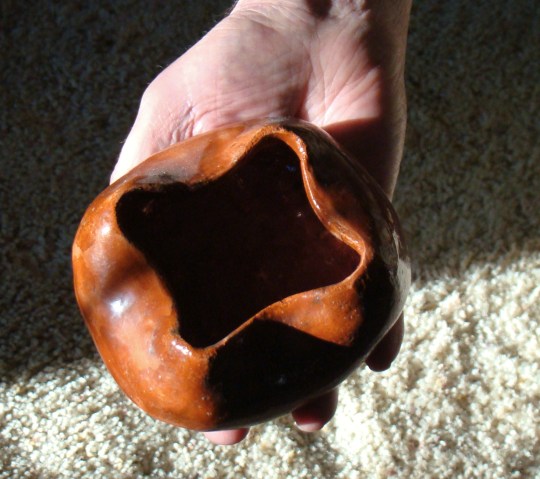
Even though the business is closed, they still enjoy making pottery. Now they make just what they like. Right now Raku, a Japanese style is a favorite. It was first used by the Japanese Emperor and was known as a ‘throw away pottery’. The emperor would drink his tea, then throw the cup against the wall.

walt-raku

His current favorite project centers around Raku, a Japanese form of art.

Raku is a ‘quick fire, quick cool’ kind of pottery so it would be fired and ready for supper quickly. Today in the United States a glaze is added and it’s no long a throw away. Actually it’s so attractive you wouldn’t want to throw it away.

walt-fishing

Walt still enjoys a day on the lake with his fishing pole.

Walt is just ‘a good old boy’, who has taken an interest in the community in many different ways. Thoughts of travel still skip through his mind and he often dreams of living in Hawaii or Tahiti…or at least visiting. Our world could use more of those ‘good old boys’.

Explore Constantly Changing Zanesville Museum of Art

zma-outlook

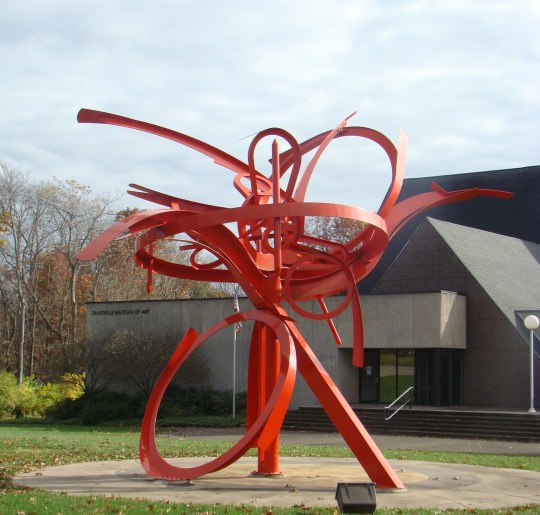
The sculpture, “Outlook”, attracts attention to the Zanesville Museum of Art

“Outlook”, a large scale sculpture, greets visitors on the front lawn of the Zanesville Museum of Art. This eye-catching, bright red metal sculpture was created by David Black, professor at Ohio State for 30 years.

His connection to Zanesville happened long ago when his creative side focused on ceramics. He’d drive from Columbus to Roseville for the perfect clay he needed. His awards for ceramics and sculptures create an extensive list.

zanesville-art-museum

Three floors containing over 7000 creative works of art can be found at the museum.

Inside the Zanesville Museum of Art, you’ll find a wide variety of treasures that span 5,000 years. Around every corner and in every room, different special displays pull you along. And they are changing constantly! Their mission is to ignite human imagination and understanding through the visual arts.

zma-bronze-bust

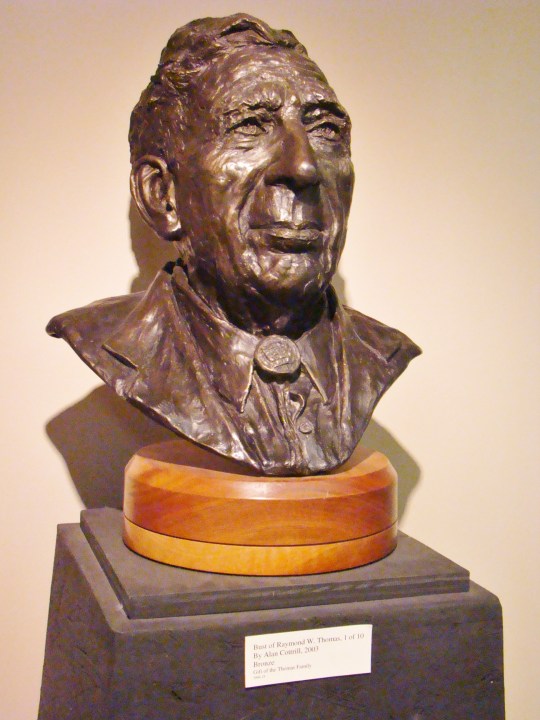
This bronze bust of Raymond Thomas, who contributed his pottery collection to the museum, was made by local sculptor, Alan Cottrill.

This project began back in 1936 when it was called Zanesville Art Institute being located in downtown Zanesville. Established by Mr. and Mrs. Edward Ayers, their personal collections of paintings, sculpture, glass and ceramics became the foundation for the museum.

In 1975, more room was needed and it moved to its present location on Military Road. There are over 7,000 objects in 18 varied galleries on three floors with items you would only expect to see in a much larger city. They are quite proud of their museum and rightfully so.

zma-roseville-pottery

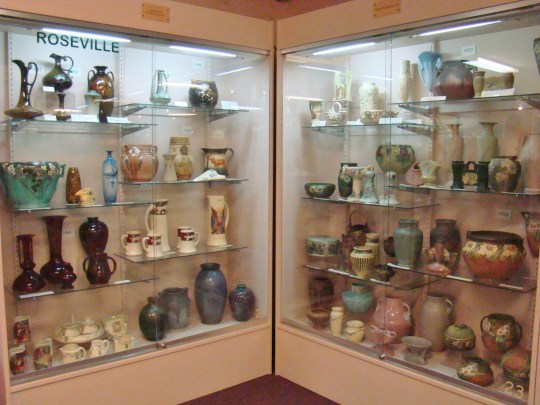
This Roseville Pottery display is one of many pottery exhibits throughout the museum.

The museum is well-known for its pottery collections as Zanesville was once the pottery capital of the world. So it follows that this would be the perfect place for pottery display by local companies including: Owens, Roseville and Weller. Displays show the progression of their works in an excellent timeline. Many consider pottery to be the heart of the museum.

zma-dolls

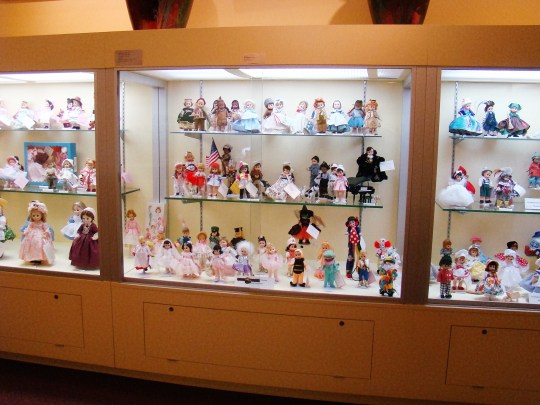
The Madame Alexander Doll Collection contains over 600 dolls.

The Madame Alexander Doll Company has a magnificent Americana Collection of dolls being shown at the Zanesville Museum of Art. Here you’ll find everything from dolls depicting nursery rhymes to those wearing dresses of the first ladies. Over 600 dolls make it a spot young ladies like to spend time.

zma-tree-of-life

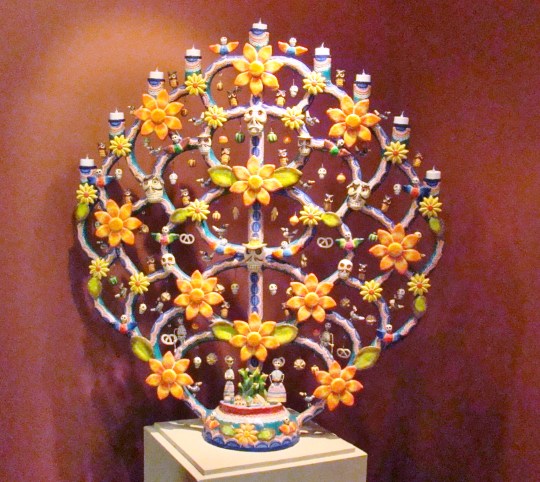
This colorful ceramic “Tree of Life” Candelabrum celebrates a Mexican religious holiday.

Two special art displays are being featured through January 7, 2017. The Carl E. Eriksson Collection features original paintings and sketches by The Eight. This group of eight artists drew people from all walks of life. They made a difference in the world of art by moving from traditional to realistic scenes featuring scenes of every day life.

zma-watercolor

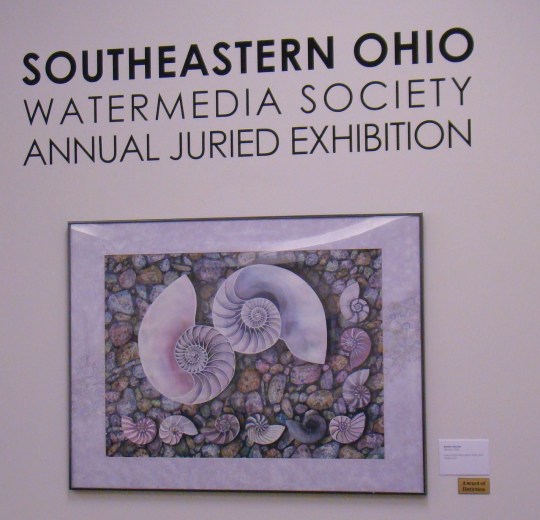
“Every Family Has a Black Shell” by Marilyn Stocker won the Award of Distinction.

The second is a juried exhibition by Southeastern Ohio Watermedia Society. The art work is outstanding here and many local artists are featured. There is also a section for displaying student art, featuring different schools each month.

zma-200-b-c

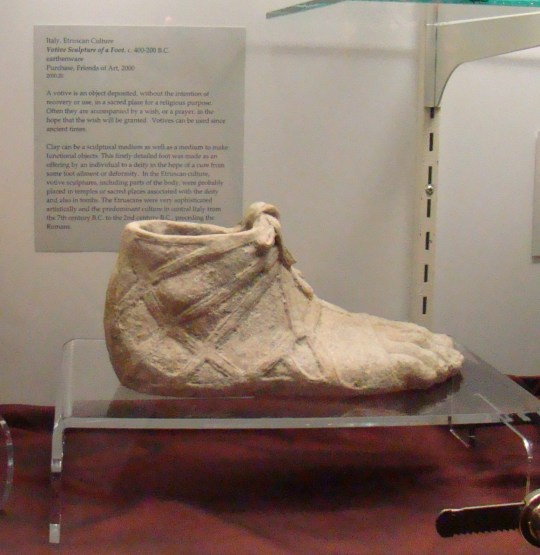
An Italian Votive “Sculpture of a Foot” dates back to 400 – 200 B.C.

The oldest items can be found in two places. In the Sculpture Gallery, two Roman sculptures date before 200 B.C. The Greek sculptures contain a votive, which looks like a foot, that also dates before 200 B.C.

zma-england-wood-panel

Original furnishings from a 1690s home in England are the setting for the Old Masters Gallery.

But the favorite spot is the Ayers Collection in the English Panel Room. You step back in time to a dining room from 1690 in Hatton Garden, the home of Sir Christopher Hatton, Chancellor under Queen Elizabeth I. Even the wood paneling is original. In this room, you’ll find displayed in the Old Masters Gallery their finest works of art  by Picasso, Renoir, Matisse and more. All this at the Zanesville Museum of Art!

zma-glass-and-pottery

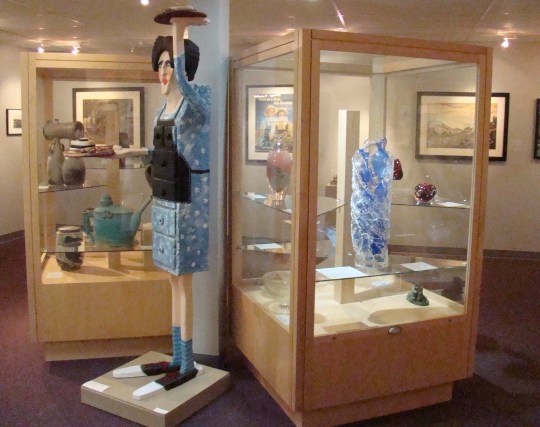
Pottery and glass are featured collections from many local companies in the past and present.

The art museum is a great place for all ages to explore. Art Classes are scheduled twice a month for adults and children. These change monthly for chances to use various mediums of art. Check their schedule for the latest information at Zanesville Museum of Art .

zanesville-vase

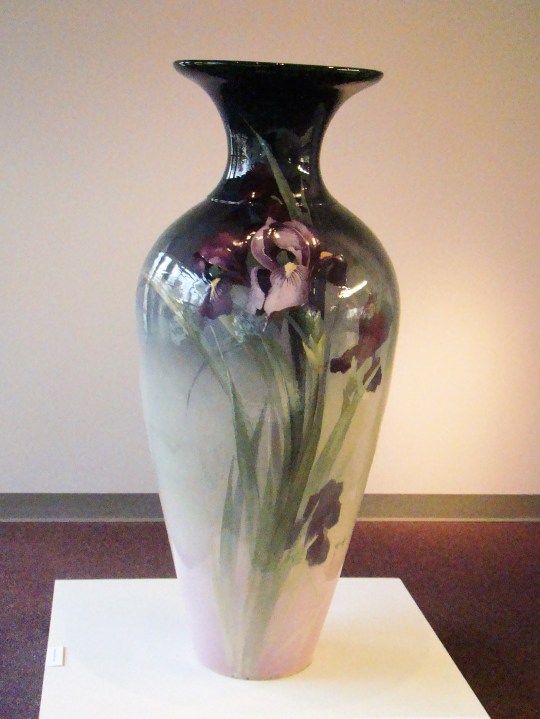
Zanesville displays beautifully decorated seven foot vases throughout the city.

ZMA Concert Series presents live entertainment in the museum galleries each month at no charge to the public. Sounds like the Zanesville Museum of Art has something for everyone that has an interest in the arts.

Every artist will be drawn to this impressive museum time after time as exhibits change six times each year. That makes it easier to have something everyone enjoys.

The world is but a canvas to our imagination. ~Henry David Thoreau

The Zanesville Museum of Art is located at 620 Military Road in Zanesville, Ohio. Take Exit 153 off I-70 north to Maple Avenue. In about two miles turn right on Military Road. The museum will be on the right hand side. Watch for the large red sculpture.
 

Enjoy Musical Entertainment at the Salt Fork Festival

The Loves

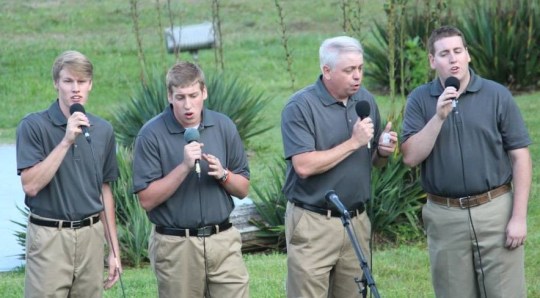
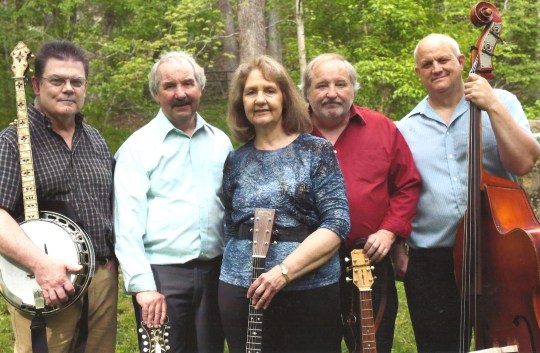
The Loves Gospel Quartet

While most people think of artistic creations when headed to the Salt Fork Festival in Cambridge, Ohio, musical entertainment plays a large role in the festivities.

Jazz   Celtic   Bluegrass   Gospel   Bands   Dance   Strings  Drums

A wide variety of musical entertainment will be presented at the Salt Fork Festival from August 12-14, 2016 at the Cambridge City Park. Every day the Performing Arts Tent and Large Pavilion will be filled with music by many different groups.

Yurco Boys

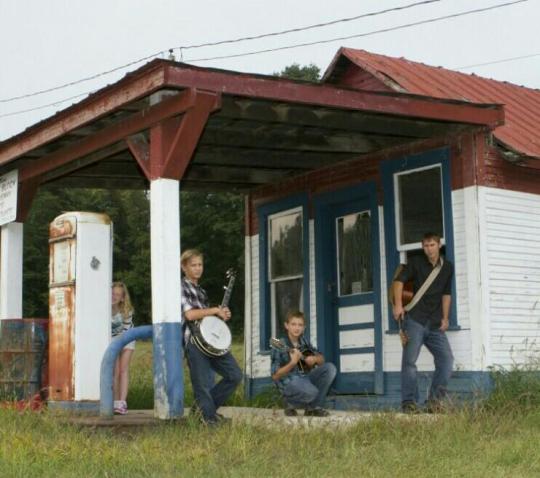
The Yurco Boys

It all begins on Friday afternoon with The Yurco Boys, a talented group of young men who sing bluegrass music while strumming on their guitar, mandolin, and banjo. These young fellows are brothers and have been performing together for seven years. Their lively music is a crowd pleaser and they get better every year. Sometimes their little sister, Waverly, brings her fiddle along and joins in the fun.

Northwest Territory

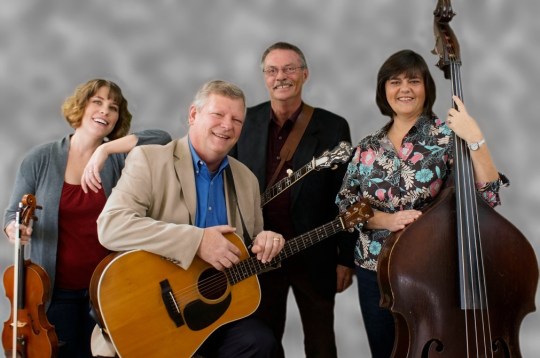
Northwest Territory Bluegrass Band

They aren’t the only Bluegrass musicians this year. During the weekend you’ll also want to hear the Northwest Territory Bluegrass Band, a lively fast-moving quartet that also sings country, folk and gospel.

Buck & Company 001

Buck & Company

Buck & Company think Bluegrass people are the best people in the world and their dedication to high quality bluegrass is certain to please.

Chris Hart

Chris Hart

Chris Hart will portray a Civil War veteran in “Paws for the Cause”, a tale of Curly, a mascot during the war. This is a must see for every dog lover or Civil War buff.

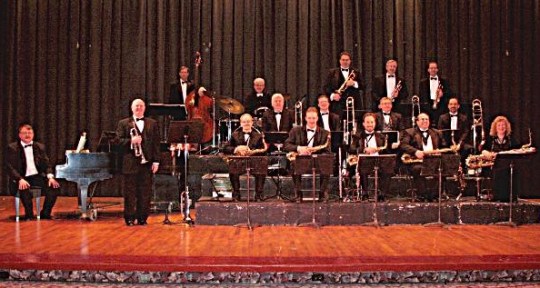
Cambridge Jazz Band

Cambridge High School Alumni Jazz Band

Bands will also provide entertainment during the festival. The Cambridge High School Alumni Jazz Band brings back students who have enjoyed music over the years. Their quality of music brings listeners back again and again.

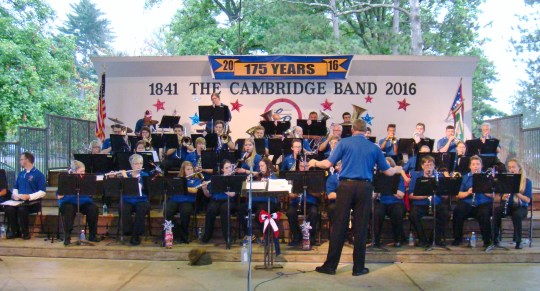
Berk Cambridge Band

Cambridge City Band

The ever popular Cambridge City Band has been active a long time. On this their 175th anniversary, you can expect some great music and even special antics by their conductor, Berk Jones. They are a pleasure all summer long at the Cambridge City Park.

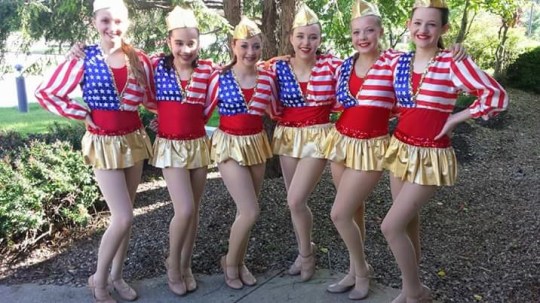
Dance Central

Dance Central

Dance Central presents a vivacious program with students performing a wide variety of dances. Their dancers learn to express themselves through jazz, hip-hop, tap and ballet. This group puts on a vibrant show and often their dancers perform at community activities, such as the Cambridge Singers’ Concert or the Dickens’ Teddy Bear Tea.


OLYMPUS DIGITAL CAMERA

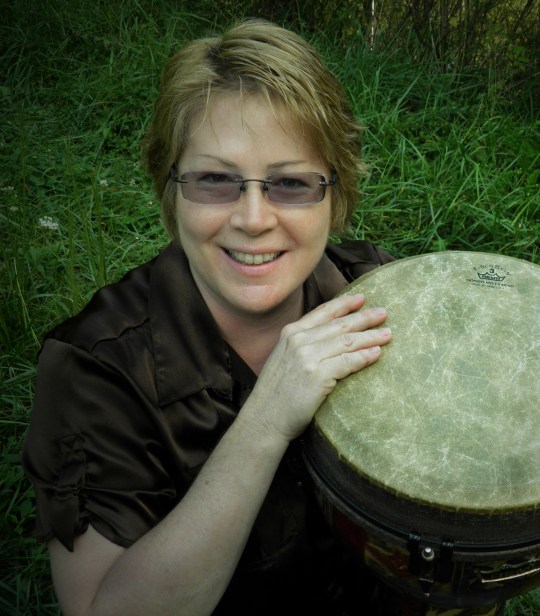
Toni Kellar “Roots to Rhythm”

A special feature will be Toni Kellar with her “Roots to Rhythm” program. Toni’s popular drum circles help people find their inner rhythm and soon the group is connected through this fantastic drumming technique.

PanJGea 2

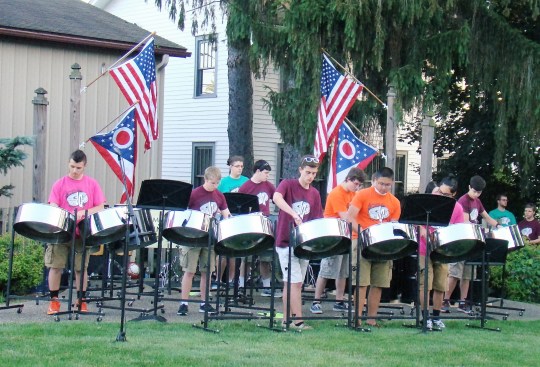
PanJGea!

New to the area is a group called PanJGea from John Glenn High School. This steel drum band produces a sound and rhythm that everyone will enjoy. It’s indeed surprising to find the sound of the Caribbean here in Ohio as the band plays traditional calypso and Salo. But these youngsters also enjoy using their pans for rock and roll or doo-wop.


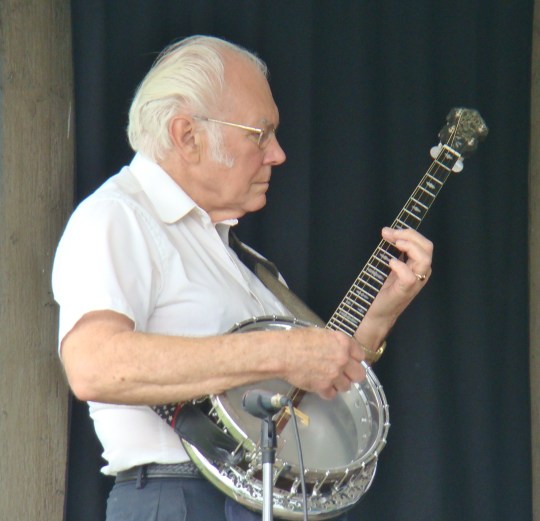
Dick Pavlov

Dick Pavlov entertains with his banjo.

Steve Miller

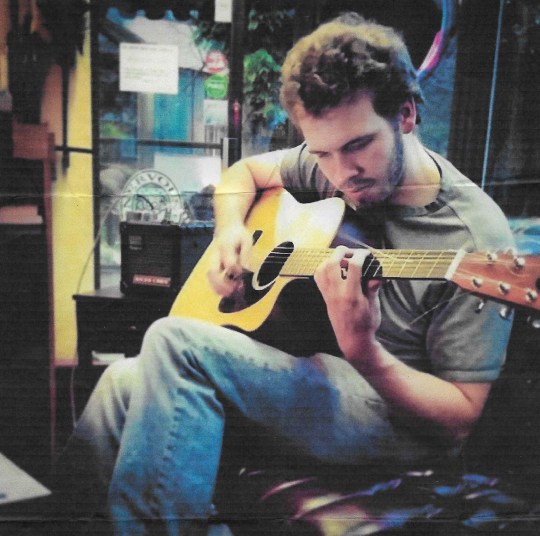
The talented Steve Miller strolls as he plays his guitar.

Strolling musicians throughout the weekend will play their music while walking the grounds of the festival. Dick Pavlov with his banjo and Steve Miller on guitar never seem to tire of playing.

Festival Chorus

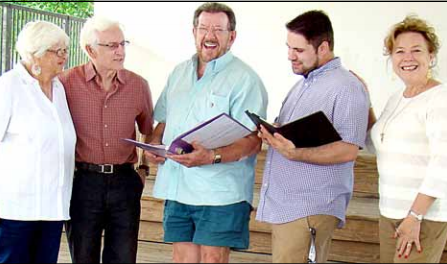
This group has been planning the entertainment portion of the festival and have created a dynamic Festival Chorus, which will be performing on Sunday.The group consists of: Holly Phillips, Leonard Thomas, Bob Jones, Aaron Lashley, and Carol Jones. 

There is something for every musical taste during the Salt Fork Festival, August 12-14 at the Cambridge City Park. Come out and enjoy a weekend of outstanding artistic creations, fine musical entertainment, and refreshments to enjoy on a hot summer day. You may even want to try your hand at a workshop and do a little creating yourself.

Have fun at the Salt Fork Festival!


Hopalong Cassidy Statue Dedicated

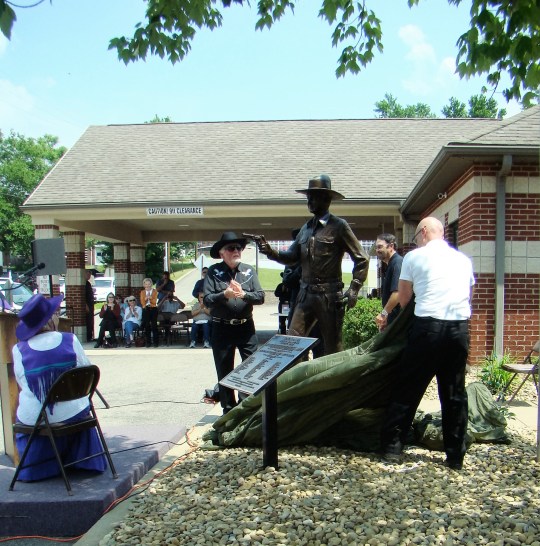
Hoppy 1

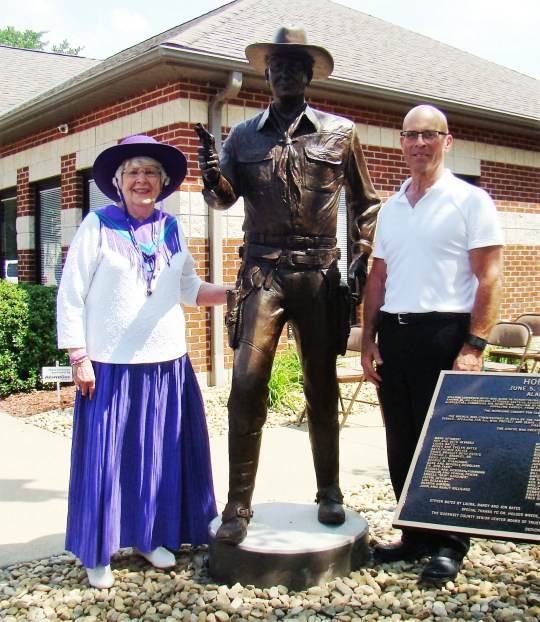
Laura Bates, Hopalong Cassidy Fan Club founder, stands beside the newly dedicated bronze statue of Hopalong Cassidy with the sculptor, Alan Cottrill.

The legend of Hopalong Cassidy lives on in Cambridge, Ohio where he grew up as William Boyd. In June, 2016, a bronze statue was placed at the Guernsey County Senior Center to honor this local hero. June was a fitting month for this to happen as June 5 was both the birthday of William Boyd and the date of his marriage to Grace.

Laura Bates had a vision and a dream to have this memorial statue built for her hero. Through the efforts of Laura and her dedicated Hoppy Fan Club members, money was raised for a life size statue of Hopalong Cassidy. Laura has been the organizer for Hopalong Cassidy Festivals in the Cambridge area for 25 years, and has printed a monthly newsletter that she shares with Hoppy’s Fan Club.

Guests appeared from all over the United States for the dedication, which Laura emceed in a western turquoise and purple outfit – the favorite colors of Hoppy’s wife, Grace. Why, the courthouse in downtown Cambridge was even lit in turquoise and purple to honor this special dedication.

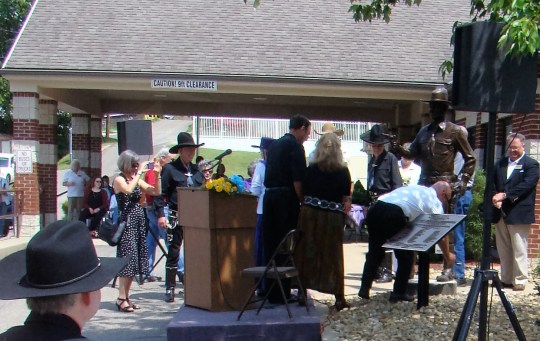
Hoppy 2

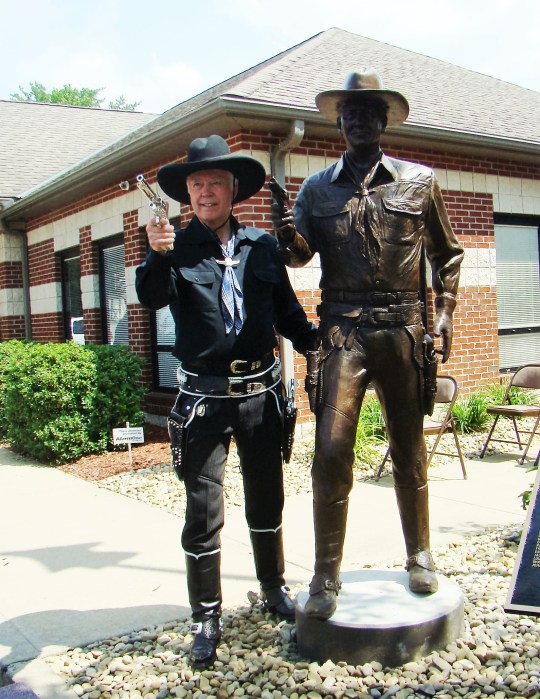
John Gilliland was the cowboy, who posed for Alan Cottrill when he designed the statue. He was kind enough to imitate that pose again at the dedication ceremony..

This celebration recalled those special values that Hopalong displayed and taught. He was a good man doing the right thing…the kind of cowboy who was clean living and never shot to kill anyone in his movies or television shows. Hoppy never smoked or drank and supported his home county even when he was in Hollywood. During WWI and WWII, when Hoppy bought savings bonds, he always gave the bond credit to Guernsey County.

Hoppy 4

Laura Bates watches as the Hopalong Cassidy statue is unveiled.

The bronze statue made by Alan Cottrill, international sculptor, was brought to Cambridge a couple days earlier to be set on its foundation. Laura said this was not an easy thing to watch as they had a rope around Hoppy’s neck and were swinging him around so much that she feared he would be broken. No harm was done but it still was a very traumatic experience for her.

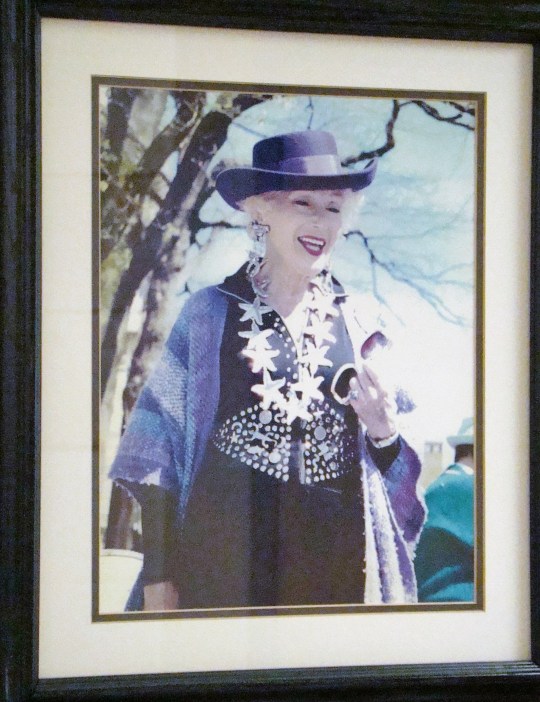
Hoppy Grace

A picture of Grace Boyd was presented to the Senior Center and can be found in the entrance hall.

Having this statue placed at our Senior Center makes it the only Senior Center in Ohio with a bronze statue by the talented Alan Cottrill. His work is detailed and outstanding with a couple of his popular creations being the Thomas Edison bronze statue on display in Washington D.C and one of Woody Hayes on the Ohio State campus.

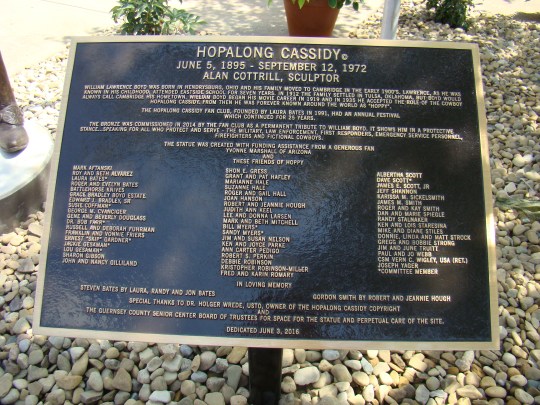
Hoppy Plaque

This plaque beside the statue acknowledges all those who contributed to keeping alive the memory of William Boyd, best known as Hopalong Cassidy.

Many dignitaries were in attendance to give words of praise for this legendary cowboy. Several mentioned that his words should continue to resonate throughout America. He stood for those values that we long to see come back. He always reminded children at the end of his programs to be mindful of how we treat each other.

Hoppy DirtAt the conclusion of the dedication ceremony, several honored guests placed special soil around the bottom of the statue. This soil came from near the cabin where the Boyds stayed when films were being made in California.

The program ended with the reading of Hoppy’s Creed. The final words were:

Be glad and proud to be an American.


Gifted with Many Artistic Talents

Judy Amish painting

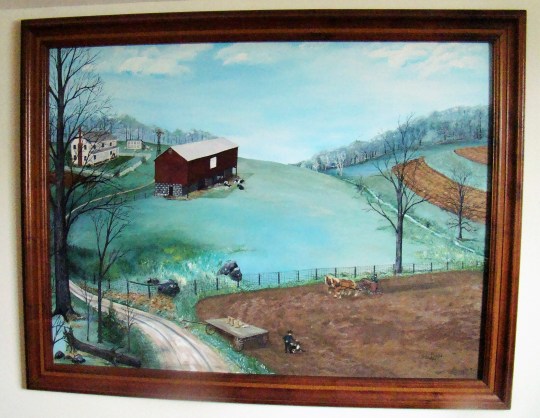
Judy painted this picture of an Amish farm using bits and pieces from several farms.

Blessed with talents! Creative abilities seem to pour forth from Judy Howald when she isn’t spending time helping her husband, Jim, at their farm on the outskirts of Birmingham. No matter what she does, her whole heart and energy are focused on her current project. When a new project captures her thoughts, she often spends some sleepless nights thinking about what she should do next.

Over the years, Judy spent most of her time working in a factory on an assembly line. Even there she was always creating signs for the business or developing new ideas for improving quality and design.

Judy's son

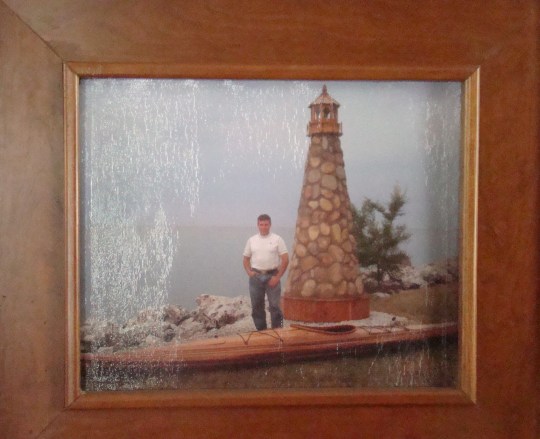
It appears her son, Andy, may follow in her creative footsteps. While Judy built this small lighthouse on Lake Erie, Andy built the kayak.

Perhaps her creative talents received their start when Judy followed her dad as he designed plans for homes he was building. The details fascinated her. Today in her woodshop, intricate plans that she has drawn for projects can be seen on the work tables.

Jodi's library 001

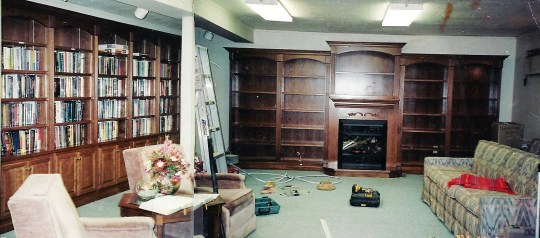
One of her early projects was to create this library and entertainment section for an assisted living complex near Kent State University.

When Jim and Judy purchased the farm, it seemed that cutting the timber would help with payments. But lumber prices were low at that time, so Jim would cut the trees, take them to the mill, dry and straight edge them, then return them to the farm where Judy began turning them into furniture. And beautiful furniture she created!

Jodi Giraffe 001

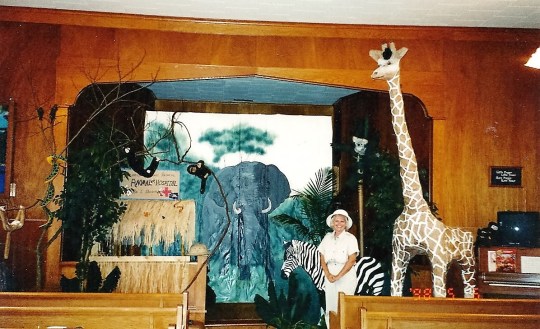
Judy created this scene for her church’s Bible School one summer.

Being very active in the Birmingham United Methodist Church, at Bible School time several years ago, Judy created a scene of animals from Noah’s Ark. She painted a background with an elephant and zebra, then made a giraffe of paper mache.

Judy Ark 2

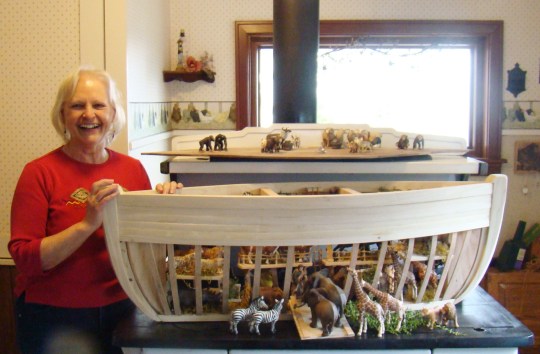
One of her current projects is building Noah’s Ark.

Maybe that began her thinking about making a small replica of Noah’s Ark, which she is working on today.  This ark is about 42″ long and has small partitions inside for the various animals. The roof is on the shelf above and plans are to build a small house on the top, which might be where Noah and his family stayed.

Judy Puzzle

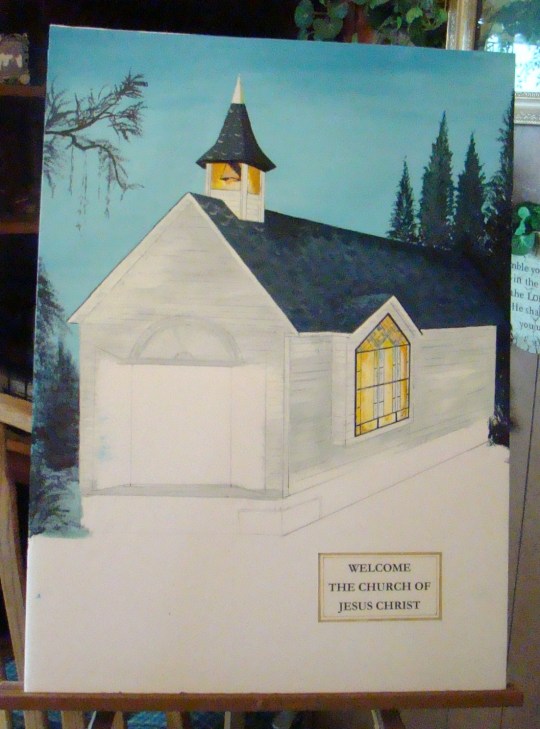
This is just the beginning of a painting that will be turned into a “Sermon Puzzle” for use during a Sunday morning service.

Another project underway right now for her church is a “Sermon Puzzle”. Her pastor asked if she could create a picture that they could use to tell a story by fitting in various parts of the puzzle – a cornerstone here or a steeple there. Her beginnings are reminiscent of a Thomas Kinkade painting with the light shining through at intricate places.

Jodi's book 001

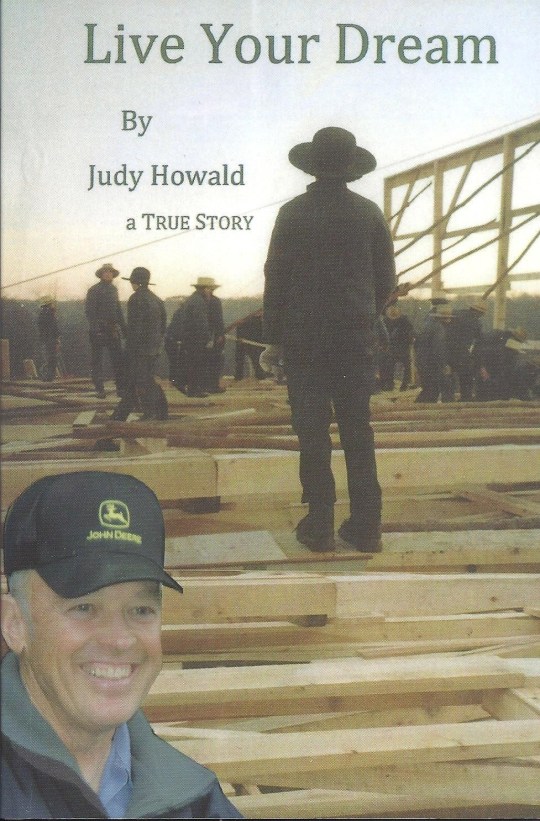
Her book tells the story of the determination of her husband, Jim, to live his dream.

A tour of their home showcases her talents as every room has the creative touch of this amazing woman. Let’s not forget that Judy is also an author. She has written and published one book – the life of her husband, Jim, from Alaska to Birmingham, Ohio. All the proceeds from her book go to that little home church.
Judy Woodshop

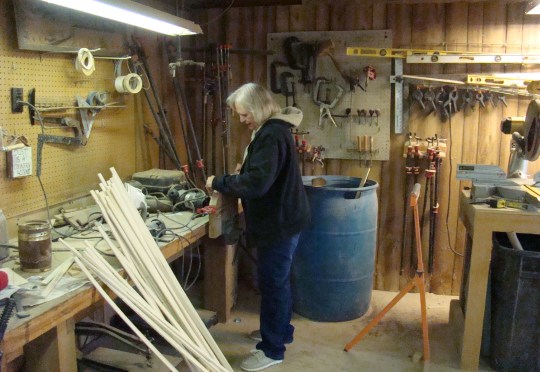
This section of her woodshop is where Judy steams the strips of wood so she can bend them to make the sides of the ark.

Her woodshop is above the garage just outside her back door. It is fully equipped for all of her projects. Here she steams and bends the pieces of wood to make the ark and other artistic pieces. Heat for the woodshop and the house is provided by a wood burner.  They use the tops of the trees, that can’t be turned into beautiful projects, as their fuel.

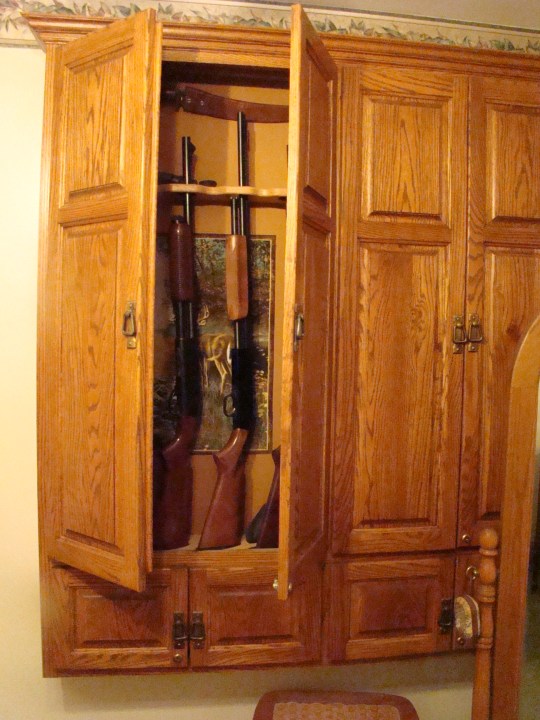
Judy Guncabinet

This beautiful gun cabinet was made as a gift for her husband, Jim.

While finishing the ark and puzzle keep her occupied right now, you have to wonder what project is next on her mind. Whatever it happens to be, you can be certain it will be something of high quality…and beautiful.


Parthenon Full-Scale Replica in Nashville, TN

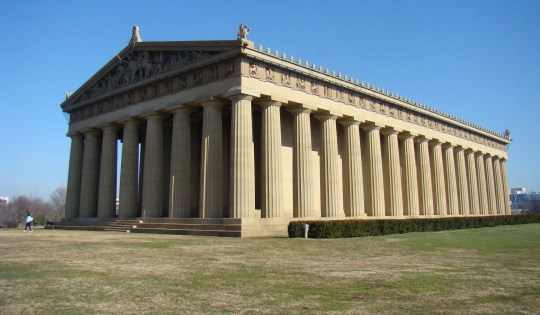
Parthenon

The Parthenon in Nashville, Tennessee attracts visitors from all over the world.

The Parthenon doesn’t seem to belong in Nashville, Tennessee, yet this full-scale replica was the centerpiece for Tennessee’s 1897 Centennial Exposition. For this special occasion, Nashville wanted to promote themselves as a cultural and educational “Athens of the South”. They were successful, as today there are twenty-one universities located there.

After the Centennial celebration, which nearly two million people attended, all the buildings were torn down except for the Parthenon. even though it was made of temporary materials. After the turn of the century, Centennial Park was created by the city of Nashville. By 1920, it was decided to make the Parthenon a permanent structure of aggregate concrete.

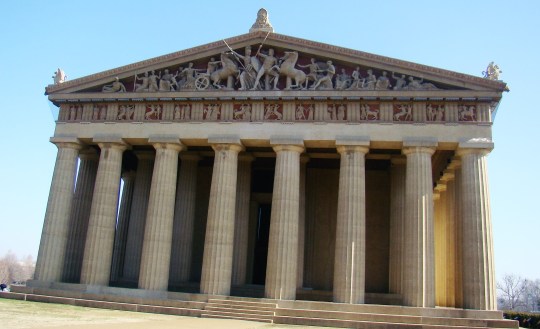
Parthenon Front

No straight lines exist in the original Parthenon or this full-scale replica.

Powerful and perfect describe it well. Built as the world’s only full-scale replica of the original Parthenon in Athens, Greece, they were careful to use no straight lines in its construction – just like the original. Even the steps are curved.

When you step inside the Parthenon, the first floor is being used as was intended. An art gallery features many local and national artists.The collection of James Cowan is permanently housed here along with special, changing  exhibits.

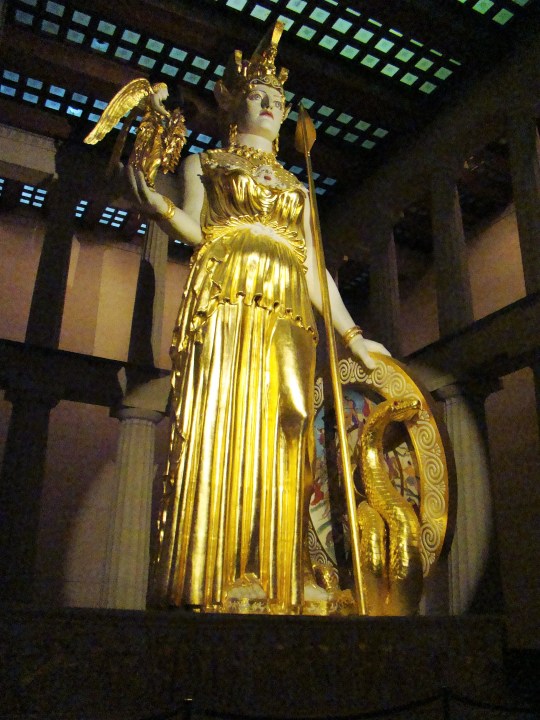
Parthenon Athena

The appearance of Athena on the second floor is striking.

But be prepared to be stunned on the second floor. Here stands a dramatic figure of Athena, Goddess of Wisdom, Prudent War, and Useful Arts.

The addition of the statue of Athena Parthenos is rather recent. In 1990 it was decided to commission the figure while remodeling the building. The artist had everything he needed to commence work except the long pole to be part of her spear. While sitting at McDonald’s over a cup of coffee one day, he looked out the window and noticed their flagpole. It looked like it would be perfect. When he contacted McDonald’s, they agreed to provide one of their flagpoles, which is today her spear…covered in gold.

Parthenon Shield

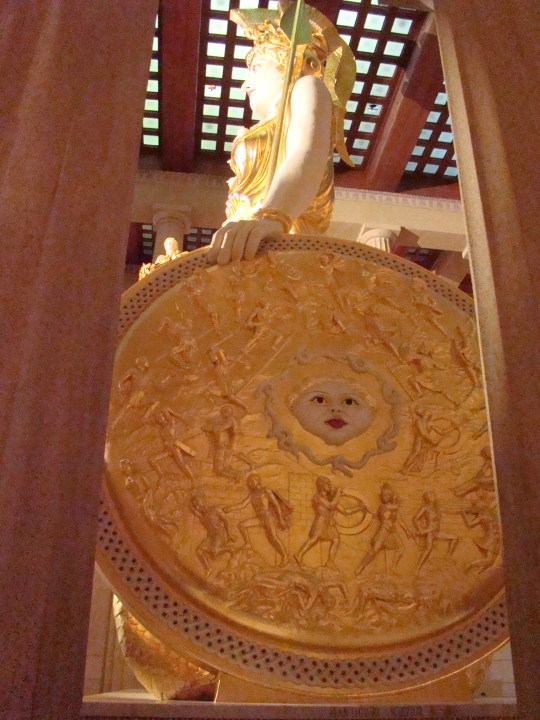
Athena’s shield has figures of Amazon women surrounding the head of Medusa.

This Goddess of Righteousness measures 42′ tall and is covered in gold…eight and a half pounds of gold leaf. She is protecting the snake, representing the people of Athens, with her shield, which has Amazon women on the outside of it and the head of Medusa at the center. At the time of the original statue, Athena was at peace as the shield is down, the flaps on her helmet are up, and the spear rests on her shoulder.

Parthenon Nike

Athena holds Nike. Note that her wrists have bracelets of snakes.

In her right hand, she holds the 6’4″ figure of Nike, Goddess of Victory. Nike’s wing shape is today used for the symbol of speed and flight for Nike shoes.

Parthenon Base Statue

Adena’s pedestal is rimmed with historic figures.

Along the bottom of the statue is a golden wall of drawings depicting life in those times. The artist included faces of several family members in the drawing: his father, mother, wife, best friend, and himself.

Parthenon Gryphon

These 4′ tall Gryphons guard the gold statue.

On each side of the statue stand Gryphons for protection. With the head and wings of an eagle and the body and tail of a lion, these strange creatures were called the hounds of Zeus. They can also be found at the four corners of the Parthenon’s roof.

Parthenon Doors

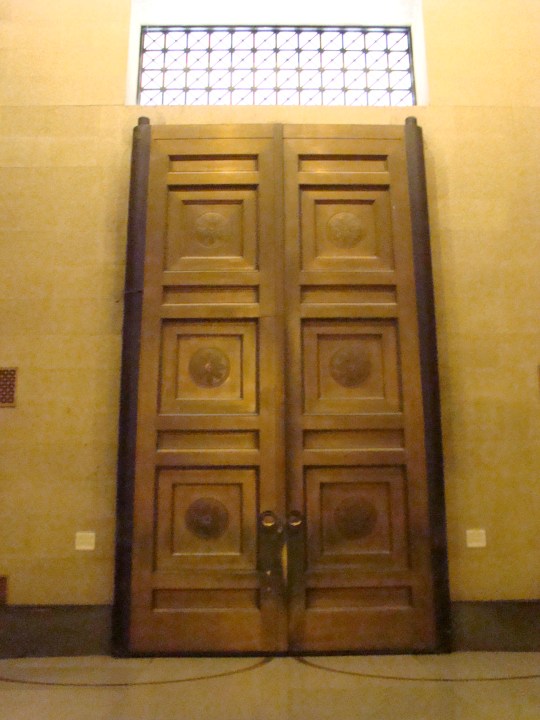
Each solid bronze door weighs 15,000 pounds – that’s 7.5 tons!

At each end of the upper chamber, bronze doors cover the opening to outside. While the original doors in the Athens Parthenon are believed to have been wooden, decorated in bronze, these solid bronze doors each weight 7.5 tons, measure 6.5 feet wide and 24 feet high, and are twelve inches in thickness. Yet even a child can open or shut them on their intricately designed ball-bearing collars.

Parthenon Pediment 2

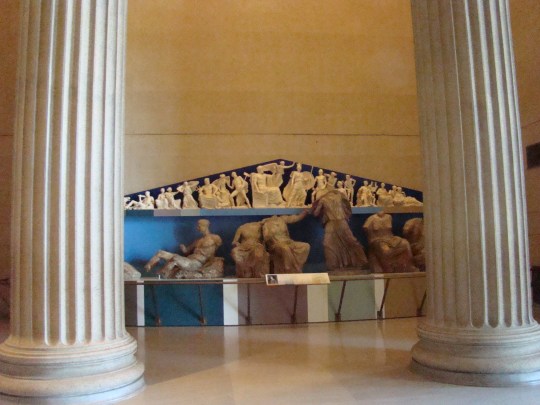
Each piece has notation, in English and Braille, of where it appears on the pediment.

In the outer chamber of the temple, plaster replicas have been made from direct casts of the original sculptures adorning the pediments of the Athens’ Parthenon.The originals can be found today in the British Museum in London.  Of course, all the figures were not available, so knowledge of Greek sculpture helped create the missing pieces.

The advanced scientific knowledge of 500 BC surprisingly had great understanding of astronomy. The opening to the temple was built facing east. At that time there was a reflecting pool in front of the statue. When the sun came in that east door, it hit the reflecting pool to light up the golden statue of Athena. No modern day lighting system could compare.

The beauty of the past lives on in Centennial Park today.

Centennial Park is located in Nashville, TN just west of I-40 at 2500 West End Ave. Admission to the Parthenon is very reasonable.


Humble Artist Captures Area Landscapes

Bob Jennings

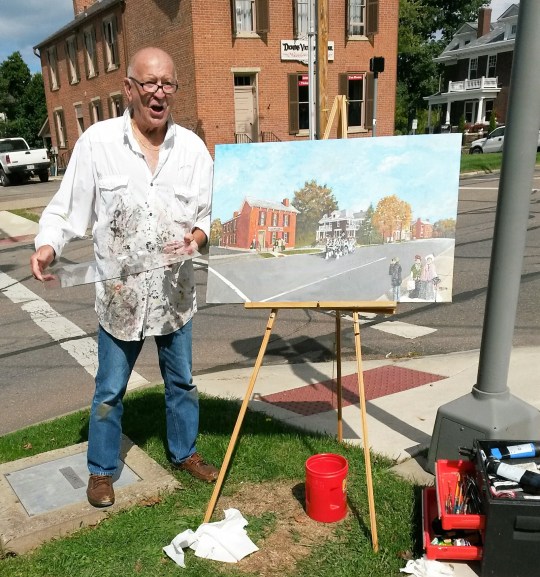
Bob can often be found on the street corners painting one of his beautiful pictures. Here he captures the spirit of DIckens Victorian Village at their Welcome Center.

If you walk down the streets of Cambridge, Ohio on a warm day, you’re likely to see an artist standing on a corner painting precise pictures of area architecture. Bob Jennings enjoys capturing the landscapes, but even more he enjoys talking to the people, who stop to watch him move his brush to magically capture the buildings to perfection.

Inspiration for a new picture might happen at an unusual moment. Part of what he paints is what he really sees, and part is imagination.

Bob Painting 3

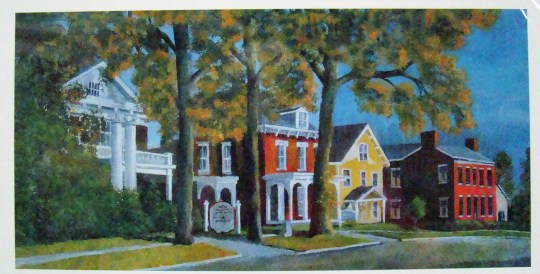
Most people from Cambridge will recognize this group of historic houses along Steubenville Avenue.

The world of art isn’t new to Bob, as he has been drawing pictures since childhood. He frequently entered the art contests in the Cleveland Plain Dealer. Even as a fourth grader at Garfield School, he entertained others with his drawing. At that time the playground was gravel, so Bob took his shoe and drew a perfect outline of a horse to the astonishment of those watching.

Throughout life, Bob couldn’t resist drawing pictures, and took a few art classes now and then. When he was working at Champion, other employees remember his talent as he would draw pictures on his breaks. It seems that Bob’s flair for illustrating just couldn’t help but show itself wherever he happened to be.

Bob Painting 2

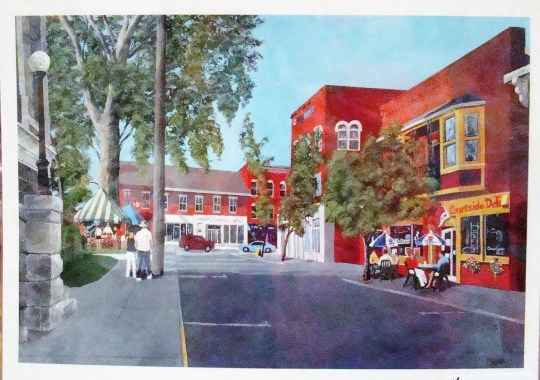
Here Bob captured the scene along W. 8th Street beside the courthouse. His architectural ability shines forth in his paintings.

Thomas Jefferson has always been his hero. Jefferson’s ability to create fine American architecture started that connection. But Bob also considered Jefferson to be very intelligent, as he had a wide variety of interests, and seemed to be able to do just about anything.
Architecture became a real passion for Bob and he began designing kitchens. This led to more extensive plans for beautiful homes, additions to homes, and even churches. His intense enthusiasm as a self-made architect led to his precision in drawing, as Bob had to have everything perfect – right down to a small fraction of an inch.

Bob's painting

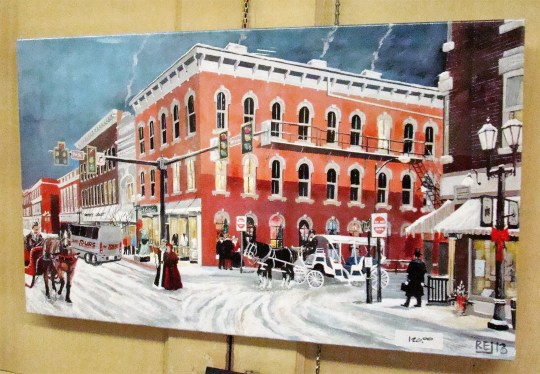
This winter scene displays the many ways people enjoy Dickens Victorian Village as they come by bus or car, and often take a horse and carriage ride. 

After retirement, his real art work began. In his studio at home and on the streets of the town where he lives, Bob’s pictures look as real as a photograph. But they have that extra quality of giving the building a personality.

Bob at Art Guild

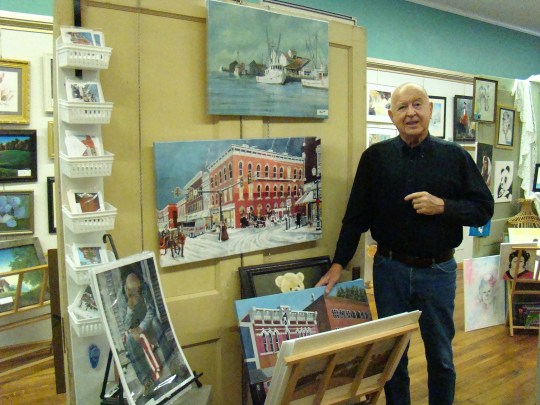
Bob is always ready to talk about his passion for painting at the Art Market.

Today, Bob can frequently be found at the Art Market in downtown Cambridge. You can see his love for people as everyone who enters the door receives a sincere greeting from Bob, and he falls into a natural conversation with them. He usually tells them, in his humble way, “I’m not the brightest star in the sky”, but when it comes to his art work, he shines more than he wishes to acknowledge.

Bob sign

This sign was painted by the artist years ago at the Guernsey County Fair.

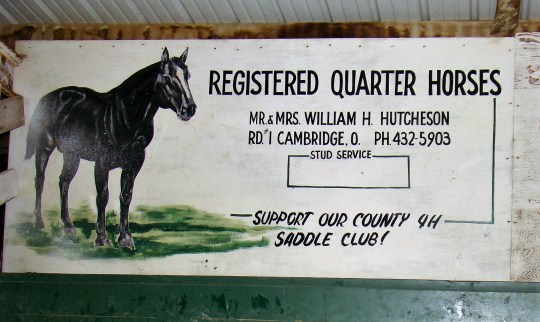
After seeing all these beautiful paintings of buildings, it was surprising to learn that Bob’s favorite thing to draw is horses. Yes, horses! Years ago he painted a quarter horse on a sign in the 4-H barn at the Guernsey County Fairgrounds, and that painting can still be found there today. At his home, his wall is covered with a large painting of horses.

Bob 2

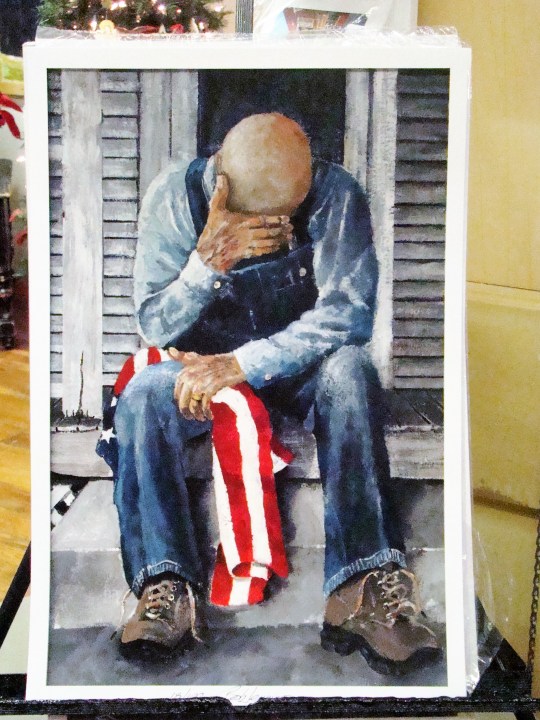
What does this painting mean to you?

When asked if there was something special he would enjoy doing, Bob answered that he would like to get away from the precise drawings and do more “loose” paintings. Portraits came to mind as he recently painted a portrait of a man sitting on his porch with the American flag draped over his leg. Many interpretations have been made regarding this painting.

Recently, Bob saw a little boy that inspired him. Artists seem to have that innate ability to recall in detail what they have seen. He remembers exactly what that little boy looked like and what he wore. Why, he can describe him down to the creases in his pants.

Bob Painting 4

Once in a while Bob heads out of state for some art time.

When asked what advice he would give a young person, who enjoys drawing, Bob was quick to answer. “Pursue it. Even though they might never be a great artist, they would still appreciate art.”

For Bob, he feels his painting ability to be a God-given gift. He believes, “We all have our talents. No one is greater than anyone else.”

It doesn’t seem likely that we have seen the last of this humble Bob Jennings’ creations.

A Stroll Through History Portsmouth Flood Wall Murals

Floodwall 7

Early life in Portsmouth can be seen in the Stagecoach Mural, Hanging Rock Iron Furnaces, and the Ohio and Erie Canal at its southernmost point.

2000 seems to be the magic number in Portsmouth. 2000 years of Scioto County History on 2000 feet of Portsmouth Flood Wall Murals.

Floodwall Flood

The disastrous Ohio River Flood of 1937 led to the construction of this floodwall.

In 1937, a disastrous flood caused the U.S. Army Corps of Engineers to construct a flood wall along the Ohio River to prevent the same thing from happening in the future.

While the flood wall served its purpose, it wasn’t very pleasing to the eye. Dr. Louis Chaboudy  and his wife, Ava, had visited Steubenville, Ohio in 1992 and were pleased with the murals they saw there. They decided to begin the search for a person who might not only paint pictures of the history of Scioto County, but bring it to life so it would attract visitors to their city.

Floodwall Mounds

The Portsmouth Earthworks is a large mound complex constructed by the Ohio Hopewell Culture from 100 BCE to 500 CE.

Robert Dafford, an internationally known muralist, seemed the perfect person for that role and painting began on the largest mural, 20′ x 160′ in 1993. One artist created all 2000′ of the Flood Wall Murals by October of 2002. The remainder of the murals are 20′ x 40′. Whether you are an artist or have little appreciation for fine art, these murals will grab your attention and tell you the story of the changes that have taken place in Portsmouth over the years.

Floodwall 9

The Greyhound Bus Station was a popular place during WWII gas rationing. Or you could have joined local legend, Roy Rogers, riding Trigger.

The murals tell the story of the history of the area, and depict all the former factories, the great flood of 1937, sports history and much, much more. See detailed paintings of historical Portsmouth, which include local legends, such as Roy Rogers, Branch Rickey, and the Portsmouth Spartans NFL football team. The Spartans could not survive in the small town of Portsmouth during the depression, and in 1934 were sold to Detroit, where they became the Detroit Lions.

Floodwall 8

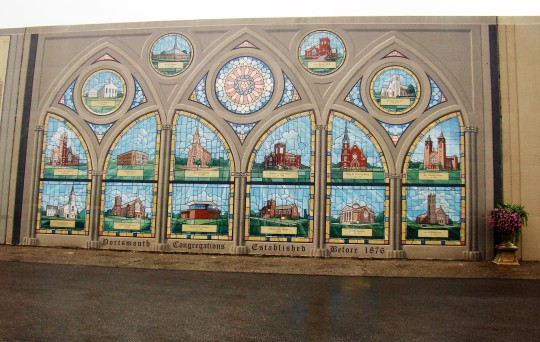
Sixteen churches established in the 1800s are featured in this stained glass motif. 

Some surprises appear along the way whether you are walking for the best view, or driving along in your vehicle. Discover that the shoe industry had six factories here in the early 1800s employing over 6,000 people. Look carefully at the mural of the Portsmouth Motorcycle Club and see if you can spot the reflection of the muralist, Robert Dafford, in one of the hubcaps.

After the initial 2000′ were painted, there have been four murals added. One of them depicts famous baseball players from the area, while another shows a bicycle tour from Columbus to Portsmouth.

Floodwall Ohio River

The Ohio River flows just outside the flood wall where the U.S. Grant Bridge crosses over to Kentucky. 

The great thing is…it’s FREE!  Take a leisurely stroll along the murals or view from them the sidewalk across the street for a different perspective. An amazing feature is that there are paintings on both sides of the wall so don’t forget to view the wall from the Ohio River side as well.

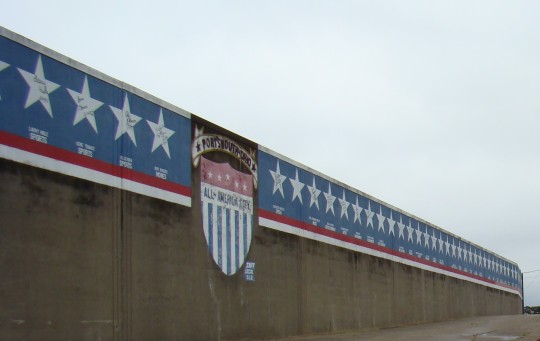
Portsmouth Outer Wall

The Ohio River side of the flood wall was begun before the mural side. You can drive along most of the outside of the wall along the Ohio River.

Here the flood wall has been designated at the Portsmouth Wall of Fame, where accomplishments of area natives are recognized. Their name is placed beneath a star with an autograph of the person being honored in many cases – Don Gullett, Al Oliver, Roy Rogers, Dan Quayle, Larry Hisle and Gene Tenace being a few of those recognized.

Floodwall Town Mural

Downtown Portsmouth in the 1900s is the cover of the Scioto County Visitors’ Guide. The Steel Industry played a major role in the town’s growth.

The Portsmouth Flood Wall serves as a great example of how something that serves a needed purpose doesn’t have to be dull or boring. With a little bit of talent, it can brighten up the world.

Portsmouth is located in the southern part of Ohio along back country roads. Your best bet for directions is using your GPS.