Places to go and things to see by Gypsy Bev

Archive for the ‘History’ Category

Shenandoah Airship Trailer Museum
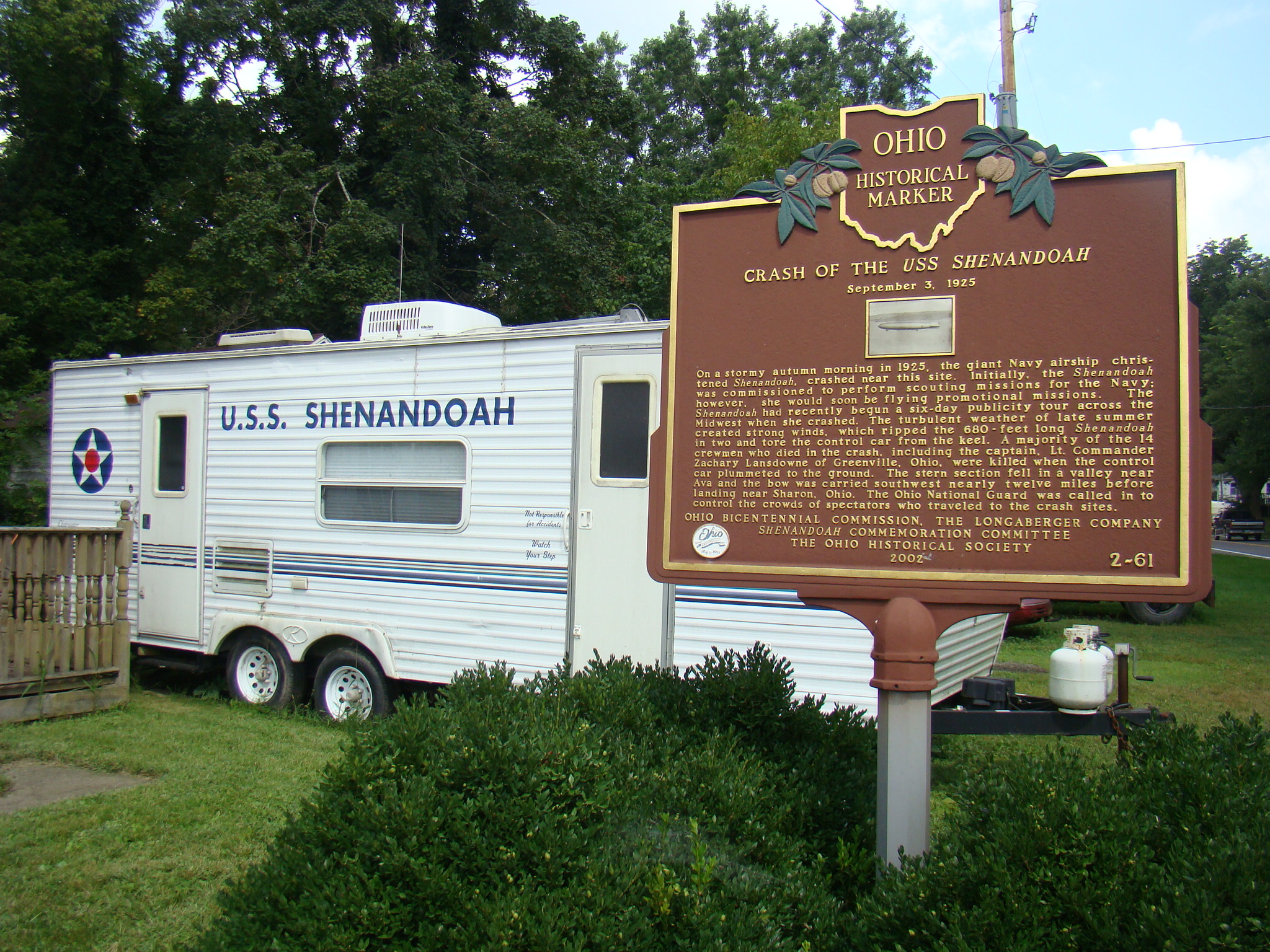
Shenandoah Airship Trailer Museum in Ada, Ohio

U.S.S. Shenandoah Airship Trailer Museum in Ada, Ohio

In a remote corner of southeastern Ohio, those interested in history will feel fortunate to stumble upon U.S.S. Shenandoah Trailer Museum. This small, but very nice, camper trailer nearly overflows with historic memorabilia, which the Rayner family began organizing for display back in the 1980’s. Rayner’s Towing Garage in Ada, Ohio has a fantastic collection of items related to the Shenandoah Airship crash back in 1925, and the historical marker out front explains the story of the crash. Commander Zachary Lansdowne had been warned not to take this particular flight due to the rapid changes in Ohio weather during September. But on its tour of midwestern state fairs, he wanted to fly the immense 680′ zeppelin over his family home in Greeville, Ohio where his mother was living at that time.

USS Shenandoah Station Memorial Post Card

USS Shenandoah Station Memorial Post Card

Bryan and Theresa Rayner were eager to share their knowledge on a recent visit to their museum. Theresa, who works at the local post office, attempted to have a commemorative stamp made on the 80th anniversary, but that wasn’t possible due to government disaster regulations following 9/11. Therefore, for the 85th anniversary, the post office did have a commemorative post card developed. Part of the airship landed on the family farm of Bryan Rayner, who developed his interest way back at the age of three when he went with his grandfather to take people to the crash site at their farm.. Unfortunately, Bryan recently suffered a severe heart attack and now joins those who died in the Shenandoah crash.

The walls are covered with pictures and stories of the 1925 crash of the famous airship, Shenandoah. There were actually three places where major sections of the airship fell to earth. The stern section of the ship crashed  near Ava and a memorial can be seen from I-77, heading south, between the Buffalo and Belle Valley exits. The control car crashed on nearby Andy Gamary Farm, while the bow section drifted a bit farther south to Sharon, Ohio along State Route 78.

The Shenandoah was built for naval purposes and not designed for luxury travel. Frequently while on its missions, it would be tied to a naval carrier in the ocean. When released it could float away above the clouds. By lowering a “spy car” just below the clouds, it accomplished its missions of reconnaissance on enemy ships and subs.
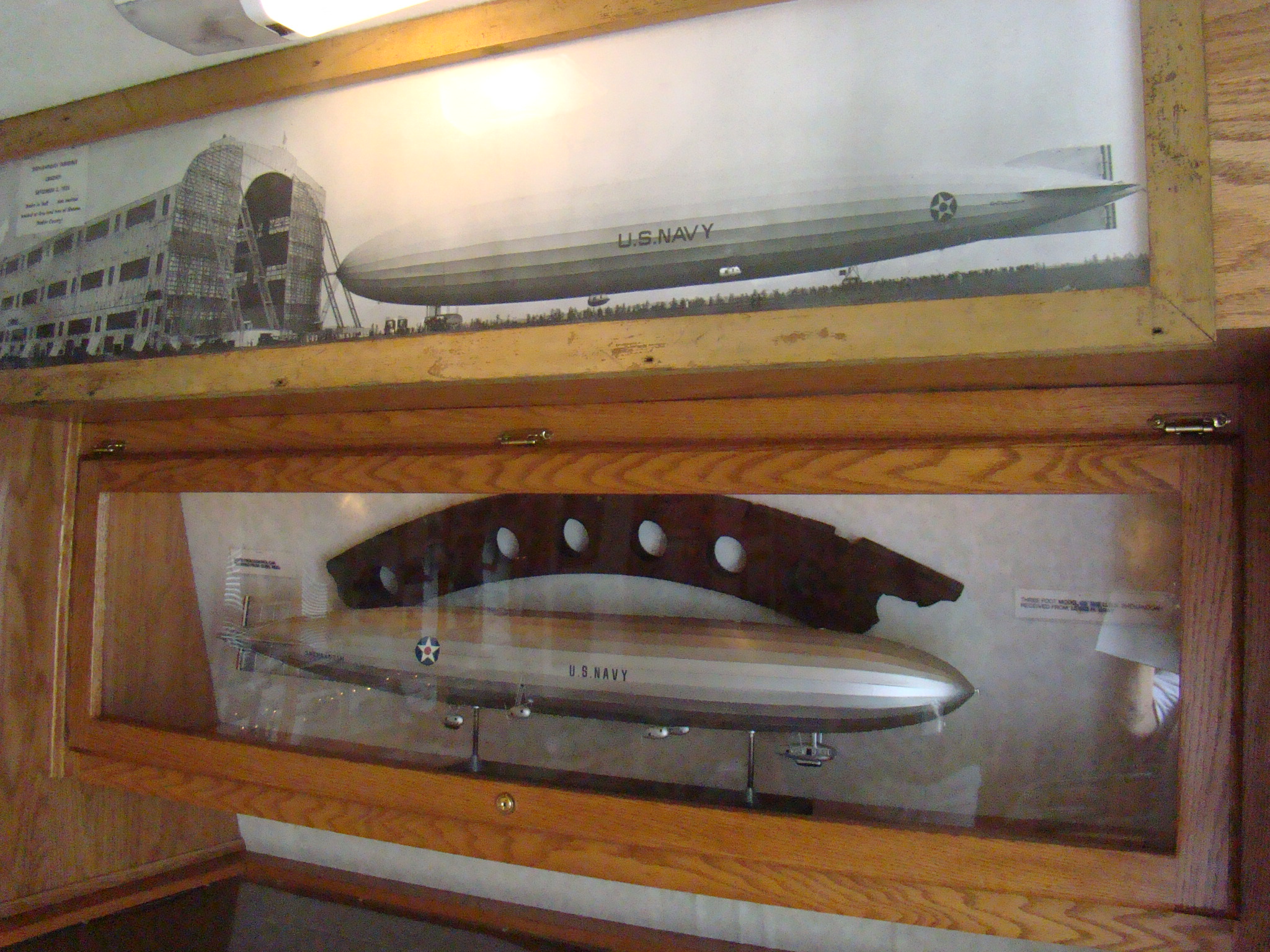
Display showing the skeleton of the famous Shenandoah airship

Display showing the skeleton of the famous Shenandoah

The skeleton of the ship was made of aluminum girders with the fabric covering coated with silvery aluminum paint. Inside the ship there was actually a long walkway, along which the crew could sleep and eat. There were twenty gas cells with their outside covering being made of cotton and the inside made of “goldbeaters skin”, the stomach lining of oxen.
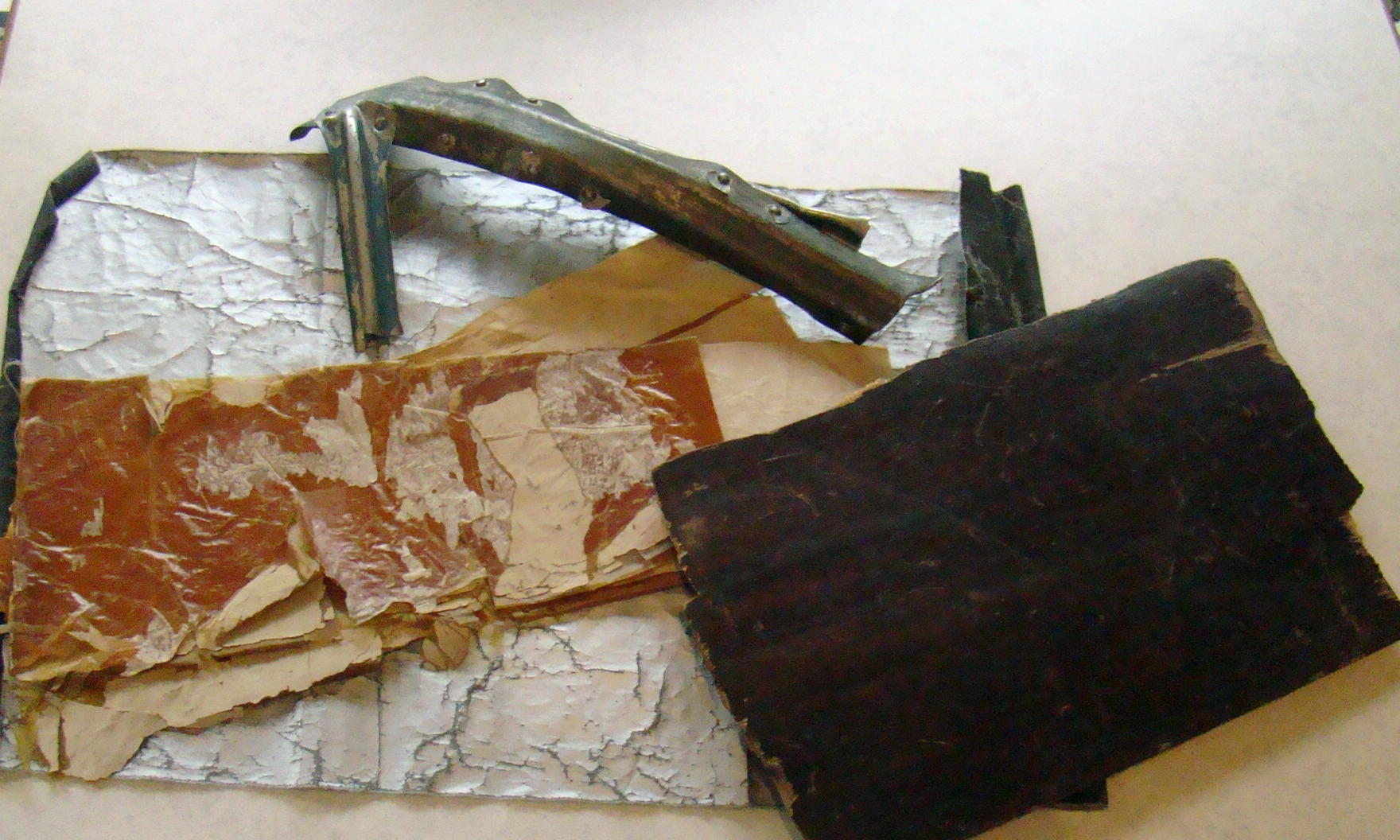
Pieces of Shenandoah: oxen stomach lining, aluminum and wood frame

Pieces of Shenandoah outside fabric, oxen stomach lining, aluminum and wood frame

Pieces of all these parts are available to see and even touch inside the museum. Most are behind glass, but they feel it is important to have young people especially, be able to touch the original pieces to gain a better feel for their historic importance. The Rayners took items to local schools in Noble County to share the story with the children over the years. They even set up a 12″ walkway, which was the actual size of the walkway inside the airship, for children to duplicate the experience of the limited space inside.
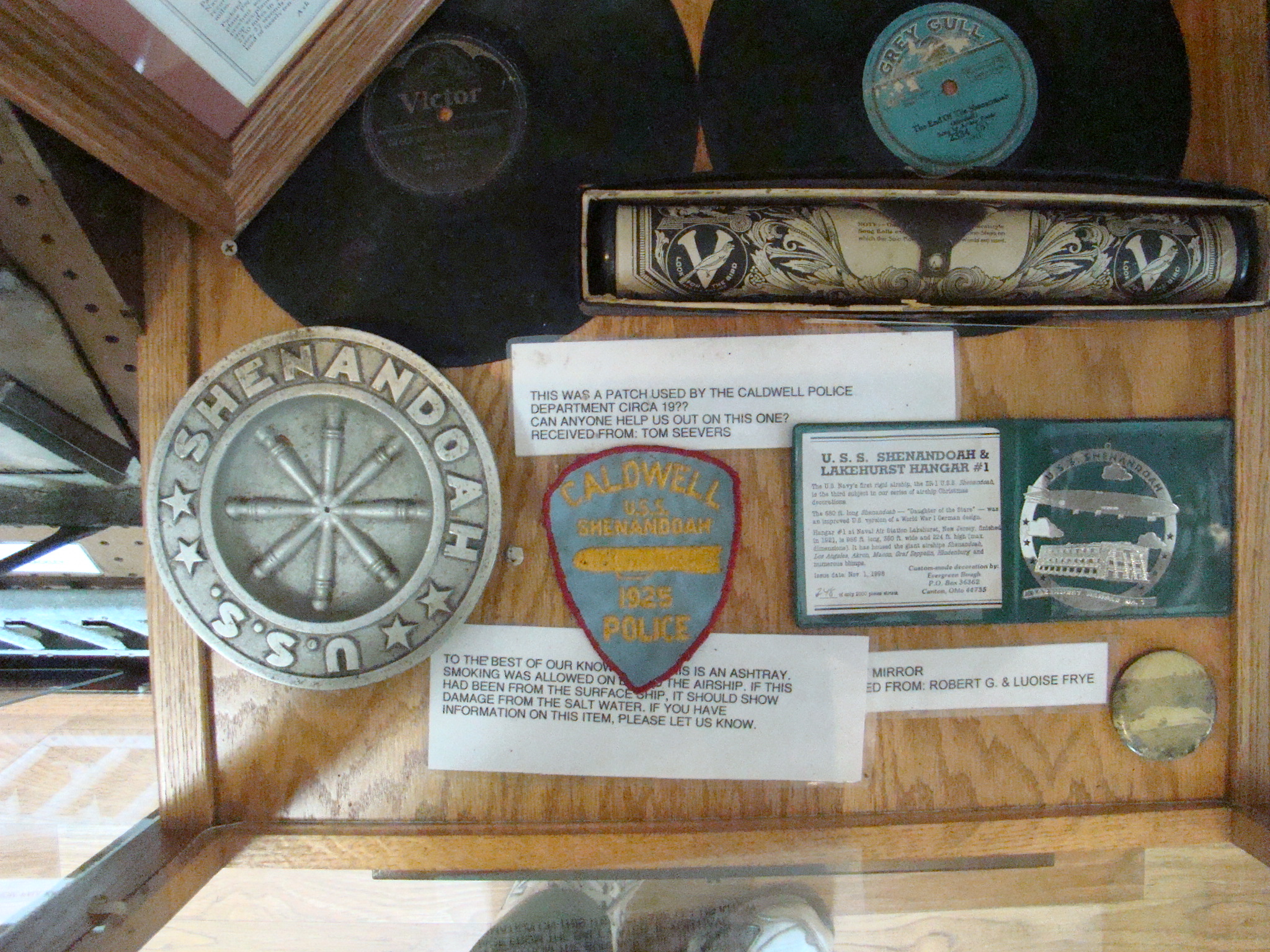
One of many glass cases filled with memorabilia

One of many glass cases filled with memorabilia

Glass cases are packed with memorabilia that has been gathered from many sources. Some items have been donated to the museum and others have been purchased. Old 78 records with songs about the Shenandoah, such as “The End of The Shenandoah”, have been collected. Sheet music of “The Wreck of Shenandoah” can also be viewed. A large collection of rings made from pieces of the airship fill a special exhibit case. Some were purchased as gifts for Bryan, who had a real passion for keeping the memory of the Shenandoah alive.

You might be surprised at the number of visitors who have toured the U.S.S. Shenandoah Trailer Museum from all over the United States, Canada, England, Australia, and New Zealand. Over the years many, who actually lost family members in that crash, stopped by to leave a piece of history and view the grand collection of memorabilia. On the 2013 anniversary of the crash, Commander Zachary Lansdowne’s granddaughter and family visited the museum.

This is one of those times when an individual or two have made a real difference in the world by keeping alive the stories and events of the airship Shenandoah.

The U.S.S. Shenandoah Trailer Museum can be found in Ada, Ohio just off I-77. To visit the Shenandoah crash site, take I-77 to Exit 28 , Belle Valley. From the west side of the interstate, take Hwy 821 North 5 miles to Ava. The monument is on the north side of town on the east side of the road and well marked. Rayner’s Garage and the Shenandoah Trailer Museum are on the south side of town. The museum has limited open hours.
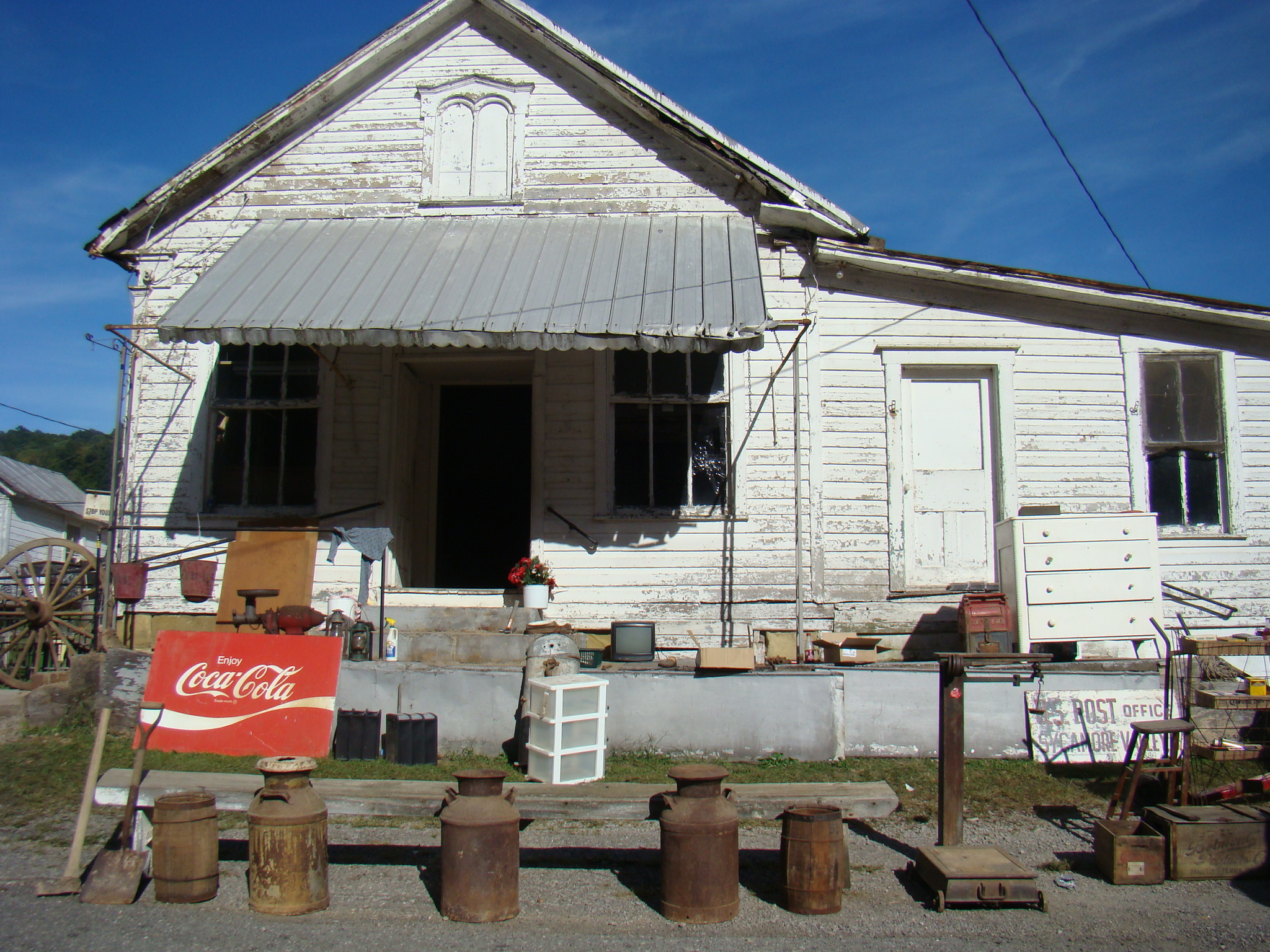
End of an Era: Morrison’s Store Sycamore Valley, Ohio

Morrison General Store in Sycamore Valley, Ohio

Morrison’s General Store in Sycamore Valley, Ohio

Driving down the long steep Creighton Hill to Sycamore Valley, thoughts of years gone by began to creep into the mind. At the bottom of the hill in a beautiful tree-filled valley sat the little town of Sycamore Valley, Ohio. Located in Monroe County, this small town has a rich history centered around their meeting place, Morrison’s General Store.

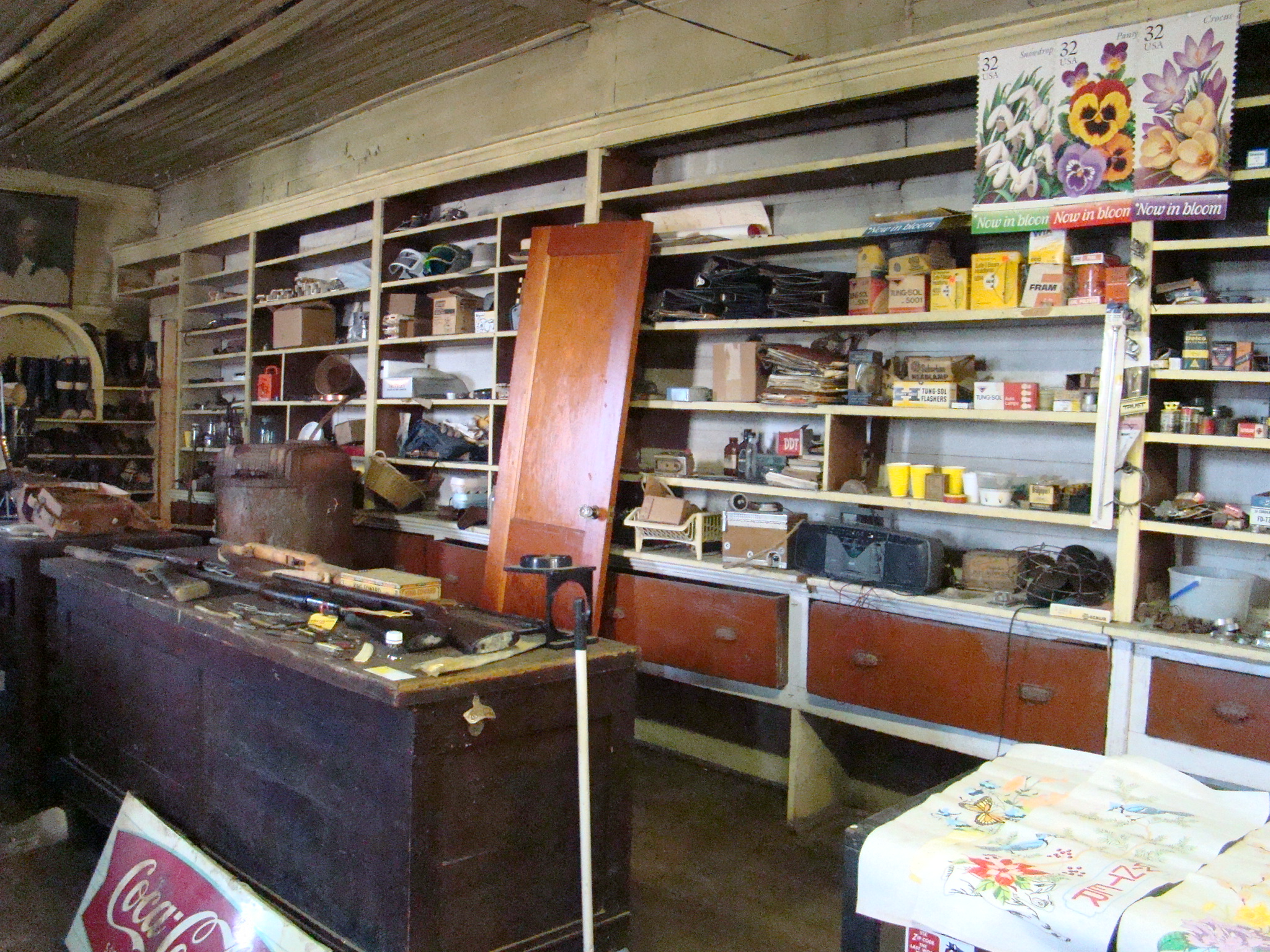
Shelves at Morrison Store

Shelves at Morrison Store

Built back in the 1880’s, this was the supply center for most of the people of that valley. No other towns were close by so at Morrison’s General they found not only groceries for the family, but also feed for their livestock at an adjacent feed mill. Included on the shelves were everything needed for the home, farm, and even boots and hats for the farmer. When looking through the old ledgers for the store, total sales for the month of December, 1943 totaled $1,429.32. An unusual sign on the scales inside summed up the philosophy of the store:

We have no quarrel with those who sell for less They know what their merchandise is worth.

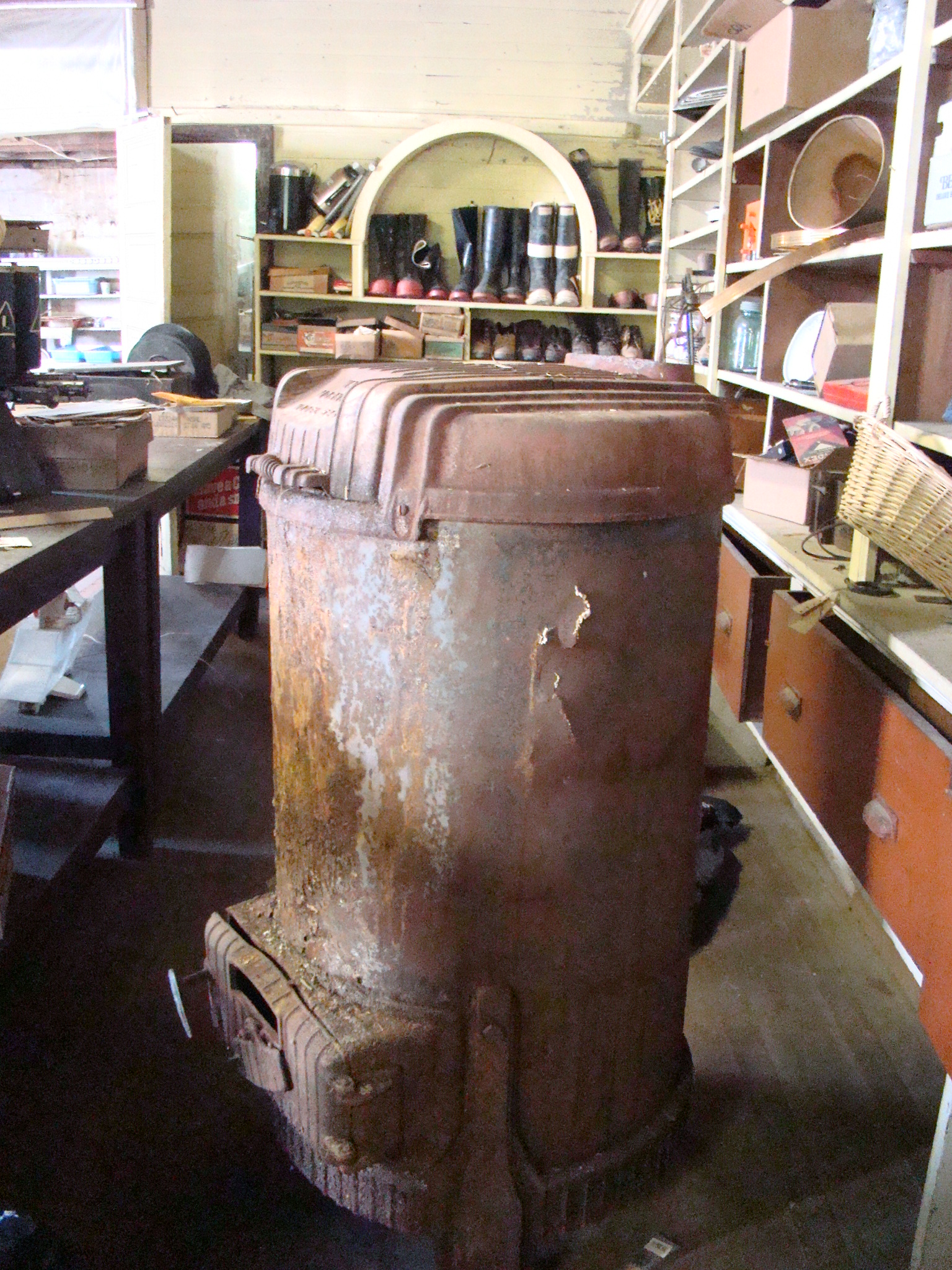
Warm Morning Meeting Place

Warm Morning Meeting Place

Even though there was a gas light at the entrance, inside the store was dark and gloomy cheered only by the friendly folks of the Valley. Many remembered coming to the store two or three times a week to get everything they needed for their family. No matter if you needed eggs and cheese or nuts and bolts, this was the original one-stop shopping center. One man said he came from the age of three to the store where his mother met with some other ladies for quilting. This was a time when folks would gather around the old Warm Morning wood stove, prop up their feet and share the latest Valley news.

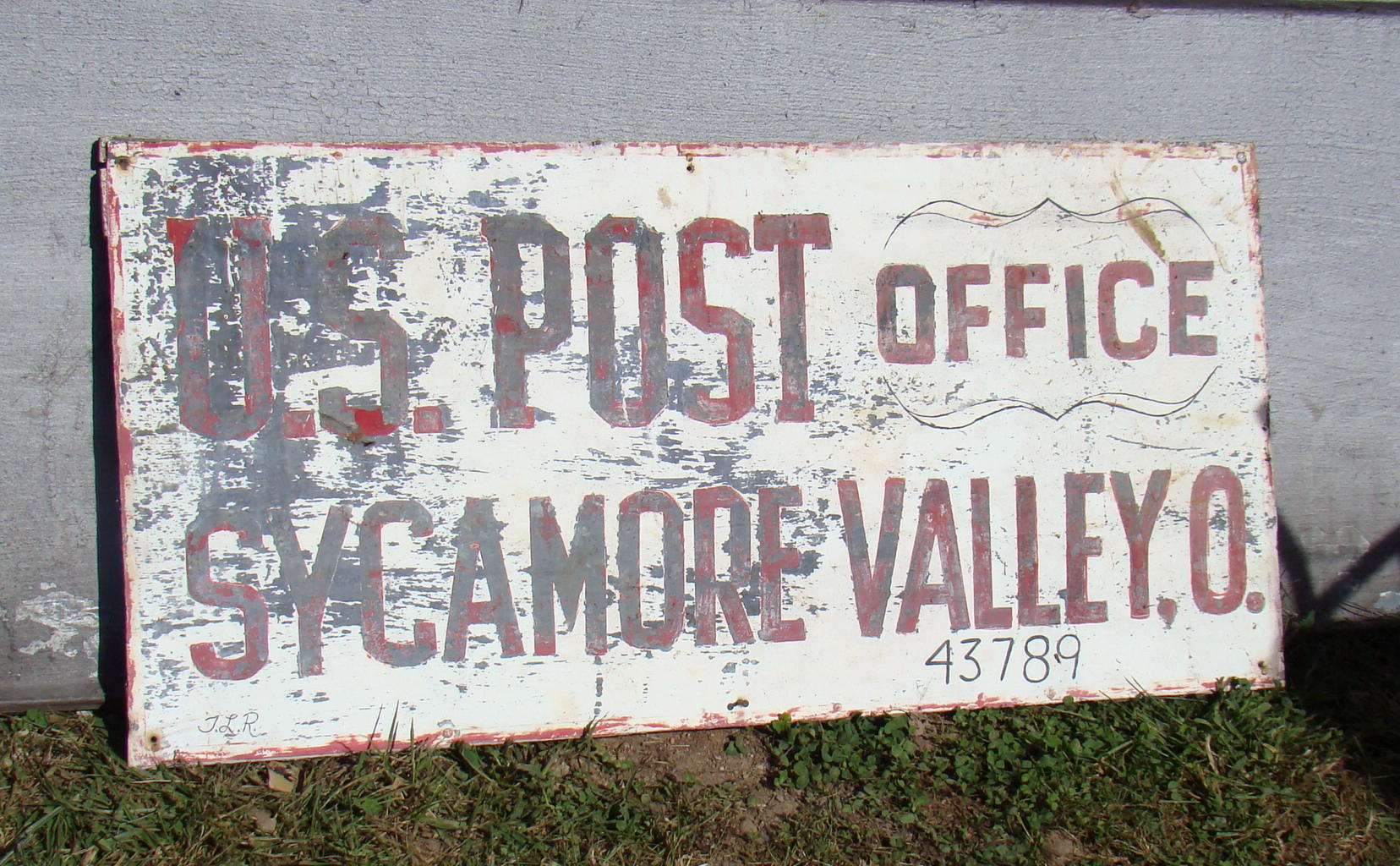
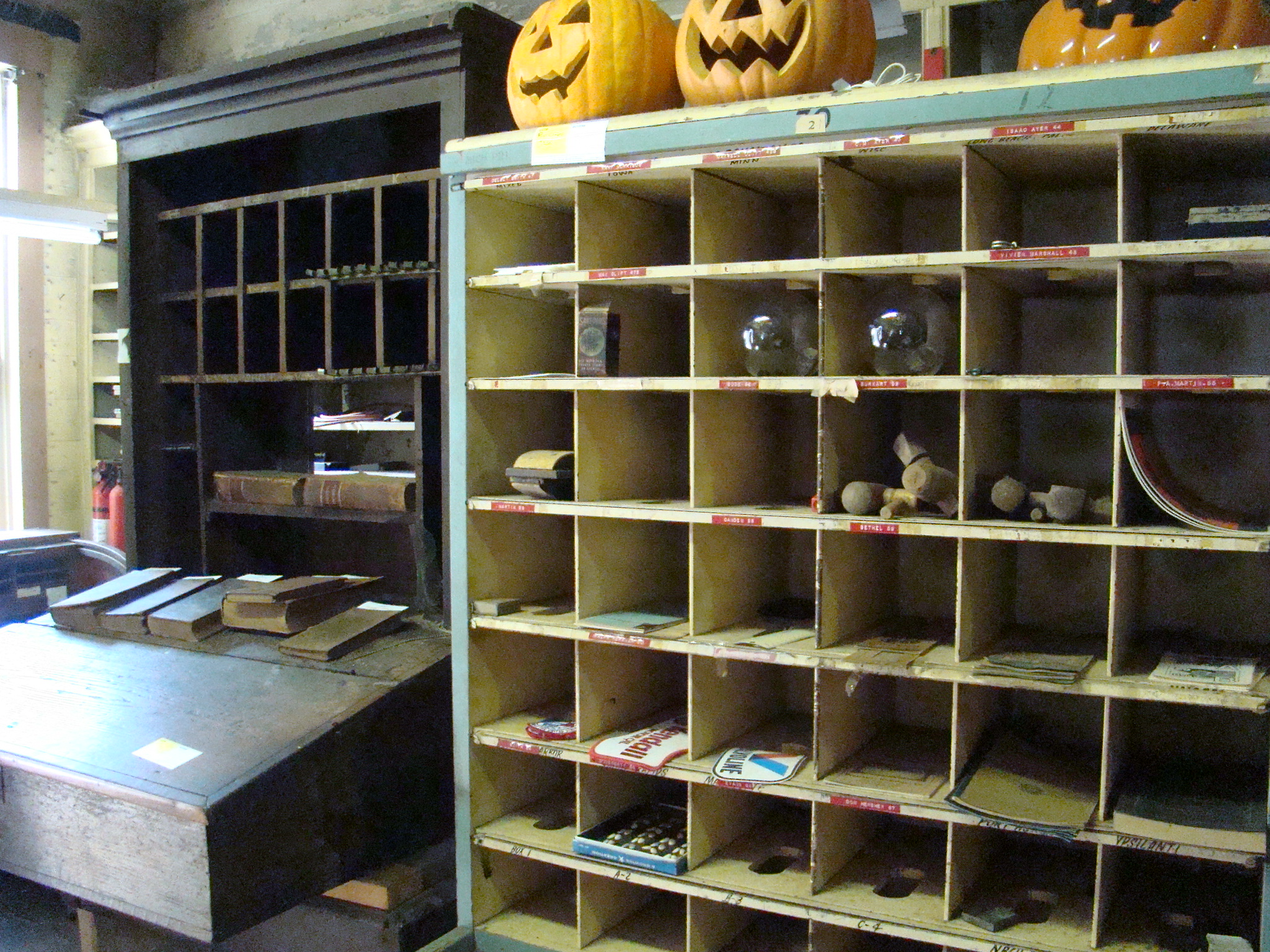
Sycamore Valley Post Office

Sycamore Valley Post Office

Sycamore Valley Post Office

Sycamore Valley Post Office

The store here in Sycamore Valley also served as a one-pump Ashland gas station as well as the post office, which served over 100 addresses at its peak. Inside you can still see the post office boxes where mail was kept for pick-up. While there Morris, the last postmaster, told about his 34 years running the post office. Morris’ dad owned the store previous to that time.

Times were rough in the Valley and keeping the store open was a difficult encounter during the best of times. Finally, the store was closed but the post office continued for several more years. Morris did sell candy, pop and a few small items until it finally closed in 2008 when the government shut down many small post offices.

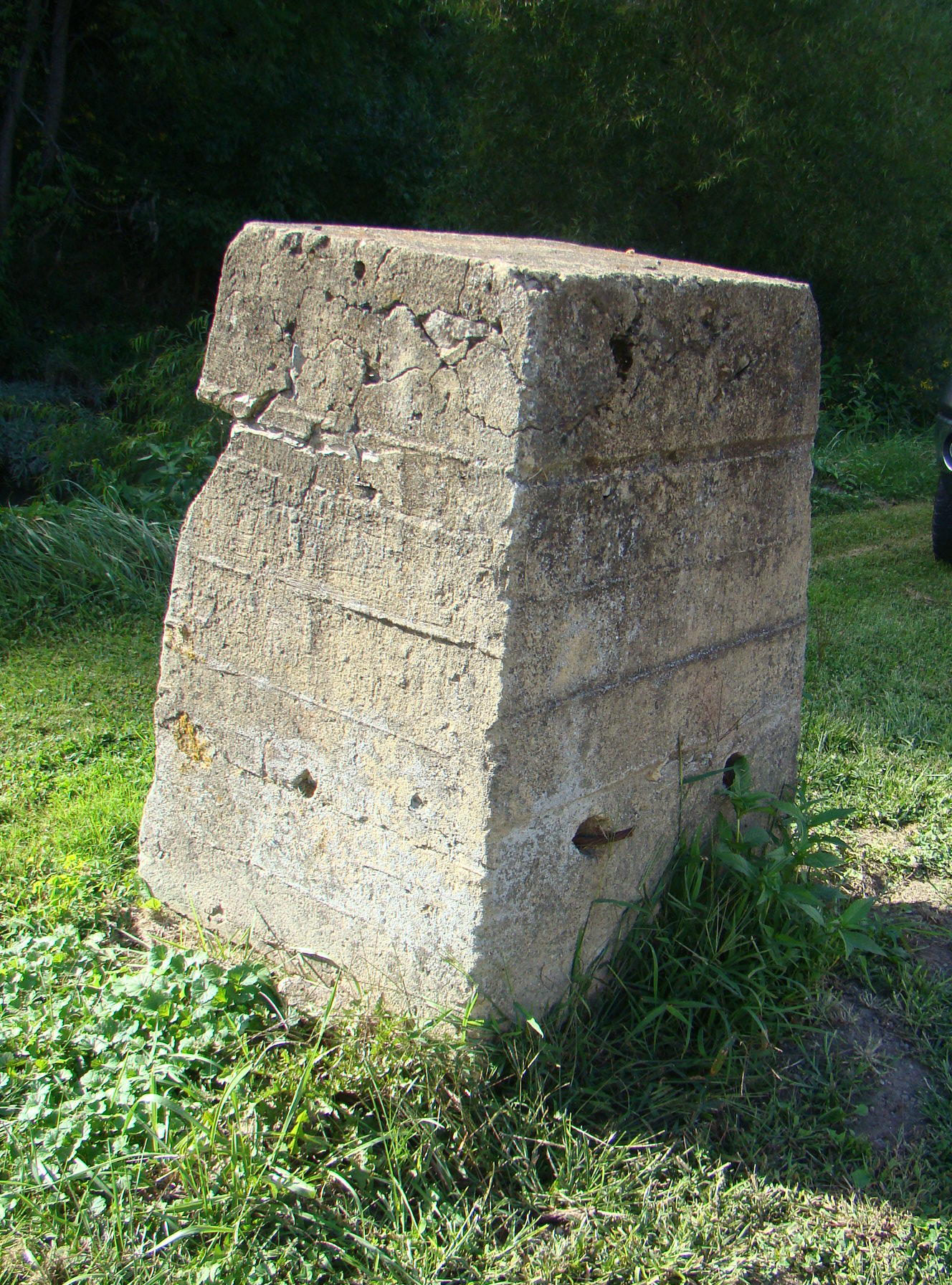
Old Bridge Abutment

Old Bridge Abutment

Across the narrow road, this concrete marker was the vertical support for a bridge that went across the creek. The store owner kept his cattle on the other side of the little creek and the bridge was firectly across the road in front of the store door.

Leaving Sycamore Valley, long time residents of the area told stories about going back up the steep Creighton Hill to the ridge top. When someone was wanting to buy a car back even in the early days, Creighton Hill was the test site.  If it could make it up the hill, then the car was worthy of being purchased. The speed with which it climbed the hill determined its price! This was one of the original test strips for automobiles.

At times it is interesting to explore what used to be, but we are certainly lucky to have the improvements that we have today – electricity and indoor plumbing come instantly to mind.

Sycamore Valley can be found in Southeastern Ohio on the perfect Gypsy Road Trip. After leaving I-77 in Ohio at exit 25, you will enjoy a scenic route of twists and turns. Better get out your road map or GPS (if it can get a signal) to find the way.

90th Birthday Words of Wisdom “Family first and always”

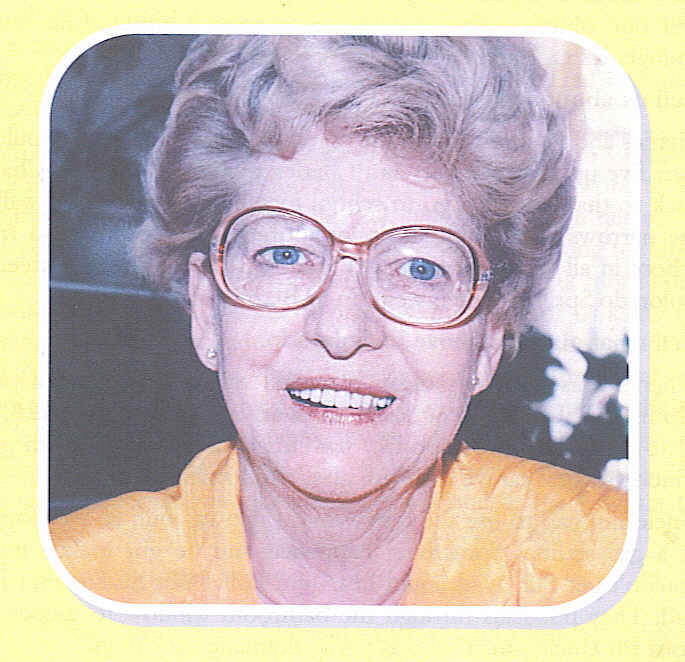
Luella's favorite photo of herself

Luella’s favorite photo of herself

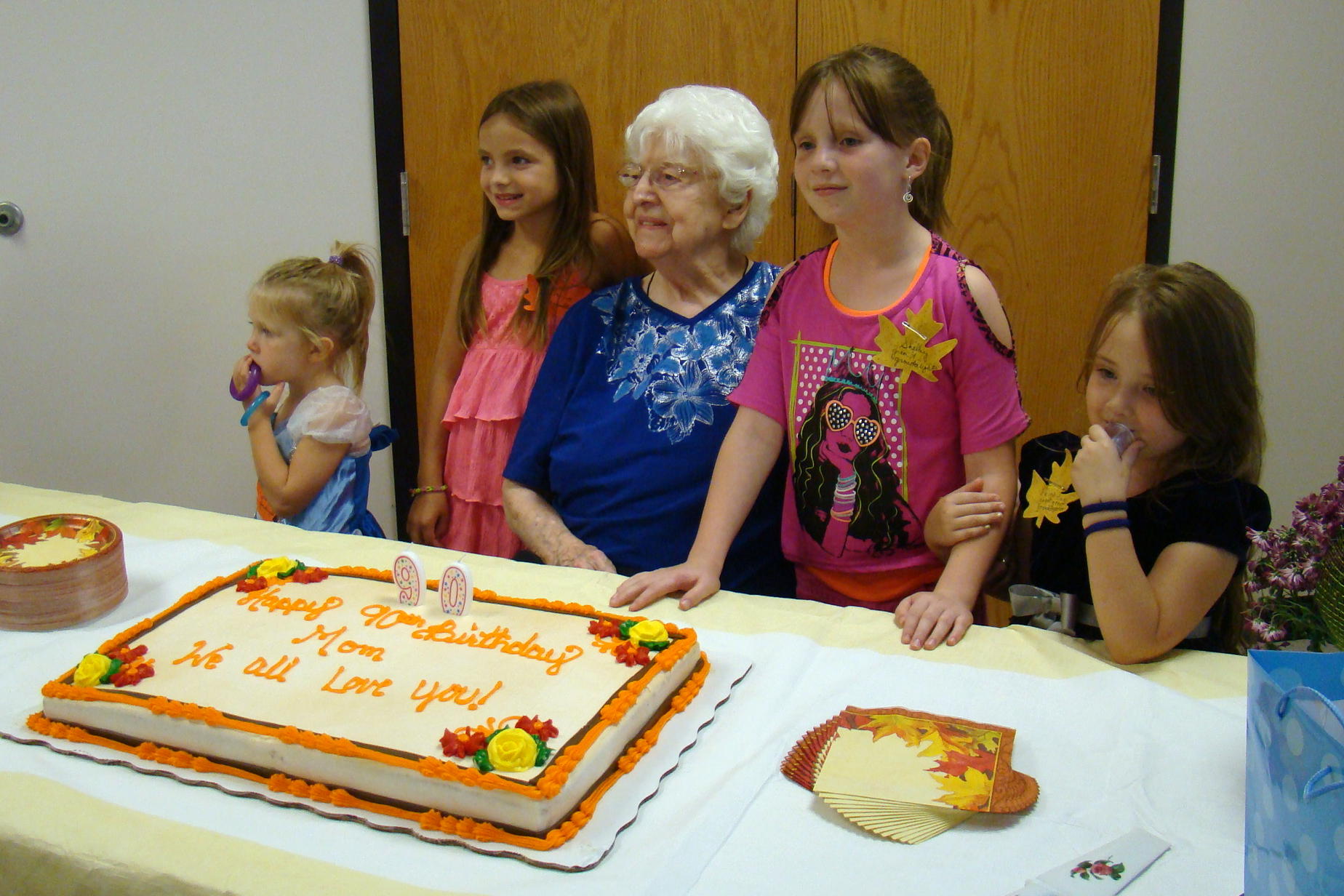
How does it feel to be 90 years old? “I love it!” exclaimed Luella Polcyn of Coshocton, Ohio as she celebrated her 90th birthday with family and friends.  Now ninety candles on a cake could cause quite a flame, so they wisely scheduled the party at Three Rivers Fire House – just in case!

When she blew out the candles at her 80th birthday party, someone asked her what she had wished for. She quickly replied, “I wished everyone of you would be at my 90th birthday celebration.” Now she wants a repeat performance at age 100.

Luella began school at the age of four, walking with her brother Charles along the narrows of Wills Creek to school at Tyner in Guernsey County, Ohio. They walked about a mile each way in all kinds of weather to get their education at this one room school.

The family moved to Colorado when she was ten. Seven people fit in that 1928 Olds – their first car with glass windows – with the trip taking seven days. She graduated from high school at the age of sixteen in Colorado Springs before going to Blair Business College. That was quite the education for a young lady at that time.

Some of Luella's grandchildren look over her 90th birthday cake.

Some of Luella’s grandchildren look over her 90th birthday cake. She still likes sweets!

Her first job at sixteen was a waitress at a restaurant. They were allowed to eat one free meal a day including dessert. Luella has always had a sweet tooth and dessert is sometimes her entire meal these days, but then she just couldn’t resist having ice cream on her pie…two desserts. That time her sweet tooth got her fired, even though it seemed to her that they had plenty of each.

At a carnival in Colorado Springs, she met the man who was to be her husband, Louie Polcyn, and was married in 1942.  Two years later, Louie was off to WWII and stationed in Burma where he was a mule skinner. While he was at war, Luella worked at the Nabisco Cracker Company for 46 cents an hour. Somehow with the $30 Louie sent home from his military pay each month, and her working at Nabisco, Luella saved $1,000, which was used for down payment on a house. They also bought a Model A Ford about that time, and she remembers that the gas prices were 10-12 cents a gallon.

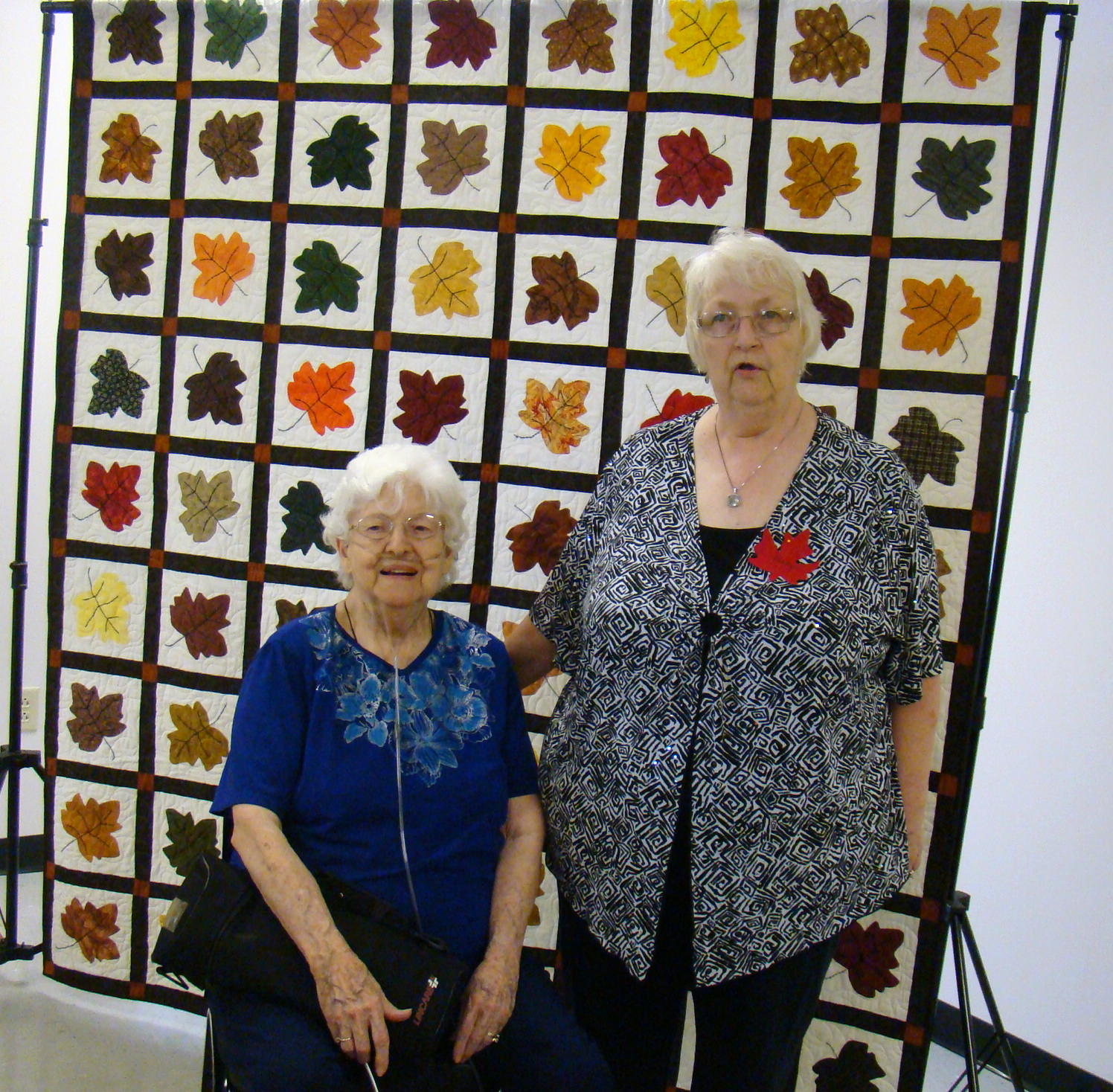
Luella's family made this quilt especially for her birthday.

Luella’s family made this quilt especially for her 90th birthday.

At the age of 50, Luella found a job that would change her life. Her children were raised and she began working at Frontier Airlines. Now she was traveling to places she had previously only dreamed of – Rome, Russia, Mexico, Portugal, Alaska, and many more. She was footloose and fancy free.

Now Luella enjoys relaxing at home so a beautiful autumn leaf quilt was made by members of the family – one square at a time. Luella has made many quilts over the years and all the family has enjoyed a gift quilt for some special occassion – birthday, graduation, wedding, new baby and the list could continue. So today they thought it fitting to reward her wtih a quilt they made especially for her. Each person who assisted wrote their name on one of the leaves. Before the party was finished, everyone in attendance had written their name and good wishes on the back of the quilt. Now on a cold winter’s day, Luella will be surrounded with the love of her family and friends.

This 90 year old lady has seen many changes over her lifetime. Some would automatically expect that all the new technology would be the biggest change, but Luella says that is not so. To her the biggest difference in today’s world is how people treat each other and have lack of consideration for another person’s life. She never thought she would see the crime we have today.

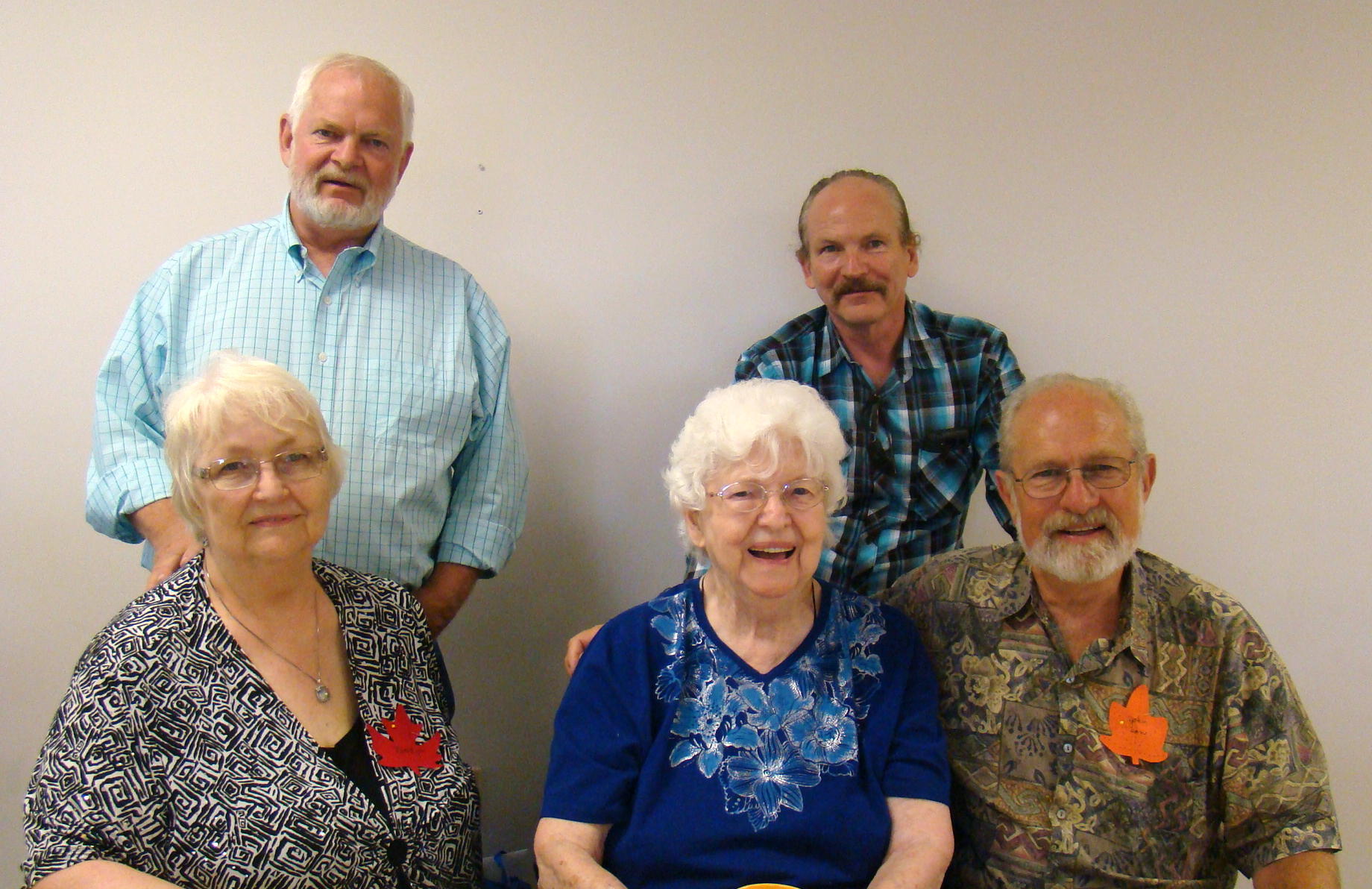
Luella surrounded by her children: Gladys, Randy, Greg, and John.

Luella surrounded by her children: Gladys, Randy, Greg, and John.

Her greatest accomplishlment in life, however, is her loving family. Their love of children shines through with every addition to the family, and there have been plenty of those. Besides her four children, who came to the celebration from Colorado, Hilliard, Ohio, and Coshocton, Luella has 13 grandchildren, 17 great-grandchildren, and 7 great-great-grandchildren.  She tells everyone, “One thing you should never forget – family first and always.”

Willcox, Arizona “Where the Spirit of the West Begins”

Dragoon Mountain Valley

Dragoon Mountain Valley

After a long, slow trip through the mountains, the town of Willcox, Arizona seemed like an oasis in the desert. Situated in a valley surrounded by the Dragoon Mountains, Willcox is the perfect place to stretch your legs on a walk through their beautiful town and even give yourself a tasty treat.

The town has been around since 1880, but at that time it was known as Maley, a whistlestop for the Southern Pacific Railroad. It was named Willcox years later after General Orlando Willcox, who arrived on the first train to stop there. Today that railroad heritage plays a big role in the town’s celebrations.

Rex Allen Museum

Rex Allen Museum on Railroad Street

The town is especially famous for country western signer, Rex Allen, whose statue and museum are highlights there. Rex Allen really was a cowboy, and became the last of the singing cowboys of movie fame. The Rex Allen “Arizona Cowboy” Museum holds memorabilia of  his rodeo, record, movie and television activities. This hero of the wildwest always wore a white Stetson hat while joking around with his sidekick played by Buddy Ebsen and later Slim Pickens. The Willcox Cowboy Hall of Fame is also located inside the museum.

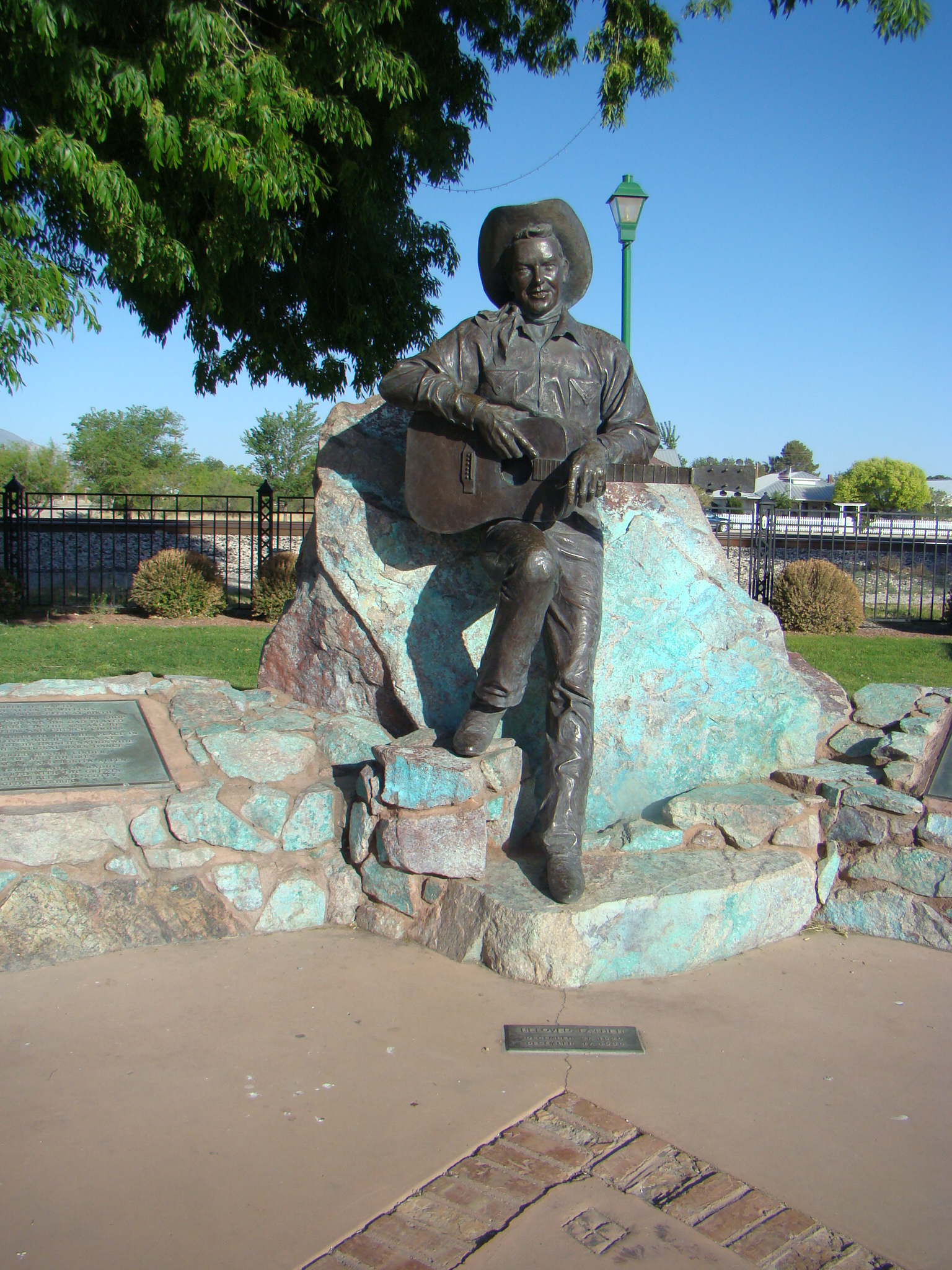
Rex Allen Statue

Rex Allen Statue

Rex Allen’s statue across the road has hidden meaning. Inside that statue is a bronze heart complete with arteries symbolizing that Rex Allen’s heart will always remain in the Willcox area. At the foot of his statue, the ashes of Rex’s horse, Koko, are buried, while Rex’s ashes were scattered around the base of the statue. Koko was billed as “the most beautiful horse in the world” after appearing in 30 movies with Rex Allen. They traveled together over a half million miles in the US and Canada. So it is fitting that Koko rest nearby in the green grass of Horse Heaven.

Stop by Willcox Commercial, the oldest continually operating store in Arizona. Having been in operation since 1880, one of its earlier customers was Geronima, who had a sweet tooth and often stopped by for a pound of sugar. Rex Allen and Tanya Tucker, who also grew up in Willcox, shopped here as well.

Old Chestnut Tree in Park

Old Chinese Elm Tree in Railroad Park

Two giant Chinese Elm trees stand in the vicinity of Rex Allen’s statue. These trees were planted back in 1928 when dirt was brought in to fill in a spot where water gathered every time it rained. They became the center piece of Willcox’s first city park – now called Railroad Park. A friend in New Mexico uses this small park area as a relaxation stop in their travels. Sitting under one of these giant trees while peering up through their branches at the great open sky, gives one a peaceful feeling.

Motherload Antiques and Espresso

Motherlode Antiques and Espresso

Down the street is an interesting Motherlode Antique Shop with Espresso and many fine treats. This was the perfect place to sit out on the porch and visit with the locals while enjoying ice cream and cookies.  Right next door is The Dining Car where you can get some delicious Big Tex BBQ. Everyone was very friendly and offered suggestions of places to visit in the area…and no one seemed in a hurry.

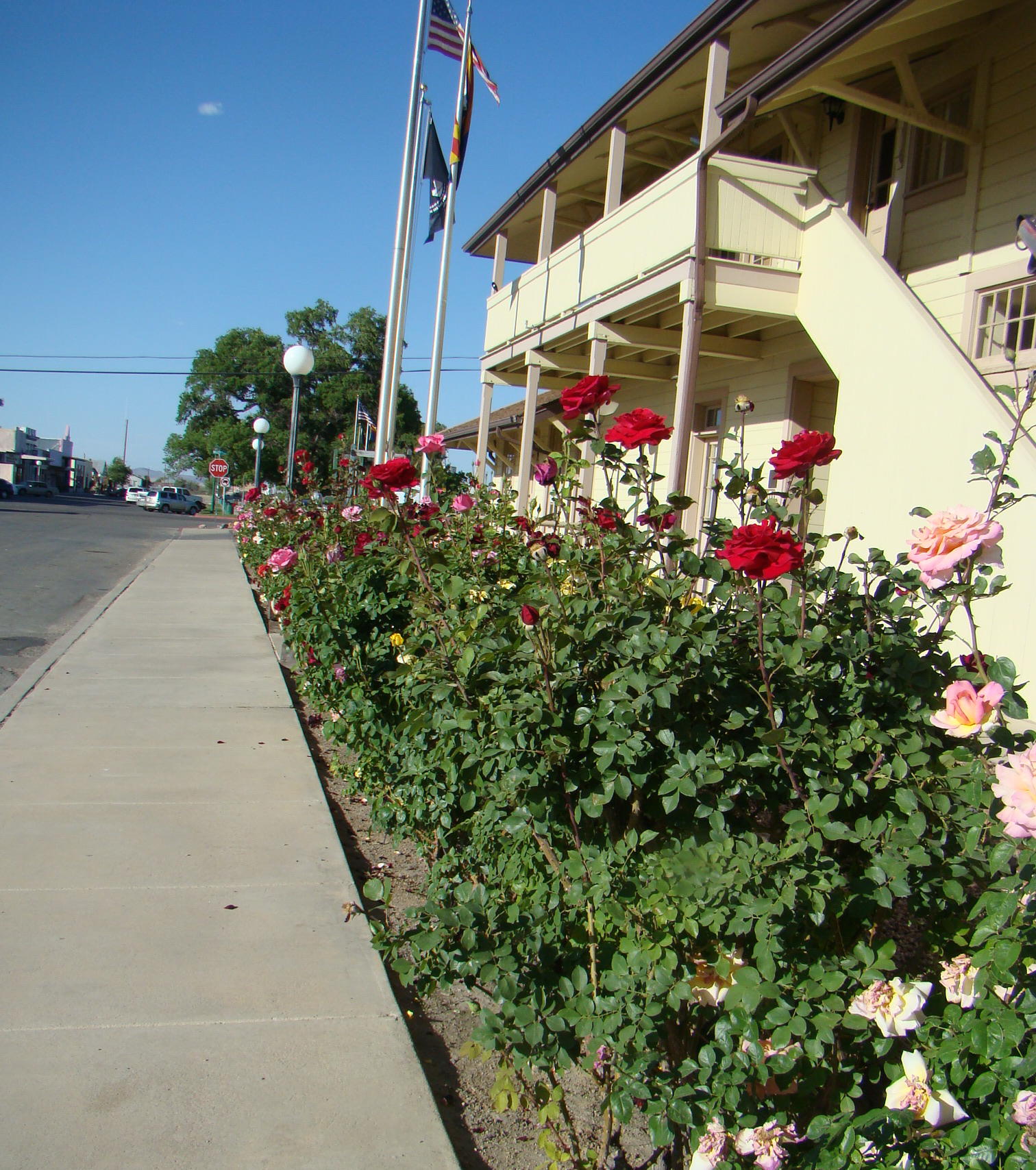
Roses line City Hall on Railroad Street

Roses line City Hall on Railroad Street

The Willcox Town Hall, a former Southern Pacific Railroad Station, features a block long row of beautiful rosebushes that make a stroll along Railroad Avenue a scenic, scented adventure. This is a great place to take a walk after that delicious ice cream cone.  In Willcox, you definitely want to take time to smell the roses.

Willcox is located in southeastern Arizona just off I-10 between Bowie and Benson. Take the West Airport Exit and enjoy the spirit of the west that still exists there today.

Shenandoah Crash Recollections with Ed Lehotay

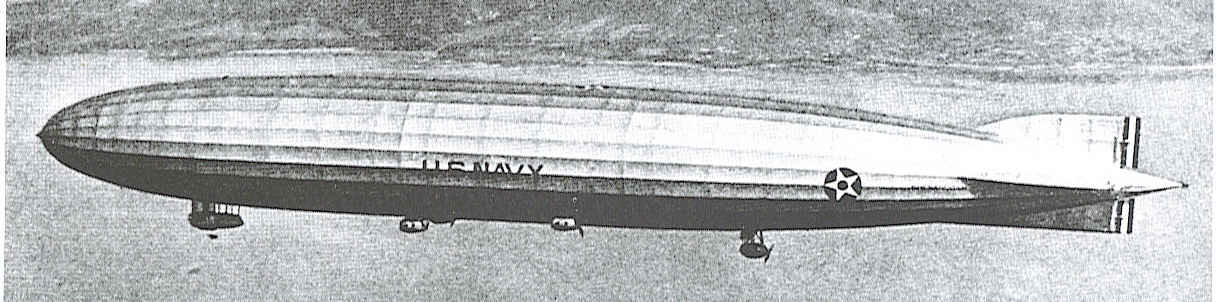
USS Shenandoah airship

USS Shenandoah airship

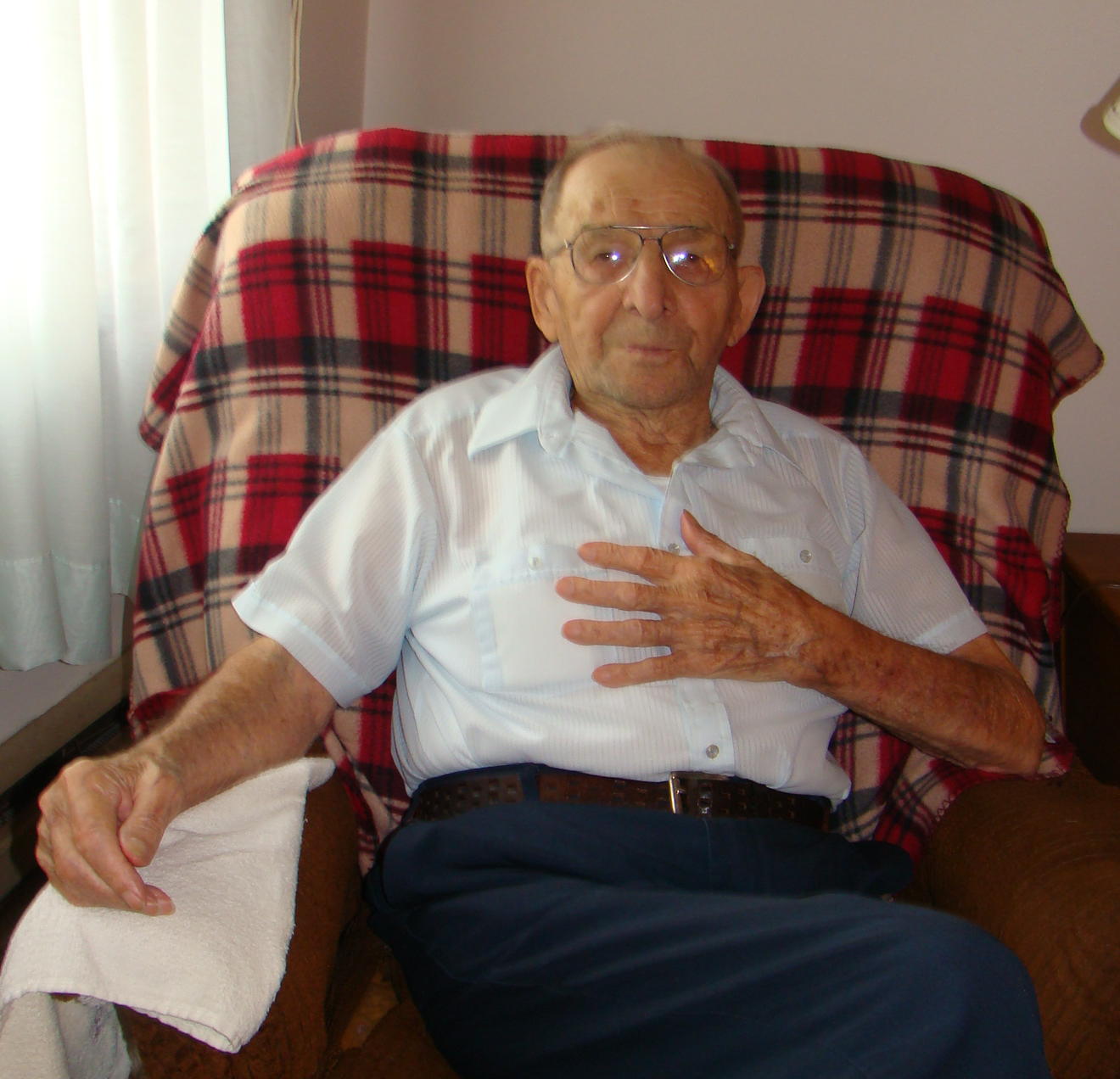
Step back 88 years to September, 1925 as we visit an observer, Ed Lehotay, a lively 97 years old. He and his family actually saw the giant Shenandoah airship that fateful morning before it crashed in nearby Ava, Ohio.

USS Shenandoah was the first of four US Navy rigid airships built at Lakehurst Naval Air Station in New Jersey.  It made the first airship crossing of North America at speeds of up to 69 mph.  On its 57th flight, this “strongest airship in the world” was on a publicity tour of Midwestern State Fairs when it was caught in a thunderstorm in the rolling hills of southeastern Ohio.  Surprisingly, 29 of the crew of 43 survived the crash.

Ed Lehotay at 97 years of age

Ed Lehotay at 97 years of age

Nine year old Ed Lehotay recalled September 2 as being a dreary day with the threat of a storm in the air. They had gone to bed about 10:00 that night in their family home on Patton Hollow Road just south of Cambridge. Their house shook in the terrible storm with torrents of rain pouring down. As the lightning flashed and lit up the sky, their father had noticed a large airship pitching back and forth like a bucking horse directly over their house. His father woke the whole family at 4:00 in the morning on September 3, 1925. The children’s eyes were wide with wonder at the huge airship over their house being lit up by the lightning.

The Shenandoah moved slowly just over the rooftop. Their family was shocked to see the 680′ long airship with a diameter of nearly 80′ so close, rolling from side to side. That’s as long as two and a half football fields!  When the sound of the roaring engines combined with the rolling thunder, the noise was unforgettable. From the living room window, the family watched the airship as it drifted across the road, over the barn, and up the hill nearly touching the top of their cherry orchard. The crew threw the spider lines from the airship in hopes they would either get tangled in the tree tops, or perhaps someone would be able to reach them and restrain the airship.

Ed and his family would never forget the sight of the USS Shenandoah (ZR-1) on that eventful morning. As the squall line continued to pummel  the zeppelin, the ship eventually broke in half with part of it landing near Ava, Ohio in Noble County, and the rest being scattered about ten miles farther, with many of the crew falling to the ground along the way.

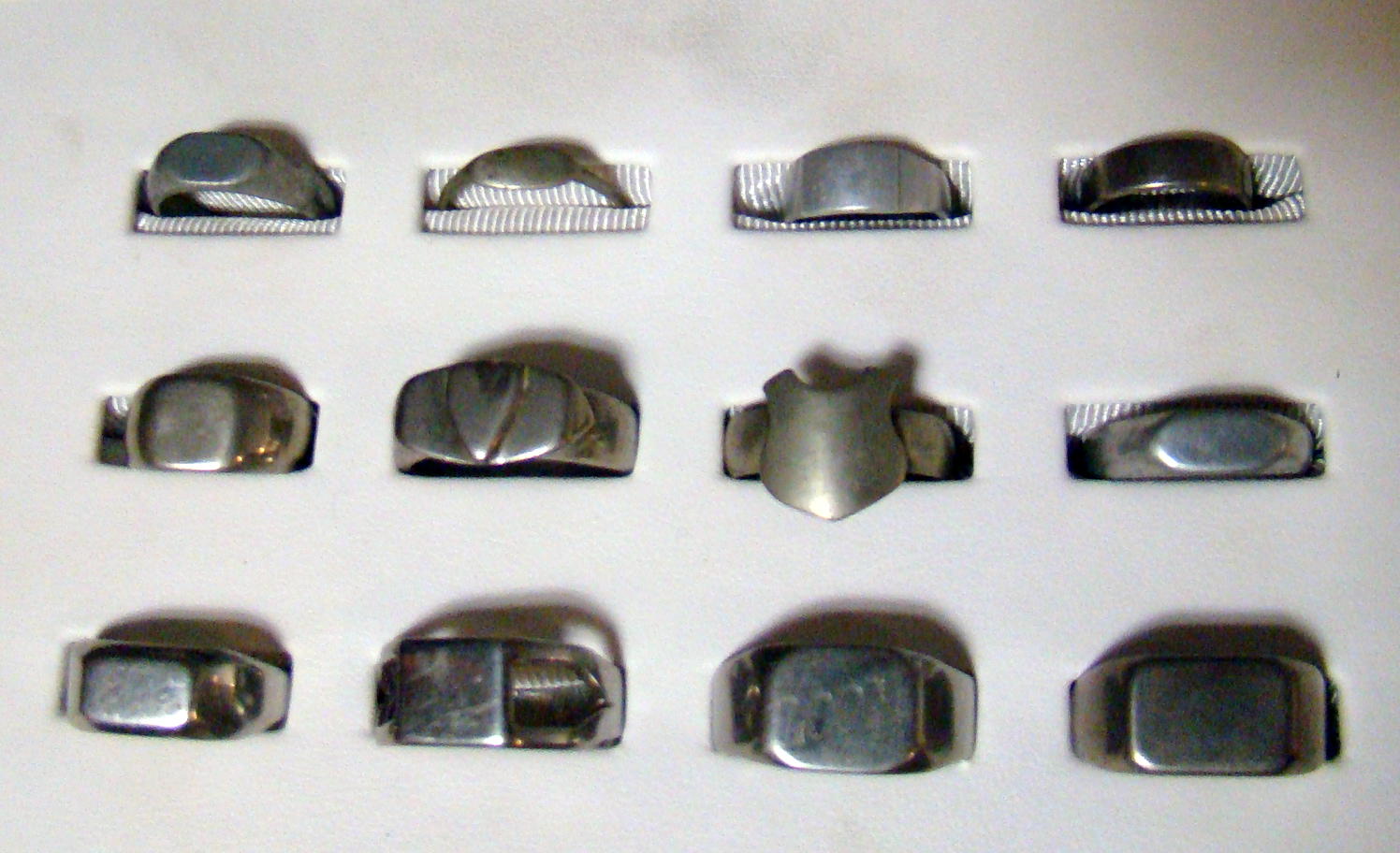
Rings made from Shenandoah's aluminum frame

Rings made from Shenandoah’s aluminum frame.

People made a beeline to the crash location in the continuing rain. Ed begged his family to let him go to the site, but they felt there would be too much confusion there for a youngster. Instead his brother drove to Ava through the mud roads in his new Willy’s Baby Overland. Once there they saw people cutting up the fabric of the airship for raincoats. Even though it was raining, people still needed drinking water so a local farmer, fearing his well would go dry from so many users, began charging for water – something rare in those days. Another young entrepreneur brought thirst quenching bottles of pop to sell at the site. Many took pieces of Shenandoah’s aluminum frame as souvenirs.  Ed’s brother brought him a piece of aluminum, which Ed melted in their forge and fashioned into rings. His dad put on one of those rings with a diamond shape on top, wore it every day and was even buried with it on his hand.

Shenandoah Memorial in Ava Ohio

Shenandoah Memorial in Ava Ohio

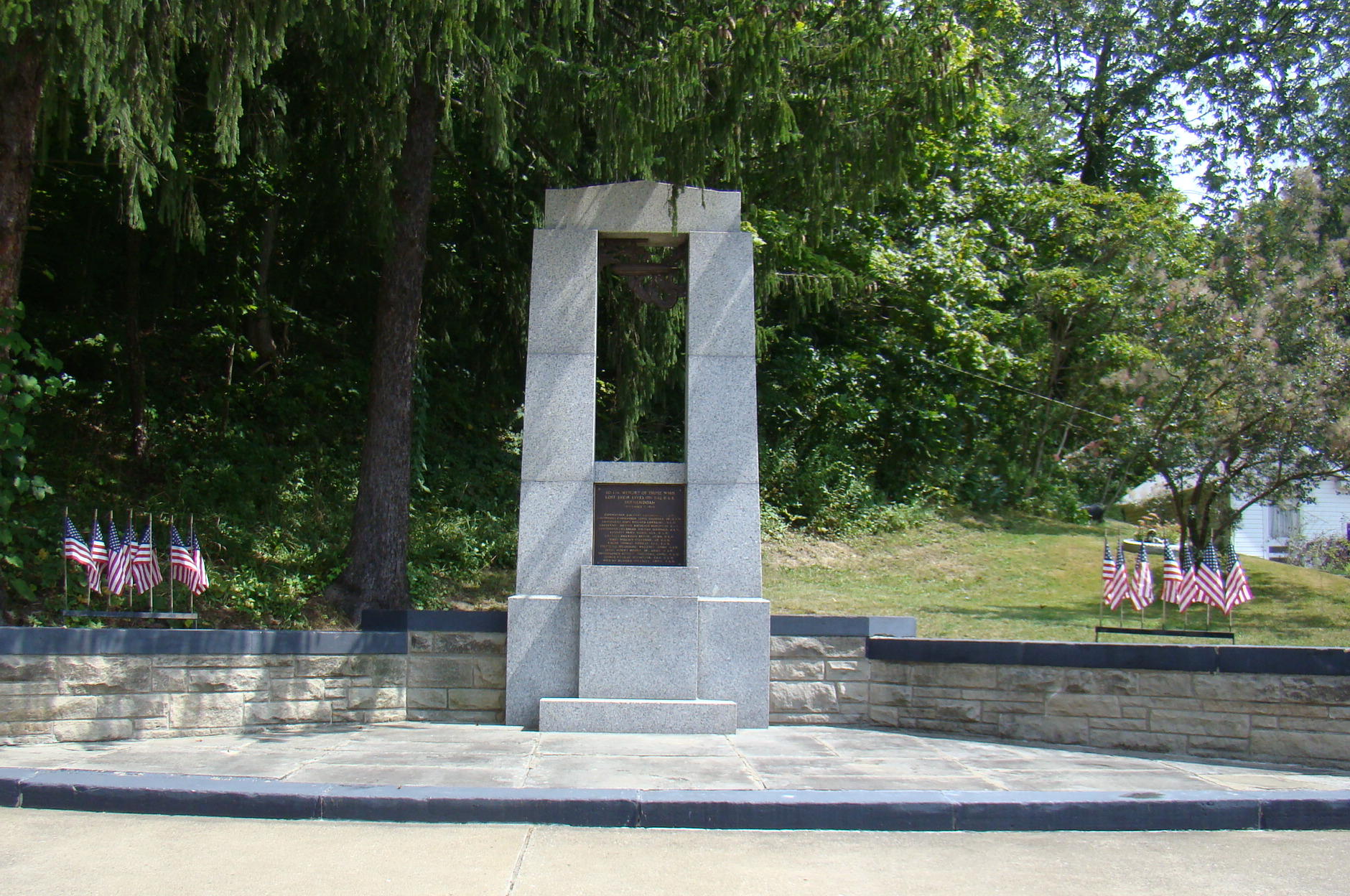
Today the Shenandoah Memorial stands near the place of the crash. Originally, the memorial was back in the woods at the actual site of the crash, but today it has been moved where people can visit it more easily. It consists of a small metal replica of the Shenandoah airship inside a tall granite archway , which is surrounded by swirling metal storm clouds. A bronze plaque lists names of those who lost their lives in the crash.

At the southern end of Ava, there is a USS Shenandoah Memorial Trailer Museum beside Rayner’s Garage. Bryan and Teresa Rayner have saved many pieces of memorabilia regarding that crash in 1925. Bryan has a special interest since his family owned one of the farms where pieces were found.

A local high school in Noble County carries on the historic memory of this event by having their high school sports team called the Shenandoah Zeps.  Their logo is a sleek dirigible.

How wonderful it would have been to view the Shenandoah in all its magnificence as it glided through the sky. Thanks to all those who help memories of the  famous airship and its crash still live on!

To visit the Shenandoah crash site, take I-77 to Exit 28 , Belle Valley. From the west side of the interstate, take Hwy 821 North 5 miles to Ava. The monument is on the north side of town on the east side of the road and well marked. Rayner’s Garage and the Shenandoah Trailer Museum are on the south side of town. The museum has limited open hours.
School Is In The Air

Hopewell One-Room School at Indian Camp

Hopewell One-Room School at Indian Camp

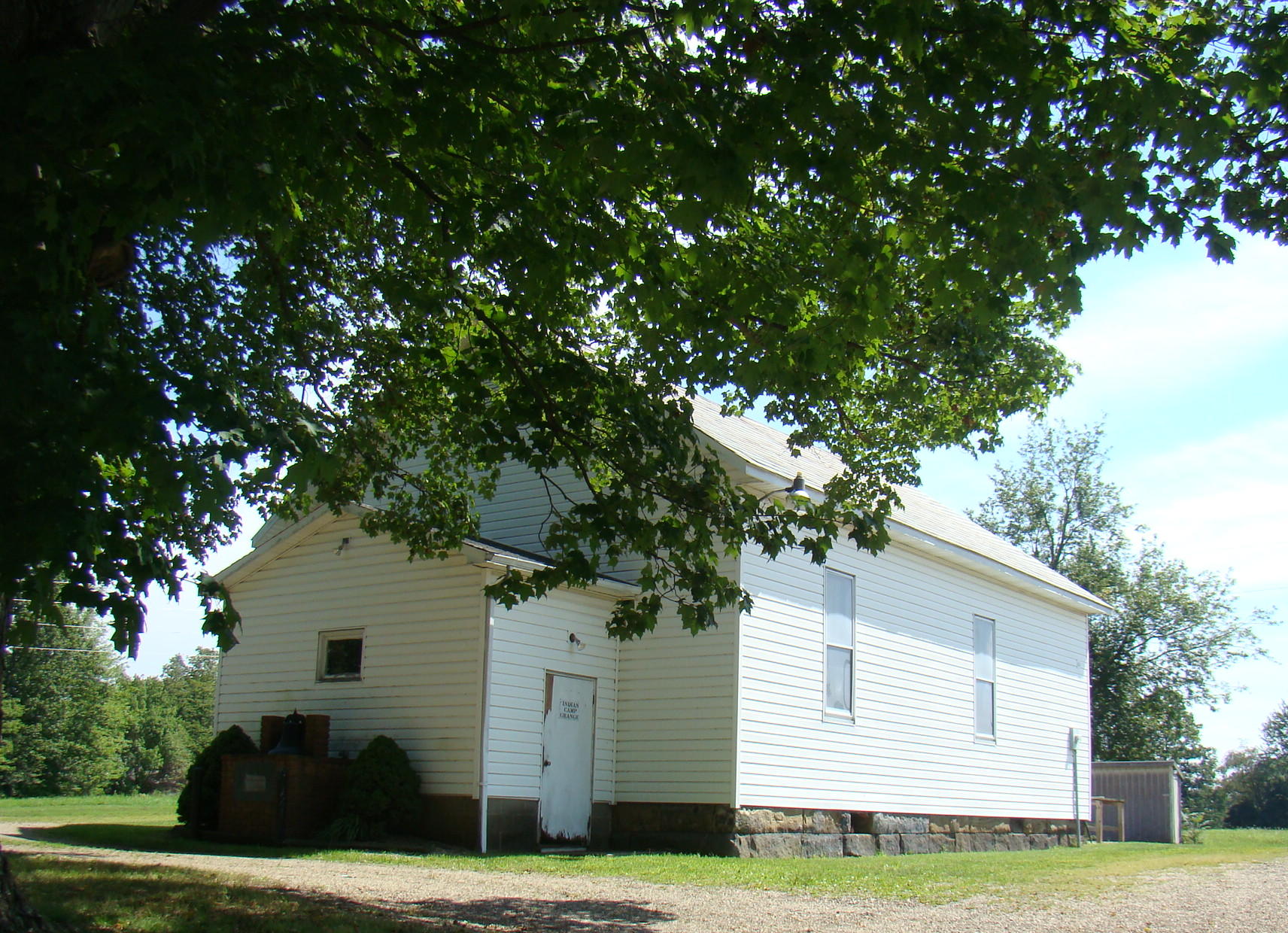
The cool morning air whispers Time for school. Memories flood back of days at a one-room school in Indian Camp. All eight grades were in one room so students helped each other climb the ladder of learning. Perhaps today is the perfect time to take a road trip leading back many years ago to Hopewell School. Chances are someone you know, or even you, yourself, have attended a similar school.

After driving the winding roller-coaster road of State Route 658 northwest of Cambridge, Ohio, the old school brings a smile. Those sturdy sandstone foundation blocks remain intact where so many students received building blocks for their lives from 1905-1955. Today the school is kept in repair while being used by the Indian Camp Grange, 4-H club, Hopewell Homemakers and once a year, the Hopewell One-Room-School Reunion.

Favorite Recess Tree

Favorite Recess Tree

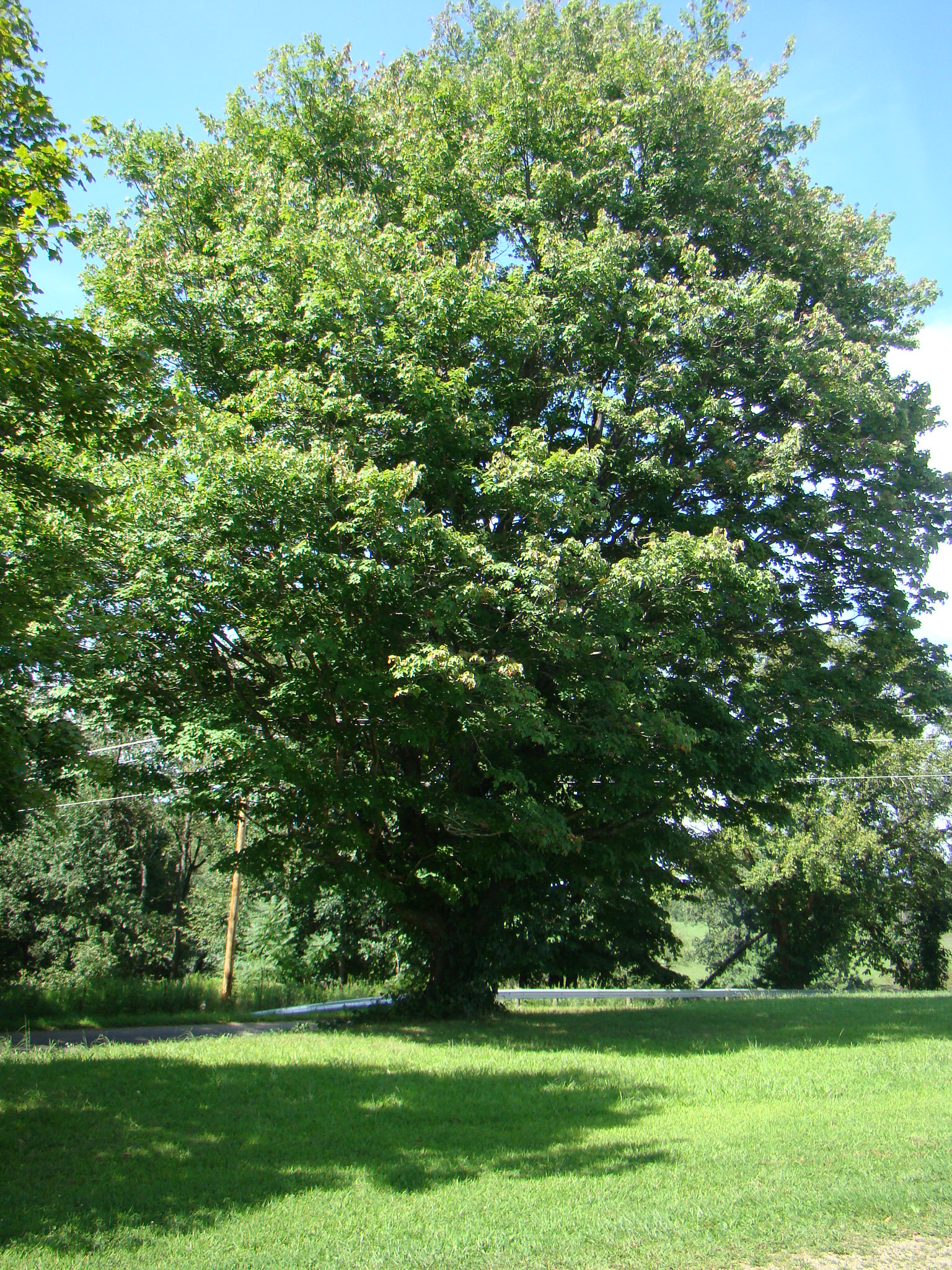
The trees have grown noticeably larger in front of the school.  Their branches provided the perfect places to sit while watching others play on the large surrounding field, or sharing secrets with your friends. In the absence of playground equipment, students played hopscotch at the top of the drive, baseball behind the school, or Annie Annie Over across the roof.

Children from miles around arrived at Hopewell School by bus, horseback, bicycle or walking. On the first day of school they proudly carried their yellow Big Chief tablet and a pencil or two. If they were lucky, they might have a box of eight new Crayola Crayons and Elmer’s School Paste.  Those scents still stir up memories.

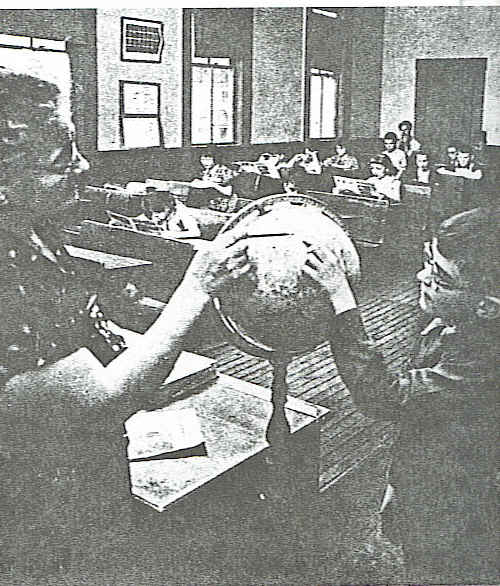
Teacher, Mrs. Mary Clark, uses the globe to explain geography.
Teacher, Mrs. Mary Clark, uses the globe to explain geography  during the 1950’s.
Inside the building, the pot bellied stove and the old desks are gone. The teacher or a student who lived close by came early in the morning to get the room warm for students. During the day, the boys took turns filling the coal bucket at the coal shed behind the school. Many boys volunteered for this chore and took their time, some even sneaking a smoke in the coal shed. But other things are still the same. An original blackboard still has initials carved in it, and the closets where coats and lunches were kept are exactly as they were years ago.

Lunches were brought in either a paper bag or a metal lunch box, which might last for several years. A personal favorite had a picture of Roy Rogers riding Trigger, and it even had a thermos. Lunch might include a bologna sandwich, boiled potato, dill pickle, and on special days, a thermos of homemade soup.

Since there was no water on the grounds, the boys carried water from a near-by house. After it was poured into a large keg at the back of the room, students would use a dipper to get a drink – everyone using the same dipper and no one getting sick!  No water also meant outdoor toilets with a rather unpleasant smell, flies, and even an occassional varmint.

Original Bell at Hopewell School

Original Bell at Hopewell School with picture of school “Whoso Desireth Education, Desireth Knowledge”.

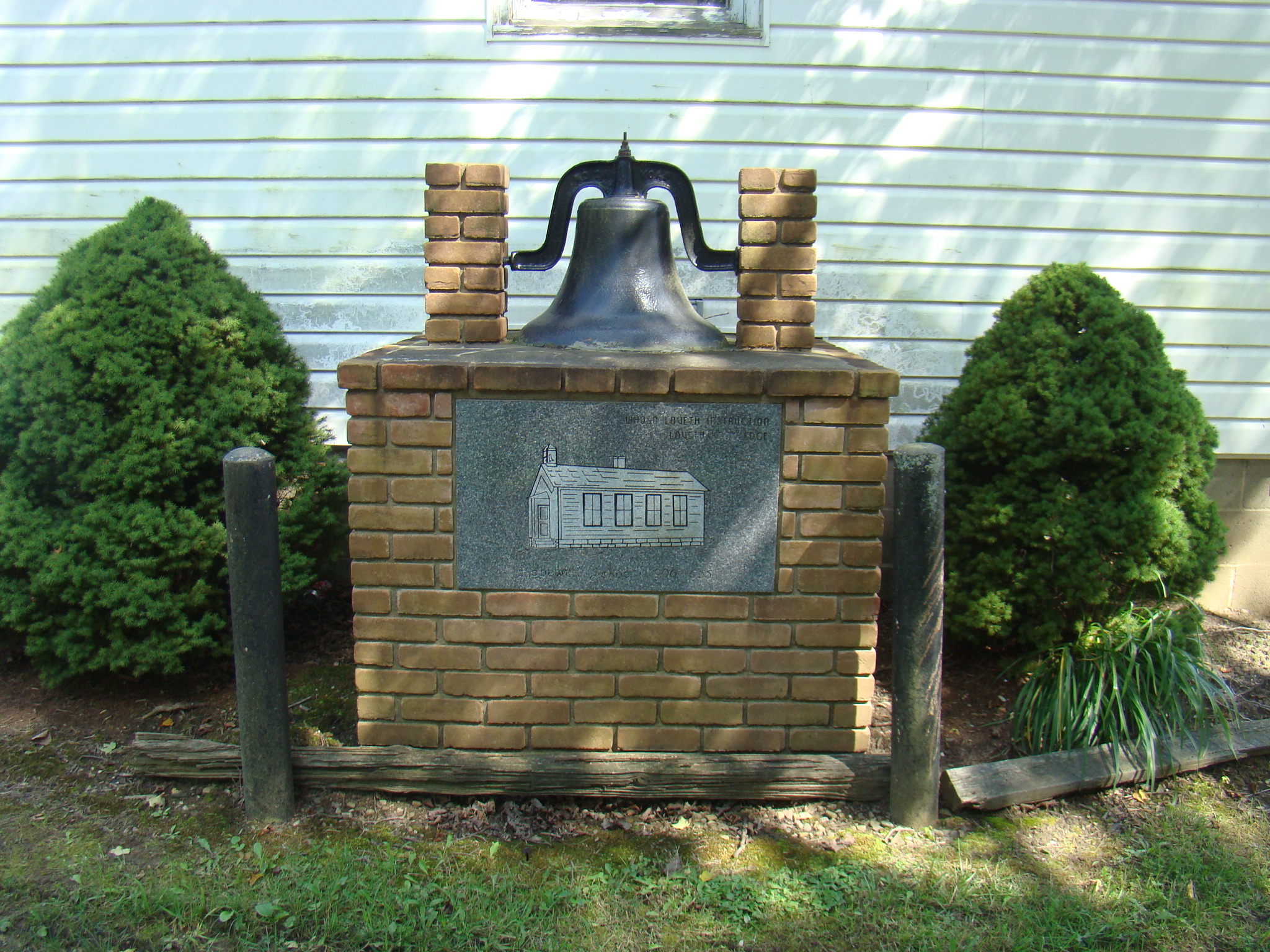
In 1994, former students constructed a brick base with a picture of old Hopewell School engraved on a plague and words that expressed the aim of the school: “Whoso Desireth Education, Desireth Knowledge”.  At the top of the base sets the school bell that called students to school in the morning, and reminded them that it was time to return to the classroom after recess. Students didn’t always stay on the grounds during recess as some went to Gerty’s Store just down the road, or in winter time might be sledding on the neighboring hills of the Cowden family farm. This bell is a beautiful heritage to the people that have received their education here, and also to their children for generations to come.

In spite of all the old-fashioned ways, lessons were learned and life-long friendships were developed. The one-room school was the perfect place to be taught the 4 R’s – Reading, ‘Riting, “Rithmetic…and Respect.

If you would enjoy a trip to the country to see Hopewell School, follow State Route 209 west from Cambridge, Ohio through Browns Heights. After a couple of miles, turn right on State Route 658 and continue until you reach the town of Indian Camp. At the north end of Indian Camp make another right hand turn on Mt. Herman Road. You are there!  

Mammoth Mound Mysteries Grave Creek Mound Complex

Mammoth Grave Creek Mound in Moundsville, WV

Mammoth Grave Creek Mound in Moundsville, WV

Step back in time, way back in time, to 200 BC.  Buried beneath the surface of this gigantic mound in Moundsville, West Virginia are ancient treasures from two thousand years ago.

Driving past this 62′ high mound, many people possibly see it merely as a big pile of dirt. But when you explore inside the Grave Creek Mound Archeological Complex located beside it, you discover surprises regarding this unusual structure in Moundsville near the Ohio River. For many it will get their mental wheels turning as they want to search for more information.

To get a better picture of the area in your mind, Grave Creek Mound, the largest conical mound in the United States, is 62′ high with a base of 240′ and was surrounded with a moat, which has since been filled in. There was only one way across the moat – an earthen path. This was part of a much larger ceremonial area, which seemed to begin at the Ohio River.

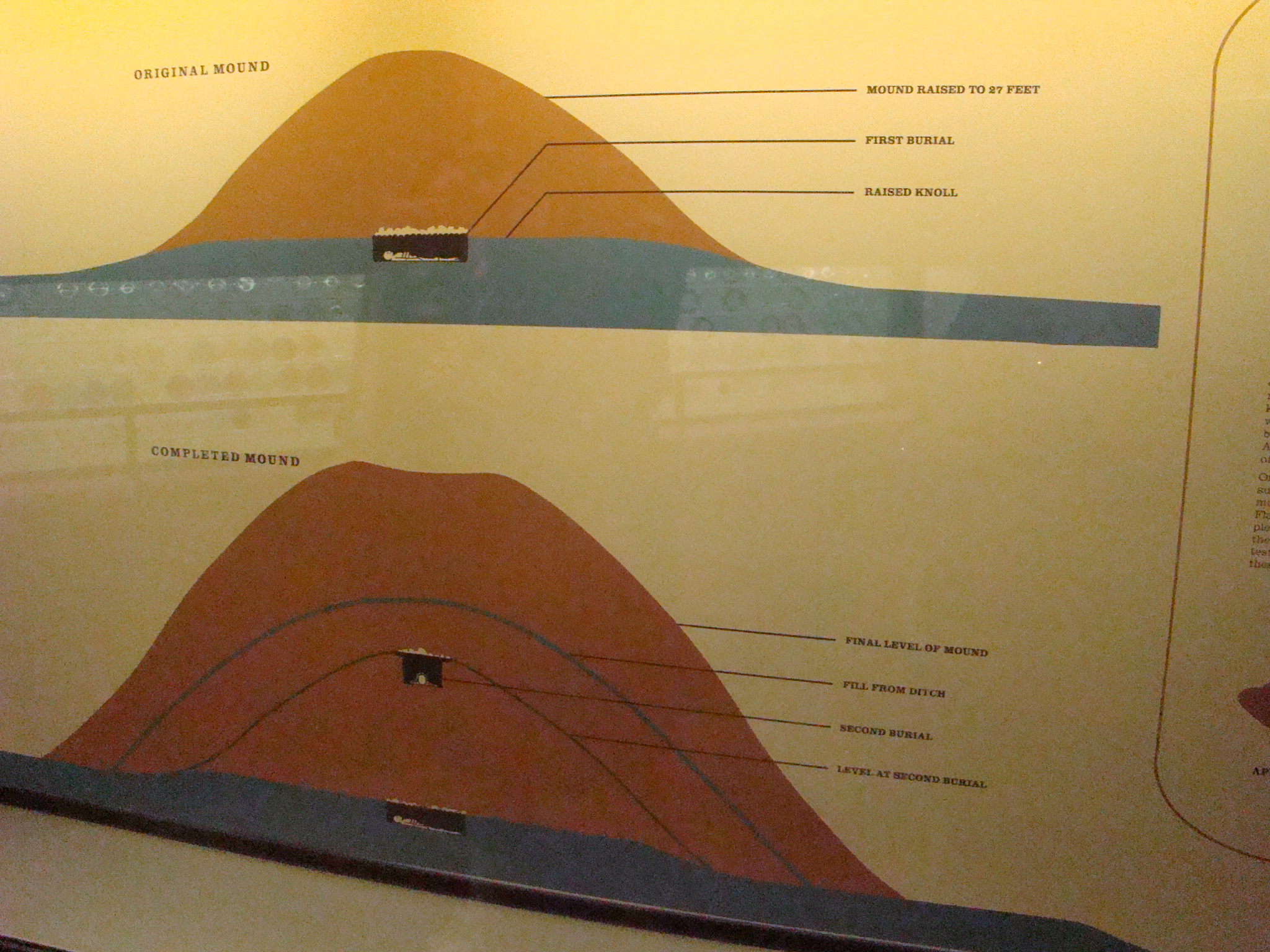
The mound was built over a period of 200 years with burial vaults at different layers.

The mound was built over a period of 200 years with burial vaults at different layers.

This Adena burial mound required a lot of work to move 60,000 Tons of earth to form this mound over a period of years.  Included are multiple burials at different levels from 250 – 150 BC. It appears to have been build in stages with most of the burials being by cremation.

Since it seems that people arrived on the Ohio River, there was what many called a Sacred Way leading from the river to The Mound. But the Way didn’t stop there, as it turned at right angles to an octagon shape, which is no longer in existence. This Sacred Way was actually paved back 2000 years ago…with mussel shells. How do we know this? When ground was moved for building the homes and stores in Moundsville, layers of mussel shells several inches thick were found along The Sacred Way. Hopefully, you are beginning to form a picture of what could have been.

Display at Grave Creek Mound of objects found during an early dig at the mound.

Display at Grave Creek Mound of objects found during an early dig at the mound.

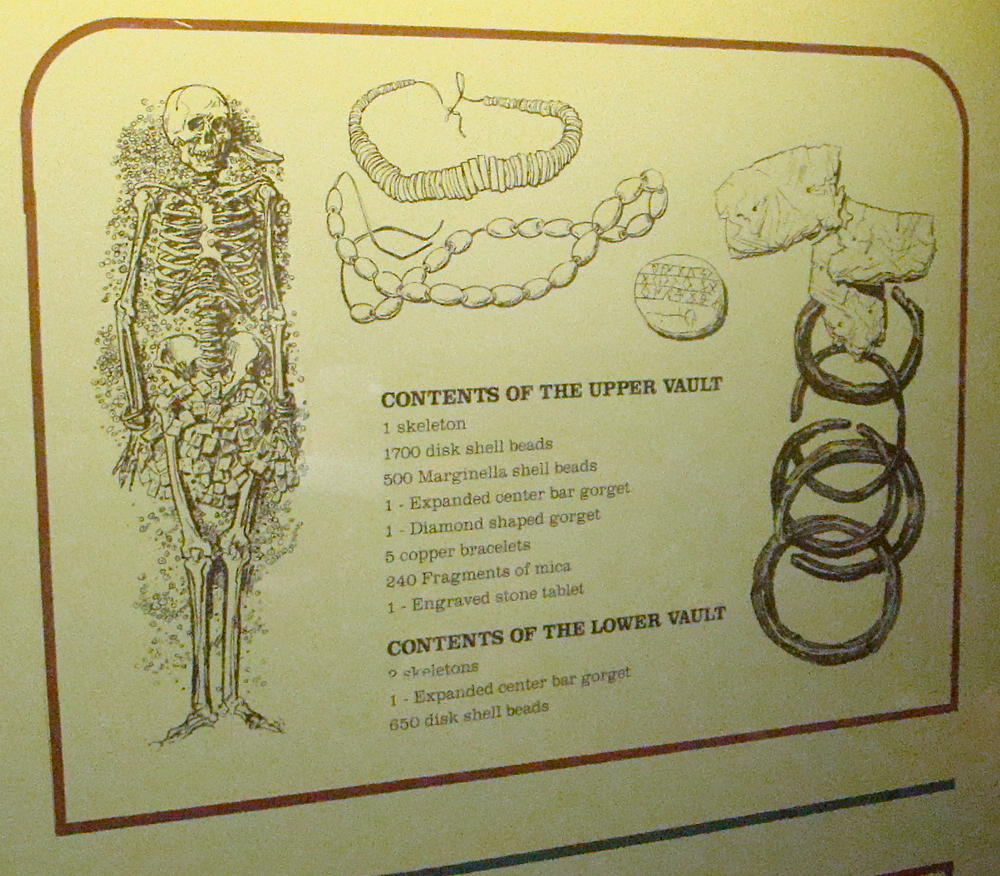
Back in 1838, some curious amateurs decided to do a little exploring of their own and began digging into The Mound with gusto through two shafts, one horizontal and one vertical. Their discoveries were surprising, but they had little idea of how much historic information they had really pulled from the ground. A burial vault made of logs and smooth stones from the river was found in the center near ground level. It contained two skeletons with tools, beads, pipes and ornaments indicating these were important people in their culture.

A most amazing skeleton, which they named Tasach for reasons to be given later, appeared at the bottom layer of the earthen mound.  The items found either on his body or with his body were quite astonishing. Around its 7’2″ frame were pieces of sea shells- some scattered and others formed into beads. On the wrist were seven copper bracelets and around the waist was a band of small mica squares. What do all of these pieces mean?

Replica of Grave Creek Tablet

Replica of Grave Creek Tablet

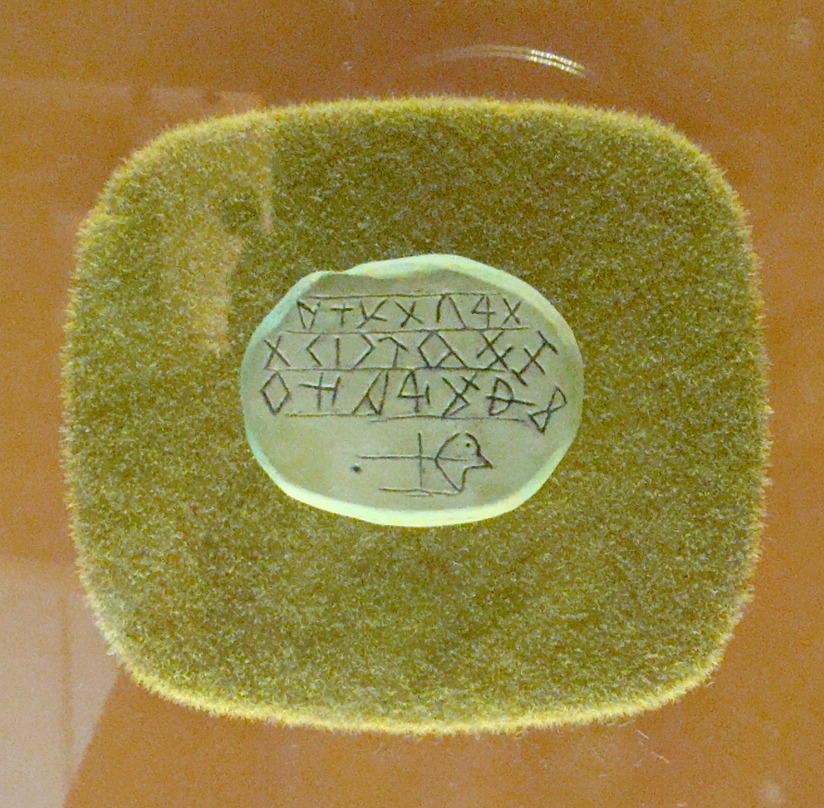
To add to the mystery, near the second, smaller skeleton was a small, flat sandstone tablet with three lines of symbols indicating a form of communication during that long ago time. This has become known as the Grave Creek Tablet and one of many interpretations, but the one that seems likely in my mind reads:

“The mound raised on high for Tasach. This tile his queen caused to be made.”

My first thought was that perhaps Tasach was a leader of an ancient tribe.  Since copper and mica both resonate with healing qualities, perhaps he was considered a shaman. He may have appeared at the octagon shaped structure and greeted visitors, who came by boat on the Ohio River then walked the Sacred Way through the Mound and to the octagon.  It would seem this was perhaps a spiritual ceremony of some nature by people over 2000 years ago.  Remarkable! But that was just my interpretation. Wonder what ideas you might have?

Shortly after that early  excavation, in 1843 local enthusiasts decided to use the two excavation shafts into The Mound as a museum. In the horizontal bricked shaft was an underground exhibit of the skeleton discovered with his buried treasures as well as an early gift shop. Inside the vertical shaft, a spiral staircase was built to allow visitors a way to the top of the mound where a three-story observatory was constructed. The museum was short-lived as the walls came tumbling inward, but a second stone museum was built on the south side of the mound in 1941 with many of the items available for sale having been made by the prisoners at the penitentiary across the street.

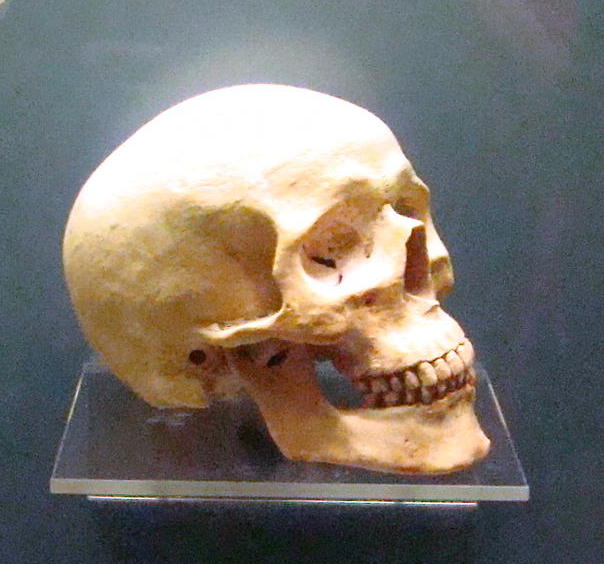
Replica of Pre-Indian skull found in 1838 excavation

Replica of Pre-Indian skull found in 1838 excavation

Today’s modern museum is housed in the Grave Creek Mound Archeological Complex, which shares many of the mysteries of The Mound with visitors through exhibits and video presentations. It opens the mind to exploring the wonders of time before the Native American Indians. These early visitors on our lands had far reaching commerce as items were from all over the country and the world. Their architectural skills were amazing and nearly all of their structures were perfectly aligned mathematically with the sun , the moon, and the stars.

Where did these people come from?  Where did they go? The mysteries continue.

The Mound is located in Moundsville, West Virginia. Just ten miles south of Wheeling along the east bank of the beautiful Ohio River. From Wheeling, follow Route 2 into Moundsville. Turn left on 8th Street and after two blocks turn right onto Jefferson Ave. The mound is too large to miss!

“The Point Between Two Waters” Tu-Endie-Wei State Park

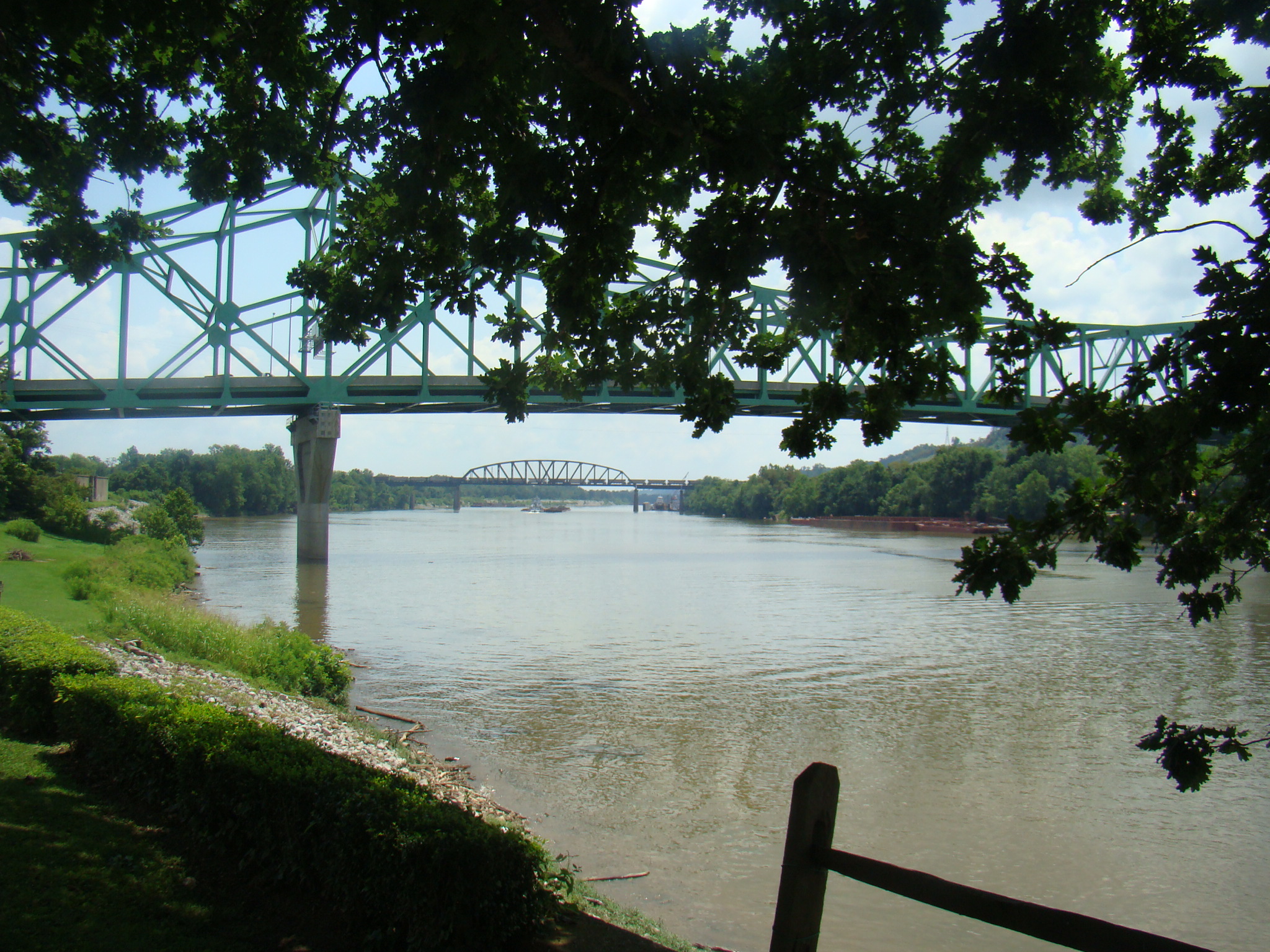
Bridge over Kanawha River where it joins the Ohio River.

View of bridge over Kanawha River while relaxing on the banks of the Ohio RIver.

Located at the junction of the Ohio River and Kanawha River, Tu-Endie-Wei State Park in Mount Pleasant, West Virginia  marks the spot where the Battle of Point Pleasant was fought during the Revolutionary War. Here in 1774 the Virginia militia, led by General Andrew Lewis, fought hand-to-hand with warriors from the Northwestern Confederated Tribes under the leadership of renowned Indian Shawnee chief, Cornstalk.

The Congressional Declaration states:  “This plan, however, as the world now knows, was thwarted as to the place of conflict, when the traitorous Dunmore failed to join Lewis at the mouth of the Kanawha River and they to march together into the enemy’s country.” The original plan called for Governor Dunmore and General Lewis to have the two wings of their Virginia militia meet at the mouth of the Kanawha and pursue the Indians back into their own country, north of the Ohio River. Some feel perhaps Dunmore purposely didn’t arrive in hopes that the Shawnee would defeat the militia, since Dunmore soon became a prominent leader of the British War effort during the Revolutionary War.

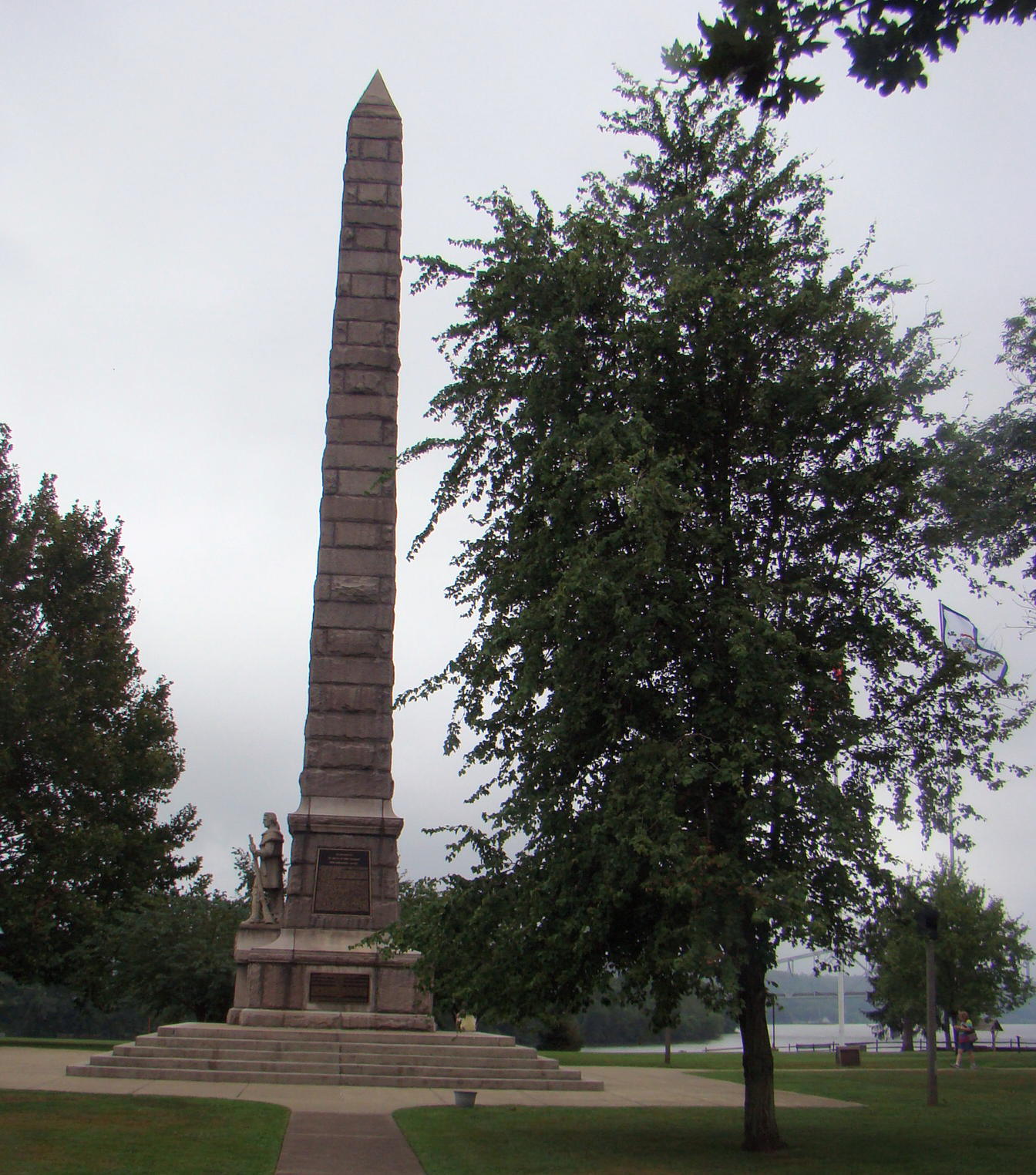
This 84' granite oblisk commemorates the Birginia militiamen who gave their lives during the battle.

This 84′ granite obelisk commemorates the Virginia militiamen who gave their lives during the battle.

An 84-foot tall granite obelisk stands in the center of the park in remembrance of the Virginia militiamen, who lost their lives during the battle. At the base of this statue is a figure of a frontiersman. The importance of this battle stretches far beyond that one day encounter as it put to rest Indian wars on the frontier and prevented an Indian alliance with the British.

Throughout the park, several smaller memorials have been placed dedicated to some of the main heroes in this battle that many claim was the first battle of the Revolutionary War.

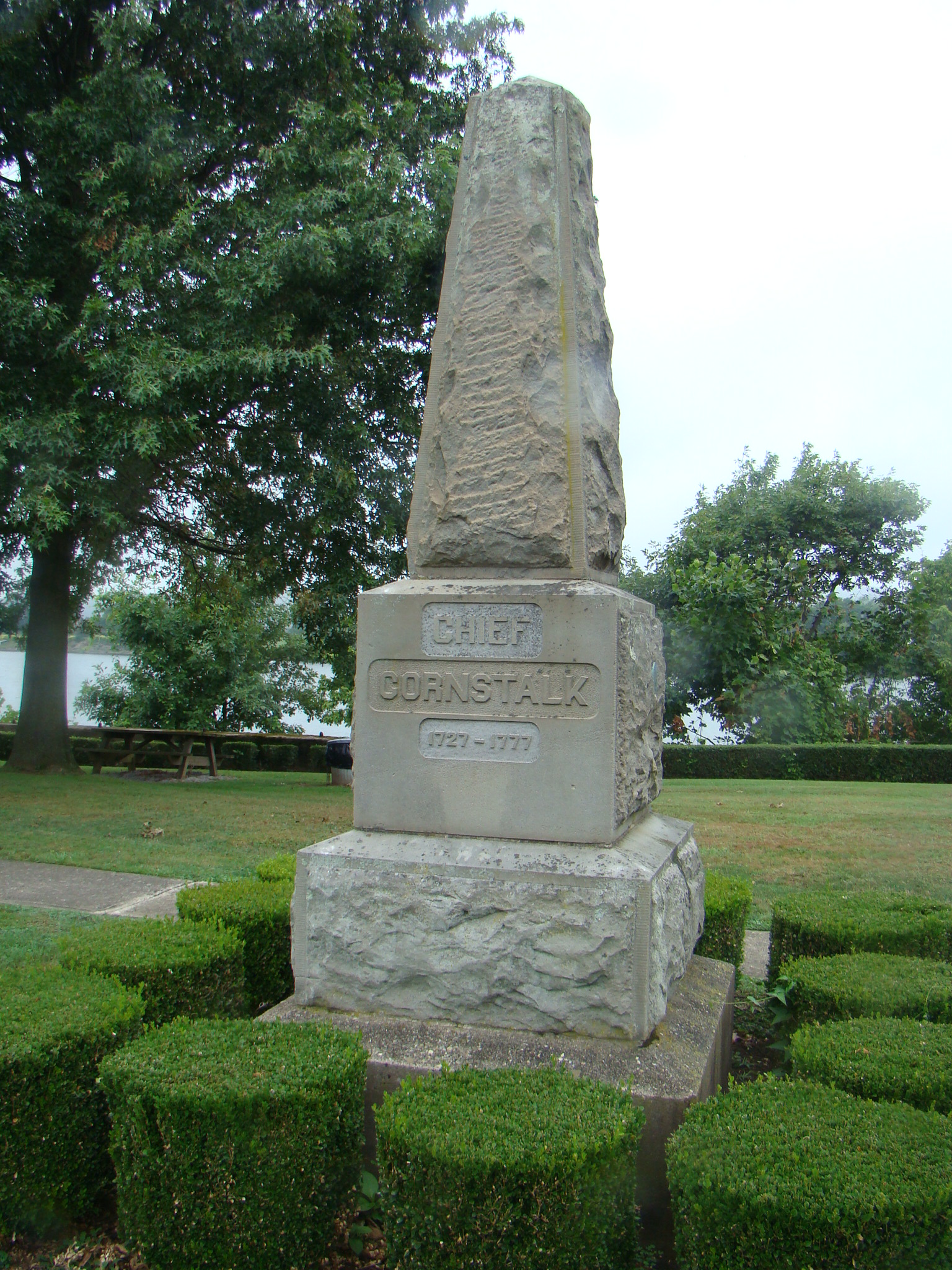
Chief Cornstalk Monument

Chief Cornstalk Monument

Keigh-tugh-qua, better known as Chief Cornstalk, was a well respected leader in the Ohio Valley. Both Indians and white men knew Chief Cornstalk as a man who wanted peace with the white men.  But he felt forced to defend his people on this spot at Point Pleasant, against who he called “Long Knives”, the colonists of Virginia. At that point he wanted to turn the frontier red with the Long Knives’ blood.  Although the Indians were defeated, Chief Cornstalk did survive this battle.

In 1777, Cornstalk returned to Point Pleasant to warn the settlers that the British were trying to incite his tribesmen to attack.  Fearing an unpleasant encounter, Cornstalk and companions were imprisoned at Fort Randolph, where he was killed by a dozen rifle shots while standing at the doorway of his room. After moving his burial place several times, his remains were brought back here for their final resting place near the field of his most famous battle.

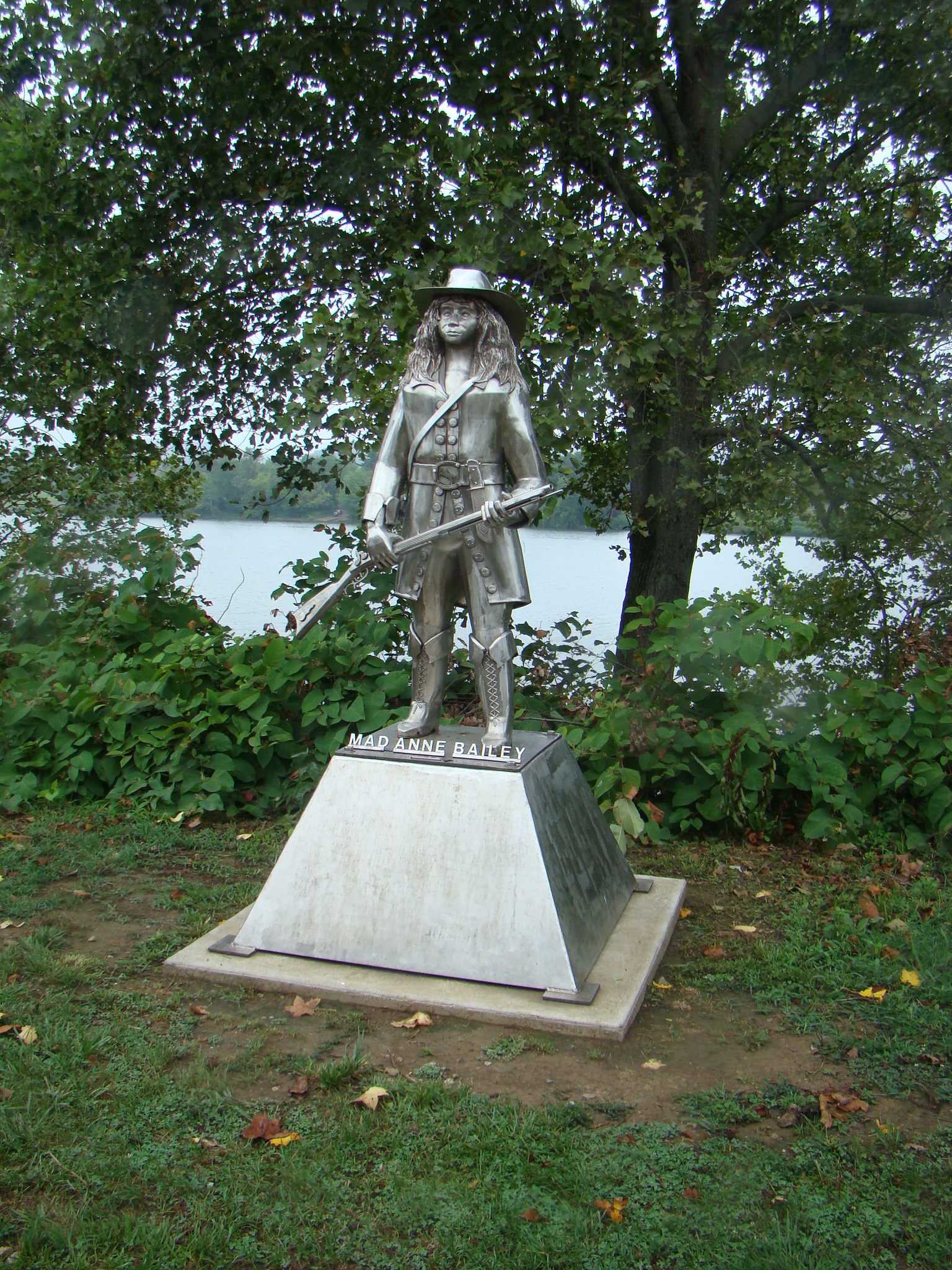
Statue of Mad Anne Bailey along the Ohio River

Statue of Mad Anne Bailey along the Ohio River

One interesting monument marks the burial spot of Mad Anne Bailey, whose husband, Richard Trotter, was killed at the Battle of Point Pleasant. This statue along the Ohio River shows frontier scout Mad Anne dressed in buckskins as she delivered messages to remote places throughout the Virginia area to avenge her husband’s death. “Mad” escapades in fighting the red savages on the frontier earned her the nickname of “Mad Anne”. Later she married John Bailey, who was stationed at Fort Lee (Charleston). Mad Anne has been given credit for saving Fort Lee from destruction as she rode alone at nearly fifty years of age for gunpower to Fort Savannah (Lewisburg), which was a two hundred mile trip. Her reward ? The black horse she rode. At the age of seventy, Mad Anne lived in a cave until her son William, who she left with friends at the age of seven, found her and took her to Gallipolis to live in a tiny cabin near his family.

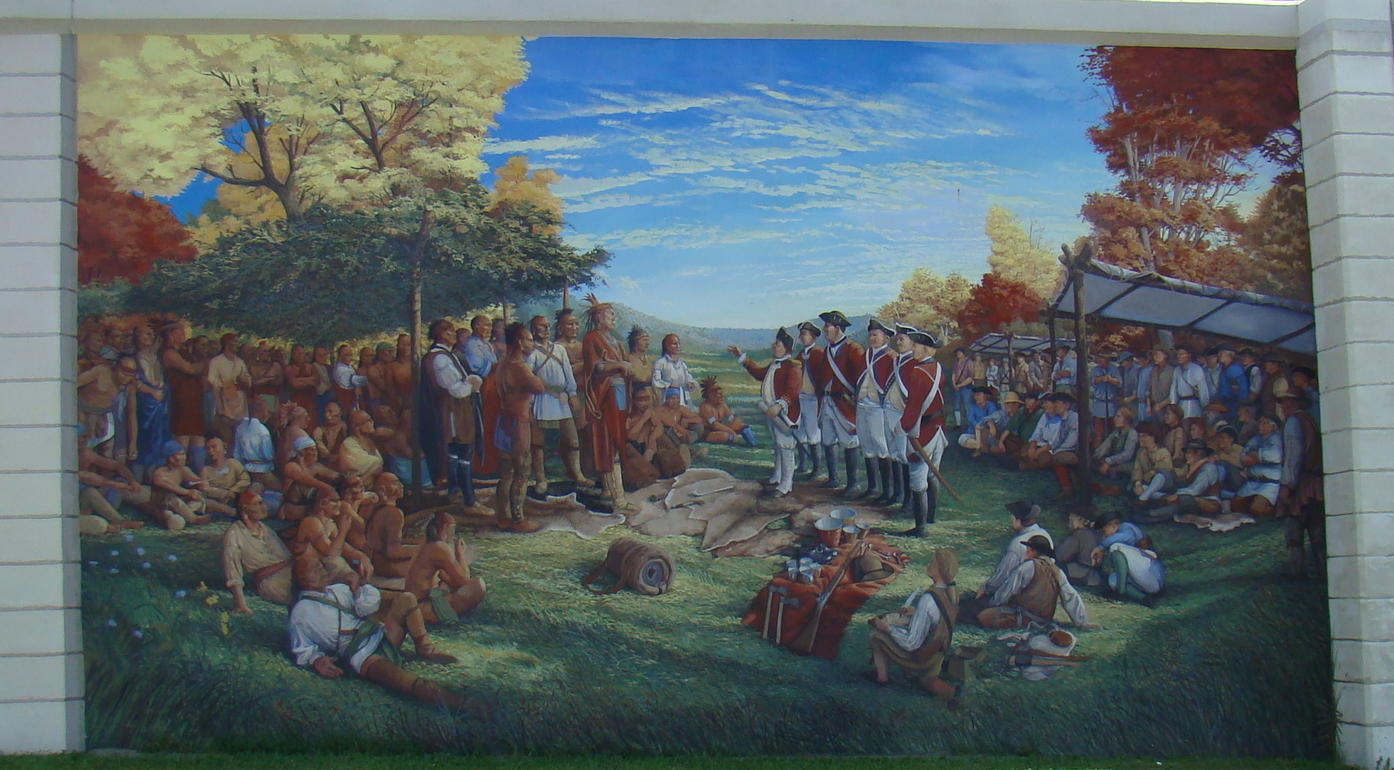
Mural on floodwall along the Ohio River

Mural on floodwall along the Ohio River

Murals depicting the meeting of the tribes and various battlefield scenes line the floodwalls of the Riverwalk along the Ohio River. Painted by artist, Robert Dafford, these scenes bring to life the memory of that one-day battle so long ago that changed the course of history. The inscription above one of those murals explains: Each was fighting for his own way of life.

Today, like in times throughout history, we each continue to fight for what we believe. May your battles be a little less severe.

Tu-Endie-Wei State Park is located at Point Pleasant, West Virginia  at the end of Main Street where the Ohio and Kanawha Rivers meet. Take a stroll down the Riverwalk to enjoy the beautiful Ohio River, the floodwall murals, and many statues along the way. Frequent festivals throughout the year are held here and it is often a stopping point for riverboats. 

Following Morgan’s Raiders Trail 150 Years Later

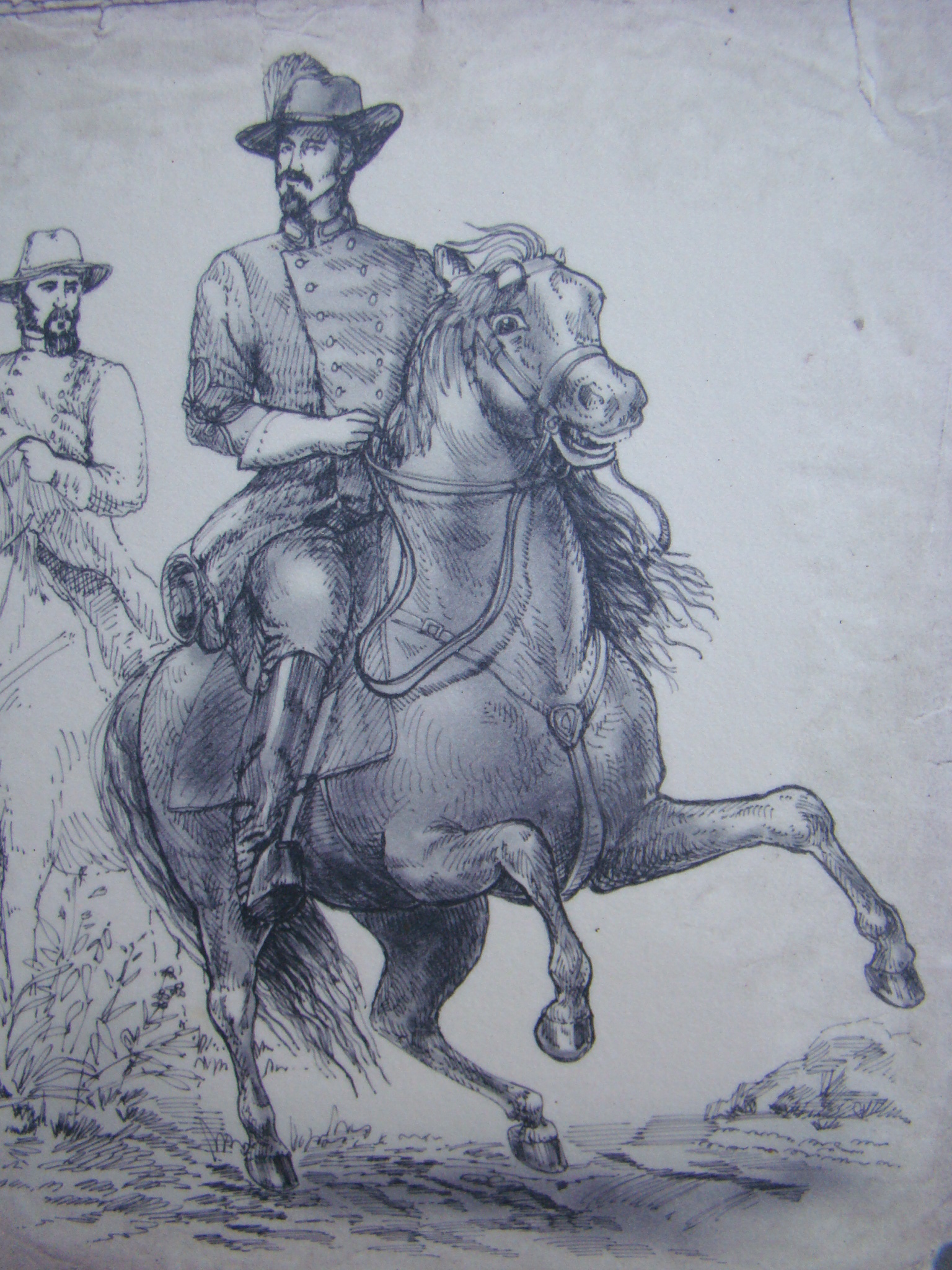
Sketch of Brig Gen John Hunt Morgan

Sketch of Brig Gen John Hunt Morgan

During the Civil War, 150 years ago in July of 1863, Brigadier General John Hunt Morgan led a band of scoundrels, known as Morgan’s Raiders, through Ohio on a two week expedition consisting of many raids and robberies. Their purpose was to create terror and deviate the attention of the Union troops from Confederate forces.

The Ohio Historical Society has commemorated that John Hunt Morgan Heritage Trail with 56 interpretive signs from Cincinnati to West Point in northeastern Ohio. Official dedication took place at the entry point into Ohio at Harrison in July of 2013, although planning has taken several years.

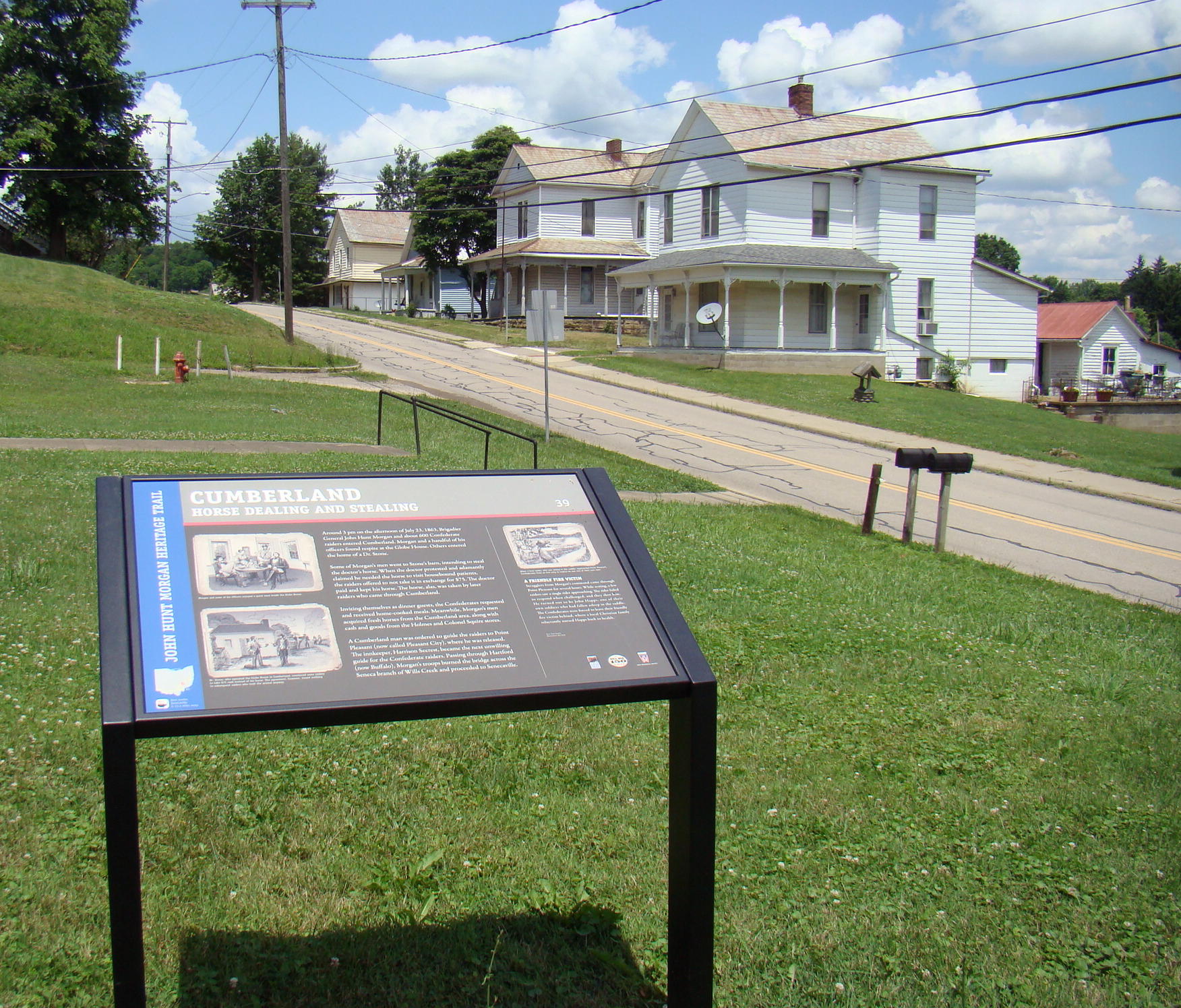
First Morgan's Trail sign in Guernsey County at Cumberland, Ohio

First Morgan’s Trail sign in Guernsey County at Cumberland, Ohio

Wanting to explore the local side of this route, my drive began in Cumberland, Ohio, which is the first place in Guernsey County, my home county, that Morgan’s Raiders appeared. Here in front of the old Cumberland High School is plaque #39, which begins the local trail of clever escapes by Morgan. Having invited themselves as dinner guests, Morgan’s men stole horses, cash, and even a guide before heading on to Point Pleasant (today’s Pleasant City).

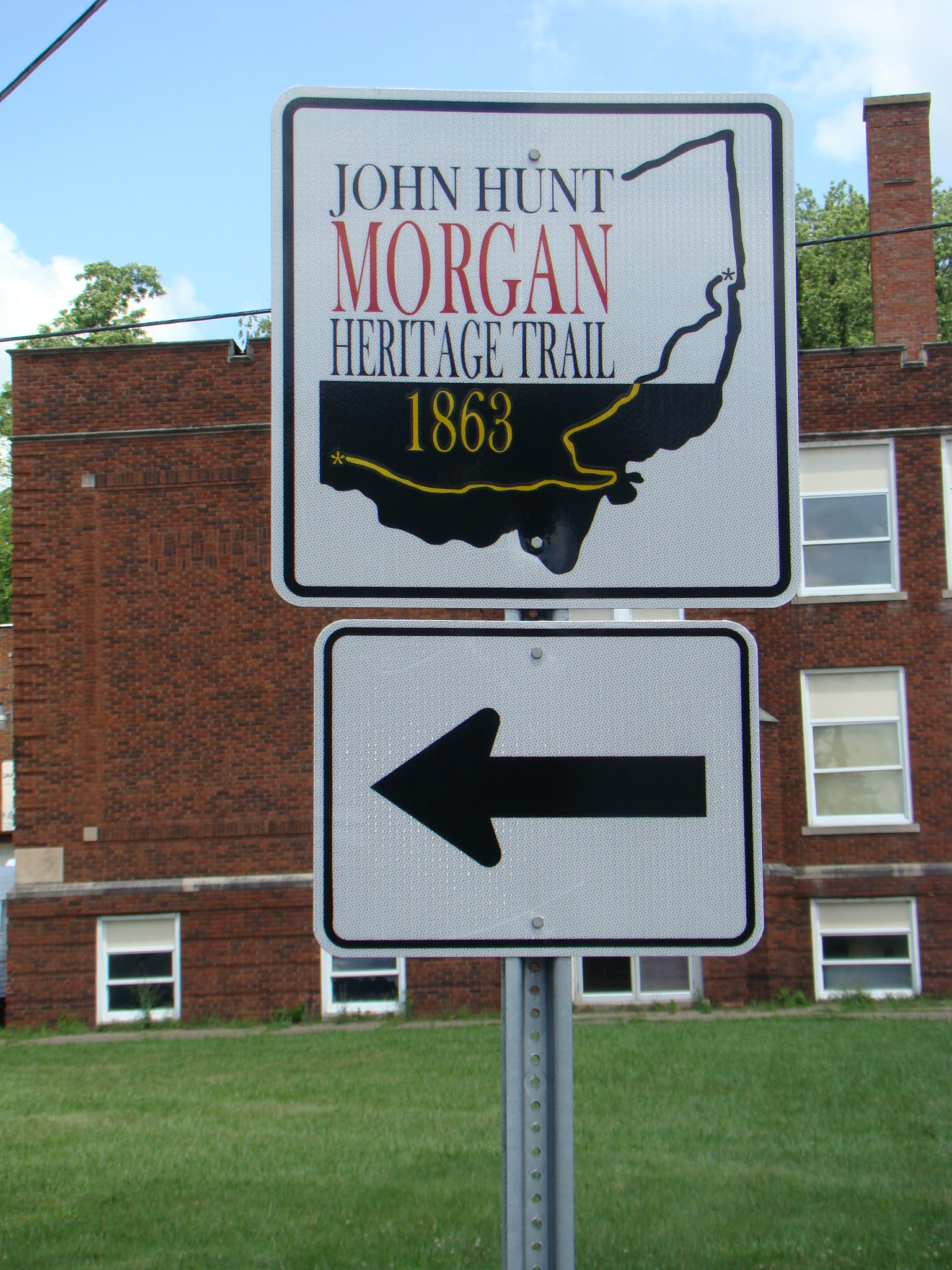
Watch for signs like this to follow the trail easily.

Watch for signs like this to follow the trail easily. Former Pleasant City High School sits in the background.

Morgan’s Trail is well-marked with signs at frequent intervals so you can rest assured you are still on the correct route. Stories on the plaques tell about real events that happened near each marker and all contain a couple beautiful old pictures from Civil War days. Each sign also explains, in the lower left hand corner, the location of the next commemorative stop

At the corner of State Routes 313 and 285 in Senecaville, followers will find plaque #40. On July 24 at 3 am, Morgan’s men rode into the village boldly knocking on doors to find out local road information. Lucky for Morgan, Colonel William Wallace of the Ohio Infantry had received an erroneous report and hours earlier had moved from that very crossroads. Ever since the battle at Buffington Island, Brig. Gen. James Shackelford had been in hot pursuit of the Raiders and seemed to be closing the gap.

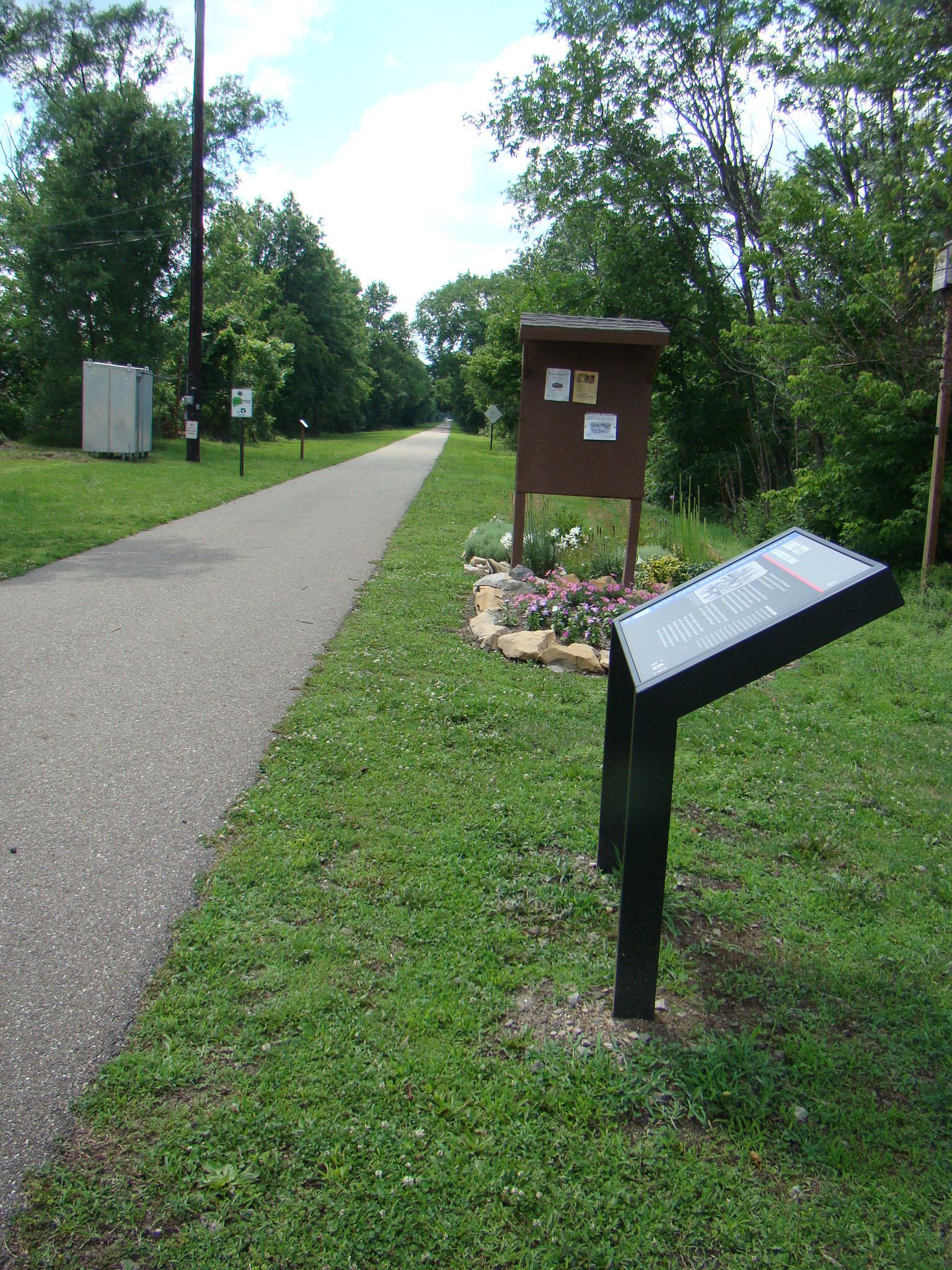
Interpretive sign #41 at Lore City trailhead.

Interpretive sign #41 at Lore City trailhead.

Campbell’s Station (today’s Lore City) had the most destruction of any place in Guernsey County with Shackelford being only seven miles behind. Located at the trailhead of the Guernsey Trail, #41 plaque area was the only one in Guernsey County that had been expanded with other information about the history of that area, as well as beautiful flowers.

At the edge of town on Old Mill Road, the battle at Washington (today’s Old Washington) is recognized. Sign #42 is near Cemetery Hill where Shackelford’s troops began firing on Morgan’s Raiders, who had spent the night in Washington. The officers had moved in, unwanted, to the American Hotel while others slept throughout the town, even in the streets. It came as a surprise that the plaque was not downtown with the 1927 monument to this skirmish.

Those four stops mark the route through Guernsey County, then the Trail guides you on toward Piedmont. By now you are beginning to get caught up in the thrill of the chase and to understand the lay of the territory they are crossing. Winding roads follow the Trail as best they possibly can, but Morgan’s Raiders attempted to travel through the woods quite often so the route is close, but can’t possibly be perfect.

Imagine the surprise and fear when up to 2000 Confederate soldiers arrived in one of these small towns along the way.  No wonder the unruly children were disciplined with the phrase: Morgan will get you!

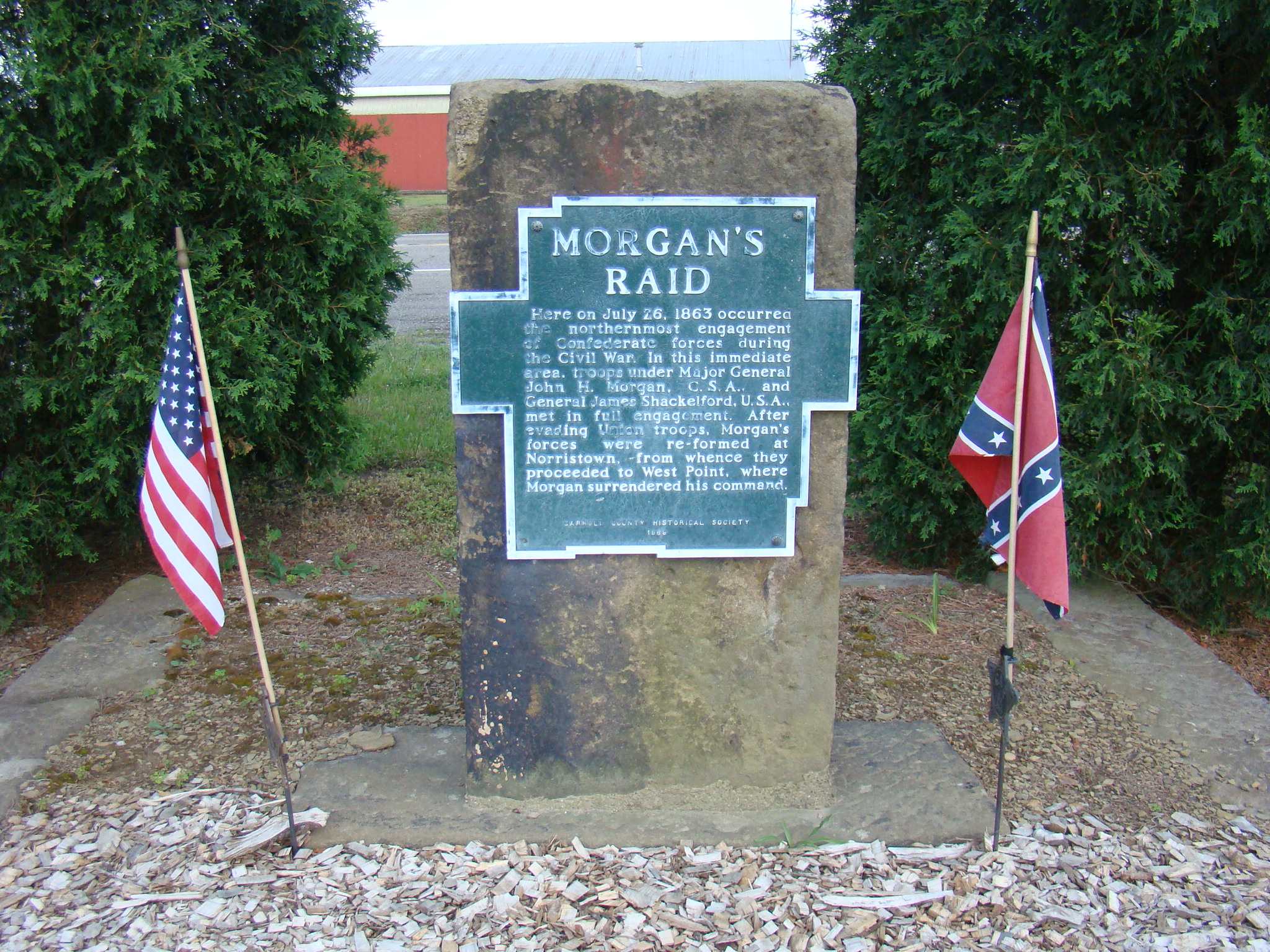
Monument to honor Morgan's Raid erected by Carroll County Historical Society in 1868.

Monument to honor Morgan’s Raid erected by Carroll County Historical Society in 1868.

My original plan had been to follow Morgan’s Trail just through Guernsey County, but once caught up in following Morgan’s Raiders, it was impossible to stop before reaching the spot where Morgan was captured. Being led through Harrison, Monroe, Jefferson and Carroll counties, the posted signs by the Ohio Historical Society were  easy to follow.

With troop numbers diminishing at each spot, Morgan continued to use clever escape tactics as long as he could.  The Raiders might pretend to be Union soldiers, stir up dust to hide themselves, or give promises they could never fulfill.

The last few marked encounters led through rugged, gravel roads. As you slowed down on these rutted and often muddy roads, you could almost feel the weariness of the troops.

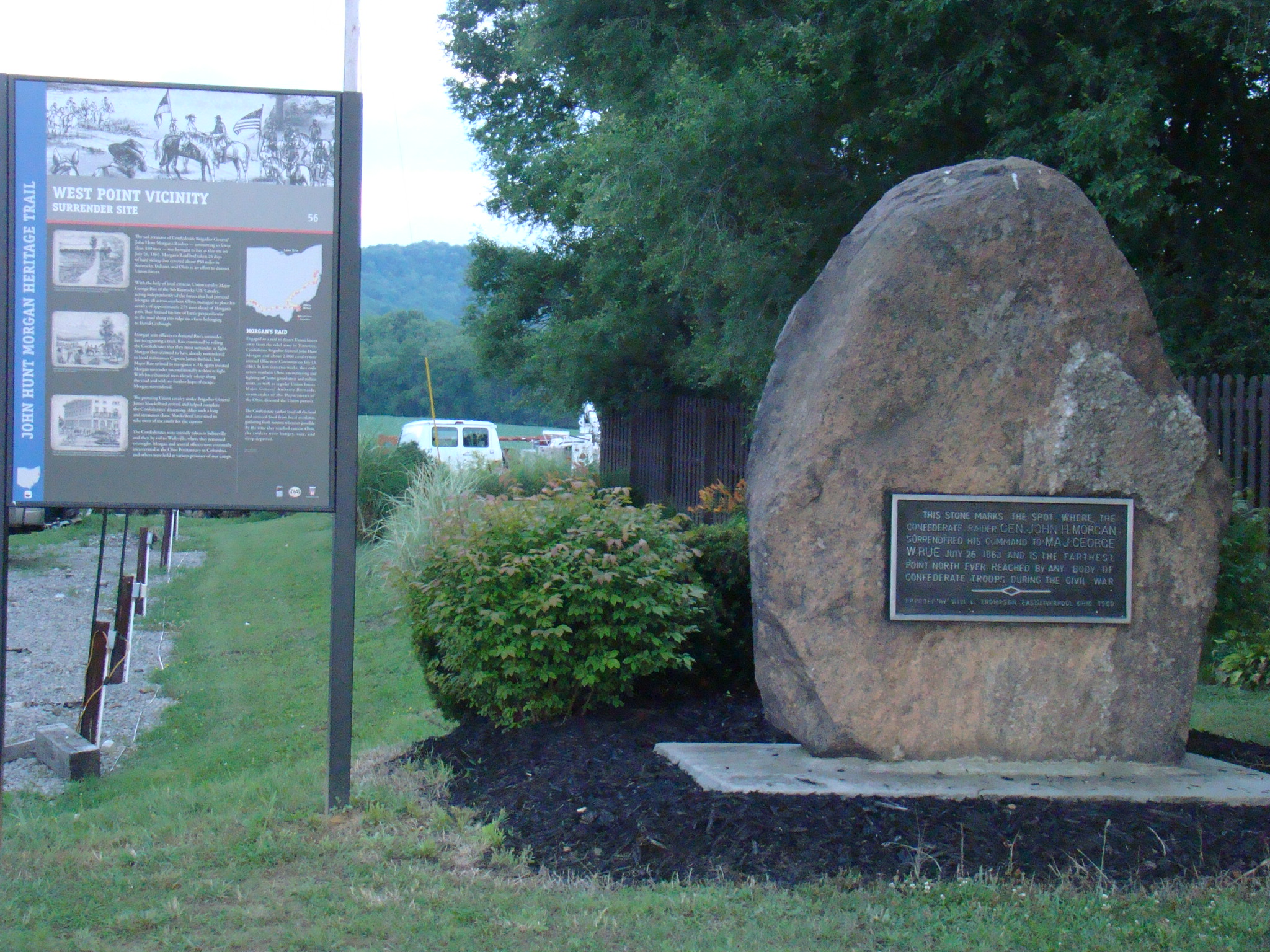
End of Trail near West Point, Ohio

End of Trail near West Point, Ohio

Finally, Morgan’s Trail, with plaque #56 entitled West End, came to an end in someone’s front yard where a monument had also been placed years ago. Morgan had tried his best to get back to cross the Ohio River and he was getting so close. Minutes later, I saw the beautiful Ohio River and felt a little sympathy for Morgan’s never reaching it.

The Heritage Trail from Cumberland to West End took Morgan’s Raiders four days from July 23 – July 26. By car, it took about eight and a half hours and I didn’t steal any horses, demand any dinners, or burn any buildings. They must have been worn out to have covered all that territory so quickly on horseback.

Even though he was captured for the moment, his cleverness helped him escape prison and travel unknowingly with a Union soldier on a train back home. Despite the chaos and destruction left behind, he taught the importance of never giving up in your quest to reach a goal.

Grave Creek Mound Archeological Complex

Grave Creek Archeological Center in Moundsville, WV

Grave Creek Archeological Center in Moundsville, WV

It’s not what you find
It’s what you find out.
~David Hurst Thomas

That sign was the first thing that caught my eye as I entered the Grave Creek Mound Archeological Complex in Moundsville, West Virginia.  Those words put the mind in a state of exploration – the goal of this facility. While the focal point of this entire complex is the large earthen Grave Creek Mound beside the parking lot, today the visit will be inside the complex.

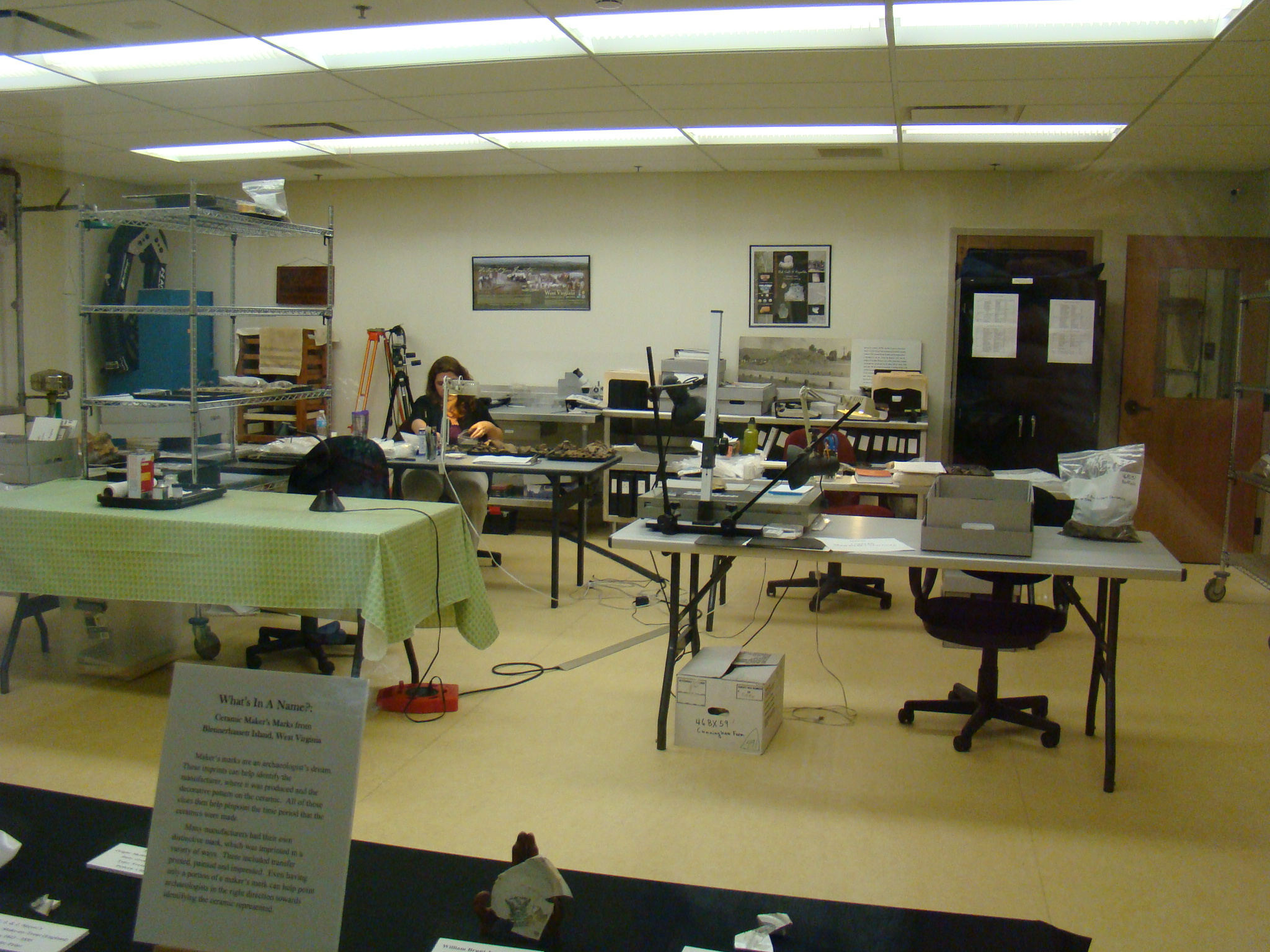
Curators at work in the research facility

Curators at work in the research facility

Close to the entrance into the building is a large glass wall so visitors can view recent finds being researched and recorded by curators in West Virginia Archeological Research Facility, which is a recently added wing in 2008. This is where artifacts, from various archeological digs all over the state, are processed, studied and recorded.

One portion of the complex, Delf Norona Museum, displays information regarding the lives of prehistoric people and the structure of The Mound inself.  This complex is indeed complex, as it holds not only information regarding the Grave Creek Mound, but also touches on rotating displays of many local cultural and historic exhibits entitled: West Virginia’s Gift to The World.  They have given themselves space to grow as exhibits are not in the least bit crowded, making viewing a pleasure.  Throughout the year, lectures and films in their 135 seat theater are held to inform the public on Native Americans and Ancient Americans.

Ron Hinkle's display of blownglass creations

Ron Hinkle’s display of blownglass creations

Ron Hinkle’s Blown Glass immediately caught my eye since my father was also a glassblower. Ron’s wall-size blown glass display sparkles with a bit of magic as every piece is unique. Since opening his own company in 1994, Ron hopes to keep the spirit and art of glassblowing alive and well in the area.

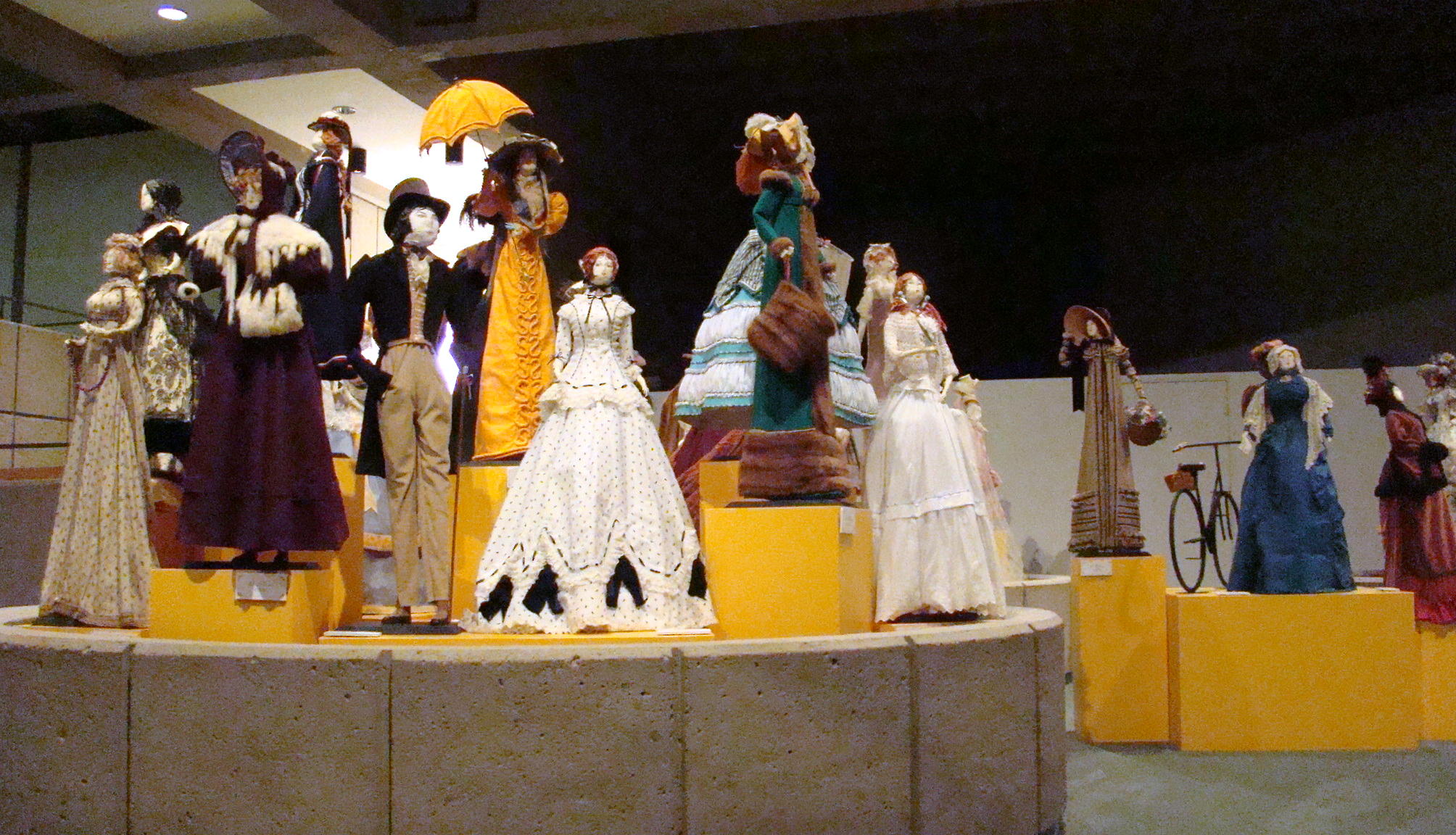
Fashion Dolls of Pete Ballard

Fashion Dolls by Pete Ballard

Ladies Fashion Dolls of the Nineteenth Century by Pete Ballard catches the eye of most ladies as they enter the front door.  This collection shows the changes in ladies’ fashions from 1770 to 1930 in a large display where each of the fifty-six dolls has a brass plate with its name, year, and number for easy cross reference to a booklet which can be picked up just inside the room. The oldest doll, Elizabeth, was from the style of 1800, being dressed in a green and red wool pattern.

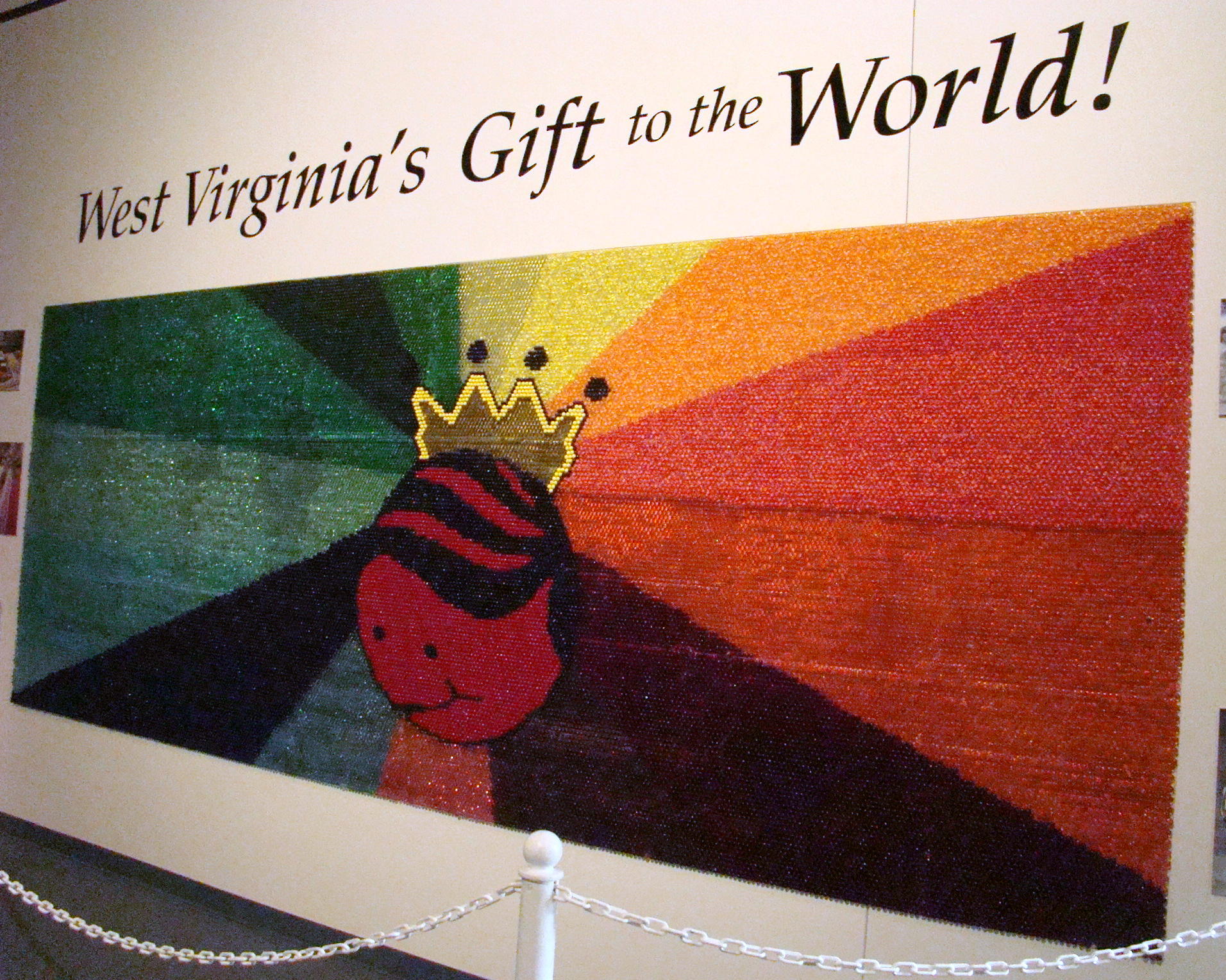
Marble King's creative design with marbles

Marble King’s creative design with marbles

The Marble King actually received its name from a gentleman named Berry Pink. While working for Peltier Glass, Berry traveled across the country hosting marble tournaments and giving away marbles at each stop. Reminds me of Johnny Appleseed ! When Peltier Glass could no longer keep up with the demand, Berry and a partner formed a company and named it after Berry’s nickname, The Marble King. Not only do children still enjoy playing marbles either in the traditional way or with games, but many artistic designs have also been created using their beautiful colors. Marbles are thought to be the first competitive sport as far back as the Greek and Roman Empires.

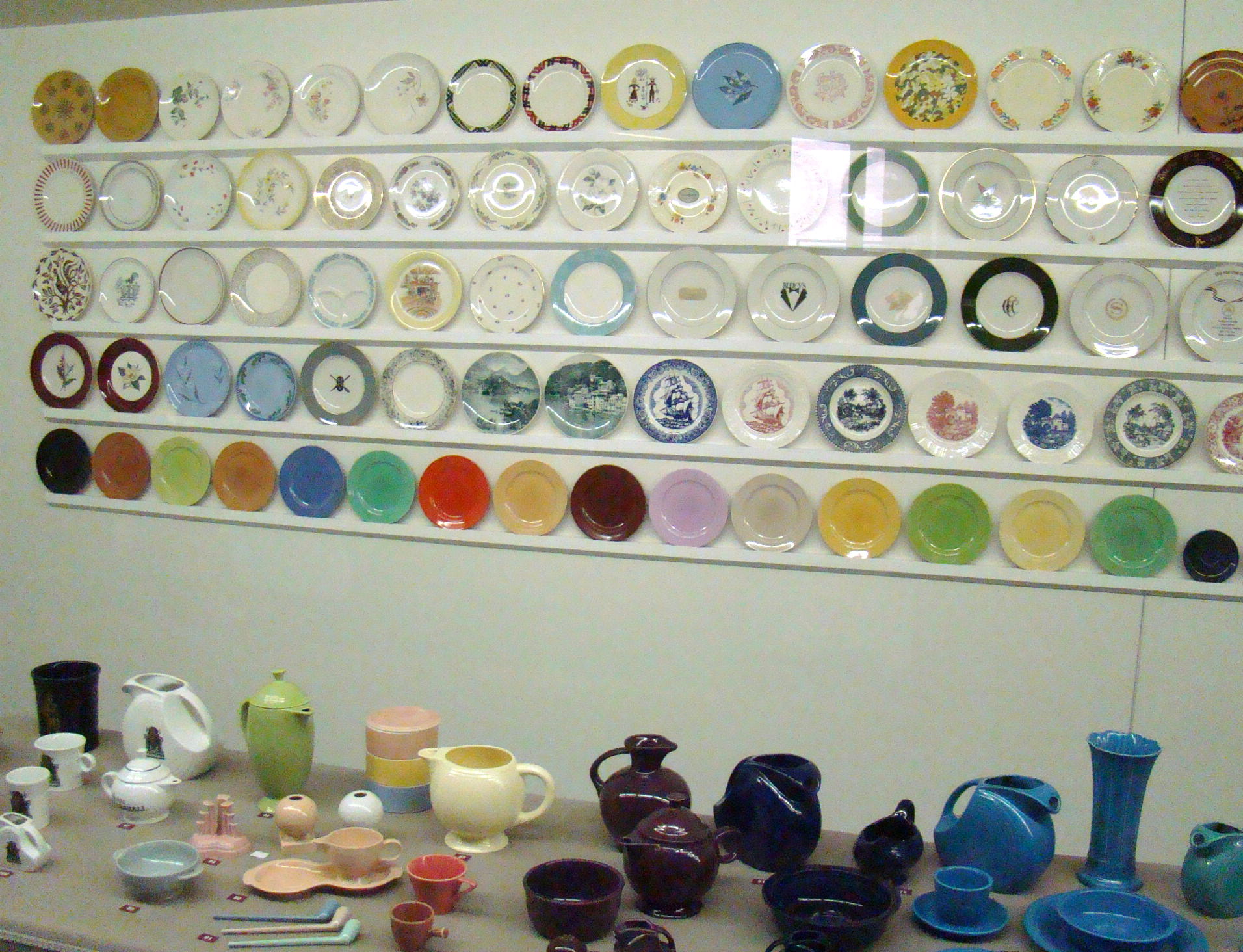
Display of Homer Laughlin China Company's popular items

Display of Homer Laughlin China Company’s popular items

Homer Laughlin China Company has provided many families with quality chinaware for nearly 150 years. Homer and Shakespeare Laughlin started their company way back in 1871 in East Liverpool, Ohio. In 1902, Homer moved the kilns to Newell, WV just across the Ohio River using the new suspension bridge and trolleyline as a means to bring his trained potters across to West Virginia. Here they constructed the largest pottery plant ever built in the world. This fine pottery is a highly collectible item in the area, but many families still use it for special occassions. This large display will bring back memories for many of the viewers.

The remainder of this museum deals with the history of the basic reason for this entire complex – Grave Creek Mound – just outside the building. This large mound measuring 62′ high with a 240′ base diameter, is the largest conical earthen mound in the New World.  The secrets of this mound will require another tale. So stay tuned…for the rest of the story.

Grave Creek Mound Archeological Complex in Moundsville, West Virginia is located on the east bank of the Ohio River. Traveling on the West Virginia side of the river, follow Route 2 into Moundsville.  Turn left on 8th Street and after two blocks turn right onto Jefferson Ave. You can’t miss The Mound! Admission is free and the complex is open Tuesday – Saturday from 9am – 5pm.