Places to go and things to see by Gypsy Bev

Archive for the ‘History’ Category

Biosphere 2 – Earth Under Glass
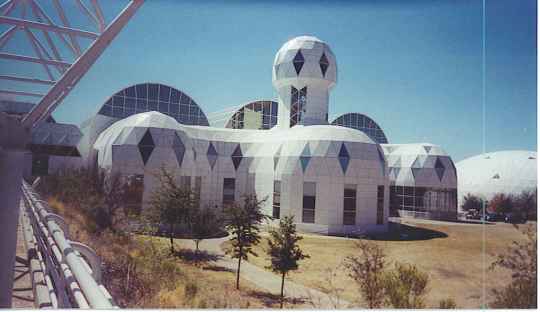
Biosphere 2Want to see a rainforest and ocean in the desert? Time to  head to the barren desert hills of Arizona, or should I say mountains! Located at the foot of the Santa Catalina Mountains in Oracle, Arizona, Biosphere 2‘s striking white outline and unusually shaped, futuristic buildings catch the eye. Recently named one of the top fifty “Wonders of the World”, which must be seen, this is an informative stop.

Biosphere is defined as: the regions of the Earth’s crust and atmosphere occupied by living matter. Therefore, it seemed fitting to name this man-made earth model Biosphere 2. Here is the world’s largest glass covered ecological laboratory located on forty acres. Back in 1984, Edward Bass, an environmentalist, contributed $150 million to build John Allen’s invention – Biosphere 2.

Originally built to experiment with self-contained settlement, those first eight ecologists, four men and four women,  signed up for a two year term, then sealed themselves away.  They began raising their own food and recycling air and water. Their goal was to be able to sustain all their needs from the five different ecological regions that were located inside the domes. These early designers were interested in space colonization and were looking for a way to build a similar system on Mars or perhaps the Moon.

The experiment, however, basically failed after almost two years due to the build up of noxious gases, and lack of oxygen.  While some of the four thousand species survived,  water and crops failed. However, much was learned scientifically as well as socially where disagreements caused lack of co-operation.  Columbia University operated it up until just recently, but today it is maintained and used for experimentation by the University of Arizona.
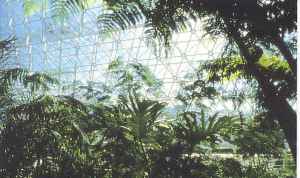
Biosphere 2 RainforestNot only is it an experiment station, but also a unique spot where visitors can view, on an inside tour, five different ecosystems: rainforest, grasslands,  desert, wetlands and ocean floor.  The rainforest is the largest and tallest biome represented.  It contains a number of different habitats, including a lowland forest, a flood plain, and a cloud forest on top of a sandstone mountain.

Savanna Grasslands is naturally dominated by various types of grasses, but there is a quartzite slope in the area where the stream waterfall is located. The Thornscrub section is the wilderness area. Most of the plants in this region are from the Sonoran area. Vegetation consists mainly of short trees and shrubs with many of them being thorny.
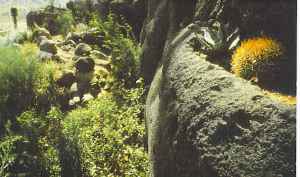
Biosphere 2 DesertThe desert biome has over 125 species of plants and was originally designed to replicate a coastal fog desert such as those found along the western coasts of Baja, California.  This allows the Biosphere 2 desert to co-exist with the other, more moist biomes.

The Marsh biome begins with a fresh water lake with a transitional marsh leading to the Mangrove wetlands.  Here over five hundred large mangrove trees dominate the wetlands, which is colonized by many marsh creatures such as crawfish, snails, sponges, and shrimp.

Biosphere 2 OceanThe ocean biome, designed to simulate a Caribbean reef, contains a coral reef and over one million gallons of salt water. A forty foot cliff overlooks the tropical ocean where waves, temperature and chemical balance are all carefully monitored and controlled by innovative technology. This allows scientists to conduct groundbreaking research. But the ocean biome is very efficient at recycling nutrients, so mainly mechanical means will be used in the future to attempt to control the environment here.

Today their largest project is the Landscape Evolution Observatory where they     are exploring the secrets of earth’s landscape and how it changes due to climate and water movement, as well as modifications through biological systems. Edward Bass continues to be a major supporter and last year donated another $20 million to support operations and research. This is the premiere place for learning about Earth and its place in the Universe…now and in the future. Biosphere 2 is where science lives.

Getting there depends on where you are beginning! If you are in Phoenix, find your way to Biosphere 2 off I-35 exit 185. Continue East of 187 toward Florence where you will turn right or south on Arizona 79.  Turn left on Arizona 77 until you arrive at Oriocle Junction where you turn left on Biosphere Road.  If you are in Tucson, take Arizona 77 north about 24 miles.
Glimpse Out of This World at MUFON Conference

In the mountain of Pennsylvania, MUFON enthusiasts gathered at Westmoreland Community College in Youngwood for their annual conference recently. MUFON (Mutual UFO Network) is an organization investigating all reports of Unidentified Flying Objects throughout the world. Lectures were presented throughout the day, authors signed books, and visitors shared experiences.
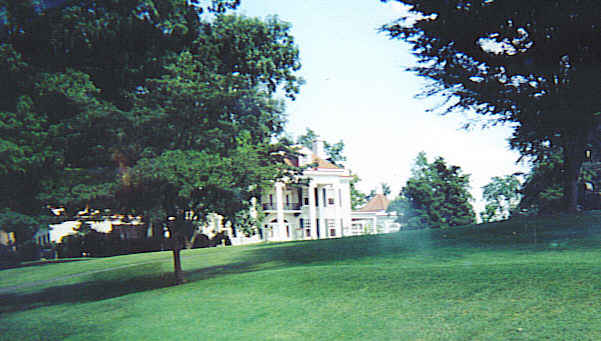
UFOs vs Paranormal was the first lecture of the day given by Karyn Dolan. The public perception varies on these two topics as ghosts are an acceptable belief, while UFOs usually require a cover-up.  No one really likes to admit they believe in UFOs, but most people do…they just don’t want people to think they do.

If you do believe in UFOs, you have to change the way you see the whole world. The earth is no longer the only important heavenly body. People, who had been abducted, increased their psychic abilities and through meditation began to receive contact with other beings. While contact with alien life seems to change emotional levels, we all know people who are psychic vampires and drain away our energy!
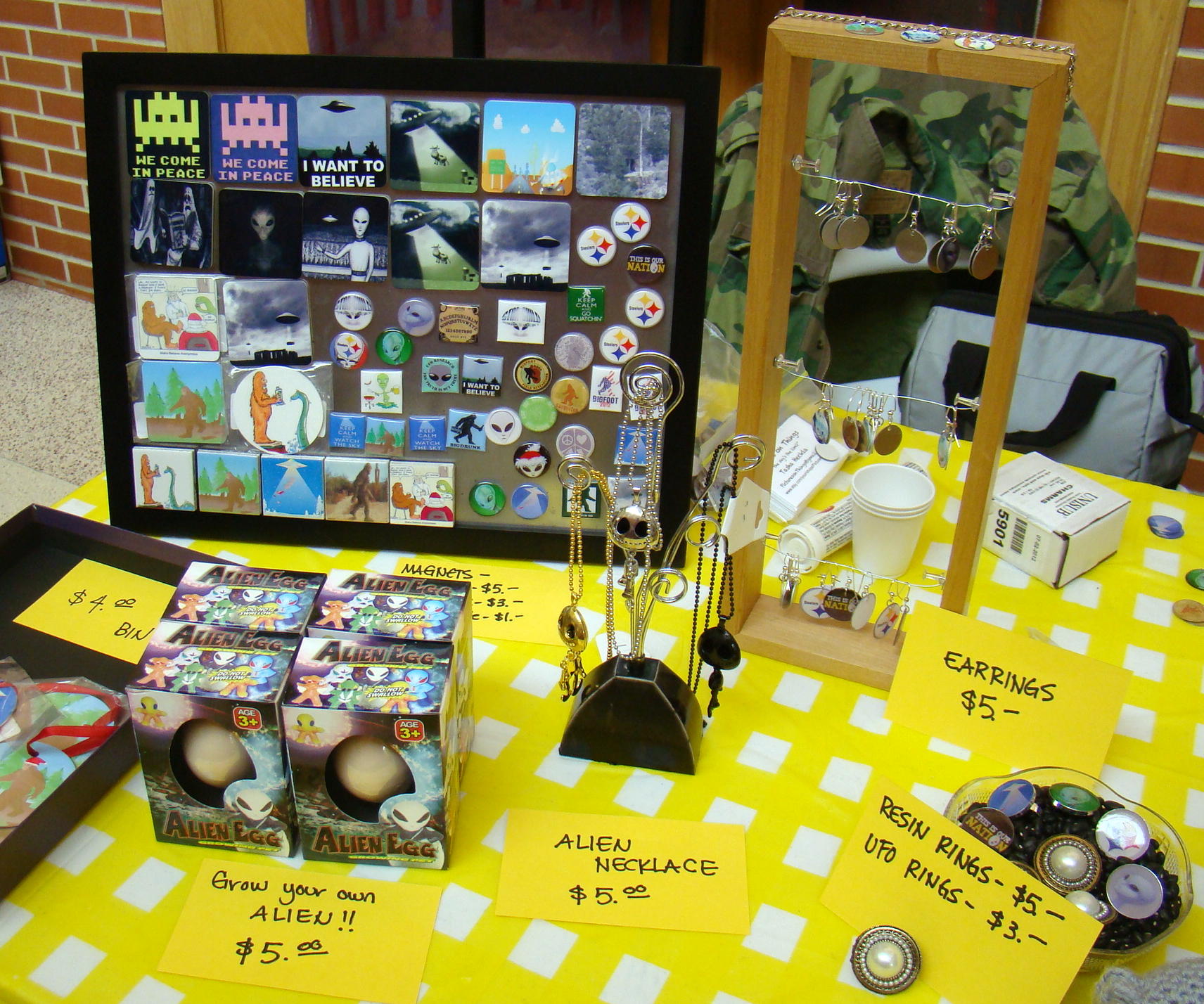
The lobby was an interesting collection of author signings, literature, Bigfoot information as well as UFO memorabilia. Bigfoot enthusiasts were also at this gathering and the history of Bigfoot legends was explained. As far back as the Native Americans, their legends discussed similar creatures in the woods. Newspaper archives were a frequent point of reference as far back as 1837 when  the first documented story in Bridgewater Bangor Daily Whig & Courier reported a hairy creature was heard whistling in the woods. Today there are many names for this hairy creature around the world:  Sasquatch, Abominable Snowman, Almasty, and Bigfoot. Researchers feel they have lots of proof…just no physical specimen! That’s a big missing link.
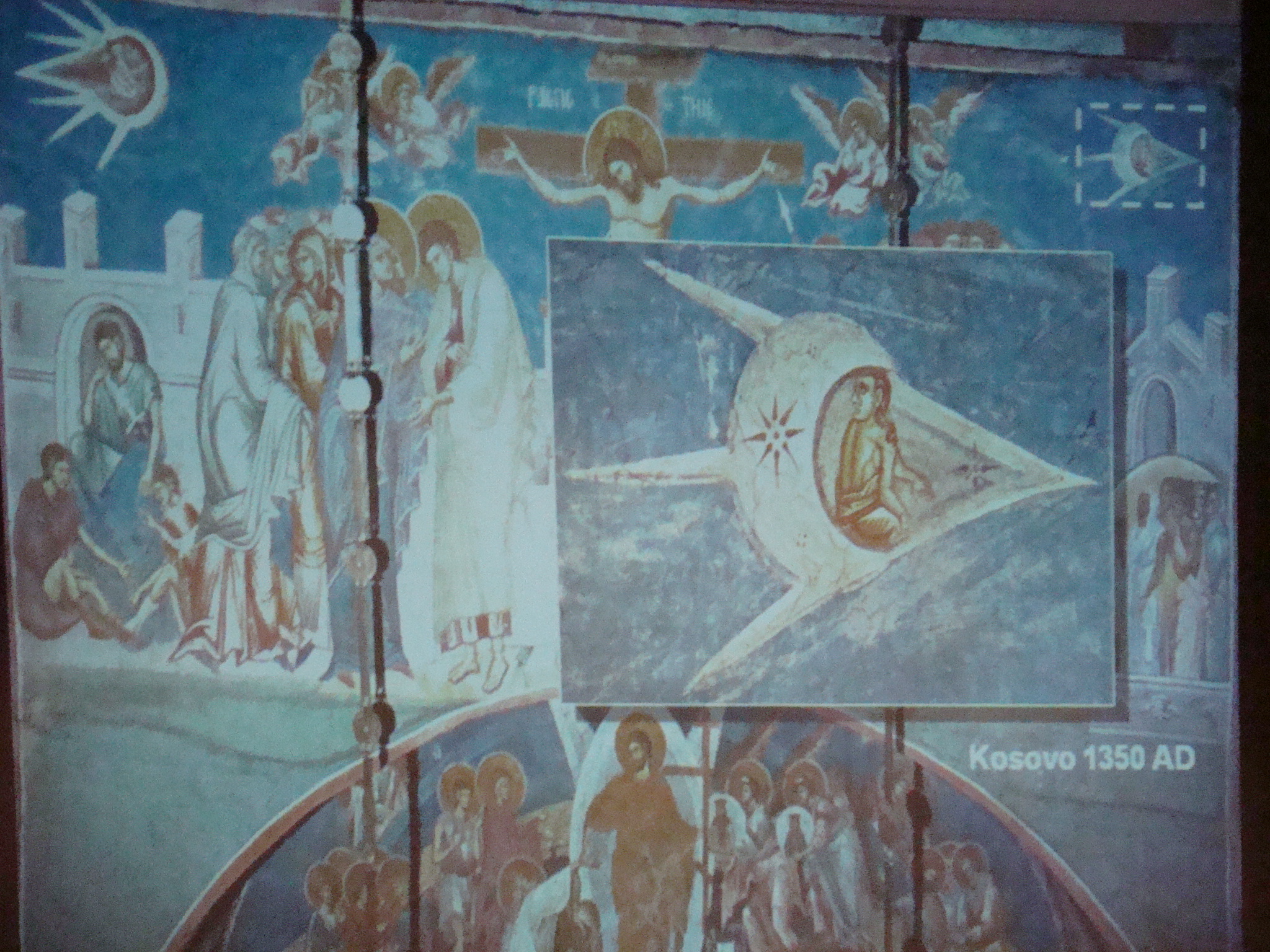
An interesting afternoon presentation showed slides of art throughout history that included strange objects in the sky…many of them shaped similar to those people classify as UFOs today. These included cave drawings, petroglyphs, Renaissance Art, and the Myans.  The oldest documentation was from The Vedic’s of India nearly 8,000 years ago.  Speaker, John Ventre, summarized, “No matter how far back in art history you go, unidentified flying objects show up.”

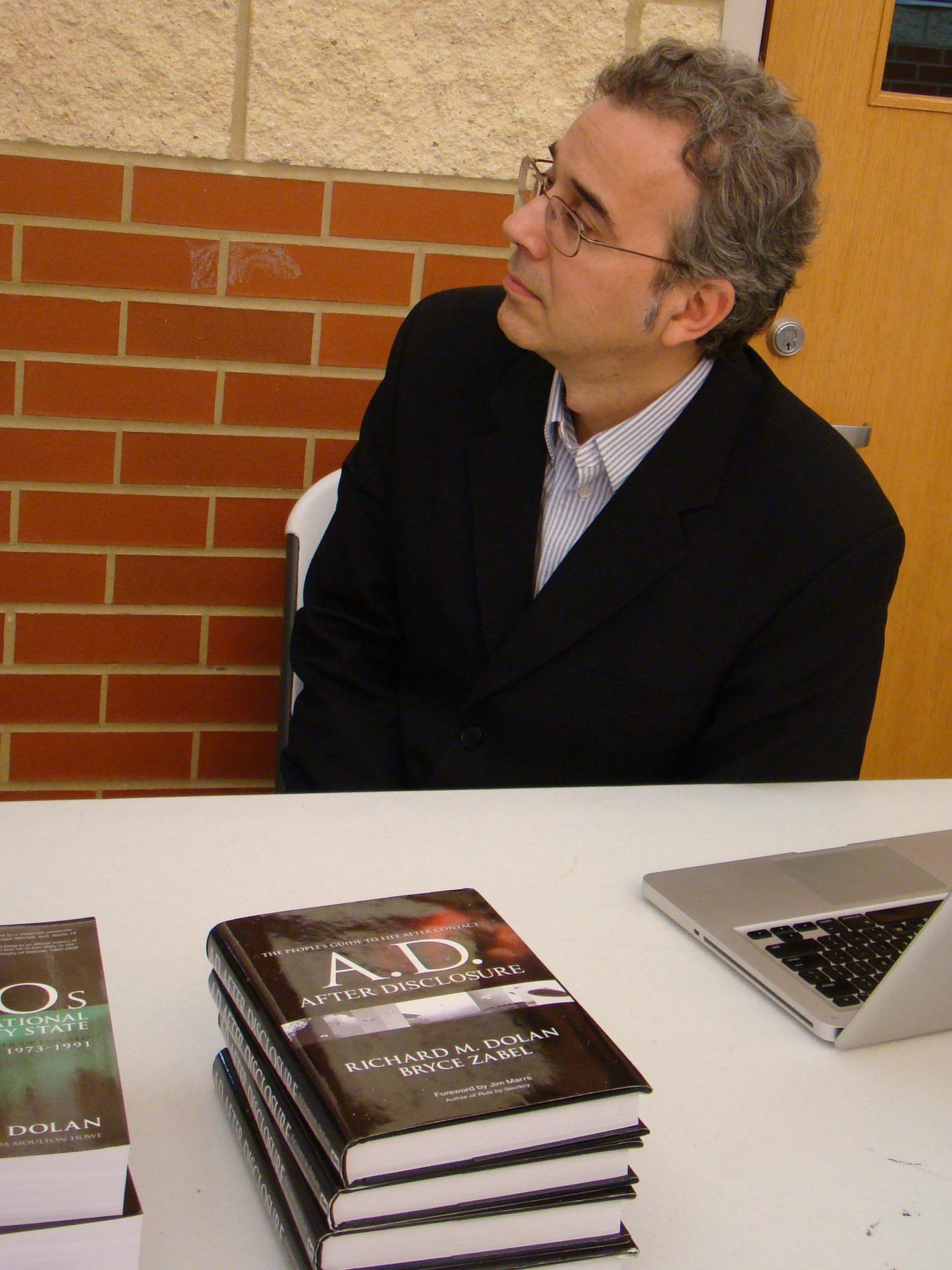
Ufology in 21st Century was the topic discussed by Richard Dolan, one of the world’s most prominent researcher and historian of UFOs.  His most recent book, A.D. (After Disclosure) When the Government Finally Reveals the Truth About Alien Contact, discusses the deep impact that would be brought about by the end of UFO secrecy. Many feel that governments maintain secrecy to prevent people from panicking from fear of the unknown. Perhaps aliens exist in our world today so keep an eye on some of those strange people you encounter that seem to be a bit psychic or telepathic. Contact appears to be on an intuitive level making it spiritual vs scientific. But don’t analyze too much!

Over 1100 volunteers take accounts and investigate all reported sightings. There are 3000 MUFON members world-wide in 39 countries and that is constantly expanding. In 2011 there were close to 700 sightings a month.  That number is up slightly in 2012.

While talking with Karyn later in the day, we were exchanging ghost stories. I casually remarked that perhaps my story might make her think I was a little odd. She laughingly remarked, “You’re at a UFO conference; everyone here is strange”…but all very interesting creatures!

MUFON is always looking for new members interested in the scientific study of UFOs for the benefit of humanity. There is a study guide to be completed, exam, background check and then field time with an experienced investigator. Maybe you would like to join those curious minds.

McKinley Museum Spotlights Stark County

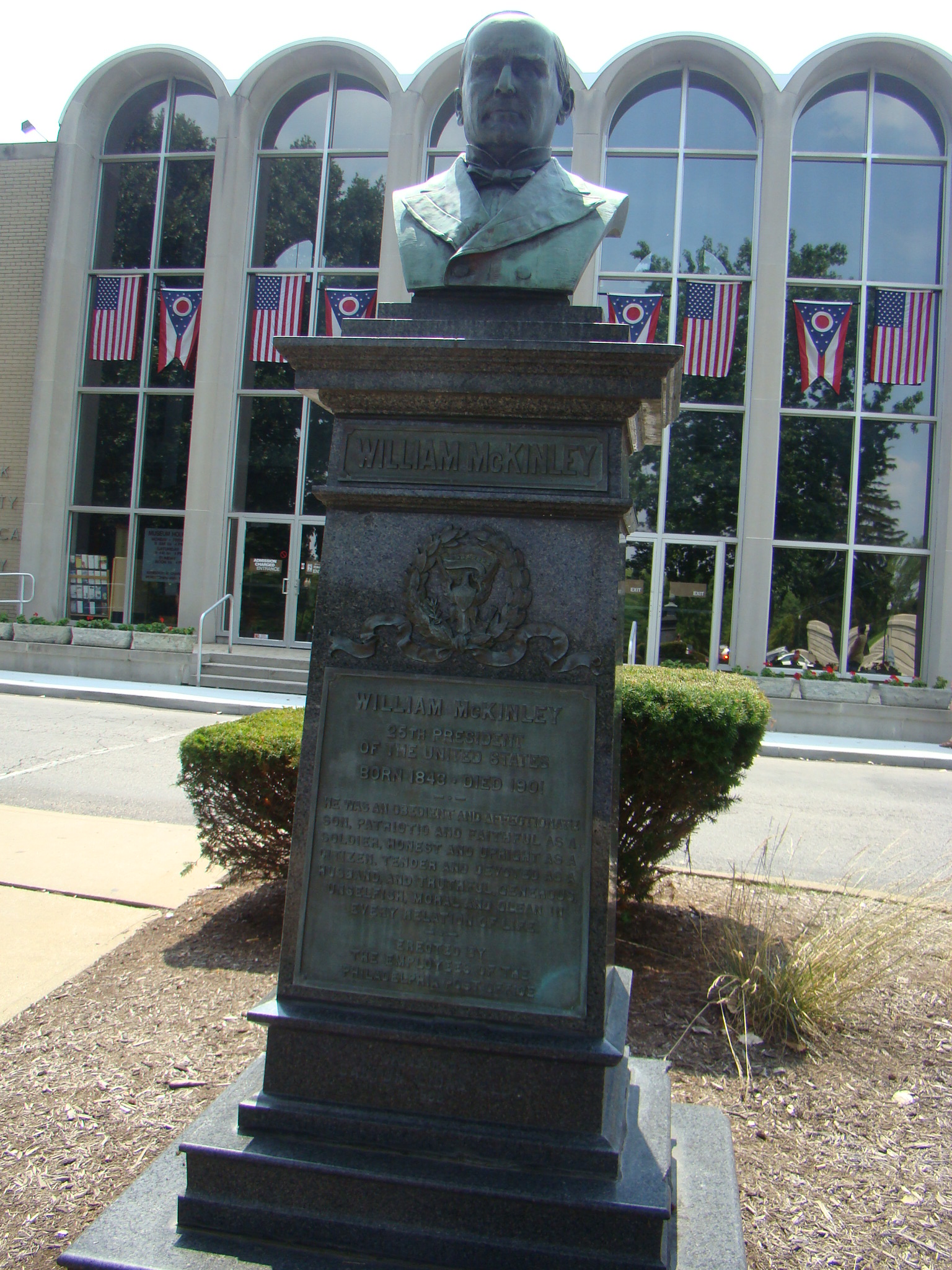
Near the foot of the McKinley Monument, Stark County Historical Society has gathered interesting information and memorabilia regarding the surrounding area. as well as the life of William McKinley.  The bust of McKinley greets visitors outside the building.

As you enter the lobby of the McKinley Museum in Canton, Ohio, a sign with a quote caught my eye. It was a word of advice to young people from President William McKinley:

“Young men and women, what your education will be and do for you depends upon yourselves.”                                                            

Within these walls is quite an extensive history of the Stark County area including leading enterprises, such as Belden Brick, Dueber-Hampden Watch Company, Erie Canal, Hoover Vacuum, Pennsylvania Railroad,  and Timken Company just to name a few. Henry Timken founded Timken Roller Bearing Company in 1902 and his entrepeneur vision was grounded in this type of thinking:

“If you have an idea which you think is right, push it to a finish. But above all, don’t set your name to anything you will ever have cause to be ashamed of.”

McKinley Museum had many interesting exhibits throughout, too numerable to mention. Here are a few things that caught my eye on a recent visit.

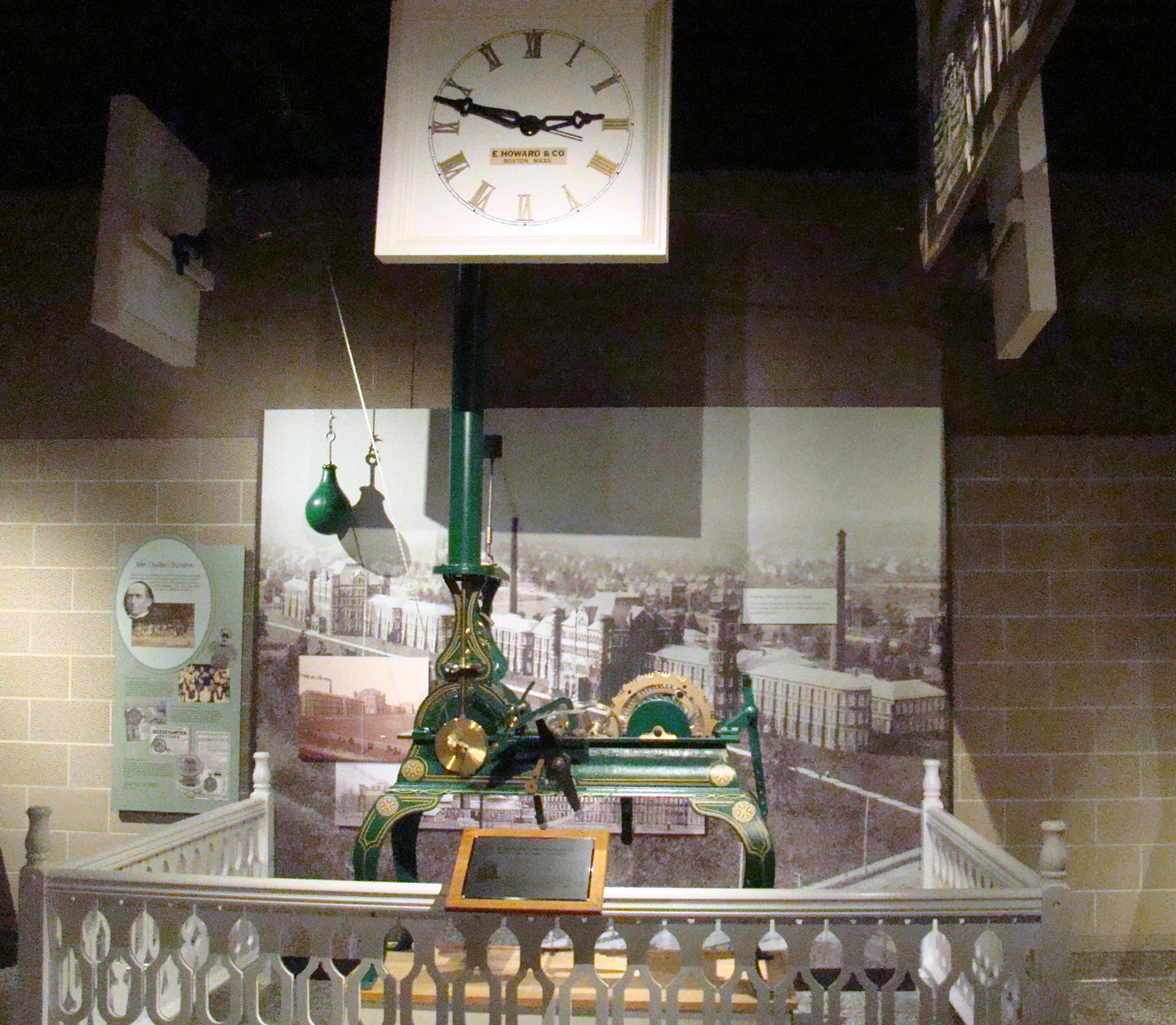
One fascinating display showed a clock tower made by Dueber-Hampden Watch Co with a sign “Accurate to the Second.”  That was way back in 1889! By 1890 the company was producing 600 watches a day in Canton, Ohio and had over a thousand employees. They used 14 karat gold  in their watch cases and had 17 jewel movement, quite advanced for their time. This company was sold to a Russian company in 1927 and twenty-one former employees went to Russia to teach them their craft.  One report is that their machinery is still being used in China today.

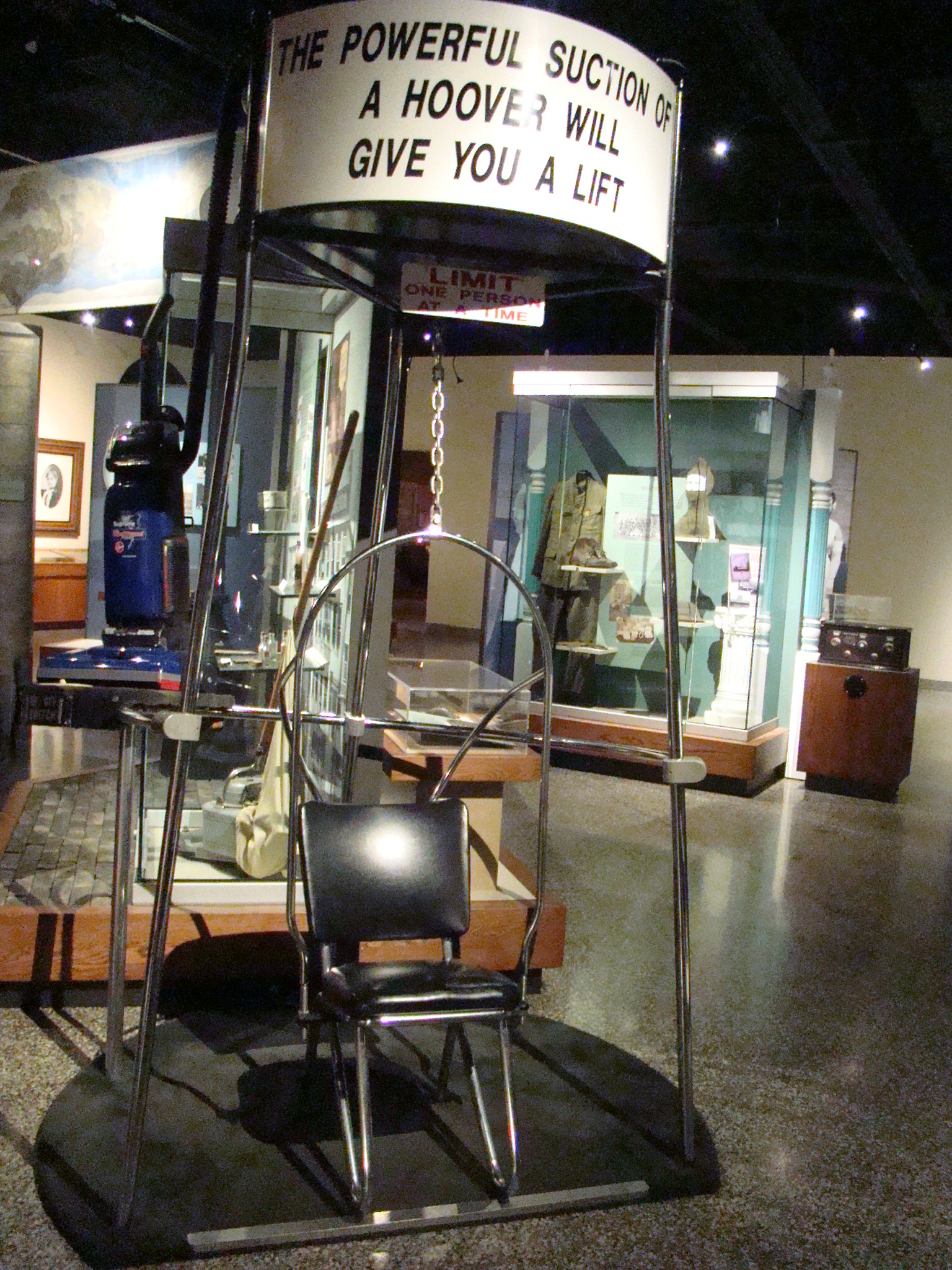
The Hoover Vacuum provided a display that attracted lines of children. While seated in a chair, they pressed a button which created enough suction to lift them well off the floor. The Power of the Hoover! It is very fitting to be highlighted here as the first upright vacuum was invented by a department store janitor, James Spangler, in Canton back in 1906. He just happened to show it to his cousin, Susan Hoover, who in turn shared it with her husband.  “Boss” Hoover bought the patent from Spangler, hired him as Superintendent, and slowly began the switch from maker of leather-goods to vacuum manufacturer.  The slogan: “It beats..as it Sweeps…as it Cleans” brought the Hoover Vacuum to the forefront.

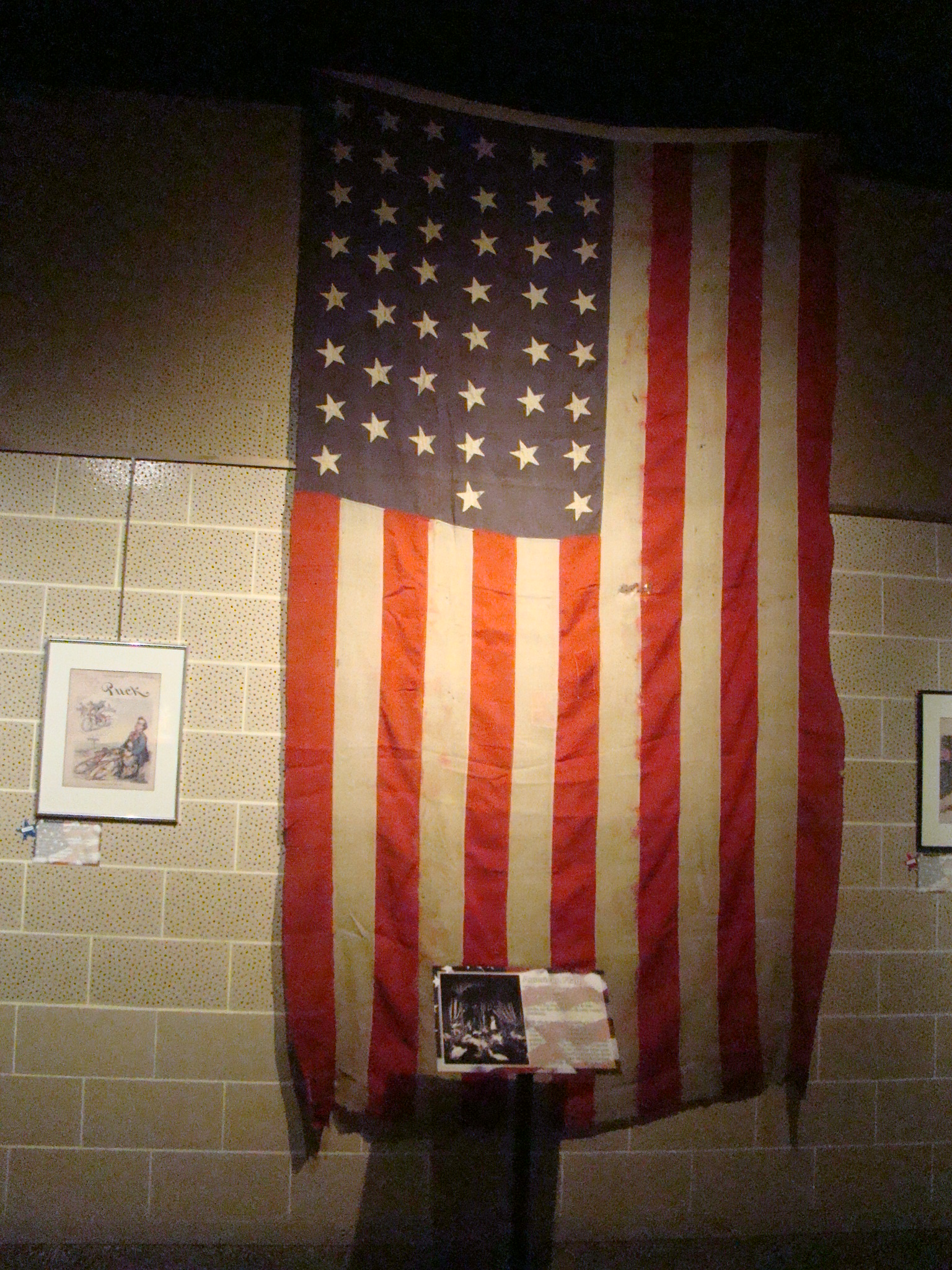
This was the original hand-sewn 45 star American flag that hung on the front porch of McKinley’s home during the 1896 presidential campaign.  During his famous “Front Porch Campaign”, McKinley made himself available to the public every Sunday afternoon on the front porch of his home. Usually he was seated in his rocking chair from which he talked to 750,000 people who stopped by. Some say he shook hands with up to a million men from that front porch scene. This campaign appealed to the average voter, who found themselves drawn to a candidate that stayed true to his roots.

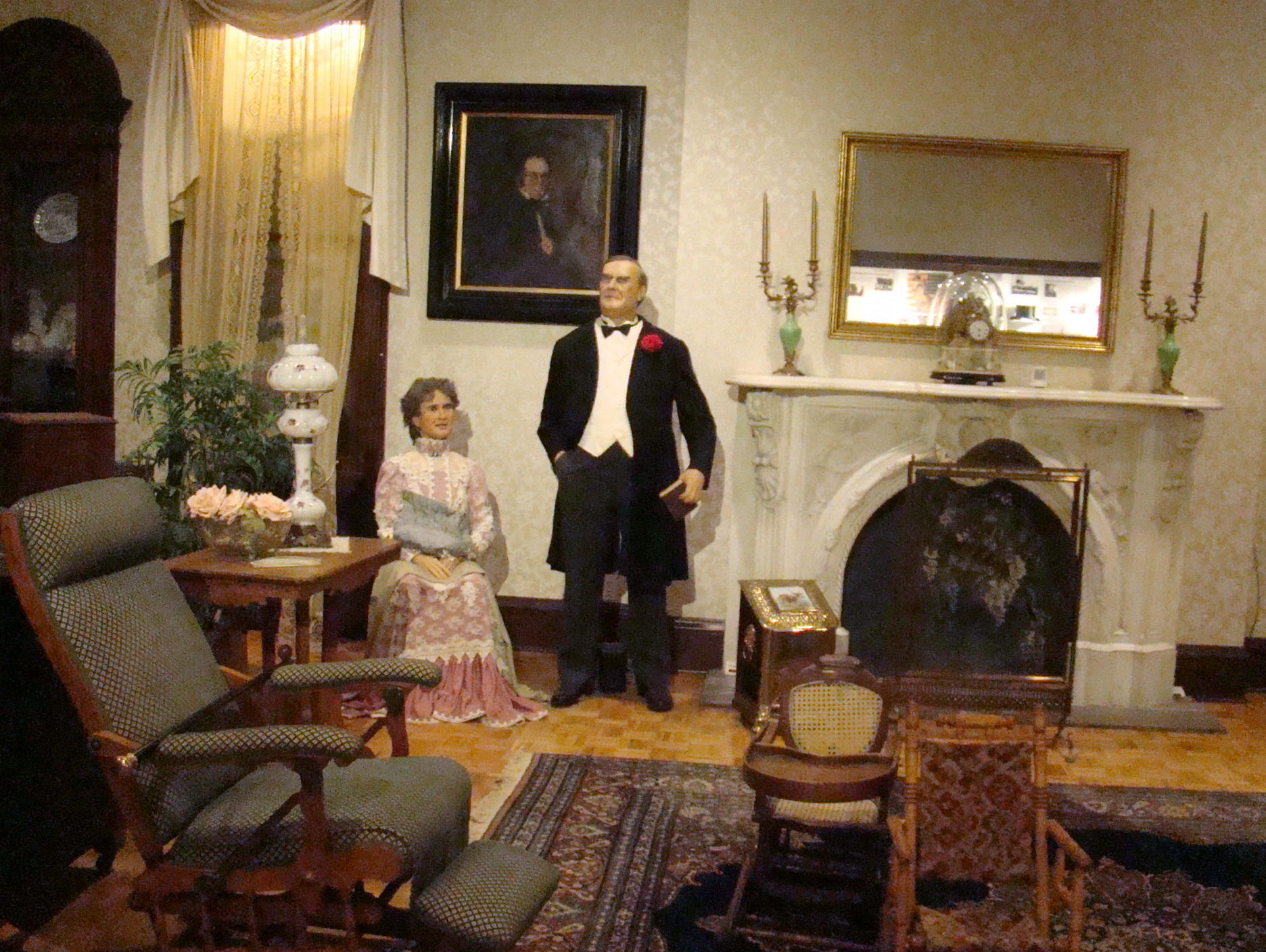
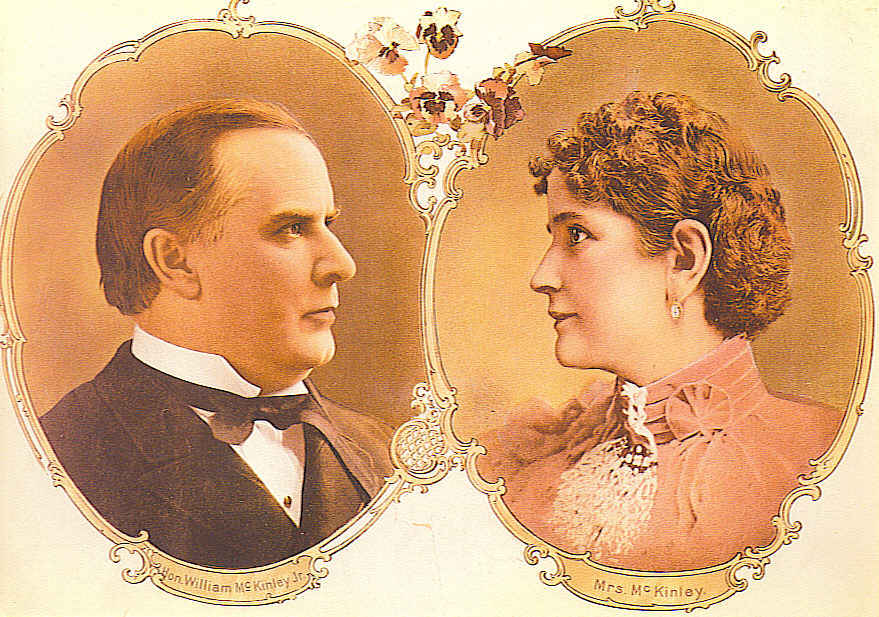
Rooms were redesigned to look very much like the ones of long ago with their Victorian furnishings. A touch of some form of music was often in evidence as that would have been one of their main means of entertainment. In the parlor, you had an opportunity to listen to talking figures of William and Ida McKinley. Notice that he does have on his symbol, the red carnation.These plastic figures are activated by sensors when you enter the room.

The Hazlett Theater is a fine spot to give your feet a rest and watch some old films from days gone by. Here you hear about the campaigns of William McKinley and get to have an inside video tour of the Memorial.

There weren’t enough hours in the day, so sadly missed the show at the Hoover Price Planetarium where visitors view the solar system and beyond. They say it is like traveling to space without leaving the ground.  Unfortunately, didn’t make it to Discover World either where dinosaurs and early American Indians welcome visitors to Natural History Island, Ecology Island and the new spot, Fascination Station.  Looks like a return visit is in order.

The McKinley Museum  is located in downtown Canton, Ohio just off I-77. Take Exit 105 for OH 172, then turn right on 7th Street NW. Take the first left onto McKinley Monument Drive where the Museum is located to the left when facing the memorial. Enjoy a little piece of Ohio history.

An “Old Soul” Explores Beautiful Red Rock Sedona

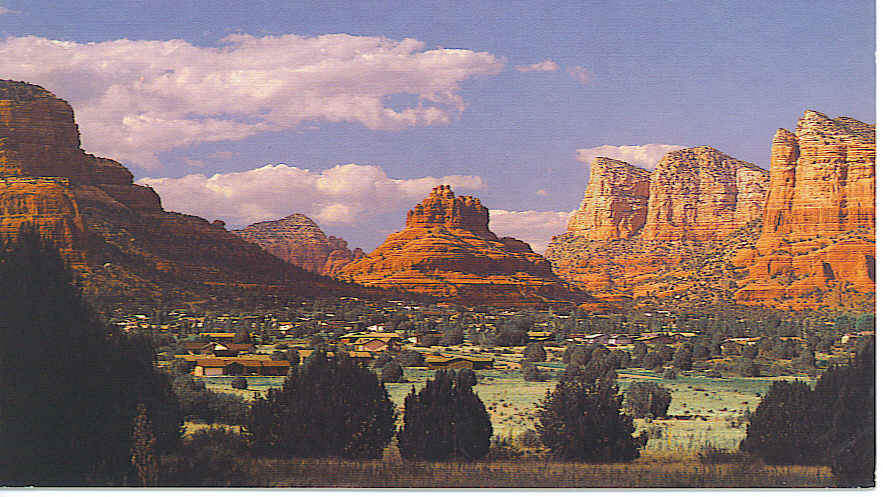
Sedona!  Just the word brings to mind beautiful red rock formations surrounded by a high level of spiritual awareness. For those interested in the metaphysical, Sedona, Arizona is the perfect place to explore. This New Age capital of America is nestled in the mouth of beautiful Oak Creek Canyon.

Spectacular views draw people from all over the world to this “red rock country” where they experience the majesty and peace of the natural wonders appearing around every corner of the road. The sandstone formations glow red and even orange, especially at sunrise and sunset here in Sedona.

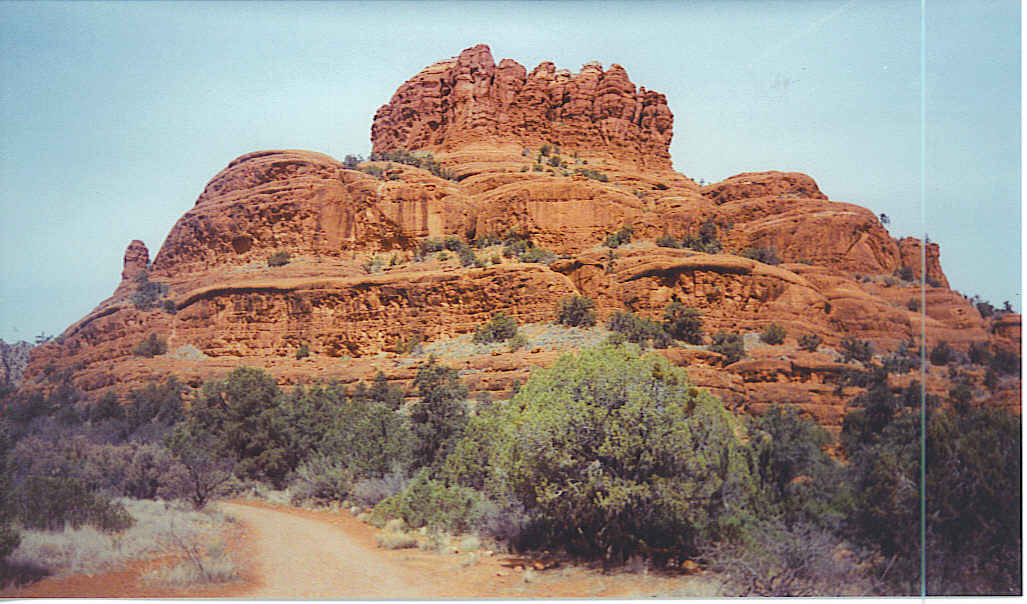
Bell Rock captures the eye and the heart as it emits an energy that can’t be explained. This is just one of several energy vortexes in and around Sedona. For those not familiar with vortexes, they are created from a spiraling motion around a rotating center, such as water going down the drain or a dust devil in the desert. But here in Sedona, the energy vortex is created by spiraling spiritual energy making it a great place for prayer, meditation and healing. There is no real explanation, it must be experienced…and that is just what I did.

While walking around Bell Rock, which is a two hour trip – at least for me- instead of getting tired, my feet moved faster at the end than they did at the beginning. Just had to keep a piece of the red rock with me -it fell at my feet- and still have it under my car seat today.  Maybe that is how I keep going and going on my Gypsy Road Trips… like the energizer bunny.

As you can imagine, Hollywood also noticed the beauty of this area and over sixty Hollywood productions, mostly Westerns,  have been filmed here. John Ford’s production of Stagecoach rolled into Sedona in 1938 beginning the bonanza of films and stars that would become familiar to the red rock area. Classic greats such as John Wayne, Elvis, Rock Hudson, and Art Carney have enjoyed hanging out in the red rocks while starring in scenes shot here.

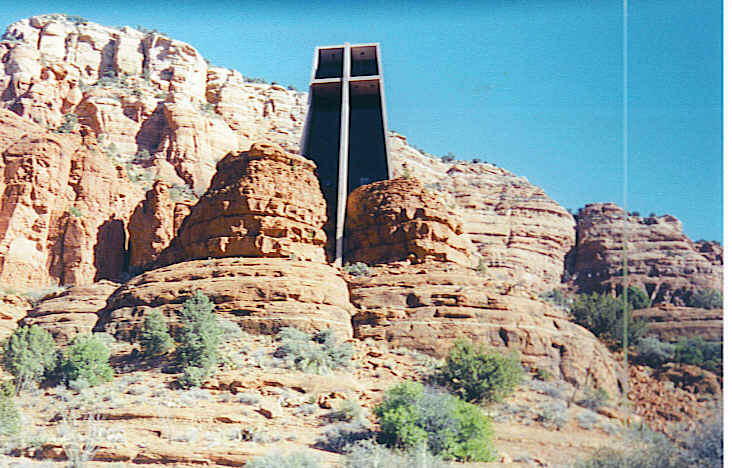
Just a short drive south of Sedona,  the Chapel of the Holy Cross provides a spiritual uplift to the trip as well as another gorgeous view of the surrounding area. Built back in 1956,  the chapel rises 250′ out of the red rock and its design was inspired by the Empire State Building. The front of the chapel faces sunset thus illuminating the interior naturally with sunlight.

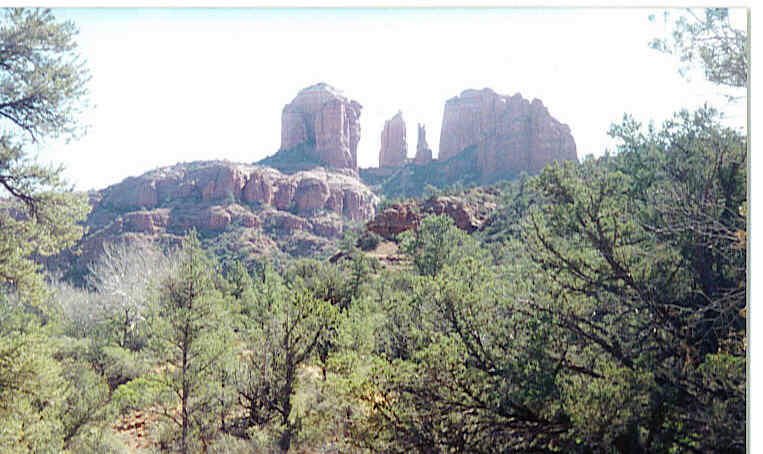
Cathedral Rock, the landmark of Sedona, provided another relaxing place to walk, but personally didn’t feel the energy surge experienced at Bell Rock. Trails lead to the “saddle points” or gaps in the beautiful red rock configuration. While the trail is exceptionally steep, a breeze is nearly always present due to the air movement through the saddle points.

Stayed on the edge of town in the red rocks at a rustic little place called quite naturally, Red Rock Lodge. Here the owner gave me a tour of her beautiful flower garden and explained a little about the flowers of the region. Arizona Poppy, Indian Paintbrush, and Desert Primrose add beauty and a pleasing aroma to the surrounding mountains. Rates were affordable at this small comfortable lodge while the views were extraordinary.

Couldn’t leave town without getting a psychic reading at a charming place with beads hanging from the doorway, a crystal ball on the table, and cards spread to tell me that I was indeed an “old soul” who had been around for a long, long time. This old-fashioned metaphysical community is the place to immerse yourself in Reiki, acupuncture, aromatherapy, UFOs,  and much more.

Sedona has grown since my last visit, but even today there are few streetlights, no buildings reach over two stories high, and every structure must match the primary colors of the rocks. No Golden Arches for McDonald’s here – arches in Sedona are turquoise! These awe-inspiring red rocks formed in beautiful buttes, spires and canyons capture your attention; however, there is a serenity here among the beauties of nature that draws one back again and again.

The Sedona area is located off I-17 at exit 298. Proceed on Highway 179 which after about 14 miles  will lead you to the Y in the road from which you will be guided to various area attractions.  Grand Canyon is a couple hours north of Sedona, while the intriguing Sonoran Desert lies south. Not many can resist the charm, so plan to spend a day or two in this breathtaking area.

A “Pleasant Point” Along the Ohio River

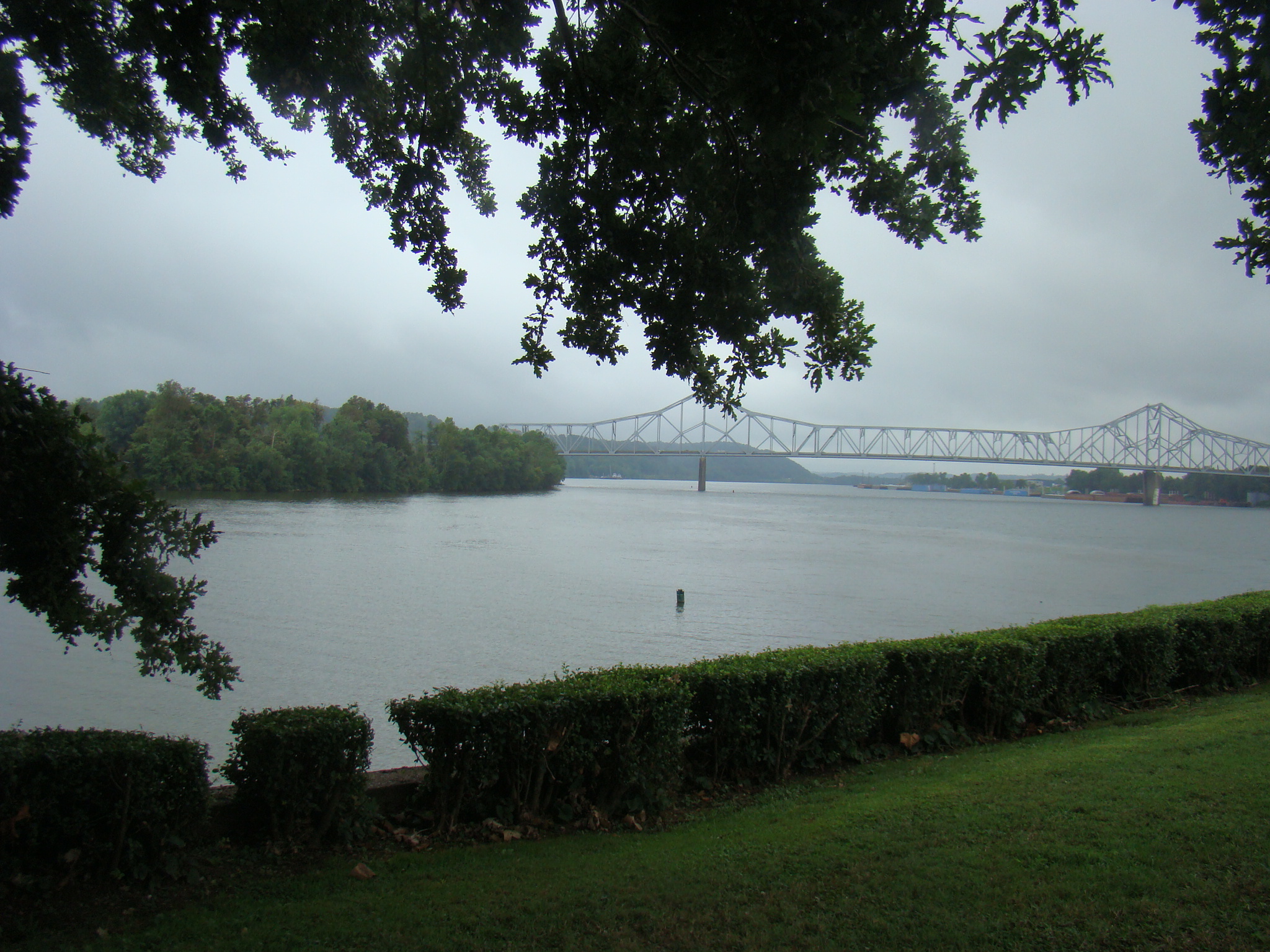
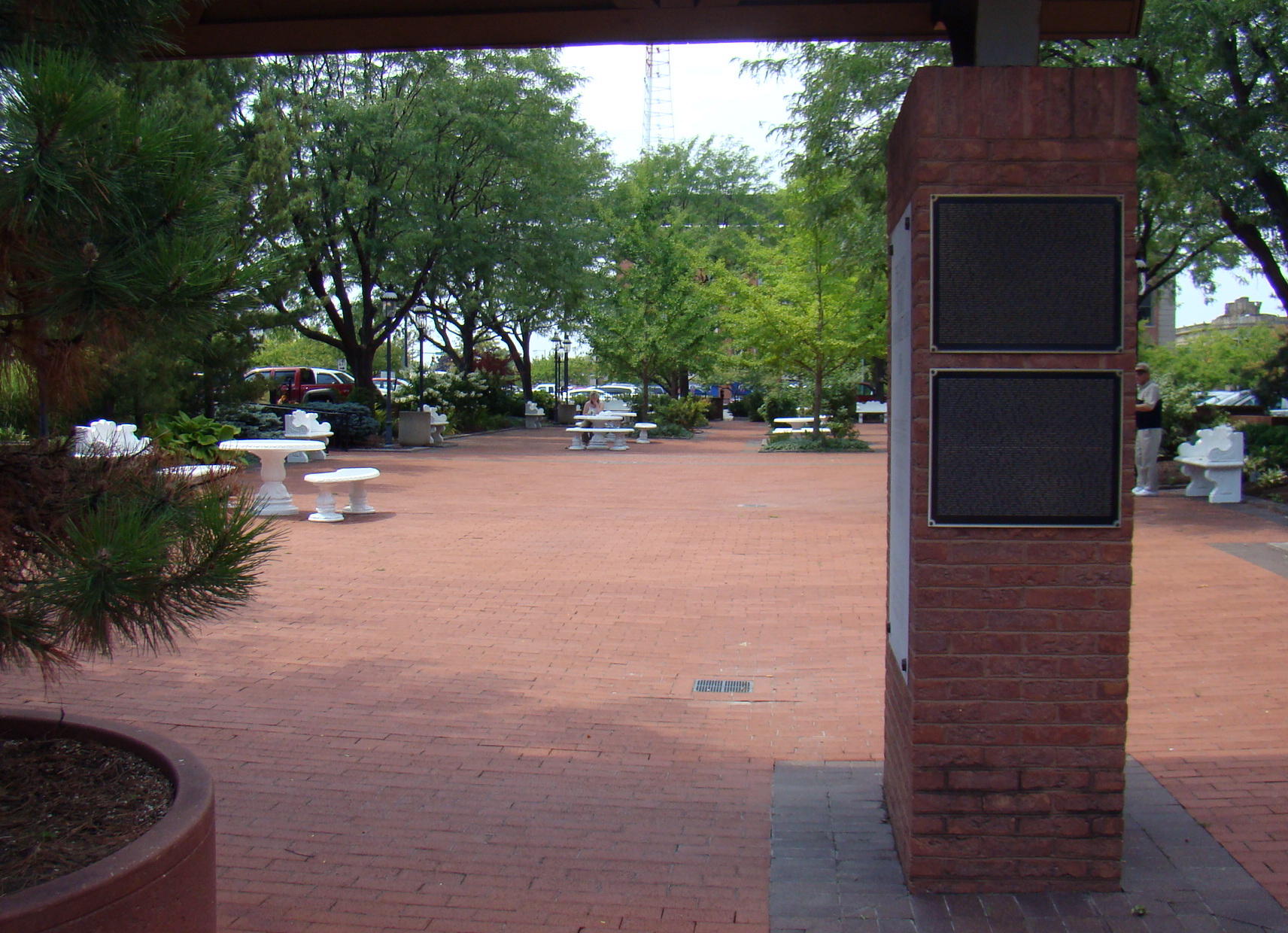
“A pleasant point” was the description given by surveyor, George Washington, when he arrived at the confluence of the Great Kanawha  and Ohio Rivers. Today the town that grew there is called Point Pleasant in West Virginia. The beautiful Riverfront Park is a pleasant surprise here and a wonderful place to take a leisurely stroll with the Ohio River on one side and large murals depicting the town’s history on the other.You can glimpse the Silver Memorial Bridge close to  the point where the Great Kanawha River joins the Ohio River near the end of the Riverwalk in the State Park, Tu-Endie-Wei, which adjoins.

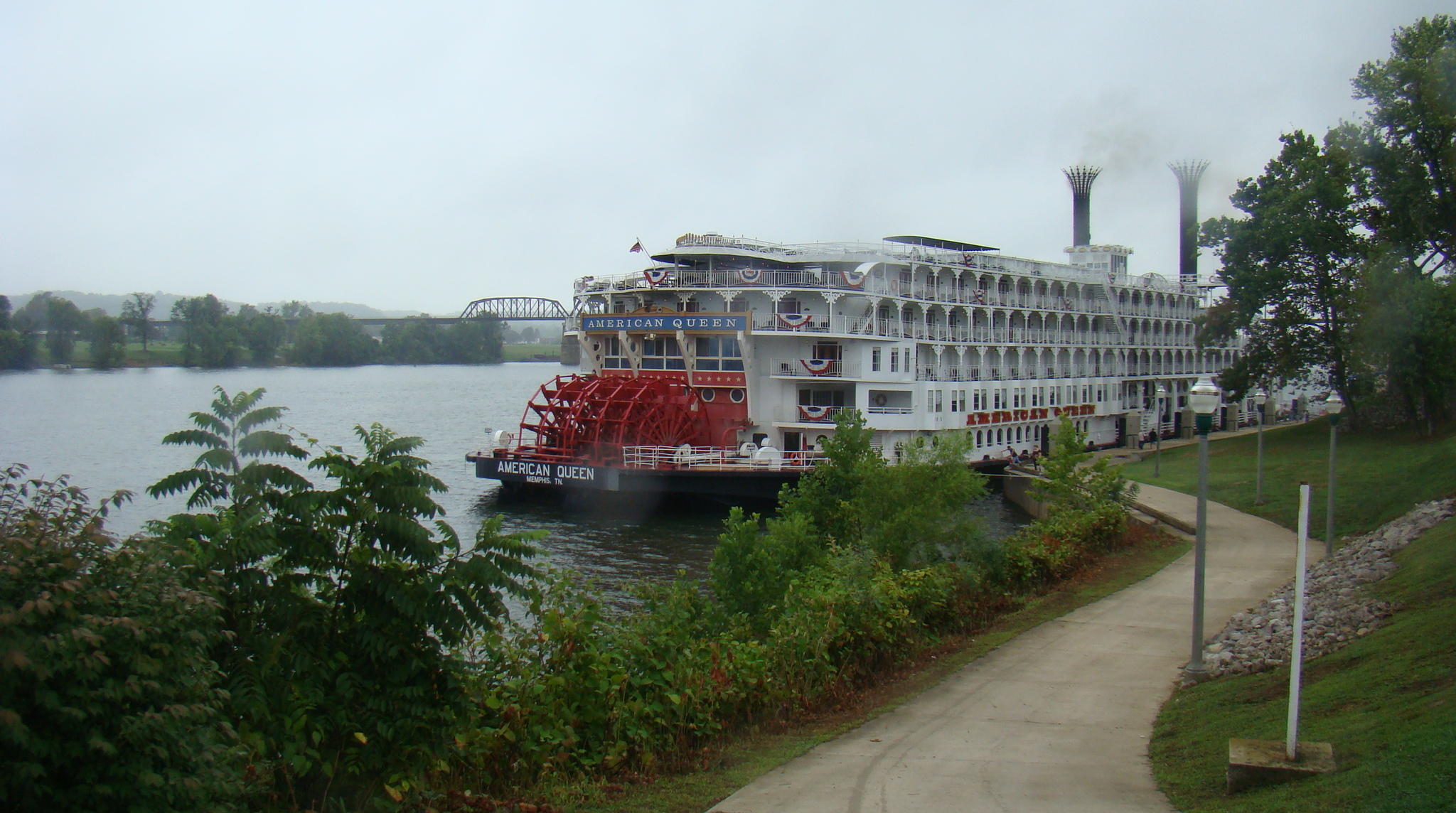
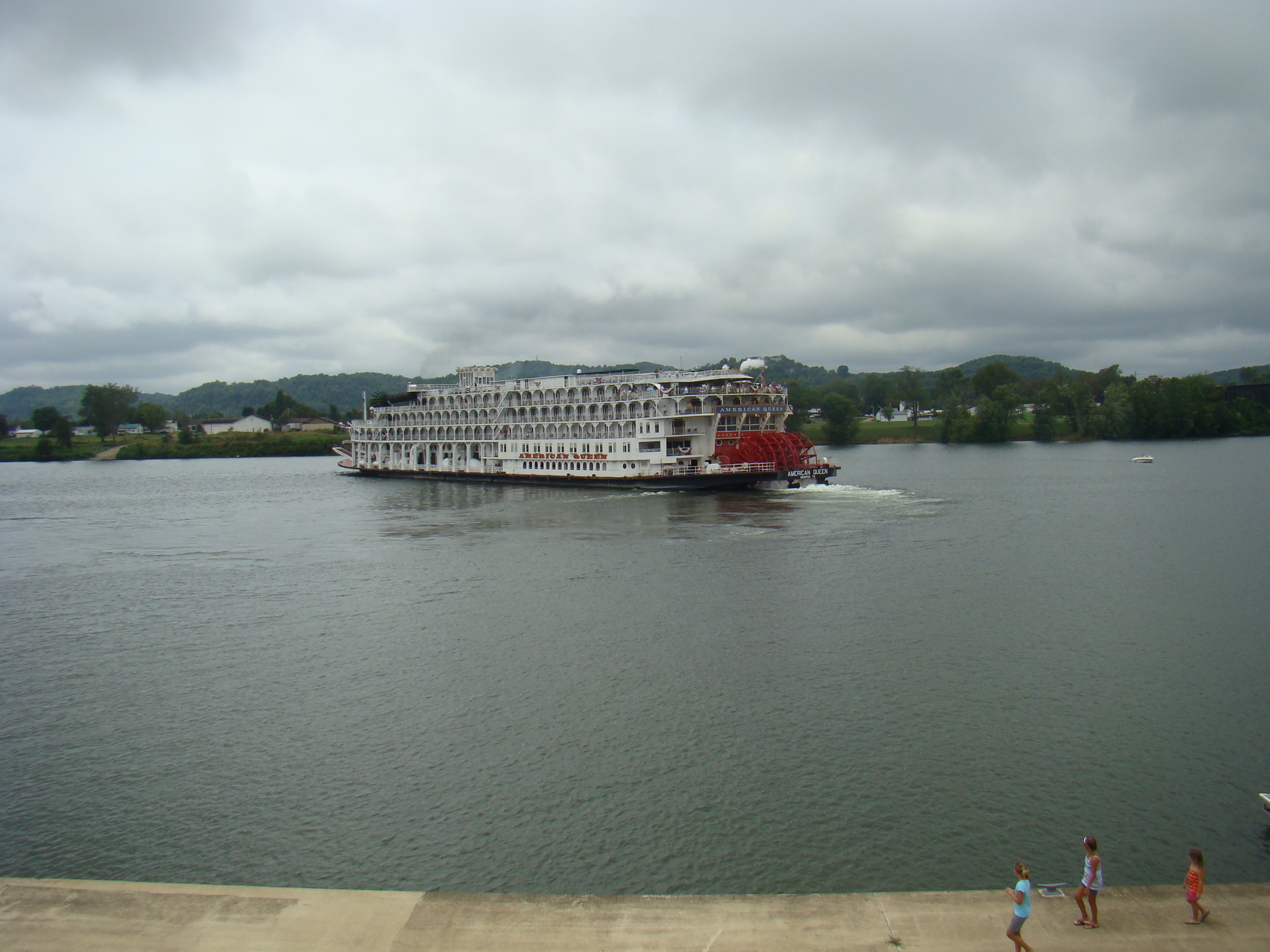
The Ohio River peacefully flows carrying boats of various sizes for many purposes.  There are coal barges, speedboats, riverboats, and luckily this day the spectacular American Queen, the largest steamboat even built in the world. Built in 1995,  this beautiful riverboat is a  six-deck re-creation of a classic Mississippi Steamboat.  Its flat-bottomed style makes it possible to even continue if the waters become shallow.

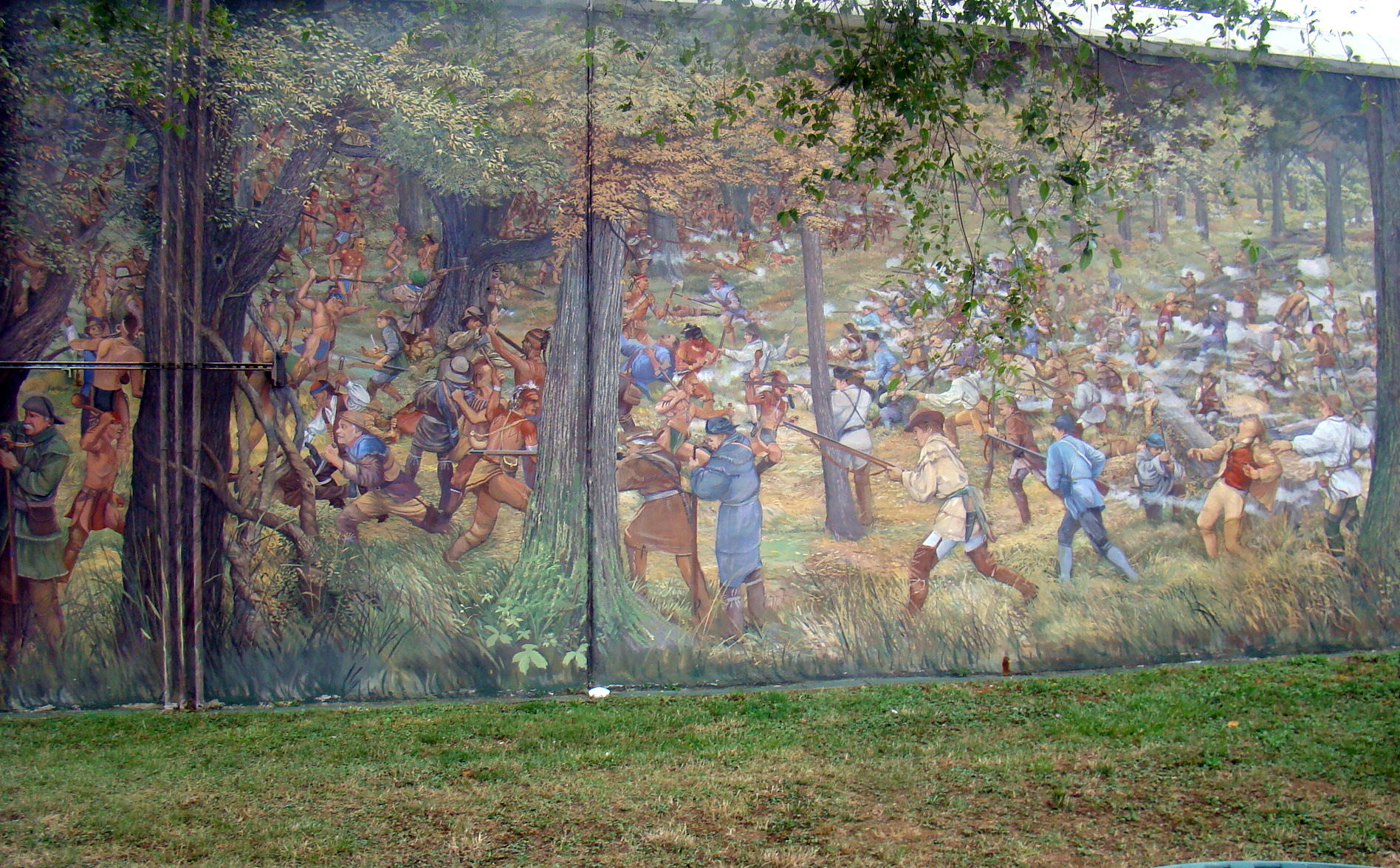
Murals are painted on the floodwalls flanking the Ohio and Kanawha Rivers representing scenes from the Battle of Point Pleasant as well as other pieces of Point Pleasant history, including the Indian settlements of earlier days. Each large mural, measuring from 100-250 feet long, has one single monumental scene painted by artist Robert Dafford. His murals can be found in several cities along the Ohio River from here at Point Pleasant, West Virginia to Paducah, Kentucky.

One depicts the 19-year old George Washington surveying the wilderness where he met Benjamin Franklin and some land speculators, who were founders of the Great Ohio Company. This group intended to found a new colony called Vandalia that would have encompassed most of today’s West Virginia and Kentucky.  What a surprise to learn that on the eve of the American Revolution, there were thoughts of creating a fourteenth colony with Point Pleasant as its capital.

On the other side of the murals is the historic Lowe Hotel, the largest landmark in Point Pleasant. Built in 1901 of Cleveland Berea stone and red brick, this monument was originally called the Spencer Hotel in honor of J.S. Spencer, friend and financial backer of the Smith brothers who owned the hotel.  At that time, traffic on the Ohio River was heavy, so a place to spend the night became an important attraction at Point Pleasant.  Today that  hotel is said to be haunted by guests who decided not to check out, one of those being Captain Jim who is waiting for his steamboat.

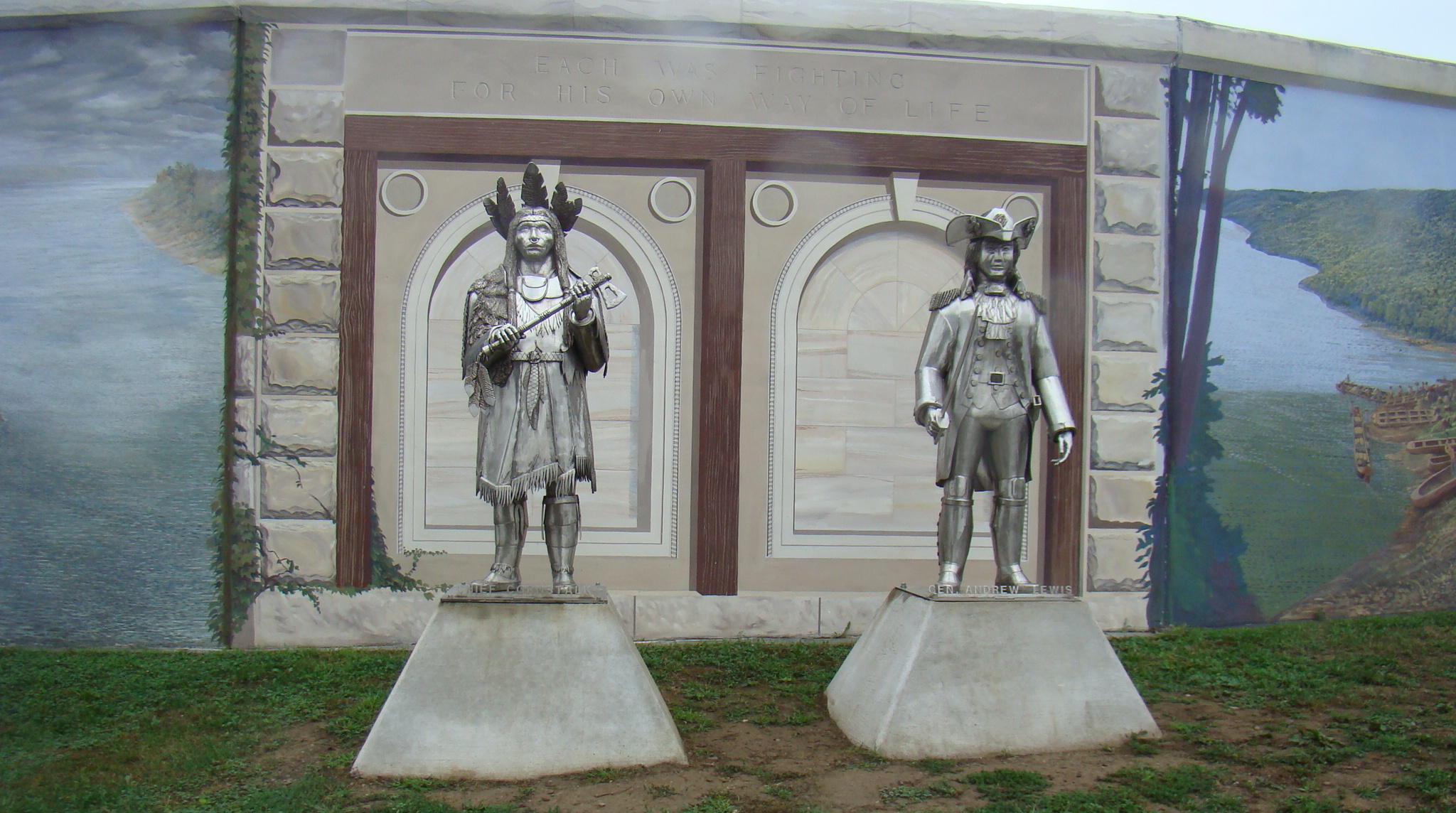
Two unusual metal statues of Chief Cornstalk and Colonel Andrew Lewis caught my eye along the Riverwalk. These were the two combatants in what many say was the first battle of the Revolutionary War…the Battle of Point Pleasant. The Virginia Militia led by Andrew Lewis defeated Chief Cornstalk, the Shawnee leader, and his braves, thus preventing the Native Americans from forming an alliance with the British. This in turn had a major influence on the outcome of the War of Independence. Their statues are located in front of a mural depicting the Battle of Point Pleasant in 1774.

By late afternoon, the American Queen paddlewheels begin turning and the riverboat slowly, almost magically, floats away from the shore. Calliope music fills the air and seems to take one back in time to a happier, more peaceful way of life. This is a great spot to sit down in a swing and watch the river and your cares drift away.

The Riverwalk at Point Pleasant, West Virginia is located just a half block from Main Street and of course, along the Ohio River. Frequent festivals throughout the year are held here and it is often a stopping point for riverboats. 

McKinley’s Victorian Style Home First Ladies Historic Site

Could the sound of footsteps on the spiral staircase at the Saxton McKinley House be those of Ida McKinley? Once in a while the footsteps echo late at night, and the light step is attributed to Ida. That seems quite possible as this was her family home where she lived for twenty-eight years.

Beautiful gardens connect the Education and Research Center to the Ida Saxton McKinley House, both part of the First Ladies National Historic Site in Canton, Ohio. Visitors were greeted by a  young lady dressed in a replica of Julia Tyler’s gown. She was very knowledgeable regarding the history of the house and the family.

To add a little mystery, there are conflicting stories as to how Ida and William McKinley met each other.  Some said Ida was a cashier in the bank where William transacted business for the law firm he joined when moving to Canton. Another story said that both Ida and William were Sunday School teachers at different churches, and passed each other on the way to church.  Or perhaps they met during a picnic at Myers Lake Park. However they met, William indulged her every whim and was seldom far from her side, which turned out to be a major political asset.

The Saxton McKinley House was originally built in 1840 by Ida’s maternal grandfather, George DeWalt. Her other grandfather, John Saxton, was founder of the Canton Repository newspaper. Her affluent background made it possible to lead an extravagant lifestyle. Almost everything inside the house today is a reproduction, but based very carefully on the Victorian style used in the original 1800’s house – after extensive research at the Smithsonian. Fortunately, there are still original walls and woodwork throughout much of the home.

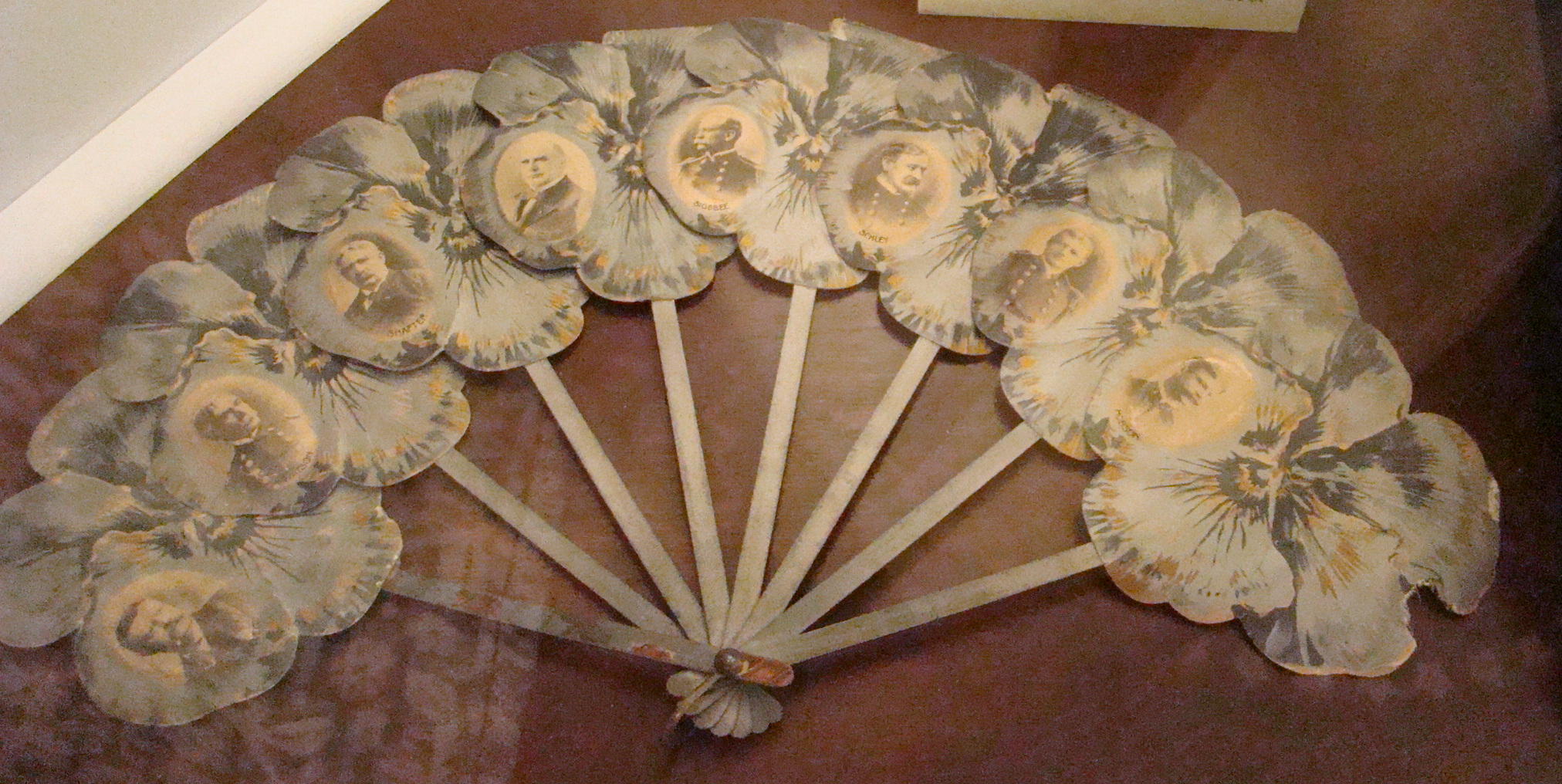
In the Formal Parlor you get a glimpse of a music box purchased on Ida’s trip to Switzerland as well as the piano topped with Victorian sheet music, which she enjoyed playing. The Library held William McKinley’s chair and a large collection of Ida’s fans, which numbered over 250. On the third floor, William had his office across the hall from Ida’s room so he could be close to her.  Their second child, Ida, died at six months of age and two years later Katie, their three year old, contracted typhoid fever and passed away. Consumed by her grief, Ida’s headaches became more severe, accompanied by seizures and tremors.

To ease her migraine headaches, her hair was cut because the weight of the braids was considered a possible cause. Medication for her seizures often made her listless. These two problems made it necessary for Ida to sit as much as possible and this petite lady with a 20″ waist, 18″ when corseted, attempted to hide her afflictions as much as possible.  If she had an attack out in public, William would put a handkerchief over her face so people would not glimpse her facial contortions during seizures.

Also on the third floor was the beautiful ballroom for entertaining. Today the walls of that ballroom display short stories and pictures regarding the life of each First Lady. Many interesting facts were given about various First Ladies, for example,  Francis Cleveland happened to be America’s youngest First Lady. Grover Cleveland was a friend of the family’s and actually bought Francis her baby carriage.

The McKinleys only lived at the Saxton McKinley House for a short time  between 1878-1895, while William was serving in the US House of Representatives and then as Governor of Ohio. During his presidential campaign, they moved to a more modest home, which more closely matched William’s background.

Often we hear stories about our presidents, so it was refreshing to hear stories about their First Ladies and catch a glimpse at their lifestyle.  A friend wrote about Ida Saxton McKinley, “Her greatest charm was her perfect sincerity and thoughtfulness for others.  No day passed over her head without her doing something for someone.”  What a great tribute to this special First Lady!

The Saxton McKinley House is located  off I-77 in Canton, Ohio right next door to the First Ladies Library at 205 Market Street South. All tours of the facility are guided and admission, which includes  both the Library and the House, is $7 for adults, $6 for seniors and $5 for children. 

National First Ladies’ Library Chronicles Hostesses at the White House

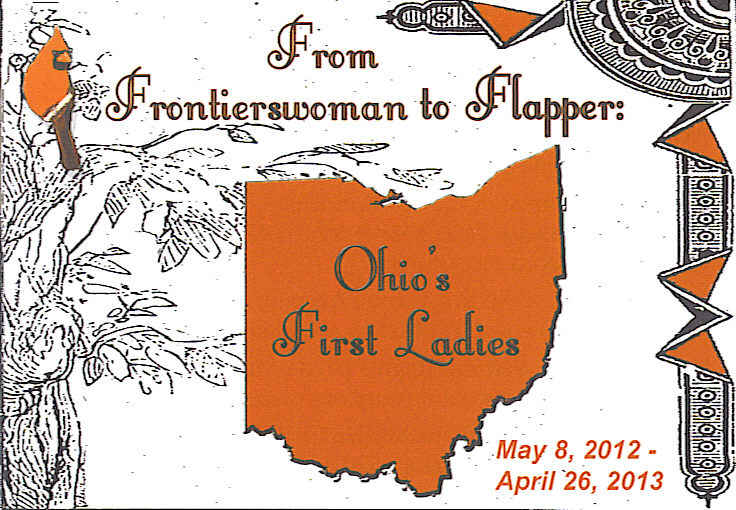
First Ladies have always played important roles during their husband’s presidency from hostess at the White House to diplomat.  At this time Ohio’s First Ladies are the featured presentation at the National First Ladies’ Library Education and Research Center in downtown Canton, Ohio. The title, From Frontierswoman to Flapper, describes the transition during their life times from colonial living to the beginning of the Jazz Age.  The present day home of the library, an 1895 City National Bank Building, has beautiful original marble floors and walls , thus giving an elegant feeling to the library.

The visit began with a video introducing the First Ladies of Ohio.  While Ohio lays claim to eight presidents, only seven first ladies called the state home.  That still puts Ohio at the top of the list for First Ladies from any one state. Following the video, an excellent tour guide explained the numerous items on display, which led to many interesting stories about the First Ladies and their husbands. Each first lady had her own special interests and talents, making her a unique individual. These are a few interesting stories about the Ohio First Ladies that caught my attention during a recent visit.

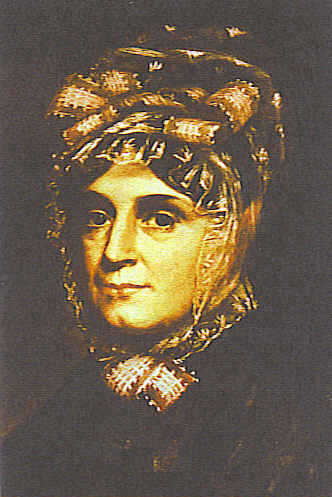
Anna Harrison (1775-1864) first enjoyed being hostess at the Governor’s Mansion where she entertained  prominent figures such as Vice President Aaron Burr and Tecumseh.  Anna was too ill to travel when her husband went for his presidential inauguration. However, one month later, William Henry Harrison died at the White House so Anna never made the journey to Washington D.C.

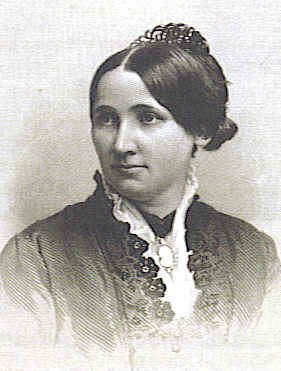
Lucy Hayes (1831-1889) enjoyed entertaining as she liked being surrounded by people.  Her receptions and dinners were always admired, and her china dinner plates each contained a different scene. Lucy was actually the first First Lady with a college diploma.  After she spent time with her husband when he was wounded in the Civil War, she traveled to various camps where she visited, and attended to, wounded soldiers.

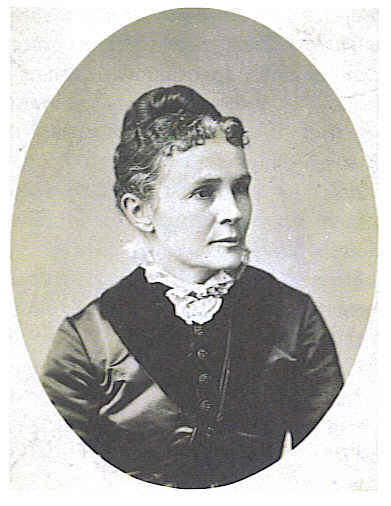
Lucretia Garfield (1832-1918)  stayed by her husband after he was shot by an assassin through the eighty days that he wasted away.  Perhaps she was one of those early promoters of women’s rights as Garfield needed constant attention from his doctors during this time. The male doctors were paid $10,000 while the female doctor was only paid $5,000. Lucretia was adamant about having that changed so the female doctor also received $10,000.

Caroline Harrison (1832-1892) was a star pupil of the German artist, Paul Putzki, and her designs painted on china were on display at the library. Although she was not very well, she enjoyed growing exotic plants and flowers. Her husband never left her side during her bout with tuberculosis and she died in the White House.

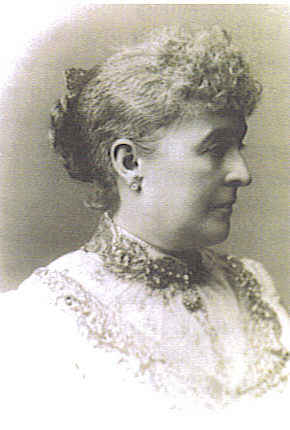
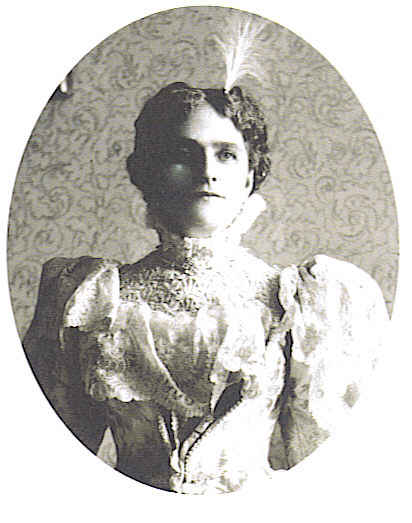
Ida McKinley (1847-1907) suffered from blinding headaches and epileptic seizures after the death of her daughter. Therefore, the only way she could fulfill her role as First Lady was often seated in a chair holding a bouquet of flowers to hide her trembling hands.  One of her beautiful garnet gowns with black lace and beading on the collar was featured at the library. When she was able, crocheting was one of her forms of relaxation and many crocheted slippers were given as gifts.

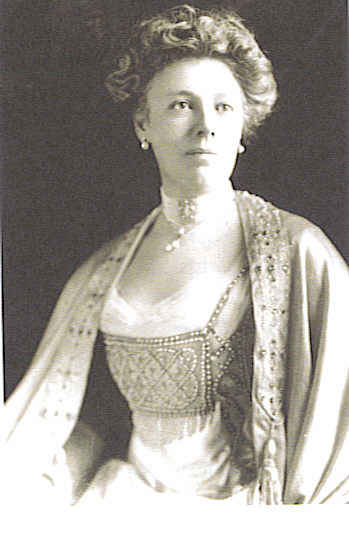
Helen Taft (1861-1943) was the first First Lady to donate her gown to the Smithsonian Institute. One of the most beautiful gowns at the library was Helen’s soft pink dress trimmed with lace and a velvet bow.  A beautiful embroidered fan featuring a cherry blossom tree was only one of her collection of fans, but a definite favorite. Because of Helen’s admiration for the Japanese cherry trees, three thousand trees were donated to the United States by the mayor of Tokyo.

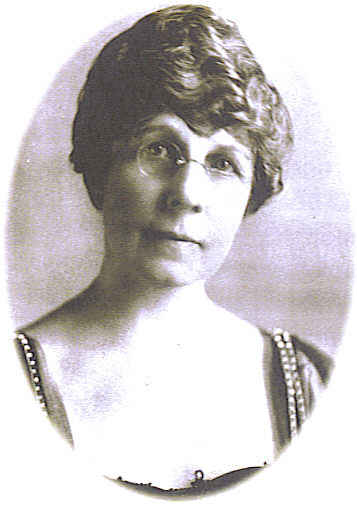
Florence Harding (1861-1924) did not have many positive experiences in her life and had a very unhappy marriage suffering the many affairs of a wayward husband – some even claim she poisoned him. The piano was her source of comfort as she had studied piano at the Cincinnati Conservatory of Music. She wrote many notes about her unhappy life and this one had a definite piece of advice to married women:

The Happy Wife is not the woman who marries the best man on earth,                     But one who is philosophical enough to make the best of what she has got.

National First Ladies’ Library has many events for the community and the surrounding area all year long.  During the summer they sponsored a Summer Reading Program for K-5 discussing these books this year:  First Garden, Miss Lady Bird’s Wildflowers, and Through Georgia’s Eyes. Their Victorian theater shows documentaries on the First Ladies,  presents author talks and shares many interesting movies and performances.

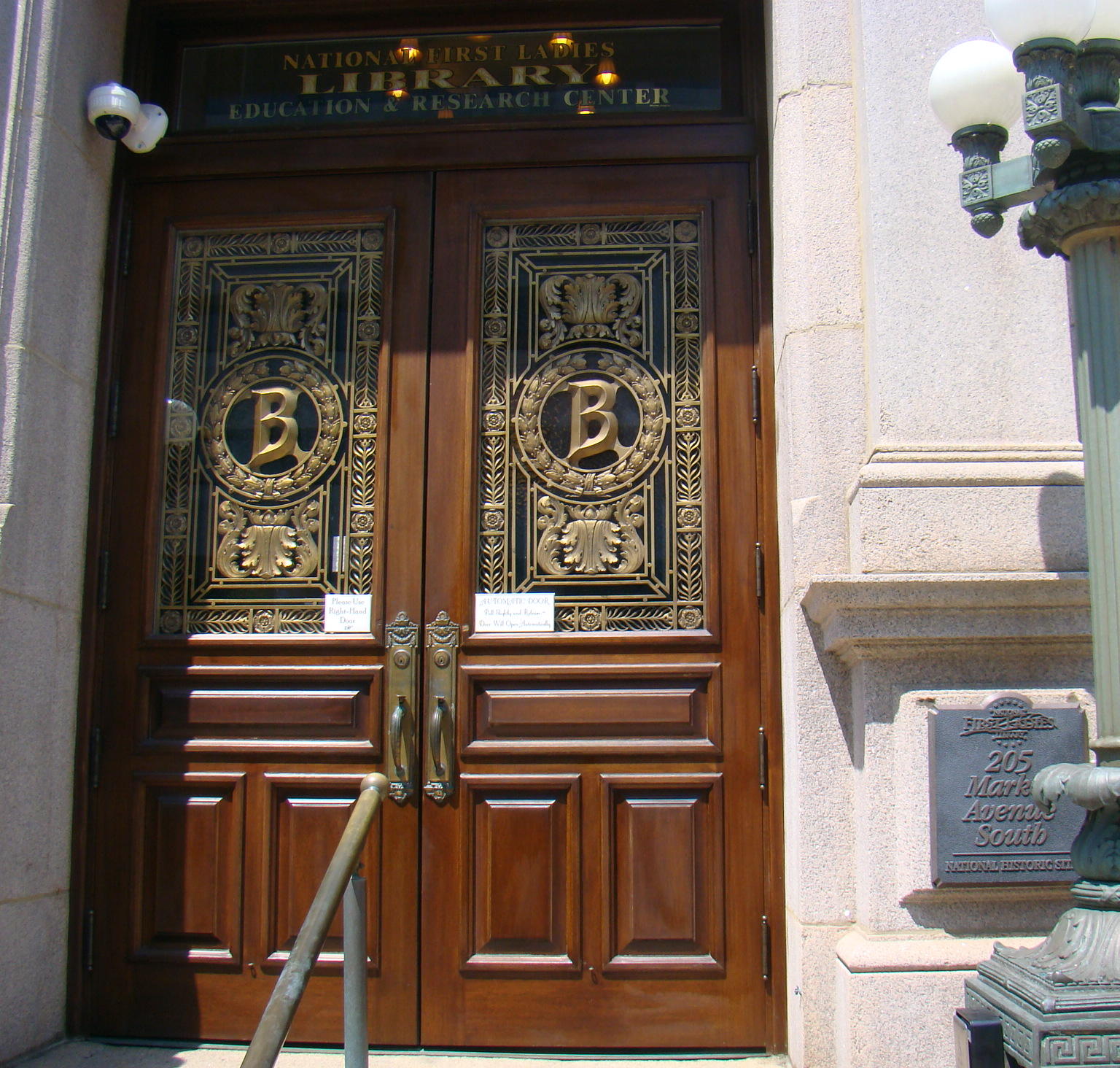
The First Lady in her Hostess role helps determine how successful her husband’s presidency is going to be. If you would like to learn more about the First Ladies, visit them downtown Canton Ohio. These beautiful doors will open to welcome you!

National First Ladies’ Library Education and Research Center is located in downtown Canton, Ohio just off I-77 at 205 Market Street South.  All tours of the facility are guided, and price is reasonable at $7 for adults, $6 for seniors, and $5 for children under 18. This admission price also includes entrance into the Ida Saxton McKinley House next door, which we will visit at another time.

Try Hershey’s Chocolate World The Sweetest Place on Earth

Give them quality. That’s the best kind of advertising in the world.”                             ~Milton Hershey

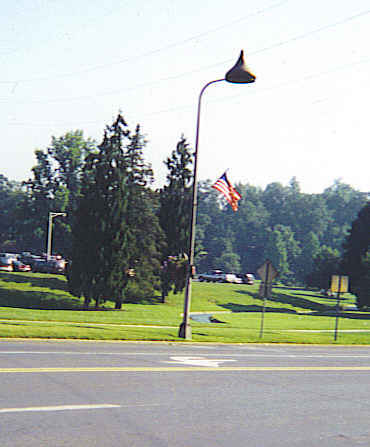
The smell of chocolate drifting through the breeze is one of the fond memories of Hershey, Pennsylvania. There’s no doubt about being in the popular chocolate town, because the shapes of Hershey kisses serve as street lights down Chocolate Avenue. Naming the town Hershey was one of the best advertising schemes a candy company could devise.

Upon arrival at Hershey Chocolate World, take the Great American Chocolate Tour Ride.  Seated in moving cars, the tour follows the trail of the cocoa beans from their original home in the tropical rain forest. Then upon their arrival at Hershey, they are transformed into that delectable chocolate that we have enjoyed throughout our lives. All five senses are treated as visitors see the displays, hear the stories, and smell the chocolate as they travel to the Sweetest Place on Earth. Finally tourists get a taste of Hershey’s, as they give everyone a free piece of candy at the end of the tour. Of course, chocolate always makes you feel good.

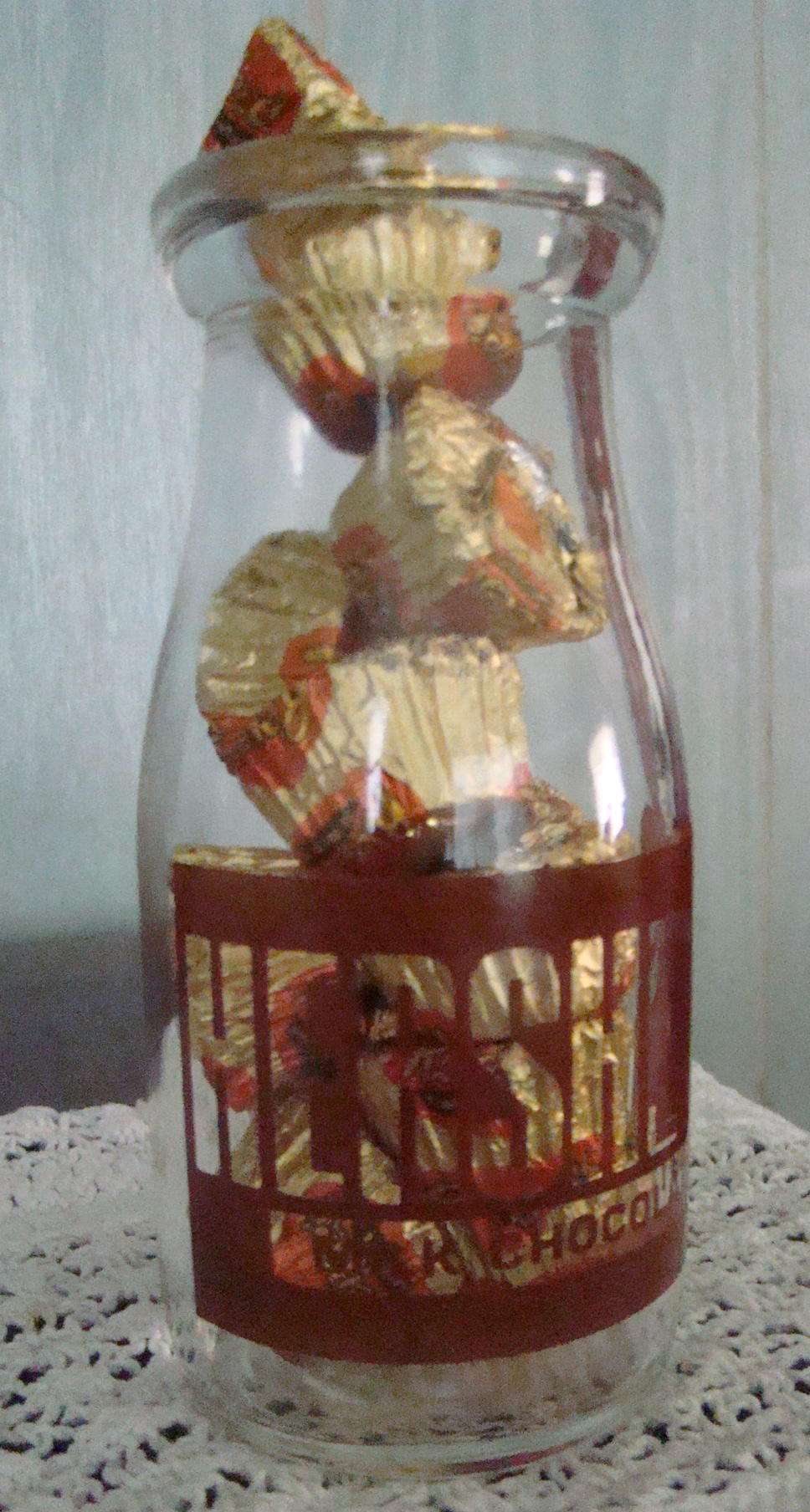
Their gift shop is filled with chocolate in every form and combination. The walls are covered with everything from apparel to household items with popular candy bar logos. Nearby shelves hold all the chocolate products including the Hershey Kisses and Hershey Bars, which have been around for over a hundred years.  My Christmas tree now has a Hershey Kiss ornament, while a Hershey milk bottle holds candy treats on my coffee table.  Sweet memories!

It’s just a short walk to the Hershey Story, a museum telling the history of the Hershey family.  Milton S Hershey, the man who revolutionized the way to make milk chocolate back in 1894, left his fortune to the Milton Hershey School’s orphan boys. Since Milton and his wife had no children of their own, they developed a real concern for less fortunate children and founded the school in 1909.  His legacy is an inspiration to many, as his life was a rags to riches story.

Here visitors also learn of Hershey’s inspiration for creating the town of Hershey. Seems it was patterned after another chocolate maker, Cadbury in England, who also built their factory in what was considered a workers’ paradise. Wanting his employees to be as content as the cows who gave the milk for the chocolate, Milton included an amusement park, community center for family activities, and low cost housing for his employees.  Today some of these same items are enjoyed by tourists.

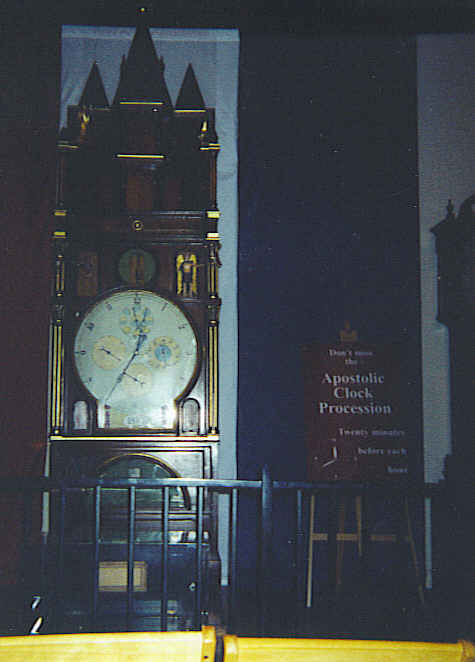
A popular spot in the museum was the Apostolic Clock, which tells more than the time, as it tells phases of the moon, zodiac signs, months, dates and days of the week. Its main attraction, however, is telling the story of the betrayal of Christ.  The Twelve Apostles and Christ appear at a quarter to each hour and begin telling the story of the betrayal. Every fifteen minutes Father Time strikes a bell and the center figure changes.  It is quite an amazing performance to watch.

Built by John Fenner in 1878, the clock was taken on a tour of Pennsylvania where ten cents was charged to view its story. This  clock was purchased by Milton Hershey back in 1936 when he placed it in the museum for the enjoyment of the local community. During past visits, the clock performed on an hourly basis, but today it is limited to a special calendar, so you need to check ahead to see when performances are scheduled. Having been built in the 1880’s, it is understandable that the clock would now be in delicate condition.

What started out as a Rose Garden has expanded over the years to a twenty-three acre botanical bonanza. Every day is a beautiful day for a walk in the gardens and their Butterfly House is a favorite of youngsters especially. Lucky there are benches along the way, as most people want to sit for a while and take in the quiet and majesty that surrounds the gardens.

High Point, Hershey family’s home, was given in 1930 to Hershey Country Club as their clubhouse, with Milton retaining room for his private office. In 1977 it was renovated again to be used as Hershey Company headquarters through the efforts of WIlliam Dearden.  Being a student of the Milton Hershey School, William became CEO of Hershey Foods and had a passion for the beautiful old home, and wanted to save it from destruction.

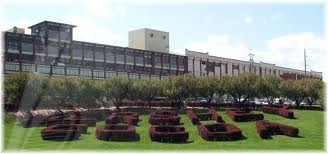
No visit would be complete without checking out the source of the tantalizing chocolate smell that permeates this town. The smokestacks of the old Hershey Chocolate Company, a chocolate brown brick building, can be easily spotted as its lawn has hedges cut into the words HERSHEY COCOA. There’s no doubt that you’re in the right place!

But times change and the Hershey Company has moved its plant this last year to the outskirts of town.  Haven’t been back to see the new plant, but the modern equipment couldn’t be accommodated into the old plant with its low ceiling and columns throughout.  Some say Milton would be upset with the changes, while others feel he was a businessman who understood that things must change.

Even though times change, chocolate bars are still a favorite for many. Imagine reading this Hershey Chocolate quote the next time you bite into your favorite bar:

Put a smile on your face, make the world a better place

Leaving town down Chocolate Avenue with its Hershey kisses, memories of this chocolate world will hang around for years to come, much like the cocoa goodness has covered Hershey, Pennsylvania for over a hundred years.

Hershey, Pennsylvania is just off I-70 / I-76, part of which is a toll road. Take exit 247 to PA 283 at Elizabethtown.  Hershey is directly North of Elizabethtown as you follow Hershey Road.  The town is well marked for signs to the various attractions. Enjoy a chocolate experience!

Mysterious Mothman Museum Keep Your Eyes on the Sky

“Something bad is going to happen. Don’t go back.” “Be careful girl, I’ll get you.” These were just a couple of the messages received by residents of Point Pleasant, West Virginia after the appearance of what locals call “The Mothman”.

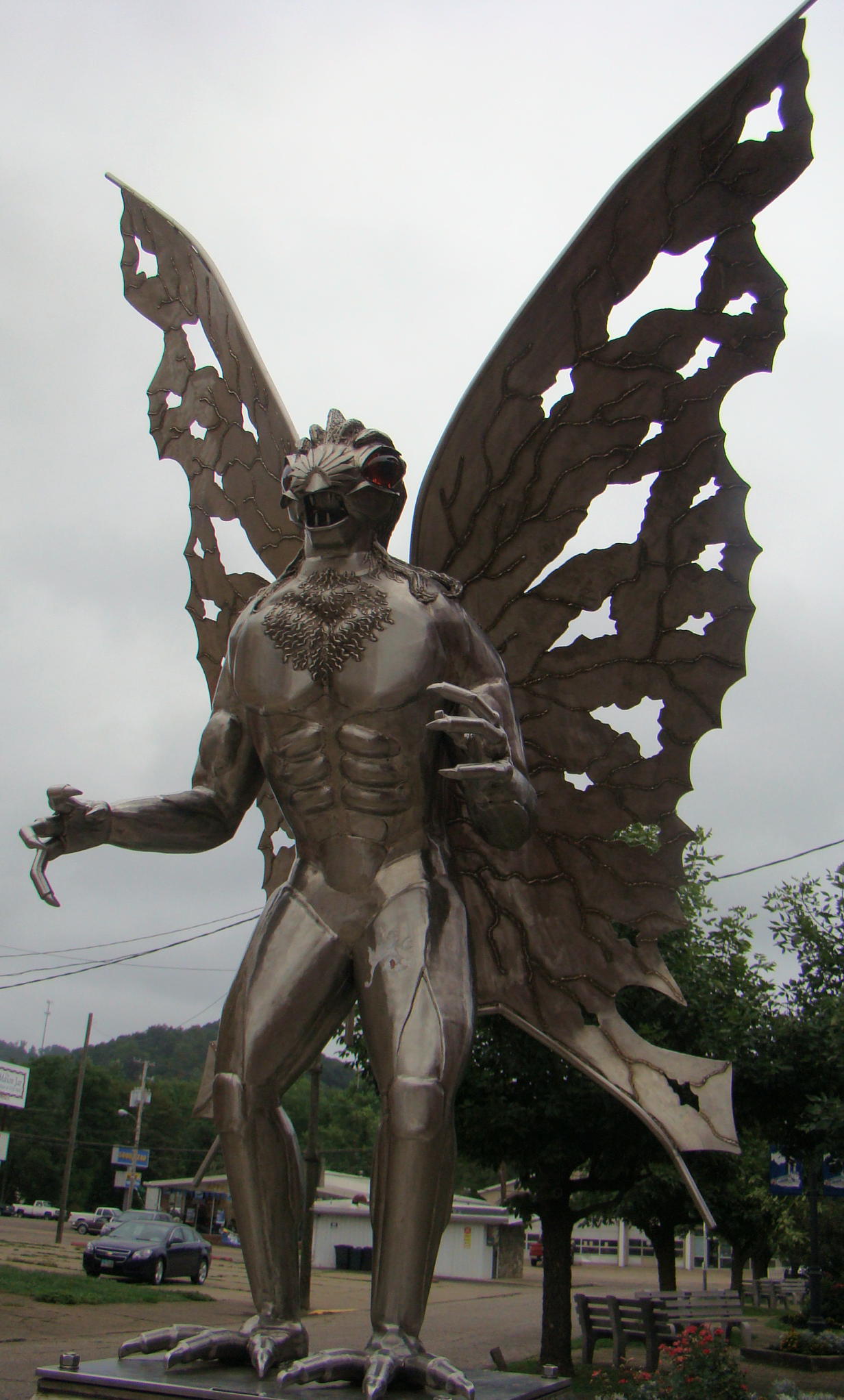
First stop on your Mothman adventure in downtown Point Pleasant will probably be the statue of Mothman at the corner of Main and Fourth Streets. This stainless steel sculpture by artist Robert Roach was unveiled in 2003 in what is now called Mothman Park. Red eyes are one of the outstanding features of this life size creature and are set to glow at night.

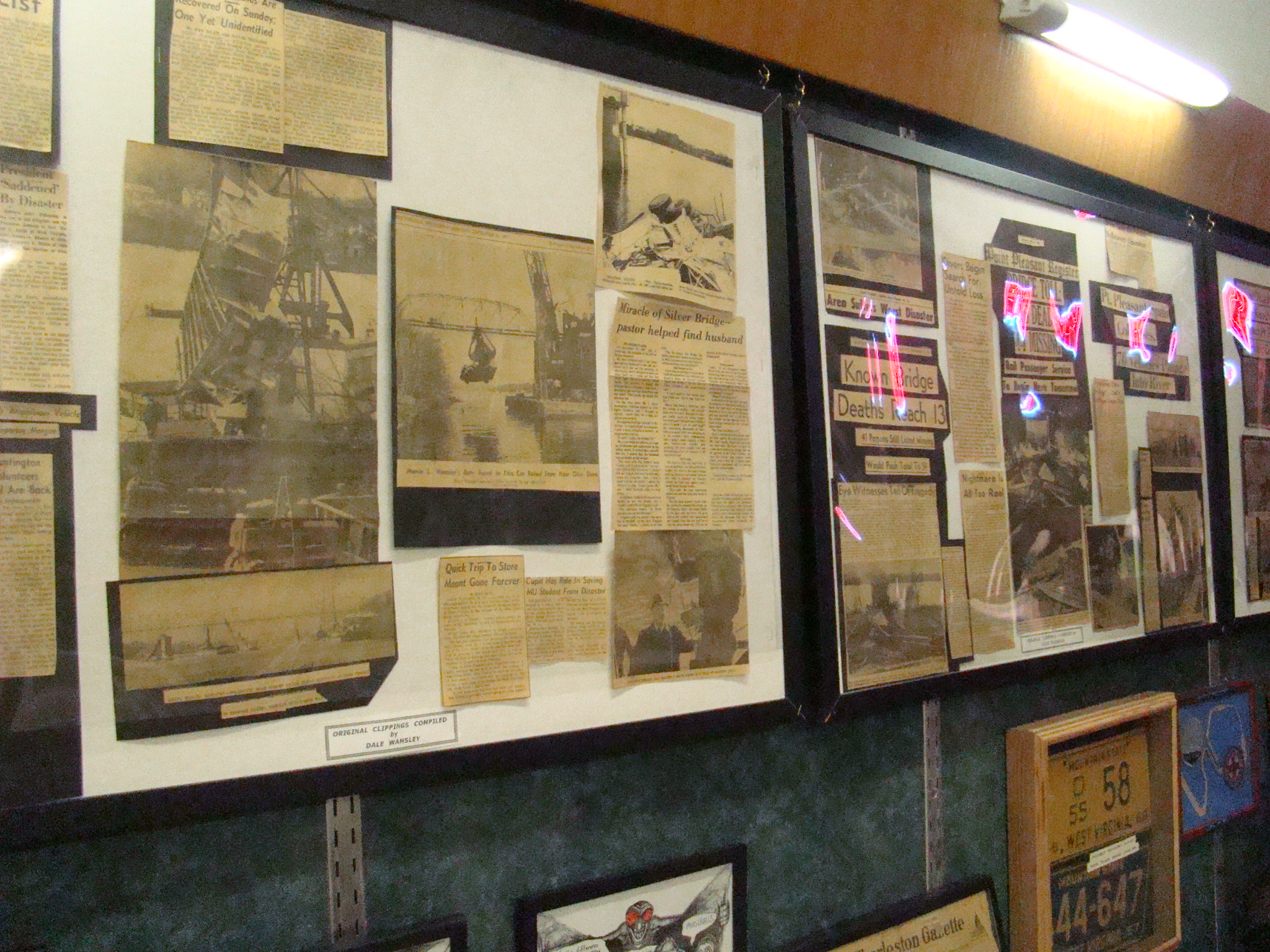
Today a visit to Mothman Museum will review the story of this unexplained mystery through videos, recordings, newspaper clippings of Mothman sitings, photos of the Silver Bridge collapse, and props from the Mothman Prophecies movie.

In 1966-67, over a hundred appearances by Mothman in the surrounding area frightened residents to the point that they were afraid to go out at night.  A seven foot tall figure would first be seen appearing to have wings with feathers, which had a ten foot wingspan. As it got closer the glow of its fiery red eyes seemed to be one of its most frightening features. Those who saw it would have terrible headaches, dreams, and visions.

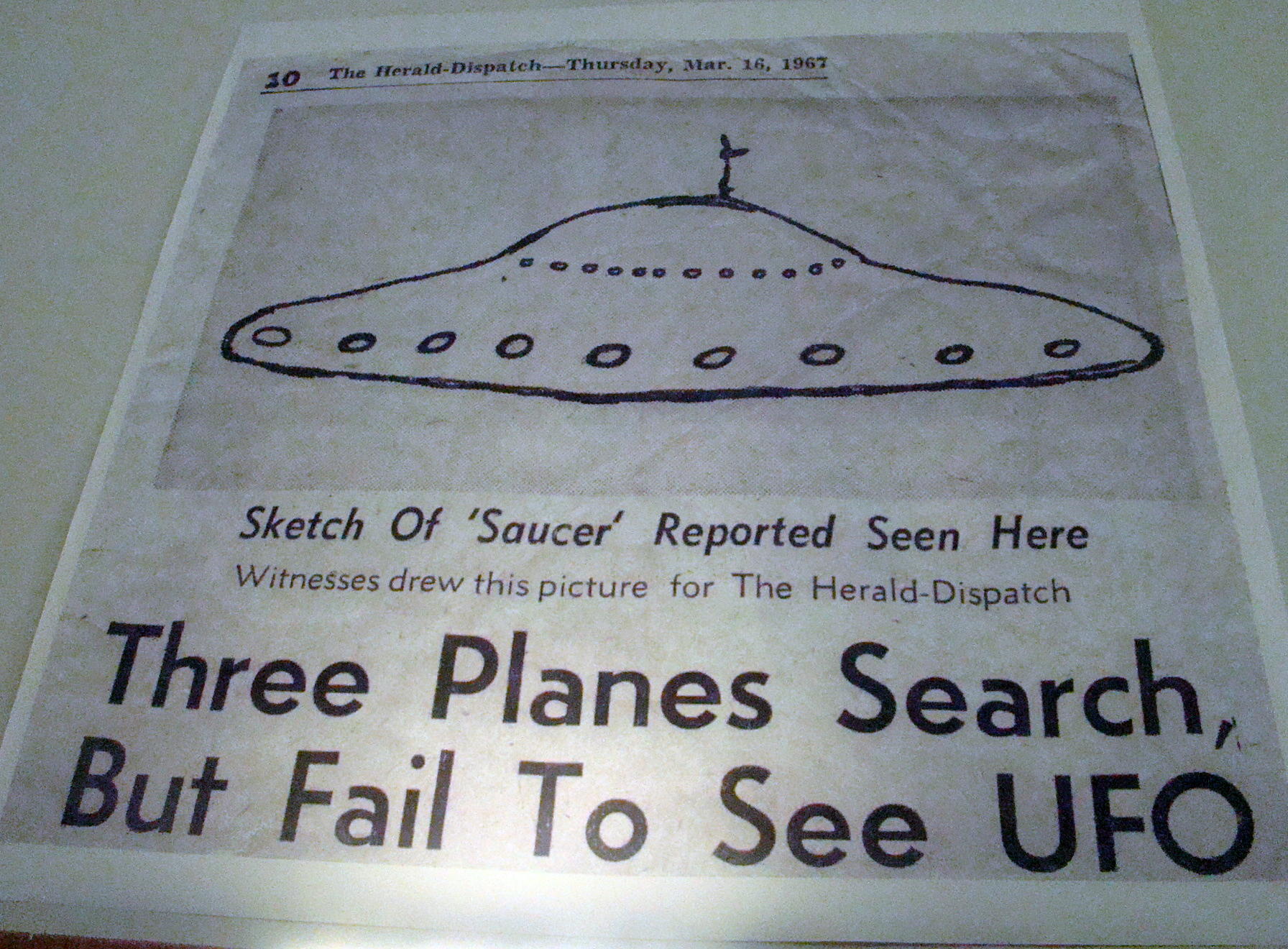
At nearly the same time, UFO’s were also seen in town. Law enforcement as well as local residents were searching for Mothman and the UFO’s at night with search lights, as though they were searching for Frankenstein. The UFO’s were said to be disc shaped objects in the night sky with red lights encircling them.

Another mystery was the arrival in town of Men in Black. Really!  These men dressed in black suits would threaten those who had seen Mothman to silence…or else.  One newspaper reporter said the Men in Black visited her or phoned her and told her not to publish any more stories about the Mothman or UFO’s. One curious thing about them was that they never blinked their eyes. The government denied any involvement. These same Men in Black were seen crawling around the bridge before its collapse. This same reporter had visions of many Christmas packages floating in the Ohio River, which actually happened at the time of the collapse of the Silver Bridge on December 15, 1967.

When the Silver Bridge collapsed, witnesses reported it came down like dominoes. A loud cracking sound was heard and in less than a minute, the entire bridge collapsed into the icy waters of the Ohio River. Forty-six people died when the bridge completely disappeared under the water.  Mothman had appeared 13 months prior to the collapse, which occurred at Pier 13. Several possible reasons were given for the disastrous bridge collapse: 1) structural failure, 2) a sonic boom, or 3) the Curse of Chief Cornstalk.

While structural failure seems the most likely, could a sonic like boom have been caused by the sinister Men in Black crawling over the bridge shortly before it collapsed, or by Mothman’s wings?  Or was Chief Cornstalks’s curse responsible? Chief Cornstalk worked hard to keep his people neutral and was a member at treaty councils. When Chief Cornstalk surrendered in 1774 at the Battle of Point Pleasant, he signed a peace treaty with the Virginia militia, but a couple years later Cornstalk and his son were executed by the British. At this time, Cornstalk is said to have placed a curse of death and destruction on the town of Point Pleasant, as recorded in part here:

“I came to the fort as your friend and you murdered me. You have murdered by my side, my young son…. For this, may the curse of the Great Spirit rest upon this land. May it be blighted by nature. May it even be blighted in its hopes. May the strength of its peoples be paralyzed by the stain of our blood.”

However, after careful review, it was found that a weak eyebar was the most probable cause of the collapse, perhaps stressed by the additional weight of all the rush hour holiday traffic.

Many feel that the Mothman was a Prophet of Doom, warning the people that a tragedy was going to happen, as there are no stories of him attempting to harm anyone.  Fascinating Mothman appearances don’t seem to be limited to this one spot as there have been sightings around the world from Cincinnati to Afghanistan before major tragedies, for example: the earthquake in Mexico City, and the Chernobyl nuclear power plant in Ukraine.

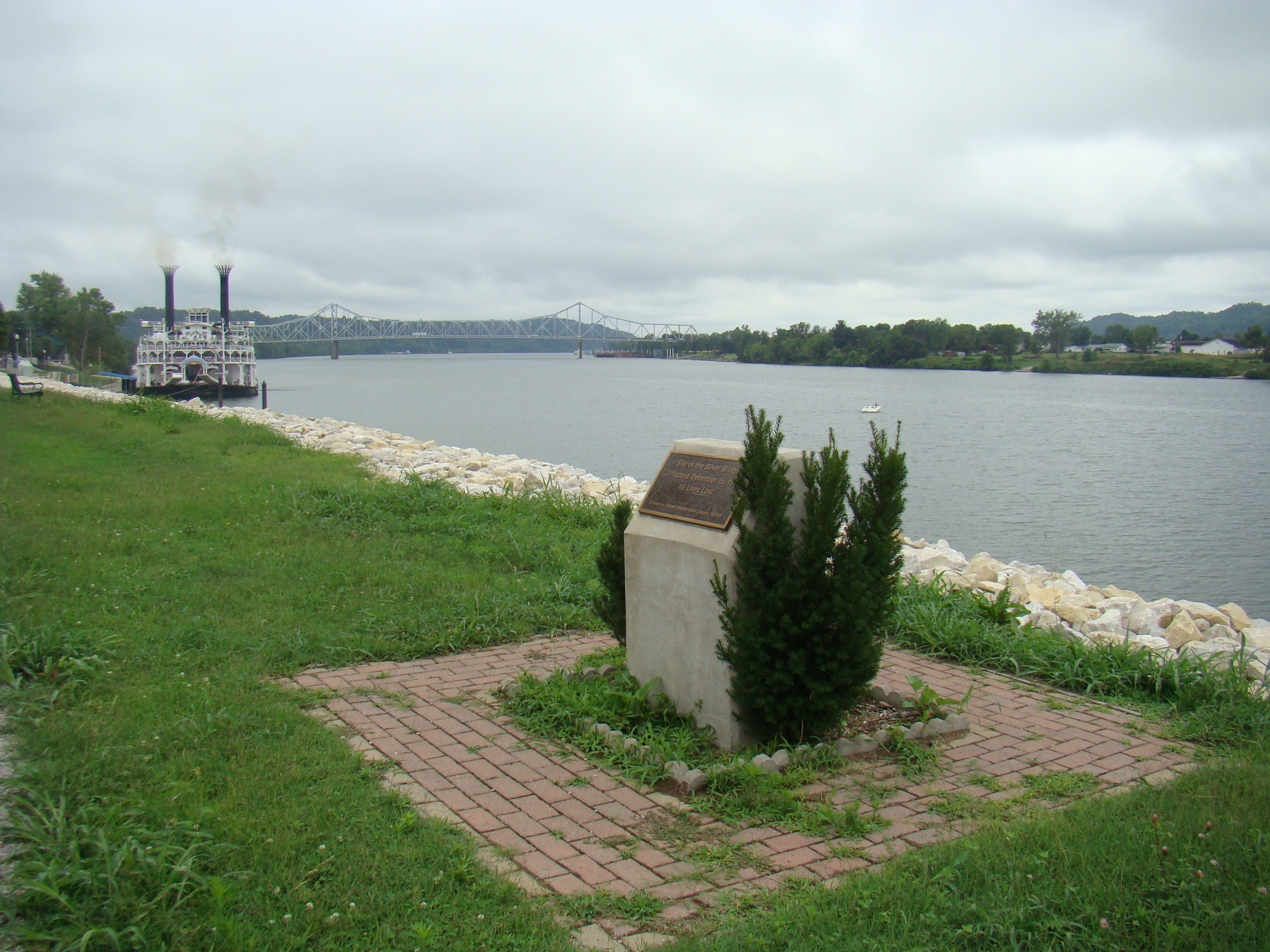
Before leaving town  If you walk up the street a half block to the Ohio River you can also see along the Riverwalk a stone set at the place of the original Silver Bridge, which is just up the river from today’s bridge crossing the Ohio River to the Gallipolis area. During this visit, the American Queen can be seen docked between the two points.

After the Silver Bridge collapsed, there were no further sightings of Mothman, the UFO’s or the Men in Black.  Just mere chance? You decide. Best to keep an open mind as someday it could happen to you.  What will you do if YOU see Mothman?

Mothman Museum, one of the sidewalk shops of the famous Lowe Hotel, is along the Ohio River in Point Pleasant, West Virginia.  Across the street from the Mothman Statue on Main Street, the museum is open every afternoon.

Civil War Encampment Days Beyond the Skirmish

Will the Yanks run the Rebels out of town? Reenactors lined the streets of McConnelsville, Ohio for their 25th Annual Civil War Encampment Days, Ohio’s longest consecutive running reenactment.  What a great place to observe the living history of the Civil War.

Everyone dressed in period costume in the soldier camps seemed eager to discuss their life style, and patiently answered all questions.  Their canvas tents provided great cover from rain storms.  However, they reminded those in attendance that it was important not to touch the canvas with your fingers during a rain.  Seems the oil on your fingers would make the canvas leak. Rains were important for their War Gardens, which provided food for the army as well as land owners.

Since death was frequently a visitor during this time, ladies told about the cemeteries where they often held picnics. Union stones were flat so you might sit on them, but the Confederate stones had a pointed top so “Yankees” couldn’t sit on their tombstones. The ladies also mentioned that black wreaths were hung on doors when someone died as a notice of death, since it was the only method of letting the neighbors know.

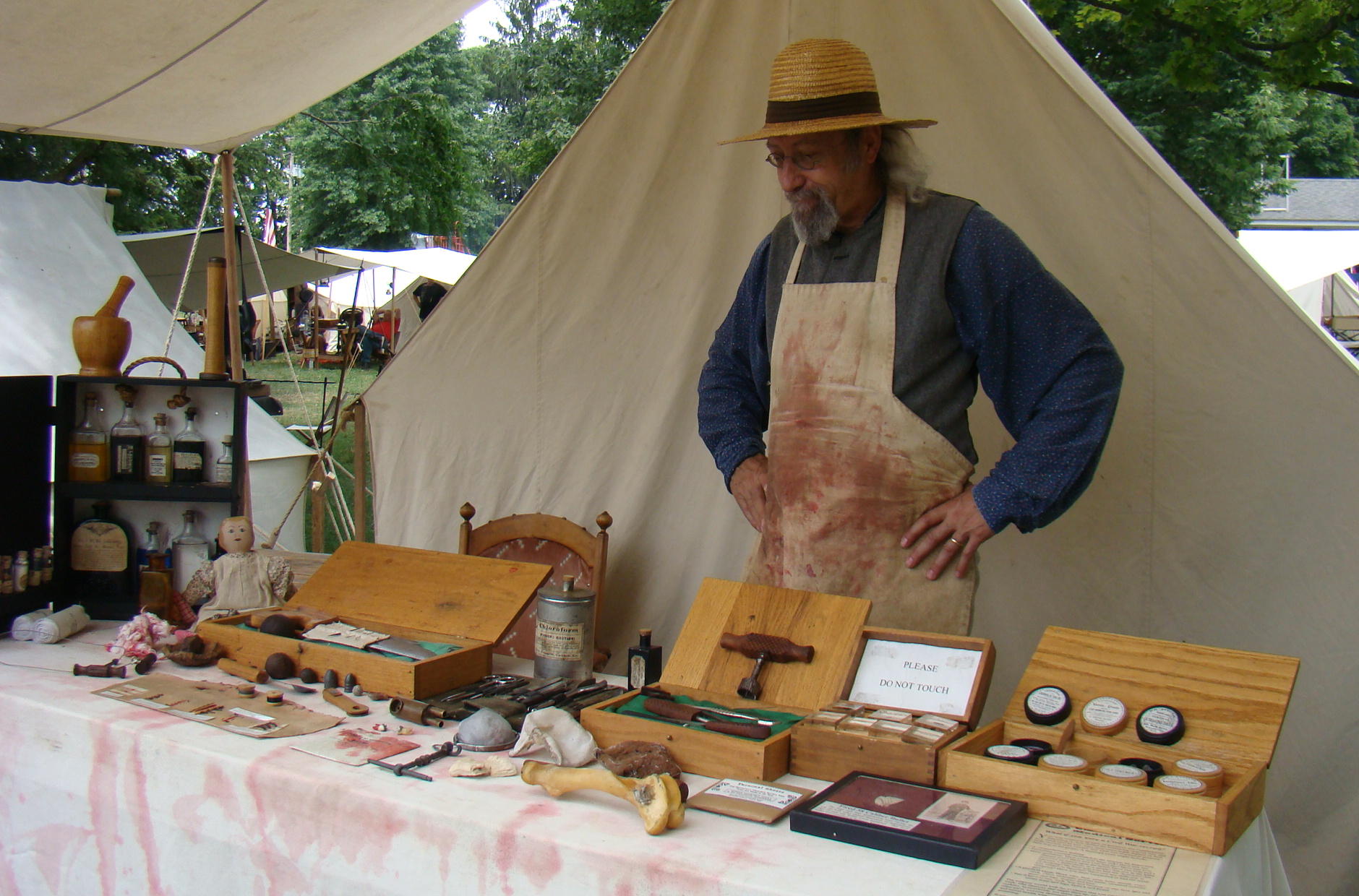
Many medical treatments were explained by the blood stained Head Surgeon of the Confederate regiment. When asked what might be used to help a headache, the major informed visitors that opium would be used if it was severe, while a relaxing morphine or sassafras would be used  for minor headaches. If the headache was too bad, they would just bore a hole in the head to release the evil spirits. Upset stomachs were treated with licorice or ketchup, and beef extract provided a soothing soup for many ailments. They even had a hollow doll that was used to smuggle medicine through the opposing lines.  Later in the afternoon at the field hospital, the surgeon cured a case of gangrene and subsequent blood poisoning by sawing off the leg of the victim.

Walked down to the Courthouse for “Squirmish on the Square”, where a staged battle occurred between soldiers from the North and South. Much ceremony was involved in the presentation of the battle both before and afterwards. There was even a bit of humor thrown in as they robbed a Wells Fargo box and then blew it up. The closing ceremony showed soldiers from both sides presenting arms, taps were played and a wreath was placed on the Civil War Private monument standing in the center of Main Street.  The base of this monument is made of stone from Gettysburg and the Gettysburg Address is engraved on one side of the monument.

After a hot afternoon on the square, it was time for a drink. As Yosemite Sam would have said, “Sasparilly, and make it snappy!” Sarsaparillo was a popular drink of the Civil War era and a cold bottle hit the spot.  Made from sarsaparilla roots, this drink is  called “The Granddaddy of All Root Beers”.  Originally the bitter root brew was used for medicinal purposes treating digestive problems, but later sugar water was added to make it more palatable. ..and a soft drink was born.

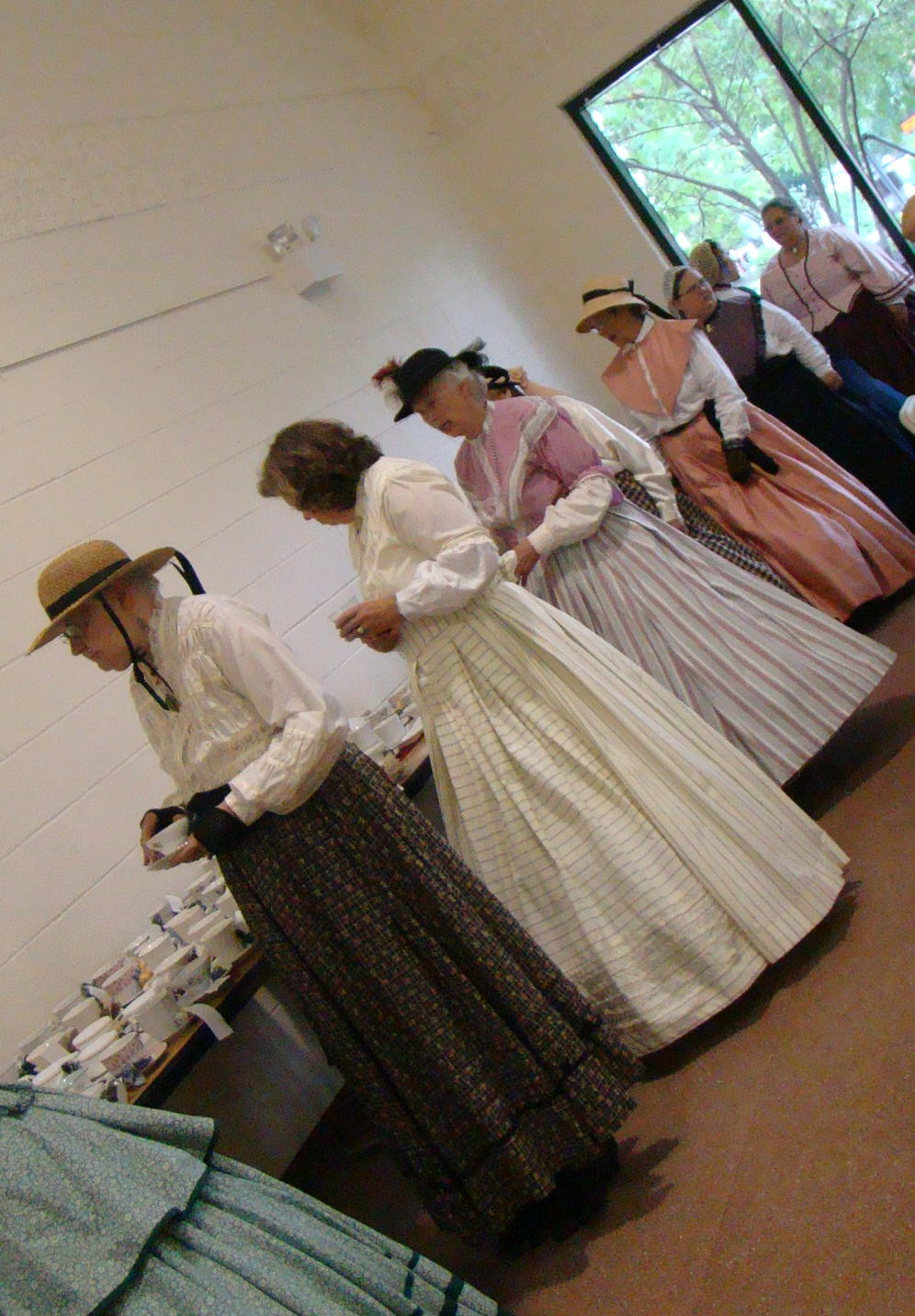
Ladies’ Tea was served amid beautiful hooped gowns and lovely flowered hats. Cucumber sandwiches, fresh fruit, and small cakes were part of the traditional menu. After tea, Verna Owens of St Mary’s, West Virginia told tea drinkers about Women During the War…from the Confederate viewpoint. Her leader was President Jefferson Davis, who had his Confederate White House at Richmond.

She described the proper dress and manners for a Southern lady, who always carried a parasol and wore a hat.  Her cooling fan accomplished an additional task as a means of expressing her thoughts without saying a word.  For example a fan closed in a snap meant she was angry with what was being said, while fanning quickly might mean she couldn’t believe what was happening, or as we might say, “Oh, my!” Many toys of the time were explained and on display. Quiet dolls for church were made out of handkerchiefs, and there was a cow’s jaw for musical entertainment. When soldiers were leaving for battle they gave their sweethearts a tear bottle to collect their tears while they were gone.  Upon their return, they hoped to find it at least half full. Verna closed by saying one truth learned from the war was that we definitely should learn to get along.

In the evening, a Civil War Ball captured the beauty that sometimes appears in the midst of turmoil. Ladies were dressed in their finest, but few hats were worn to the ball…just ribbons or flowers in their hair. Some men wore their uniforms while others were dressed in their best tailcoat. Dancers swirled around the floor doing The Promenade, Waltz, Virginia Reel, and Patty Cake Polka with music provided by Back Porch Swing Band.  What a great ending to a Civil War Day.

This particular Civil War Encampment occurred in McConnelsville, Ohio which is just South of Zanesville, Ohio on Route 669 following the beautiful Muskingum River.  Located riverside just north of town is The Boondocks, one of Ohio’s best small-town eateries being featured in many magazines across the state. Their specialties are their award winning BBQ as well as their great and friendly service.  Could be worth a Sunday drive for a nice meal even if there isn’t an encampment happening!