Places to go and things to see by Gypsy Bev

Listed as smallest church in 48 states, but that is debatable.

Listed as smallest church in 48 states, but that is debatable.

On the backroads of West Virginia, a sign points to Our Lady of the Pines. Established in 1968 near Thomas, WV, this church claims to be the smallest church in 48 states. Blessings from your visit will bring peace of mind as you travel on down the mountain highway.

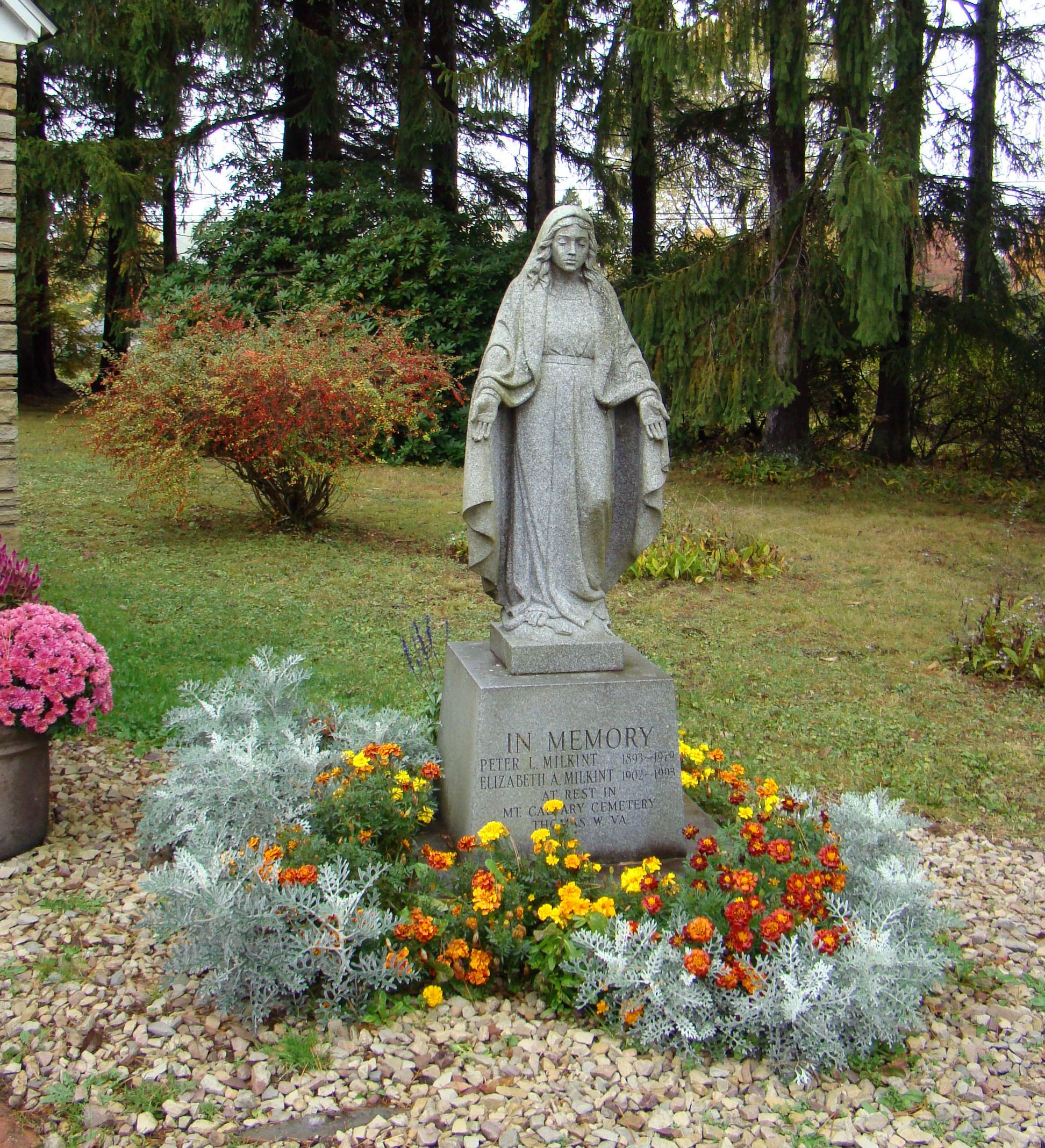
Statue outside the church

Statue outside the church

The community received its name from Silver Lake, a small man-made lake built in 1928 at the headwaters of the Youghiogheny River. Previously this town was known as Breedlove, the southern terminal at that time of the Preston Railroad.

This tiny memorial Roman Catholic church was constructed in 1958 by Mr. and Mrs. P.L. Milkint in honor of their parents. This small piece of beauty was built completely out of love. The delightful stone church contains stained glass windows and an historic bell in the tower.

Topped by a cross on its steeple, a second cross appears in the cement work of the sidewalk just outside the front door. On their well kept lawn, beautiful flowers surround a memorial statue in front of the church.

The altar inside the smallest church

The altar inside the smallest church

Mission priests come from time to time and hold mass in this little gem in the mountains. Many young couples have been married here as well. Often on a Sunday five to six hundred visitors leave here with a peaceful feeling.

Inside six pews can seat 12 worshippers. Outside measurements are 24′ X 12′, while inside measurements are 16′ X 11′. Even though the church claims to be the smallest church in the states, there are many other smallest churches listed around the country. If you know of a smaller church, please let me know.

The beautiful altar area, cross above the altar, candleholders, and old rugged cross at the foot of the altar were all handmade with love. The infant of Prague with its red velvet garment was donated by a dear friend of the family. Their Lithuanian grandmother actually wove the altar cloth over ninety years ago in her home country.

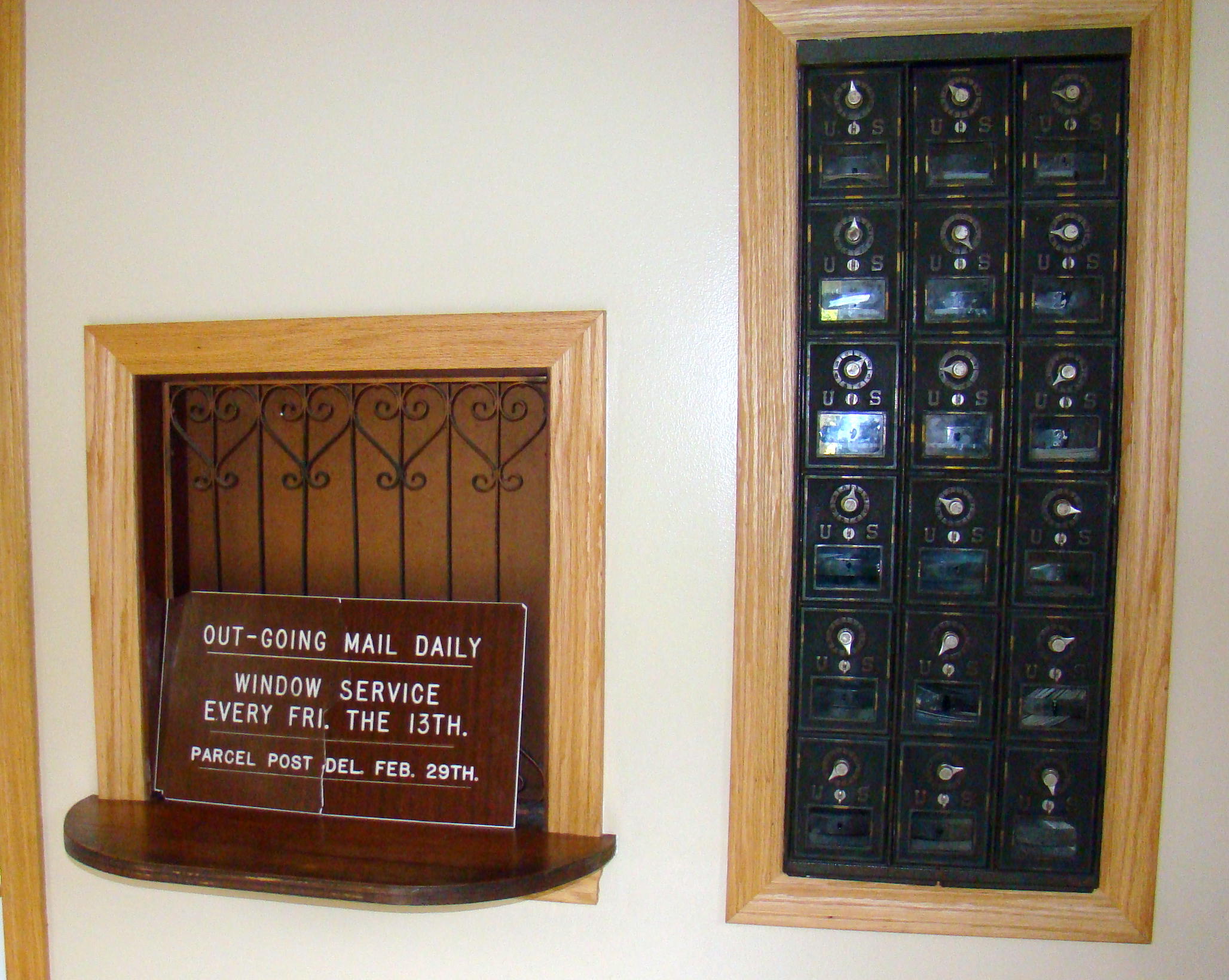
Smallest mailing office with its own Zip Code

Smallest mailing office with its own Zip Code

Unusual postal hours on sign

Unusual postal hours on sign

The church’s next door neighbor is the smallest mailing office – a post office serving the small rural community of Silver Lake, West Virginia 26716. A sign inside tells that there is outgoing mail daily, but window service is only available on Friday 13th. Parcel post service is available on Feb 29th. It’s always a pleasure to see the Stars and Stripes flying, surrounded by more beautiful flowers. It seems they have planted flowers  that bloom from spring through fall.

Here in the pines, take time for reflection and relaxation as you visit the smallest church in the forty-eight states. The wind in the pines whispers blessings of peace and goodwill to those who stop by for a visit

This tiny church can be found just south of Deep Creek, MD along route 219 at Silver Lake, West Virginia on County Road 24/8. Enjoy the beautiful mountain roads along the way.


Desolate Dolly Sods - a perfect escape from civilization!

Desolate Dolly Sods – a perfect escape from civilization!

Desolate! That seems the perfect description for the Dolly Sods Wilderness. This vast, rugged back country can be found in the Allegheny Mountains of West Virginia in the Monongahela National Forest.

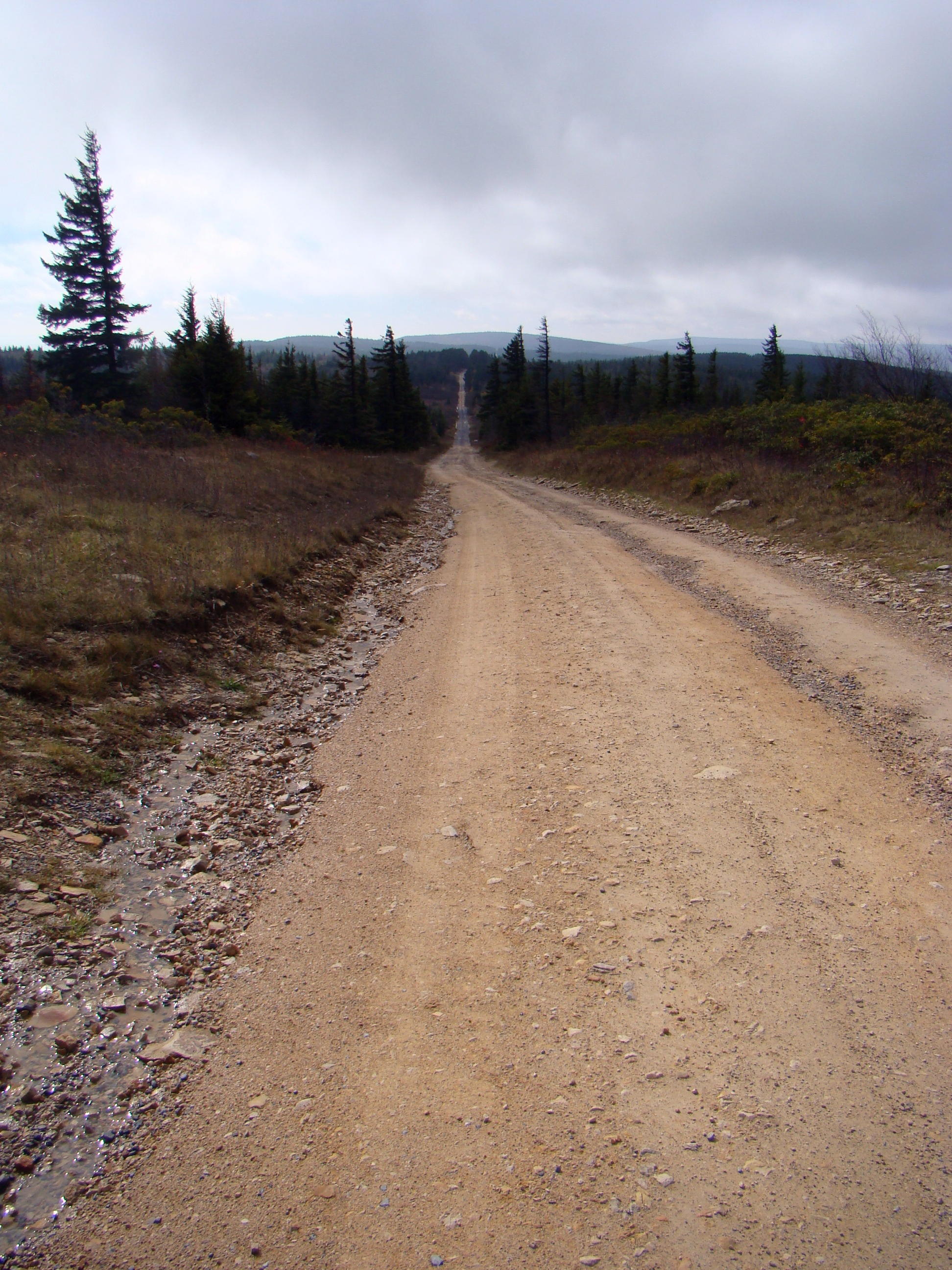
Narrow dirt road to Dolly Sods

Narrow dirt road to Dolly Sods with twists and turns just ahead

Named for a German family, the Dahles, locals added “sods”, because that is their term for an open mountaintop meadow where cattle grazed.  Over the years, the entire name has been localized to Dolly Sods.

The road to the top contains narrow, twisting, dirt roads. You just hope you don’t meet anyone coming around the bend. Add a little fog to the adventure and the trip becomes even more exciting. As you enter the wilderness area, you might feel civilization is being left behind. No guardrails line the sides of this mountain road, but hopefully the trees would catch you if you had to get close to the edge.

Flexible weather can change several times in a day. Within an hour, sun, rain, snow, and fog might all make an appearance. Cool weather prevails  and frost can occur on any time of the year. But that doesn’t deter the campers, who camp out year round.

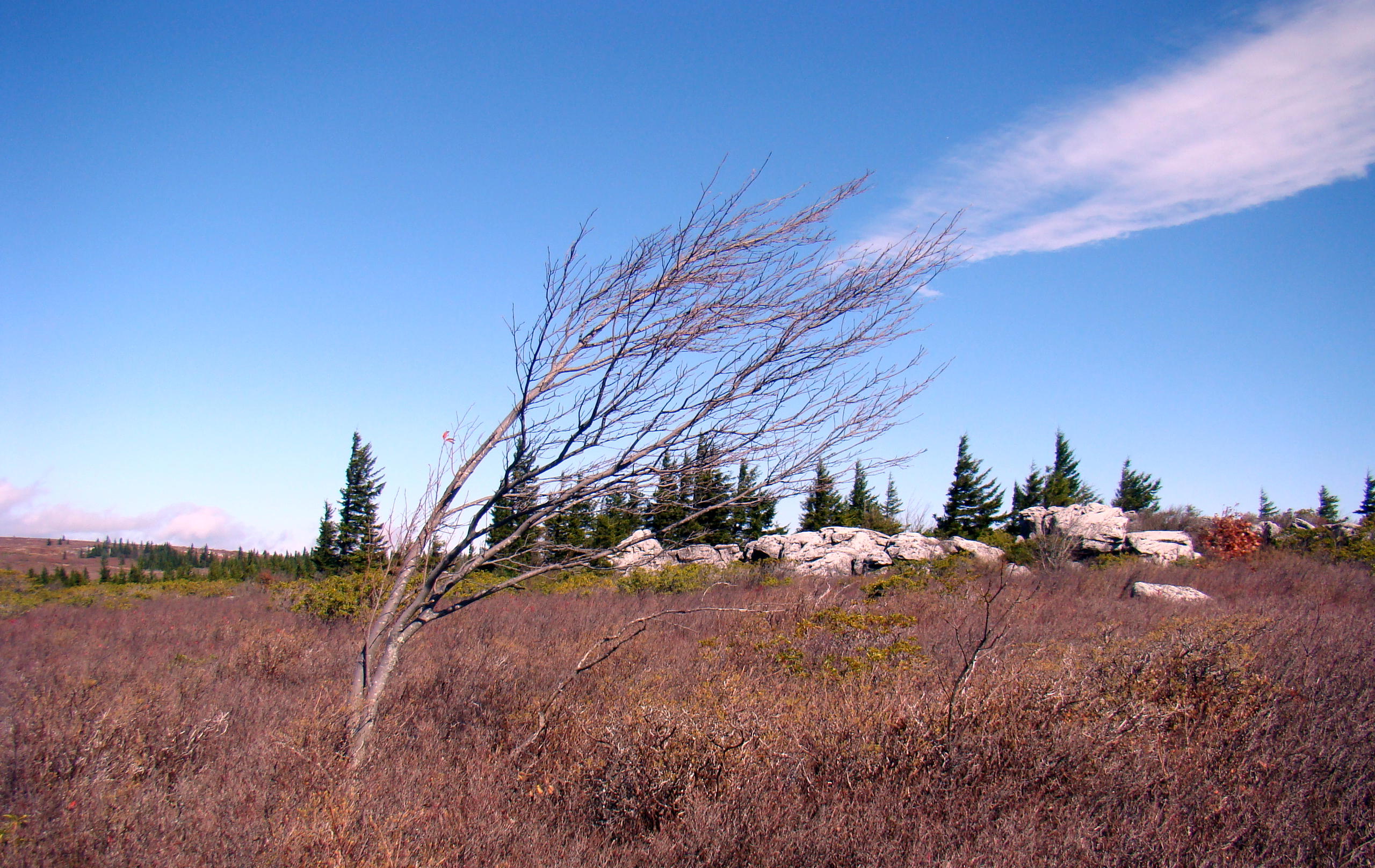
Windy Dolly Sods

Windy Dolly Sods

Winds blow fiercely here as witnessed by the red spruce trees, whose branches grow on one side, the side away from the wind. 

During the early 1900’s this mountain top was a great source of timber for the United States. At that time, some of the trees measured 13′ in diameter – quite the giants! Those early settlers cleared the field completely of all growth and brush. Sparks from the locomotives, saw mills, and logger’s warming fires set fire to the field to burn everything off; the peat burned for years as it was seven to nine feet deep.

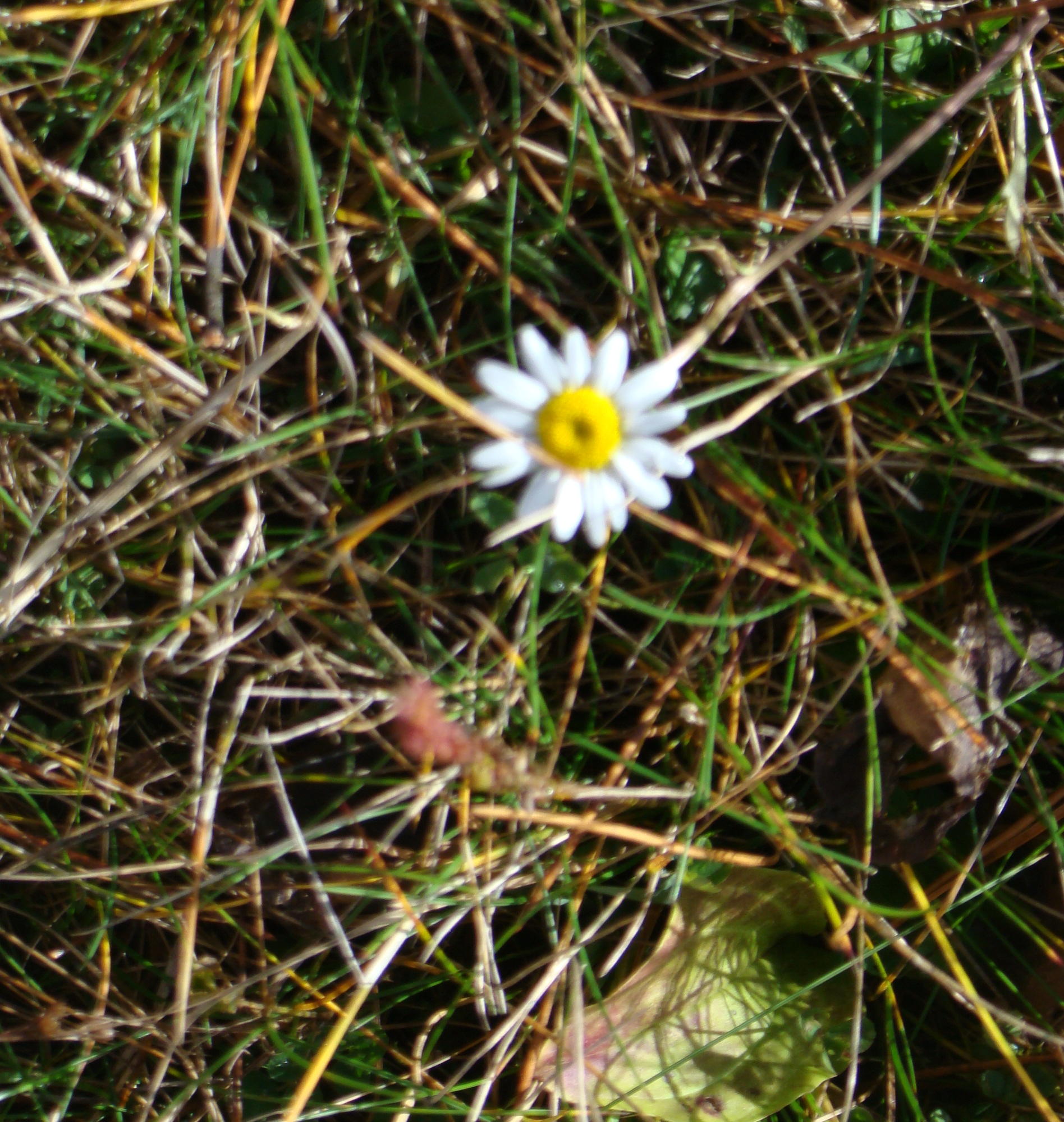
One Surviving Daisy

One Surviving Daisy

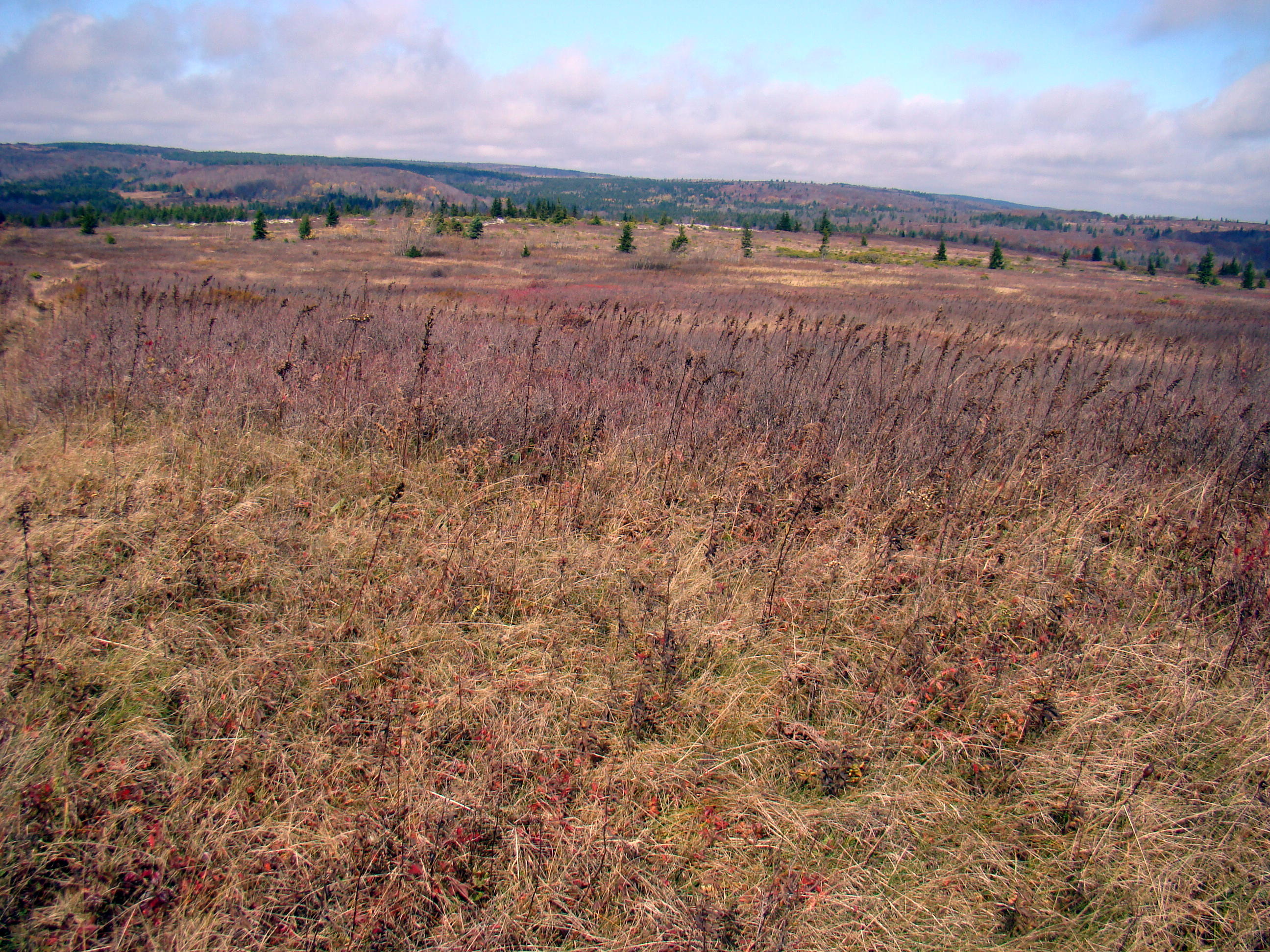
Today, little growth remains on the top of the Dolly Sods, but a new crop of trees is growing at lower levels. Right now this high plateau can best be described as a vast “nothingness”, but low growing blueberry and huckleberry bushes, wild strawberry plants and even a daisy can be found struggling for existence.

Many trails exist to explore the wilderness and you don’t have to worry about reptiles as they don’t want to hang around in the cold. When you finally get to the top, rocks and low growth cover the open areas. Over 17,000 acres compose this arctic-like, wilderness area, which runs about 49 miles across the top.

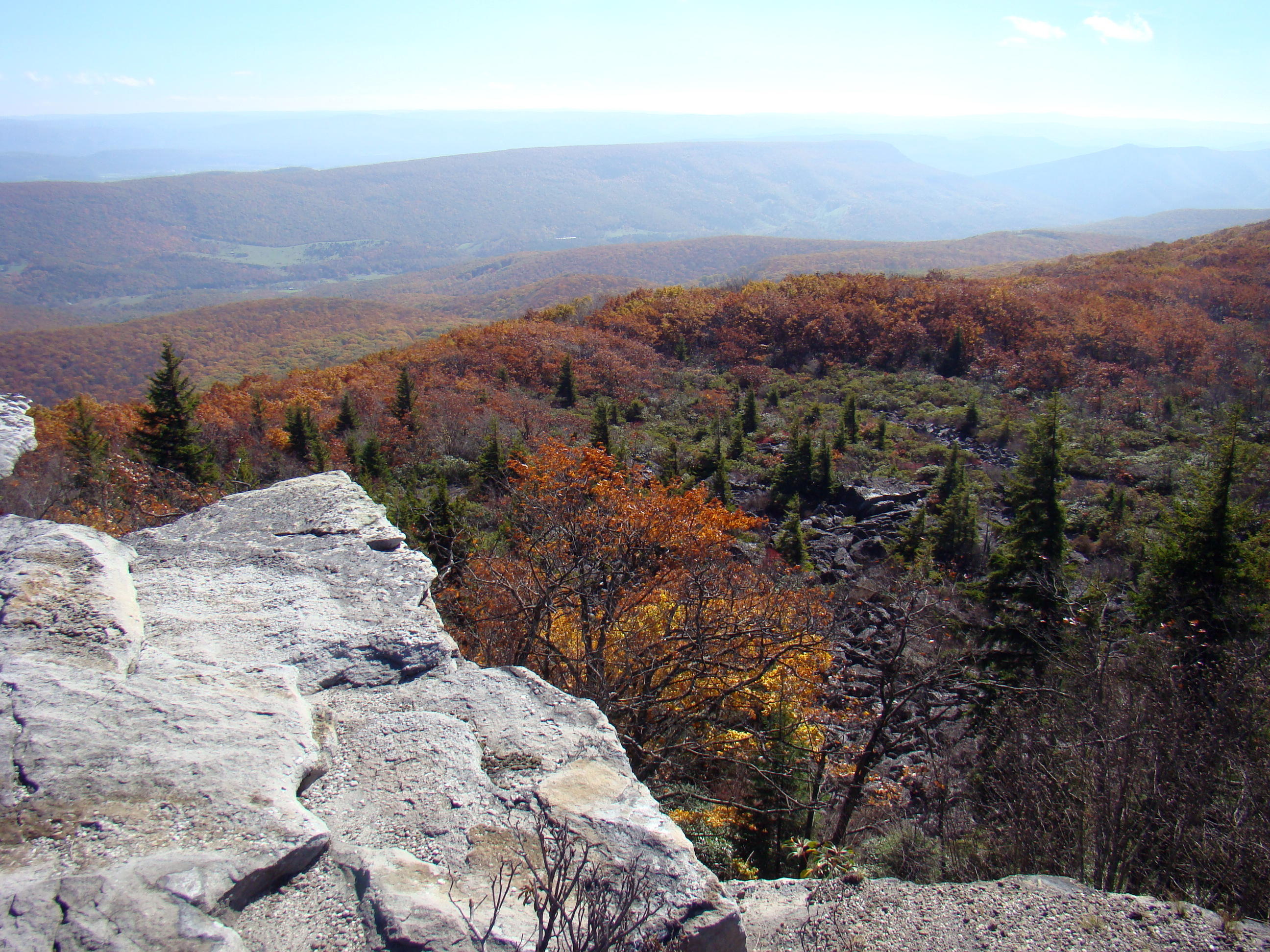
View from Dolly Sods Plateau

View from Dolly Sods Plateau

Dolly Sods sets on the Eastern Continental Divide with waters flowing to the east continuing to the Potomac River, while those flowing to the west help form the Ohio River and eventually the Mississippi. In 1852, an article in Harper’s Monthly Magazine described the area as:

…so savage and inaccessible that it has rarely been penetrated even by the most adventurous. The settlers on its borders speak of it with a sort of dread, and regard it as an ill-omened region, filled with bears, panthers, impassable laurel-brakes, and dangerous precipices.

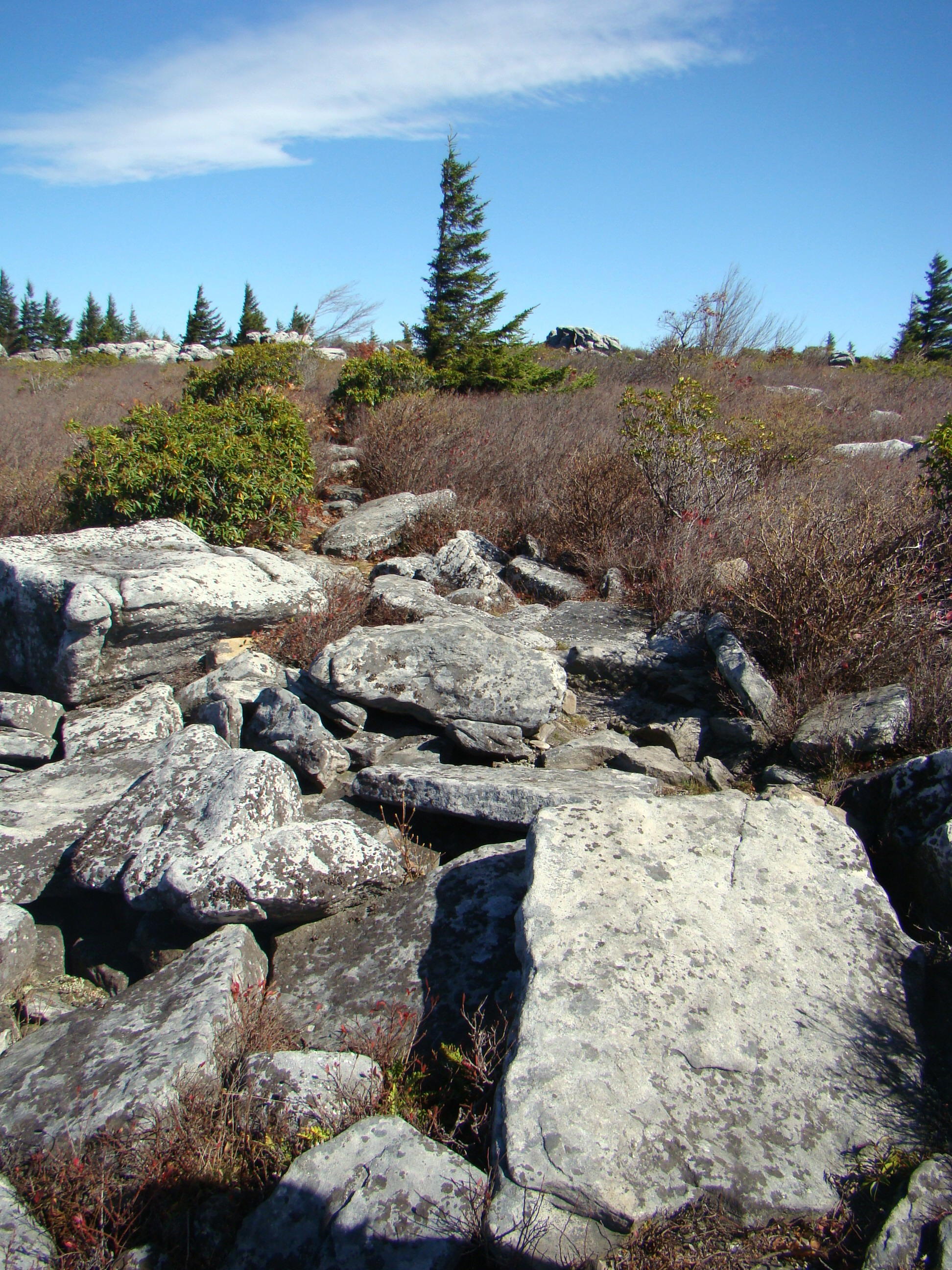
A challenging rocky trail back to the parking lot

A challenging rocky trail back to the parking lot

At one point in time, a glacier covered the top of Dolly Sods. Walking the trail to Bear Rock, water lays on top of the ground since it can’t be absorbed by the rocks just below the surface.  The trail required careful steps to avoid too much water, and it became very narrow between the low growth of wild blueberry bushes. But in just a little while, the trail turned into one made of rocks and it was a game of hopping from rock to rock to reach the edge.

An interesting sidenote was the fact that the US Army used this area as an artillery training ground before troops were sent to Europe in World War II. Hard to tell what might be found in the rocks and brush.

Many seem to enjoy escaping to the world of nature.

Many seem to enjoy escaping to the world of nature.

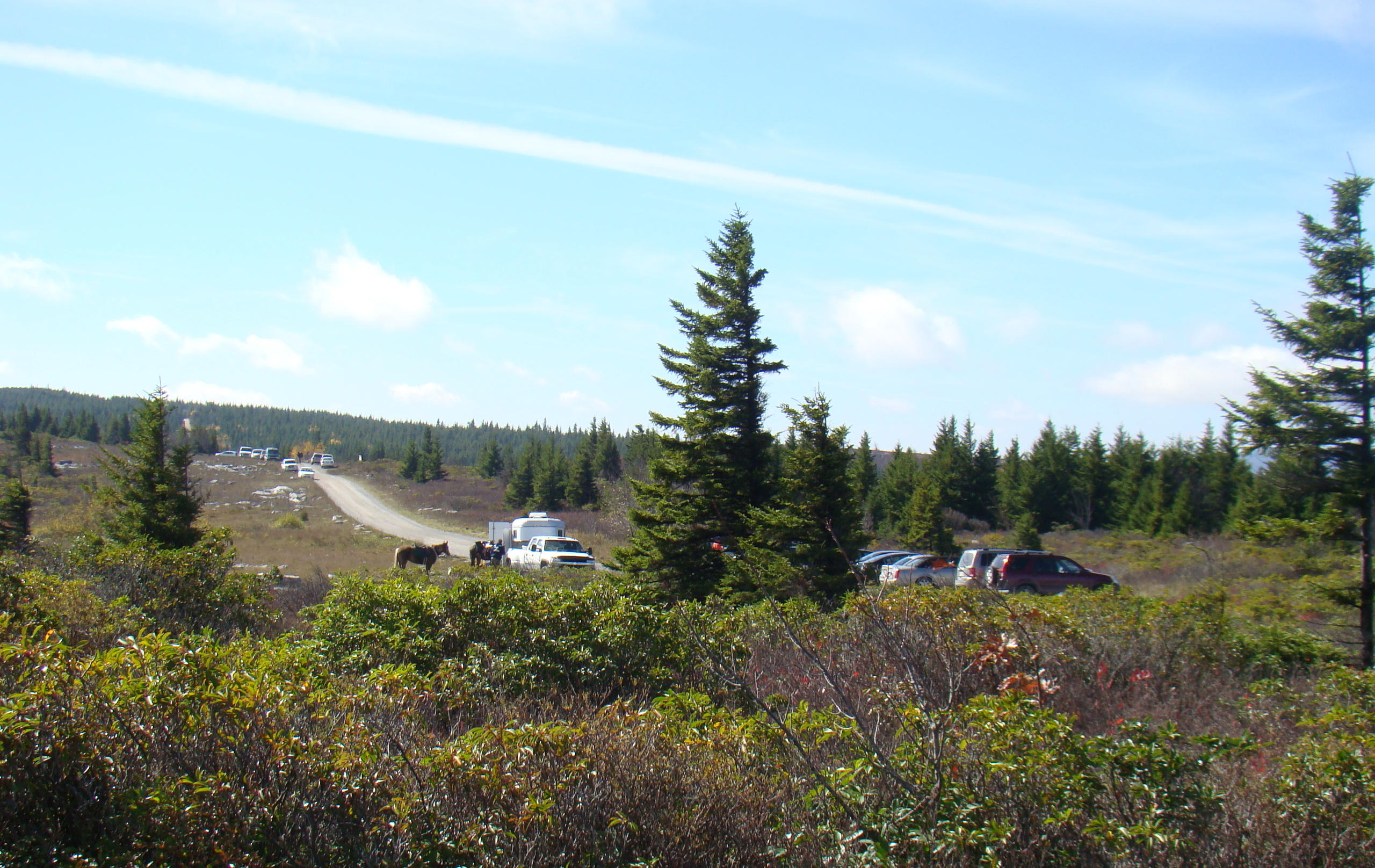
Starting back to the parking lot, it was surprising to see how many people were out walking the Dolly Sods on a weekday at a temperature of 49. Had to wonder how they found it!

From Canaan Valley follow WV 32 south to the Laneville Road (WV 45). Turn left and go approximately 6 miles to the Red Creek Bridge, where the road changes from pavement to gravel and is now Forest Road 19. 


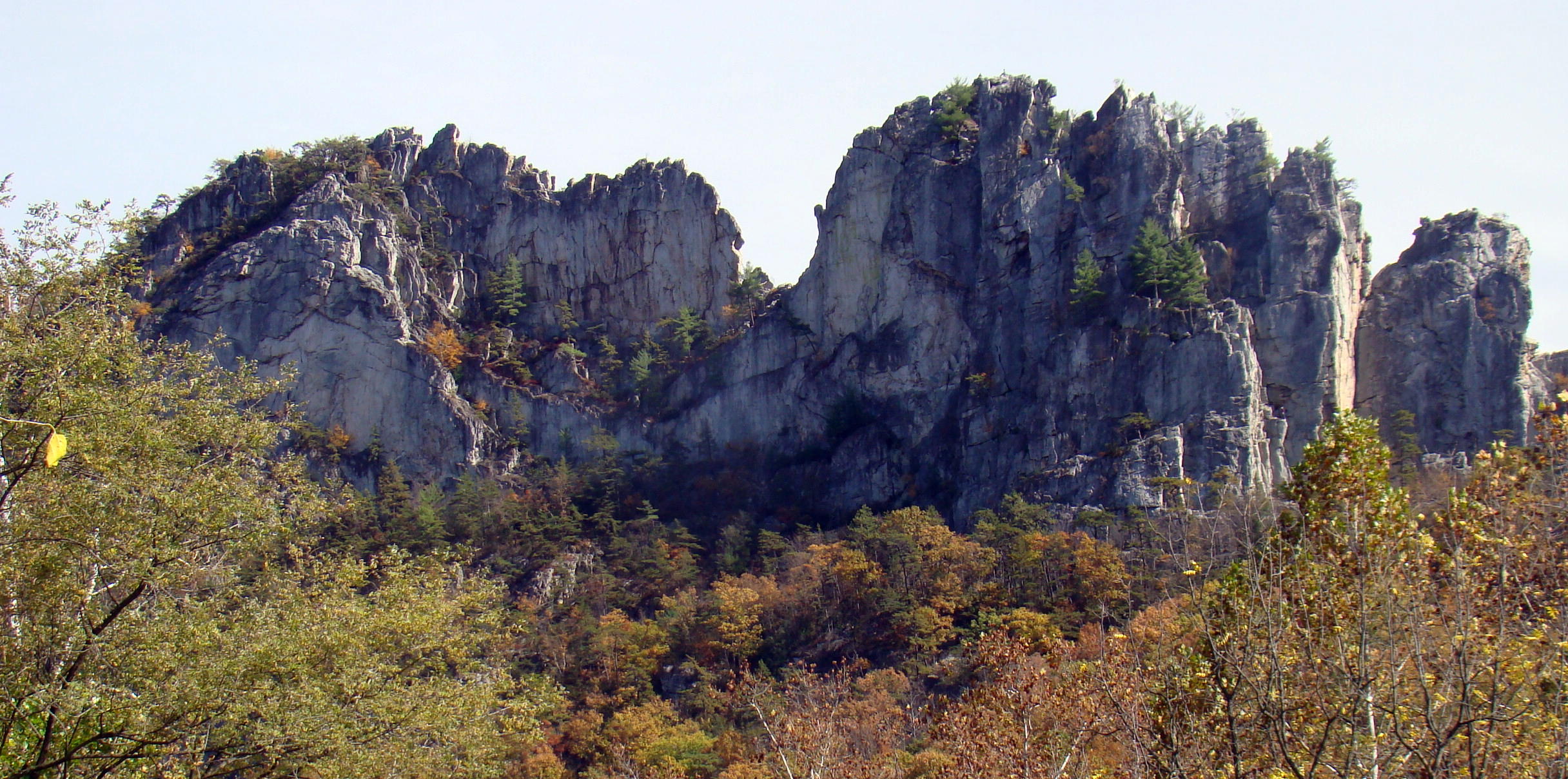
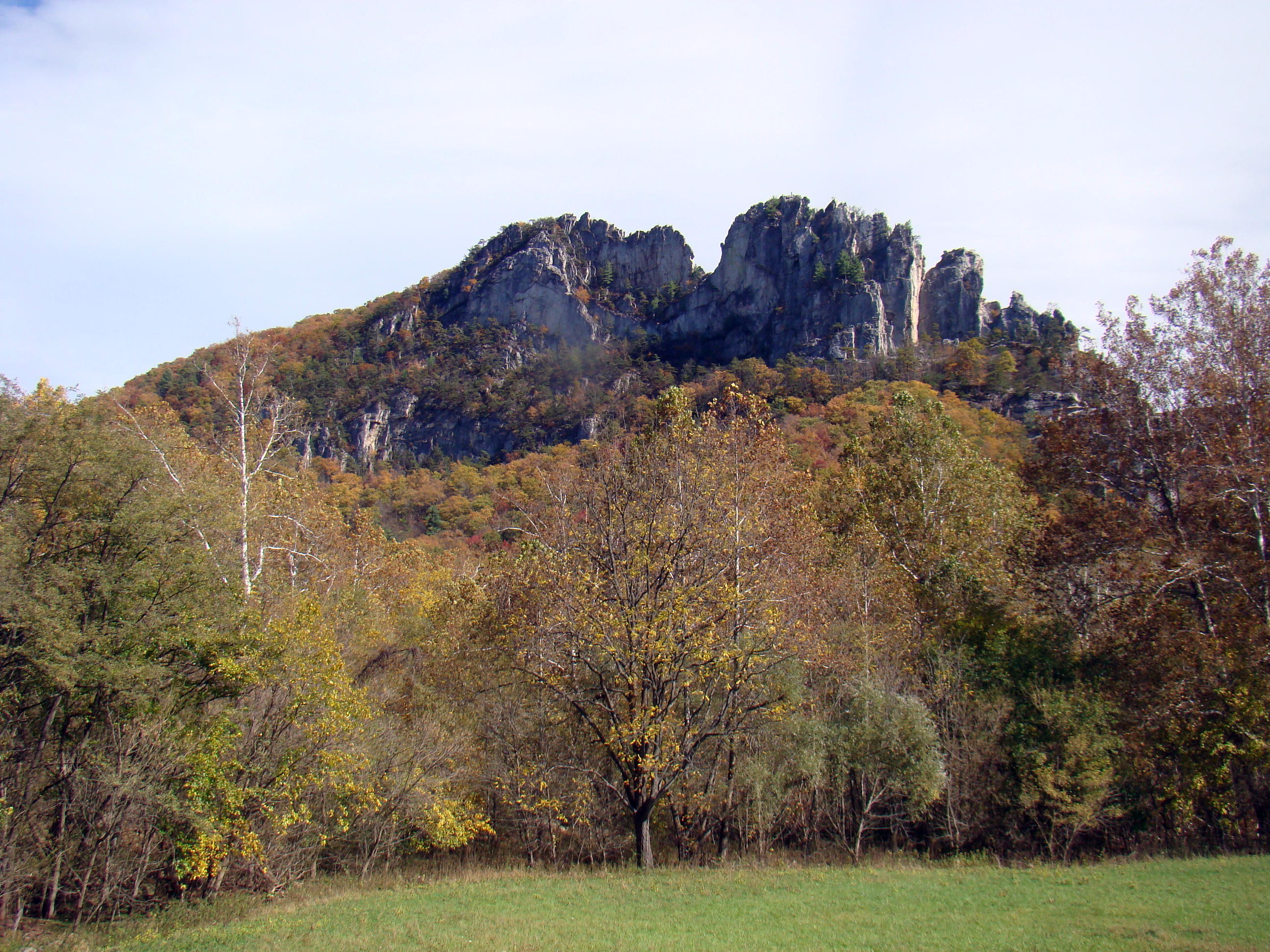
Seneca Rocks

Seneca Rocks

The towering Seneca Rocks with razorback ridges appear to have been shot up out of the earth in the Monongahela National Forest in eastern West Virginia. Perhaps this was due to a volcanic vein explosion years ago, but whatever the cause they are spectacular. These massive rocks rise 900 feet above the North Fork of the South Branch of the Potomac River.

It can only be guessed about the early people who lived in this place. When the Discovery Center was built, two villages were found under that area. The most recent one was dated at 600 years ago.

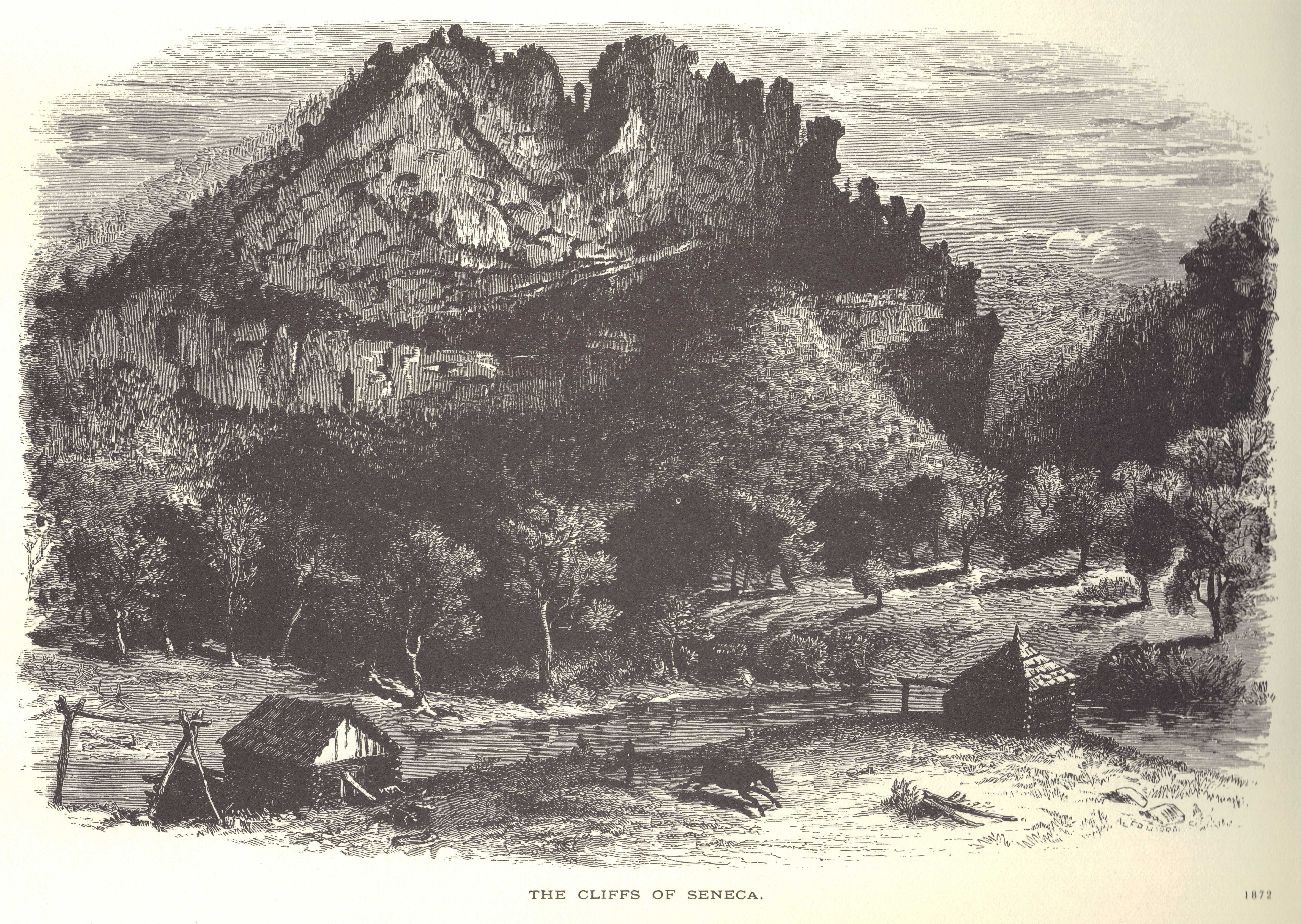
The Cliffs of Seneca by David Strother for New Harpers Magazine in 1872.

The Cliffs of Seneca by David Strother for Harpers New Monthly Magazine in 1872.

One of the early explorers to reach this area in 1853 was a writer and magazine illustrator, David Strother. He sketched the massive Seneca Rocks and several years later in 1872 reworked it into a wood engraving. This special printing was highlighted in the 1872 Harpers New Monthly Magazine.

Viewing Seneca Rocks through binoculars enables you to see the observation tower at the top and even the people there. If you have time, you will want to climb to the top and view the  surrounding area from their observation deck. Many trails lead to the summit for climbers of various abilities, so find one perfect for you.

Climbing to the top served another purpose in 1943-44 as it was a training ground for West Virginia Militia during WWII. Here they practiced climbing the rock sides in preparation for the Apennines Mountains in Italy.

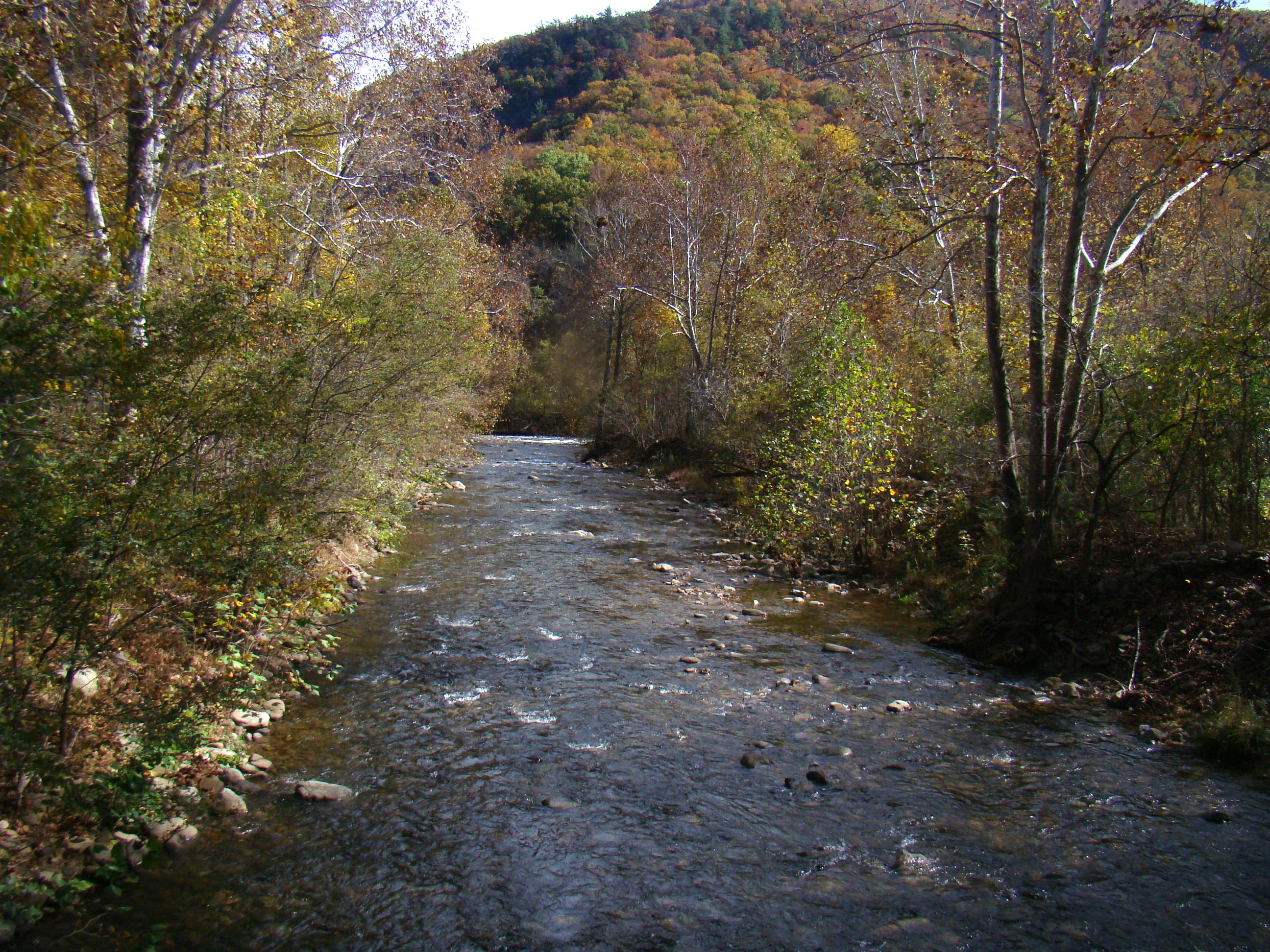
Seneca River

Scenic Seneca Creek

When you head over the walkway at Seneca Creek, watch carefully as you cross the bridge. Trout can be seen swimming along through the creekk, which bubbles over the rocky bottom.

This condensed version of the Legend of Seneca Creek tells an interesting Indian tale:

Snow Bird waited at the base of Seneca Rocks.

Snow Bird waited at the base of Seneca Rocks.

For as long as she could remember, Princess Snow Bird’s family lived at the base of Seneca Rock. All during her youth, she wanted to climb those rocks and as she became older, she did climb higher and higher until one day she reached the pinnacle. For a while she enjoyed her companions of warm sunshine, refreshing breeze, thoughts and dreams. But soon she became the most beautiful maiden in the land and warriors from all around came to claim her hand in marriage. 

There were too many for her to decide, so Snow Bird invited all to come on an appointed day for a challenge. After meeting them at the base of Seneca Rock, she told them that the one who could climb to the top would be her new chief. Out of the many present, only seven were brave enough to take the challenge. Snow Bird led the way and one by one six of them fell behind. Only one brave remained and as he neared the top he slipped.

Snow Bird quickly thought that if he was the one most able to make the climb perhaps she should accept him. She then reached down and grabbed his hand to pull him to safety. When they returned to the base, her father, Chief Bald Eagle, told his new son-in-law that he would become his successor and the new chief of the tribe.

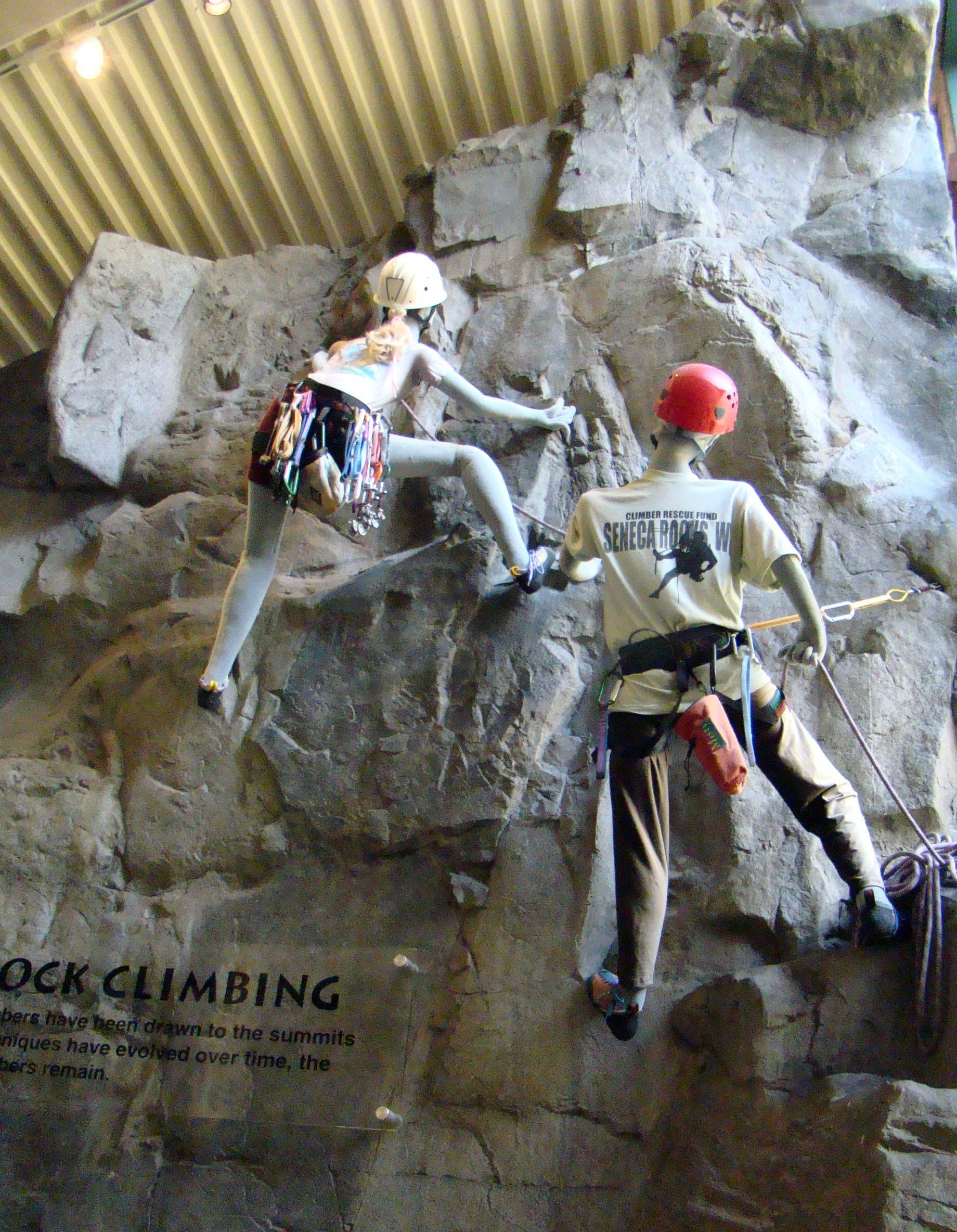
Rock climbing models

Rock climbing models

Nearby is a beautiful Discovery Center with information about all the activities, explanations regarding Seneca Rocks through pictures and scenes, and of course a gift shop. Interactive displays explain the geology of the area on a level that even children can understand. Films provide another method of explaining the beautiful Seneca Rocks and the surrounding Monongahela National Forest. Figures of mountain climbers scan an inside wall to show the gear needed and explain the dangers.

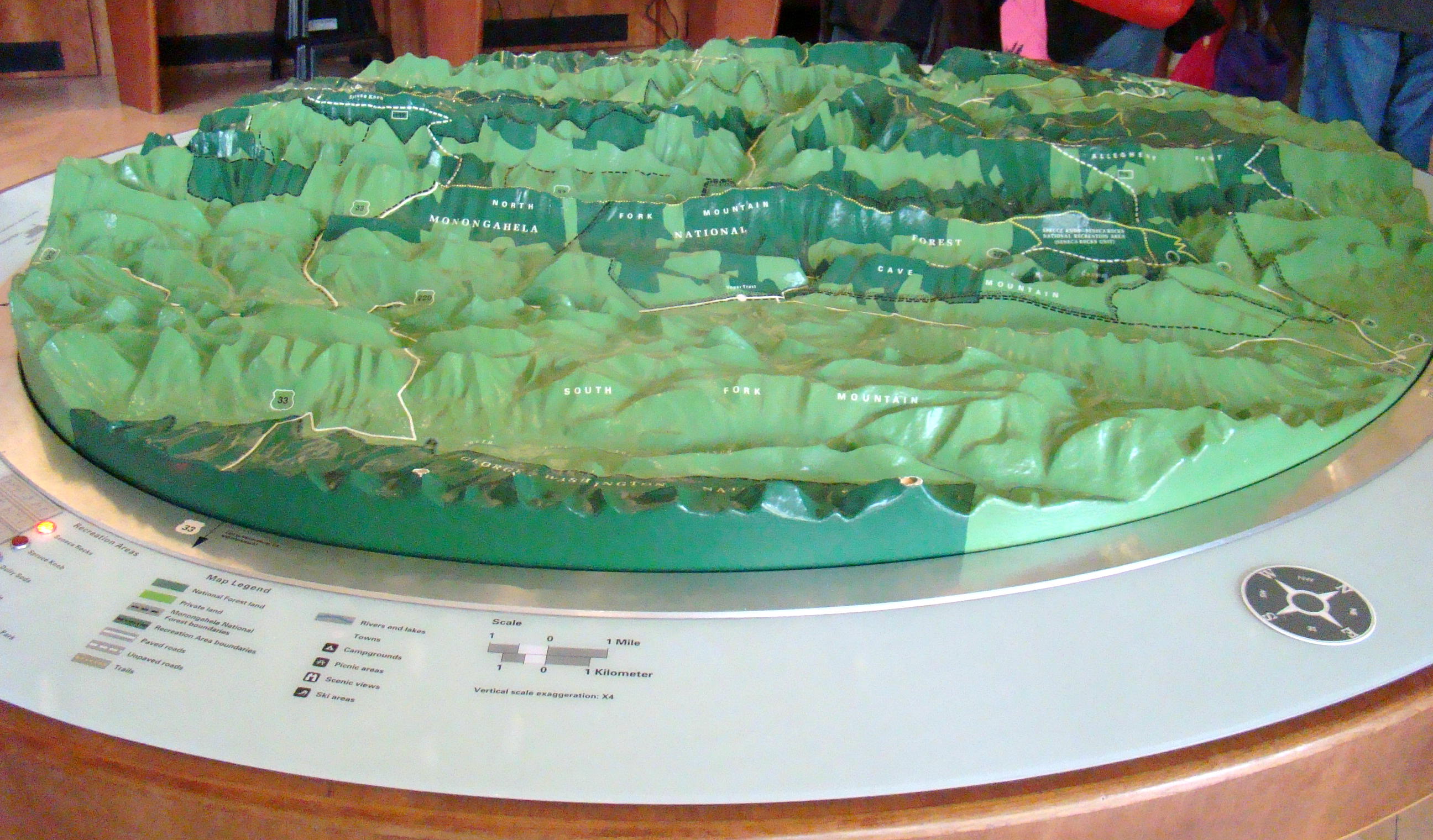
Lighted topography map

Lighted topography map

Especially interesting was a topographical map of the area with buttons that lighted up different special places to visit. It gave you a much clearer idea of where you were, had been, and were going. It was interesting that they had instructions also written in Braille.

Visit Seneca Rocks where you can climb to the top or sit on a bench at the base and admire the view.

Seneca Rocks it located east of Elkins, WV near the junction of Routes 33 and 55. Enjoy the beautiful scenery on your way there.


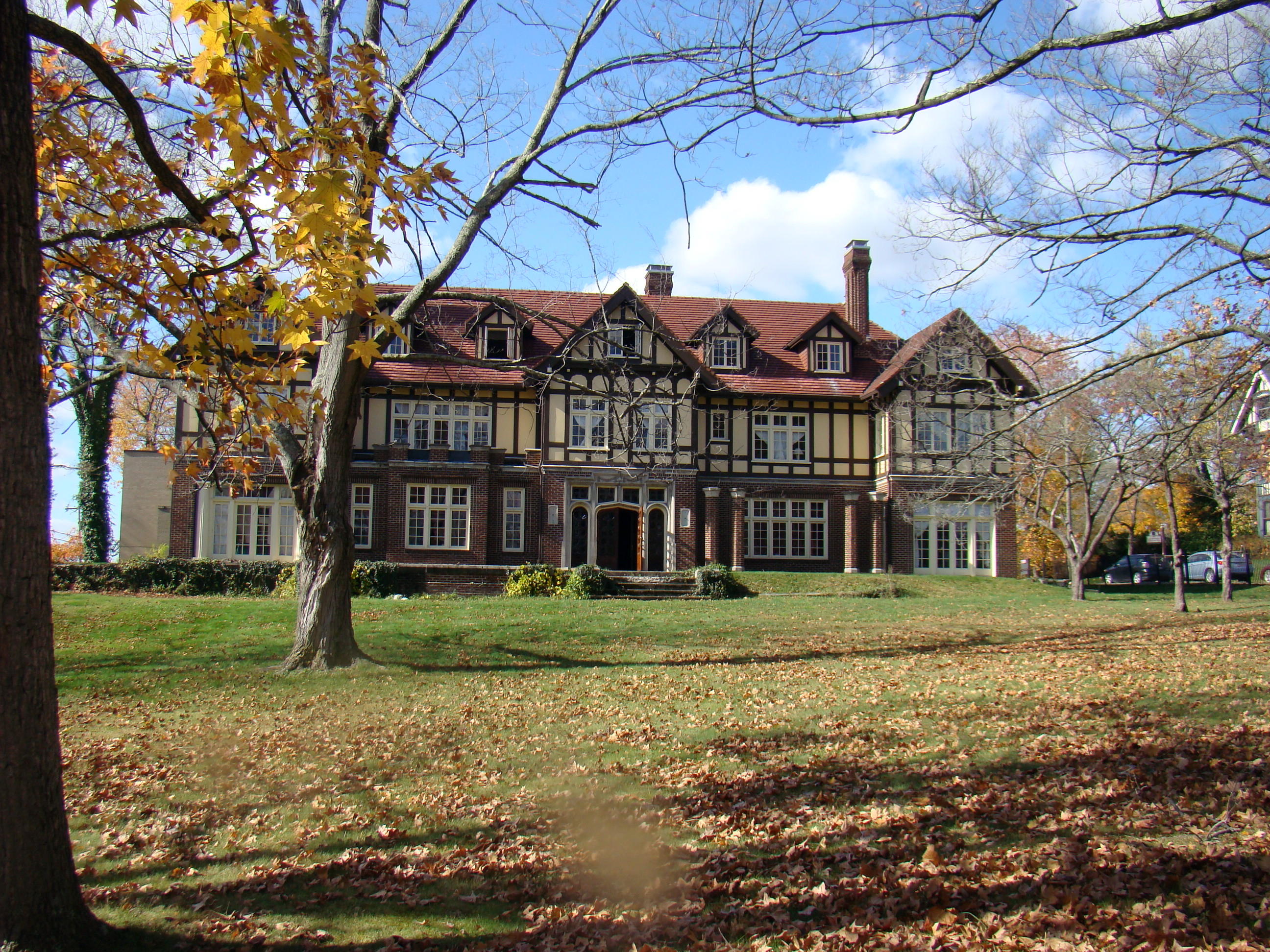
Gross Mansion today
Gross Mansion today

A mansion on a hilltop perfectly describes Gross Mansion. The mere mention of its name brings instant recognition. While most know where it is, few know its history, or the history of the only family to call this “home”.

Born in 1868, Charles F. Gross began working at the age of twenty-one in the oil fields of Ohio, West Virginia, and Oklahoma. Charles saved his wages carefully, and began buying shares of The Hill Oil and Gas Company based in Columbus, Ohio.

This company had extensive holdings in Oklahoma and Texas, and Charles Gross of Cambridge had increased his holdings to one-fifth interest. The Cushing Field in Oklahoma consisted of 6,000 acres and produced 20,000 barrels of oil a day. When he sold his one-fifth interest in this field, Charles had money to purchase land and build a house.

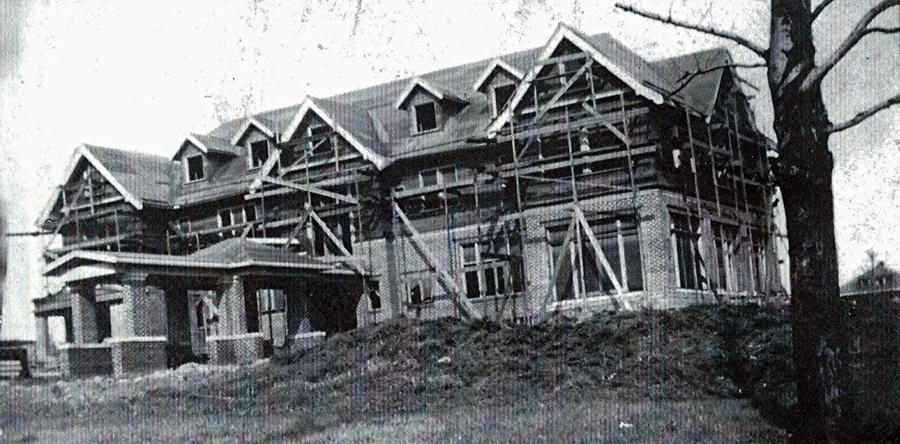
Gross Mansion under construction

Harriett, his wife, had her heart set on having the nicest house in Cambridge, and that is what Charles set out to accomplish. Charles had purchased a city block between Sixth and Seventh Streets in a strictly residential area.

Beautiful tile in the entry way

The Gross Mansion, completed in 1921, was situated in a park-like setting. A winding carriage lane wove through a beautiful landscape of flowers and trees. Relaxing while working in the garden became one of Charles’ cherished times.

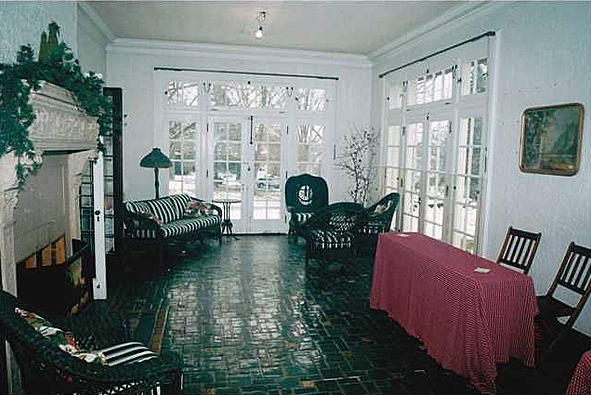
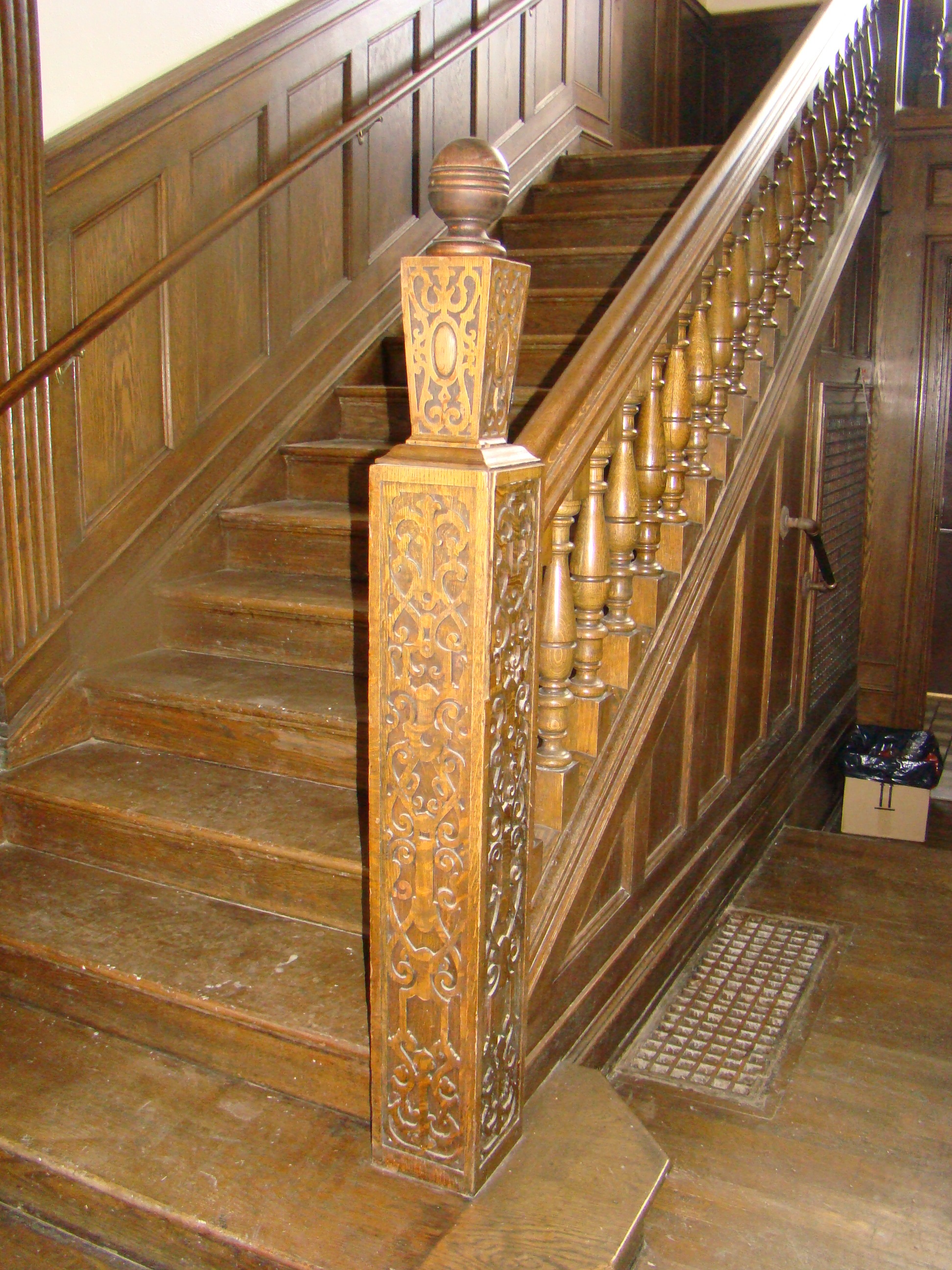
No cost was spared in the construction of this 12,000 square foot home with twenty-four rooms. Even today the beautiful tile floors, walnut paneling, carved stone fireplaces and beautiful stairway with carved newel posts exemplify the richness intended many years ago.

Stories are still told of the Gross family as many parties and weddings were held at the mansion. Trick or treaters that were brave enough to come to the door of the big house, were rewarded with a fifty cent piece.

Gross Mansion Sunroom

Teachers at the 9th Street School, where Harriett was a student, had an annual dinner there served by the Gross family. It was a day the children remembered, not because of the mansion, but because when the teachers went for lunch, school was dismissed for the rest of the day.

Stairway with carved newel post

Young Harriett also had the pleasure of owning a brown and white pony that she enjoyed riding inside that tall fence around the mansion. That high fence with spiked top is of special interest as it was constructed by the family to protect their only child. This happened right after the kidnapping of the Lindbergh baby and the Gross family feared that with their wealth gained from the oil fields, their daughter could be a possible target. They even had a hidden staircase installed in the house for easy escape.

A personal memory takes me back to days as a young child when my mother delivered fresh eggs and chickens, butchered that morning, to the Gross family. Mom let me carry a dozen eggs to the side door while she took the chickens. Dad waited patiently in the car.

While Charles Gross got his start in the oil fields, he became a very prominent member of the Cambridge community. In 1918, he was elected to the board of directors of The National Bank of Cambridge and served until his death in 1942. His funeral was held at the Gross Mansion.

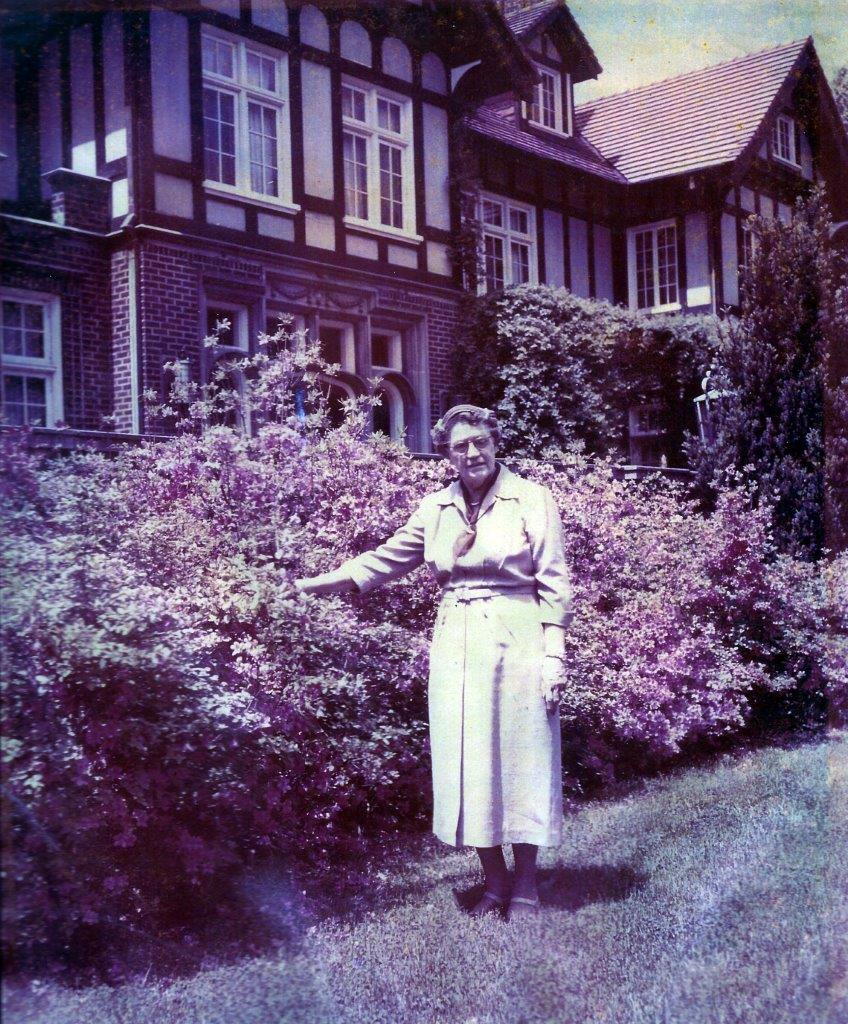
Harriett Gross in front of Mansion
Mother Harriett Gross in front of Mansion

Daughter Harriett was one of those who got married at the mansion when she wed Howell Bates, an ensign in the Navy. Later Harriett and Howell would be the ones to sell the mansion in 1958 to the Cambridge YMCA.

Gross Mansion still catches the eye of visitors to the city and makes them catch their breath as they view this beautiful home from nearly a hundred years ago. Chances are rare of building anything this grand again. Wouldn’t it be wonderful if it would be returned to its former richness and impressive beauty?.

Recently, Dickens Victorian Village held a Victorian Funeral Experience in the mansion. Hopefully other community events will take place in this beautiful spot soon.

How nice to see life at the mansion once again!

Gross Mansion is located between 6th and 7th Streets in Cambridge, Ohio. Once in town, head down 6th Street where parking is available in a lot across the street.
 

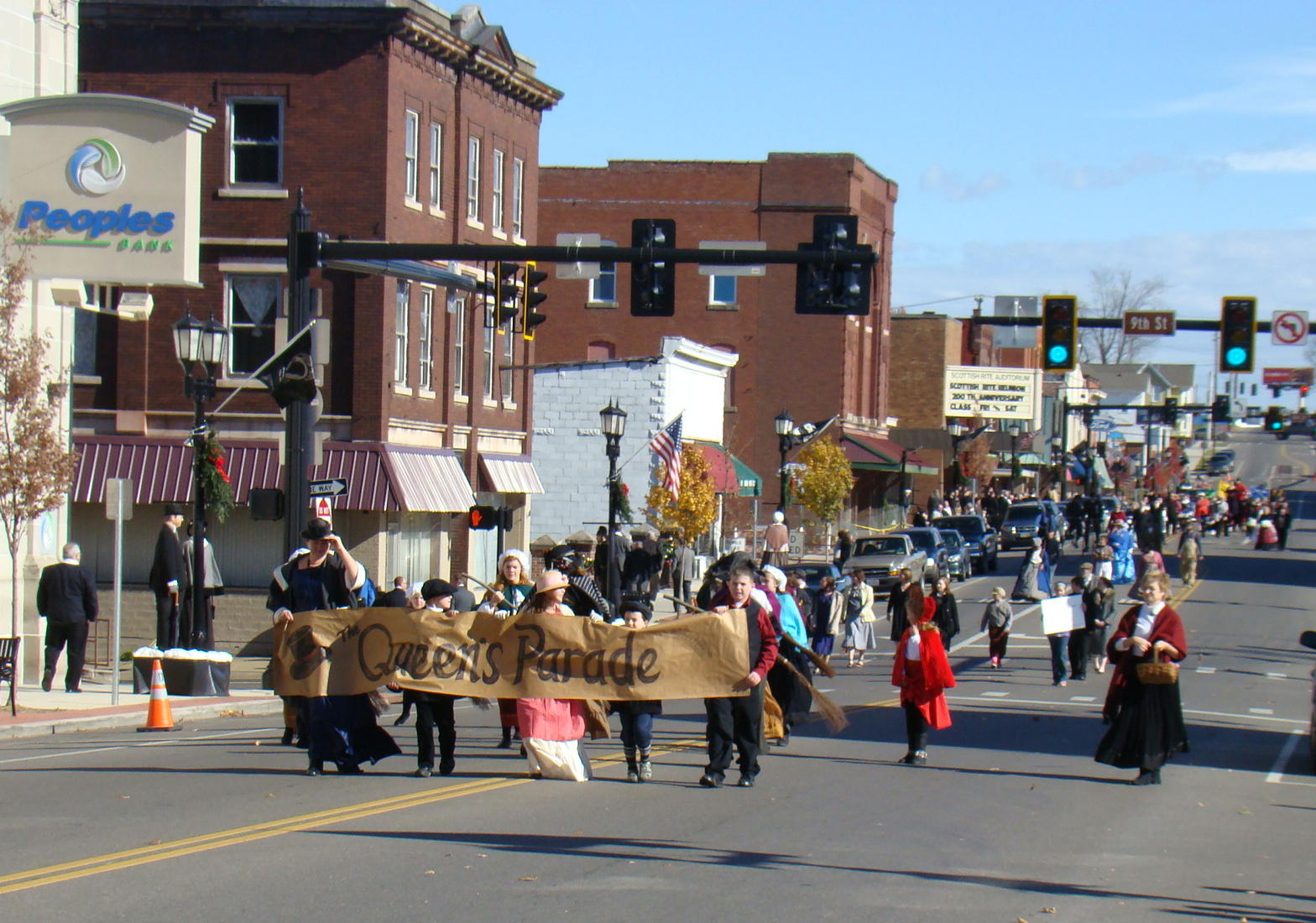
The Queen's Parade

The Queen’s Parade

Everyone loves a parade, and the Queen’s Parade brings a touch of life from times gone by. People line the streets of downtown Cambridge for the Dickens Victorian Village’s second annual Queen’s Parade on Nov. 8. The parade, in honor of elegant Queen Victoria, will head down Wheeling Avenue at 1:00, as a touch of royalty enters the streets of Cambridge. The Queen will be accompanied by Gerald Dickens, great-great grandson of Charles Dickens.

Cambridge Social Dance Club

Cambridge Social Dance Club performance

Step back to a time before motorized vehicles, as many entertaining groups, too numerous to list, either walk, ride horseback, or are driven in carriages.  Among those walking are members of the Cambridge Social Dance Club, who have been a part of the annual celebrations for several years. See them dance their way down the street as well as perform at the Victorian Street Fair on E. 8th Street. They’re just getting warmed up for Mr. Fezziwig’s Ball next weekend.
Local dance studio students parade down Wheeling Avenue as street sweepers, who were needed in the time of Charles Dickens. The newly formed band at East Guernsey Schools will be making an appearance and perhaps a portion of the ever popular Cambridge City Band will perform for this occasion as an old-fashioned Clown Band.

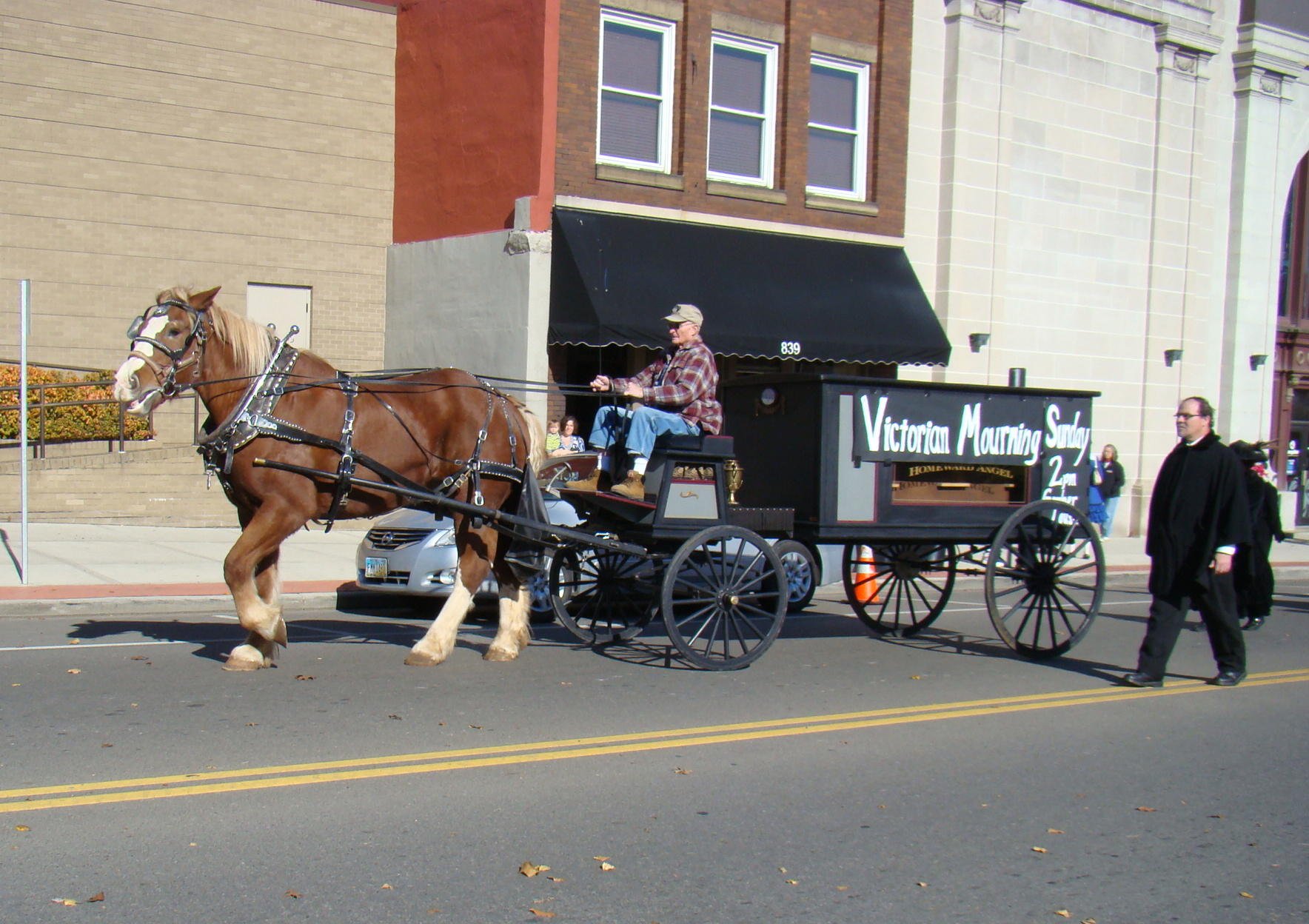
Funeral Hearse followed by mourners

Funeral Hearse followed by mourners

A procession of mourners follow the horse-drawn hearse as they head to the “Victorian Funeral Experience”, which will be held the following day, Sunday, Nov. 8th at 1:00 at the Gross Mansion.

The Medicine Man, Dr.Thelonious Balthazar, rides in a carriage at the parade. The Medicine Man will actually have two shows on Saturday at the Victorian Street Fair. The first show is at 11:00 before the parade, while the second performance will be at 4:00 in the afternoon. You won’t want to miss his words of medical advice!

Participants in “Whiskers Wars” also walk in the parade. Come out and encourage these manly men, as they have been grooming their beards all summer long. Several categories exist for beard entries and judging will be held at the Dickens Street Fair on the steps of the bank. Most entrants dress in costumes of the Dickens era, so show your Victorian spirit and cheer for your favorite contestant.

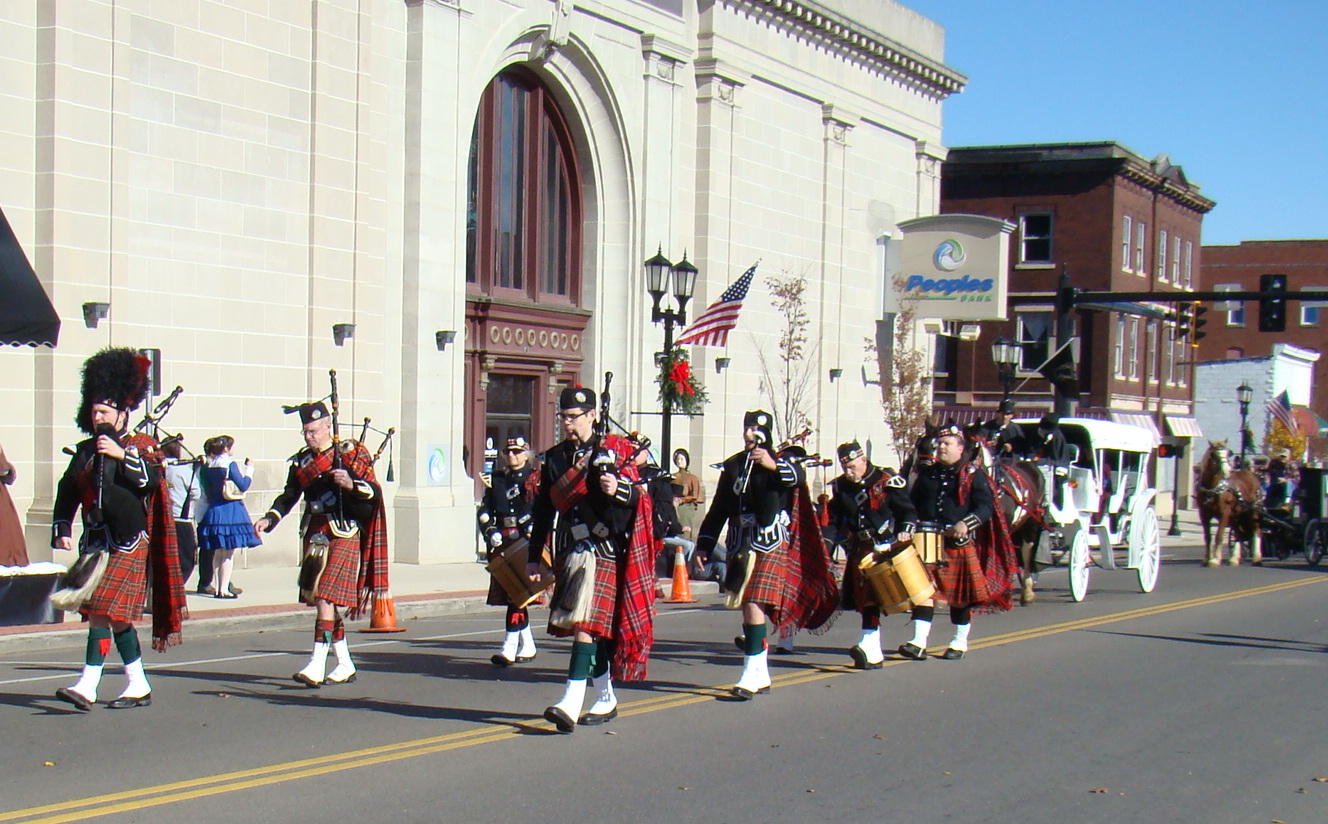
Bagpipers escort the Queen

Bagpipers escort the Queen

The sounds of the Akron Bagpipe Band announce the arrival of Queen Victoria’s elegant, horse-drawn carriage. Then the Queen heads to the Victorian Street Fair where she oversees activities for the remainder of the afternoon.

However, the parade is just a small portion of the excitement for “Queen Victoria Weekend”, the second themed weekend of the Dickens Victorian Village season. If you would like to learn about additional activities, visit their website at http://www.DickensVictorianVillage.com or call 1-800-933-5480.

Dickens Victorian Village takes place from November through mid-January each year when Historic Downtown Cambridge comes to life with 92 scenes of 166 life-like figures representing classic scenes from Victorian society. To add to the festive atmosphere, each evening from 5:30-9:00, the magnificent 1881 Guernsey County Courthouse Music & Light Show pulsates to holiday music with synchronized lights.

See you at the parade!

Dickens Victorian Village is located in Downtown Cambridge, Ohio near the crossroads of I-70 and I-77. Take any Cambridge exit and you are sure to find yourself on Route 40, which heads straight through Downtown Cambridge.


A roadside peek on a cloudy day

A roadside peek on a cloudy day

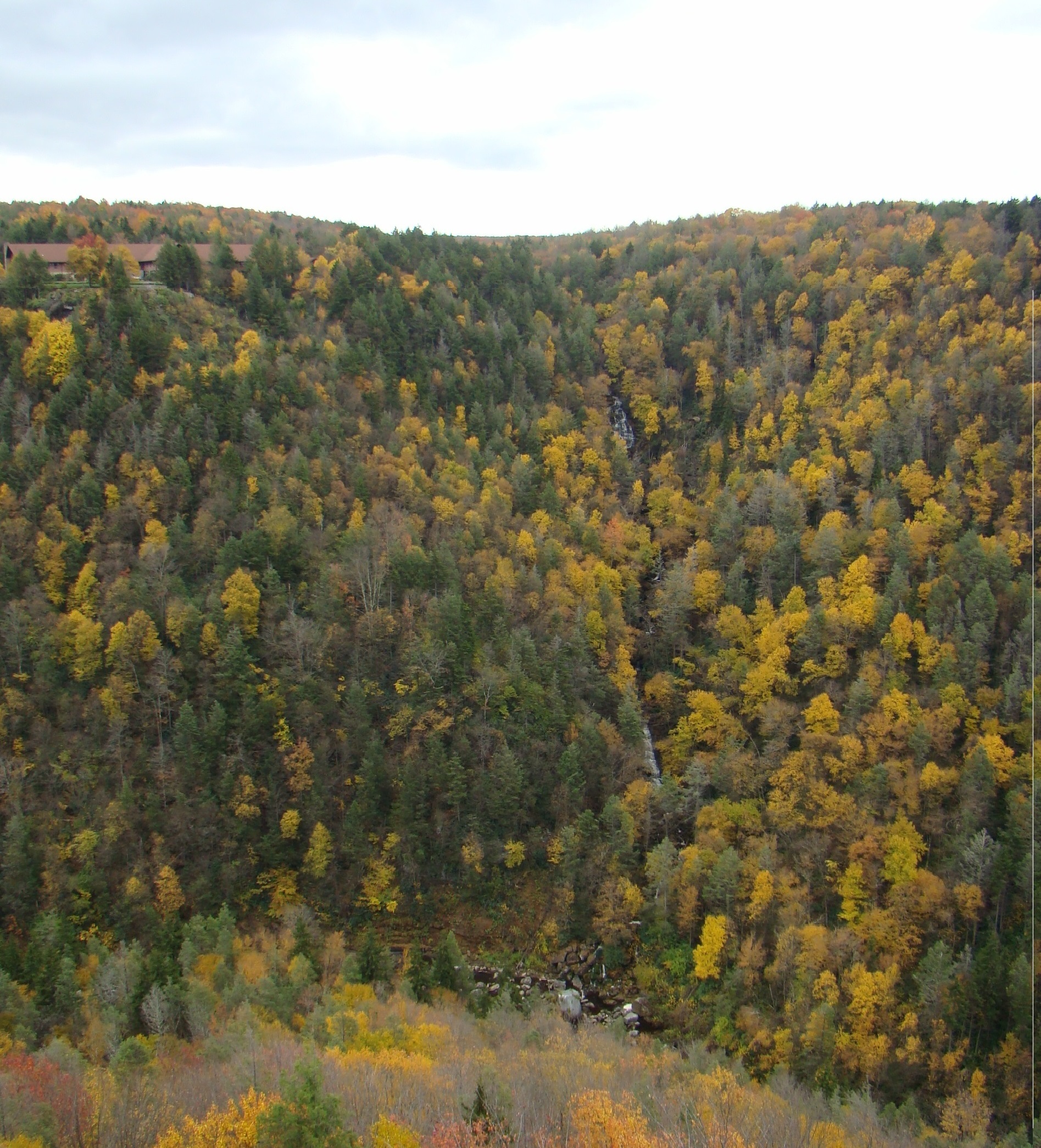
Every little corner of West Virginia seems to have a beautiful mountain view, and nobody does Autumn better than West Virginia. Lindy Point near Davis, West Virginia, provides a dynamic view in several directions.

Lindy Point Overlook sign

Lindy Point Overlook sign

Heading back a narrow curving road only wide enough for one vehicle, it seems obvious that this is not a heavily traveled area even for tourists. There are only four parking places at the entrance to Lindy Point so it would appear they don’t expect many visitors, but surprisingly several people were met on the trail.

Rough path to Lindy Point

Rough path to Lindy Point

Traveling down a long, secluded path, each step needs to be taken carefully. Many tree branches, briers, and rocks appear on the path, which is basically a black dirt trail, but rather level. There are interesting plants along the way as the trail leads through dense rhododendron bushes. While eyes were open for animals, especially bears, none were spotted.

At places the road was muddy from rains of the past few days, and the black dirt trail turned into a boggy black adventure. There were places where there was no way around due to the heavy brush, so the only way to proceed was to walk right over the murky black bog. This was accomplished by placing the foot flat on top of the mud, one step at a time, and you didn’t sink in…well, at least not too much. A walking stick on this trail was particularly useful and welcome.

Looking over the edge at Lindy Point

Looking over the edge at Lindy Point

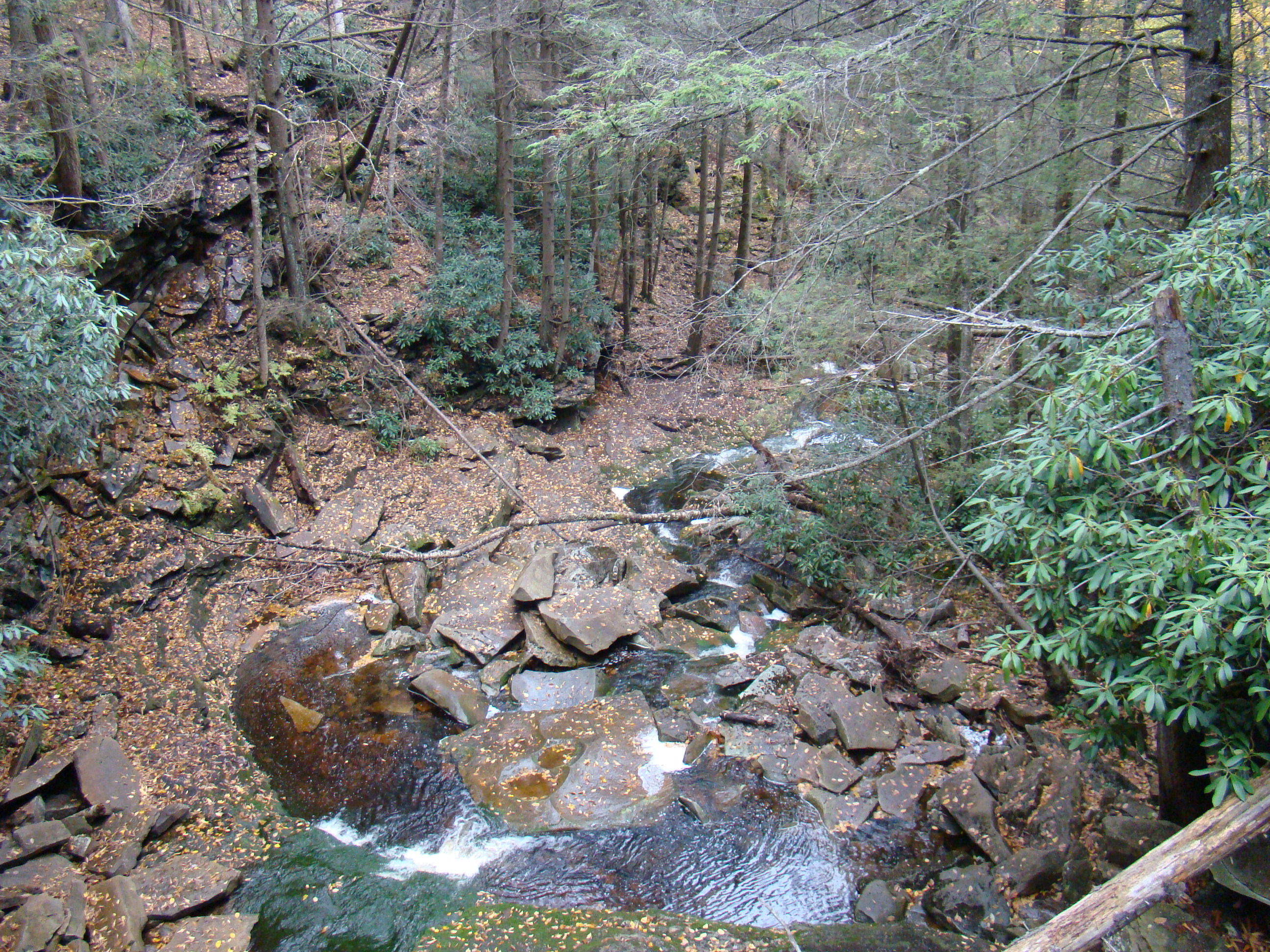
Finally we reached the end of the trail to a magnificent view from the overlook. Here you can see 48 acres of the Blackwater Canyon, one of those picture postcard views in all directions, as the valley is ignited with the colors of Autumn leaves. The Blackwater River runs through the bottom, while at the top are unusual, free-standing, rock “chimneys”, which add to the spectacular view. These enormous rocks were pushed up during the formation of the mountains many years ago.

Zoomed View of the river below Lindy Point

Zoomed View of the river below Lindy Point

A young man and his family appeared at the summit and told of his teenage adventures there for frequent picnics.  He remembered the time they were having a party out on the rocks before the platforms were built. One of his friends had too much to drink and fell to his death off the rock into the canyon below. The area was closed for a couple years and then the platform was put in place as a safety measure.

The walk back seemed much shorter and faster, but at the end it was necessary to clean the boggy mud off our shoes before moving on. 

Autumn is a great time to catch the view from Lindy Point. Anytime is beautiful, but the colors of the leaves highlighted its beauty.

Directions to Blackwater State Park travel many scenic routes along the way. These are the clearest directions I have found: Take I-7o E to I-79 S. Stay on I-79 S to Morgantown, WV. At Morgantown, follow I-68 E to Rt. 42 S, Friendsville, MD. Follow to Rt. 219 S through Oakland, MD, to Thomas, WV. At Thomas, take Rt. 32 S to Davis, WV. See what I mean?


Downton Abbey Tea Party

Downton Abbey Tea Party

The pleasure and eloquence of merry olde England will appear in historic downtown Cambridge, Ohio during the 9th season of Dickens Victorian Village. Fans of Downton Abbey will be especially pleased during the first weekend of Nov 1 – 2 with Desperate for Downton events, including etiquette instruction, a tea party, and fashion show.

Father Christmas and his wife enjoy opening festivities.

Father Christmas and his wife enjoy opening festivities.

Opening ceremonies will be held at the Guernsey County Courthouse with entertainment by local groups, candle lighting, and caroling. Then watch the 2014 debut of the Guernsey County Courthouse Music & Light Show. You’ll be impressed.

Abbey Etiquette at the Cambridge Glass Museum

Abbey Etiquette at the Cambridge Glass Museum

A touch of old Victorian England presents itself through this special Desperate for Downton weekend. Begin with an etiquette class that will have you eating prim and proper for the rest of the holiday season. The National Museum of Cambridge Glass prepares an opulent location for this learning experience, as well as a feast for the eyes with their elegant table setting. Learn proper etiquette, then meander through the aisles of the glittering Cambridge Glass Museum.

Join in the fun of a Downton Abbey Painting Party  in the Dickens Welcome Center and Curiosity Shop located at 745 Steubenville Avenue. Try your hand at painting a Victorian style picture that is likely to become a treasured memory. Cost is $15 per person with all materials furnished.

Diplay of Victorian items at Downton Abbey Tea & Fashion Show

Diplay of Victorian items at Downton Abbey Tea & Fashion Show

The highlight of this Desperate for Downton weekend happens during the Downton Abbey Tea and Fashion Show. Spend an autumn afternoon at a delightful Victorian tea party in the breathtaking Masonic ballroom at 730 Wheeling Avenue. Classic Faire’s dainty delights on each tea tower will stimulate the taste buds, while The Alley Vintage and Costume Store will present the amazing trim styles of period fashions.

Get in the spirit of the day. Dress in your finest dress, hat and gloves in either historic or contemporary style and spend a charming afternoon for $30 per person. Even those who entertain on Downton Abbey would feel at home during this event.

Learn how to decorate your own Gingerbread House.

Learn how to decorate your own Gingerbread House.

If perhaps you aren’t in the mood for tea and fashion, Sunday afternoon at 1:00 there will also be a Family Fun Gingerbread Decorating class at the Guernsey County Senior Center at 1022 Carlisle Avenue. Parents and children have the opportunity to join forces and create a special gingerbread house.

Guernsey County Music & Light Show

Guernsey County Music & Light Show

Dickens Victorian Village takes place from November through early January each year. Historic Downtown Cambridge comes to life with 92 scenes of 166 lifelike figures representing classic scenes from Victorian society. To add to the festive atmosphere, each evening from 5:30 – 9:00 pm view the magnificent 1881 Guernsey County Courthouse Music & Light Show where thousands of lights pulsate in synchronized rhythm to seasonal music.

Come join in the fun!

Cambridge, Ohio is located at the crossroads of I-70 and I-77. Follow old Route 40, the National Trail, as it leads right through downtown Cambridge where you will see Dickens Victorian Village. 

Welcome to Hidden Marietta, where some stories – and some people – simply refuse to die.

The fountain marks the starting place for the Ghost Trek.

The fountain marks the starting place for the Ghost Trek.

The most haunted town in Ohio seems a natural place for a Ghost Trek – the streets of Marietta. Meeting near the Lafayette Hotel along the Ohio River, excellent guides tell some of the scariest stories about restless spirits left over from the past in this paranormal hot spot. Even rain won’t dampen your spirits.

While ghost stories are told at each stop, the tour also tells the history of early Marietta. As you hear stories of murder and paranormal activities, the heart races just a little faster as you glance around to see if there’s anything unusual happening.

The tour takes about two hours with perhaps a dozen stops, so many interesting ghost and historic tales are told along the way. Buckley Island in the middle of the Ohio River has experienced everything from Native American Indian attacks to an amusement park. At one point it also contained “Pest House”, where all sick people were quarantined to prevent illness from spreading on land. Once there, you stayed permanently. Today, hikers still feel sick and weak on the island…perhaps leftover energy?

Staircase the Ax Murderer used in 1890's.

Staircase the Ax Murderer used in 1890’s.

Walking down the brick streets, with Victorian style buildings, gives you the feeling of stepping back in time. Listen to the tales of footsteps, knocks, and voices in the night. When you visit the old La Belle Hotel, the eerie glow of the night beckons for a close look at the staircase where the ax murderer walked slowly up, then ran down. Those footsteps are still heard frequently today and reflect a residual haunting – energy left over from 130 years ago.

Today, guests at the Lafayette Hotel often comment about unusual happenings in their rooms. Glasses may be moved, lights turned on or off, and people are frequently seen roaming the halls. One of those nighttime visitors appears to be Mr. Hoag, former owner, in his brown derby hat.

Haunted Lafayette Hotel

Haunted Lafayette Hotel

Employees of long ago recognized Mr. Hoag as the best possible manager. Employees today say that sometimes during the night, the elevator will suddenly light up for 6th floor, which is where maintenance equipment is stored, and the manager frequently visited. After a short time, the elevator comes back down to the ground floor. Just Mr. Hoag, still checking on his hotel.

Former home of Marietta Sanitorium

Former home of Marietta Sanitarium

Another eerie stop was the Tiber Way Grille, where people hear moaning and sobbing. Close inspection of the old ghost advertisement on the side of the building, brings out the letters saying: Chronic Disease- Marietta Sanitarium. After the hospital moved, a funeral parlor occupied this building. Now you see the reason for the crying sounds. Soon this will become a Victorian style hotel – complete with ghosts.

Now that you have heard a few of the ghost stories, perhaps you’ll enjoy a visit to Marietta sometime soon yourself. While Halloween seems the perfect time for a Ghost Trek, this event is held every Friday and Saturday evening from June to November at 8:00. Meet at the corner of Front and Greene Streets, at the fountain by the famous haunted and historic Lafayette Hotel.

Watch out for those ghosts!

To arrive in Marietta, Ohio take Exit 1 off I off I-77 and head west on Route 7, Greene Street. Where the Muskingum River meets the Ohio River, you will find the old Lafayette Hotel, the starting point for the Ghost Trek. This walking tour is under the expert guidance of Lynne Sturtevant, founder of Hidden Marietta and author of several books of Marietta history.
 

Indian Wigwams

Indian Wigwams

Inside the wigwam centers around a fireplace.

The wigwam centers around a fireplace.

If you want to see how Indians lived over 500 years ago, take a peek inside the walls of the Monongahela Indian village. Located at Meadowcroft Rockshelter and Historic Village near Avella, Pennsylvania, the village provides a place to see what Indian life was like back in 1590. Tall branches, placed so close together that nothing could get through, surround the village. Only a narrow opening permitted entrance to the inside, making the village well protected and easily defended.

Home was a wigwam constructed over a frame of flexible young saplings. Bark woven with cattails covered the outside, while the inside was lined with bark. Furnishings were sparse. A raised platform, which served as a place to sit during the day and a place to sleep during the night, rested against a wall. Quite often a family of nine would live here.

Hunting camp with tools for hunting and fishing

Hunting camp with tools for hunting and fishing

Their hunting camp displayed several of the tools used for hunting and fishing. The guides passed around various animal skins so their softness could be felt.  The silky fur of a river otter felt the softest of all.

Three Sisters Garden

Three Sisters Garden

Gardens played an extremely important role in their life, with women being the gardeners. Their three main crops carried the name “The Three Sisters”. These three crops: corn, beans, and squash, depended on each other. The corn provided a stalk for the beans to wrap around, while the large leaves of the squash gave needed shade to keep the soil moist.

Being in charge of gardens by clearing the land of trees became the first order of business for the Indian woman. They killed the trees by hitting them with stones. Then pulled up the weeds as they loosened the soil with sharp stones. After planting the seeds, each hill of corn would be fertilized with one fish.

Protecting the garden was vital so they built an 8′-10′ fence with a lookout tower. Women and children took turns watching so neither man not beast could take their vegetables.

Atlatl Practice Area

Atlatl Practice Area

Hunting became the man’s contribution. Early hunting parties used an atlatl, which consisted of a handle with a hook or notch that propelled a spear with a swinging motion. Its pointed arrowhead succeeded in killing animals needed for food.

With the use of the atlatl,  hunters could throw the spear farther with more force than a regular arm motion. It took practice to hit the mark. Later bows and arrows became common.

A visit to Meadowcroft ensures a look into the past. The Smithsonian Institution has named it one of the  “Five Great Places to See Evidence of First Americans.”  Start your day at the Visitors’ Center to watch a film about the complex. Then visit each of the four special areas: Meadowcroft Rockshelter, Monogahela Indian Village, Frontier Area, and a Rural Village. Step back in time and enjoy the day.

Meadowcroft Rockshelter is found near Avella, PA off the beaten path. Your easiest bet might be to have your GPS guide you to 401 Meadowcroft Road in Avella, PA.

Blue Rock Station entrance sign

Blue Rock Station entrance sign

If you recycle bottles and tires, perhaps you should try to use them to build something. Some of the possibilities are quite surprising.

Just ask Jan and Annie Warmke at Blue Rock Station south of Philo, where you can find their Earthship or “House of Trash” as some call it. They had an intense passion to use whatever they could find to build their home in the country. All of their buildings are composed of recycled materials and pieces of nature.

Annie, the Mother of Creativity, guides the tour of her dream come to fruition. She served as both creator and contractor of Blue Rock Station. With the help of a few interns, mostly college students, projects are designed and completed during the summer months.

Interns are encouraged by Annie to let their minds expand while they try new things, even if they fail. “If you haven’t screwed up at least once, you’re not thinking hard enough.”

Plastic two-liter bottle Greenhouse

Plastic two-liter bottle Greenhouse

A greenhouse built of plastic two liter bottles provides a place to start plants and grow food throughout the year. Over one thousand plastic bottles used to construct it will never need replaced since they don’t decompose.

Annie, the owner and guide, is easily spotted with her pink hat.

Annie, the owner and guide, is easily spotted wearing her pink hat.

Cottages provide housing for overnight guests and/or interns. Made of bales of straw, they’re covered with “earth plaster”. This adobe-like covering consists of mud, straw, milk, salt, flour and linseed oil – so it won’t crack. Pickle jars placed in the ceiling gather outdoor light. Bottle bottoms create beautiful window substitutes.

Outdoor Patio

Outdoor Patio

An outdoor patio makes the perfect place to relax under the shade of the trees. Nearby is one of two composting outdoor toilets, as well as the garden since both need to be in close proximity to the main house, Earthship. Needless to say, pesticides are not used.

Annie has tea prepared for the group inside Earthship. A few mint leaves dropped in the ice tea make it extra refreshing on a very hot day. In addition, salted cucumber slices, cherry tomatoes, sandwiches and cookies complete the back to nature table setting. There Annie sits in a comfortable swing, while answering questions from the group.

"House of Trash"

“House of Trash”

Tires, bottles, cans, plastic two liter bottles and milk jugs form the walls of the house. Then this core material is covered with earth plaster and a coat of lime paint to brighten it. With help from old barns being torn down and pressed tin for the ceiling, the house becomes a showplace.

Oven in Kitchen Area

Herbs drying near oven in kitchen area

A unique brick oven in one corner contained guard rails, pipe and even metal rods from old campaign signs for the grill of the oven. On a cold winter day, Annie sometimes wraps in a blanket and curls up on the brick wall to relax, read, or nap.

Due to window placement for maximum use of winter sun, and wall structure which absorbs and releases heat, temperature in the house never goes below 55 degres…with no stove needed, although sometimes used! Rooms are U-shaped, which holds heat extra well. It seems very similar to living in a cave

All roofs collect water into a cistern from which they get water for basic use, but not for drinking. Over the year they collect over 150,000 gallons of water from their rooftops.

Dragon guest cottage

Dragon guest cottage

Something I know works from experience is a solar shower. Water, in a black plastic bag on the roof, gathers heat from the sun. A switch on the end of the bag opens the shower head and produces a nice warm, sometimes hot, shower. However, Annie wants to add a bathtub very soon.

As experiments continue, new ideas come to the forefront that they perhaps wish they would have known about a few years back. Their newest project is solar energy installation. A solar panel with a wind turbine gathers energy in one place, while the house has a small solar panel. More will be installed shortly.

Reservations must be made in advance so either call 740-674-4300 or visit their website at http://www.bluerockstation.com.

Take a drive along the Muskingum River and visit this unusual “House of Trash” or Earthship, as they feel more correctly describes it.  Peace abounds at Blue Rock Station with only nice voices, open hearts, and inquiring minds desired. Perhaps it will inspire you to be more creative with your natural resources…and your trash.

Earthship can easily be reached traveling along the Muskingum River on Route 60. Cross over the Muskingum River to the west on Route 66, North Street. At the stop sign turn left on Old River Road.  In less than a mile you will come to a hill with a fork in the road. There is a Blue Rock Station sign pointing toward the right on Virginia Ridge Road. From then on, follow the Blue Rock Station signs until you reach the gate of the property.